WO2023021603A1 - 音声データ処理装置、音声データ処理方法およびプログラム - Google Patents
音声データ処理装置、音声データ処理方法およびプログラム Download PDFInfo
- Publication number
- WO2023021603A1 WO2023021603A1 PCT/JP2021/030155 JP2021030155W WO2023021603A1 WO 2023021603 A1 WO2023021603 A1 WO 2023021603A1 JP 2021030155 W JP2021030155 W JP 2021030155W WO 2023021603 A1 WO2023021603 A1 WO 2023021603A1
- Authority
- WO
- WIPO (PCT)
- Prior art keywords
- audio data
- reproduction
- playback
- time interval
- operation signal
- Prior art date
- Legal status (The legal status is an assumption and is not a legal conclusion. Google has not performed a legal analysis and makes no representation as to the accuracy of the status listed.)
- Ceased
Links
Images





Classifications
-
- G—PHYSICS
- G06—COMPUTING OR CALCULATING; COUNTING
- G06F—ELECTRIC DIGITAL DATA PROCESSING
- G06F3/00—Input arrangements for transferring data to be processed into a form capable of being handled by the computer; Output arrangements for transferring data from processing unit to output unit, e.g. interface arrangements
- G06F3/16—Sound input; Sound output
- G06F3/165—Management of the audio stream, e.g. setting of volume, audio stream path
-
- G—PHYSICS
- G06—COMPUTING OR CALCULATING; COUNTING
- G06F—ELECTRIC DIGITAL DATA PROCESSING
- G06F3/00—Input arrangements for transferring data to be processed into a form capable of being handled by the computer; Output arrangements for transferring data from processing unit to output unit, e.g. interface arrangements
- G06F3/16—Sound input; Sound output
- G06F3/162—Interface to dedicated audio devices, e.g. audio drivers, interface to CODECs
-
- H—ELECTRICITY
- H04—ELECTRIC COMMUNICATION TECHNIQUE
- H04R—LOUDSPEAKERS, MICROPHONES, GRAMOPHONE PICK-UPS OR LIKE ACOUSTIC ELECTROMECHANICAL TRANSDUCERS; ELECTRIC HEARING AIDS; PUBLIC ADDRESS SYSTEMS
- H04R3/00—Circuits for transducers
Definitions
- the present invention relates to an audio data processing device, an audio data processing method and a program.
- Patent Document 1 there is a known technique for presenting information for proficiency in performances in devices such as DJ players and DJ controllers operated by DJs (Disc Jockeys).
- Scratching is a technique in which the playback position of a song is moved back and forth by operating the platter, while the crossfader is operated to mute the song or change the playback volume. For example, it was not easy for a beginner to learn because the operation must be performed at appropriate timings.
- an object of the present invention is to provide an audio data processing device, an audio data processing method, and a program that can effectively assist scratch practice on DJ equipment.
- a reproduction unit that reproduces audio data
- a reproduction volume control unit that controls the reproduction volume of the audio data according to an operation signal
- a time interval at which a predetermined event occurs in the operation signal a time interval calculation unit for calculating the time interval exceeding the threshold, moving the reproduction position of the audio data to a predetermined position, and moving the reproduction position of the audio data when the time interval does not exceed the threshold.
- a playback position control section for continuing playback without change.
- a function of reproducing audio data a function of controlling the reproduction volume of the audio data according to an operation signal, and calculating a time interval at which a predetermined event occurs in the operation signal. and moving the playback position of the audio data to a predetermined position if the time interval exceeds the threshold, and playing the audio data without changing the playback position if the time interval does not exceed the threshold.
- a program is provided for causing a computer to realize a function to continue.
- FIG. 1 is a diagram showing the overall configuration of a DJ controller according to one embodiment of the present invention
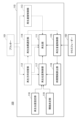
- FIG. 2 is a block diagram showing the configuration of an audio data processing function of the DJ controller shown in FIG. 1
- FIG. FIG. 3 is a block diagram showing functions that are enabled when a practice assistance function is not activated in the DJ controller shown in FIG. 2
- FIG. 3 is a block diagram showing functions enabled when a first practice assistance function is activated in the DJ controller shown in FIG. 2
- FIG. 4 is a diagram conceptually showing a first practice assistance function
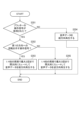
- 6 is a flowchart showing processing in the example of FIG. 5
- FIG. 11 is a flow chart showing processing in another example of the first practice assistance function
- FIG. 3 is a block diagram showing functions enabled when a second practice aid function is activated in the DJ controller shown in FIG. 2;
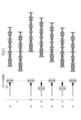
- FIG. 10 is a diagram conceptually showing a second practice assistance function;
- FIG. 10 is a flowchart showing processing in the example of FIG. 9;
- FIG. 3 is a block diagram showing functions enabled when a third practice assistance function is activated in the DJ controller shown in FIG. 2;
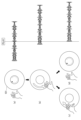
- FIG. 11 is a diagram conceptually showing a third practice assistance function;
- FIG. 13 is a flowchart showing processing in the example of FIG. 12;
- FIG. 10 is a diagram conceptually showing a second practice assistance function;
- FIG. 10 is a flowchart showing processing in the example of FIG. 9;
- FIG. 3 is a block diagram showing functions enabled when a third practice assistance function is activated in the DJ controller shown in FIG. 2;
- FIG. 11 is a diagram conceptually showing a third practice assistance function;
- FIG. 13 is a flowchart showing processing in the example of FIG
- FIG. 1 is a diagram showing the overall configuration of a DJ controller according to one embodiment of the present invention.
- the DJ controller 100 is an audio data processing device in this embodiment, and reproduces music using audio data obtained from the outside.
- the user uses operating elements such as platters 101A and 101B, crossfader 102, performance pads 103A and 103B, effect control knob 104, effect activation button 105, and channel faders 106A and 106B arranged on the DJ controller 100. , to control the playback of audio data, and to apply various effects to the audio data being played back.
- the first audio data is reproduced using the platter 101A, the performance pad 103A, the channel fader 106A, etc.
- the second audio data is reproduced using the platter 101B, the performance pad 103B, the channel fader 106B, etc.
- the operation and processing system for reproducing the first audio data is also referred to as the A deck
- the operation and processing system for reproducing the second audio data is also referred to as the B deck.
- the controls also include those commonly arranged for decks A and B, such as cross fader 102, effect control knob 104, and effect activation button 105.
- the platters 101A and 101B and the crossfader 102 are mainly used for scratching.
- the platters 101A and 101B are operators for controlling the playback positions of audio data played back on the A deck and the B deck, respectively.
- the user advances the reproduction position of the audio data by rotating the platters 101A and 101B, which are rotary operators, clockwise, and advances the reproduction position of the audio data by rotating the platters 101A and 101B counterclockwise. can be returned to In scratching, forward reproduction and reverse reproduction of audio data are repeated by an operation of reversing the rotation direction of the platters 101A and 101B.
- the crossfader 102 is used to mute the deck on which scratching is to be performed, that is, the playback volume is temporarily set to 0 to turn off the sound, which is repeated. Since the DJ controller 100 is configured in the same manner as a normal DJ controller except for the audio data processing function described below, including the platters 101A and 101B and the crossfader 102, detailed description of these portions will be omitted. are omitted.
- FIG. 2 is a block diagram showing the configuration of the audio data processing function of the DJ controller shown in FIG.
- the audio data processing function 110 of the DJ controller 100 includes a playback unit 111, a playback direction switching unit 112, a playback speed control unit 113, a playback effect selection unit 114, a playback volume control unit 115, It includes a time interval calculation section 116 , a reproduction position control section 117 , a reproduction position setting section 118 and a threshold determination section 119 .
- Each of these units is implemented, for example, by a CPU (Central Processing Unit) or a DSP (Digital Signal Processor) that operates according to a program stored in memory. The function of each unit will be further described below.
- a CPU Central Processing Unit
- DSP Digital Signal Processor
- the reproduction unit 111 reproduces the audio data of the music.
- the playback unit 111 is connected to a terminal device such as a PC (Personal Computer) or a smartphone connected by a wired or wireless communication means such as a USB (Universal Serial Bus) via an input interface (not shown), or It processes audio data of music input from a removable recording medium such as a USB memory and outputs it to a speaker or other external device via an output interface (not shown).
- the playback unit 111 determines the playback position, playback speed, and playback volume of the audio data under the control of the playback direction switching unit 112, playback speed control unit 113, playback volume control unit 115, and playback position control unit 117, which will be described later. .
- the reproducing unit 111 applies various effects to the reproduced audio data under the control of the reproducing effect selecting unit 114 .
- the reproducing unit 111 can independently reproduce the first audio data and the second audio data respectively read into the A deck and the B deck described with reference to FIG. can be independently executed for the first audio data and the second audio data.
- the reproduction direction switching unit 112 switches forward reproduction and reverse reproduction of audio data reproduced by the reproduction unit 111 according to an operation signal generated by the platter 101 .
- the reproduction speed control unit 113 controls the reproduction speed of the audio data reproduced by the reproduction unit 111 according to the operation signal from the platter 101 .
- Platter 101 shown in FIG. 2 corresponds to either platter 101A or 101B shown in FIG.
- the reproduction unit 111 reproduces the audio data of the A deck and the B deck independently of each other, there are two reproduction direction switching units 112 and a reproduction speed control unit to which respective operation signals of the platters 101A and 101B are input.
- 113 may be implemented, and an operation signal for either one of the platters 101A and 101B may be selectively input to a single reproduction direction switching section 112 and reproduction speed control section 113.
- the reproduction direction switching unit 112 reproduces the audio data in the forward direction.
- the reproducing unit 111 is controlled to reversely reproduce the audio data when rotated in a second direction (counterclockwise) opposite to the first direction.
- a time code is associated with audio data
- the time code increases during forward playback and decreases during reverse playback.
- the playback speed control unit 113 reproduces the audio data at a normal speed determined according to the BPM of the music, for example, when the platter 101 is not operated, and the platter 101 rotates in any direction according to the user's operation. If so, it controls the playback unit 111 so as to vary the playback speed according to the rotation speed.
- the playback speed controller 113 reduces the playback speed below the normal speed if the rotation speed is less than a threshold value (eg, 33 RPM or 45 RPM). and if the rotational speed is greater than the threshold, the playback speed is increased above the normal speed.
- a threshold value eg, 33 RPM or 45 RPM.
- the reproduction effect selection unit 114 selects a reproduction effect to be applied to the audio data reproduced by the reproduction unit 111 according to the reproduction direction switched by the reproduction direction switching unit 112 . Specifically, the reproduction effect selection unit 114 applies the first reproduction effect to the audio data when the audio data is being reproduced in the forward direction by the reproduction direction switching unit 112, and applies the first reproduction effect to the audio data when the audio data is being reproduced in the reverse direction. If so, apply a second playback effect to the audio data.
- the audio data is reproduced in the forward direction, there are two cases: the case where the platter 101 is not operated and the case where it is rotated in the first direction (clockwise).
- the playback effects applied by the playback effect selector 114 include, for example, "no effect”, “mute effect”, “echo effect” or "filter effect”.
- the reproduction effect selection unit 114 controls the reproduction volume control unit 115 to mute the audio data. In this case, muting means setting the playback volume to substantially zero. Otherwise, the reproduction effect selection unit 114 controls the reproduction unit 111 so that effects such as echo and filter are applied when reproducing the audio data.
- the reproduction volume control unit 115 controls the reproduction volume of audio data reproduced by the reproduction unit 111 according to the operation signal from the crossfader 102 .
- the crossfader 102 is an operator for controlling the reproduction volume balance between the music on deck A (first audio data) and the music on deck B (second audio data). Accordingly, the reproduction volume control unit 115 cross-fades the reproduction volume of the audio data being reproduced on the A deck and the B deck according to the operation signal from the cross fader 102 . In this case, when viewed from deck A or deck B, the reproduction volume control section 115 controls the reproduction volume of audio data in accordance with the operation of the crossfader 102 .
- the reproduction volume control section 115 controls the reproduction volume of audio data according to the control of the reproduction effect selection section 114 instead of the operation signal from the crossfader 102. good too.
- the playback volume control unit 115 can also control the playback volume by, for example, operating the channel faders 106A and 106B or the master volume. Description is omitted.
- the time interval calculation unit 116 calculates the time interval at which a predetermined event occurs in the operation signal from the crossfader 102 input to the reproduction volume control unit 115 .
- the predetermined event is detected, for example, when the crossfader 102 starts moving from the end of the A-deck side or the B-deck side toward the opposite side.
- the event is acquisition of an operation signal for increasing the reproduction volume of the audio data on deck A or deck B from 0 or a value close to 0.
- an event such as the one described above would be when the output value of the crossfader 102 fluctuates from the upper or lower limit, or exceeds a predetermined range from the upper or lower limit. detected by a decrease or increase in
- the playback position control unit 117 controls the playback position of audio data played back by the playback unit 111 .
- the reproducing unit 111 reproduces the audio data of the A deck and the B deck independently of each other.
- the playback position of the audio data on either deck or B deck may be selectively controlled.
- the deck to be controlled may be set by a user operation, or may be automatically set to the deck on which scratching by the platter 101 is being performed, for example.
- the reproduction position control unit 113 changes the reproduction position.
- the unit 117 changes the playback position by jumping to a position preset by the playback position setting unit 118, for example.
- the reproduction position control unit 117 moves the reproduction position of the reproduction data to a predetermined position, and if the time interval does not exceed the threshold, continue playback without moving the playback position.
- the playback position control unit 117 changes the playback position of the audio data to a predetermined position when the playback direction switching unit 112 switches the reverse playback to the forward playback, and otherwise moves the playback position. continue playback without Note that the playback position control unit 117 can also move the playback position by, for example, operating the performance pads 103A and 103B, but the configuration is the same as that of a normal DJ controller, so detailed description is omitted. do.
- the playback position setting unit 118 sets the destination of the playback position to be moved by the playback position control unit 117 . Specifically, the playback position setting unit 118 sets the destination of the playback position according to the user's operation. The setting of the destination is performed, for example, by a hot cue setting operation using the performance pads 103A and 103B, but is not limited to this example.
- the threshold determination unit 119 determines the threshold used by the reproduction position control unit 117 for determination based on time intervals. The threshold determination unit 119 may determine the threshold according to, for example, the BPM of the backtrack.
- the backtrack means a piece of music (second audio data) played back on deck B when scratching is performed on a piece of music played on deck A (first audio data).
- the threshold determination unit 119 may determine a time such as 1/2 beat, 1/3 beat, or 1/4 beat calculated from the BPM of the backtrack as the threshold.
- FIG. 3 is a block diagram showing functions that are enabled when the practice assistance function is not activated in the DJ controller shown in FIG.
- Functions that are enabled in this case are the playback unit 111 , the playback direction switching unit 112 , the playback speed control unit 113 and the playback volume control unit 115 .
- the reproduction direction and the reproduction speed of the audio data reproduced by the reproduction unit 111 are controlled by the reproduction direction switching unit 112 and the reproduction speed control unit 113 according to the operation signal from the platter 101 .
- the reproduction volume of the audio data is set by the reproduction volume control section 115 according to the operation signal from the crossfader 102 .
- the user rotates the platter 101 at an accurate timing and amount of rotation to repeat the reproduction of the audio data in a desired section, and operates the crossfader 102 accurately to perform reproduction including muting. Volume control must be performed.
- the DJ controller according to the present embodiment provides first to third scratch practice functions as described below.
- any one of the first to third scratch practice functions may be implemented, any two of them may be implemented, or all three may be implemented.
- the functions may be automatically selected and activated, for example, by operating the platter 101 or crossfader 102, or by user operation via effect control knob 104, effect activation button 105, or the like. may be selected and activated.
- FIG. 4 is a block diagram showing functions enabled when the first practice assistance function is activated in the DJ controller shown in FIG. Functions that are enabled in this case are the reproduction unit 111, the reproduction direction switching unit 112, the reproduction speed control unit 113, the reproduction effect selection unit 114, and the reproduction volume control unit 115.
- the operation signal of 102 is invalidated. That is, the reproduction volume control unit 115 controls the reproduction volume of audio data regardless of the control signal from the crossfader 102 .
- control of the playback volume using the crossfader 102 is assisted by the playback effect selection section 114 and the playback volume control section 115, so that the user can concentrate on operating the platter 101.
- FIG. 5 is a diagram conceptually showing the first training assistance function
- FIG. 6 is a flow chart showing the processing in the example of FIG.
- FIG. 5 shows in FIG. 5 as (a), when the user is not manipulating the platter 101, the platter 101 is not rotating or rotating in a first direction (clockwise) at a predetermined rotational speed. Therefore, the platter operation signal is not acquired (NO in step S101). In this case, the reproducing unit 111 reproduces the audio data in the forward direction at normal speed (step S104).
- step S104 As shown as (b) in FIG. 5, when the user rotates the platter 101 in the second direction (counterclockwise), an operation signal for the platter 101 is acquired (YES in step S101), and this operation signal indicates rotation in the second direction (YES in step S102).
- the reproduction direction switching unit 112 reproduces the audio data in the reverse direction, but at the same time, the reproduction effect selection unit 114 applies a "mute effect" to the audio data, and as a result, the reproduction of the audio data is muted (step S103). .
- the operation signal of the platter 101 is also obtained (YES in step S101), This operation signal indicates rotation in the first direction (NO in step S102).
- the reproduction direction switching unit 112 reproduces the audio data in the forward direction
- the reproduction effect selection unit 114 applies "no effect" to the audio data.
- the audio data is reproduced in the forward direction (step S104).
- the reproduction speed control unit 113 controls the reproduction speed according to the rotation speed of the platter 101, but this point is not reflected in the flowchart of FIG.
- the scratching technique of ⁇ muting playback during reverse playback'' can be realized without the user having to operate the crossfader 102. Therefore, when practicing scratching, the user can concentrate on operating the platter 101 without being conscious of synchronizing the operations with the crossfader 102 . Furthermore, if the platter 101 is operated, the playback volume will change in the same way as if the crossfader 102 were operated at the ideal timing. You can actually practice scratching.
- FIG. 7 is a flowchart showing processing in another example of the first practice assistance function.
- different "mute effects” are applied when the platter 101 is rotated in both the first direction (clockwise) and the second direction (counterclockwise). be done.
- the "mute effect” is divided into a “full mute effect” in which the sound is continuously muted while the effect is applied, and an “intermittent mute effect” in which the sound is muted intermittently at a predetermined cycle. including.
- the intermittent muting effect it is possible to set a plurality of effects that differ in the period and number of times that the sound is muted. In the example shown in FIG.
- the reproduction unit 111 reproduces the audio data in the forward direction at normal speed (step S204).
- the reproduction effect selection unit 114 does not apply an intermittent muting effect, which will be described later, even in forward reproduction.
- the platter operation signal is acquired (YES in step S201) and the operation signal indicates rotation in the first direction (YES in step S202)
- the reproduction direction switching unit 112 changes the audio data. Playback is performed in the forward direction, and the playback effect selection unit 114 applies the first intermittent muting effect, specifically, the effect of muting the sound up to twice in a period of 1/4 beat of the music (step S203).
- the reproduction direction switching unit 112 causes the audio data to be reproduced in the reverse direction, and the reproduction effect selection unit 114 selects the second muting effect.
- the effect of muting the sound is applied up to three times in a period of 1/4 beat of the music (step S205). It should be noted that the fact that the playback speed control unit 113 controls the playback speed according to the rotation speed of the platter 101 is not reflected in the flowchart of FIG. 7 either.
- the mute pattern frequently used in scratching can be realized without operating the crossfader 102, so the user can concentrate on operating the platter 101. In addition, it is possible to effectively practice scratching while enjoying the reproduced sound.
- the first effect applied during forward playback is no effect
- the second effect applied during reverse playback is the all mute effect.
- no effect may be applied in the case of forward playback due to the platter not being manipulated.
- the first effect may be a full muting effect and the second effect may be an intermittent muting effect.
- the period in which the sound is muted can be set to, for example, 1/2 beat, 1/4 beat or 1/8 beat of the reproduced music.
- the number of intermittent muting effects can be set to, for example, two times, three times, or six times.
- the reproduction effect selection unit 114 can select effects other than the mute effect during forward reproduction and/or reverse reproduction, specifically, for example, an echo effect or a filter effect. may apply.
- the operation signal of the crossfader 102 is not invalidated even when the function is activated, and the reproduction volume control unit 115 may control the reproduction volume of the audio data according to the operation signal from the crossfader 102 .
- Such a function is useful, for example, when a user who can already scratch by operating both the platter 101 and the crossfader 102 adds a playback effect to the sound in addition to muting the sound when scratching. used.
- such an effect may be superimposed on the above mute effect and applied.
- a first effect applied during forward playback is no effect and a second effect applied during reverse playback is an echo effect.
- the first effect may be an echo effect and the second effect may be a filter effect.
- FIG. 8 is a block diagram showing functions enabled when the second practice aid function is activated in the DJ controller shown in FIG.
- the functions enabled in this case are the playback unit 111, the playback volume control unit 115, the time interval calculation unit 116, the playback position control unit 117, the playback position setting unit 118, the threshold determination unit 119, the playback direction switching unit 112,
- the functions of the reproduction speed control section 113 and the reproduction effect selection section 114 are disabled.
- the playback position control section 117 assists the setting of the playback direction and playback speed of the audio data using the platter 101 , allowing the user to concentrate on operating the crossfader 102 .
- FIG. 9 is a diagram conceptually showing the second practice assistance function
- FIG. 10 is a flow chart showing the processing in the example of FIG. Note that in the example of FIG. 9, scratching is performed on a piece of music (first audio data) reproduced on the A deck.
- an operation signal is obtained (YES in step S301). Since the operation in this case is an operation to set the playback volume of deck A to 0 and not an operation to increase the playback volume from 0 (NO in step S302), other processing is not executed, and playback volume control section 115 controls the reproduction volume of the audio data reproduced on deck A according to the operation signal (step S306).
- FIG. 10 is a flow chart showing the processing in the example of FIG. Note that in the example of FIG. 9, scratching is performed on a piece of music (first audio data) reproduced on the A deck.
- an operation signal is obtained (YES in step S301). Since the operation in this case is an operation to set the playback volume of deck A to 0 and not an operation to increase the play
- the time interval t1 from the previous event is long (the previous event is not shown), and the threshold determined by the threshold determining unit 119, specifically, the playback at the B deck. exceeds 1/2 beat of the music piece (YES in step S304).
- the reproduction position control unit 117 moves the reproduction position of the audio data being reproduced on deck A to the position preset by the reproduction position setting unit 118 (step S305)
- the reproduction volume control unit 115 The reproduction volume of the audio data reproduced on deck A is controlled according to the operation signal (step S306).
- the destination of the reproduction position in step S305 is set in advance by the reproduction position setting unit 118, for example, by a hot cue setting operation using the performance pads 103A and 103B.
- the scratching technique of ⁇ muting playback during reverse playback, and intermittent muting during forward playback to change the performance'' can be realized without operating the platter 101. . Therefore, when practicing scratching, the user can concentrate on operating the crossfader 102 without being conscious of the timing of operating the platter 101 and the amount of rotation. Furthermore, by operating the crossfader 102, the playback position changes in the same way as operating the platter 101 with the ideal timing and amount of rotation. You can practice scratch effectively while having fun.
- FIG. 11 is a block diagram showing functions enabled when the third practice assistance function is activated in the DJ controller shown in FIG.
- Functions that are enabled in this case are the playback unit 111, the playback direction switching unit 112, the playback speed control unit 113, the playback volume control unit 115, the playback position control unit 117, the playback position setting unit 118, and the playback effect selection unit 114.
- the functions of the time interval calculator 116 and the threshold value determiner 119 are disabled. Note that, for example, when the reproduction effect selection unit 114 applies an effect other than the mute effect, it may be activated as a combination with the first practice assistance function.
- the playback position control unit 117 assists the playback position cueing by the platter 101, so that the user can 101 and the crossfader 102 can be devoted to practicing matching the operation timings.
- FIG. 12 is a diagram conceptually showing the third training assistance function
- FIG. 13 is a flow chart showing the processing in the example of FIG.
- step S401 An operation signal is acquired (YES in step S401), and under the control of the reproduction direction switching unit 112 and the reproduction speed control unit 113, the reproduction unit 111 reversely reproduces or forwards the audio data at a reproduction speed corresponding to the rotational speed of the platter 101.
- Direction reproduction is performed (step S402).
- this function determines whether or not the playback direction has switched from reverse playback to forward playback (step S404).
- the platter 101 is switched to the first direction as in (c).
- the playback direction of the audio data is switched from backward playback to forward playback (YES in step S404).
- step S405 After the playback position control unit 117 moves the playback position of the audio data to the position preset by the playback position setting unit 118 (step S405), the playback speed determined in step S402 or step S403 is changed. The audio data is played back in the forward direction. Otherwise (NO in step S404), the audio data is reproduced forward or backward at the reproduction speed determined in step S402 or S403 without moving the reproduction position.
- the destination of the reproduction position in step S405 is set in advance by the reproduction position setting unit 118, for example, by a hot cue setting operation using the performance pads 103A and 103B.
- the playback position control unit 117 performs beat juggling, in which audio data of the same piece of music is read into both the A deck and the B deck and the platters 101A and 101B are alternately operated. It may be used in a playing technique called In this case, the reproduction direction switching unit 112 switches forward reproduction and reverse reproduction of the first audio data reproduced on the A deck according to the operation signal generated by the platter 101A, while switching the reproduction direction of the first audio data generated by the platter 101B. The forward reproduction and reverse reproduction of the second audio data reproduced on the B deck are switched according to the operation signal.
- the reproduction position control unit 117 sets the reproduction position of the first audio data to the preset first audio data when the reverse reproduction is switched to the forward reproduction for the first audio data reproduced on deck A. and moves the reproduction position of the second audio data to a preset second position when the reverse reproduction is switched to the forward reproduction for the second audio data reproduced on the B deck. . This can support accurate cueing of songs required for beat juggling.
- the playback position at the end of the reverse playback and the preset destination are played back.
- the playback position may be moved if the difference from the position is within a predetermined range.
- a plurality of playback positions may be set in advance as destinations, and the playback position closest to the playback position at the end of reverse playback may be automatically selected.
- a DJ controller was exemplified as an audio data processing device, but similar functions can be implemented in other DJ equipment such as mixers and all-in-one DJ systems (digital audio players with communication and mixing functions). It is possible.
- a terminal device such as a PC or a smart phone, it is also possible to implement the above functions using a DJ application.
- the audio data processing device itself does not necessarily have to be provided with controls such as platters and crossfaders, and for example, controls provided on an external device such as a DVS (Digital Vinyl System) turntable.
- a manipulation signal may be received from the child.
- the above functions may be at least partially implemented in a server that transmits audio data to a terminal device via a network, and this server may function as an audio data processing device.
Landscapes
- Engineering & Computer Science (AREA)
- Theoretical Computer Science (AREA)
- Physics & Mathematics (AREA)
- Audiology, Speech & Language Pathology (AREA)
- General Health & Medical Sciences (AREA)
- Human Computer Interaction (AREA)
- Health & Medical Sciences (AREA)
- General Engineering & Computer Science (AREA)
- General Physics & Mathematics (AREA)
- Multimedia (AREA)
- Acoustics & Sound (AREA)
- Signal Processing (AREA)
- Circuit For Audible Band Transducer (AREA)
Priority Applications (3)
| Application Number | Priority Date | Filing Date | Title |
|---|---|---|---|
| PCT/JP2021/030155 WO2023021603A1 (ja) | 2021-08-18 | 2021-08-18 | 音声データ処理装置、音声データ処理方法およびプログラム |
| JP2023542081A JP7656708B2 (ja) | 2021-08-18 | 2021-08-18 | 音声データ処理装置、音声データ処理方法およびプログラム |
| US18/683,905 US12517696B2 (en) | 2021-08-18 | 2021-08-18 | Audio data processing device, audio data processing method, and program |
Applications Claiming Priority (1)
| Application Number | Priority Date | Filing Date | Title |
|---|---|---|---|
| PCT/JP2021/030155 WO2023021603A1 (ja) | 2021-08-18 | 2021-08-18 | 音声データ処理装置、音声データ処理方法およびプログラム |
Publications (1)
| Publication Number | Publication Date |
|---|---|
| WO2023021603A1 true WO2023021603A1 (ja) | 2023-02-23 |
Family
ID=85240254
Family Applications (1)
| Application Number | Title | Priority Date | Filing Date |
|---|---|---|---|
| PCT/JP2021/030155 Ceased WO2023021603A1 (ja) | 2021-08-18 | 2021-08-18 | 音声データ処理装置、音声データ処理方法およびプログラム |
Country Status (3)
| Country | Link |
|---|---|
| US (1) | US12517696B2 (https=) |
| JP (1) | JP7656708B2 (https=) |
| WO (1) | WO2023021603A1 (https=) |
Citations (1)
| Publication number | Priority date | Publication date | Assignee | Title |
|---|---|---|---|---|
| JP2016058123A (ja) * | 2014-09-10 | 2016-04-21 | Pioneer DJ株式会社 | 再生制御装置、再生制御装置の制御方法およびプログラム |
Family Cites Families (9)
| Publication number | Priority date | Publication date | Assignee | Title |
|---|---|---|---|---|
| US6199076B1 (en) * | 1996-10-02 | 2001-03-06 | James Logan | Audio program player including a dynamic program selection controller |
| JP3812332B2 (ja) | 2000-02-25 | 2006-08-23 | ティアック株式会社 | 記録媒体再生装置 |
| US7574513B2 (en) * | 2001-04-30 | 2009-08-11 | Yahoo! Inc. | Controllable track-skipping |
| US8636199B1 (en) | 2005-08-25 | 2014-01-28 | Hewlett-Packard Development Company, L.P. | System and method for matching a media manipulation with a media manipulation template |
| JPWO2008107949A1 (ja) | 2007-03-01 | 2010-06-03 | パイオニア株式会社 | 情報再生装置及び方法、並びにコンピュータプログラム |
| JP5583494B2 (ja) | 2010-06-30 | 2014-09-03 | カヤバ工業株式会社 | 可変容量型ベーンポンプ |
| JP5395124B2 (ja) | 2011-07-05 | 2014-01-22 | パイオニア株式会社 | 操作装置、再生システム、操作装置の操作方法、プログラム |
| US9471272B2 (en) * | 2015-01-27 | 2016-10-18 | Lenovo (Singapore) Pte. Ltd. | Skip of a portion of audio |
| WO2019239486A1 (ja) | 2018-06-12 | 2019-12-19 | Pioneer DJ株式会社 | 音響装置およびプログラム |
-
2021
- 2021-08-18 JP JP2023542081A patent/JP7656708B2/ja active Active
- 2021-08-18 US US18/683,905 patent/US12517696B2/en active Active
- 2021-08-18 WO PCT/JP2021/030155 patent/WO2023021603A1/ja not_active Ceased
Patent Citations (1)
| Publication number | Priority date | Publication date | Assignee | Title |
|---|---|---|---|---|
| JP2016058123A (ja) * | 2014-09-10 | 2016-04-21 | Pioneer DJ株式会社 | 再生制御装置、再生制御装置の制御方法およびプログラム |
Also Published As
| Publication number | Publication date |
|---|---|
| US12517696B2 (en) | 2026-01-06 |
| US20240361978A1 (en) | 2024-10-31 |
| JP7656708B2 (ja) | 2025-04-03 |
| JPWO2023021603A1 (https=) | 2023-02-23 |
Similar Documents
| Publication | Publication Date | Title |
|---|---|---|
| JP4283320B2 (ja) | 音楽およびオーディオ再生システム | |
| US20030063066A1 (en) | Computer peripheral device | |
| US7349749B2 (en) | Audio signal mixer for long mix editing | |
| US11119724B2 (en) | Standalone disk jockey console apparatus | |
| JP2009531808A (ja) | グラフィック・インターフェースを有する携帯メディアプレーヤ用のドッキング・システムおよびミキサ | |
| JP2009531807A (ja) | メディア・ストレージ・マネージャおよびプレーヤー | |
| JP7522853B2 (ja) | 音響機器、音響機器の再生制御方法およびプログラム | |
| JP4180249B2 (ja) | オーディオ信号処理装置 | |
| JP2001312857A (ja) | 記録媒体再生装置 | |
| JPWO2022101979A5 (https=) | ||
| JP2008533643A (ja) | ディスクジョッキー機能が内蔵された携帯コンピュータ装置 | |
| US20030103422A1 (en) | Information playback apparatus | |
| JP2015076625A (ja) | 制御装置、制御方法、プログラム | |
| JP7656708B2 (ja) | 音声データ処理装置、音声データ処理方法およびプログラム | |
| JP7681709B2 (ja) | 音声データ処理装置、音声データ処理方法およびプログラム | |
| WO2023021602A1 (ja) | 音声データ処理装置、音声データ処理方法およびプログラム | |
| US20230418551A1 (en) | Audio device, control method for audio device, and program | |
| WO2023062722A1 (ja) | 音響装置、音響装置の制御方法およびプログラム | |
| JP7598449B2 (ja) | 音響装置、音響装置の制御方法およびプログラム | |
| JP7674476B2 (ja) | 音響機器、楽曲の再生方法およびプログラム | |
| JP7375003B2 (ja) | 音響装置および音響再生プログラム | |
| WO2022149221A1 (ja) | 音響機器、音響機器の制御方法、及びプログラム | |
| JPWO2017119115A1 (ja) | 音響制御システム | |
| JP7762215B2 (ja) | 音響装置、音響装置の制御方法およびプログラム | |
| TWM558506U (zh) | 用於混音器之音響輸出輔助裝置 |
Legal Events
| Date | Code | Title | Description |
|---|---|---|---|
| 121 | Ep: the epo has been informed by wipo that ep was designated in this application |
Ref document number: 21954176 Country of ref document: EP Kind code of ref document: A1 |
|
| WWE | Wipo information: entry into national phase |
Ref document number: 2023542081 Country of ref document: JP |
|
| NENP | Non-entry into the national phase |
Ref country code: DE |
|
| 122 | Ep: pct application non-entry in european phase |
Ref document number: 21954176 Country of ref document: EP Kind code of ref document: A1 |
|
| WWG | Wipo information: grant in national office |
Ref document number: 18683905 Country of ref document: US |