WO2023012992A1 - 蓄冷材およびクーラーボックス - Google Patents
蓄冷材およびクーラーボックス Download PDFInfo
- Publication number
- WO2023012992A1 WO2023012992A1 PCT/JP2021/029208 JP2021029208W WO2023012992A1 WO 2023012992 A1 WO2023012992 A1 WO 2023012992A1 JP 2021029208 W JP2021029208 W JP 2021029208W WO 2023012992 A1 WO2023012992 A1 WO 2023012992A1
- Authority
- WO
- WIPO (PCT)
- Prior art keywords
- cold storage
- storage material
- silver
- degrees celsius
- temperature
- Prior art date
- Legal status (The legal status is an assumption and is not a legal conclusion. Google has not performed a legal analysis and makes no representation as to the accuracy of the status listed.)
- Ceased
Links
Images


Classifications
-
- C—CHEMISTRY; METALLURGY
- C09—DYES; PAINTS; POLISHES; NATURAL RESINS; ADHESIVES; COMPOSITIONS NOT OTHERWISE PROVIDED FOR; APPLICATIONS OF MATERIALS NOT OTHERWISE PROVIDED FOR
- C09K—MATERIALS FOR MISCELLANEOUS APPLICATIONS, NOT PROVIDED FOR ELSEWHERE
- C09K5/00—Heat-transfer, heat-exchange or heat-storage materials, e.g. refrigerants; Materials for the production of heat or cold by chemical reactions other than by combustion
- C09K5/02—Materials undergoing a change of physical state when used
- C09K5/06—Materials undergoing a change of physical state when used the change of state being from liquid to solid or vice versa
- C09K5/066—Cooling mixtures; De-icing compositions
-
- F—MECHANICAL ENGINEERING; LIGHTING; HEATING; WEAPONS; BLASTING
- F25—REFRIGERATION OR COOLING; COMBINED HEATING AND REFRIGERATION SYSTEMS; HEAT PUMP SYSTEMS; MANUFACTURE OR STORAGE OF ICE; LIQUEFACTION SOLIDIFICATION OF GASES
- F25D—REFRIGERATORS; COLD ROOMS; ICE-BOXES; COOLING OR FREEZING APPARATUS NOT OTHERWISE PROVIDED FOR
- F25D3/00—Devices using other cold materials; Devices using cold-storage bodies
-
- F—MECHANICAL ENGINEERING; LIGHTING; HEATING; WEAPONS; BLASTING
- F25—REFRIGERATION OR COOLING; COMBINED HEATING AND REFRIGERATION SYSTEMS; HEAT PUMP SYSTEMS; MANUFACTURE OR STORAGE OF ICE; LIQUEFACTION SOLIDIFICATION OF GASES
- F25D—REFRIGERATORS; COLD ROOMS; ICE-BOXES; COOLING OR FREEZING APPARATUS NOT OTHERWISE PROVIDED FOR
- F25D2303/00—Details of devices using other cold materials; Details of devices using cold-storage bodies
- F25D2303/08—Devices using cold storage material, i.e. ice or other freezable liquid
- F25D2303/085—Compositions of cold storage materials
-
- F—MECHANICAL ENGINEERING; LIGHTING; HEATING; WEAPONS; BLASTING
- F25—REFRIGERATION OR COOLING; COMBINED HEATING AND REFRIGERATION SYSTEMS; HEAT PUMP SYSTEMS; MANUFACTURE OR STORAGE OF ICE; LIQUEFACTION SOLIDIFICATION OF GASES
- F25D—REFRIGERATORS; COLD ROOMS; ICE-BOXES; COOLING OR FREEZING APPARATUS NOT OTHERWISE PROVIDED FOR
- F25D2331/00—Details or arrangements of other cooling or freezing apparatus not provided for in other groups of this subclass
- F25D2331/80—Type of cooled receptacles
- F25D2331/804—Boxes
-
- Y—GENERAL TAGGING OF NEW TECHNOLOGICAL DEVELOPMENTS; GENERAL TAGGING OF CROSS-SECTIONAL TECHNOLOGIES SPANNING OVER SEVERAL SECTIONS OF THE IPC; TECHNICAL SUBJECTS COVERED BY FORMER USPC CROSS-REFERENCE ART COLLECTIONS [XRACs] AND DIGESTS
- Y02—TECHNOLOGIES OR APPLICATIONS FOR MITIGATION OR ADAPTATION AGAINST CLIMATE CHANGE
- Y02E—REDUCTION OF GREENHOUSE GAS [GHG] EMISSIONS, RELATED TO ENERGY GENERATION, TRANSMISSION OR DISTRIBUTION
- Y02E60/00—Enabling technologies; Technologies with a potential or indirect contribution to GHG emissions mitigation
- Y02E60/14—Thermal energy storage
Definitions
- the present disclosure relates to cold storage materials and cooler boxes.
- Patent Document 1 discloses a cold storage material in which a clathrate hydrate is formed by cooling.
- the cold storage material according to sample C-6 disclosed in Patent Document 1 is composed of 0.05 mmol AgI and 19 wt % tetrahydrofuran aqueous solution.
- the cold storage material according to sample C-6 has a melting point of 4.6 degrees Celsius and a crystallization temperature of minus 7 degrees Celsius.
- the purpose of the present disclosure is to provide a cold storage material suitable for preserving and refrigerating pharmaceuticals or foods.
- the cold storage material according to the present disclosure is tetrahydrofuran, Water and at least one silver compound selected from the group consisting of silver phosphate represented by the chemical formula Ag3PO4 , silver carbonate represented by the chemical formula Ag2CO3 , and silver oxide represented by the chemical formula AgO .
- the cold storage material has a melting point of 2 degrees Celsius or more and 8 degrees Celsius or less, The cold storage material has a crystallization temperature of 0 degrees Celsius or higher and lower than the melting point.
- the present disclosure provides a cold storage material suitable for preserving and refrigerating pharmaceuticals or foods.
- FIG. 1 is a graph showing the characteristics of the cold storage material according to the first embodiment during cold storage.
- FIG. 2 is a graph showing the characteristics of the cold storage material according to the first embodiment during cooling.
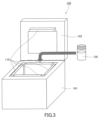
- FIG. 3 is a schematic diagram of a cooler box according to the second embodiment.
- FIG. 1 is a graph showing the characteristics of the cold storage material according to the first embodiment during cooling.
- the horizontal and vertical axes indicate time t and temperature T, respectively.
- the cold storage material according to the first embodiment is cooled. See section A included in FIG. Unlike the case of general liquids, as is well known in the technical field of cold storage materials, even if the temperature of the cold storage material reaches its melting point Tm due to the cooling of the cold storage material, the cold storage material does not solidify. It becomes supercooled. See interval B included in FIG. In the supercooled state, the cold storage material is liquid.
- the cold storage material begins to crystallize spontaneously. As it crystallizes, the cold storage material releases heat of crystallization which is almost equal to latent heat. As a result, the temperature of the cold storage material begins to rise. See interval C included in FIG. In this specification, the temperature at which the cold storage material starts to spontaneously crystallize is referred to as "crystallization temperature Tc".
- ⁇ T represents the difference between the melting point Tm and the crystallization temperature Tc of the cold storage material. ⁇ T is also called "degree of supercooling". Crystallization of the cold storage material in a supercooled state causes the cold storage material to become, for example, a clathrate hydrate (see, for example, Patent Document 1).
- the clathrate hydrate refers to a crystal formed by water molecules forming cage-like crystals by hydrogen bonding, and substances other than water being wrapped in the cage-like crystals.
- the concentration at which water molecules and guest molecules form a clathrate hydrate without excess or deficiency is called the harmonic concentration.
- clathrate hydrates are often used near harmonic concentrations.
- the temperature of the cold storage material gradually decreases to become equal to the ambient temperature. See section D included in FIG. In FIG. 1, the cold storage material is cooled to a temperature lower than the crystallization temperature Tc. However, the temperature of the cold storage material may be maintained within a temperature range between the melting point Tm and the crystallization temperature Tc.
- the crystallization temperature Tc of the cold storage material is lower than the melting point Tm of the cold storage material.
- the melting point of the cold storage material can be measured using a differential scanning calorimeter, as is well known in the cold storage material technical field. Differential scanning calorimeter may also be referred to as "DSC".
- FIG. 2 is a graph showing the characteristics of the cold storage material in the first embodiment during heating.
- the horizontal and vertical axes indicate time t and temperature T, respectively.
- the temperature of the cold storage material is maintained at a temperature equal to or lower than the melting point Tm of the cold storage material.
- Tm melting point
- the temperature inside the cooler box is increased to the melting point Tm of the cold storage material so that the temperature of the cold storage material placed in the cooler box is maintained below the melting point Tm of the cold storage material. It is set below.
- the temperature of the cold storage material may be maintained at a temperature equal to or lower than the crystallization temperature Tc.
- the cold storage material is gradually warmed. See section F included in FIG.
- the temperature inside the cooler box gradually increases.
- the temperature of the cold storage material When the temperature of the cold storage material reaches the melting point Tm of the cold storage material, the temperature of the cold storage material is maintained near the melting point Tm of the cold storage material. See section G included in FIG. If there is no cold storage material, the temperature inside the cooler box rises continuously as shown in section Z included in FIG. On the other hand, when there is a cold storage material, the temperature inside the cooler box is maintained near the melting point of the cold storage material for a certain period of time in section G. In this manner, cold heat is stored in the cold storage material. At the end of section G, the crystals of the cold storage material melt and disappear. As a result, the cold storage material is liquefied.
- the cold storage material can be cooled and reused.
- a cold storage material suitably used for a cooler box capable of containing medicines or food satisfies the following conditions (I) and (II).
- Condition (I) The cold storage material has a melting point of 2 degrees Celsius or higher and 8 degrees Celsius or lower.
- the cold storage material should have a melting point of 3.0 degrees Celsius or higher and 7 degrees Celsius or lower.
- Condition (II) The cold storage material has a crystallization temperature Tc of 0 degrees Celsius or more and less than the melting point Tm.
- the cold storage material has a crystallization temperature Tc of 0 degrees Celsius or more and less than 3.0 degrees Celsius (for example, 2.5 degrees Celsius or less).
- the inside of the cooler box should be maintained at approximately 2 degrees Celsius or higher and 8 degrees Celsius or lower, so condition (I) must be satisfied. If the temperature inside the cooler box is maintained below 0 degrees Celsius, the water contained inside the medicines and foodstuffs will change to ice, and thus the medicines and foodstuffs may deteriorate. On the other hand, if the temperature inside the cooler box is maintained at a temperature above 8 degrees Celsius, the cooler box will not function substantially.
- the efficiency in the section where the cold storage material is cooled for the purpose of obtaining the function of the cold storage material that is, the section B shown in FIG. 1 can be improved.
- this efficiency will be referred to as the "crystallization efficiency".
- the crystallization efficiency decreases.
- a cold storage material having a crystallization temperature Tc of minus 18 degrees Celsius is referred to as a "minus 18 cold storage material”.
- the cold storage material having a crystallization temperature Tc of -1 degree Celsius is cooled in a freezer maintained at a temperature lower than -1 degree Celsius. is cooled.
- a cold storage material having a crystallization temperature Tc of minus 1 degree Celsius is referred to as a "minus 1 cold storage material”.
- the energy required to cool the minus 1 regenerator material is less than the energy required to cool the minus 18 regenerator material. Therefore, the higher the crystallization temperature Tc, the higher the crystallization efficiency.
- the heat of fusion is also called the latent heat.
- “Kelvin” is used herein for the degree of supercooling ⁇ T.
- the inventor of the present invention expresses that "the degree of supercooling ⁇ T is n Kelvin or less". Needless to say, n is a real number.
- the description “degree of supercooling ⁇ T ⁇ 5 Kelvin” means that the difference between the melting point Tm and the crystallization temperature Tc of the cold storage material is 5 Kelvin or less.
- “Celsius” is used to describe temperature. For example, the present inventor writes that "the crystallization temperature Tc is 5 degrees Celsius”. 5 degrees Celsius is also expressed as 5 degrees Celsius.
- the cold storage material according to the first embodiment is tetrahydrofuran, Water and at least one silver compound selected from the group consisting of silver phosphate represented by the chemical formula Ag3PO4 , silver carbonate represented by the chemical formula Ag2CO3 , and silver oxide represented by the chemical formula AgO . contains.
- the cold storage material according to the first embodiment has a melting point Tm of 2 degrees Celsius or more and 8 degrees Celsius or less. Therefore, the cold storage material according to the first embodiment is suitable for use in preserving medicines and foods.
- the cold storage material according to the first embodiment has a crystallization temperature Tc of 0 degrees Celsius or higher.
- the cold storage material according to sample C-6 of Patent Document 1 has a crystallization temperature Tc of minus 7 degrees Celsius. Therefore, the cold storage material according to the first embodiment has higher crystallization efficiency than the cold storage material described in Patent Document 1. In other words, the energy required in the zone B where the cold storage material according to the first embodiment is cooled is smaller than that of the cold storage material according to sample C-6 of Patent Document 1.
- the crystallization temperature Tc of the cold storage material is lower than the melting point Tm of the cold storage material.
- the supercooling degree ⁇ T of the cold storage material may be, for example, greater than zero and 8 Kelvin or less, or may be 1 Kelvin or more and 5 Kelvin or less.
- the cold storage material according to the first embodiment is selected from the group consisting of silver phosphate represented by the chemical formula Ag 3 PO 4 , silver carbonate represented by the chemical formula Ag 2 CO 3 , and silver oxide represented by the chemical formula AgO. containing at least one silver compound.
- silver phosphate represented by the chemical formula Ag 3 PO 4 silver carbonate represented by the chemical formula Ag 2 CO 3
- other silver compounds such as silver iodide, silver bromide, or silver chloride
- crystals quenching temperature Tc is lowered.
- other metal salts such as titanium oxide, vanadium oxide, iron oxide, nickel oxide, manganese oxide, or zinc oxide can be used, as demonstrated in the comparative examples below.
- the crystallization temperature Tc is also lowered.
- the cold storage material according to the first embodiment has a melting point Tm of 2 degrees Celsius or more and 8 degrees Celsius or less and a crystallization temperature Tc of 0 degrees Celsius or more and less than the melting point Tm.
- the molar ratio of tetrahydrofuran to water is not limited to a specific value. As an example, the molar ratio is 0.05 or more and 0.07 or less. It is known that cold storage materials having a molar ratio of tetrahydrofuran to water of 1/17 form clathrate hydrate crystals when cooled with just enough water or tetrahydrofuran. When the molar ratio of tetrahydrofuran to water is 0.05 or more and 0.07 or less, the molar ratio is close to 1/17, and the cold storage material tends to have a large amount of latent heat.
- the molar ratio of silver compound to water is not limited to a specific value.
- the molar ratio is 2.64 ⁇ 10 ⁇ 8 or more and 3.70 ⁇ 10 ⁇ 4 or less.
- the cold storage material according to the first embodiment has a melting point Tm of 2 degrees Celsius or more and 8 degrees Celsius or less and a crystallization temperature Tc of 0 degrees Celsius or more and less than the melting point Tm, so long as it has tetrahydrofuran, water, and the above Additives other than the silver compound may be contained.
- the content of additives is not limited to a specific value.
- the ratio of the content of the additive to the total amount of tetrahydrofuran, water, and the silver compound is, on a mass basis, for example, 0.1 or less, optionally 0.05 or less, or 0.01 or less. good too.
- Examples of additives are supercooling inhibitors, thickeners, and preservatives.
- the cold storage material according to the first embodiment does not need to contain additives.
- the cold storage material according to the first embodiment may be composed only of tetrahydrofuran, water, and the silver compound except for impurities that are unavoidably mixed.
- the cold storage material according to the first embodiment can be produced, for example, by mixing tetrahydrofuran, water, and the silver compound.
- FIG. 3 shows a schematic diagram of the cooler box 100 according to the second embodiment.
- the cooler box 100 comprises an insulating box 101 consisting of a bottom (not shown) and sides, and an insulating lid 102 .
- a second A cold storage material according to one embodiment is provided.
- a cold storage material pack 110 containing the cold storage material according to the first embodiment is provided so as to come into contact with each of the four inner side surfaces of a heat insulating box 101 having a rectangular parallelepiped shape.
- the cold storage material according to the first embodiment may be provided in at least one selected from the group consisting of the inside of the bottom of the heat insulation box 101, the inside of the side portion of the heat insulation box 101, and the inside of the heat insulation lid 102.
- the cold storage material according to the first embodiment may be placed inside the cooler box 100 in a cold storage material pack 110 .
- the space inside cooler box 100 is a space formed by the inner bottom surface of heat insulating box 101 , the inner side surface of heat insulating box 101 , and the inner surface of heat insulating lid 102 .
- the cold storage material according to the first embodiment may be provided inside at least one selected from the group consisting of the side portion of the heat insulating box 101, the heat insulating cover 102 of the heat insulating box 101, and the heat insulating box 101 itself. Also in this case, the cold storage material according to the first embodiment may be provided in a state of being included in the cold storage material pack 110 .
- the medicine 120 is placed inside the insulation box 101 .
- the medicine 120 is placed inside the insulation box 101 .
- examples of pharmaceuticals are liquid pharmaceuticals.
- An example of a liquid pharmaceutical product is a vaccine.
- the vaccine is required to be stored at, for example, 2 degrees Celsius or more and 8 degrees Celsius or less.
- the pharmaceutical may be a solid pharmaceutical or a gel pharmaceutical.
- the cooler box according to the second embodiment is suitable for carrying vaccines because the cold storage material according to the first embodiment has a melting point of 2 degrees Celsius or more and 8 degrees Celsius or less.
- silver phosphate is represented by the chemical formula Ag3PO4 .
- Silver phosphate was purchased from Mitsuwa Chemicals Co., Ltd.
- silver carbonate is represented by the chemical formula Ag2CO3 .
- Silver carbonate was purchased from Fujifilm Wako Pure Chemical Industries, Ltd.
- silver oxide is represented by the chemical formula AgO.
- silver oxide is silver(II) oxide rather than silver(I) oxide represented by the chemical formula Ag2O .
- silver oxide was purchased from Fujifilm Wako Pure Chemical Co., Ltd.
- tetrahydrofuran is abbreviated as "THF”. THF was purchased from Tokyo Chemical Industry Co., Ltd.
- Example 1A Manufacturing method of cold storage material
- a screw tube containing about 6 grams of the cold storage material according to Example 1A was placed inside a constant temperature bath SU-241 manufactured by Espec.
- a thermocouple was attached to the screw tube to measure the temperature inside the screw tube.
- the temperature of the constant temperature bath was maintained at 20 degrees Celsius for 2 hours.
- the temperature of the thermostat was then lowered at a rate of 1 degree Celsius/minute. After the temperature of the constant temperature bath reached 4 degrees Celsius, the temperature of the constant temperature bath was maintained at 4 degrees Celsius for 30 minutes.
- the temperature of the constant temperature bath was lowered from 4 degrees Celsius to -20 degrees Celsius at a rate of 1 degree Celsius/24 hours.
- the temperature of the cold storage material according to Example 1A placed in the constant temperature bath was recorded using a thermocouple and a data logger NR-600 manufactured by Keyence Corporation. From the temperature of the regenerator material at the beginning of the rapid increase in the temperature of the regenerator material (see section C of FIG. 1) and the melting point (explained in the next paragraph), the crystallization temperature of the regenerator material according to Example 1A was calculated.
- the cold storage material according to Example 1A placed in a constant temperature bath was maintained at minus 20 degrees Celsius for 3 hours.
- the temperature of the thermostat was then increased at a rate of 1 degree Celsius/minute.
- DSC differential scanning calorimeter
- Example 1B In Example 1B, an experiment similar to Example 1A was performed, except for the following points.
- the reagents shown in Table 2 below were used in place of the reagents shown in Table 1. Additionally, a screw tube with a capacity of 110 milliliters was used instead of a screw tube with a capacity of 60 milliliters. The results of the experiment are shown in Table 27.
- Example 1C In Example 1C, an experiment similar to Example 1A was performed, except for the following points.
- the reagents shown in Table 3 below were used in place of the reagents shown in Table 1. Additionally, a screw tube with a capacity of 110 milliliters was used instead of a screw tube with a capacity of 60 milliliters. The results of the experiment are shown in Table 27.
- Example 1D In Example 1D, an experiment similar to Example 1A was performed with the following exceptions. Instead of the reagents shown in Table 1, cold storage materials and reagents shown in Table 4 below were mixed. Additionally, a screw tube with a capacity of 110 milliliters was used instead of a screw tube with a capacity of 60 milliliters. The results of the experiment are shown in Table 27.
- Example 2A In Example 2A, the same experiment as in Example 1A was performed, except that the reagents shown in Table 5 below were used in place of the reagents shown in Table 1. The results of the experiment are shown in Table 27.
- Example 2B In Example 2B, an experiment similar to Example 1A was performed, except for the following points.
- the reagents shown in Table 6 below were used in place of the reagents shown in Table 1. Additionally, a screw tube with a capacity of 110 milliliters was used instead of a screw tube with a capacity of 60 milliliters. The results of the experiment are shown in Table 27.
- Example 2C In Example 2C, an experiment similar to Example 1A was performed, except for the following points.
- the reagents shown in Table 7 below were used in place of the reagents shown in Table 1. Additionally, a screw tube with a capacity of 110 milliliters was used instead of a screw tube with a capacity of 60 milliliters. The results of the experiment are shown in Table 27.
- Example 2D In Example 2D, an experiment similar to Example 1A was performed, except for the following points. Instead of the reagents shown in Table 1, cold storage materials and reagents shown in Table 8 below were mixed. Additionally, a screw tube with a capacity of 110 milliliters was used instead of a screw tube with a capacity of 60 milliliters. The results of the experiment are shown in Table 27.
- Example 3A In Example 3A, the same experiment as in Example 1A was performed, except that the reagents shown in Table 9 below were used in place of the reagents shown in Table 1. The results of the experiment are shown in Table 27.
- Example 3B In Example 3B, an experiment similar to Example 1A was performed with the following exceptions.
- the reagents shown in Table 10 below were used in place of the reagents shown in Table 1. Additionally, a screw tube with a capacity of 110 milliliters was used instead of a screw tube with a capacity of 60 milliliters. The results of the experiment are shown in Table 27.
- Example 3C In Example 3C, an experiment similar to Example 1A was performed, except for the following points.
- the reagents shown in Table 11 below were used in place of the reagents shown in Table 1.
- a screw tube with a volume of 110 milliliters was used instead of a screw tube with a volume of 60 milliliters.
- the results of the experiment are shown in Table 27.
- Example 3D In Example 3D, an experiment similar to Example 1A was performed with the following exceptions. Instead of the reagents shown in Table 1, the reagents and cold storage materials shown in Table 12 below were mixed. Additionally, a screw tube with a capacity of 110 milliliters was used instead of a screw tube with a capacity of 60 milliliters. The results of the experiment are shown in Table 27.
- Reference Example 1A In Reference Example 1A, the same experiment as in Example 1A was performed except that the reagents shown in Table 13 below were mixed instead of the reagents shown in Table 1. The results of the experiment are shown in Table 27.
- Reference Example 1B In Reference Example 1B, the same experiment as in Example 1A was performed, except for the following points.
- the reagents shown in Table 14 below were used in place of the reagents shown in Table 1. Additionally, a screw tube with a capacity of 110 milliliters was used instead of a screw tube with a capacity of 60 milliliters. The results of the experiment are shown in Table 27.
- Reference Example 1C In Reference Example 1C, the same experiment as in Example 1A was performed, except for the following points.
- the reagents shown in Table 15 below were used in place of the reagents shown in Table 1. Additionally, a screw tube with a capacity of 110 milliliters was used instead of a screw tube with a capacity of 60 milliliters. The results of the experiment are shown in Table 27.
- Reference Example 1D In Reference Example 1D, the same experiment as in Example 1A was performed, except for the following points. Instead of the reagents shown in Table 1, the reagents and cold storage materials shown in Table 16 below were mixed. Additionally, a screw tube with a capacity of 110 milliliters was used instead of a screw tube with a capacity of 60 milliliters. The results of the experiment are shown in Table 27.
- Reference Example 2 In Reference Example 2, the same experiment as in Example 1A was performed except that the reagents shown in Table 17 below were mixed instead of the reagents shown in Table 1. The results of the experiment are shown in Table 27. Note that in Reference Example 2, heavy water is used.
- Comparative example 1 In Comparative Example 1, the same experiment as in Example 1A was performed except that the reagents shown in Table 18 below were mixed instead of the reagents shown in Table 1. Silver iodide was purchased from Fujifilm Wako Pure Chemical Co., Ltd. The results of the experiment are shown in Table 27.
- Comparative example 2 In Comparative Example 2, the same experiment as in Example 1A was performed except that the reagents shown in Table 19 below were mixed instead of the reagents shown in Table 1. Silver bromide was purchased from Fujifilm Wako Pure Chemical Industries, Ltd. The results of the experiment are shown in Table 27.
- Comparative Example 3 In Comparative Example 3, the same experiment as in Example 1A was performed except that the reagents shown in Table 20 below were mixed instead of the reagents shown in Table 1. Silver chloride was purchased from Fujifilm Wako Pure Chemical Industries, Ltd. The results of the experiment are shown in Table 27.
- Comparative Example 4 In Comparative Example 4, the same experiment as in Example 1A was performed except that the reagents shown in Table 21 below were mixed instead of the reagents shown in Table 1. Titanium oxide was purchased from Fujifilm Wako Pure Chemical Co., Ltd. The results of the experiment are shown in Table 27.
- Comparative Example 5 In Comparative Example 5, the same experiment as in Example 1A was performed, except that the reagents shown in Table 22 below were mixed instead of the reagents shown in Table 1. Vanadium oxide was purchased from Fujifilm Wako Pure Chemical Industries, Ltd. The results of the experiment are shown in Table 27.
- Comparative Example 6 In Comparative Example 6, the same experiment as in Example 1A was performed except that the reagents shown in Table 23 below were mixed instead of the reagents shown in Table 1. Iron oxide was purchased from Fujifilm Wako Pure Chemical. The results of the experiment are shown in Table 27.
- Comparative Example 7 In Comparative Example 7, the same experiment as in Example 1A was performed except that the reagents shown in Table 24 below were mixed instead of the reagents shown in Table 1. Nickel oxide was purchased from Fujifilm Wako Pure Chemical Co., Ltd. The results of the experiment are shown in Table 27.
- Comparative Example 8 In Comparative Example 8, the same experiment as in Example 1A was performed except that the reagents shown in Table 25 below were mixed instead of the reagents shown in Table 1. Manganese oxide was purchased from Fujifilm Wako Pure Chemical Co., Ltd. The results of the experiment are shown in Table 27.
- Comparative Example 9 In Comparative Example 9, the same experiment as in Example 1A was performed except that the reagents shown in Table 26 below were mixed instead of the reagents shown in Table 1. Zinc oxide was purchased from Fujifilm Wako Pure Chemical Co., Ltd. The results of the experiment are shown in Table 27.
- the cold storage materials according to Examples 1A, 2A, and 3A, Reference Examples 1A, 2, and Comparative Examples 1 to 9 had a volume of approximately 6 milliliters.
- the cold storage materials according to Examples 1B to 1D, Examples 2B to 2D, Examples 3B to 3D, and Reference Examples 1B to 1D had a volume of approximately 100 milliliters.
- the cold storage material containing THF, water, and at least one silver compound selected from the group consisting of silver phosphate, silver carbonate, and silver oxide is , a melting point of 4.5 degrees Celsius and a crystallization temperature of 1 to 2 degrees Celsius.
- the cold storage material containing THF, water, and silver halide other than silver fluoride has a melting point of 4.5 degrees Celsius. It has a crystallization temperature of -7 degrees Celsius or less.
- the cold storage material containing THF, water, and metal oxides other than silver oxide has a melting point of 4.5 degrees Celsius, but the melting point is minus 8 degrees Celsius. It has a crystallization temperature of
- the cold storage materials according to Examples 1A to 3D have higher crystallization temperatures than the cold storage materials according to Comparative Examples 1 to 9. Therefore, the cold storage materials according to Examples 1A to 3D The material has a higher crystallization efficiency than the cold storage materials according to Comparative Examples 1 to 9.
- the cold storage material according to the present disclosure can be used for cooler boxes suitable for storing and refrigerating liquid pharmaceuticals or foods.
Landscapes
- Engineering & Computer Science (AREA)
- Chemical & Material Sciences (AREA)
- Combustion & Propulsion (AREA)
- Physics & Mathematics (AREA)
- Thermal Sciences (AREA)
- Mechanical Engineering (AREA)
- General Engineering & Computer Science (AREA)
- Chemical Kinetics & Catalysis (AREA)
- Materials Engineering (AREA)
- Organic Chemistry (AREA)
- Packages (AREA)
Priority Applications (5)
| Application Number | Priority Date | Filing Date | Title |
|---|---|---|---|
| PCT/JP2021/029208 WO2023012992A1 (ja) | 2021-08-05 | 2021-08-05 | 蓄冷材およびクーラーボックス |
| US18/294,986 US12449180B2 (en) | 2021-08-05 | 2021-08-05 | Cold storage material and cooler box |
| CN202180101233.9A CN117795035A (zh) | 2021-08-05 | 2021-08-05 | 蓄冷材料和冷藏箱 |
| JP2023539505A JP7792418B2 (ja) | 2021-08-05 | 2021-08-05 | 蓄冷材およびクーラーボックス |
| EP21952816.3A EP4382849B1 (en) | 2021-08-05 | 2021-08-05 | Cold storage material and cooler box |
Applications Claiming Priority (1)
| Application Number | Priority Date | Filing Date | Title |
|---|---|---|---|
| PCT/JP2021/029208 WO2023012992A1 (ja) | 2021-08-05 | 2021-08-05 | 蓄冷材およびクーラーボックス |
Publications (1)
| Publication Number | Publication Date |
|---|---|
| WO2023012992A1 true WO2023012992A1 (ja) | 2023-02-09 |
Family
ID=85154492
Family Applications (1)
| Application Number | Title | Priority Date | Filing Date |
|---|---|---|---|
| PCT/JP2021/029208 Ceased WO2023012992A1 (ja) | 2021-08-05 | 2021-08-05 | 蓄冷材およびクーラーボックス |
Country Status (5)
| Country | Link |
|---|---|
| US (1) | US12449180B2 (https=) |
| EP (1) | EP4382849B1 (https=) |
| JP (1) | JP7792418B2 (https=) |
| CN (1) | CN117795035A (https=) |
| WO (1) | WO2023012992A1 (https=) |
Citations (3)
| Publication number | Priority date | Publication date | Assignee | Title |
|---|---|---|---|---|
| JP2018059676A (ja) | 2016-10-06 | 2018-04-12 | パナソニック株式会社 | 蓄熱装置 |
| JP6590127B1 (ja) * | 2018-01-29 | 2019-10-16 | パナソニック株式会社 | 蓄冷材 |
| US20200095489A1 (en) * | 2017-11-28 | 2020-03-26 | Dalian University Of Technology | Thermal Conduction Enhanced Organic Composite Shape-stabilized Phase Change Material and Preparation Method Thereof |
Family Cites Families (1)
| Publication number | Priority date | Publication date | Assignee | Title |
|---|---|---|---|---|
| JP7388941B2 (ja) | 2020-02-07 | 2023-11-29 | パナソニックホールディングス株式会社 | 蓄冷材の製造方法、蓄冷材、及びクーラーボックス |
-
2021
- 2021-08-05 EP EP21952816.3A patent/EP4382849B1/en active Active
- 2021-08-05 CN CN202180101233.9A patent/CN117795035A/zh active Pending
- 2021-08-05 US US18/294,986 patent/US12449180B2/en active Active
- 2021-08-05 WO PCT/JP2021/029208 patent/WO2023012992A1/ja not_active Ceased
- 2021-08-05 JP JP2023539505A patent/JP7792418B2/ja active Active
Patent Citations (3)
| Publication number | Priority date | Publication date | Assignee | Title |
|---|---|---|---|---|
| JP2018059676A (ja) | 2016-10-06 | 2018-04-12 | パナソニック株式会社 | 蓄熱装置 |
| US20200095489A1 (en) * | 2017-11-28 | 2020-03-26 | Dalian University Of Technology | Thermal Conduction Enhanced Organic Composite Shape-stabilized Phase Change Material and Preparation Method Thereof |
| JP6590127B1 (ja) * | 2018-01-29 | 2019-10-16 | パナソニック株式会社 | 蓄冷材 |
Non-Patent Citations (1)
| Title |
|---|
| See also references of EP4382849A4 |
Also Published As
| Publication number | Publication date |
|---|---|
| US12449180B2 (en) | 2025-10-21 |
| EP4382849B1 (en) | 2025-07-23 |
| JPWO2023012992A1 (https=) | 2023-02-09 |
| CN117795035A (zh) | 2024-03-29 |
| EP4382849A4 (en) | 2024-10-09 |
| EP4382849A1 (en) | 2024-06-12 |
| US20240337428A1 (en) | 2024-10-10 |
| JP7792418B2 (ja) | 2025-12-25 |
Similar Documents
| Publication | Publication Date | Title |
|---|---|---|
| JP7631481B2 (ja) | 蓄冷材 | |
| CN110461987B (zh) | 蓄冷材料组合物、蓄冷材料组合物的使用方法、蓄冷材料和输送容器 | |
| JP2021123684A5 (https=) | ||
| CN111670239B (zh) | 潜热蓄热材料及使用其的保冷工具以及保冷方法 | |
| JPWO2016204284A1 (ja) | 蓄冷材組成物、蓄冷材及び輸送容器 | |
| WO2019146390A1 (ja) | 蓄冷材 | |
| JP7792418B2 (ja) | 蓄冷材およびクーラーボックス | |
| JP7275689B2 (ja) | 蓄冷材 | |
| JP6745287B2 (ja) | 蓄熱材、これを用いた蓄熱パック、恒温容器および輸送用容器 | |
| JP6723266B2 (ja) | 蓄熱材、これを用いた冷蔵庫および保冷容器 | |
| JP7738450B2 (ja) | 蓄冷材及び蓄冷材の製造方法 | |
| JP7631489B2 (ja) | 蓄冷材 | |
| JP2023123408A (ja) | 超低温用潜熱蓄熱材及び超低温における温度制御輸送用容器 | |
| JP7399828B2 (ja) | 蓄冷材 | |
| JP7011744B1 (ja) | 冷凍温度帯蓄冷材とそれを用いた保冷具、物流梱包容器および物流システム | |
| JP7011743B1 (ja) | 冷凍温度帯蓄冷材とそれを用いた保冷具および物流梱包容器 | |
| JP7242371B2 (ja) | 蓄冷材組成物およびその利用 | |
| JP2021109939A (ja) | 蓄冷材 | |
| WO2024106296A1 (ja) | 蓄冷材組成物およびその利用 | |
| CN117659952A (zh) | 蓄冷材料 | |
| US20200231856A1 (en) | Thermal storage material, cold insulation container, and refrigerator | |
| JP2025126574A (ja) | 蓄冷材組成物 | |
| JP2000154379A (ja) | 冷凍剤、恒温冷却装置及び急速冷却装置 | |
| JPH1135930A (ja) | 潜熱蓄冷材 |
Legal Events
| Date | Code | Title | Description |
|---|---|---|---|
| 121 | Ep: the epo has been informed by wipo that ep was designated in this application |
Ref document number: 21952816 Country of ref document: EP Kind code of ref document: A1 |
|
| WWE | Wipo information: entry into national phase |
Ref document number: 202180101233.9 Country of ref document: CN Ref document number: 2023539505 Country of ref document: JP |
|
| NENP | Non-entry into the national phase |
Ref country code: DE |
|
| ENP | Entry into the national phase |
Ref document number: 2021952816 Country of ref document: EP Effective date: 20240305 |
|
| WWG | Wipo information: grant in national office |
Ref document number: 2021952816 Country of ref document: EP |
|
| WWG | Wipo information: grant in national office |
Ref document number: 18294986 Country of ref document: US |