WO2022264239A1 - アラート検証装置、アラート検証方法及びアラート検証プログラム - Google Patents
アラート検証装置、アラート検証方法及びアラート検証プログラム Download PDFInfo
- Publication number
- WO2022264239A1 WO2022264239A1 PCT/JP2021/022590 JP2021022590W WO2022264239A1 WO 2022264239 A1 WO2022264239 A1 WO 2022264239A1 JP 2021022590 W JP2021022590 W JP 2021022590W WO 2022264239 A1 WO2022264239 A1 WO 2022264239A1
- Authority
- WO
- WIPO (PCT)
- Prior art keywords
- attack
- alert
- communication data
- unit
- acquisition
- Prior art date
- Legal status (The legal status is an assumption and is not a legal conclusion. Google has not performed a legal analysis and makes no representation as to the accuracy of the status listed.)
- Ceased
Links
Images




Classifications
-
- H—ELECTRICITY
- H04—ELECTRIC COMMUNICATION TECHNIQUE
- H04L—TRANSMISSION OF DIGITAL INFORMATION, e.g. TELEGRAPHIC COMMUNICATION
- H04L63/00—Network architectures or network communication protocols for network security
- H04L63/14—Network architectures or network communication protocols for network security for detecting or protecting against malicious traffic
- H04L63/1408—Network architectures or network communication protocols for network security for detecting or protecting against malicious traffic by monitoring network traffic
- H04L63/1416—Event detection, e.g. attack signature detection
-
- G—PHYSICS
- G06—COMPUTING OR CALCULATING; COUNTING
- G06F—ELECTRIC DIGITAL DATA PROCESSING
- G06F21/00—Security arrangements for protecting computers, components thereof, programs or data against unauthorised activity
- G06F21/50—Monitoring users, programs or devices to maintain the integrity of platforms, e.g. of processors, firmware or operating systems
- G06F21/55—Detecting local intrusion or implementing counter-measures
-
- H—ELECTRICITY
- H04—ELECTRIC COMMUNICATION TECHNIQUE
- H04L—TRANSMISSION OF DIGITAL INFORMATION, e.g. TELEGRAPHIC COMMUNICATION
- H04L63/00—Network architectures or network communication protocols for network security
- H04L63/14—Network architectures or network communication protocols for network security for detecting or protecting against malicious traffic
- H04L63/1408—Network architectures or network communication protocols for network security for detecting or protecting against malicious traffic by monitoring network traffic
- H04L63/1425—Traffic logging, e.g. anomaly detection
Definitions
- the present invention relates to an alert verification device, an alert verification method, and an alert verification program.
- Attack detection technologies include technologies such as WAF (Web Application Firewall) and NIDS (Network-based Intrusion Detection System). These are technologies that detect communications that match the features of pre-stored attack codes as attacks from network communications. However, although it is possible to detect attacks with these technologies, it is difficult to automatically determine whether or not the detected attack was successful. Success or failure will be revealed.
- WAF Web Application Firewall
- NIDS Network-based Intrusion Detection System
- Stateful IDS defines the state transition when an attack succeeds, and detects that the attack has succeeded when the system performs the defined state transition
- a method called correlation part product with vulnerability information that checks in advance whether the application and version targeted by the attack are being used, and if it is determined that they are being used, the attack is detected as successful. (see Alert Verification Determining the Success of Intrusion Attempts, DIMVA, 2004).
- attack code emulation that detects that the attack has succeeded if the attack code is emulated and the same behavior is observed during execution (see On Emulation-Based Network Intrusion Detection Systems, RAID, 2014) ).
- the following technology has been proposed as a conventional technology for determining whether an attack on a server by an attack code was successful.
- One is to emulate an attack on the server according to the determined attack type, extract the characteristics that appear in the response when the server is successfully attacked, and extract the characteristics that appear in the response from the server. This is a technique for judging that an attack by an attack code has succeeded.
- emulation of an attack to the server according to the attack type extracting the characteristics of the response when the attack is successful, and if at least one of the multiple responses after the attack request has the extracted characteristics , there is a technique for judging that an attack has succeeded.
- the processes in these conventional techniques are executed, for example, as follows. First, it is determined whether the request is an attack. If the request is not an attack, it is determined that the success or failure of the attack cannot be determined. Also, if the request is an attack, an attack type determination process is performed to determine whether or not the attack type can be determined. If the attack type cannot be determined, it is determined that the success or failure of the attack cannot be determined. On the other hand, if the attack type can be determined, the attack code is analyzed, and the feature corresponding to the attack code is selected from the features appearing in the response. It is then determined whether the selected feature exists. If the selected feature does not exist, it is determined that the success or failure of the attack cannot be determined. On the other hand, if the selected feature exists, the feature inspection process is performed, it is determined whether or not the attack was successful, and the success or failure of the attack is notified according to the determination result.
- a device that performs the attack success/failure determination process described above includes, for example, an attack detection unit, an attack type determination unit, an attack code analysis unit, a feature selection unit, and a feature inspection unit.
- the attack detection unit detects whether the request is an attack.
- the attack type determination unit uses a keyword list held in advance to determine the type of attack from the programming language of the attack code and the method of attack.
- the attack code analysis unit prepares an emulator capable of executing the attack code according to the attack type using a keyword list and feature candidate DB held in advance, and executes the attack code with the emulator.
- the feature selection unit uses a response DB storing information on responses and a feature DB storing information on features when an attack succeeds, and selects features unsuitable for handling as features when an attack succeeds from the obtained feature candidates. exclude.
- the feature inspection unit uses the feature DB to inspect whether or not the communication or the like includes a feature output when the attack code obtained by the attack code analysis unit is executed. Such a technique for determining whether or not an attack code has successfully attacked a server is hereinafter referred to as an alert verification technique.
- alert verification technology has the following problems. Packets of communications not detected as an attack are also parsed into HTTP requests or HTTP responses by the device implementing the alert verification technology. That is, in the apparatus implementing the alert verification technique, a communication packet is parsed into an HTTP request or HTTP response, and whether or not it is an attack communication is determined using information from an attack detection device such as WAF. As a result, the parsing processing load increases in a high-traffic environment, and the processing of the alert verification technology is greatly delayed. In this case, all communication packets are parsed into HTTP requests or HTTP responses, but communication that is the target of attack success/failure determination in the alert verification technology is communication that is determined to be an attack.
- the present invention has been made in view of the above, and aims to reduce the processing load of attack determination processing by reducing the parsing processing of communication packets.
- the receiving unit receives alerts sent from attack detection devices that detect attacks on monitored devices.
- the generation unit generates acquisition conditions for communication data to be acquired based on the alert received by the reception unit.
- the acquisition unit acquires the communication data that matches the acquisition condition generated by the generation unit from a packet capture device that holds data transmitted and received by the monitoring target device.
- a success/failure determination unit determines success or failure of the attack based on the communication data acquired by the acquisition unit.
- the parsing processing of communication packets can be reduced, and the processing load of attack determination processing can be reduced.
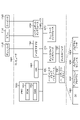
- FIG. 1 is a schematic configuration diagram of a system in which an alert verification device is arranged.
- FIG. 2 is a block diagram of the determination device according to the first embodiment.
- FIG. 3 is a diagram showing an example of a keyword list classified by attack type.
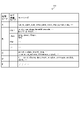
- FIG. 4 is a flowchart of attack success/failure determination processing by the determination device according to the first embodiment.
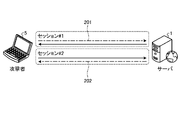
- FIG. 5 is a diagram showing a second order attack in the second embodiment.
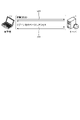
- FIG. 6 is a diagram showing an attack spanning multiple sessions in the third embodiment.
- FIG. 7 is a diagram showing a login bypass attack in the fourth embodiment.
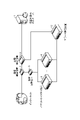
- FIG. 8 is a system configuration diagram according to the sixth embodiment.
- FIG. 9 is a diagram illustrating an example of a computer that executes an alert verification program for attack success/failure determination processing.
- alert verification device An embodiment of the alert verification device, alert verification method, and alert verification program disclosed in the present application will be described in detail below based on the drawings. Note that the alert verification device, alert verification method, and alert verification program disclosed in the present application are not limited to the following embodiments.
- FIG. 1 is a schematic configuration diagram of a system in which an alert verification device is arranged.
- a communication duplication device 2 and an attack detection device 3 are arranged on a communication path from the Internet to a Web server 1 .
- a packet capture device 4 is connected to the communication duplication device 2 .
- the alert verification device 10 is connected to the attack detection device 3 arranged on the communication path leading to the packet capture device 4 and the web server 1 .
- Such a configuration in which the alert verification device 10 is connected to the attack detection device 3 through a path different from the path leading to the web server 1 is called a tap configuration.
- a web application running on the web server 1 performs communication such as receiving requests, sending responses, and sending requests and receiving responses with PCs connected to the Internet. In the present embodiment, communication with respect to a web application will be described.
- a request from the Internet to the Web server 1 may include an attack request.
- the communication duplication device 2 duplicates the traffic to the web server 1.
- the communication replication device 2 receives communication data transmitted and received between a PC or the like connected to the Internet and the Web server 1 and generates a replication.
- the communication duplication device 2 then transmits the duplicated communication data to the packet capture device 4 .
- the packet capture device 4 receives a copy of the communication data generated by the communication duplication device 2 and transmitted and received between a PC or the like connected to the Internet and the web server 1 . Then, the packet capture device 4 accumulates and holds the acquired communication data.
- the attack detection device 3 is a device that has a function of detecting an attack request from network communication using technology such as WAF.
- WAF Network Engineering Task Force
- the attack detection device 3 receives an attack request sent from the Internet to the Web server 1 , it generates an alert indicating this attack request and sends it to the alert verification device 10 .
- the alert includes, for example, the IP (Internet Protocol) address and port number of the source of the attack request, and the path part of the URL (Uniform Resource Locator).
- the alert verification device 10 When an attack is detected, the alert verification device 10 receives an alert indicating attack detection from the attack detection device 3. The alert verification device 10 then acquires communication data associated with the alert from the packet capture device 4 . Then, the alert verification device 10 executes the attack code with an emulator corresponding to the attack type specified from the acquired communication data (for example, an attack type that exploits an OS (Operating System) command), and outputs the execution result to the Web server 1
- the information output from is extracted as features output when an attack succeeds.
- the alert verification device 10 inspects the response from the Web server 1, and determines that the attack was successful if the extracted feature is included in the response.
- the alert verification device 10 when there is an attack request to the Web server 1, not only the response to the attack request, but also all subsequent responses that meet the predetermined conditions. may be subject to inspection.
- the alert verification device 10 acquires from the packet capture device 4 the target communication data for attack success/failure determination, and suppresses the acquisition of other communication data, thereby reducing the processing load of parsing communication packets. .
- FIG. 2 is a block diagram of the determination device according to the first embodiment.
- the alert verification device 10 includes a storage unit 11, a communication data acquisition unit 121, an attack type determination unit 122, an attack code analysis unit 123, a feature selection unit 124, and a success/failure determination unit 125.
- the storage unit 11 stores an attack type keyword list 111 , a feature candidate DB 112 , a request/response DB 113 and a feature DB 114 .
- the attack type keyword list 111 is information indicating the keywords included in the attack code of each attack type for each attack type.
- FIG. 3 is a diagram showing an example of a keyword list classified by attack type.
- the attack type keyword list 111 is referred to when the attack type determination unit 122 determines the attack type from the keyword included in the attack code.
- attack type is, for example, A. Attack type that exploits OS commands, B. Attack type that exploits program code, C. Attack type that abuses the SQL (Structured Query Language) command, which is a function of the DB (for example, SQL injection, etc.), D. Attack types that exploit HTTP (Hyper Text Transfer Protocol) responses (for example, XSS (Cross Site Scripting), Header Injection, etc.), E. Attacks that exploit file operations (for example, directory traversal) are classified into five types.
- the above A. attack type the name of the OS command is used as a keyword.
- the keyword is the named entity used in the programming language.
- PHP Hypertext Preprocessor
- PHP-specific functions such as print_r, var_dump, base64_decode, or PHP specific expressions ($_GET, $_POST, etc.) are keywords.
- Other programming languages Java (registered trademark), Perl, Ruby, Python, etc.) are equivalent. Therefore, B. attack type, a keyword list 111 classified by attack type is held for each programming language. At this time, information on which programming language corresponds is held as a sub-attack type, as shown in FIG. 3, for example.
- keywords are SQL command names (select, update, insert, drop, etc.) and characteristic expressions for DB access. For example, for MySQL, it is information_schema, @@version, mysql, and so on.
- the keywords are named entities (alert, onclick, etc.) used in HTML (HyperText Markup Language) and Javascript (registered trademark).
- E. In the attack type of the keyword is a named entity (../, etc.) used in a directory traversal attack.
- the feature candidate DB 112 stores information (feature candidates) output from the emulator as a result of attack code emulation by the attack code analysis unit 123 .
- the request/response DB 113 stores various requests to the Web server 1 and various responses from the Web server 1.
- the request/response DB 113 may also store information that is referred to when the feature selection unit 124 excludes words (universal words) that frequently appear in normal responses from feature candidates. good.
- the request/response DB 113 is created, for example, by acquiring responses in a test environment in which attacks are guaranteed not to come. Alternatively, it is created using a response corresponding to a request that was not detected by the attack detection device 3 .
- the feature DB 114 stores the features output from the web server 1 when the attack code succeeds. Specifically, the feature DB 114 stores features selected by the feature selection unit 124 from feature candidates stored in the feature candidate DB 112 . The features stored in the feature DB 114 are referred to when the success/failure determination unit 125 determines whether or not the attack was successful based on the response from the Web server 1 .
- the communication data acquisition unit 121 executes the following alert reception processing.
- the communication data acquisition unit 121 receives an alert issued by the attack detection device 3 and executes an alert reception process of generating communication data acquisition conditions associated with the alert.
- the communication data acquisition unit 121 executes communication data acquisition processing for acquiring communication data from the packet capture device 4 according to the generated acquisition conditions. More specifically, the communication data acquisition unit 121 has a reception unit 131 , a generation unit 132 and an acquisition unit 133 .
- the reception unit 131 receives from the attack detection device 3 an alert notifying that the attack has been detected. That is, the receiving unit 131 receives an alert transmitted from the attack detection device 3 that detects an attack on the Web server 1, which is a monitoring target device, and generates an alert. The receiving unit 131 then outputs the received alert to the generating unit 132 .
- the generation unit 132 receives the input of the alert issued by the attack detection device 3 from the reception unit 131 . Next, the generation unit 132 extracts from the alert information that can identify communication data associated with the alert. For example, the generation unit 132 extracts part or all of the IP address and port number of the source of the attack request and the path part of the URL included in the alert.
- the generating unit 132 generates communication data acquisition conditions using information that can identify communication data linked to the alert. For example, the generation unit 132 uses part or all of the IP address and port number of the source of the attack request and the path part of the URL included in the alert to obtain communication data related to them. Generate acquisition conditions for After that, the generation unit 132 outputs the generated acquisition condition to the acquisition unit 133 . That is, the generation unit 132 generates acquisition conditions for communication data to be acquired based on the alert received by the reception unit 131 .
- the acquisition unit 133 transmits the acquisition conditions generated by the generation unit 132 to the packet capture device 4, and requests acquisition of communication data that matches the acquisition conditions. Then, the acquisition unit 133 receives communication data that matches the transmitted acquisition condition from the packet capture device 4 . That is, the acquisition unit 133 acquires communication data that matches the acquisition conditions generated by the generation unit 132 from the packet capture device 4 that holds data transmitted and received by the Web server 1, which is the monitoring target device. After that, the acquisition unit 133 outputs communication data that matches the acquisition condition, that is, communication data linked to the alert to the attack type determination unit 122 .
- the attack type determination unit 122 receives input of communication data associated with the alert from the acquisition unit 133 of the communication data acquisition unit 121. Then, the attack type determination unit 122 extracts the attack code included in the acquired communication data. After that, the attack type determination unit 122 uses the extracted attack code to determine the attack type.
- the attack type determination unit 122 for example, attacks the Web server 1, which is considered to be particularly important. ⁇ E. It is determined which of the five attack types of the attack type of . Specifically, the attack type determination unit 122 determines whether the keyword included in the attack code matches with which attack type keyword shown in the attack type keyword list 111 .
- the attack type determination unit 122 refers to the attack type keyword list 111, and if the attack code contains "cat", the attack code is classified as A. attack type (attack type that abuses OS commands). Further, if the attack code includes "print_r", the attack type determination unit 122 converts the attack code to B. attack type (attack type that exploits program code), and among them, it is determined that it is an attack type that uses php.
- the attack type determination unit 122 determines the attack type according to predetermined conditions when the attack code matches keywords of a plurality of attack types shown in the attack type keyword list 111 . For example, the attack type determination unit 122 determines that the keyword appearing at the leftmost position in the first attack code is the attack type.
- attack type determination unit 122 determines A. attack type.
- the attack type determination unit 122 refers to the attack type keyword list 111 and determines that determination is not possible if the attack code does not match any attack type. After that, the attack type determination unit 122 notifies the attack code analysis unit 123 of the attack code included in the attack request and the attack type of the attack code.
- the attack code analysis unit 123 performs dynamic analysis of the attack code using an emulator to extract features that appear in the response from the Web server 1 when the attack code is executed.
- the attack code analysis unit 123 uses an emulator corresponding to the attack type of the attack code determined by the attack type determination unit 122 to emulate an attack on the Web server 1 by the attack code. Then, the attack code analysis unit 123 extracts the output that appears in the response to the attack in the emulation of the attack code as feature candidates that appear when the attack is successful.
- the emulator corresponding to each attack type is created in advance by applying a debugger or an interpreter, for example, and the attack code analysis unit 123 selects the emulator corresponding to the attack type from the emulators created in advance. .
- the attack code analysis unit 123 extracts the features that appear in the response to the request when the attack code is executed as follows.
- the attack code analysis unit 123 executes the attack code as a command using an environment in which OS commands can be executed.
- OS commands for example, Windows (registered trademark) command prompt, Linux (registered trademark) bash, or an emulator capable of emulating commands can be used.
- the attack code analysis unit 123 causes the bash command to execute the command specified by the -c argument, such as "bash -c "cat /etc/passwd;”. Then, the attack code analysis unit 123 extracts the contents of the standard output and standard error output by command execution as feature candidates. For example, the attack code analysis unit 123 uses information such as standard output: "root:*:0:/bin/sh" and standard error output "none" for the attack code "cat /etc/passwd;” as feature candidates. Extract as
- the attack code analysis unit 123 executes the attack code using an appropriate interpreter or emulator for the programming language.
- the attack code analysis unit 123 sends the php interpreter with the -r argument, such as "php -r ”print('123456789');die();” Executes the specified code. Also, if the attack code is a python code, the attack code analysis unit 123 sends the code specified by the -c argument to the python interpreter, such as "python -c "import sys;print 123456789;sys.exit()". let it run.
- the attack code analysis unit 123 After executing the code, the attack code analysis unit 123 extracts the contents of the standard output and standard error output as feature candidates. For example, in the case of php code, the attack code analysis unit 123 uses the information of standard output "123456789” and standard error output "none" as feature candidates for attack code "print('123456789');die();” Extract.
- the attack code analysis unit 123 executes the attack code using a terminal or emulator capable of executing SQL statements against the DB.
- the SQL statement (SQL command) inserted by the SQL injection attack is partial and cannot be executed as is. Therefore, the attack code analysis unit 123 shapes the SQL sentence. For example, the attack code analysis unit 123 changes the SQL sentence so that the SELECT clause appears at the beginning of the attack code by deleting the part before the SELECT clause etc. of the SQL sentence.
- the keyword that the attack code analysis unit 123 adjusts so that it appears first among the phrases of the SQL statement may be phrases other than the SELECT phrase, such as update, delete, drop, etc., and these phrases are It is assumed that the keywords are given in the keyword list 111 classified by type.
- the attack code analysis unit 123 extracts the contents of the standard output and standard error output from the execution of the formatted SQL statement as feature candidates. For example, the attack code analysis unit 123 formats the attack code "' union select 123456789-" into “select 123456789". Then, the attack code analysis unit 123 extracts the information of the standard output "123456789” and the standard error output "none” by executing the modified attack code as feature candidates.
- the attack code analysis unit 123 extracts the attack code itself as a feature candidate because the attack code itself is sent to the client as a response due to the nature of the attack.
- the attack code analysis unit 123 uses “ ⁇ script>alert(1) ⁇ /script>” as a feature candidate. Extract. Also, when the attack code is the Header Injection attack code " ⁇ r ⁇ nSet-Cookie:1234;”, the attack code analysis unit 123 extracts " ⁇ r ⁇ nSet-Cookie:1234;” as a feature candidate.
- the attack code analysis unit 123 searches the OS for a file name that appears in the attack code, and extracts the content of the file with that file name as a feature candidate. do.
- the attack code analysis unit 123 searches the OS for the file name appearing in the attack code. Extract the content "root:*:0:/bin/sh" as a feature candidate.
- the attack code analysis unit 123 can perform emulation according to the attack type of the attack code, and extract feature candidates that are features when the attack by the attack code is successful. Then, the attack code analysis unit 123 stores the extracted feature candidates in the feature candidate DB 112 .
- the feature selection unit 124 excludes inappropriate candidates as features from the feature candidates extracted by the attack code analysis unit 123 . Specifically, the feature selection unit 124 excludes feature candidates that are too universal and highly likely to be unusable for determining the success or failure of an attack from among the feature candidates stored in the feature candidate DB 112 .
- the feature selection unit 124 excludes feature candidates with extremely short character string lengths, such as character string lengths of 2 or less, from feature candidates stored in the feature candidate DB 112 . Furthermore, the feature selection unit 124 excludes feature candidates of universal words that also appear in normal responses from the feature candidates. Then, the feature selection unit 124 stores the remaining feature candidates in the feature DB 114 as features when the attack is successful.
- the feature selection unit 124 excludes feature candidates "1, 2" whose character string length is equal to or less than a predetermined value (eg, 2) from feature candidates "1, 2, title, page, 123456789". After that, the feature selection unit 124 excludes universal words from "title, page, 123456789", which excludes feature candidates whose character string length is equal to or less than a predetermined value.
- a predetermined value eg, 2
- universal words from "title, page, 123456789" which excludes feature candidates whose character string length is equal to or less than a predetermined value.
- a universal term here is, for example, a term included in a response to a request that is not an attack. Therefore, the feature selection unit 124 refers to the request/response DB 113 and excludes feature candidates whose number of appearances in the request/response DB 113 is 1 or more among the feature candidates “title, page, 123456789”. Then, the feature selection unit 124 causes the feature DB 114 to store the feature candidates remaining as a result of the exclusion as features when an attack succeeds.
- the response " ⁇ html> ⁇ title>My blog page ⁇ /title> ⁇ p>Hello world! Date: April 1, 2017 ⁇ /p> ⁇ /html>” is stored in the request/response DB 113. explained in case.
- the feature selection unit 124 excludes the feature candidate "title, page” appearing in the response from among the feature candidates "title, page, 123456789". Then, the feature selection unit 124 causes the feature DB 114 to store the feature candidate "123456789" remaining as a result of exclusion as a feature at the time of successful attack.
- the feature selection unit 124 uses the request/response DB 113 when excluding universal words from the feature candidate DB 112, but a list of universal words prepared in advance can also be used. good.
- the feature selection unit 124 removes both feature candidates with extremely short character string lengths and feature candidates of universal words from the feature candidates extracted by the attack code analysis unit 123, as described above. may be performed, or only one of them may be performed.
- the success/failure determination unit 125 refers to the feature DB 114 and determines whether or not the response from the web server 1 indicates the success of the attack. That is, the success/failure determination unit 125 determines that the attack was successful when the response includes the feature stored in the feature DB 114 . On the other hand, the success/failure determination unit 125 determines that the attack has failed when the response does not include the feature stored in the feature DB 114 . That is, the success/failure determination unit 125 determines success or failure of the attack based on the communication data acquired by the acquisition unit 133 . Then, the success/failure determination unit 125 outputs the result of the success/failure determination of the attack.
- the success/failure determination unit 125 examines whether or not each of the plurality of responses corresponding to the plurality of requests to the Web server 1 after the attack request has the extracted feature. , it may be determined that the attack by the attack code was successful if it has the extracted features.
- FIG. 4 is a flowchart of the attack success/failure determination process by the determination device according to the first embodiment. Next, the flow of attack success/failure determination processing by the alert verification device 10 according to the present embodiment will be described with reference to FIG.
- the reception unit 131 of the communication data acquisition unit 121 receives an alert from the attack detection device 3 when the attack detection device 3 detects an attack on the Web server 1 .
- the generation unit 132 of the communication data acquisition unit 121 generates communication data acquisition conditions from the alert acquired by the reception unit 131 (step S1).
- the acquisition unit 133 of the communication data acquisition unit 121 acquires communication data that matches the acquisition condition generated by the generation unit 132 from the packet capture device 4 (step S2). After that, the acquisition unit 133 of the communication data acquisition unit 121 outputs the acquired communication data to the attack type determination unit 122 as communication data linked to the alert.
- the attack type determination unit 122 refers to the attack type keyword list 111 to determine the attack type of the attack code included in the communication data acquired by the communication data acquisition unit 121 (step S3).
- the attack type determination unit 122 determines whether the attack type can be determined based on the attack type determination result (step S4).
- step S4 If the attack type can be determined (step S4: affirmative), the attack code analysis unit 123 emulates the attack code based on the attack type determined by the attack type determination unit 122. Then, the attack code analysis unit 123 performs attack code analysis processing for extracting information output as a result of the emulation as feature candidates for successful attack (step S5). After that, the attack code analysis unit 123 stores the extracted feature candidates in the feature candidate DB 112 .
- the feature selection unit 124 selects feature candidates excluding feature candidates inappropriate as features from among the feature candidates stored in the feature candidate DB 112, as features to be used for determining the success or failure of an attack (step S6).
- the feature selection unit 124 determines whether or not the feature exists according to the feature selection result (step S7). For example, if all feature candidates are excluded, the feature selection unit 124 determines that no feature exists.
- the feature selection unit 124 causes the feature DB 114 to store the selected feature used to determine the success or failure of the attack.
- the success/failure determination unit 125 determines whether or not the response from the Web server 1 includes the feature stored in the feature DB 114 (step S8).
- the success/failure determination unit 125 determines whether or not the attack was successful by comparing the characteristics stored in the feature DB 114 with the response from the Web server 1, which is the target of determination of success or failure of the attack.
- the success/failure determination unit 125 determines that the attack on the web server 1 was successful. Then, the success/failure determination unit 125 transmits a message to an external device (not shown) such as an administrator terminal to notify the administrator of the Web server 1 of the success of the attack on the Web server 1 (step S9). .
- the success/failure determination unit 125 determines that the attack on the Web server 1 has failed. . Then, the success/failure determination unit 125 transmits a message notifying that the attack on the Web server 1 has failed to an external device (not shown) such as an administrator terminal, and notifies the administrator of the Web server 1 (step S10). .
- step S4 negative
- step S7 negative
- the success/failure determination unit 125 notifies the administrator that the attack success/failure determination is not possible (step S11).
- the alert verification device 10 receives an alert when an attack is detected by the attack detection device 3 such as a WAF, and generates communication data that satisfies an acquisition condition based on the received alert. Obtained from the packet capture device 4 that holds a copy of the communication data. Then, the alert verification device 10 determines the attack type using the communication data linked to the acquired alert, emulates the attack code, extracts characteristics of the response, and receives a response having the extracted characteristics from the Web server 1. If it is output, it is determined that the attack was successful. As a result, the alert verification device 10 can parse the communication data associated with the alert and determine the success or failure of the attack. can judge. Therefore, the alert verification device 10 can determine the success or failure of an attack on the Web server 1 while reducing the processing load of parsing communication packets without modifying an existing system, defining an attack, or collecting vulnerability information. becomes possible.
- FIG. 5 is a diagram showing a second order attack in the second embodiment.
- the attack detection device 3 such as WAF detects the attack request 201 in session #1, but does not determine the request as an attack in session #2.
- the attack request 201 and the response 202 are the attacks intended by the attacker, but in the alert verification device 10 described in the first embodiment, the response 202 is not subject to the attack success/failure determination of the alert verification technology.
- the communication data acquisition unit 121 generates a communication data acquisition condition from an alert, and acquires communication data that satisfies the generated acquisition condition from the packet capture device 4. In addition, the following processing is performed. I do. However, the communication data acquisition unit 121 may perform the following process instead of acquiring communication data that satisfies an acquisition condition for communication data generated from an alert.
- the generating unit 132 identifies the session in which the attack was detected from the alert acquired by the receiving unit 131. Next, the generation unit 132 generates an acquisition condition using information that can identify the communication source and communication destination such as the IP address in the identified session. That is, the generation unit 132 generates the acquisition condition based on the information specifying the communication source or communication destination in the first session in which the alert is generated.
- the acquisition unit 133 acquires communication data for a certain period of time from the alert generation according to the acquisition conditions generated by the generation unit 132 . That is, the acquisition unit 133 acquires communication data that matches the acquisition conditions for the first session and the second session after the first session from the packet capture device 4 .
- the generator 132 identifies session #1 by the attack request 201 when the attack is detected from the alert. Then, the generation unit 132 stores information specifying the communication partner of the Web server 1, such as the IP address of the communication target device 5 in session #1. For example, the generation unit 132 stores “source IP address 192.168.0.1 and destination IP address 10.0.0.1” in session #1.
- the acquisition unit 133 acquires communication data that matches the information specifying the communication target device 5 from the packet capture device 4 at regular intervals during a certain period of time after the alert is issued, and transmits the communication data to the attack type determination unit 122 .
- the acquisition unit 133 sends an HTTP request of “source IP address 192.168.0.1 and destination IP address 10.0.0.1” from the packet capture device 4 at five-minute intervals for one hour and Get the HTTP response.
- the communication data acquisition unit 121 may perform the above processing when the success/failure determination unit 125 determines that the attack on session #1 has failed.
- the alert verification device 10 determines that the attack has failed in session #1 in which the attack request 201 has been detected, it can determine that the attack has succeeded based on the response 202 in session #2 in which the attack request has not been detected.
- the alert verification device 10 acquires communication data with the attack communication target device 5 also for sessions subsequent to the session in which the attack was detected, and determines the success or failure of the attack. judge. As a result, it becomes possible to determine the success or failure of second-order attacks, and the security of the Web server 1 can be improved.
- FIG. 6 is a diagram showing an attack spanning multiple sessions in the third embodiment.
- Attacks on the Web server 1 include attacks spanning multiple sessions, such as blind SQL injection.
- the attack detection device 3 may not detect the requests 211 and 212 as attack requests in either session #1 or #2.
- the communications of sessions #1 and #2 may not be targeted for attack success/failure determination.
- the communication data acquisition unit 121 generates a communication data acquisition condition from an alert, and acquires communication data that satisfies the generated acquisition condition from the packet capture device 4. In addition, the following processing is performed. I do. However, the communication data acquisition unit 121 may perform the following process instead of acquiring communication data that satisfies an acquisition condition for communication data generated from an alert.
- the generation unit 132 generates an acquisition condition based on a predefined attack code. Then, the acquisition unit 133 acquires communication data corresponding to the acquisition condition generated by the generation unit 132 from the packet capture device 4 and transmits the communication data to the attack type determination unit 122 .
- Generate acquisition conditions for The acquisition unit 133 acquires HTTP requests and HTTP responses that match a predefined regular expression from the packet capture device 4 and transmits them to the attack type determination unit 122 at regular intervals such as every five minutes.
- the alert verification device 10 also targets sessions #1 and #2 in which the requests 211 and 212 are not detected as attacks by the attack detection device 3 as targets of the attack success/failure determination process. can be done. As a result, it is possible to determine the success or failure of an attack that spans multiple sessions, such as blind SQL injection, and the security of the Web server 1 can be improved.
- FIG. 7 is a diagram showing a login bypass attack in the fourth embodiment.
- Attacks on the Web server 1 include a login bypass attack in which a user logs in by bypassing authentication.
- a login bypass attack in which a user logs in by bypassing authentication.
- the information entered in the request 221 is attacking the login page, but is generally not attacking information.
- the request 222 for accessing the page after login is not judged as an attack by the attack detection device 3 either. Therefore, if the login page is not specified, the alert verification device 10 described in the first embodiment may not determine the success or failure of an attack in some cases.
- the communication data acquisition unit 121 generates a communication data acquisition condition from an alert, and acquires communication data that satisfies the generated acquisition condition from the packet capture device 4. In addition, the following processing is performed. I do. However, the communication data acquisition unit 121 may perform the following process instead of acquiring communication data that satisfies an acquisition condition for communication data generated from an alert.
- the generation unit 132 generates an acquisition condition from the path part of the URL of the login page defined in advance. That is, the generation unit 132 generates the acquisition condition based on the information of the login page in the web server 1, which is the monitoring target device. Then, the acquisition unit 133 acquires communication data related to the login page from the packet capture device 4 according to the acquisition condition generated by the generation unit 132 and transmits the communication data to the attack type determination unit 122 .
- the generation unit 132 receives a designation in advance of a path part (for example, /login.php) that is a candidate for a login page. Then, the generation unit 132 generates an acquisition condition for acquiring an HTTP request and an HTTP response including "/login.php" in the path part of the URL. Acquisition unit 133 acquires an HTTP request and an HTTP response including “/login.php” in the path part of the URL from packet capture device 4 according to the acquisition condition generated by generation unit 132 , and sends them to attack type determination unit 122 . Send.
- a path part for example, /login.php
- the generation unit 132 may acquire the information of the login page by the following method without receiving the designation of the path part of the URL of the login page in advance. For example, the generation unit 132 stores the path part of the URL that was determined to be the login page when the attack success/failure determination was performed using the communication data generated from the alert that satisfies the acquisition condition. Then, the generation unit 132 may generate the acquisition condition from the path part of the stored URL.
- the alert verification device 10 can target communications in a login bypass attack, which is not detected as an attack by the attack detection device 3, for attack success/failure determination processing. As a result, it is possible to determine the success or failure of the login bypass attack, and the security of the Web server 1 can be improved.
- the generation unit 132 of the communication data acquisition unit 121 generates acquisition conditions from predefined information, that is, information for extracting predefined specific communication data. Then, the acquisition unit 133 of the communication data acquisition unit 121 acquires communication data according to the acquisition conditions generated by the generation unit 132 from the packet capture device 4 and transmits the communication data to the attack type determination unit 122 .
- the generation unit 132 selects the path part of the specific URL as "/example.html”. .html” information in advance. Then, the generation unit 132 generates an acquisition condition for acquiring an HTTP request and an HTTP response including "/example.html” in the path part of the URL.
- the acquisition unit 133 acquires an HTTP request and an HTTP response including “/example.html” in the path part of the URL from the packet capture device 4 according to the acquisition condition generated by the generation unit 132 .
- the alert verification device 10 acquires communication data based on information defined in advance. As a result, it becomes possible to determine the success or failure of an attack for a predefined specific HTTP request and HTTP response, and the security of the Web server 1 can be improved.
- FIG. 8 is a system configuration diagram according to the sixth embodiment. As shown in FIG. 8, the system according to the present embodiment is provided with a load balancer 6, and a plurality of packet capture devices 4 are arranged. In the system according to the present embodiment, communication data acquisition processing is distributed.
- a plurality of packet capture devices 4 are connected to the load balancer 6 .
- the load balancer 6 receives a copy of communication data generated by the communication duplication device 2 and transmitted from the Internet to the Web server 1 . Then, the load balancer 6 distributes the copies of the communication data so that they are sent to the respective packet capture devices 4 approximately evenly.
- Each packet capture device 4 receives a copy of communication data from the load balancer 6 . Then, the packet capture device 4 accumulates and stores the communication data acquired respectively.
- the alert verification device 10 is connected to each of the multiple packet capture devices 4 .
- the acquisition unit 133 of the communication data acquisition unit 121 in the alert verification device 10 specifies and acquires communication data that matches the acquisition condition of the data created based on the alert from among the communication data held by each packet capture device 4. . That is, the acquisition unit 133 acquires communication data from a plurality of packet capture devices 4 that distribute and hold communication data in communication performed by the Web server 1, which is a device to be monitored.
- the system according to the present embodiment distributes and transmits replicated communication data to a plurality of packet capture devices 4 and stores them.
- attack success/failure determination processing can be performed quickly in an environment where a large amount of traffic flows, and security can be improved even in the Web server 1 where a large amount of traffic flows.
- HTTP requests and HTTP responses are used as examples of communications to be monitored for attack success/failure determination.
- the alert verification device 10 may perform attack success/failure determination processing using another protocol such as FTP (File Transfer Protocol) as a monitoring target.
- FTP File Transfer Protocol
- each component of each device illustrated is functionally conceptual, and does not necessarily need to be physically configured as illustrated.
- the specific form of distribution and integration of each device is not limited to the illustrated one, and all or part of them can be functionally or physically distributed or Can be integrated and configured.
- all or any part of each processing function performed by each device is realized by a CPU (Central Processing Unit) and a program analyzed and executed by the CPU, or hardware by wired logic can be realized as
- a tap configuration system was described as an example, but the system is not limited to this.
- An in-line configuration may be adopted in which the web server 1 is directly connected to the web server 1 that is the target of attack success/failure determination.
- the communication duplicating device 2 is arranged to copy communication data such as TAP. 4 may be connected, and the attack detection device 3 may copy the communication data and transmit it to the packet capture device 4 .
- the information processing device can function as the alert verification device 10 by causing the information processing device to execute the program provided as package software or online software.
- the information processing apparatus referred to here includes a desktop or notebook personal computer.
- information processing devices include smart phones, mobile communication terminals such as mobile phones and PHSs (Personal Handyphone Systems), and PDAs (Personal Digital Assistants).
- the alert verification device 10 may be implemented in a cloud server.
- FIG. 9 is a diagram showing an example of a computer that executes an alert verification program for attack success/failure determination processing.
- computer 1000 includes memory 1010, CPU 1020, hard disk drive interface 1030, disk drive interface 1040, serial port interface 1050, video adapter 1060, and network interface 1070, for example. These units are connected by a bus 1080 .
- the memory 1010 includes a ROM (Read Only Memory) 1011 and a RAM (Random Access Memory) 1012 .
- the ROM 1011 stores a boot program such as BIOS (Basic Input Output System).
- BIOS Basic Input Output System
- Hard disk drive interface 1030 is connected to hard disk drive 1090 .
- a disk drive interface 1040 is connected to the disk drive 1100 .
- a removable storage medium such as a magnetic disk or an optical disk is inserted into the disk drive 1100, for example.
- a mouse 1110 and a keyboard 1120 are connected to the serial port interface 1050, for example.
- a display 1130 is connected to the video adapter 1060 .
- the hard disk drive 1090 stores, for example, an OS 1091, application programs 1092, program modules 1093, and program data 1094. That is, an alert verification program defining each process of the alert verification device 10 having functions equivalent to those of the alert verification device 10 is implemented as a program module 1093 in which computer-executable code is described. Program modules 1093 are stored, for example, on hard disk drive 1090 .
- the hard disk drive 1090 stores a program module 1093 for executing processing similar to the functional configuration in the alert verification device 10 .
- the hard disk drive 1090 may be replaced by an SSD (Solid State Drive).
- the setting data used in the processing of the above-described embodiment is stored as program data 1094 in the memory 1010 or the hard disk drive 1090, for example. Then, the CPU 1020 reads the program modules 1093 and program data 1094 stored in the memory 1010 and the hard disk drive 1090 to the RAM 1012 as necessary, and executes the processes of the above-described embodiments.
- the program modules 1093 and program data 1094 are not limited to being stored in the hard disk drive 1090, but may be stored in a removable storage medium, for example, and read by the CPU 1020 via the disk drive 1100 or the like. Alternatively, the program modules 1093 and program data 1094 may be stored in another computer connected via a network (LAN (Local Area Network), WAN (Wide Area Network), etc.). Program modules 1093 and program data 1094 may then be read by CPU 1020 through network interface 1070 from other computers.
- LAN Local Area Network
- WAN Wide Area Network
Landscapes
- Engineering & Computer Science (AREA)
- Computer Security & Cryptography (AREA)
- Computer Hardware Design (AREA)
- General Engineering & Computer Science (AREA)
- Computing Systems (AREA)
- Computer Networks & Wireless Communication (AREA)
- Signal Processing (AREA)
- Software Systems (AREA)
- Theoretical Computer Science (AREA)
- Physics & Mathematics (AREA)
- General Physics & Mathematics (AREA)
- Computer And Data Communications (AREA)
Abstract
Description
[概要]
図1は、アラート検証装置が配置されたシステムの概略構成図である。図1に示すように、インターネットからWebサーバ1に繋がる通信経路上に、通信複製機器2及び攻撃検知機器3が配置される。さらに、通信複製機器2には、パケットキャプチャ装置4が接続される。そして、アラート検証装置10は、パケットキャプチャ装置4及びWebサーバ1に繋がる通信経路上に配置された攻撃検知機器3に接続される。このようにアラート検証装置10がWebサーバ1に繋がる経路とは異なる経路で攻撃検知機器3に接続された構成は、タップ構成と呼ばれる。
図2は、第1の実施形態に係る判定装置のブロック図である。図2に示すように、本実施形態に係るアラート検証装置10は、記憶部11、通信データ取得部121、攻撃タイプ判定部122、攻撃コード解析部123、特徴選定部124及び成否判定部125を備える。記憶部11は、攻撃タイプ別キーワードリスト111、特徴候補DB112、リクエスト・レスポンスDB113及び特徴DB114を格納する。
図4は、第1の実施形態に係る判定装置による攻撃成否の判定処理のフローチャートである。次に、図4を参照して、本実施形態に係るアラート検証装置10による攻撃成否の判定処理の流れを説明する。
以上に説明したように、本実施形態に係るアラート検証装置10は、WAFなどの攻撃検知機器3による攻撃検知時のアラートを受信して、受信したアラートから生成した取得条件を満たす通信データを、通信データの複製を保持するパケットキャプチャ装置4から取得する。そして、アラート検証装置10は、取得したアラートに紐づく通信データを用いて攻撃タイプを判定し、攻撃コードをエミュレートしてレスポンスの特徴を抽出し、抽出した特徴を有するレスポンスがWebサーバ1から出力された場合、攻撃が成功したと判定する。これにより、アラート検証装置10は、アラートに紐づく通信データのパースを行い攻撃の成否の判定ができるので、Webサーバ1に対する全ての通信データのパース処理に比べて少ないパース処理で攻撃の成否の判定ができる。したがって、アラート検証装置10は、既存のシステムの改変や、攻撃の定義や脆弱性情報の収集を行うことなく、通信パケットのパース処理負荷を低減しつつ、Webサーバ1に対する攻撃の成否を判定することが可能となる。
図5は、第2の実施形態におけるセカンドオーダ攻撃を示す図である。Webサーバ1への攻撃には、登録機能と参照機能をまたいで確認する必要のある脆弱性を対象とするセカンドオーダ攻撃が存在する。例えば、図5に示すようなセカンドオーダ攻撃を分析する場合について説明する。セッション#1では、WAF等の攻撃検知機器3は、攻撃リクエスト201が検知されるが、セッション#2ではリクエストを攻撃と判定しないことが考えられる。この場合、攻撃リクエスト201とレスポンス202とが攻撃者が意図した攻撃であるが、第1の実施形態で説明したアラート検証装置10では、レスポンス202がアラート検証技術の攻撃成否判定の対象とならないことがある。
図6は、第3の実施形態における複数のセッションにまたがる攻撃を示す図である。Webサーバ1への攻撃には、ブラインドSQLインジェクションなどの複数のセッションにまたがる攻撃が存在する。例えば、図6に示すような複数のセッションにまたがる攻撃を分析する場合について説明する。この場合、セッション#1及び#2のいずれにおいても、攻撃検知機器3は、リクエスト211及び212を攻撃リクエストとして検知しないことが考えられる。この場合、第1の実施形態で説明したアラート検証装置10では、セッション#1及び#2の通信が攻撃成否判定の対象とならないことがある。
図7は、第4の実施形態におけるログインバイパス攻撃を示す図である。Webサーバ1への攻撃には、認証をバイパスしてログインするログインバイパス攻撃が存在する。例えば、図7に示すようなログイン攻撃を分析する場合について説明する。この場合、リクエスト221で入力される情報はログインページにとっては攻撃となるが、一般的には攻撃とならない情報である。さらに、ログイン後のページにアクセスするためのリクエスト222も攻撃検知機器3では攻撃とは判定されない。そのため、ログインページを特定しておかなければ、第1の実施形態で説明したアラート検証装置10では、通信が攻撃成否判定の対象とならないことがある。
次に、第5の実施形態ついて説明する。攻撃検知機器3のアラート情報を使用せず、事前に定義された特定のHTTPリクエスト及びHTTPレスポンス、すなわち、事前に定義された特定の通信データについて攻撃成否判定を行いたい場合が存在する。
図8は、第6の実施形態に係るシステム構成図である。本実施形態に係るシステムには、図8に示すように、負荷分散装置6が設けられ、複数のパケットキャプチャ装置4が複数配置される。本実施例に係るシステムでは、通信データの取得処理が分散して行われる。
以上の各実施例では、攻撃成否判定の監視対象とする通信をHTTPリクエスト及びHTTPレスポンスを例に説明したが、攻撃の成否を判定する情報を有する通信であれば特に制限はない。例えば、アラート検証装置10は、FTP(File Transfer Protocol)などの他のプロトコルを監視対象として攻撃成否判定処理を行ってもよい。
図示した各装置の各構成要素は機能概念的なものであり、必ずしも物理的に図示のように構成されていることを要しない。すなわち、各装置の分散及び統合の具体的形態は図示のものに限られず、その全部又は一部を、各種の負荷や使用状況等に応じて、任意の単位で機能的又は物理的に分散又は統合して構成することができる。さらに、各装置にて行われる各処理機能は、その全部又は任意の一部が、CPU(Central Processing Unit)及び当該CPUにて解析実行されるプログラムにて実現され、あるいは、ワイヤードロジックによるハードウェアとして実現され得る。
また、上記の実施形態で述べたアラート検証装置10の機能を実現するプログラムを所望の情報処理装置(コンピュータ)にインストールすることによって実装できる。例えば、パッケージソフトウェアやオンラインソフトウェアとして提供される上記のプログラムを情報処理装置に実行させることにより、情報処理装置をアラート検証装置10として機能させることができる。ここで言う情報処理装置には、デスクトップ型またはノート型のパーソナルコンピュータが含まれる。また、その他にも、情報処理装置にはスマートフォン、携帯電話機やPHS(Personal Handyphone System)等の移動体通信端末、さらには、PDA(Personal Digital Assistants)等がその範疇に含まれる。また、アラート検証装置10を、クラウドサーバに実装してもよい。
2 通信複製機器
3 攻撃検知機器
4 パケットキャプチャ装置
10 アラート検証装置
11 記憶部
111 攻撃タイプ別キーワードリスト
112 特徴候補DB
113 リクエスト・レスポンスDB
114 特徴DB
121 通信データ取得部
122 攻撃タイプ判定部
123 攻撃コード解析部
124 特徴選定部
125 成否判定部
Claims (8)
- 監視対象装置に対する攻撃を検知する攻撃検知機器から送信されたアラートを受信する受信部と、
前記受信部により受信された前記アラートを基に、取得する通信データの取得条件を生成する生成部と、
前記監視対象装置により送受信されたデータを保持するパケットキャプチャ装置から、前記生成部により生成された前記取得条件にマッチする前記通信データを取得する取得部と、
前記取得部により取得された前記通信データを基に前記攻撃の成否を判定する成否判定部と
を備えたことを特徴とするアラート検証装置。 - 前記生成部は、前記アラートが発生した第1セッションにおける通信元又は通信先を特定する情報を基に前記取得条件を生成し、
前記取得部は、前記第1セッション及び第2セッション以降についても前記取得条件にマッチする通信データを前記パケットキャプチャ装置から取得する
ことを特徴とする請求項1に記載のアラート検証装置。 - 前記生成部は、事前に定義された攻撃コードを基に前記取得条件を生成することを特徴とする請求項1又は2に記載のアラート検証装置。
- 前記生成部は、前記監視対象装置におけるログインページの情報を基に前記取得条件を生成することを特徴とする請求項1~3のいずれか一つに記載のアラート検証装置。
- 前記生成部は、事前に定義された特定の通信データを抽出するための情報を基に前記取得条件を生成することを特徴とする請求項1~4のいずれか一つに記載のアラート検証装置。
- 前記取得部は、前記監視対象装置が行う通信における通信データを分散して受信してそれぞれで保持する複数のパケットキャプチャ装置から前記通信データを取得することを特徴とする請求項1~5のいずれか一つに記載のアラート検証装置。
- 監視対象装置に対する攻撃を検知する攻撃検知機器から送信されたアラートを受信する受信工程と、
前記受信工程において受信された前記アラートを基に、取得する通信データの取得条件を生成する生成工程と、
前記監視対象装置により送受信されたデータを保持するデータを保持するパケットキャプチャ装置から、前記生成工程において生成された前記取得条件にマッチする前記通信データを取得する取得工程と
前記取得工程において取得された前記通信データを基に前記攻撃の成否を判定する成否判定工程と
を備えたことを特徴とするアラート検証方法。 - 監視対象装置に対する攻撃を検知する攻撃検知機器から送信されたアラートを受信し、
受信した前記アラートを基に、取得する通信データの取得条件を生成し、
前記監視対象装置により送受信されたデータを保持するパケットキャプチャ装置から、生成した前記取得条件にマッチする前記通信データを取得し、
取得した前記通信データを基に前記攻撃の成否を判定する
処理をコンピュータ実行させることを特徴とするアラート検証プログラム。
Priority Applications (3)
| Application Number | Priority Date | Filing Date | Title |
|---|---|---|---|
| PCT/JP2021/022590 WO2022264239A1 (ja) | 2021-06-14 | 2021-06-14 | アラート検証装置、アラート検証方法及びアラート検証プログラム |
| JP2023528781A JP7677416B2 (ja) | 2021-06-14 | 2021-06-14 | アラート検証装置、アラート検証方法及びアラート検証プログラム |
| US18/570,046 US20240250964A1 (en) | 2021-06-14 | 2021-06-14 | Alert verification device, alert verification method, and alert verification program |
Applications Claiming Priority (1)
| Application Number | Priority Date | Filing Date | Title |
|---|---|---|---|
| PCT/JP2021/022590 WO2022264239A1 (ja) | 2021-06-14 | 2021-06-14 | アラート検証装置、アラート検証方法及びアラート検証プログラム |
Publications (1)
| Publication Number | Publication Date |
|---|---|
| WO2022264239A1 true WO2022264239A1 (ja) | 2022-12-22 |
Family
ID=84526872
Family Applications (1)
| Application Number | Title | Priority Date | Filing Date |
|---|---|---|---|
| PCT/JP2021/022590 Ceased WO2022264239A1 (ja) | 2021-06-14 | 2021-06-14 | アラート検証装置、アラート検証方法及びアラート検証プログラム |
Country Status (3)
| Country | Link |
|---|---|
| US (1) | US20240250964A1 (ja) |
| JP (1) | JP7677416B2 (ja) |
| WO (1) | WO2022264239A1 (ja) |
Citations (4)
| Publication number | Priority date | Publication date | Assignee | Title |
|---|---|---|---|---|
| JP2010152773A (ja) * | 2008-12-26 | 2010-07-08 | Mitsubishi Electric Corp | 攻撃判定装置及び攻撃判定方法及びプログラム |
| WO2015189971A1 (ja) * | 2014-06-13 | 2015-12-17 | 株式会社アルチザネットワークス | パケットキャプチャ装置、パケットキャプチャ方法、およびパケットの再構築方法 |
| WO2019013266A1 (ja) * | 2017-07-12 | 2019-01-17 | 日本電信電話株式会社 | 判定装置、判定方法、および、判定プログラム |
| WO2019225216A1 (ja) * | 2018-05-21 | 2019-11-28 | 日本電信電話株式会社 | 判定方法、判定装置および判定プログラム |
Family Cites Families (7)
| Publication number | Priority date | Publication date | Assignee | Title |
|---|---|---|---|---|
| WO2014122662A1 (en) * | 2013-02-10 | 2014-08-14 | Cyber Active Security Ltd. | Method and product for providing a predictive security product and evaluating existing security products |
| WO2017147472A1 (en) * | 2016-02-24 | 2017-08-31 | Verodin, Inc. | Systems and methods for attack simulation on a production network |
| US10142360B2 (en) * | 2016-10-11 | 2018-11-27 | Arbor Networks, Inc. | System and method for iteratively updating network attack mitigation countermeasures |
| US11115426B1 (en) * | 2018-12-13 | 2021-09-07 | Cisco Technology, Inc. | Distributed packet capture for network anomaly detection |
| US11310242B2 (en) * | 2019-01-15 | 2022-04-19 | Raytheon Bbn Technologies Corp. | System and method for protecting network-facing services |
| US12107874B2 (en) * | 2019-07-08 | 2024-10-01 | Fmr Llc | Automated intelligent detection and mitigation of cyber security threats |
| KR102287394B1 (ko) * | 2020-12-21 | 2021-08-06 | 한국인터넷진흥원 | 익스플로잇 공격 유형 분류 방법 및 그 장치 |
-
2021
- 2021-06-14 WO PCT/JP2021/022590 patent/WO2022264239A1/ja not_active Ceased
- 2021-06-14 US US18/570,046 patent/US20240250964A1/en active Pending
- 2021-06-14 JP JP2023528781A patent/JP7677416B2/ja active Active
Patent Citations (4)
| Publication number | Priority date | Publication date | Assignee | Title |
|---|---|---|---|---|
| JP2010152773A (ja) * | 2008-12-26 | 2010-07-08 | Mitsubishi Electric Corp | 攻撃判定装置及び攻撃判定方法及びプログラム |
| WO2015189971A1 (ja) * | 2014-06-13 | 2015-12-17 | 株式会社アルチザネットワークス | パケットキャプチャ装置、パケットキャプチャ方法、およびパケットの再構築方法 |
| WO2019013266A1 (ja) * | 2017-07-12 | 2019-01-17 | 日本電信電話株式会社 | 判定装置、判定方法、および、判定プログラム |
| WO2019225216A1 (ja) * | 2018-05-21 | 2019-11-28 | 日本電信電話株式会社 | 判定方法、判定装置および判定プログラム |
Also Published As
| Publication number | Publication date |
|---|---|
| US20240250964A1 (en) | 2024-07-25 |
| JPWO2022264239A1 (ja) | 2022-12-22 |
| JP7677416B2 (ja) | 2025-05-15 |
Similar Documents
| Publication | Publication Date | Title |
|---|---|---|
| CN109922052B (zh) | 一种结合多重特征的恶意url检测方法 | |
| Kirda et al. | Noxes: a client-side solution for mitigating cross-site scripting attacks | |
| US12282554B2 (en) | Cyber threat information processing apparatus, cyber threat information processing method, and storage medium storing cyber threat information processing program | |
| KR102396237B1 (ko) | 사이버 위협 정보 처리 장치, 사이버 위협 정보 처리 방법 및 사이버 위협 정보 처리하는 프로그램을 저장하는 저장매체 | |
| EP3637292B1 (en) | Determination device, determination method, and determination program | |
| CN107896219B (zh) | 一种网站脆弱性的检测方法、系统及相关装置 | |
| JP2014504765A (ja) | 悪意あるpdfネットワークコンテンツを検出するシステムおよび方法 | |
| CN108351941B (zh) | 分析装置、分析方法、以及计算机可读存储介质 | |
| CN108696481A (zh) | 漏洞检测方法和装置 | |
| US12450338B2 (en) | Identification of command injection attacks | |
| AU2019273974B2 (en) | Determination method, determination device and determination program | |
| JP5752642B2 (ja) | 監視装置および監視方法 | |
| KR20240103397A (ko) | 사이버 위협 정보 처리 장치, 사이버 위협 정보 처리 방법 및 사이버 위협 정보 처리하는 프로그램을 저장하는 컴퓨터로 판독 가능한 저장매체 | |
| Tudosi et al. | Design and Implementation of an Automated Dynamic Rule System for Distributed Firewalls. | |
| JP7677416B2 (ja) | アラート検証装置、アラート検証方法及びアラート検証プログラム | |
| CN114499968B (zh) | 一种xss攻击检测方法及装置 | |
| KR102396238B1 (ko) | 사이버 위협 정보 처리 장치, 사이버 위협 정보 처리 방법 및 사이버 위협 정보 처리하는 프로그램을 저장하는 저장매체 | |
| KR20240021677A (ko) | 사이버 위협 정보 처리 장치, 사이버 위협 정보 처리 방법 및 사이버 위협 정보 처리하는 프로그램을 저장하는 컴퓨터 판독 가능한 저장매체 | |
| CN116389122A (zh) | 一种基于异常状态的攻击检测方法、装置、介质及机器 | |
| KR20240103338A (ko) | 사이버 위협 정보 처리 장치, 사이버 위협 정보 처리 방법 및 사이버 위협 정보 처리 프로그램을 저장하는 컴퓨터로 판독 가능한 저장 매체 | |
| Hulloowan et al. | Defending against XML external entity (XXE) attacks: A review and comparative analysis of prevention mechanisms | |
| CN116074280A (zh) | 应用入侵防御系统识别方法、装置、设备和存储介质 | |
| US12627697B2 (en) | Cyber threat information processing apparatus, cyber threat information processing method, and storage medium storing cyber threat information processing program | |
| KR20240021676A (ko) | 사이버 위협 정보 처리 장치, 사이버 위협 정보 처리 방법 및 사이버 위협 정보 처리하는 프로그램을 저장하는 저장매체 | |
| CN119484002A (zh) | 云资产的专有属性安全管理方法、系统与存储介质 |
Legal Events
| Date | Code | Title | Description |
|---|---|---|---|
| 121 | Ep: the epo has been informed by wipo that ep was designated in this application |
Ref document number: 21945919 Country of ref document: EP Kind code of ref document: A1 |
|
| WWE | Wipo information: entry into national phase |
Ref document number: 2023528781 Country of ref document: JP |
|
| WWE | Wipo information: entry into national phase |
Ref document number: 18570046 Country of ref document: US |
|
| NENP | Non-entry into the national phase |
Ref country code: DE |
|
| 122 | Ep: pct application non-entry in european phase |
Ref document number: 21945919 Country of ref document: EP Kind code of ref document: A1 |