WO2022264186A1 - ニューラルネットワーク構築装置、ニューラルネットワーク構築方法、画像処理装置、及び画像処理方法 - Google Patents
ニューラルネットワーク構築装置、ニューラルネットワーク構築方法、画像処理装置、及び画像処理方法 Download PDFInfo
- Publication number
- WO2022264186A1 WO2022264186A1 PCT/JP2021/022425 JP2021022425W WO2022264186A1 WO 2022264186 A1 WO2022264186 A1 WO 2022264186A1 JP 2021022425 W JP2021022425 W JP 2021022425W WO 2022264186 A1 WO2022264186 A1 WO 2022264186A1
- Authority
- WO
- WIPO (PCT)
- Prior art keywords
- neural network
- network model
- operations
- unit
- required time
- Prior art date
- Legal status (The legal status is an assumption and is not a legal conclusion. Google has not performed a legal analysis and makes no representation as to the accuracy of the status listed.)
- Ceased
Links
Images





Classifications
-
- G—PHYSICS
- G06—COMPUTING OR CALCULATING; COUNTING
- G06N—COMPUTING ARRANGEMENTS BASED ON SPECIFIC COMPUTATIONAL MODELS
- G06N3/00—Computing arrangements based on biological models
- G06N3/02—Neural networks
- G06N3/08—Learning methods
-
- G—PHYSICS
- G06—COMPUTING OR CALCULATING; COUNTING
- G06N—COMPUTING ARRANGEMENTS BASED ON SPECIFIC COMPUTATIONAL MODELS
- G06N3/00—Computing arrangements based on biological models
- G06N3/02—Neural networks
- G06N3/08—Learning methods
- G06N3/082—Learning methods modifying the architecture, e.g. adding, deleting or silencing nodes or connections
-
- G—PHYSICS
- G06—COMPUTING OR CALCULATING; COUNTING
- G06N—COMPUTING ARRANGEMENTS BASED ON SPECIFIC COMPUTATIONAL MODELS
- G06N3/00—Computing arrangements based on biological models
- G06N3/02—Neural networks
- G06N3/04—Architecture, e.g. interconnection topology
-
- G—PHYSICS
- G06—COMPUTING OR CALCULATING; COUNTING
- G06N—COMPUTING ARRANGEMENTS BASED ON SPECIFIC COMPUTATIONAL MODELS
- G06N3/00—Computing arrangements based on biological models
- G06N3/02—Neural networks
- G06N3/04—Architecture, e.g. interconnection topology
- G06N3/045—Combinations of networks
-
- G—PHYSICS
- G06—COMPUTING OR CALCULATING; COUNTING
- G06N—COMPUTING ARRANGEMENTS BASED ON SPECIFIC COMPUTATIONAL MODELS
- G06N3/00—Computing arrangements based on biological models
- G06N3/02—Neural networks
- G06N3/08—Learning methods
- G06N3/084—Backpropagation, e.g. using gradient descent
Definitions
- the learning model generation device described in Patent Document 1 which is an example of a neural network construction device, is such that even if the computational resources of a computer for executing a learning model are relatively small, the accuracy of recognition, etc. by the learning model is high. In order to suppress the deterioration, the layers constituting the learning model are replaced with a structure that reduces the amount of calculation.
- Embodiment 1 The neural network construction device NNK of Embodiment 1 will be described.
- FIG. 3 shows the configuration of the storage unit KI of the first embodiment.
- the storage unit KI stores in advance a table TB as shown in FIG.
- the storage unit KI also stores construction data CD in the process of constructing the neural network model NNM (illustrated in FIG. 2) by the neural network construction device NNK (illustrated in FIG. 1).
- FIG. 4 shows the configuration of the table TB of the first embodiment.
- the construction data CD consists of operation combinations EK and weight values wt, as shown in FIG.
- An operation combination EK indicates a combination of operations assigned to the intermediate layers L1 to L7 of the neural network model NNM.
- the weight value wt is the weight value between layers, as described above with reference to FIG.
- the interface unit IF receives condition information JJ (also shown in FIG. 4), required duration YSJ, required inference accuracy from a user (not shown) who wants to build a neural network model NNM (shown in FIG. 2). It receives input of YSS and training data KD.
- the required duration YSJ and the required inference accuracy YSS are the required duration and inference accuracy that should be satisfied during inference, that is, when the neural network model NNM actually performs the task.
- the user inputs, for example, that the neural network model NNM should execute the task "classification" (shown in FIG. 4) within the required time YSJ and with the required inference accuracy YSS or higher.
- the training data KD is data used when the neural network construction device NNK constructs, more specifically, trains the neural network model NNM.
- the training data KD is, for example, labeled data for performing supervised learning, as is conventionally known.
- the acquisition unit SY acquires the above-described condition information JJ, required duration YSJ, required inference accuracy YSS, and training data KD via the interface unit IF.
- the specifying unit TO specifies the search space TK by referring to the table TB (illustrated in FIG. 4) based on the condition information JJ acquired by the acquiring unit SY.
- the specification unit TO adds Skip Connection operation (skip connection operation) and No Connection operation (not shown) as allocatable operations in the search space TK regardless of the contents of the condition information JJ. do.
- the acquisition unit SY has a class name of "class classification”, an input size of "1", an output size of "1", and a hardware specification of "HW1" as indicated by the dashed line (left side) in FIG.
- condition information JJ1 the condition information JJ
- the specifying unit TO refers to the table TB based on the condition information JJ1 to create a search space TK (hereinafter referred to as "search space TK1 ).
- the search space TK1 indicates the following under the condition information JJ1 described above.
- Four operations OP1, OP2, OP3, OP5 can be assigned to the hidden layers L1 to L7 (illustrated in FIG. 2) of the neural network model NNM.
- the operation OP1 the number of data input to the operation OP1 is one, and the number of data output from the operation OP1 is one.
- the connection condition is that operation OP1 is assigned to a position before operation OP2.
- the operations OP1 and the like in the table TB are, for example, conventional well-known Convolution operations and Maxpooling operations.
- the operations OP1 and the like are, for example, a Skip Connection operation (skip connection operation) and a No Connection operation (no connection operation) in addition to the above operations.
- the Skip Connection operation outputs the input data as it is without performing any processing, and the No Connection operation outputs no data even if some data is input.
- the required time T1, etc. for the operation OP1, etc. is fixed regardless of the internal structure of the operation OP1, etc., and the input/output relationship between the operation OP1, etc. and the outside.
- the total required time GSJ (described in detail later) when the neural network model NNM executes the task "task classification" on the hardware HW1 is assigned to the intermediate layers L1 to L7. It is the sum of the required times T1, T2, T3 and T5 of the operations OP1, OP2, OP3 and OP5.
- the generator SE satisfies the required duration YSJ1 required for the neural network model NNM under the condition information JJ1 within the range of the search space TK1 (shown in FIG. 4) specified by the condition information JJ1.
- operations OP1 and the like are assigned to the intermediate layers L1 to L7 (illustrated in FIG. 2) of the neural network model NNM.
- the generation unit SE thereby generates an arithmetic combination EK (illustrated in FIG. 3).
- the generation unit SE generates the arithmetic combination EK using, for example, random search, Bayesian optimization, or genetic algorithm.
- the generation by the generation unit SE is not particularly limited, for example, in the number of times of generation and the time of generation.
- the training unit KU trains the neural network model NNM generated by the generation unit SE. More specifically, the training unit KU, for example, under the condition information JJ1 (shown in FIG. 4), to the intermediate layers L1 to L7 (shown in FIG. 2) in the search space TK1 (shown in FIG. 4) A neural network model NNM is trained in which operations OP1, etc. are assigned and the total required time GSJ, which is the sum of the required times of the assigned operations OP1, etc., satisfies the required required time YSJ1. The training unit KU trains the neural network model NNM using the training data KD1 for the condition information JJ1 so as to satisfy the required inference accuracy YSS1 required for the neural network model NNM under the condition information JJ1.
- the training unit KU performs the training using, for example, stochastic gradient descent. Training by the training unit KU is not particularly limited, for example, in the number of training times and training time.
- the identification part TO corresponds to the "identification part”
- the generation part SE corresponds to the “generation part”
- the first determination part HA1 corresponds to the "first determination part”
- the second determination part HA2 corresponds to the "second determination section”
- the training section KU corresponds to the "training section”.
- the condition information JJ corresponds to the "construction condition”.
- FIG. 5 shows the configuration of the neural network construction device NNK of the first embodiment.
- the neural network construction device NNK of Embodiment 1 includes a processor PC, a memory MM, and a storage medium KB as shown in FIG. 5 in order to perform the functions described above. It includes a section NY and an output section SY.
- SKIP operation means Skip Connection operation.
- SKIP operation has the function of outputting input data as it is without performing any processing, as described above.
- the “SKIP operation” has a required time of 0.
- the neural network construction device NNK of Embodiment 1 also performs training using the training data KD1. This can increase the possibility of constructing a neural network model NNM that satisfies the required inference accuracy YSS1.
- the neural network construction device NNK of Embodiment 1 is mounted on a vehicle such as a private car, for example, to perform image processing for automatic driving.
- Image data is stored in advance in the neural network construction device NNK at the vehicle manufacturing stage by the manufacturer.
- image data continues to be accumulated in the neural network construction device NNK while the vehicle is running by the driver.
- the neural network construction device NNK performs class classification for both images, for example, whether the detected object is a person, an animal, a tree, or the like.
- a neural network model NNM can be constructed that satisfactorily performs YSS1.
- ⁇ Modification 2> Unlike the neural network construction device NNK of the first embodiment that generates only the neural network model NNM of the n-th operation combination EK, for example, the p-th (p is an integer larger than n) operation combination EK, q th (q is an integer larger than p) operation combination EK, etc. are generated, and the plurality of operation combinations EK, that is, the nth operation combination EK, the pth operation combination EK, and the like are generated. , the q-th operation combination EK, .
- the neural network construction device NNK of the second embodiment includes a storage unit KI to a second determination unit HA2, similarly to the neural network construction device NNK of the first embodiment (shown in FIG. 1).
- the neural network construction device NNK of the first embodiment it further includes an execution unit JI.
- the configuration of the neural network construction device NNK of the second embodiment is the same as the configuration of the neural network construction device NNK of the first embodiment (illustrated in FIG. 5).
- Embodiment 3 An image processing apparatus according to Embodiment 3 will be described.
- the image processing apparatus GSS of Embodiment 3 includes, as shown in FIG. 12, a storage unit KO, an input unit NB, an inference unit SU, and an output unit SB.
- the storage unit KO corresponds to the “storage unit”, the input unit NB to the “input unit”, the output unit SB to the “output unit”, and the image data GD to the “image data”.
- the "inference result SK" corresponds to the "inference result”.
Landscapes
- Engineering & Computer Science (AREA)
- Theoretical Computer Science (AREA)
- Physics & Mathematics (AREA)
- Data Mining & Analysis (AREA)
- General Health & Medical Sciences (AREA)
- Biomedical Technology (AREA)
- Biophysics (AREA)
- Computational Linguistics (AREA)
- Life Sciences & Earth Sciences (AREA)
- Evolutionary Computation (AREA)
- Artificial Intelligence (AREA)
- Molecular Biology (AREA)
- Computing Systems (AREA)
- General Engineering & Computer Science (AREA)
- General Physics & Mathematics (AREA)
- Mathematical Physics (AREA)
- Software Systems (AREA)
- Health & Medical Sciences (AREA)
- Image Analysis (AREA)
Abstract
Description
〈実施形態1〉
実施形態1のニューラルネットワーク構築装置NNKについて説明する。
図1は、実施形態1のニューラルネットワーク構築装置NNKの機能ブロック図である。
ニューラルネットワークモデルNNMは、図2に示されるように、従来知られたと同様に、例えば、入力層Lin、出力層Lout、7つの中間層L1~L7、及び隣接する層間の重みwから構成される。
図3は、実施形態1の記憶部KIの構成を示す。
図4は、実施形態1のテーブルTBの構成を示す。
構築データCDは、図3に示されるように、演算組み合わせEK及び重み値wtからなる。
図1に戻り、説明を続ける。
(1)ニューラルネットワークモデルNNMの中間層L1~L7(図2に図示。)に、4つの演算OP1、OP2、OP3、OP5を割当可能であること。
(2)例えば、演算OP1は、演算OP1に入力されるデータの本数が1つであり、演算OP1から出力されるデータの本数が1つであること。
(3)例えば、演算OP1は、演算OP2の前の位置に割り当てられることが接続条件であること。
(4)例えば、演算OP1をハードウェアHW1で実行すると、所要時間T1を要すること。
図5は、実施形態1のニューラルネットワーク構築装置NNKの構成を示す。
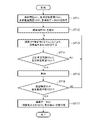
図6は、実施形態1のニューラルネットワーク構築装置NNKの動作を示すフローチャートである。以下、実施形態1のニューラルネットワーク構築装置NNKの動作について、図6のフローチャートを参照して説明する。
(1)生成部SE及び第1の判定部HA1が、ステップST13及びステップST14を繰り返したこと。
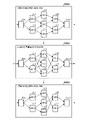
(2)上記(1)の繰り返しの後、生成部SEが、m回め(mは、任意の正の整数)の演算組み合わせEKとして、例えば、図7の中段に示されるように、中間層L1に演算OP1を割り当て、中間層L2に演算OP1を割り当て、中間層L3に演算OP3を割り当て、中間層L4に演算NOを割り当て、中間層L5に演算OP3を割り当て、中間層L6に演算OP5を割り当て、中間層L7に演算OP5を割り当てたこと。
(3)上記(2)のm回めの演算組み合わせEKの生成後に、第1の判定部HA1が、m回めの演算組み合わせEKの合計所要時間GSJ(T1+T1+T3+0+T3+T5+T5)が、要求所要時間YSJ1を満足していると判定したこと。
(1)生成部SE、第1の判定部HA1、訓練部KU、及び、第2の判定部HA2が、ステップST13~ステップST16を繰り返したこと。
(2)上記(1)の繰り返しの後、生成部SEが、n回め(nは、mより大きい整数)の演算の組み合わせEKとして、例えば、図7の下段に示されるように、中間層L1に演算OP1を割り当て、中間層L2に演算OP1を割り当て、中間層L3に演算OP2を割り当て、中間層L4に演算OP2を割り当て、中間層L5に演算SKIPを割り当て、中間層L6に演算OP5を割り当て、中間層L7に演算OP1を割り当てたこと。
(3)上記(2)のn回めの演算組み合わせEKの生成後に、第1の判定部HA1が、n回めの演算組み合わせEKの合計所要時間GSJ(T1+T1+T2+T2+0+T5+T1)が、要求所要時間YSJ1を満足していると判定したこと。
(5)上記(4)の訓練後に、第2の判定部HA2が、n回めの演算組み合わせEKの推論精度SSが、要求推論精度YSS1を満足していると判定したこと。
上述したように、実施形態1のニューラルネットワーク構築装置NNKでは、構築しようとするニューラルネットワークモデルNNMの中間層L1~L7に、ユーザにより入力される条件情報JJ1によって特定される探索空間TK1中の割り当て可能な演算OP1等を割り当てる。これにより、要求所要時間YSJ1を満足するニューラルネットワークモデルNNMを構築する可能性を高めることができる。
中間層L1~L7での所要時間を合計する実施形態1のニューラルネットワーク構築装置NNKとは相違し、中間層L1~L7での所要時間、並びに、演算OPが割り当てられない、入力層Lin及び出力層Loutでの所要時間を合計した上で、合計所要時間GSJが、要求所要時間YSJ1を満足するか否かを判定してもよい。
n番めの演算組み合わせEKのニューラルネットワークモデルNNMのみを生成する実施形態1のニューラルネットワーク構築装置NNKとは相違し、例えば、p番め(pは、nより大きい整数)の演算組み合わせEK、q番め(qは、pより大きい整数)の演算組み合わせEK、、、、等の複数の演算組み合わせEKを生成し、当該複数の演算組み合わせEK、即ち、n番めの演算組み合わせEK、p番めの演算組み合わせEK、q番めの演算組み合わせEK、、、、のうち、要求所要時間YSJ1及び要求推論精度YSS1の観点から最も優れた演算組み合わせEKを選択してもよい。
〈実施形態2〉
実施形態2のニューラルネットワーク構築装置NNKについて説明する。
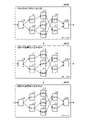
実施形態1のニューラルネットワーク構築装置NNKが、記憶部KI(図1、図3に図示。)内に記憶されたテーブルTB(図4に図示。)中の演算所要時間(予め準備され、想定された演算所要時間)の合計所要時間GSJ(図8に図示。)を用いることとは相違し、実施形態2のニューラルネットワーク構築装置NNKでは、ニューラルネットワークモデルNNMが実際に演算したときの所要時間である実所要時間JSJを測定する。
実施形態2のニューラルネットワーク構築装置NNKの構成は、実施形態1のニューラルネットワーク構築装置NNKの構成(図5に図示。)と同様である。
図11は、実施形態2のニューラルネットワーク構築装置NNKの動作を示すフローチャートである。以下、実施形態2のニューラルネットワーク構築装置NNKの動作について、図11のフローチャートを参照して説明する。
(1)実施形態1と同様に、ユーザが、条件情報JJ1、要求所要時間YSJ1、及び要求推論精度YSS1、訓練用データKDを入力すること。
(2)実施形態1と同様に、1番めの演算組み合わせEK、m番めの演算組み合わせEK等を経て、n番めの演算組み合わせEKが生成されたこと。
上述したように、実施形態2のニューラルネットワーク構築装置NNKでは、ニューラルネットワークモデルNNMの実所要時間JSJ、例えば、n番めの組み合わせのニューラルネットワークモデルNNMがハードウェアHW1で実際に動作するときの実所要時間JSJを測定し、用いる。これにより、記憶部KIに予め記憶されており、かつ見積もられている演算所要時間(図4に図示。)を用いて構築される実施形態1のニューラルネットワークモデルNNMに比して、要求所要時間YSJ1を満足する可能性がより高められたニューラルネットワークモデルNNMを構築することができる。
〈実施形態3〉
実施形態3の画像処理装置について説明する。
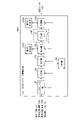
図12は、実施形態3の画像処理装置GSSの機能を示す。
上述したように、実施形態3の画像処理装置GSSは、実施形態1または実施形態2のニューラルネットワーク構築装置NNKにより構築された、要求所要時間YSJ1及び要求推論精度YSS1を満足するn番めの演算組み合わせEKを有するニューラルネットワークモデルNNMを、条件情報JJ1により特定されるハードウェアHW1上で実行する。これにより、要求所要時間YSJ1及び要求推論精度YSS1を満足する推論を行うことができる。
Claims (7)
- ニューラルネットワークモデルを構築するための構築条件に基づき、前記ニューラルネットワークモデルを構成する複数の層に割り当て可能な複数の演算を特定する特定部と、
前記複数の層の各々に、前記複数の演算のうちの一つの演算を割り当てることにより、演算の一の組み合わせを生成する生成部と、
前記割り当てられた演算に基づき推論する、各演算の所要時間の合計である合計所要時間が、予め定められた要求所要時間を満足するか否かを判定する第1の判定部と、
前記生成された演算の一の組み合わせを有するニューラルネットワークモデルを訓練する訓練部と、
前記訓練後のニューラルネットワークモデルが推論する精度が、予め定められた要求推論精度を満足するか否かを判定する第2の判定部と、を含み、
前記第1の判定部が、前記合計所要時間が前記要求所要時間を満足しないと判定するとき、または、前記第2の判定部が、前記推論する精度が前記要求推論精度を満足しないと判定するとき、前記生成部は、前記演算の一の組み合わせと相違する、演算の他の組み合わせを生成する、
ニューラルネットワーク構築装置。 - 前記特定部は、前記複数の演算に、入力されたデータをそのまま出力するスキップコネクション演算、及び何ら出力しないノーコネクション演算を含ませる、
請求項1に記載のニューラルネットワーク構築装置。 - 前記第1の判定部は、前記合計所要時間に、前記複数の層のうち、前記生成部が前記複数の演算を割り当てなかった層での所要時間を含ませる、
請求項1に記載のニューラルネットワーク構築装置。 - 前記生成された演算の一の組み合わせを有するニューラルネットワークモデルを前記構築条件の下で実行する実行部を更に含み、
前記第1の判定部は、前記生成された演算の一の組み合わせを有するニューラルネットワークモデルを実行する実所要時間が、前記予め定められた要求所要時間を満足するか否かを判定する、
請求項1に記載のニューラルネットワーク構築装置。 - 請求項1に記載のニューラルネットワーク構築装置により構築されたニューラルネットワークモデルを記憶する記憶部と、
前記ニューラルネットワークモデルに推論させるための画像データの入力を受ける入力部と、
前記ニューラルネットワークモデルが推論した結果を出力する出力部と、
を含む、画像処理装置。 - 特定部が、ニューラルネットワークモデルを構築するための構築条件に基づき、前記ニューラルネットワークモデルを構成する複数の層に割り当て可能な複数の演算を特定し、
生成部が、前記複数の層の各々に、前記複数の演算のうちの一つの演算を割り当てることにより、演算の一の組み合わせを生成し、
第1の判定部が、前記割り当てられた演算に基づき推論する、各演算の所要時間の合計である合計所要時間が、予め定められた要求所要時間を満足するか否かを判定し、
訓練部が、前記生成された演算の一の組み合わせを有するニューラルネットワークモデルを訓練し、
第2の判定部が、前記訓練後のニューラルネットワークモデルが推論する精度が、予め定められた要求推論精度を満足するか否かを判定し、
前記第1の判定部が、前記合計所要時間が前記要求所要時間を満足しないと判定するとき、または、前記第2の判定部が、前記推論する精度が前記要求推論精度を満足しないと判定するとき、前記生成部は、前記演算の一の組み合わせと相違する、演算の他の組み合わせを生成する、
ニューラルネットワーク構築方法。 - 記憶部が、請求項6に記載のニューラルネットワーク構築装置により構築されたニューラルネットワークモデルを記憶し、
入力部が、前記ニューラルネットワークモデルに推論させるための画像データの入力を受け、
出力部が、前記ニューラルネットワークモデルが推論した結果を出力する、
画像処理方法。
Priority Applications (5)
| Application Number | Priority Date | Filing Date | Title |
|---|---|---|---|
| PCT/JP2021/022425 WO2022264186A1 (ja) | 2021-06-14 | 2021-06-14 | ニューラルネットワーク構築装置、ニューラルネットワーク構築方法、画像処理装置、及び画像処理方法 |
| JP2021560364A JP7090817B1 (ja) | 2021-06-14 | 2021-06-14 | ニューラルネットワーク構築装置、ニューラルネットワーク構築方法、画像処理装置、及び画像処理方法 |
| DE112021007485.7T DE112021007485T5 (de) | 2021-06-14 | 2021-06-14 | Neuronales-netz-erstellungseinrichtung, neuronales-netz-erstellungsverfahren, bildverarbeitungseinrichtung und bildverarbeitungsverfahren |
| CN202180099129.0A CN117501279A (zh) | 2021-06-14 | 2021-06-14 | 神经网络构建装置、神经网络构建方法、图像处理装置和图像处理方法 |
| US18/381,703 US20240046101A1 (en) | 2021-06-14 | 2023-10-19 | Neural network construction device, neural network construction method, image processing device, and image processing method |
Applications Claiming Priority (1)
| Application Number | Priority Date | Filing Date | Title |
|---|---|---|---|
| PCT/JP2021/022425 WO2022264186A1 (ja) | 2021-06-14 | 2021-06-14 | ニューラルネットワーク構築装置、ニューラルネットワーク構築方法、画像処理装置、及び画像処理方法 |
Related Child Applications (1)
| Application Number | Title | Priority Date | Filing Date |
|---|---|---|---|
| US18/381,703 Continuation US20240046101A1 (en) | 2021-06-14 | 2023-10-19 | Neural network construction device, neural network construction method, image processing device, and image processing method |
Publications (1)
| Publication Number | Publication Date |
|---|---|
| WO2022264186A1 true WO2022264186A1 (ja) | 2022-12-22 |
Family
ID=82155950
Family Applications (1)
| Application Number | Title | Priority Date | Filing Date |
|---|---|---|---|
| PCT/JP2021/022425 Ceased WO2022264186A1 (ja) | 2021-06-14 | 2021-06-14 | ニューラルネットワーク構築装置、ニューラルネットワーク構築方法、画像処理装置、及び画像処理方法 |
Country Status (5)
| Country | Link |
|---|---|
| US (1) | US20240046101A1 (ja) |
| JP (1) | JP7090817B1 (ja) |
| CN (1) | CN117501279A (ja) |
| DE (1) | DE112021007485T5 (ja) |
| WO (1) | WO2022264186A1 (ja) |
Citations (2)
| Publication number | Priority date | Publication date | Assignee | Title |
|---|---|---|---|---|
| CN112598117A (zh) * | 2020-12-29 | 2021-04-02 | 广州极飞科技有限公司 | 神经网络模型设计方法、部署方法、电子设备及存储介质 |
| JP2021064342A (ja) * | 2019-10-15 | 2021-04-22 | 北京小米智能科技有限公司Beijing Xiaomi Intelligent Technology Co.,Ltd. | ニューラルネットワーク構造モデルを検索する方法、装置及び記録媒体 |
Family Cites Families (8)
| Publication number | Priority date | Publication date | Assignee | Title |
|---|---|---|---|---|
| CN101782976B (zh) * | 2010-01-15 | 2013-04-10 | 南京邮电大学 | 一种云计算环境下机器学习自动选择方法 |
| JP2012018450A (ja) * | 2010-07-06 | 2012-01-26 | Keio Gijuku | ニューラルネットワークシステム、ニューラルネットワークシステムの構築方法およびニューラルネットワークシステムの制御プログラム |
| WO2019216404A1 (ja) * | 2018-05-10 | 2019-11-14 | パナソニックIpマネジメント株式会社 | ニューラルネットワーク構築装置、情報処理装置、ニューラルネットワーク構築方法及びプログラム |
| US11531861B2 (en) * | 2018-11-06 | 2022-12-20 | Google Llc | Neural architecture search with factorized hierarchical search space |
| JP7042210B2 (ja) | 2018-12-27 | 2022-03-25 | Kddi株式会社 | 学習モデル生成装置、学習モデル生成方法、及びプログラム |
| US20210012194A1 (en) * | 2019-07-11 | 2021-01-14 | Samsung Electronics Co., Ltd. | Method and system for implementing a variable accuracy neural network |
| EP4030347A4 (en) * | 2019-09-24 | 2022-11-16 | Huawei Technologies Co., Ltd. | METHOD AND DEVICE FOR BUILDING A NEURAL NETWORK AND IMAGE PROCESSING METHOD AND DEVICE |
| JP6885553B1 (ja) * | 2020-07-14 | 2021-06-16 | エッジコーティックス ピーティーイー. リミテッド | ハードウェアとニューラルアーキテクチャとの共同探索 |
-
2021
- 2021-06-14 WO PCT/JP2021/022425 patent/WO2022264186A1/ja not_active Ceased
- 2021-06-14 CN CN202180099129.0A patent/CN117501279A/zh active Pending
- 2021-06-14 JP JP2021560364A patent/JP7090817B1/ja not_active Expired - Fee Related
- 2021-06-14 DE DE112021007485.7T patent/DE112021007485T5/de active Pending
-
2023
- 2023-10-19 US US18/381,703 patent/US20240046101A1/en active Pending
Patent Citations (2)
| Publication number | Priority date | Publication date | Assignee | Title |
|---|---|---|---|---|
| JP2021064342A (ja) * | 2019-10-15 | 2021-04-22 | 北京小米智能科技有限公司Beijing Xiaomi Intelligent Technology Co.,Ltd. | ニューラルネットワーク構造モデルを検索する方法、装置及び記録媒体 |
| CN112598117A (zh) * | 2020-12-29 | 2021-04-02 | 广州极飞科技有限公司 | 神经网络模型设计方法、部署方法、电子设备及存储介质 |
Non-Patent Citations (3)
| Title |
|---|
| JIANG WEIWEN; YANG LEI; SHA EDWIN HSING-MEAN; ZHUGE QINGFENG; GU SHOUZHEN; DASGUPTA SAKYASINGHA; SHI YIYU; HU JINGTONG: "Hardware/Software Co-Exploration of Neural Architectures", IEEE TRANSACTIONS ON COMPUTER-AIDED DESIGN OF INTEGRATED CIRCUITS AND SYSTEMS, IEEE, USA, vol. 39, no. 12, 8 April 2020 (2020-04-08), USA, pages 4805 - 4815, XP011821176, ISSN: 0278-0070, DOI: 10.1109/TCAD.2020.2986127 * |
| SHAOJIN DING; TIANLONG CHEN; XINYU GONG; WEIWEI ZHA; ZHANGYANG WANG: "AutoSpeech: Neural Architecture Search for Speaker Recognition", ARXIV.ORG, CORNELL UNIVERSITY LIBRARY, 201 OLIN LIBRARY CORNELL UNIVERSITY ITHACA, NY 14853, 31 August 2020 (2020-08-31), 201 Olin Library Cornell University Ithaca, NY 14853 , XP081751330 * |
| WU, BICHEN ET AL.: "FBNet: Hardware-Aware Efficient ConvNet Design via Differentiable Neural Architecture Search", ARXIV: 1812.03443V3, 2019, XP033686671, Retrieved from the Internet <URL:https://arxiv.org/pdf/1812.03443v3> [retrieved on 20210805] * |
Also Published As
| Publication number | Publication date |
|---|---|
| US20240046101A1 (en) | 2024-02-08 |
| DE112021007485T5 (de) | 2024-02-01 |
| JPWO2022264186A1 (ja) | 2022-12-22 |
| JP7090817B1 (ja) | 2022-06-24 |
| CN117501279A (zh) | 2024-02-02 |
Similar Documents
| Publication | Publication Date | Title |
|---|---|---|
| JP6983154B2 (ja) | 計算グラフの処理 | |
| US20200249998A1 (en) | Scheduling computation graph heterogeneous computer system | |
| US20210109796A1 (en) | Methods and systems for time-bounding execution of computing workflows | |
| CN112764893B (zh) | 数据处理方法和数据处理系统 | |
| KR102215978B1 (ko) | 블록체인망 상 비동기 분산 병렬형 앙상블 모델 학습 및 추론 시스템 및 그 방법 | |
| KR102899904B1 (ko) | 딥러닝 워크로드를 위한 하이브리드 스케줄링 방법과 이를 수행하는 컴퓨팅 장치 | |
| WO2020028183A1 (en) | A storage-based graph for enabling computation graph optimization | |
| CN119248525B (zh) | 推理系统的内存管理方法和装置 | |
| US12443447B2 (en) | Memory sharing for machine learning processing | |
| Rahmani et al. | Machine learning-driven energy-efficient load balancing for real-time heterogeneous systems | |
| WO2022264186A1 (ja) | ニューラルネットワーク構築装置、ニューラルネットワーク構築方法、画像処理装置、及び画像処理方法 | |
| CN119248522B (zh) | 推理系统的内存管理方法和装置 | |
| CN115827225A (zh) | 异构运算的分配方法、模型训练方法、装置、芯片、设备及介质 | |
| CN115423071A (zh) | 一种用于神经网络量化的运行时动态推理方法 | |
| WO2014091319A1 (en) | Computing prioritised general arbitration rules for conflicting rules | |
| CN112667397A (zh) | 机器学习系统及其资源配置方法 | |
| Hollmann et al. | A Practical Survey on Static Task Scheduling Optimization Approaches for Heterogeneous Architectures | |
| Wurzer et al. | MODYPLAN: early-stage hospital simulation based on treatment chains | |
| JP7779870B2 (ja) | 情報処理方法、プログラム、及び情報処理装置 | |
| JP2016118867A (ja) | 処理装置、処理方法、及び、プログラム | |
| JP2020154925A (ja) | 情報処理装置、情報処理方法、及びプログラム | |
| CN119645672B (zh) | 一种gpu内存优化管理方法与系统 | |
| Feoktistov et al. | Algorithms for planning on computational model with redundancy and uncertainty | |
| van Hee et al. | Scheduling-free resource management | |
| Roque et al. | Improving constraint solving on parallel hybrid systems |
Legal Events
| Date | Code | Title | Description |
|---|---|---|---|
| ENP | Entry into the national phase |
Ref document number: 2021560364 Country of ref document: JP Kind code of ref document: A |
|
| 121 | Ep: the epo has been informed by wipo that ep was designated in this application |
Ref document number: 21945866 Country of ref document: EP Kind code of ref document: A1 |
|
| WWE | Wipo information: entry into national phase |
Ref document number: 112021007485 Country of ref document: DE |
|
| WWE | Wipo information: entry into national phase |
Ref document number: 202180099129.0 Country of ref document: CN |
|
| 122 | Ep: pct application non-entry in european phase |
Ref document number: 21945866 Country of ref document: EP Kind code of ref document: A1 |