WO2022257934A1 - Pdcch监听方法、终端及网络侧设备 - Google Patents
Pdcch监听方法、终端及网络侧设备 Download PDFInfo
- Publication number
- WO2022257934A1 WO2022257934A1 PCT/CN2022/097445 CN2022097445W WO2022257934A1 WO 2022257934 A1 WO2022257934 A1 WO 2022257934A1 CN 2022097445 W CN2022097445 W CN 2022097445W WO 2022257934 A1 WO2022257934 A1 WO 2022257934A1
- Authority
- WO
- WIPO (PCT)
- Prior art keywords
- search space
- css set
- space group
- rnti
- css
- Prior art date
- Legal status (The legal status is an assumption and is not a legal conclusion. Google has not performed a legal analysis and makes no representation as to the accuracy of the status listed.)
- Ceased
Links
Images



Classifications
-
- H—ELECTRICITY
- H04—ELECTRIC COMMUNICATION TECHNIQUE
- H04W—WIRELESS COMMUNICATION NETWORKS
- H04W52/00—Power management, e.g. Transmission Power Control [TPC] or power classes
- H04W52/02—Power saving arrangements
-
- H—ELECTRICITY
- H04—ELECTRIC COMMUNICATION TECHNIQUE
- H04W—WIRELESS COMMUNICATION NETWORKS
- H04W52/00—Power management, e.g. Transmission Power Control [TPC] or power classes
- H04W52/02—Power saving arrangements
- H04W52/0209—Power saving arrangements in terminal devices
-
- H—ELECTRICITY
- H04—ELECTRIC COMMUNICATION TECHNIQUE
- H04W—WIRELESS COMMUNICATION NETWORKS
- H04W72/00—Local resource management
- H04W72/04—Wireless resource allocation
-
- Y—GENERAL TAGGING OF NEW TECHNOLOGICAL DEVELOPMENTS; GENERAL TAGGING OF CROSS-SECTIONAL TECHNOLOGIES SPANNING OVER SEVERAL SECTIONS OF THE IPC; TECHNICAL SUBJECTS COVERED BY FORMER USPC CROSS-REFERENCE ART COLLECTIONS [XRACs] AND DIGESTS
- Y02—TECHNOLOGIES OR APPLICATIONS FOR MITIGATION OR ADAPTATION AGAINST CLIMATE CHANGE
- Y02D—CLIMATE CHANGE MITIGATION TECHNOLOGIES IN INFORMATION AND COMMUNICATION TECHNOLOGIES [ICT], I.E. INFORMATION AND COMMUNICATION TECHNOLOGIES AIMING AT THE REDUCTION OF THEIR OWN ENERGY USE
- Y02D30/00—Reducing energy consumption in communication networks
- Y02D30/70—Reducing energy consumption in communication networks in wireless communication networks
Definitions
- the present application belongs to the technical field of wireless communication, and in particular relates to a PDCCH monitoring method, terminal and network side equipment.
- the terminal In the standard discussion of New Radio Access Technology (NR), the terminal (User Equipment, UE, which can also be called terminal equipment or user terminal) needs to monitor downlink control information in multiple formats (format) ( Downlink Control Information, DCI).
- DCI Downlink Control Information
- the UE can detect the DCI sent by the network side device in the search space (Search Spaces, SS) configured by the network through blind detection.
- the UE needs to monitor the Physical Downlink Control Channel (PDCCH) on a CSS set such as the Type 0 Common Search Space set (CSS set), it causes a large terminal power consumption.
- PDCCH Physical Downlink Control Channel
- CSS set such as the Type 0 Common Search Space set (CSS set)
- the embodiment of the present application provides a PDCCH monitoring method, a terminal, and a network-side device, which can solve the problem of high power consumption of the terminal caused by the UE needing to monitor the PDCCH on CSS sets such as Type0 CSS set, Type0A CSS set, and Type2 CSS set.
- CSS sets such as Type0 CSS set, Type0A CSS set, and Type2 CSS set.
- a PDCCH monitoring method including: a terminal acquires first configuration information, wherein the first configuration information is used to configure an association relationship between a first CSS set and a first search space group; the The terminal determines the PDCCH monitoring behavior on the first CSS set according to the first configuration information; wherein, the first CSS set includes at least Type 0 CSS set, Type0A CSS set, Type1 CSS set, and Type2 CSS set one item.
- a PDCCH monitoring method includes sending first configuration information by a network side device; wherein the first configuration information is used to configure the first common search space set CSS set and the first search space group The association relationship between, and the first configuration information is used by the terminal to determine the physical downlink control channel PDCCH monitoring behavior on the first CSS set; the first CSS set includes a public search space set of type 0 Type At least one of 0 CSS set, type 0A public search space set Type0A CSS set, type 1 public search space set Type1 CSS set, type 2 public search space set Type2 CSS set.
- a PDCCH monitoring device including: an acquisition module configured to acquire first configuration information, wherein the first configuration information is used to configure the first common search space set CSS set and the first search space group The association relationship between; the determination module is used to determine the physical downlink control channel PDCCH monitoring behavior on the first CSS set according to the first configuration information; wherein, the first CSS set includes type 0 At least one of the public search space sets Type 0 CSS set, Type0A CSS set, Type1 CSS set, Type2 CSS set.
- a PDCCH monitoring device including: a sending module, configured to send first configuration information; wherein, the first configuration information is used to configure the first common search space set CSS set and the first search space group The association relationship between, and the first configuration information is used by the terminal to determine the physical downlink control channel PDCCH monitoring behavior on the first CSS set; the first CSS set includes a public search space set of type 0 Type At least one of 0 CSS set, type 0A public search space set Type0A CSS set, type 1 public search space set Type1 CSS set, type 2 public search space set Type2 CSS set.
- a terminal includes a processor, a memory, and a program or instruction stored in the memory and operable on the processor.
- the program or instruction is executed by the processor The steps of the method described in the first aspect are realized.
- a terminal including a processor and a communication interface, wherein the communication interface is coupled to the processor, and the processor is configured to run programs or instructions to implement the method described in the first aspect step.
- a network-side device includes a processor, a memory, and a program or instruction stored in the memory and operable on the processor, and the program or instruction is executed by the The processor implements the steps of the method described in the second aspect when executed.
- a network-side device including a processor and a communication interface, wherein the communication interface is coupled to the processor, and the processor is used to run a program or an instruction to implement the method described in the second aspect. method.
- a readable storage medium where a program or an instruction is stored on the readable storage medium, and when the program or instruction is executed by a processor, the steps of the method as described in the first aspect are implemented.
- a chip in a tenth aspect, includes a processor and a communication interface, the communication interface is coupled to the processor, and the processor is used to run programs or instructions to implement the method as described in the first aspect A step of.
- a computer program/program product is provided, the computer program/program product is stored in a non-transitory storage medium, and the program/program product is executed by at least one processor to implement the The steps of the method in one aspect.
- the terminal obtains the first configuration information used to configure the association relationship between the first CSS set and the first search space group, and determines the monitoring behavior of the PDCCH according to the first configuration information, thereby avoiding The terminal needs to monitor the PDCCH on the first CSS set all the time, which reduces the power consumption of the terminal.
- Fig. 1 is a schematic structural diagram of a wireless communication system provided by an exemplary embodiment of the present application.
- Fig. 2 is a schematic flowchart of a PDCCH monitoring method provided by an exemplary embodiment of the present application.
- Fig. 3 is a schematic flowchart of a PDCCH monitoring method provided by another exemplary embodiment of the present application.
- Fig. 4 is a schematic flowchart of a PDCCH monitoring method provided by another exemplary embodiment of the present application.
- Fig. 5 is a schematic structural diagram of a PDCCH monitoring device provided by an exemplary embodiment of the present application.
- Fig. 6 is a schematic structural diagram of a PDCCH monitoring device provided by another exemplary embodiment of the present application.
- Fig. 7 is a schematic structural diagram of a terminal provided by an exemplary embodiment of the present application.
- Fig. 8 is a schematic structural diagram of a network device provided by an exemplary embodiment of the present application.
- first, second and the like in the specification and claims of the present application are used to distinguish similar objects, and are not used to describe a specific sequence or sequence. It is to be understood that the terms so used are interchangeable under appropriate circumstances such that the embodiments of the application are capable of operation in sequences other than those illustrated or described herein and that "first" and “second” distinguish objects. It is usually one category, and the number of objects is not limited. For example, there may be one or more first objects.
- “and/or” in the description and claims means at least one of the connected objects, and the character “/” generally means that the related objects are an "or” relationship.
- LTE Long Term Evolution
- LTE-Advanced LTE-Advanced
- LTE-A Long Term Evolution-Advanced
- CDMA Code Division Multiple Access
- TDMA Time Division Multiple Access
- FDMA Frequency Division Multiple Access
- OFDMA Orthogonal Frequency DiVision Multiple Access
- SC-FDMA Single-carrier Frequency-Division Multiple Access
- SC-FDMA Single-carrier Frequency-Division Multiple Access
- system and “network” in the embodiments of the present application are often used interchangeably, and the described technology can be used for the above-mentioned system and radio technology, and can also be used for other systems and radio technologies.
- the following description describes the New Radio (New Radio, NR) system for example purposes, and uses NR terminology in most of the following descriptions, but these techniques can also be applied to applications other than NR system applications, such as the 6th Generation (6th Generation , 6G) communication system.
- 6th Generation 6th Generation
- Fig. 1 shows a schematic structural diagram of a wireless communication system to which this embodiment of the present application is applicable.
- the wireless communication system includes a terminal 11 and a network side device 12 .
- the terminal 11 can be a mobile phone, a tablet computer (Tablet Personal Computer), a laptop computer (Laptop Computer) or a notebook computer, a personal digital assistant (Personal Digital Assistant, PDA), a palmtop computer, a netbook, a super mobile personal computer (ultra-mobile personal computer, UMPC), mobile Internet device (Mobile Internet Device, MID), augmented reality (augmented reality, AR) / virtual reality (virtual reality, VR) equipment, robots, game consoles, wearable devices ( wearable Device), vehicle-mounted equipment (VUE), pedestrian terminal (PUE), smart home (home devices with wireless communication functions, such as refrigerators, TVs, washing machines or furniture, etc.), and other terminal-side devices, wearable devices include: smart watches , smart bracelets, smart headphones, smart glasses, smart jewelry (smart bracelets, smart
- the network side device 12 may be a base station or a core network, where the base station may be called a Node B, an evolved Node B (evolved NodeB, eNB), an access point, a Base Transceiver Station (Base Transceiver Station, BTS), a radio base station, Radio Transceiver, Basic Service Set (BSS), Extended Service Set (ESS), Node B, Evolved Node B (eNB), Home Node B, Home Evolved Node B, WLAN Access Point, WiFi node, Transmitting Receiving Point (Transmitting Receiving Point, TRP) or some other suitable term in the field, as long as the same technical effect is achieved, the base station is not limited to specific technical terms. It should be noted that in this In the embodiment of the application, only the base station in the NR system is taken as an example, but the specific type of the base station is not limited.
- Type 0 public search space set Type0 CSS set ie Type0-PDCCH CSS set
- type 0A public search space set Type0A CSS set ie Type0A-PDCCH CSS set
- Type 1 public search space set Type1 CSS set ie Type1-PDCCH CSS set
- type 2 public search space set Type2 CSS set ie Type1-PDCCH CSS set
- Type0-PDCCH CSS set configured by "pdcchConfigSIB1" in the Master Information Block (MIB) or "searchSpaceSIB1" in PDCCH-ConfigCommon or “searchSpaceZero” in PDCCH-ConfigCommon, used to detect Information-Radio Network Temporary Identifier (System Information-Radio Network Temporary Identifier, SI-RNTI) (for SIB 1) scrambled DCI format, the DCI is sent on the main cell in the main cell group (Master cell group, MCG) .
- SI-RNTI System Information-Radio Network Temporary Identifier
- Type0A-PDCCH CSS set configured by "searchSpaceOtherSystemInformation" in PDCCH-ConfigCommon, used to detect DCI format scrambled by SI-RNTI (for other SI), and the DCI is sent on the primary cell in MCG .
- Type1-PDCCH CSS set configured by "ra-SearchSpace” in PDCCH-ConfigCommon, used to detect random access (Random Access, RA)-RNTI (for RAR) or temporary cell (Temporary Cell, TC) - RNTI (for Msg4) or message (Message, Msg) B-RNTI scrambled DCI format, the DCI is sent in the primary cell.
- Type2-PDCCH CSS set configured by "pagingSearchSpace” in PDCCH-ConfigCommon, used to detect DCI format scrambled by paging (Paging, P)-RNTI (for paging), the DCI is in MCG sent on the primary cell.
- the network side can send DCI scrambled by RNTI (for example, cell C-RNTI) related to scheduling data, so the terminal
- RNTI for example, cell C-RNTI
- the network side can send DCI scrambled by RNTI (for example, cell C-RNTI) related to scheduling data, so the terminal
- RNTI for example, cell C-RNTI
- FIG. 2 it is a schematic flowchart of a PDCCH monitoring method 200 provided by an exemplary embodiment of the present application.
- the method 200 may be executed by a terminal, but specifically may be executed by hardware/and/or software installed in the terminal.
- the method 200 may at least include the following steps.
- the terminal acquires first configuration information.
- the first configuration information is used to configure the association relationship (linkage) between the first CSS set and the first search space group
- the first configuration information may include the first CSS set to which the first CSS set is associated. Number or index information of a search space group, whether the first CSS set is associated with the first search space group, type information of the first CSS set, whether the first CSS set can be associated with the first search space group, the first Information about which first search space groups can be associated with a CSS set, time information for associating the first CSS set with the first search space group, whether to enable or activate the association between the first CSS set and the first search space group, etc. , without limitation here.
- the first CSS set described in this application can be understood as any set of public search spaces or public search spaces
- the first search space group can be understood as a set configured by the network side or specified by the protocol or configured by high-level signaling.
- the search space group is used to determine whether to monitor the PDCCH in the CSS set associated with the search space group by whether to activate the search space group or to switch to work on the search space group.
- the first search space group described in this application may be empty, or may include at least one search space set or search space.
- the first configuration information may be configured through network side configuration or protocol agreement or high-layer signaling (such as radio resource control (Radio Resource Control, RRC) signaling) configuration, for example, Type 0 CSS set may be agreed through agreement , Type0A CSS set, Type1 CSS set, Type2 CSS set at least one may be associated with the first search space group, etc.
- RRC Radio Resource Control
- the terminal can switch to the first search space according to whether the first search space group is activated or currently switches to the first search space group.
- Work on the space group to determine PDCCH monitoring (monitoring) behavior such as whether to monitor PDCCH or specific DCI on the first CSS set associated with the first search space group, thereby avoiding that the first CSS set does not belong to Any search space group, which leads to the problem that the PDCCH monitoring cannot be skipped through the switching of the search space group, so that the terminal does not need to monitor the PDCCH on the first CSS set, effectively reducing the power consumption of the terminal and achieving power saving Purpose.
- the first configuration information given in this embodiment may include at least one of the following (1) to (2).
- the number information may also be interpreted as index information or identification information.
- the number information of the first search space group may be 0, 1, 2, etc., which are used to respectively represent search space group #0, search space group #1, and search space group #2, which are not described here. limit.
- (2) can be understood as: whether the first CSS set can be associated with the first search space group.
- the first CSS set can be associated with the first search space group, or (2) the first CSS set cannot be associated with the first search space group Any one of them is used as the default configuration.
- this parameter referring to whether the first CSS set can be associated with the first search space group
- the default configuration is that the type (Type At least one of )0 CSS set, Type0A CSS set, Type1 CSS set, Type2 CSS set is associated with the first search space group, that is, the first CSS set can be associated with the first search space group by default.
- the first CSS set includes at least one of Type 0 CSS set, Type0A CSS set, Type1 CSS set, and Type2 CSS set .
- the first search space group may also have multiple types, such as search space group #0, search space group #1, and so on.
- search space group #0 is associated with a sparse PDCCH on-period search space
- search space group #1 is associated with a dense PDCCH on-period search space.
- each of the above-mentioned multiple CSS sets can be associated with different search space groups or the same search space group, Alternatively, each CSS set in the above multiple CSS sets may be associated with a different search space group or the same multiple search space groups. For example, if the first CSS set includes Type1 CSS set and Type2 CSS set, then Type1 CSS set is associated with search space group 0, Type2 CSS set is associated with search space group 1, or Type1 CSS set and Type2 CSS set are associated with search space group 0 Wait.
- the terminal determines a PDCCH monitoring behavior on the first CSS set according to the first configuration information.
- the PDCCH monitoring behavior on the first CSS set can also be understood as: the PDCCH monitoring behavior on the PDCCH monitoring occasion (Monitoring Occasion, MO) corresponding to the first CSS set.
- the terminal determines the PDCCH monitoring behavior on the first CSS set according to the first configuration information, thereby solving the problem that the terminal needs to monitor the PDCCH on the first CSS set all the time, and reducing the power consumption of the terminal .
- FIG. 3 it is a schematic flowchart of a PDCCH monitoring method 300 provided by an exemplary embodiment of the present application.
- the method may be executed by a terminal, but specifically may be executed by hardware/and/or software installed in the terminal.
- the method 300 may at least include the following steps.
- the terminal acquires first configuration information.
- the first configuration information is used to configure the association relationship between the first CSS set and the first search space group.
- the first search space group may be a non-dormant search space group; where , the non-dormant search space group is a search space group other than the dormant search space group, the dormant search space group is not associated with any search space, or the terminal does not listen to new Pass PDCCH. new biography
- the PDCCH may also be called the initial transmission PDCCH, and the new transmission PDCCH is relative to the retransmission PDCCH, and may refer to the first transmission among multiple PDCCH transmissions.
- the non-dormant search space group may be associated with one or more search spaces, or the terminal may monitor the newly transmitted PDCCH on the non-dormant search space group.
- the non-dormant search space group may be Search Space Group #1 and/or Search Space Group #0.
- the terminal determines a PDCCH monitoring behavior on the first CSS set according to the first configuration information.
- the terminal determines the PDCCH monitoring behavior on the first CSS set according to the first configuration information, which may include at least one of the following (1) to (6) one item.
- the The terminal does not listen to the DCI scrambled by the first RNTI.
- the first RNTI may include at least one of a cell (Cell, C)-RNTI, a modulation and coding scheme (Modulation and coding scheme, MCS)-CRNTI, and a configuration scheduling (Configured Scheduling, CS)-RNTI.
- Cell Cell
- C Cell
- MCS Modulation and coding scheme
- CS Configuration Scheduling
- the terminal when the first CSS set is associated with the first search space group and the first search space group is in an inactive state, the first CSS set Above, the terminal does not monitor the DCI scrambled by the first RNTI, but still needs to monitor the DCI scrambled by the second RNTI.
- the second RNTI may include at least one of SI-RNTI, RA-RNTI, MsgB-RNTI, TC-RNTI, and P-RNTI.
- the PDCCH monitoring of the DCI scrambled by the first RNTI ensures the performance of receiving and detecting paging messages, system messages, and random access.
- Type 0 CSS set, Type0A CSS set, Type 1 CSS set, and Type 2 CSS set can be associated with a non-dormant search space group (ie, the first search space group).
- the search space group ID (SSS group ID, SSSG ID) associated with Type 0 CSS set, Type 0A CSS set, and Type 2 CSS set is configured on the network side as 0; the group ID associated with Type 1 CSS set is configured on the network side as 1.
- MCS-C-RNTI and CS-RNTI scrambled DCI format 1-0 and 0-0, and only need to be on the respective PDCCH MO corresponding to Type 0 CSS set, Type 0A CSS set, and Type 2 CSS set Just monitor SI-RNTI scrambled DCI (corresponding to Type 0 CSS set, Type 0A CSS set) and P-RNTI scrambled DCI (corresponding to type 2 CSS set).
- the terminal when the terminal is in the RRC connection state, it can listen to the SI-RNTI scrambling at least once on any paging occasion (PO) within a modification period (Modification Period) of a system message DCI, that is, the terminal only needs to monitor the SI-RNTI scrambled DCI once to receive the SI update indication (update indication).
- PO paging occasion
- Modification Period Modification Period
- the terminal saves the monitoring by C-RNTI, MCS- The power consumption wasted by DCI format 1-0 and 0-0 scrambled by C-RNTI and CS-RNTI, thereby further realizing energy saving.
- the terminal monitors the DCI scrambled by the first RNTI and/or the second RNTI.
- the first RNTI may include at least one of C-RNTI, MCS-CRNTI, and CS-RNTI; the second RNTI includes SI-RNTI, RA-RNTI, MsgB-RNTI, TC-RNTI, At least one of the P-RNTIs.
- Type 0 CSS set, Type0A CSS set, Type 1 CSS set, and Type 2 CSS set can be associated with a non-dormant search space group (ie, the first search space group).
- the search space group ID (SSS group ID, SSSG ID) associated with Type 0 CSS set, Type 0A CSS set, and Type 2 CSS set is configured on the network side as 0; the group ID associated with Type 1 CSS set is configured on the network side as 1.
- SSSG 1 search space group 1
- the terminal monitors the scrambled by C-RNTI, MCS-C-RNTI and CS-RNTI on the PDCCH MO corresponding to type1 CSS set DCI format 1-0 and 0-0, and/or, the terminal monitors the DCI scrambled by RA-RNTI on the PDCCH MO corresponding to the type1 CSS set.
- the terminal does not listen to the DCI scrambled by the first RNTI.
- the first RNTI may include at least one of C-RNTI, MCS-CRNTI, and CS-RNTI.
- Type 0 CSS set, Type0A CSS set, Type1 CSS set, and Type2 CSS set can be associated to a non-dormant search space group (ie, the first search space group).
- the search space group ID (SSS group ID, SSSG ID) associated with Type 0 CSS set, Type0A CSS set, and Type 2 CSS set is configured on the network side as 0; the group ID associated with Type 1 CSS set is configured on the network side as 1.
- SSSG 1 search space group 1
- the terminal When SSSG 1 (search space group 1) is activated, that is, when SSSG0 is not activated, the terminal does not monitor the scrambling by C-RNTI, MCS-C-RNTI and CS-RNTI on the PDCCH MO corresponding to type1 CSS set
- the terminal does not monitor PDCCH.
- the fact that the terminal does not monitor the PDCCH may be understood as: the terminal does not monitor the DCI scrambled by any RNTI.
- Type 0 CSS set, Type0A CSS set, Type 1 CSS set, and Type 2 CSS set can be associated with a non-dormant search space group (ie, the first search space group).
- the search space group ID (SSS group ID, SSSG ID) associated with Type 0 CSS set, Type0A CSS set, and Type2 CSS set is configured on the network side as 0; the group ID associated with Type 1 CSS set is configured on the network side as 1.
- the terminal When SSSG0 is inactive, the terminal does not need to monitor the scrambled DCI format 1-0 and 0- 0, there is no need to monitor the DCI scrambled by P-RNTI and SI-RNTI; that is, there is no need to monitor any PDCCH on the PDCCH corresponding to the CSS set, so as to further realize energy saving.
- the terminal listens to the first RNTI and/or the second RNTI scrambled DCI.
- the first RNTI may include at least one of C-RNTI, MCS-CRNTI, and CS-RNTI.
- the second RNTI includes at least one of SI-RNTI, RA-RNTI, MsgB-RNTI, TC-RNTI, and P-RNTI.
- the terminal listens on the PDCCH MO corresponding to the type1 CSS set by C-RNTI, MCS-C-RNTI, CS-RNTI scrambled DCI format 1-0 and 0-0, and/or, the terminal listens on the PDCCH MO corresponding to Type1 CSS set by SI-RNTI, RA-RNTI, MsgB-RNTI, TC-RNTI, P - RNTI scrambled DCI.
- the terminal does not monitor the DCI scrambled by the first RNTI.
- the first RNTI may include at least one of C-RNTI, MCS-CRNTI, and CS-RNTI.
- the terminal does not monitor the PDCCH MO corresponding to the type1 CSS set, RNTI, CS-RNTI scrambled DCIformat1-0 and 0-0.
- the PDCCH monitoring behavior determined by the terminal based on the first configuration information may include but not limited to one or more of the aforementioned (1) to (6), and no limitation is set here.
- the first CSS set is configured by high-level signaling to monitor DCI scrambled by its corresponding second RNTI.
- Type 0 CSS set or Type 0A CSS set is configured by high-level signaling to monitor DCI scrambled by SI-RNTI;
- Type 1 CSS set is configured by high-level signaling to monitor RA-RNTI or MsgB-RNTI or TC-RNTI Scrambled DCI;
- Type 2 CSS set is configured by high-level signaling to monitor P-RNTI scrambled DCI.
- the terminal determines the PDCCH monitoring behavior on the first CSS set and the above-mentioned specific steps, which can prevent the terminal from monitoring the DCI scrambled by the first RNTI on the first CSS set. Unnecessary power consumption, and while saving terminal power consumption, it will not affect the reception and detection performance of paging messages, system messages, and random access.
- FIG. 4 it is a schematic flow diagram of a PDCCH monitoring method 400 provided by an exemplary embodiment of the present application.
- the method 400 may be performed by, but not limited to, a network-side device, specifically, hardware installed in the network-side device/and/ or software implementation.
- the method 400 may at least include the following steps.
- the network side device sends first configuration information.
- the first configuration information is used to configure the association relationship between the first CSS set and the first search space group, and the first configuration information is used to determine the PDCCH monitoring behavior on the first CSS set;
- the first CSS set includes at least one of Type 0 CSS set, Type0A CSS set, Type1 CSS set, and Type2 CSS set.
- the first configuration information includes at least one of the following: number information of the first search space group associated with the first CSS set; whether the first CSS set can be associated with the Information for the first search space group.
- the first search space group is a non-dormant search space group; wherein, the non-dormant search space group is a search space group other than the dormant search space group, and the dormant search space group is The space group is not associated with any search space, or the terminal does not monitor a newly transmitted PDCCH on the dormant search space group.
- the network side device sends the first configuration information, so that the terminal can determine the PDCCH monitoring behavior on the first CSS set according to the first configuration information, thereby solving the problem that the terminal needs to be in the first CSS set all the time.
- the problem of monitoring the PDCCH on the Internet reduces the power consumption of the terminal.
- the PDCCH monitoring method 200, 300, 400 provided in the embodiment of the present application may be executed by a PDCCH monitoring device, or the control module used to execute the PDCCH monitoring method 200, 300, 400 in the PDCCH monitoring device .
- the PDCCH monitoring device provided in the embodiment of the present application is described by taking the PDCCH monitoring device executing the PDCCH monitoring method 200 , 300 , and 400 as an example.
- FIG. 5 it is a schematic structural diagram of a PDCCH monitoring device 500 provided in an exemplary embodiment of the present application.
- the device 500 includes an acquisition module 510 for acquiring first configuration information, wherein the first configuration information uses To configure the association relationship between the first common search space set CSS set and the first search space group; the determination module 520 is configured to determine the physical downlink control channel on the first CSS set according to the first configuration information PDCCH monitoring behavior; wherein, the first CSS set includes at least one of Type 0 CSS set, Type0A CSS set, Type1 CSS set, and Type2 CSS set.
- the first configuration information includes at least one of the following: number information of the first search space group associated with the first CSS set; whether the first CSS set can be associated with the first Search space group information.
- the determining module 520 is used for at least one of the following: when the first CSS set is associated with the first search space group and the first search space group is in an inactive state Next, on the first CSS set, the terminal does not listen to the downlink control information DCI scrambled by the first wireless network temporary identifier RNTI; when the first CSS set is associated with the first search space group, and the When the first search space group is activated, on the first CSS set, the terminal monitors the DCI scrambled by the first RNTI and/or the second RNTI; when the first CSS set is associated with the In the case of the first search space group and the first search space group is activated, on the first CSS set, the terminal does not monitor the DCI scrambled by the first RNTI; When the CSS set is associated with the first search space group and the first search space group is in an inactive state, on the first CSS set, the terminal does not monitor the PDCCH; on the first CSS set When the set cannot be associated with the first search space group, on
- the first RNTI includes at least one of a cell C-RNTI, a modulation and coding scheme MCS-CRNTI, and a configuration scheduling CS-RNTI; and/or, the second RNTI includes system information SI - at least one of RNTI, random access RA-RNTI, message MsgB-RNTI, paging P-RNTI.
- the first search space group is a non-dormant search space group; wherein, the non-dormant search space group is a search space group other than the dormant search space group, and the dormant search space group No search space is associated, or the terminal does not monitor the newly transmitted PDCCH on the dormant search space group.
- the PDCCH monitoring apparatus 500 in the embodiment of the present application may be a device, an apparatus with an operating system or an electronic device, or may be a component, an integrated circuit, or a chip in a terminal.
- the apparatus or electronic equipment may be a mobile terminal or a non-mobile terminal.
- the mobile terminal may include but not limited to the types of terminals 11 listed above, and the non-mobile terminal may be a server, a network attached storage (Network Attached Storage, NAS), a personal computer (personal computer, PC), a television ( television, TV), teller machines or self-service machines, etc., are not specifically limited in this embodiment of the present application.
- FIG. 6 it is a schematic structural diagram of a PDCCH monitoring device 600 provided by an exemplary embodiment of the present application.
- the device 600 includes a sending module 610 for sending first configuration information; wherein, the first configuration information uses To configure the association relationship between the first CSS set and the first search space group, and the first configuration information is used to determine the PDCCH monitoring behavior on the first CSS set; the first CSS set includes Type 0 At least one of CSS set, Type0A CSS set, Type1 CSS set, Type2 CSS set.
- the apparatus 600 may further include a determining module, configured to determine the first configuration information.
- the first configuration information includes at least one of the following: number information of the first search space group associated with the first CSS set; whether the first CSS set can be associated with the first CSS set A search space group information.
- the first search space group is a non-dormant search space group; wherein, the non-dormant search space group is a search space group other than the dormant search space group, and the dormant search space group No search space is associated, or the terminal does not monitor a newly transmitted PDCCH on the dormant search space group.
- the PDCCH listening device 600 in the embodiment of the present application may be a device, a device with an operating system or a network side device, or a component, an integrated circuit, or a chip in the network side device, which is not limited here.
- the PDCCH apparatuses 500 and 600 provided in the embodiments of the present application can realize various processes realized by the method embodiments in FIG. 2 to FIG. 4 , and achieve the same technical effect. To avoid repetition, details are not repeated here.
- the embodiment of the present application also provides a terminal, including a processor and a communication interface, the communication interface is coupled to the processor, and the processor is used to run programs or instructions to implement the methods described in the method embodiments 200 and 300 method.
- This terminal embodiment corresponds to the above-mentioned terminal-side method embodiment, and each implementation process and implementation mode of the above-mentioned method embodiment can be applied to this terminal embodiment, and can achieve the same technical effect.
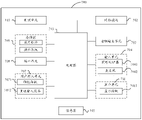
- FIG. 7 is a schematic diagram of a hardware structure of a terminal implementing an embodiment of the present application.
- the terminal 700 includes but is not limited to: a radio frequency unit 701, a network module 702, an audio output unit 703, an input unit 704, a sensor 705, a display unit 706, a user input unit 707, an interface unit 708, a memory 709, and a processor 710, etc. at least some of the components.
- the terminal 700 may also include a power supply (such as a battery) for supplying power to various components, and the power supply may be logically connected to the processor 710 through the power management system, so as to manage charging, discharging, and power consumption through the power management system. Management and other functions.
- a power supply such as a battery
- the terminal structure shown in FIG. 7 does not constitute a limitation on the terminal, and the terminal may include more or fewer components than shown in the figure, or combine some components, or arrange different components, which will not be repeated here.
- the input unit 704 may include a graphics processor (Graphics Processing Unit, GPU) 1041 and a microphone 7042, and the graphics processor 7041 is used for the image capture device (such as the image data of the still picture or video obtained by the camera) for processing.
- the display unit 706 may include a display panel 7061, and the display panel 7061 may be configured in the form of a liquid crystal display, an organic light emitting diode, or the like.
- the user input unit 707 includes a touch panel 7071 and other input devices 7072 .
- the touch panel 7071 is also called a touch screen.
- the touch panel 7071 may include two parts, a touch detection device and a touch controller.
- Other input devices 7072 may include, but are not limited to, physical keyboards, function keys (such as volume control keys, switch keys, etc.), trackballs, mice, and joysticks, which will not be repeated here.
- the radio frequency unit 701 receives the downlink data from the network side device, and processes it to the processor 710; in addition, sends the uplink data to the network side device.
- the radio frequency unit 701 includes, but is not limited to, an antenna, at least one amplifier, a transceiver, a coupler, a low noise amplifier, a duplexer, and the like.
- the memory 709 can be used to store software programs or instructions as well as various data.
- the memory 709 may mainly include a program or instruction storage area and a data storage area, wherein the program or instruction storage area may store an operating system, an application program or instructions required by at least one function (such as a sound playback function, an image playback function, etc.) and the like.
- the memory 709 may include a high-speed random access memory, and may also include a nonvolatile memory, wherein the nonvolatile memory may be a read-only memory (Read-Only Memory, ROM), a programmable read-only memory (Programmable ROM) , PROM), erasable programmable read-only memory (Erasable PROM, EPROM), electrically erasable programmable read-only memory (Electrically EPROM, EEPROM) or flash memory.
- ROM Read-Only Memory
- PROM programmable read-only memory
- PROM erasable programmable read-only memory
- Erasable PROM Erasable PROM
- EPROM electrically erasable programmable read-only memory
- EEPROM electrically erasable programmable read-only memory
- flash memory for example at least one magnetic disk storage device, flash memory device, or other non-volatile solid-state storage device.
- the processor 710 may include one or more processing units; optionally, the processor 710 may integrate an application processor and a modem processor, wherein the application processor mainly processes the operating system, user interface and application programs or instructions, etc., Modem processors mainly handle wireless communications, such as baseband processors. It can be understood that the foregoing modem processor may not be integrated into the processor 710 .
- the processor 710 is configured to obtain the first configuration information, wherein the first configuration information is used to configure the association relationship between the first common search space set CSS set and the first search space group; according to the first Configuration information to determine the physical downlink control channel PDCCH monitoring behavior on the first CSS set; wherein, the first CSS set includes a public search space set Type 0 CSS set of type 0 and a public search space of type 0A At least one item in the set Type0A CSS set, the type 1 public search space set Type1 CSS set, and the type 2 public search space set Type2 CSS set.
- the first configuration information includes at least one of the following: number information of the first search space group associated with the first CSS set; whether the first CSS set can be associated with the first search space group information.
- the step of the processor 710 determining the PDCCH monitoring behavior on the first CSS set according to the first configuration information includes at least one of the following: when the first CSS set is associated with the first In the case of a search space group and the first search space group is in an inactive state, on the first CSS set, the terminal does not monitor the downlink control information DCI scrambled by the first wireless network temporary identifier RNTI; In the case where the first CSS set is associated with the first search space group and the first search space group is activated, on the first CSS set, the terminal monitors the first RNTI and /or DCI scrambled by the second RNTI; when the first CSS set is associated with the first search space group and the first search space group is in an inactive state, in the first CSS set above, the terminal does not monitor the PDCCH; in the case that the first CSS set cannot be associated with the first search space group, on the first CSS set, the terminal monitors the first RNTI and/or DCI scrambled by the second RNTI; when
- the first RNTI includes at least one of a cell C-RNTI, a modulation and coding scheme MCS-CRNTI, and a configuration scheduling CS-RNTI; and/or, the second RNTI includes system information SI-RNTI, Random access RA-RNTI, message MsgB-RNTI, paging P-
- At least one of the RNTI At least one of the RNTI.
- the first search space group is a non-dormant search space group; wherein, the non-dormant search space group is a search space group other than the dormant search space group, and the dormant search space group is not associated with any search space, or, the terminal does not monitor the newly transmitted PDCCH on the dormant search space group.
- the PDCCH monitoring behavior on the first CSS set is determined according to the first configuration information, thereby solving the problem of always monitoring the PDCCH on the first CSS set and reducing terminal power consumption.
- the embodiment of the present application also provides a network side device, including a processor and a communication interface, the communication interface is coupled to the processor, and the processor is used to run programs or instructions to implement the method described in method embodiment 400 A step of.
- the network-side device embodiment corresponds to the above-mentioned network-side device method embodiment, and each implementation process and implementation mode of the above-mentioned method embodiment can be applied to this network-side device embodiment, and can achieve the same technical effect.
- the embodiment of the present application also provides a network side device.
- the network device 800 includes: an antenna 801 , a radio frequency device 802 , and a baseband device 803 .
- the antenna 801 is connected to the radio frequency device 802 .
- the radio frequency device 802 receives information through the antenna 801, and sends the received information to the baseband device 803 for processing.
- the baseband device 803 processes the information to be sent and sends it to the radio frequency device 82
- the radio frequency device 82 processes the received information and sends it out through the antenna 81 .
- the foregoing frequency band processing device may be located in the baseband device 803 , and the method performed by the network side device in the above embodiments may be implemented in the baseband device 803 , and the baseband device 803 includes a processor 804 and a memory 805 .
- the baseband device 803 may include at least one baseband board, for example, a plurality of chips are arranged on the baseband board, as shown in FIG.
- the baseband device 803 may further include a network interface 806 for exchanging information with the radio frequency device 802, and the interface is, for example, a common public radio interface (CPRI for short).
- CPRI common public radio interface
- the network side device in this embodiment of the present invention also includes: instructions or programs stored in the memory 805 and executable on the processor 804, and the processor 804 calls the instructions or programs in the memory 805 to execute the modules shown in FIG. 6 To avoid duplication, the method of implementation and to achieve the same technical effect will not be repeated here.
- the embodiment of the present application also provides a readable storage medium, on which a program or instruction is stored, and when the program or instruction is executed by a processor, each process of the above-mentioned PDCCH monitoring method embodiment is realized, and the same To avoid repetition, the technical effects will not be repeated here.
- the processor is the processor in the terminal described in the foregoing embodiments.
- the readable storage medium includes computer readable storage medium, such as computer read-only memory (Read-Only Memory, ROM), random access memory (Random Access Memory, RAM), magnetic disk or optical disk, etc.
- the embodiment of the present application further provides a chip, the chip includes a processor and a communication interface, the communication interface is coupled to the processor, and the processor is used to run a network-side device program or instruction to implement the above-mentioned PDCCH monitoring method
- the chip includes a processor and a communication interface
- the communication interface is coupled to the processor
- the processor is used to run a network-side device program or instruction to implement the above-mentioned PDCCH monitoring method
- the chip mentioned in the embodiment of the present application may also be called a system-on-chip, a system-on-chip, a system-on-a-chip, or a system-on-a-chip.
- the embodiment of the present application also provides a computer program product, the computer program product includes a processor, a memory, and a program or instruction stored in the memory and operable on the processor, the program or instruction is executed by the
- the above-mentioned processor is executed, each process of the above-mentioned PDCCH monitoring method embodiment can be realized, and the same technical effect can be achieved. In order to avoid repetition, details are not repeated here.
- the methods of the above embodiments can be implemented by means of software plus a necessary general-purpose hardware platform, and of course also by hardware, but in many cases the former is better implementation.
- the technical solution of the present application can be embodied in the form of computer software products, which are stored in a storage medium (such as ROM/RAM, magnetic disk, etc.) , CD-ROM), including several instructions to make a terminal (which may be a mobile phone, a computer, a server, an air conditioner, or a network device, etc.) execute the methods described in the various embodiments of the present application.
Landscapes
- Engineering & Computer Science (AREA)
- Computer Networks & Wireless Communication (AREA)
- Signal Processing (AREA)
- Mobile Radio Communication Systems (AREA)
Abstract
Description
Claims (21)
- 一种PDCCH监听方法,包括:终端获取第一配置信息,其中,所述第一配置信息用于配置第一公共搜索空间集合CSS set与第一搜索空间组之间的关联关系;所述终端根据所述第一配置信息,确定在所述第一CSS set上的物理下行控制信道PDCCH监听行为;其中,所述第一CSS set包括类型为0的公共搜索空间集合Type 0 CSS set、Type0A CSS set、Type1 CSS set、Type2 CSS set中至少一项。
- 如权利要求1所述的方法,其中,所述第一配置信息包括以下至少一项:所述第一CSS set所关联的第一搜索空间组的编号信息;所述第一CSS set能否关联到所述第一搜索空间组的信息。
- 如权利要求1所述的方法,其中,根据所述第一配置信息,确定在第一CSS set上的PDCCH监听行为的步骤,包括以下至少一项:在所述第一CSS set关联到所述第一搜索空间组、且所述第一搜索空间组处于非激活状态的情况下,在所述第一CSS set上,所述终端不监听由第一无线网络临时标识RNTI加扰的下行控制信息DCI;在所述第一CSS set关联到所述第一搜索空间组、且所述第一搜索空间组处于激活状态的情况下,在所述第一CSS set上,所述终端监听由第一RNTI和/或第二RNTI加扰的DCI;在所述第一CSS set关联到所述第一搜索空间组、且所述第一搜索空间组处于激活状态的情况下,在所述第一CSS set上,所述终端不监听由第一RNTI加扰的DCI;在所述第一CSS set关联到所述第一搜索空间组、且所述第一搜索空间组处于非激活状态的情况下,在所述第一CSS set上,所述终端不监听PDCCH;在所述第一CSS set不能与所述第一搜索空间组关联的情况下,在所述第一CSS set上,所述终端监听由第一RNTI和/或第二RNTI加扰的DCI;在所述第一CSS set不能与所述第一搜索空间组关联的情况下,在所述第一CSS set上,所述终端不监听由第一RNTI加扰的DCI。
- 如权利要求3所述的方法,其中,所述第一RNTI包括小区C-RNTI、调制和编码方案MCS-CRNTI、配置调度CS-RNTI中的至少一项;和/或,所述第二RNTI包括系统信息SI-RNTI、随机接入RA-RNTI、消息MsgB-RNTI、临时小区TC-RNTI、寻呼P-RNTI中的至少一项。
- 如权利要求1至4中任一项所述的方法,其中,所述第一搜索空间组为非休眠搜索空间组;其中,所述非休眠搜索空间组是除休眠搜索空间组之外的其他搜索空间组,所述休眠搜索空间组不关联任何搜索空间,或,所述终端在所述休眠搜索空间组上不监听新传PDCCH。
- 一种PDCCH监听方法,包括:网络侧设备发送第一配置信息;其中,所述第一配置信息用于配置第一公共搜索空间集合CSS set与第一搜索空间组之间的关联关系,以及所述第一配置信息用于确定在所述第一CSS set上的物理下行控制信道PDCCH监听行为;所述第一CSS set包括类型为0的公共搜索空间集合Type 0 CSS set、Type0A CSS set、Type1 CSS set、Type2 CSS set中至少一项。
- 如权利要求6所述的方法,其中,所述第一配置信息包括以下至少一项:所述第一CSS set所关联的第一搜索空间组的编号信息;所述第一CSS set能否关联到所述第一搜索空间组的信息。
- 如权利要求6或7中任一项所述的方法,其中,所述第一搜索空间组为非休眠搜索空间组;其中,所述非休眠搜索空间组是除休眠搜索空间组之外的其他搜索空间组,所述休眠搜索空间组不关联任何搜索空间,或,终端在所述休眠搜索空间组上不监听新传PDCCH。
- 一种PDCCH监听装置,包括:获取模块,用于获取第一配置信息,其中,所述第一配置信息用于配置第一公共搜索空间集合CSS set与第一搜索空间组之间的关联关系;确定模块,用于根据所述第一配置信息,确定在所述第一CSS set上的物理下行控制信道PDCCH监听行为;其中,所述第一CSS set包括类型为0的公共搜索空间集合Type 0 CSS set、Type0A CSS set、Type1 CSS set、Type2 CSS set中至少一项。
- 如权利要求9所述的装置,其中,所述第一配置信息包括以下至少一项:所述第一CSS set所关联的第一搜索空间组的编号信息;所述第一CSS set能否关联到所述第一搜索空间组的信息。
- 如权利要求9所述的装置,其中,所述确定模块用于以下至少一项:在所述第一CSS set关联到所述第一搜索空间组、且所述第一搜索空间组处于非激活状态的情况下,在所述第一CSS set上,终端不监听由第一无线网络临时标识RNTI加扰的下行控制信息DCI;在所述第一CSS set关联到所述第一搜索空间组、且所述第一搜索空间组处于激活状态的情况下,在所述第一CSS set上,所述终端监听由第一RNTI和/或第二RNTI加扰的DCI;在所述第一CSS set关联到所述第一搜索空间组、且所述第一搜索空间组处于激活状态的情况下,在所述第一CSS set上,所述终端不监听由第一RNTI加扰的DCI;在所述第一CSS set关联到所述第一搜索空间组、且所述第一搜索空间组处于非激活状态的情况下,在所述第一CSS set上,所述终端不监听PDCCH;在所述第一CSS set不能与所述第一搜索空间组关联的情况下,在所述第一CSS set上,所述终端监听由第一RNTI和/或第二RNTI加扰的DCI;在所述第一CSS set不能与所述第一搜索空间组关联的情况下,在所述第一CSS set上,所述终端不监听由第一RNTI加扰的DCI。
- 如权利要求11所述的装置,其中,所述第一RNTI包括小区C-RNTI、调制和编码方案MCS-CRNTI、配置调度CS-RNTI中的至少一项;和/或,所述第二RNTI包括系统信息SI-RNTI、随机接入RA-RNTI、消息MsgB-RNTI、临时小区TC-RNTI、寻呼P-RNTI中的至少一项。
- 如权利要求9至12中任一项所述的装置,其中,所述第一搜索空间组为非休眠搜索空间组;其中,所述非休眠搜索空间组是除休眠搜索空间组之外的其他搜索空间组,所述休眠搜索空间组不关联任何搜索空间,或,终端在所述休眠搜索空间组上不监听新传PDCCH。
- 一种监听PDCCH的装置,包括:发送模块,用于发送第一配置信息;其中,所述第一配置信息用于配置第一公共搜索空间集合CSS set与第一搜索空间组之间的关联关系,以及所述第一配置信息用于确定在所述第一CSS set上的物理下行控制信道PDCCH监听行为;所述第一CSS set包括类型为0的公共搜索空间集合Type 0 CSS set、Type0A CSS set、Type1 CSS set、Type2 CSS set中至少一项。
- 如权利要求14所述的装置,其中,所述第一配置信息包括以下至 少一项:所述第一CSS set所关联的第一搜索空间组的编号信息;所述第一CSS set能否关联到所述第一搜索空间组的信息。
- 如权利要求14或15中任一项所述的装置,其中,所述第一搜索空间组为非休眠搜索空间组;其中,所述非休眠搜索空间组是除休眠搜索空间组之外的其他搜索空间组,所述休眠搜索空间组不关联任何搜索空间,或,终端在所述休眠搜索空间组上不监听新传PDCCH。
- 一种终端,包括处理器,存储器及存储在所述存储器上并可在所述处理器上运行的程序或指令,所述程序或指令被所述处理器执行时实现如权利要求1至5任一项所述的PDCCH监听方法的步骤。
- 一种网络侧设备,包括处理器,存储器及存储在所述存储器上并可在所述处理器上运行的程序或指令,所述程序或指令被所述处理器执行时实现如权利要求6至8任一项所述的PDCCH监听方法的步骤。
- 一种可读存储介质,所述可读存储介质上存储程序或指令,所述程序或指令被处理器执行时实现如权利要求1至5任一项所述的PDCCH监听方法的步骤,或实现如权利要求6至8任一项所述的PDCCH监听方法的步骤。
- 一种芯片,所述芯片包括处理器和通信接口,所述通信接口和所述处理器耦合,所述处理器用于运行程序或指令,实现如权利要求1至5任一项所述的PDCCH监听方法的步骤,或实现如权利要求6至8任一项所述的PDCCH监听方法的步骤。
- 一种计算机程序产品/程序产品,所述计算机程序/程序产品被存储在非瞬态的存储介质中,所述程序/程序产品被至少一个处理器执行以实现如权利要求1至5任一项所述的PDCCH监听方法的步骤,或实现如权利要求6至8任一项所述的PDCCH监听方法的步骤。
Applications Claiming Priority (2)
| Application Number | Priority Date | Filing Date | Title |
|---|---|---|---|
| CN202110642758.5A CN115460698B (zh) | 2021-06-09 | 2021-06-09 | Pdcch监听方法及装置、终端、网络侧设备和可读存储介质 |
| CN202110642758.5 | 2021-06-09 |
Publications (1)
| Publication Number | Publication Date |
|---|---|
| WO2022257934A1 true WO2022257934A1 (zh) | 2022-12-15 |
Family
ID=84294411
Family Applications (1)
| Application Number | Title | Priority Date | Filing Date |
|---|---|---|---|
| PCT/CN2022/097445 Ceased WO2022257934A1 (zh) | 2021-06-09 | 2022-06-07 | Pdcch监听方法、终端及网络侧设备 |
Country Status (2)
| Country | Link |
|---|---|
| CN (1) | CN115460698B (zh) |
| WO (1) | WO2022257934A1 (zh) |
Families Citing this family (1)
| Publication number | Priority date | Publication date | Assignee | Title |
|---|---|---|---|---|
| EP4645772A4 (en) * | 2022-12-28 | 2026-02-18 | Beijing Xiaomi Mobile Software Co Ltd | MONITORING METHOD AND APPARATUS, CONTROL METHOD AND APPARATUS, DEVICE, AND READABLE RECORDING MEDIUM |
Citations (2)
| Publication number | Priority date | Publication date | Assignee | Title |
|---|---|---|---|---|
| CN110381569A (zh) * | 2018-04-13 | 2019-10-25 | 维沃移动通信有限公司 | 监听物理下行控制信道的方法、用户设备和网络侧设备 |
| WO2020019188A1 (zh) * | 2018-07-25 | 2020-01-30 | Oppo广东移动通信有限公司 | 一种信号传输方法及装置、网络设备、终端设备 |
Family Cites Families (2)
| Publication number | Priority date | Publication date | Assignee | Title |
|---|---|---|---|---|
| PT3793285T (pt) * | 2018-07-25 | 2023-09-19 | Guangdong Oppo Mobile Telecommunications Corp Ltd | Método e aparelho de monitorização de canal, dispositivo terminal e dispositivo de rede |
| KR102628040B1 (ko) * | 2018-09-28 | 2024-01-22 | 삼성전자주식회사 | 무선 통신 시스템에서 pdcch 모니터링 방법 및 장치 |
-
2021
- 2021-06-09 CN CN202110642758.5A patent/CN115460698B/zh active Active
-
2022
- 2022-06-07 WO PCT/CN2022/097445 patent/WO2022257934A1/zh not_active Ceased
Patent Citations (4)
| Publication number | Priority date | Publication date | Assignee | Title |
|---|---|---|---|---|
| CN110381569A (zh) * | 2018-04-13 | 2019-10-25 | 维沃移动通信有限公司 | 监听物理下行控制信道的方法、用户设备和网络侧设备 |
| WO2020019188A1 (zh) * | 2018-07-25 | 2020-01-30 | Oppo广东移动通信有限公司 | 一种信号传输方法及装置、网络设备、终端设备 |
| CN112438066A (zh) * | 2018-07-25 | 2021-03-02 | Oppo广东移动通信有限公司 | 一种信号传输方法及装置、网络设备、终端设备 |
| US20210136772A1 (en) * | 2018-07-25 | 2021-05-06 | Guangdong Oppo Mobile Telecommunications Corp., Ltd. | Signal transmission method, network device and terminal device |
Non-Patent Citations (2)
| Title |
|---|
| INTERDIGITAL, INC.: "USS monitoring in sSCell and PCell", 3GPP DRAFT; R1-2101292, 3RD GENERATION PARTNERSHIP PROJECT (3GPP), MOBILE COMPETENCE CENTRE ; 650, ROUTE DES LUCIOLES ; F-06921 SOPHIA-ANTIPOLIS CEDEX ; FRANCE, vol. RAN WG1, no. e-Meeting; 20210125 - 20210205, 18 January 2021 (2021-01-18), Mobile Competence Centre ; 650, route des Lucioles ; F-06921 Sophia-Antipolis Cedex ; France , XP051971496 * |
| OPPO: "Discussion on DCI-based power saving adaptation", 3GPP DRAFT; R1-2008267, 3RD GENERATION PARTNERSHIP PROJECT (3GPP), MOBILE COMPETENCE CENTRE ; 650, ROUTE DES LUCIOLES ; F-06921 SOPHIA-ANTIPOLIS CEDEX ; FRANCE, vol. RAN WG1, no. e-Meeting; 20201026 - 20201113, 24 October 2020 (2020-10-24), Mobile Competence Centre ; 650, route des Lucioles ; F-06921 Sophia-Antipolis Cedex ; France , XP051946607 * |
Also Published As
| Publication number | Publication date |
|---|---|
| CN115460698A (zh) | 2022-12-09 |
| CN115460698B (zh) | 2025-09-16 |
Similar Documents
| Publication | Publication Date | Title |
|---|---|---|
| WO2023030189A1 (zh) | 监听方法、唤醒信号传输方法、装置、终端及网络侧设备 | |
| WO2023143413A1 (zh) | 同步信号块接收方法、同步信号块发送方法及相关设备 | |
| JP7802906B2 (ja) | 初期帯域幅部分構成の取得方法、端末及びネットワーク側機器 | |
| WO2024017198A1 (zh) | 信道信号传输方法及装置、终端及网络侧设备 | |
| CN115550956A (zh) | 定位测量方法、定位配置方法、装置及通信设备 | |
| JP2025016779A (ja) | 初期アクセス方法及び装置、端末及びネットワーク側機器 | |
| CN115604730A (zh) | 传输方法、终端及网络侧设备 | |
| CN115715016A (zh) | 小数据传输sdt的数据传输方法和终端 | |
| WO2023083304A1 (zh) | 随机接入的方法、终端及网络侧设备 | |
| WO2023078327A1 (zh) | 上行传输信息确定、上行传输以及上行传输配置的方法 | |
| CN115623563B (zh) | 省电信号的监听方法、装置、设备及介质 | |
| WO2023066340A1 (zh) | 信息上报方法、接收方法、终端、网络侧设备和存储介质 | |
| WO2023020387A1 (zh) | 非连续接收参数指示方法、装置、终端及网络侧设备 | |
| WO2023056929A1 (zh) | 准共址下行rs的确定方法、装置及终端 | |
| CN114696975B (zh) | 速率匹配方法和设备 | |
| WO2022257934A1 (zh) | Pdcch监听方法、终端及网络侧设备 | |
| WO2023078295A1 (zh) | 信息处理方法、装置、通信设备及可读存储介质 | |
| WO2022237616A1 (zh) | 资源池配置方法、装置、终端及网络侧设备 | |
| WO2023066341A1 (zh) | 信息配置方法、装置、网络侧设备及终端 | |
| CN116170876A (zh) | 监听寻呼提前指示的方法、装置、终端及网络侧设备 | |
| US20240214991A1 (en) | Data Transmission Method and UE | |
| CN114071714B (zh) | 寻呼指示方法、装置、设备及系统 | |
| WO2023051609A1 (zh) | 下行控制信道监测方法、装置及通信设备 | |
| WO2024125431A1 (zh) | 唤醒信号传输处理方法、装置、终端及设备 | |
| WO2024230655A1 (zh) | 寻呼物理下行控制信道监听处理方法、装置及相关设备 |
Legal Events
| Date | Code | Title | Description |
|---|---|---|---|
| 121 | Ep: the epo has been informed by wipo that ep was designated in this application |
Ref document number: 22819532 Country of ref document: EP Kind code of ref document: A1 |
|
| NENP | Non-entry into the national phase |
Ref country code: DE |
|
| 122 | Ep: pct application non-entry in european phase |
Ref document number: 22819532 Country of ref document: EP Kind code of ref document: A1 |
|
| 32PN | Ep: public notification in the ep bulletin as address of the adressee cannot be established |
Free format text: NOTING OF LOSS OF RIGHTS PURSUANT TO RULE 112(1) EPC (EPO FORM 1205A DATED 22/04/2024) |
|
| 122 | Ep: pct application non-entry in european phase |
Ref document number: 22819532 Country of ref document: EP Kind code of ref document: A1 |