WO2022239147A1 - 抽出装置、抽出方法、および、抽出プログラム - Google Patents
抽出装置、抽出方法、および、抽出プログラム Download PDFInfo
- Publication number
- WO2022239147A1 WO2022239147A1 PCT/JP2021/018049 JP2021018049W WO2022239147A1 WO 2022239147 A1 WO2022239147 A1 WO 2022239147A1 JP 2021018049 W JP2021018049 W JP 2021018049W WO 2022239147 A1 WO2022239147 A1 WO 2022239147A1
- Authority
- WO
- WIPO (PCT)
- Prior art keywords
- log
- longest
- log group
- common subsequence
- signatures
- Prior art date
- Legal status (The legal status is an assumption and is not a legal conclusion. Google has not performed a legal analysis and makes no representation as to the accuracy of the status listed.)
- Ceased
Links
Images



Classifications
-
- G—PHYSICS
- G06—COMPUTING OR CALCULATING; COUNTING
- G06F—ELECTRIC DIGITAL DATA PROCESSING
- G06F21/00—Security arrangements for protecting computers, components thereof, programs or data against unauthorised activity
- G06F21/50—Monitoring users, programs or devices to maintain the integrity of platforms, e.g. of processors, firmware or operating systems
- G06F21/55—Detecting local intrusion or implementing counter-measures
- G06F21/552—Detecting local intrusion or implementing counter-measures involving long-term monitoring or reporting
-
- G—PHYSICS
- G06—COMPUTING OR CALCULATING; COUNTING
- G06F—ELECTRIC DIGITAL DATA PROCESSING
- G06F21/00—Security arrangements for protecting computers, components thereof, programs or data against unauthorised activity
- G06F21/50—Monitoring users, programs or devices to maintain the integrity of platforms, e.g. of processors, firmware or operating systems
- G06F21/55—Detecting local intrusion or implementing counter-measures
Definitions
- the present invention relates to an extraction device, an extraction method, and an extraction program for extracting logs showing traces of attacks.
- Non-Patent Document 1 In recent years, in computer forensics investigations, signatures that indicate the characteristics of attacks have been used to extract traces of attacks from PC (Personal Computer) logs (see Non-Patent Document 1).
- the present invention provides a log collection unit that collects logs of a computer to be investigated, and a rule that arranges a plurality of signatures indicating an attack on the computer in an order characteristic of the attack.
- a first extraction unit that extracts a log group matching any signature indicated in the rule from the collected logs; and a time-series arrangement of signatures that match each log of the extracted log group and a second extraction unit for extracting a log group having the longest longest common subsequence with a sequence of a plurality of signatures indicated in the rule;
- a calculation unit that calculates the variance value of the time difference between each log that is adjacent in chronological order in the group, and an output processing unit that outputs the longest common subsequence in the log group with the minimum calculated variance value as an attack candidate.
- traces of attacks can be extracted with high accuracy.
- FIG. 1 is a diagram for explaining an outline of an extraction device.
- FIG. 2 is a diagram for explaining the outline of the extraction device.
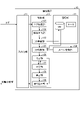
- FIG. 3 is a diagram showing a configuration example of an extraction device.
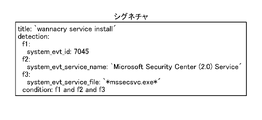
- FIG. 4 is a diagram showing examples of signatures used in the rules of FIG.
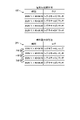
- FIG. 5 is a diagram showing an example of the rules of FIG.
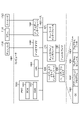
- FIG. 6 is a flow chart showing an example of a processing procedure of the extraction device.
- FIG. 7 is a diagram showing an example of a computer that executes an extraction program.
- the extraction device prepares in advance a rule (see reference numeral 101 in FIG. 1) in which a plurality of signatures indicating attacks on computers are arranged in an order characteristic of the attacks.
- the extraction device arranges the log group of the computer to be investigated in chronological order, and extracts the log group (see reference numeral 102) that matches each signature indicated in the rule.
- the extraction device extracts a log group in which the longest common subsequence between the sequence of signatures matching the logs of the extracted log group and the sequence of signatures indicated by the rule is the longest (see reference numerals 103 to 105). ).
- the extraction device when there are a plurality of log groups having the longest longest common subsequence with the sequence of signatures indicated in the rule, the extraction device, for each log group, A variance value of the time difference between each log that is adjacent in time series in the log group is calculated.
- the extraction device calculates variance values of "2:00, 1:00, 3:00". For example, the extractor converts "2:00, 1:00, 3:00" into seconds and calculates the variance of the converted values into seconds ("120, 60, 180").
- the extraction device also calculates the above variance value for other log groups having the longest longest common subsequence with the sequence of signatures indicated in the rule, and finds the longest common subsequence in the log group with the smallest variance value. is output as an attack candidate. For example, when the variance value of the log group indicated by reference numeral 103 among the log groups indicated by reference numerals 103 to 105 in FIG. Match B ⁇ Match with signature C ⁇ Match with signature D) is output as an attack trace candidate.
- an extraction device it is possible to extract, as attack candidates, a series of attacks that have the longest longest common subsequence with a series of signatures indicated in the rule, from the logs of the computer being investigated.
- the extraction device can accurately extract candidates for traces of attacks from the log of the computer to be investigated.
- the extraction device 10 includes an input/output unit 11 , a storage unit 12 and a control unit 13 .
- the input/output unit 11 is an interface that controls input/output of various data.
- the input/output unit 11 receives input of a log of a computer to be investigated, and outputs candidates for traces of attacks.
- the storage unit 12 stores rules. This rule is obtained by arranging a plurality of signatures indicating an attack on a computer in an order characteristic of the attack (see reference numeral 101 in FIG. 1).
- a signature indicates the characteristics of a log recorded by a computer when it is attacked. For example, a signature describes the behavior of malware on a computer (see Figure 4).
- each signature a value that indicates the order characteristic of the attack.
- the values indicating the order assigned to each signature may have the same value.
- the storage unit 12 includes a DB.
- Logs registered by the DB registration unit 133 (logs of computers to be investigated are arranged in chronological order) are stored in this DB.
- the control unit 13 controls the extraction device 10 as a whole.
- the control unit 13 includes a log collection unit 131, a time-serialization unit 132, a DB registration unit 133, a rule conversion unit 134, a DB search unit (first extraction unit) 135, and an extraction unit (second an extraction unit) 136 , a determination unit 137 , a calculation unit 138 , and a narrowing unit (output processing unit) 139 .
- the log collection unit 131 collects logs from computers to be investigated. For example, the log collection unit 131 collects event logs, registries, file operation histories, and the like from the investigation target computer. For example, the log collection unit 131 collects the above logs by CDIR-C (Cyber Defense Institute Incident Response Collector) or the like.
- CDIR-C Chemical Defense Institute Incident Response Collector
- the time-serializing unit 132 rearranges the logs collected by the log collecting unit 131 in chronological order.
- the DB registration unit 133 registers the logs chronologically rearranged by the time-serialization unit 132 in the DB.
- the rule conversion unit 134 converts the signature described in the rule into a search query for searching for logs that match the signature.
- the DB search unit 135 uses the search query converted by the rule conversion unit 134 to search logs in the DB. That is, the DB search unit 135 extracts from the DB a log group that matches the signature indicated by the rule. For example, the DB search unit 135 extracts from the DB a log group that matches each signature indicated by reference numeral 101 in FIG. 1 (see reference numeral 102 in FIG. 1).
- the extraction unit 136 extracts from the log group searched by the DB search unit 135 the longest common subsequence with the sequence of signatures indicated in the rule based on the time-series sequence of signatures that match each log in the log group. Extract the log group that becomes . For example, the extraction unit 136 extracts from the log group indicated by reference numeral 102 of FIG. Reference numeral 105).
- the determining unit 137 determines whether or not there are a plurality of log groups having the longest longest common subsequence extracted by the extracting unit 136 .
- the calculation unit 138 determines each of the log groups having the longest longest common subsequence to be adjacent in chronological order in the log group. Calculate the variance of the time difference between each log.
- the calculating unit 138 calculates the variance value of the time difference between each log that is adjacent in chronological order in the log group with the longest longest common subsequence indicated by reference numeral 103 in FIG. 2, reference numeral 201). Similarly, the calculating unit 138 calculates the variance value of the time difference between adjacent logs in time series in the log group indicated by reference numerals 104 and 105 in FIG.
- the narrowing-down unit 139 narrows down the candidates for traces of attack. For example, the narrowing unit 139 selects the longest common subsequence in the log group with the smallest variance value calculated by the calculation unit 138, among the log groups with the longest longest common subsequence extracted by the extraction unit 136, as an attack are output as trace candidates (attack candidates).
- the narrowing unit 139 selects the longest common subsequence in the log group extracted by the extraction unit 136 as an attack candidate. output as According to the extraction device 10 described above, attack candidates can be extracted with high accuracy.
- the log collection unit 131 collects logs to be processed from a computer to be investigated via the input/output unit 11 (S101).
- the time series unit 132 arranges the logs collected in S101 in time series (S102).
- the DB registration unit 133 registers the logs rearranged in S102 in the DB (S103).
- the rule conversion unit 134 reads out the rule in the storage unit 12 and converts the rule into a DB query (S104). Then, the DB search unit 135 extracts a log group from the DB using the query converted in S104 (S105). That is, the DB search unit 135 extracts from the DB a log group that matches the signature indicated by the rule.
- the extracting unit 136 extracts from the log group extracted in S105 the longest common subsequence between the sequence of signatures corresponding to the logs constituting the log group and the sequence of signatures indicated in the rule.
- a log group is extracted (S106).
- the determination unit 137 determines whether or not there are a plurality of log groups having the longest longest common subsequence extracted in S106 (S107). The longest common subsequence in the obtained log group is output as an attack candidate (S108).
- the calculation unit 138 calculates the log groups extracted in S106. For each log group, the variance value of the time difference between each log in the log group is calculated (S109). Then, the narrowing-down unit 139 outputs, as an attack candidate, the longest common subsequence in the log group with the smallest variance calculated in S109 among the log groups extracted in S106 (S110). By doing so, the extraction device 10 can accurately extract attack candidates.
- the narrowing unit 139 outputs, as an attack candidate, the longest common subsequence in the log group having the longest longest common subsequence with the sequence of signatures indicated in the rule, but is not limited to this.
- the narrowing-down unit 139 may output not only the above longest common subsequence but also a log group (including time information of each log) having the longest longest common subsequence as an attack candidate. By doing so, the user of the extraction device 10 can analyze the content of the attack candidate in more detail.
- the extraction device 10 arranges the logs acquired from the computer in chronological order, and then extracts the log group having the longest longest common subsequence with the sequence of signatures indicated in the rule. is not limited to this.
- the extraction device 10 extracts a group of logs that match one of the signatures indicated in the rule from among the logs acquired from the computer, and then rearranges them in chronological order. Then, the extraction device 10 may extract a log group having the longest longest common subsequence between the sequence of signatures matching the chronologically rearranged logs and the sequence of signatures indicated in the rule.
- each constituent element of each part shown in the figure is functionally conceptual, and does not necessarily need to be physically configured as shown in the figure.
- the specific form of distribution and integration of each device is not limited to the illustrated one, and all or part of them can be functionally or physically distributed and integrated in arbitrary units according to various loads and usage conditions. Can be integrated and configured.
- all or any part of each processing function performed by each device can be implemented by a CPU and a program executed by the CPU, or implemented as hardware based on wired logic.
- the extraction device 10 described above can be implemented by installing a program as package software or online software on a desired computer.
- the information processing device can function as the extraction device 10 by causing the information processing device to execute the above program.
- the information processing apparatus referred to here includes a desktop or notebook personal computer.
- information processing devices include mobile communication terminals such as smartphones, mobile phones and PHS (Personal Handyphone Systems), and terminals such as PDAs (Personal Digital Assistants).
- the extraction device 10 can also be implemented as a server device that uses a terminal device used by a user as a client and provides the client with services related to the above processing.
- the server device may be implemented as a web server, or may be implemented as a cloud that provides services related to the above processing by outsourcing.
- FIG. 7 is a diagram showing an example of a computer that executes an extraction program.
- the computer 1000 has a memory 1010 and a CPU 1020, for example.
- Computer 1000 also has hard disk drive interface 1030 , disk drive interface 1040 , serial port interface 1050 , video adapter 1060 and network interface 1070 . These units are connected by a bus 1080 .
- the memory 1010 includes a ROM (Read Only Memory) 1011 and a RAM (Random Access Memory) 1012 .
- the ROM 1011 stores a boot program such as BIOS (Basic Input Output System).
- BIOS Basic Input Output System
- Hard disk drive interface 1030 is connected to hard disk drive 1090 .
- a disk drive interface 1040 is connected to the disk drive 1100 .
- a removable storage medium such as a magnetic disk or optical disk is inserted into the disk drive 1100 .
- Serial port interface 1050 is connected to mouse 1110 and keyboard 1120, for example.
- Video adapter 1060 is connected to display 1130, for example.
- the hard disk drive 1090 stores, for example, an OS 1091, application programs 1092, program modules 1093, and program data 1094. That is, the program defining each process executed by the extraction device 10 is implemented as a program module 1093 in which computer-executable code is described. Program modules 1093 are stored, for example, on hard disk drive 1090 .
- the hard disk drive 1090 stores a program module 1093 for executing processing similar to the functional configuration of the extraction device 10 .
- the hard disk drive 1090 may be replaced by an SSD (Solid State Drive).
- the data used in the processes of the above-described embodiments are stored as program data 1094 in the memory 1010 or the hard disk drive 1090, for example. Then, the CPU 1020 reads out the program modules 1093 and program data 1094 stored in the memory 1010 and the hard disk drive 1090 to the RAM 1012 as necessary and executes them.
- the program modules 1093 and program data 1094 are not limited to being stored in the hard disk drive 1090, but may be stored in a removable storage medium, for example, and read by the CPU 1020 via the disk drive 1100 or the like. Alternatively, the program modules 1093 and program data 1094 may be stored in another computer connected via a network (LAN (Local Area Network), WAN (Wide Area Network), etc.). Program modules 1093 and program data 1094 may then be read by CPU 1020 through network interface 1070 from other computers.
- LAN Local Area Network
- WAN Wide Area Network
Landscapes
- Engineering & Computer Science (AREA)
- Computer Security & Cryptography (AREA)
- Software Systems (AREA)
- Theoretical Computer Science (AREA)
- Computer Hardware Design (AREA)
- Physics & Mathematics (AREA)
- General Engineering & Computer Science (AREA)
- General Physics & Mathematics (AREA)
- Debugging And Monitoring (AREA)
- Information Retrieval, Db Structures And Fs Structures Therefor (AREA)
Abstract
Description
まず、図1および図2を用いて、本実施形態の抽出装置の概要を説明する。まず、抽出装置は、事前にコンピュータへの攻撃を示す複数のシグネチャを、攻撃に特徴的な順序に並べたルール(図1の符号101参照)を用意しておく。
次に、図3を用いて抽出装置10の構成例を説明する。抽出装置10は、入出力部11と、記憶部12と、制御部13とを備える。
次に、図6を用いて、抽出装置10の処理手順の例を説明する。まず、ログ収集部131は、入出力部11経由で、調査対象のコンピュータから処理対象のログを収集する(S101)。次に、時系列化部132は、S101で収集されたログを時系列に並べる(S102)。そして、DB登録部133は、S102で並べ替えられたログをDBに登録する(S103)。
なお、絞り込み部139は、ルールに示されるシグネチャの並びとの最長共通部分列が最長となるログ群における最長共通部分列を攻撃の候補として出力することとしたが、これに限定されない。例えば、絞り込み部139は、攻撃の候補として、上記の最長共通部分列のみならず、最長共通部分列が最長となるログ群(各ログの時刻情報を含む)も出力してもよい。このようにすることで、抽出装置10のユーザは、攻撃の候補の内容を、より詳細に分析することができる。
また、図示した各部の各構成要素は機能概念的なものであり、必ずしも物理的に図示のように構成されていることを要しない。すなわち、各装置の分散・統合の具体的形態は図示のものに限られず、その全部又は一部を、各種の負荷や使用状況等に応じて、任意の単位で機能的又は物理的に分散・統合して構成することができる。さらに、各装置にて行われる各処理機能は、その全部又は任意の一部が、CPU及び当該CPUにて実行されるプログラムにて実現され、あるいは、ワイヤードロジックによるハードウェアとして実現され得る。
前記した抽出装置10は、パッケージソフトウェアやオンラインソフトウェアとしてプログラムを所望のコンピュータにインストールさせることによって実装できる。例えば、上記のプログラムを情報処理装置に実行させることにより、情報処理装置を抽出装置10として機能させることができる。ここで言う情報処理装置には、デスクトップ型又はノート型のパーソナルコンピュータが含まれる。また、その他にも、情報処理装置にはスマートフォン、携帯電話機やPHS(Personal Handyphone System)等の移動体通信端末、さらには、PDA(Personal Digital Assistant)等の端末等がその範疇に含まれる。
11 入出力部
12 記憶部
13 制御部
131 ログ収集部
132 時系列化部
133 DB登録部
134 ルール変換部
135 DB検索部
136 抽出部
137 判定部
138 算出部
139 絞り込み部
Claims (7)
- 調査対象のコンピュータのログを収集するログ収集部と、
コンピュータへの攻撃を示す複数のシグネチャを攻撃に特徴的な順序に並べたルールを参照して、前記収集したログから、前記ルールに示されるいずれかのシグネチャにマッチするログ群を抽出する第1の抽出部と、
前記抽出されたログ群の各ログがマッチするシグネチャの時系列での並びと、前記ルールに示される複数のシグネチャの並びとの最長共通部分列が最長となるログ群を抽出する第2の抽出部と、
前記最長共通部分列が最長となるログ群それぞれについて、前記ログ群において時系列で隣接する各ログ間の時刻差の分散値を算出する算出部と、
前記算出した分散値が最小となるログ群における前記最長共通部分列を攻撃の痕跡の候補として出力する出力処理部と
を備えることを特徴とする抽出装置。 - 前記最長共通部分列の長さは、
前記ルールに示されるいずれかのシグネチャにマッチするログ群を時系列に並び替えたときのシグネチャの並びと、前記ルールに示される複数のシグネチャの並びとの最長共通部分列の長さ
であることを特徴とする請求項1に記載の抽出装置。 - 前記最長共通部分列が最長となるログ群が複数あるか否かを判定する判定部をさらに備え、
前記判定部により、前記最長共通部分列が最長となるログ群が複数あると判定された場合、前記算出部は、前記最長共通部分列が最長となるログ群それぞれについて、前記ログ群において時系列で隣接する各ログ間の時刻差の分散値を算出する
ことを特徴とする請求項1に記載の抽出装置。 - 前記判定部により、前記最長共通部分列が最長となるログ群が複数ないと判定された場合、
前記出力処理部は、前記最長共通部分列が最長となるログ群における前記最長共通部分列を攻撃の痕跡の候補として出力する
ことを特徴とする請求項3に記載の抽出装置。 - 前記出力処理部は、さらに、
前記算出した分散値が最小となるログ群を出力する
ことを特徴とする請求項1に記載の抽出装置。 - 抽出装置により実行される抽出方法であって、
調査対象のコンピュータのログを収集する工程と、
コンピュータへの攻撃を示す複数のシグネチャを攻撃に特徴的な順序に並べたルールを参照して、前記収集したログから、前記ルールに示されるいずれかのシグネチャにマッチするログ群を抽出する工程と、
前記抽出されたログ群の各ログがマッチするシグネチャの時系列での並びと、前記ルールに示される複数のシグネチャの並びとの最長共通部分列が最長となるログ群を抽出する工程と、
前記最長共通部分列が最長となるログ群それぞれについて、前記ログ群において時系列で隣接する各ログ間の時刻差の分散値を算出する工程と、
前記算出した分散値が最小となるログ群における前記最長共通部分列を攻撃の痕跡の候補として出力する工程と
を含むことを特徴とする抽出方法。 - 調査対象のコンピュータのログを収集する工程と、
コンピュータへの攻撃を示す複数のシグネチャを攻撃に特徴的な順序に並べたルールを参照して、前記収集したログから、前記ルールに示されるいずれかのシグネチャにマッチするログ群を抽出する工程と、
前記抽出されたログ群の各ログがマッチするシグネチャの時系列での並びと、前記ルールに示される複数のシグネチャの並びとの最長共通部分列が最長となるログ群を抽出する工程と、
前記最長共通部分列が最長となるログ群それぞれについて、前記ログ群において時系列で隣接する各ログ間の時刻差の分散値を算出する工程と、
前記算出した分散値が最小となるログ群における前記最長共通部分列を攻撃の痕跡の候補として出力する工程と
をコンピュータに実行させるための抽出プログラム。
Priority Applications (3)
| Application Number | Priority Date | Filing Date | Title |
|---|---|---|---|
| PCT/JP2021/018049 WO2022239147A1 (ja) | 2021-05-12 | 2021-05-12 | 抽出装置、抽出方法、および、抽出プログラム |
| JP2023520655A JP7509318B2 (ja) | 2021-05-12 | 2021-05-12 | 抽出装置、抽出方法、および、抽出プログラム |
| US18/558,361 US20240220611A1 (en) | 2021-05-12 | 2021-05-12 | Extracting device, extracting method, and extracting program |
Applications Claiming Priority (1)
| Application Number | Priority Date | Filing Date | Title |
|---|---|---|---|
| PCT/JP2021/018049 WO2022239147A1 (ja) | 2021-05-12 | 2021-05-12 | 抽出装置、抽出方法、および、抽出プログラム |
Publications (1)
| Publication Number | Publication Date |
|---|---|
| WO2022239147A1 true WO2022239147A1 (ja) | 2022-11-17 |
Family
ID=84028027
Family Applications (1)
| Application Number | Title | Priority Date | Filing Date |
|---|---|---|---|
| PCT/JP2021/018049 Ceased WO2022239147A1 (ja) | 2021-05-12 | 2021-05-12 | 抽出装置、抽出方法、および、抽出プログラム |
Country Status (3)
| Country | Link |
|---|---|
| US (1) | US20240220611A1 (ja) |
| JP (1) | JP7509318B2 (ja) |
| WO (1) | WO2022239147A1 (ja) |
Citations (2)
| Publication number | Priority date | Publication date | Assignee | Title |
|---|---|---|---|---|
| WO2016147944A1 (ja) * | 2015-03-18 | 2016-09-22 | 日本電信電話株式会社 | マルウェア感染端末の検出装置、マルウェア感染端末の検出システム、マルウェア感染端末の検出方法およびマルウェア感染端末の検出プログラム |
| WO2018159362A1 (ja) * | 2017-03-03 | 2018-09-07 | 日本電信電話株式会社 | ログ分析装置、ログ分析方法およびログ分析プログラム |
Family Cites Families (8)
| Publication number | Priority date | Publication date | Assignee | Title |
|---|---|---|---|---|
| US20120137367A1 (en) * | 2009-11-06 | 2012-05-31 | Cataphora, Inc. | Continuous anomaly detection based on behavior modeling and heterogeneous information analysis |
| TWI419003B (zh) * | 2010-11-12 | 2013-12-11 | Univ Nat Chiao Tung | 自動化分析與分類惡意程式之方法及系統 |
| US8839435B1 (en) * | 2011-11-04 | 2014-09-16 | Cisco Technology, Inc. | Event-based attack detection |
| JP5946423B2 (ja) * | 2013-04-26 | 2016-07-06 | インターナショナル・ビジネス・マシーンズ・コーポレーションInternational Business Machines Corporation | システム・ログの分類方法、プログラム及びシステム |
| US9344441B2 (en) * | 2014-09-14 | 2016-05-17 | Cisco Technology, Inc. | Detection of malicious network connections |
| US9043894B1 (en) * | 2014-11-06 | 2015-05-26 | Palantir Technologies Inc. | Malicious software detection in a computing system |
| US10230744B1 (en) * | 2016-06-24 | 2019-03-12 | EMC IP Holding Company LLC | Detecting periodic behavior in a communication session using clustering |
| JP6719492B2 (ja) * | 2018-02-26 | 2020-07-08 | 三菱電機株式会社 | ルール生成装置およびルール生成プログラム |
-
2021
- 2021-05-12 WO PCT/JP2021/018049 patent/WO2022239147A1/ja not_active Ceased
- 2021-05-12 US US18/558,361 patent/US20240220611A1/en active Pending
- 2021-05-12 JP JP2023520655A patent/JP7509318B2/ja active Active
Patent Citations (2)
| Publication number | Priority date | Publication date | Assignee | Title |
|---|---|---|---|---|
| WO2016147944A1 (ja) * | 2015-03-18 | 2016-09-22 | 日本電信電話株式会社 | マルウェア感染端末の検出装置、マルウェア感染端末の検出システム、マルウェア感染端末の検出方法およびマルウェア感染端末の検出プログラム |
| WO2018159362A1 (ja) * | 2017-03-03 | 2018-09-07 | 日本電信電話株式会社 | ログ分析装置、ログ分析方法およびログ分析プログラム |
Also Published As
| Publication number | Publication date |
|---|---|
| US20240220611A1 (en) | 2024-07-04 |
| JP7509318B2 (ja) | 2024-07-02 |
| JPWO2022239147A1 (ja) | 2022-11-17 |
Similar Documents
| Publication | Publication Date | Title |
|---|---|---|
| RU2722692C1 (ru) | Способ и система выявления вредоносных файлов в неизолированной среде | |
| EP2998884B1 (en) | Security information management system and security information management method | |
| US9621571B2 (en) | Apparatus and method for searching for similar malicious code based on malicious code feature information | |
| JP6106340B2 (ja) | ログ分析装置、攻撃検知装置、攻撃検知方法およびプログラム | |
| US9003529B2 (en) | Apparatus and method for identifying related code variants in binaries | |
| JPWO2018159337A1 (ja) | プロファイル生成装置、攻撃検知装置、プロファイル生成方法、および、プロファイル生成プログラム | |
| CN106503558A (zh) | 一种基于社团结构分析的Android恶意代码检测方法 | |
| RU2728497C1 (ru) | Способ и система определения принадлежности программного обеспечения по его машинному коду | |
| EP3258409A1 (en) | Device for detecting terminal infected by malware, system for detecting terminal infected by malware, method for detecting terminal infected by malware, and program for detecting terminal infected by malware | |
| JPWO2017018377A1 (ja) | 分析方法、分析装置、および分析プログラム | |
| KR102289408B1 (ko) | 해시 코드 기반의 검색 장치 및 검색 방법 | |
| KR102289395B1 (ko) | 자카드 모델 기반의 문서 검색 장치 및 방법 | |
| US20190370476A1 (en) | Determination apparatus, determination method, and determination program | |
| CN113886821A (zh) | 基于孪生网络的恶意进程识别方法、装置、电子设备及存储介质 | |
| CN111797396B (zh) | 恶意代码可视化及变种检测方法、装置、设备及存储介质 | |
| JP7509318B2 (ja) | 抽出装置、抽出方法、および、抽出プログラム | |
| CN114048136A (zh) | 测试类型确定方法、装置、服务器、介质及产品 | |
| US20210168121A1 (en) | Generation method, generation device, and recording medium | |
| JP7652253B2 (ja) | 判定装置、判定方法および判定プログラム | |
| CN104794397A (zh) | 病毒检测方法和装置 | |
| WO2022219792A1 (ja) | 収集装置、収集方法、および、収集プログラム | |
| JP6518000B2 (ja) | 分析装置、分析方法および分析プログラム | |
| US12609948B2 (en) | Extracting device, extracting method, and extracting program | |
| US20210344697A1 (en) | Detection device and detection program | |
| Xiao et al. | Matching similar functions in different versions of a malware |
Legal Events
| Date | Code | Title | Description |
|---|---|---|---|
| 121 | Ep: the epo has been informed by wipo that ep was designated in this application |
Ref document number: 21941881 Country of ref document: EP Kind code of ref document: A1 |
|
| WWE | Wipo information: entry into national phase |
Ref document number: 2023520655 Country of ref document: JP |
|
| WWE | Wipo information: entry into national phase |
Ref document number: 18558361 Country of ref document: US |
|
| NENP | Non-entry into the national phase |
Ref country code: DE |
|
| 122 | Ep: pct application non-entry in european phase |
Ref document number: 21941881 Country of ref document: EP Kind code of ref document: A1 |