WO2022230312A1 - 情報処理装置および情報処理方法 - Google Patents
情報処理装置および情報処理方法 Download PDFInfo
- Publication number
- WO2022230312A1 WO2022230312A1 PCT/JP2022/006013 JP2022006013W WO2022230312A1 WO 2022230312 A1 WO2022230312 A1 WO 2022230312A1 JP 2022006013 W JP2022006013 W JP 2022006013W WO 2022230312 A1 WO2022230312 A1 WO 2022230312A1
- Authority
- WO
- WIPO (PCT)
- Prior art keywords
- user
- guide
- viewing
- pattern
- information processing
- Prior art date
- Legal status (The legal status is an assumption and is not a legal conclusion. Google has not performed a legal analysis and makes no representation as to the accuracy of the status listed.)
- Ceased
Links
Images











Classifications
-
- G—PHYSICS
- G06—COMPUTING OR CALCULATING; COUNTING
- G06Q—INFORMATION AND COMMUNICATION TECHNOLOGY [ICT] SPECIALLY ADAPTED FOR ADMINISTRATIVE, COMMERCIAL, FINANCIAL, MANAGERIAL OR SUPERVISORY PURPOSES; SYSTEMS OR METHODS SPECIALLY ADAPTED FOR ADMINISTRATIVE, COMMERCIAL, FINANCIAL, MANAGERIAL OR SUPERVISORY PURPOSES, NOT OTHERWISE PROVIDED FOR
- G06Q30/00—Commerce
- G06Q30/01—Customer relationship services
- G06Q30/015—Providing customer assistance, e.g. assisting a customer within a business location or via helpdesk
-
- G—PHYSICS
- G01—MEASURING; TESTING
- G01C—MEASURING DISTANCES, LEVELS OR BEARINGS; SURVEYING; NAVIGATION; GYROSCOPIC INSTRUMENTS; PHOTOGRAMMETRY OR VIDEOGRAMMETRY
- G01C21/00—Navigation; Navigational instruments not provided for in groups G01C1/00 - G01C19/00
- G01C21/20—Instruments for performing navigational calculations
- G01C21/206—Instruments for performing navigational calculations specially adapted for indoor navigation
-
- G—PHYSICS
- G06—COMPUTING OR CALCULATING; COUNTING
- G06F—ELECTRIC DIGITAL DATA PROCESSING
- G06F3/00—Input arrangements for transferring data to be processed into a form capable of being handled by the computer; Output arrangements for transferring data from processing unit to output unit, e.g. interface arrangements
- G06F3/01—Input arrangements or combined input and output arrangements for interaction between user and computer
- G06F3/011—Arrangements for interaction with the human body, e.g. for user immersion in virtual reality
-
- G—PHYSICS
- G06—COMPUTING OR CALCULATING; COUNTING
- G06Q—INFORMATION AND COMMUNICATION TECHNOLOGY [ICT] SPECIALLY ADAPTED FOR ADMINISTRATIVE, COMMERCIAL, FINANCIAL, MANAGERIAL OR SUPERVISORY PURPOSES; SYSTEMS OR METHODS SPECIALLY ADAPTED FOR ADMINISTRATIVE, COMMERCIAL, FINANCIAL, MANAGERIAL OR SUPERVISORY PURPOSES, NOT OTHERWISE PROVIDED FOR
- G06Q90/00—Systems or methods specially adapted for administrative, commercial, financial, managerial or supervisory purposes, not involving significant data processing
- G06Q90/20—Destination assistance within a business structure or complex
-
- G—PHYSICS
- G06—COMPUTING OR CALCULATING; COUNTING
- G06Q—INFORMATION AND COMMUNICATION TECHNOLOGY [ICT] SPECIALLY ADAPTED FOR ADMINISTRATIVE, COMMERCIAL, FINANCIAL, MANAGERIAL OR SUPERVISORY PURPOSES; SYSTEMS OR METHODS SPECIALLY ADAPTED FOR ADMINISTRATIVE, COMMERCIAL, FINANCIAL, MANAGERIAL OR SUPERVISORY PURPOSES, NOT OTHERWISE PROVIDED FOR
- G06Q50/00—Information and communication technology [ICT] specially adapted for implementation of business processes of specific business sectors, e.g. utilities or tourism
- G06Q50/10—Services
Definitions
- the present disclosure relates to an information processing device and an information processing method.
- the present disclosure proposes an information processing device and an information processing method capable of providing guidance according to the user's state and preferences.
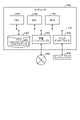
- an information processing apparatus includes an acquisition unit that acquires a state of a user who appreciates an appreciation object, and based on the state of the user acquired by the acquisition unit: an estimation unit for estimating a viewing pattern, which is a type of viewing style of the user; and a determination for determining a mode of guide regarding the viewing object to be presented to the user according to the viewing pattern estimated by the estimation unit. and a guide control unit that performs guide control to present the guide to the user according to the mode of the guide determined by the determination unit.
- FIG. 1 is a schematic configuration diagram of a guide terminal according to an embodiment of the present disclosure
- FIG. 1 is a schematic explanatory diagram of an information processing method according to an embodiment of the present disclosure
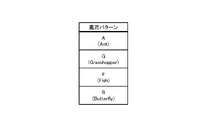
- FIG. FIG. 10 is a diagram showing an example of a viewing pattern
- 1 is a diagram showing a configuration example of a guide system according to an embodiment of the present disclosure
- FIG. It is a block diagram which shows the structural example of the sensor part in a facility.
- 2 is a block diagram showing a configuration example of a guide terminal according to an embodiment of the present disclosure
- FIG. 3 is a block diagram showing a configuration example of a terminal internal sensor unit
- FIG. 1 is a block diagram showing a configuration example of a server device according to an embodiment of the present disclosure
- FIG. 10 is an explanatory diagram of viewing pattern “A”;
- FIG. 11 is an explanatory diagram of a viewing pattern “G”;
- FIG. 11 is an explanatory diagram of viewing pattern “F”;
- FIG. 11 is an explanatory diagram of viewing pattern “B”;
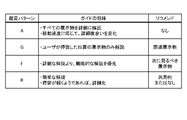
- FIG. 10 is an explanatory diagram of a mode of guidance for each viewing pattern;
- FIG. 10 is an explanatory diagram of a case in which the mode of the guide is changed according to changes in viewing patterns in time series;
- FIG. 10 is a diagram showing the relationship between the presentation modal and the evaluation of the appreciation object;
- FIG. 10 is an explanatory diagram of modal presentation control by guide type;
- FIG. 10 is an explanatory diagram of modal presentation control based on the organizer's intention;
- FIG. 2 is an explanatory diagram (part 1) for accessibility;
- FIG. 2 is an explanatory diagram (part 2) for accessibility;
- 4 is a flow chart showing a processing procedure executed by the server device;
- FIG. 10 is an explanatory diagram of guidance processing based on organizer's intention;
- FIG. 11 is an explanatory diagram (part 1) of guidance processing based on the degree of congestion;
- FIG. 11 is an explanatory diagram (part 2) of guidance processing based on the degree of congestion;
- FIG. 13 is an explanatory diagram (part 3) of guidance processing based on the degree of congestion;
- FIG. 11 is an explanatory diagram (part 1) of speech instruction correspondence;
- FIG. 11 is an explanatory diagram (part 2) of speech instruction correspondence;
- FIG. 10 is an explanatory diagram of switching timing of a guide mode;
- FIG. 11 is an explanatory diagram (Part 1) of a modified example of an avatar;
- FIG. 11 is an explanatory diagram (part 2) of a modified example of an avatar;
- 2 is a hardware configuration diagram showing an example of a computer that implements the functions of a server device;
- a plurality of components having substantially the same functional configuration may be distinguished by attaching different numbers with hyphens after the same reference numerals.
- a plurality of configurations having substantially the same functional configuration are distinguished as guide terminal 30-1 and guide terminal 30-2 as necessary.
- the guide terminal 30-1 and the guide terminal 30-2 are simply referred to as the guide terminal 30 when there is no particular need to distinguish between them.
- FIG. 1 is a schematic configuration diagram of a guide terminal 30 according to an embodiment of the present disclosure.
- FIG. 2 is a schematic explanatory diagram of the information processing method according to the embodiment of the present disclosure.
- FIG. 3 is a diagram showing an example of viewing patterns.
- the guide terminal 30 is a terminal device that is lent to a user at the time of entering an exhibition viewing facility (hereinafter simply referred to as "facility") such as an art gallery or a museum, and is carried by the user within the facility.
- an exhibition viewing facility hereinafter simply referred to as "facility”
- the guide terminal 30 uses audio information and image information to present the user with guide information about the exhibit P that the user has approached, floor guidance, and the like.
- the guide information about the exhibit P is, for example, an explanation of the work.
- the guide information for floor guidance is the location of each exhibition area, the movement route, and the like.
- the guide terminal 30 has an operation unit 31, a microphone 32c, an audio output unit 34, and a display unit 35.
- the operation unit 31 receives various instruction operations from the user.
- the microphone 32c receives the user's utterance content.
- the guide terminal 30 can also accept instruction operations by user's speech via the microphone 32c.
- the audio output unit 34 is, for example, a speaker, and outputs guide information using audio as a user interface. Note that the audio output unit 34 may be earphones, headphones, or the like.
- the display unit 35 is, for example, a display, and outputs guide information in the form of images.
- the guide information in the form of images can be presented to the user as user interfaces such as text, symbols, or the avatar Avr shown in FIG.
- the display unit 35 may be realized by a touch panel display and configured integrally with the operation unit 31 .
- the guide terminal 30 may be a mobile terminal such as a smartphone owned by the user.
- the user installs and operates a dedicated guide application before or at the time of entering the facility, for example, so that his or her mobile terminal functions as the guide terminal 30 while entering the facility. .
- the guide terminal 30 may be a wearable terminal.
- the guide terminal 30 is, for example, AR (Augmented Reality) glasses, and the user wears such AR glasses while entering the facility.
- AR Augmented Reality
- the existing technology using a terminal device such as the guide terminal 30 has room for further improvement in providing guidance according to the user's condition and preferences.
- the information processing system 1 acquires the state of the user viewing the exhibit P, and based on the acquired state of the user, determines the viewing pattern, which is the type of the user's viewing style.
- Guidance control for estimating, determining a mode of guide relating to the exhibit P to be presented to the user according to the estimated viewing pattern, and controlling so that the guide is presented to the user according to the determined mode of guide. was to be executed.
- the information processing system 1 includes an in-facility sensor unit 10 , one or more guide terminals 30 , and a server device 50 .
- the server device 50 appropriately acquires the user's state from the in-facility sensor unit 10 and the guide terminal 30 .
- the user's state includes each behavior in the user's viewing behavior that represents the user's viewing style and preference.
- the server device 50 estimates the viewing pattern of the user based on the acquired state of the user (step S1).
- the "viewing pattern” referred to here is the type of user's viewing style.
- such viewing patterns are divided into at least four types of "A (Ant)", “G (Grasshopper)", “F (Fish)”, and “B (Butterfly)”. classified.
- Such classification is based on a publicly known paper that can classify viewing behavior into about four types of patterns (Veron & Levasseur, 1989). Details of each pattern will be described later with reference to FIGS.
- the server device 50 determines the mode of guidance for the user according to the estimated viewing pattern (step S2). After that, the server device 50 executes guide control for each guide terminal 30 according to the determined guide mode (step S3).
- Guide control here includes control of what is used as a user interface for presenting guide information, in other words, modal presentation control.
- the guide terminal 30 guides the user through modal presentation according to the guide control instruction (step S4).
- the state of the user viewing the exhibit P is acquired, and based on the acquired state of the user, the viewing pattern, which is the type of the user's viewing style, is estimated. Determining a mode of guide relating to the exhibit P to be presented to the user according to the determined viewing pattern, and executing guide control so as to present the guide to the user according to the determined mode of guide.
- FIG. 4 is a diagram showing a configuration example of the information processing system 1 according to the embodiment of the present disclosure.
- FIG. 5 is a block diagram showing a configuration example of the in-facility sensor unit 10. As shown in FIG. 4, 5, and 6 to 8 shown later, only the components necessary for explaining the features of this embodiment are shown, and descriptions of general components are omitted. there is
- each component illustrated in FIGS. 4 to 8 is functionally conceptual and does not necessarily need to be physically configured as illustrated.
- the specific form of distribution/integration of each block is not limited to the one shown in the figure. It is possible to integrate and configure.
- the information processing system 1 includes the in-facility sensor unit 10, one or more guide terminals 30, and the server device 50, as shown in FIG.
- the in-facility sensor unit 10, the guide terminal 30, and the server device 50 are interconnected by a network N such as the Internet, an intranet, a mobile phone network, a short-range wireless communication network, or the like. and are provided so as to be able to transmit and receive data to and from each other via the network N.
- a network N such as the Internet, an intranet, a mobile phone network, a short-range wireless communication network, or the like.
- the in-facility sensor unit 10 is a group of various sensors installed in various places in the facility, and includes one or more cameras 11 and one or more position sensors 12, as shown in FIG. Of course, other sensors may be included, such as sensors that detect the orientation of the user's face, line of sight, and the like. In the embodiment of the present disclosure, it is assumed that the direction of the user's face, line of sight, etc. can be detected as a result of image analysis of an image captured by the camera 11 and an image captured by the terminal internal sensor unit 32, which will be described later.
- the guide terminal 30 is a terminal device carried or worn by the user in the facility.
- the guide terminal 30 may be a notebook PC, a tablet terminal, a PDA (Personal Digital Assistant), or the like, in addition to the mobile terminal or wearable terminal described above.
- PDA Personal Digital Assistant
- the guide terminal 30 appropriately transmits the user's state to the server device 50, and guides the user based on the instructions regarding the guide control from the server device 50 in a manner of guidance according to the instructions.
- the server device 50 is realized, for example, as a cloud server, and acquires the user's state from the in-facility sensor unit 10 and the guide terminal 30 as appropriate. Then, the server device 50 estimates the viewing pattern of the user based on the acquired state of the user, and determines the mode of guidance for each user according to the estimated viewing pattern. Then, the server device 50 executes guidance control for the guide terminal 30 in accordance with the determined mode of guidance.
- FIG. 6 is a block diagram showing a configuration example of the guide terminal 30 according to the embodiment of the present disclosure.
- FIG. 7 is a block diagram showing a configuration example of the intra-terminal sensor unit 32. As shown in FIG.
- the guide terminal 30 includes an operation unit 31, an in-terminal sensor unit 32, a communication unit 33, an audio output unit 34, a display unit 35, a storage unit 36, and a control unit 37.
- an operation unit 31 an in-terminal sensor unit 32, a communication unit 33, an audio output unit 34, a display unit 35, a storage unit 36, and a control unit 37.
- the operation unit 31, the audio output unit 34, and the display unit 35 have already been described, descriptions thereof will be omitted here.
- the in-terminal sensor unit 32 is a group of various sensors provided in the guide terminal 30, and includes a camera 32a, a position sensor 32b, and a microphone 32c, as shown in FIG. Of course, other sensors such as acceleration sensors and gyro sensors may also be included.
- the communication unit 33 is implemented by, for example, a NIC (Network Interface Card) or the like.
- the communication unit 33 is wirelessly connected to the server device 50 via the network N, and transmits and receives various types of information to and from the server device 50 .
- the storage unit 36 is realized, for example, by a semiconductor memory device such as RAM (Random Access Memory), ROM (Read Only Memory), flash memory, or a storage device such as a hard disk or optical disk.
- a semiconductor memory device such as RAM (Random Access Memory), ROM (Read Only Memory), flash memory, or a storage device such as a hard disk or optical disk.
- the storage unit 36 stores a guide content DB 36a and a voice recognition model 36b.
- the guide content DB 36 a is a database of guide content presented to the user via the audio output unit 34 and display unit 35 .
- the voice recognition model 36b is a recognition model for recognizing the contents of the user's speech input via the microphone 32c.
- the control unit 37 is a controller, and various programs (not shown) stored in the storage unit 36 are executed using the RAM as a work area, for example, by a CPU (Central Processing Unit) or MPU (Micro Processing Unit). It is realized by being Also, the control unit 37 can be implemented by an integrated circuit such as an ASIC (Application Specific Integrated Circuit) or an FPGA (Field Programmable Gate Array).
- ASIC Application Specific Integrated Circuit
- FPGA Field Programmable Gate Array
- the control unit 37 has an acquisition unit 37a, a transmission unit 37b, and an output control unit 37c, and implements or executes the information processing functions and actions described below.
- the acquisition unit 37a acquires the user's instruction operation via the operation unit 31 and the microphone 32c, and causes the output control unit 37c to perform output control according to the instruction operation.
- the acquisition unit 37 a also acquires the state of the guide terminal 30 and the user from the internal sensor unit 32 and causes the transmission unit 37 b to transmit the information to the server device 50 .
- the acquisition unit 37a also acquires an instruction regarding guide control from the server device 50 via the communication unit 33, and causes the output control unit 37c to perform output control for guiding the user according to the instruction.
- the transmission unit 37b appropriately transmits the state of the guide terminal 30 and the user acquired by the acquisition unit 37a to the server device 50 via the communication unit 33.
- the output control unit 37c performs output control for the audio output unit 34 and the display unit 35 according to the user's instruction operation acquired by the acquisition unit 37a. In addition, the output control unit 37c performs output control for the audio output unit 34 and the display unit 35 according to the instruction regarding guide control from the server device 50 acquired by the acquisition unit 37a.
- FIG. 8 is a block diagram showing a configuration example of the server device 50 according to the embodiment of the present disclosure.
- the server device 50 includes a communication section 51 , a storage section 52 and a control section 53 .
- the communication unit 51 is implemented by, for example, a NIC, like the communication unit 33 described above.
- the communication unit 51 is wired or wirelessly connected to the in-facility sensor unit 10 and the guide terminal 30 via the network N, and transmits and receives various types of information to and from the in-facility sensor unit 10 and the guide terminal 30 .
- the storage unit 52 is implemented by, for example, a semiconductor memory device such as a RAM, ROM, flash memory, or a storage device such as a hard disk or an optical disk.
- a semiconductor memory device such as a RAM, ROM, flash memory
- a storage device such as a hard disk or an optical disk.
- the storage unit 52 stores an exhibition-related DB 52a, a pattern estimation model 52b, a pattern history DB 52c, and a user information DB 52d.
- the exhibition-related DB 52a is a database of information related to the exhibition of the exhibit P.
- Information related to the display of the exhibit P includes, for example, an exhibit ID, a facility map, guide content, other related content, and the like.
- the pattern estimation model 52b is an estimation model for estimating the user's viewing pattern based on the states of the user and the guide terminal 30 obtained from the in-facility sensor unit 10 and the guide terminal 30.
- the pattern estimation model 52b is generated as a learning model using a machine learning algorithm such as deep learning. In such a case, the pattern estimation model 52b outputs an estimated viewing pattern and its accuracy when the user's state acquired by the acquisition unit 53a, which will be described later, is input.
- the pattern history DB 52c is information about the history of viewing patterns estimated in the past by the estimation unit 53b, which will be described later.
- the user information DB 52d is information related to user attributes and the like, and includes, for example, a disability type indicating that the user is visually impaired or hearing impaired.
- the control unit 53 is a controller similar to the control unit 37 described above. Realized. Also, the control unit 53 can be realized by an integrated circuit such as an ASIC or FPGA, for example.
- the control unit 53 has an acquisition unit 53a, an estimation unit 53b, a determination unit 53c, and a guide control unit 53d, and realizes or executes the information processing functions and actions described below.
- the acquisition unit 53 a acquires the user's state transmitted from the in-facility sensor unit 10 and the guide terminal 30 via the communication unit 51 .
- the estimation unit 53b estimates the viewing pattern of the user based on the state of the user acquired by the acquisition unit 53a. Note that the estimation unit 53b analyzes the acquired state of the user by image analysis or the like as necessary. Also, the estimation unit 53b estimates the viewing pattern of the user based on the movement trajectory obtained as a result of the analysis, the distance to the exhibit P, and the like.
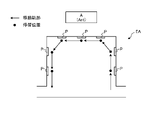
- FIG. 9 is a schematic plan view showing an example of an exhibition area.
- FIG. 10 is an explanatory diagram of viewing pattern "A”.
- FIG. 11 is an explanatory diagram of the viewing pattern "G”.
- FIG. 12 is an explanatory diagram of the viewing pattern "F”.
- FIG. 13 is an explanatory diagram of the viewing pattern "B”.
- the viewing pattern "A" is for the user to relatively approach the exhibit P and follow the explanation while reading the exhibit P faithfully like an ant. It is a viewing pattern that tends to appreciate and not cross the space.
- viewing pattern "G” is a viewing pattern in which the user tends to move in the exhibition area EA like a grasshopper repeatedly jumping and appreciates only the exhibits P of interest. be.
- viewing pattern "F” the user, like a fish, draws a circular locus in the center of the exhibition area EA, and tends to spend almost no viewing time and not stop. appreciation pattern.
- viewing pattern "B" indicates that the user views an exhibit P that she is attracted to by chance, and tends to follow an unpredictable movement trajectory like a butterfly. It's a pattern.
- the estimation unit 53b inputs the user's state acquired by the acquisition unit 53a to the pattern estimation model 52b, and receives from the pattern estimation model 52b the label value of one of these four types and its accuracy.
- the estimation unit 53b estimates the viewing pattern corresponding to the received label value as the viewing pattern of the user. Also, the estimation unit 53b estimates the viewing state of the user if the accuracy is less than a predetermined threshold.
- the viewing pattern may be regarded as one of the four types. In an embodiment of the present disclosure, when the probability is less than a predetermined threshold, it is uniformly regarded as viewing pattern "B", for example.
- a clearly different viewing state is, for example, a case in which, after viewing without approaching the exhibits P, only some of the exhibits P are approached and viewed while returning along the normal route.
- the estimation unit 53b estimates the viewing pattern based on the state of one of the groups (for example, the leader), and assumes that all members of the group have the same viewing pattern. can be In such a case, the determination unit 53c, which will be described later, determines the same single guidance mode for all members of the group according to the viewing pattern.
- the determination unit 53c determines a mode of guidance for the user in accordance with the viewing pattern estimated by the estimation unit 53b.
- a mode of guidance for each viewing pattern will be described.
- FIG. 14 is an explanatory diagram of a mode of guidance for each viewing pattern.
- the determination unit 53c determines a mode of guide so as to provide detailed explanations of all the exhibits P for the corresponding user, for example, in the case of viewing pattern "A". Further, the determining unit 53c determines the mode of the guide so that the degree of detail is changed according to the moving speed of the user, for example, the slower the moving speed, the more detailed the explanation. In addition, in the case of viewing pattern “A”, the determination unit 53c determines a mode of guidance so as not to recommend an exhibit P to be viewed next.
- the determination unit 53c determines the mode of guide so that only the exhibit P at the position where the user has stopped will be explained to the corresponding user. In addition, in the case of viewing pattern “G”, the determination unit 53c determines a mode of guidance so as to recommend related exhibits that the user has not viewed, for example.
- the determination unit 53c determines the mode of guidance so that the general commentary is prioritized over the detailed commentary for the corresponding user.
- the general commentary includes, for example, an outline of the exhibit P, historical background, commentary when viewed from a distance, and the like. Further, in the case of the viewing pattern “F”, the determination unit 53c determines the mode of guidance so as to recommend the exhibit P that the user should see next, for example.
- the determination unit 53c determines the mode of guidance so as to provide a simple explanation to the user. Further, if the user continues to stop, the determining unit 53c determines the form of the guide to be detailed. Further, in the case of the viewing pattern “B”, the determination unit 53c determines the mode of guidance so as to make a general recommendation or not to make a particular recommendation.
- the determination unit 53c determines the mode of guidance, if the user requests guidance in any mode, that is given priority.
- the guide control unit 53d executes guide control for each guide terminal 30 according to the mode of guidance determined by the determination unit 53c. Specifically, the guide control unit 53 d generates an instruction signal according to the mode of guidance determined by the determination unit 53 c and transmits the instruction signal to the guide terminal 30 via the communication unit 51 . The guide terminal 30 guides the user through a mode of guidance and modal presentation according to the instruction signal.
- the determination unit 53c may change the mode of the guide according to the chronological change in the viewing pattern of the user.
- FIG. 15 is an explanatory diagram in the case of changing the mode of the guide in accordance with the chronological changes in viewing patterns.
- the estimating unit 53b for example, based on the changing state of the user, uses a Bayesian estimation algorithm or the like to calculate transition probabilities for transitioning to each viewing pattern, as shown in FIG.
- the determination unit 53c continues the mode of guidance that has already been determined according to the previous viewing pattern.
- the determination unit 53c changes the mode of the guide so that it can be confirmed whether or not the transition to the viewing pattern is true. For example, the determination unit 53c intentionally presents a guidance mode corresponding to another viewing pattern on a trial basis, and formally determines the guidance mode according to the user's reaction. Further, when the transition probability has changed more than the above constant value, the determination unit 53c determines the mode of guidance according to the viewing pattern after the change without confirmation.
- the determination unit 53c determines the mode of guidance according to the viewing pattern after the change. In the example of FIG. 15 , the determining unit 53c changes the mode of guidance from that corresponding to the estimated pattern “A” to that corresponding to the estimated pattern “F”.
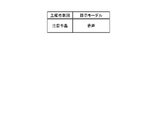
- FIG. 16 is a diagram showing the relationship between the presentation modal and the evaluation of the appreciation object.
- FIG. 17 is an explanatory diagram of modal presentation control by guide type.
- FIG. 18 is an explanatory diagram of modal presentation control based on the organizer's intention.
- the determination unit 53c selects a presentation modal according to the guide type of guidance to be given to the user. For example, when the guide type is "work commentary", the determining unit 53c selects "audio" as the presentation modal and causes the guide terminal 30 to provide work commentary only by sound.
- text or symbols may be used as a supplementary modal to guide the user's line of sight. .
- the viewing pattern "A", as shown in FIG. 17, is more suitable when such a presentation modal is centered on audio.
- the determination unit 53c determines the mode of guidance so that detailed explanations are given to the corresponding user, mainly focusing on voice. Also, the determining unit 53c determines the mode of the guide so that the avatar is not used so that the user can concentrate on viewing. In the case of the viewing pattern "A", the user views the exhibits P faithfully along the route, so the determination unit 53c determines the mode of guidance so as not to guide the movement route.
- the determining unit 53c selects "avatar” as the presentation modal and causes the guide terminal 30 to perform floor guidance by the avatar.
- avatar As the supplementary modal, a modal other than the avatar is appropriately selected.
- the viewing pattern "F” as shown in FIG. 17 is more suitable for such a case.
- the determination unit 53c determines the mode of guidance so that the avatar is mainly in charge of floor movement and area commentary.
- the determination unit 53c selects "avatar” as the presentation modal, and causes the guide terminal 30 to perform accompaniment viewing by the avatar that accompanies the user and enjoys the user's interest. .
- a supplemental modal is not particularly necessary.
- the viewing pattern "G" as shown in FIG. 17 is more suitable for such a case.
- the user if the user is not interested, the user tends to skip the exhibit P regardless of the route.
- the avatar is allowed to explain the work of the exhibit P at the position where the avatar is placed only when requested by the user. Regarding floor movement and area commentary, the avatar may be appropriately performed.
- the determining unit 53c selects "avatar” as the presentation modal, and the avatar is called only at the time of the user's request.
- the guide terminal 30 is caused to respond to a request to guide the user.
- a supplemental modal is not particularly necessary.
- the viewing pattern "B" as shown in FIG. 17 is more suitable for such a case.
- the determining unit 53c selects "audio" as the presentation modal for a "notable work” for which the organizer wants to raise the evaluation, or wants the organizer to concentrate on viewing. It is possible to cause the guide terminal 30 to provide a work commentary by chisel.
- the "notable work” is, for example, an exhibit P that is not famous but that the organizer wants users to pay attention to, or an exhibit P that the organizer wants to focus on selling related goods. For example, even when the avatar is set as the presentation modal, the determination unit 53c can set only the audio as the presentation modal for such a noteworthy work.
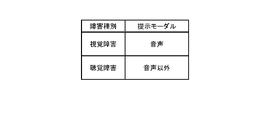
- the determining unit 53c can determine the mode of guidance so as to select a presentation modal according to the disability that the user has.
- FIG. 19 is an explanatory diagram (part 1) for accessibility.
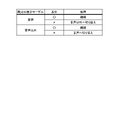
- FIG. 20 is an explanatory diagram (part 2) for accessibility.
- the determination unit 53c refers to the user information DB 52d, and selects voice as the presentation modal, for example, when the user is visually impaired, as shown in FIG. Likewise, when the user has a hearing impairment, the determination unit 53c selects modals other than voice as the presentation modal.
- the determination unit 53c executes guidance using a default presentation modal, for example, and if the expected response from the user is not obtained, changes the presentation modal, and if a response is obtained, continues guidance using the changed presentation modal.
- the determination unit 53c continues the presentation modal as the voice if the user's response to the default presentation modal "voice" is favorable. On the other hand, the determining unit 53c switches the presentation modal from audio to non-audio if the response is poor, such as when the user does not look in the direction of the audio explanation.
- the determination unit 53c continues the presentation modal other than voice.
- the determination unit 53c switches the presentation modal from the non-voice to the voice.
- an optimal presentation modal can be selected according to the situation. Then, the guide terminal 30 can be caused to perform such presentation modal guidance.
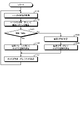
- FIG. 21 is a flow chart showing a processing procedure executed by the server device 50. As shown in FIG.
- the acquisition unit 53a first acquires the user's state from the in-facility sensor unit 10 and the in-terminal sensor unit 32 (step S101). Then, the estimation unit 53b estimates a viewing pattern based on the acquired state of the user (step S102).
- the estimation unit 53b determines whether the accuracy of the estimated viewing pattern is greater than or equal to a predetermined threshold (step S103). If the accuracy is equal to or higher than the predetermined threshold (step S103, Yes), the determination unit 53c determines the mode of guidance for the user according to the estimated viewing pattern (step S104).
- the estimation unit 53b estimates the user's viewing state based on the user's state (step S105), and the determination unit 53c determines the estimated viewing state.
- the mode of guidance for the user is determined according to the state (step S106).
- the guide control unit 53d executes guide control for the guide terminal 30 according to the determined guide mode (step S107). Then, the server device 50 repeats the processing from step S101.
- the guide terminal 30 preferably acquires guide content from the server device 50 as needed. However, if the guide content is acquired each time the viewing pattern changes, a delay may occur.
- the server device 50 selects guide content that is highly likely to transition to the user's current viewing pattern based on the aforementioned pattern history DB 52c, for example, and distributes such guide content to the guide terminal 30 in advance. You may do so. As a result, the storage capacity of the guide terminal 30 is not wasted, and the possibility of delay can be reduced.
- the user may be guided to take an action corresponding to the desired viewing pattern, for example, according to the intention of the organizer or according to the degree of congestion of the facility, etc., with respect to the current viewing pattern of the user.
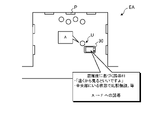
- FIG. 22 is an explanatory diagram of guidance processing based on the organizer's intention.
- FIG. 23 is an explanatory diagram (part 1) of the guidance process based on the degree of congestion.
- FIG. 24 is an explanatory diagram (part 2) of the guidance process based on the degree of congestion.
- FIG. 25 is an explanatory diagram (part 3) of the guidance process based on the degree of congestion.
- the determination unit 53c determines the manner of guidance so that recommendations are made based on the organizer's intentions, for example.
- the recommendation is, for example, "this work is recommended” or "you should try it closer”. That is, at this time, the determination unit 53c guides the user with the viewing pattern "G” or "F” to take actions corresponding to the viewing pattern "A".
- the determining unit 53c determines the mode of guidance so that a recommendation such as "Look at it from a distance" is made, as shown in the figure.
- the determination unit 53c determines the mode of the guide so as to provide comparative commentary with other exhibits P in the state of being in the center of the exhibition area EA, for example. That is, at this time, the determination unit 53c guides the user with the viewing pattern "A" to take actions corresponding to the viewing pattern "F".
- the determination unit 53c determines the mode of guidance so that a recommendation such as "Please approach and look at the brushwork" is made, as shown in FIG. Further, as shown in the figure, the determination unit 53c determines the mode of the guide so as to compare a plurality of works while approaching the exhibit P, for example. That is, at this time, the determination unit 53c guides the user with the viewing pattern "F” to take actions corresponding to the viewing patterns "A” and "G".
- the viewing pattern of the user U is "A", but due to the structure of the facility, the exhibition area is narrow, and the vicinity of each exhibit P is crowded, and the exhibit P is seen from a distance. It is assumed that there is no space to look at. Originally, the user U should want to approach the exhibit P and take time to appreciate the exhibit P in detail.
- the determination unit 53c determines the mode of the guide so that a recommendation such as "Let's see the next exhibition room first” is made, as shown in the figure. That is, at this time, the determination unit 53c guides the user with the viewing pattern "A” to take actions corresponding to the viewing pattern "G".
- the user U who originally wants to appreciate the exhibit P while approaching the exhibit P along the regular route can enjoy viewing by changing the route, and later, when the congestion is eased, the user can enjoy the viewing by approaching the exhibit P again. It becomes possible to let
- the guide terminal 30 can accept the user's speech instruction. expressions may be included.
- FIG. 26 is an explanatory diagram (part 1) of response to speech instructions.
- FIG. 27 is an explanatory diagram (part 2) of response to speech instructions.
- the user U gives a commentary on the work P by summarizing the exhibits P, such as "I want to see this area”, “I want to see that area”, and "I want to see this era”. shall be requested.
- the determination unit 53c guides the user U to the central part of the exhibition area EA according to the rough expression recognized as a result of the speech recognition, and changes the guide mode so as to provide a bird's-eye view commentary on the work. decide.
- the determination unit 53c guides the user U to the vicinity of the relevant exhibit P according to the limited expression recognized as a result of the speech recognition, for example, and guides the user U so as to give a detailed commentary on the work. to decide.
- FIG. 28 is an explanatory diagram of the switching timing of the mode of guidance.
- the mode of the guide is frequently switched accordingly. For example, it is the case that it is crowded, or the case that one viewing pattern has continued for a long time.
- the determination unit 53c determines and switches the mode of guidance for each exhibition area EA, for example, for the user's viewing pattern that is always estimated. That is, in the same exhibition area EA, the user is guided in the same manner.
- FIG. 29 is an explanatory diagram (Part 1) of a modified example of the avatar Avr.
- FIG. 30 is an explanatory diagram (part 2) of a modified example of the avatar Avr. 29 and 30, it is assumed that the guide terminals 30 are AR glasses.
- the avatar Avr-o is presented on the display unit 35 of the own terminal, and the avatar Avr-e presented to the other guide terminal 30 and its movement are displayed. may be visualized.
- the user can take a viewing action according to the movements of other users other than himself/herself. It is possible to avoid the exhibits P that are likely to be disliked and make it easier for the user to take viewing behavior according to his or her own viewing patterns and tastes.
- the visibility of the avatar Avr may be reduced when viewing the exhibit P through the guide terminal 30, which is AR glasses.
- Visibility deterioration includes, for example, reduction in size, reduction in brightness, invisibility, and positional movement, as shown in FIG.
- the avatar Avr As a result, it is possible to prevent the avatar Avr from being superimposed on the exhibit P and becoming difficult to see. Also, when the brightness of the surroundings is dark, it is possible to prevent the brightness of the avatar Avr from interfering with viewing. Also, when it is detected that the user is concentrating on viewing the exhibit P, the brightness of the avatar Avr may be lowered. Invisibility may be performed by displaying only the outline of the avatar Avr or by making the avatar Avr transparent.
- the case where the Bayesian estimation algorithm is used for estimating the transition of the viewing pattern was exemplified, but this is only an example, and the algorithm to be used is not limited. Also, the pattern estimation model 52b may not necessarily be used for estimating the viewing pattern, and the viewing pattern may be estimated by pattern matching or the like based on image analysis.
- each component of each device illustrated is functionally conceptual and does not necessarily need to be physically configured as illustrated.
- the specific form of distribution and integration of each device is not limited to the illustrated one, and all or part of them can be functionally or physically distributed and integrated in arbitrary units according to various loads and usage conditions. Can be integrated and configured.
- the guide terminal 30 may have part or all of the processing units of the control unit 53 of the server device 50, and the guide terminal 30 may be one of the information processing functions and actions executed by the control unit 53 of the server device 50. part or all may be implemented or performed.
- FIG. 31 is a hardware configuration diagram showing an example of a computer 1000 that implements the functions of the server device 50.
- Computer 1000 has CPU 1100 , RAM 1200 , ROM 1300 , storage 1400 , communication interface 1500 and input/output interface 1600 .
- bus 1050 Each part of computer 1000 is connected by bus 1050 .
- the CPU 1100 operates based on programs stored in the ROM 1300 or storage 1400, and controls each section. For example, CPU 1100 expands programs stored in ROM 1300 or storage 1400 into RAM 1200 and executes processes corresponding to various programs.
- the ROM 1300 stores a boot program such as BIOS (Basic Input Output System) executed by the CPU 1100 when the computer 1000 is started, and programs dependent on the hardware of the computer 1000.
- BIOS Basic Input Output System
- the storage 1400 is a computer-readable recording medium that non-temporarily records programs executed by the CPU 1100 and data used by such programs.
- the storage 1400 is a recording medium that records an information processing program according to the present disclosure, which is an example of the program data 1450 .
- a communication interface 1500 is an interface for connecting the computer 1000 to an external network 1550 .
- CPU 1100 receives data from another device or transmits data generated by CPU 1100 to another device via communication interface 1500 .
- the input/output interface 1600 is an interface for connecting the input/output device 1650 and the computer 1000 .
- CPU 1100 can receive data from an input device such as a keyboard or mouse via input/output interface 1600 .
- the CPU 1100 can transmit data to an output device such as a display, speaker, or printer via the input/output interface 1600 .
- the input/output interface 1600 may function as a media interface for reading a program or the like recorded on a predetermined recording medium.
- Media include, for example, optical recording media such as DVD (Digital Versatile Disc) and PD (Phase change rewritable disk), magneto-optical recording media such as MO (Magneto-Optical disk), tape media, magnetic recording media, semiconductor memories, etc. is.
- the CPU 1100 of the computer 1000 implements the functions of the control unit 53 by executing the information processing program loaded on the RAM 1200.
- the storage 1400 also stores an information processing program according to the present disclosure and data in the storage unit 52 .
- CPU 1100 reads and executes program data 1450 from storage 1400 , as another example, these programs may be acquired from another device via external network 1550 .
- the server device 50 (equivalent to an example of an “information processing device”) provides a An acquisition unit 53a that acquires a state, an estimation unit 53b that estimates a viewing pattern, which is a type of user's viewing style, based on the user's state acquired by the acquisition unit 53a, and a viewing pattern estimated by the estimation unit 53b.
- determining section 53c for determining the mode of guide relating to exhibit P to be presented to the user according to , and controlling so that the guide is presented to the user according to the mode of guide determined by determining section 53c.
- a guide control unit 53d that executes guide control. This makes it possible to provide guidance according to the user's condition and preference.
- the present technology can also take the following configuration.
- an acquisition unit that acquires the state of a user who appreciates an appreciation object
- an estimation unit that estimates a viewing pattern, which is a type of viewing style of the user, based on the state of the user acquired by the acquisition unit
- a determination unit that determines a mode of guide regarding the appreciation object to be presented to the user according to the viewing pattern estimated by the estimation unit
- a guide control unit that performs guide control to present the guide to the user according to the mode of the guide determined by the determination unit;
- An information processing device An information processing device.
- the estimation unit estimating the user's viewing state of the viewing object based on the user's state when the estimated accuracy of the viewing pattern is less than a predetermined threshold; The decision unit determining the mode of the guide according to the viewing state estimated by the estimation unit; The information processing device according to (1) above. (3) The estimation unit if the estimated likelihood of the viewing pattern is less than a predetermined threshold, then consider it to be identical to a predetermined one of the viewing patterns; The information processing device according to (1) above. (4) The estimation unit At least one of a first pattern that is an ant type, a second pattern that is a grasshopper type, a third pattern that is a fish type, and a fourth pattern that is a butterfly type Estimate the viewing pattern as The information processing apparatus according to (1), (2) or (3).
- the decision unit determining the aspect of the guide so as to detail all the viewing objects when the viewing pattern is presumed to be the first pattern; The information processing device according to weki (4). (6) The decision unit Determining the mode of the guide so that the degree of detail of the commentary changes according to the movement speed of the user; The information processing device according to (5) above. (7) The decision unit Determining the mode of the guide so as to explain only the viewing object at the position where the user has stopped when the viewing pattern is estimated to be the second pattern; The information processing apparatus according to (4), (5) or (6). (8) The decision unit determining aspects of the guide to prioritize general commentary over detailed commentary when the viewing pattern is presumed to be the third pattern; The information processing apparatus according to any one of (4) to (7) above.
- the decision unit If the viewing pattern is presumed to be the fourth pattern, determine the aspect of the guide, as briefly described.
- the information processing apparatus according to any one of (4) to (8) above.
- the guide control includes modal presentation control for controlling modals presented to the user, The decision unit selecting the modal to be presented to the user according to the guide type of the guide; The information processing apparatus according to any one of (1) to (9).
- (11) The decision unit selecting audio as the modal when the guide type is work commentary; The information processing device according to (10) above.
- (12) The decision unit selecting the modal to present to the user according to any intention for the appreciation object;
- the information processing apparatus according to (10) or (11).
- (14) The decision unit selecting an avatar as the modal when the guide type is floor guidance, accompanying viewing, or request response; The information processing apparatus according to any one of (10) to (13).
- (15) The decision unit changing the mode of the guide according to a change in the viewing pattern estimated by the estimation unit; The information processing apparatus according to any one of (1) to (14) above.
- (16) The decision unit changing the mode of the guide for each display area of the appreciation object; The information processing device according to (15) above.
- (17) The decision unit guiding the user to take actions corresponding to different viewing patterns according to the degree of congestion; The information processing apparatus according to any one of (1) to (16).
- the decision unit When the vicinity of the appreciation object is crowded, the user is guided away from the appreciation object, and when the position away from the appreciation object is crowded, the user is made to approach the appreciation object. to The decision unit further includes: Determining the mode of the guide according to the position where the user was guided, The information processing device according to (17) above. (19) The decision unit When the user has a disability, selecting the modal to be presented to the user according to the type of the disability; The information processing apparatus according to any one of (10) to (18).
- a method of processing information comprising:
Landscapes
- Engineering & Computer Science (AREA)
- Remote Sensing (AREA)
- Radar, Positioning & Navigation (AREA)
- Business, Economics & Management (AREA)
- Theoretical Computer Science (AREA)
- General Physics & Mathematics (AREA)
- Physics & Mathematics (AREA)
- General Engineering & Computer Science (AREA)
- Economics (AREA)
- General Business, Economics & Management (AREA)
- Human Computer Interaction (AREA)
- Automation & Control Theory (AREA)
- Tourism & Hospitality (AREA)
- Accounting & Taxation (AREA)
- Development Economics (AREA)
- Finance (AREA)
- Marketing (AREA)
- Strategic Management (AREA)
- Management, Administration, Business Operations System, And Electronic Commerce (AREA)
- User Interface Of Digital Computer (AREA)
Priority Applications (3)
| Application Number | Priority Date | Filing Date | Title |
|---|---|---|---|
| JP2023517079A JP7677406B2 (ja) | 2021-04-30 | 2022-02-15 | 情報処理装置および情報処理方法 |
| US18/555,261 US12584751B2 (en) | 2021-04-30 | 2022-02-15 | Information processing apparatus and information processing method |
| EP22795235.5A EP4332872A4 (en) | 2021-04-30 | 2022-02-15 | INFORMATION PROCESSING DEVICE AND INFORMATION PROCESSING METHOD |
Applications Claiming Priority (2)
| Application Number | Priority Date | Filing Date | Title |
|---|---|---|---|
| JP2021077241 | 2021-04-30 | ||
| JP2021-077241 | 2021-04-30 |
Publications (1)
| Publication Number | Publication Date |
|---|---|
| WO2022230312A1 true WO2022230312A1 (ja) | 2022-11-03 |
Family
ID=83846915
Family Applications (1)
| Application Number | Title | Priority Date | Filing Date |
|---|---|---|---|
| PCT/JP2022/006013 Ceased WO2022230312A1 (ja) | 2021-04-30 | 2022-02-15 | 情報処理装置および情報処理方法 |
Country Status (4)
| Country | Link |
|---|---|
| US (1) | US12584751B2 (https=) |
| EP (1) | EP4332872A4 (https=) |
| JP (1) | JP7677406B2 (https=) |
| WO (1) | WO2022230312A1 (https=) |
Citations (4)
| Publication number | Priority date | Publication date | Assignee | Title |
|---|---|---|---|---|
| JP2008040373A (ja) * | 2006-08-10 | 2008-02-21 | Hitachi Ltd | 音声ガイダンスシステム |
| JP2011109629A (ja) | 2009-11-17 | 2011-06-02 | Toru Tsurubuchi | 自動再生音声ガイドシステム |
| JP2019126033A (ja) * | 2018-01-18 | 2019-07-25 | 株式会社電通ライブ | 音声情報提供システム、音声情報提供装置、及びプログラム |
| JP2020057329A (ja) * | 2018-10-04 | 2020-04-09 | 大日本印刷株式会社 | ガイドシステム |
Family Cites Families (15)
| Publication number | Priority date | Publication date | Assignee | Title |
|---|---|---|---|---|
| KR20060094176A (ko) * | 2005-02-23 | 2006-08-29 | 삼성전자주식회사 | 가이드 정보와 작품 정보를 실시간으로 제공하는 방법, 시스템 및 휴대용 장치 |
| JP5090135B2 (ja) * | 2007-11-14 | 2012-12-05 | オリンパスイメージング株式会社 | 画像鑑賞システム、画像鑑賞方法、画像鑑賞用サーバー、および端末機器 |
| US8566029B1 (en) * | 2009-11-12 | 2013-10-22 | Google Inc. | Enhanced identification of interesting points-of-interest |
| US9493130B2 (en) * | 2011-04-22 | 2016-11-15 | Angel A. Penilla | Methods and systems for communicating content to connected vehicle users based detected tone/mood in voice input |
| US10523876B2 (en) * | 2012-12-27 | 2019-12-31 | Panasonic Intellectual Property Corporation Of America | Information communication method |
| US10024678B2 (en) * | 2014-09-17 | 2018-07-17 | Toyota Motor Engineering & Manufacturing North America, Inc. | Wearable clip for providing social and environmental awareness |
| KR20160087276A (ko) * | 2015-01-13 | 2016-07-21 | 한국전자통신연구원 | 전시 안내 장치, 전시 미디어 디스플레이 장치 및 단말 장치와 전시 안내 방법 |
| KR20160090198A (ko) * | 2015-01-21 | 2016-07-29 | 한국전자통신연구원 | 전시 안내 장치, 전시 디스플레이 장치 및 단말 장치와 전시 안내 방법 |
| DE102015004167A1 (de) * | 2015-04-01 | 2016-10-06 | Advanced Digital Solutions Ltd. | Verfahren zur Führung von Besuchern einer Ausstellung oder eines Museums |
| US10586257B2 (en) * | 2016-06-07 | 2020-03-10 | At&T Mobility Ii Llc | Facilitation of real-time interactive feedback |
| US11016558B2 (en) * | 2017-02-23 | 2021-05-25 | Sony Corporation | Information processing apparatus, and information processing method to determine a user intention |
| JPWO2019026395A1 (ja) * | 2017-08-01 | 2020-06-25 | ソニー株式会社 | 情報処理装置、情報処理方法、およびプログラム |
| US10612936B2 (en) * | 2017-09-01 | 2020-04-07 | Telenav, Inc. | Navigation system with delivery mechanism and method of operation thereof |
| EP3834167A4 (en) * | 2018-08-06 | 2022-05-04 | Olive Seed Industries, LLC | PROCESSES AND SYSTEMS FOR PERSONALIZING VISITOR EXPERIENCES AT A VENUE |
| US11599809B2 (en) * | 2020-07-22 | 2023-03-07 | International Business Machines Corporation | Activity recommendations based on IoT and social media |
-
2022
- 2022-02-15 JP JP2023517079A patent/JP7677406B2/ja active Active
- 2022-02-15 EP EP22795235.5A patent/EP4332872A4/en active Pending
- 2022-02-15 US US18/555,261 patent/US12584751B2/en active Active
- 2022-02-15 WO PCT/JP2022/006013 patent/WO2022230312A1/ja not_active Ceased
Patent Citations (4)
| Publication number | Priority date | Publication date | Assignee | Title |
|---|---|---|---|---|
| JP2008040373A (ja) * | 2006-08-10 | 2008-02-21 | Hitachi Ltd | 音声ガイダンスシステム |
| JP2011109629A (ja) | 2009-11-17 | 2011-06-02 | Toru Tsurubuchi | 自動再生音声ガイドシステム |
| JP2019126033A (ja) * | 2018-01-18 | 2019-07-25 | 株式会社電通ライブ | 音声情報提供システム、音声情報提供装置、及びプログラム |
| JP2020057329A (ja) * | 2018-10-04 | 2020-04-09 | 大日本印刷株式会社 | ガイドシステム |
Non-Patent Citations (1)
| Title |
|---|
| See also references of EP4332872A4 |
Also Published As
| Publication number | Publication date |
|---|---|
| EP4332872A1 (en) | 2024-03-06 |
| JPWO2022230312A1 (https=) | 2022-11-03 |
| EP4332872A4 (en) | 2024-09-18 |
| US12584751B2 (en) | 2026-03-24 |
| US20240200951A1 (en) | 2024-06-20 |
| JP7677406B2 (ja) | 2025-05-15 |
Similar Documents
| Publication | Publication Date | Title |
|---|---|---|
| AU2024200283B2 (en) | Methods and interfaces for home media control | |
| EP3952317B1 (en) | Methods and interfaces for home media control | |
| US20190278555A1 (en) | User-interfaces for audio-augmented-reality | |
| JP2024107029A (ja) | 情報処理プログラム、情報処理方法、及び情報処理システム | |
| WO2022230312A1 (ja) | 情報処理装置および情報処理方法 | |
| CN111417917A (zh) | 信息处理装置与信息处理方法 | |
| DK180692B1 (en) | Methods and interfaces for home media control | |
| CN110741330B (zh) | 信息处理装置、信息处理方法和程序 | |
| DK201870060A1 (en) | METHODS AND INTERFACES FOR HOME MEDIA CONTROL |
Legal Events
| Date | Code | Title | Description |
|---|---|---|---|
| 121 | Ep: the epo has been informed by wipo that ep was designated in this application |
Ref document number: 22795235 Country of ref document: EP Kind code of ref document: A1 |
|
| WWE | Wipo information: entry into national phase |
Ref document number: 2023517079 Country of ref document: JP |
|
| WWE | Wipo information: entry into national phase |
Ref document number: 18555261 Country of ref document: US |
|
| WWE | Wipo information: entry into national phase |
Ref document number: 2022795235 Country of ref document: EP |
|
| ENP | Entry into the national phase |
Ref document number: 2022795235 Country of ref document: EP Effective date: 20231130 |
|
| NENP | Non-entry into the national phase |
Ref country code: DE |
|
| WWG | Wipo information: grant in national office |
Ref document number: 18555261 Country of ref document: US |