WO2022202865A1 - 分散型台帳システム及び方法 - Google Patents
分散型台帳システム及び方法 Download PDFInfo
- Publication number
- WO2022202865A1 WO2022202865A1 PCT/JP2022/013368 JP2022013368W WO2022202865A1 WO 2022202865 A1 WO2022202865 A1 WO 2022202865A1 JP 2022013368 W JP2022013368 W JP 2022013368W WO 2022202865 A1 WO2022202865 A1 WO 2022202865A1
- Authority
- WO
- WIPO (PCT)
- Prior art keywords
- node
- verification
- nodes
- score
- node selection
- Prior art date
- Legal status (The legal status is an assumption and is not a legal conclusion. Google has not performed a legal analysis and makes no representation as to the accuracy of the status listed.)
- Ceased
Links
Images




Classifications
-
- G—PHYSICS
- G06—COMPUTING OR CALCULATING; COUNTING
- G06F—ELECTRIC DIGITAL DATA PROCESSING
- G06F16/00—Information retrieval; Database structures therefor; File system structures therefor
- G06F16/90—Details of database functions independent of the retrieved data types
- G06F16/901—Indexing; Data structures therefor; Storage structures
- G06F16/9024—Graphs; Linked lists
-
- G—PHYSICS
- G06—COMPUTING OR CALCULATING; COUNTING
- G06F—ELECTRIC DIGITAL DATA PROCESSING
- G06F16/00—Information retrieval; Database structures therefor; File system structures therefor
- G06F16/20—Information retrieval; Database structures therefor; File system structures therefor of structured data, e.g. relational data
- G06F16/23—Updating
- G06F16/2365—Ensuring data consistency and integrity
-
- G—PHYSICS
- G06—COMPUTING OR CALCULATING; COUNTING
- G06F—ELECTRIC DIGITAL DATA PROCESSING
- G06F9/00—Arrangements for program control, e.g. control units
- G06F9/06—Arrangements for program control, e.g. control units using stored programs, i.e. using an internal store of processing equipment to receive or retain programs
- G06F9/46—Multiprogramming arrangements
- G06F9/50—Allocation of resources, e.g. of the central processing unit [CPU]
Definitions
- This disclosure relates to distributed ledger systems.
- a distributed ledger database represented by a blockchain system exists across multiple nodes through a P2P network, and each node replicates and stores the same ledger.
- Quorum is known as an example of such a distributed ledger system.
- Quorum constitutes a consortium-type blockchain system composed only of authorized nodes (see Non-Patent Document 1).
- Raft or IBFT Istanbul Byzantine Fault Tolerance
- a distributed ledger system includes a processor and a memory, a plurality of participating nodes each storing a ledger on which transactions are recorded in the memory, and a plurality of participating nodes for validating transactions from the plurality of participating nodes.
- a verification node selection device that performs a verification node selection process for selecting a verification node.
- the verification node selection device calculates at least a score relating to transaction processing speed or reliability for each of the plurality of participating nodes, and selects a predetermined number or more of participating nodes having a high score from the plurality of participating nodes. The selection determines multiple verification nodes. Each of the selected verification nodes verifies the transaction to form a consensus.
- a method is a method for consensus building by verifying transactions in a distributed ledger system.
- the method includes: calculating at least a score related to transaction processing speed or reliability for each of a plurality of participating nodes storing a ledger in which transactions are recorded; determining a plurality of verification nodes by selecting a predetermined number or more of , and each of the plurality of selected verification nodes verifying the transaction.
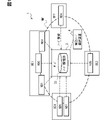
- FIG. 1 is a conceptual diagram showing the entire distributed ledger system according to an embodiment of the present disclosure
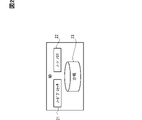
- FIG. 1 is a block diagram illustrating an entity in accordance with one embodiment of the disclosure
- FIG. FIG. 2 is a block diagram illustrating a verification node selection device and server according to an embodiment of the disclosure
- 4 is a flowchart illustrating verification node selection processing according to an embodiment of the present disclosure
- FIG. 12 illustrates a node count evaluation table according to an embodiment of the present disclosure
- Fig. 4 illustrates a processor utilization evaluation table according to an embodiment of the present disclosure
- FIG. 13 illustrates a memory utilization evaluation table according to an embodiment of the present disclosure
- [0015] Fig. 4 illustrates a physical location estimation table according to an embodiment of the present disclosure
- FIG. 1 is a block diagram illustrating an entity in accordance with one embodiment of the disclosure
- FIG. 2 is a block diagram illustrating a verification node selection device and server according to an embodiment of the disclosure
- 4 is a flowchart
- FIG. 12 illustrates an entity size rating table according to an embodiment of the present disclosure
- FIG. 11 illustrates an age evaluation table according to an embodiment of the present disclosure
- FIG. 5 is a diagram illustrating an example of node information and verification node selection processing results according to an embodiment of the present disclosure
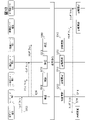
- 5 is a flow chart illustrating consensus building processing and ledger update processing according to an embodiment of the present disclosure
- Fig. 4 illustrates a consensus building process according to an embodiment of the present disclosure
- FIG. 11 is a conceptual diagram showing the entire distributed ledger system according to a modification of the present disclosure
- Distributed ledger system (hereinafter referred to as system) 1 of the present disclosure shown in FIG. manager) 4.
- Each entity BE manages one or more nodes ND.
- a plurality of nodes ND managed by the same business entity BE are, for example, nodes ND managed by business establishments or affiliated companies of the business entity BE.
- a plurality of nodes ND are communicably connected to form a network NW.
- the system 1 can be configured using various distributed ledger technologies such as blockchain, Hashgraph, and Corda.
- the system 1 of this embodiment consists of four business entities BE1 to BE4 and seven nodes ND1 to ND7.
- Business entity BE1 manages three nodes ND1-ND3. That is, the nodes ND1 to ND3 belong to the entity BE1.
- business entity BE2 manages one node ND4. That is, the node ND4 belongs to the entity BE2.
- Business entity BE3 manages one node ND5. That is, the node ND5 belongs to the entity BE3.
- entity BE4 manages two nodes ND6 and ND7. That is, nodes ND6 and ND7 belong to entity BE4.
- each node ND comprises at least one processor (node processor 21) and at least one memory (node memory 22).
- the node memory 22 is at least one type of non-transitional physical storage medium, such as a semiconductor memory, a magnetic medium, an optical medium, etc., for non-temporarily storing computer-readable programs and data.
- the node processor 21 includes, as a core, at least one of CPU (Central Processing Unit), GPU (Graphics Processing Unit), RISC (Reduced Instruction Set Computer)-CPU, and the like.
- the node processor 21 executes multiple instructions contained in a program stored in the node memory 22 .
- the programs stored in the node memory 22 include a program for executing consensus building processing, which will be described later.
- Each node ND stores, for example, a ledger 23 that records transactions between a plurality of entities BE participating in the system 1.
- the contents of the transaction include various transaction information according to the purpose of the system 1 and the business mode of the participating entity BE.
- transactions include transaction information such as purchase records of raw materials for automobile parts and shipping inventories at the time of shipment of automobile parts.
- each node ND is configured to be able to receive a ledger update request from a user terminal.
- a user terminal is, for example, a smart phone, a tablet, a computer, etc., managed by each business entity BE, and operated by an employee of each business entity BE.
- an employee of the business entity BE operates a user terminal to send a ledger update request to record a transaction such as a shipping list in the distributed ledger of the system 1 .
- the ledger 23 is updated and synchronized by adding the transaction authenticated through the consensus building process by transmitting the ledger update request to the ledger 23 stored in each node ND. Thereby, each node ND saves a common ledger 23 .
- the server 3 shown in FIG. 3 is, like the node ND, a cloud server including at least one processor (server processor 31) and at least one memory (server memory 32).
- the server memory 32 is at least one type of non-transitional physical storage medium, such as a semiconductor memory, a magnetic medium, an optical medium, etc., for non-temporarily storing computer-readable programs and data.
- the server processor 31 includes, as a core, at least one of CPU (Central Processing Unit), GPU (Graphics Processing Unit), RISC (Reduced Instruction Set Computer)-CPU, and the like.
- the server processor 31 executes multiple instructions contained in programs stored in the server memory 32 .
- the programs stored in the server memory 32 include a monitoring program for obtaining information on nodes (participating nodes) ND participating in the system 1 .
- the server processor 31 periodically acquires information on all nodes ND participating in the system 1 and stores the acquired information on the nodes ND in the node information database 33 .
- the information of the node ND acquired by the server processor 31 includes, for example, the business entity BE that manages each node ND (hereinafter referred to as the corresponding business entity), the number of employees of the corresponding business entity, and the number of employees of the corresponding business entity, since each node ND joined the system 1 , the physical location of each node ND, and other information. These pieces of information are obtained at relatively long intervals (eg, every few days or months).
- the processor usage rate of each node ND As information on the nodes ND, the processor usage rate of each node ND, the memory usage rate of each node ND, and the like are acquired. This information is obtained at relatively short intervals (eg, every second or every minute).
- the server processor 31 updates the node information database 33 with the acquired node ND information.
- the server memory 32 stores a verification node list 34 that specifies verification nodes that verify transactions. As will be described later, when a verification node is selected by the verification node selection device 4, the verification node list 34 is updated as needed based on the selection result.
- the server processor 31 causes the node ND specified in the verification node list 34 to function as a verification node.
- the server 3 is managed by a third party with no conflict of interest with the Participating Business BEs of System 1, or jointly managed by all Participating Business BEs. This prevents fraud such as falsification of the verification node list 34 by the participating entity BE.
- the verification node selection device 4 like the node ND and server 3, comprises at least one processor (selection device processor 41) and at least one memory (selection device memory 42).
- the selection device memory 42 is at least one type of non-transitional physical storage medium, such as a semiconductor memory, a magnetic medium, an optical medium, etc., for non-temporarily storing computer-readable programs and data.
- the selection device processor 41 includes at least one of CPU (Central Processing Unit), GPU (Graphics Processing Unit), and RISC (Reduced Instruction Set Computer)-CPU as a core.
- the selector processor 41 executes a plurality of instructions contained in a program stored in the selector memory 42 .
- the programs stored in the selection device memory 42 include a verification node selection program for performing verification node selection processing, which will be described later.
- the selection device memory 42 stores a plurality of evaluation tables (described later) shown in FIGS. The contents of each evaluation table can be changed as needed, but such changes require the approval of all Participating Businesses BE.
- the verification node selection device 4 is communicably connected to the server 3 via the Internet, for example.
- the selection device processor 41 acquires node information stored in the node information database 33 of the server 3 by transmitting a data provision request to the server 3 . Further, the verification node selection device 4 executes verification node selection processing based on the acquired node information, and selects a verification node. By transmitting the result of the verification node selection process to the server 3, the verification node list 34 of the server 3 is updated.
- Verification node selection processing for selecting verification nodes and consensus building processing for updating the ledger 23 using verified transactions will be described below.
- the verification node selection process shown in FIG. 4 is executed by the verification node selection device 4 at a predetermined timing.
- the verification node selection process is performed, for example, at the timing when the system 1 is constructed and started, or at the timing when a new node ND joins the system 1 or when the node ND leaves the system 1 .
- the verification node selection process is periodically executed at predetermined time intervals.
- the predetermined time is set, for example, according to the time interval (for example, every second or every minute) at which the server processor 31 updates the node information database 33 .
- a verification node that performs transaction verification and consensus building in the consensus building process is selected from a plurality of nodes ND.
- the selection device processor 41 obtains the node information (see FIG. 11) stored in the node information database 33 by requesting the server 3 to provide data.
- the selection device processor 41 calculates the score of each node ND based on the acquired node information and each evaluation table shown in FIGS. Note that the evaluation values in the evaluation tables shown in FIGS. 5 to 10 are examples, and can be changed as appropriate.
- the evaluation value is a value given according to the processing speed of consensus building and the reliability of the system 1 .
- For each node ND an evaluation value is calculated for a plurality of items (each node information item), and the total value of the evaluation values is obtained as a score.
- a node ND having a high score is preferentially selected as a verification node.
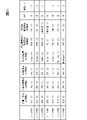
- FIG. 11 is a table showing the node information of the nodes ND1 to ND7 forming the system 1, showing the contents of the node information at predetermined timings.
- the node information includes the affiliated entity BE to which each node ND belongs, the processor usage rate and memory usage rate of each node ND at a predetermined timing, the physical location of each node, and the affiliated entity BE.
- the number of employees and the number of years since joining the node ND are given as examples.
- FIG. 5 shows a node number evaluation table for calculating the node number evaluation value.
- a business entity BE that manages a large number of nodes ND participating in the system 1 has little motivation to commit fraud such as falsification of transactions to damage the reliability and value of the system 1 itself. And the node ND belonging to such a business entity BE also has less merit of committing fraud. Therefore, in this embodiment, a high node number evaluation value is given to the node ND so that the node ND belonging to the entity BE that manages a large number of nodes ND is preferentially selected as the verification node. there is Therefore, the node number evaluation value can be regarded as a reliability score for the reliability of the node ND in the system 1 .
- FIG. 6 and 7 respectively show a processor usage rate evaluation table and a memory usage rate evaluation table for calculating a processor usage rate evaluation value and a memory usage rate evaluation value.
- the transaction processing speed of the node ND depends on the processor usage rate and memory usage rate.
- a node ND with low processor usage and memory usage has many resources that can be allocated to transaction processing, and can process transactions faster than those with high usage. Therefore, in this embodiment, a high processor usage rate evaluation value is set for a node ND with a low processor usage rate and a low memory usage rate so that a node ND with a low processor usage rate and a low memory usage rate is preferentially selected as a verification node. and memory utilization estimates are given.
- the processor usage rate evaluation value and memory usage rate evaluation value can be regarded as efficiency scores related to the transaction processing speed in the node ND.
- FIG. 8 shows a physical location evaluation table for calculating physical location evaluation values.
- the communication speed between nodes ND depends on the physical positional relationship between nodes ND. Specifically, when the physical positions of the nodes ND are close to each other, the communication speed between these nodes ND tends to be high (latency is low). Furthermore, in the transaction verification process, communication is performed between all verification nodes, so by selecting nodes ND that are physically close to each other and gathered in the same area as verification nodes, the overall transaction processing can be performed. You can increase your speed.
- a group of node NDs located in an area where many nodes ND gather (hereinafter referred to as an area with the largest number of nodes) so that nodes ND physically close to each other are preferentially selected as verification nodes. is given a high physical location rating value.
- Nodes ND located in areas close to the area with the largest number of nodes also tend to have faster communication speeds with the group of node NDs in the area with the largest number of nodes. Therefore, in this embodiment, the second highest physical position evaluation value is given to the node ND group located in another region within the same country as the region with the largest number of nodes. It should be noted that the physical location evaluation value can also be considered an efficiency score for the speed of processing transactions.
- FIG. 9 shows a business entity scale evaluation table for calculating business entity scale evaluation values.
- a business entity BE with a large scale is highly recognized and socially trusted in many cases. It is unlikely that such a business entity BE will commit fraud such as falsification of transactions and take actions that would damage its own social standing. Also, a large business entity BE is considered to have sufficient capital to manage against software and hardware failures. In other words, the business entity BE having a large scale and the node ND belonging to the business entity BE are considered to have high reliability. Therefore, in the present embodiment, a large business entity BE, specifically, a node ND belonging to a business entity BE with a large number of employees is preferentially selected as a verification node. Body size ratings are given.
- FIG. 10 shows an elapsed years evaluation table for calculating the elapsed years evaluation value.
- a node ND that has been participating in the system 1 for a long time is considered to have little motivation to commit fraud such as transaction falsification and damage the value of the system 1 itself.
- a node ND whose number of years has elapsed since joining the system 1 is considered to be highly reliable. Therefore, in the present embodiment, a high elapsed age evaluation value is given to the node ND so that the node ND with the longest elapsed years since joining the system 1 is preferentially selected as the verification node.
- the entity size evaluation value and the elapsed years evaluation value can be regarded as reliability scores regarding the reliability of the node ND, similar to the node number evaluation value.
- Node ND1 belongs to entity BE1, which has a total of three nodes ND.
- the node ND1 is given "2" as the node number evaluation value based on the node number evaluation table shown in FIG.
- the processor usage rate of the node ND1 shown in FIG. 11 at this timing is 70%.
- node ND1 is given "1" as the processor usage rate evaluation value based on the processor usage rate evaluation table shown in FIG.
- the memory usage rate of node ND1 shown in FIG. 11 is 50%.
- the node ND1 is given "2" as the memory usage rate evaluation value based on the memory usage rate evaluation table shown in FIG.
- the node ND1 is located in Tokyo.
- the number of nodes ND located in Tokyo is greater than the number of nodes ND located in other regions.
- node ND1 is assigned a physical position evaluation value of "3" based on the physical position evaluation table shown in FIG.
- the business entity BE1 to which the node ND1 belongs has 1000 employees.
- the node ND1 is assigned a business entity size evaluation value of "3" based on the business entity size evaluation table shown in FIG. As shown in FIG.
- the number of years elapsed since the node ND1 joined the system 1 is two years.
- "2" is assigned to the node ND1 as the elapsed years evaluation value.
- the selection device processor 41 sums up each of the above evaluation values to calculate the score of the node ND1.
- the score of the node ND1 thus calculated is "13" (see FIG. 11).
- the selection device processor 41 similarly calculates scores for the other nodes ND2 to ND7.
- the selection device processor 41 selects a predetermined number of nodes ND with high calculated scores (hereinafter referred to as the number of verification nodes) as verification nodes.
- the number of verification nodes is set to 3f+1 or more.
- f 1 and the number of verification nodes is set to four. Therefore, four or more nodes with the highest scores are selected by the selector processor 41 as verification nodes.
- four nodes ND1, ND2, ND5, and ND7 out of seven nodes ND are selected as verification nodes.
- the node ND2 with the highest score is set as the leader node in the consensus building process.
- the selection device processor 41 transmits to the server 3 the verification node selection result specifying the node ND selected as the verification node.
- the server 3 that has received the verification node selection result updates the verification node list 34 stored in the server memory 32 in S105.
- a verification node can be selected based on the processing speed of the node ND. Therefore, a node ND with a fast processing speed can be preferentially selected as a verification node. Therefore, efficient consensus building processing can be performed by a verification node with a high processing speed.
- a verification node can be selected based on the communication speed between the nodes ND. Therefore, the node ND group with fast communication speed can be preferentially selected as verification nodes. Therefore, efficient consensus building processing can be performed by a verification node group with a high communication speed.
- a verification node can be selected based on the reliability of the entity BE to which the node ND belongs and the node ND itself. Therefore, a highly reliable node ND can be preferentially selected as a verification node. Therefore, it is possible to perform efficient consensus building processing by verification nodes that are less likely to cause fraud or failure.
- consensus building processing and ledger update processing for updating the ledger 23 will be described with reference to FIGS. 12 and 13, S201 to S212 correspond to the consensus building process, and S213 to S215 correspond to the ledger update process.
- the consensus building process of this embodiment is executed in response to a ledger update request transmitted from a user terminal to any node ND.
- the consensus building process is executed by the node ND that received the ledger update request (hereinafter referred to as a receiving node), the leader node, and the verification node selected in the selection process described above.
- a consensus building process and a ledger update process when a node that is not selected as a verification node (hereinafter referred to as a non-verification node) ND3 receives a ledger update request will be described below.
- the node ND3 becomes a reception node that receives a ledger update request from a user terminal managed by the office.
- the receiving node ND3 generates a transaction including the number of auto parts to be shipped, the business office of the shipping destination, etc. based on the ledger update request.
- the reception node ND3 inquires of the server 3 which node ND is the leader node.
- the server 3 receives an inquiry from the receiving node ND3, it refers to the verification node list 34 stored in the server memory 32 and refers to the currently selected leader node (the highest scored node in the example of FIG. 11). node ND2) to the reception node ND3.
- the reception node ND3 transmits the generated transaction to the leader node ND2.
- the leader node ND2 inquires of the server 3 which node ND is the verification node.
- the leader node ND2 transfers the transaction to the verification nodes ND1, ND5, and ND7 excluding itself among the verification nodes ND1, ND2, ND5, and ND7.
- each of the verification nodes ND1, ND5, and ND7 inquires of the server 3 which node ND is the verification node.
- each of the verification nodes ND1, ND5, and ND7 receives the notification from the server 3 and transfers the transaction to the verification nodes other than themselves among the verification nodes ND1, ND2, ND5, and ND7.
- each verification node ND1, ND2, ND5, ND7 including the leader node ND2 verifies the received transaction. In transaction verification, at least it is confirmed whether or not all received transactions are consistent.
- each verification node ND1, ND5, and ND7 determines whether or not the transactions match as a result of verification. If the transactions match, the consensus building process proceeds to S210. On the other hand, if the contents of the transaction are not correct, the consensus building process proceeds to S211.
- each of the verification nodes ND1, ND2, ND5, and ND7 transmits a notification (verification completion notification) to the effect that transaction verification is completed to all other verification nodes.
- each of the verification nodes ND1, ND2, ND5, and ND7 determines whether verification completion notifications have been received from a certain number or more of verification nodes.
- the verification node of the present embodiment determines whether verification completion notifications have been received from 2/3+1 of the number of verification nodes (4) or more, that is, from 3 or more verification nodes.
- the system 1 of this embodiment has tolerance to fraud or failure by any one of the verification nodes (Byzantine failure tolerance).
- consensus building is completed, and the process proceeds to S213 for the ledger update processing.
- consensus building fails and the consensus building process proceeds to S212.
- the leader node ND2 transmits a notification to the effect that consensus building has failed to the reception node ND3.
- each verification node updates its own ledger 23 based on the agreed transaction.
- the leader node ND2 transfers (broadcasts) the transaction to the non-verification nodes ND3, ND4, and ND6 to update their ledgers 23.
- the reception node ND3 transmits the results of the consensus building process and the ledger update process, that is, whether or not the ledger 23 has been updated, to the user terminal that requested the update of the ledger.
- consensus building for a transaction to update the ledger 23 is performed by the verification node selected by the verification node selection process. Also, in the verification node selection process, a node ND having a high processing speed is preferentially selected as a verification node. Therefore, efficient consensus building can be performed by the node ND having a high processing speed.
- the node ND group with fast communication speed is preferentially selected as verification nodes. Therefore, consensus can be efficiently formed by the node ND group with high communication speed.
- highly reliable nodes ND are preferentially selected as verification nodes. Therefore, the highly reliable node ND can efficiently form a consensus.
- verification node selection process described above is performed periodically. That is, verification nodes can change periodically. Therefore, the consensus process can always be performed by a suitable verification node.
- the consensus building process of the present disclosure is not limited to the one described in the above embodiment, as long as the verification node selected in the verification node selection process performs transaction verification and consensus building.
- a score may be calculated based on a processor performance evaluation value that indicates the processing power (performance) of the processor. In this case, by assigning a high processor performance evaluation value to a node with high processing power, the node with high processing power is more likely to be selected as a verification node, so that the consensus building process can be executed more efficiently.
- the selection device processor 41 of the verification node selection device 4 sets (weights) a coefficient value for each evaluation value according to the purpose of the system 1 and the business mode of the participating entity BE, and weights each evaluation value. may be calculated as the score for each node ND. For example, when constructing the system 1 that emphasizes the speed of consensus formation, set "1" as a coefficient for the processor usage rate evaluation value, the memory usage rate evaluation value, and the physical location evaluation value, and for other evaluation values You may set "0.5" as a coefficient. In this case, a node ND with a high transaction processing speed and a group of nodes ND with a high communication speed are likely to be selected as verification nodes.
- the consensus building speed in the system 1 can be improved compared to the case where no coefficient is set.
- "1" is set as the coefficient for the affiliated business entity evaluation value, the business entity size evaluation value, and the elapsed years evaluation value, and the coefficients for other evaluation values You may set "0.5" as.
- a highly reliable node ND is likely to be selected as a verification node. Therefore, compared to the case where the coefficient is not set, the possibility of fraud or failure occurring can be reduced, and the security of the system 1 can be improved.
- the node ND with the highest score is set as the leader node.
- the leader node may be a specific node ND.
- the leader node may be changed in order at regular time intervals.
- the verification node selection process may be executed prior to the consensus building process in response to a ledger update request from the user terminal.
- the server 3 may distribute the verification node list 34 to each node ND as the verification node list 34 is updated.
- the accepting node, the leader node, and each verification node may send transactions according to the distributed verification node list 34 without inquiring the server 3 about the leader node and verification nodes.
- consensus formation may be performed by having all participating nodes ND verify transactions as verification nodes.
- the server 3 may be made redundant by a backup server having the same configuration as the server 3 so that the verification node selection process and consensus building process can be performed even when a hardware or software failure occurs in the server 3.
- each entity BE may have a server 3a and a verification node selection device 4 respectively.
- the server 3a directly obtains the node information of the node ND of the entity BE to which it belongs from the node ND. Further, the server 3a acquires the node information of the node ND of the other business entity BE from the server 3a belonging to the other business entity BE.
- the node information of all the nodes ND is stored in the node information database 33 of the server memory in each server 3a.
- the node information databases 33 of the respective servers 3a are synchronized with each other, and common node information is stored for all the nodes ND.
- a verification node list is stored in the server memory of each server 3a, as in the server 3 of the above embodiment.
- the verification node selection device 4 managed by each entity BE is communicably connected to a server 3a (hereinafter referred to as a corresponding server) managed by the same entity BE.
- the verification node selection device 4 can execute the same verification node selection processing as in the above embodiment by transmitting a data provision request to the corresponding server 3a, and can update the verification node list of the corresponding server 3a.
- one of the verification node selection devices 4 managed by each entity BE executes the verification node selection process. According to the system 1a of this modification, even if a hardware or software failure occurs in one of the verification node selection devices 4, the other verification node selection device 4 can continue the verification node selection process.
Landscapes
- Engineering & Computer Science (AREA)
- Theoretical Computer Science (AREA)
- Physics & Mathematics (AREA)
- General Engineering & Computer Science (AREA)
- General Physics & Mathematics (AREA)
- Databases & Information Systems (AREA)
- Software Systems (AREA)
- Data Mining & Analysis (AREA)
- Computer Security & Cryptography (AREA)
- Hardware Redundancy (AREA)
Priority Applications (2)
| Application Number | Priority Date | Filing Date | Title |
|---|---|---|---|
| JP2023509229A JP7521692B2 (ja) | 2021-03-24 | 2022-03-23 | 分散型台帳システム及び方法 |
| US18/472,108 US20240028584A1 (en) | 2021-03-24 | 2023-09-21 | Distributed ledger system and method |
Applications Claiming Priority (2)
| Application Number | Priority Date | Filing Date | Title |
|---|---|---|---|
| US202163165520P | 2021-03-24 | 2021-03-24 | |
| US63/165,520 | 2021-03-24 |
Related Child Applications (1)
| Application Number | Title | Priority Date | Filing Date |
|---|---|---|---|
| US18/472,108 Continuation US20240028584A1 (en) | 2021-03-24 | 2023-09-21 | Distributed ledger system and method |
Publications (1)
| Publication Number | Publication Date |
|---|---|
| WO2022202865A1 true WO2022202865A1 (ja) | 2022-09-29 |
Family
ID=83397306
Family Applications (1)
| Application Number | Title | Priority Date | Filing Date |
|---|---|---|---|
| PCT/JP2022/013368 Ceased WO2022202865A1 (ja) | 2021-03-24 | 2022-03-23 | 分散型台帳システム及び方法 |
Country Status (3)
| Country | Link |
|---|---|
| US (1) | US20240028584A1 (https=) |
| JP (1) | JP7521692B2 (https=) |
| WO (1) | WO2022202865A1 (https=) |
Families Citing this family (2)
| Publication number | Priority date | Publication date | Assignee | Title |
|---|---|---|---|---|
| US12505431B2 (en) * | 2022-11-10 | 2025-12-23 | Bank Of America Corporation | Proof of cache using Argon2d cryptographic hashing in payment processing |
| US20240161102A1 (en) * | 2022-11-10 | 2024-05-16 | Bank Of America Corporation | Proof of Cache Using Argon2d Cryptographic Hashing in Payment Processing |
Citations (10)
| Publication number | Priority date | Publication date | Assignee | Title |
|---|---|---|---|---|
| JP2007028400A (ja) * | 2005-07-20 | 2007-02-01 | Brother Ind Ltd | ノード装置、コンピュータプログラム、情報配信システム、及びネットワーク参加方法 |
| JP2009044371A (ja) * | 2007-08-08 | 2009-02-26 | Nippon Telegr & Teleph Corp <Ntt> | オーバーレイネットワーク形成方法とオーバーレイノードおよびオーバーレイネットワークとプログラム |
| JP2011523513A (ja) * | 2008-01-18 | 2011-08-11 | コーニンクレッカ フィリップス エレクトロニクス エヌ ヴィ | 無線通信システム並びに自動ノード及びキー取り消しのための方法 |
| US20180121909A1 (en) * | 2016-10-28 | 2018-05-03 | International Business Machines Corporation | System and method to dynamically setup a private sub-blockchain based on agility of transaction processing |
| WO2019202393A1 (en) * | 2018-04-16 | 2019-10-24 | Slock.It Gmbh | Trustless statelessincentivized remote node network using minimal verification clients |
| WO2020022599A1 (ko) * | 2018-07-27 | 2020-01-30 | 박기업 | 블록체인 네트워크 상에서 그룹키 기반의 이중 서명 트랜잭션 구조를 구성하는 노드 그룹 관리 장치 및 컴퓨팅 장치 |
| US20200250655A1 (en) * | 2019-01-31 | 2020-08-06 | Sensoriant, Inc. | Efficient, environmental and consumer friendly consensus method for cryptographic transactions |
| JP2020178338A (ja) * | 2019-04-15 | 2020-10-29 | 富士通株式会社 | ブロックチェーンネットワークをチェックする装置 |
| JP2020197873A (ja) * | 2019-05-31 | 2020-12-10 | 株式会社日立製作所 | 情報処理システム、及び情報処理システムの制御方法 |
| JP2021039588A (ja) * | 2019-09-04 | 2021-03-11 | 富士電機株式会社 | 制御システム及び制御情報配信方法 |
-
2022
- 2022-03-23 WO PCT/JP2022/013368 patent/WO2022202865A1/ja not_active Ceased
- 2022-03-23 JP JP2023509229A patent/JP7521692B2/ja active Active
-
2023
- 2023-09-21 US US18/472,108 patent/US20240028584A1/en not_active Abandoned
Patent Citations (10)
| Publication number | Priority date | Publication date | Assignee | Title |
|---|---|---|---|---|
| JP2007028400A (ja) * | 2005-07-20 | 2007-02-01 | Brother Ind Ltd | ノード装置、コンピュータプログラム、情報配信システム、及びネットワーク参加方法 |
| JP2009044371A (ja) * | 2007-08-08 | 2009-02-26 | Nippon Telegr & Teleph Corp <Ntt> | オーバーレイネットワーク形成方法とオーバーレイノードおよびオーバーレイネットワークとプログラム |
| JP2011523513A (ja) * | 2008-01-18 | 2011-08-11 | コーニンクレッカ フィリップス エレクトロニクス エヌ ヴィ | 無線通信システム並びに自動ノード及びキー取り消しのための方法 |
| US20180121909A1 (en) * | 2016-10-28 | 2018-05-03 | International Business Machines Corporation | System and method to dynamically setup a private sub-blockchain based on agility of transaction processing |
| WO2019202393A1 (en) * | 2018-04-16 | 2019-10-24 | Slock.It Gmbh | Trustless statelessincentivized remote node network using minimal verification clients |
| WO2020022599A1 (ko) * | 2018-07-27 | 2020-01-30 | 박기업 | 블록체인 네트워크 상에서 그룹키 기반의 이중 서명 트랜잭션 구조를 구성하는 노드 그룹 관리 장치 및 컴퓨팅 장치 |
| US20200250655A1 (en) * | 2019-01-31 | 2020-08-06 | Sensoriant, Inc. | Efficient, environmental and consumer friendly consensus method for cryptographic transactions |
| JP2020178338A (ja) * | 2019-04-15 | 2020-10-29 | 富士通株式会社 | ブロックチェーンネットワークをチェックする装置 |
| JP2020197873A (ja) * | 2019-05-31 | 2020-12-10 | 株式会社日立製作所 | 情報処理システム、及び情報処理システムの制御方法 |
| JP2021039588A (ja) * | 2019-09-04 | 2021-03-11 | 富士電機株式会社 | 制御システム及び制御情報配信方法 |
Also Published As
| Publication number | Publication date |
|---|---|
| JPWO2022202865A1 (https=) | 2022-09-29 |
| JP7521692B2 (ja) | 2024-07-24 |
| US20240028584A1 (en) | 2024-01-25 |
Similar Documents
| Publication | Publication Date | Title |
|---|---|---|
| JP7393426B2 (ja) | 分散コンピューティングおよびストレージのためのインテリジェントで自律的な非中央集権型の市場 | |
| TWI701617B (zh) | 跨區塊鏈的互動方法及裝置、系統、電子設備 | |
| JP6827327B2 (ja) | 分散コンピューティングシステム | |
| CN111727428B (zh) | 基于区块链的房间库存管理系统 | |
| CN111400112B (zh) | 分布式集群的存储系统的写入方法、装置及可读存储介质 | |
| US11270030B2 (en) | System and method for consensus management | |
| KR20200066261A (ko) | 블록체인 상의 스마트 계약의 보안을 개선하기 위한 시스템 및 방법 | |
| Gupta et al. | CompuP2P: An architecture for internet computing using peer-to-peer networks | |
| CN110471982B (zh) | 基于区块链的数据处理方法和装置 | |
| CN111192146B (zh) | 区块链数据的订正方法及装置 | |
| CN108347483B (zh) | 基于双层网络的去中心化计算系统 | |
| US20240028584A1 (en) | Distributed ledger system and method | |
| US20240012834A1 (en) | Data synchronization across immutable and mutable data storage systems | |
| JP2020161092A (ja) | システム間連携方法およびノード | |
| JP2007524152A (ja) | 協働計画およびサプライチェーン・マネジメント用の多極ハブ・システムにおける情報の管理 | |
| AU2019101593A4 (en) | System and method for improving security of smart contract on blockchain | |
| CN115618010A (zh) | 融合图谱的存储和处理方法及装置 | |
| EP4561027A1 (en) | Data processing method and apparatus based on hierarchical chain network, and device and medium | |
| CN118802433A (zh) | 面向物联网环境的通信系统及基于共识团机制的选举方法 | |
| CN115495532A (zh) | 图数据处理方法及系统 | |
| US20240144268A1 (en) | Control method, non-transitory computer-readable storage medium for storing control program, and information processing apparatus | |
| HK40047099B (zh) | 用於分布式计算和存储的智能、分散和自主市场 | |
| HK40047099A (en) | Intelligent, decentralized and autonomous marketplace for distributed computing and storage | |
| HK40016369A (en) | System and method for improving security of smart contract on blockchain | |
| CN117827963A (zh) | 基于区块链的区块存储处理方法及装置、区块链系统 |
Legal Events
| Date | Code | Title | Description |
|---|---|---|---|
| 121 | Ep: the epo has been informed by wipo that ep was designated in this application |
Ref document number: 22775647 Country of ref document: EP Kind code of ref document: A1 |
|
| WWE | Wipo information: entry into national phase |
Ref document number: 2023509229 Country of ref document: JP |
|
| NENP | Non-entry into the national phase |
Ref country code: DE |
|
| 122 | Ep: pct application non-entry in european phase |
Ref document number: 22775647 Country of ref document: EP Kind code of ref document: A1 |