WO2022202296A1 - 展着剤、肥料組成物、及び農業用薬剤組成物 - Google Patents
展着剤、肥料組成物、及び農業用薬剤組成物 Download PDFInfo
- Publication number
- WO2022202296A1 WO2022202296A1 PCT/JP2022/010072 JP2022010072W WO2022202296A1 WO 2022202296 A1 WO2022202296 A1 WO 2022202296A1 JP 2022010072 W JP2022010072 W JP 2022010072W WO 2022202296 A1 WO2022202296 A1 WO 2022202296A1
- Authority
- WO
- WIPO (PCT)
- Prior art keywords
- oligosaccharide
- cellooligosaccharide
- chitin
- spreading agent
- mass
- Prior art date
- Legal status (The legal status is an assumption and is not a legal conclusion. Google has not performed a legal analysis and makes no representation as to the accuracy of the status listed.)
- Ceased
Links
Images


Classifications
-
- C—CHEMISTRY; METALLURGY
- C09—DYES; PAINTS; POLISHES; NATURAL RESINS; ADHESIVES; COMPOSITIONS NOT OTHERWISE PROVIDED FOR; APPLICATIONS OF MATERIALS NOT OTHERWISE PROVIDED FOR
- C09K—MATERIALS FOR MISCELLANEOUS APPLICATIONS, NOT PROVIDED FOR ELSEWHERE
- C09K23/00—Use of substances as emulsifying, wetting, dispersing, or foam-producing agents
- C09K23/56—Glucosides; Mucilage; Saponins
-
- A—HUMAN NECESSITIES
- A01—AGRICULTURE; FORESTRY; ANIMAL HUSBANDRY; HUNTING; TRAPPING; FISHING
- A01N—PRESERVATION OF BODIES OF HUMANS OR ANIMALS OR PLANTS OR PARTS THEREOF; BIOCIDES, e.g. AS DISINFECTANTS, AS PESTICIDES OR AS HERBICIDES; PEST REPELLANTS OR ATTRACTANTS; PLANT GROWTH REGULATORS
- A01N25/00—Biocides, pest repellants or attractants, or plant growth regulators, characterised by their forms, or by their non-active ingredients or by their methods of application, e.g. seed treatment or sequential application; Substances for reducing the noxious effect of the active ingredients to organisms other than pests
- A01N25/22—Biocides, pest repellants or attractants, or plant growth regulators, characterised by their forms, or by their non-active ingredients or by their methods of application, e.g. seed treatment or sequential application; Substances for reducing the noxious effect of the active ingredients to organisms other than pests containing ingredients stabilising the active ingredients
-
- A—HUMAN NECESSITIES
- A01—AGRICULTURE; FORESTRY; ANIMAL HUSBANDRY; HUNTING; TRAPPING; FISHING
- A01N—PRESERVATION OF BODIES OF HUMANS OR ANIMALS OR PLANTS OR PARTS THEREOF; BIOCIDES, e.g. AS DISINFECTANTS, AS PESTICIDES OR AS HERBICIDES; PEST REPELLANTS OR ATTRACTANTS; PLANT GROWTH REGULATORS
- A01N25/00—Biocides, pest repellants or attractants, or plant growth regulators, characterised by their forms, or by their non-active ingredients or by their methods of application, e.g. seed treatment or sequential application; Substances for reducing the noxious effect of the active ingredients to organisms other than pests
- A01N25/02—Biocides, pest repellants or attractants, or plant growth regulators, characterised by their forms, or by their non-active ingredients or by their methods of application, e.g. seed treatment or sequential application; Substances for reducing the noxious effect of the active ingredients to organisms other than pests containing liquids as carriers, diluents or solvents
- A01N25/04—Dispersions, emulsions, suspoemulsions, suspension concentrates or gels
-
- A—HUMAN NECESSITIES
- A01—AGRICULTURE; FORESTRY; ANIMAL HUSBANDRY; HUNTING; TRAPPING; FISHING
- A01N—PRESERVATION OF BODIES OF HUMANS OR ANIMALS OR PLANTS OR PARTS THEREOF; BIOCIDES, e.g. AS DISINFECTANTS, AS PESTICIDES OR AS HERBICIDES; PEST REPELLANTS OR ATTRACTANTS; PLANT GROWTH REGULATORS
- A01N25/00—Biocides, pest repellants or attractants, or plant growth regulators, characterised by their forms, or by their non-active ingredients or by their methods of application, e.g. seed treatment or sequential application; Substances for reducing the noxious effect of the active ingredients to organisms other than pests
- A01N25/24—Biocides, pest repellants or attractants, or plant growth regulators, characterised by their forms, or by their non-active ingredients or by their methods of application, e.g. seed treatment or sequential application; Substances for reducing the noxious effect of the active ingredients to organisms other than pests containing ingredients to enhance the sticking of the active ingredients
-
- A—HUMAN NECESSITIES
- A01—AGRICULTURE; FORESTRY; ANIMAL HUSBANDRY; HUNTING; TRAPPING; FISHING
- A01P—BIOCIDAL, PEST REPELLANT, PEST ATTRACTANT OR PLANT GROWTH REGULATORY ACTIVITY OF CHEMICAL COMPOUNDS OR PREPARATIONS
- A01P13/00—Herbicides; Algicides
-
- A—HUMAN NECESSITIES
- A01—AGRICULTURE; FORESTRY; ANIMAL HUSBANDRY; HUNTING; TRAPPING; FISHING
- A01P—BIOCIDAL, PEST REPELLANT, PEST ATTRACTANT OR PLANT GROWTH REGULATORY ACTIVITY OF CHEMICAL COMPOUNDS OR PREPARATIONS
- A01P21/00—Plant growth regulators
-
- A—HUMAN NECESSITIES
- A01—AGRICULTURE; FORESTRY; ANIMAL HUSBANDRY; HUNTING; TRAPPING; FISHING
- A01P—BIOCIDAL, PEST REPELLANT, PEST ATTRACTANT OR PLANT GROWTH REGULATORY ACTIVITY OF CHEMICAL COMPOUNDS OR PREPARATIONS
- A01P3/00—Fungicides
-
- A—HUMAN NECESSITIES
- A01—AGRICULTURE; FORESTRY; ANIMAL HUSBANDRY; HUNTING; TRAPPING; FISHING
- A01P—BIOCIDAL, PEST REPELLANT, PEST ATTRACTANT OR PLANT GROWTH REGULATORY ACTIVITY OF CHEMICAL COMPOUNDS OR PREPARATIONS
- A01P7/00—Arthropodicides
- A01P7/02—Acaricides
-
- A—HUMAN NECESSITIES
- A01—AGRICULTURE; FORESTRY; ANIMAL HUSBANDRY; HUNTING; TRAPPING; FISHING
- A01P—BIOCIDAL, PEST REPELLANT, PEST ATTRACTANT OR PLANT GROWTH REGULATORY ACTIVITY OF CHEMICAL COMPOUNDS OR PREPARATIONS
- A01P7/00—Arthropodicides
- A01P7/04—Insecticides
-
- C—CHEMISTRY; METALLURGY
- C05—FERTILISERS; MANUFACTURE THEREOF
- C05B—PHOSPHATIC FERTILISERS
- C05B17/00—Other phosphatic fertilisers, e.g. soft rock phosphates, bone meal
-
- C—CHEMISTRY; METALLURGY
- C05—FERTILISERS; MANUFACTURE THEREOF
- C05F—ORGANIC FERTILISERS NOT COVERED BY SUBCLASSES C05B, C05C, e.g. FERTILISERS FROM WASTE OR REFUSE
- C05F11/00—Other organic fertilisers
-
- C—CHEMISTRY; METALLURGY
- C05—FERTILISERS; MANUFACTURE THEREOF
- C05G—MIXTURES OF FERTILISERS COVERED INDIVIDUALLY BY DIFFERENT SUBCLASSES OF CLASS C05; MIXTURES OF ONE OR MORE FERTILISERS WITH MATERIALS NOT HAVING A SPECIFIC FERTILISING ACTIVITY, e.g. PESTICIDES, SOIL-CONDITIONERS, WETTING AGENTS; FERTILISERS CHARACTERISED BY THEIR FORM
- C05G3/00—Mixtures of one or more fertilisers with additives not having a specially fertilising activity
- C05G3/50—Surfactants; Emulsifiers
-
- C—CHEMISTRY; METALLURGY
- C05—FERTILISERS; MANUFACTURE THEREOF
- C05G—MIXTURES OF FERTILISERS COVERED INDIVIDUALLY BY DIFFERENT SUBCLASSES OF CLASS C05; MIXTURES OF ONE OR MORE FERTILISERS WITH MATERIALS NOT HAVING A SPECIFIC FERTILISING ACTIVITY, e.g. PESTICIDES, SOIL-CONDITIONERS, WETTING AGENTS; FERTILISERS CHARACTERISED BY THEIR FORM
- C05G3/00—Mixtures of one or more fertilisers with additives not having a specially fertilising activity
- C05G3/60—Biocides or preservatives, e.g. disinfectants, pesticides or herbicides; Pest repellants or attractants
-
- C—CHEMISTRY; METALLURGY
- C05—FERTILISERS; MANUFACTURE THEREOF
- C05G—MIXTURES OF FERTILISERS COVERED INDIVIDUALLY BY DIFFERENT SUBCLASSES OF CLASS C05; MIXTURES OF ONE OR MORE FERTILISERS WITH MATERIALS NOT HAVING A SPECIFIC FERTILISING ACTIVITY, e.g. PESTICIDES, SOIL-CONDITIONERS, WETTING AGENTS; FERTILISERS CHARACTERISED BY THEIR FORM
- C05G3/00—Mixtures of one or more fertilisers with additives not having a specially fertilising activity
- C05G3/70—Mixtures of one or more fertilisers with additives not having a specially fertilising activity for affecting wettability, e.g. drying agents
-
- C—CHEMISTRY; METALLURGY
- C05—FERTILISERS; MANUFACTURE THEREOF
- C05G—MIXTURES OF FERTILISERS COVERED INDIVIDUALLY BY DIFFERENT SUBCLASSES OF CLASS C05; MIXTURES OF ONE OR MORE FERTILISERS WITH MATERIALS NOT HAVING A SPECIFIC FERTILISING ACTIVITY, e.g. PESTICIDES, SOIL-CONDITIONERS, WETTING AGENTS; FERTILISERS CHARACTERISED BY THEIR FORM
- C05G5/00—Fertilisers characterised by their form
- C05G5/20—Liquid fertilisers
-
- C—CHEMISTRY; METALLURGY
- C08—ORGANIC MACROMOLECULAR COMPOUNDS; THEIR PREPARATION OR CHEMICAL WORKING-UP; COMPOSITIONS BASED THEREON
- C08L—COMPOSITIONS OF MACROMOLECULAR COMPOUNDS
- C08L1/00—Compositions of cellulose, modified cellulose or cellulose derivatives
- C08L1/02—Cellulose; Modified cellulose
-
- C—CHEMISTRY; METALLURGY
- C08—ORGANIC MACROMOLECULAR COMPOUNDS; THEIR PREPARATION OR CHEMICAL WORKING-UP; COMPOSITIONS BASED THEREON
- C08L—COMPOSITIONS OF MACROMOLECULAR COMPOUNDS
- C08L5/00—Compositions of polysaccharides or of their derivatives not provided for in groups C08L1/00 or C08L3/00
- C08L5/08—Chitin; Chondroitin sulfate; Hyaluronic acid; Derivatives thereof
-
- C—CHEMISTRY; METALLURGY
- C08—ORGANIC MACROMOLECULAR COMPOUNDS; THEIR PREPARATION OR CHEMICAL WORKING-UP; COMPOSITIONS BASED THEREON
- C08L—COMPOSITIONS OF MACROMOLECULAR COMPOUNDS
- C08L5/00—Compositions of polysaccharides or of their derivatives not provided for in groups C08L1/00 or C08L3/00
- C08L5/14—Hemicellulose; Derivatives thereof
Definitions
- the present invention relates to spreading agents, fertilizer compositions, and agricultural chemical compositions containing oligosaccharides.
- Spreading agents in agriculture are chemicals that are added on-site when spraying pesticides such as pesticides, fungicides, and herbicides, which are the main ingredients.
- a spreading agent is used to improve the physicochemical properties of the main agent to stabilize or enhance the biological activity.
- Surfactants are typical active ingredients of spreading agents.
- examples of surfactants include nonionic (nonionic) surfactants alone, nonionic surfactants mixed with anionic (anionic) surfactants, and nonionic surfactants with cationic (cationic) surfactants.
- nonionic (nonionic) surfactants alone nonionic surfactants alone, nonionic surfactants mixed with anionic (anionic) surfactants, and nonionic surfactants with cationic (cationic) surfactants.
- anionic anionic
- cationic surfactants cationic surfactants
- Surfactants actually used include nonionic surfactants such as polyoxyethylene alkyl ethers, sorbitan fatty acid esters, polyether-modified silicones (Patent Document 1), polyvinyl alcohol (Patent Document 2), alkyl sulfosuccinic acid, Examples include anionic surfactants such as alkali salts and dinaphthylmethanesulfonic acid alkali salts.
- Patent Document 3 As a pesticide preparation using naturally derived carbohydrates, an example of blending an anionic polysaccharide containing four types of sugar molecules (glucose, glucuronic acid, glucose, and rhamnose) in the main chain as repeating basic units has been reported. (Patent Document 3).
- Patent Document 1 has low solubility in water, requiring the use of an alcohol solvent.
- the agricultural liquid spraying agent of Patent Document 2 has a problem of low solubility in water and precipitation of polyvinyl alcohol when left for a long time.
- a polysaccharide is used as a thickener, and it was necessary to incorporate a polyalkoxytriglyceride as a penetration enhancer.
- the present invention has been made in view of the above circumstances, and an object of the present invention is to provide a spreading agent that is highly soluble in water and can effectively enhance the adhesion of fertilizer components or agricultural chemicals to plants.
- oligosaccharides which are compounds that are highly soluble in water and friendly to the environment and the human body, as a spreading agent.
- a spreading agent containing at least one oligosaccharide selected from the group consisting of chitin oligosaccharide, cellooligosaccharide, and xylooligosaccharide exhibits excellent adhesion to plants.
- the present invention includes the following [1] to [15].
- a spreading agent comprising at least one oligosaccharide selected from the group consisting of chitin oligosaccharide, cellooligosaccharide and xylooligosaccharide.
- the oligosaccharide comprises a chitin oligosaccharide
- the chitin oligosaccharide is a chitin oligosaccharide containing an ⁇ -1,6-glycosidic bond in at least part of the glycosidic bond.
- [6] The spreading agent according to [5], wherein the ratio of the ⁇ -1,6-glycosidic bond to the total polymerized bond contained in the cellooligosaccharide is 1 to 50%.
- the oligosaccharides include two or more selected from the group consisting of chitin oligosaccharides, cellooligosaccharides, and xylooligosaccharides.
- oligosaccharides include chitin oligosaccharides and cellooligosaccharides.
- the oligosaccharides include chitin oligosaccharides, cellooligosaccharides, and xylooligosaccharides.
- the ratio of each oligosaccharide to the total content of 100% by mass of chitin oligosaccharide, cellooligosaccharide, and xylooligosaccharide is 10 to 50% by mass, 10 to 50% by mass of cellooligosaccharide, and 10 to 60% by mass of xylooligosaccharide.
- the spreading agent according to [10].
- a fertilizer composition comprising at least one fertilizer component selected from the group consisting of nitrogen, phosphoric acid and potassium, and the spreading agent according to any one of [1] to [11].
- the total content of at least one oligosaccharide selected from the group consisting of chitin oligosaccharides, cellooligosaccharides, and xylooligosaccharides is 1 to 15% by mass with respect to 100% by mass of the agricultural chemical composition [14 ].
- the spreading agent of the present invention is highly soluble in water and can effectively increase the adhesion of fertilizer components or agricultural chemicals to plants.
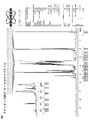
- 1 H-NMR chart of chitin oligosaccharide 1 is a 1 H-NMR chart of cellooligosaccharide (1).
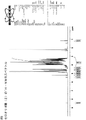
- 1 is a 1 H-NMR chart of cellooligosaccharide (2).
- 4 is a photograph of a spreadability test of Comparative Example 1 and Example 5.
- FIG. 1 is a 1 H-NMR chart of chitin oligosaccharide.
- 1 is a 1 H-NMR chart of cellooligosaccharide (1).
- 1 is a 1 H-NMR chart of cellooligosaccharide (2).
- 4 is a photograph of a spreadability test of Comparative Example 1 and Example 5.
- the spreading agent of one embodiment contains at least one oligosaccharide selected from the group consisting of chitin oligosaccharide, cellooligosaccharide, and xylooligosaccharide.
- Chitin oligosaccharides are oligosaccharides in which several N-acetylglucosamines are linked, and include partially deacetylated chitosan oligosaccharides. Generally, it is obtained by hydrolyzing chitin derived from crustaceans and the like, and is also called oligo-N-acetylglucosamine.
- Chitin oligosaccharides include N-acetylchitobiose, N-acetylchitotriose, N-acetylchitotetraose, N-acetylchitopentaose, N-acetylchitohexaose, N-acetylchitoheptaose, N- One or more mixtures selected from acetylchitooctaose and the like are preferably used. Among these, N-acetylchitotriose, N-acetylchitotetraose, and N-acetylchitopentaose are preferred.
- the chitin oligosaccharide has a number average molecular weight of preferably 420-2050, more preferably 520-1650, even more preferably 620-1240.
- the number average molecular weight is 420 or more, the adhesion of the fertilizer component or agricultural chemical component to plants can be enhanced.
- the number average molecular weight is 2050 or less, chitin oligosaccharide is less likely to be precipitated because the solubility of chitin oligosaccharide in water is higher.
- the number average molecular weight of the chitin oligosaccharide can be determined by the method described in Examples below.
- Chitin oligosaccharides may also contain chitin oligosaccharides in which acetyl groups (—COCH 3 ) of N-acetylglucosamine are partly eliminated to form NH 2 .
- the proportion of such deacetylated glucosamine units is preferably 30 mol% or less, more preferably 20 mol% or less, and 15 mol% or less of the total chitin oligosaccharide glucosamine units. More preferred.
- the chitin oligosaccharide may be a linear chitin oligosaccharide in which N-acetylglucosamine is linked by ⁇ -1,4-glycosidic bonds (hereinafter sometimes referred to as "linear chitin oligosaccharide”). It may well be a branched chitin oligosaccharide (hereinafter sometimes referred to as "branched chitin oligosaccharide”) containing ⁇ -1,6-glycosidic bonds in at least part of the glycosidic bonds.
- linear chitin oligosaccharide specifically, one represented by the following formula (1) can be used.
- the position of the ⁇ -1,6-glycosidic bond is not particularly limited, and may be branched from the 6-position hydroxyl group of any N-acetylglucosamine unit constituting the chitin oligosaccharide.
- the number of ⁇ -1,6-glycosidic bonds in the branched chitin oligosaccharide is not particularly limited, and may be one or two or more.
- the spreading agent of one embodiment contains chitin oligosaccharides, it more preferably contains branched chitin oligosaccharides.
- branched chitin oligosaccharide By including branched chitin oligosaccharide in the spreading agent, the adhesion to plants is further improved.
- the ratio of ⁇ -1,6-glycosidic bonds to the total polymer bonds of the chitin oligosaccharide (hereinafter sometimes referred to as the "branching degree" of the chitin oligosaccharide) is , preferably 1 to 50%, more preferably 3 to 40%, even more preferably 5 to 30%, and particularly preferably 5 to 20%.
- "polymeric bond” refers to a bond, typically a glycosidic bond, that connects monosaccharides to form an oligosaccharide.
- the degree of branching is 1% or more, the adhesion of fertilizer components or agricultural chemical components to plants can be enhanced.
- the degree of branching is 50% or less, the degradability is lowered and the persistence of the spreading effect can be extended.
- the degree of branching is determined from the area ratio of the NMR spectrum by the method described in Examples below.
- a commercially available product or a manufactured product may be used as the chitin oligosaccharide.
- Methods for producing chitin oligosaccharides include chemically or enzymatically partially hydrolyzing chitin.
- the method described in JP-A-2012-217396 can be used. Specifically, the reaction solution obtained by hydrolyzing chitin with 30% or more concentrated hydrochloric acid at 5° C. to 30° C. is neutralized and filtered, and then the filtrate is desalted by electrodialysis and ion exchange resin. It can be produced by freeze-drying.
- Cellooligosaccharides are oligosaccharides in which multiple glucoses are polymerized through ⁇ -glycosidic bonds.
- cellooligosaccharide one or a mixture of a plurality of selected from cellobiose, cellotriose, cellotetraose, cellopentaose, cellohexaose, celloheptaose, cellooctaose and the like is preferably used. Among these, cellotetraose, cellopentaose, and cellohexaose are preferred.
- the number average molecular weight of the cellooligosaccharide is preferably 340-1640, more preferably 420-1320, even more preferably 500-990.
- the number average molecular weight is 340 or more, the adhesion of the fertilizer component or agricultural chemical component to plants can be enhanced.
- the number average molecular weight is 1640 or less, the solubility of cellooligosaccharides in water is higher, so cellooligosaccharides are less likely to precipitate.
- the number average molecular weight of the cellooligosaccharide can be determined by the method described in Examples below.
- the cellooligosaccharide may be a linear cellooligosaccharide in which glucose is linked by ⁇ -1,4-glycosidic bonds (hereinafter sometimes referred to as "linear cellooligosaccharide”), and at least It may be a branched cellooligosaccharide (hereinafter sometimes referred to as "branched cellooligosaccharide”) partially containing an ⁇ -1,6-glycosidic bond.
- linear cellooligosaccharide specifically, one represented by the following formula (2) can be used.
- the position of the ⁇ -1,6-glycosidic bond is not particularly limited, and may be branched from the 6-position hydroxyl group of any glucose unit constituting the cellooligosaccharide.
- the number of ⁇ -1,6-glycosidic bonds is not particularly limited, and may be one or more.
- the spreading agent of one embodiment contains cellooligosaccharide, it more preferably contains branched cellooligosaccharide.
- the spreading agent contains a branched cellooligosaccharide, the adhesion to plants is further improved.
- a branched cellooligosaccharide is included as the cellooligosaccharide, the ratio of ⁇ -1,6-glycosidic bonds to the total polymerized bonds of the cellooligosaccharide (hereinafter sometimes referred to as the "branching degree" of the cellooligosaccharide) is 1 to 50. %, more preferably 3 to 40%, even more preferably 5 to 30%, particularly preferably 5 to 20%.
- the degree of branching is 1% or more, the adhesion of fertilizer components or agricultural chemical components to plants can be enhanced.
- the degree of branching is 50% or less, the degradability is lowered and the persistence of the spreading effect can be extended.
- the degree of branching is determined from the area ratio of the NMR spectrum by the method described in Examples below.
- a commercially available product or a manufactured product may be used as the cellooligosaccharide.
- a method for producing cellooligosaccharide includes a method of chemically or enzymatically partially hydrolyzing cellulose. For example, it can be produced by a hydrolysis reaction of plant biomass using a carbon catalyst, as described in International Publication No. 2017/104687. When producing branched cellooligosaccharides, it is preferable to use the "acid catalyst method" described later.
- Xylo-oligosaccharides are oligosaccharides in which multiple xyloses are polymerized through ⁇ -glycosidic bonds. Generally, it is obtained by hydrolysis of xylan, which is the main component of hemicellulose.
- xylo-oligosaccharide one or a mixture of a plurality of selected from xylobiose, xylotriose, xylotetraose, xylopentaose, xylohexose, xyloheptaose, xylooctaose and the like is preferably used.
- xylopentaose, xylohexaose, and xyloheptaose are preferred.
- xylooligosaccharide specifically, one represented by the following formula (3) can be used.
- a commercially available product or a manufactured product may be used as the xylooligosaccharide.
- Methods for producing xylo-oligosaccharides include chemically or enzymatically partially hydrolyzing xylan.
- corn cobs can be produced by hydrolyzing the culture supernatant of Acremonium cellulolyticus that produces xylan hydrolase.
- Method for producing branched oligosaccharide As a method for producing the above branched chitin oligosaccharide or branched cellooligosaccharide, it is preferable to use an acid catalyst method in which a polysaccharide is hydrolyzed in the presence of an acid catalyst.
- chitin is used as the raw polysaccharide.
- cellulose may be used as the starting polysaccharide, or a mixture of cellulose and xylan may be used.
- the content of xylan is preferably 5 to 50% by mass, more preferably 7 to 40% by mass, relative to the total content of cellulose and xylan of 100% by mass. , more preferably 10 to 30% by mass, particularly preferably 15 to 25% by mass.
- acids can be used as the acid catalyst.
- at least one acid selected from the group consisting of sulfuric acid, sulfurous acid, hydrochloric acid, perchloric acid, nitric acid, nitrous acid, and phosphoric acid, or a partially neutralized salt thereof can be used.
- partially neutralized salts of acids include monopotassium dihydrogen phosphate, monoammonium dihydrogen phosphate, and potassium hydrogen sulfate.
- the acid catalyst is preferably phosphoric acid or a partially neutralized salt thereof, more preferably phosphoric acid.
- the mass ratio of the polysaccharide to the acid catalyst is 100 or less, hydrolysis proceeds at a practically acceptable speed.
- the mass ratio of the polysaccharide to the acid catalyst is 2 or more, side reactions such as dehydration and carbon-carbon bond cleavage can be suppressed during hydrolysis.
- the mass of polysaccharides here is the true mass (dry mass) excluding the water contained in the raw material. Since polysaccharides usually contain physically adsorbed water, the amount of water adhering to them is analyzed, and the mass ratio of the polysaccharide to the acid catalyst is obtained from the mass of the polysaccharide after removing the water.
- a method for analyzing the amount of adhering water a method of placing the polysaccharide used as a raw material in a constant temperature dryer at 100° C. to 150° C. and drying it until there is no weight reduction is exemplified. In order to prevent the influence of side reactions such as dehydration during drying, it is more desirable to dry at a lower temperature using a vacuum dryer and then quantify.
- the weight of the acid catalyst is also the weight of the true acid catalyst (dry weight).
- polysaccharides before hydrolysis already contain 1 to 12% by mass of physically adsorbed water.
- many acid catalysts such as hydrochloric acid and phosphoric acid contain moisture as a common commercial form. Therefore, even without adding water, the hydrolysis can proceed using the water physically adsorbed to the polysaccharide and the water contained in the acid catalyst. In many cases, the amount of water is sufficient without adding water, but for highly dry polysaccharides, hydrolysis can be performed by adding water.
- the polysaccharide contains about 1 to 12% by mass of physically adsorbed water. Therefore, the amount of water in the hydrolysis reaction is the true polysaccharide mass (dry mass), including the water physically adsorbed to the polysaccharide, the water contained in the acid catalyst, and the water content when water is added. It is preferably 0.1 to 15 parts by mass, more preferably 0.5 to 8 parts by mass, based on 100 parts by mass. When the amount is 15 parts by mass or less, a sufficient hydrolysis rate can be obtained, and inoperability due to sticking to an apparatus or the like can be prevented. Moreover, when it is 0.1 parts by mass or more, side reactions such as dehydration can be suppressed.
- the pulverizing apparatus used for the pulverizing treatment include tumbling ball mills such as pot mills, tube mills and conical mills; jet pulverizers such as swirling jet mills, collision type jet mills, fluidized bed jet mills and wet type jet mills; Shearing mills such as a pebble machine (grinder) and ong mill; colloid mills such as mortars and stone mills; impact pulverizers such as hammer mills, cage mills, pin mills, disintegrators, screen mills, turbo mills and centrifugal classifying mills; Vibration mill that moves and pulverizes the medium inside by vibrating the drum; Stirring mill that puts the medium and raw materials in a can body with agitating blades and pulverizes them by rotational motion; and a planetary ball mill, which is a pulverizer of
- the pulverizing device is preferably a ball mill, vibration mill, or agitation mill in which a strong compressive force is applied to the polysaccharide and a tensile stress is applied in both directions of the main chain.
- the grinding device is more preferably a planetary ball mill, a tumbling ball mill, a vibrating mill, or an agitating mill, more preferably a planetary ball mill or a vibrating mill.
- the crushing process can be carried out continuously or intermittently.
- the optimum value varies greatly depending on the pulverizing device. For example, in the case of a planetary ball mill, a cycle of 5 to 15 minutes is interposed every time pulverizing is performed for 5 to 15 minutes. It can be done by an iterative method.
- the pulverization treatment is performed continuously, it is preferable to perform the pulverization treatment while maintaining an appropriate temperature by cooling the pulverizer with a jacket or the like.
- examples of methods that do not involve pulverization include a method of kneading using a pressure kneader, and a method of reacting using an extruder after kneading with a kneader.
- the hydrolysis temperature is preferably room temperature to 110°C, more preferably 50°C to 100°C. If the temperature is at room temperature or above, the progress of decomposition does not slow down, and the time required for decomposition does not become too long. Hydrolysis can also be carried out at elevated temperatures to further accelerate the rate of decomposition. If the hydrolysis temperature is 110° C. or lower, side reactions such as dehydration can be suppressed. Depending on the reactor, shear heat generation may be large, so it is preferable to repeat the cycle with intervals as described above, or to control the hydrolysis temperature by flowing cooling water through the jacket of the reactor.
- the hydrolysis time depends on the reactor used, but is generally preferably 2 hours to 150 hours, more preferably 5 hours to 80 hours, even more preferably 10 hours to 60 hours, and 15 hours to 40 hours. is particularly preferred. If the hydrolysis time is 2 hours or longer, the decomposition of polysaccharides will be accelerated. When the hydrolysis time is 150 hours or less, the hydrolyzate can be obtained more efficiently.
- the hydrolysis time means the net pulverization time excluding the interval.
- a step of adding water to the reactant to extract water-soluble components may be performed.
- the amount of water used during hydrolysis is small, the reactant is in a solid state, and it is preferable to perform an extraction step.
- a step of adding a basic compound to neutralize the reaction product may be performed. Since the acid catalyst used for hydrolysis remains in the reactant obtained by the above hydrolysis reaction, the acid catalyst can be neutralized by adding a basic compound.
- the basic compound used for neutralization is preferably at least one selected from the group consisting of potassium salts, phosphates, ammonium salts and ammonia.
- the oligosaccharide produced by the acid catalyst method in this way has a higher degree of branching than the production method using the carbon catalyst described in International Publication No. 2017/104687. Therefore, the acid catalyst method is preferable as a method for producing branched chitin oligosaccharides or branched cellooligosaccharides.
- the spreading agent of one embodiment contains at least one oligosaccharide selected from the group consisting of chitin oligosaccharide, cellooligosaccharide, and xylooligosaccharide, and preferably contains two or more of the oligosaccharides.
- oligosaccharide selected from the group consisting of chitin oligosaccharide, cellooligosaccharide, and xylooligosaccharide, and preferably contains two or more of the oligosaccharides.
- the combination is not limited, and may be any combination of chitin oligosaccharide and cellooligosaccharide, chitin oligosaccharide and xylooligosaccharide, or cellooligosaccharide and xylooligosaccharide.
- a combination of chitin oligosaccharide and cellooligosaccharide is more preferable.
- the chitin oligosaccharide preferably contains branched chitin oligosaccharide
- the cellooligosaccharide preferably contains branched cellooligosaccharide
- the mass ratio of chitinoligosaccharide to cellooligosaccharide is preferably 0.2 to 5. , more preferably 0.3 to 3, more preferably 0.5 to 1.5.
- the spreading agent contains three types of oligosaccharides: chitin oligosaccharide, cellooligosaccharide, and xylooligosaccharide.
- the spreading agent contains chitin oligosaccharide, cellooligosaccharide, and xylooligosaccharide, the above synergistic effect is remarkable, and the adhesion to plants is particularly excellent.
- the spreading agent contains chitin oligosaccharide, cellooligosaccharide and xylooligosaccharide
- the chitin oligosaccharide preferably contains branched chitin oligosaccharide
- the cellooligosaccharide preferably contains branched cellooligosaccharide.
- the ratio of each oligosaccharide to the total content of chitin oligosaccharide, cellooligosaccharide, and xylo-oligosaccharide is 10 to 50% by mass of chitin oligosaccharide. , 10 to 50% by mass of cellooligosaccharides, and 10 to 60% by mass of xylooligosaccharides.
- the ratio of each oligosaccharide is 20 to 40% by mass of chitin oligosaccharide, 20 to 40% by mass of cellooligosaccharide, and 20 to 55% by mass of xylooligosaccharide.
- the spreading agent of one embodiment is preferably added to a fertilizer composition, an agricultural chemical composition, etc. (hereinafter sometimes referred to as a "spreading agent composition") and applied to plants.
- the spreading agent composition is preferably sprayed onto plant leaves, tree bodies, fruit surfaces, seeds, or soil, which particularly require the spreading effect, and is preferably sprayed onto plant leaves. is more preferred.
- the target plants to be applied are not particularly limited, but are typically agricultural crops, and include the family Brassicaceae, Solanaceae, Asteraceae, Cucurbitaceae, Chenopodiaceae, Umbelliferae, Fabaceae, Convolvulaceae, Liliaceae, Rosaceae, Examples include plants of the mallow family, ginger family, lotus family, gramineous family, and the like.
- cruciferous plants such as Chinese cabbage, cabbage, broccoli, flowering rhinoceros, Japanese mustard spinach, mizuna, Japanese radish, and turnip
- Asteraceae plants such as leaf lettuce, burdock and butterbur
- cucurbitaceous plants such as watermelon, melon, pumpkin, cucumber, bitter gourd, loofah and gourd
- Apiaceous plants such as celery, parsley, and Japanese honeywort
- legumes such as soybeans (edamame), adzuki beans, kidney beans, fava beans, peas, winged beans, and peanuts
- Liliaceous plants such as garlic and asparagus
- Rosaceous plants such as strawberries, apples, pears and loquats
- Malvaceous plants such as okra and cotton
- Zingiberaceous plants such as ginger
- Gramineous plants such as barley, wheat, and sugarcane can be mentioned.
- water-repellent leafy vegetables such as Chinese cabbage, cabbage, Japanese mustard spinach, and spinach are more preferable.
- the spreading agent composition is applied to the plant at a concentration such that the total content of at least one oligosaccharide selected from the group consisting of chitin oligosaccharide, cellooligosaccharide and xylooligosaccharide is 20 to 500 mass ppm. is preferred, and more preferably applied to plants at a concentration of 50 to 150 mass ppm. When the concentration is 20 ppm by mass or more, sufficient adhesion to plants can be exhibited. When the concentration is 500 ppm by mass or less, the cost due to excessive use of the spreading agent can be reduced.
- a fertilizer composition of one embodiment includes at least one fertilizer component selected from the group consisting of nitrogen, phosphoric acid, and potassium, and the spreading agent. It is more preferable to contain all three of nitrogen, phosphoric acid and potassium as fertilizer components.
- the total content of at least one oligosaccharide selected from the group consisting of chitin oligosaccharides, cellooligosaccharides, and xylooligosaccharides is preferably 1 to 15% by mass, and 3 to 12% by mass. more preferably 5 to 10% by mass.
- the fertilizer composition may contain other ingredients that are effective as fertilizers.
- Other components include calcium (Ca), magnesium (Mg), sulfur (S), iron (Fe), manganese (Mn), boron (B), zinc (Zn), nickel (Ni), molybdenum (Mo), Essential elements such as copper (Cu) and chlorine (Cl), as well as elements that help plants grow, such as sodium (Na), silicon (Si), selenium (Se), cobalt (Co), aluminum (Al), vanadium ( V) and other useful elements.
- magnesium raw materials for example, magnesium nitrate, magnesium phosphate, magnesium chloride, magnesium sulfate, etc.
- iron raw material for example, iron sulfate, iron chloride, iron nitrate, etc.
- manganese raw materials for example, manganese nitrate, manganese phosphate, manganese chloride, manganese sulfate, and the like can be used.
- Borax, boric acid, or metal salts thereof can be used as the boron raw material, for example.
- zinc raw material for example, zinc sulfate, zinc chloride, zinc nitrate, etc.
- molybdenum raw materials that can be used include sodium molybdate and ammonium molybdate.
- copper raw material for example, copper sulfate, copper chloride, copper nitrate, or the like can be used.
- the agricultural chemical composition comprises at least one agricultural chemical selected from the group consisting of insecticides, acaricides, fungicides, herbicides, plant growth regulators, anti-lodging agents, and plant nutrients. containing a drug and the spreading agent
- the total content of at least one oligosaccharide selected from the group consisting of chitin oligosaccharides, cellooligosaccharides, and xylooligosaccharides in the agricultural chemical composition is preferably 1 to 15% by mass, and 3 to 12% by mass. %, more preferably 5 to 10% by mass.
- This mixture was transferred to a vibration mill (device name: MB-1 type, manufactured by Chuo Kakoki Co., Ltd.) and hydrolyzed while pulverizing at 75°C for 72 hours.
- the pulverization conditions were a total amplitude of 8 mm, a frequency of 16.2 Hz, and ⁇ 3/4 inch carbon steel balls.
- This pulverized material was taken out from the vibration mill, separated from the balls, and 641 g of the pulverized material was transferred to a dissolving device (10 L container). 5771 g of ion-exchanged water was added, and the mixture was stirred at 25° C. for 1 hour using Three One Motor (registered trademark). In this way, water-soluble components were dissolved to obtain a hydrolyzate extract.
- This pulverized material was taken out from the vibration mill, separated from the balls, and 300 g of the pulverized material was transferred to a dissolving device (5 L container). 2817 g of ion-exchanged water was added and stirred at 25° C. for 1 hour using Three One Motor (registered trademark). In this way, water-soluble components were dissolved to obtain a hydrolyzate extract.
- the filtrate was freeze-dried to obtain a cellooligosaccharide powder.
- the xylan hydrolyzate contained in the filtrate was freeze-dried without separation.
- reaction raw material 0.374 g
- 40 mL of water were placed in a high-pressure reactor (inner volume: 100 mL, autoclave manufactured by O-M Lab Tech Co., Ltd., manufactured by Hastelloy C22), and then stirred at 600 rpm until the reaction temperature reached 10 to 30 ° C./ After heating to 230° C. at a rate of 11.3° C./min (average temperature increase rate), the heating was immediately stopped and the reactor was air-cooled at a rate of 10 to 30° C./min (average temperature decrease rate of 16.7° C./min). After cooling, a reaction liquid was prepared.
- [Xylo-oligosaccharide] Acremonium Cellulolyticus strain TN (FERM P-18508) was added to a liquid medium (Avicel 50 g/L, KH2O4 24 g/L, ammonium sulfate 5 g/L, potassium tartrate 1/ 2H2O4 . 7 g/L, urea 4 g/L, Tween 80 1 g/L, MgSO4.7H2O 1.2 g/L, ZnSO4.7H2O 10 mg/L, MnSO4.5H2O 10 mg/L, CuSO4.5H 2 O 10 mg/L) was placed in a 500 mL flask and cultured with shaking at 30° C. for 6 days.
- the number average molecular weight and degree of branching were determined by the following method.
- the number average molecular weight was determined by GPC (gel permeation chromatography) analysis using an HPLC (high performance liquid chromatogram) device.
- the analytical sample was prepared by dissolving 0.050 g of each oligosaccharide powder in 1 g of water in the same manner as the standard sample.
- a measurement sample was prepared by the following method. 50 mg of the powder sample was precisely weighed, dissolved by adding 1 mL of D 2 O in a 50 mL sample bottle, shaken in an ultrasonic cleaner for 5 minutes, dried in a vacuum dryer (30°C), and weighed again. to calculate the dehydration. TSP-d 4 (5 mg) and D 2 O (1 mL) were added again, shaken with an ultrasonic cleaner for 5 minutes, and then filtered through a 0.45 ⁇ m disposable filter (model number: 25HP045AN, manufactured by Advantech Toyo Co., Ltd.). was enclosed in a 5 mm ⁇ NMR sample tube, and NMR measurement was performed immediately after sampling.
- FIG. 1 shows a 1 H-NMR chart of chitin oligosaccharide
- FIG. 2 shows a 1 H-NMR chart of cellooligosaccharide (1)
- FIG. 3 shows a 1 H-NMR chart of cellooligosaccharide (2).
- Table 3 shows the analysis results. From these results, it was found that chitin oligosaccharide and cellooligosaccharide (1) contained branched oligosaccharides, and cellooligosaccharide (2) was a straight-chain oligosaccharide containing no branched oligosaccharides.
- Example 1 A fertilizer composition containing 8.1% by mass of fertilizer components (total of P 2 O 5 and K 2 O) and 8.0% by mass of chitin oligosaccharides by dissolving the fertilizer component and the chitin oligosaccharide obtained by the above method in water. was made.
- Example 2 to 8 A fertilizer composition was produced in the same manner as in Example 1, except that the type and content of oligosaccharides were changed as shown in Table 4.
- Leaf piece samples were prepared by cutting spinach and cabbage leaves into 2 cm ⁇ 3 cm pieces.
- Spinach is a leafy vegetable with general water repellency
- cabbage is a leafy vegetable with high water repellency.
- treatment liquid a 100 mL glass bottle
- a leaf sample was picked up with tweezers, vertically immersed in the treatment solution, held in the vertically immersed state for 3 seconds, and then slowly pulled up.
- the immersed leaf sample was placed on a flat desk with the leaf surface facing up, and the degree of wetness on the surface was visually observed and photographed.
- Table 4 shows the results of evaluating the spreading effect of each treatment liquid based on the following criteria. Photographs of Comparative Example 1 and Example 5, which gave the best results, are shown in FIG. (Evaluation criteria) A: Many water droplets adhered to one surface. B: Water droplets adhered to one surface. C: Water droplets adhered almost all over. D: Water droplets adhered. E: Water droplets adhered slightly. F: Almost no adhesion.
- Example 7 containing cellooligosaccharide (1) was higher than Example 8 containing cellooligosaccharide (2).
- the spread effect was high. Also from this, it was confirmed that the spreading effect is higher when an oligosaccharide with a high degree of branching is used.
- the sample solution was stored by filling 40 mL of the sample solution into a 50 mL container and leaving it in a constant temperature bath set at 30°C.
- the adhesion of fertilizer components and agricultural chemicals to plants can be effectively increased.
Landscapes
- Life Sciences & Earth Sciences (AREA)
- Chemical & Material Sciences (AREA)
- Pest Control & Pesticides (AREA)
- Organic Chemistry (AREA)
- Engineering & Computer Science (AREA)
- Health & Medical Sciences (AREA)
- Plant Pathology (AREA)
- Wood Science & Technology (AREA)
- Zoology (AREA)
- Environmental Sciences (AREA)
- Chemical Kinetics & Catalysis (AREA)
- General Health & Medical Sciences (AREA)
- General Chemical & Material Sciences (AREA)
- Toxicology (AREA)
- Agronomy & Crop Science (AREA)
- Dentistry (AREA)
- Medicinal Chemistry (AREA)
- Polymers & Plastics (AREA)
- Materials Engineering (AREA)
- Insects & Arthropods (AREA)
- Dispersion Chemistry (AREA)
- Microbiology (AREA)
- Mycology (AREA)
- Botany (AREA)
- Fertilizers (AREA)
- Agricultural Chemicals And Associated Chemicals (AREA)
Priority Applications (5)
| Application Number | Priority Date | Filing Date | Title |
|---|---|---|---|
| US18/283,490 US20240190785A1 (en) | 2021-03-23 | 2022-03-08 | Spreading agent, fertilizer composition and agricultural chemical composition |
| KR1020237029289A KR20230137975A (ko) | 2021-03-23 | 2022-03-08 | 전착제, 비료 조성물, 및 농업용 약제 조성물 |
| JP2023508949A JPWO2022202296A1 (https=) | 2021-03-23 | 2022-03-08 | |
| EP22775088.2A EP4317364A4 (en) | 2021-03-23 | 2022-03-08 | Spreading agent, fertilizer composition and agricultural chemical composition |
| CN202280023794.6A CN117062792B (zh) | 2021-03-23 | 2022-03-08 | 展着剂、肥料组合物和农业用药剂组合物 |
Applications Claiming Priority (2)
| Application Number | Priority Date | Filing Date | Title |
|---|---|---|---|
| JP2021048786 | 2021-03-23 | ||
| JP2021-048786 | 2021-03-23 |
Publications (1)
| Publication Number | Publication Date |
|---|---|
| WO2022202296A1 true WO2022202296A1 (ja) | 2022-09-29 |
Family
ID=83397100
Family Applications (1)
| Application Number | Title | Priority Date | Filing Date |
|---|---|---|---|
| PCT/JP2022/010072 Ceased WO2022202296A1 (ja) | 2021-03-23 | 2022-03-08 | 展着剤、肥料組成物、及び農業用薬剤組成物 |
Country Status (6)
| Country | Link |
|---|---|
| US (1) | US20240190785A1 (https=) |
| EP (1) | EP4317364A4 (https=) |
| JP (1) | JPWO2022202296A1 (https=) |
| KR (1) | KR20230137975A (https=) |
| CN (1) | CN117062792B (https=) |
| WO (1) | WO2022202296A1 (https=) |
Citations (9)
| Publication number | Priority date | Publication date | Assignee | Title |
|---|---|---|---|---|
| JP2001302410A (ja) * | 2000-04-27 | 2001-10-31 | Dai Ichi Kogyo Seiyaku Co Ltd | 展着剤、及び該展着剤が配合された駆虫剤 |
| JP2012217396A (ja) | 2011-04-11 | 2012-11-12 | Koyo Chemical Kk | キチン分解物の製造方法 |
| CN103435414A (zh) * | 2013-08-21 | 2013-12-11 | 扬州日兴生物科技股份有限公司 | 含甲壳质寡糖叶面喷施剂、生产方法及其使用方法 |
| CN105000994A (zh) * | 2015-07-28 | 2015-10-28 | 山东天达生物股份有限公司 | 一种含低聚糖的肥料及其制备方法 |
| WO2017104687A1 (ja) | 2015-12-18 | 2017-06-22 | 昭和電工株式会社 | セロオリゴ糖の製造方法 |
| JP2017214368A (ja) * | 2016-05-30 | 2017-12-07 | 株式会社サカタのタネ | イネ科植物のケイ酸吸収促進剤及びその施用方法 |
| WO2019172381A1 (ja) * | 2018-03-08 | 2019-09-12 | 株式会社クラレ | 農薬用展着剤及び農薬散布液 |
| US20200123075A1 (en) * | 2018-10-22 | 2020-04-23 | Sichuan University | Method for preparing organic boron fertilizer for engineering wound soil remediation and prepared organic boron fertilizer |
| WO2020255934A1 (ja) * | 2019-06-17 | 2020-12-24 | 昭和電工株式会社 | アミノ酸又はその塩とオリゴ糖を含む植物活力剤ならびにその使用 |
Family Cites Families (10)
| Publication number | Priority date | Publication date | Assignee | Title |
|---|---|---|---|---|
| JPH06219876A (ja) * | 1993-01-28 | 1994-08-09 | Gun Ei Chem Ind Co Ltd | 作物栄養補助剤 |
| JP3559787B2 (ja) | 1998-04-13 | 2004-09-02 | 大原パラヂウム化学株式会社 | 農薬用展着剤組成物 |
| CN1316882C (zh) * | 2003-01-30 | 2007-05-23 | 中国科学院上海生命科学研究院 | 含壳寡糖的农药组合物及应用 |
| WO2010009822A1 (de) | 2008-07-24 | 2010-01-28 | Bayer Cropscience Ag | Verdicker für pflanzenverträgliche, im wasser dispergierbare konzentrate |
| KR101246730B1 (ko) * | 2010-12-08 | 2013-03-25 | 주식회사 빙그레 | 두유 요거트를 포함하는 두유 요거트 아이스크림의 제조방법 |
| CN102283201A (zh) * | 2011-09-28 | 2011-12-21 | 扬州日兴生物科技股份有限公司 | 甲壳质寡糖植物生长调节剂及其在农业上的应用 |
| JP5727087B1 (ja) | 2013-12-20 | 2015-06-03 | 日本合成化学工業株式会社 | 農業用液状散布剤 |
| CN108064306B (zh) * | 2014-12-23 | 2022-11-01 | 营养与生物科学美国4公司 | 酶促产生的纤维素 |
| WO2020255932A1 (ja) * | 2019-06-17 | 2020-12-24 | 昭和電工株式会社 | 外生エリシター及び内生エリシターを含む植物活力剤ならびにその使用 |
| WO2021205960A1 (ja) * | 2020-04-09 | 2021-10-14 | 昭和電工株式会社 | 肥料の製造方法 |
-
2022
- 2022-03-08 WO PCT/JP2022/010072 patent/WO2022202296A1/ja not_active Ceased
- 2022-03-08 KR KR1020237029289A patent/KR20230137975A/ko not_active Withdrawn
- 2022-03-08 EP EP22775088.2A patent/EP4317364A4/en active Pending
- 2022-03-08 JP JP2023508949A patent/JPWO2022202296A1/ja active Pending
- 2022-03-08 US US18/283,490 patent/US20240190785A1/en active Pending
- 2022-03-08 CN CN202280023794.6A patent/CN117062792B/zh active Active
Patent Citations (9)
| Publication number | Priority date | Publication date | Assignee | Title |
|---|---|---|---|---|
| JP2001302410A (ja) * | 2000-04-27 | 2001-10-31 | Dai Ichi Kogyo Seiyaku Co Ltd | 展着剤、及び該展着剤が配合された駆虫剤 |
| JP2012217396A (ja) | 2011-04-11 | 2012-11-12 | Koyo Chemical Kk | キチン分解物の製造方法 |
| CN103435414A (zh) * | 2013-08-21 | 2013-12-11 | 扬州日兴生物科技股份有限公司 | 含甲壳质寡糖叶面喷施剂、生产方法及其使用方法 |
| CN105000994A (zh) * | 2015-07-28 | 2015-10-28 | 山东天达生物股份有限公司 | 一种含低聚糖的肥料及其制备方法 |
| WO2017104687A1 (ja) | 2015-12-18 | 2017-06-22 | 昭和電工株式会社 | セロオリゴ糖の製造方法 |
| JP2017214368A (ja) * | 2016-05-30 | 2017-12-07 | 株式会社サカタのタネ | イネ科植物のケイ酸吸収促進剤及びその施用方法 |
| WO2019172381A1 (ja) * | 2018-03-08 | 2019-09-12 | 株式会社クラレ | 農薬用展着剤及び農薬散布液 |
| US20200123075A1 (en) * | 2018-10-22 | 2020-04-23 | Sichuan University | Method for preparing organic boron fertilizer for engineering wound soil remediation and prepared organic boron fertilizer |
| WO2020255934A1 (ja) * | 2019-06-17 | 2020-12-24 | 昭和電工株式会社 | アミノ酸又はその塩とオリゴ糖を含む植物活力剤ならびにその使用 |
Non-Patent Citations (2)
| Title |
|---|
| PLANT PROTECTION, vol. 68, no. 11, 2014, pages 60 - 63 |
| See also references of EP4317364A4 |
Also Published As
| Publication number | Publication date |
|---|---|
| US20240190785A1 (en) | 2024-06-13 |
| JPWO2022202296A1 (https=) | 2022-09-29 |
| CN117062792A (zh) | 2023-11-14 |
| EP4317364A4 (en) | 2025-04-09 |
| EP4317364A1 (en) | 2024-02-07 |
| CN117062792B (zh) | 2026-02-10 |
| KR20230137975A (ko) | 2023-10-05 |
Similar Documents
| Publication | Publication Date | Title |
|---|---|---|
| US10785981B2 (en) | Modulation of plant immune system function | |
| KR102918302B1 (ko) | 아미노산 또는 그 염과 올리고당을 포함하는 식물 활력제 및 그 사용 | |
| ES2393164T3 (es) | Procedimiento de producción de sacárido | |
| DE69309467T2 (de) | Verwendung von Laminarin als Beschleuniger der Keimung von Samen und des Wachstumes von Pflanzen | |
| CN113993380B (zh) | 包含外源性激发子和内源性激发子的植物活力剂、及其使用 | |
| JP7816138B2 (ja) | 肥料の製造方法 | |
| CN101538172A (zh) | 海藻水解的方法 | |
| EP3450462B1 (en) | Methods for producing chitin oligomer, n-acetylglucosamine, and 1-o-alkyl-n-acetylglucosamine | |
| WO2022202296A1 (ja) | 展着剤、肥料組成物、及び農業用薬剤組成物 | |
| JP7703185B2 (ja) | キチンの分解方法及びキチンオリゴ糖含有組成物の製造方法 | |
| CN115066477A (zh) | 土壤改良剂 | |
| JP7631954B2 (ja) | セロオリゴ糖含有組成物の製造方法及びセロオリゴ糖含有組成物 | |
| JP3177613B2 (ja) | 3,6−o−ジメチルキチンの製造方法及びそれを含有する化粧品材料並びに植物用生長促進剤 | |
| CN101736056A (zh) | 一种壳聚寡糖的生物制备方法 | |
| Borah et al. | Plant-Derived Mucilage: From Plant Origins to Biopolymer Applications | |
| RU2574741C2 (ru) | Комплексное соединение метилового эфира 2-бензимидазолилкарбаминовой кислоты с природным полисахаридом, обладающее фунгицидными свойствами | |
| Phillips | Processing to valorise green biomass side streams to create new food ingredients | |
| WO2026089030A1 (ja) | 多糖類、尿素及びリン酸塩類を含む原料由来の高吸水性高分子化合物およびその製造方法 | |
| WO2025252897A1 (en) | Plant defense inducer | |
| Irianto et al. | Isolation and Characterization of Cellulose Microfibril (MFC) from Gracilaria sp. with Different Quality Grades | |
| Michalak et al. | Marine polysaccharides as biostimulants of plant growth | |
| Aktar | Performance of Gamma Irradiated Polysaccharides as Growth Promoter on Selective Crops | |
| Hu et al. | Isolation and characterization of hemicelluloses from cottonseed coat waste |
Legal Events
| Date | Code | Title | Description |
|---|---|---|---|
| 121 | Ep: the epo has been informed by wipo that ep was designated in this application |
Ref document number: 22775088 Country of ref document: EP Kind code of ref document: A1 |
|
| ENP | Entry into the national phase |
Ref document number: 2023508949 Country of ref document: JP Kind code of ref document: A |
|
| ENP | Entry into the national phase |
Ref document number: 20237029289 Country of ref document: KR Kind code of ref document: A |
|
| WWE | Wipo information: entry into national phase |
Ref document number: 1020237029289 Country of ref document: KR |
|
| WWE | Wipo information: entry into national phase |
Ref document number: 18283490 Country of ref document: US Ref document number: 202280023794.6 Country of ref document: CN |
|
| WWE | Wipo information: entry into national phase |
Ref document number: 2022775088 Country of ref document: EP |
|
| NENP | Non-entry into the national phase |
Ref country code: DE |
|
| ENP | Entry into the national phase |
Ref document number: 2022775088 Country of ref document: EP Effective date: 20231023 |