WO2022201296A1 - 学習装置、識別装置、学習方法、識別方法及びコンピュータプログラム - Google Patents
学習装置、識別装置、学習方法、識別方法及びコンピュータプログラム Download PDFInfo
- Publication number
- WO2022201296A1 WO2022201296A1 PCT/JP2021/011949 JP2021011949W WO2022201296A1 WO 2022201296 A1 WO2022201296 A1 WO 2022201296A1 JP 2021011949 W JP2021011949 W JP 2021011949W WO 2022201296 A1 WO2022201296 A1 WO 2022201296A1
- Authority
- WO
- WIPO (PCT)
- Prior art keywords
- data
- learning
- past
- unit
- input
- Prior art date
- Legal status (The legal status is an assumption and is not a legal conclusion. Google has not performed a legal analysis and makes no representation as to the accuracy of the status listed.)
- Ceased
Links
Images




Classifications
-
- G—PHYSICS
- G06—COMPUTING OR CALCULATING; COUNTING
- G06N—COMPUTING ARRANGEMENTS BASED ON SPECIFIC COMPUTATIONAL MODELS
- G06N20/00—Machine learning
-
- G—PHYSICS
- G06—COMPUTING OR CALCULATING; COUNTING
- G06N—COMPUTING ARRANGEMENTS BASED ON SPECIFIC COMPUTATIONAL MODELS
- G06N3/00—Computing arrangements based on biological models
- G06N3/02—Neural networks
- G06N3/06—Physical realisation, i.e. hardware implementation of neural networks, neurons or parts of neurons
- G06N3/063—Physical realisation, i.e. hardware implementation of neural networks, neurons or parts of neurons using electronic means
-
- G—PHYSICS
- G06—COMPUTING OR CALCULATING; COUNTING
- G06N—COMPUTING ARRANGEMENTS BASED ON SPECIFIC COMPUTATIONAL MODELS
- G06N20/00—Machine learning
- G06N20/10—Machine learning using kernel methods, e.g. support vector machines [SVM]
-
- G—PHYSICS
- G06—COMPUTING OR CALCULATING; COUNTING
- G06N—COMPUTING ARRANGEMENTS BASED ON SPECIFIC COMPUTATIONAL MODELS
- G06N3/00—Computing arrangements based on biological models
- G06N3/02—Neural networks
- G06N3/04—Architecture, e.g. interconnection topology
- G06N3/0499—Feedforward networks
-
- G—PHYSICS
- G06—COMPUTING OR CALCULATING; COUNTING
- G06N—COMPUTING ARRANGEMENTS BASED ON SPECIFIC COMPUTATIONAL MODELS
- G06N3/00—Computing arrangements based on biological models
- G06N3/02—Neural networks
- G06N3/08—Learning methods
- G06N3/09—Supervised learning
-
- G—PHYSICS
- G06—COMPUTING OR CALCULATING; COUNTING
- G06N—COMPUTING ARRANGEMENTS BASED ON SPECIFIC COMPUTATIONAL MODELS
- G06N3/00—Computing arrangements based on biological models
- G06N3/02—Neural networks
- G06N3/08—Learning methods
- G06N3/094—Adversarial learning
Definitions
- the present invention relates to a learning device, an identification device, a learning method, an identification method, and a computer program.
- Non-Patent Document 1 discloses a method called memory-playback-based, in which a part of past learning samples is stored and played back when a new task is performed.
- Non-Patent Document 2 discloses a method of freezing model parameters in deep learning.
- Non-Patent Document 3 also discloses a method that implicitly leverages the knowledge of previous tasks by introducing an additional regularization term.
- Maintaining complete knowledge of all previous tasks can lead to the risk of data leakage and privacy violations. Moreover, it is not necessary to have a thorough knowledge of the previous task. For example, assuming a face authentication system installed at the entrance of an office, it is not always necessary to memorize the faces of people transferred to other departments. Therefore, it is desired to selectively forget unnecessary knowledge among past tasks and to perform learning that can preserve other knowledge.
- the present invention aims to provide a technology that enables learning that allows the user to selectively forget unnecessary learning content from the past learning content while saving other learning content.
- first data to be learned, second data for identifying the first data, and second past data used during past learning as data for identifying the first data a data input unit for inputting the second past data which is data and is related to learning content to be saved; a synthetic data generation unit for generating synthetic data by synthesizing the first data and the second data; a parameter updating unit that updates parameters of the machine learning model based on characteristics of the synthetic data obtained by inputting the synthetic data and the second past data into the machine learning model and the characteristics of the second past data; is a learning device comprising:
- One aspect of the present invention is an identification device that identifies input data using a trained model obtained by the learning device.
- first data to be learned second data for identifying the first data
- second past data used during past learning as data for identifying the first data inputting the second past data which is data and is related to learning content to be saved, synthesizing the first data and the second data to generate synthesized data, and generating the synthesized data and the second past data
- parameters of the machine learning model are updated based on characteristics of the synthetic data obtained by inputting data into the machine learning model and the second past data.
- One aspect of the present invention is an identification method for identifying input data using a trained model obtained by the above learning device.
- first data to be learned second data for identifying the first data
- second past data used during past learning as data for identifying the first data inputting the second past data which is data and is related to learning content to be saved, synthesizing the first data and the second data to generate synthesized data, and generating the synthesized data and the second past data
- a computer program for updating parameters of the machine learning model based on characteristics of the synthetic data obtained by inputting data into the machine learning model and the second past data.
- One aspect of the present invention is a computer program for causing a computer to function as the above identification device.
- the present invention it is possible to selectively forget unnecessary learning contents among the past learning contents, and to perform learning in which other learning contents can be saved.
- FIG 3 is a block diagram showing the functional configuration of the learning device in the embodiment;
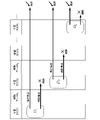
- FIG. It is a figure for demonstrating the objective of this invention. It is the figure which showed typically the process in embodiment.
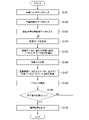
- 4 is a flow chart showing the flow of learning processing of the learning device in the embodiment. It is a figure for demonstrating the superiority of this invention. It is a figure which shows an example of the hardware constitutions of the identification device in embodiment.
- FIG. 1 is a block diagram showing the functional configuration of a learning device 1 according to the embodiment.
- the learning device 1 in the embodiment is a so-called lifelong learning device that enables continuous learning.
- the learning device 1 updates a predetermined machine learning model by machine learning until a predetermined termination condition is satisfied.
- a predetermined machine learning model at the time when a predetermined termination condition is satisfied is a trained model. Therefore, the learning device 1 acquires a learned model by updating a predetermined machine learning model by machine learning until a predetermined end condition is satisfied.
- a machine learning model (hereinafter referred to as a "machine learning model") by machine learning means suitably adjusting parameter values in the machine learning model.
- learning to be A means that the parameter values in the machine learning model are adjusted so that A is satisfied.
- A represents a condition.
- for learning means to be used for updating a machine learning model.
- a machine learning model is a set including one or more processes whose execution conditions and order are predetermined.
- a machine learning model is represented by, for example, a neural network.
- a neural network is a circuit such as an electronic circuit, an electric circuit, an optical circuit, an integrated circuit, etc., and is a circuit that expresses a machine learning model.
- the parameters of the neural network are preferably adjusted based on the loss, and the parameters of the network are the parameters of the machine learning model it represents.
- a network parameter is a parameter of a circuit that constitutes the network.
- the machine learning model updated by the learning device 1 is a machine learning model that identifies input data.
- a learned model obtained by the learning device 1 updating parameters is, for example, a model for classifying data.
- Input data for learning, reference data for learning, and pseudo data for learning are input to the machine learning model.
- the input data for learning is the data to be learned.
- the learning input data may be two or more dimensional data such as images, one dimensional time series data such as voice, sound or vibration, or natural language data. It may be symbolic data.
- learning input data may be any data generally applied to machine learning.
- one-dimensional time-series data such as voice, sound, or vibration is used as learning input data, it may be converted to two-dimensional data using a ceptrum or the like.
- the reference data for learning is the so-called correct data in machine learning.
- the reference data for learning may be digitized information corresponding to class labels such as attributes, class names, or person IDs, or data similar to the input data for learning, that is, image and voice data. There may be.
- the reference data for learning may be any objective variable when generally applied to machine learning. More specifically, when the label is used as the objective variable, the purpose is identification or authentication, and when data similar to the learning input data is used as the variable, the purpose is regression.
- the learning data is data including at least a set of learning input data and learning reference data, and is an example of so-called learning data.
- the learning data is one aspect of the first data.
- Pseudo data for learning is data different from data for learning.
- the learning pseudo data may be data of a random noise pattern, data of a pattern obtained by partially degrading the input data for learning, or data of a pattern represented by an average value of the input data for learning.
- the pattern represented by the average value of the input data for learning may be a pattern in which each pixel is represented by the average value of each pixel in a plurality of input data for learning, or a pattern represented by the average value of each pixel in a plurality of input data for learning. It may be a pattern in which the average value of each pixel is assigned to each pixel.
- pseudo data for training a small number of samples of past task data whose safety is guaranteed from the viewpoint of privacy etc. may be used, or generated by a generative model obtained by adversarial learning etc. It may be a composite image obtained by
- the learning pseudo-data is data for identifying the class to which the learning data belongs.
- each data set D k is represented by the following equation (2) using learning input data x k and learning reference data y k .
- x i k is input data for learning.
- y i k is reference data for learning.
- the purpose of the present invention is to selectively forget unnecessary knowledge (classes in this case) from past tasks and learn to save other knowledge (classes in this case).
- a class to be stored (hereinafter referred to as a "stored set”) will be denoted as C P k .
- the class to be selectively forgotten (hereinafter referred to as “deleted set”) is the complement of C P k , ie -C P k (- is on top of C).
- the network in the learning device 1 is denoted by f, and the parameters are formally denoted by ⁇ . That is, the network is denoted f ⁇ .
- the object of the present invention can be expressed as follows using the above notation. If the correct class y belongs to the stored class CP , the inputted learning input data x is mapped to the correct class y. On the other hand, when the correct class y does not belong to the stored class CP , f ⁇ is learned that maps the input learning input data x to a class other than the correct class y.
- the learning device 1 may set the following constraint conditions.
- FIG. 2 is a diagram for explaining the object of the present invention.
- the present invention can also be applied without the above-mentioned constraint conditions.
- the learning device 1 includes an input unit 11 , a control unit 12 , a communication unit 13 , a storage unit 14 and an output unit 15 .
- the input unit 11 is composed of a data input unit 111, a pseudo data input unit 112, and a pseudo data re-input unit 113.
- the data input unit 111 inputs the data set Dk shown in the above equation (2) in the k -th task. That is, the data input unit 111 inputs a set of learning input data x i k and learning reference data y i k in the k-th task.
- the pseudo data input unit 112 inputs learning pseudo data.
- a set of learning pseudo data is expressed as ⁇ k,c ⁇ .
- ⁇ k,c is the c-th class learning pseudo-data in the k-th task.
- the learning pseudo data input to the pseudo data input unit 112 is one aspect of the second data.
- the pseudo data re-input unit 113 re-inputs the learning pseudo data input by the pseudo data input unit 112 . More specifically, the pseudo data re-input unit 113 may input learning pseudo data of ⁇ k′,c ⁇ (where k′ ⁇ k) in the k-th task. That is, the pseudo-data re-input unit 113 inputs the pseudo-learning data used in the past learning as data for identifying the learning data.
- the learning pseudo data input to the pseudo data re-input unit 113 is one aspect of the second past data.
- the control unit 12 controls the learning device 1 as a whole.
- the control unit 12 is configured using a processor such as a CPU (Central Processing Unit) and a memory.
- the control unit 12 realizes the functions of the extended data generation unit 121, the feature extraction unit 122, the identification unit 123, the loss acquisition unit 124, the parameter update unit 125, and the end determination unit 126 by executing programs.
- the extended data generating unit 121 generates extended data ( synthetic data ). Specifically, the extended data generation unit 121 extends the learning input data x i k and the learning pseudo data ⁇ k,c by blending them at a ratio determined by a given probability distribution function. data may be generated.
- the extended data generator 121 is one aspect of the combined data generator.
- the extended data generator 121 will be described using a specific example.
- the purpose of the present invention is to keep storing the classes contained in the preserved set C P k (without access to the original dataset), while continuing to store the classes contained in the stored set C P k (- is C's It is to forget the classes contained in the above).
- the present invention associates the information of each class with simple data called training pseudo-data ⁇ k,c , and uses the training pseudo-data to remember or forget the class. to control
- FIG. 3 is a diagram schematically showing processing in the embodiment.
- the extended data generating unit 121 Upon receiving a new task (a new task in FIG. 3), the extended data generating unit 121 generates one image having random pixel values for each class as class-specific learning pseudo data ⁇ k ,c , and All samples of the class to be used should be embedded.
- pseudo-learning data ⁇ k,c can be synthesized with the original learning input data x i k of the c-th class, as shown in the following equation (3). , to generate the extended data ⁇ x i k ( ⁇ is on top of x).
- ⁇ is a random value between 0 and 1.
- the parameter update unit 125 updates the parameters of the feature extraction unit 122 and the identification unit 123 using these two sets. It should be noted that only the learning pseudo data ⁇ k and c should be left after the update is completed.
- patterns are independent for each class and task.
- the feature extraction unit 122 receives the extended data generated by the extended data generation unit 121 and the learning pseudo data re-input by the pseudo data re-input unit 113 to extract features.
- a method for extracting features for example, a network in general deep learning such as ResNet disclosed in Reference 1 may be used.
- the identification unit 123 identifies input data using the features extracted by the feature extraction unit 122 .
- a method for performing identification from features for example, the final layer in a general deep learning network such as ResNet disclosed in Non-Patent Document 4 may be used.
- a technique such as a support vector machine may be used as a technique for performing identification from features.
- the identification unit 123 in the embodiment estimates a certain class label has been described, the present invention is not limited to this.
- the identification unit 123 may perform regression processing instead of performing identification processing.
- the network structure in the identification unit 123 is a multi-head structure will be described, but the present invention is not limited to this.
- the loss acquisition unit 124 uses the learning data input by the data input unit 111, the learning pseudo data input by the pseudo data re-input unit 113, and the results identified by the identification unit 123. get a loss.
- the loss acquisition unit 124 may include regularization for restricting the range of parameters updated by the parameter update unit 125 .
- the loss obtained by the loss obtaining unit 124 is obtained based on Equation (4).
- the total loss function L for learning shown in Equation (4) may consist of four terms: classification loss L C , pseudo data loss L M , selective forgetting loss L F , regularization term L R .
- the classification loss L C and pseudo data loss L M terms are for remembering new tasks.
- the selective forgetting loss L F and the regularization term L R terms are for preserving previous tasks. Each of these terms will be described in detail below.
- a classification loss L C is introduced with the goal of correcting the classification for new tasks.
- the classification loss L C may be given as in Equation (5), for example.
- N k is the number of learning samples for the k-th task
- l(x, y) is the loss function of learning input data x i k and learning reference data y i k (for example, class label y) is.
- the loss function may be Softmax Cross Entropy (CE) or Addition Margin Softmax (AMS) loss.
- the pseudo data loss L M uses the classification loss L C using the learning input data x i k and the extended data using the learning pseudo data to connect each of the learning pseudo data to the corresponding class. Other losses may be used.
- the pseudo data loss LM is represented by the following equation (6).
- a loss function similar to the classification loss L C may be used.
- the selective forgetting loss L F is introduced for the purpose of storing only the classes belonging to the preservation set C P k and forgetting the classes belonging to the deletion set ⁇ C P k ( ⁇ is above C). be. Specifically, training is performed using only the training pseudo data corresponding to the class of the preservation set, and other training pseudo data (for example, the training pseudo data corresponding to the class of the deletion set) is discarded. achieved. More specifically, when learning pseudo data for generating x i p is ⁇ i p , the loss may be given by the following equation (7), for example.
- Np is the number of learning samples in the p -th task
- ⁇ SF is the weight for adjusting the strength of this loss.
- This loss function does not use any training input data x i k .
- these classes are caused to catastrophically forget. Thereby, selective forgetting of the previous task can be realized without using any learning input data x i k .
- the regularization term L R may use general regularization introduced to prevent catastrophic forgetting (eg, Non-Patent Document 3, References 2 and 3).
- ⁇ is the term weight and i is the class label index.
- i is the class label index.
- y'o (i) and ⁇ y'o (i) ( ⁇ on top of y ) in equation (8) are modified recorded and current probabilities.
- the following formula (9) may be used as the regularization term.
- ⁇ is the weight of the regularization term
- ⁇ p,q is the weight of the p-th previous task corresponding to the q-th parameter ⁇ p,q ( ⁇ on top of ⁇ ) on the diagonal.
- It is a component of the Fisher matrix. Note that the Fisher matrix may be changed so that it is evaluated only for the class corresponding to the preserved set C P k as in the above equation.
- these multiple regularizations may be combined and used by linear summation or the like.
- the parameter update unit 125 updates the machine learning model so that the loss acquired by the loss acquisition unit 124 is reduced.
- the updating of the loss-based machine learning model is specifically a process of updating the parameter values of the neural network representing the machine learning model according to a predetermined rule based on the loss. Updating the parameter values of the neural network is, more specifically, updating the parameter values corresponding to the feature extraction unit 122 and the identification unit 123, respectively.
- the parameter updating unit 125 may update the parameters using an existing technique such as the stochastic gradient method.
- the termination determination unit 126 determines whether or not a predetermined termination condition is satisfied.
- the predetermined termination condition may be set in advance.
- the predetermined termination condition may be that the loss has become smaller than a threshold value, or that the parameters have been updated a predetermined number of times.
- the communication unit 13 includes a communication interface for connecting the learning device 1 to an external device.
- the communication unit 13 communicates with an external device via wire or wireless.
- the external device is, for example, a device that transmits learning data.
- the storage unit 14 is configured using a non-temporary computer-readable storage medium device such as a magnetic hard disk device or a semiconductor storage device.
- the storage unit 14 stores various information regarding the learning device 1 .
- the storage unit 14 stores information input via the input unit 11 or the communication unit 13, for example.
- the storage unit 14 stores, for example, machine learning models.
- the storage unit 14 stores, for example, various information generated by executing the machine learning model.
- the learning data and the learning pseudo data do not necessarily have to be input only to the input unit 11, nor are they necessarily input only to the communication unit 13.
- the learning data and the learning pseudo data may be input from either the input unit 11 or the communication unit 13 .
- learning data may be input to the input unit 11 and learning pseudo data may be input to the communication unit 13 .
- the learning data and the learning pseudo data may be stored in the storage unit 14 in advance.
- the output unit 15 outputs various information.
- the output unit 15 includes a display device such as a CRT (Cathode Ray Tube) display, a liquid crystal display, or an organic EL (Electro-Luminescence) display.
- the output unit 15 may be configured as an interface that connects these display devices to the study device 1 .
- the output unit 15 outputs information input to the input unit 11, for example.
- the output unit 15 may display learning data input to the input unit 11 or the communication unit 13, for example.
- the output unit 15 may display execution results of the machine learning model, for example.
- FIG. 4 is a flow chart showing the flow of learning processing of the learning device 1 in the embodiment.
- the data input unit 111 inputs learning input data for a new task (step S101).
- the data input unit 111 outputs the inputted learning input data to the control unit 12 .
- the pseudo data input unit 112 inputs learning pseudo data corresponding to the new task (step S102).
- the pseudo data input unit 112 outputs the input pseudo data for learning to the control unit 12 .
- the pseudo data re-input unit 113 inputs learning pseudo data corresponding to past tasks (step S103).
- the pseudo-data re-input unit 113 outputs the input pseudo-data for learning to the control unit 12 .
- the extended data generation unit 121 acquires learning input data and learning pseudo data output from the pseudo data input unit 112 .
- the extended data generation unit 121 generates extended data by synthesizing the acquired input data for learning and the pseudo data for learning (step S104).
- the extended data generator 121 outputs the generated extended data to the feature extractor 122 .
- the feature extraction unit 122 extracts features using the extended data output from the extended data generation unit 121 and the learning pseudo data corresponding to the past task output from the pseudo data re-input unit 113 (step S105). .
- the identification unit 123 performs identification from the features extracted by the feature extraction unit 122 (step S106).
- the loss acquisition unit 124 receives the identification result obtained by the identification unit 123, the learning input data output from the data input unit 111, and the learning pseudo data corresponding to the past task output from the pseudo data re-input unit 113. (step S107). For example, the loss acquisition unit 124 acquires the loss using the above equation (4).
- the parameter update unit 125 updates the parameters of the machine learning model based on the loss acquired by the loss acquisition unit 124 (step S108).
- the termination determination unit 126 determines whether or not termination conditions are satisfied (step S109). If the termination condition is not satisfied (step S109-NO), the learning device 1 executes the processes after step S104.
- step S109-YES the data output unit 30 outputs the identification result of the identification unit 123 (step S110).
- FIG. 5 features on the final layer of the shared backbone at the end of each task are visualized using, for example, t-SNE (Stochastic Neighbor Embedding).
- FIG. 5(A) is a visualization of the features on the final layer when only the classification loss LC is used.
- FIG. 5B is a diagram visualizing features on the final layer when a general lifelong learning method is used.
- FIG. 5C is a diagram visualizing the features on the final layer when using the technique of the present invention.
- FIG. 6 is a diagram showing an example of the hardware configuration of the identification device 2 in the embodiment.
- the identification device 2 performs identification processing using the trained model obtained by the learning device 1 .
- the identification device 2 includes a control unit 21 including a processor 26 such as a CPU and a memory 27 connected via a bus, and executes a program.
- the identification device 2 functions as a device including a control unit 21, an input unit 22, a communication unit 23, a storage unit 24, and an output unit 25 by executing a program.
- the processor 26 reads the program stored in the storage unit 24 and causes the memory 27 to store the read program.
- the processor 26 executes the program stored in the memory 27 so that the identification device 2 functions as a device including the control section 21 , the input section 22 , the communication section 23 , the storage section 24 and the output section 25 .
- the control unit 21 controls operations of various functional units included in the identification device 2 .
- the control unit 21 identifies input data using, for example, a trained model obtained by the learning device 1 . Specifically, the control unit 21 identifies the data by inputting the data input to the identification device 2 into the learned model. For example, the control unit 21 classifies the data.
- the input unit 22 includes input devices such as a mouse, keyboard, and touch panel.
- the input unit 22 may be configured as an interface that connects these input devices to its own device.
- the input unit 22 receives input of various kinds of information for its own device.
- the input unit 22 receives, for example, an input instructing the start of processing.
- the input unit 22 receives input of data to be processed, for example.
- the communication unit 23 includes a communication interface for connecting its own device to an external device.
- the communication unit 23 communicates with an external device via wire or wireless.
- the external device with which the communication unit 23 communicates is, for example, an output destination of processed data. In such a case, the communication unit 23 outputs the processed data to the external device through communication with the external device.
- the communication unit 23 may communicate with the learning device 1, for example. In this case, the communication unit 23 acquires a trained model obtained by the learning device 1, for example.
- the storage unit 24 is configured using a non-temporary computer-readable storage medium device such as a magnetic hard disk device or a semiconductor storage device.
- the storage unit 24 stores various information regarding the identification device 2 .
- the storage unit 24 stores a trained model acquired via the communication unit 23, for example.
- the storage unit 24 stores, for example, data to be processed input to the input unit 22 .
- the output unit 25 outputs various information.
- the output unit 25 includes a display device such as a CRT display, a liquid crystal display, an organic EL display, or the like.
- the output unit 25 may be configured as an interface that connects these display devices to its own device.
- the output unit 25 outputs information input to the input unit 22, for example.
- the learning device 1 configured as described above, it is possible to selectively forget unnecessary knowledge among past tasks and perform learning in which other knowledge can be saved.
- the reason for this is that when updating the model (that is, the feature extractor and the classifier), task-specific signals called pseudo input data, e.g. This is because Then, when learning a new task, the learning device 1 ignores (does not use) the learning pseudo data of the class to be deleted. This is because it is possible to intentionally cause the oblivion of the class to be deleted. This is because it is possible to implement selective forgetting for the previous task.
- the learning device 1 may be implemented using a plurality of information processing devices communicably connected via a network.
- each functional unit included in the learning device 1 may be distributed and implemented in a plurality of information processing devices.
- All or part of each function of the learning device 1 and the identification device 2 is hardware (circuitry) such as ASIC (Application Specific Integrated Circuit), PLD (Programmable Logic Device), FPGA (Field Programmable Gate Array), etc. ) may be implemented using The program may be recorded on a computer-readable recording medium.
- Computer-readable recording media include portable media such as flexible disks, magneto-optical disks, ROMs and CD-ROMs, and storage devices such as hard disks incorporated in computer systems.
- the program may be transmitted over telecommunications lines.
- the present invention can be applied to lifelong learning.
Landscapes
- Engineering & Computer Science (AREA)
- Theoretical Computer Science (AREA)
- Physics & Mathematics (AREA)
- Software Systems (AREA)
- Computing Systems (AREA)
- Artificial Intelligence (AREA)
- Mathematical Physics (AREA)
- General Physics & Mathematics (AREA)
- Data Mining & Analysis (AREA)
- Evolutionary Computation (AREA)
- General Engineering & Computer Science (AREA)
- Biomedical Technology (AREA)
- Biophysics (AREA)
- Life Sciences & Earth Sciences (AREA)
- Health & Medical Sciences (AREA)
- Molecular Biology (AREA)
- General Health & Medical Sciences (AREA)
- Computational Linguistics (AREA)
- Computer Vision & Pattern Recognition (AREA)
- Medical Informatics (AREA)
- Neurology (AREA)
- Image Analysis (AREA)
- Machine Translation (AREA)
Abstract
Description
図1は、実施形態における学習装置1の機能構成を示すブロック図である。実施形態における学習装置1は、継続的な学習を可能とする、いわゆる生涯学習を行う装置である。学習装置1は、所定の機械学習のモデルを所定の終了条件が満たされるまで機械学習によって更新する。


k番目のタスクを学習する際に、過去の学習用入力データ{D1,…,Dk-1}を使用しない。
学習装置1は、入力部11、制御部12、通信部13、記憶部14及び出力部15を備える。

2つ目として、パターンがクラスやタスク毎に独立していることが挙げられる。
3つ目として、既存のメモリベースアプローチのように学習用入力データxi kの一部を利用するのとは異なり、パターン自体が生データの情報を直接表現していない。そのため、プライバシー保護やデータ漏洩防止に適していることが挙げられる。






データ入力部111は、新しいタスクの学習用入力データを入力する(ステップS101)。データ入力部111は、入力した学習用入力データを制御部12に出力する。疑似データ入力部112は、新しいタスクに対応する学習用疑似データを入力する(ステップS102)。疑似データ入力部112は、入力した学習用疑似データを制御部12に出力する。疑似データ再入力部113は、過去のタスクに対応する学習用疑似データを入力する(ステップS103)。疑似データ再入力部113は、入力した学習用疑似データを制御部12に出力する。
Claims (9)
- 学習対象となる第1データと、前記第1データを識別するための第2データと、前記第1データを識別するためのデータとして過去の学習時に利用した第2過去データであって、保存したい学習内容に関する前記第2過去データとを入力するデータ入力部と、
前記第1データと前記第2データとを合成することによって合成データを生成する合成データ生成部と、
前記合成データと、前記第2過去データとを機械学習モデルに入力して得られる前記合成データと、前記第2過去データとの特徴に基づき、前記機械学習モデルのパラメータを更新するパラメータ更新部と、
を備える学習装置。 - 前記第2データは、ランダムなノイズパターンのデータ、学習用の入力データの一部を変化させたパターンのデータ、又は学習用の入力データの平均値で表されるパターンのデータのいずれかである、
請求項1に記載の学習装置。 - 前記合成データと、前記第2過去データとの特徴を用いて、前記第1データを識別する識別部と、
前記第1データと、前記第2過去データと、前記識別部における識別結果とを用いて損失を取得する損失取得部と、
をさらに備える、
請求項1又は2に記載の学習装置。 - 前記損失取得部は、前記パラメータ更新部が更新するパラメータの範囲を制約する正則化と、前記合成データにおける識別精度に基づく損失と、前記第1データにおける識別精度に基づく損失と、前記第2データにおける識別精度に基づく損失とに基づいて、前記損失を取得する、
請求項3に記載の学習装置。 - 請求項1から4のいずれか一項に記載の学習装置によって得られた学習済みモデルを用いて、入力されたデータの識別を行う識別装置。
- 学習対象となる第1データと、前記第1データを識別するための第2データと、前記第1データを識別するためのデータとして過去の学習時に利用した第2過去データであって、保存したい学習内容に関する前記第2過去データとを入力し、
前記第1データと前記第2データとを合成することによって合成データを生成し、
前記合成データと、前記第2過去データとを機械学習モデルに入力して得られる前記合成データと、前記第2過去データとの特徴に基づき、前記機械学習モデルのパラメータを更新する、
学習方法。 - 請求項1から4のいずれか一項に記載の学習装置によって得られた学習済みモデルを用いて、入力されたデータの識別を行う識別方法。
- 学習対象となる第1データと、前記第1データを識別するための第2データと、前記第1データを識別するためのデータとして過去の学習時に利用した第2過去データであって、保存したい学習内容に関する前記第2過去データとを入力し、
前記第1データと前記第2データとを合成することによって合成データを生成し、
前記合成データと、前記第2過去データとを機械学習モデルに入力して得られる前記合成データと、前記第2過去データとの特徴に基づき、前記機械学習モデルのパラメータを更新する、
コンピュータプログラム。 - 請求項5に記載の識別装置としてコンピュータを機能させるためのコンピュータプログラム。
Priority Applications (3)
| Application Number | Priority Date | Filing Date | Title |
|---|---|---|---|
| JP2023508211A JP7587185B2 (ja) | 2021-03-23 | 2021-03-23 | 学習装置、識別装置、学習方法、識別方法及びコンピュータプログラム |
| US18/283,032 US20240169262A1 (en) | 2021-03-23 | 2021-03-23 | Learning apparatus, identification apparatus, learning method, identification method, and computer program |
| PCT/JP2021/011949 WO2022201296A1 (ja) | 2021-03-23 | 2021-03-23 | 学習装置、識別装置、学習方法、識別方法及びコンピュータプログラム |
Applications Claiming Priority (1)
| Application Number | Priority Date | Filing Date | Title |
|---|---|---|---|
| PCT/JP2021/011949 WO2022201296A1 (ja) | 2021-03-23 | 2021-03-23 | 学習装置、識別装置、学習方法、識別方法及びコンピュータプログラム |
Publications (1)
| Publication Number | Publication Date |
|---|---|
| WO2022201296A1 true WO2022201296A1 (ja) | 2022-09-29 |
Family
ID=83396464
Family Applications (1)
| Application Number | Title | Priority Date | Filing Date |
|---|---|---|---|
| PCT/JP2021/011949 Ceased WO2022201296A1 (ja) | 2021-03-23 | 2021-03-23 | 学習装置、識別装置、学習方法、識別方法及びコンピュータプログラム |
Country Status (3)
| Country | Link |
|---|---|
| US (1) | US20240169262A1 (ja) |
| JP (1) | JP7587185B2 (ja) |
| WO (1) | WO2022201296A1 (ja) |
Families Citing this family (1)
| Publication number | Priority date | Publication date | Assignee | Title |
|---|---|---|---|---|
| JP7496499B2 (ja) * | 2020-11-30 | 2024-06-07 | パナソニックIpマネジメント株式会社 | 学習装置、学習方法、および故障予知システム |
Citations (1)
| Publication number | Priority date | Publication date | Assignee | Title |
|---|---|---|---|---|
| US20200074305A1 (en) * | 2018-09-05 | 2020-03-05 | Royal Bank Of Canada | System and method for improving deep neural network performance |
-
2021
- 2021-03-23 JP JP2023508211A patent/JP7587185B2/ja active Active
- 2021-03-23 WO PCT/JP2021/011949 patent/WO2022201296A1/ja not_active Ceased
- 2021-03-23 US US18/283,032 patent/US20240169262A1/en active Pending
Patent Citations (1)
| Publication number | Priority date | Publication date | Assignee | Title |
|---|---|---|---|---|
| US20200074305A1 (en) * | 2018-09-05 | 2020-03-05 | Royal Bank Of Canada | System and method for improving deep neural network performance |
Non-Patent Citations (1)
| Title |
|---|
| DE LANGE MATTHIAS; ALJUNDI RAHAF; MASANA MARC; PARISOT SARAH; JIA XU; LEONARDIS ALES; SLABAUGH GREGORY; TUYTELAARS TINNE: "A Continual Learning Survey: Defying Forgetting in Classification Tasks", IEEE TRANSACTIONS ON PATTERN ANALYSIS AND MACHINE INTELLIGENCE, IEEE COMPUTER SOCIETY., USA, vol. 44, no. 7, 5 February 2021 (2021-02-05), USA , pages 3366 - 3385, XP011910189, ISSN: 0162-8828, DOI: 10.1109/TPAMI.2021.3057446 * |
Also Published As
| Publication number | Publication date |
|---|---|
| JP7587185B2 (ja) | 2024-11-20 |
| JPWO2022201296A1 (ja) | 2022-09-29 |
| US20240169262A1 (en) | 2024-05-23 |
Similar Documents
| Publication | Publication Date | Title |
|---|---|---|
| Wang et al. | Rehearsal-free continual language learning via efficient parameter isolation | |
| CN113919497B (zh) | 针对连续学习能力系统的基于特征操纵的攻击和防御方法 | |
| US11797705B1 (en) | Generative adversarial network for named entity recognition | |
| CN112507912B (zh) | 一种识别违规图片的方法及装置 | |
| CN111091193B (zh) | 一种面向深度神经网络的基于差分隐私的域适应隐私保护方法 | |
| CN115456043B (zh) | 分类模型处理、意图识别方法、装置和计算机设备 | |
| CN112052451A (zh) | 一种webshell检测方法和装置 | |
| CN116486109B (zh) | 模态自适应的描绘性查询行人重识别方法及系统 | |
| CN113221717A (zh) | 一种基于隐私保护的模型构建方法、装置及设备 | |
| Kar et al. | Preventing catastrophic forgetting in continual learning of new natural language tasks | |
| CN115470520A (zh) | 一种在垂直联邦框架下的差分隐私及去噪的数据保护方法 | |
| Liu et al. | Task-adaptive saliency guidance for exemplar-free class incremental learning | |
| Chen et al. | Adversarially reprogramming pretrained neural networks for data-limited and cost-efficient malware detection | |
| WO2022201296A1 (ja) | 学習装置、識別装置、学習方法、識別方法及びコンピュータプログラム | |
| CN115913707A (zh) | 应用访问请求的识别方法、装置和计算机设备 | |
| CN114648795A (zh) | 图像识别方法、训练方法、装置、设备、介质和程序产品 | |
| CN119691473A (zh) | 泛化数据记录 | |
| CN111783088A (zh) | 一种恶意代码家族聚类方法、装置和计算机设备 | |
| WO2025173264A1 (ja) | 学習装置、学習方法、及び学習プログラム | |
| JP2020181469A (ja) | データ管理装置、データ管理方法、プロブラム、及びデータ管理システム | |
| Iqbal et al. | Machine learning techniques for image manipulation detection: A review and analysis | |
| Wu et al. | Automatic leaf recognition based on deep convolutional networks | |
| CN115906186B (zh) | 一种人脸图像隐私保护方法、装置及存储介质 | |
| KR102580958B1 (ko) | 드론 탑재용 산불 여부 결정 학습 장치, 산불 여부 결정 학습 방법, 산불 여부 결정 장치 및 산불 여부 결정 방법 | |
| US12455904B2 (en) | Automatic quasi-identifier detection and recommendations |
Legal Events
| Date | Code | Title | Description |
|---|---|---|---|
| 121 | Ep: the epo has been informed by wipo that ep was designated in this application |
Ref document number: 21932906 Country of ref document: EP Kind code of ref document: A1 |
|
| WWE | Wipo information: entry into national phase |
Ref document number: 2023508211 Country of ref document: JP |
|
| WWE | Wipo information: entry into national phase |
Ref document number: 18283032 Country of ref document: US |
|
| NENP | Non-entry into the national phase |
Ref country code: DE |
|
| 122 | Ep: pct application non-entry in european phase |
Ref document number: 21932906 Country of ref document: EP Kind code of ref document: A1 |