WO2022176997A1 - 機能欠損型顆粒性澱粉合成酵素遺伝子及びこれを利用したソバ属植物 - Google Patents
機能欠損型顆粒性澱粉合成酵素遺伝子及びこれを利用したソバ属植物 Download PDFInfo
- Publication number
- WO2022176997A1 WO2022176997A1 PCT/JP2022/006819 JP2022006819W WO2022176997A1 WO 2022176997 A1 WO2022176997 A1 WO 2022176997A1 JP 2022006819 W JP2022006819 W JP 2022006819W WO 2022176997 A1 WO2022176997 A1 WO 2022176997A1
- Authority
- WO
- WIPO (PCT)
- Prior art keywords
- starch synthase
- function
- granular starch
- gene
- deficient
- Prior art date
- Legal status (The legal status is an assumption and is not a legal conclusion. Google has not performed a legal analysis and makes no representation as to the accuracy of the status listed.)
- Ceased
Links
Images

Classifications
-
- A—HUMAN NECESSITIES
- A01—AGRICULTURE; FORESTRY; ANIMAL HUSBANDRY; HUNTING; TRAPPING; FISHING
- A01H—NEW PLANTS OR NON-TRANSGENIC PROCESSES FOR OBTAINING THEM; PLANT REPRODUCTION BY TISSUE CULTURE TECHNIQUES
- A01H1/00—Processes for modifying genotypes ; Plants characterised by associated natural traits
- A01H1/06—Processes for producing mutations, e.g. treatment with chemicals or with radiation
-
- A—HUMAN NECESSITIES
- A01—AGRICULTURE; FORESTRY; ANIMAL HUSBANDRY; HUNTING; TRAPPING; FISHING
- A01H—NEW PLANTS OR NON-TRANSGENIC PROCESSES FOR OBTAINING THEM; PLANT REPRODUCTION BY TISSUE CULTURE TECHNIQUES
- A01H1/00—Processes for modifying genotypes ; Plants characterised by associated natural traits
- A01H1/10—Processes for modifying non-agronomic quality output traits, e.g. for industrial processing; Value added, non-agronomic traits
- A01H1/101—Processes for modifying non-agronomic quality output traits, e.g. for industrial processing; Value added, non-agronomic traits involving biosynthetic or metabolic pathways, i.e. metabolic engineering, e.g. nicotine or caffeine
- A01H1/102—Processes for modifying non-agronomic quality output traits, e.g. for industrial processing; Value added, non-agronomic traits involving biosynthetic or metabolic pathways, i.e. metabolic engineering, e.g. nicotine or caffeine involving modified carbohydrate or sugar alcohol metabolism, e.g. starch biosynthesis
-
- A—HUMAN NECESSITIES
- A01—AGRICULTURE; FORESTRY; ANIMAL HUSBANDRY; HUNTING; TRAPPING; FISHING
- A01H—NEW PLANTS OR NON-TRANSGENIC PROCESSES FOR OBTAINING THEM; PLANT REPRODUCTION BY TISSUE CULTURE TECHNIQUES
- A01H5/00—Angiosperms, i.e. flowering plants, characterised by their plant parts; Angiosperms characterised otherwise than by their botanic taxonomy
- A01H5/10—Seeds
-
- A—HUMAN NECESSITIES
- A01—AGRICULTURE; FORESTRY; ANIMAL HUSBANDRY; HUNTING; TRAPPING; FISHING
- A01H—NEW PLANTS OR NON-TRANSGENIC PROCESSES FOR OBTAINING THEM; PLANT REPRODUCTION BY TISSUE CULTURE TECHNIQUES
- A01H6/00—Angiosperms, i.e. flowering plants, characterised by their botanic taxonomy
-
- C—CHEMISTRY; METALLURGY
- C07—ORGANIC CHEMISTRY
- C07K—PEPTIDES
- C07K14/00—Peptides having more than 20 amino acids; Gastrins; Somatostatins; Melanotropins; Derivatives thereof
- C07K14/415—Peptides having more than 20 amino acids; Gastrins; Somatostatins; Melanotropins; Derivatives thereof from plants
-
- C—CHEMISTRY; METALLURGY
- C12—BIOCHEMISTRY; BEER; SPIRITS; WINE; VINEGAR; MICROBIOLOGY; ENZYMOLOGY; MUTATION OR GENETIC ENGINEERING
- C12N—MICROORGANISMS OR ENZYMES; COMPOSITIONS THEREOF; PROPAGATING, PRESERVING, OR MAINTAINING MICROORGANISMS; MUTATION OR GENETIC ENGINEERING; CULTURE MEDIA
- C12N15/00—Mutation or genetic engineering; DNA or RNA concerning genetic engineering, vectors, e.g. plasmids, or their isolation, preparation or purification; Use of hosts therefor
- C12N15/01—Preparation of mutants without inserting foreign genetic material therein; Screening processes therefor
-
- C—CHEMISTRY; METALLURGY
- C12—BIOCHEMISTRY; BEER; SPIRITS; WINE; VINEGAR; MICROBIOLOGY; ENZYMOLOGY; MUTATION OR GENETIC ENGINEERING
- C12N—MICROORGANISMS OR ENZYMES; COMPOSITIONS THEREOF; PROPAGATING, PRESERVING, OR MAINTAINING MICROORGANISMS; MUTATION OR GENETIC ENGINEERING; CULTURE MEDIA
- C12N15/00—Mutation or genetic engineering; DNA or RNA concerning genetic engineering, vectors, e.g. plasmids, or their isolation, preparation or purification; Use of hosts therefor
- C12N15/09—Recombinant DNA-technology
- C12N15/63—Introduction of foreign genetic material using vectors; Vectors; Use of hosts therefor; Regulation of expression
- C12N15/79—Vectors or expression systems specially adapted for eukaryotic hosts
- C12N15/82—Vectors or expression systems specially adapted for eukaryotic hosts for plant cells, e.g. plant artificial chromosomes (PACs)
- C12N15/8241—Phenotypically and genetically modified plants via recombinant DNA technology
- C12N15/8242—Phenotypically and genetically modified plants via recombinant DNA technology with non-agronomic quality (output) traits, e.g. for industrial processing; Value added, non-agronomic traits
- C12N15/8243—Phenotypically and genetically modified plants via recombinant DNA technology with non-agronomic quality (output) traits, e.g. for industrial processing; Value added, non-agronomic traits involving biosynthetic or metabolic pathways, i.e. metabolic engineering, e.g. nicotine, caffeine
- C12N15/8245—Phenotypically and genetically modified plants via recombinant DNA technology with non-agronomic quality (output) traits, e.g. for industrial processing; Value added, non-agronomic traits involving biosynthetic or metabolic pathways, i.e. metabolic engineering, e.g. nicotine, caffeine involving modified carbohydrate or sugar alcohol metabolism, e.g. starch biosynthesis
-
- C—CHEMISTRY; METALLURGY
- C12—BIOCHEMISTRY; BEER; SPIRITS; WINE; VINEGAR; MICROBIOLOGY; ENZYMOLOGY; MUTATION OR GENETIC ENGINEERING
- C12N—MICROORGANISMS OR ENZYMES; COMPOSITIONS THEREOF; PROPAGATING, PRESERVING, OR MAINTAINING MICROORGANISMS; MUTATION OR GENETIC ENGINEERING; CULTURE MEDIA
- C12N9/00—Enzymes; Proenzymes; Compositions thereof; Processes for preparing, activating, inhibiting, separating or purifying enzymes
- C12N9/10—Transferases (2.)
- C12N9/1048—Glycosyltransferases (2.4)
- C12N9/1051—Hexosyltransferases (2.4.1)
-
- C—CHEMISTRY; METALLURGY
- C12—BIOCHEMISTRY; BEER; SPIRITS; WINE; VINEGAR; MICROBIOLOGY; ENZYMOLOGY; MUTATION OR GENETIC ENGINEERING
- C12Y—ENZYMES
- C12Y204/00—Glycosyltransferases (2.4)
- C12Y204/01—Hexosyltransferases (2.4.1)
- C12Y204/01242—NDP-glucose--starch glucosyltransferase (2.4.1.242)
Definitions
- the present invention relates to a function-deficient granular starch synthase gene and a plant of the genus Buckwheat using the same, and in particular, a function-deficient granular starch synthase that enables generation of a plant of the genus Buckwheat (mochisoba) having a chewy trait.
- the present invention relates to a gene and a buckwheat plant using the same.
- Granule Bound Starch Synthase synthesizes amylose using ADP glucose as a substrate. In plants such as gramineous crops, amylose is not synthesized when the function of GBSS is defective, and waxy starch consisting only of amylopectin accumulates in the endosperm.
- Starch containing amylose is stained bluish-purple with an iodine solution, and if it does not contain amylose, it is stained "red-purple". For this reason, individuals that accumulate waxy starch in the endosperm are generally easily screened using an iodine solution.
- loss-of-function genes are attracting attention in order to generate plants of the genus Buckwheat with the sticky trait. Attempts to improve the characteristics of other plants other than Fagopyrum plants using loss-of-function genes are known in Patent Documents 1 and 2 and the like.
- the purpose of the present invention is to provide a function-deficient granular starch synthase gene and a plant of the genus Fagopyrum using the gene.
- the inventors discovered 5 GBSS genes from the results of buckwheat genome sequencing. Further transcriptome analysis by RNAseq revealed that FeGBSS1 and FeGBSS2 proteins were highly expressed in the endosperm.
- FeGBSS1-wx1 and FeGBSS2-wx1 which encode function-deficient FeGBSS1 and FeGBSS2 proteins, respectively. Furthermore, by mating, an individual having FeGBSS1-wx1 and FeGBSS2-wx1 simultaneously homozygous (double recessive homozygous individual) was created. When the endosperm of the double recessive homozygous individual was stained with an iodine solution, it showed a reddish purple color.
- the functionally deficient granular starch synthase gene of the invention of claim 1 is highly expressed in the endosperm of a plant of the genus Fagopyrum among the five genes of the granule starch synthase identified from the result of decoding the genome sequence of the plant of the genus Fagopyrum. It is characterized by identifying two granular starch synthase genes that are present in the granule starch synthase gene, and deleting the functions of the identified two granular starch synthase genes by mutagenesis.
- the invention of claim 2 is based on the invention of claim 1, wherein the five granule starch synthase genes are query sequences of granule starch synthase genes obtained in advance from genome sequences of plants belonging to the genus Fagopyrus. It is characterized by being identified based on.
- the invention of claim 3 is the invention of claim 2, wherein the five granular starch synthase genes are FesPL4_sc0224.1.g147573.t3 FesPL4_sc0077.1.g193457.t1 FesPL4_sc0224.1.g149056.t1 FesPL4_sc0065.1.g82828.t1 FesPL4_sc0217.1.g44280.t1 It is characterized by
- the invention of claim 4 is the invention according to any one of claims 1 to 3, wherein the two granular starch synthase genes are based on transcriptome analysis of the five granular starch synthase genes. It is characterized by being identified from the number of reads.
- the invention of claim 5 is characterized in that, in the invention of claim 4, the two granular starch synthase genes are FesPL4_sc0224.1.g147573.t3 and FesPL4_sc0217.1.g44280.t1.
- the invention according to claim 6 is the invention according to any one of claims 1 to 5, wherein the mutation induces deletion of the functions of the two granular starch synthase genes by treatment with ethyl methanesulfonic acid. and is characterized by producing functionally defective FeGBSS1-wx1 and FeGBSS2-wx1 genes.
- the invention according to claim 7 is the invention according to claim 6, wherein the FeGBSS1-wx1 gene changes the 522nd base of the cDNA sequence from G to A, and the 174th amino acid encoded by the FeGBSS1-wx1 gene. is mutated from Trp (codon is TGG) to a stop codon (TGA), the FeGBSS2-wx1 gene has the 513th base of the cDNA sequence changed from G to A, and the FeGBSS2-wx1 gene encodes The 171st amino acid is mutated from Trp (codon is TGG) to stop codon (TGA).
- the plant of the genus Fagopyrum of the invention of claim 8 has a granule starch synthase gene that is highly expressed in the endosperm of the plant of the genus Fagopyana, among the granule starch synthase genes identified from the result of decoding the genome sequence of the plant of the genus Fagopyrum. It is characterized by being a doubly recessive homozygous individual homozygous for a function-defective granular starch synthase gene, which is produced by deleting the function of the identified granular starch synthase gene by mutagenesis.
- a granular starch synthase gene that is highly expressed in the endosperm of a plant of the genus Fagopyrum is identified from among the granule starch synthase genes identified from the result of decoding the genome sequence of the plant of the genus Fagopyrum. It is possible to obtain a buckwheat plant that is a doubly recessive homozygous individual that is homozygous for the function-defective granular starch synthase gene produced by deleting the function of the granular starch synthase gene by mutagenesis. It is possible to provide a plant of the genus Fagopyrum having a chewy character and less deterioration of noodles without adding the compound of .
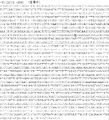
- FIG. 1 shows the nucleotide sequence of FeGBSS1_cDNA (normal type), which is a gene for granular starch synthase.
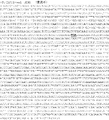
- FIG. 2 is a diagram showing the nucleotide sequence of FeGBSS1-wx1_cDNA (mutant), which is a function-deficient granular starch synthase gene according to the present invention.
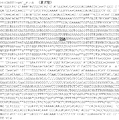
- FIG. 3 shows the base sequence of FeGBSS2_cDNA (normal type), which is a gene for granular starch synthase.
- FIG. 4 and FIG. 2 are diagrams showing the nucleotide sequence of FeGBSS2-wx1_cDNA (mutant), which is a functionally deficient granular starch synthase gene according to the present invention.
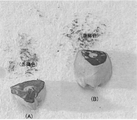
- FIG. 5 is a photograph showing screening of individuals accumulating waxy starch in the endosperm using an iodine solution for the Fagopyrum plant according to the present invention.
- the nuclear DNA of buckwheat intermediate mother No. 1 was prepared by Yasui et al (2016a) (Draft genome sequence of an inbred line of Chenopodium quinoa, an allotetraploid crop with great environmental adaptability and outstanding nutritional properties, DNA Research, 23, 535-546.), and the DNA sequence was assembled by the DenovoMAGIC method to obtain the genome sequence of buckwheat. Assembly by the DenovoMAGIC method was outsourced to NRGene. All genes on the genome sequence of buckwheat were predicted at Kazusa DNA Research Institute, a subcontractor.
- FesPL4_sc0224.1 g147573.t3 FesPL4_sc0077.1.g193457.t1 FesPL4_sc0224.1.g149056.t1 FesPL4_sc0065.1.g82828.t1 FesPL4_sc0217.1.g44280.t1
- E value The results of TBLASTX analysis (E value) are shown below.
- FesPL4_sc0224.1.g147573.t3 and FesPL4_sc0217.1.g44280.t1 are highly expressed in the endosperm.
- FesPL4_sc0224.1.g147573.t3 with a high expression level was named FeGBSS1
- FesPL4_sc0217.1.g44280.t1 was named FeGBSS2.
- PCR primers are as follows FeGBSS1 amplification primer GBSS_sc0005258_Fw1; FeGBSS2 amplification primer GBSS_sc0002521_Fw3; AATACCGCTGTGTGTATGGCAAG GBSS_sc0002521_Rv1205; GGTCCTGAGAAAAATTTGTTGTTG After PCR, PCR products were made into a library for each bulk using Nextera XT DNA Library Prep kit (Illumina), and base sequence reads were obtained using Hiseq X (Illumina).
- the FeGBSS1-wx1 gene was developed by changing the 522nd base of the FeGBSS1 cDNA sequence from G to A.
- the 174th amino acid encoded by the FeGBSS1-wx1 gene is mutated from Trp (codon is TGG) to a stop codon (TGA), and the function of the FeGBSS1 protein is thought to be lost.
- the FeGBSS2-wx1 gene was developed by changing the 513th base of the FeGBSS2 cDNA sequence from G to A.
- the 171st amino acid encoded by the FeGBSS2-wx1 gene is mutated from Trp (codon is TGG) to a stop codon (TGA), and the function of the FeGBSS2 protein is thought to be lost.
- FeGBSS1 and FeGBSS2 are expressed at high levels, and individuals possessing FeGBSS1-wx1 and FeGBSS2-wx1 at the same time as homozygous to confer the chewy trait to buckwheat (double recessive homozygous individuals) need to be cultivated. Therefore, we first raised double heterozygotes (genotype; wx1, FeGBSS2-wx1/FeGBSS2-wx1). At this time, for genotype discrimination, the FeGBSS1 and FeGBSS2 genes were amplified by PCR and sequenced by the Sanger method. The PCR conditions were as described above, and the following PCR primers were used for nucleotide sequencing by the Sanger method.
- amylose content of the endosperm of the Fagopyrum plant according to the present invention is 20% or less of the total starch.
Landscapes
- Life Sciences & Earth Sciences (AREA)
- Health & Medical Sciences (AREA)
- Genetics & Genomics (AREA)
- Engineering & Computer Science (AREA)
- Chemical & Material Sciences (AREA)
- Organic Chemistry (AREA)
- Molecular Biology (AREA)
- Biotechnology (AREA)
- Zoology (AREA)
- Bioinformatics & Cheminformatics (AREA)
- Wood Science & Technology (AREA)
- General Health & Medical Sciences (AREA)
- General Engineering & Computer Science (AREA)
- Biomedical Technology (AREA)
- Biochemistry (AREA)
- Botany (AREA)
- Microbiology (AREA)
- Developmental Biology & Embryology (AREA)
- Environmental Sciences (AREA)
- Biophysics (AREA)
- Medicinal Chemistry (AREA)
- Plant Pathology (AREA)
- Physics & Mathematics (AREA)
- Physiology (AREA)
- Nutrition Science (AREA)
- Cell Biology (AREA)
- Gastroenterology & Hepatology (AREA)
- Proteomics, Peptides & Aminoacids (AREA)
- Measuring Or Testing Involving Enzymes Or Micro-Organisms (AREA)
- Breeding Of Plants And Reproduction By Means Of Culturing (AREA)
- Enzymes And Modification Thereof (AREA)
- Saccharide Compounds (AREA)
Abstract
Description
FesPL4_sc0224.1.g147573.t3
FesPL4_sc0077.1.g193457.t1
FesPL4_sc0224.1.g149056.t1
FesPL4_sc0065.1.g82828.t1
FesPL4_sc0217.1.g44280.t1
であることを特徴とする。
Yasui et al (2016b)で検出されたGBSS遺伝子(sc0002521)をクエリ配列に用いて、ソバのゲノム配列を対象としてTBLASTX解析を実施した。 その結果、以下の5つのGBSS遺伝子が存在することがわかった。
FesPL4_sc0077.1.g193457.t1
FesPL4_sc0224.1.g149056.t1
FesPL4_sc0065.1.g82828.t1
FesPL4_sc0217.1.g44280.t1
以下にTBLASTX解析の結果(E value)を記す。
FesPL4_sc0224.1.g147573.t3 0.0
FesPL4_sc0077.1.g193457.t1 0.0
FesPL4_sc0224.1.g149056.t1 5e-180
FesPL4_sc0065.1.g82828.t1 1e-161
FesPL4_sc0217.1.g44280.t1 1e-157
・トランスクリプトーム解析
交配12-14日後のソバの未熟種子からyasui.et.al (2012)(A program for annotating and predicting the effects of single nucleotide polymorphisms, SnpEff: SNPs in the genome of Drosophila melanogaster strain w1118; iso-2; iso-3.)に従ってRNAを抽出し、イルミナ社のTruSeq RNA Sample prep Kit v2を用いてNGS解析用のライブラリーを作成した。イルミナ社のHiseqXで塩基配列リードを取得後に、trimmomatic 0.3.2(Bolger, A.M et al. 2014)でリードのクリーニングを行なった。参照配列に上記の5遺伝子を用いて、BWAによるマッピングを実施した。最終的に参照配列の遺伝子にマップされたリード数を発現強度とした。
FesPL4_sc0224.1.g147573.t3 7,295,100
FesPL4_sc0077.1.g193457.t1 1,342
FesPL4_sc0224.1.g149056.t1 754
FesPL4_sc0065.1.g82828.t1 11,395
FesPL4_sc0217.1.g44280.t1 6,210,988
・変異誘導集団育成
FeGBSS1およびFeGBSS2の機能を欠損させるため、EMSによる突然変異誘導を実施した。約4,600粒の種子を0.33%のEMS溶液で15時間処理し、京都大学附属農場で栽培した。1個体から3-6粒ずつを採取し、7,490粒の種子を得た。さらにこの種子を0.6%のEMSで15時間処理し、最終的に2,710個体から採種した。採種においては、1個体当たり1から2粒ずつを採種した。この種子を京都大学附属農場で播種・栽培し、3,336個体から個体ごとに採種した。また栽培時には12個体の葉を等量ずつまとめてDNAを抽出し、278のDNAバルクとした(12個体 x 278バルク = 3,336)。
FeGBSS1およびFeGBSS2のPCRプライマーを設計し、278のDNAバルクをテンプレートとして、以下の条件でPCR増幅を行なった。
PCRプライマーは以下の通り
FeGBSS1増幅用プライマー
GBSS_sc0005258_Fw1; GACGTCACTCACAATCACAAGTAGC
FeGBSS2増幅用プライマー
GBSS_sc0002521_Fw3; AATACCGCTGTGTGTATGGCAAG
GBSS_sc0002521_Rv1205; GGTCCTGAGAAAAATTTGTTGTTG
PCR後にNextera XT DNA Library Prep kit(イルミナ社)を用いてバルクごとにPCR産物をライブラリー化し、Hiseq X(イルミナ社)を用いて塩基配列リードを取得した。その後に、trimmomatic 0.3.2でリードのクリーニング、参照配列(FeGBSS1およびFeGBSS2遺伝子配列)へのBWA (Li and Durbin, 2009)(Draft genome sequence of an inbred line of Chenopodium quinoa, an allotetraploid crop with great environmental adaptability and outstanding nutritional properties, DNA Research, 23, 535-546.)によるマッピングを行った。
FeGBSS1およびFeGBSS2の2つの遺伝子は発現量が高く、ソバにモチ性形質を付与するにはFeGBSS1-wx1とFeGBSS2-wx1を同時にホモで保持する個体(二重劣性ホモ個体)を育成する必要がある。そこで、まず二重ヘテロ個体(遺伝子型; FeGBSS1/FeGBSS1-wx1, FeGBSS2/FeGBSS2-wx1)を育成し、二重ヘテロ個体同士の交配から、モチ性ソバ個体(遺伝子型; FeGBSS1-wx1/FeGBSS1-wx1, FeGBSS2-wx1/FeGBSS2-wx1)を育成した。この際、遺伝子型の判別にはFeGBSS1およびFeGBSS2遺伝子をPCR増幅し、サンガー法による塩基配列決定を行った。PCR条件は上述の通りであり、サンガー法による塩基配列決定には以下のPCRプライマーを用いた。
GBSS2-wx1検出用シーケンシングプライマー, GGGGTTGATCGTGTCTTCGT
・ヨウ素液による染色
ソバの種子を切断し、切断面にヨウ素液(0.37 gの精製ヨウ素と0.74 gのKIを400 mlの蒸留水に溶解した)を滴下し、ソバのデンプンを染色した。その結果、モチ性ソバのデンプンは、図5(A)に示すように、赤褐色に染まり、コントロールとして使った通常のソバのデンプンは、図5(B)に示すように、濃紺色に染まった。
Claims (8)
- ソバ属植物のゲノム配列の解読結果から同定した5つの顆粒性澱粉合成酵素遺伝子の中からソバ属植物の胚乳で高発現している2つの顆粒性澱粉合成酵素遺伝子を同定し、
この同定した2つの顆粒性澱粉合成酵素遺伝子の機能を突然変異誘導により欠損させて生成した
ことを特徴とする機能欠損型顆粒性澱粉合成酵素遺伝子。 - 前記5つの顆粒性澱粉合成酵素遺伝子は、
ソバ属植物のゲノム配列を対象にして予め求めた顆粒性澱粉合成酵素遺伝子のクエリ配列に基づき同定される
ことを特徴とする請求項1に記載の機能欠損型顆粒性澱粉合成酵素遺伝子。 - 前記5つの顆粒性澱粉合成酵素遺伝子は、
FesPL4_sc0224.1.g147573.t3
FesPL4_sc0077.1.g193457.t1
FesPL4_sc0224.1.g149056.t1
FesPL4_sc0065.1.g82828.t1
FesPL4_sc0217.1.g44280.t1
である
ことを特徴とする請求項2に記載の機能欠損型顆粒性澱粉合成酵素遺伝子。 - 前記2つの顆粒性澱粉合成酵素遺伝子は、
前記5つの顆粒性澱粉合成酵素遺伝子に対するトランスクリプトーム解析に基づくリード数から同定される
ことを特徴とする請求項1乃至3のいずれか1項に記載の機能欠損型顆粒性澱粉合成酵素遺伝子。 - 前記2つの顆粒性澱粉合成酵素遺伝子は、
FesPL4_sc0224.1.g147573.t3およびFesPL4_sc0217.1.g44280.t1である
ことを特徴とする請求項4に記載の機能欠損型顆粒性澱粉合成酵素遺伝子。 - 前記突然変異誘導は、
前記2つの顆粒性澱粉合成酵素遺伝子の機能をエチルメタンスルホン酸処理により欠損させることにより行われ、機能欠損型のFeGBSS1-wx1遺伝子及びFeGBSS2-wx1遺伝子を生成する
ことを特徴とする請求項1乃至5のいずれか1項に記載の機能欠損型顆粒性澱粉合成酵素遺伝子。 - 前記FeGBSS1-wx1遺伝子は、
cDNA配列の522番目の塩基をGからAに改変させ、該FeGBSS1-wx1遺伝子がコードする174番目のアミノ酸はTrp (コドンはTGG)からストップコドン(TGA)に変異させたものであり、
前記FeGBSS2-wx1遺伝子は、
cDNA配列の513番目の塩基をGからAに改変させ、該FeGBSS2-wx1遺伝子がコードする171番目のアミノ酸はTrp (コドンはTGG) からストップコドン(TGA)に変異させたものである
ことを特徴とする請求項6に記載の機能欠損型顆粒性澱粉合成酵素遺伝子。 - ソバ属植物のゲノム配列の解読結果から同定した顆粒性澱粉合成酵素遺伝子の中からソバ属植物の胚乳で高発現している顆粒性澱粉合成酵素遺伝子を同定し、この同定した顆粒性澱粉合成酵素遺伝子の機能を突然変異誘導により欠損させて生成した機能欠損型顆粒性澱粉合成酵素遺伝子をホモに持つ2重劣勢ホモ個体であることを特徴とするソバ属植物。
Priority Applications (4)
| Application Number | Priority Date | Filing Date | Title |
|---|---|---|---|
| US18/547,424 US20240122138A1 (en) | 2021-02-22 | 2022-02-21 | Function-deficient granule bound starch synthase gene and fagopyrum plant including same |
| BR112023016886A BR112023016886A2 (pt) | 2021-02-22 | 2022-02-21 | Genes de sintase de amido ligada a grânulos de perda de função, e, planta fagopyrum |
| AU2022222149A AU2022222149A1 (en) | 2021-02-22 | 2022-02-21 | Function-deficient granule bound starch synthase gene and fagopyrum plant including same |
| CN202280023733.XA CN117255858A (zh) | 2021-02-22 | 2022-02-21 | 功能缺损型颗粒性淀粉合成酶基因及利用了该酶基因的荞麦属植物 |
Applications Claiming Priority (2)
| Application Number | Priority Date | Filing Date | Title |
|---|---|---|---|
| JP2021-026491 | 2021-02-22 | ||
| JP2021026491A JP2022128129A (ja) | 2021-02-22 | 2021-02-22 | 機能欠損型顆粒性澱粉合成酵素遺伝子及びこれを利用したソバ属植物 |
Publications (1)
| Publication Number | Publication Date |
|---|---|
| WO2022176997A1 true WO2022176997A1 (ja) | 2022-08-25 |
Family
ID=82930653
Family Applications (1)
| Application Number | Title | Priority Date | Filing Date |
|---|---|---|---|
| PCT/JP2022/006819 Ceased WO2022176997A1 (ja) | 2021-02-22 | 2022-02-21 | 機能欠損型顆粒性澱粉合成酵素遺伝子及びこれを利用したソバ属植物 |
Country Status (6)
| Country | Link |
|---|---|
| US (1) | US20240122138A1 (ja) |
| JP (2) | JP2022128129A (ja) |
| CN (1) | CN117255858A (ja) |
| AU (1) | AU2022222149A1 (ja) |
| BR (1) | BR112023016886A2 (ja) |
| WO (1) | WO2022176997A1 (ja) |
Citations (1)
| Publication number | Priority date | Publication date | Assignee | Title |
|---|---|---|---|---|
| JP2012223137A (ja) * | 2011-04-20 | 2012-11-15 | Kyoto Univ | デンプン顆粒結合型デンプン合成酵素をコードする核酸、プライマー対、抑制剤およびモチ性ソバ属植物 |
Family Cites Families (1)
| Publication number | Priority date | Publication date | Assignee | Title |
|---|---|---|---|---|
| JP7835387B2 (ja) * | 2020-09-04 | 2026-03-25 | 国立研究開発法人農業・食品産業技術総合研究機構 | アミロース含有率が低減されたソバ属植物 |
-
2021
- 2021-02-22 JP JP2021026491A patent/JP2022128129A/ja active Pending
-
2022
- 2022-02-21 BR BR112023016886A patent/BR112023016886A2/pt unknown
- 2022-02-21 US US18/547,424 patent/US20240122138A1/en active Pending
- 2022-02-21 AU AU2022222149A patent/AU2022222149A1/en active Pending
- 2022-02-21 WO PCT/JP2022/006819 patent/WO2022176997A1/ja not_active Ceased
- 2022-02-21 CN CN202280023733.XA patent/CN117255858A/zh active Pending
-
2025
- 2025-11-28 JP JP2025209822A patent/JP2026027564A/ja active Pending
Patent Citations (1)
| Publication number | Priority date | Publication date | Assignee | Title |
|---|---|---|---|---|
| JP2012223137A (ja) * | 2011-04-20 | 2012-11-15 | Kyoto Univ | デンプン顆粒結合型デンプン合成酵素をコードする核酸、プライマー対、抑制剤およびモチ性ソバ属植物 |
Also Published As
| Publication number | Publication date |
|---|---|
| BR112023016886A2 (pt) | 2023-11-21 |
| JP2026027564A (ja) | 2026-02-18 |
| JP2022128129A (ja) | 2022-09-01 |
| AU2022222149A9 (en) | 2024-01-11 |
| US20240122138A1 (en) | 2024-04-18 |
| CN117255858A (zh) | 2023-12-19 |
| AU2022222149A1 (en) | 2023-10-12 |
Similar Documents
| Publication | Publication Date | Title |
|---|---|---|
| Hu et al. | Kelp breeding in China: Challenges and opportunities for solutions | |
| Cooper et al. | A new reference genome for Sorghum bicolor reveals high levels of sequence similarity between sweet and grain genotypes: implications for the genetics of sugar metabolism | |
| Sharma et al. | Genome wide association mapping of agro-morphological traits among a diverse collection of finger millet (Eleusine coracana L.) genotypes using SNP markers | |
| Bock et al. | Evolution of invasiveness by genetic accommodation | |
| Pottorff et al. | Leaf morphology in Cowpea [Vigna unguiculata (L.) Walp]: QTL analysis, physical mapping and identifying a candidate gene using synteny with model legume species | |
| Jiménez-Gómez et al. | Network analysis identifies ELF3 as a QTL for the shade avoidance response in Arabidopsis | |
| Amezrou et al. | Quantitative pathogenicity and host adaptation in a fungal plant pathogen revealed by whole-genome sequencing | |
| Palmer et al. | Archaeogenetic evidence of ancient Nubian barley evolution from six to two-row indicates local adaptation | |
| Jeyasingh et al. | Fundamental links between genes and elements: evolutionary implications of ecological stoichiometry | |
| Li et al. | Comparative population genomics reveals genetic divergence and selection in lotus, Nelumbo nucifera | |
| Kishor et al. | Evaluation of whole-genome sequence, genetic diversity, and agronomic traits of Basmati rice (Oryza sativa L.) | |
| Vigueira et al. | The role of Bh4 in parallel evolution of hull colour in domesticated and weedy rice | |
| Agnoun et al. | The African rice Oryza glaberrima Steud: knowledge distribution and prospects | |
| Sowadan et al. | Mining of favorable alleles for lodging resistance traits in rice (Oryza sativa) through association mapping | |
| Orsucci et al. | Transcriptional differences between the two host strains of Spodoptera frugiperda (Lepidoptera: Noctuidae) | |
| Zheng et al. | Genomic variation reveals demographic history and biological adaptation of the ancient relictual, lotus (Nelumbo Adans.) | |
| JP2024520302A (ja) | 水稲の理想的な脆性茎突然変異体ibcの突然変異部位、制御遺伝子IBC及びその応用 | |
| Ezenwaka et al. | Identification of additional/novel QTL associated with resistance to cassava green mite in a biparental mapping population | |
| Craig et al. | Allele distributions at hybrid incompatibility loci facilitate the potential for gene flow between cultivated and weedy rice in the US | |
| Mellers et al. | Genetic characterization of a wheat association mapping panel relevant to Brazilian breeding using a high-density single nucleotide polymorphism array | |
| Beirinckx et al. | Hidden hybridization and habitat differentiation in a Mediterranean macrophyte, the euryhaline genus Ruppia | |
| Zhang et al. | Chromosome-level genome assembly and annotation of the prickly nightshade Solanum rostratum Dunal | |
| Kersten et al. | Deep haplotype analyses of target‐site resistance locus ACCase in blackgrass enabled by pool‐based amplicon sequencing | |
| Ramos-Carrasco et al. | The Amazonian dissemination routes and genetic diversity of Moniliophthora perniciosa C-biotype in Northern Peru | |
| Leimu et al. | Between-population outbreeding affects plant defence |
Legal Events
| Date | Code | Title | Description |
|---|---|---|---|
| 121 | Ep: the epo has been informed by wipo that ep was designated in this application |
Ref document number: 22756314 Country of ref document: EP Kind code of ref document: A1 |
|
| WWE | Wipo information: entry into national phase |
Ref document number: 18547424 Country of ref document: US |
|
| REG | Reference to national code |
Ref country code: BR Ref legal event code: B01A Ref document number: 112023016886 Country of ref document: BR |
|
| WWE | Wipo information: entry into national phase |
Ref document number: 202280023733.X Country of ref document: CN Ref document number: 803978 Country of ref document: NZ Ref document number: 2022222149 Country of ref document: AU Ref document number: 2023124186 Country of ref document: RU Ref document number: AU2022222149 Country of ref document: AU |
|
| NENP | Non-entry into the national phase |
Ref country code: DE |
|
| ENP | Entry into the national phase |
Ref document number: 2022222149 Country of ref document: AU Date of ref document: 20220221 Kind code of ref document: A |
|
| ENP | Entry into the national phase |
Ref document number: 112023016886 Country of ref document: BR Kind code of ref document: A2 Effective date: 20230822 |
|
| 122 | Ep: pct application non-entry in european phase |
Ref document number: 22756314 Country of ref document: EP Kind code of ref document: A1 |
|
| WWG | Wipo information: grant in national office |
Ref document number: 2023124186 Country of ref document: RU |
|
| WWP | Wipo information: published in national office |
Ref document number: 2023124186 Country of ref document: RU |