WO2022149265A1 - 抽出装置、抽出方法、および、抽出プログラム - Google Patents
抽出装置、抽出方法、および、抽出プログラム Download PDFInfo
- Publication number
- WO2022149265A1 WO2022149265A1 PCT/JP2021/000509 JP2021000509W WO2022149265A1 WO 2022149265 A1 WO2022149265 A1 WO 2022149265A1 JP 2021000509 W JP2021000509 W JP 2021000509W WO 2022149265 A1 WO2022149265 A1 WO 2022149265A1
- Authority
- WO
- WIPO (PCT)
- Prior art keywords
- operator
- series
- operations
- extraction
- computer
- Prior art date
- Legal status (The legal status is an assumption and is not a legal conclusion. Google has not performed a legal analysis and makes no representation as to the accuracy of the status listed.)
- Ceased
Links
Images





Classifications
-
- H—ELECTRICITY
- H04—ELECTRIC COMMUNICATION TECHNIQUE
- H04L—TRANSMISSION OF DIGITAL INFORMATION, e.g. TELEGRAPHIC COMMUNICATION
- H04L63/00—Network architectures or network communication protocols for network security
- H04L63/14—Network architectures or network communication protocols for network security for detecting or protecting against malicious traffic
- H04L63/1408—Network architectures or network communication protocols for network security for detecting or protecting against malicious traffic by monitoring network traffic
- H04L63/1425—Traffic logging, e.g. anomaly detection
-
- G—PHYSICS
- G06—COMPUTING OR CALCULATING; COUNTING
- G06F—ELECTRIC DIGITAL DATA PROCESSING
- G06F11/00—Error detection; Error correction; Monitoring
- G06F11/07—Responding to the occurrence of a fault, e.g. fault tolerance
-
- G—PHYSICS
- G06—COMPUTING OR CALCULATING; COUNTING
- G06F—ELECTRIC DIGITAL DATA PROCESSING
- G06F11/00—Error detection; Error correction; Monitoring
- G06F11/30—Monitoring
- G06F11/34—Recording or statistical evaluation of computer activity, e.g. of down time, of input/output operation ; Recording or statistical evaluation of user activity, e.g. usability assessment
-
- G—PHYSICS
- G06—COMPUTING OR CALCULATING; COUNTING
- G06Q—INFORMATION AND COMMUNICATION TECHNOLOGY [ICT] SPECIALLY ADAPTED FOR ADMINISTRATIVE, COMMERCIAL, FINANCIAL, MANAGERIAL OR SUPERVISORY PURPOSES; SYSTEMS OR METHODS SPECIALLY ADAPTED FOR ADMINISTRATIVE, COMMERCIAL, FINANCIAL, MANAGERIAL OR SUPERVISORY PURPOSES, NOT OTHERWISE PROVIDED FOR
- G06Q10/00—Administration; Management
- G06Q10/06—Resources, workflows, human or project management; Enterprise or organisation planning; Enterprise or organisation modelling
- G06Q10/063—Operations research, analysis or management
- G06Q10/0631—Resource planning, allocation, distributing or scheduling for enterprises or organisations
- G06Q10/06312—Adjustment or analysis of established resource schedule, e.g. resource or task levelling, or dynamic rescheduling
-
- G—PHYSICS
- G06—COMPUTING OR CALCULATING; COUNTING
- G06Q—INFORMATION AND COMMUNICATION TECHNOLOGY [ICT] SPECIALLY ADAPTED FOR ADMINISTRATIVE, COMMERCIAL, FINANCIAL, MANAGERIAL OR SUPERVISORY PURPOSES; SYSTEMS OR METHODS SPECIALLY ADAPTED FOR ADMINISTRATIVE, COMMERCIAL, FINANCIAL, MANAGERIAL OR SUPERVISORY PURPOSES, NOT OTHERWISE PROVIDED FOR
- G06Q10/00—Administration; Management
- G06Q10/06—Resources, workflows, human or project management; Enterprise or organisation planning; Enterprise or organisation modelling
- G06Q10/063—Operations research, analysis or management
- G06Q10/0633—Workflow analysis
-
- G—PHYSICS
- G06—COMPUTING OR CALCULATING; COUNTING
- G06Q—INFORMATION AND COMMUNICATION TECHNOLOGY [ICT] SPECIALLY ADAPTED FOR ADMINISTRATIVE, COMMERCIAL, FINANCIAL, MANAGERIAL OR SUPERVISORY PURPOSES; SYSTEMS OR METHODS SPECIALLY ADAPTED FOR ADMINISTRATIVE, COMMERCIAL, FINANCIAL, MANAGERIAL OR SUPERVISORY PURPOSES, NOT OTHERWISE PROVIDED FOR
- G06Q10/00—Administration; Management
- G06Q10/10—Office automation; Time management
Definitions
- the present invention relates to an extraction device, an extraction method, and an extraction program for extracting a series of operations common to a plurality of operators.
- logs acquired from various devices by human operators are investigated in order to determine whether there is a security breach or network failure.
- Non-Patent Document 1 a technique for clarifying the investigation procedure
- RPA Robot Process Automation
- Non-Patent Document 1 is not general-purpose because it requires the use of an original GUI (Graphical User Interface) operation tool. Further, the technique described in Non-Patent Document 2 merely records the operation of the computer by the individual operator as it is, and does not specify the search procedure shared as tacit knowledge among a plurality of operators.
- GUI Graphic User Interface
- the present invention shows the operation of each operator's computer when each operator operates the computer to conduct an investigation from the OS (Operating System) of the computer operated by each operator. It is provided with a collection unit that collects operation logs and an extraction unit that extracts a series of operations common to each operator from the collected operation logs of each operator and outputs the extracted series of operations. It is a feature.
- FIG. 1 is a diagram showing a configuration example of a system including the extraction device of the first embodiment.
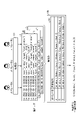
- FIG. 2 is a diagram illustrating an outline of operation of the extraction device of the first embodiment.
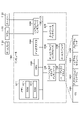
- FIG. 3 is a diagram showing a configuration example of the extraction device of each embodiment.
- FIG. 4 is a diagram showing an example of an operation acquired by the collection unit of FIG. 3 and an acquisition target of the operation.
- FIG. 5 is a diagram illustrating an example of an operation log.
- FIG. 6 is a flowchart showing an example of the processing procedure of the extraction device of FIG.
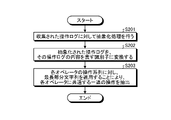
- FIG. 7 is a flowchart showing an example of the process of S2 of FIG.
- FIG. 8 is a diagram illustrating an operation log abstraction process.
- FIG. 1 is a diagram showing a configuration example of a system including the extraction device of the first embodiment.
- FIG. 2 is a diagram illustrating an outline of operation of the extraction device of the first embodiment.
- FIG. 3 is a diagram showing a configuration example of the extraction
- FIG. 9 is a diagram illustrating a process of applying the longest substring (LCS) a plurality of times to each operation sequence of operators A, B, and C to obtain a common operation string C.
- FIG. 10 is a flowchart showing an example of the processing procedure of the extraction device of the second embodiment.
- FIG. 11 is a diagram illustrating an example of processing of the extraction device of the second embodiment.
- FIG. 12 is a flowchart showing an example of the processing procedure of the extraction device of the third embodiment.
- FIG. 13 is a diagram illustrating an example of processing of the extraction device according to the third embodiment.
- FIG. 14 is a diagram showing a configuration example of a computer that executes an extraction program.
- the system includes, for example, a log DB that stores logs of security devices and network devices (devices A and B), an operator terminal device that conducts a survey using the logs stored in the log DB, and an extraction device 10. ..
- the extraction device 10 collects an operation log indicating the operation of the terminal device of each operator at the time of checking the log. Then, the extraction device 10 extracts and outputs a series of operations common to each operator from the collected operation logs of each operator.
- the collection unit 131 of the extraction device 10 collects the operation logs (operation logs A, B, C) of the terminal devices of the operators A, B, and C at the time of the investigation.
- the extraction unit 132 of the extraction device 10 abstracts the operations indicated by the collected operation logs of the operators A, B, and C, and creates an operation sequence for each of the operators A, B, and C.
- the extraction unit 132 extracts a series of operations common to the operation sequences of the operators A, B, and C, respectively.
- the extraction unit 132 extracts a series of operations common to operators A, B, and C by applying the longest common subsequence to each operation sequence of operators A, B, and C.
- the extraction device 10 can clarify the operation procedure shared as tacit knowledge among a plurality of operators without using a unique GUI operation tool.
- the extraction device 10 includes an input / output unit 11, a storage unit 12, and a control unit 13.
- the input / output unit 11 controls the input / output of various data.
- the input / output unit 11 accepts the input of the operation log of each operator and outputs the extraction result of a series of operations common to each operator.
- the storage unit 12 stores information referred to when the control unit 13 executes various processes.
- the control unit 13 controls the entire extraction device 10.
- the control unit 13 includes a collection unit 131 and an extraction unit 132.
- the collection unit 131 collects an operation log indicating the operation of the terminal device of each operator at the time of checking the log.
- the collecting unit 131 uses the window function of the OS (Operating System) of the operator's terminal device to acquire the minimum particle size operations that can be recognized by humans, such as the operator's click operation and key input.
- OS Operating System
- FIG. 4 shows an operation acquired by the collection unit 131, supplementary information on the operation, and an example of the acquisition target by the operation.
- the collecting unit 131 also acquires an operation of browsing a Web page and switching attention dubs in addition to a click operation and a key input.
- the collecting unit 131 acquires the information indicated by reference numeral 503 as an operation log from the terminal device.
- the operator sets the Alert window as the active window, selects the displayed text 1.2.3.4, saves the character string in the clipboard by copying, and activates the Search window.
- a series of operations such as switching to a window, pasting the text saved in the clipboard, and clicking the submit button are recorded in chronological order.
- the extraction unit 132 extracts and outputs a series of operations common to each operator from the operation log of each operator collected by the collection unit 131.
- the extraction unit 132 creates an operation sequence showing a series of operations of each operator from the operation log of each operator. Then, the extraction unit 132 extracts a series of operations common to each operator by applying the longest common subsequence to the operation sequence of each operator.
- the extraction unit 132 creates an operation sequence 201 showing a series of operations of operators A, B, and C from the operation logs A, B, and C shown in FIG. Then, the extraction unit 132 extracts a series of operations C common to the operators A, B, and C by applying the longest common subsequence to the operation series 201 of the operators A, B, and C.
- the extraction unit 132 first extracts a series of operations common to the operation sequences of the operators A and B by applying the longest common subsequence to the operation sequence of the operator A and the operation sequence of the operator B. Next, the extraction unit 132 applies the longest common subsequence to the operation sequence of the operators A and B and the operation sequence of the operator C, so that the extraction unit 132 has a series of operations common to the operators A, B, and C. Operation C is extracted.
- the collection unit 131 of the extraction device 10 collects the operation log of each operator at the time of checking the log of each device from the terminal device of each operator (S1).
- the extraction unit 132 extracts a series of operations common to each operator based on the operation log collected in S1 (S2).
- the extraction unit 132 outputs a series of operations extracted in S2 (S3).
- the extraction unit 132 performs an abstraction process on the operation log collected by the collection unit 131 (S201).
- the extraction unit 132 erases the time in the operation log, replaces a number with a code representing a number, and replaces a selected character string with a code representing a character string type. To convert to. As a result, for example, the operation log shown on the left side of reference numeral 802 is converted into the operation log shown on the right side.
- the extraction unit 132 converts the operation log abstracted in S201 into an identifier representing the content of the operation log (S202 in FIG. 7).
- the extraction unit 132 converts the operation log shown on the left side of reference numeral 803 in FIG. 8 into an identifier shown on the right side.
- the extraction unit 132 can obtain an operation sequence that abstracts the operation performed by each operator from the operation log of each operator.
- the extraction unit 132 extracts a series of operations common to each operator by applying the longest substring to the operation sequence of each operator (S203).
- the extraction unit 132 applies the longest substring (LCS) to the operation sequences of the operators A, B, and C shown in FIG. 9 a plurality of times to obtain the common operation sequence C. Then, the extraction unit 132 sets the common operation sequence C as a series of operations common to the operators A, B, and C.
- LCS longest substring
- the extraction device 10 can extract a series of operations for investigation, which was tacit knowledge between operators.
- the extraction device extracts an operation sequence by n-gram from the operation sequence of each operator, and obtains a commonality between the extracted operation series by n-gram, thereby performing a series of operations common to each operator. May be extracted.
- the extraction device in this case will be described as the extraction device 10a (see FIG. 3) of the second embodiment.
- the same configurations as those of the first embodiment are designated by the same reference numerals, and the description thereof will be omitted.
- the extraction unit 132a extracts the n-gram sequence shown on the left side of reference numeral 112 from the operation sequences of operators A, B, and C shown by reference numeral 111 in FIG. Then, the extraction unit 132a calculates the degree of commonality among the operators A, B, and C of the extracted n-gram series.
- the extraction unit 132a extracts the n-gram operation sequence whose commonality calculated in S214 is equal to or greater than the threshold value T as a series of operations common to each operator (S215).
- the extraction unit 132a has a series of operation sequences shown by reference numeral 113 from the operation sequence of n-gram shown by reference numeral 112 in FIG. 11 which are common to operators A, B, and C. Extract as an operation.
- the extraction device 10a can extract a series of operations for investigation, which was tacit knowledge between operators.
- the extraction device may create a state transition model showing the state transition of the operation from the operation sequence of each operator, and extract the regular expression of the created state transition model as a series of operations common to each operator.
- the extraction device in this case will be described as the extraction device 10b (see FIG. 3) of the third embodiment.
- the same configurations as those of the first embodiment and the second embodiment are designated by the same reference numerals, and the description thereof will be omitted.
- the extraction unit 132b creates a state transition model showing the transition state of the operation from the operation sequence of each operator (S223).
- the extraction unit 132b creates a state transition model shown by reference numeral 1302 from the operation sequences of operators A, B, and C shown by reference numeral 1301 in FIG.
- the extraction unit 132b creates a regular expression from the state transition model created in S223 (S224). Then, the extraction unit 132b uses the regular expression created in S224 as a series of operations common to each operator (S225).
- the extraction unit 132b extracts the common operation shown by the reference numeral 1303 in the manner of creating a regular expression from the state transition model shown by the reference numeral 1302 in FIG.
- "*" in the regular expression shown by reference numeral 1302 indicates that anything may be entered.
- the extraction device 10b can extract a series of operations for investigation, which was tacit knowledge between operators.
- each component of each of the illustrated parts is a functional concept, and does not necessarily have to be physically configured as shown in the figure. That is, the specific form of distribution / integration of each device is not limited to the one shown in the figure, and all or part of them may be functionally or physically distributed / physically in arbitrary units according to various loads and usage conditions. Can be integrated and configured. Further, each processing function performed by each device may be realized by a CPU and a program executed by the CPU, or may be realized as hardware by wired logic.
- the extraction devices 10, 10a, and 10b described above can be implemented by installing a program as package software or online software on a desired computer.
- the information processing device can function as the extraction devices 10, 10a, 10b of each embodiment.
- the information processing device referred to here includes a desktop type or notebook type personal computer.
- information processing devices include smartphones, mobile communication terminals such as mobile phones and PHS (Personal Handyphone System), and terminals such as PDAs (Personal Digital Assistants).
- the extraction devices 10, 10a and 10b can be implemented as a server device in which the terminal device used by the user is a client and the service related to the above processing is provided to the client.
- the server device may be implemented as a Web server, or may be implemented as a cloud that provides services related to the above processing by outsourcing.
- FIG. 10 is a diagram showing an example of a computer that executes an extraction program.
- the computer 1000 has, for example, a memory 1010 and a CPU 1020.
- the computer 1000 also has a hard disk drive interface 1030, a disk drive interface 1040, a serial port interface 1050, a video adapter 1060, and a network interface 1070. Each of these parts is connected by a bus 1080.
- the memory 1010 includes a ROM (Read Only Memory) 1011 and a RAM (Random Access Memory) 1012.
- the ROM 1011 stores, for example, a boot program such as a BIOS (Basic Input Output System).
- BIOS Basic Input Output System
- the hard disk drive interface 1030 is connected to the hard disk drive 1090.
- the disk drive interface 1040 is connected to the disk drive 1100.
- a removable storage medium such as a magnetic disk or an optical disk is inserted into the disk drive 1100.
- the serial port interface 1050 is connected to, for example, a mouse 1110 and a keyboard 1120.
- the video adapter 1060 is connected to, for example, the display 1130.
- the hard disk drive 1090 stores, for example, OS1091, application program 1092, program module 1093, and program data 1094. That is, the program that defines each process executed by the extraction devices 10, 10a, and 10b is implemented as a program module 1093 in which a code that can be executed by a computer is described.
- the program module 1093 is stored in, for example, the hard disk drive 1090.
- the program module 1093 for executing the same processing as the functional configuration in the extraction devices 10, 10a, 10b is stored in the hard disk drive 1090.
- the hard disk drive 1090 may be replaced by an SSD.
- each data used in the processing of the above-described embodiment is stored as program data 1094 in, for example, a memory 1010 or a hard disk drive 1090. Then, the CPU 1020 reads the program module 1093 and the program data 1094 stored in the memory 1010 and the hard disk drive 1090 into the RAM 1012 and executes them as needed.
- the program module 1093 and the program data 1094 are not limited to those stored in the hard disk drive 1090, but may be stored in, for example, a removable storage medium and read by the CPU 1020 via the disk drive 1100 or the like. Alternatively, the program module 1093 and the program data 1094 may be stored in another computer connected via a network (LAN (Local Area Network), WAN (Wide Area Network), etc.). Then, the program module 1093 and the program data 1094 may be read from another computer by the CPU 1020 via the network interface 1070.
- LAN Local Area Network
- WAN Wide Area Network
Landscapes
- Engineering & Computer Science (AREA)
- Business, Economics & Management (AREA)
- Human Resources & Organizations (AREA)
- Theoretical Computer Science (AREA)
- Entrepreneurship & Innovation (AREA)
- Strategic Management (AREA)
- Economics (AREA)
- Quality & Reliability (AREA)
- General Physics & Mathematics (AREA)
- Physics & Mathematics (AREA)
- General Engineering & Computer Science (AREA)
- Computer Security & Cryptography (AREA)
- General Business, Economics & Management (AREA)
- Marketing (AREA)
- Operations Research (AREA)
- Tourism & Hospitality (AREA)
- Computer Hardware Design (AREA)
- Game Theory and Decision Science (AREA)
- Educational Administration (AREA)
- Development Economics (AREA)
- Computing Systems (AREA)
- Computer Networks & Wireless Communication (AREA)
- Signal Processing (AREA)
- Data Mining & Analysis (AREA)
- Debugging And Monitoring (AREA)
Abstract
Description
まず、図1を用いて第1の実施形態の抽出装置を含むシステムの構成例を説明する。システムは、例えば、セキュリティ機器やネットワーク機器(機器A,B)のログを蓄積するログDBと、ログDBに蓄積されたログを用いて調査を行うオペレータの端末装置と、抽出装置10とを備える。
次に、図6を用いて、抽出装置10の処理手順の例を説明する。例えば、抽出装置10の収集部131は、各オペレータの端末装置から、各機器のログの調査時における各オペレータの操作ログを収集する(S1)。次に、抽出部132は、S1で収集された操作ログに基づき、各オペレータに共通する一連の操作を抽出する(S2)。そして、抽出部132はS2で抽出した一連の操作を出力する(S3)。
また、抽出装置は、各オペレータの操作系列から、n-gramずつ操作系列を抽出し、抽出したn-gramずつの操作系列間での共通度を求めることにより、各オペレータに共通する一連の操作を抽出してもよい。この場合の抽出装置を第2の実施形態の抽出装置10a(図3参照)として説明する。第1の実施形態と同じ構成は同じ符号を付して、説明を省略する。
また、抽出装置は、各オペレータの操作系列から、操作の状態遷移を示す状態遷移モデルを作成し、作成した状態遷移モデルの正規表現を各オペレータに共通する一連の操作として抽出してもよい。この場合の抽出装置を第3の実施形態の抽出装置10b(図3参照)として説明する。第1の実施形態、第2の実施形態と同じ構成は同じ符号を付して、説明を省略する。
また、図示した各部の各構成要素は機能概念的なものであり、必ずしも物理的に図示のように構成されていることを要しない。すなわち、各装置の分散・統合の具体的形態は図示のものに限られず、その全部又は一部を、各種の負荷や使用状況等に応じて、任意の単位で機能的又は物理的に分散・統合して構成することができる。さらに、各装置にて行われる各処理機能は、その全部又は任意の一部が、CPU及び当該CPUにて実行されるプログラムにて実現され、あるいは、ワイヤードロジックによるハードウェアとして実現され得る。
前記した抽出装置10,10a,10bは、パッケージソフトウェアやオンラインソフトウェアとしてプログラムを所望のコンピュータにインストールさせることによって実装できる。例えば、上記のプログラムを情報処理装置に実行させることにより、情報処理装置を各実施形態の抽出装置10,10a,10bとして機能させることができる。ここで言う情報処理装置には、デスクトップ型又はノート型のパーソナルコンピュータが含まれる。また、その他にも、情報処理装置にはスマートフォン、携帯電話機やPHS(Personal Handyphone System)等の移動体通信端末、さらには、PDA(Personal Digital Assistant)等の端末等がその範疇に含まれる。
11 入出力部
12 記憶部
13 制御部
131 収集部
132 抽出部
Claims (6)
- 各オペレータが操作するコンピュータのOS(Operating System)から、前記各オペレータがコンピュータを操作して調査を行う際における、前記各オペレータのコンピュータの操作を示す操作ログを収集する収集部と、
収集された前記各オペレータの操作ログから、前記各オペレータに共通する一連の操作を抽出し、前記抽出した一連の操作を出力する抽出部と、
を備えることを特徴とする抽出装置。 - 前記抽出部は、
前記オペレータそれぞれの一連の操作を示す操作系列に対し、最長共通部分列を適用することにより、前記各オペレータに共通する一連の操作を抽出する
ことを特徴とする請求項1に記載の抽出装置。 - 前記抽出部は、
前記オペレータそれぞれの一連の操作を示す操作系列から、n-gramずつ操作系列を抽出し、抽出したn-gramの操作系列について前記各オペレータ間での共通度が所定の閾値以上のn-gramの操作系列を、前記各オペレータに共通する一連の操作として抽出する
ことを特徴とする請求項1に記載の抽出装置。 - 前記抽出部は、
前記オペレータそれぞれの一連の操作を示す操作系列から、前記操作の状態遷移を示す状態遷移モデルを作成し、作成した状態遷移モデルから作成した正規表現を前記各オペレータに共通する一連の操作とする
ことを特徴とする請求項1に記載の抽出装置。 - 抽出装置により実行される抽出方法であって、
各オペレータが操作するコンピュータのOS(Operating System)から、前記各オペレータがコンピュータを操作して調査を行う際における、前記各オペレータのコンピュータの操作を示す操作ログを収集する工程と、
収集された前記各オペレータの操作ログから、前記各オペレータに共通する一連の操作を抽出し、前記抽出した一連の操作を出力する工程と、
を含むことを特徴とする抽出方法。 - 各オペレータが操作するコンピュータのOS(Operating System)から、前記各オペレータがコンピュータを操作して調査を行う際における、前記各オペレータのコンピュータの操作を示す操作ログを収集する工程と、
収集された前記各オペレータの操作ログから、前記各オペレータに共通する一連の操作を抽出し、前記抽出した一連の操作を出力する工程と、
をコンピュータに実行させることを特徴とする抽出プログラム。
Priority Applications (3)
| Application Number | Priority Date | Filing Date | Title |
|---|---|---|---|
| PCT/JP2021/000509 WO2022149265A1 (ja) | 2021-01-08 | 2021-01-08 | 抽出装置、抽出方法、および、抽出プログラム |
| JP2022573880A JP7517474B2 (ja) | 2021-01-08 | 2021-01-08 | 抽出装置、抽出方法、および、抽出プログラム |
| US18/271,059 US12609948B2 (en) | 2021-01-08 | 2021-01-08 | Extracting device, extracting method, and extracting program |
Applications Claiming Priority (1)
| Application Number | Priority Date | Filing Date | Title |
|---|---|---|---|
| PCT/JP2021/000509 WO2022149265A1 (ja) | 2021-01-08 | 2021-01-08 | 抽出装置、抽出方法、および、抽出プログラム |
Publications (1)
| Publication Number | Publication Date |
|---|---|
| WO2022149265A1 true WO2022149265A1 (ja) | 2022-07-14 |
Family
ID=82357850
Family Applications (1)
| Application Number | Title | Priority Date | Filing Date |
|---|---|---|---|
| PCT/JP2021/000509 Ceased WO2022149265A1 (ja) | 2021-01-08 | 2021-01-08 | 抽出装置、抽出方法、および、抽出プログラム |
Country Status (3)
| Country | Link |
|---|---|
| US (1) | US12609948B2 (ja) |
| JP (1) | JP7517474B2 (ja) |
| WO (1) | WO2022149265A1 (ja) |
Citations (3)
| Publication number | Priority date | Publication date | Assignee | Title |
|---|---|---|---|---|
| JP2006259891A (ja) * | 2005-03-15 | 2006-09-28 | Nec Corp | システム運用管理支援装置、システム運用管理支援方法、およびシステム運用管理支援プログラム |
| JP2013054000A (ja) * | 2011-09-06 | 2013-03-21 | Clarion Co Ltd | ナビゲーション装置、ヘルプ情報表示方法 |
| US20190057148A1 (en) * | 2015-10-21 | 2019-02-21 | Beijing Hansight Tech Co., Ltd. | Method and equipment for determining common subsequence of text strings |
Family Cites Families (11)
| Publication number | Priority date | Publication date | Assignee | Title |
|---|---|---|---|---|
| US7974849B1 (en) * | 2002-08-12 | 2011-07-05 | Oracle America, Inc. | Detecting and modeling temporal computer activity patterns |
| US20080148398A1 (en) * | 2006-10-31 | 2008-06-19 | Derek John Mezack | System and Method for Definition and Automated Analysis of Computer Security Threat Models |
| CA2776434A1 (en) * | 2011-07-01 | 2013-01-01 | Certusview Technologies, Llc | Methods, apparatus and systems for chronicling the activities of field technicians |
| US8803884B2 (en) * | 2012-02-24 | 2014-08-12 | Florida Institute for Human and Machine Cognition | Event data visualization tool |
| US9921136B2 (en) * | 2014-08-05 | 2018-03-20 | 01dB-Metravib, Societe Par Actions Simplifee | Wireless collection and analysis of machine data |
| KR101685495B1 (ko) * | 2014-12-03 | 2016-12-28 | 한국과학기술연구원 | 이종 센서 매시업 방법, 이를 수행하기 위한 기록 매체 및 장치 |
| US20160292373A1 (en) * | 2015-04-06 | 2016-10-06 | Preventice, Inc. | Adaptive user interface based on health monitoring event |
| WO2018226888A1 (en) * | 2017-06-06 | 2018-12-13 | Diffeo, Inc. | Knowledge operating system |
| US11627193B2 (en) * | 2017-12-07 | 2023-04-11 | Oracle International Corporation | Method and system for tracking application activity data from remote devices and generating a corrective action data structure for the remote devices |
| US11783084B2 (en) * | 2021-06-18 | 2023-10-10 | Microsoft Technology Licensing, Llc | Sampling of telemetry events to control event volume cost and address privacy vulnerability |
| US12237089B2 (en) * | 2021-12-23 | 2025-02-25 | GE Precision Healthcare LLC | Online monitoring of clinical data drifts |
-
2021
- 2021-01-08 WO PCT/JP2021/000509 patent/WO2022149265A1/ja not_active Ceased
- 2021-01-08 JP JP2022573880A patent/JP7517474B2/ja active Active
- 2021-01-08 US US18/271,059 patent/US12609948B2/en active Active
Patent Citations (3)
| Publication number | Priority date | Publication date | Assignee | Title |
|---|---|---|---|---|
| JP2006259891A (ja) * | 2005-03-15 | 2006-09-28 | Nec Corp | システム運用管理支援装置、システム運用管理支援方法、およびシステム運用管理支援プログラム |
| JP2013054000A (ja) * | 2011-09-06 | 2013-03-21 | Clarion Co Ltd | ナビゲーション装置、ヘルプ情報表示方法 |
| US20190057148A1 (en) * | 2015-10-21 | 2019-02-21 | Beijing Hansight Tech Co., Ltd. | Method and equipment for determining common subsequence of text strings |
Non-Patent Citations (1)
| Title |
|---|
| WATANABE, AKIO ET AL.: "Multiple isolating actions extraction from action logs for clarifying trouble-shooting process", IEICE TECHNICAL REPORT, vol. 116, no. 124 (ICM2016-13), 30 June 2016 (2016-06-30), JP , pages 27 - 32, XP009538980, ISSN: 0913-5685 * |
Also Published As
| Publication number | Publication date |
|---|---|
| US12609948B2 (en) | 2026-04-21 |
| JP7517474B2 (ja) | 2024-07-17 |
| JPWO2022149265A1 (ja) | 2022-07-14 |
| US20240305656A1 (en) | 2024-09-12 |
Similar Documents
| Publication | Publication Date | Title |
|---|---|---|
| JP7641752B2 (ja) | Cti分析支援システム、cti分析支援方法 | |
| CN115080039A (zh) | 前端代码生成方法、装置、计算机设备、存储介质和产品 | |
| CN112269666B (zh) | 小程序死链检测方法及设备、计算设备和介质 | |
| CN108647224A (zh) | 页面显示方法、装置、存储介质和电子装置 | |
| CN117591624A (zh) | 一种基于语义索引关系的测试用例推荐方法 | |
| CN108985052A (zh) | 一种恶意程序识别方法、装置和存储介质 | |
| CN111831536B (zh) | 一种自动化测试方法和装置 | |
| KR102914318B1 (ko) | 개인에게 최적화된 정책을 추천하는 방법 및 장치 | |
| CN116150766A (zh) | 设备漏洞的修复方法及装置 | |
| CN111291288A (zh) | 网页链接抽取方法及系统 | |
| JP7517474B2 (ja) | 抽出装置、抽出方法、および、抽出プログラム | |
| CN112597377A (zh) | 信息提取模块生成方法、信息提取方法及装置 | |
| WO2020209227A1 (ja) | 解析装置、解析方法、及びプログラム | |
| CN113179183B (zh) | 服务开关状态控制装置及方法 | |
| KR102855416B1 (ko) | 자연어 처리된 정책 데이터를 기초로 기업에게 정책을 추천하기 위한 태깅 과정 수행 방법 및 장치 | |
| JP7127601B2 (ja) | 類似遷移特定装置、類似遷移特定方法及びプログラム | |
| WO2021205589A1 (ja) | テストスクリプト生成装置、テストスクリプト生成方法及びプログラム | |
| CN117033410A (zh) | 一种数据的血缘关系的管理方法和系统 | |
| US20190095538A1 (en) | Method and system for generating content from search results rendered by a search engine | |
| CN114611039A (zh) | 异步加载规则的解析方法、装置、存储介质和电子设备 | |
| US12566658B1 (en) | System and method for root cause analysis using tree structure analysis | |
| JP7509318B2 (ja) | 抽出装置、抽出方法、および、抽出プログラム | |
| JP7691482B1 (ja) | 情報提供装置、情報提供方法及び情報提供プログラム | |
| WO2024228293A1 (ja) | 分析装置、分析方法及び分析プログラム | |
| HK40088383A (zh) | 应用程序的病毒检测方法、装置、设备、介质及程序产品 |
Legal Events
| Date | Code | Title | Description |
|---|---|---|---|
| 121 | Ep: the epo has been informed by wipo that ep was designated in this application |
Ref document number: 21917491 Country of ref document: EP Kind code of ref document: A1 |
|
| ENP | Entry into the national phase |
Ref document number: 2022573880 Country of ref document: JP Kind code of ref document: A |
|
| WWE | Wipo information: entry into national phase |
Ref document number: 18271059 Country of ref document: US |
|
| NENP | Non-entry into the national phase |
Ref country code: DE |
|
| 122 | Ep: pct application non-entry in european phase |
Ref document number: 21917491 Country of ref document: EP Kind code of ref document: A1 |
|
| WWG | Wipo information: grant in national office |
Ref document number: 18271059 Country of ref document: US |