WO2022124356A1 - 睡眠-覚醒障害評価補助装置、方法、コンピュータプログラム及び睡眠-覚醒障害評価補助システム - Google Patents
睡眠-覚醒障害評価補助装置、方法、コンピュータプログラム及び睡眠-覚醒障害評価補助システム Download PDFInfo
- Publication number
- WO2022124356A1 WO2022124356A1 PCT/JP2021/045243 JP2021045243W WO2022124356A1 WO 2022124356 A1 WO2022124356 A1 WO 2022124356A1 JP 2021045243 W JP2021045243 W JP 2021045243W WO 2022124356 A1 WO2022124356 A1 WO 2022124356A1
- Authority
- WO
- WIPO (PCT)
- Prior art keywords
- sleep
- wake disorder
- question
- questions
- wake
- Prior art date
- Legal status (The legal status is an assumption and is not a legal conclusion. Google has not performed a legal analysis and makes no representation as to the accuracy of the status listed.)
- Ceased
Links
Images



Classifications
-
- A—HUMAN NECESSITIES
- A61—MEDICAL OR VETERINARY SCIENCE; HYGIENE
- A61B—DIAGNOSIS; SURGERY; IDENTIFICATION
- A61B10/00—Instruments for taking body samples for diagnostic purposes; Other methods or instruments for diagnosis, e.g. for vaccination diagnosis, sex determination or ovulation-period determination; Throat striking implements
-
- G—PHYSICS
- G16—INFORMATION AND COMMUNICATION TECHNOLOGY [ICT] SPECIALLY ADAPTED FOR SPECIFIC APPLICATION FIELDS
- G16H—HEALTHCARE INFORMATICS, i.e. INFORMATION AND COMMUNICATION TECHNOLOGY [ICT] SPECIALLY ADAPTED FOR THE HANDLING OR PROCESSING OF MEDICAL OR HEALTHCARE DATA
- G16H50/00—ICT specially adapted for medical diagnosis, medical simulation or medical data mining; ICT specially adapted for detecting, monitoring or modelling epidemics or pandemics
- G16H50/30—ICT specially adapted for medical diagnosis, medical simulation or medical data mining; ICT specially adapted for detecting, monitoring or modelling epidemics or pandemics for calculating health indices; for individual health risk assessment
Definitions
- the present invention relates to a sleep-wake disorder evaluation assisting device, a method, a computer program, and a sleep-wake disorder evaluation assisting system.
- Sleep-wake disorders such as insomnia (hereinafter, "including the case where only one of the sleep disorder or the wake disorder occurs, and the case where the sleep disorder and the wake disorder occur. The same shall apply hereinafter). It is known to increase the risk of accidents, lifestyle illnesses and mental disorders and reduce work productivity.
- Patent Document 1 describes a technique for evaluating a user's health condition by acquiring an answer from a user to a question using a user terminal.
- Patent Document 1 often has only question items related to a specific area such as lifestyle and satisfaction, and the health of the user is considered in consideration of multifaceted evaluation and analysis and multiple factors.
- the health condition called the wellness score is comprehensively evaluated by evaluating from the multifaceted aspects of "physical”, “mental” and “engagement”. It provides a targeted score. Therefore, it does not provide a technique suitable for treating a specific symptom of sleep-wake disorder.
- conventional sleep state measurement requires a special device and is not easily used by a large number of patients. Instead of measuring sleep status, it may be possible to record the feeling of fatigue when waking up and use it to treat insomnia included in sleep-wake disorders, but since it is unconscious during sleep in the first place. It is difficult to accurately grasp the quality of sleep only by recording the feeling of fatigue when waking up from sleep.
- insomnia medical institutions have the property that insomnia is difficult to be aware of due to insufficient understanding of insomnia and high psychological hurdles for consultation with psychiatrists. It makes consultation and treatment difficult. In addition, it is not enough to answer the questionnaire by medical institutions.
- the current situation is that patients with insomnia are not sufficiently examined and treated.
- the number of insomnia patients (including potential patients) is estimated to reach tens of millions.
- the present invention provides a sleep-wake disorder evaluation assist device, a method, a computer program, and a sleep-wake disorder evaluation assist system that enable easy acquisition of information useful for diagnosing sleep-wake disorders including insomnia.
- the purpose is to do.
- the present disclosure obtains the degree of sleep-wake disorder of the target person based on the presentation means for presenting a question regarding the activity of the target person during the day, the reception means for receiving the answer to the question, and the answer.
- a sleep-wake disorder evaluation assisting device equipped with an acquisition means.
- the question regarding the activity of the target person during the daytime may include at least the question regarding the motivation of the target person during the daytime.
- the question regarding the activity of the target person during the daytime may include at least the question regarding the concentration of the target person during the daytime.
- the presentation means may be configured to present questions about the activity of the target person during the daytime in a plurality of time zones.
- the present disclosure provides a method using a sleep-wake disorder evaluation assisting device.
- the sleep-wake disorder evaluation assisting device is made to present a question about the activity of the target person during the day, a step to accept an answer to the question, and a step of the target person based on the answer. Includes steps to obtain the degree of sleep-wake disorder.
- a step of having a computer present a question about the activity of the subject during the day, a step of accepting an answer to the question, and a degree of sleep-wake disorder of the subject based on the answer. It provides a step to acquire and a computer program to execute.
- the present disclosure provides a sleep-wake disorder evaluation assist system including one or more sleep-wake disorder evaluation assist devices and a database connectable to the sleep-wake disorder evaluation assist device.
- the sleep-wake disorder evaluation assisting device of this system has a presenting means for presenting a question regarding the activity of the target person during the day, a receiving means for receiving an answer to the question, and the target person based on the answer.
- the database of the system comprises acquisition means for acquiring the degree of sleep-wake disorder, and the receiving means for receiving the answer to the question from one or more of the sleep-wake disorder evaluation assisting devices and the reception.
- a storage means for storing an answer to the question received by the means in association with the corresponding target person is provided.
- an output circuit (an example of a presentation means) configured to present a question regarding the activity of the target person during the daytime and an input circuit (an example of the reception means) configured to accept an answer to the question are received.
- a device for evaluating sleep-wake disorder comprising (one example) and a calculation circuit (an example of acquisition means) configured to acquire the degree of sleep-wake disorder of the target person based on the answer.
- the presentation means may be an output device such as a display or a speaker.
- the presenting means may be a driver or other output circuit that is configured to be able to output information and causes an output device such as a display or a speaker to output the information.
- the receiving means may be an input device such as a touch panel display, a keyboard, a mouse or a microphone.
- the receiving means may be an interface circuit or other input circuit for inputting information using an input device such as a touch panel display, a keyboard, a mouse, or a microphone, which is configured to be able to acquire information.
- the acquisition means may be a processor (calculator) that acquires the degree of sleep-wake disorder by performing arithmetic processing according to a computer program.
- the processor may be a CPU.
- the computer program may be recorded on a computer-readable storage medium such as flash memory, MRAM, magnetic disk and optical disk, which can record information non-transitory.
- the present application provides a recording medium that is readable by a computer capable of recording information non-temporarily and stores a computer program.
- This computer program has a step that causes the computer to ask questions about the activity of the subject during the day. It includes an instruction to execute a step of accepting an answer to the question and a step of acquiring the degree of sleep-wake disorder of the target person based on the answer.
- the computer may be a smartphone, a tablet terminal or other computer device.
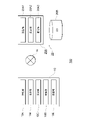
- This is an example of a question presented by the sleep-wake disorder evaluation assist device. It is a graph which shows the relationship between a plurality of index axes and a score axis which shows the degree of sleep-wake disorder. It is a figure which shows the physical composition of the sleep-wake disorder evaluation auxiliary device. It is a figure which shows the data flow of the sleep-wake disorder evaluation auxiliary system. It is a flowchart of the method which concerns on this embodiment. This is an example of a screen presented by a sleep-wake disorder evaluation assisting device.
- FIG. 1 is a functional block diagram of the sleep-wake disorder evaluation assist system 100 according to the present embodiment.
- the sleep-wake disorder evaluation assist system 100 includes one or more sleep-wake disorder evaluation assist devices 10, and a server device 20 configured to be connectable to each sleep-wake disorder evaluation assist device 10 via a network N.
- the sleep-wake disorder evaluation assisting device 10 installs, for example, an application program (an example of a "computer program") according to the present embodiment on a mobile information terminal such as a smartphone, starts this application program, and requires necessary information. Is obtained from the server device 20.
- the sleep-wake disorder evaluation assisting device 10 according to the present embodiment provides auxiliary information that contributes to the evaluation of insomnia.
- the sleep-wake disorder evaluation assisting device 10 may be used for evaluation of sleep-wake disorders other than insomnia.
- sleep-wakening disorder means that one or more of the symptoms of insomnia at night (difficulty falling asleep, difficulty maintaining sleep, early morning awakening) appear in spite of having an appropriate sleeping environment, and as a result, during the daytime.
- Sleep-wake disorders are non-organic according to the International Classification of Sleep Disorders (ICSD), the Classification of Sleep-Awake Disorders by the Diagnostic and Statistical Manual of Mental Disorders (DSM), and the International Statistical Classification of Diseases and Related Health Problems (ICD-10). It refers to those classified by the classification of sleep disorders, but is not limited to this. Further, insomnia refers to those classified by the International Classification of Sleep Disorders (ICSD) and the like, but is not limited to this. Further, the sleep-wake disorder evaluation assisting device 10 may be incorporated as a part of the sleep-wake disorder diagnostic device and used as one function of the diagnostic device.
- the sleep-wake disorder evaluation assisting device 10 includes a storage unit 10A capable of holding a question received from the server device 20, a display unit 10B (an example of a “presentation unit”) for displaying a question, and a patient (“an example of a target person”). Communication with the server device 20 to exchange information with the reception unit 10C for inputting and accepting the answer to the server device 20 and the acquisition unit 10D for acquiring the degree of sleep-wake disorder of the patient based on the answer by the patient.
- a unit 10E is provided.
- the patient in the present embodiment refers to a target person whose degree of sleep-wake disorder including insomnia is determined by the sleep-wake disorder evaluation assist system 100 according to the present embodiment, and is defined as a sleep-wake disorder. Including healthy people who are not affected. Further, instead of the patient himself / herself, a third party such as a doctor may input the answer heard from the patient.
- the storage unit 10A acquires and retains one or more questions including a question regarding the patient's activity during the day from the server device 20.
- the present invention is not limited to this, and the storage unit 10A itself may be configured to store questions in advance in a non-volatile memory or the like.
- the activity in this embodiment is, for example, the ability to concentrate (the ability to concentrate attention on one thing and work on things) and the motivation (the movement of the mind to be willing to do something). It refers to the active nature of human beings, and is an index (score) that can be quantified based on the answers to questions about activity. As will be described later, the score can be used as an index of the degree of sleep-wake disorder of the patient. Further, the “daytime” described in the present specification means a time other than sleep time in a patient, that is, a time zone from waking up to going to bed, and a time during which a human being is active.
- the sleep-wake disorder evaluation assisting device of the present embodiment mainly asks one or more questions about the activity of the patient during the day. Is configured to be presented to the patient.
- the sleep-wake disorder evaluation assisting device 10 of the present embodiment presents four questions during the first time zone (for example, 6 o'clock or within 5 minutes after waking up). And the four questions presented during the second time zone (eg, 12:00 to 13:00 or 15:00 after lunch) and the third time zone (eg, within 5 minutes before bedtime or from 16:00 to 19:00). ), 13 questions consisting of 5 questions are prepared. Of these, nine questions (three questions in the motivation category, three questions in the concentration category, one question in the quality of life category, and two questions in the productivity category), which is more than half of them. Is a question about daytime activity. In one embodiment, half or more of the questions presented in one day may be questions regarding daytime activity.
- the number of questions per day may be 30 or less, further 15 or less, or 1 question.
- each question may be two sentences or less, or may be composed of one sentence.
- the question may include at least one of the current motivation question and the concentration question.
- Motivation is the movement of the mind to be willing to do something. Therefore, the question about motivation is a highly versatile question that can be answered by everyone (for example, regardless of attributes such as husband, housewife, retired person, worker, student, etc.). Motivation also has a great impact on daytime activity. Therefore, by presenting a question about motivation, it becomes possible to accurately grasp the activity during the daytime.
- Concentration is the ability to focus on one thing and work on it. For this reason, concentration is also a versatile question that everyone can answer. Concentration also has a great effect on daytime activity. Moreover, motivation and concentration are different concepts. If you have sleep-wake disorders, you may not be able to concentrate, even if you are motivated. Therefore, by presenting a question about concentration separately from motivation, it becomes possible to grasp the activity during the day more accurately.
- the display unit 10B reads out one or more questions stored in the storage unit 10A and presents them to the patient, prompting the patient to input an answer to the question.
- the display unit 10B may be configured to present questions in a plurality of time zones.
- the time zone in which the display unit 10B presents the question is, for example, the first time zone (6 o'clock or within 5 minutes after waking up), the second time zone (12:00 to 13:00 or 15:00 after lunch), and the second time zone. It is the time zone of 3 (16:00 to 19:00).
- Each time zone may have an interval of at least 2 hours or more.
- questions using the same keyword may be presented.
- the same keyword for example, the keyword "motivation”
- the same keyword for example, the keyword "motivation”
- the same keyword for example, the keyword "concentration”
- the same keyword for example, the keyword "concentration”
- the patient presented with the question can answer the question with the same criteria. Therefore, by grasping the transition of changes in the responses of a predetermined patient during the day, it becomes possible to more accurately determine the activity of the patient during the day and, by extension, the degree of sleep-wake disorder.
- the sleep-wake disorder evaluation assisting device 10 is provided with a sensor for detecting that the patient has woken up, and based on the detection of the patient's wake-up by this sensor, the patient is asked a question in the first time zone. It may be configured to present.
- the sensor for detecting that the patient has woken up is, for example, a position sensor that detects the posture of the mobile information terminal, which is the sleep-wake disorder evaluation assisting device 10. While the sleep-wake disorder evaluation assist device 10 is not touched during sleep, the posture changes due to the patient picking up the sleep-wake disorder evaluation assist device 10 after waking up, so that the patient stays still during sleep.
- the display unit By detecting the change in the posture of the sleep-wake disorder evaluation assisting device 10 that has been performed, it becomes possible to detect the waking up of the patient.
- the questions after the second time zone may be configured to be dynamically set based on the wake-up time instead of the fixed time. For example, the question may be presented 6 hours and 10 hours after waking up, respectively.
- the question may be displayed on the display unit 10B, or the question may be output by voice or other means.
- the reception unit 10C accepts the input of the answer to the question by the patient.
- the reception unit 10C includes an input means for receiving an answer by the patient touching the display or the like.
- the input means may be a microphone or the like that accepts input such as voice.
- the reception unit is configured to accept answers selected from three or four or more options for each question, rather than alternatives. This is because, if it is configured to accept alternative answers of "yes” or "no", many answers tend to be biased toward "no".
- the acquisition unit 10D acquires a value (referred to as “score” in the present embodiment) indicating the degree of insomnia of the patient (an example of “degree of sleep-wake disorder”) based on the response received by the reception unit. ..
- the acquisition unit 10D of the sleep-wake disorder evaluation assisting device 10 acquires the score calculated by the calculation unit 20A2 of the server device 20 via the network N.
- the present invention is not limited to this, and the acquisition unit 10D itself may be configured to calculate the score based on the algorithm stored in the storage unit 10A.
- the degree of sleep-wake disorder in the present embodiment is, for example, the degree of impairing the quality of life (QOL), the degree of daytime sleepiness, the degree of inactivity during the day, and the hindrance to daily life.
- QOL quality of life
- Information that expresses risks such as decreased work productivity and daytime activity disorders at a value or at multiple levels.
- the score is set so that the higher the score, the lower the degree of sleep-wake disorder, and the lower the score, the higher the degree of sleep-wake disorder.
- the score may be set so that the higher the score, the higher the degree of sleep-wake disorder, and the lower the score, the lower the degree of sleep-wake disorder.
- the communication unit 10E exchanges information with the server device 20.
- the communication unit 10E includes an interface circuit according to a communication standard such as 802.11xx to LTE.
- the communication unit 10E is configured to transmit information including each answer received by the reception unit 10C to the server device 20 together with the patient identification information, and to be able to receive the score or the like transmitted from the server device 20. Further, the communication unit 10E is configured to be able to acquire data or the like indicating a history such as a patient's score from the server device 20.
- the server device 20 includes a processing unit 20A and a database 20B (storage unit).
- the processing unit 20A includes an authentication unit 20A1, a calculation unit 20A2, and a communication unit 20A3.
- the authentication unit 20A1 receives the identification information input by the patient from the sleep-wake disorder evaluation assisting device 10 and authenticates the patient.
- the identification information may be biometric authentication information such as a fingerprint in addition to the number information.
- the calculation unit 20A2 calculates the degree of sleep-wake disorder based on the answer to the question by the patient, for example, according to a predetermined algorithm.
- the inventors of the present application from a large number of subjects, one or one of the respective indicators in the first time zone (for example, morning), the second time zone (for example, noon) and the third time zone (for example, night).
- sleep indicators and daytime activity indicators tend to correspond to the degree of sleep-wake disorders.
- the motivation index and the concentration index have been found to have a relatively large influence on the tendency value corresponding to the degree of sleep-wake disorder, and may have a greater influence than the sleep quality index. I found that.
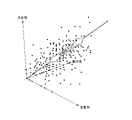
- FIG. 3 shows a method of calculating a score indicating the degree of insomnia from three indicators of productivity (“Productivity”), concentration (“Concentration”), and attention (“Alertness”). It is a thing.
- the three orthogonal axes in the graph correspond to the three indicators, and the axes indicated by the double-headed arrows correspond to the tendencies that appear to correspond to the degree of sleep-wake disorder found by principal component analysis.
- Each point on the graph indicates a three-dimensional position determined by a quantified value of the response obtained from each subject.
- the point closest to the three-dimensional position (perpendicular foot) is determined on the axis corresponding to the tendency of sleep-wake disorder, and the tendency of sleep-wake disorder is determined. From the relative position of the closest point on the corresponding axis, it becomes possible to obtain a value called a score indicating the degree of sleep-wake disorder.
- the inventors of the present application have confirmed that, as an example, the degree of sleep-wake disorder can be accurately grasped based on the mathematical formula shown below.
- Score is information expressed by a value indicating the degree of sleep-wake disorder, and in the case of the present embodiment, the larger the value, the lower the activity of the patient, and the degree of sleep-wake disorder is. The stronger and smaller the value, the higher the patient's activity and the weaker the degree of sleep-wake disorder.
- x 1 , x 2 , ..., X k are values given to the answers to each question. Also, k is the number of questions. In the case of the question shown in FIG. 2, k is 13.
- W k are weighting coefficients to be multiplied by the answer to each question.
- Interception is a constant corresponding to an intercept.
- the inventors of this application focused on the fact that even if the questions belong to the same category and belong to the same category, the influence on the degree of sleep-wake disorder differs depending on the time zone. Specifically, even for the same type of questions belonging to the same category, different weighting coefficients were set based on the degree of influence according to the time zone. For example, if the third time zone answer to the same motivation question is more relevant to the degree of sleep-wake disorder than the first time zone answer to the motivation question. The weighting coefficient was set so that the absolute value of the weighting coefficient multiplied by the answer in the third time zone became large.
- the communication unit 20A3 exchanges information with the sleep-wake disorder evaluation assisting device 10. Since the configuration of the communication unit 20A3 is the same as that of the communication unit 10E of the sleep-wake disorder evaluation assisting device 10 described above, the description thereof will be omitted.
- Database 20B stores one or more questions presented to the patient and identification information of each patient. Further, the history of past answers from each patient to each question and the history of the score of each patient are stored in association with each patient.
- the question presented to the patient may be configured to be stored in a file server different from the database 20B.
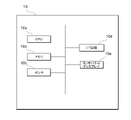
- the sleep-wake disorder evaluation assisting device 10 is composed of a computer having a CPU 10a (Central Processing Unit), a memory 10b, a sensor 10c, an interface circuit 10d, and a touch panel display 10e. Each of these configurations is connected to each other via a bus so that data can be transmitted and received.
- the sleep-wake disorder evaluation assisting device 10 may be composed of a plurality of computers.
- the server device 20 and other devices provided in a remote location may be used.
- the configuration shown in FIG. 4 is only an example, and it is not necessary to have a part of these configurations.
- a part of the memory 10b may be provided in a remote place so that a part of necessary information can be received via the network N.
- the CPU 10a includes a processor that performs control processing, arithmetic processing, and the like included in the present disclosure by reading and executing a computer program or the like stored in the memory 10b.
- the CPU 10a receives various information from the memory 10b, the interface circuit 10d, and the touch panel display 10e, and displays the calculation processing result or the like on the touch panel display 10e or records it in the memory 10b.
- the memory 10b includes a primary storage device that temporarily stores information and a secondary storage device that stores information in a non-transitory manner.
- the primary storage device is composed of, for example, a volatile semiconductor storage element such as SRAM and DRAM.
- the secondary storage device is composed of a non-volatile semiconductor storage element such as NOR and a NAND flash memory that can electrically rewrite information.
- the secondary storage device stores, for example, a computer program and various data for executing each control (including control processing according to a predetermined communication standard) and processing including each arithmetic processing shown in the present disclosure.
- a magnetic recording means such as a hard disk drive may be used as the secondary storage device.
- the sensor 10c is, for example, an acceleration sensor that detects the posture of a mobile information terminal or the like equipped with a sleep-wake disorder evaluation assisting device 10. By detecting the change in posture with the sensor 10c, it is possible to detect the wake-up time of the patient.
- the interface circuit 10d includes a physical circuit conforming to a predetermined communication standard that can be connected to a communication network such as the Internet.
- the touch panel display 10e is composed of, for example, an LCD having a built-in touch panel that accepts input of an answer by a patient.
- other input means mouse, keyboard and microphone
- keyboard and microphone for accepting the input of the answer by the patient may be further provided.
- Each function of the sleep-wake disorder evaluation assisting device 10 is realized by using the memory 10b, the sensor 10c, the interface circuit 10d, the touch panel display 10e, etc. under the control of the CPU 10a that executes the computer program stored in the memory 10b. ..
- the server device 20 also includes a CPU, a memory, and an interface circuit as a physical configuration. Since these configurations are the same as the physical configurations of the sleep-wake disorder evaluation assisting device 10 described above, the description thereof will be omitted.
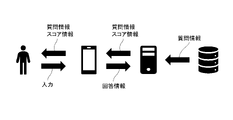
- FIG. 5 is a schematic diagram of the data flow.
- FIG. 6 shows a flowchart of this method.
- the patient installs and activates the application program according to this embodiment on a personal digital assistant held in advance (step S61).
- the patient inputs his / her profile information (including identification information) in advance using an application program, and the server device 20 records the profile information input by the patient in the database 20B.
- the authentication unit 20A1 of the server device 20 authenticates the patient and permits access to the information recorded in the database 20B in association with the patient's identification information. do.
- the processing unit 20A of the server device 20 reads one or more questions (FIG. 2) from the database 20B and transmits them to the sleep-wake disorder evaluation assisting device 10 via the network N.
- the processing unit 20A may read the history of the score recorded in association with the patient identification information and transmit it to the sleep-wake disorder evaluation assisting device 10 via the network N.
- the processing unit 20A is equipped with, for example, a sensing mechanism or artificial intelligence, reads out a question according to the degree of sleep-wake disorder related to the patient from the database 20B in association with the patient's identification information, and sets the network N. It may be transmitted to the sleep-wake disorder evaluation assisting device 10 via. That is, not only the same question can be displayed to one patient at any time during each time zone, but also the question to be read from the database 20B can be appropriately selected according to the degree of sleep-wake disorder of the patient. There may be.
- the processing unit 20A may be equipped with, for example, artificial intelligence, and may be configured to generate a new question different from the question 13 shown in FIG.
- the storage unit 10A of the sleep-wake disorder evaluation assisting device 10 stores the history of one or more questions and scores received from the server device 20.
- the display unit 10B of the sleep-wake disorder evaluation assisting device 10 is configured to be able to display the history of one or more questions and scores after the patient is authenticated.
- FIG. 7 is an example of the home screen of the application program. As shown in this figure, when the application program is started and authenticated, the change in mood (activity) of the patient up to the previous day is displayed, for example, in a three-stage line graph. Therefore, the patient can see at a glance whether the decrease in activity is transient or chronic. It is also possible for the patient to change the display period by tapping the left and right arrows.
- the patient starts answering the morning question by tapping the "morning question" in the application program.
- the display unit 10B of the sleep-wake disorder evaluation assisting device 10 displays one or more questions belonging to the first time zone (step S62), and the reception unit 10C accepts the input of the answer to each question by the patient (step S62).
- Step S63 a morning question is presented and a question regarding sleep time is presented. For example, present a question for entering the bedtime of the previous day, such as "What time did you go to bed yesterday?" Also, for example, a question for inputting the wake-up time of the day such as "What time did you wake up today?" Is presented.
- the patient starts answering the daytime question by tapping the "daytime question" of the application program.
- the display unit 10B of the sleep-wake disorder evaluation assisting device 10 displays one or more questions belonging to the second time zone (step S64), and the reception unit 10C receives an answer to each question input by the patient. (Step S65).
- the questions include questions about the activity of the subject during the day.
- the answer input by the patient is stored in the database 20B of the server device 20 via the network N.
- the profile information (including the identification information) of the patient and the response information input by the patient are recorded and stored in the database 20B of the server device 20, but the present invention is limited to this.
- the profile information (including the identification information) and the response information input by the patient may be stored and stored in different databases.
- the patient starts answering the evening question by tapping the "evening question” in the application program.
- the display unit 10B of the sleep-wake disorder evaluation assisting device 10 displays one or more questions belonging to the third time zone (step S66), and the reception unit 10C accepts the input of the answer to each question by the patient (step S66). Step S67).
- the calculation unit 20A2 of the server device 20 calculates a score indicating the degree of sleep-wake disorder and sends it to the sleep-wake disorder evaluation assist device 10.
- the acquisition unit 10D of the sleep-wake disorder evaluation assisting device 10 acquires a score from the server device 20, and causes the display unit 10B to display the updated degree of sleep-wake disorder (step S68). Further, the newly calculated score is recorded in the database 20B of the server device 20 in association with the patient identification information.
- a daily score (including information such as explanations and illustrations determined based on the score) is acquired by using the sleep-wake disorder evaluation assisting device according to the present embodiment. Being able to do so allows the patient to keep track of objective changes in his or her condition. Furthermore, by acquiring scores at three or more levels, it is possible to grasp the transition of the degree of sleep-wake disorder.
- the sleep-wake disorder diagnosis assisting device may present at least a partially different question group based on the patient's identification status.
- time zone for presenting the question may be, for example, twice in the morning and afternoon, or four times or more including before going to bed.
- the score may be configured to be transmitted to other sleep-wake disorder evaluation assisting devices. For example, by configuring the score to be sent to the sleep-wake disorder evaluation assist device of the medical institution where the patient is suffering, it is possible to obtain timely advice from a doctor based on the transition of the score. Become.
- the present invention can be modified in various ways as long as it does not deviate from the gist thereof.
- some components in one embodiment may be added to other embodiments within the normal creative abilities of those skilled in the art.
- some components in one embodiment can be replaced with corresponding components in another embodiment.
- Sleep-wake disorder evaluation assist device 10A Storage section 10B Display section 10C Reception section 10D Acquisition section 10E Communication section 20 Server device 20A Processing section 20A1 Authentication section 20A2 Calculation section 20A3 Communication section 20B Database 100 Sleep-wake disorder evaluation assist device
Landscapes
- Health & Medical Sciences (AREA)
- Life Sciences & Earth Sciences (AREA)
- Medical Informatics (AREA)
- Engineering & Computer Science (AREA)
- Biomedical Technology (AREA)
- Heart & Thoracic Surgery (AREA)
- Pathology (AREA)
- Molecular Biology (AREA)
- Surgery (AREA)
- Animal Behavior & Ethology (AREA)
- General Health & Medical Sciences (AREA)
- Public Health (AREA)
- Veterinary Medicine (AREA)
- Medical Treatment And Welfare Office Work (AREA)
- Measurement Of The Respiration, Hearing Ability, Form, And Blood Characteristics Of Living Organisms (AREA)
Abstract
日中における対象人物の活動性に関する質問を提示する提示手段と、前記質問に対する回答を受け付ける受付手段と、前記回答に基づいて、前記対象人物の睡眠-覚醒障害の度合いを取得する取得手段と、を備える睡眠-覚醒障害評価補助装置である。
Description
本発明は、睡眠-覚醒障害評価補助装置、方法、コンピュータプログラム及び睡眠-覚醒障害評価補助システムに関する。
不眠症を始めとする睡眠-覚醒障害(以下、「睡眠障害又は覚醒障害のいずれか一方のみが発生した場合、及び、睡眠障害及び覚醒障害が発生した場合のいずれも含む。以下同じ)は、事故、生活習慣病及び精神障害のリスクを高め、仕事の生産性を低下させることが知られている。
従来より、睡眠-覚醒障害の有無を評価するための方法として、睡眠中及び/又は覚醒中の状態を計測することや、睡眠から目覚めた際の疲労感を記録することが知られている。このような方法を通じて、睡眠及び/又は覚醒の質を把握したり、睡眠及び/又は覚醒の質を改善するための薬を服用したりすることが行われている。
また、特許文献1には、ユーザ端末を利用して質問に対するユーザからの回答を取得することにより、ユーザの健康状態を評価する技術が記載されている。
しかしながら特許文献1記載の技術は、「生活習慣や、満足度等といった特定の領域に関する質問項目しか備えていないことが多く、多面的な評価及び分析、複合的な要因を考慮してユーザの健康状態を評価することができない」(段落[0005])という従来の課題を解決するために、「フィジカル」「メンタル」「エンゲージメント」という多面的な側面から評価を行い、ウェルネススコアという健康状態を総合的に捉えたスコアを提供するものである。このため、睡眠-覚醒障害という、特定の症状の治療に適した技術を提供するものではない。
一方、従来の睡眠状態の計測は、特別な装置を要するものであることから、多数の患者が容易に利用するものではない。睡眠状態の計測に替えて、目覚めた際の疲労感を記録して、睡眠-覚醒障害に含まれる不眠症の治療に役立てることも考え得るが、そもそも睡眠中は意識を喪失していることから、睡眠から目覚めた際の疲労感の記録だけでは、睡眠の質を正確に把握することが困難である。
加えて、不眠症に対する理解が不十分であることや、精神科への受診の心理的なハードルが高いことが災いして不眠症が自覚されにくいという性質を有することも、不眠症の医療機関受診や治療を困難なものとしている。また、医療機関による問診票に回答することも十分になされていない。
以上のような事情の結果、不眠症を有する患者の受診及び治療が十分になされていない現状がある。日本国内だけでも、不眠症の患者数(潜在的な患者数を含む。)は、数千万人に及ぶと推定されている。
そこで本発明は、不眠症を含む睡眠-覚醒障害の診断に資する情報を簡便に取得することが可能となる睡眠-覚醒障害評価補助装置、方法、コンピュータプログラム及び睡眠-覚醒障害評価補助システムを提供することを目的とする。
本開示は、日中における対象人物の活動性に関する質問を提示する提示手段と、前記質問に対する回答を受け付ける受付手段と、前記回答に基づいて、前記対象人物の睡眠-覚醒障害の度合いを取得する取得手段と、を備える睡眠-覚醒障害評価補助装置を提供する。
前記日中における対象人物の活動性に関する質問は、日中における前記対象人物の意欲に関する質問を少なくとも含んでよい。
前記日中における対象人物の活動性に関する質問は、日中における前記対象人物の集中力に関する質問を少なくとも含んでよい。
更に前記提示手段は、複数の時間帯において、前記日中における対象人物の活動性に関する質問を、それぞれ提示するように構成されてもよい。
本開示は、睡眠-覚醒障害評価補助装置を用いる方法を提供する。この方法は、前記睡眠-覚醒障害評価補助装置に、日中における対象人物の活動性に関する質問を提示させるステップと、前記質問に対する回答を受け付けさせるステップと、前記回答に基づいて、前記対象人物の睡眠-覚醒障害の度合いを取得させるステップと、を含む。
本開示は、コンピュータに、日中における対象人物の活動性に関する質問を提示させるステップと、前記質問に対する回答を受け付けさせるステップと、前記回答に基づいて、前記対象人物の睡眠-覚醒障害の度合いを取得させるステップと、を実行させるためのコンピュータプログラムを提供する。
更に本開示は、一又は複数の睡眠-覚醒障害評価補助装置と、前記睡眠-覚醒障害評価補助装置と接続可能なデータベースとを備える睡眠-覚醒障害評価補助システムを提供する。このシステムの前記睡眠-覚醒障害評価補助装置は、日中における対象人物の活動性に関する質問を提示する提示手段と、前記質問に対する回答を受け付ける受付手段と、前記回答に基づいて、前記対象人物の睡眠-覚醒障害の度合いを取得する取得手段と、を備え、このシステムの前記データベースは、一又は複数の前記睡眠-覚醒障害評価補助装置から、前記質問に対する回答を受信する受信手段と、前記受信手段により受信された前記質問に対する回答を、対応する前記対象人物に関連付けて記憶する記憶手段と、を備える。
更に本開示は、日中における対象人物の活動性に関する質問を提示するように構成される出力回路(提示手段の一例)と、前記質問に対する回答を受け付けるように構成される入力回路(受付手段の一例)と、前記回答に基づいて、前記対象人物の睡眠-覚醒障害の度合いを取得するように構成される計算回路(取得手段の一例)と、を備える睡眠-覚醒障害評価をするための装置である。
提示手段は、ディスプレイ又はスピーカなどの出力デバイスであってもよい。提示手段は、情報を出力可能に構成され、ディスプレイ又はスピーカなどの出力デバイスに情報を出力させるためのドライバその他の出力回路であってもよい。
受付手段は、タッチパネルディスプレイ、キーボード、マウス又はマイクロホンなどの入力デバイスであってもよい。受付手段は、情報を取得可能に構成され、タッチパネルディスプレイ、キーボード、マウス又はマイクロホンなどの入力デバイスを用いて情報を入力させるためのインタフェース回路その他の入力回路であってもよい。
取得手段は、コンピュータプログラムに従って演算処理を行うことにより、睡眠-覚醒障害の度合いを取得するプロセッサ(演算機)であってもよい。プロセッサは、CPUであってもよい。
コンピュータプログラムは、フラッシュメモリ、MRAM、磁気ディスク及び光ディスク等の非一時的(non-transitory)に情報を記録可能でコンピュータによって読み取り可能な記憶媒体に記録されてもよい。
本出願は、非一時的に情報を記録可能なコンピュータによって読み取り可能であって、コンピュータプログラムを格納する記録媒体を提供する。このコンピュータプログラムは、コンピュータに、日中における対象人物の活動性に関する質問を提示させるステップと、
前記質問に対する回答を受け付けさせるステップと、前記回答に基づいて、前記対象人物の睡眠-覚醒障害の度合いを取得させるステップと、を実行させるための命令を含んでいる。
コンピュータは、スマートフォン、タブレット端末その他のコンピュータ機器であってもよい。
更に本開示は、日中における対象人物の活動性に関する質問を提示するように構成される出力回路(提示手段の一例)と、前記質問に対する回答を受け付けるように構成される入力回路(受付手段の一例)と、前記回答に基づいて、前記対象人物の睡眠-覚醒障害の度合いを取得するように構成される計算回路(取得手段の一例)と、を備える睡眠-覚醒障害評価をするための装置である。
提示手段は、ディスプレイ又はスピーカなどの出力デバイスであってもよい。提示手段は、情報を出力可能に構成され、ディスプレイ又はスピーカなどの出力デバイスに情報を出力させるためのドライバその他の出力回路であってもよい。
受付手段は、タッチパネルディスプレイ、キーボード、マウス又はマイクロホンなどの入力デバイスであってもよい。受付手段は、情報を取得可能に構成され、タッチパネルディスプレイ、キーボード、マウス又はマイクロホンなどの入力デバイスを用いて情報を入力させるためのインタフェース回路その他の入力回路であってもよい。
取得手段は、コンピュータプログラムに従って演算処理を行うことにより、睡眠-覚醒障害の度合いを取得するプロセッサ(演算機)であってもよい。プロセッサは、CPUであってもよい。
コンピュータプログラムは、フラッシュメモリ、MRAM、磁気ディスク及び光ディスク等の非一時的(non-transitory)に情報を記録可能でコンピュータによって読み取り可能な記憶媒体に記録されてもよい。
本出願は、非一時的に情報を記録可能なコンピュータによって読み取り可能であって、コンピュータプログラムを格納する記録媒体を提供する。このコンピュータプログラムは、コンピュータに、日中における対象人物の活動性に関する質問を提示させるステップと、
前記質問に対する回答を受け付けさせるステップと、前記回答に基づいて、前記対象人物の睡眠-覚醒障害の度合いを取得させるステップと、を実行させるための命令を含んでいる。
コンピュータは、スマートフォン、タブレット端末その他のコンピュータ機器であってもよい。
以下、本発明の実施形態について図面を用いて説明する。以下の実施形態は、本発明を説明するための例示であり、本発明をその実施形態のみに限定する趣旨ではない。
図1は、本実施形態に係る睡眠-覚醒障害評価補助システム100の機能ブロック図である。この睡眠-覚醒障害評価補助システム100は、一又は複数の睡眠-覚醒障害評価補助装置10と、各睡眠-覚醒障害評価補助装置10とネットワークNで接続可能に構成されたサーバ装置20を備える。
睡眠-覚醒障害評価補助装置10は、例えば、スマートフォン等の携帯情報端末に、本実施形態に係るアプリケーションプログラム(「コンピュータプログラム」の一例)をインストールし、このアプリケーションプログラムを起動するとともに、必要な情報をサーバ装置20から取得することにより構成される。本実施形態に係る睡眠-覚醒障害評価補助装置10は、不眠症の評価に資する補助的な情報を提供する。但し、睡眠-覚醒障害評価補助装置10を不眠症以外の睡眠-覚醒障害の評価のために使用してもよい。ここで、睡眠-覚醒障害とは、夜間の不眠の症状(入眠困難、睡眠維持困難、早朝覚醒)のうち一つ以上が、適切な睡眠環境があるにも関わらず現れ、その結果、日中の苦痛や機能障害を引き起こしている状態を言うが、これに限定されない。睡眠-覚醒障害は、睡眠障害国際分類(ICSD)、精神障害の診断と統計マニュアル(DSM)による睡眠-覚醒障害の分類、疾病及び関連保健問題の国際統計分類(ICD-10)による非器質性睡眠障害の分類などで分類されたものを言うが、これに限らない。また、不眠症とは、睡眠障害国際分類(ICSD)などで分類されたものを言うが、これに限らない。さらに、睡眠-覚醒障害評価補助装置10を、睡眠-覚醒障害の診断装置の一部として組み込んで、診断装置の一機能として利用してもよい。
睡眠-覚醒障害評価補助装置10は、サーバ装置20から受信した質問を保持可能な記憶部10Aと、質問を表示する表示部10B(「提示部」の一例)と、患者(「対象人物の一例」)に回答を入力させ、受け付けるための受付部10Cと、患者による回答に基づいて患者の睡眠-覚醒障害の度合いを取得する取得部10Dと、サーバ装置20と情報の授受を行うための通信部10Eと、を備える。
なお、本実施形態における患者とは、本実施形態に係る睡眠-覚醒障害評価補助システム100により不眠症を含む睡眠-覚醒障害の度合いを判断される対象人物のことをいい、睡眠-覚醒障害に罹っていない健常者を含む。また、患者本人に代わり、医師等の第三者が患者から聞いた回答を入力してもよい。
記憶部10Aは、日中における患者の活動性に関する質問を含む一又は複数の質問をサーバ装置20から取得し、保持する。但し本発明はこれに限られるものではなく、記憶部10A自身が、不揮発性のメモリ等に質問を予め記憶するように構成してもよい。
本実施形態における活動性とは、一例として、集中力(一つの事柄に注意を集中して物事に取り組む能力のこと)や意欲(進んで何かをしようと思う心の動きのこと)など、人間の活動的な性質をいい、活動性に関する質問に対する回答に基づいて数値化可能な指標(スコア)である。後述するように、スコアは、患者の睡眠-覚醒障害の度合いの指標として利用することが可能である。また、本明細書記載の「日中」とは、患者における睡眠時以外の時間、すなわち、起床から就寝するまでの時間帯であって、人間が活動している時間を言う。
本出願の発明者らは、睡眠-覚醒障害の診断に資する情報を取得するための手段を検討する過程で、日中の患者の活動性と睡眠-覚醒障害が高い相関性を有することに気が付いた。すなわち、睡眠-覚醒障害に罹っている患者は日中の活動性が低く、一方で睡眠-覚醒障害に罹っていない患者は日中の活動性が高いという関係が相関性を有することに気が付いた。また、意識を喪失している睡眠中と異なり、患者に現在の活動性に関する質問を提示することにより、活動性について精度の高い情報が得られる点にも着目した。
そこで、夜間の睡眠の状態を評価していた従来の問診票と異なり、本実施形態の睡眠-覚醒障害評価補助装置は、日中における患者の活動性に関する質問を主体とする一又は複数の質問を患者に提示するように構成されている。
具体的には図2に示されるように、本実施形態の睡眠-覚醒障害評価補助装置10は、第1の時間帯(例えば、6時又は起床後5分以内)に提示される4つの質問と、第2の時間帯(例えば、12時から13時又は昼食後15時まで)に提示される4つの質問と、第3の時間帯(例えば、就寝前5分以内又は16時から19時)に提示される5つの質問からなる13の質問が用意されている。そのうち、半分以上である9つの質問(意欲のカテゴリに属する3つの質問、集中力のカテゴリに属する3つの質問、生活の質のカテゴリに属する1つの質問、生産性のカテゴリに属する2つの質問)は、日中の活動性に関する質問である。一実施形態においては、1日に提示する質問のうち、日中の活動性に関する質問が半分以上を占めていても良い。
一実施形態において、1日の質問数は、30以下であっても良く、さらには15以下であっても良く、1であっても良い。注意深く質問内容を検討することで、その範囲の質問数で日中活動性の概要を把握することが可能である。また、質問数を絞ることにより、いい加減ではない精度の高い回答を得ることが可能になる。更に、質問数を少なくすることにより、忙しい日常生活における回答の入力率を高めることが可能になる。
また、一実施形態において、各質問は、2文以下であっても良く、1文から構成されていても良い。各質問を構成する文を少なくすることにより、忙しい日常生活における回答の入力率を高めることが可能になる。更に携帯情報端末の表示画面に質問の全体を表示させることが可能になるため、このことによっても、入力率を高めることが可能になる。
更に、質問は、現在の意欲に関する質問と集中力に関する質問の少なくとも一方を含んでいても良い。
意欲とは、進んで何かをしようと思う心の動きのことをいう。このため、意欲に関する質問は、万人(例えば、主夫、主婦、退職者、勤労者、学生などの属性を問わない。)が答えることができる汎用性の高い質問である。また、意欲は、日中の活動性に大きな影響を与える。このため、意欲に関する質問を提示することにより、日中の活動性を正確に把握することが可能になる。
また、集中力とは、一つの事柄に注意を集中して物事に取り組む能力のことをいう。このため、集中力も、万人が答えることができる汎用性の高い質問である。また、集中力も、日中の活動性に大きな影響を与える。更に、意欲と集中力は、異なる概念である。睡眠-覚醒障害に陥る場合、意欲があるにもかかわらず、集中できないこともある。このため、意欲とは別に集中力に関する質問を提示することにより、日中の活動性をより正確に把握することが可能になる。
なお、質問に提示する「意欲」という用語は、「やる気」、「モチベーション」など、「集中力」という用語は、「注意力」、「覚醒」など、それぞれ同義語、類義語又は対義語に置き換えてもよい。
表示部10Bは、記憶部10Aに格納されている一又は複数の質問を読み出して患者に提示し、質問に対する回答の入力を促す。
ここで表示部10Bは、複数の時間帯に分けて質問を提示する構成であっても良い。表示部10Bが質問を提示する時間帯は、例えば、第1の時間帯(6時又は起床後5分以内)、第2の時間帯(12時から13時又は昼食後15時まで)及び第3の時間帯(16時から19時)である。各時間帯は、少なくとも2時間以上の間隔を有していても良い。
複数の時間帯に分けて質問を提示することにより、日中の活動性をより正確に把握することが可能になる。特に、睡眠-覚醒障害の有無に応じて活動性が大きく左右する午後(例えば、前記第2の時間帯の一例である昼もしくは前記第3の時間帯の一例である夜)に質問を提示することにより、日中の活動性をより正確に把握することが可能になる。日中の活動性をより正確に把握することにより、睡眠-覚醒障害の度合いをより正確に判断することが可能となる。
更に、複数の時間帯に分けて同じカテゴリに属する同種の質問を提示する場合、同一のキーワードを用いた質問を提示しても良い。例えば、意欲に関する質問については、第1の時間帯、第2の時間帯及び第3の時間帯の3つの時間帯に、それぞれ同一のキーワード(例えば、「意欲」というキーワード)を各質問で用いても良い。同様に、集中力に関する質問についても、第1の時間帯、第2の時間帯及び第3の時間帯に、それぞれ同一のキーワード(例えば、「集中」というキーワード)を各質問で用いても良い。
このように、同一のキーワードを用いることにより、その質問を提示された患者は、同一の判断基準で質問に回答することが可能になる。このため、所定の患者について一日における回答の変化の推移を把握することにより、その患者の日中の活動性、ひいては、睡眠-覚醒障害の度合いをより正確に判断することが可能となる。
更に睡眠-覚醒障害評価補助装置10は、患者が起床したことを検出するためのセンサを備え、このセンサにより患者の起床が検出されたことに基づいて、第1の時間帯の質問を患者に提示するように構成されてもよい。患者が起床したことを検出するためのセンサは、例えば、睡眠-覚醒障害評価補助装置10である携帯情報端末の姿勢を検出するポジションセンサである。睡眠中は睡眠-覚醒障害評価補助装置10が触られることがない一方で、起床後は患者が睡眠-覚醒障害評価補助装置10を手に取ること等により姿勢が変動するため、睡眠中は静止していた睡眠-覚醒障害評価補助装置10の姿勢の変動を検出することにより、患者の起床を検出することが可能になる。このように定時ではなく、起床時に質問を提示するように表示部を構成することにより、各患者の生活リズムに適応させた時間帯に質問を提示し、その回答を得ることが可能になる。また、第2の時間帯以降の質問も、定時ではなく、起床時間を基準に動的に設定可能に構成してもよい。例えば、起床時間から6時間後及び10時間後にそれぞれ質問を提示するように構成してもよい。
なお、一又は複数の質問を患者に提示するための手段として、質問を表示部10Bに表示させることの他、音声その他の手段により質問を出力するように構成してもよい。
受付部10Cは、患者による質問に対する回答の入力を受け付ける。受付部10Cは、患者がディスプレイ等を触れることによる回答を受け付けるための入力手段を備える。なお、入力手段は、音声などの入力を受け付けるマイク等であってもよい。
本実施形態において、受付部は、二者択一ではなく、各質問について3又は4以上の選択肢から選択された回答を受け付けるように構成されている。仮に「はい」又は「いいえ」の二者択一の回答を受け付けるように構成すると、多くの回答が「いいえ」に偏ってしまう傾向が散見されたためである。
取得部10Dは、受付部が受け付けた回答に基づいて患者の不眠症の度合い(「睡眠-覚醒障害の度合い」の一例)を示す値(本実施形態において「スコア」と呼ぶ。)を取得する。本実施形態において、睡眠-覚醒障害評価補助装置10の取得部10Dは、サーバ装置20の算出部20A2によって算出されたスコアをネットワークNを介して取得する。但し本発明はこれに限られるものではなく、取得部10D自身が記憶部10Aに格納されるアルゴリズムに基づいてスコアを算出するように構成してもよい。
なお、本実施形態における睡眠-覚醒障害の度合いとは、一例として、生活の質(QOL)を妨げている程度、日中の眠気の程度、日中の不活性度、日常生活への支障、仕事の生産性の低下、日中の活動障害等のリスクを値又は複数のレベルで表現する情報である。
本実施形態では、スコアが高いほど睡眠-覚醒障害の度合いが小さく、スコアが低いほど睡眠-覚醒障害の度合いが大きくなるようにスコアが設定されている。スコア軸の正負方向を変更することにより、スコアが高いほど睡眠-覚醒障害の度合いが大きく、スコアが低いほど睡眠-覚醒障害の度合いが小さくなるようにスコアを設定してもよい。
通信部10Eは、サーバ装置20との間で情報の授受を行う。例えば、通信部10Eは、802.11xx乃至LTE等の通信規格に従ったインタフェース回路を備えている。通信部10Eは、受付部10Cが受け付けた各回答を含む情報等を患者の識別情報と共にサーバ装置20に送信し、サーバ装置20から送信されたスコア等を受信可能に構成されている。また、通信部10Eは、サーバ装置20から、患者のスコア等の履歴を示すデータ等を取得可能に構成されている。
サーバ装置20は、処理部20Aとデータベース20B(記憶部)とを備えている。
処理部20Aは、認証部20A1と算出部20A2と通信部20A3とを備える。
認証部20A1は、患者が入力する識別情報を睡眠-覚醒障害評価補助装置10から受信し、患者を認証する。識別情報は、番号情報の他、指紋等の生体認証情報であってもよい。
算出部20A2は、例えば、所定のアルゴリズムに従って、患者による質問に対する回答に基づいて、睡眠-覚醒障害の度合いを算出する。
本出願の発明者らは、多数の被験者から、第1の時間帯(例えば朝)、第2の時間帯(例えば昼)及び第3の時間帯(例えば夜)に、それぞれの指標に関する一又は複数の質問を提示し、その回答を取得し、主成分分析法を用いて分析することにより、睡眠に関する指標と日中の活動性に関する指標は、睡眠-覚醒障害の度合いに対応すると思われる傾向値(主成分分析の第一主成分のスコア)と強く相関することを見出した。特に、意欲に関する指標及び集中力に関する指標は、睡眠-覚醒障害の度合いに対応する傾向値に対して、相対的に大きな影響を与えることを見出し、睡眠の質に関する指標以上に大きな影響を与え得ることを見出した。
そして本出願の発明者らは、上記の睡眠-覚醒障害の度合いに対応すると思われる傾向値を取り出すことで、複数の指標を統合した睡眠-覚醒障害の度合いを示すスコアと呼ばれる値を取得した。図3は、その一例として、生産性("Productivity")、集中度("Concentration")及び注意力("Alertness")という3つの指標から、不眠症の度合いを示すスコアを算出する方法を示したものである。グラフ中の直交する3軸は3つの指標に対応し、両端矢印で示される軸は主成分分析によって見出される睡眠-覚醒障害の度合いに対応すると思われる傾向に対応する。グラフ上の各点は、各被験者から得られた回答を数値化した値によって定められる三次元位置を示している。各被験者の回答に対応する三次元位置が定まると、睡眠-覚醒障害の傾向に対応する軸上でその三次元位置に最も接近する点(垂線の足)が定まり、睡眠-覚醒障害の傾向に対応する軸上における最接近点の相対位置から睡眠-覚醒障害の度合いを示すスコアと呼ばれる値を取得することが可能になる。
以上のような分析を経て、本出願の発明者らは、一例として、下記に示される数式に基づいて、睡眠-覚醒障害の度合いを精度良く把握できることを確認した。

ここで、Score(スコア)は、睡眠-覚醒障害の度合いを示す値で表現される情報であり、本実施形態の場合、値が大きいほど患者の活動性が概ね低く睡眠-覚醒障害の度合いが強く、値が小さいほど患者の活動性が概ね高く睡眠-覚醒障害の度合いが弱い。
x1、x2、…、xkは、各質問に対する回答に付与された値である。またkは、質問数である。図2に示される質問の場合、kは13である。
w1、w2、…、wkは、各質問に対する回答に乗じられる重み付け係数である。また、Interceptionは、切片に相当する定数である。
上述した分析を経て、本出願の発明者らは、同じカテゴリに属する同種の質問であっても、時間帯に応じて、睡眠-覚醒障害の度合いに与える影響が異なる点に着目した。具体的には、同じカテゴリに属する同種の質問であっても、時間帯に応じて、その影響度に基づいた異なる重み付け係数を設定した。例えば、意欲の有無に関する質問に対する第1の時間帯の回答よりも、同じ意欲の有無に関する質問に対する第3の時間帯の回答の方が、睡眠-覚醒障害の度合いとの関連性が大きい場合、第3の時間帯の回答に乗じられる重み付け係数の絶対値が大きくなるように重み付け係数を設定した。
加えて、異なるカテゴリに属する質問は、睡眠-覚醒障害の度合いに与える影響が異なる。このため、結局、全ての回答に対し、異なる重み付け係数が付与されている。
通信部20A3は、睡眠-覚醒障害評価補助装置10との間で情報の授受を行う。通信部20A3の構成は、上述した睡眠-覚醒障害評価補助装置10の通信部10Eと同様であるため説明を省略する。
データベース20Bは、患者に提示する一又は複数の質問及び各患者の識別情報を格納する。更に、各質問に対する各患者からの過去の回答の履歴及び各患者のスコアの履歴を各患者に関連付けて格納する。ここで、患者に提示する質問は、データベース20Bとは別のファイルサーバに格納される構成であってもよい。
以下、図4を用いて本実施形態に係る睡眠-覚醒障害評価補助装置10のハードウェア構成について説明する。睡眠-覚醒障害評価補助装置10は、CPU10a(Central Processing Unit)と、メモリ10bと、センサ10cと、インタフェース回路10dと、タッチパネルディスプレイ10eと、を有するコンピュータから構成される。これらの各構成は、バスを介して相互にデータ送受信可能に接続される。なお、本実施形態では睡眠-覚醒障害評価補助装置10が一台のコンピュータから実現される場合について説明するが、睡眠-覚醒障害評価補助装置10は、複数台のコンピュータから構成されてもよいし、サーバ装置20その他の遠隔地に設けられる装置により実現されていてもよい。図4で示す構成は一例に過ぎず、これらの構成のうち一部を有さなくてもよい。例えば、メモリ10bの一部を遠隔地に設け、ネットワークNを介して必要な一部情報を受信可能に構成してもよい。
CPU10aは、メモリ10bに格納されたコンピュータプログラム等を読み出し、実行することにより、本開示に含まれる制御処理及び演算処理等を行うプロセッサを備える。CPU10aは、メモリ10b、インタフェース回路10d及びタッチパネルディスプレイ10eから種々の情報を受け取り、演算処理結果等をタッチパネルディスプレイ10eに表示させたり、メモリ10bに記録させたりする。
メモリ10bは、一時的に情報を記憶する1次記憶装置と、一時的でない(Non-transitory)態様で情報を記憶する2次記憶装置とを備える。1次記憶装置は、例えば、SRAM及びDRAM等の揮発性半導体記憶素子から構成される。2次記憶装置は、例えば、NOR及びNANDフラッシュメモリ等の電気的に情報を書き換え可能な不揮発性半導体記憶素子から構成される。2次記憶装置は、例えば、本開示に示される各制御(所定の通信規格に従った制御処理を含む)及び各演算処理を含む処理を実行するためのコンピュータプログラム及び各種データを格納する。なお、2次記憶装置としてハードディスクドライブ等の磁気的記録手段を用いてもよい。
センサ10cは、例えば、睡眠-覚醒障害評価補助装置10を搭載する携帯情報端末等の姿勢を検知する加速度センサである。センサ10cにより姿勢変化を検知することにより、患者の起床時間の検出をすることが可能となる。
インタフェース回路10dは、インターネット等の通信ネットワークに接続可能な所定の通信規格に適合する物理回路を備える。
タッチパネルディスプレイ10eは、患者による回答の入力等を受け付けるタッチパネルが内蔵された、例えば、LCDから構成される。但し、患者による回答の入力等を受け付けるためのその他の入力手段(マウス、キーボード及びマイク)を更に備えてもよい。
睡眠-覚醒障害評価補助装置10の各機能は、メモリ10bに格納されるコンピュータプログラムを実行するCPU10aによる制御の下、メモリ10b、センサ10c、インタフェース回路10d及びタッチパネルディスプレイ10e等を用いて実現される。
サーバ装置20は、物理的構成として同様にCPU、メモリ及びインタフェース回路を備える。これらの構成は、上述した睡眠-覚醒障害評価補助装置10の物理的構成と同様であるため説明を省略する。
以下、本実施形態に係る睡眠-覚醒障害評価補助システム100を用いて睡眠-覚醒障害の評価に資する補助的な情報を取得するための方法について説明する。図5は、データフローの概要図である。図6は、この方法のフローチャートを示している。
患者は、本実施形態に係るアプリケーションプログラムを、予め保有する携帯情報端末にインストールし起動する(ステップS61)。なお、患者は予め自らのプロフィール情報(識別情報を含む)を、アプリケーションプログラムを用いて入力し、サーバ装置20は患者によって入力されたプロフィール情報をデータベース20Bに記録している。患者が自らの識別情報を、アプリケーションプログラムを用いて入力すると、サーバ装置20の認証部20A1は、患者を認証し、患者の識別情報に関連付けてデータベース20Bに記録されている情報へのアクセスを許可する。
次いで図5に示されるように、サーバ装置20の処理部20Aは、データベース20Bから一又は複数の質問(図2)を読み出し、ネットワークNを介して睡眠-覚醒障害評価補助装置10に送信する。ここで、処理部20Aは、患者の識別情報に関連付けて記録されているスコアの履歴を読み出し、ネットワークNを介して睡眠-覚醒障害評価補助装置10に送信してもよい。
また、前記処理部20Aは、例えばセンシング機構や人工知能を搭載し、患者の識別情報に関連付けて前記データベース20Bから、当該患者に係る睡眠-覚醒障害の度合いに応じた質問を読み出し、ネットワークNを介して睡眠-覚醒障害評価補助装置10に送信してもよい。すなわち、一患者に対して、各時間帯において随時同一の質問を表示するだけでなく、当該患者の睡眠-覚醒障害の度合いに応じて前記データベース20Bから読み出す質問を適宜選択することができる構成であってもよい。例えば、患者が起床したことを検出するための前記ポジションセンサが常に稼働している場合、すなわち、患者の前記スコアが低く、睡眠-覚醒障害の度合いが大きい状態が続く場合には、当該患者の睡眠-覚醒障害の度合いに応じた適切な質問を選択する構成であってもよい。さらに、前記処理部20Aは、例えば人工知能を搭載し、図2に示す13の質問と異なる新たな質問を生成する構成であってもよい。
睡眠-覚醒障害評価補助装置10の記憶部10Aは、サーバ装置20から受信した一又は複数の質問及びスコアの履歴を格納する。
睡眠-覚醒障害評価補助装置10の表示部10Bは、患者の認証後に、一又は複数の質問及びスコアの履歴を表示可能に構成されている。図7は、アプリケーションプログラムのホーム画面の一例である。この図に示されるように、アプリケーションプログラムが起動され、認証がなされると、患者の前日までの気分の変化(活動性)が例えば3段階の折れ線グラフで表示される。従って患者は、活動性の低下が一過性のものなのか、慢性的なものであるかを一目で把握することが可能である。患者が左右の矢印をタップすることで、表示期間を変更することも可能である。
第1の時間帯(例えば、朝6時又は起床後5分以内)になると、患者は、アプリケーションプログラムの「朝の質問」をタップすることで、朝の質問に対する回答を開始する。睡眠-覚醒障害評価補助装置10の表示部10Bは、第1の時間帯に属する一又は複数の質問を表示し(ステップS62)、受付部10Cは、患者による各質問に対する回答の入力を受け付ける(ステップS63)。ここで、本実施形態において、朝の質問を提示するとともに、睡眠時間に関する質問を提示する。例えば、「昨日は何時に寝ましたか?」といった前日の就寝時間を入力するための質問を提示する。また、例えば、「本日は何時に起きましたか?」といった当日の起床時間を入力するための質問を提示する。そして、第2の時間帯(例えば、12時~13時)になると、患者は、アプリケーションプログラムの「昼の質問」をタップすることで、昼の質問に対する回答を開始する。睡眠-覚醒障害評価補助装置10の表示部10Bは、第2の時間帯に属する一又は複数の質問を表示し(ステップS64)、受付部10Cは、患者によって入力された各質問に対する回答を受け付ける(ステップS65)。上述したとおり、質問は、日中における対象人物の活動性に関する質問を含む。
患者によって入力された回答は、ネットワークNを介して、サーバ装置20のデータベース20Bに格納される。ここで、本実施形態では、患者のプロフィール情報(識別情報を含む)及び患者によって入力された回答情報が前記サーバ装置20のデータベース20Bに記録・格納されるようになっているが、これに限られず、例えば、前記プロフィール情報(識別情報を含む)と患者によって入力された回答情報とが互いに別のデータベースに記憶・格納される構成であってもよい。
更に、第3の時間帯(例えば、16時~19時)になると、患者は、アプリケーションプログラムの「夕の質問」をタップすることで、夕方の質問に対する回答を開始する。睡眠-覚醒障害評価補助装置10の表示部10Bは、第3の時間帯に属する一又は複数の質問を表示し(ステップS66)、受付部10Cは、患者による各質問に対する回答の入力を受け付ける(ステップS67)。
1日分の質問に対する回答が受け付けられると、サーバ装置20の算出部20A2は、睡眠-覚醒障害の度合いを示すスコアを算出し睡眠-覚醒障害評価補助装置10に送信する。睡眠-覚醒障害評価補助装置10の取得部10Dは、サーバ装置20からスコアを取得し、表示部10Bに更新された睡眠-覚醒障害の度合いを表示させる(ステップS68)。また、サーバ装置20のデータベース20Bには新たに算出されたスコアが患者の識別情報に関連付けて記録される。
以上によれば、日中における患者の活動性に関する質問を主体とする一又は複数の質問を患者に提示し、それに対する回答を得ることにより、睡眠-覚醒障害の診断補助に資する情報を簡便に取得することが可能となる。
また、医師の診断等を受ける場合と異なり、本実施形態に係る睡眠-覚醒障害評価補助装置を用いることにより毎日スコア(スコアに基づいて決定される説明・イラスト等の情報を含む)を取得することが可能になるから、患者は自身の状態の客観的な変化を常に把握することが可能になる。更に、3段階以上のレベルでスコアを取得することにより、睡眠-覚醒障害の度合いの推移を把握することも可能となる。
従って、早期かつ的確なタイミングで意思決定を行うことが可能になる。早期介入により、付随して発症し易い生活習慣病や精神疾患を予防することも可能となる。また、治療後も同様に睡眠-覚醒障害の度合いを取得することにより、治癒状況の把握も可能になる。
なお、睡眠-覚醒障害診断補助装置は、患者の識別状態に基づいて、少なくとも一部が異なる質問群を提示するようにしてもよい。
また、質問を提示する時間帯は、例えば、午前と午後の2回でもよいし、就寝前を含む4回以上であってもよい。
更に、スコアを他の睡眠-覚醒障害評価補助装置にも送信されるように構成してもよい。例えば、患者が罹っている医療機関の睡眠-覚醒障害評価補助装置にもスコアが送信されるように構成することにより、スコアの推移に基づいて、医師によるアドバイスを適時に取得することも可能となる。
その他、本発明は、その要旨を逸脱しない限り、さまざまな変形が可能である。たとえば、当業者の通常の創作能力の範囲内で、ある実施形態における一部の構成要素を、他の実施形態に追加することができる。また、ある実施形態における一部の構成要素を、他の実施形態の対応する構成要素と置換することができる。
10 睡眠-覚醒障害評価補助装置
10A 記憶部
10B 表示部
10C 受付部
10D 取得部
10E 通信部
20 サーバ装置
20A 処理部
20A1 認証部
20A2 算出部
20A3 通信部
20B データベース
100 睡眠-覚醒障害評価補助システム
10A 記憶部
10B 表示部
10C 受付部
10D 取得部
10E 通信部
20 サーバ装置
20A 処理部
20A1 認証部
20A2 算出部
20A3 通信部
20B データベース
100 睡眠-覚醒障害評価補助システム
Claims (7)
- 日中における対象人物の活動性に関する質問を提示する提示手段と、
前記質問に対する回答を受け付ける受付手段と、
前記回答に基づいて、前記対象人物の睡眠-覚醒障害の度合いを取得する取得手段と、
を備える睡眠-覚醒障害評価補助装置。 - 前記日中における対象人物の活動性に関する質問は、
日中における前記対象人物の集中力に関する質問、
を少なくとも含む、
請求項1に記載の睡眠-覚醒障害評価補助装置。 - 前記日中における対象人物の活動性に関する質問は、
日中における前記対象人物の意欲に関する質問を少なくとも含む、
請求項1又は2に記載の睡眠-覚醒障害評価補助装置。 - 前記提示手段は、
複数の時間帯において、前記日中における対象人物の活動性に関する質問を、それぞれ提示するように構成される、
請求項1~3の何れか一項に記載の睡眠-覚醒障害評価補助装置。 - 睡眠-覚醒障害評価補助装置を用いる方法であって、
前記睡眠-覚醒障害評価補助装置に、
日中における対象人物の活動性に関する質問を提示させるステップと、
前記質問に対する回答を受け付けさせるステップと、
前記回答に基づいて、前記対象人物の睡眠-覚醒障害の度合いを取得させるステップと、
を含む方法。 - コンピュータに、
日中における対象人物の活動性に関する質問を提示させるステップと、
前記質問に対する回答を受け付けさせるステップと、
前記回答に基づいて、前記対象人物の睡眠-覚醒障害の度合いを取得させるステップと、
を実行させるためのコンピュータプログラム。 - 一、又は、複数の睡眠-覚醒障害評価補助装置と、前記睡眠-覚醒障害評価補助装置と接続可能なデータベースとを備える睡眠-覚醒障害評価補助システムであって、
前記睡眠-覚醒障害評価補助装置は、
日中における対象人物の活動性に関する質問を提示する提示手段と、
前記質問に対する回答を受け付ける受付手段と、
前記回答に基づいて、前記対象人物の睡眠-覚醒障害の度合いを取得する取得手段と、
を備え、
前記データベースは、
一、又は、複数の前記睡眠-覚醒障害評価補助装置から、前記質問に対する回答を受信する受信手段と、
前記受信手段により受信された前記質問に対する回答を、対応する前記対象人物に関連付けて記憶する記憶手段と、
を備える、
睡眠-覚醒障害評価補助システム。
Priority Applications (1)
| Application Number | Priority Date | Filing Date | Title |
|---|---|---|---|
| JP2022568322A JPWO2022124356A1 (ja) | 2020-12-11 | 2021-12-09 |
Applications Claiming Priority (2)
| Application Number | Priority Date | Filing Date | Title |
|---|---|---|---|
| US202063124282P | 2020-12-11 | 2020-12-11 | |
| US63/124,282 | 2020-12-11 |
Publications (1)
| Publication Number | Publication Date |
|---|---|
| WO2022124356A1 true WO2022124356A1 (ja) | 2022-06-16 |
Family
ID=81973307
Family Applications (1)
| Application Number | Title | Priority Date | Filing Date |
|---|---|---|---|
| PCT/JP2021/045243 Ceased WO2022124356A1 (ja) | 2020-12-11 | 2021-12-09 | 睡眠-覚醒障害評価補助装置、方法、コンピュータプログラム及び睡眠-覚醒障害評価補助システム |
Country Status (2)
| Country | Link |
|---|---|
| JP (1) | JPWO2022124356A1 (ja) |
| WO (1) | WO2022124356A1 (ja) |
Citations (2)
| Publication number | Priority date | Publication date | Assignee | Title |
|---|---|---|---|---|
| WO2020082115A1 (en) * | 2018-10-22 | 2020-04-30 | Alertness CRC Ltd | Decision support software system for sleep disorder identification |
| WO2020230257A1 (ja) * | 2019-05-14 | 2020-11-19 | サスメド株式会社 | 臨床試験適格性判定システム、臨床試験適格性判定方法、臨床試験適格性判定装置および臨床試験適格性判定用プログラム |
Family Cites Families (2)
| Publication number | Priority date | Publication date | Assignee | Title |
|---|---|---|---|---|
| WO2018064534A1 (en) * | 2016-09-30 | 2018-04-05 | Brown Tyish S Hall | Determining and conveying sleep factors |
| JP6453512B1 (ja) * | 2018-06-25 | 2019-01-16 | 株式会社ニューロスペース | 情報提示装置、情報提示方法及び情報提示プログラム |
-
2021
- 2021-12-09 WO PCT/JP2021/045243 patent/WO2022124356A1/ja not_active Ceased
- 2021-12-09 JP JP2022568322A patent/JPWO2022124356A1/ja active Pending
Patent Citations (2)
| Publication number | Priority date | Publication date | Assignee | Title |
|---|---|---|---|---|
| WO2020082115A1 (en) * | 2018-10-22 | 2020-04-30 | Alertness CRC Ltd | Decision support software system for sleep disorder identification |
| WO2020230257A1 (ja) * | 2019-05-14 | 2020-11-19 | サスメド株式会社 | 臨床試験適格性判定システム、臨床試験適格性判定方法、臨床試験適格性判定装置および臨床試験適格性判定用プログラム |
Non-Patent Citations (1)
| Title |
|---|
| KAYUWAKA, YUHEI: "Diagnosis and treatment of insomnias", JAPANESE JOURNAL OF CLINICAL MEDICINE, NIPPON-RINSHO CO., OSAKA., JP, vol. 71, no. Suppl. 5, 20 October 2013 (2013-10-20), JP , pages 265 - 273, XP009537557, ISSN: 0047-1852 * |
Also Published As
| Publication number | Publication date |
|---|---|
| JPWO2022124356A1 (ja) | 2022-06-16 |
Similar Documents
| Publication | Publication Date | Title |
|---|---|---|
| Booth et al. | Toward robust stress prediction in the age of wearables: Modeling perceived stress in a longitudinal study with information workers | |
| Devlin et al. | Delirium assessment in the critically ill | |
| Poulet et al. | Psychological variables as predictors of adherence to treatment by continuous positive airway pressure | |
| Antoniades et al. | Pilot study of remote telemonitoring in COPD | |
| Utsey et al. | Spiritual well-being as a mediator of the relation between culture-specific coping and quality of life in a community sample of African Americans | |
| Merwin et al. | Emotion regulation difficulties in anorexia nervosa: Relationship to self-perceived sensory sensitivity | |
| Baker et al. | Does CBT facilitate emotional processing? | |
| Usher | Taking neuroleptic medications as the treatment for schizophrenia: A phenomenological study | |
| Bankole et al. | Validation of noninvasive body sensor network technology in the detection of agitation in dementia | |
| Cristiano et al. | Older adults’ and clinicians’ perspectives on a smart health platform for the aging population: Design and evaluation study | |
| CN113383395A (zh) | 用于睡眠障碍识别的决策支持软件系统 | |
| Carter et al. | Autonomous and controlled motivation for eating disorders treatment: Baseline predictors and relationship to treatment outcome | |
| Rost et al. | Altered regulation of negative affect in patients with fibromyalgia: A diary study | |
| Koller et al. | The impact of Snoezelen in pediatric complex continuing care: A pilot study | |
| Ruben et al. | Communication skills to engage patients in treatment | |
| Barskova et al. | Interdependence of stroke survivors' recovery and their relatives' attitudes and health: a contribution to investigating the causal effects | |
| Skoglund et al. | Digital cognitive behavioral therapy for insomnia for people with comorbid psychological distress: A large scale randomized controlled trial | |
| Millard et al. | A multidisciplinary functional toileting pathway for children with cerebral palsy: Preliminary analysis | |
| Liu et al. | Psychometric properties of the finding a balance scale for family caregivers of elders with dementia in Taiwan | |
| All et al. | Quality of life, chronic pain, and issues for healthcare professionals in rural communities | |
| Cho et al. | Training adults with acquired brain injury how to help-seek when wayfinding: an understudied critical life skill | |
| House | Measuring outcomes in self-harm trials: what is important and what is achievable? | |
| Lin-Yu et al. | Factors of Influence on Diabetes Awareness in Older People With Chronic Obstructive Pulmonary Disease Comorbid With Type 2 Diabetes Mellitus | |
| Wang et al. | Real-life experiences of self-capacity management in patients with chronic heart failure: a qualitative study | |
| Hughes et al. | Development of a daily use caregiver sleep survey (DUCSS) |
Legal Events
| Date | Code | Title | Description |
|---|---|---|---|
| 121 | Ep: the epo has been informed by wipo that ep was designated in this application |
Ref document number: 21903455 Country of ref document: EP Kind code of ref document: A1 |
|
| ENP | Entry into the national phase |
Ref document number: 2022568322 Country of ref document: JP Kind code of ref document: A |
|
| NENP | Non-entry into the national phase |
Ref country code: DE |
|
| 122 | Ep: pct application non-entry in european phase |
Ref document number: 21903455 Country of ref document: EP Kind code of ref document: A1 |