WO2022113799A1 - アンチセンス核酸及びその使用 - Google Patents
アンチセンス核酸及びその使用 Download PDFInfo
- Publication number
- WO2022113799A1 WO2022113799A1 PCT/JP2021/041895 JP2021041895W WO2022113799A1 WO 2022113799 A1 WO2022113799 A1 WO 2022113799A1 JP 2021041895 W JP2021041895 W JP 2021041895W WO 2022113799 A1 WO2022113799 A1 WO 2022113799A1
- Authority
- WO
- WIPO (PCT)
- Prior art keywords
- tdp
- intron
- mrna
- nucleic acid
- antisense nucleic
- Prior art date
- Legal status (The legal status is an assumption and is not a legal conclusion. Google has not performed a legal analysis and makes no representation as to the accuracy of the status listed.)
- Ceased
Links
Images















Classifications
-
- C—CHEMISTRY; METALLURGY
- C12—BIOCHEMISTRY; BEER; SPIRITS; WINE; VINEGAR; MICROBIOLOGY; ENZYMOLOGY; MUTATION OR GENETIC ENGINEERING
- C12N—MICROORGANISMS OR ENZYMES; COMPOSITIONS THEREOF; PROPAGATING, PRESERVING, OR MAINTAINING MICROORGANISMS; MUTATION OR GENETIC ENGINEERING; CULTURE MEDIA
- C12N15/00—Mutation or genetic engineering; DNA or RNA concerning genetic engineering, vectors, e.g. plasmids, or their isolation, preparation or purification; Use of hosts therefor
- C12N15/09—Recombinant DNA-technology
- C12N15/11—DNA or RNA fragments; Modified forms thereof; Non-coding nucleic acids having a biological activity
- C12N15/113—Non-coding nucleic acids modulating the expression of genes, e.g. antisense oligonucleotides; Antisense DNA or RNA; Triplex- forming oligonucleotides; Catalytic nucleic acids, e.g. ribozymes; Nucleic acids used in co-suppression or gene silencing
- C12N15/1137—Non-coding nucleic acids modulating the expression of genes, e.g. antisense oligonucleotides; Antisense DNA or RNA; Triplex- forming oligonucleotides; Catalytic nucleic acids, e.g. ribozymes; Nucleic acids used in co-suppression or gene silencing against enzymes
-
- A—HUMAN NECESSITIES
- A61—MEDICAL OR VETERINARY SCIENCE; HYGIENE
- A61P—SPECIFIC THERAPEUTIC ACTIVITY OF CHEMICAL COMPOUNDS OR MEDICINAL PREPARATIONS
- A61P25/00—Drugs for disorders of the nervous system
- A61P25/28—Drugs for disorders of the nervous system for treating neurodegenerative disorders of the central nervous system, e.g. nootropic agents, cognition enhancers, drugs for treating Alzheimer's disease or other forms of dementia
-
- A—HUMAN NECESSITIES
- A61—MEDICAL OR VETERINARY SCIENCE; HYGIENE
- A61K—PREPARATIONS FOR MEDICAL, DENTAL OR TOILETRY PURPOSES
- A61K31/00—Medicinal preparations containing organic active ingredients
- A61K31/70—Carbohydrates; Sugars; Derivatives thereof
- A61K31/7088—Compounds having three or more nucleosides or nucleotides
-
- C—CHEMISTRY; METALLURGY
- C12—BIOCHEMISTRY; BEER; SPIRITS; WINE; VINEGAR; MICROBIOLOGY; ENZYMOLOGY; MUTATION OR GENETIC ENGINEERING
- C12N—MICROORGANISMS OR ENZYMES; COMPOSITIONS THEREOF; PROPAGATING, PRESERVING, OR MAINTAINING MICROORGANISMS; MUTATION OR GENETIC ENGINEERING; CULTURE MEDIA
- C12N15/00—Mutation or genetic engineering; DNA or RNA concerning genetic engineering, vectors, e.g. plasmids, or their isolation, preparation or purification; Use of hosts therefor
- C12N15/09—Recombinant DNA-technology
- C12N15/11—DNA or RNA fragments; Modified forms thereof; Non-coding nucleic acids having a biological activity
- C12N15/113—Non-coding nucleic acids modulating the expression of genes, e.g. antisense oligonucleotides; Antisense DNA or RNA; Triplex- forming oligonucleotides; Catalytic nucleic acids, e.g. ribozymes; Nucleic acids used in co-suppression or gene silencing
-
- C—CHEMISTRY; METALLURGY
- C12—BIOCHEMISTRY; BEER; SPIRITS; WINE; VINEGAR; MICROBIOLOGY; ENZYMOLOGY; MUTATION OR GENETIC ENGINEERING
- C12Q—MEASURING OR TESTING PROCESSES INVOLVING ENZYMES, NUCLEIC ACIDS OR MICROORGANISMS; COMPOSITIONS OR TEST PAPERS THEREFOR; PROCESSES OF PREPARING SUCH COMPOSITIONS; CONDITION-RESPONSIVE CONTROL IN MICROBIOLOGICAL OR ENZYMOLOGICAL PROCESSES
- C12Q1/00—Measuring or testing processes involving enzymes, nucleic acids or microorganisms; Compositions therefor; Processes of preparing such compositions
- C12Q1/68—Measuring or testing processes involving enzymes, nucleic acids or microorganisms; Compositions therefor; Processes of preparing such compositions involving nucleic acids
- C12Q1/6876—Nucleic acid products used in the analysis of nucleic acids, e.g. primers or probes
- C12Q1/6883—Nucleic acid products used in the analysis of nucleic acids, e.g. primers or probes for diseases caused by alterations of genetic material
-
- G—PHYSICS
- G01—MEASURING; TESTING
- G01N—INVESTIGATING OR ANALYSING MATERIALS BY DETERMINING THEIR CHEMICAL OR PHYSICAL PROPERTIES
- G01N33/00—Investigating or analysing materials by specific methods not covered by groups G01N1/00 - G01N31/00
- G01N33/48—Biological material, e.g. blood, urine; Haemocytometers
- G01N33/50—Chemical analysis of biological material, e.g. blood, urine; Testing involving biospecific ligand binding methods; Immunological testing
- G01N33/5005—Chemical analysis of biological material, e.g. blood, urine; Testing involving biospecific ligand binding methods; Immunological testing involving human or animal cells
- G01N33/5008—Chemical analysis of biological material, e.g. blood, urine; Testing involving biospecific ligand binding methods; Immunological testing involving human or animal cells for testing or evaluating the effect of chemical or biological compounds, e.g. drugs, cosmetics
- G01N33/502—Chemical analysis of biological material, e.g. blood, urine; Testing involving biospecific ligand binding methods; Immunological testing involving human or animal cells for testing or evaluating the effect of chemical or biological compounds, e.g. drugs, cosmetics for testing non-proliferative effects
- G01N33/5023—Chemical analysis of biological material, e.g. blood, urine; Testing involving biospecific ligand binding methods; Immunological testing involving human or animal cells for testing or evaluating the effect of chemical or biological compounds, e.g. drugs, cosmetics for testing non-proliferative effects on expression patterns
-
- A—HUMAN NECESSITIES
- A01—AGRICULTURE; FORESTRY; ANIMAL HUSBANDRY; HUNTING; TRAPPING; FISHING
- A01K—ANIMAL HUSBANDRY; AVICULTURE; APICULTURE; PISCICULTURE; FISHING; REARING OR BREEDING ANIMALS, NOT OTHERWISE PROVIDED FOR; NEW BREEDS OF ANIMALS
- A01K2217/00—Genetically modified animals
- A01K2217/07—Animals genetically altered by homologous recombination
- A01K2217/075—Animals genetically altered by homologous recombination inducing loss of function, i.e. knock out
-
- A—HUMAN NECESSITIES
- A01—AGRICULTURE; FORESTRY; ANIMAL HUSBANDRY; HUNTING; TRAPPING; FISHING
- A01K—ANIMAL HUSBANDRY; AVICULTURE; APICULTURE; PISCICULTURE; FISHING; REARING OR BREEDING ANIMALS, NOT OTHERWISE PROVIDED FOR; NEW BREEDS OF ANIMALS
- A01K2217/00—Genetically modified animals
- A01K2217/20—Animal model comprising regulated expression system
- A01K2217/206—Animal model comprising tissue-specific expression system, e.g. tissue specific expression of transgene, of Cre recombinase
-
- A—HUMAN NECESSITIES
- A01—AGRICULTURE; FORESTRY; ANIMAL HUSBANDRY; HUNTING; TRAPPING; FISHING
- A01K—ANIMAL HUSBANDRY; AVICULTURE; APICULTURE; PISCICULTURE; FISHING; REARING OR BREEDING ANIMALS, NOT OTHERWISE PROVIDED FOR; NEW BREEDS OF ANIMALS
- A01K2227/00—Animals characterised by species
- A01K2227/10—Mammal
- A01K2227/105—Murine
-
- A—HUMAN NECESSITIES
- A01—AGRICULTURE; FORESTRY; ANIMAL HUSBANDRY; HUNTING; TRAPPING; FISHING
- A01K—ANIMAL HUSBANDRY; AVICULTURE; APICULTURE; PISCICULTURE; FISHING; REARING OR BREEDING ANIMALS, NOT OTHERWISE PROVIDED FOR; NEW BREEDS OF ANIMALS
- A01K2267/00—Animals characterised by purpose
- A01K2267/03—Animal model, e.g. for test or diseases
-
- C—CHEMISTRY; METALLURGY
- C12—BIOCHEMISTRY; BEER; SPIRITS; WINE; VINEGAR; MICROBIOLOGY; ENZYMOLOGY; MUTATION OR GENETIC ENGINEERING
- C12N—MICROORGANISMS OR ENZYMES; COMPOSITIONS THEREOF; PROPAGATING, PRESERVING, OR MAINTAINING MICROORGANISMS; MUTATION OR GENETIC ENGINEERING; CULTURE MEDIA
- C12N2310/00—Structure or type of the nucleic acid
- C12N2310/10—Type of nucleic acid
- C12N2310/11—Antisense
-
- C—CHEMISTRY; METALLURGY
- C12—BIOCHEMISTRY; BEER; SPIRITS; WINE; VINEGAR; MICROBIOLOGY; ENZYMOLOGY; MUTATION OR GENETIC ENGINEERING
- C12N—MICROORGANISMS OR ENZYMES; COMPOSITIONS THEREOF; PROPAGATING, PRESERVING, OR MAINTAINING MICROORGANISMS; MUTATION OR GENETIC ENGINEERING; CULTURE MEDIA
- C12N2310/00—Structure or type of the nucleic acid
- C12N2310/30—Chemical structure
- C12N2310/32—Chemical structure of the sugar
- C12N2310/323—Chemical structure of the sugar modified ring structure
- C12N2310/3233—Morpholino-type ring
-
- C—CHEMISTRY; METALLURGY
- C12—BIOCHEMISTRY; BEER; SPIRITS; WINE; VINEGAR; MICROBIOLOGY; ENZYMOLOGY; MUTATION OR GENETIC ENGINEERING
- C12N—MICROORGANISMS OR ENZYMES; COMPOSITIONS THEREOF; PROPAGATING, PRESERVING, OR MAINTAINING MICROORGANISMS; MUTATION OR GENETIC ENGINEERING; CULTURE MEDIA
- C12N2320/00—Applications; Uses
- C12N2320/30—Special therapeutic applications
- C12N2320/33—Alteration of splicing
-
- C—CHEMISTRY; METALLURGY
- C12—BIOCHEMISTRY; BEER; SPIRITS; WINE; VINEGAR; MICROBIOLOGY; ENZYMOLOGY; MUTATION OR GENETIC ENGINEERING
- C12Q—MEASURING OR TESTING PROCESSES INVOLVING ENZYMES, NUCLEIC ACIDS OR MICROORGANISMS; COMPOSITIONS OR TEST PAPERS THEREFOR; PROCESSES OF PREPARING SUCH COMPOSITIONS; CONDITION-RESPONSIVE CONTROL IN MICROBIOLOGICAL OR ENZYMOLOGICAL PROCESSES
- C12Q2600/00—Oligonucleotides characterized by their use
- C12Q2600/136—Screening for pharmacological compounds
-
- C—CHEMISTRY; METALLURGY
- C12—BIOCHEMISTRY; BEER; SPIRITS; WINE; VINEGAR; MICROBIOLOGY; ENZYMOLOGY; MUTATION OR GENETIC ENGINEERING
- C12Q—MEASURING OR TESTING PROCESSES INVOLVING ENZYMES, NUCLEIC ACIDS OR MICROORGANISMS; COMPOSITIONS OR TEST PAPERS THEREFOR; PROCESSES OF PREPARING SUCH COMPOSITIONS; CONDITION-RESPONSIVE CONTROL IN MICROBIOLOGICAL OR ENZYMOLOGICAL PROCESSES
- C12Q2600/00—Oligonucleotides characterized by their use
- C12Q2600/158—Expression markers
Definitions
- the present invention relates to antisense nucleic acids and their use. Specifically, the present invention relates to an antisense nucleic acid, a method for screening an alternative splicing enhancer for intron 6 of TDP-43 mRNA, a pharmaceutical composition, a method for screening an alternative splicing enhancer for intron 6 of TDP-43 mRNA, and TDP. -43 Concerning a method for screening candidate compounds for prevention or treatment of proteinopathy.
- TDP-43 proteinopathy is a general term for neurodegenerative diseases in which TDP-43 protein aggregates and accumulates.
- Frontotemporal lobar degeneration (FTLD) and amyotrophic lateral sclerosis: ALS) is included.
- FTLD Frontotemporal lobar degeneration
- ALS amyotrophic lateral sclerosis
- edaravone for the purpose of scavenging free radicals and riluzole for the purpose of reducing glutamate neuroexcitotoxicity are used as therapeutic agents, but neither has a remarkable effect, and the respiratory muscles are about 2 to 5 years after the onset. It leads to paralysis and death.
- TDP-43 protein is an RNA-binding protein mainly localized in the nucleus and is involved in various RNA metabolism such as post-transcriptional regulation.
- TDP-43 proteinopathy is pathologically characterized by the disappearance of TDP-43 protein from the nucleus and its accumulation in the cytoplasm, and both the loss of nuclear function and the acquisition of toxicity in the cytoplasm are involved in the pathology. .. Therefore, it is generally recognized that a method of simply reducing or increasing the expression of TDP-43 protein is not suitable for treatment.
- the intrinsically disordered region (IDR) in the TDP-43 protein is the most important region that determines the aggregation of the TDP-43 protein, and the intron 6 that is selectively spliced has its coding region.
- the TDP-43 protein induces nonsense-mediated mRNA decay (NMD) by binding to the 3'UTR of its own pre-mRNA and inducing alternative splicing of intron 6 and intron 7. And self-regulating its expression.
- NMD nonsense-mediated mRNA decay
- the inventors have shown that in motor neurons of ALS patients in which the nuclear TDP-43 protein is decreased, the self-regulatory function of the above expression does not work and the TDP-43 mRNA carrying intron 6 is increased ( For example, see Non-Patent Document 1).
- the inventors have found an antisense oligonucleotide that specifically suppresses alternative splicing of intron 6, and using the antisense oligonucleotide, the mRNA that retains intron 6 is increased, and TDP-in the mouse spinal cord. It has been clarified that 43 proteins are insolubilized and fragmented, and that motor neuron loss occurs (see, for example, Non-Patent Document 2). In addition, in neurons derived from human iPS cells, a decrease in nuclear TDP-43 protein has been observed by suppressing alternative splicing of intron 6 (see, for example, Non-Patent Document 2).
- Patent Document 1 an antisense oligonucleotide for degrading and knocking down TDP-43 mRNA and a binding region for pre-mRNA of the TDP-43 protein itself are targeted and their expression is up-regulated. Antisense oligonucleotides and the like are disclosed.
- the present invention has been made in view of the above circumstances, and provides a novel antisense nucleic acid that enhances alternative splicing of intron 6 of TDP-43 mRNA.
- a selective splicing enhancer for intron 6 of TDP-43 mRNA and a pharmaceutical composition using the antisense nucleic acid are provided.
- a method for screening a selective splicing enhancer for intron 6 of TDP-43 mRNA and a method for screening a candidate compound for prevention or treatment of TDP-43 proteinopathy are provided.
- the present inventors focused on the isoform of TDP-43 mRNA and used antisense nucleic acids that specifically enhance the alternative splicing of intron 6. By adjusting the expression ratio of the isoform of TDP-43, it was found that the pathological condition of TDP-43 proteinopathy can be suppressed, and the present invention has been completed.
- the target sequence is from position 96 to position 330 or from position 400 to position 530 of the base sequence represented by SEQ ID NO: 1.
- An antisense nucleic acid targeting intron 6 of TDP-43 mRNA which comprises a base sequence complementary to a sequence consisting of 10 or more consecutive bases in the target sequence.
- the antisense nucleic acid according to (1) which comprises the base sequence represented by any of SEQ ID NOs: 2 to 7.
- (6) Culturing cells expressing TDP-43 mRNA in the presence of the test substance, and Among the TDP-43 mRNAs in the cells, the splicing variant without intron 6 and the splicing variant with intron 6 are quantified.
- the expression level of the splicing variant containing the intron 6 is reduced as compared with the absence of the test substance, which is the alternative of the test substance to the intron 6 of TDP-43 mRNA.
- the expression level of the splicing variant containing the intron 6 is reduced as compared with the absence of the test substance, which means that the test substance is a candidate for prevention or treatment of TDP-43 proteinopathy.
- alternative splicing of intron 6 of TDP-43 mRNA can be enhanced.
- the alternative splicing enhancer of the above embodiment contains the antisense nucleic acid and can enhance the alternative splicing of intron 6 of TDP-43 mRNA.
- the pharmaceutical composition of the above embodiment contains the antisense nucleic acid and can prevent or treat TDP-43 proteinopathy.
- a selective splicing enhancer for intron 6 of TDP-43 mRNA can be screened.
- a candidate compound for prevention or treatment of TDP-43 proteinopathy can be screened.
- FIG. 6 is a schematic block diagram which shows the isoform (4 kinds) of TDP-43 mRNA. It is a figure explaining the aggregation and functionality of TDP-43 protein.
- Each morpholino antisense oligonucleotide AS1, AS2.1, AS2, AS3, AS4, AS5, AS5.1, AS5.2, AS6, AS6.1, and AS7 in the sequence of TDP-43 mRNA in Example 1
- the binding positions of U2AF1 and HNRNPA1 are schematically shown.
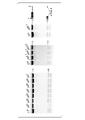
- 6 is an agarose gel electrophoresis image of a PCR product by a reverse transcription PCR method using RNA extracted from human HEK293T cells introduced with each morpholino antisense oligonucleotide in Example 1.
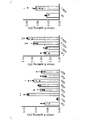
- Is. (In the graph, *: p ⁇ 0.05, **: p ⁇ 0.01, ***: p ⁇ 0.001 (comparison with control group, Dunnett's test).) 6 is an agarose gel electrophoresis image of a PCR product by a reverse transcription PCR method using RNA extracted from human HEK293T cells to which each morpholino antisense oligonucleotide in Example 1 was introduced and treated with cycloheximide.
- each morpholino antisense oligonucleotide was introduced, and the agarose gel electrophoresis image of the PCR product by the reverse transcription PCR method using RNA extracted from the cycloheximide-treated human HEK293T cells. be.
- each morpholino antisense oligonucleotide was introduced and intron 6 was selectively spliced to the expression level of mRNA carrying intron 6 in cycloheximide-treated human HEK293T cells. It is a graph which shows the ratio of the expression level of the generated mRNA.
- FIG. 1 It is an agarose gel electrophoresis image of the PCR product by the reverse transcription PCR method using RNA extracted from the mouse neuroblastoma Neuro2a cell which introduced AS5 in Example 2.
- FIG. It is a graph which shows the ratio of the expression level of the mRNA which holds intron 6 to the expression level of the total TDP-43 mRNA in the mouse neuroblastoma Neuro2a cell which introduced AS5 in Example 2.
- FIG. It is a figure which shows the protocol of the intracerebral administration test of AS5 using the neonatal mouse (C57BL / 6NJcl) in Example 3.
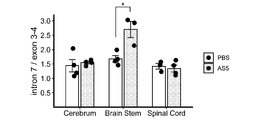
- FIG. 6 is an agarose gel electrophoresis image of a PCR product by reverse transcription PCR using RNA extracted from each site of mouse brain to which AS5 was intraventricularly administered in Example 3. It is a graph which shows the expression level of the mRNA which holds intron 6 in the reverse transcription real-time PCR method using GAPDH mRNA as a reference gene in each part of the mouse brain to which AS5 was intraventricularly administered in Example 3.
- FIG. . It is a graph which shows the ratio of the expression level of TDP-43 protein to the expression level of GAPDH quantified from the result of FIG. 5F.
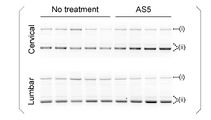
- 3 is a graph showing the expression level of Aif1 mRNA in the cerebrum, brain stem, and spinal cord after intracerebroventricular administration of AS5 in Example 3. It is a figure which shows the protocol of the intrathecal administration test of AS5 using the adult mouse (C57BL / 6NJcl) in Example 4. It is an agarose gel electrophoresis image of the PCR product by the reverse transcription PCR method using RNA extracted from the cervical spinal cord and lumbar spinal cord of the mouse to which AS5 was intrathecally administered in Example 4.
- FIG. It is a graph which shows the expression level of Aif1 mRNA in the lumbar spinal cord 8 weeks after the intrathecal administration of AS5 in Example 4.
- FIG. It is a figure which shows the protocol of the intraventricular and intrathecal administration test of AS5 using the neonatal of the motor neuron-specific Rpt3 conditional knockout mouse (Rpt3 flox / flox ; VAChT-Cre +/- ) in Example 5. It is a graph which shows the time-dependent change of body weight and the time to death in the mouse which administered AS5 in Example 5.
- Anti-TDP-43 antibody in the spinal cord motor neurons of adult mice of motor neuron-specific Rpt3 conditional knockout mice (Rpt3 flox / flox ; VAChT-Cre +/- ) in Example 6, 4', 6-diamidino-2.
- -A immunology
- DAPI neurondle
- anti-TUJ1 antibody The scale bar indicates 40 ⁇ m.
- a to c represent the patterns seen in TDP-43 proteinopathy in human patients, respectively. Specifically, a is a stained image of a motor neuron in which nuclear TDP-43 is decreased and TDP-43 is diffusely mislocalized in the cytoplasm.
- b is a stained image of motor neurons in which aggregates of TDP-43 are found in the cytoplasm.
- c It is a stained image of a motor neuron in which nuclear TDP-43 has almost disappeared.
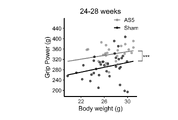
- It is a figure which shows the protocol of the intrathecal administration test of AS5 using the adult mouse of the motor neuron-specific Rpt3 conditional knockout mouse (Rpt3 flox / flox ; VAChT-Cre +/- ) in Example 6. It is a graph which shows the change of the body weight with time in the mouse which administered AS5 in Example 6. It is a graph which shows the change of the grip strength with time in the mouse which administered AS5 in Example 6. 6 is a graph showing the relationship between body weight and grip strength in mice aged 24 to 28 weeks in Example 6.
- an antisense nucleic acid according to an embodiment of the present invention, a method for screening a selective splicing enhancer for intron 6 of TDP-43 mRNA, a pharmaceutical composition, a method for screening an alternative splicing enhancer for intron 6 of TDP-43 mRNA, and The method for screening candidate compounds for the prevention or treatment of TDP-43 proteinopathy will be described in detail.
- TDP-43 protein TAR DNA-binding protein-473 protein is a protein encoded by the TARDBP gene in humans.
- the amino acid sequence of the human TDP-43 protein full length is disclosed in Genbank accession number NP_031401.1.
- the base sequence of the full-length mRNA of human TDP-43 is disclosed in Genbank accession number NM_007375.4.
- splicing variants include (i) neither intron 6 nor intron 7 of the TDP-43 gene is spliced (hereinafter, may be referred to as "variant (i)"), and (ii) the intron of the TDP-43 gene.
- variant (ii) Only 6 is selectively spliced (hereinafter, may be referred to as “variant (ii)”), and (iii) both intron 6 and intron 7 of the TDP-43 gene are selectively spliced (iii).
- variant (iii) both intron 6 and intron 7 of the TDP-43 gene are selectively spliced
- variant (iii) only intron 7 of the TDP-43 gene can be broadly classified into those that are selectively spliced.
- FIG. The self-regulatory mechanism increases the production of variants (iii) or variants (iv) depending on the expression level of the nuclear TDP-43 protein, which are nonsense-mediated mRNA decay (NMD) -sensitive. Therefore, it is quickly disassembled.
- variant (i) in which intron 6 is retained encodes IDR, the increased expression of which induces aggregation and results in cytotoxicity.
- the variant (i) encoding IDR is decreased and the variant (ii) in which intron 7 is retained is reduced. It is thought that the ratio of Variant (ii) is not NMD sensitive and expresses the TDP-43 protein lacking IDR. It is known that the TDP-43 protein forms an oligomer via the N-terminal domain, and its cohesiveness is strongly dependent on the local concentration of IDR at the C-terminal (see (A) in FIG. 2).
- TDP-43 intron 6 has a region to which the U2AF protein, which is important for determining the 3'splicing site, binds. It has been reported that the binding of U2AF in an intron, together with HNRNPA1, suppresses the original splicing and is involved in intron retention.
- the inventors designed an antisense nucleic acid that enhances the splicing of intron 6 by targeting the binding regions of U2AF and HNRNPA1 as shown in Examples described later. Furthermore, by applying the self-regulatory mechanism of the TDP-43 protein described above, an antisense nucleic acid targeting the intron 6 of the designed TDP-43 mRNA was used to induce alternative splicing of the intron 6 alone. By changing the composition ratio of the isoform, it is possible to restore the function of the nuclear TDP-43 protein in pathogenic cells, suppress aggregation in the cytoplasm, and give no cytotoxicity in healthy cells. We have found that the expression of the ⁇ 43 protein is limited, and have completed the present invention.
- the antisense nucleic acid of the present embodiment targets intron 6 of TDP-43 mRNA, and is at positions 96 to 330 or 400 to 530 of the base sequence represented by SEQ ID NO: 1.
- the target sequence is up to the position, and contains a base sequence complementary to a sequence consisting of 10 or more consecutive bases in the target sequence.
- the antisense nucleic acid of the present embodiment selective splicing of only intron 6 of TDP-43 mRNA can be induced, and neither intron 6 nor intron 7 of the TDP-43 gene is spliced (isoform of mRNA).
- the generation of the above variant (i)) can be suppressed. Thereby, it is possible to suppress the aggregation of TDP-43 protein in the cytoplasm and to achieve the restoration of the function of the nuclear TDP-43 protein.
- the antisense nucleic acid of the present embodiment can be designed with reference to, for example, the full-length mRNA of human TDP-43 (Genbank accession number NM_007375.4). Specifically, among the sequences of intron 6 (SEQ ID NO: 1) in the full-length mRNA of human TDP-43, the splicing site (the 5'alternative splicing site of the base sequence represented by SEQ ID NO: 1). Regions other than positions 1, 65, and 74, and 3'selective splicing site, position 1015), and the region to which U2AF1 and HNRNPA1 bind, that is, represented by SEQ ID NO: 1.
- the target sequence is from the 96th position to the 330th position or from the 400th position to the 530th position of the base sequence.
- the target sequence when targeting TDP-43 mRNA of a mammal other than human, can be designed with reference to a known sequence.
- the length of the antisense nucleic acid of the present embodiment is 10 bases or more, preferably 10 bases or more and 50 bases or less, more preferably 15 bases or more and 35 bases or less, and further preferably 20 bases or more and 30 bases or less.
- the antisense nucleic acid of the present embodiment may be composed of DNA, RNA, or a combination of DNA and RNA. Further, the antisense nucleic acid of the present embodiment is a nucleotide polymer in which nucleotides are bound by a phosphodiester bond, and may be a polymer of natural nucleotides, and natural nucleotides and unnatural nucleotides (similars of natural nucleotides, base portions, etc.).
- It may be a polymer with a nucleotide in which at least one of the sugar moiety and the phosphate moiety is modified (for example, a nucleotide having a phosphorothioate skeleton or a monophorino ring), or it may be a polymer of an unnatural nucleotide. good.
- antisense nucleic acid examples include an antisense nucleic acid consisting of a sequence containing a base sequence represented by any of SEQ ID NOs: 2 to 7, and among them, any of SEQ ID NOs: 2 to 7 is represented.
- An antisense nucleic acid consisting of the base sequence to be used is preferable.
- the antisense nucleic acid of this embodiment can be synthesized by using a known method.
- the synthesis method include a synthesis method by a genetic engineering method, a chemical synthesis method, and the like.
- Examples of the synthesis method by the genetic engineering method include an in vitro transcription synthesis method, a synthesis method using a vector, a synthesis method using a PCR cassette, and the like.
- Examples of the chemical synthesis method include a phosphoroamidide method and an H-phosphonate method.
- a method using a commercially available automatic nucleic acid synthesizer can also be mentioned.
- the antisense nucleic acid of the present embodiment may be in the form of a vector expressing the antisense nucleic acid.
- the vector expressing the antisense nucleic acid can be prepared, for example, by inserting the base sequence of the target region into a commercially available vector.
- the vector may be any vector capable of expressing the antisense nucleic acid in the target cell.
- the vector can include a promoter that controls the expression of the antisense nucleic acid.
- the sequence encoding the antisense nucleic acid is functionally linked to the promoter.
- the promoter is not particularly limited, and for example, a pol II promoter can be used, but a pol III promoter is preferable from the viewpoint of more accurately transcribing a relatively short nucleic acid.
- the pol III promoter is not particularly limited, and examples thereof include mouse and human U6-snRNA promoters, human H1-RNase P RNA promoters, and human valine-tRNA promoters.
- U6 promoter it is preferred that the 5'end of the antisense nucleic acid is "G" for transcription initiation. Therefore, it is preferable to design the sequence so that the 5'end of the antisense nucleic acid is "G", or to add "G" to the 5'end of the antisense nucleic acid.
- the vector contains an enhancer, a poly A addition signal, a marker gene, an origin of replication, a gene encoding a protein that binds to the origin of replication and controls replication, and the like. You may be.
- the "marker gene” refers to a gene that enables selection and selection of cells by introducing the marker gene into cells. Specific examples of the marker gene include a drug resistance gene, a fluorescent protein gene, a luminescent enzyme gene, a color-developing enzyme gene, and the like. These may be used alone or in combination of two or more.
- the drug resistance gene examples include puromycin resistance gene, neomycin resistance gene, tetracycline resistance gene, canamycin resistance gene, zeosin resistance gene, hyglomycin resistance gene, chloramphenicol resistance gene and the like.
- Specific examples of the fluorescent protein gene include a green fluorescent protein (GFP) gene, a yellow fluorescent protein (YFP) gene, a red fluorescent protein (RFP) gene, and the like.
- Specific examples of the luminescent enzyme gene include a luciferase gene and the like.
- Specific examples of the color-developing enzyme gene include ⁇ -galactosidase gene, ⁇ -glucuronidase gene, alkaline phosphatase gene and the like.
- the type of vector is not particularly limited, and a known expression vector can be used.
- Examples of the expression vector include a plasmid vector and a viral vector.
- the plasmid vector is not particularly limited as long as it is a plasmid vector that can be expressed in the target cell.
- a generally used plasmid vector for expressing animal cells can be used.
- the plasmid vector for animal cell expression include, but are not limited to, pX459, pA1-11, pXT1, pRc / CMV, pRc / RSV, pcDNAI / Neo and the like.
- virus vector examples include a retrovirus (including lentivirus) vector, an adenovirus vector, an adeno-associated virus vector, a Sendai virus vector, a herpes virus vector, a vaccinia virus vector, a pox virus vector, a poliovirus vector, and a silvis virus vector. , Rabdovirus vector, paramixovirus vector, orthomixovirus vector and the like.
- the plasmid vector is preferable as the expression vector.
- the alternative splicing enhancer of the present embodiment is a selective splicing enhancer of intron 6 of TDP-43 mRNA, and contains the above-mentioned antisense nucleic acid as an active ingredient.
- the alternative splicing enhancer of the present embodiment the alternative splicing of intron 6 of TDP-43 mRNA can be effectively induced.
- the alternative splicing enhancer of the present embodiment containing the antisense nucleic acid is administered to an administration subject having the TDP-43 gene.
- the administration method can be carried out by contacting the administration subject with the antisense nucleic acid. Administration may be in vivo or in vitro.
- the administration target is not particularly limited, and cells, tissues or organs of mammals such as humans, monkeys, marmosets, mice, rats, guinea pigs, dogs, cats, rabbits, cows, horses, pigs, goats, and sheep are included. Can be mentioned.
- the alternative splicing enhancer of the present embodiment may further contain a nucleic acid introduction reagent for the purpose of promoting the efficiency of introducing the antisense nucleic acid into a target cell.
- Nucleic acid introduction reagents include, for example, atelocollagen; liposomes; Lipoidamine®, lipofectin, transfectum (dioctadecylamide glycylspermin; DOGS), 1,2-dioleoyl-sn-glycero-3-phosphoethanol.
- DOPE 1,2-dioleoyl-3-trimethylammonium-propane
- DDAB didodecyldimethylammonium bromide
- DHDEAB N-di-n-hexadecyl-N-methyl, N- (2) -Hydroxyethyl ammonium bromide
- polybrene ionic lipids such as poly (ethyleneimine) (PEI) and the like can be mentioned.
- PEI poly (ethyleneimine)
- the pharmaceutical composition of the present embodiment is used for the prevention or treatment of TDP-43 proteinopathy, and contains the above-mentioned antisense nucleic acid as an active ingredient.
- TDP-43 proteinopathy is effective in prevention or treatment.
- TDP-43 proteinopathy is a general term for neurodegenerative diseases in which TDP-43 protein aggregates and accumulates.
- frontotemporal lobar degeneration (FTLD) and amyotrophic lateral sclerosis (FTLD) are used.
- FTLD and ALS include both gene variants (familial) and sporadic.
- Alzheimer's disease Levy body dementia, Down syndrome, hippocampal dementia, familial British dementia, Perry syndrome, Parkinson's disease, polyglutamine disease (eg Huntington's disease, spinal cerebral degeneration type 3 etc.), myopathy.
- TDP-43 proteinopathy sporadic encapsulated myopathy, encapsulated myopathy, oropharyngeal muscular dystrophy, distal myopathy, myofibrillar myopathy, etc.
- cerebral cortical basal nucleus degeneration cerebral cortical basal nucleus degeneration
- progressive supranuclear palsy silver granule disease
- TDP-43 proteinopathy it is suitably used for the treatment or prevention of FTLD or ALS.
- the pharmaceutical composition of the present embodiment may use an effective amount of the antisense nucleic acid alone, or may be formulated and used in combination with a pharmaceutically acceptable carrier.
- the antisense nucleic acid contained in the pharmaceutical composition of the present embodiment may be in the form of a nucleic acid molecule, or may be in the form of a vector or the like containing a nucleic acid encoding the antisense nucleic acid as described above.
- the morphology may be mixed.
- Pharmaceutically acceptable carriers include, for example, excipients such as sucrose and starch; binders such as cellulose and methylcellulose; disintegrants such as starch and carboxymethylcellulose; lubricants such as magnesium stearate and aerodyl; citric acid. Fragrances such as acid and menthol; Preservatives such as sodium benzoate and sodium hydrogen sulfite; Stabilizers such as citric acid and sodium citrate; Suspension agents such as methylcellulose and polyvinylpyrrolid; Dispersants such as surfactants; Diluting agents such as water and physiological saline; base wax and the like, but are not limited thereto.
- excipients such as sucrose and starch
- binders such as cellulose and methylcellulose
- disintegrants such as starch and carboxymethylcellulose
- lubricants such as magnesium stearate and aerodyl
- citric acid Fragrances such as acid and menthol
- Preservatives such as sodium benzoate
- the pharmaceutical composition of the present embodiment can further contain a nucleic acid introduction reagent in order to promote the introduction of the antisense nucleic acid into the target cell.
- a nucleic acid introduction reagent the same reagents as those exemplified in "Alternative splicing enhancer" can be used.
- the pharmaceutical composition of the present embodiment may be a pharmaceutical composition in which the antisense nucleic acid is encapsulated in liposomes.
- Liposomes are microclosed vesicles with an internal phase surrounded by one or more lipid bilayers, usually capable of retaining water-soluble substances in the internal phase and fat-soluble substances in the lipid bilayer.
- encapsulation includes a state in which the antisense nucleic acid is retained in the liposome internal phase and a state in which the antisense nucleic acid is retained in the lipid bilayer.
- the liposome may be a monolayer membrane or a multilayer membrane.
- the particle size of the liposome is, for example, 10 nm or more and 1000 nm or less, and preferably 50 nm or more and 300 nm or less. Considering the deliverability to the target cell or the target tissue, the particle size is more preferably 50 nm or more and 200 nm or less, and further preferably 50 nm or more and 100 nm or less.
- Examples of the method for encapsulating the antisense nucleic acid in the liposome include, but are limited to, a lipid film method (vortex method), a reverse phase evaporation method, a surfactant removal method, a freeze-thaw method, and a remote loading method.
- vortex method lipid film method
- reverse phase evaporation method lipid film method
- surfactant removal method e.g., a surfactant removal method
- freeze-thaw method e.g., freeze-thaw method
- remote loading method e.g., a remote loading method.
- the pharmaceutical composition of the present embodiment can be administered orally or parenterally to mammals, but it is preferably administered parenterally.
- mammals the same as those exemplified in the above-mentioned "alternative splicing enhancer" can be used.
- parenteral administration methods include subcutaneous injection, intramuscular injection, local injection, intraperitoneal administration, intrathecal administration, and the like.
- preparation suitable for parenteral administration examples include aqueous and non-aqueous isotonic sterile injections, and the injections include antioxidants, buffers, bacteriostatic agents, and isotonic. An agent or the like may be contained. Alternatively, aqueous and non-aqueous sterile suspensions may be mentioned, and the injection solution may contain a suspending agent, a solubilizer, a thickener, a stabilizer, a preservative and the like. .. These preparations can be encapsulated in a container at a unit dose or a plurality of doses like an ampoule or a vial. In addition, the active ingredient and a pharmaceutically acceptable carrier can be freeze-dried and stored in a state where it can be dissolved or suspended in a suitable sterile vehicle immediately before use.
- Another formulation suitable for parenteral administration includes sprays and the like.
- the content of the antisense nucleic acid in the pharmaceutical composition of the present embodiment is not particularly limited, but can be, for example, about 0.1% by mass or more and 100% by mass or less with respect to the total mass of the pharmaceutical composition.
- the dose of the pharmaceutical composition of the present embodiment varies depending on the purpose of administration, the administration method, the type and severity of the target disease, and the situation of the administration target (gender, age, body weight, etc.), and is, for example, systemically administered to an adult.
- the single dose of antisense nucleic acid can usually be 1 nmol / kg or more and 100 ⁇ mol / kg or less. Further, for example, when it is locally administered to an adult, it can be 1 pmol / kg or more and 1 ⁇ mol / kg or less. Such a dose can be administered once or more and 10 times or less.
- the administration interval is not particularly limited, and examples thereof include daily, 3-day, 1-week, 2-week, 1-month, 3-month, and 6-month intervals.
- the pharmaceutical composition of the present embodiment can be used in combination with, for example, a therapeutic agent for TDP-43 proteinopathy such as FTLD or ALS, for example, a therapeutic agent for these diseases already on the market.
- the therapeutic agents include, for example, brain protectants (eg, edaravon, etc.), glutamate action inhibitors (eg, lylsole, etc.), neurotrophic factors (eg, insulin-like growth factor-1, 5-HT1a receptor agonists, etc.). , Zariproden), etc.).
- These concomitant agents can be formulated together with the pharmaceutical composition of the present embodiment and administered as a single preparation, or can be formulated separately from the pharmaceutical composition of the present embodiment to form the pharmaceutical composition of the present embodiment. It is also possible to administer the same or different administration method at the same time or at different times.
- the dose of these concomitant drugs may be the amount normally used when the drug is administered alone, or may be reduced from the amount normally used.
- the present invention provides a method for preventing or treating TDP-43 proteinopathy, which comprises administering an effective amount of the antisense nucleic acid to a patient in need of treatment.
- examples of the antisense nucleic acid include the same as those described above.
- examples of the TDP-43 proteinopathy include the same as those described above, and among them, FTLD or ALS is preferable. That is, the method for preventing or treating TDP-43 proteinopathy can also be said to be a method for preventing or treating FTLD or ALS.
- the invention provides the antisense nucleic acid for the prevention or treatment of TDP-43 proteinopathy.
- examples of the antisense nucleic acid include the same as those described above.
- examples of the TDP-43 proteinopathy include the same as those described above, and among them, FTLD or ALS is preferable.
- the present invention provides the use of the antisense nucleic acid for producing a pharmaceutical composition used for the prevention or treatment of TDP-43 proteinopathy.
- examples of the antisense nucleic acid include those similar to those described above.
- examples of the TDP-43 proteinopathy include the same as those described above, and among them, FTLD or ALS is preferable.
- the screening method of the present embodiment is a screening method for a candidate compound for the prevention or treatment of TDP-43 proteinopathy, and comprises the following steps.
- the expression level of the splicing variant containing the intron 6 is reduced, or the expression level of the splicing variant containing the intron 6 is lower than that in the absence of the test substance.
- Increased expression of splicing variants that do not contain the above indicates that the test substance is a candidate compound for the prevention or treatment of TDP-43 proteinopathy.
- the screening method of the present embodiment can also be said to be a screening method of an alternative splicing enhancer for intron 6 of TDP-43 mRNA.
- the expression level of the splicing variant containing the intron 6 is lower than in the absence of the test substance, or with respect to the expression level of the splicing variant containing the intron 6.
- Increased expression of the intron 6-free splicing variant indicates that the test substance is a candidate for an alternative splicing enhancer for intron 6 of TDP-43 mRNA.
- test substance is not particularly limited, and examples thereof include a natural compound library, a synthetic compound library, an existing drug library, and a metabolite library.
- the cells expressing TDP-43 mRNA are not particularly limited, and examples thereof include human HEK293T cells, mouse neuroblastoma Neuro2a cells, and induced pluripotent stem cell-derived neurons.
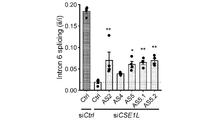
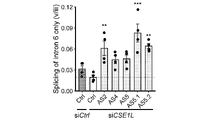
- the screening method of the present embodiment includes screening using cycloheximide-treated cells that inhibit the degradation of NMD-sensitive mRNA for the purpose of improving the analysis accuracy. It is also possible to screen using cells that mimic TDP-43 proteinopathy with a decrease in alternative splicing of intron 6 by adding a factor that induces mislocalization of TDP-43 by knockdown of CSE1L or the like. included.
- the expression level of the splicing variant containing intron 6 and the splicing variant containing intron 6 of TDP-43 mRNA can be quantified by, for example, RNA-Seq, quantitative RT-PCR, or the like.
- a primer set for detecting an intron 6-free splicing variant and an intron 6-containing splicing variant of TDP-43 mRNA can be appropriately designed from known sequences.
- the primer set includes, for example, a forward primer consisting of the base sequence represented by SEQ ID NO: 8, a first reverse primer consisting of the base sequence represented by SEQ ID NO: 9, and a base sequence represented by SEQ ID NO: 10.
- the combination of the second reverse primer and the like can be mentioned.
- Example 1 (Alternative splicing-enhancing effect of intron 6 in human cells by antisense nucleic acid)
- Six types AS2, AS3, AS4, AS5, AS.5.1, AS5.2) targeting the binding peaks of U2AF1 and HNRNPA1 obtained from the public data (ENCFF811WVR, ENCFF080DPL) of the ENCODE eCLIP experiment shown in FIG. 3A. , AS6.1) and two types of morpholino antisense oligonucleotides (AS2.1, AS6) that were targeted from these binding peaks were designed.
- One type (AS1) targeting the normal splicing site and one type (AS7) targeting the sequence in the intron 7 were added to the analysis.
- FIG. 3A schematically shows the target positions of AS1, AS2.1, AS2, AS3, AS4, AS5, AS5.1, AS5.2, AS6, AS6.1, and AS7 in the sequence of TDP-43 mRNA. It is a figure.
- the base sequences of these antisense nucleic acids are shown in Table 1 below.
- morpholino antisense oligonucleotides were added so that the concentration in the medium was 10 ⁇ M, and introduced into human HEK293T using Endo-Porter (manufactured by GeneTools).
- Endo-Porter manufactured by GeneTools
- cells into which a general-purpose control oligo chain was introduced were also prepared.
- RNA was extracted from each cell using Nucleospin RNA II (manufactured by Takara Bio Inc.), and the alternative splicing efficiency of intron 6 was examined by reverse transcription PCR.
- the sequences of the primers used for PCR are shown in Table 2 below.
- the results of agarose gel electrophoresis of the PCR product are shown in FIG.
- FIG. 3B Shown in.
- morpholino antisense oligonucleotides As shown in FIGS. 3B and 3C, five morpholino antisense oligonucleotides (AS2, AS4, AS5, AS5.1, AS5.2, and AS6.1) increase splicing and retain intron 6. It was confirmed that the expression level of mRNA was reduced.
- cycloheximide treatment was performed from 6 hours before RNA extraction, and the results of the same analysis are shown in FIGS. 3D and 3E.
- Five types of morpholino antisense oligonucleotides (AS2, AS4, AS5, AS5.1, AS5.2, and AS6.1) increased the splicing of intron 6 and decreased the expression level of intron 6-carrying mRNA. It was confirmed that.
- An anti-Lamin B1 antibody (MBL, PM064) was used as a loading control for the nuclear fraction, and an anti-GAPDH antibody (M171-3, manufactured by MBL) was used as a loading control for the cytoplasmic fraction.
- Western blotting using an anti-CSE1L antibody (Abcam, ab151546) to confirm the expression of CSE1L, and using an anti-TDP-43 antibody (Proteintech, 12892-1-AP) to express TDP-43 in each fraction. was analyzed by. The results are shown in FIG. 3F.
- TDP-43 decreased in the nucleus and increased in the cytoplasm.
- 3G shows the ratio of the expression level of mRNA (ii) selectively spliced with intron 6 to the expression level of mRNA (i) in which intron 6 is retained in each cell.
- 3H shows the ratio of the expression level of intron 6-only selectively spliced mRNA (v) to the expression level of selectively spliced mRNA (iii) in each cell. It is shown in FIG. 3I.
- Example 2 (Alternative splicing-enhancing effect of intron 6 in mouse cells by antisense nucleic acid)
- morpholino antisense oligonucleotides in which the selective splicin-enhancing effect of intron 6 was confirmed in human HEK293T cells in Example 1, one type of morpholinoanti having the same target sequence as mouse TDP-43 mRNA.
- Sense oligonucleotide (AS5) was added to a concentration of 10 ⁇ M in the medium and introduced into Neuro2a cells derived from mouse neuroblastoma using Endo-Porter (manufactured by GeneTools).
- the sequences of the primers used in the reverse transcription PCR method are as shown in Table 3.
- the results of agarose gel electrophoresis of the PCR product are shown in FIG. 4A.
- a graph showing the ratio of the expression level of intron 6-carrying mRNA to the expression level of total TDP-43 mRNA in each cell by the droplet digital PCR method is shown in FIG.
- Table 4 shows the primer sequences used in the droplet digital PCR method.
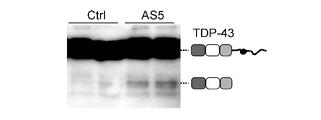
- a protein is extracted from each cell using a RIPA buffer, and TDP- by a Western blotting method using a polyclonal antibody (manufactured by Proteintech, 10782-2-AP) using the N-terminal side of the TDP-43 protein as an antigen. Expression of 43 proteins was confirmed. The results are shown in FIG. 4D.
- FIG. 4A it was confirmed that the selective splicing of intron 6 was increased, similar to the results in human HEK293T cells.
- FIG. 4B it was shown that the proportion of mRNA carrying selective intron 6 in all isoforms of TDP-43 mRNA was reduced to an average of 57%.
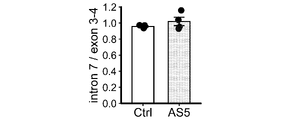
- FIG. 4C the mRNA carrying intron 7 did not change. From these facts, it was confirmed that the action by AS5 is a splicing modification action specific to intron 6.
- FIG. 4D the production of TDP-43 protein ( ⁇ 32 kDa) lacking IDR produced by splicing intron 6 was shown in Neuro2a cells into which AS5 was introduced.
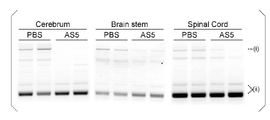
- Example 3 (Alternative splicing-enhancing effect of intron 6 in the central nervous system of mice) A newborn mouse (C57BL / 6NJcl) was injected with a glass capillary under transmitted light under hypothermic anesthesia and administered AS5 (4 mM, 2 ⁇ L) designed in Example 1 (see FIG. 5A). In addition, as a control, a group to which PBS was similarly administered was also prepared. One week later, RNA of the cerebrum, brain stem, and spinal cord on the side to which AS5 or PBS was administered was extracted using Nucleospin RNA II (manufactured by Takara Bio Inc.), and the alternative splicing efficiency of intron 6 was examined by reverse transcription PCR. ..
- the sequences of the primers used for PCR are as shown in Table 2 above.
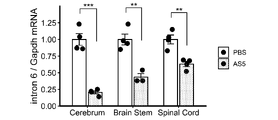
- the results of agarose gel electrophoresis of PCR products at each site of the mouse central nervous system are shown in FIG. 5B, and the results of real-time quantitative PCR showing the expression level of mRNA carrying intron 6 using GAPDH as a reference gene are shown in FIG. 5C. Shown in.
- a graph showing the ratio of the expression level of intron 6-carrying mRNA to the expression level of total TDP-43 mRNA by the droplet digital PCR method is shown in FIG. 5D.
- a graph showing the ratio of the expression level of mRNA in which intron 7 is retained is shown in FIG. 5E.
- Table 5 shows the primer sequences used to detect the cDNA of GAPDH used in real-time quantitative PCR.
- Other primer sequences used are as shown in Tables 3 and 4 above.
- a protein is extracted from the mouse spinal cord using a RIPA buffer, and a polyclonal antibody (manufactured by Proteintech, 12892-1-AP) using the C-terminal side of the TDP-43 protein as an antigen and an anti-GAPDH antibody (manufactured by MBL) as a control. , M171-3) confirmed the expression of TDP-43 protein by Western blotting.
- the result of Western blotting analysis is shown in FIG. 5F, and the graph showing the expression level of TDP-43 protein quantified from the result of Western blotting analysis corrected by the expression level of GAPDH is shown in FIG. 5G.
- Figure 5H shows the results of real-time quantitative PCR on the expression level of Aif1 mRNA that reflects immune-reactive inflammation using GAPDH as a reference gene in each site of the central nervous system.
- Table 6 shows the primer sequences used to detect the cDNA of Aif1 used in real-time quantitative PCR.
- the primer sequences used to detect the cDNA of GAPDH are as shown in Table 5 above.
- FIG. 5B an increase in alternative splicing of intron 6 was confirmed.
- a decrease in mRNA carrying intron 6 was confirmed (see FIG. 5C).
- the proportion of mRNA carrying intron 6 decreased (see FIG. 5D), but the alternative splicing of intron 7 did not decrease (see FIG. 5E).
- full-length TDP-43 protein was reduced to about 70% in the spinal cord. At this time, there was no difference in the expression of Aif1 mRNA, which reflects immunoreactive inflammation.
- Example 4 (Alternative splicing enhancing effect and toxicity evaluation of intron 6 in adult mouse spinal cord) 8-week-old adult mice (C57BL / 6NJcl) were intrathecally administered AS5 (4 mM, 15 ⁇ L) by lumbar puncture (see FIG. 6A). A non-administered group was also prepared as a control. Eight weeks after administration, RNA in the neck and lumbar spine of mice was extracted using Nucleospin RNA II (manufactured by Takara Bio Inc.), and the alternative splicing efficiency of intron 6 was examined by reverse transcription PCR. The sequences of the primers used for PCR are as shown in Table 3 above.
- FIG. 6B The results of agarose gel electrophoresis of the PCR product are shown in FIG. 6B, and a graph showing the ratio of the expression level of the mRNA in which the intron 6 is retained to the expression level of the mRNA in which the intron 6 is selectively spliced at each site is shown. Shown in 6C.
- FIGS. 6D body weight
- FIG. 6E grip strength
- Aif1 mRNA which reflects immune-reactive inflammation
- GAPDH mRNA was used as a reference gene. The results are shown in FIG. 6F.
- Example 5 (Effect of prolonging survival time on mouse model of TDP-43 proteinopathy) AS5 (4 mM, 2 ⁇ L) for 3 newborns of motor neuron-specific Rpt3 conditional knockout mice (Rpt3 flox / flox ; VAChT-Cre +/- ) that aggregate TDP-43 protein due to decreased proteasome function.
- AS5 4 mM, 2 ⁇ L
- RVPt3 flox / flox a motor neuron-specific Rpt3 conditional knockout mice
- Example 6 (Effect of improving motor function on mouse model after the onset of TDP-43 proteinopathy)
- the effect of AS5 on adult mice (Rpt3 flox / flox ; VAChT-Cre +/- ) after the appearance of pathological abnormalities observed in the TDP-43 proteinopathy was investigated.
- Rpt3 expression in spinal motor neurons disappears at 6 weeks of age, and that TDP-43 protein disappears from the nucleus and aggregates in the cytoplasm are observed at 8 weeks of age (Fig.). See 8A).
- alternative splicing of intron 6 of TDP-43 mRNA can be enhanced.
- the alternative splicing enhancer of the present embodiment contains the antisense nucleic acid and can enhance the alternative splicing of intron 6 of TDP-43 mRNA.
- the pharmaceutical composition of the present embodiment contains the antisense nucleic acid and can prevent or treat TDP-43 proteinopathy. According to the screening method of the present embodiment, it is possible to screen a selective splicing enhancer for intron 6 of TDP-43 mRNA. According to the screening method of the present embodiment, candidate compounds for the prevention or treatment of TDP-43 proteinopathy can be screened.
Landscapes
- Health & Medical Sciences (AREA)
- Life Sciences & Earth Sciences (AREA)
- Engineering & Computer Science (AREA)
- Chemical & Material Sciences (AREA)
- Biomedical Technology (AREA)
- Bioinformatics & Cheminformatics (AREA)
- Genetics & Genomics (AREA)
- Organic Chemistry (AREA)
- Molecular Biology (AREA)
- General Health & Medical Sciences (AREA)
- Biotechnology (AREA)
- Wood Science & Technology (AREA)
- Zoology (AREA)
- General Engineering & Computer Science (AREA)
- Immunology (AREA)
- Microbiology (AREA)
- Medicinal Chemistry (AREA)
- Physics & Mathematics (AREA)
- Neurosurgery (AREA)
- Biochemistry (AREA)
- Neurology (AREA)
- Public Health (AREA)
- Pharmacology & Pharmacy (AREA)
- Biophysics (AREA)
- Analytical Chemistry (AREA)
- Veterinary Medicine (AREA)
- Animal Behavior & Ethology (AREA)
- Proteomics, Peptides & Aminoacids (AREA)
- Hematology (AREA)
- Urology & Nephrology (AREA)
- General Chemical & Material Sciences (AREA)
- Hospice & Palliative Care (AREA)
- Nuclear Medicine, Radiotherapy & Molecular Imaging (AREA)
- Pathology (AREA)
- Chemical Kinetics & Catalysis (AREA)
- Plant Pathology (AREA)
- Psychiatry (AREA)
- General Physics & Mathematics (AREA)
- Food Science & Technology (AREA)
- Cell Biology (AREA)
Priority Applications (3)
| Application Number | Priority Date | Filing Date | Title |
|---|---|---|---|
| JP2022565237A JP7824653B2 (ja) | 2020-11-30 | 2021-11-15 | アンチセンス核酸及びその使用 |
| EP21897773.4A EP4253540A4 (en) | 2020-11-30 | 2021-11-15 | ANTISENSE NUCLEIC ACID AND ITS USE |
| US18/037,194 US12584133B2 (en) | 2020-11-30 | 2021-11-15 | Antisense nucleic acid and use thereof |
Applications Claiming Priority (2)
| Application Number | Priority Date | Filing Date | Title |
|---|---|---|---|
| JP2020198595 | 2020-11-30 | ||
| JP2020-198595 | 2020-11-30 |
Publications (1)
| Publication Number | Publication Date |
|---|---|
| WO2022113799A1 true WO2022113799A1 (ja) | 2022-06-02 |
Family
ID=81755982
Family Applications (1)
| Application Number | Title | Priority Date | Filing Date |
|---|---|---|---|
| PCT/JP2021/041895 Ceased WO2022113799A1 (ja) | 2020-11-30 | 2021-11-15 | アンチセンス核酸及びその使用 |
Country Status (4)
| Country | Link |
|---|---|
| US (1) | US12584133B2 (https=) |
| EP (1) | EP4253540A4 (https=) |
| JP (1) | JP7824653B2 (https=) |
| WO (1) | WO2022113799A1 (https=) |
Cited By (2)
| Publication number | Priority date | Publication date | Assignee | Title |
|---|---|---|---|---|
| WO2025234407A1 (ja) * | 2024-05-08 | 2025-11-13 | 国立大学法人新潟大学 | アンチセンス核酸及びその使用 |
| WO2026009728A1 (ja) * | 2024-07-03 | 2026-01-08 | 国立大学法人新潟大学 | アンチセンス核酸及びその使用 |
Citations (2)
| Publication number | Priority date | Publication date | Assignee | Title |
|---|---|---|---|---|
| WO2019013141A1 (ja) | 2017-07-10 | 2019-01-17 | 国立大学法人大阪大学 | Tdp-43の発現量を調節するアンチセンスオリゴヌクレオチド及びその用途 |
| JP2020198595A (ja) | 2019-06-05 | 2020-12-10 | 株式会社フジクラ | モード変換器 |
Family Cites Families (4)
| Publication number | Priority date | Publication date | Assignee | Title |
|---|---|---|---|---|
| EP2272955B1 (en) | 2008-04-09 | 2015-08-26 | Tokyo Metropolitan Institute of Medical Science | Tdp-43-storing cell model |
| WO2012150960A1 (en) * | 2011-05-05 | 2012-11-08 | Avi Biopharma, Inc. | Peptide oligonucleotide conjugates |
| ITRM20110582A1 (it) | 2011-11-05 | 2013-05-06 | Biotechnology Icgeb | Modello cellulare per la selezione di molecole che influenzano l aggregazione di tdp-43 |
| JP2020535802A (ja) * | 2017-09-21 | 2020-12-10 | ザ・ブロード・インスティテュート・インコーポレイテッド | 標的化核酸編集のための系、方法、及び組成物 |
-
2021
- 2021-11-15 EP EP21897773.4A patent/EP4253540A4/en active Pending
- 2021-11-15 US US18/037,194 patent/US12584133B2/en active Active
- 2021-11-15 JP JP2022565237A patent/JP7824653B2/ja active Active
- 2021-11-15 WO PCT/JP2021/041895 patent/WO2022113799A1/ja not_active Ceased
Patent Citations (2)
| Publication number | Priority date | Publication date | Assignee | Title |
|---|---|---|---|---|
| WO2019013141A1 (ja) | 2017-07-10 | 2019-01-17 | 国立大学法人大阪大学 | Tdp-43の発現量を調節するアンチセンスオリゴヌクレオチド及びその用途 |
| JP2020198595A (ja) | 2019-06-05 | 2020-12-10 | 株式会社フジクラ | モード変換器 |
Non-Patent Citations (7)
| Title |
|---|
| "Genbank", Database accession no. NM_007375.4 |
| AKIHIDE KOYAMA, SUGAI AKIHIRO, KATO TAISUKE, ISHIHARA TOMOHIKO, SHIGA ATSUSHI, TOYOSHIMA YASUKO, KOYAMA MISAKI, KONNO TAKUYA, HIRO: "Increased cytoplasmic TARDBP mRNA in affected spinal motor neurons in ALS caused by abnormal autoregulation of TDP-43", NUCLEIC ACIDS RESEARCH, vol. 44, no. 12, 8 July 2016 (2016-07-08), GB , pages 5820 - 5836, XP055730305, ISSN: 0305-1048, DOI: 10.1093/nar/gkw499 * |
| AKIHIRO SUGAI: "Pathological model of muscular atrophic lateral sclerosis: Overexpression of endogenous TDP-43 due to disruption of autoprotein amount regulation mechanism", NIIGATA MEDICAL ASSOCIATION JOURNAL, vol. 129, no. 11, 10 November 2015 (2015-11-10), JP , pages 658 - 670, XP009536843, ISSN: 0029-0440 * |
| KOYAMA, A. ET AL.: "Increased cytoplasmic TARDBP mRNA in affected spinal motor neurons in ALS caused by abnormal autoregulation of TDP-43", NUCLEIC ACIDS RES., vol. 44, 2016, pages 5820 - 5836, XP055730305, DOI: 10.1093/nar/gkw499 |
| PÉTRAULT OLIVIER; PÉTRAULT MAUD; OUK THAVARAK; BORDET RÉGIS; BÉRÉZOWSKI VINCENT; BASTIDE MICHÈLE: "Visceral adiposity links cerebrovascular dysfunction to cognitive impairment in middle-aged mice", NEUROBIOLOGY OF DISEASE, ELSEVIER, AMSTERDAM, NL, vol. 130, 17 July 2019 (2019-07-17), AMSTERDAM, NL , XP085795932, ISSN: 0969-9961, DOI: 10.1016/j.nbd.2019.104536 * |
| See also references of EP4253540A4 |
| SUGAI, A. ET AL.: "Non-genetically modified models exhibit TARDBP mRNA increase due to perturbed TDP-43 autoregulation", NEUROBIOL. DIS., vol. 130, 2019, pages 104534, XP085795924, DOI: 10.1016/j.nbd.2019.104534 |
Cited By (2)
| Publication number | Priority date | Publication date | Assignee | Title |
|---|---|---|---|---|
| WO2025234407A1 (ja) * | 2024-05-08 | 2025-11-13 | 国立大学法人新潟大学 | アンチセンス核酸及びその使用 |
| WO2026009728A1 (ja) * | 2024-07-03 | 2026-01-08 | 国立大学法人新潟大学 | アンチセンス核酸及びその使用 |
Also Published As
| Publication number | Publication date |
|---|---|
| EP4253540A4 (en) | 2025-09-10 |
| US20240002856A1 (en) | 2024-01-04 |
| JP7824653B2 (ja) | 2026-03-05 |
| JPWO2022113799A1 (https=) | 2022-06-02 |
| US12584133B2 (en) | 2026-03-24 |
| EP4253540A1 (en) | 2023-10-04 |
Similar Documents
| Publication | Publication Date | Title |
|---|---|---|
| Ioannou et al. | RNA Targeting and Gene Editing Strategies for Transthyretin Amyloidosis: A. Ioannou et al. | |
| CN105641700B (zh) | 对抗肌肉病症的方式和方法 | |
| EP3362564B1 (en) | Nucleic acid based tia-1 inhibitors | |
| CA2918194C (en) | Methods and agents for treating alzheimer's disease | |
| JP2020073480A (ja) | 腱治癒を調節するための物質および方法 | |
| JP2018531046A6 (ja) | 核酸ベースのtia−1阻害剤 | |
| KR20260042313A (ko) | 프리온 발현을 감소시키기 위한 화합물 및 방법 | |
| JP7824653B2 (ja) | アンチセンス核酸及びその使用 | |
| JP2025525099A (ja) | 状態および疾患の治療のための化合物 | |
| Leitão et al. | Novel systemic delivery of a peptide-conjugated antisense oligonucleotide to reduce α-synuclein in a mouse model of Alzheimer's disease | |
| US20250263454A1 (en) | Aggregation inhibitor of tdp-43 and pharmaceutical composition | |
| US20100016221A1 (en) | Method of degrading protein by chaperone-mediated autophagy | |
| CN103957937B (zh) | 用于治疗阿尔茨海默病的化合物 | |
| EP4088742A2 (en) | Composition for preventing or treating macular degeneration, containing cell permeable nucleic acid complex as active ingredient | |
| JP6490077B2 (ja) | ダウン症を治療するための細胞内塩化物濃度のモジュレータ | |
| JP2006500933A (ja) | プレmRNAのスプライシングを修飾するための方法および組成物 | |
| US20190070174A1 (en) | Methods of treating neurodegenerative diseases | |
| WO2018215563A1 (en) | Calcineurin b homologous protein 1 inhibitors and therapeutic and non-therapeutic uses thereof | |
| WO2025234407A1 (ja) | アンチセンス核酸及びその使用 | |
| JP2023522622A (ja) | Tdp-43及びfus凝集を抑制するための組成物及び方法 | |
| WO2026009728A1 (ja) | アンチセンス核酸及びその使用 | |
| US20250057981A1 (en) | Compositions and methods for reducing pain and inflammation through epigenetic modulation | |
| US20260022377A1 (en) | Polynucleotide compositions and methods for treatment of neurodegenerative diseases | |
| KR20260026019A (ko) | 신장 질환의 치료를 위한 조성물 및 방법 |
Legal Events
| Date | Code | Title | Description |
|---|---|---|---|
| 121 | Ep: the epo has been informed by wipo that ep was designated in this application |
Ref document number: 21897773 Country of ref document: EP Kind code of ref document: A1 |
|
| ENP | Entry into the national phase |
Ref document number: 2022565237 Country of ref document: JP Kind code of ref document: A |
|
| WWE | Wipo information: entry into national phase |
Ref document number: 18037194 Country of ref document: US |
|
| NENP | Non-entry into the national phase |
Ref country code: DE |
|
| ENP | Entry into the national phase |
Ref document number: 2021897773 Country of ref document: EP Effective date: 20230630 |
|
| WWG | Wipo information: grant in national office |
Ref document number: 18037194 Country of ref document: US |