WO2022079639A1 - Glp-1/gip dual agonists - Google Patents

Glp-1/gip dual agonists Download PDF

Info

Publication number
WO2022079639A1
WO2022079639A1 PCT/IB2021/059420 IB2021059420W WO2022079639A1 WO 2022079639 A1 WO2022079639 A1 WO 2022079639A1 IB 2021059420 W IB2021059420 W IB 2021059420W WO 2022079639 A1 WO2022079639 A1 WO 2022079639A1
Authority
WO
WIPO (PCT)
Prior art keywords
polypeptide
pharmaceutically acceptable
acceptable salt
lys
ile
Prior art date
Legal status (The legal status is an assumption and is not a legal conclusion. Google has not performed a legal analysis and makes no representation as to the accuracy of the status listed.)
Ceased
Application number
PCT/IB2021/059420
Other languages
French (fr)
Inventor
Rajamannar Thennati
Vinod Sampatrao BURADE
Muthukumaran Natarajan
Dhiren Rameshchandra JOSHI
Manish Harendraprasad Gandhi
Chandulal Thakarshibhai JIVANI
Abhishek Tiwari
Krunal Harishbhai SONI
Current Assignee (The listed assignees may be inaccurate. Google has not performed a legal analysis and makes no representation or warranty as to the accuracy of the list.)
Sun Pharmaceutical Industries Ltd
Original Assignee
Sun Pharmaceutical Industries Ltd
Priority date (The priority date is an assumption and is not a legal conclusion. Google has not performed a legal analysis and makes no representation as to the accuracy of the date listed.)
Filing date
Publication date
Priority to IL301109A priority Critical patent/IL301109A/en
Priority to PE2023000804A priority patent/PE20231309A1/en
Priority to KR1020237006545A priority patent/KR20230088337A/en
Priority to MX2023002906A priority patent/MX2023002906A/en
Priority to BR112023003668A priority patent/BR112023003668A2/en
Priority to CA3195155A priority patent/CA3195155A1/en
Priority to CN202180051573.5A priority patent/CN116171164A/en
Priority to JP2023519770A priority patent/JP7830441B2/en
Priority to US18/249,055 priority patent/US20240020543A1/en
Application filed by Sun Pharmaceutical Industries Ltd filed Critical Sun Pharmaceutical Industries Ltd
Priority to AU2021361263A priority patent/AU2021361263A1/en
Priority to EP21795004.7A priority patent/EP4204440A1/en
Publication of WO2022079639A1 publication Critical patent/WO2022079639A1/en
Priority to CONC2023/0001960A priority patent/CO2023001960A2/en
Priority to JOJO/P/2023/0077A priority patent/JOP20230077A1/en
Anticipated expiration legal-status Critical
Priority to US18/812,797 priority patent/US12622948B2/en
Priority to JP2026034402A priority patent/JP2026086912A/en
Ceased legal-status Critical Current

Links

Classifications

    • A—HUMAN NECESSITIES
    • A61—MEDICAL OR VETERINARY SCIENCE; HYGIENE
    • A61K—PREPARATIONS FOR MEDICAL, DENTAL OR TOILETRY PURPOSES
    • A61K38/00—Medicinal preparations containing peptides
    • A61K38/16—Peptides having more than 20 amino acids; Gastrins; Somatostatins; Melanotropins; Derivatives thereof
    • A61K38/17—Peptides having more than 20 amino acids; Gastrins; Somatostatins; Melanotropins; Derivatives thereof from animals; from humans
    • A61K38/22—Hormones
    • A61K38/26—Glucagons
    • A—HUMAN NECESSITIES
    • A61—MEDICAL OR VETERINARY SCIENCE; HYGIENE
    • A61P—SPECIFIC THERAPEUTIC ACTIVITY OF CHEMICAL COMPOUNDS OR MEDICINAL PREPARATIONS
    • A61P3/00—Drugs for disorders of the metabolism
    • A61P3/04—Anorexiants; Antiobesity agents
    • A—HUMAN NECESSITIES
    • A61—MEDICAL OR VETERINARY SCIENCE; HYGIENE
    • A61P—SPECIFIC THERAPEUTIC ACTIVITY OF CHEMICAL COMPOUNDS OR MEDICINAL PREPARATIONS
    • A61P3/00—Drugs for disorders of the metabolism
    • A61P3/06—Antihyperlipidemics
    • A—HUMAN NECESSITIES
    • A61—MEDICAL OR VETERINARY SCIENCE; HYGIENE
    • A61P—SPECIFIC THERAPEUTIC ACTIVITY OF CHEMICAL COMPOUNDS OR MEDICINAL PREPARATIONS
    • A61P3/00—Drugs for disorders of the metabolism
    • A61P3/08—Drugs for disorders of the metabolism for glucose homeostasis
    • A61P3/10—Drugs for disorders of the metabolism for glucose homeostasis for hyperglycaemia, e.g. antidiabetics
    • C—CHEMISTRY; METALLURGY
    • C07—ORGANIC CHEMISTRY
    • C07K—PEPTIDES
    • C07K14/00—Peptides having more than 20 amino acids; Gastrins; Somatostatins; Melanotropins; Derivatives thereof
    • C07K14/435—Peptides having more than 20 amino acids; Gastrins; Somatostatins; Melanotropins; Derivatives thereof from animals; from humans
    • C07K14/575—Hormones
    • C07K14/605—Glucagons
    • C—CHEMISTRY; METALLURGY
    • C07—ORGANIC CHEMISTRY
    • C07K—PEPTIDES
    • C07K4/00—Peptides having up to 20 amino acids in an undefined or only partially defined sequence; Derivatives thereof

Definitions

  • GLP-1/GIP DUAL AGONISTS FIELD OF THE INVENTION The present invention relates to long acting glucagon-like peptide-1 (GLP-1) and human glucose-dependent insulinotropic polypeptide/ Gastro Intestinal Peptide (GIP) dual agonist polypeptides which may be useful for treating type 2 diabetes mellitus (T2D), diabetes with obesity, obesity and hyperlipidemia.
  • GLP-1RAs glucagon-like peptide-1 receptor agonists
  • GLP-1R glucagon-like peptide-1 receptor
  • CNS central central
  • GLP-1RAs glucagon-like peptide-1 receptors
  • Activation of GLP-1R signaling by GLP-1RAs improves glucose homeostasis by enhancing glucose-stimulated insulin secretion, delaying gastric emptying and decreasing plasma glucagon levels, and reduces body weight by activating anorexigenic pathways in the brain. Due to the glucose-dependence of beta-cell activation, GLP-1RAs are not associated with increased risk of hypoglycaemia.
  • GLP-1RA glucose-dependent insulinotropic polypeptide
  • GIP Postprandial GIP levels are approximately 4-fold higher compared to GLP-1 under normal physiological conditions. GIP is responsible for the majority of the insulinotropic incretin effect in man, and has important additional functions that are distinct from GLP-1. Unlike GLP-1, GIP is both glucagonotropic and insulinotropic in a glycaemic- dependent manner, dose-dependently stimulating glucagon secretion under hypoglycaemic conditions and insulin under hyperglycaemic conditions, glucagon released does facilitate insulin secretion.
  • GIP-receptor GIPR
  • GLP-1R GIP-receptor
  • the present invention provides a polypeptide or a pharmaceutically acceptable salt thereof, comprising an amino acid sequence: Y-X1-E-G-T-F-T-S-D-Y-S-I-X2-L-Xaa15-K-I-A-Xaa19-X3-Xaa21-F-V-Xaa24-W-L-X4- A-G-G-P-S-S-G-A-P-P-P-S-X5-X6-X7-X8-X9-X10-X11 (Seq.
  • X1 is Aib, (L)-norvaline or (D)-norvaline
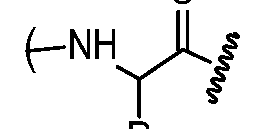
  • X2 is selected from Aib, Leu, (D)-Leu, Val , (D)-Val, Ile, (D)-Ile, and L or D isomer of an amino acid of Formula , wherein represents the point of attachment to Leu and R is selected from C 2-5 alkyl, C 3-7 cycloalkyl, C 3-7 cyclolalkyl-C 1-3 alkyl-, C 3-5 alkenyl, C 3-5 alkynyl, C 5- 7cycloalkenyl-CH2-, and C1-3haloalkyl-; or R along with the carbon to which it is attached, forms a C3-6cycloalkyl ring;
  • X3 is Gln or Lys; wherein, when X3 is Lys, the side chain amino ( ⁇ amino) group of Lys is acylated with a moiety: ⁇ U W Y Z wherein U
  • ABBREVIATIONS Aib 2-Aminoisobutyric acid ’ i-isopropylethylamine HOBt: 1-Hydroxybenztriazole DIPC: N,N’-Di-isopropylcarbodiimide THF: Tetrahydrofuran DCM: Dichloromethane DETAILED DESCRIPTION OF THE INVENTION “Pharmaceutically acceptable salt” according to the invention include acid addition salts formed with either organic or inorganic acids.
  • Suitable pharmaceutically acceptable salts of the compounds of the invention include acid addition salts which may be salts of inorganic acids such as hydrochloric acid, hydrobromic acid, phosphoric acid, and the like or of organic acids such as, for example, acetic acid, benzenesulfonic acid, methanesulfonic acid, benzoic acid, citric acid, lactic acid, fumaric acid, succinic acid, adipic acid, pimelic acid, suberic acid, azelaic acid, malic acid, tartaric acid, amino acids such as glutamic acid or aspartic acid, and the like.
  • inorganic acids such as hydrochloric acid, hydrobromic acid, phosphoric acid, and the like
  • organic acids such as, for example, acetic acid, benzenesulfonic acid, methanesulfonic acid, benzoic acid, citric acid, lactic acid, fumaric acid, succinic acid, adipic acid, pimelic acid, suberic
  • the pharmaceutically acceptable acid addition salt of the compounds of the present invention includes salts formed with the addition of one or more equivalents of acids, for example, monohydrochloride, dihydrochloride salts, etc. Salts can be prepared by any process under the purview of an ordinary person skilled in the art. (See Berge et al., J. Pharm. Sci. 1977, 66, 1-19; and Handbook of Pharmaceutical Salts, Properties, and Use; Stahl and Wermuth, Ed.; Wiley-VCH and VHCA: Zurich, Switzerland, 2002.).
  • alkyl refers to a saturated hydrocarbon chain radical that includes solely carbon and hydrogen atoms in the backbone, either linear or branched, having from 1 to 6 carbon atoms, both inclusive unless defined otherwise and which is attached to the rest of the molecule by a single bond.
  • Suitable non-limiting examples of alkyl groups include, e.g., methyl, ethyl, n-propyl, 1-methylethyl (isopropyl), n-pentyl, n- hexyl, etc.
  • haloalkyl refers to any “alkyl” having one or more hydrogen atom(s) replaced by a halogen atom, wherein halogen atom may be selected from fluorine, chlorine, bromine or iodine.
  • C2-5 alkyl refers to an alkyl chain having 2 to 5 carbon atoms.
  • alkenyl as used herein refers to a hydrocarbon chain containing at least one carbon-carbon double bond, and may have (E) or (Z) configuration. An alkenyl group may contain 2 to 8 carbon atoms unless specified otherwise.
  • alkenyl groups described herein may form part of a straight or branched chain. Suitable non-limiting examples of alkenyl groups include, e.g., ethylene, 2-propenyl (allyl), 2-methyl-2-propenyl and 2-butenyl.
  • alkynyl refers to a hydrocarbon chain having at least one carbon-carbon triple bond. An alkynyl group may contain 2 to 8 carbon atoms unless specified otherwise. Unless set forth or recited to the contrary all alkynyl groups described or claimed herein may form part of a straight or branched chains.
  • alkynyl groups include 2-propynyl, 3-butynyl and propargyl.
  • cycloalkyl refers to a non-aromatic monocyclic ring system of 3 to 7 carbon atoms unless specified otherwise. Cycloalkyl ring include, but are not limited to, cyclopropyl, cyclobutyl, cyclopentyl, cyclohexyl and cycloheptyl.
  • cycloalkenyl refers to a non-aromatic monocyclic 5 to 7 membered cycloalkyl ring system, with at least one carbon-carbon double bond.
  • cycloalkenylmethyl group includes cyclopentenylmethyl and cyclohexenylmethyl.
  • effective amount or amount effective refers to an amount of the compound which is sufficient, upon single or multiple dose administration(s) to a subject, in curing, alleviating, relieving or partially addressing the clinical manifestation of given disease or state and its complications beyond that expected in the absence of such treatment.
  • the result can be reduction and/or alleviation of the signs, symptoms, or causes of a disease, or any other desired alteration of a biological system.
  • a therapeutically effective amount can vary from subject to subject depending on age, weight, general condition of the subject, the condition being treated, the severity of the condition being treated, and the judgment of the prescribing physician.
  • the amino acid “norvaline” as used herein can be represented by structure and can also be defined by the chemical name as “2-aminopentanoic acid”.
  • the term (L)-norvaline and (D)-norvaline refers to “L” and “D” isomer of norvaline, respectively.
  • the amino acid “norleucine” as used herein can be represented by structure and can also be defined by the chemical name as “2-Aminohexanoic acid”.
  • the term (L)-norleucine and (D)-norleucine refers to “L” and “D” isomer of norleucine, respectively.
  • the amino acid “homoalanine” as used herein can be represented by structure and can also be defined by the chemical name as “2-aminobutyric acid”.
  • the term (L)-homoalanine and (D)-homoalanine refers to “L” and “D” isomer of homoalanine, respectively.
  • the present invention provides stable long acting GLP-1/GIP agonist polypeptides which may be useful for treating type 2 diabetes mellitus (T2D), diabetes with obesity, obesity and hyperlipidemia.
  • polypeptides of present invention are long acting which may not require frequent administration to a patient in need thereof. Accordingly, in one aspect, the present invention provides a polypeptide or a pharmaceutically acceptable salt thereof, comprising an amino acid sequence: Y-X1-E-G-T-F-T-S-D-Y-S-I-X2-L-Xaa15-K-I-A-Xaa19-X3-Xaa21-F-V-Xaa24-W-L-X4- A-G-G-P-S-S-G-A-P-P-P-S-X5-X6-X7-X8-X9-X10-X11 (Seq.
  • X1 is Aib, (L)-norvaline or (D)-norvaline
  • X2 is selected from Aib, Leu, (D)-Leu, Val, (D)-Val, Ile, (D)-Ile, and L or D isomer of an amino acid of Formula , wherein represents the point of attachment to Leu, R is selected from C2- 5alkyl, C 3-7 cycloalkyl, C 3-7 cyclolalkyl-C 1-3 alkyl-, C 3-5 alkenyl, C 3-5 alkynyl, C 5- 7cycloalkenyl-CH2-, and C1-3haloalkyl; or R along with the carbon to which it is attached to, forms C 3-6 cycloalkyl ring;
  • X3 is Gln or Lys; wherein, when X3 is Lys, the side chain amino ( ⁇ amino) group of Lys is acylated with a moiety: ⁇ U W Y Z wherein U is
  • X1 is Aib. In another embodiment of the present invention, X2 is Aib. In another embodiment of present invention, X4 is Ile. In another embodiment of the present invention, X1 is (L)-norvaline. In another embodiment of the present invention, X2 is Leu. In another embodiment of the present invention, X2 is Ile.
  • X2 is selected from a L or D isomer of an amino acid of the Formula , wherein ” represents the point of attachment to Leu, and R is selected from C2-5alkyl, C3-7cycloalkyl, C3-7cyclolalkyl-C1-3alkyl-, C3-5alkenyl, C3-5alkynyl, C5- 7cycloalkenyl-CH 2 -, and C 1-3 haloalkyl; or R along with the carbon to which it is attached to, forms C3-6cycloalkyl ring.
  • X2 is an amino acid of the Formula , which is present in “L” configuration.
  • X2 is an amino acid of the Formula , which is present in “D” configuration.
  • X2 is an amino acid of the Formula , wherein, R is C2-5alkyl.
  • R is selected from ethyl, n- propyl, isopropyl and n-butyl.
  • X2 is an amino acid of the Formula wherein, R is n-propyl, thus forming X2 as norvaline.
  • X2 is (L)-norvaline.
  • X2 is (D)-norvaline.
  • X2 is an amino acid of the Formula wherein, R is n-butyl, thus forming X2 as norleucine. In another embodiment, X2 is (L)-norleucine. In another embodiment, X2 is (D)-norleucine. In yet another embodiment of the present invention, X2 is an amino acid of the Formula wherein, R is ethyl, thus forming X2 as homoalanine. In another embodiment, X2 is (L)-homoalanine. In another embodiment, X2 is (D)-homoalanine.
  • X2 is an amino acid of the Formula wherein, R is C3-7cyclolalkyl-C1-3alkyl-. In another embodiment, R is selected from cyclopropylmethyl-, cyclopentylmethyl- and cyclohexylmethyl-.
  • X2 is an amino acid of the Formula In another embodiment of the present invention, X2 is an amino acid of the Formula In another embodiment of the present invention, X2 is an amino acid of the Formula In another embodiment of the present invention, X1 is Aib and X2 is L-isomer of an amino acid of the Formula , wherein, R is n-propyl, i.e., X2 is (L)-norvaline. In another embodiment of the present invention, X1 is Aib and X2 is L-isomer of an amino acid of the Formula , wherein, R is ethyl, i.e., X2 is (L)-homoalanine.
  • X1 is Aib and X2 is L-isomer of an amino acid of the Formula wherein, R is n-butyl, i.e., X2 is (L)-norleucine.
  • X1 is Aib and X2 is Leu.
  • X1 is Aib and X2 is Ile.
  • X1 is (L)-norvaline and X2 is Aib.
  • X1 is (L)-norvaline and X2 is L-isomer of an amino acid of the Formula , wherein, R is n-propyl, i.e., X2 is (L)-norvaline.
  • X1 is Aib or (L)-norvaline; and X2 is Aib, Leu, Ile or L isomer of an amino acid of the Formula , wherein, R is n-propyl and X1 and X2 are not both Aib.
  • X1 is Aib or (L)-norvaline; and X2 is Aib, Leu, Ile or L isomer of an amino acid of the Formula , wherein, R is n-butyl and X1 and X2 are not both Aib.
  • X1 is Aib or (L)-norvaline; and X2 is Aib, Leu, Ile or L isomer of an amino acid of the Formula , wherein, R is ethyl and X1 and X2 are not both Aib.
  • X1 is Aib or (L)-norvaline
  • X2 is Aib, Leu, Ile or L isomer of an amino acid of the Formula , wherein, R is n-propyl
  • X4 is Ile
  • X1 and X2 are not both Aib.
  • X1 is Aib or (L)-norvaline
  • X2 is Aib, Leu, Ile or L isomer of an amino acid of the Formula , wherein, R is n-propyl
  • X5 is Arg and X1 and X2 are not both Aib.
  • X3 is Lys, wherein the side chain amino ( ⁇ amino) group of Lys is acylated with a moiety: ⁇ U W Y Z
  • W is –C(O)-C(CH3)2-NH-].
  • W is –C(O)-NH-(CH2)p-NH-], wherein p is 3 or 4.
  • W is –C(O)-CH2-O-(CH2)2-O- (CH2)2-NH-].
  • Z is –C(O)-(CH 2 ) n -COOH and n is 16, 17, 18, 19 or 20. In a preferred embodiment n is 16, 18 or 20.
  • n 18 or 20 In yet another preferred embodiment of the present invention, Z is –C(O)-(CH 2 ) n -COOH and n is 16 or 18. In yet another preferred embodiment n is 18. In another embodiment of the present invention, W is –C(O)-C(CH3)2-NH-] and Z is –C(O)-(CH 2 ) n -COOH, wherein n is 18. In another embodiment of the present invention, W is –C(O)-C(CH 3 ) 2 -NH-] and Z is –C(O)-(CH2)n-COOH, wherein n is 16.
  • W is –C(O)-CH2-O-(CH2)2-O- (CH 2 ) 2 -NH-] and Z is —C(O)-(CH 2 ) n -COOH, wherein n is 16.
  • W is –C(O)-CH2-O-(CH2)2-O- (CH2)2-NH-] and Z is –C(O)-(CH2)n-COOH, wherein n is 18.
  • X3 is Gln; and X5 is Lys, wherein the side chain amino ( ⁇ amino) group of Lys is acylated with a moiety: ⁇ U' W' Y' Z' .
  • X1 is Aib or (L)-norvaline
  • X2 is Aib, Leu, Ile or L isomer of an amino acid of the Formula , wherein, R is n-propyl
  • X3 is Gln
  • X5 is Lys
  • X1 and X2 are not both Aib
  • W’ is –C(O)-C(CH 3 ) 2 -NH-].
  • W’ is –C(O)-NH-(CH 2 ) q -NH-], wherein q is 3 or 4.
  • W’ is –C(O)-CH2-O-(CH2)2-O- (CH 2 ) 2 -NH-].
  • Z’ is –C(O)-(CH2)m-COOH and m is 16, 17, 18, 19 or 20.
  • m is 16, 18 or 20.
  • m is 18 or 20.
  • Z’ is –C(O)-(CH2)m- COOH and m is 16 or 18.
  • m is 18.
  • W’ is –C(O)-C(CH 3 ) 2 -NH-] and Z’ is –C(O)-(CH2)m-COOH, wherein m is 18.
  • W’ is –C(O)-C(CH3)2-NH-] and Z’ is –C(O)-(CH 2 ) m -COOH, wherein m is 16.
  • W’ is –C(O)-CH 2 -O-(CH 2 ) 2 -O- (CH2)2-NH-] and Z’ is –C(O)-(CH2)m-COOH, wherein m is 16.
  • W’ is –C(O)-CH2-O-(CH2)2-O- (CH 2 ) 2 -NH-] and Z’ is –C(O)-(CH 2 ) m -COOH, wherein m is 18.
  • X1 is Aib
  • the C terminal amino acid is amidated as a C-terminal primary amide.
  • X5, X6, X7, X8, X9, X10 and X11 are absent.
  • the present invention provides a polypeptide or a pharmaceutically acceptable salt thereof, comprising an amino acid sequence: Y-Aib-E-G-T-F-T-S-D-Y-S-I-X2-L-D-K-I-A-Q-X3-A-F-V-Q-W-L-X4-A-G-G-P-S-S-G- A-P-P-P-S-X5-X6-X7-X8-X9-X10-X11 (Seq.
  • X2 is Leu, Ile, (L)-norvaline, (L)-homoalanine or (L)-norleucine
  • X4 is Ile
  • X5 is absent or Arg
  • X6 is absent or Lys
  • X7 is absent or Lys
  • X8 is absent or Lys
  • X9 is absent or Lys
  • X10 is absent or Lys
  • X11 is absent or Lys
  • X3 is Lys wherein the side chain amino ( ⁇ amino) group of Lys is acylated with a moiety: wherein U is –C(O)-CH2-O-(CH2)2-O-(CH2)2-NH- ⁇ wherein ⁇ is point of attachment with group W; W is selected from a group consisting of –C(O)-NH-(CH 2 ) p -NH-], –C(O)-C(CH 3 ) 2 -NH-] and –C(O)-CH2-O-(CH2)
  • X2 is (L)-norvaline. In one embodiment of the present invention, X2 is (L)-homoalanine. In one embodiment of the present invention, X2 is (L)-norleucine. In another embodiment of the present invention, X2 is Leu. In another embodiment of the present invention, X2 is Ile. In another embodiment of the present invention, X2 is (L)-norvaline and X5 is Arg. In another embodiment of present invention, W is –C(O)-C(CH3)2-NH-]. In another embodiment of the present invention, W is –C(O)-NH-(CH2)3-4-NH-].
  • W is –C(O)-CH2-O-(CH2)2-O- (CH 2 ) 2 -NH-].
  • Z is –C(O)-(CH 2 ) n -COOH and n is 16, 17, 18, 19 or 20.
  • n is 16, 18 or 20.
  • n is 18 or 20.
  • Z is –C(O)-(CH2)n-COOH and n is 16 or 18.
  • n is 18.
  • W is –C(O)-C(CH 3 ) 2 -NH-] and Z is –C(O)-(CH2)n-COOH, wherein n is 18.
  • W is –C(O)-C(CH3)2-NH-] and Z is –C(O)-(CH 2 ) n -COOH, wherein n is 16.
  • W is –C(O)-CH 2 -O-(CH 2 ) 2 -O- (CH2)2-NH-] and Z is –C(O)-(CH2)n-COOH, wherein n is 16.
  • W is –C(O)-CH2-O-(CH2)2-O- (CH 2 ) 2 -NH-] and Z is –C(O)-(CH 2 ) n -COOH, wherein n is 18.
  • the C terminal amino acid is amidated as a C-terminal primary amide.
  • X5, X6, X7, X8, X9, X10 and X11 are absent.
  • X2 is (L)-norvaline
  • X4 is Ile
  • X5, X6, X7, X8, X9, X10 and X11 are absent
  • W is–C(O)-C(CH3)2-NH-]
  • Z is –C(O)-(CH2)n-COOH, wherein n is 18.
  • the present invention provides a polypeptide or a pharmaceutically acceptable salt thereof, comprising an amino acid sequence: Y-X1-E-G-T-F-T-S-D-Y-S-I-X2-L-D-K-I-A-Q-X3-A-F-V-Q-W-L-X4-A-G-G-P-S-S-G- A-P-P-P-S (Seq.
  • X1 is Aib or (L)-norvaline
  • X2 is Aib, Leu, Ile, (L)-norvaline, (L)-homoalanine or (L)-norleucine
  • X4 is Ile
  • X3 is Lys wherein the side chain amino ( ⁇ amino) group of Lys is acylated with a moiety: ⁇ U W Y Z wherein U is –C(O)-CH2-O-(CH2)2-O-(CH2)2-NH- ⁇ wherein ⁇ is point of attachment with group W; W is selected from a group consisting of –C(O)-NH-(CH2)p-NH-], –C(O)-C(CH3)2-NH-] and –C(O)-CH2-O-(CH2)2-O-(CH2)2-NH-], wherein p is 3 or 4 and wherein ] is point of attachment with group Y; Y is–C(O)-(CH2)2-CH(CO
  • X1 is Aib. In another embodiment of the present invention, X1 is (L)-norvaline. In another embodiment of the present invention, X2 is Aib. In another embodiment of the present invention, X2 is (L)-norvaline. In another embodiment of the present invention, X2 is (L)-norleucine. In another embodiment of the present invention, X2 is (L)-homoalanine. In another embodiment of the present invention, X2 is Leu. In another embodiment of the present invention, X2 is Ile. In another embodiment of the present invention, X1 is Aib and X2 is (L)-norvaline.
  • X1 is Aib and X2 is (L)-norleucine. In another embodiment of the present invention, X1 is Aib and X2 is (L)- homoalanine. In another embodiment of the present invention, X1 is (L)-norvaline and X2 is Aib. In another embodiment of the present invention, X1 is Aib and X2 is Leu. In another embodiment of the present invention, X1 is Aib and X2 is Ile. In another embodiment of the present invention, X1 is (L)-norvaline and X2 is (L)- norvaline.
  • W is –C(O)-C(CH 3 ) 2 -NH-]. In another embodiment of the present invention, W is–C(O)-NH-(CH 2 ) 3-4 -NH-]. In another embodiment of the present invention, W is –C(O)-CH 2 -O-(CH 2 ) 2 -O- (CH2)2-NH-]. In another embodiment of the present invention, Z is –C(O)-(CH2)n-COOH and n is 16, 17, 18, 19 or 20. In a preferred embodiment n is 16, 18 or 20. In yet another preferred embodiment n is 18 or 20. In another preferred embodiment of the present invention, Z is –C(O)-(CH2)n-COOH and n is 16 or 18.
  • n is 18.
  • W is –C(O)-C(CH3)2-NH-] and Z is –C(O)-(CH2)n-COOH, wherein n is 18.
  • W is –C(O)-C(CH 3 ) 2 -NH-] and Z is –C(O)-(CH2)n-COOH, wherein n is 16.
  • W is –C(O)-CH2-O-(CH2)2-O- (CH 2 ) 2 -NH-] and Z is –C(O)-(CH 2 ) n -COOH, wherein n is 16.
  • W is –C(O)-CH2-O-(CH2)2-O- (CH 2 ) 2 -NH-] and Z is –C(O)-(CH 2 ) n -COOH, wherein n is 18.
  • X1 is Aib; X2 is (L)-norvaline; and X3 is Lys wherein the side chain amino ( ⁇ amino) group of Lys is acylated with a moiety: wherein W is–C(O)-C(CH 3 ) 2 -NH-]; Z is –C(O)-(CH 2 ) n -COOH and n is 18.
  • the C terminal amino acid is amidated as a C-terminal primary amide.
  • the present invention provides a polypeptide or pharmaceutically acceptable salt thereof comprising an amino acid sequence selected from the group consisting of: i.) Tyr Aib Glu Gly Thr Phe Thr Ser Asp Tyr Ser Ile L-norvaline Leu Asp Lys Ile Ala Gln Lys Ala Phe Val Gln Trp Leu Ile Ala Gly Gly Pro Ser Ser Gly Ala Pro Pro Pro Ser-NH 2 (Seq ID: 04) ii.) Tyr L-norvaline Glu Gly Thr Phe Thr Ser Asp Tyr Ser Ile Aib Leu Asp Lys Ile Ala Gln Lys Ala Phe Val Gln Trp Leu Ile Ala Gly Gly Pro Ser Ser Gly Ala Pro Pro Pro Ser-NH2 (Seq ID: 05) iii.) Tyr Aib Glu Gly Thr P
  • the groups U, W, Y and Z in the moiety ⁇ U W Y Z or the groups U’, W’, Y’ and Z’ in the moiety ⁇ U' W' Y' Z' have meaning as defined in this specification and should not be intrpretted as or mixed with the single letter code of the amino acids;
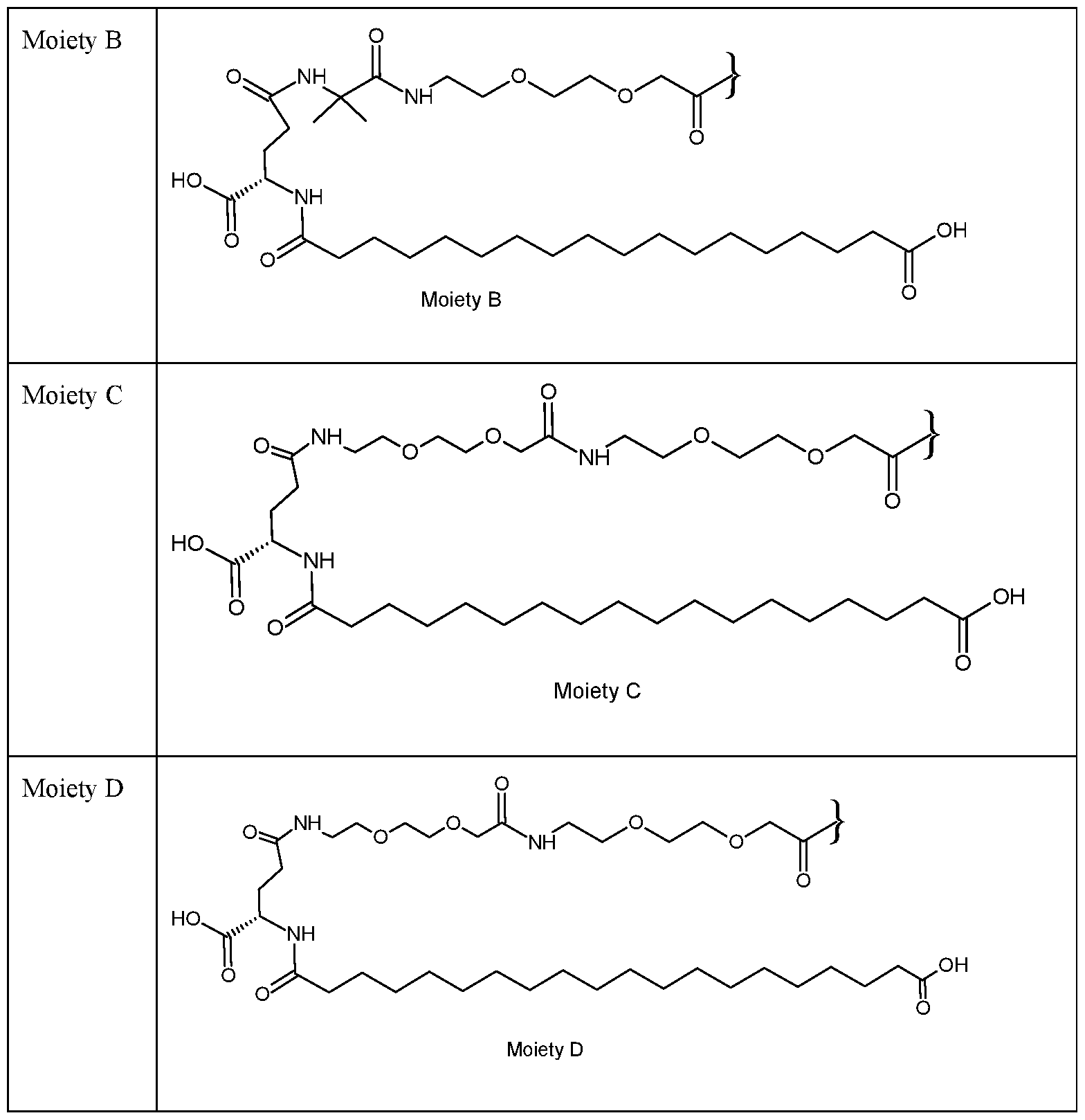
  • the group ⁇ -U-W-Y-Z and/or ⁇ -U’-W’-Y’-Z’ is selected from the representative structures of Moiety A, B, C and D as disclosed in Table 2.
  • the polypeptide sequences mentioned in the specification are represented by the single letter code of the amino acids as approved by IUPAC.
  • the present invention provides a method of treating or preventing hyperglycemia, type 2 diabetes, impaired glucose tolerance, type 1 diabetes, obesity, hypertension, hyperlipidemia, syndrome X, dyslipidemia, cognitive disorders, atherosclerosis, myocardial infarction, coronary heart disease, stroke, inflammatory bowel syndrome, dyspepsia, alcoholism and gastric ulcers in a patient, comprising administering to a patient in need thereof, an effective amount of a polypeptide of the present invention or a pharmaceutically acceptable salt thereof.
  • the present invention provides a method of treatment of type 2 diabetes in a patient comprising administering to a patient in need of such treatment an effective amount of a compound of the present invention, or a pharmaceutically acceptable salt thereof.
  • the present invention provides a method of treatment of obesity in a patient comprising administering to a patient in need of such treatment an effective amount of a compound of the present invention, or a pharmaceutically acceptable salt thereof.
  • the present invention provides a method of treatment of hyperlipidemia in a patient comprising administering to a patient in need of such treatment an effective amount of a compound of the present invention, or a pharmaceutically acceptable salt thereof.
  • the present invention provides a pharmaceutical composition
  • a pharmaceutical composition comprising a polypeptide of the present invention or a pharmaceutically acceptable salt thereof with one or more of a pharmaceutically acceptable carrier, diluent, or excipient.
  • the compounds of the invention are preferably formulated as pharmaceutical compositions administered by parenteral routes (e.g., subcutaneous, intravenous, intraperitoneal, intramuscular or transdermal).
  • parenteral routes e.g., subcutaneous, intravenous, intraperitoneal, intramuscular or transdermal.
  • Such pharmaceutical compositions and processes for preparing same are well known in the art. (See, e.g., Remington: The Science and 50 Practice of Pharmacy (D. B. Troy, Editor, 21st Edition, Lippincott, Williams & Wilkins, 2006).
  • the polypeptides of the present invention or the pharmaceutically acceptable salts thereof for use as a medicament.
  • polypeptides of the present invention or the pharmaceutically acceptable salts thereof for use in the treatment or prevention of a disease in a patient, wherein said disease is optionally selected from the group consisting of hyperglycemia, type 2 diabetes, impaired glucose tolerance, type 1 diabetes, obesity, hypertension, hyperlipidemia, syndrome X, dyslipidemia, cognitive disorders, atherosclerosis, myocardial infarction, coronary heart disease, stroke, inflammatory bowel syndrome, dyspepsia, alcoholism and gastric ulcers.
  • the polypeptide of the present invention or the pharmaceutically acceptable salts thereof may be provided simultaneously, separately, or sequentially in combination with an effective amount of one or more additional therapeutic agents.
  • the pharmaceutical composition according to the present invention comprise a polypeptide of the present invention or a pharmaceutically acceptable salt thereof for use as a medicament.
  • the pharmaceutical composition according to the present invention comprise a polypeptide of the present invention or a pharmaceutically acceptable salt thereof, for use in the treatment or prevention of a disease in a patient, wherein said disease is optionally selected from the group consisting of hyperglycemia, type 2 diabetes, impaired glucose tolerance, type 1 diabetes, obesity, hypertension, hyperlipidemia, syndrome X, dyslipidemia, cognitive disorders, atherosclerosis, myocardial infarction, coronary heart disease, stroke, inflammatory bowel syndrome, dyspepsia, alcoholism and gastric ulcers.
  • the pharmaceutical composition according to the present invention comprise a polypeptide of the present invention or a pharmaceutically acceptable salt thereof is provided simultaneously, separately, or sequentially in combination with an effective amount of one or more additional therapeutic agents.
  • the present invention may involve one or more embodiments. It is to be understood that the embodiments below are illustrative of the present invention and are not intended to limit the claims to the specific embodiments exemplified. It is also to be understood that the embodiments defined herein may be used independently or in conjunction with any definition, any other embodiment defined herein. Thus the invention contemplates all possible combinations and permutations of the various independently described embodiments. Other features of the present invention will become apparent from the following examples.
  • HPLC Waters e2695 Alliance; Detector: Acquity- QDa.
  • the final compounds of the present disclosure were purified by preparative HPLC procedure as outlined below: Preparative HPLC: WATERS 2555 Quaternary gradient module (Max Total Flow: 300 mL/min, Max Pressure: 3000 psi) or Shimadzu LC-8A (Max Total Flow: 150 mL, Max Pressure: 30 Mpa), Column: Phenyl, 10 ⁇ Flow: 75mL/min Mobile Phase: The purity of the compounds of the present disclosure were analyzed by one of the RP- HPLC methods as outlined below: HPLC Method A: Column: Xbridge Peptide BEH C18 (4.6 mm x 250 mm, 3.5 ⁇ ) Eluent: Mobile Phase A: Buffer: Acetonitrile (900:100) Mobile phase B: Buffer: Acetonitrile (300:700) Buffer: Potassium dihydrogen orthophosphate in water, pH adjusted to 3.0 ⁇ 0.1 with orthophospho
  • HPLC Method B Column: XSelect CSH C18 (4.6 mm x 150 mm, 2.5 ⁇ ) Eluent: Mobile Phase A: Buffer: Acetonitrile (900:100) Mobile phase B: Buffer: Acetonitrile (300:700) Buffer: Potassium dihydrogen orthophosphate in water, pH adjusted to 3.0 ⁇ 0.1 with orthophosphoric acid Flow rate: 0.8 mL/min Detection: UV detection at 210 nm Column Temperature: 65 °C Sample Tray temperature: 5 °C Run Time: 90 min.
  • HPLC Method C Column: Xbridge Peptide BEH C18 (4.6 mm x 250 mm, 3.5 ⁇ ) Eluent: Mobile Phase A: Buffer: Acetonitrile (900:100) Mobile phase B: Buffer: Acetonitrile (300:700) Buffer: Potassium dihydrogen orthophosphate in water, pH adjusted to 3.0 ⁇ 0.1 with orthophosphoric acid Flow rate: 1.0 mL/min Detection: UV detection at 210 nm Column Temperature: 65 °C Sample Tray temperature: 5 °C Run Time: 60 min.
  • HPLC Method D Column: XSelect CSH C18 (4.6 mm x 150 mm, 2.5 ⁇ ) Eluent: Mobile Phase A: Buffer: Acetonitrile (900:100) Mobile phase B: Buffer: Acetonitrile (300:700) Buffer: Potassium dihydrogen orthophosphate in water, Added Triethylamine and pH adjusted to 2.5 ⁇ 0.1 with orthophosphoric acid Flow rate: 0.5 mL/min Detection: UV detection at 214 nm Column Temperature: 60 °C Sample Tray temperature: 10 °C Run Time: 90 min.
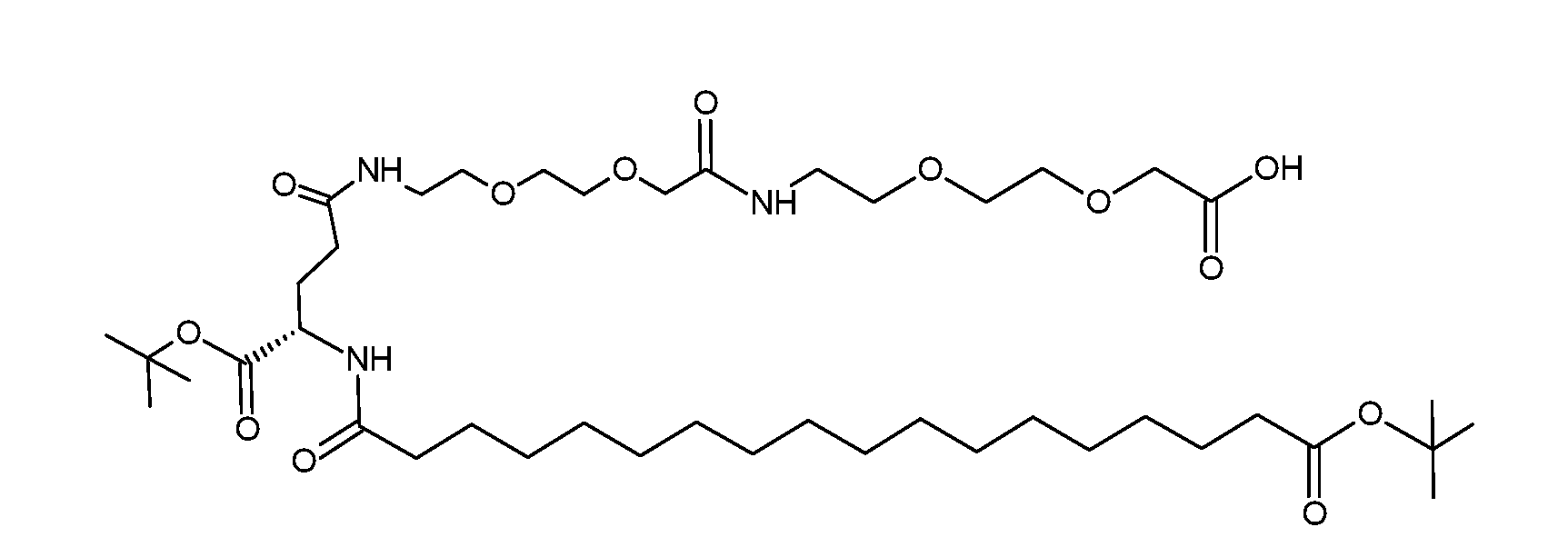
  • Example 1 Preparation of 2-[2-[[2-[[(4S)-5-tert-butoxy-4-[(20-tert-butoxy-20-oxo- icosanoyl)amino]-5-oxo-pentanoyl]amino]-2-methyl-propanoyl] amino]ethoxy]ethoxy]acetic acid (Moiety A-di-tert-butyl ester) Moiety A-di-tert-butyl ester was prepared using solid phase synthesis using 2-chlorotrityl chloride resin.2-[2-(2-Fmoc-aminoethoxy)ethoxy]acetic acid was attached to 2-chlorotrityl chloride resin in presence of DIPEA to yield 2-[2-(2-Fmoc-aminoethoxy)ethoxy]acetic acid-2-Cl-Trt-Resin.
  • the Fmoc protecting group was removed by selective de-blocking of amino group using piperidine followed by coupling with Fmoc-Aib-OH in THF using DIPC and HOBt which yielded 2-[2-[2-[(2-Fmoc-amino-2-methyl- propanoyl)amino]ethoxy]ethoxy]acetic acid-2-Cl-Trt-Resin.
  • the Fmoc group was removed by selective de-blocking using piperidine and the free amino group was then coupled with Fmoc-Glu-OtBu using HOBt and DIPC to yield 2-[2-[2-[[2-[[(4S)-4-Fmoc-amino-5-tert- butoxy-5-oxo-pentanoyl]amino]-2-methyl-propanoyl]amino] ethoxy]ethoxy]acetic acid-2- Cl-Trt-Resin.
  • the Fmoc group of the resultant compound was selectively de-blocked using piperidine and the free amino group was then coupled with 20-(tert-butoxy)-20- oxoicosanoic acid to give 2-[2-[[2-[[(4S)-5-tert-butoxy-4-[(20-tert-butoxy-20-oxo- icosanoyl)amino]-5-oxo-pentanoyl]amino]-2-methyl-propanoyl]amino]ethoxy] ethoxy]acetic acid-2-Cl-Trt-Resin.
  • Example 2 Preparation of 2-[2-[2-[[2-[[(4S)-5-tert-butoxy-4-[(18-tert-butoxy-18-oxo- octadecanoyl)amino]-5-oxo-pentanoyl]amino]-2-methyl- propanoyl]amino]ethoxy]ethoxy]acetic acid Moiety B-di-tert-butyl ester Moiety B-di-tert-butyl ester was prepared using solid phase synthesis using 2-chlorotrityl chloride resin.2-[2-(2-Fmoc-aminoethoxy)ethoxy]acetic acid was attached to 2-chlorotrityl chloride resin in presence of DIPEA to yield 2-[2-(2-Fmoc-aminoethoxy)ethoxy]acetic acid-2-Cl-Trt-Resin.
  • the Fmoc protecting group was removed by selective de-blocking of amino group using piperidine followed by coupling with Fmoc-Aib-OH in THF using DIPC and HOBt which yielded 2-[2-[2-[(2-Fmoc-amino-2-methyl- propanoyl)amino]ethoxy]ethoxy]acetic acid-2-Cl-Trt-Resin.
  • the Fmoc group was removed by selective de-blocking using piperidine and the free amino group was coupled with Fmoc- Glu-OtBu using HOBt and DIPC to yield 2-[2-[2-[[2-[[(4S)-4-Fmoc-amino-5-tert-butoxy- 5-oxo-pentanoyl]amino]-2-methyl-propanoyl] amino]ethoxy]ethoxy]acetic acid-2-Cl-Trt- Resin.
  • the Fmoc group of the resultant compound was selectively de-blocked using piperidine and the free amino group was then coupled with octadecanedioic acid mono tert butyl ester to give 2-[2-[[2-[[(4S)-5-tert-butoxy-4-[(18-tert-butoxy-18-oxo- octadecanoyl)amino]-5-oxo-pentanoyl]amino]-2-methyl-propanoyl]- amino]ethoxy]ethoxy]acetic acid-2-Cl-Trt-Resin.
  • Example 3 Preparation of 2-[2-[2-[[2-[2-[2-[[5-tert-butoxy-4-[(18-tert-butoxy-18-oxo- octadecanoyl)amino]-5-oxo- pentanoyl]amino]ethoxy]ethoxy]acetyl]amino]ethoxy]ethoxy]acetic acid (Moiety C- di-tert-butyl ester) Moiety C-di-tert-butyl ester Moiety C-di-tert-butyl ester was prepared using solid phase synthesis using 2-chlorotrityl chloride resin.2-[2-(2-Fmoc-aminoethoxy)ethoxy]acetic acid was attached to 2-chlorotrityl chloride resin in presence of DIPEA to yield 2-[2-(2-Fmoc-aminoethoxy)ethoxy]acetic acid-2-Cl-Trt-Resin.
  • the Fmoc protecting group was removed by selective de-blocking of amino group using piperidine followed by coupling with 2-[2-(2-Fmoc- aminoethoxy)ethoxy]acetic acid in THF using DIPC and HOBt which yielded ⁇ (Fmoc- amino-ethoxy)-ethoxy ⁇ -acetyl- ⁇ (-amino-ethoxy)-ethoxy ⁇ -acetic acid-2-Cl-Trt-Resin
  • the Fmoc group was removed by selective de-blocking using piperidine and the free amino group was coupled with Fmoc-Glu-OtBu using HOBt and DIPC to yield Fmoc- Glu( ⁇ (amino-ethoxy)-ethoxy ⁇ -acetyl- ⁇ (-amino-ethoxy)-ethoxy ⁇ -acetic acid-2-Cl-Trt- Resin )-OtBu
  • the Fmoc group of the resultant compound was selectively de-blocked using
  • Example 4 Preparation of 2-[2-[2-[[2-[2-[2-[2-[[5-tert-butoxy-4-[(20-tert-butoxy-20-oxo- icosanoyl)amino]-5-oxo- pentanoyl]amino]ethoxy]ethoxy]acetyl]amino]ethoxy]ethoxy]acetic acid (Moiety D- di-tert-butyl ester) Moiety D- di-tert-butyl ester Moiety D-di-tert-butyl ester was prepared using solid phase synthesis using 2-chlorotrityl chloride resin as schematically represented below.
  • the Fmoc protecting group was removed by selective de-blocking of amino group using piperidine followed by coupling with 2-[2-(2-Fmoc-aminoethoxy)ethoxy]acetic acid in THF using DIPC and HOBt which yielded ⁇ (Fmoc-amino-ethoxy)-ethoxy ⁇ -acetyl- ⁇ (-amino-ethoxy)- ethoxy ⁇ -acetic acid-2-Cl-Trt-Resin
  • the Fmoc group was removed by selective de-blocking using piperidine and the free amino group was coupled with Fmoc-Glu-OtBu using HOBt and DIPC to yield Fmoc-Glu( ⁇ (amino-ethoxy)-ethoxy ⁇ -acetyl- ⁇ (-amino-ethoxy)-ethoxy ⁇ - acetic acid-2-Cl-Trt-Resin )-OtBu
  • the Fmoc group of the resultant compound was selective
  • Example 5 Preparation of Compound 1
  • the parent peptide was synthesized by solid-phase method.
  • the starting resin used for synthesis was Fmoc-Rink amide resin.
  • Selective de-blocking of Fmoc protected amino group of rink amide resin was carried out using piperidine to yield Rink amide resin which was then coupled with Fmoc-Ser(tBu)-OH to yield Fmoc-Ser(tBu)-Rink amide Resin.
  • This coupling reaction was performed by using diisopropylcarbodiimide, N- hydroxybenzotriazole (DIPC-HOBt) as coupling reagent. This completed one cycle.
  • DIPC-HOBt diisopropylcarbodiimide, N- hydroxybenzotriazole
  • Acetic anhydride and diisopropylethyl amine/pyridine was used to terminate/cap the uncoupled amino groups at every amino acid coupling.
  • Selective de-blocking of the amino group of Fmoc-Ser(tBu)-Rink amide Resin was done using piperidine.
  • coupling with Fmoc- Pro-OH using HOBt and DIPC yielded Fmoc-Pro-Ser(tBu)-rink amide Resin.
  • Acetic anhydride and diisopropylethyl amine/pyridine were used to terminate the uncoupled amino groups at every amino acid coupling.
  • the above three steps i.e., selective Capping, deblocking of Fmoc- protection of amino acid attached to the resin and coupling of next amino acid residue in sequence with Fmoc- protected amino group, were repeated for the remaining 37 amino acid residues.
  • the selective deblocking i.e., capping of uncoupled amino group done by using acetic anhydride and diisopropylethylamine/pyridine, deprotection of Fmoc group was done using piperidine and coupling with next Fmoc protected amino acid was done using HOBt/DIPC.
  • the side chain of the Fmoc-protected amino acids were protected orthogonally, e.g., hydroxyl group of Serine, Tyrosine or Threonine were protected with tert-butyl(-tBu) group, amino group of Lysine was protected with tert-butyloxycarbonyl (-Boc) and (4,4-dimethyl-2,6- dioxocyclohex-1-ylidene)-3-methylbutyl (IVDde) group respectively and carboxylic acid groups of aspartic acid or glutamic acid were protected with –tBu group and amide group of glutamine was protected with trityl (-Trt) group.
  • hydroxyl group of Serine, Tyrosine or Threonine were protected with tert-butyl(-tBu) group
  • amino group of Lysine was protected with tert-butyloxycarbonyl (-Boc) and (4,4-dimethyl-2,6- dioxocyclohe
  • Example 7 Synthesis of Compound 3
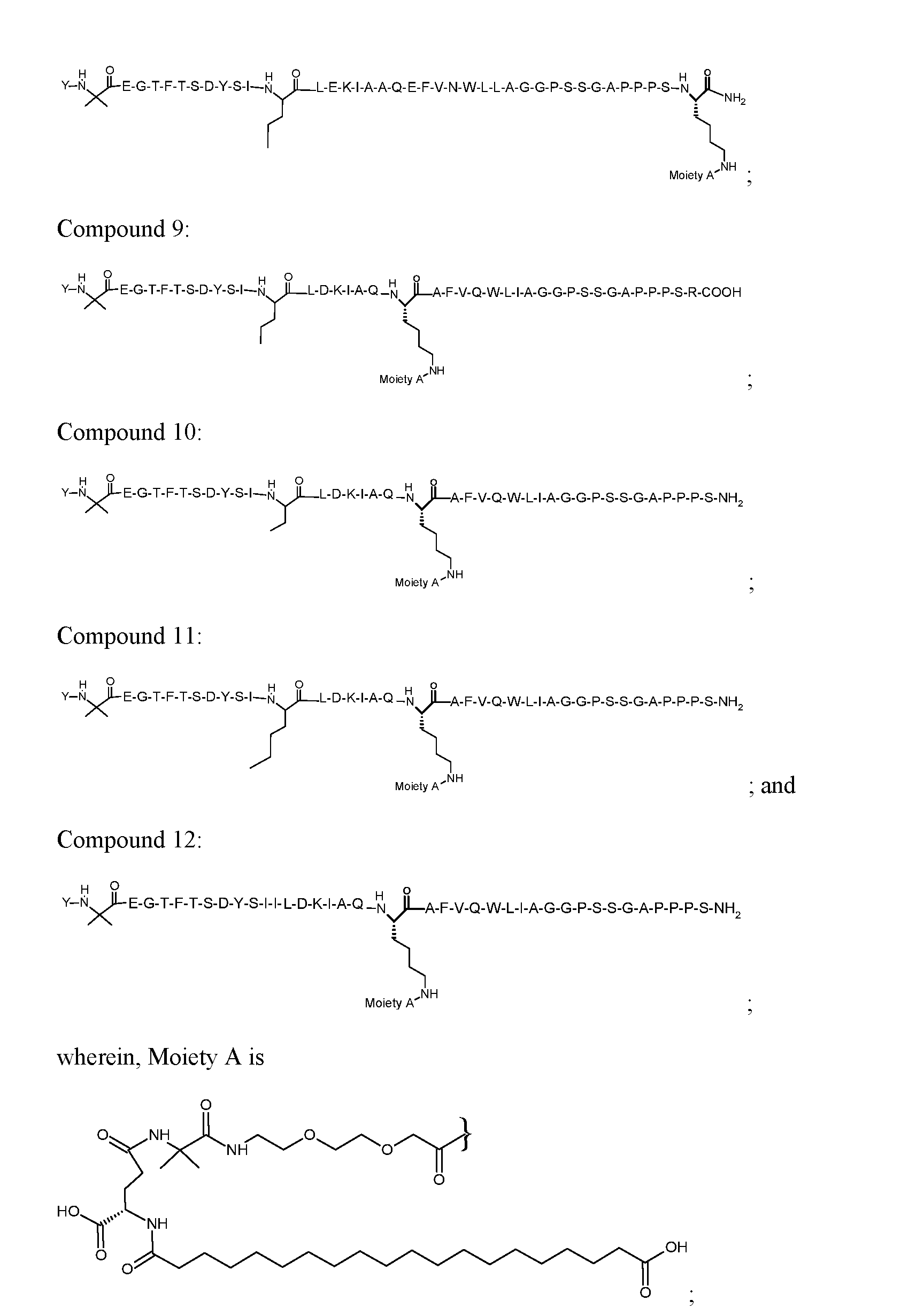
  • Compound 3 was prepared by solid phase method as per the analogous process given for Example 5, wherein Fmoc-Leu-OH was used at position 13 instead of Fmoc-[L-norvaline]- OH to get Boc-Tyr(tBu)-Aib-Glu(OtBu)-Gly-Thr(tBu)-Phe-Thr(tBu)-Ser(tBu)-Asp(OtBu)- Tyr(tBu)-Ser(tBu)-Ile-Leu–Leu-Asp(OtBu)-Lys(Boc)-Ile-Ala-Gln(Trt)-Lys(IVDde)-Ala- Phe-Val-Gln(Trt)-Trp-Leu-Ile-Ala-Gly-Gly-Pro-Ser(tBu)-Ser(tBu)-Gly-Ala-Pro-Pro-Pro- Ser(tBu)-
  • Example 8 Synthesis of Compound 4
  • Compound 4 was prepared by solid phase method as per the analogous process given for Example 5, wherein Fmoc-[L-norvaline]-OH was used at position 2 instead of Fmoc-Aib- OH to get Boc-Tyr(tBu)-[L-norvaline]-Glu(OtBu)-Gly-Thr(tBu)-Phe-Thr(tBu)-Ser(tBu)- Asp(OtBu)-Tyr(tBu)-Ser(tBu)-Ile- [L-norvaline]–Leu-Asp(OtBu)-Lys(Boc)-Ile-Ala- Gln(Trt)-Lys(IVDde)-Ala-Phe-Val-Gln(Trt)-Trp-Leu-Ile-Ala-Gly-Gly-Pro-Ser(tBu)- Ser(tBu)-Gly-Ala-
  • Example 9 Synthesis of Compound 5 De-protection of IVDde group of peptide resin: Boc-Tyr(tBu)-Aib-Glu(OtBu)-Gly- Thr(tBu)-Phe-Thr(tBu)-Ser(tBu)-Asp(OtBu)-Tyr(tBu)-Ser(tBu)-Ile-[L-norvaline]–Leu- Asp(OtBu)-Lys(Boc)-Ile-Ala-Gln(Trt)-Lys(IVDde)-Ala-Phe-Val-Gln(Trt)-Trp-Leu-Ile- Ala-Gly-Gly-Pro-Ser(tBu)-Ser(tBu)-Gly-Ala-Pro-Pro-Pro-Ser(tBu)-resin (prepared as per Example 5) was carried out using hydrazine hydrate and then it was coupled with Moiety C-d
  • Example 10 Synthesis of Compound 6 Compound 6 was prepared by solid phase method as per the analogous process given for Example 9, wherein coupling with Moiety D-di-tert-butyl ester was carried out, followed by cleavage, de protection and preparative HPLC purification as per Example 9 resulted in compound 6.
  • Example 12 Synthesis of Compound 8
  • the parent peptide was synthesized by solid-phase method.
  • the starting resin used for the synthesis was Fmoc-Rink amide resin.
  • the coupling was performed by using DIPC-HOBt to yield Fmoc- Lys(IVDde)-Rink amide Resin, this completed one cycle.
  • Acetic anhydride and diisopropylethyl amine/pyridine was used to terminate/cap the uncoupled amino groups at the end of every amino acid coupling.
  • the side chain of the Fmoc-protected amino acids used were protected orthogonally, e.g., hydroxyl group of Serine, Tyrosine or Threonine were protected with tert-butyl(-tBu) group, amino group of Lysine was protected with tert-butyloxycarbonyl (-Boc) and (4,4-dimethyl-2,6- dioxocyclohex-1-ylidene)-3-methylbutyl (IVDde) group respectively and carboxylic acid groups of aspartic acid or glutamic acid were protected with –tBu group, amide group of glutamine and asparagine was protected with trityl (-Trt) group.
  • hydroxyl group of Serine, Tyrosine or Threonine were protected with tert-butyl(-tBu) group
  • amino group of Lysine was protected with tert-butyloxycarbonyl (-Boc) and (4,4-dimethyl-2,6- di
  • the coupling was performed by using diisopropylcarbodiimide, N- hydroxybenzotriazole (DIC-HOBt) as coupling reagent in presence of 4- dimethylaminopyridine (DMAP) which yielded Fmoc-Arg(Pbf)-Wang Resin.
  • DMAP 4- dimethylaminopyridine
  • Selective de- blocking of amino group of Fmoc-Arg(Pbf)-Wang Resin using piperidine followed by coupling with Fmoc-Ser(tBu)-OH using HOBt/DIPC yielded Fmoc-Ser(tBu)-Arg(Pbf)- Wang Resin. This completed one cycle.
  • Acetic anhydride and diisopropylethyl amine/pyridine were used to terminate the uncoupled amino groups at every amino acid coupling.
  • the above two steps i.e., selective deblocking of Fmoc- protection of amino acid attached to the resin and coupling of next amino acid residue in sequence with Fmoc-protected amino group were repeated for the remaining 38 amino acid residues.
  • the side chain of the Fmoc- protected amino acids were protected orthogonally, e.g., hydroxyl group of Serine, Tyrosine or Threonine were protected with tert-butyl(-tBu) group, amino group of Lysine was protected with tert-butyloxycarbonyl (-Boc) and (4,4-dimethyl-2,6-dioxocyclohex-1- ylidene)-3-methylbutyl (IVDde) group respectively and carboxylic acid groups of aspartic acid or glutamic acid were protected with –tBu group.
  • Example 15 Synthesis of Compound 11
  • Compound 11 was prepared by solid phase method as per the analogous process given for Example 5, wherein, Fmoc-norleucine was used at position 13 instead of Fmoc-[L- norvaline]-OH to get Boc-Tyr(tBu)-Aib-Glu(OtBu)-Gly-Thr(tBu)-Phe-Thr(tBu)-Ser(tBu)- Asp(OtBu)-Tyr(tBu)-Ser(tBu)-Ile-Norleucine-Leu-Asp(OtBu)-Lys(Boc)-Ile-Ala-Gln(Trt)- Lys(IVDde)-Ala-Phe-Val-Gln(Trt)-Trp-Leu-Ile-Ala-Gly-Gly-Pro-Ser(tBu)-Ser(tBu)-Gly- Ala-Pro-Pro-Pro-Ser(
  • Example 16 Synthesis of Compound 12 Compound 12 was prepared by solid phase method as per the analogous process given for Example 5, wherein, Fmoc-Ile-OH was used at position 13 instead of Fmoc-[L-norvaline]- OH to get Boc-Tyr(tBu)-Aib-Glu(OtBu)-Gly-Thr(tBu)-Phe-Thr(tBu)-Ser(tBu)- Asp(OtBu)-Tyr(tBu)-Ser(tBu)-Ile-Ile-Leu-Asp(OtBu)-Lys(Boc)-Ile-Ala-Gln(Trt)- Lys(IVDde)-Ala-Phe-Val-Gln(Trt)-Trp-Leu-Ile-Ala-Gly-Gly-Pro-Ser(tBu)-Ser(tBu)-Gly- Ala-Pro-Pro-Pro-Ser(tBu)-
  • Baseline blood glucose was measured from all the animals. All the animals were administered with test items subcutaneously. Blood glucose was measured at 4hr, 8hr, 12hr, 24hr, 48hr, 72hr and 96hr post treatment. Delta blood glucose (mM) was calculated. The results are provided in Table 3.
  • body weight changes and cumulative food consumption was measured at 48hr and 96hr post treatment. The results of body weight changes are provided in Table 4 and cumulative food consumption are provided in Table 5.
  • Table 4 The results of body weight changes are provided in Table 4 and cumulative food consumption are provided in Table 5.
  • Table 3. Effect on blood glucose *p ⁇ 0.05, **p ⁇ 0.01, ***p ⁇ 0.001 vs Diabetic Control; Two way ANOVA followed by Bonferroni’s post-test.
  • Table 4. Effect on body weight *p ⁇ 0.05, **p ⁇ 0.01, ***p ⁇ 0.001 vs. Diabetic Control; One way ANOVA followed by Bonferroni’s post test.
  • the results demonstrate that Compound 1 and Compound 2 showed statistically significant blood glucose reduction upto 96hr post treatment.
  • Example 16 Cellular cAMP assay In-vitro potency determination was performed using a cAMP assay.
  • G protein coupled receptor (GPCR) activation following ligand binding initiates a series of second messenger cascades that results in a cellular response.
  • Signaling by the GLP-1R and GIP-R involves activation of adenylate cyclase and cAMP production.

Landscapes

  • Health & Medical Sciences (AREA)
  • Life Sciences & Earth Sciences (AREA)
  • Chemical & Material Sciences (AREA)
  • Organic Chemistry (AREA)
  • General Health & Medical Sciences (AREA)
  • Medicinal Chemistry (AREA)
  • Diabetes (AREA)
  • Engineering & Computer Science (AREA)
  • Public Health (AREA)
  • Animal Behavior & Ethology (AREA)
  • Pharmacology & Pharmacy (AREA)
  • Veterinary Medicine (AREA)
  • Bioinformatics & Cheminformatics (AREA)
  • Endocrinology (AREA)
  • Proteomics, Peptides & Aminoacids (AREA)
  • Obesity (AREA)
  • Nuclear Medicine, Radiotherapy & Molecular Imaging (AREA)
  • Hematology (AREA)
  • General Chemical & Material Sciences (AREA)
  • Chemical Kinetics & Catalysis (AREA)
  • Gastroenterology & Hepatology (AREA)
  • Zoology (AREA)
  • Molecular Biology (AREA)
  • Biophysics (AREA)
  • Biochemistry (AREA)
  • Genetics & Genomics (AREA)
  • Immunology (AREA)
  • Epidemiology (AREA)
  • Toxicology (AREA)
  • Emergency Medicine (AREA)
  • Child & Adolescent Psychology (AREA)
  • Medicines That Contain Protein Lipid Enzymes And Other Medicines (AREA)
  • Peptides Or Proteins (AREA)
  • Theoretical Computer Science (AREA)
  • Physics & Mathematics (AREA)
  • General Physics & Mathematics (AREA)
  • Software Systems (AREA)
  • Sewing Machines And Sewing (AREA)
  • Pharmaceuticals Containing Other Organic And Inorganic Compounds (AREA)
  • Data Mining & Analysis (AREA)

Abstract

The present invention relates to long acting glucagon-like peptide-1 and human glucose-dependent insulinotropic polypeptide (GIP) dual agonist polypeptide which may be useful for treating type 2 diabetes mellitus (T2D), diabetes with obesity, obesity and hyperlipidemia.

Description

  GLP-1/GIP DUAL AGONISTS FIELD OF THE INVENTION The present invention relates to long acting glucagon-like peptide-1 (GLP-1) and human glucose-dependent insulinotropic polypeptide/ Gastro Intestinal Peptide (GIP) dual agonist polypeptides which may be useful for treating type 2 diabetes mellitus (T2D), diabetes with obesity, obesity and hyperlipidemia. BACKGROUND OF THE INVENTION Treatment of type 2 diabetes mellitus (T2DM) with glucagon-like peptide-1 receptor agonists (GLP-1RAs) leads to improved glycaemic control, reduced body weight, and improvement in several cardiovascular risk factors. These benefits are mediated by the glucagon-like peptide-1 receptor (GLP-1R), a member of the class B family of G protein- coupled receptors, that is expressed in pancreatic beta-cells, various cell types of the gastrointestinal tract and neurons throughout both the central (CNS) and the peripheral nervous systems. Activation of GLP-1R signaling by GLP-1RAs improves glucose homeostasis by enhancing glucose-stimulated insulin secretion, delaying gastric emptying and decreasing plasma glucagon levels, and reduces body weight by activating anorexigenic pathways in the brain. Due to the glucose-dependence of beta-cell activation, GLP-1RAs are not associated with increased risk of hypoglycaemia. While the broad metabolic benefits of GLP-1RAs have established this class in the T2DM treatment paradigm, many patients do not reach their HbA1c/glycaemic targets and weight loss achieved with these agents, thus, requiring a higher dose, which also increases GI adverse events, and remains well below what can be attained with bariatric surgery, the most potent clinical intervention for obesity. Thus, there are significant opportunities to improve upon the existing GLP-1RA class. One emerging approach is to combine foundational GLP-1RA therapy with pharmacological strategies targeting additional pathways implicated in nutrient and energy metabolism, such as the glucose-dependent insulinotropic polypeptide (GIP) pathway. GIP is an incretin that is secreted from K cells in the upper small intestine, duodenum, in response to food. Postprandial GIP levels are approximately 4-fold higher compared to GLP-1 under normal physiological conditions. GIP is responsible for the majority of the insulinotropic incretin effect in man, and has important additional functions that are distinct   from GLP-1. Unlike GLP-1, GIP is both glucagonotropic and insulinotropic in a glycaemic- dependent manner, dose-dependently stimulating glucagon secretion under hypoglycaemic conditions and insulin under hyperglycaemic conditions, glucagon released does facilitate insulin secretion. Although both GIP-receptor (GIPR) and GLP-1R are present in beta-cells, GIPR expression is distributed differently in extra-pancreatic tissues as GIPR is abundant in adipose tissue and is found in many non-overlapping areas of the CNS. GIP is implicated in adipose tissue carbohydrate and lipid metabolism by its actions to regulate glucose uptake, lipolysis and lipoprotein lipase activity. The findings suggest that pharmacological activation of GIPR may have a therapeutic benefit on peripheral energy metabolism. Recently, uni-molecular, multi-functional peptides that combine GLP-1RA activity with GIP activity have been suggested as new therapeutic agents for glycaemic and weight control. United States Patent No. 9474780 discloses dual GLP-1 and GIP receptor agonists including tirzepatide.
Figure imgf000003_0001
Tirzepatide is under Phase-III clinical studies for T2DM and obesity. WIPO publication numbers WO2017/74714A1, WO2020/23386A1, WO2020/023388A1, WO2015/067715A2, WO2016/111971A1 and WO2013/164483A1 disclose GLP-1 R and GIP R dual agonist compounds. SUMMARY OF THE INVENTION The present invention provides a polypeptide or a pharmaceutically acceptable salt thereof, comprising an amino acid sequence: Y-X1-E-G-T-F-T-S-D-Y-S-I-X2-L-Xaa15-K-I-A-Xaa19-X3-Xaa21-F-V-Xaa24-W-L-X4- A-G-G-P-S-S-G-A-P-P-P-S-X5-X6-X7-X8-X9-X10-X11 (Seq. ID 1) wherein X1 is Aib, (L)-norvaline or (D)-norvaline;   X2 is selected from Aib, Leu, (D)-Leu, Val , (D)-Val, Ile, (D)-Ile, and L or D isomer of an amino acid of Formula , wherein represents the point of attachment to Leu and R is selected from
Figure imgf000004_0001
Figure imgf000004_0002
C2-5alkyl, C3-7cycloalkyl, C3-7cyclolalkyl-C1-3alkyl-, C3-5alkenyl, C3-5alkynyl, C5- 7cycloalkenyl-CH2-, and C1-3haloalkyl-; or R along with the carbon to which it is attached, forms a C3-6cycloalkyl ring; X3 is Gln or Lys; wherein, when X3 is Lys, the side chain amino (Ɛ amino) group of Lys is acylated with a moiety: { U W Y Z wherein U is –C(O)-CH2-O-(CH2)2-O-(CH2)2-NH-} wherein } is point of attachment with group W; W is selected from a group consisting of –C(O)-NH-(CH2)p-NH-], –C(O)-C(CH3)2-NH-] and –C(O)-CH2-O-(CH2)2-O-(CH2)2-NH-], wherein p is 3 or 4 and wherein ] is point of attachment with group Y; Y is–C(O)-(CH2)2-CH(COOH)NH-- and -- is point of attachment with the group Z; Z is –C(O)-(CH2)n-COOH or –C(O)-(CH2)n-CH3 wherein n is an integer from 14 to 20; X4 is Leu, Ile or Glu; X5 is absent, Arg or Lys; wherein when X5 is Lys, the side chain amino (Ɛ amino) group of Lys is acylated with a moiety: { U' W' Y' Z' wherein U’ is –C(O)-CH2-O-(CH2)2-O-(CH2)2-NH-} wherein } is point of attachment with group W’; W’ is selected from a group consisting of –C(O)-NH-(CH2)q-NH-], –C(O)-C(CH3)2-NH-] and –C(O)-CH2-O-(CH2)2-O-(CH2)2-NH-], wherein q is 3 or 4 and wherein ] is point of attachment with group Y’; Y’ is–C(O)-(CH2)2-CH(COOH)NH-- and -- is point of attachment with the group Z’;   Z’ is –C(O)-(CH2)n-COOH or –C(O)-(CH2)m-CH3 wherein m is an integer from 14 to 20; X6 is absent or Lys; X7 is absent or Lys; X8 is absent or Lys; X9 is absent or Lys; X10 is absent or Lys; X11 is absent or Lys; Xaa15 is Asp or Glu; Xaa19 is Gln or Ala; Xaa21 is Ala or Glu; Xaa24 is Gln or Asn; wherein the acid group of the C terminal amino acid is a free carboxylic acid group or is amidated as a C-terminal primary amide and at least one of X3 and X5 is Lys; and with the proviso that when X1 is Aib, X2 is not Aib. ABBREVIATIONS Aib: 2-Aminoisobutyric acid
Figure imgf000005_0001
’ i-isopropylethylamine HOBt: 1-Hydroxybenztriazole DIPC: N,N’-Di-isopropylcarbodiimide THF: Tetrahydrofuran DCM: Dichloromethane DETAILED DESCRIPTION OF THE INVENTION “Pharmaceutically acceptable salt” according to the invention include acid addition salts formed with either organic or inorganic acids. Suitable pharmaceutically acceptable salts of the compounds of the invention include acid addition salts which may be salts of inorganic acids such as hydrochloric acid, hydrobromic acid, phosphoric acid, and the like or of organic acids such as, for example, acetic acid, benzenesulfonic acid, methanesulfonic   acid, benzoic acid, citric acid, lactic acid, fumaric acid, succinic acid, adipic acid, pimelic acid, suberic acid, azelaic acid, malic acid, tartaric acid, amino acids such as glutamic acid or aspartic acid, and the like. The pharmaceutically acceptable acid addition salt of the compounds of the present invention includes salts formed with the addition of one or more equivalents of acids, for example, monohydrochloride, dihydrochloride salts, etc. Salts can be prepared by any process under the purview of an ordinary person skilled in the art. (See Berge et al., J. Pharm. Sci. 1977, 66, 1-19; and Handbook of Pharmaceutical Salts, Properties, and Use; Stahl and Wermuth, Ed.; Wiley-VCH and VHCA: Zurich, Switzerland, 2002.). The term “alkyl” as used herein refers to a saturated hydrocarbon chain radical that includes solely carbon and hydrogen atoms in the backbone, either linear or branched, having from 1 to 6 carbon atoms, both inclusive unless defined otherwise and which is attached to the rest of the molecule by a single bond. Suitable non-limiting examples of alkyl groups include, e.g., methyl, ethyl, n-propyl, 1-methylethyl (isopropyl), n-pentyl, n- hexyl, etc. The term “haloalkyl” as used herein refers to any “alkyl” having one or more hydrogen atom(s) replaced by a halogen atom, wherein halogen atom may be selected from fluorine, chlorine, bromine or iodine. The numerical in phrases like “C2-5”, refers to the number of carbon atoms in the chain. For example, the phrase “C2-5 alkyl” refers to an alkyl chain having 2 to 5 carbon atoms. The term “alkenyl” as used herein refers to a hydrocarbon chain containing at least one carbon-carbon double bond, and may have (E) or (Z) configuration. An alkenyl group may contain 2 to 8 carbon atoms unless specified otherwise. Unless set forth or recited to the contrary, all alkenyl groups described herein may form part of a straight or branched chain. Suitable non-limiting examples of alkenyl groups include, e.g., ethylene, 2-propenyl (allyl), 2-methyl-2-propenyl and 2-butenyl. The term “alkynyl” refers to a hydrocarbon chain having at least one carbon-carbon triple bond. An alkynyl group may contain 2 to 8 carbon atoms unless specified otherwise. Unless set forth or recited to the contrary all alkynyl groups described or claimed herein may form part of a straight or branched chains. The non-limiting examples of alkynyl groups include 2-propynyl, 3-butynyl and propargyl.   The term “cycloalkyl” as used herein refers to a non-aromatic monocyclic ring system of 3 to 7 carbon atoms unless specified otherwise. Cycloalkyl ring include, but are not limited to, cyclopropyl, cyclobutyl, cyclopentyl, cyclohexyl and cycloheptyl. The term “cycloalkenyl” refers to a non-aromatic monocyclic 5 to 7 membered cycloalkyl ring system, with at least one carbon-carbon double bond. The non-limiting examples of cycloalkenylmethyl group includes cyclopentenylmethyl and cyclohexenylmethyl. The term “effective amount or amount effective” as used herein refers to an amount of the compound which is sufficient, upon single or multiple dose administration(s) to a subject, in curing, alleviating, relieving or partially addressing the clinical manifestation of given disease or state and its complications beyond that expected in the absence of such treatment. Thus, the result can be reduction and/or alleviation of the signs, symptoms, or causes of a disease, or any other desired alteration of a biological system. It is understood that “a therapeutically effective amount” can vary from subject to subject depending on age, weight, general condition of the subject, the condition being treated, the severity of the condition being treated, and the judgment of the prescribing physician. The amino acid “norvaline” as used herein can be represented by structure and can also be defined by the chemical name as “2-aminopentanoic acid”. The
Figure imgf000007_0001
term (L)-norvaline and (D)-norvaline refers to “L” and “D” isomer of norvaline, respectively. The amino acid “norleucine” as used herein can be represented by structure and can also be defined by the chemical name as “2-Aminohexanoic acid”. The
Figure imgf000007_0002
term (L)-norleucine and (D)-norleucine refers to “L” and “D” isomer of norleucine, respectively. The amino acid “homoalanine” as used herein can be represented by structure  
Figure imgf000008_0001
and can also be defined by the chemical name as “2-aminobutyric acid”. The term (L)-homoalanine and (D)-homoalanine refers to “L” and “D” isomer of homoalanine, respectively. The present invention provides stable long acting GLP-1/GIP agonist polypeptides which may be useful for treating type 2 diabetes mellitus (T2D), diabetes with obesity, obesity and hyperlipidemia. The polypeptides of present invention are long acting which may not require frequent administration to a patient in need thereof. Accordingly, in one aspect, the present invention provides a polypeptide or a pharmaceutically acceptable salt thereof, comprising an amino acid sequence: Y-X1-E-G-T-F-T-S-D-Y-S-I-X2-L-Xaa15-K-I-A-Xaa19-X3-Xaa21-F-V-Xaa24-W-L-X4- A-G-G-P-S-S-G-A-P-P-P-S-X5-X6-X7-X8-X9-X10-X11 (Seq. ID 1) wherein X1 is Aib, (L)-norvaline or (D)-norvaline; X2 is selected from Aib, Leu, (D)-Leu, Val, (D)-Val, Ile, (D)-Ile, and L or D isomer of an amino acid of Formula , wherein represents the point of attachment to Leu, R is selected from C2-
Figure imgf000008_0002
Figure imgf000008_0003
5alkyl, C3-7cycloalkyl, C3-7cyclolalkyl-C1-3alkyl-, C3-5alkenyl, C3-5alkynyl, C5- 7cycloalkenyl-CH2-, and C1-3haloalkyl; or R along with the carbon to which it is attached to, forms C3-6cycloalkyl ring; X3 is Gln or Lys; wherein, when X3 is Lys, the side chain amino (Ɛ amino) group of Lys is acylated with a moiety: { U W Y Z wherein U is –C(O)-CH2-O-(CH2)2-O-(CH2)2-NH-} wherein } is point of attachment with group W; W is selected from a group consisting of –C(O)-NH-(CH2)p-NH-], –C(O)-C(CH3)2-NH-] and –C(O)-CH2-O-(CH2)2-O-(CH2)2-NH-], wherein p is 3 or 4 and wherein ] is point of attachment with group Y;   Y is–C(O)-(CH2)2-CH(COOH)NH-- and -- is point of attachment with the group Z; Z is –C(O)-(CH2)n-COOH or –C(O)-(CH2)n-CH3 wherein n is an integer from 14 to 20; X4 is Leu, Ile or Glu; X5 is absent, Arg or Lys; wherein when X5 is Lys, the side chain amino (Ɛ amino) group of Lys is acylated with a moiety: { U' W' Y' Z' wherein U’ is –C(O)-CH2-O-(CH2)2-O-(CH2)2-NH-} wherein } is point of attachment with group W’; W’ is selected from a group consisting of –C(O)-NH-(CH2)q-NH-], –C(O)-C(CH3)2-NH-] and –C(O)-CH2-O-(CH2)2-O-(CH2)2-NH-], wherein q is 3 or 4 and wherein ] is point of attachment with group Y’; Y’ is–C(O)-(CH2)2-CH(COOH)NH-- and -- is point of attachment with the group Z’; Z’ is –C(O)-(CH2)m-COOH or –C(O)-(CH2)m-CH3 wherein m is an integer from 14 to 20; X6 is absent or Lys; X7 is absent or Lys; X8 is absent or Lys; X9 is absent or Lys; X10 is absent or Lys; X11 is absent or Lys; Xaa15 is Asp or Glu; Xaa19 is Gln or Ala; Xaa21 is Ala or Glu; Xaa24 is Gln or Asn; wherein the acid group of the C terminal amino acid is a free carboxylic acid group or is amidated as a C-terminal primary amide and at least one of X3 and X5 is Lys; and with the proviso that when X1 is Aib, X2 is not Aib. In one embodiment of the present invention, X1 is Aib.   In another embodiment of the present invention, X2 is Aib. In another embodiment of present invention, X4 is Ile. In another embodiment of the present invention, X1 is (L)-norvaline. In another embodiment of the present invention, X2 is Leu. In another embodiment of the present invention, X2 is Ile. In another embodiment of the present invention, X2 is selected from a L or D isomer of an amino acid of the Formula
Figure imgf000010_0001
, wherein ” represents the point of attachment to Leu, and R is selected from
Figure imgf000010_0002
C2-5alkyl, C3-7cycloalkyl, C3-7cyclolalkyl-C1-3alkyl-, C3-5alkenyl, C3-5alkynyl, C5- 7cycloalkenyl-CH2-, and C1-3haloalkyl; or R along with the carbon to which it is attached to, forms C3-6cycloalkyl ring. In another embodiment of the present invention, X2 is an amino acid of the Formula , which is present in “L” configuration.
Figure imgf000010_0003
In another embodiment, of the present invention, X2 is an amino acid of the Formula , which is present in “D” configuration.
Figure imgf000010_0004
In another embodiment of the present invention, X2 is an amino acid of the Formula , wherein, R is C2-5alkyl. In another embodiment, R is selected from ethyl, n-
Figure imgf000010_0005
propyl, isopropyl and n-butyl. In yet another embodiment of the present invention, X2 is an amino acid of the Formula  
Figure imgf000011_0001
wherein, R is n-propyl, thus forming X2 as norvaline. In another embodiment, X2 is (L)-norvaline. In another embodiment, X2 is (D)-norvaline. In yet another embodiment of the present invention, X2 is an amino acid of the Formula
Figure imgf000011_0002
wherein, R is n-butyl, thus forming X2 as norleucine. In another embodiment, X2 is (L)-norleucine. In another embodiment, X2 is (D)-norleucine. In yet another embodiment of the present invention, X2 is an amino acid of the Formula wherein, R is ethyl, thus forming X2 as homoalanine. In another embodiment,
Figure imgf000011_0003
X2 is (L)-homoalanine. In another embodiment, X2 is (D)-homoalanine. In another embodiment of the present invention, X2 is an amino acid of the Formula wherein, R is C3-7cyclolalkyl-C1-3alkyl-. In another embodiment, R is selected
Figure imgf000011_0004
from cyclopropylmethyl-, cyclopentylmethyl- and cyclohexylmethyl-. In another embodiment of the present invention, X2 is an amino acid of the Formula
Figure imgf000011_0005
In another embodiment of the present invention, X2 is an amino acid of the Formula  
Figure imgf000012_0001
In another embodiment of the present invention, X2 is an amino acid of the Formula
Figure imgf000012_0002
In another embodiment of the present invention, X1 is Aib and X2 is L-isomer of an amino acid of the Formula
Figure imgf000012_0003
, wherein, R is n-propyl, i.e., X2 is (L)-norvaline. In another embodiment of the present invention, X1 is Aib and X2 is L-isomer of an amino acid of the Formula
Figure imgf000012_0004
, wherein, R is ethyl, i.e., X2 is (L)-homoalanine. In another embodiment of the present invention, X1 is Aib and X2 is L-isomer of an amino acid of the Formula
Figure imgf000012_0005
wherein, R is n-butyl, i.e., X2 is (L)-norleucine. In another embodiment of the present invention, X1 is Aib and X2 is Leu. In another embodiment of the present invention, X1 is Aib and X2 is Ile. In another embodiment of the present invention, X1 is (L)-norvaline and X2 is Aib. In another embodiment of the present invention, wherein X1 is (L)-norvaline and X2 is L-isomer of an amino acid of the Formula  
Figure imgf000013_0001
, wherein, R is n-propyl, i.e., X2 is (L)-norvaline. In one embodiment of the present invention, X1 is Aib or (L)-norvaline; and X2 is Aib, Leu, Ile or L isomer of an amino acid of the Formula
Figure imgf000013_0002
, wherein, R is n-propyl and X1 and X2 are not both Aib. In one embodiment of the present invention, X1 is Aib or (L)-norvaline; and X2 is Aib, Leu, Ile or L isomer of an amino acid of the Formula
Figure imgf000013_0003
, wherein, R is n-butyl and X1 and X2 are not both Aib. In one embodiment of the present invention, X1 is Aib or (L)-norvaline; and X2 is Aib, Leu, Ile or L isomer of an amino acid of the Formula
Figure imgf000013_0004
, wherein, R is ethyl and X1 and X2 are not both Aib. In one embodiment of the present invention, X1 is Aib or (L)-norvaline; X2 is Aib, Leu, Ile or L isomer of an amino acid of the Formula
Figure imgf000013_0005
, wherein, R is n-propyl; X4 is Ile; and X1 and X2 are not both Aib. In one embodiment of the present invention, X1 is Aib or (L)-norvaline; X2 is Aib, Leu, Ile or L isomer of an amino acid of the Formula
Figure imgf000013_0006
, wherein, R is n-propyl; X5 is Arg and X1 and X2 are not both Aib. In one embodiment of the present invention, X3 is Lys, wherein the side chain amino (Ɛ amino) group of Lys is acylated with a moiety:   { U W Y Z In another embodiment of present invention, W is –C(O)-C(CH3)2-NH-]. In another embodiment of the present invention, W is –C(O)-NH-(CH2)p-NH-], wherein p is 3 or 4. In another embodiment of the present invention, W is –C(O)-CH2-O-(CH2)2-O- (CH2)2-NH-]. In another embodiment of the present invention, Z is –C(O)-(CH2)n-COOH and n is 16, 17, 18, 19 or 20. In a preferred embodiment n is 16, 18 or 20. In yet another preferred embodiment n 18 or 20. In another preferred embodiment of the present invention, Z is –C(O)-(CH2)n-COOH and n is 16 or 18. In yet another preferred embodiment n is 18. In another embodiment of the present invention, W is –C(O)-C(CH3)2-NH-] and Z is –C(O)-(CH2)n-COOH, wherein n is 18. In another embodiment of the present invention, W is –C(O)-C(CH3)2-NH-] and Z is –C(O)-(CH2)n-COOH, wherein n is 16. In another embodiment of the present invention, W is –C(O)-CH2-O-(CH2)2-O- (CH2)2-NH-] and Z is –C(O)-(CH2)n-COOH, wherein n is 16. In another embodiment of the present invention, W is –C(O)-CH2-O-(CH2)2-O- (CH2)2-NH-] and Z is –C(O)-(CH2)n-COOH, wherein n is 18. In one embodiment of the present invention, X3 is Gln; and X5 is Lys, wherein the side chain amino (Ɛ amino) group of Lys is acylated with a moiety: { U' W' Y' Z' . In one embodiment of the present invention, X1 is Aib or (L)-norvaline; X2 is Aib, Leu, Ile or L isomer of an amino acid of the Formula , wherein, R is n-propyl; X3 is Gln; and X5 is Lys; and X1 and X2 are not both Aib; wherein the side chain amino (Ɛ amino) group of Lys is acylated with a moiety:   { U' W' Y' Z' . In another embodiment of present invention, W’ is –C(O)-C(CH3)2-NH-]. In another embodiment of the present invention, W’ is –C(O)-NH-(CH2)q-NH-], wherein q is 3 or 4. In another embodiment of the present invention, W’ is –C(O)-CH2-O-(CH2)2-O- (CH2)2-NH-]. In another embodiment of the present invention, Z’ is –C(O)-(CH2)m-COOH and m is 16, 17, 18, 19 or 20. In a preferred embodiment, m is 16, 18 or 20. In yet another preferred embodiment m is 18 or 20. In another preferred embodiment of the present invention, Z’ is –C(O)-(CH2)m- COOH and m is 16 or 18. In yet another preferred embodiment m is 18. In another embodiment of the present invention, W’ is –C(O)-C(CH3)2-NH-] and Z’ is –C(O)-(CH2)m-COOH, wherein m is 18. In another embodiment of the present invention, W’ is –C(O)-C(CH3)2-NH-] and Z’ is –C(O)-(CH2)m-COOH, wherein m is 16. In another embodiment of the present invention, W’ is –C(O)-CH2-O-(CH2)2-O- (CH2)2-NH-] and Z’ is –C(O)-(CH2)m-COOH, wherein m is 16. In another embodiment of the present invention, W’ is –C(O)-CH2-O-(CH2)2-O- (CH2)2-NH-] and Z’ is –C(O)-(CH2)m-COOH, wherein m is 18. In one embodiment of the present invention, X1 is Aib; X2 is L isomer of an amino acid of the Formula
Figure imgf000015_0001
, wherein, R is n-propyl; Xaa15 is Glu; Xaa19 is Ala; X3 is Gln; Xaa21 is Glu; Xaa24 is Asn; X4 is Leu; and X5 is Lys, wherein the side chain amino (Ɛ amino) group of Lys is acylated with a moiety: { U' W' Y' Z' wherein W’ is–C(O)-C(CH3)2-NH-]; and   Z’ is –C(O)-(CH2)m-COOH wherein m is 18. In another embodiment of the present invention, the C terminal amino acid is amidated as a C-terminal primary amide. In another embodiment of the present invention, X5, X6, X7, X8, X9, X10 and X11 are absent. In another aspect, the present invention provides a polypeptide or a pharmaceutically acceptable salt thereof, comprising an amino acid sequence: Y-Aib-E-G-T-F-T-S-D-Y-S-I-X2-L-D-K-I-A-Q-X3-A-F-V-Q-W-L-X4-A-G-G-P-S-S-G- A-P-P-P-S-X5-X6-X7-X8-X9-X10-X11 (Seq. ID 2) wherein X2 is Leu, Ile, (L)-norvaline, (L)-homoalanine or (L)-norleucine; X4 is Ile; X5 is absent or Arg; X6 is absent or Lys; X7 is absent or Lys; X8 is absent or Lys; X9 is absent or Lys; X10 is absent or Lys; X11 is absent or Lys; X3 is Lys wherein the side chain amino (Ɛ amino) group of Lys is acylated with a moiety:
Figure imgf000016_0001
wherein U is –C(O)-CH2-O-(CH2)2-O-(CH2)2-NH-} wherein } is point of attachment with group W; W is selected from a group consisting of –C(O)-NH-(CH2)p-NH-], –C(O)-C(CH3)2-NH-] and –C(O)-CH2-O-(CH2)2-O-(CH2)2-NH-], wherein p is 3 or 4 and wherein ] is point of attachment with group Y; Y is–C(O)-(CH2)2-CH(COOH)NH-- and -- is point of attachment with the group Z;   Z is –C(O)-(CH2)n-COOH or –C(O)-(CH2)n-CH3 wherein n is an integer from 14 to 20; and wherein the acid group of the C terminal amino acid is a free carboxylic acid group or is amidated as a C-terminal primary amide. In one embodiment of the present invention, X2 is (L)-norvaline. In one embodiment of the present invention, X2 is (L)-homoalanine. In one embodiment of the present invention, X2 is (L)-norleucine. In another embodiment of the present invention, X2 is Leu. In another embodiment of the present invention, X2 is Ile. In another embodiment of the present invention, X2 is (L)-norvaline and X5 is Arg. In another embodiment of present invention, W is –C(O)-C(CH3)2-NH-]. In another embodiment of the present invention, W is –C(O)-NH-(CH2)3-4-NH-]. In another embodiment of the present invention, W is –C(O)-CH2-O-(CH2)2-O- (CH2)2-NH-]. In another embodiment of the present invention, Z is –C(O)-(CH2)n-COOH and n is 16, 17, 18, 19 or 20. In a preferred embodiment n is 16, 18 or 20. In yet another preferred embodiment n is 18 or 20. In another preferred embodiment of the present invention, Z is –C(O)-(CH2)n-COOH and n is 16 or 18. In yet another preferred embodiment n is 18. In another embodiment of the present invention, W is –C(O)-C(CH3)2-NH-] and Z is –C(O)-(CH2)n-COOH, wherein n is 18. In another embodiment of the present invention, W is –C(O)-C(CH3)2-NH-] and Z is –C(O)-(CH2)n-COOH, wherein n is 16. In another embodiment of the present invention, W is –C(O)-CH2-O-(CH2)2-O- (CH2)2-NH-] and Z is –C(O)-(CH2)n-COOH, wherein n is 16. In another embodiment of the present invention, W is –C(O)-CH2-O-(CH2)2-O- (CH2)2-NH-] and Z is –C(O)-(CH2)n-COOH, wherein n is 18. In another embodiment of the present invention, the C terminal amino acid is amidated as a C-terminal primary amide.   In another embodiment of the present invention, X5, X6, X7, X8, X9, X10 and X11 are absent. In a preferred embodiment X2 is (L)-norvaline, X4 is Ile; X5, X6, X7, X8, X9, X10 and X11 are absent; W is–C(O)-C(CH3)2-NH-]; and Z is –C(O)-(CH2)n-COOH, wherein n is 18. In another aspect, the present invention provides a polypeptide or a pharmaceutically acceptable salt thereof, comprising an amino acid sequence: Y-X1-E-G-T-F-T-S-D-Y-S-I-X2-L-D-K-I-A-Q-X3-A-F-V-Q-W-L-X4-A-G-G-P-S-S-G- A-P-P-P-S (Seq. ID 3) wherein X1 is Aib or (L)-norvaline; X2 is Aib, Leu, Ile, (L)-norvaline, (L)-homoalanine or (L)-norleucine; X4 is Ile; X3 is Lys wherein the side chain amino (Ɛ amino) group of Lys is acylated with a moiety: { U W Y Z wherein U is –C(O)-CH2-O-(CH2)2-O-(CH2)2-NH-} wherein } is point of attachment with group W; W is selected from a group consisting of –C(O)-NH-(CH2)p-NH-], –C(O)-C(CH3)2-NH-] and –C(O)-CH2-O-(CH2)2-O-(CH2)2-NH-], wherein p is 3 or 4 and wherein ] is point of attachment with group Y; Y is–C(O)-(CH2)2-CH(COOH)NH-- and -- is point of attachment with the group Z; Z is –C(O)-(CH2)n-COOH or –C(O)-(CH2)n-CH3 wherein n is an integer from 14 to 20; and wherein the acid group of the C terminal amino acid is a free carboxylic acid group or is amidated as a C-terminal primary amide, with a proviso that when X1 is Aib, X2 is not Aib. In one embodiment of the present invention, X1 is Aib. In another embodiment of the present invention, X1 is (L)-norvaline. In another embodiment of the present invention, X2 is Aib. In another embodiment of the present invention, X2 is (L)-norvaline.   In another embodiment of the present invention, X2 is (L)-norleucine. In another embodiment of the present invention, X2 is (L)-homoalanine. In another embodiment of the present invention, X2 is Leu. In another embodiment of the present invention, X2 is Ile. In another embodiment of the present invention, X1 is Aib and X2 is (L)-norvaline. In another embodiment of the present invention, X1 is Aib and X2 is (L)-norleucine. In another embodiment of the present invention, X1 is Aib and X2 is (L)- homoalanine. In another embodiment of the present invention, X1 is (L)-norvaline and X2 is Aib. In another embodiment of the present invention, X1 is Aib and X2 is Leu. In another embodiment of the present invention, X1 is Aib and X2 is Ile. In another embodiment of the present invention, X1 is (L)-norvaline and X2 is (L)- norvaline. In another embodiment of present invention, W is –C(O)-C(CH3)2-NH-]. In another embodiment of the present invention, W is–C(O)-NH-(CH2)3-4-NH-]. In another embodiment of the present invention, W is –C(O)-CH2-O-(CH2)2-O- (CH2)2-NH-]. In another embodiment of the present invention, Z is –C(O)-(CH2)n-COOH and n is 16, 17, 18, 19 or 20. In a preferred embodiment n is 16, 18 or 20. In yet another preferred embodiment n is 18 or 20. In another preferred embodiment of the present invention, Z is –C(O)-(CH2)n-COOH and n is 16 or 18. In yet another preferred embodiment n is 18. In another embodiment of the present invention, W is –C(O)-C(CH3)2-NH-] and Z is –C(O)-(CH2)n-COOH, wherein n is 18. In another embodiment of the present invention, W is –C(O)-C(CH3)2-NH-] and Z is –C(O)-(CH2)n-COOH, wherein n is 16. In another embodiment of the present invention, W is –C(O)-CH2-O-(CH2)2-O- (CH2)2-NH-] and Z is –C(O)-(CH2)n-COOH, wherein n is 16.   In another embodiment of the present invention, W is –C(O)-CH2-O-(CH2)2-O- (CH2)2-NH-] and Z is –C(O)-(CH2)n-COOH, wherein n is 18. In another embodiment of the present invention, X1 is Aib; X2 is (L)-norvaline; and X3 is Lys wherein the side chain amino (Ɛ amino) group of Lys is acylated with a moiety:
Figure imgf000020_0001
wherein W is–C(O)-C(CH3)2-NH-]; Z is –C(O)-(CH2)n-COOH and n is 18. In another embodiment of the present invention, the C terminal amino acid is amidated as a C-terminal primary amide. In another aspect, the present invention provides a polypeptide or pharmaceutically acceptable salt thereof comprising an amino acid sequence selected from the group consisting of: i.) Tyr Aib Glu Gly Thr Phe Thr Ser Asp Tyr Ser Ile L-norvaline Leu Asp Lys Ile Ala Gln Lys Ala Phe Val Gln Trp Leu Ile Ala Gly Gly Pro Ser Ser Gly Ala Pro Pro Pro Ser-NH2 (Seq ID: 04) ii.) Tyr L-norvaline Glu Gly Thr Phe Thr Ser Asp Tyr Ser Ile Aib Leu Asp Lys Ile Ala Gln Lys Ala Phe Val Gln Trp Leu Ile Ala Gly Gly Pro Ser Ser Gly Ala Pro Pro Pro Ser-NH2 (Seq ID: 05) iii.) Tyr Aib Glu Gly Thr Phe Thr Ser Asp Tyr Ser Ile Leu Leu Asp Lys Ile Ala Gln Lys Ala Phe Val Gln Trp Leu Ile Ala Gly Gly Pro Ser Ser Gly Ala Pro Pro Pro Ser-NH2 (Seq ID: 06) iv.) Tyr L-norvaline Glu Gly Thr Phe Thr Ser Asp Tyr Ser Ile L-norvaline Leu Asp Lys Ile Ala Gln Lys Ala Phe Val Gln Trp Leu Ile Ala Gly Gly Pro Ser Ser Gly Ala Pro Pro Pro Ser-NH2 (Seq ID: 07) v.) Tyr Aib Glu Gly Thr Phe Thr Ser Asp Tyr Ser Ile L-norvaline Leu Glu Lys Ile Ala Ala Gln Glu Phe Val Asn Trp Leu Leu Ala Gly Gly Pro Ser Ser Gly Ala Pro Pro Pro Ser Lys-NH2 (Seq ID: 08) vi.) Tyr Aib Glu Gly Thr Phe Thr Ser Asp Tyr Ser Ile L-norvaline Leu Asp Lys Ile Ala Gln Lys Ala Phe Val Gln Trp Leu Ile Ala Gly Gly Pro Ser Ser Gly Ala Pro Pro Pro Ser Arg (Seq ID: 09)   vii.) Tyr Aib Glu Gly Thr Phe Thr Ser Asp Tyr Ser Ile L-homoalanine Leu Asp Lys Ile Ala Gln Lys Ala Phe Val Gln Trp Leu Ile Ala Gly Gly Pro Ser Ser Gly Ala Pro Pro Pro Ser-NH2 (Seq ID: 10) viii.) Tyr Aib Glu Gly Thr Phe Thr Ser Asp Tyr Ser Ile L-norleucine Leu Asp Lys Ile Ala Gln Lys Ala Phe Val Gln Trp Leu Ile Ala Gly Gly Pro Ser Ser Gly Ala Pro Pro Pro Ser-NH2 (Seq ID: 11) ix.) Tyr Aib Glu Gly Thr Phe Thr Ser Asp Tyr Ser Ile Ile Leu Asp Lys Ile Ala Gln Lys Ala Phe Val Gln Trp Leu Ile Ala Gly Gly Pro Ser Ser Gly Ala Pro Pro Pro Ser-NH2 (Seq ID: 12) In another aspect, the present invention provides a polypeptide or pharmaceutically acceptable salt thereof, selected from the representative compounds as disclosed in the Table 1. In the embodiments of the present invention, the groups U, W, Y and Z in the moiety { U W Y Z or the groups U’, W’, Y’ and Z’ in the moiety { U' W' Y' Z' have meaning as defined in this specification and should not be intrpretted as or mixed with the single letter code of the amino acids; In embodiments of the present invention, the group {-U-W-Y-Z and/or {-U’-W’-Y’-Z’ is selected from the representative structures of Moiety A, B, C and D as disclosed in Table 2. The polypeptide sequences mentioned in the specification are represented by the single letter code of the amino acids as approved by IUPAC. Unless stated otherwise, the specification intends to cover both L and D isomers of the amino acids in the sequence. However, in preferred embodiments, all the amino acids are in “L” configuration unless indicated otherwise. Table 1 and 2 provides some of the representative compounds of the present invention. Table 1: Representative polypeptide compounds of present disclosure  
Figure imgf000022_0001
 
Figure imgf000023_0001
*Unless stated otherwise all the amino acids mentioned are in “L” configuration.  Table 2: Structure of Moiety A, Moiety B, Moiety C and Moiety D
Figure imgf000023_0002
 
Figure imgf000024_0001
In another aspect, the present invention provides a method of treating or preventing hyperglycemia, type 2 diabetes, impaired glucose tolerance, type 1 diabetes, obesity, hypertension, hyperlipidemia, syndrome X, dyslipidemia, cognitive disorders, atherosclerosis, myocardial infarction, coronary heart disease, stroke, inflammatory bowel syndrome, dyspepsia, alcoholism and gastric ulcers in a patient, comprising administering to a patient in need thereof, an effective amount of a polypeptide of the present invention or a pharmaceutically acceptable salt thereof. In another aspect, the present invention provides a method of treatment of type 2 diabetes in a patient comprising administering to a patient in need of such treatment an effective amount of a compound of the present invention, or a pharmaceutically acceptable salt thereof.   In another aspect, the present invention provides a method of treatment of obesity in a patient comprising administering to a patient in need of such treatment an effective amount of a compound of the present invention, or a pharmaceutically acceptable salt thereof. In another aspect, the present invention provides a method of treatment of hyperlipidemia in a patient comprising administering to a patient in need of such treatment an effective amount of a compound of the present invention, or a pharmaceutically acceptable salt thereof. In an embodiment, the present invention provides a pharmaceutical composition comprising a polypeptide of the present invention or a pharmaceutically acceptable salt thereof with one or more of a pharmaceutically acceptable carrier, diluent, or excipient. The compounds of the invention are preferably formulated as pharmaceutical compositions administered by parenteral routes (e.g., subcutaneous, intravenous, intraperitoneal, intramuscular or transdermal). Such pharmaceutical compositions and processes for preparing same are well known in the art. (See, e.g., Remington: The Science and 50 Practice of Pharmacy (D. B. Troy, Editor, 21st Edition, Lippincott, Williams & Wilkins, 2006). In another aspect, the polypeptides of the present invention or the pharmaceutically acceptable salts thereof for use as a medicament. In another aspect, the polypeptides of the present invention or the pharmaceutically acceptable salts thereof for use in the treatment or prevention of a disease in a patient, wherein said disease is optionally selected from the group consisting of hyperglycemia, type 2 diabetes, impaired glucose tolerance, type 1 diabetes, obesity, hypertension, hyperlipidemia, syndrome X, dyslipidemia, cognitive disorders, atherosclerosis, myocardial infarction, coronary heart disease, stroke, inflammatory bowel syndrome, dyspepsia, alcoholism and gastric ulcers. In another aspect, the polypeptide of the present invention or the pharmaceutically acceptable salts thereof may be provided simultaneously, separately, or sequentially in combination with an effective amount of one or more additional therapeutic agents. In another aspect, the pharmaceutical composition according to the present invention comprise a polypeptide of the present invention or a pharmaceutically acceptable salt thereof for use as a medicament.   In another aspect, the pharmaceutical composition according to the present invention comprise a polypeptide of the present invention or a pharmaceutically acceptable salt thereof, for use in the treatment or prevention of a disease in a patient, wherein said disease is optionally selected from the group consisting of hyperglycemia, type 2 diabetes, impaired glucose tolerance, type 1 diabetes, obesity, hypertension, hyperlipidemia, syndrome X, dyslipidemia, cognitive disorders, atherosclerosis, myocardial infarction, coronary heart disease, stroke, inflammatory bowel syndrome, dyspepsia, alcoholism and gastric ulcers. In another aspect, the pharmaceutical composition according to the present invention comprise a polypeptide of the present invention or a pharmaceutically acceptable salt thereof is provided simultaneously, separately, or sequentially in combination with an effective amount of one or more additional therapeutic agents. The present invention may involve one or more embodiments. It is to be understood that the embodiments below are illustrative of the present invention and are not intended to limit the claims to the specific embodiments exemplified. It is also to be understood that the embodiments defined herein may be used independently or in conjunction with any definition, any other embodiment defined herein. Thus the invention contemplates all possible combinations and permutations of the various independently described embodiments. Other features of the present invention will become apparent from the following examples. Generally speaking, the invention extends to any novel one, or any novel combination, of the features disclosed in this specification (including the accompanying claims and drawings). Thus, features, integers, characteristics, compounds or chemical moieties described in conjunction with a particular aspect, embodiment or example of the invention are to be understood to be applicable to any other aspect, embodiment or example described herein, unless incompatible therewith. Moreover, unless stated otherwise, any feature disclosed herein may be replaced by an alternative feature serving the same or a similar purpose. EXAMPLES: Instruments and analytical methods: Instruments used for characterization and analysis of the compounds of the present invention are HPLC (Waters e2695 Alliance; Detector Waters (2489 UV/Visible)). Mass instrument: HPLC: Waters e2695 Alliance; Detector: Acquity- QDa.   The final compounds of the present disclosure were purified by preparative HPLC procedure as outlined below: Preparative HPLC: WATERS 2555 Quaternary gradient module (Max Total Flow: 300 mL/min, Max Pressure: 3000 psi) or Shimadzu LC-8A (Max Total Flow: 150 mL, Max Pressure: 30 Mpa), Column: Phenyl, 10µ Flow: 75mL/min Mobile Phase:
Figure imgf000027_0001
The purity of the compounds of the present disclosure were analyzed by one of the RP- HPLC methods as outlined below: HPLC Method A: Column: Xbridge Peptide BEH C18 (4.6 mm x 250 mm, 3.5μ) Eluent: Mobile Phase A: Buffer: Acetonitrile (900:100) Mobile phase B: Buffer: Acetonitrile (300:700) Buffer: Potassium dihydrogen orthophosphate in water, pH adjusted to 3.0±0.1 with orthophosphoric acid Flow rate: 0.8 mL/min Detection: UV detection at 210 nm Column Temperature: 65 °C Sample Tray temperature: 5 °C Run Time: 90 min.
Figure imgf000027_0002
 
Figure imgf000028_0002
HPLC Method B: Column: XSelect CSH C18 (4.6 mm x 150 mm, 2.5μ) Eluent: Mobile Phase A: Buffer: Acetonitrile (900:100) Mobile phase B: Buffer: Acetonitrile (300:700) Buffer: Potassium dihydrogen orthophosphate in water, pH adjusted to 3.0±0.1 with orthophosphoric acid Flow rate: 0.8 mL/min Detection: UV detection at 210 nm Column Temperature: 65 °C Sample Tray temperature: 5 °C Run Time: 90 min.
Figure imgf000028_0001
HPLC Method C: Column: Xbridge Peptide BEH C18 (4.6 mm x 250 mm, 3.5μ) Eluent: Mobile Phase A: Buffer: Acetonitrile (900:100) Mobile phase B: Buffer: Acetonitrile (300:700) Buffer: Potassium dihydrogen orthophosphate in water, pH adjusted to 3.0±0.1 with orthophosphoric acid Flow rate: 1.0 mL/min Detection: UV detection at 210 nm Column Temperature: 65 °C   Sample Tray temperature: 5 °C Run Time: 60 min.
Figure imgf000029_0001
HPLC Method D: Column: XSelect CSH C18 (4.6 mm x 150 mm, 2.5μ) Eluent: Mobile Phase A: Buffer: Acetonitrile (900:100) Mobile phase B: Buffer: Acetonitrile (300:700) Buffer: Potassium dihydrogen orthophosphate in water, Added Triethylamine and pH adjusted to 2.5±0.1 with orthophosphoric acid Flow rate: 0.5 mL/min Detection: UV detection at 214 nm Column Temperature: 60 °C Sample Tray temperature: 10 °C Run Time: 90 min.
Figure imgf000029_0002
METHOD OF PREPARATION: Example 1: Preparation of 2-[2-[2-[[2-[[(4S)-5-tert-butoxy-4-[(20-tert-butoxy-20-oxo- icosanoyl)amino]-5-oxo-pentanoyl]amino]-2-methyl-propanoyl] amino]ethoxy]ethoxy]acetic acid (Moiety A-di-tert-butyl ester)  
Figure imgf000030_0001
Moiety A-di-tert-butyl ester was prepared using solid phase synthesis using 2-chlorotrityl chloride resin.2-[2-(2-Fmoc-aminoethoxy)ethoxy]acetic acid was attached to 2-chlorotrityl chloride resin in presence of DIPEA to yield 2-[2-(2-Fmoc-aminoethoxy)ethoxy]acetic acid-2-Cl-Trt-Resin. The Fmoc protecting group was removed by selective de-blocking of amino group using piperidine followed by coupling with Fmoc-Aib-OH in THF using DIPC and HOBt which yielded 2-[2-[2-[(2-Fmoc-amino-2-methyl- propanoyl)amino]ethoxy]ethoxy]acetic acid-2-Cl-Trt-Resin. The Fmoc group was removed by selective de-blocking using piperidine and the free amino group was then coupled with Fmoc-Glu-OtBu using HOBt and DIPC to yield 2-[2-[2-[[2-[[(4S)-4-Fmoc-amino-5-tert- butoxy-5-oxo-pentanoyl]amino]-2-methyl-propanoyl]amino] ethoxy]ethoxy]acetic acid-2- Cl-Trt-Resin. The Fmoc group of the resultant compound was selectively de-blocked using piperidine and the free amino group was then coupled with 20-(tert-butoxy)-20- oxoicosanoic acid to give 2-[2-[2-[[2-[[(4S)-5-tert-butoxy-4-[(20-tert-butoxy-20-oxo- icosanoyl)amino]-5-oxo-pentanoyl]amino]-2-methyl-propanoyl]amino]ethoxy] ethoxy]acetic acid-2-Cl-Trt-Resin. This intermediate was then cleaved from 2-Cl-Trt- Resin using trifluoroethanol:DCM (1:1) to obtain 2-[2-[2-[[2-[[(4S)-5-tert-butoxy-4-[(20- tert-butoxy-20-oxo-icosanoyl)amino]-5-oxo-pentanoyl]amino]-2-methyl- propanoyl]amino]ethoxy]ethoxy]acetic acid (Moiety A-di-tert-butyl ester). (LCMS= m/z: 814.10 (M+H+)). Example 2: Preparation of 2-[2-[2-[[2-[[(4S)-5-tert-butoxy-4-[(18-tert-butoxy-18-oxo- octadecanoyl)amino]-5-oxo-pentanoyl]amino]-2-methyl- propanoyl]amino]ethoxy]ethoxy]acetic acid  
Figure imgf000031_0001
Moiety B-di-tert-butyl ester Moiety B-di-tert-butyl ester was prepared using solid phase synthesis using 2-chlorotrityl chloride resin.2-[2-(2-Fmoc-aminoethoxy)ethoxy]acetic acid was attached to 2-chlorotrityl chloride resin in presence of DIPEA to yield 2-[2-(2-Fmoc-aminoethoxy)ethoxy]acetic acid-2-Cl-Trt-Resin. The Fmoc protecting group was removed by selective de-blocking of amino group using piperidine followed by coupling with Fmoc-Aib-OH in THF using DIPC and HOBt which yielded 2-[2-[2-[(2-Fmoc-amino-2-methyl- propanoyl)amino]ethoxy]ethoxy]acetic acid-2-Cl-Trt-Resin. The Fmoc group was removed by selective de-blocking using piperidine and the free amino group was coupled with Fmoc- Glu-OtBu using HOBt and DIPC to yield 2-[2-[2-[[2-[[(4S)-4-Fmoc-amino-5-tert-butoxy- 5-oxo-pentanoyl]amino]-2-methyl-propanoyl] amino]ethoxy]ethoxy]acetic acid-2-Cl-Trt- Resin. The Fmoc group of the resultant compound was selectively de-blocked using piperidine and the free amino group was then coupled with octadecanedioic acid mono tert butyl ester to give 2-[2-[2-[[2-[[(4S)-5-tert-butoxy-4-[(18-tert-butoxy-18-oxo- octadecanoyl)amino]-5-oxo-pentanoyl]amino]-2-methyl-propanoyl]- amino]ethoxy]ethoxy]acetic acid-2-Cl-Trt-Resin. The intermediate was then cleaved from 2-Cl-Trt-Resin using trifluoroethanol:DCM (1:1) to obtain 2-[2-[2-[[2-[[(4S)-5-tert-butoxy- 4-[(18-tert-butoxy-18-oxo-octadecanoyl)amino]-5-oxo-pentanoyl]amino]-2-methyl- propanoyl]amino]ethoxy]ethoxy]acetic acid (Moiety B-di-tert-butyl ester). (LCMS= m/z: 786.39 (M+H+)). Example 3: Preparation of 2-[2-[2-[[2-[2-[2-[[5-tert-butoxy-4-[(18-tert-butoxy-18-oxo- octadecanoyl)amino]-5-oxo- pentanoyl]amino]ethoxy]ethoxy]acetyl]amino]ethoxy]ethoxy]acetic acid (Moiety C- di-tert-butyl ester)  
Figure imgf000032_0001
Moiety C-di-tert-butyl ester Moiety C-di-tert-butyl ester was prepared using solid phase synthesis using 2-chlorotrityl chloride resin.2-[2-(2-Fmoc-aminoethoxy)ethoxy]acetic acid was attached to 2-chlorotrityl chloride resin in presence of DIPEA to yield 2-[2-(2-Fmoc-aminoethoxy)ethoxy]acetic acid-2-Cl-Trt-Resin. The Fmoc protecting group was removed by selective de-blocking of amino group using piperidine followed by coupling with 2-[2-(2-Fmoc- aminoethoxy)ethoxy]acetic acid in THF using DIPC and HOBt which yielded {(Fmoc- amino-ethoxy)-ethoxy}-acetyl-{(-amino-ethoxy)-ethoxy}-acetic acid-2-Cl-Trt-Resin The Fmoc group was removed by selective de-blocking using piperidine and the free amino group was coupled with Fmoc-Glu-OtBu using HOBt and DIPC to yield Fmoc- Glu({(amino-ethoxy)-ethoxy}-acetyl-{(-amino-ethoxy)-ethoxy}-acetic acid-2-Cl-Trt- Resin )-OtBu The Fmoc group of the resultant compound was selectively de-blocked using piperidine and the free amino group was then coupled with octadecanedioic acid mono tert butyl ester to give 2-[2-[2-[[2-[2-[2-[[5-tert-butoxy-4-[(18-tert-butoxy-18-oxo- octadecanoyl)amino]-5-oxo- pentanoyl]amino]ethoxy]ethoxy]acetyl]amino]ethoxy]ethoxy]acetic acid-2-Cl-Trt-Resin. The intermediate was then cleaved from 2-Cl-Trt-Resin using trifluoroethanol:DCM (1:1) to obtain 2-[2-[2-[[2-[2-[2-[[5-tert-butoxy-4-[(18-tert-butoxy-18-oxo- octadecanoyl)amino]-5-oxo- pentanoyl]amino]ethoxy]ethoxy]acetyl]amino]ethoxy]ethoxy]acetic acid (Moiety C-di- tert-butyl ester) (LCMS= m/z: 846.10 (M+H+)). Example 4: Preparation of 2-[2-[2-[[2-[2-[2-[[5-tert-butoxy-4-[(20-tert-butoxy-20-oxo- icosanoyl)amino]-5-oxo- pentanoyl]amino]ethoxy]ethoxy]acetyl]amino]ethoxy]ethoxy]acetic acid (Moiety D- di-tert-butyl ester)  
Figure imgf000033_0001
Moiety D- di-tert-butyl ester Moiety D-di-tert-butyl ester was prepared using solid phase synthesis using 2-chlorotrityl chloride resin as schematically represented below. 2-[2-(2-Fmoc- aminoethoxy)ethoxy]acetic acid was attached to 2-chlorotrityl chloride resin in presence of DIPEA to yield 2-[2-(2-Fmoc-aminoethoxy)ethoxy]acetic acid-2-Cl-Trt-Resin. The Fmoc protecting group was removed by selective de-blocking of amino group using piperidine followed by coupling with 2-[2-(2-Fmoc-aminoethoxy)ethoxy]acetic acid in THF using DIPC and HOBt which yielded {(Fmoc-amino-ethoxy)-ethoxy}-acetyl-{(-amino-ethoxy)- ethoxy}-acetic acid-2-Cl-Trt-Resin The Fmoc group was removed by selective de-blocking using piperidine and the free amino group was coupled with Fmoc-Glu-OtBu using HOBt and DIPC to yield Fmoc-Glu({(amino-ethoxy)-ethoxy}-acetyl-{(-amino-ethoxy)-ethoxy}- acetic acid-2-Cl-Trt-Resin )-OtBu The Fmoc group of the resultant compound was selectively de-blocked using piperidine and the free amino group was then coupled with 20- (tert-Butoxy)-20-oxoicosanoic acid to give 2-[2-[2-[[2-[2-[2-[[5-tert-butoxy-4-[(20-tert-butoxy-20-oxo-icosanoyl)amino]-5-oxo- pentanoyl]amino]ethoxy]ethoxy]acetyl]amino]ethoxy]ethoxy]acetic acid -2-Cl-Trt-Resin. The intermediate was then cleaved from 2-Cl-Trt-Resin using trifluoroethanol:DCM (1:1) to obtain 2-[2-[2-[[2-[2-[2-[[5-tert-butoxy-4-[(20-tert-butoxy-20-oxo-icosanoyl)amino]-5-oxo- pentanoyl]amino]ethoxy]ethoxy]acetyl]amino]ethoxy]ethoxy]acetic acid (Moiety D-di- tert-butyl ester) (LCMS= m/z: 874.15 (M+H+)). Example 5: Preparation of Compound 1 The parent peptide was synthesized by solid-phase method. The starting resin used for synthesis was Fmoc-Rink amide resin. Selective de-blocking of Fmoc protected amino group of rink amide resin was carried out using piperidine to yield Rink amide resin which was then coupled with Fmoc-Ser(tBu)-OH to yield Fmoc-Ser(tBu)-Rink amide Resin. This   coupling reaction was performed by using diisopropylcarbodiimide, N- hydroxybenzotriazole (DIPC-HOBt) as coupling reagent. This completed one cycle. Acetic anhydride and diisopropylethyl amine/pyridine was used to terminate/cap the uncoupled amino groups at every amino acid coupling. Selective de-blocking of the amino group of Fmoc-Ser(tBu)-Rink amide Resin was done using piperidine. Then coupling with Fmoc- Pro-OH using HOBt and DIPC yielded Fmoc-Pro-Ser(tBu)-rink amide Resin. This completed the second cycle. Acetic anhydride and diisopropylethyl amine/pyridine were used to terminate the uncoupled amino groups at every amino acid coupling. The above three steps, i.e., selective Capping, deblocking of Fmoc- protection of amino acid attached to the resin and coupling of next amino acid residue in sequence with Fmoc- protected amino group, were repeated for the remaining 37 amino acid residues. The selective deblocking, i.e., capping of uncoupled amino group done by using acetic anhydride and diisopropylethylamine/pyridine, deprotection of Fmoc group was done using piperidine and coupling with next Fmoc protected amino acid was done using HOBt/DIPC. The side chain of the Fmoc-protected amino acids were protected orthogonally, e.g., hydroxyl group of Serine, Tyrosine or Threonine were protected with tert-butyl(-tBu) group, amino group of Lysine was protected with tert-butyloxycarbonyl (-Boc) and (4,4-dimethyl-2,6- dioxocyclohex-1-ylidene)-3-methylbutyl (IVDde) group respectively and carboxylic acid groups of aspartic acid or glutamic acid were protected with –tBu group and amide group of glutamine was protected with trityl (-Trt) group. The above mentioned three steps, i.e., selective capping, deblocking and then coupling with next Fmoc protected amino acid, were performed to get Fmoc-Tyr(tBu)-Aib-Glu(OtBu)-Gly-Thr(tBu)-Phe-Thr(tBu)-Ser(tBu)- Asp(OtBu)-Tyr(tBu)-Ser(tBu)-Ile-[L-norvaline]–Leu-Asp(OtBu)-Lys(Boc)-Ile-Ala- Gln(Trt)-Lys(IVDde)-Ala-Phe-Val-Gln(Trt)-Trp-Leu-Ile-Ala-Gly-Gly-Pro-Ser(tBu)- Ser(tBu)-Gly-Ala-Pro-Pro-Pro-Ser(tBu)-resin. De-blocking of  Fmoc-Tyr(tBu)-Aib-Glu(OtBu)-Gly-Thr(tBu)-Phe-Thr(tBu)-Ser(tBu)- Asp(OtBu)-Tyr(tBu)-Ser(tBu)-Ile-[L-norvaline]–Leu-Asp(OtBu)-Lys(Boc)-Ile-Ala- Gln(Trt)-Lys(IVDde)-Ala-Phe-Val-Gln(Trt)-Trp-Leu-Ile-Ala-Gly-Gly-Pro-Ser(tBu)- Ser(tBu)-Gly-Ala-Pro-Pro-Pro-Ser(tBu)-resin was carried out using piperidine followed by Boc protection of peptide resin using Boc anhydride to yield Boc-Tyr(tBu)-Aib-Glu(OtBu)- Gly-Thr(tBu)-Phe-Thr(tBu)-Ser(tBu)-Asp(OtBu)-Tyr(tBu)-Ser(tBu)-Ile-[L-norvaline]– Leu-Asp(OtBu)-Lys(Boc)-Ile-Ala-Gln(Trt)-Lys(IVDde)-Ala-Phe-Val-Gln(Trt)-Trp-Leu- Ile-Ala-Gly-Gly-Pro-Ser(tBu)-Ser(tBu)-Gly-Ala-Pro-Pro-Pro-Ser(tBu)-resin. De-   protection of the IVDde group of the peptide resin was carried out using hydrazine hydrate and then it was coupled with Moiety A-di-tert-butyl ester using diisopropylcarbodiimide, N-hydroxybenzotriazole (DIPC-HOBt) as coupling reagent to yield an intermediate compound resin, Boc-Tyr(tBu)-Aib-Glu(OtBu)-Gly-Thr(tBu)-Phe-Thr(tBu)-Ser(tBu)- Asp(OtBu)-Tyr(tBu)-Ser(tBu)-Ile-[L-norvaline]–Leu-Asp(OtBu)-Lys(Boc)-Ile-Ala- Gln(Trt)-Lys(NH-Moiety A di-tert-butyl ester)-Ala-Phe-Val-Gln(Trt)-Trp-Leu-Ile-Ala- Gly-Gly-Pro-Ser(tBu)-Ser(tBu)-Gly-Ala-Pro-Pro-Pro-Ser(tBu)-resin, which on cleavage and de-protection using trifluoroacetic acid with ethane-1,2-dithiol and triisopropylsilane followed by purification through preparative HPLC resulted in Compound 1. Mass (LCMS): m/z = 1192.7 (MH44+), Calculated Mass= 4766.77; HPLC Purity (Method B): 98.60 %, RT=33.8 min. Example 6: Synthesis of Compound 2 Compound 2 was prepared by solid phase method as per the analogous process given for Example 5, wherein, Fmoc-[L-norvaline]-OH was used at position 2 instead of Fmoc-Aib- OH and Fmoc-Aib-OH was used at position 13th instead of Fmoc-[L-norvaline]-OH to get Boc-Tyr(tBu)-[L-norvaline]-Glu(OtBu)-Gly-Thr(tBu)-Phe-Thr(tBu)-Ser(tBu)-Asp(OtBu)- Tyr(tBu)-Ser(tBu)-Ile-Aib–Leu-Asp(OtBu)-Lys(Boc)-Ile-Ala-Gln(Trt)-Lys(IVDde)-Ala- Phe-Val-Gln(Trt)-Trp-Leu-Ile-Ala-Gly-Gly-Pro-Ser(tBu)-Ser(tBu)-Gly-Ala-Pro-Pro-Pro- Ser(tBu)-resin. Then coupling with Moiety A-di-tert-butyl ester followed by cleavage, de- protection and preparative HPLC purification as per Example 5 resulted in Compound 2. Mass (LCMS): m/z = 1192.6 (MH44+), Calculated Mass= 4766.4; HPLC Purity (Method B): 96.09 %, RT=25.6 min. Example 7: Synthesis of Compound 3 Compound 3 was prepared by solid phase method as per the analogous process given for Example 5, wherein Fmoc-Leu-OH was used at position 13 instead of Fmoc-[L-norvaline]- OH to get Boc-Tyr(tBu)-Aib-Glu(OtBu)-Gly-Thr(tBu)-Phe-Thr(tBu)-Ser(tBu)-Asp(OtBu)- Tyr(tBu)-Ser(tBu)-Ile-Leu–Leu-Asp(OtBu)-Lys(Boc)-Ile-Ala-Gln(Trt)-Lys(IVDde)-Ala- Phe-Val-Gln(Trt)-Trp-Leu-Ile-Ala-Gly-Gly-Pro-Ser(tBu)-Ser(tBu)-Gly-Ala-Pro-Pro-Pro- Ser(tBu)-resin.   Then coupling with Moiety A-di-tert-butyl ester followed by cleavage, de- protection and preparative HPLC purification as per Example 5 resulted in Compound 3. Mass (LCMS): m/z = 1196.1 (MH4 4+), Calculated Mass=4780.4; HPLC Purity (Method A): 95.27 %, RT=39.1 min. Example 8: Synthesis of Compound 4 Compound 4 was prepared by solid phase method as per the analogous process given for Example 5, wherein Fmoc-[L-norvaline]-OH was used at position 2 instead of Fmoc-Aib- OH to get Boc-Tyr(tBu)-[L-norvaline]-Glu(OtBu)-Gly-Thr(tBu)-Phe-Thr(tBu)-Ser(tBu)- Asp(OtBu)-Tyr(tBu)-Ser(tBu)-Ile- [L-norvaline]–Leu-Asp(OtBu)-Lys(Boc)-Ile-Ala- Gln(Trt)-Lys(IVDde)-Ala-Phe-Val-Gln(Trt)-Trp-Leu-Ile-Ala-Gly-Gly-Pro-Ser(tBu)- Ser(tBu)-Gly-Ala-Pro-Pro-Pro-Ser(tBu)-resin. Then coupling with Moiety A-di-tert-butyl ester followed by cleavage, de-protection and preparative HPLC purification as per Example 5 resulted in compound 4. Mass (LCMS): m/z = 1196.32 (MH4 4+), Calculated Mass=  4781.25; HPLC Purity (Method A): 94.21 %, RT= 29.8 min. Example 9: Synthesis of Compound 5 De-protection of IVDde group of peptide resin: Boc-Tyr(tBu)-Aib-Glu(OtBu)-Gly- Thr(tBu)-Phe-Thr(tBu)-Ser(tBu)-Asp(OtBu)-Tyr(tBu)-Ser(tBu)-Ile-[L-norvaline]–Leu- Asp(OtBu)-Lys(Boc)-Ile-Ala-Gln(Trt)-Lys(IVDde)-Ala-Phe-Val-Gln(Trt)-Trp-Leu-Ile- Ala-Gly-Gly-Pro-Ser(tBu)-Ser(tBu)-Gly-Ala-Pro-Pro-Pro-Ser(tBu)-resin (prepared as per Example 5) was carried out using hydrazine hydrate and then it was coupled with Moiety C-di-tert-butyl ester using diisopropylcarbodiimide, N-hydroxybenzotriazole (DIPC-HOBt) as coupling reagent to yield an intermediate compound resin, Boc-Tyr(tBu)-Aib- Glu(OtBu)-Gly-Thr(tBu)-Phe-Thr(tBu)-Ser(tBu)-Asp(OtBu)-Tyr(tBu)-Ser(tBu)-Ile- [L- norvaline]–Leu-Asp(OtBu)-Lys(Boc)-Ile-Ala-Gln(Trt)-Lys(NH-Moiety C di-tert-butyl ester)-Ala-Phe-Val-Gln(Trt)-Trp-Leu-Ile-Ala-Gly-Gly-Pro-Ser(tBu)-Ser(tBu)-Gly-Ala- Pro-Pro-Pro-Ser(tBu)-resin, which on cleavage and de-protection using trifluoroacetic acid with ethane-1,2-dithiol and triisopropylsilane followed by purification through preparative HPLC resulted in Compound 5. Mass (LCMS): m/z = 1600.80 (MH3 3+), Calculated Mass= 4799.376; HPLC Purity (Method A): 98.64 %, RT=15.9 min.   Example 10: Synthesis of Compound 6 Compound 6 was prepared by solid phase method as per the analogous process given for Example 9, wherein coupling with Moiety D-di-tert-butyl ester was carried out, followed by cleavage, de protection and preparative HPLC purification as per Example 9 resulted in compound 6. Mass (LCMS): m/z = 1609.98 (MH3 3+), Calculated Mass= 4826.916; HPLC Purity (Method A): 96.31 %, RT=26.7 min. Example 11: Synthesis of Compound 7 Compound 7 was prepared by solid phase method as per the analogous process given for Example 9, wherein coupling with Moiety B-di-tert-butyl ester carried out, followed by cleavage, de protection and preparative HPLC purification as per Example 9 resulted in compound 7. Mass (LCMS): m/z = 1580.64 (MH3 3+), Calculated Mass= 4738.896; HPLC Purity (Method A): 98.43 %, RT=18.5 min. Example 12: Synthesis of Compound 8 The parent peptide was synthesized by solid-phase method. The starting resin used for the synthesis was Fmoc-Rink amide resin. Selectively de-blocking of Fmoc protected amino group of rink amide resin using piperidine followed by coupling with Fmoc-Lys(IVDde)- OH with the Rink amide resin. The coupling was performed by using DIPC-HOBt to yield Fmoc- Lys(IVDde)-Rink amide Resin, this completed one cycle. Acetic anhydride and diisopropylethyl amine/pyridine was used to terminate/cap the uncoupled amino groups at the end of every amino acid coupling. Selective de-blocking Fmoc of amino group of Fmoc- Lys(IVDde)-Rink amide Resin using piperidine, Then coupling with second amino acid i.e., Fmoc-Ser(tBu)-OH using HOBt and DIPC yielded Fmoc-Ser(tBu)- Lys(IVDde)-rink amide Resin. This completed the second cycle. As stated earlier acetic anhydride and diisopropylethyl amine/pyridine was used to terminate the uncoupled amino groups [Capping] after each amino acid coupling. The above three steps, i.e., deblocking of Fmoc- protection of amino acid attached to the resin, coupling of next amino acid residue in sequence with Fmoc-protected amino group and selective Capping, were repeated for the remaining 38 amino acid residues. The side chain of the Fmoc-protected amino acids used were protected orthogonally, e.g., hydroxyl   group of Serine, Tyrosine or Threonine were protected with tert-butyl(-tBu) group, amino group of Lysine was protected with tert-butyloxycarbonyl (-Boc) and (4,4-dimethyl-2,6- dioxocyclohex-1-ylidene)-3-methylbutyl (IVDde) group respectively and carboxylic acid groups of aspartic acid or glutamic acid were protected with –tBu group, amide group of glutamine and asparagine was protected with trityl (-Trt) group. The above mentioned three steps, i.e., selective capping, deblocking and then coupling with next Fmoc protected amino acid were performed to get Fmoc-Tyr(tBu)-Aib–Glu(OtBu)-Gly-Thr(tBu)-Phe-Thr(tBu)- Ser(tBu)-Asp(OtBu)-Tyr(tBu)-Ser(tBu)-Ile-L-Norvaline-Leu-Glu(OtBu)-Lys(Boc)-Ile- Ala-Ala-Gln(Trt)-Glu(OtBu)-Phe-Val-Asn(Trt)-Trp-Leu-Leu-Ala-Gly-Gly-Pro-Ser(tBu)- Ser(tBu)-Gly-Ala-Pro-Pro-Pro-Ser(tBu)-Lys(IVDde)-Rink amide resin. De-blocking of Fmoc group from Fmoc-Tyr(tBu)-Aib–Glu(OtBu)-Gly-Thr(tBu)-Phe- Thr(tBu)-Ser(tBu)-Asp(OtBu)-Tyr(tBu)-Ser(tBu)-Ile-L-Norvaline-Leu-Glu(OtBu)- Lys(Boc)-Ile-Ala-Ala-Gln(Trt)-Glu(OtBu)-Phe-Val-Asn(Trt)-Trp-Leu-Leu-Ala-Gly-Gly- Pro-Ser(tBu)-Ser(tBu)-Gly-Ala-Pro-Pro-Pro-Ser(tBu)-Lys(IVDde)-Rink amide resin was done using piperidine followed by Boc protection of Peptide resin using Boc anhydride to yield Boc-Tyr(tBu)-Aib–Glu(OtBu)-Gly-Thr(tBu)-Phe-Thr(tBu)-Ser(tBu)-Asp(OtBu)- Tyr(tBu)-Ser(tBu)-Ile-L-Norvaline-Leu-Glu(OtBu)-Lys(Boc)-Ile-Ala-Ala-Gln(Trt)- Glu(OtBu)-Phe-Val-Asn(Trt)-Trp-Leu-Leu-Ala-Gly-Gly-Pro-Ser(tBu)-Ser(tBu)-Gly-Ala- Pro-Pro-Pro-Ser(tBu)-Lys(IVDde)-Rink amide resin. De-protection of the IVDde group of peptide resin using Hydrazine hydrate followed by coupling of moiety-A-di-tert butyl ester was performed using diisopropylcarbodiimide, N- hydroxybenzotriazole (DIPC-HOBt) as the coupling reagent to yield protected compound 8-resin. Boc-Tyr(tBu)-Aib-Glu(OtBu)-Gly-Thr(tBu)-Phe-Thr(tBu)-Ser(tBu)-Asp(OtBu)-Tyr(tBu)- Ser(tBu)-Ile-L-Norvaline-Leu-Glu(OtBu)-Lys(Boc)-Ile-Ala-Ala-Gln(Trt)-Glu(OtBu)-Phe- Val-Asn(Trt)-Trp-Leu-Leu-Ala-Gly-Gly-Pro-Ser(tBu)-Ser(tBu)-Gly-Ala-Pro-Pro-Pro- Ser(tBu)-Lys(NH moiety A-di-tert butyl ester)-Rink amide resin cleavage and de-protection using trifluoroacetic acid with ethane-1,2-dithiol and triisopropylsilane followed by purification through preparative HPLC resulted in Compound 8. The HPLC purity of Compound 8 was assessed by Method given below Mass (LCMS): m/z = 980.42 (MH55+), Calculated Mass = 4897.06 HPLC Purity (Method D): 94.55 % , RT=44.9 min. Example 13: Synthesis of Compound 9   The parent peptide was synthesized by solid-phase method. The starting resin used for synthesis was Wang resin. Fmoc protected Arg(Pbf) was used for coupling with the Wang resin. The coupling was performed by using diisopropylcarbodiimide, N- hydroxybenzotriazole (DIC-HOBt) as coupling reagent in presence of 4- dimethylaminopyridine (DMAP) which yielded Fmoc-Arg(Pbf)-Wang Resin. Selective de- blocking of amino group of Fmoc-Arg(Pbf)-Wang Resin using piperidine followed by coupling with Fmoc-Ser(tBu)-OH using HOBt/DIPC yielded Fmoc-Ser(tBu)-Arg(Pbf)- Wang Resin. This completed one cycle. Acetic anhydride and diisopropylethyl amine/pyridine were used to terminate the uncoupled amino groups at every amino acid coupling. The above two steps, i.e., selective deblocking of Fmoc- protection of amino acid attached to the resin and coupling of next amino acid residue in sequence with Fmoc-protected amino group were repeated for the remaining 38 amino acid residues, The side chain of the Fmoc- protected amino acids were protected orthogonally, e.g., hydroxyl group of Serine, Tyrosine or Threonine were protected with tert-butyl(-tBu) group, amino group of Lysine was protected with tert-butyloxycarbonyl (-Boc) and (4,4-dimethyl-2,6-dioxocyclohex-1- ylidene)-3-methylbutyl (IVDde) group respectively and carboxylic acid groups of aspartic acid or glutamic acid were protected with –tBu group. The above mentioned three steps, i.e., selective capping, deblocking and then coupling with next Fmoc protected amino acid were performed to get Fmoc-Tyr(tBu)-Aib-Glu(OtBu)-Gly-Thr(tBu)-Phe-Thr(tBu)-Ser(tBu)- Asp(OtBu)-Tyr(tBu)-Ser(tBu)-Ile-L-Norvaline–Leu-Asp(OtBu)-Lys(Boc)-Ile-Ala- Gln(Trt)-Lys(IVDde)-Ala-Phe-Val-Gln(Trt)-Trp-Leu-Ile-Ala-Gly-Gly-Pro-Ser(tBu)- Ser(tBu)-Gly-Ala-Pro-Pro-Pro-Ser(tBu)-Arg(Pbf)-Wang resin. De-blocking of Fmoc-Tyr(tBu)-Aib-Glu(OtBu)-Gly-Thr(tBu)-Phe-Thr(tBu)-Ser(tBu)- Asp(OtBu)-Tyr(tBu)-Ser(tBu)-Ile-L-Norvaline–Leu-Asp(OtBu)-Lys(Boc)-Ile-Ala- Gln(Trt)-Lys(IVDde)-Ala-Phe-Val-Gln(Trt)-Trp-Leu-Ile-Ala-Gly-Gly-Pro-Ser(tBu)- Ser(tBu)-Gly-Ala-Pro-Pro-Pro-Ser(tBu)-Arg(Pbf)-Wang resin, using piperidine followed by Boc protection of Peptide resin using Boc anhydride to yield Boc-Tyr(tBu)-Aib- Glu(OtBu)-Gly-Thr(tBu)-Phe-Thr(tBu)-Ser(tBu)-Asp(OtBu)-Tyr(tBu)-Ser(tBu)-Ile-L- Norvaline–Leu-Asp(OtBu)-Lys(Boc)-Ile-Ala-Gln(Trt)-Lys(IVDde)-Ala-Phe-Val- Gln(Trt)-Trp-Leu-Ile-Ala-Gly-Gly-Pro-Ser(tBu)-Ser(tBu)-Gly-Ala-Pro-Pro-Pro-Ser(tBu)- Arg(Pbf)-Wang resin. De-protection of IVDde group of peptide resin using Hydrazine hydrate followed by coupling of moiety A-di-tert butyl ester was performed by using   diisopropylcarbodiimide, N-hydroxybenzotriazole (DIPC-HOBt) as coupling reagent to yield Compound 9 -Wang resin. Boc-Tyr(tBu)-Aib-Glu(OtBu)-Gly-Thr(tBu)-Phe-Thr(tBu)-Ser(tBu)-Asp(OtBu)-Tyr(tBu)- Ser(tBu)-Ile-L-Norvaline–Leu-Asp(OtBu)-Lys(Boc)-Ile-Ala-Gln(Trt)- Lys(NH moiety A- di-tert butyl ester)-Ala-Phe-Val-Gln(Trt)-Trp-Leu-Ile-Ala-Gly-Gly-Pro-Ser(tBu)-Ser(tBu)- Gly-Ala-Pro-Pro-Pro-Ser(tBu)-Arg(Pbf)-Wang resin Cleavage and de-protection from resin using trifluoroacetic acid with ethane-1,2-dithiol , triisopropylsilane followed by purification through preparative HPLC resulted in Compound 9. Mass (LCMS): m/z = 985.88 (MH55+), Calculated Mass= 4924.36 HPLC Purity (Method C): 93.52 %, RT=27.8 min. Example 14: Synthesis of Compound 10 Compound 10 was prepared by solid phase method as per the analogous process given for Example 5, wherein, Fmoc-[2-amino butyric acid] was used at position 13 instead of Fmoc- [L-norvaline]-OH to get Boc-Tyr(tBu)-Aib-Glu(OtBu)-Gly-Thr(tBu)-Phe-Thr(tBu)- Ser(tBu)-Asp(OtBu)-Tyr(tBu)-Ser(tBu)-Ile-2-amino butyric acid–Leu-Asp(OtBu)- Lys(Boc)-Ile-Ala-Gln(Trt)-Lys(IVDde)-Ala-Phe-Val-Gln(Trt)-Trp-Leu-Ile-Ala-Gly-Gly- Pro-Ser(tBu)-Ser(tBu)-Gly-Ala-Pro-Pro-Pro-Ser(tBu)-resin. Then coupling with Moiety A-di-tert-butyl ester followed by cleavage, de- protection and preparative HPLC purification as per Example 5 resulted in Compound 10. Mass (LCMS): m/z = 1189.57 (MH4 4+), Calculated Mass=4754.248; HPLC Purity (Method D): 96.79 %, RT=42.6 min. Example 15: Synthesis of Compound 11 Compound 11 was prepared by solid phase method as per the analogous process given for Example 5, wherein, Fmoc-norleucine was used at position 13 instead of Fmoc-[L- norvaline]-OH to get Boc-Tyr(tBu)-Aib-Glu(OtBu)-Gly-Thr(tBu)-Phe-Thr(tBu)-Ser(tBu)- Asp(OtBu)-Tyr(tBu)-Ser(tBu)-Ile-Norleucine-Leu-Asp(OtBu)-Lys(Boc)-Ile-Ala-Gln(Trt)- Lys(IVDde)-Ala-Phe-Val-Gln(Trt)-Trp-Leu-Ile-Ala-Gly-Gly-Pro-Ser(tBu)-Ser(tBu)-Gly- Ala-Pro-Pro-Pro-Ser(tBu)-resin. Then coupling with Moiety A-di-tert-butyl ester followed by cleavage, de- protection and preparative HPLC purification as per Example 5 resulted in Compound 11. Mass (LCMS):   m/z = 1196.66 (MH44+), Calculated Mass=4782.608; HPLC Purity (Method D): 95.43 %, RT=58.7 min. Example 16: Synthesis of Compound 12 Compound 12 was prepared by solid phase method as per the analogous process given for Example 5, wherein, Fmoc-Ile-OH was used at position 13 instead of Fmoc-[L-norvaline]- OH to get Boc-Tyr(tBu)-Aib-Glu(OtBu)-Gly-Thr(tBu)-Phe-Thr(tBu)-Ser(tBu)- Asp(OtBu)-Tyr(tBu)-Ser(tBu)-Ile-Ile-Leu-Asp(OtBu)-Lys(Boc)-Ile-Ala-Gln(Trt)- Lys(IVDde)-Ala-Phe-Val-Gln(Trt)-Trp-Leu-Ile-Ala-Gly-Gly-Pro-Ser(tBu)-Ser(tBu)-Gly- Ala-Pro-Pro-Pro-Ser(tBu)-resin. Then coupling with Moiety A-di-tert-butyl ester followed by cleavage, de- protection and preparative HPLC purification as per Example 5 resulted in Compound 12. Mass (LCMS): m/z = 1196.32 (MH4 4+), Calculated Mass = 4781.25; HPLC Purity (Method D): 94.38 %, RT=47.7 min. BIOLOGICAL STUDIES: Example 12: Efficacy study in db/db mice at 10nM/kg dose The effect of compounds of present invention on blood glucose, food intake and body weight was studied in mice. This study was performed in a type 2 diabetic mouse (db/db) model. The animals were divided into 4 treatment groups (n=6)- a diabetic control group, Compound 1 (10nM/kg), Compound 2 (10nM/kg) and Tirzepatide (10nM/kg). Baseline blood glucose was measured from all the animals. All the animals were administered with test items subcutaneously. Blood glucose was measured at 4hr, 8hr, 12hr, 24hr, 48hr, 72hr and 96hr post treatment. Delta blood glucose (mM) was calculated. The results are provided in Table 3. Similarly, body weight changes and cumulative food consumption was measured at 48hr and 96hr post treatment. The results of body weight changes are provided in Table 4 and cumulative food consumption are provided in Table 5. Similarly, the efficacy of Compounds 3, 4, 5, 6 and 7 in db/db mice at 10nM/kg dose was carried out in separate study. The animals were divided into 7 treatment groups (n=6) - a diabetic control group, Compound 1, Compound 3, Compound 4, Compound 5, Compound 6 and Compound 7. Baseline blood glucose was measured from all the animals. All the animals were administered with test items subcutaneously. Blood glucose was measured at 4hr, 8hr, 12hr,   24hr, 48hr, 72hr and 96hr post treatment. Delta blood glucose (mM) was calculated. The results are also provided in Table 3. Similarly, body weight changes and cumulative food consumption was measured at 48hr and 96hr post treatment. The results of body weight changes are also provided in Table 4 and cumulative food consumption are also provided in Table 5. Similarly, the efficacy of Compound 8 and 9 in db/db mice at 10nM/kg dose were carried out in a separate study. The animals were divided into 3 treatment groups (n=5) - a diabetic control group, Compound 8 and Compound 9. Baseline blood glucose was measured from all the animals. All the animals were administered with test items subcutaneously. Blood glucose was measured at 4hr, 8hr, 12hr, 24hr, 48hr, 72hr and 96hr post treatment. Delta blood glucose (mM) was calculated. The results are provided in Table 3. Similarly, body weight changes and cumulative food consumption was measured at 48hr and 96hr post treatment. The results of body weight changes are provided in Table 4 and cumulative food consumption are provided in Table 5. Another separate efficacy study for Compound 10, 11 and 12 in db/db mice at 10nM/kg dose were carried out. The animals were divided into 4 treatment groups (n=5) - a diabetic control group, Compound 10, Compound 11 and Compound 12. Baseline blood glucose was measured from all the animals. All the animals were administered with test items subcutaneously. Blood glucose was measured at 4hr, 8hr, 12hr, 24hr, 48hr, 72hr and 96hr post treatment. Delta blood glucose (mM) was calculated. The results are provided in Table 3. Similarly, body weight changes and cumulative food consumption was measured at 48hr and 96hr post treatment. The results of body weight changes are provided in Table 4 and cumulative food consumption are provided in Table 5. Table 3. Effect on blood glucose
Figure imgf000042_0001
 
Figure imgf000043_0001
*p<0.05, **p<0.01, ***p<0.001 vs Diabetic Control; Two way ANOVA followed by Bonferroni’s post-test. Table 4. Effect on body weight
Figure imgf000043_0002
 
Figure imgf000044_0001
*p<0.05, **p<0.01, ***p<0.001 vs. Diabetic Control; One way ANOVA followed by Bonferroni’s post test. Table 5. Effect on food consumption
Figure imgf000044_0002
 
Figure imgf000045_0001
*p<0.05, **p<0.01, ***p<0.001 vs. Diabetic Control; One way ANOVA followed by Bonferroni’s post test. The results demonstrate that Compound 1 and Compound 2 showed statistically significant blood glucose reduction upto 96hr post treatment. The effect on blood glucose reduction for the compounds was superior to tirzepatide when tested at the same concentration. Compound 1 and Compound 2 also showed statistically significant body weight reduction which was comparable to tirzepatide. Compound 1 showed a significant reduction in food consumption which was comparable to tirzepatide. No significant reduction in food consumption was observed for Compound 2 as compared to diabetic control.   Similarly the results demonstrate that Compounds 3, 4, 5, 6 and 7 of present invention showed statistically significant blood glucose reduction upto 96hr post treatment. Also statistically significant reduction in food intake and body weight was observed for these compounds compared to diabetic control. Example 13: Efficacy study in db/db mice at 3 and 20nM/kg dose The effect of compounds of present invention on blood glucose, food intake and body weight was studied on mice. This study was performed in type 2 diabetic mouse (db/db) model. The animals were divided into 5 treatment groups (n=8)- a diabetic control group, Compound 1 (3nM/kg and 20nM/kg) and Tirzepatide (3nM/kg and 20nM/kg). Baseline blood glucose was measured from all the animals. All animals were administered with test items subcutaneously. Blood glucose was measured at 4hr, 24hr, 48hr, 72hr post treatment. Delta blood glucose (mM) was calculated. Body weight changes and cumulative food consumption was measured at 72hr post treatment. The results of delta blood glucose are provided in Table 6. Similarly the results of body weight changes are provided in Table 7 and food consumption are provided in Table 8. Table 6. Effect of Compound 1 on blood glucose
Figure imgf000046_0001
*p<0.05, **p<0.01, ***p<0.001 vs. Diabetic Control; Two way ANOVA followed by Bonferroni’s post-test. Table 7. Effect of Compound 1 on body weight
Figure imgf000046_0002
 
Figure imgf000047_0003
*p<0.05, **p<0.01, ***p<0.001 vs. Diabetic Control; One way ANOVA followed by Bonferroni’s post test Table 8. Effect of Compound 1 on food consumption
Figure imgf000047_0001
*p<0.05, **p<0.01, ***p<0.001 vs. Diabetic Control; one way ANOVA followed by Bonferroni’s post test The results demonstrate that Compound 1 at 3nM/kg and 20nM/kg showed dose dependent improvement in glucose lowering effect upto 72 hours. The effect was superior to tirzepatide at similar dosage. The effect compound 1 on food intake and body weight at 3 and 20nM/kg dose was significant, dose dependent and comparable to tirzepatide. The results presented above demonstrate that the compounds of present invention are potent inhibitors of GLP-1 and GIP receptors and can be effective in treatment of type 2 diabetes, diabetes with obesity, obesity and hyperlipidemia. Example 16: Cellular cAMP assay In-vitro potency determination was performed using a cAMP assay. G protein coupled receptor (GPCR) activation following ligand binding initiates a series of second messenger cascades that results in a cellular response. Signaling by the GLP-1R and GIP-R involves activation of adenylate cyclase and cAMP production. Cellular cAMP production was determined using the cAMP Hunter™ eXpress GPCR Assay (Eurofins DiscoveRx). Cellular cAMP Assay of tirzepatide, Compound 1, Compound 3, Compound 6, Compound 10 and Compound 11 was performed and the half effective concentrations on GLP-1R– expressing cells and GIPR–expressing cells was as mentioned in below Table 9: Table 9: Half-effective concentrations on GLP-1R–expressing cells and GIPR– expressing cells
Figure imgf000047_0002
 
Figure imgf000048_0001

Claims

  Claims: 1. A polypeptide or a pharmaceutically acceptable salt thereof comprising the amino acid sequence: Y-X1-E-G-T-F-T-S-D-Y-S-I-X2-L-Xaa15-K-I-A-Xaa19-X3-Xaa21-F-V-Xaa24- W-L-X4-A-G-G-P-S-S-G-A-P-P-P-S-X5-X6-X7-X8-X9-X10-X11 (Seq. ID 1) wherein X1 is Aib, (L)-norvaline or (D)-norvaline; X2 is selected from Aib, Leu, (D)-Leu, Val, (D)-Val, Ile, (D)-Ile, and L or D isomer of an amino acid of the Formula , wherein “ ” represents the point of attachment to Leu and R is selected from C2-5alkyl, C3-7cycloalkyl, C3-7cyclolalkyl-C1-3alkyl-, C3-5alkenyl, C3- 5alkynyl, C5-7cycloalkenyl-CH2- and C1-3haloalkyl; or R along with the carbon to which it is attached, forms a C3-6cycloalkyl ring; X3 is Gln or Lys; wherein, when X3 is Lys, the side chain amino (Ɛ amino) group of Lys is acylated with a moiety: { U W Y Z wherein U is –C(O)-CH2-O-(CH2)2-O-(CH2)2-NH-} wherein } is point of attachment with group W; W is selected from a group consisting of –C(O)-NH-(CH2)p-NH-], –C(O)-C(CH3)2- NH-] and –C(O)-CH2-O-(CH2)2-O-(CH2)2-NH-], wherein p is 3 or 4 and wherein ] is point of attachment with group Y; Y is–C(O)-(CH2)2-CH(COOH)NH-- and -- is point of attachment with the group Z; Z is –C(O)-(CH2)n-COOH or –C(O)-(CH2)n-CH3 wherein n is an integer from 14 to 20; X4 is Leu, Ile or Glu; X5 is absent, Arg or Lys; wherein when X5 is Lys, the side chain amino (Ɛ amino) group of Lys is acylated with a moiety:   { U' W' Y' Z' wherein U’ is –C(O)-CH2-O-(CH2)2-O-(CH2)2-NH-} wherein } is point of attachment with group W’; W’ is selected from a group consisting of –C(O)-NH-(CH2)q-NH-], –C(O)-C(CH3)2- NH-] and –C(O)-CH2-O-(CH2)2-O-(CH2)2-NH-], wherein q is 3 or 4 and wherein ] is point of attachment with group Y’; Y’ is–C(O)-(CH2)2-CH(COOH)NH-- and -- is point of attachment with the group Z’; Z’ is –C(O)-(CH2)m-COOH or –C(O)-(CH2)m-CH3 wherein m is an integer from 14 to 20; X6 is absent or Lys; X7 is absent or Lys; X8 is absent or Lys; X9 is absent or Lys; X10 is absent or Lys; X11 is absent or Lys; Xaa15 is Asp or Glu; Xaa19 is Gln or Ala; Xaa21 is Ala or Glu; Xaa24 is Gln or Asn; wherein the acid group of the C terminal amino acid is a free carboxylic acid group or is amidated as a C-terminal primary amide and at least one of X3 and X5 is Lys; and with the proviso that when X1 is Aib, X2 is not Aib. 2. The polypeptide or a pharmaceutically acceptable salt thereof according to claim 1, wherein X1 is Aib. 3. The polypeptide or a pharmaceutically acceptable salt thereof according to claim 1, wherein X1 is (L)-norvaline.   4. The polypeptide or a pharmaceutically acceptable salt thereof according to claim 1, wherein X2 is Aib, Leu, Ile or L or D isomer of an amino acid of the Formula: , wherein “
Figure imgf000051_0001
” represents the point of attachment to Leu, and R is selected from C2-5alkyl, C3-7cycloalkyl, C3-7cyclolalkyl-C1-3alkyl-, C3-5alkenyl, C3-5alkynyl, C5- 7cycloalkenyl-CH2-, and C1-3haloalkyl; or R along with the Carbon to which it is attached to, forms C3-6cycloalkyl ring. 5. The polypeptide or a pharmaceutically acceptable salt thereof according to claim 4, wherein R is C2-5alkyl. 6. The polypeptide or a pharmaceutically acceptable salt thereof according to claim 5, wherein R is ethyl. 7. The polypeptide or a pharmaceutically acceptable salt thereof according to claim 5, wherein R is n-propyl. 8. The polypeptide or a pharmaceutically acceptable salt thereof according to claim 5, wherein R is n-butyl. 9. The polypeptide or a pharmaceutically acceptable salt thereof according to claim 2, wherein X2 is L or D isomer of an amino acid of the Formula:
Figure imgf000051_0002
, wherein R is n-propyl. 10. The polypeptide or a pharmaceutically acceptable salt thereof according to claim 3, wherein X2 is L or D isomer of an amino acid of the Formula: , wherein R is n-propyl. 11. The polypeptide or a pharmaceutically acceptable salt thereof according to claim 2, wherein X2 is L or D isomer of an amino acid of the Formula: , wherein R is n-butyl.   12. The polypeptide or a pharmaceutically acceptable salt thereof according to claim 2, wherein X2 is L or D isomer of an amino acid of the Formula: , wherein R is ethyl. 13. The polypeptide or a pharmaceutically acceptable salt thereof according to claim 3, wherein X2 is Aib. 14. The polypeptide or a pharmaceutically acceptable salt thereof according to claim 2, wherein X2 is Leu. 15. The polypeptide or a pharmaceutically acceptable salt thereof according to claim 2, wherein X2 is Ile. 16. The polypeptide or a pharmaceutically acceptable salt thereof according to any one of the claims 1-15, wherein X5, X6, X7, X8, X9, X10 and X11 are absent. 17. The polypeptide or a pharmaceutically acceptable salt thereof according to claim 2, wherein X2 is L or D isomer of an amino acid of the Formula: , wherein R is n-propyl, and X5 is Arg. 18. The polypeptide or a pharmaceutically acceptable salt thereof according to claim 1, comprising an amino acid sequence: Y-Aib-E-G-T-F-T-S-D-Y-S-I-X2-L-D-K-I-A-Q-X3-A-F-V-Q-W-L-X4-A-G-G-P- S-S-G-A-P-P-P-S-X5-X6-X7-X8-X9-X10-X11 (Seq. ID 2) wherein X2 is Leu, Ile, (L)-norvaline, (L)-homoalanine or (L)-norleucine; X3 is Lys, wherein the side chain amino (Ɛ amino) group of Lys is acylated with a moiety: { U W Y Z wherein U is –C(O)-CH2-O-(CH2)2-O-(CH2)2-NH-} wherein } is point of attachment with group W;   W is selected from a group consisting of –C(O)-NH-(CH2)p-NH-], –C(O)-C(CH3)2- NH-] and –C(O)-CH2-O-(CH2)2-O-(CH2)2-NH-], wherein p is 3 or 4 and wherein ] is point of attachment with group Y; Y is–C(O)-(CH2)2-CH(COOH)NH-- and -- is point of attachment with the group Z; Z is –C(O)-(CH2)n-COOH or –C(O)-(CH2)n-CH3 wherein n is an integer from 14 to 20; X4 is Ile; X5 is absent or Arg; X6 is absent or Lys; X7 is absent or Lys; X8 is absent or Lys; X9 is absent or Lys; X10 is absent or Lys; X11 is absent or Lys; wherein the acid group of the C terminal amino acid is a free carboxylic acid group or is amidated as a C-terminal primary amide. 19. The polypeptide or a pharmaceutically acceptable salt thereof according to claim 18, wherein X2 is (L)-norvaline. 20. The polypeptide or a pharmaceutically acceptable salt thereof according to claim 18, wherein X2 is (L)-norleucine. 21. The polypeptide or a pharmaceutically acceptable salt thereof according to claim 18, wherein X2 is (L)-homoalanine. 22. The polypeptide or a pharmaceutically acceptable salt thereof according to claim 18, wherein X2 is Leu. 23. The polypeptide or a pharmaceutically acceptable salt thereof according to claim 18, wherein X2 is Ile. 24. The polypeptide or a pharmaceutically acceptable salt thereof according to any one of the claims 18-23, wherein X5, X6, X7, X8, X9, X10 and X11 are absent.   25. The polypeptide or a pharmaceutically acceptable salt thereof according to claim 19, wherein X5 is Arg. 26. The polypeptide or a pharmaceutically acceptable salt thereof according to claim 19, wherein X4 is Ile; X5, X6, X7, X8, X9, X10 and X11 are absent; W is–C(O)-C(CH3)2-NH-]; and Z is –C(O)-(CH2)n-COOH, wherein n is 18. 27. The polypeptide or a pharmaceutically acceptable salt thereof according to claim 1, comprising an amino acid sequence: Y-X1-E-G-T-F-T-S-D-Y-S-I-X2-L-D-K-I-A-Q-X3-A-F-V-Q-W-L-X4-A-G-G-P- S-S-G-A-P-P-P-S (Seq. ID 3) wherein X1 is Aib or (L)-norvaline; X2 is Aib, Leu, Ile, (L)-norvaline, (L)- homoalanine or (L)-norleucine; X4 is Ile; X3 is Lys wherein the side chain amino (Ɛ amino) group of Lys is acylated with a moiety: { U W Y Z wherein U is –C(O)-CH2-O-(CH2)2-O-(CH2)2-NH-} wherein } is point of attachment with group W; W is selected from a group consisting of –C(O)-NH-(CH2)p-NH-], –C(O)-C(CH3)2- NH-] and –C(O)-CH2-O-(CH2)2-O-(CH2)2-NH-], wherein p is 3 or 4 and wherein ] is point of attachment with group Y; Y is–C(O)-(CH2)2-CH(COOH)NH-- and -- is point of attachment with the group Z; Z is –C(O)-(CH2)n-COOH or –C(O)-(CH2)n-CH3 wherein n is an integer from 14 to 20; and wherein the acid group of the C terminal amino acid is a free carboxylic acid group or is amidated as a C-terminal primary amide; with a proviso that when X1 is Aib, X2 is not Aib.   28. The polypeptide or a pharmaceutically acceptable salt thereof according to claim 27, wherein X1 is Aib. 29. The polypeptide or a pharmaceutically acceptable salt thereof according to claim 27, wherein X1 is (L)-norvaline. 30. The polypeptide or a pharmaceutically acceptable salt thereof according to claim 27, wherein X2 is Aib. 31. The polypeptide or a pharmaceutically acceptable salt thereof according to claim 27, wherein X2 is Leu. 32. The polypeptide or a pharmaceutically acceptable salt thereof according to claim 27, wherein X2 is Ile. 33. The polypeptide or a pharmaceutically acceptable salt thereof according to claim 27, wherein X2 is (L)-norvaline. 34. The polypeptide or a pharmaceutically acceptable salt thereof according to claim 27, wherein X2 is (L)-norleucine. 35. The polypeptide or a pharmaceutically acceptable salt thereof according to claim 27, wherein X2 is (L)-homoalanine. 36. The polypeptide or a pharmaceutically acceptable salt thereof according to claim 27, wherein X1 is Aib and X2 is (L)-norvaline. 37. The polypeptide or a pharmaceutically acceptable salt thereof according to claim 27, wherein X1 and X2 are (L)-norvaline. 38. The polypeptide or a pharmaceutically acceptable salt thereof according to claim 27, wherein X1 is Aib and X2 is (L)-norleucine. 39. The polypeptide or a pharmaceutically acceptable salt thereof according to claim 27, wherein X1 is Aib and X2 is (L)-homoalanine. 40. The polypeptide or a pharmaceutically acceptable salt thereof according to claim 27, wherein X1 is (L)-norvaline and X2 is Aib. 41. The polypeptide or a pharmaceutically acceptable salt thereof according to claim 27, wherein X1 is Aib and X2 is Leu.   42. The polypeptide or a pharmaceutically acceptable salt thereof according to claim 27, wherein X1 is Aib and X2 is Ile. 43. The polypeptide or a pharmaceutically acceptable salt thereof according to claim 27, wherein X1 is Aib; X2 is (L)-norvaline; W is–C(O)-C(CH3)2-NH-]; and Z is –C(O)-(CH2)n-COOH, wherein n is 18. 44. The polypeptide or a pharmaceutically acceptable salt thereof according to any one of the claims 1-43, wherein W and/or W’ is –C(O)-C(CH3)2-NH-] or –C(O)-CH2-O-(CH2)2- O-(CH2)2-NH-]. 45. The polypeptide or a pharmaceutically acceptable salt thereof according to any one of the claims 1-43, wherein Z and/or Z’ is –C(O)-(CH2)n-COOH and/or –C(O)-(CH2)m- COOH and n or m is 16 or 18. 46. The polypeptide or a pharmaceutically acceptable salt thereof according to any one of the claims 1-43, wherein W and/or W’ is –C(O)-C(CH3)2-NH-], Z and/or Z’ is –C(O)- (CH2)n-COOH and/or –C(O)-(CH2)m-COOH and n or m is 18. 47. The polypeptide or pharmaceutically acceptable salt thereof according to any one of the claims 1-43, wherein W and/or W’ is –C(O)-C(CH3)2-NH-], Z and/or Z’ is –C(O)- (CH2)n-COOH and/or –C(O)-(CH2)m-COOH and n or m is 16. 48. The polypeptide or a pharmaceutically acceptable salt thereof according to any one of the claims 1-25 and 27 to 42, wherein W and/or W’ is –C(O)-CH2-O-(CH2)2-O-(CH2)2- NH-], Z and/or Z’ is –C(O)-(CH2)n-COOH and/or –C(O)-(CH2)m-COOH and n or m is 16. 49. The polypeptide or pharmaceutically acceptable salt thereof according to any one of the claims 1-25 and 27 to 42, wherein W and/or W’ is –C(O)-CH2-O-(CH2)2-O-(CH2)2-NH- ], Z and/or Z’ is –C(O)-(CH2)n-COOH and/or –C(O)-(CH2)m-COOH and n or m is 18. 50. The polypeptide or a pharmaceutically acceptable salt thereof according to claim 1, comprising an amino acid sequence selected from the group consisting of: i.) Tyr Aib Glu Gly Thr Phe Thr Ser Asp Tyr Ser Ile L-norvaline Leu Asp Lys Ile Ala Gln Lys Ala Phe Val Gln Trp Leu Ile Ala Gly Gly Pro Ser Ser Gly Ala Pro Pro Pro Ser-NH2 (Seq ID: 04)   ii.) Tyr L-norvaline Glu Gly Thr Phe Thr Ser Asp Tyr Ser Ile Aib Leu Asp Lys Ile Ala Gln Lys Ala Phe Val Gln Trp Leu Ile Ala Gly Gly Pro Ser Ser Gly Ala Pro Pro Pro Ser-NH2 (Seq ID: 05) iii.) Tyr Aib Glu Gly Thr Phe Thr Ser Asp Tyr Ser Ile Leu Leu Asp Lys Ile Ala Gln Lys Ala Phe Val Gln Trp Leu Ile Ala Gly Gly Pro Ser Ser Gly Ala Pro Pro Pro Ser-NH2 (Seq ID: 06) iv.) Tyr L-norvaline Glu Gly Thr Phe Thr Ser Asp Tyr Ser Ile L-norvaline Leu Asp Lys Ile Ala Gln Lys Ala Phe Val Gln Trp Leu Ile Ala Gly Gly Pro Ser Ser Gly Ala Pro Pro Pro Ser-NH2 (Seq ID: 07) v.) Tyr Aib Glu Gly Thr Phe Thr Ser Asp Tyr Ser Ile L-norvaline Leu Glu Lys Ile Ala Ala Gln Glu Phe Val Asn Trp Leu Leu Ala Gly Gly Pro Ser Ser Gly Ala Pro Pro Pro Ser Lys-NH2 (Seq ID: 08) vi.) Tyr Aib Glu Gly Thr Phe Thr Ser Asp Tyr Ser Ile L-norvaline Leu Asp Lys Ile Ala Gln Lys Ala Phe Val Gln Trp Leu Ile Ala Gly Gly Pro Ser Ser Gly Ala Pro Pro Pro Ser Arg (Seq ID: 09) vii.) Tyr Aib Glu Gly Thr Phe Thr Ser Asp Tyr Ser Ile L-homoalanine Leu Asp Lys Ile Ala Gln Lys Ala Phe Val Gln Trp Leu Ile Ala Gly Gly Pro Ser Ser Gly Ala Pro Pro Pro Ser-NH2 (Seq ID: 10) viii.) Tyr Aib Glu Gly Thr Phe Thr Ser Asp Tyr Ser Ile L-norleucine Leu Asp Lys Ile Ala Gln Lys Ala Phe Val Gln Trp Leu Ile Ala Gly Gly Pro Ser Ser Gly Ala Pro Pro Pro Ser-NH2 (Seq ID: 11) ix.) Tyr Aib Glu Gly Thr Phe Thr Ser Asp Tyr Ser Ile Ile Leu Asp Lys Ile Ala Gln Lys Ala Phe Val Gln Trp Leu Ile Ala Gly Gly Pro Ser Ser Gly Ala Pro Pro Pro Ser-NH2 (Seq ID: 12) 51. The polypeptide or a pharmaceutically acceptable salt thereof according to any one of the claims 1-50, wherein -U-W-Y-Z and/or -U’-W’-Y’-Z’ is selected from the group consisting of:  
Figure imgf000058_0001
52. The polypeptide or a pharmaceutically acceptable salt thereof according to any one of the claims 1-51, wherein the C terminal amino acid is amidated as a C-terminal primary amide. 53. The polypeptide or a pharmaceutically acceptable salt thereof according to any one of the claims 1-51, wherein the C terminal amino acid is a free carboxylic acid. 54. A polypeptide or a pharmaceutically acceptable salt thereof, selected from the group consisting of: Compound 1:  
Figure imgf000059_0001
 
Figure imgf000060_0001
Moiety B is  
Figure imgf000061_0001
Moiety D is
Figure imgf000061_0002
55. A pharmaceutical composition comprising a polypeptide or a pharmaceutically acceptable salt thereof according to any one of the claims 1-54, and one or more of pharmaceutically acceptable excipient. 56. A pharmaceutical composition according to claim 55 for use as a medicament. 57. A pharmaceutical composition according to claim 55 for use in the treatment or prevention of a disease in a patient. 58. A pharmaceutical composition for use according to claim 57, wherein said disease is selected from the group consisting of hyperglycemia, type 2 diabetes, impaired glucose tolerance, type 1 diabetes, obesity, hypertension, hyperlipidemia, syndrome X, dyslipidemia, cognitive disorders, atherosclerosis, myocardial infarction, coronary heart disease, stroke, inflammatory bowel syndrome, dyspepsia, alcoholism and gastric ulcers.   59. A pharmaceutical composition for use according to claims 56-58, wherein said pharmaceutical composition is provided simultaneously, separately, or sequentially in combination with an effective amount of one or more additional therapeutic agents. 60. A method of treating or preventing hyperglycemia, type 2 diabetes, impaired glucose tolerance, type 1 diabetes, obesity, hypertension, hyperlipidemia, syndrome X, dyslipidemia, cognitive disorders, atherosclerosis, myocardial infarction, coronary heart disease, stroke, inflammatory bowel syndrome, dyspepsia, alcoholism and gastric ulcers in a patient, wherein said method comprises administering to a patient in need thereof, an effective amount of a pharmaceutical composition according to claim 55. 61. The method according to claim 60, further comprising administering simultaneously, separately, or sequentially in combination with an effective amount of one or more therapeutic agents. 62. A pharmaceutical composition according to claim 55, for use in the preparation of a medicament for the treatment or prevention of hyperglycemia, type 2 diabetes, impaired glucose tolerance, type 1 diabetes, obesity, hypertension, syndrome X, dyslipidemia, cognitive disorders, atherosclerosis, myocardial infarction, coronary heart disease, stroke, inflammatory bowel syndrome, dyspepsia, alcoholism and gastric ulcers. 63. A polypeptide or a pharmaceutically acceptable salt thereof according to any one of claims 1-54 for use as a medicament. 64. A polypeptide or a pharmaceutically acceptable salt thereof according to any one of claims 1-54 for use in the treatment or prevention of a disease in a patient. 65. A polypeptide or a pharmaceutically acceptable salt thereof for use according to claim 64, wherein said disease is selected from the group consisting of hyperglycemia, type 2 diabetes, impaired glucose tolerance, type 1 diabetes, obesity, hypertension, hyperlipidemia, syndrome X, dyslipidemia, cognitive disorders, atherosclerosis, myocardial infarction, coronary heart disease, stroke, inflammatory bowel syndrome, dyspepsia, alcoholism and gastric ulcers. 66. The polypeptide or a pharmaceutically acceptable salt thereof according to claims 63-65, wherein said polypeptide or pharmaceutically acceptable salt thereof is provided simultaneously, separately, or sequentially in combination with an effective amount of one or more additional therapeutic agents.   67. A method of treating or preventing hyperglycemia, type 2 diabetes, impaired glucose tolerance, type 1 diabetes, obesity, hypertension, hyperlipidemia, syndrome X, dyslipidemia, cognitive disorders, atherosclerosis, myocardial infarction, coronary heart disease, stroke, inflammatory bowel syndrome, dyspepsia, alcoholism and gastric ulcers in a patient, comprising administering to a patient in need thereof, an effective amount of the polypeptide or pharmaceutically acceptable salt thereof according to any one of claims 1- 54. 68. The method according to any one of claims 67, further comprising administering simultaneously, separately, or sequentially in combination with an effective amount of one or more therapeutic agents. 69. The polypeptide or a pharmaceutically acceptable salt thereof according to any one of claims 1-54, for use in the preparation of a medicament for the treatment or prevention of hyperglycemia, type 2 diabetes, impaired glucose tolerance, type 1 diabetes, obesity, hypertension, syndrome X, dyslipidemia, cognitive disorders, atherosclerosis, myocardial infarction, coronary heart disease, stroke, inflammatory bowel syndrome, dyspepsia, alcoholism and gastric ulcers.
PCT/IB2021/059420 2020-10-17 2021-10-13 Glp-1/gip dual agonists Ceased WO2022079639A1 (en)

Priority Applications (15)

Application Number Priority Date Filing Date Title
US18/249,055 US20240020543A1 (en) 2020-10-17 2021-10-13 Glp-1/gip dual agonists
KR1020237006545A KR20230088337A (en) 2020-10-17 2021-10-13 GLP-1/GIP dual agonists
AU2021361263A AU2021361263A1 (en) 2020-10-17 2021-10-13 GLP-1/GIP dual agonists
BR112023003668A BR112023003668A2 (en) 2020-10-17 2021-10-13 DUAL GLP-1/GIP AGONISTS
CA3195155A CA3195155A1 (en) 2020-10-17 2021-10-13 Glp-1/gip dual agonists
CN202180051573.5A CN116171164A (en) 2020-10-17 2021-10-13 GLP-1/GIP dual agonists
JP2023519770A JP7830441B2 (en) 2020-10-17 2021-10-13 GLP-1/GIP dual agonist
IL301109A IL301109A (en) 2020-10-17 2021-10-13 Glp-1/gip dual agonists
MX2023002906A MX2023002906A (en) 2020-10-17 2021-10-13 Glp-1/gip dual agonists.
PE2023000804A PE20231309A1 (en) 2020-10-17 2021-10-13 GLP-1/GIP DUAL AGONISTS
EP21795004.7A EP4204440A1 (en) 2020-10-17 2021-10-13 Glp-1/gip dual agonists
CONC2023/0001960A CO2023001960A2 (en) 2020-10-17 2023-02-22 dual glp-1/gip agonists
JOJO/P/2023/0077A JOP20230077A1 (en) 2020-10-17 2023-04-16 Dual GLP 1/GIP stimulators
US18/812,797 US12622948B2 (en) 2020-10-17 2024-08-22 GLP-1/GIP dual agonists
JP2026034402A JP2026086912A (en) 2020-10-17 2026-03-04 GLP-1/GIP dual agonist

Applications Claiming Priority (4)

Application Number Priority Date Filing Date Title
IN202021045240 2020-10-17
IN202121002837 2021-01-20

Related Child Applications (2)

Application Number Title Priority Date Filing Date
US18/249,055 A-371-Of-International US20240020543A1 (en) 2020-10-17 2021-10-13 Glp-1/gip dual agonists
US18/812,797 Continuation US12622948B2 (en) 2020-10-17 2024-08-22 GLP-1/GIP dual agonists

Publications (1)

Publication Number Publication Date
WO2022079639A1 true WO2022079639A1 (en) 2022-04-21

Family

ID=78302859

Family Applications (1)

Application Number Title Priority Date Filing Date
PCT/IB2021/059420 Ceased WO2022079639A1 (en) 2020-10-17 2021-10-13 Glp-1/gip dual agonists

Country Status (16)

Country Link
US (2) US20240020543A1 (en)
EP (1) EP4204440A1 (en)
JP (2) JP7830441B2 (en)
KR (1) KR20230088337A (en)
CN (1) CN116171164A (en)
AU (1) AU2021361263A1 (en)
BR (1) BR112023003668A2 (en)
CA (1) CA3195155A1 (en)
CL (1) CL2023000960A1 (en)
CO (1) CO2023001960A2 (en)
IL (1) IL301109A (en)
JO (1) JOP20230077A1 (en)
MX (1) MX2023002906A (en)
PE (1) PE20231309A1 (en)
TW (1) TW202229323A (en)
WO (1) WO2022079639A1 (en)

Cited By (20)

* Cited by examiner, † Cited by third party
Publication number Priority date Publication date Assignee Title
CN115651075A (en) * 2022-12-12 2023-01-31 杭州信海医药科技有限公司 Synthesis method of Tirzepatide
US11744873B2 (en) 2021-01-20 2023-09-05 Viking Therapeutics, Inc. Compositions and methods for the treatment of metabolic and liver disorders
WO2024012472A1 (en) * 2022-07-13 2024-01-18 杭州中美华东制药有限公司 Glp-1/gip dual agonist, and preparation method therefor and use thereof
WO2024020388A1 (en) * 2022-07-20 2024-01-25 Viking Therapeutics, Inc. Pharmaceutical formulations and methods for the treatment of metabolic and liver disorders
WO2024098718A1 (en) * 2022-11-07 2024-05-16 内蒙古博睿精创科技有限公司 Novel long-acting polypeptide compound, composition, and use thereof
WO2024165571A2 (en) 2023-02-06 2024-08-15 E-Therapeutics Plc Inhibitors of expression and/or function
WO2024243243A1 (en) * 2023-05-21 2024-11-28 Carmot Therapeutics Inc. Treatment of adults with overweight or obesity with or without weight-related comorbidities
WO2024252366A1 (en) 2023-06-09 2024-12-12 Sun Pharmaceutical Industries Limited Glp-1/gip dual, glp-1/gcg dual and glp-1/gip/gcg triple receptor agonists
US12281149B2 (en) 2021-05-13 2025-04-22 Carmot Therapeutics, Inc. Modulators of G-protein coupled receptors
WO2025125576A2 (en) 2023-12-15 2025-06-19 E-Therapeutics Plc Inhibitors of expression and/or function
WO2025133348A1 (en) 2023-12-22 2025-06-26 E-Therapeutics Plc Inhibitors of expression and/or function
WO2025149039A1 (en) * 2024-01-12 2025-07-17 杭州中美华东制药有限公司 Pharmaceutical composition of long-acting glp-1/gip dual agonist
WO2025163615A1 (en) 2024-01-31 2025-08-07 Sun Pharmaceutical Industries Ltd. High level production of glp1 analogues
JP2025530024A (en) * 2023-01-18 2025-09-10 シャンハイ ミンウェイ バイオテクノロジー カンパニー,リミテッド Triple-active fusion protein and its applications
US12421282B2 (en) 2021-09-15 2025-09-23 Viking Therapeutics, Inc. Compositions and methods for the treatment of metabolic and liver disorders
WO2025196502A1 (en) 2024-03-20 2025-09-25 North Carolina Agricultural & Technical State University Choline kinase inhibitors as a therapeutic treatment for obesity
JP2025542352A (en) * 2022-12-21 2025-12-25 ベーリンガー インゲルハイム インターナショナル ゲゼルシャフト ミット ベシュレンクテル ハフツング GLP1/GIP/NPY2 receptor triple agonist
EP4686757A1 (en) 2024-07-31 2026-02-04 e-therapeutics PLC Inhibitors of expression and/or function
US12653865B2 (en) 2020-05-29 2026-06-16 Jiangsu Hengrui Pharmaceuticals Co., Ltd. Dual-agonist compound for both GLP-1 and GIP receptors and application thereof
US20260176321A1 (en) * 2022-12-29 2026-06-25 Eli Lilly And Company Processes and intermediates for preparing tirzepatide

Families Citing this family (2)

* Cited by examiner, † Cited by third party
Publication number Priority date Publication date Assignee Title
CN116171164A (en) 2020-10-17 2023-05-26 太阳医药工业有限公司 GLP-1/GIP dual agonists
CN116693652B (en) * 2023-08-02 2024-01-05 北京惠之衡生物科技有限公司 GLP-1/GIP receptor dual agonist derivative and preparation method and application thereof

Citations (9)

* Cited by examiner, † Cited by third party
Publication number Priority date Publication date Assignee Title
WO2013164483A1 (en) 2012-05-03 2013-11-07 Zealand Pharma A/S Gip-glp-1 dual agonist compounds and methods
WO2013192129A1 (en) * 2012-06-21 2013-12-27 Indiana University Research And Technology Corporation Glucagon analogs exhibiting gip receptor activity
WO2015067715A2 (en) 2013-11-06 2015-05-14 Zealand Pharma A/S Gip-glp-1 dual agonist compounds and methods
WO2016111971A1 (en) 2015-01-09 2016-07-14 Eli Lilly And Company Gip and glp-1 co-agonist compounds
WO2017074714A1 (en) 2015-10-26 2017-05-04 Eli Lilly And Company Glucagon receptor agonists
WO2019193576A1 (en) * 2018-04-05 2019-10-10 Sun Pharmaceutical Industries Limited Novel glp-1 analogues
WO2020023388A1 (en) 2018-07-23 2020-01-30 Eli Lilly And Company Method of using a gip/glp1 co-agonist for diabetes
WO2020023386A1 (en) 2018-07-23 2020-01-30 Eli Lilly And Company Gip/glp1 co-agonist compounds
WO2021260530A1 (en) * 2020-06-22 2021-12-30 Sun Pharmaceutical Industries Limited Long acting glp-1/gip dual agonists

Family Cites Families (6)

* Cited by examiner, † Cited by third party
Publication number Priority date Publication date Assignee Title
AU2007224019A1 (en) 2006-03-03 2007-09-13 California Institute Of Technology Site-specific incorporation of amino acids into molecules
KR20120123443A (en) 2010-01-27 2012-11-08 인디애나 유니버시티 리서치 앤드 테크놀로지 코퍼레이션 Glucagon antagonist - gip agonist conjugates and composition for the treatment of metabolic disorders and obesity
EP4480537A3 (en) 2017-01-17 2025-03-12 Amgen Inc. Method of treating or ameliorating metabolic disorders using glp-1 receptor agonists conjugated to antagonists for gastric inhibitory peptide receptor (gipr)
TWI705820B (en) * 2018-06-22 2020-10-01 美商美國禮來大藥廠 Gip/glp1 agonist compositions
AU2020256648B2 (en) 2019-04-11 2026-01-15 Jiangsu Hansoh Pharmaceutical Group Co., Ltd. Multi-receptor agonist and medical use thereof
CN116171164A (en) 2020-10-17 2023-05-26 太阳医药工业有限公司 GLP-1/GIP dual agonists

Patent Citations (10)

* Cited by examiner, † Cited by third party
Publication number Priority date Publication date Assignee Title
WO2013164483A1 (en) 2012-05-03 2013-11-07 Zealand Pharma A/S Gip-glp-1 dual agonist compounds and methods
WO2013192129A1 (en) * 2012-06-21 2013-12-27 Indiana University Research And Technology Corporation Glucagon analogs exhibiting gip receptor activity
WO2015067715A2 (en) 2013-11-06 2015-05-14 Zealand Pharma A/S Gip-glp-1 dual agonist compounds and methods
WO2016111971A1 (en) 2015-01-09 2016-07-14 Eli Lilly And Company Gip and glp-1 co-agonist compounds
US9474780B2 (en) 2015-01-09 2016-10-25 Eli Lilly And Company GIP and GLP-1 co-agonist compounds
WO2017074714A1 (en) 2015-10-26 2017-05-04 Eli Lilly And Company Glucagon receptor agonists
WO2019193576A1 (en) * 2018-04-05 2019-10-10 Sun Pharmaceutical Industries Limited Novel glp-1 analogues
WO2020023388A1 (en) 2018-07-23 2020-01-30 Eli Lilly And Company Method of using a gip/glp1 co-agonist for diabetes
WO2020023386A1 (en) 2018-07-23 2020-01-30 Eli Lilly And Company Gip/glp1 co-agonist compounds
WO2021260530A1 (en) * 2020-06-22 2021-12-30 Sun Pharmaceutical Industries Limited Long acting glp-1/gip dual agonists

Non-Patent Citations (7)

* Cited by examiner, † Cited by third party
Title
"Handbook of Pharmaceutical Salts, Properties, and Use", 2002, WILEY-VCH AND VHCA
"Remington: The Science and 50 Practice of Pharmacy", 2006, LIPPINCOTT, WILLIAMS & WILKINS
B. FINAN ET AL: "Unimolecular Dual Incretins Maximize Metabolic Benefits in Rodents, Monkeys, and Humans", SCIENCE TRANSLATIONAL MEDICINE, vol. 5, no. 209, 30 October 2013 (2013-10-30), pages 209ra151 - 209ra151, XP055154610, ISSN: 1946-6234, DOI: 10.1126/scitranslmed.3007218 *
BERGE ET AL., J. PHARM. SCI., vol. 66, 1977, pages 1 - 19
EVERS ANDREAS ET AL: "Dual Glucagon-like Peptide 1 (GLP-1)/Glucagon Receptor Agonists Specifically Optimized for Multidose Formulations", JOURNAL OF MEDICINAL CHEMISTRY, vol. 61, no. 13, 12 July 2018 (2018-07-12), US, pages 5580 - 5593, XP055829008, ISSN: 0022-2623, Retrieved from the Internet <URL:https://pubs.acs.org/doi/pdf/10.1021/acs.jmedchem.8b00292> DOI: 10.1021/acs.jmedchem.8b00292 *
TAMER COSKUN ET AL: "LY3298176, a novel dual GIP and GLP-1 receptor agonist for the treatment of type 2 diabetes mellitus: From discovery to clinical proof of concept", MOLECULAR METABOLISM, vol. 18, 3 October 2018 (2018-10-03), pages 3 - 14, XP055567725, ISSN: 2212-8778, Retrieved from the Internet <URL:https://www.sciencedirect.com/science/article/pii/S2212877818309001> DOI: 10.1016/j.molmet.2018.09.009 *
YULIANTIE ELITA ET AL: "Pharmacological characterization of mono-, dual- and tri-peptidic agonists at GIP and GLP-1 receptors", BIOCHEMICAL PHARMACOLOGY, ELSEVIER, US, vol. 177, 29 April 2020 (2020-04-29), XP086183537, ISSN: 0006-2952, [retrieved on 20200429], DOI: 10.1016/J.BCP.2020.114001 *

Cited By (26)

* Cited by examiner, † Cited by third party
Publication number Priority date Publication date Assignee Title
US12653865B2 (en) 2020-05-29 2026-06-16 Jiangsu Hengrui Pharmaceuticals Co., Ltd. Dual-agonist compound for both GLP-1 and GIP receptors and application thereof
US11744873B2 (en) 2021-01-20 2023-09-05 Viking Therapeutics, Inc. Compositions and methods for the treatment of metabolic and liver disorders
US12318426B2 (en) 2021-01-20 2025-06-03 Viking Therapeutics, Inc. Compositions and methods for the treatment of metabolic and liver disorders
US12533391B2 (en) 2021-01-20 2026-01-27 Viking Therapeutics, Inc. Compositions and methods for the treatment of metabolic and liver disorders
US12281149B2 (en) 2021-05-13 2025-04-22 Carmot Therapeutics, Inc. Modulators of G-protein coupled receptors
US12421282B2 (en) 2021-09-15 2025-09-23 Viking Therapeutics, Inc. Compositions and methods for the treatment of metabolic and liver disorders
WO2024012472A1 (en) * 2022-07-13 2024-01-18 杭州中美华东制药有限公司 Glp-1/gip dual agonist, and preparation method therefor and use thereof
US12589158B2 (en) 2022-07-13 2026-03-31 Hangzhou Zhongmeihuadong Pharmaceutical Co., Ltd. GLP-1/GIP dual agonist, preparation method and use thereof
WO2024020388A1 (en) * 2022-07-20 2024-01-25 Viking Therapeutics, Inc. Pharmaceutical formulations and methods for the treatment of metabolic and liver disorders
WO2024098718A1 (en) * 2022-11-07 2024-05-16 内蒙古博睿精创科技有限公司 Novel long-acting polypeptide compound, composition, and use thereof
CN115651075A (en) * 2022-12-12 2023-01-31 杭州信海医药科技有限公司 Synthesis method of Tirzepatide
JP2025542352A (en) * 2022-12-21 2025-12-25 ベーリンガー インゲルハイム インターナショナル ゲゼルシャフト ミット ベシュレンクテル ハフツング GLP1/GIP/NPY2 receptor triple agonist
JP7891600B2 (en) 2022-12-21 2026-07-16 ベーリンガー インゲルハイム インターナショナル ゲゼルシャフト ミット ベシュレンクテル ハフツング GLP1/GIP/NPY2 receptor triple agonist
US20260176321A1 (en) * 2022-12-29 2026-06-25 Eli Lilly And Company Processes and intermediates for preparing tirzepatide
JP2025530024A (en) * 2023-01-18 2025-09-10 シャンハイ ミンウェイ バイオテクノロジー カンパニー,リミテッド Triple-active fusion protein and its applications
EP4545571A4 (en) * 2023-01-18 2025-09-24 Shanghai Minwei Biotechnology Co Ltd Triple-activity fusion protein and uses thereof
WO2024165571A2 (en) 2023-02-06 2024-08-15 E-Therapeutics Plc Inhibitors of expression and/or function
WO2024243243A1 (en) * 2023-05-21 2024-11-28 Carmot Therapeutics Inc. Treatment of adults with overweight or obesity with or without weight-related comorbidities
WO2024252367A2 (en) 2023-06-09 2024-12-12 Sun Pharmaceutical Industries Limited Novel glp-1/gip dual and glp-1/gcg dual receptor agonists
WO2024252366A1 (en) 2023-06-09 2024-12-12 Sun Pharmaceutical Industries Limited Glp-1/gip dual, glp-1/gcg dual and glp-1/gip/gcg triple receptor agonists
WO2025125576A2 (en) 2023-12-15 2025-06-19 E-Therapeutics Plc Inhibitors of expression and/or function
WO2025133348A1 (en) 2023-12-22 2025-06-26 E-Therapeutics Plc Inhibitors of expression and/or function
WO2025149039A1 (en) * 2024-01-12 2025-07-17 杭州中美华东制药有限公司 Pharmaceutical composition of long-acting glp-1/gip dual agonist
WO2025163615A1 (en) 2024-01-31 2025-08-07 Sun Pharmaceutical Industries Ltd. High level production of glp1 analogues
WO2025196502A1 (en) 2024-03-20 2025-09-25 North Carolina Agricultural & Technical State University Choline kinase inhibitors as a therapeutic treatment for obesity
EP4686757A1 (en) 2024-07-31 2026-02-04 e-therapeutics PLC Inhibitors of expression and/or function

Also Published As

Publication number Publication date
US20240020543A1 (en) 2024-01-18
IL301109A (en) 2023-05-01
CO2023001960A2 (en) 2023-05-08
KR20230088337A (en) 2023-06-19
PE20231309A1 (en) 2023-08-24
AU2021361263A1 (en) 2023-02-16
JP7830441B2 (en) 2026-03-16
TW202229323A (en) 2022-08-01
US20240400613A1 (en) 2024-12-05
CN116171164A (en) 2023-05-26
CL2023000960A1 (en) 2023-11-10
JP2023545662A (en) 2023-10-31
JOP20230077A1 (en) 2023-04-16
US12622948B2 (en) 2026-05-12
JP2026086912A (en) 2026-05-26
MX2023002906A (en) 2023-04-05
CA3195155A1 (en) 2022-04-21
BR112023003668A2 (en) 2023-04-25
EP4204440A1 (en) 2023-07-05

Similar Documents

Publication Publication Date Title
US12622948B2 (en) GLP-1/GIP dual agonists
JP7849310B2 (en) Long-acting GLP-1/GIP dual agonist
US11485766B2 (en) GLP-1 analogues
AU2008365555B2 (en) Glucagon analogues
CA2747155A1 (en) Glucagon analogues
WO2022007805A1 (en) Novel polypeptide and therapeutic use thereof
EA053025B1 (en) Dual GLP-1/GIP Agonists
CN116514952B (en) GLP-1 analogues and application thereof
EP4724471A1 (en) Glp-1/gip dual, glp-1/gcg dual and glp-1/gip/gcg triple receptor agonists
CN115232200B (en) Long-acting Exendin-4 analogue and application thereof
CN119488582A (en) A GLP-1 and PYY twin drug and its preparation method and application
JP2023538871A (en) Exendin-4 peptide analog

Legal Events

Date Code Title Description
121 Ep: the epo has been informed by wipo that ep was designated in this application

Ref document number: 21795004

Country of ref document: EP

Kind code of ref document: A1

ENP Entry into the national phase

Ref document number: 2021361263

Country of ref document: AU

Date of ref document: 20211013

Kind code of ref document: A

WWE Wipo information: entry into national phase

Ref document number: NC2023/0001960

Country of ref document: CO

REG Reference to national code

Ref country code: BR

Ref legal event code: B01A

Ref document number: 112023003668

Country of ref document: BR

WWE Wipo information: entry into national phase

Ref document number: 2023519770

Country of ref document: JP

WWE Wipo information: entry into national phase

Ref document number: 202327025453

Country of ref document: IN

ENP Entry into the national phase

Ref document number: 3195155

Country of ref document: CA

ENP Entry into the national phase

Ref document number: 2021795004

Country of ref document: EP

Effective date: 20230328

WWE Wipo information: entry into national phase

Ref document number: 140250140003000450

Country of ref document: IR

ENP Entry into the national phase

Ref document number: 112023003668

Country of ref document: BR

Kind code of ref document: A2

Effective date: 20230227

WWP Wipo information: published in national office

Ref document number: NC2023/0001960

Country of ref document: CO

WWE Wipo information: entry into national phase

Ref document number: DZP2023000545

Country of ref document: DZ

NENP Non-entry into the national phase

Ref country code: DE

WWE Wipo information: entry into national phase

Ref document number: 523440395

Country of ref document: SA

WWE Wipo information: entry into national phase

Ref document number: 523440395

Country of ref document: SA

WWE Wipo information: entry into national phase

Ref document number: 523440395

Country of ref document: SA