WO2022018911A1 - 情報処理装置、情報処理方法及びプログラム - Google Patents
情報処理装置、情報処理方法及びプログラム Download PDFInfo
- Publication number
- WO2022018911A1 WO2022018911A1 PCT/JP2021/015004 JP2021015004W WO2022018911A1 WO 2022018911 A1 WO2022018911 A1 WO 2022018911A1 JP 2021015004 W JP2021015004 W JP 2021015004W WO 2022018911 A1 WO2022018911 A1 WO 2022018911A1
- Authority
- WO
- WIPO (PCT)
- Prior art keywords
- drug
- substance
- information
- involved
- pathway
- Prior art date
- Legal status (The legal status is an assumption and is not a legal conclusion. Google has not performed a legal analysis and makes no representation as to the accuracy of the status listed.)
- Ceased
Links
Images












Classifications
-
- G—PHYSICS
- G16—INFORMATION AND COMMUNICATION TECHNOLOGY [ICT] SPECIALLY ADAPTED FOR SPECIFIC APPLICATION FIELDS
- G16H—HEALTHCARE INFORMATICS, i.e. INFORMATION AND COMMUNICATION TECHNOLOGY [ICT] SPECIALLY ADAPTED FOR THE HANDLING OR PROCESSING OF MEDICAL OR HEALTHCARE DATA
- G16H20/00—ICT specially adapted for therapies or health-improving plans, e.g. for handling prescriptions, for steering therapy or for monitoring patient compliance
- G16H20/10—ICT specially adapted for therapies or health-improving plans, e.g. for handling prescriptions, for steering therapy or for monitoring patient compliance relating to drugs or medications, e.g. for ensuring correct administration to patients
Definitions
- the present invention relates to an information processing device, an information processing method and a program.
- a pathway map (Pathway map) is known that illustrates the relationships between substances involved in in-vivo reactions such as signal transduction performed in the living body.
- Patent Document 1 discloses an example of a pathway map.
- an object of the present invention is to provide a technique that makes it possible to easily grasp a drug that develops a medicinal effect by being involved in a relationship between substances involved in an in vivo reaction or a drug that does not exhibit the medicinal effect. do.
- the information processing apparatus stores pathway information indicating a relationship between substances involved in an in vivo reaction and drug information including information on a drug that is involved in the relationship and exerts a drug effect. It has a storage unit for information processing, and a display control unit for displaying information about the drug on a pathway map showing the relationship based on the pathway information and the drug information.
- the present invention it is possible to provide a technique that makes it possible to easily grasp a drug that develops a medicinal effect by being involved in a relationship between substances involved in an in vivo reaction or a drug that does not exhibit the medicinal effect.
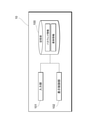
- FIG. 1 is a diagram showing an example of a management system 1 that manages information related to medical treatment.
- the management system 1 includes a server 10 that stores various information managed by the management system 1, and a terminal 20 that displays various information stored in the server 10 and inputs information to be stored in the server 10. include.
- the management system 1 may include a plurality of terminals 20.
- the server 10 and the terminal 20 may be referred to as an information processing device.
- the server 10 and the terminal 20 can communicate with each other via a wireless or wired communication network N.
- the server 10 stores information necessary for displaying various pathway maps on the terminal 20. Further, the server 10 stores information about the drug to be superimposed and displayed on the pathway map.
- the server 10 may be configured by one or a plurality of physical servers or the like, may be configured by using a virtual server operating on a hypervisor, or may be configured by using a cloud server. May be configured.
- the terminal 20 displays a pathway map or the like on the screen of the terminal 20.
- the terminal 20 is a terminal operated by a user (for example, a doctor, a medical worker, etc.), and any terminal having a communication function, such as a personal computer (PC), a smartphone, or a tablet terminal, can be used.
- PC personal computer
- the pathway map displayed on the terminal 20 may be any pathway map as long as it shows the relationship between substances involved in the reaction in the living body.
- the substance involved in the reaction in the living body include a substance involved in signal transduction in the living body, a substance involved in the metabolic pathway in the living body, a substance that regulates the expression of a gene, and the like.
- the relationship between substances involved in a reaction in a living body means that, specifically, a signal transduction pathway, a metabolic pathway, a gene expression regulation pathway, or the like exists between proteins or genes.
- pathway maps include pathway maps for cell cycle, pathway maps for RTK (Receptor Tyrosine Kinase) / RAS, pathway maps for PI3K (Phosphoinositide 3-Kinase), and DNA damage repair.
- Pathway map for cancer metabolites oncometabolite
- pathway map for immune checkpoint Immunecheckpoint
- pathway map for hormone signaling pathway map for B cell signaling, etc. ..
- the pathway map is also simply called a pathway.
- the terminal 20 displays the pathway map on the screen, and also displays information on the drug that is involved in the relationship between substances involved in the in vivo reaction and exerts a medicinal effect on the pathway map.
- a drug that exerts a medicinal effect by being involved in the relationship between substances involved in an in vivo reaction is specifically expressed in cancer cells in a predominant manner as compared with normal cells among substances involved in an in vivo reaction. It is a drug that exerts a medicinal effect on a substance or a substance whose function is enhanced.
- the drug that exerts its medicinal effect by being involved in the relationship between the substances involved in the in vivo reaction is a substance that is involved in the in vivo reaction, preferably a substance that is predominantly expressed in cancer cells as compared with normal cells.
- a drug that exerts a medicinal effect on at least one of the interactions between substances involving a substance having an enhanced function.
- a predetermined inhibitory effect effect of suppressing the number of expression, effect of suppressing phosphorylation of a substance, a substance that transmits a signal
- the user can easily grasp the drug that exerts the drug effect by being involved in the relationship between the substances involved in the in vivo reaction.
- the drug cannot exert an inhibitory effect as a result. become. Therefore, by displaying the drug information superimposed on the pathway map, the user can easily grasp the drug that does not exhibit the drug efficacy.
- information on activation mutations and the like may be displayed on the pathway map.
- the display method can be selected as appropriate.
- information on the activation mutation on the pathway map it becomes possible to easily grasp the drug that exerts its medicinal effect by being involved in the relationship between the substances involved in the in vivo reaction, and also by nature. If so, it becomes easy to recognize a drug that develops a medicinal effect by being involved in the relationship between substances involved in an in vivo reaction as a drug that does not exhibit the medicinal effect. Even if the information on the activation mutation or the like is not displayed on the pathway map, it is possible to grasp the drug that develops or loses the drug efficacy if the information is possessed.
- information on activated mutations, etc. should be displayed as mutation information indicating the substance in which the mutation has occurred among the substances involved in the in vivo reaction (for example, highlighting the node indicating the substance in which the mutation has occurred, etc.). You can also.
- FIG. 2 is a diagram showing a hardware configuration example of the server 10.
- the server 10 transmits a processor 11 such as a CPU (Central Processing Unit) and a GPU (Graphical processing unit), a memory, a storage device 12 such as an HDD (Hard Disk Drive) and / or an SSD (Solid State Drive), and wired or wireless communication. It has a communication IF (Interface) 13, an input device 14 that accepts input operations, and an output device 15 that outputs information.
- the input device 14 is, for example, a keyboard, a touch panel, a mouse and / or a microphone.
- the output device 15 is, for example, a display, a touch panel, and / or a speaker.
- FIG. 3 is a diagram showing an example of a functional block configuration of the server 10.
- the server 10 includes a storage unit 100, an input unit 101, and a display control unit 102.
- the storage unit 100 can be realized by using the storage device 12 included in the server 10.
- the input unit 101 and the display control unit 102 can be realized by the processor 11 of the server 10 executing the program stored in the storage device 12.
- the program can be stored in a storage medium.
- the storage medium in which the program is stored may be a non-transitory computer readable medium.
- the non-temporary storage medium is not particularly limited, but may be, for example, a storage medium such as a USB memory or a CD-ROM.
- the storage unit 100 stores pathway information indicating the relationship between substances involved in the in-vivo reaction and drug information including information on the drug involved in the relationship between the substances involved in the in-vivo reaction and exerting a medicinal effect.
- the pathway map is a relationship between a node (hereinafter referred to as “node (substance)”) indicating each of the substances involved in the in-vivo reaction and a substance (between the nodes) involved in the in-vivo reaction. It is a figure which arranges the edge (hereinafter, referred to as “edge (substance)”) which shows the existence of a sex.
- the pathway information is associated with information about nodes (substances) and information about edges (substances) between nodes.
- a node indicating a drug hereinafter referred to as "node (drug)"
- a substance involved in the in-vivo reaction and the drug are involved in the in-vivo reaction.
- Edges hereinafter referred to as “edges (drugs)
- the drug information is associated with the information about the node (drug) and the information about the edge (drug).
- the drug information may include information about the drug associated with the substance group of a predetermined unit. An example of a substance group of a predetermined unit will be described later.
- the storage unit 100 may store mutation information indicating a substance in which a mutation has occurred among substances involved in an in vivo reaction.
- the mutated substance is specifically a gene in which a gene mutation has occurred or a protein corresponding to the gene.
- the input unit 101 receives various inputs from the user via the screen of the terminal 20.
- the display control unit 102 performs a process of displaying various screens according to the present embodiment on the terminal 20. Further, the display control unit 102 generates a pathway map based on the pathway information and the drug information, and performs a process of displaying a screen on which the information about the drug is superimposed on the generated pathway map on the terminal 20.
- the display control unit 102 includes a node (drug) indicating a drug exhibiting a medicinal effect on the substance group of the predetermined unit, a substance group of the predetermined unit, and the above.
- An edge (drug) indicating that an effect that exerts a medicinal effect exists between the drug and the drug may be superimposed and displayed on the pathway map.
- the display control unit 102 has a Web server function, and when an access is received from a Web browser included in the terminal 20, the display control unit 102 may transmit information for displaying a pathway map or the like to the Web browser. good.
- the display control unit 102 receives an access from an application for displaying a pathway map installed in the terminal 20, the display control unit 102 transmits information for displaying the pathway map or the like to the application. You may.
- the storage unit 100, the input unit 101, and the display control unit 102 included in the server 10 can be mounted on the terminal 20. That is, the present embodiment also includes a mode in which the processing performed by the server 10 is executed by the terminal 20.
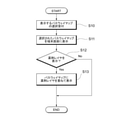
- FIG. 4 is a flowchart showing an example of the processing procedure performed by the server 10.
- the input unit 101 accepts from the user the selection of the pathway map to be displayed on the screen of the terminal 20 (S10).
- the display control unit 102 acquires information on nodes (substances) and edges (substances) from the pathway information to generate a pathway map in order to display the pathway map selected by the user, and displays the display included in the terminal 20. Is displayed in (S11). For example, when the user selects a pathway map related to the cell cycle, the display control unit 102 acquires information about nodes (substances) and edges (substances) included in the pathway map related to the cell cycle from the pathway information.
- a pathway map related to the cell cycle is generated and displayed on the terminal 20.
- the input unit 101 accepts from the user the selection of whether or not to display the node (drug) and the edge (drug) on the pathway map in an overlapping manner (S12).
- displaying the node (drug) and the edge (drug) on the pathway map in an overlapping manner is referred to as "displaying the drug layer on the pathway map in an overlapping manner”.
- the display control unit 102 ends the process.
- the display control unit 102 acquires information on the node (drug) and the edge (drug) from the drug information and displays the information on the pathway map.
- the drug layers are overlapped and displayed on the terminal 20.
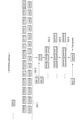
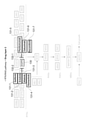
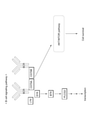
- FIG. 5 is a diagram showing a display example of a pathway map relating to the cell cycle.
- the square GN with the name of the protein corresponds to the node (substance).
- the T-shaped symbol GE1, the straight line GE2, and the arrow GE3 connecting between two or more nodes (substances) correspond to the edges (substances).
- the E2F protein dissociates from the RB1 protein.
- the complex of CCNA1, CCNA2 or CCNE1 and CDK2 and the complex of CCND1, CCND2 or CCND3 and CDK4 or CDK6 correspond to the above-mentioned "substance group of predetermined unit".
- the pathway information includes information indicating that a plurality of substances are members constituting a substance group of a predetermined unit (for example, information indicating that CCNA1, CCNA2 or CCNE1 and CDK2 are substance groups of a predetermined unit).
- the display control unit 102 draws information G1 (enclosed by a dotted line, parentheses, etc.) indicating that the substance group is a predetermined unit on the pathway map. do.
- the substance group of a predetermined unit is referred to as a "node group (substance)" for convenience.
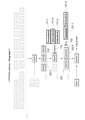
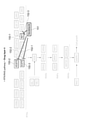
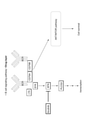
- FIG. 6 is a diagram showing a display example when a drug layer is superimposed on a pathway map relating to the cell cycle.
- the square with the name of the drug corresponds to the node (drug).
- a T-shaped symbol, straight line, or arrow connecting a node (drug) and a node (substance) or a group of nodes (substance) corresponds to an edge (drug).
- the nodes (drugs) Palbociclib DN101-1 and Abemaciclib DN101-2 and a predetermined substance group composed of CCND1, CCND2, CCND3, CDK4 and CDK6.
- the edge (drug) DL102 is connected.
- palbociclib DN101-1 and abemaciclib DN101-2 exert a medicinal effect on a predetermined substance group composed of CCND1, CCND2, CCND3, CDK4 and CDK6.
- Abemaciclib and palbociclib are drugs known as selective inhibitors of cyclin-dependent kinases CDK4 and CDK6.
- the control unit 102 establishes an edge (drug) between the palbociclib DN101-1 and the abemaciclib DND101-2 and a predetermined substance group composed of CCND1, CCND2, CCND3, CDK4 and CDK6. draw.
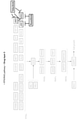
- FIG. 7 is a diagram showing a display example of a pathway map relating to RTK / RAS.
- a plurality of nodes (substances) enclosed in the same parentheses G2-1 to G2-5 each correspond to a node group (substance).
- KRAS, HRAS and NRAS are node groups (substances) belonging to RAS
- ARSF, BRAF and RAF1 are node groups (substances) belonging to RAF
- MAP2K1 and MAP2K2 are node groups (substances) belonging to MEK. ).
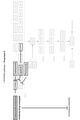
- FIG. 8 is a diagram showing a display example when a drug layer is superimposed on a pathway map related to RTK / RAS.
- the edge is between the node (substance) BRAF110 and the nodes (drugs) encorafenib 111-1, Vemurafenib 111-2 and Dabrafenib 111-3.
- (Drug) 112 is drawn.
- an edge (drug) 122 is drawn between the node group (substance) 120 and the nodes (drug) Trametinib 121-1 and Binimetinib 121-2.
- Trametinib and binimetinib are agents known as selective inhibitors of MAP2K (MEK).
- the display control unit 102 selects one or more nodes (substances) or node groups (substances) associated with the node (drug) among the nodes (substances) or node groups (substances) included in the pathway map.
- the highlighted pathway map may be displayed. That is, the display control unit 102 may highlight the node (substance) or node group (substance) on which the node (drug) exerts an effect on the pathway map.
- the BRAF 110 associated with encorafenib 111-1 and the like and the node group (substance) 120 associated with trametinib 121-1 and the like are highlighted, and other nodes (substances) and node groups are highlighted. (Substance) may be grayed out.
- the display control unit 102 has a relationship with one or more nodes (substances) or node groups (substances) on the signal transmission path in addition to one or more nodes (substances) or node groups (substances). You may want to display a pathway map that highlights one or more nodes (substances) or node groups (substances) that have. In other words, the display control unit 102 may emphasize and display a substance in which a drug exhibiting a medicinal effect is present and one or more substances existing before and after the substance in the signal transduction pathway.
- node group (substance) G2-3 connected to BRAF 110 by edge (substance), node group (substance) G2-3 and edge (substance) are connected.
- the SOS1 is highlighted, the MAPK1 connected to the node group (substance) 120 by the edge (substance), and the RAC1 connected to the MAPK1 by the edge (substance), and the other nodes (substance) and The node group (substance) may be grayed out.
- the user can easily grasp not only the substance on which the drug exerts a medicinal effect but also the substance having a high relationship with the substance on the signal transduction pathway by referring to the pathway map.
- FIG. 9 is a diagram showing a display example when a drug layer is superimposed on a pathway map related to RTK / RAS.
- the display control unit 102 highlights the specific substance on the pathway map and displays the drug on the pathway map. You may do so.
- the display control unit 102 among the substances displayed on the pathway map, for a specific substance designated by the user, one or more drugs exhibiting a medicinal effect on the specific substance are included in the drug information. If present, one or more nodes indicating the one or more agents and an edge indicating that the one or more agents have an effect of exerting a medicinal effect on a specific substance specified by the user. It may be superimposed on the pathway map that highlights a specific substance. As a result, the user can easily grasp the existence of a drug that exerts a medicinal effect on the specified substance by referring to the pathway map.
- FIG. 9 shows a display example when the user specifies EGFR130, EGFR130 is highlighted, and other nodes (substances) and node groups (substances) are grayed out.
- Gefitinib 131-1, Erlotinib 131-2, Afatinib 131-3, Osimertinib 131-4, and panitumumab (Erlotinib 131-2), which show multiple drugs that exert a medicinal effect on EGFR130, are shown.
- Panitumumab) 131-5, Cetuximab 131-6 and dacomitinib 131-7 are displayed.
- the antibody drug such as panitumumab 131-5 that exerts a medicinal effect on EGFR130
- the antibody drug such as panitumumab 131-5 will be used.
- the effect of suppressing cancer cannot be exhibited.
- the user can easily grasp the drug that does not exhibit the drug effect due to the mutation in the downstream substance by referring to the image in which the drug layer is superimposed on the pathway map.
- FIG. 10 is a diagram showing a display example when a drug layer is superimposed on a pathway map related to RTK / RAS.
- the display control unit 102 sets the display control unit 102 in addition to the specific substance.
- the other substance may also be highlighted on the pathway map.
- the display control unit 102 refers to one or more drugs that exert a medicinal effect on a specific substance designated by the user, and the substance other than the specific substance among the substances for which the drug exerts the medicinal effect.
- the user can easily grasp not only the substance specified by the user but also the existence of other substances in which the drug exhibiting the medicinal effect on the substance further exerts the medicinal effect. It will be possible to do.
- FIG. 10 shows a display example when the user specifies ALK140-1.
- Ceritinib 141-1, alectinib 141-2 and crizotinib 141-3 are present as drugs that exert a medicinal effect on ALK140-1, and among these drugs, crizotinib 141-3 shall exert a medicinal effect on MET140-2, ROS1 (140-3) and RET140-4 in addition to ALK140-1. Therefore, the display control unit 102 highlights MET140-2, ROS1 (140-3) and RET140-4 in addition to ALK140-1 specified by the user, and ceritinib exerts a medicinal effect on these substances.
- Crizotinib is a drug known as an inhibitor of ALK, ROS1, MET.
- FIG. 11 is a diagram showing a display example when a drug layer is superimposed on a pathway map related to RTK / RAS.
- the display control unit 102 has a medicinal effect between a node (drug) indicating a specific drug and the one or more substances and the specific drug for one or more substances on which the specific drug specified by the user exhibits a medicinal effect.
- the edge indicating that the effect of expressing the above-mentioned substance may be superimposed on the pathway map highlighting the one or more substances.
- the user can easily recognize one or more substances for which the specified drug exerts a medicinal effect by referring to the pathway map.
- FIG. 11 shows a display example when the user specifies Vandetanib 151, which exerts a medicinal effect on RET150-1, VEGFR150-2, and EGFR150-3.
- RET150-1, VEGFR150-2 and EGFR150-3 are highlighted, and vandetanib 151, which exerts a medicinal effect on these substances, and edges (drugs) 152-1 to 152-3 are pathways. Overlay on the map.
- FIGS. 12 to 16 are diagrams showing a display example when the drug layer is superimposed on the pathway map related to RTK / RAS. Specific description of FIGS. 12 to 16 will be omitted.
- FIG. 17 is a diagram showing a display example of a pathway map relating to PI3K.
- FIG. 18 is a diagram showing a display example when a drug layer is superimposed on a pathway map relating to PI3K.
- FIG. 19 is a diagram showing a display example of a pathway map relating to DNA damage repair.
- FIG. 20 is a diagram showing a display example when a drug layer is superimposed on a pathway map for DNA damage repair.
- FIG. 21 is a diagram showing a display example of a pathway map relating to cancer metabolites.
- 22 and 23 are diagrams showing display examples when a drug layer is superimposed on a pathway map for cancer metabolites.
- FIG. 24 is a diagram showing a display example of a pathway map relating to an immune checkpoint.
- FIG. 25 is a diagram showing a display example when a drug layer is superimposed on a pathway map relating to an immune checkpoint.
- FIG. 26 is a diagram showing a display example of a pathway map relating to a hormone signal.
- FIG. 27 is a diagram showing a display example when a drug layer is superimposed on a pathway map relating to a hormone signal.
- FIG. 28 is a diagram showing a display example of a pathway map relating to a B cell signal.
- FIG. 29 is a diagram showing a display example when the drug layer is superimposed on the pathway map relating to the B cell signal.
- the display control unit 102 highlights the node indicating the substance. You may do it. Specifically, the display control unit 102 highlights the node corresponding to the mutated substance among the nodes indicating each of the substances involved in the in vivo reaction included in the pathway map based on the mutation information. You may do it.
- the display control unit 102 may highlight the RB1 in a manner distinguishable from other nodes (for example, displaying in a color different from other nodes such as red). This allows the user to easily grasp the substance in which the gene mutation has occurred on the pathway map.
- the display control unit 102 highlights the mutated substance on the pathway map and displays the drug on the pathway map. You may try to do it.
- the display control unit 102 indicates that, among the substances displayed on the pathway map, for the mutated substance, when one or more drugs exhibiting a medicinal effect on the specific substance are present in the drug information. , One or more nodes indicating the one or more drugs, and an edge indicating that the one or more agents have an effect of exerting a medicinal effect on the mutated substance, the mutated substance. It may be overlaid on the highlighted pathway map.
- EGFR130 is a gene in which a genetic abnormality has occurred.
- the display control unit 102 highlights the EGFR 130 in a manner distinguishable from other nodes (for example, red, etc.) and indicates a plurality of drugs that exert a medicinal effect on the EGFR 130, Gefitinib 131. -1, Erlotinib 131-2, Afatinib 131-3, Osimertinib 131-4, Panitumumab 131-5, Cetuximab 131-6, dacomitinib 131-7 And edges (drugs) 132-1 to 132-2 may be displayed.
- the user can easily grasp which drug exerts a drug effect on the substance in which the gene mutation has occurred on the pathway map.
- the display control unit 102 when a drug that exerts a medicinal effect on a mutated substance also exerts a medicinal effect on a substance other than the mutated substance, the display control unit 102 is concerned. In addition to the mutated substance, the other substances may be highlighted on the pathway map.
- the display control unit 102 refers to one or more drugs that exert a medicinal effect on the mutated substance, other than the mutated substance among the substances for which the drug exerts the medicinal effect. If other substances are present, highlight the mutated substance and the other substance at the edge indicating that there is an effect that exerts a medicinal effect between the other substance and one or more drugs. It may be superimposed on the pathway map to be displayed.
- ALK140-1 is a gene in which a genetic abnormality has occurred.
- the display control unit 102 can distinguish ALK140-1 in which the gene abnormality has occurred from other nodes (MET140-2, ROS1 (140-3), RET140-4, and grayed out node) (for example, Ceritinib 141-1, Alectinib 141-2, Crizotinib 141-3 and Edge (drug) 142-1, which are highlighted in red, etc. and exert a medicinal effect on ALK140-1.
- the substance name used for the node may be the name specified by the HUGO (Human Genome Organization) Gene Nomenclature Committee. This makes it possible to avoid the problem of confusion and inconsistency in names.
- the pathway information of the storage unit 100 may include a plurality of pathway information that can cover the major genes that are mutated in all human cancer types. For example, 10 types of pathways listed in TCGA Pan Cancer Atlas, and "Cancer based on gene panel tests using next-generation sequencers, etc.” published jointly by the Japanese Society of Clinical Oncology, the Japanese Cancer Association, and the Japanese Cancer Association. Pathway that can cover 139 genes shown in "Clinical Guidance (Version 1.0)", “List of secondary findings of cancer gene panel test by degree of recommendation for disclosure of patients” issued by Japan Medical Research and Development Organization (Ver.2.0) ”may include all of these pathway information, such as a pathway that can cover the genes shown in.
- the display control unit 102 may display, for example, only the therapeutic agents approved in Japan, only the therapeutic agents for which clinical trials are being conducted, or both of them as the drug layer. As such, it may have a function of selecting a drug layer.
- the drug information is superimposed on the pathway map and displayed on the terminal 20.
- the user can easily grasp the target substance on which the drug exerts a drug effect and the pathway in which signal transduction or metabolism is inhibited. ..
- the nodes and edges indicating which substance the drug exerts the medicinal effect on are superimposed and displayed on the pathway map.
- the user can specifically grasp which drug exerts a drug effect on which substance by referring to the pathway map.
- the substance in which the drug exhibiting the medicinal effect is present is emphasized and displayed on the pathway map.
- the user can easily distinguish between a substance in which a drug exhibiting a medicinal effect is present and a substance in which a drug exhibiting a medicinal effect is not present by referring to the pathway map.
- a node indicating a drug that exerts a medicinal effect on a predetermined unit of substance group and an edge indicating that the medicinal effect is exerted on a predetermined unit of substance group are displayed. I made it. This makes it possible for the user to easily grasp the existence of a drug that exerts a medicinal effect on a group of substances constituting the group.
- Management system 10 ... Server, 11 ... Processor, 12 ... Storage device, 13 ... Communication IF, 14 ... Input device, 15 ... Output device, 20 ... Terminal, 100 ... Storage unit, 101 ... Input unit, 102 ... Display Control unit
Landscapes
- Health & Medical Sciences (AREA)
- Engineering & Computer Science (AREA)
- Chemical & Material Sciences (AREA)
- Bioinformatics & Cheminformatics (AREA)
- Medicinal Chemistry (AREA)
- Epidemiology (AREA)
- General Health & Medical Sciences (AREA)
- Medical Informatics (AREA)
- Primary Health Care (AREA)
- Public Health (AREA)
- Medical Treatment And Welfare Office Work (AREA)
Abstract
生体内反応に関与する物質間における関係性を示すパスウェイ情報と、前記関係性に関与して薬効を発現する薬剤に関する情報を含む薬剤情報とを記憶する記憶部と、前記パスウェイ情報及び前記薬剤情報に基づき、前記薬剤に関する情報を、前記関係性を示すパスウェイマップに重ねて表示させる表示制御部と、を有する、情報処理装置を提供する。
Description
本発明は、情報処理装置、情報処理方法及びプログラムに関する。
生体内で行われるシグナル伝達等、生体内反応に関与する物質間における関係性を図示したパスウェイマップ(Pathway map)が知られている。例えば特許文献1には、パスウェイマップの例が開示されている。
現在、遺伝子異常が癌を引き起こすことが知られており、癌患者に対して遺伝子異常の有無を調べる、癌遺伝子パネル検査が行われている。医師は、遺伝子異常が見つかった場合、当該遺伝子異常が存在するために、癌細胞において過剰に及び/又は特異的に発現する物質と作用する薬剤を投与することで、癌細胞の働きを抑えるといった対処を行っている。そのため、患者の検査結果に対して投与すべき薬剤を容易に把握可能な仕組みの提供が求められている。
そこで、本発明は、生体内反応に関与する物質間における関係性に関与して薬効を発現する薬剤、又は、薬効を発現しなくなる薬剤を容易に把握可能とする技術を提供することを目的とする。
本発明の一態様に係る情報処理装置は、生体内反応に関与する物質間における関係性を示すパスウェイ情報と、前記関係性に関与して薬効を発現する薬剤に関する情報を含む薬剤情報とを記憶する記憶部と、前記パスウェイ情報及び前記薬剤情報に基づき、前記薬剤に関する情報を、前記関係性を示すパスウェイマップに重ねて表示させる表示制御部と、を有する。
本発明によれば、生体内反応に関与する物質間における関係性に関与して薬効を発現する薬剤、又は、薬効を発現しなくなる薬剤を容易に把握可能とする技術を提供することができる。
添付図面を参照して、本発明の実施形態について説明する。なお、各図において、同一の符号を付したものは、同一又は同様の構成を有する。
<システム構成>
図1は、医療に関する情報管理を行う管理システム1の一例を示す図である。管理システム1は、管理システム1が管理する各種の情報を記憶するサーバ10と、サーバ10に記憶されている各種の情報の表示や、サーバ10に記憶させる情報の入力等を行う端末20とを含む。管理システム1は複数の端末20を含んでいてもよい。サーバ10及び端末20を情報処理装置と称してもよい。サーバ10及び端末20は、無線又は有線の通信ネットワークNを介してお互いに通信することができる。
図1は、医療に関する情報管理を行う管理システム1の一例を示す図である。管理システム1は、管理システム1が管理する各種の情報を記憶するサーバ10と、サーバ10に記憶されている各種の情報の表示や、サーバ10に記憶させる情報の入力等を行う端末20とを含む。管理システム1は複数の端末20を含んでいてもよい。サーバ10及び端末20を情報処理装置と称してもよい。サーバ10及び端末20は、無線又は有線の通信ネットワークNを介してお互いに通信することができる。
サーバ10は、各種のパスウェイマップを端末20に表示させるため必要な情報を記憶する。また、サーバ10は、パスウェイマップに重ねて表示させる薬剤に関する情報を記憶する。サーバ10は、1又は複数の物理的なサーバ等から構成されていてもよいし、ハイパーバイザー(hypervisor)上で動作する仮想的なサーバを用いて構成されていてもよいし、クラウドサーバを用いて構成されていてもよい。
端末20は、端末20が備える画面に、パスウェイマップ等を表示する。端末20は、ユーザ(例えば医師や医療従事者等)が操作する端末であり、パーソナルコンピュータ(PC)、スマートフォン、タブレット端末等、通信機能を備えた端末であればあらゆる端末を用いることができる。
端末20に表示するパスウェイマップは、生体内の反応に関与する物質間の関係性を示すものであれば、どのようなパスウェイマップであってもよい。生体内の反応に関与する物質とは、例えば、生体内のシグナル伝達に関与する物質や、生体内の代謝経路に関与する物質、遺伝子の発現を調節する物質等が挙げられ、具体的には、シグナル伝達や代謝経路に関与するタンパク質又は遺伝子、ホルモン、増殖因子、転写調節等である。また、生体内の反応に関与する物質間の関係性とは、具体的には、タンパク質又は遺伝子の間にシグナル伝達経路や代謝経路、遺伝子発現調節経路等が存在することである。
パスウェイマップの例としては、例えば、細胞周期(Cell cycle)に関するパスウェイマップ、RTK(Receptor Tyrosine Kinase)/RASに関するパスウェイマップ、PI3K(Phosphoinositide 3-Kinase)に関するパスウェイマップ、DNA損傷修復(DNA damage repair)に関するパスウェイマップ、癌代謝物(oncometabolite)に関するパスウェイマップ、免疫チェックポイント(Immune checkpoint)に関するパスウェイマップ、ホルモンシグナル(Hormone signaling)に関するパスウェイマップ、Bセルシグナル(B cell signaling)に関するパスウェイマップ等が挙げられる。なお、パスウェイマップは、単にパスウェイとも呼ばれる。
端末20は、パスウェイマップを画面に表示する共に、生体内反応に関与する物質間の関係性に関与して薬効を発現する薬剤に関する情報を、パスウェイマップに重ねて表示する。生体内反応に関与する物質間の関係性に関与して薬効を発現する薬剤とは、具体的には、生体内反応に関与する物質のうち、癌細胞において正常細胞に比べて優位に発現している物質又は機能が亢進している物質に対して薬効を発現する薬剤である。また、生体内反応に関与する物質間の関係性に関与して薬効を発現する薬剤は、生体内反応に関与する物質、好ましくは、癌細胞において正常細胞に比べて優位に発現している物質又は機能が亢進している物質が関与する物質間相互作用の少なくとも1つに対して薬効を発現する薬剤である。薬効を発現するとは、具体的には、発現している物質に対して所定の阻害効果(発現数を抑える効果、物質のリン酸化を抑える効果、シグナルを伝達する物質がその受容体に結合することを抑える効果等)を発揮することである。
パスウェイマップに薬剤の情報を重ねて表示することで、ユーザは、生体内反応に関与する物質間における関係性に関与して薬効を発現する薬剤を容易に把握することが可能になる。また、パスウェイマップに描画される物質のうち、薬剤が薬効を発現する物質間よりも下流に存在する物質が活性化変異等を発現した場合、当該薬剤は、結果的に阻害効果を発揮できないことになる。従って、パスウェイマップに薬剤の情報を重ねて表示することで、ユーザは、薬効を発現しなくなる薬剤を容易に把握することが可能になる。
また、本実施形態では、活性化変異等に関する情報をパスウェイマップに表示してもよい。表示の仕方は適宜選択し得る。活性化変異に関する情報がパスウェイマップに表示されることにより、生体内反応に関与する物質間における関係性に関与して薬効を発現する薬剤を容易に把握することが可能になり、また、本来であれば生体内反応に関与する物質間における関係性に関与して薬効を発現する薬剤であるものが、薬効を発現しなくなる薬剤として認識することが容易になる。なお、活性化変異等に関する情報をパスウェイマップに重ねて表示しなくても、当該情報を有していれば、薬効を発現する、又は、しなくなる薬剤を把握することは可能である。また、活性化変異等に関する情報は、生体内反応に関与する物質のうち変異が生じた物質を示す変異情報として表示すること(例えば、変異が生じた物質を示すノードを強調表示すること等)もできる。
<ハードウェア構成>
図2は、サーバ10のハードウェア構成例を示す図である。サーバ10は、CPU(Central Processing Unit)、GPU(Graphical processing unit)等のプロセッサ11、メモリ、HDD(Hard Disk Drive)及び/又はSSD(Solid State Drive)等の記憶装置12、有線又は無線通信を行う通信IF(Interface)13、入力操作を受け付ける入力デバイス14、及び情報の出力を行う出力デバイス15を有する。入力デバイス14は、例えば、キーボード、タッチパネル、マウス及び/又はマイク等である。出力デバイス15は、例えば、ディスプレイ、タッチパネル及び/又はスピーカ等である。
図2は、サーバ10のハードウェア構成例を示す図である。サーバ10は、CPU(Central Processing Unit)、GPU(Graphical processing unit)等のプロセッサ11、メモリ、HDD(Hard Disk Drive)及び/又はSSD(Solid State Drive)等の記憶装置12、有線又は無線通信を行う通信IF(Interface)13、入力操作を受け付ける入力デバイス14、及び情報の出力を行う出力デバイス15を有する。入力デバイス14は、例えば、キーボード、タッチパネル、マウス及び/又はマイク等である。出力デバイス15は、例えば、ディスプレイ、タッチパネル及び/又はスピーカ等である。
<機能ブロック構成>
図3は、サーバ10の機能ブロック構成例を示す図である。サーバ10は、記憶部100と、入力部101と、表示制御部102とを含む。記憶部100は、サーバ10が備える記憶装置12を用いて実現することができる。また、入力部101と、表示制御部102とは、サーバ10のプロセッサ11が、記憶装置12に記憶されたプログラムを実行することにより実現することができる。また、当該プログラムは、記憶媒体に格納することができる。当該プログラムを格納した記憶媒体は、コンピュータ読み取り可能な非一時的な記憶媒体(Non-transitory computer readable medium)であってもよい。非一時的な記憶媒体は特に限定されないが、例えば、USBメモリ又はCD-ROM等の記憶媒体であってもよい。
図3は、サーバ10の機能ブロック構成例を示す図である。サーバ10は、記憶部100と、入力部101と、表示制御部102とを含む。記憶部100は、サーバ10が備える記憶装置12を用いて実現することができる。また、入力部101と、表示制御部102とは、サーバ10のプロセッサ11が、記憶装置12に記憶されたプログラムを実行することにより実現することができる。また、当該プログラムは、記憶媒体に格納することができる。当該プログラムを格納した記憶媒体は、コンピュータ読み取り可能な非一時的な記憶媒体(Non-transitory computer readable medium)であってもよい。非一時的な記憶媒体は特に限定されないが、例えば、USBメモリ又はCD-ROM等の記憶媒体であってもよい。
記憶部100は、生体内反応に関与する物質間における関係性を示すパスウェイ情報と、生体内反応に関与する物質間の関係性に関与して薬効を発現する薬剤に関する情報を含む薬剤情報とを記憶する。ここで、パスウェイマップは、生体内反応に関与する物質の各々を示すノード(以下、「ノード(物質)」と言う。)と、物質間に(ノード間に)、生体内反応に関与する関係性が存在することを示すエッジ(以下、「エッジ(物質)」と言う。)とを並べた図である。このようなパスウェイマップを描画可能とするため、パスウェイ情報には、ノード(物質)に関する情報と、ノード間のエッジ(物質)に関する情報とが対応づけられている。また、本実施形態では、パスウェイマップ上に、薬剤を示すノード(以下、「ノード(薬剤)」と言う。)と、生体内反応に関与する物質と薬剤との間に、生体内反応に関与する物質間の関係性に関与して薬効を発現する効果が存在することを示すエッジ(以下、「エッジ(薬剤)」と言う。)とを、パスウェイマップ上に重ねて表示する。そのため、薬剤情報には、ノード(薬剤)に関する情報と、エッジ(薬剤)に関する情報とが対応づけられている。また、薬剤情報には、薬剤に関する情報が、所定単位の物質群に対応づけられた薬剤に関する情報を含むこととしてもよい。所定単位の物質群の例については後述する。
また、記憶部100は、生体内反応に関与する物質のうち変異が生じた物質を示す変異情報を記憶するようにしてもよい。変異が生じた物質とは、具体的には、遺伝子変異が生じた遺伝子又は当該遺伝子に対応するタンパク質である。
入力部101は、ユーザから、端末20の画面を介して各種の入力を受け付ける。
表示制御部102は、本実施形態に係る各種の画面を端末20に表示させる処理を行う。また、表示制御部102は、パスウェイ情報及び薬剤情報に基づいて、パスウェイマップを生成し、生成したパスウェイマップに薬剤に関する情報を重ねた画面を端末20に表示させる処理を行う。
また、表示制御部102は、パスウェイマップに所定単位の物質群が含まれる場合、当該所定単位の物質群に対して薬効を発現する薬剤を示すノード(薬剤)と、所定単位の物質群と前記薬剤との間に薬効を発現する効果が存在することを示すエッジ(薬剤)とを、パスウェイマップに重ねて表示させるようにしてもよい。
例えば、表示制御部102は、Webサーバ機能を備えており、端末20が備えるWebブラウザからのアクセスを受けた場合に、Webブラウザにパスウェイマップ等を表示させるための情報を送信するようにしてもよい。若しくは、表示制御部102は、端末20にインストールされた、パスウェイマップを表示するためのアプリケーションからのアクセスを受けた場合に、当該アプリケーションに、パスウェイマップ等を表示させるための情報を送信するようにしてもよい。
本実施形態では、サーバ10が備える記憶部100と、入力部101と、表示制御部102とを、端末20に実装することも可能である。つまり、本実施形態には、サーバ10が行う処理を端末20で実行する形態も含まれる。
<処理手順>
続いて、サーバ10が行う処理手順について説明する。以下の説明では、生体内反応に関与する物質は、タンパク質であるものとして説明する。
続いて、サーバ10が行う処理手順について説明する。以下の説明では、生体内反応に関与する物質は、タンパク質であるものとして説明する。
図4は、サーバ10が行う処理手順の一例を示すフローチャートである。まず、入力部101は、ユーザから、端末20の画面に表示させるパスウェイマップの選択を受け付ける(S10)。続いて、表示制御部102は、ユーザが選択したパスウェイマップを表示するために、パスウェイ情報からノード(物質)及びエッジ(物質)に関する情報を取得してパスウェイマップを生成し、端末20が備えるディスプレイに表示させる(S11)。例えば、ユーザが、細胞周期に関するパスウェイマップを選択すると、表示制御部102は、パスウェイ情報から、細胞周期に関するパスウェイマップに含まれるノード(物質)及びエッジ(物質)に関する情報をパスウェイ情報から取得し、細胞周期に関するパスウェイマップを生成して端末20に表示させる。続いて、入力部101は、ユーザから、パスウェイマップ上に、ノード(薬剤)とエッジ(薬剤)とを重ねて表示するか否かの選択を受け付ける(S12)。以下の説明では、パスウェイマップ上に、ノード(薬剤)とエッジ(薬剤)とを重ねて表示することを、「パスウェイマップに薬剤レイヤを重ねて表示する」と称する。
パスウェイマップ上に薬剤レイヤを重ねて表示するとの指示を受けない場合(S12-No)、表示制御部102は、処理を終了する。パスウェイマップ上に薬剤レイヤを重ねて表示するとの指示を受けた場合(S12-Yes)、表示制御部102は、薬剤情報からノード(薬剤)及びエッジ(薬剤)に関する情報を取得し、パスウェイマップに薬剤レイヤを重ねて端末20に表示させる。
<表示例>
続いて、パスウェイマップ及び薬剤レイヤの表示例について、図を用いて具体的に説明する。以下の図では、説明に必要なノード(物質)、エッジ(物質)、ノード(薬剤)及びエッジ(薬剤)のみに符号を付して説明する。
続いて、パスウェイマップ及び薬剤レイヤの表示例について、図を用いて具体的に説明する。以下の図では、説明に必要なノード(物質)、エッジ(物質)、ノード(薬剤)及びエッジ(薬剤)のみに符号を付して説明する。
図5は、細胞周期に関するパスウェイマップの表示例を示す図である。タンパク質の名称が記載された四角形GNは、ノード(物質)に対応する。2以上のノード(物質)の間を接続するT字状の記号GE1、直線GE2及び矢印GE3は、エッジ(物質)に対応する。
図5の左側は、CCNA1、CCNA2又はCCNE1とCDK2との複合体や、CCND1、CCND2又はCCND3とCDK4又はCDK6との複合体によりRB1タンパク質がリン酸化されると、E2Fタンパク質がRB1タンパク質から解離し、その結果、細胞周期がG1期からS期への移行が生じるというシグナル伝達経路を示している。ここで、CCNA1、CCNA2又はCCNE1とCDK2との複合体、及び、CCND1、CCND2又はCCND3とCDK4又はCDK6との複合体は、前述した「所定単位の物質群」に該当する。パスウェイ情報には、複数の物質が所定単位の物質群を構成するメンバーであることを示す情報(例えば、CCNA1、CCNA2又はCCNE1とCDK2とは所定単位の物質群であることを示す情報)が含まれており、表示制御部102は、パスウェイ情報に当該情報が含まれている場合、パスウェイマップに、所定単位の物質群であることを示す情報G1(点線による囲み、又は、括弧等)を描画する。以下の説明では、所定単位の物質群を、便宜上、「ノード群(物質)」と称する。
図6は、細胞周期に関するパスウェイマップに薬剤レイヤを重ねた場合の表示例を示す図である。薬剤の名称が記載された四角形は、ノード(薬剤)に対応する。ノード(薬剤)と、ノード(物質)又はノード群(物質)との間を接続するT字状の記号、直線又は矢印は、エッジ(薬剤)に対応する。図6の例では、ノード(薬剤)であるパルボシクリブ(Palbociclib)DN101-1及びアベマシクリブ(Abemaciclib)DN101-2と、CCND1、CCND2、CCND3、CDK4及びCDK6により構成される所定の物質群との間にエッジ(薬剤)DL102が接続されている。これは、パルボシクリブDN101-1及びアベマシクリブDN101-2は、CCND1、CCND2、CCND3、CDK4及びCDK6により構成される所定の物質群に対して薬効を発現することを示している。なお、アベマシクリブ及びパルボシクリブは、サイクリン依存性キナーゼであるCDK4及びCDK6の選択的阻害剤として知られる薬剤である。
薬剤情報には、ノード群(物質)を示す情報(例えば、CCNA1、CCNA2、CCNE1及びCDK2は所定単位の物質群であることを示す情報)と、パルボシクリブ及びアベマシクリブとが対応づけられており、表示制御部102は、薬剤情報を参照することで、パルボシクリブDN101-1及びアベマシクリブDND101-2と、CCND1、CCND2、CCND3、CDK4及びCDK6により構成される所定の物質群との間にエッジ(薬剤)を描画する。
(RTK/RASに関するパスウェイマップ)
図7は、RTK/RASに関するパスウェイマップの表示例を示す図である。図7の例では、同一の括弧G2-1~G2-5で括られた複数のノード(物質)は、それぞれ、ノード群(物質)に対応する。例えば、KRAS、HRAS及びNRASは、RASに属するノード群(物質)であり、ARSF、BRAF及びRAF1は、RAFに属するノード群(物質)であり、MAP2K1及びMAP2K2は、MEKに属するノード群(物質)である。
図7は、RTK/RASに関するパスウェイマップの表示例を示す図である。図7の例では、同一の括弧G2-1~G2-5で括られた複数のノード(物質)は、それぞれ、ノード群(物質)に対応する。例えば、KRAS、HRAS及びNRASは、RASに属するノード群(物質)であり、ARSF、BRAF及びRAF1は、RAFに属するノード群(物質)であり、MAP2K1及びMAP2K2は、MEKに属するノード群(物質)である。
図8は、RTK/RASに関するパスウェイマップに薬剤レイヤを重ねた場合の表示例を示す図である。図8の例では、ノード(物質)であるBRAF110と、ノード(薬剤)であるエンコラフェニブ(encorafenib)111-1、ベムラフェニブ(Vemurafenib)111-2及びダブラフェニブ(Dabrafenib)111-3との間に、エッジ(薬剤)112が描画されている。また、ノード群(物質)120と、ノード(薬剤)であるトラメチニブ(Trametinib)121-1及びビニメチニブ(Binimetinib)121-2との間に、エッジ(薬剤)122が描画されている。トラメチニブ及びビニメチニブは、MAP2K(MEK)の選択的阻害剤として知られる薬剤である。
ここで、表示制御部102は、パスウェイマップに含まれるノード(物質)又はノード群(物質)のうち、当該ノード(薬剤)に対応づけられる1以上のノード(物質)又はノード群(物質)を強調表示するパスウェイマップを表示させるようにしてもよい。つまり、表示制御部102は、パスウェイマップにおいて、ノード(薬剤)が効果を発現するノード(物質)又はノード群(物質)を強調表示するようにしてもよい。例えば、エンコラフェニブ(encorafenib)111-1等に対応づけられるBRAF110と、トラメチニブ(Trametinib)121-1等に対応づけられるノード群(物質)120とをハイライトし、その他のノード(物質)及びノード群(物質)についてはグレーアウトするようにしてもよい。
また、表示制御部102は、1以上のノード(物質)又はノード群(物質)に加えて、シグナル伝達経路上、当該1以上のノード(物質)又はノード群(物質)との間に関係性を有する他の1以上のノード(物質)又はノード群(物質)を、強調表示するパスウェイマップを表示させるようにしてもよい。言い換えると、表示制御部102は、薬効を発現する薬剤が存在する物質と、シグナル伝達経路において当該物質の前後に存在する1以上の物質とを強調して表示させるようにしてもよい。
例えば、BRAF110及びノード群(物質)120に加えて、BRAF110とエッジ(物質)で接続されているノード群(物質)G2-3と、ノード群(物質)G2-3とエッジ(物質)で接続されているSOS1と、ノード群(物質)120とエッジ(物質)で接続されているMAPK1と、MAPK1とエッジ(物質)で接続されているRAC1とをハイライトし、その他のノード(物質)及びノード群(物質)についてはグレーアウト表示するようにしてもよい。これにより、ユーザは、パスウェイマップを参照することで、薬剤が薬効を発現する物質のみならず、シグナル伝達経路上、その物質と関係性の高い物質についても容易に把握することが可能になる。
図9は、RTK/RASに関するパスウェイマップに薬剤レイヤを重ねた場合の表示例を示す図である。表示制御部102は、ユーザにより指定された特定の物質に対して薬効を発現する薬剤が存在する場合、特定の物質をパスウェイマップ上で強調表示するとともに、当該薬剤をパスウェイマップに重ねて表示するようにしてもよい。
具体的には、表示制御部102は、パスウェイマップに表示される物質のうち、ユーザにより指定された特定の物質について、該特定の物質に対して薬効を発現する1以上の薬剤が薬剤情報に存在する場合、当該1以上の薬剤を示す1以上のノードと、当該1以上の薬剤が、ユーザにより指定された特定の物質に対して薬効を発現する効果が存在することを示すエッジとを、特定の物質を強調表示するパスウェイマップに重ねて表示させるようにしてもよい。これにより、ユーザは、パスウェイマップを参照することで、指定した物質に対して薬効を発現する薬剤が存在することを、容易に把握することが可能になる。
図9は、ユーザがEGFR130を指定した場合の表示例を示しており、EGFR130がハイライトされ、その他のノード(物質)及びノード群(物質)についてはグレーアウトされている。また、EGFR130に対して薬効を発現する複数の薬剤を示す、ゲフィチニブ(Gefitinib)131-1、エルロチニブ(Erlotinib)131-2、アファチニブ(Afatinib)131-3、オシメルチニブ(Osimertinib)131-4、パニツムマブ(Panitumumab)131-5、セツキシマブ(Cetuximab)131-6及びダコミチニブ(dacomitinib)131-7が表示されている。
仮に、EGFR130に対して薬効を発現するパニツムマブ(Panitumumab)131-5等の抗体薬を使用している状態で、KRASに変異が生じた場合、パニツムマブ(Panitumumab)131-5等の抗体薬は、例えば癌を抑制するという効果を発現することができなくなる。このように、ユーザは、パスウェイマップに薬剤レイヤを重ねた画像を参照することで、下流の物質で変異が生じることで薬効を発現しなくなる薬剤を容易に把握することが可能になる。
図10は、RTK/RASに関するパスウェイマップに薬剤レイヤを重ねた場合の表示例を示す図である。ユーザにより指定された特定の物質に対して薬効を発現する薬剤が、当該特定の物質以外の他の物質に対しても薬効を発現する場合、表示制御部102は、当該特定の物質に加えて、当該他の物質についてもパスウェイマップ上で強調表示するようにしてもよい。
具体的には、表示制御部102は、ユーザにより指定された特定の物質に対して薬効を発現する1以上の薬剤に関して、当該薬剤が薬効を発現する対象である物質の中に特定の物質以外の他の物質が存在する場合、当該他の物質と1以上の薬剤との間に薬効を発現する効果が存在することを示すエッジを、特定の物質と当該他の物質とを強調表示するパスウェイマップに重ねて表示させるようにしてもよい。これにより、ユーザは、パスウェイマップを参照することで、ユーザが指定した物質のみならず、当該物質に対して薬効を発現する薬剤が更に薬効を発現する他の物質の存在についても、容易に把握することが可能になる。
図10の例は、ユーザがALK140-1を指定した場合の表示例を示している。ALK140-1に対して薬効を発現する薬剤として、セリチニブ(Ceritinib)141-1、アレクチニブ(Alectinib)141-2及びクリゾチニブ(Crizotinib)141-3が存在し、これらの薬剤のうち、クリゾチニブ(Crizotinib)141-3は、ALK140-1以外に、MET140-2、ROS1(140-3)及びRET140-4に対して薬効を発現するものとする。従って、表示制御部102は、ユーザが指定したALK140-1に加えて、MET140-2、ROS1(140-3)及びRET140-4を強調表示するとともに、これらの物質に対して薬効を発現するセリチニブ(Ceritinib)141-1、アレクチニブ(Alectinib)141-2及びクリゾチニブ(Crizotinib)141-3と、エッジ(薬剤)142-1~142-5をパスウェイマップに重ねて表示する。クリゾチニブは、ALK、ROS1、METの阻害剤として知られる薬剤である。
図11は、RTK/RASに関するパスウェイマップに薬剤レイヤを重ねた場合の表示例を示す図である。表示制御部102は、ユーザにより指定された特定の薬剤が薬効を発現する1以上の物質について、特定の薬剤を示すノード(薬剤)と、当該1以上の物質と特定の薬剤との間に薬効を発現する効果が存在することを示すエッジとを、当該1以上の物質を強調表示するパスウェイマップに重ねて表示させるようにしてもよい。これにより、ユーザは、指定した薬剤が薬効を発揮する1以上の物質を、パスウェイマップを参照することで容易に認識することが可能になる。
図11は、RET150-1、VEGFR150-2及びEGFR150-3に薬効を発現するバンデタニブ(Vandetanib)151をユーザが指定した場合の表示例を示している。図11の例では、RET150-1、VEGFR150-2及びEGFR150-3を強調表示するとともに、これらの物質に対して薬効を発現するバンデタニブ151と、エッジ(薬剤)152-1~152-3をパスウェイマップに重ねて表示する。
図12~16は、RTK/RASに関するパスウェイマップに薬剤レイヤを重ねた場合の表示例を示す図である。図12~図16について具体的な説明は省略する。
<他の表示例>
続いて、細胞周期に関するパスウェイマップ及びRTK/RASに関するパスウェイマップ以外のパスウェイマップに関する表示例を示す。以下、各図についての具体的な説明は省略する。
続いて、細胞周期に関するパスウェイマップ及びRTK/RASに関するパスウェイマップ以外のパスウェイマップに関する表示例を示す。以下、各図についての具体的な説明は省略する。
(PI3Kに関するパスウェイマップ)
図17は、PI3Kに関するパスウェイマップの表示例を示す図である。図18は、PI3Kに関するパスウェイマップに薬剤レイヤを重ねた場合の表示例を示す図である。
図17は、PI3Kに関するパスウェイマップの表示例を示す図である。図18は、PI3Kに関するパスウェイマップに薬剤レイヤを重ねた場合の表示例を示す図である。
(DNA損傷修復に関するパスウェイマップ)
図19は、DNA損傷修復に関するパスウェイマップの表示例を示す図である。図20は、DNA損傷修復に関するパスウェイマップに薬剤レイヤを重ねた場合の表示例を示す図である。
図19は、DNA損傷修復に関するパスウェイマップの表示例を示す図である。図20は、DNA損傷修復に関するパスウェイマップに薬剤レイヤを重ねた場合の表示例を示す図である。
(癌代謝物に関するパスウェイマップ)
図21は、癌代謝物に関するパスウェイマップの表示例を示す図である。図22及び図23は、癌代謝物に関するパスウェイマップに薬剤レイヤを重ねた場合の表示例を示す図である。
図21は、癌代謝物に関するパスウェイマップの表示例を示す図である。図22及び図23は、癌代謝物に関するパスウェイマップに薬剤レイヤを重ねた場合の表示例を示す図である。
(免疫チェックポイントに関するパスウェイマップ)
図24は、免疫チェックポイントに関するパスウェイマップの表示例を示す図である。図25は、免疫チェックポイントに関するパスウェイマップに薬剤レイヤを重ねた場合の表示例を示す図である。
図24は、免疫チェックポイントに関するパスウェイマップの表示例を示す図である。図25は、免疫チェックポイントに関するパスウェイマップに薬剤レイヤを重ねた場合の表示例を示す図である。
(ホルモンシグナルに関するパスウェイマップ)
図26は、ホルモンシグナルに関するパスウェイマップの表示例を示す図である。図27は、ホルモンシグナルに関するパスウェイマップに薬剤レイヤを重ねた場合の表示例を示す図である。
図26は、ホルモンシグナルに関するパスウェイマップの表示例を示す図である。図27は、ホルモンシグナルに関するパスウェイマップに薬剤レイヤを重ねた場合の表示例を示す図である。
(Bセルシグナルに関するパスウェイマップ)
図28は、Bセルシグナルに関するパスウェイマップの表示例を示す図である。図29は、Bセルシグナルに関するパスウェイマップに薬剤レイヤを重ねた場合の表示例を示す図である。
図28は、Bセルシグナルに関するパスウェイマップの表示例を示す図である。図29は、Bセルシグナルに関するパスウェイマップに薬剤レイヤを重ねた場合の表示例を示す図である。
以上、パスウェイマップに薬剤レイヤを重ねた場合の表示例を説明したが、表示制御部102は、パスウェイマップ上に、変異が生じた物質が存在する場合、当該物質を示すノードを強調表示するようにしてもよい。具体的には、表示制御部102は、変異情報に基づき、パスウェイマップに含まれる生体内反応に関与する物質の各々を示すノードのうち、変異が生じた物質に対応するノードを強調表示するようにしてもよい。
例えば図5において、RB1に遺伝子変異が生じていると仮定する。この場合、表示制御部102は、RB1を、他のノードと区別可能な態様(例えば赤色等他のノードとは異なる色で表示する等)で強調表示するようにしてもよい。これにより、ユーザは、パスウェイマップ上にて、遺伝子変異が生じた物質を容易に把握することが可能になる。
また、表示制御部102は、変異が生じた物質に対して薬効を発現する薬剤が存在する場合、変異が生じた物質をパスウェイマップ上で強調表示するとともに、当該薬剤をパスウェイマップに重ねて表示するようにしてもよい。
具体的には、表示制御部102は、パスウェイマップに表示される物質のうち、変異が生じた物質について、該特定の物質に対して薬効を発現する1以上の薬剤が薬剤情報に存在する場合、当該1以上の薬剤を示す1以上のノードと、当該1以上の薬剤が、変異が生じた物質に対して薬効を発現する効果が存在することを示すエッジとを、変異が生じた物質を強調表示するパスウェイマップに重ねて表示させるようにしてもよい。
例えば、図9において、EGFR130は、遺伝子異常が生じた遺伝子であると仮定する。この場合、表示制御部102は、EGFR130を、他のノードと区別可能な態様(例えば赤色等)で強調表示するとともに、EGFR130に対して薬効を発現する複数の薬剤を示す、ゲフィチニブ(Gefitinib)131-1、エルロチニブ(Erlotinib)131-2、アファチニブ(Afatinib)131-3、オシメルチニブ(Osimertinib)131-4、パニツムマブ(Panitumumab)131-5、セツキシマブ(Cetuximab)131-6、ダコミチニブ(dacomitinib)131-7及びエッジ(薬剤)132-1~132-2を表示するようにしてもよい。これにより、ユーザは、パスウェイマップ上にて、遺伝子変異が生じた物質に対してどの薬剤が薬効を発現するのかを容易に把握することが可能になる。
また、他の例として、変異が生じた物質に対して薬効を発現する薬剤が、当該変異が生じた物質以外の他の物質に対しても薬効を発現する場合、表示制御部102は、当該変異が生じた物質に加えて、当該他の物質についてもパスウェイマップ上で強調表示するようにしてもよい。
具体的には、表示制御部102は、変異が生じた物質に対して薬効を発現する1以上の薬剤に関して、当該薬剤が薬効を発現する対象である物質の中に、変異が生じた物質以外の他の物質が存在する場合、当該他の物質と1以上の薬剤との間に薬効を発現する効果が存在することを示すエッジを、変異が生じた物質と当該他の物質とを強調表示するパスウェイマップに重ねて表示させるようにしてもよい。
例えば、図10において、ALK140-1は、遺伝子異常が生じた遺伝子であると仮定する。この場合、表示制御部102は、遺伝子異常が生じたALK140-1を、他のノード(MET140-2、ROS1(140-3)、RET140-4及びグレーアウトされたノード)と区別可能な態様(例えば赤色等)で強調表示するとともに、ALK140-1に対して薬効を発現するセリチニブ(Ceritinib)141-1、アレクチニブ(Alectinib)141-2、クリゾチニブ(Crizotinib)141-3及びエッジ(薬剤)142-1~142-4をパスウェイマップに重ねて表示するようにしてもよい。
<補足事項>
以上説明した本実施形態において、ノ-ド(物質)に用いる物質名は、HUGO(Human Genome Organization) Gene Nomenclature Committee で規定されている名称を用いるようにしてもよい。これにより、名称の混同、不統一の問題を避けることが可能になる。
以上説明した本実施形態において、ノ-ド(物質)に用いる物質名は、HUGO(Human Genome Organization) Gene Nomenclature Committee で規定されている名称を用いるようにしてもよい。これにより、名称の混同、不統一の問題を避けることが可能になる。
記憶部100のパスウエイ情報は、ヒトのあらゆる癌種で変異を起こしている主要な遺伝子を網羅できる複数のパスウエイ情報を含んでいてもよい。例えば、TCGA Pan Cancer Atlas に掲載されている10種のパスウェイ、日本臨床腫瘍学会・日本癌治療学会・日本癌学会合同で出されている「次世代シークエンサー等を用いた遺伝子パネル検査に基づくがん診療ガイダンス(第1.0版)」に示されている139遺伝子を網羅できるパスウェイ、国立研究開発法人日本医療研究開発機構から出されている「がん遺伝子パネル検査二次的所見患者開示推奨度別リスト(Ver.2.0)」に示されている遺伝子を網羅できるパスウェイ等、これらのパスウェイ情報全てを含んでいてもよい。
表示制御部102は、薬剤レイヤとして、例えば、日本国内で承認済の治療薬のみを表示させたり、臨床治験が行われている治療薬のみを表示させたり、また、これら両方を表示させることができるように、薬剤レイヤを選択できる機能を有していてもよい。
<まとめ>
本実施形態では、パスウェイマップに薬剤の情報を重ねて端末20に表示するようにした。これにより、生体内反応に関与する物質に対して薬効を発現する薬剤、又は薬効を発現しない薬剤を容易に把握可能とする技術を提供することが可能になる。また、ユーザは、複数の物質間のシグナル伝達経路や代謝経路に加えて、薬剤が薬効を発現する対象となる物質及びシグナル伝達又は代謝が阻害される経路を容易に把握することが可能になる。
本実施形態では、パスウェイマップに薬剤の情報を重ねて端末20に表示するようにした。これにより、生体内反応に関与する物質に対して薬効を発現する薬剤、又は薬効を発現しない薬剤を容易に把握可能とする技術を提供することが可能になる。また、ユーザは、複数の物質間のシグナル伝達経路や代謝経路に加えて、薬剤が薬効を発現する対象となる物質及びシグナル伝達又は代謝が阻害される経路を容易に把握することが可能になる。
また、本実施形態では、薬剤がどの物質に対して薬効を発現するのかを示すノード及びエッジをパスウェイマップに重ねて表示するようにした。これにより、ユーザは、パスウェイマップを参照することで、どの薬剤がどの物質に対して薬効を発現するのかを具体的に把握することが可能になる。
また、本実施形態では、パスウェイマップにおいて、薬効を発現する薬剤が存在する物質を強調して表示するようにした。これにより、ユーザは、パスウェイマップを参照することで、薬効を発現する薬剤が存在する物質と、薬効を発現する薬剤が存在しない物質とを容易に判別することが可能になる。
また、本実施形態では、パスウェイマップにおいて、所定単位の物質群に対して薬効を発現する薬剤を示すノードと、所定単位の物質群に対して薬効を発現することを示すエッジとを表示するようにした。これにより、ユーザは、グループを構成する物質群に対して薬効を発現する薬剤が存在することを容易に把握することが可能になる。
以上説明した実施形態は、本発明の理解を容易にするためのものであり、本発明を限定して解釈するためのものではない。実施形態で説明したフローチャート、シーケンス、実施形態が備える各要素並びにその配置、材料、条件、形状及びサイズ等は、例示したものに限定されるわけではなく適宜変更することができる。また、異なる実施形態で示した構成同士を部分的に置換し又は組み合わせることが可能である。
1…管理システム、10…サーバ、11…プロセッサ、12…記憶装置、13…通信IF、14…入力デバイス、15…出力デバイス、20…端末、100…記憶部、101…入力部、102…表示制御部
Claims (13)
- 生体内反応に関与する物質間における関係性を示すパスウェイ情報と、前記関係性に関与して薬効を発現する薬剤に関する情報を含む薬剤情報とを記憶する記憶部と、
前記パスウェイ情報及び前記薬剤情報に基づき、前記薬剤に関する情報を、前記関係性を示すパスウェイマップに重ねて表示させる表示制御部と、
を有する、情報処理装置。 - 前記パスウェイマップには、前記生体内反応に関与する物質の各々を示すノードと、ノード間に前記関係性が存在することを示すエッジとが含まれており、
前記表示制御部は、前記薬剤を示すノードと、前記生体内反応に関与する物質と前記薬剤との間に前記関係性に関与して薬効を発現する効果が存在することを示すエッジとを、前記パスウェイマップに重ねて表示させる、
請求項1に記載の情報処理装置。 - 前記表示制御部は、前記生体内反応に関与する物質のうち、前記関係性に関与して薬効を発現する薬剤に対応づけられる1以上の物質を示すノードを強調表示する前記パスウェイマップを表示させる、
請求項2に記載の情報処理装置。 - 前記表示制御部は、前記1以上の物質を示すノードに加えて、前記1以上の物質との間に前記関係性を有する他の1以上の物質を示すノードを強調表示する前記パスウェイマップを表示させる、
請求項3に記載の情報処理装置。 - 前記表示制御部は、前記パスウェイマップに表示される前記生体内反応に関与する物質のうち、ユーザにより指定される特定の物質について、該特定の物質に対して前記関係性に関与して薬効を発現する1以上の薬剤が前記薬剤情報に存在する場合、前記1以上の薬剤を示す1以上のノードと、前記1以上の薬剤が前記特定の物質に対して前記関係性に関与して薬効を発現する効果が存在することを示すエッジとを、前記特定の物質を示すノードを強調表示する前記パスウェイマップに重ねて表示させる、
請求項2~4のいずれか一項に記載の情報処理装置。 - 前記表示制御部は、前記1以上の薬剤が前記関係性に関与して薬効を発現する対象である物質の中に、前記特定の物質に含まれない他の物質が存在する場合、前記他の物質と前記1以上の薬剤との間に前記関係性に関与して薬効を発現する効果が存在することを示すエッジを、前記特定の物質を示すノード及び前記他の物質を示すノードを強調表示する前記パスウェイマップに重ねて表示させる、
請求項5に記載の情報処理装置。 - 前記記憶部は、前記生体内反応に関与する物質のうち変異が生じた物質を示す変異情報を記憶し、
前記表示制御部は、前記変異情報に基づき、前記パスウェイマップに含まれる前記生体内反応に関与する物質の各々を示すノードのうち、変異が生じた物質に対応するノードを強調表示する、
請求項2~6のいずれか一項に記載の情報処理装置。 - 前記表示制御部は、前記パスウェイマップに表示される前記生体内反応に関与する物質のうち、前記変異が生じた物質について、該物質に対して前記関係性に関与して薬効を発現する1以上の薬剤が前記薬剤情報に存在する場合、前記1以上の薬剤を示す1以上のノードと、前記1以上の薬剤がユーザにより指定される特定の物質に対して前記関係性に関与して薬効を発現する効果が存在することを示すエッジとを、前記変異が生じた物質を示すノードを強調表示する前記パスウェイマップに重ねて表示させる、
請求項7に記載の情報処理装置。 - 前記薬剤情報は、所定単位の物質群に対応づけられた薬剤に関する情報を含み、
前記表示制御部は、前記パスウェイマップに前記所定単位の物質群が含まれる場合、前記所定単位の物質群に対して薬効を発現する薬剤を示すノードと、前記所定単位の物質群と前記薬剤との間に薬効を発現する効果が存在することを示すエッジとを、前記パスウェイマップに重ねて表示させる、
請求項2~8のいずれか一項に記載の情報処理装置。 - 前記生体内反応に関与する物質は、タンパク質又は遺伝子である、
請求項1~9のいずれか一項に記載の情報処理装置。 - 前記薬剤は、前記生体内反応に関与する物質及び当該物質の物質間相互作用の少なくとも1つに対して関与し、当該物質は、癌細胞において正常細胞に比べて優位に発現している物質又は機能が亢進している物質である、
請求項1~9のいずれか一項に記載の情報処理装置。 - 情報処理装置が行う情報処理方法であって、
生体内反応に関与する物質間における関係性を示すパスウェイ情報と、前記関係性に関与して薬効を発現する薬剤に関する情報を含む薬剤情報とを記憶部に記憶させるステップと、
前記パスウェイ情報及び前記薬剤情報に基づき、前記薬剤に関する情報を、前記関係性を示すパスウェイマップに重ねて表示させるステップと、
を含む、情報処理方法。 - コンピュータに、
生体内反応に関与する物質間における関係性を示すパスウェイ情報と、前記関係性に関与して薬効を発現する薬剤に関する情報を含む薬剤情報とを記憶部に記憶させるステップと、
前記パスウェイ情報及び前記薬剤情報に基づき、前記薬剤に関する情報を、前記関係性を示すパスウェイマップに重ねて表示させるステップと、
を実行させるためのプログラム。
Priority Applications (1)
| Application Number | Priority Date | Filing Date | Title |
|---|---|---|---|
| JP2022538586A JP7663911B2 (ja) | 2020-07-21 | 2021-04-09 | 情報処理装置、情報処理方法及びプログラム |
Applications Claiming Priority (2)
| Application Number | Priority Date | Filing Date | Title |
|---|---|---|---|
| JP2020124489 | 2020-07-21 | ||
| JP2020-124489 | 2020-07-21 |
Publications (1)
| Publication Number | Publication Date |
|---|---|
| WO2022018911A1 true WO2022018911A1 (ja) | 2022-01-27 |
Family
ID=79729371
Family Applications (1)
| Application Number | Title | Priority Date | Filing Date |
|---|---|---|---|
| PCT/JP2021/015004 Ceased WO2022018911A1 (ja) | 2020-07-21 | 2021-04-09 | 情報処理装置、情報処理方法及びプログラム |
Country Status (2)
| Country | Link |
|---|---|
| JP (1) | JP7663911B2 (ja) |
| WO (1) | WO2022018911A1 (ja) |
Citations (4)
| Publication number | Priority date | Publication date | Assignee | Title |
|---|---|---|---|---|
| JP2003203078A (ja) * | 2001-10-19 | 2003-07-18 | Mitsubishi Electric Corp | 生理機能解析方法及びシステム |
| WO2005096207A1 (ja) * | 2004-03-30 | 2005-10-13 | Shigeo Ihara | 文献情報処理システム |
| WO2011055820A1 (ja) * | 2009-11-09 | 2011-05-12 | 大日本住友製薬株式会社 | 支援装置、支援方法、及びコンピュータプログラム |
| WO2014080767A1 (ja) * | 2012-11-22 | 2014-05-30 | 国立大学法人東京大学 | 多階層網羅的データに基づく細胞内分子間ネットワーク自動推定方法 |
Family Cites Families (1)
| Publication number | Priority date | Publication date | Assignee | Title |
|---|---|---|---|---|
| CN103730093B (zh) * | 2013-12-26 | 2017-02-01 | 深圳市华星光电技术有限公司 | 一种阵列基板驱动电路、阵列基板及相应的液晶显示器 |
-
2021
- 2021-04-09 WO PCT/JP2021/015004 patent/WO2022018911A1/ja not_active Ceased
- 2021-04-09 JP JP2022538586A patent/JP7663911B2/ja active Active
Patent Citations (4)
| Publication number | Priority date | Publication date | Assignee | Title |
|---|---|---|---|---|
| JP2003203078A (ja) * | 2001-10-19 | 2003-07-18 | Mitsubishi Electric Corp | 生理機能解析方法及びシステム |
| WO2005096207A1 (ja) * | 2004-03-30 | 2005-10-13 | Shigeo Ihara | 文献情報処理システム |
| WO2011055820A1 (ja) * | 2009-11-09 | 2011-05-12 | 大日本住友製薬株式会社 | 支援装置、支援方法、及びコンピュータプログラム |
| WO2014080767A1 (ja) * | 2012-11-22 | 2014-05-30 | 国立大学法人東京大学 | 多階層網羅的データに基づく細胞内分子間ネットワーク自動推定方法 |
Non-Patent Citations (2)
| Title |
|---|
| MASANORI, ARITA: "Exploring Pathway Maps", SIMULATION, vol. 20, no. 2, 15 June 2001 (2001-06-15), JP , pages 16 - 20, XP009534264, ISSN: 0285-9947 * |
| TANAKA, HIROSH I: "Chapter 5, Big Data in Drug Discovery and Basic Principles of DR (Exploring links in three-layer network of drug, disease, and objective", A1 IN DRUG DISCOVERY AND BIG DATA IN DRUG DISCOVERY, 19 June 2017 (2017-06-19), pages 148 - 160, ISBN: 978-4-8408-1401- 0 * |
Also Published As
| Publication number | Publication date |
|---|---|
| JPWO2022018911A1 (ja) | 2022-01-27 |
| JP7663911B2 (ja) | 2025-04-17 |
Similar Documents
| Publication | Publication Date | Title |
|---|---|---|
| Cui et al. | Discovering anti-cancer drugs via computational methods | |
| Velazquez et al. | Coronary-artery bypass surgery in patients with ischemic cardiomyopathy | |
| Schewe et al. | A pharmacological master key mechanism that unlocks the selectivity filter gate in K+ channels | |
| Piccini et al. | Differences in clinical and functional outcomes of atrial fibrillation in women and men: two-year results from the ORBIT-AF registry | |
| Ettinger et al. | Non–small cell lung cancer, version 6.2015 | |
| Hirsch et al. | Primary care–based, pharmacist–physician collaborative medication-therapy management of hypertension: a randomized, pragmatic trial | |
| Kris et al. | Using multiplexed assays of oncogenic drivers in lung cancers to select targeted drugs | |
| Schmid et al. | How to read a next-generation sequencing report—what oncologists need to know | |
| Flynn et al. | Effects of exercise training on health status in patients with chronic heart failure: HF-ACTION randomized controlled trial | |
| Chang et al. | Long-term mortality after coronary revascularization in nondiabetic patients with multivessel disease | |
| Neven et al. | The impact of educational materials on compliance and persistence rates with adjuvant aromatase inhibitor treatment: first-year results from the compliance of aromatase inhibitors assessment in daily practice through educational approach (CARIATIDE) study | |
| Vaduganathan et al. | Applicability of US food and drug administration labeling for dapagliflozin to patients with heart failure with reduced ejection fraction in US clinical practice: the get with the guidelines–heart failure (GWTG-HF) registry | |
| Ahmed et al. | Performance status and age as predictors of immunotherapy outcomes in advanced non–small-cell lung cancer | |
| Brahmbhatt et al. | The effect of using a remote patient management platform in optimizing guideline-directed medical therapy in heart failure patients: a randomized controlled trial | |
| McDermott | Next-generation sequencing and empowering personalised cancer medicine | |
| Jankowska et al. | Comparison of clinical profile and management of outpatients with heart failure with reduced left ventricular ejection fraction treated by general practitioners and cardiologists in contemporary Poland: the results from the DATA-HELP registry | |
| Sanchez et al. | Precision oncology: neither a silver bullet nor a dream | |
| Tanvetyanon et al. | A systematic review of quality of life associated with standard chemotherapy regimens for advanced non-small cell lung cancer | |
| Chan et al. | Exploring the learning curve in minimally invasive esophagectomy: a systematic review | |
| Nicolau et al. | Outcomes in older patients after switching to a newer anticoagulant or remaining on warfarin: the COMBINE-AF substudy | |
| JP7663911B2 (ja) | 情報処理装置、情報処理方法及びプログラム | |
| Dolton et al. | A physiologically based pharmacokinetic model of vismodegib: deconvoluting the impact of saturable plasma protein binding, pH-dependent solubility and nonsink permeation | |
| Akram et al. | Trends in modern drug discovery and development: A glance in the present millennium | |
| Gyawali et al. | Plasma vs Tissue Next-Generation Sequencing in Non–Small Cell Lung Cancer—Either, Both, or Neither? | |
| Kalaitzopoulos | The potential of precision medicine |
Legal Events
| Date | Code | Title | Description |
|---|---|---|---|
| 121 | Ep: the epo has been informed by wipo that ep was designated in this application |
Ref document number: 21846146 Country of ref document: EP Kind code of ref document: A1 |
|
| ENP | Entry into the national phase |
Ref document number: 2022538586 Country of ref document: JP Kind code of ref document: A |
|
| NENP | Non-entry into the national phase |
Ref country code: DE |
|
| 122 | Ep: pct application non-entry in european phase |
Ref document number: 21846146 Country of ref document: EP Kind code of ref document: A1 |