WO2022018755A1 - Valorization of animal derived biomass by using solid acid catalyst - Google Patents
Valorization of animal derived biomass by using solid acid catalyst Download PDFInfo
- Publication number
- WO2022018755A1 WO2022018755A1 PCT/IN2021/050700 IN2021050700W WO2022018755A1 WO 2022018755 A1 WO2022018755 A1 WO 2022018755A1 IN 2021050700 W IN2021050700 W IN 2021050700W WO 2022018755 A1 WO2022018755 A1 WO 2022018755A1
- Authority
- WO
- WIPO (PCT)
- Prior art keywords
- amino
- acetamide
- hydroxymethyl
- furan
- pyran
- Prior art date
- Legal status (The legal status is an assumption and is not a legal conclusion. Google has not performed a legal analysis and makes no representation as to the accuracy of the status listed.)
- Ceased
Links
Classifications
-
- B—PERFORMING OPERATIONS; TRANSPORTING
- B01—PHYSICAL OR CHEMICAL PROCESSES OR APPARATUS IN GENERAL
- B01J—CHEMICAL OR PHYSICAL PROCESSES, e.g. CATALYSIS OR COLLOID CHEMISTRY; THEIR RELEVANT APPARATUS
- B01J29/00—Catalysts comprising molecular sieves
- B01J29/04—Catalysts comprising molecular sieves having base-exchange properties, e.g. crystalline zeolites
-
- B—PERFORMING OPERATIONS; TRANSPORTING
- B01—PHYSICAL OR CHEMICAL PROCESSES OR APPARATUS IN GENERAL
- B01J—CHEMICAL OR PHYSICAL PROCESSES, e.g. CATALYSIS OR COLLOID CHEMISTRY; THEIR RELEVANT APPARATUS
- B01J29/00—Catalysts comprising molecular sieves
- B01J29/82—Phosphates
- B01J29/84—Aluminophosphates containing other elements, e.g. metals, boron
- B01J29/85—Silicoaluminophosphates [SAPO compounds]
Definitions
- the present invention relates to a valorization of animal derived biomass by using solid acid catalyst.
- the present invention relates to a process to yield value added products from substrates selected from chitin, chitosan, oligomers and monomers derived from animals by using solid acid catalyst and water as a solvent.
- BACKGROUND AND PRIOR ART OF THE INVENTION Chitin (C 8 H 13 O 5 N) n is the 2nd most abundant bio-polymer on earth.
- Chitin a long-chain homo-polymer of ⁇ -1, 4-linked N-Acetyl-D-Glucosamine units connected together via C-O-C linkages, is a derivative of glucose. It is a primary component of cell walls in fungi, exo- skeletons of insects and crustacean shells such as crab, shrimp, and lobster with varying quantities, the radulae of mollusks, cephalopod beaks, and the scales of fish. Chitin is a modified polysaccharide that contains nitrogen. Chitin has proved useful for several medicinal, industrial and biotechnological purposes. It is an industrial waste material of fisheries and a renewable feedstock for value added chemicals. Chitosan can be derived from chitin.
- Chitosan is a linear polysaccharide composed of randomly distributed ⁇ -(1-4)-linked D-glucosamine (deacetylated unit) and N-acetyl-D- glucosamine (acetylated unit). It is made by deacetylation of chitin in alkaline condition. The degree of deacetylation (%DD) in commercial chitosans ranges from 60 to 100%. Chitosan has several commercial and possible biomedical uses. Structures of chitin, chitosan, oligomers and monomer yhitosan, chitin and their oligomers/monomers as shown in above figure can give value added chemicals upon depolymerisation.
- organic acids made the process environmentally unfavorable.
- Organic acid is not separable as well as the temperature to conduct the reaction is also high.
- the process includes 10 wt% AcOH as a solvent, which is not environmentally benign.
- mineral acids, and organic acids are used as catalyst.
- heterogeneous catalysts are used with the mineral and organic acids and mineral bases.
- OBJECTS OF THE INVENTION Main objective of the present invention is to provide a process to yield value added products from animal derived biomass such as chitin, chitosan, and their oligomers/monomers by using solid acid catalyst in water as a solvent.
- present invention provides a one pot process for the synthesis of value added products from a N-containing substrate selected from chitin, chitosan, oligomers and monomers of chitin and chitosan, wherein said process comprising the steps of: i.
- a substrate to catalyst ratio is in the range of 1:0.025 to 1:2 mole/mole ratio
- a water as a solvent at a pressure in the range of 1-30 bar and at a temperature in the range of 120-250 o C for a period in the range of 1-36 hour yielding the products ranging from 0.1-10%.
- value added products are selected from the group consisting of i.
- Organic Acids of Formula (B); wherein, n 0-4; R 1 and R 2 are independently selected from Hydrogen, C1-C10 alkyl, hydroxyl, iii.
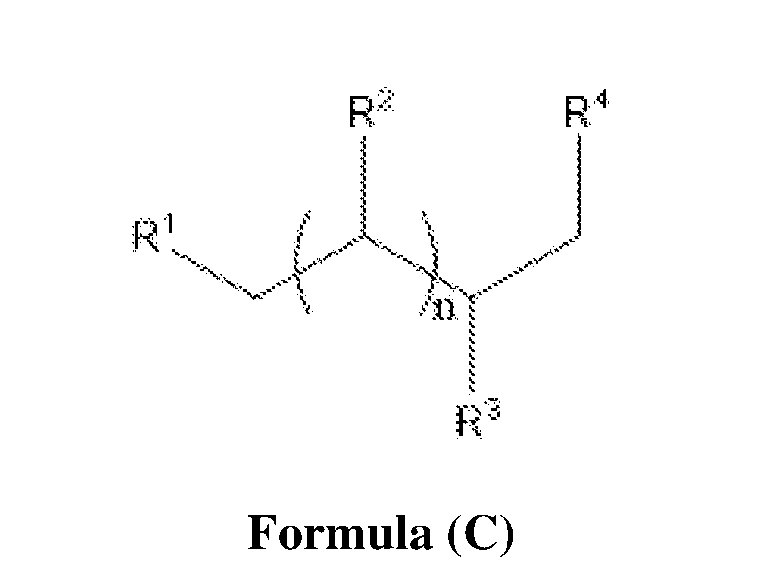
- Acyclic Polyols and Amino Sugars of Formula (C); Formula (C) wherein, n 0-3; R 1 , R 2 , R 3 and R 4 each independently selected from hydrogen, hydroxyl, amino, amide, alkyl amide, and carbonyl; iv. Cyclic amino sugars of Formula (D); Formula (D) wherein, R 1 , R 2 , R 3 , R 4 , R 5 each independently selected from hydrogen, hydroxyl, amino, amide, alkyl amide, carbonyl, alkyl hydroxyl; v. Pyrrole and its derivatives of Formula (E); Formula (E) wherein, R 1 and R 2 are independently selected from hydrogen, hydroxy, alkyl hydroxyl, carbonyl.
- said nitrogen containing furan derivatives are selected from the group consisting of 3-acetamido-5-acetylfuran, 3-acetamido-5-(1’,2’- dihydroxyethyl)furan, 3-amino-5-(1’,2’-dihydroxyethyl)furan, (4-aminofuran-2-yl)methanol, (hydroxymethyl)furan-3-yl)acetamide, (E)-N-(5-(2-hydroxyvinyl)furan-3-yl)acetamide, N-(5- (2-hydroxyethyl)furan-3-yl)acetamide, 2-(4-aminofuran-2-yl)ethan-1-ol, N-(5-(1, 2- dihydroxyethyl)-2-hydroxy-2, 5-dihydrofuran-3-yl)acetamide, (E)-N-(2-hydroxy-5-(2- hydroxyvinyl)-2,5-dihydrofuran
- said organic acids are selected from the group consisting of levulinic acid, acetic acid, glucosaminic acid, oxalic acid, formic acid, butyric acid, lactic acid, glycolic acid.
- said polyols are selected from the group consisting of 2-acetoamido-2-deoxy-d-sorbitol, 2-acetoamido-hexan-1,4,5,6-tetraol, n- acetylmonoethanolamine, monoethanol amine, butan-1,2,3,4-tetraol.
- said amino sugars are selected from the group consisting of D-Glucosamine, N-Acetyl-D-Glucosamine, (4S,5R)-2-amino-4,5,6- trihydroxyhex-2-enal, N-((4S,5R)-4,5,6-trihydroxy-1-oxohex-2-en-2-yl) acetamide, (4S,5R)- 4,5,6-trihydroxy-2-oxohexanal, (2R,3R,5S,6R)-3-amino-6-(hydroxymethyl)tetrahydro-2H- pyran-2,5-diol, (2R,3R,4S,6S)-3-amino-6-(hydroxymethyl)tetrahydro-2H-pyran-2,4-diol, (2R,4R,5S,6R)-6-(hydroxymethyl)tetrahydro-2H-pyran-2,4,5-triol, (2R,3S,4
- the Br ⁇ nsted and Lewis acidity of said solid acid catalysts is in the range of 0.05-5.0 mmol/g.
- said solid acid catalyst is selected from the group comprising of zeolites resins clays metal oxides mixed metal oxides supported
- said solid acid catalyst is selected from the group consisting of SAPO-44, SAPO-11, Silica Alumina, H-USY, H-MOR, H-ZSM-5, H-BEA, SBA-15, MCM-41, Al-SBA-15, Al-MCM-41, FSM-16, Al-FSM-16, HMM-1, Niobium Pentoxide, ZrO 2 , SO 4 2- / ZrO 2 , CeO 2 /ZrO 2 , Ga 2 O 3 /ZrO 2 , WO 3 /SiO 2 , MoO 3 /SiO 2 , P 2 O 5 /SiO 2 , Ga 2 O 3 .
- Fig 1 illustrates LC-MS for the reaction mixture
- Fig 2 illustrates LC-MS for HMF formed in reaction
- Fig 3 illustrates LC-MS-MS for HMF formed in reaction DETAILED DESCRIPTION OF THE INVENTION
- N-containing substrates such as; chitin, chitosan, and their oligomers, monomers
- Present invention is a valorization of animal derived biomass by using solid acid catalyst.
- the process comprises of reacting different types of chitosan/chitin/their oligomers/monomers with solid acid catalyst in water as a solvent in batch mode reactor at a suitable temperature and suitable pressure for a definite period of time.
- Different catalysts with acidic functionality are used and low molecular weight products are obtained.
- One of the products is 5-hydroxy methyl furfural (5-HMF) which is a platform chemical.
- 5-HMF 5-hydroxy methyl furfural
- Different value-added products formed at different reactions conditions of temperature, pressure, time, stirring and ratio of substrate to catalyst are Nitrogen containing furan derivatives and its derivatives, Furan derivatives without nitrogen, Organic Acids, Polyols, Amino Sugars, Pyrrole and its derivatives.
- Solid acid catalysts having both Br ⁇ nsted acidity and Lewis acidity or only Br ⁇ nsted acidity are used for the reactions.
- Solid acid catalyst is selected from family of zeolites, resins, clays, metal oxides, mixed metal oxides, supported metal oxides, acid treated oxides, sulphated/sulfonated carbons; wherein the acidity of solid acid catalysts is in the range of 0.05-5.0 mmol/g.
- SAPO-44 is used as a catalyst.
- Suitable temperature to conduct the reaction for obtaining different value-added products is in Suitable N2 pressure to conduct the reaction in order to obtain different value-added products is in the range of ambient pressure-30 bar, optionally flushing the reactor and filing with Argon, Helium, Hydrogen, Air, and Oxygen.
- Suitable period of time for the reaction is in the range of 1-36 hr. Reactions are done by varying substrate to catalyst ratio, which is in the range of 1:0.025 to 1:2 mole/mole ratio. Stirring speed is varied from 300-1500 RPM.
- Solvent used for the reaction is selected from polar solvents.
- Polar solvents may include water, ammonia, organic acids, inorganic acids, deuterium oxide, alcohols like ethanol, methanol, n-propanol, isopropanol, butanol etc., acetone, methyl ethyl ketone, methyl isobutyl ketone, THF, NMP, acetonitrile, dimethyl sulfoxide (DMSO), dimethyl formamide (DMF), and mixtures thereof.
- water is used as a solvent.
- Table-1 summarise the result of LC-MS study of reaction mixture.
- Table-1 LC-MS result of reaction mixture Several experiments are conducted with different solid acid catalysts and reaction parameters like temperature, pressure, time, stirring speed, substrate to catalyst ratio different substrates to obtain 5-hydroxy methyl furfural (5-HMF) compound and other value-added chemicals. Results are summarized below in Tables 2-6. Here only 5-HMF yield is tabulated.
- Table 2 Effect of solid acid catalysts Reaction condition: Substrate (0.31 mmol), catalyst, Substrate/Catalyst ratio (1:0.025 to 1:2 mole/mole) Water (30 mL)
- Table 3 Effect of time on depolymerisation of chitosan
- Chitin and chitosan have polymeric structure and high degree of crystallinity which are difficult to break.
- chitin/chitosan depolymerizes to give its monomers and then further dehydration occurs to give furan derivatives with or without Nitrogen including 5-HMF.
- the two-step reaction happens in one pot.
- the process of the present invention involves the use of structured as well as amorphous catalysts in the reaction.
- the catalysts are easily recyclable and reusable.
- the process of the present invention does not involve the use of any mineral acids, organic acids and high boiling solvent (DMSO) for the reaction.
- DMSO high boiling solvent
- the green solvent i.e., water is used for the reaction.
- Example 1 General process for the synthesis of different value-added products In a batch mode (100 mL - 1 L) reactor, substrates such as; chitosan/chitin/their oligomers/monomers (0.31 mmol) and water (30-600 mL) were added. Catalyst (Substrate to catalyst ratio: 1:0.025-1:2 mole/mole) is added.
- Reactor was flushed with nitrogen 3 times and pressure in the range of ambient-30 bar was filled. Then Reaction mixture was stirred at 300-1500 RPM at a temperature in the range of 120-250°C for 1-36 hr. After completion of the reaction, the reactor is cooled to 25-35°C. Catalyst and unconverted substrate is separated by centrifugation. The reaction mixture was recovered, filtered and analysed by HPLC, GC and LC-MS. The catalyst is recycled further as a wet or dry catalyst, calcined to remove unconverted substrate and used for further reactions.
Landscapes
- Chemical & Material Sciences (AREA)
- Engineering & Computer Science (AREA)
- Materials Engineering (AREA)
- Organic Chemistry (AREA)
- Chemical Kinetics & Catalysis (AREA)
- Crystallography & Structural Chemistry (AREA)
- Furan Compounds (AREA)
Abstract
The present invention provides a process to yield value added products from a substrate selected from chitin, chitosan, oligomers and monomers derived from them by using solid acid catalyst and water as a solvent.
Description
VALORIZATION OF ANIMAL DERIVED BIOMASS BY USING SOLID ACID CATALYST FIELD OF THE INVENTION Present invention relates to a valorization of animal derived biomass by using solid acid catalyst. Particularly, the present invention relates to a process to yield value added products from substrates selected from chitin, chitosan, oligomers and monomers derived from animals by using solid acid catalyst and water as a solvent. BACKGROUND AND PRIOR ART OF THE INVENTION Chitin (C8H13O5N)n is the 2nd most abundant bio-polymer on earth. Chitin, a long-chain homo-polymer of β-1, 4-linked N-Acetyl-D-Glucosamine units connected together via C-O-C linkages, is a derivative of glucose. It is a primary component of cell walls in fungi, exo- skeletons of insects and crustacean shells such as crab, shrimp, and lobster with varying quantities, the radulae of mollusks, cephalopod beaks, and the scales of fish. Chitin is a modified polysaccharide that contains nitrogen. Chitin has proved useful for several medicinal, industrial and biotechnological purposes. It is an industrial waste material of fisheries and a renewable feedstock for value added chemicals. Chitosan can be derived from chitin. Chitosan is a linear polysaccharide composed of randomly distributed β-(1-4)-linked D-glucosamine (deacetylated unit) and N-acetyl-D- glucosamine (acetylated unit). It is made by deacetylation of chitin in alkaline condition. The degree of deacetylation (%DD) in commercial chitosans ranges from 60 to 100%. Chitosan has several commercial and possible biomedical uses.
 Structures of chitin, chitosan, oligomers and monomer
yhitosan, chitin and their oligomers/monomers as shown in above figure can give value added chemicals upon depolymerisation. For value addition of chitin and chitosan, mineral acids, organic acids, metal supported catalysts, ionic liquids, metal salts are used in literature. The article entitled “Direct conversion of chitin biomass to 5-hydroxymethylfurfural in concentrated ZnCl2 aqueous solution” by Yingxiong Wang et al and published in the journal “Bioresource Technology 143 (2013) 384–390” reports direct conversion of chitin biomass to 5-hydroxymethylfurfural (5-HMF) in ZnCl2 aqueous solution to obtain 5- hydroxymethylfurfural (5-HMF) in 21.9% yield with 99% conversion of starting material (GlcNH2). But, the process suffers with few drawbacks such as metal salts are not separable after the reaction and not recyclable as well. Side products like humin is observed which is degradation product. The article entitled “Synergistic effect of hetero- and homo-catalysts on the ‘green’ synthesis of 5-hydroxymethylfurfural from chitosan biomass” by Kalane, Nikhil D. et. al and published in the journal “Cellulose, 2019, v.26, no.4, pp. 2805-2819”reports ‘green’ synthesis of 5- HMF from chitosan using a combination of homogenous and heterogeneous catalysis. H-β- zeolite in combination with a minimal concentration of acetic acid is used as a catalyst. Though the other products are not identified with this process, the use of organic acids made the process environmentally unfavorable. Organic acid is not separable as well as the temperature to conduct the reaction is also high. Moreover, the process includes 10 wt% AcOH as a solvent, which is not environmentally benign. In earlier reports, mineral acids, and organic acids are used as catalyst. In some cases, heterogeneous catalysts are used with the mineral and organic acids and mineral bases. In the literature, dimethyl sulfoxide (DMSO), dimethyl amide (DMA), N-Methyl-2-pyrrolidone (NMP), Dilute mineral acids (HCl), bases (NaOH), organic acids (HCOOH, CH3COOH), and ionic liquids ([BMIM]Cl) are used as solvents which is not environment friendly. Very high hydrogen pressure (40 bar), temperature (200-300°C) is used for some reactions. In some cases, microwave heating is also used. Based on this, it is evident that neutralization waste is generated during the downstream processing of reaction. Therefore, thus there is a need in the art to develop an environment friendly process involving green solvents like water as well as reusable and easily separable catalyst system at ambient temperature and pressure conditions.
OBJECTS OF THE INVENTION Main objective of the present invention is to provide a process to yield value added products from animal derived biomass such as chitin, chitosan, and their oligomers/monomers by using solid acid catalyst in water as a solvent. SUMMARY OF THE INVENTION Accordingly, present invention provides a one pot process for the synthesis of value added products from a N-containing substrate selected from chitin, chitosan, oligomers and monomers of chitin and chitosan, wherein said process comprising the steps of: i. reacting the N-containing substrate in the presence of a solid acid catalyst, wherein a substrate to catalyst ratio is in the range of 1:0.025 to 1:2 mole/mole ratio, in a water as a solvent at a pressure in the range of 1-30 bar and at a temperature in the range of 120-250oC for a period in the range of 1-36 hour yielding the products ranging from 0.1-10%. In an embodiment of the present invention, value added products are selected from the group consisting of i. Furan derivatives with or without nitrogen of Formula (A),
 wherein, R1, R2 and R3 are each independently selected from hydrogen, amino, amide, alkyl amide, aldehyde, carbonyl, C1-C10 alkyl, C1-C10 alkenyl, alkylhydroxy, alkenylhydroxy, ether, alkoxy, hydroxyl; ii. Organic Acids of Formula (B);
 wherein, n=0-4; R1 and R2 are independently selected from Hydrogen, C1-C10 alkyl, hydroxyl,
iii. Acyclic Polyols and Amino Sugars of Formula (C);
 Formula (C) wherein, n=0-3; R1, R2, R3 and R4 each independently selected from hydrogen, hydroxyl, amino, amide, alkyl amide, and carbonyl; iv. Cyclic amino sugars of Formula (D);
 Formula (D) wherein, R1, R2, R3, R4, R5 each independently selected from hydrogen, hydroxyl, amino, amide, alkyl amide, carbonyl, alkyl hydroxyl; v. Pyrrole and its derivatives of Formula (E);
 Formula (E) wherein, R1 and R2 are independently selected from hydrogen, hydroxy, alkyl hydroxyl, carbonyl. In another embodiment of the present invention, said nitrogen containing furan derivatives are selected from the group consisting of 3-acetamido-5-acetylfuran, 3-acetamido-5-(1’,2’- dihydroxyethyl)furan, 3-amino-5-(1’,2’-dihydroxyethyl)furan, (4-aminofuran-2-yl)methanol,
(hydroxymethyl)furan-3-yl)acetamide, (E)-N-(5-(2-hydroxyvinyl)furan-3-yl)acetamide, N-(5- (2-hydroxyethyl)furan-3-yl)acetamide, 2-(4-aminofuran-2-yl)ethan-1-ol, N-(5-(1, 2- dihydroxyethyl)-2-hydroxy-2, 5-dihydrofuran-3-yl)acetamide, (E)-N-(2-hydroxy-5-(2- hydroxyvinyl)-2,5-dihydrofuran-3-yl)acetamide, N-(2-hydroxy-5-(hydroxymethyl)-2,5- dihydrofuran-3-yl)acetamide, N-(2-hydroxy-5-(2-hydroxyethyl)-2,5-dihydrofuran-3- yl)acetamide, 1-(4-amino-5-hydroxy-2,5-dihydrofuran-2-yl)ethane-1,2-diol, N-(5-(1,2- dihydroxyethyl)-2,4-dihydroxytetrahydrofuran-3-yl)acetamide, N-(2,6- dihydroxyhexahydrofuro[3,2-b]furan-3-yl)acetamide; and, wherein said furan derivatives without nitrogen are selected from 5-hydroxymethyl furfural, 3,4-dihydroxy-5- (hydroxymethyl) tetrahydrofuran-2-carbaldehyde, Methyl 3-furancarboxylate, 5- (ethoxymethyl)furan-2-carbaldehyde, 2,4-dihydroxy-5-(hydroxymethyl)tetrahydrofuran-2- carbaldehyde, methyl furfural, furfural. In yet another embodiment of the present invention, said organic acids are selected from the group consisting of levulinic acid, acetic acid, glucosaminic acid, oxalic acid, formic acid, butyric acid, lactic acid, glycolic acid. In yet another embodiment of the present invention, said polyols are selected from the group consisting of 2-acetoamido-2-deoxy-d-sorbitol, 2-acetoamido-hexan-1,4,5,6-tetraol, n- acetylmonoethanolamine, monoethanol amine, butan-1,2,3,4-tetraol. In yet another embodiment of the present invention, said amino sugars are selected from the group consisting of D-Glucosamine, N-Acetyl-D-Glucosamine, (4S,5R)-2-amino-4,5,6- trihydroxyhex-2-enal, N-((4S,5R)-4,5,6-trihydroxy-1-oxohex-2-en-2-yl) acetamide, (4S,5R)- 4,5,6-trihydroxy-2-oxohexanal, (2R,3R,5S,6R)-3-amino-6-(hydroxymethyl)tetrahydro-2H- pyran-2,5-diol, (2R,3R,4S,6S)-3-amino-6-(hydroxymethyl)tetrahydro-2H-pyran-2,4-diol, (2R,4R,5S,6R)-6-(hydroxymethyl)tetrahydro-2H-pyran-2,4,5-triol, (2R,3S,4R,5S)-5-amino- 2-(hydroxymethyl)tetrahydro-2H-pyran-3,4-diol, (2R,3R,4R,5S,6R)-3-amino-6- (hydroxymethyl)tetrahydro-2H-pyran-2,4,5-triol, N-((2R,3R,5S,6R)-2,5-dihydroxy-6- (hydroxymethyl)tetrahydro-2H-pyran-3-yl) acetamide, N-((2R,3R,4S,6S)-2,4-dihydroxy-6- (hydroxymethyl) tetrahydro-2H-pyran-3-yl)acetamide, N-((3S,4R,5S,6R)-4,5-dihydroxy-6- (hydroxymethyl) tetrahydro-2H-pyran-3-yl)acetamide, levoglucosenone. In yet another embodiment of the present invention, the Brønsted and Lewis acidity of said solid acid catalysts is in the range of 0.05-5.0 mmol/g. In yet another embodiment of the present invention, said solid acid catalyst is selected from the group comprising of zeolites resins clays metal oxides mixed metal oxides supported
In yet another embodiment of the present invention, said solid acid catalyst is selected from the group consisting of SAPO-44, SAPO-11, Silica Alumina, H-USY, H-MOR, H-ZSM-5, H-BEA, SBA-15, MCM-41, Al-SBA-15, Al-MCM-41, FSM-16, Al-FSM-16, HMM-1, Niobium Pentoxide, ZrO2, SO4 2-/ ZrO2, CeO2/ZrO2, Ga2O3/ZrO2, WO3/SiO2, MoO3/SiO2, P2O5/SiO2, Ga2O3/SiO2, Amberlyst-15, Amberlyst-35, Nafion NR-50, Nafion SAC-13, Clay (K10), Al Pillared Clay, Sulfonated Carbon. BRIEF DESCRIPTION OF DRAWINGS Fig 1: illustrates LC-MS for the reaction mixture; Fig 2: illustrates LC-MS for HMF formed in reaction; and Fig 3: illustrates LC-MS-MS for HMF formed in reaction DETAILED DESCRIPTION OF THE INVENTION The present invention provides a process for the preparation of different value-added products from N-containing substrates such as; chitin, chitosan, and their oligomers, monomers by using solid acid catalyst and water as a solvent at different temperature, pressure, time, stirring speed and substrate catalyst ratio. Present invention is a valorization of animal derived biomass by using solid acid catalyst. The process comprises of reacting different types of chitosan/chitin/their oligomers/monomers with solid acid catalyst in water as a solvent in batch mode reactor at a suitable temperature and suitable pressure for a definite period of time. Different catalysts with acidic functionality are used and low molecular weight products are obtained. One of the products is 5-hydroxy methyl furfural (5-HMF) which is a platform chemical. Different value-added products formed at different reactions conditions of temperature, pressure, time, stirring and ratio of substrate to catalyst are Nitrogen containing furan derivatives and its derivatives, Furan derivatives without nitrogen, Organic Acids, Polyols, Amino Sugars, Pyrrole and its derivatives. Solid acid catalysts having both Brønsted acidity and Lewis acidity or only Brønsted acidity are used for the reactions. Solid acid catalyst is selected from family of zeolites, resins, clays, metal oxides, mixed metal oxides, supported metal oxides, acid treated oxides, sulphated/sulfonated carbons; wherein the acidity of solid acid catalysts is in the range of 0.05-5.0 mmol/g. In particularly useful embodiment, SAPO-44 is used as a catalyst. Suitable temperature to conduct the reaction for obtaining different value-added products is in
Suitable N2 pressure to conduct the reaction in order to obtain different value-added products is in the range of ambient pressure-30 bar, optionally flushing the reactor and filing with Argon, Helium, Hydrogen, Air, and Oxygen. Suitable period of time for the reaction is in the range of 1-36 hr. Reactions are done by varying substrate to catalyst ratio, which is in the range of 1:0.025 to 1:2 mole/mole ratio. Stirring speed is varied from 300-1500 RPM. Solvent used for the reaction is selected from polar solvents. Polar solvents may include water, ammonia, organic acids, inorganic acids, deuterium oxide, alcohols like ethanol, methanol, n-propanol, isopropanol, butanol etc., acetone, methyl ethyl ketone, methyl isobutyl ketone, THF, NMP, acetonitrile, dimethyl sulfoxide (DMSO), dimethyl formamide (DMF), and mixtures thereof. In particularly useful embodiment, water is used as a solvent. Different value-added products either cyclic or acyclic and either with or without nitrogen containing and either with or without oxygen containing formed at different reaction conditions of temperature and pressure comprise of Furan derivatives with or without nitrogen of Formula (A), Organic Acids of Formula (B), Acyclic Polyols and Amino Sugars of Formula (C), Cyclic amino sugars of Formula (D), Pyrrole and its derivatives of Formula (E);
 Wherein, R1, R2 and R3 are each independently selected from hydrogen, amino, amide, alkyl amide, aldehyde, carbonyl, C1-C10 alkyl, C1-C10 alkenyl, alkylhydroxy, alkenylhydroxy, ether, alkoxy, hydroxyl; Wherein, n=0-4;
 R1 and R2 are independently selected from Hydrogen, C1-C10 alkyl, hydroxyl, amino, amide, alkyl amide, carbonyl, carboxyl;
 Wherein, n=0-3; R1, R2, R3 and R4 each independently selected from hydrogen, hydroxyl, amino, amide, alkyl amide, and carbonyl;
 R1, R2, R3, R4, R5 each independently selected from hydrogen, hydroxyl, amino, amide, alkyl amide, carbonyl, alkyl hydroxyl;
 Wherein, R1 and R2 are independently selected from hydrogen, hydroxyl, alkyl hydroxy, carbonyl. Wherein the above different value-added products further comprise of: A) Nitrogen containing furan derivatives

 B) Furan derivatives without nitrogen -
 C) Organic Acids
 D) Polyols
 E) Amino Sugars


Claims
We Claim 1. A one pot process for the synthesis of value added products from a N-containing substrate selected from chitin, chitosan, oligomers and monomers of chitin and chitosan, wherein said process comprising the steps of: i. reacting the N-containing substrate in the presence of a solid acid catalyst, wherein a substrate to catalyst ratio is in the range of 1:0.025 to 1:2 mole/mole ratio, in a water as a solvent at a pressure in the range of 1-30 bar and at a temperature in the range of 120-250oC for a period in the range of 1-36 hour yielding the products ranging from 0.1-10%. 2. The process as claimed in claim 1, wherein value added products are selected from the group consisting of i. Furan derivatives with or without nitrogen of Formula (A),
 wherein, R1, R2 and R3 are each independently selected from hydrogen, amino, amide, alkyl amide, aldehyde, carbonyl, C1-C10 alkyl, C1-C10 alkenyl, alkylhydroxy, alkenylhydroxy, ether, alkoxy, hydroxyl; ii. Organic Acids of Formula (B);
 wherein, n=0-4; R1 and R2 are independently selected from Hydrogen, C1-C10 alkyl, hydroxyl, amino, amide, alkyl amide, carbonyl, carboxyl; iii. Acyclic Polyols and Amino Sugars of Formula (C);


2,
3,
4-tetraol. 6. The process as claimed in claim 1, wherein said amino sugars are selected from the group consisting of D-Glucosamine, N-Acetyl-D-Glucosamine, (4S,5R)-2-amino- 4,5,6-trihydroxyhex-2-enal, N-((4S,5R)-4,5,6-trihydroxy-1-oxohex-2-en-2-yl) acetamide, (4S,5R)-4,
5,
6-trihydroxy-2-oxohexanal, (2R,3R,5S,6R)-3-amino-6- (hydroxymethyl)tetrahydro-2H-pyran-2,5-diol, (2R,3R,4S,6S)-3-amino-6- (hydroxymethyl)tetrahydro-2H-pyran-2,4-diol, (2R,4R,5S,6R)-6- (hydroxymethyl)tetrahydro-2H-pyran-2,4,5-triol, (2R,3S,4R,5S)-5-amino-2- (hydroxymethyl)tetrahydro-2H-pyran-3,4-diol, (2R,3R,4R,5S,6R)-3-amino-6- (hydroxymethyl)tetrahydro-2H-pyran-2,4,5-triol, N-((2R,3R,5S,6R)-2,5-dihydroxy-6- (hydroxymethyl)tetrahydro-2H-pyran-3-yl) acetamide, N-((2R,3R,4S,6S)-2,4- dihydroxy-6-(hydroxymethyl) tetrahydro-2H-pyran-3-yl)acetamide, N- ((3S,4R,5S,6R)-4,5-dihydroxy-6-(hydroxymethyl) tetrahydro-2H-pyran-3- yl)acetamide, levoglucosenone.
7. The process as claimed in claim 1, wherein the Brønsted and Lewis acidity of said solid acid catalysts is in the range of 0.05-5.0 mmol/g.
8. The process as claimed in claim 1, wherein said solid acid catalyst is selected from the group comprising of zeolites resins clays metal oxides mixed metal oxides
9. The process as claimed in claim 1, wherein said solid acid catalyst is selected from the group consisting of SAPO-44, SAPO-11, Silica Alumina, H-USY, H-MOR, H-ZSM- 5, H-BEA, SBA-15, MCM-41, Al-SBA-15, Al-MCM-41, FSM-16, Al-FSM-16, HMM-1, Niobium Pentoxide, ZrO2, SO4 2-/ZrO2, CeO2/ZrO2, Ga2O3/ZrO2, WO3/SiO2, MoO3/SiO2, P2O5/SiO2, Ga2O3/SiO2, Amberlyst-15, Amberlyst-35, Nafion NR-50, Nafion SAC-13, Clay (K10), Al Pillared Clay, Sulfonated Carbon.
Applications Claiming Priority (2)
| Application Number | Priority Date | Filing Date | Title |
|---|---|---|---|
| IN202011031311 | 2020-07-22 | ||
| IN202011031311 | 2020-07-22 |
Publications (1)
| Publication Number | Publication Date |
|---|---|
| WO2022018755A1 true WO2022018755A1 (en) | 2022-01-27 |
Family
ID=79728587
Family Applications (1)
| Application Number | Title | Priority Date | Filing Date |
|---|---|---|---|
| PCT/IN2021/050700 Ceased WO2022018755A1 (en) | 2020-07-22 | 2021-07-20 | Valorization of animal derived biomass by using solid acid catalyst |
Country Status (1)
| Country | Link |
|---|---|
| WO (1) | WO2022018755A1 (en) |
Cited By (5)
| Publication number | Priority date | Publication date | Assignee | Title |
|---|---|---|---|---|
| CN115368325A (en) * | 2022-09-28 | 2022-11-22 | 中国科学院海洋研究所 | Method for preparing 5-hydroxymethylfurfural from chitin |
| CN116143733A (en) * | 2021-11-22 | 2023-05-23 | 中国科学院大连化学物理研究所 | A method for preparing 3-acetylamino-5-acetylfuran |
| CN117327037A (en) * | 2023-09-27 | 2024-01-02 | 中国科学院山西煤炭化学研究所 | Method for preparing nitrogen-containing heterocyclic compound 3-acetamido-5-acetyl furan |
| CN118146179A (en) * | 2024-03-18 | 2024-06-07 | 中国科学院海洋研究所 | Method for preparing 5-hydroxymethylfurfural by catalyzing chitosan with a bifunctional catalytic system |
| CN118184612A (en) * | 2022-12-12 | 2024-06-14 | 中国科学院大连化学物理研究所 | A method for preparing 3-acetylamino-5-acetylfuran using L molecular sieve |
-
2021
- 2021-07-20 WO PCT/IN2021/050700 patent/WO2022018755A1/en not_active Ceased
Non-Patent Citations (2)
| Title |
|---|
| BHAUMIK PRASENJIT, DHEPE PARESH LAXMIKANT: "Influence of properties of SAPO's on the one-pot conversion of mono-, di- and poly-saccharides into 5-hydroxymethylfurfural", RSC ADVANCES, vol. 3, 17 July 2013 (2013-07-17), pages 17156 - 17165, XP055899379, DOI: 10.1039/c3ra43197e * |
| ZHOU DAN, SHEN DONGSHENG, LU WENJING, SONG TAO, WANG MEIZHEN, FENG HUAJUN, SHENTU JIALI, LONG YUYANG: "Production of 5-Hydroxymethylfurfural from Chitin Biomass: A Review", MOLECULES, vol. 25, no. 3, 27 January 2020 (2020-01-27), pages 1 - 15, XP055899382, DOI: 10.3390/molecules25030541 * |
Cited By (7)
| Publication number | Priority date | Publication date | Assignee | Title |
|---|---|---|---|---|
| CN116143733A (en) * | 2021-11-22 | 2023-05-23 | 中国科学院大连化学物理研究所 | A method for preparing 3-acetylamino-5-acetylfuran |
| CN116143733B (en) * | 2021-11-22 | 2024-05-03 | 中国科学院大连化学物理研究所 | Method for preparing 3-acetamido-5-acetylfuran |
| CN115368325A (en) * | 2022-09-28 | 2022-11-22 | 中国科学院海洋研究所 | Method for preparing 5-hydroxymethylfurfural from chitin |
| CN115368325B (en) * | 2022-09-28 | 2023-08-22 | 中国科学院海洋研究所 | A method for preparing 5-hydroxymethylfurfural from chitin |
| CN118184612A (en) * | 2022-12-12 | 2024-06-14 | 中国科学院大连化学物理研究所 | A method for preparing 3-acetylamino-5-acetylfuran using L molecular sieve |
| CN117327037A (en) * | 2023-09-27 | 2024-01-02 | 中国科学院山西煤炭化学研究所 | Method for preparing nitrogen-containing heterocyclic compound 3-acetamido-5-acetyl furan |
| CN118146179A (en) * | 2024-03-18 | 2024-06-07 | 中国科学院海洋研究所 | Method for preparing 5-hydroxymethylfurfural by catalyzing chitosan with a bifunctional catalytic system |
Similar Documents
| Publication | Publication Date | Title |
|---|---|---|
| EP2598466B1 (en) | Microwave assisted synthesis of dehydrated sugar derivatives hydroxymethylfurfural, levulinic acid, anhydrosugar alcohols, and ethers thereof | |
| Peleteiro et al. | Furfural production using ionic liquids: A review | |
| Wang et al. | Highly efficient production of lactic acid from cellulose using lanthanide triflate catalysts | |
| US9090581B2 (en) | Process for the conversion of a carbohydrate-containing feedstock | |
| Zheng et al. | Production of 5‐hydroxymethyl furfural and levulinic acid from lignocellulose in aqueous solution and different solvents | |
| CN103797004B (en) | For the preparation of the method for furfural | |
| Wang et al. | Conversion of carbohydrates into 5-hydroxymethylfurfural in an advanced single-phase reaction system consisting of water and 1, 2-dimethoxyethane | |
| Jiang et al. | Direct conversion of chitosan to 5-hydroxymethylfurfural in water using Brønsted–Lewis acidic ionic liquids as catalysts | |
| US10259797B2 (en) | Process for preparing a mixture comprising 5-(hydroxymethyl) furfural and specific HMF esters | |
| KR20180080260A (en) | Method for producing furan-2,5-dicarboxylic acid | |
| Fusaro et al. | Reactivity of d-fructose and d-xylose in acidic media in homogeneous phases | |
| JP7085474B2 (en) | A method for producing 5-hydroxymethylfurfural in the presence of a catalyst of a homogeneous sulfonic acid system in the presence of at least one aprotic polar solvent. | |
| Mthembu et al. | Optimization of levulinic acid production from depithed sugarcane bagasse in 1-Ethyl-3-methylimidazolium hydrogen sulfate [EMim][HSO4] | |
| EP3317263B1 (en) | Process for the preparation of a furfural derivative | |
| CN116529232A (en) | Process for producing levulinic acid | |
| CA2964036A1 (en) | Improved 5-hydroxymethylfurfural production using a multi-fluorinated alcohol compound | |
| Meier et al. | Probing the Role of Individual OH Sites in Carbohydrate Conversion Suggests Strategies for Increasing Product Selectivity and Avoiding Humins | |
| EP3317262B1 (en) | Process for the preparation of a furfural derivative comprising neutralizing an acid reaction mixture | |
| Mendonça et al. | Optimization of production of 5-hydroxymethylfurfural from glucose in a water: Acetone biphasic system | |
| Tong et al. | Catalytic production of 5-hydroxymethylfurfural from biomass and biomass-derived sugars | |
| Tahvildari et al. | The study of hydroxymethylfurfural as a basic reagent for liquid alkanes fuel manufacture from agricultural wastes | |
| Qi et al. | Production of versatile platform chemical 5-hydroxymethylfurfural from biomass in ionic liquids | |
| EP3865478B1 (en) | Preparing method for 5-alkoxymethylfurfural | |
| Aregawi | Production of 5-hydroxymethylfurfural (5-HMF)/2-furfural (2-F), platform molecules for the manufacture of bioplastics, from renewable resources | |
| Jang et al. | Synthesis of HMF in Ionic Liquids: Biomass-Derived Products |
Legal Events
| Date | Code | Title | Description |
|---|---|---|---|
| 121 | Ep: the epo has been informed by wipo that ep was designated in this application |
Ref document number: 21845312 Country of ref document: EP Kind code of ref document: A1 |
|
| NENP | Non-entry into the national phase |
Ref country code: DE |
|
| 122 | Ep: pct application non-entry in european phase |
Ref document number: 21845312 Country of ref document: EP Kind code of ref document: A1 |