WO2022016808A1 - 一种kubernetes集群资源动态调整方法及电子设备 - Google Patents
一种kubernetes集群资源动态调整方法及电子设备 Download PDFInfo
- Publication number
- WO2022016808A1 WO2022016808A1 PCT/CN2020/140019 CN2020140019W WO2022016808A1 WO 2022016808 A1 WO2022016808 A1 WO 2022016808A1 CN 2020140019 W CN2020140019 W CN 2020140019W WO 2022016808 A1 WO2022016808 A1 WO 2022016808A1
- Authority
- WO
- WIPO (PCT)
- Prior art keywords
- lstm
- resource consumption
- data
- resource
- time series
- Prior art date
- Legal status (The legal status is an assumption and is not a legal conclusion. Google has not performed a legal analysis and makes no representation as to the accuracy of the status listed.)
- Ceased
Links
Images
Classifications
-
- G—PHYSICS
- G06—COMPUTING OR CALCULATING; COUNTING
- G06F—ELECTRIC DIGITAL DATA PROCESSING
- G06F9/00—Arrangements for program control, e.g. control units
- G06F9/06—Arrangements for program control, e.g. control units using stored programs, i.e. using an internal store of processing equipment to receive or retain programs
- G06F9/44—Arrangements for executing specific programs
- G06F9/455—Emulation; Interpretation; Software simulation, e.g. virtualisation or emulation of application or operating system execution engines
- G06F9/45533—Hypervisors; Virtual machine monitors
- G06F9/45558—Hypervisor-specific management and integration aspects
-
- H—ELECTRICITY
- H04—ELECTRIC COMMUNICATION TECHNIQUE
- H04L—TRANSMISSION OF DIGITAL INFORMATION, e.g. TELEGRAPHIC COMMUNICATION
- H04L41/00—Arrangements for maintenance, administration or management of data switching networks, e.g. of packet switching networks
- H04L41/14—Network analysis or design
- H04L41/149—Network analysis or design for prediction of maintenance
-
- G—PHYSICS
- G06—COMPUTING OR CALCULATING; COUNTING
- G06F—ELECTRIC DIGITAL DATA PROCESSING
- G06F11/00—Error detection; Error correction; Monitoring
- G06F11/30—Monitoring
-
- G—PHYSICS
- G06—COMPUTING OR CALCULATING; COUNTING
- G06F—ELECTRIC DIGITAL DATA PROCESSING
- G06F11/00—Error detection; Error correction; Monitoring
- G06F11/30—Monitoring
- G06F11/3003—Monitoring arrangements specially adapted to the computing system or computing system component being monitored
- G06F11/3006—Monitoring arrangements specially adapted to the computing system or computing system component being monitored where the computing system is distributed, e.g. networked systems, clusters, multiprocessor systems
-
- G—PHYSICS
- G06—COMPUTING OR CALCULATING; COUNTING
- G06F—ELECTRIC DIGITAL DATA PROCESSING
- G06F11/00—Error detection; Error correction; Monitoring
- G06F11/30—Monitoring
- G06F11/3003—Monitoring arrangements specially adapted to the computing system or computing system component being monitored
- G06F11/301—Monitoring arrangements specially adapted to the computing system or computing system component being monitored where the computing system is a virtual computing platform, e.g. logically partitioned systems
-
- G—PHYSICS
- G06—COMPUTING OR CALCULATING; COUNTING
- G06F—ELECTRIC DIGITAL DATA PROCESSING
- G06F9/00—Arrangements for program control, e.g. control units
- G06F9/06—Arrangements for program control, e.g. control units using stored programs, i.e. using an internal store of processing equipment to receive or retain programs
- G06F9/44—Arrangements for executing specific programs
- G06F9/455—Emulation; Interpretation; Software simulation, e.g. virtualisation or emulation of application or operating system execution engines
-
- H—ELECTRICITY
- H04—ELECTRIC COMMUNICATION TECHNIQUE
- H04L—TRANSMISSION OF DIGITAL INFORMATION, e.g. TELEGRAPHIC COMMUNICATION
- H04L41/00—Arrangements for maintenance, administration or management of data switching networks, e.g. of packet switching networks
- H04L41/14—Network analysis or design
- H04L41/145—Network analysis or design involving simulating, designing, planning or modelling of a network
-
- G—PHYSICS
- G06—COMPUTING OR CALCULATING; COUNTING
- G06F—ELECTRIC DIGITAL DATA PROCESSING
- G06F9/00—Arrangements for program control, e.g. control units
- G06F9/06—Arrangements for program control, e.g. control units using stored programs, i.e. using an internal store of processing equipment to receive or retain programs
- G06F9/44—Arrangements for executing specific programs
- G06F9/455—Emulation; Interpretation; Software simulation, e.g. virtualisation or emulation of application or operating system execution engines
- G06F9/45533—Hypervisors; Virtual machine monitors
- G06F9/45558—Hypervisor-specific management and integration aspects
- G06F2009/4557—Distribution of virtual machine instances; Migration and load balancing
-
- G—PHYSICS
- G06—COMPUTING OR CALCULATING; COUNTING
- G06F—ELECTRIC DIGITAL DATA PROCESSING
- G06F9/00—Arrangements for program control, e.g. control units
- G06F9/06—Arrangements for program control, e.g. control units using stored programs, i.e. using an internal store of processing equipment to receive or retain programs
- G06F9/44—Arrangements for executing specific programs
- G06F9/455—Emulation; Interpretation; Software simulation, e.g. virtualisation or emulation of application or operating system execution engines
- G06F9/45533—Hypervisors; Virtual machine monitors
- G06F9/45558—Hypervisor-specific management and integration aspects
- G06F2009/45595—Network integration; Enabling network access in virtual machine instances
-
- H—ELECTRICITY
- H04—ELECTRIC COMMUNICATION TECHNIQUE
- H04L—TRANSMISSION OF DIGITAL INFORMATION, e.g. TELEGRAPHIC COMMUNICATION
- H04L41/00—Arrangements for maintenance, administration or management of data switching networks, e.g. of packet switching networks
- H04L41/14—Network analysis or design
- H04L41/142—Network analysis or design using statistical or mathematical methods
-
- Y—GENERAL TAGGING OF NEW TECHNOLOGICAL DEVELOPMENTS; GENERAL TAGGING OF CROSS-SECTIONAL TECHNOLOGIES SPANNING OVER SEVERAL SECTIONS OF THE IPC; TECHNICAL SUBJECTS COVERED BY FORMER USPC CROSS-REFERENCE ART COLLECTIONS [XRACs] AND DIGESTS
- Y02—TECHNOLOGIES OR APPLICATIONS FOR MITIGATION OR ADAPTATION AGAINST CLIMATE CHANGE
- Y02D—CLIMATE CHANGE MITIGATION TECHNOLOGIES IN INFORMATION AND COMMUNICATION TECHNOLOGIES [ICT], I.E. INFORMATION AND COMMUNICATION TECHNOLOGIES AIMING AT THE REDUCTION OF THEIR OWN ENERGY USE
- Y02D10/00—Energy efficient computing, e.g. low power processors, power management or thermal management
Definitions
- the present application belongs to the field of computers, and in particular relates to a method for dynamically adjusting Kubernetes cluster resources and an electronic device.
- Kubernetes a container cluster management technology that can realize container orchestration and management
- container orchestration and management a container cluster management technology that can realize container orchestration and management
- Linux in the cloud era In order to prevent the application from consuming too many resources and thus affecting the performance of other applications and nodes, it is necessary to implement the application resource control and isolation through the resource limitation mechanism of Kubernetes and the Cgroup technology of Docker.
- it can only be statically deployed through the configuration file, and it is necessary to manually estimate the resource requirements such as Cpu and Memory.
- the Pod will use up the resources on the node without limit, and there will be resource competition, which will have a huge impact on the stability of the service.
- the traffic will change regularly, so the resource usage will change accordingly, and the static deployment method will lead to insufficient or redundant resources.
- VPA is similar to HPA, but it adjusts the resource request value of a single Pod.
- the industry will also conduct stress tests on the entire link, using the cAdvisor monitoring system integrated in Kubernetes to predict the number of replicas and resources required by the Pod in advance, and use redundancy when the resources cannot be accurately budgeted. way of configuration.
- the academic community generally obtains the curve of performance changing with resources through experiments, determines an appropriate resource reservation value, and reserves the corresponding resources in advance.
- the literature [Xu, G., Xu, C.-Z MEER: Online Estimation of Optimal Reservations for Long Lived Containers in In-Memory Cluster Computing.
- ICDCS 2019 proposes a long-life cycle-oriented container-sensitive memory resource reservation mechanism , allowing containers to run with much less memory than ideal, at the cost of a performance penalty.
- the literature adopts offline training. After obtaining the model, online prediction is used to obtain the Pod resource limit.
- VPA vertical expansion
- API Server the only operation entry for Kubernetes resource objects, other components must operate resource data through the API provided by it
- Kube-Scheduler is redeployed and cannot be upgraded in place, which obviously does not meet the real-time requirements.
- the VPN is still in the alpha version and has not been merged into the official Kubernetes release, and HPA and VPA are currently incompatible, so you can only choose one to use, otherwise there will be interference between the two.
- test data of the old version may not be suitable for the new version, or the same data on different machines, due to different configurations, often show differences in performance, and the effect of dynamic adjustment is not achieved.
- the present application provides a dynamic adjustment method and electronic device for Kubernetes cluster resources, aiming to solve one of the above technical problems in the prior art at least to a certain extent.
- a method for dynamic adjustment of Kubernetes cluster resources comprising the following steps:
- Step a collect historical monitoring indicator data in the application, and obtain resource consumption time series data according to the monitoring indicator data;
- Step b constructing an LSTM-Kalman filter, and inputting the resource consumption time series data into the LSTM-Kalman for pre-training to obtain a prediction model; wherein, the LSTM-Kalman filter is a Kalman filter transformed by LSTM;
- the technical solution adopted in the embodiment of the present application further includes: in the step a, the collection of historical monitoring indicator data in the application includes:
- the collected monitoring indicator data includes CPU utilization and quota, file system read/write utilization and quota, and network packet sending/receiving/discarding rate data. at least one or a combination of more than one;
- the technical solution adopted in the embodiment of the present application further includes: in the step a, the obtaining the resource consumption time series data according to the monitoring indicator data includes:
- the time series database is regularly queried to obtain the index data of interest, and the interested index data is cached and sorted to form time series data of resource consumption that can be directly used for prediction.
- the caching and sorting of the indicator data of interest includes:
- the constructing the LSTM-Kalman filter includes:
- X(k) is the system state at time k
- Z(k) is the observed value at time k
- W(k) and V(k) represent the process and measurement noise, respectively, and their covariances are Q, respectively
- R represents the process and measurement noise, respectively, and their covariances are Q, respectively
- R represents the process and measurement noise, respectively, and their covariances are Q, respectively
- R represents the process and measurement noise, respectively, and their covariances are Q, respectively
- R is the function model generated by the LSTM f model
- the prediction steps are:
- F represents the Jacobian matrix of f with respect to X(k-1
- the update steps are:
- Kg(k) P(k
- k) X(k
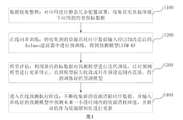
- Step 100 Data collection and arrangement: firstly, static redundant configuration deployment is performed on the application, and historical monitoring indicator data such as Cpu and Memory of the application under the real load environment are collected;
- Equations (3) and (4) correspond to the system prediction process, and the predicted value under k state is obtained, and then combined with the measured value Z(t), the optimal estimated value X(k
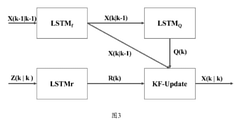
- this application transforms the Kalman filter by using LSTM to get rid of the excessive dependence on the dynamic model, so that the model parameters do not need to be given a priori.
- the specific transformation process is as follows:
- Equation (11) F represents the Jacobian matrix of f with respect to X(k-1
- FIG. 3 it is a schematic diagram of the Kalman filter transformed by LSTM.
- the request value in the configuration file can be taken as X(k-1
- k-1) obtains the state noise Q(k) at time k through LSTM Q.
- the Kalman filter is recursively updated through equations (12), (13), and (14).
- the Kalman filter transformed by LSTM takes into account both prediction and noise filtering, and at the same time gets rid of the excessive dependence on the dynamic model.
- the model parameters do not need to be given a priori, but can be learned from the data, giving full play to the time series before and after Correlation; and enhanced long-range prediction ability, instead of relying only on the last moment value, the prediction accuracy can be significantly improved.
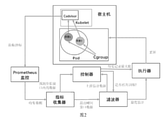
- the model evaluation process is specifically as follows: pulling the monitoring indicator data within the time period set by the Metrics Collector through the Controller, and comparing the prediction result of the prediction model with the monitoring indicator data reported from the Metrics Collector, and judging whether it needs to be performed again.
- Model training If the time consumption value of the set threshold is below the optimal estimated value of the prediction model, the model will not be updated. Otherwise, the new monitoring index data will be used to update the parameters of the prediction model to correct the model.
- a historical data peak is also backed up in the Controller, which is temporarily used as a container resource limit when the filter is retrained.
- Step 400 Enter the online prediction execution stage: continuously collect new resource consumption time series data, and input the trained prediction model to predict the resource consumption peak value within a preset time period in the future, and update the value as a resource limit value;
- Cgroup is a module used to implement resource usage and statistics in the Linux kernel. Docker uses Cgroup to isolate and limit resources. Kubelet acts as a node agent of Kubernetes. All operations on Cgroup are implemented by the internal Container Manager module. Container Manager will pass Cgroups limit the use of resources layer by layer. When the container resource request and limit are specified through configuration files such as yaml, Docker will set the runtime cpu.share, cpu.quota, cpu.period, mem.limit and other indicators for the container, and Executor will modify these indicator files for resource utilization. Update to achieve dynamic Pod resource limit adjustment.
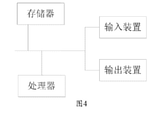
- the processor, the memory, the input system, and the output system may be connected by a bus or in other ways, and the connection by a bus is taken as an example in FIG. 4 .
- the memory can be used to store non-transitory software programs, non-transitory computer-executable programs, and modules.
- the processor executes various functional applications and data processing of the electronic device by running the non-transitory software programs, instructions and modules stored in the memory, that is, the processing method of the above method embodiment is implemented.
- the memory may include a stored program area and a stored data area, wherein the stored program area can store an operating system and an application program required by at least one function; the stored data area can store data and the like. Additionally, the memory may include high-speed random access memory, and may also include non-transitory memory, such as at least one magnetic disk storage device, flash memory device, or other non-transitory solid state storage device. In some embodiments, the memory may optionally include memory located remotely from the processor, which may be connected to the processing system via a network. Examples of such networks include, but are not limited to, the Internet, an intranet, a local area network, a mobile communication network, and combinations thereof.
- the one or more modules are stored in the memory, and when executed by the one or more processors, perform the following operations of any of the foregoing method embodiments:
- Step a collect historical monitoring indicator data in the application, and obtain resource consumption time series data according to the monitoring indicator data;
- the above product can execute the method provided by the embodiments of the present application, and has functional modules and beneficial effects corresponding to the execution method.
- the above product can execute the method provided by the embodiments of the present application, and has functional modules and beneficial effects corresponding to the execution method.
- Step b constructing an LSTM-Kalman filter, and inputting the resource consumption time series data into the LSTM-Kalman for pre-training to obtain a prediction model; wherein, the LSTM-Kalman filter is a Kalman filter transformed by LSTM;
- Step c Collect new resource consumption time series data, input the new resource consumption time series data into the prediction model to predict the resource consumption peak value within a preset time period in the future, and use the resource consumption peak value as a resource limit value for resource consumption. renew.
- An embodiment of the present application provides a computer program product, the computer program product includes a computer program stored on a non-transitory computer-readable storage medium, the computer program includes program instructions, and when the program instructions are executed by a computer , which causes the computer to do the following:
- Step c Collect new resource consumption time series data, input the new resource consumption time series data into the prediction model to predict the resource consumption peak value within a preset time period in the future, and use the resource consumption peak value as a resource limit value for resource consumption. renew.
- the method for dynamic adjustment of Kubernetes cluster resources and the electronic device first perform static redundant configuration deployment on the application, collect historical monitoring indicator data of the application under a real load environment, and perform online pre-training to obtain a more reliable prediction model;
- the model is iteratively trained until the loss of the model converges or only oscillates within a preset range, then continuously collect new resource consumption time series data and input it into the prediction model to predict the peak resource consumption in a short period of time in the future, and use this value as the resource limit value.
- Updated to implement dynamic Pod resource limit adjustment Compared with the prior art, the present application at least has the following beneficial effects:
- the resource is dynamically limited, and the local maximum value is used instead of the global maximum value, which improves the resource utilization rate and has an adaptive effect.
Landscapes
- Engineering & Computer Science (AREA)
- Theoretical Computer Science (AREA)
- Physics & Mathematics (AREA)
- General Physics & Mathematics (AREA)
- Software Systems (AREA)
- General Engineering & Computer Science (AREA)
- Computer Networks & Wireless Communication (AREA)
- Signal Processing (AREA)
- Computing Systems (AREA)
- Mathematical Physics (AREA)
- Quality & Reliability (AREA)
- Pure & Applied Mathematics (AREA)
- Probability & Statistics with Applications (AREA)
- Mathematical Optimization (AREA)
- Mathematical Analysis (AREA)
- Algebra (AREA)
- Management, Administration, Business Operations System, And Electronic Commerce (AREA)
- Debugging And Monitoring (AREA)
Abstract
Description
Claims (9)
- 一种Kubernetes集群资源动态调整方法,其特征在于,包括以下步骤:步骤a:收集应用中的历史监控指标数据,根据所述监控指标数据得到资源消耗时序数据;步骤b:构建LSTM-Kalman滤波器,将所述资源消耗时序数据输入所述LSTM-Kalman进行预训练,得到预测模型;其中,所述LSTM-Kalman滤波器为利用LSTM改造后的Kalman滤波器;步骤c:收集新的资源消耗时序数据,将所述新的资源消耗时序数据输入所述预测模型中预测未来预设时间段内的资源消耗峰值,将所述资源消耗峰值作为资源限制值进行资源更新。
- 根据权利要求1所述的Kubernetes集群资源动态调整方法,其特征在于,所述步骤a中,所述收集应用中的历史监控指标数据包括:对运行在Pod中的容器进行监控并收集各种监控指标数据;收集的监控指标数据包括cpu利用率及限额、文件系统读/写利用率及限额、网络报文发送/接收/丢弃率数据中的至少一种或一种以上的组合;将收集到的监控指标数据存入时序数据库。
- 根据权利要求2所述的Kubernetes集群资源动态调整方法,其特征在于,在所述步骤a中,所述根据所述监控指标数据得到资源消耗时序数据包括:定时查询所述时序数据库得到感兴趣的指标数据,并对所述感兴趣的指标数据进行缓存及整理,形成可以直接用于预测的资源消耗时序数据。
- 根据权利要求3所述的Kubernetes集群资源动态调整方法,其特征在于,所述对所述感兴趣的指标数据进行缓存及整理包括:使用滑动窗口依次滑动每一条指标数据,并选择窗口中的最大值作为新的数据集。
- 根据权利要求1所述的Kubernetes集群资源动态调整方法,其特征在于,在所述步骤b中,所述构建LSTM-Kalman滤波器包括:假设观测值是系统状态值的有噪估计,令观测矩阵H=I:X(k)=f(X(k-1))+W(k),W~N(0,Q)Z(k)=X(k)+V(k),V~N(0,R)上式中,X(k)为k时刻的系统状态,Z(k)为k时刻的观测值,W(k)和V(k)分别表示过程和测量噪声,它们的协方差分别为Q,R;f为由LSTM f模型生成的函数模型;预测步骤为:X(k|k-1)=f(X(k-1|k-1))P(k|k-1)=F P(k-1|k-1)FT+Q(k)上式中,F代表f关于X(k-1|k-1)的雅可比矩阵,Q(k)由LSTM Q给出;更新步骤为:Kg(k)=P(k|k-1)((P(k|k-1)+R(k))-1X(k|k)=X(k|k-1)+Kg(k)(Z(k)–X(k|k-1)P(k|k)=(I-Kg(k))P(k|k-1)上式中,R(k)由LSTM r得到,Z(k)代表k时刻的观测值;将配置文件中的request值作为X(k-1|k-1),当前时刻k采集到的指标数据作为观测值Z(k|k),分别经过所述LSTM f和LSTM r网络得到k时刻的预测值X(k|k-1)和观测噪声R(k);X(k|k-1)经过LSTM Q得到k时刻的状态噪声Q(k);利用R(k)、Q(k)、X(k-1|k-1)对所述Kalman滤波器进行递推更新。
- 根据权利要求1至5任一项所述的Kubernetes集群资源动态调整方法,其特征在于,在所述步骤c中,所述预将所述资源消耗时序数据输入所述LSTM-Kalman进行预训练,得到预测模型还包括:模型评估:利用新的监控指标数据对所述预测模型进行迭代训练,直到所述预测模型损失收敛或只在预设范围内震荡时停止迭代训练。
- 根据权利要求6所述的Kubernetes集群资源动态调整方法,其特征在于,所述模型评估还包括:获取设定时间段内的新的监控指标数据,将所述预测模型的预测结果与所述新的监控指标数据进行比较,判断是否需要再次进行模型训练:如果大于设定阈值的时间消耗值在所述预测模型的预测结果以下则不再更新模型,反之则使用所述新的的监控指标数据更新所述预测模型的参数,对所述预测模型进行修正。
- 根据权利要求5所述的Kubernetes集群资源动态调整方法,其特征在于,在所述步骤c中,所述预测未来预设时间段内的资源消耗峰值还包括:待所述LSTM f、LSTM r、LSTM Q三个子循环网络损失收敛或者降低到预设阈值,开始执行递推估计,通过度量收集器上报数据给预测模型,所述预测模型对未来预设时间段内的资源消耗峰值进行最优估计,使用最优估计值对Pod中容器资源进行更新操作。
- 一种电子设备,包括:至少一个处理器;以及与所述至少一个处理器通信连接的存储器;其中,所述存储器存储有可被所述一个处理器执行的指令,所述指令被所述至少一个处理器执行,以使所述至少一个处理器能够执行上述1至8任一项所述的Kubernetes集群资源动态调整方法的以下操作:步骤a:收集应用中的历史监控指标数据,根据所述监控指标数据得到资源消耗时序数据;步骤b:构建LSTM-Kalman滤波器,将所述资源消耗时序数据输入所述LSTM-Kalman进行预训练,得到预测模型;其中,所述LSTM-Kalman滤波器为利用LSTM改造后的Kalman滤波器;步骤c:收集新的资源消耗时序数据,将所述新的资源消耗时序数据输入所述预测模型中预测未来预设时间段内的资源消耗峰值,将所述资源消耗峰值作为资源限制值进行资源更新。
Applications Claiming Priority (2)
| Application Number | Priority Date | Filing Date | Title |
|---|---|---|---|
| CN202010709708.X | 2020-07-22 | ||
| CN202010709708.XA CN113971066B (zh) | 2020-07-22 | 2020-07-22 | 一种Kubernetes集群资源动态调整方法及电子设备 |
Publications (1)
| Publication Number | Publication Date |
|---|---|
| WO2022016808A1 true WO2022016808A1 (zh) | 2022-01-27 |
Family
ID=79584799
Family Applications (1)
| Application Number | Title | Priority Date | Filing Date |
|---|---|---|---|
| PCT/CN2020/140019 Ceased WO2022016808A1 (zh) | 2020-07-22 | 2020-12-28 | 一种kubernetes集群资源动态调整方法及电子设备 |
Country Status (2)
| Country | Link |
|---|---|
| CN (1) | CN113971066B (zh) |
| WO (1) | WO2022016808A1 (zh) |
Cited By (22)
| Publication number | Priority date | Publication date | Assignee | Title |
|---|---|---|---|---|
| CN114637650A (zh) * | 2022-03-11 | 2022-06-17 | 电子科技大学 | 一种基于Kubernetes集群的弹性伸缩方法 |
| CN114722529A (zh) * | 2022-03-31 | 2022-07-08 | 南通倍佳机械科技有限公司 | 一种基于人工智能的推杆设备寿命预测方法及系统 |
| CN114780202A (zh) * | 2022-03-29 | 2022-07-22 | 浪潮云信息技术股份公司 | 一种函数计算资源池调整方法、装置、设备及介质 |
| CN115168042A (zh) * | 2022-07-18 | 2022-10-11 | 中国电信股份有限公司 | 监控集群的管理方法及装置、计算机存储介质、电子设备 |
| CN115168057A (zh) * | 2022-09-02 | 2022-10-11 | 浙江大华技术股份有限公司 | 基于k8s集群的资源调度方法及装置 |
| CN115469974A (zh) * | 2022-11-03 | 2022-12-13 | 成都盛思睿信息技术有限公司 | 资源受限状态下的Kubernetes Pod弹性扩缩容方法 |
| CN115714692A (zh) * | 2022-11-18 | 2023-02-24 | 联通(广东)产业互联网有限公司 | 一种监测网卡的模型训练方法及其应用、系统和电子设备 |
| CN115953738A (zh) * | 2023-03-02 | 2023-04-11 | 上海燧原科技有限公司 | 一种图像识别分布式训练的监控方法、装置、设备及介质 |
| CN116010519A (zh) * | 2022-12-30 | 2023-04-25 | 杭州沃趣科技股份有限公司 | 一种本地存储目录的iops参数确定方法、设备及介质 |
| CN116089218A (zh) * | 2023-02-10 | 2023-05-09 | 杭州谐云科技有限公司 | 基于Kubernetes的历史数据和趋势分析的动态基线告警方法及系统 |
| CN116643844A (zh) * | 2023-05-24 | 2023-08-25 | 方心科技股份有限公司 | 面向电力超算云资源自动扩展的智能化管理系统及方法 |
| CN117032950A (zh) * | 2023-07-10 | 2023-11-10 | 企迈科技有限公司 | 基于日志的实时数据透传方法及系统 |
| CN117455063A (zh) * | 2023-11-09 | 2024-01-26 | 河南省地质研究院 | 基于三维地质模型的矿产资源预测方法、设备以及介质 |
| CN117785446A (zh) * | 2023-12-18 | 2024-03-29 | 慧之安信息技术股份有限公司 | 基于弹性资源分配策略的K8s存储资源分配方法和系统 |
| CN117971474A (zh) * | 2024-01-30 | 2024-05-03 | 新励成教育科技股份有限公司 | 一种自适应能效及资源动态配置的数据中心口才训练系统 |
| CN118368212A (zh) * | 2024-06-19 | 2024-07-19 | 中邮消费金融有限公司 | 基于业务指标的全链路监控系统、方法及存储介质 |
| CN118644524A (zh) * | 2024-06-26 | 2024-09-13 | 东南大学 | 一种基于lstm-kf的无人机视角小目标跟踪方法 |
| CN120276828A (zh) * | 2025-06-06 | 2025-07-08 | 苏州元脑智能科技有限公司 | 任务调度处理方法及电子设备 |
| CN120353583A (zh) * | 2025-04-03 | 2025-07-22 | 武汉星火众达信息技术有限公司 | 一种基于用户的需求和任务优先级的计算资源调度方法 |
| CN120415999A (zh) * | 2025-07-02 | 2025-08-01 | 广州嘉为科技有限公司 | 基于Sidecar与Executor的监控探针双层管理方法、系统、设备及介质 |
| CN120492131A (zh) * | 2025-07-16 | 2025-08-15 | 浙江算力科技有限公司 | 基于时序图网络资源状态预测的计算任务调度方法及系统 |
| CN121704621A (zh) * | 2026-02-11 | 2026-03-20 | 福建农业职业技术学院 | 基于窄带物联网的农业温室环境协同控制方法及系统 |
Families Citing this family (6)
| Publication number | Priority date | Publication date | Assignee | Title |
|---|---|---|---|---|
| CN114780170B (zh) * | 2022-04-11 | 2023-07-21 | 远景智能国际私人投资有限公司 | 容器资源的配置方法、装置、设备及存储介质 |
| CN115397026B (zh) * | 2022-08-25 | 2025-07-29 | 中国科学院计算技术研究所 | 一种接入网系统的资源调度方法 |
| CN116185568A (zh) * | 2023-02-01 | 2023-05-30 | 杭州朝厚信息科技有限公司 | 一种容器扩容方法、装置、电子设备及存储介质 |
| CN117197902B (zh) * | 2023-11-07 | 2024-01-30 | 华南农业大学 | 一种母猪分娩智能预测系统及方法 |
| WO2024187919A1 (zh) * | 2023-12-12 | 2024-09-19 | 天翼云科技有限公司 | Kubernetes中存量Pod的数据更新方法、装置、设备及介质 |
| CN118152124B (zh) * | 2024-03-15 | 2024-12-06 | 广东织云科技有限公司 | 一种基于云计算的数据处理方法及系统 |
Citations (7)
| Publication number | Priority date | Publication date | Assignee | Title |
|---|---|---|---|---|
| CN108228347A (zh) * | 2017-12-21 | 2018-06-29 | 上海电机学院 | 一种任务感知的Docker自适应调度系统 |
| CN108874542A (zh) * | 2018-06-07 | 2018-11-23 | 桂林电子科技大学 | 基于神经网络的Kubernetes调度优化方法 |
| CN108920153A (zh) * | 2018-05-29 | 2018-11-30 | 华南理工大学 | 一种基于负载预测的Docker容器动态调度方法 |
| US20180349168A1 (en) * | 2017-05-30 | 2018-12-06 | Magalix Corporation | Systems and methods for managing a cloud computing environment |
| CN110535894A (zh) * | 2018-05-25 | 2019-12-03 | 深圳先进技术研究院 | 一种基于负载反馈的容器资源动态分配方法及其系统 |
| CN111124689A (zh) * | 2019-12-31 | 2020-05-08 | 中国电子科技集团公司信息科学研究院 | 一种集群中容器资源动态分配方法 |
| CN112069039A (zh) * | 2020-08-28 | 2020-12-11 | 苏州浪潮智能科技有限公司 | 人工智能开发平台的监控预知告警方法、装置及存储介质 |
Family Cites Families (2)
| Publication number | Priority date | Publication date | Assignee | Title |
|---|---|---|---|---|
| US20190095245A1 (en) * | 2017-09-22 | 2019-03-28 | CloudHealth Technologies, Inc. | System and Method for Apportioning Shared Computer Resources |
| EP3750060B1 (en) * | 2018-02-05 | 2024-10-09 | Telefonaktiebolaget LM Ericsson (publ.) | Resource needs prediction in virtualized systems: generic proactive and self-adaptive solution |
-
2020
- 2020-07-22 CN CN202010709708.XA patent/CN113971066B/zh active Active
- 2020-12-28 WO PCT/CN2020/140019 patent/WO2022016808A1/zh not_active Ceased
Patent Citations (7)
| Publication number | Priority date | Publication date | Assignee | Title |
|---|---|---|---|---|
| US20180349168A1 (en) * | 2017-05-30 | 2018-12-06 | Magalix Corporation | Systems and methods for managing a cloud computing environment |
| CN108228347A (zh) * | 2017-12-21 | 2018-06-29 | 上海电机学院 | 一种任务感知的Docker自适应调度系统 |
| CN110535894A (zh) * | 2018-05-25 | 2019-12-03 | 深圳先进技术研究院 | 一种基于负载反馈的容器资源动态分配方法及其系统 |
| CN108920153A (zh) * | 2018-05-29 | 2018-11-30 | 华南理工大学 | 一种基于负载预测的Docker容器动态调度方法 |
| CN108874542A (zh) * | 2018-06-07 | 2018-11-23 | 桂林电子科技大学 | 基于神经网络的Kubernetes调度优化方法 |
| CN111124689A (zh) * | 2019-12-31 | 2020-05-08 | 中国电子科技集团公司信息科学研究院 | 一种集群中容器资源动态分配方法 |
| CN112069039A (zh) * | 2020-08-28 | 2020-12-11 | 苏州浪潮智能科技有限公司 | 人工智能开发平台的监控预知告警方法、装置及存储介质 |
Non-Patent Citations (1)
| Title |
|---|
| TIAN YE: "Study on Auto Scaling Framework for Container in Cloud Computing", MASTER THESIS, TIANJIN POLYTECHNIC UNIVERSITY, CN, no. 1, 15 January 2020 (2020-01-15), CN , XP055888217, ISSN: 1674-0246 * |
Cited By (26)
| Publication number | Priority date | Publication date | Assignee | Title |
|---|---|---|---|---|
| CN114637650A (zh) * | 2022-03-11 | 2022-06-17 | 电子科技大学 | 一种基于Kubernetes集群的弹性伸缩方法 |
| CN114780202A (zh) * | 2022-03-29 | 2022-07-22 | 浪潮云信息技术股份公司 | 一种函数计算资源池调整方法、装置、设备及介质 |
| CN114722529B (zh) * | 2022-03-31 | 2023-08-08 | 广东精茂健康科技股份有限公司 | 一种基于人工智能的推杆设备寿命预测方法及系统 |
| CN114722529A (zh) * | 2022-03-31 | 2022-07-08 | 南通倍佳机械科技有限公司 | 一种基于人工智能的推杆设备寿命预测方法及系统 |
| CN115168042A (zh) * | 2022-07-18 | 2022-10-11 | 中国电信股份有限公司 | 监控集群的管理方法及装置、计算机存储介质、电子设备 |
| CN115168057A (zh) * | 2022-09-02 | 2022-10-11 | 浙江大华技术股份有限公司 | 基于k8s集群的资源调度方法及装置 |
| CN115469974A (zh) * | 2022-11-03 | 2022-12-13 | 成都盛思睿信息技术有限公司 | 资源受限状态下的Kubernetes Pod弹性扩缩容方法 |
| CN115714692A (zh) * | 2022-11-18 | 2023-02-24 | 联通(广东)产业互联网有限公司 | 一种监测网卡的模型训练方法及其应用、系统和电子设备 |
| CN115714692B (zh) * | 2022-11-18 | 2025-06-27 | 联通(广东)产业互联网有限公司 | 一种监测网卡的模型训练方法及其应用、系统和电子设备 |
| CN116010519A (zh) * | 2022-12-30 | 2023-04-25 | 杭州沃趣科技股份有限公司 | 一种本地存储目录的iops参数确定方法、设备及介质 |
| CN116089218A (zh) * | 2023-02-10 | 2023-05-09 | 杭州谐云科技有限公司 | 基于Kubernetes的历史数据和趋势分析的动态基线告警方法及系统 |
| CN115953738A (zh) * | 2023-03-02 | 2023-04-11 | 上海燧原科技有限公司 | 一种图像识别分布式训练的监控方法、装置、设备及介质 |
| CN116643844A (zh) * | 2023-05-24 | 2023-08-25 | 方心科技股份有限公司 | 面向电力超算云资源自动扩展的智能化管理系统及方法 |
| CN116643844B (zh) * | 2023-05-24 | 2024-02-06 | 方心科技股份有限公司 | 面向电力超算云资源自动扩展的智能化管理系统及方法 |
| CN117032950A (zh) * | 2023-07-10 | 2023-11-10 | 企迈科技有限公司 | 基于日志的实时数据透传方法及系统 |
| CN117455063A (zh) * | 2023-11-09 | 2024-01-26 | 河南省地质研究院 | 基于三维地质模型的矿产资源预测方法、设备以及介质 |
| CN117785446A (zh) * | 2023-12-18 | 2024-03-29 | 慧之安信息技术股份有限公司 | 基于弹性资源分配策略的K8s存储资源分配方法和系统 |
| CN117971474A (zh) * | 2024-01-30 | 2024-05-03 | 新励成教育科技股份有限公司 | 一种自适应能效及资源动态配置的数据中心口才训练系统 |
| CN118368212A (zh) * | 2024-06-19 | 2024-07-19 | 中邮消费金融有限公司 | 基于业务指标的全链路监控系统、方法及存储介质 |
| CN118644524A (zh) * | 2024-06-26 | 2024-09-13 | 东南大学 | 一种基于lstm-kf的无人机视角小目标跟踪方法 |
| CN120353583A (zh) * | 2025-04-03 | 2025-07-22 | 武汉星火众达信息技术有限公司 | 一种基于用户的需求和任务优先级的计算资源调度方法 |
| CN120353583B (zh) * | 2025-04-03 | 2026-02-13 | 武汉星火众达信息技术有限公司 | 一种基于用户的需求和任务优先级的计算资源调度方法 |
| CN120276828A (zh) * | 2025-06-06 | 2025-07-08 | 苏州元脑智能科技有限公司 | 任务调度处理方法及电子设备 |
| CN120415999A (zh) * | 2025-07-02 | 2025-08-01 | 广州嘉为科技有限公司 | 基于Sidecar与Executor的监控探针双层管理方法、系统、设备及介质 |
| CN120492131A (zh) * | 2025-07-16 | 2025-08-15 | 浙江算力科技有限公司 | 基于时序图网络资源状态预测的计算任务调度方法及系统 |
| CN121704621A (zh) * | 2026-02-11 | 2026-03-20 | 福建农业职业技术学院 | 基于窄带物联网的农业温室环境协同控制方法及系统 |
Also Published As
| Publication number | Publication date |
|---|---|
| CN113971066B (zh) | 2024-11-26 |
| CN113971066A (zh) | 2022-01-25 |
Similar Documents
| Publication | Publication Date | Title |
|---|---|---|
| CN113971066B (zh) | 一种Kubernetes集群资源动态调整方法及电子设备 | |
| CN109271015B (zh) | 一种降低大规模分布式机器学习系统能耗的方法 | |
| CN110990159B (zh) | 一种基于历史数据分析的容器云平台资源配额预测方法 | |
| CN102799512A (zh) | 一种基于向量自回归的云计算中虚拟机监控方法 | |
| CN105893541B (zh) | 一种基于混合存储的流式数据自适应持久化方法及系统 | |
| CN116225696B (zh) | 用于流处理系统的算子并发度调优方法及装置 | |
| CN114637650B (zh) | 一种基于Kubernetes集群的弹性伸缩方法 | |
| CN111385142B (zh) | 基于Kubernetes的自适应伸缩web容器的方法 | |
| CN111694653A (zh) | 计算系统中调整计算算子类型分布的方法、装置及系统 | |
| CN112751726A (zh) | 一种数据处理方法、装置、电子设备和存储介质 | |
| CN120578499A (zh) | 基于硬件资源负载与系统运行关系映射预测方法及系统 | |
| Zhang et al. | Autrascale: an automated and transfer learning solution for streaming system auto-scaling | |
| CN115185683A (zh) | 一种基于动态优化模型的云平台流处理资源分配方法 | |
| CN120909809B (zh) | 基于k8s进行模型训练的方法 | |
| CN120803743B (zh) | 一种基于奖励累积深度强化学习的Kubernetes微服务最优部署方法、设备及介质 | |
| CN120353612B (zh) | 异构计算系统及缓存一致性维护方法、装置、设备、介质 | |
| Ali et al. | Probabilistic normed load monitoring in large scale distributed systems using mobile agents | |
| CN120407183A (zh) | 一种用户无感的冷热感知的远程内存交换系统 | |
| CN114297026B (zh) | 自适应混沌环境的云存储服务超时值优化方法及相关设备 | |
| Koch et al. | SMiPE: estimating the progress of recurring iterative distributed dataflows | |
| CN115391028A (zh) | 资源分配系统、方法及装置 | |
| CN120704899B (zh) | 基于kubernetes的数据流驱动的高均衡serverless工作流调度方法及系统 | |
| US12536172B2 (en) | Data query optimization method, electronic device and storage medium | |
| CN119620959B (zh) | 用于存储空间的弹性伸缩方法、设备、介质及程序产品 | |
| CN121412281B (zh) | 基于机器学习的教育教学资源动态分配管理系统 |
Legal Events
| Date | Code | Title | Description |
|---|---|---|---|
| 121 | Ep: the epo has been informed by wipo that ep was designated in this application |
Ref document number: 20946105 Country of ref document: EP Kind code of ref document: A1 |
|
| NENP | Non-entry into the national phase |
Ref country code: DE |
|
| 122 | Ep: pct application non-entry in european phase |
Ref document number: 20946105 Country of ref document: EP Kind code of ref document: A1 |
|
| 122 | Ep: pct application non-entry in european phase |
Ref document number: 20946105 Country of ref document: EP Kind code of ref document: A1 |
|
| 32PN | Ep: public notification in the ep bulletin as address of the adressee cannot be established |
Free format text: NOTING OF LOSS OF RIGHTS PURSUANT TO RULE 112(1) EPC (EPO FORM 1205 DATED 09/08/2023) |
|
| 122 | Ep: pct application non-entry in european phase |
Ref document number: 20946105 Country of ref document: EP Kind code of ref document: A1 |