WO2022014047A1 - 学習装置、学習方法および学習プログラム - Google Patents
学習装置、学習方法および学習プログラム Download PDFInfo
- Publication number
- WO2022014047A1 WO2022014047A1 PCT/JP2020/027875 JP2020027875W WO2022014047A1 WO 2022014047 A1 WO2022014047 A1 WO 2022014047A1 JP 2020027875 W JP2020027875 W JP 2020027875W WO 2022014047 A1 WO2022014047 A1 WO 2022014047A1
- Authority
- WO
- WIPO (PCT)
- Prior art keywords
- learning
- data
- model
- label
- unit
- Prior art date
- Legal status (The legal status is an assumption and is not a legal conclusion. Google has not performed a legal analysis and makes no representation as to the accuracy of the status listed.)
- Ceased
Links
Images


Classifications
-
- G—PHYSICS
- G06—COMPUTING OR CALCULATING; COUNTING
- G06N—COMPUTING ARRANGEMENTS BASED ON SPECIFIC COMPUTATIONAL MODELS
- G06N20/00—Machine learning
-
- G—PHYSICS
- G06—COMPUTING OR CALCULATING; COUNTING
- G06N—COMPUTING ARRANGEMENTS BASED ON SPECIFIC COMPUTATIONAL MODELS
- G06N3/00—Computing arrangements based on biological models
- G06N3/02—Neural networks
- G06N3/08—Learning methods
- G06N3/094—Adversarial learning
-
- G—PHYSICS
- G06—COMPUTING OR CALCULATING; COUNTING
- G06N—COMPUTING ARRANGEMENTS BASED ON SPECIFIC COMPUTATIONAL MODELS
- G06N3/00—Computing arrangements based on biological models
- G06N3/02—Neural networks
- G06N3/04—Architecture, e.g. interconnection topology
- G06N3/0464—Convolutional networks [CNN, ConvNet]
Definitions
- the present invention relates to a learning device, a learning method and a learning program.
- Non-Patent Documents 1 and 2 As a promising measure against such an Adversarial Exchange, a method called TRADES (TRadeoff-inspired Adversarial DEfense via Surrogate-loss minimization) that utilizes surrogate loss has been proposed (see Non-Patent Documents 1 and 2).
- TRADES TRadeoff-inspired Adversarial DEfense via Surrogate-loss minimization
- the present invention has been made in view of the above, and an object of the present invention is to learn a robust model for an Adversarial Expert.
- the learning device has the acquisition unit for acquiring the data for predicting the label and the model representing the probability distribution of the label of the acquired data. It is characterized by having a learning unit for learning the model using an eigenvector corresponding to the maximum eigenvalue of the Fisher information matrix for data.
- FIG. 1 is a schematic diagram illustrating a schematic configuration of a learning device.
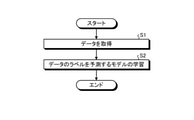
- FIG. 2 is a flowchart showing a learning processing procedure.
- FIG. 3 is a flowchart showing the detection processing procedure.
- FIG. 4 is a diagram for explaining an embodiment.
- FIG. 5 is a diagram for explaining an embodiment.
- FIG. 6 is a diagram illustrating a computer that executes a learning program.
- FIG. 1 is a schematic diagram illustrating a schematic configuration of a learning device.
- the learning device 10 is realized by a general-purpose computer such as a personal computer, and includes an input unit 11, an output unit 12, a communication control unit 13, a storage unit 14, and a control unit 15.
- the input unit 11 is realized by using an input device such as a keyboard or a mouse, and inputs various instruction information such as processing start to the control unit 15 in response to an input operation by the operator.
- the output unit 12 is realized by a display device such as a liquid crystal display, a printing device such as a printer, or the like.
- the communication control unit 13 is realized by a NIC (Network Interface Card) or the like, and controls communication between an external device such as a server via a network and the control unit 15. For example, the communication control unit 13 controls communication between the control device 15 and the management device that manages the data to be learned.
- NIC Network Interface Card
- the storage unit 14 is realized by a semiconductor memory element such as RAM (Random Access Memory) and flash memory (Flash Memory), or a storage device such as a hard disk and an optical disk, and parameters of a model learned by a learning process described later are used. It will be remembered.
- the storage unit 14 may be configured to communicate with the control unit 15 via the communication control unit 13.
- the control unit 15 is realized by using a CPU (Central Processing Unit) or the like, and executes a processing program stored in a memory. As a result, the control unit 15 functions as an acquisition unit 15a, a learning unit 15b, and a detection unit 15c, as illustrated in FIG. It should be noted that these functional parts may be implemented in different hardware in whole or in part.
- the learning unit 15b and the detection unit 15c may be mounted as separate devices.
- the acquisition unit 15a may be mounted on a device different from the learning unit 15b and the detection unit 15c.
- the control unit 15 may include other functional units.
- the acquisition unit 15a acquires data for predicting the label. For example, the acquisition unit 15a acquires data used for the learning process and the detection process described later via the input unit 11 or the communication control unit 13. Further, the acquisition unit 15a may store the acquired data in the storage unit 14. The acquisition unit 15a may transfer these information to the learning unit 15b or the detection unit 15c without storing the information in the storage unit 14.
- the learning unit 15b learns the model using the eigenvector corresponding to the maximum eigenvalue of the Fisher information matrix for the data in the model representing the probability distribution of the label of the acquired data. Specifically, the learning unit 15b searches for a model that minimizes the loss function by using the eigenvector corresponding to the maximum eigenvalue of the Fisher information matrix for the data as the initial value of the noise to be added to the data in the loss function. By learning the model.
- the model representing the probability distribution of the label y of the data x is expressed by the following equation (1) using the parameter ⁇ .
- f is a vector representing a label output by the model.
- the learning unit 15b learns the model by determining the parameter ⁇ of the model so that the loss function represented by the following equation (2) becomes small.
- x) represents a true probability.
- the learning unit 15b trains the model so that the label can be correctly predicted for the Advanced Express shown in the following equation (3) in which the noise ⁇ is placed on the data x.
- the learning unit 15b learns a robust model for the Adversarial Exmplle by searching for and determining ⁇ that minimizes the loss function shown in the following equation (4).
- ⁇ is a constant.
- the loss function of the above equation (4) can be transformed as in the following equation (6) by using the Fisher information matrix G and its eigenvalue ⁇ .
- the learning unit 15b of the present embodiment learns the model using the eigenvector corresponding to the maximum eigenvalue of the Fisher information matrix G with respect to the data x. Specifically, in the above equation (5), as shown in the following equation (7), the learning unit 15b sets the initial value ⁇ 0 of the noise ⁇ to be put on the data x as the Fisher information matrix G for the data x. The eigenvector ⁇ eig corresponding to the maximum eigenvalue is used. Then, the model is learned by searching for ⁇ that minimizes the loss function shown in the above equation (4).
- the learning unit 15b can learn a model that is robust to the Advanced Excellent.
- the detection unit 15c predicts the label of the acquired data using the trained model. In this case, the detection unit 15c calculates the probability of each label of the newly acquired data by applying the learned parameter ⁇ to the above equation (1), and outputs the label with the highest probability. As a result, for example, even when the data is Advanced Excellent, the correct label can be output. In this way, the detection unit 15c can withstand the blend spot attack and can predict the correct label for the Advanced Excellent.
- FIG. 2 is a flowchart showing a learning processing procedure.
- the flowchart of FIG. 2 is started, for example, at the timing when there is an operation input instructing the start of the learning process.
- the acquisition unit 15a acquires data for predicting the label (step S1).
- the learning unit 15b learns a model representing the probability distribution of the label of the acquired data (step S1). At that time, the learning unit 15b learns the model by using the eigenvector corresponding to the maximum eigenvalue of the Fisher information matrix for the data in the model. Specifically, the learning unit 15b searches for a model that minimizes the loss function by using the eigenvector corresponding to the maximum eigenvalue of the Fisher information matrix for the data as the initial value of the noise to be added to the data in the loss function. By learning the model. As a result, a series of learning processes are completed.
- FIG. 3 is a flowchart showing the detection processing procedure.
- the flowchart of FIG. 3 is started, for example, at the timing when there is an operation input instructing the start of the detection process.
- the acquisition unit 15a acquires new data for predicting the label in the same manner as in the process of step S1 of FIG. 2 described above (step S11).
- the detection unit 15c predicts the label of the acquired data using the trained model (step S12).
- the detection unit 15c calculates p (x') of the newly acquired data x'by applying the learned parameter ⁇ to the above equation (1), and obtains the label with the highest probability. Output.
- the correct label can be output even when the data x'is Advanced Character. This ends a series of detection processes.
- the acquisition unit 15a acquires the data for predicting the label.
- the learning unit 15b learns the model using the eigenvector corresponding to the maximum eigenvalue of the Fisher information matrix for the data in the model representing the probability distribution of the label of the acquired data. Specifically, the learning unit 15b searches for a model that minimizes the loss function by using the eigenvector corresponding to the maximum eigenvalue of the Fisher information matrix for the data as the initial value of the noise to be added to the data in the loss function. ..
- the learning device 10 can learn a model that is robust to the Advanced Single.
- the detection unit 15c predicts the label of the acquired data using the trained model. As a result, the detection unit 15c can withstand the blend spot attack and can predict the correct label for the Advanced Excellent.
- Example 4 and 5 are diagrams for explaining an embodiment of the present invention.
- the accuracy of the model of the above embodiment was evaluated using an image data set: Cifar10 and a deep learning model: Resnet18.
- the model of the above embodiment which was learned by changing ⁇ of the loss function shown in the above equation (4) using the test data and the Adversarial Exchange generated from the test data by a method called PGD.
- PGD Adversarial Exchange
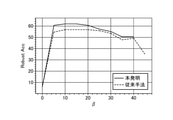
- FIG. 4 illustrates the relationship between robust acc and ⁇ .
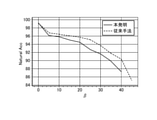
- FIG. 5 illustrates the relationship between natural acc and ⁇ .
- the prediction accuracy for the Adversarial Exchange does not depend on ⁇ in both the model of the present invention (embodiment) and the model of the conventional method.
- the prediction accuracy for ordinary data decreases in both the model of the present invention and the model of the conventional method.
- the first term of the above equation (4) is a part representing a loss function for ordinary data
- the second term is a part representing a loss function for Adversarial Exchange, so that the larger ⁇ is, the more This is because the influence of the second term becomes large.
- the learning device 10 can be implemented by installing a learning program that executes the above learning process as package software or online software on a desired computer.
- the information processing device can be made to function as the learning device 10.
- the information processing device includes smartphones, mobile phones, mobile communication terminals such as PHS (Personal Handyphone System), and slate terminals such as PDAs (Personal Digital Assistants).
- the function of the learning device 10 may be implemented in the cloud server.
- FIG. 6 is a diagram showing an example of a computer that executes a learning program.
- the computer 1000 has, for example, a memory 1010, a CPU 1020, a hard disk drive interface 1030, a disk drive interface 1040, a serial port interface 1050, a video adapter 1060, and a network interface 1070. Each of these parts is connected by a bus 1080.
- the memory 1010 includes a ROM (Read Only Memory) 1011 and a RAM 1012.
- the ROM 1011 stores, for example, a boot program such as a BIOS (Basic Input Output System).
- BIOS Basic Input Output System
- the hard disk drive interface 1030 is connected to the hard disk drive 1031.
- the disk drive interface 1040 is connected to the disk drive 1041.
- a removable storage medium such as a magnetic disk or an optical disk is inserted into the disk drive 1041.
- a mouse 1051 and a keyboard 1052 are connected to the serial port interface 1050.
- a display 1061 is connected to the video adapter 1060.
- the hard disk drive 1031 stores, for example, the OS 1091, the application program 1092, the program module 1093, and the program data 1094. Each of the information described in the above embodiment is stored in, for example, the hard disk drive 1031 or the memory 1010.
- the learning program is stored in the hard disk drive 1031 as, for example, a program module 1093 in which a command executed by the computer 1000 is described.
- the program module 1093 in which each process executed by the learning device 10 described in the above embodiment is described is stored in the hard disk drive 1031.
- the data used for information processing by the learning program is stored as program data 1094 in, for example, the hard disk drive 1031.
- the CPU 1020 reads the program module 1093 and the program data 1094 stored in the hard disk drive 1031 into the RAM 1012 as needed, and executes each of the above-mentioned procedures.
- the program module 1093 and the program data 1094 related to the learning program are not limited to the case where they are stored in the hard disk drive 1031. For example, they are stored in a removable storage medium and read by the CPU 1020 via the disk drive 1041 or the like. May be done.
- the program module 1093 and the program data 1094 related to the learning program are stored in another computer connected via a network such as a LAN (Local Area Network) or WAN (Wide Area Network), and are stored in another computer connected via a network, and are stored via the network interface 1070. It may be read by the CPU 1020.
- LAN Local Area Network
- WAN Wide Area Network
Landscapes
- Engineering & Computer Science (AREA)
- Theoretical Computer Science (AREA)
- Software Systems (AREA)
- Physics & Mathematics (AREA)
- Artificial Intelligence (AREA)
- General Engineering & Computer Science (AREA)
- Data Mining & Analysis (AREA)
- Evolutionary Computation (AREA)
- Mathematical Physics (AREA)
- General Physics & Mathematics (AREA)
- Computing Systems (AREA)
- Computer Vision & Pattern Recognition (AREA)
- Medical Informatics (AREA)
- Biomedical Technology (AREA)
- Molecular Biology (AREA)
- General Health & Medical Sciences (AREA)
- Computational Linguistics (AREA)
- Biophysics (AREA)
- Life Sciences & Earth Sciences (AREA)
- Health & Medical Sciences (AREA)
- Machine Translation (AREA)
- Management, Administration, Business Operations System, And Electronic Commerce (AREA)
Abstract
取得部(15a)が、ラベルを予測するデータを取得する。学習部(15b)が、取得されたデータのラベルの確率分布を表すモデルにおいて、データに対するフィッシャー情報行列の最大固有値に対応する固有ベクトルを用いて、該モデルを学習する。
Description
本発明は、学習装置、学習方法および学習プログラムに関する。
近年、機械学習は、大きな成功を収めている。特に深層学習の登場により、画像や自然言語の分野では、機械学習が主流の方法となっている。
一方、深層学習は、悪意のあるノイズが乗せられたAdversarial Exampleによる攻撃に対して脆弱であることが知られている。このようなAdversarial Exampleに対する有力な対策として、代理損失を利用するTRADES(TRadeoff-inspired Adversarial DEfense via Surrogate-loss minimization)とい呼ばれる手法が提案されている(非特許文献1、2参照)。
A.Madry et al., "Towards Deep Learning Models Resistant to Adversarial Attacks", [online], arXiv:1706.06083v4 [stat.ML], 2019年9月, [2020年6月25日検索]、インターネット<URL: https://arxiv.org/pdf/1706.06083.pdf>
H.Zhang et al., "Theoretically Principled Trade-off between Robustness and Accuracy", [online], arXiv:1901.08573v3 [cs.LG] ,2019年6月, [2020年6月25日検索]、インターネット<URL: https://arxiv.org/pdf/1901.08573.pdf>
しかしながら、従来のTRADESでは、Adversarial Exampleに対する汎化性能を向上させることが困難な場合がある。つまり、代理損失で近似して最適なモデルを探索する際に、従来、微分を実行できない点を回避するように、初期値に乱数を用いているため、汎化性能を向上させることが困難な場合がある。
本発明は、上記に鑑みてなされたものであって、Adversarial Exampleに対して頑健なモデルを学習することを目的とする。
上述した課題を解決し、目的を達成するために、本発明に係る学習装置は、ラベルを予測するデータを取得する取得部と、取得された前記データのラベルの確率分布を表すモデルにおいて、前記データに対するフィッシャー情報行列の最大固有値に対応する固有ベクトルを用いて、該モデルを学習する学習部と、を有することを特徴とする。
本発明によれば、Adversarial Exampleに対して頑健なモデルを学習することが可能となる。
以下、図面を参照して、本発明の一実施形態を詳細に説明する。なお、この実施形態により本発明が限定されるものではない。また、図面の記載において、同一部分には同一の符号を付して示している。
[学習装置の構成]
図1は、学習装置の概略構成を例示する模式図である。図1に例示するように、学習装置10は、パソコン等の汎用コンピュータで実現され、入力部11、出力部12、通信制御部13、記憶部14、および制御部15を備える。
図1は、学習装置の概略構成を例示する模式図である。図1に例示するように、学習装置10は、パソコン等の汎用コンピュータで実現され、入力部11、出力部12、通信制御部13、記憶部14、および制御部15を備える。
入力部11は、キーボードやマウス等の入力デバイスを用いて実現され、操作者による入力操作に対応して、制御部15に対して処理開始などの各種指示情報を入力する。出力部12は、液晶ディスプレイなどの表示装置、プリンター等の印刷装置等によって実現される。
通信制御部13は、NIC(Network Interface Card)等で実現され、ネットワークを介したサーバ等の外部の装置と制御部15との通信を制御する。例えば、通信制御部13は、学習対象のデータを管理する管理装置等と制御部15との通信を制御する。
記憶部14は、RAM(Random Access Memory)、フラッシュメモリ(Flash Memory)等の半導体メモリ素子、または、ハードディスク、光ディスク等の記憶装置によって実現され、後述する学習処理により学習されたモデルのパラメータ等が記憶される。なお、記憶部14は、通信制御部13を介して制御部15と通信する構成でもよい。
制御部15は、CPU(Central Processing Unit)等を用いて実現され、メモリに記憶された処理プログラムを実行する。これにより、制御部15は、図1に例示するように、取得部15a、学習部15bおよび検知部15cとして機能する。なお、これらの機能部は、それぞれあるいは一部が異なるハードウェアに実装されてもよい。例えば、学習部15bと検知部15cとは、別々の装置として実装されてもよい。あるいは、取得部15aは、学習部15bおよび検知部15cとは別の装置に実装されてもよい。また、制御部15は、その他の機能部を備えてもよい。
取得部15aは、ラベルを予測するデータを取得する。例えば、取得部15aは、後述する学習処理および検知処理に用いるデータを、入力部11あるいは通信制御部13を介して取得する。また、取得部15aは、取得したデータを記憶部14に記憶させてもよい。なお、取得部15aは、これらの情報を記憶部14に記憶させずに、学習部15bまたは検知部15cに転送してもよい。
学習部15bは、取得されたデータのラベルの確率分布を表すモデルにおいて、データに対するフィッシャー情報行列の最大固有値に対応する固有ベクトルを用いて、該モデルを学習する。具体的には、学習部15bは、損失関数においてデータに対して乗せるノイズの初期値として、データに対するフィッシャー情報行列の最大固有値に対応する固有ベクトルを用いて、損失関数を最小化するモデルを探索することにより、モデルを学習する。
ここで、データxのラベルyの確率分布を表すモデルは、パラメータθを用いて次式(1)で表される。fは、モデルが出力するラベルを表すベクトルである。

学習部15bは、次式(2)で表される損失関数が小さくなるように、モデルのパラメータθを決定することにより、モデルの学習を行う。ここで、p(y|x)は、真の確率を表す。

また、学習部15bは、データxにノイズηが乗せられた、次式(3)に示すAdversarial Exampleに対して正しくラベルを予測できるように、モデルの学習を行う。

学習部15bは、次式(4)に示す損失関数を最小化するθを探索して決定することにより、Adversarial Exzmpleに頑強なモデルを学習する。ここで、βは定数である。

上記式(4)の損失関数を最小化するためには、次式(5)に示すように、上記式(4)の第2項を微分して探索を行う。

ここで、式(4)の第2項においてノイズηを変えながらその最大値を探索する際に、ηの初期値η0を0とすると、x’=xとなるため、式(4)の第2項の微分を実行することができない。
そこで、従来のTRADESでは、ノイズηの初期値η0を乱数ηrandとしている。そうすると、Adversarial Exampleに対する汎化性能を十分に向上させることが困難な場合がある。
ここで、上記式(4)の損失関数は、フィッシャー情報行列Gとその固有値λとを用いて、次式(6)のように変形することができる。

そこで、本実施形態の学習部15bは、データxに対するフィッシャー情報行列Gの最大固有値に対応する固有ベクトルを用いて、該モデルを学習する。具体的には、学習部15bは、上記式(5)において、次式(7)に示すように、データxに対して乗せるノイズηの初期値η0として、データxに対するフィッシャー情報行列Gの最大固有値に対応する固有ベクトルηeigを用いる。そして、上記式(4)に示した損失関数を最小化するθを探索することにより、モデルを学習する。

これにより、学習部15bは、損失関数を最小化するパラメータθの探索を精度高く行うことが可能となる。したがって、学習部15bは、Adversarial Exampleに対して頑健なモデルの学習が可能となる。
検知部15cは、学習されたモデルを用いて、取得されたデータのラベルを予測する。この場合に、検知部15cは、学習されたパラメータθを上記式(1)に適用することより、新たに取得されたデータの各ラベルの確率を算出し、最も確率が高いラベルを出力する。これにより、例えば、データがAdversarial Exampleであった場合にも、正しいラベルを出力することができる。このように、検知部15cは、blind spot attackに耐えて、Adversarial Exampleに正しいラベルを予測することが可能となる。
[学習処理]
次に、図2を参照して、本実施形態に係る学習装置10による学習処理について説明する。図2は、学習処理手順を示すフローチャートである。図2のフローチャートは、例えば、学習処理の開始を指示する操作入力があったタイミングで開始される。
次に、図2を参照して、本実施形態に係る学習装置10による学習処理について説明する。図2は、学習処理手順を示すフローチャートである。図2のフローチャートは、例えば、学習処理の開始を指示する操作入力があったタイミングで開始される。
まず、取得部15aが、ラベルを予測するデータを取得する(ステップS1)。
次に、学習部15bが、取得されたデータのラベルの確率分布を表すモデルを学習する(ステップS1)。その際に、学習部15bは、モデルにおいて、データに対するフィッシャー情報行列の最大固有値に対応する固有ベクトルを用いて、該モデルを学習する。具体的には、学習部15bは、損失関数においてデータに対して乗せるノイズの初期値として、データに対するフィッシャー情報行列の最大固有値に対応する固有ベクトルを用いて、損失関数を最小化するモデルを探索することにより、モデルを学習する。これにより、一連の学習処理が終了する。
[検知処理]
次に、図3を参照して、本実施形態に係る学習装置10による検知処理について説明する。図3は、検知処理手順を示すフローチャートである。図3のフローチャートは、例えば、検知処理の開始を指示する操作入力があったタイミングで開始される。
次に、図3を参照して、本実施形態に係る学習装置10による検知処理について説明する。図3は、検知処理手順を示すフローチャートである。図3のフローチャートは、例えば、検知処理の開始を指示する操作入力があったタイミングで開始される。
まず、取得部15aが、上記した図2のステップS1の処理と同様に、ラベルを予測する新たなデータを取得する(ステップS11)。
次に、検知部15cが、学習されたモデルを用いて、取得されたデータのラベルを予測する(ステップS12)。この場合に、検知部15cは、学習されたパラメータθを上記式(1)に適用することより、新たに取得されたデータx’のp(x’)を算出し、最も確率が高いラベルを出力する。例えば、データx’がAdversarial Exampleであった場合にも、正しいラベルを出力することができる。これにより、一連の検知処理が終了する。
以上、説明したように、取得部15aが、ラベルを予測するデータを取得する。学習部15bが、取得されたデータのラベルの確率分布を表すモデルにおいて、データに対するフィッシャー情報行列の最大固有値に対応する固有ベクトルを用いて、該モデルを学習する。具体的には、学習部15bは、損失関数においてデータに対して乗せるノイズの初期値として、データに対するフィッシャー情報行列の最大固有値に対応する固有ベクトルを用いて、損失関数を最小化するモデルを探索する。
これにより、学習装置10は、Adversarial Exampleに対して頑健なモデルの学習が可能となる。
また、検知部15cが、学習されたモデルを用いて、取得されたデータのラベルを予測する。これにより、検知部15cは、blind spot attackに耐えて、Adversarial Exampleに対しても正しいラベルを予測することが可能となる。
[実施例]
図4および図5は、本発明の実施例について説明するための図である。本実施例では、画像のデータセット:Cifar10、深層学習モデル:Resnet18を用いて、上記実施形態のモデルの正確性の評価を行った。具体的には、テストデータと、PGDと呼ばれる手法でテストデータから生成したAdversarial Exampleとを用いて、上記式(4)に示した損失関数のβを変えて学習した、上記実施形態のモデルと従来手法のモデルとの評価を行った。
図4および図5は、本発明の実施例について説明するための図である。本実施例では、画像のデータセット:Cifar10、深層学習モデル:Resnet18を用いて、上記実施形態のモデルの正確性の評価を行った。具体的には、テストデータと、PGDと呼ばれる手法でテストデータから生成したAdversarial Exampleとを用いて、上記式(4)に示した損失関数のβを変えて学習した、上記実施形態のモデルと従来手法のモデルとの評価を行った。
PGDのパラメータとして、esp=8/255、train_iter=7、eval_iter=20、eps_iter=0.01、rand_init=True、clip_min=0.0、clip_max=1.0を用いた。
そして、テストデータに対するtop1の正解率(以下、natural accと記す)と、テストデータから生成したAdversarial Exampleに対するtop1の正解率(以下、robust accと記す)とを算出した。
図4には、robust accとβとの関係が例示されている。また、図5には、natural accとβとの関係が例示されている。図4に示すように、本発明(実施形態)のモデル、従来手法のモデルとも、Adversarial Exampleに対する予測精度は、βに依存しないことがわかる。これに対し、図5に示すように、βが大きくなるほど、本発明のモデル、従来手法のモデルとも、通常のデータに対する予測精度が低下する。これは、上記式(4)の第1項が通常のデータに対する損失関数を表す部分であり、第2項がAdversarial Exampleに対する損失関数を表す部分であることに起因して、βが大きいほど、第2項の影響が大きくなるためである。
そこで、robust accが高い場合のβを採用して、各モデルの正確性を比較する。その結果、従来手法のモデルでは、β=20 Robust Acc=56.87、Natural Acc=95.75であった。また、本発明のモデルでは、β=10、Robust Acc=61.62、Natural Acc=95.84であった。このように、βによらず、本発明のモデルが従来手法のモデルより高いことがわかる。このように、実施形態のモデルは、上記式(4)の第2項に対応して、Adversarial Exampleに対して頑強なモデルを学習できることが確認された。
[プログラム]
上記実施形態に係る学習装置10が実行する処理をコンピュータが実行可能な言語で記述したプログラムを作成することもできる。一実施形態として、学習装置10は、パッケージソフトウェアやオンラインソフトウェアとして上記の学習処理を実行する学習プログラムを所望のコンピュータにインストールさせることによって実装できる。例えば、上記の学習プログラムを情報処理装置に実行させることにより、情報処理装置を学習装置10として機能させることができる。また、その他にも、情報処理装置にはスマートフォン、携帯電話機やPHS(Personal Handyphone System)等の移動体通信端末、さらには、PDA(Personal Digital Assistant)等のスレート端末等がその範疇に含まれる。また、学習装置10の機能を、クラウドサーバに実装してもよい。
上記実施形態に係る学習装置10が実行する処理をコンピュータが実行可能な言語で記述したプログラムを作成することもできる。一実施形態として、学習装置10は、パッケージソフトウェアやオンラインソフトウェアとして上記の学習処理を実行する学習プログラムを所望のコンピュータにインストールさせることによって実装できる。例えば、上記の学習プログラムを情報処理装置に実行させることにより、情報処理装置を学習装置10として機能させることができる。また、その他にも、情報処理装置にはスマートフォン、携帯電話機やPHS(Personal Handyphone System)等の移動体通信端末、さらには、PDA(Personal Digital Assistant)等のスレート端末等がその範疇に含まれる。また、学習装置10の機能を、クラウドサーバに実装してもよい。
図6は、学習プログラムを実行するコンピュータの一例を示す図である。コンピュータ1000は、例えば、メモリ1010と、CPU1020と、ハードディスクドライブインタフェース1030と、ディスクドライブインタフェース1040と、シリアルポートインタフェース1050と、ビデオアダプタ1060と、ネットワークインタフェース1070とを有する。これらの各部は、バス1080によって接続される。
メモリ1010は、ROM(Read Only Memory)1011およびRAM1012を含む。ROM1011は、例えば、BIOS(Basic Input Output System)等のブートプログラムを記憶する。ハードディスクドライブインタフェース1030は、ハードディスクドライブ1031に接続される。ディスクドライブインタフェース1040は、ディスクドライブ1041に接続される。ディスクドライブ1041には、例えば、磁気ディスクや光ディスク等の着脱可能な記憶媒体が挿入される。シリアルポートインタフェース1050には、例えば、マウス1051およびキーボード1052が接続される。ビデオアダプタ1060には、例えば、ディスプレイ1061が接続される。
ここで、ハードディスクドライブ1031は、例えば、OS1091、アプリケーションプログラム1092、プログラムモジュール1093およびプログラムデータ1094を記憶する。上記実施形態で説明した各情報は、例えばハードディスクドライブ1031やメモリ1010に記憶される。
また、学習プログラムは、例えば、コンピュータ1000によって実行される指令が記述されたプログラムモジュール1093として、ハードディスクドライブ1031に記憶される。具体的には、上記実施形態で説明した学習装置10が実行する各処理が記述されたプログラムモジュール1093が、ハードディスクドライブ1031に記憶される。
また、学習プログラムによる情報処理に用いられるデータは、プログラムデータ1094として、例えば、ハードディスクドライブ1031に記憶される。そして、CPU1020が、ハードディスクドライブ1031に記憶されたプログラムモジュール1093やプログラムデータ1094を必要に応じてRAM1012に読み出して、上述した各手順を実行する。
なお、学習プログラムに係るプログラムモジュール1093やプログラムデータ1094は、ハードディスクドライブ1031に記憶される場合に限られず、例えば、着脱可能な記憶媒体に記憶されて、ディスクドライブ1041等を介してCPU1020によって読み出されてもよい。あるいは、学習プログラムに係るプログラムモジュール1093やプログラムデータ1094は、LAN(Local Area Network)やWAN(Wide Area Network)等のネットワークを介して接続された他のコンピュータに記憶され、ネットワークインタフェース1070を介してCPU1020によって読み出されてもよい。
以上、本発明者によってなされた発明を適用した実施形態について説明したが、本実施形態による本発明の開示の一部をなす記述および図面により本発明は限定されることはない。すなわち、本実施形態に基づいて当業者等によりなされる他の実施形態、実施例および運用技術等は全て本発明の範疇に含まれる。
10 学習装置
11 入力部
12 出力部
13 通信制御部
14 記憶部
15 制御部
15a 取得部
15b 学習部
15c 検知部
11 入力部
12 出力部
13 通信制御部
14 記憶部
15 制御部
15a 取得部
15b 学習部
15c 検知部
Claims (5)
- ラベルを予測するデータを取得する取得部と、
取得された前記データのラベルの確率分布を表すモデルにおいて、前記データに対するフィッシャー情報行列の最大固有値に対応する固有ベクトルを用いて、該モデルを学習する学習部と、
を有することを特徴とする学習装置。 - 前記学習部は、損失関数において前記データに対して乗せるノイズの初期値として、前記固有ベクトルを用いることを特徴とする請求項1に記載の学習装置。
- 学習された前記モデルを用いて、取得された前記データのラベルを予測する検知部を、さらに備えることを特徴とする請求項1に記載の学習装置。
- 学習装置で実行される学習方法であって、
ラベルを予測するデータを取得する取得工程と、
取得された前記データのラベルの確率分布を表すモデルにおいて、前記データに対するフィッシャー情報行列の最大固有値に対応する固有ベクトルを用いて、該モデルを学習する学習工程と、
を含んだことを特徴とする学習方法。 - ラベルを予測するデータを取得する取得ステップと、
取得された前記データのラベルの確率分布を表すモデルにおいて、前記データに対するフィッシャー情報行列の最大固有値に対応する固有ベクトルを用いて、該モデルを学習する学習ステップと、
をコンピュータに実行させるための学習プログラム。
Priority Applications (3)
| Application Number | Priority Date | Filing Date | Title |
|---|---|---|---|
| PCT/JP2020/027875 WO2022014047A1 (ja) | 2020-07-17 | 2020-07-17 | 学習装置、学習方法および学習プログラム |
| US18/014,343 US20230259819A1 (en) | 2020-07-17 | 2020-07-17 | Learning device, learning method and learning program |
| JP2022536099A JP7416255B2 (ja) | 2020-07-17 | 2020-07-17 | 学習装置、学習方法および学習プログラム |
Applications Claiming Priority (1)
| Application Number | Priority Date | Filing Date | Title |
|---|---|---|---|
| PCT/JP2020/027875 WO2022014047A1 (ja) | 2020-07-17 | 2020-07-17 | 学習装置、学習方法および学習プログラム |
Publications (1)
| Publication Number | Publication Date |
|---|---|
| WO2022014047A1 true WO2022014047A1 (ja) | 2022-01-20 |
Family
ID=79554603
Family Applications (1)
| Application Number | Title | Priority Date | Filing Date |
|---|---|---|---|
| PCT/JP2020/027875 Ceased WO2022014047A1 (ja) | 2020-07-17 | 2020-07-17 | 学習装置、学習方法および学習プログラム |
Country Status (3)
| Country | Link |
|---|---|
| US (1) | US20230259819A1 (ja) |
| JP (1) | JP7416255B2 (ja) |
| WO (1) | WO2022014047A1 (ja) |
Family Cites Families (3)
| Publication number | Priority date | Publication date | Assignee | Title |
|---|---|---|---|---|
| US7961956B1 (en) * | 2009-09-03 | 2011-06-14 | Thomas Cecil Minter | Adaptive fisher's linear discriminant |
| US8590061B1 (en) * | 2011-03-22 | 2013-11-19 | Iowa State University Research Foundation, Inc. | Optimal excitation force design indentation-based rapid broadband nanomechanical spectroscopy |
| US11580383B2 (en) * | 2017-03-16 | 2023-02-14 | Nec Corporation | Neural network learning device, method, and program |
-
2020
- 2020-07-17 WO PCT/JP2020/027875 patent/WO2022014047A1/ja not_active Ceased
- 2020-07-17 JP JP2022536099A patent/JP7416255B2/ja active Active
- 2020-07-17 US US18/014,343 patent/US20230259819A1/en active Pending
Non-Patent Citations (1)
| Title |
|---|
| CHAOMIN SHEN; YAXIN PENG; GUIXU ZHANG; JINSONG FAN: "Defending Against Adversarial Attacks by Suppressing the Largest Eigenvalue of Fisher Information Matrix", ARXIV.ORG, CORNELL UNIVERSITY LIBRARY, 201 OLIN LIBRARY CORNELL UNIVERSITY ITHACA, NY 14853, 13 September 2019 (2019-09-13), 201 Olin Library Cornell University Ithaca, NY 14853 , XP081476848 * |
Also Published As
| Publication number | Publication date |
|---|---|
| JP7416255B2 (ja) | 2024-01-17 |
| US20230259819A1 (en) | 2023-08-17 |
| JPWO2022014047A1 (ja) | 2022-01-20 |
Similar Documents
| Publication | Publication Date | Title |
|---|---|---|
| US11853882B2 (en) | Methods, apparatus, and storage medium for classifying graph nodes | |
| US20200160212A1 (en) | Method and system for transfer learning to random target dataset and model structure based on meta learning | |
| CN111461226A (zh) | 对抗样本生成方法、装置、终端及可读存储介质 | |
| WO2023019456A1 (en) | Method and apparatus for evaluation of adversarial robustness | |
| WO2019109743A1 (zh) | Url攻击检测方法、装置以及电子设备 | |
| CN107958286A (zh) | 一种领域适应性网络的深度迁移学习方法 | |
| WO2023051140A1 (zh) | 用于图像特征表示生成的方法、设备、装置和介质 | |
| US11960574B2 (en) | Image generation using adversarial attacks for imbalanced datasets | |
| CN114463798A (zh) | 人脸识别模型的训练方法、装置、设备及存储介质 | |
| CN112329762A (zh) | 图像处理方法、模型训练方法、装置、计算机设备和介质 | |
| WO2020075462A1 (ja) | 学習器推定装置、学習器推定方法、リスク評価装置、リスク評価方法、プログラム | |
| WO2021100184A1 (ja) | 学習装置、推定装置、学習方法および学習プログラム | |
| JP2018200524A (ja) | 分類装置、分類方法および分類プログラム | |
| JP7529159B2 (ja) | 学習装置、学習方法、および、学習プログラム | |
| KR101700030B1 (ko) | 사전 정보를 이용한 영상 물체 탐색 방법 및 이를 수행하는 장치 | |
| US20220277195A1 (en) | Automated data augmentation in deep learning | |
| WO2021161423A1 (ja) | 検知装置、検知方法および検知プログラム | |
| US11416775B2 (en) | Training robust machine learning models | |
| US20240202322A1 (en) | Efficient prototyping of adversarial attacks and defenses on transfer learning settings | |
| CN115346072B (zh) | 图像分类模型的训练方法及装置、电子设备和存储介质 | |
| CN114612688B (zh) | 对抗样本生成方法、模型训练方法、处理方法及电子设备 | |
| CN111373416B (zh) | 通过离散神经网络输入来增强神经网络的安全性 | |
| CN120493239B (zh) | 保护模型安全的方法、装置、设备和存储介质 | |
| JP2019016324A (ja) | 予測装置、予測方法および予測プログラム | |
| WO2023238246A1 (ja) | 統合モデル生成方法、統合モデル生成装置および統合モデル生成プログラム |
Legal Events
| Date | Code | Title | Description |
|---|---|---|---|
| 121 | Ep: the epo has been informed by wipo that ep was designated in this application |
Ref document number: 20945574 Country of ref document: EP Kind code of ref document: A1 |
|
| ENP | Entry into the national phase |
Ref document number: 2022536099 Country of ref document: JP Kind code of ref document: A |
|
| NENP | Non-entry into the national phase |
Ref country code: DE |
|
| 122 | Ep: pct application non-entry in european phase |
Ref document number: 20945574 Country of ref document: EP Kind code of ref document: A1 |