WO2022004883A1 - 推定装置、訓練装置、推定方法、訓練方法及び反応生成物を得る方法 - Google Patents
推定装置、訓練装置、推定方法、訓練方法及び反応生成物を得る方法 Download PDFInfo
- Publication number
- WO2022004883A1 WO2022004883A1 PCT/JP2021/025167 JP2021025167W WO2022004883A1 WO 2022004883 A1 WO2022004883 A1 WO 2022004883A1 JP 2021025167 W JP2021025167 W JP 2021025167W WO 2022004883 A1 WO2022004883 A1 WO 2022004883A1
- Authority
- WO
- WIPO (PCT)
- Prior art keywords
- reaction
- inference model
- processors
- output
- simulator
- Prior art date
- Legal status (The legal status is an assumption and is not a legal conclusion. Google has not performed a legal analysis and makes no representation as to the accuracy of the status listed.)
- Ceased
Links
Images


Classifications
-
- G—PHYSICS
- G16—INFORMATION AND COMMUNICATION TECHNOLOGY [ICT] SPECIALLY ADAPTED FOR SPECIFIC APPLICATION FIELDS
- G16C—COMPUTATIONAL CHEMISTRY; CHEMOINFORMATICS; COMPUTATIONAL MATERIALS SCIENCE
- G16C20/00—Chemoinformatics, i.e. ICT specially adapted for the handling of physicochemical or structural data of chemical particles, elements, compounds or mixtures
- G16C20/10—Analysis or design of chemical reactions, syntheses or processes
Definitions
- the present disclosure relates to an estimation device, a training device, an estimation method, a training method, and a method for obtaining a reaction product.
- reaction kinetics is known in which a chemical reaction is expressed by a probabilistic model using the reaction rate as a parameter. Techniques have been developed to try to predict yields by fitting the reaction kinetics to match the experimental results.
- the present disclosure implements an estimation device, a training device, an estimation method, a training method, and a method for obtaining a reaction product for yield prediction.
- the estimation device comprises one or more memories and one or more processors.
- the one or more processors classify the input reaction equation, input the classified result into the inference model, and acquire the reaction rate parameter output by the inference model.
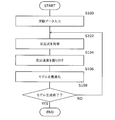
- the flowchart which shows an example of the optimization process of the estimation apparatus which concerns on one Embodiment.
- the flowchart which shows an example of the inference processing of the estimation apparatus which concerns on one Embodiment.
- the figure which shows the mounting example of the apparatus which concerns on one Embodiment.
- FIG. 1 is a block diagram schematically showing an example of an estimation device according to an embodiment.
- the estimation device 1 of the present embodiment includes an input unit 100, a storage unit 102, a preprocessing unit 104, a labeling unit 106, an optimization unit 108, an estimation unit 110, and an output unit 112.
- the estimation device estimates, for example, the ratio of the reactants used in the synthesis of the polymer based on the output of the inference model 200, and outputs the ratio of the reactants for material synthesis and the like.
- data related to the reactant such as a chemical structural formula of the reactant, a graph showing the reactant, etc. shall be input.
- the input unit 100 receives the input of the estimation device 1. For example, when optimizing is executed in order to improve the estimation accuracy by the inference model 200 of the estimation device 1, experimental data as teacher data is input to the estimation device 1 via the input unit 100. In addition, when it is desired to obtain data such as materials for synthesizing a specific product, ratio of materials, yield, etc., the target substance including the specific product, a substance that is a candidate for the material, etc. Data is input to the estimation device 1 via the input unit 100.
- the storage unit 102 stores data and the like required for processing of the estimation device 1.
- the storage unit 102 may store, for example, data input via the input unit 100. During processing, the storage unit 102 appropriately inputs / outputs data stored with other components.
- data such as programs required for the information processing may be stored.
- various parameters of the inference model 200 and the simulator 202 may be stored in the storage unit 102. These data are appropriately used as needed by the processing circuit provided in the estimation device 1.
- the simulator 202 may be a black box, and in this case, a program or the like for starting the simulator 202 may be stored in the storage unit 102.
- the pre-processing unit 104 executes pre-processing.
- the preprocessing unit 104 aggregates the experimental data stored in the storage unit 102 or the experimental data acquired from the input unit 100, and lists the results.
- the experimental data to be listed are, for example, data on bonds when substances are chemically reacted with each other.
- the product (reaction product) AB is produced, and when the reaction product AB and the reaction product B react, the product ABB is generated. List the data such as.
- the listed data may include not only simple reactions but also complex reactions.
- the pretreatment unit 104 also lists the intermediate states of the complex reaction, for example, the transition states such as what kind of intermediate is generated.
- the pretreatment unit 104 may list elementary reactions in which the complex reaction is a continuation of simple reactions. Further, as another example, the pretreatment unit 104 may list the final reactants and products by omitting the intermediate state of the complex reaction.
- the pretreatment unit 104 enumerates the data of the combination of the reactant and the product. For example, when producing a resin, how the components of the produced resin are bonded to each other and what kind of intermediate state is transitioned are obtained by referring to a publicly available database or the like. It is possible. Further, the preprocessing unit 104 may list the knowledge data obtained as the data that the user has already actually conducted the experiment. Further, the preprocessing unit 104 may acquire data by simulation or the like using a generally known model for synthesis or the like.
- the labeling unit 106 assigns labels (labeling) based on the reaction rate to the data listed by the preprocessing unit 104.
- the labeling unit 106 performs labeling based on the reaction rate for each data listed by the preprocessing unit 104.
- the labeling unit 106 performs labeling of the reaction rate based on the bonding site in the bonding between the reactants. That is, the labeling unit 106 classifies and labels based on the atoms or monomers around the bonding site in the reaction formula.
- the binding point of the reactant is generally fixed. Therefore, the labeling unit 106 performs labeling based on the atoms around the bonding sites between the reactants. For example, when binding to another reactant at the ortho position of OH bonded to the benzene ring of phenol, labeling is performed based on the ortho position of OH.
- the labeling unit 106 performs the labeling of the reaction formula based on the state of the atom or the monomer at the bonding portion or the peripheral portion of the bonding portion.
- a label different from the above is given.
- the labeling unit 106 performs labeling based on the chemically bonded portion of the reactant and the atoms around it, and appropriately assigns different labels to the plurality of reaction formulas. In other words, the labeling unit 106 performs categorization regarding the reaction rate based on the bonding site of the reactant and the atoms around it in the reaction formula.
- the reaction rate should be unique for each bond.
- the labeling unit 106 imposes the constraint that the reaction parameters of the reactants classified in the same category are the same. By giving such a constraint, the number of reaction rate parameters can be reduced.
- this constraint is determined by the atoms around the place where the reaction (bond) occurs. For example, consider the case where the reactant A and the reactant B are bound and the case where the reactant A and the reactant C are bound. In these two bonds, if the bond points of the reactant B and the reactant C with the reactant A and the atoms around them are the same, it is determined that they have the same reaction rate parameter.
- the atoms around the bonding site have the same reaction rate parameters even if they are slightly different but can be regarded as equivalent.
- This assumption can be obtained, for example, by constraining the distance from the atom to be bonded or the distance on the molecular graph from the bonding site. Also, for example, atoms and groups that contribute less to the reaction can be ignored.
- n is preferably 2 or 3 in order to effectively reduce the number of reaction rate parameters, but is not limited to this, and may be 4 or more.
- the meta position is a carbon atom instead of the para position with respect to the bond with the reaction product A. Therefore, the atoms around the bonding site are different from the reactant B. However, different atoms around such bond sites can be, if desired, and optionally, assumed to have the same kinetic parameters, or labeled as such.
- the labeling unit 106 may refer to, for example, a database of known combinations, or determine the reaction site using a known model. Generally, there are many parameters related to the reaction rate, but by making them dependent on labeling in this way, it is possible to reduce the parameters. Further, by using a known method for extracting the binding site as described above, or by using a known combination, the parameters related to the reaction rate can be reduced, and the parameters are physicochemically meaningful. It is possible to obtain the label as.
- the labeling unit 106 enumerates the reaction formulas based on the physicochemical constraints and allocates them to the reaction formulas enumerating the reaction rate parameters based on the physicochemical constraints.
- the labeling unit 106 performs categorization (classification) of the reaction formula based on physicochemical constraints by labeling the experimental data. If it is desired to obtain a certain product, the labeling unit 106 may label the candidate reactant, or the estimation unit 110 may label the reaction product using the same method.
- the optimization unit 108 sets the actual reaction rate by optimization based on the label given by the labeling unit 106. More specifically, the inference model 200 that infers the input of the simulator 202 that reproduces the chemical reaction is optimized. Although the labeling unit 106 categorizes the reaction rate parameters, it does not calculate or estimate what the actual reaction rate is. Therefore, the optimization unit 108 performs fitting on the label of the reactant given by the labeling unit 106 based on the experimental data acquired in advance.
- the optimization unit 108 optimizes the inference model 200 so as to fit the labeled reactants to the reaction rate of the same labeled reactants, for example.
- model parameters are defined and optimized so as to fit from the labeled data on the reaction rate to the reaction rate based on the actual experimental data.
- the inference model 200 is a neural network that outputs a reaction rate parameter when a label is input.
- This inference model 200 may be optimized by the optimization unit 108 by TPE (Tree-Structured Parzen Estimator), or may be optimized by other black box optimization, for example.
- the estimation unit 110 calculates the reaction rate by the simulator 202 that calculates the actual reaction rate from the reaction rate parameters output by the inference model 200. For example, for a candidate reactant combination for a target product, the estimation unit 110 inputs the labeled data of this reactant combination into the inference model 200 and acquires a reaction rate parameter. Then, the reaction rate parameters are input to the simulator 202, and the results such as the reaction rate, the reaction time, or the amount of product produced are acquired.
- the estimation unit 110 assigns a label to the combination of new materials and the composition of the new material in the same manner as the labeling unit 106, and inputs the label to the inference model 200. Then, the estimation unit 110 inputs the reaction rate parameter, which is the result output from the inference model 200, to the simulator 202. The estimation unit 110 obtains, for example, how much a desired product is produced from the simulator 202 based on the output.
- the estimation unit 110 When the desired result is obtained, the estimation unit 110 outputs the result via the output unit 112.
- the output means to output to the outside of the estimation device 1, but also includes storing to the storage unit 102. If undesired results are obtained, the results may be added as experimental data and analyzed again. Undesirable results are, for example, when the desired product is simulated to be obtained, the chemical reaction is actually experimented, and the inference result is inaccurate or unexpected reaction is performed with respect to the experimental result. The case where the result is obtained.
- the simulator 202 may be prepared in advance based on the reaction rate parameter output by the optimization unit 108.
- the simulator generation unit 114 may generate the simulator 202 based on the reaction rate parameter output by the inference model 200 optimized by the optimization unit 108 by black box optimization.
- the simulator generation unit 114 generates a reaction simulator (simulator 202) that acquires the reaction rate or the synthesis time from the label information input to the inference model 200 based on the experimental data.
- the generation of this simulator 202 is based on the reaction rate parameters output by the inference model 200, for example, based on physicochemical constraints so that the synthesis time matches the experimental data.
- the simulator 202 may be generated by a generally known method.
- the simulator 202 may be used as long as the combination of the data input to the inference model 200 and the value output from the simulator 202 matches the experimental data.
- the match is not limited to the exact match of the solutions, and may be, for example, equivalent to the extent that there is no significant error (the variance of the error is less than a predetermined value).
- the estimation unit 110 outputs information about the reaction product based on the output of the simulator 202. This output may be, for example, a mixing ratio of a plurality of reactants.
- the estimation unit 110 calculates the reaction rate by the simulator 202 using the reaction rate parameter output by the inference model 200.
- the estimation unit 110 may input to the simulator 202 while changing the ratio of combinations of the reactants. Then, the estimation unit 110 may output, for example, a result such as a yield and a production time from the simulation result. Further, the estimation unit 110 may output a result including evaluations such as a large amount of product produced (high yield), a short product production time, and the like.
- the user may input the reactant and its ratio.
- what kind of product can be produced in what time and how much in the combination of the input ratios of the reactants is output from the simulator 202 based on the reaction rate parameter inferred by the inference model 200. You may.
- FIG. 2 is a flowchart showing an example of the optimization process of the inference model 200 of the reaction rate parameter of the estimation device 1 according to the present embodiment.
- the estimation device 1 acquires experimental data via the input unit 100 (S100).
- the labeling unit 106 distributes the reaction rate by labeling the listed reaction formulas (S104). This labeling is performed, for example, based on the atoms at the bond, as described above.
- the optimization unit 108 optimizes the inference model 200 so that appropriate reaction rate parameters are acquired for the labeled reaction equation (S106). This optimization is performed by black box optimization, as described above. Here, the reaction rate parameters are set to fit the experimental results.
- the optimization unit 108 determines whether or not the optimization has been completed based on a predetermined condition (S108). This determination is made based on a general black box optimization determination, for example, the loss satisfies a predetermined condition, the number of repetitions of the operation is a predetermined number, and the like.
- the simulator 202 may be used to determine the accuracy of model optimization. That is, the output result of the inference model 200 is input to the simulator 202, and it is determined whether or not the result matches the experimental result to a desired degree.
- the simulator generation unit 114 generates a reaction simulator (simulator 202) based on the reaction rate parameter acquired from the inference model 200. Then, based on the output result of the generated simulator 202, it may be determined whether or not the model generation is completed.
- the inference model 200 is optimized. That is, by the processing of the optimization unit 108, the estimation device 1 in the present disclosure can also operate as a training device for training the inference model 200. As described above, the estimation device 1 can be trained while estimating the material synthesis. On the other hand, when operating as a training device, the training device sets appropriate initial values for the parameters of the inference model 200, and then executes training and optimization of the inference model 200 based on the training data. Can be done.
- FIG. 3 is a flowchart showing an example of the generation of the material synthesis of the estimation device 1 according to the present embodiment, that is, the inference processing.
- the estimation device 1 acquires compound data via the input unit 100 (S200).
- the estimation unit 110 labels the chemical formula of the reactant (S202). This labeling may be performed by the labeling unit 106.
- the estimation unit 110 acquires the reaction rate parameter using the trained inference model 200 (S204).
- the estimation unit 110 inputs the reaction rate parameter to the simulator 202, generates a desired result, and determines whether or not to end the inference (S208). Whether or not the desired result is obtained is determined by the method as described above.
- the optimization unit 108 reoptimizes the inference model 200 based on the inferred result and the experimental data already obtained (S210).
- the process from S202 is repeated. Further, in this case, the treatment from S200 may be repeated, that is, the chemical formula of the new reaction product may be repeated from the input.
- the reaction rate parameter for the label is inferred by the model, and the inference result is input. It is possible to determine whether or not a desired product is produced by using the simulator described above.
- the estimation device 1 outputs the results of the compound formation, such as the mixing ratio of the reactants, the amount of the product produced, and the production time of the product. The user may perform an experiment based on this output result, or may perform further optimization. Also, based on this output result, the user can obtain a reaction product.
- the number of experimental results that would normally be required is the same as the number of combinations of reactants. It is possible to reduce the number. This reduction in the required number of experimental results can be realized by optimizing the inference model for acquiring the input of the reaction simulator using black box optimization. By performing black box optimization, it is possible to obtain appropriate reaction rate parameters even from a small number of experimental results, and it is possible to realize fitting of reaction rates that match the experimental results.
- the black box optimization should be one that can execute multidimensional optimization.
- the TPE described above may be used.
- This TPE black box optimization can be performed using Optuna®.
- other applications and programs may be used for this optimization.
- chemical synthesis it is difficult to obtain the behavior when the parameters are changed slightly under the physicochemical constraints. That is, it is not realistic to obtain or approximate the gradient with respect to the loss. Therefore, the accuracy can be improved by optimizing the black box as in the present embodiment.
- the labeling portion 106 uses an atom adjacent to the bond portion as a peripheral atom for labeling, but the labeling is not limited to this.
- the labeling unit 106 may perform labeling based on, for example, an atom that falls within a predetermined radius from the bonding portion in the three-dimensional structure of the reactant.
- the reaction rate parameter is input to the simulator 202 to calculate the yield and the like, but the present invention is not limited to this.
- the input of the simulator 202 it may be possible to input data on the environment related to reactions such as temperature and pressure.
- Cantera https://cantera.org/
- the estimation unit 110 may estimate the optimum values of environmental parameters such as temperature and pressure in addition to the ratio of the reactants and the like.
- the simulator 202 may accept input of such information such as environmental parameters and catalysts, and simulate the reaction based on the input including this information.
- the simulator 202 does not change the environment etc. once set, but it is not limited to this.
- the estimation unit 110 uses the simulator 202 to change the state of the reaction rate, such as adding a certain reactant or catalyst from the middle, or changing environmental parameters such as temperature from the middle. May be simulated.
- the estimation device 1 may output the results of such various simulations.
- the output of the inference model 200 may include such environmental parameters, parameters related to state changes, and the like. This can be achieved by performing black box optimization.
- the estimation unit 110 inputs a combination of chemical formulas of the reactants to the inference model 200, the parameters including the above environmental parameters, state changes, etc. are output, and this output may be used as the input of the simulator 202.
- the simulator 202 may output data such as the yield of the product to this input.
- the inference model 200 can output the above data if there is appropriate teacher data. For example, if there are experimental data including environmental parameters such as temperature, experimental data with and without catalyst, experimental data to add a new reactant from the middle, etc., it is possible to output the corresponding parameters. It will be possible. Even in this case, as described in the above-described embodiment, by labeling the reactants, it is possible to search for a wider range of reactants with a small amount of data.
- a reaction model is created so that the experimental results can be reproduced using the reaction kinetics even when the experimental results are small, and the yield of the desired material is determined by this reaction.
- This can be rephrased as being able to efficiently reduce the number of parameters to be optimized (parameters related to reaction rate, etc.).
- a model capable of realizing material synthesis with controlled yield can be optimized, and a configuration having a desired yield can be realized by this model.
- this is realized by converting a reaction model having various reaction rate constants into a reaction model having a small number of reaction rate constants by categorizing chemical reactions by atoms in the vicinity of the reaction.
- This reaction model makes it possible to perform highly accurate yield prediction even with a small number of experimental data.
- the yield can be predicted even for a polymerization reaction in which the reaction pathways are diverse but only a small number of experimental data can be obtained for the reaction pathways. Is possible. For example, it can be applied to the synthetic reaction of the benzoxazine compound shown in the embodiment.
- All the above trained models may be, for example, a concept including a model that has been trained as described and then distilled by a general method.
- each device (estimation device 1) in the above-described embodiment may be configured by hardware, or software executed by a CPU (Central Processing Unit), a GPU (Graphics Processing Unit), or the like (a software (Graphics Processing Unit) or the like. It may be composed of the information processing of the program).
- software information processing software that realizes at least a part of the functions of each device in the above-described embodiment is software such as a flexible disk, a CD-ROM (Compact Disc-Read Only Memory), or a USB (Universal Serial). Bus)
- Software information processing may be executed by storing it in a non-temporary storage medium (non-temporary computer-readable medium) such as a memory and loading it into a computer. Further, the software may be downloaded via a communication network. Further, information processing may be executed by hardware by implementing the software in a circuit such as an ASIC (Application Specific Integrated Circuit) or an FPGA (Field Programmable Gate Array).
- the type of storage medium that stores the software is not limited.
- the storage medium is not limited to a removable one such as a magnetic disk or an optical disk, and may be a fixed type storage medium such as a hard disk or a memory. Further, the storage medium may be provided inside the computer or may be provided outside the computer.
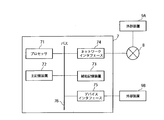
- FIG. 4 is a block diagram showing an example of the hardware configuration of each device (estimation device 1) in the above-described embodiment.
- each device includes a processor 71, a main storage device 72 (memory), an auxiliary storage device 73 (memory), a network interface 74, and a device interface 75, which are connected via a bus 76. It may be realized as a computer 7.
- the computer 7 in FIG. 4 has one component for each component, but may have a plurality of the same components. Also, in FIG. 4, one computer 7 is shown, but the software is installed on multiple computers, and each of the multiple computers performs the same or different parts of the software. May be good. In this case, it may be a form of distributed computing in which each computer communicates via a network interface 74 or the like to execute processing. That is, even if each device (estimation device 1) in the above-described embodiment is configured as a system that realizes a function by executing instructions stored in seven or a plurality of storage devices by seven or a plurality of computers. good. Further, the information transmitted from the terminal may be processed by one or a plurality of computers provided on the cloud, and the processing result may be transmitted to the terminal.
- each device (estimation device 1) in the above-described embodiment may be executed in parallel processing by using one or a plurality of processors or by using a plurality of computers via a network. Further, various operations may be distributed to a plurality of arithmetic cores in the processor and executed in parallel processing. In addition, some or all of the processes, means, etc. of the present disclosure may be executed by at least one of a processor and a storage device provided on the cloud capable of communicating with the computer 7 via a network. As described above, each device in the above-described embodiment may be in the form of parallel computing by one or a plurality of computers.
- the processor 71 may be an electronic circuit (processing circuit, Processing circuitry, CPU, GPU, FPGA, ASIC, etc.) including a computer control device and an arithmetic unit. Further, the processor 71 may be a semiconductor device or the like including a dedicated processing circuit. The processor 71 is not limited to an electronic circuit using an electronic logic element, and may be realized by an optical circuit using an optical logic element. Further, the processor 71 may include an arithmetic function based on quantum computing.
- the processor 71 can perform arithmetic processing based on data and software (programs) input from each device or the like of the internal configuration of the computer 7, and output the arithmetic result or control signal to each device or the like.
- the processor 71 may control each component constituting the computer 7 by executing an OS (Operating System) of the computer 7, an application, or the like.
- OS Operating System
- Each device in the above-described embodiment may be realized by one or a plurality of processors 71.
- the processor 71 may refer to one or more electronic circuits arranged on one chip, or may refer to one or more electronic circuits arranged on two or more chips or two or more devices. You may point. When a plurality of electronic circuits are used, each electronic circuit may communicate by wire or wirelessly.
- the main storage device 72 is a storage device that stores instructions executed by the processor 71, various data, and the like, and the information stored in the main storage device 72 is read out by the processor 71.
- the auxiliary storage device 73 is a storage device other than the main storage device 72. It should be noted that these storage devices mean arbitrary electronic components capable of storing electronic information, and may be semiconductor memories. The semiconductor memory may be either a volatile memory or a non-volatile memory.
- the storage device for storing various data in each device (estimation device 1) in the above-described embodiment may be realized by the main storage device 72 or the auxiliary storage device 73, or may be realized by the built-in memory built in the processor 71. May be done.
- the storage unit 102 in the above-described embodiment may be realized by the main storage device 72 or the auxiliary storage device 73.
- processors may be connected (combined) to one storage device (memory), or a single processor may be connected.
- a plurality of storage devices (memory) may be connected (combined) to one processor.
- each device (estimation device 1) in the above-described embodiment is composed of at least one storage device (memory) and a plurality of processors connected (combined) to the at least one storage device (memory), a plurality of devices are configured.
- a configuration in which at least one of the processors is connected (combined) to at least one storage device (memory) may be included. Further, this configuration may be realized by a storage device (memory) and a processor included in a plurality of computers. Further, a configuration in which the storage device (memory) is integrated with the processor (for example, a cache memory including an L1 cache and an L2 cache) may be included.
- the network interface 74 is an interface for connecting to the communication network 8 wirelessly or by wire. As the network interface 74, an appropriate interface such as one conforming to an existing communication standard may be used. The network interface 74 may exchange information with the external device 9A connected via the communication network 8.
- the communication network 8 may be any one of WAN (Wide Area Network), LAN (Local Area Network), PAN (Personal Area Network), or a combination thereof, and may be a combination of the computer 7 and the external device 9A. It suffices as long as information is exchanged between them.
- An example of a WAN is the Internet
- an example of a LAN is IEEE802.11 or Ethernet (registered trademark)
- an example of a PAN is Bluetooth (registered trademark) or NFC (Near Field Communication).
- the device interface 75 is an interface such as USB that directly connects to the external device 9B.
- the external device 9A is a device connected to the computer 7 via a network.
- the external device 9B is a device directly connected to the computer 7.
- the external device 9A or the external device 9B may be an input device as an example.
- the input device is, for example, a device such as a camera, a microphone, a motion capture, various sensors, a keyboard, a mouse, or a touch panel, and gives the acquired information to the computer 7. Further, it may be a personal computer, a tablet terminal, or a device having an input unit such as a smartphone, a memory, and a processor.
- the external device 9A or the external device 9B may be an output device as an example.
- the output device may be, for example, a display device such as an LCD (Liquid Crystal Display), a CRT (Cathode Ray Tube), a PDP (Plasma Display Panel), or an organic EL (Electro Luminescence) panel, or may output audio or the like. It may be an output speaker or the like. Further, it may be a personal computer, a tablet terminal, or a device having an output unit such as a smartphone, a memory, and a processor.
- the external device 9A or the external device 9B may be a storage device (memory).
- the external device 9A may be a network storage or the like, and the external device 9B may be a storage such as an HDD.
- the external device 9A or the external device 9B may be a device having some functions of the components of each device (estimation device 1) in the above-described embodiment. That is, the computer 7 may transmit or receive a part or all of the processing result of the external device 9A or the external device 9B.
- the expression (including similar expressions) of "at least one of a, b and c (one)" or "at least one of a, b or c (one)” is used. When used, it includes any of a, b, c, ab, ac, bc, or abc. It may also include multiple instances for any element, such as a-a, a-b-b, a-a-b-b-c-c, and the like. It also includes adding elements other than the listed elements (a, b and c), such as having d, such as a-b-c-d.
- connection / coupling direct connection / coupling and indirect connection / coupling are used.
- Electrically connected / combined communicatively connected / combined, operatively connected / combined, physically connected / combined, etc. Intended as a term.
- the term should be interpreted as appropriate according to the context in which the term is used, but any connection / coupling form that is not intentionally or naturally excluded is not included in the term. It should be interpreted in a limited way.
- the physical structure of the element A can execute the operation B. Including that the element A has a configuration and the permanent or temporary setting (setting / configuration) of the element A is set (configured / set) to actually execute the operation B. good.
- the element A is a general-purpose processor
- the processor has a hardware configuration capable of executing the operation B, and the operation B is set by setting a permanent or temporary program (instruction). It suffices if it is configured to actually execute.
- the element A is a dedicated processor, a dedicated arithmetic circuit, or the like, the circuit structure of the processor actually executes the operation B regardless of whether or not the control instruction and data are actually attached. It only needs to be implemented.
- the respective hardware when a plurality of hardware performs a predetermined process, the respective hardware may cooperate to perform the predetermined process, or some hardware may perform the predetermined process. You may do all of the above. Further, some hardware may perform a part of a predetermined process, and another hardware may perform the rest of the predetermined process.
- the hardware that performs the first process and the hardware that performs the second process when expressions such as "one or more hardware performs the first process and the one or more hardware performs the second process" are used. , The hardware that performs the first process and the hardware that performs the second process may be the same or different. That is, the hardware that performs the first process and the hardware that performs the second process may be included in the one or more hardware.
- the hardware may include an electronic circuit, a device including the electronic circuit, or the like.
Landscapes
- Chemical & Material Sciences (AREA)
- Analytical Chemistry (AREA)
- Chemical Kinetics & Catalysis (AREA)
- Crystallography & Structural Chemistry (AREA)
- Life Sciences & Earth Sciences (AREA)
- Engineering & Computer Science (AREA)
- Bioinformatics & Cheminformatics (AREA)
- Bioinformatics & Computational Biology (AREA)
- Computing Systems (AREA)
- Theoretical Computer Science (AREA)
- Management, Administration, Business Operations System, And Electronic Commerce (AREA)
Abstract
[課題]高精度な収率予想を行う。 [解決手段]推定装置は、1又は複数のメモリと、1又は複数のプロセッサと、を備える。前記1又は複数のプロセッサは、入力された反応式を分類し、前記分類した結果を推論モデルに入力し、前記推論モデルの出力した反応速度パラメータを取得する。
Description
本開示は、推定装置、訓練装置、推定方法、訓練方法及び反応生成物を得る方法に関する。
樹脂に代表される有機材料は、合成の過程で多様かつ複雑な中間状態を遷移する。このため、材料の収率を制御することが困難である。材料の収率を予測する方法として、化学反応について反応速度をパラメータとした確率モデルで表現する反応速度論が知られている。反応速度論の反応速度を実験結果に一致するようにフィッティングすることで、収率の予測を試みる技術が開発されている。
しかしながら、この手法は、データのフィッティングを行う必要があることから、多数の実験結果が必要となる。有機材料の反応経路は、多種多様に及ぶため、例えば、ポリマーであれば、重合経路の数はモノマーに比較して指数関数的に増える。この結果、反応速度論を用いたフィッティングは、単一のモノマーの重合等、反応経路が少ない系に限られている。ポリマーにおいては多くの場合、重合経路の数が実験データの数を上回り、フィッティングをするための十分な数のデータを取得すること、そして、フィッティングをすることが困難である。
本開示は、収率予想を行う推定装置、訓練装置、推定方法、訓練方法及び反応生成物を得る方法を実現する。
一実施形態によれば、推定装置は、1又は複数のメモリと、1又は複数のプロセッサと、を備える。前記1又は複数のプロセッサは、入力された反応式を分類し、前記分類した結果を推論モデルに入力し、前記推論モデルの出力した反応速度パラメータを取得する。
以下、図面を参照して本発明の実施形態について説明する。図面及び実施形態の説明は一例として示すものであり、本発明を限定するものではない。
図1は、一実施形態に係る推定装置の一例を模式的に示すブロック図である。本実施形態の推定装置1は、入力部100と、記憶部102と、前処理部104と、ラベリング部106と、最適化部108と、推定部110と、出力部112と、を備える。推定装置は、例えば、推論モデル200の出力に基づいてポリマーの合成に用いる反応物の割合を推定して、材料合成を行う反応物の割合等を出力する。以下、反応物を入力する、といった記載の場合、反応物の化学構造式、反応物を示すグラフ、等の反応物に関するデータを入力するものとする。
入力部100は、推定装置1の入力を受け付ける。例えば、推定装置1の推論モデル200による推定精度を上げるために最適化を実行する場合には、教師データとなる実験データが入力部100を介して推定装置1に入力される。また、特定の生成物を合成するための材料、材料の比率、収率等のデータを取得したい場合には、当該特定の生成物をはじめとする目的となる物質、材料の候補となる物質等のデータが入力部100を介して推定装置1に入力される。
記憶部102は、推定装置1の処理に必要となるデータ等を格納する。記憶部102は、例えば、入力部100を介して入力されたデータが格納されてもよい。処理中においては、記憶部102は、他の構成要素との間で格納してあるデータを適切に入出力する。
他の構成要素について、ソフトウェアによる情報処理がハードウェア資源を用いて具体的に実現される場合には、当該情報処理に必要となるプログラム等のデータが格納されてもよい。また、推論モデル200、シミュレータ202の各種パラメータが記憶部102に記憶されてもよい。これらのデータは、推定装置1に備えられる処理回路により、必要に応じて適切に利用される。また、シミュレータ202は、ブラックボックスであってもよく、この場合、このシミュレータ202を起動するプログラム等が記憶部102に格納されていてもよい。
前処理部104は、前処理を実行する。前処理部104は、記憶部102に格納されている実験データ、又は、入力部100から取得された実験データを集約し、その結果を列挙する。列挙する実験データは、例えば、物質同士を化学反応させる場合の結合に関するデータである。一例として、前処理部104は、反応物Aと反応物Bを反応させると、生成物(反応生成物)ABが生成される、反応物ABと反応物Bが反応すると生成物ABBが生成される、といったデータを列挙する。
列挙されるデータは、単純反応のみならず、複合反応を含むものであってもよい。この場合、前処理部104は、複合反応の中間状態、例えば、どのような中間体が生成されるか、といった遷移状態も列挙する。前処理部104は、複合反応を、単純反応の連続とした素反応を列挙してもよい。また、別の例として、前処理部104は、複合反応の中間状態を省略した最終的な反応物と生成物の列挙をしてもよい。
すなわち、前処理部104は、反応物と、生成物の組み合わせのデータを列挙する。例えば、樹脂の生成をする場合、生成する樹脂の成分同士がどのように結合するか、どのような中間状態を遷移するかは、一般的に公開されているデータベース等を参照することにより取得することが可能である。また、ユーザがすでに実際に実験を行ったデータとして得ている知見データを、前処理部104により列挙してもよい。さらには、前処理部104は、一般的に知られている合成についてのモデル等を用いてシミュレーション等によるデータを取得してもよい。
ラベリング部106は、前処理部104が列挙したデータについて反応速度に基づいたラベルの付与(ラベリング)を行う。ラベリング部106は、前処理部104が列挙した各データについて、反応速度に基づいたラベリングを実行する。ラベリング部106は、反応物同士の結合において、結合箇所に基づいた反応速度のラベリングを実行する。すなわち、ラベリング部106は、反応式において、結合箇所の周辺の原子又はモノマーに基づいて、分類し、ラベリングを行う。
反応物の結合は、一般的にその結合箇所が決まっていることが多い。そこで、ラベリング部106は、反応物同士の結合箇所の周辺の原子に基づいてラベリングを行う。例えば、フェノールのベンゼン環に結合しているOHのオルト位において他の反応物と結合する場合には、このOHのオルト位に基づいてラベリングを行う。
より詳しくは、OHのオルト位において、当該他の結合物のNH2のオルト位で結合する場合にラベルを付与する。そして、他の組み合わせにおいて、OHのオルト位、NH2のオルト位で結合する場合には、同じラベルを付与する。
このように、結合する箇所、又は、結合する箇所の周辺箇所の原子、又は、モノマーの状態等に基づいて、ラベリング部106は、反応式のラベリングを行う。別の例として、水溶液中においてフェノールのOHと他の反応物のNH2の部分が結合する場合には、上記とは別のラベルを付与する。
上記のように、ラベリング部106は、反応物の化学的に結合する部分と、その周辺の原子に基づいてラベリングを行い、複数の反応式において適切に異なるラベルを付与する。言い換えると、ラベリング部106は、反応式において、反応物の結合箇所とその周辺の原子に基づいて、反応速度に関するカテゴリ分けを実行する。
反応速度は、それぞれの結合に対して、ユニークに存在するはずである。本実施形態においては、ラベリング部106は、同じカテゴリに分類された反応物の反応パラメータが同じであるという制約を加える。このような制約を与えることにより、反応速度パラメータの数を削減することができる。
この制約は、上述の通り、反応(結合)が起こる箇所の周辺の原子により決定される。例えば、反応物Aと反応物Bが結合する場合と、反応物Aと反応物Cが結合する場合を考える。この2つの結合において、反応物B及び反応物Cの反応物Aとの結合箇所、及び、その周辺の原子が同じであれば、同じ反応速度パラメータを有すると判断する。
また、例えば、結合箇所の周辺の原子が少し異なるが、同等とみなせるような場合にも同じ反応速度パラメータを有すると仮定してもよい。この仮定は、例えば、結合する原子からの距離、又は、結合箇所からの分子グラフ上の距離に制約を与えることで得られる。また例えば、反応への寄与が小さい原子、基を無視することができる。
例えば、結合する原子からの所定距離、又は、結合箇所からの分子グラフ上の所定距離にある原子に着目する。具体的には、分子グラフ上において結合する原子からの距離がn以下である原子を周辺の原子として考慮する。nは、反応速度パラメータの数を効果的に削減するために2又は3とすることが好ましいが、これに限られるものではなく、4以上の数であってもよい。
その一例として、ベンゾオキサジン化合物の反応に関し、あるベンゼン環に結合した水酸基と、別のベンゼン環に結合したアミノ基とが、結合箇所となる反応を仮定する。例えば、反応物Aであるp-アミノフェノール(化学式(I))と、反応物Bであるp-トルイジン(化学式(II))において、反応物Aの水酸基と、反応物Bのアミノ基が反応するとする。この場合、反応物 B の結合箇所に対するパラ位は炭素原子である。
同様に反応物Aの水酸基と反応物Cのアミノ基が反応するとする。このとき、反応物Cとの結合箇所に対するパラ位が炭素原子であるため、結合箇所の周辺の原子が反応物Bと同じであるとみて、ラベリングすることができる。
一方、反応物Dが3-エチルアニリン(化学式(IV))であれば、反応物Aとの結合箇所に対してパラ位ではなくメタ位が炭素原子となる。このため、結合箇所の周辺の原子が反応物Bと異なる。しかし、このような結合箇所の周辺の原子が異なるものについても、必要に応じて、また場合により、同じ反応速度パラメータを有すると仮定する、またはそのようにラベリングすることができる。

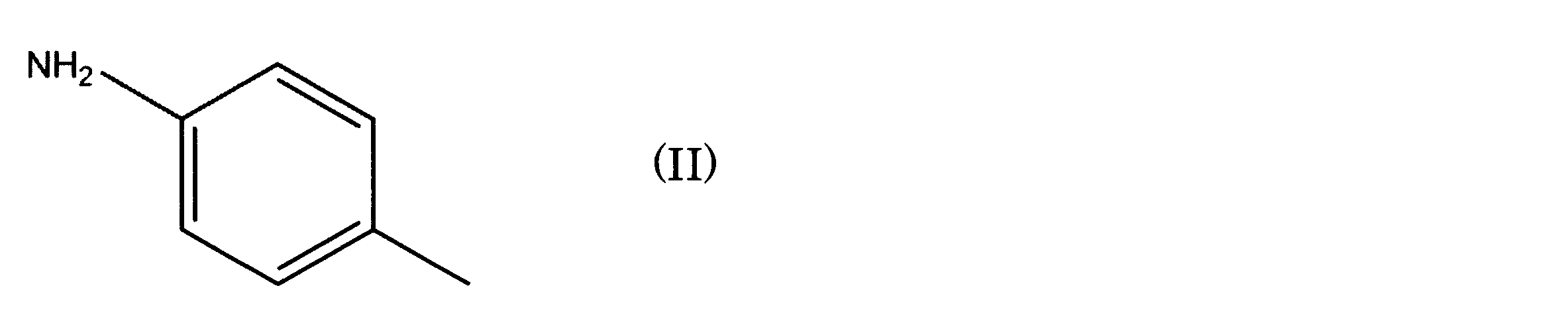
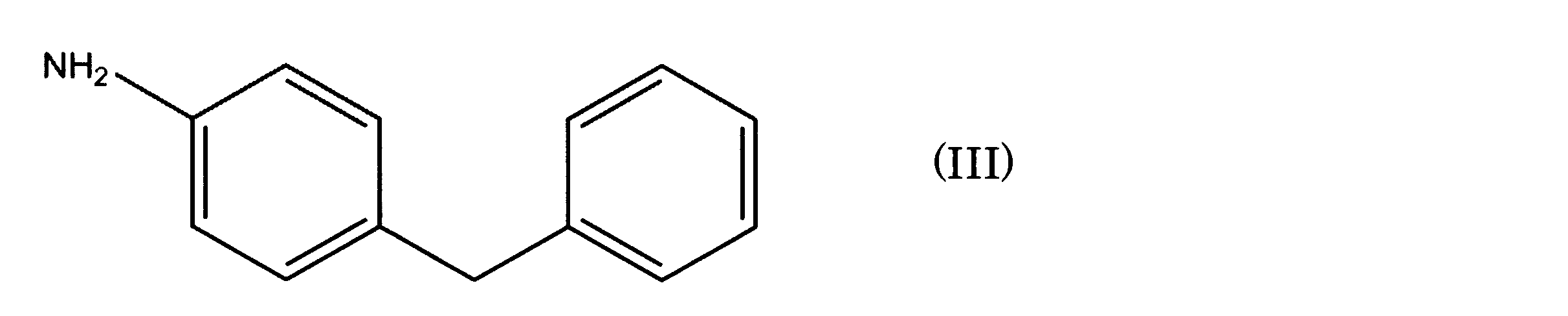

さらに、以下に示す化学式を用いて、同じ反応速度とラベリングする例について説明する。例えば、化学式(V)に示す反応物のOH基と、化学式(I)に示す反応物のNH2基が結合する場合を考える。
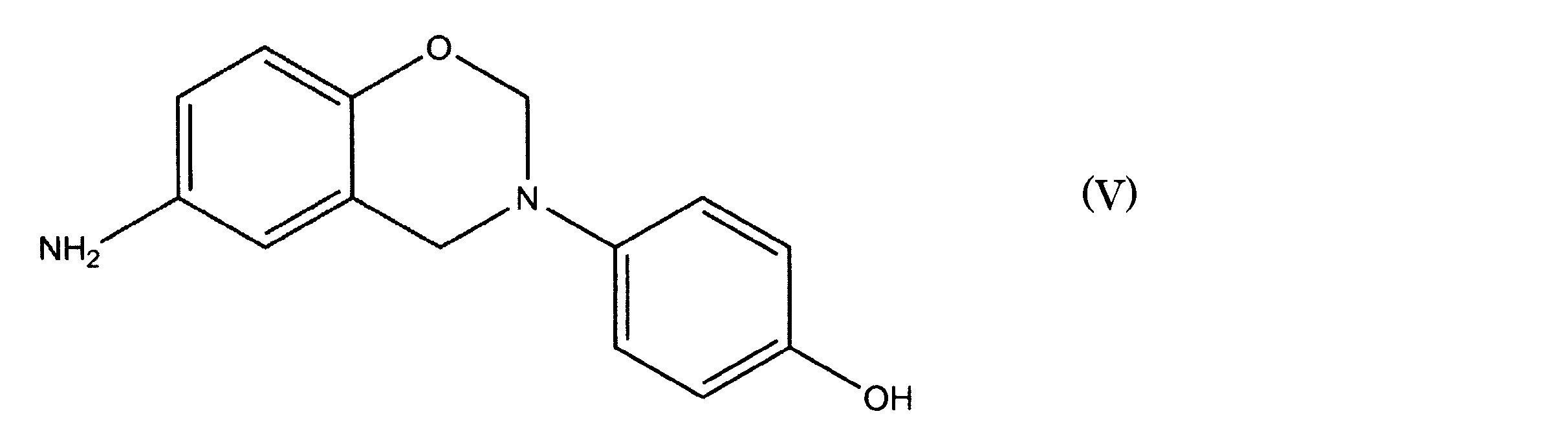
結合部に隣接している基をグラフ距離2まで列挙すると、NH2側は、ベンゼン環とOH基とつながっており、OH側は、ベンゼン環とベンゾ基につながっている。これらが結合すると、化学式(VI)に示す生成物となる。
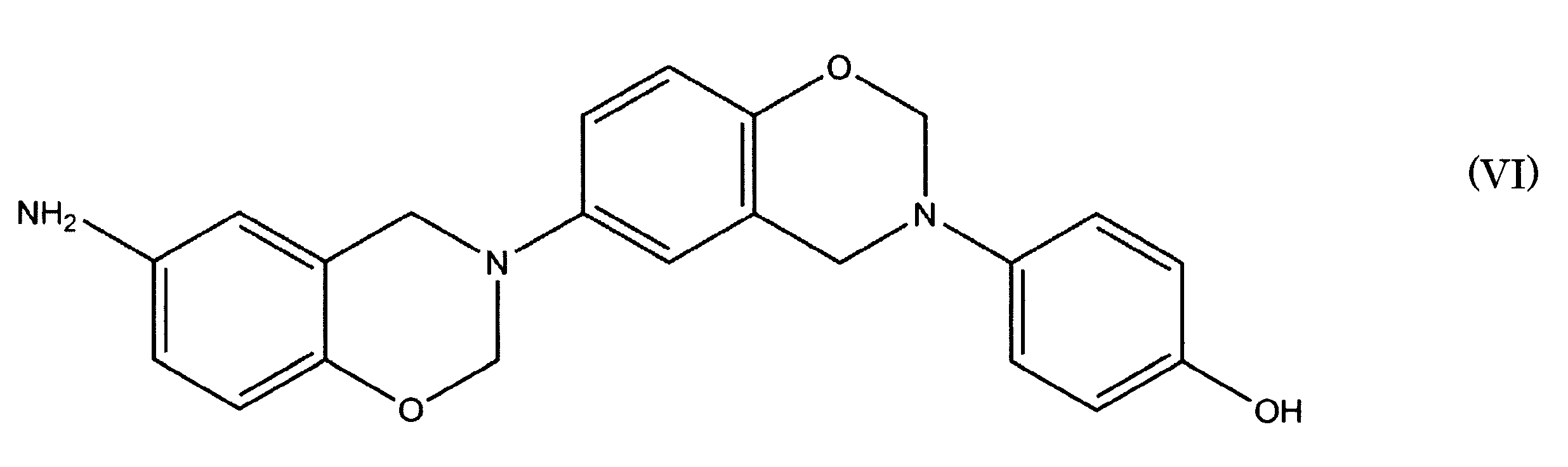
さらに、この化学式(VI)に示す化学式を反応物とし、この反応物のOH基と、化学式(I)示す反応物のNH2基が結合するとする。この場合も同様に、結合部に隣接している基をグラフ距離2まで列挙すると、NH2側は、ベンゼン環とOH基とつながっており、OH側は、ベンゼン環とベンゾ基につながっている。これらが結合すると化学式(VII)に示す生成物となるが、この場合、上記に示した反応と、結合部に隣接する原子が同じであるので、同じ反応速度を有するとしてラベリングを行う。

反応物同士がどこで結合するかは、一般的な手法、又は、一般的に知られている組み合わせで判断してもよい。この場合、ラベリング部106は、例えば、公知の組み合わせのデータベースを参照したり、公知のモデルを用いて反応箇所を判断したりしてもよい。一般的に反応速度に関するパラメータは、多数存在するが、このようにラベリングに依存させることにより、そのパラメータを少なくすることが可能となる。また、上記のように結合箇所の抽出を公知の手法を用い、又は、公知の組み合わせを用いることにより、反応速度に関連するパラメータを少なくすることができ、かつ、物理化学的に意味のあるパラメータとしてラベルの取得をすることが可能となる。
このように、ラベリング部106は、物理化学的な制約に基づいて反応式を列挙し、物理化学的な制約に基づいて反応速度パラメータを列挙した反応式に割り振る。推論モデル200の最適化を行う場合には、ラベリング部106は、実験データに対してラベリングをすることにより、物理化学的な制約に基づいた反応式のカテゴライズ(分類)を実行する。ある生成物を得たい場合には、反応物の候補に対して、ラベリング部106がラベル付けを行ってもよいし、同等の方法を用いて、推定部110がラベリングを行ってもよい。
最適化部108は、ラベリング部106が付与したラベルに基づいて実際の反応速度を最適化により設定する。より具体的には、化学反応を再現するシミュレータ202の入力を推論する推論モデル200を最適化する。ラベリング部106は、反応速度パラメータのカテゴリ分けをするものの、実際の反応速度がどのような速度であるかを算出、推定等しない。そこで、最適化部108は、ラベリング部106が付与した反応物のラベルについて、あらかじめ取得している実験データに基づいてフィッティングを行う。
最適化部108は、例えば、ラベリングされた反応物について、同じラベリングがされている反応物の反応速度にフィッティングするように推論モデル200を最適化する。推論モデル200は、このように、反応速度に関するラベリングされたデータから、実際の実験データに基づいた反応速度にフィッティングするように、モデルパラメータが定義され、最適化される。
例えば、推論モデル200は、ラベルが入力されると、反応速度パラメータを出力するニューラルネットワークである。この推論モデル200は、例えば、TPE(Tree-Structured Parzen Estimator)により最適化部108により最適化されてもよいし、その他のブラックボックス最適化により最適化されてもよい。
推定部110は、推論モデル200が出力する反応速度パラメータから、実際の反応速度を算出するシミュレータ202により、反応速度を算出する。例えば、目的とする生成物に対する候補となる反応物の組み合わせに対して、推定部110は、この反応物の組み合わせのラベル付けされたデータを推論モデル200に入力し、反応速度パラメータを取得する。そして、反応速度パラメータをシミュレータ202に入力して、反応速度、反応時間、又は、生成物の生成量等の結果を取得する。
推定部110は、新しい材料の組み合わせ、新しい材料の組成に対して、ラベリング部106と同様にラベルを付与して、推論モデル200に入力する。そして、推定部110は、推論モデル200から出力された結果である反応速度パラメータをシミュレータ202へと入力する。推定部110は、シミュレータ202から出力に基づいて、例えば、望ましい生成物がどの程度生成されるかを取得する。
望ましい結果が得られた場合には、推定部110は、出力部112を介して結果を出力する。ここで、出力とは、推定装置1の外部へと出力することをいうが、記憶部102へ格納することをも含む。望ましくない結果が得られた場合には、当該結果を実験データとして追加して、再び解析を行ってもよい。望ましくない結果とは、例えば、望ましい生成物が得られるとシミュレートされた場合に、実際に化学反応を実験し、実験結果に対して推論結果の精度が悪かったり、想定外の反応をしたりする結果が得られた場合をいう。
シミュレータ202は、最適化部108の出力する反応速度パラメータに基づいてあらかじめ用意されているものであってもよい。別の例として、最適化部108がブラックボックス最適化により最適化した推論モデル200の出力する反応速度パラメータに基づいて、シミュレータ生成部114がシミュレータ202を生成するものであってもよい。
シミュレータ生成部114は、実験データに基づいて、推論モデル200に入力するラベル情報から反応速度、又は、合成時間を取得する反応シミュレータ(シミュレータ202)を生成する。このシミュレータ202の生成は、推論モデル200の出力する反応速度パラメータに基づいて、例えば、合成時間が実験データに合うように物理化学的な制約に基づいて生成される。
シミュレータ202の生成は、一般的に知られている手法により生成されるものであってもよい。シミュレータ202は、推論モデル200に入力するデータと、シミュレータ202から出力される値との組み合わせが、実験データと合致するものであればよい。ここで、合致とは、厳密に解が一致することには限られず、例えば、有意な誤差がない(誤差の分散が所定値を下回る)程度に同等であればよい。
推定部110は、シミュレータ202の出力に基づいて、反応生成物に関する情報を出力する。この出力は、例えば、複数の反応物の混合割合であってもよい。
例えば、推定部110は、推論モデル200が出力した反応速度パラメータを用いてシミュレータ202により反応速度を算出する。この算出過程において、推定部110は、反応物同士の組み合わせの割合を変えつつシミュレータ202に入力してもよい。そして、推定部110は、シミュレート結果から、例えば、収率、生成時間等の結果を出力してもよい。また、推定部110は、生成物の生成量が多い(収率が高い)、生成物の生成時間が短い、等の評価を含む結果を出力してもよい。
また、別の例として、ユーザが反応物と、その割合を入力してもよい。この場合、当該反応物の入力された割合の組み合わせにおいて、どのような生成物が、どのような時間でどれだけできるかを、推論モデル200により推論された反応速度パラメータに基づいてシミュレータ202から出力してもよい。
図2は、本実施形態に係る推定装置1の反応速度パラメータの推論モデル200の最適化の処理の一例を示すフローチャートである。
推定装置1は、入力部100を介して実験データを取得する(S100)。
次に、ラベリング部106は、反応式を列挙する(S102)。
次に、ラベリング部106は、列挙した反応式について、ラベリングをすることにより反応速度を振り分ける(S104)。このラベリングは、上述したように、例えば、結合部の原子に基づいて実行される。
次に、最適化部108は、ラベリングされた反応式について、適切な反応速度パラメータが取得されるように、推論モデル200を最適化する(S106)。この最適化は、上述したように、ブラックボックス最適化により実行される。ここで、実験結果にフィッティングするように、反応速度パラメータが設定される。
最適化部108は、所定の条件に基づいて、最適化が終了したか否かを判断する(S108)。この判断は、例えば、損失が所定条件を満たした、演算の繰り返し回数が所定回数となった、等の一般的なブラックボックス最適化の判断に基づいて行う。
モデル生成が終了したと判断される場合(S108:YES)、モデルに関するパラメータ等を適切に出力して終了する。モデル生成が終了していないと判断される場合(S108:NO)、S102から、又は、S104からの処理を繰り返す。
モデルの最適化の精度の判断には、例えば、シミュレータ202を用いてもよい。すなわち、シミュレータ202に、推論モデル200の出力結果を入力して、望ましい程度に実験結果と合致しているか否かを判断する。この場合、S108の処理において、シミュレータ生成部114は、推論モデル200から取得される反応速度パラメータに基づいて反応シミュレータ(シミュレータ202)を生成する。そして、この生成されたシミュレータ202の出力結果に基づいて、モデル生成が終了したか否かを判断してもよい。
このように、推論モデル200は、最適化される。すなわち、最適化部108の処理により、本開示における推定装置1は、推論モデル200を訓練する、訓練装置としても動作することができる。上述したように、推定装置1は、材料合成の推定をする一方で訓練を重ねることができる。一方で、訓練装置として動作する場合には、訓練装置は、推論モデル200のパラメータに適当な初期値を設定した上で、訓練データに基づいて、推論モデル200の訓練、最適化を実行することができる。
図3は、本実施形態に係る推定装置1の材料合成の生成、すなわち、推論処理の一例を示すフローチャートである。
推定装置1は、入力部100を介して化合物のデータを取得する(S200)。
次に、推定部110は、反応物の化学式をラベリングする(S202)。このラベリングは、ラベリング部106により実行されてもよい。
次に、推定部110は、訓練済みの推論モデル200を用いて、反応速度パラメータを取得する(S204)。
次に、推定部110は、シミュレータ202に反応速度パラメータを入力し、望ましい結果が生成され、推論を終了するか否かを判断する(S208)。望ましい結果が得られているか否かは、上述したとおりの方法で判断する。
望ましい結果が得られた場合(S208:YES)、合成を終了する。望ましい結果が得られていない場合には、最適化部108により、推論モデル200を推論された結果と、すでに得られている実験データと、に基づいて再最適化する(S210)。
そして、S202からの処理を繰り返す。また、この場合、S200からの処理を繰り返してもよく、すなわち、新しい反応物の化学式を入力から繰り返してもよい。
以上のように、本実施形態によれば、結合の周辺で類似する組成を有する反応物に対して同じラベル付けをすることにより、当該ラベルに対する反応速度パラメータをモデルにより推論し、推論結果を入力とするシミュレータを用いて所望の生成物が生成されるか否かを判断することが可能となる。この結果、推定装置1は、上述したように、化合物の生成について、反応物の混合割合、生成物の生成量、生成物の生成時間等の結果を出力する。ユーザは、この出力結果に基づいて実験を行ってもよいし、さらなる最適化を実行してもよい。また、この出力結果に基づいて、ユーザは反応生成物を得ることができる。
本実施形態のように、結合部の周辺における原子、モノマー等に対して物理化学的な制約を有するラベル付けをすることにより、本来であれば反応物の組み合わせの数だけ必要である実験結果の数を少なくすることが可能となる。この実験結果の必要数の削減は、反応シミュレータの入力を取得するための推論モデルを、ブラックボックス最適化を用いて最適化することにより実現することが可能である。ブラックボックス最適化を行うことにより、少数の実験結果からでも適切な反応速度パラメータを取得することが可能となり、実験結果に合致する反応速度のフィッティングを実現することができる。
ブラックボックス最適化は、多次元の最適化を実行できるものであればよい。例えば、上述したTPEを用いてもよい。このTPEによるブラックボックス最適化は、Optuna(登録商標)を用いて実行することができる。もちろん、この最適化には、その他のアプリケーション、プログラムを用いてもよい。化学合成は、物理化学的な制約の下、パラメータを少し変化させた場合の挙動を取得することが困難である。すなわち、損失に対する勾配を取得したり、近似したりすることが現実的ではない。このため、本実施形態のようなブラックボックス最適化をすることにより、精度の向上を図ることができる。
また、上記においては、一例として、ラベリング部106は、ラベリングには、周辺の原子として結合部に隣接する原子を用いるとしたが、これには限られない。ラベリング部106は、例えば、反応物の立体構造において結合部から所定半径内に入る原子に基づいて、ラベリングを行ってもよい。
(変形例)
上記では、反応速度パラメータをシミュレータ202に入力して、収率等を算出したが、これには限られない。例えば、シミュレータ202の入力として、温度、圧力等の反応に関する環境に関するデータをも入力できるものとしてもよい。例えば、Cantera(https://cantera.org/)は温度、圧力、とその時間変化、および反応炉の形状を加味したシミュレータを提供している。上記のようにラベル付けした反応速度をCanteraに適用することで、これらの環境を加味した収率の最適化を行うことができる。この場合、上述したのと同様に、反応物の比率等に加えて、温度、圧力等の環境に関するパラメータの最適値を、推定部110が推定してもよい。
上記では、反応速度パラメータをシミュレータ202に入力して、収率等を算出したが、これには限られない。例えば、シミュレータ202の入力として、温度、圧力等の反応に関する環境に関するデータをも入力できるものとしてもよい。例えば、Cantera(https://cantera.org/)は温度、圧力、とその時間変化、および反応炉の形状を加味したシミュレータを提供している。上記のようにラベル付けした反応速度をCanteraに適用することで、これらの環境を加味した収率の最適化を行うことができる。この場合、上述したのと同様に、反応物の比率等に加えて、温度、圧力等の環境に関するパラメータの最適値を、推定部110が推定してもよい。
さらに、温度、圧力等の環境に関するパラメータの他、触媒を考慮に入れてもよい。シミュレータ202は、このような環境パラメータ、触媒等の情報の入力を受け付け、この情報を含んだ入力に基づいて反応のシミュレートを実行してもよい。
上記では、シミュレータ202は、一度設定された環境等を変更しないものとしたが、これに限られない。例えば、推定部110は、シミュレータ202を用いて、途中からある反応物、触媒を追加したり、途中から温度等の環境パラメータを変化させたり、といった、反応速度の変化をさせるような状態の変化をシミュレートしてもよい。推定装置1は、このような種々のシミュレートをした結果を出力してもよい。
さらには、推論モデル200の出力が、このような環境パラメータ、状態変化に関するパラメータ等を含んだものとしてもよい。これは、ブラックボックス最適化を行うことにより実現可能である。
例えば、推定部110は、推論モデル200に、反応物の化学式の組み合わせを入力すると、上記の環境パラメータ、状態変化等を含んだパラメータが出力され、この出力をシミュレータ202の入力としてもよい。シミュレータ202は、この入力に対して、生成物の収率等のデータをシミュレータ202が出力してもよい。
推論モデル200は、教師データとして適切なものがあれば、上記のようなデータを出力することが可能である。例えば、温度等の環境パラメータを含んだ実験データ、触媒のある状態とない状態における実験データ、途中から新たに反応物を追加する実験データ等があれば、これらに対応するパラメータを出力することが可能となる。この場合においても、前述の実施形態で説明したように、反応物に対するラベル付けを行うことにより、少ないデータでもより広範囲の反応物に対して探索をすることができる。
以上のように、本実施形態によれば、実験結果が少数である場合にも、反応速度論を用いて実験結果を再現できるような反応モデルを作成し、所望の材料の収率をこの反応モデル内で最適化することにより、非経験的な材料合成レシピを取得することが可能となる。これは、最適化するべきパラメータの数(反応速度に関するパラメータ等)を効率的に削減することも可能であると言い換えることもできる。この結果、収率の制御をした材料合成を実現できるモデルを最適化し、このモデルにより所望の収率を有する構成を実現することができる。
これは、上述したように、化学反応を反応近傍の原子によりカテゴリ分けすることにより、多様な反応速度係数を有する反応モデルを、少数の速度係数を有する反応モデルに変換することにより実現される。この反応モデルにより、少数の実験データであっても、高精度な収率予測を行うことが可能となる。本実施形態に係る推定装置によれば、例えば、反応の経路が多岐に亘る一方で反応の経路に対して少数の実験データしか取得できていないような重合反応についても、収率を予測することが可能となる。例えば実施形態中に示したベンゾオキサジン化合物の合成反応に適用することも可能である。
上記の全ての訓練済モデルは、例えば、説明したように訓練した上で、さらに、一般的な手法により蒸留されたモデルを含む概念であってもよい。
前述した実施形態における各装置(推定装置1)の一部又は全部は、ハードウェアで構成されていてもよいし、CPU(Central Processing Unit)、又はGPU(Graphics Processing Unit)等が実行するソフトウェア(プログラム)の情報処理で構成されてもよい。ソフトウェアの情報処理で構成される場合には、前述した実施形態における各装置の少なくとも一部の機能を実現するソフトウェアを、フレキシブルディスク、CD-ROM(Compact Disc-Read Only Memory)又はUSB(Universal Serial Bus)メモリ等の非一時的な記憶媒体(非一時的なコンピュータ可読媒体)に収納し、コンピュータに読み込ませることにより、ソフトウェアの情報処理を実行してもよい。また、通信ネットワークを介して当該ソフトウェアがダウンロードされてもよい。さらに、ソフトウェアがASIC(Application Specific Integrated Circuit)又はFPGA(Field Programmable Gate Array)等の回路に実装されることにより、情報処理がハードウェアにより実行されてもよい。
ソフトウェアを収納する記憶媒体の種類は限定されるものではない。記憶媒体は、磁気ディスク、又は光ディスク等の着脱可能なものに限定されず、ハードディスク、又はメモリ等の固定型の記憶媒体であってもよい。また、記憶媒体は、コンピュータ内部に備えられてもよいし、コンピュータ外部に備えられてもよい。
図4は、前述した実施形態における各装置(推定装置1)のハードウェア構成の一例を示すブロック図である。各装置は、一例として、プロセッサ71と、主記憶装置72(メモリ)と、補助記憶装置73(メモリ)と、ネットワークインタフェース74と、デバイスインタフェース75と、を備え、これらがバス76を介して接続されたコンピュータ7として実現されてもよい。
図4のコンピュータ7は、各構成要素を一つ備えているが、同じ構成要素を複数備えていてもよい。また、図4では、1台のコンピュータ7が示されているが、ソフトウェアが複数台のコンピュータにインストールされて、当該複数台のコンピュータそれぞれがソフトウェアの同一の又は異なる一部の処理を実行してもよい。この場合、コンピュータそれぞれがネットワークインタフェース74等を介して通信して処理を実行する分散コンピューティングの形態であってもよい。つまり、前述した実施形態における各装置(推定装置1)は、7又は複数の記憶装置に記憶された命令を7台又は複数台のコンピュータが実行することで機能を実現するシステムとして構成されてもよい。また、端末から送信された情報をクラウド上に設けられた1台又は複数台のコンピュータで処理し、この処理結果を端末に送信するような構成であってもよい。
前述した実施形態における各装置(推定装置1)の各種演算は、1又は複数のプロセッサを用いて、又は、ネットワークを介した複数台のコンピュータを用いて、並列処理で実行されてもよい。また、各種演算が、プロセッサ内に複数ある演算コアに振り分けられて、並列処理で実行されてもよい。また、本開示の処理、手段等の一部又は全部は、ネットワークを介してコンピュータ7と通信可能なクラウド上に設けられたプロセッサ及び記憶装置の少なくとも一方により実行されてもよい。このように、前述した実施形態における各装置は、1台又は複数台のコンピュータによる並列コンピューティングの形態であってもよい。
プロセッサ71は、コンピュータの制御装置及び演算装置を含む電子回路(処理回路、Processing circuit、Processing circuitry、CPU、GPU、FPGA又はASIC等)であってもよい。また、プロセッサ71は、専用の処理回路を含む半導体装置等であってもよい。プロセッサ71は、電子論理素子を用いた電子回路に限定されるものではなく、光論理素子を用いた光回路により実現されてもよい。また、プロセッサ71は、量子コンピューティングに基づく演算機能を含むものであってもよい。
プロセッサ71は、コンピュータ7の内部構成の各装置等から入力されたデータやソフトウェア(プログラム)に基づいて演算処理を行い、演算結果や制御信号を各装置等に出力することができる。プロセッサ71は、コンピュータ7のOS(Operating System)や、アプリケーション等を実行することにより、コンピュータ7を構成する各構成要素を制御してもよい。
前述した実施形態における各装置(推定装置1(訓練装置を含む、以下同じ))は、1又は複数のプロセッサ71により実現されてもよい。ここで、プロセッサ71は、1チップ上に配置された1又は複数の電子回路を指してもよいし、2つ以上のチップあるいは2つ以上のデバイス上に配置された1又は複数の電子回路を指してもよい。複数の電子回路を用いる場合、各電子回路は有線又は無線により通信してもよい。
主記憶装置72は、プロセッサ71が実行する命令及び各種データ等を記憶する記憶装置であり、主記憶装置72に記憶された情報がプロセッサ71により読み出される。補助記憶装置73は、主記憶装置72以外の記憶装置である。なお、これらの記憶装置は、電子情報を格納可能な任意の電子部品を意味するものとし、半導体のメモリでもよい。半導体のメモリは、揮発性メモリ、不揮発性メモリのいずれでもよい。前述した実施形態における各装置(推定装置1)において各種データを保存するための記憶装置は、主記憶装置72又は補助記憶装置73により実現されてもよく、プロセッサ71に内蔵される内蔵メモリにより実現されてもよい。例えば、前述した実施形態における記憶部102は、主記憶装置72又は補助記憶装置73により実現されてもよい。
記憶装置(メモリ)1つに対して、複数のプロセッサが接続(結合)されてもよいし、単数のプロセッサが接続されてもよい。プロセッサ1つに対して、複数の記憶装置(メモリ)が接続(結合)されてもよい。前述した実施形態における各装置(推定装置1)が、少なくとも1つの記憶装置(メモリ)とこの少なくとも1つの記憶装置(メモリ)に接続(結合)される複数のプロセッサで構成される場合、複数のプロセッサのうち少なくとも1つのプロセッサが、少なくとも1つの記憶装置(メモリ)に接続(結合)される構成を含んでもよい。また、複数台のコンピュータに含まれる記憶装置(メモリ))とプロセッサによって、この構成が実現されてもよい。さらに、記憶装置(メモリ)がプロセッサと一体になっている構成(例えば、L1キャッシュ、L2キャッシュを含むキャッシュメモリ)を含んでもよい。
ネットワークインタフェース74は、無線又は有線により、通信ネットワーク8に接続するためのインタフェースである。ネットワークインタフェース74は、既存の通信規格に適合したもの等、適切なインタフェースを用いればよい。ネットワークインタフェース74により、通信ネットワーク8を介して接続された外部装置9Aと情報のやり取りが行われてもよい。なお、通信ネットワーク8は、WAN(Wide Area Network)、LAN(Local Area Network)、PAN(Personal Area Network)等のいずれか、又は、それらの組み合わせであってよく、コンピュータ7と外部装置9Aとの間で情報のやりとりが行われるものであればよい。WANの一例としてインターネット等があり、LANの一例としてIEEE802.11やイーサネット(登録商標)等があり、PANの一例としてBluetooth(登録商標)やNFC(Near Field Communication)等がある。
デバイスインタフェース75は、外部装置9Bと直接接続するUSB等のインタフェースである。
外部装置9Aは、コンピュータ7とネットワークを介して接続されている装置である。外部装置9Bは、コンピュータ7と直接接続されている装置である。
外部装置9A又は外部装置9Bは、一例として、入力装置であってもよい。入力装置は、例えば、カメラ、マイクロフォン、モーションキャプチャ、各種センサ等、キーボード、マウス、又は、タッチパネル等のデバイスであり、取得した情報をコンピュータ7に与える。また、パーソナルコンピュータ、タブレット端末、又は、スマートフォン等の入力部とメモリとプロセッサを備えるデバイスであってもよい。
また、外部装置9A又は外部装置9Bは、一例として、出力装置でもよい。出力装置は、例えば、LCD(Liquid Crystal Display)、CRT(Cathode Ray Tube)、PDP(Plasma Display Panel)、又は、有機EL(Electro Luminescence)パネル等の表示装置であってもよいし、音声等を出力するスピーカ等であってもよい。また、パーソナルコンピュータ、タブレット端末、又は、スマートフォン等の出力部とメモリとプロセッサを備えるデバイスであってもよい。
また、外部装置9A又は外部装置9Bは、記憶装置(メモリ)であってもよい。例えば、外部装置9Aは、ネットワークストレージ等であってもよく、外部装置9Bは、HDD等のストレージであってもよい。
また、外部装置9A又は外部装置9Bは、前述した実施形態における各装置(推定装置1)の構成要素の一部の機能を有する装置でもよい。つまり、コンピュータ7は、外部装置9A又は外部装置9Bの処理結果の一部又は全部を送信又は受信してもよい。
本明細書(請求項を含む)において、「a、b及びcの少なくとも1つ(一方)」又は「a、b又はcの少なくとも1つ(一方)」の表現(同様な表現を含む)が用いられる場合は、a、b、c、a-b、a-c、b-c、又は、a-b-cのいずれかを含む。また、a-a、a-b-b、a-a-b-b-c-c等のように、いずれかの要素について複数のインスタンスを含んでもよい。さらに、a-b-c-dのようにdを有する等、列挙された要素(a、b及びc)以外の他の要素を加えることも含む。
本明細書(請求項を含む)において、「データを入力として/データに基づいて/に従って/に応じて」等の表現(同様な表現を含む)が用いられる場合は、特に断りがない場合、各種データそのものを入力として用いる場合や、各種データに何らかの処理を行ったもの(例えば、ノイズ加算したもの、正規化したもの、各種データの中間表現等)を入力として用いる場合を含む。また「データに基づいて/に従って/に応じて」何らかの結果が得られる旨が記載されている場合、当該データのみに基づいて当該結果が得られる場合を含むとともに、当該データ以外の他のデータ、要因、条件、及び/又は状態等にも影響を受けて当該結果が得られる場合をも含み得る。また、「データを出力する」旨が記載されている場合、特に断りがない場合、各種データそのものを出力として用いる場合や、各種データに何らかの処理を行ったもの(例えば、ノイズ加算したもの、正規化したもの、各種データの中間表現等)を出力とする場合も含む。
本明細書(請求項を含む)において、「接続される(connected)」及び「結合される(coupled)」との用語が用いられる場合は、直接的な接続/結合、間接的な接続/結合、電気的(electrically)な接続/結合、通信的(communicatively)な接続/結合、機能的(operatively)な接続/結合、物理的(physically)な接続/結合等のいずれをも含む非限定的な用語として意図される。当該用語は、当該用語が用いられた文脈に応じて適宜解釈されるべきであるが、意図的に或いは当然に排除されるのではない接続/結合形態は、当該用語に含まれるものして非限定的に解釈されるべきである。
本明細書(請求項を含む)において、「AがBするよう構成される(A configured to B)」との表現が用いられる場合は、要素Aの物理的構造が、動作Bを実行可能な構成を有するとともに、要素Aの恒常的(permanent)又は一時的(temporary)な設定(setting/configuration)が、動作Bを実際に実行するように設定(configured/set)されていることを含んでよい。例えば、要素Aが汎用プロセッサである場合、当該プロセッサが動作Bを実行可能なハードウェア構成を有するとともに、恒常的(permanent)又は一時的(temporary)なプログラム(命令)の設定により、動作Bを実際に実行するように設定(configured)されていればよい。また、要素Aが専用プロセッサ又は専用演算回路等である場合、制御用命令及びデータが実際に付属しているか否かとは無関係に、当該プロセッサの回路的構造が動作Bを実際に実行するように構築(implemented)されていればよい。
本明細書(請求項を含む)において、含有又は所有を意味する用語(例えば、「含む(comprising/including)」及び有する「(having)等)」が用いられる場合は、当該用語の目的語により示される対象物以外の物を含有又は所有する場合を含む、open-endedな用語として意図される。これらの含有又は所有を意味する用語の目的語が数量を指定しない又は単数を示唆する表現(a又はanを冠詞とする表現)である場合は、当該表現は特定の数に限定されないものとして解釈されるべきである。
本明細書(請求項を含む)において、ある箇所において「1つ又は複数(one or more)」又は「少なくとも1つ(at least one)」等の表現が用いられ、他の箇所において数量を指定しない又は単数を示唆する表現(a又はanを冠詞とする表現)が用いられているとしても、後者の表現が「1つ」を意味することを意図しない。一般に、数量を指定しない又は単数を示唆する表現(a又はanを冠詞とする表現)は、必ずしも特定の数に限定されないものとして解釈されるべきである。
本明細書において、ある実施例の有する特定の構成について特定の効果(advantage/result)が得られる旨が記載されている場合、別段の理由がない限り、当該構成を有する他の1つ又は複数の実施例についても当該効果が得られると理解されるべきである。但し当該効果の有無は、一般に種々の要因、条件、及び/又は状態等に依存し、当該構成により必ず当該効果が得られるものではないと理解されるべきである。当該効果は、種々の要因、条件、及び/又は状態等が満たされたときに実施例に記載の当該構成により得られるものに過ぎず、当該構成又は類似の構成を規定したクレームに係る発明において、当該効果が必ずしも得られるものではない。
本明細書(請求項を含む)において、「最大化(maximize)」等の用語が用いられる場合は、グローバルな最大値を求めること、グローバルな最大値の近似値を求めること、ローカルな最大値を求めること、及びローカルな最大値の近似値を求めることを含み、当該用語が用いられた文脈に応じて適宜解釈されるべきである。また、これら最大値の近似値を確率的又はヒューリスティックに求めることを含む。同様に、「最小化(minimize)」等の用語が用いられる場合は、グローバルな最小値を求めること、グローバルな最小値の近似値を求めること、ローカルな最小値を求めること、及びローカルな最小値の近似値を求めることを含み、当該用語が用いられた文脈に応じて適宜解釈されるべきである。また、これら最小値の近似値を確率的又はヒューリスティックに求めることを含む。同様に、「最適化(optimize)」等の用語が用いられる場合は、グローバルな最適値を求めること、グローバルな最適値の近似値を求めること、ローカルな最適値を求めること、及びローカルな最適値の近似値を求めることを含み、当該用語が用いられた文脈に応じて適宜解釈されるべきである。また、これら最適値の近似値を確率的又はヒューリスティックに求めることを含む。
本明細書(請求項を含む)において、複数のハードウェアが所定の処理を行う場合、各ハードウェアが協働して所定の処理を行ってもよいし、一部のハードウェアが所定の処理の全てを行ってもよい。また、一部のハードウェアが所定の処理の一部を行い、別のハードウェアが所定の処理の残りを行ってもよい。本明細書(請求項を含む)において、「1又は複数のハードウェアが第1の処理を行い、前記1又は複数のハードウェアが第2の処理を行う」等の表現が用いられている場合、第1の処理を行うハードウェアと第2の処理を行うハードウェアは同じものであってもよいし、異なるものであってもよい。つまり、第1の処理を行うハードウェア及び第2の処理を行うハードウェアが、前記1又は複数のハードウェアに含まれていればよい。なお、ハードウェアは、電子回路、又は、電子回路を含む装置等を含んでもよい。
以上、本開示の実施形態について詳述したが、本開示は上記した個々の実施形態に限定されるものではない。特許請求の範囲に規定された内容及びその均等物から導き出される本発明の概念的な思想と趣旨を逸脱しない範囲において種々の追加、変更、置き換え及び部分的削除等が可能である。例えば、前述した全ての実施形態において、数値又は数式を説明に用いている場合は、一例として示したものであり、これらに限られるものではない。また、実施形態における各動作の順序は、一例として示したものであり、これらに限られるものではない。
1:推定装置、
100:入力部、102:記憶部、104:前処理部、106:ラベリング部、108:最適化部、110:推定部、112:出力部、
200:推論モデル
100:入力部、102:記憶部、104:前処理部、106:ラベリング部、108:最適化部、110:推定部、112:出力部、
200:推論モデル
Claims (14)
1又は複数のメモリと、
1又は複数のプロセッサと、を備え、
前記1又は複数のプロセッサは、
入力された反応式を分類し、
前記分類した結果を推論モデルに入力し、
前記推論モデルの出力した反応速度パラメータを取得する、
推定装置。
1又は複数のプロセッサと、を備え、
前記1又は複数のプロセッサは、
入力された反応式を分類し、
前記分類した結果を推論モデルに入力し、
前記推論モデルの出力した反応速度パラメータを取得する、
推定装置。
前記1又は複数のプロセッサは、
前記反応式に含まれる反応物が結合する位置と当該位置の周辺の原子と、に基づいて、前記分類をする、
請求項1に記載の推定装置。
前記反応式に含まれる反応物が結合する位置と当該位置の周辺の原子と、に基づいて、前記分類をする、
請求項1に記載の推定装置。
前記推論モデルの入力がラベリングされた反応物又は反応式である、請求項1又は2に記載の推定装置。
前記推論モデルは、ブラックボックス最適化の手法により最適化されたモデルである、
請求項1から請求項3のいずれかに記載の推定装置。
請求項1から請求項3のいずれかに記載の推定装置。
前記推論モデルは、TPE(Tree-structured Parzen Estimator)に基づいて最適化されたモデルである、
請求項4に記載の推定装置。
請求項4に記載の推定装置。
前記1又は複数のプロセッサは、さらに、
前記反応速度パラメータをシミュレータに入力し、
前記反応式により合成される反応生成物に関する情報を出力する、
請求項1から請求項5のいずれかに記載の推定装置。
前記反応速度パラメータをシミュレータに入力し、
前記反応式により合成される反応生成物に関する情報を出力する、
請求項1から請求項5のいずれかに記載の推定装置。
前記1又は複数のプロセッサは、
前記反応生成物に関する情報として、反応物の混合割合、生成物の収率、生成物の合成時間、のうち少なくとも1つを出力する、
請求項6に記載の推定装置。
前記反応生成物に関する情報として、反応物の混合割合、生成物の収率、生成物の合成時間、のうち少なくとも1つを出力する、
請求項6に記載の推定装置。
前記1又は複数のプロセッサは、
前記生成物に関する情報として、さらに、反応の環境パラメータを出力する、
請求項7に記載の推定装置。
前記生成物に関する情報として、さらに、反応の環境パラメータを出力する、
請求項7に記載の推定装置。
前記環境パラメータは、温度、又は、湿度のうち少なくとも1つを含む、
請求項8に記載の推定装置。
請求項8に記載の推定装置。
前記1又は複数のプロセッサは、
前記推論モデルから出力された結果に基づいて、前記推論モデルを訓練する、
請求項1から請求項9のいずれかに記載の推定装置。
前記推論モデルから出力された結果に基づいて、前記推論モデルを訓練する、
請求項1から請求項9のいずれかに記載の推定装置。
1又は複数のメモリと、
1又は複数のプロセッサと、を備え、
前記1又は複数のプロセッサは、
反応式を取得し、
前記反応式を分類し、
前記分類から、推論モデルに基づいて反応速度パラメータを取得し、
前記反応速度パラメータをシミュレータに入力し、
前記シミュレータの出力に基づいて、前記推論モデルを最適化する、
訓練装置。
1又は複数のプロセッサと、を備え、
前記1又は複数のプロセッサは、
反応式を取得し、
前記反応式を分類し、
前記分類から、推論モデルに基づいて反応速度パラメータを取得し、
前記反応速度パラメータをシミュレータに入力し、
前記シミュレータの出力に基づいて、前記推論モデルを最適化する、
訓練装置。
1又は複数のプロセッサにより、
入力された反応式を分類し、
前記分類した結果を推論モデルに入力し、
前記推論モデルの出力した反応速度パラメータを取得する、
推定方法。
入力された反応式を分類し、
前記分類した結果を推論モデルに入力し、
前記推論モデルの出力した反応速度パラメータを取得する、
推定方法。
1又は複数のプロセッサは、
反応式を取得し、
前記反応式に分類をし、
前記分類から、推論モデルに基づいて反応速度パラメータを取得し、
前記反応速度パラメータをシミュレータに入力し、
前記シミュレータの出力に基づいて、前記推論モデルを最適化する、
訓練方法。
反応式を取得し、
前記反応式に分類をし、
前記分類から、推論モデルに基づいて反応速度パラメータを取得し、
前記反応速度パラメータをシミュレータに入力し、
前記シミュレータの出力に基づいて、前記推論モデルを最適化する、
訓練方法。
1又は複数のプロセッサにより、
入力された反応物から、反応式を取得し、
前記反応式に分類し、
前記分類した結果を推論モデルに入力し、
前記推論モデルの出力した反応速度パラメータを取得し、
前記反応速度パラメータをシミュレータに入力し、
前記シミュレータから出力された結果に基づいて、反応生成物に関する情報を出力し
前記反応生成物に関する情報に基づいて反応生成物を生成する、
反応生成物を得る方法。
入力された反応物から、反応式を取得し、
前記反応式に分類し、
前記分類した結果を推論モデルに入力し、
前記推論モデルの出力した反応速度パラメータを取得し、
前記反応速度パラメータをシミュレータに入力し、
前記シミュレータから出力された結果に基づいて、反応生成物に関する情報を出力し
前記反応生成物に関する情報に基づいて反応生成物を生成する、
反応生成物を得る方法。
Applications Claiming Priority (2)
| Application Number | Priority Date | Filing Date | Title |
|---|---|---|---|
| JP2020-115880 | 2020-07-03 | ||
| JP2020115880A JP2022013367A (ja) | 2020-07-03 | 2020-07-03 | 推定装置、訓練装置、推定方法、訓練方法及び反応生成物を得る方法 |
Publications (1)
| Publication Number | Publication Date |
|---|---|
| WO2022004883A1 true WO2022004883A1 (ja) | 2022-01-06 |
Family
ID=79316479
Family Applications (1)
| Application Number | Title | Priority Date | Filing Date |
|---|---|---|---|
| PCT/JP2021/025167 Ceased WO2022004883A1 (ja) | 2020-07-03 | 2021-07-02 | 推定装置、訓練装置、推定方法、訓練方法及び反応生成物を得る方法 |
Country Status (3)
| Country | Link |
|---|---|
| JP (1) | JP2022013367A (ja) |
| TW (1) | TW202207239A (ja) |
| WO (1) | WO2022004883A1 (ja) |
Families Citing this family (2)
| Publication number | Priority date | Publication date | Assignee | Title |
|---|---|---|---|---|
| JP7302075B1 (ja) * | 2022-07-06 | 2023-07-03 | 日本曹達株式会社 | 反応条件を推定する推定モデルの生成方法/生成装置、反応条件の提供方法/提供装置、並びにプログラム |
| JP2024078744A (ja) * | 2022-11-30 | 2024-06-11 | 株式会社日立製作所 | 予測システム、予測装置及び予測方法 |
Citations (2)
| Publication number | Priority date | Publication date | Assignee | Title |
|---|---|---|---|---|
| JP2006131880A (ja) * | 2004-10-06 | 2006-05-25 | Sumitomo Chemical Co Ltd | 重合反応のシミュレーション装置、重合反応のシミュレーションプログラム、記録媒体、および、シミュレーション方法 |
| JP2012172222A (ja) * | 2011-02-23 | 2012-09-10 | Nippon Steel Corp | 高炉操業特徴量演算装置、高炉操業特徴量演算方法及びプログラム |
-
2020
- 2020-07-03 JP JP2020115880A patent/JP2022013367A/ja active Pending
-
2021
- 2021-07-02 WO PCT/JP2021/025167 patent/WO2022004883A1/ja not_active Ceased
- 2021-07-02 TW TW110124391A patent/TW202207239A/zh unknown
Patent Citations (2)
| Publication number | Priority date | Publication date | Assignee | Title |
|---|---|---|---|---|
| JP2006131880A (ja) * | 2004-10-06 | 2006-05-25 | Sumitomo Chemical Co Ltd | 重合反応のシミュレーション装置、重合反応のシミュレーションプログラム、記録媒体、および、シミュレーション方法 |
| JP2012172222A (ja) * | 2011-02-23 | 2012-09-10 | Nippon Steel Corp | 高炉操業特徴量演算装置、高炉操業特徴量演算方法及びプログラム |
Also Published As
| Publication number | Publication date |
|---|---|
| JP2022013367A (ja) | 2022-01-18 |
| TW202207239A (zh) | 2022-02-16 |
Similar Documents
| Publication | Publication Date | Title |
|---|---|---|
| US12166688B2 (en) | Methods, systems, articles of manufacture and apparatus to optimize resources in edge networks | |
| US20200145337A1 (en) | Automated platform resource management in edge computing environments | |
| Hickman et al. | Atlas: a brain for self-driving laboratories | |
| CN114492815B (zh) | 一种基于量子化学计算目标体系能量的方法、装置及介质 | |
| KR20220149418A (ko) | 자율 공장들에 대한 인공 지능 모델들을 자동으로 업데이트하는 방법들 및 장치들 | |
| KR20220006558A (ko) | 양자 컴퓨팅 인에이블드 분자 초기 시뮬레이션을 위한 방법 및 시스템 | |
| US20030139907A1 (en) | System, Method, and Product for Nanoscale Modeling, Analysis, Simulation, and Synthesis (NMASS) | |
| CN114492814A (zh) | 基于量子计算模拟目标体系能量的方法、装置及介质 | |
| WO2022004883A1 (ja) | 推定装置、訓練装置、推定方法、訓練方法及び反応生成物を得る方法 | |
| US20230359894A1 (en) | Methods, apparatus, and articles of manufacture to re-parameterize multiple head networks of an artificial intelligence model | |
| US12530577B2 (en) | Training device, inferring device, training method, inferring method, and non-transitory computer readable medium | |
| CN117313873B (zh) | 基于量子计算的化学反应路径的生成方法、装置及介质 | |
| WO2024065848A1 (en) | Improving accuracy of machine learning operations by compensating for lower precision with scale shifting | |
| Miftakhov et al. | Development of a cloud service for comprehensive research of polymer synthesis processes | |
| CN114512195B (zh) | 基于分子动力学模拟体系性质的计算方法、装置及介质 | |
| Nguyen et al. | Qsimpy: A learning-centric simulation framework for quantum cloud resource management | |
| JP5495910B2 (ja) | 解析装置及び解析方法 | |
| US11972184B2 (en) | Method and system for designing a robotic system architecture with optimized system latency | |
| US20250272462A1 (en) | Determination device and calculation method | |
| Khatib et al. | Ml4chem: A machine learning package for chemistry and materials science | |
| US20250013711A1 (en) | Parameter generation device, method and program | |
| EP4092084A1 (en) | Information processing system, information processing method, and information processing program | |
| Tynes et al. | Will It Blend? Mixing Numerical and Machine-Learned Physics Quantities for Accurate on-the-Fly Surrogate Modeling | |
| Dieterle et al. | Iterating Skeletons: Structured Parallelism by Composition | |
| Zago et al. | An improved bisection-type algorithm for control chart calibration |
Legal Events
| Date | Code | Title | Description |
|---|---|---|---|
| 121 | Ep: the epo has been informed by wipo that ep was designated in this application |
Ref document number: 21832495 Country of ref document: EP Kind code of ref document: A1 |
|
| NENP | Non-entry into the national phase |
Ref country code: DE |
|
| 122 | Ep: pct application non-entry in european phase |
Ref document number: 21832495 Country of ref document: EP Kind code of ref document: A1 |