WO2022003872A1 - 情報処理システム、情報処理装置、サーバ装置、プログラム、又は方法 - Google Patents
情報処理システム、情報処理装置、サーバ装置、プログラム、又は方法 Download PDFInfo
- Publication number
- WO2022003872A1 WO2022003872A1 PCT/JP2020/025875 JP2020025875W WO2022003872A1 WO 2022003872 A1 WO2022003872 A1 WO 2022003872A1 JP 2020025875 W JP2020025875 W JP 2020025875W WO 2022003872 A1 WO2022003872 A1 WO 2022003872A1
- Authority
- WO
- WIPO (PCT)
- Prior art keywords
- user
- terminal device
- information
- image
- program
- Prior art date
- Legal status (The legal status is an assumption and is not a legal conclusion. Google has not performed a legal analysis and makes no representation as to the accuracy of the status listed.)
- Ceased
Links
Images







Classifications
-
- G—PHYSICS
- G06—COMPUTING OR CALCULATING; COUNTING
- G06F—ELECTRIC DIGITAL DATA PROCESSING
- G06F13/00—Interconnection of, or transfer of information or other signals between, memories, input/output devices or central processing units
-
- G—PHYSICS
- G06—COMPUTING OR CALCULATING; COUNTING
- G06Q—INFORMATION AND COMMUNICATION TECHNOLOGY [ICT] SPECIALLY ADAPTED FOR ADMINISTRATIVE, COMMERCIAL, FINANCIAL, MANAGERIAL OR SUPERVISORY PURPOSES; SYSTEMS OR METHODS SPECIALLY ADAPTED FOR ADMINISTRATIVE, COMMERCIAL, FINANCIAL, MANAGERIAL OR SUPERVISORY PURPOSES, NOT OTHERWISE PROVIDED FOR
- G06Q10/00—Administration; Management
- G06Q10/10—Office automation; Time management
Definitions
- the technology disclosed in this application relates to an information processing system, an information processing device, a server device, a program, or a method.
- various embodiments of the present invention provide an information processing system, an information processing apparatus, a server apparatus, a program, or a method in order to solve the above-mentioned problems.
- the system according to the first embodiment of the present application is A program that can be executed on the WEB browser of the first terminal device to the first terminal device related to the first user can be transmitted to the first transmission unit.
- User attribute information related to the first terminal device generated by a machine-learned function in the program executed on the WEB browser using an image captured by the image pickup device according to the first terminal device.
- the acquisition unit that can acquire information including A second transmission unit capable of transmitting information based on the user attribute information to a second terminal device different from the first terminal device, and It is a system equipped with
- the user attribute information includes information indicating the presence or absence of the first user in the image. system.
- the system according to the second embodiment of the present application is the system according to the first embodiment.
- the machine-learned function in the program is machine-learned about the relationship between the image and the user attribute information, and can generate the corresponding user attribute information for the image.
- the user attribute information does not include the image related to the first terminal device. system.
- the system according to the third embodiment of the present application is the system according to the first or second embodiment.
- the program does not access the image pickup device according to the first terminal device in which the program is executed for the first predetermined period after receiving the predetermined input to acquire the image. system.
- the system according to the fourth embodiment of the present application is the system according to any one of the first to third embodiments.
- the program is an access for acquiring the image to the image pickup device according to the first terminal device in which the program is executed after the elapse of the first predetermined period after receiving the predetermined input. Do regularly, system.
- the system according to the fifth embodiment of the present application is the system according to any one of the first to fourth embodiments.
- the information based on the user attribute information includes a time when it is determined that the first user related to the user attribute information is not continuously included in the image. system.
- the system according to the sixth embodiment of the present application is the system according to any one of the first to fifth embodiments.
- the information based on the user attribute information includes information indicating the situation of the first user. system.
- the system according to the seventh embodiment of the present application is the system according to any one of the first to sixth embodiments.
- the information indicating the situation of the first user is information indicating a situation in which the first user is concentrated, information indicating that the first user is in a meeting, and / or the first use. Including location information, where there is a person, system.
- the program according to the eighth embodiment of the present application is The system, A first transmission means capable of transmitting a program that can be executed on the WEB browser of the first terminal device to the first terminal device according to the first user.
- User attribute information related to the first terminal device generated by a machine-learned function in the program executed on the WEB browser using an image captured by the image pickup device according to the first terminal device.
- Information that can be obtained including
- the user attribute information includes information indicating the presence or absence of the first user in the image. program.
- the program according to the ninth embodiment of the present application is the program according to the eighth embodiment.
- the method according to the tenth embodiment of the present application is the system, A first transmission step of transmitting a program that can be executed on the WEB browser of the first terminal device to the first terminal device according to the first user.
- User attribute information related to the first terminal device generated by a machine-learned function in the program executed on the WEB browser using an image captured by the image pickup device according to the first terminal device.
- Get the information, including the get step A second transmission step of transmitting information based on the user attribute information to a second terminal device different from the first terminal device.
- the user attribute information includes information indicating the presence or absence of the first user in the image.
- the method according to the eleventh embodiment of the present application is the method according to the tenth embodiment.
- the apparatus is The first acquisition unit, which can acquire a program that can be executed on the WEB browser of the first terminal device, User attribute information related to the first terminal device generated by a machine-learned function in the program executed on the WEB browser using an image captured by the image pickup device according to the first terminal device.
- a transmitter that can send information including An acquisition unit that can acquire information based on user attribute information related to a second terminal device different from the first terminal device. It is a first terminal device provided with The user attribute information includes information indicating the presence or absence of the first user in the image. First terminal device.
- the apparatus according to the thirteenth embodiment of the present application is the apparatus according to the twelfth embodiment.
- a first terminal device executed by an arithmetic unit in the first terminal device.
- the program according to the 14th embodiment of the present application is The first terminal device, An acquisition means for acquiring an image captured by an image pickup device according to the first terminal device, A transmission means for transmitting information including user attribute information related to the first terminal device, which is generated by applying a machine learning function to the image, to the management device. An acquisition means for acquiring information based on user attribute information related to a second terminal device different from the first terminal device. A program that can be executed on the WEB browser of the first terminal device and has the machine-learned function.
- the user attribute information includes information indicating the presence or absence of the first user in the image. program.
- the program according to the fifteenth embodiment of the present application is the program according to the fourteenth embodiment.
- the method according to the 16th embodiment of the present application is The first terminal device that has machine-learned functions and can be executed on the WEB browser is Acquisition step of acquiring an image captured by the image pickup device according to the first terminal device, A transmission step of transmitting information including user attribute information related to the first terminal device, which is generated by applying a machine learning function to the image, to the management device. An acquisition step of acquiring information based on user attribute information related to a second terminal device different from the first terminal device. Is a way to do The user attribute information includes information indicating the presence or absence of the first user in the image. Method.
- the method according to the 17th embodiment of the present application is the method according to the 16th embodiment.
- opportunities for communication can be increased more appropriately.
- FIG. 1 is a block diagram showing an overall configuration of one system according to one embodiment.
- FIG. 2 is a block diagram showing a function of one system according to one embodiment.
- FIG. 3 is an example of data included in one system according to one embodiment.
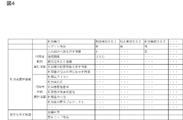
- FIG. 4 is an example of data included in one system according to one embodiment.
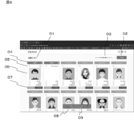
- FIG. 5 is an example of a screen displayed by one system according to one embodiment.
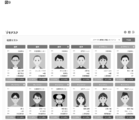
- FIG. 6 is an example of a screen displayed by one system according to one embodiment.
- FIG. 7 is an example of data possessed by one system according to one embodiment.
- FIG. 8 is an example showing the relationship of data possessed by one system according to one embodiment.
- FIG. 9 is an example of a screen displayed by one system according to one embodiment.
- FIG. 10 is an example of the configuration of one system according to one embodiment.
- FIG. 10 is an example of the configuration of one system according to one embodiment.
- FIG. 11 is an example of a flow related to one system according to one embodiment.
- FIG. 12 is an example of a flow related to one system according to one embodiment.
- FIG. 13 is an example of a flow related to one system according to one embodiment.
- FIG. 14 is an example of a flow related to one system according to one embodiment.
- FIG. 15 is an example of a screen according to one system according to one embodiment.
- FIG. 16 is an example of a screen according to one system according to one embodiment.
- FIG. 17 is an example of a screen according to one system according to one embodiment.
- FIG. 18 is an example of a screen according to one system according to one embodiment.
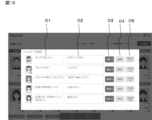
- FIG. 19 is an example of a screen according to one system according to one embodiment.
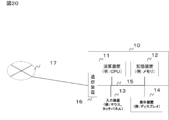
- FIG. 20 is an example of the configuration of one system according to one embodiment.
- the system of the embodiment according to the present invention communicates the situation of each user who uses the information processing device with each other and promotes the improvement of communication according to the situation under the protection of a certain degree of privacy.
- the term "system" may be composed of one or more information processing devices.
- the system of one embodiment may be one or more terminal devices, one or more management devices, or one or more terminal devices and one or more management devices, which will be described later. It may be a device.
- the system of one embodiment is, for example, FIG.
- the user terminals 011 to 015 and the management devices 001 and 002 may be connected to each other.
- the number of management devices may be one or a plurality.
- the management terminals 001a and 002a may be connected to the management devices 001 and 002, respectively.
- the management device may be connected to one or more management terminals.
- a plurality of terminal devices that acquire images and display information, and a plurality of terminals that acquire information obtained from a plurality of terminal devices, process information, and perform information processing. It may be equipped with a management system for transmitting to the device.
- a management system for transmitting to the device.
- the function on the terminal device side and the function on the management device side will be described separately.
- a person who uses the terminal device is referred to as a "user”
- a person who uses the management device is referred to as an "administrator”.
- An embodiment according to the present invention includes an information generation unit for generating information, an information transmission unit, and an information display unit as functions in the terminal device.
- One embodiment according to the present invention may be software executed in a terminal device. Further, one embodiment according to the present invention may be software executed on a WEB browser in the terminal device, or may be software downloaded to the terminal device and installed in the terminal device.
- the software executed on the above-mentioned WEB browser is software that can be executed in the WEB browser, and the difference between the individual information processing devices is absorbed by the WEB browser installed in each information processing device, and the WEB browser is used. It may be provided as software corresponding only to the type and version of. In this case, there is an advantage that the burden of creating software is much reduced as compared with creating software that can be installed in each information processing device.
- the software of one embodiment according to the present invention may be installed in a terminal device.
- the utilization rate of can be reduced.
- the terminal device may be a portable terminal device such as a notebook personal computer, a tablet PC, a smartphone, a mobile phone, etc. that can be used in business by a user, a desktop personal computer, or the like, as long as it is an information processing device. good.
- the information generation unit has a function of generating information. More specifically, the information generation unit has a function of generating user attribute information from an image.
- the term user attribute information does not include images such as still images and moving images obtained by capturing a user in real time by an image pickup device related to a user terminal.
- the terminal device transmits information based on the user attribute information to the management device, but by not including the image itself related to the real-time user, the real-time privacy of the user who uses the terminal device. Has the advantage of being able to protect.
- there may be "user static attribute information" and "user dynamic attribute information” and the user attribute information generated by the information generation unit is It may be treated as user dynamic attribute information.
- the still image of the user's face and the moving image of the face acquired through the image pickup device are highly private information indicating the person himself / herself more directly than the name and address, and such a face.
- the image obtained through the image pickup device is an image in a person's residence and is an extremely private image. The inventors thought that constant communication through the system would increase the mental burden on people as well as working hours.
- the information generated from the image is generated from the image in order to transmit the information generated from the image from the terminal device to the management device without transmitting the image from the terminal device to the management device. It is configured to execute the function to be performed on the terminal device.
- the image acquisition device associated with the terminal device may be used for the function of acquiring the image possessed by the information generation unit.
- the image pickup device associated with the terminal device may be an image pickup device provided inside the terminal device, or may be an image pickup device connected to the terminal device outside the terminal device.
- the image pickup device may be a WEB camera, a portable terminal camera, or the like, as long as the image can be acquired by the image pickup function.
- the image may be a still image or a moving image, and the term image is used as a term of a superordinate concept of the still image and the moving image.
- the information generation unit may acquire user attribute information from the acquired image.
- the information generation unit may have a machine-learned function in which the relationship between the image and the user attribute information is machine-learned.
- the information generation unit may generate the corresponding image information for the newly captured and acquired image by using the machine-learned function.
- the above-mentioned machine-learned function in the information generation unit may be realized by the function of the machine-learned model.
- the machine-learned model may be a model that can execute a machine-learned function that machine-learns the relationship between the image and the user attribute information, and the corresponding user corresponds to the newly captured image. It may be something that can generate attribute information.
- the machine-learned model may be software that can be executed by using the CPU and the memory in the information processing apparatus.
- the user attribute information may include information indicating the presence or absence of a human face in the captured image.
- the machine-learned function according to one embodiment has machine-learned the relationship between the image and the presence / absence of a person in the image, and information indicating the presence / absence of a person in the image for a new image. May be able to generate.
- the machine-learned function according to the embodiment may generate information indicating that there is a human face in the image only when there is one human face in the image, or the image. If there is one or more human faces inside, information indicating that there is a human face in the image may be generated.
- the information generation unit may issue an alert for looking into the screen when a plurality of human faces are detected in the acquired image. Specifically, when the information generation unit in the program executed on the WEB browser in the first terminal device detects the faces of a plurality of people in the acquired image, the inside of the first terminal device.
- the display generation unit which will be described later in the program executed on the WEB browser of the above, may issue an alert so that the user related to the first terminal device notices the peek at the screen.
- the machine learning unit of the information generation unit in the program executed on the WEB browser in the first terminal device uses the directions of the lines of sight of the faces of a plurality of people in the acquired captured image.
- the display generation unit may issue an alert so that the user related to the first terminal device notices the peek at the screen.
- Such a machine learning unit may be, for example, machine-learned about the relationship between an image and the direction of the line of sight of a person's face, and specifies the direction of the person's line of sight in the image for a new image.
- the machine learning unit may be machine-learned about the relationship between the image and whether or not the direction of the line of sight of the human face is substantially the direction of the screen, and the machine learning unit may be used for a new image.
- whether or not the direction of the screen is substantially the direction of the screen may be the direction of the image pickup device that has captured the image, or the direction of the screen in consideration of the positional deviation between the image pickup device that has captured the image and the screen. There may be.
- the mode of the alert that the user notices may be various.
- the whole or a part of the WEB browser may be expressed as "peeping detection" or "alert".
- the alert may be an expression that cannot be understood by a third party without knowing it, and may be an expression that can be understood only by the user described in the manual of the system according to the present embodiment. In this case, only the user can notice the peeping, and there is an advantage that the user is given an opportunity to casually prevent such peeping.
- such an alert may not only be displayed, or may emit a sound instead of the display. In this case, the sound has the advantage that the user can be more aware of the peeping.
- the information display unit may display such an alert in real time after the information generation unit detects it.
- the fact that such an alert is generated may be transmitted to the management device via the information transmission unit.
- the management device may associate and store such alerts with the user.
- the management device generates statistical information about the total number of alerts generated by each user within a predetermined period, the average number within a predetermined period, etc., sends it to the administrator terminal, and displays it on the administrator terminal. It may be possible.
- the administrator related to the administrator terminal has an advantage that the user can obtain information on how much he / she is looking into and have an opportunity to give advice on the user's working environment. ..
- the user attribute information may include information indicating the presence or absence of a user's face that has been authenticated by using the information related to the user's face registered in advance in the captured image.
- the machine-learned function according to the embodiment has machine-learned the relationship between the image and the information indicating the face of the person in the image, and the face of the person in the image is obtained with respect to the new image.
- the information generation unit determines whether the information indicating the face of the person is the face of the pre-registered user, so that the presence or absence of the face of the pre-registered user is present. May be generated.
- the machine-learned function according to the embodiment is a relationship between an image and information indicating the presence or absence of a pre-registered user's face in the image. Has been machine-learned, and information indicating the presence or absence of a user's face registered in advance in the image may be generated for a new image.
- the machine-learned function according to the embodiment may generate information indicating that there is no user's face whenever there is no user's face in the image, or may be used in the image. Information indicating that there is no user's face may be generated only when there is no person's face and there is no other person's face.
- Information about the pre-registered user's face used for authentication is stored in a cache in a terminal device in which a program executed on the WEB browser can be used, and is pre-registered in the cache in the terminal device.
- the face of the user and the face of the person in the captured image may be collated.
- the feature information that can uniquely identify the user's face used for authentication is transmitted from the terminal device to the management device, and the user's ID or the like is transmitted to the management device.
- the feature information for the human face in the captured image may be transmitted from the terminal device to the management device and collated in the management device.
- the authentication can be performed in the same manner.
- the information generation unit may issue an alert for looking into the screen when a face different from the face of the user registered in advance is detected in the acquired image.
- the information generation unit in the program executed on the WEB browser in the first terminal device detects a face different from the user's face registered in advance in the acquired image
- the display generation unit described later in the program executed on the WEB browser in the first terminal device may issue an alert so that the user related to the first terminal device notices the screen peeping.
- the machine learning unit of the information generation unit in the program executed on the WEB browser in the first terminal device has a line of sight different from the user's face registered in advance in the acquired captured image. Using the direction of, it was detected whether or not the screen was peeped by a face different from the pre-registered user's face, and it was detected that the screen was peeped by a face different from the pre-registered user's face.
- the display generation unit described later in the program executed on the WEB browser in the first terminal device may issue an alert so that the user related to the first terminal device notices the screen peeping.
- the machine learning unit may be machine-learned about the relationship between the image and the direction of the line of sight related to the human face, and may be machine-learned for a new image. It may be able to specify the direction of the line of sight of a person in the image. Further, the machine learning unit may be machine-learned about the relationship between the image and whether or not the direction of the line of sight of the human face is substantially the direction of the screen, and the machine learning unit may be used for a new image. , It may be possible to specify whether or not the direction of the line of sight of a person in the image is substantially the direction of the screen.
- the direction of the screen is substantially the direction of the screen may be the direction of the image pickup device that has captured the image, or the direction of the screen in consideration of the positional deviation between the image pickup device that has captured the image and the screen. There may be.
- the mode of the alert that the user notices may be various.
- the whole or a part of the WEB browser may be expressed as "peeping detection" or "alert".
- the alert may be an expression that cannot be understood by a third party without knowing it, and may be an expression that can be understood only by the user described in the manual of the system according to the present embodiment. In this case, only the user can notice the peeping, and there is an advantage that the user is given an opportunity to casually prevent such peeping.
- such an alert may not only be displayed, or may emit a sound instead of the display. In this case, the sound has the advantage that the user can be more aware of the peeping.
- the information display unit may display such an alert in real time after the information generation unit detects it.
- the fact that such an alert is generated may be transmitted to the management device via the information transmission unit.
- the management device may associate and store such alerts with the user.
- the management device generates statistical information about the total number of alerts generated by each user within a predetermined period, the average number within a predetermined period, etc., sends it to the administrator terminal, and displays it on the administrator terminal. It may be possible.
- the administrator related to the administrator terminal has an advantage that the user can obtain information on how much he / she is looking into and have an opportunity to give advice on the user's working environment. ..
- the information transmission unit sends a face different from the face of the user registered in advance to the management device, further sends it to the administrator terminal, and displays it on the administrator terminal. It may be possible. Further, on the user terminal, only statistical information such as the total number of predetermined periods, the average value of the predetermined period, etc., in which a face different from the face of the pre-registered user is detected on the screen, or in advance. A face different from the registered user's face may be transmitted to the administrator terminal so that the face can be displayed on the administrator terminal.
- the user attribute information may include the duration during which the human face is continuously in the image. The duration is continued from the time when the information generation unit generates the information that there is a human face in the image after the information that there is no human face in the image, and continues to be the person in the image. It may be generated using the information of the elapsed time when the information that there is a face of is generated.
- the user attribute information may include information indicating the degree of fatigue of a person in the image.
- the machine-learned function according to one embodiment has machine-learned the relationship between the image and the information indicating the degree of fatigue of the person in the image, and for a new image, the person in the image has been machine-learned. It may be possible to generate information indicating the degree of fatigue.
- the user attribute information may include information indicating the degree of concentration of people in the image.
- the machine-learned function according to one embodiment has machine-learned the relationship between the image and the information indicating the degree of concentration of the person in the image, and for a new image, the person in the image has been machine-learned. It may be possible to generate information indicating the degree of concentration.
- the information indicating the degree of concentration may be specified by using information such as the movement of the line of sight, the frequency of blinking, the heart rate, the breathing, and the number of sighs.
- the machine-learned function according to the embodiment may generate information indicating the degree of concentration of the above-mentioned person based on an image and a sound.
- the machine-learned function has machine-learned the relationship between the image and the sound and the information indicating the degree of concentration of the person in the image, and the image is obtained for a new image and sound. It may be possible to generate information indicating the degree of concentration of people within. Information indicating the degree of concentration may be specified using both image and sound information such as, for example, typing sounds, eye movements, blink frequency, heart rate, respiration, and sigh frequency. For the heart rate measurement itself from the image, for example, a technique such as http://pacesync.com/ may be used.
- the information generated by the information generation unit indicating the degree of concentration of people indicates the degree of concentration above a predetermined level, it may be automatically switched to the "concentration mode" described later.
- the information indicating the degree of concentration of such persons may be used as one of the statistical information of each user.
- the user attribute information may include information indicating human health information in the image.
- the machine-learned function according to one embodiment has machine-learned the relationship between the image and the information indicating the health information of the person in the image, and for a new image, the person in the image has been machine-learned. It may be possible to generate information indicating health information.
- the health information may include, for example, the posture of the person and / or the distance to the image pickup device of the person.
- the user attribute information may include information indicating the status of a person.
- the machine-learned function according to the embodiment has machine-learned the relationship between the image and / or the sound and the information indicating the status of the person, and the person with respect to the new image and / or the sound. It may be possible to generate information indicating the status of.
- the information including the status of the person may include information such as during a telephone call, eating, or taking a break.
- the information including the status of such a person may be determined based on any information of image only, image and sound, and sound only, as in the information used in the machine learning described above.
- the user attribute information may include information indicating the degree of trouble of a person in the image.
- the machine-learned function according to one embodiment has machine-learned the relationship between the image and the information indicating the degree of the person's worries in the image, and the person in the image has a new image. It may be possible to generate information indicating the degree of trouble.
- machine learning the above-mentioned machine learning is performed using the relationship between an image including, for example, a person's movement and / or a person's facial expression, and the degree of trouble felt by the person in the image. good.
- the information generation unit may have a function of acquiring sound.
- the function of acquiring sound may be one using the inside of the above-mentioned image pickup device, or may be different from the above-mentioned image pickup device.
- the information generation unit has a function of acquiring sound
- the information generation unit has a machine learning unit that has machine-learned the relationship between the sound and information for determining whether or not it can occur during work. good.
- the information generation unit may use the machine learning unit to generate information for determining whether or not the acquired sound is a sound generated during work.
- the machine learning for determining whether or not the sound is generated during the work is, for example, information for determining that the sound is generated during the work with respect to the sound when a key in the keyboard is touched.
- the information generation unit may generate "information indicating the situation" of the user, which is not related to the image.
- the information indicating such a situation may be a subordinate concept of the above-mentioned user attribute information. Further, the information indicating such a situation may be a subordinate concept of the above-mentioned user dynamic attribute information.
- the information generation unit may generate information based on the information obtained in cooperation with the software that manages the schedule in the terminal device.
- the software for managing the schedule may be, for example, software having a calendar function.
- the information generation unit acquires information related to the user's schedule from software that manages the schedule in the terminal device, using information related to time such as a predetermined time zone or time, and the user's schedule information. May be generated.
- the user's "schedule information" may be a subordinate concept of information indicating the user's situation.
- the user's schedule information may include information related to the user's meeting and / or user's work information.
- the information related to the meeting may include the presence or absence of the meeting, the attendees of the meeting, the distinction between internal and external meetings, the meeting place, the meeting form, and / or the scheduled end time of the meeting.
- the meeting format may be that the meeting is a WEB meeting, or the information related to the meeting may be only the information about the meeting at the current time, and is scheduled to be held in a predetermined period such as today, today and the next day. It may contain information about the meeting.
- the information generation unit may acquire information related to the current work status input by the user and generate information indicating the status.
- the information indicating the situation may include, for example, information indicating a "concentration mode", which is information indicating that the user intends to concentrate.
- concentration mode information indicating that the user intends to concentrate.
- the information generation unit specifies the latitude and longitude of the terminal device related to the user by using a known technique, and generates the latitude and longitude of the terminal device as a subordinate concept of the information indicating the situation. You may.
- FIG. 3 is an example of information generated by the information generation unit as user attribute information, particularly as user dynamic attribute information.
- the information transmission unit has a function of transmitting information.
- the information transmission unit may transmit a part or all of the information generated by the information generation unit to one or more management devices.
- the information transmission unit may transmit such information at various timings. For example, the information transmission unit may transmit information to one or more management devices every 30 seconds, every minute, every two minutes, every three minutes, every five minutes, every ten minutes, and so on. Further, the information transmission unit may transmit the information at different timings depending on the content of the information to be transmitted. Further, even if the information to be transmitted is different from the previously transmitted information, only the information that the same information as the previously transmitted information is the same information is transmitted or the information is not transmitted. good. Further, the information transmission unit may have different transmission timings depending on the management device of the transmission destination.
- the information transmission unit may transmit the user attribute information generated by the information generation unit to one or more management devices.
- the information display unit has a function of displaying information.
- the information display unit may display information based on the information acquired from the management device.
- the information display unit may acquire and display user attribute information for a plurality of users from the management device. An example of the mode of use will be described later.
- the management device has an information management unit and an information transmission unit.
- the information management unit has a function of acquiring and managing information from one or a plurality of terminal devices.
- the timing at which the information management unit acquires information may be the timing at which information is acquired from one or a plurality of terminal devices.
- the information management unit may manage information acquired from one or more terminal devices, for example, as shown in FIG.
- the information management unit may measure and manage the time in which the human face is not continuously included in the image captured by the image pickup device related to each terminal device in the management device. That is, information on whether or not a human face is included in the image is acquired from one or more terminal devices, and the information is used to start the first time when the human face is not included. As the time, the duration that does not continuously include the human face may be measured and managed.
- the information management unit may generate information on the location of the terminal device by using the information acquired from one or more terminal devices.
- the information management unit may acquire the latitude and longitude related to the terminal device and generate information on the location of the terminal device.
- the latitude and longitude related to the terminal device may be generated in the management device using the information acquired from the terminal device by using known technology, or the latitude and longitude in the terminal device according to the user.
- the system may acquire the latitude and longitude using a known technique, and the terminal device may transmit such information to the management device, so that the information management unit may acquire the latitude and longitude of the terminal device. ..
- the information management unit may specify the administrative division as the location of the terminal device related to the user by using the acquired latitude and longitude by using the rule showing the relationship between the latitude and longitude and the administrative division.
- the administrative division has an advantage that the privacy of the user can be protected if the specific address is not specified only for the prefecture and the municipality.
- the information management department uses the acquired latitude and longitude using the rules showing the relationship between the latitude and longitude and the name associated with each place in the organization to which the user belongs. You may specify the name associated with each location within your organization. In this case, since the name is within the organization to which the user belongs, there is an advantage that the name is intuitively easy for people belonging to the organization to understand, rather than the administrative division name.
- the information management unit may or may not have a statistical function.
- the statistical function when the information management unit has the statistical function will be described below.
- the statistical function may include a function of performing statistical processing using information acquired from the terminal device.
- the information management unit may perform statistical processing on user attribute information acquired from a plurality of terminal devices.
- the total of the predetermined period and / or the average of the predetermined period may be generated, or each person may generate a correlation for the user attribute information.
- a time zone in which a specific user tends to be enrolled may be generated by statistically processing the correlation between the time zone and the presence / absence of a specific user.
- the meeting can be set according to the life rhythm of the specific user.
- a time zone in which a specific user tends to concentrate may be generated by statistically processing the correlation between the time zone and the information indicating the degree of concentration of the specific user.
- a time zone that tends to concentrate is displayed, there is an advantage that it can be used for setting a meeting according to the rhythm of concentration for such a specific user.
- statistically process the correlation between the time zone and the information indicating the degree of concentration of users within a specific group or group within the group. May generate time zones with high or low likelihood of concentration.
- time zone with high or low possibility of concentration is displayed, there is an advantage that it can be used for setting a meeting according to a specific group of a group or a rhythm of concentration of users within the group.
- time zone information indicating the degree of fatigue of a specific user, information indicating the degree of health, information indicating the degree of worries, information indicating the status of a person, and / or information indicating the degree of concentration of a person.
- a specific user may generate a specific tendency regarding the degree of fatigue / degree of health / degree of worries / degree of concentration.
- the information transmission unit has a function of transmitting information.
- the information transmission unit may transmit a part or all of the information managed by the information management unit to one or a plurality of terminal devices.
- the information transmission unit may transmit such information at various timings. For example, the information transmission unit may transmit information to the terminal device every 30 seconds, every minute, every two minutes, every three minutes, every five minutes, every ten minutes, and so on. Further, the transmission timing may be the same or different depending on the target of the information. Further, the information transmission unit may have different transmission frequencies depending on the target of the information. For example, the information transmission unit periodically transmits the user dynamic attribute information, while the user emotional attribute information is transmitted only when the user logs in, and then transmitted unless otherwise requested. You may not do it. Further, the timing at which the information transmitting unit transmits information may be the same or different for each terminal device.
- the management device may be an information processing device for business use such as a server or a cloud, but information on a mobile terminal device that can be used by a user such as a notebook computer, tablet PC, smartphone, or mobile phone in business. It may be a processing device.
- the user accesses the URL of the system according to the embodiment.
- a screen as shown in FIG. 5 may be shown.
- the user may register as a user before the screen.
- a user ID, an e-mail address, a password, etc. may be set in the user and user registration, and these user registrations may be general.
- the screen as shown in FIG. 6 may be displayed.
- the screen may display what is entitled Employee List 01.
- the system of one embodiment may operate so that information indicating a user can be displayed via a WEB browser.
- the system of one embodiment may operate so that the additional button 02, which functions to additionally display the information indicating the user on the WEB browser, can be displayed via the WEB browser.
- the system of one embodiment operates so that information indicating a user candidate to be displayed can be displayed by a dialog or the like separately displayed via a WEB browser. You can do it.
- the system of one embodiment can display the information selected by the user as the information indicating each user via the WEB browser. It may work.
- the system of one embodiment may operate so that the display target determination button 03, which indicates the target to which the information indicating the user is displayed, can be displayed via the WEB browser.
- the system of one embodiment may operate so that information indicating an index to be displayed can be displayed via a WEB browser.
- the information indicating the index to be displayed may be, for example, information indicating a predetermined set or information indicating a predetermined order.
- Information indicating an index to be displayed may be simply referred to as a "label" in the documents of the present application.
- the information indicating a predetermined set may be information indicating a set playing a predetermined role, information indicating the current situation, or other information.
- Information indicating a set that plays a predetermined role is, for example, a department such as a sales department, a development department, a research department, an accounting department, or a legal department of an organization within a corporation when the user is an employee of the corporation. It's okay.
- the information indicating the index to be displayed the information may be displayed so that each department such as the sales department, the development department, the research department, the accounting department, the legal department, etc. can select in parallel.
- the department name may match the name within the corporation.
- the information indicating the set that plays a predetermined role is not limited to the organization within the corporation, and may be the information indicating the set that plays a predetermined role in any group organization to which the user belongs.
- the department to which the logged-in user himself belongs may be displayed at the beginning of the selection candidates. In this case, there is an advantage that the information in the department to which the user himself / herself belongs can be accessed quickly. Further, as the default of the displayed target, the department to which the logged-in user himself / herself belongs may be set. In this case, there is an advantage that the user can support communication with a person in the department to which the user belongs.
- the information indicating the current situation may be described later. For example, if you select the case where you are seated, have no meeting, and are not in intensive work as information indicating the current situation, the person who is seated instead of being in a meeting or intensive work is displayed. There is an advantage that it can be used such as finding a person who can do it.
- the information indicating the predetermined order may be, for example, the character order of the user's name (aiueo order, alphabetical order, etc.) or the number order uniquely assigned to the user.
- the target person of the information indicating the user displayed in the WEB browser may be set by the user himself / herself, and for the information indicating a plurality of users set by the user himself / herself. , You may set the label.
- the user selects a close friend as a chat partner when he / she is tired from work, and selects a colleague who promotes the same or similar research as a partner who can be inspired and consulted at the time of research and development.
- the chat partner can be set as a target person who can be displayed in one WEB browser for each user, such as.
- chat partners it is possible to selectively set people who can be related to the user, such as the user's boss and subordinates, and both the chat partner and business personnel can be displayed in one WEB browser.
- the user selects a plurality of information indicating the user, and the name selected by the display target determination button 03, for example, assuming that the information indicating the plurality of selected users is displayed. It may be configurable as a label such as "normal use 1".
- the system of one embodiment may associate and store a plurality of subjects of information indicating the user selected by the user and labels indicating the plurality of subjects.
- the plurality of target persons of the information indicating the user may be one group, may be a plurality of groups, and when there are a plurality of groups, each of them may be associated and stored. For example, when one user is involved in a plurality of projects, such a list may be created for each project.
- FIG. 7 is an example of storing a plurality of labels set by one user and information indicating a user associated with each label and stored.
- the storage location may be a cache in the WEB browser used by the user, or may be stored in association with the user in the storage device in the management device.
- the information indicating the user which is classified by the above-mentioned display target determination button 03, may be displayed separately on the screen in the WEB browser.
- the information indicating the user related to the project 1 is displayed in the first column of the screen in the WEB browser
- the information indicating the user related to the project 2 is displayed in the second column of the screen in the WEB browser.
- Information indicating a user displayed in one WEB browser may be divided into a plurality of groups and displayed. By being displayed separately in a plurality of groups, the user has an advantage that he / she can immediately respond to other users who want to know the situation. Further, in the mode in which the information indicating the users in each group is displayed separately in the plurality of groups, the information indicating the users in each group may be exclusive or may be partially duplicated.
- the system of one embodiment may operate so that each user can display information 04 indicating the current status, which is information indicating the current status, via a WEB browser.
- the information indicating the current situation the information indicating the user's situation may be displayed in characters. For example, it may be in the presence (seated), away from the seat, offline, concentrated mode, and the like. Further, the information indicating the current situation may display information indicating what kind of situation each user is currently in, in addition to the characters or by color instead of the characters.
- FIG. 8 shows a relationship in which color information displayed in association with information acquired by the system of one embodiment is stored. Such a relationship may be remembered. In this figure, it is shown that each color is set to be displayed according to various information.
- the status and color to be displayed are set according to the presence / absence of login, the presence / absence of the centralized mode, the presence / absence of input of the WEB conference button, the degree of leaving time, and / or the presence / absence of a conference. More specifically, if there is no login, "offline" is displayed and grayed out. Assuming that you are logged in, in the intensive mode, "Intensive work” is displayed and the color is orange. And, assuming that the centralized mode is off, if there is an input to the WEB conference button, it is shown in red. Further, on the premise that the input to the WEB conference button is off, the display and the color may be changed and displayed according to the elapsed time. In particular, when the leaving time is displayed according to the elapsed time, there is an advantage that the user can understand how much time he / she is away from.
- the system of one embodiment may operate so that the information 05 indicating the current location, which is the information indicating the current location of each user, can be displayed via the WEB browser.
- the information indicating the current location may be information indicating a location in the group to which the user belongs and / or information indicating a predetermined administrative division.
- the information indicating the location in the group to which the user belongs may be, for example, the name, abbreviation, or the like of each office, each factory, each branch, each sales office, etc. within the organization such as the corporation to which the user belongs. ..
- the user has an advantage that it can be understood by information that is easier to understand within an organization such as a corporation to which the user belongs.
- the information indicating the administrative division may be abstracted within a predetermined range. For example, information indicating a municipality may be included, but numerical information that is more specific than a municipality may not be included. In such a case, there is an advantage that the privacy of the user can be protected.
- the system of one embodiment may operate so that the static attribute information 06, which is the static attribute information of each user, can be displayed via the WEB browser.
- the static attribute information includes, for example, an icon indicating the user himself / herself, a user's name, a user's management number, a user's department name, a user's status, a user's related project, and the like. May include.
- the icon indicating the user himself / herself may include a fixed image obtained by capturing the user in the past or an image of an avatar based on the user's real-time image from the viewpoint of identifying the user.
- the above-mentioned avatar is, for example, a program on the WEB browser related to the user terminal that has acquired such an image based on an image that captures the user in real time, and generates the movement of the corresponding avatar, and the real time of the avatar.
- the movement may be realized by transmitting the movement to the management terminal, and the management terminal transmits the real-time movement of the avatar to each user terminal and displays the real-time movement of the avatar on each user terminal.
- the program running on the WEB browser can generate the movement of the avatar according to the real-time movement of the user, which has the advantage of being able to share the movement with other users while protecting the privacy of the user.
- the movement of the avatar described above the movement of the skeleton of the specified person may be reflected in the movement of the avatar by specifying the movement of the skeleton of the person in the image of the person captured by the machine learning unit.
- the program executed on the WEB browser sends the image itself acquired from the image pickup device to the management device from one terminal terminal, not as the information in the user attribute information, and the management device. May be configured to transmit the image to each terminal device other than the one terminal device so that the real-time image of one user can be viewed on the WEB browser related to each terminal device. In this case, there is an advantage that a real-time image of one user can be seen by each user.
- the system of one embodiment may operate so as to be able to display the contact providing means 07, which provides the means for making contact with each user via the WEB browser.
- the contact providing means 07 may cooperate with another application and activate a means for enabling contact with the user associated with the contact providing means 07.
- the contact providing means is a terminal device that creates and activates a new e-mail addressed to a user associated with the display in software installed in the terminal device that can send and receive e-mail. Create and launch a new one addressed to the user associated with the display in the software that can execute voice and / or chat installed in, and / or make a call that can be executed on the terminal device. It may be something that can activate a phone with the user associated with the display in the function as the call destination.
- the system itself of one embodiment does not have to have a constant voice conversation function as a tool for communication means.
- the user can feel reassured that the voice conversation is not always performed, and can activate the voice conversation function by another application only when necessary, so that the privacy can be further protected.
- the system of one embodiment may operate so as to be able to display "WEB conference" 08, which temporarily abandons the control authority of the image pickup device related to the user, via the WEB browser.
- the system of one embodiment may suspend the access for acquiring the image from the image pickup device according to the user terminal for the first predetermined period. By stopping the access for acquiring the image for the first predetermined period, the system of one embodiment tries to access the image pickup device related to the user terminal again before the user starts the WEB conference. It is possible to prevent depriving the authority of the image pickup device.
- the user has an advantage that the application related to the WEB conference can have the access authority of the image pickup device related to the user.
- such a configuration has an advantage that a conflict between the one image pickup device can be prevented because there is often only one image pickup device capable of taking an image of the user's face.
- an external terminal such as a USB, a smartphone, a tablet PC, or the like has an image pickup direction of one image pickup device.
- the image pickup device has the same image pickup direction as the display direction of the display device. Has the advantage of being able to prevent conflicts between the same image pickup devices. Further, after the elapse of the first predetermined period, the system of one embodiment has a function of attempting access for acquiring an image from the image pickup device related to the user terminal every second predetermined period. It's okay. With the function that automatically tries to access to acquire an image in this way, even if the user forgets to set the image pickup device to be used by the system according to the embodiment after a WEB conference or the like, one implementation is performed. There is an advantage that the system according to the form can automatically use the image pickup device.
- system of one embodiment may operate so that the button 09 for accepting the input for the user to enter the centralized mode can be displayed via the WEB browser.
- the user entering the centralized mode is transmitted to the terminal device of another user as in the embodiment described later, there is an advantage that the intention of the user can be respected.
- the system of one embodiment may have a chat function.
- the chat function may be a normal chat function, or may be a chat function having one or more of the following functions instead of the normal chat function.
- the chat function is activated by inputting to the call function call icon 01 associated with each user, which is displayed on the panel showing each user, as shown in FIG. 15, for example. good.
- the activation may be a chat function addressed to the user associated with the icon.
- FIG. 16 shows an example of a screen after the icon is selected by clicking or the like, and is an example in which a chat message to the other party is displayed so as to be inputtable. The user may be able to enter a message for the other user in such a box and select "Send" to send a message addressed to the user associated with the call icon 01.
- the chat function according to the embodiment may be capable of displaying a notification icon 01 notifying the reception of a chat message at the upper part of the screen, for example, as shown in FIG.
- the notification icon may be associated and displayable, for example, with the number of messages received when a chat message to the user is received.
- a part or all of a part or all of the received messages may be a user related to the sender of each message. It may be associated with the indicated information and displayed as a received message 02.
- the message 03 related to each user may be limited to a predetermined number of characters in advance.
- the displayed space is limited to a predetermined range and the list of received messages can be understood first.
- the user may respond to these messages with a negative response of "I'm sorry" 04, or may respond to each message with a specific message of "Reply” 05. good.
- the message 03 related to each user is a part of the received message (a part of the received message and / or a part of the message), the whole can be seen.
- Click "More" 06 to display the entire received message (including the list of all received users and / or the limited range of messages related to one received user). You can do it.
- FIG. 18 is an example of a screen when "Reply” is selected above. If you select "Reply” for only one message among the messages for multiple users who have received the message, the message for the selected user is displayed and you can reply. It may be configured as follows. Here, a chat screen between the selected user and himself / herself is displayed, and the history of past message exchanges may or may not be retained.
- FIG. 19 is an example of a screen when "more" is selected as described above.
- one or more messages including the received message may be displayed simultaneously in the same window. If it can be displayed in the same window, there is an advantage that you can understand the message including yourself at a glance.
- it may be provided with a function that enables input of a message addressed to a plurality of destinations within the same display for a part or all of a plurality of messages displayed as a message including oneself. In this case, for each message addressed to you, part or all of the messages addressed to you within the specified period will be displayed at the same time without taking steps such as displaying, replying, and inputting the message. There is an advantage that you can enter the reply information.
- an input message for each destination is tentatively displayed for input to multiple destinations. Even if they are different, there is an advantage that the processing speed is improved by being able to input each message to a plurality of destinations in one displayed window.
- the message 02 may be individually input as a reply and the reply 03 may be sent. Further, instead of such a response, it may be possible to reply by the fixed phrase 04.
- the fixed phrase as a specific character string may be one that the user usually uses. Further, the fixed phrase may be the same character string for all users, or may be a different character string for each user. In the latter case, a fixed phrase used by each user may be set. Each fixed phrase set by each user may be stored in a cache in the WEB browser related to each user, or may be associated with each user in the management device and stored as a fixed phrase.
- chat function may be accompanied by "OK” and "Sorry” buttons that simply convey Yes / No to the message as an input function.
- reply to the message can be easily performed.
- the "OK” button may be displayed together with or in place of such a display.
- chat function is not specified in the drawing as a transmission function
- an icon for activating a function capable of creating the same message may be displayed for a plurality of users.
- the same message may be simultaneously transmitted according to the transmission instruction.
- a plurality of users as destinations of a message may be specified from various viewpoints, and a plurality of users may be specified by a predetermined filter. For example, it may be specified based on the user emotional attribute information of the user, it may be specified based on the user dynamic attribute information of the user, the user dynamic attribute information of the user, and the user dynamic attribute information of the user. It may be specified based on user emotional attribute information.
- the user When based on user emotional information, for example, the user may belong to the same group as the group to which the user belongs, or the user belongs to the same group as the group within the group to which the user belongs. You may.
- the former is, for example, a message to everyone in the corporation, and the latter is a message to users who belong to the same group such as the same department or project.
- user dynamic attribute information for example, as multiple users as the other party of a message, only the currently present user, only the person currently in the predetermined office, the location in the predetermined range.
- the display of the past history may disappear after a predetermined time has passed.
- the screen space can be effectively used by not displaying the history of past messages.
- the system according to the embodiment may have a function of determining whether or not the received message has been read based on the image captured by the user.
- a function has a machine learning unit that machine-learns the relationship between an image, information related to a received message, and whether or not it has been read, and the image newly acquired by the machine-learned machine learning unit. It may be determined whether or not the message has been read based on the information related to the received message.
- the information relating to the message may include the display position of one or more received messages and / or the display timing of the message. Further, the display position of the received one or more messages may be the case where the whole of the one message is displayed, or the stage where only a part of the one message is displayed.
- whether or not the displayed one or more messages have been read for the display position is determined as to whether or not all the messages have been displayed and whether or not all the displayed messages have been read for the entire displayed one or more messages. It may be a message, or it may be determined whether or not each message among the displayed one or a plurality of messages has been read. In the former case, the presence or absence of read is determined for the entire displayed one or more messages, but in the latter case, each message of the displayed one or more messages is generated. The determined read presence / absence may be generated for. In such a configuration, for example, the image may use the direction of the line of sight of a person in the image, but is not limited to this.
- information determined to be read and / or unread for all or each of the received messages is transmitted to the user terminal related to the sender of each message via the management device. Then, the read or unread information of each message may be displayed on the user terminal.
- the sender of the message can understand whether or not the message has been read even when the user does not specifically click based on the image related to the user.
- Such a function may coexist with a function in which the information browsed by the user by clicking each message is displayed at the sender of the message, or may have only such a function.
- the system according to one embodiment may have a WEB call function.
- the WEB call may have a normal voice function, but may have a function different from the normal voice function.
- the system according to the embodiment may acquire information indicating the stress status of the user in real time based on the acquired image.
- the information indicating the stress situation may be, for example, a numerical value indicating the degree of stress or a rank.
- the numerical value may be, for example, a numerical value between 1 and 100 when the stress-free state is 0 and the stress is strong as 100, and the rank may be a plurality of stresses such as low, medium, and strong. It may be the one to which one is specified.
- the information indicating the stress status is obtained by the system according to the embodiment having a machine learning unit in which the relationship between the image and the information indicating the stress status has been machine-learned and newly acquired during a WEB call. On the other hand, it may be generated by applying such a machine learning unit.
- a machine learning unit can be obtained from an image during a web call, for example, behavior such as the user looking at the upper left / upper right, scratching the chin / forehead / head, increasing / decreasing the number of blinks, increasing / decreasing the heart rate, etc.
- Information such as the above may be acquired and recorded, and information indicating the stress status of the user in the image may be generated based on such a state.
- the generated information indicating the stress situation may be transmitted to other users who are using the WEB call function. That is, the information indicating the stress status may be displayed on the WEB browser of the user terminal related to another user via the management device.
- the user has an advantage that it is possible to communicate according to the subtleties of the other party, especially when the image of the other party of the WEB call cannot be viewed in real time. Further, even if the user can see the image of the other party in real time, there is an advantage that it is possible to communicate according to the subtleties of the other party by referring to the information indicating stress.
- the information indicating the stress status is stored as statistical information in the management device as an average value of the information indicating the stress within a predetermined period, and is transmitted to the terminal device related to the user, so that the user himself / herself can use the information. It has the advantage of being available as objective information about stress.
- the information indicating stress as statistical information in the management device satisfies a predetermined condition, a warning is sent to the terminal device related to the user and the stress of oneself is sent on the terminal device related to the user. Since the degree of is displayed as satisfying a predetermined condition, there is an advantage that the user himself / herself can understand the degree of his / her own stress.
- the information indicating such stress indicates a predetermined condition
- it is expected to grasp the stress status of the administrator terminal and the user related to the management device (referred to as "supervisor" in the documents of the present application).
- the user related to the supervisor may grasp the degree of stress of the user related to the employee by being transmitted and displayed to the terminal device according to (may).
- the prescribed conditions for the user to grasp the degree of his / her own stress and the prescribed conditions for the user pertaining to the supervisor of the user to grasp the degree of stress of the user pertaining to the employee may be the same or different.
- the predetermined condition for the user related to the supervisor to grasp the degree of stress of the user related to the employee is the predetermined condition for the user himself / herself to grasp the degree of stress of himself / herself.
- the degree of stress may be set higher.
- the user can grasp by himself / herself and have an opportunity to deal with it by reviewing his / her life, while at the stage of high stress level, the user related to the supervisor.
- the contact is notified to, there is an advantage that it is possible to realize a situation in which the user related to the supervisor can grasp the situation only when there is a possibility that the user himself / herself cannot respond.
- the supervisor may be the employer of the employee or the person in charge of the personnel affairs of the employee.
- the stress state has been described as an example, but the description is not limited to this, and it may be used to generate information indicating the degree of interest such as the presence or absence of concentration on WEB calls and the presence or absence of interest. good.
- the system according to an embodiment related to a program executed on a WEB browser related to a user terminal has a machine learning unit in which the relationship between an image and information indicating the degree of interest is machine-learned. By applying the machine learning unit to a newly acquired image during a WEB call, information indicating the degree of interest in the WEB call may be generated.
- the information indicating the degree of interest may include, for example, a numerical value indicating the degree of interest or a rank.
- the numerical value may be, for example, a numerical value between 1 and 100 when the state of no interest is 0 and the state of interest is 100, and the rank indicates the degree of interest. It may be one in which one of a plurality of items such as strong is specified.
- the information indicating the degree of interest may be processed in the same manner as the information processing for the information indicating the stress situation described above. For example, in a terminal device related to one user, information on the degree of interest such as concentration and interest in a web call generated based on an image captured by the image pickup device is information of the other party of the web call.
- WEB calls are sent to the terminal device related to the user via the management device, and information on the degree of interest is displayed by the program executed on the WEB browser related to the terminal device related to the other party of the WEB call.
- the user related to the other party of the WEB call can understand the degree of interest of one user and can communicate according to the subtleties of the other party.
- the system of one embodiment may be, for example, the one shown in FIG.
- an example of the data possessed by the management device 01 and the terminal device 02 may be shown as shown in FIG.
- the management device shows an example of being executed on the cloud, but the present invention is not limited to this.
- the management device may have the current information as a database about the information indicating the situation of each user.
- past information may be included in the information indicating the situation of each user.
- information such as contact information and name of each user may be included. The information in these databases may be appropriately accessible from the terminal device.
- the terminal device when one user uses a means of contacting another user, the terminal device also obtains information such as an e-mail address and a telephone number of the other user from such a database. You may get it.
- databases various types of databases such as relational databases and object-oriented databases may be used, and the formats and types thereof are not limited.
- Embodiment 2 In the second embodiment, when the first user who uses the system according to the embodiment according to the present application moves from the image pickup field of view of the image pickup device according to the first terminal device according to the first user to the outside of the image pickup field of view. The flow of the above will be described with reference to FIG.
- the first image pickup device according to the first terminal device according to the first user is taking an image of the first user, and the image is taken from the first image pickup device.
- the acquired program executed on the WEB browser in the first terminal device generates information indicating that the image pickup field of the first image pickup device has a person's face, and indicates that the person's face is present.
- the information was transmitted to the management device as one piece of information in the user dynamic attribute information. Further, the management device acquires information indicating that there is a human face as one piece of user dynamic attribute information, which is one piece of user attribute information acquired from the first terminal device. I remember.
- the management device transmits information including information indicating that the person has a face to the second terminal device different from the first terminal device, and executes the information on the WEB browser in the second terminal device.
- the program being executed acquires such information, and the first user is seated using the information indicating that there is a person's face about the first user on the WEB browser in the second terminal device. Information is displayed.
- Step 1 The face of the first user goes out of the imaging field of view of the first imaging device.
- the program executed on the WEB browser according to the first terminal device which has acquired the image not including the face of the first user from the first image pickup device, has no human face based on the image. Generate information to indicate that.
- the timing at which the program acquires an image from the first image pickup apparatus may always be acquired as a moving image or may be acquired at a predetermined interval.
- Step 2 Such a program transmits information including information indicating that there is no human face to the management device at a predetermined timing.
- the predetermined timing is acquired in a relatively short period of time, for example, every 30 seconds, every 1 minute, every 2 minutes, every 3 minutes, every 5 minutes, every 10 minutes, whether or not the user is seated is more real-time. Has the advantage of being able to send information to the management device.
- Step 3 The management device stores information indicating that there is no human face for the first user, and at a predetermined timing, the management device transfers the information to a plurality of terminal devices including the second terminal device different from the first terminal device. Send information, including information indicating that there is no face.
- the management device changes from the information indicating that there is a human face to the information indicating that there is no human face for the first time, the measurement of the elapsed time of the absence state may be started, and the elapsed time is described above. It may be transmitted to a plurality of terminal devices.
- the management device may or may not transmit these information to the first terminal device in the same manner.
- Step 4 The program executed on the WEB browser related to the second terminal device acquires information including information indicating that there is no person's face related to the first terminal device, and associates it with the first user, for example, while away from the desk. As certain information, it operates so that it can be displayed on a WEB browser.
- the said program is the first user. It may operate so that the elapsed time taken in association with can be displayed on the WEB browser.
- Step 5 The second user related to the second terminal device can see the display that the first user is away from his / her seat, and has an advantage that he / she can consider communication with the second user based on such a state. Further, when the elapsed time of leaving the seat of the first user is displayed on the WEB browser related to the second terminal device, the second user can estimate the situation of the first user and consider communication. There is. For example, if the first user's absence time is 60 minutes at the stage of 1 hour after the start of work, a business trip, flex, or a break may be considered, but if it is within 15 minutes, a break may be considered. ..
- the first user's leave time is 30 minutes or more, it is possible that he went out to eat, but if the first user's leave time is within 15 minutes, the time is reached. Depending on the situation, there is a possibility that it will come back soon.
- Embodiment 3 In the third embodiment, the flow in which the first user who uses the system according to the embodiment according to the present application holds a WEB conference using the image pickup device according to the terminal device according to the first user is shown in the figure. 12 will be described. Also in this embodiment, it is assumed that the state is the same as that in the above-mentioned second embodiment.
- Step 1 First, the first user inputs an input to the WEB conference button displayed on the WEB browser related to the first terminal device at the stage immediately before the WEB conference time.
- the program executed on the browser related to the first terminal device accepts the input of the WEB conference button, stops the access to the first image pickup device, and stops the acquisition of the image from the first image pickup device.
- Such a program starts measuring the time at the same time as accepting the input of the WEB conference button. The measurement of such time is used to determine the conditions for resuming access to the first image pickup apparatus.
- Such a program suspends access to the first image pickup apparatus until the lapse of a first predetermined time, which is a condition for resuming access to the first image pickup apparatus.
- the application in the first terminal device can acquire access to the first image pickup device, so that the first user has a grace period for preparing for the WEB conference at least for the first predetermined period. There is.
- Step 2 The first user starts a WEB conference.
- any application in the first image pickup device including the application related to the WEB conference can access the first image pickup device.
- "accessible to the image pickup device” may mean having the authority to control the image pickup device.
- the above-mentioned program attempts to access the first imaging device every second predetermined period after the lapse of the first predetermined period, the first user will try to access the first predetermined period after the lapse of the first predetermined period.
- the above program has the access authority of the first image pickup device. In such a case, the first user who plans to start the WEB conference needs to return to step 1 described above and input to the WEB conference button again.
- Step 3 The program attempts to access the first imaging device every second predetermined period after the lapse of the first predetermined period.
- the above-mentioned program acquires the authority if the access is possible, that is, the authority to control the first image pickup apparatus is obtained.
- Step 4 The first user ends the WEB conference. Due to the termination of the WEB conference, the application related to the WEB conference relinquishes the access authority to the first imaging device, so that after the lapse of the above-mentioned first predetermined period and at the timing of each second predetermined period.
- the above-mentioned program acquires the access authority related to the first image pickup apparatus. Even if the program attempts to access the first image pickup device every second predetermined period, even if the first user forgets to set the first image pickup device to be used in the above-mentioned program, it is automatically performed. Therefore, there is an advantage that the above-mentioned program can attempt to acquire access to the first image pickup apparatus and make it possible to detect the seated or absent state of the first user.
- FIG. 13 is an example diagram illustrating the logic by which the above-mentioned program attempts to access the first image pickup apparatus.
- the above program (1) confirms the connection status of the camera to the first image pickup device every second predetermined period, (2) initializes the image pickup device if it is not connected, and (3) succeeds in initialization. At the time and if it is already connected, AI processing is performed on the image, and (4) if initialization fails (for example, when another WEB conference application uses the first image pickup device), this is performed. Processing such as recording and returning to (1) may proceed.
- Embodiment 4 the flow when the first user who uses the system according to the one embodiment according to the present application wants to concentrate will be described with reference to FIG. Also in this embodiment, it is assumed that the state is the same as that in the above-mentioned second embodiment.
- Step 1 when the first user wants to concentrate, he / she inputs to the centralized mode displayed on the WEB browser related to the first terminal device.
- the program executed on the browser related to the first terminal device accepts the input of the centralized mode.
- Step 2 Such a program transmits information including information indicating that it is in the centralized mode to the management device at a predetermined timing.
- the predetermined timing is transmitted in a relatively short period of time, for example, every 30 seconds, every 1 minute, every 2 minutes, every 3 minutes, every 5 minutes, every 10 minutes, the first user is in the centralized mode.
- the information can be transmitted to the management device in real time.
- Step 3 The management device stores information indicating that the first user is in the centralized mode, and at a predetermined timing, the first user is sent to a plurality of terminal devices including the second terminal device different from the first terminal device. Sends information, including information indicating that is in centralized mode.
- the management device may or may not transmit these information to the first terminal device in the same manner.
- Step 4 The program executed on the WEB browser related to the second terminal device acquires information including information indicating that it is in the centralized mode related to the first terminal device, and associates it with the first user, for example, information in the centralized mode. It works so that it can be displayed on the WEB browser.
- Embodiment 5 is another embodiment.
- the system of one embodiment may be used among the users in the above.
- the user may be a user who belongs to a part of a plurality of organizations.
- Cases in which each user in a plurality of organizations interacts with each other may be, for example, an exchange including a chat between researchers in joint research, or a related person who is in the process of concluding a business alliance.
- the user may use the system of one embodiment even in a real space such as a shared office.
- a real space such as a shared office
- one of the information processing devices related to each user is, for example, WIFI technology related to the wireless communication.
- the specific position can be specified by using. Therefore, for example, while displaying the position of each user in the shared office, the affiliation and specialty of each user can be disclosed to a certain extent, shared among each user, and information can be obtained from each other. You may do it.
- a real space such as a shared office
- information that can be disclosed may be registered and shared externally or in such a shared office.
- Information that can be disclosed includes the user's name, specialty, range of interest, and the like.
- the system of one embodiment may have a function of sharing information that one user wants to communicate with. More specifically, one user may input information indicating that he / she wants to communicate with the above-mentioned program on the WEB browser.
- the above-mentioned program may accept input of information indicating that such communication is desired and transmit it to the management device at a predetermined timing.
- the management device may transmit information desired for communication associated with such a user to a terminal device within a predetermined range.
- the predetermined range may be, for example, one shared office, a part thereof, or a plurality of shared offices. It may be separated by floor or room in the shared office.
- the information desired to communicate with such one user may be displayed by the operation of the above-mentioned program executed in the WEB browser on the user terminal within the above-mentioned predetermined range. Therefore, the user within the predetermined range may understand that one of the above-mentioned users wants to communicate. Thereby, the person who desires may start the communication by using the system of one embodiment, or may directly communicate in the real space. In addition, in relation to the above-mentioned desire for communication, for example, it is possible to select whether to desire only communication in the virtual space, only communication in the real space, or either of these. Yes, and such information may be shared so that it can be displayed on other user terminals as well. Similarly, the object of communication and comments may also be associated.
- the subject of communication may be, for example, a topic related to a specific business or a topic related to a specific research field.
- the system may have a matching function between users.
- the matching function may perform matching based on the information indicating the current situation of the user.
- the information indicating the current situation may be, for example, information indicating that communication is desired.
- the information desired to be communicated may be input in each user terminal and transmitted to the management terminal.
- matching may be performed between users who desire communication by associating users who are associated with information that they desire communication.
- it is displayed to each user to be matched that they want to communicate with each other by the operation of the program executed on the WEB browser of each user terminal. You can do it.
- another communication tool such as SNS may be further operated to provide a dedicated communication method between users who desire communication.
- the system according to the present invention may be composed of one or a plurality of information processing devices.
- the information processing device 10 according to the present invention may include a bus 15, an arithmetic unit 11, a storage device 12, and a communication device 16. Further, the information processing device 10 in one embodiment may include an input device 13 and a display device 14. It is also directly or indirectly connected to the network 17.
- the bus 15 may have a function of transmitting information between the arithmetic unit 11, the storage device 12, the input device 13, the display device 14, and the communication device 16.
- arithmetic unit 11 is a processor. This may be a CPU or an MPU. Further, the arithmetic unit in one embodiment may include a graphics processing unit, a digital signal processor, and the like. In short, the arithmetic unit 12 may be any device that can execute the instructions of the program.
- the storage device 12 is a device for recording information. This may be either an external memory or an internal memory, and may be either a main storage device or an auxiliary storage device. Further, a magnetic disk (hard disk), an optical disk, a magnetic tape, a semiconductor memory, or the like may be used. Further, it may have a storage device via a network or a storage device on the cloud via a network.
- the registers, L1 cache, L2 cache, etc. that store information at a position physically close to the arithmetic unit may be included in the arithmetic unit 11, but in the design of the computer architecture, As a device for recording information, the storage device 12 may include these.
- the arithmetic unit 11, the storage device 12, and the bus 11 may be configured to cooperate with each other to execute information processing.
- the storage device 12 can include a part or all of a program capable of executing the process according to the present invention. In addition, data necessary for executing the process according to the present invention can be appropriately recorded. Further, the storage device 12 in one embodiment may include a database.
- the above describes the case where the arithmetic unit 12 is executed based on the program provided in the storage device 13, but it is one of the forms in which the bus 11, the arithmetic unit 12 and the storage device 13 are combined.
- part or all of the information processing according to the present invention may be realized by a programmable logic device capable of changing the hardware circuit itself or a dedicated circuit in which the information processing to be executed is determined.
- the input device 13 inputs information, but may have other functions.
- Examples of the input device 14 include an input device such as a keyboard, a mouse, a touch panel, or a pen-type instruction device.
- the display device 14 has a function of displaying information.
- a liquid crystal display, a plasma display, an organic EL display, and the like can be mentioned, but in short, any device that can display information may be used.
- the input device 13 may be partially provided like a touch panel.
- the network 17 transmits information together with the communication device 16. That is, it has a function of transmitting information of 10 which is an information processing device to another information terminal (not shown) via a network 17.
- the communication device 16 may use any connection type, and may be IEEE1394, Ethernet (registered trademark), PCI, SCSI, USB, 2G, 3G, 4G, 5G, or the like.
- the connection to the network 17 may be either wired or wireless.
- the information processing device may be a general-purpose type or a dedicated type. Further, the information processing device may be a workstation, a desktop personal computer, a laptop personal computer, a laptop personal computer, a PDA, a mobile phone, a smartphone or the like.
- the system according to the present invention may be configured by a plurality of information processing devices.
- the plurality of information processing devices may be internally connected or may be externally connected.
- the system according to the present invention may be of various types of devices.
- the system according to the present invention may be a stand-alone system, a server-client system, a peer-to-peer system, or a cloud system.
- the system according to the present invention may be a stand-alone information processing device, may be composed of a part or all information processing device of a server-client type, or may be a part or all information processing of a peer-to-peer type. It may be composed of devices, or may be composed of a part or all of information processing devices in cloud format.
- the owner and the manager of each information processing device may be different.
- the information processing device 10 may be a physical existence or a virtual one.
- the information processing apparatus 10 may be virtually realized by using cloud computing.
- the term "button" in the document of the present application may be a physical button, or may be a display displayed on a display device that can accept input such as a touch screen and can accept input. ..
- the management device acquires information from a plurality of terminal devices, the timing of acquisition from each terminal device may be acquired at the same time or at different times.
- the management device transmits information to a plurality of terminal devices, the information may be transmitted to each terminal device at the same time or may be transmitted at different times.
- the program according to one embodiment may itself have an instruction for transmitting and / or receiving information, and sets the information so that another program can transmit and / or receive the information. May be only.
- the processes and procedures described in the documents of the present application may be feasible not only by those explicitly described in the embodiments but also by software, hardware or a combination thereof. Further, the processes and procedures described in the documents of the present application may be able to be implemented by various computers by implementing the processes and procedures as a computer program. In particular, some or all of the functions realized by the term "system" as used in the documents of the present application may be realized by a program that can be executed on such an information processing apparatus. Further, these computer programs may be stored in a storage medium. Also, these computer programs may be stored on a non-transient or temporary storage medium.
Landscapes
- Engineering & Computer Science (AREA)
- Business, Economics & Management (AREA)
- Theoretical Computer Science (AREA)
- Entrepreneurship & Innovation (AREA)
- Human Resources & Organizations (AREA)
- Strategic Management (AREA)
- General Physics & Mathematics (AREA)
- Physics & Mathematics (AREA)
- Operations Research (AREA)
- Quality & Reliability (AREA)
- Tourism & Hospitality (AREA)
- Marketing (AREA)
- General Business, Economics & Management (AREA)
- Economics (AREA)
- Data Mining & Analysis (AREA)
- General Engineering & Computer Science (AREA)
- Information Transfer Between Computers (AREA)
Priority Applications (4)
| Application Number | Priority Date | Filing Date | Title |
|---|---|---|---|
| JP2020536903A JP6792224B1 (ja) | 2020-07-01 | 2020-07-01 | 情報処理システム、情報処理装置、サーバ装置、プログラム、又は方法 |
| PCT/JP2020/025875 WO2022003872A1 (ja) | 2020-07-01 | 2020-07-01 | 情報処理システム、情報処理装置、サーバ装置、プログラム、又は方法 |
| JP2020177821A JP7168999B2 (ja) | 2020-07-01 | 2020-10-23 | 情報処理システム、情報処理装置、サーバ装置、プログラム、又は方法 |
| JP2021062870A JP7530607B2 (ja) | 2020-07-01 | 2021-04-01 | 情報処理システム、情報処理装置、サーバ装置、プログラム、又は方法 |
Applications Claiming Priority (1)
| Application Number | Priority Date | Filing Date | Title |
|---|---|---|---|
| PCT/JP2020/025875 WO2022003872A1 (ja) | 2020-07-01 | 2020-07-01 | 情報処理システム、情報処理装置、サーバ装置、プログラム、又は方法 |
Publications (1)
| Publication Number | Publication Date |
|---|---|
| WO2022003872A1 true WO2022003872A1 (ja) | 2022-01-06 |
Family
ID=73452954
Family Applications (1)
| Application Number | Title | Priority Date | Filing Date |
|---|---|---|---|
| PCT/JP2020/025875 Ceased WO2022003872A1 (ja) | 2020-07-01 | 2020-07-01 | 情報処理システム、情報処理装置、サーバ装置、プログラム、又は方法 |
Country Status (2)
| Country | Link |
|---|---|
| JP (1) | JP6792224B1 (https=) |
| WO (1) | WO2022003872A1 (https=) |
Families Citing this family (5)
| Publication number | Priority date | Publication date | Assignee | Title |
|---|---|---|---|---|
| JP7625245B2 (ja) * | 2020-12-21 | 2025-02-03 | 株式会社ミールケア | 学習意欲判定システム、学習意欲判定装置、学習意欲判定方法、学習意欲判定プログラム |
| JP7696220B2 (ja) * | 2021-03-25 | 2025-06-20 | 株式会社日立ソリューションズ・クリエイト | 業務支援システムおよび業務支援方法 |
| JPWO2022254493A1 (https=) * | 2021-05-31 | 2022-12-08 | ||
| JPWO2023119992A1 (https=) * | 2021-12-24 | 2023-06-29 | ||
| JP2025067563A (ja) * | 2023-10-13 | 2025-04-24 | キヤノンマーケティングジャパン株式会社 | 情報処理システム、情報処理方法、プログラム |
Citations (2)
| Publication number | Priority date | Publication date | Assignee | Title |
|---|---|---|---|---|
| JP2001069387A (ja) * | 1999-08-27 | 2001-03-16 | Sony Corp | 記録装置、記録方法 |
| JP2019101566A (ja) * | 2017-11-29 | 2019-06-24 | 株式会社 プロネット | 情報処理システム、情報処理方法、情報処理プログラム、および情報処理装置 |
-
2020
- 2020-07-01 JP JP2020536903A patent/JP6792224B1/ja active Active
- 2020-07-01 WO PCT/JP2020/025875 patent/WO2022003872A1/ja not_active Ceased
Patent Citations (2)
| Publication number | Priority date | Publication date | Assignee | Title |
|---|---|---|---|---|
| JP2001069387A (ja) * | 1999-08-27 | 2001-03-16 | Sony Corp | 記録装置、記録方法 |
| JP2019101566A (ja) * | 2017-11-29 | 2019-06-24 | 株式会社 プロネット | 情報処理システム、情報処理方法、情報処理プログラム、および情報処理装置 |
Also Published As
| Publication number | Publication date |
|---|---|
| JPWO2022003872A1 (https=) | 2022-01-06 |
| JP6792224B1 (ja) | 2020-11-25 |
Similar Documents
| Publication | Publication Date | Title |
|---|---|---|
| JP6792224B1 (ja) | 情報処理システム、情報処理装置、サーバ装置、プログラム、又は方法 | |
| Sonnentag et al. | Feeling interrupted—Being responsive: How online messages relate to affect at work | |
| Ohme et al. | Staying informed and bridging “social distance”: Smartphone news use and mobile messaging behaviors of flemish adults during the first weeks of the COVID-19 pandemic | |
| Gibson | From “social distancing” to “care in connecting”: An emerging organizational research agenda for turbulent times | |
| RU2754990C2 (ru) | Улучшения эффективности в приложениях администрирования задач | |
| US9015196B2 (en) | Internal social network for an enterprise and applications thereof | |
| Day et al. | Information and communication technology: Implications for job stress and employee well-being | |
| US8473850B2 (en) | Methods and apparatuses for displaying and managing content during a collaboration session | |
| JP2019121360A (ja) | 機械学習に基づくコンテキスト認識会話型エージェントのためのシステム及び方法、コンテキスト認識ジャーナリングの方法、システム、プログラム、コンピュータ装置 | |
| JP2018032294A (ja) | コミュニケーション支援システム、コミュニケーション支援方法、コンピュータプログラムおよび所在確認方法 | |
| CN106576070A (zh) | 通信的基于聊天的支持和相关功能 | |
| CN108140149A (zh) | 角色特定设备行为 | |
| US20180213047A1 (en) | System and method to determine the presence status of a registered user on a network | |
| JPWO2020153336A1 (ja) | 情報処理装置、情報処理方法、及びプログラム | |
| CN107196773B (zh) | 与群组的一个或多个成员快速建立临时会话的方法和系统 | |
| JP4869804B2 (ja) | 情報共有制御システム | |
| Raento et al. | Privacy management for social awareness applications | |
| JP4225074B2 (ja) | 対話支援装置および方法並びにプログラム、対話支援システム | |
| Xu et al. | Learning how to feel again: Towards affective workplace presence and communication technologies | |
| JP7168999B2 (ja) | 情報処理システム、情報処理装置、サーバ装置、プログラム、又は方法 | |
| Zhang et al. | Information disclosure on a Chinese social media platform | |
| Nawi et al. | Context-aware instant messenger with integrated scheduling planner | |
| Russell et al. | Using digital tools to improve well-being and work performance in agile work | |
| KR20160133981A (ko) | 커뮤니케이션 플랫폼 제공 시스템 | |
| Sourdin | Mediating via Zoom |
Legal Events
| Date | Code | Title | Description |
|---|---|---|---|
| ENP | Entry into the national phase |
Ref document number: 2020536903 Country of ref document: JP Kind code of ref document: A |
|
| 121 | Ep: the epo has been informed by wipo that ep was designated in this application |
Ref document number: 20943040 Country of ref document: EP Kind code of ref document: A1 |
|
| NENP | Non-entry into the national phase |
Ref country code: DE |
|
| 122 | Ep: pct application non-entry in european phase |
Ref document number: 20943040 Country of ref document: EP Kind code of ref document: A1 |