WO2021181478A1 - 信号転送システム、信号転送装置、信号転送方法および信号転送プログラム - Google Patents
信号転送システム、信号転送装置、信号転送方法および信号転送プログラム Download PDFInfo
- Publication number
- WO2021181478A1 WO2021181478A1 PCT/JP2020/010094 JP2020010094W WO2021181478A1 WO 2021181478 A1 WO2021181478 A1 WO 2021181478A1 JP 2020010094 W JP2020010094 W JP 2020010094W WO 2021181478 A1 WO2021181478 A1 WO 2021181478A1
- Authority
- WO
- WIPO (PCT)
- Prior art keywords
- signal transfer
- signal
- transfer device
- station apparatus
- gate
- Prior art date
- Legal status (The legal status is an assumption and is not a legal conclusion. Google has not performed a legal analysis and makes no representation as to the accuracy of the status listed.)
- Ceased
Links
Images


Classifications
-
- H—ELECTRICITY
- H04—ELECTRIC COMMUNICATION TECHNIQUE
- H04L—TRANSMISSION OF DIGITAL INFORMATION, e.g. TELEGRAPHIC COMMUNICATION
- H04L47/00—Traffic control in data switching networks
- H04L47/50—Queue scheduling
- H04L47/62—Queue scheduling characterised by scheduling criteria
- H04L47/625—Queue scheduling characterised by scheduling criteria for service slots or service orders
- H04L47/6275—Queue scheduling characterised by scheduling criteria for service slots or service orders based on priority
-
- H—ELECTRICITY
- H04—ELECTRIC COMMUNICATION TECHNIQUE
- H04L—TRANSMISSION OF DIGITAL INFORMATION, e.g. TELEGRAPHIC COMMUNICATION
- H04L47/00—Traffic control in data switching networks
-
- H—ELECTRICITY
- H04—ELECTRIC COMMUNICATION TECHNIQUE
- H04L—TRANSMISSION OF DIGITAL INFORMATION, e.g. TELEGRAPHIC COMMUNICATION
- H04L47/00—Traffic control in data switching networks
- H04L47/10—Flow control; Congestion control
- H04L47/22—Traffic shaping
-
- H—ELECTRICITY
- H04—ELECTRIC COMMUNICATION TECHNIQUE
- H04L—TRANSMISSION OF DIGITAL INFORMATION, e.g. TELEGRAPHIC COMMUNICATION
- H04L47/00—Traffic control in data switching networks
- H04L47/50—Queue scheduling
- H04L47/62—Queue scheduling characterised by scheduling criteria
- H04L47/6215—Individual queue per QOS, rate or priority
Definitions
- the present invention relates to a signal transfer technique that utilizes a TAS (Time Aware Shaper) function.
- TAS Time Aware Shaper
- the networks that make up the cellular system include mobile fronthaul (MFH: MobileFronthaul) and mobile backhaul (MBH: MobileBackhaul).
- MBH mobile fronthaul
- MBH MobileBackhaul
- the MBH is a network between a distributed station device corresponding to a base station and an centralized station that controls the distributed station device.
- the MFH corresponds to the section between the wireless control device and the wireless device when the base station is configured to be separately arranged in the wireless control device and the wireless device.
- point-to-point connection has been used for this section, but networking with a configuration in which layer 2 switches are connected in multiple stages is also being considered (see Non-Patent Document 1), and point-to-point connection is also being considered. Efficient accommodation is achieved compared to connections. In these networks, it is necessary to meet strict delay requirements, and in order to reduce the delay of high-priority signals, it has been proposed to equip the signal transfer device with a TAS function.
- a time slot is reserved for a high-priority signal, a gate is opened in the reserved time slot to transfer the signal, and a high-priority signal is prioritized by closing the gate of another priority signal. Is transferred.
- the gates of the signals of other priorities open. Microbursts can occur because signals of other priorities reach the signal transfer device of the stage at the same time.
- the gate of the signal to be prioritized opens, but if it occurs at the same time in the signal transfer devices at multiple locations, the next stage where the signals of the multiple signal transfer devices merge. Since the signal to be prioritized reaches the signal transfer device of the above at the same time, a microburst may occur.
- the present invention gates the lower signal transfer device when it is determined that the mobile scheduling information received from a plurality of lower signal transfer devices may cause a microburst in the upper signal transfer device. It is an object of the present invention to provide a signal transfer system, a signal transfer device, a signal transfer method, and a signal transfer program capable of preventing the occurrence of microburst by instructing adjustment of the opening timing.
- the present invention is a multi-stage connection that constitutes a network between a distributed station device corresponding to a radio base station device, a central station device that centrally controls the radio base station device, and the distributed station device and the central station device.
- the upper signal transfer device is a plurality of lower side signals.
- the present invention relates to a distributed station apparatus corresponding to a radio base station apparatus, a central station apparatus that centrally controls the radio base station apparatus, and a signal constituting a network between the distributed station apparatus and the central station apparatus.
- the signal distribution unit that distributes the input signal to the buffers according to priority
- the time gate unit that opens and closes the gate according to the command of the scheduler unit
- each gate of the time gate unit A signal transfer unit that transfers the output frame to the specified output destination, and if the own device is a signal transfer device on the upper side, a microburst is performed by mobile scheduling information received from a plurality of the signal transfer devices on the lower side.
- the present invention comprises a distributed station apparatus corresponding to a radio base station apparatus, a central station apparatus for centrally controlling the radio base station apparatus, and a multi-stage network constituting a network between the distributed station apparatus and the central station apparatus.
- It is a signal transfer method in a signal transfer system having a plurality of connected signal transfer devices and a signal transfer management device that controls the plurality of the signal transfer devices, and is a signal on the upper side of the plurality of the signal transfer devices.
- the transfer device determines that a microburst may occur due to the mobile scheduling information received from the plurality of signal transfer devices on the lower side, the timing is set to at least one of the plurality of signal transfer devices on the lower side.
- the process of transmitting the adjustment request is performed, and the signal transfer device on the lower side receiving the timing adjustment request from the signal transfer device on the upper side performs a process of adjusting the opening / closing timing of the gate based on the timing adjustment request. It is characterized by doing.
- the signal transfer program according to the present invention is characterized in that a computer executes a process performed by the signal transfer method.
- a microburst can occur in the upper signal transfer device due to mobile scheduling information received from a plurality of lower signal transfer devices. It is possible to prevent the occurrence of microburst by instructing the lower signal transfer device to adjust the timing of opening the gate when it is determined that there is a possibility.
- the signal transfer device described in the following embodiments corresponds to a network device such as L2SW (Layer 2 SWitch), and the signal transfer management device manages and controls the operation of the signal transfer device.
- L2SW Layer 2 SWitch
- FIG. 1 shows a configuration example of the signal transfer system 100 according to the present embodiment.
- the signal transfer system 100 includes a signal transfer management device 101, a central station device 102, a signal transfer device 103 (1), a signal transfer device 103 (2), a signal transfer device 103 (3), and a signal transfer device 103 ( 4), the distributed station device 104 (1), the distributed station device 104 (2), and the distributed station device 104 (3).
- the signal transfer device 103 is described by omitting the (number) at the end of the code. .. The same applies to the distributed station apparatus 104 (1) to the distributed station apparatus 104 (3).
- the signal transfer system 100 shown in FIG. 1 is a radio base station device separately arranged in a plurality of distributed station devices 104 and a central station device 102, and is a distributed station device by a plurality of signal transfer devices 103 connected in multiple stages. It constitutes an MBH network between 104 and the central station apparatus 102.
- the signal transfer device 103 is equipped with a TAS function.
- TAS TAS function
- the signal to be communicated between the distributed station device 104 and the central station device 102 is specifically shown, it is referred to as a frame, but basically the same signal and frame are shown.
- the TAS reserves a time slot for a high-priority traffic frame (high-priority frame), opens a gate at the reserved time slot to transfer the high-priority frame, and transfers the high-priority frame.
- Higher priority frames are preferentially transferred by closing the gates of other priority frames.
- the distributed station device 104 (1), the distributed station device 104 (2), and the distributed station device 104 (3) each wirelessly communicate with a wireless terminal (for example, a mobile terminal, an IoT terminal, etc.) and transmit a communication signal.
- the high priority frames are aggregated in the central station device 102 via the MBH network composed of the signal transfer device 103 (1) to the signal transfer device 103 (4).
- the central station device 102 aggregates the upstream signals from the plurality of distributed station devices 104 via the MBH network, and distributes the downstream signals to each distributed station device 104 via the MBH network.
- the signal transfer device 103 is a device that transfers a signal between the distributed station device 104 and the central station device 102, and constitutes an MBH network.
- the network of FIG. 1 shows a star-type network, the present embodiment can be similarly applied to a ring-type network, a mesh-type network, or the like.
- the side closer to the distributed station device 104 is referred to as the lower side
- the side closer to the central station device 102 is referred to as the upper side with respect to the plurality of signal transfer devices 103 connected in multiple stages.
- the side that transmits the signal is referred to as the first stage
- the side that receives the signal is referred to as the next stage.
- the signal transfer device 103 (1), the signal transfer device 103 (2), and the signal transfer device 103 (3) are on the lower side with respect to the upstream direction from the distributed station device 104 to the central station device 102.
- the signal transfer device 103 (4) is a higher-level signal transfer device 103, and is next to the signal transfer device 103 (1), the signal transfer device 103 (2), and the signal transfer device 103 (3).
- Signal transfer device 103 is the signal transfer device 103.
- the lower signal transfer device 103 (1) and the signal transfer device 103 (1) connected to the distributed station device 104 (1), the distributed station device 104 (2), and the distributed station device 104 (3), respectively. 2), the signal transfer device 103 (3), and the upper signal transfer device 103 (4) that aggregates the signals of the signal transfer device 103 (3) from the signal transfer device 103 (1) and connects them to the central station device 102. And have. Further, the signal transfer device 103 (1), the signal transfer device 103 (2) and the signal transfer device 103 (3) are the distributed station device 104 (1), the distributed station device 104 (2) and the distributed station device 104 (3).
- the mobile scheduling information by the PUCCH signal is acquired from the distributed station device 104 by being connected to each of them by a dedicated cooperation interface (cooperation IF251).
- the mobile scheduling information includes information regarding the transmission timing and the amount of data of frames to be transmitted from the distributed station apparatus 104 in the future.
- the signal transfer device 103 acquires mobile scheduling information including information on the transmission timing and data amount of the next high priority frame transmitted from the distributed station device 104, and causes the signal transfer device 103 on the upper side. Forward. Then, when the upper signal transfer device 103 determines that a microburst may occur due to the mobile scheduling information received from the plurality of lower signal transfer devices 103, the upper signal transfer device 103 gates to the lower signal transfer device 103.
- the timing adjustment request is control information for adjusting the opening / closing timing of the gate.
- the timing of opening the gate of the priority corresponding to the signal in which the microburst occurs is shifted backward by a specified section to delay the signal transmission timing.
- the timing of closing the gate may be shifted backward by the designated section, or may be left as it is without shifting.
- the control information includes information on the designated section, and the designated section corresponds to the amount of delay described later.
- the signal transfer management device 101 determines a route through which a signal is passed between the distributed station device 104 and the central station device 102 in the network configured by the signal transfer device 103, and instructs each signal transfer device 103. Or give an instruction to the scheduler unit 205 of each signal transfer device 103.
- the mobile scheduling information input from the distributed station device 104 via the cooperation IF 251 is transferred to the signal transfer device 103 on the upper side, and the signal transfer device 103 on the upper side transfers the mobile scheduling information to the signal transfer device 103 on the upper side.
- the lower signal transfer device 103 is instructed to adjust the timing of opening and closing the gate. Therefore, the occurrence of microburst can be prevented.
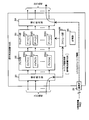
- FIG. 2 shows a configuration example of the signal transfer device 103 (2) directly connected to the distributed station device 104 (2).
- the signal transfer device 103 (2) will be described with reference to FIG. 2, the same applies to the signal transfer device 103 (1) and the signal transfer device 103 (3) that are directly connected to the distributed station device 104.
- the signal transfer device 103 has a signal distribution unit 201, a buffer unit 202, a time gate unit 203, a signal transfer unit 204, a scheduler unit 205, a calculation unit 206, and a linked IF 251.
- the signal distribution unit 201 has a function of distributing input signals to buffers according to priority. For example, the signal distribution unit 201 uses a frame received from the distributed station device 104 or another signal transfer device 103 in the upstream direction and a frame received from the central station device 102 or another signal transfer device 103 in the downstream direction as a frame header. It sorts based on the stored priority and outputs it to the buffer unit 202. In the present embodiment, the signal distribution unit 201 also inputs control information such as mobile scheduling information and timing adjustment request output from the other signal transfer device 103 and outputs the control information to the scheduler unit 205 and the like.
- control information such as mobile scheduling information and timing adjustment request output from the other signal transfer device 103 and outputs the control information to the scheduler unit 205 and the like.
- the buffer unit 202 is a buffer memory that temporarily holds high-priority frames or low-priority frames distributed by the signal distribution unit 201 according to their priorities.
- the buffer unit 202 has a plurality of preset buffers for each priority (for example, a high priority buffer, a low priority buffer, etc.).
- the buffer unit 202 has n buffers (n is a positive integer) of the buffer 202 (1), the buffer 202 (2), ..., The buffer 202 (n).
- the time gate unit 203 includes a plurality of gates corresponding to each of the plurality of buffers of the buffer unit 202, and opens and closes the gates in response to a command from the scheduler unit 205.
- the time gate portion 203 has n gates of gate 203 (1), gate 203 (2), ..., Gate 203 (n).
- the time gate unit 203 controls opening and closing of a gate that outputs frames from each buffer in which frames for each priority are held, for example, in response to a command from the scheduler unit 205.
- the signal transfer unit 204 has a function of transferring a frame output for each gate of the time gate unit 203 to a designated output destination based on a command of the signal transfer management device 101 described later.
- the signal transfer unit 204 has a function of transferring control information such as mobile scheduling information and timing adjustment request to another signal transfer device 103 together with frame transfer.
- the scheduler unit 205 controls whether or not to transmit the signal held in each buffer of the buffer unit 202 by opening and closing each gate of the time gate unit 203 based on the preset scheduling information.
- the scheduling information is information on the gate start time, gate opening time, gate opening cycle, etc. of each gate of the time gate unit 203 for the frames held in each buffer according to the priority of the buffer unit 202. ..
- the scheduling information of the scheduler unit 205 is adjusted based on the calculation result of the calculation unit 206. When the scheduling information is not adjusted, the scheduler unit 205 periodically opens and closes the gate at a gate start time, a gate opening time, and a gate opening cycle predetermined for each priority.
- the scheduler unit 205 receives the control information of the timing adjustment request from the higher-level device such as the signal transfer device 103 or the central station device 102 in the next and subsequent stages, and adjusts the opening / closing timing of the gate. For example, when there is a possibility that a microburst may occur in the signal transfer device 103 (4) on the upper side, at least one or more signals from the signal transfer device 103 (1) to the signal transfer device 103 (3) on the lower side. A timing adjustment request is made to the transfer device 103.
- the delay amount may be set as a sufficiently small initial value, and the timing may be adjusted little by little over a plurality of times until there is no waste or the traffic amount becomes equal to or less than the threshold value. In this way, the occurrence of microburst can be suppressed by requesting the signal transfer device 103 in the previous stage to adjust the timing based on the mobile scheduling information obtained from the cooperative IF 251 regarding the possibility of microburst.
- the calculation unit 206 operates when the signal transfer device 103 receives mobile scheduling information from at least one or more signal transfer devices 103 in the previous stage.
- the calculation unit 206 since the mobile scheduling information input by the cooperation IF 251 from the distributed station device 104 (2) is passed through and transferred to the signal transfer device 103 (4) in the subsequent stage, the calculation unit 206 does not operate, but FIG.
- the calculation unit 206 of the next-stage signal transfer device 103 (4) described in the above is based on the mobile scheduling information received from the previous-stage signal transfer device 103 (signal transfer device 103 (1) to signal transfer device 103 (3)).
- the timing is applied to each signal transfer device 103 in the previous stage. Send an adjustment request.
- the cooperation IF 251 is a dedicated interface with the lower signal transfer device 103 (2) connected to the distribution station device 104 (2), and the signal transfer device 103 (2) is a distribution station via the cooperation IF 251.
- Mobile scheduling information is input from the device 104 (2).
- the mobile scheduling information input from the distributed station device 104 (2) is transferred to the next-stage signal transfer device 103 (4).
- the signal transfer device 103 directly connected to the distribution station device 104 transfers the mobile scheduling information input from the distribution station device 104 via the cooperation IF 251 to the signal transfer device 103 on the upper side, and transfers the mobile scheduling information to the signal transfer device 103 on the upper side.
- the signal transfer device 103 determines that a microburst may occur due to mobile scheduling information received from a plurality of lower signal transfer devices 103, the timing of opening and closing the gate to the lower signal transfer device 103 It is possible to prevent the occurrence of microburst by instructing the adjustment of.
- the signal transfer device 103 of the above calculates the signal transmission timing of each signal transfer device 103 on the lower side based on the aggregated mobile scheduling information, and transmits the control information of the timing adjustment request to the central station device 102. Then, the central station device 102 calculates the signal transmission timing of each signal transfer device 103 based on the information of each confluence point, and transmits the control information of the timing adjustment request to each signal transfer device 103.
- the signal transfer device 103 on the upper side or the central station device 102 calculates the signal transmission timing of each signal transfer device 103 on the lower side, and each signal transfer device 103. By transmitting the control information of the timing adjustment request to, the occurrence of the microburst can be prevented.
- a timing adjustment request is transmitted to at least one or more signal transfer devices 103.
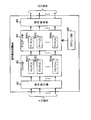
- FIG. 3 shows a configuration example of the signal transfer device 103 (4) that is not directly connected to the distributed station device 104.
- the basic configuration of the signal transfer device 103 (4) is the same as that of the signal transfer device 103 described with reference to FIG.
- the example of the signal transfer device 103 (4) is shown in FIG. 3, among the signal transfer devices 103 connected in multiple stages, the signal transfer devices 103 of the next and subsequent stages that are not directly connected to the distributed station device 104 are used. The same is true in some cases.
- the signal distribution unit 201 outputs the mobile scheduling information input from the signal transfer device 103 in the previous stage to the calculation unit 206.
- the signal transfer device 103 (4) inputs the mobile scheduling information transferred from the signal transfer device 103 (1) to the signal transfer device 103 (3) and outputs the mobile scheduling information to the calculation unit 206.
- the signal transfer device 103 (4) inputs the mobile scheduling information to the calculation unit 206, and the signal transfer device 103 (4) has the signal transfer device 103 of the next stage (in the example of FIG. 1, the signal).
- the signal transfer unit 204 may transfer the signal to the next-stage signal transfer device 103.
- the signal transfer device 103 (4) may transfer the mobile scheduling information to the central station device 102.
- the linked IF 251 of the signal transfer device 103 (4) is not connected to any of the distributed station devices 104.
- the calculation unit 206 receives mobile scheduling information from at least one signal transfer device 103 in the previous stage of the signal transfer device 103. Then, the calculation unit 206 calculates the total traffic amount to be received in the future based on the mobile scheduling information, and when it is determined that the total traffic amount exceeds the transfer capacity and a microburst may occur. , A timing adjustment request is transmitted to the signal transfer device 103 in the previous stage.
- the upper signal transfer device 103 (4) that is not directly connected to the distributed station device 104 is the mobile scheduling information transferred from the lower signal transfer device 103 that is directly connected to the distributed station device 104.
- the signal transfer device 103 on the lower side is determined. Since the timing adjustment request is transmitted, it is possible to prevent the occurrence of microburst.
- FIG. 4 shows a configuration example of the signal transfer device 800 of the comparative example.
- the signal transfer device 800 includes a signal distribution unit 801, a buffer unit 802, a time gate unit 803, a signal transfer unit 804, and a scheduler unit 805.
- the signal transfer device 800 has a TAS function and controls the opening and closing of the gate according to the priority.
- the signal distribution unit 801 has a function of distributing input signals to buffers according to priority, similarly to the signal distribution unit 201 according to the present embodiment.
- the buffer unit 802 is a buffer memory that temporarily holds high-priority frames or low-priority frames distributed by the signal distribution unit 801 according to their priorities.
- the buffer unit 802 has n buffers of the buffer 802 (1), the buffer 802 (2), ..., The buffer 802 (n).
- the time gate unit 803 includes a plurality of gates corresponding to each of the plurality of buffers of the buffer unit 802, and opens and closes the gates in response to a command from the scheduler unit 805.
- the time gate unit 803 has n gates of gate 803 (1), gate 803 (2), ..., Gate 803 (n).
- the signal transfer unit 804 has a function of transferring a frame output from the time gate unit 803 for each gate to a designated output destination from the signal transfer management device 101.
- the scheduler unit 805 periodically opens and closes the gate at the gate start time, the gate opening time, and the gate opening cycle according to the priority based on the predetermined scheduling information, and gives priority to the frame of the priority at which the gate is opened. Forward.
- the signal transfer device 800 reserves a time slot for the high priority frame by the TAS function, opens the gate in the reserved time slot to transfer the high priority frame, and transfers another priority frame. By closing the gate of, high priority frames can be transferred preferentially.
- the gates of the frames of other priorities are opened at the same time as the transmission of the high priority frame to be prioritized is completed. Frames of other priorities will arrive at the device 800 at the same time, which may cause a microburst.
- the gate of the signal to be prioritized opens, but if it occurs at the same time in the signal transfer devices at multiple locations, the next stage where the signals of the multiple signal transfer devices merge. Since the signal to be prioritized reaches the signal transfer device of the above at the same time, a microburst may occur.
- the signal transfer system, the signal transfer device, the signal transfer method, and the signal transfer program according to the present invention have a plurality of signals on the lower side in the signal transfer device on the upper side.
- the occurrence of the microburst is prevented by instructing the lower signal transfer device to adjust the timing of opening and closing the gate. can do.
- the distributed station device is a wireless device and the central station device is a wireless control device, and the wireless device and the wireless control device share and execute the functions of one base station.
- the signal transfer device 103 has been described as a device having each block shown in FIGS. 2 and 3, but a computer that executes a program of a signal transfer method corresponding to the processing performed by each block. But it can be realized.
- the program may be recorded on a recording medium and provided, or may be provided through a network.
- 100 ... Signal transfer system; 101 ... Signal transfer management device; 102 ... Central station device; 103,800 ... Signal transfer device; 104 ... Distributed station device; 201,801 ... Signal Distribution unit; 202,802 ... Buffer unit; 203,803 ... Time gate unit; 204,804 ... Signal transfer unit; 205,805 ... Scheduler unit; 206 ... Calculation unit; 251 ⁇ ⁇ ⁇ Collaboration IF
Landscapes
- Engineering & Computer Science (AREA)
- Computer Networks & Wireless Communication (AREA)
- Signal Processing (AREA)
- Mobile Radio Communication Systems (AREA)
- Data Exchanges In Wide-Area Networks (AREA)
Abstract
分散局装置と中央局装置との間のネットワークを構成する多段接続された複数の信号転送装置と、信号転送管理装置とを有する信号転送システムにおいて、複数の信号転送装置のうち、上位側の信号転送装置は、下位側の複数の信号転送装置から受信するモバイルスケジューリング情報によりマイクロバーストが発生する可能性があると判断した場合に、下位側の複数の信号転送装置の少なくとも一つにタイミング調整依頼を送信し、上位側の信号転送装置からタイミング調整依頼を受信した下位側の信号転送装置は、タイミング調整依頼に基づいて、ゲートの開閉タイミングを調整する。これにより、マイクロバーストの発生を防止することができる。
Description
本発明は、TAS(Time Aware Shaper)機能を利用する信号転送技術に関する。
セルラーシステムを構成するネットワークには、モバイルフロントホール(MFH:Mobile Fronthaul)やモバイルバックホール(MBH:Mobile Backhaul)等がある。MBHは、基地局に相当する分散局装置と、分散局装置を制御する集約局間のネットワークである。一方、MFHは、基地局の構成を無線制御装置と無線装置に分離して配置する構成とした場合の無線制御装置-無線装置の区間に対応する。この区間は従来、ポイント・ツー・ポイント接続が用いられてきたが、レイヤ2スイッチを多段に接続した構成でネットワーク化することも検討されており(非特許文献1参照)、ポイント・ツー・ポイント接続と比べて効率的な収容が実現される。これらネットワークでは、厳しい遅延要件を満たす必要があり、高優先の信号の遅延を小さくするために、信号転送装置へのTAS機能搭載が提案されている。
以降の本発明に関して、MBHを例に挙げて説明を進めるが、分散局装置を無線装置、中央局装置を無線制御装置と読み替えれば、MFHにも適用することができる。
"Time-Sensitive Networking for Fronthaul",IEEE Std P802.1CM,May 7,2018
TASでは、高優先の信号に対してタイムスロットを予約し、予約されたタイムスロットでゲートを開いて信号を転送するとともに、他の優先度の信号のゲートを閉じることにより高優先の信号が優先的に転送される。しかし、優先制御したい信号の送信が終わったと同時に、他の優先度の信号のゲートが開くため、複数拠点の信号転送装置で同時にそれが起こった場合、複数の信号転送装置の信号が合流する次段の信号転送装置に同時に他の優先度の信号が届くため、マイクロバーストが発生する可能性がある。同様に、優先制御したい信号の送信が発生した時点で、優先したい信号のゲートが開くが、複数拠点の信号転送装置で同時にそれが起こった場合、複数の信号転送装置の信号が合流する次段の信号転送装置に同時に優先したい信号が届くため、マイクロバーストが発生する可能性がある。
このように、MBHのネットワークにおいて、下位側の複数の信号転送装置でゲートの開閉が同時に行われた場合、これらの信号が上位側の信号転送装置で合流してマイクロバーストが発生し、信号の遅延やロスが生じるという課題がある。
本発明は、上位側の信号転送装置において、下位側の複数の信号転送装置から受信したモバイルスケジューリング情報によりマイクロバーストが発生する可能性があると判断した場合に、下位側の信号転送装置にゲートを開くタイミングの調整を指示することにより、マイクロバーストの発生を防止することができる信号転送システム、信号転送装置、信号転送方法および信号転送プログラムを提供することを目的とする。
本発明は、無線基地局装置に対応する分散局装置と、前記無線基地局装置を集中制御する中央局装置と、前記分散局装置と前記中央局装置との間のネットワークを構成する多段接続された複数の信号転送装置と、複数の前記信号転送装置を制御する信号転送管理装置とを有する信号転送システムにおいて、複数の前記信号転送装置のうち、上位側の信号転送装置は、下位側の複数の前記信号転送装置から受信するモバイルスケジューリング情報によりマイクロバーストが発生する可能性があると判断した場合に、下位側の複数の前記信号転送装置の少なくとも一つにタイミング調整依頼を送信し、上位側の前記信号転送装置から前記タイミング調整依頼を受信した下位側の前記信号転送装置は、前記タイミング調整依頼に基づいて、ゲートの開閉タイミングを調整することを特徴とする。
また、本発明は、無線基地局装置に対応する分散局装置と、前記無線基地局装置を集中制御する中央局装置と、前記分散局装置と前記中央局装置との間のネットワークを構成する信号転送装置において、入力する信号を優先度別のバッファに振り分ける信号振分部と、前記バッファの信号をスケジューラ部の指令に応じてゲートの開閉を行うタイムゲート部と、タイムゲート部のゲート毎に出力されるフレームを指定された出力先に転送する信号転送部と、自装置が上位側の信号転送装置である場合は、下位側の複数の前記信号転送装置から受信するモバイルスケジューリング情報によりマイクロバーストが発生する可能性があると判断した場合に、下位側の複数の前記信号転送装置の少なくとも一つにタイミング調整依頼を送信する計算部と、自装置が下位側の信号転送装置である場合は、上位側の前記信号転送装置から受信する前記タイミング調整依頼に基づいて、ゲートの開閉タイミングを調整するスケジューラ部とを有することを特徴とする。
また、本発明は、無線基地局装置に対応する分散局装置と、前記無線基地局装置を集中制御する中央局装置と、前記分散局装置と前記中央局装置との間のネットワークを構成する多段接続された複数の信号転送装置と、複数の前記信号転送装置を制御する信号転送管理装置とを有する信号転送システムにおける信号転送方法であって、複数の前記信号転送装置のうち、上位側の信号転送装置は、下位側の複数の前記信号転送装置から受信するモバイルスケジューリング情報によりマイクロバーストが発生する可能性があると判断した場合に、下位側の複数の前記信号転送装置の少なくとも一つにタイミング調整依頼を送信する処理を行い、上位側の前記信号転送装置から前記タイミング調整依頼を受信した下位側の前記信号転送装置は、前記タイミング調整依頼に基づいて、ゲートの開閉タイミングを調整する処理を行うことを特徴とする。
また、本発明に係る信号転送プログラムは、前記信号転送方法で行う処理をコンピュータに実行させることを特徴とする。
本発明に係る信号転送システム、信号転送装置、信号転送方法および信号転送プログラムは、上位側の信号転送装置において、下位側の複数の信号転送装置から受信したモバイルスケジューリング情報によりマイクロバーストが発生する可能性があると判断した場合に、下位側の信号転送装置にゲートを開くタイミングの調整を指示することにより、マイクロバーストの発生を防止することができる。
以下、図面を参照して本発明に係る信号転送システム、信号転送装置、信号転送方法および信号転送プログラムの実施形態について説明する。なお、以降の実施形態で説明する信号転送装置は、L2SW(Layer 2 SWitch)などのネットワーク機器に対応し、信号転送管理装置は、信号転送装置の動作を管理および制御する。
図1は、本実施形態に係る信号転送システム100の構成例を示す。図1において、信号転送システム100は、信号転送管理装置101、中央局装置102、信号転送装置103(1)、信号転送装置103(2)、信号転送装置103(3)、信号転送装置103(4)、分散局装置104(1)、分散局装置104(2)および分散局装置104(3)を有する。ここで、以降の説明において、信号転送装置103(1)から信号転送装置103(4)に共通の説明を行う場合は、符号末尾の(番号)を省略して、信号転送装置103と記載する。分散局装置104(1)から分散局装置104(3)についても同様に記載する。
図1に示す信号転送システム100は、複数の分散局装置104と中央局装置102とに分離して配置される無線基地局装置において、多段接続される複数の信号転送装置103により、分散局装置104と中央局装置102との間のMBHのネットワークを構成する。
また、信号転送装置103はTAS機能を搭載している。なお、以降の説明において、分散局装置104と中央局装置102との間で通信する信号を具体的に示す場合はフレームと称するが、基本的に信号とフレームは同じものを示す。
TASは、従来技術で述べたように、優先度の高いトラヒックのフレーム(高優先フレーム)に対してタイムスロットを予約し、予約されたタイムスロットでゲートを開いて高優先フレームを転送するとともに、他の優先度のフレームのゲートを閉じることにより高優先フレームが優先的に転送される。
図1において、分散局装置104(1)、分散局装置104(2)および分散局装置104(3)は、それぞれ無線端末(例えば、携帯端末、IoT端末等)と無線通信し、通信信号の高優先フレームは、信号転送装置103(1)から信号転送装置103(4)で構成されるMBHのネットワークを介して、中央局装置102に集約される。
中央局装置102は、複数の分散局装置104からの上り方向の信号をMBHのネットワークを介して集約するとともに、各分散局装置104への下り方向の信号をMBHのネットワークを介して分配する。
信号転送装置103は、分散局装置104と中央局装置102との間で信号を転送する装置であり、MBHのネットワークを構成する。なお、図1のネットワークは、スター型のネットワークを示しているが、リング型、メッシュ型等のネットワークであっても本実施形態は同様に適用可能である。
ここで、以降の説明において、多段接続される複数の信号転送装置103に対して、分散局装置104に近い側を下位側、中央局装置102に近い側を上位側と称する。また、信号の流れる方向に対して、信号を送信する側を前段、信号を受信する側を次段と称する。例えば図1の場合、分散局装置104から中央局装置102への上り方向に対して、信号転送装置103(1)、信号転送装置103(2)および信号転送装置103(3)は、下位側の信号転送装置103であり、信号転送装置103(4)に対して前段の信号転送装置103である。同様に、信号転送装置103(4)は、上位側の信号転送装置103であり、信号転送装置103(1)、信号転送装置103(2)および信号転送装置103(3)に対して次段の信号転送装置103である。
図1の例では、分散局装置104(1)、分散局装置104(2)および分散局装置104(3)にそれぞれ接続される下位側の信号転送装置103(1)、信号転送装置103(2)および信号転送装置103(3)と、信号転送装置103(1)から信号転送装置103(3)の信号を集約して中央局装置102に接続する上位側の信号転送装置103(4)とを有する。また、信号転送装置103(1)、信号転送装置103(2)および信号転送装置103(3)は、分散局装置104(1)、分散局装置104(2)および分散局装置104(3)にそれぞれ専用の連携インターフェース(連携IF251)により接続され、分散局装置104からPUCCH信号によるモバイルスケジューリング情報を取得する。ここで、モバイルスケジューリング情報には、分散局装置104から今後送信されるフレームの送信タイミングやデータ量などに関する情報が含まれている。本実施形態に係る信号転送装置103は、分散局装置104から次に送信される高優先フレームの送信タイミングやデータ量の情報を含むモバイルスケジューリング情報を取得して、上位側の信号転送装置103に転送する。そして、上位側の信号転送装置103は、複数の下位側の信号転送装置103から受け取るモバイルスケジューリング情報によりマイクロバーストが発生する可能性があると判断した場合に、下位側の信号転送装置103にゲートを開閉するタイミング(開閉タイミング)の調整を指示するタイミング調整依頼を送信することにより、マイクロバーストの発生を防止する。ここで、ゲートは、開いた状態で信号を通過させ、閉じた状態で信号を遮断する。タイミング調整依頼は、ゲートの開閉タイミングを調整する制御情報である。マイクロバーストの発生する信号に対応する優先度のゲートを開くタイミングを指定区間だけ後ろにずらして、信号の送信タイミングを遅らせる。この際、ゲートを閉じるタイミングに関しては、前記指定区間だけ後ろにずらしても良いし、ずらさずそのままとしても良い。なお、制御情報は指定区間の情報を含み、指定区間は後述の遅らせる量に対応する。
図1において、信号転送管理装置101は、信号転送装置103が構成するネットワークにおいて、分散局装置104と中央局装置102との間の信号を通す経路を決定して、各信号転送装置103に指示したり、各信号転送装置103のスケジューラ部205への指示を行う。
このように、本実施形態に係る信号転送システム100では、連携IF251を介して分散局装置104から入力するモバイルスケジューリング情報を上位側の信号転送装置103に転送し、上位側の信号転送装置103は、複数の下位側の信号転送装置103から受け取るモバイルスケジューリング情報によりマイクロバーストが発生する可能性があると判断した場合に、下位側の信号転送装置103にゲートを開閉するタイミングの調整を指示することにより、マイクロバーストの発生を防止することができる。
図2は、分散局装置104(2)に直接接続されている信号転送装置103(2)の構成例を示す。なお、図2では、信号転送装置103(2)について説明するが、分散局装置104に直接接続される信号転送装置103(1)および信号転送装置103(3)についても同様である。
図2において、信号転送装置103は、信号振分部201、バッファ部202、タイムゲート部203、信号転送部204、スケジューラ部205、計算部206および連携IF251を有する。
信号振分部201は、入力信号を優先度別のバッファに振り分ける機能を有する。例えば、信号振分部201は、上り方向の場合は分散局装置104または他の信号転送装置103、下り方向の場合は中央局装置102または他の信号転送装置103から受信するフレームをフレームヘッダに格納された優先度に基づいて振り分け、バッファ部202に出力する。なお、本実施形態では、信号振分部201は、他の信号転送装置103から出力されるモバイルスケジューリング情報やタイミング調整依頼などの制御情報も入力してスケジューラ部205などへ出力する。
バッファ部202は、信号振分部201により振り分けられた高優先のフレームまたは低優先のフレームを優先度別に一時的に保持するバッファメモリである。なお、バッファ部202は、予め設定された優先度別の複数のバッファ(例えば高優先のバッファ、低優先のバッファなど)を有する。図2の例では、バッファ部202は、バッファ202(1)、バッファ202(2)、・・・、バッファ202(n)のn個(nは正の整数)のバッファを有する。
タイムゲート部203は、バッファ部202の複数のバッファ毎に対応する複数のゲートを備え、スケジューラ部205の指令に応じてゲートの開閉を行う。図2の例では、タイムゲート部203は、ゲート203(1)、ゲート203(2)、・・・、ゲート203(n)のn個のゲートを有する。タイムゲート部203は、例えばスケジューラ部205の指令に応じて、優先度別のフレームが保持された各バッファからフレームを出力するゲートの開閉を制御する。
信号転送部204は、後述する信号転送管理装置101の指令に基づいて、タイムゲート部203のゲート毎に出力されるフレームを指定された出力先に転送する機能を有する。なお、本実施形態では、信号転送部204は、フレームの転送とともに、モバイルスケジューリング情報やタイミング調整依頼などの制御情報を他の信号転送装置103に転送する機能を有する。
スケジューラ部205は、予め設定されたスケジューリング情報に基づいて、タイムゲート部203の各ゲートの開閉を行うことによりバッファ部202の各バッファに保持されている信号を送信するか否かを制御する。ここで、スケジューリング情報は、バッファ部202の優先度別の各バッファに保持されたフレームに対して、タイムゲート部203の各ゲートのゲート開始時間、ゲート開放時間、ゲート開放周期などに関する情報である。ここで、本実施形態では、計算部206の計算結果に基づいて、スケジューラ部205のスケジューリング情報が調整される。なお、スケジューラ部205は、スケジューリング情報の調整が行われない場合は、優先度別に予め決められたゲート開始時間、ゲート開放時間、ゲート開放周期で周期的にゲートを開閉している。ここで、本実施形態では、分散局装置104から連携IF251を介して入力する情報をモバイルスケジューリング情報、スケジューラ部205が使用する情報をスケジューリング情報と称する。特に、本実施形態では、スケジューラ部205は、次段以降の信号転送装置103または中央局装置102などの上位側の装置からタイミング調整依頼の制御情報を受け取り、ゲートの開閉タイミングを調整する。例えば、上位側の信号転送装置103(4)でマイクロバーストが発生する可能性がある場合、下位側の信号転送装置103(1)から信号転送装置103(3)までの少なくとも一つ以上の信号転送装置103にタイミング調整依頼を行う。なお、複数の信号転送装置103にタイミング調整依頼を行う場合は、各信号転送装置103に依頼する遅らせる量を変える必要がある。ここで、遅らせる量を決定する方法については、トラヒック量が大きいほど大きくする必要があり、予めトラヒック量と遅らせる量との対応表を作成してスケジューラ部205に設定しておいてもよい。または、遅らせる量は十分に小さい初期値として設定し、廃棄が無くなるかまたはトラヒック量が閾値以下となるまで複数回にわたって少しずつタイミング調整を行うようにしてもよい。このようにして、マイクロバーストが起こる可能性を連携IF251から得られるモバイルスケジューリング情報に基づいて前段の信号転送装置103に対してタイミング調整依頼を行うことにより、マイクロバーストの発生を抑えることができる。
計算部206は、信号転送装置103が少なくとも一つ以上の前段の信号転送装置103からモバイルスケジューリング情報を受け取った場合に動作する。図2では、連携IF251が分散局装置104(2)から入力するモバイルスケジューリング情報は、スルーして後段の信号転送装置103(4)に転送されるので、計算部206は動作しないが、図3で説明する次段の信号転送装置103(4)の計算部206は、前段の信号転送装置103(信号転送装置103(1)から信号転送装置103(3))から受け取るモバイルスケジューリング情報に基づいて、今後受信する合計のトラヒック量を算出し、合計のトラヒック量が転送能力を超えてマイクロバーストが発生する可能性があると判定した場合には、前段の各信号転送装置103に対して、タイミング調整依頼を送信する。
連携IF251は、分散局装置104(2)に接続される下位側の信号転送装置103(2)との間の専用のインターフェースで、信号転送装置103(2)は、連携IF251を介して分散局装置104(2)からモバイルスケジューリング情報を入力する。本実施形態では、分散局装置104(2)から入力するモバイルスケジューリング情報は、次段の信号転送装置103(4)に転送される。
このようにして、分散局装置104に直接接続されている信号転送装置103は、連携IF251を介して分散局装置104から入力するモバイルスケジューリング情報を上位側の信号転送装置103に転送し、上位側の信号転送装置103は、複数の下位側の信号転送装置103から受け取るモバイルスケジューリング情報によりマイクロバーストが発生する可能性があると判断した場合に、下位側の信号転送装置103にゲートを開閉するタイミングの調整を指示することにより、マイクロバーストの発生を防止することができる。
ここで、信号転送装置103が多段接続される場合の制御情報の送信方法について説明する。
(1)下位側(分散局装置104側)から上位側(中央局装置102側)へモバイルスケジューリング情報を転送し、上位側の信号転送装置103は、下位側から集約したモバイルスケジューリング情報に基づいて、下位側の各信号転送装置103の信号の送信タイミングを計算し、各信号転送装置103にタイミング調整依頼の制御情報を送信する。
(2)下位側(分散局装置104側)から上位側(中央局装置102側)までの合流地点(複数ある場合は各合流地点)の信号転送装置103にモバイルスケジューリング情報を転送し、合流地点の信号転送装置103は、集約したモバイルスケジューリング情報に基づいて、下位側の各信号転送装置103の信号の送信タイミングを計算し、中央局装置102にタイミング調整依頼の制御情報を送信する。そして、中央局装置102は、各合流地点の情報に基づいて、各信号転送装置103の信号の送信タイミングを計算し、各信号転送装置103にタイミング調整依頼の制御情報を送信する。
(1)下位側(分散局装置104側)から上位側(中央局装置102側)へモバイルスケジューリング情報を転送し、上位側の信号転送装置103は、下位側から集約したモバイルスケジューリング情報に基づいて、下位側の各信号転送装置103の信号の送信タイミングを計算し、各信号転送装置103にタイミング調整依頼の制御情報を送信する。
(2)下位側(分散局装置104側)から上位側(中央局装置102側)までの合流地点(複数ある場合は各合流地点)の信号転送装置103にモバイルスケジューリング情報を転送し、合流地点の信号転送装置103は、集約したモバイルスケジューリング情報に基づいて、下位側の各信号転送装置103の信号の送信タイミングを計算し、中央局装置102にタイミング調整依頼の制御情報を送信する。そして、中央局装置102は、各合流地点の情報に基づいて、各信号転送装置103の信号の送信タイミングを計算し、各信号転送装置103にタイミング調整依頼の制御情報を送信する。
このように、本実施形態に係る信号転送システム100は、上位側の信号転送装置103または中央局装置102が下位側の各信号転送装置103の信号の送信タイミングを計算し、各信号転送装置103にタイミング調整依頼の制御情報を送信することにより、マイクロバーストの発生を防止することができる。
ここで、前段の信号転送装置103が複数ある場合には、少なくとも一つ以上の信号転送装置103にタイミング調整依頼を送信するものとする。
図3は、分散局装置104に直接接続されていない信号転送装置103(4)の構成例を示す。図3において、信号転送装置103(4)の基本的な構成は、図2で説明した信号転送装置103と同じである。なお、図3では、信号転送装置103(4)の例を示したが、多段接続された信号転送装置103のうち、分散局装置104に直接接続されていない次段以降の信号転送装置103がある場合も同様である。
信号転送装置103(4)において、信号振分部201は、前段の信号転送装置103から入力するモバイルスケジューリング情報を計算部206に出力する。具体的には、信号転送装置103(4)は、信号転送装置103(1)から信号転送装置103(3)がそれぞれ転送するモバイルスケジューリング情報を入力して計算部206に出力する。ここで、信号転送装置103(4)は、モバイルスケジューリング情報を計算部206に入力するとともに、信号転送装置103(4)に次段の信号転送装置103がある場合(図1の例において、信号転送装置103(4)と中央局装置102との間に他の信号転送装置103がある場合)は、信号転送部204から次段の信号転送装置103に転送するようにしてもよい。あるいは、信号転送装置103(4)は、モバイルスケジューリング情報を中央局装置102に転送してもよい。なお、図3の例では、信号転送装置103(4)の連携IF251は、いずれの分散局装置104にも接続されていない。
計算部206は、信号転送装置103が少なくとも一つ以上の前段の信号転送装置103からモバイルスケジューリング情報を受け取る。そして、計算部206は、モバイルスケジューリング情報に基づいて、今後受信する合計のトラヒック量を算出し、合計のトラヒック量が転送能力を超えてマイクロバーストが発生する可能性があると判定した場合には、前段の信号転送装置103に対して、タイミング調整依頼を送信する。
このように、分散局装置104に直接接続されていない上位側の信号転送装置103(4)は、分散局装置104に直接接続されている下位側の信号転送装置103から転送されるモバイルスケジューリング情報に基づいて、今後受信する合計のトラヒック量を算出し、合計のトラヒック量が転送能力を超えてマイクロバーストが発生する可能性があると判定した場合には、下位側の信号転送装置103に対して、タイミング調整依頼を送信するので、マイクロバーストの発生を防止することができる。
[比較例]
図4は、比較例の信号転送装置800の構成例を示す。図4において、信号転送装置800は、信号振分部801、バッファ部802、タイムゲート部803、信号転送部804およびスケジューラ部805を有する。なお、信号転送装置800は、TAS機能を有し、優先度別にゲートを開閉する制御を行う。
図4は、比較例の信号転送装置800の構成例を示す。図4において、信号転送装置800は、信号振分部801、バッファ部802、タイムゲート部803、信号転送部804およびスケジューラ部805を有する。なお、信号転送装置800は、TAS機能を有し、優先度別にゲートを開閉する制御を行う。
信号振分部801は、本実施形態に係る信号振分部201と同様に、入力信号を優先度別のバッファに振り分ける機能を有する。
バッファ部802は、本実施形態に係るバッファ部202と同様に、信号振分部801により振り分けられた高優先のフレームまたは低優先のフレームを優先度別に一時的に保持するバッファメモリである。図3の例では、バッファ部802は、バッファ802(1)、バッファ802(2)、・・・、バッファ802(n)のn個のバッファを有する。
タイムゲート部803は、本実施形態に係るタイムゲート部203と同様に、バッファ部802の複数のバッファ毎に対応する複数のゲートを備え、スケジューラ部805の指令に応じてゲートの開閉を行う。図3の例では、タイムゲート部803は、ゲート803(1)、ゲート803(2)、・・・、ゲート803(n)のn個のゲートを有する。
信号転送部804は、タイムゲート部803からゲート毎に出力されるフレームを信号転送管理装置101から指定された出力先に転送する機能を有する。
スケジューラ部805は、予め決められたスケジューリング情報に基づいて、優先度別にゲート開始時間、ゲート開放時間、ゲート開放周期で周期的にゲートを開閉し、ゲート開放された優先度のフレームを優先的に転送する。
このように、信号転送装置800は、TAS機能により、高優先フレームに対してタイムスロットを予約し、予約されたタイムスロットでゲートを開いて高優先フレームを転送するとともに、他の優先度のフレームのゲートを閉じることにより高優先フレームを優先的に転送することができる。しかし、比較例では、優先制御したい高優先フレームの送信が終わったと同時に、他の優先度のフレームのゲートが開くため、複数拠点の信号転送装置800で同時にそれが起こると、上位側の信号転送装置800に同時に他の優先度のフレームが届くことになり、マイクロバーストが発生する可能性がある。同様に、優先制御したい信号の送信が発生した時点で、優先したい信号のゲートが開くが、複数拠点の信号転送装置で同時にそれが起こった場合、複数の信号転送装置の信号が合流する次段の信号転送装置に同時に優先したい信号が届くため、マイクロバーストが発生する可能性がある。
これに対して、上述の実施形態で説明したように、本発明に係る信号転送システム、信号転送装置、信号転送方法および信号転送プログラムは、上位側の信号転送装置において、下位側の複数の信号転送装置から受信したモバイルスケジューリング情報によりマイクロバーストが発生する可能性があると判断した場合に、下位側の信号転送装置にゲートを開閉するタイミングの調整を指示することにより、マイクロバーストの発生を防止することができる。
なお、本実施例はMBH適用を前提に話を進めたが、MFHにも適用できる。MFHの場合には、分散局装置が無線装置、中央局装置が無線制御装置となり、無線装置と無線制御装置は、一つの基地局の機能をそれぞれ分担して実行している。
ここで、上述の実施形態に係る信号転送装置103は、図2および図3に示した各ブロックを有する装置として説明したが、各ブロックが行う処理に対応する信号転送方法のプログラムを実行するコンピュータでも実現できる。なお、プログラムは、記録媒体に記録して提供されてもよいし、ネットワークを通して提供されてもよい。
100・・・信号転送システム;101・・・信号転送管理装置;102・・・中央局装置;103,800・・・信号転送装置;104・・・分散局装置;201,801・・・信号振分部;202,802・・・バッファ部;203,803・・・タイムゲート部;204,804・・・信号転送部;205,805・・・スケジューラ部;206・・・計算部;251・・・連携IF
Claims (7)
- 無線基地局装置に対応する分散局装置と、前記無線基地局装置を集中制御する中央局装置と、前記分散局装置と前記中央局装置との間のネットワークを構成する多段接続された複数の信号転送装置と、複数の前記信号転送装置を制御する信号転送管理装置とを有する信号転送システムにおいて、
複数の前記信号転送装置のうち、上位側の信号転送装置は、下位側の複数の前記信号転送装置から受信するモバイルスケジューリング情報によりマイクロバーストが発生する可能性があると判断した場合に、下位側の複数の前記信号転送装置の少なくとも一つにタイミング調整依頼を送信し、
上位側の前記信号転送装置から前記タイミング調整依頼を受信した下位側の前記信号転送装置は、前記タイミング調整依頼に基づいて、ゲートの開閉タイミングを調整する
ことを特徴とする信号転送システム。 - 請求項1に記載の信号転送システムにおいて、
前記タイミング調整依頼は、高優先の信号に対する他の優先度の信号のゲートの開放区間を指定区間だけ後ろにずらして他の優先度の信号の送信タイミングを遅らせる制御情報、または、高優先の信号のゲートの開放区間を指定区間だけ後ろにずらして高優先度の信号の送信タイミングを遅らせる制御情報である
ことを特徴とする信号転送システム。 - 無線基地局装置に対応する分散局装置と、前記無線基地局装置を集中制御する中央局装置と、前記分散局装置と前記中央局装置との間のネットワークを構成する信号転送装置において、
入力する信号を優先度別のバッファに振り分ける信号振分部と、
前記バッファの信号をスケジューラ部の指令に応じてゲートの開閉を行うタイムゲート部と、
タイムゲート部のゲート毎に出力されるフレームを指定された出力先に転送する信号転送部と、
自装置が上位側の信号転送装置である場合は、下位側の複数の前記信号転送装置から受信するモバイルスケジューリング情報によりマイクロバーストが発生する可能性があると判断した場合に、下位側の複数の前記信号転送装置の少なくとも一つにタイミング調整依頼を送信する計算部と、
自装置が下位側の信号転送装置である場合は、上位側の前記信号転送装置から受信する前記タイミング調整依頼に基づいて、ゲートの開閉タイミングを調整するスケジューラ部と
を有することを特徴とする信号転送装置。 - 請求項3に記載の信号転送装置において、
前記タイミング調整依頼は、高優先の信号に対する他の優先度の信号のゲートの開放区間を指定区間だけ後ろにずらして他の優先度の信号の送信タイミングを遅らせる制御情報、または、高優先の信号のゲートの開放区間を指定区間だけ後ろにずらして高優先度の信号の送信タイミングを遅らせる制御情報である
ことを特徴とする信号転送装置。 - 無線基地局装置に対応する分散局装置と、前記無線基地局装置を集中制御する中央局装置と、前記分散局装置と前記中央局装置との間のネットワークを構成する多段接続された複数の信号転送装置と、複数の前記信号転送装置を制御する信号転送管理装置とを有する信号転送システムにおける信号転送方法であって、
複数の前記信号転送装置のうち、上位側の信号転送装置は、下位側の複数の前記信号転送装置から受信するモバイルスケジューリング情報によりマイクロバーストが発生する可能性があると判断した場合に、下位側の複数の前記信号転送装置の少なくとも一つにタイミング調整依頼を送信する処理を行い、
上位側の前記信号転送装置から前記タイミング調整依頼を受信した下位側の前記信号転送装置は、前記タイミング調整依頼に基づいて、ゲートの開閉タイミングを調整する処理を行う
ことを特徴とする信号転送方法。 - 請求項5に記載の信号転送方法において、
前記タイミング調整依頼は、高優先の信号に対する他の優先度の信号のゲートの開放区間を指定区間だけ後ろにずらして他の優先度の信号の送信タイミングを遅らせる制御情報、または、高優先の信号のゲートの開放区間を指定区間だけ後ろにずらして高優先度の信号の送信タイミングを遅らせる制御情報である
ことを特徴とする信号転送方法。 - 請求項5または6に記載の信号転送方法で行う処理をコンピュータに実行させることを特徴とする信号転送プログラム。
Priority Applications (3)
| Application Number | Priority Date | Filing Date | Title |
|---|---|---|---|
| PCT/JP2020/010094 WO2021181478A1 (ja) | 2020-03-09 | 2020-03-09 | 信号転送システム、信号転送装置、信号転送方法および信号転送プログラム |
| US17/910,277 US11757788B2 (en) | 2020-03-09 | 2020-03-09 | Signal transfer system, signal transfer device, signal transfer method and signal transfer program |
| JP2022507013A JP7327641B2 (ja) | 2020-03-09 | 2020-03-09 | 信号転送システム、信号転送装置、信号転送方法および信号転送プログラム |
Applications Claiming Priority (1)
| Application Number | Priority Date | Filing Date | Title |
|---|---|---|---|
| PCT/JP2020/010094 WO2021181478A1 (ja) | 2020-03-09 | 2020-03-09 | 信号転送システム、信号転送装置、信号転送方法および信号転送プログラム |
Publications (1)
| Publication Number | Publication Date |
|---|---|
| WO2021181478A1 true WO2021181478A1 (ja) | 2021-09-16 |
Family
ID=77671269
Family Applications (1)
| Application Number | Title | Priority Date | Filing Date |
|---|---|---|---|
| PCT/JP2020/010094 Ceased WO2021181478A1 (ja) | 2020-03-09 | 2020-03-09 | 信号転送システム、信号転送装置、信号転送方法および信号転送プログラム |
Country Status (3)
| Country | Link |
|---|---|
| US (1) | US11757788B2 (ja) |
| JP (1) | JP7327641B2 (ja) |
| WO (1) | WO2021181478A1 (ja) |
Families Citing this family (3)
| Publication number | Priority date | Publication date | Assignee | Title |
|---|---|---|---|---|
| US20230135477A1 (en) * | 2020-03-09 | 2023-05-04 | Nippon Telegraph And Telephone Corporation | Signal transfer system, signal transfer device, signal transfer method and signal transfer program |
| US12388752B2 (en) * | 2022-04-22 | 2025-08-12 | Huawei Technologies Co., Ltd. | System and method for a scalable source notification mechanism for in-network events |
| JP2024036180A (ja) * | 2022-09-05 | 2024-03-15 | 富士通株式会社 | パケット処理装置及び通信システム |
Citations (2)
| Publication number | Priority date | Publication date | Assignee | Title |
|---|---|---|---|---|
| JP2018125597A (ja) * | 2017-01-30 | 2018-08-09 | 富士通株式会社 | パケット処理装置及びパケット処理方法 |
| JP2018133612A (ja) * | 2017-02-13 | 2018-08-23 | 日本電信電話株式会社 | 通信装置及び通信方法 |
Family Cites Families (6)
| Publication number | Priority date | Publication date | Assignee | Title |
|---|---|---|---|---|
| US20130007755A1 (en) * | 2011-06-29 | 2013-01-03 | International Business Machines Corporation | Methods, computer systems, and physical computer storage media for managing resources of a storage server |
| US11700633B2 (en) * | 2018-09-21 | 2023-07-11 | Telefonaktiebolaget Lm Ericsson (Publ) | Methods and apparatus for scheduling resources in radio access networks |
| EP3884632A1 (en) * | 2018-11-19 | 2021-09-29 | Telefonaktiebolaget LM Ericsson (publ) | Output pacing in a cellular communications system serving as a time-sensitive networking (tsn) node |
| EP3925096B1 (en) * | 2019-02-14 | 2023-05-10 | Telefonaktiebolaget LM Ericsson (publ) | 5g system support for virtual tsn bridge management, qos mapping and tsn qbv scheduling |
| US20210075675A1 (en) * | 2019-10-28 | 2021-03-11 | Dave Cavalcanti | Enhanced network architecture in wirless communications |
| US11444831B2 (en) * | 2020-01-17 | 2022-09-13 | Keysight Technologies, Inc. | Methods, systems, and computer readable media for measuring schedule update time for a time aware shaper implementation |
-
2020
- 2020-03-09 US US17/910,277 patent/US11757788B2/en active Active
- 2020-03-09 WO PCT/JP2020/010094 patent/WO2021181478A1/ja not_active Ceased
- 2020-03-09 JP JP2022507013A patent/JP7327641B2/ja active Active
Patent Citations (2)
| Publication number | Priority date | Publication date | Assignee | Title |
|---|---|---|---|---|
| JP2018125597A (ja) * | 2017-01-30 | 2018-08-09 | 富士通株式会社 | パケット処理装置及びパケット処理方法 |
| JP2018133612A (ja) * | 2017-02-13 | 2018-08-23 | 日本電信電話株式会社 | 通信装置及び通信方法 |
Non-Patent Citations (1)
| Title |
|---|
| NISHIMURA, KAZUTO ET AL.: "Prototype of low-latency layer 2 switch for mobile front haul.", IEICE TECHNICAL REPORT, vol. 118, no. 7, 12 April 2018 (2018-04-12), pages 41 - 46 * |
Also Published As
| Publication number | Publication date |
|---|---|
| US20230120429A1 (en) | 2023-04-20 |
| JP7327641B2 (ja) | 2023-08-16 |
| US11757788B2 (en) | 2023-09-12 |
| JPWO2021181478A1 (ja) | 2021-09-16 |
Similar Documents
| Publication | Publication Date | Title |
|---|---|---|
| US11564123B2 (en) | Virtual time-sensitive networking bridge over a 5G wireless system | |
| US8081626B2 (en) | Expedited communication traffic handling apparatus and methods | |
| JP7327641B2 (ja) | 信号転送システム、信号転送装置、信号転送方法および信号転送プログラム | |
| CN113163450B (zh) | 门控制列表生成方法、网络设备及计算机可读存储介质 | |
| JPH03177135A (ja) | 広帯域統合サービスデジタル通信網における情報量の管理方法及び該方法を実施するための通信網 | |
| JP2002368800A (ja) | トラフィックを管理する方法及びシステム | |
| CN113347109B (zh) | 一种支持5g和tsn互联的工业网络异构流量整形器 | |
| JP2019004379A (ja) | 通信装置及び信号転送方法 | |
| US12041602B1 (en) | 5G-TSN resource joint scheduling apparatus and method based on DDPG | |
| CN118487933A (zh) | 一种tsn流控参数优化的时延保障方法及系统 | |
| JP7327643B2 (ja) | 信号転送システム、信号転送装置、信号転送方法および信号転送プログラム | |
| US11159426B2 (en) | Packet processing device and network system | |
| CN111052688A (zh) | 同步数据包传输的方法 | |
| CN117880195A (zh) | 一种车内软件定义时间敏感网络的流量调度系统及方法 | |
| CN119544621A (zh) | 一种电力语音交换网的混合流量安全调度方法及系统 | |
| CN117200961A (zh) | 一种基于时间感知整形器的自适应调整算法 | |
| JP7327642B2 (ja) | 信号転送システム、信号転送装置、信号転送方法および信号転送プログラム | |
| JP7351405B2 (ja) | 信号転送システム、信号転送装置、信号転送管理装置、信号転送方法および信号転送プログラム | |
| CN120075988A (zh) | 一种基于有线与无线统一时隙调度的低延时通信方法 | |
| Asiri | A survey of multipath TCP scheduling schemes: Open challenges and potential enablers | |
| WO2023002538A1 (ja) | 信号転送制御装置、信号転送制御方法、信号転送制御プログラム、及び信号転送システム | |
| US11470629B1 (en) | Delay-responsive uplink scheduling | |
| JP7582479B2 (ja) | 信号転送制御装置、信号転送制御方法、信号転送制御プログラム、及び信号転送システム | |
| CN119364531B (zh) | 一种基于空闲保护带的时间敏感网络流量调度方法 | |
| US20240348558A1 (en) | Signal transfer system, signal transfer control apparatus, signal transfer control method and program |
Legal Events
| Date | Code | Title | Description |
|---|---|---|---|
| 121 | Ep: the epo has been informed by wipo that ep was designated in this application |
Ref document number: 20923850 Country of ref document: EP Kind code of ref document: A1 |
|
| ENP | Entry into the national phase |
Ref document number: 2022507013 Country of ref document: JP Kind code of ref document: A |
|
| NENP | Non-entry into the national phase |
Ref country code: DE |
|
| 122 | Ep: pct application non-entry in european phase |
Ref document number: 20923850 Country of ref document: EP Kind code of ref document: A1 |