WO2021167032A1 - 腸炎および/または肝炎を治療および/または予防するための薬剤および食品 - Google Patents
腸炎および/または肝炎を治療および/または予防するための薬剤および食品 Download PDFInfo
- Publication number
- WO2021167032A1 WO2021167032A1 PCT/JP2021/006227 JP2021006227W WO2021167032A1 WO 2021167032 A1 WO2021167032 A1 WO 2021167032A1 JP 2021006227 W JP2021006227 W JP 2021006227W WO 2021167032 A1 WO2021167032 A1 WO 2021167032A1
- Authority
- WO
- WIPO (PCT)
- Prior art keywords
- hepatitis
- enteritis
- amino acid
- cholangitis
- bowel disease
- Prior art date
- Legal status (The legal status is an assumption and is not a legal conclusion. Google has not performed a legal analysis and makes no representation as to the accuracy of the status listed.)
- Ceased
Links
Images


Classifications
-
- A—HUMAN NECESSITIES
- A61—MEDICAL OR VETERINARY SCIENCE; HYGIENE
- A61P—SPECIFIC THERAPEUTIC ACTIVITY OF CHEMICAL COMPOUNDS OR MEDICINAL PREPARATIONS
- A61P1/00—Drugs for disorders of the alimentary tract or the digestive system
- A61P1/04—Drugs for disorders of the alimentary tract or the digestive system for ulcers, gastritis or reflux esophagitis, e.g. antacids, inhibitors of acid secretion, mucosal protectants
-
- A—HUMAN NECESSITIES
- A23—FOODS OR FOODSTUFFS; TREATMENT THEREOF, NOT COVERED BY OTHER CLASSES
- A23L—FOODS, FOODSTUFFS OR NON-ALCOHOLIC BEVERAGES, NOT OTHERWISE PROVIDED FOR; PREPARATION OR TREATMENT THEREOF
- A23L2/00—Non-alcoholic beverages; Dry compositions or concentrates therefor; Preparation or treatment thereof
- A23L2/52—Adding ingredients
-
- A—HUMAN NECESSITIES
- A23—FOODS OR FOODSTUFFS; TREATMENT THEREOF, NOT COVERED BY OTHER CLASSES
- A23L—FOODS, FOODSTUFFS OR NON-ALCOHOLIC BEVERAGES, NOT OTHERWISE PROVIDED FOR; PREPARATION OR TREATMENT THEREOF
- A23L33/00—Modifying nutritive qualities of foods; Dietetic products; Preparation or treatment thereof
- A23L33/10—Modifying nutritive qualities of foods; Dietetic products; Preparation or treatment thereof using additives
- A23L33/17—Amino acids, peptides or proteins
- A23L33/175—Amino acids
-
- A—HUMAN NECESSITIES
- A61—MEDICAL OR VETERINARY SCIENCE; HYGIENE
- A61K—PREPARATIONS FOR MEDICAL, DENTAL OR TOILETRY PURPOSES
- A61K31/00—Medicinal preparations containing organic active ingredients
- A61K31/185—Acids; Anhydrides, halides or salts thereof, e.g. sulfur acids, imidic, hydrazonic or hydroximic acids
- A61K31/19—Carboxylic acids, e.g. valproic acid
- A61K31/195—Carboxylic acids, e.g. valproic acid having an amino group
- A61K31/197—Carboxylic acids, e.g. valproic acid having an amino group the amino and the carboxyl groups being attached to the same acyclic carbon chain, e.g. gamma-aminobutyric acid [GABA], beta-alanine, epsilon-aminocaproic acid or pantothenic acid
-
- A—HUMAN NECESSITIES
- A61—MEDICAL OR VETERINARY SCIENCE; HYGIENE
- A61K—PREPARATIONS FOR MEDICAL, DENTAL OR TOILETRY PURPOSES
- A61K31/00—Medicinal preparations containing organic active ingredients
- A61K31/185—Acids; Anhydrides, halides or salts thereof, e.g. sulfur acids, imidic, hydrazonic or hydroximic acids
- A61K31/19—Carboxylic acids, e.g. valproic acid
- A61K31/195—Carboxylic acids, e.g. valproic acid having an amino group
- A61K31/197—Carboxylic acids, e.g. valproic acid having an amino group the amino and the carboxyl groups being attached to the same acyclic carbon chain, e.g. gamma-aminobutyric acid [GABA], beta-alanine, epsilon-aminocaproic acid or pantothenic acid
- A61K31/198—Alpha-amino acids, e.g. alanine or edetic acid [EDTA]
-
- A—HUMAN NECESSITIES
- A61—MEDICAL OR VETERINARY SCIENCE; HYGIENE
- A61K—PREPARATIONS FOR MEDICAL, DENTAL OR TOILETRY PURPOSES
- A61K31/00—Medicinal preparations containing organic active ingredients
- A61K31/33—Heterocyclic compounds
- A61K31/395—Heterocyclic compounds having nitrogen as a ring hetero atom, e.g. guanethidine or rifamycins
- A61K31/40—Heterocyclic compounds having nitrogen as a ring hetero atom, e.g. guanethidine or rifamycins having five-membered rings with one nitrogen as the only ring hetero atom, e.g. sulpiride, succinimide, tolmetin, buflomedil
- A61K31/403—Heterocyclic compounds having nitrogen as a ring hetero atom, e.g. guanethidine or rifamycins having five-membered rings with one nitrogen as the only ring hetero atom, e.g. sulpiride, succinimide, tolmetin, buflomedil condensed with carbocyclic rings, e.g. carbazole
- A61K31/404—Indoles, e.g. pindolol
- A61K31/405—Indole-alkanecarboxylic acids; Derivatives thereof, e.g. tryptophan, indomethacin
-
- A—HUMAN NECESSITIES
- A61—MEDICAL OR VETERINARY SCIENCE; HYGIENE
- A61K—PREPARATIONS FOR MEDICAL, DENTAL OR TOILETRY PURPOSES
- A61K45/00—Medicinal preparations containing active ingredients not provided for in groups A61K31/00 - A61K41/00
-
- A—HUMAN NECESSITIES
- A61—MEDICAL OR VETERINARY SCIENCE; HYGIENE
- A61P—SPECIFIC THERAPEUTIC ACTIVITY OF CHEMICAL COMPOUNDS OR MEDICINAL PREPARATIONS
- A61P1/00—Drugs for disorders of the alimentary tract or the digestive system
- A61P1/16—Drugs for disorders of the alimentary tract or the digestive system for liver or gallbladder disorders, e.g. hepatoprotective agents, cholagogues, litholytics
-
- A—HUMAN NECESSITIES
- A61—MEDICAL OR VETERINARY SCIENCE; HYGIENE
- A61P—SPECIFIC THERAPEUTIC ACTIVITY OF CHEMICAL COMPOUNDS OR MEDICINAL PREPARATIONS
- A61P29/00—Non-central analgesic, antipyretic or antiinflammatory agents, e.g. antirheumatic agents; Non-steroidal antiinflammatory drugs [NSAID]
-
- A—HUMAN NECESSITIES
- A61—MEDICAL OR VETERINARY SCIENCE; HYGIENE
- A61P—SPECIFIC THERAPEUTIC ACTIVITY OF CHEMICAL COMPOUNDS OR MEDICINAL PREPARATIONS
- A61P31/00—Antiinfectives, i.e. antibiotics, antiseptics, chemotherapeutics
- A61P31/12—Antivirals
- A61P31/14—Antivirals for RNA viruses
Definitions
- the present invention relates to agents and foods for treating and / or preventing enteritis and / or hepatitis.
- the present invention also relates to methods of assisting in the diagnosis of enteritis and / or hepatitis in a subject.
- Non-Patent Document 1 N-methyl-D-Aspartate (NMDA) receptors in the central nervous system and exerts a physiological action in the brain.
- Non-Patent Document 2 D-amino acid oxidase secreted from the intestinal tract of the host, and hydrogen peroxide produced in the process suppresses the growth of intestinal pathogenic bacteria. It has also been reported that this is done (Non-Patent Document 3).
- DAO D-amino acid oxidase
- the Lactobacillus bacterial strain extract has an anti-inflammatory effect
- the Lactobacillus bacterial strain extract includes D-amino acids (D-alanine, D-serine, D-glutamic acid, etc.). It has been reported that D-aspartic acid and the like are contained (Patent Document 1).
- D-amino acid itself can be a drug or food that can directly treat and / or prevent enteritis and / or hepatitis, and at least the D-amino acid alone is a drug. There is no knowledge that can be labeled as an active ingredient in foods.
- the purpose is to provide new drugs and foods for the treatment and / or prevention of enteritis and / or hepatitis. It is also intended to provide a method of assisting in the diagnosis of enteritis and / or hepatitis.
- the 5-aminosalicylic acid preparation is said to improve various symptoms of inflammatory bowel disease by removing active oxygen and suppressing the production of leukotrienes.
- D-amino acid which produces hydrogen peroxide in the intestinal tract contrary to the 5-aminosalicylic acid preparation, has an effect of suppressing enteritis and / or hepatitis.
- the amount of D-amino acid in the intestinal tract can be an index for diagnosing enteritis and / or hepatitis.
- the present invention includes the following [1] to "7H": [1] A drug for treating and / or preventing enteritis and / or hepatitis, which contains D-amino acid, a modified product or derivative thereof, or a pharmaceutically acceptable salt thereof as an active ingredient. .. [2]
- the D-amino acid is D-Ala, D-Pro, D-Gln, D-Val, D-Leu, D-Phe, D-Lys, D-Trp, D-Glu, D-Ser and
- the agent according to [1] which is at least one selected from the group consisting of D-Asp.
- a food composition for controlling enteritis and / or hepatitis which comprises a D-amino acid, a modified product or derivative thereof, or a food-acceptable salt thereof as an active ingredient.
- the D-amino acid is D-Ala, D-Pro, D-Gln, D-Val, D-Leu, D-Phe, D-Lys, D-Trp, D-Glu, D-Ser and
- the food composition for controlling enteritis and / or hepatitis according to [2A] which comprises at least one selected from the group consisting of D-Asp.
- [4A] The food composition according to [3A], wherein the inflammatory bowel disease is ulcerative colitis.
- [7A] A food containing the food composition according to any one of [1A] to [6A].
- D-amino acids, modifications or derivatives thereof, or pharmaceutically acceptable salts thereof for use in the treatment and / or prevention of enteritis and / or hepatitis [2B]
- the D-amino acid is D-Ala, D-Pro, D-Gln, D-Val, D-Leu, D-Phe, D-Lys, D-Trp, D-Glu, D-Ser and
- the D-amino acid according to [1B] a modified product or derivative thereof, or a pharmaceutically acceptable salt thereof, which comprises at least one selected from the group consisting of D-Asp.
- [3B] The D-amino acid according to [1B] or [2B], a modified product or derivative thereof, or a pharmaceutically acceptable salt thereof, wherein the enteritis is an inflammatory bowel disease.
- [4B] The D-amino acid according to [3B], a modified product or derivative thereof, or a pharmaceutically acceptable salt thereof, wherein the inflammatory bowel disease is ulcerative colitis.
- [5B] The D-amino acid according to any one of [1A] to [4A], a modified product or derivative thereof, or a pharmaceutically acceptable salt thereof, wherein the hepatitis is cholangitis.
- [6B] The D-amino acid according to [5B], a modified product or derivative thereof, or a pharmaceutically acceptable salt thereof, wherein the cholangitis is primary sclerosing cholangitis (PSC).
- PSC primary sclerosing cholangitis
- [1C] A method of treating and / or preventing enteritis and / or hepatitis in a subject, wherein the subject is provided with an effective amount of D-amino acid, a modified or derivative thereof, or a pharmaceutically acceptable salt thereof.
- the D-amino acid is D-Ala, D-Pro, D-Gln, D-Val, D-Leu, D-Phe, D-Lys, D-Trp, D-Glu, D-Ser and The method according to [1C], which comprises at least one selected from the group consisting of D-Asp.
- [3C] The method according to [1C] or [2C], wherein the enteritis is an inflammatory bowel disease.
- [4C] The method according to [3C], wherein the inflammatory bowel disease is ulcerative colitis.
- [5C] The method according to any one of [1C] to [4C], wherein the symptom of the enteritis is diarrhea, bloody stool and / or weight loss.
- [6C] The method according to any one of [1C] to [5C], wherein the hepatitis is cholangitis.
- [7C] The method according to [6C], wherein the cholangitis is primary sclerosing cholangitis (PSC).
- [1D] Use of D-amino acids, modifications or derivatives thereof, or pharmaceutically acceptable salts thereof in the manufacture of agents that treat and / or prevent enteritis and / or hepatitis.
- the D-amino acid is D-Ala, D-Pro, D-Gln, D-Val, D-Leu, D-Phe, D-Lys, D-Trp, D-Glu, D-Ser and The use according to [1D], which comprises at least one selected from the group consisting of D-Asp.
- [3D] The use according to [1D] or [2D], wherein the enteritis is an inflammatory bowel disease.
- [4D] The use according to [3D], wherein the inflammatory bowel disease is ulcerative colitis.
- [5D] The use according to any one of [1D] to [4D], wherein the hepatitis is cholangitis.
- [6D] The use according to [6D], wherein the cholangitis is primary sclerosing cholangitis (PSC).
- a drug for treating and / or preventing hepatitis which contains D-amino acid, a modified product or derivative thereof, or a pharmaceutically acceptable salt thereof as an active ingredient, or for suppressing hepatitis.
- Food composition contains D-amino acid, a modified product or derivative thereof, or a pharmaceutically acceptable salt thereof as an active ingredient, or for suppressing hepatitis.
- the D-amino acid is D-Ala, D-Pro, D-Gln, D-Val, D-Leu, D-Phe, D-Lys, D-Trp, D-Glu, D-Ser and
- the drug or hepatitis-suppressing food composition according to [1E] which is at least one selected from the group consisting of D-Asp.
- [3E] The agent according to [1E] or [2E] or a food composition for suppressing hepatitis, wherein the hepatitis is cholangitis.
- [4E] The agent according to [3E] or a food composition for controlling hepatitis, wherein the cholangitis is primary sclerosing cholangitis (PSC).
- PSC primary sclerosing cholangitis
- [1F] A method of treating and / or preventing hepatitis in a subject, wherein the subject is administered with an effective amount of D-amino acid, a modified or derivative thereof, or a pharmaceutically acceptable salt thereof.
- Methods of controlling or alleviating the occurrence of hepatitis symptoms in a subject including.
- the D-amino acid is D-Ala, D-Pro, D-Gln, D-Val, D-Leu, D-Phe, D-Lys, D-Trp, D-Glu, D-Ser and
- the method according to [1C] which comprises at least one selected from the group consisting of D-Asp.
- [3F] The method according to [1F] or [2F], wherein the hepatitis is cholangitis.
- [4F] The method according to [3F], wherein the cholangitis is primary sclerosing cholangitis (PSC).
- [1G] Use of D-amino acids, modifications or derivatives thereof, or pharmaceutically acceptable salts thereof in the manufacture of agents that treat and / or prevent hepatitis.
- the D-amino acid is D-Ala, D-Pro, D-Gln, D-Val, D-Leu, D-Phe, D-Lys, D-Trp, D-Glu, D-Ser and The use according to [1G], which comprises at least one selected from the group consisting of D-Asp.
- [3G] The use according to [1G] or [2G], wherein the hepatitis is cholangitis.
- [4G] The use according to [3G], wherein the cholangitis is primary sclerosing cholangitis (PSC).
- [1H] A method for assisting the diagnosis of enteritis and / or hepatitis of a subject using the amount of D-amino acid in the intestinal tract as an index.
- [2H] The method according to [1H], wherein the amount of D-amino acid in the stool of the target is used as an index.
- the D-amino acid is D-Ala, D-Pro, D-Gln, D-Val, D-Leu, D-Phe, D-Lys, D-Trp, D-Glu, D-Ser and
- the method according to [1H] or [2H] which comprises at least one selected from the group consisting of D-Asp.
- [4H] The method according to any one of [1H] to [3H], wherein the enteritis is an inflammatory bowel disease.
- [5H] The method according to [4H], wherein the inflammatory bowel disease is ulcerative colitis.
- [6H] The method according to any one of [1H] to [5H], wherein the hepatitis is cholangitis.
- [7H] The method according to [6H], wherein the cholangitis is primary sclerosing cholangitis (PSC).
- PSC primary sclerosing cholangitis
- the present invention has made it possible to provide new drugs and foods for treating and / or preventing new enteritis and / or hepatitis, and methods for treating or preventing enteritis and / or hepatitis.
- the present invention also makes it possible to provide a method for assisting in the diagnosis of enteritis and / or hepatitis in a subject.
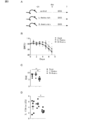
- FIG. 1 is a diagram showing the enteritis-suppressing effect of D-amino acid in a DSS-induced colitis model mouse in one embodiment of the present invention.
- FIG. 1A Experimental schedule
- FIG. 1B Changes in body weight over time
- FIG. 1C DAI (disease activity index) score on the 7th day after the start of DSS administration
- FIG. 1D IL-17-positive cells in the large intestine on the 7th day after the start of DSS administration. Percentage of.
- FIG. 2 is a diagram showing the enteritis-suppressing effect of D-amino acid in an immunodeficient mouse (RAG2KO) in one example of the present invention.
- FIG. 1A Experimental schedule
- FIG. 1B Changes in body weight over time
- FIG. 1C DAI (disease activity index) score on the 7th day after the start of DSS administration
- FIG. 1D IL-17-positive cells in the large intestine on the 7th day after the start of DSS
- FIG. 2A Changes in body weight over time of immunodeficient mice (left figure) and body weight on day 8 from the start of DSS administration (right figure);
- FIG. 2B DAI score on day 8 from the start of DSS administration.
- FIG. 3 is a diagram showing the enteritis-suppressing effect of various D-amino acids in one embodiment of the present invention.
- FIG. 3A Experimental schedule;
- FIG. 3B Body weight on day 8 from start of DSS administration;
- FIG. 3C DAI score on day 8 from start of DSS administration.
- FIG. 4 shows the proportion of D-amino acids and L-amino acids in the feces of healthy individuals and patients with inflammatory bowel disease (IBD).
- FIG. 5 is a diagram showing the anti-inflammatory and preventive effects of D-amino acid administration in liver disease model mice associated with ulcerative colitis.
- the D-amino acid is an optical isomer of the L-amino acid and is D-Ala (D-alanine), D-Arg (D-arginine), D-Asn (D-aspartin), D-Asp ( D-aspartic acid), D-Cys (D-cysteine), D-Gln (D-glutamine), D-Glu (D-glutamic acid), D-His (D-histidine), D-Ile (D-isoleucine) , D-Leu (D-leucine), D-Lys (D-lysine), D-Met (D-methionine), D-Phe (D-phenylalanine), D-Pro (D-proline), D-Ser ( D-serine), D-Thr (D-threonine), D-Trp (D-tryptophan), D-Tyr (D-tyrosine), D-Val (D-alanine), D-Arg (D-argin
- D-amino acids include, for example, D- ⁇ -amino-n-butyric acid, D-homophenylalanine, D-aro-isoleucine, D-norleucine, D-norvaline, D-ornithine and the like, but derivatives. May include D-phenylglycine, which is a derivative of glycine having no optical isomer.
- the pharmaceutically or food-acceptable salt of D-amino acid may be in any form of an acidic salt, a basic salt or an amphoteric salt thereof, for example, hydrochloride, sulfate, nitrate, sodium. Any salt can be used as long as it is a physiologically acceptable salt, such as a salt, a potassium salt, a calcium salt, and an ammonium salt.
- the modified form or derivative of D-amino acid refers to one that changes hydrophobicity or electrostatic properties, or one that can increase the concentration of D-amino acid in blood or tissue after administration. Any modified or derivative of D-amino acid can be used as long as the concentration of D-amino acid in blood or tissue can be adjusted to an optimum amount.
- An example of a derivative of D-amino acid is a compound in which the carboxy group, amino group, or hydroxyl group of D-amino acid is protected / substituted.
- the carboxy group can be esterified, amidated, etc., for example.
- Amino groups can be amidated.
- Hydroxy groups can be etherified and esterified.
- modified or derivatives of D-amino acids such as modified or derivatives of D-alanine, include D-alanine methyl ester, D-alanine ethyl ester, and peptides containing D-alanine, such as dipeptides, tripeptides, oligos. Peptides, polypeptides and the like can be mentioned.
- a modified or derivative of D-amino acid for example, a modified or derivative of D-serine, D-serine methyl ester, D-serine ethyl ester, or a peptide containing D-serine, for example, a dipeptide or a tripeptide , Oligopeptides, polypeptides and the like.
- a peptide When a peptide is used, it may be composed only of D-amino acid as an active ingredient, or in addition to D-amino acid as an active ingredient, other amino acids such as alanine, glycine, valine, leucine, isoleucine and threonine. , Cysteine, methionine, aspartic acid, glutamic acid, aspartic acid, glutamine, lysine, arginine, phenylalanine, tyrosine, tryptophan, histidine, etc., which may be D-form or L-form. ..
- enteritis is a general term for diseases showing inflammation of the intestinal mucosa.
- Specific diseases are not particularly limited, and examples thereof include infectious enteritis (for example, enteritis caused by Vibrio parahaemolyticus, Vibrio parahaemolyticus, Salmonella, Vibrio cholerae, etc.), Crohn's disease, and inflammatory bowel disease including ulcerative colitis.
- IBD inflammation bowel disease
- Crohn's disease and ulcerative colitis chronic inflammation of various parts of the digestive tract causing diarrhea and abdominal pain.
- Ulcerative colitis is an inflammatory disease of the large intestine that causes erosions and ulcers on the mucous membrane of the large intestine. Characteristic symptoms include diarrhea and abdominal pain with or without melena. Lesions have the property of spreading continuously and ascending from the rectum, up to the rectum to the entire colon. Ulcerative colitis is classified as follows according to the extent and course of the lesion.
- Classification by lesion spread total colitis, left colitis, proctitis
- Classification of stage active stage, remission stage 3
- Classification by severity mild, moderate, severe, severe
- clinical course Classification by: relapse remission type, chronic persistent type, acute severe type, first seizure type
- UC-DAI Disease active index
- Ulcerative colitis is a designated intractable disease, and in the past, if it is mild, it is treated with a 5-aminosalicylic acid preparation that improves various symptoms of inflammatory bowel disease by removing active oxygen and suppressing the production of leukotrienes. Control symptoms (inflammation), and if no effect is seen, administer steroids, leukotriene removal therapy, and if that does not help, administer biologics such as immunomodulators and TF ⁇ . If these are not effective, colonectomy may be performed, and the development of new therapeutic agents is expected. The cause of ulcerative colitis is thought to be due to abnormal autoimmune response and eating habits, but it is still unknown.
- hepatitis is a general term for diseases in which inflammation of hepatocytes is caused for some reason.
- viral hepatitis, alcoholic liver disorder, non-alcoholic steatohepatitis, drug-induced liver disorder, autoimmune hepatitis, various cholangitis, etc. are mentioned, and there are pathological conditions showing acute and chronic symptoms.
- cholangitis> In the present disclosure, cholangitis is a general term for diseases showing inflammation in the bile duct.
- the specific disease is not particularly limited, but for example, acute cholangitis caused by bacterial infection in the presence of stones in the common bile duct, invaginated stones, or narrowing of the bile duct; primary sclerosing cholangitis.
- Examples include flame (PSC).
- primary sclerosing cholangitis (PSC) is a disease characterized by patchy inflammation, fibrosis, and stenosis that occurs in the bile ducts, the cause of which remains unknown. Eighty percent of patients with primary sclerosing cholangitis (PSC) also have inflammatory bowel disease, especially ulcerative colitis.
- the invention can treat or prevent cholangitis, such as primary sclerosing cholangitis (PSC).
- One aspect of the invention is an agent (or pharmaceutical composition) for treating and / or preventing enteritis and / or hepatitis, which contains D-amino acids, modifications or derivatives thereof, or pharmaceutically acceptable salts thereof. Things).
- the agent of one aspect of the invention comprises a pharmacologically acceptable carrier, diluent or excipient, as well as D-amino acids, modifications or derivatives thereof, or pharmaceutically acceptable salts thereof. You may be.
- the agents of the present invention may include additional anti-enteritis agents, anti-hepatitis agents, etc., in addition to D-amino acids, modifications or derivatives thereof, or pharmaceutically acceptable salts thereof.
- the drug of the present invention can be formulated by selecting a dosage form suitable for the route of administration thereof. When used for oral administration, dosage forms such as tablets, capsules, liquids, powders, granules, and chewing agents can be designed, and for parenteral administration, dosage forms such as injections, powders, and infusion preparations can be designed.
- these preparations are various auxiliaries used for pharmaceuticals, that is, carriers and other auxiliaries, such as stabilizers, preservatives, soothing agents, seasonings, flavoring agents, fragrances, emulsifiers, fillers. , A pH adjuster and the like may be included, and can be blended within a range that does not impair the effect of the composition of the present invention.
- the optical purity of D-amino acid is preferably 50% or more, more preferably 90% or more.
- one aspect of the present invention is a method of administering a drug for treating and / or preventing enteritis, which contains a D-amino acid, a modified product or derivative thereof, or a pharmaceutically acceptable salt thereof.
- Treatment of enteritis and / or hepatitis involves remission (ie, keeping symptoms subsided). Symptoms of enteritis include diarrhea, bloody stools and / or weight loss, and if hepatitis continues, liver fibrosis may progress, leading to cirrhosis and hepatocellular carcinoma.
- This drug is used for topical administration (skin, inhalation, enema, eye drops, ear drops, nasal, intravaginal, etc.), enteral administration, parenteral administration (intravenous, transarterial, transdermal, intramuscular injection, etc.) Although provided as a suitable dosage form, enteral administration is preferred.
- Enteral administration includes oral administration, tube administration, and enema administration.
- Tube administration includes administration by nasogastric tube, gastrostomy, and duodenal fistula.
- Enema administration includes administration using a suppository or an enema.
- the dosage form of the drug is not particularly limited, and it may be in a liquid state or a solid state, and can be produced according to the common general knowledge of those skilled in the art.
- the specific administration method is not particularly limited, and the administration can be preferably performed according to the common general technical knowledge of those skilled in the art.
- the administration target is not particularly limited, but it is preferably human or a vertebrate other than human, more preferably a mammal such as human or mouse, and further preferably human.
- the dose of D-amino acid as a drug or the intake of D-amino acid as a food composition can be set to any dose from the viewpoint of exerting an effect of treating or preventing enteritis and / or hepatitis. From the viewpoint of the following reports, it is preferable to appropriately adjust the concentration of D-serine in the intestinal tract and / or liver.
- Non-Patent Document (1) Alexander W. K., Am J Physiol Renal Physioll 2007, 293, F382-F390
- Patent document (2) M. Maekawa et al., Chem. Res. Toxicol. 2005, 18, 1678-1682
- Non-patent document (3) M. Orozco-Ibarra et al., Toxicology 229 (2007) 123- 135
- Non-patent document (4) REWilliams et al., Toxicology 207 (2005) 179-190
- Non-Patent Document (2) doses in excess of 250 mg / kg, such as 800 mg / kg (Non-Patent Document (2)), 400 mg / kg (Non-Patent Document (3)), 250 mg / kg (Non-Patent Document (4) and (Non-Patent Document (4))
- D-serine is metabolized by the action of D-amino acid oxidase (DAO) in the proximal tubule, and the reactive oxygen species generated by the reaction cause cell damage and lead to necrosis. ..
- DAO D-amino acid oxidase
- the D-serine dose may be set to the NOAEL amount
- the safety factor is set to 10 in consideration of the difference in species
- the upper limit of the dose is 2.5 to 5.0 mg / kg / day.
- the safety factor can be set arbitrarily.
- the upper limit of the dose is 5.0 mg / kg / day, more preferably 4.0 mg / kg / day, even more preferably 3.0 mg / kg / day, and particularly preferably 2. It is 5.5 mg / kg.
- mice by allowing mice to freely drink water containing 1% D-serine, a blood D-serine concentration of 100 nmol / mL can be achieved, and D-serine enteritis at this concentration. ⁇ I was able to demonstrate the therapeutic effect of hepatitis. Although it is necessary to consider the difference between species, it is not limited to the theory, and if the blood concentration of D-serine is 1 nmol / mL to 1 ⁇ mol / mL, the effect of the present invention, that is, the therapeutic effect on enteritis / hepatitis is exhibited. Can be done.
- the blood concentration after administration of D-serine is preferably 5 nmol / mL or higher, more preferably 10 nmol / mL or higher, and even more preferably 50 nmol / mL or higher.
- the blood concentration of D-serine is preferably 1 ⁇ mol / mL or less, more preferably 0.5 ⁇ mol / mL or less, and even more preferably 0.1 ⁇ mol / mL or less.
- One aspect of the present invention is a food for controlling enteritis and / or hepatitis and a food to which it is added, which contains a D-amino acid, a modified product or derivative thereof, or a food-acceptable salt thereof.
- Foods for controlling enteritis and / or hepatitis are foods labeled to be ingested by subjects who suffer from enteritis and / or hepatitis or who are at risk of developing enteritis and / or hepatitis.
- the form of the food is not particularly limited, but it may be added to the daily diet or taken as a supplement or supplement.
- foods shall also include beverages.
- a food it may be provided as a functional food or a food for health use.
- D-amino acids, modified products or derivatives thereof, or food-acceptable salts thereof, and raw materials containing these can be blended with any food.
- the optical purity of D-amino acid is preferably 50% or more, more preferably 90% or more.
- enteritis and / or hepatitis control food By ingesting this enteritis and / or hepatitis control food, the symptoms of enteritis and / or hepatitis can be improved. It is also possible to prevent enteritis and / or hepatitis, and can be used, for example, as an intestinal regulator.
- One aspect of the present invention provides a method of assisting the diagnosis of enteritis and / or hepatitis of a subject using the amount of D-amino acid in the intestinal tract as an index.
- the present inventors have found that the amount of D-amino acid in the stool of healthy subjects and patients with enteritis, especially patients with inflammatory bowel disease (IBD), varies.
- IBD inflammatory bowel disease
- the pathophysiology of the subject's enteritis for example, inflammatory bowel disease, particularly ulcerative colitis, and use it for diagnosis. rice field.
- the pathophysiology of enteritis can be determined by measuring the amount of D-amino acids in the intestinal contents, eg, stool.
- this index can be used not only for pathological conditions but also for diagnosis of pathological condition and prognosis, and determination of effects of treatment and medication.
- a numerical value corrected with L-amino acid or the like may be used.
- the D-amino acids used for the determination are, for example, D-Ala, D-Pro, D-Gln, D-Val, D-Leu, D-Phe, D-Lys, D-Trp, D-Glu, D-Ser and D.
- At least one D-amino acid selected from the group consisting of -Asp may be selected, or a plurality of these may be combined.
- the amount of L-amino acid corresponding to the selected D-amino acid may also be measured and determined by using the corrected value, and the determination may be made by the ratio of the amount of D-amino acid to the amount of L-amino acid. It may be something to do.
- the present invention is used for determining and diagnosing the pathophysiology of enteritis, for example, inflammatory bowel disease, particularly hepatitis associated with ulcerative colitis, for example, cholangitis, particularly primary sclerosing cholangitis (PSC). You may.
- enteritis for example, inflammatory bowel disease, particularly hepatitis associated with ulcerative colitis, for example, cholangitis, particularly primary sclerosing cholangitis (PSC).
- Subjects whose enteritis and / or hepatitis status has been determined by the methods of the invention administer an agent or food composition for treating and / or preventing enteritis and / or hepatitis, which has already been described as another aspect. Alternatively, it can be treated by ingesting it.
- a subject whose state of enteritis and / or hepatitis has been determined by the method of the present invention is a known therapeutic method used for the treatment of enteritis, for example, an aminosalicylate preparation (for example, mesalazine (5-ASA)).
- an aminosalicylate preparation for example, mesalazine (5-ASA)
- Anti-TNF- ⁇ antibody preparation eg, infliximab
- anti-IL-12 / 23p40 antibody preparation eg, ustecinumab
- anti- ⁇ 4 ⁇ 7 integrin antibody preparation eg, betrizumab
- JAK inhibitor eg, tofacitinib citrate
- Steroids immunomodulators (eg, thiopurine preparations: azathiopurine), immunosuppressants (eg, carcinulinin inhibitors: cyclosporin), glycyrrhizin preparations, synthetic disaccharides, antibacterial agents, antihypertensive agents, diuretics, albumin preparations, carnitine Formulations, opioid k receptor agonists, carnitines, acetylcysteines, resins, therapeutic agents for dyslipidemia (eg, statins, small intestinal cholesterol transporter inhibitors, fibrates), thiazolin derivatives, oily contrast agents, hygiene agents (eg, urso)
- Example 1 Enteritis inhibitory effect of D-amino acid in DSS-induced colitis model
- the DAI score for each mouse was diarrhea symptoms (normal: 0, loose stools: 1, mild diarrhea: 2, moderate diarrhea: 3, severe diarrhea: 4); bloody stool symptoms (normal: 0, mild bloody stools: 1,). Moderate bloody stool: 2, severe bloody stool: 3, severe bloody stool anal bleeding: 4); and rate of weight loss (none: 0, 1-5%: 1, 5-10%: 2, 10-20%: 3, 20% or more: 4) were scored and shown as the total value (minimum 0 points, maximum 12 points). Furthermore, the proportion of Th17 cells, which are IL-17-positive T cells, which are inflammation-inducing cells, was measured in the large intestine (Fig. 1D).
- mice that ingested drinking water containing D-amino acids the group of mice that ingested drinking water containing L-amino acids and the group of mice that ingested normal drinking water, as shown in FIG. 1B, after the 6th day. , Weight loss was significantly suppressed, and the DAI score on day 7 was significantly lower, as shown in FIG. 1C.
- the proportion of IL-17-positive Th17 cells in the large intestine on the 7th day was that of mice ingesting drinking water containing L-amino acid. It was significantly lower than the group.
- the IL-17-producing Th17 cells present in the intestinal tract are a cell population that is increasing due to inflammatory bowel disease and the like, and are inflammation-inducing cells. Therefore, Th17 cells are increased in the inflamed intestinal tract, and Th17 cells are decreased in the inflamed intestinal tract. Therefore, this indicates that the inflammation caused by the intake of DSS is suppressed in the group of mice ingested with drinking water containing D-amino acid.
- mice ingested drinking water containing D-amino acids was significantly more susceptible to enteritis than the group of mice ingested drinking water containing L-amino acids and the group of mice ingested normal drinking water.
- the same result as in Example 1 that the exacerbation was suppressed was obtained. This indicates that the D-amino acid has an enteritis-suppressing effect even in mice having no acquired immune function.
- Example 3 Enteritis inhibitory effect of a single D-amino acid in DSS-induced colitis model mice
- Drinking water containing D-amino acids D-Ser, D-Ala and D-Asp is equivalent to drinking water containing 5 D-amino acids in terms of both weight loss inhibitory effect and DAI score.
- Drinking water containing D-Trp and D-Glu D-amino acids had an inhibitory effect, and significantly suppressed enteritis than drinking water containing 5 types of D-amino acids (FIGS. 3B and C).
- Example 4 Pathological index by D-amino acid in feces of patients with inflammatory bowel disease (IBD)
- the collected stools of healthy subjects and patients with inflammatory bowel disease were homogenized with Milli-Q water, the amino acids extracted by centrifugation with methanol were modified with NBD-F, and the data separated and quantified by liquid chromatography were used for analysis. bottom.
- the D-amino acid (corrected value using L-amino acid) in the stool of IBD patients is characteristically lower than that of healthy subjects, and the amount of D-amino acid in the stool is grasping the pathological condition and setting the dose of the drug. , It has been shown to be useful in assisting in determining the effects of treatments and drugs.
- Example 5 Inflammation-suppressing effect in DDC-induced liver disease model
- UC ulcerative colitis
- PSC primary sclerosing cholangitis
- T-Bill 3,5-diethoxvcarbonyl-1,4-dihydrocollidine
- ALT amino group transfer
- liver disease marker was significantly lower than in the group of mice ingested normal drinking water, and hepatitis was suppressed and prevented (FIGS. 5B, C).
- the present invention has made it possible to provide novel agents and foods for treating and / or preventing hepatitis, and methods for treating or preventing enteritis and / or hepatitis.
Landscapes
- Health & Medical Sciences (AREA)
- Life Sciences & Earth Sciences (AREA)
- Chemical & Material Sciences (AREA)
- Pharmacology & Pharmacy (AREA)
- Veterinary Medicine (AREA)
- Public Health (AREA)
- General Health & Medical Sciences (AREA)
- Medicinal Chemistry (AREA)
- Animal Behavior & Ethology (AREA)
- Nuclear Medicine, Radiotherapy & Molecular Imaging (AREA)
- General Chemical & Material Sciences (AREA)
- Chemical Kinetics & Catalysis (AREA)
- Organic Chemistry (AREA)
- Engineering & Computer Science (AREA)
- Epidemiology (AREA)
- Bioinformatics & Cheminformatics (AREA)
- Virology (AREA)
- Nutrition Science (AREA)
- Polymers & Plastics (AREA)
- Food Science & Technology (AREA)
- Pain & Pain Management (AREA)
- Gastroenterology & Hepatology (AREA)
- Proteomics, Peptides & Aminoacids (AREA)
- Mycology (AREA)
- Oncology (AREA)
- Communicable Diseases (AREA)
- Molecular Biology (AREA)
- Rheumatology (AREA)
- Medicines That Contain Protein Lipid Enzymes And Other Medicines (AREA)
- Peptides Or Proteins (AREA)
Priority Applications (3)
| Application Number | Priority Date | Filing Date | Title |
|---|---|---|---|
| US17/800,306 US20230063703A1 (en) | 2020-02-18 | 2021-02-18 | Drug and food for treating and/or preventing enteritis and/or hepatitis |
| JP2022501993A JPWO2021167032A1 (https=) | 2020-02-18 | 2021-02-18 | |
| JP2026000081A JP2026040780A (ja) | 2020-02-18 | 2026-01-05 | 腸炎および/または肝炎を治療および/または予防するための薬剤および食品 |
Applications Claiming Priority (2)
| Application Number | Priority Date | Filing Date | Title |
|---|---|---|---|
| JP2020024984 | 2020-02-18 | ||
| JP2020-024984 | 2020-02-18 |
Publications (1)
| Publication Number | Publication Date |
|---|---|
| WO2021167032A1 true WO2021167032A1 (ja) | 2021-08-26 |
Family
ID=77392262
Family Applications (1)
| Application Number | Title | Priority Date | Filing Date |
|---|---|---|---|
| PCT/JP2021/006227 Ceased WO2021167032A1 (ja) | 2020-02-18 | 2021-02-18 | 腸炎および/または肝炎を治療および/または予防するための薬剤および食品 |
Country Status (3)
| Country | Link |
|---|---|
| US (1) | US20230063703A1 (https=) |
| JP (2) | JPWO2021167032A1 (https=) |
| WO (1) | WO2021167032A1 (https=) |
Cited By (3)
| Publication number | Priority date | Publication date | Assignee | Title |
|---|---|---|---|---|
| JPWO2022080249A1 (https=) * | 2020-10-12 | 2022-04-21 | ||
| WO2023002939A1 (ja) * | 2021-07-19 | 2023-01-26 | 明治ホールディングス株式会社 | 炎症性腸疾患の予防又は改善のための組成物、及び腸内細菌叢調節のための組成物 |
| JP2024051242A (ja) * | 2022-09-30 | 2024-04-11 | 学校法人早稲田大学 | オートファジー亢進剤 |
Families Citing this family (1)
| Publication number | Priority date | Publication date | Assignee | Title |
|---|---|---|---|---|
| CN116531359B (zh) * | 2023-05-12 | 2025-02-14 | 同济大学 | β-丙氨酸在制备缓解结肠炎症状药物中的应用 |
Family Cites Families (2)
| Publication number | Priority date | Publication date | Assignee | Title |
|---|---|---|---|---|
| US6767890B1 (en) * | 1998-11-18 | 2004-07-27 | Coastside Bio Resources | Peptides having anti-cancer and anti-inflammatory activity |
| DK3061766T3 (da) * | 2009-04-28 | 2020-03-16 | Univ Vanderbilt | Sammensætninger og fremgangsmåder til behandlingen af sygdomme der involverer epitelcelleapoptose |
-
2021
- 2021-02-18 US US17/800,306 patent/US20230063703A1/en active Pending
- 2021-02-18 WO PCT/JP2021/006227 patent/WO2021167032A1/ja not_active Ceased
- 2021-02-18 JP JP2022501993A patent/JPWO2021167032A1/ja active Pending
-
2026
- 2026-01-05 JP JP2026000081A patent/JP2026040780A/ja active Pending
Non-Patent Citations (4)
| Title |
|---|
| JUMPEI SASABE, ET AL.: "Interplay between microbial d-amino acids and host d-amino acid oxidase modifies murine mucosal defence and gut microbiota", NATURE MICROBIOLOGY, vol. 1, no. 10, 25 July 2016 (2016-07-25), pages 16125, XP055604313, DOI: 10.1038/nmicrobiol.2016.125 * |
| KANAI TAKANORI: "To identify the mechanism of inflammatory bowel dise ase by using human microbe mono-associated mouse", FINAL RESEARCH REPORT OF GRANTS-IN-AID FOR SCIENTIFIC RESEARCH, 1 January 2018 (2018-01-01), XP055850050, Retrieved from the Internet <URL:https://kaken.nii.ac.jp/file/KAKENHI-PROJECT-15H02534/15H02534seika.pdf> * |
| OKADA KAORI, YOSHITAKA GOGAMI, YOSHITAKA TAKESHITA, TADAO OIKAWA: "Quantitative analysis of D-and L-amino acids in black vinegar (Kurozu) and rice vinegar (Komezu)", TRACE NUTRIENTS RESEARCH, vol. 29, 1 January 2012 (2012-01-01), pages 62 - 66, XP055850055 * |
| SHIZUMA, TORU ET AL.: "Oral administration of Kurozu ameliorates dextran sulfate sodium-induced colitis in an animal mode l", THE JAPANESE JOURNAL OF SURGICAL METABOLISM AND NUTRITION, vol. 47, no. 1, 2013, pages 1 - 7, XP009530785, ISSN: 0389-5564 * |
Cited By (4)
| Publication number | Priority date | Publication date | Assignee | Title |
|---|---|---|---|---|
| JPWO2022080249A1 (https=) * | 2020-10-12 | 2022-04-21 | ||
| WO2022080249A1 (ja) * | 2020-10-12 | 2022-04-21 | 国立大学法人 東京医科歯科大学 | 炎症性腸疾患の予防又は改善剤 |
| WO2023002939A1 (ja) * | 2021-07-19 | 2023-01-26 | 明治ホールディングス株式会社 | 炎症性腸疾患の予防又は改善のための組成物、及び腸内細菌叢調節のための組成物 |
| JP2024051242A (ja) * | 2022-09-30 | 2024-04-11 | 学校法人早稲田大学 | オートファジー亢進剤 |
Also Published As
| Publication number | Publication date |
|---|---|
| US20230063703A1 (en) | 2023-03-02 |
| JPWO2021167032A1 (https=) | 2021-08-26 |
| JP2026040780A (ja) | 2026-03-09 |
Similar Documents
| Publication | Publication Date | Title |
|---|---|---|
| WO2021167032A1 (ja) | 腸炎および/または肝炎を治療および/または予防するための薬剤および食品 | |
| JP6271785B2 (ja) | 代謝性症候群を予防し又は治療するための方法 | |
| WO2005012334A1 (ja) | 生体内非分解性ペプチド、アンジオテンシン変換酵素阻害剤、医薬及び機能性食品 | |
| JP5096173B2 (ja) | 経口摂取用関節リウマチ抑制剤 | |
| CN102625699A (zh) | 使用l-鸟氨酸苯乙酸盐治疗门静脉高压和恢复肝功能 | |
| WO2022104022A1 (en) | Rapidly infusing compositions with methotrexate and treatment methods | |
| WO2007004613A1 (ja) | 炎症性腸疾患治療薬及びTNF-α産生抑制剤 | |
| US20110171690A1 (en) | Angiotensin converting enzyme inhibitory peptide | |
| CN104661670A (zh) | 用于治疗动脉粥样硬化的方法 | |
| JP6987757B2 (ja) | 新規トリペプチド | |
| Jung et al. | Evaluation of 5-aminosalicyltaurine as a colon-specific prodrug of 5-aminosalicylic acid for treatment of experimental colitis | |
| JP4419390B2 (ja) | 炎症性疾患治療予防剤 | |
| US20100093863A1 (en) | Use of citrulline for preventing an increase in protein carbonylation and for treating diseases resulting therefrom | |
| WO2001091762A1 (en) | Zinc-supplementary compositions for oral administration | |
| JP2007530454A (ja) | 補体C5a受容体モジュレーターを使用する神経疾患の治療 | |
| Kirupananthan et al. | Lysine dipeptide enhances gut structure and whole-body protein synthesis in neonatal piglets with intestinal atrophy | |
| CN116178494B (zh) | 一种解酒多肽 | |
| TW473387B (en) | Pharmaceutical or food compositions for treating hepatic diseases or improving liver functions | |
| JPH0521092B2 (https=) | ||
| JP2003055215A (ja) | 肝線維化抑制剤 | |
| JP5317456B2 (ja) | 内因性オピオイドペプチドの血中分泌促進用組成物 | |
| JP2007055900A (ja) | 炎症性疾患の治療及び予防用医薬組成物 | |
| CN113754719B (zh) | 三肽及其在制备改善记忆的药品和保健品中的应用 | |
| WO2002074303A1 (en) | Amino acid compositions for ameliorating kidney failure | |
| JPH02119762A (ja) | L−グルタミンのオリゴペプチド配合栄養組成物 |
Legal Events
| Date | Code | Title | Description |
|---|---|---|---|
| 121 | Ep: the epo has been informed by wipo that ep was designated in this application |
Ref document number: 21757354 Country of ref document: EP Kind code of ref document: A1 |
|
| ENP | Entry into the national phase |
Ref document number: 2022501993 Country of ref document: JP Kind code of ref document: A |
|
| NENP | Non-entry into the national phase |
Ref country code: DE |
|
| 122 | Ep: pct application non-entry in european phase |
Ref document number: 21757354 Country of ref document: EP Kind code of ref document: A1 |