WO2021159629A1 - 一种基于局部和全局影响的社交网络影响力最大化方法 - Google Patents
一种基于局部和全局影响的社交网络影响力最大化方法 Download PDFInfo
- Publication number
- WO2021159629A1 WO2021159629A1 PCT/CN2020/091442 CN2020091442W WO2021159629A1 WO 2021159629 A1 WO2021159629 A1 WO 2021159629A1 CN 2020091442 W CN2020091442 W CN 2020091442W WO 2021159629 A1 WO2021159629 A1 WO 2021159629A1
- Authority
- WO
- WIPO (PCT)
- Prior art keywords
- vertex
- influence
- vertices
- social network
- local
- Prior art date
- Legal status (The legal status is an assumption and is not a legal conclusion. Google has not performed a legal analysis and makes no representation as to the accuracy of the status listed.)
- Ceased
Links
Images

Classifications
-
- G—PHYSICS
- G06—COMPUTING OR CALCULATING; COUNTING
- G06Q—INFORMATION AND COMMUNICATION TECHNOLOGY [ICT] SPECIALLY ADAPTED FOR ADMINISTRATIVE, COMMERCIAL, FINANCIAL, MANAGERIAL OR SUPERVISORY PURPOSES; SYSTEMS OR METHODS SPECIALLY ADAPTED FOR ADMINISTRATIVE, COMMERCIAL, FINANCIAL, MANAGERIAL OR SUPERVISORY PURPOSES, NOT OTHERWISE PROVIDED FOR
- G06Q10/00—Administration; Management
- G06Q10/40—Business processes related to social networking or social networking services
Definitions
- the invention belongs to the field of social networks, and specifically relates to a method for maximizing the influence of a social network based on local and global influence.
- the IMM algorithm uses a series of martingale-based estimation techniques to improve its computational efficiency. These estimation techniques enable the IMM algorithm to obtain a better computational result in a nearly linear time. However, it pursues computational efficiency excessively and neglects the accuracy of the result. sex.
- the basic idea of the DDSE algorithm is to use the idea of biological evolution to obtain the global optimal solution. Specifically, the algorithm is divided into four steps: initialization, mutation, crossover, and selection.
- the present invention proposes a method for maximizing the influence of a social network based on local and global influence, which is reasonable in design, overcomes the shortcomings of the prior art, and has good effects.
- a method for maximizing the influence of social networks based on local and global influence including the following steps:
- Step 2 Select the source vertex
- Step 3 Screen candidate vertices
- Step 4 Select the seed vertex.
- step 2 specifically includes the following steps:
- Step 2.1 According to formula (1), calculate the local influence of each vertex, and sort all vertices from large to small according to this local influence.
- the calculation formula of local influence is as follows:
- Step 2.2 Select a certain number of vertices as the source vertices in order from the arrangement obtained in step 2.1.
- step 3 the following steps are specifically included:
- Step 3.1 Use the Dijkstra algorithm with heap optimization to find the ancestor vertices of each source vertex, and calculate the activation probability of the ancestor vertex to its related source vertices in the search process. In this process, use the activation threshold to perform pruning operations ;
- Step 3.2 According to formula (2), calculate the expected influence of each ancestor vertex on the source vertex, and select a certain number of ancestor vertices as candidate vertices in turn according to the magnitude of the expected influence;
- step 4 specifically includes the following steps:
- Step 4.1 According to formulas (3) and (4), calculate the marginal revenue Sv of the expected influence of the candidate vertex on the source vertex under the current seed set condition:
- EIOS(S) ⁇ u ⁇ S ⁇ v ⁇ SN p uv ⁇ LFV(v) ⁇ n ⁇ S ⁇ u ⁇ (1-p nv ) (3);
- EIOS(S) represents the expected impact of the current seed vertex set S on the source vertex
- S represents the current seed vertex set
- Sv represents the marginal revenue of vertex v under the current seed vertex set S
- p nv represents vertex n on vertex v
- Step 4.2 Choose an unselected vertex with the largest Sv as the seed vertex, and increase the current seed vertex set size L by 1, and repeat steps 4.1 and 4.2 until the current seed vertex set size L reaches k; where k represents influence
- the number of vertices required to be selected in the force maximization problem is the final size of the set of seed vertices.
- the present invention first selects a certain number of source vertices according to the local influence of the vertices; secondly, searches for the ancestor vertices of the source vertices, and screens a certain number of candidate vertices according to the expected influence of the ancestor vertices on the source vertices; finally, uses the expectations of the candidate vertices to the source vertices
- the marginal benefit of influence selects seed vertices from candidate vertices. This method not only overcomes the problem of low time efficiency, but also improves the accuracy of the scope of influence, effectively solving the problem of maximizing the influence of social networks.
- Figure 1 is a flow chart of the method of the present invention
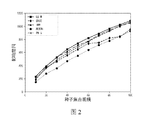
- FIG. 2 is a comparison diagram of the effect of the present invention and the existing algorithm in the influence range of the CA-GrQc social network;
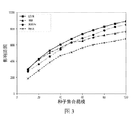
- Figure 3 is a comparison diagram of the effect of the present invention and the existing algorithm in the Wiki-Vote social network influence range;
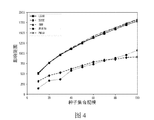
- FIG. 4 is a comparison diagram of the effect of the present invention and the existing algorithm in the influence range of the NetHEPT social network;
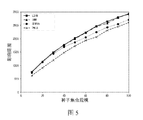
- FIG. 5 is a comparison diagram of the effect of the present invention and the existing algorithm in the influence range of the CA-CondMat social network;
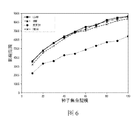
- FIG. 6 is a comparison diagram of the effect of the present invention and the existing algorithm in the influence range of the soc-Epinions1 social network;
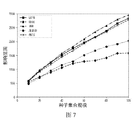
- FIG. 7 is a comparison diagram of the effect of the present invention and the existing algorithm in the influence range of the p2p-Gnutella31 social network;
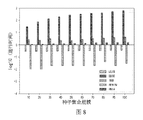
- FIG. 8 is a comparison diagram of the running time of the present invention and the existing algorithm on the CA-GrQc social network;
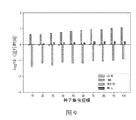
- Figure 9 is a comparison diagram of the running time of the present invention and the existing algorithm on the Wiki-Vote social network;
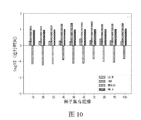
- Figure 10 is a comparison diagram of the running time of the present invention and existing algorithms on the CA-CondMat social network;
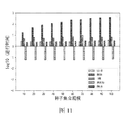
- FIG. 11 is a comparison diagram of the running time of the present invention and the existing algorithm on the NetHEPT social network
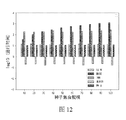
- FIG. 12 is a comparison diagram of the running time of the present invention and the existing algorithm on the p2p-Gnutella31 social network;
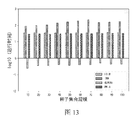
- FIG. 13 is a comparison diagram of the running time of the present invention and the existing algorithm on the soc-Epinions1 social network.
- Step 2 Select the source vertex; specifically include the following steps:
- Step 2.2 Select a certain number of vertices as the source vertices in order from the arrangement obtained in step 2.1.
- Step 3 Screen candidate vertices; specifically include the following steps:
- Step 3.1 Use the Dijkstra algorithm with heap optimization to find the ancestor vertices of each source vertex, and calculate the activation probability of the ancestor vertex to its related source vertices in the search process. In this process, use the activation threshold to perform pruning operations ;
- Step 3.2 According to formula (2), calculate the expected influence of each ancestor vertex on the source vertex, and select a certain number of ancestor vertices as candidate vertices in turn according to the magnitude of the expected influence;
- Step 4 Select the seed vertex, which specifically includes the following steps:
- Step 4.1 According to formulas (3) and (4), calculate the marginal revenue Sv of the expected influence of the candidate vertex on the source vertex under the current seed set condition:
- EIOS(S) ⁇ u ⁇ S ⁇ v ⁇ SN p uv ⁇ LFV(v) ⁇ n ⁇ S ⁇ u ⁇ (1-p nv ) (3);
- EIOS(S) represents the expected impact of the current seed vertex set S on the source vertex
- S represents the current seed vertex set
- Sv represents the marginal revenue of vertex v under the current seed vertex set S
- p nv represents vertex n on vertex v
- Step 4.2 Choose an unselected vertex with the largest Sv as the seed vertex, and increase the current seed vertex set size L by 1, and repeat steps 4.1 and 4.2 until the current seed vertex set size L reaches k; where k represents influence
- the number of vertices required to be selected in the force maximization problem is the final size of the set of seed vertices.
- CA-GrQc data set CA-GrQc data set
- Wiki-Vote data set Wiki-Vote data set
- NetHEPT data set CA-CondMat Data set
- p2p-Gnutella31 data set p2p-Gnutella31 data set
- soc-Epinions1 data set six publicly available data sets of different sizes from SNAP (http://snap.stanford.edu/data) are used: CA-GrQc data set, Wiki-Vote data set, NetHEPT data set, CA-CondMat Data set, p2p-Gnutella31 data set and soc-Epinions1 data set.
- the NetHEPT data set is a co-authored network of papers in the "High Energy Physics-Theory” section from 1991 to 2003; the Wiki-Vote data set is the “referendum” network in Wikipedia; the CA-GrQc data set is taken from the "generalized” “Relativity and Quantum Cosmology” part of the cooperative network; CA-CondMat data set is a collaborative network of Arxiv condensed matter; p2p-Gnutella31 data set is a peer-to-peer network of Gnutella since August 31, 2002; soc-Epinions1 data set It's the network of who trusts who of Epinions.com.
- Table 1 The static structure feature statistics of these four data sets are shown in Table 1.
- p uv 1/in(v)
- in(v) represents the in-degree of v
- k is used to represent the size of the seed set required by the problem
- L is used to record the current Seed collection size.
- Figures 2 to 7 respectively show that when the seed node scale k is 10, 20, 30, 40, 50, 60, 70, 80, 90, 100, the LGIM algorithm of the present invention and the other four algorithms Degree Discount, DDSE, PMIA, and IMM CA-GrQc, Wiki-Vote, NetHEPT, CA-CondMat, p2p-Gnutella31 and soc-Epinions1 six data sets of influence range comparison chart. It can be seen from the comparison chart of these six influence ranges that as the size of the seed set increases, the influence ranges of all algorithms show an upward trend.
- LGIM When running on NetHEPT, CA-GrQc, Wiki-Vote, CA-CondMat and soc-Epinions1 datasets, LGIM outperforms all comparison algorithms, while on the p2p-Gnutella31 network, it is only worse than IMM.
- CA-GrQc data set when the seed set size is 100, LGIM's influence range is 2.85%, 1.98%, 17.23% and 13.89% higher than PMIA, IMM, Degree Discount and DDSE, respectively.
- the Wiki-Vote data set when the seed set size is 100, the influence range of LGIM is 31.85%, 4.83% and 16.49% higher than that of PMIA, Degree Discount and IMM, respectively.
- LGIM, PMIA, and IMM have similar influence ranges.
- their influence ranges are 70.12% and 100.67% higher than Degree Discount and DDSE, respectively.
- the influence ranges of LGIM and IMM are very close.
- the seed set size is 100, their influence ranges are 8.09% and 12.59% higher than Degree Discount and PMIA, respectively.
- the influence range of IMM is the largest, while the LGIM algorithm is only smaller than the IMM algorithm.
- the influence range of IMM is 4.09 higher than LGIM, PMIA, Degree Discount and DDSE respectively.
- LGIM uses a two-stage filtering strategy for candidate vertices, and then uses a new objective function-the expected impact on the source vertices to select seed vertices. This approach ensures the accuracy of the running results.
- Figures 8 to 13 show the running time comparison diagrams of the LGIM of the present invention and the other four comparison algorithms Degree Discount, DDSE, PMIA and IMM. From the results, the efficiency of the Degree Discount algorithm is the highest, and LGIM is only worse than the Degree Discount algorithm.
- the Degree Discount algorithm is 91.89%, 85.87%, 97.99%, 91.89%, 98.77% and 98.75% faster than LGIM, respectively.
- LGIM is 91.67%, 75.82% and 99.91% faster than IMM, PMIA and DDSE respectively.
- LGIM is 40.65% and 92.24% faster than PMIA and IMM, respectively.
- LGIM and PMIA have similar running times, and they are 99.16% and 48.29% faster than DDSE and IMM, respectively.
- CA-CondMat LGIM is 83.45% and 92.06% faster than PMIA and IMM, respectively.
- LGIM and PMIA have similar operating efficiency. They are 98.9% and 94.9% faster than DDSE and IMM, respectively.
- LGIM and PMIA are similar in efficiency, 79.08% faster than IMM. All in all, the efficiency of LGIM is only worse than the Degree Discount algorithm and surpasses the other three comparison algorithms.
- the LGIM of the present invention adopts a two-stage filtering strategy to select candidate vertices, and then uses a new objective function—the expected impact on the source vertices to select seed vertices. This approach guarantees The accuracy of the running results is improved.
- the present invention is an efficient method for solving the maximization of influence, with fast operation efficiency, and can be applied to large-scale networks.
Landscapes
- Business, Economics & Management (AREA)
- Engineering & Computer Science (AREA)
- Economics (AREA)
- Entrepreneurship & Innovation (AREA)
- Human Resources & Organizations (AREA)
- Marketing (AREA)
- Operations Research (AREA)
- Quality & Reliability (AREA)
- Strategic Management (AREA)
- Tourism & Hospitality (AREA)
- Physics & Mathematics (AREA)
- General Business, Economics & Management (AREA)
- General Physics & Mathematics (AREA)
- Theoretical Computer Science (AREA)
- Information Retrieval, Db Structures And Fs Structures Therefor (AREA)
Abstract
一种基于局部和全局影响的社交网络影响力最大化方法,属于社交网络领域,提出了一种候选顶点的两阶段过滤策略,此策略首先根据顶点的局部影响力选择一定数目源顶点;然后,寻找源顶点的祖先顶点,并根据祖先顶点对源顶点的预期影响筛选一定数目候选顶点;最后,利用候选顶点对源顶点的预期影响的边际收益从两阶段过滤策略选择出的候选顶点中选择种子顶点。通过上述方法,不仅克服了时间效率低的问题,而且提高了影响范围的准确性,有效地解决了社交网络影响力最大化问题。
Description
本发明属于社交网络领域,具体涉及一种基于局部和全局影响的社交网络影响力最大化方法。
随着互联网技术的发展和普及,越来越多的人通过社交网络与他人建立联系。社交网络作为重要的传播媒介,在舆论控制、信息传播和公共服务中发挥着越来越重要的作用。
在市场营销中,预算或资源往往是有限的,在这种情况下如何实现信息传播范围的最大化,这是一个非常重要的内容。为了解决这个问题,我们需要在预算或资源的限制下,选择少数有影响力的人,来使最终的信息传播范围最大,这就是影响力最大化。然而,该问题被证明是一个NP困难问题。影响力最大化问题自从被Domingos和Ichardson等提出后,取得了重大研究进展。近年来,许多基于贪婪的算法被提出了,例如Degree Discount(度折扣)算法,PMIA(Prefix excluding maximum influence arborescence model,带有前缀阻断的最大影响力树)算法,IMM(Influence Maximization via Martingales,基于鞅的影响力最大化)算法和DDSE(degree-descending search evolution,降度搜索进化)算法。具体来说,度折扣算法的基本思想是,折扣度较大的节点具有较大的影响力,该算法在效率方面优于所有基于贪心的影响力最大化算法,但是该算法过分追求计算效率,导致算法的精确度非常低。PMIA算法利用MIA(maximum influence arborescence,最大影响力树)模型估算每个顶点的影响力,这个算法可以递归的计算边际影响力,并且每次仅需要更新局部影响力树,这使得PMIA算法可以在大型社会网络上运行,但是它通过牺牲较大的精确度来提高其运行效率,这种做法是令人不满意的。IMM算法利用一系列基于鞅的估计技术来提高其运算效率,这些估算技术使得IMM算法能够在接近线性的时间内得到一个较好的运算结果,但是,它过分追求计算效率,而忽略了结果准确性。DDSE算法的基本思想是利用生物进化的思想来获得全局最优解。具体来说,该算法分为四个步骤:初始化、变异、交叉、选择。实验结果表明,DDSE在保持与CELF(Cost-effective Lazy-forward,高性价比懒惰前行)差不多的精确度的情况下比CELF快约五个数量级。但是,这个算法过分追求结果准确性,导致它的效率十分低下。总而言之,这四种算法都过分追求效率或准确性,而没有在两者之间做出适当的折中。
发明内容
针对现有技术中存在的上述技术问题,本发明提出了一种基于局部和全局影响的社交网络影响力最大化方法,设计合理,克服了现有技术的不足,具有良好的效果。
为了实现上述目的,本发明采用如下技术方案:
一种基于局部和全局影响的社交网络影响力最大化方法,包括以下步骤:
步骤1:构建社交网络:G=(V,E);
步骤2:选择源顶点;
步骤3:筛选候选顶点;
步骤4:选择种子顶点。
优选地,在步骤2中,具体包括如下步骤:
步骤2.1:根据公式(1),计算每个顶点的局部影响力,并根据此局部影响力将所有顶点从大到小排序,局部影响力的计算公式如下:

步骤2.2:从步骤2.1得到的排列中按顺序依次选择一定数目的顶点作为源顶点。
优选地,在步骤3中,具体包括如下步骤:
步骤3.1:利用带有堆优化的Dijkstra算法寻找每个源顶点的祖先顶点,并且在寻找过程中计算祖先顶点对其相关的源顶点的激活概率,在此过程中,使用激活阈值进行剪枝操作;
步骤3.2:根据公式(2),计算每个祖先顶点对源顶点的预期影响,按预期影响的大小依次选择一定数目的祖先顶点作为候选顶点;
NEIOS(u)=∑
v∈SNp
uv·LFV(v) (2);
优选地,在步骤4中,具体包括如下步骤:
步骤4.1:根据公式(3)和(4),计算在当前种子集合条件下候选顶点对源顶点的预期影响的边际收益Sv:
EIOS(S)=∑
u∈S∑
v∈SNp
uv·LFV(v)·∏
n∈S\{u}(1-p
nv) (3);
Sv=EIOS(S∪{v})-EIOS(S) (4);
其中,EIOS(S)表示当前种子顶点集合S对源顶点的预期影响,S表示当前种子顶点集合,Sv表示顶点v在当前种子顶点集合S条件下的边际收益,p
nv表示顶点n对顶点v的激活概率;
步骤4.2:选择一个未被选择的且Sv最大的顶点作为种子顶点,并且将当前种子顶点集合规模L加1,重复步骤4.1和4.2,直到当前种子顶点集合规模L达到k;其中,k表示影响力最大化问题中所要求选择出的顶点个数,即最终种子顶点集合规模。
本发明所带来的有益技术效果:
本发明首先根据顶点的局部影响力选择一定数目源顶点;其次,寻找源顶点的祖先顶点,并根据祖先顶点对源顶点的预期影响筛选一定数目候选顶点;最后,利用候选顶点对源顶点的预期影响的边际收益从候选顶点中选择种子顶点。通过此种方法,不仅克服了时间效率低 的问题,而且提高了影响范围的准确性,有效地解决了社交网络影响力最大化问题。
图1是本发明方法的流程图;
图2是本发明与现有算法在CA-GrQc社交网络的影响范围效果对比图;
图3是本发明与现有算法在Wiki-Vote社交网络的影响范围效果对比图;
图4是本发明与现有算法在NetHEPT社交网络的影响范围效果对比图;
图5是本发明与现有算法在CA-CondMat社交网络的影响范围效果对比图;
图6是本发明与现有算法在soc-Epinions1社交网络的影响范围效果对比图;
图7是本发明与现有算法在p2p-Gnutella31社交网络的影响范围效果对比图;
图8是本发明与现有算法在CA-GrQc社交网络上运行时间对比图;
图9是本发明与现有算法在Wiki-Vote社交网络上运行时间对比图;
图10是本发明与现有算法在CA-CondMat社交网络上运行时间对比图;
图11是本发明与现有算法在NetHEPT社交网络上运行时间对比图;
图12是本发明与现有算法在p2p-Gnutella31社交网络上运行时间对比图;
图13是本发明与现有算法在soc-Epinions1社交网络上运行时间对比图。
下面结合附图以及具体实施方式对本发明作进一步详细说明:
一种基于局部和全局影响的社交网络影响力最大化方法,其流程如图1所示,包括以下步骤:
步骤1:构建社交网络:G=(V,E);
步骤2:选择源顶点;具体包括如下步骤:
根据公式(1),计算每个顶点的局部影响力,并根据此局部影响力将所有顶点从大到小排序,局部影响力的计算公式如下:

步骤2.2:从步骤2.1得到的排列中按顺序依次选择一定数目的顶点作为源顶点。
步骤3:筛选候选顶点;具体包括如下步骤:
步骤3.1:利用带有堆优化的Dijkstra算法寻找每个源顶点的祖先顶点,并且在寻找过程中计算祖先顶点对其相关的源顶点的激活概率,在此过程中,使用激活阈值进行剪枝操作;
步骤3.2:根据公式(2),计算每个祖先顶点对源顶点的预期影响,按预期影响的大小依次选择一定数目的祖先顶点作为候选顶点;
NEIOS(u)=∑
v∈SNp
uv·LFV(v) (2);
步骤4:选择种子顶点,具体包括如下步骤:
步骤4.1:根据公式(3)和(4),计算在当前种子集合条件下候选顶点对源顶点的预期影响的边际收益Sv:
EIOS(S)=∑
u∈S∑
v∈SNp
uv·LFV(v)·∏
n∈S\{u}(1-p
nv) (3);
Sv=EIOS(S∪{v})-EIOS(S) (4);
其中,EIOS(S)表示当前种子顶点集合S对源顶点的预期影响,S表示当前种子顶点集合,Sv表示顶点v在当前种子顶点集合S条件下的边际收益,p
nv表示顶点n对顶点v的激活概率;
步骤4.2:选择一个未被选择的且Sv最大的顶点作为种子顶点,并且将当前种子顶点集合规模L加1,重复步骤4.1和4.2,直到当前种子顶点集合规模L达到k;其中,k表示影响力最大化问题中所要求选择出的顶点个数,即最终种子顶点集合规模。
实施例:
一、数据集及实验设置
该实施例中,使用来自SNAP(http://snap.stanford.edu/data)的六个不同规模的公开的数据集CA-GrQc数据集,Wiki-Vote数据集,NetHEPT数据集,CA-CondMat数据集,p2p-Gnutella31数据集和soc-Epinions1数据集。NetHEPT数据集是“高能物理-理论”部分从1991年至2003年的论文的合著关系网络;Wiki-Vote数据集是维基百科中的“全民投票”网络;CA-GrQc数据集是摘自“广义相对论和量子宇宙论”部分的合作网络;CA-CondMat数据集是Arxiv凝聚态物质的协作网络;p2p-Gnutella31数据集是2002年8月31日以来的Gnutella的对等网络;soc-Epinions1数据集是Epinions.com的谁信任谁的网络。这四个数据集的静态结构特征统计如表1所示。
表1:实验数据静态结构特征统计
| Data set | Nodes | Edges | Average Degree |
| CA‐GrQc | 5242 | 28980 | 11.06 |
| Wiki‐Vote | 7115 | 103689 | 29.15 |
| NetHEPT | 15233 | 58891 | 4.23 |
| CA‐CondMat | 23133 | 186936 | 16.16 |
| p2p‐Gnutella31 | 62586 | 147892 | 4.73 |
| soc‐Epinions1 | 75879 | 508837 | 13.41 |
本发明申请所使用的权重级联模型,其激活概率p
uv=1/in(v),其中in(v)表示v的入度;使用k表示问题最终要求的种子集合规模,使用L记录当前种子集合规模。另外,因为DDSE 算法在平均度较大的数据集上的运行速度太慢,所以我们仅仅在数据集NetHEPT,CA-GrQc和p2p-Gnutella31上运行DDSE算法。
以下实施例中所有的仿真实验是使用:对种子节点的邻居节点的度进行折扣处理的Degree Discount算法、基于最大影响力树的启发式算法PMIA、使用进化算法进行全局寻优的DDSE算法,以及利用基于鞅的估计技术和反向可达采样的IMM算法与本发明LGIM(Global Selection Based on Local Influence,基于局部影响的全局选择)算法作比较。
二、影响范围
图2至图7分别展示了种子节点规模k在10,20,30,40,50,60,70,80,90,100时本发明LGIM算法与其他四种算法Degree Discount,DDSE,PMIA,和IMM在CA-GrQc,Wiki-Vote,NetHEPT,CA-CondMat,p2p-Gnutella31和soc-Epinions1六个数据集上影响范围对比图。通过这六个影响范围对比图可以看出,随着种子集大小的增加,所有算法的影响范围都呈上升趋势。当在NetHEPT,CA-GrQc,Wiki-Vote,CA-CondMat和soc-Epinions1数据集上运行时,LGIM优于所有的对比算法,而在p2p-Gnutella31网络上,它仅比IMM差。在CA-GrQc数据集上,当种子集规模为100时,LGIM的影响范围分别比PMIA,IMM,Degree Discount和DDSE高2.85%,1.98%,17.23%和13.89%。在Wiki-Vote数据集上,当种子集大小为100时,LGIM的影响范围分别比PMIA,Degree Discount和IMM高31.85%,4.83%和16.49%。在NetHEPT网络上,LGIM,PMIA和IMM具有差不多的影响范围,当种子集的大小为100时,它们的影响范围分别比Degree Discount和DDSE高70.12%和100.67%。在CA-CondMat数据集上,LGIM和IMM的影响范围非常接近,当种子集大小为100时,它们的影响范围分别比Degree Discount和PMIA高8.09%和12.59%。在p2p-Gnutella31网络上,IMM的影响范围是最大的,而LGIM算法仅仅比IMM算法的影响范围小,当种子大小为100时,IMM的影响范围分别比LGIM,PMIA,Degree Discount和DDSE高4.09%,6.27%,45.39%和86.47%。出现这种结果大概是因为:LGIM采用候选顶点的两阶段过滤策略,然后利用新的目标函数——对源顶点的预期影响来选择种子顶点,这种做法保证了运行结果的准确性。
三、运行时间
图8到图13展示了本发明LGIM与其他四种对比算法Degree Discount,DDSE,PMIA和IMM的运行时间对比图。从结果来看,Degree Discount算法的效率是最高,而LGIM仅比Degree Discount算法差。在这六个社交网络上,当种子顶点集的规模为100时,Degree Discount算法分别比LGIM快91.89%,85.87%,97.99%,91.89%,98.77%和98.75%。在CA-GrQc网络上,LGIM分别比IMM,PMIA和DDSE快91.67%,75.82%和99.91%。在Wiki-Vote数据集上,LGIM分别比PMIA和IMM快40.65%和92.24%。在NetHEPT网络上,LGIM 和PMIA的运行时间差不多,它们分别比DDSE和IMM快99.16%和48.29%。在CA-CondMat网络上,LGIM分别比PMIA和IMM快83.45%和92.06%。在p2p-Gnutella31网络上,LGIM和PMIA具有差不多的运行效率,它们分别比DDSE和IMM快98.9%和94.9%。在soc-Epinions1网络上,LGIM和PMIA的效率相近,比IMM快79.08%。总而言之,LGIM的效率仅比Degree Discount算法差,超过了其他三种比较算法。
综上所述,我们得出以下结论:第一,本发明LGIM采用两阶段过滤策略来选择候选顶点,然后利用新的目标函数——对源顶点的预期影响来选择种子顶点,这种做法保证了运行结果的准确性。第二,本发明是一种高效的解决影响力最大化的方法,运行效率快,可以应用大规模网络。
当然,上述说明并非是对本发明的限制,本发明也并不仅限于上述举例,本技术领域的技术人员在本发明的实质范围内所做出的变化、改型、添加或替换,也应属于本发明的保护范围。
Claims (4)
- 一种基于局部和全局影响的社交网络影响力最大化方法,其特征在于:包括以下步骤:步骤1:构建社交网络:G=(V,E);其中,G表示社交网络,V表示社交网络的节点集合,E表示社交网络的边集合;步骤2:选择源顶点;步骤3:筛选候选顶点;步骤4:选择种子顶点。
- 根据权利1所述的基于局部和全局影响的社交网络影响力最大化方法,其特征在于:在步骤2中,具体包括如下步骤:步骤2.1:根据公式(1),计算每个顶点的局部影响力,并根据此局部影响力将所有顶点从大到小排序,局部影响力的计算公式如下:
 其中,LFV(u)表示顶点u的局部影响力,N u,N v分别表示顶点u和顶点u的一跳邻居顶点,p uv表示顶点u激活顶点v的概率,p vs表示顶点v激活顶点s的概率;表示顶点v的除了顶点u之外的所有邻居顶点对顶点s的激活概率之和,即顶点v对其一跳邻居的激活概率之和;
 表示顶点u对其二跳范围内所有邻居顶点的激活概率之和;
 步骤2.2:从步骤2.1得到的排列中按顺序依次选择一定数目的顶点作为源顶点。
 - 根据权利1所述的基于局部和全局影响的社交网络影响力最大化方法,其特征在于:在步骤3中,具体包括如下步骤:步骤3.1:利用带有堆优化的Dijkstra算法寻找每个源顶点的祖先顶点,并且在寻找过程中计算祖先顶点对其相关的源顶点的激活概率,在此过程中,使用激活阈值进行剪枝操作;步骤3.2:根据公式(2),计算每个祖先顶点对源顶点的预期影响,按预期影响的大小依次选择一定数目的祖先顶点作为候选顶点;NEIOS(u)=∑ v∈SNp uv·LFV(v) (2);其中,NEIOS(u)表示顶点u对源顶点的预期影响,SN表示源顶点集合。
- 根据权利1所述的基于局部和全局影响的社交网络影响力最大化方法,其特征在于:在步骤4中,具体包括如下步骤:步骤4.1:根据公式(3)和(4),计算在当前种子集合条件下候选顶点对源顶点的预期影响的边际收益Sv:FIOS(S)=∑ u∈S∑ v∈SNp uv·LFV(v)·∏ n∈S\{u}(1-p nv) (3);Sv=EIOS(S∪{v})-EIOS(S) (4);其中,EIOS(S)表示当前种子顶点集合S对源顶点的预期影响,S表示当前种子顶点集合,S v表示顶点v在当前种子顶点集合S条件下的边际收益,p nv表示顶点n对顶点v的激活概率;步骤4.2:选择一个未被选择的且Sv最大的顶点作为种子顶点,并且将当前种子顶点集合规模L加1,重复步骤4.1和4.2,直到当前种子顶点集合规模L达到k;其中,k表示影响力最大化问题中所要求选择出的顶点个数,即最终种子顶点集合规模。
Applications Claiming Priority (2)
| Application Number | Priority Date | Filing Date | Title |
|---|---|---|---|
| CN202010091892.6A CN111275565A (zh) | 2020-02-14 | 2020-02-14 | 一种基于局部和全局影响的社交网络影响力最大化方法 |
| CN202010091892.6 | 2020-02-14 |
Publications (1)
| Publication Number | Publication Date |
|---|---|
| WO2021159629A1 true WO2021159629A1 (zh) | 2021-08-19 |
Family
ID=71002787
Family Applications (1)
| Application Number | Title | Priority Date | Filing Date |
|---|---|---|---|
| PCT/CN2020/091442 Ceased WO2021159629A1 (zh) | 2020-02-14 | 2020-05-21 | 一种基于局部和全局影响的社交网络影响力最大化方法 |
Country Status (2)
| Country | Link |
|---|---|
| CN (1) | CN111275565A (zh) |
| WO (1) | WO2021159629A1 (zh) |
Families Citing this family (2)
| Publication number | Priority date | Publication date | Assignee | Title |
|---|---|---|---|---|
| CN112148991A (zh) * | 2020-10-16 | 2020-12-29 | 重庆理工大学 | 融合度折扣和局部节点的社交网络节点影响力推荐方法 |
| CN112148989B (zh) * | 2020-10-16 | 2021-08-24 | 重庆理工大学 | 基于局部节点以及度折扣的社交网络节点影响力推荐系统 |
Citations (4)
| Publication number | Priority date | Publication date | Assignee | Title |
|---|---|---|---|---|
| CN105869053A (zh) * | 2016-03-23 | 2016-08-17 | 西安电子科技大学 | 基于两阶段memetic的社交网络影响最大化方法 |
| US20170126822A1 (en) * | 2015-11-02 | 2017-05-04 | International Business Machines Corporation | Determining Seeds for Targeted Notifications Through Online Social Networks in Conjunction with User Mobility Data |
| CN108492201A (zh) * | 2018-03-29 | 2018-09-04 | 山东科技大学 | 一种基于社区结构的社交网络影响力最大化方法 |
| CN109741198A (zh) * | 2018-11-28 | 2019-05-10 | 中国科学院计算技术研究所 | 网络信息传播影响力度量方法、系统及影响力最大化方法 |
-
2020
- 2020-02-14 CN CN202010091892.6A patent/CN111275565A/zh active Pending
- 2020-05-21 WO PCT/CN2020/091442 patent/WO2021159629A1/zh not_active Ceased
Patent Citations (4)
| Publication number | Priority date | Publication date | Assignee | Title |
|---|---|---|---|---|
| US20170126822A1 (en) * | 2015-11-02 | 2017-05-04 | International Business Machines Corporation | Determining Seeds for Targeted Notifications Through Online Social Networks in Conjunction with User Mobility Data |
| CN105869053A (zh) * | 2016-03-23 | 2016-08-17 | 西安电子科技大学 | 基于两阶段memetic的社交网络影响最大化方法 |
| CN108492201A (zh) * | 2018-03-29 | 2018-09-04 | 山东科技大学 | 一种基于社区结构的社交网络影响力最大化方法 |
| CN109741198A (zh) * | 2018-11-28 | 2019-05-10 | 中国科学院计算技术研究所 | 网络信息传播影响力度量方法、系统及影响力最大化方法 |
Non-Patent Citations (1)
| Title |
|---|
| QIU, LIQING ET AL.,: "TSIM: A Two-Stage Selection Algorithm for Influence Maximization in Social Networks,", IEEE ACCESS, vol. 8, 13 January 2020 (2020-01-13), XP011767767, ISSN: 2169-353, DOI: 10.1109/ACCESS.2020.2966056 * |
Also Published As
| Publication number | Publication date |
|---|---|
| CN111275565A (zh) | 2020-06-12 |
Similar Documents
| Publication | Publication Date | Title |
|---|---|---|
| He et al. | TIFIM: A two-stage iterative framework for influence maximization in social networks | |
| Zhang et al. | Deep transfer learning for intelligent cellular traffic prediction based on cross-domain big data | |
| CN110532436B (zh) | 基于社区结构的跨社交网络用户身份识别方法 | |
| CN105808696B (zh) | 一种基于全局和局部特征的跨在线社交网络用户匹配方法 | |
| Kundu et al. | Fuzzy-rough community in social networks | |
| CN105069039B (zh) | 一种基于spark平台的内存迭代的重叠社区并行发现方法 | |
| Pham et al. | A general model for out-of-town region recommendation | |
| Gui et al. | A community discovery algorithm based on boundary nodes and label propagation | |
| CN108492201A (zh) | 一种基于社区结构的社交网络影响力最大化方法 | |
| CN103020163A (zh) | 一种网络中基于节点相似度的网络社区划分方法 | |
| CN103425737A (zh) | 面向网络的重叠社区发现方法 | |
| CN106991614A (zh) | Spark下基于标签传播的并行重叠社区发现方法 | |
| Qiu et al. | LGIM: A global selection algorithm based on local influence for influence maximization in social networks | |
| WO2021159629A1 (zh) | 一种基于局部和全局影响的社交网络影响力最大化方法 | |
| CN113887698B (zh) | 基于图神经网络的整体知识蒸馏方法和系统 | |
| CN111008338B (zh) | 一种基于层次聚类的社交网络多尺度结构挖掘方法及介质 | |
| CN107704868B (zh) | 基于移动应用使用行为的用户分群聚类方法 | |
| CN101334786A (zh) | 一种基于规则邻域的数据降维方法 | |
| Wang et al. | Efficient point-of-interest recommendation services with heterogenous hypergraph embedding | |
| CN115270007A (zh) | 一种基于混合图神经网络的poi推荐方法及系统 | |
| Jin et al. | Synergistic partitioning in multiple large scale social networks | |
| CN115952349B (zh) | 一种基于双路径异构图链路预测的音乐推荐方法 | |
| CN104504251B (zh) | 一种基于PageRank算法的社区划分方法 | |
| CN108053035A (zh) | 基于近似类内与类间约束的完全非平衡标签下的网络表示学习方法 | |
| Ghane’i-Ostad et al. | Detecting overlapping communities in LBSNs by fuzzy subtractive clustering |
Legal Events
| Date | Code | Title | Description |
|---|---|---|---|
| 121 | Ep: the epo has been informed by wipo that ep was designated in this application |
Ref document number: 20918287 Country of ref document: EP Kind code of ref document: A1 |
|
| NENP | Non-entry into the national phase |
Ref country code: DE |
|
| 122 | Ep: pct application non-entry in european phase |
Ref document number: 20918287 Country of ref document: EP Kind code of ref document: A1 |