WO2021157612A1 - 熱処理油組成物 - Google Patents
熱処理油組成物 Download PDFInfo
- Publication number
- WO2021157612A1 WO2021157612A1 PCT/JP2021/003929 JP2021003929W WO2021157612A1 WO 2021157612 A1 WO2021157612 A1 WO 2021157612A1 JP 2021003929 W JP2021003929 W JP 2021003929W WO 2021157612 A1 WO2021157612 A1 WO 2021157612A1
- Authority
- WO
- WIPO (PCT)
- Prior art keywords
- heat
- oil composition
- general formula
- treated oil
- group
- Prior art date
- Legal status (The legal status is an assumption and is not a legal conclusion. Google has not performed a legal analysis and makes no representation as to the accuracy of the status listed.)
- Ceased
Links
Images
Classifications
-
- C—CHEMISTRY; METALLURGY
- C21—METALLURGY OF IRON
- C21D—MODIFYING THE PHYSICAL STRUCTURE OF FERROUS METALS; GENERAL DEVICES FOR HEAT TREATMENT OF FERROUS OR NON-FERROUS METALS OR ALLOYS; MAKING METAL MALLEABLE, e.g. BY DECARBURISATION OR TEMPERING
- C21D1/00—General methods or devices for heat treatment, e.g. annealing, hardening, quenching or tempering
- C21D1/56—General methods or devices for heat treatment, e.g. annealing, hardening, quenching or tempering characterised by the quenching agents
- C21D1/58—Oils
-
- C—CHEMISTRY; METALLURGY
- C10—PETROLEUM, GAS OR COKE INDUSTRIES; TECHNICAL GASES CONTAINING CARBON MONOXIDE; FUELS; LUBRICANTS; PEAT
- C10M—LUBRICATING COMPOSITIONS; USE OF CHEMICAL SUBSTANCES EITHER ALONE OR AS LUBRICATING INGREDIENTS IN A LUBRICATING COMPOSITION
- C10M135/00—Lubricating compositions characterised by the additive being an organic non-macromolecular compound containing sulfur, selenium or tellurium
- C10M135/08—Lubricating compositions characterised by the additive being an organic non-macromolecular compound containing sulfur, selenium or tellurium containing a sulfur-to-oxygen bond
-
- C—CHEMISTRY; METALLURGY
- C10—PETROLEUM, GAS OR COKE INDUSTRIES; TECHNICAL GASES CONTAINING CARBON MONOXIDE; FUELS; LUBRICANTS; PEAT
- C10M—LUBRICATING COMPOSITIONS; USE OF CHEMICAL SUBSTANCES EITHER ALONE OR AS LUBRICATING INGREDIENTS IN A LUBRICATING COMPOSITION
- C10M135/00—Lubricating compositions characterised by the additive being an organic non-macromolecular compound containing sulfur, selenium or tellurium
- C10M135/20—Thiols; Sulfides; Polysulfides
- C10M135/28—Thiols; Sulfides; Polysulfides containing sulfur atoms bound to a carbon atom of a six-membered aromatic ring
-
- C—CHEMISTRY; METALLURGY
- C10—PETROLEUM, GAS OR COKE INDUSTRIES; TECHNICAL GASES CONTAINING CARBON MONOXIDE; FUELS; LUBRICANTS; PEAT
- C10M—LUBRICATING COMPOSITIONS; USE OF CHEMICAL SUBSTANCES EITHER ALONE OR AS LUBRICATING INGREDIENTS IN A LUBRICATING COMPOSITION
- C10M2219/00—Organic non-macromolecular compounds containing sulfur, selenium or tellurium as ingredients in lubricant compositions
- C10M2219/08—Thiols; Sulfides; Polysulfides; Mercaptals
- C10M2219/082—Thiols; Sulfides; Polysulfides; Mercaptals containing sulfur atoms bound to acyclic or cycloaliphatic carbon atoms
- C10M2219/086—Thiols; Sulfides; Polysulfides; Mercaptals containing sulfur atoms bound to acyclic or cycloaliphatic carbon atoms containing sulfur atoms bound to carbon atoms of six-membered aromatic rings
-
- C—CHEMISTRY; METALLURGY
- C10—PETROLEUM, GAS OR COKE INDUSTRIES; TECHNICAL GASES CONTAINING CARBON MONOXIDE; FUELS; LUBRICANTS; PEAT
- C10N—INDEXING SCHEME ASSOCIATED WITH SUBCLASS C10M RELATING TO LUBRICATING COMPOSITIONS
- C10N2040/00—Specified use or application for which the lubricating composition is intended
- C10N2040/20—Metal working
-
- Y—GENERAL TAGGING OF NEW TECHNOLOGICAL DEVELOPMENTS; GENERAL TAGGING OF CROSS-SECTIONAL TECHNOLOGIES SPANNING OVER SEVERAL SECTIONS OF THE IPC; TECHNICAL SUBJECTS COVERED BY FORMER USPC CROSS-REFERENCE ART COLLECTIONS [XRACs] AND DIGESTS
- Y02—TECHNOLOGIES OR APPLICATIONS FOR MITIGATION OR ADAPTATION AGAINST CLIMATE CHANGE
- Y02P—CLIMATE CHANGE MITIGATION TECHNOLOGIES IN THE PRODUCTION OR PROCESSING OF GOODS
- Y02P10/00—Technologies related to metal processing
- Y02P10/20—Recycling
Definitions
- the present invention relates to a heat-treated oil composition.
- Metallic materials such as steel may be subjected to heat treatment such as quenching, tempering, annealing, and normalizing for the purpose of improving their properties.
- quenching is a process of immersing a heated metal material in a coolant to transform it into a predetermined quenching structure. Quenching makes the metallic material very hard and improves its mechanical strength.
- a heat-treated oil composition is widely used as a cooling agent for quenching.
- the heat-treated oil composition is also required to have the performance of retaining the surface gloss of the metal material before quenching even after quenching from the viewpoint of enhancing the commercial value of the metal material after quenching. That is, the heat-treated oil composition is required to have a performance of improving the brilliance of the metal material after quenching.
- Patent Document 1 At least one of mineral oils and synthetic oils having a sulfur content of 300 mass ppm or less and at least one sulfur and sulfur compound are blended to obtain a total sulfur content of 3 mass ppm to 1000 mass ppm.
- base oil adjusted to alkaline earth metal salt of sulfonic acid, alkaline earth metal salt of phenol, alkenyl succinic acid derivative, fatty acid, fatty acid derivative, phenol-based antioxidant, and amine-based antioxidant.
- a heat-treated oil composition containing at least one selected type has been proposed. Then, Patent Document 1 proposes that the heat-treated oil composition is used to improve the brilliance of the metal material after quenching.
- an object of the present invention is to provide a heat-treated oil composition containing a sulfur compound capable of improving the brilliance of a metal material after heat treatment such as quenching without excessively increasing the sulfur content. do.
- the present invention relates to the following [1] to [2].
- One or more base oils (A) selected from the group consisting of mineral oils (A1), synthetic oils (A2), and vegetable oils (A3).
- One or more sulfur-containing aromatic compounds (B) selected from the group consisting of sulfides (B1) represented by the following general formula (b1) and sulfones (B2) represented by the following general formula (b2).
- a heat-treated oil composition containing. [In the general formula (b1), R 11 , R 12 , and R 13 are independently substituted or unsubstituted aryl groups having 6 to 10 carbon atoms. p is 0 or 1.
- R 21 and R 22 are independently substituted or unsubstituted aryl groups having 6 to 10 carbon atoms.
- A selected from the group consisting of mineral oils (A1), synthetic oils (A2), and vegetable oils (A3).
- One or more sulfur-containing aromatic compounds (B) selected from the group consisting of sulfides (B1) represented by the following general formula (b1) and sulfones (B2) represented by the following general formula (b2).
- R 11 , R 12 , and R 13 are independently substituted or unsubstituted aryl groups having 6 to 10 carbon atoms. p is 0 or 1.
- R 21 and R 22 are independently substituted or unsubstituted aryl groups having 6 to 10 carbon atoms.
- the lower limit value and the upper limit value described stepwise for a preferable numerical range can be independently combined.
- a preferable numerical range for example, a range such as content
- the numerical range "lower limit value to upper limit value” described in the present specification means that it is equal to or more than the lower limit value and equal to or less than the upper limit value unless otherwise specified.
- the numerical values of Examples are numerical values that can be used as upper limit values or lower limit values.
- the "kinematic viscosity at 40 ° C.” is also referred to as "40 ° C. kinematic viscosity”.
- the heat-treated oil composition of the present invention has one or more base oils (A) selected from the group consisting of mineral oils (A1), synthetic oils (A2), and vegetable oils (A3), and the following general formula (b1).
- R 11 , R 12 , and R 13 are substituted or unsubstituted aryl groups having 6 to 10 carbon atoms. p is 0 or 1. ]
- R 21 and R 22 are substituted or unsubstituted aryl groups having 6 to 10 carbon atoms.
- the present inventor has diligently studied the sulfur compound to be blended in the heat-treated oil composition in order to improve the brilliance of the metal material after heat treatment such as quenching.
- sulfides in which an aryl group such as a phenyl group is bonded to a sulfur atom and sulfones in which an aryl group such as a phenyl group is bonded to a sulfur atom have good brilliance of a metal material after heat treatment such as quenching. It was found that it is extremely effective as a sulfur compound. Based on such findings, the present inventor has further studied various studies and has completed the present invention.
- the "base oil (A)” and the “sulfur-containing aromatic compound (B)” are also referred to as “component (A)” and “component (B)", respectively.
- “mineral oil (A1)”, “synthetic oil (A2)”, and “vegetable oil (A3)” are also referred to as “component (A1)”, “component (A2)”, and “component (A3)", respectively.
- the sulfides (B1) represented by the general formula (b1) and the sulfones (B2) represented by the general formula (b2) are also referred to as “component (B1)” and “component (B2)", respectively. say.
- the heat-treated oil composition according to one aspect of the present invention may be composed of only the component (A) and the component (B), but the component (A) and the component (B) are used as long as the effects of the present invention are not impaired. It may contain other components other than.
- the total content of the component (A) and the component (B) is preferably 75% by mass to 100% by mass, more preferably 80, based on the total amount of the heat-treated oil composition. It is from mass% to 100% by mass, more preferably 85% by mass to 100% by mass.
- the heat-treated oil composition of the present invention contains a base oil (A).
- the base oil (A) is one or more selected from the group consisting of mineral oil (A1), synthetic oil (A2), and vegetable oil (A3).
- mineral oil (A1), synthetic oil (A2), and vegetable oil (A3) will be described in detail.
- mineral oil (A1)) As the mineral oil (A1), general mineral oil used in the heat treatment oil composition can be used without particular limitation. Specific examples of mineral oil (A1) are atmospheric residual oil obtained by atmospheric distillation of crude oils such as paraffin crude oil, intermediate base crude oil, and naphthen crude oil; these atmospheric residual oils are distilled under reduced pressure. Obtained distillate oil; mineral oil obtained by subjecting the distillate oil to one or more treatments such as solvent desorption, solvent extraction, hydrocracking, solvent dewaxing, contact dewaxing, hydrorefining, etc .; wax isomerization. Mineral oil and the like can be mentioned.
- the mineral oil (A1) may be a highly refined mineral oil (A1-1) in which the sulfur content is reduced by performing a refining treatment containing at least one selected from hydrocracking and hydrorefining. ..
- the sulfur content of the highly refined mineral oil (A1-1) is preferably less than 10 mass ppm, more preferably less than 5 mass ppm, still more preferably less than 3 mass ppm, based on the total amount of the highly refined mineral oil (A1-1). Is.
- the mineral oil (A1) may be bright stock (A1-2).
- the term "bright stock” refers to distillate obtained by vacuum distilling atmospheric residual oil obtained by atmospheric distillation of crude oil such as paraffin crude oil, intermediate base crude oil, and naphthen crude oil. Next, it means a high-viscosity mineral oil obtained by removing the distillate to obtain the oil, and then subjecting the oil to one or more purification treatments selected from solvent refining, hydrorefining and the like.
- the sulfur content of the bright stock (A1-2) is, for example, 0.30% by mass to 2.0% by mass based on the total amount of the bright stock (A1-2).
- Bright stock (A1-2) is preferably classified into Group I in the API category.
- the heat-treated oil composition may contain mineral oil containing bright stock having a high sulfur content from the viewpoint of increasing the sulfur content and improving the brilliance of the metal material after heat treatment such as quenching. ..
- the brilliance of the metal material after heat treatment such as quenching may decrease, and the heat treatment temperature is particularly high. It was found that when the temperature is 900 ° C. or higher (particularly, 950 ° C. or higher), the brilliance of the metal material after heat treatment such as quenching tends to decrease.
- the sulfur-containing aromatic compound (A1) It has been confirmed that by blending B), the brilliance of the metal material after heat treatment such as quenching can be improved.
- Brightstock (A1-2) is blended with the base oil (A) according to the desired viscosity and desired sulfur content required for the heat-treated oil composition. It is preferable to use it.
- the content of bright stock (A1-2) is preferably 1% by mass or more, more preferably 2 based on the total amount of the base oil (A). It is by mass% or more, more preferably 3% by mass or more. Further, it is preferably 20% by mass or less, more preferably 15% by mass or less, and further preferably 10% by mass or less.
- the upper and lower limits of these numerical ranges can be arbitrarily combined. Specifically, it is preferably 1% by mass to 20% by mass, more preferably 2% by mass to 15% by mass, and further preferably 3% by mass to 10% by mass.
- Synthetic oil (A2) As the synthetic oil (A2), a general synthetic oil used in the heat-treated oil composition can be used without particular limitation. Specific examples of the synthetic oil (A2) include poly- ⁇ -olefins, polyphenyl ethers, alkylbenzenes, alkylnaphthalene, polyphenyl hydrocarbons, ester oils (eg, neopentyl glycol, trimethylolpropane, and pentaerythritol).
- GTL base oil obtained by isomerizing wax (GTL wax (Gas To Liquids WAX)) produced from natural gas such as fatty acid ester of polyhydric alcohol), glycol-based synthetic oil, and natural gas by Fischer-Tropsch method or the like. And so on.
- GTL base oil is preferable.
- synthetic oil (A2) one type may be used alone, or two or more types may be used in combination.
- vegetable oil (A3) general vegetable oils used in the heat-treated oil composition can be used without particular limitation.
- specific examples of vegetable oil (A3) include flaxseed oil, saflower oil, sunflower oil, soybean oil, corn oil, cottonseed oil, sesame oil, olive oil, castor oil, peanut oil, coconut oil, palm kernel oil, palm oil, and palm. Examples include oil, rapeseed oil, rice bran oil and the like.
- the vegetable oil (A3) one type may be used alone, or two or more types may be used in combination.
- the base oil (A) may be one or more selected from the group consisting of mineral oil (A1), synthetic oil (A2), and vegetable oil (A3). , Mineral oil (A1) and synthetic oil (A2), preferably one or more selected from the group. Further, it is more preferable that the base oil (A) is composed of only mineral oil (A1) or only synthetic oil (A2).
- kinematic viscosity of the base oil used in one embodiment of the present invention is preferably 5mm 2 / s ⁇ 600mm 2 / s, more preferably 6mm 2 / s ⁇ 570mm 2 / s, more preferably 7 mm 2 / s ⁇ 540mm 2 / s, even more preferably 8mm 2 / s ⁇ 520mm 2 / s, more still preferably from 9mm 2 / s ⁇ 500mm 2 / s.
- kinematic viscosity of the base oil (A) at 40 ° C.
- the kinematic viscosity of the base oil (A) at 40 ° C. is 600 mm 2 / s or less, it is easy to obtain a heat-treated oil composition having good cooling performance.
- the kinematic viscosity at 40 ° C. is a value measured in accordance with JIS K2283: 2000.
- a plurality of types of base oils having different 40 ° C. kinematic viscosities are mixed in consideration of the ease of adjusting the 40 ° C. kinematic viscosity of the base oil (A). It is preferable to use it.
- the content of the base oil (A) is preferably 80.0% by mass or more, more preferably 82.0% by mass or more, based on the total amount of the heat-treated oil composition. More preferably, it is 83.0% by mass or more. Further, it is preferably 99.98% by mass or less.
- the heat-treated oil composition of the present invention contains a sulfur-containing aromatic compound (B).
- the sulfur-containing aromatic compound (B) is at least one selected from the group consisting of sulfides (B1) and sulfones (B2).
- sulfides (B1) and sulfones (B2) will be described in detail.
- the "carbon number a to b" in the expression "X group having substituted or unsubstituted carbon number a to b" means that the X group is unsubstituted. It represents the number of carbon atoms and does not include the number of carbon atoms of the substituent when the X group is substituted.
- the sulfides (B1) are sulfides represented by the following general formula (b1).
- R 11 , R 12 , and R 13 are independently substituted or unsubstituted aryl groups having 6 to 10 carbon atoms.
- p is 0 or 1.
- the substituents are an aliphatic hydrocarbon group having 1 to 10 carbon atoms, an alkoxy group having 1 to 10 carbon atoms, a hydroxyl group, an amino group, a nitro group, and the like.
- sulfhydryl group and a halogen atom (for example, a fluorine atom, a chlorine atom, a bromine atom, or an iodine atom, preferably a chlorine atom).
- a halogen atom for example, a fluorine atom, a chlorine atom, a bromine atom, or an iodine atom, preferably a chlorine atom.
- the sulfides (B1) one type may be used alone, or two or more types may be used in combination.
- Substituted or unsubstituted aryl groups having 6 to 10 carbon atoms selected as R 11 , R 12 , and R 13 include substituted or unsubstituted phenyl groups and naphthyl groups, among which substituted or unsubstituted aryl groups.
- An unsubstituted phenyl group is preferable.
- a phenyl group represented by the following general formula (bx) is preferable.
- R x1 is an aliphatic hydrocarbon group having 1 to 10 carbon atoms, an alkoxy group having 1 to 10 carbon atoms, a hydroxyl group, an amino group, a nitro group, a sulfhydryl group, and a halogen atom.
- a fluorine atom, a chlorine atom, a bromine atom, or an iodine atom, preferably a chlorine atom means the bond position with the sulfur atom (in the case of R 11 and R 12 ) or the bond position with the carbon atom (in the case of R 13).
- Examples of the aliphatic hydrocarbon group having 1 to 10 carbon atoms selected as R x1 include alkyl groups such as a methyl group, an ethyl group, a propyl group, a butyl group, a pentyl group, and a hexyl group; an ethenyl group and a propenyl group.
- Examples thereof include an alkenyl group such as a group, a butenyl group, a pentenyl group, and a hexenyl group.
- the alkyl group and the alkenyl group may be linear or branched.
- the butyl group is any of an n-butyl group, an isobutyl group, a sec-butyl group, and a tert-butyl group. It may be.
- examples of the hydrocarbon group constituting the alkoxy group having 1 to 10 carbon atoms selected as R x1 include those similar to the aliphatic hydrocarbon group having 1 to 10 carbon atoms as the substituent.
- m is an integer of 0 to 5.
- m is preferably 0 to 4, more preferably 0 to 3.
- a plurality of R x1s may be the same or different from each other.
- R x1 is preferably an aliphatic hydrocarbon group or a hydroxyl group having 1 to 10 carbon atoms.
- the aliphatic hydrocarbon group having 1 to 10 carbon atoms selected as R x1 is preferably an aliphatic hydrocarbon group having 1 to 4 carbon atoms, and is preferably a methyl group or a tert-butyl group. More preferred.
- a plurality of Rx1 are selected from an aliphatic hydrocarbon group having 1 to 10 carbon atoms and a hydroxyl group.
- the plurality of R x1s may be the same or different from each other, but are preferably a combination of an aliphatic hydrocarbon group having 1 to 10 carbon atoms and a hydroxyl group.
- the aliphatic hydrocarbon group having 1 to 10 carbon atoms selected as R x1 is preferably an aliphatic hydrocarbon group having 1 to 4 carbon atoms, and more preferably a methyl group or a tert-butyl group. ..
- m is 3, and the three R x1s are a methyl group, a tert-butyl group, and a hydroxyl group.
- Preferred examples of the substituted or unsubstituted phenyl group represented by the above general formula (bx) include a phenyl group, a tert-butylphenyl group, a 6-tert-butyl-m-cresyl group and the like.
- p is 0 or 1, but from the viewpoint of making it easier to exert the effect of the present invention, p is preferably 0.
- sulfides (B1) include diphenyl sulfide, phenylbis (phenylthio) methane, 4-tert-butyldiphenylsulfide, 4,4'-thiobis (6-tert-butyl-m-cresol) and the like. Can be mentioned. Among these, diphenyl sulfide, 4-tert-butyl diphenyl sulfide and 4,4'-thiobis (6-tert-butyl-m-cresol) are preferable, and diphenyl sulfide and 4,4'-thiobis (6-tert-butyl) are preferable. -M-cresol) is more preferable.
- the sulfones (B2) are sulfones represented by the following general formula (b2).
- R 21 and R 22 are independently substituted or unsubstituted aryl groups having 6 to 10 carbon atoms.
- the substituents are an aliphatic hydrocarbon group having 1 to 10 carbon atoms, an alkoxy group having 1 to 10 carbon atoms, a hydroxyl group, an amino group, a nitro group, and the like.
- sulfhydryl group and a halogen atom (for example, a fluorine atom, a chlorine atom, a bromine atom, or an iodine atom, preferably a chlorine atom).
- a halogen atom for example, a fluorine atom, a chlorine atom, a bromine atom, or an iodine atom, preferably a chlorine atom.
- the sulfones (B2) one type may be used alone, or two or more types may be used in combination.
- Examples of the substituted or unsubstituted aryl group having 6 to 10 carbon atoms selected as R 21 and R 22 include substituted or unsubstituted phenyl group and naphthyl group, and among these, substituted or unsubstituted phenyl. Groups are preferred. Examples of the substituted or unsubstituted phenyl group include a phenyl group represented by the above general formula (bx), and preferred embodiments are also as described above.
- sulfones (B2) are preferably diphenyl sulfones and the like.
- the content of the sulfur-containing aromatic compound (B) is from the viewpoint of making it easier to exert the effect of the present invention, sludge generation due to excessive addition of the sulfur compound, and the heat-treated oil. From the viewpoint of facilitating the suppression of the decrease in the life of the composition, it is preferably 0.02% by mass or more, more preferably 0.05% by mass or more, still more preferably 0.08% by mass based on the total amount of the heat-treated oil composition. The above is even more preferably 0.10% by mass or more.
- it is preferably 5.5% by mass or less, more preferably 5.0% by mass or less, still more preferably 4.5% by mass or less, still more preferably 4.0% by mass or less.
- the upper and lower limits of these numerical ranges can be arbitrarily combined. Specifically, it is preferably 0.02% by mass to 5.5% by mass, more preferably 0.05% by mass to 5.0% by mass, still more preferably 0.08% by mass to 4.5% by mass, and more. More preferably, it is 0.10% by mass to 4.0% by mass.
- the molecular weight of the sulfur-containing aromatic compound (B) is preferably 100 to 500, more preferably 120 to 450, from the viewpoint of facilitating the effect of the present invention. More preferably, it is 135 to 400.
- the heat-treated oil composition according to one aspect of the present invention is basically prepared by blending the component (A) and the component (B), but if desired, an additive commonly used in the heat-treated oil composition. May be blended.
- an additive include one or more selected from a vapor film breaking agent, a brilliant improver, an antioxidant, and a cleaning dispersant.
- a vapor film breaking agent preferably, one or more kinds selected from a vapor film breaking agent, a brilliance improving agent, and an antioxidant can be mentioned.
- more preferably, one or more selected from a vapor film breaking agent and a brilliance improving agent can be mentioned.
- the heat-treated oil composition according to one aspect of the present invention is further selected from a steam film breaking agent, a brilliance improving agent, an antioxidant, and a cleaning dispersant in addition to the component (A) and the component (B). It may be a heat-treated oil composition containing one or more kinds, and one or more kinds selected from the component (A) and the component (B), a steam film breaking agent, a brilliance improving agent, an antioxidant, and a cleaning dispersant. It may be a heat-treated oil composition composed of the additives of.
- the heat-treated oil composition according to one aspect of the present invention comprises the component (A) and the component (B), and one or more additives selected from a vapor film breaking agent, a brilliant improver, and an antioxidant. It may be a heat-treated oil composition. Further, the heat-treated oil composition according to one aspect of the present invention is a heat-treated oil composition comprising a component (A) and a component (B), and one or more additives selected from a vapor film breaking agent and a brilliance improving agent. There may be. Since the component (B) has an antioxidant performance, the antioxidant performance of the heat-treated oil composition can be ensured even if it does not contain an antioxidant.
- steam film breaking agent examples include an ethylene- ⁇ -olefin copolymer such as an ethylene-propylene copolymer (the ⁇ -olefin has 3 to 20 carbon atoms); hydrogenation of the ethylene- ⁇ -olefin copolymer.
- Mono; ⁇ -olefin polymer having 5 to 20 carbon atoms such as 1-hexene, 1-octene, 1-decene, 1-dodecene, 1-tetradecene, 1-hexadecene, and 1-octadecene; the ⁇ -olefin polymer.
- vapor film breaking agents may be used alone or in combination of two or more.
- the number average molecular weight (Mn) of the vapor film breaking agent is usually preferably 800 to 100,000.
- the number average molecular weight (Mn) of the vapor film breaking agent is a polystyrene-equivalent value measured by gel permeation chromatography (GPC).
- the content of the steam film breaking agent is preferably 0.5% by mass to 18% by mass, more preferably 1.0% by mass to 16% by mass, and further preferably 2.0% by mass based on the total amount of the heat-treated oil composition. % To 15% by mass.
- brilliance improving agent examples include fats and oils; fat and oil fatty acids; alkylsuccinic acids such as alkylsuccinimide; alkenylsuccinic acids such as alkenylsuccinimide; substituted hydroxyaromatic carboxylic acid ester derivatives and the like. These brilliance improvers may be used alone or in combination of two or more.
- the content of the brilliance improver is preferably 0.1% by mass to 5.0% by mass, more preferably 0.3% by mass to 3.0% by mass, still more preferably, based on the total amount of the heat-treated oil composition. It is 0.4% by mass to 2.0% by mass.
- antioxidant examples include a phenol-based antioxidant and an amine-based antioxidant.
- phenolic antioxidant examples include 2,6-di-tert-butyl-4-methylphenol, 2,6-di-tert-butyl-4-ethylphenol, and 2,4,6-tri-tert-.
- Examples of the amine-based antioxidant include diphenylamine-based antioxidants and naphthylamine-based antioxidants.
- Examples of the diphenylamine-based antioxidant include alkylated diphenylamine having an alkyl group having 3 to 20 carbon atoms, and specific examples thereof include diphenylamine, monooctyldiphenylamine, monononyldiphenylamine, and 4,4'-dibutyldiphenylamine.
- Examples of the naphthylamine-based antioxidant include alkyl-substituted phenyl- ⁇ -naphthylamine having 3 to 20 carbon atoms, and specific examples thereof include ⁇ -naphthylamine, phenyl- ⁇ -naphthylamine, and butylphenyl- ⁇ -naphthylamine. Examples thereof include hexylphenyl- ⁇ -naphthylamine, octylphenyl- ⁇ -naphthylamine, and nonylphenyl- ⁇ -naphthylamine. These antioxidants may be used alone or in combination of two or more.
- the content of the antioxidant is preferably 0.01% by mass to 5.0% by mass, more preferably 0.05% by mass to 3.0% by mass, and further preferably 0, based on the total amount of the heat-treated oil composition. .1% by mass to 2.0% by mass.
- the cleaning dispersant for example, one or more selected from the group consisting of a metal-based cleaning agent and an ash-free dispersant can be used.
- the metal-based cleaning agent include metal sulfonate, metal salicylate, and metal phenate.
- the metal constituting the metal-based cleaning agent include alkali metals such as sodium and potassium, and alkaline earth metals such as magnesium, calcium, and barium.
- the ashless dispersant include alkenyl succinimides, boron-containing alkenyl succinimides, benzylamines, boron-containing benzylamines, succinic acid esters, fatty acids, and monovalent or divalent succinic acids. Examples thereof include carboxylic acid amides.
- These cleaning dispersants may be used alone or in combination of two or more. The content of the cleaning dispersant is 0.01% by mass to 5.0% by mass based on the total amount of the heat-treated oil composition.
- the heat-treated oil composition of one aspect of the present invention may contain sulfides other than sulfides (B1), but facilitates improving the brilliance of the metal material after heat treatment such as quenching. From the viewpoint, the content of the other sulfides is preferably low. In the heat-treated oil composition of one aspect of the present invention, the content of the other sulfides is preferably less than 0.2% by mass, more preferably less than 0.1% by mass, based on the total amount of the heat-treated oil composition.
- sulfones other than sulfones (B2) may be contained, but the brilliance of the metal material after heat treatment such as quenching is made good.
- the content of the other sulfones is preferably low.
- the content of the other sulfones is preferably less than 0.2% by mass, more preferably less than 0.1% by mass, based on the total amount of the heat-treated oil composition. It is more preferably less than 0.01% by mass, even more preferably less than 0.001% by mass, and even more preferably free of the other sulfants.
- the other sulfones include compounds represented by the above general formula (b2) in which either or both of R 21 and R 22 are aliphatic hydrocarbon groups.
- the heat-treated oil composition according to one aspect of the present invention has a sulfur content of preferably 10 mass ppm or more, more preferably 100 mass ppm or more, still more preferably 300 mass ppm or more, based on the total amount of the heat-treated oil composition. Further, it is preferably 15,000 mass ppm or less, more preferably 12,000 mass ppm or less, and further preferably 10,000 mass ppm or less. The upper and lower limits of these numerical ranges can be arbitrarily combined. Specifically, it is preferably 10 mass ppm to 15,000 mass ppm, more preferably 100 mass ppm to 12,000 mass ppm, and further preferably 300 mass ppm to 10,000 mass ppm.
- the heat-treated oil composition according to one aspect of the present invention has a kinematic viscosity of 40 ° C. set according to a desired oil temperature during heat treatment such as quenching.
- the heat-treated oil composition is classified into cold oil used at a low oil temperature, hot oil used at a high oil temperature, and semi-hot oil used at an oil temperature intermediate between these.
- Cold oil is classified into one type of JIS K2242: 2012, and semi-hot oil and hot oil are classified into two types of JIS K2242: 2012.
- the heat-treated oil composition of one aspect of the present invention is used as a cold oil, the kinematic viscosity at 40 ° C.
- the kinematic viscosity at 40 ° C. is more preferably 40 mm 2 / s or more and 500 mm 2 / s or less.
- the method for producing the heat-treated oil composition of the present invention is not particularly limited.
- the method for producing a heat-treated oil composition according to one aspect of the present invention includes one or more base oils (A) selected from the group consisting of mineral oils (A1), synthetic oils (A2), and vegetable oils (A3).
- One or more sulfur-containing aromatic compounds (B) selected from the group consisting of sulfides (B1) represented by the following general formula (b1) and sulfones (B2) represented by the following general formula (b2).
- B1 sulfur-containing aromatic compounds
- R 11 , R 12 , and R 13 are independently substituted or unsubstituted aryl groups having 6 to 10 carbon atoms. p is 0 or 1.
- R 21 and R 22 are independently substituted or unsubstituted aryl groups having 6 to 10 carbon atoms.
- the method for mixing the above components is not particularly limited, and examples thereof include a method having a step of blending the sulfur-containing aromatic compound (B) with the base oil (A).
- the heat-treated oil composition further contains other components other than the base oil (A) and the sulfur-containing aromatic compound (B)
- the other components are the base oil (A) together with the sulfur-containing aromatic compound (B).
- each component may be blended after adding a diluting oil or the like to form a solution (dispersion). After blending each component, it is preferable to stir and uniformly disperse by a known method.
- the preferred embodiments of the base oil (A) and the sulfur-containing aromatic compound (B) are as described above.
- the heat-treated oil composition of the present invention By using the heat-treated oil composition of the present invention at the time of heat treatment such as quenching of a metal material, the brilliance of the metal material after the heat treatment such as quenching can be improved.
- it can be suitably used as a heat treatment oil composition for performing heat treatment such as quenching on various alloy steels such as carbon steel, nickel-manganese steel, chromium-molybdenum steel, and manganese steel. Therefore, the present invention provides a method for heat-treating a metal material, in which the heat-treated oil composition of the present invention is used for heat treatment such as quenching of a metal material.
- the oil temperature of the heat-treated oil composition is preferably set to 60 ° C. to 200 ° C., more preferably 60 ° C. to 150 ° C. when the heat treatment is quenching.
- the oil temperature may be further increased, for example, the upper limit may be 250 ° C.
- the quenching temperature of the metal material may be 800 ° C. or higher and 900 ° C. or lower, or more than 900 ° C. and 1000 ° C. or lower. According to the heat-treated oil composition of the present invention, even when the quenching temperature of the metal material is more than 900 ° C. and 1000 ° C. or less, the brilliance of the metal material after quenching can be improved.
- [Aspect of the present invention provided] in one aspect of the present invention, the following [1] to [12] are provided.
- One or more base oils (A) selected from the group consisting of mineral oils (A1), synthetic oils (A2), and vegetable oils (A3).
- One or more sulfur-containing aromatic compounds (B) selected from the group consisting of sulfides (B1) represented by the following general formula (b1) and sulfones (B2) represented by the following general formula (b2).
- R 21 and R 22 are independently substituted or unsubstituted aryl groups having 6 to 10 carbon atoms.
- R 11 is a substituted or unsubstituted phenyl group in the general formula (b1).
- R 12 is a substituted or unsubstituted phenyl group in the general formula (b1).
- R 13 is a substituted or unsubstituted phenyl group in the general formula (b1).
- One or more base oils (A) selected from the group consisting of mineral oils (A1), synthetic oils (A2), and vegetable oils (A3).
- One or more sulfur-containing aromatic compounds (B) selected from the group consisting of sulfides (B1) represented by the following general formula (b1) and sulfones (B2) represented by the following general formula (b2).
- a method for producing a heat-treated oil composition which comprises a step of mixing.
- R 11 , R 12 , and R 13 are independently substituted or unsubstituted aryl groups having 6 to 10 carbon atoms.
- p is 0 or 1.
- R 21 and R 22 are independently substituted or unsubstituted aryl groups having 6 to 10 carbon atoms.
- Example 1 to 10 Comparative Examples 1 to 5
- the raw materials used for preparing the heat-treated oil compositions of Examples 1 to 10 and Comparative Examples 1 to 5 are shown below.
- Base oil (A) ⁇ Mineral oil (A1) -1 Mineral oil classified as Group III in the API category, sulfur content: less than 3 mass ppm, 40 ° C kinematic viscosity: 12.53 mm 2 / s ⁇ Mineral oil (A1) -2 Mineral oil classified as Group III in the API category, sulfur content: less than 3 mass ppm, 40 ° C kinematic viscosity: 41.81 mm 2 / s ⁇ Mineral oil (A1) -3 High-viscosity mineral oil classified as Group II in the API category, sulfur content: less than 3 mass ppm, 40 ° C kinematic viscosity: 396.7 mm 2 / s -Mineral oil (A1) -4: High-viscosity mineral oil classified into Group I in the API category (corresponding to bright stock (A1-2)), sulfur content: 1.12% by mass, 40 ° C kinematic viscosity: 481.8 mm 2 / S -Synthetic oil (A2) -1: GTL base
- Sulfur-containing aromatic compound (B) -Sulfides (B1) -1 Diphenyl sulfide (molecular weight: 186.27) It is a compound represented by the following chemical formula (b1-1).
- B2 -Sulfones (B2) -1 Diphenyl sulfone (molecular weight: 218.27) It is a compound represented by the following chemical formula (b2-1).
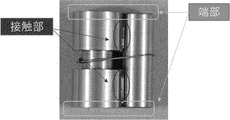
- a dumbbell-shaped steel material S45C and a cylindrical steel material SUJ2 were tied at the center using a wire made of SUS303, and the dumbbell-shaped steel material S45C and the cylindrical steel material SUJ2 were bound together (see FIG. 1). .. Then, after heating the test piece in a furnace having a mixed gas atmosphere of nitrogen and hydrogen, the test piece was put into a heat-treated oil composition and quenched to perform a quenching test.
- the conditions for the quenching test were the following four conditions.
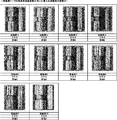
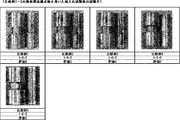
- the brilliance was evaluated based on the following criteria, focusing on "brightness”, “coloring of the edge”, and “coloring of the contact portion”. Further, based on the evaluation results of "brightness”, “coloring of the edge”, and “coloring of the contact portion”, the brilliance of the test piece was comprehensively evaluated according to the following criteria.
- (brightness) An appearance sample with a predetermined coloration was prepared, and the color of the test piece after quenching was visually compared and evaluated. The degree of coloring of the appearance sample is indicated by the numerical values shown below. 0: No coloring at all. 1: There is light coloring. 2: There is blackish brown to black coloring. (Coloring of edges) The end of the test piece (see FIG.
- Evaluation S The total of the evaluation results of "brightness”, “coloring of edges”, and “coloring of contact parts” is 0.
- Evaluation A The total of the evaluation results of "brightness”, “coloring of edges”, and “coloring of contact parts” is 1.
- Evaluation B The total of the evaluation results of "brightness”, “coloring of edges”, and “coloring of contact parts” is 2.
- Evaluation C The total of the evaluation results of "brightness”, “coloring of the edge”, and “coloring of the contact part” is 3 or more, but of "brightness”, “coloring of the edge", and “coloring of the contact part" When any of the evaluation results was 2 or more, the evaluation was C.
- the heat-treated oil composition having an evaluation S is extremely excellent in brilliance.
- the heat-treated oil composition of evaluation A has excellent brilliance.
- the heat-treated oil composition of evaluation B is slightly inferior in brilliance.
- the heat-treated oil composition having a rating of C is inferior in brilliance.
- FIG. 2 shows the test pieces after the quenching test using the heat-treated oil compositions of Examples 1 to 10
- FIG. 3 shows the test pieces after the quenching test using the heat-treated oil compositions of Comparative Examples 1 to 5. show.
- Example 5 and Comparative Example 1 were examined for sludge generation. Specifically, the heat-treated oil compositions of Example 5 and Comparative Example 1 were forcibly deteriorated, and the generation of sludge was examined.
- the forced deterioration method was based on the Indiana Oxidation Test Method (IOT). The conditions were as follows.
Landscapes
- Chemical & Material Sciences (AREA)
- Oil, Petroleum & Natural Gas (AREA)
- Organic Chemistry (AREA)
- Engineering & Computer Science (AREA)
- Chemical Kinetics & Catalysis (AREA)
- General Chemical & Material Sciences (AREA)
- Thermal Sciences (AREA)
- Physics & Mathematics (AREA)
- Crystallography & Structural Chemistry (AREA)
- Mechanical Engineering (AREA)
- Materials Engineering (AREA)
- Metallurgy (AREA)
- Lubricants (AREA)
Priority Applications (3)
| Application Number | Priority Date | Filing Date | Title |
|---|---|---|---|
| JP2021575831A JP7653374B2 (ja) | 2020-02-04 | 2021-02-03 | 熱処理油組成物 |
| CN202180012201.1A CN115003781A (zh) | 2020-02-04 | 2021-02-03 | 热处理油组合物 |
| US17/759,873 US20230119812A1 (en) | 2020-02-04 | 2021-02-03 | Heat treatment oil composition |
Applications Claiming Priority (2)
| Application Number | Priority Date | Filing Date | Title |
|---|---|---|---|
| JP2020017125 | 2020-02-04 | ||
| JP2020-017125 | 2020-02-04 |
Publications (1)
| Publication Number | Publication Date |
|---|---|
| WO2021157612A1 true WO2021157612A1 (ja) | 2021-08-12 |
Family
ID=77200674
Family Applications (1)
| Application Number | Title | Priority Date | Filing Date |
|---|---|---|---|
| PCT/JP2021/003929 Ceased WO2021157612A1 (ja) | 2020-02-04 | 2021-02-03 | 熱処理油組成物 |
Country Status (5)
| Country | Link |
|---|---|
| US (1) | US20230119812A1 (https=) |
| JP (1) | JP7653374B2 (https=) |
| CN (1) | CN115003781A (https=) |
| TW (1) | TWI881038B (https=) |
| WO (1) | WO2021157612A1 (https=) |
Cited By (1)
| Publication number | Priority date | Publication date | Assignee | Title |
|---|---|---|---|---|
| WO2023008545A1 (ja) * | 2021-07-30 | 2023-02-02 | 出光興産株式会社 | 熱処理油組成物 |
Citations (4)
| Publication number | Priority date | Publication date | Assignee | Title |
|---|---|---|---|---|
| JPS61106710A (ja) * | 1984-10-17 | 1986-05-24 | エシル ペトロレアム アデイテイブズ リミテツド | 焼入れ油、焼入れ油濃厚物および鉄金属の熱処理方法 |
| JPH06136435A (ja) * | 1991-10-18 | 1994-05-17 | Idemitsu Kosan Co Ltd | 熱処理油組成物 |
| JP2010209422A (ja) * | 2009-03-11 | 2010-09-24 | Idemitsu Kosan Co Ltd | 熱処理油組成物 |
| JP2016132819A (ja) * | 2015-01-21 | 2016-07-25 | 出光興産株式会社 | 蒸気膜破断剤、及び熱処理油組成物 |
Family Cites Families (8)
| Publication number | Priority date | Publication date | Assignee | Title |
|---|---|---|---|---|
| US2353169A (en) * | 1940-07-15 | 1944-07-11 | Lubri Zol Dev Corp | Lubricant |
| US5250122A (en) * | 1991-10-18 | 1993-10-05 | Idemitsu Kosan Co., Ltd. | Heat treating oil composition |
| TW224485B (https=) * | 1991-10-18 | 1994-06-01 | Idemitsu Kosan Co | |
| JP2878940B2 (ja) * | 1993-08-31 | 1999-04-05 | 出光興産株式会社 | 熱処理油組成物 |
| JP4876517B2 (ja) * | 2005-10-05 | 2012-02-15 | 旭硝子株式会社 | 熱処理油組成物 |
| CN103667628A (zh) * | 2012-09-20 | 2014-03-26 | 中国石油化工股份有限公司 | 热处理方法 |
| US11035015B2 (en) * | 2015-01-21 | 2021-06-15 | Idemitsu Kosan Co., Ltd. | Vapor film-rupturing agent, and thermal treatment oil composition |
| CN108220552A (zh) * | 2018-04-16 | 2018-06-29 | 合肥汇之新机械科技有限公司 | 一种模具钢热处理用淬火剂及其制备方法 |
-
2021
- 2021-02-03 US US17/759,873 patent/US20230119812A1/en not_active Abandoned
- 2021-02-03 JP JP2021575831A patent/JP7653374B2/ja active Active
- 2021-02-03 WO PCT/JP2021/003929 patent/WO2021157612A1/ja not_active Ceased
- 2021-02-03 CN CN202180012201.1A patent/CN115003781A/zh active Pending
- 2021-02-04 TW TW110104232A patent/TWI881038B/zh active
Patent Citations (4)
| Publication number | Priority date | Publication date | Assignee | Title |
|---|---|---|---|---|
| JPS61106710A (ja) * | 1984-10-17 | 1986-05-24 | エシル ペトロレアム アデイテイブズ リミテツド | 焼入れ油、焼入れ油濃厚物および鉄金属の熱処理方法 |
| JPH06136435A (ja) * | 1991-10-18 | 1994-05-17 | Idemitsu Kosan Co Ltd | 熱処理油組成物 |
| JP2010209422A (ja) * | 2009-03-11 | 2010-09-24 | Idemitsu Kosan Co Ltd | 熱処理油組成物 |
| JP2016132819A (ja) * | 2015-01-21 | 2016-07-25 | 出光興産株式会社 | 蒸気膜破断剤、及び熱処理油組成物 |
Cited By (1)
| Publication number | Priority date | Publication date | Assignee | Title |
|---|---|---|---|---|
| WO2023008545A1 (ja) * | 2021-07-30 | 2023-02-02 | 出光興産株式会社 | 熱処理油組成物 |
Also Published As
| Publication number | Publication date |
|---|---|
| US20230119812A1 (en) | 2023-04-20 |
| JP7653374B2 (ja) | 2025-03-28 |
| JPWO2021157612A1 (https=) | 2021-08-12 |
| TW202138570A (zh) | 2021-10-16 |
| TWI881038B (zh) | 2025-04-21 |
| CN115003781A (zh) | 2022-09-02 |
Similar Documents
| Publication | Publication Date | Title |
|---|---|---|
| JP7722846B2 (ja) | 熱処理油組成物 | |
| EP2113021B1 (en) | Method for making a lubricant base oil and its use | |
| CN101198680B (zh) | 氧化稳定的油配制物 | |
| CN101213277B (zh) | 油压工作油用基础油和组合物 | |
| CN101617033A (zh) | 润滑油组合物 | |
| US20070129268A1 (en) | Lubricating oil composition | |
| EP3492565A1 (en) | Lubricating oil composition | |
| JP7653374B2 (ja) | 熱処理油組成物 | |
| WO2016117566A1 (ja) | 蒸気膜破断剤、及び熱処理油組成物 | |
| JP7699949B2 (ja) | 熱処理油 | |
| JP5576437B2 (ja) | 潤滑油基油及びその製造方法、並びに該基油を含有する潤滑油組成物 | |
| WO2023008545A1 (ja) | 熱処理油組成物 | |
| CN113748189B (zh) | 变速器用润滑油组合物、其制造方法、使用了变速器用润滑油组合物的润滑方法及变速器 | |
| JP7219232B2 (ja) | 潤滑油組成物及び基油 | |
| CN107429190A (zh) | 四冲程循环发动机用润滑油组合物 | |
| JP6614568B2 (ja) | 蒸気膜破断剤、及び熱処理油組成物 | |
| JP2025154115A (ja) | 熱処理油 | |
| JP2000144166A (ja) | 内燃機関用潤滑油組成物 | |
| JP6614567B2 (ja) | 蒸気膜破断剤、及び熱処理油組成物 | |
| WO2025164631A1 (ja) | 熱処理油 | |
| EP3318620A1 (en) | Use of a lubricant for improving the low temperature viscosity of lubricant compositions |
Legal Events
| Date | Code | Title | Description |
|---|---|---|---|
| 121 | Ep: the epo has been informed by wipo that ep was designated in this application |
Ref document number: 21750067 Country of ref document: EP Kind code of ref document: A1 |
|
| ENP | Entry into the national phase |
Ref document number: 2021575831 Country of ref document: JP Kind code of ref document: A |
|
| NENP | Non-entry into the national phase |
Ref country code: DE |
|
| 122 | Ep: pct application non-entry in european phase |
Ref document number: 21750067 Country of ref document: EP Kind code of ref document: A1 |
|
| WWG | Wipo information: grant in national office |
Ref document number: 202247043903 Country of ref document: IN |