WO2021024191A2 - Combination treatments with benzodiazepinone compounds and phosphoinositide 3-kinase pathway inhibitors for treating cancer - Google Patents
Combination treatments with benzodiazepinone compounds and phosphoinositide 3-kinase pathway inhibitors for treating cancer Download PDFInfo
- Publication number
- WO2021024191A2 WO2021024191A2 PCT/IB2020/057385 IB2020057385W WO2021024191A2 WO 2021024191 A2 WO2021024191 A2 WO 2021024191A2 IB 2020057385 W IB2020057385 W IB 2020057385W WO 2021024191 A2 WO2021024191 A2 WO 2021024191A2
- Authority
- WO
- WIPO (PCT)
- Prior art keywords
- inhibitor
- cells
- subject
- pi3k
- compound
- Prior art date
- Legal status (The legal status is an assumption and is not a legal conclusion. Google has not performed a legal analysis and makes no representation as to the accuracy of the status listed.)
- Ceased
Links
- 0 C*(C)(C)C1=CC(C(c(cccc2)c2N(*)C2=O)=N[C@@]2NC([C@](*I)[C@](*)C(*)=O)=O)=CC=CCC=C1 Chemical compound C*(C)(C)C1=CC(C(c(cccc2)c2N(*)C2=O)=N[C@@]2NC([C@](*I)[C@](*)C(*)=O)=O)=CC=CCC=C1 0.000 description 13
- YLNFRYAOCLTTNL-UHFFFAOYSA-N CCCc1cnc(C)cc1 Chemical compound CCCc1cnc(C)cc1 YLNFRYAOCLTTNL-UHFFFAOYSA-N 0.000 description 1
Classifications
-
- A—HUMAN NECESSITIES
- A61—MEDICAL OR VETERINARY SCIENCE; HYGIENE
- A61K—PREPARATIONS FOR MEDICAL, DENTAL OR TOILETRY PURPOSES
- A61K45/00—Medicinal preparations containing active ingredients not provided for in groups A61K31/00 - A61K41/00
- A61K45/06—Mixtures of active ingredients without chemical characterisation, e.g. antiphlogistics and cardiaca
-
- A—HUMAN NECESSITIES
- A61—MEDICAL OR VETERINARY SCIENCE; HYGIENE
- A61P—SPECIFIC THERAPEUTIC ACTIVITY OF CHEMICAL COMPOUNDS OR MEDICINAL PREPARATIONS
- A61P35/00—Antineoplastic agents
- A61P35/02—Antineoplastic agents specific for leukemia
Definitions
- the present invention provides methods for treating a proliferative disorder in a subject comprising administering to the subject a first composition comprising one or more gamma secretase inhibitors and a second composition comprising one or more phosphoinositide 3-kinase (PI3K) pathway antagonists/inhibitors.
- a first composition comprising one or more gamma secretase inhibitors
- a second composition comprising one or more phosphoinositide 3-kinase (PI3K) pathway antagonists/inhibitors.
- PI3K phosphoinositide 3-kinase
- T-ALL T-cell acute lymphoblastic leukemia
- a subject in need thereof comprising identifying elevated expression of T-ALL-specific transcription factors and administering to the subject a gamma secretase inhibitor and, optionally, a (PI3K) pathway antagonist/inhibitor, a transcription factor inhibitor, or a combination thereof.
- PI3K gamma secretase inhibitor
- T-ALL is a rare and aggressive subtype of acute lymphoblastic leukemia (ALL). T-ALL originates from T-cell precursors that undergo malignant transformation at any stage of their development in the thymus.
- T-ALL affects about 20% of adult and 10-15% of childhood ALL cases. Roughly 20% of patients fail conventional therapy, and most T-ALL tumors prove fatal.
- Various cytogenetic and molecular abnormalities that disrupt normal thymocyte development can lead to T-ALL, and the majority of T- ALL cases can be sub-classified based on arrest at various thymic maturation stages.
- ETP T-ALL Early T-cell precursor acute lymphoblastic leukemia
- ETP T-ALL developmentally arrested ETP cells are characterized by lack of expression of canonical T-cell surface markers (CD1A, CD4, CD8) and expression of one or more myeloid or stem-cell markers (CD13, CD33, CD34 and CD117).
- Transcriptome analyses have demonstrated unique genetic and transcriptional signatures that are distinct from other types of T-ALL and suggest a close relationship to myeloid precursors and myeloid malignancies. However, it is unclear if these signatures co-exist within the same ETP-ALL cell or within different cells in the tumor cell population.
- Current drugs and therapies for T-ALL have not succeeded in achieving lasting remission, leading to refractory or relapsed disease, in ETP-ALL particularly, in which patients develop resistance to chemotherapy.
- this invention provides a method for treating, inhibiting or suppressing a proliferative disease in a subject comprising administering to the subject a first composition comprising one or more gamma secretase inhibitors and a second composition comprising one or more phosphoinositide 3-kinase (PI3K) pathway antagonists/inhibitors.
- a first composition comprising one or more gamma secretase inhibitors
- a second composition comprising one or more phosphoinositide 3-kinase (PI3K) pathway antagonists/inhibitors.
- PI3K phosphoinositide 3-kinase
- this invention provides a method for treating, inhibiting, or suppressing T- cell acute lymphoblastic leukemia (T-ALL) in a subject comprising: obtaining T-cells from the subject; identifying the expression of PDCD1, TIGIT, LAG3, HAVCR2, CD244 or a combination thereof, and the expression of CCR7, TCF7, LEF1 and SELL in the obtained T-cells, wherein if the expression of PDCD1, TIGIT, LAG3, HAVCR2, CD244 or a combination thereof is higher than the expression of CCR7, TCF7, LEF1, SELL, or a combination thereof, then c) administering to the subject a first composition comprising one or more gamma secretase inhibitors and optionally, administering an additional composition comprising one or more phosphoinositide 3-kinase-alpha (PI3K-alpha) antagonists/inhibitors, an additional composition comprising a transcription factor inhibitor, or a combination thereof.
- T-ALL T-
- Figures 1A-1F show ETP T-ALL cells have distinct transcriptional profile.
- Figure 1A is a schematic depicting the cohort, sample collection, processing and sorting of cells for single-cell transcriptional profiling using SMART-seq2 protocol.
- Figure 1B shows t-stochastic network embedding (t-SNE) of the processed single cell RNA-seq gene expression data reveals distinct patient-specific clusters along with heterogeneous clusters.
- Figure 1C shows further analysis using PAGODA2 to reveal the biological identity of individual cells.
- Figure 1D shows correlation distance matrix (1-Pearson correlation coefficient) derived from normalized gene-expression values of individual malignant cells.
- the silhouette plot on top of the matrix depicts the uniqueness of each of the patient-specific malignant clusters.
- Figure 1E shows marker gene analyses of the 13 clusters identifies heterogenous clusters as CD4 + T-cells, CD8 + T cells, NK-cells, B-cells and myeloid cells. Expression of the top marker genes for each of the clusters containing normal cells are depicted as heatmap.
- Figure 1F shows cells from normal donors are highlighted in the heatmap (top) and fall into normal cell clusters.
- Figure 2A shows a heatmap demonstrating expression of HSC, MPP, CMP, GMP and CLP signatures as defined per BLUEPRINT in individual leukemic cells.
- Figure 2B shows expression of HSC, CMP and CLP scores in human cell atlas (top), and ETP T-ALL cells (bottom) demonstrating lineage promiscuity in leukemic cells compared to normal BM cells.
- Figures 3A-3F show that Notch inhibition expands immature cells with PI3K signaling activity that coexist with immature Notch dependent cells.
- Figure 3A shows t-SNE plot with the treated leukemic cells colored according to days of GSI treatment.
- Figure 3B shows a, heatmap depicting the relative expression of Notch target genes in a representative patient (P5) over the course of GSI treatment.
- Figure 3C is a Violin plot showing the reduced notch activity upon GSI treatment inferred by average relative expression profile of the defined notch targets in a representative patient (P5).
- Figure 3D is a Violin plot depicting increased PI3K activity as inferred by PROGENy upon GSI treatment in a representative patient (P5).
- Figure 3E shows a heatmap demonstrating mutually exclusive Notch and PI3K signaling activity in untreated leukemic cells.
- Figure 3F shows a projection of RNA-velocity vectors onto PI3K-notch activity embedding captures two states depicting high PI3K and high Notch activity within the untreated leukemic cells (left). Monocole subclusters separate based on PI3K versus Notch activity. After GSI treatment cells with PI3K high activity persists without changing directionality by RNA velocity (right).
- Figures 4A-4F show CD8 + T cell dysfunction in ETP T-ALL.
- Figure 4B and 4C show pseudotime trajectory inferred using unsupervised approach through monocle2.
- FIG. 4B The cells on the trajectory are colored based on monocle states ( Figure 4B) and Fig 4C shows the source of CD8 + T-cells.
- Figure 4D shows a heatmap depicting expression of state-specific markers obtained through monocle. Canonical marker genes for na ⁇ ve CD8 + T-cells, activation and exhaustion/dysfunction are annotated in the heatmap.
- Figures 5A-5E show HAVCR2-LGALS9 interactions and CD8 + T cell dysfunction in ETP T-ALL.
- Figure 5A is a Violin plots depicting expression of co-inhibitory receptors (on dysfunctional CD8 + T-cells, shown as open circles), and their interacting ligands (on malignant T-ALL cells, depicted as triangles). Colors represent malignant clusters based on PAGODA2.
- FIG. 5B shows receptor- ligand interaction scores inferred from expression of receptor and ligand genes in the respective cell types point toward prominent HAVCR2-LGALS9 interaction (ligand on T-ALL cells, matching receptor on dysfunctional CD8 + T-cells).
- Figure 5C shows immunohistochemistry (IHC) of LGALS9 and HAVCR2 on bone marrow from representative ETP-ALL patient (P2) demonstrates strong staining of LGALS9 on leukemic blasts and interspersed HAVCR2 staining on microenvironmental cells.
- Figure 5D shows intracellular immunofluorescent staining of LGALS9 and isotype control in DND-41 T-ALL cell line.
- Figures 6A-6F show quality filtering of scRNA-seq dataset.
- Figure 6A shows distribution of features in the unfiltered dataset – (i) library size per cell, (ii) number of genes detected in each cell, (iii) percentage of counts mapping to mitochondrial genes in each cell and (iv) percentage of counts mapping to house-keeping genes in all cells sequenced.
- Figure 6B is a scatter plot depicting the result of principal component analyses using the top two dimensions. The PCA was performed on these four features for all the 5077 cells. The outliers were detected using mvoutlier package and are highlighted in orange.
- Figure 6C is a Venn diagram depicting the overlap between the outliers detected by mvoutlier (blue) and manual cut-offs (red) using median absolute deviations (M.A.D’s).
- Figure 6D shows the distribution of the features after filtering out the cells detected to be outlier by both the methods.
- Figure 6E is a scatter plot depicting the quality of data from the remaining 3562 cells through expression frequency and mean read counts per gene.
- Figure 6F is the density plot depicting the contribution of various technical factors contributing to the total variation observed in entire dataset.
- Figures 7A-7F demonstrate confirming the identity of non-malignant immune cell clusters.
- Figure 7A is a heatmap depicting the log-likelihood scores derived by comparison of scRNA-seq profile to the bulk RNA-seq profile obtained from purely sorted immune population. These bulk RNA-seq profile was obtained from blueprint consortium.
- Figure 7B depicts Cluster 1 showing specific expression in CD8+ T-cells in ImmGen dataset
- Figure 7C depicts Cluster 7 showing specific expression in the NK cell population in ImmGen dataset
- Figure 7D depicts Cluster 8 showing specific expression in the B-cell population
- Figure 7E depicts Cluster 10 showing specific expression in CD4+ T-cell population
- Figure 7F depicts Cluster 11 showing specific expression in the myeloid population from ImmGen dataset.
- Figures 8A-8G show the effect of cell-cycle on clustering of scRNA-seq data.
- Figure 8A is a PCA plot of the derived by considering all the genes involved in cell-cycle using SEURAT tool.
- Figure 8B is a t-SNE plot of scRNA-seq profiles. Each dot represents a cell and is colored based on the cell-cycle phase predicted by SEURAT.
- Figure 8C is the scatterplot depicts the G2M and S- score obtained for each of the cells. The cells are colored based on the clusters obtained from PAGODA2.
- Figure 8D is stacked bar plots depicting the relative distribution of different cell-cycle phases in each of the clusters (P3- Figure 8E; P4 – Figure 8F. P5 – Figure 8G). Notably the malignant clusters from all the five patients have more cells in S and G2M phase.
- Figures 9A-9F show distribution of normal donor cells and pathogenic SNVs.
- Figure 9A shows distribution of normal T-cells from four different normal donors.
- Figures 9B-9F show distribution of different pathogenic variants detected using rapid heme panel and confirmed through scRNA-seq profiling using Mutect2 (Figure 9B) P1, (Figure 9C) P2, (Figure 9D) P3, ( Figure 9E) P4 and ( Figure 9F) P5.
- Figures 10A-10E show copy number variation (CNV) profile from scRNA-seq data.
- Figure 10A shows a profile depicting the amplifications and deletion signals from all the patient cells using inferCNV. All the T-cells from normal donors were used as control.
- Figures 10B-10E show the Gaussian mixture model (GMM) fit to distinguish between malignant and non-malignant cells by using CONICSMAT algorithm. The model fit for five CNV events depicted in Figure 1 is shown here.
- Figure 11 shows T-ALL specific transcriptional factors.
- t-SNE plot depicting the expression of various transcription factors known to be generally deregulated in T-ALL. All the five patients show the expression of LMO2 an LYL1 transcription factors. Some of the patients also expression TAL1 and HOX transcription factors.
- Figures 12A-12H show comparison to TARGET study.
- Figure 12A shows a tSNE plot colored based on the T-ALL classification obtained from the TARGET study. Each dot represents bulk-RNA seq profile from individual patient.
- Figure 12B is the same t-SNE plot in Figure 12A, colored based on the clusters derived from SC3 tool.
- Figure 12C is the silhouette plot depicting the confidence of each of the clusters obtained.
- Figures 12D-12H show the data from single cell sequencing for each of the five patients, respsectively. All five patients in the study had around five 96-well smart-seq plates sequenced. The sequencing reads from each of the plates were collapsed, hence five replicates were obtained for each patient. Each of these replicates were compared to average expression profile of individual T-ALL subtype cluster to obtain the log-likelihood score. All the patients showed high similarity to ETP T-ALL subtype with deregulated expression of LMO2-LYL1.
- Figures 13A-13B show Random Forest Model trained on transcription factors.
- Figure 13A is a plot depicting th0e relationship between the error and number of trees used by random forest model on malignant (green), non-malignant (red) and combined (black) by considering all the malignant and non-malignant cells. The relative importance of each of the transcription factors in the model is depicted below.
- Figure 13B shows the same plots as Figure 13A, generated by training the model only on the untreated cell population.
- Figure 14 shows the effect of GSI treatment on leukemic cells.
- FIG. 15A-15E show Heatmaps of signaling activity. Heatmap depicting the varying signaling activity as inferred by PROGENy in all the leukemic cells from Patient 1 ( Figure 15A); Patient 2 ( Figure 15B); Patient 3 ( Figure 15C); Patient 4 ( Figure 15D); and Patient 5 ( Figure 15E). Notch activity was inferred from average relative expression of all the known Notch targets.
- Figure 16 shows inhibitory receptor-ligand interactions.
- FIG. 17 shows LGALS9 expression in TARGET dataset.
- the violin plot depicts the expression of LGALS9 across various subsets of T-ALL from TARGET study.
- Figure 18 shows LGALS9 protein expression in leukemia cell lines determined by flow cytometry. First row, T-ALL cell lines, HPB-ALL, KOPT-K1, Loucy, and MOLT-4. Second row, B-ALL cell lines, NALM-6 and SEM. Third row, AML cell lines, KG1 and HL-60.
- FIG. 19 shows blockade of LGALS9 with neutralizing antibody inhibits HAVCR2 expression.
- T-cell precursor acute lymphoblastic leukemia (ETP T-ALL) is a distinct subtype of T- ALL characterized by higher rates of relapse and induction failure.
- this invention provides a method for treating a hyperproliferative disorder in a subject comprising administering to the subject a first composition comprising one or more gamma secretase inhibitors and a second composition comprising one or more phosphoinositide 3-kinase- alpha (PI3K-alpha) antagonists/inhibitors.
- a first composition comprising one or more gamma secretase inhibitors and a second composition comprising one or more phosphoinositide 3-kinase- alpha (PI3K-alpha) antagonists/inhibitors.
- PI3K-alpha phosphoinositide 3-kinase- alpha
- this invention provides a method for inhibiting a hyperproliferative disorder in a subject comprising administering to the subject a first composition comprising one or more gamma secretase inhibitors and a second composition comprising one or more phosphoinositide 3-kinase-alpha (PI3K-alpha) antagonists/inhibitors.
- this invention provides a method for suppressing a hyperproliferative disorder in a subject comprising administering to the subject a first composition comprising one or more gamma secretase inhibitors and a second composition comprising one or more phosphoinositide 3-kinase-alpha (PI3K-alpha) antagonists/inhibitors.
- the one or more gamma secretase inhibitors is a NOTCH inhibitor. In some embodiments, the one or more gamma secretase inhibitors is a bisfluoroalkyl-1,4- benzodiazepinone compound. [0033] In another embodiment, this invention provides a method for treating, inhibiting, or suppressing a hyperproliferative disorder in a subject comprising administering to the subject a first composition comprising one or more NOTCH inhibitors and a second composition comprising one or more phosphoinositide 3-kinase-alpha (PI3K-alpha) antagonists/inhibitors.
- PI3K-alpha phosphoinositide 3-kinase-alpha
- this invention provides a method for treating, inhibiting, or suppressing a hyperproliferative disorder in a subject comprising administering to the subject a first composition comprising one or more bisfluoroalkyl-1,4-benzodiazepinone compounds and a second composition comprising one or more phosphoinositide 3-kinase-alpha (PI3K-alpha) antagonists/inhibitors.
- a first composition comprising one or more bisfluoroalkyl-1,4-benzodiazepinone compounds
- a second composition comprising one or more phosphoinositide 3-kinase-alpha (PI3K-alpha) antagonists/inhibitors.
- PI3K-alpha phosphoinositide 3-kinase-alpha
- the one or more gamma secretase inhibitors and/or the one or more Notch inhibitors and/or the one or more bisfluoroalkyl-1,4-benzodiazepinone compounds has a chemical structure of Formula (I): [0036] and/or at least one salt thereof, wherein: [0037] R 1 is -CH 2 CF 3 or -CH 2 CH 2 CF 3 ; [0038] R 2 is -CH 2 CF 3 , -CH 2 CH 2 CF 3 , or -CH 2 CH 2 CH 2 CF 3 ; [0039] R 3 is H, -CH 3 or R x ; [0040] R 4 is H or R y ; [0041] R x is: -CH 2 OC(O)CH(CH 3 )NH 2 , -CH 2 OC(O)CH(NH 2 )CH(CH 3 ) 2
- Formula (I) comprises the chemical structure of Compound (1): [0049] In another embodiment, Formula (I) comprises the chemical structure of Compound (2): [0050] In another embodiment, Formula (I) comprises the chemical structure of Compound (22): [0051] In one embodiment, the present invention provides compositions comprising compounds represented by the structure of Formula (I):
- R 1 is -CH 2 CF 3 or -CH 2 CH 2 CF 3
- R 2 is -CH 2 CF 3 , -CH 2 CH 2 CF 3 , or -CH 2 CH 2 CH 2 CF 3
- R 3 is H, -CH 3 or R x
- R 4 is H or R y
- R x is: -CH 2 OC(O)CH(CH 3 )NH 2 , -CH 2 OC(O)CH(NH 2 )CH(CH 3 ) 2 , -CH 2 OC(O)CH((CH( CH 3 ) 2 )NHC(O)CH(NH 2 )CH(CH 3 ) 2
- R y is: -SCH 2 CH(NH 2 )C(O)OH, -SCH 2 CH(NH 2 )C(O)OH 3 , or -SCH 2 CH(NH 2 )C(O)OC(CH 3 ) 3
- Ring A is phenyl
- compositions comprising compounds of Formula (III): or prodrugs or salts thereof; wherein: R 1 is -CH 2 CF 3 or -CH 2 CH 2 CF 3 ; R 2 is -CH 2 CF 3 , -CH 2 CH 2 CF 3 , or -CH 2 CH 2 CH 2 CF 3 ; R 3 is H or -CH 3 ; each R a is independently F, Cl, -CN, -OCH 3 , and/or -NHCH 2 CH 2 OCH 3 ; and y is zero, 1, or 2.
- R 2 is -CH 2 CF 3 or -CH 2 CH 2 CF 3 .
- R 1 is -CH 2 CF 3 or - CH 2 CH 2 CF 3 and R 2 is -CH 2 CF 3 or -CH 2 CH 2 CF 3 .
- R 1 is -CH 2 CH 2 CF 3 and R 2 is -CH 2 CH 2 CF 3 .
- y is zero or 1. In another embodiment, y is 1 or 2. In another embodiment, y is 1 or 2.
- the compound of Formula (III) comprises: (2R,3S)—N-((3S)-1-methyl- 2-oxo-5-phenyl-2,3-dihydro-1H-1,4-benzodiazepin-3-yl)-2,3-bis(3,3,3-trifluoropropyl)succinamide (1)
- the compound of Formula (III) comprises: (2R,3S)—N-((3S)-2-oxo- 5-phenyl-2,3-dihydro-1H-1,4-benzodiazepin-3-yl)-2,3-bis(3,3,3-trifluoropropyl)succinamide (2) [0057] In another embodiment, the compound of Formula (III) comprises: (2R,3S)—N-((3S)-1- methyl-2-oxo-5-phenyl-2,3-dihydro-1H-1,4-benzodiazepin-3-yl)-2-(2,2,2-trifluoroethyl)-3-(3,3,3- trifluoropropyl)succinamide (3); [0058] In another embodiment, the compound of Formula (III) comprises: (2R,3S)—N-((3S)-1- methyl-2-oxo-5-phenyl-2,3-dihydro-1H-1,4-benzodiazepin-3-yl)-2-(
- the compound of Formula (III) comprises: (2R,3S)—N-((3S)-1- ( 2 H 3 )methyl-2-oxo-5-phenyl-2,3-dihydro-1H-1,4-benzodiazepin-3-yl)-2,3-bis(3,3,3- trifluoropropyl)succinamide (5); [0060]
- the compound of Formula (III) comprises a compound of Formula (VI): which in one embodiment, comprises (2R,3S)—N-((3S)-7-chloro-1-methyl-2-oxo-5-phenyl-2,3- dihydro-1H-1,4-benzodiazepin-3-yl)-2,3-bis(3,3,3-trifluoropropyl)succinamide (6), i.e.
- the compound of Formula (III) comprises a compound of Formula (VII): which in one embodiment, comprises (2R,3S)—N-((3S)-9-methoxy-2-oxo-5-phenyl-2,3-dihydro- 1H-1,4-benzodiazepin-3-yl)-2,3-bis(3,3,3-trifluoropropyl)succinamide (12), i.e.
- the compound of Formula (III) comprises: (2R,3S)—N-((3S)-2-oxo- 5-phenyl-2,3-dihydro-1H-1,4-benzodiazepin-3-yl)-3-(4,4,4-trifluorobutyl)-2-(3,3,3- trifluoropropyl)succinamide (19); .
- the compound of Formula (III) comprises: (2R,3S)—N-((3S)-8- methoxy-2-oxo-5-phenyl-2,3-dihydro-1H-1,4-benzodiazepin-3-yl)-3-(4,4,4-trifluorobutyl)-2-(3,3,3- trifluoropropyl)succinamide (20) [0064] In another embodiment, the compound of Formula (III) comprises: (2R,3S)—N-((3S)-9-((2- methoxyethyl)amino)-2-oxo-5-phenyl-2,3-dihydro-1H-1,4-benzodiazepin-3-yl)-2,3-bis(3,3,3- trifluoropropyl)succinamide (21)
- compositions comprising compounds represented by the structure of Formula (I): and/or at least one salt thereof, wherein: R 1 is -CH 2 CF 3 ; R 2 is -CH 2 CH 2 CF 3 , or -CH 2 CH 2 CH 2 CF 3 ; R 3 is H, -CH 3 or R x ; R 4 is H or R y ; R x is: -CH 2 OC(O)CH(CH 3 )NH 2 , -CH 2 OC(O)CH(NH 2 )CH(CH 3 ) 2 , -CH 2 OC(O)CH((CH( CH 3 ) 2 )NHC(O)CH(NH 2 )CH(CH 3 ) 2 , R y is: -SCH 2 CH(NH 2 )C(O)OH, -SCH 2 CH(NH 2 )C(O)OH 3 , or -SCH 2 CH(NH 2 )C(O)OC(CH 3 ) 3 , wherein: R 1 is -CH 2
- Ring A is phenyl; and R 3 is H.
- R 2 is -CH 2 CH 2 CF 3 ; and Ring A is phenyl.
- R 2 is -CH 2 CH 2 CF 3 ; Ring A is phenyl; R a is C 1-3 alkyl or -CH 2 OH; each R b is independently F and/or Cl; and y is 1.
- the present invention provides compositions comprising compounds represented by the structure of Formula (IV):
- the present invention provides compositions comprising compounds represented by the structure of Formula (V): wherein R 3 is H or R x.
- compositions comprising (2R,3S)-N- ((3S)-5-(3-fluorophenyl)-9-methyl-2-oxo-2,3-dihydro-1H-1,4-benzodiazepin-3-yl)-2,3-bis(3,3,3- trifluoropropyl)succinamide (22); (2R,3S)-N-((3S)-5-(3-chlorophenyl)-9-ethyl-2-oxo-2,3-dihydro- 1H-1,4-benzodiazepin-3-yl)-2,3-bis(3,3,3-trifluoropropyl)succinamide (23); (2R,3S)-N-((3S)-5-(3- chlorophenyl)-9-isopropyl-2-oxo-2,3-dihydro-1H-1,4-benzodiazepin-3-yl)-2,3-bis(3,3,3- trifluoropropyl)-2,3-
- compositions comprising compounds represented by the structure of Formula (I): ( and/or at least one salt thereof, wherein: R 1 is -CH 2 CF 3 or -CH 2 CH 2 CF 3 ; R 2 is -CH 2 CF 3 , -CH 2 CH 2 CF 3 , or -CH 2 CH 2 CH 2 CF 3 ; R 3 is H, -CH 3 or R x ; R 4 is H or R y ; R x is: -CH 2 OC(O)CH(CH 3 )NH 2 , -CH 2 OC(O)CH(NH 2 )CH(CH 3 ) 2 , -CH 2 OC(O)CH((CH( R y is: -SCH 2 CH(NH 2 )C(O)OH, -SCH 2 CH(NH 2 )C(O)OH 3 , or -SCH 2 CH(NH 2 )C(O)OC(CH 3 ) 3 ; Ring A is pheny
- a structure as described hereinabove comprises one or more of the following provisos: provided that if Ring A is phenyl, z is zero, and y is 1 or 2 then at least one Ra is C 1-3 alkyl, -CH 2 OH, -CF 3 , cyclopropyl, or -O(cyclopropyl); provided that if R 3 is R x then R 4 is H; and provided that if R 4 is R y then R 3 is H or -CH 3 .
- the present invention provides compositions comprising compounds represented by the following structure: [0073]
- the compounds as described herein comprise prodrugs of one or more of the compounds.
- U.S. Patent No.9,273,014 also discloses the compound of Formula (22): which, in one embodiment, has the chemical name (2R,3S)-N-((3S)-5-(3-fluorophenyl)-9-methyl-2- oxo-2,3-dihydro-1H-1,4-benzodiazepin-3-yl)-2,3-bis(3,3,3-trifluoropropyl)succinamide.
- U.S. Patent No.9,273,014 also discloses a process for synthesizing the compounds as well as other compounds of Formula (I), which are to be considered as part of the present invention.
- Patent No.8,629,136 which is incorporated by reference herein in its entirety, discloses compounds of Formula (III): and/or at least one salt thereof, wherein: R 3 is H or -CH 3 ; and each Ra is independently F, Cl, -CN, -OCH 3 and/or -NHCH 2 CH 2 OCH 3 .
- U.S. Patent No.8,629,136 also discloses the compound of Formula (1): which, in one embodiment, has the chemical name (2R,3S)—N-((3S)-1-methyl-2-oxo-5-phenyl-2,3- dihydro-1H-1,4-benzodiazepin-3-yl)-2,3-bis(3,3,3-trifluoropropyl)succinamide.
- the compounds are Notch inhibitors.
- U.S. Patent No.8,629,136 discloses a process for synthesizing the compounds as well as other compounds of Formula (I), which are to be considered as part of the present invention.
- the present invention provides compositions comprising compounds as described herein formulated at a dose of 4 mg.
- the present invention provides compositions comprising compounds as described herein formulated for intravenous administration.
- the present invention may be embodied in other specific forms without departing from the spirit or essential attributes thereof. This invention encompasses all combinations of the aspects and/or embodiments of the invention noted herein.
- the first composition comprises a gamma secretase inhibitor of Formula (I) having the chemical structure of Compound (1) and a gamma secretase inhibitor of Formula (I) having the chemical structure of Compound (22).
- the one or more PI3K antagonists/inhibitors as described herein comprises a class 1 PI3K antagonist/inhibitor. In another embodiment, the one or more PI3K antagonists/inhibitors comprises a class 2 PI3K antagonist/inhibitor. In another embodiment, the one or more PI3K antagonists/inhibitors comprises a class 3 PI3K antagonist/inhibitor. In another embodiment, the one or more PI3K antagonists/inhibitors comprises a class 4 PI3K antagonist/inhibitor.
- Class 1 PI3Ks have a catalytic subunit known as p110, with four types (isoforms) – p110 alpha, p110 beta, p110 gamma and p110 delta.
- the class 1 PI3K inhibitor comprises a p110 alpha inhibitor.
- the class 1 PI3K inhibitor comprises a p110 beta inhibitor.
- the class 1 PI3K inhibitor comprises a p110 gamma inhibitor.
- the class 1 PI3K inhibitor comprises a p110 delta inhibitor.
- the class 1 PI3K inhibitor comprises a pan-class 1 PI3K inhibitor.
- the one or more PI3K antagonists/inhibitors comprises 2-amino-N- ⁇ 7-methoxy-8-[3-(morpholin-4-yl)propoxy]-2,3-dihydroimidazo[1,2-c]quinazolin-5-yl ⁇ pyrimidine- 5-carboxamide dihydrochloride having a chemical structure of Compound (A):
- the one or more PI3K antagonists/inhibitors comprises 8-chloro-2- phenyl-3-[(1S)-1-(7H-purin-6-ylamino)ethyl]isoquinolin-1-one having a structure of Compound (B): [0084] In some embodiments, the one or more PI3K antagonists/inhibitors comprises 3-(3- fluorophenyl)-2-[(1S)-1-(7H-purin-6-ylamino)propyl]chromen-4-one having a structure of Compound (C): [0085] In another embodiment, the PI3K inhibitor comprises a reversible inhibitor, which in one embodiment, comprises LY294002.
- the PI3K inhibitor comprises an irreversible inhibitor, which in one embodiment, comprises Wortmannin, hibiscone C, or a combination thereof.
- the PI3K inhibitor comprises: Idelalisib; Copanlisib; Duvelisib; Alpelisib (BYL719); Taselisib; Perifosine; Buparlisib (BKM120); Umbralisib, (TGR 1202); PX- 866; Dactolisib; dactolisib tosylate; CUDC-907; Voxtalisib; ME-401; IPI-549; SF1126; SF-1126; RP6530; INK1117; Pictilisib; XL147; Palomid 529; GSK1059615; ZSTK474; ZSTK-474; PWT33597; IC87114; TG100–115; CAL263; RP
- the PI3K inhibitor comprises: 3D-011; ABTL-0812; ACP-319; AL- 2846; alofanib; andrographolide; antroquinonol; APG-2449; ARQ-751; AT-13148; AV-203; AXA- 1125; AZD-8154; Baicalein; BGB-10188; capivasertib; CC-2142; CDX-3379; cenegermin; CERC- 006; CF-602; CHF-6523; CMS-024; copanlisib hydrochloride; COTI-2; CUDC-908; dalotuzumab; dezapelisib; DS-1515; EDP-317; ensartinib; enzastaurin hydrochloride; FCN-411; filgrastim; fimepinostat; FP-208; ganitumab; GDC-0077; GDC-6036; GM-6; G
- the PI3K inhibitor comprises a PI3K p110a isoform inhibitor, which, in one embodiment, comprises Alpelisib and in another embodiment, comprises Taselisib.
- the PI3K inhibitor comprises a PI3K p110 d isoform inhibitor, which, in one embodiment, comprises Idelalisib and in another embodiment, comprises Duvelisib.
- the PI3K inhibitor comprises a Pan-PI3K inhibitor, which, in one embodiment, comprises Buparlisib, Pilaralisib, Pictilisib, or a combination thereof.
- the present invention provides compositions comprising compounds as described herein and one or more PI3K pathway inhibitors.
- the PI3K pathway inhibitor comprises a Pan-Akt inhibitor, which, in one embodiment, comprises Capivasertib, Ipatasertib, MK2006, or a combination thereof.
- the PI3K pathway inhibitor comprises a mTORC1 (mammalian target of rapamycin complex 1) inhibitor, which, in one embodiment, comprises Everolimus, Temsirolimus, Deforolimus, or a combination thereof.
- the PI3K pathway inhibitor comprises a dual PI3K and mTOR inhibitor, which, in one embodiment, comprises Dactolisib, Dactolisib tosylate, Voxtalisib, SF1126, GSK1059615, or a combination thereof.
- the PI3K inhibitor comprises a PI3K Delta inhibitor; a PI3K-a and PI3K-d inhibitor; PI3K-delta and PI3K-gamma inhibitor; an alpha-specific PI3K inhibitor, or a combination thereof.
- the PI3K inhibitor comprises an inhibitor of the PI3K p110b isoform, an inhibitor of the PI3K p110 x isoform, an inhibitor of the PI3K p110d isoform, or a combination thereof.
- the PI3K inhibitor comprises an inhibitor of the PI3K p110a isoform, an inhibitor of the PI3K p110b isoform, an inhibitor of the PI3K p110 x isoform, an inhibitor of the PI3K p110d isoform, or a combination thereof, wherein the PI3Ka inhibitor comprises Alpelisib, Taselisib, or a combination thereof.
- the T-ALL cells of the subject express a transcription factor comprising MYB, ERG, ETV6, ZMIZ, or a combination thereof.
- the T-ALL cells further express a transcription regulator comprising TFDP2, KDM5B, SOX4 or a combination thereof.
- the T-ALL cells further express checkpoint ligand LGALS9 that binds to receptor HAVCR2 (TIM-3).
- the methods further comprise administering to the subject a transcription inhibitor comprising a MYB inhibitor, an ERG inhibitor, an ETV6 inhibitor, a ZMIZ inhibitor, or a combination thereof.
- the methods further comprise administering to the subject a transcription inhibitor comprising a TFDP2 inhibitor, a KDM5B inhibitor, a SOX4 inhibitor or a combination thereof.
- the methods further comprise administering to the subject a neutralizing anti- HAVCR2 antibody, thereby preventing binding of LGALS9 to the receptor HAVCR2 (TIM-3).
- the neutralizing anti-HAVCR2 (TIM-3) antibody comprises anti-TIM-3 monoclonal antibody LY3321367, anti-human TIM-3 monoclonal antibody MBG453, and humanized anti-TIM-3 monoclonal antibody TSR-022.
- the ETP T-ALL cells of the subject express a transcription factor comprising MYB, ERG, ETV6, ZMIZ, or a combination thereof.
- the ETP T-ALL cells further express a transcription factor comprising TFDP2, KDM5B, SOX4 or a combination thereof.
- the ETP T-ALL cells further express checkpoint ligand LGALS9 that binds to receptor HAVCR2 (TIM-3).
- the methods provided herein further comprise administering to the subject a transcription inhibitor comprising a MYB inhibitor, an ERG inhibitor, an ETV6 inhibitor, a ZMIZ inhibitor, or a combination thereof.
- the methods provided herein further comprise administering to the subject a transcription inhibitor comprising a TFDP2 inhibitor, a KDM5B inhibitor, a SOX4 inhibitor or a combination thereof.
- the methods provided herein further comprise administering to the subject a neutralizing anti-HAVCR2 antibody, thereby preventing binding of LGALS9 to the receptor HAVCR2 (TIM-3).
- the ETP T-ALL cells of the subject express a marker of T cell exhaustion comprising PDCD1, TIGIT, LAG3, HAVCR2 (TIM-3), CTLA4, or a combination thereof.
- the herein provided methods further comprise administering to the subject a neutralizing anti-HAVCR2 antibody, thereby preventing binding of LGALS9 to the receptor HAVCR2 (TIM-3).
- administration of the receptor HAVCR2 (TIM-3) inhibitor prevents interaction/binding of LGALS9 to the receptor HAVCR2 (TIM-3).
- T-ALL T-cell acute lymphoblastic leukemia
- EDP T-ALL acute lymphoblastic leukemia
- the present invention provides a method of treating, inhibiting, or suppressing T-cell acute lymphoblastic leukemia (T-ALL) in a subject comprising administering to said subject a first composition comprising one or more gamma secretase inhibitors and a second composition comprising a transcription inhibitor comprising a MYB inhibitor, an ERG inhibitor, an ETV6 inhibitor, a ZMIZ inhibitor, or a combination thereof.
- T-ALL T-cell acute lymphoblastic leukemia
- the present invention provides a method of treating, inhibiting, or suppressing T-cell acute lymphoblastic leukemia (T-ALL) in a subject comprising administering to said subject a first composition comprising one or more gamma secretase inhibitors and a second composition comprising a transcription inhibitor comprising a TFDP2 inhibitor, a KDM5B inhibitor, a SOX4 inhibitor, or a combination thereof.
- T-ALL T-cell acute lymphoblastic leukemia
- the present invention provides a method of treating, inhibiting, or suppressing T-cell acute lymphoblastic leukemia (T-ALL) in a subject comprising administering to said subject a first composition comprising one or more gamma secretase inhibitors and a second composition comprising an inhibitor of binding of LGALS9 to HAVCR2 (TIM-3).
- the inhibitor comprises a neutralizing anti-HAVCR2 antibody, which, in one embodiment, inhibits HAVCR2 expression.
- Methods of Use [0099] In one embodiment, the present invention provides the use of the described compounds or compositions for treating, suppressing or inhibiting a proliferative disease in a subject.
- the hyperproliferative disorder comprises T-cell acute lymphoblastic leukemia (T- ALL).
- the T-ALL comprises early T-cell precursor acute lymphoblastic leukemia (ETP T-ALL).
- a method is provided for treating a disease comprising a NOTCH activating mutation, comprising administering to a subject a compound of Formula (I) and an anti- cancer agent.
- the NOTCH activating mutation is any NOTCH activating mutation.
- the NOTCH activating mutation is a NOTCH1 activating mutation.
- the NOTCH activating mutation is a NOTCH2 activating mutation.
- the NOTCH activating mutation is a NOTCH3 activating mutation.
- the NOTCH activating mutation is a NOTCH4 activating mutation.
- the disease comprises a lymphoid neoplasm.
- the lymphoid neoplasm comprises a CD20 leukemia.
- the lymphoid neoplasm comprises Chronic Lymphocytic Leukemia (CLL).
- the lymphoid neoplasm comprises Small Lymphocytic Leukemia (SLL), mantle cell lymphoma (MCL), marginal zone lymphoma, diffuse large B-cell lymphoma (DLBCL), splenic diffuse red pulp small B-cell lymphoma, follicular lymphoma, or a combination thereof.
- SLL Small Lymphocytic Leukemia
- MCL mantle cell lymphoma
- DLBCL diffuse large B-cell lymphoma
- splenic diffuse red pulp small B-cell lymphoma follicular lymphoma, or a combination thereof.
- the lymphoid neoplasm comprises pediatric T-cell acute lymphoblastic leukemia/lymphoma (T-ALL), adult T- ALL, pediatric early T-cell precursor acute lymphoblastic leukemia (ETP-ALL), adult ETP-ALL, Adult T-cell leukemia/lymphoma, or a combination thereof.
- the disease is associated with low CD20 expression levels in the subject.
- the disease comprises Richter Syndrome.
- the disease associated with low CD20 expression levels comprises Plasmablastic lymphoma, Primary effusion lymphoma, Large B-cell lymphoma arising from HHV8-associated multicentric Castleman’s disease, ALK+ large B cell lymphoma, or a combination thereof.
- the present invention provides the use of a therapeutically acceptable amount of one or more compounds or compositions as described herein for treating, suppressing or inhibiting a proliferative disease in a subject. In another embodiment, the present invention provides the use of a therapeutically effective amount of one or more compounds or compositions as described herein for treating, suppressing or inhibiting a proliferative disease in a subject. In another embodiment, the present invention provides the use of a synergistically effective amount of one or more compounds or compositions as described herein for treating, suppressing or inhibiting a proliferative disease in a subject.
- the present invention provides the use of a synergistically therapeutically effective amount of one or more compounds or compositions as described herein for treating, suppressing or inhibiting a proliferative disease in a subject.
- the proliferative disease comprises a Desmoid tumor.
- the proliferative disease comprises a pre-cancerous condition or a benign proliferative disorder.
- pre-cancerous or, alternatively, “pre-malignant” as used herein interchangeably refers to diseases, syndromes or other conditions associated with an increased risk of cancer.
- Pre-cancer conditions in the context of the present invention include, but are not limited to: breast calcifications, vaginal intra-epithelial neoplasia, Barrett's esophagus, atrophic gastritis, dyskeratosis congenital, sideropenic dysphagia, lichen planus, oral submucous fibrosis, actinic keratosis, solar elastosis, cervical dysplasia, leukoplakia and erythroplakia.
- the term "benign hyperproliferative disorder” as used herein refers to a condition in which there is an abnormal growth and differentiation of cells and an increase in the amount of organic tissue that results from cell proliferation.
- the benign hyperproliferative disorder may be attributed to lack of response or inappropriate response to regulating factors, or alternatively to dysfunctional regulating factors.
- benign hyperproliferative disorder are psoriasis and benign prostatic hyperplasia (BPH).
- BPH benign prostatic hyperplasia
- the proliferative disease comprises a cancer.
- the cancer comprises a solid tumor.
- the cancer comprises a hematological malignancy.
- a subject as described herein has cancer.
- the term "cancer" in the context of the present invention includes all types of neoplasm whether in the form of solid or non-solid tumors and includes both malignant and premalignant conditions as well as their metastasis.
- the cancer comprises a hematological malignancy.
- the cancer is a carcinoma, sarcoma, myeloma, leukemia, or lymphoma.
- the cancer is a mixed type.
- Mixed Type cancers contain several types of cells. The type components may be within one category or from different categories. Some examples are: adenosquamous carcinoma; mixed mesodermal tumor; carcinosarcoma; teratocarcinoma.
- the cancer is dependent upon Notch activation. In another embodiment, the cancer comprises a Notch-activating mutation. In another embodiment, the cancer is not dependent upon Notch activation.
- the carcinoma comprises Adenoid Cystic Carcinoma (ACC).
- the carcinoma comprises Gastro-esophageal junction carcinoma.
- the carcinoma is an adenocarcinoma. In another embodiment, the carcinoma is a squamous cell carcinoma.
- the sarcoma comprises osteosarcoma or osteogenic sarcoma (bone); Chondrosarcoma (cartilage); Leiomyosarcoma (smooth muscle); Rhabdomyosarcoma (skeletal muscle); Mesothelial sarcoma or mesothelioma (membranous lining of body cavities); Fibrosarcoma (fibrous tissue); Angiosarcoma or hemangioendothelioma (blood vessels); Liposarcoma (adipose tissue); Glioma or astrocytoma (neurogenic connective tissue found in the brain); Myxosarcoma (primitive embryonic connective tissue); and Mesenchymous or mixed mesodermal tumor (mixed connective tissue types).
- the cancer comprises myeloma, which, in one embodiment, is cancer that originates in the plasma cells of bone marrow. The plasma cells produce some of the proteins found in blood. In one embodiment, the cancer comprises multiple myeloma. [00118] In another embodiment, the cancer comprises leukemia ("non-solid tumor” or "blood cancer"), which in one embodiment, is a cancer of the bone marrow (the site of blood cell production).
- leukemia comprises myelogenous or granulocytic leukemia (malignancy of the myeloid and granulocytic white blood cell series); Lymphatic, lymphocytic, or lymphoblastic leukemia (malignancy of the lymphoid and lymphocytic blood cell series); and Polycythemia vera or erythremia (malignancy of various blood cell products, but with red cells predominating).
- the cancer comprises T-cell acute lymphoblastic leukemia (T- ALL).
- the cancer comprises T-lymphoblastic leukemia/lymphoma (TLL).
- TLL T-lymphoblastic leukemia/lymphoma
- the cancer comprises Chronic Lymphocytic Leukemia (CLL).
- the cancer comprises a lymphoma.
- the lymphoma comprises an extranodal lymphoma.
- the lymphoma comprises a Hodgkin lymphoma.
- the lymphoma comprises a Non-Hodgkin lymphoma.
- the breast cancer is triple negative breast cancer.
- triple-negative breast cancer cells do not contain receptors for estrogen, progesterone or HER2.
- breast cancer that is ER, PR and HER2 negative cannot be treated with hormone therapies or medications that work by blocking HER2, such as trastuzumab.
- the cancer is dependent upon Notch activation.
- the cancer comprises a Notch-activating mutation. In another embodiment, the cancer is not dependent upon Notch activation. [00123] In one embodiment, a cancer as described herein comprises a Notch activating genetic alteration. In another embodiment, a cancer as described herein comprises a Notch activating alteration. In another embodiment, a cancer as described herein comprises a Notch activating mutation. In another embodiment, a cancer as described herein comprises a Notch activating genetic mutation. In another embodiment, a cancer as described herein comprises a Notch mutation. In another embodiment, a cancer as described herein comprises a Notch altering mutation. [00124] In one embodiment, Notch activating genetic alterations comprise a mutation in one or more Notch related genes.
- the mutation in one or more Notch-related genes induces a gain of function (GOF) in Notch activity.
- the mutation in one or more Notch-related genes comprises a missense mutation.
- the mutation in one or more Notch-related genes comprises a nonsense mutation.
- the mutation in one or more Notch-related genes comprises an insertion mutation.
- the mutation in one or more Notch-related genes comprises a deletion mutation.
- the mutation in one or more Notch-related genes comprises a duplication mutation.
- the mutation in one or more Notch-related genes comprises a frameshift mutation.
- the mutation in one or more Notch-related genes comprises a repeat expansion.
- the mutation in one or more Notch-related genes comprises a fusion.
- the cancer comprises astrocytoma, bladder cancer, breast cancer, cholangiocarcinoma (CCA), colon cancer, colorectal cancer, colorectal carcinoma, epithelial carcinoma, epithelial ovarian cancers, fibrosarcoma, gall bladder cancer, gastric cancer, glioblastoma, glioma, head and neck cancer, hepatocellular carcinoma, kidney cancer, liver cancer, lung cancer including non-small cell lung cancer (NSCLC), malignant fibrous histiocytoma (MFH), malignant pleural mesothelioma (MPM), medulloblastoma, melanoma, mesothelioma, neuroblastoma, osteosarcoma, ovarian adenocarcinoma, ovarian cancer, pancreatic adenocarcinoma, pancreatic cancer, prostate cancer, renal
- the breast cancer is triple negative breast cancer.
- cancer includes the above categories of carcinoma, sarcoma, myeloma, leukemia, lymphoma and mixed type tumors.
- cancer includes: lymphoproliferative disorders, breast cancer, ovarian cancer, prostate cancer, cervical cancer, endometrial cancer, lung cancer, bone cancer, liver cancer, stomach cancer, bladder cancer, colon cancer, colorectal cancer, pancreatic cancer, cancer of the thyroid, head and neck cancer, cancer of the central nervous system, brain cancer, cancer of the peripheral nervous system, skin cancer, kidney cancer, as well as metastases of all the above.
- the term may refer to: hepatocellular carcinoma, hematoma, hepatoblastoma, rhabdomyosarcoma, esophageal carcinoma, thyroid carcinoma, ganglioblastoma, glioblastoma, fibrosarcoma, myxosarcoma, liposarcoma, chondrosarcoma, osteogenic sarcoma, chordoma, angiosarcoma, endotheliosarcoma, Ewing's tumor, leimyosarcoma, rhabdotheliosarcoma, invasive ductal carcinoma, papillary adenocarcinoma, melanoma, squamous cell carcinoma, basal cell carcinoma, adenocarcinoma (well differentiated, moderately differentiated, poorly differentiated or undifferentiated), renal cell carcinoma, hypernephroma, hypernephroid adenocarcinoma, bile
- the administration of the combined compositions as described herein reduces growth of the cells of a solid tumor or hematological malignancy by 40%, 50%, 60%, 70%, 80%, 90% or 95% compared to growth of the cells of the solid tumor or hematological malignancy that have not been treated with the combined compositions, i.e. have been treated with either one of the compositions, have been treated via a different cancer treatment, or have not been treated.
- the present invention provides methods of increasing or lengthening survival of a subject having a neoplasia.
- Neoplasia refers to a disease characterized by the pathological proliferation of a cell or tissue and its subsequent migration to or invasion of other tissues or organs. Neoplasia growth is typically uncontrolled and progressive, and occurs under conditions that would not elicit, or would cause cessation of, multiplication of normal cells.
- Neoplasias can affect a variety of cell types, tissues, or organs, including but not limited to an organ selected from the group consisting of bladder, colon, bone, brain, breast, cartilage, glia, esophagus, fallopian tube, gallbladder, heart, intestines, kidney, liver, lung, lymph node, nervous tissue, ovaries, pleura, pancreas, prostate, skeletal muscle, skin, spinal cord, spleen, stomach, testes, thymus, thyroid, trachea, urogenital tract, ureter, urethra, uterus, and vagina, or a tissue or cell type thereof.
- an organ selected from the group consisting of bladder, colon, bone, brain, breast, cartilage, glia, esophagus, fallopian tube, gallbladder, heart, intestines, kidney, liver, lung, lymph node, nervous tissue, ovaries, pleura, pancreas, prostate, skeletal muscle, skin,
- Neoplasias include cancers, such as sarcomas, carcinomas, or plasmacytomas (malignant tumor of the plasma cells).
- a subject as described herein is being treated with or has been previously treated with radiation therapy, chemotherapy, transplantation, immunotherapy, hormone therapy, or photodynamic therapy.
- T-ALL cells of the subject express a transcription factor comprising MYB, ERG, ETV6, ZMIZ, or a combination thereof.
- the T-ALL cells further express a transcription regulator comprising TFDP2, KDM5B, SOX4 or a combination thereof.
- the T-ALL cells further express checkpoint ligand LGALS9 that binds to receptor HAVCR2 (TIM-3).
- the methods further comprise administering to the subject a transcription inhibitor comprising a MYB inhibitor, an ERG inhibitor, an ETV6 inhibitor, a ZMIZ inhibitor, or a combination thereof.
- the methods provided herein further comprise administering to the subject a transcription inhibitor comprising a TFDP2 inhibitor, a KDM5B inhibitor, a SOX4 inhibitor or a combination thereof.
- the herein provided methods further comprise administering to the subject a neutralizing anti-HAVCR2 antibody, thereby preventing binding of LGALS9 to the receptor HAVCR2 (TIM-3).
- the neutralizing anti- HAVCR2 (TIM-3) antibody comprises anti-TIM-3 monoclonal antibody LY3321367, anti-human TIM-3 monoclonal antibody MBG453, and humanized anti-TIM-3 monoclonal antibody TSR-022.
- the ETP T-ALL cells of the subject express a transcription factor comprising MYB, ERG, ETV6, ZMIZ, or a combination thereof.
- the ETP T-ALL cells further express a transcription factor comprising TFDP2, KDM5B, SOX4 or a combination thereof.
- the ETP T-ALL cells further express checkpoint ligand LGALS9 that binds to receptor HAVCR2 (TIM-3).
- the herein provided methods further comprise administering to the subject a transcription inhibitor comprising a MYB inhibitor, an ERG inhibitor, an ETV6 inhibitor, a ZMIZ inhibitor, or a combination thereof.
- the methods provided herein further comprise administering to the subject a transcription inhibitor comprising a TFDP2 inhibitor, a KDM5B inhibitor, a SOX4 inhibitor or a combination thereof.
- the methods provided herein further comprise administering to the subject a neutralizing anti-HAVCR2 antibody, thereby preventing binding of LGALS9 to the receptor HAVCR2 (TIM-3).
- the ETP T-ALL cells of the subject express a marker of T cell exhaustion comprising PDCD1, TIGIT, LAG3, HAVCR2 (TIM-3), CTLA4, or a combination thereof.
- the methods provided herein further comprise administering to the subject a neutralizing anti-HAVCR2 antibody, thereby preventing binding of LGALS9 to the receptor HAVCR2 (TIM-3).
- the administration of the receptor HAVCR2 (TIM-3) inhibitor prevents interaction/binding of LGALS9 to the receptor HAVCR2 (TIM-3).
- the present invention provides a method for treating, inhibiting or suppressing T-ALL in a subject comprising administering to said subject a MYB inhibitor.
- the present invention provides a method for treating, inhibiting or suppressing T-ALL in a subject comprising administering to said subject an ERG inhibitor. In another embodiment, the present invention provides a method for treating, inhibiting or suppressing T-ALL in a subject comprising administering to said subject an ETV6 inhibitor. In another embodiment, the present invention provides a method for treating, inhibiting or suppressing T-ALL in a subject comprising administering to said subject a ZMIZ inhibitor. In another embodiment, the present invention provides a method for treating, inhibiting or suppressing T-ALL in a subject comprising administering to said subject a combination of the inhibitors described hereinabove.
- the present invention provides a method for treating, inhibiting or suppressing T-ALL in a subject comprising administering to said subject a TFDP2 inhibitor. In another embodiment, the present invention provides a method for treating, inhibiting or suppressing T-ALL in a subject comprising administering to said subject a KDM5B inhibitor. In another embodiment, the present invention provides a method for treating, inhibiting or suppressing T-ALL in a subject comprising administering to said subject a SOX4 inhibitor. In another embodiment, the present invention provides a method for treating, inhibiting or suppressing T-ALL in a subject comprising administering to said subject a combination of the inhibitors described hereinabove.
- the present invention provides a method for treating, inhibiting or suppressing T-ALL in a subject comprising administering to said subject a MYB inhibitor and, or in combination with, a gamma secretase inhibitor or Notch inhibitor as described herein.
- the present invention provides a method for treating, inhibiting or suppressing T-ALL in a subject comprising administering to said subject an ERG inhibitor and, or in combination with, a gamma secretase inhibitor or Notch inhibitor as described herein.
- the present invention provides a method for treating, inhibiting or suppressing T-ALL in a subject comprising administering to said subject an ETV6 inhibitor and, or in combination with, a gamma secretase inhibitor or Notch inhibitor as described herein.
- the present invention provides a method for treating, inhibiting or suppressing T-ALL in a subject comprising administering to said subject a ZMIZ inhibitor and, or in combination with, a gamma secretase inhibitor or Notch inhibitor as described herein.
- the present invention provides a method for treating, inhibiting or suppressing T-ALL in a subject comprising administering to said subject a combination of the inhibitors described hereinabove and, or in combination with, a gamma secretase inhibitor or Notch inhibitor as described herein.
- the present invention provides a method for treating, inhibiting or suppressing T-ALL in a subject comprising administering to said subject a TFDP2 inhibitor and, or in combination with, a gamma secretase inhibitor or Notch inhibitor as described herein.
- the present invention provides a method for treating, inhibiting or suppressing T-ALL in a subject comprising administering to said subject a KDM5B inhibitor and, or in combination with, a gamma secretase inhibitor or Notch inhibitor as described herein.
- the present invention provides a method for treating, inhibiting or suppressing T-ALL in a subject comprising administering to said subject a SOX4 inhibitor and, or in combination with, a gamma secretase inhibitor or Notch inhibitor as described herein.
- the present invention provides a method for treating, inhibiting or suppressing T-ALL in a subject comprising administering to said subject a combination of the inhibitors described hereinabove and, or in combination with, a gamma secretase inhibitor or Notch inhibitor as described herein.
- the present invention provides a method of reversing T-cell dysfunction in a subject comprising administering to said subject an inhibitor of HAVCR2.
- the present invention provides a method of restoring T-cell function in a subject with T-cell dysfunction comprising administering to said subject an inhibitor of HAVCR2.
- the subject has T-ALL, which, in one embodiment, comprises ETP-ALL.
- both an inhibitor of HAVCR2 and a gamma secretase inhibitor or Notch inhibitor as described herein are administered.
- Diagnosing T-ALL [00138]
- the present invention provides a method for treating, inhibiting, or suppressing T-ALL in a subject comprising the step of measuring the expression of PDCD1, TIGIT, LAG3, HAVCR2, CD244 or a combination thereof in the T-cells of said subject, and if the levels are higher than those in control subject, administering a therapeutic combination as described herein.
- the present invention provides a method for diagnosing T-ALL in a subject comprising determining if the T-cells in said subject express one or more markers of T-cell exhaustion or maintenance of T-cell dysfunction, wherein said one or more markers comprises PDCD1, TIGIT, LAG3, HAVCR2, CD244, or a combination thereof.
- the present invention provides a method for treating, inhibiting, or suppressing T-ALL in a subject comprising the step of measuring the expression of TFDP2, KDM5B, SOX4 or a combination thereof in the T-cells of said subject, and if the levels are higher than those in control subject, administering a therapeutic combination as described herein.
- the present invention provides a method for diagnosing T-ALL in a subject comprising determining if the T-cells in said subject express TFDP2, KDM5B, SOX4, or a combination thereof.
- the present invention provides a method for treating, inhibiting, or suppressing T-ALL in a subject comprising the step of measuring the expression of MYB, ERG, ETV6, ZMIZ, TFDP2, KDM5B, SOX4, or a combination thereof in the T-cells of said subject, and if the levels are higher than those in control subject, administering a therapeutic combination as described herein.
- the present invention provides a method for diagnosing T-ALL in a subject comprising determining if the T-cells in said subject express MYB, ERG, ETV6, ZMIZ, TFDP2, KDM5B, SOX4, or a combination thereof.
- the present invention provides a method for treating, inhibiting, or suppressing T-cell acute lymphoblastic leukemia (T-ALL) in a subject comprising a) determining if the T-cells in said subject express one or more markers of T-cell exhaustion or maintenance of T- cell dysfunction, wherein said one or more markers comprises PDCD1, TIGIT, LAG3, HAVCR2, CD244, or a combination thereof, and b) administering one or a combination of anti-cancer compounds as described herein.
- said method comprises administering an anti- HAVCR2 antibody, which, in one embodiment, comprises a neutralizing anti-HAVCR2 antibody.
- the neutralizing anti-HAVCR2 antibody inhibits HAVCR2 expression.
- said method comprises administering an antagonist of HAVCR2 or LGALS9.
- said method comprises administering an antibody to HAVCR2 or LGALS9.
- the T-cell differentiation state is state 5 and state 6.
- determining T-cell exhaustion of single cell CD8 + T-cells comprises performing pseudotime analysis of expression of T-cell exhaustion scores in all the single cell CD8 + T-cells, wherein a T-cell exhaustion score is defined as a difference between average relative expression of exhaustion markers comprising PDCD1, TIGIT, LAG3, HAVCR2, and CTLA4 and na ⁇ ve markers comprising CCR7, TCF7, LEF1 and SELL.
- the one or more gamma secretase inhibitors is a NOTCH inhibitor.
- the one or more gamma secretase inhibitors is a bisfluoroalkyl-1,4- benzodiazepinone compound.
- the one or more gamma secretase inhibitors has a chemical structure of Formula (I): and/or at least one salt thereof, wherein: R 1 is -CH 2 CF 3 or -CH 2 CH 2 CF 3 ; R 2 is -CH 2 CF 3 , -CH 2 CH 2 CF 3 , or -CH 2 CH 2 CH 2 CF 3 ; R 3 is H, -CH 3 or R x ; R 4 is H or R y ; R x is: -CH 2 OC(O)CH(CH 3 )NH 2 , -CH 2 OC(O)CH(NH 2 )CH(CH 3 ) 2 , -CH 2 OC(O)CH((CH(CH 3 ) 2 ) R y is: -SCH 2 CH(NH 2 )C(O)OH, -SCH 2 CH(NH 2 )C(O)OH 3 , or -SCH 2 CH(NH 2 )C(O)OC(CH 3 )
- the one or more gamma secretase inhibitors of Formula (I) has the chemical structure of Compound (1): [00148] In particular embodiments, the one or more gamma secretase inhibitors of Formula (I) has the chemical structure of Compound (2):
- the one or more gamma secretase inhibitors of Formula (I) has the chemical structure of Compound (22): [00150]
- the first composition comprises a gamma secretase inhibitor of Formula (I) having the chemical structure of Compound (1) and a gamma secretase inhibitor of Formula (I) having the chemical structure of Compound (22).
- the T-ALL comprises early T- cell precursor acute lymphoblastic leukemia (ETP T-ALL).
- this invention provides a method for diagnosing and restoring T-cell function in T-cell acute lymphoblastic leukemia (T-ALL) in a subject in need thereof comprising: obtaining T-cells from the subject; identifying a T-cell differentiation state in the obtained T-cells, wherein when the obtained T-cells contain mostly CD8 + T-cells exhibiting expression of markers of T-cell exhaustion comprising PDCD1, TIGIT, LAG3, HAVCR2, CD244 or a combination thereof, the T-cell differentiation state is state 5 and state 6; determining an extent of T-cell exhaustion of single cell CD8 + T-cells comprising performing pseudotime analysis of expression of T-cell exhaustion scores in all the single cell CD8 + T-cells, wherein a T-cell exhaustion score is defined as a difference between average relative expression of exhaustion markers comprising PDCD1, TIGIT, LAG3, HAVCR2, and CTLA4 and na ⁇ ve markers comprising CCR
- compositions [001] Also embraced within this invention is a class of pharmaceutical compositions comprising the compound of Formula (I) and one or more non-toxic, pharmaceutically-acceptable carriers and/or diluents and/or adjuvants (collectively referred to herein as “carrier” materials) and, if desired, other active ingredients.
- carrier non-toxic, pharmaceutically-acceptable carriers and/or diluents and/or adjuvants
- the pharmaceutical carrier may contain a mixture of mannitol or lactose and microcrystalline cellulose.
- the mixture may contain additional components such as a lubricating agent, e.g., magnesium stearate and a disintegrating agent such as crospovidone.
- the carrier mixture may be filled into a gelatin capsule or compressed as a tablet.
- the pharmaceutical composition may be administered as an oral dosage form or an infusion, for example.
- the pharmaceutical composition may be in the form of, for example, a tablet, capsule, liquid capsule, suspension, or liquid.
- the pharmaceutical composition is preferably made in the form of a dosage unit containing a particular amount of the active ingredient.
- the pharmaceutical composition may be provided as a tablet or capsule comprising an amount of active ingredient in the range of from about 0.3 to 2000 mg, preferably from about 0.3 to 500 mg, and more preferably from about 5 to 150 mg.
- a suitable daily dose for a human or other mammal may vary widely depending on the condition of the patient and other factors, but, can be determined using routine methods. Moreover, if a particular dose is higher than desired or tolerated in a daily dosing regimen, dosing can be modified to achieve desired results by utilizing a modified appropriate dosing schedule, such as, for example, twice a week dosing or other suitable schedule. Such modifications and variations are within the scope and knowledge of the ordinarily skilled artisan.
- Any pharmaceutical composition contemplated herein can, for example, be delivered orally via any acceptable and suitable oral preparations.
- exemplary oral preparations include, but are not limited to, for example, tablets, troches, lozenges, pills, aqueous and oily suspensions, dispersible powders, pellets or granules, emulsions, hard and soft capsules, liquid capsules, syrups, and elixirs.
- Pharmaceutical compositions intended for oral administration can be prepared according to any methods known in the art for manufacturing pharmaceutical compositions intended for oral administration.
- Tablet and other oral preparations also can include, without limitation, buccal, chewable, effervescent, modified release, orally disintegrating, sublingual, for oral solution, for oral suspension, triturates, or any other forms suitable for use in accordance with the compositions and methods described herein.
- a pharmaceutical composition in accordance with the invention can contain at least one agent selected from sweetening agents, flavoring agents, coloring agents, demulcents, antioxidants, and preserving agents.
- a tablet can, for example, be prepared by admixing at least one compound of Formula (I) with at least one non-toxic pharmaceutically acceptable excipient suitable for the manufacture of tablets.
- excipients include, but are not limited to, for example, inert diluents, such as, for example, calcium carbonate, sodium carbonate, lactose, calcium phosphate, and sodium phosphate; granulating and disintegrating agents, such as, for example, microcrystalline cellulose, sodium croscarmellose, corn starch, and alginic acid; binding agents, such as, for example, starch, gelatin, polyvinyl-pyrrolidone, and acacia; and lubricating agents, such as, for example, magnesium stearate, stearic acid, and talc.
- inert diluents such as, for example, calcium carbonate, sodium carbonate, lactose, calcium phosphate, and sodium phosphate
- granulating and disintegrating agents such as, for example, microcrystalline cellulose, sodium croscarmellose, corn starch, and alginic acid
- binding agents such as, for example, starch, gelatin, polyviny
- a tablet can either be uncoated, or coated or encapsulated by known techniques to either mask the bad taste of an unpleasant tasting drug, or delay disintegration and absorption of the active ingredient in the gastrointestinal tract thereby sustaining the effects of the active ingredient for a longer period.
- Exemplary water soluble taste masking materials include, but are not limited to, hydroxypropyl-methylcellulose and hydroxypropyl-cellulose.
- Exemplary time delay materials include, but are not limited to, ethyl cellulose, poly (meth) acrylate and cellulose acetate butyrate.
- a formulation can be prepared to include only drug substance.
- Hard gelatin capsules can, for example, be prepared by mixing at least one compound of Formula (I) with at least one inert solid diluent, such as, for example, calcium carbonate; calcium phosphate; and kaolin. Alternatively, if desired, the capsule can be prepared to include only drug substance.
- Soft gelatin capsules can, for example, be prepared by mixing at least one compound of Formula (I) with at least one water soluble carrier, such as, for example, polyethylene glycol; and at least one oil medium, such as, for example, peanut oil, liquid paraffin, and olive oil.
- An aqueous suspension can be prepared, for example, by admixing at least one compound of Formula (I) with at least one excipient suitable for the manufacture of an aqueous suspension.
- excipients suitable for the manufacture of an aqueous suspension include, but are not limited to, for example, suspending agents, such as, for example, sodium carboxymethylcellulose, methylcellulose, hydroxypropylmethyl-cellulose, sodium alginate, alginic acid, polyvinyl- pyrrolidone, gum tragacanth, and gum acacia; dispersing or wetting agents, such as, for example, a naturally-occurring phosphatide, e.g., lecithin; condensation products of alkylene oxide with fatty acids, such as, for example, polyoxyethylene stearate; condensation products of ethylene oxide with long chain aliphatic alcohols, such as, for example heptadecaethylene-oxycetanol; condensation products of ethylene oxide with partial esters derived from
- An aqueous suspension can also contain at least one preservative, such as, for example, ethyl and n-propyl p-hydroxybenzoate; at least one coloring agent; at least one flavoring agent; and/or at least one sweetening agent, including but not limited to, for example, sucrose, saccharin, and aspartame.
- Oily suspensions can, for example, be prepared by suspending at least one compound of Formula (I) in either a vegetable oil, such as, for example, arachis oil; olive oil; sesame oil; and coconut oil; or in mineral oil, such as, for example, liquid paraffin.
- An oily suspension can also contain at least one thickening agent, such as, for example, beeswax; hard paraffin; and cetyl alcohol.
- at least one of the sweetening agents already described hereinabove, and/or at least one flavoring agent can be added to the oily suspension.
- An oily suspension can further contain at least one preservative, including, but not limited to, for example, an antioxidant, such as, for example, butylated hydroxyanisol, and alpha-tocopherol.
- Dispersible powders and granules can, for example, be prepared by admixing at least one compound of Formula (I) with at least one dispersing and/or wetting agent; at least one suspending agent; and/or at least one preservative.
- Suitable dispersing agents, wetting agents, and suspending agents are as already described above.
- Exemplary preservatives include, but are not limited to, for example, anti-oxidants, e.g., ascorbic acid.
- dispersible powders and granules can also contain at least one excipient, including, but not limited to, for example, sweetening agents; flavoring agents; and coloring agents.
- An emulsion of at least one compound of Formula (I) can, for example, be prepared as an oil- in-water emulsion.
- the oily phase of the emulsions comprising compounds of Formula (I) may be constituted from known ingredients in a known manner.
- the oil phase can be provided by, but is not limited to, for example, a vegetable oil, such as, for example, olive oil and arachis oil; a mineral oil, such as, for example, liquid paraffin; and mixtures thereof. While the phase may comprise merely an emulsifier, it may comprise a mixture of at least one emulsifier with a fat or an oil or with both a fat and an oil.
- Suitable emulsifying agents include, but are not limited to, for example, naturally- occurring phosphatides, e.g., soy bean lecithin; esters or partial esters derived from fatty acids and hexitol anhydrides, such as, for example, sorbitan monooleate; and condensation products of partial esters with ethylene oxide, such as, for example, polyoxyethylene sorbitan monooleate.
- a hydrophilic emulsifier is included together with a lipophilic emulsifier which acts as a stabilizer. It is also preferred to include both an oil and a fat.
- emulsifier(s) with or without stabilizer(s) make-up the so-called emulsifying wax
- the wax together with the oil and fat make up the so- called emulsifying ointment base which forms the oily dispersed phase of the cream formulations.
- An emulsion can also contain a sweetening agent, a flavoring agent, a preservative, and/or an antioxidant.
- Emulsifiers and emulsion stabilizers suitable for use in the formulation of the present invention include Tween 60, Span 80, cetostearyl alcohol, myristyl alcohol, glyceryl monostearate, sodium lauryl sulfate, glyceryl distearate alone or with a wax, or other materials well known in the art.
- the compounds of Formula (I) can be formulated as a nanoparticle, lipid nanoparticle, microparticle or liposome.
- the compounds of Formula (I) can, for example, also be delivered intravenously, subcutaneously, and/or intramuscularly via any pharmaceutically acceptable and suitable injectable form.
- Exemplary injectable forms include, but are not limited to, for example, sterile aqueous solutions comprising acceptable vehicles and solvents, such as, for example, water, Ringer's solution, and isotonic sodium chloride solution; sterile oil-in-water microemulsions; and aqueous or oleaginous suspensions.
- the composition may be provided for intravenous administration comprising an amount of active ingredient in the range of from about 0.2 to 150 mg.
- the active ingredient is present in the range of from about 0.3 to 10 mg.
- the active ingredient is present in the range of from about 4 to 8.4 mg.
- the active ingredient is administered at a dose of about 4 mg.
- the active ingredient is administered at a dose of about 6 mg. In another embodiment, the active ingredient is administered at a dose of about 8.4 mg. [0015] In another embodiment, the active ingredient is administered at a dose of about 0.3 mg. In another embodiment, the active ingredient is administered at a dose of about 0.6 mg. In another embodiment, the active ingredient is administered at a dose of about 1.2 mg. In another embodiment, the active ingredient is administered at a dose of about 2.4 mg. [0016] Formulations for parenteral administration may be in the form of aqueous or non-aqueous isotonic sterile injection solutions or suspensions.
- solutions and suspensions may be prepared from sterile powders or granules using one or more of the carriers or diluents mentioned for use in the formulations for oral administration or by using other suitable dispersing or wetting agents and suspending agents.
- the compounds may be dissolved in any suitable solvent, including, without limitation water, polyethylene glycol, propylene glycol, ethanol, corn oil, cottonseed oil, peanut oil, sesame oil, benzyl alcohol, sodium chloride, tragacanth gum, and/or various buffers.
- suitable solvent including, without limitation water, polyethylene glycol, propylene glycol, ethanol, corn oil, cottonseed oil, peanut oil, sesame oil, benzyl alcohol, sodium chloride, tragacanth gum, and/or various buffers.
- Other adjuvants and modes of administration are well and widely known in the pharmaceutical art.
- the active ingredient may also be administered by injection as a composition with suitable carriers including saline, dextrose, or water, or with cyclodextrin (i.e., CAPTISOL®), cosolvent solubilization (i.e., propylene glycol) or micellar solubilization (i.e., Tween 80).
- suitable carriers including saline, dextrose, or water, or with cyclodextrin (i.e., CAPTISOL®), cosolvent solubilization (i.e., propylene glycol) or micellar solubilization (i.e., Tween 80).
- the sterile injectable preparation may also be a sterile injectable solution or suspension in a non-toxic parenterally acceptable diluent or solvent, for example as a solution in 1,3-butanediol.
- parenterally acceptable diluents, and solvents that may be employed are water, Ringer's solution, and
- a sterile injectable oil-in-water nano- or microemulsion can, for example, be prepared by 1) dissolving at least one compound of Formula (I) in an oily phase, such as, for example, a mixture of soybean oil and lecithin; 2) combining the Formula (I) containing oil phase with a water and glycerol mixture; and 3) processing the combination to form a microemulsion.
- a sterile aqueous or oleaginous suspension can be prepared in accordance with methods already known in the art.
- a sterile aqueous solution or suspension can be prepared with a non-toxic parenterally-acceptable diluent or solvent, such as, for example, 1,3-butane diol; and a sterile oleaginous suspension can be prepared with a sterile non-toxic acceptable solvent or suspending medium, such as, for example, sterile fixed oils, e.g., synthetic mono- or diglycerides; and fatty acids, such as, for example, oleic acid.
- Pharmaceutically acceptable carriers, adjuvants, and vehicles that may be used in the pharmaceutical compositions of this invention include, but are not limited to, ion exchangers, alumina, aluminum stearate, lecithin, self-emulsifying drug delivery systems (SEDDS) such as d- alpha-tocopherol polyethyleneglycol 1000 succinate, surfactants used in pharmaceutical dosage forms such as Tweens, polyethoxylated castor oil such as CREMOPHOR® surfactant (BASF), or other similar polymeric delivery matrices, serum proteins, such as human serum albumin, buffer substances such as phosphates, glycine, sorbic acid, potassium sorbate, partial glyceride mixtures of saturated vegetable fatty acids, water, salts or electrolytes, such as protamine sulfate, disodium hydrogen phosphate, potassium hydrogen phosphate, sodium chloride, zinc salts, colloidal silica, magnesium trisilicate, polyvinyl pyrrolidon
- Cyclodextrins such as alpha-, beta-, and gamma- cyclodextrin, or chemically modified derivatives such as hydroxyalkyl-cyclodextrins, including 2- and 3-hydroxypropyl-cyclodextrins, or other solubilized derivatives may also be advantageously used to enhance delivery of compounds of the formulae described herein.
- the pharmaceutically active compounds of this invention can be processed in accordance with conventional methods of pharmacy to produce medicinal agents for administration to patients, including humans and other mammals.
- the pharmaceutical compositions may be subjected to conventional pharmaceutical operations such as sterilization and/or may contain conventional adjuvants, such as preservatives, stabilizers, wetting agents, emulsifiers, buffers etc.
- Tablets and pills can additionally be prepared with enteric coatings.
- Such compositions may also comprise adjuvants, such as wetting, sweetening, flavoring, and perfuming agents.
- adjuvants such as wetting, sweetening, flavoring, and perfuming agents.
- the daily dose can be administered in one to four doses per day.
- the compound is administered to the subject once a week. In another embodiment, the compound is administered to the subject once every two weeks.
- the active compounds of this invention are ordinarily combined with one or more adjuvants appropriate to the indicated route of administration.
- the compounds may be admixed with lactose, sucrose, starch powder, cellulose esters of alkanoic acids, cellulose alkyl esters, talc, stearic acid, magnesium stearate, magnesium oxide, sodium and calcium salts of phosphoric and sulfuric acids, gelatin, acacia gum, sodium alginate, polyvinylpyrrolidone, and/or polyvinyl alcohol, and then tableted or encapsulated for convenient administration.
- Such capsules or tablets may contain a controlled-release formulation as may be provided in a dispersion of active compound in hydroxypropylmethyl cellulose.
- compositions of this invention comprise at least one compound of Formula (I) and/or at least one salt thereof, and optionally an additional agent selected from any pharmaceutically acceptable carrier, adjuvant, and vehicle.
- Alternate compositions of this invention comprise a compound of the Formula (I) described herein, or a prodrug thereof, and a pharmaceutically acceptable carrier, adjuvant, or vehicle.
- the compound in accordance with Formula (I) can be administered by any means suitable for the condition to be treated, which can depend on the need for site-specific treatment or quantity of Formula (I) compound to be delivered.
- the compounds and compositions of the present invention may, for example, be administered orally, mucosally, or parentally including intravascularly, intraperitoneally, subcutaneously, intramuscularly, and intrasternally. In another embodiment, the compounds and compositions of the present invention are administered intravenously. Timing and Site of Administration [0027] In one embodiment, the administration of the second anti-cancer agent as described herein occurs prior to, concurrent with, or following the administration of the compound of Formula (I). [0028] In one embodiment, the administration of the anti-cancer agents occurs at the same site as the administration of the compound of Formula (I). [0029] In one embodiment, the compound of Formula (I) is administered daily. In another embodiment, the compound of Formula (I) is administered 2 or 3 times per day.
- the compound of Formula (I) is administered twice weekly. In another embodiment, the compound of Formula (I) is administered three, four, five, or six times per week. In another embodiment, the compound of Formula (I) is administered weekly. In another embodiment, the compound of Formula (I) is administered biweekly. In another embodiment, the compound of Formula (I) is administered once every three weeks. In another embodiment, the anti-cancer agent is administered once every three weeks. In one embodiment, the anti- cancer agent is administered until inhibition of disease progression is detected. [0030] In one embodiment, the compound of Formula (I) is administered several days before and after the administration of the anti-cancer agent. In one embodiment, the compound of Formula (I) is administered 1, 2, 3, 4, or 5 days prior to the administration of the anti-cancer agent.
- the compound of Formula (I) is administered 1, 2, 3, 4, or 5 days subsequent to the administration of the anti-cancer agent. In another embodiment, the compound of Formula (I) is administered one day before and up to 9 days following anti-cancer agent administration. In another embodiment, the compound of Formula (I) is administered one day before and on days 1, 8, and 9 following anti-cancer agent administration. In another embodiment, the compound of Formula (I) is administered one day before and 9 days following anti-cancer agent administration. In another embodiment, the compound of Formula (I) is administered one day before and daily for 9 days following anti-cancer agent administration. In another embodiment, the compound of Formula (I) is administered one day before and on day 9 following anti-cancer agent administration.
- one or more compositions of the present invention are administered at least once during a treatment cycle. In some embodiments, the compositions of the present invention are administered to the subject on the same days. In some embodiments, the compositions of the present invention are administered to the subject on the different days. In some embodiments, one or more compositions of the present invention are administered to the subject on the same days and on different days according to treatment schedules. [0032] In particular embodiments, one or more compositions of the present invention are administered to the subject over one or more treatment cycles.
- a treatment cycle can be at least two, at least three, at least four, at least five, at least six, at least seven, at least 14, at least 21, at least 28, at least 48, or at least 96 days or more.
- a treatment cycle is 28 days.
- the compositions are administered over the same treatment cycle or concurrently over different treatment cycles assigned for each composition.
- the treatment cycle is determined by a health care professional based on conditions and needs of the subject.
- a composition is administered on at least one day, at least two days, at least three days, at least four days, at least five days, at least six days, at least seven days, at least eight days, at least nine days, at least ten days, at least eleven days, at least twelve days, at least 13 days, at least 14 days, at least 21 days, or all 28 days of a 28 day treatment cycle.
- a composition is administered to a subject once a day.
- a composition is administered twice a day. In certain embodiments a composition is administered more than twice a day. [0034] In one embodiment, one or more of the compositions as described herein are administered once per day. In another embodiment, one or more of the compositions as described herein are administered twice per day. In another embodiment, one or more of the compositions as described herein are administered three times per day. In another embodiment, one or more of the compositions as described herein are administered four times per day. In another embodiment, one or more of the compositions as described herein are administered once every two days, once every three days, twice a week, once a week, once every 2 weeks, once every 3 weeks.
- one or more of the compositions as described herein are administered for 7 days to 28 days. In another embodiment, one or more of the compositions as described herein are administered for 7 days to 8 weeks. In another embodiment, one or more of the compositions as described herein are administered for 7 days to 50 days. In another embodiment, one or more of the compositions as described herein are administered for 7 days to six months. In another embodiment, one or more of the compositions as described herein are administered for 7 days to one and half years. In another embodiment, one or more of the compositions as described herein are administered for 14 days to 12 months. In another embodiment, one or more of the compositions as described herein are administered for 14 days to 3 years.
- one or more of the compositions as described herein are administered for several years. In another embodiment, one or more of the compositions as described herein are administered for one month to six months. [0036] In one embodiment, one or more of the compositions as described herein are administered for 7 days. In another embodiment, one or more of the compositions as described herein are administered for 14 days. In another embodiment, one or more of the compositions as described herein are administered for 21 days. In another embodiment, one or more of the compositions as described herein are administered for 28 days. In another embodiment, one or more of the compositions as described herein are administered for 50 days. In another embodiment, one or more of the compositions as described herein are administered for 56 days.
- compositions as described herein are administered for 84 days. In another embodiment, one or more of the compositions as described herein are administered for 90 days. In another embodiment, one or more of the compositions as described herein are administered for 120 days. [0037] The number of times a composition is administered to a subject in need thereof depends on the discretion of a medical professional, the disorder, the severity of the disorder, and the subject's response to the formulation. In some embodiments, a composition disclosed herein is administered once to a subject in need thereof with a mild acute condition. In some embodiments, a composition disclosed herein is administered more than once to a subject in need thereof with a moderate or severe acute condition.
- the composition may be administered chronically, that is, for an extended period of time, including throughout the duration of the subject's life in order to ameliorate or otherwise control or limit the symptoms of the subject's disease or condition.
- the composition may administered continuously; or, the dose of drug being administered may be temporarily reduced or temporarily suspended for a certain length of time (i.e., a "drug holiday").
- the length of the drug holiday varies between 2 days and 1 year, including by way of example only, 2 days, 3 days, 4 days, 5 days, 6 days, 7 days, 10 days, 12 days, 15 days, 20 days, 28 days, 35 days, 50 days, 70 days, 100 days, 120 days, 150 days, 180 days, 200 days, 250 days, 280 days, 300 days, 320 days, 350 days, and 365 days.
- the dose reduction during a drug holiday may be from 10%- 100%, including by way of example only 10%, 15%, 20%, 25%, 30%, 35%, 40%, 45%, 50%, 55%, 60%, 65%, 70%, 75%, 80%, 85%, 90%, 95%, and 100%.
- kits [0039] The present invention further comprises combinations of the compositions of the present invention and, optionally, one or more additional agents in kit form, e.g., where they are packaged together or placed in separate packages to be sold together as a kit, or where they are packaged to be formulated together.
- the kit comprises a therapeutic or prophylactic composition containing an effective amount of one or more phosphoinositide 3-kinase (PI3K) antagonists/inhibitors in unit dosage form and an effective amount of the compound of Formula (I), as described herein.
- PI3K phosphoinositide 3-kinase
- the kit comprises a sterile container which contains therapeutic or prophylactic agents; such containers can be boxes, ampules, bottles, vials, tubes, bags, pouches, blister-packs, or other suitable container forms known in the art. Such containers can be made of plastic, glass, laminated paper, metal foil, or other materials suitable for holding medicaments.
- the composition(s) are provided together with instructions for administering the composition(s) to a subject having or at risk of developing a hyperproliferative disorder (e.g., T-ALL).
- the instructions will generally include information about the use of the composition for the treatment or prevention of the hyperproliferative disorder.
- the instructions include at least one of the following: description of the therapeutic agent(s); dosage schedule and administration for treatment or prevention of a hyperproliferative disorder or symptoms thereof; precautions; warnings; indications; counter-indications; overdosage information; adverse reactions; animal pharmacology; clinical studies; and/or references.
- the instructions may be printed directly on the container (when present), or as a label applied to the container, or as a separate sheet, pamphlet, card, or folder supplied in or with the container.
- administering refers to bringing in contact with a compound of the present invention. In one embodiment, the compositions are applied locally. In another embodiment, the compositions are applied systemically. Administration can be accomplished to cells or tissue cultures, or to living organisms, for example humans. [0049] As used herein, the terms “administering,” “administer,” or “administration” refer to delivering one or more compounds or compositions to a subject parenterally, enterally, or topically.
- parenteral administration include, but are not limited to, intravenous, intramuscular, intraarterial, intrathecal, intracapsular, intraorbital, intracardiac, intradermal, intraperitoneal, transtracheal, subcutaneous, subcuticular, intraarticulare, subcapsular, subarachnoid, intraspinal and intrasternal injection and infusion.
- enteral administration include, but are not limited to oral, inhalation, intranasal, sublingual, and rectal administration.
- topical administration include, but are not limited to, transdermal and vaginal administration.
- an agent or composition is administered parenterally, optionally by intravenous administration or oral administration to a subject.
- a composition of the present invention comprises a pharmaceutically acceptable composition.
- pharmaceutically acceptable is employed herein to refer to those compounds, materials, compositions, and/or dosage forms which are, within the scope of sound medical judgment, suitable for use in contact with the tissues of human beings and animals without excessive toxicity, irritation, allergic response, or other problem or complication, commensurate with a reasonable benefit/risk ratio.
- a composition of the present invention is administered in a therapeutically effective amount.
- a “therapeutically effective amount” is intended to include an amount of a compound of the present invention alone or an amount of the combination of compounds claimed or an amount of a compound of the present invention in combination with other active ingredients effective to act as an inhibitor to a NOTCH receptor, effective to inhibit gamma secretase, or effective to treat or prevent proliferative diseases such as cancer.
- a "therapeutically effective amount" of a composition of the invention is that amount of composition which is sufficient to provide a beneficial effect to the subject to which the composition is administered.
- treating cover the treatment of a disease-state in a mammal, particularly in a human, and include: (a) preventing the disease-state from occurring in a mammal, in particular, when such mammal is predisposed to the disease-state but has not yet been diagnosed as having it; (b) inhibiting the disease-state, i.e., arresting its development; and/or (c) relieving the disease-state, i.e., causing regression of the disease state.
- “treating” refers to both therapeutic treatment and prophylactic or preventative measures, wherein the object is to prevent or lessen the targeted pathologic condition or disorder as described hereinabove.
- treating may include directly affecting or curing, suppressing, inhibiting, preventing, reducing the severity of, delaying the onset of, reducing symptoms associated with the disease, disorder or condition, or a combination thereof.
- “treating” refers inter alia to delaying progression, expediting remission, inducing remission, augmenting remission, speeding recovery, increasing efficacy of or decreasing resistance to alternative therapeutics, or a combination thereof.
- “preventing” refers, inter alia, to delaying the onset of symptoms, preventing relapse to a disease, decreasing the number or frequency of relapse episodes, increasing latency between symptomatic episodes, or a combination thereof.
- “suppressing” or “inhibiting”, refers inter alia to reducing the severity of symptoms, reducing the severity of an acute episode, reducing the number of symptoms, reducing the incidence of disease-related symptoms, reducing the latency of symptoms, ameliorating symptoms, reducing secondary symptoms, reducing secondary infections, prolonging patient survival, or a combination thereof.
- a subject as described herein is human.
- the subject is non-human.
- the subject is a vertebrate.
- the subject is mammalian.
- the subject is a primate, which in one embodiment, is a non-human primate.
- the subject is murine, which in one embodiment is a mouse, and, in another embodiment is a rat.
- the subject is canine, feline, bovine, equine, caprine, ovine, porcine, simian, ursine, vulpine, or lupine.
- the subject is a chicken or fish.
- the terms “subject,” “individual,” and “patient” are used interchangeably herein.
- the subject is a non-human primates, (particularly higher primates), sheep, dog, rodent, (e.g.
- compositions as described herein comprise the components of the composition (i.e., one or more anti-cancer agents and one or more gamma secretase inhibitors comprising a compound of Formula (I)) as described herein.
- the compositions as described herein consist of the components of the composition (i.e., one or more anti- cancer agents and one or more gamma secretase inhibitors comprising a compound of Formula (I)) as described herein.
- compositions as described herein consist essentially of the components of the composition (i.e., one or more anti-cancer agents and one or more gamma secretase inhibitors comprising a compound of Formula (I)) as described herein.
- the compositions and methods of the present invention comprising the elements or steps as described herein may, in another embodiment, consist of those elements or steps, or in another embodiment, consist essentially of those elements or steps.
- the term “comprise” refers to the inclusion of the indicated active agents, such as the anti-cancer agents and the gamma secretase inhibitor, as well as inclusion of other active agents, and pharmaceutically or physiologically acceptable carriers, excipients, emollients, stabilizers, etc., as are known in the pharmaceutical industry.
- the term “consisting essentially of” refers to a composition, whose only active ingredients are the indicated active ingredients. However, other compounds may be included which are for stabilizing, preserving, etc. the formulation, but are not involved directly in the therapeutic effect of the indicated active ingredients.
- the term “consisting essentially of” may refer to components which facilitate the release of the active ingredient.
- the term “consisting” refers to a composition, which contains the active ingredients and a pharmaceutically acceptable carrier or excipient.
- composition As used herein, the terms “component,” “composition,” “composition of compounds,” “compound,” “drug,” “pharmacologically active agent,” “active agent,” “therapeutic,” “therapy,” “treatment,” or “medicament” are used interchangeably herein to refer to a compound or compounds or composition of matter which, when administered to a subject (human or animal) induces a desired pharmacological and/or physiologic effect by local and/or systemic action. [0060] All references cited are hereby incorporated by reference in their entirety.
- Tumor cell lines [0062] Leukemia cell lines, DND-41, KOPT-K1, HPB-ALL, Loucy, MOLT-4, NALM-6, SEM, KG1 and HL-60 were obtained from commercial sources (ATCC or DSMZ) and were cultured in RPMI 1640 with 10% of heat-inactivated fetal bovine serum, 1% penicillin/streptomycin, 1% glutamine, 1% NEAA, 1% Sodium Pyruvate, 2.5% HEPES and 55mM 2-mercaptoethanol (Invitrogen). All cell lines were tested and found to be negative for mycoplasma contamination. Authentication of cell lines was performed using DNA fingerprinting with small tandem repeat (STR) profiling.
- STR small tandem repeat
- T-cell activation and functional assays Polyclonal T-cells from normal donors were isolated using EasySep Human T-cell Enrichment kit (StemCell Technologies) according to manufacturer’s protocol. Isolated T-cells were activated and expanded with Dynabeads Human T-activator CD3/CD28 (ThermoFisher Scientific). Media used to grow the T-cells were X-VIVO 15 (Lonza) supplemented with 5% of human AB serum, and supplemented every two days with 50U/mL IL-2 (Miltenyi Biotech).
- activated CD8+ T-cells were cultured in X-VIVO 15 media or in supernatant media of DND-41 cell line, supplemented with 50U/mL IL-2 for 72 hours. Afterwards, cells were harvested; RNA extraction, DNase I treatment, and cDNA synthesis was performed, and mRNA expression of ligands and cytokines was determined by real-time PCR.
- activated CD8 + T cells were cultured in X-VIVO 15 media or in supernatant media of DND-41 T-ALL supplemented with anti-human Galectin-9 10mg/mL (ThermoFisher Scientific) or recGalectin-92.5mg/mL (R&D systems) for 72 hours. Afterwards, cells were harvested; RNA extraction, DNase I treatment, and cDNA synthesis was performed, and mRNA expression of ligand was determined by real-time PCR.
- T-ALL samples were stained for CD45 FITC (eBioscience, HI30), T-cells CD3 PerCP-Cy5.5 (eBioscience, OKT3), monocytes CD14 APC-Cy7 (BD Bioscience, MoP9), B-cells CD19 PE (Biolegend, HIB19). Cells were stained with DAPI (1 mg/mL, Sigma Aldrich) to exclude dead cells. Single cells were sorted into 96 well plates containing TCL buffer (Qiagen) using the JF SH800 sorter. For intracellular flow staining of LGALS9, cell lines were fixed and permeabilized according to the manufacturer’s protocol (BD Cytofix/Cytoperm Fixation/Permeabilization kit).
- Reverse transcription was performed with 1 ⁇ g of total RNA using SuperScript III Reverse Transcriptase (ThermoFisher Scientific), according to manufacturer’s protocol. Gene expression was quantified by quantitative real-time PCR using Power SYBR Green PCR Master Mix (Applied Biosystems, Via7 instrument). All primers were optimized using SYPBR green and melt curve analysis to ensure that amplicons were specific and free of primer-dimer products. Primer sequences are listed in Table 1. Three technical replicates were used in each assay. The expression of each gene was normalized to the housekeeping gene GAPDH. Statistical analyses were performed using GraphPad Prism 8. Experimental groups were compared by two-sided t-test using the delta-deltact method (Livak, K. J.
- RNAse H-minus ThermoFisher
- oligo-dT30VN template-switching oligonucleotides
- betaine oligo-dT30VN
- cDNA was amplified using the KAPA Hifi Hotstart ReadyMix (Kappa Biosystems) and ISPCR primer, with 24 cycles of amplification.
- Agencourt Ampure XP beads Beckmann Coulter
- product size distribution and quantity were assessed on a Bioanalyzer using a High Sensitivity DNA Kit (Agilent Technologies) and Qbit (Thermo Fisher Scientific).
- a total of 0.18 ng of the amplified cDNA was fragmented using Nextera XT (Illumina) and amplified with indexed Nextera PCR primers. Products were purified with Agencourt Ampure XP beads and quantified using a Bioanalyzer High Sensitivity DNA Kit. Pooled sequencing of Nextera libraries was carried out using a NextSeq 500 (Illumina). All sequence reads were paired-end and 36-base pair (bp) read length. An average sequencing depth of 0.5-1 million reads was obtained from each single cell.
- the aligned reads in BAM format were sorted, duplicate reads were flagged, read filters applied, (SplitNCigarReads, GATK 4.0), local realignment performed to minimize the number of mismatching bases across all reads (RealignerTargetCreator and IndelRealigner, GATK 4.0), the base scores were recalibrated (BaseRecalibrator, GATK 4.0), and finally Mutect2 (Heng et al. 2008 Nat Immunol 9, 1091-1094) was used for variant calling.
- the detected CNVs were compared to the cytogenetics report obtained as clinical routine ( Figure 6).
- the signals for copy-number variations through inferCNV could detect duplication of chr21 that was in agreement for P1 and del7p for P2.
- the deletion of 1p, 4q, 6q and 11q could be reliably identified for P4 and del12p was spetablecifically predicted for P5.
- No strong signals for copy number variations could be identified from scRNA-seq for P3.
- we also could capture additional copy number signals that were not reported by cytogenetics such as amp10q;del4q for P1, amp9q for P2, del9p for P4.
- RNA-seq Comparison to bulk RNA-seq from ImmGen and Blueprint datasets
- the expression data from the purely sorted bulk populations of immune cells from the ImmGen and Blueprint datasets was used to define the identity of cell types.
- the optimum parameters – mtry (39) and ntrees (400) for randomforest were determined using tuneRF function.
- the best model had the OOB estimate of error rate at 2.65% with 0.049 and 0.005 % class error rate.
- the relative importance of transcription factors in classification were evaluated using varImpPlot function. The process was repeated by both – including and excluding the GSI treated cells.
- HSCs heamatopoietic stem cells
- MPP multipotent-progenitors
- CLP common lymphoid progenitors
- CMP common myeloid progenitor
- GMP granulocyte- macrophage progenitors
- the Louvain clustering of the single-cell profiles revealed 21 different clusters in human immune cell atlas.
- the same genes signatures were used to score the normal cells using scanpy.api.tl.score_genes function within scanpy.
- the cell clusters 8, 9 and 13 were observed to have high scores for the HSC-program, CMP- program and CLP-program respectively.
- These signatures were further refined by obtaining the markers genes for cluster 8, 9 and 13 of HCA.
- the scatterplot using these signatures revealed a mutually exclusive pattern with negative correlation in normal condition at single-cell resolution. The trend was reversed with positive correlation between these signatures observed in malignant cells confirming the promiscuity of the gene expression programs.
- TCR-usage in CD8+ T-cells [0078] We defined a TCR usage group based on a previously reported study (Tirosh et al. 2016 Science 352, 189-196) that considers the frequency of the read counts aligned to the V and the J locus of the alpha and the beta chains (V a , J a , V b and J b ). The sequences of different alleles for TCRs were downloaded from the IMGT database and aligned using ncbi-magicblast. Each cell was assigned V and J allele for alpha and beta TCR chain based on the number of reads uniquely aligned. Two cells were considered to belong to same clonotype if three of the four alleles overlapped.
- the coding potential of the retained intron events were assessed and the new peptides obtained using standard genetic code were screened for its ability to bind to patient-specific MHC molecule using NetMHCpan 4.0 algorithm (Jurtz, et al. 2017 J Immunol 199, 3360-3368).
- the MHC allele of the individuals were determined using seq2HLA algorithm (Boegel et al. 2012 Genome Med 4, 102; release 2.3). Once the introns retention events were confidently identified at the bulk level, the co- ordinates of these were used to assess the counts at the single cell RNA-seq level. A minimum cut- off of 10 reads per event was applied to retain the high-confidence retained introns at single-cell resolution.
- T-cell exhaustion, na ⁇ ve and cytotoxic scores were calculated by average relative expression of key marker genes from the literature (Tirosh et al.2016 Science 352, 189-196).
- the exhaustion score was defined as difference between average relative expression of exhaustion markers – PDCD1, TIGIT, LAG3, HAVCR2, CTLA4 and na ⁇ ve markers – CCR7, TCF7, LEF1 and SELL.
- the cytotoxic score was defined as difference between average relative expression of cytotoxic markers – NKG7, CCL4, CST7, PRF1, GZMA, GZMB, IFNG, CCL3 and na ⁇ ve markers.
- cluster 9 which contained a mixture of cells from different patients, cell cycle did not drive clustering of the cells ( Figures 8A-8G).
- clusters 2, 3, 4, 5, 6, and 13 are specific to ETP T-ALL patients and exclude cells from normal donors ( Figures 1B, 1C), we hypothesized these to be malignant cells.
- Figure 1E We employed an aggregate approach to formally differentiate between malignant and non-malignant cells ( Figure 1E).
- pathogenic variants that were identified by targeted DNA-sequencing as part of routine clinical work-up at DFCI using mutect, and inferred copy number profiles from all single cells using inferCNV.
- SOX4 expression was the strongest predictor of malignant cells. SOX4 is aberrantly expressed in myeloid leukemias and has been implicated in B- ALL pathogenesis, but not in T-ALL. Thus, in addition to known transcriptional regulators in T- ALL, all 5 ETP-ALLs demonstrate expression of transcriptional regulators of other hematopoietic lineages, consistent with lineage infidelity, as shown previously.
- HSC hematopoietic stem cell
- MPP multipotent progenitor
- CMP common myeloid progenitor
- GMP granulocyte-monocyte progenitor
- CLP common lymphoid progenitor
- State 1 consisted mostly of CD8 + T-cells from normal donors that expressed markers characteristic of na ⁇ ve CD8 + T-cells (CCR7, IL7R, NELL2, SELL, TCF7) ( Figures 4B, 4C).
- states 5 and 6 contained mostly patient CD8 + T-cells that exhibited increased expression of markers of T-cell exhaustion (PDCD1, TIGIT, LAG3, HAVCR2, CD244) ( Figure 4C).
- PDCD1, TIGIT, LAG3, HAVCR2, CD244 markers of T-cell exhaustion
- T-cell exhaustion is a state of T-lymphocyte dysfunction that stems from persistent exposure to antigens in chronic infections and cancer.
- Neoantigens play a role in causing T-cell dysfunction in cancer, with the degree of neoantigen load correlating with response to checkpoint blockade in some cancers.
- Neoantigens may be generated by mutations that alter protein coding sequences, such as SNVs or gene fusions, or through mis-splicing events, notably intron retention that creates novel proteins.
Landscapes
- Health & Medical Sciences (AREA)
- Pharmacology & Pharmacy (AREA)
- Veterinary Medicine (AREA)
- Public Health (AREA)
- Chemical & Material Sciences (AREA)
- General Health & Medical Sciences (AREA)
- Medicinal Chemistry (AREA)
- Animal Behavior & Ethology (AREA)
- Life Sciences & Earth Sciences (AREA)
- Chemical Kinetics & Catalysis (AREA)
- Organic Chemistry (AREA)
- Nuclear Medicine, Radiotherapy & Molecular Imaging (AREA)
- General Chemical & Material Sciences (AREA)
- Oncology (AREA)
- Hematology (AREA)
- Epidemiology (AREA)
- Medicines That Contain Protein Lipid Enzymes And Other Medicines (AREA)
- Pharmaceuticals Containing Other Organic And Inorganic Compounds (AREA)
Abstract
The present invention provides methods for treating a proliferative disorder in a subject comprising administering to the subject a first composition comprising one or more gamma secretase inhibitors and a second composition comprising one or more phosphoinositide 3-kinase (PI3K) pathway antagonists/inhibitors. This invention also provides methods for treating T-cell acute lymphoblastic leukemia (T-ALL) in a subject in need thereof comprising identifying elevated expression of T-ALL-specific transcription factors and administering to the subject a gamma secretase inhibitor and, optionally, a (PI3K) pathway antagonist/inhibitor, a transcription factor inhibitor, or a combination thereof.
Description
COMBINATION TREATMENTS WITH BENZODIAZEPINONE COMPOUNDS AND PHOSPHOINOSITIDE 3-KINASE PATHWAY INHIBITORS FOR TREATING CANCER FIELD OF THE INVENTION [001] The present invention provides methods for treating a proliferative disorder in a subject comprising administering to the subject a first composition comprising one or more gamma secretase inhibitors and a second composition comprising one or more phosphoinositide 3-kinase (PI3K) pathway antagonists/inhibitors. This invention also provides methods for treating T-cell acute lymphoblastic leukemia (T-ALL) in a subject in need thereof comprising identifying elevated expression of T-ALL-specific transcription factors and administering to the subject a gamma secretase inhibitor and, optionally, a (PI3K) pathway antagonist/inhibitor, a transcription factor inhibitor, or a combination thereof. BACKGROUND OF THE INVENTION [002] T-cell acute lymphoblastic leukemia (T-ALL) is a rare and aggressive subtype of acute lymphoblastic leukemia (ALL). T-ALL originates from T-cell precursors that undergo malignant transformation at any stage of their development in the thymus. Multiple genetic alterations acquired in individual patients and across T-ALL cases produce a distinct heterogeneity of this ALL category. T-ALL affects about 20% of adult and 10-15% of childhood ALL cases. Roughly 20% of patients fail conventional therapy, and most T-ALL tumors prove fatal. Various cytogenetic and molecular abnormalities that disrupt normal thymocyte development can lead to T-ALL, and the majority of T- ALL cases can be sub-classified based on arrest at various thymic maturation stages. [003] Early T-cell precursor acute lymphoblastic leukemia (ETP T-ALL) is a discrete subtype of T-ALL that is characterized by higher rates of relapse and induction failure. In ETP T-ALL, developmentally arrested ETP cells are characterized by lack of expression of canonical T-cell surface markers (CD1A, CD4, CD8) and expression of one or more myeloid or stem-cell markers (CD13, CD33, CD34 and CD117). Transcriptome analyses have demonstrated unique genetic and transcriptional signatures that are distinct from other types of T-ALL and suggest a close relationship to myeloid precursors and myeloid malignancies. However, it is unclear if these signatures co-exist within the same ETP-ALL cell or within different cells in the tumor cell population. Current drugs
and therapies for T-ALL have not succeeded in achieving lasting remission, leading to refractory or relapsed disease, in ETP-ALL particularly, in which patients develop resistance to chemotherapy. In light of these inadequacies, there is a critical need for improved compositions and therapeutically effective methods for treating T-ALL cases. SUMMARY OF THE INVENTION [004] In one aspect, this invention provides a method for treating, inhibiting or suppressing a proliferative disease in a subject comprising administering to the subject a first composition comprising one or more gamma secretase inhibitors and a second composition comprising one or more phosphoinositide 3-kinase (PI3K) pathway antagonists/inhibitors. [005] In another aspect, this invention provides a method for treating, inhibiting, or suppressing T- cell acute lymphoblastic leukemia (T-ALL) in a subject comprising: obtaining T-cells from the subject; identifying the expression of PDCD1, TIGIT, LAG3, HAVCR2, CD244 or a combination thereof, and the expression of CCR7, TCF7, LEF1 and SELL in the obtained T-cells, wherein if the expression of PDCD1, TIGIT, LAG3, HAVCR2, CD244 or a combination thereof is higher than the expression of CCR7, TCF7, LEF1, SELL, or a combination thereof, then c) administering to the subject a first composition comprising one or more gamma secretase inhibitors and optionally, administering an additional composition comprising one or more phosphoinositide 3-kinase-alpha (PI3K-alpha) antagonists/inhibitors, an additional composition comprising a transcription factor inhibitor, or a combination thereof. [006] Other features and advantages of the present invention will become apparent from the following detailed description, examples and figures. It should be understood, however, that the detailed description and the specific examples while indicating certain embodiments of the invention are given by way of illustration only, since various changes and modifications within the spirit and scope of the invention will become apparent to those skilled in the art from this detailed description. BRIEF DESCRIPTION OF THE DRAWINGS [007] The following drawings form part of the present specification and are included to further demonstrate certain aspects of the present disclosure, the inventions of which can be better understood by reference to one or more of these drawings in combination with the detailed description of specific embodiments presented herein. The patent or application file contains at least
one drawing executed in color. Copies of this patent or patent application publication with color drawing(s) will be provided by the Office upon request and payment of the necessary fee. [008] Figures 1A-1F show ETP T-ALL cells have distinct transcriptional profile. Figure 1A is a schematic depicting the cohort, sample collection, processing and sorting of cells for single-cell transcriptional profiling using SMART-seq2 protocol. Figure 1B shows t-stochastic network embedding (t-SNE) of the processed single cell RNA-seq gene expression data reveals distinct patient-specific clusters along with heterogeneous clusters. Figure 1C shows further analysis using PAGODA2 to reveal the biological identity of individual cells. Figure 1D shows correlation distance matrix (1-Pearson correlation coefficient) derived from normalized gene-expression values of individual malignant cells. The silhouette plot on top of the matrix depicts the uniqueness of each of the patient-specific malignant clusters. Figure 1E shows marker gene analyses of the 13 clusters identifies heterogenous clusters as CD4+ T-cells, CD8+ T cells, NK-cells, B-cells and myeloid cells. Expression of the top marker genes for each of the clusters containing normal cells are depicted as heatmap. Figure 1F shows cells from normal donors are highlighted in the heatmap (top) and fall into normal cell clusters. Malignant clusters identified by calling of those pathogenic variants (SNV and CNVs) in single cells that were identified in individual patients by rapid heme panel and routine clinical cytogenetics (middle panel, Table 2). Expression of transcription factors (TFs) distinguishing malignant cells from non-malignant cells sequenced in this study (as inferred from random-forest model). *NFE2 was ranked lower when only untreated leukemic cells were used to build the model whereas *BCL11A was ranked higher. [009] Figures 2A-2B show functional heterogeneity in ETP T-ALL reveals deranged developmental hierarchy with ineffectual commitment. Figure 2A shows a heatmap demonstrating expression of HSC, MPP, CMP, GMP and CLP signatures as defined per BLUEPRINT in individual leukemic cells. Figure 2B, shows expression of HSC, CMP and CLP scores in human cell atlas (top), and ETP T-ALL cells (bottom) demonstrating lineage promiscuity in leukemic cells compared to normal BM cells. [0010] Figures 3A-3F show that Notch inhibition expands immature cells with PI3K signaling activity that coexist with immature Notch dependent cells. Figure 3A shows t-SNE plot with the treated leukemic cells colored according to days of GSI treatment. Figure 3B shows a, heatmap depicting the relative expression of Notch target genes in a representative patient (P5) over the course of GSI treatment. Figure 3C is a Violin plot showing the reduced notch activity upon GSI treatment inferred by average relative expression profile of the defined notch targets in a representative patient
(P5). Figure 3D is a Violin plot depicting increased PI3K activity as inferred by PROGENy upon GSI treatment in a representative patient (P5). Figure 3E shows a heatmap demonstrating mutually exclusive Notch and PI3K signaling activity in untreated leukemic cells. Figure 3F shows a projection of RNA-velocity vectors onto PI3K-notch activity embedding captures two states depicting high PI3K and high Notch activity within the untreated leukemic cells (left). Monocole subclusters separate based on PI3K versus Notch activity. After GSI treatment cells with PI3K high activity persists without changing directionality by RNA velocity (right). [0011] Figures 4A-4F show CD8+ T cell dysfunction in ETP T-ALL. Figure 4A shows stacked barplot depicts percentage of clonal CD8+T cells observed in individuals as inferred from TCR group usage (n.d. = not determined). Figure 4B and 4C show pseudotime trajectory inferred using unsupervised approach through monocle2. The cells on the trajectory are colored based on monocle states (Figure 4B) and Fig 4C shows the source of CD8+T-cells. Figure 4D shows a heatmap depicting expression of state-specific markers obtained through monocle. Canonical marker genes for naïve CD8+ T-cells, activation and exhaustion/dysfunction are annotated in the heatmap. Figure 4E shows a Boxplot depicting exhaustion score calculated for each CD8+ T-cells of all individuals from relative gene expression values of canonical naïve and exhaustion gene markers (see methods; green = unique TCR, orange = recurrent TCR, blue = n.d. (not determined). Figure 4F shows a Boxplot showing the number of retained introns (with >= 10 mapped reads) that are predicted to code for a peptide with binding affinity towards patient-specific MHC class I allele as inferred by NetMHCpan algorithm, in leukemic cells (blue) and non-malignant cells (yellow). [0012] Figures 5A-5E show HAVCR2-LGALS9 interactions and CD8+ T cell dysfunction in ETP T-ALL. Figure 5A is a Violin plots depicting expression of co-inhibitory receptors (on dysfunctional CD8+ T-cells, shown as open circles), and their interacting ligands (on malignant T-ALL cells, depicted as triangles). Colors represent malignant clusters based on PAGODA2. Each facet corresponds to the respective coinhibitory receptor-ligand interactions. Figure 5B shows receptor- ligand interaction scores inferred from expression of receptor and ligand genes in the respective cell types point toward prominent HAVCR2-LGALS9 interaction (ligand on T-ALL cells, matching receptor on dysfunctional CD8+ T-cells). Figure 5C shows immunohistochemistry (IHC) of LGALS9 and HAVCR2 on bone marrow from representative ETP-ALL patient (P2) demonstrates strong staining of LGALS9 on leukemic blasts and interspersed HAVCR2 staining on microenvironmental cells. Figure 5D shows intracellular immunofluorescent staining of LGALS9 and isotype control in DND-41 T-ALL cell line. Figure 5E shows expression of T-cell dysfunction
markers (HAVCR2, TIGIT) and effector cytokines (GZMB, IL-2, IFNg) on normal donor activated CD8+ T-cells cultured with T-ALL supernatant versus control media (* = p value < 0.05, ** = p value < 0.01, *** = p value < 0.001, averaged from 3 technical replicates, using two-sided t-test). [0013] Figures 6A-6F show quality filtering of scRNA-seq dataset. Figure 6A shows distribution of features in the unfiltered dataset – (i) library size per cell, (ii) number of genes detected in each cell, (iii) percentage of counts mapping to mitochondrial genes in each cell and (iv) percentage of counts mapping to house-keeping genes in all cells sequenced. Figure 6B is a scatter plot depicting the result of principal component analyses using the top two dimensions. The PCA was performed on these four features for all the 5077 cells. The outliers were detected using mvoutlier package and are highlighted in orange. Figure 6C is a Venn diagram depicting the overlap between the outliers detected by mvoutlier (blue) and manual cut-offs (red) using median absolute deviations (M.A.D’s). Figure 6D shows the distribution of the features after filtering out the cells detected to be outlier by both the methods. Figure 6E is a scatter plot depicting the quality of data from the remaining 3562 cells through expression frequency and mean read counts per gene. Figure 6F is the density plot depicting the contribution of various technical factors contributing to the total variation observed in entire dataset. [0014] Figures 7A-7F demonstrate confirming the identity of non-malignant immune cell clusters. Figure 7A is a heatmap depicting the log-likelihood scores derived by comparison of scRNA-seq profile to the bulk RNA-seq profile obtained from purely sorted immune population. These bulk RNA-seq profile was obtained from blueprint consortium. The identity of the non-malignant clusters was further validated by confirming the expression of the specific marker genes from these clusters in all the immune cell-types from ImmGen consortium. Figure 7B depicts Cluster 1 showing specific expression in CD8+ T-cells in ImmGen dataset; Figure 7C depicts Cluster 7 showing specific expression in the NK cell population in ImmGen dataset. Figure 7D depicts Cluster 8 showing specific expression in the B-cell population, Figure 7E depicts Cluster 10 showing specific expression in CD4+ T-cell population and Figure 7F depicts Cluster 11 showing specific expression in the myeloid population from ImmGen dataset. [0015] Figures 8A-8G show the effect of cell-cycle on clustering of scRNA-seq data. Figure 8A is a PCA plot of the derived by considering all the genes involved in cell-cycle using SEURAT tool. Figure 8B is a t-SNE plot of scRNA-seq profiles. Each dot represents a cell and is colored based on the cell-cycle phase predicted by SEURAT. Figure 8C is the scatterplot depicts the G2M and S- score obtained for each of the cells. The cells are colored based on the clusters obtained from
PAGODA2. Figure 8D is stacked bar plots depicting the relative distribution of different cell-cycle phases in each of the clusters (P3- Figure 8E; P4 – Figure 8F. P5 – Figure 8G). Notably the malignant clusters from all the five patients have more cells in S and G2M phase. [0016] Figures 9A-9F show distribution of normal donor cells and pathogenic SNVs. Figure 9A shows distribution of normal T-cells from four different normal donors. Figures 9B-9F show distribution of different pathogenic variants detected using rapid heme panel and confirmed through scRNA-seq profiling using Mutect2 (Figure 9B) P1, (Figure 9C) P2, (Figure 9D) P3, (Figure 9E) P4 and (Figure 9F) P5. [0017] Figures 10A-10E show copy number variation (CNV) profile from scRNA-seq data. Figure 10A shows a profile depicting the amplifications and deletion signals from all the patient cells using inferCNV. All the T-cells from normal donors were used as control. Figures 10B-10E show the Gaussian mixture model (GMM) fit to distinguish between malignant and non-malignant cells by using CONICSMAT algorithm. The model fit for five CNV events depicted in Figure 1 is shown here. [0018] Figure 11 shows T-ALL specific transcriptional factors. t-SNE plot depicting the expression of various transcription factors known to be generally deregulated in T-ALL. All the five patients show the expression of LMO2 an LYL1 transcription factors. Some of the patients also expression TAL1 and HOX transcription factors. [0019] Figures 12A-12H show comparison to TARGET study. Figure 12A shows a tSNE plot colored based on the T-ALL classification obtained from the TARGET study. Each dot represents bulk-RNA seq profile from individual patient. Figure 12B is the same t-SNE plot in Figure 12A, colored based on the clusters derived from SC3 tool. Figure 12C is the silhouette plot depicting the confidence of each of the clusters obtained. Figures 12D-12H show the data from single cell sequencing for each of the five patients, respsectively. All five patients in the study had around five 96-well smart-seq plates sequenced. The sequencing reads from each of the plates were collapsed, hence five replicates were obtained for each patient. Each of these replicates were compared to average expression profile of individual T-ALL subtype cluster to obtain the log-likelihood score. All the patients showed high similarity to ETP T-ALL subtype with deregulated expression of LMO2-LYL1. Only patient 3 showed high transcriptional similarity to TLX3 subtype of T-ALL in 3/5 replicates. [0020] Figures 13A-13B show Random Forest Model trained on transcription factors. Figure 13A is a plot depicting th0e relationship between the error and number of trees used by random forest
model on malignant (green), non-malignant (red) and combined (black) by considering all the malignant and non-malignant cells. The relative importance of each of the transcription factors in the model is depicted below. Figure 13B shows the same plots as Figure 13A, generated by training the model only on the untreated cell population. [0021] Figure 14 shows the effect of GSI treatment on leukemic cells. Violin plots depicting the notch activity score inferred by average relative expression of all the known notch targets during the course of GSI treatment in patient 3 and 4 (P3, P4). [0022] Figures 15A-15E show Heatmaps of signaling activity. Heatmap depicting the varying signaling activity as inferred by PROGENy in all the leukemic cells from Patient 1 (Figure 15A); Patient 2 (Figure 15B); Patient 3 (Figure 15C); Patient 4 (Figure 15D); and Patient 5 (Figure 15E). Notch activity was inferred from average relative expression of all the known Notch targets. [0023] Figure 16 shows inhibitory receptor-ligand interactions. t-SNE plot depicting the expression of various inhibitory receptors and corresponding ligands on exhausted T-cells and TALL cells. [0024] Figure 17 shows LGALS9 expression in TARGET dataset. The violin plot depicts the expression of LGALS9 across various subsets of T-ALL from TARGET study. [0025] Figure 18 shows LGALS9 protein expression in leukemia cell lines determined by flow cytometry. First row, T-ALL cell lines, HPB-ALL, KOPT-K1, Loucy, and MOLT-4. Second row, B-ALL cell lines, NALM-6 and SEM. Third row, AML cell lines, KG1 and HL-60. In dark grey, anti-Galectin-9-APC and in light grey matching isotype control mouse IgG1, k. [0026] Figure 19 shows blockade of LGALS9 with neutralizing antibody inhibits HAVCR2 expression. HAVCR2 mRNA expression in activated CD8+ T cells cultured with T-ALL supernatant (from DND-41 cells; orange) or control media (blue), in the presence/absence of antihuman Galectin- 9 (10mg/mL) or recombinant Galectin-9 (2.5mg/mL). n.s. P>0.05, ** P £ 0.01 and *** P £ 0.001, based on 3 technical replicates, using two-sided t-test. DETAILED DESCRIPTION OF THE PRESENT INVENTION [0027] In the following detailed description, numerous specific details are set forth in order to provide a thorough understanding of the invention. However, it will be understood by those skilled in the art that the present invention may be practiced without these specific details. In other instances, well-known methods, procedures, and components have not been described in detail so as not to obscure the present invention.
[0028] Early T-cell precursor acute lymphoblastic leukemia (ETP T-ALL) is a distinct subtype of T- ALL characterized by higher rates of relapse and induction failure. Large-scale genetic sequencing studies have revealed frequently mutated oncogenes and gene fusions in ETP T-ALL, while bulk transcriptome analyses have revealed expression features reminiscent of myeloid precursors and myeloid malignancies. However, the contributions of intra-tumoral functional heterogeneity and microenvironment to tumor biology and treatment failure remain unknown. [0029] In one aspect, this invention provides a method for treating a hyperproliferative disorder in a subject comprising administering to the subject a first composition comprising one or more gamma secretase inhibitors and a second composition comprising one or more phosphoinositide 3-kinase- alpha (PI3K-alpha) antagonists/inhibitors. [0030] In another embodiment, this invention provides a method for inhibiting a hyperproliferative disorder in a subject comprising administering to the subject a first composition comprising one or more gamma secretase inhibitors and a second composition comprising one or more phosphoinositide 3-kinase-alpha (PI3K-alpha) antagonists/inhibitors. [0031] In another embodiment, this invention provides a method for suppressing a hyperproliferative disorder in a subject comprising administering to the subject a first composition comprising one or more gamma secretase inhibitors and a second composition comprising one or more phosphoinositide 3-kinase-alpha (PI3K-alpha) antagonists/inhibitors. [0032] In one embodiment, the one or more gamma secretase inhibitors is a NOTCH inhibitor. In some embodiments, the one or more gamma secretase inhibitors is a bisfluoroalkyl-1,4- benzodiazepinone compound. [0033] In another embodiment, this invention provides a method for treating, inhibiting, or suppressing a hyperproliferative disorder in a subject comprising administering to the subject a first composition comprising one or more NOTCH inhibitors and a second composition comprising one or more phosphoinositide 3-kinase-alpha (PI3K-alpha) antagonists/inhibitors. [0034] In another embodiment, this invention provides a method for treating, inhibiting, or suppressing a hyperproliferative disorder in a subject comprising administering to the subject a first composition comprising one or more bisfluoroalkyl-1,4-benzodiazepinone compounds and a second composition comprising one or more phosphoinositide 3-kinase-alpha (PI3K-alpha) antagonists/inhibitors.
Bisfluoroalkyl-1,4-benzodiazepinone Compounds [0035] In certain embodiments, the one or more gamma secretase inhibitors and/or the one or more Notch inhibitors and/or the one or more bisfluoroalkyl-1,4-benzodiazepinone compounds has a chemical structure of Formula (I):
 [0036] and/or at least one salt thereof, wherein: [0037] R1 is -CH2CF3 or -CH2CH2CF3; [0038] R2 is -CH2CF3, -CH2CH2CF3, or -CH2CH2CH2CF3; [0039] R3 is H, -CH3 or Rx; [0040] R4 is H or Ry; [0041] Rx is: -CH2OC(O)CH(CH3)NH2, -CH2OC(O)CH(NH2)CH(CH3)2, -CH2OC(O)CH((CH(CH3)2)NHC( O)CH(NH2)CH(CH3)2,
 or
 [0042] Ry is: -SCH2CH(NH2)C(O)OH, -SCH2CH(NH2)C(O)OH3, or -SCH2CH(NH2)C(O)OC(CH3)3; [0043] Ring A is phenyl or pyridinyl; [0044] each Ra is independently F, Cl, -CN, -OCH3, C1-3 alkyl, -CH2OH, -CF3, cyclopropyl, -OCH3, -O(cyclopropyl) and/or -NHCH2CH2OCH3; [0045] each Rb is independently F, Cl, -CH3, -CH2OH, -CF3, cyclopropyl, and/or -OCH3; [0046] y is zero, 1 or 2; and [0047] z is zero, 1, or 2.
[0048] In one embodiment, Formula (I) comprises the chemical structure of Compound (1):
 [0049] In another embodiment, Formula (I) comprises the chemical structure of Compound (2):
 [0050] In another embodiment, Formula (I) comprises the chemical structure of Compound (22):
 [0051] In one embodiment, the present invention provides compositions comprising compounds represented by the structure of Formula (I):


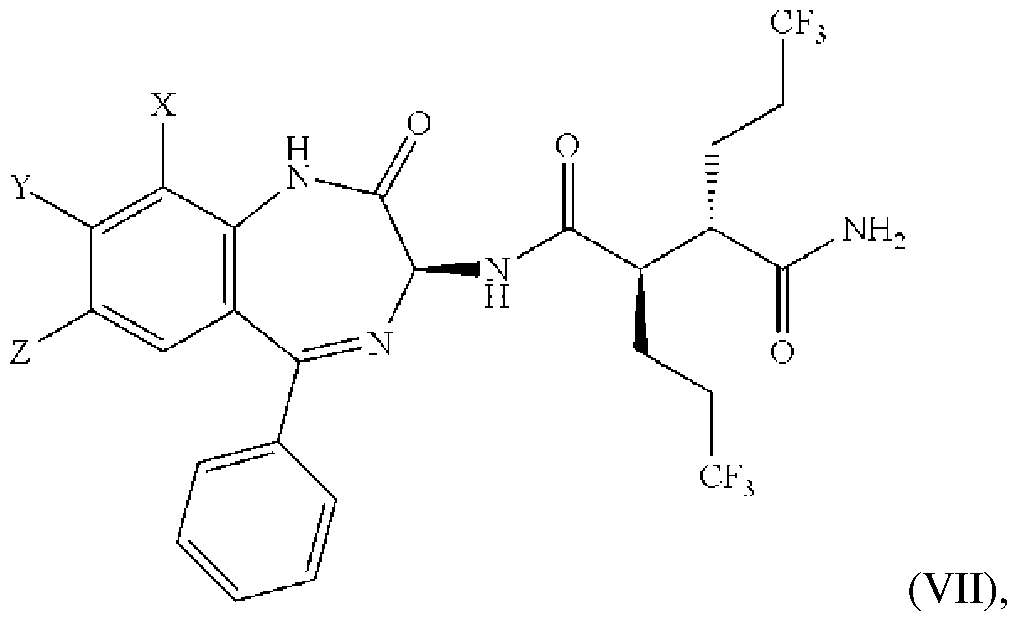





Claims
CLAIMS What is claimed is: 1. A method for treating, inhibiting or suppressing T-cell acute lymphoblastic leukemia (T- ALL) in a subject comprising administering to said subject a first composition comprising one or more gamma secretase inhibitors and a second composition comprising one or more phosphoinositide 3-kinase (PI3K) antagonists/inhibitors, wherein at least one of said PI3K inhibitors comprises Idelalisib; Copanlisib; Duvelisib; Alpelisib (BYL719); Taselisib; Perifosine; Buparlisib (BKM120); Umbralisib, (TGR 1202); PX-866; Dactolisib; CUDC- 907; Voxtalisib; CUDC-907; ME-401; IPI-549; SF1126; RP6530; INK1117; Pictilisib; XL147; Palomid 529; GSK1059615; ZSTK474; PWT33597; IC87114; TG100–115; CAL263; RP6503; PI-103; GNE-477; or AEZS-136. 2. The method of claim 1, wherein said one or more gamma secretase inhibitors comprises a NOTCH inhibitor. 3. The method of any one of claims 1-2, wherein said one or more gamma secretase inhibitor comprises a bisfluoroalkyl-1,4-benzodiazepinone compound. 4. The method of any one of claims 1-3, wherein said one or more gamma secretase inhibitors comprises a chemical structure of Formula (I):
 and/or at least one salt thereof, wherein: R1 is -CH2CF3 or -CH2CH2CF3; R2 is -CH2CF3, -CH2CH2CF3, or -CH2CH2CH2CF3;
R3 is H, -CH3 or Rx; R4 is H or Ry; Rx is: -CH2OC(O)CH(CH3)NH2, -CH2OC(O)CH(NH2)CH(CH3)2, -CH2OC(O)CH((CH(
 Ry is: -SCH2CH(NH2)C(O)OH, -SCH2CH(NH2)C(O)OH3, or -SCH2CH(NH2)C(O)OC(CH3)3; Ring A is phenyl or pyridinyl; each Ra is independently F, Cl, -CN, -OCH3, C1-3 alkyl, -CH2OH, -CF3, cyclopropyl, -OCH3, -O(cyclopropyl) and/or -NHCH2CH2OCH3; each Rb is independently F, Cl, -CH3, -CH2OH, -CF3, cyclopropyl, and/or -OCH3; y is zero, 1 or 2; and z is zero, 1, or 2. 5. The method of claim 4, wherein said one or more gamma secretase inhibitors of Formula (I) comprises the chemical structure of Compound (1):
 6. The method of claim 4, wherein said one or more gamma secretase inhibitors of Formula (I) comprises the chemical structure of Compound (2):


33. The method of any one of claims 26-28, wherein said first composition comprises a gamma secretase inhibitor of Formula (I) having the chemical structure of Compound (1) and a gamma secretase inhibitor of Formula (I) having the chemical structure of Compound (22). 34. The method of any one of claims 26-33, wherein said PI3K antagonist/inhibitor comprises a class 1 PI3K antagonist/inhibitor. 35. The method of claim 34, wherein said Class 1 PI3K inhibitor comprises 2-amino-N-{7- methoxy-8-[3-(morpholin-4-yl)propoxy]-2,3-dihydroimidazo[1,2-c]quinazolin-5- yl}pyrimidine-5-carboxamide dihydrochloride having a structure of Compound (A):
 36. The method of any one of claims 26-35, wherein said PI3K antagonist/inhibitor comprises a class 2 or class 3 PI3K antagonist/inhibitor. 37. The method of any one of claims 26-36, wherein said one or more PI3K antagonists/inhibitors comprises a dual inhibitor of PI3Kd and PI3Kg. 38. The method of claim 37, wherein said dual inhibitor of PI3Kd and PI3Kg comprises 8-chloro- 2-phenyl-3-[(1S)-1-(7H-purin-6-ylamino)ethyl]isoquinolin-1-one having a structure of Compound (B):


44. The method of any one of claims 26-43, further comprising administering to the subject a transcription inhibitor comprising a TFDP2 inhibitor, a KDM5B inhibitor, a SOX4 inhibitor or a combination thereof. 45. The method of any one of claims 26-44, wherein the T-ALL cells further express checkpoint ligand LGALS9 that binds to receptor HAVCR2 (TIM-3). 46. The method of any one of claims 26-45, further comprising administering to the subject a neutralizing anti-HAVCR2 antibody, thereby preventing binding of LGALS9 to the receptor HAVCR2 (TIM-3). 47. The method of claim 46, wherein the neutralizing anti-HAVCR2 (TIM-3) antibody comprises anti-TIM-3 monoclonal antibody LY3321367, anti-human TIM-3 monoclonal antibody MBG453, humanized anti-TIM-3 monoclonal antibody TSR-022, or a combination thereof. 48. The method of any one of claims 26-47, wherein the T-ALL comprises early T-cell precursor acute lymphoblastic leukemia (ETP T-ALL). 49. The method of claim 48, wherein at least some of the ETP T-ALL cells of the subject express a marker of T cell exhaustion comprising PDCD1, TIGIT, LAG3, HAVCR2 (TIM-3), CTLA4, or a combination thereof.
Applications Claiming Priority (2)
| Application Number | Priority Date | Filing Date | Title |
|---|---|---|---|
| US201962882627P | 2019-08-05 | 2019-08-05 | |
| US62/882,627 | 2019-08-05 |
Publications (2)
| Publication Number | Publication Date |
|---|---|
| WO2021024191A2 true WO2021024191A2 (en) | 2021-02-11 |
| WO2021024191A3 WO2021024191A3 (en) | 2021-05-14 |
Family
ID=74503767
Family Applications (1)
| Application Number | Title | Priority Date | Filing Date |
|---|---|---|---|
| PCT/IB2020/057385 Ceased WO2021024191A2 (en) | 2019-08-05 | 2020-08-05 | Combination treatments with benzodiazepinone compounds and phosphoinositide 3-kinase pathway inhibitors for treating cancer |
Country Status (1)
| Country | Link |
|---|---|
| WO (1) | WO2021024191A2 (en) |
Cited By (3)
| Publication number | Priority date | Publication date | Assignee | Title |
|---|---|---|---|---|
| CN115120596A (en) * | 2021-03-26 | 2022-09-30 | 上海璎黎药业有限公司 | Quinazoline compound and application of pharmaceutical composition |
| US11939333B2 (en) | 2015-09-14 | 2024-03-26 | Infinity Pharmaceuticals, Inc. | Solid forms of isoquinolinones, and process of making, composition comprising, and methods of using the same |
| US12152032B2 (en) | 2013-10-04 | 2024-11-26 | Infinity Pharmaceuticals, Inc. | Heterocyclic compounds and uses thereof |
Family Cites Families (2)
| Publication number | Priority date | Publication date | Assignee | Title |
|---|---|---|---|---|
| JP2015531792A (en) * | 2012-09-21 | 2015-11-05 | ブリストル−マイヤーズ スクイブ カンパニーBristol−Myers Squibb Company | Prodrugs of 1,4-benzodiazepinone compounds |
| US20190185559A1 (en) * | 2016-09-02 | 2019-06-20 | The Brigham And Women's Hospital, Inc. | Compositions and methods for treating neoplasias |
-
2020
- 2020-08-05 WO PCT/IB2020/057385 patent/WO2021024191A2/en not_active Ceased
Cited By (4)
| Publication number | Priority date | Publication date | Assignee | Title |
|---|---|---|---|---|
| US12152032B2 (en) | 2013-10-04 | 2024-11-26 | Infinity Pharmaceuticals, Inc. | Heterocyclic compounds and uses thereof |
| US11939333B2 (en) | 2015-09-14 | 2024-03-26 | Infinity Pharmaceuticals, Inc. | Solid forms of isoquinolinones, and process of making, composition comprising, and methods of using the same |
| US12384792B2 (en) | 2015-09-14 | 2025-08-12 | Twelve Therapeutics, Inc. | Solid forms of isoquinolinones, and process of making, composition comprising, and methods of using the same |
| CN115120596A (en) * | 2021-03-26 | 2022-09-30 | 上海璎黎药业有限公司 | Quinazoline compound and application of pharmaceutical composition |
Also Published As
| Publication number | Publication date |
|---|---|
| WO2021024191A3 (en) | 2021-05-14 |
Similar Documents
| Publication | Publication Date | Title |
|---|---|---|
| Lehmann et al. | Multi-omics analysis identifies therapeutic vulnerabilities in triple-negative breast cancer subtypes | |
| Pal et al. | Efficacy of BGJ398, a fibroblast growth factor receptor 1–3 inhibitor, in patients with previously treated advanced urothelial carcinoma with FGFR3 alterations | |
| Duan et al. | Integrated analyses of multi-omic data derived from paired primary lung cancer and brain metastasis reveal the metabolic vulnerability as a novel therapeutic target | |
| EP2704713B1 (en) | Csf-1r inhibitors for treatment of brain tumors | |
| EP3837385A1 (en) | Methods for assessing and treating cancer | |
| US12479917B2 (en) | Methods of treating NSCLC comprising administering platinum doublet chemotherapy followed by an anti-PD-1 antibody and an anti-CTLA-4 antibody | |
| KR20200014363A (en) | How to Treat Tumors Using Anti-PD-1 Antibodies | |
| US12559789B2 (en) | Method of targeting patient-specific oncogenes in extrachromosomal DNA to treat glioblastoma | |
| RS67610B1 (en) | Combinations of lsd1 inhibitors for use in the treatment of neoplastic diseases | |
| Johnson et al. | Advanced age in humans and mouse models of glioblastoma show decreased survival from extratumoral influence | |
| Zhou et al. | Orphan nuclear receptor TLX promotes immunosuppression via its transcriptional activation of PD-L1 in glioma | |
| WO2012177925A1 (en) | Akt inhibitors for treating cancer expressing a magi3 - akt3 fusion gene | |
| Lee et al. | Genomic and transcriptomic landscape of an oral squamous cell carcinoma mouse model for immunotherapy | |
| WO2020219926A1 (en) | Treatment of cancer with cdk inhibitors | |
| JP2022524289A (en) | How to Treat Prostate Cancer Based on Molecular Subtypes | |
| CA3202523A1 (en) | Methods and compositions for neoadjuvant and adjuvant urothelial carcinoma therapy | |
| TW201823471A (en) | Methods of treating patients with a retinoic acid receptor-[alpha] agonist and an anti-CD38 antibody | |
| US20250228915A1 (en) | Distinct cd8+ t cell programming in the tumor microenvironment contributes to sex bias in cancer | |
| US12559559B2 (en) | Targeting Galectin-9 as a therapeutic strategy for T-cell exhaustion in T-cell acute lymphoblastic leukemia | |
| WO2024077166A1 (en) | Methods and compositions for classifying and treating lung cancer | |
| US20260041653A1 (en) | An hdac inhibitor for treating cancer with a modified stk11 activity or expression | |
| US20260137678A1 (en) | Methods for treating or preventing neuroendocrine tumor formation using xpo1 inhibitors | |
| JP2022514654A (en) | Treatment for squamous cell carcinoma | |
| US20240382459A1 (en) | Mechanisms of androgen receptor-centered transcriptional networks in regulating cd8+ t cell exhaustion and therapeutic applications in cancer | |
| US20240398814A1 (en) | Kras inhibitor and hdac inhibitor combination for the treatment of cancer |
Legal Events
| Date | Code | Title | Description |
|---|---|---|---|
| 121 | Ep: the epo has been informed by wipo that ep was designated in this application |
Ref document number: 20850204 Country of ref document: EP Kind code of ref document: A2 |
|
| NENP | Non-entry into the national phase |
Ref country code: DE |
|
| 122 | Ep: pct application non-entry in european phase |
Ref document number: 20850204 Country of ref document: EP Kind code of ref document: A2 |