WO2020255830A1 - 樹脂組成物、光ファイバのセカンダリ被覆材料、光ファイバ及び光ファイバの製造方法 - Google Patents
樹脂組成物、光ファイバのセカンダリ被覆材料、光ファイバ及び光ファイバの製造方法 Download PDFInfo
- Publication number
- WO2020255830A1 WO2020255830A1 PCT/JP2020/022889 JP2020022889W WO2020255830A1 WO 2020255830 A1 WO2020255830 A1 WO 2020255830A1 JP 2020022889 W JP2020022889 W JP 2020022889W WO 2020255830 A1 WO2020255830 A1 WO 2020255830A1
- Authority
- WO
- WIPO (PCT)
- Prior art keywords
- meth
- resin composition
- acrylate
- resin layer
- optical fiber
- Prior art date
- Legal status (The legal status is an assumption and is not a legal conclusion. Google has not performed a legal analysis and makes no representation as to the accuracy of the status listed.)
- Ceased
Links
Images
Classifications
-
- G—PHYSICS
- G02—OPTICS
- G02B—OPTICAL ELEMENTS, SYSTEMS OR APPARATUS
- G02B6/00—Light guides; Structural details of arrangements comprising light guides and other optical elements, e.g. couplings
- G02B6/02—Optical fibres with cladding with or without a coating
- G02B6/02395—Glass optical fibre with a protective coating, e.g. two layer polymer coating deposited directly on a silica cladding surface during fibre manufacture
-
- C—CHEMISTRY; METALLURGY
- C09—DYES; PAINTS; POLISHES; NATURAL RESINS; ADHESIVES; COMPOSITIONS NOT OTHERWISE PROVIDED FOR; APPLICATIONS OF MATERIALS NOT OTHERWISE PROVIDED FOR
- C09D—COATING COMPOSITIONS, e.g. PAINTS, VARNISHES OR LACQUERS; FILLING PASTES; CHEMICAL PAINT OR INK REMOVERS; INKS; CORRECTING FLUIDS; WOODSTAINS; PASTES OR SOLIDS FOR COLOURING OR PRINTING; USE OF MATERIALS THEREFOR
- C09D7/00—Features of coating compositions, not provided for in group C09D5/00; Processes for incorporating ingredients in coating compositions
- C09D7/40—Additives
- C09D7/66—Additives characterised by particle size
- C09D7/67—Particle size smaller than 100 nm
-
- C—CHEMISTRY; METALLURGY
- C03—GLASS; MINERAL OR SLAG WOOL
- C03C—CHEMICAL COMPOSITION OF GLASSES, GLAZES OR VITREOUS ENAMELS; SURFACE TREATMENT OF GLASS; SURFACE TREATMENT OF FIBRES OR FILAMENTS MADE FROM GLASS, MINERALS OR SLAGS; JOINING GLASS TO GLASS OR OTHER MATERIALS
- C03C13/00—Fibre or filament compositions
- C03C13/04—Fibre optics, e.g. core and clad fibre compositions
-
- C—CHEMISTRY; METALLURGY
- C03—GLASS; MINERAL OR SLAG WOOL
- C03C—CHEMICAL COMPOSITION OF GLASSES, GLAZES OR VITREOUS ENAMELS; SURFACE TREATMENT OF GLASS; SURFACE TREATMENT OF FIBRES OR FILAMENTS MADE FROM GLASS, MINERALS OR SLAGS; JOINING GLASS TO GLASS OR OTHER MATERIALS
- C03C25/00—Surface treatment of fibres or filaments made from glass, minerals or slags
- C03C25/10—Coating
- C03C25/104—Coating to obtain optical fibres
- C03C25/1065—Multiple coatings
-
- C—CHEMISTRY; METALLURGY
- C03—GLASS; MINERAL OR SLAG WOOL
- C03C—CHEMICAL COMPOSITION OF GLASSES, GLAZES OR VITREOUS ENAMELS; SURFACE TREATMENT OF GLASS; SURFACE TREATMENT OF FIBRES OR FILAMENTS MADE FROM GLASS, MINERALS OR SLAGS; JOINING GLASS TO GLASS OR OTHER MATERIALS
- C03C25/00—Surface treatment of fibres or filaments made from glass, minerals or slags
- C03C25/10—Coating
- C03C25/24—Coatings containing organic materials
- C03C25/26—Macromolecular compounds or prepolymers
- C03C25/28—Macromolecular compounds or prepolymers obtained by reactions involving only carbon-to-carbon unsaturated bonds
- C03C25/285—Acrylic resins
-
- C—CHEMISTRY; METALLURGY
- C03—GLASS; MINERAL OR SLAG WOOL
- C03C—CHEMICAL COMPOSITION OF GLASSES, GLAZES OR VITREOUS ENAMELS; SURFACE TREATMENT OF GLASS; SURFACE TREATMENT OF FIBRES OR FILAMENTS MADE FROM GLASS, MINERALS OR SLAGS; JOINING GLASS TO GLASS OR OTHER MATERIALS
- C03C25/00—Surface treatment of fibres or filaments made from glass, minerals or slags
- C03C25/10—Coating
- C03C25/24—Coatings containing organic materials
- C03C25/26—Macromolecular compounds or prepolymers
- C03C25/32—Macromolecular compounds or prepolymers obtained otherwise than by reactions involving only carbon-to-carbon unsaturated bonds
- C03C25/326—Polyureas; Polyurethanes
-
- C—CHEMISTRY; METALLURGY
- C03—GLASS; MINERAL OR SLAG WOOL
- C03C—CHEMICAL COMPOSITION OF GLASSES, GLAZES OR VITREOUS ENAMELS; SURFACE TREATMENT OF GLASS; SURFACE TREATMENT OF FIBRES OR FILAMENTS MADE FROM GLASS, MINERALS OR SLAGS; JOINING GLASS TO GLASS OR OTHER MATERIALS
- C03C25/00—Surface treatment of fibres or filaments made from glass, minerals or slags
- C03C25/10—Coating
- C03C25/465—Coatings containing composite materials
- C03C25/47—Coatings containing composite materials containing particles, fibres or flakes, e.g. in a continuous phase
-
- C—CHEMISTRY; METALLURGY
- C03—GLASS; MINERAL OR SLAG WOOL
- C03C—CHEMICAL COMPOSITION OF GLASSES, GLAZES OR VITREOUS ENAMELS; SURFACE TREATMENT OF GLASS; SURFACE TREATMENT OF FIBRES OR FILAMENTS MADE FROM GLASS, MINERALS OR SLAGS; JOINING GLASS TO GLASS OR OTHER MATERIALS
- C03C3/00—Glass compositions
- C03C3/04—Glass compositions containing silica
- C03C3/06—Glass compositions containing silica with more than 90% silica by weight, e.g. quartz
-
- C—CHEMISTRY; METALLURGY
- C08—ORGANIC MACROMOLECULAR COMPOUNDS; THEIR PREPARATION OR CHEMICAL WORKING-UP; COMPOSITIONS BASED THEREON
- C08F—MACROMOLECULAR COMPOUNDS OBTAINED BY REACTIONS ONLY INVOLVING CARBON-TO-CARBON UNSATURATED BONDS
- C08F290/00—Macromolecular compounds obtained by polymerising monomers on to polymers modified by introduction of aliphatic unsaturated end or side groups
- C08F290/02—Macromolecular compounds obtained by polymerising monomers on to polymers modified by introduction of aliphatic unsaturated end or side groups on to polymers modified by introduction of unsaturated end groups
- C08F290/06—Polymers provided for in subclass C08G
- C08F290/067—Polyurethanes; Polyureas
-
- C—CHEMISTRY; METALLURGY
- C08—ORGANIC MACROMOLECULAR COMPOUNDS; THEIR PREPARATION OR CHEMICAL WORKING-UP; COMPOSITIONS BASED THEREON
- C08G—MACROMOLECULAR COMPOUNDS OBTAINED OTHERWISE THAN BY REACTIONS ONLY INVOLVING UNSATURATED CARBON-TO-CARBON BONDS
- C08G18/00—Polymeric products of isocyanates or isothiocyanates
- C08G18/06—Polymeric products of isocyanates or isothiocyanates with compounds having active hydrogen
- C08G18/08—Processes
- C08G18/10—Prepolymer processes involving reaction of isocyanates or isothiocyanates with compounds having active hydrogen in a first reaction step
- C08G18/12—Prepolymer processes involving reaction of isocyanates or isothiocyanates with compounds having active hydrogen in a first reaction step using two or more compounds having active hydrogen in the first polymerisation step
-
- C—CHEMISTRY; METALLURGY
- C08—ORGANIC MACROMOLECULAR COMPOUNDS; THEIR PREPARATION OR CHEMICAL WORKING-UP; COMPOSITIONS BASED THEREON
- C08G—MACROMOLECULAR COMPOUNDS OBTAINED OTHERWISE THAN BY REACTIONS ONLY INVOLVING UNSATURATED CARBON-TO-CARBON BONDS
- C08G18/00—Polymeric products of isocyanates or isothiocyanates
- C08G18/06—Polymeric products of isocyanates or isothiocyanates with compounds having active hydrogen
- C08G18/28—Polymeric products of isocyanates or isothiocyanates with compounds having active hydrogen characterised by the compounds used containing active hydrogen
- C08G18/40—High-molecular-weight compounds
- C08G18/48—Polyethers
- C08G18/4825—Polyethers containing two hydroxy groups
-
- C—CHEMISTRY; METALLURGY
- C08—ORGANIC MACROMOLECULAR COMPOUNDS; THEIR PREPARATION OR CHEMICAL WORKING-UP; COMPOSITIONS BASED THEREON
- C08G—MACROMOLECULAR COMPOUNDS OBTAINED OTHERWISE THAN BY REACTIONS ONLY INVOLVING UNSATURATED CARBON-TO-CARBON BONDS
- C08G18/00—Polymeric products of isocyanates or isothiocyanates
- C08G18/06—Polymeric products of isocyanates or isothiocyanates with compounds having active hydrogen
- C08G18/28—Polymeric products of isocyanates or isothiocyanates with compounds having active hydrogen characterised by the compounds used containing active hydrogen
- C08G18/67—Unsaturated compounds having active hydrogen
- C08G18/671—Unsaturated compounds having only one group containing active hydrogen
- C08G18/672—Esters of acrylic or alkyl acrylic acid having only one group containing active hydrogen
-
- C—CHEMISTRY; METALLURGY
- C08—ORGANIC MACROMOLECULAR COMPOUNDS; THEIR PREPARATION OR CHEMICAL WORKING-UP; COMPOSITIONS BASED THEREON
- C08G—MACROMOLECULAR COMPOUNDS OBTAINED OTHERWISE THAN BY REACTIONS ONLY INVOLVING UNSATURATED CARBON-TO-CARBON BONDS
- C08G18/00—Polymeric products of isocyanates or isothiocyanates
- C08G18/06—Polymeric products of isocyanates or isothiocyanates with compounds having active hydrogen
- C08G18/28—Polymeric products of isocyanates or isothiocyanates with compounds having active hydrogen characterised by the compounds used containing active hydrogen
- C08G18/67—Unsaturated compounds having active hydrogen
- C08G18/675—Low-molecular-weight compounds
- C08G18/6755—Unsaturated carboxylic acids
-
- C—CHEMISTRY; METALLURGY
- C08—ORGANIC MACROMOLECULAR COMPOUNDS; THEIR PREPARATION OR CHEMICAL WORKING-UP; COMPOSITIONS BASED THEREON
- C08G—MACROMOLECULAR COMPOUNDS OBTAINED OTHERWISE THAN BY REACTIONS ONLY INVOLVING UNSATURATED CARBON-TO-CARBON BONDS
- C08G18/00—Polymeric products of isocyanates or isothiocyanates
- C08G18/06—Polymeric products of isocyanates or isothiocyanates with compounds having active hydrogen
- C08G18/70—Polymeric products of isocyanates or isothiocyanates with compounds having active hydrogen characterised by the isocyanates or isothiocyanates used
- C08G18/72—Polyisocyanates or polyisothiocyanates
- C08G18/74—Polyisocyanates or polyisothiocyanates cyclic
- C08G18/75—Polyisocyanates or polyisothiocyanates cyclic cycloaliphatic
- C08G18/751—Polyisocyanates or polyisothiocyanates cyclic cycloaliphatic containing only one cycloaliphatic ring
- C08G18/752—Polyisocyanates or polyisothiocyanates cyclic cycloaliphatic containing only one cycloaliphatic ring containing at least one isocyanate or isothiocyanate group linked to the cycloaliphatic ring by means of an aliphatic group
- C08G18/753—Polyisocyanates or polyisothiocyanates cyclic cycloaliphatic containing only one cycloaliphatic ring containing at least one isocyanate or isothiocyanate group linked to the cycloaliphatic ring by means of an aliphatic group containing one isocyanate or isothiocyanate group linked to the cycloaliphatic ring by means of an aliphatic group having a primary carbon atom next to the isocyanate or isothiocyanate group
- C08G18/755—Polyisocyanates or polyisothiocyanates cyclic cycloaliphatic containing only one cycloaliphatic ring containing at least one isocyanate or isothiocyanate group linked to the cycloaliphatic ring by means of an aliphatic group containing one isocyanate or isothiocyanate group linked to the cycloaliphatic ring by means of an aliphatic group having a primary carbon atom next to the isocyanate or isothiocyanate group and at least one isocyanate or isothiocyanate group linked to a secondary carbon atom of the cycloaliphatic ring, e.g. isophorone diisocyanate
-
- C—CHEMISTRY; METALLURGY
- C08—ORGANIC MACROMOLECULAR COMPOUNDS; THEIR PREPARATION OR CHEMICAL WORKING-UP; COMPOSITIONS BASED THEREON
- C08G—MACROMOLECULAR COMPOUNDS OBTAINED OTHERWISE THAN BY REACTIONS ONLY INVOLVING UNSATURATED CARBON-TO-CARBON BONDS
- C08G18/00—Polymeric products of isocyanates or isothiocyanates
- C08G18/06—Polymeric products of isocyanates or isothiocyanates with compounds having active hydrogen
- C08G18/70—Polymeric products of isocyanates or isothiocyanates with compounds having active hydrogen characterised by the isocyanates or isothiocyanates used
- C08G18/72—Polyisocyanates or polyisothiocyanates
- C08G18/74—Polyisocyanates or polyisothiocyanates cyclic
- C08G18/76—Polyisocyanates or polyisothiocyanates cyclic aromatic
- C08G18/7614—Polyisocyanates or polyisothiocyanates cyclic aromatic containing only one aromatic ring
-
- C—CHEMISTRY; METALLURGY
- C08—ORGANIC MACROMOLECULAR COMPOUNDS; THEIR PREPARATION OR CHEMICAL WORKING-UP; COMPOSITIONS BASED THEREON
- C08G—MACROMOLECULAR COMPOUNDS OBTAINED OTHERWISE THAN BY REACTIONS ONLY INVOLVING UNSATURATED CARBON-TO-CARBON BONDS
- C08G18/00—Polymeric products of isocyanates or isothiocyanates
- C08G18/06—Polymeric products of isocyanates or isothiocyanates with compounds having active hydrogen
- C08G18/70—Polymeric products of isocyanates or isothiocyanates with compounds having active hydrogen characterised by the isocyanates or isothiocyanates used
- C08G18/72—Polyisocyanates or polyisothiocyanates
- C08G18/74—Polyisocyanates or polyisothiocyanates cyclic
- C08G18/76—Polyisocyanates or polyisothiocyanates cyclic aromatic
- C08G18/7614—Polyisocyanates or polyisothiocyanates cyclic aromatic containing only one aromatic ring
- C08G18/7621—Polyisocyanates or polyisothiocyanates cyclic aromatic containing only one aromatic ring being toluene diisocyanate including isomer mixtures
-
- C—CHEMISTRY; METALLURGY
- C08—ORGANIC MACROMOLECULAR COMPOUNDS; THEIR PREPARATION OR CHEMICAL WORKING-UP; COMPOSITIONS BASED THEREON
- C08K—Use of inorganic or non-macromolecular organic substances as compounding ingredients
- C08K3/00—Use of inorganic substances as compounding ingredients
- C08K3/18—Oxygen-containing compounds, e.g. metal carbonyls
- C08K3/20—Oxides; Hydroxides
- C08K3/22—Oxides; Hydroxides of metals
-
- C—CHEMISTRY; METALLURGY
- C09—DYES; PAINTS; POLISHES; NATURAL RESINS; ADHESIVES; COMPOSITIONS NOT OTHERWISE PROVIDED FOR; APPLICATIONS OF MATERIALS NOT OTHERWISE PROVIDED FOR
- C09D—COATING COMPOSITIONS, e.g. PAINTS, VARNISHES OR LACQUERS; FILLING PASTES; CHEMICAL PAINT OR INK REMOVERS; INKS; CORRECTING FLUIDS; WOODSTAINS; PASTES OR SOLIDS FOR COLOURING OR PRINTING; USE OF MATERIALS THEREFOR
- C09D175/00—Coating compositions based on polyureas or polyurethanes; Coating compositions based on derivatives of such polymers
- C09D175/04—Polyurethanes
- C09D175/14—Polyurethanes having carbon-to-carbon unsaturated bonds
-
- C—CHEMISTRY; METALLURGY
- C09—DYES; PAINTS; POLISHES; NATURAL RESINS; ADHESIVES; COMPOSITIONS NOT OTHERWISE PROVIDED FOR; APPLICATIONS OF MATERIALS NOT OTHERWISE PROVIDED FOR
- C09D—COATING COMPOSITIONS, e.g. PAINTS, VARNISHES OR LACQUERS; FILLING PASTES; CHEMICAL PAINT OR INK REMOVERS; INKS; CORRECTING FLUIDS; WOODSTAINS; PASTES OR SOLIDS FOR COLOURING OR PRINTING; USE OF MATERIALS THEREFOR
- C09D175/00—Coating compositions based on polyureas or polyurethanes; Coating compositions based on derivatives of such polymers
- C09D175/04—Polyurethanes
- C09D175/14—Polyurethanes having carbon-to-carbon unsaturated bonds
- C09D175/16—Polyurethanes having carbon-to-carbon unsaturated bonds having terminal carbon-to-carbon unsaturated bonds
-
- C—CHEMISTRY; METALLURGY
- C09—DYES; PAINTS; POLISHES; NATURAL RESINS; ADHESIVES; COMPOSITIONS NOT OTHERWISE PROVIDED FOR; APPLICATIONS OF MATERIALS NOT OTHERWISE PROVIDED FOR
- C09D—COATING COMPOSITIONS, e.g. PAINTS, VARNISHES OR LACQUERS; FILLING PASTES; CHEMICAL PAINT OR INK REMOVERS; INKS; CORRECTING FLUIDS; WOODSTAINS; PASTES OR SOLIDS FOR COLOURING OR PRINTING; USE OF MATERIALS THEREFOR
- C09D7/00—Features of coating compositions, not provided for in group C09D5/00; Processes for incorporating ingredients in coating compositions
- C09D7/40—Additives
- C09D7/60—Additives non-macromolecular
- C09D7/61—Additives non-macromolecular inorganic
-
- C—CHEMISTRY; METALLURGY
- C09—DYES; PAINTS; POLISHES; NATURAL RESINS; ADHESIVES; COMPOSITIONS NOT OTHERWISE PROVIDED FOR; APPLICATIONS OF MATERIALS NOT OTHERWISE PROVIDED FOR
- C09D—COATING COMPOSITIONS, e.g. PAINTS, VARNISHES OR LACQUERS; FILLING PASTES; CHEMICAL PAINT OR INK REMOVERS; INKS; CORRECTING FLUIDS; WOODSTAINS; PASTES OR SOLIDS FOR COLOURING OR PRINTING; USE OF MATERIALS THEREFOR
- C09D7/00—Features of coating compositions, not provided for in group C09D5/00; Processes for incorporating ingredients in coating compositions
- C09D7/40—Additives
- C09D7/60—Additives non-macromolecular
- C09D7/61—Additives non-macromolecular inorganic
- C09D7/62—Additives non-macromolecular inorganic modified by treatment with other compounds
-
- C—CHEMISTRY; METALLURGY
- C03—GLASS; MINERAL OR SLAG WOOL
- C03C—CHEMICAL COMPOSITION OF GLASSES, GLAZES OR VITREOUS ENAMELS; SURFACE TREATMENT OF GLASS; SURFACE TREATMENT OF FIBRES OR FILAMENTS MADE FROM GLASS, MINERALS OR SLAGS; JOINING GLASS TO GLASS OR OTHER MATERIALS
- C03C2201/00—Glass compositions
- C03C2201/02—Pure silica glass, e.g. pure fused quartz
-
- C—CHEMISTRY; METALLURGY
- C03—GLASS; MINERAL OR SLAG WOOL
- C03C—CHEMICAL COMPOSITION OF GLASSES, GLAZES OR VITREOUS ENAMELS; SURFACE TREATMENT OF GLASS; SURFACE TREATMENT OF FIBRES OR FILAMENTS MADE FROM GLASS, MINERALS OR SLAGS; JOINING GLASS TO GLASS OR OTHER MATERIALS
- C03C2201/00—Glass compositions
- C03C2201/06—Doped silica-based glasses
- C03C2201/08—Doped silica-based glasses containing boron or halide
- C03C2201/12—Doped silica-based glasses containing boron or halide containing fluorine
-
- C—CHEMISTRY; METALLURGY
- C03—GLASS; MINERAL OR SLAG WOOL
- C03C—CHEMICAL COMPOSITION OF GLASSES, GLAZES OR VITREOUS ENAMELS; SURFACE TREATMENT OF GLASS; SURFACE TREATMENT OF FIBRES OR FILAMENTS MADE FROM GLASS, MINERALS OR SLAGS; JOINING GLASS TO GLASS OR OTHER MATERIALS
- C03C2201/00—Glass compositions
- C03C2201/06—Doped silica-based glasses
- C03C2201/30—Doped silica-based glasses containing metals
- C03C2201/31—Doped silica-based glasses containing metals containing germanium
-
- C—CHEMISTRY; METALLURGY
- C03—GLASS; MINERAL OR SLAG WOOL
- C03C—CHEMICAL COMPOSITION OF GLASSES, GLAZES OR VITREOUS ENAMELS; SURFACE TREATMENT OF GLASS; SURFACE TREATMENT OF FIBRES OR FILAMENTS MADE FROM GLASS, MINERALS OR SLAGS; JOINING GLASS TO GLASS OR OTHER MATERIALS
- C03C2213/00—Glass fibres or filaments
-
- C—CHEMISTRY; METALLURGY
- C08—ORGANIC MACROMOLECULAR COMPOUNDS; THEIR PREPARATION OR CHEMICAL WORKING-UP; COMPOSITIONS BASED THEREON
- C08K—Use of inorganic or non-macromolecular organic substances as compounding ingredients
- C08K3/00—Use of inorganic substances as compounding ingredients
- C08K3/18—Oxygen-containing compounds, e.g. metal carbonyls
- C08K3/20—Oxides; Hydroxides
- C08K3/22—Oxides; Hydroxides of metals
- C08K2003/2244—Oxides; Hydroxides of metals of zirconium
-
- C—CHEMISTRY; METALLURGY
- C08—ORGANIC MACROMOLECULAR COMPOUNDS; THEIR PREPARATION OR CHEMICAL WORKING-UP; COMPOSITIONS BASED THEREON
- C08K—Use of inorganic or non-macromolecular organic substances as compounding ingredients
- C08K2201/00—Specific properties of additives
- C08K2201/002—Physical properties
- C08K2201/005—Additives being defined by their particle size in general
-
- C—CHEMISTRY; METALLURGY
- C08—ORGANIC MACROMOLECULAR COMPOUNDS; THEIR PREPARATION OR CHEMICAL WORKING-UP; COMPOSITIONS BASED THEREON
- C08K—Use of inorganic or non-macromolecular organic substances as compounding ingredients
- C08K2201/00—Specific properties of additives
- C08K2201/011—Nanostructured additives
Definitions
- the present disclosure relates to resin compositions, secondary coating materials for optical fibers, optical fibers and methods for producing optical fibers.
- This application claims priority based on Japanese Application No. 2019-112622 filed on June 18, 2019, and incorporates all the contents described in the Japanese application.
- an optical fiber has a coating resin layer for protecting a glass fiber which is an optical transmitter.
- An optical fiber is required to have excellent lateral pressure characteristics in order to reduce an increase in transmission loss induced by minute bending generated when a lateral pressure is applied to the optical fiber.
- the coating resin layer can be formed by using an ultraviolet curable resin composition containing an oligomer, a monomer, a photopolymerization initiator and the like.
- an ultraviolet curable resin composition containing an oligomer, a monomer, a photopolymerization initiator and the like For example, in Patent Document 1, it is studied to improve the lateral pressure characteristics of an optical fiber by forming a resin layer using an ultraviolet curable resin composition containing a filler made of synthetic quartz as a raw material.
- the resin composition according to one aspect of the present disclosure is a resin composition containing an oligomer containing a urethane (meth) acrylate, a base resin containing a monomer and a photopolymerization initiator, and hydrophobic zirconium oxide, and is oxidized.
- the content of zirconium is 0.5% by mass or more and 65% by mass or less based on the total amount of the resin composition.
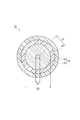
- FIG. 1 is a schematic cross-sectional view showing an example of an optical fiber according to the present embodiment.
- the coating resin layer generally includes a primary resin layer and a secondary resin layer.
- the resin composition forming the secondary resin layer is required to improve the lateral pressure characteristics of the optical fiber by increasing Young's modulus. However, in the case of a resin composition containing a filler, the filler may settle and the storage stability of the resin composition may decrease.
- An object of the present disclosure is to provide a resin composition capable of producing an optical fiber having excellent storage stability and excellent lateral pressure characteristics, and an optical fiber having excellent lateral pressure characteristics.
- the resin composition according to one aspect of the present disclosure is a resin composition containing an oligomer containing a urethane (meth) acrylate, a base resin containing a monomer and a photopolymerization initiator, and a hydrophobic zirconium oxide, and is oxidized.
- the content of zirconium is 0.5% by mass or more and 65% by mass or less based on the total amount of the resin composition.
- Zirconium oxide can increase the Young's modulus of the resin layer, release the heat of reaction when the resin composition is cured, and reduce the stress during curing in the resin layer.
- the resin composition has excellent storage stability and a smooth resin layer can be formed.
- an ultraviolet curable resin composition for coating an optical fiber an optical fiber having excellent lateral pressure characteristics can be produced.
- the average primary particle size of zirconium oxide may be 100 nm or less.
- the zirconium oxide may contain tetragonal zirconium oxide because it is easy to form a resin layer having a high Young's modulus.
- the secondary coating material for the optical fiber according to one aspect of the present disclosure includes the above resin composition.
- a coated resin layer having excellent lateral pressure characteristics can be formed.
- the optical fiber according to one aspect of the present disclosure includes a glass fiber including a core and a clad, a primary resin layer that is in contact with the glass fiber and coats the glass fiber, and a secondary resin layer that coats the primary resin layer.
- the resin layer is made of a cured product of the above resin composition.
- the zirconium oxide content in the secondary resin layer is 0.5% by mass or more and 65% by mass or less based on the total amount of the secondary resin layers.
- the method for producing an optical fiber according to one aspect of the present disclosure includes a coating step of applying the above resin composition to the outer periphery of a glass fiber composed of a core and a clad, and a resin composition by irradiating ultraviolet rays after the coating step. Includes a curing step of curing an object. As a result, an optical fiber having excellent lateral pressure characteristics can be produced.
- the resin composition according to the present embodiment contains a base resin containing an oligomer containing a urethane (meth) acrylate, a monomer and a photopolymerization initiator, and hydrophobic zirconium oxide.
- the zirconium oxide (zirconia) according to the present embodiment is hydrophobic zirconia particles whose surface is hydrophobically treated.
- the hydrophobic treatment according to the present embodiment means that a hydrophobic group is introduced on the surface of zirconium oxide.
- Zirconium oxide before being hydrophobized usually has a hydroxyl group on its surface and is hydrophilic.
- Zirconium oxide into which a hydrophobic group has been introduced has excellent dispersibility in the resin composition.
- the hydrophobic group may be a reactive group such as a (meth) acryloyl group or a non-reactive group such as a hydrocarbon group. When zirconium oxide has a reactive group, it becomes easy to form a resin layer having a high Young's modulus.
- the zirconia particles according to this embodiment are dispersed in a dispersion medium.
- the zirconia particles can be uniformly dispersed in the resin composition, and the storage stability of the resin composition can be improved.
- the dispersion medium is not particularly limited as long as it does not inhibit the curing of the resin composition.
- the dispersion medium may be reactive or non-reactive.
- a monomer such as a (meth) acryloyl compound or an epoxy compound
- examples of the (meth) acrylic compound include 1,6-hexanediol di (meth) acrylate, EO-modified bisphenol A di (meth) acrylate, polyethylene glycol di (meth) acrylate, and PO-modified bisphenol A di (meth) acrylate.
- the (meth) acryloyl compound exemplified by the monomer described later may be used.
- a ketone solvent such as methyl ethyl ketone (MEK), an alcohol solvent such as methanol (methanol), or an ester solvent such as propylene glycol monomethyl ether acetate (PGMEA) may be used.
- MEK methyl ethyl ketone
- methanol methanol
- PMEA propylene glycol monomethyl ether acetate
- the base resin and the zirconia particles dispersed in the dispersion medium may be mixed, and then a part of the dispersion medium may be removed to prepare a resin composition.
- the zirconia particles dispersed in the non-reactive dispersion medium are more likely to reduce the curing shrinkage of the resin composition than the zirconia particles dispersed in the reactive dispersion medium.
- the zirconia particles dispersed in the dispersion medium exist in a dispersed state in the resin layer even after the resin composition is cured.
- a reactive dispersion medium used, the zirconia particles are mixed with the resin composition together with the dispersion medium and incorporated into the resin layer while maintaining the dispersed state.
- a non-reactive dispersion medium used, at least a part of the dispersion medium volatilizes from the resin composition and disappears, but the zirconia particles remain in the dispersed state in the resin composition and also in the cured resin layer. It exists in a dispersed state.
- the zirconia particles present in the resin layer are observed in a state in which the primary particles are dispersed when observed with an electron microscope.
- the crystal structure of the zirconia particles may be tetragonal or cubic. From the viewpoint of increasing the Young's modulus of the resin layer, the zirconia particles may contain tetragonal zirconia.
- the average primary particle size of the zirconia particles is preferably 0.5 nm or more and 100 nm or less, more preferably 1 nm or more and 80 nm or less, and further preferably 1.5 nm or more and 70 nm or less.
- the average primary particle size can be measured by, for example, image analysis of electron micrographs, a light scattering method, or the like.
- the dispersion medium in which the primary particles of zirconia particles are dispersed looks transparent visually when the particle size of the primary particles is small. When the particle size of the primary particles is relatively large (40 nm or more), the dispersion medium in which the primary particles are dispersed appears cloudy, but no sediment is observed.
- the content of zirconium oxide (zirconia particles) in the resin composition is 0.5% by mass or more and 65% by mass or less based on the total amount of the resin composition, and 1% by mass or more and 60% by mass or less and 5% by mass or more 55. It may be 10% by mass or less, or 10% by mass or more and 50% by mass or less.
- the content of zirconium oxide is 0.5% by mass or more, it becomes easy to form a resin layer having excellent lateral pressure characteristics.
- the content of zirconium oxide is 65% by mass or less, the storage stability of the resin composition is excellent, and it becomes easy to form a tough resin layer.
- the base resin according to the present embodiment contains an oligomer containing a urethane (meth) acrylate, a monomer, and a photopolymerization initiator.
- the (meth) acrylate means an acrylate or a methacrylate corresponding thereto.
- urethane (meth) acrylate an oligomer obtained by reacting a polyol compound, a polyisocyanate compound and a hydroxyl group-containing (meth) acrylate compound can be used.
- polyol compound examples include polytetramethylene glycol, polypropylene glycol, and bisphenol A / ethylene oxide-added diol.
- polyisocyanate compound examples include 2,4-tolylene diisocyanate, 2,6-tolylene diisocyanate, isophorone diisocyanate, and dicyclohexylmethane 4,4'-diisocyanate.
- Examples of the hydroxyl group-containing (meth) acrylate compound include 2-hydroxyethyl (meth) acrylate, 2-hydroxybutyl (meth) acrylate, 1,6-hexanediol mono (meth) acrylate, pentaerythritol tri (meth) acrylate, and the like. Examples thereof include 2-hydroxypropyl (meth) acrylate and tripropylene glycol mono (meth) acrylate.
- An organic tin compound is generally used as a catalyst for synthesizing urethane (meth) acrylate.
- the organotin compound include dibutyltin dilaurate, dibutyltin diacetate, dibutyltinmalate, dibutyltinbis (2-ethylhexyl mercaptoacetate), dibutyltinbis (isooctyl mercaptoacetate), and dibutyltin oxide. From the viewpoint of easy availability or catalytic performance, it is preferable to use dibutyltin dilaurate or dibutyltin diacetate as the catalyst.
- a lower alcohol having 5 or less carbon atoms may be used when synthesizing urethane (meth) acrylate.
- the lower alcohol include methanol, ethanol, 1-propanol, 2-propanol, 1-butanol, 2-butanol, 2-methyl-2-propanol, 1-pentanol, 2-pentanol, 3-pentanol, and the like. Examples include 2-methyl-1-butanol, 3-methyl-1-butanol, 2-methyl-2-butanol, 3-methyl-2-butanol, and 2,2-dimethyl-1-propanol.
- the oligomer may further contain an epoxy (meth) acrylate.
- an epoxy (meth) acrylate an oligomer obtained by reacting an epoxy resin having two or more glycidyl groups with a compound having a (meth) acryloyl group can be used.
- a monofunctional monomer having one polymerizable group and a polyfunctional monomer having two or more polymerizable groups can be used. Two or more kinds of monomers may be mixed and used.
- Examples of the monofunctional monomer include methyl (meth) acrylate, ethyl (meth) acrylate, propyl (meth) acrylate, n-butyl (meth) acrylate, s-butyl (meth) acrylate, and tert-butyl (meth) acrylate.
- Aminoalkyl (meth) acrylate monomers such as aminopropyl acrylate, N, N-dimethylaminoethyl (meth) acrylate, tert-butylaminoethyl (meth) acrylate; N- (meth) acryloyloxymethylene succinimide , N- (meth) Acrylamide-6-oxyhexamethylene succinimide, N- (meth) acrylate-8-oxyoctamethylene succinimide and other succinimide-based monomers.
- polyfunctional monomer examples include ethylene glycol di (meth) acrylate, polyethylene glycol di (meth) acrylate, polypropylene glycol di (meth) acrylate, neopentyl glycol di (meth) acrylate, and tripropylene glycol di (meth) acrylate.
- Di (meth) acrylate of alkylene oxide adduct of bisphenol A tetraethylene glycol di (meth) acrylate, neopentyl glycol di (meth) acrylate of hydroxypivalate, 1,4-butanediol di (meth) acrylate, 1,6 -Hexanediol di (meth) acrylate, 1,9-nonanediol di (meth) acrylate, 1,12-dodecanediol di (meth) acrylate, 1,14-tetradecanediol di (meth) acrylate, 1,16-hexadecane EO addition of diol di (meth) acrylate, 1,20-eicosane diol di (meth) acrylate, isopentyl diol di (meth) acrylate, 3-ethyl-1,8-octane diol di (meth) acrylate, bisphenol A
- the photopolymerization initiator it can be appropriately selected from known radical photopolymerization initiators and used.
- the photopolymerization initiator include 1-hydroxycyclohexylphenyl ketone (Omnirad 184, manufactured by IGM Resins), 2,2-dimethoxy-2-phenylacetophenone, 1- (4-isopropylphenyl) -2-hydroxy-2-.
- Methylpropan-1-one bis (2,6-dimethoxybenzoyl) -2,4,4-trimethylpentylphosphine oxide, 2-methyl-1- [4- (methylthio) phenyl] -2-morpholino-propane-1 -On (Omnirad 907, manufactured by IGM Resins), 2,4,6-trimethylbenzoyldiphenylphosphine oxide (Omnirad TPO, manufactured by IGM Resins), and bis (2,4,6-trimethylbenzoyl) phenylphosphine oxide (Omnirad) 819, manufactured by IGM Resins).
- the resin composition may further contain a silane coupling agent, a leveling agent, an antifoaming agent, an antioxidant, a sensitizer and the like.
- the silane coupling agent is not particularly limited as long as it does not interfere with the curing of the resin composition.
- examples of the silane coupling agent include tetramethyl silicate, tetraethyl silicate, mercaptopropyltrimethoxysilane, vinyltrichlorosilane, vinyltriethoxysilane, vinyltris ( ⁇ -methoxy-ethoxy) silane, and ⁇ - (3,4-epylcyclohexyl).
- -Ethyltrimethoxysilane dimethoxydimethylsilane, diethoxydimethylsilane, 3-acryloxypropyltrimethoxysilane, ⁇ -glycidoxypropyltrimethoxysilane, ⁇ -glycidoxypropylmethyldiethoxysilane, ⁇ -methacryloxypropyl Trimethoxysilane, N- ( ⁇ -aminoethyl) - ⁇ -aminopropyltrimethoxysilane, N- ( ⁇ -aminoethyl) - ⁇ -aminopropyltrimethyldimethoxysilane, N-phenyl- ⁇ -aminopropyltrimethoxysilane, ⁇ -Chloropropyltrimethoxysilane, ⁇ -mercaptopropyltrimethoxysilane, ⁇ -aminopropyltrimethoxysilane, bis- [3- (triethoxysilyl) prop
- the resin composition according to this embodiment can be suitably used as a secondary coating material for an optical fiber.
- a coated resin layer having excellent lateral pressure characteristics can be formed.
- FIG. 1 is a schematic cross-sectional view showing an example of an optical fiber according to the present embodiment.
- the optical fiber 10 includes a glass fiber 13 including a core 11 and a clad 12, and a coating resin layer 16 including a primary resin layer 14 and a secondary resin layer 15 provided on the outer periphery of the glass fiber 13.
- the clad 12 surrounds the core 11.
- the core 11 and the clad 12 mainly contain glass such as quartz glass.
- glass such as quartz glass.
- quartz glass to which germanium is added can be used for the core 11, and pure quartz glass or quartz to which fluorine is added to the clad 12. Glass can be used.
- the outer diameter (D2) of the glass fiber 13 is about 100 ⁇ m to 125 ⁇ m, and the diameter (D1) of the core 11 constituting the glass fiber 13 is about 7 ⁇ m to 15 ⁇ m.
- the thickness of the coating resin layer 16 is usually about 22 ⁇ m to 70 ⁇ m.
- the thickness of each of the primary resin layer 14 and the secondary resin layer 15 may be about 5 ⁇ m to 50 ⁇ m.
- the thickness of each layer of the primary resin layer 14 and the secondary resin layer 15 is about 10 ⁇ m to 50 ⁇ m.
- the thickness of the primary resin layer 14 may be 35 ⁇ m, and the thickness of the secondary resin layer 15 may be 25 ⁇ m.
- the outer diameter of the optical fiber 10 may be about 245 ⁇ m to 265 ⁇ m.
- the thickness of each layer of the primary resin layer 14 and the secondary resin layer 15 is about 10 ⁇ m to 38 ⁇ m.
- the thickness of the primary resin layer 14 may be 25 ⁇ m, and the thickness of the secondary resin layer 15 may be 10 ⁇ m.
- the outer diameter of the optical fiber 10 may be about 179 ⁇ m to 221 ⁇ m.
- the thickness of each layer of the primary resin layer 14 and the secondary resin layer 15 is about 5 ⁇ m to 32 ⁇ m.
- the thickness of the primary resin layer 14 may be 25 ⁇ m, and the thickness of the secondary resin layer 15 may be 10 ⁇ m.
- the outer diameter of the optical fiber 10 may be about 144 ⁇ m to 174 ⁇ m.
- the resin composition according to this embodiment can be applied to a secondary resin layer.
- the secondary resin layer can be formed by curing the resin composition containing the base resin and zirconium oxide. Thereby, the lateral pressure characteristic of the optical fiber can be improved.
- the content of zirconium oxide in the secondary resin layer is 0.5% by mass or more and 65% by mass or less, and 1% by mass or more and 60% by mass or less, 5% by mass or more and 55% by mass or less, based on the total amount of the secondary resin layer. Alternatively, it may be 10% by mass or more and 50% by mass or less.
- the method for producing an optical fiber according to the present embodiment is a coating step of applying the above resin composition to the outer periphery of a glass fiber composed of a core and a clad, and a coating step of applying ultraviolet rays after the coating step to apply the resin composition. Includes a curing step of curing.
- the Young's modulus of the secondary resin layer is preferably 1150 MPa or more, more preferably 1200 MPa or more and 2700 MPa or less, and further preferably 1300 MPa or more and 2600 MPa or less at 23 ° C.
- the Young's modulus of the secondary resin layer is 1150 MPa or more, the lateral pressure characteristics are easily improved, and when it is 2700 MPa or less, appropriate toughness can be imparted to the secondary resin layer, so that cracks or the like are less likely to occur in the secondary resin layer.
- Zirconium oxide dispersed in the dispersion medium exists in a state of being dispersed in the resin layer even after the resin layer is cured.
- zirconium oxide is mixed with the resin composition together with the dispersion medium and incorporated into the resin layer while maintaining the dispersed state.
- a non-reactive dispersion medium is used, at least a part of the dispersion medium volatilizes from the resin composition and disappears, but zirconium oxide remains in the resin composition in a dispersed state and also in the cured resin layer. It exists in a dispersed state.
- Zirconium oxide present in the resin layer is observed in a state in which primary particles are dispersed when observed with an electron microscope.
- the primary resin layer 14 can be formed by curing, for example, a resin composition containing a urethane (meth) acrylate, a monomer, a photopolymerization initiator and a silane coupling agent.
- a resin composition for the primary resin layer a conventionally known technique can be used.
- the urethane (meth) acrylate, monomer, photopolymerization initiator and silane coupling agent may be appropriately selected from the compounds exemplified in the above base resin.
- the resin composition forming the primary resin layer has a composition different from that of the base resin forming the secondary resin layer.
- a plurality of optical fibers may be arranged in parallel and integrated with a ribbon resin to form an optical fiber ribbon, but the resin composition according to the present disclosure can also be used as a ribbon resin. As a result, the lateral pressure characteristics of the optical fiber ribbon can be improved as in the case of the optical fiber.
- Resin composition for secondary resin layer (Oligomer)
- urethane acrylate (UA) obtained by reacting polypropylene glycol, 2,4-tolylene diisocyanate and hydroxyethyl acrylate having a molecular weight of 1000 and epoxy acrylate (EA) were prepared.
- Photopolymerization initiator As a photopolymerization initiator, 1-hydroxycyclohexylphenyl ketone and 2,4,6-trimethylbenzoyldiphenylphosphine oxide were prepared.
- zirconium oxide As zirconium oxide, a zirconia sol containing zirconia particles (Zr-1 to Zr-4) having the surface conditions and average primary particle size shown in Table 1 was prepared. Hydrophobic zirconia particles had a tetragonal main crystal system and had a methacryloyl group.
- (Resin composition) 40 parts by mass of UA, 20 parts by mass of EA, 10 parts by mass of IBXA, 30 parts by mass of TPGDA, 0.5 parts by mass of 2,4,6-trimethylbenzoyldiphenylphosphine oxide, and 0.5 parts by mass of 1-hydroxycyclohexylphenyl ketone were mixed.
- a base resin was prepared.
- the zirconia sol was mixed with the base resin so as to have the content of the zirconia particles shown in Table 2 or Table 3, and then most of the MEK as the dispersion medium was removed under reduced pressure to remove the resins of Examples and Comparative Examples. Each composition was prepared.
- the total amount of the resin composition and the total amount of the cured product of the resin composition may be considered to be the same.
- urethane acrylate 75 parts by mass of urethane acrylate, 12 parts by mass of nonylphenol EO modified acrylate, 6 parts by mass of N-vinylcaprolactam, 2 parts by mass of 1,6-hexanediol diacrylate, 1 part by mass of 2,4,6-trimethylbenzoyldiphenylphosphine oxide, And 1 part by mass of 3-mercaptopropyltrimethoxysilane were mixed to prepare a resin composition for the primary resin layer.
- a resin composition for a primary resin layer and a resin composition of Example or Comparative Example are applied to the outer periphery of a glass fiber having a diameter of 125 ⁇ m composed of a core and a clad for a secondary resin layer, and then irradiated with ultraviolet rays.
- the resin composition was cured to form a primary resin layer having a thickness of 35 ⁇ m and a secondary resin layer having a thickness of 25 ⁇ m on the outer periphery thereof to prepare an optical fiber.
- the line speed was 1500 m / min.
- the transmission loss of light having a wavelength of 1550 nm when the optical fiber 10 was wound in a single layer on a bobbin having a diameter of 280 mm covered with sandpaper was measured by an OTDR (Optical Time Domain Reflectometer) method. Further, the transmission loss of light having a wavelength of 1550 nm when the optical fiber 10 was wound in a single layer on a bobbin having a diameter of 280 mm without sandpaper was measured by the OTDR method.
Landscapes
- Chemical & Material Sciences (AREA)
- Organic Chemistry (AREA)
- Life Sciences & Earth Sciences (AREA)
- Chemical Kinetics & Catalysis (AREA)
- Engineering & Computer Science (AREA)
- Materials Engineering (AREA)
- Polymers & Plastics (AREA)
- Health & Medical Sciences (AREA)
- Medicinal Chemistry (AREA)
- Geochemistry & Mineralogy (AREA)
- General Chemical & Material Sciences (AREA)
- Wood Science & Technology (AREA)
- General Life Sciences & Earth Sciences (AREA)
- Physics & Mathematics (AREA)
- Optics & Photonics (AREA)
- Nanotechnology (AREA)
- Inorganic Chemistry (AREA)
- General Physics & Mathematics (AREA)
- Composite Materials (AREA)
- Macromonomer-Based Addition Polymer (AREA)
- Surface Treatment Of Glass Fibres Or Filaments (AREA)
- Compositions Of Macromolecular Compounds (AREA)
Priority Applications (2)
| Application Number | Priority Date | Filing Date | Title |
|---|---|---|---|
| US17/291,183 US20220066095A1 (en) | 2019-06-18 | 2020-06-10 | Resin composition, secondary coating material of optical fiber, optical fiber, and method for producing optical fiber |
| JP2021528146A JP7567789B2 (ja) | 2019-06-18 | 2020-06-10 | 樹脂組成物、光ファイバのセカンダリ被覆材料、光ファイバ及び光ファイバの製造方法 |
Applications Claiming Priority (2)
| Application Number | Priority Date | Filing Date | Title |
|---|---|---|---|
| JP2019112622 | 2019-06-18 | ||
| JP2019-112622 | 2019-06-18 |
Publications (1)
| Publication Number | Publication Date |
|---|---|
| WO2020255830A1 true WO2020255830A1 (ja) | 2020-12-24 |
Family
ID=74040027
Family Applications (1)
| Application Number | Title | Priority Date | Filing Date |
|---|---|---|---|
| PCT/JP2020/022889 Ceased WO2020255830A1 (ja) | 2019-06-18 | 2020-06-10 | 樹脂組成物、光ファイバのセカンダリ被覆材料、光ファイバ及び光ファイバの製造方法 |
Country Status (4)
| Country | Link |
|---|---|
| US (1) | US20220066095A1 (https=) |
| JP (1) | JP7567789B2 (https=) |
| TW (1) | TW202108714A (https=) |
| WO (1) | WO2020255830A1 (https=) |
Cited By (3)
| Publication number | Priority date | Publication date | Assignee | Title |
|---|---|---|---|---|
| JPWO2022190693A1 (https=) * | 2021-03-11 | 2022-09-15 | ||
| WO2023001971A1 (fr) * | 2021-07-22 | 2023-01-26 | Saint-Gobain Centre De Recherches Et D'etudes Europeen | Produit thermorésistant |
| JP7852623B2 (ja) | 2021-03-11 | 2026-04-28 | 住友電気工業株式会社 | 光ファイバ及び光ファイバリボン |
Citations (7)
| Publication number | Priority date | Publication date | Assignee | Title |
|---|---|---|---|---|
| JPH08217495A (ja) * | 1995-02-07 | 1996-08-27 | Fujikura Ltd | 光ファイバテープ心線 |
| JP2006161030A (ja) * | 2004-11-09 | 2006-06-22 | Mitsubishi Chemicals Corp | 放射線硬化性組成物及びその硬化物、並びにその積層体 |
| JP2010511770A (ja) * | 2006-12-05 | 2010-04-15 | ディーエスエム アイピー アセッツ ビー.ブイ. | 放射線硬化性被覆組成物 |
| US20120321265A1 (en) * | 2009-11-26 | 2012-12-20 | Lidia Terruzzi | Optical fiber with double coating |
| JP2015089865A (ja) * | 2013-11-07 | 2015-05-11 | 住友電気工業株式会社 | 光ファイバ心線 |
| JP2015205802A (ja) * | 2014-04-22 | 2015-11-19 | 東京インキ株式会社 | 正方晶酸化ジルコニウムナノ粒子の製造方法 |
| WO2017065274A1 (ja) * | 2015-10-14 | 2017-04-20 | 住友電気工業株式会社 | 光ファイバ素線 |
Family Cites Families (18)
| Publication number | Priority date | Publication date | Assignee | Title |
|---|---|---|---|---|
| TW412644B (en) * | 1998-07-28 | 2000-11-21 | Sumitomo Chemical Co | Front panel for display |
| TW516318B (en) * | 2000-06-16 | 2003-01-01 | Sumitomo Chemical Co | Display front panel having an anti-reflection layer |
| JP3973532B2 (ja) * | 2002-10-11 | 2007-09-12 | 大阪瓦斯株式会社 | 光重合性組成物 |
| JP4555061B2 (ja) * | 2004-09-28 | 2010-09-29 | Jsr株式会社 | 光ファイバアップジャケット用放射線硬化型液状樹脂組成物 |
| US8178264B2 (en) * | 2004-11-19 | 2012-05-15 | Mitsubishi Chemical Corporation | Coating fluid for forming undercoat layer and electrophotographic photoreceptor having undercoat layer formed by applying said coating fluid |
| JP2008024735A (ja) * | 2006-07-18 | 2008-02-07 | Nippon Shokubai Co Ltd | 光学材料用組成物 |
| JP2008074635A (ja) * | 2006-09-19 | 2008-04-03 | Konica Minolta Opto Inc | コアシェル型酸化ケイ素粒子とその製造方法、それを用いた無機微粒子分散樹脂組成物及び光学素子 |
| US20080226913A1 (en) * | 2006-12-14 | 2008-09-18 | Wendell Wayne Cattron | D1369 d radiation curable secondary coating for optical fiber |
| CN101535203B (zh) * | 2006-12-14 | 2012-07-25 | 帝斯曼知识产权资产管理有限公司 | 光纤用d1365bj可辐射固化初级涂层 |
| WO2012157757A1 (ja) * | 2011-05-18 | 2012-11-22 | 住友大阪セメント株式会社 | 紫外線遮蔽剤及びその製造方法、紫外線遮蔽剤含有分散液、並びに化粧料 |
| WO2013031799A1 (ja) * | 2011-08-31 | 2013-03-07 | 住友大阪セメント株式会社 | 無機酸化物透明分散液と透明複合体形成用樹脂組成物及び透明複合体並びに光学部材 |
| KR101986233B1 (ko) * | 2011-12-09 | 2019-06-05 | 가부시기가이샤 닛뽕쇼꾸바이 | 화합물, 금속 산화물 입자 및 그것들의 제조방법과 용도 |
| JP5885520B2 (ja) * | 2012-01-30 | 2016-03-15 | 住友化学株式会社 | 樹脂組成物の製造方法 |
| JP2014219550A (ja) * | 2013-05-08 | 2014-11-20 | 住友電気工業株式会社 | 光ファイバ心線 |
| WO2015010304A1 (en) * | 2013-07-25 | 2015-01-29 | Essilor International (Compagnie Generale D'optique) | Hybrid epoxy-acrylic with zirconium oxide nanocomposite for curable coatings |
| WO2016060223A1 (ja) * | 2014-10-16 | 2016-04-21 | 住友大阪セメント株式会社 | 表面修飾金属酸化物粒子分散液及びその製造方法、表面修飾金属酸化物粒子-シリコーン樹脂複合組成物、表面修飾金属酸化物粒子-シリコーン樹脂複合体、光学部材、及び発光装置 |
| US10787576B2 (en) * | 2015-04-30 | 2020-09-29 | École Polytechnique Fédérale De Lausanne (Epfl) Epfl-Tto | Method for the preparation of a coating comprising oligomeric alkynes |
| CN109021816B (zh) * | 2018-08-30 | 2021-05-04 | 瑞通高分子科技(浙江)有限公司 | 一种紫外光固化光纤外涂层涂料及制备方法 |
-
2020
- 2020-06-10 WO PCT/JP2020/022889 patent/WO2020255830A1/ja not_active Ceased
- 2020-06-10 JP JP2021528146A patent/JP7567789B2/ja active Active
- 2020-06-10 US US17/291,183 patent/US20220066095A1/en not_active Abandoned
- 2020-06-17 TW TW109120370A patent/TW202108714A/zh unknown
Patent Citations (7)
| Publication number | Priority date | Publication date | Assignee | Title |
|---|---|---|---|---|
| JPH08217495A (ja) * | 1995-02-07 | 1996-08-27 | Fujikura Ltd | 光ファイバテープ心線 |
| JP2006161030A (ja) * | 2004-11-09 | 2006-06-22 | Mitsubishi Chemicals Corp | 放射線硬化性組成物及びその硬化物、並びにその積層体 |
| JP2010511770A (ja) * | 2006-12-05 | 2010-04-15 | ディーエスエム アイピー アセッツ ビー.ブイ. | 放射線硬化性被覆組成物 |
| US20120321265A1 (en) * | 2009-11-26 | 2012-12-20 | Lidia Terruzzi | Optical fiber with double coating |
| JP2015089865A (ja) * | 2013-11-07 | 2015-05-11 | 住友電気工業株式会社 | 光ファイバ心線 |
| JP2015205802A (ja) * | 2014-04-22 | 2015-11-19 | 東京インキ株式会社 | 正方晶酸化ジルコニウムナノ粒子の製造方法 |
| WO2017065274A1 (ja) * | 2015-10-14 | 2017-04-20 | 住友電気工業株式会社 | 光ファイバ素線 |
Non-Patent Citations (1)
| Title |
|---|
| SHIUE, J ET AL.: "Effects of silica nanoparticle addition to the secondary coating of dual-coated optical fibers", ACTA MATERIALIA, vol. 54, 30 March 2006 (2006-03-30), pages 2631 - 2636, XP025027691, DOI: 10.1016/j.actamat.2006.02.002 * |
Cited By (5)
| Publication number | Priority date | Publication date | Assignee | Title |
|---|---|---|---|---|
| JPWO2022190693A1 (https=) * | 2021-03-11 | 2022-09-15 | ||
| WO2022190693A1 (ja) * | 2021-03-11 | 2022-09-15 | 住友電気工業株式会社 | 光ファイバ及び光ファイバリボン |
| JP7852623B2 (ja) | 2021-03-11 | 2026-04-28 | 住友電気工業株式会社 | 光ファイバ及び光ファイバリボン |
| WO2023001971A1 (fr) * | 2021-07-22 | 2023-01-26 | Saint-Gobain Centre De Recherches Et D'etudes Europeen | Produit thermorésistant |
| FR3125523A1 (fr) * | 2021-07-22 | 2023-01-27 | Saint-Gobain Centre De Recherches Et D'etudes Europeen | Produit thermorésistant |
Also Published As
| Publication number | Publication date |
|---|---|
| JP7567789B2 (ja) | 2024-10-16 |
| JPWO2020255830A1 (https=) | 2020-12-24 |
| US20220066095A1 (en) | 2022-03-03 |
| TW202108714A (zh) | 2021-03-01 |
Similar Documents
| Publication | Publication Date | Title |
|---|---|---|
| JP7355149B2 (ja) | 光ファイバのセカンダリ樹脂層用の樹脂組成物 | |
| JP7513028B2 (ja) | 樹脂組成物、光ファイバのセカンダリ被覆材料、光ファイバ及び光ファイバの製造方法 | |
| JPWO2020040223A1 (ja) | 光ファイバ | |
| KR102666777B1 (ko) | 수지 조성물, 광섬유의 세컨더리 피복 재료 및 광섬유 | |
| JP7509147B2 (ja) | 光ファイバリボン及び光ファイバケーブル | |
| JP7367696B2 (ja) | 樹脂組成物、光ファイバ及び光ファイバの製造方法 | |
| TWI828776B (zh) | 樹脂組合物及光纖 | |
| JPWO2019203236A1 (ja) | 光ファイバ | |
| WO2020255570A1 (ja) | 光ファイバ | |
| WO2020255818A1 (ja) | 樹脂組成物、光ファイバのセカンダリ被覆材料、光ファイバ及び光ファイバの製造方法 | |
| WO2020250838A1 (ja) | 樹脂組成物、光ファイバ及び光ファイバの製造方法 | |
| JPWO2020101029A1 (ja) | 樹脂組成物、光ファイバ及び光ファイバの製造方法 | |
| JP7609066B2 (ja) | 樹脂組成物、光ファイバ及び光ファイバの製造方法 | |
| WO2020255830A1 (ja) | 樹脂組成物、光ファイバのセカンダリ被覆材料、光ファイバ及び光ファイバの製造方法 | |
| WO2020255569A1 (ja) | 光ファイバ | |
| WO2023074296A1 (ja) | 光ファイバ被覆用の樹脂組成物、光ファイバの着色被覆材料、及び光ファイバ | |
| WO2020255835A1 (ja) | 光ファイバ | |
| WO2020250594A1 (ja) | 樹脂組成物、光ファイバ及び光ファイバの製造方法 | |
| WO2022130855A1 (ja) | 樹脂組成物、光ファイバのセカンダリ被覆材料、光ファイバ及び光ファイバの製造方法 | |
| WO2022130808A1 (ja) | 樹脂組成物、光ファイバのセカンダリ被覆材料、光ファイバ及び光ファイバの製造方法 | |
| WO2024154414A1 (ja) | 光ファイバ着色被覆用の樹脂組成物、光ファイバ、および光ファイバリボン |
Legal Events
| Date | Code | Title | Description |
|---|---|---|---|
| 121 | Ep: the epo has been informed by wipo that ep was designated in this application |
Ref document number: 20826154 Country of ref document: EP Kind code of ref document: A1 |
|
| ENP | Entry into the national phase |
Ref document number: 2021528146 Country of ref document: JP Kind code of ref document: A |
|
| NENP | Non-entry into the national phase |
Ref country code: DE |
|
| 122 | Ep: pct application non-entry in european phase |
Ref document number: 20826154 Country of ref document: EP Kind code of ref document: A1 |