WO2020247679A1 - Wdr5 inhibitors and modulators - Google Patents
Wdr5 inhibitors and modulators Download PDFInfo
- Publication number
- WO2020247679A1 WO2020247679A1 PCT/US2020/036188 US2020036188W WO2020247679A1 WO 2020247679 A1 WO2020247679 A1 WO 2020247679A1 US 2020036188 W US2020036188 W US 2020036188W WO 2020247679 A1 WO2020247679 A1 WO 2020247679A1
- Authority
- WO
- WIPO (PCT)
- Prior art keywords
- methyl
- mmol
- equiv
- 4alkyl
- oxazepin
- Prior art date
- Legal status (The legal status is an assumption and is not a legal conclusion. Google has not performed a legal analysis and makes no representation as to the accuracy of the status listed.)
- Ceased
Links
- 0 CN(CCCCC1)C1=N* Chemical compound CN(CCCCC1)C1=N* 0.000 description 29
- JYYNAJVZFGKDEQ-UHFFFAOYSA-N Cc1cc(C)ncc1 Chemical compound Cc1cc(C)ncc1 JYYNAJVZFGKDEQ-UHFFFAOYSA-N 0.000 description 3
- MCTWTZJPVLRJOU-UHFFFAOYSA-N C[n]1cncc1 Chemical compound C[n]1cncc1 MCTWTZJPVLRJOU-UHFFFAOYSA-N 0.000 description 2
- RLZSSWLXBLSQKI-UHFFFAOYSA-N Cc(cc1C)cc2c1nccc2 Chemical compound Cc(cc1C)cc2c1nccc2 RLZSSWLXBLSQKI-UHFFFAOYSA-N 0.000 description 2
- GIWQSPITLQVMSG-UHFFFAOYSA-N Cc1ncc[n]1C Chemical compound Cc1ncc[n]1C GIWQSPITLQVMSG-UHFFFAOYSA-N 0.000 description 2
- RNWZHAYXPNJTNX-UHFFFAOYSA-N CC(C)(C(C)(C)O1)OB1[AlH2] Chemical compound CC(C)(C(C)(C)O1)OB1[AlH2] RNWZHAYXPNJTNX-UHFFFAOYSA-N 0.000 description 1
- FLYIVNFEFQMGLI-UHFFFAOYSA-N CC(C)C1c2cc(OC)ccc2CCC1 Chemical compound CC(C)C1c2cc(OC)ccc2CCC1 FLYIVNFEFQMGLI-UHFFFAOYSA-N 0.000 description 1
- GDRRCHJTUJBMQA-UHFFFAOYSA-N CC(C)[n]1c(C)ncc1 Chemical compound CC(C)[n]1c(C)ncc1 GDRRCHJTUJBMQA-UHFFFAOYSA-N 0.000 description 1
- RYECSFVDVZOGIW-UHFFFAOYSA-N CC(C)c1nc(C)cc(C)c1 Chemical compound CC(C)c1nc(C)cc(C)c1 RYECSFVDVZOGIW-UHFFFAOYSA-N 0.000 description 1
- SYLRTJOWXQMEKW-UHFFFAOYSA-N CCc(cc1C(NC)=O)cc2c1nccc2N(CCOc1c2cc(C[n]3cncc3)cc1-c1c[n](C)nc1C(F)(F)F)C2=O Chemical compound CCc(cc1C(NC)=O)cc2c1nccc2N(CCOc1c2cc(C[n]3cncc3)cc1-c1c[n](C)nc1C(F)(F)F)C2=O SYLRTJOWXQMEKW-UHFFFAOYSA-N 0.000 description 1
- HFAJKGQCFGQDTQ-UHFFFAOYSA-N CCc1ncc[n]1C(C)C Chemical compound CCc1ncc[n]1C(C)C HFAJKGQCFGQDTQ-UHFFFAOYSA-N 0.000 description 1
- GZKSIYRTPJBHJH-UHFFFAOYSA-N CN/C1=N/CCCCCCCC1 Chemical compound CN/C1=N/CCCCCCCC1 GZKSIYRTPJBHJH-UHFFFAOYSA-N 0.000 description 1
- BKDGXFQGTYBNAT-UHFFFAOYSA-N Cc1cc(F)ccc1-c1cc(CN(C=CN2C)C2=N)cc2c1NCN(Cc1cc(OC)cc(OC)c1)C2=O Chemical compound Cc1cc(F)ccc1-c1cc(CN(C=CN2C)C2=N)cc2c1NCN(Cc1cc(OC)cc(OC)c1)C2=O BKDGXFQGTYBNAT-UHFFFAOYSA-N 0.000 description 1
- RIZBLVRXRWHLFA-UHFFFAOYSA-N Cc1cc(OC)cc(OC)c1 Chemical compound Cc1cc(OC)cc(OC)c1 RIZBLVRXRWHLFA-UHFFFAOYSA-N 0.000 description 1
- UUDPHSBAQDGNLA-UHFFFAOYSA-N Cc1cc2cccnc2c(C(O)=O)c1 Chemical compound Cc1cc2cccnc2c(C(O)=O)c1 UUDPHSBAQDGNLA-UHFFFAOYSA-N 0.000 description 1
- AYRVIIUKNBUUEK-UHFFFAOYSA-N Cc1nc(ccc(OC)c2)c2c(N(CCOc2c3cc(C[n]4cncc4)cc2-c2c[n](C)nc2C(F)(F)F)C3=O)c1 Chemical compound Cc1nc(ccc(OC)c2)c2c(N(CCOc2c3cc(C[n]4cncc4)cc2-c2c[n](C)nc2C(F)(F)F)C3=O)c1 AYRVIIUKNBUUEK-UHFFFAOYSA-N 0.000 description 1
- HADMFMAUBKPTJT-UHFFFAOYSA-N Cc1ncc[n]1Cc(cc1-c(c(Cl)c2)ccc2F)cc2c1OCCN(Cc1nc(C)cc(C)c1)C2=O Chemical compound Cc1ncc[n]1Cc(cc1-c(c(Cl)c2)ccc2F)cc2c1OCCN(Cc1nc(C)cc(C)c1)C2=O HADMFMAUBKPTJT-UHFFFAOYSA-N 0.000 description 1
- ZVGCSHSECDHOJB-UHFFFAOYSA-N Cc1ncc[n]1Cc(cc1-c2cccnc2C(F)(F)F)cc2c1OCCN(Cc1nc(C)cc(C)c1)C2=O Chemical compound Cc1ncc[n]1Cc(cc1-c2cccnc2C(F)(F)F)cc2c1OCCN(Cc1nc(C)cc(C)c1)C2=O ZVGCSHSECDHOJB-UHFFFAOYSA-N 0.000 description 1
- MWVSSYOXUWYVTJ-UHFFFAOYSA-N Cc1nccc(OC)c1 Chemical compound Cc1nccc(OC)c1 MWVSSYOXUWYVTJ-UHFFFAOYSA-N 0.000 description 1
Classifications
-
- C—CHEMISTRY; METALLURGY
- C07—ORGANIC CHEMISTRY
- C07D—HETEROCYCLIC COMPOUNDS
- C07D401/00—Heterocyclic compounds containing two or more hetero rings, having nitrogen atoms as the only ring hetero atoms, at least one ring being a six-membered ring with only one nitrogen atom
- C07D401/14—Heterocyclic compounds containing two or more hetero rings, having nitrogen atoms as the only ring hetero atoms, at least one ring being a six-membered ring with only one nitrogen atom containing three or more hetero rings
-
- A—HUMAN NECESSITIES
- A61—MEDICAL OR VETERINARY SCIENCE; HYGIENE
- A61P—SPECIFIC THERAPEUTIC ACTIVITY OF CHEMICAL COMPOUNDS OR MEDICINAL PREPARATIONS
- A61P35/00—Antineoplastic agents
-
- C—CHEMISTRY; METALLURGY
- C07—ORGANIC CHEMISTRY
- C07D—HETEROCYCLIC COMPOUNDS
- C07D403/00—Heterocyclic compounds containing two or more hetero rings, having nitrogen atoms as the only ring hetero atoms, not provided for by group C07D401/00
- C07D403/02—Heterocyclic compounds containing two or more hetero rings, having nitrogen atoms as the only ring hetero atoms, not provided for by group C07D401/00 containing two hetero rings
- C07D403/06—Heterocyclic compounds containing two or more hetero rings, having nitrogen atoms as the only ring hetero atoms, not provided for by group C07D401/00 containing two hetero rings linked by a carbon chain containing only aliphatic carbon atoms
-
- C—CHEMISTRY; METALLURGY
- C07—ORGANIC CHEMISTRY
- C07D—HETEROCYCLIC COMPOUNDS
- C07D403/00—Heterocyclic compounds containing two or more hetero rings, having nitrogen atoms as the only ring hetero atoms, not provided for by group C07D401/00
- C07D403/02—Heterocyclic compounds containing two or more hetero rings, having nitrogen atoms as the only ring hetero atoms, not provided for by group C07D401/00 containing two hetero rings
- C07D403/12—Heterocyclic compounds containing two or more hetero rings, having nitrogen atoms as the only ring hetero atoms, not provided for by group C07D401/00 containing two hetero rings linked by a chain containing hetero atoms as chain links
-
- C—CHEMISTRY; METALLURGY
- C07—ORGANIC CHEMISTRY
- C07D—HETEROCYCLIC COMPOUNDS
- C07D403/00—Heterocyclic compounds containing two or more hetero rings, having nitrogen atoms as the only ring hetero atoms, not provided for by group C07D401/00
- C07D403/14—Heterocyclic compounds containing two or more hetero rings, having nitrogen atoms as the only ring hetero atoms, not provided for by group C07D401/00 containing three or more hetero rings
-
- C—CHEMISTRY; METALLURGY
- C07—ORGANIC CHEMISTRY
- C07D—HETEROCYCLIC COMPOUNDS
- C07D413/00—Heterocyclic compounds containing two or more hetero rings, at least one ring having nitrogen and oxygen atoms as the only ring hetero atoms
- C07D413/02—Heterocyclic compounds containing two or more hetero rings, at least one ring having nitrogen and oxygen atoms as the only ring hetero atoms containing two hetero rings
- C07D413/06—Heterocyclic compounds containing two or more hetero rings, at least one ring having nitrogen and oxygen atoms as the only ring hetero atoms containing two hetero rings linked by a carbon chain containing only aliphatic carbon atoms
-
- C—CHEMISTRY; METALLURGY
- C07—ORGANIC CHEMISTRY
- C07D—HETEROCYCLIC COMPOUNDS
- C07D413/00—Heterocyclic compounds containing two or more hetero rings, at least one ring having nitrogen and oxygen atoms as the only ring hetero atoms
- C07D413/02—Heterocyclic compounds containing two or more hetero rings, at least one ring having nitrogen and oxygen atoms as the only ring hetero atoms containing two hetero rings
- C07D413/12—Heterocyclic compounds containing two or more hetero rings, at least one ring having nitrogen and oxygen atoms as the only ring hetero atoms containing two hetero rings linked by a chain containing hetero atoms as chain links
-
- C—CHEMISTRY; METALLURGY
- C07—ORGANIC CHEMISTRY
- C07D—HETEROCYCLIC COMPOUNDS
- C07D413/00—Heterocyclic compounds containing two or more hetero rings, at least one ring having nitrogen and oxygen atoms as the only ring hetero atoms
- C07D413/14—Heterocyclic compounds containing two or more hetero rings, at least one ring having nitrogen and oxygen atoms as the only ring hetero atoms containing three or more hetero rings
-
- C—CHEMISTRY; METALLURGY
- C07—ORGANIC CHEMISTRY
- C07D—HETEROCYCLIC COMPOUNDS
- C07D417/00—Heterocyclic compounds containing two or more hetero rings, at least one ring having nitrogen and sulfur atoms as the only ring hetero atoms, not provided for by group C07D415/00
- C07D417/14—Heterocyclic compounds containing two or more hetero rings, at least one ring having nitrogen and sulfur atoms as the only ring hetero atoms, not provided for by group C07D415/00 containing three or more hetero rings
-
- C—CHEMISTRY; METALLURGY
- C07—ORGANIC CHEMISTRY
- C07D—HETEROCYCLIC COMPOUNDS
- C07D471/00—Heterocyclic compounds containing nitrogen atoms as the only ring hetero atoms in the condensed system, at least one ring being a six-membered ring with one nitrogen atom, not provided for by groups C07D451/00 - C07D463/00
- C07D471/02—Heterocyclic compounds containing nitrogen atoms as the only ring hetero atoms in the condensed system, at least one ring being a six-membered ring with one nitrogen atom, not provided for by groups C07D451/00 - C07D463/00 in which the condensed system contains two hetero rings
- C07D471/04—Ortho-condensed systems
Definitions
- HHSN261200800001E awarded by the NCI Experimental Therapeutics (NExT) Program.
- the government has certain rights in the invention.
- the present invention relates generally to compounds that inhibit the binding of transcription factors, regulatory regulators, and chromatin to WDR5 and methods of use thereof.
- the present invention provides compositions comprising imino- azacycle-benzamide compounds and methods of use thereof to inhibit or modulate the interaction of WDR5 with chromatin, cognate transcription and other regulatory factors, including for example the histone methyltransferase MLL1, for the treatment of leukemia, solid cancers and other diseases dependent on activity of WDR5.
- MLL Mixed lineage leukemia
- MLL presents a heterogeneous group of acute myeloid leukemia and acute lymphoblastic leukemia bearing features of more than one hematopoietic cell lineage.
- MLL accounts for about 80% of infant acute leukemia cases (Tomizawa, D.; et. al. Leukemia , 2007, 27, 2258-63.) and 10% of all acute leukemia cases (Marschalek, R. Br. J.
- MLL leukemia patients have a poor prognosis with overall 5- year survival ratio around 35% (Dimartino, J. F.; Cleary, M. L., Br. J. Haematol. 1999, 106, 614- 626; Pui, C., et al. Leukemia , 2003, 4, 700-706.; Tomizawa, D.; et. al. Leukemia , 2007, 27, 2258- 63.). [0005] MLL is composed of heterogeneous cell lineages with different molecular biology, cell biology and immunology features.
- MLL Mixed Lineage Leukemia
- MLL gene locates on chromosome 1 lq23 and the encoded MLL protein is a homolog of Drosophila trithorax (Trx) (Thachuk, D. C.; et al. Cell, 1992, 77, 691-700.).
- Trx Drosophila trithorax
- Wild type MLL binds to regulatory regions of homeox (HOX) genes (Milne, T. A.; et al.
- H3K4 Histone 3 lysine 4
- Wild type MLL in conjunction with WDR5 is required for maintenance HOX genes expression and is widely expressed not only during embryo development but also in adult tissues including myeloid and lymphoid cells (Yu, B. D.; et al. Proc. Natl. Acad. Sci., 1998, 95, 10632-10636.). Reciprocal translocations of MLL gene result in-frame fusion of the 5’ -end MLL with the 3’ -end of another partner gene.
- a common feature of MLL 1 abnormality in leukemia is the preservation of one wild-type MLL1 allele.
- MLL- AF4 MLL-AF9 and MLL-ENL being the three most frequently found fusion genes (Pui, C., et al. Leukemia, 2003, 4, 700-706; herein incorporated by reference in its entirety).
- Expression of MLL fusion proteins promotes over expression of target genes such as HOXA9 and MEIS1, which blocks differentiation, enhances blast expansion and ultimately leads to leukemic transformation (Caslini, C.; et al. Cancer Res., 2007, 67, 7275-83.; Yokoyama, A.; et al. Cell, 2005, 123, 207-18.).
- Intrinsic histone methyltransferase (HMT) activity of MLL 1 is extremely low and requires a complex assembly of WDR5, RbBP5, ASH2L, and DPY30 protein partners for effective H3K4 trimethylation, the so-called WRAD complex (Patel, A.; et al. J. Biol. Chem ., 2009, 284, 24242-56).
- WDR5 WDR5
- WRAD complex WD40 repeat protein 5
- WDR5 conserved arginine containing motif on MLLl called the“Win” or WDR5 interaction motif.
- MLL1-WDR5 interaction at the WIN site could represent a promising therapeutic strategy for treating MLL leukemia patients.
- Peptidomimetics have been discovered that bind tightly to WDR5 at the MLL site, inhibit MLLl methyltransferase activity, and block proliferation of MLLl cells by inducing cell-cycle arrest, apoptosis, and myeloid differentiation (Cao, F.; et al. Molecular Cell , 2014, 53, 247-61., Karatas, H.; et al. J. Med.
- WDR5 acts as a scaffold protein with the following chromatin
- WDR5 expression levels have been reported to be correlative and connected to patient prognosis in several other cancer types, including neuroblastoma (Sun, Y. et al. Cancer Research, 2015, 75, 5143-54.), breast cancer (Dai, X. et al.
- WDR5 was identified as an important target in pancreatic cancer (Carugo, A. et al. Cell Reports, 2016, 16, 133-147.). Based on the growing number of complexes identified which utilize WDR5 to maintain tumor fitness and growth, the emerging importance of WDR5 in several cancer types is not unexpected.
- the MYC oncoprotein utilizes a molecularly defined interaction with WDR5 to bind to its target genes on chromatin.
- MYC is overexpressed in a majority of malignancies and contributes to an estimated 70,000-100,000 cancer deaths per year in the United States.
- disruption of WDR5 from chromatin as a strategy to displace MYC from its target genes may provide a beneficial strategy to treat MYC- driven tumors.
- the molecules described herein can inhibit or modulate the interaction of WDR5 with chromatin, cognate transcription and other regulatory factors, including for example the histone methyltransf erase MLL1, and can provide a therapeutic approach to treat cancers associated with such interactions (e.g., the MLL1-WDR5 interaction).
- the invention provides compounds of formula (I),
- R 1 is G 1 or -(CR a R b )p-G 1 ;
- p is 1, 2, or 3;
- G 1 is a 6- to 12-membered aryl, a 5- to 12-membered heteroaryl, a 4- to 12-membered
- G 1 is optionally substituted with 1-5 substituents independently selected from the group consisting of halogen, Ci- 6 alkyl, Ci- 6 haloalkyl, oxo, -OR la , -N(R la )2, -SR la , cyano, -C(0)OR la , -C(0)N(R la ) 2 , -C(0)R la , -SOR lb , -S0 2 R lb , -S0 2 N(R la ) 2 , - NR la C(0)R la , -NR la C(0)OR lb , -NR la C(0)N(R la ) 2 , -NR la S(0) 2 R lb , -NR la S(0) 2 N(R la ) 2 , and -Iri-G 13
- L is -(CR 2a R 2b )n-, wherein - is a single bond and X is O, NR 3 , or S; or L is -C(R 2c ):,
- R la at each occurrence, is independently hydrogen, Ci-6alkyl, Ci-6haloalkyl, -C2-4alkylene-Y, G la , or -Ci-6alkylene-G la , wherein two R la , together with a common nitrogen atom to which the R la attach optionally form a 4- to 8-membered saturated or partially unsaturated heterocyclic ring, optionally substituted with 1-4 substituents independently selected from the group consisting of Ci-4alkyl, Ci-4haloalkyl, oxo, -OH, and -OCi-4alkyl;
- Y at each occurrence, is independently -OH, -OCi-4alkyl, -NH2, -NHCi-4alkyl, or -N(Ci- 4alkyl)2;
- R lb at each occurrence, is independently Ci-6alkyl, Ci-6haloalkyl, G la , or -Ci-6alkylene-G la ;
- L 1 is a bond or Ci-3alkylene
- G la is independently C3-8cycloalkyl, 6- to 10-membered aryl, 5- to 10- membered heteroaryl, or 4- to 10-membered heterocyclyl, wherein G la is optionally substituted with 1-4 substituents independently selected from the group consisting of halogen, Ci-4alkyl, Ci-4haloalkyl, oxo, -OR lc , -N(R lc )2, -SR lc , cyano, -C(0)0R lc , - C(0)N(R 1C )2, -C(0)R 1c , -SOR ld , -S0 2 R ld , -S0 2 N(R lc ) 2 , -NR lc C(0)R lc , -NR lc C(0)0R ld , -NR 1C C(0)N(R 1c ) 2 , -NR lc S(0) 2 R
- R a is independently hydrogen, Ci-4alkyl, Ci-4haloalkyl, -C i-6alkylene-R aa , G lb , or -Ci-6alkylene-G lb , wherein each Ci-6alkylene is optionally substituted with 1-4 halogen;
- R aa at each occurrence, is independently -OR le , -N(R le )2, -SR le , cyano, -C(0)0R le , -
- G lb is independently a C3-6carbocycle or a 4- to 10-membered heterocyclyl, wherein the C3-6carbocycle and 4- to 10-membered heterocyclyl are optionally substituted with 1-4 substituents independently selected from the group consisting of halogen, Ci-4alkyl, Ci- 4 haloalkyl, oxo, -OR le , -N(R le ) 2 , -SR le , cyano, -C(0)0R le , -C(0)N(R le ) 2 , -C(0)R le , - SOR lf , -S0 2 R lf , -S0 2 N(R le )2, -NR le C(0)R le , -NR le C(0)0R lf , -NR le C(0)N(R le ) 2 , - NR le S(0) 2 R lf , and -NR le S(0) 2 N(R le ) 2
- R b is hydrogen or Ci-4alkyl
- R a and one R b together with the carbon atom to which they are attached form a 3-8 membered saturated or partially unsaturated carbocyclic or heterocyclic ring; or alternatively one R a and one R b are taken together to form an oxo group;
- R 2a and R 2b are independently hydrogen, halogen, Ci-4alkyl, Ci-4haloalkyl, C3- 6 cycloalkyl, or -Ci-3alkylene-C3- 6 cycloalkyl; or alternatively one R 2a and one R 2b are taken together with the atom or atoms to which they attach to form a 3-8 membered saturated or partially unsaturated carbocyclic or heterocyclic ring that is optionally substituted with 1-4 substituents independently selected from the group consisting of halogen, Ci-4alkyl, Ci- 4haloalkyl, and -OCi-4alkyl; or alternatively one R 2a and one R 2b are taken together to form an oxo group;
- R 2C is hydrogen, Ci-4alkyl, Ci-4haloalkyl, C 3 - 6 cycloalkyl, or -Ci- 3 alkylene-C 3 - 6 cycloalkyl;
- R 3 is hydrogen or Ci- 6 alkyl
- R 4 is halogen, Ci-ehaloalkyl, Ci-ehaloalkenyl, -OR 4a , -SR 4a , -N(R 4a ) 2 , -S(0)R 4b , -S(0) 2 R 4b , - S(0) 2 N(R 4a ) 2 , -C(0)N(R 4a ) 2 , -C(0)R 4a , -NR 4a C(0)R 4a , -NR 4a C(0)0R 4b , - NR 4a C(0)N(R 4a ) 2 , -NR 4a S(0) 2 R 4b , -NR 4a S(0) 2 N(R 4a ) 2 , or G 2 ;
- R 4a at each occurrence, is independently hydrogen, Ci- 6 alkyl, Ci-6haloalkyl, G 2 , or -Ci- 3alkylene-G 2 ;
- R 4b is Ci- 6 alkyl, Ci-6haloalkyl, G 2 , or -Ci- 3 alkylene-G 2 ;
- G 2 is independently a C 3 -iocarbocycle, a 6- to 12-membered aryl, a 5- to 12- membered heteroaryl, or a 4- to 12-membered heterocycle, wherein G 2 is optionally substituted with 1-5 substituents independently selected from the group consisting of halogen, Ci- 6 alkyl, Ci-6haloalkyl, oxo, -OR 4c , -N(R 4c ) 2 , -SR 4c , cyano, -C(0)0R 4c , - C(0)N(R 4c ) 2 , -C(0)R 4c , -SOR 4d , -S0 2 R 4d , -S0 2 N(R 4c ) 2 , -NR 4c C(0)R 4c , -NR 4c C(0)0R 4d , - NR 4C C(0)N(R 4c ) 2 , -NR 4c S(0) 2 R
- R lc , R le , and R 4c are independently hydrogen, Ci- 6 alkyl, Ci-6haloalkyl, C3- 8cycloalkyl, or -Ci- 6 alkylene-C 3 -8cycloalkyl, wherein each C 3 -8cycloalkyl is optionally substituted with 1-4 substituents independently selected from the group consisting of Ci- 4alkyl and halogen, wherein alternatively two R lc , two R le , and/or two R 4c , together with a common nitrogen atom to which the R lc , R le , and/or R 4c attach form a 4- to 8-membered saturated or partially unsaturated heterocyclic ring, optionally substituted with 1-4 substituents independently selected from the group consisting of Ci-4alkyl, Ci-4haloalkyl, oxo, -OH, and -OCi-4alkyl;
- R ld , R lf , and R 4d are independently Ci-6alkyl, Ci-6haloalkyl, C3-8cycloalkyl, or -Ci-6alkylene-C3-8cycloalkyl, wherein each C3-8cycloalkyl is optionally substituted with 1- 4 substituents independently selected from the group consisting of Ci-4alkyl and halogen;
- R 5 and R 6 are each independently hydrogen, halogen, Ci-4alkyl, Ci-4haloalkyl, or -OCi-4alkyl;
- R 7a and R 7b are independently selected from the group consisting of hydrogen, halogen, Ci- 4alkyl, and Ci-4haloalkyl, or R 7a and R 715 are taken together to form an oxo group; , indolyl, pyrrol opyridinyl, or imidazolyl, wherein the
- indolyl, pyrrol opyridinyl, and imidazolyl are optionally substituted with 1-3 substituents independently selected from the group consisting of Ci-4alkyl, Ci-4haloalkyl, C3-8cycloalkyl, and -Ci-3alkylene-C3-8cycloalkyl, wherein each C3-8cycloalkyl is optionally substituted with 1-4 substituents independently selected from the group consisting of halogen, Ci-4alkyl, Ci- 4haloalkyl, OH, and -OCi-4alkyl;
- G 4 is a 5- to 7-membered heterocyclic or 5- to 6-membered heteroaryl ring system, G 4 being attached at a first carbon atom C a and containing a first nitrogen N a double bonded to C a , G 4 being optionally substituted with 1-4 substituents independently selected from the group consisting of halogen, oxo, Ci-6alkyl, Ci-6haloalkyl, and C3-6cycloalkyl;
- R 8a is hydrogen, Ci-4alkyl, C3-6cycloalkyl, C(0)Ci-4alkyl, or C(0)0Ci-4alkyl;
- G 3a is C3-iocarbocycle or a 6- to 12 membered aryl, wherein G 3a is optionally substituted with 1-4 substituents independently selected from the group consisting of halogen, Ci-4alkyl, Ci- 4haloalkyl, OH, and -OCi-4alkyl.
- the invention provides a pharmaceutical composition comprising a compound of formula (I), or a pharmaceutically acceptable salt thereof, and a pharmaceutically acceptable carrier.
- the invention provides a method for the treatment of cancer, comprising administering to a subject in need thereof a therapeutically effective amount of a compound of formula (I), or a pharmaceutically acceptable salt or composition thereof.
- the invention provides a method for inhibiting the binding of MLL1 to WDR5, comprising administering to a subject in need thereof a therapeutically effective amount of a compound of formula (I), or a pharmaceutically acceptable salt or composition thereof.
- the invention provides a compound of formula (I), or a
- the invention provides a compound of formula (I), or a
- the invention provides the use of a compound of formula (I), or a pharmaceutically acceptable salt or composition thereof, in the manufacture of a medicament for the treatment of cancer.
- the invention provides the use of a compound of formula (I), or a pharmaceutically acceptable salt or composition thereof, in the manufacture of a medicament for the inhibition of binding of MLLl to WDR5.
- the invention provides a kit comprising a compound of formula (I), or a pharmaceutically acceptable salt or composition thereof, and instructions for use.
- inhibitors of WDR5 which bind at the WDR5 interaction or WIN- site.
- the inhibitors can be compounds of formula (I).
- Compounds of formula (I) can be used to treat cancers associated with the MLL1-WDR5 interaction.
- compounds of formula (I) as WDR5-WIN-site inhibitors. 1. Definitions
- the modifier“about” used in connection with a quantity is inclusive of the stated value and has the meaning dictated by the context (for example, it includes at least the degree of error associated with the measurement of the particular quantity).
- the modifier“about” should also be considered as disclosing the range defined by the absolute values of the two endpoints. For example, the expression“from about 2 to about 4” also discloses the range“from 2 to 4.”
- “about” may refer to plus or minus 10% of the indicated number.
- “about 10%” may indicate a range of 9% to 11%
- “about 1” may mean from 0.9-1.1.
- Other meanings of“about” may be apparent from the context, such as rounding off, so, for example “about 1” may also mean from 0.5 to 1.4.
- alkoxy refers to an alkyl group, as defined herein, appended to the parent molecular moiety through an oxygen atom.
- Representative examples of alkoxy include, but are not limited to, methoxy, ethoxy, propoxy, 2-propoxy, butoxy and tert- butoxy.
- alkyl means a straight or branched, saturated hydrocarbon chain.
- lower alkyl or“Ci- 6 alkyl” means a straight or branched chain hydrocarbon containing from 1 to 6 carbon atoms.
- Ci-4alkyl means a straight or branched chain hydrocarbon containing from 1 to 4 carbon atoms.
- alkyl include, but are not limited to, methyl, ethyl, «-propyl, No-propyl, «-butyl, sec-butyl, No-butyl, tert- butyl, «- pentyl, isopentyl, neopentyl, «-hexyl, 3-methylhexyl, 2,2-dimethylpentyl, 2,3-dimethylpentyl, «- heptyl, «-octyl, «-nonyl, and «-decyl.
- alkenyl means a straight or branched, hydrocarbon chain containing at least one carbon-carbon double bond.
- alkylene refers to a divalent group derived from a straight or branched chain saturated hydrocarbon, for example, of 2 to 5 carbon atoms.
- Representative examples of alkylene include, but are not limited to, -CH2CH2-, -CH2CH2CH2-, - CH2CH2CH2CH2-, and -CH2CH2CH2CH2CH2-.
- aryl refers to a phenyl or a phenyl appended to the parent molecular moiety and fused to a cycloalkyl group (e.g., indanyl), a phenyl group (i.e., naphthyl), or a non-aromatic heterocycle (e.g., benzo[d][l,3]dioxol-5-yl).
- a cycloalkyl group e.g., indanyl
- a phenyl group i.e., naphthyl
- a non-aromatic heterocycle e.g., benzo[d][l,3]dioxol-5-yl.
- cycloalkyl refers to a saturated ring system containing all carbon atoms as ring members and zero double bonds.
- a cycloalkyl may be a monocyclic cycloalkyl (e.g., cyclopropyl), a fused bicyclic cycloalkyl (e.g., decahydronaphthalenyl), a bridged cycloalkyl in which two non-adjacent atoms of a ring are linked by an alkylene bridge of 1, 2, 3, or 4 carbon atoms (e.g., bicyclo[2.2.1]heptanyl), or a spirocycle.
- cycloalkyl include, but are not limited to, cyclopropyl, cyclobutyl, cyclopentyl, cyclohexyl, cycloheptyl, cyclooctyl, cyclononyl, cyclodecyl, adamantyl, and
- cycloalkenyl means a non-aromatic monocyclic or multicyclic ring system containing all carbon atoms as ring members and at least one carbon- carbon double bond and preferably having from 5-10 carbon atoms per ring.
- a cycloalkenyl may be a monocyclic cycloalkenyl (e.g., cyclopentenyl), a fused bicyclic cycloalkenyl (e.g., octahydronaphthalenyl), or a bridged cycloalkenyl in which two non-adjacent atoms of a ring are linked by an alkylene bridge of 1, 2, 3, or 4 carbon atoms (e.g., bicyclo[2.2.1]heptenyl).
- a monocyclic cycloalkenyl e.g., cyclopentenyl
- a fused bicyclic cycloalkenyl e.g., octahydronaphthalenyl
- a bridged cycloalkenyl in which two non-adjacent atoms of a ring are linked by an alkylene bridge of 1, 2, 3, or 4 carbon atoms (e.g., bicyclo[2.2.1
- Exemplary monocyclic cycloalkenyl rings include cyclopentenyl, cyclohexenyl or cycloheptenyl.
- halogen or“halo,” as used herein, means Cl, Br, I, or F.
- haloalkyl means an alkyl group, as defined herein, in which one, two, three, four, five, six, seven or eight hydrogen atoms are replaced by a halogen.
- heteroaryl refers to an aromatic monocyclic heteroatom- containing ring (monocyclic heteroaryl) or a bicyclic ring system containing at least one monocyclic heteroaryl (bicyclic heteroaryl).
- the monocyclic heteroaryl are five or six membered rings containing at least one heteroatom independently selected from the group consisting of N,
- the bicyclic heteroaryl is an 8- to 12-membered ring system having a monocyclic heteroaryl ring fused to a phenyl, a
- the bicyclic heteroaryl group is attached to the parent molecular moiety at an aromatic ring atom.
- the bicyclic heteroaryl group includes a 9-membered fused bicyclic aromatic ring system having four double bonds and at least one heteroatom contributing a lone electron pair to a fully aromatic 10p electron system, such as ring systems with a nitrogen atom at the ring junction (e.g., imidazopyridine) or a benzoxadiazolyl.
- heteroaryl include, but are not limited to, indolyl (e.g., indol-l-yl, indol-2-yl, indol-4-yl), pyridinyl (including pyridin-2-yl, pyridin-3-yl, pyridin-4-yl), pyrimidinyl, pyrazinyl, pyridazinyl, pyrazolyl (e.g., pyrazol-4-yl), pyrrolyl, benzopyrazolyl, 1,2,3-triazolyl (e.g., triazol-4-yl), 1,3,4-thiadiazolyl, 1,2,4-thiadiazolyl, 1,3,4-oxadiazolyl, 1,2,4-oxadiazolyl, imidazolyl, thiazolyl (e.g., thiazol-4-yl), isothiazolyl, thienyl, benzimidazolyl (
- heterocycle or“heterocyclic,” as used herein, means a monocyclic heterocycle, a bicyclic heterocycle, or a tricyclic heterocycle.
- the monocyclic heterocycle is a three-, four-, five-, six-, seven-, or eight-membered ring containing at least one heteroatom independently selected from the group consisting of O, N, and S.
- the three- or four-membered ring contains zero or one double bond, and one heteroatom selected from the group consisting of O, N, and S.
- the five-membered ring contains zero or one double bond and one, two or three heteroatoms selected from the group consisting of O, N and S.
- the six-membered ring contains zero, one or two double bonds and one, two, or three heteroatoms selected from the group consisting of O, N, and S.
- the seven- and eight-membered rings contains zero, one, two, or three double bonds and one, two, or three heteroatoms selected from the group consisting of O, N, and S.
- monocyclic heterocycles include, but are not limited to, azetidinyl, azepanyl, aziridinyl, diazepanyl, 1,3-dioxanyl, 1,3-dioxolanyl, 1,3-dithiolanyl, 1,3- dithianyl, imidazolinyl, imidazolidinyl, isothiazolinyl, isothiazolidinyl, isoxazolinyl,
- oxadiazolidinyl oxazolinyl, oxazolidinyl, oxetanyl, oxepanyl, oxocanyl, piperazinyl, piperidinyl, pyranyl, pyrazolinyl, pyrazolidinyl, pyrrolinyl, pyrrolidinyl, tetrahydrofuranyl,
- tetrahydropyranyl tetrahydropyridinyl, tetrahydrothienyl, thiadiazolinyl, thiadiazolidinyl, 1,2- thiazinanyl, 1,3-thiazinanyl, thiazolinyl, thiazolidinyl, thiomorpholinyl, 1,1- dioxidothiomorpholinyl (thiomorpholine sulfone), thiopyranyl, and trithianyl.
- the bicyclic heterocycle is a monocyclic heterocycle fused to a phenyl group, or a monocyclic heterocycle fused to a monocyclic cycloalkyl, or a monocyclic heterocycle fused to a monocyclic
- cycloalkenyl or a monocyclic heterocycle fused to a monocyclic heterocycle, or a monocyclic heterocycle fused to a monocyclic heteroaryl, or a spiro heterocycle group, or a bridged monocyclic heterocycle ring system in which two non-adjacent atoms of the ring are linked by an alkylene bridge of 1, 2, 3, or 4 carbon atoms, or an alkenylene bridge of two, three, or four carbon atoms.
- the bicyclic heterocycle is attached to the parent molecular moiety at a non aromatic ring atom (e.g., 2-oxaspiro[3.3]heptan-6-yl, indolin-l-yl,
- bicyclic heterocycles include, but are not limited to, chroman-4-yl, 2,3-dihydrobenzofuran-3-yl, 2-azaspiro[3.3]heptan- 2-yl, 2-oxa-6-azaspiro[3.3]heptan-6-yl, azabicyclo[2.2.1]heptyl (including 2- azabicyclo[2.2.1]hept-2-yl), azabicyclo[3.1.0]hexanyl (including 3-azabicyclo[3.1.0]hexan-3-yl), 2,3 -dihydro- liT-indolyl, isoindolinyl, octahydrocyclopenta[c]pyrrolyl,
- Tricyclic heterocycles are exemplified by a bicyclic heterocycle fused to a phenyl group, or a bicyclic heterocycle fused to a monocyclic cycloalkyl, or a bicyclic heterocycle fused to a monocyclic cycloalkenyl, or a bicyclic heterocycle fused to a monocyclic heterocycle, or a bicyclic heterocycle in which two non-adjacent atoms of the bicyclic ring are linked by an alkylene bridge of 1, 2, 3, or 4 carbon atoms, or an alkenylene bridge of two, three, or four carbon atoms.
- tricyclic heterocycles include, but are not limited to, octahydro-2,5-epoxypentalene, hexahydro-2//-2,5- methanocyclopenta[Z>]furan, hexahydro- 1 H- 1 ,4-methanocycl openta[c]furan, aza-adamantane (1- azatricyclo[3.3.1.13,7]decane), and oxa-adamantane (2-oxatricyclo[3.3.1.13,7]decane).
- the monocyclic, bicyclic, and tricyclic heterocycles are connected to the parent molecular moiety at a non-aromatic ring atom.
- hydrocarbylene refers to a straight, unbranched
- hydrocarbylene encompasses "alkylene” and alkylene containing unsaturated carbon atoms, including an unsaturated terminal carbon atom of the hydrocarbylene. Unsaturated carbon atoms may be part of a carbonyl or imine moiety.
- a C2hydrocarbylene includes -CH2CH2-.
- Cihydrocarbylene includes -CH2- and
- Ci- 4 the members of the group that follows may have any number of carbon atoms falling within the recited range.
- a “Ci-4alkyl,” for example, is an alkyl group having from 1 to 4 carbon atoms, however arranged (i.e., straight chain or branched).
- Substituted refers to a group that may be further substituted with one or more non-hydrogen substituent groups.
- allosteric site refers to a ligand binding site that is topographically distinct from the orthosteric binding site.
- modulator refers to a molecular entity (e.g., but not limited to, a ligand and a disclosed compound) that modulates the activity of the target receptor protein.
- ligand refers to a natural or synthetic molecular entity that is capable of associating or binding to a receptor to form a complex and mediate, prevent or modify a biological effect.
- the term“ligand” encompasses allosteric modulators, inhibitors, activators, agonists, antagonists, natural substrates and analogs of natural substrates.
- Naturally ligand and“endogenous ligand” as used herein are used interchangeably, and refer to a naturally occurring ligand, found in nature, which binds to a receptor.
- groups and substituents thereof may be selected in accordance with permitted valence of the atoms and the substituents, such that the selections and substitutions result in a stable compound, e.g., which does not spontaneously undergo
- each intervening number there between with the same degree of precision is explicitly contemplated.
- the numbers 7 and 8 are contemplated in addition to 6 and 9, and for the range 6.0-7.0, the number 6.0, 6.1, 6.2, 6.3, 6.4, 6.5, 6.6, 6.7, 6.8, 6.9, and 7.0 are explicitly contemplated.
- R 1 , R 4 , R 5 , R 6 , R 7a , R 7b , R 8 , L, and X are as defined herein.
- Embodiments of formula (I) include the following descriptions of R 1 , R 4 , R 5 , R 6 , R 7a , R 7b , R 8 , L, and X, and any combinations thereof.
- the 5- to 12- membered heterocyclic ring system at G 3 is a 5- to 8-membered monocyclic heterocycle, optionally substituted as described herein.
- the optional substituents of G 3 are selected from the group consisting of halogen (e.g., fluoro), Ci-4alkyl (e.g., methyl), Ci- 4haloalkyl (e.g., difluoromethyl), C3-8cycloalkyl (e.g., cyclopropyl), and Ci-3alkylene-C3- 8cycloalkyl.
- R 8a may be hydrogen.
- R 10b are independently hydrogen, halogen, Ci-4alkyl, Ci-4haloalkyl, C3-8cycloalkyl, or -Ci- 3alkylene-C3-8cycloalkyl;
- R 12 at each occurrence, is independently halogen, Ci-4alkyl, Ci- 4haloalkyl, C3-8cycloalkyl, or -Ci-3alkylene-C3-8cycloalkyl;
- R 13 is hydrogen, Ci-4alkyl, Ci- 4haloalkyl, C3-8cycloalkyl, or -Ci-3alkylene-C3-8cycloalkyl; wherein each cycloalkyl in R 10a ,
- R i ° b , R 12 , and R 13 is further optionally substituted with 1-4 substituents independently selected from the group consisting of halogen, Ci-4alkyl, Ci-4haloalkyl, OH, and -OCi-4alkyl; and t is 0, 1, 2, 3, or 4.
- R 8 may wherein X 1 and R 10a are as defined herein.
- X 1 may be
- R 10a is hydrogen and R 13 is Ci-4alkyl.
- R 8 may , wherein X 1 , R 10a , and R 10b are as defined herein.
- X 1 may be NR 13 or O; and R 10a , R 10b , and R 13 are as defined herein.
- R 10a and R 10b are hydrogen; and R 13 is Ci-4alkyl (e.g., methyl).
- R 8 may , wherein R 12 and t are as defined herein. In some embodiments, t is 0.
- R 8 is the imidazolyl, indolyl, or pyrrolopyridinyl as defined
- the imidazolyl may ; the indolyl may be
- the pyrrolopyridinyl may be
- R 20 at each occurrence, is independently Ci-4alkyl, Ci- 4haloalkyl, C3-8cycloalkyl, or -Ci-3alkylene-C3-8cycloalkyl, wherein each C3-8cycloalkyl is optionally substituted with 1-4 substituents independently selected from the group consisting of
- R 20a is hydrogen, Ci-4alkyl, or C3-8cycloalkyl; the indolyl may the pyrrolopyridinyl may example, the
- R 8 is N C/ , wherein G 4 is as defined herein.
- Exemplary heteroaryl G 4 rings include isoxazole pyridine (
- heterocyclic G 4 rings include imidazoline
- R 8 may be .g ⁇
- R 30 is independently halogen, Ci-4alkyl, Ci-4haloalkyl, or C3-6cycloalkyl; and X 2 is CFh, O, or NFL
- R 1 may be G 1 or -(CR a R b ) P- G 1 , wherein R a , R b , G 1 , and p are as defined herein.
- the optional substituents of G 1 are independently selected from the group consisting of halogen, Ci- 6alkyl (e.g., methyl), Ci-6haloalkyl (trifluoromethyl), oxo, -OR la , -N(R la )2, -SR la , cyano, - C(0)OR la , -C(0)N(R la ) 2 , -C(0)R la , -SOR lb , -S0 2 R lb , -S0 2 N(R la ) 2 , -NR la C(0)R la , - NR la C(0)OR lb , -NR la C(0)N(R la ) 2 , -NR la S(0) 2 R lb , -NR la S(0) 2 N
- R la is independently hydrogen, Ci- 6 alkyl (e.g., methyl), Ci- 6 haloalkyl, -C2-4alkylene-Y (e.g., -CH2CH2-Y), G la , or -Ci- 6 alkylene-G la , wherein two R la , together with a common nitrogen atom to which the R la attach optionally form a 4- to 8- membered saturated or partially unsaturated heterocyclic ring, optionally substituted with 1-4 substituents independently selected from the group consisting of Ci-4alkyl, Ci-4haloalkyl, oxo, - OH, and -OCi-4alkyl.
- Y at each occurrence, is independently -OH, -OCi-4alkyl (e.g., OCH3), - NH2, -NHCi- 4 alkyl, or -N(Ci-4alkyl) 2 (e.g., N(CH 3 )2).
- R lb at each occurrence, is independently Ci- 6 alkyl, Ci- 6 haloalkyl, G la , or -Ci- 6 alkylene-G la .
- G 1 may be substituted with 1-3 substituents independently selected from the group consisting of Ci-4alkyl, -OCi-4alkyl, -C(0)OH, -C(0)OCi-4alkyl, -C(0)NHCi-4alkyl, - C(0)NH-C2-4alkylene-0Ci-4alkyl, or -C(0)NH-C2-4alkylene-N(Ci-4alkyl)2.
- G 1 may be substituted with 1-3 substituents independently selected from the group consisting of CH3, -O CH3, -C(0)OH, -C(0)0CH 2 CH3, -C(0)NHCH 3 , -C(0)NH-CH 2 CH 2- 0CH3, or -C(0)NH- CH 2 CH 2- N(CH3)2.
- R 1 may be -(CR a R b ) P- G 1 ; and R a , R b , G 1 , and p are as defined herein.
- p may be 1.
- G 1 may be a phenyl or a 5- to 6-membered heteroaryl, wherein G 1 is optionally substituted as defined herein.
- G 1 may be substituted with 1-3 substituents independently selected from the group consisting of Ci-4alkyl and -OCi-4alkyl.
- G 1 may be substituted with 1-3 substituents independently selected from the group consisting of CH3 and -OCH3.
- the 5- to 6-membered heteroaryl of G 1 may contain 1-3 nitrogen atoms.
- G 1 may be a phenyl or pyridinyl, where G 1 is optionally substituted as defined
- R 1 may be G 1 ; wherein G 1 is as defined herein.
- G 1 may be a 6- to 12-membered aryl, an 8- to 10-membered heteroaryl, an 8- to 11-membered heterocycle, or a C5-7carbocycle fused to a phenyl or to a 5- to 6-membered heteroaryl, wherein the 8- to 11-membered heterocycle is a 5- to 7-membered monocyclic heterocycle fused to a phenyl or to a 5- to 6-membered heteroaryl, and wherein G 1 is optionally substituted as defined herein.
- G 1 may be a phenyl substituted with G la .
- G la may be a phenyl.
- G 1 may be the optionally substituted 8- to 10-membered heteroaryl, such as an optionally substituted quinolinyl, e.g., quinolin-4-yl or quinolin-5-yl.
- the 8- to 10-membered heteroaryl may be substituted with 1-3 substituents independently selected from the group consisting of Ci-4alkyl, -OCi-4alkyl, - C(0)0H, -C(0)OCi- 4 alkyl, -C(0)NHCi- 4 alkyl, -C(0)NH-C2-4alkylene-0Ci-4alkyl, and - C(0)NH-C2-4alkylene-N(Ci-4alkyl)2.
- the 8- to 10-membered heteroaryl may be substituted with 1-3 substituents independently selected from the group consisting of CFF, -O CFF, - C(0)0H, -C(0)0CH 2 CH3, -C(0)NHCH 3 , -C(0)NH-CH 2 CH 2- 0CH3, and -C(0)NH-CH 2 CH 2-
- G 1 may may be any suitable type of ⁇ ⁇ ⁇ ⁇ ⁇ ⁇ ⁇ ⁇ ⁇ ⁇ ⁇ ⁇ ⁇ ⁇ ⁇ ⁇ ⁇ ⁇ ⁇ ⁇ ⁇ ⁇ ⁇ ⁇ ⁇ ⁇ ⁇ ⁇ ⁇ ⁇ ⁇ ⁇ ⁇ ⁇ ⁇ ⁇ ⁇ ⁇ ⁇ ⁇ ⁇ ⁇ ⁇ ⁇ ⁇ ⁇ ⁇ ⁇ ⁇ ⁇ ⁇ ⁇ ⁇ ⁇ ⁇ ⁇ ⁇ ⁇ ⁇ ⁇ ⁇ ⁇ ⁇ ⁇ ⁇ ⁇ ⁇ ⁇ ⁇ ⁇ ⁇ ⁇ ⁇ ⁇ ⁇ ⁇ ⁇ ⁇ ⁇ ⁇ ⁇ ⁇ ⁇ ⁇ ⁇ ⁇ ⁇ ⁇ ⁇ ⁇ ⁇ ⁇ ⁇ ⁇ ⁇ ⁇ ⁇ ⁇ ⁇ ⁇ ⁇ ⁇ ⁇ ⁇ ⁇ ⁇ ⁇ ⁇ ⁇ ⁇ ⁇ ⁇ ⁇ ⁇ ⁇ ⁇ ⁇ ⁇ ⁇ ⁇ ⁇ ⁇
- G 1 may be the optionally substituted
- the 8- to 11-membered heterocycle wherein the 8- to 11-membered heterocycle is a 5- to 7- membered monocyclic heterocycle fused to a phenyl or to a 5- to 6-membered heteroaryl.
- the 5- to 7-membered monocyclic heterocycle fused to the phenyl or to the 5- to 6-membered heteroaryl the 5- to 7-membered heterocyclic ring is attached to the parent molecular moiety
- G 1 may [0058] Any G 1 , as defined herein, may be substituted with 1-3 substituents independently selected from the group consisting of halogen (e.g., fluoro, chloro), Ci-6alkyl (e.g., methyl, ethyl), Ci-ehaloalkyl, -OR la (e.g., OCH 3 ), -N(R la ) 2 , -SR la , cyano, -C(0)0R la , -C(0)N(R la ) 2 , - C(0)R la , -S0 2 R lb , -NR la C(0)R la , C3-8cycloalkyl (e.g., cyclopropyl), and -Ci-3alkylene-C3- 8cycloalkyl, wherein each C3-8cycloalkyl is optionally substituted with 1-4 substituents independently selected from the group consisting
- halogen e.g., fluoro, chloro
- halogen e.g., fluoro, chloro
- Ci-6alkyl e.g., methyl, ethyl
- -OCi-6alkyl e.g., OCH3
- C3-8cycloalkyl e.g., cyclopropyl
- R a may be hydrogen, Ci-4alkyl (e.g., methyl), or G lb , wherein G lb is as defined herein (e.g., C3-6carbocycle such as cyclopropyl).
- the carbon atom to which R a and R b attach may have either R or S stereochemistry.
- R 4 is G 2 ; wherein G 2 is as defined herein.
- G 2 may be a 6- to 12-membered aryl or a 5- to 12-membered heteroaryl, and optionally substituted as defined herein.
- R 4 may be G 2 , wherein G 2 may be a phenyl or a 5- to 6-membered heteroaryl, and optionally substituted as defined herein.
- the 5- to 6-membered heteroaryl of G 2 may contain 1-3 heteroatoms independently selected from the group consisting of sulfur and nitrogen.
- R 4 may be G 2 , wherein G 2 may be phenyl, pyridinyl, pyrazolyl, or thiazolyl, and G 2 is optionally substituted as defined herein.
- G 2 is optionally substituted with 1-4 substituents independently selected from the group consisting of halogen, Ci-6alkyl, and Ci-6haloalkyl.
- R 4 may be
- R la , R lc , R le , R 4a , and R 4c may independently be hydrogen, Ci-6alkyl, or Ci-6haloalkyl.
- R lb , R ld , R lf , R 4b , and R 4d may independently be Ci-6alkyl or Ci-6haloalkyl.
- R 2a and R 2b may be independently hydrogen or Ci- 4alkyl.
- R 2a may be hydrogen and R 2b methyl.
- the carbon to which R 2a and R 2b attach is assymetrically substituted, it may have either (R) or (S) stereochemistry.
- R 3 may be hydrogen or Ci-6alkyl.
- L is -(CR 2a R 2b )n-, wherein - is a single bond and
- X is O, NR 3 , or S; or L is -C(R 2c ):, wherein - is a double bond and X is N.
- -C(R 2c ): refers to a carbon atom with substituent R 2c , where the carbon atom is bonded to X by a double bond and on the other side to the adjacent nitrogen ring atom by a
- the group -C(R 2c ): may alternately be written as , as shown below in formula (I-A).
- n may be 1 (e.g., formula (I-A)); n may be 2 (e.g., formula (I-Bl).
- L is a C2-ihydrocarbylene optionally substituted with 1-2 Ci-4alkyl or oxo.
- L may be a C2hydrocarbylene optionally substituted with Ci-4alkyl or oxo, e.g., -CH2CH2-, -CH2C(0)-, or -CFLCH ⁇ CFL)-.
- L may be a
- Cihydrocarbylene optionally substituted with Ci-4alkyl, e.g., -CH2-,
- formula (I) may have formula (I-A)
- R 1 , R 2c , R 4 , R 5 , R 6 , R 7a , R 7b , and R 8 are as defined herein.
- R 2c may be hydrogen or Ci-4alkyl (e.g., methyl).
- Formula (I-A) represents compounds wherein L is -C(R 2c ):, alternatively written as
- Formula (I-A) also represents compounds wherein L is an unsaturated Cihydrocarbylene substituted with R 2c .
- Formula (I-A) may have formula (II-A)
- formula (I) may have formula (I-B)
- L is -(CR 2a R 2b )n- and R 1 , R 2a , R 2b , R 4 , R 5 , R 6 ,
- R 7a , R 7b , R 8 , X, and n are as defined herein.
- L may be -CFh- and X is NH.
- Formula (I-B) also includes compounds wherein L is a saturated
- Cihydrocarbylene i.e., -CH2-.
- formula (I) may have formula (I-B 1)
- R 1 , R 2a , R 2b , R 4 , R 5 , R 6 , R 7a , R 7b , R 8 , and X are as defined herein.
- R 2a and R 2b may be independently hydrogen or Ci-4alkyl; or R 2a and R 2b together may form an oxo group.
- X may be O.
- X may be NH.
- Formula (I- Bl) represents compounds wherein L is a C2hydrocarbylene optionally substituted with 1-2 Ci- 4alkyl or oxo.
- Formula (I-Bl) may have formula (II-B1), (II-B2), (II-B3), (II-B4), or (II-B5):
- R 5 may be hydrogen or halogen. In the compounds described herein, R 5 may be hydrogen.
- R 6 may be hydrogen
- R 7a and R 7b may each be hydrogen.
- X is an oxygen, nitrogen, or sulfur atom, the nitrogen atom being unsaturated or saturated and substituted with hydrogen;
- L is a C2-ihydrocarbylene optionally substituted with 1-2 Ci-4alkyl or with oxo;
- R 1A is OCi-4alkyl or Ci-4alkyl
- R 1B is hydrogen, OCi-4alkyl, Ci-4alkyl, -C(0)0R la , or -C(0)N(R la )2
- R 1C is hydrogen and R A is hydrogen, Ci-4alkyl, or C3-6cycloalkyl
- R 1C and R A join to form a 6-membered ring optionally containing two additional double bonds and a nitrogen or oxygen heteroatom, the 6-membered ring being optionally substituted with Ci-4alkyl
- R la at each occurrence, is independently hydrogen, Ci-4alkyl, Ci-4fluoroalkyl, or -C2-4alkylene-Y
- Y at each occurrence, is independently -OH, -OCi-4alkyl, -NH2, -NHCi-4alkyl, or -N(Ci-4alkyl)2,
- G 2 is a 5- to 6-membered monocyclic aromatic ring, optional
- R 8 is optionally substituted with 1-3 substituents independently selected from the group consisting of Ci-4alkyl, imino, Ci- 4fluoroalkyl, C3-4cycloalkyl, and -Ci-3alkylene-C3-4cycloalkyl.
- R 8 is imidazolyl optionally substituted with 1-3 substituents independently selected from the group consisting of Ci-4alkyl, kylene-C3-4cycloalkyl. Further included are compounds wherein R 8 is
- Ci-4alkyl are independently hydrogen, Ci-4alkyl, or Ci-4fluoroalkyl; and R 13 is hydrogen, Ci-4alkyl, Ci- 4fluoroalkyl, C3-4cycloalkyl, or -Ci-3alkylene-C3-4cycloalkyl. Still further included are
- any of these groups or subgroups of compounds of formula (II) are compounds wherein X 2 is CR 1C ; and R 1C and R A join to form a 6-membered ring optionally containing two additional double bonds and a nitrogen or oxygen heteroatom, the 6- membered ring being optionally substituted with Ci-4alkyl. Further included are compounds wherein X 2 is CR 1C ; and R 1C and R A join to form a 6-membered ring optionally containing two additional double bonds and a nitrogen or oxygen heteroatom, the 6- membered ring being optionally substituted with Ci-4alkyl. Further included are compounds wherein X 2 is CR 1C ; and R 1C and R A join to form a 6-membered ring optionally containing two additional double bonds and a nitrogen or oxygen heteroatom, the 6- membered ring being optionally substituted with Ci-4alkyl. Further included are compounds wherein X 2 is CR 1C ; and R 1C and R A join to form a 6-member
- any of these groups or subgroups of compounds of formula (II) are compounds wherein X 1 is CR 1B ; and X 2 is N. Further included are compounds wherein R 1A is Ci-4alkyl or OCi-4alkyl; and R 1B is hydrogen or Ci-4alkyl. Still further included are
- R 2a and R 2b may be independently hydrogen or Ci- 4alkyl, as in formulas (II-B2), (II-B3), and (II-B4).
- R 2a and R 2b may form an oxo, as in formula (II-B5).
- the compound of formula (I) is selected from the group consisting of the compounds in Table 1, or a pharmaceutically acceptable salt thereof. Table 1. Exemplary compounds.
- the compound may exist as a stereoisomer wherein asymmetric or chiral centers are present.
- the stereoisomer is“A” or“A’ depending on the configuration of substituents around the chiral carbon atom.
- the terms“A” and“A’ used herein are configurations as defined in IUPAC 1974 Recommendations for Section E, Fundamental Stereochemistry, in Pure Appl. Chem., 1976, 45: 13-30.
- Stereoisomers include enantiomers and diastereomers, and mixtures of enantiomers or diastereomers.
- Individual stereoisomers of the compounds may be prepared synthetically from commercially available starting materials, which contain asymmetric or chiral centers or by preparation of racemic mixtures followed by methods of resolution well-known to those of ordinary skill in the art.
- the present disclosure also includes an isotopically-labeled compound, which is identical to those recited in formula (I), but for the fact that one or more atoms are replaced by an atom having an atomic mass or mass number different from the atomic mass or mass number usually found in nature.
- isotopes suitable for inclusion in the compounds of the invention are hydrogen, carbon, nitrogen, oxygen, phosphorus, sulfur, fluorine, and chlorine, such as, but not limited to 2 H, 3 H, 13 C, 14 C, 15 N, 18 0, 17 0, 31 P, 32 P, 35 S, 18 F, and 36 C1, respectively.
- the compound may incorporate positron-emitting isotopes for medical imaging and positron-emitting tomography (PET) studies for determining the distribution of receptors.
- positron- emitting isotopes that can be incorporated in compounds of formula (I) are U C, 13 N, 15 0, and 18 F.
- Isotopically-labeled compounds of formula (I) can generally be prepared by conventional techniques known to those skilled in the art or by processes analogous to those described in the accompanying Examples using appropriate isotopically-labeled reagent in place of non- isotopically-labeled reagent.
- the disclosed compounds may exist as pharmaceutically acceptable salts.
- pharmaceutically acceptable salt refers to salts or zwitterions of the compounds which are water or oil-soluble or dispersible, suitable for treatment of disorders without undue toxicity, irritation, and allergic response, commensurate with a reasonable benefit/risk ratio and effective for their intended use.
- the salts may be prepared during the final isolation and purification of the compounds or separately by reacting an amino group of the compounds with a suitable acid.
- a compound may be dissolved in a suitable solvent, such as but not limited to methanol and water and treated with at least one equivalent of an acid, like hydrochloric acid.
- the resulting salt may precipitate out and be isolated by filtration and dried under reduced pressure.
- salts include acetate, adipate, alginate, citrate, aspartate, benzoate, benzenesulfonate, bisulfate, butyrate, camphorate, camphorsulfonate, digluconate,
- glycerophosphate hemisulfate, heptanoate, hexanoate, formate, isethionate, fumarate, lactate, maleate, methanesulfonate, naphthylenesulfonate, nicotinate, oxalate, pamoate, pectinate, persulfate, 3-phenylpropionate, picrate, oxalate, maleate, pivalate, propionate, succinate, tartrate, thrichloroacetate, trifluoroacetate, glutamate, para-toluenesulfonate, undecanoate, hydrochloric, hydrobromic, sulfuric, phosphoric and the like.
- amino groups of the compounds may also be quaternized with alkyl chlorides, bromides and iodides such as methyl, ethyl, propyl, isopropyl, butyl, lauryl, myristyl, stearyl and the like.
- Basic addition salts may be prepared during the final isolation and purification of the disclosed compounds by reaction of a carboxyl group with a suitable base such as the hydroxide, carbonate, or bicarbonate of a metal cation such as lithium, sodium, potassium, calcium, magnesium, or aluminum, or an organic primary, secondary, or tertiary amine.
- a suitable base such as the hydroxide, carbonate, or bicarbonate of a metal cation such as lithium, sodium, potassium, calcium, magnesium, or aluminum, or an organic primary, secondary, or tertiary amine.
- Quaternary amine salts can be prepared, such as those derived from methylamine, dimethylamine, trimethylamine, triethylamine, diethylamine, ethylamine, tributylamine, pyridine, A f ,A-di methyl ani 1 i ne, N- methylpiperidine, A-methyl morphol i ne, dicyclohexylamine, procaine, dibenzylamine, N,N- dibenzylphenethylamine, 1-ephenamine and A f , A p -dibenzyl ethyl enedi a i ne, ethylenediamine, ethanolamine, diethanolamine, piperidine, piperazine, and the like.
- the disclosed compounds may bind to WDR5 and prevent the association of MLLl or other transcription factors and proteins dependent on WDR5.
- the compounds may bind to WDR5 and prevent oncogenic processes associated with MLLl, c-MYC, or other oncogenic proteins dependent on WDR5.
- Compounds of formula (I) can bind to WDR5 resulting in a Ki ranging from about 0.01 nM to about 250 mM.
- the compounds may have a Ki of about 250 mM, about 200 mM, about 150 mM, about 100 mM, about 90 mM, about 80 mM, about 70 mM, about 60 mM, about 50 mM, about 40 mM, about 30 mM, about 20 mM, about 10 mM, about 9 mM, about 8 mM, about 7 mM, about 6 mM, about 5 mM, about 4 mM, about 3 mM, about 2 mM, about 1 mM, about 950 nM, about 900 nM, about 850 nM, about 800 nM, about 850 nM, about 800 nM, about 750 nM, about 700 nM, about 650 nM, about 600 nM, about 550 nM, about
- Compounds of formula (I) can bind to WDR5 resulting in a Ki of less than 250mM, less than 200 mM, less than 150 mM, less than 100 mM, less than 90 mM, less than 80 mM, less than 70 mM, less than 60 mM, less than 50 mM, less than 40 mM, less than 30 mM, less than 20 mM, less than 10 mM, less than 9 mM, less than 8 mM, less than 7 mM, less than 6 mM, less than 5 mM, less than 4 mM, less than 3 mM, less than 2 mM, less than 1 mM, less than 950 nM, less than 900 nM, less than 850 nM, less than 800 nM, less than 850 nM, less than 800 nM, less than 750 nM, less than 700 nM, less than 650 nM, less than 600 nM, less than
- Compounds of formula (I) may be prepared by synthetic processes or by metabolic processes. Preparation of the compounds by metabolic processes includes those occurring in the human or animal body (in vivo) or processes occurring in vitro.
- the compounds of the present disclosure can be prepared in a number of ways well known to one skilled in the art of organic synthesis.
- the compounds of the present disclosure can be synthesized using the methods described below, together with synthetic methods known in the art of synthetic organic chemistry, or variations thereon as appreciated by those skilled in the art. Preferred methods include, but are not limited to, those described below. All references cited herein are hereby incorporated in their entirety by reference as to the subject matter referenced herein.
- Compounds of formula (I) may be also prepared by metabolic processes. Preparation of the compounds by metabolic processes includes those occurring in the human or animal body (in vivo) or processes occurring in vitro.
- the compounds of the disclosure may be prepared using the exemplary reactions and techniques described in this section.
- reaction conditions are performed in solvents appropriate to the reagents and materials employed and are suitable for the transformations being effective.
- all proposed reaction conditions including solvent, reaction atmosphere, reaction temperature, duration of the experiment and workup procedures, are chosen to be the conditions standard for that reaction, which should be readily recognized by one skilled in the art.
- One having ordinary skill in the art may adjust one or more of the conditions described herein.
- One skilled in the art of organic synthesis understands that the functionality present on various portions of the edict molecule must be compatible with the reagents and reactions proposed. Not all compounds of the disclosure falling into a given class may be compatible with some of the reaction conditions required in some of the methods described. Such restrictions to the substituents, which are compatible with the reaction conditions, will be readily apparent to one skilled in the art and alternate methods can be used.
- provided compounds of this invention may be prepared as shown in Scheme 1.
- Optionally substituted 2-amino-3-bromo-5-chlorobenzoic acid 1 is cyclized to 8-bromo-6-chloroquinazolin-4(3//)-one 2 in formamide under the thermal condition.
- the corresponding quinazolinone NH of 2 can be alkylated by appropriate R 1 group under a number of conditions that are routine for those skilled in the art to give intermediate 3.
- a variety of boronic acids 4 or borates 5, which are commercially available or can be prepared, can be selectively coupled with intermediates 3 by reacting with the bromo via e.g.
- Suzuki -Miyaura coupling protocol to afford biaryl adducts 6 (Miyaura, N., Suzuki, A., Chem. Rev. (1995), 2457) in the presence of a catalytic Pd species, such as Pd(PPh 3 )4, PdCl2(dppf), Pd(PPh 3 )2Cl2,
- the commercially available vinyl boronic acid or potassium trifluoro(vinyl)borate can be coupled with intermediates 6 to provide vinyl adduct 7 via e.g., Suzuki coupling protocol for arylchloride developed by Fu (Littke, A. F., Fu, G. C. Angew. Chem. Int. Ed.
- a catalytic Pd species including, but not limited to, Pd(t-Bu 3 P)2 and with appropriate bases such as Na2CCb, CS2CO3, K2CO3, Ba(OH)2 or Et 3 N.
- Oxidation of the vinyl group of 7 can be achieved by 0s04/ NaI04 or ozonolysis followed by hydride reduction using, but not limited to, NaBFE or NaCNBFE to prepare alcohol 8.
- Hydroxy group of Formula 8 may be activated by converting to bromide, chloride, mesylate or tosylate group under a number of conditions that are routine for those skilled in the art of organic synthesis.
- Intermediate 9 can be reacted with variety of nucleophiles such as optionally substituted imidazole (a), 1 ,3-dihydro-2//-imidazol-2-imine (b), imidazolidin- 2-imine (c), oxazol-2-imine (d), oxazolidine-2-imine (e), pyrrolidin-2-imine (f), 2,4-dihydro- l,2,4-triazol-3-imine (g), pyridin-2(li7)-imine (h), indol-l-yl (i), indol-3-yl (j), lF7-pyrrolo[2,3- b]pyridine-l-yl (k), or isoxazol-3 -amino (1) in the presence of appropriate bases, such as DIEA, TEA, CS2CO3, K2CO3, LiOH or NaOH, to yield corresponding products of Formula lOa-k, respectively.
- the quinazolin-4(3//)-one core of lOa-k can be reduced to give the corresponding 2,3-dihydroquinazolin-4(li )-one lla-k using, but not limited to, NaBHi and TFA in an appropriate organic solvent, such as THF and DME under the reflux condition.
- 3,4-dihydrobenzo[/][l,4]oxazepin-5(2//)-one containing compounds of this invention may be prepared as shown in Scheme 2.
- Optionally substituted dimethyl 4-hydroxyisophthalate 12 can be regioselectively brominated at the 5-position using, but not limited to, NBS to yield intermediate 13
- the hydroxyl group of intermediate 13 is then allylated by reacting with 3-bromoprop-l-ene in the presence of appropriate bases, such as DIEA, TEA, CS2CO3, or K2CO3 to yield corresponding adduct 14
- the aldehyde 15 can be produced by oxidation of the vinyl group of 14 using, but not limited to, OSO4/ NaI04 or ozonolysis.
- Dihydrobenzo-oxazepinone 17 can be constructed by intramolcular cyclization of 16 in the presence of bases, such as DIEA, TEA, CS2CO3, or K2CO3.
- bases such as DIEA, TEA, CS2CO3, or K2CO3.
- the intermediate 17 coupled with a variety of boronic acids 4 or borates 5 under the Suzuki - Miyaura coupling protocol outlined in Scheme 1 to afford biaryl intermediate 18
- the methyl ester functional group of 18 can be converted to alcohol under various reduction conditions that are routine for those skilled in the art of organic synthesis.
- alcohol 19 can be further elaborated to produce compounds of formula 20a-k using the reaction sequence illustrated in Scheme 1.
- Scheme 3 depicts a route to produce compounds of formula 30a-k containing an optionally substituted 3,4-dihydrobenzo[/][ l ,4]oxazepin-5(2//)-one core unit.
- Optionally substituted methyl 3-bromo-5-formyl-2-hydroxybenzoate 21 can be reduced using, but not limited to, NaBH4, NaBH(OAc)3 or NaCNBEE, and the resulting alcohol can be selectively protected with /c/V-butyl -di phenyl silyl group using /c/V-butyl (chi oro)di phenyl silane and base such as Et3N or (i-Pr)2EtN or other proper protecting groups under appropriate conditions that are routine for those skilled in the art to yield intermediate 22.
- the phenol group 22 can be substituted using optionally substituted /c/V-butyl (2-bromoethyl)carbamate in the presence of appropriate bases, such as DIEA, TEA, CS2CO3, or K2CO3 to yield corresponding adduct 23.
- bases such as DIEA, TEA, CS2CO3, or K2CO3
- the Boc group is removed under acidic conditions and the resulting free amine 24 can undergo intramolecular cyclization in the presence of bases, such as DIEA, TEA, CS2CO3, or K2CO3, followed by deprotection of the alcohol to give dihydrobenzo-oxazepinone 25.
- the hydroxy group of25 can be further elaborated to produce compounds of formula 27a-k using the reaction sequence illustrated in Scheme 1 (intermediate 8 to lOa-k).
- the intermediate 27a-k can be subjected in Suzuki -Miyaura coupling protocol, depicted in Scheme 1, using boronic acids 4 or borates 5 to afford biaryl adducts 28a - k.
- the NH- of28a - k core unit can be substituted by appropriate R 1 groups using a number of conditions that are routine for those skilled in the art to give compounds of formula 30a-k.
- the reaction sequence can be switched by alkylation the NH of27a-k prior to Suzuki-Miyaura coupling reaction.
- the intermediate 31 with a protected hydroxyl group can be subjected in Suzuki -Miyaura coupling protocol followed by substitution of NH of32 as illustrated in Scheme 3 to give the intermediate 33.
- the protecting group of33 can be removed under various conditions that are routine for those skilled in the art of organic synthesis.
- the resulting hydroxyl group of 33 can be further elaborated to produce compounds of formula 30a-k using the reaction sequence shown in Scheme 1.
- compounds of Formula 37a-k and 40a-k encompassing R’ or R’’ groups with defined stereo-configurations may be synthesized by procedures illustrated in Scheme 5.
- the same reaction protocol can be applied using 4-R”-l,2,3-oxathiazolidine-2,2- dioxide reagent 38 to generate the intermediate 39 with retention of configuration.
- resulting intermediates 36 and 39 can be subjected to reaction sequences illustrated in Schemes 3 and 4 to produce final compounds 37a-k and 40a-k.
- compounds of Formula 45a-k may be prepared by procedures illustrated in Scheme 7. The synthesis is started from optionally substituted 2-amino-3-bromo-5- iodobenzoic acid 47, which can undergo 2 subsquent Suzuki-Miyaura coupling protocols outlined in Scheme 1 in region-selective manner to provide Intermediates 48 and 49.
- compounds of Formula 60a-k containing aromatic R 1 group may be synthesized by procedures illustrated in Scheme 8. Reduction of optionally substituted methyl 3-bromo-5-formyl-2-hydroxybenzoate 21 as shown in Scheme 3 can produce alcohol 53, where the phenol group can be selectively alkylated using te/V-butyl (2- bromoethyl)carbamate in the presence of appropriate bases such as K2CO3 to yield
- the lactam NH of 58a-k may undergo cross-coupling reactions with a variety of aryl or heteroaryl halides of formula 59, wherein Y is Br or I, in the presence of a catalytic Pd species, such as Pd(OAc)2 or Pd2(dba)3 and a suitable ligand such as Xantphos or BrettPhos and a base such as Na2CCb, CS2CO3, or K2CO3 to generate compounds of formula 60a-k.
- a catalytic Pd species such as Pd(OAc)2 or Pd2(dba)3 and a suitable ligand such as Xantphos or BrettPhos and a base such as Na2CCb, CS2CO3, or K2CO3
- compounds of formula 60a-k can be also produced using the Ullman coupling conditions in the presence of Cul and a suitable ligand such as (trans)-l,2 ⁇ / ⁇ / ⁇ - dimethylaminocyclohexane or Z-Proline and a base such as CS2CO 3 , K2CO 3 or K2PO4 in a suitable solvent such as toluene or DMF.
- a suitable ligand such as (trans)-l,2 ⁇ / ⁇ / ⁇ - dimethylaminocyclohexane or Z-Proline
- a base such as CS2CO 3 , K2CO 3 or K2PO4
- a suitable solvent such as toluene or DMF.
- the compounds and intermediates may be isolated and purified by methods well- known to those skilled in the art of organic synthesis.
- Examples of conventional methods for isolating and purifying compounds can include, but are not limited to, chromatography on solid supports such as silica gel, alumina, or silica derivatized with alkylsilane groups, by
- a disclosed compound may have at least one basic nitrogen whereby the compound can be treated with an acid to form a desired salt.
- a compound may be reacted with an acid at or above room temperature to provide the desired salt, which is deposited, and collected by filtration after cooling.
- acids suitable for the reaction include, but are not limited to tartaric acid, lactic acid, succinic acid, as well as mandelic, atrolactic,
- reaction conditions and reaction times for each individual step can vary depending on the particular reactants employed and substituents present in the reactants used. Specific procedures are provided in the Examples section. Reactions can be worked up in the
- the starting materials and reagents are either commercially available or can be prepared by one skilled in the art from commercially available materials using methods described in the chemical literature. Starting materials, if not commercially available, can be prepared by procedures selected from standard organic chemical techniques, techniques that are analogous to the synthesis of known, structurally similar compounds, or techniques that are analogous to the above described schemes or the procedures described in the synthetic examples section.
- an optically active form of a disclosed compound When an optically active form of a disclosed compound is required, it can be obtained by carrying out one of the procedures described herein using an optically active starting material (prepared, for example, by asymmetric induction of a suitable reaction step), or by resolution of a mixture of the stereoisomers of the compound or intermediates using a standard procedure (such as chromatographic separation, recrystallization or enzymatic resolution).
- an optically active starting material prepared, for example, by asymmetric induction of a suitable reaction step
- resolution of a mixture of the stereoisomers of the compound or intermediates using a standard procedure (such as chromatographic separation, recrystallization or enzymatic resolution).
- a pure geometric isomer of a compound when required, it can be obtained by carrying out one of the above procedures using a pure geometric isomer as a starting material, or by resolution of a mixture of the geometric isomers of the compound or intermediates using a standard procedure such as chromatographic separation.
- AIBN Azobisisobutyronitrile
- DIPEA/DIEA N,N-diisopropylethylamine
- EDC 1 -Ethyl-3 -(3 -dimethylaminopropyl)carbodiimide
- HATU l-[Bis(dimethylamino)methylene]-li7-l,2,3-triazolo[4,5-Z>]pyridinium 3-oxid hexafluorophosphate
- HBTU N, N, N', N'-T e tram ethyl -()-( 1 //-benzotriazol - 1 -yl )uroni u hexafluorophosphate
- Hex hexanes
- KOtBu potassium tert-butoxide
- NaBH(OAc) 3 sodium triacetoxyborohydride
- NBS /V-bromosuccinimide
- Pd(t-Bu 3 P)2 Bis(tri-/er/-butylphosphine)palladium(0)
- PdCl2(dppf)/Pd(dppf)Cl2 [1,1 '-Bis(diphenylphosphino)ferrocene]dichloropalladium(II)
- Pd2(dba)3 Tris(dibenzylideneacetone)dipalladium(0)
- Pd(PPh3)4 Tetrakis(triphenylphosphine)palladium(0)
- Pd(PPh 3 )2Cl2 Bis(triphenylphosphine)palladium(II) dichloride
- TBAF tetrabutylammonium fluoride
- TBS /c/V-buty 1 di m ethyl si 1 y 1
- TBTU 2-(lH-Benzotriazole-l-yl)-l,l,3,3-tetramethylaminium tetrafluorob orate
- Microwave assisted reactions are performed in a single-mode reactor: EmrysTM Optimizer microwave reactor (Personal Chemistry A.B., currently Biotage).
- Method 1 The HPLC measurement is performed using an Agilent 1200 system comprising a binary pump with degasser, an autosampler, a column oven, a diode-array detector (DAD) and a column as specified in the respective methods below. Flow from the column is split to a SQ mass spectrometer and Polymer Labs ELSD. The MS detector is configured with an ES ionization source. Nitrogen is used as the nebulizer gas. The source temperature is maintained at 350 °C. Data acquisition is performed with Agilent Chemstation software.
- Reversed phase HPLC is carried out on a Kinetex C18 column (2.6 pm, 2.1 x 30 pm) from Phenomenex, with a flow rate of 1.5 mL/min, at 45 °C.
- the gradient conditions used are: 93% A (water + 0.1% TFA), 7% B (acetonitrile), to 95% B in 1.1 minutes, returning to initial conditions at 1.11 minutes.
- Injection volume 1 pL.
- Low-resolution mass spectra single quadruple MSD detector
- the capillary needle voltage is 3.0 kV and the fragmentor voltage is 100 V.
- Method 2 Using method 1 instrument and column conditions. The gradient conditions used are: 95% A (water + 0.1% TFA), 5% B (acetonitrile), to 95% B in 2.0 minutes, returning to initial conditions at 2.11 minutes. Injection volume 1 pL. Low-resolution mass spectra (single quadruple MSD detector) are acquired in electrospray mode by scanning from 100 to 700 in 0.25 seconds, step size of 0.1 and peak width of 0.03 minutes. The capillary needle voltage is 3.0 kV and the fragmentor voltage is 100V.
- Method 3 Using method 1 instrument and column conditions. The gradient conditions used are: 50% A (water + 0.1% TFA), 50% B (acetonitrile), to 95% B in 2.0 minutes, returning to initial conditions at 2.11 minutes. Injection volume 1 pL. Low-resolution mass spectra (single quadruple MSD detector) are acquired in electrospray mode by scanning from 100 to 700 in 0.25 seconds, step size of 0.1 and peak width of 0.03 minutes. The capillary needle voltage is 3.0 kV and the fragmentor voltage is 100V.
- Step A Preparation of 8-bromo-6-chloroquinazolin-4(3E/)-one.
- 2 - Amino-3 -bromo- 5-chlorobenzoic acid (1000 mg, 4.02 mmol, 1.0 equiv.) and formamide (3.20 mL, 80.3 mmol, 20 equiv.) were heated to 150 °C overnight and then cooled to room temperature and diluted with H2O (5 mL). The resulting solid was collected by vacuum filtration and washed with H2O and then further dried in a vacuum oven overnight to yield the title compound (652 mg, 63% yield).
- Step B Preparation of 8-bromo-6-chloro-3-(3,5-dimethoxybenzyl)quinazolin- 4(3Ef)-one.
- 8-Bromo-6-chloroquinazolin-4(3f/)-one (651 mg, 2.52 mmol, 1.0 equiv.) was dissolved in DMF (10 mL) and then K2CO3 (1040 mg, 7.56 mmol, 3.0 equiv.) was added followed by 3,5-dimethoxybenzyl bromide (695 mg, 3.02 mmol, 1.2 equiv.).
- Step C Preparation of 6-chloro-3-(3,5-dimethoxybenzyl)-8-(4-fluoro-2- methylphenyl)quinazolin-4(37f)-one.
- Pd(dppf)Cl2 (76.2 mg, 0.104 mmol, 0.05 equiv.) was added to a mixture of 8-bromo-6-chloro-3-(3,5-dimethoxybenzyl)quinazolin-4(3f/)-one (851 mg, 2.08 mmol, 1.0 equiv.), 4-fluoro-2-methylphenyl-boronic acid (417 mg, 2.71 mmol, 1.3 equiv.), and K2CO3 (864 mg, 6.25 mmol, 3.0 equiv.) in l,4-dioxane:H20 (3:1, 10 mL).
- the resulting mixture was degassed and back filled with argon gas, and heated at 95 °C overnight.
- the reaction was cooled to room temperature and filtered through a pad of celite and washed with EtOAc (20 mL). H2O (20 mL) was added and the layers were separated. The aqueous layer was extracted with EtOAc (3 x 10 mL) and the combined organic layers were washed with brine (10 mL), dried (MgS04), filtered and concentrated. The residue was purified by flash
- Step D Preparation of 3-(3,5-dimethoxybenzyl)-8-(4-fluoro-2-methylphenyl)-6- vinylquinazolin-4(3Lf)-one.
- Pd(t-Bu3P)2 (59.5 mg, 0.116 mmol, 0.1 equiv.) was added to a mixture of 6-chloro-3-(3,5-dimethoxybenzyl)-8-(4-fluoro-2-methylphenyl)quinazolin-4(3f/)-one (513 mg, 1.16 mmol, 1.0 equiv.), potassium vinyltrifluoroborate (468 mg, 3.49 mmol, 3.0 equiv.), CS2CO3 (1140 mg, 3.49 mmol, 3.0 equiv.) and 1,4-dioxane (12 mL) under an argon atmosphere.
- Step F Preparation of 6-(bromomethyl)-3-(3,5-dimethoxybenzyl)-8-(4-fluoro-2- methylphenyl)quinazolin-4(3Ef)-one.
- PBn 39 pL, 0.415 mmol, 2.0 equiv.
- 3-(3,5-dimethoxybenzyl)-8-(4-fluoro-2-methylphenyl)-6-(hydroxymethyl)quinazolin- 4(3//)-one 90 mg, 0.207 mmol, 1.0 equiv.
- Step G Preparation of 3-(3,5-dimethoxybenzyl)-8-(4-fluoro-2-methylphenyl)-6- ((2-imino-3-methyl-2, 3-dihydro- Li/-imidazol-l-yl)methyl)quinazolin-4(3Ef)-one.
- 1-Methyl- liT-imidazol-2-amine (32.7 mg, 0.121 mmol, 3.0 equiv.) was added to a solution of 6-
- Step A Preparation of dimethyl 5-bromo-4-hydroxyisophthalate.
- N- bromosuccinimide (931.4 mg, 5.23 mmol, 1.1 equiv.) was added to a solution of dimethyl 4- hydroxyisophthalate (1000.0 mg, 4.76 mmol, 1.0 equiv.) in THF (30.0 mL) at 0 °C. After stirring for 5 min at 0 °C, the reaction mixture was warmed to room temperature and stirred for 2.5 h.
- Step B Preparation of dimethyl 4-(allyloxy)-5-bromoisophthalate.
- 3-Bromoprop- 1-ene (340.0 pL, 3.91 mmol, 1.5 equiv.) and CS2CO3 (2544.8 mg, 7.81 mmol, 3.0 equiv.) were added to a solution of dimethyl 5-bromo-4-hydroxyisophthalate (752.6 mg, 2.60 mmol, 1.0 equiv.) in DMF (20.0 mL).
- the reaction mixture was stirred at 50 °C for 2 h.
- the reaction mixture was filtered through Celite and concentrated under the reduced pressure.
- the crude reaction mixture was partitioned between CH2CI2 (20.0 mL) and H2O (4.0 mL).
- Step C Preparation of dimethyl 5-bromo-4-(2-oxoethoxy)isophthalate.
- OsCri 38.6 mg, 0.15 mmol, 0.25 equiv.
- pyridine 100.0 pL, 1.22 mmol, 2.0 equiv.
- water 2.0 mL
- 1,4-dioxane 6.0 mL
- Step D Preparation of dimethyl 5-bromo-4-(2-((3,5- dimethoxybenzyl)amino)ethoxy) isophthalate.
- dimethyl 5-bromo-4-(2- oxoethoxy)isophthalate (201.2 mg, 0.61 mmol, 1.0 equiv.) in CH2CI2 (10.0 mL) was added (3,5- dimethoxyphenyl)methanamine (152.3 mg, 0.91 mmol, 1.5 equiv.) followed by sodium triacetoxyborohydride (257.6 mg, 1.22 mmol, 2.0 equiv.), and acetic acid (70.0 pL, 1.22 mmol, 2.0 equiv.).
- Step E Preparation of 9-bromo-4-(3, 5-dimethoxybenzyl)-5-oxo-2, 3,4,5- tetrahydrobenzo[ ][l,4]oxazepine-7-carboxylic acid.
- K2CO3 340.6 mg, 2.46 mmol, 5.0 equiv.
- the reaction mixture was stirred at 64 °C for 12 h then concentrated under reduced pressure.
- Step F Preparation of methyl 9-bromo-4-(3,5-dimethoxybenzyl)-5-oxo-2, 3,4,5- tetrahydrobenzo[ ][l,4]oxazepine-7-carboxylate.
- SOCI2 (0.11 mL, 1.53 mmol, 3.0 equiv.) was added to a solution of 9-bromo-4-(3,5-dimethoxybenzyl)-5-oxo-2, 3,4,5- tetrahydrobenzo[/][l,4]oxazepine-7-carboxylic acid (221.9 mg, 0.51 mmol, 1.0 equiv.) in MeOH (10.0 mL).
- reaction mixture was stirred at 65 °C for 12 h at which point it was complete by LCMS analysis.
- the reaction mixture was concentrated under the reduced pressure.
- the crude residue was purified by silica gel chromatography with a Teledyne ISCO Combi-Flash eluting with 0 to 20% MeOH in CY Chto yield the title compound (168.2 mg, 73% yield over 2 steps).
- Step G Preparation of methyl 4-(3,5-dimethoxybenzyl)-9-(4-fluoro-2- methylphenyl)-5-oxo-2,3,4,5-tetrahydrobenzo[ ][l,4]oxazepine-7-carboxylate.
- (4-Fluoro-2- methylphenyl)boronic acid 115.0 mg, 0.75 mmol, 2.0 equiv.
- K2CO3 206.5 mg, 1.49 mmol
- Step H Preparation of 4-(3,5-dimethoxybenzyl)-9-(4-fluoro-2-methylphenyl)-7- (hydroxymethyl)-3,4-dihydrobenzo[f][l,4]oxazepin-5(2H)-one.
- Step I Preparation of 7-(bromomethyl)-4-(3,5-dimethoxybenzyl)-9-(4-fluoro-2- methylphenyl)-3,4-dihydrobenzo[ ][l,4]oxazepin-5(2Ef)-one.
- Step J Preparation of 4-(3,5-dimethoxybenzyl)-9-(4-fluoro-2-methylphenyl)-7- ((2-imino-3-methyl-2, 3-dihydro- Li/-imidazol-l-yl)methyl)-3, 4- dihydrobenzo[ ][l,4]oxazepin-5(2Ef)-one.
- reaction mixture was stirred at 90 °C for 12 h then quenched with MeOH (0.5 mL) and concentrated under reduced pressure.
- the residue was purified by reverse phase HPLC (Phenomenex Gemini Cl 8, H2O/CH3CN gradient from 5-95% CH3CN, 0.1% TFA) to yield the title compound (14.2 mg, 63% yield). To remove TFA, the organic layer was washed with K2CO3 (sat.).
- Step A Preparation of 9-bromo-7-((2-imino-3-methyl-2,3-dihydro-lE/-imidazol-l- yl)methyl)-3,4-dihydrobenzo[ ][l,4]oxazepin-5(2Ef)-one.
- Step B Preparation of tert-butyl (l-((9-bromo-5-oxo-2,3,4,5- tetrahydrobenzo[ ][l,4] oxazepin-7-yl)methyl)-3-methyl-l,3-dihydro-2//-imidazol-2- ylidene)carbamate.
- Step C Preparation of tert-butyl (l-((9-(4-fluoro-2-methylphenyl)-5-oxo-2, 3,4,5- tetrahydrobenzo[f][l,4]oxazepin-7-yl)methyl)-3-methyl-l,3-dihydro-2H-imidazol-2- ylidene)carbamate.
- Step D Preparation of tert-butyl (l-((9-(4-fluoro-2-methylphenyl)-4-((4- methylpyridin-2-yl)methyl)-5-oxo-2,3,4,5-tetrahydrobenzo [f] [1,4] oxazepin-7-yl)methyl)-3- methyl-l,3-dihydro-2H-imidazol-2-ylidene)carbamate.
- Step E Preparation of 9-(4-fluoro-2-methylphenyl)-7-((2-imino-3-methyl-2,3- dihydro-lH-imidazol-l-yl)methyl)-4-((4-methylpyridin-2-yl)methyl)-3,4- dihydrobenzo[f][l,4]oxazepin-5(2H)-one.
- reaction mixture was concentrated under the reduced pressure, and the residue was purified by reverse phase HPLC (Phenomenex Gemini Cl 8, H20/CH3CN gradient from 5-95% CH3CN, 0.1% TFA) to yield the title compound (22.7 mg, 89% yield over 2 steps).
- reverse phase HPLC Phenomenex Gemini Cl 8, H20/CH3CN gradient from 5-95% CH3CN, 0.1% TFA
- the organic layer has to be washed with K2C03 (sat.).
- Step A Preparation of tert-butyl (l-((4-((4,6-dimethylpyridin-2-yl)methyl)-9-(4- fluoro-2-methylphenyl)-5-oxo-2,3,4,5-tetrahydrobenzo[ ][l,4]oxazepin-7-yl)methyl)-3- methyl-l,3-dihydro-2/ -imidazol-2-ylidene)carbamate.
- TFA salt of the title compound was prepared from the procedure described in Example 11, Step D using tert-butyl (l-((9-(4- fluoro-2-methylphenyl)-5-oxo-2,3,4,5-tetrahydrobenzo[/][l,4]oxazepin-7-yl)methyl)-3-methyl- l,3-dihydro-2iT-imidazol-2-ylidene)carbamate (30.0 mg, 0.06 mmol, 1.0 equiv.) and 2- (chloromethyl)-4,6-dimethylpyridine (10.0 pL, 0.09 mmol, 1.5 equiv.).
- LCMS: RT 1.376 min, MS (ES) 600.7 [M+H] + .
- Step B Preparation of 4-((4,6-dimethylpyridin-2-yl)methyl)-9-(4-fluoro-2- methylphenyl)-7-((2-imino-3-methyl-2, 3-dihydro- l/ -imidazol-l-yl)methyl)-3, 4- dihydrobenzo[ ][l,4]oxazepin-5(2EF)-one.
- Step A Preparation of tert-butyl (l-((9-(4-fluoro-2-methylphenyl)-4-((4- methoxypyridin-2-yl)methyl)-5-oxo-2,3,4,5-tetrahydrobenzo[ ][l,4]oxazepin-7-yl)methyl)-3- methyl-l,3-dihydro-2//-imidazol-2-ylidene)carbamate.
- TFA salt of the title compound was prepared from the procedure described in Example 11, Step D using /er/-butyl (l-((9-(4- fluoro-2-methylphenyl)-5-oxo-2,3,4,5-tetrahydrobenzo[/][l,4]oxazepin-7-yl)methyl)-3-methyl- l,3-dihydro-2i7-imidazol-2-ylidene)carbamate (25.0 mg, 0.05 mmol, 1.0 equiv.) and 2- (chloromethyl)-4-methoxypyridine (10.0 pL, 0.08 mmol, 1.5 equiv.).
- LCMS: RT 1.321 min, MS (ES) 602.7 [M+H] + .
- Step B Preparation of 9-(4-fluoro-2-methylphenyl)-7-((2-imino-3-methyl-2,3- dihydro-l -imidazol-l-yl)methyl)-4-((4-methoxypyridin-2-yl)methyl)-3,4- dihydrobenzo[ ][l,4]oxazepin-5(2Lf)-one.
- Step A Preparation of methyl (3,5-dimethoxybenzyl)glycinate.
- Methyl glycine (1070 mg, 12.0 mmol, 2 equiv.) and 3,5-dimethoxybenzaldehyde (1000 mg, 6.02 mmol, 1.0 equiv.) were suspended in DCM (24 mL) and Et3N (2.52 mL, 18.1 mmol, 3.0 equiv.) was added. The reaction was stirred at room temperature overnight and then MeOH (12 mL) was added followed by NaBEL (228 mg, 6.02 mmol, 1.0 equiv.).
- Step B Preparation of 9-bromo-7-chloro-4-(3,5-dimethoxybenzyl)-3,4-dihydro- l//-benzo[e][l,4]diazepine-2,5-dione.
- Step C Preparation of 7-chloro-4-(3,5-dimethoxybenzyl)-9-(4-fluoro-2- methylphenyl)-3,4-dihydro-l//-benzo[e][l,4]diazepine-2,5-dione.
- Step D Preparation of 4-(3,5-dimethoxybenzyl)-9-(4-fluoro-2-methylphenyl)-7- vinyl-3,4-dihydro-Lif-benzo[e][l,4]diazepine-2,5-dione.
- Pd(t-Bu3P)2 (17.5 mg, 0.0342 mmol, 0.20 equiv.) was added to a mixture of 7-chloro-4-(3,5-dimethoxybenzyl)-9-(4-fluoro-2- methylphenyl)-3, 4-dihydro- li7-benzo[e][l,4]diazepine-2,5-dione (80.0 mg, 0.171 mmol, 1.0 equiv.), potassium vinyltrifluoroborate (68.7 mg, 0.513 mmol, 3.0 equiv.) and CS2CO3 (167 mg, 0.513 mmol, 3.0 equiv.), in l,4-dioxane:H20 (3: 1, 1.7 mL) under Ar.
- Step E Preparation of 4-(3,5-dimethoxybenzyl)-9-(4-fluoro-2-methylphenyl)-7- (hydroxymethyl)-3, 4-dihydro- l//-benzo[e][l,4]diazepine-2,5-dione.
- Step F Preparation of 7-(bromomethyl)-4-(3,5-dimethoxybenzyl)-9-(4-fluoro-2- methylphenyl)-3,4-dihydro-l -benzo[e][l,4]diazepine-2,5-dione.
- Step G Preparation of 4-(3,5-dimethoxybenzyl)-9-(4-fluoro-2-methylphenyl)-7- ((2-imino-3-methyl-2, 3-dihydro- l -imidazol-l-yl)methyl)-3, 4-dihydro-l - benzo[e][l,4]diazepine-2,5-dione.
- Step A Preparation of methyl 3-bromo-5-formyl-2-hydroxybenzoate.
- N- bromosuccinimide 10867 mg, 61.1 mmol
- THF tetrahydrofuran
- methyl 5-formyl-2- hydroxybenzoate 1000 mg, 55.5 mmol
- THF trifluorofuran
- the reaction mixture was warmed to room temperature and stirred for additional 2.5 h and concentrated under reduced pressure.
- Step B Preparation of methyl 2-(allyloxy)-3-bromo-5-formylbenzoate.
- the crude title compound was prepared from the procedure described in Example 3, Step B using methyl 3- bromo-5-formyl-2-hydroxybenzoate (500.0 mg, 1.93 mmol, 1.0 equiv.), 3-bromoprop-l-ene (0.25 mL, 2.90 mmol, 1.5 equiv.), and CS2CO3 (1886.6 mg, 5.79 mmol, 3 equiv.).
- the reaction mixture was stirred at 80 °C for 1 h.
- LCMS: RT 1.602 min, MS (ES) 300.1 [M+H] + .
- Step C Preparation of methyl 2-(allyloxy)-3-bromo-5-(hydroxymethyl)benzoate.
- Step D Preparation of methyl 2-(allyloxy)-3-bromo-5-(((tert- butyldimethylsilyl)oxy)methyl)benzoate.
- tert-Butyldimethylsilyl chloride (349 mg, 2.32 mmol, 1.2 equiv.), Et3N (0.4 mL, 2.90 mmol, 1.5 equiv.), and DMAP (47 mg, 0.39 mmol, 0.2 equiv.) were added to a solution of methyl 2-(allyloxy)-3-bromo-5-(hydroxymethyl)benzoate (581.2 mg, 1.93 mmol, 1.0 equiv.) in CH2CI2 (20.0 mL) at 0 °C.
- the reaction mixture was stirred for 12 h while warmed to room temperature during this time period.
- the reaction mixture was quenched with MeOH (2.0 mL) and concentrated under reduced pressure.
- the crude residue was partitioned between CH2CI2 (20 mL) and H2O (5.0 mL).
- the organic layer was extracted with CH2CI2 (3 x 20.0 mL) and dried over Na2S04 and concentrated under reduced pressure.
- Step E Preparation of methyl 3-bromo-5-(((tert-butyldimethylsilyl)oxy)methyl)- 2-(2-oxoethoxy)benzoate.
- OsCL (96.4 mg, 0.38 mmol, 0.75 equiv.) was added to a mixture of methyl 2-(allyloxy)-3-bromo-5-(((fer/-butyldimethylsilyl)oxy)methyl)benzoate (210.0 mg, 0.51 mmol, 1.0 equiv.), pyridine (80.0 pL, 1.01 mmol, 2.0 equiv.), H2O (1.0 mL), and 1,4-dioxane (3.0 mL) at room temperature followed by NalCL (432.5 mg, 2.02 mmol, 4.0 equiv.).
- Step G Preparation of 9-bromo-4-(3,5-dimethoxybenzyl)-7-(hydroxymethyl)-3,4- dihydrobenzo[ ][l,4]oxazepin-5(2Ef)-one.
- the title compound (102 mg, 37% yield over 3 steps) was prepared from the procedure described in Example 3, Step E using methyl 3-bromo-5- (((/ -butyl dimethyl si lyl)oxy (methyl )-2-(2-((3,5-dimethoxybenzyl)amino)ethoxy (benzoate mg, 0.51 mmol, 1.0 equiv.) and K2CO3 (349 mg, 2.53 mmol, 5.0 equiv.).
- Step I Preparation of 7-(bromomethyl)-4-(3,5-dimethoxybenzyl)-9-(l-methyl-3- (trifluoromethyl)-l//-pyrazol-4-yl)-3,4-dihydrobenzo[ ][l,4]oxazepin-5(2Ef)-one.
- Step J Preparation of 4-(3,5-dimethoxybenzyl)-7-((5-imino-l-methyl-l,5-dihydro- 4//-l,2,4-triazol-4-yl)methyl)-9-(l-methyl-3-(trifluoromethyl)-l//-pyrazol-4-yl)-3,4- dihydrobenzo[ ][l,4]oxazepin-5(2Ef)-one.
- Step A Preparation of methyl 3-bromo-2-hydroxy-5-(hydroxymethyl)benzoate.
- Step B Preparation of methyl 3-bromo-5-(((tert-butyldiphenylsilyl)oxy)methyl)- 2-hydroxybenzoate.
- ter/-Butyl(chloro)diphenylsilane 40 pL, 0.14 mmol
- Et3N 20 pL, 0.17 mmol
- DMAP 2.8 mg, 0.02 mmol
- methyl 3-bromo-2-hydroxy- 5-(hydroxymethyl)benzoate (30 mg, 0.11 mmol) in 1,4-dioxane (1.0 mL).
- the reaction mixture was stirred at room temperature for 12 h, quenched with MeOH (1.0 mL) and concentrated under reduced pressure.
- the residue was purified by flash chromatography (Combi-flash Rf,
- Step C Preparation of methyl 3-bromo-2-((l-((tert- butoxycarbonyl)amino)propan-2-yl)oxy)-5-(((tert-butyldiphenylsilyl)oxy)methyl)benzoate.
- Step D Preparation of methyl 2-((l-aminopropan-2-yl)oxy)-3-bromo-5-(((tert- butyldiphenylsilyl)oxy)methyl)benzoate.
- TFA 0.1 mL
- methyl 3- bromo-2-((l-((/er/-butoxycarbonyl)amino)propan-2-yl)oxy)-5-(((/er/- butyldiphenylsilyl)oxy)methyl)benzoate 48 mg, 0.07 mmol, 1.0 equiv.) in CH2CI2 (1.0 mL).
- the reaction mixture was stirred at room temperatue for 1.5 h then concentrated under reduced pressure.
- Step E Preparation of 9-bromo-7-(((tert-butyldiphenylsilyl)oxy)methyl)-2- methyl-3,4-dihydrobenzo[/][l,4]oxazepin-5(2LF)-one.
- the title compound (30 mg, 79% yield) was prepared from the procedure described in Example 3, Step E using methyl 2-((l- aminopropan-2-yl)oxy)-3-bromo-5-(((/c77-butyl diphenyl si lyl)oxy (methyl )benzoate Q Q ⁇ mmol, 1.0 equiv.) and K2CO3 (50 mg, 0.36 mmol, 5.0 equiv.).
- the reaction mixture was stirred at 78 °C for 12 h.
- LCMS: RT 2.303 min, MS (ES) 525.5 [M+H] + .
- Step F Preparation of 9-bromo-7-(((tert-butyldiphenylsilyl)oxy)methyl)-4-(3,5- dimethoxybenzyl)-2-methyl-3,4-dihydrobenzo[ ][l,4]oxazepin-5(2E/)-one.
- Step G Preparation of 7-(((tert-butyldiphenylsilyl)oxy)methyl)-4-(3,5- dimethoxybenzyl)-9-(4-fluoro-2-methylphenyl)-2-methyl-3,4-dihydrobenzo[ ][l,4]oxazepin- 5(2//)-one
- the title compound (36 mg, 95% yield) was prepared from the procedure described in Example 3, Step F using 9-bromo-7-(((fer/-butyldiphenylsilyl)oxy)methyl)-4-(3,5- dimethoxybenzyl)-2-methyl-3,4-dihydrobenzo[/][l,4]oxazepin-5(2F/)-one (36 mg, 0.05 mmol, 1.0 equiv.) and (4-fluoro-2-methylphenyl)boronic acid (17 mg, 0.11 mmol, 2.0 equiv.). The reaction mixture was stirred at 80 °
- Step H Preparation of 4-(3,5-dimethoxybenzyl)-9-(4-fluoro-2-methylphenyl)-7- (hydroxymethyl)-2-methyl-3,4-dihydrobenzo[ ][l,4]oxazepin-5(2Lf)-one.
- Step I Preparation of 7-(bromomethyl)-4-(3,5-dimethoxybenzyl)-9-(4-fluoro-2- methylphenyl)-2-methyl-3,4-dihydrobenzo[ ][l,4]oxazepin-5(2Lf)-one.
- Step J Preparation of 4-(3,5-dimethoxybenzyl)-9-(4-fluoro-2-methylphenyl)-7- ((2-imino-3-methyl-2,3-dihydro-l -imidazol-l-yl)methyl)-2-methyl-3,4- dihydrobenzo[ ] [l,4] oxazepin-5(2Lf)-one.
- Step A Preparation of 6-chloro-3-(3,5-dimethoxybenzyl)-8-(l-methyl-3- (trifluoromethyl)-l/ -pyrazol-4-yl)quinazolin-4(3/ )-one.
- the title compound (261 mg, 74% yield) was prepared from the procedure described in Example 1, Step C using 1 -Methyl-3 - tri l uoro ethyl - 1 //-py razol e-4-boroni c acid (214 mg, 1.10 mmol, 1.5 equiv.). The reaction mixture was stirred at 95 °C for 2 hours.
- Step B Preparation of 3-(3,5-dimethoxybenzyl)-8-(l-methyl-3-(trifluoromethyl)- l/ -pyrazol-4-yl)-6-vinylquinazolin-4(3Ef)-one.
- the title compound (212 mg, 84% yield) was prepared from the procedure described in Example 1, Step D.
- Step C Preparation of 3-(3,5-dimethoxybenzyl)-8-(l-methyl-3-(trifluoromethyl)- l/ -pyrazol-4-yl)-6-(hydroxymethyl)quinazolin-4(3Ef)-one.
- the title compound (134 mg, 61% yield) was prepared from the procedure described in Example 1, Step E.
- Step D Preparation of 6-(bromomethyl)-3-(3,5-dimethoxybenzyl)-8-(l-methyl-3- (trifluoromethyl)-l//-pyrazol-4-yl)quinazolin-4(3EF)-one.
- the title compound (77.0 mg, 52% yield) was prepared from the procedure described in Example 1, Step F.
- LCMS: RT 1.758 min, MS (ES) 537.1 [M+H] + .
- Step E Preparation of 3-(3,5-dimethoxybenzyl)-6-((2-imino-3-methyl-2,3- dihydro-l/ -imidazol-l-yl)methyl)-8-(l-methyl-3-(trifluoromethyl)-l/ -pyrazol-4- yl)quinazolin-4(3ET)-one.
- the title compound (27 mg, 34% yield) was prepared from the procedure described in Example 1, Step G.
- Step A Preparation of methyl 2-amino-3-bromo-5-iodobenzoate. N-
- Step B Preparation of methyl 2-amino-3-bromo-5-vinylbenzoate.
- Pd(dppf)Cl2 (206 mg, 0.282 mmol, 0.05 equiv.) was added to a mixture of methyl 2-amino-3-bromo-5- iodobenzoate (2000 mg, 5.64 mmol, 1.0 equiv.), potassium vinyltrifluoroborate (981 mg, 7.33 mmol, 1.3 equiv.), K2CO3 (2337 mg, 16.9 mmol, 3.0 equiv.) in l,4-dioxane:H20 (3: 1, 22 mL) under Ar.
- Step C Preparation of methyl 2-amino-3-bromo-5-formylbenzoate.
- OsCE 4% polymer bound, 90 mg, 0.353 mmol, 0.1 equiv.
- a mixture of methyl 2-amino-3- bromo-5-vinylbenzoate 900 mg, 3.53 mmol, 1.0 equiv.
- pyridine 570 pL, 7.1 mmol, 2.0 equiv.
- l,4-dioxane:H20 3:1, 35 mL
- Step D Preparation of methyl 2-amino-5-(aminomethyl)-3-bromobenzoate.
- a solution of methyl 2-amino-3-bromo-5-formylbenzoate (400 mg, 1.56 mmol, 1.0 equiv.) and hydroxylammonium chloride (433 mg, 6.23 mmol, 4.0 equiv.) in methanol (15 mL) was stirred for 1 h at 50 °C. The reaction was then cooled to room temperature and concentrated. Then AcOH:MeOH (1 : 1, 6 mL) was added followed by the addition of zinc dust (407 mg, 6.23 mmol, 4.0 equiv.). The reaction was sonicated for 1 h, filtered and concentrated to yield the title compound (372 mg, 92% yield).
- LCMS: RT 0.685 min, MS (ES) 241.9 [M-NH2].
- Step E Preparation of methyl 2-amino-3-bromo-5-(((ferf- butoxycarbonyl)amino)methyl)benzoate.
- Methyl 2-amino-5-(aminomethyl)-3-bromobenzoate (370 mg, 1.43 mmol, 1.0 equiv.) was dissolved in DCM (6 mL) and B0C2O (344 mg, 1.58 mmol, 1.1 equiv.) and DMAP (17.5 mg, 0.143 mmol, 0.1 equiv.) were added. The reaction was stirred at room temperature for 16 h then concentrated. The residue was purified by flash
- Step F Preparation of methyl 2-amino-5-(((terf-butoxycarbonyl)amino)methyl)- 4'-fluoro-2'-methyl-[l,l'-biphenyl]-3-carboxylate.
- the reaction mixture was degassed with Ar and heated to 95 °C for 1 h under Ar.
- the reaction was cooled to room temperature and filtered through a pad of celite.
- H2O (10 mL) was added to the filtrate and extracted with EtOAc (3 x 10 mL).
- EtOAc 3 x 10 mL
- the combined organic layer was washed with brine, dried (MgSCL), filtered and concentrated.
- Step G Preparation of 2-amino-5-(((ferf-butoxycarbonyl)amino)methyl)-4'- fluoro-2'-methyl-[l,l'-biphenyl]-3-carboxylic acid.
- MeOH 0.5 mL
- MeOH 0.5 mL
- 2 M KOH 0.5 mL
- Step H Preparation of tert- butyl ((6-amino-5-((3,5-dimethoxybenzyl)carbamoyl)- 4'-fluoro-2'-methyl-[l,r-biphenyl]-3-yl)methyl)carbamate .
- Step I Preparation of tert- butyl ((6-acetamido-5-((3,5- dimethoxybenzyl)carbamoyl)-4'-fluoro-2'-methyl-[l,l'-biphenyl]-3-yl)methyl)carbamate.
- Step J Preparation of 2-acetamido-5-(aminomethyl)-/V-(3,5-dimethoxybenzyl)-4'- fluoro-2'-methyl-[l,l'-biphenyl]-3-carboxamide.
- TFA 0.25 mL
- /er/-butyl ((6-acetamido-5-((3,5-dimethoxybenzyl)carbamoyl)-4'-fluoro-2'-methyl-[l,r- biphenyl]-3-yl)methyl)carbamate (30.0 mg, 0.0531 mmol, 1.0 equiv.) in DCM (0.25 mL).
- the reaction mixture was stirred at room temperature for 1 h then concentrated to yield the crude title compound (23.4 mg, 93% yield).
- LCMS: RT 1.134 min, MS (ES) 466.0 [M+H] + .
- Step K Preparation of 6-(((4, 5-dihydro- l/ -imidazol-2-yl)amino)methyl)-3-(3, 5- dimethoxybenzyl)-8-(4-fluoro-2-methylphenyl)-2-methylquinazolin-4(3LF)-one.
- Step A Preparation of methyl 3-bromo-2-(2-((tert- butoxycarbonyl)amino)ethoxy)-5-(((tert-butyldiphenylsilyl)oxy)methyl)benzoate.
- the crude title compound was prepared from the procedure described in Example 17, Step C using 3- bromo-5-(((/c77-butyl diphenyl si lyl)oxy (methyl )-2-hydroxybenzoate (50.0 mg, 0.1 mmol, 1.0 equiv.) and ter/-butyl l,2,3-oxathiazolidine-3-carboxylate 2,2-dioxide (33.5 mg, 0.15 mmol, 1.5 equiv.). The reaction mixture was stirred at 80 °C for 12 h.
- LCMS: RT 1.994 min, MS (ES) 542.5 [M+H-Boc] + .
- Step B Preparation of methyl 2-(2-aminoethoxy)-3-bromo-5-(((tert- butyldiphenylsilyl)oxy)methyl)benzoate.
- the crude title compound was prepared from the procedure described in Example 17, Step D using methyl 3-bromo-2-(2 - ⁇ tert- butoxycarbonyl)amino)ethoxy)-5-(((/c77-butyl diphenyl si lyl)oxy (methyl (benzoate ⁇ ⁇ mg, 0.1 mmol, 1.0 equiv.) and TFA (1.0 mL).
- the reaction mixture was stirred at room temperature for 1 h.
- LCMS: RT 0.986 min, MS (ES) 543.6 [M+H] + .
- Step C Preparation of 9-bromo-7-(((tert-butyldiphenylsilyl)oxy)methyl)-3,4- dihydrobenzo[f][l,4]oxazepin-5(2H)-one.
- methyl 2-(2-aminoethoxy)-3-bromo- 5-(((/er/-butyldiphenylsilyl)oxy)methyl)benzoate 55.7 mg, 0.10 mmol, 1.0 equiv.) in EtOH (2.0 mL) was added K2CO3 (71.0 mg, 0.51 mmol, 5.0 equiv.) and stirred at 78 °C for 12 h.
- Step D Preparation of 9-bromo-7-(((terf-butyldiphenylsilyl)oxy)methyl)-4-((4,6- dimethylpyridin-2-yl)methyl)-3,4-dihydrobenzo[/] [l,4]oxazepin-5(2Lf)-one.
- Step E Preparation of 7-(((tert-butyldiphenylsilyl)oxy)methyl)-4-((4,6- dimethylpyridin-2-yl)methyl)-9-(l-methyl-3-(trifluoromethyl)-lH-pyrazol-4-yl)-3,4- dihydrobenzo[f][l,4] oxazepin-5(2H)-one.
- Step F Preparation of 4-((4,6-dimethylpyridin-2-yl)methyl)-7-(hydroxymethyl)-9- (l-methyl-3-(trifluoromethyl)-lH-pyrazol-4-yl)-3,4-dihydrobenzo[f][l,4]oxazepin-5(2H)- one.
- Step G Preparation of 7-(bromomethyl)-4-((4,6-dimethylpyridin-2-yl)methyl)-9- (l-methyl-3-(trifluoromethyl)-lH-pyrazol-4-yl)-3,4-dihydrobenzo[f] [l,4]oxazepin-5(2H)- one.
- Step H Preparation of 4-((4,6-dimethylpyridin-2-yl)methyl)-7-((2-imino-3- methyl-2,3-dihydro-lH-imidazol-l-yl)methyl)-9-(l-methyl-3-(trifluoromethyl)-lH-pyrazol- 4-yl)-3,4-dihydrobenzo[f][l,4]oxazepin-5(2H)-one.
- NaBH4 (7.4 mg, 0.195 mmol, 10 equiv.) was added to a solution of 3-(3,5- di methoxybenzyl )-8-(4-fluoro-2-methyl phenyl )-6-((2-i mi no-3 -methyl -2, 3 -dihydro- l //-i mi dazol- l-yl)methyl)quinazolin-4(3i )-one (10 mg, 0.0195 mmol, 1.0 equiv.) in DME (0.2 mL) at room temperature followed by the dropwise addition of TFA (5 pL) in DME (0.5 mL).
- Step A Preparation of A-([l,l'-biphenyl]-2-ylmethyl)-2-amino-3-bromo-5- chlorobenzamide.
- the title compound (411 mg, 51% yield) was prepared from the procedure described in Example 21, Step H using 2-aminobiphenyl (340 mg, 2.01 mmol, 1.0 equiv.) The reaction mixture was stirred at room temperature for 16 h.
- LCMS: RT 2.027 min, MS (ES) 400.8 [M+H] + .
- Step B Preparation of 3-([l,l'-biphenyl]-2-ylmethyl)-8-bromo-6- chloroquinazolin-4(3Lf)-one.
- /V-([l, r-biphenyl]-2-ylmethyl)-2-amino-3-bromo-5- chlorobenzamide 400 mg, 1.0 mmol, 1.0 equiv.
- toluene 4 mL
- triethyl orthoformate (170 pL, 1.0 mmol, 1.0 equiv.
- oluenesulfonic acid (17.2 mg, 0.10 mmol, 0.1 equiv.).
- Step C Preparation of 3-([l,l'-biphenyl]-2-ylmethyl)-6-chloro-8-(l-methyl-3- (trifluoromethyl)-l/ -pyrazol-4-yl)quinazolin-4(3Ef)-one.
- the title compound (212 mg, 78% yield) was prepared from the procedure described in Example 1, Step C using (l-methyl-3- (trifluoromethyl)- l//-pyrazol-4-yl)boronic cid (148 mg, 0.761 mmol, 1.2 equiv.). The reaction mixture was stirred at 95 °C for 2 h.
- LCMS: RT 1.915 min, MS (ES) 480.9 [M+H] + .
- Step D Preparation of 3-([l,l'-biphenyl]-2-ylmethyl)-8-(l-methyl-3- (trifluoromethyl)-l/ -pyrazol-4-yl)-6-vinylquinazolin-4(3Ef)-one.
- the title compound (83.0 mg, 42% yield) was prepared from the procedure described in Example 1, Step D.
- the reaction mixture was stirred at 90 °C overnight.
- LCMS: RT 1.863 min, MS (ES) 472.9 [M+H] + .
- Step E Preparation of 3-([l,l'-biphenyl]-2-ylmethyl)-6-(hydroxymethyl)-8-(l- methyl-3-(trifluoromethyl)-l/ -pyrazol-4-yl)quinazolin-4(3Ef)-one.
- Step F Preparation of 3-([l,l'-biphenyl]-2-ylmethyl)-6-(bromomethyl)-8-(l- methyl-3-(trifluoromethyl)-l/ -pyrazol-4-yl)quinazolin-4(3Ef)-one.
- Step G Preparation of 3-([l,l'-biphenyl]-2-yl)-6-((2-imino-3-methyl-2,3-dihydro- l/ -imidazol-l-yl)methyl)-8-(l-methyl-3-(trifluoromethyl)-l/ -pyrazol-4-yl)quinazolin- 4(3EF)-one.
- the title compound (17.3 mg, 33% yield) was prepared from the procedure described in Example 1, Step G. The reaction mixture was stirred at 80 °C for 4 h.
- Step A Preparation of 9-bromo-7-(hydroxymethyl)-3,4-dihydrobenzo[f][l,4] oxazepin-5(2/ )-one.
- the title compound (128.4 mg, 47% yield) was prepared from the procedure described in Example 3, Step E using methyl 2-(2-aminoethoxy)-3-bromo-5-(((/er/- butyldiphenylsilyl)oxy)methyl)benzoate (543.1 mg, 1.0 mmol, 1.0 equiv.) and K2CO3 (2767.1 mg, 20.0 mmol, 20.0 equiv.).
- the reaction mixture was stirred at 78 °C for 12 h.
- Step B Preparation of 9-bromo-7-(bromomethyl)-3,4- dihydrobenzo[f][l,4]oxazepin-5(2H)-one.
- the crude title compound was prepared from the procedure described in Example 3, Step I using 9-bromo-7-(hydroxymethyl)-3,4- dihydrobenzo[/][l,4]oxazepin-5(2//)-one (128.4 mg, 0.47 mmol, 1.0 equiv.) and PBn (90.0 pL, 0.94 mmol, 2.0 equiv.).
- the reaction mixture was stirred at room temperature for 1 h.
- LCMS: RT 1.315 min, MS (ES) 336.0 [M+H] + .
- Step C Preparation of 9-bromo-7-((2-methyl-l/ -imidazol-l-yl)methyl)-3,4- dihydrobenzo[ ][l,4]oxazepin-5(2Ef)-one.
- Step D Preparation of 9-(4-fluoro-2-methylphenyl)-7-((2-methyl-l/ -imidazol-l- yl)methyl)-3,4-dihydrobenzo[ ][l,4]oxazepin-5(2Ef)-one.
- Step E Preparation of 9-(4-fluoro-2-methylphenyl)-7-((2-methyl-l//-imidazol-l- yl)methyl)-4-((4-methylpyridin-2-yl)methyl)-3,4-dihydrobenzo[ ][l,4]oxazepin-5(2Ef)-one.
- Step A Preparation of 7-((2-methyl-lH-imidazol-l-yl)methyl)-9-(l-methyl-3- (trifluoromethyl)-lH-pyrazol-4-yl)-3,4-dihydrobenzo[f] [l,4]oxazepin-5(2H)-one.
- Step B Preparation of 4-((4,6-dimethylpyridin-2-yl)methyl)-7-((2-methyl-lH- imidazol-l-yl)methyl)-9-(l-methyl-3-(trifluoromethyl)-lH-pyrazol-4-yl)-3,4- dihydrobenzo[f][l,4] oxazepin-5(2H)-one.
- NaBH4 (1.1 mg, 0.0276 mmol, 1.5 equiv.) was added to a solution of 4-(3,5- di methoxybenzyl )-9-(4-fluoro-2-methyl phenyl )-7-((2-i mi no-3 -methyl -2, 3 -dihydro- l //-i mi dazol- l-yl)methyl)-3, 4-dihydro- li7-benzo[e][l,4]diazepine-2,5-dione (10.0 mg, 0.0184 mmol, 1.0 equiv.) in DME (0.2 mL) at room temperature followed by a dropwise addition of TFA (4 pL) in DME (0.5 mL).
- Step A Preparation of 7-(((tert-butyldiphenylsilyl)oxy)methyl)-9-(l-methyl-3- (trifluoromethyl)-l/ -pyrazol-4-yl)-3,4-dihydrobenzo[ ][l,4]oxazepin-5(2Ef)-one.
- Step B Preparation of 7-(((tert-butyldiphenylsilyl)oxy)methyl)-9-(l-methyl-3- (trifluoromethyl)-l//-pyrazol-4-yl)-4-((4-methylpyridin-2-yl)methyl)-3,4- dihydrobenzo[ ][l,4]oxazepin-5(2Ef)-one.
- Step C Preparation of 7-(hydroxymethyl)-9-(l-methyl-3-(trifluoromethyl)-l/ - pyrazol-4-yl)-4-((4-methylpyridin-2-yl)methyl)-3,4-dihydrobenzo[ ][l,4]oxazepin-5(2Ef)- one.
- Step D Preparation of 7-(bromomethyl)-9-(l-methyl-3-(trifluoromethyl)-Li/- pyrazol-4-yl)-4-((4-methylpyridin-2-yl)methyl)-3,4-dihydrobenzo[ ][l,4]oxazepin-5(2Ef)- one.
- Step E Preparation of 7-((5-imino-l-methyl-l,5-dihydro-4/ -l,2,4-triazol-4- yl)methyl)-9-(l-methyl-3-(trifluoromethyl)-l/ -pyrazol-4-yl)-4-((4-methylpyridin-2- yl)methyl)-3,4-dihydrobenzo[ ][l,4]oxazepin-5(2Ef)-one.
- Step A Preparation of methyl (Y?)-3-bromo-2-((l-((tert- butoxycarbonyl)amino)propan-2-yl)oxy)-5-(((tert-butyldiphenylsilyl)oxy)methyl)benzoate.
- Step B Preparation of methyl (/?)-2-((l-aminopropan-2-yl)oxy)-3-bromo-5- (((tert-butyldiphenylsilyl)oxy)methyl)benzoate.
- Step C Preparation of (/?)-9-bromo-7-(((tert-butyldiphenylsilyl)oxy)methyl)-2- methyl-3,4-dihydrobenzo[ ][l,4]oxazepin-5(2Ef)-one.
- Step D Preparation of ( ?)-7-(((tert-butyldiphenylsilyl)oxy)methyl)-9-(4-fluoro-2- methylphenyl)-2-methyl-3,4-dihydrobenzo[ ][l,4]oxazepin-5(2Ef)-one.
- Step E Preparation of ( ?)-7-(((tert-butyldiphenylsilyl)oxy)methyl)-4-(3,5- dimethoxybenzyl)-9-(4-fluoro-2-methylphenyl)-2-methyl-3,4-dihydrobenzo[ ][l,4]oxazepin- 5(2Ef)-one.
- Step F Preparation of (/?)-4-(3,5-dimethoxybenzyl)-9-(4-fluoro-2-methylphenyl)- 7-(hydroxymethyl)-2-methyl-3,4-dihydrobenzo[ ] [l,4]oxazepin-5(2Ef)-one.
- Step G Preparation of (/?)-7-(bromomethyl)-4-(3,5-dimethoxybenzyl)-9-(4-fluoro- 2-methylphenyl)-2-methyl-3,4-dihydrobenzo[ ][l,4]oxazepin-5(2Ef)-one.
- Step H Preparation of (/?)-4-(3,5-dimethoxybenzyl)-9-(4-fluoro-2-methylphenyl)- 7-((2-imino-3-methyl-2,3-dihydro-l -imidazol-l-yl)methyl)-2-methyl-3,4- dihydrobenzo[ ][l,4]oxazepin-5(2Ef)-one.
- Step A Preparation of (A)-9-bromo-7-(((tert-butyldiphenylsilyl)oxy)methyl)-2- methyl-4-((4-methylpyridin-2-yl)methyl)-3,4-dihydrobenzo[ ][l,4]oxazepin-5(2/ )-one.
- Step B Preparation of (A)-9-bromo-7-(hydroxymethyl)-2-methyl-4-((4- methylpyridin-2-yl)methyl)-3,4-dihydrobenzo[ ][l,4]oxazepin-5(2Ef)-one.
- Step C Preparation of (A)-9-bromo-7-(bromomethyl)-2-methyl-4-((4- methylpyridin-2-yl)methyl)-3,4-dihydrobenzo[ ][l,4]oxazepin-5(2Ef)-one.
- Step E Preparation of (»V)-2-methyl-7-((2-methyl-lE/-imidazol-l-yl)methyl)-9-(l- methyl-3-(trifluoromethyl)-l/ -pyrazol-4-yl)-4-((4-methylpyridin-2-yl)methyl)-3,4- dihydrobenzo[ ][l,4]oxazepin-5(2Ef)-one.
- Step A Preparation of 9-bromo-4-((4,6-dimethylpyridin-2-yl)methyl)-7- (hydroxymethyl)-3,4-dihydrobenzo[ ][l,4]oxazepin-5(2/ )-one.
- Step B Preparation of 9-bromo-7-(bromomethyl)-4-((4,6-dimethylpyridin-2- yl)methyl)-3,4-dihydrobenzo[ ][l,4]oxazepin-5(2Ef)-one.
- Step C Preparation of 9-bromo-4-((4,6-dimethylpyridin-2-yl)methyl)-7-((2- methyl-Li/-imidazol-l-yl)methyl)-3,4-dihydrobenzo[ ] [l,4]oxazepin-5(2Ef)-one.
- Step D Preparation of 4-((4,6-dimethylpyridin-2-yl)methyl)-9-(4-fluoro-2- methylphenyl)-7-((2-methyl-l/ -imidazol-l-yl)methyl)-3,4-dihydrobenzo[ ][l,4]oxazepin- 5(2Ef)-one.
- Step A Preparation of methyl 2-(allyloxy)-3-bromo-5-(((tert- butyldiphenylsilyl)oxy)methyl)benzoate.
- the title compound (499 mg, 92% yield) was
- Step B Preparation of methyl 3-bromo-5-(((tert-butyldiphenylsilyl)oxy)methyl)- 2-(2-oxoethoxy)benzoate.
- the crude mixture of title compound was prepared from the procedure described in Example 3, Step C using methyl 2-(allyloxy)-3-bromo-5-(((/er/- butyldiphenylsilyl)oxy)methyl)benzoate (200 mg, 0.37 mmol, 1.0 equiv.), 4 wt. % OsCE in H2O (1.75 mL, 0.28 mmol, 0.75 equiv.), pyridine (60 pL, 0.74 mmol, 2.0 equiv.), NaI04 (317 mg,
- Step C Preparation of methyl (A)-3-bromo-5-(((tert-butyldiphenylsilyl)oxy) methyl)-2-(2-((l-(4-methoxypyridin-2-yl)ethyl)amino)ethoxy)benzoate.
- Step D Preparation of (A)-9-bromo-7-(((tert-butyldiphenylsilyl)oxy)methyl)-4-(l- (4-methoxypyridin-2-yl)ethyl)-3,4-dihydrobenzo[ ][l,4]oxazepin-5(2Lf)-one.
- Step E Preparation of (»V)-7-(((tert-butyldiphenylsilyl)oxy)methyl)-4-(l-(4- methoxypyridin-2-yl)ethyl)-9-(l-methyl-3-(trifluoromethyl)-l/ -pyrazol-4-yl)-3,4- dihydrobenzo[ ][l,4] oxazepin -5(2/ )-one.
- Step F Preparation of (»S)-7-(hydroxymethyl)-4-(l-(4-methoxypyridin-2-yl)ethyl)- 9-(l-methyl-3-(trifluoromethyl)-l/ -pyrazol-4-yl)-3,4-dihydrobenzo[ ][l,4]oxazepin-5(2Ef)- one.
- Step G Preparation of (»V)-7-(bromomethyl)-4-(l-(4-methoxypyridin-2-yl)ethyl)- 9-(l-methyl-3-(trifluoromethyl)-l/ -pyrazol-4-yl)-3,4-dihydrobenzo[ ][l,4]oxazepin-5(2Ef)- one.
- Step H Preparation of (»V)-4-(l-(4-methoxypyridin-2-yl)ethyl)-7-((2-methyl-Li/- imidazol-l-yl)methyl)-9-(l-methyl-3-(trifluoromethyl)-l/ -pyrazol-4-yl)-3,4- dihydrobenzo[f][l,4] oxazepin-5(2Ef)-one.
- Step A Preparation of (A)-7-(((tert-butyldiphenylsilyl)oxy)methyl)-9-(4-fluoro-2- methylphenyl)-4-(l-(4-methoxypyridin-2-yl)ethyl)-3,4-dihydrobenzo[ ][l,4]oxazepin-5(2/ )- one.
- Step B Preparation of (»V)-9-(4-fluoro-2-methylphenyl)-7-(hydroxymethyl)-4-(l- (4-methoxypyridin-2-yl)ethyl)-3,4-dihydrobenzo[ ][l,4]oxazepin-5(2/ )-one.
- Step C Preparation of (»V)-7-(bromomethyl)-9-(4-fluoro-2-methylphenyl)-4-(l-(4- methoxypyridin-2-yl)ethyl)-3,4-dihydrobenzo[ ][l,4]oxazepin-5(2Ef)-one.
- Step D Preparation of (»V)-9-(4-fluoro-2-methylphenyl)-4-(l-(4-methoxypyridin-2- yl)ethyl)-7-((2-methyl-l/ -imidazol-l-yl)methyl)-3,4-dihydrobenzo[ ][l,4]oxazepin-5(2Ef)- one.
- Step A Preparation of 2-amino-3-bromo-5-chloro-N-((4-methoxypyridin-2- yl)methyl)benzamide.
- the title compound (760 mg, 98% yield) was prepared from the procedure described in Example 21, Step H using (4-methoxypyri din-2 -yl)methanamine (305mg, 2.01 mmol, 1.0 equiv.) The reaction mixture was stirred at room temperature for 16 h.
- LCMS: RT 1.197 min, MS (ES) 383.8 [M+H] + .
- Step B Preparation of 8-bromo-6-chloro-3-((4-methoxypyridin-2- yl)methyl)quinazolin-4(3Ef)-one.
- Step C Preparation of 6-chloro-3-((4-methoxypyridin-2-yl)methyl)-8-(l-methyl- 3-(trifluoromethyl)-lH-pyrazol-4-yl)quinazolin-4(3H)-one.
- Step D Preparation of 3-((4-methoxypyridin-2-yl)methyl)-8-(l-methyl-3- (trifluoromethyl)-lH-pyrazol-4-yl)-6-vinylquinazolin-4(3H)-one.
- Step E Preparation of 6-(hydroxymethyl)-3-((4-methoxypyridin-2-yl)methyl)-8- (l-methyl-3-(trifluoromethyl)-lH-pyrazol-4-yl)quinazolin-4(3H)-one.
- Step F Preparation of 6-(bromomethyl)-3-((4-methoxypyridin-2-yl)methyl)-8-(l- methyl-3-(trifluoromethyl)-lH-pyrazol-4-yl)quinazolin-4(3H)-one.
- Step G Preparation of 3-((4-methoxypyridin-2-yl)methyl)-6-((2-methyl-lH- imidazol-l-yl)methyl)-8-(l-methyl-3-(trifluoromethyl)-lH-pyrazol-4-yl)quinazolin-4(3H)- one.
- the title compound (17.2 mg, 55% yield) was prepared from the procedure described in Example 24, Step G using 2-methylimidazole (14.6 mg, 0.178 mmol, 3.0 equiv.). The reaction mixture was stirred at 50 °C for 4 h.
- Step A Preparation of (A)-9-bromo-7-(bromomethyl)-4-(l-(4-methoxypyridin-2- yl)ethyl)-3,4-dihydrobenzo[ ][l,4]oxazepin-5(2/ )-one.
- Step B Preparation of (S)-9-bromo-4-(l-(4-methoxypyridin-2-yl)ethyl)-7-((2- methyl-lH-imidazol-l-yl)methyl)-3,4-dihydrobenzo[f] [l,4]oxazepin-5(2H)-one.
- Step C Preparation of (S)-9-(2,5-dimethylphenyl)-4-(l-(4-methoxypyridin-2- yl)ethyl)-7-((2-methyl-lH-imidazol-l-yl)methyl)-3,4-dihydrobenzo[f][l,4]oxazepin-5(2H)- one.
- the reaction was degassed by bubbling argon through the mixture for 10 min then heated to 110 °C for 4 h.
- the reaction was cooled to room temperature and H2O (5 mL) was added.
- the aqueous layer was extracted with EtOAc (3 x 5 mL), and combined organic layer was washed with brine, dried (MgSCL), filtered and concentrated.
- the residue was purified by reverse phase HPLC (Phenomenex Gemini C18, H2O/CH3CN gradient from 15-95% CLLCN, 0.1% TFA) to yield the title compound (1.9 mg, 14% yield).
- To remove TFA, the organic layer was washed with K2CO3 (sat.).
- Step A Preparation of methyl (A)-9-bromo-4-(cyclopropyl(4-methoxypyridin-2- yl)methyl)-5-oxo-2,3,4,5-tetrahydrobenzo[ ][l,4]oxazepine-7-carboxylate.
- Step B Preparation of methyl (A)-4-(cyclopropyl(4-methoxypyridin-2-yl)methyl)- 9-(l-ethyl-3-(trifluoromethyl)-Li/-pyrazol-4-yl)-5-oxo-2,3,4,5-tetrahydrobenzo[/][l,4] oxazepine-7-carboxylate.
- the title compound (61 mg, 61% yield) was prepared from the procedure described in Example 3, Step G using 1 -ethyl-3 -(trifluoromethyl)pyrazole-4-boronic acid (57.7 mg, 0.277 mmol, 1.5 equiv.). The reaction mixture was stirred at 95 °C for 1 h.
- Step C Preparation of (»V)-4-(cyclopropyl(4-methoxypyridin-2-yl)methyl)-9-(l- ethyl-3-(trifluoromethyl)-l/ -pyrazol-4-yl)-7-(hydroxymethyl)-3,4- dihydrobenzo[ ][l,4]oxazepin-5(2Ef)-one.
- the title compound (46 mg, 79% yield) was prepared from the procedure described in Example 3, Step H. The reaction mixture was stirred at 75 °C for 5 hour.
- LCMS: RT 1.329 min, MS (ES) 517.0 [M+H]+.
- Step D Preparation of (S)-7-(bromomethyl)-4-(cyclopropyl(4-methoxypyridin-2- yl)methyl)-9-(l-ethyl-3-(trifluoromethyl)-lH-pyrazol-4-yl)-3,4-dihydrobenzo[f][l,4] oxazepin-5(2H)-one.
- Step E Preparation of (S)-7-((lH-imidazol-l-yl)methyl)-4-(cyclopropyl(4- methoxypyridin-2-yl)methyl)-9-(l-ethyl-3-(trifluoromethyl)-lH-pyrazol-4-yl)-3,4- dihydrobenzo[f][l,4] oxazepin-5(2H)-one.
- the title compound (4.4 mg, 30% yield) was prepared from the procedure described in Example 3, Step J using imidazole (5.3 mg, 0.0778 mmol, 3.0 equiv.). The reaction mixture was stirred at 50 °C for 1 hours.
- Step A Preparation of (A)-2-amino-3-bromo-5-chloro-/V-(cyclopropyl(4- methoxypyridin-2-yl)methyl)benzamide.
- the title compound (900 mg, 92% yield) was prepared from the procedure described in Example 21, Step H using (S)-cyclopropyl(4- methoxypyridin-2-yl)methanamine (513 mg, 2.87 mmol, 1.2 equiv.) The reaction mixture was stirred at room temperature for 16 h.
- LCMS: RT 1.420 min, 411.9 min, MS (ES) 411.9
- Step B Preparation of (S)-8-bromo-6-chloro-3-(cyclopropyl(4-methoxypyridin-2- yl)methyl)quinazolin-4(3H)-one.
- the title compound (537 mg, 58% yield) was prepared from the procedure described in Example 24, Step B. The reaction was heated at 100 °C for 16 h.
- Step C Preparation of (S)-6-chloro-3-(cyclopropyl(4-methoxypyridin-2- yl)methyl)-8-(l-ethyl-3-(trifluoromethyl)-lH-pyrazol-4-yl)quinazolin-4(3H)-one.
- the title compound (394 mg, 80% yield) was prepared from the procedure described in Example 1, Step C using (l-ethyl-3-(trifluoromethyl)-lH-pyrazol-4-yl)boronic acid (305 mg, 1.47 mmol, 1.5 equiv.) The reaction mixture was stirred at 80 °C for 12 h.
- Step D Preparation of (S)-3-(cyclopropyl(4-methoxypyridin-2-yl)methyl)-8-(l- ethyl-3-(trifluoromethyl)-lH-pyrazol-4-yl)-6-vinylquinazolin-4(3H)-one.
- the title compound (170 mg, 44% yield) was prepared from the procedure described in Example 1, Step D.
- the reaction mixture was stirred at 100 °C overnight.
- LCMS: RT 1.604 min, MS (ES) 496.0
- Step E Preparation of (S)-3-(cyclopropyl(4-methoxypyridin-2-yl)methyl)-8-(l- ethyl-3-(trifluoromethyl)-lH-pyrazol-4-yl)-6-(hydroxymethyl)quinazolin-4(3H)-one.
- Ozone was bubbled through a solution of dimethyl (S)-3-(cyclopropyl(4-methoxypyridin-2-yl)methyl)- 8-(l-ethyl-3-(trifluoromethyl)-lH-pyrazol-4-yl)-6-vinylquinazolin-4(3H)-one (170 mg, 0.343 mmol, 1 equiv) in DCM (20 mL, 0.02 M) at -78 °C for 30 min. After the solution was purged with air, dimethyl sulfide (0.08 mL, 1.03 mmol, 3 equiv) was added. The reaction mixture was allowed to warm to 23 °C and stirred overnight.
- Step F Preparation of (S)-6-(bromomethyl)-3-(cyclopropyl(4-methoxypyridin-2- yl)methyl)-8-(l-ethyl-3-(trifluoromethyl)-lH-pyrazol-4-yl)quinazolin-4(3H)-one.
- the title compound (35 mg, quant yield) was prepared from the procedure described in Example 1, Step F.
- the reaction mixture was stirred at room temperature for 30 minutes.
- LCMS: RT 1.571 min, MS (ES) 561.9 [M+H]+.
- Step G Preparation of (S)-6-((lH-imidazol-l-yl)methyl)-3-(cyclopropyl(4- methoxypyridin-2-yl)methyl)-8-(l-ethyl-3-(trifluoromethyl)-lH-pyrazol-4-yl)quinazolin- 4(3H)-one.
- the title compound (14.3 mg, 36% yield) was prepared from the procedure described in Example 3, Step J using imidazole (14.7 mg, 0.216 mmol, 3.0 equiv.). The reaction mixture was stirred at 50 °C overnight.
- Step A Preparation of methyl (A)-9-bromo-4-(6-methoxychroman-4-yl)-5-oxo- 2,3,4,5-tetrahydrobenzo[/][l,4]oxazepine-7-carboxylate.
- the title compound (145 mg, 69% yield) was prepared from the procedure described in Example 59, Step A using (S)-6- methoxychroman-4-aminium chloride (107 mg, 0.498 mmol, 1.1 equiv.). The reaction mixture was stirred at 110 °C overnight.
- Step B Preparation of methyl (S)-9-(l-ethyl-3-(trifluoromethyl)-lH-pyrazol-4- yl)-4-(6-methoxychroman-4-yl)-5-oxo-2,3,4,5-tetrahydrobenzo[f][l,4]oxazepine-7- carboxylate.
- the title compound (136 mg, 80% yield) was prepared from the procedure described in Example 3, Step G using 1 -ethyl-3 -(trifluoromethyl)pyrazole-4-boronic acid (77.7 mg, 0.374 mmol, 1.2 equiv.). The reaction mixture was stirred at 80 °C overnight.
- Step C Preparation of (S)-9-(l-ethyl-3-(trifluoromethyl)-lH-pyrazol-4-yl)-7- (hydroxymethyl)-4-(6-methoxychroman-4-yl)-3,4-dihydrobenzo[f][l,4]oxazepin-5(2H)-one.
- Lithium triethylborohydride (1 M THF, 0.748 mmol, 3 equiv.) was added dropwise to a solution of methyl (S)-9-(l-ethyl-3-(trifluoromethyl)-lH-pyrazol-4-yl)-4-(6-methoxychroman-4-yl)-5- oxo-2,3,4,5-tetrahydrobenzo[f][l,4]oxazepine-7-carboxylate (136 mg, 0.249 mmol) in THF at 0 °C. The reaction was stirred for 40 min, quenched with sat. NaHC03, and extracted with EtOAc.
- Step D Preparation of (S)-7-(bromomethyl)-9-(l-ethyl-3-(trifluoromethyl)-lH- pyrazol-4-yl)-4-(6-methoxychroman-4-yl)-3,4-dihydrobenzo[f][l,4]oxazepin-5(2H)-one.
- the title compound (119 mg, 82% yield) was prepared from the procedure described in Example 3, Step I. The reaction mixture was stirred at room temperature for 2 h.
- Step E Preparation of (S)-7-((lH-imidazol-l-yl)methyl)-9-(l-ethyl-3- (trifluoromethyl)-lH-pyrazol-4-yl)-4-(6-methoxychroman-4-yl)-3,4-dihydrobenzo[f][l,4] oxazepin-5(2H)-one.
- the title compound (14.3 mg, 25% yield) was prepared from the procedure described in Example 3, Step J using imidazole (21 mg, 0.30 mmol, 3.0 equiv.). The reaction mixture was stirred at 50 °C overnight.
- Step A Preparation of methyl 2-amino-3-bromo-5-vinylbenzoate.
- Pd(dppf)Cl2 70 mg, 0.096 mmol, 0.05 eq.
- methyl 2-amino-3-bromo-5-iodobenzoate 600 mg, 1.9 mmol, 1.0 eq.
- potassium vinyltrifluoroborate 284 mg, 2.1 mmol, 1.1 eg.
- K2CO3 800 mg, 5.8 mmol, 3.0 eq.
- the resulting mixture was stirred at 95 °C for 2 h, then diluted with water and extracted with EtOAc.
- the combined organic solution was washed with brine, dried (MgSCE), filtered and
- Step B Preparation of methyl 2-amino-3-(l-ethyl-3-(trifluoromethyl)-l/ - pyrazol-4-yl)-5-vinylbenzoate.
- the title compound (215 mg, 40% yield) was prepared from the procedure described in Example 65, Step A using methyl 2-amino-3-bromo-5-vinylbenzoate (401 mg, 1.57 mmol, 1.0 eq.) and 1 -ethyl-3 -(trifluoromethyl)pyrazole-4-boronic acid (425 mg, 2.04 mmol, 1.3 equiv.).
- LCMS (ESI): >95%, m/z 340.1 [M+H] + .
- Step C Preparation of 2-amino-3-(l-ethyl-3-(trifluoromethyl)-l/ -pyrazol-4-yl)-5- vinylbenzoic acid.
- 2 M LiOH aq. sol. 0.95 mL was added dropwise to a solution of 2-amino- 3 -( 1 -ethyl-3-(trifluoromethyl)- l//-pyrazol-4-yl)-5-vinylbenzoate 0 mg, 0.62 mmol) in THF
- Step D Preparation of (A)-2-amino-/V-(cyclopropyl(4-methoxypyridin-2- yl)methyl)-3-(l-ethyl-3-(trifluoromethyl)-Li/-pyrazol-4-yl)-5-vinylbenzamide.
- Step E Preparation of (A)-4-(cyclopropyl(4-methoxypyridin-2-yl)methyl)-9-(l- ethyl-3-(trifluoromethyl)-Li/-pyrazol-4-yl)-7-vinyl-3, 4-dihydro- l//-benzo[e][l,4]diazepine- 2,5-dione.
- Step F Preparation of (A)-4-(cyclopropyl(4-methoxypyridin-2-yl)methyl)-9-(l- ethyl-3-(trifluoromethyl)-lF -pyrazol-4-yl)-2,5-dioxo-2,3,4,5-tetrahydro-l/ - benzo[e][l,4]diazepine-7-carbaldehyde.
- Step G Preparation of (A)-4-(cyclopropyl(4-methoxypyridin-2-yl)methyl)-9-(l- ethyl-3-(trifluoromethyl)-l/ -pyrazol-4-yl)-7-(hydroxymethyl)-3,4-dihydro-l - benzo[e][l,4]diazepine-2,5-dione.
- Step H Preparation of (A)-7-(bromomethyl)-4-(cyclopropyl(4-methoxypyridin-2- yl)methyl)-9-(l-ethyl-3-(trifluoromethyl)- Lff-pyrazol-4-yl)-3, 4-dihydro- Lif- benzo[e][l,4]diazepine-2,5-dione.
- Step I Preparation of (A)-7-((Li/-imidazol-l-yl)methyl)-4-(cyclopropyl(4- methoxypyridin-2-yl)methyl)-9-(l-ethyl-3-(trifluoromethyl)-Li/-pyrazol-4-yl)-3, 4-dihydro- l//-benzo[e][l,4]diazepine-2,5-dione.
- Step A Preparation of methyl 3-bromo-2-(2-((tert- butoxycarbonyl)amino)ethoxy)-5-(hydroxymethyl)benzoate.
- methyl 3-bromo-2-hydroxy-5-(hydroxymethyl)benzoate (4.83 g, 18.5 mmol, 1.0 eq.) in anhydrous DMF (25 mL) under Ar atmosphere.
- potassium carbonate (5.11 g, 37.0 mmol, 2.00 eq.)
- tert-butyl (2-bromoethyl)carbamate 5.18 g, 23.1 mmol, 1.25 eq.
Landscapes
- Chemical & Material Sciences (AREA)
- Organic Chemistry (AREA)
- Health & Medical Sciences (AREA)
- Chemical Kinetics & Catalysis (AREA)
- General Chemical & Material Sciences (AREA)
- Medicinal Chemistry (AREA)
- Nuclear Medicine, Radiotherapy & Molecular Imaging (AREA)
- Pharmacology & Pharmacy (AREA)
- Life Sciences & Earth Sciences (AREA)
- Animal Behavior & Ethology (AREA)
- General Health & Medical Sciences (AREA)
- Public Health (AREA)
- Veterinary Medicine (AREA)
- Pharmaceuticals Containing Other Organic And Inorganic Compounds (AREA)
- Plural Heterocyclic Compounds (AREA)
Abstract
Quinazolin-4(3H)-one, 2,3 -dihydroquinazolin-4(1H)-one, 3,4-dihydrobenzo[f][1,4]oxazepin- 5(2H)-one, and 3,4-dihydro-1H-benzo[e][1,4]diazepine-2,5-dione compounds and derivatives inhibit WDR5 and associated protein-protein interactions, and the compounds and their pharmaceutical compositions are useful for treating disorders and conditions in a subject, such as cancer cell proliferation.
Description
WDR5 INHIBITORS AND MODULATORS
RELATED APPLICATIONS
[0001] This application claims priority to U.S. Provisional Application No. 62/856,873, filed June 4, 2019, which is hereby incorporated by reference in its entirety.
STATEMENT OF GOVERNMENT INTEREST
[0002] This invention was made with government support under Contract No.
HHSN261200800001E, awarded by the NCI Experimental Therapeutics (NExT) Program. The government has certain rights in the invention.
TECHNICAL FIELD
[0003] The present invention relates generally to compounds that inhibit the binding of transcription factors, regulatory regulators, and chromatin to WDR5 and methods of use thereof. In particular embodiments, the present invention provides compositions comprising imino- azacycle-benzamide compounds and methods of use thereof to inhibit or modulate the interaction of WDR5 with chromatin, cognate transcription and other regulatory factors, including for example the histone methyltransferase MLL1, for the treatment of leukemia, solid cancers and other diseases dependent on activity of WDR5.
BACKGROUND
[0004] Mixed lineage leukemia (MLL) presents a heterogeneous group of acute myeloid leukemia and acute lymphoblastic leukemia bearing features of more than one hematopoietic cell lineage. MLL accounts for about 80% of infant acute leukemia cases (Tomizawa, D.; et. al. Leukemia , 2007, 27, 2258-63.) and 10% of all acute leukemia cases (Marschalek, R. Br. J.
Haematol. 2011, 752, 141-54.). MLL leukemia patients have a poor prognosis with overall 5- year survival ratio around 35% (Dimartino, J. F.; Cleary, M. L., Br. J. Haematol. 1999, 106, 614- 626; Pui, C., et al. Leukemia , 2003, 4, 700-706.; Tomizawa, D.; et. al. Leukemia , 2007, 27, 2258- 63.).
[0005] MLL is composed of heterogeneous cell lineages with different molecular biology, cell biology and immunology features. However, MLL does share a common feature, which involves the chromosomal rearrangement of Mixed Lineage Leukemia (MLL) gene. MLL gene locates on chromosome 1 lq23 and the encoded MLL protein is a homolog of Drosophila trithorax (Trx) (Thachuk, D. C.; et al. Cell, 1992, 77, 691-700.). Wild type MLL binds to regulatory regions of homeox (HOX) genes (Milne, T. A.; et al. Cancer Res., 2005, 65, 11367- 74.) through the amino terminal fragment while the catalytic C-terminal domain catalyzes the Histone 3 lysine 4 (H3K4) methylation via interaction with WDR5 and up regulates target gene transcription (Nakamura, T.; et al. Mol. Cell, 2002, 10, 1119-28; Yokoyama, A. et al. Mol. Cell Biol., 2004, 24, 5639-49.; Milne, T. A.; et al. Mol. Cell, 2002, 10, 1107-17). Wild type MLL in conjunction with WDR5 is required for maintenance HOX genes expression and is widely expressed not only during embryo development but also in adult tissues including myeloid and lymphoid cells (Yu, B. D.; et al. Proc. Natl. Acad. Sci., 1998, 95, 10632-10636.). Reciprocal translocations of MLL gene result in-frame fusion of the 5’ -end MLL with the 3’ -end of another partner gene. A common feature of MLL 1 abnormality in leukemia is the preservation of one wild-type MLL1 allele. Currently, more than 80 partner genes have been identified, with MLL- AF4, MLL-AF9 and MLL-ENL being the three most frequently found fusion genes (Pui, C., et al. Leukemia, 2003, 4, 700-706; herein incorporated by reference in its entirety). Expression of MLL fusion proteins promotes over expression of target genes such as HOXA9 and MEIS1, which blocks differentiation, enhances blast expansion and ultimately leads to leukemic transformation (Caslini, C.; et al. Cancer Res., 2007, 67, 7275-83.; Yokoyama, A.; et al. Cell, 2005, 123, 207-18.). The numerous chromosomal translocations of MLL gene and partner genes add to the complexity of MLL leukemia treatment. Although HOX9 and MEISl overexpression are commonly observed among MLL leukemia patients, each rearrangement leads to distinct dysregulated target gene expression patterns and downstream events (Slany, R. K.,
Haematologica, 2009, 94, 984-993). Clinical studies reveal that MLL of different chromosomal translocations are associated with different prognosis and are treated differently under current protocols (Tamai, H., et al. J. Clin. Exp. Hematop., 2010, 50, 91-98; Balgobind, B. V., et al. Leukemia, 2011, 8, 1239-1248; Pigazzi, M.; et al. Leukemia, 2011, 25, 560-563).
[0006] Intrinsic histone methyltransferase (HMT) activity of MLL 1 is extremely low and requires a complex assembly of WDR5, RbBP5, ASH2L, and DPY30 protein partners for
effective H3K4 trimethylation, the so-called WRAD complex (Patel, A.; et al. J. Biol. Chem ., 2009, 284, 24242-56). The binding of MLL1 to WDR5 (WD40 repeat protein 5) is particularly critical for HMT activity and occurs through a conserved arginine containing motif on MLLl called the“Win” or WDR5 interaction motif. Thus, targeting inhibitors of the MLL1-WDR5 interaction at the WIN site in order to block MLLl methyltransf erase activity could represent a promising therapeutic strategy for treating MLL leukemia patients. Peptidomimetics have been discovered that bind tightly to WDR5 at the MLL site, inhibit MLLl methyltransferase activity, and block proliferation of MLLl cells by inducing cell-cycle arrest, apoptosis, and myeloid differentiation (Cao, F.; et al. Molecular Cell , 2014, 53, 247-61., Karatas, H.; et al. J. Med.
Chem., 2017, 60, 4818-4839.). In addition, altered gene expression patterns similar to MLLl deletion are observed, supporting a role for MLLl activity in regulating MLLl -dependent leukemia transcription. Thus, interruption of the WDR5-MLL1 interaction may be a useful strategy for treating patients with MLL leukemias. In addition to the highly characterized WDR5-MLL1 interaction, disruption of WDR5 with other transcription factors/epigenetic writers or displacement from chromatin itself could have a desirable benefit as a cancer treatment strategy. For example, WDR5 acts as a scaffold protein with the following chromatin
complexes/structures, including histone H3 (via R2 residues, e.g. see Song, J.-L, et al. J. Biol. Chem. 2008, 283, 35258-64), NSL/MOF (Li, X., et al. Molecular and Cellular Biology, 2010, 30, 5335-47., Dias, J., et al. Genes & Development, 2014, 28, 929-942.), C/EBRa p30 (Senisterra,
G., et al. Biochem. J., 2013, 449, 151-159.), c-MYC (Thomas, L. R.; et al. Molecular Cell, 2015, 58, 440-52., herein incorporated by reference in its entirety), and the NuRD complex (Ee, L.-S., et al. Stem Cell Reports, 2017, 8, 1488-96.). In addition, WDR5 expression levels have been reported to be correlative and connected to patient prognosis in several other cancer types, including neuroblastoma (Sun, Y. et al. Cancer Research, 2015, 75, 5143-54.), breast cancer (Dai, X. et al. PLoSOne, 2015, 10, PMC4565643), bladder cancer (Chen, X. et al. Scientific Reports, 2015, 5, 8293.), and colorectal cancer (Tan, X. et al. Cell Death & Disease, 2017, 8, PMC5386518). In addition, in an unbiased shRNA screen in human xenografts, WDR5 was identified as an important target in pancreatic cancer (Carugo, A. et al. Cell Reports, 2016, 16, 133-147.). Based on the growing number of complexes identified which utilize WDR5 to maintain tumor fitness and growth, the emerging importance of WDR5 in several cancer types is not unexpected. In the case of the C-MYC-WDR5 interaction, the MYC oncoprotein utilizes a
molecularly defined interaction with WDR5 to bind to its target genes on chromatin. MYC is overexpressed in a majority of malignancies and contributes to an estimated 70,000-100,000 cancer deaths per year in the United States. Thus, disruption of WDR5 from chromatin as a strategy to displace MYC from its target genes may provide a beneficial strategy to treat MYC- driven tumors.
SUMMARY
[0007] The molecules described herein can inhibit or modulate the interaction of WDR5 with chromatin, cognate transcription and other regulatory factors, including for example the histone methyltransf erase MLL1, and can provide a therapeutic approach to treat cancers associated with such interactions (e.g., the MLL1-WDR5 interaction).
[0008] In one aspect, the invention provides compounds of formula (I),

or a pharmaceutically acceptable salt thereof, wherein:
R1 is G1 or -(CRaRb)p-G1;
p is 1, 2, or 3;
G1 is a 6- to 12-membered aryl, a 5- to 12-membered heteroaryl, a 4- to 12-membered
heterocyclyl, or a C3-iocarbocycle optionally fused to a phenyl or to a 5- to 6-membered heteroaryl, wherein G1 is optionally substituted with 1-5 substituents independently selected from the group consisting of halogen, Ci-6alkyl, Ci-6haloalkyl, oxo, -ORla, -N(Rla)2, -SRla, cyano, -C(0)ORla, -C(0)N(Rla)2, -C(0)Rla, -SORlb, -S02Rlb, -S02N(Rla)2, - NRlaC(0)Rla, -NRlaC(0)ORlb, -NRlaC(0)N(Rla)2, -NRlaS(0)2Rlb, -NRlaS(0)2N(Rla)2, and -Iri-G13;
L is -(CR2aR2b)n-, wherein - is a single bond and X is O, NR3, or S; or L is -C(R2c):,
wherein - is a double bond and X is N;
n is 1, 2, or 3;
Rla, at each occurrence, is independently hydrogen, Ci-6alkyl, Ci-6haloalkyl, -C2-4alkylene-Y, Gla, or -Ci-6alkylene-Gla, wherein two Rla, together with a common nitrogen atom to which the Rla attach optionally form a 4- to 8-membered saturated or partially unsaturated heterocyclic ring, optionally substituted with 1-4 substituents independently selected from the group consisting of Ci-4alkyl, Ci-4haloalkyl, oxo, -OH, and -OCi-4alkyl;
Y, at each occurrence, is independently -OH, -OCi-4alkyl, -NH2, -NHCi-4alkyl, or -N(Ci- 4alkyl)2;
Rlb, at each occurrence, is independently Ci-6alkyl, Ci-6haloalkyl, Gla, or -Ci-6alkylene-Gla;
L1 is a bond or Ci-3alkylene;
Gla, at each occurrence, is independently C3-8cycloalkyl, 6- to 10-membered aryl, 5- to 10- membered heteroaryl, or 4- to 10-membered heterocyclyl, wherein Gla is optionally substituted with 1-4 substituents independently selected from the group consisting of halogen, Ci-4alkyl, Ci-4haloalkyl, oxo, -ORlc, -N(Rlc)2, -SRlc, cyano, -C(0)0Rlc, - C(0)N(R1C)2, -C(0)R1c, -SORld, -S02Rld, -S02N(Rlc)2, -NRlcC(0)Rlc, -NRlcC(0)0Rld, - NR1CC(0)N(R1c)2, -NRlcS(0)2Rld, and -NRlcS(0)2N(Rld)2;
Ra, at each occurrence, is independently hydrogen, Ci-4alkyl, Ci-4haloalkyl, -C i-6alkylene-Raa, Glb, or -Ci-6alkylene-Glb, wherein each Ci-6alkylene is optionally substituted with 1-4 halogen;
Raa, at each occurrence, is independently -ORle, -N(Rle)2, -SRle, cyano, -C(0)0Rle, -
C(0)N(Rle)2, -C(0)Rle, -SORlf, -S02Rlf, -S02N(Rle)2, -NRleC(0)Rle, -NRleC(0)0Rlf, - NRleC(0)N(Rle)2, -NRleS(0)2Rlf, or -NRleS(0)2N(Rle)2;
Glb, at each occurrence, is independently a C3-6carbocycle or a 4- to 10-membered heterocyclyl, wherein the C3-6carbocycle and 4- to 10-membered heterocyclyl are optionally substituted with 1-4 substituents independently selected from the group consisting of halogen, Ci-4alkyl, Ci-4haloalkyl, oxo, -ORle, -N(Rle)2, -SRle, cyano, -C(0)0Rle, -C(0)N(Rle)2, -C(0)Rle, - SORlf, -S02Rlf, -S02N(Rle)2, -NRleC(0)Rle, -NRleC(0)0Rlf, -NRleC(0)N(Rle)2, - NRleS(0)2Rlf, and -NRleS(0)2N(Rle)2;
Rb is hydrogen or Ci-4alkyl;
or alternatively one Ra and one Rb together with the carbon atom to which they are attached form a 3-8 membered saturated or partially unsaturated carbocyclic or heterocyclic ring;
or alternatively one Ra and one Rb are taken together to form an oxo group;
R2a and R2b, at each occurrence, are independently hydrogen, halogen, Ci-4alkyl, Ci-4haloalkyl, C3-6cycloalkyl, or -Ci-3alkylene-C3-6cycloalkyl; or alternatively one R2a and one R2b are taken together with the atom or atoms to which they attach to form a 3-8 membered saturated or partially unsaturated carbocyclic or heterocyclic ring that is optionally substituted with 1-4 substituents independently selected from the group consisting of halogen, Ci-4alkyl, Ci- 4haloalkyl, and -OCi-4alkyl; or alternatively one R2a and one R2b are taken together to form an oxo group;
R2C is hydrogen, Ci-4alkyl, Ci-4haloalkyl, C3-6cycloalkyl, or -Ci-3alkylene-C3-6cycloalkyl;
R3 is hydrogen or Ci-6alkyl;
R4 is halogen, Ci-ehaloalkyl, Ci-ehaloalkenyl, -OR4a, -SR4a, -N(R4a)2, -S(0)R4b, -S(0)2R4b, - S(0)2N(R4a)2, -C(0)N(R4a)2, -C(0)R4a, -NR4aC(0)R4a, -NR4aC(0)0R4b, - NR4aC(0)N(R4a)2, -NR4aS(0)2R4b, -NR4aS(0)2N(R4a)2, or G2;
R4a at each occurrence, is independently hydrogen, Ci-6alkyl, Ci-6haloalkyl, G2, or -Ci- 3alkylene-G2;
R4b is Ci-6alkyl, Ci-6haloalkyl, G2, or -Ci-3alkylene-G2;
G2, at each occurrence, is independently a C3-iocarbocycle, a 6- to 12-membered aryl, a 5- to 12- membered heteroaryl, or a 4- to 12-membered heterocycle, wherein G2 is optionally substituted with 1-5 substituents independently selected from the group consisting of halogen, Ci-6alkyl, Ci-6haloalkyl, oxo, -OR4c, -N(R4c)2, -SR4c, cyano, -C(0)0R4c, - C(0)N(R4c)2, -C(0)R4c, -SOR4d, -S02R4d, -S02N(R4c)2, -NR4cC(0)R4c, -NR4cC(0)0R4d, - NR4CC(0)N(R4c)2, -NR4cS(0)2R4d, -NR4cS(0)2N(R4c)2, Cs-ecycloalkyl, and -Ci-3alkylene- C3-8cycloalkyl, wherein each C3-8cycloalkyl is optionally substituted with 1-4 substituents independently selected from the group consisting of Ci-4alkyl and halogen;
Rlc, Rle, and R4c, at each occurrence, are independently hydrogen, Ci-6alkyl, Ci-6haloalkyl, C3- 8cycloalkyl, or -Ci-6alkylene-C3-8cycloalkyl, wherein each C3-8cycloalkyl is optionally substituted with 1-4 substituents independently selected from the group consisting of Ci- 4alkyl and halogen, wherein alternatively two Rlc, two Rle, and/or two R4c, together with a common nitrogen atom to which the Rlc, Rle, and/or R4c attach form a 4- to 8-membered saturated or partially unsaturated heterocyclic ring, optionally substituted with 1-4
substituents independently selected from the group consisting of Ci-4alkyl, Ci-4haloalkyl, oxo, -OH, and -OCi-4alkyl;
Rld, Rlf, and R4d, at each occurrence, are independently Ci-6alkyl, Ci-6haloalkyl, C3-8cycloalkyl, or -Ci-6alkylene-C3-8cycloalkyl, wherein each C3-8cycloalkyl is optionally substituted with 1- 4 substituents independently selected from the group consisting of Ci-4alkyl and halogen;
R5 and R6 are each independently hydrogen, halogen, Ci-4alkyl, Ci-4haloalkyl, or -OCi-4alkyl;
R7a and R7b are independently selected from the group consisting of hydrogen, halogen, Ci- 4alkyl, and Ci-4haloalkyl, or R7a and R715 are taken together to form an oxo group;
 , indolyl, pyrrol opyridinyl, or imidazolyl, wherein the
indolyl, pyrrol opyridinyl, and imidazolyl are optionally substituted with 1-3 substituents independently selected from the group consisting of Ci-4alkyl, Ci-4haloalkyl, C3-8cycloalkyl, and -Ci-3alkylene-C3-8cycloalkyl, wherein each C3-8cycloalkyl is optionally substituted with 1-4 substituents independently selected from the group consisting of halogen, Ci-4alkyl, Ci- 4haloalkyl, OH, and -OCi-4alkyl;
G3 is a 5- to 12-membered heterocyclic ring system containing a first nitrogen at the point of attachment and optionally 1-4 additional heteroatoms selected from the group consisting of oxygen, nitrogen, and sulfur, G3 having the imine substituent =NR8a adjacent to the first nitrogen and being optionally substituted with 1-4 substituents independently selected from the group consisting of halogen, oxo, Ci-6alkyl, Ci-6haloalkyl, G3a, and -Ci-3alkylene-G3a;
G4 is a 5- to 7-membered heterocyclic or 5- to 6-membered heteroaryl ring system, G4 being attached at a first carbon atom Ca and containing a first nitrogen Na double bonded to Ca, G4 being optionally substituted with 1-4 substituents independently selected from the group consisting of halogen, oxo, Ci-6alkyl, Ci-6haloalkyl, and C3-6cycloalkyl;
R8a is hydrogen, Ci-4alkyl, C3-6cycloalkyl, C(0)Ci-4alkyl, or C(0)0Ci-4alkyl; and
G3a is C3-iocarbocycle or a 6- to 12 membered aryl, wherein G3a is optionally substituted with 1-4 substituents independently selected from the group consisting of halogen, Ci-4alkyl, Ci- 4haloalkyl, OH, and -OCi-4alkyl.
[0009] In another aspect, the invention provides a pharmaceutical composition comprising a compound of formula (I), or a pharmaceutically acceptable salt thereof, and a pharmaceutically acceptable carrier.
[0010] In another aspect, the invention provides a method for the treatment of cancer, comprising administering to a subject in need thereof a therapeutically effective amount of a compound of formula (I), or a pharmaceutically acceptable salt or composition thereof.
[0011] In another aspect, the invention provides a method for inhibiting the binding of MLL1 to WDR5, comprising administering to a subject in need thereof a therapeutically effective amount of a compound of formula (I), or a pharmaceutically acceptable salt or composition thereof.
[0012] In another aspect, the invention provides a compound of formula (I), or a
pharmaceutically acceptable salt or composition thereof, for use in the treatment of cancer.
[0013] In another aspect, the invention provides a compound of formula (I), or a
pharmaceutically acceptable salt or composition thereof, for use in the inhibition of binding of MLLl to WDR5.
[0014] In another aspect, the invention provides the use of a compound of formula (I), or a pharmaceutically acceptable salt or composition thereof, in the manufacture of a medicament for the treatment of cancer.
[0015] In another aspect, the invention provides the use of a compound of formula (I), or a pharmaceutically acceptable salt or composition thereof, in the manufacture of a medicament for the inhibition of binding of MLLl to WDR5.
[0016] In another aspect, the invention provides a kit comprising a compound of formula (I), or a pharmaceutically acceptable salt or composition thereof, and instructions for use.
DETAILED DESCRIPTION
[0017] Disclosed herein are inhibitors of WDR5 which bind at the WDR5 interaction or WIN- site. The inhibitors can be compounds of formula (I). Compounds of formula (I) can be used to treat cancers associated with the MLL1-WDR5 interaction. In one aspect, disclosed are compounds of formula (I) as WDR5-WIN-site inhibitors.
1. Definitions
[0018] Unless otherwise defined, all technical and scientific terms used herein have the same meaning as commonly understood by one of ordinary skill in the art. In case of conflict, the present document, including definitions, will control. Preferred methods and materials are described below, although methods and materials similar or equivalent to those described herein can be used in practice or testing of the present invention. All publications, patent applications, patents and other references mentioned herein are incorporated by reference in their entirety. The materials, methods, and examples disclosed herein are illustrative only and not intended to be limiting.
[0019] The terms“comprise(s),”“include(s),”“having,”“has,”“can,”“contain(s),” and variants thereof, as used herein, are intended to be open-ended transitional phrases, terms, or words that do not preclude the possibility of additional acts or structures. The singular forms“a,” “an” and“the” include plural references unless the context clearly dictates otherwise. The present disclosure also contemplates other embodiments“comprising,”“consisting of’ and “consisting essentially of,” the embodiments or elements presented herein, whether explicitly set forth or not.
[0020] The modifier“about” used in connection with a quantity is inclusive of the stated value and has the meaning dictated by the context (for example, it includes at least the degree of error associated with the measurement of the particular quantity). The modifier“about” should also be considered as disclosing the range defined by the absolute values of the two endpoints. For example, the expression“from about 2 to about 4” also discloses the range“from 2 to 4.”
The term“about” may refer to plus or minus 10% of the indicated number. For example,“about 10%” may indicate a range of 9% to 11%, and“about 1” may mean from 0.9-1.1. Other meanings of“about” may be apparent from the context, such as rounding off, so, for example “about 1” may also mean from 0.5 to 1.4.
[0021] Definitions of specific functional groups and chemical terms are described in more detail below. For purposes of this disclosure, the chemical elements are identified in accordance with the Periodic Table of the Elements, CAS version, Handbook of Chemistry and Physics, 75th Ed., inside cover, and specific functional groups are generally defined as described therein. Additionally, general principles of organic chemistry, as well as specific functional moieties and reactivity, are described in Organic Chemistry , Thomas Sorrell, University Science Books,
Sausalito, 1999; Smith and March March's Advanced Organic Chemistry , 5th Edition, John Wiley & Sons, Inc., New York, 2001; Larock, Comprehensive Organic Transformations , VCH Publishers, Inc., New York, 1989; Carruthers, Some Modern Methods of Organic Synthesis , 3rd Edition, Cambridge University Press, Cambridge, 1987; the entire contents of each of which are incorporated herein by reference.
[0022] The term“alkoxy,” as used herein, refers to an alkyl group, as defined herein, appended to the parent molecular moiety through an oxygen atom. Representative examples of alkoxy include, but are not limited to, methoxy, ethoxy, propoxy, 2-propoxy, butoxy and tert- butoxy.
[0023] The term“alkyl,” as used herein, means a straight or branched, saturated hydrocarbon chain. The term“lower alkyl” or“Ci-6alkyl” means a straight or branched chain hydrocarbon containing from 1 to 6 carbon atoms. The term“Ci-4alkyl” means a straight or branched chain hydrocarbon containing from 1 to 4 carbon atoms. Representative examples of alkyl include, but are not limited to, methyl, ethyl, «-propyl, No-propyl, «-butyl, sec-butyl, No-butyl, tert- butyl, «- pentyl, isopentyl, neopentyl, «-hexyl, 3-methylhexyl, 2,2-dimethylpentyl, 2,3-dimethylpentyl, «- heptyl, «-octyl, «-nonyl, and «-decyl.
[0024] The term“alkenyl,” as used herein, means a straight or branched, hydrocarbon chain containing at least one carbon-carbon double bond.
[0025] The term“alkylene,” as used herein, refers to a divalent group derived from a straight or branched chain saturated hydrocarbon, for example, of 2 to 5 carbon atoms. Representative examples of alkylene include, but are not limited to, -CH2CH2-, -CH2CH2CH2-, - CH2CH2CH2CH2-, and -CH2CH2CH2CH2CH2-.
[0026] The term“aryl,” as used herein, refers to a phenyl or a phenyl appended to the parent molecular moiety and fused to a cycloalkyl group (e.g., indanyl), a phenyl group (i.e., naphthyl), or a non-aromatic heterocycle (e.g., benzo[d][l,3]dioxol-5-yl).
[0027] The term“cycloalkyl,” as used herein, refers to a saturated ring system containing all carbon atoms as ring members and zero double bonds. A cycloalkyl may be a monocyclic cycloalkyl (e.g., cyclopropyl), a fused bicyclic cycloalkyl (e.g., decahydronaphthalenyl), a bridged cycloalkyl in which two non-adjacent atoms of a ring are linked by an alkylene bridge of 1, 2, 3, or 4 carbon atoms (e.g., bicyclo[2.2.1]heptanyl), or a spirocycle. Representative examples of cycloalkyl include, but are not limited to, cyclopropyl, cyclobutyl, cyclopentyl,
cyclohexyl, cycloheptyl, cyclooctyl, cyclononyl, cyclodecyl, adamantyl, and
bicyclo[ 1.1.1 Jpentanyl .
[0028] The term“cycloalkenyl,” as used herein, means a non-aromatic monocyclic or multicyclic ring system containing all carbon atoms as ring members and at least one carbon- carbon double bond and preferably having from 5-10 carbon atoms per ring. A cycloalkenyl may be a monocyclic cycloalkenyl (e.g., cyclopentenyl), a fused bicyclic cycloalkenyl (e.g., octahydronaphthalenyl), or a bridged cycloalkenyl in which two non-adjacent atoms of a ring are linked by an alkylene bridge of 1, 2, 3, or 4 carbon atoms (e.g., bicyclo[2.2.1]heptenyl).
Exemplary monocyclic cycloalkenyl rings include cyclopentenyl, cyclohexenyl or cycloheptenyl.
[0029] The term“carbocyclyl” or“carbocycle” means a“cycloalkyl” or a“cycloalkenyl.”
[0030] The term“halogen” or“halo,” as used herein, means Cl, Br, I, or F.
[0031] The term“haloalkyl,” as used herein, means an alkyl group, as defined herein, in which one, two, three, four, five, six, seven or eight hydrogen atoms are replaced by a halogen.
[0032] The term“heteroaryl,” as used herein, refers to an aromatic monocyclic heteroatom- containing ring (monocyclic heteroaryl) or a bicyclic ring system containing at least one monocyclic heteroaryl (bicyclic heteroaryl). The monocyclic heteroaryl are five or six membered rings containing at least one heteroatom independently selected from the group consisting of N,
O and S (e.g. 1, 2, 3, or 4 heteroatoms independently selected from O, S, and N). The five membered aromatic monocyclic rings have two double bonds and the six membered six membered aromatic monocyclic rings have three double bonds. The bicyclic heteroaryl is an 8- to 12-membered ring system having a monocyclic heteroaryl ring fused to a phenyl, a
monocyclic carbocyclic ring, a monocyclic heteroaryl, or a monocyclic heterocycle. The bicyclic heteroaryl group is attached to the parent molecular moiety at an aromatic ring atom. The bicyclic heteroaryl group includes a 9-membered fused bicyclic aromatic ring system having four double bonds and at least one heteroatom contributing a lone electron pair to a fully aromatic 10p electron system, such as ring systems with a nitrogen atom at the ring junction (e.g., imidazopyridine) or a benzoxadiazolyl. Representative examples of heteroaryl include, but are not limited to, indolyl (e.g., indol-l-yl, indol-2-yl, indol-4-yl), pyridinyl (including pyridin-2-yl, pyridin-3-yl, pyridin-4-yl), pyrimidinyl, pyrazinyl, pyridazinyl, pyrazolyl (e.g., pyrazol-4-yl), pyrrolyl, benzopyrazolyl, 1,2,3-triazolyl (e.g., triazol-4-yl), 1,3,4-thiadiazolyl, 1,2,4-thiadiazolyl, 1,3,4-oxadiazolyl, 1,2,4-oxadiazolyl, imidazolyl, thiazolyl (e.g., thiazol-4-yl), isothiazolyl,
thienyl, benzimidazolyl (e.g., benzimidazol-5-yl), benzothiazolyl, benzoxazolyl,
benzoxadiazolyl, benzothienyl, benzofuranyl, isobenzofuranyl, furanyl, oxazolyl, isoxazolyl, purinyl, isoindolyl, quinoxalinyl, indazolyl (e.g., indazol-4-yl, indazol-5-yl), quinazolinyl, 1,2,4- triazinyl, 1,3,5-triazinyl, isoquinolinyl, quinolinyl, 6,7-dihydro-l,3-benzothiazolyl, imidazo[l,2- ajpyridinyl (e.g., imidazo[l,2-a]pyridin-6-yl), naphthyridinyl, pyridoimidazolyl, thiazolo[5,4- £]pyridin-2-yl, and thiazolo[5,4-<i]pyrimidin-2-yl.
[0033] The term“heterocycle” or“heterocyclic,” as used herein, means a monocyclic heterocycle, a bicyclic heterocycle, or a tricyclic heterocycle. The monocyclic heterocycle is a three-, four-, five-, six-, seven-, or eight-membered ring containing at least one heteroatom independently selected from the group consisting of O, N, and S. The three- or four-membered ring contains zero or one double bond, and one heteroatom selected from the group consisting of O, N, and S. The five-membered ring contains zero or one double bond and one, two or three heteroatoms selected from the group consisting of O, N and S. The six-membered ring contains zero, one or two double bonds and one, two, or three heteroatoms selected from the group consisting of O, N, and S. The seven- and eight-membered rings contains zero, one, two, or three double bonds and one, two, or three heteroatoms selected from the group consisting of O, N, and S. Representative examples of monocyclic heterocycles include, but are not limited to, azetidinyl, azepanyl, aziridinyl, diazepanyl, 1,3-dioxanyl, 1,3-dioxolanyl, 1,3-dithiolanyl, 1,3- dithianyl, imidazolinyl, imidazolidinyl, isothiazolinyl, isothiazolidinyl, isoxazolinyl,
isoxazolidinyl, morpholinyl, 2-oxo-3-piperidinyl, 2-oxoazepan-3-yl, oxadiazolinyl,
oxadiazolidinyl, oxazolinyl, oxazolidinyl, oxetanyl, oxepanyl, oxocanyl, piperazinyl, piperidinyl, pyranyl, pyrazolinyl, pyrazolidinyl, pyrrolinyl, pyrrolidinyl, tetrahydrofuranyl,
tetrahydropyranyl, tetrahydropyridinyl, tetrahydrothienyl, thiadiazolinyl, thiadiazolidinyl, 1,2- thiazinanyl, 1,3-thiazinanyl, thiazolinyl, thiazolidinyl, thiomorpholinyl, 1,1- dioxidothiomorpholinyl (thiomorpholine sulfone), thiopyranyl, and trithianyl. The bicyclic heterocycle is a monocyclic heterocycle fused to a phenyl group, or a monocyclic heterocycle fused to a monocyclic cycloalkyl, or a monocyclic heterocycle fused to a monocyclic
cycloalkenyl, or a monocyclic heterocycle fused to a monocyclic heterocycle, or a monocyclic heterocycle fused to a monocyclic heteroaryl, or a spiro heterocycle group, or a bridged monocyclic heterocycle ring system in which two non-adjacent atoms of the ring are linked by an alkylene bridge of 1, 2, 3, or 4 carbon atoms, or an alkenylene bridge of two, three, or four
carbon atoms. The bicyclic heterocycle is attached to the parent molecular moiety at a non aromatic ring atom (e.g., 2-oxaspiro[3.3]heptan-6-yl, indolin-l-yl,
hexahydrocyclopenta[b]pyrrol-l(2H)-yl). Representative examples of bicyclic heterocycles include, but are not limited to, chroman-4-yl, 2,3-dihydrobenzofuran-3-yl, 2-azaspiro[3.3]heptan- 2-yl, 2-oxa-6-azaspiro[3.3]heptan-6-yl, azabicyclo[2.2.1]heptyl (including 2- azabicyclo[2.2.1]hept-2-yl), azabicyclo[3.1.0]hexanyl (including 3-azabicyclo[3.1.0]hexan-3-yl), 2,3 -dihydro- liT-indolyl, isoindolinyl, octahydrocyclopenta[c]pyrrolyl,
octahydropyrrolopyridinyl, and l,2,3,4-tetrahydroisoquinolin-2-yl. Tricyclic heterocycles are exemplified by a bicyclic heterocycle fused to a phenyl group, or a bicyclic heterocycle fused to a monocyclic cycloalkyl, or a bicyclic heterocycle fused to a monocyclic cycloalkenyl, or a bicyclic heterocycle fused to a monocyclic heterocycle, or a bicyclic heterocycle in which two non-adjacent atoms of the bicyclic ring are linked by an alkylene bridge of 1, 2, 3, or 4 carbon atoms, or an alkenylene bridge of two, three, or four carbon atoms. Examples of tricyclic heterocycles include, but are not limited to, octahydro-2,5-epoxypentalene, hexahydro-2//-2,5- methanocyclopenta[Z>]furan, hexahydro- 1 H- 1 ,4-methanocycl openta[c]furan, aza-adamantane (1- azatricyclo[3.3.1.13,7]decane), and oxa-adamantane (2-oxatricyclo[3.3.1.13,7]decane). The monocyclic, bicyclic, and tricyclic heterocycles are connected to the parent molecular moiety at a non-aromatic ring atom.
[0034] The term“hydrocarbylene,” as used herein, refers to a straight, unbranched
hydrocarbon chain, bonded on each end to flanking atoms of the parent molecule, wherein the carbons of the hydrocarbylene may be saturated or unsaturated and may bond to the flanking atoms by single or double bonds. The term hydrocarbylene encompasses "alkylene" and alkylene containing unsaturated carbon atoms, including an unsaturated terminal carbon atom of the hydrocarbylene. Unsaturated carbon atoms may be part of a carbonyl or imine moiety. For example, of a C2hydrocarbylene includes -CH2CH2-. A C2hydrocarbylene substituted with oxo
H
includes -CFhC O)-. A Cihydrocarbylene includes -CH2- and

[0035] Terms such as "alkyl," "cycloalkyl," "alkylene," etc. may be preceded by a designation indicating the number of atoms present in the group in a particular instance ( e.g., "Ci-4alkyl," "C3-6cycloalkyl," "Ci-4alkylene"). These designations are used as generally understood by those skilled in the art. For example, the representation "C" followed by a subscripted number
indicates the number of carbon atoms present in the group that follows. Thus, "Cralkyl" is an alkyl group with three carbon atoms (i.e., n-propyl, isopropyl). Where a range is given, as in "Ci- 4," the members of the group that follows may have any number of carbon atoms falling within the recited range. A "Ci-4alkyl," for example, is an alkyl group having from 1 to 4 carbon atoms, however arranged (i.e., straight chain or branched).
[0036] The term“substituted” refers to a group that may be further substituted with one or more non-hydrogen substituent groups. Substituent groups may include, for example, halogen, =0 (oxo), =S (thioxo), cyano, nitro, fluoroalkyl, alkoxyfluoroalkyl, fluoroalkoxy, alkyl, alkenyl, alkynyl, haloalkyl, haloalkoxy, heteroalkyl, cycloalkyl, cycloalkenyl, aryl, heteroaryl, heterocycle, cycloalkylalkyl, heteroarylalkyl, arylalkyl, hydroxy, hydroxyalkyl, alkoxy, alkoxyalkyl, alkylene, aryloxy, phenoxy, benzyloxy, amino, alkylamino, acylamino, aminoalkyl, arylamino, sulfonylamino, sulfmylamino, sulfonyl, alkylsulfonyl, arylsulfonyl, aminosulfonyl, sulfmyl, -COOH, ketone, amide, carbamate, and acyl.
[0037] The term“allosteric site” as used herein refers to a ligand binding site that is topographically distinct from the orthosteric binding site.
[0038] The term“modulator” as used herein refers to a molecular entity (e.g., but not limited to, a ligand and a disclosed compound) that modulates the activity of the target receptor protein.
[0039] The term“ligand” as used herein refers to a natural or synthetic molecular entity that is capable of associating or binding to a receptor to form a complex and mediate, prevent or modify a biological effect. Thus, the term“ligand” encompasses allosteric modulators, inhibitors, activators, agonists, antagonists, natural substrates and analogs of natural substrates.
[0040] The terms“natural ligand” and“endogenous ligand” as used herein are used interchangeably, and refer to a naturally occurring ligand, found in nature, which binds to a receptor.
[0041] For compounds described herein, groups and substituents thereof may be selected in accordance with permitted valence of the atoms and the substituents, such that the selections and substitutions result in a stable compound, e.g., which does not spontaneously undergo
transformation such as by rearrangement, cyclization, elimination, etc.
[0042] For the recitation of numeric ranges herein, each intervening number there between with the same degree of precision is explicitly contemplated. For example, for the range of 6-9,
the numbers 7 and 8 are contemplated in addition to 6 and 9, and for the range 6.0-7.0, the number 6.0, 6.1, 6.2, 6.3, 6.4, 6.5, 6.6, 6.7, 6.8, 6.9, and 7.0 are explicitly contemplated.
2. Compounds
[0043] In one aspect, disclosed are compounds of formula (I), wherein R1, R4, R5, R6, R7a, R7b, R8, L, and X are as defined herein. Embodiments of formula (I) include the following descriptions of R1, R4, R5, R6, R7a, R7b, R8, L, and X, and any combinations thereof.
[0044]
 membered heterocyclic ring system containing a first nitrogen at the point of attachment and optionally 1-4 additional heteroatoms selected from the group consisting of oxygen, nitrogen, and sulfur, G3 having the imine substituent =NR8a adjacent to the first nitrogen and being optionally substituted with 1-4 substituents independently selected from the group consisting of halogen, oxo, Ci-6alkyl, Ci- 6haloalkyl, G3a, and -Ci-3alkylene-G3a; R8a is hydrogen, Ci-4alkyl, C3-6cycloalkyl, C(0)Ci-4alkyl, or C(0)OCi-4alkyl; and G3a is C3-iocarbocycle or a 6- to 12 membered aryl, wherein G3a is optionally substituted with 1-4 substituents independently selected from the group consisting of halogen, Ci-4alkyl, Ci-4haloalkyl, OH, and -OCi-4alkyl. In some embodiments, the 5- to 12- membered heterocyclic ring system at G3 is a 5- to 8-membered monocyclic heterocycle, optionally substituted as described herein. In some embodiments, the optional substituents of G3 are selected from the group consisting of halogen (e.g., fluoro), Ci-4alkyl (e.g., methyl), Ci- 4haloalkyl (e.g., difluoromethyl), C3-8cycloalkyl (e.g., cyclopropyl), and Ci-3alkylene-C3- 8cycloalkyl. In the compounds described herein, R8a may be hydrogen.
[0045]
 selected from the group consisting

Ri°b, R12, and R13 is further optionally substituted with 1-4 substituents independently selected from the group consisting of halogen, Ci-4alkyl, Ci-4haloalkyl, OH, and -OCi-4alkyl; and t is 0, 1, 2, 3, or 4.
[0046] R8 may
 wherein X1 and R10a are as defined herein. X1 may be
NR13; and R10a and R13 are as defined herein. In some embodiments, R10a is hydrogen and R13 is Ci-4alkyl.
[0047] R8 may
 , wherein X1, R10a, and R10b are as defined herein. X1 may be NR13 or O; and R10a, R10b, and R13 are as defined herein. In some embodiments, R10a and R10b are hydrogen; and R13 is Ci-4alkyl (e.g., methyl).
[0048] R8 may
 , wherein R12 and t are as defined herein. In some embodiments, t is 0.

[0050] In some embodiments, R8 is the imidazolyl, indolyl, or pyrrolopyridinyl as defined
herein. The imidazolyl may
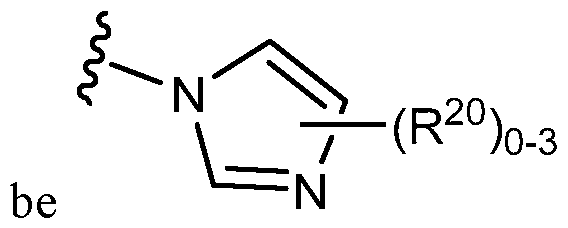 ; the indolyl may be


halogen, Ci-4alkyl, Ci-4haloalkyl, OH, and -OCi-4alkyl. The imidazolyl may

wherein R20a is hydrogen, Ci-4alkyl, or C3-8cycloalkyl; the indolyl may

 the pyrrolopyridinyl may
 example, the
imidazolyl may

H - - N d
[0051] In some embodiments, R8 is NC/ , wherein G4 is as defined herein.
Exemplary heteroaryl G4 rings include isoxazole
 pyridine (


Accordingly, R8 may be
 .g·,
.g·,

(R30)0-4
 ) wherein R30, at each occurrence, is independently halogen, Ci-4alkyl, Ci-4haloalkyl, or C3-6cycloalkyl; and X2 is CFh, O, or NFL
[0052] R1 may be G1 or -(CRaRb)P-G1, wherein Ra, Rb, G1, and p are as defined herein. The optional substituents of G1 are independently selected from the group consisting of halogen, Ci- 6alkyl (e.g., methyl), Ci-6haloalkyl (trifluoromethyl), oxo, -ORla, -N(Rla)2, -SRla, cyano, - C(0)ORla, -C(0)N(Rla)2, -C(0)Rla, -SORlb, -S02Rlb, -S02N(Rla)2, -NRlaC(0)Rla, - NRlaC(0)ORlb, -NRlaC(0)N(Rla)2, -NRlaS(0)2Rlb, -NRlaS(0)2N(Rla)2, and -V-G .
[0053] Rla, at each occurrence, is independently hydrogen, Ci-6alkyl (e.g., methyl), Ci- 6haloalkyl, -C2-4alkylene-Y (e.g., -CH2CH2-Y), Gla, or -Ci-6alkylene-Gla, wherein two Rla, together with a common nitrogen atom to which the Rla attach optionally form a 4- to 8- membered saturated or partially unsaturated heterocyclic ring, optionally substituted with 1-4 substituents independently selected from the group consisting of Ci-4alkyl, Ci-4haloalkyl, oxo, - OH, and -OCi-4alkyl. Y, at each occurrence, is independently -OH, -OCi-4alkyl (e.g., OCH3), - NH2, -NHCi-4alkyl, or -N(Ci-4alkyl)2 (e.g., N(CH3)2).
[0054] Rlb, at each occurrence, is independently Ci-6alkyl, Ci-6haloalkyl, Gla, or -Ci- 6alkylene-Gla.
[0055] G1 may be substituted with 1-3 substituents independently selected from the group consisting of Ci-4alkyl, -OCi-4alkyl, -C(0)OH, -C(0)OCi-4alkyl, -C(0)NHCi-4alkyl, - C(0)NH-C2-4alkylene-0Ci-4alkyl, or -C(0)NH-C2-4alkylene-N(Ci-4alkyl)2. G1 may be substituted with 1-3 substituents independently selected from the group consisting of CH3, -O CH3, -C(0)OH, -C(0)0CH2CH3, -C(0)NHCH3, -C(0)NH-CH2CH2-0CH3, or -C(0)NH- CH2CH2-N(CH3)2.
[0056] R1 may be -(CRaRb)P-G1; and Ra, Rb, G1, and p are as defined herein. In the embodiments described herein, p may be 1. G1 may be a phenyl or a 5- to 6-membered heteroaryl, wherein G1 is optionally substituted as defined herein. For example, G1 may be substituted with 1-3 substituents independently selected from the group consisting of Ci-4alkyl and -OCi-4alkyl. G1 may be substituted with 1-3 substituents independently selected from the group consisting of CH3 and -OCH3. The 5- to 6-membered heteroaryl of G1 may contain 1-3 nitrogen atoms. G1 may be a phenyl or pyridinyl, where G1 is optionally substituted as defined


invention are compounds wherein
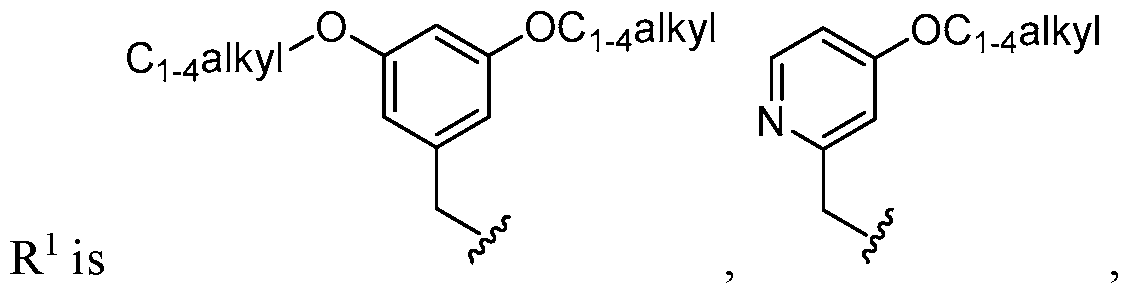

included are compounds wherein


[0057] R1 may be G1; wherein G1 is as defined herein. G1 may be a 6- to 12-membered aryl, an 8- to 10-membered heteroaryl, an 8- to 11-membered heterocycle, or a C5-7carbocycle fused to a phenyl or to a 5- to 6-membered heteroaryl, wherein the 8- to 11-membered heterocycle is a 5- to 7-membered monocyclic heterocycle fused to a phenyl or to a 5- to 6-membered heteroaryl, and wherein G1 is optionally substituted as defined herein. G1 may be a phenyl substituted with
Gla. Gla may be a phenyl. For example, G1 may
 may be the optionally substituted 8- to 10-membered heteroaryl, such as an optionally substituted quinolinyl, e.g., quinolin-4-yl or quinolin-5-yl. The 8- to 10-membered heteroaryl may be substituted with 1-3 substituents independently selected from the group consisting of Ci-4alkyl, -OCi-4alkyl, - C(0)0H, -C(0)OCi-4alkyl, -C(0)NHCi-4alkyl, -C(0)NH-C2-4alkylene-0Ci-4alkyl, and - C(0)NH-C2-4alkylene-N(Ci-4alkyl)2. The 8- to 10-membered heteroaryl may be substituted with 1-3 substituents independently selected from the group consisting of CFF, -O CFF, - C(0)0H, -C(0)0CH2CH3, -C(0)NHCH3, -C(0)NH-CH2CH2-0CH3, and -C(0)NH-CH2CH2-


7carbocycle fused to a phenyl or to a 5- to 6-membered heteroaryl. In the C5-7carbocycle fused to the phenyl or to the 5- to 6-membered heteroaryl, the C5-7carbocyclic ring is attached to the parent molecular moiety, such as an optionally substituted 1,2,3,4-tetrahydronaphthalen-l-yl.
For example, G1 may
 may
may


8- to 11-membered heterocycle, wherein the 8- to 11-membered heterocycle is a 5- to 7- membered monocyclic heterocycle fused to a phenyl or to a 5- to 6-membered heteroaryl. In the 5- to 7-membered monocyclic heterocycle fused to the phenyl or to the 5- to 6-membered heteroaryl, the 5- to 7-membered heterocyclic ring is attached to the parent molecular moiety,
such as an optionally substituted chroman-4-yl. For example, G1 may

 [0058] Any G1, as defined herein, may be substituted with 1-3 substituents independently selected from the group consisting of halogen (e.g., fluoro, chloro), Ci-6alkyl (e.g., methyl, ethyl), Ci-ehaloalkyl, -ORla (e.g., OCH3), -N(Rla)2, -SRla, cyano, -C(0)0Rla, -C(0)N(Rla)2, - C(0)Rla, -S02Rlb, -NRlaC(0)Rla, C3-8cycloalkyl (e.g., cyclopropyl), and -Ci-3alkylene-C3- 8cycloalkyl, wherein each C3-8cycloalkyl is optionally substituted with 1-4 substituents independently selected from the group consisting of Ci-4alkyl and halogen, wherein Rla and Rlb are as defined herein. G1, as defined herein, may be substituted with 1-3 substituents
independently selected from the group consisting of halogen (e.g., fluoro, chloro), Ci-6alkyl (e.g., methyl, ethyl), -OCi-6alkyl (e.g., OCH3), and C3-8cycloalkyl (e.g., cyclopropyl).
[0059] In the embodiments described herein, Ra may be hydrogen, Ci-4alkyl (e.g., methyl), or Glb, wherein Glb is as defined herein (e.g., C3-6carbocycle such as cyclopropyl).
[0060] In the embodiments described herein are further embodiments, wherein Rb is hydrogen.
[0061] The carbon atom to which Ra and Rb attach may have either R or S stereochemistry.
[0062] In some embodiments, R4 is G2; wherein G2 is as defined herein. G2 may be a 6- to 12-membered aryl or a 5- to 12-membered heteroaryl, and optionally substituted as defined herein. R4 may be G2, wherein G2 may be a phenyl or a 5- to 6-membered heteroaryl, and optionally substituted as defined herein. The 5- to 6-membered heteroaryl of G2 may contain 1-3 heteroatoms independently selected from the group consisting of sulfur and nitrogen. R4 may be G2, wherein G2 may be phenyl, pyridinyl, pyrazolyl, or thiazolyl, and G2 is optionally substituted as defined herein. For example, G2 is optionally substituted with 1-4 substituents independently selected from the group consisting of halogen, Ci-6alkyl, and Ci-6haloalkyl. R4 may be


halo halo

[0063] Rla, Rlc, Rle, R4a, and R4c may independently be hydrogen, Ci-6alkyl, or Ci-6haloalkyl.
[0064] Rlb, Rld, Rlf, R4b, and R4d may independently be Ci-6alkyl or Ci-6haloalkyl.
[0065] In the compounds described herein R2a and R2b may be independently hydrogen or Ci- 4alkyl. For example R2a may be hydrogen and R2b methyl. When the carbon to which R2a and R2b attach is assymetrically substituted, it may have either (R) or (S) stereochemistry.
[0066] In the compounds described herein, R3 may be hydrogen or Ci-6alkyl.
[0067] In one aspect of the invention, L is -(CR2aR2b)n-, wherein - is a single bond and
X is O, NR3, or S; or L is -C(R2c):, wherein - is a double bond and X is N. In the group L of formula (I), -C(R2c): refers to a carbon atom with substituent R2c, where the carbon atom is bonded to X by a double bond and on the other side to the adjacent nitrogen ring atom by a
R2C
single bond. The group -C(R2c): may alternately be written as
 , as shown below in formula (I-A).
[0068] In the compounds described herein n may be 1 (e.g., formula (I-A)); n may be 2 (e.g., formula (I-Bl).
[0069] In another aspect of the invention, L is a C2-ihydrocarbylene optionally substituted with 1-2 Ci-4alkyl or oxo. For example, L may be a C2hydrocarbylene optionally substituted with Ci-4alkyl or oxo, e.g., -CH2CH2-, -CH2C(0)-, or -CFLCH^CFL)-. L may be a
Cihydrocarbylene optionally substituted with Ci-4alkyl, e.g., -CH2-,

[0070] In the compounds described herein, formula (I) may have formula (I-A)

R2C
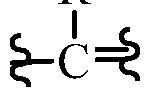

[0071] In the compounds described herein, formula (I) may have formula (I-B)

R7a, R7b, R8, X, and n are as defined herein. In the compounds described herein L may be -CFh- and X is NH. Formula (I-B) also includes compounds wherein L is a saturated
Cihydrocarbylene, i.e., -CH2-.
[0072] In the compounds described herein, formula (I) may have formula (I-B 1)


[0073] In the compounds described herein, R5 may be hydrogen or halogen. In the compounds described herein, R5 may be hydrogen.
[0074] In the compounds described herein, R6 may be hydrogen.
[0075] In the compounds describe herein, R7a and R7b may each be hydrogen.
[0076] In the compounds of formula (I) are compounds of formula (II),


CR1C or N; R1A is OCi-4alkyl or Ci-4alkyl; R1B is hydrogen, OCi-4alkyl, Ci-4alkyl, -C(0)0Rla, or -C(0)N(Rla)2; R1C is hydrogen and RA is hydrogen, Ci-4alkyl, or C3-6cycloalkyl; or R1C and RA join to form a 6-membered ring optionally containing two additional double bonds and a nitrogen or oxygen heteroatom, the 6-membered ring being optionally substituted with Ci-4alkyl; Rla, at each occurrence, is independently hydrogen, Ci-4alkyl, Ci-4fluoroalkyl, or -C2-4alkylene-Y; Y, at each occurrence, is independently -OH, -OCi-4alkyl, -NH2, -NHCi-4alkyl, or -N(Ci-4alkyl)2, G2 is a 5- to 6-membered monocyclic aromatic ring, optionally containing 1-3 heteroatoms independently selected from N and S, and optionally substituted with 1-3 substituents independently selected from the group consisting of halogen, Ci-4alkyl, and Ci-4fluoroalkyl; and R8 is a 5-membered heterocyclic ring containing 2-3 heteroatoms and 2 or 1 double bonds, wherein one of the 2-3 heteroatoms is a nitrogen and the remaining heteroatoms are
independently selected from nitrogen and oxygen, wherein R8 is optionally substituted with 1-3 substituents independently selected from the group consisting of Ci-4alkyl, imino, Ci- 4fluoroalkyl, C3-4cycloalkyl, and -Ci-3alkylene-C3-4cycloalkyl.
[0077] Included in formula (II) are compounds wherein R8 is imidazolyl optionally substituted with 1-3 substituents independently selected from the group consisting of Ci-4alkyl, kylene-C3-4cycloalkyl. Further included are compounds wherein R8 is

compounds wherein

[0078] Also included in formula (II) are compounds wherein
 wherein G3 is a 5-membered heterocyclic ring containing a first nitrogen at the point of attachment and
optionally 1-2 additional heteroatoms selected from the group consisting of nitrogen and oxygen, G3 having the imine substituent =NH adjacent to the first nitrogen and being optionally substituted with 1-3 substituents independently selected from the group consisting of Ci-4alkyl, Ci-4fluoroalkyl, C3-4cycloalkyl, and -Ci-3alkylene-C3-4cycloalkyl. Further included are
wherein G3 is a 5-membered heterocyclic ring containing a first nitrogen at the point of attachment and
optionally 1-2 additional heteroatoms selected from the group consisting of nitrogen and oxygen, G3 having the imine substituent =NH adjacent to the first nitrogen and being optionally substituted with 1-3 substituents independently selected from the group consisting of Ci-4alkyl, Ci-4fluoroalkyl, C3-4cycloalkyl, and -Ci-3alkylene-C3-4cycloalkyl. Further included are
compounds wherein

are independently hydrogen, Ci-4alkyl, or Ci-4fluoroalkyl; and R13 is hydrogen, Ci-4alkyl, Ci- 4fluoroalkyl, C3-4cycloalkyl, or -Ci-3alkylene-C3-4cycloalkyl. Still further included are
compounds wherein

[0079] Also included in any of these groups or subgroups of compounds of formula (II) are compounds wherein X1 is CR1B; X2 is CR1C; R1C is hydrogen; and RA is hydrogen, Ci-4alkyl, or C3-6cycloalkyl. Further included are compounds wherein R1A is OCi-4alkyl; and R1B is OCi-
4alkyl. Still further included are compounds wherein
 Still
Still
further included are compounds wherein
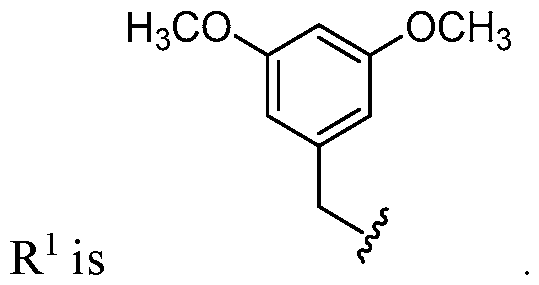
[0080] Alternatively, included in any of these groups or subgroups of compounds of formula (II) are compounds wherein X2 is CR1C; and R1C and RA join to form a 6-membered ring optionally containing two additional double bonds and a nitrogen or oxygen heteroatom, the 6- membered ring being optionally substituted with Ci-4alkyl. Further included are compounds

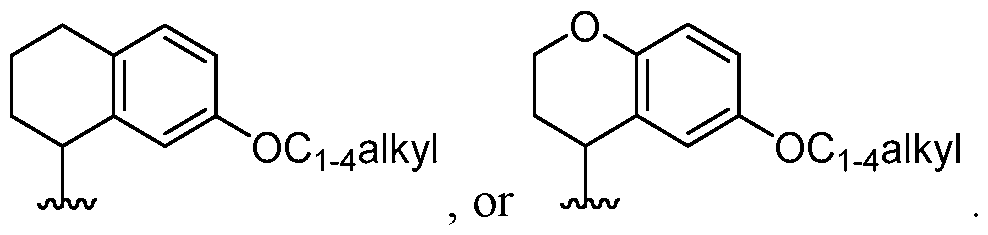

[0081] Alternatively, included in any of these groups or subgroups of compounds of formula (II) are compounds wherein X1 is CR1B; and X2 is N. Further included are compounds wherein R1A is Ci-4alkyl or OCi-4alkyl; and R1B is hydrogen or Ci-4alkyl. Still further included are


[0082] Also included in any of these groups or subgroups of compounds, or combinations halo
thereof, are further compounds wherein

halo


[0083] Included in any of these groups or subgroups of compounds of formula (II) are compounds of formula (II-A)

[0084] Included in any of these groups or subgroups of compounds of formula (II) are compounds of formula (II-B1)

[0085] In compounds of formula (II-B 1), R2a and R2b may be independently hydrogen or Ci- 4alkyl, as in formulas (II-B2), (II-B3), and (II-B4).
[0086] In compounds of formula (II-B1), R2a and R2b may form an oxo, as in formula (II-B5).
[0087] In certain embodiments, the compound of formula (I) is selected from the group consisting of the compounds in Table 1, or a pharmaceutically acceptable salt thereof. Table 1. Exemplary compounds.


[0088] Compound names can be assigned by using Struct=Name naming algorithm as part of CHEMDRAW® ULTRA.
[0089] The compound may exist as a stereoisomer wherein asymmetric or chiral centers are present. The stereoisomer is“A” or“A’ depending on the configuration of substituents around the chiral carbon atom. The terms“A” and“A’ used herein are configurations as defined in IUPAC 1974 Recommendations for Section E, Fundamental Stereochemistry, in Pure Appl. Chem., 1976, 45: 13-30. The disclosure contemplates various stereoisomers and mixtures thereof and these are specifically included within the scope of this invention. Stereoisomers include enantiomers and diastereomers, and mixtures of enantiomers or diastereomers. Individual stereoisomers of the compounds may be prepared synthetically from commercially available
starting materials, which contain asymmetric or chiral centers or by preparation of racemic mixtures followed by methods of resolution well-known to those of ordinary skill in the art.
These methods of resolution are exemplified by (1) attachment of a mixture of enantiomers to a chiral auxiliary, separation of the resulting mixture of diastereomers by recrystallization or chromatography and optional liberation of the optically pure product from the auxiliary as described in Furniss, Hannaford, Smith, and Tatchell, "Vogel's Textbook of Practical Organic Chemistry", 5th edition (1989), Longman Scientific & Technical, Essex CM20 2JE, England, or
(2) direct separation of the mixture of optical enantiomers on chiral chromatographic columns or
(3) fractional recrystallization methods.
[0090] It should be understood that the compound may possess tautomeric forms, as well as geometric isomers, and that these also constitute an aspect of the invention.
[0091] The present disclosure also includes an isotopically-labeled compound, which is identical to those recited in formula (I), but for the fact that one or more atoms are replaced by an atom having an atomic mass or mass number different from the atomic mass or mass number usually found in nature. Examples of isotopes suitable for inclusion in the compounds of the invention are hydrogen, carbon, nitrogen, oxygen, phosphorus, sulfur, fluorine, and chlorine, such as, but not limited to 2H, 3H, 13C, 14C, 15N, 180, 170, 31P, 32P, 35S, 18F, and 36C1, respectively. Substitution with heavier isotopes such as deuterium, i.e., 2H, can afford certain therapeutic advantages resulting from greater metabolic stability, for example increased in vivo half-life or reduced dosage requirements and, hence, may be preferred in some circumstances. The compound may incorporate positron-emitting isotopes for medical imaging and positron-emitting tomography (PET) studies for determining the distribution of receptors. Suitable positron- emitting isotopes that can be incorporated in compounds of formula (I) are UC, 13N, 150, and 18F. Isotopically-labeled compounds of formula (I) can generally be prepared by conventional techniques known to those skilled in the art or by processes analogous to those described in the accompanying Examples using appropriate isotopically-labeled reagent in place of non- isotopically-labeled reagent.
[0092] The disclosed compounds may exist as pharmaceutically acceptable salts. The term “pharmaceutically acceptable salt” refers to salts or zwitterions of the compounds which are water or oil-soluble or dispersible, suitable for treatment of disorders without undue toxicity, irritation, and allergic response, commensurate with a reasonable benefit/risk ratio and effective
for their intended use. The salts may be prepared during the final isolation and purification of the compounds or separately by reacting an amino group of the compounds with a suitable acid. For example, a compound may be dissolved in a suitable solvent, such as but not limited to methanol and water and treated with at least one equivalent of an acid, like hydrochloric acid. The resulting salt may precipitate out and be isolated by filtration and dried under reduced pressure. Alternatively, the solvent and excess acid may be removed under reduced pressure to provide a salt. Representative salts include acetate, adipate, alginate, citrate, aspartate, benzoate, benzenesulfonate, bisulfate, butyrate, camphorate, camphorsulfonate, digluconate,
glycerophosphate, hemisulfate, heptanoate, hexanoate, formate, isethionate, fumarate, lactate, maleate, methanesulfonate, naphthylenesulfonate, nicotinate, oxalate, pamoate, pectinate, persulfate, 3-phenylpropionate, picrate, oxalate, maleate, pivalate, propionate, succinate, tartrate, thrichloroacetate, trifluoroacetate, glutamate, para-toluenesulfonate, undecanoate, hydrochloric, hydrobromic, sulfuric, phosphoric and the like. The amino groups of the compounds may also be quaternized with alkyl chlorides, bromides and iodides such as methyl, ethyl, propyl, isopropyl, butyl, lauryl, myristyl, stearyl and the like.
[0093] Basic addition salts may be prepared during the final isolation and purification of the disclosed compounds by reaction of a carboxyl group with a suitable base such as the hydroxide, carbonate, or bicarbonate of a metal cation such as lithium, sodium, potassium, calcium, magnesium, or aluminum, or an organic primary, secondary, or tertiary amine. Quaternary amine salts can be prepared, such as those derived from methylamine, dimethylamine, trimethylamine, triethylamine, diethylamine, ethylamine, tributylamine, pyridine, Af,A-di methyl ani 1 i ne, N- methylpiperidine, A-methyl morphol i ne, dicyclohexylamine, procaine, dibenzylamine, N,N- dibenzylphenethylamine, 1-ephenamine and Af, Ap -dibenzyl ethyl enedi a i ne, ethylenediamine, ethanolamine, diethanolamine, piperidine, piperazine, and the like.
A. Binding to WDR5
[0094] The disclosed compounds may bind to WDR5 and prevent the association of MLLl or other transcription factors and proteins dependent on WDR5. The compounds may bind to WDR5 and prevent oncogenic processes associated with MLLl, c-MYC, or other oncogenic proteins dependent on WDR5.
[0095] Compounds of formula (I) can bind to WDR5 resulting in a Ki ranging from about 0.01 nM to about 250 mM. The compounds may have a Ki of about 250 mM, about 200 mM,
about 150 mM, about 100 mM, about 90 mM, about 80 mM, about 70 mM, about 60 mM, about 50 mM, about 40 mM, about 30 mM, about 20 mM, about 10 mM, about 9 mM, about 8 mM, about 7 mM, about 6 mM, about 5 mM, about 4 mM, about 3 mM, about 2 mM, about 1 mM, about 950 nM, about 900 nM, about 850 nM, about 800 nM, about 850 nM, about 800 nM, about 750 nM, about 700 nM, about 650 nM, about 600 nM, about 550 nM, about 500 nM, about 450 nM, about 400 nM, about 350 nM, about 300 nM, about 250 nM, about 200 nM, about 150 nM, about 100 nM, about 50 nM, about 10 nM, about 5 nM, about 1 nM, about 0.3 nM, about 0.1 nM, about 0.03 nM, or about 0.01 nM. Compounds of formula (I) can bind to WDR5 resulting in a Ki of less than 250mM, less than 200 mM, less than 150 mM, less than 100 mM, less than 90 mM, less than 80 mM, less than 70 mM, less than 60 mM, less than 50 mM, less than 40 mM, less than 30 mM, less than 20 mM, less than 10 mM, less than 9 mM, less than 8 mM, less than 7 mM, less than 6 mM, less than 5 mM, less than 4 mM, less than 3 mM, less than 2 mM, less than 1 mM, less than 950 nM, less than 900 nM, less than 850 nM, less than 800 nM, less than 850 nM, less than 800 nM, less than 750 nM, less than 700 nM, less than 650 nM, less than 600 nM, less than 550 nM, less than 500 nM, less than 450 nM, less than 400 nM, less than 350 nM, less than 300 nM, less than 250 nM, less than 200 nM, less than 150 nM, less than 100 nM, less than 50 nM, less than 10 nM, less than 5 nM, less than 1 nM, less than 0.3 nM, less than 0.1 nM, or less than 0.03 nM.
B. General Synthesis
[0096] Compounds of formula (I) may be prepared by synthetic processes or by metabolic processes. Preparation of the compounds by metabolic processes includes those occurring in the human or animal body (in vivo) or processes occurring in vitro.
[0097] The compounds of the present disclosure can be prepared in a number of ways well known to one skilled in the art of organic synthesis. The compounds of the present disclosure can be synthesized using the methods described below, together with synthetic methods known in the art of synthetic organic chemistry, or variations thereon as appreciated by those skilled in the art. Preferred methods include, but are not limited to, those described below. All references cited herein are hereby incorporated in their entirety by reference as to the subject matter referenced herein. Compounds of formula (I) may be also prepared by metabolic processes. Preparation of the compounds by metabolic processes includes those occurring in the human or animal body (in vivo) or processes occurring in vitro.
[0098] The compounds of the disclosure may be prepared using the exemplary reactions and techniques described in this section. The reactions are performed in solvents appropriate to the reagents and materials employed and are suitable for the transformations being effective. Also, in the description of the synthetic methods described below, it is to be understood that all proposed reaction conditions, including solvent, reaction atmosphere, reaction temperature, duration of the experiment and workup procedures, are chosen to be the conditions standard for that reaction, which should be readily recognized by one skilled in the art. One having ordinary skill in the art may adjust one or more of the conditions described herein. One skilled in the art of organic synthesis understands that the functionality present on various portions of the edict molecule must be compatible with the reagents and reactions proposed. Not all compounds of the disclosure falling into a given class may be compatible with some of the reaction conditions required in some of the methods described. Such restrictions to the substituents, which are compatible with the reaction conditions, will be readily apparent to one skilled in the art and alternate methods can be used.
Scheme 1

[0099] In some embodiments, provided compounds of this invention may be prepared as shown in Scheme 1. Optionally substituted 2-amino-3-bromo-5-chlorobenzoic acid 1 is cyclized to 8-bromo-6-chloroquinazolin-4(3//)-one 2 in formamide under the thermal condition. The corresponding quinazolinone NH of 2 can be alkylated by appropriate R1 group under a number of conditions that are routine for those skilled in the art to give intermediate 3. A variety of boronic acids 4 or borates 5, which are commercially available or can be prepared, can be selectively coupled with intermediates 3 by reacting with the bromo via e.g. , Suzuki -Miyaura
coupling protocol to afford biaryl adducts 6 (Miyaura, N., Suzuki, A., Chem. Rev. (1995), 2457) in the presence of a catalytic Pd species, such as Pd(PPh3)4, PdCl2(dppf), Pd(PPh3)2Cl2,
Pd(OAc)2, Pd2(dba)3 and a suitable ligand such as PPh3, AsPh3, etc., or other such Pd catalyst, and a base such as Na2CCb, CS2CO3, K2CO3, Ba(OH)2 or Et3N. The commercially available vinyl boronic acid or potassium trifluoro(vinyl)borate can be coupled with intermediates 6 to provide vinyl adduct 7 via e.g., Suzuki coupling protocol for arylchloride developed by Fu (Littke, A. F., Fu, G. C. Angew. Chem. Int. Ed. (1998), 37, 3387 - 3388) using a catalytic Pd species including, but not limited to, Pd(t-Bu3P)2 and with appropriate bases such as Na2CCb, CS2CO3, K2CO3, Ba(OH)2 or Et3N. Oxidation of the vinyl group of 7 can be achieved by 0s04/ NaI04 or ozonolysis followed by hydride reduction using, but not limited to, NaBFE or NaCNBFE to prepare alcohol 8. Hydroxy group of Formula 8 may be activated by converting to bromide, chloride, mesylate or tosylate group under a number of conditions that are routine for those skilled in the art of organic synthesis. Intermediate 9 can be reacted with variety of nucleophiles such as optionally substituted imidazole (a), 1 ,3-dihydro-2//-imidazol-2-imine (b), imidazolidin- 2-imine (c), oxazol-2-imine (d), oxazolidine-2-imine (e), pyrrolidin-2-imine (f), 2,4-dihydro- l,2,4-triazol-3-imine (g), pyridin-2(li7)-imine (h), indol-l-yl (i), indol-3-yl (j), lF7-pyrrolo[2,3- b]pyridine-l-yl (k), or isoxazol-3 -amino (1) in the presence of appropriate bases, such as DIEA, TEA, CS2CO3, K2CO3, LiOH or NaOH, to yield corresponding products of Formula lOa-k, respectively. The quinazolin-4(3//)-one core of lOa-k, can be reduced to give the corresponding 2,3-dihydroquinazolin-4(li )-one lla-k using, but not limited to, NaBHi and TFA in an appropriate organic solvent, such as THF and DME under the reflux condition.
Scheme 2

00100 In some embodiments, 3,4-dihydrobenzo[/][l,4]oxazepin-5(2//)-one containing compounds of this invention may be prepared as shown in Scheme 2. Optionally substituted dimethyl 4-hydroxyisophthalate 12 can be regioselectively brominated at the 5-position using, but not limited to, NBS to yield intermediate 13 The hydroxyl group of intermediate 13 is then allylated by reacting with 3-bromoprop-l-ene in the presence of appropriate bases, such as DIEA, TEA, CS2CO3, or K2CO3 to yield corresponding adduct 14 The aldehyde 15 can be produced by oxidation of the vinyl group of 14 using, but not limited to, OSO4/ NaI04 or ozonolysis. Primary amines with appropriate R1 groups can react with the aldehyde group in 15 to give corresponding secondary amine 16 via reductive amination protocol using, but not limited to, NaBH(OAc)3 or NaCNBEE. Dihydrobenzo-oxazepinone 17 can be constructed by intramolcular cyclization of 16 in the presence of bases, such as DIEA, TEA, CS2CO3, or K2CO3. The intermediate 17 coupled with a variety of boronic acids 4 or borates 5 under the Suzuki - Miyaura coupling protocol outlined in Scheme 1 to afford biaryl intermediate 18 The methyl ester functional group of 18 can be converted to alcohol under various reduction conditions that are routine for those skilled in the art of organic synthesis. Finally, alcohol 19 can be further
elaborated to produce compounds of formula 20a-k using the reaction sequence illustrated in Scheme 1.
Scheme 3

[00101] Scheme 3 depicts a route to produce compounds of formula 30a-k containing an optionally substituted 3,4-dihydrobenzo[/][ l ,4]oxazepin-5(2//)-one core unit. Optionally substituted methyl 3-bromo-5-formyl-2-hydroxybenzoate 21 can be reduced using, but not limited to, NaBH4, NaBH(OAc)3 or NaCNBEE, and the resulting alcohol can be selectively protected with /c/V-butyl -di phenyl silyl group using /c/V-butyl (chi oro)di phenyl silane and base such as Et3N or (i-Pr)2EtN or other proper protecting groups under appropriate conditions that
are routine for those skilled in the art to yield intermediate 22. The phenol group 22 can be substituted using optionally substituted /c/V-butyl (2-bromoethyl)carbamate in the presence of appropriate bases, such as DIEA, TEA, CS2CO3, or K2CO3 to yield corresponding adduct 23. The Boc group is removed under acidic conditions and the resulting free amine 24 can undergo intramolecular cyclization in the presence of bases, such as DIEA, TEA, CS2CO3, or K2CO3, followed by deprotection of the alcohol to give dihydrobenzo-oxazepinone 25. The hydroxy group of25 can be further elaborated to produce compounds of formula 27a-k using the reaction sequence illustrated in Scheme 1 (intermediate 8 to lOa-k). The intermediate 27a-k can be subjected in Suzuki -Miyaura coupling protocol, depicted in Scheme 1, using boronic acids 4 or borates 5 to afford biaryl adducts 28a - k. Finally, the NH- of28a - k core unit can be substituted by appropriate R1 groups using a number of conditions that are routine for those skilled in the art to give compounds of formula 30a-k. Alternatively, the reaction sequence can be switched by alkylation the NH of27a-k prior to Suzuki-Miyaura coupling reaction.
Scheme 4

[00102] Alternatively, the intermediate 31 with a protected hydroxyl group can be subjected in Suzuki -Miyaura coupling protocol followed by substitution of NH of32 as illustrated in Scheme 3 to give the intermediate 33. Then, the protecting group of33 can be removed under various conditions that are routine for those skilled in the art of organic synthesis. The resulting hydroxyl
group of 33 can be further elaborated to produce compounds of formula 30a-k using the reaction sequence shown in Scheme 1.
Scheme 5

39 40a - k
[00103] In some embodiments, compounds of Formula 37a-k and 40a-k encompassing R’ or R’’ groups with defined stereo-configurations may be synthesized by procedures illustrated in Scheme 5. The optically pure Boc protected 5-R’-l, 2, 3-oxathiazolidine-2, 2-dioxide reagent 35 can react with the phenol 22 (PG = protecting group) with inversion of configuration to give the adduct 36 in the presence of appropriate bases such as CS2CO3, K2CO3, Et3N or (ί-R EΐN. Similarly, the same reaction protocol can be applied using 4-R”-l,2,3-oxathiazolidine-2,2- dioxide reagent 38 to generate the intermediate 39 with retention of configuration. Then, resulting intermediates 36 and 39 can be subjected to reaction sequences illustrated in Schemes 3 and 4 to produce final compounds 37a-k and 40a-k.
Scheme 6.

44 45a - k 46a - k
[00104] Exemplary methods for preparing compounds of Formula 45a-k and 46a-k, containing dihydro-benzodiazepine-dione and tetrahydro-benzodiazepin-one core unit respectively, are shown in Scheme 6 and proceed from optionally substituted 2-amino-3-bromo-5-chlorobenzoic acid 1. Amide coupling reaction with R1 -substituted aminoacetate 41 using coupling reagents including, but not limited to, HATU, EDC, PyBOP, DCC, HBTU, or TBTU under a number of conditions that are routine for those skilled in the art of organic synthesis gives amide 42.
Subsequent intramolecular cyclization of 42 in the presence of base, such as KOtBu, can produce dihydro-benzodiazepine-dione 43. The reaction sequence demonstrated in Scheme 1 can be applied to prepare dione 45a-k, which can be converted to compounds of Formula 46a-k by hydride reduction reaction using, but not limited to, NaBFE, NaBH(OAc)3 or NaCNBFE.
Scheme 7.

[00105] Alternatively, compounds of Formula 45a-k may be prepared by procedures illustrated in Scheme 7. The synthesis is started from optionally substituted 2-amino-3-bromo-5- iodobenzoic acid 47, which can undergo 2 subsquent Suzuki-Miyaura coupling protocols outlined in Scheme 1 in region-selective manner to provide Intermediates 48 and 49.
Saponification followed by amide coupling reaction described previousely gives amide 50. Subsequent intramolecular cyclization using, but not limited to, chloroacetyl chloride through amide formation of the aniline moiety followed by alkylation of the benzamide group in the presence of base, such as NaH, can produce dihydro-benzodiazepine-dione 51. Dione 45a-k may be produced following the reaction sequence demonstrated in Scheme 1
Scheme 8.

[00106] In some embodiments, compounds of Formula 60a-k containing aromatic R1 group (Ar2) may be synthesized by procedures illustrated in Scheme 8. Reduction of optionally substituted methyl 3-bromo-5-formyl-2-hydroxybenzoate 21 as shown in Scheme 3 can produce alcohol 53, where the phenol group can be selectively alkylated using te/V-butyl (2- bromoethyl)carbamate in the presence of appropriate bases such as K2CO3 to yield
corresponding adduct 54. Boronic acids 4 or borates 5 may be coupled under the Suzuki-Miyaura coupling protocol outlined in Scheme 1 followed by removal of Boc protecting group to afford biaryl intermediate 18. Subsquent intramolecular cyclization in the presence of base such as (i- R EΐN under thermolysis condition may yield oxazepinone intermediate 56. Intermediate 58a-k may be produced using the reaction sequence illustrated in Scheme 1 to install desired R8 group from alcohol 56. The lactam NH of 58a-k may undergo cross-coupling reactions with a variety of aryl or heteroaryl halides of formula 59, wherein Y is Br or I, in the presence of a catalytic Pd species, such as Pd(OAc)2 or Pd2(dba)3 and a suitable ligand such as Xantphos or BrettPhos and
a base such as Na2CCb, CS2CO3, or K2CO3 to generate compounds of formula 60a-k.
Alternatively, compounds of formula 60a-k can be also produced using the Ullman coupling conditions in the presence of Cul and a suitable ligand such as (trans)-l,2·/^/^ - dimethylaminocyclohexane or Z-Proline and a base such as CS2CO3, K2CO3 or K2PO4 in a suitable solvent such as toluene or DMF.
[00107] Precursor reagents and intermediates for core aryl or phenyl structure were either commercially available or prepared using known methods in the literature. Procedures towards key intermediates are detailed within specified examples or below.
[00108] The compounds and intermediates may be isolated and purified by methods well- known to those skilled in the art of organic synthesis. Examples of conventional methods for isolating and purifying compounds can include, but are not limited to, chromatography on solid supports such as silica gel, alumina, or silica derivatized with alkylsilane groups, by
recrystallization at high or low temperature with an optional pretreatment with activated carbon, thin-layer chromatography, distillation at various pressures, sublimation under vacuum, and trituration, as described for instance in "Vogel's Textbook of Practical Organic Chemistry", 5th edition (1989), by Furniss, Hannaford, Smith, and Tatchell, pub. Longman Scientific &
Technical, Essex CM20 2JE, England.
[00109] A disclosed compound may have at least one basic nitrogen whereby the compound can be treated with an acid to form a desired salt. For example, a compound may be reacted with an acid at or above room temperature to provide the desired salt, which is deposited, and collected by filtration after cooling. Examples of acids suitable for the reaction include, but are not limited to tartaric acid, lactic acid, succinic acid, as well as mandelic, atrolactic,
methanesulfonic, ethanesulfonic, toluenesulfonic, naphthalenesulfonic, benzenesulfonic, carbonic, fumaric, maleic, gluconic, acetic, propionic, salicylic, hydrochloric, hydrobromic, phosphoric, sulfuric, citric, hydroxybutyric, camphorsulfonic, malic, phenylacetic, aspartic, or glutamic acid, and the like.
[00110] Reaction conditions and reaction times for each individual step can vary depending on the particular reactants employed and substituents present in the reactants used. Specific procedures are provided in the Examples section. Reactions can be worked up in the
conventional manner, e.g. by eliminating the solvent from the residue and further purified according to methodologies generally known in the art such as, but not limited to, crystallization,
distillation, extraction, trituration and chromatography. Unless otherwise described, the starting materials and reagents are either commercially available or can be prepared by one skilled in the art from commercially available materials using methods described in the chemical literature. Starting materials, if not commercially available, can be prepared by procedures selected from standard organic chemical techniques, techniques that are analogous to the synthesis of known, structurally similar compounds, or techniques that are analogous to the above described schemes or the procedures described in the synthetic examples section.
[00111] Routine experimentations, including appropriate manipulation of the reaction conditions, reagents and sequence of the synthetic route, protection of any chemical functionality that cannot be compatible with the reaction conditions, and deprotection at a suitable point in the reaction sequence of the method are included in the scope of the invention. Suitable protecting groups and the methods for protecting and deprotecting different substituents using such suitable protecting groups are well known to those skilled in the art; examples of which can be found in PGM Wuts and TW Greene, in Greene’s book titled Protective Groups in Organic Synthesis (4th ed.), John Wiley & Sons, NY (2006), which is incorporated herein by reference in its entirety. Synthesis of the compounds of the invention can be accomplished by methods analogous to those described in the synthetic schemes described hereinabove and in specific examples.
[00112] When an optically active form of a disclosed compound is required, it can be obtained by carrying out one of the procedures described herein using an optically active starting material (prepared, for example, by asymmetric induction of a suitable reaction step), or by resolution of a mixture of the stereoisomers of the compound or intermediates using a standard procedure (such as chromatographic separation, recrystallization or enzymatic resolution).
[00113] Similarly, when a pure geometric isomer of a compound is required, it can be obtained by carrying out one of the above procedures using a pure geometric isomer as a starting material, or by resolution of a mixture of the geometric isomers of the compound or intermediates using a standard procedure such as chromatographic separation.
[00114] It can be appreciated that the synthetic schemes and specific examples as described are illustrative and are not to be read as limiting the scope of the invention as it is defined in the appended claims. All alternatives, modifications, and equivalents of the synthetic methods and specific examples are included within the scope of the claims.
C. Examples
[00115] ABBREVIATIONS
[00116] The following abbreviations are employed in the Examples and elsewhere herein:
AcCl = acetyl chloride
AcOK = potassium acetate
AIBN = Azobisisobutyronitrile
AsPh3 = triphenylarsine
DCC = N,N’-dicyclohexylcarbodiimide
DCM = dichloromethane
DIPEA/DIEA = N,N-diisopropylethylamine
DMA = dimethylacetamide
DMAP = dimethylaminopyridine
DME = dimethoxyethane
DMF = dimethylformamide
DMSO = dimethylsulfoxide
EDC = 1 -Ethyl-3 -(3 -dimethylaminopropyl)carbodiimide
ether = diethyl ether
Et3N = triethylamine
EtOAc = ethyl acetate
EtOH = ethanol
HATU = l-[Bis(dimethylamino)methylene]-li7-l,2,3-triazolo[4,5-Z>]pyridinium 3-oxid hexafluorophosphate
HBTU = N, N, N', N'-T e tram ethyl -()-( 1 //-benzotriazol - 1 -yl )uroni u hexafluorophosphate Hex = hexanes
(i-Pr)2EtN = diisopropylethylamine
KOtBu = potassium tert-butoxide
MeCN = acetonitrile
MeOH = methanol
NaBH(OAc)3 = sodium triacetoxyborohydride
NBS = /V-bromosuccinimide
Pd(t-Bu3P)2 = Bis(tri-/er/-butylphosphine)palladium(0)
PdCl2(dppf)/Pd(dppf)Cl2 = [1,1 '-Bis(diphenylphosphino)ferrocene]dichloropalladium(II)
Pd2(dba)3 = Tris(dibenzylideneacetone)dipalladium(0)
Pd(OAc)2 = palladium(II) acetate
Pd(PPh3)4 = Tetrakis(triphenylphosphine)palladium(0)
Pd(PPh3)2Cl2 = Bis(triphenylphosphine)palladium(II) dichloride
PPh3 = triphenylphosphine
PyBOP = (Benzotriazol-l-yloxy)tripynOlidinophosphonium hexafluorophosphate
TBAF = tetrabutylammonium fluoride
TBS = /c/V-buty 1 di m ethyl si 1 y 1
TBTU = 2-(lH-Benzotriazole-l-yl)-l,l,3,3-tetramethylaminium tetrafluorob orate
TEA = triethylamine
THF = tetrahydrofuran
XantPhos = 4,5-Bis(diphenylphosphino)-9,9-dimethylxanthene
aq. = aqueous
equiv. or eq. = equivalent(s)
min = minute(s)
h or hr = hour(s)
quant. = quantitative
r.t. = room temperature
LRMS = low resolution mass spectrometry
RT = retention time (in minutes)
sat. = saturated
[00117] Microwave assisted reactions are performed in a single-mode reactor: Emrys™ Optimizer microwave reactor (Personal Chemistry A.B., currently Biotage).
[00118] Hydrogenation reactions are performed using an atmospheric balloon or using a Parr hydrogenation shaker apparatus.
[00119] Normal phase flash silica gel-based column chromatography is performed using ready -to-connect cartridges from ISCO, on irregular silica gel, particle size 15-40 pm on a Combi-flash Companion chromatography system from ISCO.
[00120] Low resolution mass spectra are obtained on an Agilent 1200 series 6130 mass spectrometer. Analytical HPLC is performed on an HP1100 with UV detection at 214 and 254
nm along with ELSD detection, LC/MS (J-Sphere80-C18, 3.0 x 50 mm, 4.1 min gradient, 5%[0.05%TFA/CH3CN]:95%[0.05%TFA/H20] to 100%[0.05%TFA/CH3CN]. Preparative RP- HPLC purification is performed on a custom HP 1100 automated purification system with collection triggered by mass detection or using a Gilson Inc. preparative UV-based system using a Phenomenex Luna C18 column (50 x 30 mm I.D., 5 pm) with an acetonitrile (unmodified)- water (0.1% TFA) custom gradient.
[00121] For LC-MS-characterization of the compounds of the present invention, the following methods are used.
[00122] Method 1 : The HPLC measurement is performed using an Agilent 1200 system comprising a binary pump with degasser, an autosampler, a column oven, a diode-array detector (DAD) and a column as specified in the respective methods below. Flow from the column is split to a SQ mass spectrometer and Polymer Labs ELSD. The MS detector is configured with an ES ionization source. Nitrogen is used as the nebulizer gas. The source temperature is maintained at 350 °C. Data acquisition is performed with Agilent Chemstation software. Reversed phase HPLC is carried out on a Kinetex C18 column (2.6 pm, 2.1 x 30 pm) from Phenomenex, with a flow rate of 1.5 mL/min, at 45 °C. The gradient conditions used are: 93% A (water + 0.1% TFA), 7% B (acetonitrile), to 95% B in 1.1 minutes, returning to initial conditions at 1.11 minutes. Injection volume 1 pL. Low-resolution mass spectra (single quadruple MSD detector) are acquired in electrospray mode by scanning from 100 to 700 in 0.25 seconds, step size of 0.1 and peak width of 0.03 minutes. The capillary needle voltage is 3.0 kV and the fragmentor voltage is 100 V.
[00123] Method 2: Using method 1 instrument and column conditions. The gradient conditions used are: 95% A (water + 0.1% TFA), 5% B (acetonitrile), to 95% B in 2.0 minutes, returning to initial conditions at 2.11 minutes. Injection volume 1 pL. Low-resolution mass spectra (single quadruple MSD detector) are acquired in electrospray mode by scanning from 100 to 700 in 0.25 seconds, step size of 0.1 and peak width of 0.03 minutes. The capillary needle voltage is 3.0 kV and the fragmentor voltage is 100V.
[00124] Method 3 : Using method 1 instrument and column conditions. The gradient conditions used are: 50% A (water + 0.1% TFA), 50% B (acetonitrile), to 95% B in 2.0 minutes, returning to initial conditions at 2.11 minutes. Injection volume 1 pL. Low-resolution mass spectra (single quadruple MSD detector) are acquired in electrospray mode by scanning from 100 to 700 in 0.25
seconds, step size of 0.1 and peak width of 0.03 minutes. The capillary needle voltage is 3.0 kV and the fragmentor voltage is 100V.
[00125] 'H NMR spectra are recorded either on a Bruker DPX-400 or on a Bruker AV-500 spectrometer with standard pulse sequences, operating at 400 MHz and 500 MHz respectively. Chemical shifts (d) are reported in parts per million (ppm) downfield from tetramethylsilane (TMS), which is used as internal standard. Coupling constants (J-values) are reported in Hz.
[00126] The following Examples are offered as illustrative as a partial scope and particular embodiments of the invention and are not meant to be limiting of the scope of the invention. Abbreviations and chemical symbols have their usual and customary meanings unless otherwise indicated. Unless otherwise indicated, the compounds described herein have been prepared, isolated and characterized using the Schemes and other methods disclosed herein or may be prepared using same.

Example 1
3-(3,5-Dimethoxybenzyl)-8-(4-fluoro-2-methylphenyl)-6-((2-imino-3-methyl-2, 3-dihydro- l//-imidazol-l-yl)methyl)quinazolin-4(3//)-one
[00127] Step A. Preparation of 8-bromo-6-chloroquinazolin-4(3E/)-one. 2 - Amino-3 -bromo- 5-chlorobenzoic acid (1000 mg, 4.02 mmol, 1.0 equiv.) and formamide (3.20 mL, 80.3 mmol, 20 equiv.) were heated to 150 °C overnight and then cooled to room temperature and diluted with H2O (5 mL). The resulting solid was collected by vacuum filtration and washed with H2O and then further dried in a vacuum oven overnight to yield the title compound (652 mg, 63% yield). LCMS: RT = 1.196 min, MS (ES) 258.9 [M+H]+; ¾ NMR (400 MHz, DMSO-<f) d 8.28 (d, J = 2.4 Hz, 1H), 8.25 (s, 1H), 8.08 (d, J= 2.4 Hz, 1H).
[00128] Step B. Preparation of 8-bromo-6-chloro-3-(3,5-dimethoxybenzyl)quinazolin- 4(3Ef)-one. 8-Bromo-6-chloroquinazolin-4(3f/)-one (651 mg, 2.52 mmol, 1.0 equiv.) was dissolved in DMF (10 mL) and then K2CO3 (1040 mg, 7.56 mmol, 3.0 equiv.) was added followed by 3,5-dimethoxybenzyl bromide (695 mg, 3.02 mmol, 1.2 equiv.). The reaction was stirred at room temperature for 1 h and then H2O (20 mL) was added and the solid was collected
by vacuum filtration and washed with water. The solid was further dried in a vacuum oven overnight to yield the title compound (852 mg, 83% yield). LCMS: RT = 1.814 min, MS (ES) 408.9 [M+H]+; ¾ NMR (400 MHz, DMSO-i ) d 8.69 (s, 1H), 8.30 (d, J= 2.0 Hz, 1H), 8.12 (d, J = 2.4 Hz, 1H), 6.54 (d, J= 2.4 Hz, 2H), 6.44 (t, J= 2.0 Hz, 1H), 5.11 (s, 2H), 3.71 (s, 6H).
[00129] Step C. Preparation of 6-chloro-3-(3,5-dimethoxybenzyl)-8-(4-fluoro-2- methylphenyl)quinazolin-4(37f)-one. Pd(dppf)Cl2 (76.2 mg, 0.104 mmol, 0.05 equiv.) was added to a mixture of 8-bromo-6-chloro-3-(3,5-dimethoxybenzyl)quinazolin-4(3f/)-one (851 mg, 2.08 mmol, 1.0 equiv.), 4-fluoro-2-methylphenyl-boronic acid (417 mg, 2.71 mmol, 1.3 equiv.), and K2CO3 (864 mg, 6.25 mmol, 3.0 equiv.) in l,4-dioxane:H20 (3:1, 10 mL). The resulting mixture was degassed and back filled with argon gas, and heated at 95 °C overnight. The reaction was cooled to room temperature and filtered through a pad of celite and washed with EtOAc (20 mL). H2O (20 mL) was added and the layers were separated. The aqueous layer was extracted with EtOAc (3 x 10 mL) and the combined organic layers were washed with brine (10 mL), dried (MgS04), filtered and concentrated. The residue was purified by flash
chromatography (Combi-flash Rf, Hex/EtOAc = 0-75% gradient) to afford the title compound (513 mg, 56% yield). LCMS: RT = 2.010 min, MS (ES) 438.9 [M+H]+; ¾ NMR (400 MHz, chloroform -<7) d 8.34 (d, J= 2.4 Hz, 1H), 8.04 (s, 1H), 7.58 (d, J= 2.4 Hz, 1H), 7.16-7.12 (m, 1H), 7.02-6.94 (m, 2H), 6.46 (d, J= 2.0 Hz, 2H), 6.40 (t, J= 1.6 Hz, 1H), 5.16 (s, 1H), 5.03 (s, 1H), 3.76 (s, 6H), 2.08 (s, 3H).
[00130] Step D. Preparation of 3-(3,5-dimethoxybenzyl)-8-(4-fluoro-2-methylphenyl)-6- vinylquinazolin-4(3Lf)-one. Pd(t-Bu3P)2 (59.5 mg, 0.116 mmol, 0.1 equiv.) was added to a mixture of 6-chloro-3-(3,5-dimethoxybenzyl)-8-(4-fluoro-2-methylphenyl)quinazolin-4(3f/)-one (513 mg, 1.16 mmol, 1.0 equiv.), potassium vinyltrifluoroborate (468 mg, 3.49 mmol, 3.0 equiv.), CS2CO3 (1140 mg, 3.49 mmol, 3.0 equiv.) and 1,4-dioxane (12 mL) under an argon atmosphere. The resulting mixture was heated at 90 °C for 4 h, then partitioned between EtOAc (10 mL) and H2O (10 mL). The aqueous layer was extracted with EtOAc (3 x 10 mL) and the combined organic layers were washed with brine (10 mL), dried (MgS04), filtered and concentrated. The residue was purified by flash chromatography (Combi-flash Rf, Hex/EtOAc = 0-75% gradient) to afford the title compound (154 mg, 30% yield). LCMS: RT = 1.981 min, MS (ES) 430.9 [M+H]+.
[00131] Step E. Preparation of 3-(3,5-dimethoxybenzyl)-8-(4-fluoro-2-methylphenyl)-6- (hydroxymethyl)quinazolin-4(3/ )-one. Solid supported 0s04 (118 mg, 0.465 mmol, 0.5 equiv.) was added to a mixture of 3-(3,5-dimethoxybenzyl)-8-(4-fluoro-2-methylphenyl)-6- vinylquinazolin-4(3F/)-one (400 mg, 0.930 mmol, 1.0 equiv.) and pyridine (149 pL, 1.86 mmol, 2.0 equiv.) in l,4-dioxane:H20 (3:1, 9.4 mL). at room temperature followed by the addition of NalCri (796 mg, 3.72 mmol, 4.0 equiv.). After stirring overnight, the reaction mixture was cooled to 0 °C and MeOH (3 mL) was added followed by NaBLL (387 mg, 10.2 mmol, 11 equiv.). The ice bath was removed and the reaction was stirred at room temperature for 1 hour and then filtered and concentrated. The residue was taken up in EtOAc (10 mL) and washed with LLO (10 mL). The organic layer was dried (MgSCri), filtered and concentrated. The residue was purified by flash chromatography (Combi-flash Rf, Hex/EtOAc = 25-100% gradient) to afford the title compound (92 mg, 22% yield). LCMS: RT = L622 min, MS (ES) 435.0 [M+H]+.
[00132] Step F. Preparation of 6-(bromomethyl)-3-(3,5-dimethoxybenzyl)-8-(4-fluoro-2- methylphenyl)quinazolin-4(3Ef)-one. PBn (39 pL, 0.415 mmol, 2.0 equiv.) was added to a solution of 3-(3,5-dimethoxybenzyl)-8-(4-fluoro-2-methylphenyl)-6-(hydroxymethyl)quinazolin- 4(3//)-one (90 mg, 0.207 mmol, 1.0 equiv.) in DCM (2.0 mL) at 0 °C. The reaction was allowed to warm to room temperature over 3 hours and then quenched with sat. NaHCCh (5 mL). The mixture was extracted with EtOAc (3 x 5 mL) and the combined organic layers were washed with brine, dried (MgS04), filtered and concentrated to yield the title compound (65 mg, 63% yield). LCMS RT = L984 min, MS (ES) 496.9 [M+H]+.
[00133] Step G. Preparation of 3-(3,5-dimethoxybenzyl)-8-(4-fluoro-2-methylphenyl)-6- ((2-imino-3-methyl-2, 3-dihydro- Li/-imidazol-l-yl)methyl)quinazolin-4(3Ef)-one. 1-Methyl- liT-imidazol-2-amine (32.7 mg, 0.121 mmol, 3.0 equiv.) was added to a solution of 6-
(bromomethyl)-3-(3,5-dimethoxybenzyl)-8-(4-f|uoro-2- ethylphenyl)quinazolin-4(3//)-one
 mg, 0.0403 mmol, 1.0 equiv.), Nal (0.0006 mg, 0.00403 mmol, 0.1 equiv.) and
diisopropylethylamine (14 pL, 0.0806 mmol, 2.0 equiv.) in acetonitrile (0.2 mL). The reaction mixture was heated at 80 °C for 30 min then concentrated under reduced pressure. The residue was purified by reverse phase HPLC (Phenomenex Gemini Cl 8, ELO/CELCN gradient from 15- 95% CELCN, 0.1% TFA) to yield the title compound (11 mg, 53% yield). * To remove TFA, the organic layer was washed with K2CO3 (sat.). LCMS: RT = 1.364 min, MS (ES) 514.0 [M+H]+; ¾ NMR (400 MHz, Chloroform-if) d 8.20 (s, 1H), 8.15 (s, 1H), 8.06 (d, J= 7.6 Hz, 1H), 7.61
(d, J= 11.2 Hz, 1H), 7.45 (t, J= 8.0 Hz, 1H), 7.09 (t, J= 8.0 Hz, 1H), 6.99-6.91 (m, 2H), 6.57 (d, J = 4.4 Hz, 1H), 6.43 (d, 7= 1.6 Hz, 2H), 6.38 (s, 1H), 5.31 (s, 2H), 5.17 (d, = 13.6 Hz, 1H), 5.03 (d, J= 13.6 Hz, 1H), 3.74 (s, 6H), 3.59 (s, 3H), 2.02 (s, 3H).

Example 2
6-((l/ -Indol-3-yl)methyl)-3-(3,5-dimethoxybenzyl)-8-(4-fluoro-2-methylphenyl)quinazolin-
4(3Ef)-one
[00134] The title compound (5.0 mg, 23% yield) was prepared from the procedure described in Example 1, Step G using indole (14.2 mg, 0.121 mmol, 3 equiv.). The reaction mixture was stirred at 80 °C for 30 min. LCMS: RT = 2.039 min, MS (ES) 534.0 [M+H]+; 1H NMR (400 MHz, Chloroform-i ) d 8.31 (d, = 1.6 Hz, 1H), 8.18 (s, 1H), 8.13-8.06 (m, 1H), 7.55 (d, J= 2.0 Hz, 1H), 7.48 (d, J= 8.0 Hz, 1H), 7.37 (d, J= 8.0 Hz, 1H), 7.20 (t, J= 7.6 Hz, 1H), 7.12-7.06 (m, 2H), 7.04 (d, J= 8.4 Hz, 1H), 6.98-6.90 (m, 2H), 6.47 (d, J= 2.0 Hz, 2H), 6.38 (t, J= 2.4 Hz, 1H), 5.19 (d, J= 13.6 Hz, 1H), 5.04 (d, 7= 13.2 Hz, 1H), 4.27 (s, 2H), 3.75 (s, 6H), 2.01 (s, 3H).

Example 3
4-(3,5-Dimethoxybenzyl)-9-(4-fluoro-2-methylphenyl)-7-((2-imino-3-methyl-2, 3-dihydro- l/ -imidazol-l-yl)methyl)-3,4-dihydrobenzo[ ][l,4]oxazepin-5(2E/)-one
[00135] Step A. Preparation of dimethyl 5-bromo-4-hydroxyisophthalate. N- bromosuccinimide (931.4 mg, 5.23 mmol, 1.1 equiv.) was added to a solution of dimethyl 4- hydroxyisophthalate (1000.0 mg, 4.76 mmol, 1.0 equiv.) in THF (30.0 mL) at 0 °C. After stirring
for 5 min at 0 °C, the reaction mixture was warmed to room temperature and stirred for 2.5 h.
The reaction mixture was concentrated under the reduced pressure. The residue was purified by flash chromatography (Combi-flash Rf, Hex/EtOAc = 0-100% gradient) to afford the title compound (1250 mg, 90% yield). LCMS: RT = 1.646 min, MS (ES) 290.1 [M+H]+.
[00136] Step B. Preparation of dimethyl 4-(allyloxy)-5-bromoisophthalate. 3-Bromoprop- 1-ene (340.0 pL, 3.91 mmol, 1.5 equiv.) and CS2CO3 (2544.8 mg, 7.81 mmol, 3.0 equiv.) were added to a solution of dimethyl 5-bromo-4-hydroxyisophthalate (752.6 mg, 2.60 mmol, 1.0 equiv.) in DMF (20.0 mL). The reaction mixture was stirred at 50 °C for 2 h. The reaction mixture was filtered through Celite and concentrated under the reduced pressure. The crude reaction mixture was partitioned between CH2CI2 (20.0 mL) and H2O (4.0 mL). The organic layer was extracted with CH2CI2 (3 x 20.0 mL) and dried over Na2SC>4 and concentrated under the reduced pressure. The residue was purified by flash chromatography (Combi-flash Rf, Hex/EtOAc = 0-100% gradient) to afford the title compound (576 mg, 67% yield). LCMS: RT = 1.745 min, MS (ES) 330.2 [M+H]+; ¾ NMR (400 MHz, Chloroform-if) d 8.41 (d, J= 2.2 Hz, 1H), 8.39 (d, J= 2.2 Hz, 1H), 6.20 - 6.09 (m, 1H), 5.44 (dq, J= 17.2, 1.5 Hz, 1H), 5.33 - 5.28 (m, 1H), 4.62 (dt, J= 5.9, 1.2 Hz, 2H), 3.93 (s, 3H), 3.93 (s, 3H).
[00137] Step C. Preparation of dimethyl 5-bromo-4-(2-oxoethoxy)isophthalate. OsCri (38.6 mg, 0.15 mmol, 0.25 equiv.) was added to a mixture of dimethyl 4-(allyloxy)-5- bromoisophthalate (200.0 mg, 0.61 mmol, 1.0 equiv.), pyridine (100.0 pL, 1.22 mmol, 2.0 equiv.), water (2.0 mL), and 1,4-dioxane (6.0 mL) at room temperature followed by NalCri (519.9 mg, 2.43 mmol, 4.0 equiv.). After stirring 12 h, the reaction mixture was partitioned between CH2CI2 (20.0 mL) and H2O (5.0 mL). The reaction mixture was extracted with CH2CI2 (3 x 20.0 mL), dried over Na2SC>4 and concentrated under reduced pressure to yield the crude title compound, which was used for the next step without further purification. LCMS: RT =
1.343 min, MS (ES) 332.1 [M+H]+.
[00138] Step D. Preparation of dimethyl 5-bromo-4-(2-((3,5- dimethoxybenzyl)amino)ethoxy) isophthalate. To a solution of dimethyl 5-bromo-4-(2- oxoethoxy)isophthalate (201.2 mg, 0.61 mmol, 1.0 equiv.) in CH2CI2 (10.0 mL) was added (3,5- dimethoxyphenyl)methanamine (152.3 mg, 0.91 mmol, 1.5 equiv.) followed by sodium triacetoxyborohydride (257.6 mg, 1.22 mmol, 2.0 equiv.), and acetic acid (70.0 pL, 1.22 mmol, 2.0 equiv.). The reaction mixture was stirred at room temperature for 12 h then quenched with
acetone (0.5 mL) and concentrated under the reduced pressure. The residue was purified by flash chromatography (Combi-flash Rf, Hex/EtOAc = 0-100% gradient) to afford the title compound (238 mg, 81% yield over 2 steps). LCMS: RT = 1.297 min, MS (ES) 483.3 [M+H]+; ¾ NMR (400 MHz, Chloroform -7) d 8.43 (d, 7 = 2.1 Hz, 1H), 8.38 (d, 7 = 2.1 Hz, 1H), 6.58 (d, 7 = 2.2 Hz, 2H), 6.38 (t, 7 = 2.1 Hz, 1H), 4.66 (br s, 1H), 4.34 - 4.24 (m, 2H), 3.93 (s, 3H), 3.91 (s, 3H), 3.79 (m, 8H), 3.14 (t, 7 = 4.8 Hz, 2H).
[00139] Step E. Preparation of 9-bromo-4-(3, 5-dimethoxybenzyl)-5-oxo-2, 3,4,5- tetrahydrobenzo[ ][l,4]oxazepine-7-carboxylic acid. K2CO3 (340.6 mg, 2.46 mmol, 5.0 equiv.) was added to a solution of dimethyl 5-bromo-4-(2-((3,5- dimethoxybenzyl)amino)ethoxy)isophthalate (237.7 mg, 0.49 mmol, 1.0 equiv.) in MeOH (20.0 mL). The reaction mixture was stirred at 64 °C for 12 h then concentrated under reduced pressure. The residue was partitioned between CH2CI2 (20.0 mL) and H2O (3.0 mL). The organic layer was extracted with CH2CI2 (3 x 20.0 mL) and dried over Na2S04. The combined organics were concentrated under the reduced pressure to afford the crude title compound, which was used for the next step without further purification. LCMS: RT = 1.496 min, MS (ES) 437.3
[M+H]+.
[00140] Step F. Preparation of methyl 9-bromo-4-(3,5-dimethoxybenzyl)-5-oxo-2, 3,4,5- tetrahydrobenzo[ ][l,4]oxazepine-7-carboxylate. SOCI2 (0.11 mL, 1.53 mmol, 3.0 equiv.) was added to a solution of 9-bromo-4-(3,5-dimethoxybenzyl)-5-oxo-2, 3,4,5- tetrahydrobenzo[/][l,4]oxazepine-7-carboxylic acid (221.9 mg, 0.51 mmol, 1.0 equiv.) in MeOH (10.0 mL). The reaction mixture was stirred at 65 °C for 12 h at which point it was complete by LCMS analysis. The reaction mixture was concentrated under the reduced pressure. The crude residue was purified by silica gel chromatography with a Teledyne ISCO Combi-Flash eluting with 0 to 20% MeOH in CY Chto yield the title compound (168.2 mg, 73% yield over 2 steps). LCMS: RT = 1.722 min, MS (ES) 451.3 [M+H]+; ¾ NMR (400 MHz, Chloroform-7) d 8.46 (d, 7= 2.1 Hz, 1H), 8.33 (d, 7= 2.1 Hz, 1H), 6.47 (d, 7= 2.1 Hz, 2H), 6.38 (t, 7= 2.1 Hz, 1H), 4.74 (s, 2H), 4.30 (t, 7= 5.1 Hz, 2H), 3.90 (s, 3H), 3.76 (s, 6H), 3.47 (d, 7= 5.2 Hz, 2H).
[00141] Step G. Preparation of methyl 4-(3,5-dimethoxybenzyl)-9-(4-fluoro-2- methylphenyl)-5-oxo-2,3,4,5-tetrahydrobenzo[ ][l,4]oxazepine-7-carboxylate. (4-Fluoro-2- methylphenyl)boronic acid (115.0 mg, 0.75 mmol, 2.0 equiv.), K2CO3 (206.5 mg, 1.49 mmol,
4.0 equiv.), Pd(PPh3)4 (21.6 mg, 0.02 mmol, 0.05 equiv.) were added to a solution of methyl 9-
bromo-4-(3,5-dimethoxybenzyl)-5-oxo-2,3,4,5-tetrahydrobenzo[/][l,4]oxazepine-7-carboxylate (168.2 mg, 0.37 mmol, 1.0 equiv.) in 1,4-dioxane (4.0 mL) and H2O (1.0 mL). The reaction mixture was degassed using Ar gas then stirred at 80 °C for 4.5 h. The reaction was quenched with sat. aq. NH4CI (1.0 mL) and extracted with CH2CI2 (3 x 10.0 mL). The combined organics were dried over Na2S04 and concentrated under the reduced pressure. The residue was purified by flash chromatography (Combi-flash Rf, Hex/EtOAc = 0-100% gradient) to afford the title compound (153 mg, 85% yield). LCMS: RT = L887 min; MS (ES) 480.5 [M+H]+ ¾ NMR (400 MHz, Chloroform -if) d 8.59 (d, J= 2.3 Hz, 1H), 7.96 (d, J= 2.3 Hz, 1H), 7.06 (dd, J= 8.3, 5.9 Hz, 1H), 6.96 (dd, J= 9.7, 2.4 Hz, 1H), 6.91 (td, J= 8.4, 2.6 Hz, 1H), 6.49 (d, J= 2.2 Hz, 2H), 6.38 (t, J= 2.2 Hz, 1H), 4.77 (br s, 2H), 4.05 (br s, 2H), 3.92 (s, 3H), 3.77 (s, 6H), 3.48 (br s,
2H), 2.08 (s, 3H).
[00142] Step H. Preparation of 4-(3,5-dimethoxybenzyl)-9-(4-fluoro-2-methylphenyl)-7- (hydroxymethyl)-3,4-dihydrobenzo[f][l,4]oxazepin-5(2H)-one. NaBH4 (907 mg, 24.0 mmol, 75 equiv.) was added portionwise to a solution of methyl 4-(3,5-dimethoxybenzyl)-9-(4-fluoro-2- methylphenyl)-5-oxo-2,3,4,5-tetrahydrobenzo[/][l,4] oxazepine-7-carboxylate (153 mg, 0.32 mmol, 1.0 equiv.) in EtOH (20.0 mL). The reaction mixture was stirred at 65 °C for 12 h then diluted with acetone (5.0 mL) and concentrated under the reduced pressure. The residue was partitioned between CH2CI2 (20.0 mL) and H2O (3.0 mL). The organic layer was extracted with CH2CI2 (3 x 20.0 mL), dried over Na2SC>4 and concentrated under the reduced pressure. The residue was purified by flash chromatography (Combi-flash Rf, Hex/EtOAc = 0-100% gradient) to afford the title compound (144 mg, quantitative). LCMS: RT = 1.590 min, MS (ES) 452.5 [M+H]+.
[00143] Step I. Preparation of 7-(bromomethyl)-4-(3,5-dimethoxybenzyl)-9-(4-fluoro-2- methylphenyl)-3,4-dihydrobenzo[ ][l,4]oxazepin-5(2Ef)-one. PBn (60 pL, 0.64 mmol, 2.0 equiv.) was added to a solution of 4-(3,5-dimethoxybenzyl)-9-(4-fluoro-2-methylphenyl)-7- (hydroxymethyl)-3,4-dihydrobenzo[/][l,4] oxazepin-5(2//)-one (145 mg, 0.32 mmol, 1.0 equiv.) in THF (3.0 mL). The reaction mixture was stirred at room temperature for 0.5 h then quenched with H2O (1.0 mL) and extracted with CH2CI2 (3 x 10.0 mL). The organics were passed through a phase separator and the combined organics were concentrated under reduced pressure. The residue was purified by flash chromatography (Combi-flash Rf, Hex/EtOAc = 0-100% gradient)
to afford the title compound (145 mg, 87% yield). LCMS: RT = 1.953 min, MS (ES) 515.4
[M+H]+.
[00144] Step J. Preparation of 4-(3,5-dimethoxybenzyl)-9-(4-fluoro-2-methylphenyl)-7- ((2-imino-3-methyl-2, 3-dihydro- Li/-imidazol-l-yl)methyl)-3, 4- dihydrobenzo[ ][l,4]oxazepin-5(2Ef)-one. 1 -Methyl- liT-imidazol-2-amine hydrochloride (11.3 mg, 0.08 mmol, 2.0 equiv.), KI (2.1 mg, 0.01 mmol, 0.3 equiv.), and N,N-diisopropylethylamine (40.0 pL, 0.21 mmol, 5.0 equiv.) were added to a solution of 7-(bromomethyl)-4-(3,5- dimethoxybenzyl)-9-(4-fluoro-2-methylphenyl)-3,4-dihydrobenzo[/][l,4]oxazepin-5(2F/)-one (21.8 mg, 0.04 mmol, 1.0 equiv.) in CH3CN (1.0 mL). The reaction mixture was stirred at 90 °C for 12 h then quenched with MeOH (0.5 mL) and concentrated under reduced pressure. The residue was purified by reverse phase HPLC (Phenomenex Gemini Cl 8, H2O/CH3CN gradient from 5-95% CH3CN, 0.1% TFA) to yield the title compound (14.2 mg, 63% yield). To remove TFA, the organic layer was washed with K2CO3 (sat.). LCMS: RT = 0.869 min, MS (ES) 531.6 [M+H]+; ¾ NMR (400 MHz, Chloroform-i7) d 7.69 (d, J= 2.2 Hz, 1H), 7.21 (d, J= 2.2 Hz, 1H), 7.04 (dd, J= 8.3, 6.0 Hz, 1H), 6.92 (dd, J= 9.8, 2.3 Hz, 1H), 6.86 (td, J= 8.4, 2.5 Hz, 1H), 6.48 (d, J= 2.1 Hz, 2H), 6.36 (t, J= 2.1 Hz, 1H), 6.19 (q, J= 2.6 Hz, 2H), 4.94 (s, 2H), 4.75 (br s, 2H), 3.88 (br s, 2H), 3.76 (s, 6H), 3.33 (s, 3H), 3.12 (br s, 2H), 2.05 (s, 3H).

Example 4
6-((Li/-Indol-l-yl)methyl)-3-(3,5-dimethoxybenzyl)-8-(4-fluoro-2-methylphenyl)quinazolin-
4(3//)-one
[00145] The title compound (5.0 mg, 23% yield) was prepared from the procedure described in Example 1, Step G using indole (14.2 mg, 0.121 mmol, 3 equiv.). The reaction mixture was stirred at 80 °C for 30 min. LCMS: RT = 2.117 min, MS (ES) 534.0 [M+H]+; 1H NMR (400
MHz, Chloroform -if) d 8.25 (d, J= 1.6 Hz, 1H), 8.04 (s, 1H), 7.65 (d, J= 7.6 Hz, 1H), 7.36-7.28 (m, 2H), 7.22-7.16 (m, 2H), 7.14-7.03 (m, 2H), 7.00-6.87 (m, 2H), 6.56 (d, J= 2.8 Hz, 1H), 6.45
(d, J = 2.0 Hz, 2H), 6.38 (t, J= 2.0 Hz, 1H), 5.52-5.46 (m, 2H), 5.41 (d, = 10.8 Hz, 1H), 5.13 (d, J= 10.8 Hz, 1H), 3.75 (s, 6H), 1.95 (s, 3H).

Example 5
6-((Li/-Pyrrolo[2,3-Z>]pyridin-l-yl)methyl)-3-(3,5-dimethoxybenzyl)-8-(4-fluoro-2- methylphenyl)quinazolin-4(3/ )-one
[00146] The title compound (8.1 mg, 37% yield) was prepared from the procedure described in Example 1, Step G using 7-azaindole (14.2 mg, 0.121 mmol, 3 equiv.). The reaction mixture was stirred at 80 °C for 30 min. LCMS: RT = 1.411 min, MS (ES) 535.0 [M+H]+. ¾ NMR (400 MHz, Chloroform -if) d 8.49 (d, J = 7.6 Hz, 1H), 8.12-8.08 (m, 3H), 7.81 (d, J = 3.6 Hz, 2H), 7.47-7.42 (m, 1H), 7.13-7.09 (m, 1H), 6.99-6.91 (m, 2H), 6.85 (d, J = 3.2 Hz, 1H), 6.42 (d, J = 2.0 Hz, 2H), 6.38 (t, J = 2.0 Hz, 1H), 5.15 (d, J = 14.0 Hz, 1H), 5.0 (d, J = 13.6 Hz, 1H), 4.18- 4.06 (m, 2H), 3.74 (s, 6H), 2.04 (s, 3H).

Example 6
4-(3,5-Dimethoxybenzyl)-9-(4-fluoro-2-methylphenyl)-7-((5-imino-l-methyl-l, 5-dihydro- 4/ -l,2,4-triazol-4-yl)methyl)-3,4-dihydrobenzo[ ][l,4]oxazepin-5(2Ef)-one
[00147] l-Methyl-liT-l,2,4-triazol-5-amine (17.2 mg, 0.17 mmol, 3.0 equiv.) was added to a solution of 7-(bromomethyl)-4-(3,5-dimethoxybenzyl)-9-(4-fluoro-2-methylphenyl)-3,4- dihydrobenzo[/][l,4]oxazepin-5(2//)-one (30.0 mg, 0.06 mmol, 1.0 equiv.) in CH3CN (1.0 mL).
The reaction mixture was stirred at 60 °C for 12 h then quenched with MeOH (0.5 mL) and concentrated under the reduced pressure. The residue was purified by reverse phase HPLC (Phenomenex Gemini C18, H2O/CH3CN gradient from 5-95% CH3CN, 0.1% TFA) to yield the title compound (11.3 mg, 36% yield). To remove TFA, the organic layer was washed with K2CO3 (sat.). LCMS: RT = 1.381 min, MS (ES) 532.6 [M+H]+; ¾ NMR (400 MHz,
Chloroform -7) d 7.78 (d, J= 2.4 Hz, 1H), 7.25 (s, 1H), 7.23 (d, J= 2.4 Hz, 1H), 7.04 (dd, J = 8.4, 5.9 Hz, 1H), 6.94 (dd, J= 9.8, 2.5 Hz, 1H), 6.88 (td, J= 8.3, 2.5 Hz, 1H), 6.48 (d, J= 2.2 Hz, 2H), 6.37 (t, J = 2.2 Hz, 1H), 4.89 (s, 2H), 4.74 (br s, 2H), 3.94 (br s, 2H), 3.76 (s, 6H), 3.47 (s, 3H), 3.42 (br s, 2H), 2.06 (s, 3H).

Example 7
4-(3,5-Dimethoxybenzyl)-9-(4-fluoro-2-methylphenyl)-7-(((4-methylisoxazol-3- yl)amino)methyl)-3,4-dihydrobenzo[ ][l,4]oxazepin-5(2Ef)-one
[00148] The title compound (4.3 mg, 13% yield) was prepared from the procedure described in Example 6 using 7-(bromomethyl)-4-(3,5-dimethoxybenzyl)-9-(4-fluoro-2-methylphenyl)-3,4- dihydrobenzo[f][l,4]oxazepin-5(2H)-one (30.0 mg, 0.06 mmol, 1.0 equiv.) and 4- methylisoxazol-3 -amine (28.6 mg, 0.29 mmol, 5.0 equiv.). LCMS: RT = 1.766 min, MS (ES) 532.6 [M+H]+; ¾ NMR (400 MHz, Chloroform-7) d 7.84 (d, 7= 1.1 Hz, 1H), 7.83 (d, J= 2.4 Hz, 1H), 7.32 (d, J= 2.4 Hz, 1H), 7.07 (dd, J= 8.3, 6.0 Hz, 1H), 6.95 (dd, J= 9.8, 2.5 Hz, 1H), 6.89 (td, J= 8.4, 2.6 Hz, 1H), 6.49 (d, J= 2.2 Hz, 2H), 6.37 (t, J = 2.2 Hz, 1H), 4.77 (s, 2H),
4.51 (s, 2H), 3.92 (s, 2H), 3.77 (s, 6H), 3.43 (s, 2H), 2.08 (s, 3H), 1.90 (d, J= 1.0 Hz, 3H).
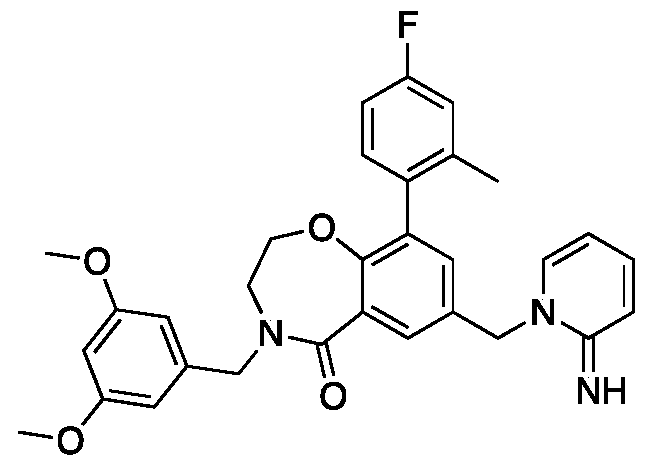
Example 8
4-(3,5-Dimethoxybenzyl)-9-(4-fluoro-2-methylphenyl)-7-((2-iminopyridin-l(2Ef)-yl)methyf)-
3,4-dihydrobenzo[ ][l,4]oxazepin-5(2Ef)-one
[00149] The title compound (11.2 mg, 36% yield) was prepared from the procedure described in Example 6 as a major product using 7-(bromomethyl)-4-(3,5-dimethoxybenzyl)-9-(4-fluoro-2- methylphenyl)-3,4-dihydrobenzo[f][l,4]oxazepin-5(2H)-one (30.0 mg, 0.06 mmol, 1.0 equiv.) and pyridin-2-amine (27.5 mg, 0.29 mmol, 5.0 equiv.). LCMS: RT = 1.396 min, MS (ES) 528.6 [M+H]+.

Example 9
4-(3,5-Dimethoxybenzyl)-9-(4-fluoro-2-methylphenyl)-7-((2-iminooxazol-3(2Ef)-yl)methyl)-
3,4-dihydrobenzo[/][l,4]oxazepin-5(2Ef)-one
[00150] The title compound (13.1 mg, 43% yield) was prepared from the procedure described in Example 6 using 7-(bromomethyl)-4-(3,5-dimethoxybenzyl)-9-(4-fluoro-2-methylphenyl)-3,4- dihydrobenzo[f][l,4]oxazepin-5(2H)-one (30.0 mg, 0.06 mmol, 1.0 equiv.) and oxazol-2-amine (24.5 mg, 0.29 mmol, 5.0 equiv.). LCMS: RT = 1.372 min, MS (ES) 518.6 [M+H]+; 1H NMR (400 MHz, Chloroform -if) d 7.75 (d, J= 2.3 Hz, 1H), 7.24 (d, J= 2.3 Hz, 1H), 7.05 (dd, J= 8.3, 5.9 Hz, 1H), 6.94 (dd, J= 9.7, 2.4 Hz, 1H), 6.88 (td, J= 8.4, 2.5 Hz, 1H), 6.68 (d, J= 1.8 Hz,
1H), 6.49 (d, J= 2.1 Hz, 2H), 6.41 (d, J= 1.8 Hz, 1H), 6.37 (t, J= 2.1 Hz, 1H), 4.81 (s, 2H), 4.75 (br s, 2H), 3.92 (br s, 2H), 3.77 (s, 6H), 3.41 (br s, 2H), 2.06 (s, 3H).

Example 10
4-(3,5-Dimethoxybenzyl)-9-(4-fluoro-2-methylphenyl)-7-((pyridin-2-ylamino)methyl)-3,4- dihydrobenzo[/][l,4]oxazepin-5(2Ef)-one
[00151] The title compound (3.8 mg, 12% yield) was prepared from the procedure described in Example 6 as a minor product using 7-(bromomethyl)-4-(3,5-dimethoxybenzyl)-9-(4-fluoro-2- methylphenyl)-3,4-dihydrobenzo[/][l,4]oxazepin-5(2i )-one (30.0 mg, 0.06 mmol, 1.0 equiv.) and pyridin-2-amine (27.5 mg, 0.29 mmol, 5.0 equiv.). LCMS: RT = 1.460 min, MS (ES) 528.6 [M+H]+.

Example 11
9-(4-Fluoro-2-methylphenyl)-7-((2-imino-3-methyl-2, 3-dihydro- l//-imidazol-l-yl)methyl)- 4-((4-methylpyridin-2-yl)methyl)-3,4-dihydrobenzo[ ][l,4]oxazepin-5(2Ef)-one
[00152] Step A. Preparation of 9-bromo-7-((2-imino-3-methyl-2,3-dihydro-lE/-imidazol-l- yl)methyl)-3,4-dihydrobenzo[ ][l,4]oxazepin-5(2Ef)-one. The crude title compound was prepared from the procedure described in Example 3, Step J using 9-bromo-7-(bromomethyl)- 3,4-dihydrobenzo[/][l,4]oxazepin-5(2i7)-one (436.0 mg, 1.30 mmol, 1.0 equiv.) (Example 25, Step B), 1 -methyl- liT-imidazol-2-amine hydrochloride (189.6 mg, 1.95 mmol, 1.5 equiv.), KI
(64.8 mg, 0.39 mmol, 0.3 equiv.) and N,N-diisopropylethylamine (1.13 mL, 6.51 mmol, 5.0 equiv.). The reaction mixture was stirred at 90 °C for 1 h. LCMS: RT = 0.825 min, MS (ES) 352.2 [M+H]+.
[00153] Step B. Preparation of tert-butyl (l-((9-bromo-5-oxo-2,3,4,5- tetrahydrobenzo[ ][l,4] oxazepin-7-yl)methyl)-3-methyl-l,3-dihydro-2//-imidazol-2- ylidene)carbamate. Di-tert-butyl dicarbonate (1.49 mL, 6.51 mmol, 5.0 equiv.) and DMAP (79.5 mg, 0.65 mmol, 0.5 equiv.) were added to a solution of 9-bromo-7-((2-imino-3-methyl-2,3- dihydro-lH-imidazol-l-yl)methyl)-3,4-dihydrobenzo[f][l,4]oxazepin-5(2H)-one (457.1 mg,
1.30 mmol, 1.0 equiv.) in CH2C12 (10.0 mL). The reaction mixture was stirred for 3.5 h at room temperature then quenched with H20 (2.0 mL) and extracted with CH2C12 (3 x 20.0 mL). The combined organics were concentrated under reduced pressure. The residue was purified by flash chromatography (Combi-flash Rf, DCM/MeOH = 0-20% gradient) to afford the title compound (187 mg, 31% yield over 2 steps). LCMS: RT = 1.005 min, MS (ES) 452.3 [M+H]+; 1H NMR (400 MHz, Chloroform-d) d 7.84 (d, J = 1.9 Hz, 1H), 7.74 (d, J = 1.9 Hz, 1H), 7.10 (s, 1H), 7.07 (s, 1H), 5.27 (s, 2H), 4.54 - 4.49 (m, 2H), 3.77 (s, 3H), 3.55 - 3.50 (m, 2H), 2.00 (s, 9H).
[00154] Step C. Preparation of tert-butyl (l-((9-(4-fluoro-2-methylphenyl)-5-oxo-2, 3,4,5- tetrahydrobenzo[f][l,4]oxazepin-7-yl)methyl)-3-methyl-l,3-dihydro-2H-imidazol-2- ylidene)carbamate. The title compound (127 mg, 63% yield) was prepared from the procedure described in Example 3, Step F using tert-butyl (l-((9-bromo-5-oxo-2,3,4,5- tetrahydrobenzo[f][l,4]oxazepin-7-yl)methyl)-3-methyl-l,3-dihydro-2H-imidazol-2- ylidene)carbamate (187 mg, 0.41 mmol, 1.0 equiv.) and (4-fluoro-2-methylphenyl)boronic acid (127.4 mg, 0.83 mmol, 2.0 equiv.). LCMS: RT = 1.249 min, MS (ES) 481.5 [M+H]+.
[00155] Step D. Preparation of tert-butyl (l-((9-(4-fluoro-2-methylphenyl)-4-((4- methylpyridin-2-yl)methyl)-5-oxo-2,3,4,5-tetrahydrobenzo [f] [1,4] oxazepin-7-yl)methyl)-3- methyl-l,3-dihydro-2H-imidazol-2-ylidene)carbamate. 2-(Chloromethyl)-4-methylpyridine hydrochloride (14 mg, 0.08 mmol, 1.5 equiv.) was added to a solution of tert-butyl (l-((9-(4- fluoro-2-methylphenyl)-5-oxo-2,3,4,5-tetrahydrobenzo[f][l,4]oxazepin-7-yl)methyl)-3-methyl- l,3-dihydro-2H-imidazol-2-ylidene)carbamate (25 mg, 0.05 mmol, 1.0 equiv.) in DMF (1.0 mL). The reaction mixture was cooled to 0 °C, and NaH (2.5 mg, 0.10 mmol, 2.0 equiv.) was added and stirred for 2 h at 0 oC. The reaction mixture was quenched with MeOH (0.5 mL) and concentrated under the reduced pressure. The residue was purified by reverse phase HPLC
(Phenomenex Gemini C18, H20/CH3CN gradient from 5-95% CH3CN, 0.1% TFA) to yield the TFA salt of title compound, which was directly used for the next step. LCMS: RT = 1.357 min, MS (ES) 586.7 [M+H]+.
[00156] Step E. Preparation of 9-(4-fluoro-2-methylphenyl)-7-((2-imino-3-methyl-2,3- dihydro-lH-imidazol-l-yl)methyl)-4-((4-methylpyridin-2-yl)methyl)-3,4- dihydrobenzo[f][l,4]oxazepin-5(2H)-one. To a solution of tert-butyl (l-((9-(4-fluoro-2- methylphenyl)-4-((4-methylpyridin-2-yl)methyl)-5-oxo-2,3,4,5-tetrahydrobenzo[f][l,4]oxazepin- 7-yl)methyl)-3-methyl-l,3-dihydro-2H-imidazol-2-ylidene)carbamate (30.5 mg, 0.05 mmol, 1.0 equiv.) in CH3CN (1.0 mL), 2 drops of concentrated HC1 were added and stirred at room temperature for 12 h. The reaction mixture was concentrated under the reduced pressure, and the residue was purified by reverse phase HPLC (Phenomenex Gemini Cl 8, H20/CH3CN gradient from 5-95% CH3CN, 0.1% TFA) to yield the title compound (22.7 mg, 89% yield over 2 steps). To remove TFA, the organic layer has to be washed with K2C03 (sat.). LCMS: RT = 1.082 min, MS (ES) 486.6 [M+H]+; 1H NMR (400 MHz, Chloroform-d) d 8.35 (d, J = 5.1 Hz, 1H), 7.69 (d, J= 2.4 Hz, 1H), 7.27 (s, 1H), 7.21 (d, J= 2.4 Hz, 1H), 7.06 - 7.00 (m, 2H), 6.92 (dd, J= 9.8, 2.6 Hz, 1H), 6.86 (td, J= 8.4, 2.6 Hz, 1H), 6.24 - 6.20 (m, 2H), 4.97 (s, 2H), 4.86 (s, 2H), 4.01 (m, 2H), 3.60 (br s, 2H), 3.35 (s, 3H), 2.33 (s, 3H), 2.05 (s, 3H).
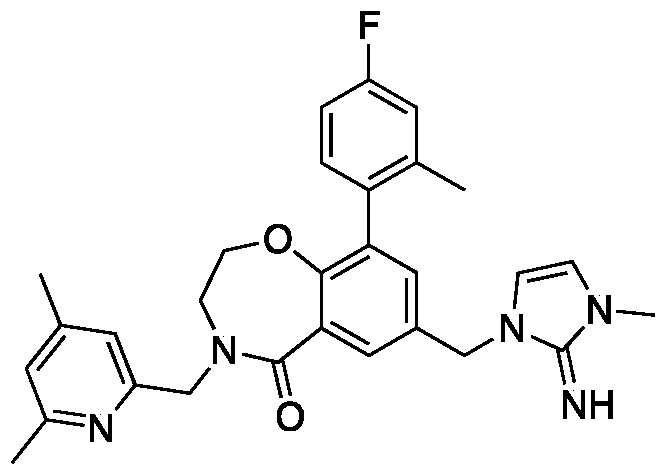
Example 12
4-((4,6-Dimethylpyridin-2-yl)methyl)-9-(4-fluoro-2-methylphenyl)-7-((2-imino-3-methyl- 2,3-dihydro-lF/-imidazol-l-yf)methyl)-3,4-dihydrobenzo[ ][l,4]oxazepin-5(2Ef)-one
[00157] Step A. Preparation of tert-butyl (l-((4-((4,6-dimethylpyridin-2-yl)methyl)-9-(4- fluoro-2-methylphenyl)-5-oxo-2,3,4,5-tetrahydrobenzo[ ][l,4]oxazepin-7-yl)methyl)-3- methyl-l,3-dihydro-2/ -imidazol-2-ylidene)carbamate. The TFA salt of the title compound was prepared from the procedure described in Example 11, Step D using tert-butyl (l-((9-(4-
fluoro-2-methylphenyl)-5-oxo-2,3,4,5-tetrahydrobenzo[/][l,4]oxazepin-7-yl)methyl)-3-methyl- l,3-dihydro-2iT-imidazol-2-ylidene)carbamate (30.0 mg, 0.06 mmol, 1.0 equiv.) and 2- (chloromethyl)-4,6-dimethylpyridine (10.0 pL, 0.09 mmol, 1.5 equiv.). LCMS: RT = 1.376 min, MS (ES) 600.7 [M+H]+.
[00158] Step B. Preparation of 4-((4,6-dimethylpyridin-2-yl)methyl)-9-(4-fluoro-2- methylphenyl)-7-((2-imino-3-methyl-2, 3-dihydro- l/ -imidazol-l-yl)methyl)-3, 4- dihydrobenzo[ ][l,4]oxazepin-5(2EF)-one. The title compound (25.6 mg, 78% yield over 2 steps) was prepared from the procedure described in Example 11, Step E using tert-butyl (l-((4- ((4,6-dimethylpyridin-2-yl)methyl)-9-(4-fluoro-2-methylphenyl)-5-oxo-2,3,4,5- tetrahydrobenzo[f][l,4]oxazepin-7-yl)methyl)-3-methyl-l,3-dihydro-2H-imidazol-2- ylidene)carbamate (39.4 mg, 0.07 mmol, 1.0 equiv.). LCMS: RT = 1.128 min, MS (ES) 500.6 [M+H]+; ¾ NMR (400 MHz, Chloroform-i7) d 7.69 (d, J= 2.4 Hz, 1H), 7.22 (d, J= 2.4 Hz, 1H), 7.06 - 7.01 (m, 2H), 6.91 (dd, J= 9.8, 2.5 Hz, 1H), 6.89 - 6.82 (m, 2H), 6.31 (q, J= 2.6 Hz, 2H),
5.08 (s, 2H), 4.82 (s, 2H), 4.04 (m, 2H), 3.60 (br s, 2H), 3.44 (s, 3H), 2.46 (s, 3H), 2.27 (s, 3H), 2.04 (s, 3H).

Example 13
9-(4-Fluoro-2-methylphenyl)-7-((2-imino-3-methyl-2, 3-dihydro- l//-imidazol-l-yl)methyl)- 4-((4-methoxypyridin-2-yl)methyl)-3,4-dihydrobenzo[ ][l,4]oxazepin-5(2/ )-one
[00159] Step A. Preparation of tert-butyl (l-((9-(4-fluoro-2-methylphenyl)-4-((4- methoxypyridin-2-yl)methyl)-5-oxo-2,3,4,5-tetrahydrobenzo[ ][l,4]oxazepin-7-yl)methyl)-3- methyl-l,3-dihydro-2//-imidazol-2-ylidene)carbamate. The TFA salt of the title compound was prepared from the procedure described in Example 11, Step D using /er/-butyl (l-((9-(4- fluoro-2-methylphenyl)-5-oxo-2,3,4,5-tetrahydrobenzo[/][l,4]oxazepin-7-yl)methyl)-3-methyl- l,3-dihydro-2i7-imidazol-2-ylidene)carbamate (25.0 mg, 0.05 mmol, 1.0 equiv.) and 2-
(chloromethyl)-4-methoxypyridine (10.0 pL, 0.08 mmol, 1.5 equiv.). LCMS: RT = 1.321 min, MS (ES) 602.7 [M+H]+.
[00160] Step B. Preparation of 9-(4-fluoro-2-methylphenyl)-7-((2-imino-3-methyl-2,3- dihydro-l -imidazol-l-yl)methyl)-4-((4-methoxypyridin-2-yl)methyl)-3,4- dihydrobenzo[ ][l,4]oxazepin-5(2Lf)-one. The title compound (18 mg, 67% yield over 2 steps) was prepared from the procedure described in Example 11, Step E using /er/-butyl (l-((9-(4- fluoro-2-methylphenyl)-4-((4-methoxypyridin-2-yl)methyl)-5-oxo-2,3,4,5- tetrahydrobenzo[/][l,4]oxazepin-7-yl)methyl)-3-methyl-l,3-dihydro-2iT-imidazol-2- ylidene)carbamate (31.3 mg, 0.05 mmol, 1.0 equiv.). LCMS: RT = 1.054 min, MS (ES) 502.6 [M+H]+.

Example 14
4-(3,5-Dimethoxybenzyl)-9-(4-fluoro-2-methylphenyl)-7-((2-imino-3-methyl-2, 3-dihydro- l/ -imidazol-l-yl)methyl)-3, 4-dihydro- l//-benzo[e][l,4]diazepine-2,5-dione
[00161] Step A. Preparation of methyl (3,5-dimethoxybenzyl)glycinate. Methyl glycine (1070 mg, 12.0 mmol, 2 equiv.) and 3,5-dimethoxybenzaldehyde (1000 mg, 6.02 mmol, 1.0 equiv.) were suspended in DCM (24 mL) and Et3N (2.52 mL, 18.1 mmol, 3.0 equiv.) was added. The reaction was stirred at room temperature overnight and then MeOH (12 mL) was added followed by NaBEL (228 mg, 6.02 mmol, 1.0 equiv.). The reaction was stirred for additional 30 min at room temperature, quenched with EhO (20 mL) and extracted with DCM (3 x 15 mL). The combined organic layers were washed with brine (10 mL), dried (MgSCL), filtered and concentrated. The residue was purified by flash chromatography (Combi-flash Rf, DCM/MeOH = 0-5% gradient) to afford the title compound (1102 mg, 82% yield) as a clear oil. LCMS: RT = 0.751 min, MS (ES) 240.1 [M+H]+.
[00162] Step B. Preparation of 9-bromo-7-chloro-4-(3,5-dimethoxybenzyl)-3,4-dihydro- l//-benzo[e][l,4]diazepine-2,5-dione. 2-Amino-3-bromo-5-chlorobenzoic acid (1000 mg, 4.02
mmol, 1.0 equiv.) was suspended in DCM (8 mL), and HATU (1528 mg, 4.02 mmol, 1.0 equiv.) and diisopropylethylamine (1038 mg, 8.04 mmol, 2.0 equiv.) were added followed by a solution of methyl (3,5-dimethoxybenzyl)glycinate (960 mg, 4.02 mmol, 1.0 equiv.) in DCM (4 mL). The reaction was stirred at 35 °C for 2 h and then cooled to room temperature. KOtBu (902 mg, 8.04 mmol, 2.0 equiv.) was added, and the reaction was stirred for 6 h at room temperature. The reaction was diluted with water (12 mL) and extracted with EtOAc (3 x 15 mL). The combined organic layer was washed with brine, dried (MgSCri), filtered and concentrated. The residue was purified by flash chromatography (Combi-flash Rf, Hex/EtOAc = 0-75% gradient) to afford the title compound (942 mg, 53% yield). LCMS: RT = 1.555 min, MS (ES) 438.9 [M+H]+.
[00163] Step C. Preparation of 7-chloro-4-(3,5-dimethoxybenzyl)-9-(4-fluoro-2- methylphenyl)-3,4-dihydro-l//-benzo[e][l,4]diazepine-2,5-dione. 9-Bromo-7-chloro-4-(3,5- dimethoxybenzyl)-3, 4-dihydro- l/7-benzo[e][l,4]diazepine-2,5-dione (940 mg, 2.15 mmol, 1.0 equiv.), 2-methyl-4-fluorophenylboronic acid (496 mg, 3.22 mmol, 1.5 equiv.), K2CO3 (890 mg, 6.44 mmol, 3.0 equiv.) and Pd(dppf)Cl2 (78.5 mg, 0.107 mmol, 0.05 equiv.) were suspended in l,4-dioxane:H20 (3: 1, 8.5 mL). The mixture was degassed for 10 minutes with Ar then heated to 95 °C for 2 h under Ar. The reaction was then cooled to room temperature, diluted with water (10 mL) and extracted with EtOAc (3 x 10 mL). The combined organic layer was washed with brine, dried (MgS04), filtered and concentrated. The residue was purified by flash
chromatography (Combi-flash Rf, Hex/EtOAc = 0-75% gradient) to afford the title compound (586 mg, 58% yield). LCMS: RT = 1.807 min, MS (ES) 468.9 [M+H]+.
[00164] Step D. Preparation of 4-(3,5-dimethoxybenzyl)-9-(4-fluoro-2-methylphenyl)-7- vinyl-3,4-dihydro-Lif-benzo[e][l,4]diazepine-2,5-dione. Pd(t-Bu3P)2 (17.5 mg, 0.0342 mmol, 0.20 equiv.) was added to a mixture of 7-chloro-4-(3,5-dimethoxybenzyl)-9-(4-fluoro-2- methylphenyl)-3, 4-dihydro- li7-benzo[e][l,4]diazepine-2,5-dione (80.0 mg, 0.171 mmol, 1.0 equiv.), potassium vinyltrifluoroborate (68.7 mg, 0.513 mmol, 3.0 equiv.) and CS2CO3 (167 mg, 0.513 mmol, 3.0 equiv.), in l,4-dioxane:H20 (3: 1, 1.7 mL) under Ar. The resulting mixture was heated at 90 °C for 2 h, quenched with H2O (5 mL) and extracted with EtOAc (3 x 5 mL). The combined organic layer was washed with brine, dried (MgS04), filtered and concentrated. The residue was purified by flash chromatography (Combi-flash Rf, Hex/EtOAc = 0-75% gradient) to afford the title compound (51.5 mg, 64% yield). LCMS: RT = 1.785 min, MS (ES) 461.0
[M+H]+.
[00165] Step E. Preparation of 4-(3,5-dimethoxybenzyl)-9-(4-fluoro-2-methylphenyl)-7- (hydroxymethyl)-3, 4-dihydro- l//-benzo[e][l,4]diazepine-2,5-dione. 0s04 (5% polymer bound, 6.9 mg, 0.0272 mmol, 0.25 equiv.) was added to a solution of 4-(3,5-dimethoxybenzyl)- 9-(4-fluoro-2-methylphenyl)-7-vinyl-3,4-dihydro-li7-benzo[e][l,4] diazepine-2,5-dione (50.0 mg, 0.109 mmol, 1.0 equiv.) and pyridine (17.5 pL, 0.217 mmol, 2.0 equiv.) in l,4-dioxane:H20 (3: 1, 2 mL) at room temperature followed by NaI04 (93.0 mg, 0.435 mmol, 4.0 equiv.). After stirring overnight, the reaction mixture was cooled to 0 °C, then MeOH (1 mL) was added followed by NaBLL (41.1 mg, 1.09 mmol, 10.0 equiv.). The ice bath was removed and the reaction was stirred at room temperature for additional 45 min then filtered. The filtrate was concentrated under reduced pressure, and the residue was dissolved in EtOAc (5 mL). The organic layer was washed with LLO (2 x 5 mL), dried (MgSCri) and concentrated. The residue was purified by flash chromatography (Combi-flash Rf, Hex/EtOAc = 0-100% gradient) to afford the title compound (35.0 mg, 69% yield). LCMS: RT = 1.432 min, MS (ES) 465.0
[M+H]+; ¾ NMR (400 MHz, Chloroform-7) d 8.02 (d, J= 1.6 Hz, 1H), 7.36 (d, J= 2.0 Hz, 1H), 7.08-6.95 (m, 4H), 6.48 (d, J= 2.4 Hz, 2H), 6.39 (t, J= 2.4 Hz, 1H), 4.94 (d, 7= 13.6 Hz, 1H), 4.75 (s, 2H), 4.67 (d, J = 14.8 Hz, 1H), 3.83 (d, J = 6.4 Hz, 2H), 3.77 (s, 6H), 2.00 (s, 3H).
[00166] Step F. Preparation of 7-(bromomethyl)-4-(3,5-dimethoxybenzyl)-9-(4-fluoro-2- methylphenyl)-3,4-dihydro-l -benzo[e][l,4]diazepine-2,5-dione. 4-(3,5-Dimethoxybenzyl)- 9-(4-fluoro-2-methylphenyl)-7-(hydroxymethyl)-3,4-dihydro-li7-benzo[e][l,4]diazepine-2,5- dione (35.0 mg, 0.0754 mmol, 1.0 equiv.) was dissolved in DCM (0.8 mL) and PBn (21.5 pL, 0.226 mmol, 3.0 equiv.) was added. After stirring at room temperature for 30 min, the reaction was quenched with saturated NaHCCh (5 mL) and extracted with EtOAc (3 x 5 mL). The combined organic layer was washed with brine, dried (MgSOr), filtered and concentrated to yield the title compound (25.1 mg, 63% yield). LCMS: RT = 1.775 min, MS (ES) 526.9 [M+H]+.
[00167] Step G. Preparation of 4-(3,5-dimethoxybenzyl)-9-(4-fluoro-2-methylphenyl)-7- ((2-imino-3-methyl-2, 3-dihydro- l -imidazol-l-yl)methyl)-3, 4-dihydro-l - benzo[e][l,4]diazepine-2,5-dione. 7-(Bromomethyl)-4-(3,5-dimethoxybenzyl)-9-(4-fluoro-2- methylphenyl)-3, 4-dihydro- li7-benzo[e][l,4]diazepine-2,5-dione (25.0 mg, 0.0475 mmol, 1.0 equiv.) was dissolved in MeCN (0.5 mL) and then 1 -methyl- liT-imidazole-2-amine (13.8 mg, 0.143 mmol, 3.0 equiv.), KI (0.80 mg, 0.00475 mmol, 0.1 equiv.) and diisopropylethylamine (24.8 pL, 0.143 mmol, 3.0 equiv.) were added. The reaction was heated to 80 °C overnight,
cooled to room temperature and concentrated under reduced pressure. The residue was purified by reverse phase HPLC (Phenomenex Gemini Cl 8, H2O/CH3CN gradient from 20-95% CH3CN, 0.1% TFA) to yield the title compound (4.5 mg, 17% yield). To remove TFA, the organic layer was washed with K2CO3 (sat.). LCMS: RT = 1.300 min, MS (ES) 544.0 [M+H]+; ¾ NMR (400 MHz, Chloroform -<7) d 7.90 (d, J= 2.0 Hz, 1H), 7.11-6.94 (m, 5H), 6.54-6.46 (m, 3H), 6.39 (d, J = 2.0 Hz, 1H), 4.90-4.84 (m, 1H), 4.71-4.65 (m, 1H), 3.86 (t, J= 4.8 Hz, 2H), 3.77 (s, 6H), 3.74 (s, 3H), 3.59-3.45 (m, 2H), 1.99 (s, 3H). 19F NMR (376 MHz, Chloroform-i7) d -112.33.

Example 15
4-(3,5-Dimethoxybenzyl)-7-((5-imino-l-methyl-l,5-dihydro-4F/-l,2,4-triazol-4-yl)methyl)-9-
(l-methyl-3-(trifluoromethyl)-l/ -pyrazol-4-yl)-3,4-dihydrobenzo[ ][l,4]oxazepin-5(2Ff)- one
[00168] Step A. Preparation of methyl 3-bromo-5-formyl-2-hydroxybenzoate. N- bromosuccinimide (10867 mg, 61.1 mmol) was added to a solution of methyl 5-formyl-2- hydroxybenzoate (1000 mg, 55.5 mmol) in THF (300.0 mL) at 0 °C then stirred for 5 min. The reaction mixture was warmed to room temperature and stirred for additional 2.5 h and concentrated under reduced pressure. The residue was purified by flash chromatography (Combi- flash Rf, Hex/EtOAc = 0-100% gradient) to afford the title compound (14360 mg, quantitative). LCMS: RT = 1.499 min, MS (ES) 260.1 [M+H]+; ¾ NMR (400 MHz, Chloroform-i7) d 9.85 (s, 1H), 8.36 (d, J= 2.0 Hz, 1H), 8.27 (d, J= 1.9 Hz, 1H), 4.04 (s, 3H).
[00169] Step B. Preparation of methyl 2-(allyloxy)-3-bromo-5-formylbenzoate. The crude title compound was prepared from the procedure described in Example 3, Step B using methyl 3- bromo-5-formyl-2-hydroxybenzoate (500.0 mg, 1.93 mmol, 1.0 equiv.), 3-bromoprop-l-ene (0.25 mL, 2.90 mmol, 1.5 equiv.), and CS2CO3 (1886.6 mg, 5.79 mmol, 3 equiv.). The reaction mixture was stirred at 80 °C for 1 h. LCMS: RT = 1.602 min, MS (ES) 300.1 [M+H]+.
[00170] Step C. Preparation of methyl 2-(allyloxy)-3-bromo-5-(hydroxymethyl)benzoate.
NaBH4 (73 mg, 1.93 mmol, 1.0 equiv.) was added to a solution of methyl 2-(allyloxy)-3-bromo- 5-formylbenzoate (577 mg, 1.93 mmol, 1.0 equiv.) in MeOH (20 mL). The reaction mixture was stirred at room temperature for 1 h, quenched with acetone (1.0 mL) and concentrated under reduced pressure. The crude reaction mixture was used for the next step without further purification.
[00171] Step D. Preparation of methyl 2-(allyloxy)-3-bromo-5-(((tert- butyldimethylsilyl)oxy)methyl)benzoate. tert-Butyldimethylsilyl chloride (349 mg, 2.32 mmol, 1.2 equiv.), Et3N (0.4 mL, 2.90 mmol, 1.5 equiv.), and DMAP (47 mg, 0.39 mmol, 0.2 equiv.) were added to a solution of methyl 2-(allyloxy)-3-bromo-5-(hydroxymethyl)benzoate (581.2 mg, 1.93 mmol, 1.0 equiv.) in CH2CI2 (20.0 mL) at 0 °C. The reaction mixture was stirred for 12 h while warmed to room temperature during this time period. The reaction mixture was quenched with MeOH (2.0 mL) and concentrated under reduced pressure. The crude residue was partitioned between CH2CI2 (20 mL) and H2O (5.0 mL). The organic layer was extracted with CH2CI2 (3 x 20.0 mL) and dried over Na2S04 and concentrated under reduced pressure. The residue was purified by flash chromatography (Combi-flash Rf, Hex/EtOAc = 0-100% gradient) to afford the title compound (791 mg, 98% yield over 3 steps). LCMS: RT = 2.460 min, MS (ES) 416.4 [M+H]+; ¾ NMR (400 MHz, Chloroform-i7) d 7.72 - 7.69 (m, 1H), 7.67 (m, 1H), 6.15 (ddt, J= 17.1, 10.4, 5.8 Hz, 1H), 5.43 (dq, J= 17.2, 1.5 Hz, 1H), 5.30 - 5.26 (m, 1H), 4.68 (s, 2H), 4.55 (dt, J= 5.8, 1.3 Hz, 2H), 3.90 (s, 3H), 0.94 (s, 9H), 0.11 (s, 6H).
[00172] Step E. Preparation of methyl 3-bromo-5-(((tert-butyldimethylsilyl)oxy)methyl)- 2-(2-oxoethoxy)benzoate. OsCL (96.4 mg, 0.38 mmol, 0.75 equiv.) was added to a mixture of methyl 2-(allyloxy)-3-bromo-5-(((fer/-butyldimethylsilyl)oxy)methyl)benzoate (210.0 mg, 0.51 mmol, 1.0 equiv.), pyridine (80.0 pL, 1.01 mmol, 2.0 equiv.), H2O (1.0 mL), and 1,4-dioxane (3.0 mL) at room temperature followed by NalCL (432.5 mg, 2.02 mmol, 4.0 equiv.). After stirring 12 h at room temperature, the reaction mixture was partitioned between CH2CI2 (10 mL) and H2O (2.0 mL) and extracted with CH2CI2 (3 x 20 mL). The combined organics were dried over Na2SC>4 and concentrated under reduced pressure to give the crude title compound, which was used for the next step without further purification. LCMS: RT = 1.869 min, MS (ES) 418.4 [M+H]+.
[00173] Step F. Preparation of methyl 3-bromo-5-(((tert-butyldimethylsilyl)oxy)methyl)-
2-(2-((3,5-dimethoxybenzyl)amino)ethoxy)benzoate. The crude title compound was prepared from the procedure described in Example 3, Step D using methyl 3-bromo-5 -{{{tert- butyldimethylsilyl)oxy)methyl)-2-(2-oxoethoxy)benzoate (211.0 mg, 0.51 mmol, 1.0 equiv.) and (3,5-dimethoxyphenyl)methanamine (126.7 mg, 0.76 mmol, 1.5 equiv.). LCMS: RT = 2.176 min, MS (ES) 569.6 [M+H]+.
[00174] Step G. Preparation of 9-bromo-4-(3,5-dimethoxybenzyl)-7-(hydroxymethyl)-3,4- dihydrobenzo[ ][l,4]oxazepin-5(2Ef)-one. The title compound (102 mg, 37% yield over 3 steps) was prepared from the procedure described in Example 3, Step E using methyl 3-bromo-5- (((/ -butyl dimethyl si lyl)oxy (methyl )-2-(2-((3,5-dimethoxybenzyl)amino)ethoxy (benzoate
 mg, 0.51 mmol, 1.0 equiv.) and K2CO3 (349 mg, 2.53 mmol, 5.0 equiv.). The reaction mixture was stirred at 64 °C for 12 h. The TBS group was removed under the reaction conditions. LCMS: RT = 1.417 min, MS (ES) 423.3 [M+H]+. ¾ NMR (400 MHz, Chloroform-if) d 7.68 (s, 1H),
7.66 (s, 1H), 6.48 (d, J= 2.1 Hz, 2H), 6.38 (t, J= 2.1 Hz, 1H), 4.73 (s, 2H), 4.63 (s, 2H), 4.19 (t, J= 5.4 Hz, 2H), 3.77 (s, 6H), 3.40 (t, J= 5.4 Hz, 2H), 3.11 (br s, 1H).
[00175] Step H. Preparation of 4-(3,5-dimethoxybenzyl)-7-(hydroxymethyl)-9-(l-methyl-
3-(trifluoromethyl)-l//-pyrazol-4-yl)-3,4-dihydrobenzo[ ] [l,4]oxazepin-5(2Ef)-one. The title compound (48 mg, 40% yield) was prepared from the procedure described in Example 3, Step F using 9-bromo-4-(3,5-dimethoxybenzyl)-7-(hydroxymethyl)-3,4-dihydrobenzo[/][l,4]oxazepin- 5(2//)-one (102 mg, 0.24 mmol, 1.0 equiv.) and (1 -methyl-3 -(trifluorom ethyl)- liT-pyrazol -4- yl)boronic acid (56 mg, 0.29 mmol, 1.2 equiv.). The reaction mixture was stirred at 80 °C for 3 h. LCMS: RT = 1.420 min, MS (ES) 492.5 [M+H]+.
[00176] Step I. Preparation of 7-(bromomethyl)-4-(3,5-dimethoxybenzyl)-9-(l-methyl-3- (trifluoromethyl)-l//-pyrazol-4-yl)-3,4-dihydrobenzo[ ][l,4]oxazepin-5(2Ef)-one. The crude title compound was prepared from the procedure described in Example 3, Step H using 4-(3,5- dimethoxybenzyl)-7-(hydroxymethyl)-9-(l-methyl-3-(trifluoromethyl)-li7-pyrazol-4-yl)-3,4- dihydrobenzo[/][l,4]oxazepin-5(2//)-one (48 mg, 0.10 mmol, 1.0 equiv.) and PBn (20 pL, 0.20 mmol, 2.0 equiv.). The reaction mixture was stirred at room temperature for 1 h. LCMS: RT = 1.743 min, MS (ES) 555.4 [M+H]+.
[00177] Step J. Preparation of 4-(3,5-dimethoxybenzyl)-7-((5-imino-l-methyl-l,5-dihydro- 4//-l,2,4-triazol-4-yl)methyl)-9-(l-methyl-3-(trifluoromethyl)-l//-pyrazol-4-yl)-3,4-
dihydrobenzo[ ][l,4]oxazepin-5(2Ef)-one. The title compound (10 mg, 32% yield over 2 steps) was prepared from the procedure described in Example 6, Step A using 7-(bromomethyl)-4-(3,5- dimethoxybenzyl)-9-( 1 -methyl-3 -(trifluorom ethyl)- l//-pyrazol-4-yl)-3,4- dihydrobenzo[/][l,4]oxazepin-5(2//)-one (25 mg, 0.06 mmol, 1.0 equiv.) and 1 -methyl- \H- 1,2,4- triazol-5-amine (13 mg, 0.12 mmol, 3.0 equiv.). The reaction mixture was stirred at 60 °C for 12 h. LCMS: RT = 1.279 min, MS (ES) 572.6 [M+H]+; ¾ NMR (400 MHz, Chloroform-7) d 7.80 (d, J= 2.4 Hz, 1H), 7.46 (s, 1H), 7.35 (d, J= 2.2 Hz, 1H), 7.23 (s, 1H), 6.48 (d, J= 2.2 Hz, 2H), 6.38 (t, J= 2.2 Hz, 1H), 4.89 (s, 2H), 4.74 (s, 2H), 4.04 (t, J= 5.1 Hz, 2H), 3.97 (s, 3H), 3.77 (s, 6H), 3.48 (s, 3H), 3.45 (t, 7= 5.1 Hz, 2H).

Example 16
4-(3,5-Dimethoxybenzyl)-7-((2-imino-3-methyl-2,3-dihydro-l//-imidazol-l-yl)methyl)-9-(l- methyl-3-(trifluoromethyl)-Li/-pyrazol-4-yl)-3,4-dihydrobenzo[/][l,4]oxazepin-5(2//)-one
[00178] The title compound (15 mg, 56% yield over 2 steps) was prepared from the procedure described in Example 3, Step J using 7-(bromomethyl)-4-(3,5-dimethoxybenzyl)-9-(l-methyl-3- (trifluoromethyl)-li7-pyrazol-4-yl)-3,4-dihydrobenzo[/][l,4]oxazepin-5(2//)-one (25 mg, 0.05 mmol, 1.0 equiv.) and 1 -methyl- liT-imidazol-2-amine hydrochloride (8.8 mg 0.09 mmol, 2.0 equiv.). LCMS: RT = 1.308 min, MS (ES) 571.6 [M+H]+; ¾ NMR (400 MHz, Chloroform-7) d 7.73 (d, J= 2.3 Hz, 1H), 7.48 (s, 1H), 7.31 (d, J= 2.2 Hz, 1H), 6.48 (d, J= 2.2 Hz, 2H), 6.37 (t, J= 2.2 Hz, 1H), 6.23 (s, 2H), 4.95 (s, 2H), 4.73 (s, 2H), 4.02 (t, J= 5.1 Hz, 2H), 3.95 (s, 3H), 3.76 (s, 6H), 3.43 (t, J= 5.1 Hz, 2H), 3.36 (s, 3H).

Example 17
4-(3,5-Dimethoxybenzyl)-9-(4-fluoro-2-methylphenyl)-7-((2-imino-3-methyl-2, 3-dihydro- l//-imidazol-l-yl)methyl)-2-methyl-3,4-dihydrobenzo[ ][l,4]oxazepin-5(27T)-one
[00179] Step A. Preparation of methyl 3-bromo-2-hydroxy-5-(hydroxymethyl)benzoate.
Sodium borohydride (2097 mg, 55.4 mmol) was slowly added to a solution of methyl 3-bromo- 5-formyl-2-hydroxybenzoate (14360 mg, 55.4 mmol) in MeOH (500 mL). The reaction mixture was stirred at room temperature for 1 h. The reaction mixture was concentrated under the reduced pressure. The residue was redissolved in CFbCb/MeOH and filtered through Celite and the filtrate was concentrated undder the reduced pressure. The crude title compound was used for the next step without further purification. LCMS: RT = 1.246 min, MS (ES) 244.0 [M+H-H20]+; 1H NMR (400 MHz, Chloroform-if) d 11.40 (s, 1H), 7.82 (s, 1H), 7.76 (d, J= 1.6 Hz, 1H), 4.62 (s, 2H), 3.98 (s, 3H).
[00180] Step B. Preparation of methyl 3-bromo-5-(((tert-butyldiphenylsilyl)oxy)methyl)- 2-hydroxybenzoate. ter/-Butyl(chloro)diphenylsilane (40 pL, 0.14 mmol), Et3N (20 pL, 0.17 mmol), and DMAP (2.8 mg, 0.02 mmol) were added to a solution of methyl 3-bromo-2-hydroxy- 5-(hydroxymethyl)benzoate (30 mg, 0.11 mmol) in 1,4-dioxane (1.0 mL). The reaction mixture was stirred at room temperature for 12 h, quenched with MeOH (1.0 mL) and concentrated under reduced pressure. The residue was purified by flash chromatography (Combi-flash Rf,
Hex/EtOAc = 0-5% gradient) to afford the title compound (53 mg, 92%). LCMS: RT = 1.944 min, MS (ES) 499.5 [M+H]+; ¾ NMR (400 MHz, Chloroform-if) d 11.36 (s, 1H), 7.74 (d, J =
2.1 Hz, 1H), 7.68 (dd, J= 7.9, 1.4 Hz, 5H), 7.48 - 7.35 (m, 7H), 4.66 (s, 2H), 3.96 (s, 3H), 1.11 (s, 9H).
[00181] Step C. Preparation of methyl 3-bromo-2-((l-((tert- butoxycarbonyl)amino)propan-2-yl)oxy)-5-(((tert-butyldiphenylsilyl)oxy)methyl)benzoate.
The title compound (48 mg, 68% yield) was prepared from the procedure described in Example
3, Step B using methyl 3-bromo-5-(((/er/-butyldiphenylsilyl)oxy)methyl)-2-hydroxybenzoate (53 mg, 0.11 mmol, 1.0 equiv.) and /er/-butyl (2-bromopropyl)carbamate (51 mg, 0.21 mmol, 2.0 equiv.). K2CO3 (44 mg, 0.32 mmol, 3.0 equiv.) was used as a base. The reaction mixture was stirred at 80 °C for 6.5 h. LCMS: RT = 1.860 min, MS (ES) 601.6 [M+H-tBu]+.
[00182] Step D. Preparation of methyl 2-((l-aminopropan-2-yl)oxy)-3-bromo-5-(((tert- butyldiphenylsilyl)oxy)methyl)benzoate. TFA (0.1 mL) was added to a solution of methyl 3- bromo-2-((l-((/er/-butoxycarbonyl)amino)propan-2-yl)oxy)-5-(((/er/- butyldiphenylsilyl)oxy)methyl)benzoate (48 mg, 0.07 mmol, 1.0 equiv.) in CH2CI2 (1.0 mL). The reaction mixture was stirred at room temperatue for 1.5 h then concentrated under reduced pressure. The residue was partitioned between CH2CI2 (5.0 mL) and sat. aq. NaHCCb (1.0 mL). The organic layer was extracted with CH2CI2 (3 x 10.0 mL), dried over Na2SC>4 and concentrated under reduced pressure. The crude title compound was used for the next step without further purification. LCMS: RT = 2.014 min, MS (ES) 557.6 [M+H]+.
[00183] Step E. Preparation of 9-bromo-7-(((tert-butyldiphenylsilyl)oxy)methyl)-2- methyl-3,4-dihydrobenzo[/][l,4]oxazepin-5(2LF)-one. The title compound (30 mg, 79% yield) was prepared from the procedure described in Example 3, Step E using methyl 2-((l- aminopropan-2-yl)oxy)-3-bromo-5-(((/c77-butyl diphenyl si lyl)oxy (methyl )benzoate
 Q Q^ mmol, 1.0 equiv.) and K2CO3 (50 mg, 0.36 mmol, 5.0 equiv.). The reaction mixture was stirred at 78 °C for 12 h. LCMS: RT = 2.303 min, MS (ES) 525.5 [M+H]+.
[00184] Step F. Preparation of 9-bromo-7-(((tert-butyldiphenylsilyl)oxy)methyl)-4-(3,5- dimethoxybenzyl)-2-methyl-3,4-dihydrobenzo[ ][l,4]oxazepin-5(2E/)-one. The title compound (36 mg, 93% yield) was prepared from the procedure described in Example 11, Step D using 9-Bromo-7-(((fer/-butyldiphenylsilyl)oxy)methyl)-2-methyl-3,4-dihydrobenzo[/][l,4] oxazepin-5(2i )-one (30 mg, 0.06 mmol, 1.0 equiv.) and l-(bromomethyl)-3,5- dimethoxybenzene (20 mg, 0.09 mmol, 1.5 equiv.). The reaction mixture was stirred at 0 °C for 2 h. LCMS: RT = 1.346 min, MS (ES) 675.7 [M+H]+.
[00185] Step G. Preparation of 7-(((tert-butyldiphenylsilyl)oxy)methyl)-4-(3,5- dimethoxybenzyl)-9-(4-fluoro-2-methylphenyl)-2-methyl-3,4-dihydrobenzo[ ][l,4]oxazepin- 5(2//)-one The title compound (36 mg, 95% yield) was prepared from the procedure described in Example 3, Step F using 9-bromo-7-(((fer/-butyldiphenylsilyl)oxy)methyl)-4-(3,5- dimethoxybenzyl)-2-methyl-3,4-dihydrobenzo[/][l,4]oxazepin-5(2F/)-one (36 mg, 0.05 mmol,
1.0 equiv.) and (4-fluoro-2-methylphenyl)boronic acid (17 mg, 0.11 mmol, 2.0 equiv.). The reaction mixture was stirred at 80 °C for 4.5 h. LCMS: RT = 1.338 min, MS (ES) 704.9 [M+H]+.
[00186] Step H. Preparation of 4-(3,5-dimethoxybenzyl)-9-(4-fluoro-2-methylphenyl)-7- (hydroxymethyl)-2-methyl-3,4-dihydrobenzo[ ][l,4]oxazepin-5(2Lf)-one. 1M tetrabutyl ammonium fluoride solution (0.1 mL, 0.10 mmol, 2.0 equiv.) was added to a solution of 7- (((/c/T-butyl diphenyl si lyl)oxy (methyl )-4-(3,5-dimethoxybenzyl)-9-(4-fluoro-2-methyl phenyl )-2- methyl-3, 4-dihydrobenzo[/][l,4]oxazepin-5(2i )-one (36 mg, 0.05 mmol, 1.0 equiv.) in THF (1.0 mL). The reaction mixture was stirred at room temperature for 12 h, quenched with EhO (0.5 mL) and extracted with CH2CI2 (3 x 3.0 mL). The combined organics were dried over Na2SC>4 and concentrated under reduced pressure. The residue was purified by flash chromatography (Combi-flash Rf, Hex/EtOAc = 0-100% gradient) to afford the title compound (22.1 mg, 92% yield). LCMS: RT = 1.115 min, MS (ES) 466.5 [M+H]+.
[00187] Step I. Preparation of 7-(bromomethyl)-4-(3,5-dimethoxybenzyl)-9-(4-fluoro-2- methylphenyl)-2-methyl-3,4-dihydrobenzo[ ][l,4]oxazepin-5(2Lf)-one. The crude title compound was prepared from the procedure described in Example 3, Step I using 4-(3,5- dimethoxybenzyl)-9-(4-fluoro-2-methylphenyl)-7-(hydroxymethyl)-2-methyl-3,4- dihydrobenzo[f][l,4]oxazepin-5(2H)-one (22.1 mg, 0.05 mmol, 1.0 equiv.) and PBn (10.0 pL, 0.09 mmol, 2.0 equiv.). The reaction mixture was stirred at room temperature for 2 h.
[00188] Step J. Preparation of 4-(3,5-dimethoxybenzyl)-9-(4-fluoro-2-methylphenyl)-7- ((2-imino-3-methyl-2,3-dihydro-l -imidazol-l-yl)methyl)-2-methyl-3,4- dihydrobenzo[ ] [l,4] oxazepin-5(2Lf)-one. The title compound (17 mg, 67% yield over 2 steps) was prepared from the procedure described in Example 3, Step J using 7-(bromomethyl)-4-(3,5- dimethoxybenzyl)-9-(4-fluoro-2-methylphenyl)-2-methyl-3,4-dihydrobenzo[/][l,4]oxazepin- 5(2i )-one (25.1 mg, 0.05 mmol, 1.0 equiv.) and 1 -methyl- liT-imidazol -2-amine hydrochloride (13 mg, 0.09 mmol, 2.0 equiv.). The reaction mixture was stirred at 90 °C for 12 h. LCMS: RT = 1.033 min, MS (ES) 545.6 [M+H]+; ¾ NMR (400 MHz, Chloroform-if) d 7.67 - 7.64 (m, 1H), 7.21 (d, J= 2.2 Hz, 1H), 7.10 - 7.03 (m, 1H), 6.90 (d, J= 9.6 Hz, 1H), 6.85 (td, J= 8.4, 2.4 Hz, 1H), 6.48 - 6.45 (m, 2H), 6.37 (t, J= 2.0 Hz, 1H), 6.19 (d, J= 2.5 Hz, 1H), 6.17 (d, J= 2.6 Hz, 1H), 4.91 (s, 2H), 4.54 (s, 1H), 4.29 (s, 1H), 3.77 (s, 6H), 3.51 (br s, 1H), 3.30 (s, 3H), 3.24 (br s, 1H), 3.09 (br s, 1H), 2.06 (br s, 3H), 0.70 (m, 3H).

Example 18
3-(3,5-Dimethoxybenzyl)-8-(4-fluoro-2-methylphenyl)-6-((5-imino-l-methyl-l, 5-dihydro- 4F/-l,2,4-triazol-4-yl)methyl)quinazolin-4(3E/)-one
[00189] The title compound (1.8 mg, 7% yield) was prepared from the procedure described in Example 1, Step G using l-methyl-lf7-l,2,4-triazol-5-amine (15 mg, 0.151 mmol, 3.0 equiv.). The reaction mixture was stirred at 80 °C for 16 hours. LCMS: RT = 0.917 min, MS (ES) 515.0 [M+H]+; ¾ NMR (400 MHz, Chloroform-if) d 8.35 (d, J= 2.4 Hz, 1H), 8.07 (d, J= 2.4 Hz, 1H), 7.76 (s, 1H), 7.52 (s, 1H), 7.17-7.11 (m, 1H), 7.01-6.91 (m, 2H), 6.48 (d, J= 2.0 Hz, 2H), 6.43 (t, J= 2.0 Hz, 1H), 5.31-5.01 (m, 2H), 3.87 (s, 2H), 3.75 (s, 6H), 2.07 (s, 3H), 2.05 (s, 3H). 19F NMR (376 MHz, Chloroform-if) d -114.60.

Example 19
3-(3,5-Dimethoxybenzyl)-8-(4-fluoro-2-methylphenyl)-6-((2-iminooxazol-3(2Ef)- yl)methyl)quinazolin-4(3//)-one
[00190] The title compound (1.5 mg, 6% yield) was prepared from the procedure described in Example 1, Step G using 2-aminoxazole (13 mg, 0.151 mmol, 3.0 equiv.). The reaction mixture was stirred at 80 °C for 16 hours. LCMS: RT = 0.924 min, MS (ES) 501.0 [M+H]+; ¾NMR (400 MHz, Chloroform -i ) d 8.36 (s, 1H), 8.16 (d, J= 6.8 Hz, 1H), 7.65 (s, 1H), 7.17-7.14 (m, 2H), 7.02-6.94 (m, 3H), 6.48 (d, J= 2.0 Hz, 2H), 6.39 (t, J= 2.0 Hz, 1H), 5.25-5.00 (m, 2H), 3.87 (s, 2H), 3.75 (s, 6H), 2.07 (s, 3H). 19F NMR (376 MHz, Chloroform-if) d -115.15.

Example 20
3-(3,5-Dimethoxybenzyl)-6-((2-imino-3-methyl-2,3-dihydro-l//-imidazol-l-yl)methyl)-8-(l- methyl-3-(trifluoromethyl)-Li/-pyrazol-4-yl)quinazolin-4(3//)-one
[00191] Step A. Preparation of 6-chloro-3-(3,5-dimethoxybenzyl)-8-(l-methyl-3- (trifluoromethyl)-l/ -pyrazol-4-yl)quinazolin-4(3/ )-one. The title compound (261 mg, 74% yield) was prepared from the procedure described in Example 1, Step C using 1 -Methyl-3 - tri l uoro ethyl - 1 //-py razol e-4-boroni c acid (214 mg, 1.10 mmol, 1.5 equiv.). The reaction mixture was stirred at 95 °C for 2 hours. 'H NMR (400 MHz, Chloroform-r/) d 8.30 (d, ./ = 2.4 Hz, 1H), 8.04 (s, 1H), 7.73 (d, J= 2.4 Hz, 1H), 7.67 (s, 1H), 6.46 (d, J= 2.4 Hz, 2H), 6.40 (t, J = 2.0 Hz, 1H), 5.10 (s, 2H), 4.01 (s, 3H), 3.75 (s, 6H). 19F NMR (376 MHz, chloroform-^ d - 59.43.
[00192] Step B. Preparation of 3-(3,5-dimethoxybenzyl)-8-(l-methyl-3-(trifluoromethyl)- l/ -pyrazol-4-yl)-6-vinylquinazolin-4(3Ef)-one. The title compound (212 mg, 84% yield) was prepared from the procedure described in Example 1, Step D. 'H NMR (400 MHz, Chloroform- d) d 8.33 (d, J= 1.6 Hz, 1H), 8.04 (s, 1H), 7.87 (d, J= 2.0 Hz, 1H), 7.70 (s, 1H), 6.86-6.79 (m, 1H), 6.48 (d, J= 2.0 Hz, 2H), 6.40 (t, J= 2.0 Hz, 1H), 5.92 (d, J= 17.6 Hz, 1H), 5.42 (d, J =
10.8 Hz, 1H), 5.12 (s, 2H), 4.02 (s, 3H), 3.76 (s, 6H).
[00193] Step C. Preparation of 3-(3,5-dimethoxybenzyl)-8-(l-methyl-3-(trifluoromethyl)- l/ -pyrazol-4-yl)-6-(hydroxymethyl)quinazolin-4(3Ef)-one. The title compound (134 mg, 61% yield) was prepared from the procedure described in Example 1, Step E. ¾ NMR (400 MHz, Chloroform -if) d 8.30 (d, J= 1.6 Hz, 1H), 8.02 (s, 1H), 7.77 (d, J= 1.6 Hz, 1H), 7.63 (s, 1H), 6.44 (d, J= 2.0 Hz, 2H), 6.37 (t, J= 2.4 Hz, 1H), 5.08 (s, 2H), 4.80 (s, 2H), 3.98 (s, 3H), 3.72 (s, 6H).
[00194] Step D. Preparation of 6-(bromomethyl)-3-(3,5-dimethoxybenzyl)-8-(l-methyl-3- (trifluoromethyl)-l//-pyrazol-4-yl)quinazolin-4(3EF)-one. The title compound (77.0 mg, 52%
yield) was prepared from the procedure described in Example 1, Step F. LCMS: RT = 1.758 min, MS (ES) 537.1 [M+H]+.
[00195] Step E. Preparation of 3-(3,5-dimethoxybenzyl)-6-((2-imino-3-methyl-2,3- dihydro-l/ -imidazol-l-yl)methyl)-8-(l-methyl-3-(trifluoromethyl)-l/ -pyrazol-4- yl)quinazolin-4(3ET)-one. The title compound (27 mg, 34% yield) was prepared from the procedure described in Example 1, Step G. LCMS: RT = 1.254 min, MS (ES) 553.9 [M+H]+; ¾ NMR (400 MHz, Chloroform-i7) d 8.21 (d, J= 2.0 Hz, 1H), 8.07 (s, 1H), 7.73 (s, 1H), 7.69 (d, J = 2.0 Hz, 1H), 6.48 (d, J= 2.4 Hz, 1H), 6.46-6.40 (m, 4H), 5.39 (s, 2H), 5.10 (s, 2H), 4.00 (s, 3H), 3.77 (s, 6H), 3.62 (s, 3H).

Example 21
6-(((4, 5-Dihydro- l//-imidazol-2-yl)amino)methyl)-3-(3,5-dimethoxybenzyl)-8-(4-fluoro-2- methylphenyl)-2-methylquinazolin-4(3//)-one
[00196] Step A. Preparation of methyl 2-amino-3-bromo-5-iodobenzoate. N-
Bromosuccinimide (16.9 g, 94.8 mmol, 1.05 equiv.) was added in three portions over 1.5 h to a stirred solution of methyl 2-amino-5-iodobenzoate (25.0 g, 90.3 mmol, 1.0 equiv.) in CHCb (360 mL) at room temperature. The reaction was stirred for 16 h and then concentrated. The residue was purified by flash chromatography (Combi-flash Rf, Hex/EtOAc = 0-50% gradient) to afford the title compound (14.5 g, 45% yield). LCMS: RT = 1.994 min, MS (ES) 355.8 [M+H]+; ¾ NMR (400 MHz, Chloroform-i7) d 8.13 (d, J= 2.0 Hz, 1H), 7.82 (d, J= 2.0 Hz, 1H), 6.38 (bs, 2H), 3.88 (s, 3H).
[00197] Step B. Preparation of methyl 2-amino-3-bromo-5-vinylbenzoate. Pd(dppf)Cl2 (206 mg, 0.282 mmol, 0.05 equiv.) was added to a mixture of methyl 2-amino-3-bromo-5- iodobenzoate (2000 mg, 5.64 mmol, 1.0 equiv.), potassium vinyltrifluoroborate (981 mg, 7.33 mmol, 1.3 equiv.), K2CO3 (2337 mg, 16.9 mmol, 3.0 equiv.) in l,4-dioxane:H20 (3: 1, 22 mL)
under Ar. The resulting mixture was heated at 95 °C for 2 h, then diluted with H2O (20 mL) and extracted with EtOAc (3 x 15 mL). The combined organics were dried (MgSCL), filtered and concentrated. The residue was purified by flash chromatography (Combi-flash Rf, Hex/EtOAc = 0-50% gradient) to afford the title compound (910 mg, 63% yield). LCMS: RT = 1.752 min, MS (ES) 256.0 [M+H]+; ¾ NMR (400 MHz, Chloroform-7) d 7.87 (d, J= 2.0 Hz, 1H), 7.71 (d, J = 2.0 Hz, 1H), 6.57-6.50 (m, 1H), 6.37 (bs, 2H), 5.58 (d, J= 17.6 Hz, 1H), 5.12 (d, 7= 11.2 Hz, 1H), 3.90 (s, 3H).
[00198] Step C. Preparation of methyl 2-amino-3-bromo-5-formylbenzoate. OsCE (4% polymer bound, 90 mg, 0.353 mmol, 0.1 equiv.) was added to a mixture of methyl 2-amino-3- bromo-5-vinylbenzoate (900 mg, 3.53 mmol, 1.0 equiv.) and pyridine (570 pL, 7.1 mmol, 2.0 equiv.) in l,4-dioxane:H20 (3:1, 35 mL) followed by the addition of NalCE (3020 mg, 14.1 mmol, 4.0 equiv.). After stirring at room temperature overnight, the reaction was filtered and the solvent was removed under reduced pressure. The residue was purified by flash chromatography (Combi-flash Rf, Hex/EtOAc = 0-50% gradient) to afford the title compound (410 mg, 45% yield). LCMS: RT = 1.371 min, MS (ES) 258.0 [M+H]+; ¾ NMR (400 MHz, Chloroform-7) d 9.72 (s, 1H), 8.37 (d, J= 2.0 Hz, 1H), 8.13 (d, J= 2.0 Hz, 1H), 3.93 (s, 3H).
[00199] Step D. Preparation of methyl 2-amino-5-(aminomethyl)-3-bromobenzoate. A solution of methyl 2-amino-3-bromo-5-formylbenzoate (400 mg, 1.56 mmol, 1.0 equiv.) and hydroxylammonium chloride (433 mg, 6.23 mmol, 4.0 equiv.) in methanol (15 mL) was stirred for 1 h at 50 °C. The reaction was then cooled to room temperature and concentrated. Then AcOH:MeOH (1 : 1, 6 mL) was added followed by the addition of zinc dust (407 mg, 6.23 mmol, 4.0 equiv.). The reaction was sonicated for 1 h, filtered and concentrated to yield the title compound (372 mg, 92% yield). LCMS: RT = 0.685 min, MS (ES) 241.9 [M-NH2].
[00200] Step E. Preparation of methyl 2-amino-3-bromo-5-(((ferf- butoxycarbonyl)amino)methyl)benzoate. Methyl 2-amino-5-(aminomethyl)-3-bromobenzoate (370 mg, 1.43 mmol, 1.0 equiv.) was dissolved in DCM (6 mL) and B0C2O (344 mg, 1.58 mmol, 1.1 equiv.) and DMAP (17.5 mg, 0.143 mmol, 0.1 equiv.) were added. The reaction was stirred at room temperature for 16 h then concentrated. The residue was purified by flash
chromatography (Combi-flash Rf, Hex/EtOAc = 0-50% gradient) to afford the title compound (395 mg, 77% yield). LCMS: RT = 1.661 min, MS (ES) 358.9 [M+H]+; ¾ NMR (400 MHz,
Chloroform -<7) d 7.76 (d, J= 2.0 Hz, 1H), 7.54 (d, J= 1.6 Hz, 1H), 6.29 (bs, 2H), 4.17 (d, J= 4.8 Hz, 2H), 3.87 (s, 3H). 1.46 (s, 9H).
[00201] Step F. Preparation of methyl 2-amino-5-(((terf-butoxycarbonyl)amino)methyl)- 4'-fluoro-2'-methyl-[l,l'-biphenyl]-3-carboxylate. To a suspension of methyl 2-amino-3- bromo-5-(((/er/-butoxycarbonyl)amino)methyl)benzoate (395 mg, 1.11 mmol, 1.0 equiv.), 2- methyl-4-fluorophenylboronic acid (258 mg, 1.68 mmol, 1.5 equiv.) and K2CO3 (463 mg, 3.35 mmol, 3.0 equiv.) in l,4-dioxane:H20 (3 : 1, 4.5 mL) was added Pd(dppf)Cl2 (40.9 mg, 0.0559 mmol, 0.05 euqiv.). The reaction mixture was degassed with Ar and heated to 95 °C for 1 h under Ar. The reaction was cooled to room temperature and filtered through a pad of celite. H2O (10 mL) was added to the filtrate and extracted with EtOAc (3 x 10 mL). The combined organic layer was washed with brine, dried (MgSCL), filtered and concentrated. The residue was purified by flash chromatography (Combi-flash Rf, Hex/EtOAc = 0-50% gradient) to afford the title compound (296 mg, 68% yield). LCMS: RT = 1.885 min, MS (ES) 389.1 [M+H]+; ¾ NMR (400 MHz, Chloroform -if) d 7.82 (d, J= 2.0 Hz, 1H), 7.14-6.94 (m, 4H), 5.64 (bs, 2H), 4.21 (d, J =
4.8 Hz, 2H), 3.88 (s, 3H), 2.12 (s, 3H), 1.45 (s, 9H).
[00202] Step G. Preparation of 2-amino-5-(((ferf-butoxycarbonyl)amino)methyl)-4'- fluoro-2'-methyl-[l,l'-biphenyl]-3-carboxylic acid. To a solution of methyl 2-amino-5-(((/er/- butoxycarbonyl)amino)methyl)-4'-fluoro-2'-methyl-[l, r-biphenyl]-3-carboxylate (100 mg, 0.258 mmol, 1.0 equiv.) in MeOH (0.5 mL) was added 2 M KOH (0.5 mL), and the reaction was heated at 50 °C for 2 h. The reaction was cooled to room temperature and diluted with H2O (5 mL). The resulting solution was washed with EtOAc (5 mL) then acidified to pH ~ 2 with 1 M HC1 and extracted with EtOAc (3 x 5 mL). The combined organic layer was washed with brine, dried (MgS04), filtered and concentrated to yield the title compound (91 mg, 94% yield). LCMS: RT = 1.672 min, MS (ES) 375.0 [M+H]+.
[00203] Step H. Preparation of tert- butyl ((6-amino-5-((3,5-dimethoxybenzyl)carbamoyl)- 4'-fluoro-2'-methyl-[l,r-biphenyl]-3-yl)methyl)carbamate. To a solution of 2-amino-5- (((/t77-butoxycarbonyl)amino)methyl)-4'-fluoro-2'-methyl-[ 1 , 1 '-bi phenyl ]-3 -carboxylic acid (91.0 mg, 0.243 mmol, 1.0 equiv.) in DMF (1 mL) was added TBTU (78.1 mg, 0.243 mmol, 1.0 equiv.) and diisopropylethylamine (85 pL, 0.486 mmol, 2.0 equiv.). The reation mixture was stirred at room temperature for 10 min then 3,5-dimethoxybenzylamine (40.6 mg, 0.243 mmol, 1.0 equiv.) was added. The reaction was stirred for an additional 1 h then diluted with H2O (5
mL) and extracted with EtOAc (3 x 5 mL). The combined organic layer was washed with brine, dried (MgSCri), filtered and concentrated. The residue was purified by flash chromatography (Combi-flash Rf, Hex/EtOAc = 0-75% gradient) to afford the title compound (111 mg, 87% yield). LCMS: RT = 1.905 min, MS (ES) 524.0 [M+H]+; ¾ NMR (400 MHz, Chloroform-i7) d 7.30-7.28 (m, 2H), 7.15-7.12 (m, 1H), 7.05-6.96 (m, 3H), 6.54 (d, J= 2.4 Hz, 2H), 6.43-641 (m, 2H), 5.45 (bs, 2H), 4.57 (d, J= 5.6 Hz, 2H), 4.20 (d, J= 5.2 Hz, 2H), 3.81 (s, 6H), 2.15 (s, 3H), 1.44 (s, 9H).
[00204] Step I. Preparation of tert- butyl ((6-acetamido-5-((3,5- dimethoxybenzyl)carbamoyl)-4'-fluoro-2'-methyl-[l,l'-biphenyl]-3-yl)methyl)carbamate.
To a solution of tert- butyl ((6-amino-5-((3,5-dimethoxybenzyl)carbamoyl)-4'-fluoro-2'-methyl- [l,r-biphenyl]-3-yl)methyl)carbamate (42 mg, 0.0803 mmol, 1.0 equiv.) in THF (0.8 mL) was added NaH (2.8 mg, 0.120 mmol, 1.5 equiv.) and stirred at room temperature for 15 min. AcCl (17 pL, 0.241 mmol, 3.0 equiv) was added to the reaction and stirred for 30 min at room temperature. The reaction was quenched with sat. MECl (5 mL) and extracted with EtOAc (3 x 5 mL). The combined organic layer was washed with brine, dried (MgS04), filtered and concentrated. The residue was purified by flash chromatography (Combi-flash Rf, Hex/EtOAc = 0-75% gradient) to afford the title compound (32.2 mg, 71% yield). LCMS: RT = 1.659 min, MS (ES) 565.9 [M+H]+.
[00205] Step J. Preparation of 2-acetamido-5-(aminomethyl)-/V-(3,5-dimethoxybenzyl)-4'- fluoro-2'-methyl-[l,l'-biphenyl]-3-carboxamide. TFA (0.25 mL) was added to a solution of /er/-butyl ((6-acetamido-5-((3,5-dimethoxybenzyl)carbamoyl)-4'-fluoro-2'-methyl-[l,r- biphenyl]-3-yl)methyl)carbamate (30.0 mg, 0.0531 mmol, 1.0 equiv.) in DCM (0.25 mL). The reaction mixture was stirred at room temperature for 1 h then concentrated to yield the crude title compound (23.4 mg, 93% yield). LCMS: RT = 1.134 min, MS (ES) 466.0 [M+H]+.
[00206] Step K. Preparation of 6-(((4, 5-dihydro- l/ -imidazol-2-yl)amino)methyl)-3-(3, 5- dimethoxybenzyl)-8-(4-fluoro-2-methylphenyl)-2-methylquinazolin-4(3LF)-one. To a solution of 2-acetami do-5 -(ami nom ethyl )-/V-(3,5-dimethoxybenzyl)-4'-fluoro-2'-methyl-[l , 1 '-bi phenyl ]-3 - carboxamide (11.0 mg, 0.0236 mmol, 1.0 equiv.) in pyridine (0.25 mL) was added 2- (methylthio)-4, 5-dihydro- liT-imidazole (13.7 mg, 0.118 mmol, 5.0 equiv.). The reaction was heated to 125 °C in the microwave for 1 h then concentrated. The residue was purified by reverse phase HPLC (Phenomenex Gemini C18, H2O/CH3CN gradient from 15-95% CH3CN, 0.1%
TFA) to yield the title compound (3.8 mg, 31% yield). To remove TFA, the organic layer was washed with K2CO3 (sat.). LCMS: RT = 1.205 min, MS (ES) 534.0 [M+H]+; 1H NMR (400 MHz, MeOD) d 8.24 (d, J= 2.4 Hz, 1H), 7.60 (d, J= 2.0 Hz, 1H), 7.22-7.17 (m, 1H), 7.06-6.96 (m, 2H), 6.42 (t, J= 2.4 Hz, 1H), 6.31 (d, J= 2.0 Hz, 2H), 5.39 (s, 2H), 4.60 (s, 2H), 3.75-3.73 (m, 4H), 3.72 (s, 6H), 2.44 (s, 3H), 2.08 (s, 3H); 19F NMR (376 MHz, MeOD) d -117.69.

Example 22
4-((4,6-Dimethylpyridin-2-yl)methyl)-7-((2-imino-3-methyl-2, 3-dihydro- Lif-imidazol-l- yl)methyl)-9-(l-methyl-3-(trifliioromethyl)-l//-pyrazol-4-yl)-3,4- dihydrobenzo[ ] [l,4]oxazepin-5(2FT)-one
[00207] Step A. Preparation of methyl 3-bromo-2-(2-((tert- butoxycarbonyl)amino)ethoxy)-5-(((tert-butyldiphenylsilyl)oxy)methyl)benzoate. The crude title compound was prepared from the procedure described in Example 17, Step C using 3- bromo-5-(((/c77-butyl diphenyl si lyl)oxy (methyl )-2-hydroxybenzoate (50.0 mg, 0.1 mmol, 1.0 equiv.) and ter/-butyl l,2,3-oxathiazolidine-3-carboxylate 2,2-dioxide (33.5 mg, 0.15 mmol, 1.5 equiv.). The reaction mixture was stirred at 80 °C for 12 h. LCMS: RT = 1.994 min, MS (ES) 542.5 [M+H-Boc]+.
[00208] Step B. Preparation of methyl 2-(2-aminoethoxy)-3-bromo-5-(((tert- butyldiphenylsilyl)oxy)methyl)benzoate. The crude title compound was prepared from the procedure described in Example 17, Step D using methyl 3-bromo-2-(2 -{{tert- butoxycarbonyl)amino)ethoxy)-5-(((/c77-butyl diphenyl si lyl)oxy (methyl (benzoate ^ ^ mg, 0.1 mmol, 1.0 equiv.) and TFA (1.0 mL). The reaction mixture was stirred at room temperature for 1 h. LCMS: RT = 0.986 min, MS (ES) 543.6 [M+H]+.
[00209] Step C. Preparation of 9-bromo-7-(((tert-butyldiphenylsilyl)oxy)methyl)-3,4- dihydrobenzo[f][l,4]oxazepin-5(2H)-one. To a solution of methyl 2-(2-aminoethoxy)-3-bromo-
5-(((/er/-butyldiphenylsilyl)oxy)methyl)benzoate (55.7 mg, 0.10 mmol, 1.0 equiv.) in EtOH (2.0 mL) was added K2CO3 (71.0 mg, 0.51 mmol, 5.0 equiv.) and stirred at 78 °C for 12 h. The reaction mixture was filtered through the Celite and concentrated under reduced pressure. The residue was redissolved in CH2CI2 (5.0 mL) and H2O (1.0 mL) and extracted with CH2CI2 (3 x 5.0 mL). Combined organics were dried over Na2S04 and concentrated under the reduced pressure to yield the crude title compound which was used for the next step without further purification. LCMS: RT = 2.264 min, MS (ES) 511.5 [M+H]+; Ή NMR (400 MHz, Chloroform- d) d 7.73 (d, J= 2.0 Hz, 1H), 7.69 (d, 7= 1.9 Hz, 1H), 7.67 (dd, J= 7.9, 1.4 Hz, 4H), 7.45 - 7.36 (m, 6H), 6.67 (br s, 1H), 4.70 (s, 2H), 4.44 (t, J= 5.2 Hz, 2H), 3.47 (q, J= 5.4 Hz, 2H), 1.10 (s, 9H).
[00210] Step D. Preparation of 9-bromo-7-(((terf-butyldiphenylsilyl)oxy)methyl)-4-((4,6- dimethylpyridin-2-yl)methyl)-3,4-dihydrobenzo[/] [l,4]oxazepin-5(2Lf)-one. The title compound (36.8 mg, 56% yield over 4 steps) was prepared from the procedure described in Example 11, Step D using 9-bromo-7-(((fer/-butyldiphenylsilyl)oxy)methyl)-3,4- dihydrobenzo[/][l,4]oxazepin-5(2//)-one (52.4 mg, 0.10 mmol, 1.0 equiv.) and 2- (chloromethyl)-4,6-dimethylpyridine (20.0 pL, 0.15 mmol, 1.5 equiv.). The reaction mixture was stirred at 0 °C for 3 h. LCMS: RT = 2.244 min, MS (ES) 630.7 [M+H]+.
[00211] Step E. Preparation of 7-(((tert-butyldiphenylsilyl)oxy)methyl)-4-((4,6- dimethylpyridin-2-yl)methyl)-9-(l-methyl-3-(trifluoromethyl)-lH-pyrazol-4-yl)-3,4- dihydrobenzo[f][l,4] oxazepin-5(2H)-one. The crude title compound was prepared from the procedure described in Example 3, Step F using 9-bromo-7 -{{{tert- butyldiphenylsilyl)oxy)methyl)-4-((4,6-dimethylpyridin-2-yl)methyl)-3,4- dihydrobenzo[/][l,4]oxazepin-5(2//)-one (44.5 mg, 0.07 mmol, 1.0 equiv.), (l-methyl-3- (trifluoromethyl)-li7-pyrazol-4-yl)boronic acid (16.5 mg, 0.08 mmol, 5.0 equiv.), K2CO3 (39.1 mg, 0.28 mmol, 4.0 equiv.), and Pd(PPh3)4 (4.1 mg, 0.01 mmol, 0.05 equiv.). The reaction mixture was stirred at 80 °C for 2 h. LCMS: RT = 2.159 min, MS (ES) 699.9 [M+H]+.
[00212] Step F. Preparation of 4-((4,6-dimethylpyridin-2-yl)methyl)-7-(hydroxymethyl)-9- (l-methyl-3-(trifluoromethyl)-lH-pyrazol-4-yl)-3,4-dihydrobenzo[f][l,4]oxazepin-5(2H)- one. The title compound (25.9 mg, 79% yield over 2 steps) was prepared from the procedure described in Example 17, Step H using 7-(((/er/-butyldiphenylsilyl)oxy)methyl)-4-((4,6- dimethylpyri din-2 -yl)methyl)-9-(l-m ethyl-3 -(trifluorom ethyl)- l//-pyrazol-4-yl)-3, 4-
dihydrobenzo[/][l,4]oxazepin-5(2//)-one (49.4 mg, 0.07 mmol, 1.0 equiv.) and 1.0 M tetrabutylammonium fluoride (140.0 pL, 0.14 mmol, 2.0 equiv.). LCMS: RT = 1.031 min, MS (ES) 461.5 [M+H]+.
[00213] Step G. Preparation of 7-(bromomethyl)-4-((4,6-dimethylpyridin-2-yl)methyl)-9- (l-methyl-3-(trifluoromethyl)-lH-pyrazol-4-yl)-3,4-dihydrobenzo[f] [l,4]oxazepin-5(2H)- one. The crude title compound was prepared from the procedure described in Example 3, Step I using 4-((4,6-dimethylpyridin-2-yl)methyl)-7-(hydroxymethyl)-9-(l-methyl-3-(trifluoromethyl)- l/7-pyrazol-4-yl)-3,4-dihydrobenzo[/][l,4]oxazepin-5(2i )-one (25.9 mg, 0.06 mmol, 1.0 equiv.) and PBn (10.0 pL, 0.11 mmol, 2.0 equiv.). LCMS: RT = 0.953 min, MS (ES) 524.4 [M+H]+.
[00214] Step H. Preparation of 4-((4,6-dimethylpyridin-2-yl)methyl)-7-((2-imino-3- methyl-2,3-dihydro-lH-imidazol-l-yl)methyl)-9-(l-methyl-3-(trifluoromethyl)-lH-pyrazol- 4-yl)-3,4-dihydrobenzo[f][l,4]oxazepin-5(2H)-one. The title compound (8.3 mg, 27% yield) was prepared from the procedure described in Example 3, Step J using 7-(bromomethyl)-4-((4,6- dimethylpyri din-2 -yl)methyl)-9-(l -methyl-3 -(trifluorom ethyl)- 17T-pyrazol-4-yl)-3, 4- dihydrobenzo[/][l,4]oxazepin-5(2//)-one (29.7 mg, 0.06 mmol, 1.0 equiv.), 1-methyl-liT- imidazol-2-amine hydrochloride (15.2 mg, 0.11 mmol, 2.0 equiv.), KI (2.8 mg, 0.02 mmol, 0.3 equiv.), and N,N-diisopropylethylamine (50.0 pL, 0.28 mmol, 5.0 equiv.). The reaction mixture was stirred at 90 °C for 5.5 h. LCMS: RT = 0.885 min, MS (ES) 540.6 [M+H]+.

Example 23
3-(3,5-Dimethoxybenzyl)-8-(4-fluoro-2-methylphenyl)-6-((2-imino-3-methyl-2, 3-dihydro- l/ -imidazol-l-yl)methyl)-2,3-dihydroquinazolin-4(l/ )-one
[00215] NaBH4 (7.4 mg, 0.195 mmol, 10 equiv.) was added to a solution of 3-(3,5- di methoxybenzyl )-8-(4-fluoro-2-methyl phenyl )-6-((2-i mi no-3 -methyl -2, 3 -dihydro- l //-i mi dazol- l-yl)methyl)quinazolin-4(3i )-one (10 mg, 0.0195 mmol, 1.0 equiv.) in DME (0.2 mL) at room
temperature followed by the dropwise addition of TFA (5 pL) in DME (0.5 mL). The mixture was refluxed for 30 min then cooled, carefully quenched with water then basified with sat. aq. K2CO3 (5 mL). The aqueous layer was extracted with EtOAc (3 x 5 mL). The combined organic layer was washed with brine, dried (MgS04), filtered and concentrated. The residue was purified by reverse phase HPLC (Phenomenex Gemini Cl 8, H2O/CH3CN gradient from 15-95% CLLCN, 0.1% TFA) to yield the title compound (6.8 mg, 68% yield). To remove TFA, the organic layer was washed with K2CO3 (sat.). LCMS: RT = 1.394 min, MS (ES) 516.0 [M+H]+; ¾ NMR (400 MHz, MeOD) d 7.79 (d, J= 2.0 Hz, 1H), 7.17-7.12 (m, 2H), 7.09-7.06 (m, 1H), 7.03-6.97 (m, 1H), 6.92 (t, J= 2.8 Hz, 2H), 6.51 (d, J= 2.4 Hz, 2H), 6.40 (t, J= 2.0 Hz, 1H), 5.03 (s, 2H), 4.65 (s, 2H), 4.50 (s, 2H), 3.74 (s, 6H), 3.53 (s, 3H), 2.12 (s, 3H); 19F NMR (376 MHz, MeOD) d - 119.54.

Example 24
3-([l,l'-Biphenyl]-2-yl)-6-((2-imino-3-methyl-2,3-dihydro-l -imidazol-l-yl)methyl)-8-(l- methyl-3-(trifluoromethyl)-Li/-pyrazol-4-yl)quinazolin-4(3//)-one
[00216] Step A. Preparation of A-([l,l'-biphenyl]-2-ylmethyl)-2-amino-3-bromo-5- chlorobenzamide. The title compound (411 mg, 51% yield) was prepared from the procedure described in Example 21, Step H using 2-aminobiphenyl (340 mg, 2.01 mmol, 1.0 equiv.) The reaction mixture was stirred at room temperature for 16 h. LCMS: RT = 2.027 min, MS (ES) 400.8 [M+H]+.
[00217] Step B. Preparation of 3-([l,l'-biphenyl]-2-ylmethyl)-8-bromo-6- chloroquinazolin-4(3Lf)-one. /V-([l, r-biphenyl]-2-ylmethyl)-2-amino-3-bromo-5- chlorobenzamide (400 mg, 1.0 mmol, 1.0 equiv.) was dissolved in toluene (4 mL) and triethyl orthoformate (170 pL, 1.0 mmol, 1.0 equiv.) was added followed by / oluenesulfonic acid (17.2 mg, 0.10 mmol, 0.1 equiv.). The reaction was heated at 100 °C for 16 h. The reaction was then cooled to room temperature and diluted with EhO (10 mL) and extracted with EtOAc (3 x 10
mL). The combined organics were washed with brine, dried (MgS04), filtered and concentrated. The residue was purified by flash chromatography (Combi-flash Rf, Hex/EtOAc = 0-75% gradient) to afford the title compound (261 mg, 64% yield). LCMS: RT = 1.93 1 min, MS (ES) 410.8 [M+H]+.
[00218] Step C. Preparation of 3-([l,l'-biphenyl]-2-ylmethyl)-6-chloro-8-(l-methyl-3- (trifluoromethyl)-l/ -pyrazol-4-yl)quinazolin-4(3Ef)-one. The title compound (212 mg, 78% yield) was prepared from the procedure described in Example 1, Step C using (l-methyl-3- (trifluoromethyl)- l//-pyrazol-4-yl)boronic cid (148 mg, 0.761 mmol, 1.2 equiv.). The reaction mixture was stirred at 95 °C for 2 h. LCMS: RT = 1.915 min, MS (ES) 480.9 [M+H]+.
[00219] Step D. Preparation of 3-([l,l'-biphenyl]-2-ylmethyl)-8-(l-methyl-3- (trifluoromethyl)-l/ -pyrazol-4-yl)-6-vinylquinazolin-4(3Ef)-one. The title compound (83.0 mg, 42% yield) was prepared from the procedure described in Example 1, Step D. The reaction mixture was stirred at 90 °C overnight. LCMS: RT = 1.863 min, MS (ES) 472.9 [M+H]+.
[00220] Step E. Preparation of 3-([l,l'-biphenyl]-2-ylmethyl)-6-(hydroxymethyl)-8-(l- methyl-3-(trifluoromethyl)-l/ -pyrazol-4-yl)quinazolin-4(3Ef)-one. The title compound (112 mg, 55% yield) was prepared from the procedure described in Example 1, Step E. The reaction mixture was stirred at room temperature overnight. LCMS: RT = 1.541 min, MS (ES) 477.0 [M+H]+.
[00221] Step F. Preparation of 3-([l,l'-biphenyl]-2-ylmethyl)-6-(bromomethyl)-8-(l- methyl-3-(trifluoromethyl)-l/ -pyrazol-4-yl)quinazolin-4(3Ef)-one. The title compound (106 mg, 85% yield) was prepared from the procedure described in Example 1, Step F. The reaction mixture was stirred at room temperature for 30 min. LCMS: RT = 1.856 min, MS (ES) 538.8 [M+H]+.
[00222] Step G. Preparation of 3-([l,l'-biphenyl]-2-yl)-6-((2-imino-3-methyl-2,3-dihydro- l/ -imidazol-l-yl)methyl)-8-(l-methyl-3-(trifluoromethyl)-l/ -pyrazol-4-yl)quinazolin- 4(3EF)-one. The title compound (17.3 mg, 33% yield) was prepared from the procedure described in Example 1, Step G. The reaction mixture was stirred at 80 °C for 4 h. LCMS: RT = 1.383 min, MS (ES) 555.9 [M+H]+; ¾ NMR (400 MHz, DMSO-i7) 5 8.11 (d, J= 2.0 Hz, 1H), 8.04 (s, 1H), 7.89 (s, 1H), 7.68-7.55 (m, 4H), 7.53 (d, J= 1.6 Hz, 1H), 7.25 (s, 5H), 7.00 (s, 2H), 5.29 (s, 2H), 4.00 (s, 3H), 3.58 (s, 3H); 19F NMR (376 MHz, DMSO-i7) d - 60.65.

Example 25
9-(4-Fluoro-2-methylphenyl)-7-((2-methyl-l//-imidazol-l-yl)methyl)-4-((4-methylpyridin-2- yl)methyl)-3,4-dihydrobenzo[ ][l,4]oxazepin-5(2/ )-one
[00223] Step A. Preparation of 9-bromo-7-(hydroxymethyl)-3,4-dihydrobenzo[f][l,4] oxazepin-5(2/ )-one. The title compound (128.4 mg, 47% yield) was prepared from the procedure described in Example 3, Step E using methyl 2-(2-aminoethoxy)-3-bromo-5-(((/er/- butyldiphenylsilyl)oxy)methyl)benzoate (543.1 mg, 1.0 mmol, 1.0 equiv.) and K2CO3 (2767.1 mg, 20.0 mmol, 20.0 equiv.). The reaction mixture was stirred at 78 °C for 12 h. LCMS: RT = 0.863 min, MS (ES) 273.1 [M+H]+; 1H NMR (400 MHz, Methanol-ώ) d 7.76 (d, 7= 2.1 Hz,
1H), 7.62 (d, J = 2.1 Hz, 1H), 4.57 (s, 2H), 4.38 (t, J = 5.3 Hz, 2H), 3.36 (t, J = 5.3 Hz, 3H).
[00224] Step B. Preparation of 9-bromo-7-(bromomethyl)-3,4- dihydrobenzo[f][l,4]oxazepin-5(2H)-one. The crude title compound was prepared from the procedure described in Example 3, Step I using 9-bromo-7-(hydroxymethyl)-3,4- dihydrobenzo[/][l,4]oxazepin-5(2//)-one (128.4 mg, 0.47 mmol, 1.0 equiv.) and PBn (90.0 pL, 0.94 mmol, 2.0 equiv.). The reaction mixture was stirred at room temperature for 1 h. LCMS: RT = 1.315 min, MS (ES) 336.0 [M+H]+.
[00225] Step C. Preparation of 9-bromo-7-((2-methyl-l/ -imidazol-l-yl)methyl)-3,4- dihydrobenzo[ ][l,4]oxazepin-5(2Ef)-one. The crude title compound was prepared from the procedure described in Example 11, Step E using 9-bromo-7-(bromomethyl)-3,4- dihydrobenzo[/][l,4]oxazepin-5(2//)-one (158.1 mg, 0.47 mmol, 1.0 equiv.), 2-methyl-liT- imidazole (116.2 mg, 1.42 mmol, 3.0 equiv.), and N,N-diisopropylethylamine (0.41 mL, 2.36 mmol, 5.0 equiv.). The reaction mixture was stirred at 90 °C for 1 h. LCMS: RT = 0.765 min,
MS (ES) 337.2 [M+H]+.
[00226] Step D. Preparation of 9-(4-fluoro-2-methylphenyl)-7-((2-methyl-l/ -imidazol-l- yl)methyl)-3,4-dihydrobenzo[ ][l,4]oxazepin-5(2Ef)-one. The title compound (21.4 mg, 12%
yield over 2 steps) was prepared from the procedure described in Example 3, Step F using 9- bromo-7-((2-methyl- liT-imidazol- 1 -yl)methyl)-3,4-dihydrobenzo[/] [ 1 ,4]oxazepin-5(2i )-one (158.6 mg, 0.47 mmol, 1.0 equiv.), (4-fluoro-2-methylphenyl)boronic acid (145.3 mg, 0.94 mmol, 2.0 equiv.), K2CO3 (260.9 mg, 1.89 mmol, 4.0 equiv.), and Pd(PPh3)4 (27.3 mg, 0.02 mmol, 0.05 equiv.). LCMS: RT = 1.073 min, MS (ES) 366.4 [M+H]+; ¾ NMR (400 MHz, Methanol -ί¾) d 7.67 (d, J= 2.1 Hz, 1H), 7.45 (s, 1H), 7.34 (s, 1H), 7.30 (d, J= 2.1 Hz, 1H), 7.12 (dd, J= 8.3, 6.0 Hz, 1H), 7.00 (dd, J= 9.9, 2.3 Hz, 1H), 6.94 (td, J= 8.5, 2.5 Hz, 1H), 5.37 (s, 2H), 4.14 (m, 2H), 3.39 (t, J= 4.8 Hz, 2H), 2.60 (s, 3H), 2.07 (s, 3H).
[00227] Step E. Preparation of 9-(4-fluoro-2-methylphenyl)-7-((2-methyl-l//-imidazol-l- yl)methyl)-4-((4-methylpyridin-2-yl)methyl)-3,4-dihydrobenzo[ ][l,4]oxazepin-5(2Ef)-one.
The title compound (13.0 mg, 47% yield) was prepared from the procedure described in Example 11, Step D using 9-(4-fluoro-2-methylphenyl)-7-((2-methyl-li7-imidazol-l-yl)methyl)-3,4- dihydrobenzo[/][l,4]oxazepin-5(2//)-one (21.4 mg, 0.06 mmol, 1.0 equiv.), 2-(chloromethyl)-4- methylpyridine hydrochloride (15.7 mg, 0.09 mmol, 1.5 equiv.), and NaH (2.8 mg, 0.12 mmol, 2.0 equiv.). The reaction mixture was stirred at 0 °C for 1 h. LCMS: RT = 1.092 min, MS (ES) 471.6 [M+H]+; ¾ NMR (400 MHz, Chloroform-i7) d 8.36 (d, J= 5.1 Hz, 1H), 7.70 (d, J= 2.4 Hz, 1H), 7.28 (s, 1H), 7.05 - 6.96 (m, 3H), 6.93 (m, 2H), 6.88 (m, 2H), 5.06 (s, 2H), 4.86 (s,
2H), 4.03 (br s, 2H), 3.64 (br s, 2H), 2.43 (s, 3H), 2.34 (s, 3H), 2.02 (s, 3H).

Example 26
4-((4,6-Dimethylpyridin-2-yl)methyl)-7-((2-methyl-lE/-imidazol-l-yl)methyl)-9-(l-methyl-3- (trifluoromethyl)-l/ -pyrazol-4-yl)-3,4-dihydrobenzo[/][l,4]oxazepin-5(2Ef)-one
[00228] Step A. Preparation of 7-((2-methyl-lH-imidazol-l-yl)methyl)-9-(l-methyl-3- (trifluoromethyl)-lH-pyrazol-4-yl)-3,4-dihydrobenzo[f] [l,4]oxazepin-5(2H)-one. The title compound (44.2 mg, 51% yield) was prepared from the procedure described in Example 26, Step
A using 9-bromo-7-((2-methyl- liT-imidazol- 1 -yl)methyl)-3 ,4-dihydrobenzo[/] [ 1 ,4]oxazepin- 5(2//)-one (70.6 mg, 0.21 mmol, 1.0 equiv.), (1 -methyl-3 -(trifluorom ethyl)- liT-pyrazol-4- yl)boronic acid (61.1 mg, 0.32 mmol, 1.5 equiv.), K2CO3 (116.1 mg, 0.84 mmol, 4.0 equiv.), and PdCl2(dppf) (7.7 mg, 0.01 mmol, 0.05 equiv.). The reaction mixture was stirred at 80 °C for 5 h. LCMS: RT = 0.806 min, MS (ES) 406.4 [M+H]+.
[00229] Step B. Preparation of 4-((4,6-dimethylpyridin-2-yl)methyl)-7-((2-methyl-lH- imidazol-l-yl)methyl)-9-(l-methyl-3-(trifluoromethyl)-lH-pyrazol-4-yl)-3,4- dihydrobenzo[f][l,4] oxazepin-5(2H)-one. The title compound (16.8 mg, 59% yield) was prepared from the procedure described in Example 11, Step D using 7-((2-methyl-liT-imidazol- l-yl)methyl)-9-(l-m ethyl-3 -(trifluorom ethyl)- l//-pyrazol-4-yl)-3, 4- dihydrobenzo[/][l,4]oxazepin-5(2//)-one (22.0 mg, 0.05 mmol, 1.0 equiv.), 2-(chloromethyl)- 4,6-dimethylpyridine (10.0 pL, 0.08 mmol, 1.5 equiv.), and NaH (2.6 mg, 0.11 mmol, 2.0 equiv.). LCMS: RT = 0.928 min, MS (ES) 525.6 [M+H]+; ¾ NMR (400 MHz, Chloroform-i7) d 7.69 (d, J= 2.2 Hz, 1H), 7.42 (s, 1H), 7.05 (s, 1H), 7.03 (d, J= 2.1 Hz, 1H), 6.96 - 6.93 (m, 1H), 6.89 (s, 1H), 6.88 - 6.85 (m, 1H), 5.03 (s, 2H), 4.83 (s, 2H), 4.15 (t, J= 5.0 Hz, 2H), 3.96 (s,
3H), 3.62 (t, J= 5.0 Hz, 2H), 2.46 (s, 3H), 2.37 (s, 6H), 2.28 (s, 3H).

7-((2-Methyl-l//-imidazol-l-yl)methyl)-9-(l-methyl-3-(trifluoromethyl)-l//-pyrazol-4-yl)-4- ((4-methylpyridin-2-yl)methyl)-3,4-dihydrobenzo[ ] [l,4]oxazepin-5(2Ef)-one
[00230] The title compound (15.4 mg, 55% yield) was prepared from the procedure described in Example 11, Step D using 7-((2-methyl-liT-imidazol-l-yl)methyl)-9-(l-methyl-3- (trifluoromethyl)-liT-pyrazol-4-yl)-3,4-dihydrobenzo[/][l,4]oxazepin-5(2i7)-one (22.0 mg, 0.05 mmol, 1.0 equiv.) and 2-(chloromethyl)-4-methylpyridine hydrochloride (14.5 mg, 0.08 mmol, 1.5 equiv.). LCMS: RT = 0.911 min, MS (ES) 511.5 [M+H]+; ¾ NMR (400 MHz, Chloroform-
d) d 8.36 (d, J = 5.1 Hz, 1H), 7.69 (d, 7= 2.3 Hz, 1H), 7.42 (s, 1H), 7.26 (s, 1H), 7.03 (d, 7= 2.6 Hz, 2H), 6.95 (d, 7 = 1.2 Hz, 1H), 6.87 (d, 7= 1.2 Hz, 1H), 5.03 (s, 2H), 4.86 (s, 2H), 4.13 (t, 7 = 5.1 Hz, 2H), 3.96 (s, 3H), 3.63 (t, 7 = 5.1 Hz, 2H), 2.38 (s, 3H), 2.34 (s, 6H).

Example 28
4-(3,5-Dimethoxybenzyl)-9-(4-fluoro-2-methylphenyl)-7-((2-methyl-17/-imidazol-l- yl)methyl)-3, 4-dihydro- 17/-benzo[e] [l,4]diazepine-2,5-dione
[00231] The title compound (8.1 mg, 40% yield) was prepared from the procedure described in Example 14, Step G using 2-methylimidazole (9.4 mg, 0.114 mmol, 3.0 equiv.). LCMS: RT = 1.180 min, MS (ES) 529.0 [M+H]+; ¾ NMR (400 MHz, Chloroform-7) d 7.90 (d, 7 = 2.0 Hz, 1H), 7.03-6.87 (m, 6H), 6.48 (d, 7 = 2.4 Hz, 2H), 6.40 (t, 7 = 2.4 Hz, 1H), 5.11 (s, 2H), 4.91 (d, 7 = 15.2 Hz, 1H), 4.70 (d, 7 = 14.8 Hz, 1H), 3.85 (d, 7 = 2.4 Hz, 2H), 3.78 (s, 6H), 2.37 (s, 3H), 1.96 (s, 3H).

Example 29
4-(3,5-Dimethoxybenzyl)-9-(4-fluoro-2-methylphenyl)-7-((2-imino-3-methyl-2, 3-dihydro- 17/-imidazol-l-yl)methyl)-l,2,3,4-tetrahydro-5//-benzo[e][l,4]diazepin-5-one
[00232] NaBH4 (1.1 mg, 0.0276 mmol, 1.5 equiv.) was added to a solution of 4-(3,5- di methoxybenzyl )-9-(4-fluoro-2-methyl phenyl )-7-((2-i mi no-3 -methyl -2, 3 -dihydro- l //-i mi dazol- l-yl)methyl)-3, 4-dihydro- li7-benzo[e][l,4]diazepine-2,5-dione (10.0 mg, 0.0184 mmol, 1.0
equiv.) in DME (0.2 mL) at room temperature followed by a dropwise addition of TFA (4 pL) in DME (0.5 mL). The mixture was refluxed for 30 min, cooled, quenched with H2O (2 mL) and basified with sat. aq. K2CO3 (2 mL). The aqueous layer was extracted with EtOAc (3 x 5 mL) and the combined organic layer was washed with brine, dried (MgSCri), filtered and
concentrated. The residue was purified by reverse phase HPLC (Phenomenex Gemini Cl 8, H2O/CH3CN gradient from 15-95% CH3CN, 0.1% TFA) to yield the title compound (3.9 mg, 40% yield). * To remove TFA, the organic layer was washed with K2CO3 (sat.). LCMS: RT = 1.358 min, MS (ES) 530.0 [M+H]+; ¾ NMR (400 MHz, chloroform-7) d 7.80 (d, J= 2.4 Hz, 1H), 7.09-6.86 (m, 5H), 6.50 (d, J= 2.0 Hz, 2H), 6.37 (t, J= 2.0 Hz, 1H), 6.25 (d, J= 2.4 Hz, 1H), 4.74 (s, 2H), 3.80 (s, 2H), 3.77 (s, 6H), 3.51-3.47 (m, 2H), 3.38-3.30 (m, 2H), 3.24 (s, 3H), 2.04 (s, 3H); 19F NMR (376 MHz, chloroform-7) d -114.05.

Example 30
4-(3,5-Dimethoxybenzyl)-9-(4-fluoro-2-methylphenyl)-7-((2-iminooxazol-3(2//)-yl)methyl)- 3, 4-dihydro- Lf/-benzo[e][l,4]diazepine-2,5-dione
[00233] The title compound (8.7 mg, 43% yield) was prepared from the procedure described in Example 14, Step G using 2-aminooxazole (9.6 mg, 0.114 mmol, 3.0 equiv.). The reaction mixture was stirred at 80 °C for 4 h. LCMS: RT = 1.174 min, MS (ES) 531.0 [M+H]+; 1H NMR (400 MHz, Chloroform -if) d 7.95 (d, J= 2.0 Hz, 1H), 7.29 (d, J= 2.0 Hz, 1H), 7.07-6.97 (m,
4H), 6.66 (d, J= 2.0 Hz, 1H), 6.49 (d, J= 2.4 Hz, 2H), 6.41 (t, J= 2.0 Hz, 1H), 4.92 (d, 7= 15.2 Hz, 1H), 4.79 (s, 2H), 4.70 (d, J= 14.8 Hz, 1H), 3.85 (d, J= 3.2 Hz, 2H), 3.78 (s, 6H), 1.99 (s, 3H).

Example 31
4-((4,6-dimethylpyridin-2-yl)methyl)-7-((5-imino-l-methyl-l,5-dihydro-4H-l,2,4-triazol-4- yl)methyl)-9-(l-methyl-3-(trifluoromethyl)-lH-pyrazol-4-yl)-3,4- dihydrobenzo[f][l,4]oxazepin-5(2H)-one
[00234] The title compound (16.8 mg, 52% yield) was prepared from the procedure described in Example 6, Step A using 7-(bromomethyl)-4-((4,6-dimethylpyridin-2-yl)methyl)-9-(l -methyl- 3-(trifluoromethyl)-li7-pyrazol-4-yl)-3,4-dihydrobenzo[/][l,4]oxazepin-5(2//)-one (34.1 mg, 0.06 mmol, 1.0 equiv.) and l-methyl-li7-l,2,4-triazol-5-amine (12.9 mg, 0.12 mmol, 3.0 equiv.). The reaction mixture was stirred at 60 °C for 12 h. LCMS: RT = 0.866 min, MS (ES) 541.6
[M+H]+; ¾ NMR (400 MHz, Chloroform-if) d 7.79 (d, J= 2.4 Hz, 1H), 7.45 (s, 1H), 7.31 (d, J
= 2.3 Hz, 1H), 7.17 (s, 1H), 7.05 (s, 1H), 6.89 (s, 1H), 4.83 (s, 2H), 4.78 (s, 2H), 4.17 (t, J= 5.0 Hz, 2H), 3.97 (s, 3H), 3.66 - 3.60 (m, 2H), 3.41 (s, 3H), 2.47 (s, 3H), 2.29 (s, 3H).

Example 32
7-((5-imino-l-methyl-l,5-dihydro-4H-l,2,4-triazol-4-yl)methyl)-9-(l-methyl-3-
(trifluoromethyl)-lH-pyrazol-4-yl)-4-((4-methylpyridin-2-yl)methyl)-3,4- dihydrobenzo[f][l,4]oxazepin-5(2H)-one
[00235] Step A. Preparation of 7-(((tert-butyldiphenylsilyl)oxy)methyl)-9-(l-methyl-3- (trifluoromethyl)-l/ -pyrazol-4-yl)-3,4-dihydrobenzo[ ][l,4]oxazepin-5(2Ef)-one. The title compound (291.5 mg, 93% yield) was prepared from the procedure described in Example 3, Step
F using 9-bromo-7-(((/er/-butyldiphenylsilyl)oxy)methyl)-3,4-dihydrobenzo[/][l,4]oxazepin- 5(2i )-one (391.4 mg, 0.77 mmol, 1.0 equiv.), (1 -methyl-3 -(trifluorom ethyl)- liT-pyrazol-4- yl)boronic acid (223.0 mg, 1.15 mmol, 1.5 equiv.), K2CO3 (423.9 mg, 3.07 mmol, 4.0 equiv.), and PdCl2(dppf) (28.1 mg, 0.04 mmol, 0.05 equiv.). The reaction mixture was stirred at 80 °C for 5 h. LCMS: RT = 2.179 min, MS (ES) 580.7 [M+H]+.
[00236] Step B. Preparation of 7-(((tert-butyldiphenylsilyl)oxy)methyl)-9-(l-methyl-3- (trifluoromethyl)-l//-pyrazol-4-yl)-4-((4-methylpyridin-2-yl)methyl)-3,4- dihydrobenzo[ ][l,4]oxazepin-5(2Ef)-one. The crude title compound was prepared from the procedure described in Example 11, Step D using 7-(((ter/-butyldiphenylsilyl)oxy)methyl)-9-(l- methyl-3-(trifluoromethyl)-liT-pyrazol-4-yl)-3,4-dihydrobenzo[/][l,4]oxazepin-5(2i7)-one (155.4 mg, 0.27 mmol, 1.0 equiv.), 2-(chloromethyl)-4-methylpyridine hydrochloride (71.6 mg, 0.40 mmol, 1.5 equiv.), and NaH (19.3 mg, 0.80 mmol, 3.0 equiv.). The reaction mixture was stirred at 0 °C for 2 h. LCMS: RT = 1.286 min, MS (ES) 685.8 [M+H]+.
[00237] Step C. Preparation of 7-(hydroxymethyl)-9-(l-methyl-3-(trifluoromethyl)-l/ - pyrazol-4-yl)-4-((4-methylpyridin-2-yl)methyl)-3,4-dihydrobenzo[ ][l,4]oxazepin-5(2Ef)- one. The title compound (100.9 mg, 84% yield over 2 steps) was prepared from the procedure described in Example 17, Step H using 7-(((/er/-butyldiphenylsilyl)oxy)methyl)-9-(l-methyl-3- (tri fl uoromethyl )- l//-pyrazol-4-yl)-4-((4-methylpyridin-2-yl (methyl )-3, 4- dihydrobenzo[/][l,4]oxazepin-5(2//)-one (183.6 mg, 0.27 mmol, 1.0 equiv.) and 1.0 M solution of tetrabutylammonium fluoride (0.54 mL, 0.54 mmol, 2.0 equiv.). The reaction mixture was stirred at room temperature for 12 h. LCMS: RT = 1.047 min, MS (ES) 447.4 [M+H]+.
[00238] Step D. Preparation of 7-(bromomethyl)-9-(l-methyl-3-(trifluoromethyl)-Li/- pyrazol-4-yl)-4-((4-methylpyridin-2-yl)methyl)-3,4-dihydrobenzo[ ][l,4]oxazepin-5(2Ef)- one. The crude title compound was prepared from the procedure described in Example 3, Step I using 7-(hydroxymethyl)-9-(l-methyl-3-(trifluoromethyl)-liT-pyrazol-4-yl)-4-((4-methylpyridin- 2-yl)methyl)-3,4-dihydrobenzo[/][l,4]oxazepin-5(2i7)-one (30.0 mg, 0.07 mmol, 1.0 equiv.) and PBn (10.0 pL, 0.13 mmol, 2.0 equiv.). The reaction mixture was stirred at room temperature for 1.5 h. LCMS: RT = 1.325 min, MS (ES) 510.3 [M+H]+.
[00239] Step E. Preparation of 7-((5-imino-l-methyl-l,5-dihydro-4/ -l,2,4-triazol-4- yl)methyl)-9-(l-methyl-3-(trifluoromethyl)-l/ -pyrazol-4-yl)-4-((4-methylpyridin-2- yl)methyl)-3,4-dihydrobenzo[ ][l,4]oxazepin-5(2Ef)-one. The title compound (19.0 mg, 59%
yield) was prepared from the procedure described in Example 6, Step A using 7-(bromomethyl)- 9-(l-methyl-3-(trifluoromethyl)-li7-pyrazol-4-yl)-4-((4-methylpyridin-2-yl)methyl)-3,4- dihydrobenzo[/][l,4]oxazepin-5(2//)-one (34.2 mg, 0.06 mmol, 1.0 equiv.) and 1-methyl-liT- l,2,4-triazol-5-amine (12.9 mg, 0.12 mmol, 3.0 equiv.). The reaction mixture was stirred at 60 °C for 12 h. LCMS: RT = 0.903 min, MS (ES) 527.5 [M+H]+; ¾ NMR (400 MHz, Chloroform- d) d 8.36 (d, J = 5.1 Hz, 1H), 7.79 (d, J= 2.4 Hz, 1H), 7.45 (s, 1H), 7.31 (d, J= 2.3 Hz, 1H),
7.26 (s, 1H), 7.17 (s, 1H), 7.03 (d, J= 5.0 Hz, 1H), 4.86 (s, 2H), 4.78 (s, 2H), 4.15 (t, J= 5.0 Hz, 2H), 3.97 (s, 3H), 3.64 (t, J= 5.1 Hz, 2H), 3.40 (s, 3H), 2.34 (s, 3H).

Example 33
(/?)-4-(3,5-Dimethoxybenzyl)-9-(4-fluoro-2-methylphenyl)-7-((2-imino-3-methyl-2,3- dihydro- l -imidazol-l-yl)methyl)-2-methyl-3,4-dihydrobenzo[ ][l,4]oxazepin-5(2/ )-one
[00240] Step A. Preparation of methyl (Y?)-3-bromo-2-((l-((tert- butoxycarbonyl)amino)propan-2-yl)oxy)-5-(((tert-butyldiphenylsilyl)oxy)methyl)benzoate.
The crude title compound was prepared from the procedure described in Example 3, Step B using methyl 3-bromo-5-(((/er/-butyldiphenylsilyl)oxy)methyl)-2-hydroxybenzoate (150.0 mg, 0.30 mmol, 1.0 equiv.), /er/-butyl (ri)-5-methyl-l,2,3-oxathiazolidine-3-carboxylate 2,2-dioxide (213.8 mg, 0.90 mmol, 3.0 equiv.), and K2CO3 (124.5 mg, 0.90 mmol, 3.0 equiv.). The reaction mixture was stirred at 90 °C for 1.5 h. LCMS: RT = 2.003 min, MS (ES) 679.7 [M+Na]
[00241] Step B. Preparation of methyl (/?)-2-((l-aminopropan-2-yl)oxy)-3-bromo-5- (((tert-butyldiphenylsilyl)oxy)methyl)benzoate. The crude title compound was prepared from the procedure described in Example 17, Step D using methyl (f?)-3-bromo-2-((l-((fer/- butoxycarbonyl)amino)propan-2-yl)oxy)-5-(((/<2/7-butyl diphenyl si lyl)oxy (methyl (benzoate (197.2 mg, 0.30 mmol, 1.0 equiv.) and TFA (0.86 mL, 6.01 mmol, 20.0 equiv.). The reaction
mixture was stirred at room temperature for 1 h. LCMS: RT = 0.837 min, MS (ES) 557.6
[M+H]+.
[00242] Step C. Preparation of (/?)-9-bromo-7-(((tert-butyldiphenylsilyl)oxy)methyl)-2- methyl-3,4-dihydrobenzo[ ][l,4]oxazepin-5(2Ef)-one. The title compound (138.6 mg, 87% yield over 3 steps) was prepared from the procedure described in Example 22, Step C using methyl (f?)-2-((l-aminopropan-2-yl)oxy)-3-bromo-5-(((/er/-butyldiphenylsilyl)oxy)methyl) benzoate (167.1 mg, 0.30 mmol, 1.0 equiv.) and N,N-diisopropylethylamine (0.78 mL, 4.50 mmol, 15.0 equiv.). The reaction mixture was stirred at 110 °C for 12 h. LCMS: RT = 2.328 min, MS (ES) 525.5 [M+H]+; ¾ NMR (400 MHz, Chloroform-rf) d 7.81 (t, J= 5.2 Hz, 1H), 7.74 (d, J = 1.9 Hz, 1H), 7.68 (d, J= 6.8 Hz, 4H), 7.60 (d, J= 1.9 Hz, 1H), 7.47 - 7.36 (m, 6H), 4.72 (m, 3H), 3.36 (m, 1H), 3.14 (m, 1H), 1.43 (d, J= 6.3 Hz, 3H), 1.11 (s, 9H).
[00243] Step D. Preparation of ( ?)-7-(((tert-butyldiphenylsilyl)oxy)methyl)-9-(4-fluoro-2- methylphenyl)-2-methyl-3,4-dihydrobenzo[ ][l,4]oxazepin-5(2Ef)-one. The title compound (72.5 mg, 51% yield) was prepared from the procedure described in Example 3, Step F using (i?)-9-bromo-7-(((/er/-butyldiphenylsilyl)oxy)methyl)-2-methyl-3,4- dihydrobenzo[/][l,4]oxazepin-5(2//)-one (132.2 mg, 0.25 mmol, 1.0 equiv.), (4-fluoro-2- methylphenyl)boronic acid (77.6 mg, 0.50 mmol, 2.0 equiv.), K2CO3 (139.3 mg, 1.01 mmol, 4.0 equiv.), and PdCl2(dppf) (9.2 mg, 0.01 mmol, 0.05 equiv.). The reaction mixture was stirred at 100 °C for 7.5 h. LCMS: RT = 2.502 min, MS (ES) 554.8 [M+H]+.
[00244] Step E. Preparation of ( ?)-7-(((tert-butyldiphenylsilyl)oxy)methyl)-4-(3,5- dimethoxybenzyl)-9-(4-fluoro-2-methylphenyl)-2-methyl-3,4-dihydrobenzo[ ][l,4]oxazepin- 5(2Ef)-one. The crude title compound was prepared from the procedure described in Example 11, Step D using (f?)-7-(((/er/-butyldiphenylsilyl)oxy)methyl)-9-(4-fluoro-2-methylphenyl)-2- methyl-3, 4-dihydrobenzo[/][l,4]oxazepin-5(2i )-one (72.5 mg, 0.13 mmol, 1.0 equiv.), 1- (bromomethyl)-3,5-dimethoxybenzene (45.4 mg, 0.20 mmol, 1.5 equiv.), and NaH (6.3 mg, 0.26 mmol, 2.0 equiv.). The reaction mixture was stirred at 0 °C for 1.5 h. LCMS: RT = 2.465 min,
MS (ES) 704.9 M+H]+.
[00245] Step F. Preparation of (/?)-4-(3,5-dimethoxybenzyl)-9-(4-fluoro-2-methylphenyl)- 7-(hydroxymethyl)-2-methyl-3,4-dihydrobenzo[ ] [l,4]oxazepin-5(2Ef)-one. The title compound (53.9 mg, 88% yield over 2 steps) was prepared from the procedure described in Example 17, Step H using (i?)-7-(((/er/-butyldiphenylsilyl)oxy)methyl)-4-(3,5-
dimethoxybenzyl)-9-(4-fluoro-2-methylphenyl)-2-methyl-3,4-dihydrobenzo[/][l,4]oxazepin- 5(2i )-one (92.2 mg, 0.13 mmol, 1.0 equiv.) and 1.0 M tetrabutylammonium fluoride (0.52 mL, 0.52 mmol, 4.0 equiv.). The reaction mixture was stirred at room temperature for 2.5 h. LCMS: RT = 1.742 min, MS (ES) 466.5 [M+H]+.
[00246] Step G. Preparation of (/?)-7-(bromomethyl)-4-(3,5-dimethoxybenzyl)-9-(4-fluoro- 2-methylphenyl)-2-methyl-3,4-dihydrobenzo[ ][l,4]oxazepin-5(2Ef)-one. The crude title compound was prepared from the procedure described in Example 3, Step I using (i?)-4-(3,5- dimethoxybenzyl)-9-(4-fluoro-2-methylphenyl)-7-(hydroxymethyl)-2-methyl-3,4- dihydrobenzo[/][l,4]oxazepin-5(2//)-one (53.9 mg, 0.12 mmol, 1.0 equiv.) and PBn (20.0 pL, 0.23 mmol, 2.0 equiv.). The reaction mixture was stirred at room temperature for 1.5 h. LCMS: RT = 2.011 min, MS (ES) 529.4 [M+H]+.
[00247] Step H. Preparation of (/?)-4-(3,5-dimethoxybenzyl)-9-(4-fluoro-2-methylphenyl)- 7-((2-imino-3-methyl-2,3-dihydro-l -imidazol-l-yl)methyl)-2-methyl-3,4- dihydrobenzo[ ][l,4]oxazepin-5(2Ef)-one. The title compound (25.3 mg, 80% yield over 2 steps) was prepared from the procedure described in Example 11, Step D using (R)- 7- (bromomethyl)-4-(3,5-dimethoxybenzyl)-9-(4-fluoro-2-methylphenyl)-2-methyl-3,4- dihydrobenzo[/][l,4]oxazepin-5(2//)-one (30.6 mg, 0.06 mmol, 1.0 equiv.), 1-methyl-liT- imidazol-2-amine hydrochloride (15.5 mg, 0.12 mmol, 2.0 equiv.), KI (2.9 mg, 0.02 mmol, 0.3 equiv.), and N,N-diisopropylethylamine (50.0 pL, 0.29 mmol, 5.0 equiv.). The reaction mixture was stirred at 90 °C for 12 h. LCMS: RT = 1.381 min, MS (ES) 545.6 [M+H]+; ¾ NMR (400 MHz, Chloroform -if) d 7.65 (d, J= 1.9 Hz, 1H), 7.18 (d, J= 2.2 Hz, 1H), 7.10 - 7.02 (m, 1H), 6.93 - 6.81 (m, 2H), 6.46 (d, J= 1.9 Hz, 2H), 6.36 (t, J= 2.2 Hz, 1H), 6.14 (d, J= 2.6 Hz, 1H), 6.13 (d, J= 2.6 Hz, 1H), 4.92 (m, 1H), 4.83 (s, 2H), 4.54 (m, 1H), 4.29 (m, 1H), 3.76 (s, 6H), 3.52 (m, 2H), 3.24 (s, 3H), 2.06 (s, 3H), 0.71 (m, 3H).

(/?)-4-(3,5-Dimethoxybenzyl)-9-(4-fluoro-2-methylphenyl)-2-methyl-7-((2-methyl-l//- imidazol-l-yl)methyl)-3,4-dihydrobenzo[/][l,4]oxazepin-5(2Ef)-one
[00248] The title compound (20.6 mg, 67% yield over 2 steps) was prepared from the procedure described in Example 11, Step D using (f?)-7-(bromomethyl)-4-(3,5- dimethoxybenzyl)-9-(4-fluoro-2-methylphenyl)-2-methyl-3,4-dihydrobenzo[/][l,4]oxazepin- 5(2//)-one in Example 33, Step G (30.6 mg, 0.06 mmol, 1.0 equiv.), 2-methyl- liT-imidazole (14.3 mg, 0.17 mmol, 3.0 equiv.), and N,N-diisopropylethylamine (50.0 pL, 0.29 mmol, 5.0 equiv.). The reaction mixture was stirred at 90 °C for 12 h. LCMS: RT = 1.387 min, MS (ES) 530.6 [M+H]+; ¾ NMR (400 MHz, Chloroform-if) d 7.64 (d, J= 1.9 Hz, 1H), 7.06 - 6.81 (m, 6H), 6.46 (d, J= 2.0 Hz, 2H), 6.37 (t, J= 2.2 Hz, 1H), 5.06 (s, 2H), 4.92 (s, 1H), 4.56 (s, 1H), 4.30 (s, 1H), 3.77 (s, 6H), 3.20 (s, 2H), 2.38 (s, 3H), 2.03 (s, 3H), 0.72 (m, 3H).

Example 35
(A)-4-(3,5-Dimethoxybenzyl)-9-(4-fluoro-2-methylphenyl)-7-((2-imino-3-methyl-2,3- dihydro-l//-imidazol-l-yl)methyl)-2-methyl-3,4-dihydrobenzo[/][l,4]oxazepin-5(2//)-one
[00249] The title compound was prepared from the procedure described in Example 33, Step A - H by substituting /er/-butyl (ri)-5-methyl-l,2,3-oxathiazolidine-3-carboxylate 2,2-dioxide with /er/-butyl (f?)-5-methyl-l,2,3-oxathiazolidine-3-carboxylate 2,2-dioxide in Step A. LCMS: RT = 1.381 min, MS (ES) 545.6 [M+H]+; ¾ NMR (400 MHz, Chloroform-if) d 7.65 (d, J= 1.9 Hz, 1H), 7.18 (d, J= 2.2 Hz, 1H), 7.10 - 7.02 (m, 1H), 6.93 - 6.81 (m, 2H), 6.46 (d, J= 1.9 Hz, 2H), 6.36 (t, J= 2.2 Hz, 1H), 6.14 (d, J= 2.6 Hz, 1H), 6.13 (d, J= 2.6 Hz, 1H), 4.92 (m, 1H), 4.83 (s, 2H), 4.54 (m, 1H), 4.29 (m, 1H), 3.76 (s, 6H), 3.52 (m, 2H), 3.24 (s, 3H), 2.06 (s, 3H), 0.71 (m, 3H).

Example 36
(»V)-4-(3,5-Dimethoxybenzyl)-9-(4-fluoro-2-methylphenyl)-2-methyl-7-((2-methyl-l/ - imidazol-l-yl)methyl)-3,4-dihydrobenzo[/][l,4]oxazepin-5(2//)-one
[00250] The title compound (26.0 mg, 65% yield over 2 steps) was prepared from the procedure described in Example 11, Step D using (,S)-7-(bromomethyl)-4-(3,5- dimethoxybenzyl)-9-(4-fluoro-2-methylphenyl)-2-methyl-3,4-dihydrobenzo[/][l,4]oxazepin- 5(2//)-one (39.6 mg, 0.07 mmol, 1.0 equiv.), 2-methyl- lfT-imidazole (18.5 mg, 0.22 mmol, 3.0 equiv.), and N,N-diisopropylethylamine (70.0 pL, 0.37 mmol, 5.0 equiv.). The reaction mixture was stirred at 90 °C for 12 h. LCMS: RT = 1.380 min, MS (ES) 530.6 [M+H]+; ¾ NMR (400 MHz, Chloroform -if) d 7.67 - 7.61 (m, 1H), 7.05 - 6.81 (m, 6H), 6.46 (d, J= 2.0 Hz, 2H), 6.37 (t, J= 2.2 Hz, 1H), 5.05 (s, 2H), 4.93 (m, 1H), 4.56 (m, 1H), 4.31 (m, 1H), 3.76 (s, 6H), 3.22 (m, 2H), 2.37 (s, 3H), 2.03 (s, 3H), 0.74 (m, 3H).

Example 37
7-((2-Ethyl-l//-imidazol-l-yl)methyl)-9-(l-methyl-3-(tnfluoromethyl)-l//-pyrazol-4-yl)-4- ((4-methylpyridin-2-yl)methyl)-3,4-dihydrobenzo[/] [l,4]oxazepin-5(2Ef)-one
[00251] The title compound (24.1 mg, 59% yield over 2 steps) was prepared from the procedure described in Example 11, Step D using 7-(bromomethyl)-9-(l-methyl-3- (trifluoromethyl)- l //-pyrazol -4-yl)-4-((4-m ethyl pyridin-2-yl )m ethyl )-3, 4- dihydrobenzo[/][l,4]oxazepin-5(2//)-one (39.6 mg, 0.08 mmol, 1.0 equiv.), 2-ethyl-liT-
imidazole (22.4 mg, 0.23 mmol, 3.0 equiv.), and N,N-diisopropylethylamine (70.0 pL, 0.39 mmol, 5.0 equiv.). The reaction mixture was stirred at 90 °C for 1 h. LCMS: RT = 0.149 min, MS (ES) 525.6 [M+H]+; ¾ NMR (400 MHz, Chloroform-if) d 8.36 (d, J= 5.1 Hz, 1H), 7.69 (d, J= 2.4 Hz, 1H), 7.40 (s, 1H), 7.26 (s, 1H), 7.05 - 6.99 (m, 2H), 6.96 (d, J= 1.2 Hz, 1H), 6.84 (d, J= 1.3 Hz, 1H), 5.04 (s, 2H), 4.86 (s, 2H), 4.12 (t, J= 5.1 Hz, 2H), 3.95 (s, 3H), 3.63 (t, J= 5.1 Hz, 2H), 2.64 (q, J= 7.5 Hz, 2H), 2.34 (s, 3H), 1.28 (t, J= 7.5 Hz, 3H).

Example 38
4-((4,6-Dimethylpyridin-2-yl)methyl)-7-((2-ethyl-l//-imidazol-l-yl)methyl)-9-(l-methyl-3- (trifluoromethyl)-l/ -pyrazol-4-yl)-3,4-dihydrobenzo[/][l,4]oxazepin-5(2Ef)-one
[00252] The title compound (15.6 mg, 41% yield over 2 steps) was prepared from the procedure described in Example 11, Step D using 7-(bromomethyl)-4-((4,6-dimethylpyridin-2- yl)methyl)-9-(l-methyl-3-(trifluoromethyl)-liT-pyrazol-4-yl)-3,4-dihydrobenzo[/][l,4]oxazepin- 5(2i )-one (36.8 mg, 0.07 mmol, 1.0 equiv.), 2-ethyl- liT-imidazole (20.3 mg, 0.21 mmol, 3.0 equiv.), and N,N-diisopropylethylamine (60.0 pL, 0.35 mmol, 5.0 equiv.). The reaction mixture was stirred at 90 °C for 1 h. LCMS: RT = 0.152 min, MS (ES) 538.6 [M+H]+; ¾ NMR (400 MHz, Chloroform -if) d 7.70 (d, J= 2.4 Hz, 1H), 7.40 (s, 1H), 7.06 (s, 1H), 7.02 (d, J= 2.3 Hz, 1H), 6.97 (d, J= 1.3 Hz, 1H), 6.89 (s, 1H), 6.85 (d, J= 1.3 Hz, 1H), 5.04 (s, 2H), 4.83 (s, 2H), 4.15 (t, J= 5.1 Hz, 2H), 3.96 (s, 3H), 3.62 (t, J= 5.1 Hz, 2H), 2.65 (q, J= 7.5 Hz, 2H), 2.47 (s, 3H), 2.29 (s, 3H), 1.29 (t, J= 7.5 Hz, 3H).

Example 39
(,S)-2-IVIethyl-7-((2-methyl-l//-imidazol-l-yl)methyl)-9-(l-methyl-3-(trifluoromethyl)-l//- pyrazol-4-yl)-4-((4-methylpyridin-2-yl)methyl)-3,4-dihydrobenzo[/][l,4]oxazepin-5(2/ )-one
[00253] Step A. Preparation of (A)-9-bromo-7-(((tert-butyldiphenylsilyl)oxy)methyl)-2- methyl-4-((4-methylpyridin-2-yl)methyl)-3,4-dihydrobenzo[ ][l,4]oxazepin-5(2/ )-one. The crude title compound was prepared from the procedure described in Example 11, Step D using (ri)-9-bromo-7-(((/er/-butyldiphenylsilyl)oxy)methyl)-2-methyl-3,4- dihydrobenzo[/][l,4]oxazepin-5(2//)-one (30.6 mg, 0.06 mmol, 1.0 equiv.), 2-(chloromethyl)-4- methylpyridine hydrochloride (15.6 mg, 0.09 mmol, 1.5 equiv.), and NaH (4.2 mg, 0.18 mmol, 3.0 equiv.). The reaction mixture was stirred at 0 °C for 1 h. LCMS: RT = 1.476 min, MS (ES) 630.7 [M+H]+.
[00254] Step B. Preparation of (A)-9-bromo-7-(hydroxymethyl)-2-methyl-4-((4- methylpyridin-2-yl)methyl)-3,4-dihydrobenzo[ ][l,4]oxazepin-5(2Ef)-one. The crude title compound was prepared from the procedure described in Example 17, Step H using ( S)-9 - bromo-7-(((/c77-butyl diphenyl si lyl)oxy (methyl )-2-methyl-4-((4-methylpyridin-2-yl)methyl)-3, 4- dihydrobenzo[/][l,4]oxazepin-5(2//)-one (36.7 mg, 0.06 mmol, 1.0 equiv.) and 1.0 M
tetrabutylammonium fluoride (0.23 mL, 0.23 mmol, 4.0 equiv.). The reaction mixture was stirred at room temperature for 12 h. LCMS: RT = 1.080 min, MS (ES) 392.3 [M+H]+.
[00255] Step C. Preparation of (A)-9-bromo-7-(bromomethyl)-2-methyl-4-((4- methylpyridin-2-yl)methyl)-3,4-dihydrobenzo[ ][l,4]oxazepin-5(2Ef)-one. The crude title compound was prepared from the procedure described in Example 3, Step I using fV)-9-bromo-7- (hydroxymethyl)-2-methyl-4-((4-methylpyri din-2 -yl)methyl)-3,4-dihydrobenzo[/][l,4]oxazepin- 5(2//)-one (22.8 mg, 0.06 mmol, 1.0 equiv.) and PBn (10.0 pL, 0.12 mmol, 2.0 equiv.). The reaction mixture was stirred at room temperature for 0.5 h. LCMS: RT = 1.408 min, MS (ES) 455.2 [M+H]+.
[00256] Step D. Preparation of (»V)-9-bromo-2-methyl-7-((2-methyl-l/ -imidazol-l- yl)methyl)-4-((4-methylpyridin-2-yl)methyl)-3,4-dihydrobenzo[ ][l,4]oxazepin-5(2/ )-one.
The title compound (24.1 mg, 90% yield over 4 steps) was prepared from the procedure described in Example 11, Step D using (ri)-9-bromo-7-(bromomethyl)-2-methyl-4-((4- methylpyridin-2-yl)methyl)-3,4-dihydrobenzo[/][l,4]oxazepin-5(2//)-one (26.5 mg, 0.06 mmol, 1.0 equiv.), 2-methyl- lfT-imidazole (14.4 mg, 0.17 mmol, 3.0 equiv.), and N,N- diisopropylethylamine (50.0 pL, 0.29 mmol, 5.0 equiv.). The reaction mixture was stirred at 90 °C for 4 h. LCMS: RT = 0.946 min, MS (ES) 456.4 [M+H]+.
[00257] Step E. Preparation of (»V)-2-methyl-7-((2-methyl-lE/-imidazol-l-yl)methyl)-9-(l- methyl-3-(trifluoromethyl)-l/ -pyrazol-4-yl)-4-((4-methylpyridin-2-yl)methyl)-3,4- dihydrobenzo[ ][l,4]oxazepin-5(2Ef)-one. The title compound (11.1 mg, 39% yield) was prepared from the procedure described in Example 3, Step F using S)-9-bromo-2-methyl-7-((2- methyl- liT-imidazol- 1 -yl)methyl)-4-((4-methylpyridin-2-yl)methyl)-3 ,4- dihydrobenzo[/7[l,4]oxazepin-5(2//)-one (24.1 mg, 0.05 mmol, 1.0 equiv.), (l-methyl-3- (trifluoromethyl)-lf7-pyrazol-4-yl)boronic acid (20.5 mg, 0.11 mmol, 2.0 equiv.), K2CO3 (29.3 mg, 0.21 mmol, 4.0 equiv.), and PdCl2(dppf) (2.0 mg, 0.01 mmol, 0.05 equiv.). The reaction mixture was stirred at 100 °C for 4 h. LCMS: RT = 0.955 min, MS (ES) 525.6 [M+H]+; ¾ NMR (400 MHz, Chloroform -if) d 8.37 (d, J= 5.1 Hz, 1H), 7.63 (d, J= 2.4 Hz, 1H), 7.48 (s, 1H), 7.26 (s, 1H), 7.11 (d, J= 2.0 Hz, 1H), 7.04 (d, = 4.4 Hz, 1H), 6.99 (s, 1H), 6.90 (s, 1H), 5.11 - 5.00 (m, 2H), 5.00 - 4.93 (m, 1H), 4.77 (d, J= 14.6 Hz, 1H), 4.46 (dtt, J= 12.7, 6.3, 3.1 Hz, 1H),
3.98 (s, 3H), 3.48 (dd, J= 15.7, 3.7 Hz, 1H), 3.35 (dd, J= 15.7, 8.4 Hz, 1H), 2.41 (s, 3H), 2.35 (s, 3H), 0.90 (d, J= 6.4 Hz, 3H).

Example 40
(/?)-2-Methyl-7-((2-methyl-l//-imidazol-l-yl)methyl)-9-(l-methyl-3-(trifluoromethyl)-l//- pyrazol-4-yl)-4-((4-methylpyridin-2-yl)methyl)-3,4-dihydrobenzo[/][l,4]oxazepin-5(2/ )-one
[00258] The title compound was prepared from the procedure described in Example 39, Step A - E by substituting (ri)-9-bromo-7-(((/er/-butyldiphenylsilyl)oxy)methyl)-2-methyl-3,4- dihydrobenzo[/][ l ,4]oxazepin-5(2//)-one with (f?)-9-bromo-7-(((fer/- butyl diphenyl si lyl)oxy (methyl )-2-methyl -3, 4-dihydrobenzo[/][ l ,4]oxazepin-5(2//)-one in Step A. LCMS: RT = 1.011 min, MS (ES) 525.6 [M+H]+; ¾ NMR (400 MHz, Chloroform-7) d 8.37 (d, 7 = 5.0 Hz, 1H), 7.62 (d, 7 = 2.4 Hz, 1H), 7.47 (s, 1H), 7.26 (s, 1H), 7.10 (d, 7 = 2.0 Hz, 1H), 7.04 (d, 7 = 5.0 Hz, 1H), 6.95 (d, 7= 1.1 Hz, 1H), 6.87 (d, 7= 1.2 Hz, 1H), 5.09 - 4.99 (m, 2H), 4.97 (d, 7 = 14.6 Hz, 1H), 4.77 (d, 7 = 14.6 Hz, 1H), 4.45 (dtt, 7 = 12.7, 6.4, 3.2 Hz, 1H), 3.97 (s, 3H), 3.47 (dd, 7 = 15.6, 3.8 Hz, 1H), 3.34 (dd, 7 = 15.7, 8.4 Hz, 1H), 2.37 (s, 3H), 2.35 (s, 3H), 0.89 (d, 7= 6.4 Hz, 3H).
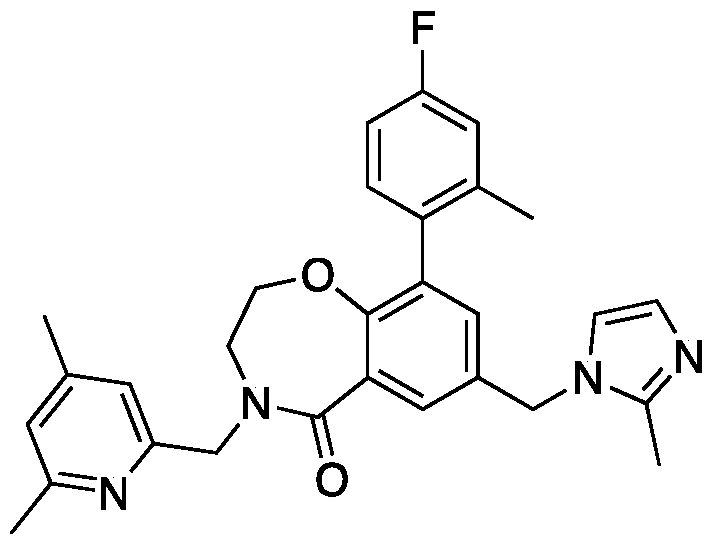
Example 41
4-((4,6-Dimethylpyridin-2-yl)methyl)-9-(4-fluoro-2-methylphenyl)-7-((2-methyl-l//- imidazol-l-yl)methyl)-3,4-dihydrobenzo[/][l,4]oxazepin-5(2//)-one
[00259] Step A. Preparation of 9-bromo-4-((4,6-dimethylpyridin-2-yl)methyl)-7- (hydroxymethyl)-3,4-dihydrobenzo[ ][l,4]oxazepin-5(2/ )-one. The title compound (286.4 mg, 74% yield) was prepared from the procedure described in Example 11, Step D using 9- bromo-7-(((/t'/7-butyl diphenyl si lyl)oxy (methyl )-3,4-dihydrobenzo[/][ l ,4]oxazepin-5(2//)-one (500.0 mg, 0.98 mmol, 1.0 equiv.), 2-(chloromethyl)-4,6-dimethylpyridine (228.6 mg, 1.47 mmol, 1.5 equiv.), and NaH (70.5 mg, 2.94 mmol, 3.0 equiv.). The reaction mixture was stirred at 0 °C for 1 h. LCMS: RT = 1.112 min, MS (ES) 630.7 [M+H]+.
[00260] Step B. Preparation of 9-bromo-7-(bromomethyl)-4-((4,6-dimethylpyridin-2- yl)methyl)-3,4-dihydrobenzo[ ][l,4]oxazepin-5(2Ef)-one. The crude title compound was prepared from the procedure described in Example 3, Step I using 9-bromo-4-((4,6-
dimethylpyridin-2-yl)methyl)-7-(hydroxymethyl)-3,4-dihydrobenzo[/][l,4]oxazepin-5(2F/)-one (286.4 mg, 0.73 mmol, 1.0 equiv.) and PBn (0.14 mL, 1.46 mmol, 2.0 equiv.). The reaction mixture was stirred at room temperature for 1.5 h. LCMS: RT = 1.263 min, MS (ES) 455.2
[M+H]+.
[00261] Step C. Preparation of 9-bromo-4-((4,6-dimethylpyridin-2-yl)methyl)-7-((2- methyl-Li/-imidazol-l-yl)methyl)-3,4-dihydrobenzo[ ] [l,4]oxazepin-5(2Ef)-one. The title compound (317.2 mg, 95% yield over 2 steps) was prepared from the procedure described in Example 11, Step D using 9-bromo-7-(bromomethyl)-4-((4,6-dimethylpyridin-2-yl)methyl)-3,4- dihydrobenzo[/][l,4]oxazepin-5(2F/)-one (332.4 mg, 0.73 mmol, 1.0 equiv.) and 2-methyl-liT- imidazole (180.3 mg, 2.20 mmol, 3.0 equiv.) and N,N-diisopropylethylamine (0.64 mL, 3.66 mmol, 5.0 equiv.). The reaction mixture was stirred at 90 °C for 12 h. LCMS: RT = 0.152 min, MS (ES) 456.4 [M+H]+.
[00262] Step D. Preparation of 4-((4,6-dimethylpyridin-2-yl)methyl)-9-(4-fluoro-2- methylphenyl)-7-((2-methyl-l/ -imidazol-l-yl)methyl)-3,4-dihydrobenzo[ ][l,4]oxazepin- 5(2Ef)-one. The title compound (12.9 mg, 40% yield) was prepared from the procedure described in Example 3, Step F using 9-bromo-4-((4,6-dimethylpyridin-2-yl)methyl)-7-((2-methyl-liT- imidazol-l-yl)methyl)-3,4-dihydrobenzo[/][l,4]oxazepin-5(2F/)-one (30.0 mg, 0.07 mmol, 1.0 equiv.), (4-fluoro-2-methylphenyl)boronic acid (25.4 mg, 0.16 mmol, 2.5 equiv.), K2CO3 (36.4 mg, 0.26 mmol, 4.0 equiv.), and PdCl2(dppf) (2.4 mg, 0.01 mmol, 0.05 equiv.). The reaction mixture was stirred at 100 °C for 6 h. LCMS: RT = 0.982 min, MS (ES) 485.6 [M+H]+.

Example 42
4-((4,6-Dimethylpyridin-2-yl)methyl)-7-((2-methyl-l//-imidazol-l-yl)methyl)-9-(2- (trifluoromethyl)pyridin-3-yl)-3,4-dihydrobenzo[/][l,4]oxazepin-5(2//)-one
[00263] The title compound (2.5 mg, 7% yield) was prepared from the procedure described in Example 3, Step F using 9-bromo-4-((4,6-dimethylpyridin-2-yl)methyl)-7-((2-methyl-li7-
imidazol-l-yl)methyl)-3,4-dihydrobenzo[/][l,4]oxazepin-5(2//)-one (30.0 mg, 0.07 mmol, 1.0 equiv.), (2-(trifluoromethyl)pyridin-3-yl)boronic acid (31.5 mg, 0.16 mmol, 2.5 equiv.), K2CO3 (36.4 mg, 0.26 mmol, 4.0 equiv.), and PdCl2(dppf) (2.4 mg, 0.01 mmol, 0.05 equiv.). The reaction mixture was stirred at 100 °C for 6 h. LCMS: RT = 0.191 min, MS (ES) 522.5 [M+H]+.

Example 43
4-((4,6-Dimethylpyridin-2-yl)methyl)-9-(2,4-dimethylthiazol-5-yl)-7-((2-methyl-l//- imidazol-l-yl)methyl)-3,4-dihydrobenzo[/][l,4]oxazepin-5(2//)-one
[00264] 2,4-Dimethylthiazole (20.0 pL, 0.20 mmol, 3.0 equiv.), Pd(OAc)2 (1.5 mg, 0.01 mmol, 0.1 equiv.), and AcOK (19.4 mg, 0.20 mmol, 3.0 equiv.) were added to a solution of 9-bromo-4- ((4,6-dimethylpyridin-2-yl)methyl)-7-((2-methyl-li7-imidazol-l-yl)methyl)-3,4- dihydrobenzo[/][l,4]oxazepin-5(2//)-one (30.0 mg, 0.07 mmol, 1.0 equiv.) in DMA (1.0 mL). The reaction mixture was stirred at 150 °C for 12 h, cooled to room temperature, quenched with sat. aq. NH4CI (0.5 mL) and extracted with CH2CI2 (3 x 3.0 mL). The combined organics were dried over Na2S04 and concentrated under reduced pressure. The residue was purified by reverse phase HPLC (Phenomenex Gemini C18, H2O/CH3CN gradient from 5-95% CLLCN, 0.1% TFA) to yield the title compound (14.7 mg, 45% yield). LCMS: RT = 0.884 min, MS (ES) 488.6
[M+H]+; ¾ NMR (400 MHz, Chloroform-if) d 7.67 (d, J= 2.4 Hz, 1H), 7.07 (s, 1H), 7.03 (d, J = 2.4 Hz, 1H), 6.95 (d, J= 1.2 Hz, 1H), 6.90 (s, 1H), 6.86 (d, J= 1.3 Hz, 1H), 5.05 (s, 2H), 4.84 (s, 2H), 4.21 (t, J= 5.2 Hz, 2H), 3.66 (t, J= 5.2 Hz, 2H), 2.66 (s, 3H), 2.47 (s, 3H), 2.37 (s, 3H), 2.28 (s, 3H), 2.22 (s, 3H).

Example 44
4-((4,6-Dimethylpyridin-2-yl)methyl)-7-((2-methyl-l/ -imidazol-l-yl)methyl)-9-(2- methylpyridin-3-yl)-3,4-dihydrobenzo[ ][l,4]oxazepin-5(2Ef)-one
[00265] The title compound (3.0 mg, 9% yield) was prepared from the procedure described in Example 3, Step F using 9-bromo-4-((4,6-dimethylpyridin-2-yl)methyl)-7-((2-methyl-liT- imidazol-l-yl)methyl)-3,4-dihydrobenzo[/][l,4]oxazepin-5(2F/)-one (30.0 mg, 0.07 mmol, 1.0 equiv.), (2-methylpyridin-3-yl)boronic acid (22.6 mg, 0.16 mmol, 2.5 equiv.), K2CO3 (36.4 mg, 0.26 mmol, 4.0 equiv.), and PdCl2(dppf) (2.4 mg, 0.01 mmol, 0.05 equiv.). The reaction mixture was stirred at 100 °C for 7.5 h. LCMS: RT = 0.150 min, MS (ES) 468.6 [M+H]+.

Example 45
4-((4,6-Dimethylpyridin-2-yl)methyl)-7-((2-methyl-l//-imidazol-l-yl)methyl)-9-(o-tolyl)-3,4- dihydrobenzo[/][l,4]oxazepin-5(2//)-one
[00266] The title compound (11.9 mg, 38% yield) was prepared from the procedure described in Example 3, Step F using 9-bromo-4-((4,6-dimethylpyridin-2-yl)methyl)-7-((2-methyl-lf7- imidazol-l-yl)methyl)-3,4-dihydrobenzo[/][l,4]oxazepin-5(2F/)-one (30.0 mg, 0.07 mmol, 1.0 equiv.), o-tolylboronic acid (22.4 mg, 0.16 mmol, 2.5 equiv.), K2CO3 (36.4 mg, 0.26 mmol, 4.0 equiv.), and PdCl2(dppf) (2.4 mg, 0.01 mmol, 0.05 equiv.). The reaction mixture was stirred at 100 °C for 7.5 h. LCMS: RT = 0.989 min, MS (ES) 467.6 [M+H]+; ¾ NMR (400 MHz, Chloroform -if) d 7.69 (d, J= 2.4 Hz, 1H), 7.29 - 7.22 (m, 2H), 7.18 (m, 1H), 7.07 (s, 1H), 7.04
(d, J= 7.3 Hz, 1H), 6.97 (d, J= 1.7 Hz, 2H), 6.91 - 6.86 (m, 2H), 5.06 (s, 2H), 4.84 (s, 2H), 4.05 (m, 2H), 3.64 (br s, 2H), 2.46 (s, 3H), 2.42 (s, 3H), 2.28 (s, 3H), 2.04 (s, 3H).

Example 46
4-((4,6-Dimethylpyridin-2-yl)methyl)-7-((2-methyl-l/ -imidazol-l-yl)methyl)-9-(4- methylthiazol-5-yl)-3,4-dihydrobenzo[ ][l,4]oxazepin-5(2Ef)-one
[00267] The title compound (9.7 mg, 31% yield) was prepared from the procedure described in Example 43 using 9-bromo-4-((4,6-dimethylpyridin-2-yl)methyl)-7-((2-methyl-liT-imidazol-l- yl)methyl)-3,4-dihydrobenzo[/][l,4]oxazepin-5(2//)-one (30.0 mg, 0.07 mmol, 1.0 equiv.), 4- methylthiazole (20.0 pL, 0.20 mmol, 3.0 equiv.), Pd(OAc)2 (1.5 mg, 0.01 mmol, 0.1 equiv.), and AcOK (19.4 mg, 0.20 mmol, 3.0 equiv.). The reaction mixture was stirred at 150 °C for 12 h. LCMS: RT = 0.141 min, MS (ES) 474.6 [M+H]+; ¾ NMR (400 MHz, Chloroform-if) d 8.73 (s, 1H), 7.71 (d, J= 2.4 Hz, 1H), 7.10 - 7.04 (m, 2H), 6.96 (d, J= 1.4 Hz, 1H), 6.90 (s, 1H), 6.88 (d, J= 1.4 Hz, 1H), 5.07 (s, 2H), 4.84 (s, 2H), 4.24 - 4.18 (m, 2H), 3.68 (t, J= 5.2 Hz, 2H), 2.47 (s, 3H), 2.38 (s, 3H), 2.31 (s, 3H), 2.29 (s, 3H).

Example 47
(,S)-4-(l-(4-Methoxypyridin-2-yl)ethyl)-7-((2-methyl-l//-imidazol-l-yl)methyl)-9-(l -methyl- 3-(trifluoromethyl)-Li/-pyrazol-4-yl)-3,4-dihydrobenzo[ ][l,4]oxazepin-5(2Ef)-one
[00268] Step A. Preparation of methyl 2-(allyloxy)-3-bromo-5-(((tert- butyldiphenylsilyl)oxy)methyl)benzoate. The title compound (499 mg, 92% yield) was
- I l l -
prepared from the procedure described in Example 3, Step B using methyl 3-bromo-5 -(((tert- butyldiphenylsilyl)oxy)methyl)-2-hydroxybenzoate (500 mg, 1.0 mmol, 1.0 equiv.), 3- bromoprop-l-ene (0.26 mL, 3.0 mmol, 3.0 equiv.), and K2CO3 (692 mg, 5.01 mmol, 5.0 equiv. The reaction mixture was stirred at 80 °C for 1.5 h. LCMS: RT = 1.989 min, * Product is not ionizable.
[00269] Step B. Preparation of methyl 3-bromo-5-(((tert-butyldiphenylsilyl)oxy)methyl)- 2-(2-oxoethoxy)benzoate. The crude mixture of title compound was prepared from the procedure described in Example 3, Step C using methyl 2-(allyloxy)-3-bromo-5-(((/er/- butyldiphenylsilyl)oxy)methyl)benzoate (200 mg, 0.37 mmol, 1.0 equiv.), 4 wt. % OsCE in H2O (1.75 mL, 0.28 mmol, 0.75 equiv.), pyridine (60 pL, 0.74 mmol, 2.0 equiv.), NaI04 (317 mg,
1.48 mmol, 4.0 equiv.), H2O (1.0 mL), and 1,4-dioxane (3.0 mL). The reaction mixture was stirred at room temperature for 2.5 h. LCMS: RT = 1.589 min, MS (ES) 542.5 [M+H]+.
[00270] Step C. Preparation of methyl (A)-3-bromo-5-(((tert-butyldiphenylsilyl)oxy) methyl)-2-(2-((l-(4-methoxypyridin-2-yl)ethyl)amino)ethoxy)benzoate. The crude title compound was prepared from the procedure described in Example 3, Step D using methyl 3- bromo-5-(((/c77-butyl diphenyl si lyl)oxy (methyl )-2-(2-oxoethoxy (benzoate (201 mg, 0.37 mmol, 1.0 equiv.), (,S)- l-(4-methoxypyri din-2 -yl)ethan-l -amine dihydrochloride (170 mg, 0.74 mmol, 2.0 equiv.), NaBH(OAc)3 (157 mg, 0.74 mmol, 2.0 equiv.), and acetic acid (40 pL, 0.74 mmol, 2.0 equiv.). The reaction mixture was stirred at room temperature for 0.5 h. LCMS: RT = 0.107 min, MS (ES) 678.7 [M+H]+.
[00271] Step D. Preparation of (A)-9-bromo-7-(((tert-butyldiphenylsilyl)oxy)methyl)-4-(l- (4-methoxypyridin-2-yl)ethyl)-3,4-dihydrobenzo[ ][l,4]oxazepin-5(2Lf)-one. The title compound (198 mg, 50% yield over 3 steps) was prepared from the procedure described in Example 22, Step C using methyl 0V(-3-bromo-5-(((/c77-butyl diphenyl si lyl(oxy (methyl (-2-(2-(( l - (4-methoxypyridin-2-yl)ethyl)amino)ethoxy (benzoate (411 mg, 0.61 mmol, 1.0 equiv.) and N,N- diisopropylethylamine (1.1 mL, 6.1 mmol, 10.0 equiv.) in DMF. The reaction mixture was stirred at 110 °C for 24 h. LCMS: RT = 2.157 min, MS (ES) 646.7 [M+H]+; ¾ NMR (400 MHz, Chloroform -if) d 8.35 (d, J= 5.8 Hz, 1H), 7.71 - 7.61 (m, 5H), 7.57 (d, J= 1.9 Hz, 1H), 7.42 - 7.31 (m, 6H), 6.97 (d, J= 2.4 Hz, 1H), 6.74 (dd, J= 5.8, 2.5 Hz, 1H), 6.07 (q, J= 7.0 Hz, 1H), 4.69 (s, 2H), 4.27 - 4.18 (m, 1H), 3.94 - 3.87 (m, 1H), 3.80 (s, 3H), 3.51 (m, 2H), 1.64 (d, J =
7.1 Hz, 3H), 1.08 (s, 9H).
[00272] Step E. Preparation of (»V)-7-(((tert-butyldiphenylsilyl)oxy)methyl)-4-(l-(4- methoxypyridin-2-yl)ethyl)-9-(l-methyl-3-(trifluoromethyl)-l/ -pyrazol-4-yl)-3,4- dihydrobenzo[ ][l,4] oxazepin -5(2/ )-one. The crude title compound was prepared from the procedure described in Example 3, Step F using (ri)-9-bromo-7-(((/er/- butyldiphenylsilyl)oxy)methyl)-4-(l-(4-methoxypyridin-2-yl)ethyl)-3,4- dihydrobenzo[/][l,4]oxazepin-5(2//)-one (100 mg, 0.15 mmol, 1.0 equiv.), (l-methyl-3- (trifluoromethyl)-liT-pyrazol-4-yl)boronic acid (60 mg, 0.31 mmol, 2.0 equiv.), K2CO3 (86 mg, 0.62 mmol, 4.0 equiv.), and PdCl2(dppf) (5.7 mg, 0.01 mmol, 0.05 equiv.). The reaction mixture was stirred at 100 °C for 4.5 h. LCMS: RT = 2.006 min, MS (ES) 715.9 [M+H]+.
[00273] Step F. Preparation of (»S)-7-(hydroxymethyl)-4-(l-(4-methoxypyridin-2-yl)ethyl)- 9-(l-methyl-3-(trifluoromethyl)-l/ -pyrazol-4-yl)-3,4-dihydrobenzo[ ][l,4]oxazepin-5(2Ef)- one. The title compound (56 mg, 75% yield over 2 steps) was prepared from the procedure described in Example 11, Step D using S)-7-(((/er/-butyldiphenylsilyl)oxy)methyl)-4-(l-(4- methoxypyri din-2 -yl)ethyl)-9-(l-m ethyl-3 -(trifluorom ethyl)- li7-pyrazol-4-yl)-3, 4- dihydrobenzo[/][l,4]oxazepin-5(2//)-one (110.7 mg, 0.15 mmol, 1.0 equiv.), and 1.0 M tetrabutylammonium fluoride (0.62 mL, 0.62 mmol, 4.0 equiv.). The reaction mixture was stirred at room temperature for 12 h. LCMS: RT = 1.089 min, MS (ES) 477.5 [M+H]+.
[00274] Step G. Preparation of (»V)-7-(bromomethyl)-4-(l-(4-methoxypyridin-2-yl)ethyl)- 9-(l-methyl-3-(trifluoromethyl)-l/ -pyrazol-4-yl)-3,4-dihydrobenzo[ ][l,4]oxazepin-5(2Ef)- one. The crude title compound was prepared from the procedure described in Example 3, Step I using (ri)-7-(hydroxymethyl)-4-(l-(4-methoxypyridin-2-yl)ethyl)-9-(l-methyl-3- (trifluoromethyl)-liT-pyrazol-4-yl)-3,4-dihydrobenzo[/][l,4]oxazepin-5(2//)-one (27.8 mg, 0.06 mmol, 1.0 equiv.) and PBn (10.0 pL, 0.12 mmol, 2.0 equiv.). The reaction mixture was stirred at room temperature for 0.5 h. LCMS: RT = 1.351 min, MS (ES) 540.4 [M+H]+.
[00275] Step H. Preparation of (»V)-4-(l-(4-methoxypyridin-2-yl)ethyl)-7-((2-methyl-Li/- imidazol-l-yl)methyl)-9-(l-methyl-3-(trifluoromethyl)-l/ -pyrazol-4-yl)-3,4- dihydrobenzo[f][l,4] oxazepin-5(2Ef)-one. The title compound (19.2 mg, 60% yield over 2 steps) was prepared from the procedure described in Example 11, Step D using (S)- 7- (bromomethyl)-4-(l-(4-methoxypyridin-2-yl)ethyl)-9-(l -methyl-3 -(trifluorom ethyl)- liT-pyrazol- 4-yl)-3,4-dihydrobenzo[/][l,4]oxazepin-5(2//)-one (31.5 mg, 0.06 mmol, 1.0 equiv.), 2-methyl- liT-imidazole (14.4 mg, 0.18 mmol, 3.0 equiv.), and N,N-diisopropylethylamine (50.0 pL, 0.29
mmol, 5.0 equiv.). The reaction mixture was stirred at 90 °C for 12 h. LCMS: RT = 0.980 min, MS (ES) 541.6 [M+H]+; ¾ NMR (400 MHz, Chloroform-i ) d 8.35 (d, J= 5.7 Hz, 1H), 7.65 (s, 1H), 7.41 (s, 1H), 7.03 (s, 1H), 6.96 (s, 1H), 6.95 - 6.90 (m, 1H), 6.87 (s, 1H), 6.76 - 6.70 (m, 1H), 6.07 (q, J= 7.0 Hz, 1H), 5.03 (s, 2H), 4.07 (m, 1H), 3.95 (s, 3H), 3.83 (s, 3H), 3.78 (m, 1H), 3.56 (m, 2H), 2.38 (s, 3H), 1.62 (d, J= 7.0 Hz, 3H).

Example 48
9-(2-Chloro-4-fluorophenyl)-4-((4,6-dimethylpyridin-2-yl)methyl)-7-((2-methyl-l/ - imidazol-l-yl)methyl)-3,4-dihydrobenzo[ ][l,4]oxazepin-5(2Ef)-one
[00276] The title compound (15.1 mg, 45% yield) was prepared from the procedure described in Example 3, Step F using 9-bromo-4-((4,6-dimethylpyridin-2-yl)methyl)-7-((2-methyl-liT- imidazol-l-yl)methyl)-3,4-dihydrobenzo[/][l,4]oxazepin-5(2//)-one (30.0 mg, 0.07 mmol, 1.0 equiv.), (2-chloro-4-fhiorophenyl)boronic acid (25.7 mg, 0.16 mmol, 2.5 equiv.), K2CO3 (36.4 mg, 0.26 mmol, 4.0 equiv.), and PdCl2(dppf) (2.4 mg, 0.01 mmol, 0.05 equiv.). The reaction mixture was stirred at 110 °C for 5 h. LCMS: RT = 1.803 min, MS (ES) 506.0 [M+H]+; ¾ NMR (400 MHz, Chloroform -if) d 7.75 (d, J= 2.4 Hz, 1H), 7.18 (dd, J= 8.5, 2.5 Hz, 1H), 7.13 (dd, J = 8.5, 6.0 Hz, 1H), 7.06 (s, 1H), 7.00 (td, J= 8.3, 2.6 Hz, 1H), 6.96 (d, J= 1.3 Hz, 1H), 6.94 (d, J = 2.4 Hz, 1H), 6.88 (d, J= 1.3 Hz, 2H), 5.06 (s, 2H), 4.83 (s, 2H), 4.19 (br s, 2H), 3.68 (br s, 2H), 2.46 (s, 3H), 2.39 (s, 3H), 2.28 (s, 3H).

9-(2,5-Dimethylphenyl)-4-((4,6-dimethylpyridin-2-yl)methyl)-7-((2-methyl-l/ -imidazol-l- yl)methyl)-3,4-dihydrobenzo[/][l,4]oxazepin-5(2Ef)-one
[00277] The title compound (17.4 mg, 54% yield) was prepared from the procedure described in Example 3, Step F using 9-bromo-4-((4,6-dimethylpyridin-2-yl)methyl)-7-((2-methyl-liT- imidazol-l-yl)methyl)-3,4-dihydrobenzo[/][l,4]oxazepin-5(2F/)-one (30.0 mg, 0.07 mmol, 1.0 equiv.), (2,5-dimethylphenyl)boronic acid (24.7 mg, 0.16 mmol, 2.5 equiv.), K2CO3 (36.4 mg, 0.26 mmol, 4.0 equiv.), and PdCl2(dppf) (2.4 mg, 0.01 mmol, 0.05 equiv.). The reaction mixture was stirred at 100 °C for 5 h. LCMS: RT = 1.099 min, MS (ES) 481.6 [M+H]+; ¾ NMR (400 MHz, Chloroform -if) d 7.70 (d, J= 2.4 Hz, 1H), 7.13 - 7.05 (m, 3H), 7.04 - 7.01 (m, 1H), 6.99 (d, J= 2.4 Hz, 1H), 6.92 (d, J= 1.2 Hz, 1H), 6.89 (s, 1H), 6.85 (s, 1H), 5.07 (s, 2H), 4.84 (s, 2H), 4.08 (m, 2H), 3.65 (s, 2H), 2.48 (s, 3H), 2.46 (s, 3H), 2.31 (s, 3H), 2.28 (s, 3H), 1.99 (s, 3H).

Example 50
(A)-9-(4-Fluoro-2-methylphenyl)-4-(l-(4-methoxypyridin-2-yl)ethyl)-7-((2-methyl-Li/- imidazol-l-yl)methyl)-3,4-dihydrobenzo[/][l,4]oxazepin-5(2//)-one
[00278] Step A. Preparation of (A)-7-(((tert-butyldiphenylsilyl)oxy)methyl)-9-(4-fluoro-2- methylphenyl)-4-(l-(4-methoxypyridin-2-yl)ethyl)-3,4-dihydrobenzo[ ][l,4]oxazepin-5(2/ )- one. The title compound (80 mg, 76% yield) was prepared from the procedure described in Example 3, Step F using (ri)-9-bromo-7-(((fer/-butyldiphenylsilyl)oxy)methyl)-4-(l-(4- methoxypyridin-2-yl)ethyl)-3,4-dihydrobenzo[/][l,4]oxazepin-5(2F/)-one (100.0 mg, 0.15 mmol, 1.0 equiv.), (4-fluoro-2-methylphenyl)boronic acid (48 mg, 0.31 mmol, 2.0 equiv.), K2CO3 (86 mg, 0.62 mmol, 4.0 equiv.), and PdCl2(dppf) (5.7 mg, 0.01 mmol, 0.05 equiv.). The reaction mixture was stirred at 100 °C for 4.0 h. LCMS: RT = 2.258 min, MS (ES) 675.9 [M+H]+; ¾ NMR (400 MHz, Chloroform-if) d 8.18 (d, J= 5.7 Hz, 1H), 7.57 - 7.47 (m, 5H), 7.28 - 7.15 (m,
6H), 7.09 (d, J= 2.2 Hz, 1H), 6.91 - 6.66 (m, 4H), 6.57 (dd, J= 5.7, 2.5 Hz, 1H), 5.96 (q, J= 7.0 Hz, 1H), 4.60 (s, 2H), 3.91 (m, 1H), 3.66 (s, 3H), 3.38 (m, 3H), 1.91 (s, 3H), 1.48 (d, J= 7.0 Hz, 3H), 0.92 (s, 9H).
[00279] Step B. Preparation of (»V)-9-(4-fluoro-2-methylphenyl)-7-(hydroxymethyl)-4-(l- (4-methoxypyridin-2-yl)ethyl)-3,4-dihydrobenzo[ ][l,4]oxazepin-5(2/ )-one. The title compound (49 mg, 95% yield) was prepared from the procedure described in Example 11, Step D using (ri)-7-(((/er/-butyldiphenylsilyl)oxy)methyl)-9-(4-fluoro-2-methylphenyl)-4-(l-(4- methoxypyridin-2-yl)ethyl)-3,4-dihydrobenzo[/][l,4]oxazepin-5(2//)-one (80 mg, 0.12 mmol,
1.0 equiv.) and 1.0 M tetrabutylammonium fluoride (0.47 mL, 0.47 mmol, 4.0 equiv.). The reaction mixture was stirred at room temperature for 12 h. LCMS: RT = 1.234 min, MS (ES) 437.5 [M+H]+; ¾ NMR (400 MHz, Chloroform-i7) d 8.33 (d, J= 5.7 Hz, 1H), 7.78 (d, J= 1.8 Hz, 1H), 7.28 (s, 1H), 7.04 (dd, J= 8.2, 6.1 Hz, 1H), 6.98 (s, 1H), 6.96 - 6.90 (m, 1H), 6.87 (td, J= 8.4, 2.4 Hz, 1H), 6.73 (dd, J= 5.7, 2.3 Hz, 1H), 6.09 (q, J= 7.0 Hz, 1H), 4.69 (s, 2H), 4.05 (m, 1H), 3.84 (s, 3H), 3.60 (m, 3H), 2.24 (br s, 1H), 2.06 (s, 3H), 1.63 (d, J= 6.9 Hz, 3H).
[00280] Step C. Preparation of (»V)-7-(bromomethyl)-9-(4-fluoro-2-methylphenyl)-4-(l-(4- methoxypyridin-2-yl)ethyl)-3,4-dihydrobenzo[ ][l,4]oxazepin-5(2Ef)-one. The crude title compound was prepared from the procedure described in Example 3, Step I using (5)-9-(4- fluoro-2-methylphenyl)-7-(hydroxymethyl)-4-(l-(4-methoxypyridin-2-yl)ethyl)-3,4- dihydrobenzo[/][l,4]oxazepin-5(2//)-one (25 mg, 0.06 mmol, 1.0 equiv.) and PBn (10 pL, 0.11 mmol, 2.0 equiv.). The reaction mixture was stirred at room temperature for 0.5 h. LCMS: RT = 1.518 min, MS (ES) 500.4 [M+H]+.
[00281] Step D. Preparation of (»V)-9-(4-fluoro-2-methylphenyl)-4-(l-(4-methoxypyridin-2- yl)ethyl)-7-((2-methyl-l/ -imidazol-l-yl)methyl)-3,4-dihydrobenzo[ ][l,4]oxazepin-5(2Ef)- one. The title compound (25 mg, 88% yield over 2 steps) was prepared from the procedure described in Example 11, Step D using S)-7-(bromomethyl)-9-(4-fluoro-2-methylphenyl)-4-(l- (4-methoxypyridin-2-yl)ethyl)-3,4-dihydrobenzo[/][l,4]oxazepin-5(2i7)-one (28 mg, 0.06 mmol, 1.0 equiv.), 2-methyl- liT-imidazole (14 mg, 0.17 mmol, 3.0 equiv.), and N,N- diisopropylethylamine (50 pL, 0.28 mmol, 5.0 equiv.). The reaction mixture was stirred at 90 °C for 12 h. LCMS: RT = 1.091 min, MS (ES) 501.6 [M+H]+; ¾ NMR (400 MHz, Chloroform-i7) d 8.33 (d, J= 5.7 Hz, 1H), 7.65 (d, J= 2.3 Hz, 1H), 7.02 - 6.79 (m, 7H), 6.72 (dd, J= 5.7, 2.5 Hz,
1H), 6.07 (q, J= 7.0 Hz, 1H), 5.04 (s, 2H), 4.05 (m, 1H), 3.82 (s, 3H), 3.61 (m, 3H), 2.38 (s, 3H), 2.00 (s, 3H), 1.62 (d, J= 7.0 Hz, 3H).

Example 51
4-((4,6-Dimethylpyridin-2-yl)methyl)-9-(4-fluoro-2,5-dimethylphenyl)-7-((2-methyl-l//- imidazol-l-yl)methyl)-3,4-dihydrobenzo[/][l,4]oxazepin-5(2//)-one
[00282] The title compound (16 mg, 48% yield) was prepared from the procedure described in Example 3, Step F using 9-bromo-4-((4,6-dimethylpyridin-2-yl)methyl)-7-((2-methyl-li7- imidazol-l-yl)methyl)-3,4-dihydrobenzo[/][l,4]oxazepin-5(2//)-one in Example 43, Step C (30 mg, 0.07 mmol, 1.0 equiv.), (4-fluoro-2,5-dimethylphenyl)boronic acid (28 mg, 0.16 mmol, 2.5 equiv.), K2CO3 (36 mg, 0.26 mmol, 4.0 equiv.), and PdCl2(dppf) (2.4 mg, 0.01 mmol, 0.05 equiv.). The reaction mixture was stirred at 100 °C for 5 h. LCMS: RT = 1.128 min, MS (ES) 499.6 [M+H]+; ¾ NMR (400 MHz, Chloroform-if) d 7.68 (d, J= 2.4 Hz, 1H), 7.07 (s, 1H), 6.95 (d, J= 1.3 Hz, 1H), 6.92 (d, J= 2.4 Hz, 1H), 6.90 - 6.82 (m, 4H), 5.04 (s, 2H), 4.83 (s, 2H), 4.06 (m, 2H), 3.63 (m, 2H), 2.46 (s, 3H), 2.39 (s, 3H), 2.28 (s, 3H), 2.22 (s, 3H), 1.98 (s, 3H).

Example 52
9-(5-Chloro-2-methylphenyl)-4-((4,6-dimethylpyridin-2-yl)methyl)-7-((2-methyl-l/ - imidazol-l-yl)methyl)-3,4-dihydrobenzo[ ][l,4]oxazepin-5(2Ef)-one
[00283] The title compound (16 mg, 48% yield) was prepared from the procedure described in Example 3, Step F using 9-bromo-4-((4,6-dimethylpyridin-2-yl)methyl)-7-((2-methyl-li7- imidazol-l-yl)methyl)-3,4-dihydrobenzo[/][l,4]oxazepin-5(2i )-one (30 mg, 0.07 mmol, 1.0 equiv.), (5-chloro-2-methylphenyl)boronic acid (28 mg, 0.16 mmol, 2.5 equiv.), K2CO3 (36 mg, 0.26 mmol, 4.0 equiv.), and PdCl2(dppf) (2.4 mg, 0.01 mmol, 0.05 equiv.). The reaction mixture was stirred at 100 °C for 5 h. LCMS: RT = 1.128 min, MS (ES) 502.0 [M+H]+; ¾ NMR (400 MHz, Chloroform -if) d 7.71 (d, J= 2.4 Hz, 1H), 7.22 (dd, J= 8.2, 2.2 Hz, 1H), 7.14 (d, J= 8.2 Hz, 1H), 7.07 (s, 1H), 7.04 (d, J= 2.2 Hz, 1H), 6.97 - 6.94 (m, 1H), 6.92 (d, J= 2.4 Hz, 1H), 6.90 - 6.86 (m, 2H), 5.05 (s, 2H), 4.83 (s, 2H), 4.07 (br s, 2H), 3.64 (br s, 2H), 2.46 (s, 3H), 2.39 (s, 3H), 2.29 (s, 3H), 1.99 (s, 3H).

Example 53
(A)-7-((5-Imino-l-methyl-l,5-dihydro-4//-l,2,4-triazol-4-yl)methyl)-4-(l-(4- methoxypyndin-2-yl)ethyl)-9-(l-methyl-3-(tnfluoromethyl)-l//-pyrazol-4-yl)-3,4- dihydrobenzo[/][l,4]oxazepin-5(2Ef)-one
[00284] The title compound (16 mg, 48% yield) was prepared from the procedure described in Example 6, Step A using (,S)-7-(bromomethyl)-4-(l-(4-methoxypyridin-2-yl)ethyl)-9-(l-methyl- 3-(trifluoromethyl)-liT-pyrazol-4-yl)-3,4-dihydrobenzo[/][l,4]oxazepin-5(2i7)-one (32 mg, 0.06 mmol, 1.0 equiv.) and l-methyl-liT-l,2,4-triazol-5-amine (13 mg, 0.12 mmol, 3.0 equiv.). The reaction mixture was stirred at 60 °C for 12 h. LCMS: RT = 0.988 min, MS (ES) 556.55
[M+H]+; ¾ NMR (400 MHz, Chloroform-i7) d 8.34 (d, J= 5.7 Hz, 1H), 7.75 (d, J= 2.4 Hz, 1H), 7.44 (s, 1H), 7.30 (d, J= 2.3 Hz, 1H), 7.18 (s, 1H), 6.94 (d, J= 2.5 Hz, 1H), 6.73 (dd, J= 5.7,
2.5 Hz, 1H), 6.07 (q, J= 7.0 Hz, 1H), 4.79 (s, 2H), 4.08 (m, 1H), 3.96 (s, 3H), 3.83 (s, 3H), 3.79 (m, 1H), 3.61 - 3.51 (m, 2H), 3.42 (s, 3H), 1.62 (d, J= 7.1 Hz, 3H).

Example 54
(A)-9-(2-Chloro-4-fluorophenyl)-7-((5-imino-l-methyl-l,5-dihydro-4//-l,2,4-triazol-4- yl)methyl)-4-(l-(4-methoxypyridin-2-yl)ethyl)-3,4-dihydrobenzo[/][l,4]oxazepin-5(2//)-one
[00285] The title compound (17 mg, 54% yield) was prepared from the procedure described in Example 6, Step A using (A)-7-(bromomethyl)-9-(2-chloro-4-fluorophenyl)-4-(l-(4- methoxypyridin-2-yl)ethyl)-3,4-dihydrobenzo[/][l,4]oxazepin-5(2//)-one (28 mg, 0.06 mmol,
1.0 equiv.) and l-methyl-lf7-l,2,4-triazol-5-amine (13 mg, 0.12 mmol, 3.0 equiv.). The reaction mixture was stirred at 60 °C for 12 h. LCMS: RT = 1.117 min, MS (ES) 517.6 [M+H]+; ¾ NMR (400 MHz, Chloroform -if) d 8.33 (d, J= 5.7 Hz, 1H), 7.73 (d, J= 2.4 Hz, 1H), 7.19 (s, 1H), 7.17 (d, J= 2.4 Hz, 1H), 7.01 (dd, J= 8.3, 5.9 Hz, 1H), 6.96 - 6.89 (m, 2H), 6.86 (td, J= 8.4, 2.6 Hz, 1H), 6.72 (dd, J= 5.7, 2.5 Hz, 1H), 6.07 (q, J= 7.0 Hz, 1H), 4.79 (s, 2H), 4.06 (m, 1H), 3.83 (s, 3H), 3.61 (m, 3H), 3.40 (s, 3H), 2.03 (s, 3H), 1.62 (d, J= 7.0 Hz, 3H).

Example 55
3-((4-Methoxypyndin-2-yl)methyl)-6-((2-methyl-l//-imidazol-l-yl)methyl)-8-(l -methyl-3- (trifluoromethyl)-l/ -pyrazol-4-yl)quinazolin-4(3Ef)-one
[00286] Step A. Preparation of 2-amino-3-bromo-5-chloro-N-((4-methoxypyridin-2- yl)methyl)benzamide. The title compound (760 mg, 98% yield) was prepared from the procedure described in Example 21, Step H using (4-methoxypyri din-2 -yl)methanamine (305mg,
2.01 mmol, 1.0 equiv.) The reaction mixture was stirred at room temperature for 16 h. LCMS: RT = 1.197 min, MS (ES) 383.8 [M+H]+.
[00287] Step B. Preparation of 8-bromo-6-chloro-3-((4-methoxypyridin-2- yl)methyl)quinazolin-4(3Ef)-one. The title compound (586 mg, 75% yield) was prepared from the procedure described in Example 24, Step B. The reaction mixture was stirred at 100 °C for 16 h. LCMS: RT = 1.460 min, MS (ES) 393.9 [M+H]+.
[00288] Step C. Preparation of 6-chloro-3-((4-methoxypyridin-2-yl)methyl)-8-(l-methyl- 3-(trifluoromethyl)-lH-pyrazol-4-yl)quinazolin-4(3H)-one. The title compound (436 mg, 64% yield) was prepared from the procedure described in Example 24, Step C. The reaction mixture was stirred at 95 °C for 2 h. LCMS: RT = 1.552 min, MS (ES) 463.9 [M+H]+.
[00289] Step D. Preparation of 3-((4-methoxypyridin-2-yl)methyl)-8-(l-methyl-3- (trifluoromethyl)-lH-pyrazol-4-yl)-6-vinylquinazolin-4(3H)-one. The title compound (126 mg, 30% yield) was prepared from the procedure described in Example 24, Step D. The reaction mixture was stirred at 90 °C overnight. LCMS: RT = 1.474 min, MS (ES) 456.0 [M+H]+.
[00290] Step E. Preparation of 6-(hydroxymethyl)-3-((4-methoxypyridin-2-yl)methyl)-8- (l-methyl-3-(trifluoromethyl)-lH-pyrazol-4-yl)quinazolin-4(3H)-one. The title compound (71 mg, 59% yield) was prepared from the procedure described in Example 24, Step E. The reaction mixture was stirred at room temperature overnight. LCMS: RT = 1.131 min, MS (ES) 460.0 [M+H]+.
[00291] Step F. Preparation of 6-(bromomethyl)-3-((4-methoxypyridin-2-yl)methyl)-8-(l- methyl-3-(trifluoromethyl)-lH-pyrazol-4-yl)quinazolin-4(3H)-one. The title compound (32 mg, 40% yield) was prepared from the procedure described in Example 24, Step F. The reaction mixture was stirred at room temperature for 30 min. LCMS: RT = 1.500 min, MS (ES) 521.8 [M+H]+.
[00292] Step G. Preparation of 3-((4-methoxypyridin-2-yl)methyl)-6-((2-methyl-lH- imidazol-l-yl)methyl)-8-(l-methyl-3-(trifluoromethyl)-lH-pyrazol-4-yl)quinazolin-4(3H)- one. The title compound (17.2 mg, 55% yield) was prepared from the procedure described in Example 24, Step G using 2-methylimidazole (14.6 mg, 0.178 mmol, 3.0 equiv.). The reaction mixture was stirred at 50 °C for 4 h. LCMS: RT = 1.026 min, MS (ES) 523.9 [M+H]+; 1H NMR (400 MHz, chloroform-d) d 8.47 (s, 1H), 8.38 (d, J = 5.6 Hz, 1H), 8.11 (d, J = 2.4 Hz, 1H), 7.72 (s, 1H), 7.45 (d, J = 1.6 Hz, 1H), 6.99-6.87 (m, 2H), 6.74-6.72 (m, 1H), 6.27-6.22 (m, 1H), 5.16
(s, 2H), 4.00 (s, 3H), 3.83 (s, 3H), 2.35 (s, 3H), 1.86 (d, J = 7.2 Hz, 3H), 1.25 (s, 1H); 19F NMR (376 MHz, chloroform-d) d - 59.13.

Example 56
(A)-9-(2,5-Dimethylphenyl)-4-(l-(4-methoxypyridin-2-yl)ethyl)-7-((2-methyl-lF/-imidazol-l- yl)methyl)-3,4-dihydrobenzo[/][l,4]oxazepin-5(2//)-one
[00293] Step A. Preparation of (A)-9-bromo-7-(bromomethyl)-4-(l-(4-methoxypyridin-2- yl)ethyl)-3,4-dihydrobenzo[ ][l,4]oxazepin-5(2/ )-one. The crude title compound was prepared from the procedure described in Example 3, Step I using (S)-9-bromo-7-(hydroxymethyl)-4-(l- (4-methoxypyridin-2-yl)ethyl)-3,4-dihydrobenzo[f][l,4]oxazepin-5(2H)-one (14.8 mg, 0.04 mmol, 1.0 equiv.) and PBr3 (10.0 pL, 0.07 mmol, 2.0 equiv.). LCMS: RT = 1.318 min, MS (ES) 471.2 [M+H]
[00294] Step B. Preparation of (S)-9-bromo-4-(l-(4-methoxypyridin-2-yl)ethyl)-7-((2- methyl-lH-imidazol-l-yl)methyl)-3,4-dihydrobenzo[f] [l,4]oxazepin-5(2H)-one. The crude title compound was prepared from the procedure described in Example 11, Step D using (S)-9- bromo-7-(bromomethyl)-4-(l-(4-methoxypyridin-2-yl)ethyl)-3,4-dihydrobenzo[f][l,4]oxazepin- 5(2H)-one (17.1 mg, 0.04 mmol, 1.0 equiv.), 2-methyl- lH-imidazole (9.0 mg, 0.11 mmol, 3.0 equiv.), and N,N-diisopropylethylamine (30.0 pL, 0.18 mmol, 5.0 equiv.). The reaction mixture was stirred at 90 oC for 12 h. LCMS: RT = 0.914 min, MS (ES) 472.4 [M+H]+.
[00295] Step C. Preparation of (S)-9-(2,5-dimethylphenyl)-4-(l-(4-methoxypyridin-2- yl)ethyl)-7-((2-methyl-lH-imidazol-l-yl)methyl)-3,4-dihydrobenzo[f][l,4]oxazepin-5(2H)- one. The title compound (8.9 mg, 49% yield over 2 steps) was prepared from the procedure described in Example 3, Step F using (S)-9-bromo-4-(l-(4-methoxypyridin-2-yl)ethyl)-7-((2- methyl-lH-imidazol-l-yl)methyl)-3,4-dihydrobenzo[f][l,4]oxazepin-5(2H)-one (17.1 mg, 0.04 mmol, 1.0 equiv.), (2,5-dimethylphenyl)boronic acid (13.6 mg, 0.09 mmol, 2.5 equiv.), K2CO3 (20.1 mg, 0.15 mmol, 4.0 equiv.), and PdC12(dppf) (1.4 mg, 0.01 mmol, 0.05 equiv.). The
reaction mixture was stirred at 100 °C for 6 h. LCMS: RT = 1.155 min, MS (ES) 497.6 [M+H]+; 1H NMR (400 MHz, Chloroform-d) d 8.33 (d, J = 5.7 Hz, 1H), 7.64 (d, J = 2.4 Hz, 1H), 7.10 (d, J = 7.8 Hz, 1H), 7.08 - 7.02 (m, 1H), 6.98 - 6.89 (m, 3H), 6.88 - 6.79 (m, 2H), 6.72 (dd, J = 5.7, 2.5 Hz, 1H), 6.08 (q, J = 7.0 Hz, 1H), 5.03 (s, 2H), 4.05 (m, 1H), 3.83 (s, 3H), 3.58 (m, 3H), 2.36 (s, 3H), 2.30 (s, 3H), 1.97 (s, 3H), 1.63 (d, J = 7.1 Hz, 3H).

Example 57
4-(7-Methoxy-l,2,3,4-tetrahydronaphthalen-l-yl)-7-((2-methyl-lF/-imidazol-l-yl)methyl)-9-
(l-methyl-3-(trifluoromethyl)-l//-pyrazol-4-yl)-3,4-dihydrobenzo[/][l,4]oxazepin-5(2Ef)- one
[00296] 7-((2 -Methyl- li7-imidazol-l-yl)methyl)-9-(l -methyl-3 -(trifluorom ethyl)- 177-pyrazol-
4-yl)-3,4-dihydrobenzo[/][l,4]oxazepin-5(2i )-one (30 mg, 0.0740 mmol, 1.0 equiv.) was dissolved in DMF (0.75 mL) and then NaH (3.6 mg, 0.148 mmol, 2.0 equiv.) was added. The reaction was stirred at room temperature for 15 min, and l-bromo-7-m ethoxy- 1, 2,3,4- tetrahydronaphthalene (35.5 mg, 0.148 mmol, 2.0 equiv.) was added. The reaction was stirred for 15 min then quenched with sat. aq. NH l (5 mL). The resulting mixture was extracted with EtOAc (3 x 5 mL), and the combined organic layer was washed with brine, dried (MgSCE), filtered and concentrated. The residue was purified by reverse phase HPLC (Phenomenex Gemini C18, H2O/CH3CN gradient from 15-95% CH3CN, 0.1% TFA) to yield the title compound (19.2 mg, 45% yield). To remove TFA, the organic layer was washed with K2CO3 (sat.). LCMS: RT = 1.565 min, MS (ES) 565.9 [M+H]+; ¾ NMR (400 MHz, MeOD) d 7.82 (s, 1H), 7.63 (d, J= 2.0 Hz, 1H), 7.23 (d, J= 2.0 Hz, 1H), 7.12 (d, 7= 1.6 Hz, 1H), 7.08 (d, J= 8.4 Hz, 1H), 6.90 (d, J = 1.2 Hz, 1H), 6.80-6.77 (m, 1H), 6.71 (d, J= 2.8 Hz, 1H), 5.99-5.5.95 (m, 1H), 5.27 (s, 2H), 4.12-4.01 (m, 2H), 3.99 (s, 3H), 3.77 (s, 3H), 2.86-2.72 (m, 2H), 2.36 (s, 3H), 2.20-2.15 (m, 1H), 2.09-2.04 (m, 1H), 1.94-1.80 (m, 2H), 1.31-1.26 (m, 2H).

Example 58
4-(6-Methoxyquinolin-4-yl)-7-((2-methyl-l//-imidazol-l-yl)methyl)-9-(l-methyl-3- (trifluoromethyl)-l//-pyrazol-4-yl)-3,4-dihydrobenzo[/][l,4]oxazepin-5(2//)-one
[00297] 7-((2 -Methyl- li7-imidazol-l-yl)methyl)-9-(l -methyl-3 -(trifluorom ethyl)- liT-pyrazol-
4-yl)-3,4-dihydrobenzo[/][l,4]oxazepin-5(2F/)-one (10 mg, 0.0247 mmol, 1.0 equiv.) was dissolved in 1,4-dioxane (0.25 mL) then 4-bromo-6-methoxyquinoline (11.7 mg, 0.0494 mmol, 2.0 equiv.), CS2CO3 (16.1 mg, 0.0494 mmol, 2.0 equiv.), Pd2(dba)3 (2.3 mg, 0.00247 mmol, 0.1 equiv.) and XantPhos (2.9 mg, 0.0494 mmol, 0.2 equiv.) were added. The reaction was degassed by bubbling argon through the mixture for 10 min then heated to 110 °C for 4 h. The reaction was cooled to room temperature and H2O (5 mL) was added. The aqueous layer was extracted with EtOAc (3 x 5 mL), and combined organic layer was washed with brine, dried (MgSCL), filtered and concentrated. The residue was purified by reverse phase HPLC (Phenomenex Gemini C18, H2O/CH3CN gradient from 15-95% CLLCN, 0.1% TFA) to yield the title compound (1.9 mg, 14% yield). To remove TFA, the organic layer was washed with K2CO3 (sat.). LCMS: RT = 1.268 min, MS (ES) 562.9 [M+H]+; ¾ NMR (400 MHz, MeOD) d 8.83 (d, J = 4.8 Hz, 1H), 8.06 (d, J= 9.2 Hz, 1H), 7.91 (s, 1H), 7.63 (d, J= 2.4 Hz, 1H), 7.57 (d, J= 4.8 Hz, 1H), 7.52-7.49 (m, 1H), 7.35 (d, J= 2.4 Hz, 1H), 7.14 (s, 1H), 6.90 (s, 1H), 5.29 (s, 2H), 4.48-4.40 (m, 1H), 4.29-4.24 (m, 1H), 4.17-4.07 (m, 1H), 4.05-3.99 (m, 4H), 3.90 (s, 3H), 2.37 (s, 3H).

Example 59
(,V)-7-((l//-Imidazol-l-yl)methyl)-4-(cyclopropyl(4-methoxypyridin-2-yl)methyl)-9-(l -ethyl- 3-(trifluoromethyl)-lH-pyrazol-4-yl)-3,4-dihydrobenzo[ ][l,4]oxazepin-5(2E/)-one
[00298] Step A. Preparation of methyl (A)-9-bromo-4-(cyclopropyl(4-methoxypyridin-2- yl)methyl)-5-oxo-2,3,4,5-tetrahydrobenzo[ ][l,4]oxazepine-7-carboxylate. DCM (8 mL) was added to dimethyl 5-bromo-4-(2-oxoethoxy)isophthalate (620 mg, 1.88 mmol, 1.0 equiv.), (S)- cyclopropyl(4-methoxypyridin-2-yl)methanamine (402 mg, 2.25 mmol, 1.2 equiv.) and diisopropylethylamine (0.65 mL, 3.76 mmol, 2.0 equiv.). The reaction was stirred at room temperature overnight then NaBEL (35.5 mg, 0.939 mmol, 0.5 equiv.) was added. The reaction was stirred for 4 h at room temperature and concentrated. The residue was taken up in EtOAc (10 mL) and washed with water (10 mL), and the organic layer was dried (MgSCL), filtered and concentrated. To the residue was added l,5,7-Triazabicyclo[4.4.0]dec-5-ene (50 mg, 0.359 mmol) and the mixture was heated neat at 110 °C for 1 hour. The reaction was cooled to room temperature then ELO (5 mL) and EtOAc (5 mL) were added. The layers were separated and the aqueous layer was extracted with EtOAc (3 x 5 mL). The combined organic layer was washed with brine, dried (MgS04), filtered and concentrated. The residue was purified by flash chromatography (Combi-flash Rf, Hex/EtOAc = 0-75% gradient) to afford the title compound (91 mg, 11% yield). LCMS: RT = 1.404 min, MS (ES) 460.9 [M+H]+.
[00299] Step B. Preparation of methyl (A)-4-(cyclopropyl(4-methoxypyridin-2-yl)methyl)- 9-(l-ethyl-3-(trifluoromethyl)-Li/-pyrazol-4-yl)-5-oxo-2,3,4,5-tetrahydrobenzo[/][l,4] oxazepine-7-carboxylate. The title compound (61 mg, 61% yield) was prepared from the procedure described in Example 3, Step G using 1 -ethyl-3 -(trifluoromethyl)pyrazole-4-boronic acid (57.7 mg, 0.277 mmol, 1.5 equiv.). The reaction mixture was stirred at 95 °C for 1 h.
LCMS: RT = 1.553 min, MS (ES) 544.9 [M+H]+.
[00300] Step C. Preparation of (»V)-4-(cyclopropyl(4-methoxypyridin-2-yl)methyl)-9-(l- ethyl-3-(trifluoromethyl)-l/ -pyrazol-4-yl)-7-(hydroxymethyl)-3,4- dihydrobenzo[ ][l,4]oxazepin-5(2Ef)-one. The title compound (46 mg, 79% yield) was prepared from the procedure described in Example 3, Step H. The reaction mixture was stirred at 75 °C for 5 hour. LCMS: RT = 1.329 min, MS (ES) 517.0 [M+H]+.
[00301] Step D. Preparation of (S)-7-(bromomethyl)-4-(cyclopropyl(4-methoxypyridin-2- yl)methyl)-9-(l-ethyl-3-(trifluoromethyl)-lH-pyrazol-4-yl)-3,4-dihydrobenzo[f][l,4] oxazepin-5(2H)-one. The title compound (46 mg, 89% yield) was prepared from the procedure described in Example 3, Step I. The reaction mixture was stirred at room temperature for 2 h. LCMS: RT = 1.644 min, MS (ES) 578.8 [M+H]+.
[00302] Step E. Preparation of (S)-7-((lH-imidazol-l-yl)methyl)-4-(cyclopropyl(4- methoxypyridin-2-yl)methyl)-9-(l-ethyl-3-(trifluoromethyl)-lH-pyrazol-4-yl)-3,4- dihydrobenzo[f][l,4] oxazepin-5(2H)-one. The title compound (4.4 mg, 30% yield) was prepared from the procedure described in Example 3, Step J using imidazole (5.3 mg, 0.0778 mmol, 3.0 equiv.). The reaction mixture was stirred at 50 °C for 1 hours. LCMS: RT = 1.256 min, MS (ES) 567.0 [M+H]+; 1H NMR (400 MHz, chloroform-d) d 8.37 (d, J = 5.6 Hz, 1H), 7.70 (d, J = 2.4 Hz, 1H), 7.55 (s, 1H), 7.46 (s, 1H), 7.16 (d, J = 2.4 Hz, 1H), 7.08 (s, 1H), 6.95 (d, J = 2.4 Hz, 1H), 6.92 (s, 1H), 6.75 (dd, J = 5.6, 2.4 Hz, 1H), 5.09 (s, 2H), 5.02 (d, J = 10.0 Hz, 1H), 4.37-4.31 (m, 1H), 4.26 (q, J = 7.2 Hz, 2H), 4.03-3.98 (m, 1H), 3.92-3.87 (m, 1H), 3.85 (s, 3H), 3.74-3.67 (m, 1H), 1.73-1.65 (m, 1H), 1.56 (t, J = 7.2 Hz, 3H), 0.78-0.73 (m, 1H), 0.68-0.59 (m, 2H), 0.58-0.55 (m, 1H).

5(2Ef)-one
[00303] The title compound (3.8 mg, 25% yield) was prepared from the procedure described in Example 59, Step E using 2-methylimidazole (6.4 mg, 0.0778 mmol, 3.0 equiv.). The reaction mixture was stirred at 50 °C for 1 h. LCMS: RT = 1.277 min, MS (ES) 580.9 [M+H]+; ¾ NMR (400 MHz, chloroform -if) d 8.38 (d, J= 6.0 Hz, 1H), 7.64 (d, J= 2.4 Hz, 1H), 7.46 (s, 1H), 7.03 (d, J= 2.0 Hz, 1H), 6.95 (t, J= 2.0 Hz, 2H), 6.86 (d, J= 1.2 Hz, 1H), 6.75 (dd, J= 5.6, 2.4 Hz, 1H), 5.02 (s, 2H), 4.35-4.30 (m, 1H), 4.26 (q, J= 7.2 Hz, 2H), 4.03-3.99 (m, 1H), 3.95-3.89 (m, 2H), 3.87 (s, 3H), 3.76-3.69 (m, 1H), 2.36 (s, 3H), 1.73-1.65 (m, 1H), 1.56 (t, J= 7.6 Hz, 3H), 0.80-0.75 (m, 1H), 0.72-0.59 (m, 2H), 0.57-0.52 (m, 1H).

Example 61
(,V)-4-(Cyclopropyl(4-methoxypyridin-2-yl)methyl)-7-((2-ethyl-l//-imidazol-l-yl)methyl)-9- (l-ethyl-3-(trifluoromethyl)-l//-pyrazol-4-yl)-3,4-dihydrobenzo[/] [l,4]oxazepin-5(2//)-one
[00304] The title compound (3.3 mg, 21% yield) was prepared from the procedure described in Example 59, Step E using 2-ethylimidazole (7.5 mg, 0.0778 mmol, 3.0 equiv.). The reaction mixture was stirred at 50 °C for 1 h. LCMS: RT = 1.273 min, MS (ES) 595.0 [M+H]+; 1H NMR (400 MHz, chloroform -if) d 8.37 (d, J= 5.6 Hz, 1H), 7.64 (d, J= 2.4 Hz, 1H), 7.45 (s, 1H), 7.02 (d, J= 2.0 Hz, 1H), 6.98 (d, J= 1.2 Hz, 1H), 6.95 (d, J= 2.4 Hz, 1H), 6.85 (d, J= 1.2 Hz, 1H), 6.77 (dd, J= 5.6, 2.4 Hz, 1H), 5.05 (s, 2H), 4.35-4.30 (m, 1H), 4.25 (q, J= 7.6 Hz, 2H), 4.00- 3.96 (m, 1H), 3.92-3.86 (m, 1H), 3.85 (s, 3H), 3.73-3.66 (m, 1H), 2.68 (q, J= 7.4 Hz, 2H), 1.91- 1.83 (m, 1H), 1.74-1.62 (m, 1H), 1.56 (t, J= 7.4 Hz, 3H), 1.34 (t, J= 7.4 Hz, 3H), 0.79-0.73 (m, 1H), 0.72-0.57 (m, 2H), 0.54-0.48 (m, 1H).

Example 62
(,V)-6-((l//-imidazol-l-yl)methyl)-3-(cyclopropyl(4-methoxypyridin-2-yl)methyl)-8-(l -ethyl- 3-(trifluoromethyl)-l/ -pyrazol-4-yl)quinazolin-4(3/ )-one
[00305] Step A. Preparation of (A)-2-amino-3-bromo-5-chloro-/V-(cyclopropyl(4- methoxypyridin-2-yl)methyl)benzamide. The title compound (900 mg, 92% yield) was prepared from the procedure described in Example 21, Step H using (S)-cyclopropyl(4- methoxypyridin-2-yl)methanamine (513 mg, 2.87 mmol, 1.2 equiv.) The reaction mixture was stirred at room temperature for 16 h. LCMS: RT = 1.420 min, 411.9 min, MS (ES) 411.9
[M+H]+; 1H NMR (400 MHz, chloroform-d) d 8.49 (d, J = 6.9 Hz, 1H), 8.04 (s, 1H), 7.62 (d, J = 2.3 Hz, 1H), 7.56 (d, J = 5.7 Hz, 1H), 7.50 (d, J = 2.2 Hz, 1H), 7.33 (d, J = 2.6 Hz, 1H), 7.26 (s, 2H), 4.28 - 4.24 (m, 1H), 4.14 (s, 1H), 1.64 - 1.52 (m, 1H), 0.92 - 0.77 (m, 2H), 0.64 - 0.50 (m, 2H).
[00306] Step B. Preparation of (S)-8-bromo-6-chloro-3-(cyclopropyl(4-methoxypyridin-2- yl)methyl)quinazolin-4(3H)-one. The title compound (537 mg, 58% yield) was prepared from the procedure described in Example 24, Step B. The reaction was heated at 100 °C for 16 h. LCMS: RT = 1.640 min, MS (ES) 419.8 [M+H]+; 1H NMR (400 MHz, chloroform-d) d 8.88 (s, 1H), 8.36 (d, J = 5.8 Hz, 1H), 8.20 (d, J = 2.3 Hz, 1H), 7.98 (d, J = 2.4 Hz, 1H), 6.97 (d, J = 2.4 Hz, 1H), 6.73 (dd, J = 5.8, 2.7 Hz, 1H), 4.30 - 4.22 (m, 1H), 3.85 (s, 3H), 1.84 - 1.75 (m, 1H), 0.90 - 0.83 (m, 1H), 0.76 - 0.63 (m, 2H), 0.50 - 0.44 (m, 1H).
[00307] Step C. Preparation of (S)-6-chloro-3-(cyclopropyl(4-methoxypyridin-2- yl)methyl)-8-(l-ethyl-3-(trifluoromethyl)-lH-pyrazol-4-yl)quinazolin-4(3H)-one. The title compound (394 mg, 80% yield) was prepared from the procedure described in Example 1, Step C using (l-ethyl-3-(trifluoromethyl)-lH-pyrazol-4-yl)boronic acid (305 mg, 1.47 mmol, 1.5
equiv.) The reaction mixture was stirred at 80 °C for 12 h. LCMS: RT = 1.807 min, MS (ES) 503.9 [M+H]+; 1H NMR (400 MHz, chloroform-d) d 8.72 (s, 1H), 8.36 (d, J = 5.7 Hz, 1H),
8.23 (d, J = 2.5 Hz, 1H), 7.82 (s, 1H), 7.74 (d, J = 2.4 Hz, 1H), 6.98 (d, J = 2.4 Hz, 1H),
6.73 (dd, J = 5.7, 2.7 Hz, 1H), 5.20 (d, J = 10.1 Hz, 1H), 4.30 (q, J = 7.3 Hz, 2H), 3.86 (s, 3H), 1.85 - 1.75 (m, 1H), 1.59 (t, J = 7.3 Hz, 3H), 0.90 - 0.81 (m, 1H), 0.76 - 0.61 (m, 2H), 0.52 - 0.46 (m, 1H).
[00308] Step D. Preparation of (S)-3-(cyclopropyl(4-methoxypyridin-2-yl)methyl)-8-(l- ethyl-3-(trifluoromethyl)-lH-pyrazol-4-yl)-6-vinylquinazolin-4(3H)-one. The title compound (170 mg, 44% yield) was prepared from the procedure described in Example 1, Step D. The reaction mixture was stirred at 100 °C overnight. LCMS: RT = 1.604 min, MS (ES) 496.0
[M+H]+; 1H NMR (400 MHz, chloroform-d) d 8.69 (s, 1H), 8.35 (d, J = 5.6 Hz, 1H), 8.23 (d, J = 1.6 Hz, 1H), 7.87 (s, 1H), 7.83 (s, 1H), 6.98 (s, 1H), 6.77 (d, J = 17.6 Hz, 1H), 6.61 (dd, J =
6.0, 2.0 Hz, 1H), 5.75 (d, J = 17.2 Hz, 1H), 4.75 (d, J = 12.0 Hz, 1H), 4.62 (d, J = 10.4 Hz, 1H), 4.30 (d, J = 7.2 Hz, 2H), 3.86 (s, 3H), 1.86 - 1.76 (m, 1H), 1.59 (d, J = 7.2 Hz, 3H), 0.89 - 0.81 (m, 1H), 0.76 - 0.62 (m, 2H), 0.52 - 0.46 (m, 1H).
[00309] Step E. Preparation of (S)-3-(cyclopropyl(4-methoxypyridin-2-yl)methyl)-8-(l- ethyl-3-(trifluoromethyl)-lH-pyrazol-4-yl)-6-(hydroxymethyl)quinazolin-4(3H)-one. Ozone was bubbled through a solution of dimethyl (S)-3-(cyclopropyl(4-methoxypyridin-2-yl)methyl)- 8-(l-ethyl-3-(trifluoromethyl)-lH-pyrazol-4-yl)-6-vinylquinazolin-4(3H)-one (170 mg, 0.343 mmol, 1 equiv) in DCM (20 mL, 0.02 M) at -78 °C for 30 min. After the solution was purged with air, dimethyl sulfide (0.08 mL, 1.03 mmol, 3 equiv) was added. The reaction mixture was allowed to warm to 23 °C and stirred overnight. Crude (S)-3-(cyclopropyl(4-methoxypyridin-2- yl)methyl)-8-(l-ethyl-3-(trifluoromethyl)-lH-pyrazol-4-yl)-4-oxo-3,4-dihydroquinazoline-6- carbaldehyde was then concentrated and dissolved in DCM (2 mL). Sodium
triacetoxyhydroborohydride (218 mg, 1.03 mmol, 3 equiv) was added, and the reaction mixture was stirred at 35 °C overnight. The reaction mixture was diluted with DCM and washed with sat. NaHC03. The organic layer was dried over MgS04, and concentrated. The residue was purified by flash chromatography (Combi-flash Rf, Hex/EtOAc = 0-100% gradient) to afford the title compound (36 mg, 21% yield, over two steps). LCMS: RT = 1.259 min, MS (ES) 499.9
[M+H]+; 1H NMR (400 MHz, chloroform-d) d 8.69 (s, 1H), 8.33 (d, J = 5.6 Hz, 1H), 8.22 (d, J = 1.6 Hz, 1H), 7.77 (s, 2H), 6.98 (d, J = 2.4 Hz, 1H), 6.69 (dd, J = 5.6, 2.4 Hz, 1H), 5.27 (s, 1H),
5.20 (d, J = 10.0 Hz, 1H), 4.77 (s, 2H), 4.26 (q, J = 7.2 Hz, 2H), 3.82 (s, 3H), 1.83 - 1.73 (m,
1H), 1.56 (t, J = 7.2 Hz, 3H), 0.86 - 0.78 (m, 1H), 0.72 - 0.56 (m, 2H), 0.50 - 0.43 (m, 1H).
[00310] Step F. Preparation of (S)-6-(bromomethyl)-3-(cyclopropyl(4-methoxypyridin-2- yl)methyl)-8-(l-ethyl-3-(trifluoromethyl)-lH-pyrazol-4-yl)quinazolin-4(3H)-one. The title compound (35 mg, quant yield) was prepared from the procedure described in Example 1, Step F. The reaction mixture was stirred at room temperature for 30 minutes. LCMS: RT = 1.571 min, MS (ES) 561.9 [M+H]+.
[00311] Step G. Preparation of (S)-6-((lH-imidazol-l-yl)methyl)-3-(cyclopropyl(4- methoxypyridin-2-yl)methyl)-8-(l-ethyl-3-(trifluoromethyl)-lH-pyrazol-4-yl)quinazolin- 4(3H)-one. The title compound (14.3 mg, 36% yield) was prepared from the procedure described in Example 3, Step J using imidazole (14.7 mg, 0.216 mmol, 3.0 equiv.). The reaction mixture was stirred at 50 °C overnight. LCMS: RT = 1.153 min, MS (ES) 550.0 [M+H]+; 1H NMR (400 MHz, chloroform-d) d 8.74 (s, 1H), 8.35 (d, J = 6.0 Hz, 1H), 8.05 (d, J = 1.6 Hz, 1H), 7.73 (s, 1H), 7.48 (s, 2H), 7.01 (s, 1H), 6.90 (d, J = 2.8 Hz, 1H), 6.83 (s, 1H), 6.63 (dd, J = 5.6, 2.0 Hz, 1H), 5.13 - 5.09 (m, 3H), 4.19 (q, J = 8.0 Hz, 2H), 3.76 (s, 3H), 1.76 - 1.66 (m, 1H), 1.49 (t, J = 8.0 Hz, 3H), 0.80 - 0.73 (m, 1H), 0.67 - 0.53 (m, 2H), 0.43 - 0.36 (m, 1H); 19F NMR (376 MHz, chloroform-d) d - 58.98.

Example 63
(»V)-7-((lF -imidazol-l-yl)methyl)-9-(l-ethyl-3-(trifluoromethyl)-lF -pyrazol-4-yl)-4-(6- methoxychroman-4-yl)-3,4-dihydrobenzo[/][l,4]oxazepin-5(2ET)-one
[00312] Step A. Preparation of methyl (A)-9-bromo-4-(6-methoxychroman-4-yl)-5-oxo- 2,3,4,5-tetrahydrobenzo[/][l,4]oxazepine-7-carboxylate. The title compound (145 mg, 69%
yield) was prepared from the procedure described in Example 59, Step A using (S)-6- methoxychroman-4-aminium chloride (107 mg, 0.498 mmol, 1.1 equiv.). The reaction mixture was stirred at 110 °C overnight. LCMS: RT = 1.887 min, MS (ES) 461.8 [M+H]+; 1H NMR (400 MHz, chloroform-d) d 8.53 (d, J = 2.0 Hz, 1H), 8.40 (d, J = 2.0 Hz, 1H), 6.85 - 6.69 (m, 3H), 6.19 - 6.15 (m, 1H), 4.41 - 4.30 (m, 4H), 4.25 - 4.15 (m, 2H), 3.96 (s, 3H), 3.76 (s, 3H),
3.38 - 3.28 (m, 2H), 2.35 - 2.27 (m, 1H), 2.20 - 2.09 (m, 1H).
[00313] Step B. Preparation of methyl (S)-9-(l-ethyl-3-(trifluoromethyl)-lH-pyrazol-4- yl)-4-(6-methoxychroman-4-yl)-5-oxo-2,3,4,5-tetrahydrobenzo[f][l,4]oxazepine-7- carboxylate. The title compound (136 mg, 80% yield) was prepared from the procedure described in Example 3, Step G using 1 -ethyl-3 -(trifluoromethyl)pyrazole-4-boronic acid (77.7 mg, 0.374 mmol, 1.2 equiv.). The reaction mixture was stirred at 80 °C overnight. LCMS: RT = 1.857 min, MS (ES) 546.0 [M+H]+; 1H NMR (400 MHz, chloroform-d) d 8.64 (d, J = 2.4 Hz, 1H), 8.09 (d, J = 2.4 Hz, 1H), 7.48 (s, 1H), 6.81 - 6.74 (m, 2H), 6.64 (d, J = 2.4 Hz, 1H), 6.17 - 6.13 (m, 1H), 4.30 - 4.07 (m, 6H), 3.91 (s, 3H), 3.70 (s, 3H), 3.37 - 3.24 (m, 2H), 2.29 - 2.20 (m, 1H), 2.12 - 2.03 (m, 1H), 1.54 (t, J = 7.6 Hz, 3H).
[00314] Step C. Preparation of (S)-9-(l-ethyl-3-(trifluoromethyl)-lH-pyrazol-4-yl)-7- (hydroxymethyl)-4-(6-methoxychroman-4-yl)-3,4-dihydrobenzo[f][l,4]oxazepin-5(2H)-one.
Lithium triethylborohydride (1 M THF, 0.748 mmol, 3 equiv.) was added dropwise to a solution of methyl (S)-9-(l-ethyl-3-(trifluoromethyl)-lH-pyrazol-4-yl)-4-(6-methoxychroman-4-yl)-5- oxo-2,3,4,5-tetrahydrobenzo[f][l,4]oxazepine-7-carboxylate (136 mg, 0.249 mmol) in THF at 0 °C. The reaction was stirred for 40 min, quenched with sat. NaHC03, and extracted with EtOAc. The combined organic layer was dried (MgS04), concentrated to yield the crude title product, which was used without further purification (130 mg, quant yield). LCMS: RT = 1.628 min, MS (ES) 517.9 [M+H]+; 1H NMR (400 MHz, chloroform-d) d 7.89 - 7.82 (m, 1H), 7.54 - 7.44 (m, 2H), 6.82 - 6.72 (m, 2H), 6.70 - 6.67 (m, 1H), 6.17 (dd, J = 10.4, 5.5 Hz, 1H), 4.74 (d, J = 5.8 Hz, 1H), 4.32 - 4.13 (m, 4H), 4.05 - 4.00 (m, 2H), 3.73(s, 3H), 3.35 - 3.20 (m, 2H), 2.30 - 2.23 (m, 1H), 2.15 - 2.04 (m, 1H), 1.56 (t, J = 7.4 Hz, 1H).
[00315] Step D. Preparation of (S)-7-(bromomethyl)-9-(l-ethyl-3-(trifluoromethyl)-lH- pyrazol-4-yl)-4-(6-methoxychroman-4-yl)-3,4-dihydrobenzo[f][l,4]oxazepin-5(2H)-one. The title compound (119 mg, 82% yield) was prepared from the procedure described in Example 3, Step I. The reaction mixture was stirred at room temperature for 2 h. LCMS: RT = 1.942 min,
MS (ES) 579.9 [M+H]+; 1H NMR (400 MHz, chloroform-d) d 7.91 (d, J = 2.4 Hz, 1H), 7.52 (s,
1H), 7.48 (d, J = 2.4 Hz, 1H), 6.80 - 6.73 (m, 2H), 6.68 - 6.60 (m, 1H), 6.15 (dd, J = 10.4, 5.8
Hz, 1H), 4.52 (s, 2H), 4.31 - 4.00 (m, 6H), 3.72 (s, 3H), 3.34 - 3.09 (m, 2H), 2.29 - 2.23 (m, 1H), 2.17 - 2.05 (m, 1H), 1.56 (t, J = 7.3 Hz, 3H).
[00316] Step E. Preparation of (S)-7-((lH-imidazol-l-yl)methyl)-9-(l-ethyl-3- (trifluoromethyl)-lH-pyrazol-4-yl)-4-(6-methoxychroman-4-yl)-3,4-dihydrobenzo[f][l,4] oxazepin-5(2H)-one. The title compound (14.3 mg, 25% yield) was prepared from the procedure described in Example 3, Step J using imidazole (21 mg, 0.30 mmol, 3.0 equiv.). The reaction mixture was stirred at 50 °C overnight. LCMS: RT = 1.441 min, MS (ES) 568.0 [M+H]+; 1H NMR (400 MHz, chloroform-d) d 7.77 (d, J = 2.2 Hz, 1H), 7.57 (s, 1H), 7.46 (s, 1H), 7.19 (d, J = 2.0 Hz, 1H), 7.10 (s, 1H), 6.96 (m, 1H), 6.80 - 6.74 (m, 2H), 6.67 (d, J = 2.5 Hz, 1H),
6.13 (dd, J = 10.4, 5.4 Hz, 1H), 5.15 (s, 2H), 4.30 - 4.15 (m, 4H), 4.07 - 4.02 (m, 2H), 3.72 (s, 3H), 3.30 - 3.20 (m, 2H), 2.28 - 2.23 (m, 1H), 2.14 - 2.05 (m, 1H), 1.54 (t, J = 7.3 Hz, 3H); 19F NMR (376 MHz, chloroform-d) d - 59.61.
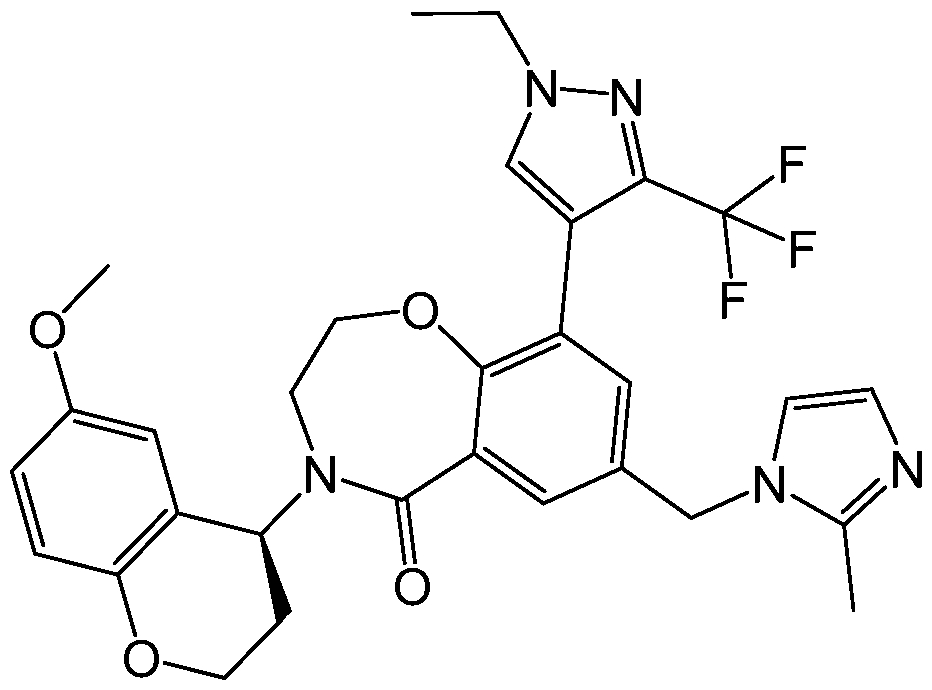
Example 64
(»V)-9-(l-ethyl-3-(trifluoromethyl)-lH-pyrazol-4-yl)-4-(6-methoxychroman-4-yl)-7-((2- methyl-l//-imidazol-l-yl)methyl)-3,4-dihydrobenzo[/][l,4]oxazepin-5(2//)-one
[00317] The title compound (11.7 mg, 20% yield) was prepared from the procedure described in Example 3, Step J using 2-methyl- liT-imidazole (21 mg, 0.30 mmol, 3.0 equiv.). The reaction mixture was stirred at 50 °C overnight. LCMS: RT = 1.461 min, MS (ES) 582.0 [M+H]+; ¾ NMR (400 MHz, chloroform-i7) d 7.71 (d, J= 2.2 Hz, 1H), 7.46 (s, 1H), 7.07 (d, J= 2.0 Hz, 1H), 6.96 (s, 1H), 6.89 (d, J= 0.7 Hz, 1H), 6.80 - 6.73 (m, 2H), 6.68 (d, J= 2.5 Hz, 1H), 6.13 (d, J =
10.0, 5.4 Hz, 1H), 5.07 (s, 2H), 4.31 - 4.14 (m, 4H), 4.08 - 3.97 (m, 2H), 3.72 (s, 3H), 3.35 - 3.21 (m, 2H), 2.38 (s, 3H), 2.29 - 2.23 (m, 1H), 2.16 - 2.05 (m, 1H), 1.55 (t, J= 7.3 Hz, 3H); 19F NMR (376 MHz, chlorofor s/) d - 59.55.

Example 65
(,V)-7-((l//-imidazol-l-yl)methyl)-4-(cyclopropyl(4-methoxypyridin-2-yl)methyl)-9-(l -ethyl- 3-(trifluoromethyl)- Lff-pyrazol-4-yl)-3, 4-dihydro- l//-benzo[e][l,4]diazepine-2,5-dione
[00318] Step A. Preparation of methyl 2-amino-3-bromo-5-vinylbenzoate. Pd(dppf)Cl2 (70 mg, 0.096 mmol, 0.05 eq.) was added to a mixture of methyl 2-amino-3-bromo-5-iodobenzoate (600 mg, 1.9 mmol, 1.0 eq.), potassium vinyltrifluoroborate (284 mg, 2.1 mmol, 1.1 eg.) and K2CO3 (800 mg, 5.8 mmol, 3.0 eq.), in l,4-dioxane/H20 (3/1, 19 mL) under Ar atmosphere. The resulting mixture was stirred at 95 °C for 2 h, then diluted with water and extracted with EtOAc. The combined organic solution was washed with brine, dried (MgSCE), filtered and
concentrated. The residue was purified by flash chromatography (Combi-flash Rf, Hex/EtOAc = 0-30% gradient) to afford the title compound (403 mg, 82%). LCMS (ESI): >95%, m/z = 255.9 [M+H]+.
[00319] Step B. Preparation of methyl 2-amino-3-(l-ethyl-3-(trifluoromethyl)-l/ - pyrazol-4-yl)-5-vinylbenzoate. The title compound (215 mg, 40% yield) was prepared from the procedure described in Example 65, Step A using methyl 2-amino-3-bromo-5-vinylbenzoate (401 mg, 1.57 mmol, 1.0 eq.) and 1 -ethyl-3 -(trifluoromethyl)pyrazole-4-boronic acid (425 mg, 2.04 mmol, 1.3 equiv.). LCMS (ESI): >95%, m/z = 340.1 [M+H]+.
[00320] Step C. Preparation of 2-amino-3-(l-ethyl-3-(trifluoromethyl)-l/ -pyrazol-4-yl)-5- vinylbenzoic acid. 2 M LiOH (aq. sol. 0.95 mL) was added dropwise to a solution of 2-amino- 3 -( 1 -ethyl-3-(trifluoromethyl)- l//-pyrazol-4-yl)-5-vinylbenzoate
 0 mg, 0.62 mmol) in THF
(2.0 mL). The reaction mixture was stirred at room temperature overnight then diluted with water and washed with EtOAc. The aqueous layer was acidified to pH ~ 2 using 1 M HC1 then
extracted with EtOAc (3x). The combined organic solution was washed with brine, dried (MgSCri), filtered and concentrated to give the crude title compound (165 mg, 82% yield), which was used in subsequent reaction without further purification.
[00321] Step D. Preparation of (A)-2-amino-/V-(cyclopropyl(4-methoxypyridin-2- yl)methyl)-3-(l-ethyl-3-(trifluoromethyl)-Li/-pyrazol-4-yl)-5-vinylbenzamide. 2-amino-3-(l- ethyl-3-(trifluoromethyl)- l//-pyrazol-4-yl)-5-vinylbenzoic
 (] 55 mgm 0.51 mmol, 1.0 eq.) was dissolved in DMF (2.0 mL) and TBTU (163 mg, 0.51 mmol, 1.0 eq.) and DIPEA ( 0.18 mL, 1.0 mmol, 2.0 eq.) were added, and the resulting mixture was stirred at room temperature for 10 minutes. S)-cyclopropyl(4-methoxypyridin-2-yl)methanamine 2HC1 salt (127 mg, 0.51 mmol,
1.0 eq.) was added to the reaction mixture at room temperature then stirred overnight. The reaction was diluted with water and extracted with EtOAc. The combined organic solution was washed with brine, dried (MgS04), filtered and concentrated. The residue was purified by flash chromatography (Combi-flash Rf, Hex/EtOAc = 0-30% gradient) to afford the title compound (51 mg, 21% yield). LCMS (ESI): >95%, m/z = 487.2 [M+H]+.
[00322] Step E. Preparation of (A)-4-(cyclopropyl(4-methoxypyridin-2-yl)methyl)-9-(l- ethyl-3-(trifluoromethyl)-Li/-pyrazol-4-yl)-7-vinyl-3, 4-dihydro- l//-benzo[e][l,4]diazepine- 2,5-dione. To a solution of S)-2-amino-/V-(cyclopropyl(4-methoxypyridin-2-yl)methyl)-3-(l- ethyl-3-(trifluoromethyl)-lif-pyrazol-4-yl)-5-vinylbenzamide (51 mg, 0.11 mmol, 1.0 eq.) in DCM (0.5 mL) was added DIPEA (0.037 mL, 2 eq.) followed by chloroacetyl chloride (0.010 mL, 0.13 mmol, 1.2 eq) at 0 °C. The reaction mixture was warmed to room temperature and stirred for 30 min. The reaction was quenched by addition of water and extracted with DCM. The combined organic solution was washed with brine, dried (MgSCri), filtered and concentrated.
The residue was then dissolved in DMF (0.5 mL) and NaH (3.8 mg, 0.16 mmol, 1.5 eq.) was added. After stirring at room temperature for 2 h, the reaction was quenched with sat. NFECl and extracted with EtOAc. The combined organic solution was washed with brine, dried (MgS04), filtered and concentrated. The residue was purified by flash chromatography (Combi-flash Rf, DCM/MeOH = 0-10% gradient) to afford the title compound (51 mg, 92% yield). LCMS (ESI): >95%, m/z = 526.2 [M+H]+.
[00323] Step F. Preparation of (A)-4-(cyclopropyl(4-methoxypyridin-2-yl)methyl)-9-(l- ethyl-3-(trifluoromethyl)-lF -pyrazol-4-yl)-2,5-dioxo-2,3,4,5-tetrahydro-l/ - benzo[e][l,4]diazepine-7-carbaldehyde. To a solution of (ri)-4-(cyclopropyl(4-methoxypyridin-
2-yl)methyl)-9-(l-ethyl-3-(trifluoromethyl)-li7-pyrazol-4-yl)-7-vinyl-3, 4-dihydro- 177- benzo[e][l,4]diazepine-2,5-dione (51 mg, 0.11 mmol, 1.0 eq.) in DCM (1.5 mL) at -78 °C, ozone was bubbled for 30 min then purged with air for 5 minutes. Dimethyl sulfide (0.025 mL, 0.35 mmol, 3.0 eq.) was added. The reaction was slowly warmed to room temperature and stirred overnight then concentrated. The residue was purified by flash chromatography (Combi-flash Rf, Hex/EtOAc = 50-100% gradient) to afford the title compound (15 mg, 29% yield). LCMS (ESI): >95%, m/z = 528.2 [M+H]+.
[00324] Step G. Preparation of (A)-4-(cyclopropyl(4-methoxypyridin-2-yl)methyl)-9-(l- ethyl-3-(trifluoromethyl)-l/ -pyrazol-4-yl)-7-(hydroxymethyl)-3,4-dihydro-l - benzo[e][l,4]diazepine-2,5-dione. To a solution of (ri)-4-(cyclopropyl(4-methoxypyridin-2- yl)methyl)-9-(l-ethyl-3-(trifluoromethyl)-l//-pyrazol-4-yl)-2,5-dioxo-2,3,4,5-tetrahydro-l/7- benzo[e][l,4]diazepine-7-carbaldehyde (15 mg, 0.028 mmol) in MeOH (0.2 mL) was added NaBLL (1.0 mg, 0.028 mmol) was added at room temperature. The reaction was stirred at room temperature for 30 min concentrated. The residue was dissolved in EtOAc, and the solution was washed with brine, dried (MgSCri), filtered and concentrated. The residue was purified by flash chromatography (Combi-flash Rf, DCM/MeOH = 0-5% gradient) to afford the title compound (15 mg, 99% yield). LCMS (ESI): >95%, m/z = 530.2 [M+H]+.
[00325] Step H. Preparation of (A)-7-(bromomethyl)-4-(cyclopropyl(4-methoxypyridin-2- yl)methyl)-9-(l-ethyl-3-(trifluoromethyl)- Lff-pyrazol-4-yl)-3, 4-dihydro- Lif- benzo[e][l,4]diazepine-2,5-dione. The title compound (8.7 mg, 52% yield) was prepared from the procedure described in Example 14, Step F using (ri)-4-(cyclopropyl(4-methoxypyridin-2- yl)methyl)-9-(l-ethyl-3-(trifluoromethyl)-l//-pyrazol-4-yl)-7-(hydroxymethyl)-3, 4-dihydro- 1/7- benzo[e][l,4]diazepine-2,5-dione (15 mg, 0.028 mmol, 1.0 eq.) and PBn (23 mg, 0.085 mmol, 3.0 equiv.). LCMS (ESI): >95%, m/z = 592.1 [M+H]+.
[00326] Step I. Preparation of (A)-7-((Li/-imidazol-l-yl)methyl)-4-(cyclopropyl(4- methoxypyridin-2-yl)methyl)-9-(l-ethyl-3-(trifluoromethyl)-Li/-pyrazol-4-yl)-3, 4-dihydro- l//-benzo[e][l,4]diazepine-2,5-dione. The title compound (3.6 mg, 45% yield) was prepared from the procedure described in Example 3, Step J using (ri)-7-(bromomethyl)-4-(cyclopropyl(4- methoxypyri din-2 -yl)methyl)-9-(l -ethyl-3 -(trifluorom ethyl)- l//-pyrazol-4-yl)-3, 4-dihydro- 177- benzo[e][l,4]diazepine-2,5-dione (8.1 mg, 0.013 mmol) and imidazole (3.0 mg, 0.40 mmol, 3.0
equiv.). The reaction mixture was stirred at 50 °C for 2h. LCMS (ESI): >95%, m/z = 580.1
[M+H]+.

Example 66
Ethyl 4-(7-((l/ -imidazol-l-yl)methyl)-9-(l-methyl-3-(trifluoromethyl)-l/ -pyrazol-4-yl)-5- oxo-2,3-dihydrobenzo[ ][l,4]oxazepin-4(5Ef)-yl)-6-ethylquinoline-8-carboxylate
[00327] Step A. Preparation of methyl 3-bromo-2-(2-((tert- butoxycarbonyl)amino)ethoxy)-5-(hydroxymethyl)benzoate. To a stirring solution of methyl 3-bromo-2-hydroxy-5-(hydroxymethyl)benzoate (4.83 g, 18.5 mmol, 1.0 eq.) in anhydrous DMF (25 mL) under Ar atmosphere, potassium carbonate (5.11 g, 37.0 mmol, 2.00 eq.) and tert-butyl (2-bromoethyl)carbamate (5.18 g, 23.1 mmol, 1.25 eq.) were added and the mixture was stirred at 70 °C for lh. The reaction mixture was cooled to room temperature, 50 mL of ice-cold water was added and the product was extracted with EtOAc (35 mL x 2). The combined organic phases was washed with water and brine, dried over sodium sulfate, and concentrated in vacuo. The residue was purified by flash chromatography (Combi-flash Rf, Hex/EtOAc = 0-100% gradient) to afford the title compound (5.50 g, 73.5 %) as a white solid. LCMS (ESI): >95%, m/z = 404.8 [M+H]+.
[00328] Step B. Preparation of methyl 2-(2-((tert-butoxycarbonyl)amino)ethoxy)-5- (hydroxymethyl)-3-(l-methyl-3-(trifluoromethyl)-l//-pyrazol-4-yl)benzoate Methyl 3- bromo-2-(2-((tert-butoxycarbonyl)amino)ethoxy)-5-(hydroxymethyl)benzoate (2.02 g, 5.0 mmol, 1 eq.), (1 -methyl-3 -(trifluorom ethyl)- liT-pyrazol-4-yl)boronic acid (1.45 g, 7.5 mmol, 1.5 eq.) , PdCl2(dppf).CH2Cl2 (204 mg, 250 pmol, 0.05 eq.) and potassium carbonate (691 mg, 5.0 mmol,
1 eq.) were suspended in 1,4-Dioxane (16 mL) and Water (4 mL). The mixture was purged with Ar twice and stirred under argon atmosphere at 80 °C for 7 h. The reaction mixture was cooled to room temperature, 50 mL of ice-cold water was added and the product was extracted with EtOAc (35 mL x 2). The combined organic phases was washed with water and brine, dried over sodium sulfate, and concentrated in vacuo. The residue was purified by flash chromatography (Combi-
flash Rf, Hex/EtOAc = 0-100% gradient) to afford the title compound (2.25 g, 95.0 %) as a brown sticky solid. LCMS (ESI): >95%, m/z = 474.9 [M+H]+.
[00329] Step C. Preparation of 7-(hydroxymethyl)-9-(l-methyl-3-(trifluoromethyl)-lH- pyrazol-4-yl)-3,4- dihydrobenzo[ ][l,4]oxazepin-5(2TF)-one. To a stirring solution of methyl 2- (2-((tert-butoxycarbonyl)amino)ethoxy)-5-(hydroxymethyl)-3 -( 1 -methyl-3 -(trifluorom ethyl)- \H- pyrazol-4-yl)benzoate (2.01 g, 4.25 mmol, 1.0 eq.) in DCM (20 mL), 2,2,2-trifluoroacetic acid (7.27 g, 4.91 mL, 63.8 mmol, 15 eq.) was added and the mixture was stirred at 25 °C for lh then concentrated in vacuo. The residue was then dissolved in 1,4-Dioxane (40 mL), and N-ethyl-N- isopropylpropan-2-amine (2.75 g, 3.8 mL, 5 Eq, 21.3 mmol) was slowly added. The reaction mixture was stirred at 112 °C for 12 h then concentrated completion of lacamization. The residue was purified by flash chromatography (Combi-flash Rf, Hex/EtOAc = 0-100% gradient) to afford the title compound (0.95 g, 65.5%) as a colorless sticky solid. LCMS (ESI): >95%, m/z = 341.8 [M+H]+.
[00330] Step D. Preparation of 7-((l/ -imidazol-l-yl)methyl)-9-(l-methyl-3- (trifluoromethyl)-l/ -pyrazol-4-yl)-3,4-dihydrobenzo[ ][l,4]oxazepin-5(2Tf)-one. The title compound was prepared from the sequence of procedures described in Example 65, Step H and I. LCMS (ESI): >95%, m/z = 392.1 [M+H]+.
[00331] Step E. Preparation of ethyl 4-(7-((l/ -imidazol-l-yl)methyl)-9-(l-methyl-3- (trifluoromethyl)-l/ -pyrazol-4-yl)-5-oxo-2,3-dihydrobenzo[ ][l,4]oxazepin-4(5Tf)-yl)-6- ethylquinoline-8-carboxylate. To a solution of 7-((liT-imidazol-l-yl)methyl)-9-(l-methyl-3- (trifluoromethyl)-liT-pyrazol-4-yl)-3,4-dihydrobenzo[/][l,4]oxazepin-5(2i )-one (30.9 mg, 79 pmol, 1 eq.) in 1,4-dioxane (0.4 mL) at room temperature were added ethyl 4-bromo-6- ethylquinoline-8-carboxylate (48.7 mg, 158 pmol, 2 eq.), xantphos (9.14 mg, 15.8 pmol, 0.2 eq.), Pd2(dba)3 (7.23 mg, 7.9 pmol, 0.1 eq.), and CS2CO3 (56.6 mg, 174 pmol, 2.2 eq.). The resulting mixture was degassed and back filled with Ar for three times, and then heated in a sealed tube at 105 °C for 24 h. Brine/water was added and the mixture was extracted with EtOAc. The combined organic phase was dried (LteSCri), filtered, and concentrated. The residue was purified by reverse phase HPLC (Phenomenex Gemini Cl 8, H2O/CH3CN gradient from 5- 55% CLLCN, 0.1% TFA) to yield the title compound (26.3 mg, 42.5 pmol, 54% yield). 1H NMR (400 MHz, Chloroform -if) d 8.05 (d, J= 4.8 Hz, 1H), 7.90 (d, J= 2.0 Hz, 1H), 7.81 (d, J= 1.6 Hz, 1H), 7.78 (d, J= 2.4 Hz, 1H), 7.59 (s, 1H), 7.54 (s, 1H), 7.37 (d, J= 4.8 Hz, 1H), 7.29 (d, J =
2.0 Hz, 1H), 7.12 (s, 1H), 6.98 (s, 1H), 5.16 (s, 2H), 4.54 (q, J= 7.2 Hz, 2H), 4.31 (m, 2H), 4.03 (s, 3H), 3.95 (m, 2H), 2.86 (q, J= 7.6 Hz, 2H), 1.46 (t, J= 7.2 Hz, 3H), 1.33 (t, J= 7.6 Hz, 3H); LCMS (ESI): >95%, m/z = 619.2 [M+H]+.

Example 67
7-((l//-imidazol-l-yl)methyl)-4-(6-ethyl-8-methoxyquinolin-4-yl)-9-(l-methyl-3- (trifluoromethyl)-l//-pyrazol-4-yl)-3,4-dihydrobenzo[/] [l,4]oxazepin-5(2//)-one
[00332] The title compound (13.6 mg, 23.6 pmol, 23% yield) was prepared following the procedure described for Example 66 Step E, using 7-((lf7-imidazol-l-yl)methyl)-9-(l-methyl-3- (trifluoromethyl)-lf7-pyrazol-4-yl)-3,4-dihydrobenzo[/][l,4]oxazepin-5(2//)-one (40 mg, 100 pmol, 1 eq.) and 4-bromo-6-ethyl-8-methoxyquinoline (46 mg, 170 pmol, 1.7 eq.). 1H NMR (400 MHz, Chloroform -if) d 8.95 (d, J= 4.8 Hz, 1H), 7.90 (d, J= 2.4 Hz, 1H), 7.59 (s, 1H), 7.54 (s, 1H), 7.37 (d, J= 4.4 Hz, 1H), 7.26 (m, 2H), 7.12 (s, 1H), 6.97 (m, 2H), 5.16 (s, 2H), 4.33 (m, 2H), 4.11 (s, 3H), 4.02 (s, 3H), 3.94 (m, 2H), 2.81 (q, J= 7.6 Hz, 2H), 1.32 (t, J= 7.6 Hz, 3H); LCMS (ESI): >95%, m/z = 577.2 [M+H]+.

Example 68
7-((l//-imidazol-l-yl)methyl)-4-(6-methoxy-2-methylquinolin-4-yl)-9-(l-methyl-3- (trifluoromethyl)-l//-pyrazol-4-yl)-3,4-dihydrobenzo[/] [l,4]oxazepin-5(2Ef)-one
[00333] The title compound (40.0 mg, 71 pmol, 90% yield) was prepared following the procedure described for Example 66 Step E, using 7-((lf7-imidazol-l-yl)methyl)-9-(l-methyl-3-
(trifluoromethyl)-li7-pyrazol-4-yl)-3,4-dihydrobenzo[/][l,4]oxazepin-5(2//)-one (31.0 mg, 79 pmol, 1 eq.) and 4-bromo-6-methoxy-2-methylquinoline (39.8 mg, 158 pmol, 2 eq.). ¾ NMR (400 MHz, Chloroform -<7) d 8.00 (d, J= 9.2 Hz, 1H), 7.76 (d, J= 2.4 Hz, 1H), 7.59 (s, 1H), 7.52 (s, 1H), 7.39 (dd, J= 2.8, 9.2 Hz, 1H), 7.26 (m, 1H), 7.23 (s, 1H), 7.16 (d, J= 2.8 Hz, 1H), 7.12 (s, 1H), 6.98 (s, 1H), 5.16 (s, 2H), 4.38 (m, 1H), 4.25 (m, 1H), 4.02 (s, 3H), 3.97 (m, 1H), 3.89 (m, 1H), 3.87 (s, 3H), 2.74 (s, 3H); LCMS (ESI): >95%, m/z = 563.2 [M+H]+.

Example 69
7-((Li/-imidazol-l-yl)methyl)-4-(6,8-dimethoxy-2-methylquinolin-4-yl)-9-(l-methyl-3- (trifluoromethyl)-l//-pyrazol-4-yl)-3,4-dihydrobenzo[/][l,4]oxazepin-5(2Ef)-one
[00334] The title compound (26.9 mg, 45.4 pmol, 57% yield) was prepared following the procedure described for Example 66 Step E, using 7-((liT-imidazol-l-yl)methyl)-9-(l-methyl-3- (trifluoromethyl)-liT-pyrazol-4-yl)-3,4-dihydrobenzo[/][l,4]oxazepin-5(2i7)-one (31.0 mg, 79 pmol, 1 eq.) and 4-bromo-6,8-dimethoxy-2-methylquinoline (44.6 mg, 158 pmol, 2 eq.). ¾ NMR (400 MHz, Chloroform-i7) d 7.76 (d, J= 2.4 Hz, 1H), 7.58 (s, 1H), 7.51 (s, 1H), 7.26 (m, 2H), 7.12 (s, 1H), 6.98 (s, 1H), 6.74 (s, 2H), 5.16 (s, 2H), 4.37 (m, 1H), 4.26 (m, 1H), 4.06 (s, 3H), 4.02 (s, 3H), 3.97 (m, 1H), 3.88 (m, 1H), 3.85 (s, 3H), 2.78 (s, 3H); LCMS (ESI): >95%, m/z = 593.4 [M+H]+.

[00335] The title compound (19.9 mg, 36.3 pmol, 45% yield) was prepared following the procedure described for Example 66 Step E, using 7-((liT-imidazol-l-yl)methyl)-9-(l-methyl-3- (trifluoromethyl)-liT-pyrazol-4-yl)-3,4-dihydrobenzo[/][l,4]oxazepin-5(2//)-one (31.0 mg, 79 pmol, 1 eq.) and 5 -bromo-3-methoxy quinoline (37.7 mg, 158 pmol, 2 eq.). ¾ NMR (400 MHz, Chloroform -if) d 8.72 (d, J= 2.8 Hz, 1H), 8.11 (d, J= 8.4 Hz, 1H), 7.76 (d, J= 2.4 Hz, 1H), 7.60 (m, 2H), 7.49 (m, 3H), 7.26 (m, 1H), 7.12 (s, 1H), 6.98 (s, 1H), 5.17 (s, 2H), 4.38 (m, 1H), 4.21 (m, 1H), 4.07 (m, 1H), 4.03 (s, 3H), 3.91 (s, 3H), 3.85 (m, 1H); LCMS (ESI): >95%, m/z = 549.2 [M+H]+.

Example 71
4-(7-((l//-imidazol-l-yl)methyl)-9-(l-methyl-3-(trifluoromethyl)-l//-pyrazol-4-yl)-5-oxo- 2,3-dihydrobenzo[/][l,4]oxazepin-4(5//)-yl)-6-ethylquinoline-8-carboxylic acid
[00336] To a solution of ethyl 4-(7-((lf7-imidazol-l-yl)methyl)-9-(l-methyl-3- (trifluoromethyl)-lf7-pyrazol-4-yl)-5-oxo-2,3-dihydrobenzo[/][l,4]oxazepin-4(5//)-yl)-6- ethylquinoline-8-carboxylate (152.5 mg, 246 pmol, 1 eq.) in a mixture of THF (2.5 mL) and water (0.8 mL) was added LiOH.LLO (31.0 mg, 0.74 mmol, 3 eq.). The mixture was stirred at room temperature for 16 h, and then neutralized with saturated aqueous NLLCl. To the mixture was added EtOAc and the resulting mixture was filtered. The filtered off white solid was washed with small amount of water and dried under vacuum to provide the title compound (68.0 mg, 115 pmol, 46% yield). The filtrate was extracted with EtOAc. The combined organic layer was dried (Na2S04), filtered, and concentrated to provide the additional title compound (63.0 mg, 107 pmol, 43% yield). ¾ NMR (400 MHz, DMSO-^6) d 8.79 (d, J= 4.8 Hz, 1H), 8.09 (s, 1H), 7.79
(s, 1H), 7.71 (d, J= 2.4 Hz, 1H), 7.64 (s, 1H), 7.55 (s, 1H), 7.46 (d, J= 4.4 Hz, 1H), 7.41 (d, J = 2.4 Hz, 1H), 7.24 (s, 1H), 6.91 (s, 1H), 5.27 (s, 2H), 4.30 (m, 2H), 3.94 (s, 3H), 3.93 (m, 2H), 2.72 (q, J= 7. Hz, 2H), 1.21 (t, J= 7.6 Hz, 3H); LCMS (ESI): >95%, m/z = 591.2 [M+H]+.

Example 72
4-(7-((l//-imidazol-l-yl)methyl)-9-(l-methyl-3-(trifluoromethyl)-l//-pyrazol-4-yl)-5-oxo- 2,3-dihydrobenzo[/] [l,4]oxazepin-4(5Ef)-yl)-6-ethyl-/V-methylquinoline-8-carboxamide
[00337] 4-(7-((li7-imidazol-l-yl)methyl)-9-(l-methyl-3-(trifluoromethyl)-li7-pyrazol-4-yl)-5- oxo-2, 3-dihydrobenzo[/][l,4]oxazepin-4(5i )-yl)-6-ethylquinoline-8-carboxylic acid (27.4 mg, 46.4 mihoΐ, 1 eq.) in 1,4-dioxane (0.5 mL) was added HATU (29 mg, 75 mihoΐ, 1.6 equiv) and A( A'-di i sopropyl ethyl a i ne (48.5 pL, 278 pmol, 6 eq.). After stirring at room temperature for 10 min methylamine hydrochloride (5.95 mg, 88.2 pmol, 1.9 eq.) was added then stirred for additional 14 h at room temperature. The reaction mixture was diluted with EtOAc (5 mL) and washed with 1 M HC1 (5 mL), sat. NaHCCh (5 mL), water (5 mL), and brine (5 mL). The organic layer was then dried (MgSCh), filtered and concentrated. The residue was purified by reverse phase HPLC (Phenomenex Gemini Cl 8, H2O/CH3CN gradient from 15-80% CH3CN,
0.1% TFA) followed by neutralization with sat. aq. NaHCCh to yield the title compound (23.0 mg, 38 pmol, 82% yield). 1H MR (400 MHz, Chloroform-i7) d 11.01 (m, 1H), 8.95 (d, J= 4.4 Hz, 1H), 8.82 (d, J= 2.0 Hz, 1H), 7.84 (d, J= 1.6 Hz, 1H), 7.77 (d, J= 2.4 Hz, 1H), 7.59 (s, 1H), 7.55 (s, 1H), 7.42 (d, J= 4.8 Hz, 1H), 7.30 (d, J= 2.0 Hz, 1H), 7.12 (s, 1H), 6.98 (s, 1H), 5.17 (s, 2H), 4.33 (m, 2H), 4.03 (s, 3H), 3.98 (t, J= 5.2 Hz, 2H), 3.16 (d, J= 4.8 Hz, 3H), 2.89 (q, J= 7.6 Hz, 2H), 1.34 (t, J= 7.6 Hz, 3H); LCMS (ESI): >95%, m/z = 604.2 [M+H]+.

Example 73
4-(7-((l/ -imidazol-l-yl)methyl)-9-(l-methyl-3-(trifluoromethyl)-l/ -pyrazol-4-yl)-5-oxo-
2,3-dihydrobenzo[/][l,4]oxazepin-4(5Ef)-yl)-/V-(2-(dimethylamino)ethyl)-6-ethylquinoline-8- carboxamide
[00338] The title compound (25.0 mg, 38 pmol, 82% yield) was prepared following the procedure described for Example 72, using 4-(7-((li7-imidazol-l-yl)methyl)-9-(l-methyl-3- (trifluoromethyl)-liT-pyrazol-4-yl)-5-oxo-2,3-dihydrobenzo[/][l,4]oxazepin-4(5//)-yl)-6- ethylquinoline-8-carboxylic acid (27.1 mg, 45.9 pmol, 1 eq.), /V./V-dimethylethane- 1,2-diamine (7.5 pL, 68.8 pmol, 1.5 eq.). ¾ NMR (400 MHz, Chloroform-if) d 11.21 (m, 1H), 8.95 (d, J = 4.8 Hz, 1H), 8.80 (d, J= 2.0 Hz, 1H), 7.83 (s, 1H), 7.78 (d, J= 2.4 Hz, 1H), 7.59 (s, 1H), 7.55 (s, 1H), 7.41 (d, J= 4.4 Hz, 1H), 7.30 (s, 1H), 7.12 (s, 1H), 6.98 (s, 1H), 5.17 (s, 2H), 4.32 (m, 2H), 4.03 (s, 3H), 3.98 (m, 2H), 3.73 (q, J= 6.4 Hz, 2H), 2.88 (q, J= 7.6 Hz, 2H), 2.66 (t, J= 6.4 Hz, 2H), 2.37 (s, 6H), 1.33 (t, J= 7.6 Hz, 3H); LCMS (ESI): >95%, m/z = 661.2 [M+H]+.

Example 74
4-(7-((l/ -imidazol-l-yl)methyl)-9-(l-methyl-3-(trifluoromethyl)-l/ -pyrazol-4-yl)-5-oxo-
2,3-dihydrobenzo[ ][l,4]oxazepin-4(5Ef)-yl)-6-ethyl-A-(2-methoxyethyl)quinoline-8- carboxamide
[00339] To a suspension of 4-(7-((li7-imidazol-l-yl)methyl)-9-(l-methyl-3-(trifluoromethyl)- liT-pyrazol-4-yl)-5-oxo-2,3-dihydrobenzo[/][l,4]oxazepin-4(5//)-yl)-6-ethylquinoline-8-
carboxylic acid (27.4 mg, 46.4 mihoΐ, 1 eq.) in DCM at room temperature was added oxalyl chloride (16 pL, 186 pmol, 4 eq.) and stirred for 10 min. DIPEA (48.5 pL, 278 pmol, 6 eq.) was added to the reaction mixture and stirred until LCMS indicated the completion of the reaction. 2- Methoxyethan-1 -amine (20 pL, 232 pmol, 5 equiv) was added to the mixture and stirred for another 20 min. The reaction was quenched with sat. aq. NaHCCb and extracted with EtOAc.
The combined organic layer was dried (NaiSCri), filtered, and concentrated. The residue was purified by chromatography (0-10% MeOH in dichloromethane). The residue was purified by reverse phase HPLC (Phenomenex Gemini Cl 8, H2O/CH3CN gradient from 5-50% CEECN,
0.1% TFA) to yield the title compound (15 mg, 23 pmol, 50% yield). ¾ NMR (400 MHz, Chloroform-d) d 11.34 (m, 1H), 8.97 (d, J= 4.4 Hz, 1H), 8.81 (d, J= 2.4 Hz, 1H), 7.85 (s, 1H), 7.78 (d, J= 2.4 Hz, 1H), 7.59, (s, 1H), 7.55 (s, 1H), 7.42 (d, J= 4.8 Hz, 1H), 7.30 (s, 1H), 7.12 (s, 1H), 6.98 (s, 1H), 5.17 (s, 2H), 4.33 (m, 2H), 4.03 (s, 3H), 3.97 (t, J= 4.8 Hz, 2H), 3.82 (m, 2H), 3.68 (m, 2H), 3.45 (s, 3H), 2.89 (q, J= 7.6 Hz, 2H), 1.36 (t, J= 7.6 Hz, 3H); LCMS (ESI): >95%, m/z = 648.4 [M+H]+.
3. Pharmaceutical compositions
[00340] The disclosed compounds may be incorporated into pharmaceutical compositions suitable for administration to a subject (such as a patient, which may be a human or non-human).
[00341] The pharmaceutical compositions may include a“therapeutically effective amount” or a“prophylactically effective amount” of the agent. A“therapeutically effective amount” refers to an amount effective, at dosages and for periods of time necessary, to achieve the desired therapeutic result. A therapeutically effective amount of the composition may be determined by a person skilled in the art and may vary according to factors such as the disease state, age, sex, and weight of the individual, and the ability of the composition to elicit a desired response in the individual. A therapeutically effective amount is also one in which any toxic or detrimental effects of a compound of the invention [e.g., a compound of formula (I)] are outweighed by the therapeutically beneficial effects. A“prophylactically effective amount” refers to an amount effective, at dosages and for periods of time necessary, to achieve the desired prophylactic result. Typically, since a prophylactic dose is used in subjects prior to or at an earlier stage of disease, the prophylactically effective amount will be less than the therapeutically effective amount.
[00342] For example, a therapeutically effective amount of a compound of formula (I), may be about 1 mg/kg to about 1000 mg/kg, about 5 mg/kg to about 950 mg/kg, about 10 mg/kg to about 900 mg/kg, about 15 mg/kg to about 850 mg/kg, about 20 mg/kg to about 800 mg/kg, about 25 mg/kg to about 750 mg/kg, about 30 mg/kg to about 700 mg/kg, about 35 mg/kg to about 650 mg/kg, about 40 mg/kg to about 600 mg/kg, about 45 mg/kg to about 550 mg/kg, about 50 mg/kg to about 500 mg/kg, about 55 mg/kg to about 450 mg/kg, about 60 mg/kg to about 400 mg/kg, about 65 mg/kg to about 350 mg/kg, about 70 mg/kg to about 300 mg/kg, about 75 mg/kg to about 250 mg/kg, about 80 mg/kg to about 200 mg/kg, about 85 mg/kg to about 150 mg/kg, and about 90 mg/kg to about 100 mg/kg.
[00343] The pharmaceutical compositions may include pharmaceutically acceptable carriers. The term "pharmaceutically acceptable carrier," as used herein, means a non-toxic, inert solid, semi-solid or liquid filler, diluent, encapsulating material or formulation auxiliary of any type. Some examples of materials which can serve as pharmaceutically acceptable carriers are sugars such as, but not limited to, lactose, glucose and sucrose; starches such as, but not limited to, com starch and potato starch; cellulose and its derivatives such as, but not limited to, sodium carboxymethyl cellulose, ethyl cellulose and cellulose acetate; powdered tragacanth; malt;
gelatin; talc; excipients such as, but not limited to, cocoa butter and suppository waxes; oils such as, but not limited to, peanut oil, cottonseed oil, safflower oil, sesame oil, olive oil, corn oil and soybean oil; glycols; such as propylene glycol; esters such as, but not limited to, ethyl oleate and ethyl laurate; agar; buffering agents such as, but not limited to, magnesium hydroxide and aluminum hydroxide; alginic acid; pyrogen-free water; isotonic saline; Ringer's solution; ethyl alcohol, and phosphate buffer solutions, as well as other non-toxic compatible lubricants such as, but not limited to, sodium lauryl sulfate and magnesium stearate, as well as coloring agents, releasing agents, coating agents, sweetening, flavoring and perfuming agents, preservatives and antioxidants can also be present in the composition, according to the judgment of the formulator.
[00344] Thus, the compounds and their physiologically acceptable salts and solvates may be formulated for administration by, for example, solid dosing, eye drop, in a topical oil-based formulation, injection, inhalation (either through the mouth or the nose), implants, or oral, buccal, parenteral, or rectal administration. Techniques and formulations may generally be found in "Remington's Pharmaceutical Sciences", (Meade Publishing Co., Easton, Pa.). Therapeutic
compositions must typically be sterile and stable under the conditions of manufacture and storage.
[00345] The route by which the disclosed compounds are administered and the form of the composition will dictate the type of carrier to be used. The composition may be in a variety of forms, suitable, for example, for systemic administration (e.g., oral, rectal, nasal, sublingual, buccal, implants, or parenteral) or topical administration (e.g., dermal, pulmonary, nasal, aural, ocular, liposome delivery systems, or iontophoresis).
[00346] Carriers for systemic administration typically include at least one of diluents, lubricants, binders, disintegrants, colorants, flavors, sweeteners, antioxidants, preservatives, glidants, solvents, suspending agents, wetting agents, surfactants, combinations thereof, and others. All carriers are optional in the compositions.
[00347] Suitable diluents include sugars such as glucose, lactose, dextrose, and sucrose; diols such as propylene glycol; calcium carbonate; sodium carbonate; sugar alcohols, such as glycerin; mannitol; and sorbitol. The amount of diluent(s) in a systemic or topical composition is typically about 50 to about 90%.
[00348] Suitable lubricants include silica, talc, stearic acid and its magnesium salts and calcium salts, calcium sulfate; and liquid lubricants such as polyethylene glycol and vegetable oils such as peanut oil, cottonseed oil, sesame oil, olive oil, corn oil and oil of theobroma. The amount of lubricant(s) in a systemic or topical composition is typically about 5 to about 10%.
[00349] Suitable binders include polyvinyl pyrrolidone; magnesium aluminum silicate;
starches such as corn starch and potato starch; gelatin; tragacanth; and cellulose and its derivatives, such as sodium carboxymethylcellulose, ethyl cellulose, methylcellulose, microcrystalline cellulose, and sodium carboxymethylcellulose. The amount of binder(s) in a systemic composition is typically about 5 to about 50%.
[00350] Suitable disintegrants include agar, alginic acid and the sodium salt thereof, effervescent mixtures, croscarmellose, crospovidone, sodium carboxymethyl starch, sodium starch glycolate, clays, and ion exchange resins. The amount of disintegrant(s) in a systemic or topical composition is typically about 0.1 to about 10%.
[00351] Suitable colorants include a colorant such as an FD&C dye. When used, the amount of colorant in a systemic or topical composition is typically about 0.005 to about 0.1%.
[00352] Suitable flavors include menthol, peppermint, and fruit flavors. The amount of flavor(s), when used, in a systemic or topical composition is typically about 0.1 to about 1.0%.
[00353] Suitable sweeteners include aspartame and saccharin. The amount of sweetener(s) in a systemic or topical composition is typically about 0.001 to about 1%.
[00354] Suitable antioxidants include butylated hydroxyanisole ("BHA"), butylated
hydroxytoluene ("BHT"), and vitamin E. The amount of antioxidant(s) in a systemic or topical composition is typically about 0.1 to about 5%.
[00355] Suitable preservatives include benzalkonium chloride, methyl paraben and sodium benzoate. The amount of preservative(s) in a systemic or topical composition is typically about 0.01 to about 5%.
[00356] Suitable glidants include silicon dioxide. The amount of glidant(s) in a systemic or topical composition is typically about 1 to about 5%.
[00357] Suitable solvents include water, isotonic saline, ethyl oleate, glycerine, hydroxylated castor oils, alcohols such as ethanol, and phosphate buffer solutions. The amount of solvent(s) in a systemic or topical composition is typically from about 0 to about 100%.
[00358] Suitable suspending agents include AVICEL RC-591 (from FMC Corporation of Philadelphia, PA) and sodium alginate. The amount of suspending agent(s) in a systemic or topical composition is typically about 1 to about 8%.
[00359] Suitable surfactants include lecithin, Polysorbate 80, and sodium lauryl sulfate, and the TWEENS from Atlas Powder Company of Wilmington, Delaware. Suitable surfactants include those disclosed in the C.T.F.A. Cosmetic Ingredient Handbook, 1992, pp.587-592; Remington's Pharmaceutical Sciences, 15th Ed. 1975, pp. 335-337; and McCutcheon's Volume 1, Emulsifiers & Detergents, 1994, North American Edition, pp. 236-239. The amount of surfactant(s) in the systemic or topical composition is typically about 0.1% to about 5%.
[00360] Although the amounts of components in the systemic compositions may vary depending on the type of systemic composition prepared, in general, systemic compositions include 0.01% to 50% of active [e.g., compound of formula (I)] and 50% to 99.99% of one or more carriers. Compositions for parenteral administration typically include 0.1% to 10% of actives and 90% to 99.9% of a carrier including a diluent and a solvent.
[00361] Compositions for oral administration can have various dosage forms. For example, solid forms include tablets, capsules, granules, and bulk powders. These oral dosage forms
include a safe and effective amount, usually at least about 5%, and more particularly from about 25% to about 50% of actives. The oral dosage compositions include about 50% to about 95% of carriers, and more particularly, from about 50% to about 75%.
[00362] Tablets can be compressed, tablet triturates, enteric-coated, sugar-coated, film-coated, or multiple-compressed. Tablets typically include an active component, and a carrier comprising ingredients selected from diluents, lubricants, binders, disintegrants, colorants, flavors, sweeteners, glidants, and combinations thereof. Specific diluents include calcium carbonate, sodium carbonate, mannitol, lactose and cellulose. Specific binders include starch, gelatin, and sucrose. Specific disintegrants include alginic acid and croscarmellose. Specific lubricants include magnesium stearate, stearic acid, and talc. Specific colorants are the FD&C dyes, which can be added for appearance. Chewable tablets preferably contain sweeteners such as aspartame and saccharin, or flavors such as menthol, peppermint, fruit flavors, or a combination thereof.
[00363] Capsules (including implants, time release and sustained release formulations) typically include an active compound [e.g., a compound of formula (I)], and a carrier including one or more diluents disclosed above in a capsule comprising gelatin. Granules typically comprise a disclosed compound, and preferably glidants such as silicon dioxide to improve flow characteristics. Implants can be of the biodegradable or the non-biodegradable type.
[00364] The selection of ingredients in the carrier for oral compositions depends on secondary considerations like taste, cost, and shelf stability, which are not critical for the purposes of this invention.
[00365] Solid compositions may be coated by conventional methods, typically with pH or time-dependent coatings, such that a disclosed compound is released in the gastrointestinal tract in the vicinity of the desired application, or at various points and times to extend the desired action. The coatings typically include one or more components selected from the group consisting of cellulose acetate phthalate, polyvinyl acetate phthalate, hydroxypropyl methyl cellulose phthalate, ethyl cellulose, EUDRAGIT coatings (available from Rohm & Haas G.M.B.H. of Darmstadt, Germany), waxes and shellac.
[00366] Compositions for oral administration can have liquid forms. For example, suitable liquid forms include aqueous solutions, emulsions, suspensions, solutions reconstituted from non-effervescent granules, suspensions reconstituted from non-effervescent granules, effervescent preparations reconstituted from effervescent granules, elixirs, tinctures, syrups, and
the like. Liquid orally administered compositions typically include a disclosed compound and a carrier, namely, a carrier selected from diluents, colorants, flavors, sweeteners, preservatives, solvents, suspending agents, and surfactants. Peroral liquid compositions preferably include one or more ingredients selected from colorants, flavors, and sweeteners.
[00367] Other compositions useful for attaining systemic delivery of the subject compounds include sublingual, buccal and nasal dosage forms. Such compositions typically include one or more of soluble filler substances such as diluents including sucrose, sorbitol and mannitol; and binders such as acacia, microcrystalline cellulose, carboxymethyl cellulose, and hydroxypropyl methylcellulose. Such compositions may further include lubricants, colorants, flavors, sweeteners, antioxidants, and glidants.
[00368] The disclosed compounds can be topically administered. Topical compositions that can be applied locally to the skin may be in any form including solids, solutions, oils, creams, ointments, gels, lotions, shampoos, leave-on and rinse-out hair conditioners, milks, cleansers, moisturizers, sprays, skin patches, and the like. Topical compositions include: a disclosed compound [e.g., a compound of formula (I)], and a carrier. The carrier of the topical composition preferably aids penetration of the compounds into the skin. The carrier may further include one or more optional components.
[00369] The amount of the carrier employed in conjunction with a disclosed compound is sufficient to provide a practical quantity of composition for administration per unit dose of the medicament. Techniques and compositions for making dosage forms useful in the methods of this invention are described in the following references: Modern Pharmaceutics, Chapters 9 and 10, Banker & Rhodes, eds. (1979); Lieberman et ah, Pharmaceutical Dosage Forms: Tablets (1981); and Ansel, Introduction to Pharmaceutical Dosage Forms, 2nd Ed., (1976).
[00370] A carrier may include a single ingredient or a combination of two or more ingredients. In the topical compositions, the carrier includes a topical carrier. Suitable topical carriers include one or more ingredients selected from phosphate buffered saline, isotonic water, deionized water, monofunctional alcohols, symmetrical alcohols, aloe vera gel, allantoin, glycerin, vitamin A and E oils, mineral oil, propylene glycol, PPG-2 myristyl propionate, dimethyl isosorbide, castor oil, combinations thereof, and the like. More particularly, carriers for skin applications include propylene glycol, dimethyl isosorbide, and water, and even more particularly, phosphate
buffered saline, isotonic water, deionized water, monofunctional alcohols, and symmetrical alcohols.
[00371] The carrier of a topical composition may further include one or more ingredients selected from emollients, propellants, solvents, humectants, thickeners, powders, fragrances, pigments, and preservatives, all of which are optional.
[00372] Suitable emollients include stearyl alcohol, glyceryl monoricinoleate, glyceryl monostearate, propane- 1,2-diol, butane- 1, 3 -diol, mink oil, cetyl alcohol, isopropyl isostearate, stearic acid, isobutyl palmitate, isocetyl stearate, oleyl alcohol, isopropyl laurate, hexyl laurate, decyl oleate, octadecan-2-ol, isocetyl alcohol, cetyl palmitate, di-n-butyl sebacate, isopropyl myristate, isopropyl palmitate, isopropyl stearate, butyl stearate, polyethylene glycol, triethylene glycol, lanolin, sesame oil, coconut oil, arachis oil, castor oil, acetylated lanolin alcohols, petroleum, mineral oil, butyl myristate, isostearic acid, palmitic acid, isopropyl linoleate, lauryl lactate, myristyl lactate, decyl oleate, myristyl myristate, and combinations thereof. Specific emollients for skin include stearyl alcohol and polydimethylsiloxane. The amount of emollient(s) in a skin-based topical composition is typically about 5% to about 95%.
[00373] Suitable propellants include propane, butane, isobutane, dimethyl ether, carbon dioxide, nitrous oxide, and combinations thereof. The amount of propellant(s) in a topical composition is typically about 0% to about 95%.
[00374] Suitable solvents include water, ethyl alcohol, methylene chloride, isopropanol, castor oil, ethylene glycol monoethyl ether, diethylene glycol monobutyl ether, diethylene glycol monoethyl ether, dimethylsulfoxide, dimethyl formamide, tetrahydrofuran, and combinations thereof. Specific solvents include ethyl alcohol and homotopic alcohols. The amount of solvent(s) in a topical composition is typically about 0% to about 95%.
[00375] Suitable humectants include glycerin, sorbitol, sodium 2-pyrrolidone-5-carboxylate, soluble collagen, dibutyl phthalate, gelatin, and combinations thereof. Specific humectants include glycerin. The amount of humectant(s) in a topical composition is typically 0% to 95%.
[00376] The amount of thickener(s) in a topical composition is typically about 0% to about 95%.
[00377] Suitable powders include beta-cyclodextrins, hydroxypropyl cyclodextrins, chalk, talc, fullers earth, kaolin, starch, gums, colloidal silicon dioxide, sodium polyacrylate, tetra alkyl ammonium smectites, trialkyl aryl ammonium smectites, chemically-modified magnesium
aluminum silicate, organically-modified Montmorillonite clay, hydrated aluminum silicate, fumed silica, carboxyvinyl polymer, sodium carboxymethyl cellulose, ethylene glycol monostearate, and combinations thereof. The amount of powder(s) in a topical composition is typically 0% to 95%.
[00378] The amount of fragrance in a topical composition is typically about 0% to about 0.5%, particularly, about 0.001% to about 0.1%.
[00379] Suitable pH adjusting additives include HC1 or NaOH in amounts sufficient to adjust the pH of a topical pharmaceutical composition.
4. Methods of Treatment
[00380] Mixed lineage leukemia (MLL) presents a heterogeneous group of acute myeloid leukemia and acute lymphoblastic leukemia bearing features of more than one hematopoietic cell lineages. MLL accounts for about 80% of infant acute leukemia cases (Tomizawa, 2007) and 10% of all acute leukemia cases (Marschalek, 2011). MLL leukemia patients have a poor prognosis with overall 5-year survival ratio around 35% (Dimartino, 1999; Pui, 2003; Tomizawa, 2007).
[00381] MLL is composited of heterogeneous cell lineages with different molecular biology, cell biology and immunology features. However, MLL does share a common feature, which involves the chromosomal rearrangement of Mixed Lineage Leukemia (MLL) gene. MLL gene locates on chromosome 1 lq23 and the encoded MLL protein is a homolog of Drosophila trithorax (Trx) (Thachuk, 1992). Wild type MLL binds to regulatory regions of homeox (HOX) genes (Milne, 2005) through the amino terminal fragment while the catalytic C-terminal domain catalyzes the Histone 3 lysine 4 (H3K4) methylation via interaction with WDR5 and up regulates target genes transcription (Nakamura, 2002; Yokoyama, 2004; Milne, 2002). Wild type MLL in conjunction with WDR5 is required for maintenance HOX genes expression and is widely expressed not only during embryo development but also in adult tissues including myeloid and lymphoid cells (Butler, 1997;Yu, 1998). Reciprocal translocations of MLL gene result in-frame fusion of 5’ -end MLL with the 3’ -end of another partner gene. A common feature of MLL 1 abnormality in leukemia is the preservation of one wild-type MLL1 allele. Currently, more than 80 partner genes have been identified, with MLL-AF4, MLL-AF9 and MLL-ENL being the three most frequently found fusion genes (Pui, 2003; herein incorporated by reference in its entirety).
Expression of MLL fusion proteins promotes over expression of target genes such as HOXA9 and MEIS1, which blocks differentiation, enhances blast expansion and ultimately leads to leukemic transformation (Caslini, 2007;Yokoyama, 2005). The numerous chromosomal translocation of MLL gene and partner genes diversity add to the complexity to MLL leukemia treatment, though HOX9 and MEISl overexpression are commonly observed among MLL leukemia patients, each rearrangement leading to distinct dysregulated target gene expression patterns and downstream events (Slany, 2009). Clinical studies reveal that MLL of different chromosomal translocations are associated with different prognosis and are treated differently under current protocols (Tamai, 2010; Balgobind, 2011; Pigazzi, 2011).
[00382] Intrinsic HMT activity of MLLl is extremely low and requires a complex assembly of WDR5, RbBP5, ASH2L, and DPY30 protein partners for effective H3K4 trimethylation, so called WRAD complex. The binding of MLLl to WDR5 (WD40 repeat protein 5) is particularly critical for HMT activity and occurs through a conserved arginine containing motif on MLLl called the“Win” or WDR5 interaction motif. Thus, targeting inhibitors of the MLL1-WDR5 interaction at the WIN site in order to block MLLl methyltransf erase activity could represent a promising therapeutic strategy for treating MLL leukemia patients. Peptidomimetics have been discovered that bind tightly to WDR5 at the MLL site, inhibit MLLl methyltransferase activity, and block proliferation of MLLl cells by inducing cell-cycle arrest, apoptosis, and myeloid differentiation (Cao, et al. Molecular Cell, 2014, 53, 247-261.) In addition, altered gene expression patterns similar to MLLl deletion are observed, supporting a role for MLLl activity in regulating MLLl -dependent leukemia transcription. Thus, interruption of the WDR5-MLL1 interaction may be a useful strategy for treating patients with MLL leukemias. The molecules described herein will target this interaction and could provide an attractive therapeutic approach to develop novel drugs for leukemias with translocations of MLL gene and other leukemias with upregulation of target genes. It also appreciated that WDR5 has been implicated in other cancer types and may utilize the WIN-site for other chromatin regulatory complexes outside and/or overlapping with WRAD complex. As such the WIN-site inhibitors described herein may have utility in multiple cancer types through mechanisms of action involving both direct competitive WIN-site antagonism, or through allosteric inhibition of higher complexes wherein WDR5 is dependent for their proliferative activity and tumor formation. Examples include breast cancer (Dai, X. et al. PLoS One, 2015), MYC-driven tumor types (Thomas, et al. Molecular Cell, 2015),
bladder cancer (Chen, X. et al. Nature, Scientific Reports, 2015), neuroblastoma (Sun, Y. et al. Cancer Research, 2015), and pancreatic cancer (Carugo, A. et al. Cell Reports, 2016).
[00383] The disclosed compounds and compositions may be used in methods for treatment of MLL related cancers. The methods of treatment may comprise administering to a subject in need of such treatment a composition comprising a therapeutically effective amount of the compound of formula (I).
[00384] In one aspect, disclosed is a method of treating cancer, the method comprising administration of a therapeutically effective amount of a compound of formula (I), or a pharmaceutically acceptable salt thereof to a subject in need thereof.
[00385] In certain embodiments, the cancer being treated is associated with dysfunction of MLL.
[00386] In certain embodiments, the cancer is at least one of leukemia, ovarian cancer, breast cancer, colorectal cancer, pancreatic cancer, gastric cancer, stomach cancer, lung cancer, cervical cancer, uterine cancer, cancers of the blood, and cancers of the lymphatic system.
[00387] In another aspect, disclosed is a method of disrupting the protein-protein interaction between WDR5 and MLLl, the method comprising administration of a therapeutically effective amount of a compound of formula (I), or a pharmaceutically acceptable salt thereof to a subject in need thereof.
[00388] The compositions can be administered to a subject in need thereof to bind WDR5 and modulate MLL, to treat a variety of diverse cancers. The present disclosure is directed to methods for administering the composition to inhibit the protein-protein interaction between WDR5 its binding partners such chromatin, cognate transcription and other regulatory factors, including for example the histone methyltransferase MLLL
[00389] The compositions may be useful for treating certain cancers in humans and animals related to MLL dysfunction. Treatment of such cancers can be effected by modulating MLLl in a subject, by administering a compound or composition of the invention, either alone or in combination with another active agent as part of a therapeutic regimen to a subject in need thereof.
[00390] Disruption of the the interaction between WDR5 and its binding partners (such as MLLl) can lead to treatment and reduction of cancer or tumor growth, and/or reduce metastasis of cancerous or tumor cells. Accordingly, the disclosed compositions can be used in methods that
treat and/or prevent cancer or tumors in a subject administered the composition. The method can treat cancer or tumor based growth and can be any type of cancer such as, but not limited to, leukemia (mixed-lineage leukemia), ovarian cancer, breast cancer, colorectal cancer, pancreatic cancer, gastric cancer, stomach cancer, lung cancer, cervical cancer, uterine cancer, cancers of the blood, and cancers of the lymphatic system.
[00391] In some embodiments, the administered composition to a subject in need thereof can mediate reduction, clearance or prevention of additional growth of tumor cells by disrupting the ability of MLL1, another transcription factor, or chromatin to associate with WDR5, thereby reducing growth/proliferation of tumor cells, but does not have an effect on normal cells.
[00392] In some embodiments, the administered composition can increase tumor free survival, reduce tumor mass, slow tumor growth, increase tumor survival, or a combination thereof in the subject. The administered composition can reduce tumor volume in the subject in need thereof. The administered composition can increase tumor free survival in the subject after administration of the composition.
[00393] In some embodiments, the composition can be administered to clear or eliminate the cancer or tumor expressing the one or more oncogenes without damaging or causing illness or death in the subject administered the composition.
A. Modes of Administration
[00394] Methods of treatment may include any number of modes of administering a disclosed composition. Modes of administration may include tablets, pills, dragees, hard and soft gel capsules, granules, pellets, aqueous, lipid, oily or other solutions, emulsions such as oil-in-water emulsions, liposomes, aqueous or oily suspensions, syrups, elixirs, solid emulsions, solid dispersions or dispersible powders. For the preparation of pharmaceutical compositions for oral administration, the agent may be admixed with commonly known and used adjuvants and excipients such as for example, gum arabic, talcum, starch, sugars (such as, e.g., mannitose, methyl cellulose, lactose), gelatin, surface-active agents, magnesium stearate, aqueous or non- aqueous solvents, paraffin derivatives, cross-linking agents, dispersants, emulsifiers, lubricants, conserving agents, flavoring agents (e.g., ethereal oils), solubility enhancers (e.g., benzyl benzoate or benzyl alcohol) or bioavailability enhancers (e.g. Gelucire.TM.). In the
pharmaceutical composition, the agent may also be dispersed in a microparticle, e.g. a nanoparticulate composition.
[00395] For parenteral administration, the agent can be dissolved or suspended in a physiologically acceptable diluent, such as, e.g., water, buffer, oils with or without solubilizers, surface-active agents, dispersants or emulsifiers. As oils for example and without limitation, olive oil, peanut oil, cottonseed oil, soybean oil, castor oil and sesame oil may be used. More generally spoken, for parenteral administration, the agent can be in the form of an aqueous, lipid, oily or other kind of solution or suspension or even administered in the form of liposomes or nano-suspensions.
[00396] The term "parenterally," as used herein, refers to modes of administration which include intravenous, intramuscular, intraperitoneal, intrastemal, subcutaneous and intraarticular injection and infusion.
B. Combination Therapies
[00397] Additional therapeutic agent(s) may be administered simultaneously or sequentially with the disclosed compounds and compositions. Sequential administration includes
administration before or after the disclosed compounds and compositions. In some embodiments, the additional therapeutic agent or agents may be administered in the same composition as the disclosed compounds. In other embodiments, there may be an interval of time between administration of the additional therapeutic agent and the disclosed compounds. In some embodiments, administration of an additional therapeutic agent with a disclosed compound may allow lower doses of the other therapeutic agents and/or administration at less frequent intervals. When used in combination with one or more other active ingredients, the compounds of the present invention and the other active ingredients may be used in lower doses than when each is used singly. Accordingly, the pharmaceutical compositions of the present invention include those that contain one or more other active ingredients, in addition to a compound of Formula (I). The above combinations include combinations of a compound of the present invention not only with one other active compound, but also with two or more other active compounds. For example, the compound of Formula (I) can be combined with a variety of different anti-cancer drugs such as chemotherapeutics, anti-tumor agents, and anti-proliferative agents.
[00398] Further, the compound of formula (I) can be combined with the following, but not limited to, actinomycins, alkylating agents, anthracyclines, antifolates, antiestrogen agents, anti metabolites, anti-androgens, antimicrotubule agents, aromatase inhibitors, bleomycins, bromodomain inhibitors, Ca2+ adenosine triphosphate (ATP)ase inhibitors, cytosine analogs,
deltoids/retinoids, dihydrofolate reductase inhibitors, deoxyribonucleic acid (DNA) topoisomerase inhibitors, dopaminergic neurotoxins, glucocorticoids, histone deacetylase inhibitors, hormonal therapies, immunotherapeutic agents, inosine monophosphate (IMP) dehydrogenase inhibitors, isoprenylation inhibitors, luteinizing hormone-releasing hormone agonists, mammalian target of rapamycin (mtor) inhibitors, multi-drug resistance (MDR) inhibitors, mitomycins, photodyamic therapies, proteasome inhibitors, platinum containing compounds, radiation, receptor tyrosine kinase inhibitors, ribonucleotide reductase inhibitors, thrombospondin mimetics, uracil analogs, vinca alkaloids, vitamin D3 analogs, g-radiation, DOT1L inhibitors, agents targeting epigenetic mechanisms, or an additional chemotherapeutic agent such as /V-Ac-Sar-Gly-Val-D-alloIle-Thr-Nva-Ile-Arg-Pro-NHCH2CH3 or a salt thereof, actinomycin D, AG13736, 17-allylamino-17-demethoxygeldanamycin, 9-aminocamptothecin, N- (4-(3-amino-lH-indazol-4-yl)phenyl}-/V-(2-fluoro-5-methylphenyl)urea or a salt thereof, N-(4- (4-aminothieno[2,3-d]pyrimidin-5-yl)phenyl}-/V-(2-fluoro-5-(trifluoromethyl)phenyl)urea or a salt thereof, temozolomide, nedaplatin, satraplatin, triplatin tetranitrate, procarbazine, altretamine, mitozolomide, anastozole, AP-23573, asparaginase, azacitidine, bevacizumab, bicalutamide, bleomycin a2, bleomycin b2, bortezemib, busulfan, campathecins, carboplatin, carmustine (BCNU), CB1093, cetuximab, CHOP (C: Cytoxan® (cyclophosphamide); H:
Adriamycin® (hydroxydoxorubicin); O: Vincristine (Oncovin®); P: prednisone), chlorambucil, CHIR258, cisplatin, CNF-101, CNF-1001, CNF-2024, CP547632, crisnatol, cytarabine, cyclophosphamide, cytosine arabinoside, daunorubicin, dacarbazine, dactinomycin, dasatinib, daunorubicin, deferoxamine, demethoxyhypocrellin A, depsipeptide, dexamethasone, 17- dimethylaminoethylamino-17-demethoxygeldanamycin, docetaxel, doxifluridine, doxorubicin, EB 1089, epothilone D, epirubicin, 5-ethynyl-l-13-D-ribofuranosylimidazole-4-carboxamide (EICAR), erlotinib, etoposide, everolimus, 5-fluorouracil (5-FU), floxuridine, fludarabine, flutamide, gefitinib, geldanamycin, gemcitabine, goserelin, N-(2-(4-hydroxyanilino}-3- pyridinyl}-4-methoxybenzenesulfonamide or a salt thereof, hydroxyurea, idarubicin, ifosfamide, imatinab, interferon-a, interferon-y, IPI-504, irinotecan, KH 1060, lapatanib, leucovorin calcium, LAQ824, leuprolide acetate, letrozole, lomustine (CCNU), lovastatin, megestrol, melphalan, mercaptopurine, methotrexate, l-methyl-4-phyenylpyridinium, MG132, mitomycin,
mitoxantrone, MLN518, MLN4924, MS-275, mycophenolic acid, mitomycin C, nitrosoureas, oprelvekin, oxaliplatin, paclitaxel, PARP inhibitors (e.g., rucaparib, niraparib, olaparib, iniparib,
talazoparib, and veliparib), PD98059, peplomycin, photosensitizer Pc4, phtalocyanine, pirarubicin, plicamycin, prednisone, procarbizine, PTK787, PU24FC1, PU3, radicicol, raloxifene, rapamycin, ratitrexed, retinoids such as pheuretinide, ribavirin, rituximab (Rituxin®), sorafenib, staurosporine, steroids such as dexamethasone and prednisone, suberoylanilide hydroxamic acid, tamoxifen, taxol, temozolamide, teniposide, thapsigargin, thioguanine, thrombospondin- 1, tiazofurin, topotecan, trapoxin, trastuzumab, treosulfan, trichostatin A, trimetrexate, trofosfamide, tumor necrosis factor, valproic acid, VER49009, verapamil, vertoporfm, vinblastine, vincristine, vindesine, vinorelbine vitamin D3, VX-680, zactima, ZK- EPO, zorubicin, bevacizumab, enzastaurin, temsirolimus, cilengitide, lapatinib, sunitinib, axitinib, pazopanib, vemurafenib, dabrafenib, JQ1 or combinations thereof.
[00399] The disclosed compounds may be included in kits comprising the compound [e.g., one or more compounds of formula (I)], a systemic or topical composition described above, or both; and information, instructions, or both that use of the kit will provide treatment for medical conditions in mammals (particularly humans). The information and instructions may be in the form of words, pictures, or both, and the like. In addition or in the alternative, the kit may include the medicament, a composition, or both; and information, instructions, or both, regarding methods of application of medicament, or of composition, preferably with the benefit of treating or preventing medical conditions in mammals (e.g., humans).
5. Biological Activity
[00400] The in vitro modulation of WDR5 protein was determined as follows.
MLL Peptide Binding Assay
General
[00401] Provided compounds of the present invention can be demonstrated to compete for binding with fluorescently labeled peptides derived from relevant MLL protein.
Time Resolved-Fluorescence Energy Transfer Competition Assay
[00402] A Time-Resolved Fluorescence Resonance Energy Transfer (TR-FRET) assay that measures the displacement of the lOmer-Thr-FAM probe in response to compound treatment was performed for compounds wherein the ICso from FPA assay using lOmer-Thr-FAM was below the lower assay ICso limit ~1 nM. Excess lOmer-Thr-FAM probe was utilized with His-tagged WDR5 in conjunction with a commercial anti-His antibody containing a Terbium label. The
LanthaScreen™ Elite Tb-anti-HIS Antibody from ThermoFisher Scientific was used for this purpose. This Tb-anti-HIS has an excitation/emission of 340 nm and 490 nm, respectively. The lOmer-Thr-FAM probe when bound to WDR5 will undergo a FRET interaction with the Tb-anti- HIS and emit at 520 nm. The ratio of the 520 and 495 signals are then utilized to generate a dose-response curve to calculate an ICso value. By virtue of FRET there is little to no background fluorescence interference from lOmer-Thr-FAM probe allowing an excess of the probe to be used permitting an increase in the lower limit of the calculated Ki when testing against highly potent inhibitors with Ki « 1 nM. WDR5-His Tag (D23, residues 24-334) is expressed and purified in our lab in sufficient quantities for screening. lOmer-Thr-FAM peptide is used at 150 nM. WDR5-His tag protein is used at 2 nM. A source plate is prepared using an Echo Liquid Handler, which distributes the compounds to the assay plate (white, flat-bottom; OptiPlate) in a 10-point, 5-fold dilution schemes with a top concentration of 5mM, in a final volume of 20 pL. A final target (WDR5) / Tb-Ab concentration of 2 nM / 1 nM is dispensed from appropriate stock solutions, respectively. The final DMSO concentration in each well of the assay plate is 1% or lower. The plate is covered, shielded from light, and incubated for 60 minutes at room temperature with rocking. lOmer-Thr-FAM and Anti -His terbium antibody fluorescence is then measured on a Biotek Cytation 3 at excitation wavelength of 340 nm, and emission wavelengths of 495 nm and 520 nm. Working buffer conditions contain IX Phosphate Buffered Saline, 300mM NaCl, 0.5mM TCEP, 0.1% CHAPS, at pH 7.2. TR-FRET signal is plotted and ICso and Ki values are calculated according to the formula of Wang Z. FEBS Lett (1996) 3, 245.
Ki = [I]5o/([L]5o/Kd + [P]o/Kd + 1)
where [I]so is the concentration of the free inhibitor at 50% inhibition, [L]so is the concentration of the free labeled ligand at 50% inhibition, [P]o is the concentration of the free protein at 0% inhibition, Kd represents the dissociation constant of the FITC-MLL or lOmer-Thr-FAM probe for WDR5. Total fluorescence is also measured, to rule out compounds that are inherently fluorescent or able to act as quenchers in the assay.
TR-FRET binding assay
[00403] Table 2. Ki for Exemplified Compounds for Inhibition of WDR5 by TR-FRET assay


[00404] Among other things, these data demonstrate the utility of representative compounds as selective inhibitors of the activity of WDR5 protein to bind peptides from relevant MLL domain.
Cellular Viability of Human Tumor Cell Lines
[00405] Anti-proliferative activity using MLL-harboring cell lines. MV-4-11 and K562 cells are grown in IMDM media supplemented with 10% FBS and 1% penicillin/streptomycin, Molm- 13 cells are cultured in RPMI-1640 media supplemented with 10% FBS and 1%
penicillin/streptomycin. Viability assays are performed by dispensing 200 cells at 7200 cells/mL into each well of an opaque 384-well plate and adding compounds at the indicated concentrations in a final volume of 32 pL and a final concentration of DMSO of 0.3 % for all samples. A certain range of compound concentrations is made through a series of 2-fold dilutions starting 30 pM at the highest, total 22 dilutions. After a set incubation period, 5 day protocol, the viability of cells
in each well is assessed using the CellTiter-Glo assay (Promega), read on a 96 Microplane Luminometer (Cytation 3, BioTek). Serial dilutions of each cell type are performed in all assays to generate standard curves and the final densities of cells are determined within the dynamic range of the instrument. . GLo values are calculated based on XL/// software (IDBS, Guildford, UK) with Sigmoidal Dose-Response Model. Each compound is tested in minimum of two replicates. Data are expressed as mean.
[00406] Table 3. GLo (in nM) for representative compounds on cellular proliferation of
MV4:11 human cancer cell lines

[00408] Various changes and modifications to the disclosed embodiments will be apparent to those skilled in the art. Such changes and modifications, including without limitation those relating to the chemical structures, substituents, derivatives, intermediates, syntheses, compositions, formulations, or methods of use of the invention, may be made without departing from the spirit and scope thereof.
[00409] For reasons of completeness, various aspects of the invention are set out in the following numbered clauses:
[00410] Clause 1. A compound of formula (I)

or a pharmaceutically acceptable salt thereof, wherein:
R1 is G1 or -(CRaRb)p-G1;
p is 1, 2, or 3;
G1 is a 6- to 12-membered aryl, a 5- to 12-membered heteroaryl, a 4- to 12-membered
heterocyclyl, or a C3-iocarbocycle optionally fused to a phenyl or to a 5- to 6-membered heteroaryl, wherein G1 is optionally substituted with 1-5 substituents independently selected from the group consisting of halogen, Ci-6alkyl, Ci-6haloalkyl, oxo, -ORla, -N(Rla)2, -SRla, cyano, -C(0)ORla, -C(0)N(Rla)2, -C(0)Rla, -SORlb, -S02Rlb, -S02N(Rla)2, - NRlaC(0)Rla, -NRlaC(0)ORlb, -NRlaC(0)N(Rla)2, -NRlaS(0)2Rlb, -NRlaS(0)2N(Rla)2, and -V-Gla
L is -(CR2aR2b)n-, wherein - is a single bond and X is O, NR3, or S; or L is -C(R2c):,
wherein - is a double bond and X is N;
n is 1, 2, or 3;
Rla, at each occurrence, is independently hydrogen, Ci-6alkyl, Ci-6haloalkyl, -C2-4alkylene-Y, Gla, or -Ci-6alkylene-Gla, wherein two Rla, together with a common nitrogen atom to which the Rla attach form a 4- to 8-membered saturated or partially unsaturated heterocyclic ring, optionally substituted with 1-4 substituents independently selected from the group consisting of Ci-4alkyl, Ci-4haloalkyl, oxo, -OH, and -OCi-4alkyl;
Y, at each occurrence, is independently -OH, -OCi-4alkyl, -NH2, -NHCi-4alkyl, or -N(Ci- 4alkyl)2,
Rlb, at each occurrence, is independently Ci-6alkyl, Ci-6haloalkyl, Gla, or -Ci-6alkylene-Gla;
L1 is a bond or Ci-3alkylene;
Gla, at each occurrence, is independently C3-8cycloalkyl, 6- to 10-membered aryl, 5- to 10- membered heteroaryl, or 4- to 10-membered heterocyclyl, wherein Gla is optionally substituted with 1-4 substituents independently selected from the group consisting of halogen, Ci-4alkyl, Ci-4haloalkyl, oxo, -ORlc, -N(Rlc)2, -SRlc, cyano, -C(0)0Rlc, - C(0)N(R1C)2, -C(0)R1c, -SORld, -S02Rld, -S02N(Rlc)2, -NRlcC(0)Rlc, -NRlcC(0)0Rld, - NR1CC(0)N(R1c)2, -NRlcS(0)2Rld, and -NRlcS(0)2N(Rld)2;
Ra, at each occurrence, is independently hydrogen, Ci-4alkyl, Ci-4haloalkyl, -C i-6alkylene-Raa, Glb, or -Ci-6alkylene-Glb, wherein each Ci-6alkylene is optionally substituted with 1-4 halogen;
Raa, at each occurrence, is independently -ORle, -N(Rle)2, -SRle, cyano, -C(0)0Rle, -
C(0)N(Rle)2, -C(0)Rle, -SORlf, -S02Rlf, -S02N(Rle)2, -NRleC(0)Rle, -NRleC(0)0Rlf, - NRleC(0)N(Rle)2, -NRleS(0)2Rlf, or -NRleS(0)2N(Rle)2;
Glb, at each occurrence, is independently a C3-6carbocycle or a 4- to 10-membered heterocyclyl, wherein the C3-6carbocycle and 4- to 10-membered heterocyclyl are optionally substituted with 1-4 substituents independently selected from the group consisting of halogen, Ci-4alkyl, Ci-4haloalkyl, oxo, -ORle, -N(Rle)2, -SRle, cyano, -C(0)0Rle, -C(0)N(Rle)2, -C(0)Rle, - SORlf, -S02Rlf, -S02N(Rle)2, -NRleC(0)Rle, -NRleC(0)0Rlf, -NRleC(0)N(Rle)2, - NRleS(0)2Rlf, and -NRleS(0)2N(Rle)2;
Rb is hydrogen or Ci-4alkyl;
or alternatively one Ra and one Rb together with the carbon atom to which they are attached form a 3-8 membered saturated or partially unsaturated carbocyclic or heterocyclic ring;
or alternatively one Ra and one Rb are taken together to form an oxo group;
R2a and R2b, at each occurrence, are independently hydrogen, halogen, Ci-4alkyl, Ci-4haloalkyl, C3-6cycloalkyl, or -Ci-3alkylene-C3-6cycloalkyl; or alternatively one R2a and one R2b are taken together with the atom or atoms to which they attach to form a 3-8 membered saturated or partially unsaturated carbocyclic or heterocyclic ring that is optionally substituted with 1-4 substituents independently selected from the group consisting of halogen, Ci-4alkyl, Ci- 4haloalkyl, and -OCi-4alkyl; or alternatively one R2a and one R2b are taken together to form an oxo group;
R2C is hydrogen, Ci-4alkyl, Ci-4haloalkyl, C3-6cycloalkyl, or -Ci-3alkylene-C3-6cycloalkyl;
R3 is hydrogen or Ci-6alkyl;
R4 is halogen, Ci-ehaloalkyl, Ci-ehaloalkenyl, -OR4a, -SR4a, -N(R4a)2, -S(0)R4b, -S(0)2R4b, - S(0)2N(R4a)2, -C(0)N(R4a)2, -C(0)R4a, -NR4aC(0)R4a, -NR4aC(0)0R4b, - NR4aC(0)N(R4a)2, -NR4aS(0)2R4b, -NR4aS(0)2N(R4a)2, or G2;
R4a at each occurrence, is independently hydrogen, Ci-6alkyl, Ci-6haloalkyl, G2, or -Ci- 3alkylene-G2;
R4b is Ci-6alkyl, Ci-6haloalkyl, G2, or -Ci-3alkylene-G2;
G2, at each occurrence, is independently a C3-iocarbocycle, a 6- to 12-membered aryl, a 5- to 12- membered heteroaryl, or a 4- to 12-membered heterocycle, wherein G2 is optionally substituted with 1-5 substituents independently selected from the group consisting of halogen, Ci-6alkyl, Ci-6haloalkyl, oxo, -OR4c, -N(R4c)2, -SR4c, cyano, -C(0)0R4c, - C(0)N(R4c)2, -C(0)R4c, -SOR4d, -S02R4d, -S02N(R4c)2, -NR4cC(0)R4c, -NR4cC(0)0R4d, - NR4CC(0)N(R4c)2, -NR4cS(0)2R4d, -NR4cS(0)2N(R4c)2, Cs-ecycloalkyl, and -Ci-3alkylene- C3-8cycloalkyl, wherein each C3-8cycloalkyl is optionally substituted with 1-4 substituents independently selected from the group consisting of Ci-4alkyl and halogen;
Rlc, Rle, and R4c, at each occurrence, are independently hydrogen, Ci-6alkyl, Ci-6haloalkyl, C3- 8cycloalkyl, or -Ci-6alkylene-C3-8cycloalkyl, wherein each C3-8cycloalkyl is optionally substituted with 1-4 substituents independently selected from the group consisting of Ci- 4alkyl and halogen, wherein alternatively two Rlc, two Rle, and/or two R4c, together with a common nitrogen atom to which the Rlc, Rle, and/or R4c attach form a 4- to 8-membered saturated or partially unsaturated heterocyclic ring, optionally substituted with 1-4
substituents independently selected from the group consisting of Ci-4alkyl, Ci-4haloalkyl, oxo, -OH, and -OCi-4alkyl;
Rld, Rlf, and R4d, at each occurrence, are independently Ci-6alkyl, Ci-6haloalkyl, C3-8cycloalkyl, or -Ci-6alkylene-C3-8cycloalkyl, wherein each C3-8cycloalkyl is optionally substituted with 1- 4 substituents independently selected from the group consisting of Ci-4alkyl and halogen;
R5 and R6 are each independently hydrogen, halogen, Ci-4alkyl, Ci-4haloalkyl, or -OCi-4alkyl;
R7a and R7b are independently selected from the group consisting of hydrogen, halogen, Ci- 4alkyl, and Ci-4haloalkyl, or R7a and R715 are taken together to form an oxo group;
 , indolyl, pyrrol opyridinyl, or imidazolyl, wherein the
indolyl, pyrrol opyridinyl, and imidazolyl are optionally substituted with 1-3 substituents independently selected from the group consisting of Ci-4alkyl, Ci-4haloalkyl, C3-8cycloalkyl, and -Ci-3alkylene-C3-8cycloalkyl, wherein each C3-8cycloalkyl is optionally substituted with 1-4 substituents independently selected from the group consisting of halogen, Ci-4alkyl, Ci- 4haloalkyl, OH, and -OCi-4alkyl;
G3 is a 5- to 12-membered heterocyclic ring system containing a first nitrogen at the point of attachment and optionally 1-4 additional heteroatoms selected from the group consisting of oxygen, nitrogen, and sulfur, G3 having the imine substituent =NR8a adjacent to the first nitrogen and being optionally substituted with 1-4 substituents independently selected from the group consisting of halogen, oxo, Ci-6alkyl, Ci-6haloalkyl, G3a, and -Ci-3alkylene-G3a;
G4 is a 5- to 7-membered heterocyclic or 5- to 6-membered heteroaryl ring system, G4 being attached at a first carbon atom Ca and containing a first nitrogen Na double bonded to Ca, G4 being optionally substituted with 1-4 substituents independently selected from the group consisting of halogen, oxo, Ci-6alkyl, Ci-6haloalkyl, and C3-6cycloalkyl;
R8a is hydrogen, Ci-4alkyl, C3-6cycloalkyl, C(0)Ci-4alkyl, or C(0)0Ci-4alkyl; and
G3a is C3-iocarbocycle or a 6- to 12 membered aryl, wherein G3a is optionally substituted with 1-4 substituents independently selected from the group consisting of halogen, Ci-4alkyl, Ci- 4haloalkyl, OH, and -OCi-4alkyl.
[00411] Clause 2. The compound of clause 1, or a pharmaceutically acceptable salt thereof, wherein
Rx is
 , which is selected from the group consisting


X1 is NR13, O, or S;
R10a and R10b are independently hydrogen, halogen, Ci-4alkyl, Ci-4haloalkyl, C3-8cycloalkyl, or - Ci-3alkylene-C3-8cycloalkyl;
R12, at each occurrence, is independently halogen, Ci-4alkyl, Ci-4haloalkyl, C3-8cycloalkyl, or - Ci-3alkylene-C3-8cycloalkyl;
R13 is hydrogen, Ci-4alkyl, Ci-4haloalkyl, C3-8cycloalkyl, or -Ci-3alkylene-C3-8cycloalkyl;
wherein each cycloalkyl in R10a, R10b, R12, and R13 is further optionally substituted with 1-4 substituents independently selected from the group consisting of halogen, Ci-4alkyl, Ci- 4haloalkyl, OH, and -OCi-4alkyl; and
t is 0, 1, 2, 3, or 4.
[00412] Clause 3. The compound of clause 2, or a pharmaceutically acceptable salt thereof, wherein R8 is

[00413] Clause 4. The compound of clause 1, or a pharmaceutically acceptable salt thereof, wherein
R8 is the imidazolyl, indolyl, or pyrrolopyridinyl, which are selected from the group consisting of

R20, at each occurrence, is independently Ci-4alkyl, Ci-4haloalkyl, C3-8cycloalkyl, or -Ci- 3alkylene-C3-8cycloalkyl, wherein each C3-8cycloalkyl is optionally substituted with 1-4 substituents independently selected from the group consisting of halogen, Ci-4alkyl, Ci- 4haloalkyl, OH, and -OCi-4alkyl.
[00414] Clause 5. The compound of clause 4, or a pharmaceutically acceptable salt thereof, wherein

R20a is hydrogen, Ci-4alkyl, or C3-8cycloalkyl.
[00415] Clause 6. The compound of clause 5, or a pharmaceutically acceptable salt thereof, wherein R8 is

[00416] Clause 7. The compound of clause 1, or a pharmaceutically acceptable salt thereof, wherein

R30, at each occurrence, is independently halogen, Ci-4alkyl, Ci-4haloalkyl, or C3-6cycloalkyl; and X2 is CH2, O, or NH.
[00417] Clause 8. The compound of any of clauses 1-7, or a pharmaceutically acceptable salt thereof, wherein

[00418] Clause 9. The compound of clause 8, or a pharmaceutically acceptable salt thereof, wherein p is 1.
[00419] Clause 10. The compound of clause 8 or 9, or a pharmaceutically acceptable salt thereof, wherein
G1 is a phenyl or a 5- to 6-membered heteroaryl, wherein G1 is optionally substituted as defined in clause 1.
[00420] Clause 11. The compound of clause 10, wherein the 5- to 6-membered heteroaryl of G1 contains 1-3 nitrogen atoms.
[00421] Clause 12. The compound of claim 11, wherein G1 is a phenyl or pyridinyl, and G1 is optionally substituted as defined in clause 1.
[00422] Clause 13. The compound of any of clauses 1-7, or a pharmaceutically acceptable salt thereof, wherein R1 is G1.
[00423] Clause 14. The compound of clause 13, or a pharmaceutically acceptable salt thereof, wherein G1 is a 6- to 12-membered aryl, an 8- to 10-membered heteroaryl, an 8- to 11-membered heterocycle, or a C5-7carbocycle fused to a phenyl or to a 5- to 6-membered heteroaryl, wherein the 8- to 11-membered heterocycle is a 5- to 7-membered monocyclic heterocycle fused to a phenyl or to a 5- to 6-membered heteroaryl, and wherein G1 is optionally substituted as defined in clause 1.
[00424] Clause 15. The compound of clause 14, or a pharmaceutically acceptable salt thereof, wherein G1 is a phenyl substituted with Gla.
[00425] Clause 16. The compound of clause 15, or a pharmaceutically acceptable salt thereof, wherein Gla is phenyl.
[00426] Clause 17. The compound of clause 14, or a pharmaceutically acceptable salt thereof, wherein G1 is a quinolin-4-yl, 1,2,3,4-tetrahydronaphthalen-l-yl, or chroman-4-yl, wherein G1 is optionally substituted as defined in clause 1.
[00427] Clause 18. The compound of any of clauses 1-17, wherein G1 is optionally substituted with 1-3 substituents independently selected from the group consisting of halogen, Ci-6alkyl, Ci- ehaloalkyl, -ORla, -N(Rla)2, -SRla, cyano, -C(0)ORla, -C(0)N(Rla)2, -C(0)Rla, -S02Rlb, - NRlaC(0)Rla, C3-8cycloalkyl, and -Ci-3alkylene-C3-8cycloalkyl, wherein each C3-8cycloalkyl is optionally substituted with 1-4 substituents independently selected from the group consisting of Ci-4alkyl and halogen.
[00428] Clause 19. The compound of any of clauses 8-12, or a pharmaceutically acceptable salt thereof, wherein G1 is


[00430] Clause 21. The compound of clause 20, or a pharmaceutically acceptable salt thereof, wherein

[00431] Clause 22. The compound of any of clauses 1-12 or 18-21, or a pharmaceutically acceptable salt thereof, wherein Ra is hydrogen, Ci-4alkyl, or C3-6carbocycle.
[00432] Clause 23. The compound of any of clauses 1-12 or 18-22, or a pharmaceutically acceptable salt thereof, wherein Rb is hydrogen.
[00433] Clause 24. The compound of clause 13, or a pharmaceutically acceptable salt thereof,

[00434] Clause 25. The compound of clause 13, or a pharmaceutically acceptable salt thereof, wherein


[00435] Clause 26. The compound of clause 13, or a pharmaceutically acceptable salt thereof, wherein

[00436] Clause 27. The compound of clause 13, or a pharmaceutically acceptable salt thereof,


[00438] Clause 29. The compound of clause 13, or a pharmaceutically acceptable salt thereof,

[00439] Clause 30. The compound of clause 13, or a pharmaceutically acceptable salt thereof, wherein

[00440] Clause 31. The compound of clause 13, or a pharmaceutically acceptable salt thereof, wherein


[00441] Clause 32. The compound of clause 13, or a pharmaceutically acceptable salt thereof,
wherein

[00442] Clause 33. The compound of any of clauses 1-32, or a pharmaceutically acceptable salt thereof, wherein
R4 is G2.
[00443] Clause 34. The compound of any of clauses 1-33, or a pharmaceutically acceptable salt thereof, wherein
G2 is a 6- to 12-membered aryl or a 5- to 12-membered heteroaryl, and optionally substituted as defined in clause 1.
[00444] Clause 35. The compound of clause 34, or a pharmaceutically acceptable salt thereof, wherein G2 is a phenyl or a 5- to 6-membered heteroaryl, and optionally substituted as defined in clause 1.
[00445] Clause 36. The compound of clause 35, or a pharmaceutically acceptable salt thereof, wherein the 5- to 6-membered heteroaryl of G2 contains 1-3 heteroatoms independently selected from the group consisting of sulfur and nitrogen.
[00446] Clause 37. The compound of any of clauses 1-33, or a pharmaceutically acceptable salt thereof, wherein G2 is phenyl, pyridinyl, pyrazolyl, or thiazolyl, and G2 is optionally substituted as defined in clause 1.
[00447] Clause 38. The compound of any of clauses 1-37, or a pharmaceutically acceptable salt thereof, wherein G2 is optionally substituted with 1-4 substituents independently selected from the group consisting of halogen, Ci-6alkyl, and Ci-6haloalkyl.
[00448] Clause 39. The compound of any of clauses 1-33, or a pharmaceutically acceptable
(halo)1 -3 halo

[00449] Clause 40. The compound of any of clauses 1-33, or a pharmaceutically acceptable salt thereof, wherein, G2 is
halo halo

[00450] Clause 41. The compound of any of clauses 1-33, or a pharmaceutically acceptable salt thereof, wherein, G2 is
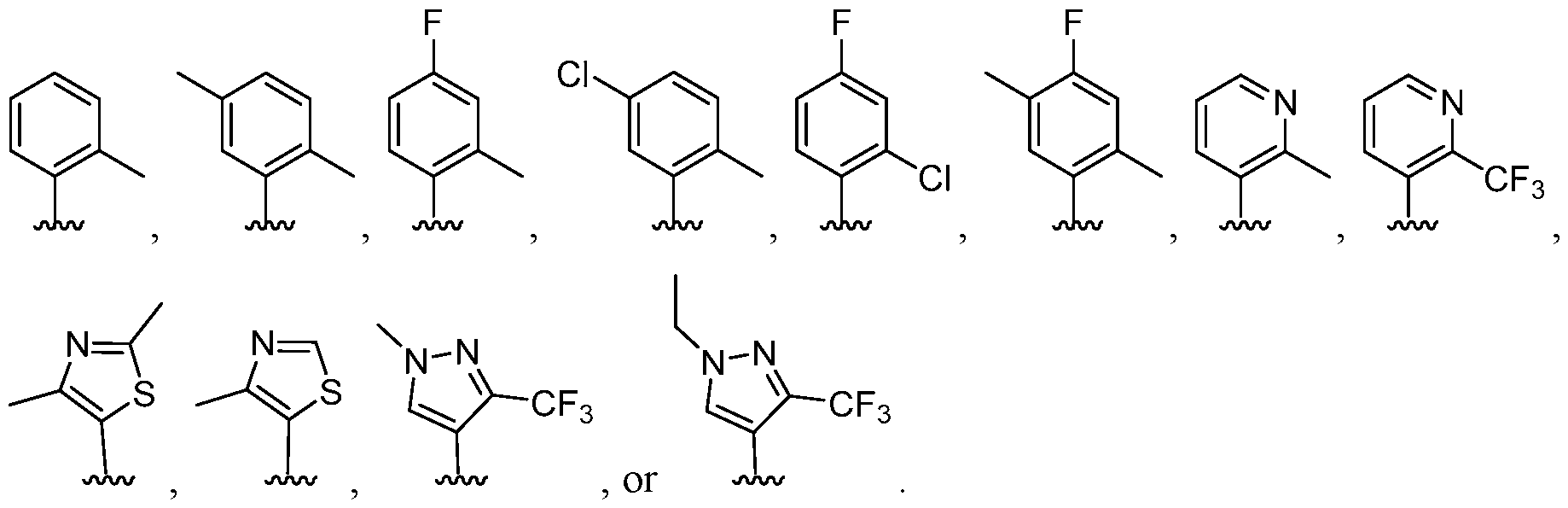
[00451] Clause 42. The compound of any of clauses 1-41, or a pharmaceutically acceptable salt thereof, wherein n is i.
[00452] Clause 43. The compound of any of clauses 1-41, or a pharmaceutically acceptable salt thereof, wherein n is 2.
[00453] Clause 44. The compound of any of clauses 1-41, or a pharmaceutically acceptable salt thereof, of formula (I- A)

[00454] Clause 45. The compound of any of clauses 1-41, or a pharmaceutically acceptable salt thereof, of formula (I-B)

wherein L is -(CR2aR2b)n-
[00455] Clause 46. The compound of any of clauses 1-43 or 45, or a pharmaceutically acceptable salt thereof, wherein L is -CTh- and X is NH.
[00456] Clause 47. The compound of any of clauses 1-43 or 45, or a pharmaceutically acceptable salt thereof, of formula (I-Bl)
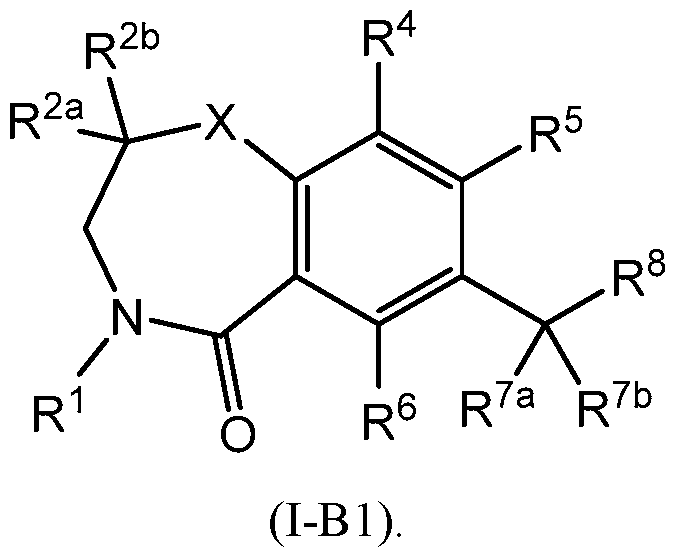
[00458] Clause 49. The compound of clause 47, or a pharmaceutically acceptable salt thereof, wherein R2a and R2b together form an oxo group.
[00459] Clause 50. The compound of any of clauses 1-43 or 47-49, wherein X is O.
[00460] Clause 51. The compound of any of clauses 1-43 or 47-49, wherein X is NH.
[00461] Clause 52. The compound of any of clauses 1-51, or a pharmaceutically acceptable salt thereof, wherein R5 is hydrogen.
[00462] Clause 53. The compound of any of clauses 1-52, or a pharmaceutically acceptable salt thereof, wherein R6 is hydrogen.
[00463] Clause 54. The compound of any of clauses 1-53, or a pharmaceutically acceptable salt thereof, wherein R7a and R7b are each hydrogen.
[00464] Clause 55. The compound of clause 1, selected from the group consisting of
3 -(3 , 5 -Dimethoxybenzyl)-8-(4-fluoro-2-methylphenyl)-6-((2-imino-3 -methyl-2, 3 -dihydro- 1 H- imidazol- 1 -yl)methyl)quinazolin-4(3 /)-one;
6-((l /-Indol-3-yl)methyl)-3-(3,5-dimethoxybenzyl)-8-(4-fluoro-2-methylphenyl)quinazolin-
4(3 /)-one;
4-(3, 5-Di methoxybenzyl )-9-(4-fluoro-2- ethyl phenyl )-7-((2-i mi no-3 -methyl-2, 3 -di hydro-1 //- imidazol- 1 -yl)methyl)-3 ,4-dihydrobenzo[/] [ 1 ,4]oxazepin-5(2 /)-one;
6-((l//-Indol-l-yl)methyl)-3-(3,5-dimethoxybenzyl)-8-(4-fluoro-2-methylphenyl)quinazolin- 4(3 /)-one;
6-((l //-Pyrrol o[2, 3 -/)]pyridin-l -yl)methyl)-3-(3,5-dimethoxybenzyl)-8-(4-fluoro-2- methylphenyl)quinazolin-4(3//)-one;
-(3,5-Dimethoxybenzyl)-9-(4-fluoro-2-methylphenyl)-7-((5-imino-l -methyl- l,5-dihydro-4 /-
1.2.4-triazol-4-yl)methyl)-3,4-dihydrobenzo[/][l,4]oxazepin-5(2 /)-one;
-(3,5-Dimethoxybenzyl)-9-(4-fluoro-2-methylphenyl)-7-(((4-methylisoxazol-3- yl)amino)methyl)-3,4-dihydrobenzo[/][l,4]oxazepin-5(2 /)-one;
-(3, 5-Di methoxybenzyl )-9-(4-fluoro-2-methyl phenyl )-7-((2-i mi nopyridin- (2//)-y l)m ethyl )-
3.4-dihydrobenzo[/][l,4]oxazepin-5(2 /)-one;
-(3, 5-Di methoxybenzyl )-9-(4-fluoro-2- ethyl phenyl )-7-((2-i mi nooxazol -3 (2//)-yl) ethyl)-3, 4- dihydrobenzo[/] [ 1 ,4]oxazepin-5(2//)-one;
-(3,5-Dimethoxybenzyl)-9-(4-fluoro-2-methylphenyl)-7-((pyridin-2-ylamino)methyl)-3,4- dihydrobenzo[/] [ 1 ,4]oxazepin-5(2//)-one;
-(4-Fluoro-2-methylphenyl)-7-((2-imino-3-methyl-2,3-dihydro-l /-imidazol-l-yl)methyl)-4- ((4-methylpyridin-2-yl)methyl)-3,4-dihydrobenzo[/][l ,4]oxazepin-5(2//)-one;
-((4,6-Dimethylpyridin-2-yl)methyl)-9-(4-fluoro-2-methylphenyl)-7-((2-imino-3-methyl-2,3- dihydro- /Z-imidazol- 1 -yl)methyl)-3 ,4-dihydrobenzo[/] [ 1 ,4]oxazepin-5(2//)-one;
-(4-Fluoro-2-methylphenyl)-7-((2-imino-3-methyl-2,3-dihydro-l /-imidazol-l-yl)methyl)-4- ((4-methoxypyridin-2-yl)methyl)-3,4-dihydrobenzo[/][l ,4]oxazepin-5(2//)-one;
-(3, 5-Di methoxybenzyl )-9-(4-fluoro-2- ethyl phenyl )-7-((2-i mi no-3 -methyl-2, 3 -dihydro-1 //- imidazol- 1 -yl)methyl)-3 ,4-dihydro- l /-benzo[e] [ 1 ,4]diazepine-2, 5-dione;
-(3,5-Dimethoxybenzyl)-7-((5-imino-l-methyl-l,5-dihydro-4 /-l,2,4-triazol-4-yl)methyl)-9-(l- methyl-3-(trifluoromethyl)-l /-pyrazol-4-yl)-3,4-dihydrobenzo[/][l,4]oxazepin-5(2 /)-one;-(3,5-Dimethoxybenzyl)-7-((2-imino-3-methyl-2,3-dihydro-l /-imidazol-l-yl)methyl)-9-(l- methyl-3-(trifluoromethyl)-l /-pyrazol-4-yl)-3,4-dihydrobenzo[/][l,4]oxazepin-5(2 /)-one;-(3,5-Dimethoxybenzyl)-9-(4-fluoro-2-methylphenyl)-7-((2-imino-3-methyl-2,3-dihydro-l /- imidazol- 1 -yl)methyl)-2-methyl-3 ,4-dihydrobenzo[/] [ 1 ,4]oxazepin-5(2 /)-one;
-(3, 5-Dimethoxybenzyl)-8-(4-fluoro-2-methylphenyl)-6-((5-imino-l -methyl- l,5-dihydro-4 /-
1.2.4-triazol-4-yl)methyl)quinazolin-4(3 /)-one;
-(3,5-Dimethoxybenzyl)-8-(4-fluoro-2-methylphenyl)-6-((2-iminooxazol-3(2 /)- yl)methyl)quinazolin-4(3 /)-one;
-(3,5-Dimethoxybenzyl)-6-((2-imino-3-methyl-2,3-dihydro-l /-imidazol-l-yl)methyl)-8-(l- methyl-3-(trifluoromethyl)-l /-pyrazol-4-yl)quinazolin-4(3 /)-one;
6-(((4,5-Dihydro- l //-imidazol-2-yl)amino)methyl)-3-(3,5-dimethoxybenzyl)-8-(4-fluoro-2- methylphenyl)-2-methylquinazolin-4(3//)-one;
4-((4,6-Dimethylpyridin-2-yl)methyl)-7-((2-imino-3-methyl-2,3-dihydro-l /-imidazol-l- yl)methyl)-9-(l-methyl-3-(trifluoromethyl)-l /-pyrazol-4-yl)-3,4- dihydrobenzo[/] [ 1 ,4]oxazepin-5(2//)-one;
3 -(3 , 5 -Dimethoxybenzyl)-8-(4-fluoro-2-methylphenyl)-6-((2-imino-3 -methyl-2, 3 -dihydro- 1 H- imidazol-l-yl)methyl)-2,3-dihydroquinazolin-4(l /)-one;
3-([l, r-Biphenyl]-2-yl)-6-((2-imino-3-methyl-2,3-dihydro-l /-imidazol-l-yl)methyl)-8-(l- methyl-3-(trifluorom ethyl)- l /-pyrazol-4-yl)quinazolin-4(3 /)-one;
9-(4-Fluoro-2-methylphenyl)-7-((2-methyl-l /-imidazol-l-yl)methyl)-4-((4-methylpyri din-2- yl)methyl)-3,4-dihydrobenzo[/][l,4]oxazepin-5(2 /)-one;
4-((4, 6-Di methyl pyridin-2-yl)methyl)-7-((2-methyl- l //-i mi dazol- 1 -yl )m ethyl )-9-( l -methyl-3-
(trifluoromethyl)- l //-pyrazol-4-yl)-3,4-dihydrobenzo[/][ l ,4]oxazepin-5(2//)-one;
7-((2-Methyl-l /-imidazol-l-yl)methyl)-9-(l-methyl-3-(trifluoromethyl)-l /-pyrazol-4-yl)-4-((4- m ethyl pyridin-2-yl)m ethyl )-3,4-dihydrobenzo[/][ l ,4]oxazepin-5(2//)-one;
4-(3, 5-Dimethoxybenzyl)-9-(4-fluoro-2-methyl phenyl )-7-((2-methyl- l //-i mi dazol- 1 -yl)methyl)- 3 ,4-dihydro- l /-benzo[e] [ 1 ,4]diazepine-2, 5-dione;
4-(3, 5-Di methoxybenzyl )-9-(4-fluoro-2- ethyl phenyl )-7-((2-i mi no-3 -methyl-2, 3 -dihydro- 1 //- imidazol- 1 -yl)methyl)- 1 ,2,3 ,4-tetrahydro-5 /-benzo[e] [ 1 ,4]diazepin-5-one;
4-(3,5-Dimethoxybenzyl)-9-(4-fluoro-2-methylphenyl)-7-((2-iminooxazol-3(2 /)-yl)methyl)-3,4- dihydro- l /-benzo[e] [ 1 ,4]diazepine-2, 5-dione;
4-((4,6-dimethylpyridin-2-yl)methyl)-7-((5-imino-l-methyl-l,5-dihydro-4H-l,2,4-triazol-4- yl)methyl)-9-(l-methyl-3-(trifluoromethyl)-lH-pyrazol-4-yl)-3,4- dihydrobenzo[f] [ 1 ,4]oxazepin-5(2H)-one;
7-((5-imino- 1 -methyl- 1 ,5-dihydro-4H- 1 ,2,4-triazol-4-yl)methyl)-9-( 1 -methyl-3 - (trifluoromethyl)-lH-pyrazol-4-yl)-4-((4-methylpyridin-2-yl)methyl)-3,4- dihydrobenzo[f] [ 1 ,4]oxazepin-5(2H)-one;
(/^)-4-(3, 5-Di methoxybenzyl )-9-(4-fluoro-2- ethyl phenyl )-7-((2-i mi no-3 - ethyl -2, 3 -di hydro- l /-imidazol-l-yl)methyl)-2-methyl-3,4-dihydrobenzo[/][l,4]oxazepin-5(2 /)-one;
(/^)-4-(3,5-Di methoxybenzyl )-9-(4-fluoro-2-methyl phenyl )-2-methyl-7-((2-methyl-l //-imidazol- l-yl)methyl)-3,4-dihydrobenzo[/][l,4]oxazepin-5(2 /)-one;
(<S)-4-(3,5-Dimethoxybenzyl)-9-(4-fluoro-2-methylphenyl)-7-((2-imino-3-methyl-2,3-dihydro- l/7-imidazol-l-yl)methyl)-2-methyl-3,4-dihydrobenzo[/][l,4]oxazepin-5(2//)-one;
hV)-4-(3,5-Dimethoxybenzyl)-9-(4-fluoro-2-methyl phenyl )-2-methyl-7-((2-methyl- l //-i mi dazol- l-yl)methyl)-3,4-dihydrobenzo[/][l,4]oxazepin-5(2i )-one;
7-((2-Ethyl-l/7-imidazol-l-yl)methyl)-9-(l-methyl-3-(trifluoromethyl)-l/7-pyrazol-4-yl)-4-((4- m ethyl pyri din-2-yl )m ethyl )-3,4-dihydrobenzo[/][ l ,4]oxazepin-5(2//)-one;
4-((4, 6-Di methyl pyri din-2-yl)methyl)-7-((2-ethyl- l //-i mi dazol- 1 -yl )m ethyl )-9-( l -methyl-3- (trifluoromethyl)- l //-pyrazol-4-yl)-3,4-dihydrobenzo[/][ l ,4]oxazepin-5(2//)-one;
hV)-2-IVlethyl-7-((2-methyl- l //-imidazol- l -yl )m ethyl )-9-( l - ethyl -3 -(trifluoro ethyl)-l H- pyrazol-4-yl)-4-((4-methylpyridin-2-yl)methyl)-3,4-dihydrobenzo[/][l,4]oxazepin-5(2i )- one;
(i?)-2-Methyl-7-((2-methyl-l/7-imidazol-l-yl)methyl)-9-(l-methyl-3-(trifluoromethyl)-l/7- pyrazol-4-yl)-4-((4-methylpyridin-2-yl)methyl)-3,4-dihydrobenzo[/][l,4]oxazepin-5(2i )- one;
4-((4, 6-Di methyl pyri din-2-yl)methyl)-9-(4-fluoro-2-methyl phenyl )-7-((2-methyl- l //-i mi dazol- 1 - yl)methyl)-3,4-dihydrobenzo[/][l,4]oxazepin-5(2//)-one;
4-((4,6-Dimethylpyri din-2 -yl)methyl)-7-((2-methyl- 1/7-imidazol-l -yl)methyl)-9-(2- (trifluoromethyl)pyridin-3-yl)-3,4-dihydrobenzo[/][l,4]oxazepin-5(2//)-one;
4-((4,6-Dimethylpyridin-2-yl)methyl)-9-(2,4-dimethylthiazol-5-yl)-7-((2 -methyl- 1/7-imidazol-l- yl)methyl)-3,4-dihydrobenzo[/][l,4]oxazepin-5(2//)-one;
4-((4,6-Dimethylpyri din-2 -yl)methyl)-7-((2-methyl- 1/7-imidazol-l -yl)methyl)-9-(2- methylpyridin-3-yl)-3,4-dihydrobenzo[/][l,4]oxazepin-5(2//)-one;
4-((4, 6-Di methyl pyri din-2-yl)methyl)-7-((2-methyl- l //-i mi dazol- 1 -yl)methyl)-9-(o-tolyl)-3,4- dihydrobenzo[/] [ 1 ,4]oxazepin-5(2//)-one;
4-((4, 6-Di methyl pyri din-2-yl)methyl)-7-((2-methyl- l //-i mi dazol- 1 -yl)methyl)-9-(4- m ethyl thiazol-5-yl)-3,4-dihydrobenzo[/][ l ,4]oxazepin-5(2//)-one;
(L')-4-( 1 -(4-Methoxypyridin-2-yl)ethyl)-7-((2-methyl- l //-i mi dazol- 1 -yl)methyl)-9-( 1 -methyl-3- (trifluoromethyl)- l //-pyrazol-4-yl)-3,4-dihydrobenzo[/][ l ,4]oxazepin-5(2//)-one;
9-(2-Chloro-4-fl uorophenyl)-4-((4,6-di methyl pyridin-2-yl)methyl)-7-((2-methyl- l //-i mi dazol- 1 - yl)methyl)-3,4-dihydrobenzo[/][l,4]oxazepin-5(2//)-one;
9-(2,5-Dimethylphenyl)-4-((4,6-dimethylpyridin-2-yl)methyl)-7-((2-methyl-l//-imidazol-l- yl)methyl)-3,4-dihydrobenzo[/][l,4]oxazepin-5(2i7)-one;
(<S)-9-(4-Fluoro-2-methylphenyl)-4-(l-(4-methoxypyri din-2 -yl)ethyl)-7-((2 -methyl- 1/7-imidazol- l-yl)methyl)-3,4-dihydrobenzo[/][l,4]oxazepin-5(2i )-one;
4-((4,6-Dimethylpyri din-2 -yl)methyl)-9-(4-fluoro-2, 5-dimethylphenyl)-7-((2-methyl-l/7- imidazol- 1 -yl)methyl)-3 ,4-dihydrobenzo[/] [ 1 ,4]oxazepin-5(2i )-one;
9-(5-Chloro-2-methylphenyl)-4-((4,6-dimethylpyridin-2-yl)methyl)-7-((2-methyl-l/7-imidazol- l-yl)methyl)-3,4-dihydrobenzo[/][l,4]oxazepin-5(2i )-one;
hV)-7-((5-Imino- 1 -methyl- 1 , 5 -di hydro-4//- 1 ,2,4-triazol-4-yl)methyl)-4-( 1 -(4-methoxypyridin-2- yl)ethyl)-9-( 1 -methyl-3 -(trifluorom ethyl)- l/7-pyrazol-4-yl)-3, 4- dihydrobenzo[/] [ 1 ,4]oxazepin-5(2//)-one;
(<S)-9-(2-Chloro-4-fluorophenyl)-7-((5-imino-l-methyl-l,5-dihydro-4/7-l,2,4-triazol-4- yl)methyl)-4-(l-(4-methoxypyridin-2-yl)ethyl)-3,4-dihydrobenzo[/][l,4]oxazepin-5(2i )-one;
3 -((4-Methoxypyridin-2-yl)methyl)-6-((2-methyl-l//-imidazol-l-yl)methyl)-8-(l -methyl-3-
(tri fluorom ethyl )-l //-pyrazol-4-yl)quinazolin-4(3//)-one;
(<S)-9-(2,5-Dimethylphenyl)-4-(l-(4-methoxypyri din-2 -yl)ethyl)-7-((2-methyl- 1/7-imidazol-l- yl)methyl)-3,4-dihydrobenzo[/][l,4]oxazepin-5(2//)-one;
4-(7-Methoxy- 1 ,2,3 ,4-tetrahydronaphthalen- 1 -yl)-7-((2 -methyl- l //-imidazol- 1 -yl)methyl)-9-(l- m ethyl -3 -(tri fluorom ethyl )-l //-pyrazol-4-yl)-3,4-dihydrc>benzo[/][l ,4]oxazepin-5(2//)-one;
4-(6-Methoxyquinolin-4-yl)-7-((2-methyl- l //-imidazol- l -yl)methyl)-9-( 1 -methyl-3- (tri fluorom ethyl )-l //-pyrazol-4-yl)-3,4-dihydrobenzo[/][l ,4]oxazepin-5(2//)-one;
bV)-7-(( l //-Imidazol- l -yl)methyl)-4-(cyclopropyl(4-methoxypyridin-2-yl)methyl)-9-( 1 -ethyl -3 - (tri fluorom ethyl )-l H-pyrazol-4-yl)-3,4-dihydrobenzo[/][l ,4]oxazepin-5(2//)-one;
hV)-4-(Cyclopropyl(4-methoxypyridin-2-yl)methyl)-9-(l -ethyl -3 -(tri fluorom ethyl )-l //-pyrazol -4- yl)-7-((2-methyl- 1/7-imidazol- 1 -yl)methyl)-3 ,4-dihydrobenzo[/] [ 1 ,4]oxazepin-5(2i )-one; hV)-4-(Cyclopropyl(4-methoxypyridin-2-yl)methyl)-7-((2-ethyl- l//-imidazol- 1 -yl)methyl)-9-( 1 - ethyl -3 -(tri fluorom ethyl )-l //-pyrazol-4-yl)-3,4-dihydrobenzo[/][l ,4]oxazepin-5(2//)-one;
(,S)-6-((l//-imidazol-l-yl)methyl)-3-(cyclopropyl(4-methoxypyridin-2-yl)methyl)-8-(l-ethyl-3- (tri fluorom ethyl )-l //-pyrazol-4-yl)quinazolin-4(3//)-one;
(>S)-7-((l//-imidazol- l-yl)methyl)-9-(l -ethyl-3 -(tri fluoromethyl)-l//-pyrazol-4-yl)-4-(6- methoxychroman-4-yl)-3,4-dihydrobenzo[/][l ,4]oxazepin-5(2//)-one;
(<S)-9-(l-ethyl-3-(trifluoromethyl)-lH-pyrazol-4-yl)-4-(6-methoxychroman-4-yl)-7-((2-methyl- li7-imidazol-l-yl)methyl)-3,4-dihydrobenzo[/][l,4]oxazepin-5(2i7)-one;
(A)-7-((li7-imidazol-l-yl)methyl)-4-(cyclopropyl(4-methoxypyridin-2-yl)methyl)-9-(l-ethyl-3- (trifluoromethyl)-lif-pyrazol-4-yl)-3, 4-dihydro- lif-benzo[e][l,4]diazepine-2,5-dione;
Ethyl 4-(7-((li7-imidazol-l-yl)methyl)-9-(l-methyl-3-(trifluoromethyl)-li7-pyrazol-4-yl)-5-oxo- 2,3-dihydrobenzo[/][l,4]oxazepin-4(5i7)-yl)-6-ethylquinoline-8-carboxylate;
7-((li7-imidazol-l-yl)methyl)-4-(6-ethyl-8-methoxyquinolin-4-yl)-9-(l -methyl-3- (trifluoromethyl)- l //-pyrazol-4-yl)-3,4-dihydrobenzo[/][ 1 ,4]oxazepin-5(2//)-one;
7-((li7-imidazol-l-yl)methyl)-4-(6-methoxy-2-methylquinolin-4-yl)-9-(l -methyl-3- (trifluoromethyl)- l //-pyrazol-4-yl)-3,4-dihydrobenzo[/][ 1 ,4]oxazepin-5(2//)-one;
7-((li7-imidazol-l-yl)methyl)-4-(6,8-dimethoxy-2-methylquinolin-4-yl)-9-(l -methyl-3- (trifluoromethyl)-lif-pyrazol-4-yl)-3,4-dihydrobenzo[/][l,4]oxazepin-5(2i7)-one;
7-((li7-imidazol-l-yl)methyl)-4-(3-methoxyquinolin-5-yl)-9-(l -methyl-3 -(trifluoromethyl)- lif- pyrazol-4-yl)-3,4-dihydrobenzo[/][l,4]oxazepin-5(2i7)-one;
4-(7-((lif-imidazol- l-yl)methyl)-9-(l -methyl-3 -(trifluoromethyl)- lif-pyrazol-4-yl)-5-oxo-2, 3- dihydrobenzo[/][l,4]oxazepin-4(5i7)-yl)-6-ethylquinoline-8-carboxylic acid;
4-(7-((lif-imidazol- l-yl)methyl)-9-(l -methyl-3 -(trifluoromethyl)- lif-pyrazol-4-yl)-5-oxo-2, 3- dihydrobenzo[/][l,4]oxazepin-4(5i7)-yl)-6-ethyl-/V-methylquinoline-8-carboxamide;
4-(7-((lif-imidazol- l-yl)methyl)-9-(l -methyl-3 -(trifluoromethyl)- lif-pyrazol-4-yl)-5-oxo-2, 3- dihydrobenzo[/][ l ,4]oxazepin-4(5//)-yl)-/V-(2-(di methyl ami no)ethyl)-6-ethylquinoline-8- carboxamide; and
4-(7-((lif-imidazol- l-yl)methyl)-9-(l -methyl-3 -(trifluoromethyl)- lif-pyrazol-4-yl)-5-oxo-2, 3- dihydrobenzo[/][l,4]oxazepin-4(5i7)-yl)-6-ethyl-/V-(2-methoxyethyl)quinoline-8- carboxamide;
or a pharmaceutically acceptable salt thereof.
[00465] Clause 56. The compound of any of clauses 1-55, or a pharmaceutically acceptable salt thereof, wherein the compound is isotopically labeled.
[00466] Clause 57. A pharmaceutical composition comprising the compound of any of clauses
1-56, or a pharmaceutically acceptable salt thereof, and a pharmaceutically acceptable carrier.
[00467] Clause 58. A method of treating cancer comprising administering to a subject in need thereof, a therapeutically effective amount of the compound of any of clauses 1-56, or a pharmaceutically acceptable salt thereof, or the pharmaceutical composition of clause 57.
[00468] Clause 59. A method of inhibiting cancer cell proliferation, comprising administering to a subject in need thereof, the compound of any of clauses 1-56, or a pharmaceutically acceptable salt thereof, or the pharmaceutical composition of clause 57, in an amount effective to inhibit the cancer cell proliferation.
[00469] Clause 60. Use of the compound of any of clauses 1-56, or a pharmaceutically acceptable salt thereof, or the pharmaceutical composition of clause 57, in the manufacture of a medicament for the treatment of cancer.
[00470] Clause 61. Use of the compound of any of clauses 1-56, or a pharmaceutically acceptable salt thereof, or the pharmaceutical composition of clause 57, in the manufacture of a medicament for the inhibition of cancer cell proliferation.
[00471] Clause 62. The compound of any of clauses 1-56, or a pharmaceutically acceptable salt thereof, or the pharmaceutical composition of clause 57, for use in the treatment of cancer.
[00472] Clause 63. The compound of any of clauses 1-56, or a pharmaceutically acceptable salt thereof, or the pharmaceutical composition of clause 57, for use in the inhibition of cancer cell proliferation.
Claims
1. A compound of formula (II)

or a pharmaceutically acceptable salt thereof, wherein:
X is an oxygen, nitrogen, or sulfur atom, the nitrogen atom being unsaturated or saturated and substituted with hydrogen;
L is a C2-ihydrocarbylene optionally substituted with 1-2 Ci-4alkyl or with oxo;

X1 is CR1B or N;
X2 is CR1C or N;
R1A is OCi-4alkyl or Ci-4alkyl;
R1B is hydrogen, OCi-4alkyl, Ci-4alkyl, -C(0)0Rla, or -C(0)N(Rla)2;
R1C is hydrogen and RA is hydrogen, Ci-4alkyl, or C3-6cycloalkyl; or R1C and RA join to form a 6- membered ring optionally containing two additional double bonds and a nitrogen or oxygen heteroatom, the 6-membered ring being optionally substituted with Ci-4alkyl;
Rla, at each occurrence, is independently hydrogen, Ci-4alkyl, Ci-4fluoroalkyl, or -C2-4alkylene-
Y;
Y, at each occurrence, is independently -OH, -OCi-4alkyl, -NH2, -NHCi-4alkyl, or -N(Ci-
4alkyl)2,
G2 is a 5- to 6-membered monocyclic aromatic ring, optionally containing 1-3 heteroatoms independently selected from N and S, and optionally substituted with 1-3 substituents independently selected from the group consisting of halogen, Ci-4alkyl, and Ci-4fluoroalkyl; and
R8 is a 5-membered heterocyclic ring containing 2-3 heteroatoms and 2 or 1 double bonds, wherein one of the 2-3 heteroatoms is a nitrogen and the remaining heteroatoms are independently selected from nitrogen and oxygen, wherein R8 is optionally substituted with 1-3 substituents independently selected from the group consisting of Ci-4alkyl, imino, Ci- 4fluoroalkyl, C3-4cycloalkyl, and -Ci-3alkylene-C3-4cycloalkyl.
2. The compound of claim 1, or a pharmaceutically acceptable salt thereof, wherein
R8 is imidazolyl optionally substituted with 1-3 substituents independently selected from the group consisting of Ci-4alkyl, C3-4cycloalkyl, and -Ci-3alkylene-C3-4cycloalkyl.
3. The compound of claim 2, or a pharmaceutically acceptable salt thereof, wherein

R20a is hydrogen, Ci-4alkyl, or C3-4cycloalkyl.
4. The compound of claim 3, or a pharmaceutically acceptable salt thereof, wherein R8 is

5. The compound of claim 1, or a pharmaceutically acceptable salt thereof, wherein
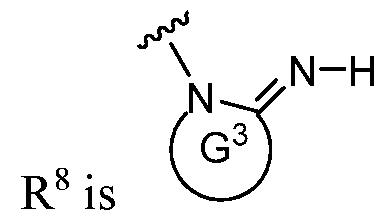 , wherein G3 is a 5-membered heterocyclic ring containing a first nitrogen at the point of attachment and optionally 1-2 additional heteroatoms selected from the group
consisting of nitrogen and oxygen, G3 having the imine substituent =NH adjacent to the first nitrogen and being optionally substituted with 1-3 substituents independently selected from the group consisting of Ci-4alkyl, Ci-4fluoroalkyl, C3-4cycloalkyl, and -Ci-3alkylene-C3-4cycloalkyl.
, wherein G3 is a 5-membered heterocyclic ring containing a first nitrogen at the point of attachment and optionally 1-2 additional heteroatoms selected from the group
consisting of nitrogen and oxygen, G3 having the imine substituent =NH adjacent to the first nitrogen and being optionally substituted with 1-3 substituents independently selected from the group consisting of Ci-4alkyl, Ci-4fluoroalkyl, C3-4cycloalkyl, and -Ci-3alkylene-C3-4cycloalkyl.
6. The compound of claim 5, or a pharmaceutically acceptable salt thereof, wherein R8 is

X1 is NR13 or O;
R10a and R10b are independently hydrogen, Ci-4alkyl, or Ci-4fluoroalkyl; and
R13 is hydrogen, Ci-4alkyl, Ci-4fluoroalkyl, C3-4cycloalkyl, or -Ci-3alkylene-C3-4cycloalkyl.
7. The compound of claim 6, or a pharmaceutically acceptable salt thereof, wherein R8 is
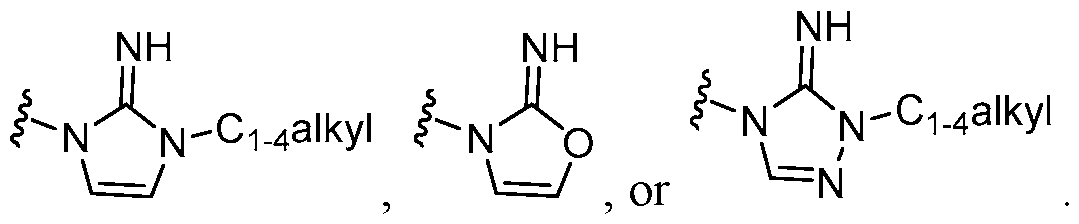
8. The compound of any of claims 1-7, or a pharmaceutically acceptable salt thereof, wherein
X1 is CR1B;
X2 is CR1C;
R1C is hydrogen; and
RA is hydrogen, Ci-4alkyl, or C3-6cycloalkyl.
9. The compound of claim 8, or a pharmaceutically acceptable salt thereof, wherein
R1A is OCi-4alkyl; and
R1B is OCi-4alkyl.
10. The compound of any of claims 1-7, or a pharmaceutically acceptable salt thereof, wherein
X2 is CR1C; and R1C and RA join to form a 6-membered ring optionally containing two additional double bonds and a nitrogen or oxygen heteroatom, the 6-membered ring being optionally substituted with Ci-4alkyl.
11. The compound of claim 10, or a pharmaceutically acceptable salt thereof, wherein R1 is

12. The compound of any of claims 1-7, or a pharmaceutically acceptable salt thereof, wherein
X1 is CR1B; and
X2 is N.
13. The compound of claim 12, or a pharmaceutically acceptable salt thereof, wherein R1A is Ci-4alkyl or OCi-4alkyl; and
R1B is hydrogen or Ci-4alkyl.
14. The compound of claim 8, or a pharmaceutically acceptable salt thereof, wherein G2 is halo

15. The compound of claim 10, or a pharmaceutically acceptable salt thereof, wherein G2 is halo

16. The compound of claim 12, or a pharmaceutically acceptable salt thereof, wherein G is
halo

17. The compound of claim 1, or a pharmaceutically acceptable salt thereof, of formula (II-
A)

18. The compound of claim 1, or a pharmaceutically acceptable salt thereof, of formula (II- Bl)

19. The compound of claim 18, or a pharmaceutically acceptable salt thereof, wherein R2a and R2b are independently hydrogen or Ci-4alkyl.
20. The compound of claim 18, or a pharmaceutically acceptable salt thereof, wherein R2a and R2b form an oxo.
21. A pharmaceutical composition comprising the compound of claim 1, or a
pharmaceutically acceptable salt thereof, and a pharmaceutically acceptable carrier.
22. A method of treating cancer comprising administering to a subject in need thereof, a therapeutically effective amount of the compound of claim 1, or a pharmaceutically acceptable salt thereof.
23. A method of inhibiting cancer cell proliferation, comprising administering to a subject in need thereof, the compound of claim 1, or a pharmaceutically acceptable salt thereof, in an amount effective to inhibit the cancer cell proliferation.
Priority Applications (1)
| Application Number | Priority Date | Filing Date | Title |
|---|---|---|---|
| US17/613,717 US12577227B2 (en) | 2019-06-04 | 2020-06-04 | WDR5 inhibitors and modulators |
Applications Claiming Priority (2)
| Application Number | Priority Date | Filing Date | Title |
|---|---|---|---|
| US201962856873P | 2019-06-04 | 2019-06-04 | |
| US62/856,873 | 2019-06-04 |
Publications (1)
| Publication Number | Publication Date |
|---|---|
| WO2020247679A1 true WO2020247679A1 (en) | 2020-12-10 |
Family
ID=73652640
Family Applications (1)
| Application Number | Title | Priority Date | Filing Date |
|---|---|---|---|
| PCT/US2020/036188 Ceased WO2020247679A1 (en) | 2019-06-04 | 2020-06-04 | Wdr5 inhibitors and modulators |
Country Status (2)
| Country | Link |
|---|---|
| US (1) | US12577227B2 (en) |
| WO (1) | WO2020247679A1 (en) |
Cited By (2)
| Publication number | Priority date | Publication date | Assignee | Title |
|---|---|---|---|---|
| JP2024517867A (en) * | 2021-05-06 | 2024-04-23 | ヴァンダービルト ユニヴァーシティ | WDR5 inhibitors and modulators |
| WO2026058961A1 (en) | 2024-09-13 | 2026-03-19 | Alivexis, Inc. | Wdr5 inhibitors, compounds, pharmaceutical compositions, and methods of use thereof |
Citations (4)
| Publication number | Priority date | Publication date | Assignee | Title |
|---|---|---|---|---|
| WO2001081346A2 (en) * | 2000-04-25 | 2001-11-01 | Icos Corporation | Inhibitors of human phosphatidyl-inositol 3-kinase delta |
| US20110046114A1 (en) * | 2005-07-15 | 2011-02-24 | Albany Molecular Research, Inc. | Aryl- and heteroaryl-substituted tetrahydrobenzazepines and use thereof to block reuptake of norepinephrine, dopamine, and serotonin |
| US20160347744A1 (en) * | 2011-07-01 | 2016-12-01 | Gilead Sciences, Inc. | Fused heterocyclic compounds as ion channel modulators |
| US20180362516A1 (en) * | 2015-06-26 | 2018-12-20 | Takeda Pharmaceutical Company Limited | Heterocyclic compound |
Family Cites Families (17)
| Publication number | Priority date | Publication date | Assignee | Title |
|---|---|---|---|---|
| AU699728B2 (en) * | 1996-09-24 | 1998-12-10 | Taiho Pharmaceutical Co., Ltd. | Cancerous metastasis inhibitors containing uracil derivatives |
| US20050124614A1 (en) | 2002-07-03 | 2005-06-09 | Axys Pharmaceuticals, Inc. | 3,4-Dihydroisoquinolin-1-one derivatives as inducers of apoptosis |
| AU2006331765A1 (en) | 2005-12-22 | 2007-07-05 | Wyeth | Substituted isoquinoline-1,3(2H,4H)-diones, 1-thioxo-1,4-dihydro-2H-isoquinoline-3-ones and 1,4-dihydro-3(2H)-isoquinolones and use thereof as kinase inhibitor |
| EP2010520B1 (en) | 2006-04-20 | 2012-09-12 | Pfizer Products Inc. | Heterobicyclic amides for the prevention and treatment of glucokinase-mediated diseases |
| UA111305C2 (en) | 2012-12-21 | 2016-04-11 | Пфайзер Інк. | Condensed with lactams of aryl and heteroaryl |
| TN2016000529A1 (en) | 2014-06-17 | 2018-04-04 | Pfizer | Substituted dihydroisoquinolinone compounds |
| US10407422B2 (en) | 2015-09-03 | 2019-09-10 | Bristol-Myers Squibb Company | Triazolopyridine inhibitors of myeloperoxidase |
| AR107646A1 (en) * | 2016-02-18 | 2018-05-16 | Bayer Cropscience Ag | QUINAZOLINDION-6-CARBOXAMIDS AND ITS USE AS HERBICIDES |
| US10160763B2 (en) | 2016-09-13 | 2018-12-25 | Vanderbilt University | WDR5 inhibitors and modulators |
| EP3523289A1 (en) | 2016-10-07 | 2019-08-14 | Araxes Pharma LLC | Heterocyclic compounds as inhibitors of ras and methods of use thereof |
| AU2018218341B2 (en) * | 2017-02-10 | 2023-07-06 | Celex Oncology Innovations Limited | Treatment of cancer and inhibition of metastasis |
| US10266542B2 (en) | 2017-03-15 | 2019-04-23 | Mirati Therapeutics, Inc. | EZH2 inhibitors |
| CN109503556B (en) * | 2017-09-15 | 2020-07-07 | 东莞市东阳光农药研发有限公司 | Quinazoline-2, 4-diketone derivative and preparation method and application thereof |
| US10844044B2 (en) | 2018-06-14 | 2020-11-24 | Vanderbilt University | WDR5 inhibitors and modulators |
| US10807959B2 (en) | 2018-08-16 | 2020-10-20 | Vanderbilt University | WDR5-MLL1 inhibitors and modulators |
| WO2020086857A1 (en) | 2018-10-24 | 2020-04-30 | Vanderbilt University | Wdr5 inhibitors and modulators |
| WO2021026672A1 (en) | 2019-08-09 | 2021-02-18 | Novartis Ag | Heterocyclic wdr5 inhibitors as anti-cancer compounds |
-
2020
- 2020-06-04 WO PCT/US2020/036188 patent/WO2020247679A1/en not_active Ceased
- 2020-06-04 US US17/613,717 patent/US12577227B2/en active Active
Patent Citations (5)
| Publication number | Priority date | Publication date | Assignee | Title |
|---|---|---|---|---|
| WO2001081346A2 (en) * | 2000-04-25 | 2001-11-01 | Icos Corporation | Inhibitors of human phosphatidyl-inositol 3-kinase delta |
| US20030195211A1 (en) * | 2000-04-25 | 2003-10-16 | Icos Corporation | Inhibitors of human phosphatidylinositol 3-kinase delta |
| US20110046114A1 (en) * | 2005-07-15 | 2011-02-24 | Albany Molecular Research, Inc. | Aryl- and heteroaryl-substituted tetrahydrobenzazepines and use thereof to block reuptake of norepinephrine, dopamine, and serotonin |
| US20160347744A1 (en) * | 2011-07-01 | 2016-12-01 | Gilead Sciences, Inc. | Fused heterocyclic compounds as ion channel modulators |
| US20180362516A1 (en) * | 2015-06-26 | 2018-12-20 | Takeda Pharmaceutical Company Limited | Heterocyclic compound |
Cited By (2)
| Publication number | Priority date | Publication date | Assignee | Title |
|---|---|---|---|---|
| JP2024517867A (en) * | 2021-05-06 | 2024-04-23 | ヴァンダービルト ユニヴァーシティ | WDR5 inhibitors and modulators |
| WO2026058961A1 (en) | 2024-09-13 | 2026-03-19 | Alivexis, Inc. | Wdr5 inhibitors, compounds, pharmaceutical compositions, and methods of use thereof |
Also Published As
| Publication number | Publication date |
|---|---|
| US20220242849A1 (en) | 2022-08-04 |
| US12577227B2 (en) | 2026-03-17 |
Similar Documents
| Publication | Publication Date | Title |
|---|---|---|
| CN113980032B (en) | Fused tetracyclic derivative, preparation method thereof and application thereof in medicines | |
| EP3697759B1 (en) | M4 muscarinic acetylcholine receptor antagonists | |
| EP4055013B1 (en) | Wdr5 inhibitors and modulators | |
| US11999716B2 (en) | WDR5 inhibitors and modulators | |
| CA3061650A1 (en) | Heteroaryl compounds that inhibit g12c mutant ras proteins | |
| US10189797B2 (en) | Chemical modulators of immune checkpoints and therapeutic use | |
| WO2016210289A1 (en) | Chemical modulators of signaling pathways and therapeutic use | |
| ES3057371T3 (en) | Antagonists of the muscarinic acetylcholine receptor m4 | |
| TWI669300B (en) | Pyrimidine derivatives, its preparation method, its pharmaceutical composition and its use in medicine | |
| WO2016210247A1 (en) | New methods of use for an anti-diarrhea agent | |
| AU2018360581A1 (en) | Antagonists of the muscarinic acetylcholine receptor M4 | |
| US10501466B2 (en) | WDR5 inhibitors and modulators | |
| WO2019032654A1 (en) | Antagonists of the muscarinic acetylcholine receptor m4 | |
| US9724331B2 (en) | Use of maleimide derivatives for preventing and treating leukemia | |
| WO2019079410A1 (en) | Antagonists of the muscarinic acetylcholine receptor m4 | |
| CA3134405A1 (en) | Thienoheterocyclic derivative, preparation method therefor and medical use thereof | |
| US12577227B2 (en) | WDR5 inhibitors and modulators | |
| US20240262822A1 (en) | Wdr5 inhibitors and modulators | |
| WO2026006356A1 (en) | 6-(pyrimidin-5-yl)-3,4-dihydropyrazino[l,2-a]imdol-l(2h)-one mcl-1 inhibitors | |
| WO2025235754A1 (en) | Covalent craf inhibitors and uses thereof | |
| BR112019026096B1 (en) | COMPOUND, MEDICINE, AND USE OF THE COMPOUND |
Legal Events
| Date | Code | Title | Description |
|---|---|---|---|
| 121 | Ep: the epo has been informed by wipo that ep was designated in this application |
Ref document number: 20819046 Country of ref document: EP Kind code of ref document: A1 |
|
| NENP | Non-entry into the national phase |
Ref country code: DE |
|
| 122 | Ep: pct application non-entry in european phase |
Ref document number: 20819046 Country of ref document: EP Kind code of ref document: A1 |
|
| WWG | Wipo information: grant in national office |
Ref document number: 17613717 Country of ref document: US |