WO2020195889A1 - ピロールイミダゾール(ポリ)アミドの製造方法 - Google Patents
ピロールイミダゾール(ポリ)アミドの製造方法 Download PDFInfo
- Publication number
- WO2020195889A1 WO2020195889A1 PCT/JP2020/010792 JP2020010792W WO2020195889A1 WO 2020195889 A1 WO2020195889 A1 WO 2020195889A1 JP 2020010792 W JP2020010792 W JP 2020010792W WO 2020195889 A1 WO2020195889 A1 WO 2020195889A1
- Authority
- WO
- WIPO (PCT)
- Prior art keywords
- formula
- group
- carbon atoms
- substituent
- represented
- Prior art date
- Legal status (The legal status is an assumption and is not a legal conclusion. Google has not performed a legal analysis and makes no representation as to the accuracy of the status listed.)
- Ceased
Links
- 0 Cc1c[n](*)c(C(O)=O)c1 Chemical compound Cc1c[n](*)c(C(O)=O)c1 0.000 description 20
- LFKDJXLFVYVEFG-UHFFFAOYSA-N CC(C)(C)OC(N)=O Chemical compound CC(C)(C)OC(N)=O LFKDJXLFVYVEFG-UHFFFAOYSA-N 0.000 description 1
- ZZOKVYOCRSMTSS-UHFFFAOYSA-N NC(OCC1c(cccc2)c2-c2ccccc12)=O Chemical compound NC(OCC1c(cccc2)c2-c2ccccc12)=O ZZOKVYOCRSMTSS-UHFFFAOYSA-N 0.000 description 1
- MFAJOEIPYZFERA-UHFFFAOYSA-N Nc1ncccc1N(N)OI Chemical compound Nc1ncccc1N(N)OI MFAJOEIPYZFERA-UHFFFAOYSA-N 0.000 description 1
- XBNGYFFABRKICK-UHFFFAOYSA-N Oc(c(F)c(c(F)c1F)F)c1F Chemical compound Oc(c(F)c(c(F)c1F)F)c1F XBNGYFFABRKICK-UHFFFAOYSA-N 0.000 description 1
Images




Classifications
-
- C—CHEMISTRY; METALLURGY
- C07—ORGANIC CHEMISTRY
- C07D—HETEROCYCLIC COMPOUNDS
- C07D403/00—Heterocyclic compounds containing two or more hetero rings, having nitrogen atoms as the only ring hetero atoms, not provided for by group C07D401/00
- C07D403/02—Heterocyclic compounds containing two or more hetero rings, having nitrogen atoms as the only ring hetero atoms, not provided for by group C07D401/00 containing two hetero rings
- C07D403/12—Heterocyclic compounds containing two or more hetero rings, having nitrogen atoms as the only ring hetero atoms, not provided for by group C07D401/00 containing two hetero rings linked by a chain containing hetero atoms as chain links
-
- C—CHEMISTRY; METALLURGY
- C07—ORGANIC CHEMISTRY
- C07D—HETEROCYCLIC COMPOUNDS
- C07D207/00—Heterocyclic compounds containing five-membered rings not condensed with other rings, with one nitrogen atom as the only ring hetero atom
- C07D207/02—Heterocyclic compounds containing five-membered rings not condensed with other rings, with one nitrogen atom as the only ring hetero atom with only hydrogen or carbon atoms directly attached to the ring nitrogen atom
- C07D207/30—Heterocyclic compounds containing five-membered rings not condensed with other rings, with one nitrogen atom as the only ring hetero atom with only hydrogen or carbon atoms directly attached to the ring nitrogen atom having two double bonds between ring members or between ring members and non-ring members
- C07D207/34—Heterocyclic compounds containing five-membered rings not condensed with other rings, with one nitrogen atom as the only ring hetero atom with only hydrogen or carbon atoms directly attached to the ring nitrogen atom having two double bonds between ring members or between ring members and non-ring members with hetero atoms or with carbon atoms having three bonds to hetero atoms with at the most one bond to halogen, e.g. ester or nitrile radicals, directly attached to ring carbon atoms
-
- C—CHEMISTRY; METALLURGY
- C07—ORGANIC CHEMISTRY
- C07D—HETEROCYCLIC COMPOUNDS
- C07D207/00—Heterocyclic compounds containing five-membered rings not condensed with other rings, with one nitrogen atom as the only ring hetero atom
- C07D207/02—Heterocyclic compounds containing five-membered rings not condensed with other rings, with one nitrogen atom as the only ring hetero atom with only hydrogen or carbon atoms directly attached to the ring nitrogen atom
- C07D207/30—Heterocyclic compounds containing five-membered rings not condensed with other rings, with one nitrogen atom as the only ring hetero atom with only hydrogen or carbon atoms directly attached to the ring nitrogen atom having two double bonds between ring members or between ring members and non-ring members
- C07D207/34—Heterocyclic compounds containing five-membered rings not condensed with other rings, with one nitrogen atom as the only ring hetero atom with only hydrogen or carbon atoms directly attached to the ring nitrogen atom having two double bonds between ring members or between ring members and non-ring members with hetero atoms or with carbon atoms having three bonds to hetero atoms with at the most one bond to halogen, e.g. ester or nitrile radicals, directly attached to ring carbon atoms
- C07D207/36—Oxygen or sulfur atoms
- C07D207/40—2,5-Pyrrolidine-diones
- C07D207/404—2,5-Pyrrolidine-diones with only hydrogen atoms or radicals containing only hydrogen and carbon atoms directly attached to other ring carbon atoms, e.g. succinimide
- C07D207/408—Radicals containing only hydrogen and carbon atoms attached to ring carbon atoms
-
- C—CHEMISTRY; METALLURGY
- C07—ORGANIC CHEMISTRY
- C07D—HETEROCYCLIC COMPOUNDS
- C07D471/00—Heterocyclic compounds containing nitrogen atoms as the only ring hetero atoms in the condensed system, at least one ring being a six-membered ring with one nitrogen atom, not provided for by groups C07D451/00 - C07D463/00
- C07D471/02—Heterocyclic compounds containing nitrogen atoms as the only ring hetero atoms in the condensed system, at least one ring being a six-membered ring with one nitrogen atom, not provided for by groups C07D451/00 - C07D463/00 in which the condensed system contains two hetero rings
- C07D471/04—Ortho-condensed systems
Definitions
- the present invention relates to a method for producing a pyrrole imidazole (poly) amide by forming an amide bond between a carboxy group that binds to pyrrole and an amino group that binds to imidazole.
- N-methylpyrrole-N-methylimidazole (Py-Im) polyamide for example, compounds having the following formulas (101), (102), and (103) are known (Non-Patent Document 1 and the like).
- Py-Im polyamides are low molecular weight organic compounds that can be sequence-specifically bound to DNA double strands by changing the combination of pyrrole and imidazole.
- it since it is resistant to nucleolytic enzymes and has nuclear envelope permeability, it is expected to be applied to diagnostic applications for identifying DNA sequences and as a molecular probe, and also to bind and interact with transcription factors and double-stranded DNA. It is also expected to be used as a transcriptional regulator that inhibits.
- Type 1 is a reaction that forms an amide bond between a carboxy group that binds to pyrrol and an amino group that binds to another pyrrol
- type 2 is a reaction that binds to a carboxy group that binds to imidazole and another imidazole
- Type 3 is a reaction that forms an amide bond with an amino group that forms an amide bond
- type 3 is a reaction that forms an amide bond between a carboxy group that binds to imidazole and an amino group that binds to pyrrol
- type 4 is a reaction that forms an amide bond.
- the type 4 reaction is extremely difficult to proceed.
- the reactions corresponding to Type 1 and Type 2 disclosed in Non-Patent Document 2 include a method of treating a carboxylic acid with triphosgene and then reacting with an amino group, and a method of converting the carboxylic acid into an active ester and then reacting with an amino group. While the amide bond could be formed in high yield by any of the methods of allowing the amide bond to be formed, in the reaction corresponding to type 4, the amide bond was obtained in high yield only by treating the carboxylic acid with triphosgene and then reacting with the amino group. It has been shown that the method of converting a carboxylic acid into an active ester and then reacting it with an amino group significantly reduces the yield of amide bonds.
- Non-Patent Document 3 describes pyrrolcarboxylic acid having an amino group protected by a 9-fluorenylmethyloxycarbonyl (Fmoc) group as 1- [bis (dimethylamino) methylene] -1H. -It has been described that it is activated with benzotriazolium 3-oxide hexafluorophosphate (HBTU) and reacted with aminoimidazole carboxylic acid tert-butyl ester in dimethylformamide (DMF) in the presence of diisopropylethylamine (DIEA). According to the supplementary material, the yield of the amide compound is 79%.
- Fmoc 9-fluorenylmethyloxycarbonyl
- the yield of the amide compound obtained by subjecting a pyrrole carboxylic acid having a nitro group at the 4-position to the same condensation reaction conditions is 84%.
- a pyrrole carboxylic acid having an amino group protected by a tert-butoxycarbonyl (Boc) group is activated with 1-hydroxybenzotriazole (HOBt), and DMF in the presence of diisopropylethylamine (DIEA).
- HOBt 1-hydroxybenzotriazole
- DIEA diisopropylethylamine
- Non-Patent Document 3 Although the amide compound is obtained in a good yield, it is required to improve the conversion rate more rapidly, and further, the Boc group and the like are required in terms of the reaction rate. Even the reaction of forming an amide bond between a carboxy group that binds to pyrrol, which has a better amino group protected by an Fmoc group, and an amino group that binds to imidazole takes more than 18 hours to complete the reaction. There is a description that it is.
- the reaction of forming an amide bond between the carboxy group that binds to pyrrole having a nitro group at the 4-position and the amino group that binds to imidazole is completed quickly, but the obtained amide compound is used for pyrrole.
- a step of protecting the obtained amide compound having an amino group by Fmoc is also required, so that it cannot always be said to be an efficient method for producing a pyrrole imidazole polyamide.
- Patent Document 1 there is a problem that a compound in which a pyrrole carboxylic acid having an amino group protected by a Boc group is activated by HOBt and an aminoimidazole carboxylic acid derivative have poor thermal stability and are easily decomposed. is there. Therefore, even if the present inventors carry out the reaction disclosed in Patent Document 1, the reproducibility in high yield is low.
- An object of the present invention is to rapidly improve the conversion rate even when a nitro group is not introduced at the 4-position of the pyrrole group in the reaction of forming an amide bond between the carboxy group bonded to pyrrole and the amino group bonded to imidazole. It is an object of the present invention to provide a method for producing a pyrrole imidazole (poly) amide compound in a high yield and with good reproducibility.
- Ra has at least one type selected from the units represented by the formula (2a), the formula (2b), and the formula (2c) as a constituent unit, and the number of the constituent units.
- R 1 to R 3 each independently represent an alkyl group having 1 to 12 carbon atoms.
- a plurality of R 2 May be the same or different.
- the plurality of R 3s may be the same. It may be different.
- Rb represents an alkylene group having 1 to 10 carbon atoms, and the alkylene group includes an amino group having a substituent and an alkoxy group having 1 to 12 carbon atoms which may have a substituent.
- One or more groups selected from the aralkyloxy groups of the numbers 7 to 12 may be bonded.
- the compound represented by the formula (1) has a plurality of units of the formula (2c), the plurality of Rb may be present. , It may be the same or different. * Represents a bond.
- Rc has at least one type selected from the units represented by the formula (4a), the formula (4b), and the formula (4c) as a constituent unit, and the number of the constituent units.
- R 4 to R 8 each independently represent an alkyl group having 1 to 12 carbon atoms, which is represented by the formula (3).
- the plurality of R 5s may be the same or different.
- the compound represented by the formula (3) may have a plurality of formulas (4b).
- a plurality of R 6 may be the same, good .Rd be different, it represents an alkylene group having 1 to 10 carbon atoms, in the alkylene group, an amino having a substituent A group, an alkoxy group having 1 to 12 carbon atoms which may have a substituent, an alkenyloxy group having 2 to 12 carbon atoms which may have a substituent, and a carbon number which may have a substituent.
- One or more groups selected from 6 to 12 aryloxy groups and aralkyloxy groups having 7 to 12 carbon atoms which may have a substituent may be bonded. It is represented by the formula (3).
- the plurality of Rds may be the same or different.
- Re represents an alkyl group having 1 to 10 carbon atoms
- the alkyl group represents the alkyl group.
- One or more groups selected from an aryloxy group having 6 to 12 carbon atoms which may have and an aralkyloxy group having 7 to 12 carbon atoms which may have a substituent may be bonded.
- the aminoimidazole carboxylic acid derivative represented by the above formula (1) is represented by the following formula (1-1);
- R 1 is the same as described above, and Q 11 has a soluble carrier, a hydroxy group, an alkoxy group having 1 to 12 carbon atoms which may have a substituent, and a substituent.
- [5] The reaction between the aminoimidazole carboxylic acid derivative represented by the formula (1) and the pyrrole carboxylic acid derivative represented by the formula (3) is carried out in the presence of a tertiary amine [1] to.
- [6] The production method according to any one of [1] to [5], wherein the tertiary amine is an amine represented by the following formula (a).
- R a1 represents a linear alkyl group having 1 to 8 carbon atoms.
- R a2 to R a3 are independently branched alkyl groups having 3 to 10 carbon atoms and carbon atoms. It represents a saturated ring having 4 to 8 linear alkyl groups or a saturated ring having 3 to 10 carbon atoms formed by connecting R a2 and R a3 together with a nitrogen atom to which they are bonded, and the saturation of 3 to 10 carbon atoms.
- the methylene group in the ring may be replaced with an oxygen atom or -CO-.
- E 1 is any one selected from the formula (31), the formula (34), the formula (35), and the formula (36).
- E 2 is any one selected from the formula (31), the formula (33), the formula (34), and the formula (35).
- R 4 is an alkyl group having 1 to 12 carbon atoms.
- R 31 represents an alkyl group having 1 to 5 carbon atoms. * Represents a bond.
- E 1 is any one selected from the formula (31), the formula (34), the formula (35), and the formula (36).
- E 2 is any one selected from the formula (31), the formula (33), the formula (34), and the formula (35).
- R 4 is an alkyl group having 1 to 12 carbon atoms.
- R 31 represents an alkyl group having 1 to 5 carbon atoms. * Represents a bond.
- a method for forming an amide bond in which the OH of a carboxy group bonded to pyrrole is replaced with a leaving group, and then an imidazole having an amino group is allowed to act in the presence of a heterocyclic aromatic compound as a solvent.
- the pyrrole carboxylic acid derivative is formed because the amide bond between the carboxy group bonded to pyrrole and the amino group bonded to imidazole is formed in the presence of a heterocyclic aromatic compound as a solvent.
- the thermal stability of the pyrrole imidazole (poly) amide is improved, the conversion rate is rapidly improved, and the production of pyrrole imidazole (poly) amide can be achieved in high yield and with good reproducibility.
- FIG. 1 is a graph showing conversion rates in the reactions of Examples 2 and 3 and Comparative Examples 1 and 2.
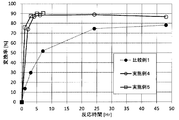
- FIG. 2 is a graph showing conversion rates in the reactions of Examples 4 and 5 and Comparative Example 1.
- FIG. 3 is a graph showing conversion rates in the reactions of Examples 6 and 7 and Comparative Example 1.
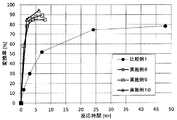
- FIG. 4 is a graph showing the conversion rate in the reactions of Examples 8 to 10 and Comparative Example 1.
- FIG. 5 is a graph showing the conversion rate in the reactions in Examples 11 and 12.
- FIG. 6 is a graph showing the conversion rate in the reactions of Example 13 and Comparative Example 1.
- FIG. 7 is a graph showing conversion rates in the reactions of Examples 14 and 15 and Comparative Example 1.
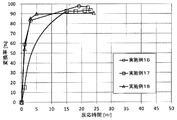
- FIG. 8 is a graph showing the conversion rate in the reactions of Examples 16 to 18.
- the method for producing a pyrrole imidazole (poly) amide of the present invention is represented by an aminoimidazole carboxylic acid derivative represented by the formula (1) and a formula (3) in the presence of a heterocyclic aromatic compound as a solvent. It is characterized in that it reacts with a pyrrole carboxylic acid derivative to form an amide bond.
- the conversion rate is rapidly improved by improving the thermal stability of the raw material, and pyrrole imidazole (poly) amide can be produced in high yield with good reproducibility.
- aminoimidazole carboxylic acid derivative used in the production of the pyrrole imidazole (poly) amide of the present invention is a derivative represented by the following formula (1).
- Ra has at least one type selected from the units represented by the formula (2a), the formula (2b), and the formula (2c) as a constituent unit, and the number of the constituent units.
- R 1 to R 3 each independently represent an alkyl group having 1 to 12 carbon atoms.
- the plurality of R 3s may be the same. It may be different.
- Rb represents an alkylene group having 1 to 10 carbon atoms, and the alkylene group includes an amino group having a substituent and an alkoxy group having 1 to 12 carbon atoms which may have a substituent.
- One or more groups selected from the aralkyloxy groups of numbers 7 to 12 may be bonded.
- the plurality of Rb may be present. , May be the same or different. * Indicates a bond.
- the structural unit of the (poly) amide-type organic group represented by Ra is not particularly limited as long as it is a unit represented by the formula (2a), the formula (2b), and the formula (2c), and the bond of each unit is not particularly limited. There are no particular restrictions on the order.
- the content ratio of each unit represented by the formula (2a), the formula (2b), and the formula (2c) constituting the (poly) amide type organic group represented by Ra is not particularly limited, but the formula (2a).
- the formula (2b), or only the units represented by the formula (2c) may be composed.
- the ratio of the number of units represented by the formula (2a) is represented by Ra.
- the total number of structural units of the (poly) amide-type organic group it is preferably 50% or more, and more preferably 60% or more.
- the number of structural units of the (poly) amide-type organic group represented by Ra is preferably 1 or more and 30 or less, and more preferably 1 or more and 16 or less.
- Examples of the alkyl group having 1 to 12 carbon atoms represented by R 1 to R 3 include a methyl group, an ethyl group, an n-propyl group, an isopropyl group, an n-butyl group, a tert-butyl group and the like. ..
- an alkyl group having 1 to 6 carbon atoms is preferable, an alkyl group having 1 to 3 carbon atoms is more preferable, and a methyl group is further preferable.
- alkylene group having 1 to 10 carbon atoms represented by Rb examples include a methylene group, an ethylene group, a propylene group, a butylene group and the like, and these alkylene groups may be linear or branched. It may be present, but it is preferably linear.
- an alkylene group having 1 to 8 carbon atoms is preferable, and an alkylene group having 1 to 5 carbon atoms is more preferable.
- Examples of the amino group having a substituent which may be bonded to an alkylene group having 1 to 10 carbon atoms represented by Rb include a methylamino group, an ethylamino group, a dimethylamino group, an ethylmethylamino group and a phenylamino group.
- Protective groups such as amino group, benzyloxycarbonylamino group, 9-fluorenylmethyloxycarbonylamino group, 2,2,2-trichloroethoxycarbonylamino group, aryloxycarbonylamino group, or trifluoroacetylamino group are bonded.
- Amino group; * -R Z- COOH in the formula, R Z represents an alkandiyl group having 1 to 20 carbon atoms, and -CH 2- contained in the alcandiyl group is replaced with -O-.
- an amino group to which a linker such as (* represents a binding agent) is bound a fluorescent dye such as 5-carboxytetramethyllodamine (TAMRA), a drug such as an alkylating agent, pyrrole imidazole (pyrol imidazole) ( Examples thereof include an amino group to which a poly) amide or the like is bonded.
- TAMRA 5-carboxytetramethyllodamine
- pyrol imidazole examples thereof include an amino group to which a poly) amide or the like is bonded.
- Examples of the amino group having a substituent which may be bonded to an alkylene group having 1 to 10 carbon atoms represented by Rb include a carbamate type such as a tert-butoxycarbonylamino group and a 9-fluorenylmethyloxycarbonylamino group.
- An amino group having a protecting group is preferable.
- alkoxy group having 1 to 12 carbon atoms which may be bonded to the alkylene group having 1 to 10 carbon atoms represented by Rb include a methoxy group, an ethoxy group, a butoxy group, a 2-methoxyethoxy group and the like. Alkoxy groups having 1 to 6 carbon atoms are preferable.
- alkenyloxy group having 2 to 12 carbon atoms which may be bonded to the alkylene group having 1 to 10 carbon atoms represented by Rb include a vinyloxy group, an aryloxy group, a metallicyloxy group and the like, and carbon.
- the number 2 to 6 alkenyloxy groups are preferable.
- Examples of the aryloxy group having 6 to 12 carbon atoms which may be bonded to the alkylene group having 1 to 10 carbon atoms represented by Rb include a phenoxy group, a naphthoxy group, a biphenyloxy group and the like, and carbon. Aryloxy groups of several 6 to 10 are preferable.
- Examples of the aralkyloxy group having 7 to 12 carbon atoms which may be bonded to the alkylene group having 1 to 10 carbon atoms represented by Rb include a benzyloxy group, a 1-phenethyloxy group and the like, and carbon. Benzyloxy groups of several 7 to 10 are preferable.
- substituent which the aralkyloxy group having 7 to 12 carbon atoms may have include a nitro group; a nitrile group; a halogen atom such as a fluorine atom, a chlorine atom and a bromine atom.
- Examples of the carrier represented by Q 1 include a solid phase carrier and a soluble carrier.
- the solid-phase carrier represented by Q 1 is not particularly limited, but for example, a solid-phase carrier made of paper such as filter paper, a commercially available membrane filter, a glass solid-phase carrier, a silicon solid-phase carrier, and a resin solid-phase carrier.
- Solid-phase carriers containing other polymer compounds, solid-phase carriers containing metals such as gold, silver, platinum, iron, etc. are preferable, resin solid-phase carriers, and more preferably PAM Resin (manufactured by Aldrich).
- a polystyrene resin solid-phase carrier such as a carrier. Further, the size and form of the solid phase carrier can be appropriately selected from those suitable for various operations and detections.
- Examples of the soluble carrier represented by Q 1 include 3,4,5-tri (n-octadecyloxy) benzyl alcohol, 3,5-di (docosyloxy) benzyl alcohol, and 2,4-di (docosyloxy) benzyl alcohol. , Trityl type compound, 2- [12- (docosyloxy) dodecyloxy] -9- (3-fluorophenyl) -9-bromofluorene and the like.
- the organic group represented by Q 1 preferably an organic group having 1 to 12 carbon atoms, e.g., carbon atoms which may have a substituent 1 to 12 alkoxy groups, which may have a substituent
- a good alkenyloxy group having 2 to 12 carbon atoms, an aryloxy group having 6 to 12 carbon atoms which may have a substituent, an aralkyloxy group having 7 to 12 carbon atoms which may have a substituent, etc. Can be mentioned.
- An alkoxy group having 1 to 12 carbon atoms represented by Q 1 an alkenyloxy group having 2 to 12 carbon atoms, an aryloxy group having 6 to 12 carbon atoms, aralkyl group having 7 to 12 carbon atoms, table with Rb Alkoxy group having 1 to 12 carbon atoms, alkenyloxy group having 2 to 12 carbon atoms, aryloxy group having 6 to 12 carbon atoms, and 7 to 12 carbon atoms which may be bonded to the alkylene group having 1 to 10 carbon atoms.
- the same as the 12 aralkyloxy groups are mentioned, and the preferred carbon number range is also the same.
- An alkoxy group having 1 to 12 carbon atoms represented by Q 1 an alkenyloxy group having 2 to 12 carbon atoms, an aryloxy group having 6 to 12 carbon atoms, which may have an aralkyl group having 7 to 12 carbon atoms
- Good substituents include an alkoxy group having 1 to 12 carbon atoms, an alkenyloxy group having 2 to 12 carbon atoms, and an alkenyloxy group having 6 to 12 carbon atoms, which may be bonded to an alkylene group having 1 to 10 carbon atoms represented by Rb. Examples thereof include the same substituents that the 12 aryloxy groups and the aryloxy groups having 7 to 12 carbon atoms may have.
- an alkoxy group having 1 to 12 carbon atoms which may have a substituent or an aralkyloxy group having 7 to 12 carbon atoms which may have a substituent is preferable.
- An alkoxy group having 1 to 6 carbon atoms which may have a substituent or an aralkyloxy group having 7 to 10 carbon atoms which may have a substituent is more preferable, and an alkoxy group having 1 to 6 carbon atoms.
- an aralkyloxy group having 7 to 10 carbon atoms having a substituent is more preferable, and an alkoxy group having 1 to 6 carbon atoms or an aralkyloxy group having 7 to 10 carbon atoms having a nitro group as a substituent is even more preferable.
- An ethoxy group or a nitrobenzyloxy group is particularly preferable. If the organic group represented by Q 1 is an ethoxy group or a nitrobenzyloxy group, the thermal stability of the aminoimidazole carboxylic acid derivative represented by the formula (1) becomes higher, so that the amide bond is further yielded. It can be formed at a rate.
- Examples thereof include an aryl group of up to 12, and an alkylamino group having 1 to 12 carbon atoms may be bonded to these alkyl group, alkenyl group, aralkyl group and aryl group.
- the substituent that the amino group represented by Q 1 may have is an alkyl group having 1 to 12 carbon atoms to which a mono or dialkylamino group having 1 to 12 carbon atoms is bonded (hereinafter referred to as an alkylaminoalkyl group). .) Is preferable.
- the amino group having an alkyl amino alkyl group represented by Q 1 as a substituent (methylamino methyl) amino group, (dimethylamino methyl) amino group, (2-methylamino-ethyl) amino group, (2-dimethylamino Aminoethyl) amino group, (3-methylaminopropyl) amino group, (3-dimethylaminopropyl) amino group and the like can be mentioned, and (dimethylaminomethyl) amino group, (2-dimethylaminoethyl) amino group, ( An alkyl group to which a dialkylamino group such as a 3-dimethylaminopropyl) amino group is bonded is preferable, and a (3-dimethylaminopropyl) amino group is more preferable.
- amino group which may have the substituent represented by Q 1 it is preferable to have one or two substituents, and it is more preferable to have one substituent.
- R 1 is the same as described above, and Q 11 has a soluble carrier, a hydroxy group, an alkoxy group having 1 to 12 carbon atoms which may have a substituent, and a substituent.
- it represents an amino group which may have a substituent.
- Examples of the soluble carrier represented by Q 11 include the same soluble carriers represented by Q 1 .
- the same as the 12 aralkyloxy groups are mentioned, and the preferred carbon number range is also the same.
- Good substituents include an alkoxy group having 1 to 12 carbon atoms, an alkenyloxy group having 2 to 12 carbon atoms, and an alkenyloxy group having 6 to 12 carbon atoms, which may be bonded to an alkylene group having 1 to 10 carbon atoms represented by Rb. Examples thereof include the same substituents that the 12 aryloxy groups and the aralkyloxy groups having 7 to 12 carbon atoms may have.
- Examples of the substituent that the amino group represented by Q 11 may have include the same substituents that the amino group represented by Q 1 may have, which are preferable substituents and preferable.
- the number of substituents is the same.
- the Q 11, soluble carrier, an aralkyloxy group optionally ⁇ carbon atoms 7 be 12 substituted or a substituted amino group which may have a group, are preferred.
- an aralkyloxy group having 7 to 12 carbon atoms an aralkyloxy group having 7 to 10 carbon atoms which may have a substituent is more preferable, and an aralkyloxy group having 7 to 10 carbon atoms having a substituent is further preferable.
- an aralkyloxy group having 7 to 10 carbon atoms having a nitro group as a substituent is even more preferable, and a nitrobenzyloxy group is particularly preferable.
- the aminoimidazole carboxylic acid derivative represented by the formula (1) in the production of pyrrole imidazole (poly) amide of the present invention may be a free form, and may be a hydrochloride, a hydrobromide, a sulfate, a methanesulfonate, or the like. It may be either a salt with an acid or an alkali metal salt such as a lithium salt, a sodium salt or a potassium salt. Further, the aminoimidazole carboxylic acid derivative represented by the formula (1) may be used in any of dry crystals, wet crystals, and an extraction solution.
- the amount of the aminoimidazole carboxylic acid derivative represented by the formula (1) used in the production of the pyrrol imidazole (poly) amide of the present invention is, for example, relative to 1 mol of the pyrrol carboxylic acid derivative represented by the formula (3). 0.1 mol or more is preferable, 0.5 mol or more is more preferable, 0.8 mol or more is further preferable, for example, 5.0 mol or less is preferable, 2.0 mol or less is more preferable, and 1.5 mol or less is preferable. Is even more preferable.
- the amount of substance of the aminoimidazole carboxylic acid derivative with respect to 1 mol of the pyrrole carboxylic acid derivative may be hereinafter referred to as "equivalent (eq)".
- the pyrrolecarboxylic acid derivative used in the production of the pyrrole imidazole (poly) amide of the present invention is a derivative represented by the following formula (3).
- Rc has at least one type selected from the units represented by the formula (4a), the formula (4b), and the formula (4c) as a constituent unit, and the number of the constituent units. group but is is one or more (poly) amide type organic group, Q 2 is an amino-protecting group, or the formula (5a), the formula (5b), formula (5c) or formula (5d) , E is a leaving group, n is 0 or 1.
- R 4 to R 8 each independently represent an alkyl group having 1 to 12 carbon atoms, which is represented by the formula (3). When the compound has a plurality of units of the formula (4a), the plurality of R 5s may be the same or different.
- the compound represented by the formula (3) may have a plurality of formulas (4b).
- a plurality of R 6 may be the same, good .Rd be different, it represents an alkylene group having 1 to 10 carbon atoms, in the alkylene group, an amino having a substituent A group, an alkoxy group having 1 to 12 carbon atoms which may have a substituent, an alkenyloxy group having 2 to 12 carbon atoms which may have a substituent, and a carbon number which may have a substituent.
- One or more groups selected from 6 to 12 aryloxy groups and aralkyloxy groups having 7 to 12 carbon atoms which may have a substituent may be bonded. It is represented by the formula (3).
- the plurality of Rds may be the same or different.
- Re represents an alkyl group having 1 to 10 carbon atoms
- the alkyl group represents the alkyl group. Is an amino group having a substituent, an alkoxy group having 1 to 12 carbon atoms which may have a substituent, an alkenyloxy group having 2 to 12 carbon atoms which may have a substituent, and a substituent.
- One or more groups selected from an aryloxy group having 6 to 12 carbon atoms which may have and an aralkyloxy group having 7 to 12 carbon atoms which may have a substituent may be bonded. . * Represents a bond.)
- the structural unit of the (poly) amide-type organic group represented by Rc is not particularly limited as long as it is a unit represented by the formula (4a), the formula (4b), and the formula (4c), and the bond of each unit is not particularly limited. There are no particular restrictions on the order.
- the content ratio of each unit represented by the formula (4a), the formula (4b), and the formula (4c) constituting the (poly) amide type organic group represented by Rc is not particularly limited, but the formula (4a).
- the formula (4b), or only the units represented by the formula (4c) may be composed.
- the ratio of the number of units represented by the formula (4a) is represented by Ra.
- the total number of structural units of the (poly) amide-type organic group it is preferably 50% or more, and more preferably 60% or more.
- the number of structural units of the (poly) amide-type organic group represented by Rc is preferably 1 or more and 30 or less, and more preferably 1 or more and 16 or less.
- the protecting group of the amino group represented by Q 2 for example, tert- butyloxycarbonyl group, a methoxycarbonyl group, 9-fluorenylmethoxycarbonyl substituted or unsubstituted alkyloxy having 1 to 15 carbon atoms such as a group Carbonyl group; benzyloxycarbonyl group, p-methoxybenzyloxycarbonyl group, etc. with 7 to 12 carbon atoms substituted or unsubstituted aralkyloxycarbonyl group; acetyl group, benzoyl group, etc. with 2 to 12 carbon atoms substituted or unsubstituted Acyl group; etc.
- the protecting group of the amino group represented by Q 2, and more substituted or unsubstituted alkyloxycarbonyl group is preferred, tert- butyloxycarbonyl group, or a 9-fluorenylmethoxycarbonyl group having 1 to 15 carbon atoms preferable.
- Q 2 is preferably an amino-protecting group or a group represented by the formula (5a), the formula (5b), the formula (5c) or the formula (5d), and is an amino-protecting group. Is more preferable.
- Examples of the alkyl group having 1 to 12 carbon atoms represented by R 4 to R 8 include the same alkyl group having 1 to 12 carbon atoms represented by R 1 to R 3 , and the preferred group is also the same. ..
- the leaving group represented by E for example, a halogen atom, an oxime residue, -OR X group
- R X is Toriazorijinon ring group, a triazole ring group, a succinimide ring, a nitrogen atom, such as dimethoxy triazyl ring Containing heterocyclic group; aryl halide group; carboxylic acid ester group; sulfonic acid ester group; acyl group; etc., and these groups may have a substituent.
- Etc. and oxime residues can be mentioned.
- Or -OR X group is preferable, and the following formulas (31) to (36) are more preferable.
- R 31 represents an alkyl group having 1 to 5 carbon atoms. * Represents a bond.
- Examples of the alkyl group having 1 to 5 carbon atoms represented by R 31 include those having 1 to 5 carbon atoms among the alkyl groups having 1 to 12 carbon atoms represented by R 1 to R 3 .
- R 31 an alkyl group having 1 to 3 carbon atoms is preferable, and an ethyl group is more preferable.
- the formula (31), the formula (32), the formula (33), the formula (35), or the formula (36) is more preferable, and the formula (32), the formula (33) or The formula (35) is even more preferable, and the formula (35) is particularly preferable. If the leaving group represented by E is of formula (32), formula (33), or formula (35), an amide bond can be formed in a higher yield. Further, when the leaving group represented by E is the formula (33) or the formula (35), the reactivity is enhanced and the amide bond can be formed in a high yield in a short reaction time.
- Examples of the alkylene group having 1 to 10 carbon atoms represented by Rd include the same alkylene group having 1 to 10 carbon atoms represented by Rb, and the preferable range of carbon atoms is also the same.
- It has an amino group having a substituent which may be bonded to an alkylene group having 1 to 10 carbon atoms represented by Rd, an alkoxy group having 1 to 12 carbon atoms which may have a substituent, and a substituent.
- the oxy group include an amino group having a substituent which may be bonded to an alkylene group having 1 to 10 carbon atoms represented by Rb, and an alkoxy group having 1 to 12 carbon atoms which may have a substituent.
- alkenyloxy group having 2 to 12 carbon atoms which may have a substituent an aryloxy group having 6 to 12 carbon atoms which may have a substituent, and a carbon number which may have a substituent.
- the same groups as 7 to 12 aralkyloxy groups are mentioned, and the range of preferred groups is also the same.
- Examples of the alkyl group having 1 to 10 carbon atoms represented by Re include those having 1 to 10 carbon atoms among the alkyl groups having 1 to 12 carbon atoms represented by R 1 to R 3 .
- an alkyl group having 1 to 8 carbon atoms is preferable, and an alkyl group having 1 to 5 carbon atoms is more preferable.
- It has an amino group having a substituent which may be bonded to an alkyl group having 1 to 10 carbon atoms represented by Re, an alkoxy group having 1 to 12 carbon atoms which may have a substituent, and a substituent.
- the oxy group include an amino group having a substituent which may be bonded to an alkylene group having 1 to 10 carbon atoms represented by Rb, and an alkoxy group having 1 to 12 carbon atoms which may have a substituent.
- alkenyloxy group having 2 to 12 carbon atoms which may have a substituent an aryloxy group having 6 to 12 carbon atoms which may have a substituent, and a carbon number which may have a substituent.
- the same groups as 7 to 12 aralkyloxy groups are mentioned, and the range of preferred groups is also the same.
- the pyrrolcarboxylic acid derivative represented by the formula (3) is a pyrrolcarboxylic acid derivative represented by the following formula (3)', which is 1-hydroxybenzotriazole (HOBt), 3,4-dihydro-3-hydroxy-4-.
- a reagent such as HOPFP
- a condensing agent such as 1-ethyl-3- (3-dimethylaminopropyl) carbodiimide.
- the pyrrole carboxylic acid derivative represented by the formula (3) is a condensing agent or the like contained in the step of producing the pyrrole carboxylic acid derivative represented by the formula (3). Is preferably removed, that is, in an isolated state.
- the method for isolating the pyrrolecarboxylic acid derivative represented by the formula (3) is not particularly limited, and examples thereof include extraction, washing, and crystallization operations, and may include at least washing or crystallization operations. preferable.
- a pyrrolecarboxylic acid derivative compound represented by the following formula (3-1-1) or the formula (3-1-2) is preferable.
- E 1 is preferably given by the formula (35). If E 1 is the formula (35), the amide bond can be formed in a higher yield, and since the reactivity is further increased, the amide bond can be formed in a higher yield in a shorter reaction time.
- the E 2 is preferably any one selected from the formula (33) or the formula (35), and more preferably the formula (35). If E 2 is any one selected from the formula (33) or the formula (35), the amide bond can be formed in a higher yield. Further, when E 2 is the formula (35), the reactivity is further increased, and an amide bond can be formed in a high yield in a shorter reaction time.
- the method for precipitating the solid of the pyrrolecarboxylic acid derivative compound represented by the formulas (3-2-1) and (3-2-2) is not particularly limited, but for example, the following (a) to (d) The method can be mentioned.
- (C) A method for precipitating a solid by adding a poor solvent to a solution containing a pyrrolecarboxylic acid derivative compound represented by the formula (3-1-1) or the formula (3-1-2).
- (D) A method for precipitating a solid by concentrating and substituting a solution containing a pyrrolecarboxylic acid derivative compound represented by the formula (3-1-1) or the formula (3-1-2) with a poor solvent. Further, the solids may be precipitated by appropriately combining the methods (a) to (d). Further, when the solid is precipitated, a seed solid may be added.
- the reaction time can be shortened and the quality of the obtained pyrrole imidazole (poly) amide is also high. improves.
- a tertiary amine may be added in order to further accelerate the reaction.
- tertiary amine examples include trimethylamine, triethylamine, tripropylamine, tributylamine, trypentylamine, trihexylamine, triheptylamine, trioctylamine, tridodecylamine, dodecyldimethylamine, hexyldibutylamine and diisopropyl.
- These tertiary amines may be used alone or in combination of two or more, and when mixed, the mixing ratio is not limited.
- tertiary amine triethylamine, tributylamine, diisopropylethylamine, N, N-dimethylbenzylamine, N, N-dimethyl-4-aminopyridine, or N-methylmorpholine is preferable, and it is represented by the following formula (a). Amine is more preferred.
- R a1 represents a linear alkyl group having 1 to 8 carbon atoms.
- R a2 to R a3 are independently branched alkyl groups having 3 to 10 carbon atoms and carbon atoms.
- the methylene group in it may be replaced with an oxygen atom or -CO-.
- Examples of the linear alkyl group having 1 to 8 carbon atoms represented by R a1 include a methyl group, an ethyl group, an n-propyl group, an n-butyl group and the like.
- Examples of the branched alkyl group having 3 to 10 carbon atoms represented by R a2 to R a3 include an isopropyl group, an isobutyl group, a tert-butyl group, an isopentyl group, a sec-pentyl group, and a 1-ethylpropyl group. Examples thereof include a neopentyl group and a tert-pentyl group.
- branched chain alkyl group represented by R a2 to R a3 a branched chain alkyl group having 3 to 6 carbon atoms is preferable.
- Examples of the linear alkyl group having 4 to 8 carbon atoms represented by R a2 to R a3 include an n-butyl group, an n-pentyl group, an n-hexyl group, an n-heptyl group, and an n-octyl group. Be done.
- linear alkyl group represented by R a2 to R a3 a linear alkyl group having 4 to 6 carbon atoms is preferable.
- Examples of the saturated ring having 3 to 10 carbon atoms formed by connecting R a2 and R a3 together with the nitrogen atom to which they are bonded include the following.
- saturated ring having 3 to 10 carbon atoms formed by connecting R a2 and R a3 together with the nitrogen atom to which they are bonded a saturated ring having 3 to 6 carbon atoms is preferable. Further, it is preferable that one methylene group in the saturated ring is replaced with an oxygen atom or ⁇ CO—, and more preferably one methylene group in the saturated ring is replaced with an oxygen atom.
- tertiary amine diisopropylethylamine, tributylamine, or N-methylmorpholine is more preferable.
- the amount of the tertiary amine used in the production of the pyrrol imidazole (poly) amide of the present invention is preferably 0.5 mol or more, for example, 0.5 mol or more with respect to 1 mol of the pyrrol carboxylic acid derivative represented by the formula (3).
- 1.0 mol or more is more preferable, 2.0 mol or more is further preferable, 3.0 mol or more is further preferable, for example, 100 mol or less is more preferable, 50 mol or less is more preferable, and 10.0 mol or less is further preferable. preferable.
- the amount of substance of the tertiary amine per 1 mol of the pyrrole carboxylic acid derivative may be hereinafter referred to as "equivalent (eq)".
- heterocyclic aromatic compound examples include pyrroles such as pyrrole, 2-methylpyrrole and 3-methylpyrrole, pyridine, 2-methylpyridine, 4-methylpyridine, 2,3-dimethylpyridine and 2,4.
- pyridines such as -dimethylpyridine, 2,5-dimethylpyridine, 2,6-dimethylpyridine, 3,4-dimethylpyridine and 3,5-dimethylpyridine, and quinoline such as quinolin.
- These heterocyclic aromatic compounds may be used alone or in combination of two or more, and the mixing ratio is not particularly limited.
- the aromatic ring structure in the heterocyclic aromatic compound and the aromatic ring structure in the pyrrole carboxylic acid derivative cause a ⁇ - ⁇ interaction, and further, a heterocyclic type. Since heteroatoms such as nitrogen atoms and oxygen atoms in aromatic compounds and amino groups in aminoimidazole carboxylic acid derivatives form hydrogen bonds, in the bond reaction between aminoimidazole carboxylic acid derivatives and pyrrole carboxylic acid derivatives, The conversion rate is rapidly improved, and a high yield can be obtained.
- a solvent other than the heterocyclic aromatic compound may be used in combination.
- the solvent other than the heterocyclic aromatic compound include saturated hydrocarbon solvents such as n-pentane, n-hexane, cyclohexane and methylcyclohexane; aromatic hydrocarbon solvents such as toluene and xylene; chloroform, dichloromethane, etc.
- Halogen solvents such as chlorobenzene and dichlorobenzene; alcohol solvents such as methanol, ethanol and isopropanol; ketone solvents such as acetone, methyl ethyl ketone and acetophenone; ethers such as diethyl ether, methyl tert-butyl ether, tetrahydrofuran and 1,4-dioxane.
- Ester solvent such as ethyl acetate, tert-butyl acetate, diethyl carbonate, ethylene carbonate, propylene carbonate; nitriles such as acetonitrile; N, N-dimethylformamide, N, N-dimethylacetamide, N-methylpyrrolidone, etc.
- Solvents other than these heterocyclic aromatic compounds may be used alone or in combination of two or more, and the mixing ratio is not particularly limited.
- the amount of the solvent other than the heterocyclic aromatic compound used is, for example, 150 parts by mass or less with respect to 100 parts by mass of the heterocyclic aromatic compound as the solvent. It is preferably 140 parts by mass or less, and more preferably 120 parts by mass or less.
- the melting point of the compound is preferably, for example, 0 ° C. or lower, more preferably ⁇ 10 ° C. or lower.
- pyridines such as pyridine, 2-methylpyridine and 4-methylpyridine are preferable, and pyridine is more preferable.
- the amount of the heterocyclic aromatic compound used is, for example, 1 part by mass or more with respect to 1 part by mass of the pyrrole carboxylic acid derivative represented by the formula (3).
- 1.5 parts by mass or more is more preferable, 2 parts by mass or more is further preferable, for example, 500 parts by mass or less is preferable, 400 parts by mass or less is more preferable, and 300 parts by mass or less is further preferable.
- the temperature at which the aminoimidazole carboxylic acid derivative and the pyrrole carboxylic acid derivative are reacted is not particularly limited, but is, for example, 0 ° C. or higher, preferably 10 ° C. or higher, more preferably 15 ° C. or higher, for example, 100 ° C. or lower, preferably 100 ° C. or lower. Is 80 ° C. or lower, more preferably 50 ° C. or lower.
- the time for reacting the aminoimidazole carboxylic acid derivative with the pyrrole carboxylic acid derivative may be appropriately set according to the structure of the aminoimidazole carboxylic acid derivative and the pyrrole carboxylic acid derivative, the type of heterocyclic aromatic compound, and the reaction temperature. However, for example, it is 0.5 hours or more, preferably 1 hour or more, more preferably 5 hours or more, and for example, 96 hours or less, preferably 84 hours or less, more preferably 72 hours or less.
- the order of addition of the aminoimidazole carboxylic acid derivative, the pyrrole carboxylic acid derivative, the heterocyclic aromatic compound, and the tertiary amine used as necessary in synthesizing the pyrrole imidazole (poly) amide is not particularly limited.
- a tertiary amine may be added to a solution to which an aminoimidazole carboxylic acid derivative and a heterocyclic aromatic compound have been added, and then a pyrrole carboxylic acid derivative may be added.
- ⁇ Pyrrole imidazole (poly) amide Pyrrole synthesized by reacting the pyrrole carboxylic acid derivative of the present invention with the aminoimidazole carboxylic acid derivative, that is, by reacting a carboxy group bonded to pyrrole and an amino group bonded to imidazole to form an amide bond.
- the imidazole (poly) amide is represented by the following formula (6).
- Ra, Rc, Q 1 , Q 2 , R 1 , and R 4 in the pyrrole imidazole (poly) amide represented by the formula (6), and preferable ranges are the same as described above.
- the pyrrole imidazole (poly) amide obtained in the synthesis may be isolated or purified as needed, and for that purpose, conventional separation methods such as extraction, concentration, crystallization, column chromatography and the like may be used. May be combined as appropriate.
- EDC hydrochloride Carbodiimide hydrochloride (hereinafter, EDC hydrochloride; 1.0 g, 5.0 mmol) was added, and the mixture was stirred in an ice bath for 15 minutes. Subsequently, ethanol (hereinafter, EtOH; 1.9 g, 41.5 mmol) was added, and the mixture was stirred for 20 hours. Then, it was washed with a 5% aqueous sodium carbonate solution (10 mL ⁇ 3) and a 5% aqueous potassium hydrogen sulfate solution (10 mL ⁇ 1), dried over sodium sulfate, filtered, and the obtained solution was distilled off under reduced pressure at 30 ° C. 4-[(tert-butoxycarbonyl) amino] -1-methylimidazole-2-carboxylic acid ethyl ester was obtained (0.9 g, 3.4 mmol, 81% yield).
- Example 1-1 Production of Boc-Py-OOBt (referring to a pyrrolcarboxylic acid derivative represented by the formula (3-B)) 4-[(tert-butoxycarbonyl) amino] -1-methylpyrol-2 -Carboxylic acid (10.0 g, 41.6 mmol), dichloromethane (125 mL) and 3,4-dihydro-3-hydroxy-4-oxo-1,2,3-benzotriazine (hereinafter, HOOBt; 8.2 g, 50.0 mmol) and EDC hydrochloride (9.6 g, 50.0 mmol) were added, and the mixture was stirred at room temperature for 1.5 hours.
- HOOBt 8.2 g, 50.0 mmol
- EDC hydrochloride 9.6 g, 50.0 mmol
- the EDC was then removed by washing with H 2 O (200 mL x 3).
- the obtained organic layer was dried over sodium sulfate, filtered, and distilled off under reduced pressure at 40 ° C. to obtain 16.6 g of a concentrate.
- 50.0 g of ethyl acetate was added, the mixture was heated to 70 ° C., and then cooled to 5 ° C. with stirring. After 1 hour, the precipitate was collected by filtration and vacuum dried at 50 ° C. to obtain the desired product (14.1 g, 36.6 mmol, yield 87.8%).
- Example 1-2 Production of Boc-Py-OSu (referring to a pyrrolecarboxylic acid derivative represented by the formula (3-D)) 4-[(tert-butoxycarbonyl) amino] -1-methylpyrrole-2 -Dichloromethane (9 mL), N-hydroxysuccinimide (HOSu; 0.4 g, 3.6 mmol) and EDC hydrochloride (0.7 g, 3.6 mmol) were added to -carboxylic acid (0.7 g, 3.0 mmol). The mixture was stirred at room temperature for 2 hours. Next, dichloromethane (5 mL) was added, and EDC was removed by washing with H 2 O (9 mL ⁇ 3). The obtained organic layer was dried over sodium sulfate, filtered, and distilled off under reduced pressure at 30 ° C. to obtain the desired product as a solid (1.0 g, 2.7 mmol, yield 88.6%).
- Boc-Py-OSu referring to a pyrrole
- Example 1-4 Production of Boc-Py-OPFP (referring to a pyrrolcarboxylic acid derivative represented by the formula (3-F)) 4-[(tert-butoxycarbonyl) amino] -1-methylpyrol-2 -Dichloromethane (15 mL), pentafluorophenol (hereinafter, HOPFP; 1.1 g, 6.0 mmol) and EDC hydrochloride (1.2 g, 6.0 mmol) are added to the carboxylic acid (1.2 g, 5.0 mmol). Was stirred at room temperature for 4 hours. The EDC was then removed by washing with H 2 O (15 mL x 3). The obtained organic layer was dried over sodium sulfate, filtered, and distilled off under reduced pressure at 30 ° C. to obtain the desired product as a solid (2.0 g, 5.0 mmol, 100% yield).
- reaction solution was added dropwise to H 2 O (10 mL) under an ice bath, the resulting precipitate was collected by filtration, and then vacuum dried at 30 ° C. to obtain a solid of the target product (52.2 mg, 0.13 mmol, yield 44.4%).
- reaction solution was added dropwise to H 2 O (10 mL) under an ice bath, the resulting precipitate was collected by filtration, and then vacuum dried at 30 ° C. to obtain a solid of the target product (49.8 mg, 0.13 mmol, yield 42.4%).
- Example 2 Production of ethyl 4-[(tert-butoxy) carbonylamino] -1-methylpyrrole-2- (4-carboxamide-1-methylimidazole)] -2-carboxylate (isolated in a pyridine solvent) Amidation reaction using Boc-Py-OBt) Pyridine (0.4 mL) and DIPEA (166.7 mg, 1.29 mmol) were added to 4-amino-1-methylimidazole-2-carboxylic acid ethyl ester hydrochloride (74.0 mg, 0.36 mmol) to dissolve it. .. The isolated solid Boc-Py-OBt (107.2 mg, 0.3 mmol) was then added and the mixture was stirred at 37 ° C.
- Example 3 Production of 4-[(tert-butoxy) carbonylamino] -1-methylpyrrole-2- (4-carboxamide-1-methylimidazole) -2-carboxylic acid 4-nitrobenzyl ester (in a pyridine solvent) , Amidation reaction using isolated Boc-Py-OBt) To 4-amino-1-methylimidazole-2-carboxylic acid 4-nitrobenzyl ester hydrochloride (112.6 mg, 0.36 mmol), pyridine (0.4 mL) and DIPEA (166.7 mg, 1.29 mmol) were added. It was dissolved. The isolated solid Boc-Py-OBt (107.2 mg, 0.3 mmol) was then added and the mixture was stirred at 37 ° C.
- FIG. 1 shows the conversion rates in the reactions of Examples 2 and 3 and Comparative Examples 1 and 2.
- a production method in which the conversion rate is 50% or more within 5 hours from the start of the reaction is preferable because the conversion rate is good.
- Example 4 Production of 4-[(tert-butoxy) carbonylamino] -1-methylpyrrole-2- (4-carboxamide-1-methylimidazole) -2-carboxylic acid ethyl ester (isolated in a pyridine solvent) Amidation reaction using Boc-Py-OAt) Pyridine (0.4 mL) and DIPEA (166.7 mg, 1.29 mmol) were added to 4-amino-1-methylimidazole-2-carboxylic acid ethyl ester hydrochloride (74.0 mg, 0.36 mmol). The isolated solid Boc-Py-OAt (107.5 mg, 0.3 mmol) was then added and the mixture was stirred at 37 ° C. for 48 hours.
- the reaction was cooled to 20 ° C. and dichloromethane (5 mL) was added. Subsequently, it was washed with a 5% aqueous sodium carbonate solution (5 mL ⁇ 3), H 2 O (5 mL ⁇ 1), and a 5% aqueous potassium hydrogen sulfate solution (5 mL ⁇ 1), dried over sodium sulfate, and filtered. The solution was distilled off under reduced pressure at 30 ° C. to obtain a concentrate of the target product (101.1 mg, 0.26 mmol, yield 86.1%).
- Example 5 Production of 4-[(tert-butoxy) carbonylamino] -1-methylpyrrole-2- (4-carboxamide-1-methylimidazole) -2-carboxylic acid ethyl ester (isolated in a pyridine solvent) Amidation reaction using Boc-Py-O (Oxyma)) Pyridine (0.4 mL) and DIPEA (166.7 mg, 1.29 mmol) were added to 4-amino-1-methylimidazole-2-carboxylic acid ethyl ester hydrochloride (74.0 mg, 0.36 mmol).
- the isolated solid Boc-Py-O (Oxyma) (109.3 mg, 0.3 mmol) was then added and the mixture was stirred at 37 ° C. for 7 hours.
- the reaction was cooled to 20 ° C. and dichloromethane (5 mL) was added. Subsequently, it was washed with 5% aqueous sodium carbonate solution (5 mL ⁇ 3), H 2 O (5 mL ⁇ 1), and 5% aqueous potassium hydrogen sulfate solution (5 mL ⁇ 1), dried over sodium sulfate, filtered, and obtained.
- the solution was distilled off under reduced pressure at 30 ° C. to obtain a concentrate of the target product (100.9 mg, pure content 90.4 mg, 0.26 mmol, yield 85.9%).
- the isolated solid Boc-Py-O (Oxyma) (109.3 mg, 0.3 mmol) was then added and the mixture was stirred at 37 ° C. for 4 hours.
- the reaction was cooled to 20 ° C. and dichloromethane (5 mL) was added. Subsequently, it was washed with a 5% aqueous sodium carbonate solution (5 mL ⁇ 3), H 2 O (5 mL ⁇ 1), and a 5% aqueous potassium hydrogen sulfate solution (5 mL ⁇ 1), dried over sodium sulfate, filtered, and obtained.
- the solution was distilled off under reduced pressure at 30 ° C. to obtain a concentrate of the target product (78.4 mg, 0.20 mmol, yield 66.7%).
- Example 7 Production of 4-[(tert-butoxy) carbonylamino] -1-methylpyrrole-2- (4-carboxamide-1-methylimidazole) -2-carboxylic acid ethyl ester (isolated in picoline solvent) Amidation reaction using Boc-Py-O (Oxyma)) 2-Picoline (0.4 mL) and DIPEA (166.7 mg, 1.29 mmol) were added to 4-amino-1-methylimidazole-2-carboxylic acid ethyl ester hydrochloride (74.0 mg, 0.36 mmol).
- the isolated solid Boc-Py-O (Oxyma) (109.3 mg, 0.3 mmol) was then added and the mixture was stirred at 37 ° C. for 24 hours.
- the reaction was cooled to 20 ° C. and dichloromethane (5 mL) was added. Subsequently, it was washed with a 5% aqueous sodium carbonate solution (5 mL ⁇ 3), H 2 O (5 mL ⁇ 1), and a 5% aqueous potassium hydrogen sulfate solution (5 mL ⁇ 1), dried over sodium sulfate, filtered, and obtained.
- the solution was distilled off under reduced pressure at 30 ° C. to obtain a concentrate of the target product (80.4 mg, 0.21 mmol, yield 68.4%).
- Example 8 Production of 4-[(tert-butoxy) carbonylamino] -1-methylpyrrole-2- (4-carboxamide-1-methylimidazole) -2-carboxylic acid ethyl ester (isolated in a pyridine solvent) Boc-Py-O (Oxyma), amidation reaction using TEA) Pyridine (0.4 mL) and triethylamine (hereinafter, TEA; 130.5 mg, 1.29 mmol) were added to 4-amino-1-methylimidazole-2-carboxylic acid ethyl ester hydrochloride (74.0 mg, 0.36 mmol). It was.
- the isolated solid Boc-Py-O (Oxyma) (109.3 mg, 0.3 mmol) was then added and the mixture was stirred at 37 ° C. for 8 hours.
- the reaction was cooled to 20 ° C. and dichloromethane (5 mL) was added. Subsequently, it was washed with a 5% aqueous sodium carbonate solution (5 mL ⁇ 3), H 2 O (5 mL ⁇ 1), and a 5% aqueous potassium hydrogen sulfate solution (5 mL ⁇ 1), dried over sodium sulfate, filtered, and obtained.
- the solution was distilled off under reduced pressure at 30 ° C. to obtain a concentrate of the target product (93.8 mg, 0.18 mmol, yield 79.9%).
- Example 9 Production of 4-[(tert-butoxy) carbonylamino] -1-methylpyrrole-2- (4-carboxamide-1-methylimidazole) -2-carboxylic acid ethyl ester (isolated in a pyridine solvent) Boc-Py-O (Oxyma), amidation reaction using TBA) 4-Amino-1-methylimidazole-2-carboxylic acid ethyl ester hydrochloride (74.0 mg, 0.36 mmol) with pyridine (0.4 mL) and tributylamine (TBA; 166.7 mg, 1.29 mmol) added.
- TBA 4-Amino-1-methylimidazole-2-carboxylic acid ethyl ester hydrochloride
- the isolated solid Boc-Py-O (Oxyma) (107.2 mg, 0.3 mmol) was then added and the mixture was stirred at 37 ° C. for 7 hours.
- the reaction was cooled to 20 ° C. and dichloromethane (5 mL) was added. Subsequently, it was washed with a 5% aqueous sodium carbonate solution (5 mL ⁇ 3), H 2 O (5 mL ⁇ 1), and a 5% aqueous potassium hydrogen sulfate solution (5 mL ⁇ 1), dried over sodium sulfate, filtered, and obtained.
- the solution was distilled off under reduced pressure at 30 ° C. to obtain a concentrate of the target product (107.0 mg, 0.27 mmol, yield 91.1%).
- the isolated solid Boc-Py-O (Oxyma) (109.3 mg, 0.3 mmol) was then added and the mixture was stirred at 37 ° C. for 6 hours.
- the reaction was cooled to 20 ° C. and dichloromethane (5 mL) was added. Subsequently, it was washed with a 5% aqueous sodium carbonate solution (5 mL ⁇ 3), H 2 O (5 mL ⁇ 1), and a 5% aqueous potassium hydrogen sulfate solution (5 mL ⁇ 1), dried over sodium sulfate, and filtered.
- the solution was distilled off under reduced pressure at 30 ° C. to obtain a concentrate of the target product (109.6 mg, 0.28 mmol, yield 93.3%).
- FIG. 4 shows the conversion rates in the reactions of Examples 8 to 10 and Comparative Example 1.
- the isolated solid Fmoc-Py-OAt (144.1 mg, 0.3 mmol) was then added and the mixture was stirred at 37 ° C. for 4 hours.
- the reaction was cooled to 20 ° C. and dichloromethane (15 mL) was added. Subsequently, it was washed with a 5% aqueous sodium carbonate solution (5 mL ⁇ 3), H 2 O (5 mL ⁇ 1), and a 5% aqueous potassium hydrogen sulfate solution (5 mL ⁇ 1), dried over sodium sulfate, filtered, and obtained.
- the solution was distilled off under reduced pressure at 30 ° C. to obtain a concentrate of the target product (139.2 mg, 0.27 mmol, yield 90.3%).
- Example 12 Production of 4-[(9-fluorenylmethoxycarbonyl) amino] -1-methylpyrrole-2- (4-carboxamide-1-methylimidazole) -2-carboxylic acid ethyl ester (in a pyridine solvent) , Amidation reaction using isolated Fmoc-Py-O (Oxyma)) Pyridine (0.4 mL) and NMM (130.5 mg, 1.29 mmol) were added to 4-amino-1-methylimidazole-2-carboxylic acid ethyl ester hydrochloride (74.0 mg, 0.36 mmol).
- the isolated solid Boc-Py-O (Oxyma) (109.3 mg, 0.3 mmol) was then added and the mixture was stirred at 37 ° C. for 8 hours.
- the reaction was cooled to 20 ° C. and dichloromethane (5 mL) was added. Subsequently, it was washed with a 5% aqueous sodium carbonate solution (5 mL ⁇ 3), H 2 O (5 mL ⁇ 1), and a 5% aqueous potassium hydrogen sulfate solution (5 mL ⁇ 1), dried over sodium sulfate, and filtered.
- the solution was distilled off under reduced pressure at 30 ° C. to obtain a concentrate of the target product (112.2 mg, 0.18 mmol, yield 75.0%).
- FIG. 6 shows the conversion rates in the reactions of Example 13 and Comparative Example 1.
- the isolated solid Boc-Py-O (Oxyma) (13.1 g, 36.0 mmol) was then added and the mixture was stirred at room temperature (about 25 ° C.) for 32 hours.
- dichloromethane 200 mL was added, and H 2 O (200 mL ⁇ 1), 5% aqueous sodium carbonate solution (200 mL ⁇ 2), 5% aqueous potassium hydrogen sulfate solution (200 mL ⁇ 1)
- the target product was obtained by washing with a 20% aqueous NaCl solution (200 mL ⁇ 1), drying with sodium sulfate, filtering, and distilling off the obtained solution under reduced pressure at 30 ° C. (16. 5 g, 33.1 mmol, yield 92.0%).
- Example 16 Production of Boc-Py-Im- ( ⁇ -Ala) -O (4-NO 2 Bzl) (referring to pyrrole imidazole (poly) amide represented by the formula (6-A)) H-Im -( ⁇ -Ala) -O (4-NO 2 Bzl) ⁇ HCl (referring to the aminoimidazole carboxylic acid derivative represented by the formula (1-A); 1.4 g, 3.6 mmol) and pyridine (15 mL), DIPEA (1.9 g, 13.5 mmol) was added.
- the isolated solid Boc-Py-O (Oxyma) (1.2 g, 3.2 mmol) was then added and the mixture was stirred at room temperature (about 25 ° C.) for 21.5 hours.
- Dichloromethane (33 mL) was added to the reaction solution, followed by washing with a 5% aqueous sodium carbonate solution (22 mL x 3), a 5% aqueous potassium hydrogen sulfate solution (44 mL x 1), and a 20% aqueous NaCl solution (44 mL x 1). After drying and filtering with sodium sulfate, the obtained solution was distilled off under reduced pressure at 30 ° C. to obtain a concentrate of the target product (1.6 g, 2.8 mmol, yield 87.5%). ..
- Example 17 Production of Boc-Py-Im-Gaba-O (4-NO 2 Bzl) (referred to as pyrrole imidazole (poly) amide represented by the formula (6-B)) H-Im-Gaba-O (4-NO 2 Bzl) ⁇ HCl (referred to as an aminoimidazole carboxylic acid derivative represented by the formula (1-B); 2.2 g, 5.5 mmol), pyridine (16.5 mL), DIPEA (2.2 g, 16.6 mmol) was added. Next, the isolated solid Boc-Py-O (Oxyma) (2.0 g, 5.5 mmol) was added, and the mixed solution was stirred at room temperature (about 25 ° C.) for 23 hours.
- H-Im-Gaba-O (4-NO 2 Bzl) ⁇ HCl referred to as an aminoimidazole carboxylic acid derivative represented by the formula (1
- Example 18 Production of Boc- ( ⁇ -Ala) -Py-Im-OEt (referred to as pyrrole imidazole (poly) amide represented by the formula (6-C)) 4-amino-1-methylimidazole-2 -Pyridine (0.4 mL) and DIPEA (166.7 mg, 1.29 mmol) were added to carboxylic acid ethyl ester hydrochloride (74.0 mg, 0.36 mmol). Next, the isolated solid Boc- ( ⁇ -Ala) -Py-O (Oxyma) (referring to a pyrrolecarboxylic acid derivative represented by the formula (3-I); 130.6 mg, 0.3 mmol) was added.
- Boc- ( ⁇ -Ala) -Py-Im-OEt referred to as pyrrole imidazole (poly) amide represented by the formula (6-C)
- DIPEA 166.7 mg, 1.29 mmol
- carboxylic acid ethyl ester hydrochloride
- the mixed solution was stirred at 37 ° C. for 24 hours.
- the reaction was cooled to 20 ° C. and dichloromethane (5 mL) was added. Subsequently, it was washed with a 5% aqueous sodium carbonate solution (5 mL ⁇ 3), H 2 O (5 mL ⁇ 1), and a 5% aqueous potassium hydrogen sulfate solution (5 mL ⁇ 1), dried over sodium sulfate, filtered, and obtained.
- the solution was distilled off under reduced pressure at 30 ° C. to obtain a concentrate of the target product (116.3 mg, 0.25 mmol, yield 83.8%).
- Example 19 Production of Boc-Py-Im-Py-Oet (referring to pyrrole imidazole (poly) amide represented by the formula (6-D)) H-Im-Py-OEt.HCl (formula (1 -D)). Refers to the aminoimidazole-pyrrole carboxylic acid derivative represented by C); pyridine (0.3 mL) and NMM (91.0 mg, 0.9 mmol) were added to 65.6 mg, 0.2 mmol). The isolated solid Boc-Py-O (Oxyma) (87.4 mg, 0.24 mmol) was then added and the mixture was stirred at 37 ° C. for 2.5 hours.
- Example 20 Production of Boc-Py-Im-Im-OEt (referring to pyrrole imidazole (poly) amide represented by the formula (6-E)) H-Im-Im-OEt.HCl (formula (1 -E)).
- pyrrole imidazole (poly) amide represented by the formula (6-E) H-Im-Im-OEt.HCl (formula (1 -E)
- D aminoimidazole-imidazole carboxylic acid derivative represented by D
- pyridine 0.6 mL
- NMM (91.0 mg, 0.9 mmol) were added to 65.8 mg, 0.2 mmol).
- the isolated solid Boc-Py-O (Oxyma) (87.4 mg, 0.24 mmol) was then added and the mixture was stirred at 37 ° C. for 2.5 hours.
- dichloromethane (6 mL) is added, followed by washing with 5% aqueous sodium hydrogen carbonate solution (6 mL x 3), 5% aqueous citric acid solution (6 mL x 2), and H 2 O (6 mL x 1). After drying and filtering with sodium sulfate, the obtained solution was distilled off under reduced pressure at 30 ° C. to obtain the desired product (66.7 mg, 0.13 mmol, yield 64.9%).
- Example 21 Production of Boc-Py-Im-OTag (referring to pyrrole imidazole (poly) amide represented by the formula (6-F)) 3,4,5-tri (n-octadecyloxy) benzyl alcohol ( 0.9 g, 1.0 mmol), 4-[(9-fluorenylmethoxycarbonyl) amino] -1-methylimidazole-2-carboxylic acid (0.5 mg, 1.4 mmol) with 10 mL of dichloromethane, N, N- Dimethylaminopyridine (12 mg, 0.1 mmol) and N, N-diisopropylcarbodiimide (0.2 mg, 1.4 mmol) were added, and the mixture was stirred at room temperature for 5.5 hours.
- Boc- ( ⁇ -Ala) ) -PAM resin refers to a PAM resin to which N- (t-butoxycarbonyl) - ⁇ -alanine represented by the formula (1-F-1) is bound; 400 mg, 0.3 mmol / g, 0.12 mmol) Was swollen with 8 mL of DMF for 3 hours, the solution was filtered, and the operation of washing with 8 mL of dichloromethane was repeated 3 times.
- TFA trifluoroacetic acid
- phenol / H 2 O 92.5 / 5.0 / 2.5 (weight ratio)
- NMP N-methylpyrrolidone
- the obtained resin to which pyrrole imidazole (poly) amide was bound was dried under reduced pressure, 1 mL of 3- (dimethylamino) -1-propylamine (hereinafter, Dp) was added, and the mixture was stirred at 55 ° C. for 21 hours. After removing the PAM resin by filtration, the mixture was concentrated under reduced pressure at 45 ° C. to remove Dp to obtain a concentrate of the target product (19 mg, 0.036 mmol, yield 94.9%).
- the mixture was washed 5 times with 3 mL of NMP. Subsequently, 8 mL of a 20% piperidine / NMP solution was added and subjected to a de-Fmoc reaction for 90 minutes. After filtering the solution, the solution was washed 5 times with 3 mL of NMP, further washed 3 times with 3 mL of dichloromethane, and dried under reduced pressure to obtain 218 mg of a resin having an aminoimidazole carboxylic acid derivative. Of the obtained resin, 62 mg (0.05 mmol) was used, pre-swelled with dichloromethane, and then washed 5 times with 3 mL of pyridine.
- the reaction mixture was filtered, washed 5 times with 3 mL of NMP, then washed 3 times with 3 mL of dichloromethane, and dried under reduced pressure to obtain 70 mg of a resin to which pyrrole imidazole (poly) amide was bound. Subsequently, 0.3 mL of Dp was added, and the mixture was stirred at 55 ° C. for 29 hours. After removing the Wang resin by filtration, the mixture was concentrated under reduced pressure at 45 ° C. to remove Dp to obtain a concentrate of the target product (21 mg, 0.045 mmol, yield 92.2%).
Landscapes
- Chemical & Material Sciences (AREA)
- Organic Chemistry (AREA)
- Plural Heterocyclic Compounds (AREA)
- Nitrogen Condensed Heterocyclic Rings (AREA)
- Pyrrole Compounds (AREA)
Priority Applications (2)
| Application Number | Priority Date | Filing Date | Title |
|---|---|---|---|
| JP2021509028A JP7522726B2 (ja) | 2019-03-28 | 2020-03-12 | ピロールイミダゾール(ポリ)アミドの製造方法 |
| US17/442,306 US12454526B2 (en) | 2019-03-28 | 2020-03-12 | Method for producing pyrrole-imidazole (poly)amide |
Applications Claiming Priority (2)
| Application Number | Priority Date | Filing Date | Title |
|---|---|---|---|
| JP2019-063936 | 2019-03-28 | ||
| JP2019063936 | 2019-03-28 |
Publications (1)
| Publication Number | Publication Date |
|---|---|
| WO2020195889A1 true WO2020195889A1 (ja) | 2020-10-01 |
Family
ID=72609303
Family Applications (1)
| Application Number | Title | Priority Date | Filing Date |
|---|---|---|---|
| PCT/JP2020/010792 Ceased WO2020195889A1 (ja) | 2019-03-28 | 2020-03-12 | ピロールイミダゾール(ポリ)アミドの製造方法 |
Country Status (3)
| Country | Link |
|---|---|
| US (1) | US12454526B2 (https=) |
| JP (1) | JP7522726B2 (https=) |
| WO (1) | WO2020195889A1 (https=) |
Citations (2)
| Publication number | Priority date | Publication date | Assignee | Title |
|---|---|---|---|---|
| JP2000503324A (ja) * | 1996-02-26 | 2000-03-21 | カリフォルニア インスティテュート オブ テクノロジー | 固体支持体上でのポリピロール及びポリイミダゾールカルボキサミドの合成方法 |
| JP2012510512A (ja) * | 2008-12-03 | 2012-05-10 | マサチューセッツ インスティテュート オブ テクノロジー | 記憶を推進するためのhdac2の阻害 |
Family Cites Families (11)
| Publication number | Priority date | Publication date | Assignee | Title |
|---|---|---|---|---|
| US6555692B1 (en) | 1996-02-26 | 2003-04-29 | California Institute Of Technology | Preparation and use of bifunctional molecules having DNA sequence binding specificity |
| AU6255298A (en) | 1996-02-26 | 1998-09-09 | California Institute Of Technology | Design, synthesis and use of specific polyamide dna-binding ligands |
| US6143901A (en) | 1996-07-31 | 2000-11-07 | Genesoft, Inc. | Complex formation between dsDNA and pyrrole imidazole polyamides |
| WO1998037066A1 (en) | 1996-02-26 | 1998-08-27 | California Institute Of Technology | Improved polyamides for binding in the minor groove of double stranded dna |
| US6506906B1 (en) | 1996-02-26 | 2003-01-14 | California Institute Of Technology | Preparation and use of bifunctional molecules having DNA sequence binding specificity |
| US6635417B1 (en) | 1996-07-31 | 2003-10-21 | California Institute Of Technology | Complex formation between DSDNA and oligomer of cyclic heterocycles |
| CN1260006A (zh) | 1996-02-26 | 2000-07-12 | 加利福尼亚州技术学院 | 双链dna和杂环低聚物之间复合物的形成 |
| EP1023288A1 (en) | 1996-02-26 | 2000-08-02 | California Institute Of Technology | Stereochemical control of the dna binding affinity, sequence specificity, and orientation-preference of chiral hairpin polyamides in the minor groove |
| US5998140A (en) | 1996-07-31 | 1999-12-07 | The Scripps Research Institute | Complex formation between dsDNA and oligomer of cyclic heterocycles |
| US6660255B1 (en) | 1996-08-01 | 2003-12-09 | California Institute Of Technology | Inhibition of gene transcription by polyamide DNA-binding ligands |
| AU766025B2 (en) | 1997-02-10 | 2003-10-09 | Cti, Inc. | Segmented scintillation detector for photon interaction coordinates |
-
2020
- 2020-03-12 JP JP2021509028A patent/JP7522726B2/ja active Active
- 2020-03-12 WO PCT/JP2020/010792 patent/WO2020195889A1/ja not_active Ceased
- 2020-03-12 US US17/442,306 patent/US12454526B2/en active Active
Patent Citations (2)
| Publication number | Priority date | Publication date | Assignee | Title |
|---|---|---|---|---|
| JP2000503324A (ja) * | 1996-02-26 | 2000-03-21 | カリフォルニア インスティテュート オブ テクノロジー | 固体支持体上でのポリピロール及びポリイミダゾールカルボキサミドの合成方法 |
| JP2012510512A (ja) * | 2008-12-03 | 2012-05-10 | マサチューセッツ インスティテュート オブ テクノロジー | 記憶を推進するためのhdac2の阻害 |
Non-Patent Citations (4)
| Title |
|---|
| FUJIFILM TECHNO PRODUCTS CO., LTD.: "Non-official translation: Condensing agent for organic synthesis second edition", 2018, pages 1 - 16 * |
| NNADI, C. I. ET AL.: "Supporting information, method for producing compound 10", JOURNAL OF CHEMICAL INFORMATION AND MODELING, vol. 58, 2018, pages 464 - 471 * |
| TRIPATHI, S. ET AL., BIOORGANIC & MEDICINAL CHEMISTRY LETTERS, vol. 15, 2005, pages 5045 - 5048 * |
| WETZLER, M. ET AL., ORGANIC LETTERS, vol. 12, 2010, pages 3488 - 3490 * |
Also Published As
| Publication number | Publication date |
|---|---|
| JP7522726B2 (ja) | 2024-07-25 |
| JPWO2020195889A1 (https=) | 2020-10-01 |
| US12454526B2 (en) | 2025-10-28 |
| US20220153727A1 (en) | 2022-05-19 |
Similar Documents
| Publication | Publication Date | Title |
|---|---|---|
| JP7139511B2 (ja) | ペプチド化合物の製造方法、保護基形成用試薬、及び、縮合多環芳香族炭化水素化合物 | |
| WO2019198833A1 (ja) | ペプチド合成方法 | |
| JP5277233B2 (ja) | 熱可塑性ポリヒドロキシウレタンの製造方法 | |
| JP7296396B2 (ja) | アマニチン類抗体複合物 | |
| JP2006520840A (ja) | 水溶性高分子の活性化形 | |
| JP2002167368A (ja) | アルキル置換デンドリマーおよびその製造法 | |
| EP4247833B1 (en) | Synthesis of prostate specific membrane antigen (psma) ligands | |
| CN103732580A (zh) | 合成环状亚烷基脲的方法 | |
| JP5612467B2 (ja) | Fmocをベースとした加水分解性リンカーの調製方法 | |
| JP5399422B2 (ja) | 市販の安価な化学薬品からのpeg−6成分の合成 | |
| Ruiz-Sanchez et al. | Synthesis of all-aliphatic polyamide dendrimers based on a 3, 3′-diaminopivalic acid scaffold | |
| JP7522726B2 (ja) | ピロールイミダゾール(ポリ)アミドの製造方法 | |
| KR20210099010A (ko) | 세포독성 벤조디아제핀 유도체의 제조 방법 | |
| CN109963835B (zh) | 一种新毒素及其中间体的制备方法 | |
| CN102325823B (zh) | 得到改性聚乙二醇中间体的合成 | |
| CN106279205A (zh) | 制备利福霉素s衍生物的方法 | |
| KR102152445B1 (ko) | 의약품 합성용 중간체 화합물의 제조 방법 | |
| EP4247798B1 (en) | Synthesis of prostate specific membrane antigen (psma) ligands | |
| CN101778815B (zh) | 光学活性的n-(卤代丙基)氨基酸衍生物的制造方法 | |
| JP5982720B2 (ja) | 高分子固体状支持体を用いたヒスチジル−プロリンアミド誘導体の製造方法 | |
| RU2807546C2 (ru) | Способы получения цитотоксических производных бензодиазепина | |
| CN102459411A (zh) | 新方法和新化合物 | |
| CN108218803A (zh) | 一种六元亚胺环化合物及一锅法合成六元亚胺环化合物的方法 | |
| RU2809116C2 (ru) | Конъюгат амантина с антителом | |
| WO2019066578A1 (ko) | 의약품 합성용 중간체 화합물의 제조 방법 |
Legal Events
| Date | Code | Title | Description |
|---|---|---|---|
| 121 | Ep: the epo has been informed by wipo that ep was designated in this application |
Ref document number: 20777254 Country of ref document: EP Kind code of ref document: A1 |
|
| ENP | Entry into the national phase |
Ref document number: 2021509028 Country of ref document: JP Kind code of ref document: A |
|
| NENP | Non-entry into the national phase |
Ref country code: DE |
|
| 122 | Ep: pct application non-entry in european phase |
Ref document number: 20777254 Country of ref document: EP Kind code of ref document: A1 |
|
| WWG | Wipo information: grant in national office |
Ref document number: 17442306 Country of ref document: US |