WO2020184716A1 - タグ推薦装置、タグ推薦方法及びタグ推薦プログラム - Google Patents
タグ推薦装置、タグ推薦方法及びタグ推薦プログラム Download PDFInfo
- Publication number
- WO2020184716A1 WO2020184716A1 PCT/JP2020/011225 JP2020011225W WO2020184716A1 WO 2020184716 A1 WO2020184716 A1 WO 2020184716A1 JP 2020011225 W JP2020011225 W JP 2020011225W WO 2020184716 A1 WO2020184716 A1 WO 2020184716A1
- Authority
- WO
- WIPO (PCT)
- Prior art keywords
- tags
- numerical value
- users
- tag
- priority
- Prior art date
- Legal status (The legal status is an assumption and is not a legal conclusion. Google has not performed a legal analysis and makes no representation as to the accuracy of the status listed.)
- Ceased
Links
Images


Classifications
-
- G—PHYSICS
- G06—COMPUTING OR CALCULATING; COUNTING
- G06F—ELECTRIC DIGITAL DATA PROCESSING
- G06F16/00—Information retrieval; Database structures therefor; File system structures therefor
- G06F16/90—Details of database functions independent of the retrieved data types
- G06F16/903—Querying
- G06F16/9035—Filtering based on additional data, e.g. user or group profiles
-
- G—PHYSICS
- G06—COMPUTING OR CALCULATING; COUNTING
- G06F—ELECTRIC DIGITAL DATA PROCESSING
- G06F16/00—Information retrieval; Database structures therefor; File system structures therefor
- G06F16/90—Details of database functions independent of the retrieved data types
- G06F16/907—Retrieval characterised by using metadata, e.g. metadata not derived from the content or metadata generated manually
-
- G—PHYSICS
- G06—COMPUTING OR CALCULATING; COUNTING
- G06F—ELECTRIC DIGITAL DATA PROCESSING
- G06F16/00—Information retrieval; Database structures therefor; File system structures therefor
- G06F16/90—Details of database functions independent of the retrieved data types
- G06F16/95—Retrieval from the web
- G06F16/953—Querying, e.g. by the use of web search engines
- G06F16/9536—Search customisation based on social or collaborative filtering
-
- G—PHYSICS
- G06—COMPUTING OR CALCULATING; COUNTING
- G06Q—INFORMATION AND COMMUNICATION TECHNOLOGY [ICT] SPECIALLY ADAPTED FOR ADMINISTRATIVE, COMMERCIAL, FINANCIAL, MANAGERIAL OR SUPERVISORY PURPOSES; SYSTEMS OR METHODS SPECIALLY ADAPTED FOR ADMINISTRATIVE, COMMERCIAL, FINANCIAL, MANAGERIAL OR SUPERVISORY PURPOSES, NOT OTHERWISE PROVIDED FOR
- G06Q50/00—Information and communication technology [ICT] specially adapted for implementation of business processes of specific business sectors, e.g. utilities or tourism
- G06Q50/10—Services
Definitions
- the present invention relates to a tag recommendation device, a tag recommendation method, and a tag recommendation program.
- SNS Social Networking Service
- a user of an SNS or an electronic commerce site may use a tag attached to the content to perform a text search on the content.
- the tag is added to the content by the user who posted the content.
- Non-Patent Document 1 there is a technique for recommending tags to be attached to content by using an undirected graph in which users, contents, and tags are nodes and co-occurrence relationships of nodes are links. Have been described. Further, Non-Patent Document 2 below describes a technique for recommending tags so that the popularity of the posted content increases based on the co-occurrence relationship between the popularity of the content and the tag in the SNS.
- tags By prior art, it is possible to recommend tags to be added to new content by emphasizing the tags attached to popular content and the tags that co-occur with the tags.
- tags On the other hand, in communities such as SNS and e-commerce sites, popular users have a great influence, and by adding tags given by popular users to new content, the content May increase in popularity.
- the present invention provides a tag recommendation device, a tag recommendation method, and a tag recommendation program that recommend tags given to new contents in consideration of tags given by highly popular users and tags given to new contents.
- the tag recommendation device includes a first numerical value in which a co-occurrence relationship between a plurality of users and a plurality of tags is weighted according to the popularity of the plurality of users, and a plurality of users and a plurality of tags.
- the co-occurrence relationship is calculated based on the second numerical value weighted according to the frequency with which a plurality of users attach a plurality of tags to a plurality of contents, and a third numerical value representing the co-occurrence relationship between the plurality of tags is calculated.
- a third numerical value representing a co-occurrence relationship between a plurality of tags is calculated using the frequency of tagging by the user and the popularity of the user, and the third numerical value and new content are obtained.
- the first calculation unit includes a fourth numerical value in which the co-occurrence relationship between the plurality of contents and the plurality of tags is weighted according to the popularity of the plurality of contents, and the co-occurrence of the plurality of contents and the plurality of tags. Based on the fifth numerical value in which the starting relationship is weighted according to the frequency with which the plurality of tags are attached to the plurality of contents, the sixth numerical value representing the co-occurrence relationship between the plurality of tags is calculated, and the second calculation is performed. The unit may calculate the priority based on the third numerical value, the sixth numerical value, and one or more tags attached to the new contents.
- a sixth numerical value representing a co-occurrence relationship between a plurality of tags is calculated using the frequency at which tags are attached to the content and the popularity of the content, and the sixth numerical value and the new content are calculated.
- the third numerical value and the sixth numerical value are square matrices having dimensions of the number of a plurality of tags, and the second calculation unit is assigned to the element product of the third numerical value and the sixth numerical value and new contents.
- the priority may be calculated based on one or more tags.
- the third numerical value and the sixth numerical value are square matrices having dimensions of the number of a plurality of tags, and the second calculation unit is given to the sum of the third numerical value and the sixth numerical value and new contents.
- the priority may be calculated based on one or more tags.
- the first calculation unit may calculate the third numerical value based on a plurality of tags given to a plurality of contents by a plurality of users during a predetermined period among the plurality of tags.
- the first calculation unit may calculate the third numerical value based on a plurality of users belonging to a predetermined area among the plurality of users.
- the first calculation unit may calculate the third numerical value based on a plurality of users belonging to a predetermined age among the plurality of users.
- the first calculation unit may calculate the third numerical value based on a plurality of users belonging to a predetermined gender among the plurality of users.
- the popularity of the plurality of users includes the number of followers in the SNS of the plurality of users, the number of evaluations of the plurality of contents posted by the plurality of users, and the viewing of the plurality of contents posted by the plurality of users. It may be calculated based on at least one of the numbers given.
- the tag recommendation device is provided with a co-occurrence relationship between a plurality of users and a plurality of tags according to the frequency with which the plurality of users attach the plurality of tags to the plurality of contents.
- the co-occurrence relationship between the plurality of tags is expressed based on the weighted first numerical value and the co-occurrence relationship between the plurality of users and the plurality of tags, and the second numerical value weighted according to the popularity of the plurality of users.
- Calculate the third numerical value calculate the priority of multiple tags based on the third numerical value and one or more tags given to the new content, and calculate the priority of multiple tags based on the priority. From among them, recommending one or more tags to be given to new contents, and executing.
- a third numerical value representing a co-occurrence relationship between a plurality of tags is calculated using the frequency of tagging by the user and the popularity of the user, and the third numerical value and new content are obtained.
- the tag recommendation program provides a tag recommendation device with a co-occurrence relationship between a plurality of users and a plurality of tags according to the frequency with which a plurality of users attach a plurality of tags to a plurality of contents.
- the co-occurrence relationship between the plurality of tags is expressed based on the weighted first numerical value and the co-occurrence relationship between the plurality of users and the plurality of tags, and the second numerical value weighted according to the popularity of the plurality of users.
- Calculate the third numerical value calculate the priority of multiple tags based on the third numerical value and one or more tags attached to the new content, and calculate the priority of multiple tags based on the priority. From among them, recommending one or more tags to be given to new contents, and executing.
- a third numerical value representing a co-occurrence relationship between a plurality of tags is calculated using the frequency of tagging by the user and the popularity of the user, and the third numerical value and new content are obtained.
- a tag recommendation device a tag recommendation method, and a tag recommendation program that recommend tags given by a highly popular user and tags given to new contents in consideration of the frequency of the tags. Can be done.
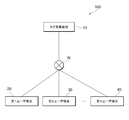
- FIG. 1 is a diagram showing a network configuration of a tag recommendation system 100 according to an embodiment of the present invention.
- the tag recommendation system 100 includes a tag recommendation device 10, a first user terminal 20, a second user terminal 30, and an Nth user terminal 40.
- the first user terminal 20, the second user terminal 30, and the Nth user terminal 40 represent a user terminal used by the first user, a user used by the second user, and a user terminal used by the Nth user.
- the first user terminal 20, the second user terminal 30, and the Nth user terminal 40 are also simply referred to as user terminals.
- the tag recommendation device 10 receives the content posted from the user terminal and recommends the tag to be given to the content.
- the content may be an image, a video, a text and a combination thereof posted on an SNS, or an image of a product posted on an electronic commerce site, a video of a product, a text explaining a product, or a combination thereof.
- the case of posting an image on SNS will be described as an example.
- the user terminal is a general-purpose computer, and may be, for example, a smartphone, a tablet PC (Personal Computer), or a desktop PC.
- the plurality of user terminals are communicably connected to the tag recommendation device 10 via the communication network N, and receive recommendations from the tag recommendation device 10 for tags to be added to newly posted content.
- the communication network N is a wired or wireless communication network, and may be the Internet or a LAN (Local Area Network).
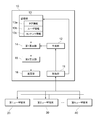
- FIG. 2 is a diagram showing a functional block of the tag recommendation device 10 according to the present embodiment.
- the tag recommendation device 10 includes an acquisition unit 11, a generation unit 12, a storage unit 13, a first calculation unit 14, a second calculation unit 15, and a recommendation unit 16.
- the acquisition unit 11 acquires the content to be newly posted from the user terminal.
- the acquisition unit 11 may acquire the content to be posted when the content is posted from the user terminal to the SNS or the electronic commerce site in cooperation with a specific SNS or the electronic commerce site.
- the generation unit 12 analyzes the new content and generates a tag explaining the content of the content.
- the tag explaining the content of the content may be selected from a plurality of tag candidates.
- the generation unit 12 may use a known image recognition technique to generate a tag explaining the name of the object shown in the image or the situation shown in the image.
- the generation unit 12 may classify the content into at least one of a plurality of predetermined categories, and generate tags according to the category to which the content belongs.
- the generation unit 12 may generate a plurality of tags for explaining the content of the content for one content, for example, 10 tags may be generated.
- the storage unit 13 stores tag information 13a, user information 13b, and content information 13c.
- the tag information 13a includes history information of tags that have been attached to the content so far, and may include information indicating which tag is attached to which content, when, in which region, and by a user of which age.
- the user information 13b includes the popularity of the user who posted the content, and may include profile information such as the area and age of the user's residence.
- the popularity of the user is based on at least one of the number of followers in the user's SNS, the number of evaluations of the plurality of contents posted by the user, and the number of views of the plurality of contents posted by the user. May be calculated.
- the user who receives the tag recommendation may be able to select what kind of index is used to calculate the popularity of the user. For example, when it is desired to add a tag so that the number of views increases, the popularity of the user may be calculated based on the number of views of a plurality of contents posted by the user. In this way, it is possible to calculate an appropriate degree of popularity according to the purpose and recommend more attractive tags.
- the content information 13c includes the popularity of the posted content, and may include information indicating which user posted the content.
- the popularity of the content may be calculated based on at least one of the number of times the plurality of posted contents are evaluated and the number of times the plurality of posted contents are viewed.
- the first calculation unit 14 determines the co-occurrence relationship between the plurality of users and the plurality of tags, the first numerical value obtained by weighting the co-occurrence relationship between the plurality of users and the plurality of tags according to the popularity of the plurality of users, and the co-occurrence relationship between the plurality of users and the plurality of tags.
- the third numerical value representing the co-occurrence relationship between the plurality of tags is calculated based on the second numerical value weighted according to the frequency at which the plurality of users attach the plurality of tags to the plurality of contents. Specific examples of the first numerical value and the second numerical value will be described in detail with reference to FIGS. 4 and 5.
- the second calculation unit 15 calculates the priority of a plurality of tags based on the third numerical value and one or a plurality of tags attached to the new content.
- the one or more tags attached to the new content may be the tags generated by the generation unit 12. The priority of tags will be described in detail later with reference to FIG.
- the recommendation unit 16 recommends one or a plurality of tags to be added to new content from a plurality of tags based on the priority calculated by the second calculation unit 15.
- the recommendation unit 16 may transmit information that identifies one or more tags to be recommended to the user terminal.
- the user terminal may attach all the recommended one or more tags to the new content, or accept the selection of the tag to be added to the new content from the recommended one or the plurality of tags from the user. , The selected tag may be added to the new content.
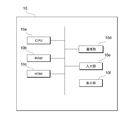
- FIG. 3 is a diagram showing a physical configuration of the tag recommendation device 10 according to the present embodiment.
- the tag recommendation device 10 includes a CPU (Central Processing Unit) 10a corresponding to a calculation unit, a RAM (Random Access Memory) 10b corresponding to a storage unit, a ROM (Read only Memory) 10c corresponding to a storage unit, and a communication unit. It has a 10d, an input unit 10e, and a display unit 10f. Each of these configurations is connected to each other via a bus so that data can be transmitted and received.
- the tag recommendation device 10 is composed of one computer will be described, but the tag recommendation device 10 may be realized by combining a plurality of computers.
- the configuration shown in FIG. 3 is an example, and the tag recommendation device 10 may have configurations other than these, or may not have a part of these configurations.
- the CPU 10a is a control unit that controls execution of a program stored in the RAM 10b or ROM 10c, calculates data, and processes data.
- the CPU 10a is a calculation unit that executes a program (tag recommendation program) that recommends tags to be added to new contents.
- the CPU 10a receives various data from the input unit 10e and the communication unit 10d, displays the calculation result of the data on the display unit 10f, and stores it in the RAM 10b or the ROM 10c.
- the RAM 10b is a storage unit in which data can be rewritten, and may be composed of, for example, a semiconductor storage element.
- the RAM 10b may store data such as a program executed by the CPU 10a, the popularity of the user, the tag addition frequency, and the popularity of the content. It should be noted that these are examples, and data other than these may be stored in the RAM 10b, or a part of these may not be stored.
- the ROM 10c is a storage unit capable of reading data, and may be composed of, for example, a semiconductor storage element.
- the ROM 10c may store, for example, a tag recommendation program or data that is not rewritten.
- the communication unit 10d is an interface for connecting the tag recommendation device 10 to another device.
- the communication unit 10d may be connected to a communication network N such as the Internet.
- the input unit 10e receives data input from the user, and may include, for example, a keyboard and a touch panel.
- the display unit 10f visually displays the calculation result by the CPU 10a, and may be configured by, for example, an LCD (Liquid Crystal Display).
- the display unit 10f may display the tag priority and the recommended tag.
- the tag recommendation program may be stored in a storage medium readable by a computer such as RAM 10b or ROM 10c and provided, or may be provided via a communication network connected by the communication unit 10d.
- the CPU 10a executes the tag recommendation program to realize various operations described with reference to FIG. It should be noted that these physical configurations are examples and do not necessarily have to be independent configurations.
- the tag recommendation device 10 may include an LSI (Large-Scale Integration) in which the CPU 10a and the RAM 10b or ROM 10c are integrated.
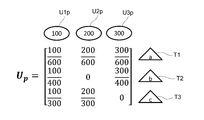
- FIG. 4 is a diagram showing an example of the first numerical value Up calculated by the tag recommendation device 10 according to the present embodiment.
- the first numerical value Up is a matrix having a row of a number of tags that are candidates for assignment to the content and a column of the number of a plurality of users. In this example, a case where the number of a plurality of tags is 3 and the number of a plurality of users is 3 will be described.
- the first numerical value Up corresponds to the first numerical value of the present invention, and is an example of the first numerical value in which the co-occurrence relationship between a plurality of users and a plurality of tags is weighted according to the popularity of the plurality of users.
- the first numerical value Up includes as many row vectors as the number of tags having the dimensions of the number of multiple users.
- a plurality of row vectors included in the first numerical value Up will be referred to as the i-th row vector.
- i takes a value from 1 to M
- M is the number of a plurality of tags.
- the three-dimensional first row vector corresponds to the first tag T1 called "a”
- the second row vector corresponds to the second tag T2 called "b”
- the third row vector corresponds to. It corresponds to the third tag T3 called "c”.
- the popularity of the first user is "100”
- the popularity of the second user is "200”
- the popularity of the third user is "300”.
- the first row vector has a first element of 100/600, a second element of 200/600, and a third element of 300/600. Further, in the second row vector, the first element is 100/400, the second element is 0, and the third element is 300/400. Further, in the third row vector, the first element is 100/300, the second element is 200/300, and the third element is 0.
- Each row vector is standardized so that the L1 norm is 1.
- the first tag T1 since the first tag T1 has a history given to some content by all the first user, the second user, and the third user, all the elements of the first row vector are non-zero values. There is.
- the second tag T2 has a history given by the first user and the third user, but is not given by the second user, so that the second element of the second row vector is zero.
- the third tag T3 has a history given by the first user and the second user, but is not given by the third user, so that the third element of the third row vector is zero. ..
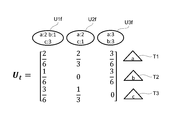
- FIG. 5 is a diagram showing an example of a second numerical value Ut calculated by the tag recommendation device 10 according to the present embodiment.
- the second numerical value Ut is a matrix having a row of a plurality of tags as candidates for assignment to the content and a column of the number of a plurality of users. In this example, a case where the number of a plurality of tags is 3 and the number of a plurality of users is 3 will be described.
- the second numerical value Ut corresponds to the second numerical value of the present invention, and the co-occurrence relationship between the plurality of users and the plurality of tags is weighted according to the frequency with which the plurality of users attach the plurality of tags to the plurality of contents. This is an example of the second numerical value.
- the second numerical value Ut includes as many column vectors as the number of a plurality of users having dimensions of the number of a plurality of tags.
- a plurality of column vectors included in the second numerical value Ut will be referred to as a k-th column vector.
- k takes a value from 1 to N
- N is the number of a plurality of users.
- the three-dimensional first column vector corresponds to the first user
- the second column vector corresponds to the second user
- the third row vector corresponds to the third user.
- the first element is 2/6
- the second element is 1/6
- the third element is 3/6.
- the first element is 2/3, the second element is 0, and the third element is 1/3.
- the first element is 3/6, the second element is 3/6, and the third element is 0.
- Each column vector is standardized so that the L1 norm is 1.
- the value of the k-th column vector becomes a value that is not zero when the k-th user attaches the i-tag to the content, and becomes zero when the k-th user does not attach the i-tag to the content. Then, the non-zero value of the k-th column vector is determined to be proportional to the number of times the k-th user has attached the i-th tag. In the case of this example, the non-zero value of the k-th column vector is determined to be proportional to the number of times the k-th user has given the i-tag, and the L1 norm of the k-th column vector is 1.
- the first user since the first user has a history of assigning the first tag twice, the second tag once, and the third tag three times, all the elements of the first column vector are non-zero values. It has become.
- the second user since the second user has a history of assigning the first tag twice, the second tag 0 times, and the third tag once, the second element of the second column vector is zero.
- the third user since the third user has a history of assigning the first tag three times, the second tag three times, and the third tag 0 times, the third element of the third column vector is zero.
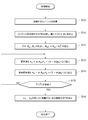
- FIG. 6 is a flowchart of a first example of the tag recommendation process executed by the tag recommendation device 10 according to the present embodiment.
- the tag recommendation device 10 acquires the content posted by the user (S10).
- the tag recommendation device 10 the generator 12 generates a tag describing the content, to determine the priority vector p 1 (S11).
- Priority vector p 1 is an M-dimensional vector with the number of dimensions of a plurality of tags that are candidates to be given to the content (M multiple number of tags) Tags explaining the content generated by the generation unit 12 It may be a vector in which the element corresponding to has a non-zero value (for example, 1) and the other elements have a zero value. Further, the priority vector p 1 is, L1 norm m (m is the number of tags describing generated by the generating unit 12 content) may have been standardized to. For example, the tag describing the content generated by the generation unit 12, when a first tag and second tag, priority vector p 1, the element corresponding to the first tag 1 corresponds to the second tag element Can be a vector in which is 1 and the other elements are zero.
- T represents the transpose of the matrix.
- the third numerical value A UP is a square matrix having dimensions of the number of tags.
- the third numerical value A UP corresponds to the third numerical value of the present invention and represents a co-occurrence relationship between a plurality of tags.
- the priority calculation expression r 1 is defined recursively.
- ⁇ is a value between 0 and 1.
- the L1 norm may be standardized to m (m is the number of tags explaining the content generated by the generation unit 12).
- the initial value of r 1 may be p 1 .
- p 0 is an M-dimensional vector having dimensions of a plurality of tags (M is the number of a plurality of tags), all the elements are equal values, and the L1 norm is m (m is the generator 12). It may be a vector standardized to (the number of tags that describe the content generated by). That is, p 0 may be a vector in which all elements are m / M. For r 0 , the L1 norm may be standardized to m. The initial value of r 0 may be p 0 .
- the tag recommendation device 10 determines whether the priority r 1 and the reference priority r 0 have converged (S15). Whether converged, with updating in step S13 and S14, it is determined depending on whether priority r 1 and the reference priority r 0 exceeds the whether or repetitive operations the number of times specified in advance or not changes only a predetermined amount or less Good. In updating in step S13 and S14, if the priority of r 1 or reference priority r 0 is largely changed than the predetermined amount, does not exceed the repetitive operation number of times specified in advance, that is, priority r 1 and the reference priority r 0 If it has not converged (S15: NO), the tag recommendation device 10 executes the processes S13 and S14 again.
- the tag recommendation device 10 determines one or a plurality of tags to be recommended based on the value of r 1 ⁇ r 0 (S16).
- r 1 ⁇ r 0 is a vector having a dimension of a plurality of tags, and each element corresponds to a plurality of tags.
- the tag recommendation device 10 may recommend one or a plurality of tags in which the size of the elements of r 1 to r 0 is within the upper predetermined order. This completes the first example of the recommendation process.
- the third numerical A UP representing the co-occurrence relation between a plurality of tags, and how often the user has given a tag, calculated by using the popularity of the user, and a third number, the new content by calculating the priority r 1 of the plurality of tags based on the one or more tags previously assigned, and tags assigned by popularity high user, the new content in view of its grant frequency
- the tag to be given can be recommended.
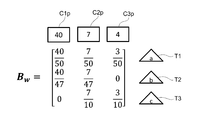
- FIG. 7 is a diagram showing an example of the fourth numerical value Bw calculated by the tag recommendation device 10 according to the present embodiment.
- the fourth numerical value Bw is a matrix having a row of the number of tags to be given to the content and a column of the number of the plurality of contents. In this example, a case where the number of a plurality of tags is 3 and the number of a plurality of contents is 3 will be described.
- the fourth numerical value Bw corresponds to the fourth numerical value of the present invention, and is an example of the fifth numerical value in which the co-occurrence relationship between the plurality of contents and the plurality of tags is weighted according to the popularity of the plurality of contents.
- the fourth numerical value Bw includes as many row vectors having the dimensions of the number of a plurality of contents as the number of a plurality of tags.
- a plurality of row vectors included in the fourth numerical value Bw will be referred to as the i-th row vector.
- i takes a value from 1 to M
- M is the number of a plurality of tags.
- the three-dimensional first row vector corresponds to the first tag T1 called "a”
- the second row vector corresponds to the second tag T2 called "b”
- the third row vector corresponds to. It corresponds to the third tag T3 called "c”.
- the popularity of the first content is "40"
- the popularity of the second content is "7”
- the popularity of the first content is "4".
- the first row vector has a first element of 40/50, a second element of 7/50, and a third element of 3/50.
- the first element is 40/47
- the second element is 7/47
- the third element is 0.
- the first element is 0, the second element is 7/10
- the third element is 3/10.
- Each row vector is standardized so that the L1 norm is 1.
- the first tag T1 since the first tag T1 has a history given to all the first content, the second content, and the third content, all the elements of the first row vector are non-zero values.
- the second tag T2 has a history attached to the first content and the second content, but is not attached to the third content, so that the third element of the second row vector is zero.
- the third tag T3 has a history assigned to the second content and the third content, but is not assigned to the first content, so that the first element of the third row vector is zero. ..
- FIG. 8 is a diagram showing an example of the fifth numerical value Bt calculated by the tag recommendation device 10 according to the present embodiment.
- the fifth numerical value Bt is a matrix having a row of the number of tags to be given to the content and a column of the number of the plurality of contents. In this example, a case where the number of a plurality of tags is 3 and the number of a plurality of contents is 3 will be described.
- the fifth numerical value Bt corresponds to the fifth numerical value of the present invention, and is a fifth numerical value in which the co-occurrence relationship between a plurality of contents and a plurality of tags is weighted according to the frequency with which the plurality of tags are attached to the plurality of contents. This is an example.
- the fifth numerical value Bt includes as many column vectors as the number of a plurality of contents having dimensions of the number of a plurality of tags.
- a plurality of column vectors included in the fifth numerical value Bt will be referred to as a k-th column vector.
- k takes a value from 1 to C
- C is the number of a plurality of contents.
- the three-dimensional first column vector corresponds to the first content
- the second column vector corresponds to the second content
- the third row vector corresponds to the third content.
- the first element is 1/2
- the second element is 1/2
- the third element is 0.
- the first element is 1/3
- the second element is 1/3
- the third element is 1/3
- the first element is 1/2
- the second element is 0, and the third element is 1/2.
- Each column vector is standardized so that the L1 norm is 1.
- the value of the k-th column vector is a non-zero value when the k-th content is attached with the i-tag, and is zero when the k-th content is not attached with the i-tag.
- the non-zero values of the k-th column vector are evenly defined so that the L1 norm of the k-th column vector is 1.
- the first content has a history of attaching the first tag and the second tag, but since there is no history of attaching the third tag, the third element of the first column vector is zero. It has become.
- the second content since the second content has a history in which the first tag, the second tag, and the third tag are added, all the elements of the second column vector have non-zero values.
- the third content has a history in which the first tag and the third tag are attached, but since there is no history in which the second tag is attached, the second element of the third column vector is zero. ..
- FIG. 9 is a flowchart of a second example of the tag recommendation process executed by the tag recommendation device 10 according to the present embodiment.
- the tag recommendation device 10 acquires the content posted by the user (S20). Then, the tag recommendation device 10, the generator 12 generates a tag describing the content, to determine the priority vector p 1 (S21).
- Priority vector p 1 is an M-dimensional vector with the number of dimensions of a plurality of tags that are candidates to be given to the content (M multiple number of tags) Tags explaining the content generated by the generation unit 12 It may be a vector in which the element corresponding to is 1 and the other elements are zero. Further, the priority vector p 1 is, L1 norm m (m is the number of tags describing generated by the generating unit 12 content) may have been standardized to.
- the third numerical value A UP is a square matrix having dimensions of the number of tags.
- the third numerical value A UP corresponds to the third numerical value of the present invention and represents a co-occurrence relationship between a plurality of tags.
- the sixth numerical value A FP is a square matrix having dimensions of the number of tags.
- the sixth numerical value A FP corresponds to the sixth numerical value of the present invention and represents a co-occurrence relationship between a plurality of tags.
- the tag recommendation device 10 calculates the seventh numerical value A UF (1) by the following mathematical formula (1) based on the third numerical value A UP and the sixth numerical value A FP (S24).
- the right side of the mathematical formula (1) represents the element product (Hadamard product) of the third numerical value A UP and the sixth numerical value A FP .
- the priority calculation expression r 1 is defined recursively.
- ⁇ is a value between 0 and 1.
- the L1 norm may be standardized to m (m is the number of tags explaining the content generated by the generation unit 12).
- the initial value of r 1 may be p 1 .
- p 0 is an M-dimensional vector having dimensions of a plurality of tags (M is the number of a plurality of tags), all the elements are equal values, and the L1 norm is m (m is the generator 12). It may be a vector standardized to (the number of tags that describe the content generated by).
- the L1 norm may be standardized to m.
- the initial value of r 0 may be p 0 .
- the tag recommendation device 10 determines whether the priority r 1 and the reference priority r 0 have converged (S27). Whether converged, the update in the processing S25 and S26, it is determined depending on whether priority r 1 and the reference priority r 0 exceeds the whether or repetitive operations the number of times specified in advance or not changes only a predetermined amount or less Good. In updating in process S25 and S26, if the priority of r 1 or reference priority r 0 is largely changed than the predetermined amount, it does not exceed the repetitive operation number of times specified in advance, that is, priority r 1 and the reference priority r 0 If it has not converged (S27: NO), the tag recommendation device 10 executes the processes S25 and S26 again.
- the tag recommendation device 10 determines one or a plurality of tags to be recommended based on the value of r 1 ⁇ r 0 (S28).
- r 1 ⁇ r 0 is a vector having the dimension of the number of a plurality of tags, and each element corresponds to a plurality of tags.
- the tag recommendation device 10 may recommend one or a plurality of tags in which the size of the elements of r 1 to r 0 is within the upper predetermined order. This completes the second example of the recommendation process.
- the sixth numerical A FP representing the co-occurrence relation between a plurality of tags, calculated using the tag has been applied to content frequency and the popularity of the content, and a sixth numerical, new content advance on the basis of the assigned one or more tags are by calculating the priority r 1 of the plurality of tags, and tags assigned to the popularity high content, new content in consideration of the applied frequency of You can recommend the tags to be attached to.
- the popularity and content users Tags to be added to new content can be recommended in consideration of both popularity.
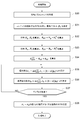
- FIG. 10 is a flowchart of a third example of the tag recommendation process executed by the tag recommendation device 10 according to the present embodiment.
- the tag recommendation device 10 acquires the content posted by the user (S30).
- the tag recommendation device 10 the generator 12 generates a tag describing the content, to determine the priority vector p 1 (S31).
- Priority vector p 1 is an M-dimensional vector with the number of dimensions of a plurality of tags that are candidates to be given to the content (M multiple number of tags) Tags explaining the content generated by the generation unit 12 It may be a vector in which the element corresponding to is 1 and the other elements are zero.
- the priority vector p 1 is, L1 norm m (m is the number of tags describing generated by the generating unit 12 content) may have been standardized to.
- the third numerical value A UP is a square matrix having dimensions of the number of tags.
- the third numerical value A UP corresponds to the third numerical value of the present invention and represents a co-occurrence relationship between a plurality of tags.
- the sixth numerical value A FP is a square matrix having dimensions of the number of tags.
- the sixth numerical value A FP corresponds to the sixth numerical value of the present invention and represents a co-occurrence relationship between a plurality of tags.
- the priority calculation expression r 1 is defined recursively.
- ⁇ is a value between 0 and 1.
- the L1 norm may be standardized to m (m is the number of tags explaining the content generated by the generation unit 12).
- the initial value of r 1 may be p 1 .
- p 0 is an M-dimensional vector having dimensions of a plurality of tags (M is the number of a plurality of tags), all the elements are equal values, and the L1 norm is m (m is the generator 12). It may be a vector standardized to (the number of tags that describe the content generated by).
- the L1 norm may be standardized to m.
- the initial value of r 0 may be p 0 .
- the tag recommendation device 10 determines whether the priority r 1 and the reference priority r 0 have converged (S37). Whether converged, the update in the processing S35 and S36, it is determined depending on whether priority r 1 and the reference priority r 0 exceeds the whether or repetitive operations the number of times specified in advance or not changes only a predetermined amount or less Good. In updating in process S35 and S36, if the priority of r 1 or reference priority r 0 is largely changed than the predetermined amount, it does not exceed the repetitive operation number of times specified in advance, that is, priority r 1 and the reference priority r 0 If it has not converged (S37: NO), the tag recommendation device 10 executes the processes S35 and S36 again.
- the tag recommendation device 10 determines one or a plurality of tags to be recommended based on the value of r 1 ⁇ r 0 (S38).
- r 1 ⁇ r 0 is a vector having a dimension of a plurality of tags, and each element corresponds to a plurality of tags.
- the tag recommendation device 10 may recommend one or a plurality of tags in which the size of the elements of r 1 to r 0 is within the upper predetermined order. This completes the third example of the recommendation process.
- tags are applied to the sum and the new contents of the third numerical A UP and sixth numerical A FP, by calculating the priority r 1, popularity and content users It is possible to recommend tags to be added to new content in consideration of both popularity.
- the first calculation unit 14 may calculate the third numerical value A UP based on a plurality of tags given to a plurality of contents by a plurality of users during a predetermined period among the plurality of tags.
- the first calculation unit 14 may calculate the sixth numerical value A FP based on a plurality of tags given to a plurality of contents by a plurality of users during a predetermined period among the plurality of tags.
- tags to be added to new content can be recommended so as to reflect the tendency of tagging in a predetermined period. For example, it is possible to recommend tags that capture the trends of a certain period.
- the first calculation unit 14 may calculate the third numerical value A UP based on a plurality of users belonging to a predetermined area among the plurality of users. Similarly, the first calculation unit 14 may calculate the sixth numerical value A FP based on a plurality of users belonging to a predetermined area among the plurality of users.
- a plurality of users belonging to a predetermined area may be determined depending on the area in which the user resides. Different countries and regions may have different trends in what tags should be attached to content to make it popular. By considering the regional characteristics of the user, it is possible to recommend tags to be added to new content so as to reflect the tendency of tagging in a predetermined region.
- the first calculation unit 14 may calculate the third numerical value A UP based on a plurality of users belonging to a predetermined age among the plurality of users. Similarly, the first calculation unit 14 may calculate the sixth numerical value A FP based on a plurality of users belonging to a predetermined age among the plurality of users.
- a plurality of users belonging to a predetermined age group may be determined by the profile information of the users. What tags should be attached to content to make it popular may have different tendencies depending on the age of the user. By considering the age of the user, it is possible to recommend tags to be added to new content so as to reflect the tendency of tagging in a predetermined age.
- the first calculation unit 14 may calculate the third numerical value A UP based on a plurality of users belonging to a predetermined gender among the plurality of users. Similarly, the first calculation unit 14 may calculate the sixth numerical value A FP based on a plurality of users belonging to a predetermined gender among the plurality of users.
- a plurality of users belonging to a predetermined gender may be determined by the profile information of the users.
- the tendency of what tags should be added to content to make it popular may differ depending on the gender of the user. By considering the gender of the user, it is possible to recommend tags to be added to new content so as to reflect the tendency of tagging in a predetermined gender.
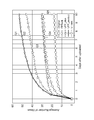
- FIG. 11 is a diagram showing an experimental result when a tag recommended by the tag recommendation device 10 according to the present embodiment is attached to the content.
- the vertical axis shows the average number of views (Average Number of Views), and the horizontal axis shows the number of days elapsed since posting (Days after uploaded).
- the experiment was carried out in the case where the tag recommended by the tag recommendation device 10 according to the present embodiment was attached to the image and in the case of the comparative example, and when a plurality of types of images were posted by different users in different periods. Shows the average of.
- the first graph G1 shown by a solid line based on the 10 tags generated by the generating unit 12 determines the priority vector p 1, calculates the priority r 1 update equation using a seventh numerical A UFP (1) It shows the time change of the number of views when 10 tags are recommended and a total of 20 tags are added to post an image. According to the figure, the first graph G1 shows the best results, the average number of views is 50 or more in 10 days, and the increasing trend continues.
- the fourth graph G4 shown by the two-dot chain line based on the 10 tags generated by the generating unit 12 determines the priority vector p 1, calculates the priority r 1 update type using the third numerical A UP,
- the recommendation unit 16 recommends 10 tags, and shows the time change of the number of views when the image is posted with a total of 20 tags. According to the figure, the fourth graph G4 shows the fourth best result, and the average number of views is about 30 in 10 days, and the increasing trend continues.
- the fifth graph G5 shown by the dotted line shows the time change of the number of views when the image is posted with the 10 tags generated by the generation unit 12 as a comparative example. According to the figure, the fifth graph G5 shows the worst result, and the average number of views is about 20 in 10 days.
- the number of tags attached to the image is 10, which is half of the case of the present embodiment, but even if the number of views is proportional to the number of tags, the first graph G1 and It can be seen that the number of views of the second graph G2 is larger than that of the fifth graph G5, and the effect is more than simply increasing the number of tags.
Landscapes
- Engineering & Computer Science (AREA)
- Databases & Information Systems (AREA)
- Theoretical Computer Science (AREA)
- Physics & Mathematics (AREA)
- General Physics & Mathematics (AREA)
- Data Mining & Analysis (AREA)
- General Engineering & Computer Science (AREA)
- Business, Economics & Management (AREA)
- Tourism & Hospitality (AREA)
- Economics (AREA)
- Health & Medical Sciences (AREA)
- General Health & Medical Sciences (AREA)
- Human Resources & Organizations (AREA)
- Marketing (AREA)
- Primary Health Care (AREA)
- Strategic Management (AREA)
- General Business, Economics & Management (AREA)
- Library & Information Science (AREA)
- Computational Linguistics (AREA)
- Information Retrieval, Db Structures And Fs Structures Therefor (AREA)
- Management, Administration, Business Operations System, And Electronic Commerce (AREA)
- Information Transfer Between Computers (AREA)
Abstract
人気度が高いユーザによって付与されたタグと、その付与頻度を考慮して新たなコンテンツに付与するタグを推薦するタグ推薦装置を提供する。 タグ推薦装置10は、複数のユーザと複数のタグとの共起関係を、複数のユーザの人気度に応じて重み付けした第1数値と、複数のユーザと複数のタグとの共起関係を、複数のユーザが複数のタグを複数のコンテンツに付与した頻度に応じて重み付けした第2数値とに基づいて、複数のタグ間の共起関係を表す第3数値を算出する第1算出部14と、第3数値及び新たなコンテンツに付与された1又は複数のタグに基づいて、複数のタグの優先度を算出する第2算出部15と、優先度に基づいて、複数のタグの中から、新たなコンテンツに付与する1又は複数のタグを推薦する推薦部16と、を備える。
Description
本出願は、2019年3月14日に出願された日本出願番号2019-46846号に基づくもので、ここにその記載内容を援用する。
本発明は、タグ推薦装置、タグ推薦方法及びタグ推薦プログラムに関する。
従来、タグは、画像や動画をコンテンツとするSNS(Social Networking Service)や、商品をコンテンツとする電子商取引サイトが広く用いられている。SNSや電子商取引サイトのユーザは、コンテンツに付与されたタグを用いて、コンテンツをテキスト検索する場合がある。ここで、コンテンツへのタグの付与は、コンテンツを投稿したユーザによって行われている。
タグの付与について、例えば、下記非特許文献1には、ユーザ、コンテンツ及びタグをノードとし、ノードの共起関係をリンクとする無向グラフを用いて、コンテンツに付与するタグを推薦する技術が記載されている。
また、下記非特許文献2には、SNSにおけるコンテンツの人気度とタグの共起関係に基づいて、投稿するコンテンツの人気度が高まるようにタグを推薦する技術が記載されている。
また、下記非特許文献2には、SNSにおけるコンテンツの人気度とタグの共起関係に基づいて、投稿するコンテンツの人気度が高まるようにタグを推薦する技術が記載されている。
Andreas Hotho, Robert Jaschke, Christoph Schmitz, Gerd Stumme, "FolkRank: A Ranking Algorithm for Folksonomies", Lwa, Vol. 1, pp. 111-114 (2006)
T. Yamasaki, J. Hu, S. Sano, and K. Aizawa, "Folkpopularityrank: Tag recommendation for enhancing social popularity using text tags in content sharing services," Proceedings of the 26th International Joint Conference on Artificial Intelligence, pp.3231-3237, 2017
先行技術によって、人気のあるコンテンツに付与されたタグと、そのタグと共起するタグを重要視して、新たなコンテンツに付与するタグを推薦することができる。一方、SNSや電子商取引サイト等のコミュニティでは、人気度の高いユーザが大きな影響力を有しており、人気度が高いユーザが付与しているタグを新しいコンテンツに付与することで、そのコンテンツの人気度が向上することがある。しかしながら、人気度が高いユーザによってどのようなタグが付与されているか網羅的に把握することは難しく、頻繁に付与されているタグと稀にしか付与されていないタグとのバランスを取ることも難しい。
そこで、本発明は、人気度が高いユーザによって付与されたタグと、その付与頻度を考慮して新たなコンテンツに付与するタグを推薦するタグ推薦装置、タグ推薦方法及びタグ推薦プログラムを提供する。
本発明の一態様に係るタグ推薦装置は、複数のユーザと複数のタグとの共起関係を、複数のユーザの人気度に応じて重み付けした第1数値と、複数のユーザと複数のタグとの共起関係を、複数のユーザが複数のタグを複数のコンテンツに付与した頻度に応じて重み付けした第2数値とに基づいて、複数のタグ間の共起関係を表す第3数値を算出する第1算出部と、第3数値及び新たなコンテンツに付与された1又は複数のタグに基づいて、複数のタグの優先度を算出する第2算出部と、優先度に基づいて、複数のタグの中から、新たなコンテンツに付与する1又は複数のタグを推薦する推薦部と、を備える。
この態様によれば、複数のタグ間の共起関係を表す第3数値を、ユーザがタグを付与した頻度と、ユーザの人気度とを用いて算出し、第3数値と、新たなコンテンツに予め付与された1又は複数のタグとに基づいて複数のタグの優先度を算出することで、人気度が高いユーザによって付与されたタグと、その付与頻度を考慮して新たなコンテンツに付与するタグを推薦することができる。
上記態様において、第1算出部は、複数のコンテンツと複数のタグとの共起関係を、複数のコンテンツの人気度に応じて重み付けした第4数値と、複数のコンテンツと複数のタグとの共起関係を、複数のタグが複数のコンテンツに付与された頻度に応じて重み付けした第5数値と、に基づいて、複数のタグ間の共起関係を表す第6数値を算出し、第2算出部は、第3数値、第6数値及び新たなコンテンツに付与された1又は複数のタグに基づいて、優先度を算出してもよい。
この態様によれば、複数のタグ間の共起関係を表す第6数値を、タグがコンテンツに付与された頻度と、コンテンツの人気度とを用いて算出し、第6数値と、新たなコンテンツに予め付与された1又は複数のタグとに基づいて複数のタグの優先度を算出することで、コンテンツの人気度を考慮して新たなコンテンツに付与するタグを推薦することができる。
上記態様において、第3数値及び第6数値は、複数のタグの数の次元を有する正方行列であり、第2算出部は、第3数値及び第6数値の要素積並びに新たなコンテンツに付与された1又は複数のタグに基づいて、優先度を算出してもよい。
この態様によれば、ユーザの人気度及びコンテンツの人気度両方を考慮して新たなコンテンツに付与するタグを推薦することができる。
上記態様において、第3数値及び第6数値は、複数のタグの数の次元を有する正方行列であり、第2算出部は、第3数値及び第6数値の和並びに新たなコンテンツに付与された1又は複数のタグに基づいて、優先度を算出してもよい。
この態様によれば、ユーザの人気度及びコンテンツの人気度両方を考慮して新たなコンテンツに付与するタグを推薦することができる。
上記態様において、第1算出部は、複数のタグのうち、複数のユーザが所定の期間中に複数のコンテンツに付与した複数のタグに基づいて、第3数値を算出してもよい。
この態様によれば、所定の期間におけるタグ付けの傾向を反映するように、新たなコンテンツに付与するタグを推薦することができる。
上記態様において、第1算出部は、複数のユーザのうち、所定の地域に属する複数のユーザに基づいて、第3数値を算出してもよい。
この態様によれば、所定の地域におけるタグ付けの傾向を反映するように、新たなコンテンツに付与するタグを推薦することができる。
上記態様において、第1算出部は、複数のユーザのうち、所定の年代に属する複数のユーザに基づいて、第3数値を算出してもよい。
この態様によれば、所定の年代におけるタグ付けの傾向を反映するように、新たなコンテンツに付与するタグを推薦することができる。
上記態様において、第1算出部は、複数のユーザのうち、所定の性別に属する複数のユーザに基づいて、第3数値を算出してもよい。
この態様によれば、所定の性別におけるタグ付けの傾向を反映するように、新たなコンテンツに付与するタグを推薦することができる。
上記態様において、複数のユーザの人気度は、複数のユーザのSNSにおけるフォロワーの数、複数のユーザにより投稿された複数のコンテンツが評価された数及び複数のユーザにより投稿された複数のコンテンツが閲覧された数の少なくともいずれかに基づいて算出されてもよい。
この態様によれば、目的に応じて適切な人気度を算出し、より魅力的なタグを推薦することができる。
本発明の他の態様に係るタグ推薦方法は、タグ推薦装置に、複数のユーザと複数のタグとの共起関係を、複数のユーザが複数のタグを複数のコンテンツに付与した頻度に応じて重み付けした第1数値と、複数のユーザと複数のタグとの共起関係を、複数のユーザの人気度に応じて重み付けした第2数値とに基づいて、複数のタグ間の共起関係を表す第3数値を算出することと、第3数値及び新たなコンテンツに付与された1又は複数のタグに基づいて、複数のタグの優先度を算出することと、優先度に基づいて、複数のタグの中から、新たなコンテンツに付与する1又は複数のタグを推薦することと、を実行させる。
この態様によれば、複数のタグ間の共起関係を表す第3数値を、ユーザがタグを付与した頻度と、ユーザの人気度とを用いて算出し、第3数値と、新たなコンテンツに予め付与された1又は複数のタグとに基づいて複数のタグの優先度を算出することで、ユーザの人気度を考慮して新たなコンテンツに付与するタグを推薦することができる。
本発明の他の態様に係るタグ推薦プログラムは、タグ推薦装置に、複数のユーザと複数のタグとの共起関係を、複数のユーザが複数のタグを複数のコンテンツに付与した頻度に応じて重み付けした第1数値と、複数のユーザと複数のタグとの共起関係を、複数のユーザの人気度に応じて重み付けした第2数値とに基づいて、複数のタグ間の共起関係を表す第3数値を算出することと、第3数値及び新たなコンテンツに付与された1又は複数のタグに基づいて、複数のタグの優先度を算出することと、優先度に基づいて、複数のタグの中から、新たなコンテンツに付与する1又は複数のタグを推薦することと、を実行させる。
この態様によれば、複数のタグ間の共起関係を表す第3数値を、ユーザがタグを付与した頻度と、ユーザの人気度とを用いて算出し、第3数値と、新たなコンテンツに予め付与された1又は複数のタグとに基づいて複数のタグの優先度を算出することで、ユーザの人気度を考慮して新たなコンテンツに付与するタグを推薦することができる。
本発明によれば、人気度が高いユーザによって付与されたタグと、その付与頻度を考慮して新たなコンテンツに付与するタグを推薦するタグ推薦装置、タグ推薦方法及びタグ推薦プログラムを提供することができる。
添付図面を参照して、本発明の実施形態について説明する。なお、各図において、同一の符号を付したものは、同一又は同様の構成を有する。
図1は、本発明の実施形態に係るタグ推薦システム100のネットワーク構成を示す図である。タグ推薦システム100は、タグ推薦装置10、第1ユーザ端末20、第2ユーザ端末30及び第Nユーザ端末40を含む。ここで、第1ユーザ端末20、第2ユーザ端末30及び第Nユーザ端末40は、第1ユーザが用いるユーザ端末、第2ユーザが用いるユーザ及び第Nユーザが用いるユーザ端末を表している。以下では、第1ユーザ端末20、第2ユーザ端末30及び第Nユーザ端末40を単にユーザ端末ともいう。
タグ推薦装置10は、ユーザ端末から投稿するコンテンツを受け付けて、そのコンテンツに付与するタグを推薦する。コンテンツは、SNSに掲載する画像、動画、テキスト及びそれらの組み合わせであったり、電子商取引サイトに掲載する商品の画像、商品の動画、商品を説明するテキスト及びそれらの組み合わせであったりしてよい。以下では、SNSに画像を投稿する場合を例に説明する。
ユーザ端末は、汎用のコンピュータであり、例えば、スマートフォン、タブレットPC(Personal Computer)又はデスクトップPCであってよい。複数のユーザ端末は、通信ネットワークNを介してタグ推薦装置10と通信可能に接続され、タグ推薦装置10より、新たに投稿するコンテンツに付与するタグの推薦を受ける。ここで、通信ネットワークNは、有線又は無線の通信網であり、インターネットやLAN(Local Area Network)であってよい。
図2は、本実施形態に係るタグ推薦装置10の機能ブロックを示す図である。タグ推薦装置10は、取得部11、生成部12、記憶部13、第1算出部14、第2算出部15及び推薦部16を備える。
取得部11は、ユーザ端末から、新たに投稿するコンテンツを取得する。取得部11は、特定のSNSや電子商取引サイトと連携して、ユーザ端末からSNSや電子商取引サイトにコンテンツの投稿が行われる場合に、投稿しようとしているコンテンツを取得してよい。
生成部12は、新たなコンテンツを解析し、コンテンツの内容を説明するタグを生成する。ここで、コンテンツの内容を説明するタグは、複数のタグの候補の中から選択されてよい。例えば、コンテンツが画像である場合、生成部12は、公知の画像認識技術を用いて、画像に写されている物の名前や画像に写されている状況を説明するタグを生成してよい。また、生成部12は、コンテンツを、予め定められた複数のカテゴリの少なくともいずれかに分類し、コンテンツが属するカテゴリに応じて、タグを生成してもよい。生成部12は、1つのコンテンツに対して、コンテンツの内容を説明する複数のタグを生成してよく、例えば、10個のタグを生成してよい。
記憶部13は、タグ情報13a、ユーザ情報13b及びコンテンツ情報13cを記憶している。タグ情報13aは、これまでにコンテンツに付与されたタグの履歴情報を含み、どのタグがどのコンテンツに、いつ、どの地域で、どの年代のユーザによって付与されているかを示す情報を含んでよい。また、ユーザ情報13bは、コンテンツを投稿したユーザの人気度を含み、ユーザの居住する地域や年代といったプロフィール情報を含んでもよい。
ここで、ユーザの人気度は、ユーザのSNSにおけるフォロワーの数、ユーザにより投稿された複数のコンテンツが評価された数及びユーザにより投稿された複数のコンテンツが閲覧された数の少なくともいずれかに基づいて算出されてよい。タグ推薦を受けるユーザは、どのような指標を用いてユーザの人気度を算出するか選択できてもよい。例えば、より閲覧数が増えるようにタグを付与したい場合、ユーザの人気度をユーザにより投稿された複数のコンテンツが閲覧された数に基づいて算出することとしてよい。このように、目的に応じて適切な人気度を算出し、より魅力的なタグを推薦することができる。
コンテンツ情報13cは、投稿されたコンテンツの人気度を含み、いずれのユーザによって投稿されたコンテンツであるか示す情報を含んでもよい。コンテンツの人気度は、投稿された複数のコンテンツが評価された数及び投稿された複数のコンテンツが閲覧された数の少なくともいずれかに基づいて算出されてよい。
第1算出部14は、複数のユーザと複数のタグとの共起関係を、複数のユーザの人気度に応じて重み付けした第1数値と、複数のユーザと複数のタグとの共起関係を、複数のユーザが複数のタグを複数のコンテンツに付与した頻度に応じて重み付けした第2数値とに基づいて、複数のタグ間の共起関係を表す第3数値を算出する。第1数値及び第2数値の具体例は、図4及び5を用いて詳細に説明する。
第2算出部15は、第3数値及び新たなコンテンツに付与された1又は複数のタグに基づいて、複数のタグの優先度を算出する。ここで、新たなコンテンツに付与された1又は複数のタグは、生成部12によって生成されたタグであってよい。タグの優先度については、後に図6を用いて詳細に説明する。
推薦部16は、第2算出部15により算出された優先度に基づいて、複数のタグの中から、新たなコンテンツに付与する1又は複数のタグを推薦する。推薦部16は、推薦する1又は複数のタグを特定する情報を、ユーザ端末に送信してよい。ユーザ端末は、推薦された1又は複数のタグ全てを新たなコンテンツに付与してもよいし、推薦された1又は複数のタグのうち、新たなコンテンツに付与するタグの選択をユーザから受け付けて、選択されたタグを新たなコンテンツに付与してもよい。
図3は、本実施形態に係るタグ推薦装置10の物理的構成を示す図である。タグ推薦装置10は、演算部に相当するCPU(Central Processing Unit)10aと、記憶部に相当するRAM(Random Access Memory)10bと、記憶部に相当するROM(Read only Memory)10cと、通信部10dと、入力部10eと、表示部10fと、を有する。これらの各構成は、バスを介して相互にデータ送受信可能に接続される。なお、本例ではタグ推薦装置10が一台のコンピュータで構成される場合について説明するが、タグ推薦装置10は、複数のコンピュータが組み合わされて実現されてもよい。また、図3で示す構成は一例であり、タグ推薦装置10はこれら以外の構成を有してもよいし、これらの構成のうち一部を有さなくてもよい。
CPU10aは、RAM10b又はROM10cに記憶されたプログラムの実行に関する制御やデータの演算、加工を行う制御部である。CPU10aは、新たなコンテンツに付与するタグを推薦するプログラム(タグ推薦プログラム)を実行する演算部である。CPU10aは、入力部10eや通信部10dから種々のデータを受け取り、データの演算結果を表示部10fに表示したり、RAM10bやROM10cに格納したりする。
RAM10bは、記憶部のうちデータの書き換えが可能なものであり、例えば半導体記憶素子で構成されてよい。RAM10bは、CPU10aが実行するプログラム、ユーザの人気度、タグの付与頻度及びコンテンツの人気度といったデータを記憶してよい。なお、これらは例示であって、RAM10bには、これら以外のデータが記憶されていてもよいし、これらの一部が記憶されていなくてもよい。
ROM10cは、記憶部のうちデータの読み出しが可能なものであり、例えば半導体記憶素子で構成されてよい。ROM10cは、例えばタグ推薦プログラムや、書き換えが行われないデータを記憶してよい。
通信部10dは、タグ推薦装置10を他の機器に接続するインターフェースである。通信部10dは、インターネット等の通信ネットワークNに接続されてよい。
入力部10eは、ユーザからデータの入力を受け付けるものであり、例えば、キーボード及びタッチパネルを含んでよい。
表示部10fは、CPU10aによる演算結果を視覚的に表示するものであり、例えば、LCD(Liquid Crystal Display)により構成されてよい。表示部10fは、タグの優先度や推薦するタグを表示してよい。
タグ推薦プログラムは、RAM10bやROM10c等のコンピュータによって読み取り可能な記憶媒体に記憶されて提供されてもよいし、通信部10dにより接続される通信ネットワークを介して提供されてもよい。タグ推薦装置10では、CPU10aがタグ推薦プログラムを実行することにより、図2を用いて説明した様々な動作が実現される。なお、これらの物理的な構成は例示であって、必ずしも独立した構成でなくてもよい。例えば、タグ推薦装置10は、CPU10aとRAM10bやROM10cが一体化したLSI(Large-Scale Integration)を備えていてもよい。
図4は、本実施形態に係るタグ推薦装置10により算出される第1数値Upの一例を示す図である。第1数値Upは、コンテンツへの付与候補となる複数のタグの数の行と、複数のユーザの数の列を有する行列である。本例では、複数のタグの数が3であり、複数のユーザの数が3である場合について説明する。第1数値Upは、本発明の第1数値に相当し、複数のユーザと複数のタグとの共起関係を、複数のユーザの人気度に応じて重み付けした第1数値の一例である。
第1数値Upは、複数のユーザの数の次元を有する行ベクトルを、複数のタグの数だけ含む。以下では、第1数値Upに含まれる複数の行ベクトルを第i行ベクトルと呼ぶ。ここで、iは、1からMの値をとり、Mは複数のタグの数である。本例の場合、3次元の第1行ベクトルは、「a」という第1タグT1に対応し、第2行ベクトルは、「b」という第2タグT2に対応し、第3行ベクトルは、「c」という第3タグT3に対応する。また、本例において、第1ユーザの人気度は「100」であり、第2ユーザの人気度は「200」であり、第3ユーザの人気度は「300」である。第1行ベクトルは、第1要素が100/600であり、第2要素が200/600であり、第3要素が300/600である。また、第2行ベクトルは、第1要素が100/400であり、第2要素が0であり、第3要素が300/400である。また、第3行ベクトルは、第1要素が100/300であり、第2要素が200/300であり、第3要素が0である。各行ベクトルは、L1ノルムが1となるように規格化されている。
第i行ベクトルの値は、第jユーザ(j=1~N、Nは複数のユーザの数)が第iタグをコンテンツに付与している場合にゼロでない値となり、第jユーザが第iタグをコンテンツに付与していない場合にゼロとなる。そして、第i行ベクトルのゼロでない値は、第jユーザの人気度に比例するように定められる。本例の場合、第i行ベクトルのゼロでない値は、第jユーザの人気度に比例し、かつ、第i行ベクトルのL1ノルムが1となるよるように定められている。
本例の場合、第1タグT1は、第1ユーザ、第2ユーザ及び第3ユーザ全てによって何らかのコンテンツに付与された履歴があるため、第1行ベクトルの全ての要素がゼロでない値となっている。一方、第2タグT2は、第1ユーザ及び第3ユーザによって付与された履歴があるが、第2ユーザによっては付与されていないため、第2行ベクトルの第2要素はゼロとなっている。同様に、第3タグT3は、第1ユーザ及び第2ユーザによって付与された履歴があるが、第3ユーザによっては付与されていないため、第3行ベクトルの第3要素はゼロとなっている。
図5は、本実施形態に係るタグ推薦装置10により算出される第2数値Utの一例を示す図である。第2数値Utは、コンテンツへの付与候補となる複数のタグの数の行と、複数のユーザの数の列を有する行列である。本例では、複数のタグの数が3であり、複数のユーザの数が3である場合について説明する。第2数値Utは、本発明の第2数値に相当し、複数のユーザと複数のタグとの共起関係を、複数のユーザが複数のタグを複数のコンテンツに付与した頻度に応じて重み付けした第2数値の一例である。
第2数値Utは、複数のタグの数の次元を有する列ベクトルを、複数のユーザの数だけ含む。以下では、第2数値Utに含まれる複数の列ベクトルを第k列ベクトルと呼ぶ。ここで、kは、1からNの値をとり、Nは複数のユーザの数である。本例の場合、3次元の第1列ベクトルは第1ユーザに対応し、第2列ベクトルは第2ユーザに対応し、第3行ベクトルは第3ユーザに対応する。例えば、第1列ベクトルは、第1要素が2/6であり、第2要素が1/6であり、第3要素が3/6である。また、第2列ベクトルは、第1要素が2/3であり、第2要素が0であり、第3要素が1/3である。また、第3行ベクトルは、第1要素が3/6であり、第2要素が3/6であり、第3要素が0である。各列ベクトルは、L1ノルムが1となるように規格化されている。
第k列ベクトルの値は、第kユーザが第iタグをコンテンツに付与している場合にゼロでない値となり、第kユーザが第iタグをコンテンツに付与していない場合にゼロとなる。そして、第k列ベクトルのゼロでない値は、第kユーザが第iタグを付与した回数に比例するように定められる。本例の場合、第k列ベクトルのゼロでない値は、第kユーザが第iタグを付与した回数に比例し、かつ、第k列ベクトルのL1ノルムが1となるように定められている。
本例の場合、第1ユーザは、第1タグを2回、第2タグを1回、第3タグを3回付与した履歴があるため、第1列ベクトルの全ての要素がゼロでない値となっている。一方、第2ユーザは、第1タグを2回、第2タグを0回、第3タグを1回付与した履歴があるため、第2列ベクトルの第2要素はゼロとなっている。同様に、第3ユーザは、第1タグを3回、第2タグを3回、第3タグを0回付与した履歴があるため、第3列ベクトルの第3要素はゼロとなっている。
図6は、本実施形態に係るタグ推薦装置10により実行されるタグ推薦処理の第1例のフローチャートである。はじめに、タグ推薦装置10は、ユーザが投稿するコンテンツを取得する(S10)。そして、タグ推薦装置10は、生成部12によってコンテンツを説明するタグを生成し、優先ベクトルp1を決定する(S11)。
優先ベクトルp1は、コンテンツに付与される候補となる複数のタグの数の次元を有するM次元ベクトルであり(Mは複数のタグの数)、生成部12によって生成されたコンテンツを説明するタグに対応する要素がゼロでない値(例えば1)をとり、それ以外の要素についてゼロの値をとるベクトルであってよい。また、優先ベクトルp1は、L1ノルムがm(mは生成部12によって生成されたコンテンツを説明するタグの数)に規格化されていてよい。例えば、生成部12によって生成されたコンテンツを説明するタグが、第1タグ及び第2タグである場合、優先ベクトルp1は、第1タグに対応する要素が1、第2タグに対応する要素が1であり、それ以外の要素がゼロであるベクトルであってよい。
その後、タグ推薦装置10は、第1数値及び第2数値である行列Up及びUtを算出し、第3数値AUP=Up×UtTを算出する(S12)。ここで、「T」は行列の転置を表す。第3数値AUPは、複数のタグの数の次元を有する正方行列である。第3数値AUPは、本発明の第3数値に相当し、複数のタグ間の共起関係を表す。
さらに、タグ推薦装置10は、複数のタグの優先度r1を、r1=αAUPr1+(1-α)p1により算出する(S13)。ここで、優先度r1の算出式は再帰的に定義されている。また、αは、0から1の間の値である。r1は、L1ノルムがm(mは生成部12によって生成されたコンテンツを説明するタグの数)に規格化されてよい。なお、r1の初期値は、p1であってよい。
また、タグ推薦装置10は、基準優先度r0を、r0=αAUPr0+(1-α)p0により算出する(S14)。ここで、p0は、複数のタグの数の次元を有するM次元ベクトルであり(Mは複数のタグの数)、全ての要素が等しい値であり、L1ノルムがm(mは生成部12によって生成されたコンテンツを説明するタグの数)に規格化されているベクトルであってよい。すなわち、p0は、全ての要素がm/Mであるベクトルであってよい。r0は、L1ノルムがmに規格化されてよい。なお、r0の初期値は、p0であってよい。
タグ推薦装置10は、優先度r1及び基準優先度r0が収束したか判定する(S15)。収束したか否かは、処理S13及びS14における更新で、優先度r1及び基準優先度r0が所定量以下しか変化しないか否か、又は予め指定した繰り返し演算回数を上回ったかによって判定してよい。処理S13及びS14における更新で、優先度r1又は基準優先度r0が所定量より大きく変化し、予め指定した繰り返し演算回数を上回っていない場合、すなわち優先度r1及び基準優先度r0が収束していない場合(S15:NO)、タグ推薦装置10は、処理S13及びS14を再び実行する。
一方、処理S13及びS14における更新で、優先度r1又は基準優先度r0が所定量以下しか変化しない場合、又は予め指定した繰り返し演算回数を上回った場合、すなわち優先度r1及び基準優先度r0が収束した場合(S15:YES)、タグ推薦装置10は、r1-r0の値により推薦する1又は複数のタグを決定する(S16)。r1-r0は、複数のタグの数の次元を有するベクトルであり、各要素は複数のタグに対応する。タグ推薦装置10は、r1-r0の要素の大きさが上位所定順位以内である1又は複数のタグを推薦してよい。以上により推薦処理の第1例が終了する。
このように、複数のタグ間の共起関係を表す第3数値AUPを、ユーザがタグを付与した頻度と、ユーザの人気度とを用いて算出し、第3数値と、新たなコンテンツに予め付与された1又は複数のタグとに基づいて複数のタグの優先度r1を算出することで、人気度が高いユーザによって付与されたタグと、その付与頻度を考慮して新たなコンテンツに付与するタグを推薦することができる。
図7は、本実施形態に係るタグ推薦装置10により算出される第4数値Bwの一例を示す図である。第4数値Bwは、コンテンツへの付与候補となる複数のタグの数の行と、複数のコンテンツの数の列を有する行列である。本例では、複数のタグの数が3であり、複数のコンテンツの数が3である場合について説明する。第4数値Bwは、本発明の第4数値に相当し、複数のコンテンツと複数のタグとの共起関係を、複数のコンテンツの人気度に応じて重み付けした第5数値の一例である。
第4数値Bwは、複数のコンテンツの数の次元を有する行ベクトルを、複数のタグの数だけ含む。以下では、第4数値Bwに含まれる複数の行ベクトルを第i行ベクトルと呼ぶ。ここで、iは、1からMの値をとり、Mは複数のタグの数である。本例の場合、3次元の第1行ベクトルは、「a」という第1タグT1に対応し、第2行ベクトルは、「b」という第2タグT2に対応し、第3行ベクトルは、「c」という第3タグT3に対応する。また、本例において、第1コンテンツの人気度は「40」であり、第2コンテンツの人気度は「7」であり、第1コンテンツの人気度は「4」である。そして、第1行ベクトルは、第1要素が40/50であり、第2要素が7/50であり、第3要素が3/50である。また、第2行ベクトルは、第1要素が40/47であり、第2要素が7/47であり、第3要素が0である。また、第3行ベクトルは、第1要素が0であり、第2要素が7/10であり、第3要素が3/10である。各行ベクトルは、L1ノルムが1となるように規格化されている。
第i行ベクトルの値は、第mコンテンツ(m=1~C、Cは複数のコンテンツの数)に第iタグが付与されている場合にゼロでない値となり、第mコンテンツに第iタグが付与されていない場合にゼロとなる。そして、第i行ベクトルのゼロでない値は、第mコンテンツの人気度に比例するように定められる。本例の場合、第i行ベクトルのゼロでない値は、第mコンテンツの人気度に比例し、かつ、第i行ベクトルのL1ノルムが1となるよるように定められている。
本例の場合、第1タグT1は、第1コンテンツ、第2コンテンツ及び第3コンテンツ全てに付与された履歴があるため、第1行ベクトルの全ての要素がゼロでない値となっている。一方、第2タグT2は、第1コンテンツ及び第2コンテンツに付与された履歴があるが、第3コンテンツには付与されていないため、第2行ベクトルの第3要素はゼロとなっている。同様に、第3タグT3は、第2コンテンツ及び第3コンテンツに付与された履歴があるが、第1コンテンツには付与されていないため、第3行ベクトルの第1要素はゼロとなっている。
図8は、本実施形態に係るタグ推薦装置10により算出される第5数値Btの一例を示す図である。第5数値Btは、コンテンツへの付与候補となる複数のタグの数の行と、複数のコンテンツの数の列を有する行列である。本例では、複数のタグの数が3であり、複数のコンテンツの数が3である場合について説明する。第5数値Btは、本発明の第5数値に相当し、複数のコンテンツと複数のタグとの共起関係を、複数のタグが複数のコンテンツに付与された頻度に応じて重み付けした第5数値の一例である。
第5数値Btは、複数のタグの数の次元を有する列ベクトルを、複数のコンテンツの数だけ含む。以下では、第5数値Btに含まれる複数の列ベクトルを第k列ベクトルと呼ぶ。ここで、kは、1からCの値をとり、Cは複数のコンテンツの数である。本例の場合、3次元の第1列ベクトルは第1コンテンツに対応し、第2列ベクトルは第2コンテンツに対応し、第3行ベクトルは第3コンテンツに対応する。例えば、第1列ベクトルは、第1要素が1/2であり、第2要素が1/2であり、第3要素が0である。また、第2列ベクトルは、第1要素が1/3であり、第2要素が1/3であり、第3要素が1/3である。また、第3行ベクトルは、第1要素が1/2であり、第2要素が0であり、第3要素が1/2である。各列ベクトルは、L1ノルムが1となるように規格化されている。
第k列ベクトルの値は、第kコンテンツに第iタグが付与されている場合にゼロでない値となり、第kコンテンツに第iタグが付与されていない場合にゼロとなる。本例の場合、第k列ベクトルのゼロでない値は、第k列ベクトルのL1ノルムが1となるよるように均等に定められている。
本例の場合、第1コンテンツには、第1タグ及び第2タグが付与された履歴があるが、第3タグが付与された履歴がないため、第1列ベクトルの第3要素はゼロとなっている。一方、第2コンテンツには、第1タグ、第2タグ及び第3タグが付与された履歴があるため、第2列ベクトルの全ての要素はゼロでない値となっている。また、第3コンテンツには、第1タグ及び第3タグが付与された履歴があるが、第2タグが付与された履歴がないため、第3列ベクトルの第2要素はゼロとなっている。
図9は、本実施形態に係るタグ推薦装置10により実行されるタグ推薦処理の第2例のフローチャートである。はじめに、タグ推薦装置10は、ユーザが投稿するコンテンツを取得する(S20)。そして、タグ推薦装置10は、生成部12によってコンテンツを説明するタグを生成し、優先ベクトルp1を決定する(S21)。優先ベクトルp1は、コンテンツに付与される候補となる複数のタグの数の次元を有するM次元ベクトルであり(Mは複数のタグの数)、生成部12によって生成されたコンテンツを説明するタグに対応する要素が1であり、それ以外の要素がゼロであるベクトルであってよい。また、優先ベクトルp1は、L1ノルムがm(mは生成部12によって生成されたコンテンツを説明するタグの数)に規格化されていてよい。
その後、タグ推薦装置10は、第1数値及び第2数値である行列Up及びUtを算出し、第3数値AUP=Up×UtTを算出する(S22)。第3数値AUPは、複数のタグの数の次元を有する正方行列である。第3数値AUPは、本発明の第3数値に相当し、複数のタグ間の共起関係を表す。
また、タグ推薦装置10は、第4数値及び第5数値である行列Bp及びBtを算出し、第6数値AFP=Bp×BtTを算出する(S23)。第6数値AFPは、複数のタグの数の次元を有する正方行列である。第6数値AFPは、本発明の第6数値に相当し、複数のタグ間の共起関係を表す。
タグ推薦装置10は、第3数値AUP及び第6数値AFPに基づいて、第7数値AUFP
(1)を以下の数式(1)により算出する(S24)。

ここで、数式(1)の右辺は、第3数値AUP及び第6数値AFPの要素積(アダマール積)を表す。
さらに、タグ推薦装置10は、複数のタグの優先度r1を、r1=αAUFP
(1)r1+(1-α)p1により算出する(S25)。ここで、優先度r1の算出式は再帰的に定義されている。また、αは、0から1の間の値である。r1は、L1ノルムがm(mは生成部12によって生成されたコンテンツを説明するタグの数)に規格化されてよい。なお、r1の初期値は、p1であってよい。
また、タグ推薦装置10は、基準優先度r0を、r0=αAUFP
(1)r0+(1-α)p0により算出する(S26)。ここで、p0は、複数のタグの数の次元を有するM次元ベクトルであり(Mは複数のタグの数)、全ての要素が等しい値であり、L1ノルムがm(mは生成部12によって生成されたコンテンツを説明するタグの数)に規格化されているベクトルであってよい。r0は、L1ノルムがmに規格化されてよい。なお、r0の初期値は、p0であってよい。
タグ推薦装置10は、優先度r1及び基準優先度r0が収束したか判定する(S27)。収束したか否かは、処理S25及びS26における更新で、優先度r1及び基準優先度r0が所定量以下しか変化しないか否か、又は予め指定した繰り返し演算回数を上回ったかによって判定してよい。処理S25及びS26における更新で、優先度r1又は基準優先度r0が所定量より大きく変化し、予め指定した繰り返し演算回数を上回っていない場合、すなわち優先度r1及び基準優先度r0が収束していない場合(S27:NO)、タグ推薦装置10は、処理S25及びS26を再び実行する。
一方、処理S25及びS26における更新で、優先度r1又は基準優先度r0が所定量以下しか変化しない場合、又は予め指定した繰り返し演算回数を上回った場合、すなわち優先度r1及び基準優先度r0が収束した場合(S27:YES)、タグ推薦装置10は、r1-r0の値により推薦する1又は複数のタグを決定する(S28)。r1-r0は、複数のタグの数の次元を有するベクトルであり、各要素は複数のタグに対応する。タグ推薦装置10は、r1-r0の要素の大きさが上位所定順位以内である1又は複数のタグを推薦してよい。以上により推薦処理の第2例が終了する。
このように、複数のタグ間の共起関係を表す第6数値AFPを、タグがコンテンツに付与された頻度と、コンテンツの人気度とを用いて算出し、第6数値と、新たなコンテンツに予め付与された1又は複数のタグとに基づいて複数のタグの優先度r1を算出することで、人気度が高いコンテンツに付与されたタグと、その付与頻度を考慮して新たなコンテンツに付与するタグを推薦することができる。
また、第3数値AUP及び第6数値AFPの要素積並びに新たなコンテンツに付与された1又は複数のタグに基づいて、優先度r1を算出することで、ユーザの人気度及びコンテンツの人気度両方を考慮して新たなコンテンツに付与するタグを推薦することができる。
図10は、本実施形態に係るタグ推薦装置10により実行されるタグ推薦処理の第3例のフローチャートである。はじめに、タグ推薦装置10は、ユーザが投稿するコンテンツを取得する(S30)。そして、タグ推薦装置10は、生成部12によってコンテンツを説明するタグを生成し、優先ベクトルp1を決定する(S31)。優先ベクトルp1は、コンテンツに付与される候補となる複数のタグの数の次元を有するM次元ベクトルであり(Mは複数のタグの数)、生成部12によって生成されたコンテンツを説明するタグに対応する要素が1であり、それ以外の要素がゼロであるベクトルであってよい。また、優先ベクトルp1は、L1ノルムがm(mは生成部12によって生成されたコンテンツを説明するタグの数)に規格化されていてよい。
その後、タグ推薦装置10は、第1数値及び第2数値である行列Up及びUtを算出し、第3数値AUP=Up×UtTを算出する(S32)。第3数値AUPは、複数のタグの数の次元を有する正方行列である。第3数値AUPは、本発明の第3数値に相当し、複数のタグ間の共起関係を表す。
また、タグ推薦装置10は、第4数値及び第5数値である行列Bw及びBtを算出し、第6数値AFP=Bw×BtTを算出する(S33)。第6数値AFPは、複数のタグの数の次元を有する正方行列である。第6数値AFPは、本発明の第6数値に相当し、複数のタグ間の共起関係を表す。
タグ推薦装置10は、第3数値AUP及び第6数値AFPに基づいて、第8数値AUFP
(2)をAUFP
(2)=AUP+AFPによって算出する(S34)。
さらに、タグ推薦装置10は、複数のタグの優先度r1を、r1=αAUFP
(2)r1+(1-α)p1により算出する(S35)。ここで、優先度r1の算出式は再帰的に定義されている。また、αは、0から1の間の値である。r1は、L1ノルムがm(mは生成部12によって生成されたコンテンツを説明するタグの数)に規格化されてよい。なお、r1の初期値は、p1であってよい。
また、タグ推薦装置10は、基準優先度r0を、r0=αAUFP
(2)r0+(1-α)p0により算出する(S36)。ここで、p0は、複数のタグの数の次元を有するM次元ベクトルであり(Mは複数のタグの数)、全ての要素が等しい値であり、L1ノルムがm(mは生成部12によって生成されたコンテンツを説明するタグの数)に規格化されているベクトルであってよい。r0は、L1ノルムがmに規格化されてよい。なお、r0の初期値は、p0であってよい。
タグ推薦装置10は、優先度r1及び基準優先度r0が収束したか判定する(S37)。収束したか否かは、処理S35及びS36における更新で、優先度r1及び基準優先度r0が所定量以下しか変化しないか否か、又は予め指定した繰り返し演算回数を上回ったかによって判定してよい。処理S35及びS36における更新で、優先度r1又は基準優先度r0が所定量より大きく変化し、予め指定した繰り返し演算回数を上回っていない場合、すなわち優先度r1及び基準優先度r0が収束していない場合(S37:NO)、タグ推薦装置10は、処理S35及びS36を再び実行する。
一方、処理S35及びS36における更新で、優先度r1又は基準優先度r0が所定量以下しか変化しない場合、又は予め指定した繰り返し演算回数を上回った場合、すなわち優先度r1及び基準優先度r0が収束した場合(S37:YES)、タグ推薦装置10は、r1-r0の値により推薦する1又は複数のタグを決定する(S38)。r1-r0は、複数のタグの数の次元を有するベクトルであり、各要素は複数のタグに対応する。タグ推薦装置10は、r1-r0の要素の大きさが上位所定順位以内である1又は複数のタグを推薦してよい。以上により推薦処理の第3例が終了する。
このように、第3数値AUP及び第6数値AFPの和並びに新たなコンテンツに付与された1又は複数のタグに基づいて、優先度r1を算出することで、ユーザの人気度及びコンテンツの人気度両方を考慮して新たなコンテンツに付与するタグを推薦することができる。
以上の例では、複数のタグを制限なく用いる場合について説明したが、タグ推薦装置10は、その他のタグの推薦を行ってもよい。第1算出部14は、複数のタグのうち、複数のユーザが所定の期間中に複数のコンテンツに付与した複数のタグに基づいて、第3数値AUPを算出してもよい。同様に、第1算出部14は、複数のタグのうち、複数のユーザが所定の期間中に複数のコンテンツに付与した複数のタグに基づいて、第6数値AFPを算出してもよい。このようにして、所定の期間におけるタグ付けの傾向を反映するように、新たなコンテンツに付与するタグを推薦することができる。例えば、ある時期の流行を捉えたタグの推薦を行うことができる。
第1算出部14は、複数のユーザのうち、所定の地域に属する複数のユーザに基づいて、第3数値AUPを算出してもよい。同様に、第1算出部14は、複数のユーザのうち、所定の地域に属する複数のユーザに基づいて、第6数値AFPを算出してもよい。ここで、所定の地域に属する複数のユーザは、ユーザの居住する地域によって判断されてよい。コンテンツにどのようなタグを付与すれば人気となるかは、国や地域によって傾向が異なることがある。ユーザの地域性を考慮することで、所定の地域におけるタグ付けの傾向を反映するように、新たなコンテンツに付与するタグを推薦することができる。
第1算出部14は、複数のユーザのうち、所定の年代に属する複数のユーザに基づいて、第3数値AUPを算出してもよい。同様に、第1算出部14は、複数のユーザのうち、所定の年代に属する複数のユーザに基づいて、第6数値AFPを算出してもよい。ここで、所定の年代に属する複数のユーザは、ユーザのプロフィール情報によって判断されてよい。コンテンツにどのようなタグを付与すれば人気となるかは、ユーザの年代によって傾向が異なることがある。ユーザの年代を考慮することで、所定の年代におけるタグ付けの傾向を反映するように、新たなコンテンツに付与するタグを推薦することができる。
第1算出部14は、複数のユーザのうち、所定の性別に属する複数のユーザに基づいて、第3数値AUPを算出してもよい。同様に、第1算出部14は、複数のユーザのうち、所定の性別に属する複数のユーザに基づいて、第6数値AFPを算出してもよい。ここで、所定の性別に属する複数のユーザは、ユーザのプロフィール情報によって判断されてよい。コンテンツにどのようなタグを付与すれば人気となるかは、ユーザの性別によって傾向が異なることがある。ユーザの性別を考慮することで、所定の性別におけるタグ付けの傾向を反映するように、新たなコンテンツに付与するタグを推薦することができる。
図11は、本実施形態に係るタグ推薦装置10により推薦されたタグをコンテンツに付与した場合の実験結果を示す図である。同図では、特定のSNSに複数の画像を投稿する実験について、縦軸に平均閲覧数(Average Number of Views)を示し、横軸に投稿からの経過日数(Days after uploaded)を示している。実験は、本実施形態に係るタグ推薦装置10により推薦されたタグを画像に付与した場合と、比較例の場合とについて行い、それぞれ異なる期間に、異なるユーザによって、複数種類の画像を投稿した場合の平均を示している。
実線で示す第1グラフG1は、生成部12によって生成した10個のタグに基づき優先ベクトルp1を決定し、第7数値AUFP
(1)を用いた更新式で優先度r1を算出し、10個のタグの推薦を行い、合計20個のタグを付与して画像の投稿を行った場合の閲覧数の時間変化を示している。同図によると、第1グラフG1は最も良い成績を示し、10日間で平均閲覧数が50以上となり、増加傾向が続いている。
破線で示す第2グラフG2は、生成部12によって生成した10個のタグに基づき優先ベクトルp1を決定し、第6数値AFPを用いた更新式で優先度r1を算出し、推薦部16によって10個のタグの推薦を行い、合計20個のタグを付与して画像の投稿を行った場合の閲覧数の時間変化を示している。同図によると、第2グラフG2は2番目に良い成績を示し、10日間で平均閲覧数が40以上となり、増加傾向が続いている。
一点鎖線で示す第3グラフG3は、生成部12によって生成した10個のタグに基づき優先ベクトルp1を決定し、第8数値AUFP
(2)を用いた更新式で優先度r1を算出し、推薦部16によって10個のタグの推薦を行い、合計20個のタグを付与して画像の投稿を行った場合の閲覧数の時間変化を示している。同図によると、第3グラフG3は3番目に良い成績を示し、10日間で平均閲覧数が30程度となり、増加傾向が続いている。
二点鎖線で示す第4グラフG4は、生成部12によって生成した10個のタグに基づき優先ベクトルp1を決定し、第3数値AUPを用いた更新式で優先度r1を算出し、推薦部16によって10個のタグの推薦を行い、合計20個のタグを付与して画像の投稿を行った場合の閲覧数の時間変化を示している。同図によると、第4グラフG4は4番目に良い成績を示し、10日間で平均閲覧数が30程度となり、増加傾向が続いている。
点線で示す第5グラフG5は、生成部12によって生成した10個のタグを付与して画像の投稿を行った場合の閲覧数の時間変化を比較例として示している。同図によると、第5グラフG5は最も悪い成績を示し、10日間で平均閲覧数が20程度となっている。なお、第5グラフG5では、画像に付与されたタグの数が10であり、本実施形態の場合の半分であるが、仮に閲覧数がタグの数に比例するとしても、第1グラフG1及び第2グラフG2は、閲覧数が第5グラフG5の倍より大きくなっており、単にタグの数を増やした以上の効果を奏していることが見て取れる。
以上説明した実施形態は、本発明の理解を容易にするためのものであり、本発明を限定して解釈するためのものではない。実施形態が備える各要素並びにその配置、材料、条件、形状及びサイズ等は、例示したものに限定されるわけではなく適宜変更することができる。また、異なる実施形態で示した構成同士を部分的に置換し又は組み合わせることが可能である。
Claims (11)
- 複数のユーザと複数のタグとの共起関係を、前記複数のユーザの人気度に応じて重み付けした第1数値と、前記複数のユーザと前記複数のタグとの共起関係を、前記複数のユーザが前記複数のタグを複数のコンテンツに付与した頻度に応じて重み付けした第2数値とに基づいて、前記複数のタグ間の共起関係を表す第3数値を算出する第1算出部と、
前記第3数値及び新たなコンテンツに付与された1又は複数のタグに基づいて、前記複数のタグの優先度を算出する第2算出部と、
前記優先度に基づいて、前記複数のタグの中から、前記新たなコンテンツに付与する1又は複数のタグを推薦する推薦部と、
を備えるタグ推薦装置。 - 前記第1算出部は、前記複数のコンテンツと前記複数のタグとの共起関係を、前記複数のコンテンツの人気度に応じて重み付けした第4数値と、前記複数のコンテンツと前記複数のタグとの共起関係を、前記複数のタグが前記複数のコンテンツに付与された頻度に応じて重み付けした第5数値と、に基づいて、前記複数のタグ間の共起関係を表す第6数値を算出し、
前記第2算出部は、前記第3数値、前記第6数値及び前記新たなコンテンツに付与された1又は複数のタグに基づいて、前記優先度を算出する、
請求項1に記載のタグ推薦装置。 - 前記第3数値及び前記第6数値は、前記複数のタグの数の次元を有する正方行列であり、
前記第2算出部は、前記第3数値及び前記第6数値の要素積並びに前記新たなコンテンツに付与された1又は複数のタグに基づいて、前記優先度を算出する、
請求項2に記載のタグ推薦装置。 - 前記第3数値及び前記第6数値は、前記複数のタグの数の次元を有する正方行列であり、
前記第2算出部は、前記第3数値及び前記第6数値の和並びに前記新たなコンテンツに付与された1又は複数のタグに基づいて、前記優先度を算出する、
請求項2に記載のタグ推薦装置。 - 前記第1算出部は、前記複数のタグのうち、前記複数のユーザが所定の期間中に前記複数のコンテンツに付与した複数のタグに基づいて、前記第3数値を算出する、
請求項1から4のいずれか一項に記載のタグ推薦装置。 - 前記第1算出部は、前記複数のユーザのうち、所定の地域に属する複数のユーザに基づいて、前記第3数値を算出する、
請求項1から5のいずれか一項に記載のタグ推薦装置。 - 前記第1算出部は、前記複数のユーザのうち、所定の年代に属する複数のユーザに基づいて、前記第3数値を算出する、
請求項1から6のいずれか一項に記載のタグ推薦装置。 - 前記第1算出部は、前記複数のユーザのうち、所定の性別に属する複数のユーザに基づいて、前記第3数値を算出する、
請求項1から7のいずれか一項に記載のタグ推薦装置。 - 前記複数のユーザの人気度は、前記複数のユーザのSNSにおけるフォロワーの数、前記複数のユーザにより投稿された前記複数のコンテンツが評価された数及び前記複数のユーザにより投稿された前記複数のコンテンツが閲覧された数の少なくともいずれかに基づいて算出される、
請求項1から8のいずれか一項に記載のタグ推薦装置。 - タグ推薦装置に、
複数のユーザと複数のタグとの共起関係を、前記複数のユーザが前記複数のタグを複数のコンテンツに付与した頻度に応じて重み付けした第1数値と、前記複数のユーザと前記複数のタグとの共起関係を、前記複数のユーザの人気度に応じて重み付けした第2数値とに基づいて、前記複数のタグ間の共起関係を表す第3数値を算出することと、
前記第3数値及び新たなコンテンツに付与された1又は複数のタグに基づいて、前記複数のタグの優先度を算出することと、
前記優先度に基づいて、前記複数のタグの中から、前記新たなコンテンツに付与する1又は複数のタグを推薦することと、
を実行させるタグ推薦方法。 - タグ推薦装置に、
複数のユーザと複数のタグとの共起関係を、前記複数のユーザが前記複数のタグを複数のコンテンツに付与した頻度に応じて重み付けした第1数値と、前記複数のユーザと前記複数のタグとの共起関係を、前記複数のユーザの人気度に応じて重み付けした第2数値とに基づいて、前記複数のタグ間の共起関係を表す第3数値を算出することと、
前記第3数値及び新たなコンテンツに付与された1又は複数のタグに基づいて、前記複数のタグの優先度を算出することと、
前記優先度に基づいて、前記複数のタグの中から、前記新たなコンテンツに付与する1又は複数のタグを推薦することと、
を実行させるタグ推薦プログラム。
Applications Claiming Priority (2)
| Application Number | Priority Date | Filing Date | Title |
|---|---|---|---|
| JP2019-046846 | 2019-03-14 | ||
| JP2019046846A JP7334928B2 (ja) | 2019-03-14 | 2019-03-14 | タグ推薦装置、タグ推薦方法及びタグ推薦プログラム |
Publications (1)
| Publication Number | Publication Date |
|---|---|
| WO2020184716A1 true WO2020184716A1 (ja) | 2020-09-17 |
Family
ID=72426888
Family Applications (1)
| Application Number | Title | Priority Date | Filing Date |
|---|---|---|---|
| PCT/JP2020/011225 Ceased WO2020184716A1 (ja) | 2019-03-14 | 2020-03-13 | タグ推薦装置、タグ推薦方法及びタグ推薦プログラム |
Country Status (2)
| Country | Link |
|---|---|
| JP (1) | JP7334928B2 (ja) |
| WO (1) | WO2020184716A1 (ja) |
Citations (2)
| Publication number | Priority date | Publication date | Assignee | Title |
|---|---|---|---|---|
| JP2015076089A (ja) * | 2014-04-17 | 2015-04-20 | 株式会社 ディー・エヌ・エー | サーバ装置、方法、および、システム |
| US20150186503A1 (en) * | 2012-10-12 | 2015-07-02 | Tencent Technology (Shenzhen) Company Limited | Method, system, and computer readable medium for interest tag recommendation |
Family Cites Families (1)
| Publication number | Priority date | Publication date | Assignee | Title |
|---|---|---|---|---|
| US10235464B2 (en) | 2015-05-05 | 2019-03-19 | Adobe Inc. | Method and apparatus for recommending hashtags |
-
2019
- 2019-03-14 JP JP2019046846A patent/JP7334928B2/ja active Active
-
2020
- 2020-03-13 WO PCT/JP2020/011225 patent/WO2020184716A1/ja not_active Ceased
Patent Citations (2)
| Publication number | Priority date | Publication date | Assignee | Title |
|---|---|---|---|---|
| US20150186503A1 (en) * | 2012-10-12 | 2015-07-02 | Tencent Technology (Shenzhen) Company Limited | Method, system, and computer readable medium for interest tag recommendation |
| JP2015076089A (ja) * | 2014-04-17 | 2015-04-20 | 株式会社 ディー・エヌ・エー | サーバ装置、方法、および、システム |
Non-Patent Citations (1)
| Title |
|---|
| YAMASAKI, TOSHIHIKO AND HU JIANI, SANO SHUMPEI, AIZAWA KIYOHARU: "FolkPopularityRank: Tag Recommendation for Enhancing Social Popularity using Text Tags in Content Sharing Services", PROCEEDINGS OF THE TWENTY-SIXTH INTERNATIONAL JOINT CONFERENCE ON ARTIFICIAL INTELLIGENCE (IJCAI-17, 19 August 2017 (2017-08-19), pages 3231 - 3237, XP055738946, DOI: 10.24963/ijcai.2017/451 * |
Also Published As
| Publication number | Publication date |
|---|---|
| JP7334928B2 (ja) | 2023-08-29 |
| JP2020149410A (ja) | 2020-09-17 |
Similar Documents
| Publication | Publication Date | Title |
|---|---|---|
| Yu et al. | SVMs classification based two-side cross domain collaborative filtering by inferring intrinsic user and item features | |
| CN108431833B (zh) | 端到端深度协作过滤 | |
| CN111949898A (zh) | 搜索结果排序方法、装置、设备及计算机可读存储介质 | |
| CN106651544B (zh) | 最少用户交互的会话式推荐系统 | |
| Pan et al. | Group Bayesian personalized ranking with rich interactions for one-class collaborative filtering | |
| US11748452B2 (en) | Method for data processing by performing different non-linear combination processing | |
| CN114722268A (zh) | 媒体资源的处理方法和装置、存储介质及电子设备 | |
| CN112699215B (zh) | 基于胶囊网络与交互注意力机制的评级预测方法及系统 | |
| JP7231322B2 (ja) | 学習装置、学習方法、学習プログラム及びプログラム | |
| CN111161009B (zh) | 信息推送方法、装置、计算机设备和存储介质 | |
| JP2023065826A (ja) | 情報処理方法、プログラム及び情報処理装置 | |
| Kim et al. | Improving a recommender system by collective matrix factorization with tag information | |
| CN112633356B (zh) | 推荐模型的训练方法、推荐方法、装置、设备及存储介质 | |
| CN108876422B (zh) | 用于信息推广的方法、装置、电子设备及计算机可读介质 | |
| Qiu | Intelligent image recognition using lightweight convolutional neural networks model in edge computing environment | |
| CN113515689A (zh) | 推荐方法及装置 | |
| Nahar et al. | Collaborative learning based recommendation system for content streaming platform using non-negative matrix factorization clustering | |
| CN110413946A (zh) | 使用交替最小二乘优化来在线训练和更新因子分解机 | |
| JP7334928B2 (ja) | タグ推薦装置、タグ推薦方法及びタグ推薦プログラム | |
| CN112258285A (zh) | 一种内容推荐方法及装置、设备、存储介质 | |
| CN119760226A (zh) | 确定推荐资源的方法、相关装置及计算机程序产品 | |
| CN114282101B (zh) | 产品推荐模型的训练方法、装置、电子设备及存储介质 | |
| Mohanty et al. | Intuitionistic hesitant fuzzy soft set and its application in decision making | |
| Ara et al. | Collaborative filtering based module recommendation to boost learners achievement | |
| CN116843418A (zh) | 推荐策略生成方法、装置、设备及存储介质 |
Legal Events
| Date | Code | Title | Description |
|---|---|---|---|
| 121 | Ep: the epo has been informed by wipo that ep was designated in this application |
Ref document number: 20769668 Country of ref document: EP Kind code of ref document: A1 |
|
| NENP | Non-entry into the national phase |
Ref country code: DE |
|
| 122 | Ep: pct application non-entry in european phase |
Ref document number: 20769668 Country of ref document: EP Kind code of ref document: A1 |