WO2020179712A1 - Methods for predicting tumor response to eribulin - Google Patents
Methods for predicting tumor response to eribulin Download PDFInfo
- Publication number
- WO2020179712A1 WO2020179712A1 PCT/JP2020/008485 JP2020008485W WO2020179712A1 WO 2020179712 A1 WO2020179712 A1 WO 2020179712A1 JP 2020008485 W JP2020008485 W JP 2020008485W WO 2020179712 A1 WO2020179712 A1 WO 2020179712A1
- Authority
- WO
- WIPO (PCT)
- Prior art keywords
- subject
- eribulin
- expression
- pharmaceutically acceptable
- acceptable salt
- Prior art date
- Legal status (The legal status is an assumption and is not a legal conclusion. Google has not performed a legal analysis and makes no representation as to the accuracy of the status listed.)
- Ceased
Links
Images


Classifications
-
- G—PHYSICS
- G01—MEASURING; TESTING
- G01N—INVESTIGATING OR ANALYSING MATERIALS BY DETERMINING THEIR CHEMICAL OR PHYSICAL PROPERTIES
- G01N33/00—Investigating or analysing materials by specific methods not covered by groups G01N1/00 - G01N31/00
- G01N33/48—Biological material, e.g. blood, urine; Haemocytometers
- G01N33/50—Chemical analysis of biological material, e.g. blood, urine; Testing involving biospecific ligand binding methods; Immunological testing
- G01N33/53—Immunoassay; Biospecific binding assay; Materials therefor
- G01N33/575—Immunoassay; Biospecific binding assay; Materials therefor for cancer
- G01N33/5758—Immunoassay; Biospecific binding assay; Materials therefor for cancer involving compounds serving as markers for tumours, cancers or neoplasias, e.g. cellular determinants, receptors, heat shock/stress proteins, A-protein, oligosaccharides or metabolites
-
- C—CHEMISTRY; METALLURGY
- C12—BIOCHEMISTRY; BEER; SPIRITS; WINE; VINEGAR; MICROBIOLOGY; ENZYMOLOGY; MUTATION OR GENETIC ENGINEERING
- C12Q—MEASURING OR TESTING PROCESSES INVOLVING ENZYMES, NUCLEIC ACIDS OR MICROORGANISMS; COMPOSITIONS OR TEST PAPERS THEREFOR; PROCESSES OF PREPARING SUCH COMPOSITIONS; CONDITION-RESPONSIVE CONTROL IN MICROBIOLOGICAL OR ENZYMOLOGICAL PROCESSES
- C12Q1/00—Measuring or testing processes involving enzymes, nucleic acids or microorganisms; Compositions therefor; Processes of preparing such compositions
- C12Q1/68—Measuring or testing processes involving enzymes, nucleic acids or microorganisms; Compositions therefor; Processes of preparing such compositions involving nucleic acids
- C12Q1/6876—Nucleic acid products used in the analysis of nucleic acids, e.g. primers or probes
- C12Q1/6883—Nucleic acid products used in the analysis of nucleic acids, e.g. primers or probes for diseases caused by alterations of genetic material
- C12Q1/6886—Nucleic acid products used in the analysis of nucleic acids, e.g. primers or probes for diseases caused by alterations of genetic material for cancer
-
- C—CHEMISTRY; METALLURGY
- C12—BIOCHEMISTRY; BEER; SPIRITS; WINE; VINEGAR; MICROBIOLOGY; ENZYMOLOGY; MUTATION OR GENETIC ENGINEERING
- C12Q—MEASURING OR TESTING PROCESSES INVOLVING ENZYMES, NUCLEIC ACIDS OR MICROORGANISMS; COMPOSITIONS OR TEST PAPERS THEREFOR; PROCESSES OF PREPARING SUCH COMPOSITIONS; CONDITION-RESPONSIVE CONTROL IN MICROBIOLOGICAL OR ENZYMOLOGICAL PROCESSES
- C12Q2600/00—Oligonucleotides characterized by their use
- C12Q2600/106—Pharmacogenomics, i.e. genetic variability in individual responses to drugs and drug metabolism
-
- C—CHEMISTRY; METALLURGY
- C12—BIOCHEMISTRY; BEER; SPIRITS; WINE; VINEGAR; MICROBIOLOGY; ENZYMOLOGY; MUTATION OR GENETIC ENGINEERING
- C12Q—MEASURING OR TESTING PROCESSES INVOLVING ENZYMES, NUCLEIC ACIDS OR MICROORGANISMS; COMPOSITIONS OR TEST PAPERS THEREFOR; PROCESSES OF PREPARING SUCH COMPOSITIONS; CONDITION-RESPONSIVE CONTROL IN MICROBIOLOGICAL OR ENZYMOLOGICAL PROCESSES
- C12Q2600/00—Oligonucleotides characterized by their use
- C12Q2600/158—Expression markers
Landscapes
- Health & Medical Sciences (AREA)
- Life Sciences & Earth Sciences (AREA)
- Chemical & Material Sciences (AREA)
- Immunology (AREA)
- Engineering & Computer Science (AREA)
- Organic Chemistry (AREA)
- Proteomics, Peptides & Aminoacids (AREA)
- Pathology (AREA)
- Analytical Chemistry (AREA)
- Molecular Biology (AREA)
- Biochemistry (AREA)
- Wood Science & Technology (AREA)
- Zoology (AREA)
- Urology & Nephrology (AREA)
- Physics & Mathematics (AREA)
- Microbiology (AREA)
- Hematology (AREA)
- General Health & Medical Sciences (AREA)
- Biomedical Technology (AREA)
- Biotechnology (AREA)
- Genetics & Genomics (AREA)
- Oncology (AREA)
- Hospice & Palliative Care (AREA)
- Cell Biology (AREA)
- Biophysics (AREA)
- General Physics & Mathematics (AREA)
- Medicinal Chemistry (AREA)
- Food Science & Technology (AREA)
- Bioinformatics & Cheminformatics (AREA)
- General Engineering & Computer Science (AREA)
- Pharmaceuticals Containing Other Organic And Inorganic Compounds (AREA)
- Investigating Or Analysing Biological Materials (AREA)
Abstract
The invention provides methods, compositions, and kits for determining approaches for treating cancer, as well as methods for treating cancer.
Description

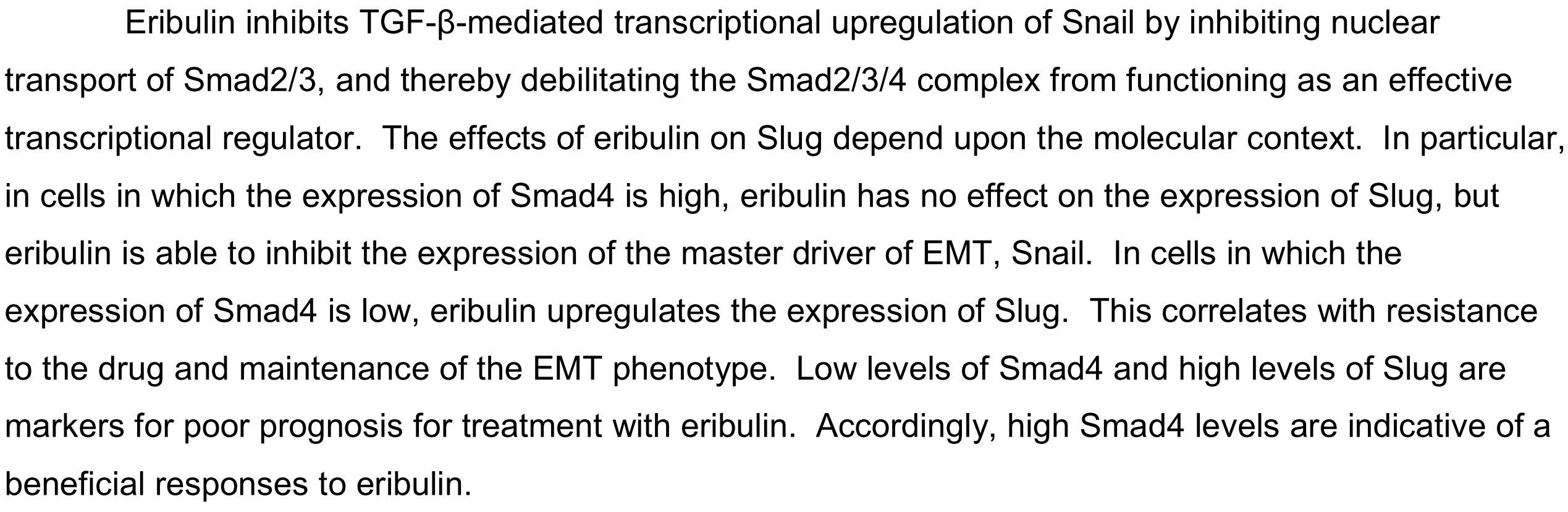





















































Claims (42)
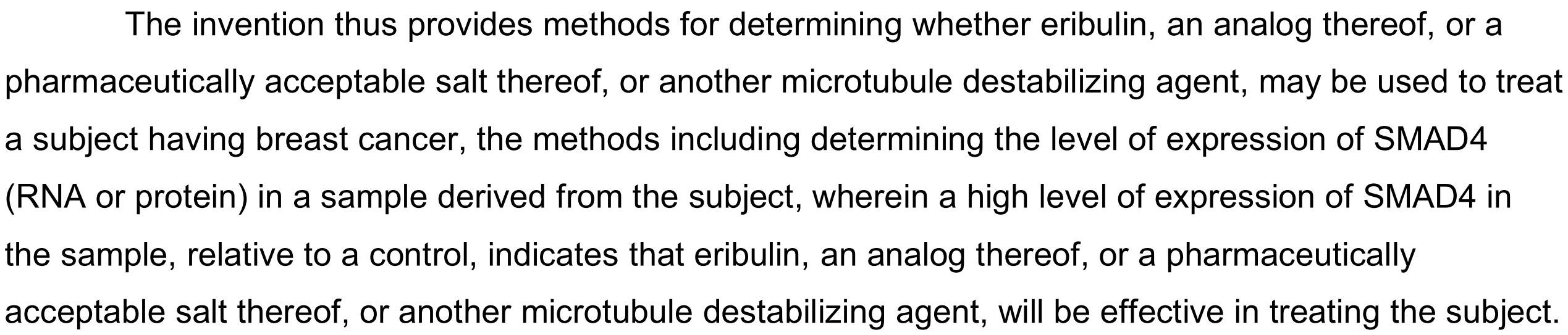
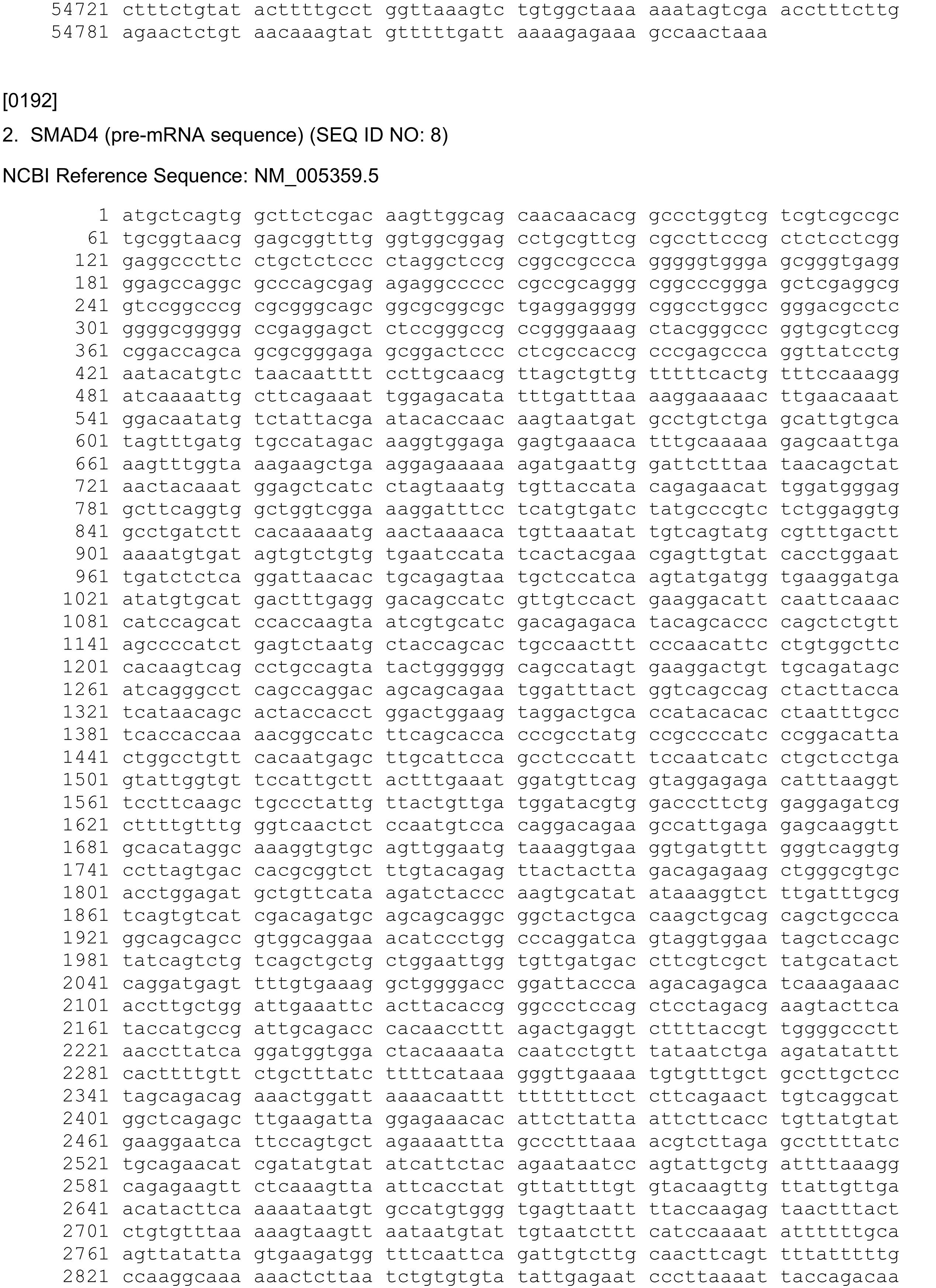
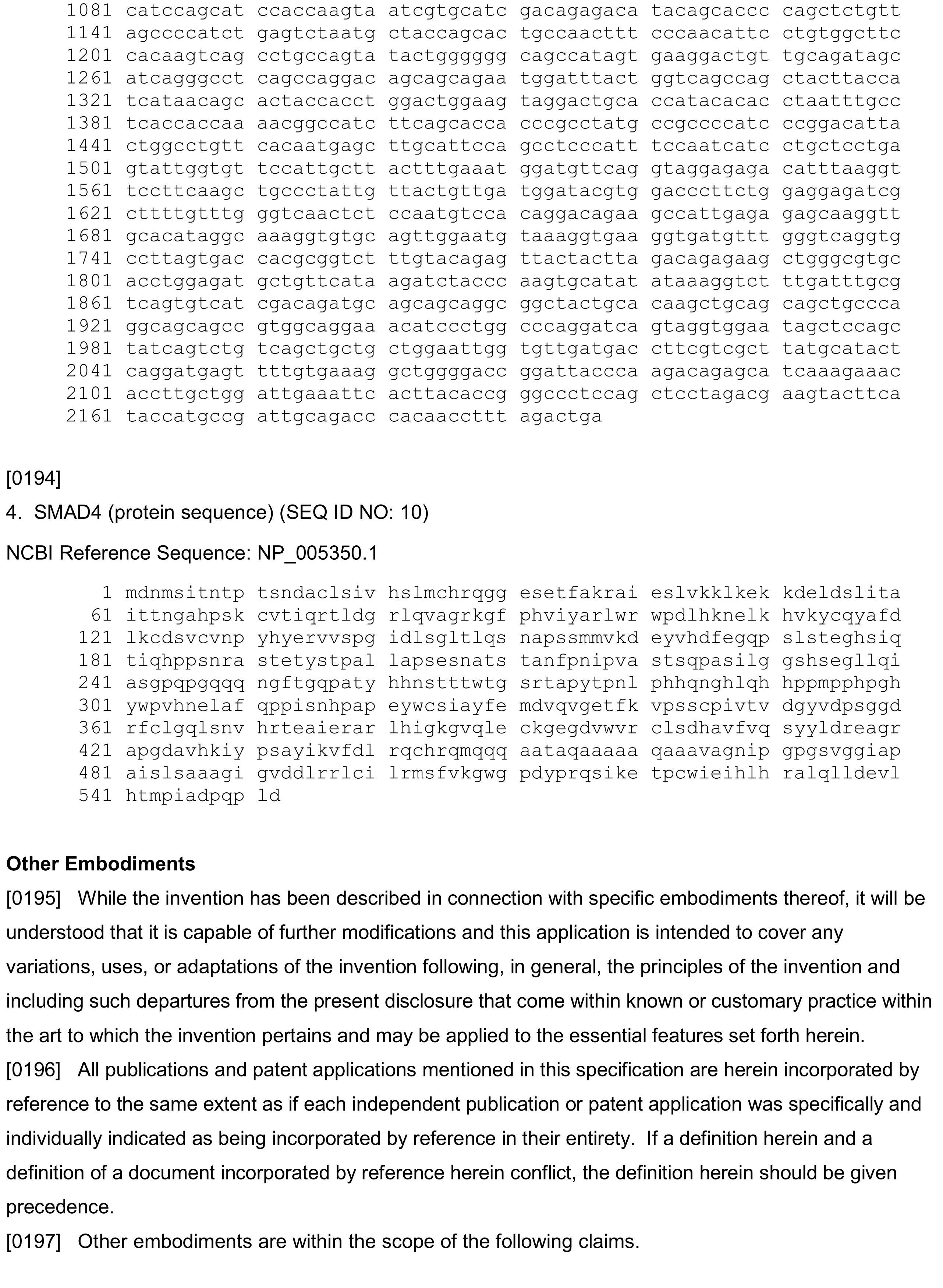
- A method for determining whether eribulin, an analog thereof, or a pharmaceutically acceptable salt thereof, or another microtubule destabilizing agent, may be used to treat a subject having breast cancer, the method comprising determining the level of expression of SMAD4 in a sample derived from said subject, wherein a high level of expression of SMAD4 in the sample, relative to a control, indicates that eribulin, an analog thereof, or a pharmaceutically acceptable salt thereof, or another microtubule destabilizing agent, will be effective in treating said subject.
- A method of treating a subject having breast cancer, the method comprising identifying a subject having breast cancer in which SMAD4 has a high level of expression, and administering a therapeutically effective amount of eribulin, an analog thereof, or a pharmaceutically acceptable salt thereof, or another microtubule destabilizing agent, to said subject.
- A method of treating a subject having breast cancer, the method comprising assaying a sample derived from said subject to determine the level of expression in said sample of SMAD4, and administering a therapeutically effective amount of eribulin, an analog thereof, or a pharmaceutically acceptable salt thereof, or another microtubule destabilizing agent, to said subject when a high level of expression of SMAD4 is detected in said sample.
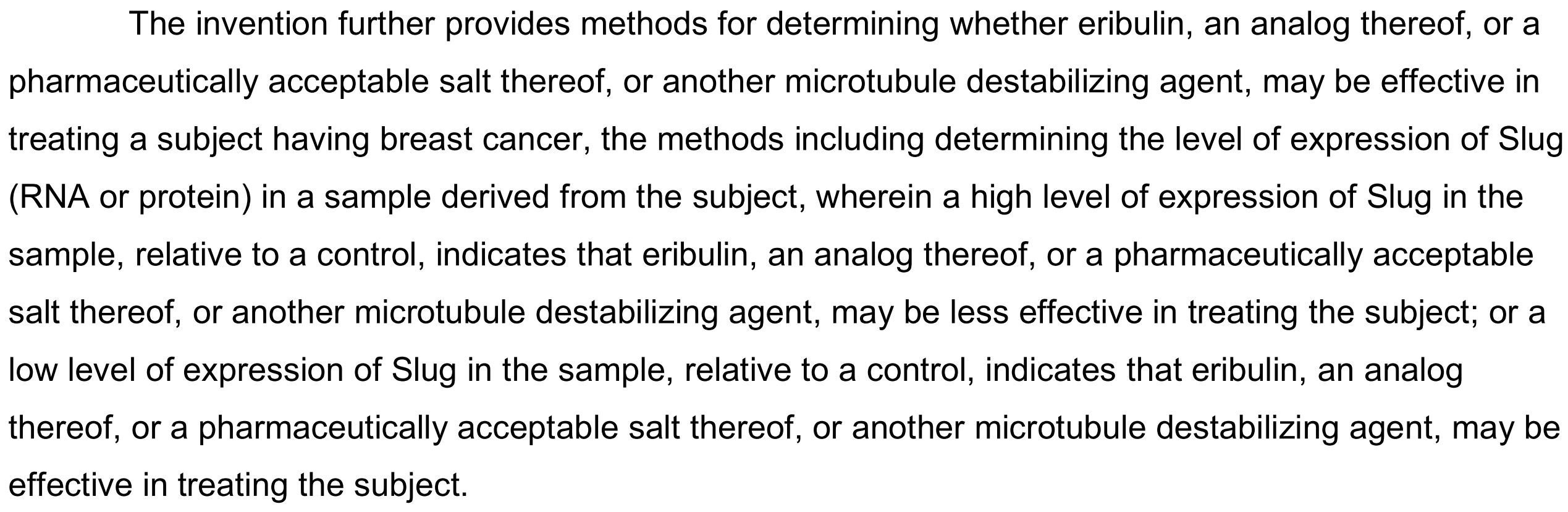
- A method for determining whether eribulin, an analog thereof, or a pharmaceutically acceptable salt thereof, or another microtubule destabilizing agent, may be effective in treating a subject having breast cancer, the method comprising determining the level of expression of Slug in a sample derived from said subject, wherein a high level of expression of Slug in the sample, relative to a control, indicates that eribulin, an analog thereof, or a pharmaceutically acceptable salt thereof, or another microtubule destabilizing agent, may be less effective in treating said subject; or a low level of expression of Slug in the sample, relative to a control, indicates that eribulin, an analog thereof, or a pharmaceutically acceptable salt thereof, or another microtubule destabilizing agent, may be effective in treating said subject.
- A method of treating a subject having breast cancer, the method comprising identifying a subject having breast cancer in which Slug has a low level of expression, and administering a therapeutically effective amount of eribulin, an analog thereof, or a pharmaceutically acceptable salt thereof, or another microtubule destabilizing agent, to said subject.
- A method of treating a subject having breast cancer, the method comprising assaying a sample derived from said subject to determine the level of expression in said sample of Slug, and administering a therapeutically effective amount of eribulin, an analog thereof, or a pharmaceutically acceptable salt thereof, or another microtubule destabilizing agent, to said subject when a low level of expression of Slug is detected in said sample.
- The method of claim 4, wherein said determining is carried out before treatment with eribulin, an analog thereof, or a pharmaceutically acceptable salt thereof, or another microtubule destabilizing agent, to determine whether to administer eribulin, an analog thereof, or a pharmaceutically acceptable salt thereof, or another microtubule destabilizing agent.
- The method of claim 4, wherein said determining is carried out after treatment with eribulin, an analog thereof, or a pharmaceutically acceptable salt thereof, or another microtubule destabilizing agent, to determine whether to continue to administer eribulin, an analog thereof, or a pharmaceutically acceptable salt thereof, or another microtubule destabilizing agent.
- A method for determining whether eribulin, an analog thereof, or a pharmaceutically acceptable salt thereof, or another microtubule destabilizing agent, may be used to treat a subject having breast cancer, or for treating a subject having breast cancer, the method comprising carrying out a combination of two or more of the methods of two or more of claims 1-8.
- The method of any one of claims 1, 3, 4, or 6-9, wherein the sample comprises cells of a breast tumor obtained from a subject.
- The method of any one of claims 1-10, wherein the pharmaceutically acceptable salt of eribulin is eribulin mesylate.
- The method of any one of claims 1-11, wherein said subject has not been previously treated with eribulin, an analog thereof, or a pharmaceutically acceptable salt thereof.
- The method of any one of claims 1-11, wherein said subject has been previously treated with eribulin, an analog thereof, or a pharmaceutically acceptable salt thereof.
- The method of any one of claims 1-13, wherein said other microtubule destabilizing agent is selected from the group consisting of vinorelbine, vinblastine, and maytansine.
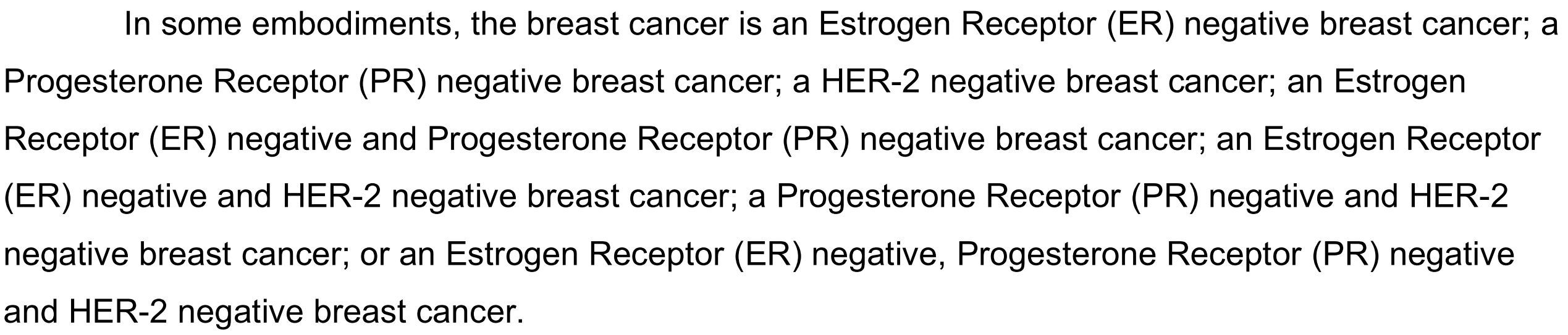
- The method of any one of claims 1-14, wherein said breast cancer is an Estrogen Receptor (ER) negative breast cancer; a Progesterone Receptor (PR) negative breast cancer; a HER-2 negative breast cancer; an Estrogen Receptor (ER) negative and Progesterone Receptor (PR) negative breast cancer; an Estrogen Receptor (ER) negative and HER-2 negative breast cancer; a Progesterone Receptor (PR) negative and HER-2 negative breast cancer; or an Estrogen Receptor (ER) negative, Progesterone Receptor (PR) negative and HER-2 negative breast cancer.
- The method of any one of claims 1-15, wherein the level of expression of SMAD4 and/or Slug is determined at the nucleic acid level.
- The method of claim 16, the level of expression of SMAD4 and/or Slug is determined by detecting cDNA.
- The method of claim 16, the level of expression of SMAD4 and/or Slug is determined by detecting mRNA.
- The method of any one of claims 16-18, wherein the level of expression of SMAD4 and/or Slug is determined by using a technique selected from the group consisting of RNA-seq, polymerase chain reaction (PCR) amplification reaction, reverse-transcriptase PCR analysis, quantitative reverse-transcriptase PCR analysis, Northern blot analysis, RNAase protection assay, digital RNA detection/ quantitation, and combinations or subcombinations thereof.
- The method of any one of claims 1-15, wherein the level of expression of SMAD4 and/or Slug is determined at the protein level.
- The method of claim 20, wherein the presence of SMAD4 and/or Slug is detected using an antibody or antigen binding fragment thereof, which specifically binds to the protein.
- The method of claim 21, wherein the antibody or antigen binding fragment thereof is selected from the group consisting of a murine antibody, a human antibody, a humanized antibody, a bispecific antibody, a chimeric antibody, a Fab, Fab', F(ab')2, ScFv, SMIP, affibody, avimer, versabody, nanobody, a domain antibody, and an antigen binding fragment of any of the foregoing.
- The method of claim 21 or 22, wherein the antibody or antigen binding fragment thereof is labeled.
- The method of claim 23, wherein the antibody or antigen binding fragment thereof is labeled with a label selected from the group consisting of a radio-label, a biotin-label, a chromophore-label, a fluorophore-label, and an enzyme-label.
- The method of any one of claims 20-24, wherein the level of expression of SMAD4 and/or Slug is determined by using a technique selected from the group consisting of an immunoassay, a western blot analysis, a radioimmunoassay, immunofluorimetry, immunoprecipitation, equilibrium dialysis, immunodiffusion, electrochemiluminescence immunoassay (ECLIA), ELISA assay, immunopolymerase chain reaction and combinations or sub-combinations thereof.
- The method of claim 25, wherein the immunoassay is a solution-based immunoassay selected from the group consisting of electrochemiluminescence, chemiluminescence, fluorogenic chemiluminescence, fluorescence polarization, and time-resolved fluorescence.
- The method of claim 25, wherein the immunoassay is a sandwich immunoassay selected from the group consisting of electrochemiluminescence, chemiluminescence, and fluorogenic chemiluminescence.
- The method of any one of claims 1, 3, 4, or 6-27, wherein said sample comprises a fluid, or component thereof, obtained from said subject.
- The method of claim 28, wherein the fluid is selected from the group consisting of blood, lymph, serum, plasma, cystic fluid, nipple aspirates, urine, sputum, and fluid collected from a biopsy.
- The method of any one of claims 1, 3, 4, or 6-27, wherein the sample comprises a tissue, or component thereof, obtained from said subject.
- The method of claim 30, wherein said tissue is selected from the group consisting of breast tissue, connective tissue, lymphatic tissue, tissue obtained from a biopsy and tissue obtained from a lump biopsy.
- The method of claim 30 or 31, wherein the tissue is breast tissue or a component thereof.
- The method of claim 32, wherein said component of said breast tissue comprises breast tissue cells.
- The method of claim 33, wherein said breast tissue cells are circulating breast tumor cells.
- The method of any one of claims 1-34, wherein said subject is a human subject.
- A kit for predicting whether eribulin, an analog thereof, or a pharmaceutically acceptable salt thereof, or another microtubule destabilizing agent, may be used to treat a subject having breast cancer, the kit comprising reagents for determining the level of expression of SMAD4 and/or Slug; and instructions for use of the kit to predict whether eribulin, an analog thereof, or a pharmaceutically acceptable salt thereof, or another microtubule destabilizing agent, may be used to treat a subject having breast cancer.
- The kit of claim 36, wherein the pharmaceutically acceptable salt of eribulin is eribulin mesylate.
- The kit of claim 36, wherein the other microtubule destabilizing agent is selected from the group consisting of vinorelbine, vinblastine, and maytansine.
- The kit of any one of claims 36-38, wherein the reagent for determining the level of expression of SMAD4 and/or Slug is a probe for amplifying and/or detecting SMAD4 and/or Slug.
- The kit of any one of claims 36-38, wherein the reagent for determining the level of expression of SMAD4 and/or Slug is an antibody.
- The kit of any one of claims 36-40, further comprising reagents for obtaining a biological sample from a subject.
- The kit of any one of claims 36-41, further comprising a control sample.
Applications Claiming Priority (2)
| Application Number | Priority Date | Filing Date | Title |
|---|---|---|---|
| US201962812836P | 2019-03-01 | 2019-03-01 | |
| US62/812,836 | 2019-03-01 |
Publications (1)
| Publication Number | Publication Date |
|---|---|
| WO2020179712A1 true WO2020179712A1 (en) | 2020-09-10 |
Family
ID=72338722
Family Applications (1)
| Application Number | Title | Priority Date | Filing Date |
|---|---|---|---|
| PCT/JP2020/008485 Ceased WO2020179712A1 (en) | 2019-03-01 | 2020-02-28 | Methods for predicting tumor response to eribulin |
Country Status (1)
| Country | Link |
|---|---|
| WO (1) | WO2020179712A1 (en) |
Cited By (1)
| Publication number | Priority date | Publication date | Assignee | Title |
|---|---|---|---|---|
| CN113512733A (en) * | 2021-05-13 | 2021-10-19 | 浙江工业大学 | Method for synthesizing eribulin intermediate through electrochemical NHK reaction |
Citations (1)
| Publication number | Priority date | Publication date | Assignee | Title |
|---|---|---|---|---|
| JP2014509515A (en) * | 2011-03-18 | 2014-04-21 | エーザイ・アール・アンド・ディー・マネジメント株式会社 | Methods and compositions for predicting response to eribulin |
-
2020
- 2020-02-28 WO PCT/JP2020/008485 patent/WO2020179712A1/en not_active Ceased
Patent Citations (1)
| Publication number | Priority date | Publication date | Assignee | Title |
|---|---|---|---|---|
| JP2014509515A (en) * | 2011-03-18 | 2014-04-21 | エーザイ・アール・アンド・ディー・マネジメント株式会社 | Methods and compositions for predicting response to eribulin |
Non-Patent Citations (2)
| Title |
|---|
| COOMBES R C; ARMSTRONG A; AHMED S; PAGE K; HASTINGS R K; SALARI R; SETHI H; BOYDELL A R; SHCHEGROVA S V; FERNANDEZ-GARCIA D; GLEAS: "Abstract P4-01-02: Early detection of residual breast cancer through a robust, scalable and personalized analysis of circulating tumour DNA (ctDNA) antedates overt metastatic recurrence", CANCER RESEARCH, AMERICAN ASSOCIATION FOR CANCER RESEARCH, US, vol. 79, no. 4, Supplement 1, Abstract P4-01-02, 1 February 2019 (2019-02-01), US, XP009514404, ISSN: 1538-7445, Retrieved from the Internet <URL:http://cancerres.aacrjournals.org/content/79/4_Supplement/P4-01-02> DOI: 10.1158/1538-7445.SABCS18-P4-01-02 * |
| KAUL ROMA; RISINGER APRIL L.; MOOBERRY SUSAN L.: "Eribulin rapidly inhibits TGF-β-induced Snail expression and can induce Slug expression in a Smad4-dependent manner", BRITISH JOURNAL OF CANCER, NATURE PUBLISHING GROUP, GB, vol. 121, no. 7, 4 September 2019 (2019-09-04), GB, pages 611 - 621, XP036895370, ISSN: 0007-0920, DOI: 10.1038/s41416-019-0556-9 * |
Cited By (1)
| Publication number | Priority date | Publication date | Assignee | Title |
|---|---|---|---|---|
| CN113512733A (en) * | 2021-05-13 | 2021-10-19 | 浙江工业大学 | Method for synthesizing eribulin intermediate through electrochemical NHK reaction |
Similar Documents
| Publication | Publication Date | Title |
|---|---|---|
| JP2019150027A5 (en) | ||
| JP2014509515A5 (en) | ||
| Wang et al. | Clinical significance of folate receptor-positive circulating tumor cells detected by ligand-targeted polymerase chain reaction in lung cancer | |
| US10345309B2 (en) | Biomarkers for gastric cancer and uses thereof | |
| Tang et al. | High expression of GPER1, EGFR and CXCR1 is associated with lymph node metastasis in papillary thyroid carcinoma | |
| JP2015517801A5 (en) | ||
| Miyamoto et al. | Significance of progesterone receptor-A and-B expressions in endometrial adenocarcinoma | |
| Roe et al. | Mesothelin-related predictive and prognostic factors in malignant mesothelioma: a nested case–control study | |
| US12366574B2 (en) | Keratin 17 as a biomarker for bladder cancer | |
| Lankiewicz et al. | Quantitative real-time RT-PCR of disseminated tumor cells in combination with immunomagnetic cell enrichment | |
| JP2015503922A (en) | Biomarkers for breast cancer prediction and diagnosis | |
| KR20110065512A (en) | How to diagnose cancer and how to measure overall survival and disease free survival in cancer patients | |
| Di Gioia et al. | Serum HER2 supports HER2-testing in tissue at the time of primary diagnosis of breast cancer | |
| CA3112792A1 (en) | Method of selection for treatment of subjects at risk of invasive breast cancer | |
| Yu et al. | Estrogen receptor α (ERα) status evaluation using RNAscope in situ hybridization: a reliable and complementary method for IHC in breast cancer tissues | |
| Chen et al. | GP73 is down-regulated in gastric cancer and associated with tumor differentiation | |
| Zhao et al. | Role of GPER1, EGFR and CXCR1 in differentiating between malignant follicular thyroid carcinoma and benign follicular thyroid adenoma | |
| Niu et al. | Characterization of circulating tumor cells in patients with metastatic bladder cancer utilizing functionalized microfluidics | |
| KR102000387B1 (en) | Protein biomarkers for distinguishing malignancy of intraductal papillary mucinous neoplasm and their use | |
| WO2023234422A1 (en) | Method for testing tertiary lymphoid tissue, and kit for testing tertiary lymphoid tissue | |
| WO2012010105A1 (en) | Methods for detection of lethal system | |
| Phadke et al. | A novel and accurate microfluidic assay of CD62L in bladder cancer serum samples | |
| WO2019046807A1 (en) | Phenotypic profiling of hepatocellular carcinoma circulating tumor cells for treatment selection | |
| WO2014041064A1 (en) | New biomarkers for the diagnosis and/or prognosis of clear cell renal cell carcinoma | |
| TW202317990A (en) | Method and kit for predicting breast cancer prognosis |
Legal Events
| Date | Code | Title | Description |
|---|---|---|---|
| 121 | Ep: the epo has been informed by wipo that ep was designated in this application |
Ref document number: 20766622 Country of ref document: EP Kind code of ref document: A1 |
|
| NENP | Non-entry into the national phase |
Ref country code: DE |
|
| 122 | Ep: pct application non-entry in european phase |
Ref document number: 20766622 Country of ref document: EP Kind code of ref document: A1 |