WO2020105445A1 - 推定装置、推定方法及びプログラム - Google Patents
推定装置、推定方法及びプログラムInfo
- Publication number
- WO2020105445A1 WO2020105445A1 PCT/JP2019/043621 JP2019043621W WO2020105445A1 WO 2020105445 A1 WO2020105445 A1 WO 2020105445A1 JP 2019043621 W JP2019043621 W JP 2019043621W WO 2020105445 A1 WO2020105445 A1 WO 2020105445A1
- Authority
- WO
- WIPO (PCT)
- Prior art keywords
- data
- aggregated
- estimation
- function
- model
- Prior art date
- Legal status (The legal status is an assumption and is not a legal conclusion. Google has not performed a legal analysis and makes no representation as to the accuracy of the status listed.)
- Ceased
Links
Images


Classifications
-
- G—PHYSICS
- G06—COMPUTING OR CALCULATING; COUNTING
- G06F—ELECTRIC DIGITAL DATA PROCESSING
- G06F17/00—Digital computing or data processing equipment or methods, specially adapted for specific functions
- G06F17/10—Complex mathematical operations
- G06F17/11—Complex mathematical operations for solving equations, e.g. nonlinear equations, general mathematical optimization problems
-
- G—PHYSICS
- G06—COMPUTING OR CALCULATING; COUNTING
- G06F—ELECTRIC DIGITAL DATA PROCESSING
- G06F16/00—Information retrieval; Database structures therefor; File system structures therefor
-
- G—PHYSICS
- G06—COMPUTING OR CALCULATING; COUNTING
- G06F—ELECTRIC DIGITAL DATA PROCESSING
- G06F16/00—Information retrieval; Database structures therefor; File system structures therefor
- G06F16/20—Information retrieval; Database structures therefor; File system structures therefor of structured data, e.g. relational data
-
- G—PHYSICS
- G06—COMPUTING OR CALCULATING; COUNTING
- G06N—COMPUTING ARRANGEMENTS BASED ON SPECIFIC COMPUTATIONAL MODELS
- G06N20/00—Machine learning
-
- G—PHYSICS
- G06—COMPUTING OR CALCULATING; COUNTING
- G06N—COMPUTING ARRANGEMENTS BASED ON SPECIFIC COMPUTATIONAL MODELS
- G06N7/00—Computing arrangements based on specific mathematical models
-
- G—PHYSICS
- G06—COMPUTING OR CALCULATING; COUNTING
- G06N—COMPUTING ARRANGEMENTS BASED ON SPECIFIC COMPUTATIONAL MODELS
- G06N99/00—Subject matter not provided for in other groups of this subclass
-
- G—PHYSICS
- G06—COMPUTING OR CALCULATING; COUNTING
- G06Q—INFORMATION AND COMMUNICATION TECHNOLOGY [ICT] SPECIALLY ADAPTED FOR ADMINISTRATIVE, COMMERCIAL, FINANCIAL, MANAGERIAL OR SUPERVISORY PURPOSES; SYSTEMS OR METHODS SPECIALLY ADAPTED FOR ADMINISTRATIVE, COMMERCIAL, FINANCIAL, MANAGERIAL OR SUPERVISORY PURPOSES, NOT OTHERWISE PROVIDED FOR
- G06Q10/00—Administration; Management
- G06Q10/04—Forecasting or optimisation specially adapted for administrative or management purposes, e.g. linear programming or "cutting stock problem"
Definitions
- the present invention relates to an estimation device, an estimation method and a program.
- individual data may be aggregated. For example, there is a case where the data of the movement locus of each individual is aggregated into the population data of each rough area so that the individual cannot be tracked.
- various analyzes can be performed by estimating the model of the individual data before being aggregated.
- a set graphical model has been proposed as a method for estimating a model of individual data before being aggregated (see Non-Patent Document 1, for example).
- various information may be obtained together with the data obtained by aggregating the individual data.
- information indicating the characteristics of the area information indicating the characteristics of the time, information indicating the characteristics of the area and time, etc.
- Such diverse information could not be effectively utilized. Effective use of these diverse information can be expected to improve the estimation accuracy of the model of individual data before being aggregated.
- the present invention has been made in view of the above points, and it is an object of the present invention to estimate a model of individual data with high accuracy when aggregated data is given.
- the estimation device includes an input unit for inputting aggregated data obtained by aggregating a plurality of data and feature data representing a feature of the aggregated data, and a predetermined function.
- a determining unit that determines parameters of a model of a plurality of data before aggregation of the aggregated data, and using the aggregated data, by optimizing a predetermined objective function, It is characterized by comprising a parameter and an estimating means for estimating the plurality of data.
- the model of individual data can be estimated with high accuracy when given the aggregated data.
- the various information is data representing some characteristic of the aggregated data. For example, when the aggregated data is spatiotemporal data indicating population for each region and each hour, at least one of the region and the time is used. It is information representing the characteristics of.
- the information indicating the characteristics of the area is latitude / longitude information or map information
- the information indicating the characteristics of time is the day of the week or the time zone (for example, morning, daytime, night, etc.)
- the area and Examples of information that represents the characteristics of time include weather forecasts and other spatiotemporal data.
- the spatiotemporal data indicating the population for each area and each hour (hereinafter, also referred to as “population data”) is given, information indicating the characteristics of the area, A model of movement amount data indicating the flow of population between regions and each hour from the population data by utilizing the information indicating the characteristics of time and the information indicating the characteristics of region and time (hereinafter, “movement model”). Will also be described.) Will be described.
- the aggregated data to which the embodiment of the present invention is applicable is not limited to the population data, and can be applied to any aggregated data.
- population data In the embodiment of the present invention, population data
- y tk represents the population of time t ⁇ ⁇ 1, 2, ..., T ⁇ in the region k ⁇ ⁇ 1, 2, ..., K ⁇ .
- K represents the number of areas (that is, the total number of area indexes)
- T represents the number of times (that is, the total number of time indexes).
- the vector representing the feature of the area k x k vector s t representing the characteristics of the time t
- the vector representing the feature region k and time t as u tk these vectors x k, s t and u tk Shall also be given.
- the vector x k representing the characteristics of the region k latitude / longitude information of the region k, map information of the region k, and the like can be given.
- a vector s t representing the characteristics of the time t it includes day and time, etc. of the time t.
- the vector u tk representing the characteristics of the region k and the time t
- the weather forecast of the region k at the time t other spatiotemporal data, and the like can be given.
- these vectors are also referred to as “feature vectors”.
- the feature vector may be referred to as “feature data”.
- the movement amount data and the movement model are estimated so that the movement amount data and the movement model match the given population data.
- the index indicating the degree of matching for example, the likelihood L (Z) shown in the following equations (1) and (2) can be used.
- ⁇ tkk ′ is the probability of moving from the region k to the region k ′ at the time t
- ⁇ tkk ′ ⁇ 0,
- the first-order Markov model is used as the movement model, but the present invention is not limited to this.
- a higher-order Markov model or another model may be used.
- Is determined by a function f that takes the given feature vector as an input As the function f, a neural network represented by the following formula (4) can be used.
- ⁇ is a parameter of the neural network.
- the neural network e.g., x k, x k', s t, a neural network that only the input part of the feature vector of u tk and u tk'
- the neural network any neural network such as a feedforward neural network, a recurrent neural network, a convolutional neural network can be used.
- the function f a model other than the neural network may be used.
- the degree of matching that is, the likelihood L (Z) shown in the above equations (1) and (2)
- the parameter ⁇ of the function f which is a neural network
- the movement amount data Z are estimated.
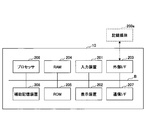
- FIG. 1 is a diagram showing an example of a functional configuration of an estimation device 10 according to an embodiment of the present invention.
- the estimation device 10 includes an input unit 101, a model parameter determination unit 102, an update unit 103, an end determination unit 104, and an output unit 105.
- the estimation device 10 according to the embodiment of the present invention includes a storage unit 106.
- the storage unit 106 stores each information.
- the storage unit 106 is, for example, census data Y and each feature vector x k, s t and u tk like are stored.
- the input unit 101 inputs and population data Y, each feature vector x k, and s t and u tk.
- the population data Y as the input source of each feature vector x k, s t and u tk, may be a storage unit 106, another device that is connected via a communication network such as Good.
- the model parameter determination unit 102 determines the parameter ⁇ of the moving model using the function f shown in the above equation (4).
- the updating unit 103 estimates the parameter ⁇ and the movement amount data Z of the function f so as to increase the degree of matching while satisfying the constraint shown in the above equation (3), and then the parameter ⁇ and the movement amount data Z. (More precisely, the estimated value of the parameter ⁇ and the estimated value of each moving person z tkk ′ included in the movement amount data Z) are updated.
- the determination of the parameter ⁇ by the model parameter determination unit 102 and the estimation of the parameter ⁇ and the movement amount data Z by the update unit 103 are repeatedly executed until a predetermined end condition is satisfied.
- the end determination unit 104 determines whether a predetermined end condition is satisfied.
- the predetermined termination condition for example, the number of repetitions is equal to or larger than a predetermined threshold value
- the objective function value for example, the likelihood L (Z)
- the output unit 105 outputs the movement model parameter ⁇ and the movement amount data Z when the end determination unit 104 determines that a predetermined end condition is satisfied.
- the output destination of the movement model parameter ⁇ and the movement amount data Z may be the storage unit 106, a display device such as a display, or may be connected via a communication network or the like. It may be another device.
- the output unit 105 may output only one of the movement model parameter ⁇ and the movement amount data Z.
- FIG. 2 is a flowchart showing an example of processing executed by the estimation device 10 according to the embodiment of the present invention.
- the input unit 101 inputs and population data Y, each feature vector x k, and s t and u tk (step S101).
- the model parameter determination unit 102 determines the parameter ⁇ of the moving model using the function f shown in the above equation (4) (step S102).
- the updating unit 103 estimates the parameter ⁇ and the movement amount data Z of the function f so as to increase the degree of matching while satisfying the constraint shown in the above expression (3), and then the parameter of the function f.
- the estimated value of ⁇ and the estimated value of each moving person z tkk ′ included in the movement amount data Z are updated (step S103).
- the end determination unit 104 determines whether or not a predetermined end condition is satisfied (step S104).
- step S104 If it is not determined in step S104 that the predetermined end condition is satisfied, the process returns to step S102. As a result, the above steps S102 and S103 are repeatedly executed until the end condition is satisfied.
- step S104 when it is determined in step S104 that the predetermined termination condition is satisfied, the output unit 105 outputs the movement model parameter ⁇ and the movement amount data Z (step S105).
- the parameter ⁇ of the movement model and the movement amount data Z that is, the number of moving persons z tkk ′ for each region and for each time
- CGMM mixed set graphical model
- ICGM non-stationary set graphical model
- CGM set graphical model
- STAY set graphical model
- the latitude / longitude information is used as the information showing the feature of the region, and the time of day is used as the information showing the time feature.
- NAE number of moving people estimation error
- Is an estimated value of the number of people moving that is, an estimation result according to the embodiment of the present invention or the related art.
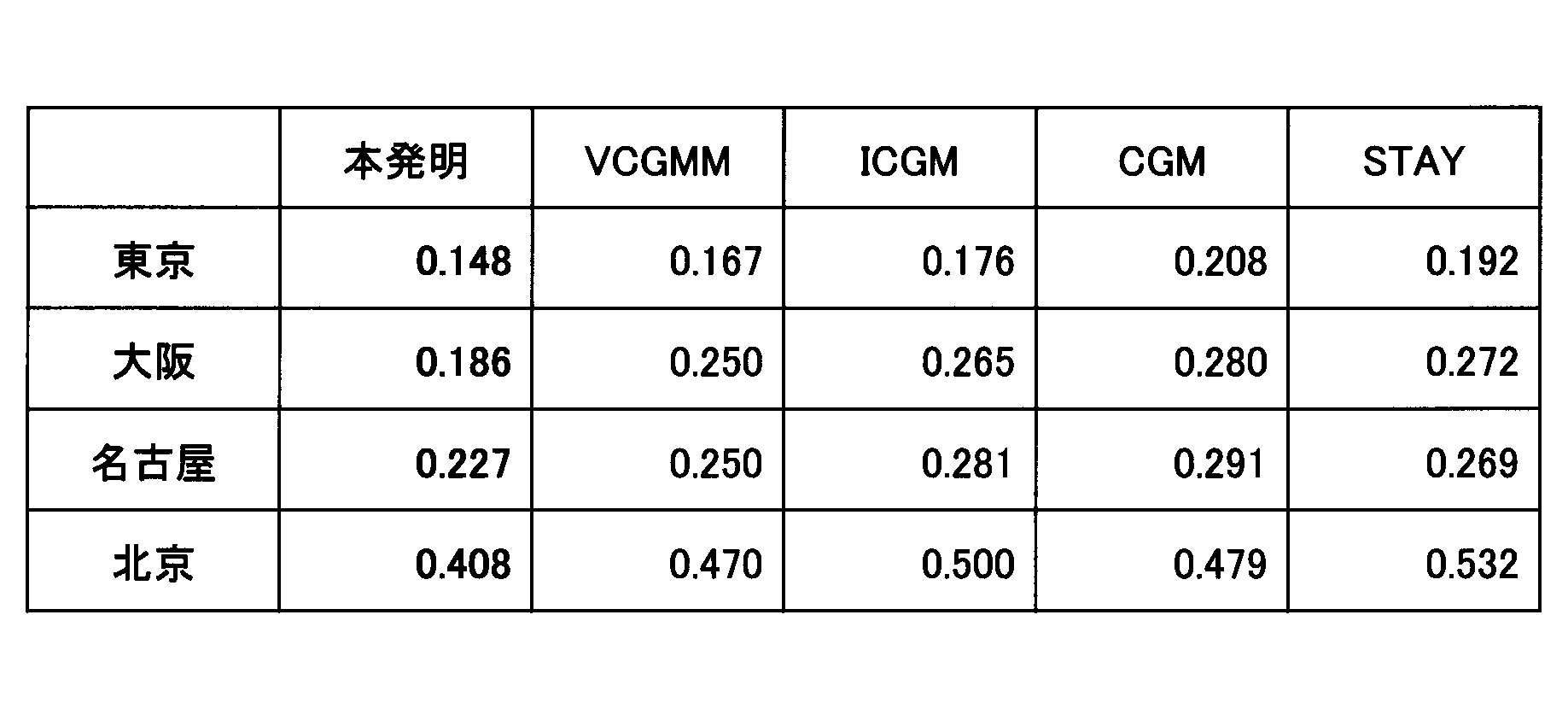
- the moving number estimation error is smaller than that in the conventional technique in all the four population data. That is, it can be seen that the estimation device 10 according to the embodiment of the present invention can estimate individual data with higher accuracy than in the conventional technique.
- FIG. 3 is a diagram showing an example of a hardware configuration of the estimation device 10 according to the embodiment of the present invention.
- the estimation device 10 includes an input device 201, a display device 202, an external I / F 203, a RAM (Random Access Memory) 204, and a ROM (Read Only Memory). 205, a processor 206, a communication I / F 207, and an auxiliary storage device 208. These pieces of hardware are connected to each other via a bus B so that they can communicate with each other.
- the input device 201 is, for example, a keyboard, a mouse, a touch panel, etc., and is used by the user to input various operations.
- the display device 202 is, for example, a display or the like, and displays the processing result of the estimation device 10.
- the estimation device 10 may not include at least one of the input device 201 and the display device 202.
- the external I / F 203 is an interface with an external device.
- the external device includes a recording medium 203a and the like.
- the estimation apparatus 10 can read or write the recording medium 203a via the external I / F 203.
- On the recording medium 203a one or more programs and the like that implement each functional unit (for example, the input unit 101, the model parameter determination unit 102, the update unit 103, the end determination unit 104, the output unit 105, and the like) of the estimation device 10 are provided. It may be recorded.
- the recording medium 203a includes, for example, a flexible disk, a CD (Compact Disc), a DVD (Digital Versatile Disk), an SD memory card (Secure Digital memory card), and a USB (Universal Serial Bus) memory card.
- a flexible disk for example, a CD (Compact Disc), a DVD (Digital Versatile Disk), an SD memory card (Secure Digital memory card), and a USB (Universal Serial Bus) memory card.
- RAM 204 is a volatile semiconductor memory that temporarily holds programs and data.
- the ROM 205 is a non-volatile semiconductor memory that can retain programs and data even when the power is turned off.
- the ROM 205 stores, for example, setting information regarding an OS (Operating System), setting information regarding a communication network, and the like.
- the processor 206 is, for example, a CPU (Central Processing Unit), a GPU (Graphics Processing Unit), or the like, and is an arithmetic device that reads programs and data from the ROM 205, the auxiliary storage device 208, and the like onto the RAM 204 and executes processing.
- Each functional unit included in the estimation device 10 is realized by reading one or more programs stored in the ROM 205, the auxiliary storage device 208, or the like onto the RAM 204 and causing the processor 206 to execute the processing.
- the communication I / F 207 is an interface for connecting the estimation device 10 to a communication network.
- One or more programs that implement each functional unit of the estimation apparatus 10 may be acquired (downloaded) from a predetermined server device or the like via the communication I / F 207.
- the auxiliary storage device 208 is, for example, a HDD (Hard Disk Drive) or SSD (Solid State Drive), and is a non-volatile storage device that stores programs and data.
- the programs and data stored in the auxiliary storage device 208 include, for example, an OS, an application program that implements various functions on the OS, and one or more programs that implement each functional unit of the estimation device 10.
- the storage unit 106 included in the estimation device 10 is realized by, for example, the auxiliary storage device 208.
- the estimation device 10 according to the embodiment of the present invention has the hardware configuration shown in FIG. 3 and thus can realize the various processes described above.
- the estimation device 10 according to the embodiment of the present invention is realized by one device (computer), but the present invention is not limited to this.
- the estimation device 10 according to the embodiment of the present invention may be realized by a plurality of devices (computers). Further, one device (computer) may include a plurality of processors 206 and a plurality of memories (RAM 204, ROM 205, auxiliary storage device 208, etc.).
Landscapes
- Engineering & Computer Science (AREA)
- Physics & Mathematics (AREA)
- Theoretical Computer Science (AREA)
- General Physics & Mathematics (AREA)
- Mathematical Physics (AREA)
- Data Mining & Analysis (AREA)
- General Engineering & Computer Science (AREA)
- Software Systems (AREA)
- Pure & Applied Mathematics (AREA)
- Mathematical Optimization (AREA)
- Mathematical Analysis (AREA)
- Computational Mathematics (AREA)
- Databases & Information Systems (AREA)
- Algebra (AREA)
- Operations Research (AREA)
- Business, Economics & Management (AREA)
- Computing Systems (AREA)
- Strategic Management (AREA)
- Evolutionary Computation (AREA)
- Economics (AREA)
- Human Resources & Organizations (AREA)
- Artificial Intelligence (AREA)
- Development Economics (AREA)
- Computer Vision & Pattern Recognition (AREA)
- General Business, Economics & Management (AREA)
- Medical Informatics (AREA)
- Tourism & Hospitality (AREA)
- Quality & Reliability (AREA)
- Marketing (AREA)
- Entrepreneurship & Innovation (AREA)
- Game Theory and Decision Science (AREA)
- Information Retrieval, Db Structures And Fs Structures Therefor (AREA)
- Traffic Control Systems (AREA)
- Management, Administration, Business Operations System, And Electronic Commerce (AREA)
Abstract
推定装置は、複数のデータが集約された集約データと、該集約データの特徴を表す特徴データとを入力する入力手段と、所定の関数と前記特徴データとを用いて、前記集約データの集約前の複数のデータのモデルのパラメータを決定する決定手段と、前記集約データを用いて、所定の目的関数を最適化することで、前記関数のパラメータと、前記複数のデータとを推定する推定手段と、を有することを特徴とする。
Description
本発明は、推定装置、推定方法及びプログラムに関する。
プライバシー保護等のため、個々のデータが集約される場合がある。例えば、個人毎の移動軌跡のデータから、個人を追跡できないように、粗い領域毎の人口データに集約される場合等である。個々のデータを集約したデータが与えられた場合に、集約される前の個々のデータのモデルを推定することで、様々な解析が可能になる。
集約される前の個々のデータのモデルを推定する方法として、集合グラフィカルモデルが提案されている(例えば非特許文献1参照)。
Tomoharu Iwata, Hitoshi Shimizu, Futoshi Naya, Naonori Ueda, "Estimating People Flow from Spatio-temporal Population Data via Collective Graphical Mixture Models,"ACM Transactions on Spatial Algorithms and Systems, Volume 3 Issue 1, Article No. 2, May 2017
ここで、個々のデータを集約したデータと共に、多様な情報(例えば、領域の特徴を示す情報や時間の特徴を示す情報、領域及び時間の特徴を示す情報等)が得られる場合がある。しかしながら、従来では、このような多様な情報を有効に活用できなかった。これらの多様な情報を有効に活用することで、集約される前の個々データのモデルの推定精度の向上が期待できる。
本発明は、上記の点に鑑みてなされたもので、集約されたデータが与えられた場合に、個々のデータのモデルを高い精度で推定することを目的とする。
上記目的を達成するため、本発明の実施の形態における推定装置は、複数のデータが集約された集約データと、該集約データの特徴を表す特徴データとを入力する入力手段と、所定の関数と前記特徴データとを用いて、前記集約データの集約前の複数のデータのモデルのパラメータを決定する決定手段と、前記集約データを用いて、所定の目的関数を最適化することで、前記関数のパラメータと、前記複数のデータとを推定する推定手段と、を有することを特徴とする。
集約されたデータが与えられた場合に、個々のデータのモデルを高い精度で推定することができる。
以下、本発明の実施の形態について説明する。本発明の実施の形態では、集約されたデータ(以降、「集約データ」とも表す。)が与えられた場合に、多様な情報も活用して、集約される前の個々のデータのモデルを推定する推定装置10について説明する。ここで、多様な情報とは集約データの何等かの特徴を表すデータのことであり、例えば、集約データが領域毎及び時間毎の人口を示す時空間データである場合、領域及び時間の少なくとも一方の特徴を表す情報である。具体的には、例えば、領域の特徴を表す情報としては緯度・経度情報や地図情報等、時間の特徴を表す情報としては曜日や時間帯(例えば、朝、日中、夜間等)、領域及び時間の特徴を表す情報としては天気予報や他の時空間データ等が挙げられる。
以降で説明する実施の形態では、一例として、領域毎及び時間毎の人口を示す時空間データ(以降、「人口データ」とも表す。)が与えられた場合に、領域の特徴を表す情報と、時間の特徴を表す情報と、領域及び時間の特徴を表す情報とを活用して、当該人口データから、領域間毎及び時間毎の人口の流れを示す移動量データのモデル(以降、「移動モデル」とも表す。)を推定する場合について説明する。ただし、本発明の実施の形態が適用可能な集約データは人口データに限られず、任意の集約データに対して適用可能である。
本発明の実施の形態では、人口データ

また、領域kの特徴を表すベクトルをxk、時間tの特徴を表すベクトルをst、領域k及び時間tの特徴を表すベクトルをutkとして、これらのベクトルxk、st及びutkも与えられるものとする。例えば、領域kの特徴を表すベクトルxkとしては、領域kの緯度・経度情報や領域kの地図情報等が挙げられる。また、例えば、時間tの特徴を表すベクトルstとしては、時間tの曜日や時間帯等が挙げられる。また、例えば、領域k及び時間tの特徴を表すベクトルutkとしては、例えば、時間tにおける領域kの天気予報や他の時空間データ等が挙げられる。なお、これらのベクトルを「特徴ベクトル」とも表す。特徴ベクトルは、「特徴データ」と称されてもよい。
このとき、集約される前の個々のデータとして、領域間毎及び時間毎の人口の移動量データ

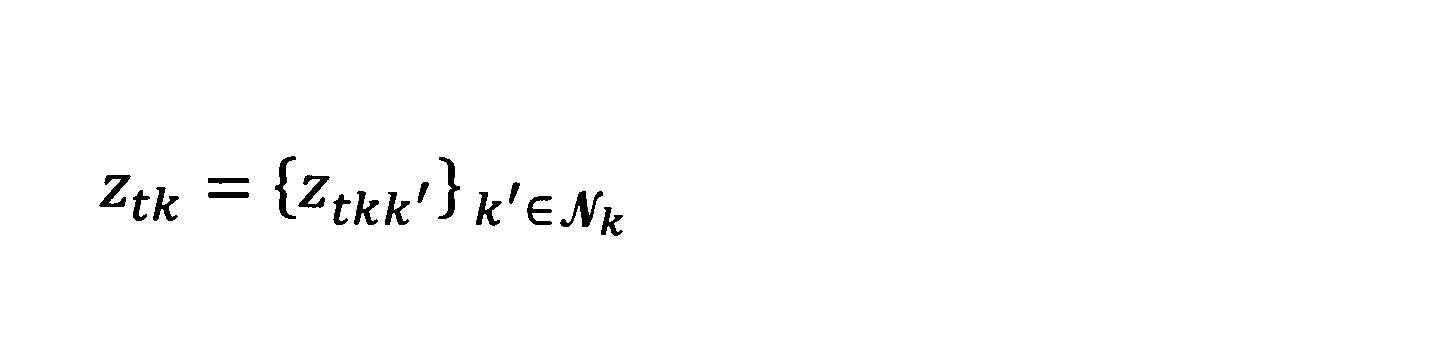
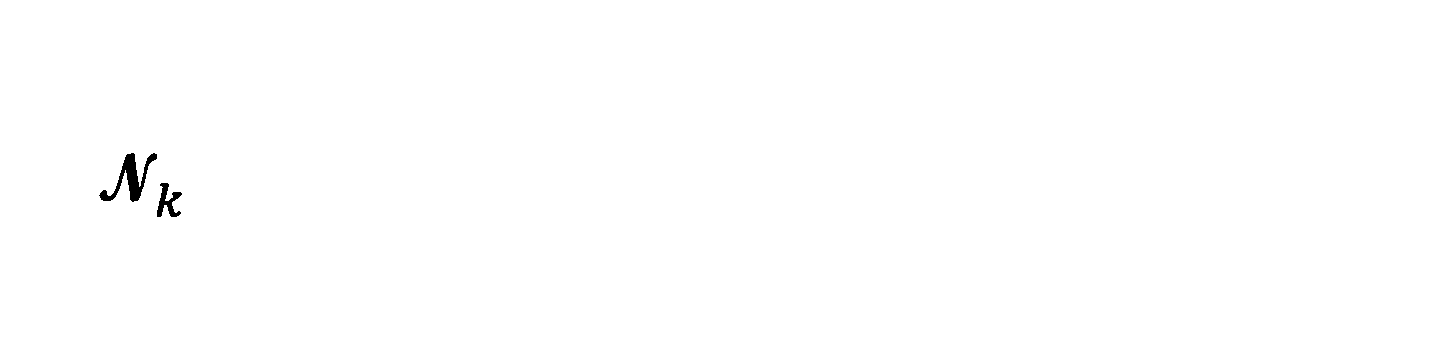
そこで、本発明の実施の形態では、移動量データと移動モデルとが、与えられた人口データと合致するように、移動量データ及び移動モデルを推定する。合致の度合いを表す指標としては、例えば、以下の式(1)及び式(2)に示す尤度L(Z)を用いることができる。


なお、上記の通り、本発明の実施の形態では、移動モデルとして1次マルコフモデルを用いるが、これに限られず、例えば、高次のマルコフモデルや他のモデルを用いてもよい。
また、移動量データと人口データとの間には、以下の式(3)に示す制約がある。

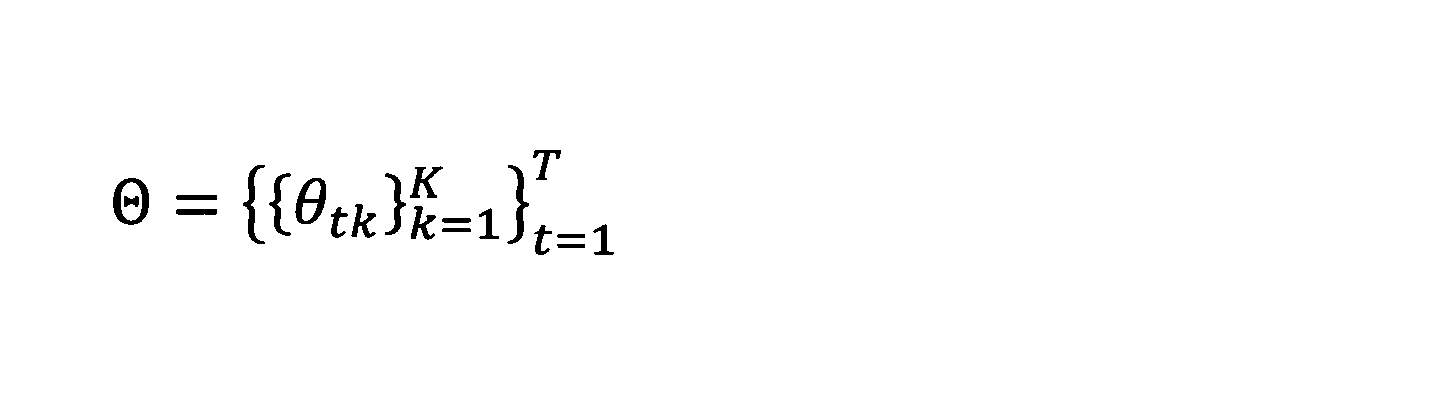

本発明の実施の形態では、上記の式(3)に示す制約を満たしつつ、合致の度合い(すなわち、上記の式(1)及び式(2)に示す尤度L(Z))が高くなるように、ニューラルネットワークである関数fのパラメータφ及び移動量データZを推定する。
なお、本発明の実施の形態では、人口データYの他に、xk、st及びutkの3つの特徴ベクトルが与えられるものとするが、これに限られない。上述したように、関数fとして一部の特徴ベクトルだけを入力するモデルを用いる場合には、例えば、特徴ベクトルxk、st及びutkのうちの1又は2の特徴ベクトルだけが与えられるとしてもよい。
<機能構成>
まず、本発明の実施の形態における推定装置10の機能構成について、図1を参照しながら説明する。図1は、本発明の実施の形態における推定装置10の機能構成の一例を示す図である。
まず、本発明の実施の形態における推定装置10の機能構成について、図1を参照しながら説明する。図1は、本発明の実施の形態における推定装置10の機能構成の一例を示す図である。
図1に示すように、本発明の実施の形態における推定装置10は、入力部101と、モデルパラメータ決定部102と、更新部103と、終了判定部104と、出力部105とを有する。また、本発明の実施の形態における推定装置10は、記憶部106を有する。
記憶部106は、各情報を記憶する。記憶部106には、例えば、人口データYや各特徴ベクトルxk、st及びutk等が記憶されている。
入力部101は、人口データYと、各特徴ベクトルxk、st及びutkとを入力する。なお、人口データYと、各特徴ベクトルxk、st及びutkとの入力元としては、記憶部106であってもよいし、通信ネットワーク等を介して接続される他の装置であってもよい。
モデルパラメータ決定部102は、上記の式(4)に示す関数fを用いて、移動モデルのパラメータΘを決定する。更新部103は、上記の式(3)に示す制約を満たしつつ、合致の度合いが高くなるように、関数fのパラメータφ及び移動量データZを推定した上で、パラメータφ及び移動量データZ(より正確には、パラメータφの推定値及び移動量データZに含まれる各移動人数ztkk´の推定値)を更新する。
上記のモデルパラメータ決定部102によるパラメータΘの決定と、更新部103によるパラメータφ及び移動量データZの推定とは、所定の終了条件を満たすまで繰り返し実行される。
終了判定部104は、所定の終了条件を満たすか否かを判定する。ここで、所定の終了条件としては、例えば、繰り返し回数が所定の閾値以上となったこと、i回目の繰り返しとi+1回目の繰り返しとの間で目的関数値(例えば、尤度L(Z))の変化量が所定の閾値よりも小さくなったこと、i回目の繰り返しとi+1回目の繰り返しとの間で移動量データZの推定値の変化量が所定の閾値よりも小さくなったこと等が挙げられる。
出力部105は、終了判定部104により所定の終了条件を満たすと判定された場合、移動モデルのパラメータΘと、移動量データZとを出力する。なお、移動モデルのパラメータΘと、移動量データZとの出力先としては、記憶部106であってもよいし、ディスプレイ等の表示装置であってもよいし、通信ネットワーク等を介して接続される他の装置であってもよい。また、出力部105は、移動モデルのパラメータΘと、移動量データZとのいずれか一方のみを出力してもよい。
<処理の流れ>
次に、本発明の実施の形態における推定装置10が実行する処理(推定処理)の流れについて、図2を参照しながら説明する。図2は、本発明の実施の形態における推定装置10が実行する処理の一例を示すフローチャートである。
次に、本発明の実施の形態における推定装置10が実行する処理(推定処理)の流れについて、図2を参照しながら説明する。図2は、本発明の実施の形態における推定装置10が実行する処理の一例を示すフローチャートである。
入力部101は、人口データYと、各特徴ベクトルxk、st及びutkとを入力する(ステップS101)。
次に、モデルパラメータ決定部102は、上記の式(4)に示す関数fを用いて、移動モデルのパラメータΘを決定する(ステップS102)。
次に、更新部103は、上記の式(3)に示す制約を満たしつつ、合致の度合いが高くなるように、関数fのパラメータφ及び移動量データZを推定した上で、関数fのパラメータφの推定値及び移動量データZに含まれる各移動人数ztkk´の推定値を更新する(ステップS103)。
次に、終了判定部104は、所定の終了条件を満たすか否かを判定する(ステップS104)。
ステップS104で所定の終了条件を満たすと判定されなかった場合、ステップS102に戻る。これにより、当該終了条件を満たすまで、上記のステップS102とステップS103とが繰り返し実行される。
一方で、ステップS104で所定の終了条件を満たすと判定された場合、出力部105は、移動モデルのパラメータΘと、移動量データZとを出力する(ステップS105)。これにより、移動モデルのパラメータΘと、移動量データZ(つまり、領域間毎及び時間毎の移動人数ztkk´は)とが推定される。
<従来技術との比較結果>
ここで、本発明の実施の形態における推定装置10による推定結果と、従来技術による推定結果との比較結果について説明する。比較対象の従来技術としては、混合集合グラフィカルモデル(以降、「CGMM」と表す。)と、非定常集合グラフィカルモデル(以降、「ICGM」と表す。)と、集合グラフィカルモデル(以降、「CGM」と表す。)と、STAYとを用いた。CGMMは時間をクラスタリングする集合グラフィカルモデル、ICGMは時間毎に異なる移動確率を持つ集合グラフィカルモデル、CGMは全時間で移動確率が等しい集合グラフィカルモデル、STAYは全ての人が同じ場所に留まるとする手法のことである。
ここで、本発明の実施の形態における推定装置10による推定結果と、従来技術による推定結果との比較結果について説明する。比較対象の従来技術としては、混合集合グラフィカルモデル(以降、「CGMM」と表す。)と、非定常集合グラフィカルモデル(以降、「ICGM」と表す。)と、集合グラフィカルモデル(以降、「CGM」と表す。)と、STAYとを用いた。CGMMは時間をクラスタリングする集合グラフィカルモデル、ICGMは時間毎に異なる移動確率を持つ集合グラフィカルモデル、CGMは全時間で移動確率が等しい集合グラフィカルモデル、STAYは全ての人が同じ場所に留まるとする手法のことである。
また、人口データとしては、東京、大阪、名古屋、北京の4つのデータを用いた。なお、東京、大阪、名古屋、北京のいずれの人口データも複数の領域及び複数の時間に集約された時空間データである。更に、本発明の実施の形態における推定装置10に与えられる特徴ベクトルとしては、領域の特徴を表す情報として緯度・経度情報、時間の特徴を表す情報として一日中の時刻を用いた。
このとき、評価指標として以下の式(5)に示す移動人数推定誤差(NAE)を用いた。


このとき、比較結果を以下の表1に示す。
<ハードウェア構成>
最後に、本発明の実施の形態における推定装置10のハードウェア構成について、図3を参照しながら説明する。図3は、本発明の実施の形態における推定装置10のハードウェア構成の一例を示す図である。
最後に、本発明の実施の形態における推定装置10のハードウェア構成について、図3を参照しながら説明する。図3は、本発明の実施の形態における推定装置10のハードウェア構成の一例を示す図である。
図3に示すように、本発明の実施の形態における推定装置10は、入力装置201と、表示装置202と、外部I/F203と、RAM(Random Access Memory)204と、ROM(Read Only Memory)205と、プロセッサ206と、通信I/F207と、補助記憶装置208とを有する。これら各ハードウェアは、それぞれがバスBを介して通信可能に接続されている。
入力装置201は、例えばキーボードやマウス、タッチパネル等であり、ユーザが各種操作を入力するのに用いられる。表示装置202は、例えばディスプレイ等であり、推定装置10の処理結果を表示する。なお、推定装置10は、入力装置201及び表示装置202の少なくとも一方を有していなくてもよい。
外部I/F203は、外部装置とのインタフェースである。外部装置には、記録媒体203a等がある。推定装置10は、外部I/F203を介して、記録媒体203aの読み取りや書き込み等を行うことができる。記録媒体203aには、推定装置10が有する各機能部(例えば、入力部101、モデルパラメータ決定部102、更新部103、終了判定部104及び出力部105等)を実現する1以上のプログラム等が記録されていてもよい。
記録媒体203aには、例えば、フレキシブルディスク、CD(Compact Disc)、DVD(Digital Versatile Disk)、SDメモリカード(Secure Digital memory card)、USB(Universal Serial Bus)メモリカード等がある。
RAM204は、プログラムやデータを一時保持する揮発性の半導体メモリである。ROM205は、電源を切ってもプログラムやデータを保持することができる不揮発性の半導体メモリである。ROM205には、例えば、OS(Operating System)に関する設定情報や通信ネットワークに関する設定情報等が格納されている。
プロセッサ206は、例えばCPU(Central Processing Unit)やGPU(Graphics Processing Unit)等であり、ROM205や補助記憶装置208等からプログラムやデータをRAM204上に読み出して処理を実行する演算装置である。推定装置10が有する各機能部は、ROM205や補助記憶装置208等に格納されている1以上のプログラムをRAM204上に読み出してプロセッサ206が処理を実行することで実現される。
通信I/F207は、推定装置10を通信ネットワークに接続するためのインタフェースである。推定装置10が有する各機能部を実現する1以上のプログラムは、通信I/F207を介して、所定のサーバ装置等から取得(ダウンロード)されてもよい。
補助記憶装置208は、例えばHDD(Hard Disk Drive)やSSD(Solid State Drive)等であり、プログラムやデータを格納している不揮発性の記憶装置である。補助記憶装置208に格納されているプログラムやデータには、例えば、OS、当該OS上で各種機能を実現するアプリケーションプログラム、推定装置10が有する各機能部を実現する1以上のプログラム等がある。推定装置10が有する記憶部106は、例えば補助記憶装置208により実現される。
本発明の実施の形態における推定装置10は、図3に示すハードウェア構成を有することにより、上述した各種処理を実現することができる。なお、図3に示す例では、本発明の実施の形態における推定装置10が1台の装置(コンピュータ)で実現されている場合を示したが、これに限られない。本発明の実施の形態における推定装置10は、複数台の装置(コンピュータ)で実現されていてもよい。また、1台の装置(コンピュータ)には、複数のプロセッサ206や複数のメモリ(RAM204やROM205、補助記憶装置208等)が含まれていてもよい。
本発明は、具体的に開示された上記の実施形態に限定されるものではなく、特許請求の範囲から逸脱することなく、種々の変形や変更が可能である。
10 推定装置
101 入力部
102 モデルパラメータ決定部
103 更新部
104 終了判定部
105 出力部
101 入力部
102 モデルパラメータ決定部
103 更新部
104 終了判定部
105 出力部
Claims (8)
- 複数のデータが集約された集約データと、該集約データの特徴を表す特徴データとを入力する入力手段と、
所定の関数と前記特徴データとを用いて、前記集約データの集約前の複数のデータのモデルのパラメータを決定する決定手段と、
前記集約データを用いて、所定の目的関数を最適化することで、前記関数のパラメータと、前記複数のデータとを推定する推定手段と、
を有することを特徴とする推定装置。 - 前記目的関数は、前記複数のデータの推定値及び前記モデルのパラメータと、前記集約データとの合致の度合いを示す尤度であり、
前記推定手段は、
前記尤度が高くなるように、前記関数のパラメータと、前記複数のデータとを推定する、ことを特徴とする請求項1に記載の推定装置。 - 前記モデルは、1次のマルコフモデル又は高次のマルコフモデルである、ことを特徴とする請求項2に記載の推定装置。
- 前記推定手段は、
前記集約データと前記複数のデータとの間の制約を満たしつつ、前記尤度が高くなるように、前記関数のパラメータと、前記複数のデータとを推定する、ことを特徴とする請求項2又は3に記載の推定装置。 - 前記集約データは、領域k毎及び時間t毎の人口データであり、
前記複数のデータのそれぞれは、時間tで領域kから領域k´に移動した人数を示すデータであり、
前記特徴データは、領域kの特徴を表すベクトルと、時間tの特徴を表すベクトルと、領域k及び時間tの特徴を表すベクトルとのうちの少なくとも1つである、ことを特徴とする請求項1乃至4の何れか一項に記載の推定装置。 - 前記関数は、ニューラルネットワークであり、
前記決定手段は、
前記特徴データを前記関数に入力することで、前記モデルのパラメータを決定する、ことを特徴とする、請求項1乃至5の何れか一項に記載の推定装置。 - 複数のデータが集約された集約データと、該集約データの特徴を表す特徴データとを入力する入力手順と、
所定の関数と前記特徴データとを用いて、前記集約データの集約前の複数のデータのモデルのパラメータを決定する決定手順と、
前記集約データを用いて、所定の目的関数を最適化することで、前記関数のパラメータと、前記複数のデータとを推定する推定手順と、
をコンピュータが実行することを特徴とする推定方法。 - コンピュータを、請求項1乃至6の何れか一項に記載の推定装置における各手段として機能させるためのプログラム。
Priority Applications (1)
| Application Number | Priority Date | Filing Date | Title |
|---|---|---|---|
| US17/295,291 US12216732B2 (en) | 2018-11-21 | 2019-11-07 | Estimation apparatus, estimation method and program to estimate function parameters and data values |
Applications Claiming Priority (2)
| Application Number | Priority Date | Filing Date | Title |
|---|---|---|---|
| JP2018218037A JP7176371B2 (ja) | 2018-11-21 | 2018-11-21 | 推定装置、推定方法及びプログラム |
| JP2018-218037 | 2018-11-21 |
Publications (1)
| Publication Number | Publication Date |
|---|---|
| WO2020105445A1 true WO2020105445A1 (ja) | 2020-05-28 |
Family
ID=70773507
Family Applications (1)
| Application Number | Title | Priority Date | Filing Date |
|---|---|---|---|
| PCT/JP2019/043621 Ceased WO2020105445A1 (ja) | 2018-11-21 | 2019-11-07 | 推定装置、推定方法及びプログラム |
Country Status (3)
| Country | Link |
|---|---|
| US (1) | US12216732B2 (ja) |
| JP (1) | JP7176371B2 (ja) |
| WO (1) | WO2020105445A1 (ja) |
Families Citing this family (2)
| Publication number | Priority date | Publication date | Assignee | Title |
|---|---|---|---|---|
| JP7456514B2 (ja) * | 2020-10-16 | 2024-03-27 | 日本電信電話株式会社 | パラメータ推定装置、パラメータ推定システム、パラメータ推定方法、及びプログラム |
| WO2025243416A1 (ja) * | 2024-05-22 | 2025-11-27 | 株式会社Subaru | 情報処理装置、車両制御装置および車両 |
Citations (1)
| Publication number | Priority date | Publication date | Assignee | Title |
|---|---|---|---|---|
| JP2019191936A (ja) * | 2018-04-25 | 2019-10-31 | 日本電信電話株式会社 | 高解像度化装置、高解像度化方法、空間データ高解像度化方法、およびプログラム |
-
2018
- 2018-11-21 JP JP2018218037A patent/JP7176371B2/ja active Active
-
2019
- 2019-11-07 WO PCT/JP2019/043621 patent/WO2020105445A1/ja not_active Ceased
- 2019-11-07 US US17/295,291 patent/US12216732B2/en active Active
Patent Citations (1)
| Publication number | Priority date | Publication date | Assignee | Title |
|---|---|---|---|---|
| JP2019191936A (ja) * | 2018-04-25 | 2019-10-31 | 日本電信電話株式会社 | 高解像度化装置、高解像度化方法、空間データ高解像度化方法、およびプログラム |
Non-Patent Citations (2)
| Title |
|---|
| CHRISTOPHER SMITH-CLARKE ET AL: "Poverty on the Cheap: Estimating Poverty Maps Using Aggregated Mobile Communication Networks", PROCEEDINGS OF THE SIGCHI CONFERENCE ON HUMAN FACTORS IN COMPUTING SYSTEMS, 30 April 2014 (2014-04-30), pages 511 - 520, XP058046888, ISBN: 978-1-4503-2473-1, DOI: 10.1145/2556288.2557358 * |
| NO-WOOK PARK: "Spatial Downscaling of TRMM Precipitation Using Geostatistics and Fine Scale Environmental Variables", ADVANCES IN METEOROLOGY, vol. 2013, 237126, 14 December 2013 (2013-12-14), pages 1 - 9, XP055709913, ISSN: 1687-9309, DOI: 10.1155/2013/237126 * |
Also Published As
| Publication number | Publication date |
|---|---|
| US20240012869A1 (en) | 2024-01-11 |
| US12216732B2 (en) | 2025-02-04 |
| JP2020086746A (ja) | 2020-06-04 |
| JP7176371B2 (ja) | 2022-11-22 |
Similar Documents
| Publication | Publication Date | Title |
|---|---|---|
| Größer et al. | Copulae: An overview and recent developments | |
| Holmes et al. | Fast nonparametric conditional density estimation | |
| US11836576B2 (en) | Distributed machine learning at edge nodes | |
| US10846643B2 (en) | Method and system for predicting task completion of a time period based on task completion rates and data trend of prior time periods in view of attributes of tasks using machine learning models | |
| CN107358247B (zh) | 一种确定流失用户的方法及装置 | |
| Yu et al. | Density-preserving hierarchical EM algorithm: Simplifying Gaussian mixture models for approximate inference | |
| WO2022110640A1 (zh) | 一种模型优化方法、装置、计算机设备及存储介质 | |
| Clough et al. | Embedding graphs in Lorentzian spacetime | |
| JP2012058972A (ja) | 評価予測装置、評価予測方法、及びプログラム | |
| JP7283065B2 (ja) | 推定装置、最適化装置、推定方法、最適化方法、及びプログラム | |
| CN112348079B (zh) | 数据降维处理方法、装置、计算机设备及存储介质 | |
| CN110647675A (zh) | 停留点识别及预测模型训练方法、装置及存储介质 | |
| CN112148880A (zh) | 一种客服对话语料聚类方法、系统、设备及存储介质 | |
| US20210303599A1 (en) | Analysis apparatus, analysis method and program | |
| Yu et al. | Smoothing spline semiparametric density models | |
| JP7176371B2 (ja) | 推定装置、推定方法及びプログラム | |
| JP7476977B2 (ja) | 予測方法、予測装置及びプログラム | |
| CN111340057A (zh) | 一种分类模型训练的方法及装置 | |
| CN110674397B (zh) | 年龄点预测模型的训练方法及装置、设备与可读介质 | |
| JPWO2018151124A1 (ja) | パラメタ算出装置、パラメタ算出方法、及び、パラメタ算出プログラム | |
| CN109272165B (zh) | 注册概率预估方法、装置、存储介质及电子设备 | |
| WO2020240770A1 (ja) | 学習装置、推定装置、学習方法、推定方法及びプログラム | |
| Little et al. | A multiscale spectral method for learning number of clusters | |
| CN117099102A (zh) | 学习利用可变分布保留来变换敏感数据 | |
| CN111860556A (zh) | 一种模型的处理方法、装置及存储介质 |
Legal Events
| Date | Code | Title | Description |
|---|---|---|---|
| 121 | Ep: the epo has been informed by wipo that ep was designated in this application |
Ref document number: 19886233 Country of ref document: EP Kind code of ref document: A1 |
|
| WWE | Wipo information: entry into national phase |
Ref document number: 17295291 Country of ref document: US |
|
| NENP | Non-entry into the national phase |
Ref country code: DE |
|
| 122 | Ep: pct application non-entry in european phase |
Ref document number: 19886233 Country of ref document: EP Kind code of ref document: A1 |