WO2020084842A1 - プログラム、情報処理装置、定量化方法及び情報処理システム - Google Patents
プログラム、情報処理装置、定量化方法及び情報処理システム Download PDFInfo
- Publication number
- WO2020084842A1 WO2020084842A1 PCT/JP2019/027052 JP2019027052W WO2020084842A1 WO 2020084842 A1 WO2020084842 A1 WO 2020084842A1 JP 2019027052 W JP2019027052 W JP 2019027052W WO 2020084842 A1 WO2020084842 A1 WO 2020084842A1
- Authority
- WO
- WIPO (PCT)
- Prior art keywords
- area
- hand
- moving image
- face
- image data
- Prior art date
- Legal status (The legal status is an assumption and is not a legal conclusion. Google has not performed a legal analysis and makes no representation as to the accuracy of the status listed.)
- Ceased
Links
Images



Classifications
-
- G—PHYSICS
- G06—COMPUTING OR CALCULATING; COUNTING
- G06T—IMAGE DATA PROCESSING OR GENERATION, IN GENERAL
- G06T7/00—Image analysis
- G06T7/20—Analysis of motion
Definitions
- the present invention relates to a program, an information processing device, a quantification method, and an information processing system.
- the user can see the cosmetics and makeup action used by the person in the make-up video.
- the makeup action can be quantified from the make-up movie, the makeup action of the imitated user can be easily compared with the makeup action of the person shown in the make-up movie, which is convenient.
- An embodiment of the present invention aims to provide a program capable of quantifying a makeup action of a person shown in moving image data.
- one embodiment of the present invention is a program for causing a computer to analyze video data and output a quantified value of a makeup action of a person shown in the video data.
- the computer includes: first detection means for detecting a face area in which the face of the person appears in the moving image data; second detection means for detecting a hand area in which the hand of the person appears in the moving image data; A program for operating as output means for outputting, based on the face area and the hand area, the quantified value of the makeup action of the person shown in the moving image data from the movements of the face area and the hand area.
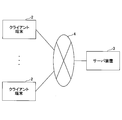
- FIG. 1A and 1B are configuration diagrams of an example of an information processing system according to the present embodiment.
- the information processing system in FIG. 1A includes a single information processing device 1.
- the information processing apparatus 1 is a PC operated by a user, a smartphone, a tablet, a dedicated device for quantifying makeup operations for home or business use, and the like.
- one or more client terminals 2 and a server device 3 are connected via a network 4 such as the Internet.
- the client terminal 2 is a terminal device such as a PC operated by a user, a smartphone, a tablet, or a dedicated device for quantifying makeup operation for home or business use.
- the server device 3 performs processing related to quantification of makeup operation performed by the client terminal 2.
- the present invention can be applied not only to the client / server type information processing system as shown in FIG. 1B but also to the single information processing apparatus 1 shown in FIG. 1A.
- the information processing system of FIGS. 1A and 1B is an example, and it goes without saying that there are various system configuration examples according to the use and purpose.
- the server device 3 in FIG. 1B may be distributed and configured in a plurality of computers.
- FIG. 2 is a hardware configuration diagram of an example of the computer according to the present embodiment.
- the computer of FIG. 2 includes an input device 501, an output device 502, an external I / F 503, a RAM 504, a ROM 505, a CPU 506, a communication I / F 507, an HDD 508, and the like, which are interconnected by a bus B.
- the input device 501 is a keyboard or mouse used for input.
- the output device 502 is composed of a display such as a liquid crystal or an organic EL that displays a screen, a speaker that outputs sound data such as voice or music, and the like.
- the communication I / F 507 is an interface that connects a computer to the network 4.
- the HDD 508 is an example of a non-volatile storage device that stores programs and data.
- External I / F 503 is an interface with an external device.
- the computer can read and / or write the recording medium 503a via the external I / F 503.
- the recording medium 503a includes a DVD, an SD memory card, a USB memory, and the like.
- the CPU 506 is an arithmetic device that realizes control and functions of the entire computer by reading programs and data from a storage device such as the ROM 505 and the HDD 508 onto the RAM 504 and executing processing.
- the information processing device 1, the client terminal 2, and the server device 3 according to the present embodiment can realize various functions by executing a program in the computer having the above hardware configuration.
- the hardware configuration in FIG. 2 is an example, and it goes without saying that there are various configuration examples depending on the use and purpose.
- the computer in FIG. 2 may have a camera function capable of capturing a moving image in the input device 501.
- a method of quantifying makeup operation for example, there is a method using a sensor.
- a person who makes the makeup wears the sensor and has the makeup movement performed.
- the makeup action of a person can be quantified by the data output from the sensor, but the makeup action of a person shown in a captured make-up video cannot be quantified.
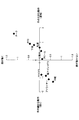
- FIGS. 3A and 3B are scatter plots of an example of measurement results.
- FIG. 3A is a scatter diagram showing an example of the fineness of the hand action and the interlocking action of the hand and elbow for each makeup action.
- FIG. 3B is a scatter diagram showing an example of the fineness of the hand action and the movement of the face for each makeup action.
- the main components of the motion of the subject were the fineness of the hand motion, the hand-elbow interlocking property, and the facial motion. Therefore, in the present embodiment, the target to be acquired from the make-up moving image is the coordinate / speed of the hand and the coordinate / speed of the face.
- Image recognition using a convolutional neural network (hereinafter, referred to as CNN) is known as a method for acquiring the coordinates / speed of the hand and the coordinates / speed of the face during the makeup operation of the person shown in the make-up moving image.
- CNN convolutional neural network
- the face area and the hand area can be detected from the two-dimensional image. Therefore, by tracking (tracking) the face area and the hand area detected from the frame image of the make-up video, It is possible to acquire the coordinates / speed of the hand and the coordinates / speed of the face during the makeup operation of the person in the image.
- the details of image recognition using CNN of this embodiment will be described later.
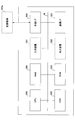
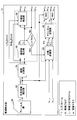
- FIG. 4 is a functional block diagram of an example of the information processing system according to this embodiment.
- the information processing device 1 realizes the operation receiving unit 10, the area detecting unit 12, the quantifying unit 14, the post-processing unit 16, and the moving image data storage unit 18 by executing the program.
- the operation receiving unit 10 receives various operations from the user.
- the moving image data storage unit 18 stores make-up moving images.
- the moving image data storage unit 18 may be provided outside the information processing device 1.
- the area detection unit 12 receives the make-up moving image stored in the moving-image data storage unit 18 and the make-up moving image captured by the camera function.
- the area detection unit 12 detects, for each frame image forming the input make-up moving image, a face area and a hand area of a person shown in the frame image as described later.
- the quantification unit 14 acquires the coordinates / speed of the hand during the makeup operation of the person and the coordinates / speed of the face in the makeup moving image from the face area and the hand area detected by the area detection unit 12 to make up the makeup. Quantify the makeup action of the person in the video.
- the post-processing unit 16 post-processes the processing results of the area detection unit 12 and the quantification unit 14 and outputs the processed results to the output device 502 and the like.
- the post-processing unit 16 performs post-processing of enclosing a face area and a hand area during makeup operation of a person in a make-up moving image with a rectangle. Further, the post-processing unit 16 determines the fineness of the hand motion, the interlocking of the hand and the elbow, and the face motion from the coordinates / speed of the hand during the makeup motion of the person and the coordinates / speed of the face in the make-up moving image. Post-processing such as visual representation is performed.
- the post-processing unit 16 can output the comparison result by quantifying and comparing the makeup action of the person shown in the two make-up videos. For example, a user who uses the information processing system according to the present embodiment quantifies and compares the makeup action of oneself and the makeup action of a person who is a good makeup artist such as a makeup artist to determine the difference from his / her makeup technique. Easy to understand. As a result, the information processing system according to the present embodiment can provide a service that improves the make technique of the user.
- FIG. 5 is a block diagram of an example of the area detection unit.
- the area detection unit 12 in FIG. 5 has a configuration including a framing unit 20, a face area detection unit 22, a hand area detection unit 24, and a face feature point detection unit 26.
- the framing unit 20 provides the input make-up moving image to the face area detecting unit 22 and the hand area detecting unit 24 in units of frame images.
- the face area detection unit 22 has a face area learning model including a face part area learning model.
- the face area learning model included in the face area detecting unit 22 is created by machine learning using a two-dimensional image in which the face area is covered with the hand area as teacher data.
- the teacher data in which the face region is covered by the hand region is created from a two-dimensional image in which the hand is the foreground of the face.
- the teacher data in which the hand area is covered by the face area is such that the image of the annotated face area learning data set becomes the foreground of the annotated (created as teacher data) hand area learning data set. You may create it by pasting.
- the face area detection unit 22 uses the face area learning model learned by performing CNN using the teacher data in a state where a part of the face area is hidden by the hand area (shielding environment) as the learning data set. A face area detection that is robust against the overlap between the face area and the hand area is realized.
- the hand area detection unit 24 has a hand area learning model including a fingertip position area learning model.
- the hand area learning model included in the hand area detection unit 24 is created by using a two-dimensional image of the hand under makeup as teacher data.
- the teacher data for the hand during makeup is the annotated hand region learning data set specialized for the shape of the hand during makeup, and the annotated fingertip position region learning data set specialized for the fingertip position during makeup.
- the hand area detection unit 24 detects a hand and fingertip position with many variations in shape during makeup operation by using a hand area learning model learned by performing CNN using the above-mentioned teacher data as a learning data set. Achieves highly accurate hand area detection.
- the face feature point detection unit 26 also has a face feature point learning model including a face part feature point learning model.
- the face feature point detection unit 26 detects the face feature points of the entire face by using the face feature point learning model. After that, the face feature point detection unit 26 detects the face feature points of the face part by region by using the face part feature point learning model.
- the facial feature point detection unit 26 detects the facial feature points of the eyes included in the face parts, and corrects the positions of the facial feature points (including the contour) of the parts other than the eyes from the positions of the facial feature points of the eyes. Realizes highly accurate facial feature point detection even in low resolution and occluding environment.
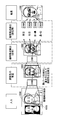
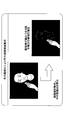
- FIG. 6 is an image diagram of an example of a process of detecting a face area of a person included in a frame image.
- the face area detection unit 22 of the area detection unit 12 detects the face area in which the face of the person in the frame image 1000 is captured by the rectangle 1002 by using the above-described face area learning model.
- the face area detection unit 22 detects the face part area from the area of the rectangle 1002 using the above-described face part area learning model, and corrects the rectangle ratio of the rectangle 1002 to the rectangle 1004 with the detected nose as the center.
- the face feature point detection unit 26 detects face feature points from the area of the rectangle 1004 by using the face feature point learning model described above as a rectangular area image 1006. Further, the facial feature point detecting unit 26 detects the feature points of the face part from the rectangular area image 1006 by using the above-described face part characteristic point learning model, as in the rectangular area image 1008.
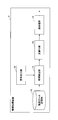
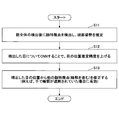
- FIG. 7 is a flowchart of an example of face feature point detection processing.
- step S11 the face feature point detection unit 26 of the region detection unit 12 detects face feature points from the face region (entire face) detected by the face region detection unit 22 using the above-described face feature point learning model. , Estimate head pose.
- step S12 the face feature point detection unit 26 considers the head posture estimated in step S11, and detects the eyes detected by the face area detection unit 22 using the face part feature point learning model. Correct the position estimation of to improve the accuracy of eye position estimation.
- step S13 the facial feature point detection unit 26 considers the estimated position of the eyes corrected in step S12, and uses the above-described face part feature point learning model to feature points (including contours) of face parts other than the eyes. Is detected, and the estimated positions of the face parts other than the eyes are corrected.
- the process of the flowchart of FIG. 7 is effective, for example, when the outline of the face is covered by the hand.
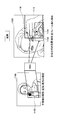
- FIG. 8 is an image diagram of an example of a process of detecting a hand area of a person shown in a frame image.
- the hand area detection unit 24 of the area detection unit 12 detects the hand area in which the left and right hands of the person in the frame image 1100 are shown by the rectangle 1102 by using the above-described hand area learning model.
- the hand area detection unit 24 uses the above-mentioned fingertip position area learning model from the area of the rectangle 1102, areas 1112 and 1114 of the left and right hands of the person of the frame image 1110, and fingertip positions 1116 and 1116 of the left and right hands of the person. 1118 is detected.
- the information processing apparatus 1 for example, from the coordinates / speed of the hand during the makeup operation of the person and the coordinates / speed of the face during the makeup operation of the person in the make-up moving image, the fineness of the hand operation, the interlocking of the hand and the elbow, and , Face movement can be calculated and output.
- Such fineness of hand movements, interlocking of hands and elbows, and output of facial movements are useful for research on makeup movements.
- the information processing apparatus 1 can quantify and compare the makeup action of the person shown in the two make-up videos, the makeup action of the user who wants to learn makeup techniques and the makeup action of a person good at makeup such as a makeup artist. You can quantify and compare makeup movements.
- the comparison result may be scored and presented to the user, or the difference in makeup action between the user and a person skilled in makeup such as a makeup artist may be visually presented to the user.
- the information processing apparatus 1 according to the present embodiment may present the makeup technique to the user based on the comparison result so that the makeup action of the user approaches the makeup action of a person good at makeup such as a makeup artist.
- the information processing apparatus 1 can judge the application area when applying a makeup product applied to a wide area such as cheek / foundation and give a lecture on the application range to the user.
- the information processing apparatus 1 according to the present embodiment can perform a correct / wrong judgment of a motion and a lecture for a user when using a makeup product such as an eyeliner / eyeshadow / concealer, which is difficult to perform.
- the information processing apparatus 1 according to the present embodiment can also give a lecture on a method of applying a hair wax (hair product), a lecture on a method of applying a skin care product, or a lecture on a massage method to a user.
- a user having a sharp skeleton and a user having a round skeleton may have different makeup methods, such as how to apply cheeks (blusher), so that the makeup that suits the user's face may be different. You may give a lecture on the recommendation and the technique to realize the make.
- the information processing system according to the second embodiment is the same as the information processing system according to the first embodiment except for a part, and thus the description thereof will be appropriately omitted.
- the information processing system of the second embodiment has a configuration including the area detection unit 12 of FIG. 9 instead of the area detection unit 12 of FIG.
- FIG. 9 is a block diagram of an example of the area detection unit.
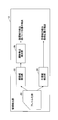
- the region detection unit 12 of FIG. 9 includes a framing unit 50, a skin color region extraction unit 52, a region division unit 54, a face region detection unit 56, a hand region detection unit 58, a force field calculation unit 60, and a channel calculation unit 62. Is.
- the framing unit 50 provides the input make-up moving image to the skin color region extracting unit 52 in frame image units.
- the skin color area extraction unit 52 extracts a skin color area from the frame image.
- the area dividing unit 54 divides the skin color area extracted by the skin color area extracting unit 52 into candidate blobs, and further performs labeling of the candidate blobs.
- the area dividing unit 54 provides the labeled candidate blobs to the face area detecting unit 56 and the hand area detecting unit 58.
- the face area detection unit 56 classifies the candidate blobs of the face area (detects the face area) based on the provided label of the candidate blob (feature of the divided skin color area). Further, the hand area detection unit 58, based on the candidate blob labels (features of the divided skin color area) provided from the area division unit 54 and the face area candidate blobs classified by the face area detection unit 56, The candidate blobs in the hand area are classified (hand area is detected).
- the face area detection unit 56 first classifies the face area candidate blobs and excludes the face area candidate blobs.
- the hand area detection unit 58 classifies the hand area candidate blobs. Therefore, in the present embodiment, erroneous detection of the hand area can be prevented.
- the force field calculation unit 60 determines that interference between the face area and the hand area occurs, and performs the following processing.
- the force field calculator 60 is provided with the candidate blobs of the face area and the hand area of the previous frame (t ⁇ 1) and the labeled candidate blobs of the current frame (t).
- the force field calculation unit 60 sets a large number of channels (Channel) in the image of the candidate blob by the force field (Force Field), as shown in FIG.
- the channel calculation unit 62 calculates the movement distance from the previous frame for each channel, and assumes that the candidate blob of the channel having a large movement distance is the candidate blob of the moving hand. Can classify candidate blobs.
- the force field calculation unit 60 and the channel calculation unit 62 of the area detection unit 12 perform clustering of movements that are likely to be the hand area in addition to the magnitude of the movement distance, thereby erroneously detecting candidate blobs of the hand area and the face area. Can be further prevented.
Landscapes
- Engineering & Computer Science (AREA)
- Multimedia (AREA)
- Computer Vision & Pattern Recognition (AREA)
- Physics & Mathematics (AREA)
- General Physics & Mathematics (AREA)
- Theoretical Computer Science (AREA)
- Image Analysis (AREA)
Abstract
Description
<システム構成>
図1A及び図1Bは、本実施形態に係る情報処理システムの一例の構成図である。図1Aの情報処理システムは単体の情報処理装置1を備えている。情報処理装置1は、ユーザが操作するPC、スマートフォン、タブレット、家庭用や業務用の化粧動作を定量化する専用機器などである。
図1A及び図1Bの情報処理装置1、クライアント端末2及びサーバ装置3は、例えば図2に示すようなハードウェア構成のコンピュータにより実現される。図2は、本実施形態に係るコンピュータの一例のハードウェア構成図である。
化粧動作の定量化の方法としては、例えばセンサーを用いるものがある。センサーを用いる化粧動作の定量化の方法ではメークを行う人物にセンサーを装着してもらい、メーク動作を行ってもらう。センサーを用いる化粧動作の定量化の方法では、センサーから出力されたデータにより人物の化粧動作を定量化することができるが、撮影済みのメーク動画に写る人物の化粧動作を定量化できない。
メーク動画から取得する対象を把握するため、被験者の化粧動作中の動きをモーションキャプチャで計測した。なお、測定部位は、右手中指先端、中指根元、手の甲中央、手首中央、肘、額の計6カ所である。解析対象は、測定部位の座標(変位)と速度と加速度と角速度である。このように解析した被験者の動きの主成分は、化粧動作中の主要な動きの要素と推定できる。
メーク動画に写る人物の化粧動作中の手の座標・速度と、顔の座標・速度とを取得する手法としては、畳み込みニューラルネットワーク(以下、CNNと呼ぶ)を用いた画像認識がある。CNNを用いた画像認識では、二次元画像から顔領域及び手領域を検出することができるので、メーク動画のフレーム画像から検出した顔領域及び手領域をトラッキング(追跡)することで、メーク動画に写る人物の化粧動作中の手の座標・速度と、顔の座標・速度とを取得できる。なお、本実施形態のCNNを用いた画像認識の詳細については後述する。
《機能ブロック》
本実施形態に係る情報処理システムのソフトウェア構成について説明する。なお、ここでは図1Aに示した情報処理装置1を一例として説明する。図4は本実施形態に係る情報処理システムの一例の機能ブロック図である。情報処理装置1はプログラムを実行することにより、操作受付部10、領域検出部12、定量化部14、後処理部16及び動画データ記憶部18を実現している。
《顔領域検出及び顔特徴点検出》
領域検出部12がフレーム画像に写る人物の顔領域を検出する処理は、例えば図6に示すように行われる。図6は、フレーム画像に写る人物の顔領域を検出する処理の一例のイメージ図である。
領域検出部12がフレーム画像に写る人物の手領域を検出する処理は、例えば図8に示すように行われる。図8は、フレーム画像に写る人物の手領域を検出する処理の一例のイメージ図である。
本実施形態に係る情報処理装置1は、例えばメーク動画に写る人物の化粧動作中の手の座標・速度と、顔の座標・速度から、手動作の細かさ、手と肘の連動性、及び、顔の動きを算出し、出力できる。このような手動作の細かさ、手と肘の連動性、及び、顔の動きの出力は化粧動作の研究などに有用である。
第2の実施形態に係る情報処理システムは、一部を除いて第1の実施形態に係る情報処理システムと同様であるため、適宜説明を省略する。第2の実施形態の情報処理システムは図5の領域検出部12に替えて、図9の領域検出部12を備えた構成である。図9は領域検出部の一例の構成図である。図9の領域検出部12は、フレーム化部50、肌色領域抽出部52、領域分割部54、顔領域検出部56、手領域検出部58、力場計算部60及びチャンネル計算部62を有する構成である。
以上、本実施形態によれば、センサーなどを装着することなく、撮影済みのメーク動画に写る人物の化粧動作を定量化でき、メークテクニックの提供や教示が可能となる。本発明は、具体的に開示された上記の実施形態に限定されるものではなく、特許請求の範囲から逸脱することなく、種々の変形や変更が可能である。例えば本実施形態では、二次元の動画データを一例として説明したが、三次元の動画データであってもよい。本実施形態によれば、二次元の動画データと同様なデータ解析、又は二次元の動画データ解析に三次元情報を組み合わせた解析により、三次元の動画データに写る人物の化粧動作を定量化でき、メークテクニックの提供や教示が可能となる。
2 クライアント端末
3 サーバ装置
4 ネットワーク
10 操作受付部
12 領域検出部
14 定量化部
16 後処理部
18 動画データ記憶部
20 フレーム化部
22 顔領域検出部
24 手領域検出部
26 顔特徴点検出部
50 フレーム化部
52 肌色領域抽出部
54 領域分割部
56 顔領域検出部
58 手領域検出部
60 力場計算部
62 チャンネル計算部
Claims (11)
- 動画データを解析して、前記動画データに写る人物の化粧動作を定量化した値を出力するようにコンピュータを機能させるためのプログラムであって、
前記コンピュータを、
前記動画データから前記人物の顔が写る顔領域を検出する第1の検出手段、
前記動画データから前記人物の手が写る手領域を検出する第2の検出手段、
検出した前記顔領域及び前記手領域に基づき、前記顔領域及び前記手領域の動きから前記動画データに写る人物の化粧動作を定量化した値を出力する出力手段、
として機能させるためのプログラム。 - 前記第1の検出手段は、
顔領域学習モデルを用いて前記動画データから前記人物の顔領域を検出する顔領域検出手段と、
顔パーツ特徴点学習モデルを用いて前記顔領域から顔パーツ領域を検出する顔パーツ領域検出手段と、
を有し、
前記第2の検出手段は、
前記化粧動作の手領域学習モデルを用いて前記動画データから前記人物の手領域を検出する手領域検出手段と、
前記化粧動作の指先位置領域学習モデルを用いて前記手領域から指先位置領域を検出する指先位置領域検出手段と、
を有することを特徴とする請求項1記載のプログラム。 - 前記顔領域学習モデルは、顔領域の一部が手領域で隠れた状態の教師データを顔領域学習データセットに用いて学習した畳み込みニューラルネットワークであること
を特徴とする請求項2記載のプログラム。 - 前記手領域学習モデルは、化粧中の手の形の教師データを手領域学習データセットに用いて学習した畳み込みニューラルネットワークであり、前記指先位置領域学習モデルは、化粧中の指先の位置の教師データを指先位置領域学習データセットに用いて学習した畳み込みニューラルネットワークであること
を特徴とする請求項2記載のプログラム。 - 前記コンピュータを、
前記動画データから肌色領域を抽出する抽出手段、
前記肌色領域を分割領域に分割する分割手段、
として更に機能させ、
前記第1の検出手段は、前記分割領域の特徴量に基づき、前記肌色領域から前記人物の顔が写る顔領域を検出し、
前記第2の検出手段は、前記分割領域の特徴量に基づき、前記人物の顔が写る顔領域として検出された前記肌色領域を除外した前記肌色領域から前記人物の手が写る手領域を検出すること
を特徴とする請求項1記載のプログラム。 - 前記コンピュータを、
前記第1の検出手段が前記肌色領域から前記人物の顔が写る顔領域を検出できない場合に、前記動画データを構成するフレーム画像間における前記分割領域の移動距離を検出して、移動距離の大きい前記分割領域を前記人物の手が写る手領域であると仮定する第3の検出手段、
として更に機能させること
を特徴とする請求項5記載のプログラム。 - 前記出力手段は、前記動画データに写る人物の化粧動作を定量化した値として、化粧動作中の手の座標・速度と、顔の座標・速度とを出力すること
を特徴とする請求項1記載のプログラム。 - 前記出力手段は、2つの前記動画データに写る人物の化粧動作を定量化した値の比較結果に基づき、2つの前記動画データに写る人物の化粧動作の違いを視覚的に表した画像を出力すること
を特徴とする請求項1記載のプログラム。 - 動画データを解析して、前記動画データに写る人物の化粧動作を定量化した値を出力する情報処理装置であって
前記動画データから前記人物の顔が写る顔領域を検出する第1の検出手段と、
前記動画データから前記人物の手が写る手領域を検出する第2の検出手段と、
検出した前記顔領域及び前記手領域に基づき、前記顔領域及び前記手領域の動きから前記動画データに写る人物の化粧動作を定量化した値を出力する出力手段と、
を有する情報処理装置。 - 動画データを解析して、前記動画データに写る人物の化粧動作を定量化した値を出力する情報処理装置において実行される定量化方法であって、
前記動画データから前記人物の顔が写る顔領域を検出する第1の検出ステップと、
前記動画データから前記人物の手が写る手領域を検出する第2の検出ステップと、
検出した前記顔領域及び前記手領域に基づき、前記顔領域及び前記手領域の動きから前記動画データに写る人物の化粧動作を定量化した値を出力する出力ステップと、
を有する定量化方法。 - ユーザからの操作を受け付けるクライアント端末と、前記クライアント端末が前記ユーザから受け付けた操作に基づき、動画データを解析して、前記動画データに写る人物の化粧動作を定量化した値を出力して前記クライアント端末に提供するサーバ装置と、を有する情報処理システムであって
前記サーバ装置は、
前記クライアント端末が前記ユーザから受け付けた操作の情報を受信する受信手段と、
前記ユーザから受け付けた操作に基づき、前記動画データから前記人物の顔が写る顔領域を検出する第1の検出手段と、
前記ユーザから受け付けた操作に基づき、前記動画データから前記人物の手が写る手領域を検出する第2の検出手段と、
検出した前記顔領域及び前記手領域に基づき、前記顔領域及び前記手領域の動きから前記動画データに写る人物の化粧動作を定量化した値を出力する出力手段と、
出力した前記値を前記クライアント端末に送信する送信手段と、
を有する情報処理システム。
Priority Applications (2)
| Application Number | Priority Date | Filing Date | Title |
|---|---|---|---|
| JP2020552524A JP7408562B2 (ja) | 2018-10-24 | 2019-07-08 | プログラム、情報処理装置、定量化方法及び情報処理システム |
| CN201980069716.8A CN112912925B (zh) | 2018-10-24 | 2019-07-08 | 介质、信息处理装置、定量化方法以及信息处理系统 |
Applications Claiming Priority (2)
| Application Number | Priority Date | Filing Date | Title |
|---|---|---|---|
| JP2018199739 | 2018-10-24 | ||
| JP2018-199739 | 2018-10-24 |
Publications (1)
| Publication Number | Publication Date |
|---|---|
| WO2020084842A1 true WO2020084842A1 (ja) | 2020-04-30 |
Family
ID=70331505
Family Applications (1)
| Application Number | Title | Priority Date | Filing Date |
|---|---|---|---|
| PCT/JP2019/027052 Ceased WO2020084842A1 (ja) | 2018-10-24 | 2019-07-08 | プログラム、情報処理装置、定量化方法及び情報処理システム |
Country Status (4)
| Country | Link |
|---|---|
| JP (1) | JP7408562B2 (ja) |
| CN (1) | CN112912925B (ja) |
| TW (1) | TW202016881A (ja) |
| WO (1) | WO2020084842A1 (ja) |
Cited By (3)
| Publication number | Priority date | Publication date | Assignee | Title |
|---|---|---|---|---|
| CN114407913A (zh) * | 2022-01-27 | 2022-04-29 | 星河智联汽车科技有限公司 | 一种车辆控制方法及装置 |
| KR20230043285A (ko) * | 2021-09-23 | 2023-03-31 | 주식회사 딥비전 | 딥러닝을 이용한 손 움직임 추적방법 및 장치 |
| WO2026120733A1 (ja) * | 2024-12-04 | 2026-06-11 | 日本電気株式会社 | 情報処理装置、情報処理方法、プログラム |
Citations (3)
| Publication number | Priority date | Publication date | Assignee | Title |
|---|---|---|---|---|
| JP2002072861A (ja) * | 2000-09-01 | 2002-03-12 | Ibic Service:Kk | 理容技術講習システム |
| JP2003216955A (ja) * | 2002-01-23 | 2003-07-31 | Sharp Corp | ジェスチャ認識方法、ジェスチャ認識装置、対話装置及びジェスチャ認識プログラムを記録した記録媒体 |
| JP2017208051A (ja) * | 2016-05-20 | 2017-11-24 | 日本電信電話株式会社 | 技術支援装置、方法、プログラムおよびシステム |
Family Cites Families (10)
| Publication number | Priority date | Publication date | Assignee | Title |
|---|---|---|---|---|
| JP4404650B2 (ja) * | 2004-01-30 | 2010-01-27 | デジタルファッション株式会社 | 化粧シミュレーション装置、化粧シミュレーション方法、化粧シミュレーションプログラム |
| EP3039990B1 (en) * | 2013-08-30 | 2019-07-24 | Panasonic Intellectual Property Management Co., Ltd. | Makeup assistance device, makeup assistance system, makeup assistance method, and makeup assistance program |
| CN103488299B (zh) * | 2013-10-15 | 2016-11-23 | 大连市恒芯科技有限公司 | 一种融合人脸和手势的智能终端人机交互方法 |
| TWI669103B (zh) * | 2014-11-14 | 2019-08-21 | 日商新力股份有限公司 | 資訊處理裝置、資訊處理方法及程式 |
| WO2016121329A1 (ja) * | 2015-01-29 | 2016-08-04 | パナソニックIpマネジメント株式会社 | 画像処理装置、スタイラス、および画像処理方法 |
| CN107924577B (zh) * | 2015-10-26 | 2021-08-24 | 松下知识产权经营株式会社 | 化妆部位生成装置及化妆部位生成方法 |
| CN106846403B (zh) * | 2017-01-04 | 2020-03-27 | 北京未动科技有限公司 | 一种三维空间中手部定位的方法、装置及智能设备 |
| CN107168527B (zh) * | 2017-04-25 | 2019-10-18 | 华南理工大学 | 基于区域卷积神经网络的第一视角手势识别与交互方法 |
| CN108227922A (zh) * | 2017-12-31 | 2018-06-29 | 广州二元科技有限公司 | 一种虚拟现实的实时数字影像上妆方法 |
| CN108594997B (zh) * | 2018-04-16 | 2020-04-21 | 腾讯科技(深圳)有限公司 | 手势骨架构建方法、装置、设备及存储介质 |
-
2019
- 2019-07-08 JP JP2020552524A patent/JP7408562B2/ja active Active
- 2019-07-08 WO PCT/JP2019/027052 patent/WO2020084842A1/ja not_active Ceased
- 2019-07-08 CN CN201980069716.8A patent/CN112912925B/zh active Active
- 2019-07-24 TW TW108126136A patent/TW202016881A/zh unknown
Patent Citations (3)
| Publication number | Priority date | Publication date | Assignee | Title |
|---|---|---|---|---|
| JP2002072861A (ja) * | 2000-09-01 | 2002-03-12 | Ibic Service:Kk | 理容技術講習システム |
| JP2003216955A (ja) * | 2002-01-23 | 2003-07-31 | Sharp Corp | ジェスチャ認識方法、ジェスチャ認識装置、対話装置及びジェスチャ認識プログラムを記録した記録媒体 |
| JP2017208051A (ja) * | 2016-05-20 | 2017-11-24 | 日本電信電話株式会社 | 技術支援装置、方法、プログラムおよびシステム |
Cited By (4)
| Publication number | Priority date | Publication date | Assignee | Title |
|---|---|---|---|---|
| KR20230043285A (ko) * | 2021-09-23 | 2023-03-31 | 주식회사 딥비전 | 딥러닝을 이용한 손 움직임 추적방법 및 장치 |
| KR102586144B1 (ko) | 2021-09-23 | 2023-10-10 | 주식회사 딥비전 | 딥러닝을 이용한 손 움직임 추적방법 및 장치 |
| CN114407913A (zh) * | 2022-01-27 | 2022-04-29 | 星河智联汽车科技有限公司 | 一种车辆控制方法及装置 |
| WO2026120733A1 (ja) * | 2024-12-04 | 2026-06-11 | 日本電気株式会社 | 情報処理装置、情報処理方法、プログラム |
Also Published As
| Publication number | Publication date |
|---|---|
| CN112912925B (zh) | 2025-06-20 |
| JPWO2020084842A1 (ja) | 2021-10-07 |
| JP7408562B2 (ja) | 2024-01-05 |
| CN112912925A (zh) | 2021-06-04 |
| TW202016881A (zh) | 2020-05-01 |
Similar Documents
| Publication | Publication Date | Title |
|---|---|---|
| US12279882B2 (en) | Movement disorder diagnostics from video data using body landmark tracking | |
| Zaletelj et al. | Predicting students’ attention in the classroom from Kinect facial and body features | |
| Le et al. | Human posture recognition using human skeleton provided by Kinect | |
| Turk et al. | Perceptual interfaces | |
| Poppe et al. | AMAB: Automated measurement and analysis of body motion | |
| Liang et al. | Barehanded music: real-time hand interaction for virtual piano | |
| Antoshchuk et al. | Gesture recognition-based human–computer interaction interface for multimedia applications | |
| JP7408562B2 (ja) | プログラム、情報処理装置、定量化方法及び情報処理システム | |
| Varona et al. | Toward natural interaction through visual recognition of body gestures in real-time | |
| Singh et al. | A robust, real-time camera-based eye gaze tracking system to analyze users’ visual attention using deep learning | |
| Aggarwal et al. | Online handwriting recognition using depth sensors | |
| Baker et al. | Advanced human motion detection and precision movement measurement via mobile devices using YOLOv8, R-CNN, and augmented reality | |
| Guerra-Segura et al. | Study of the variability of the Leap Motion’s measures for its use to characterize air strokes | |
| Ueng et al. | Vision based multi-user human computer interaction | |
| Gupta et al. | Hands-free PC Control” controlling of mouse cursor using eye movement | |
| Chang et al. | Synthesis-based low-cost gaze analysis | |
| Raees et al. | THE-3DI: Tracing head and eyes for 3D interactions: An interaction technique for virtual environments | |
| Devi et al. | Ai-enhanced cursor navigator | |
| Kaur et al. | Body language decoder using python | |
| Anwar et al. | Real time eye blink detection method for android device controlling | |
| Pradeep et al. | Advancement of sign language recognition through technology using python and OpenCV | |
| Davydenko et al. | Continuous authentication with eye movement biometrics | |
| Bose et al. | Gesture based painting system | |
| Alobaidi et al. | New in-air signature datasets | |
| Gong et al. | Hidden emotion detection through analyzing facial expression |
Legal Events
| Date | Code | Title | Description |
|---|---|---|---|
| 121 | Ep: the epo has been informed by wipo that ep was designated in this application |
Ref document number: 19876950 Country of ref document: EP Kind code of ref document: A1 |
|
| ENP | Entry into the national phase |
Ref document number: 2020552524 Country of ref document: JP Kind code of ref document: A |
|
| NENP | Non-entry into the national phase |
Ref country code: DE |
|
| 122 | Ep: pct application non-entry in european phase |
Ref document number: 19876950 Country of ref document: EP Kind code of ref document: A1 |
|
| WWG | Wipo information: grant in national office |
Ref document number: 201980069716.8 Country of ref document: CN |