WO2020067313A1 - 固有表現抽出装置、方法および記憶媒体 - Google Patents
固有表現抽出装置、方法および記憶媒体 Download PDFInfo
- Publication number
- WO2020067313A1 WO2020067313A1 PCT/JP2019/037915 JP2019037915W WO2020067313A1 WO 2020067313 A1 WO2020067313 A1 WO 2020067313A1 JP 2019037915 W JP2019037915 W JP 2019037915W WO 2020067313 A1 WO2020067313 A1 WO 2020067313A1
- Authority
- WO
- WIPO (PCT)
- Prior art keywords
- extraction
- learning
- relationship
- document data
- named
- Prior art date
- Legal status (The legal status is an assumption and is not a legal conclusion. Google has not performed a legal analysis and makes no representation as to the accuracy of the status listed.)
- Ceased
Links
Images








Classifications
-
- G—PHYSICS
- G06—COMPUTING OR CALCULATING; COUNTING
- G06F—ELECTRIC DIGITAL DATA PROCESSING
- G06F40/00—Handling natural language data
- G06F40/20—Natural language analysis
- G06F40/279—Recognition of textual entities
- G06F40/289—Phrasal analysis, e.g. finite state techniques or chunking
- G06F40/295—Named entity recognition
-
- G—PHYSICS
- G06—COMPUTING OR CALCULATING; COUNTING
- G06F—ELECTRIC DIGITAL DATA PROCESSING
- G06F16/00—Information retrieval; Database structures therefor; File system structures therefor
- G06F16/30—Information retrieval; Database structures therefor; File system structures therefor of unstructured textual data
- G06F16/36—Creation of semantic tools, e.g. ontology or thesauri
-
- G—PHYSICS
- G06—COMPUTING OR CALCULATING; COUNTING
- G06F—ELECTRIC DIGITAL DATA PROCESSING
- G06F16/00—Information retrieval; Database structures therefor; File system structures therefor
- G06F16/90—Details of database functions independent of the retrieved data types
- G06F16/93—Document management systems
-
- G—PHYSICS
- G06—COMPUTING OR CALCULATING; COUNTING
- G06F—ELECTRIC DIGITAL DATA PROCESSING
- G06F40/00—Handling natural language data
- G06F40/10—Text processing
- G06F40/166—Editing, e.g. inserting or deleting
-
- G—PHYSICS
- G06—COMPUTING OR CALCULATING; COUNTING
- G06F—ELECTRIC DIGITAL DATA PROCESSING
- G06F40/00—Handling natural language data
- G06F40/20—Natural language analysis
- G06F40/237—Lexical tools
- G06F40/242—Dictionaries
-
- G—PHYSICS
- G06—COMPUTING OR CALCULATING; COUNTING
- G06F—ELECTRIC DIGITAL DATA PROCESSING
- G06F40/00—Handling natural language data
- G06F40/20—Natural language analysis
- G06F40/279—Recognition of textual entities
- G06F40/284—Lexical analysis, e.g. tokenisation or collocates
-
- G—PHYSICS
- G06—COMPUTING OR CALCULATING; COUNTING
- G06N—COMPUTING ARRANGEMENTS BASED ON SPECIFIC COMPUTATIONAL MODELS
- G06N20/00—Machine learning
-
- G—PHYSICS
- G06—COMPUTING OR CALCULATING; COUNTING
- G06N—COMPUTING ARRANGEMENTS BASED ON SPECIFIC COMPUTATIONAL MODELS
- G06N5/00—Computing arrangements using knowledge-based models
- G06N5/02—Knowledge representation; Symbolic representation
- G06N5/022—Knowledge engineering; Knowledge acquisition
Definitions
- Embodiments of the present invention relate to a named entity extraction device, method, and storage medium.
- the problem to be solved by the present invention is to provide a named entity extracting apparatus, method, and storage medium capable of improving the precision of named entity extraction from a document.
- the named entity extraction device includes: a first storage unit configured to store an extraction dictionary used when a named entity of the document data and a relationship between the named entities are respectively extracted from the document data; A document receiving unit for receiving an input of the extraction document data to be extracted for the named entity and the relation, and an input of the learning document data used for learning the extraction dictionary; and Extracting means for extracting a proper expression and a relationship between the specific expressions from the extracting document data received by the receiving means, and extracting by the extracting means from a character string in the learning document data received by the document receiving means Specifying means for specifying the character string corresponding to the named entity to be extracted, and classification of named entities to be extracted from the document data for extraction A second storage unit in which a relation extraction rule in which a relation is defined is stored; and a relation extraction rule stored in the second storage unit is applied, so that the specific expression specified by the specification unit is Generating means for generating a learning document in which a relationship between named entities belonging to the classification defined by the relation extraction rule is set
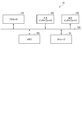
- FIG. 1 is a block diagram illustrating a functional configuration example of the named entity extracting apparatus according to the embodiment.
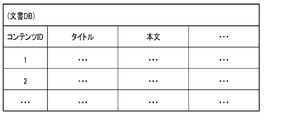
- FIG. 2 is a diagram illustrating an example of document data stored in the document DB of the named entity extracting apparatus according to the embodiment in a table format.
- FIG. 3 is a diagram illustrating, in a table form, an example of learning data related to a named entity stored in an original learning document DB (database) of the named entity extracting apparatus according to the embodiment.
- FIG. 4 is a diagram illustrating, in a table form, an example of learning data related to a relationship between named entities, which is stored in the original learning document DB of the named entity extracting apparatus according to the embodiment.
- FIG. 1 is a block diagram illustrating a functional configuration example of the named entity extracting apparatus according to the embodiment.
- FIG. 2 is a diagram illustrating an example of document data stored in the document DB of the named entity extracting apparatus according to the embodiment in a table format.
- FIG. 3 is a diagram illustrating, in
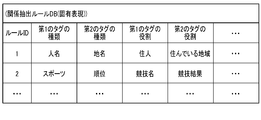
- FIG. 5 is a diagram illustrating an example of a relation extraction rule stored in a relation extraction rule DB of the named entity extraction apparatus according to the embodiment in a table format.
- FIG. 6 is a diagram illustrating an example of the analysis dictionary stored in the analysis dictionary DB of the named entity extraction device according to the embodiment in a table format.
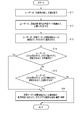
- FIG. 7 is a flowchart (flow @ chart) illustrating an example of a first processing procedure performed by the named entity extracting apparatus according to the embodiment.
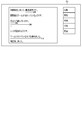
- FIG. 8 is a diagram illustrating an example of a display screen when a tag is added to a description of document data by the named entity extracting apparatus according to the embodiment.
- FIG. 9 is a flowchart illustrating an example of a second processing procedure performed by the named entity extracting apparatus according to the embodiment.
- FIG. 10 is a diagram illustrating an example of a display screen of the extracted tags and the relationship between the tags by the named entity extracting apparatus according to the embodiment.
- FIG. 11 is a diagram illustrating an example of an edit screen of the extracted tags and the relationship between the tags by the named entity extracting apparatus according to the embodiment.
- FIG. 12 is a flowchart illustrating an example of a third processing procedure of the named entity extraction device according to the embodiment.
- FIG. 13 is a diagram illustrating an example of a display screen when a relation between tags of document data is assigned by the named entity extracting apparatus according to the embodiment.
- FIG. 14 is a diagram illustrating an example of a display screen of the unextracted tags and the relationship between the tags by the named entity extracting apparatus according to the embodiment.
- FIG. 15 is a flowchart illustrating an example of a fourth processing procedure of the named entity extracting apparatus according to the embodiment.
- FIG. 16 is a diagram illustrating an example of a display screen of tags that have not been learned but have been extracted by the named entity extracting apparatus according to the embodiment, and the relationships between the tags.
- FIG. 17 is a block diagram illustrating an example of a hardware configuration of the named entity extracting apparatus according to the embodiment.
- FIG. 1 is a block diagram illustrating a functional configuration example of the named entity extraction device according to the embodiment of the present invention.
- a named entity extraction device 10 includes a document receiving unit 11, a document DB (database) 12, a named / relationship learning data editing unit 13, an original learning document DB 14, Relationship extraction rule registration unit 15 for learning data, relationship extraction rule DB 16, relationship extraction rule application unit 17 for learning data, learning document DB 18, learning unit 19 for named expression / relation extraction, analysis dictionary DB 20, named expression / relation extraction A unit 21 and a display unit 22 for the extracted result of the named entity / relation.
- the named entity extracting device 10 can be realized by a system using a computer device such as a server computer (PC) or a personal computer (PC: Personal Computer). This computer device will be described later.
- a computer device such as a server computer (PC) or a personal computer (PC: Personal Computer). This computer device will be described later.
- the functions of the document accepting unit 11, the named entity / relationship learning data editing unit 13, the relationship extraction rule registration unit 15 for learning data, and the named entity / relationship extraction result display unit 22 are the user interface It can be realized as a function in cooperation with an input device and a display device (not shown) in (UI: User @ Interface).
- the input devices are, for example, a keyboard and a mouse.
- the display device is, for example, a liquid crystal display.
- the input device and the output device may be a device built in the named entity extraction device 10, or may be another device, for example, another device communicable via a network.
- the document DB 12, the original learning document DB 14, the relation extraction rule DB 16, the learning document DB 18, and the analysis dictionary DB 20 are provided in a nonvolatile memory that can be written and read at any time.
- the named entity extraction device 10 extracts a result of extracting a named entity (hereinafter, sometimes referred to as a tag) in the document data and a relationship between the named entities (hereinafter, sometimes referred to as a link).
- the result can be displayed together with the display.
- the named entity extraction device 10 allows the user to refer to the display and find the erroneous extraction and unextracted relationship between the named entity and the relationship between the named entities, respectively, so that the named entity and the named entity from the document data are extracted. It is also possible to assist the user to correct the learning data used for learning the analysis dictionary (which may be referred to as an extraction dictionary) in which the extraction rules used for the extraction of the relationship with each other are defined.
- the document receiving unit 11 receives input (registration) of one or more pieces of document data, and stores the received document data in the document DB 12.
- the stored document data includes (1) extraction document data to be extracted as a target of extraction of a specific expression and a relation between the specific expressions, or (2) extraction of a specific expression from the extraction document data and a relation between the specific expressions. Learning document data used for learning the analysis dictionary in which the extraction rules used in the analysis are defined.
- FIG. 2 is a diagram illustrating an example of document data stored in the document DB 12 of the named entity extracting apparatus 10 according to the embodiment in a table format.
- the document data stored in the document DB 12 is associated with (1) a content ID unique to the document data, (2) a title, and (3) a text.
- a content ID unique to the document data a document ID unique to the document data
- a title a document ID unique to the document data
- a text can be
- the named entity / relationship learning data editing unit 13 extracts a character string corresponding to the named entity to be extracted (to be extracted) in the learning document data stored in the document DB 12 in accordance with the operation of the input device by the user. By specifying (assigning) a set of named expressions to be extracted as a relationship between named expressions, learning data (original learning document) of the named expression and the relationship between the named expressions is generated. This learning data is stored in the original learning document DB 14.
- the named entity / relationship learning data editing unit 13 can also be referred to as designating means for designating a character string to be extracted as a named entity and a set of named entities to be extracted as a relationship between named entities.
- the learning data stored in the original learning document DB 14 is divided into learning data relating to the named entity and learning data relating to the relationship between the named entities.
- FIG. 3 is a diagram illustrating, in a table form, an example of learning data related to a named entity, which is stored in the original learning document DB 14 of the named entity extracting apparatus 10 according to the embodiment.
- the learning data relating to the named entity stored in the original learning document DB 14 includes (1) a tag ID unique to the named entity, and (2) content of document data in which the named entity is described.
- the ID, (3) tag type, and (4) tag value are associated with each other.
- the type of tag is a classification name of the unique expression, for example, “person name”, “place name”, or the like.
- the value of the tag is a description of a specific entity expression, for example, a specific person name, place name, or the like.
- FIG. 4 is a diagram illustrating, in a table format, an example of learning data relating to the relationship between the named entities, which is stored in the original learning document DB 14 of the named entity extracting apparatus 10 according to the embodiment.
- the learning data stored in the original learning document DB 14 and relating to the relationship between the named entities is (1) a relationship ID unique to the relationship between the named entities, and (2) the first tag.
- the ID, (3) the role of the first tag, (4) the second tag ID, and (5) the role of the second tag are associated with each other.
- FIG. 4 shows an example in which a relationship defined between two types of named entities is defined in learning data relating to the relationship between named entities.
- the present invention is not limited to this, and a relationship existing among three or more types of named entities may be defined in learning data relating to a relationship between named entities.
- the relation extraction rule registration unit 15 for the learning data specifies a relation extraction rule in which a set of class names (types) of the unique expressions from which the relation should be extracted from the extraction document data is determined in accordance with an input operation from the user on the UI. (Registration) and stores the relationship extraction rule in the relationship extraction rule DB 16.
- FIG. 5 is a diagram illustrating an example of a relation extraction rule stored in the relation extraction rule DB 16 of the named entity extraction apparatus 10 according to the embodiment in a table format.
- the relation extraction rules stored in the relation extraction rule DB 16 include (1) a rule ID unique to the relation extraction rule, (2) the type of the first tag, and (3) the second The type of tag, (4) the role of the first tag, and (5) the role of the second tag are associated with each other.
- the non-volatile memory in which the relation extraction rule DB 16 is provided may be referred to as storage means for storing the relation extraction rules.
- the relations regarding the rule ID “1” include the first tag type “person name”, the second tag type “place name”, and the first tag role “resident”. , Indicates that a relationship exists between the role of the second tag and the “living area”. Further, in this example, as the relations regarding the rule ID “2”, the first tag type “sports”, the second tag type “rank”, the first tag role “competition name”, It indicates that there is a relationship between the role of the second tag and the result of the game.
- the relation extraction rule application unit 17 for the learning data applies the relation extraction rule stored in the relation extraction rule DB 16 to the learning data stored in the original learning document DB 14, so that the relationship between the unique expressions in the learning data is obtained. Among them, the relation between the unique expressions belonging to the classification indicated by the classification name defined by the relation extraction rule is registered collectively. Thereby, the relation extraction rule application unit 17 for the learning data generates a learning document that is the learning data in which the relation between the unique expressions is registered. This learning document is stored in the learning document DB 18.
- the relation extraction rule application unit 17 for the learning data can be called a generation unit that generates a learning document.
- Each item of the learning document stored in the learning document DB 18 is the same as various learning data (see FIGS. 3 and 4) stored in the original learning document DB 14 described above.
- the learning unit 19 of the named entity / relationship extraction extracts the named entity and the relationship between the named entities by reflecting the content of the learning document stored in the learning document DB 18 in the analysis dictionary stored in the analysis dictionary DB 20. Learn the dictionary used for extraction.
- FIG. 6 is a diagram illustrating an example of the analysis dictionary stored in the analysis dictionary DB 20 of the named entity extraction apparatus 10 according to the embodiment in a table format.
- the analysis dictionary (extraction dictionary) stored in the analysis dictionary DB 20 includes a dictionary ID unique to each row, a type of tag, a characteristic of the tag, a value of the tag, Relationships and the like are associated.
- the characteristics of the tag indicate a description format of the tag, for example, binary data.
- the non-volatile memory provided with the analysis dictionary DB 20 may be referred to as a storage unit that stores the analysis dictionary.
- This analysis dictionary is a dictionary that is collated in order to extract the proper expressions and the relationships between the proper expressions from the document data for extraction.
- This analysis dictionary a learning result based on past learning document data and a learning result based on new learning document data are respectively reflected.
- This analysis dictionary may be a learning device configured from a neural network.
- the named entity / relation extracting unit 21 collates the analysis dictionary stored in the analysis dictionary DB 20 with the extraction document data stored in the document DB 12 to extract the named entity and the named entity from the extraction document data. Are extracted respectively.
- the named entity / relation extraction result display unit 22 displays, on the display device, the named entity extraction result and the extracted result of the relationship between named entities, respectively, by the named entity / relation extraction unit 21.
- the named entity / relationship extraction result display unit 22 may be referred to as an output unit that outputs a named entity extraction result and an extracted result of a relationship between named entities. Further, the display unit 22 of the extracted result of the named entity / relationship can also superimpose the extracted result of the named entity and the result of extracting the relationship between the named entities on the display device. This makes it easier for the user to detect erroneous extraction and undetection of the named entity.
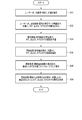
- FIG. 7 is a flowchart illustrating an example of a first processing procedure performed by the named entity extracting apparatus 10 according to the embodiment.
- the document receiving unit 11 receives registration of learning document data, and stores the learning document data in the document DB 12 (S11).
- the learning document data stored in the document DB 12 is displayed on the display device.
- the learning data editing unit 13 for the entity expression / relationship performs the user's input operation on the learning document data.
- a mark (underline) indicating a tag is added to the specified description (hereinafter, may be referred to as adding a tag).
- the learning data (see FIG. 3) related to the named entity, which is generated by adding the tag, is stored in the original learning document DB 14 (S12). Note that the learning data (see FIG. 4) relating to the relationship between the named entities is not generated in the first processing.
- FIG. 8 is a diagram illustrating an example of the display screen G1 when the tag is added to the description of the document data by the named entity extracting apparatus 10 according to the embodiment.
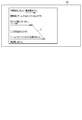
- each description “transport error”, “bolt”, and “bolt is loose” in the text of the document data on the screen G1 displayed on the display device of the named entity extraction device 10 You can add a tag to each description by specifying the pointer on the screen to "Tighten the screw on the arm.”
- the description to which a tag is attached can be given together with the category name of the tag by designating the window related to the category name on the screen G1 with a pointer.
- the above-described description “transportation abnormality” to which the tag is attached has the category name “phenomenon” of the tag, and the above-mentioned description “bolt” has the category name “part”.
- the category name "cause” can be given to "the bolt is loose.”
- the category name "action” can be given to the above description "the screw on the arm has been tightened.”
- the relation extraction rule registration unit 15 for learning data sets an arbitrary first classification name of the tag and an arbitrary second classification of the tag.
- a relationship (link) is given to the first name.
- the relationship extraction rule (see FIG. 5) generated by this assignment is stored in the relationship extraction rule DB 16 (S13).
- the above setting screen can be displayed side by side with the display of the learning document data on the screen G1.
- the assignment of the relationship between the arbitrary classification names of the tags in the first process is an assignment that does not depend on the description of the learning document data. This assignment can be made between one classification name and a plurality of classification names.
- the relation extraction rule application unit 17 for the learning data stores the learning data stored in the original learning document DB 14 in accordance with the registered contents of the relation extraction rules stored in the relation extraction rule DB 16.
- the tags indicated by a process of adding, editing, or deleting a relationship between a tag related to a certain classification name and a tag related to another classification name, which will be described later, is performed.
- the above-mentioned conditions are as follows.
- (1) the relation extraction rule registration unit 15 for the learning data sets the relation extraction rule between the tag of one classification name and the tag of another classification name.
- the relationship assignment (registration) has been completed (Yes in S14), or (2) before the relationship assignment has been completed (No in S14), and when the assignment has been newly performed (Yes in S15). is there. If No in S15, the process ends. If Yes in S14 or Yes in S15, the learning document generated by the processing in the relation extraction rule application unit 17 for the learning data is stored in the learning document DB 18 (S16). For example, if the relationship between the category name A and the category name B is defined in the relationship extraction rule, the relationship is provided between the tag belonging to the category name A and the tag belonging to the category name B in the learning data. . According to the above-described first process, the relationship between the tag related to one class name and the tag related to another class name, which is indicated by the learning data, is registered collectively.
- FIG. 9 is a flowchart illustrating an example of a second processing procedure performed by the named entity extracting apparatus 10 according to the embodiment.
- the display unit 22 of the named entity / relation extraction result displays the tags extracted from the document data for extraction by the named entity / relation extracting unit 21 and the relationship between the tags for each group (
- the display screen G2 of the extracted grouping result is displayed on the display device (S21). It is assumed that the information indicating the relationship between the extraction result of the named entity / relation extracting unit 21 and the extraction source document data is stored in an internal memory connected to the display unit 22 of the named entity / relation extraction result.
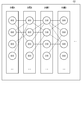
- FIG. 10 is a diagram illustrating an example of a display screen G2 of the extracted tags and the relationship between the tags by the named entity extracting apparatus 10 according to the embodiment.
- a plurality of types of tags belonging to classes (classification names) A, B, C, D, etc. are shown, and the relationship between tags belonging to a certain class and tags belonging to a different class is shown. Is shown.
- FIG. 10 shows an example in which the relationships between tags are set between Class A and Class B, between Class B and Class C, and between Class C and Class D, respectively.
- a relationship between tags may be set between the class A and the class C, between the class B and the class D, and the like.
- the user can specify the tags of interest or the relationship between the tags by the input operation, which are shown on the display screen G2 of the extraction result (S22).
- the tag of interest or the relationship between tags is a tag or a relationship between tags that may not be appropriate as an extraction result from the document data for extraction.
- the display unit 22 of the named entity / relation extraction result displays information indicating the relationship between the extraction result of the named entity / relation extraction unit 21 and the extraction source document data stored in the internal memory. This is passed to the learning data editing unit 13 for the entity expression / relationship.
- the named entity / relationship learning data editing unit 13 searches the specified information or the extraction source document data of the relationship between the tags from the passed information.
- the text of the extracted document data is displayed on the display device (S23).
- the input data from the user causes the named entity / relationship learning data editing unit 13 to edit the tag attached to the description of the extraction source document data or the relationship between the tags (S24).
- FIG. 11 is a diagram illustrating an example of an editing screen G3 of the extracted tags and the relationship between the tags by the named entity extracting apparatus 10 according to the embodiment.
- the example illustrated in FIG. 11 illustrates an example in which the relationship between the first tag belonging to the class B and the first tag belonging to the class C is designated as an editing target.
- the learning data editing unit 13 for the entity / relationship changes the designated relationship, for example, the first tag belonging to the class B and the second tag belonging to the class C according to the input operation from the user. Correction to the relationship with the subsequent tags or deletion of the relationship can be performed.
- modification or deletion of the tag itself that has been given can be performed.
- the correction of the tag itself is, for example, a correction of the classification name or a change of the target description.
- Deletion of a tag itself is cancellation of designation as a unique expression for a target description.
- the extraction source document of the specified extraction result can be easily displayed among the extraction results of the tags and the extraction results of the relationship between the tags. Further, it is possible to easily confirm and edit the relationship between tags.
- FIG. 12 is a flowchart illustrating an example of a third processing procedure of the named entity extracting apparatus 10 according to the embodiment.
- the document receiving unit 11 receives registration of learning document data, and stores the learning document data in the document DB 12 (S31).
- the extraction document data has been stored in the document DB 12.
- the learning document data stored in the document DB 12 is displayed on the display device.
- the learning data editing unit 13 for the entity expression / relation assigns a tag to the description of the learning document data in accordance with an input operation by the user with respect to the description of the learning document data on the display screen.
- the learning data (see FIG. 3) related to the named entity, which is generated by adding the tag, is stored in the original learning document DB 14.
- the display screen when the tag is added to the description of the learning document data is the display screen G1 shown in FIG.
- the learning data editing unit 13 for the entity expression / relationship stores the first tag and the second tag attached to the description in the learning document data.
- a relationship (link) is given to the second tag.
- the learning data (see FIG. 4) related to the relationship between the unique expressions generated by this addition is stored in the original learning document DB 14 (S32).
- the assignment of the relationship between the tags in the third processing is the assignment to the description of the text of the learning document data.
- the assignment of the relationship here can be performed between one tag and a plurality of tags.
- FIG. 13 is a diagram illustrating an example of a display screen G4 when the named entity extracting apparatus 10 according to the embodiment assigns a relationship between tags of document data.
- the tag relating to the classification name "cause” given to the first description "bolt is loose” in the text of the document data on the screen G4 displayed on the display device and the text in the text
- a line L1 indicating the relationship with the tag related to the classification name "measures” given to the second description "Tighten the screw attached to the arm.”
- the processing by the relation extraction rule registration unit 15 for the learning data described in the first processing is not performed, and the various learning data stored in the original learning document DB 14 in S32 is related to the learning data. It is stored in the learning document DB 18 as a learning document via the extraction rule applying unit 17.
- the learning unit 19 of the named entity / relationship extraction reflects the content of the learning document stored in the learning document DB 18 in the analysis dictionary stored in the analysis dictionary DB 20 to determine the relationship between the named entity and the named entity. Is learned (S33).
- the named entity / relation extraction unit 21 extracts the tag and the relationship between the tags from the extraction document data stored in the document DB 12 (S34).
- the display unit 22 of the unique expression / relation extraction result displays, on the display device, a display screen G2 of the extraction result in which the tags extracted in S34 and the relation between the tags are grouped for each classification name (S35).
- the named entity / relation extraction result display unit 22 compares the learning document stored in the learning document DB 18 with the extraction result in S34. As a result of the collation, the display unit 22 of the named entity / relation extraction result includes a tag generated by the learning unit 19 for named entity / relation extraction as a learning document but not extracted from the extraction document data in S34. The respective relationships are specified, and a display screen G5 showing the specified results is displayed on the display device (S36).
- the above-described tags that are generated as learning documents but are not extracted from the document data for extraction, and the relationships between the tags are, for example, a failure in learning to the analysis dictionary by the learning unit 19 of the entity / relation extraction, Here, it occurs due to a lack of a definition reflected in the analysis dictionary.
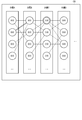
- FIG. 14 is a diagram illustrating an example of a display screen G5 of the tags that have not been extracted and the relationship between the tags by the named entity extracting apparatus 10 according to the embodiment.
- the first tag belonging to the class B and the first and third tags belonging to the class C which are surrounded by a dotted line, are included in the learning document, It is shown as a tag not extracted from the document data.
- (1) the relationship between the second tag belonging to the class A and the first tag belonging to the class B, and (2) the class B The relationship between the third tag belonging to the third tag belonging to the class C, and (3) the relationship between the second tag belonging to the class C and the third tag belonging to the class D Is shown as a relationship included in the learning document but not extracted from the extraction document data.
- FIG. 15 is a flowchart illustrating an example of a fourth processing procedure of the named entity extracting apparatus 10 according to the embodiment.
- the processes from S31 to S35 described in the third process are performed (S41 to S45).
- the display unit 22 of the named expression / relation extraction result collates the learning document stored in the learning document DB 18 with the extraction result in S44 (similar to S34).
- the display unit 22 of the named entity / relation extraction result is not generated as a learning document by the learning unit 19 of named entity / relation extraction, and is not defined in the latest learned analysis dictionary
- the tag extracted from the extraction document data in S44 and the relationship between the tags are specified, and a display screen G6 of the specified result is displayed on the display device (S46).
- the tags that were not generated as the learning document but were extracted from the document data for extraction, and the relationship between the tags are, for example, a failure of learning to the analysis dictionary by the learning unit 19 of the entity / relation extraction. This is caused by adding unnecessary definitions to the analysis dictionary.
- FIG. 16 is a diagram illustrating an example of a display screen G6 of the tags that have not been learned but are extracted by the named entity extracting apparatus 10 according to the embodiment and the relationships between the tags.
- the first tag belonging to the class C which is surrounded by the double line, is not included in the learning document but is indicated as a tag extracted from the document data for extraction.
- FIG. 17 is a block diagram illustrating a hardware configuration example of the named entity extraction device 10 according to the embodiment.
- a computer device for realizing the named entity extraction device 10 includes a hardware processor (hereinafter, processor) 101 such as a CPU (Central Processing Unit), an input interface (interface) 102, and a program. It includes a memory 103, which is a program memory, a storage 104, and an output interface 105, and these are connected via a bus 106.
- the memory 103 and the storage 104 are, for example, a storage device having a non-temporary tangible storage medium such as a nonvolatile memory such as a hard disk drive (HDD) or a solid state drive (SSD) that can be written and read at any time.
- HDD hard disk drive
- SSD solid state drive
- the functions of the relation extracting unit 21 and the display unit 22 of the unique expression / relation extraction result are realized, for example, by the processor 101 reading and executing a program stored in the memory 103. Some or all of these functions may be realized by a circuit such as an application specific integrated circuit (ASIC).
- the document DB 12, the original learning document DB 14, the relation extraction rule DB 16, the learning document DB 18, the analysis dictionary DB 20, and the above internal memory can be realized by the storage 104.
- the storage 104 stores various data obtained and created in the process of performing various processes according to the embodiment.
- the above user interface can be realized by the input interface 102 and the output interface 105.
- the named entity extraction device registers the relationship between tags in the learning data in a lump, easily displays the extraction source document, easily extracts omission of the extraction result or erroneously extracts the extraction result. You can check it. Therefore, it is possible to improve the accuracy of extracting the named entity from the document.
- each embodiment can be executed by a computer (computer) as a program (software means), for example, a magnetic disk (Floppy (registered trademark) disk (Floppy @ disk), a hard disk, etc.), an optical disk (CD -ROMs, DVDs, MOs, etc.), stored in recording media such as semiconductor memories (ROM, RAM, flash memory (Flash @ memory), etc.), and can also be transmitted and distributed via communication media.
- the programs stored on the medium include a setting program for causing the computer to execute software means (including not only an execution program but also tables and data structures) in the computer.
- a computer that implements the present apparatus reads a program recorded on a recording medium, and in some cases, constructs software means using a setting program, and executes the above-described processing by controlling the operation of the software means.
- the recording medium referred to in the present specification is not limited to a medium for distribution, but includes a storage medium such as a magnetic disk or a semiconductor memory provided in a computer or a device connected via a network.
- Reference Signs List 10 Named Expression Extraction Device, 11: Document Accepting Unit, 12: Document DB, 13: Learning Data Editing Unit for Named Expression / Relationship, 14: Original Learning Document DB, 15: Relationship Extraction Rule Registration Unit for Learning Data, 16 ... Relation extraction rule DB, 17 ... Relation extraction rule application unit for learning data, 18 ... Learning document DB, 19 ... Learning unit for named expression / relation extraction, 20 ... Analysis dictionary DB, 21 ... Named expression / relation extraction unit, 22... Display part of the result of extraction of named entities and relations.
Landscapes
- Engineering & Computer Science (AREA)
- Theoretical Computer Science (AREA)
- Physics & Mathematics (AREA)
- General Engineering & Computer Science (AREA)
- General Physics & Mathematics (AREA)
- Artificial Intelligence (AREA)
- Computational Linguistics (AREA)
- Audiology, Speech & Language Pathology (AREA)
- Health & Medical Sciences (AREA)
- General Health & Medical Sciences (AREA)
- Databases & Information Systems (AREA)
- Data Mining & Analysis (AREA)
- Software Systems (AREA)
- General Business, Economics & Management (AREA)
- Computer Vision & Pattern Recognition (AREA)
- Evolutionary Computation (AREA)
- Medical Informatics (AREA)
- Business, Economics & Management (AREA)
- Computing Systems (AREA)
- Mathematical Physics (AREA)
- Information Retrieval, Db Structures And Fs Structures Therefor (AREA)
- Machine Translation (AREA)
Abstract
実施形態における固有表現抽出装置は、文書データから固有表現と固有表現同士の関係とがそれぞれ抽出されるときに用いられる抽出用辞書が格納される手段(20)と、抽出対象である抽出用文書データの入力および学習用文書データの入力をそれぞれ受け付ける文書受付手段(11)と、抽出用辞書を用いて抽出用文書データから固有表現および関係を抽出する抽出手段(20)と、学習用文書データにおける文字列のうち抽出させる固有表現に対応する文字列を指定する指定手段(13)と、抽出用文書データから抽出させる、固有表現の分類同士の関係が定められた関係抽出ルールが格納される手段(16)と、関係抽出ルールを適用することで、指定された固有表現のうち関係抽出ルールの分類に属する固有表現同士の関係が設定された学習文書を生成する生成手段(17)と、学習文書に基づいて抽出用辞書を学習する学習手段(19)とを有する。
Description
本発明の実施形態は、固有表現抽出装置、方法および記憶媒体に関する。
従来、人手によるルール(rule)又は機械学習などの様々な手法によって、文書データ(data)中に出現する固有表現が抽出される仕組みが提案されてきた。
また、文書データから抽出された固有表現について、この固有表現の分類名が出現する度合いから分類名の重みが算出されることで、どの固有表現を出力するかが判定されるなどの応用技術も存在する。
しかしながら、他の認識技術と同様に、固有表現抽出にも、理想的には100%の精度が期待されており、さらなる精度向上が求められている。
本発明が解決しようとする課題は、文書からの固有表現抽出の精度を向上させることが可能な固有表現抽出装置、方法および記憶媒体を提供することである。
実施形態に係る固有表現抽出装置は、文書データから当該文書データの固有表現と固有表現同士の関係とがそれぞれ抽出されるときに用いられる抽出用辞書が格納される第1の格納手段と、前記固有表現および前記関係の抽出対象である抽出用文書データの入力、および抽出用辞書の学習に用いられる学習用文書データの入力をそれぞれ受け付ける文書受付手段と、前記抽出用辞書を用いて、前記文書受付手段により受け付けられた抽出用文書データから固有表現と固有表現同士の関係とをそれぞれ抽出する抽出手段と、前記文書受付手段により受け付けられた学習用文書データにおける文字列のうち前記抽出手段により抽出させる固有表現に対応する文字列を指定する指定手段と、抽出用文書データから抽出させる、固有表現の分類同士の関係が定められた関係抽出ルールが格納される第2の格納手段と、前記第2の格納手段に格納された関係抽出ルールを適用することで、前記指定手段により指定された固有表現のうち前記関係抽出ルールで定められた分類に属する固有表現同士の関係が設定された学習文書を生成する生成手段と、前記生成手段により生成された学習文書に基づいて、前記抽出用辞書を学習する学習手段とを有する。
本発明によれば、文書からの固有表現抽出の精度を向上させることができる。
以下、実施形態について図面を用いて説明する。
図1は、本発明の実施形態に係る固有表現抽出装置の機能構成例を示すブロック図である。
図1に示されるように、実施形態に係る固有表現抽出装置10は、文書受付部11、文書DB(データベース(database))12、固有表現・関係の学習データ編集部13、オリジナル学習文書DB14、学習データへの関係抽出ルール登録部15、関係抽出ルールDB16、学習データへの関係抽出ルール適用部17、学習文書DB18、固有表現・関係抽出の学習部19、解析辞書DB20、固有表現・関係抽出部21、および固有表現・関係抽出結果の表示部22を有する。
図1は、本発明の実施形態に係る固有表現抽出装置の機能構成例を示すブロック図である。
図1に示されるように、実施形態に係る固有表現抽出装置10は、文書受付部11、文書DB(データベース(database))12、固有表現・関係の学習データ編集部13、オリジナル学習文書DB14、学習データへの関係抽出ルール登録部15、関係抽出ルールDB16、学習データへの関係抽出ルール適用部17、学習文書DB18、固有表現・関係抽出の学習部19、解析辞書DB20、固有表現・関係抽出部21、および固有表現・関係抽出結果の表示部22を有する。
また、固有表現抽出装置10は、例えばサーバコンピュータ(server computer)またはパーソナルコンピュータ(PC:Personal Computer))などのコンピュータデバイスが用いられたシステム(system)により実現可能である。このコンピュータデバイスについては後述する。
文書受付部11、固有表現・関係の学習データ編集部13、学習データへの関係抽出ルール登録部15、学習データへの関係抽出ルール適用部17、固有表現・関係抽出の学習部19、固有表現・関係抽出部21、および固有表現・関係抽出結果の表示部22の機能は、例えば、コンピュータデバイスの記憶装置に格納されているプログラムをコンピュータデバイスのハードウェアプロセッサが読み出して実行することにより実現される。
上記の機能のうち、文書受付部11、固有表現・関係の学習データ編集部13、学習データへの関係抽出ルール登録部15、および固有表現・関係抽出結果の表示部22の機能は、ユーザインタフェース(UI:User Interface)における図示しない入力装置および表示装置と協働した機能として実現され得る。入力装置は、例えばキーボード(keyboard)およびマウス(mouse)である。表示装置は、例えば液晶ディスプレイ(liquid crystal display)である。入力装置および出力装置は、固有表現抽出装置10に内蔵される装置であってもよいし、別の装置、例えばネットワークを介して通信可能な他の装置であってもよい。
文書DB12、オリジナル学習文書DB14、関係抽出ルールDB16、学習文書DB18、および解析辞書DB20は、随時書込および読み出しが可能な不揮発性メモリに設けられる。
固有表現抽出装置10は、文書データにおける固有表現(以下、タグ(tag)と称することがある)の抽出結果と、固有表現同士の関係(以下、リンク(link)と称することがある)の抽出結果とをあわせて表示装置に表示することができる。
また、固有表現抽出装置10は、ユーザに、表示を参照させて、固有表現と固有表現同士の関係との誤抽出および未抽出をそれぞれ発見させることで、文書データからの、固有表現と固有表現同士の関係との抽出に用いられる抽出ルールが定められた解析辞書(抽出用辞書と称することもある)の学習に用いられる学習データをユーザにより修正することを支援することもできる。
また、固有表現抽出装置10は、ユーザに、表示を参照させて、固有表現と固有表現同士の関係との誤抽出および未抽出をそれぞれ発見させることで、文書データからの、固有表現と固有表現同士の関係との抽出に用いられる抽出ルールが定められた解析辞書(抽出用辞書と称することもある)の学習に用いられる学習データをユーザにより修正することを支援することもできる。
文書受付部11は、1つ以上の文書データの入力(登録)を受け付けて、この受け付けた文書データを文書DB12に格納する。この格納される文書データは、(1)固有表現、および固有表現同士の関係抽出の対象となる抽出用文書データ、または(2)抽出用文書データからの固有表現、固有表現同士の関係の抽出に用いられる抽出ルールが定められた解析辞書の学習に用いられる学習用文書データ、である。
図2は、実施形態に係る固有表現抽出装置10の文書DB12に格納される文書データの一例を表形式で示す図である。
図2に示された例では、文書DB12に格納される文書データは、(1)文書データに固有のコンテンツ(contents)ID、(2)タイトル(title)、および(3)本文、などが関連付けられる。
図2に示された例では、文書DB12に格納される文書データは、(1)文書データに固有のコンテンツ(contents)ID、(2)タイトル(title)、および(3)本文、などが関連付けられる。
固有表現・関係の学習データ編集部13は、入力装置に対するユーザからの操作に従い、文書DB12に格納される学習用文書データ中の、抽出させる(抽出されるべき)固有表現に対応する文字列と、固有表現同士の関係として抽出させる固有表現の組と、をそれぞれ指定(付与)することで、固有表現、固有表現同士の関係の学習データ(オリジナル学習文書)を生成する。この学習データは、オリジナル学習文書DB14に格納される。
固有表現・関係の学習データ編集部13は、固有表現として抽出させる文字列と、固有表現同士の関係として抽出させる固有表現の組と、をそれぞれ指定する指定手段と呼ぶこともできる。
オリジナル学習文書DB14に格納される学習データは、固有表現に係る学習データと、固有表現同士の関係に係る学習データと、に区分される。
固有表現・関係の学習データ編集部13は、固有表現として抽出させる文字列と、固有表現同士の関係として抽出させる固有表現の組と、をそれぞれ指定する指定手段と呼ぶこともできる。
オリジナル学習文書DB14に格納される学習データは、固有表現に係る学習データと、固有表現同士の関係に係る学習データと、に区分される。
図3は、実施形態に係る固有表現抽出装置10のオリジナル学習文書DB14に格納される、固有表現に係る学習データの一例を表形式で示す図である。
図3に示された例では、オリジナル学習文書DB14に格納される、固有表現に係る学習データは、(1)固有表現に固有のタグID、(2)固有表現が記述される文書データのコンテンツID、(3)タグの種類、および(4)タグの値、などが関連付けられる。
タグの種類は、固有表現の分類名、例えば「人名」、「地名」などである。タグの値は、具体的な固有表現の記述、例えば具体的な人名、地名などである。
図3に示された例では、オリジナル学習文書DB14に格納される、固有表現に係る学習データは、(1)固有表現に固有のタグID、(2)固有表現が記述される文書データのコンテンツID、(3)タグの種類、および(4)タグの値、などが関連付けられる。
タグの種類は、固有表現の分類名、例えば「人名」、「地名」などである。タグの値は、具体的な固有表現の記述、例えば具体的な人名、地名などである。
図4は、実施形態に係る固有表現抽出装置10のオリジナル学習文書DB14に格納される、固有表現同士の関係に係る学習データの一例を表形式で示す図である。
図4に示された例では、オリジナル学習文書DB14に格納される、固有表現同士の関係に係る学習データは、(1)固有表現同士の関係に固有の関係ID、(2)第1のタグID、(3)第1のタグの役割、(4)第2のタグID、および(5)第2のタグの役割、などが関連付けられる。
図4に示された例では、オリジナル学習文書DB14に格納される、固有表現同士の関係に係る学習データは、(1)固有表現同士の関係に固有の関係ID、(2)第1のタグID、(3)第1のタグの役割、(4)第2のタグID、および(5)第2のタグの役割、などが関連付けられる。
図4に示された例では、関係ID「1」に関する関係として、タグIDが「1」である固有表現の役割「住人」と、タグIDが「2」である固有表現の役割「住んでいる地域」との間に関係が存在することが示される。また、この例では、関係ID「2」に関する関係として、タグIDが「3」である固有表現の役割「スポーツ(sports)」と、タグIDが「4」である固有表現の役割「順位」との間に関係が存在することが示される。
図4では、固有表現同士の関係に係る学習データにおいて、2種類の固有表現同士に存在する関係について定義された例について示される。しかし、これに限らず、固有表現同士の関係に係る学習データにおいて、3種類以上の固有表現同士に存在する関係について定義されてもよい。
図4では、固有表現同士の関係に係る学習データにおいて、2種類の固有表現同士に存在する関係について定義された例について示される。しかし、これに限らず、固有表現同士の関係に係る学習データにおいて、3種類以上の固有表現同士に存在する関係について定義されてもよい。
学習データへの関係抽出ルール登録部15は、抽出用文書データから関係が抽出されるべき固有表現の分類名(種類)の組が定められる関係抽出ルールを、UIに対するユーザからの入力操作に従って指定(登録)して、この関係抽出ルールを関係抽出ルールDB16に格納する。
図5は、実施形態に係る固有表現抽出装置10の関係抽出ルールDB16に格納される関係抽出ルールの一例を表形式で示す図である。
図5に示された例では、関係抽出ルールDB16に格納される関係抽出ルールは、(1)関係抽出ルールに固有のルールID、(2)第1のタグの種類、(3)第2のタグの種類、(4)第1のタグの役割、および(5)第2のタグの役割、などが関連付けられる。関係抽出ルールDB16が設けられる上記不揮発性メモリは、関係抽出ルールが格納される格納手段と呼ばれ得る。
図5に示された例では、関係抽出ルールDB16に格納される関係抽出ルールは、(1)関係抽出ルールに固有のルールID、(2)第1のタグの種類、(3)第2のタグの種類、(4)第1のタグの役割、および(5)第2のタグの役割、などが関連付けられる。関係抽出ルールDB16が設けられる上記不揮発性メモリは、関係抽出ルールが格納される格納手段と呼ばれ得る。
図5に示された例では、ルールID「1」に関する関係として、第1のタグの種類「人名」と、第2のタグの種類「地名」と、第1のタグの役割「住人」と、第2のタグの役割「住んでいる地域」との間に関係が存在することが示される。また、この例では、ルールID「2」に関する関係として、第1のタグの種類「スポーツ」と、第2のタグの種類「順位」と、第1のタグの役割「競技名」と、第2のタグの役割「競技結果」との間に関係が存在することが示される。
学習データへの関係抽出ルール適用部17は、オリジナル学習文書DB14に格納される学習データに、関係抽出ルールDB16に格納される関係抽出ルールを適用することで、当該学習データにおける固有表現同士の関係のうち関係抽出ルールで定められる分類名で示される分類に属する固有表現同士の関係を一括で登録する。
これにより、学習データへの関係抽出ルール適用部17は、固有表現同士の関係が登録された学習データである学習文書を生成する。この学習文書は学習文書DB18に格納される。学習データへの関係抽出ルール適用部17は、学習文書を生成する生成手段と呼ばれ得る。
学習文書DB18に格納される学習文書の各項目は、上記のオリジナル学習文書DB14に格納される各種の学習データ(図3,4参照)と同じである。
これにより、学習データへの関係抽出ルール適用部17は、固有表現同士の関係が登録された学習データである学習文書を生成する。この学習文書は学習文書DB18に格納される。学習データへの関係抽出ルール適用部17は、学習文書を生成する生成手段と呼ばれ得る。
学習文書DB18に格納される学習文書の各項目は、上記のオリジナル学習文書DB14に格納される各種の学習データ(図3,4参照)と同じである。
固有表現・関係抽出の学習部19は、学習文書DB18に格納された学習文書の内容を解析辞書DB20に格納される解析辞書に反映することで、固有表現と、固有表現同士の関係との抽出に用いられる抽出用辞書を学習する。
図6は、実施形態に係る固有表現抽出装置10の解析辞書DB20に格納される解析辞書の一例を表形式で示す図である。
図6に示された例では、解析辞書DB20に格納される解析辞書(抽出用辞書)は、各行に固有の辞書ID、タグの種類、タグの特徴、タグの値、複数種類のタグ同士の関係などが関連付けられる。タグの特徴とは、タグの記述形式、例えばバイナリデータ(binary data)を示す。解析辞書DB20が設けられる上記不揮発性メモリは、解析辞書が格納される格納手段と呼ばれ得る。
図6に示された例では、解析辞書DB20に格納される解析辞書(抽出用辞書)は、各行に固有の辞書ID、タグの種類、タグの特徴、タグの値、複数種類のタグ同士の関係などが関連付けられる。タグの特徴とは、タグの記述形式、例えばバイナリデータ(binary data)を示す。解析辞書DB20が設けられる上記不揮発性メモリは、解析辞書が格納される格納手段と呼ばれ得る。
この解析辞書は、抽出用文書データから、固有表現と、固有表現同士の関係とをそれぞれ抽出するために照合される辞書である。この解析辞書では、過去の学習用文書データに基づく学習結果、および、新たな学習用文書データに基づく学習結果がそれぞれ反映される。この解析辞書は、ニューラルネットワーク(neural network)から構成される学習器であってもよい。
固有表現・関係抽出部21は、解析辞書DB20に格納される解析辞書と、文書DB12に格納される抽出用文書データとを照合することで、抽出用文書データから、固有表現と、固有表現同士の関係とをそれぞれ抽出する。
固有表現・関係抽出結果の表示部22は、固有表現・関係抽出部21による、固有表現の抽出結果、および固有表現同士の関係の抽出結果を表示装置にそれぞれ表示する。固有表現・関係抽出結果の表示部22は、固有表現の抽出結果、および固有表現同士の関係との抽出結果をそれぞれ出力する出力手段と呼ばれ得る。
また、固有表現・関係抽出結果の表示部22は、固有表現の抽出結果と、固有表現同士の関係の抽出結果とを重ねて表示装置に表示することもできる。これにより、ユーザは、固有表現の誤抽出および未検出を発見し易くなる。
また、固有表現・関係抽出結果の表示部22は、固有表現の抽出結果と、固有表現同士の関係の抽出結果とを重ねて表示装置に表示することもできる。これにより、ユーザは、固有表現の誤抽出および未検出を発見し易くなる。
(第1の処理)
次に、固有表現抽出装置10の第1の処理について説明する。
図7は、実施形態に係る固有表現抽出装置10による第1の処理手順の一例を示すフローチャートである。
まず、ユーザからの入力操作に従って、文書受付部11は、学習用文書データの登録を受け付けて、この学習用文書データを文書DB12に格納する(S11)。
次に、固有表現抽出装置10の第1の処理について説明する。
図7は、実施形態に係る固有表現抽出装置10による第1の処理手順の一例を示すフローチャートである。
まず、ユーザからの入力操作に従って、文書受付部11は、学習用文書データの登録を受け付けて、この学習用文書データを文書DB12に格納する(S11)。
文書DB12に格納された学習用文書データは表示装置に表示される。この表示された状態で、表示画面上の学習用文書データの本文の記述に対するユーザからの入力操作に従って、固有表現・関係の学習データ編集部13は、学習用文書データにおける、ユーザの入力操作により指定された記述に、タグであることを示すマーク(下線)を付与する(以下、タグを付与する、と称することがある)。
タグの付与により生成された、固有表現に係る学習データ(図3参照)はオリジナル学習文書DB14に格納される(S12)。なお、固有表現同士の関係に係る学習データ(図4参照)は、第1の処理では生成されない。
タグの付与により生成された、固有表現に係る学習データ(図3参照)はオリジナル学習文書DB14に格納される(S12)。なお、固有表現同士の関係に係る学習データ(図4参照)は、第1の処理では生成されない。
図8は、実施形態に係る固有表現抽出装置10による、文書データの記述へのタグの付与時の表示画面G1の一例を示す図である。
図8に示された例では、固有表現抽出装置10の表示装置に表示された画面G1上の文書データの本文中の各記述「搬送異常」、「ボルト(bolt)」、「ボルトが緩んでいます。」、「アーム(arm)に付いているネジ(screw)を締めました。」への画面上のポインタ(pointer)による指定などにより、各記述にタグがそれぞれ付与され得る。
図8に示された例では、固有表現抽出装置10の表示装置に表示された画面G1上の文書データの本文中の各記述「搬送異常」、「ボルト(bolt)」、「ボルトが緩んでいます。」、「アーム(arm)に付いているネジ(screw)を締めました。」への画面上のポインタ(pointer)による指定などにより、各記述にタグがそれぞれ付与され得る。
画面G1上の分類名に係るウインドウに対するポインタによる指定などにより、タグが付与される各記述には当該タグの分類名が併せて付与され得る。図8に示された例では、タグが付与された上記の記述「搬送異常」にはタグの分類名「現象」が、上記の記述「ボルト」には分類名「部位」が、上記の記述「ボルトが緩んでいます。」には分類名「原因」が、上記の記述「アームに付いているネジを締めました。」には分類名「対処」がそれぞれ付与され得る。
また、画面G1と異なる図示しない設定画面上でのユーザからの入力操作に従って、学習データへの関係抽出ルール登録部15は、タグの任意の第1の分類名とタグの任意の第2の分類名との間に関係(リンク)を付与する。
この付与により生成される関係抽出ルール(図5参照)は関係抽出ルールDB16に格納される(S13)。上記の設定画面は、画面G1における学習用文書データの表示と並べて表示され得る。第1の処理におけるタグの任意の分類名同士の関係の付与は、上記の学習用文書データの記述に依らない付与である。この付与は、1つの分類名と複数の分類名との間で行なわれ得る。
この付与により生成される関係抽出ルール(図5参照)は関係抽出ルールDB16に格納される(S13)。上記の設定画面は、画面G1における学習用文書データの表示と並べて表示され得る。第1の処理におけるタグの任意の分類名同士の関係の付与は、上記の学習用文書データの記述に依らない付与である。この付与は、1つの分類名と複数の分類名との間で行なわれ得る。
ここで、学習データへの関係抽出ルール適用部17は、下記の条件を満たす時に、関係抽出ルールDB16に格納される関係抽出ルールの登録内容に合わせて、オリジナル学習文書DB14に格納される学習データで示されるタグのうち、後述される、ある分類名に係るタグと、別の分類名に係るタグとの関係を追加、編集、または削除する処理を行なう。
上述の条件とは、S13において、(1)学習データへの関係抽出ルール登録部15によって、関係抽出ルールに対して、ある分類名に係るタグと、別の分類名に係るタグとの間の関係付与(登録)が完了している場合(S14のYes)、または(2)上記の関係付与が完了する前(S14のNo)で、当該付与が新たに行なわれる場合(S15のYes)である。S15でNoであるときは処理が終了する。
S14でYesである、またはS15でYesであるとき、学習データへの関係抽出ルール適用部17における処理により生成された学習文書は学習文書DB18に格納される(S16)。例えば、関係抽出ルールで、分類名Aと分類名Bとの関係が定義されていれば、学習データにおける、分類名Aに属するタグと分類名Bに属するタグとの間に関係が付与される。
上記の第1の処理によれば、学習データで示される、ある分類名に係るタグと、別の分類名に係るタグとの関係が一括で登録される。
上述の条件とは、S13において、(1)学習データへの関係抽出ルール登録部15によって、関係抽出ルールに対して、ある分類名に係るタグと、別の分類名に係るタグとの間の関係付与(登録)が完了している場合(S14のYes)、または(2)上記の関係付与が完了する前(S14のNo)で、当該付与が新たに行なわれる場合(S15のYes)である。S15でNoであるときは処理が終了する。
S14でYesである、またはS15でYesであるとき、学習データへの関係抽出ルール適用部17における処理により生成された学習文書は学習文書DB18に格納される(S16)。例えば、関係抽出ルールで、分類名Aと分類名Bとの関係が定義されていれば、学習データにおける、分類名Aに属するタグと分類名Bに属するタグとの間に関係が付与される。
上記の第1の処理によれば、学習データで示される、ある分類名に係るタグと、別の分類名に係るタグとの関係が一括で登録される。
(第2の処理)
次に、固有表現抽出装置10の第2の処理について説明する。
図9は、実施形態に係る固有表現抽出装置10による第2の処理手順の一例を示すフローチャートである。
第2の処理では、まず、固有表現・関係抽出結果の表示部22は、固有表現・関係抽出部21により抽出用文書データから抽出されたタグとタグ同士の関係とが分類名ごとにグループ(group)化された抽出結果の表示画面G2を表示装置に表示する(S21)。固有表現・関係抽出部21による抽出結果と抽出元文書データとの関係を示す情報は、固有表現・関係抽出結果の表示部22に接続される内部メモリに格納されているとする。
次に、固有表現抽出装置10の第2の処理について説明する。
図9は、実施形態に係る固有表現抽出装置10による第2の処理手順の一例を示すフローチャートである。
第2の処理では、まず、固有表現・関係抽出結果の表示部22は、固有表現・関係抽出部21により抽出用文書データから抽出されたタグとタグ同士の関係とが分類名ごとにグループ(group)化された抽出結果の表示画面G2を表示装置に表示する(S21)。固有表現・関係抽出部21による抽出結果と抽出元文書データとの関係を示す情報は、固有表現・関係抽出結果の表示部22に接続される内部メモリに格納されているとする。
図10は、実施形態に係る固有表現抽出装置10による、抽出されたタグとタグ同士の関係との表示画面G2の一例を示す図である。
図10に示された表示画面G2では、分類(分類名)A,B,C,Dなどに属する複数種類のタグが示され、ある分類に属するタグと異なる分類に属するタグとの間の関係が示される。
図10では、分類Aと分類Bとの間、分類Bと分類Cとの間、分類Cと分類Dとの間でのタグ同士の関係がそれぞれ設定される例が示される。しかし、これに限らず、例えば分類Aと分類Cとの間、分類Bと分類Dとの間などでのタグ同士の関係が設定されてもよい。
図10に示された表示画面G2では、分類(分類名)A,B,C,Dなどに属する複数種類のタグが示され、ある分類に属するタグと異なる分類に属するタグとの間の関係が示される。
図10では、分類Aと分類Bとの間、分類Bと分類Cとの間、分類Cと分類Dとの間でのタグ同士の関係がそれぞれ設定される例が示される。しかし、これに限らず、例えば分類Aと分類Cとの間、分類Bと分類Dとの間などでのタグ同士の関係が設定されてもよい。
ユーザは、抽出結果の表示画面G2で示される、気になるタグ、またはタグ同士との関係を入力操作により指定することができる(S22)。
気になるタグ、またはタグ同士の関係とは、抽出用文書データからの抽出結果として適切でない可能性があるタグ、またはタグ同士の関係である。
S22での指定に伴い、固有表現・関係抽出結果の表示部22は、上記の内部メモリに格納される、固有表現・関係抽出部21による抽出結果と抽出元文書データとの関係を示す情報を固有表現・関係の学習データ編集部13に渡す。
気になるタグ、またはタグ同士の関係とは、抽出用文書データからの抽出結果として適切でない可能性があるタグ、またはタグ同士の関係である。
S22での指定に伴い、固有表現・関係抽出結果の表示部22は、上記の内部メモリに格納される、固有表現・関係抽出部21による抽出結果と抽出元文書データとの関係を示す情報を固有表現・関係の学習データ編集部13に渡す。
S22での指定を受けて、固有表現・関係の学習データ編集部13は、指定されたタグ、またはタグ同士の関係の抽出元文書データを上記の渡された情報から検索して、この検索された抽出元文書データの本文などを表示装置に表示する(S23)。
この表示を受けて、ユーザからの入力操作により、固有表現・関係の学習データ編集部13は、抽出元文書データの記述に付与されているタグ、またはタグ同士の関係を編集する(S24)。
図11は、実施形態に係る固有表現抽出装置10による、抽出されたタグとタグ同士の関係との編集画面G3の一例を示す図である。
図11に示された例では、分類Bに属する1つ目のタグと分類Cに属する1つ目のタグとの関係が編集対象として指定された例を示す。この画面G3では、ユーザからの入力操作に従って、固有表現・関係の学習データ編集部13は、指定された関係の変更、例えば分類Bに属する1つ目のタグと、分類Cに属する2つ目以降のタグとの関係への修正、または関係の削除などを行なうことができる。
また、上記のように、付与済みのタグ自体の修正または削除なども行なわれ得る。タグ自体の修正とは、例えば分類名の修正、または対象となる記述の変更である。タグ自体の削除とは、対象となる記述に対する固有表現としての指定の解除である。
第2の処理によれば、タグの抽出結果、およびタグとタグとの関係の抽出結果のうち、指定された抽出結果の抽出元文書を容易に表示することができる。また、タグとタグとの関係の確認、編集を容易に行なうことができる。
図11に示された例では、分類Bに属する1つ目のタグと分類Cに属する1つ目のタグとの関係が編集対象として指定された例を示す。この画面G3では、ユーザからの入力操作に従って、固有表現・関係の学習データ編集部13は、指定された関係の変更、例えば分類Bに属する1つ目のタグと、分類Cに属する2つ目以降のタグとの関係への修正、または関係の削除などを行なうことができる。
また、上記のように、付与済みのタグ自体の修正または削除なども行なわれ得る。タグ自体の修正とは、例えば分類名の修正、または対象となる記述の変更である。タグ自体の削除とは、対象となる記述に対する固有表現としての指定の解除である。
第2の処理によれば、タグの抽出結果、およびタグとタグとの関係の抽出結果のうち、指定された抽出結果の抽出元文書を容易に表示することができる。また、タグとタグとの関係の確認、編集を容易に行なうことができる。
(第3の処理)
次に、固有表現抽出装置10の第3の処理について説明する。
図12は、実施形態に係る固有表現抽出装置10の第3の処理手順の一例を示すフローチャートである。
まず、ユーザからの入力操作に従って、文書受付部11は、学習用文書データの登録を受け付けて、この学習用文書データを文書DB12に格納する(S31)。ここでは抽出用文書データは文書DB12に格納済みであるとする。
次に、固有表現抽出装置10の第3の処理について説明する。
図12は、実施形態に係る固有表現抽出装置10の第3の処理手順の一例を示すフローチャートである。
まず、ユーザからの入力操作に従って、文書受付部11は、学習用文書データの登録を受け付けて、この学習用文書データを文書DB12に格納する(S31)。ここでは抽出用文書データは文書DB12に格納済みであるとする。
文書DB12に格納される学習用文書データは表示装置に表示される。この表示された状態で、表示画面上の学習用文書データの記述に対するユーザからの入力操作に従って、固有表現・関係の学習データ編集部13は、学習用文書データの記述にタグを付与する。タグの付与により生成された、固有表現に係る学習データ(図3参照)はオリジナル学習文書DB14に格納される。
ここでは、学習用文書データの記述へのタグの付与時の表示画面は図8に示された表示画面G1であるとする。
ここでは、学習用文書データの記述へのタグの付与時の表示画面は図8に示された表示画面G1であるとする。
この表示画面G1に表示される学習用文書データの記述に対するユーザからの入力操作に従って、固有表現・関係の学習データ編集部13は、学習用文書データにおける記述に付与された第1のタグと第2のタグとの間に関係(リンク)を付与する。この付与により生成された、固有表現同士の関係に係る学習データ(図4参照)はオリジナル学習文書DB14に格納される(S32)。第3の処理におけるタグ同士の関係の付与は、上記の学習用文書データの本文の記述に対する付与である。ここでの関係の付与は、1つのタグと複数のタグとの間で行なわれ得る。
図13は、実施形態に係る固有表現抽出装置10による、文書データのタグ同士の関係の付与時の表示画面G4の一例を示す図である。
図13では、表示装置に表示された画面G4上の文書データの本文中の第1の記述「ボルトが緩んでいます。」に付与された、分類名「原因」に係るタグと、本文中の第2の記述「アームに付いているネジを締めました。」に付与された、分類名「対処」に係るタグとの関係を示す線L1が付与された例を示す。
図13では、表示装置に表示された画面G4上の文書データの本文中の第1の記述「ボルトが緩んでいます。」に付与された、分類名「原因」に係るタグと、本文中の第2の記述「アームに付いているネジを締めました。」に付与された、分類名「対処」に係るタグとの関係を示す線L1が付与された例を示す。
第3の処理では、第1の処理で説明した、学習データへの関係抽出ルール登録部15による処理は行なわれず、S32でオリジナル学習文書DB14に格納された各種学習データは、学習データへの関係抽出ルール適用部17を介して学習文書として学習文書DB18に格納される。
次に、固有表現・関係抽出の学習部19は、学習文書DB18に格納された学習文書の内容を解析辞書DB20に格納される解析辞書に反映することで、固有表現と固有表現同士の関係との抽出ルールを学習する(S33)。
固有表現・関係抽出部21は、解析辞書DB20に格納される解析辞書を用いて、文書DB12に格納される抽出用文書データから、タグと、タグ同士の関係とをそれぞれ抽出する(S34)。
固有表現・関係抽出結果の表示部22は、S34で抽出されたタグとタグ同士の関係とが分類名ごとにグループ化された抽出結果の表示画面G2を表示装置に表示する(S35)。
固有表現・関係抽出結果の表示部22は、学習文書DB18に格納された学習文書とS34での抽出結果とを照合する。この照合により、固有表現・関係抽出結果の表示部22は、固有表現・関係抽出の学習部19により学習文書として生成されたが、S34で当該抽出用文書データから抽出されなかったタグと、タグ同士の関係とをそれぞれ特定し、この特定された結果を示す表示画面G5を表示装置に表示する(S36)。
上記の、学習文書として生成されたが、抽出用文書データから抽出されなかったタグと、タグ同士の関係とは、例えば、固有表現・関係抽出の学習部19による解析辞書への学習の不具合、ここでは解析辞書に反映させる定義の欠落などに起因して生ずる。
上記の、学習文書として生成されたが、抽出用文書データから抽出されなかったタグと、タグ同士の関係とは、例えば、固有表現・関係抽出の学習部19による解析辞書への学習の不具合、ここでは解析辞書に反映させる定義の欠落などに起因して生ずる。
図14は、実施形態に係る固有表現抽出装置10による、抽出されなかったタグとタグ同士の関係との表示画面G5の一例を示す図である。
図14に示された例では、点線で囲まれる、分類Bに属する1つ目のタグ、および分類Cに属する1つ目および3つ目のタグは、学習文書に含まれていたが抽出用文書データから抽出されなかったタグとして示される。
図14に示された例では、点線で囲まれる、分類Bに属する1つ目のタグ、および分類Cに属する1つ目および3つ目のタグは、学習文書に含まれていたが抽出用文書データから抽出されなかったタグとして示される。
また、図14に示された例では、点線で示される、(1)分類Aに属する2つ目のタグと分類Bに属する1つ目のタグとの間の関係、(2)分類Bに属する3つ目のタグと分類Cに属する3つ目のタグとの間の関係、および(3)分類Cに属する2つ目のタグと分類Dに属する3つ目のタグとの間の関係は、学習文書に含まれていたが抽出用文書データから抽出されなかった関係として示される。
第3の処理により、タグと、タグ同士の関係との抽出結果の抽出漏れを容易に確認することができる。
第3の処理により、タグと、タグ同士の関係との抽出結果の抽出漏れを容易に確認することができる。
(第4の処理)
次に、固有表現抽出装置10の第4の処理について説明する。
図15は、実施形態に係る固有表現抽出装置10の第4の処理手順の一例を示すフローチャートである。
第4の処理では、第3の処理で説明したS31~S35までの処理がなされる(S41~S45)。
次に、固有表現抽出装置10の第4の処理について説明する。
図15は、実施形態に係る固有表現抽出装置10の第4の処理手順の一例を示すフローチャートである。
第4の処理では、第3の処理で説明したS31~S35までの処理がなされる(S41~S45)。
そして、固有表現・関係抽出結果の表示部22は、学習文書DB18に格納された学習文書とS44(S34と同様)での抽出結果とを照合する。
この照合により、固有表現・関係抽出結果の表示部22は、固有表現・関係抽出の学習部19により学習文書として生成されておらず、直近の学習された解析辞書にも定義されていないが、S44で当該抽出用文書データから抽出されたタグと、およびタグ同士の関係とをそれぞれ特定し、この特定された結果の表示画面G6を表示装置に表示する(S46)。
上記の、学習文書として生成されなかったが、抽出用文書データから抽出されたタグ、タグ同士の関係は、例えば、固有表現・関係抽出の学習部19による解析辞書への学習の不具合、ここでは解析辞書に対する不必要な定義の追加などに起因して生ずる。
この照合により、固有表現・関係抽出結果の表示部22は、固有表現・関係抽出の学習部19により学習文書として生成されておらず、直近の学習された解析辞書にも定義されていないが、S44で当該抽出用文書データから抽出されたタグと、およびタグ同士の関係とをそれぞれ特定し、この特定された結果の表示画面G6を表示装置に表示する(S46)。
上記の、学習文書として生成されなかったが、抽出用文書データから抽出されたタグ、タグ同士の関係は、例えば、固有表現・関係抽出の学習部19による解析辞書への学習の不具合、ここでは解析辞書に対する不必要な定義の追加などに起因して生ずる。
図16は、実施形態に係る固有表現抽出装置10による、学習されなかったが抽出されたタグとタグ同士の関係との表示画面G6の一例を示す図である。
図16に示された例では、二重線で囲まれる、分類Cに属する1つ目のタグは、学習文書には含まれなかったが抽出用文書データから抽出されたタグとして示される。
図16に示された例では、二重線で囲まれる、分類Cに属する1つ目のタグは、学習文書には含まれなかったが抽出用文書データから抽出されたタグとして示される。
また、図16に示された例では、二重線で示される、(1)分類Aに属する2つ目のタグと分類Bに属する1つ目のタグとの間の関係、および(2)分類Bに属する1つ目のタグと分類Cに属する1つ目のタグとの間の関係がそれぞれ示される。これらの関係は、学習文書には含まれなかったが抽出用文書データから抽出された関係として示される。
第4の処理により、タグと、およびタグ同士の関係との抽出結果の誤抽出を容易に確認することができる。
第4の処理により、タグと、およびタグ同士の関係との抽出結果の誤抽出を容易に確認することができる。
図17は、実施形態に係る固有表現抽出装置10のハードウェア構成例を示すブロック図である。
図17に示されるように、固有表現抽出装置10を実現するためのコンピュータデバイスは、CPU(Central Processing Unit)などのハードウェアプロセッサ(以下、プロセッサ)101と、入力インタフェース(interface)102と、プログラムメモリ(program memory)であるメモリ103と、ストレージ(storage)104と、出力インタフェース105とを備え、これらがバス(bus)106を介して接続される。メモリ103およびストレージ104は、例えば、HDD(Hard Disk Drive)またはSSD(Solid State Drive)等の随時書込みおよび読み出しが可能な不揮発性メモリなどの、非一時的な有形の記憶媒体を有する記憶装置により構成される。
文書受付部11、固有表現・関係の学習データ編集部13、学習データへの関係抽出ルール登録部15、学習データへの関係抽出ルール適用部17、固有表現・関係抽出の学習部19、固有表現・関係抽出部21、および固有表現・関係抽出結果の表示部22の機能は、例えば、メモリ103に格納されているプログラムをプロセッサ101が読み出して実行することにより実現される。なお、これらの機能の一部または全部は、特定用途向け集積回路(ASIC:Application Specific Integrated Circuit)などの回路によって実現されてもよい。
文書DB12、オリジナル学習文書DB14、関係抽出ルールDB16、学習文書DB18、および解析辞書DB20、上記の内部メモリはストレージ104により実現され得る。このストレージ104には、一実施形態に係る各種処理が行われる過程で取得および作成された各種データが記憶される。
上記のユーザインタフェースは、入力インタフェース102と、出力インタフェース105とにより実現され得る。
図17に示されるように、固有表現抽出装置10を実現するためのコンピュータデバイスは、CPU(Central Processing Unit)などのハードウェアプロセッサ(以下、プロセッサ)101と、入力インタフェース(interface)102と、プログラムメモリ(program memory)であるメモリ103と、ストレージ(storage)104と、出力インタフェース105とを備え、これらがバス(bus)106を介して接続される。メモリ103およびストレージ104は、例えば、HDD(Hard Disk Drive)またはSSD(Solid State Drive)等の随時書込みおよび読み出しが可能な不揮発性メモリなどの、非一時的な有形の記憶媒体を有する記憶装置により構成される。
文書受付部11、固有表現・関係の学習データ編集部13、学習データへの関係抽出ルール登録部15、学習データへの関係抽出ルール適用部17、固有表現・関係抽出の学習部19、固有表現・関係抽出部21、および固有表現・関係抽出結果の表示部22の機能は、例えば、メモリ103に格納されているプログラムをプロセッサ101が読み出して実行することにより実現される。なお、これらの機能の一部または全部は、特定用途向け集積回路(ASIC:Application Specific Integrated Circuit)などの回路によって実現されてもよい。
文書DB12、オリジナル学習文書DB14、関係抽出ルールDB16、学習文書DB18、および解析辞書DB20、上記の内部メモリはストレージ104により実現され得る。このストレージ104には、一実施形態に係る各種処理が行われる過程で取得および作成された各種データが記憶される。
上記のユーザインタフェースは、入力インタフェース102と、出力インタフェース105とにより実現され得る。
以上説明したように、実施形態に係る固有表現抽出装置は、学習データにおけるタグ同士の関係を一括で登録したり、抽出元文書を容易に表示したり、抽出結果の抽出漏れ又は誤抽出を容易に確認できたりする。よって、文書からの固有表現抽出の精度を向上させることができる。
また、各実施形態に記載した手法は、計算機(コンピュータ)に実行させることができるプログラム(ソフトウェア手段)として、例えば磁気ディスク(フロッピー(登録商標)ディスク(Floppy disk)、ハードディスク等)、光ディスク(CD-ROM、DVD、MO等)、半導体メモリ(ROM、RAM、フラッシュメモリ(Flash memory)等)等の記録媒体に格納し、また通信媒体により伝送して頒布することもできる。なお、媒体側に格納されるプログラムには、計算機に実行させるソフトウェア手段(実行プログラムのみならずテーブルやデータ構造も含む)を計算機内に構成させる設定プログラムをも含む。本装置を実現する計算機は、記録媒体に記録されたプログラムを読み込み、また場合により設定プログラムによりソフトウェア手段を構築し、このソフトウェア手段によって動作が制御されることにより上述した処理を実行する。なお、本明細書でいう記録媒体は、頒布用に限らず、計算機内部あるいはネットワークを介して接続される機器に設けられた磁気ディスクや半導体メモリ等の記憶媒体を含むものである。
本発明のいくつかの実施形態を説明したが、これらの実施形態は、例として提示したものであり、発明の範囲を限定することは意図していない。これら新規な実施形態は、その他の様々な形態で実施されることが可能であり、発明の要旨を逸脱しない範囲で、種々の省略、置き換え、変更を行うことができる。これら実施形態やその変形は、発明の範囲や要旨に含まれるとともに、特許請求の範囲に記載された発明とその均等の範囲に含まれる。
10…固有表現抽出装置、11…文書受付部、12…文書DB、13…固有表現・関係の学習データ編集部、14…オリジナル学習文書DB、15…学習データへの関係抽出ルール登録部、16…関係抽出ルールDB、17…学習データへの関係抽出ルール適用部、18…学習文書DB、19…固有表現・関係抽出の学習部、20…解析辞書DB、21…固有表現・関係抽出部、22…固有表現・関係抽出結果の表示部。
Claims (7)
- 文書データから当該文書データの固有表現と固有表現同士の関係とがそれぞれ抽出されるときに用いられる抽出用辞書が格納される第1の格納手段(20)と、
前記固有表現および前記関係の抽出対象である抽出用文書データの入力、および前記抽出用辞書の学習に用いられる学習用文書データの入力をそれぞれ受け付ける文書受付手段(11)と、
前記抽出用辞書を用いて、前記文書受付手段(11)により受け付けられた抽出用文書データから固有表現と固有表現同士の関係とをそれぞれ抽出する抽出手段(21)と、
前記文書受付手段(11)により受け付けられた学習用文書データにおける文字列のうち前記抽出手段(21)により抽出させる固有表現に対応する文字列を指定する指定手段(13)と、
前記抽出用文書データから抽出させる、固有表現の分類同士の関係が定められた関係抽出ルールが格納される第2の格納手段(16)と、
前記第2の格納手段(16)に格納された関係抽出ルールを適用することで、前記指定手段(13)により指定された固有表現のうち前記関係抽出ルールで定められた分類に属する固有表現同士の関係が設定された学習文書を生成する生成手段(17)と、
前記生成手段(17)により生成された学習文書に基づいて、前記抽出用辞書を学習する学習手段(19)と、を備えた固有表現抽出装置。 - 前記抽出手段(21)により抽出された固有表現を出力する第1の出力手段(22)と、
前記第1の出力手段(22)により出力された固有表現のうち指定された固有表現の抽出元の文書データを出力する第2の出力手段(22)と、
前記第2の出力手段(22)により出力された抽出元の文書データの固有表現を編集する編集手段(13)と、をさらに備えた請求項1に記載の固有表現抽出装置。 - 前記抽出手段(21)により抽出された固有表現同士の関係を出力する第1の出力手段(22)と、
前記第1の出力手段(22)により表示された固有表現同士の関係のうち指定された固有表現同士の関係の抽出元の文書データを出力する第2の出力手段(22)と、
前記第2の出力手段(22)により出力された抽出元の文書データの固有表現同士の関係を編集する編集手段(13)と、をさらに備えた請求項1に記載の固有表現抽出装置。 - 文書データから当該文書データの固有表現と固有表現同士の関係とがそれぞれ抽出されるときに用いられる抽出用辞書が格納される格納手段(20)と、
前記固有表現および前記関係の抽出対象である抽出用文書データの入力、および前記抽出用辞書の学習に用いられる学習用文書データの入力をそれぞれ受け付ける文書受付手段(11)と、
前記抽出用辞書を用いて、前記文書受付手段(11)により受け付けられた抽出用文書データから固有表現と固有表現同士の関係とをそれぞれ抽出する抽出手段(21)と、
前記文書受付手段(11)により受け付けられた学習用文書データにおける文字列のうち前記抽出手段(21)により抽出させる固有表現に対応する文字列および固有表現同士の関係をそれぞれ指定する指定手段(13)と、
前記指定手段(13)により指定された固有表現に対応する文字列および固有表現同士の関係に基づいて、前記抽出用辞書を学習する学習手段(19)と、
前記指定手段(13)により指定された固有表現に対応する文字列および固有表現同士の関係のうち、前記抽出手段(21)により抽出されなかった、固有表現に対応する文字列および固有表現同士の関係を出力する出力手段(22)と、を備えた固有表現抽出装置。 - 文書データから当該文書データの固有表現と固有表現同士の関係とがそれぞれ抽出されるときに用いられる抽出用辞書が格納される格納手段(20)と、
前記固有表現および前記関係の抽出対象である抽出用文書データの入力、および前記抽出用辞書の学習に用いられる学習用文書データの入力をそれぞれ受け付ける文書受付手段(11)と、
前記抽出用辞書を用いて、前記文書受付手段(11)により受け付けられた抽出用文書データから固有表現と固有表現同士の関係とをそれぞれ抽出する抽出手段(21)と、
前記文書受付手段(11)により受け付けられた学習用文書データにおける文字列のうち前記抽出手段(21)により抽出させる固有表現に対応する文字列および固有表現同士の関係をそれぞれ指定する指定手段(13)と、
前記指定手段(13)により指定された固有表現に対応する文字列および固有表現同士の関係に基づいて、前記抽出用辞書を学習する学習手段(19)と、
前記指定手段(13)により指定されない固有表現に対応する文字列および固有表現同士の関係のうち、前記抽出手段(21)により抽出された、固有表現に対応する文字列および固有表現同士の関係を出力する出力手段(22)と、を備えた固有表現抽出装置。 - 固有表現抽出装置に適用される方法であって、
固有表現と固有表現同士の関係との抽出対象である抽出用文書データの入力、および、前記抽出用文書データから当該抽出用文書データの固有表現と固有表現同士の関係とがそれぞれ抽出されるときに用いられる抽出用辞書の学習に用いられる学習用文書データの入力をそれぞれ受け付ける処理と、
文書データから当該文書データの固有表現と固有表現同士の関係とがそれぞれ抽出されるときに用いられる抽出用辞書を用いて、前記受け付けられた抽出用文書データから固有表現と固有表現同士の関係とをそれぞれ抽出する処理と、
前記受け付けられた学習用文書データにおける文字列のうち前記抽出させる固有表現に対応する文字列を指定する処理と、
前記抽出用文書データから抽出させる、固有表現の分類同士の関係が定められた関係抽出ルールを適用することで、前記指定された固有表現のうち前記関係抽出ルールで定められた分類に属する固有表現同士の関係が設定された学習文書を生成する処理と、
前記生成された学習文書に基づいて、前記抽出用辞書を学習する処理と、を実行する固有表現抽出方法。 - コンピュータを、
文書データから当該文書データの固有表現と固有表現同士の関係とがそれぞれ抽出されるときに用いられる抽出用辞書が格納される第1の格納手段(20)、
前記固有表現および前記関係の抽出対象である抽出用文書データの入力、および前記抽出用辞書の学習に用いられる学習用文書データの入力をそれぞれ受け付ける文書受付手段(11)、
前記抽出用辞書を用いて、前記文書受付手段(11)により受け付けられた抽出用文書データから固有表現と固有表現同士の関係とをそれぞれ抽出する抽出手段(21)、
前記文書受付手段(11)により受け付けられた学習用文書データにおける文字列のうち前記抽出手段(21)により抽出させる固有表現に対応する文字列を指定する指定手段(13)、
前記抽出用文書データから抽出させる、固有表現の分類同士の関係が定められた関係抽出ルールが格納される第2の格納手段(16)、
前記第2の格納手段(16)に格納された関係抽出ルールを適用することで、前記指定手段(13)により指定された固有表現のうち前記関係抽出ルールで定められた分類に属する固有表現同士の関係が設定された学習文書を生成する生成手段(17)、および
前記生成手段(17)により生成された学習文書に基づいて、前記抽出用辞書を学習する学習手段(19)、
として機能させる固有表現抽出処理プログラムが格納される記憶媒体。
Priority Applications (2)
| Application Number | Priority Date | Filing Date | Title |
|---|---|---|---|
| CN201980054951.8A CN112585611B (zh) | 2018-09-28 | 2019-09-26 | 命名实体提取装置、方法以及存储介质 |
| US17/202,752 US11868726B2 (en) | 2018-09-28 | 2021-03-16 | Named-entity extraction apparatus, method, and non-transitory computer readable storage medium |
Applications Claiming Priority (2)
| Application Number | Priority Date | Filing Date | Title |
|---|---|---|---|
| JP2018-183861 | 2018-09-28 | ||
| JP2018183861A JP7286291B2 (ja) | 2018-09-28 | 2018-09-28 | 固有表現抽出装置、方法およびプログラム |
Related Child Applications (1)
| Application Number | Title | Priority Date | Filing Date |
|---|---|---|---|
| US17/202,752 Continuation US11868726B2 (en) | 2018-09-28 | 2021-03-16 | Named-entity extraction apparatus, method, and non-transitory computer readable storage medium |
Publications (1)
| Publication Number | Publication Date |
|---|---|
| WO2020067313A1 true WO2020067313A1 (ja) | 2020-04-02 |
Family
ID=69950713
Family Applications (1)
| Application Number | Title | Priority Date | Filing Date |
|---|---|---|---|
| PCT/JP2019/037915 Ceased WO2020067313A1 (ja) | 2018-09-28 | 2019-09-26 | 固有表現抽出装置、方法および記憶媒体 |
Country Status (4)
| Country | Link |
|---|---|
| US (1) | US11868726B2 (ja) |
| JP (1) | JP7286291B2 (ja) |
| CN (1) | CN112585611B (ja) |
| WO (1) | WO2020067313A1 (ja) |
Citations (2)
| Publication number | Priority date | Publication date | Assignee | Title |
|---|---|---|---|---|
| JPS62212830A (ja) * | 1986-03-14 | 1987-09-18 | Nec Corp | 推論装置 |
| WO2006137516A1 (ja) * | 2005-06-23 | 2006-12-28 | National Institute Of Information And Communications Technology | 二項関係抽出装置 |
Family Cites Families (6)
| Publication number | Priority date | Publication date | Assignee | Title |
|---|---|---|---|---|
| JP4074316B2 (ja) | 2005-11-28 | 2008-04-09 | 株式会社東芝 | 固有表現抽出装置および方法 |
| CN101305366B (zh) * | 2005-11-29 | 2013-02-06 | 国际商业机器公司 | 从非结构化文本提取和显现图表结构化关系的方法和系统 |
| JP5604475B2 (ja) * | 2012-06-08 | 2014-10-08 | 日本電信電話株式会社 | 固有表現タイプ推定装置、方法、及びプログラム |
| CN104933164B (zh) * | 2015-06-26 | 2018-10-09 | 华南理工大学 | 互联网海量数据中命名实体间关系提取方法及其系统 |
| US20180130019A1 (en) * | 2016-06-21 | 2018-05-10 | 0934781 B.C. Ltd | System and method for Managing user and project nodes in a graph database |
| US10713432B2 (en) * | 2017-03-31 | 2020-07-14 | Adobe Inc. | Classifying and ranking changes between document versions |
-
2018
- 2018-09-28 JP JP2018183861A patent/JP7286291B2/ja active Active
-
2019
- 2019-09-26 WO PCT/JP2019/037915 patent/WO2020067313A1/ja not_active Ceased
- 2019-09-26 CN CN201980054951.8A patent/CN112585611B/zh active Active
-
2021
- 2021-03-16 US US17/202,752 patent/US11868726B2/en active Active
Patent Citations (2)
| Publication number | Priority date | Publication date | Assignee | Title |
|---|---|---|---|---|
| JPS62212830A (ja) * | 1986-03-14 | 1987-09-18 | Nec Corp | 推論装置 |
| WO2006137516A1 (ja) * | 2005-06-23 | 2006-12-28 | National Institute Of Information And Communications Technology | 二項関係抽出装置 |
Also Published As
| Publication number | Publication date |
|---|---|
| CN112585611B (zh) | 2024-07-19 |
| US11868726B2 (en) | 2024-01-09 |
| CN112585611A (zh) | 2021-03-30 |
| JP2020052902A (ja) | 2020-04-02 |
| JP7286291B2 (ja) | 2023-06-05 |
| US20210200953A1 (en) | 2021-07-01 |
Similar Documents
| Publication | Publication Date | Title |
|---|---|---|
| US12093646B2 (en) | Systems and methods for semi-supervised extraction of text classification information | |
| CN110765770A (zh) | 一种合同自动生成方法及装置 | |
| WO2018180970A1 (ja) | 情報処理システム、特徴量説明方法および特徴量説明プログラム | |
| CN110955608B (zh) | 测试数据处理方法、装置、计算机设备和存储介质 | |
| US20220351071A1 (en) | Meta-learning data augmentation framework | |
| US20230186028A1 (en) | Information processing apparatus, information processing method, and storage medium | |
| US12536375B2 (en) | Computer-readable recording medium storing computer program, machine learning method, and natural language processing apparatus | |
| US11200215B2 (en) | Data quality evaluation | |
| CN114090722A (zh) | 查询内容自动补全的方法及装置 | |
| JPWO2018092237A1 (ja) | プログラムコード生成装置、プログラムコード生成方法及びプログラムコード生成プログラム | |
| US11222282B2 (en) | Sourcing a new machine-learning project by reusing artifacts from reference machine learning projects | |
| US20180329873A1 (en) | Automated data extraction system based on historical or related data | |
| CN118860480A (zh) | 一种基于大模型的代码缺陷检测和修复方法及装置 | |
| CN118606438A (zh) | 数据分析方法、装置、计算机设备、可读存储介质和程序产品 | |
| US11392371B2 (en) | Identification of a partial code to be refactored within a source code | |
| US20200387505A1 (en) | Information processing system, feature description method and feature description program | |
| CN114780577A (zh) | Sql语句生成方法、装置、设备及存储介质 | |
| WO2020067313A1 (ja) | 固有表現抽出装置、方法および記憶媒体 | |
| JP6336922B2 (ja) | 業務バリエーションに基づく業務影響箇所抽出方法および業務影響箇所抽出装置 | |
| JP7797369B2 (ja) | 検索装置、及び検索方法 | |
| JP6677624B2 (ja) | 分析装置、分析方法、および分析プログラム | |
| CN116226085A (zh) | 数据迁移方法、装置、电子设备和存储介质 | |
| CN112732681A (zh) | 数据平台迁移方法及系统 | |
| JP2010287154A (ja) | 文書校正プログラムおよび文書校正装置 | |
| KR102488409B1 (ko) | 딥러닝 알고리즘을 적용한 자동 버그 위치 식별을 통한 정정 방법 및 장치 |
Legal Events
| Date | Code | Title | Description |
|---|---|---|---|
| NENP | Non-entry into the national phase |
Ref country code: DE |
|
| 122 | Ep: pct application non-entry in european phase |
Ref document number: 19866383 Country of ref document: EP Kind code of ref document: A1 |