WO2020006722A1 - Cross-linked pyrrolobenzodiazepine dimer (pbd) derivative and its conjugates - Google Patents
Cross-linked pyrrolobenzodiazepine dimer (pbd) derivative and its conjugates Download PDFInfo
- Publication number
- WO2020006722A1 WO2020006722A1 PCT/CN2018/094586 CN2018094586W WO2020006722A1 WO 2020006722 A1 WO2020006722 A1 WO 2020006722A1 CN 2018094586 W CN2018094586 W CN 2018094586W WO 2020006722 A1 WO2020006722 A1 WO 2020006722A1
- Authority
- WO
- WIPO (PCT)
- Prior art keywords
- cell
- acid
- receptor
- och
- antibody
- Prior art date
- Legal status (The legal status is an assumption and is not a legal conclusion. Google has not performed a legal analysis and makes no representation as to the accuracy of the status listed.)
- Ceased
Links
- 0 C**(C(C(C1)NC)O)C1=O Chemical compound C**(C(C(C1)NC)O)C1=O 0.000 description 31
- HJTFLDILRLEHQE-ONEGZZNKSA-N CC(CSC(/C=C/C(O)=O)C(NC)=O)S Chemical compound CC(CSC(/C=C/C(O)=O)C(NC)=O)S HJTFLDILRLEHQE-ONEGZZNKSA-N 0.000 description 1
- CLCDYKFDERLSOQ-SFTDATJTSA-N CCCCCC[C@@H](C(N[C@@H](CC(OCCCC)=O)C(Nc1ccc(CO)cc1)=O)=O)NC=O Chemical compound CCCCCC[C@@H](C(N[C@@H](CC(OCCCC)=O)C(Nc1ccc(CO)cc1)=O)=O)NC=O CLCDYKFDERLSOQ-SFTDATJTSA-N 0.000 description 1
- QEHRJWBQLFASFW-UHFFFAOYSA-N CN(C(C(I)=C1)O)C1=O Chemical compound CN(C(C(I)=C1)O)C1=O QEHRJWBQLFASFW-UHFFFAOYSA-N 0.000 description 1
- ANSCABGFLRQFHU-UHFFFAOYSA-N CNC(CC(O)=O)=O Chemical compound CNC(CC(O)=O)=O ANSCABGFLRQFHU-UHFFFAOYSA-N 0.000 description 1
- JJSRZHKTFNAWBA-UHFFFAOYSA-N CNC(CCCCCN(C(CC1SC)=O)C1=O)=O Chemical compound CNC(CCCCCN(C(CC1SC)=O)C1=O)=O JJSRZHKTFNAWBA-UHFFFAOYSA-N 0.000 description 1
- BWFORQSNSQQHSY-UHFFFAOYSA-N CNC(c1cc(cccc2)c2cc1)=O Chemical compound CNC(c1cc(cccc2)c2cc1)=O BWFORQSNSQQHSY-UHFFFAOYSA-N 0.000 description 1
- JGZAWGOSYYGMBM-UHFFFAOYSA-N COC(C(C(C(O)=O)N)N)=O Chemical compound COC(C(C(C(O)=O)N)N)=O JGZAWGOSYYGMBM-UHFFFAOYSA-N 0.000 description 1
- VWTREAQKLNMBGC-UHFFFAOYSA-N COC(c(cccc1)c1P(c1ccccc1)c1ccccc1)=O Chemical compound COC(c(cccc1)c1P(c1ccccc1)c1ccccc1)=O VWTREAQKLNMBGC-UHFFFAOYSA-N 0.000 description 1
- DKJCEEHWYRKCIC-ZMFCMNQTSA-N C[C@H](CCC1)N1C(c(c(N)c1)cc([O](C)C)c1OCCCCCOc(c(OC)c1)cc(N)c1C(N1C(CO)CCC1)=O)=O Chemical compound C[C@H](CCC1)N1C(c(c(N)c1)cc([O](C)C)c1OCCCCCOc(c(OC)c1)cc(N)c1C(N1C(CO)CCC1)=O)=O DKJCEEHWYRKCIC-ZMFCMNQTSA-N 0.000 description 1
- AXKGIPZJYUNAIW-UHFFFAOYSA-N Nc1ccc(CO)cc1 Chemical compound Nc1ccc(CO)cc1 AXKGIPZJYUNAIW-UHFFFAOYSA-N 0.000 description 1
- UWGUNRMVSLLBDV-CCAGOZQPSA-N OC(C(C(C(O)=O)NC(/C=C\C(O)=O)=O)NC(/C=C\C(O)=O)=O)=O Chemical compound OC(C(C(C(O)=O)NC(/C=C\C(O)=O)=O)NC(/C=C\C(O)=O)=O)=O UWGUNRMVSLLBDV-CCAGOZQPSA-N 0.000 description 1
Images


Classifications
-
- A—HUMAN NECESSITIES
- A61—MEDICAL OR VETERINARY SCIENCE; HYGIENE
- A61P—SPECIFIC THERAPEUTIC ACTIVITY OF CHEMICAL COMPOUNDS OR MEDICINAL PREPARATIONS
- A61P35/00—Antineoplastic agents
-
- A—HUMAN NECESSITIES
- A61—MEDICAL OR VETERINARY SCIENCE; HYGIENE
- A61K—PREPARATIONS FOR MEDICAL, DENTAL OR TOILETRY PURPOSES
- A61K47/00—Medicinal preparations characterised by the non-active ingredients used, e.g. carriers or inert additives; Targeting or modifying agents chemically bound to the active ingredient
- A61K47/50—Medicinal preparations characterised by the non-active ingredients used, e.g. carriers or inert additives; Targeting or modifying agents chemically bound to the active ingredient the non-active ingredient being chemically bound to the active ingredient, e.g. polymer-drug conjugates
- A61K47/51—Medicinal preparations characterised by the non-active ingredients used, e.g. carriers or inert additives; Targeting or modifying agents chemically bound to the active ingredient the non-active ingredient being chemically bound to the active ingredient, e.g. polymer-drug conjugates the non-active ingredient being a modifying agent
- A61K47/54—Medicinal preparations characterised by the non-active ingredients used, e.g. carriers or inert additives; Targeting or modifying agents chemically bound to the active ingredient the non-active ingredient being chemically bound to the active ingredient, e.g. polymer-drug conjugates the non-active ingredient being a modifying agent the modifying agent being an organic compound
- A61K47/545—Heterocyclic compounds
-
- A—HUMAN NECESSITIES
- A61—MEDICAL OR VETERINARY SCIENCE; HYGIENE
- A61K—PREPARATIONS FOR MEDICAL, DENTAL OR TOILETRY PURPOSES
- A61K31/00—Medicinal preparations containing organic active ingredients
- A61K31/33—Heterocyclic compounds
- A61K31/395—Heterocyclic compounds having nitrogen as a ring hetero atom, e.g. guanethidine or rifamycins
- A61K31/55—Heterocyclic compounds having nitrogen as a ring hetero atom, e.g. guanethidine or rifamycins having seven-membered rings, e.g. azelastine, pentylenetetrazole
- A61K31/551—Heterocyclic compounds having nitrogen as a ring hetero atom, e.g. guanethidine or rifamycins having seven-membered rings, e.g. azelastine, pentylenetetrazole having two nitrogen atoms, e.g. dilazep
- A61K31/5513—1,4-Benzodiazepines, e.g. diazepam or clozapine
- A61K31/5517—1,4-Benzodiazepines, e.g. diazepam or clozapine condensed with five-membered rings having nitrogen as a ring hetero atom, e.g. imidazobenzodiazepines, triazolam
-
- A—HUMAN NECESSITIES
- A61—MEDICAL OR VETERINARY SCIENCE; HYGIENE
- A61K—PREPARATIONS FOR MEDICAL, DENTAL OR TOILETRY PURPOSES
- A61K45/00—Medicinal preparations containing active ingredients not provided for in groups A61K31/00 - A61K41/00
- A61K45/06—Mixtures of active ingredients without chemical characterisation, e.g. antiphlogistics and cardiaca
-
- A—HUMAN NECESSITIES
- A61—MEDICAL OR VETERINARY SCIENCE; HYGIENE
- A61K—PREPARATIONS FOR MEDICAL, DENTAL OR TOILETRY PURPOSES
- A61K47/00—Medicinal preparations characterised by the non-active ingredients used, e.g. carriers or inert additives; Targeting or modifying agents chemically bound to the active ingredient
- A61K47/50—Medicinal preparations characterised by the non-active ingredients used, e.g. carriers or inert additives; Targeting or modifying agents chemically bound to the active ingredient the non-active ingredient being chemically bound to the active ingredient, e.g. polymer-drug conjugates
- A61K47/51—Medicinal preparations characterised by the non-active ingredients used, e.g. carriers or inert additives; Targeting or modifying agents chemically bound to the active ingredient the non-active ingredient being chemically bound to the active ingredient, e.g. polymer-drug conjugates the non-active ingredient being a modifying agent
- A61K47/54—Medicinal preparations characterised by the non-active ingredients used, e.g. carriers or inert additives; Targeting or modifying agents chemically bound to the active ingredient the non-active ingredient being chemically bound to the active ingredient, e.g. polymer-drug conjugates the non-active ingredient being a modifying agent the modifying agent being an organic compound
- A61K47/55—Medicinal preparations characterised by the non-active ingredients used, e.g. carriers or inert additives; Targeting or modifying agents chemically bound to the active ingredient the non-active ingredient being chemically bound to the active ingredient, e.g. polymer-drug conjugates the non-active ingredient being a modifying agent the modifying agent being an organic compound the modifying agent being also a pharmacologically or therapeutically active agent, i.e. the entire conjugate being a codrug
-
- A—HUMAN NECESSITIES
- A61—MEDICAL OR VETERINARY SCIENCE; HYGIENE
- A61K—PREPARATIONS FOR MEDICAL, DENTAL OR TOILETRY PURPOSES
- A61K47/00—Medicinal preparations characterised by the non-active ingredients used, e.g. carriers or inert additives; Targeting or modifying agents chemically bound to the active ingredient
- A61K47/50—Medicinal preparations characterised by the non-active ingredients used, e.g. carriers or inert additives; Targeting or modifying agents chemically bound to the active ingredient the non-active ingredient being chemically bound to the active ingredient, e.g. polymer-drug conjugates
- A61K47/51—Medicinal preparations characterised by the non-active ingredients used, e.g. carriers or inert additives; Targeting or modifying agents chemically bound to the active ingredient the non-active ingredient being chemically bound to the active ingredient, e.g. polymer-drug conjugates the non-active ingredient being a modifying agent
- A61K47/68—Medicinal preparations characterised by the non-active ingredients used, e.g. carriers or inert additives; Targeting or modifying agents chemically bound to the active ingredient the non-active ingredient being chemically bound to the active ingredient, e.g. polymer-drug conjugates the non-active ingredient being a modifying agent the modifying agent being an antibody, an immunoglobulin or a fragment thereof, e.g. an Fc-fragment
- A61K47/6801—Drug-antibody or immunoglobulin conjugates defined by the pharmacologically or therapeutically active agent
- A61K47/6803—Drugs conjugated to an antibody or immunoglobulin, e.g. cisplatin-antibody conjugates
-
- A—HUMAN NECESSITIES
- A61—MEDICAL OR VETERINARY SCIENCE; HYGIENE
- A61K—PREPARATIONS FOR MEDICAL, DENTAL OR TOILETRY PURPOSES
- A61K47/00—Medicinal preparations characterised by the non-active ingredients used, e.g. carriers or inert additives; Targeting or modifying agents chemically bound to the active ingredient
- A61K47/50—Medicinal preparations characterised by the non-active ingredients used, e.g. carriers or inert additives; Targeting or modifying agents chemically bound to the active ingredient the non-active ingredient being chemically bound to the active ingredient, e.g. polymer-drug conjugates
- A61K47/51—Medicinal preparations characterised by the non-active ingredients used, e.g. carriers or inert additives; Targeting or modifying agents chemically bound to the active ingredient the non-active ingredient being chemically bound to the active ingredient, e.g. polymer-drug conjugates the non-active ingredient being a modifying agent
- A61K47/68—Medicinal preparations characterised by the non-active ingredients used, e.g. carriers or inert additives; Targeting or modifying agents chemically bound to the active ingredient the non-active ingredient being chemically bound to the active ingredient, e.g. polymer-drug conjugates the non-active ingredient being a modifying agent the modifying agent being an antibody, an immunoglobulin or a fragment thereof, e.g. an Fc-fragment
- A61K47/6801—Drug-antibody or immunoglobulin conjugates defined by the pharmacologically or therapeutically active agent
- A61K47/6803—Drugs conjugated to an antibody or immunoglobulin, e.g. cisplatin-antibody conjugates
- A61K47/68035—Drugs conjugated to an antibody or immunoglobulin, e.g. cisplatin-antibody conjugates the drug being a pyrrolobenzodiazepine
-
- A—HUMAN NECESSITIES
- A61—MEDICAL OR VETERINARY SCIENCE; HYGIENE
- A61K—PREPARATIONS FOR MEDICAL, DENTAL OR TOILETRY PURPOSES
- A61K47/00—Medicinal preparations characterised by the non-active ingredients used, e.g. carriers or inert additives; Targeting or modifying agents chemically bound to the active ingredient
- A61K47/50—Medicinal preparations characterised by the non-active ingredients used, e.g. carriers or inert additives; Targeting or modifying agents chemically bound to the active ingredient the non-active ingredient being chemically bound to the active ingredient, e.g. polymer-drug conjugates
- A61K47/51—Medicinal preparations characterised by the non-active ingredients used, e.g. carriers or inert additives; Targeting or modifying agents chemically bound to the active ingredient the non-active ingredient being chemically bound to the active ingredient, e.g. polymer-drug conjugates the non-active ingredient being a modifying agent
- A61K47/68—Medicinal preparations characterised by the non-active ingredients used, e.g. carriers or inert additives; Targeting or modifying agents chemically bound to the active ingredient the non-active ingredient being chemically bound to the active ingredient, e.g. polymer-drug conjugates the non-active ingredient being a modifying agent the modifying agent being an antibody, an immunoglobulin or a fragment thereof, e.g. an Fc-fragment
- A61K47/6835—Medicinal preparations characterised by the non-active ingredients used, e.g. carriers or inert additives; Targeting or modifying agents chemically bound to the active ingredient the non-active ingredient being chemically bound to the active ingredient, e.g. polymer-drug conjugates the non-active ingredient being a modifying agent the modifying agent being an antibody, an immunoglobulin or a fragment thereof, e.g. an Fc-fragment the modifying agent being an antibody or an immunoglobulin bearing at least one antigen-binding site
- A61K47/6851—Medicinal preparations characterised by the non-active ingredients used, e.g. carriers or inert additives; Targeting or modifying agents chemically bound to the active ingredient the non-active ingredient being chemically bound to the active ingredient, e.g. polymer-drug conjugates the non-active ingredient being a modifying agent the modifying agent being an antibody, an immunoglobulin or a fragment thereof, e.g. an Fc-fragment the modifying agent being an antibody or an immunoglobulin bearing at least one antigen-binding site the antibody targeting a determinant of a tumour cell
- A61K47/6855—Medicinal preparations characterised by the non-active ingredients used, e.g. carriers or inert additives; Targeting or modifying agents chemically bound to the active ingredient the non-active ingredient being chemically bound to the active ingredient, e.g. polymer-drug conjugates the non-active ingredient being a modifying agent the modifying agent being an antibody, an immunoglobulin or a fragment thereof, e.g. an Fc-fragment the modifying agent being an antibody or an immunoglobulin bearing at least one antigen-binding site the antibody targeting a determinant of a tumour cell the tumour determinant being from breast cancer cell
-
- A—HUMAN NECESSITIES
- A61—MEDICAL OR VETERINARY SCIENCE; HYGIENE
- A61K—PREPARATIONS FOR MEDICAL, DENTAL OR TOILETRY PURPOSES
- A61K47/00—Medicinal preparations characterised by the non-active ingredients used, e.g. carriers or inert additives; Targeting or modifying agents chemically bound to the active ingredient
- A61K47/50—Medicinal preparations characterised by the non-active ingredients used, e.g. carriers or inert additives; Targeting or modifying agents chemically bound to the active ingredient the non-active ingredient being chemically bound to the active ingredient, e.g. polymer-drug conjugates
- A61K47/51—Medicinal preparations characterised by the non-active ingredients used, e.g. carriers or inert additives; Targeting or modifying agents chemically bound to the active ingredient the non-active ingredient being chemically bound to the active ingredient, e.g. polymer-drug conjugates the non-active ingredient being a modifying agent
- A61K47/68—Medicinal preparations characterised by the non-active ingredients used, e.g. carriers or inert additives; Targeting or modifying agents chemically bound to the active ingredient the non-active ingredient being chemically bound to the active ingredient, e.g. polymer-drug conjugates the non-active ingredient being a modifying agent the modifying agent being an antibody, an immunoglobulin or a fragment thereof, e.g. an Fc-fragment
- A61K47/6889—Conjugates wherein the antibody being the modifying agent and wherein the linker, binder or spacer confers particular properties to the conjugates, e.g. peptidic enzyme-labile linkers or acid-labile linkers, providing for an acid-labile immuno conjugate wherein the drug may be released from its antibody conjugated part in an acidic, e.g. tumoural or environment
-
- A—HUMAN NECESSITIES
- A61—MEDICAL OR VETERINARY SCIENCE; HYGIENE
- A61P—SPECIFIC THERAPEUTIC ACTIVITY OF CHEMICAL COMPOUNDS OR MEDICINAL PREPARATIONS
- A61P31/00—Antiinfectives, i.e. antibiotics, antiseptics, chemotherapeutics
-
- A—HUMAN NECESSITIES
- A61—MEDICAL OR VETERINARY SCIENCE; HYGIENE
- A61P—SPECIFIC THERAPEUTIC ACTIVITY OF CHEMICAL COMPOUNDS OR MEDICINAL PREPARATIONS
- A61P37/00—Drugs for immunological or allergic disorders
-
- C—CHEMISTRY; METALLURGY
- C07—ORGANIC CHEMISTRY
- C07D—HETEROCYCLIC COMPOUNDS
- C07D487/00—Heterocyclic compounds containing nitrogen atoms as the only ring hetero atoms in the condensed system, not provided for by groups C07D451/00 - C07D477/00
- C07D487/22—Heterocyclic compounds containing nitrogen atoms as the only ring hetero atoms in the condensed system, not provided for by groups C07D451/00 - C07D477/00 in which the condensed system contains four or more hetero rings
-
- C—CHEMISTRY; METALLURGY
- C07—ORGANIC CHEMISTRY
- C07D—HETEROCYCLIC COMPOUNDS
- C07D519/00—Heterocyclic compounds containing more than one system of two or more relevant hetero rings condensed among themselves or condensed with a common carbocyclic ring system not provided for in groups C07D453/00 or C07D455/00
Definitions
- ADCs Antibody-drug conjugates
- maytansines Zhao, Robert Y, et al 2011 J. Med. Chem. 54, 3606; Widdison, W.; et al 2006 J. Med. Chem., 49, 4392-4408) ; auristatins and its parent compound dolastatin (Doronina, S.O. et al, Nat. Biotechnol. 2003, 21 (7) , 778-784; Maderna, A., 2014 J. Med.
- the SG-3199 conjugate studied by Stemcentrx/Abbvie and by ADC Therapeutics Ltd.
- the first embodiment of this invention is to disclose a dual linkage of conjugation of PBDs via attachement of both N10 positions of pyrrolo [2, 1-c] [1, 4] benzodiazepine derivatives to a cell binding molecule, as shown in Formula (I) , for targeted treatment of cell proliferation.
- ----- represents an optional single bond or can be absent
- Z and Z’ the same or different, independently, represent N, CH, CR 5 , COH, CNH 2 , CNHR 5 , or COR 5 , or Z and Z’link together with –COR 5 OC-.
- R 5 is independently selected from C 1 ⁇ C 8 alkyl and aryl;
- G is -CH 2 -, O, -N (R 5 ) -, S, -P (O) (OR 5 ) -, -P (O) (N R 5 R 5’ ) -, wherein Z and Z’are defined above;
- L 1 , L 2 and L’ are independently a linker, or a linker which has a functional group on the linker that enables reaction with a cell-binding agent (CBA) , Q. L 1 , L 2 and L’are independently preferred a releasable linker, which has the formula of: -Ww- (Aa) r-Tt-; or -Ww- (Aa) r-Tt-Q; or Q-Ww- (Aa) r-Tt-; wherein: -W-is a Stretcher unit; w is 0 or 1; -Aa-is independently an Amino Acid unit; r is independently an integer ranging from 0 to 100; -T-is a Spacer unit, which can be a linear alkyl or branched alkyl, or polyethylene glycol spacer; and t is 0, or 1 ⁇ 100.
- CBA cell-binding agent
- the Stretcher unit W may independently contain a self-immolative spacer, peptidyl units, a hydrazone bond, a disulfide, an ester, or a thioether bond; w is 1 or 2 or 3;
- L 1 and L 2 are independently selected from O, NH, N, S, P, NNH, NHNH, N (R 3 ) , N (R 3 ) N (R 3’ ) , CH, CO, C (O) NH, C (O) O, NHC (O) NH, NHC (O) O, polyethyleneoxy unit of formula (OCH 2 CH 2 ) p OR 3, or (OCH 2 CH- (CH 3 ) ) p OR 3, or NH (CH 2 CH 2 O) p R 3, or NH (CH 2 CH (CH 3 ) O) p R 3, or N [ (CH 2 CH 2 O) p R 3 ] - [ (CH 2 CH 2 O) p’ R 3’ ] , or (OCH 2
- Q is preferably a cell-binding agent/molecule, selected from the group consisting of an antibody, a single chain antibody, an antibody fragment that binds to a target cell, a monoclonal antibody, a single chain monoclonal antibody, a monoclonal antibody fragment that binds to the target cell, a chimeric antibody, a chimeric antibody fragment that binds to the target cell, a domain antibody, a domain antibody fragment that binds to the target cell, an adnectin that mimics antibody, DARPins, a lymphokine, a hormone, a vitamin, a growth factor, a colony stimulating factor, a nutrient-transport molecule (a transferrin) , and a binding peptide, protein, or small molecule attached on albumin, a polymer, a dendrimer, a liposome, a nanoparticle, a vesicle, or a (viral) capsid.
- a cell-binding agent/molecule selected
- the present invention discloses mono-linkage of conjugation of PBDs derivatives to a cell binding molecule, as shown in Formula (II) , (III) and (IV) , for targeted treatment of cell proliferation.
- the present invention discloses a therapeutic composition
- a therapeutic composition comprising: (1) an effective amount of one or more of the pyrrolo [2, 1-c] [1, 4] benzodiazepine derivatives linked to a cell binding agent as the conjugate structure of Formula (I) , (II) , (III) or (IV) ; and (2) a pharmaceutically acceptable carrier, diluent, or excipient, of Formula (I) ⁇ (IV) of the application, to kill target cells or tissues containing target cells.
- Figure 1 shows the synthesis of cross-linked benzodiazepine dimers.
- Figure 5 shows the synthesis of an antibody conjugate of cross-linked benzodiazepine dimers.
- Figure 6 shows the synthesis of an antibody conjugate of cross-linked benzodiazepine dimers.
- Figure 7 shows the synthesis of benzodiazepine dimers.
- Figure 8 shows the synthesis of cross-linked benzodiazepine dimers and a conjugate.
- Figure 9 shows the synthesis of benzodiazepine dimers.
- Figure 10 shows the synthesis of an antibody conjugate of cross-linked benzodiazepine dimers.
- Figure 11 shows the synthesis of benzodiazepine dimers.
- Figure 12 shows the synthesis of conjugates of benzodiazepine dimers and their linkers.
- Figure 13 shows the synthesis of the cross-linkers for conjugates of benzodiazepine dimers.
- Figure 14 shows the synthesis of the cross-linkers for conjugates of benzodiazepine dimers.
- Figure 16 shows the synthesis of conjugates of cross-linked benzodiazepine dimers.
- Figure 17 shows the synthesis of the intermediates for conjugates of benzodiazepine dimers.
- Figure 18 shows the synthesis of conjugates of cross-linked benzodiazepine dimers.
- Figure 19 shows the synthesis of conjugates of cross-linked benzodiazepine dimers.
- Figure 20 shows the synthesis of conjugates of cross-linked benzodiazepine dimers.
- Figure 23 shows the synthesis of cross-linked benzodiazepine dimers.
- Figure 24 shows the synthesis of conjugates of cross-linked benzodiazepine dimers.
- Figure 25 shows the synthesis of cross-linked benzodiazepine dimers.
- Figure 26 shows the synthesis of cross-linked benzodiazepine dimers.
- Figure 27 shows the synthesis of cross-linked benzodiazepine dimers.
- Figure 28 shows the synthesis of the intermediates for conjugates of benzodiazepine dimers.
- Figure 29 shows the synthesis of conjugates of cross-linked benzodiazepine dimers.
- Figure 32 shows the synthesis of conjugates of benzodiazepine dimers.
- Figure 33 shows the in vivo activity of conjugates of cross-linked benzodiazepine dimers.
- Alkyl refers to an aliphatic hydrocarbon group or univalent groups derived from alkane by removal of one or two hydrogen atoms from carbon atoms. It may be straight or branched having C 1 -C 8 (1 to 8 carbon atoms) in the chain. "Branched” means that one or more lower C numbers of alkyl groups such as methyl, ethyl or propyl are attached to a linear alkyl chain.
- Exemplary alkyl groups include methyl, ethyl, n-propyl, i-propyl, n-butyl, t-butyl, n-pentyl, 3-pentyl, octyl, nonyl, decyl, cyclopentyl, cyclohexyl, 2, 2-dimethylbutyl, 2, 3-dimethylbutyl, 2, 2-dimethylpentyl, 2, 3-dimethylpentyl, 3, 3-dimethylpentyl, 2, 3, 4-trimethylpentyl, 3-methyl-hexyl, 2, 2-dimethylhexyl, 2, 4-dimethylhexyl, 2, 5-dimethylhexyl, 3, 5-dimethylhexyl, 2, 4-dimethylpentyl, 2-methylheptyl, 3-methylheptyl, n-heptyl, isoheptyl, n-octyl, and isooctyl.
- a C 1 -C 8 alkyl group can be unsubstituted or substituted with one or more groups including, but not limited to, -C 1 -C 8 alkyl, -O- (C 1 -C 8 alkyl) , -aryl, -C (O) R', -OC (O) R', -C (O) OR', -C (O) NH 2 , -C (O) NHR', -C (O) N (R') 2 , -NHC (O) R', -SR', -S (O) 2 R', -S (O) R', -OH, -halogen, -N 3 , -NH 2 , -NH (R') , -N (R') 2 and -CN; where each R'is independently selected from -C 1 -C 8 alkyl and aryl.
- Halogen refers to fluorine, chlorine, bromine or iodine atom; preferably fluorine and chlorine atom.
- Heteroalkyl refers to C 2 -C 8 alkyl in which one to four carbon atoms are independently replaced with a heteroatom from the group consisting of O, S and N.
- Representative C 3 -C 8 carbocycles include, but are not limited to, -cyclopropyl, -cyclobutyl, -cyclopentyl, -cyclopentadienyl, -cyclohexyl, -cyclohexenyl, -1, 3-cyclohexadienyl, -1, 4-cyclohexadienyl, -cycloheptyl, -1, 3-cycloheptadienyl, -1, 3, 5-cycloheptatrienyl, -cyclooctyl, and -cyclooctadienyl.
- a “C 3 -C 8 carbocycle” refers to a 3-, 4-, 5-, 6-, 7-or 8-membered saturated or unsaturated nonaromatic carbocyclic ring.
- a C 3 -C 8 carbocycle group can be unsubstituted or substituted with one or more groups including, but not limited to, -C 1 -C 8 alkyl, -O- (C 1 -C 8 alkyl) , -aryl, -C (O) R', -OC (O) R', -C (O) OR', -C (O) NH 2 , -C (O) NHR', -C (O) N (R') 2 , -NHC (O) R', -SR', -S (O) R', -S (O) 2 R', -OH, -halogen, -N 3 , -NH 2 , -NH (R') , -N (R') 2 and
- Alkenyl refers to an aliphatic hydrocarbon group containing a carbon-carbon double bond which may be straight or branched having 2 to 8 carbon atoms in the chain.
- alkenyl groups include ethenyl, propenyl, n-butenyl, i-butenyl, 3-methylbut-2-enyl, n-pentenyl, hexylenyl, heptenyl, octenyl.
- Alkynyl refers to an aliphatic hydrocarbon group containing a carbon-carbon triple bond which may be straight or branched having 2 to 8 carbon atoms in the chain.
- exemplary alkynyl groups include ethynyl, propynyl, n-butynyl, 2-butynyl, 3-methylbutynyl, 5-pentynyl, n-pentynyl, hexylynyl, heptynyl, and octynyl.
- Aryl or Ar refers to an aromatic or hetero aromatic group, composed of one or several rings, comprising three to fourteen carbon atoms, preferentially six to ten carbon atoms.
- hetero aromatic group refers one or several carbon on aromatic group, preferentially one, two, three or four carbon atoms are replaced by O, N, Si, Se, P or S, preferentially by O, S, and N.
- heteroaryl refers to a 3 to 14, preferably 5 to 10 membered aromatic hetero, mono-, bi-, or multi-cyclic ring.
- examples include pyrrolyl, pyridyl, pyrazolyl, thienyl, pyrimidinyl, pyrazinyl, tetrazolyl, indolyl, quinolinyl, purinyl, imidazolyl, thienyl, thiazolyl, benzothiazolyl, furanyl, benzofuranyl, 1, 2, 4-thiadiazolyl, isothiazolyl, triazolyl, tetrazolyl, isoquinolyl, benzothienyl, isobenzofuryl, pyrazolyl, carbazolyl, benzimidazolyl, isoxazolyl, pyridyl-N-oxide, as well as the fused systems resulting from the condensation with a phenyl group
- Alkyl “cycloalkyl” , “alkenyl” , “alkynyl” , “aryl” , “heteroaryl” , “heterocyclic” and the like refer also to the corresponding “alkylene” , “cycloalkylene” , “alkenylene” , “alkynylene” , “arylene” , “heteroarylene” , “heterocyclene” and the likes which are formed by the removal of two hydrogen atoms.
- Arylalkyl refers to an acyclic alkyl radical in which one of the hydrogen atoms bonded to a carbon atom, typically a terminal or sp 3 carbon atom, is replaced with an aryl radical.
- Typical arylalkyl groups include, benzyl, 2-phenylethan-1-yl, 2-phenylethen-1-yl, naphthylmethyl, 2-naphthylethan-1-yl, 2-naphthylethen-1-yl, naphthobenzyl, 2-naphthophenylethan-1-yl and the like.
- Heteroarylalkyl refers to an acyclic alkyl radical in which one of the hydrogen atoms bonded to a carbon atom, typically a terminal or sp 3 carbon atom, is replaced with a heteroaryl radical.
- heteroarylalkyl groups are 2-benzimidazolylmethyl, 2-furylethyl.
- Examples of a “hydroxyl protecting group” includes, methoxymethyl ether, 2-methoxyethoxymethyl ether, tetrahydropyranyl ether, benzyl ether, p-methoxybenzyl ether, trimethylsilyl ether, triethylsilyl ether, triisopropylsilyl ether, t-butyldimethylsilyl ether, triphenylmethylsilyl ether, acetate ester, substituted acetate esters, pivaloate, benzoate, methanesulfonate and p-toluenesulfonate.
- leaving group refers to a functional group that can be substituted by another functional group.
- Such leaving groups are well known in the art, and examples include, a halide (e.g., chloride, bromide, and iodide) , methanesulfonyl (mesyl) , p-toluenesulfonyl (tosyl) , trifluoromethylsulfonyl (triflate) , and trifluoromethylsulfonate.
- a preferred leaving group is selected from nitrophenol; N-hydroxysuccinimide (NHS) ; phenol; dinitrophenol; pentafluorophenol; tetrafluorophenol; difluorophenol; monofluorophenol; pentachlorophenol; triflate; imidazole; dichlorophenol; tetrachlorophenol; 1-hydroxybenzotriazole; tosylate; mesylate; 2-ethyl-5-phenylisoxazolium-3′-sulfonate, anhydrides formed its self, or formed with the other anhydride, e.g. acetyl anhydride, formyl anhydride; or an intermediate molecule generated with a condensation reagent for peptide coupling reactions or for Mitsunobu reactions.
- NHS N-hydroxysuccinimide
- Boc tert-butoxy carbonyl
- BroP bromotrispyrrolidinophosphonium hexafluorophosphate
- CDI 1, 1'-carbonyldiimidazole
- DCC dicyclohexylcarbodiimide
- DCE dichloroethane
- DCM dichloromethane
- DEAD is diethylazodicarboxylate, DIAD, diisopropylazodicarboxylate
- DIBAL-H diisobutyl-aluminium hydride
- DIPEA or DEA diisopropylethylamine
- DEPC diethyl phosphorocyanidate
- DMA N, N-dimethyl acetamide
- DMAP 4- (N, N-dimethylamino) pyridine
- DMF N, N-dimethylformamide
- DMSO dimethylsulfoxide
- DTPA is diethylene
- amino acid (s) can be natural and/or unnatural amino acids, preferably alpha-amino acids.
- Natural amino acids are those encoded by the genetic code, which are alanine, arginine, asparagine, aspartic acid, cysteine, glutamic acid, glutamine, glycine, histidine, isoleucine, leucine, lysine, methionine, phenylalanine, proline, serine, threonine, tyrosine. tryptophan and valine.
- the unnatural amino acids are derived forms of proteinogenic amino acids.
- Examples include hydroxyproline, lanthionine, 2-aminoisobutyric acid, dehydroalanine, gamma-aminobutyric acid (the neurotransmitter) , ornithine, citrulline, beta alanine (3-aminopropanoic acid) , gamma-carboxyglutamate, selenocysteine (present in many noneukaryotes as well as most eukaryotes, but not coded directly by DNA) , pyrrolysine (found only in some archaea and one bacterium) , N-formylmethionine (which is often the initial amino acid of proteins in bacteria, mitochondria, and chloroplasts) , 5-hydroxytryptophan, L-dihydroxyphenylalanine, triiodothyronine, L-3, 4-dihydroxyphenylalanine (DOPA) , and O-phosphoserine.
- DOPA 4-dihydroxyphenylalanine
- amino acid sequence is then preferably a cleavage recognition sequence for a protease.
- Many cleavage recognition sequences are known in the art. See, e.g., Matayoshi et al. Science 247: 954 (1990) ; Dunn et al. Meth. Enzymol. 241: 254 (1994) ; Seidah et al. Meth. Enzymol. 244: 175 (1994) ; Thornberry, Meth. Enzymol. 244: 615 (1994) ; Weber et al. Meth. Enzymol. 244: 595 (1994) ; Smith et al. Meth. Enzymol.
- sequence is selected from the group consisting of Val-Cit, Ala-Val, Ala-Ala, Val-Val, Val-Ala-Val, Lys-Lys, Ala-Asn-Val, Val-Leu-Lys, Cit-Cit, Val-Lys, Ala-Ala-Asn, Asp-Lys, Asp-Glu, Glu-Lys, Lys, Cit, Ser, and Glu.
- Glycoside herein includes glucose (dextrose) , fructose (levulose) allose, altrose, mannose, gulose, iodose, galactose, talose, galactosamine, glucosamine, sialic acid, N-acetylglucosamine, sulfoquinovose (6-deoxy-6-sulfo-D-glucopyranose) , ribose, arabinose, xylose, lyxose, sorbitol, mannitol, sucrose, lactose, maltose, trehalose, maltodextrins, raffinose, Glucuronic acid (glucuronide) , and stachyose.
- It can be in D form or L form, 5 atoms cyclic furanose forms, 6 atoms cyclic pyranose forms, or acyclic form, ⁇ -isomer (the -OH of the anomeric carbon below the plane of the carbon atoms of Haworth projection) , or a ⁇ -isomer (the -OH of the anomeric carbon above the plane of Haworth projection) . It is used herein as a monosaccharide, disaccharide, polyols, or oligosaccharides containing 3-6 sugar units.
- antibody refers to a full-length immunoglobulin molecule or an immunologically active portion of a full-length immunoglobulin molecule, i.e., a molecule that contains an antigen binding site that immunospecifically binds an antigen of a target of interest or part thereof, such targets including but not limited to, cancer cell or cells that produce auto-immune antibodies associated with an autoimmune disease.
- the immunoglobulin disclosed herein can be of any type (e.g.
- Antibodies useful in the invention are preferably monoclonal, and include, but are not limited to, polyclonal, monoclonal, bispecific, human, humanized or chimeric antibodies, single chain antibodies, Fv, Fab fragments, F (ab') fragments, F (ab') 2 fragments, fragments produced by a Fab expression library, anti-idiotypic (anti-Id) antibodies, CDR's, and epitope-binding fragments of any of the above which immunospecifically bind to cancer cell antigens, viral antigens or microbial antigens.
- an “enantiomer” also known as an “optical isomer” , is one of two stereoisomers that are mirror images of each other that are non-superposable (not identical) , much as one's left and right hands are the same except for being reversed along one axis (the hands cannot be made to appear identical simply by reorientation) .
- a single chiral atom or similar structural feature in a compound causes that compound to have two possible structures which are non-superposable, each a mirror image of the other.
- the presence of multiple chiral features in a given compound increases the number of geometric forms possible, though there may be some perfect-mirror-image pairs.
- Enantiopure compounds refer to samples having, within the limits of detection, molecules of only one chirality.
- drugs for example, often only one of a drug's enantiomers is responsible for the desired physiologic effects, while the other enantiomer is less active, inactive, or sometimes even productive of adverse effects.
- drugs composed of only one enantiomer can be developed to enhance the pharmacological efficacy and sometimes eliminate some side effects.
- the atomic number of carbon is 6, which means that every carbon atom has 6 protons, so that the neutron numbers of these isotopes are 6, 7 and 8 respectively.
- Hydrogen atom has three isotopes of protium ( 1 H) , deuterium ( 2 H) , and tritium ( 3 H) , which deuterium has twice the mass of protium and tritium has three times the mass of protium.
- Isotopic substitution can be used to determine the mechanism of a chemical reaction and via the kinetic isotope effect. Isotopic substitution can be used to study how the body affects a specific xenobiotic/chemical after administration through the mechanisms of absorption and distribution, as well as the metabolic changes of the substance in the body (e.g.
- Isotopic substitution can be used to study of the biochemical and physiologic effects of drugs.
- the effects can include those manifested within animals (including humans) , microorganisms, or combinations of organisms (for example, infection) .
- pharmacodynamics PD
- the effects can include those manifested within animals (including humans) , microorganisms, or combinations of organisms (for example, infection) . Both together influence dosing, benefit, and adverse effects of the drug.
- isotopes can contain a stable (non-radioactive) or an unstable element. Isotopic substitution of a drug may have a different thrapeutical efficacy of the original drug.
- “Pharmaceutically acceptable solvate” or “solvate” refer to an association of one or more solvent molecules and a disclosed compound.
- solvents that form pharmaceutically acceptable solvates include, but are not limited to, water, isopropanol, ethanol, methanol, DMSO, ethyl acetate, acetic acid and ethanolamine.
- the pharmaceutical salts of the present invention can be synthesized from the parent compound which contains a basic or acidic moiety by conventional chemical methods.
- such salts can be prepared via reaction the free acidic or basic forms of these compounds with a stoichiometric amount of the appropriate base or acid in water or in an organic solvent, or in a mixture of the two.
- non-aqueous media like ether, ethyl acetate, ethanol, isopropanol, or acetonitrile are preferred. Lists of suitable salts are found in Remington's Pharmaceutical Sciences, 17 th ed., Mack Publishing Company, Easton, PA, 1985, p. 1418, the disclosure of which is hereby incorporated by reference.
- administering refers to any mode of transferring, delivering, introducing or transporting a pharmaceutical drug or other agent to a subject. Such modes include oral administration, topical contact, intravenous, intraperitoneal, intramuscular, intralesional, intranasal, subcutaneous or intrathecal administration. Also contemplated by the present invention is utilization of a device or instrument in administering an agent. Such device may utilize active or passive transport and may be slow-release or fast-release delivery device.
- “Therapeutically effective amount” means an amount of a compound/medicament according to the present invention effective in preventing or treating the herein referred pathological condition.
- patient or “patient in need thereof” , is intended for an animal or a human being affected or likely to be affected with the herein referred pathological condition.
- the patient is human.
- treating includes any or all of: preventing replication of cells associated with an autoimmune disease state including, but not limited to, cells capable of producing an autoimmune antibody, lessening the autoimmune-antibody burden and ameliorating one or more symptoms of an autoimmune disease.
- treating includes any or all of: preventing the growth, multiplication or replication of the pathogen that causes the infectious disease and ameliorating one or more symptoms of an infectious disease.
- cytotoxic agent cytotoxic compound
- cytotoxic dimer cytotoxic dimer compound
- cytotoxic dimer compound cytotoxic dimer compound
- the term also includes, stereoisomers, geometric isomers, tautomers, solvates, metabolites, salts (e.g., pharmaceutically acceptable salts) and prodrugs, and prodrug salts of a compound of all the formulae disclosed in the present invention.
- the term also includes any solvates, hydrates, and polymorphs of any of the foregoing.
- imine reactive reagent refers to a reagent that is capable of reacting with an imine group.
- imine reactive reagent includes, but is not limited to, sulfites (H 2 SO 3 , H 2 SO 2 or a salt of HSO 3 - , SO 3 2- or HSO 2 - formed with a cation) , metabisulfite (H 2 S 2 O 5 or a salt of S 2 O 5 2- formed with a cation) , mono, di, tri, and tetra-thiophosphates (PO 3 SH 3 , PO 2 S 2 H 3 , POS 3 H 3 , PS 4 H 3 or a salt of PO 3 S 3- , PO 2 S 2 3- , POS 3 3- or PS 4 3- formed with a cation) , thio phosphate esters ( (R 5 O) 2 PS (OR 5 ) , R 5 SH, R 5 SOH, R 5 SO 2 H, R 5 SO 3 H) , various amines (R 5 O
- Cell binding agents or “Cell binding molecules” may be of any kind presently known, or that become known, and include peptides and non-peptides. Generally, these can be antibodies (especially monoclonal antibodies) or a fragment of an antibody that contains at least one binding site, lymphokines, hormones, growth factors, nutrient-transport molecules (such as transferrin) , or any other cell binding molecule or substance (such as vitamins) .
- cell binding agents that can be used include: monoclonal antibodies; single chain antibodies; fragments of antibodies such as Fab, Fab', F (ab') 2 , F v , ⁇ Parham, 131 J. Immunol. 2895-2902 (1983) ; Spring et al, 113 J. Immunol. 470-478 (1974) ; Nisonoff et al, 89 Arch. Biochem. Biophys.
- ⁇ fragments produced by a Fab expression library, anti-idiotypic (anti-Id) antibodies, CDR's, and epitope-binding fragments of any of the above which immunospecifically bind to cancer cell antigens, viral antigens or microbial antigens; interferons; peptides; lymphokines such as IL-2, IL-3, IL-4, IL-6; hormones such as insulin, TRH (thyrotropin releasing hormones) , MSH (melanocyte-stimulating hormone) , steroid hormones, such as androgens and estrogens; growth factors and colony-stimulating factors such as EGF, TGF ⁇ , insulin like growth factor (IGF-I, IGF-II) G-CSF, M-CSF and GM-CSF ⁇ Burgess, 5 Immunology Today 155-158 (1984) ⁇ ; vitamins, such as folate and; transferrin ⁇ O'Keefe e
- Monoclonal antibody technology permits the production of extremely selective cell binding agents in the form of specific monoclonal antibodies.
- Particularly well known in the art are techniques for creating monoclonal antibodies produced by immunizing mice, rats, hamsters or any other mammal with the antigen of interest such as the intact target cell, antigens isolated from the target cell, whole virus, attenuated whole virus, and viral proteins such as viral coat proteins.
- Selection of the appropriate cell binding agent is a matter of choice that depends upon the particular cell population that is to be targeted, but in general monoclonal antibodies are preferred if an appropriate one is available.
- cross-linked PBD dimer derivatives that have conjugated or can be conjugated to a cell-binding molecule for targeted treatment of cell proliferation, have the structure of Formula (I) as shown below:
- ----- represents an optional single bond or can be absent
- l, m, q, l’, m’and q’ are independently a number of 0, 1, 2, 3, 4, or 5; n is 1 ⁇ 30;
- Z and Z’ the same or different, independently, represent N, CH, CR 5 , COH, CNH 2 , CNHR 5 , or COR 5 , or Z and Z’link together with –COR 5 OC-; wherein R 5 is independently selected from C 1 ⁇ C 8 alkyl and aryl;
- L 1 , and L 2 are independently a linker, or a linker which has a functional group on the linker that enables reaction with a cell-binding agent (CBA) , Q.
- L 1 , and L 2 are independently preferred a releasable linker, which has the formula of: -Ww- (Aa) r-Tt-; or -Ww- (Aa) r-Tt-Q; or Q-Ww- (Aa) r-Tt-; wherein: -W-is a Stretcher unit; w is 0 or 1; -Aa-is independently an Amino Acid unit; r is independently an integer ranging from 0 to 100; -T-is a Spacer unit, which can be a linear alkyl or branched alkyl, or polyethylene glycol spacer; and t is 0, or 1 ⁇ 100.
- the Stretcher unit W may independently contain a self-immolative spacer, peptidyl units, a hydrazone bond, a disulfide, an ester, or a thioether bond; w is 1 or 2 or 3;
- L 1 , and L 2 are independently selected from O, NH, N, S, P, NNH, NHNH, N (R 3 ) , N (R 3 ) N (R 3’ ) , CH, CO, C (O) NH, C (O) O, NHC (O) NH, NHC (O) O, polyethyleneoxy unit of formula (OCH 2 CH 2 ) p OR 3 , or (OCH 2 CH- (CH 3 ) ) p OR 3 , or NH (CH 2 CH 2 O) p R 3 , or NH (CH 2 CH (CH 3 ) O) p R 3 , or N [ (CH 2 CH 2 O) p R 3 ] - [ (CH 2 CH 2 O) p’ R 3
- Q is a cell binding molecule, or a functional group that enables reaction with a cell-binding agent, or a functional group capable of reacting with a linker attached on a cell binding agent.
- the function group is chosen from a thiol, an amine, a hydrazine, an alkoxylamino, a disulfide substituent, a maleimido, a haloacetyl group, an N-hydroxy succinimide ester, a keton, an ester, an aldehyde, an alkynyl, an alkenyl, or protected thiol or disulfide group, such as SAc, SSR 1 or SSAr.
- Ar is aromatic group or hetero aromatic group.
- releasable linker refers to a linker that includes at least one bond that can be broken under physiological conditions, such as a pH-labile, acid-labile, base-labile, oxidatively labile, metabolically labile, biochemically labile, or enzyme-labile bond. It is appreciated that such physiological conditions resulting in bond breaking do not necessarily include a biological or metabolic process, and instead may include a standard chemical reaction, such as a hydrolysis or substitution reaction, for example, an endosome having a lower pH than cytosolic pH, and/or disulfide bond exchange reaction with a intracellular thiol, such as the amillimolar range of abundant of glutathione inside the malignant cells.
- physiological conditions resulting in bond breaking do not necessarily include a biological or metabolic process, and instead may include a standard chemical reaction, such as a hydrolysis or substitution reaction, for example, an endosome having a lower pH than cytosolic pH, and/or disulfide bond exchange reaction with a intracellular
- the Stretcher unit (--W--) when present, may link a targeted binding molecular unit (CBA) to an amino acid unit (--Aa--) , or links T when an Aa is not present.
- the Stretcher unit W may independently contain a self-immolative spacer, peptidyl units, a hydrazone bond, disulfide or thiolether bonds.
- a binding molecular (CBA) has a functional group that can form a bond with a functional group of a Stretcher.
- Useful functional groups that can be present on a binding molecule, either naturally or via chemical manipulation include, but are not limited to, sulfhydryl (--SH) , amino, hydroxyl, oxyamino, alkynyl, heteroaromatic, carbonyl, the anomeric hydroxyl group of a carbohydrate, and carboxyl.
- Preferred functional groups are sulfhydryl, carboxy and amino.
- Sulfhydryl groups can be generated by reduction of an intramolecular disulfide bond of a Ligand (such as a protein or an antibody) .
- sulfhydryl groups can be generated by reaction of an amino group of a lysine moiety of a cell-binding molecule using 2-iminothiolane (Traut's reagent) or thiolactone or another sulfhydryl generating reagent, such as modifies the cell-binding molecule with a disulfide bond linker, or a thiol ester following by reduction or hydrolysis respectively.
- 2-iminothiolane Trimethiolactone
- another sulfhydryl generating reagent such as modifies the cell-binding molecule with a disulfide bond linker, or a thiol ester following by reduction or hydrolysis respectively.
- L 1 , and L 2 are, the same or different, independently selected from O, NH, S, NHNH, N (R 3 ) , N (R 3 ) N (R 3’ ) , C 1 -C 8 alkyl, amide, amines, imines, hydrazines, hydrazones; C 2 -C 8 heteroalkyl, alkylcycloalkyl, ethers, esters, hydrazones, ureas, semicarbazides, carbazides, alkoxyamines, alkoxylamines, urethanes, amino acids, peptides, acyloxylamines, hydroxamic acids, or heterocycloalkyl; C 3 -C 8 aryl, Ar-alkyl, heterocyclic, carbocyclic, cycloalkyl, heteroalkylcycloalkyl, alkylcarbonyl, or heteroaryl; polyethyleneoxy unit of formula (OCH 2 CH 2 ) p OR
- L 1 and L 2 may independenly be composed of one or more linker components of 6-maleimidocaproyl ( “MC” ) , maleimidopropanoyl ( “MP” ) , valine-citrulline ( “val-cit” or “vc” ) , alanine-phenylalanine ( “ala-phe” or “af” ) , p-aminobenzyloxycarbonyl ( “PAB” ) , 4-thiopentanoate ( “SPP” ) , 4- (N-maleimidomethyl) cyclohexane-1 carboxylate ( “MCC” ) , (4-acetyl) amino-benzoate ( “SIAB” ) , 4-thio-butyrate (SPDB) , 4-thio-2-hydroxysulfonyl-butyrate (2-Sulfo-SPDB) , or natural or unnatural amino acid un
- the natural aminoacid is preferably selected from aspartic acid, glutamic acid, arginine, histidine, lysine, serine, threonine, asparagine, glutamine, cysteine, selenocysteine, tyrosine, phenylalanine, glycine, proline, tryptophan, alanine;
- L 1 and L 2 may also independenly contain a self-immolative or a non-self-immolative component, peptidic units, a hydrazone bond, a disulfide, an ester, an oxime, an amide, or a thioether bond.
- the self-immolative unit includes, but is not limited to, aromatic compounds that are electronically similar to the para-aminobenzylcarbamoyl (PAB) groups such as 2-aminoimidazol-5-methanol derivatives, heterocyclic PAB analogs, beta-glucuronide, and ortho or para-aminobenzylacetals;
- PAB para-aminobenzylcarbamoyl
- the self-immolative linker component has one of the following structures:
- the non-self-immolative linker component is one of the following structures:
- (*) atom is the point of attachment of additional spacer or releasable linkers, the cytotoxic agents, and/or the binding molecules;
- r is 0 ⁇ 100;
- m and n are 0 ⁇ 6 independently;
- L 1 and L 2 may independently be a releasable linker.
- the term releasable linker refers to a linker that includes at least one bond that can be broken under physiological conditions, such as a pH-labile, acid-labile, base-labile, oxidatively labile, metabolically labile, biochemically labile or enzyme-labile bond.
- physiological conditions resulting in bond breaking do not necessarily include a biological or metabolic process, and instead may include a standard chemical reaction, such as a hydrolysis or substitution reaction, for example, an endosome having a lower pH than cytosolic pH, and/or disulfide bond exchange reaction with a intracellular thiol, such as a millimolar range of abundant of glutathione inside the malignant cells;
- a standard chemical reaction such as a hydrolysis or substitution reaction, for example, an endosome having a lower pH than cytosolic pH, and/or disulfide bond exchange reaction with a intracellular thiol, such as a millimolar range of abundant of glutathione inside the malignant cells;
- U, E, E’, L 1 and L 2 may independently contain one or more units of the following hydrophilic structures:
- U, U’, L 1 , L 2 , L’, E 1 or E 2 may independently be composed of one or more following components as shown below:
- 6-maleimidocaproyl MC
- maleimido propanoyl MP
- thio-maleido thio-amino-oxobutanoic acid
- thio-amino-oxobutenoic acid valine-citrulline (val-cit)
- alanine-phenylalanine ala-phe
- lysine-phenylalanine lys-phe
- lysine-alanine lys-ala
- p-aminobenzyloxycarbonyl PAB
- 4-thio-pentanoate SPP
- SPDB 4-thio-butyrate
- SPDB 4- (N-maleimidomethyl) cyclo-hexane-1-carboxylate
- MCC maleimidoethyl
- ME 4-thio-2-hydroxysulfonyl-butyrate
- U, U’, E 1 , or E 2 can be independently absent.
- a preferred stereoisomer of the Formula (I) is presented by the following Formula (Ia) , (Ib) , (Ic) , (Ie) :
- Z 1 is OH, NH 2 , OR 1 , NHR 1 , NR 1 R 2 , SR 1 , NHR 1 COX 1 R 1 , OR 1 COX 1 R 1 , or N (R 2 ) R 1 COX 1 R 1 ; -----, X, X’, Y, Y’, Z, Z’, l, l’, m, m’, n, q, q’, R 1 , R 1 ’, R 2 , R 2 ’, R 3 , R 3 ’, R 4 , R 4 ’, V, V’, U, U’L 1 , L 2 , E 1 , E 2 and Q are the same as in Formula (I) .
- the conjugate of cross-linked PBD dimer derivatives of the invention have the Formula (I-01) ⁇ (I-18) below:
- the present invention discloses mono-linkage of conjugation of PBDs derivatives to a cell binding molecule, as shown in Formula (II) , (III) and (IV) , for targeted treatment of cell proliferation:
- the conjugates of Formula (I) , (II) (III) , (IV) and (V) are prepared from coupling of a cell-binding molecule with a PBD dimer derivative having the Formula (V) (VI) , (VII) , and (VIII) accordingly as shown below:
- E 3 and E’ 3 are independently selected from -SH, -S-SCH 3 , -S-SAc, -S-S-Pyridine, -S-S-Ar (-NO 2 ) , -S-cell binding agent, or any one of the following formulas:
- R 5 and R 5 ’ are independently selected from C 1 ⁇ C 6 alkyl, aryl, cyclic, cyclohetero, H, or M (wherein M isNa, K, Ca, ammonium or the other pharmaceutically acceptable salt) ;
- the PBD derivatives of Formula (V) , (VI) , (VII) , and (VIII) are represented by the following Formulas (V-01) ⁇ (V-20) , (VI-01) ⁇ (VI-05) , (VII-01) ⁇ (VII-06) , (VIII-01) ⁇ (VIII-06) accordingly below:
- R 6 and R 6 ’ are independently selected from C 1 ⁇ C 6 alkyl, aryl, cyclic, cyclohetero, halogen, haloalkyl, alkoxy, haloalkoxy alkylamino, -NO 2 , -CN or H;
- X 1 and X 1 ’ are independently H, F, Cl, Br, I, OTs (tosylate) , OMs (mesylate) , nitrophenol OAr (NO 2 ) , OAr (NO 2 ) 2 dinitrophenol, OAr (F) monofluorophenol, OAr (F) 5 pentafluorophenol, OAr (F) 2 difluorophenol , N-hydroxysuccinimide (NHS) , phenol, tetrafluorophenol, pentachlorophenol, triflate, imidazo
- the compounds and process of the present invention can be prepared in a number of ways well known to those skilled in the art.
- the compounds can be synthesized, for example, by application or adaptation of the methods described in the examples, or variations thereon as appreciated by the skilled artisan.
- the appropriate modifications and substitutions will be readily apparent and well known or readily obtainable from the scientific literature to those skilled in the art. In particular, such methods can be found in Richard C. Larock, Comprehensive Organic Transformations, A Guide to Functional Group Preparations, Two Volume Set, 2nd Edition, Wiley Publishers, 2010.
- the cytotoxic agents of the present invention may contain one or more asymmetrically substituted carbon atoms, and may be isolated in optically active or racemic forms, all chiral, diastereomeric, racemic forms and all geometric isomeric forms of a structure are intended, unless the specific stereochemistry or isomeric form is specifically indicated. It is well known in the art how to prepare and isolate such optically active forms. For example, mixtures of stereoisomers may be separated by standard techniques including, but not limited to, resolution of racemic forms, normal, reverse-phase, and chiral chromatography, preferential salt formation, recrystallization, and the like, or by chiral synthesis either from chiral starting materials or by deliberate synthesis of target chiral centers.
- cytotoxic agents of the present invention may be prepared by a variety of synthetic routes.
- the reagents and starting materials are commercially available, or readily synthesized by well-known techniques by one of ordinary skill in the arts. All substituents, unless otherwise indicated, are as previously defined.
- suitable solvents include: hydrocarbons, which may be aromatic, aliphatic or cycloaliphatic hydrocarbons, such as hexane, cyclohexane, benzene, toluene and xylene; hydrocarbons containing halogens, such as chloroform, dichloromethane, dichloroethane; amides, such as dimethylactamide or dimethylformamide; alcohols such as ethanol and methanol and ethers, such as diethyl ether and tetrahydrofuran.
- hydrocarbons which may be aromatic, aliphatic or cycloaliphatic hydrocarbons, such as hexane, cyclohexane, benzene, toluene and xylene
- hydrocarbons containing halogens such as chloroform, dichloromethane, dichloroethane
- amides such as dimethylactamide or dimethylformamide
- alcohols such as ethanol and methanol and
- the reactions can take place over a wide range of temperatures, from -100 °C ⁇ 300°C. More preferably from 0°C to 150°C.
- the time required for the synthetic reaction may also vary widely, depending on many factors, notably the reaction temperature and the nature of the reagents and can be from 5 second to 4 weeks, more preferably from 10 min to 24 hours.
- the cytotoxic agents prepared may be isolated or purified from the reaction mixture by conventional means, such as evaporating or distilling off the solvent from the reaction mixture, or after distilling off the solvent from the reaction mixture, pouring the residue into water followed by extraction with a water-immiscible organic solvent and then distilling off the solvent from the extract. It may also involve various well known techniques, such as re-crystallization, re-precipitation or the various chromatography techniques, notably column chromatography, preparative thin layer chromatography, or high performance liquid chromatography.
- Drug loading may range from 1 to 30 drug moieties (D) per antibody and is preferred the average number of 2 ⁇ 8 drug moieties per antibody in a molecule of Formula (I) ⁇ (IV) .
- the average number of drug moieties per antibody in preparations of ADC from conjugation reactions may be characterized by conventional means such as mass spectroscopy, ELISA assay, and HPLC.
- the quantitative distribution of the conjugates in terms of the drug loading may also be determined. In some instances, separation, purification, and characterization of homogeneous the conjugates where Drug loading is a certain value from the conjugates with the drug loadings may be achieved by means such as reverse phase HPLC or electrophoresis.
- the Cell binding agents may be of any kind and include peptides and non-peptides.
- the cell binding agents include, but are not limited to, large molecular weight proteins such as, for example, full-length antibodies (polyconal and monoclonal antibodies) ; single chain antibodies; fragments of antibodies such as Fab, Fab', F (ab') 2 , F v , [Parham, J. Immunol.
- bioactive polymers Dhar, et al, Proc. Natl. Acad. Sci. 2008, 105, 17356-61
- dendrimers Lee, et al, Nat. Biotechnol. 2005, 23, 1517-
- nanoparticles Liong, et al, ACS Nano, 2008, 19, 1309-12; Medarova, et al, Nat. Med. 2007, 13, 372-7; Javier, et al, Bioconjugate Chem. 2008, 19, 1309-12) ; liposomes (Medinai, et al, Curr. Phar. Des. 2004, 10, 2981-9) ; viral capsides (Flenniken, et al, Viruses Nanotechnol. 2009, 327, 71-93) .
- monoclonal antibodies are preferred as a cell-surface binding agent if an appropriate one is available.
- the linker used for the conjugation of this invention includes, but not limited to, a disulfide linker, a thioether linker, an amide bonded linker, a peptidase-labile linker, a photolabile linker, an acid-labile linkers (such as hydrazone liner) , an esterase-labile linker, an oxidatively labile linker, a metabolically labile linker, a biochemically labile linker.
- the linker is linked to the cell binding agent via a function reactive towards for instance thiol and amino functions of the cell binding agent coming from reduced disulfide bonds and lysine residues respectively. More particularly, said derivative is linked through the --CO--group to the amino function of the lysine residue of said cell binding agent, so as to form an amide bond.
- the linker may be composed of one or more linker components.
- exemplary linker components include 6-maleimidocaproyl ( “MC” ) , maleimidopropanoyl ( “MP” ) , valine-citrulline ( “val-cit” or “vc” ) , alanine-phenylalanine ( “ala-phe” or “af” ) , glycine-glycine, p-aminobenzyloxycarbonyl ( “PAB” ) , N-succinimidyl 4- (2-pyridylthio) pentanoate ( “SPP” ) , N-succinimidyl 4- (N-maleimidomethyl) cyclohexane-1 carboxylate ( "SMCC” ) , N-Succinimidyl (4-iodo-acetyl) aminobenzoate ( "SIAB” ) , ethyleneoxy (--CH 2 CH 2 O
- R 7 , R 8 and R 9 are independently selected from –C 1 ⁇ C 8 alkylene-, --C 1 ⁇ C 7 carbocyclo-, -O- (C 1 ⁇ C 8 alkyl) -, -arylene-, --C 1 ⁇ C 8 alkylene-arylene-, -arylene, -C 1 ⁇ C 8 alkylene-, -C 1 ⁇ C 8 alkylene- (C 1 ⁇ C 8 carbocyclo) -, - (C 3 ⁇ C 7 carbocyclo) -C 1 ⁇ C 8 alkylene-, -C 3 ⁇ C 8 heterocyclo-, -C 1 ⁇ C 8 alkylene- (C 3 ⁇ C 8 heterocyclo) -, - (C 3 ⁇ C 8 heterocyclo) -C 1 ⁇ C 9 alkylene-, - (CH 2 CH 2 O) k -, - (CH (CH 3 ) CH 2 O) k -, and - (CH 2 CH
- conjugates of the invention are antibody/cytotoxic agent, antibody fragment/cytotoxic agent, diabody/cytotoxic agent, tri (a) body/cytotoxic agent, epidermal growth factor (EGF) /cytotoxic agent, prostate specific membrane antigen (PSMA) inhibitor/cytotoxic agent, melanocyte stimulating hormone (MSH) /cytotoxic agent, thyroid stimulating hormone (TSH) /cytotoxic agent, polyclonal antibody/cytotoxic agent, somatostatin/cytotoxic agent, folate/cytotoxic agent, matriptase inhibitor/cytotoxic agent, estrogen/cytotoxic agent, estrogen analogue/cytotoxic agent, designed ankyrin repeat proteins (DARPins) /cytotoxic agent, androgen/cytotoxic agent, and androgen analogue/cytotoxic agent.
- DARPins ankyrin repeat proteins
- cell binding molecule of the invention are monoclonal antibody.
- antibodies used for conjugation of cyotoxic agents in this prevention include, but are not limited to, 3F8 (anti-GD2) , Abagovomab (anti CA-125) , Abciximab (anti CD41 (integrin alpha-IIb) , Adalimumab (anti-TNF- ⁇ ) , Adecatumumab (anti-EpCAM, CD326) , Afelimomab (anti-TNF- ⁇ ) ; Afutuzumab (anti-CD20) , Alacizumab pegol (anti-VEGFR2) , ALD518 (anti-IL-6) , Alemtuzumab (Campath, MabCampath, anti-CD52) , Altumomab (anti-CEA) , Anatumomab (anti-TAG-72) , Anrukinzumab (IMA-638,
- antibodies as binding ligands include, but are not limited to, are antibodies against the following antigens: Aminopeptidase N (CD13) , Annexin A1, B7-H3 (CD276, various cancers) , CA125 (ovarian) , CA15-3 (carcinomas) , CA19-9 (carcinomas) , L6 (carcinomas) , Lewis Y (carcinomas) , Lewis X (carcinomas) , alpha fetoprotein (carcinomas) , CA242 (colorectal) , placental alkaline phosphatase (carcinomas) , prostate specific antigen (prostate) , prostatic acid phosphatase (prostate) , epidermal growth factor (carcinomas) , CD2 (Hodgkin’s disease, NHL lymphoma, multiple myeloma) , CD3 epsilon (T cell lymphoma, lung, breast, gastric, ovarian cancers, autoimmune diseases, mal
- CD2R Cluster of Differentiations
- CD3e CD3, CD3gd, CD3e, CD4, CD5, CD6, CD7, CD8, CD8a, CD8b, CD9, CD10, CD11a, CD11b, CD11c, CD12, CD12w, CD13, CD14, CD15, CD15s, CD15u, CD16, CD16a, CD16b, CD17, CDw17, CD18, CD19, CD20, CD21, CD22, CD23, CD24, CD25, CD26, CD27, CD28, CD29, CD30, CD31, CD32, CD33, CD34, CD35, CD36, CD37, CD38, CD39, CD40, CD41, CD42, CD42a, CD42b, CD42c, CD42d, CD43, CD44, CD44R, CD45, CD45RA, CD45RB, CD45RO, CD46, CD47, CD47R, CD48, CD49a, CD49b, CD49c
- a monoclonal antibody is typically made by fusing myeloma cells with the spleen cells from a mouse that has been immunized with the desired antigen ( G.; Milstein, C. (1975) . Nature 256: 495-497) .
- Monoclonal antibodies are produced by immunizing mice, rats, hamsters or any other mammal with the antigen of interest such as the intact target cell, antigens isolated from the target cell, whole virus, attenuated whole virus, and viral proteins.
- Splenocytes are typically fused with myeloma cells using polyethylene glycol (PEG) 6000.
- Fused hybrids are selected by their sensitivity to HAT (hypoxanthine-aminopterin-thymine) .
- Hybridomas producing a monoclonal antibody useful in practicing this invention are identified by their ability to immunoreact specified receptors or inhibit receptor activity on target cells.
- DMEM Dulbecco's minimal essential medium
- 20 mm glutamine 20 mm glutamine
- 20%fetal calf serum fetal calf serum
- an anti-foaming agent such as polyoxyethylene-polyoxypropylene block copolymer
- antibody-producing cell lines can also be created by techniques other than fusion, such as direct transformation of B lymphocytes with oncogenic DNA, or transfection with an oncovirus, such as Epstein-Barr virus (EBV, also called human herpesvirus 4 (HHV-4) ) or Kaposi's sarcoma-associated herpesvirus (KSHV) .
- EBV Epstein-Barr virus
- HHV-4 human herpesvirus 4
- KSHV Kaposi's sarcoma-associated herpesvirus
- a monoclonal antibody may also be produced via an anti-receptor peptide or peptides containing the carboxyl terminal as described well-known in the art. See Niman et al., Proc. Natl. Acad. Sci. USA, 80: 4949-4953 (1983) ; Geysen et al., Proc. Natl. Acad. Sci. USA, 82: 178-182 (1985) ; Lei et al. Biochemistry 34 (20) : 6675-6688, (1995) . Typically, the anti-receptor peptide or a peptide analog is used either alone or conjugated to an immunogenic carrier, as the immunogen for producing anti-receptor peptide monoclonal antibodies.
- phage display technology which can be used to select a range of human antibodies binding specifically to the antigen using methods of affinity enrichment. Phage display has been thoroughly described in the literature and the construction and screening of phage display libraries are well known in the art, see, e.g., Dente et al, Gene. 148 (1) : 7-13 (1994) ; Little et al, Biotechnol Adv.
- complementarity-determining region grafting and resurfacing are more common methods of humanization of antibodies. These methods have been extensively described, see e.g. U.S. Pat. Nos. 5,859,205 and 6,797,492; Liu et al, Immunol Rev. 222: 9-27 (2008) ; Almagro et al, Front Biosci. 1; 13: 1619-33 (2008) ; Lazar et al, Mol Immunol. 44 (8) : 1986-98 (2007) ; Li et al, Proc. Natl. Acad. Sci.
- Fully human antibodies can also be prepared by immunizing transgenic mice, rabbits, monkeys, or other mammals, carrying large portions of the human immunoglobulin heavy and light chains, with an immunogen. Examples of such mice are: the Xenomouse. (Abgenix, Inc. ) , the HuMAb-Mouse (Medarex/BMS) , the VelociMouse (Regeneron) , see also U.S. Pat. No. 6,596,541, 6,207,418, No. 6,150,584, No. 6,111,166, No. 6,075,181, No. 5,922,545, Nos.
- murine variable regions and human constant regions can also be fused to construct called “chimeric antibodies” that are considerably less immunogenic in man than murine mAbs (Kipriyanov et al, Mol Biotechnol. 26: 39-60 (2004) ; Houdebine, Curr Opin Biotechnol. 13: 625-9 (2002) each incorporated herein by reference) .
- site-directed mutagenesis in the variable region of an antibody can result in an antibody with higher affinity and specificity for its antigen (Brannigan et al, Nat Rev Mol Cell Biol.
- Antibodies immunospecific for a malignant cell antigen can also be obtained commercially or produced by any method known to one of skill in the art such as, e.g., chemical synthesis or recombinant expression techniques.
- the nucleotide sequence encoding antibodies immunospecific for a malignant cell antigen can be obtained commercially, e.g., from the GenBank database or a database like it, the literature publications, or by routine cloning and sequencing.
- DNA encoding hybridoma-derived monoclonal antibodies or phage display Fv clones of the antibody can be readily isolated and sequenced using conventional procedures (e.g. by using oligonucleotide primers designed to specifically amplify the heavy and light chain coding regions of interest from hybridoma or phage DNA template) .
- the DNA can be placed into expression vectors, which are then transfected into host cells such as E. coli cells, simian COS cells, Chinese hamster ovary (CHO) cells, or myeloma cells that do not otherwise produce immunoglobulin protein, to obtain the synthesis of the desired monoclonal antibodies in the recombinant host cells (Skerra et al., Curr.
- a peptide or protein that bind/block/target or in some other way interact with the epitopes or corresponding receptors on a targeted cell can be used as a binding molecule.
- These peptides or proteins could be any random peptide or proteins that have an affinity for the epitopes or corresponding receptors and they don't necessarily have to be of the immunoglobulin family.
- These peptides can be isolated by similar techniques as for phage display antibodies (Szardenings, J Recept Signal Transduct Res. 2003; 23 (4) : 307-49) .
- the use of peptides from such random peptide libraries can be similar to antibodies and antibody fragments.
- binding molecules of peptides or proteins may be conjugated on or linked to a large molecules or materials, such as, but is not limited, an albumin, a polymer, a liposome, a nano particle, as long as such attachment permits the peptide or protein to retain its antigen binding specificity.
- a large molecules or materials such as, but is not limited, an albumin, a polymer, a liposome, a nano particle, as long as such attachment permits the peptide or protein to retain its antigen binding specificity.
- the cell-binding molecule/ligands or cell receptor agonists can be Ig-based and non-Ig-based protein scaffold molecules.
- the Ig-Based scaffolds can be selected, but not limited, from Nanobody (a derivative of VHH (camelid Ig) ) (Muyldermans S., 2013 Annu Rev Biochem. 82, 775–97) ; Domain antibodies (dAb, a derivative of VH or VL domain) (Holt, L.J, et al, 2003, Trends Biotechnol. 21, 484–90) ; Bispecific T cell Engager (BiTE, a bispecific diabody) (Baeuerle, P.A, et al, 2009, Curr. Opin. Mol. Ther.
- Non-Ig scaffolds can be selected, but not limited, from Anticalin (a derivative of Lipocalins) (Skerra A. 2008, FEBS J., 275 (11) : 2677–83; Beste G, et al, 1999 Proc. Nat. Acad. USA.
- DARPins Designed Ankyrin Repeat Proteins
- AR ankrin repeat
- Examples of the small molecule structures of the cell-binding molecules/ligands or cell receptor agonists of the patent application are the following: LB01 (Folate) , LB02 (PMSA ligand) , LB03 (PMSA ligand) , LB04 (PMSA ligand) , LB05 (Somatostatin) , LB06 (Somatostatin) , LB07 (Octreotide, a Somatostatin analog) , LB08 (Lanreotide, a Somatostatin analog) , LB09 (Vapreotide (Sanvar) , a Somatostatin analog) , LB10 (CAIX ligand) , LB11 (CAIX ligand) , LB12 (Gastrin releasing peptide receptor (GRPr) , MBA) , LB13 (luteinizing hormone-releasing hormone (LH-RH) ligand and GnRH) , LB14 (lutein
- Y 5 is N, CH, C (Cl) , C (CH 3 ) , or C (COOR 1 ) ;
- R 1 is H, C 1 -C 6 Alkyl, C 3 -C 8 Ar;
- X 4 , and Y 1 are independently O, NH, NHNH, NR 1 , S, C (O) O, C (O) NH, OC (O) NH, OC (O) O, NHC (O) NH, NHC (O) S, OC (O) N (R 1 ) , N (R 1 ) C (O) N (R 1 ) , CH 2, C (O) NHNHC (O) and C (O) NR 1 ;
- X 1 is H, CH 2 , OH, O, C (O) , C (O) NH, C (O) N (R 1 ) , R 1 , NHR 1 , NR 1, C (O) R 1 or C (O) O;
- X 5 is H, CH 3 , F, or Cl;
- M 1 and M 2 are independently H, Na, K, Ca, Mg, NH 4 , N (R 1 R 2 R 3 R 4
- a conjugation site such as ⁇ -amino groups in lysine residues, pendant carbohydrate moieties, carboxylic acid groups, disulfide groups, and thiol groups.
- the cytotoxic agents, cross-linked PBD dimers of this invention can be directly conjugated (linked) to a cell binding agent, or via a bifunctional linker or a cross-linking agent to a cell binding agent.
- the bifunctional linker possess two reactive groups; one of which is capable of reacting with a cell binding agent while the other one reacts with one or more molecules of cytotoxic agent of the invention.
- the bifunctional crosslinkers are well known in the art (see, for example, U.S. Pat. No. 5,208,020; Isalm and Dent in Bioconjugation chapter 5, p 218-363, Groves Dictionaries Inc. New York, 1999) .
- bifunctional linker examples include: N-succinimidyl-3- (2-pyridyldithio) -propionate (SPDP) , N-succinimidyl-4- (2-pyridyldithio) butyrate (SPDB) , N-succinimidyl-4- (2-pyridyl-dithio) pentanoate (SPP) , N-succinimidyl-3- (2-pyridyldithio) -butyrate (SDPB) , 2-iminothiolane, N-succinimidyl-4- (5-nitro-2-pyridyldithio) butyrate (SNPB) , N-succinimidyl 4- (5-nitro-2-pyridyldithio) -pentanoate (SNPP) , N-sulfosuccinimidyl-4- (5-nitro-2-pyridyldithio) but
- the bis-maleimide or bis-2-pyridyldithiol reagents allow the attachment of the thiol group of a thiol-containing cell binding agent (such as antibody) to a thiol-containing drug moiety, label, or linker intermediate, in a sequential or concurrent fashion.
- a thiol-containing cell binding agent such as antibody
- Other functional groups besides maleimide and pyridyldithiol, which are reactive with a thiol group of a cell binding agent, drug moiety, label, or linker intermediate include iodoacetamide, bromoacetamide, vinyl pyridine, disulfide, pyridyl disulfide, isocyanate, and isothiocyanate.
- the linker may be composed of one or more linker components.
- the exemplary linker components are:
- (*) atom is the point of attachment of additional spacer or releasable linker units, or the cytotoxic agent, and/or the binding molecule (CBA) ;
- X 1 , Y 1 , Z 2 and Z 3 are independently NH, or O, or S;
- Z 1 is H, or NH, or O or S independently.
- v is 0 or 1;
- (*) atom is the point of attachment of additional spacer or releaseable linkers, the cytotoxic agents, and/or the binding molecules;
- r is 1 ⁇ 20, m and n are 1 ⁇ 6.
- Exemplary linker components may include 6-maleimidocaproyl ( “MC” ) , maleimidopropanoyl ( “MP” ) , valine-citrulline ( “val-cit” or “vc” ) , alanine-phenylalanine ( “ala-phe” or “af” ) , p-aminobenzyloxy-carbonyl ( “PAB” ) , N-succinimidyl 4- (2-pyridylthio) pentanoate ( “SPP” ) , N-succinimidyl 4- (N-maleimidomethyl) cyclohexane-1 carboxylate ( “SMCC” ) , N-Succinimidyl (4-iodo-acetyl) amino-benzoate ( “SIAB” ) , ethyleneoxy (--CH 2 CH 2 O--) as one or more repeating units ( "EO” or “PEO” )
- the linker may comprise amino acid residues.
- Exemplary amino acid linker components include a dipeptide, a tripeptide, a tetrapeptide or a pentapeptide.
- Exemplary dipeptides include: valine-citrulline (VC or val-cit) , alanine-phenylalanine (af or ala-phe) .
- Exemplary tripeptides include: glycine-valine-citrulline (gly-val-cit) and glycine-glycine-glycine (gly-gly-gly) .
- Amino acid residues which comprise an amino acid linker component include those occurring naturally, as well as minor amino acids and non-naturally occurring amino acid analogs, such as citrulline.
- Amino acid linker components can be designed and optimized in their selectivity for enzymatic cleavage by particular enzymes, for example, a tumor-associated protease, cathepsin B, C and D, or a plasmin protease.
- cell-binding agent (Q) is conjugated to one or more drug moieties (Drug, or PBD derivatives) , e.g. about 1 to about 20 drug moieties per cell-binding agent, through a bifunctional linker (L) .
- drug moieties drug, or PBD derivatives
- L bifunctional linker
- the conjugate of Formula (I) , (II) , (III) , and (IV) may be prepared by several routes, employing organic chemistry reactions, conditions, and reagents known to those skilled in the art, including: (1) reaction of a nucleophilic group of a cell-binding agent with a bivalent linker reagent, to form Q-L, via a covalent bond, followed by reaction with a drug moiety Drug; and (2) reaction of a nucleophilic group of a drug moiety with a bivalent linker reagent, to form Drug-L, via a covalent bond, followed by reaction with the nucleophilic group of a cell-binding agent.
- a function group E 3 or/and E 3 ’on Formula (V) , (VI) , (VII) and (VIII) reacts one, two or more residues of a cell binding molecule at 0-60°C, pH 5 ⁇ 9.5 aqueous media with or without addition of 0 ⁇ 30%of water mixable (miscible) organic solvents, such as DMA, DMF, ethanol, methanol, acetone, acetonitrile, THF, isopropanol, dioxane, propylene glycol, or ethylene diol, following by dialysis or chromatographic purification to form a conjugate compound of Formula (I) , (II) , (III) or/and (IV) .
- Some of the residue (reacting group for conjugation) of the cell-binding molecule can be obtained through protein engineering.
- the thiol or amine groups on a cell-binding agents are nucleophilic and capable of reacting to form covalent bonds with electrophilic groups on linker reagents and drug-linker intermediates including: (i) active esters such as NHS esters, HOBt esters, haloformates, and acid halides; (ii) alkyl and benzyl halides, such as haloacetamides; (iii) aldehydes, ketones, carboxyl, and maleimide groups; and (iv) disulfides, including pyridyl disulfides, via sulfide exchange.
- active esters such as NHS esters, HOBt esters, haloformates, and acid halides
- alkyl and benzyl halides such as haloacetamides
- aldehydes ketones, carboxyl, and maleimide groups
- disulfides including pyridyl disulfides, via
- Nucleophilic groups on a drug moiety include, but are not limited to: amine, thiol, hydroxyl, hydrazide, oxime, hydrazine, thiosemicarbazone, hydrazine carboxylate, and arylhydrazide groups capable of reacting to form covalent bonds with electrophilic groups on linker moieties and linker reagents.
- Nucleophilic groups on antibodies or proteins can react to electrophilic groups on a function linker following by reaction with a cytotoxic agent, or directly react to a linker-cytotoxic agent moiety to form covalent bond conjugate of a cell binding agent-cytotoxic agent.
- Nucleophilic groups on antibodies or proteins include, but are not limited to: (i) N-terminal amine groups, (ii) side chain amine groups, e.g. lysine, (iii) side chain thiol groups, e.g. cysteine, and (iv) sugar hydroxyl or amino groups where the antibody is glycosylated.
- cysteine bridges which may be made reactive by treatment with a reducing agent such as DTT (dithiothreitol) or tricarbonylethyl-phosphine (TCEP) (Getz et al (1999) Anal. Biochem. Vol 273: 73-80; Soltec Ventures, Beverly, Mass) , dithioerythritol (DTE) , L-glutathione (GSH) , 2-mercaptoethylamine ( ⁇ -MEA) , or/and beta mercaptoethanol ( ⁇ -ME, 2-ME) .
- DTT dithiothreitol
- TCEP tricarbonylethyl-phosphine
- sulfhydryl groups can be introduced into antibodies through modification of lysine residues, e.g., by reacting lysine residues with 2-iminothiolane (Traut's reagent) , resulting in conversion of an amine into a thiol.
- Reactive thiol groups may be introduced into an antibody by introducing one, two, three, four, or more cysteine residues (e.g., by preparing variant antibodies comprising one or more non-native cysteine amino acid residues) .
- free thiol on the cell binding agents can be conjugated to the thiol-reactive groups, such as, a maleimide, an iodoacetamide, a pyridyl disulfide, or other thiol-reactive groups on the cytotoxic agents, or linker-cytotoxic agent intermediates of the invention.
- thiol-reactive groups such as, a maleimide, an iodoacetamide, a pyridyl disulfide, or other thiol-reactive groups on the cytotoxic agents, or linker-cytotoxic agent intermediates of the invention.
- the sugars of glycosylated antibodies may be oxidized, e.g. with periodate oxidizing reagents, to form aldehyde or ketone groups which may react with the amine group of linker reagents or drug moieties.
- the resulting imine Schiff base groups may form a stable linkage, or may be reduced, e.g. by borohydride reagents to form stable amine linkages.
- reaction of the carbohydrate portion of a glycosylated antibody with either galactose oxidase or sodium meta-periodate may yield carbonyl (aldehyde and ketone) groups in the antibody that can react with appropriate groups on the drug (Hermanson, Bioconjugate Techniques) .
- antibodies containing N-terminal serine or threonine residues can react with sodium meta-periodate, resulting in production of an aldehyde in place of the first amino acid (Geoghegan &Stroh, (1992) Bioconjugate Chem. 3: 138-146; U.S. Pat. No. 5,362,852) .
- Such an aldehyde can be reacted with a drug moiety or linker nucleophile.
- E includes, but is not limited to, such as hydroxysuccinimidyl esters (NHS, Sulfo-NHS, etc) , 4-nitrophenyl esters, pentafluorophenyl esters, tetrafluorophenyl (includes sulfo-tetrafluorophenyl) esters, anhydrides, acid chlorides, sulfonyl chlorides, isocyanates and isothiocyanates.
- hydroxysuccinimidyl esters NHS, Sulfo-NHS, etc
- 4-nitrophenyl esters pentafluorophenyl esters
- tetrafluorophenyl (includes sulfo-tetrafluorophenyl) esters anhydrides
- acid chlorides sulfonyl chlorides
- isocyanates and isothiocyanates isothiocyanates.
- R’and R” are independently H or CH 3 , or C 2 H 5 ; J is F, Cl, Br, I, tosylate (TsO) , mesylate (MsO) , nitrophenol, dinitrophenol, or pentaflourophenol.
- the loading (drug/antibody ratio) of an ADC may be controlled in different ways, e.g., by: (i) limiting the molar excess of drug-linker intermediate or linker reagent relative to antibody, (ii) limiting the conjugation reaction time or temperature, (iii) partial or limiting reductive conditions for cysteine thiol modification, (iv) engineering by recombinant techniques the amino acid sequence of the antibody such that the number and position of lysine or cysteine residues is modified for control of the number and/or position of linker-drug attachments (such as thioMab or thioFab) .
- linker-drug attachments such as thioMab or thioFab
- the synthetic conjugate may be purified by standard biochemical means, such as gel filtration on a Sephadex G25 or Sephacryl S300 column, adsorption chromatography, and ion exchange or by dialysis.
- a small molecule as a cell-binding agent e.g. folic acid, melanocyte stimulating hormone, EGF etc
- a small molecular drugs can be purified by chromatography such as by HPLC, medium pressure column chromatography or ion exchange chromatography.
- aqueous solutions for the modification of cell-binding agents are buffered between pH 4 and 9, preferably between 6.0 and 7.5 and can contain any non-nucleophilic buffer salts useful for these pH ranges.
- Typical buffers include phosphate, acetate, triethanolamine HCl, HEPES, and MOPS buffers, which can contain additional components, such as cyclodextrins, hydroxypropyl- ⁇ -cyclodextrin, polyethylene glycols, sucrose and salts, for examples, NaCl and KCl.
- the reaction mixture is incubated at a temperature of from 4 °C to 55 °C, preferably at 15°C -ambient temperature.
- the progress of the reaction can be monitored by measuring the decrease in the absorption at a certain UV wavelength, such as at 252 nm, or increase in the absorption at a certain UV wavelength, such as 280 nm, or the other appropriate wavelength.
- isolation of the modified cell-binding agent can be performed in a routine way, using for example a gel filtration chromatography, an ion exchange chromatography, an adsorptive chromatography or column chromatography over silica gel or alumina, crystallization, preparatory thin layer chromatography, ion exchange chromatography, or HPLC.
- the extent of modification can be assessed by measuring the absorbance of the nitropyridine thione, dinitropyridine dithione, pyridine thione, carboxylamidopyridine dithione and dicarboxyl-amidopyridine dithione group released via UV spectra.
- the modification or conjugation reaction can be monitored by LC-MS, preferably by HPLC-MS/MS, UPLC-QTOF mass spectrometry, or Capilary electrophoresis –mass spectrometry (CE-MS) .
- the side chain cross-linkers described herein have diverse functional groups that can react with any cell-binding molecules, particularly a modified cell-binding molecule that possess a suitable substituent.
- the modified cell-binding molecules bearing an amino or hydroxyl substituent can react with drugs bearing an N-hydroxysuccinimide (NHS) ester
- the modified cell-binding molecules bearing a thiol substituent can react with drugs bearing a maleimido or haloacetyl group
- the modified cell-binding molecules bearing a carbonyl (ketone or aldehyde) substituent either through protein engineering, enzymatical reaction or chemical modification can react with drugs bearing a hydrazide or an alkoxyamine.
- One skilled in the art can readily determine which modified drug-linker to be used based on the known reactivity of the available functional group on the modified cell-binding molecules.
- the cell-binding agent –cross-linked PBD dimer conjugate, preferably antibody-cross-linked PBD dimer conjugates (PBD dimer ADC) of the present invention may be used to treat various diseases or disorders, e.g. characterized by the overexpression of a tumor antigen.
- diseases or disorders e.g. characterized by the overexpression of a tumor antigen.
- exemplary conditions or hyperproliferative disorders include benign or malignant tumors; leukemia and lymphoid malignancies.
- Others include neuronal, glial, astrocytal, hypothalamic, glandular, macrophagal, epithelial, stromal, blastocoelic, inflammatory, angiogenic and immunologic, including autoimmune, disorders.
- the conjugates of the invention are used in accordance with the compositions and methods of the invention for the treatment of cancers.
- the cancers include, but are not limited, Adrenocortical Carcinoma, Anal Cancer, Bladder Cancer, Brain Tumor (Adult, Brain Stem Glioma, Childhood, Cerebellar Astrocytoma, Cerebral Astrocytoma, Ependymoma, Medulloblastoma, Supratentorial Primitive Neuroectodermal and Pineal Tumors, Visual Pathway and Hypothalamic Glioma) , Breast Cancer, Carcinoid Tumor, Gastrointestinal, Carcinoma of Unknown Primary, Cervical Cancer, Colon Cancer, Endometrial Cancer, Esophageal Cancer, Extrahepatic Bile Duct Cancer, Ewings Family of Tumors (PNET) , Extracranial Germ Cell Tumor, Eye Cancer, Intraocular Melanoma, Gallbladder Cancer, Gastric Cancer (S
- the compounds and the conjugates of the invention are used in accordance with the compositions and methods of the invention for the treatment or prevention of an autoimmune disease.
- the autoimmune diseases include, but are not limited, Achlorhydra Autoimmune Active Chronic Hepatitis, Acute Disseminated Encephalomyelitis, Acute hemorrhagic leukoencephalitis, Addison's Disease, Agammaglobulinemia, Alopecia areata, Amyotrophic Lateral Sclerosis, Ankylosing Spondylitis, Anti-GBM/TBM Nephritis, Antiphospholipid syndrome, Antisynthetase syndrome, Arthritis, Atopic allergy, Atopic Dermatitis, Autoimmune Aplastic Anemia, Autoimmune cardiomyopathy, Autoimmune hemolytic anemia, Autoimmune hepatitis, Autoimmune inner ear disease, Autoimmune lymphoproliferative syndrome, Autoimmune peripheral neuropathy, Autoimmune pancreatitis,
- a binding molecule used for the conjugate for the treatment or prevention of an autoimmune disease includes, but are not limited to, anti-elastin antibody; Abys against epithelial cells antibody; Anti-Basement Membrane Collagen Type IV Protein antibody; Anti-Nuclear Antibody; Anti ds DNA; Anti ss DNA, Anti Cardiolipin Antibody IgM, IgG; anti-celiac antibody; Anti Phospholipid Antibody IgK, IgG; Anti SM Antibody; Anti Mitochondrial Antibody; Thyroid Antibody; Microsomal Antibody, T-cells antibody; Thyroglobulin Antibody, Anti SCL-70; Anti-Jo; Anti-U. sub.
- the binding molecule for the conjugate in the present invention can bind to either a receptor or a receptor complex expressed on an activated lymphocyte which is associated with an autoimmune disease.
- the receptor or receptor complex can comprise an immunoglobulin gene superfamily member (e.g. CD2, CD3, CD4, CD8, CD19, CD20, CD22, CD28, CD30, CD33, CD37, CD38, CD56, CD79, CD79b, CD90, CD152/CTLA-4, PD-1, or ICOS) , a TNF receptor superfamily member (e.g.
- useful binding ligands that are immunospecific for a viral or a microbial antigen are humanized or human monoclonal antibodies.
- viral antigen includes, but is not limited to, any viral peptide, polypeptide protein (e.g. HIV gp120, HIV nef, RSV F glycoprotein, influenza virus neuramimidase, influenza virus hemagglutinin, HTLV tax, herpes simplex virus glycoprotein (e.g. gB, gC, gD, and gE) and hepatitis B surface antigen) that is capable of eliciting an immune response.
- polypeptide protein e.g. HIV gp120, HIV nef, RSV F glycoprotein, influenza virus neuramimidase, influenza virus hemagglutinin, HTLV tax, herpes simplex virus glycoprotein (e.g. gB, gC, gD, and gE) and hepatitis B surface antigen
- microbial antigen includes, but is not limited to, any microbial peptide, polypeptide, protein, saccharide, polysaccharide, or lipid molecule (e.g., a bacterial, fungi, pathogenic protozoa, or yeast polypeptide including, e.g., LPS and capsular polysaccharide 5/8) that is capable of eliciting an immune response.
- microbial antigen includes, but is not limited to, any microbial peptide, polypeptide, protein, saccharide, polysaccharide, or lipid molecule (e.g., a bacterial, fungi, pathogenic protozoa, or yeast polypeptide including, e.g., LPS and capsular polysaccharide 5/8) that is capable of eliciting an immune response.
- the binding molecules–cytotoxic agent conjugates of this invention can be used in the treatment of infectious diseases.
- infectious diseases include, but are not limited to, Acinetobacter infections, Actinomycosis, African sleeping sickness (African trypanosomiasis) , AIDS (Acquired immune deficiency syndrome) , Amebiasis, Anaplasmosis, Anthrax, Arcanobacterium haemolyticum infection, Argentine hemorrhagic fever, Ascariasis, Aspergillosis, Astrovirus infection, Babesiosis, Bacillus cereus infection, Bacterial pneumonia, Bacterial vaginosis, Bacteroides infection, Balantidiasis, Baylisascaris infection, BK virus infection, Black piedra, Blastocystis hominis infection, Blastomycosis, Venezuelan hemorrhagic fever, Borrelia infection, Botulism (and Infant botulism) , Brazilian hemorrhagic fever, Bruce
- the binding molecules, more preferred antibodies described in this patent that are against pathogenic strains include, but are not limit, Acinetobacter baumannii, Actinomyces israelii, Actinomyces gerencseriae and Propionibacterium propionicus, Trypanosoma brucei, HIV (Human immunodeficiency virus) , Entamoeba histolytica, Anaplasma genus, Bacillus anthracis, Arcanobacterium haemolyticum, Junin virus, Ascaris lumbricoides, Aspergillus genus, Astroviridae family, Babesia genus, Bacillus cereus, multiple bacteria, Bacteroides genus, Balantidium coli, Baylisascaris genus, BK virus, Piedraia hortae, Blastocystis hominis, Blastomyces dermatitides, Machupo virus, Borrelia genus, Clostridium botulinum,
- antibodies as a binding ligand in this invention for treatment of viral disease include, but are not limited to, antibodies against antigens of pathogenic viruses, including as examples and not by limitation: Poxyiridae, Herpesviridae, Adenoviridae, Papovaviridae, Enteroviridae, Picornaviridae, Parvoviridae, Reoviridae, Retroviridae, influenza viruses, parainfluenza viruses, mumps, measles, respiratory syncytial virus, rubella, Arboviridae, Rhabdoviridae, Arenaviridae, Non-A/Non-B Hepatitis virus, Rhinoviridae, Coronaviridae, Rotoviridae, Oncovirus [such as, HBV (Hepatocellular carcinoma) , HPV (Cervical cancer, Anal cancer) , Kaposi's sarcoma-associated herpesvirus (Kaposi's sarcoma) , Epstein-Barr
- a liquid formulation comprising 0.1 g/L ⁇ 300 g/L of concentration of a conjugate of the patent application as an active ingredient for delivery to a patient without high levels of antibody aggregation may include one or more polyols (e.g. sugars) , a buffering agent with pH 4.5 to 7.5, a surfactant (e.g. polysorbate 20 or 80) , an antioxidant (e.g. ascorbic acid and/or methionine) , a tonicity agent (e.g.
- chelating agents such as EDTA
- metal complexes e.g. Zn-protein complexes
- biodegradable polymers such as polyesters
- a preservative e.g. benzyl alcohol
- the conjugate of the invention in vivo clinical use will be supplied as solutions or as a lyophilized solid (such as powder) that can be redissolved in sterile water for injection.
- the conjugate in a liquid formula or in the formulated lyophilized powder may take up 0.01%-99%by weight as major gradient in the formulation.
- the rest of the formulation is excipients which are comprised of one or more of the following compounds: 0.5% ⁇ 25%of buffering reagents, 0% ⁇ 20%of polyols, 0% ⁇ 2.0%of surfactants, 0% ⁇ 5%of preservatives, 0% ⁇ 30%of Amino acids or bulky compounds, 0% ⁇ 5%of Antioxidants, 0% ⁇ 0.3%chelating agents.
- Suitable buffering agents for use in the formulations include, but are not limited to, organic acid salts such as salts of citric acid, ascorbic acid, gluconic acid, carbonic acid, tartaric acid, succinic acid, acetic acid or phthalic acid; Tris, tromethamine (tris (hydroxymethyl) -aminomethane) hydrochloride, or phosphate buffer.
- amino acid components can also be used as buffering agent.
- amino acid component includes without limitation arginine, glycine, glycylglycine, and histidine.
- the arginine buffers include arginine acetate, arginine chloride, arginine phosphate, arginine sulfate, arginine succinate, etc.
- the arginine buffer is arginine acetate.
- histidine buffers include histidine chloride-arginine chloride, histidine acetate-arginine acetate, histidine phosphate-arginine phosphate, histidine sulfate-arginine sulfate, histidine succinate-argine succinate, etc.
- the formulations of the buffers have a pH of 4.5 to pH 7.5, preferably from about 4.5 to about 6.5, more preferably from about 5.0 to about 6.2.
- the concentration of the organic acid salts in the buffer is from about 10 mM to about 500 mM..
- a "polyol” that may optionally be included in the formulation is a substance with multiple hydroxyl groups.
- Polyols can be used as stabilizing excipients and/or isotonicity agents in both liquid and lyophilized formulations.
- Polyols can protect biopharmaceuticals from both physical and chemical degradation pathways.
- Preferentially excluded co-solvents increase the effective surface tension of solvent at the protein interface whereby the most energetically favorable structural conformations are those with the smallest surface areas.
- Polyols include sugars (reducing and nonreducing sugars) , sugar alcohols and sugar acids.
- a "reducing sugar” is one which contains a hemiacetal group that can reduce metal ions or react covalently with lysine and other amino groups in proteins and a "nonreducing sugar” is one which does not have these properties of a reducing sugar.
- reducing sugars are fructose, mannose, maltose, lactose, arabinose, xylose, ribose, rhamnose, galactose and glucose.
- Nonreducing sugars include sucrose, trehalose, sorbose, melezitose and raffinose.
- Sugar alcohols are selected from mannitol, xylitol, erythritol, maltitol, lactitol, erythritol, threitol, sorbitol and glycerol.
- Sugar acids include L-gluconate and its metallic salts thereof.
- a nonreducing sugar sucrose or trehalose at a concentration of about from 0.01%to 15%is chosen in the formulation, wherein trehalose being preferred over sucrose, because of the solution stability of trehalose.
- lauroamidopropyl myristamidopropyl-, palmidopropyl-, or isostearamido-propyl-dimethylamine; sodium methyl cocoyl-, or disodium methyl oleyl-taurate; dodecyl betaine, dodecyl dimethylamine oxide, cocamidopropyl betaine and coco ampho glycinate; and the MONAQUAT TM series (e.g. isostearyl ethylimidonium ethosulfate) ; polyethyl glycol, polypropyl glycol, and copolymers of ethylene and propylene glycol (e.g. Pluronics, PF68 etc.
- Pluronics PF68 etc.
- Preferred surfactants are polyoxyethylene sorbitan fatty acid esters e.g. polysorbate 20, 40, 60 or 80 (Tween 20, 40, 60 or 80) .
- the concentration of a surfactant is range from 0.0001%to about 1.0%. In certain embodiments, the surfactant concentration is from about 0.01%to about 0.1%. In one embodiment, the surfactant concentration is about 0.02%.
- a "preservative" optionally in the formulations is a compound that essentially reduces bacterial action therein.
- potential preservatives include octadecyldimethylbenzyl ammonium chloride, hexamethonium chloride, benzalkonium chloride (a mixture of alkylbenzyldimethyl-ammonium chlorides in which the alkyl groups are long-chain compounds) , and benzethonium chloride.
- preservatives include aromatic alcohols such as phenol, butyl and benzyl alcohol, alkyl parabens such as methyl or propyl paraben, catechol, resorcinol, cyclohexanol, 3-pentanol, and m-cresol.
- aromatic alcohols such as phenol, butyl and benzyl alcohol
- alkyl parabens such as methyl or propyl paraben
- catechol resorcinol
- cyclohexanol 3-pentanol
- m-cresol m-cresol
- the preservative is less than 5%in the formulation. Preferably 0.01%to 1%.
- the preservative herein is benzyl alcohol.
- Suitable free amino acids optionally for use in the formulation, but are not limited to, are arginine, lysine, histidine, ornithine, isoleucine, leucine, alanine, glycine glutamic acid or aspartic acid.
- a basic amino acid is preferred i.e. arginine, lysine and/or histidine. If a composition includes histidine then this may act both as a buffering agent and a free amino acid, but when a histidine buffer is used it is typical to include a non-histidine free amino acid e.g. to include histidine buffer and lysine.
- An amino acid may be present in its D-and/or L-form, but the L-form is typical.
- the amino acid may be present as any suitable salt e.g. a hydrochloride salt, such as arginine-HCl.
- the concentration of an amino acid is range from 0.0001%to about 15.0%. Preferably 0.01%to 5%.
- the formulations can optionally comprise methionine or ascorbic acid as an antioxidant at a concentration of about from 0.01 mg/ml to 5 mg/ml;
- the formulations can optionally comprise chelating agent, e.g., EDTA, EGTA, etc., at a concentration of about from 0.01 mM to 2 mM.
- analgesic agent can be used along with or prior to the injection of the formulation.
- analgesics are: benzyl alcohol (0.01%-1%) , Procaine hydrochloride (0.2% ⁇ 2.0%) , lidocaine hydrochloride (0.2% ⁇ 2.0%) , 2-tri-chloromethyl-2-propanol (0.3% ⁇ 0.5%) , tramadol, morphine, morphine sulfate, hydromorphone, oxycodone hydrochloride, dobutamine, gabapentin, cyclobenzaprine, trazodone, clonidine, codeine.
- the conjugates formulation of the patent application can be prepared as a pre-filled syringe solution, or a freezing-dry powder, or through high-efficient spray drying powder.
- a pharmaceutical container or a vessel is used to hold the pharmaceutical formulation of the conjugates.
- the vessel is a vial, bottle, pre-filled syringe, or pre-filled auto-injector syringe.
- the reconstitution medium may be selected from water, i.e. sterile water, bacteriostatic water for injection (BWFI) or the group consisting of acetic acid, propionic acid, succinic acid, sodium chloride, magnesium chloride, acidic solution of sodium chloride, acidic solution of magnesium chloride and acidic solution of arginine, in an amount from about 10 to about 250 mM.
- water i.e. sterile water, bacteriostatic water for injection (BWFI) or the group consisting of acetic acid, propionic acid, succinic acid, sodium chloride, magnesium chloride, acidic solution of sodium chloride, acidic solution of magnesium chloride and acidic solution of arginine, in an amount from about 10 to about 250 mM.
- BWFI bacteriostatic water for injection
- a liquid pharmaceutical formulation of the conjugates of the patent application should exhibit a variety of pre-defined characteristics.
- One of the major concerns in liquid drug products is stability, as proteins/antibodies tend to form soluble and insoluble aggregates during manufacturing and storage.
- various chemical reactions can occur in solution (deamidation, oxidation, clipping, isomerization etc. ) leading to an increase in degradation product levels and/or loss of bioactivity.
- a conjugate in either liquid or loyphilizate formulation should exhibit a shelf life of more than 18 months at 25°C. More preferred a conjugate in either liquid or loyphilizate formulation should exhibit a shelf life of more than 24 months at 25°C.
- liquid formulation should exhibit a shelf life of about 24 to 36 months at 2-8°C and the loyphilizate formulation should exhibit a shelf life of about preferably up to 60 months at 2-8°C. Both liquid and loyphilizate formulations should exhibit a shelf life for at least two years at -20°C, or -70°C.
- the formulation is stable following freezing (e.g., -20°C, or -70°C . ) and thawing of the formulation, for example following 1, 2 or 3 cycles of freezing and thawing.
- Stability can be evaluated qualitatively and/or quantitatively in a variety of different ways, including evaluation of drug/antibody (protein) ratio and aggregate formation (for example using UV, size exclusion chromatography, by measuring turbidity, and/or by visual inspection) ; by assessing charge heterogeneity using cation exchange chromatography, image capillary isoelectric focusing (icIEF) or capillary zone electrophoresis; amino-terminal or carboxy-terminal sequence analysis; mass spectrometric analysis, or matrix-assisted laser desorption ionization/time-of-flight mass spectrometry (MALDI/TOF MS) , or HPLC-MS/MS; SDS-PAGE analysis to compare reduced and intact antibody; peptide map (for example tryptic or LYS----
- Instability may involve any one or more of: aggregation, deamidation (e.g. Asn deamidation) , oxidation (e.g. Met oxidation) , isomerization (e.g. Asp isomeriation) , clipping/hydrolysis/fragmentation (e.g. hinge region fragmentation) , succinimide formation, unpaired cysteine (s) , N-terminal extension, C-terminal processing, glycosylation differences, etc.
- deamidation e.g. Asn deamidation
- oxidation e.g. Met oxidation
- isomerization e.g. Asp isomeriation
- clipping/hydrolysis/fragmentation e.g. hinge region fragmentation
- a stable conjugate should also "retains its biological activity" in a pharmaceutical formulation, if the biological activity of the conjugate at a given time, e.g. 12 month, within about 20%, preferably about 10% (within the errors of the assay) of the biological activity exhibited at the time the pharmaceutical formulation was prepared as determined in an antigen binding assay, and/or in vitro, cytotoxic assay, for example.
- Conjugates are given daily, weekly, biweekly, triweekly, once every four weeks or monthly for 8 ⁇ 54 weeks as an i. v. bolus.
- Bolus doses are given in 50 to 1000 ml of normal saline to which human serum albumin (e.g. 0.5 to 1 mL of a concentrated solution of human serum albumin, 100 mg/mL) can optionally be added. Dosages will be about 50 ⁇ g to 20 mg/kg of body weight per week, i.v. (range of 10 ⁇ g to 200 mg/kg per injection) . 4 ⁇ 54 weeks after treatment, the patient may receive a second course of treatment. Specific clinical protocols with regard to route of administration, excipients, diluents, dosages, times, etc., can be determined by the skilled clinicians.
- Examples of medical conditions that can be treated according to the in vivo or ex vivo methods of killing selected cell populations include malignancy of any types of cancer, autoimmune diseases, graft rejections, and infections (viral, bacterial or parasite) .
- Examples of medical conditions that can be treated according to the in vivo or ex vivo methods of killing selected cell populations include malignancy of any type including, for example, cancer of the lung, breast, colon, prostate, kidney, pancreas, ovary, and lymphatic organs; melanomas; autoimmune diseases, such as systemic lupus, rheumatoid arthritis, and multiple sclerosis; graft rejections, such as renal transplant rejection, liver transplant rejection, lung transplant rejection, cardiac transplant rejection, and bone marrow transplant rejection; graft versus host disease; viral infections, such as CMV infection, HIV infection, AIDS, etc.; bacterial infection; and parasite infections, such as giardiasis, amoebiasis, schistosomiasis, and others as determined by one skilled in the art.
- malignancy of any type including, for example, cancer of the lung, breast, colon, prostate, kidney, pancreas, ovary, and lymphatic organs; melanomas; autoimmune diseases
- a therapeutically effective amount can be readily determined by the attending diagnostician, as one skilled in the art, by the use of conventional techniques and by observing results obtained under analogous circumstances.
- determining the therapeutically effective amount a number of factors are considered by the attending diagnostician, including, but not limited to: the species of subject; its size, age, and general health; the specific disease involved; the degree of involvement or the severity of the disease; the response of the individual subject; the particular compound administered; the mode of administration; the bioavailability characteristic of the preparation administered; the dose regimen selected; the use of concomitant medication; and other relevant circumstances.
- the amount of a conjugate which is required to achieve the desired biological effect will vary depending upon a number of factors, including the chemical characteristics, the potency, and the bioavailability of the conjugates, the type of disease, the species to which the patient belongs, the diseased state of the patient, the route of administration, all factors which dictate the required dose amounts, delivery and regimen to be administered.
- the conjugates of this invention may be provided in an aqueous physiological buffer solution containing 0.1 to 30%w/v conjugates for parenteral administration.
- Typical dose ranges are from 1 ⁇ g/kg to 0.1 g/kg of body weight daily; weekly, biweekly, triweekly, or monthly, a preferred dose range is from 0.01 mg/kg to 20 mg/kg of body weight weekly, biweekly, triweekly, or monthly, an equivalent dose in a human.
- the preferred dosage of drug to be administered is likely to depend on such variables as the type and extent of progression of the disease or disorder, the overall health status of the particular patient, the relative biological efficacy of the compound selected, the formulation of the compound, the route of administration (intravenous, intramuscular, or other) , the pharmacokinetic properties of the conjugates by the chosen delivery route, and the speed (bolus or continuous infusion) and schedule of administrations (number of repetitions in a given period of time) .
- the cell binding agent –cytotoxic agent conjugates of the present invention are also capable of being administered in unit dose forms, wherein the term “unit dose” means a single dose which is capable of being administered to a patient, and which can be readily handled and packaged, remaining as a physically and chemically stable unit dose comprising either the active conjugate itself, or as a pharmaceutically acceptable composition, as described hereinafter.
- typical total daily dose ranges are from 0.01 to 100 mg/kg of body weight.
- unit doses for humans range from 1 mg to 3000 mg per day, weekly, biweekly, or triweekly.
- the unit dose range is from 1 to 500 mg administered one to two times weekly, biweekly, or triweekly.
- Conjugates provided herein can be formulated into pharmaceutical compositions by admixture with one or more pharmaceutically acceptable excipients.
- Such unit dose compositions may be prepared for use by I. V. or oral administration, particularly in the form of powders, tablets, simple capsules or soft gel capsules; or intranasally, particularly in the form of powders, nasal drops, or aerosols; or dermally, for example, topically in ointments, creams, lotions, gels or sprays, or via trans-dermal patches.
- compositions may conveniently be administered in unit dosage form and may be prepared by any of the methods well known in the pharmaceutical art, for example, as described in Remington: The Science and Practice of Pharmacy, 21 th ed.; Lippincott Williams &Wilkins: Philadelphia, PA, 2005.
- Preferred formulations include pharmaceutical compositions in which a compound of the present invention is formulated for oral or parenteral administration.
- tablets, pills, powders, capsules, troches and the like can contain one or more of any of the following ingredients, or compounds of a similar nature: a binder such as microcrystalline cellulose, or gum tragacanth; a diluent such as starch or lactose; a disintegrant such as starch and cellulose derivatives; a lubricant such as magnesium stearate; a glidant such as colloidal silicon dioxide; a sweetening agent such as sucrose or saccharin; or a flavoring agent such as peppermint, or methyl salicylate.
- a binder such as microcrystalline cellulose, or gum tragacanth
- a diluent such as starch or lactose
- a disintegrant such as starch and cellulose derivatives
- a lubricant such as magnesium stearate
- a glidant such as colloidal silicon dioxide
- a sweetening agent such as sucrose or saccharin
- a flavoring agent such
- Capsules can be in the form of a hard capsule or soft capsule, which are generally made from gelatin blends optionally blended with plasticizers, as well as a starch capsule.
- dosage unit forms can contain various other materials that modify the physical form of the dosage unit, for example, coatings of sugar, shellac, or enteric agents.
- Other oral dosage forms syrup or elixir may contain sweetening agents, preservatives, dyes, colorings, and flavorings.
- the active compounds may be incorporated into fast dissolve, modified-release or sustained-release preparations and formulations, and wherein such sustained-release formulations are preferably bi-modal.
- Liquid preparations for parenteral administration include sterile aqueous or non-aqueous solutions, suspensions, and emulsions.
- the liquid compositions may also include binders, buffers, preservatives, chelating agents, sweetening, flavoring and coloring agents, and the like.
- Non-aqueous solvents include alcohols, propylene glycol, polyethylene glycol, vegetable oils such as olive oil, and organic esters such as ethyl oleate.
- Aqueous carriers include mixtures of alcohols and water, buffered media, and saline.
- biocompatible, biodegradable lactide polymer, lactide/glycolide copolymer, or polyoxyethylene-polyoxypropylene copolymers may be useful excipients to control the release of the active compounds.
- Intravenous vehicles can include fluid and nutrient replenishers, electrolyte replenishers, such as those based on Ringer's dextrose, and the like.
- Other potentially useful parenteral delivery systems for these active compounds include ethylene-vinyl acetate copolymer particles, osmotic pumps, implantable infusion systems, and liposomes.
- formulations for inhalation which include such means as dry powder, aerosol, or drops. They may be aqueous solutions containing, for example, polyoxyethylene-9-lauryl ether, glycocholate and deoxycholate, or oily solutions for administration in the form of nasal drops, or as a gel to be applied intranasally.
- Formulations for buccal administration include, for example, lozenges or pastilles and may also include a flavored base, such as sucrose or acacia, and other excipients such as glycocholate.
- Formulations suitable for rectal administration are preferably presented as unit-dose suppositories, with a solid based carrier, such as cocoa butter, and may include a salicylate.
- Formulations for topical application to the skin preferably take the form of an ointment, cream, lotion, paste, gel, spray, aerosol, or oil.
- Carriers which can be used include petroleum jelly, lanolin, polyethylene glycols, alcohols, or their combinations.
- Formulations suitable for transdermal administration can be presented as discrete patches and can be lipophilic emulsions or buffered, aqueous solutions, dissolved and/or dispersed in a polymer or an adhesive.
- the cell binding agent –cytotoxic agent conjugates of this invention are administered concurrently with the other known or will be known therapeutic agents such as the chemotherapeutic agent, the radiation therapy, immunotherapy agents, autoimmune disorder agents, anti-infectious agents or the other antibody-drug conjugates, resulting in a synergistic effect for effective treatment or prevention of a cancer, or an autoimmune disease, or an infectious disease.
- the synergistic drugs or radiation therapy are administered prior or subsequent to administration of a conjugate, in one aspect at least an hour, 12 hours, a day, a week, two weeks, three weeks, a month, in further aspects several months, prior or subsequent to administration of a conjugate of the invention.
- the synergistic agents are preferably selected from one or several of the following drugs:
- Chemotherapeutic agents a) .
- Alkylating agents such as [Nitrogen mustards: (chlorambucil, cyclophosphamide, ifosfamide, mechlorethamine, melphalan, trofosfamide) ; Nitrosoureas: (carmustine, lomustine) ; Alkylsulphonates: (busulfan, treosulfan) ; Triazenes: (dacarbazine) ; Platinum containing compounds: (carboplatin, cisplatin, oxaliplatin) ] ; b) .
- Plant Alkaloids such as [Vinca alkaloids: (vincristine, vinblastine, vindesine, vinorelbine) ; Taxoids: (paclitaxel, docetaxol) ] ; c) .
- DNA Topoisomerase Inhibitors such as [Epipodophyllins: (9- aminocamptothecin, camptothecin, crisnatol, etoposide, etoposide phosphate, irinotecan, teniposide, topotecan, ) ; Mitomycins: (mitomycin C) ] ; d) .
- Hormonal therapies such as ⁇ Receptor antagonists: [Anti-estrogen: (megestrol, raloxifene, tamoxifen) ; LHRH agonists: (goscrclin, leuprolide acetate) ; Anti-androgens: (bicalutamide, flutamide) ] ; Retinoids/Deltoids: [Vitamin D3 analogs: (CB 1093, EB 1089 KH 1060, cholecalciferol, ergocalciferol) ; Photodynamic therapies: (verteporfin, phthalocyanine, photosensitizer Pc4, demethoxy-hypocrellin A) ; Cytokines: (Interferon-alpha, Interferon-gamma, tumor necrosis factor (TNFs) , human proteins containing a TNF domain) ] ⁇ ; f) .
- Anti-estrogen (megestrol, raloxifen
- Kinase inhibitors such as BIBW 2992 (anti-EGFR/Erb2) , imatinib, gefitinib, pegaptanib, sorafenib, dasatinib, sunitinib, erlotinib, nilotinib, lapatinib, axitinib, pazopanib.
- vandetanib vandetanib, E7080 (anti-VEGFR2) , mubritinib, ponatinib (AP24534) , bafetinib (INNO-406) , bosutinib (SKI-606) , cabozantinib, vismodegib, iniparib, ruxolitinib, CYT387, axitinib, tivozanib, sorafenib, bevacizumab, cetuximab, Trastuzumab, Ranibizumab, Panitumumab, ispinesib; g) .
- Others such as gemcitabine, epoxomicins (e.g.
- carfilzomib carfilzomib
- bortezomib thalidomide, lenalidomide, pomalidomide, tosedostat, zybrestat, PLX4032, STA-9090, Stimuvax, allovectin-7, Xegeva, Provenge, Yervoy, Isoprenylation inhibitors (such as Lovastatin) , Dopaminergic neurotoxins (such as 1-methyl-4-phenylpyridinium ion) , Cell cycle inhibitors (such as staurosporine) , Actinomycins (such as Actinomycin D, dactinomycin) , Bleomycins (such as bleomycin A2, bleomycin B2, peplomycin) , Anthracyclines (such as daunorubicin, doxorubicin (adriamycin) , idarubicin, epirubicin, pirarubicin, z
- An anti-autoimmune disease agent includes, but is not limited to, cyclosporine, cyclosporine A, aminocaproic acid, azathioprine, bromocriptine, chlorambucil, chloroquine, cyclophosphamide, corticosteroids (e.g.
- amcinonide betamethasone, budesonide, hydrocortisone, flunisolide, fluticasone propionate, fluocortolone danazol, dexamethasone, Triamcinolone acetonide, beclometasone dipropionate) , DHEA, enanercept, hydroxychloroquine, infliximab, meloxicam, methotrexate, mofetil, mycophenylate, prednisone, sirolimus, tacrolimus.
- An anti-infectious disease agent includes, but is not limited to, a) .
- Aminoglycosides amikacin, astromicin, gentamicin (netilmicin, sisomicin, isepamicin) , hygromycin B, kanamycin (amikacin, arbekacin, bekanamycin, dibekacin, tobramycin) , neomycin (framycetin, paromomycin, ribostamycin) , netilmicin, spectinomycin, streptomycin, tobramycin, verdamicin; b) .
- Amphenicols azidamfenicol, chloramphenicol, florfenicol, thiamphenicol; c) .
- Ansamycins geldanamycin, herbimycin; d) .
- Carbapenems biapenem, doripenem, ertapenem, imipenem/cilastatin, meropenem, panipenem; e) .
- Cephems carbacephem (loracarbef) , cefacetrile, cefaclor, cefradine, cefadroxil, cefalonium, cefaloridine, cefalotin or cefalothin, cefalexin, cefaloglycin, cefamandole, cefapirin, cefatrizine, cefazaflur, cefazedone, cefazolin, cefbuperazone, cefcapene, cefdaloxime, cefepime, cefminox, cefoxitin, cefprozil, cefroxadine, ceftezole, cefuroxime, cefixime, cefdinir, cefditoren, cefepime, cefetamet, cefmenoxime, cefodizime, cefonicid, cefoperazone, ceforanide, cefotaxime, cefotiam, cefozopran, cephal
- Glycopeptides bleomycin, vancomycin (oritavancin, telavancin) , teicoplanin (dalbavancin) , ramoplanin; g) .
- Glycylcyclines e.g. tigecycline; g) .
- ⁇ -Lactamase inhibitors penam (sulbactam, tazobactam) , clavam (clavulanic acid) ; i) .
- Lincosamides clindamycin, lincomycin; j) .
- Lipopeptides daptomycin, A54145, calcium-dependent antibiotics (CDA) ; k) .
- Macrolides azithromycin, cethromycin, clarithromycin, dirithromycin, erythromycin, flurithromycin, josamycin, ketolide (telithromycin, cethromycin) , midecamycin, miocamycin, oleandomycin, rifamycins (rifampicin, rifampin, rifabutin, rifapentine) , rokitamycin, roxithromycin, spectinomycin, spiramycin, tacrolimus (FK506) , troleandomycin, telithromycin; l) .
- Monobactams aztreonam, tigemonam; m) .
- Oxazolidinones linezolid; n) .
- Penicillins amoxicillin, ampicillin (pivampicillin, hetacillin, bacampicillin, metampicillin, talampicillin) , azidocillin, azlocillin, benzylpenicillin, benzathine benzylpenicillin, benzathine phenoxymethylpenicillin, clometocillin, procaine benzylpenicillin, carbenicillin (carindacillin) , cloxacillin, dicloxacillin, epicillin, flucloxacillin, mecillinam (pivmecillinam) , mezlocillin, meticillin, nafcillin, oxacillin, penamecillin, penicillin, pheneticillin, phenoxymethylpenicillin, piperacillin, propicillin, sulbenicillin, temocillin, ticarcillin; o) .
- Polypeptides bacitracin, colistin, polymyxin B; p) .
- Quinolones alatrofloxacin, balofloxacin, ciprofloxacin, clinafloxacin, danofloxacin, difloxacin, enoxacin, enrofloxacin, floxin, garenoxacin, gatifloxacin, gemifloxacin, grepafloxacin, kano trovafloxacin, levofloxacin, lomefloxacin, marbofloxacin, moxifloxacin, nadifloxacin, norfloxacin, orbifloxacin, ofloxacin, pefloxacin, trovafloxacin, grepafloxacin, sitafloxacin, sparfloxacin, temafloxacin, tosufloxacin, trovafloxacin; q) .
- Streptogramins pristinamycin, quinupristin/dalfopristin) ; r) .
- Sulfonamides mafenide, prontosil, sulfacetamide, sulfamethizole, sulfanilimide, sulfasalazine, sulfisoxazole, trimethoprim, trimethoprim-sulfamethoxazole (co-trimoxazole) ; s) .
- Steroid antibacterials e.g. fusidic acid; t) .
- antibiotics include annonacin, arsphenamine, bactoprenol inhibitors (Bacitracin) , DADAL/AR inhibitors (cycloserine) , dictyostatin, discodermolide, eleutherobin, epothilone, ethambutol, etoposide, faropenem, fusidic acid, furazolidone, isoniazid, laulimalide, metronidazole, mupirocin, mycolactone, NAM synthesis inhibitors (e.g.
- fosfomycin nitrofurantoin, paclitaxel, platensimycin, pyrazinamide, quinupristin/dalfopristin, rifampicin (rifampin) , tazobactam tinidazole, uvaricin;
- Anti-viral drugs a) . Entry/fusion inhibitors: aplaviroc, maraviroc, vicriviroc, gp41 (enfuvirtide) , PRO 140, CD4 (ibalizumab) ; b) . Integrase inhibitors: raltegravir, elvitegravir, globoidnan A; c) . Maturation inhibitors: bevirimat, becon; d) . Neuraminidase inhibitors: oseltamivir, zanamivir, peramivir; e) .
- Nucleosides &_nucleotides abacavir, aciclovir, adefovir, amdoxovir, apricitabine, brivudine, cidofovir, clevudine, dexelvucitabine, didanosine (ddI) , elvucitabine, emtricitabine (FTC) , entecavir, famciclovir, fluorouracil (5-FU) , 3’-fluoro-substituted 2’, 3’-dideoxynucleoside analogues (e.g.
- ⁇ -l-thymidine and ⁇ -l-2’-deoxycytidine penciclovir, racivir, ribavirin, stampidine, stavudine (d4T) , taribavirin (viramidine) , telbivudine, tenofovir, trifluridine valaciclovir, valganciclovir, zalcitabine (ddC) , zidovudine (AZT) ; f) .
- Non-nucleosides amantadine, ateviridine, capravirine, diarylpyrimidines (etravirine, rilpivirine) , delavirdine, docosanol, emivirine, efavirenz, foscarnet (phosphonoformic acid) , imiquimod, interferon alfa, loviride, lodenosine, methisazone, nevirapine, NOV-205, peginterferon alfa, podophyllotoxin, rifampicin, rimantadine, resiquimod (R-848) , tromantadine; g) .
- Protease inhibitors amprenavir, atazanavir, boceprevir, darunavir, fosamprenavir, indinavir, lopinavir, nelfinavir, pleconaril, ritonavir, saquinavir, telaprevir (VX-950) , tipranavir; h) .
- anti-virus drugs abzyme, arbidol, calanolide a, ceragenin, cyanovirin-n, diarylpyrimidines, epigallocatechin gallate (EGCG) , foscarnet, griffithsin, taribavirin (viramidine) , hydroxyurea, KP-1461, miltefosine, pleconaril, portmanteau inhibitors, ribavirin, seliciclib.
- EGCG epigallocatechin gallate
- griffithsin taribavirin (viramidine)
- hydroxyurea KP-1461
- miltefosine pleconaril
- portmanteau inhibitors ribavirin, seliciclib.
- immunotheraphy drugs e.g. imiquimod, interferons (e.g. ⁇ , ⁇ ) , granulocyte colony-stimulating factors, cytokines, Interleukins (IL-1 ⁇ IL-35) , antibodies (e.g.
- trastuzumab pertuzumab, bevacizumab, cetuximab, panitumumab, infliximab, adalimumab, basiliximab, daclizumab, omalizumab) , Protein-bound drugs (e.g., Abraxane) , an antibody conjugated with drugs selected from calicheamicin derivative, of maytansine derivatives (DM1 and DM4) , CC-1065 and duocarmycin minor groove binders, potent taxol derivatives, doxorubicin, auristatin antimitotic drugs (e.g.
- trastuzumab-DM1 Inotuzumab ozogamicin, Brentuximab vedotin, Glembatumumab vedotin, lorvotuzumab mertansine, AN-152 LMB2, TP-38, VB4-845, Cantuzumab mertansine, AVE9633, SAR3419, CAT-8015 (anti-CD22) , IMGN388, milatuzumab-doxorubicin, SGN-75 (anti-CD70) , Anti-CD22-MCC-DM1, IMGN853, Anti-CD22-MMAE, Anti-CD22-MMAF, Anti-CD22-calicheamicin.
- the synergistic agents are selected from one or several of the following drugs: Abatacept, Abiraterone acetate, Abraxane, Acetaminophen/hydrocodone, Acalabrutinib, aducanumab, Adalimumab, ADXS31-142, ADXS-HER2, afatinib dimaleate, aldesleukin, alectinib, alemtuzumab, Alitretinoin, ado-trastuzumab emtansine, Amphetamine/dextroamphetamine, anastrozole, Aripiprazole, anthracyclines, Aripiprazole, Atazanavir, Atezolizumab, Atorvastatin, Avelumab, Axicabtagene ciloleucel, axitinib, belinostat, BCG Live, Bevacizumab, bexarotene
- 3-Maleido-propanoic acid (1.00 g, 5.91 mmol) in DCM (50 ml) was added oxalyl dichloride (2.70 g, 21.25 mmol) and DMF (50 ⁇ L) . The mixture was stirred at room temperature for 2 h, evaporated, and co-evaporated with DCM/toluene to obtain crude 3-maleido-propanoic acid chloride.
- 3'- (hydrazine-1, 2-diyl) dipropanoate (0.51 g, 1.76 mmol) in the mixture of DCM (35 ml) was added the crude 3-maleido-propanoic acid chloride.
- Example 14 Synthesis of 3, 3'- (1, 2-bis (3- (2, 5-dioxo-2, 5-dihydro-1H-pyrrol-1-yl) propanoyl) -hydrazine-1, 2-diyl) dipropanoic acid.
- Example 20 Synthesis of 13-Amino-4, 7, 10-trioxadodecanoic acid tert-butyl ester, and 13-Amino-bis (4, 7, 10-trioxadodecanoic acid tert-Butyl Ester) .
- the crude azide material 3- (2- (2- (2-azidoethoxy) ethoxy) ethoxy) propanoic acid (5.0 g, ⁇ 14.84 mmol) was dissolved in ethanol (80 mL) and 300 mg of 10%Pd/C was added. The system was evacuated under vacuum and placed under 2 atm of hydrogen gas via hydrogenation reactor with vigorous stirring. The reaction was then stirred overnight at room temperature and TLC showed that the starting materials disappeared. The crude reaction was passed through a short pad of Celite rinsing with ethanol.
- Example 21 Synthesis of 3- (2- (2- (2- (2-Aminoethoxy) ethoxy) ethoxy) propanoic acid, HCl salt.
- Example 22 13-Amino-bis (4, 7, 10-trioxadodecanoic acid, HCl salt.
- Example 28 Synthesis of tert-butyl 3- (2- (2- (dibenzylamino) ethoxy) ethoxy) propanoate.
- Example 36 Synthesis of 2, 5-dioxopyrrolidin-1-yl 3- (2- (2- (2-azidoethoxy) ethoxy) ethoxy) propanoate.
- Example 37 Synthesis of (14S, 17S) -1-azido-17- (2- (tert-butoxy) -2-oxoethyl) -14- (4- ( (tert-butoxycarbonyl) -amino) butyl) -12, 15-dioxo-3, 6, 9-trioxa-13, 16-diazaoctadecan-18-oic acid
- Example 38 Synthesis of (14S, 17S) -tert-butyl 1-azido-14- (4- ( (tert-butoxycarbonyl) -amino) butyl) -17- ( (4- (hydroxymethyl) phenyl) carbamoyl) -12, 15-dioxo-3, 6, 9-trioxa-13, 16-diazanonadecan-19-oate
- Example 39 Synthesis of (14S, 17S) -tert-butyl 1-amino-14- (4- ( (tert-butoxycarbonyl) amino) -butyl) -17- ( (4- (hydroxymethyl) phenyl) carbamoyl) -12, 15-dioxo-3, 6, 9-trioxa-13, 16-diazanonadecan-19-oate
- Example 50 Synthesis of perfluorophenyl 3- (2- (2- (dibenzylamino) ethoxy) ethoxy) -propanoate.
- Example 52 Synthesis of 2-benzyl-13-methyl-11, 14-dioxo-1-phenyl-5, 8-dioxa -2, 12, 15-triazanonadecan-19-oic acid.
- Example 56 Synthesis of tert-butyl 2- (2- ( ( (benzyloxy) carbonyl) amino) propanamido) acetate.
- Example 58 Synthesis of di-tert-butyl 14, 17-dioxo-4, 7, 10, 21, 24, 27-hexaoxa-13, 18-diazatriacont-15-yne-1, 30-dioate.
- Acetylenedicarboxylic acid (0.35 g, 3.09 mmol, 1.0 eq. ) was dissolved in NMP (10 mL) and cooled to 0 °C, to which compound tert-butyl 3- (2- (2- (2-aminoethoxy) ethoxy) ethoxy) -propanoate (2.06 g, 7.43 mmol, 2.4 eq. ) was added, followed by DMTMM (2.39 g, 8.65 mmol, 2.8 eq. ) in portions. The reaction was stirred at 0 °C for 6 h and then diluted with ethyl acetate and washed with water and brine.
- Example 59 Synthesis of 14, 17-dioxo-4, 7, 10, 21, 24, 27-hexaoxa-13, 18-diaza triacont-15-yne-1, 30-dioic acid.
- Example 60 Synthesis of di-tert-butyl 2, 5, 38, 41-tetramethyl-4, 7, 20, 23, 36, 39-hexaoxo-10, 13, 16, 27, 30, 33-hexaoxa-3, 6, 19, 24, 37, 40-hexaazadotetracont-21-yne-1, 42-dioate
- Example 61 Synthesis of 2, 5, 38, 41-tetramethyl-4, 7, 20, 23, 36, 39-hexaoxo-10, 13, 16, 27, 30, 33-hexaoxa-3, 6, 19, 24, 37, 40-hexaazadotetracont-21-yne-1, 42-dioic acid
- Example 62 Synthesis of bis (2, 5-dioxopyrrolidin-1-yl) 2, 5, 38, 41-tetramethyl-4, 7, 20, 23, 36, 39-hexaoxo-10, 13, 16, 27, 30, 33-hexaoxa-3, 6, 19, 24, 37, 40-hexaazadotetracont-21-yne-1, 42-dioate
- Example 64 Synthesis of 2, 3-bis ( ( (benzyloxy) carbonyl) amino) succinic acid.
- Example 66 Synthesis of 2, 3-bis (2, 5-dioxo-2, 5-dihydro-1H-pyrrol-1-yl) succinic acid.
- Example 68 Synthesis of (3S, 6S, 39S, 42S) -di-tert-butyl 6, 39-bis (4- ( (tert-butoxycarbonyl) amino) butyl) -22, 23-bis (2, 5-dioxo-2, 5-dihydro-1H-pyrrol-1-yl) -3, 42-bis ( (4- (hydroxymethyl) phenyl) carbamoyl) -5, 8, 21, 24, 37, 40-hexaoxo-11, 14, 17, 28, 31, 34-hexaoxa-4, 7, 20, 25, 38, 41-hexaazatetratetracontane-1, 44-dioate
- Example 70 Synthesis of 1-azido-14, 17-dimethyl-12, 15-dioxo-3, 6, 9-trioxa-13, 16-diazaoctadecan-18-oic acid
- Example 71 Synthesis of 21, 22-bis (2, 5-dioxo-2, 5-dihydro-1H-pyrrol-1-yl) -2, 5, 38, 41-tetramethyl-4, 7, 20, 23, 36, 39-hexaoxo-10, 13, 16, 27, 30, 33-hexaoxa-3, 6, 19, 24, 37, 40-hexaazadotetracontane-1, 42-dioic acid.
- Example 72 Synthesis of bis (2, 5-dioxopyrrolidin-1-yl) 21, 22-bis (2, 5-dioxo-2, 5-dihydro-1H-pyrrol-1-yl) -2, 5, 38, 41-tetramethyl-4, 7, 20, 23, 36, 39-hexaoxo-10, 13, 16, 27, 30, 33-hexaoxa-3, 6, 19, 24, 37, 40-hexaazadotetracontane-1, 42-dioate
- Example 80 Synthesis of 4- (benzyloxy) -3-methoxybenzoic acid.
- Example 87 Synthesis of C-1 (a PBD dimer analog having a bis-linker) .
- Example 88 Synthesis of C-2 (a PBD dimer analog having a bis-linker) .
- Dess-Martin periodinane 138.0 mg, 0.329 mmol was added to a solution of compound C- 1 (132.0 mg, 0.055 mmol) in DCM (5.0 mL) at 0 °C. The reaction mixture was warmed to RT and was stirred for 2 h. A saturated solution of NaHCO 3 /Na 2 SO 3 (5.0 mL/5.0 mL) was then added and the mixture was extracted with DCM (3 x 25 mL) .
- Example 90 Synthesis of C-4 (a PBD dimer analog having a bis-linker) .
- C-3 compound (35.0 mg, 0.017 mmol) was dissolved in a mixture solution of THF (3 ml) and 0.1 M, NaH 2 PO 4 (3 ml) , pH 7.5, followed by addition of N-succinimidyl 2, 5, 8, 11, 14, 17, 20, 23-octaoxahexacosan-26-oate (43.0 mg, 0.084 mmol) in 4 portions in 2 h.
- Example 91 Synthesis of C-5 (a PBD dimer analog having a bis-linker) .
- Example 96 Synthesis of (11aS, 11a'S) -8, 8'- (pentane-1, 5-diylbis (oxy) ) bis (7-methoxy-2-methylene-2, 3-dihydro-1H-benzo [e] pyrrolo [1, 2-a] [1, 4] diazepin-5 (11aH) -one) .
- Example 102 Synthesis of 4, 4'- (pentane-1, 5-diylbis (oxy) ) bis (3-methoxybenzoic acid) .
- Example 103 Synthesis of 4, 4'- (pentane-1, 5-diylbis (oxy) ) bis (5-methoxy-2-nitrobenzoic acid) .
- Example 104 Synthesis of (S) - ( (pentane-1, 5-diylbis (oxy) ) bis (5-methoxy-2-nitro-4, 1-phenylene) ) bis ( ( (S) -2- (hydroxymethyl) pyrrolidin-1-yl) methanone) .
- Example 105 Synthesis of (S) - ( (pentane-1, 5-diylbis (oxy) ) bis (2-amino-5-methoxy-4, 1-phenylene) ) bis ( ( (S) -2- (hydroxymethyl) pyrrolidin-1-yl) methanone) .
- Example 106 Synthesis of bis (4- ( (S) -2- ( (S) -2- ( ( (allyloxy) carbonyl) amino) -3-methylbutanamido) propanamido) benzyl) ( (S) - (pentane-1, 5-diylbis (oxy) ) bis (2- ( (S) -2- (hydroxymethyl) pyrrolidine -1-carbonyl) -4-methoxy-5, 1-phenylene) ) dicarbamate.
- Example 107 Synthesis of (11S, 11aS, 11'S, 11a'S) -bis (4- ( (S) -2- ( (S) -2- ( ( (allyloxy) carbonyl) -amino) -3-methylbutanamido) propanamido) benzyl) 8, 8'- (pentane-1, 5-diylbis (oxy) ) bis (11-hydroxy-7-methoxy-5-oxo-2, 3, 11, 11a-tetrahydro-1H-benzo [e] pyrrolo [1, 2-a] [1, 4] diazepine-10 (5H) -carboxylate) .
- reaction solution was added aqueous Na 2 SO 3 and followed by aqueous NaHCO 3 , the mixture was stirred for further 15 minutes and extracted with DCM (3 x 20 mL) . The combined organic extract was washed with brine, dried, filtered and concentrated.
- Example 108 Synthesis of (11S, 11aS, 11'S, 11a'S) -bis (4- ( (S) -2- ( (S) -2- ( ( (allyloxy) carbonyl) -amino) -3-methylbutanamido) propanamido) benzyl) 8, 8'- (pentane-1, 5-diylbis (oxy) ) bis (11-hydroxy-7-methoxy-5-oxo-2, 3, 11, 11a-tetrahydro-1H-benzo [e] pyrrolo [1, 2-a] [1, 4] diazepine-10 (5H) -carboxylate) .
- reaction was flushed with argon and stirred for 2h at room temperature, after which the reaction was diluted with DCM and washed sequentially with saturated aqueous NH 4 Cl and brine. The organic phase was dried over Na 2 SO 4 , filtered and concentrated.
- Example 111 Synthesis of (S) -2- ( (S) -2- ( ( (allyloxy) carbonyl) amino) -3-methylbutanamido) -propanoic acid.
- Example 120 Synthesis of di-tert-butyl 4, 4'- ( ( (2R, 3S) -2, 3-bis ( ( (benzyloxy) carbonyl) -amino) succinyl) bis (azanediyl) ) dibutanoate.
- Example 121 Synthesis of di-tert-butyl 4, 4'- ( ( (2R, 3S) -2, 3-diaminosuccinyl) bis- (azanediyl) ) dibutanoate.
- Example 122 Synthesis of di-tert-butyl 4, 4'- ( ( (2R, 3S) -2, 3-bis (4- (2, 5-dioxo-2, 5-dihydro-1H-pyrrol-1-yl) butanamido) succinyl) bis (azanediyl) ) dibutanoate.
- Example 123 Synthesis of 4, 4'- ( ( (2R, 3S) -2, 3-bis (4- (2, 5-dioxo-2, 5-dihydro-1H-pyrrol-1-yl) butanamido) succinyl) bis (azanediyl) ) dibutanoic acid.
- Example 125 Synthesis of di-tert-butyl 4, 4'- ( ( (2R, 3S) -2, 3-bis (4- (2, 5-dioxo-2, 5-dihydro-1H-pyrrol-1-yl) butanamido) succinyl) bis (azanediyl) ) dibutanoate.
- Example 126 Synthesis of 4, 4'- ( ( (2R, 3S) -2, 3-bis (3- (2, 5-dioxo-2, 5-dihydro-1H-pyrrol-1-yl) propanamido) succinyl) bis (azanediyl) ) dibutanoic acid.
- Example 127 Synthesis of allyl ( (S) -3-methyl-1- ( ( (S) -1- ( (4- ( ( ( (4-nitrophenoxy) carbonyl) -oxy) methyl) phenyl) amino) -1-oxopropan-2-yl) amino) -1-oxobutan-2-yl) carbamate.
- Example 128 Synthesis of (11aS, 11a'S) -bis (4- ( (S) -2- ( (S) -2- ( ( (allyloxy) carbonyl) amino) -3-methylbutanamido) propanamido) benzyl) 8, 8'- (pentane-1, 5-diylbis (oxy) ) bis (7-methoxy-2-methylene-5-oxo-2, 3, 11, 11a-tetrahydro-1H-benzo [e] pyrrolo [1, 2-a] [1, 4] diazepine-10 (5H) -carboxylate) .
- Example 129 Synthesis of (11aS, 11a'S) -bis (4- ( (S) -2- ( (S) -2-amino-3-methylbutanamido) -propanamido) benzyl) 8, 8'- (pentane-1, 5-diylbis (oxy) ) bis (7-methoxy-2-methylene-5-oxo-2, 3, 11, 11a-tetrahydro-1H-benzo [e] pyrrolo [1, 2-a] [1, 4] diazepine-10 (5H) -carboxylate) .
- Example 134 Synthesis of 4- ( (14S, 17S) -1-azido-17- (2- (tert-butoxy) -2-oxoethyl) -14- (4- ( (tert-butoxycarbonyl) amino) butyl) -12, 15-dioxo-3, 6, 9-trioxa-13, 16-diazaoctadecanamido) benzyl 8-hydroxy-7-methoxy-5-oxo-2, 3, 11, 11a-tetrahydro-1H-benzo [e] pyrrolo [1, 2-a] [1, 4] diazepine-10 (5H) -carboxylate.
- Example 136 Synthesis of (S) -2- ( (S) -1-azido-14-methyl-12-oxo-3, 6, 9-trioxa-13-azapentadecanamido) -N- (4- (hydroxymethyl) phenyl) propanamide.
- Example 137 Synthesis of (11R, 11aS) -4- ( (14S, 17S) -1-azido-14, 17-dimethyl-12, 15-dioxo-3, 6, 9-trioxa-13, 16-diazaoctadecanamido) benzyl 8- (benzyloxy) -11-hydroxy-7-methoxy-2-methylene-5-oxo-2, 3, 11, 11a-tetrahydro-1H-benzo [e] pyrrolo [1, 2-a] [1, 4] diazepine-10 (5H) -carboxylate.
- Example 138 Synthesis of (11S, 11aS) -4- ( (14S, 17S) -1-azido-14, 17-dimethyl-12, 15-dioxo-3, 6, 9-trioxa-13, 16-diazaoctadecanamido) benzyl 8- (benzyloxy) -11-hydroxy-7-methoxy-2-methylene-5-oxo-2, 3, 11, 11a-tetrahydro-1H-benzo [e] pyrrolo [1, 2-a] [1, 4] diazepine-10 (5H) -carboxylate.
- Example 139 Synthesis of (11S, 11aS) -4- ( (14S, 17S) -1-azido-14, 17-dimethyl-12, 15-dioxo-3, 6, 9-trioxa-13, 16-diazaoctadecanamido) benzyl 8, 11-dihydroxy-7-methoxy-2-methylene-5-oxo-2, 3, 11, 11a-tetrahydro-1H-benzo [e] pyrrolo [1, 2-a] [1, 4] diazepine-10 (5H) -carboxylate.
- Example 140 Synthesis of (11S, 11aS) -4- ( (14S, 17S) -1-azido-14, 17-dimethyl-12, 15-dioxo-3, 6, 9-trioxa-13, 16-diazaoctadecanamido) benzyl 8- (3- ( (S) -10- ( ( (4- ( (14S, 17S) -1-azido-17- (2- (tert-butoxy) -2-oxoethyl) -14- (4- ( (tert-butoxycarbonyl) amino) butyl) -12, 15-dioxo-3, 6, 9-trioxa-13, 16-diazaoctadecanamido) benzyl) oxy) carbonyl) -7-methoxy-5-oxo-2, 3, 5, 10, 11, 11a-hexahydro-1H-benzo [e] pyrrolo [1, 2-a] [1, 4] diazepin-8-yl
- Example 141 Synthesis of (11S, 11aS) -4- ( (14S, 17S) -1-amino-14, 17-dimethyl-12, 15-dioxo-3, 6, 9-trioxa-13, 16-diazaoctadecanamido) benzyl 8- (3- ( ( (S) -10- ( ( (4- ( (14S, 17S) -1-amino-17- (2- (tert-butoxy) -2-oxoethyl) -14- (4- ( (tert-butoxycarbonyl) amino) butyl) -12, 15-dioxo-3, 6, 9-trioxa-13, 16-diazaoctadecanamido) benzyl) oxy) carbonyl) -7-methoxy-5-oxo-2, 3, 5, 10, 11, 11a- hexahydro-1H-benzo [e] pyrrolo [1, 2-a] [1, 4] diazepin-8-yl
- Example 142 Synthesis of an asymmetrically cross-linked PBD dimer C-9.
- Example 144 Synthesis of an asymmetrically cross-linked PBD dimer C-11.
- C-10 compound (235.0 mg, 0.105 mmol) was dissolved in a mixture solution of THF (3 ml) and 0.1 M, NaH 2 PO 4 (3 ml) , pH 7.5, followed by addition of N-succinimidyl 2, 5, 8, 11, 14, 17, 20, 23-octaoxahexacosan-26-oate (43.0 mg, 0.084 mmol) in 4 portions in 2 h.
- Example 145 Synthesis of an asymmetrically cross-linked PBD dimer C-12.
- Example 146 Synthesis of an asymmetrically cross-linked PBD dimer C-13.
- Example 148 Synthesis of an asymmetrically cross-linked PBD dimer C-15.
Landscapes
- Health & Medical Sciences (AREA)
- Chemical & Material Sciences (AREA)
- Bioinformatics & Cheminformatics (AREA)
- Engineering & Computer Science (AREA)
- Life Sciences & Earth Sciences (AREA)
- Veterinary Medicine (AREA)
- Pharmacology & Pharmacy (AREA)
- Medicinal Chemistry (AREA)
- Animal Behavior & Ethology (AREA)
- General Health & Medical Sciences (AREA)
- Public Health (AREA)
- Organic Chemistry (AREA)
- Epidemiology (AREA)
- Immunology (AREA)
- Nuclear Medicine, Radiotherapy & Molecular Imaging (AREA)
- General Chemical & Material Sciences (AREA)
- Chemical Kinetics & Catalysis (AREA)
- Cell Biology (AREA)
- Oncology (AREA)
- Communicable Diseases (AREA)
- Pharmaceuticals Containing Other Organic And Inorganic Compounds (AREA)
- Peptides Or Proteins (AREA)
- Medicines That Contain Protein Lipid Enzymes And Other Medicines (AREA)
- Medicinal Preparation (AREA)
- Nitrogen Condensed Heterocyclic Rings (AREA)
- Medicines Containing Antibodies Or Antigens For Use As Internal Diagnostic Agents (AREA)
Abstract
Description


| PBS | CC-4 | CC-29 | T- | |
| AST | ||||
| 27 ± 11 (IU/L) | 2550 ± 430 (IU/L) | 578 ± 83 (IU/L) | 1350 ± 460 (IU/L) | |
| |
38 ± 16 (IU/L) | 383 ± 45 (IU/L) | 147 ± 28 (IU/L) | 305 ± 133 (IU/L) |
Claims (20)
- A cross-linked PBD dimer derivative and its conjugate to a cell-binding molecule having the structure of Formula (I) :
 or their pharmaceutically acceptable salts, hydrates, or hydrated salts, or the polymorphic crystalline structures of these compounds or their optical isomers, racemates, diastereomers or enantiomers;wherein:represents an optional single bond or can be absent;
 represents an optional single bond or a double bond;
 V and V’, the same or different, are independently selected from the group consisting of H, OH, -NHOH; OR 5 (an ether) ; OCOR 5 (an ester) ; OCOOR 5 (a carbonate) ; NR 5R 5’, NR 5COR 5’, or NR 5NR 5’NR 5” (an amine) ; OCONR 5R 5’ (a carbamate) ; NR 5 (C=NH) NR 5’R 5” (a guanidinum) ; NR 5CONR 5’R 5” (a urea) ; OCSNHR 5 (a thiocarbamate) ; -SH (a thiol) ; –SR 5 (a sulfide ) ; SOR 5 a sulphoxide (a sulphoxide ) ; SOOR 5 (a sulfone) ; SO 3, HSO 3, HSO 2, or a salt of HSO 3-, SO 3 2-or -HSO 2 - (a sulphite) ; OSO 3 (a bisulphite) ; NR 5SOOR 5’ (a sulfonamide) ; H 2S 2O 5 or a salt of S 2O 5 2- (a metabi-sulfite) ; PO 3SH 3, PO 2S 2H 2, POS 3H 2, PS 4H 2 or a salt of PO 3S 3-, PO 2S 2 3-, POS 3 3-, PS 4 3- (mono-, di-, tri-, and tetra-thiophosphate) ; (R 5O) 2POSR 5’ (a thiophosphate ester) ; HS 2O 3 or a salt of S 2O 3 2- (a thiosul-fate) ; HS 2O 4 or a salt of S 2O 4 2- (a dithionite) ; P (=S) (OR 5) (S) (OH) (a phosphorodithioate) or a salt thereof form with a cation; -NR 5OR 5’ (a hydroxylamine derivative) ; R 5C (=O) NOH (a hydroxamic acid ) or a salt formed with a cation; HOCH 2SO 2 -, or its salts (a formaldehyde sulfoxylate ) ; NR 5COR 5’ (an amide) ; O-glycoside; N 3 (an azido) ; CN (a cyano) ; X (a halo: F, Cl, Br, or I) ; C (R 5) (R 5’) (R 5”) (a trialkyl) , OP (O) (OR 5) (NHR 5’) or OP (O) (NHR 5) (NHR 5’) (a phosphoramidate (phosphoramidic acid) , or P (R 5) (R 5’) (R 5”) triarylphosphonium; Aa (an amino acid) , or NR 5CO (Aa) t (a peptide ) , wherein Aa is an amino acid or a polypeptide containing between t =1~ 100 amino acid units; an aminoacid-derived group: an α-, β-, γ-, or ω-aminoacid, or an unnatural aminoacid; wherein R 5, R 5’ and R 5” are described below;l, m, q, l’, m’ and q’ are independently a number of 0, 1, 2, 3, 4, or 5; n is 1~30;X, X’, Y and Y’ the same or different, independently, represent N, O, S, an alkyl, such as CH 2 or CHR 5, an alkene, such as =CH-or =CR 5-, an ether, such as –C (OR 5) H-.;Z and Z’ the same or different, independently, represent N, CH, CR 5, COH, CNH 2, CNHR 5, or COR 5, or Z and Z’ link together with –COR 5OC-; wherein R 5 is independently selected from C 1~C 8 alkyl and aryl;G is -CH 2-, O, -N (R 5) -, S, -P (O) (OR 5) -, -P (O) (N R 5R 5’) -,wherein Z and Z’ are defined above;
 U and U’ are independently C (O) , C (O) O, C (O) NH, C (O) N (R 5) , C (=NH) , C (=NH) O, C (=NH) NH, C (=NH) N (R 5) , -C=N-, C (=S) , C (O) S, C (S) NH, C (S) N (R 5) , S (O) , S (O) O, S (O) NH, S (O) (OR 5) , S (O) (N (R 5) ) , S (O 2) , S (O 2) O, P (O) (OR 5) , P (O) (OR 5) O, P (O) (NH 2) , P (O) (NR 5R 5’) , P (O) (OR 5) NH-, P (O) (OR 5) NR 5’-, P (O) (N (R 5R 5’) (N (R 5) , P (S) (OR 5) , P (S) (OR 5) O, P (S) (NH 2) , P (S) (NR 5R 5’) , P (S) (OR 5) NH-, P (S) (OR 5) NR 5’-, P (S) (N (R 5R 5’) N (R 5) , R 5, R 5O;E 1 and E 2 are independently S, R 5S, C (O) S, C (O) NH, C (O) O, C (O) R 5S, C (=NH) NH, C (=NH) N (R 5) , C (=NH) S, -C=N-, C (=S) S, C (O) S, C (=S) NH, C (=S) N (R 5) , Ar-S, NC (O) CH 2S, ArC (O) CH 2S, S-S,
 wherein the chemical bond in the middle of two atoms means it can link either of the adjoining two atoms; wavery line is a connecting site;
 L 1, and L 2 are independently a releasable linker, or a linker which has a functional group on the linker that enables reaction with a cell-binding agent (CBA) . L 1, and L 2 have independently the formula of: -Ww- (Aa) r-Tt-; or -Ww- (Aa) r-Tt-Q; or Q-Ww- (Aa) r-Tt-; wherein: -W-is a Stretcher unit; w is 0 or 1; -Aa-is independently an Amino Acid unit; r is inde-pendently an integer ranging from 0 to 100; -T-is a Spacer unit, which can be a linear alkyl or branched alkyl, or polyethylene glycol spacer; and t is 0, or 1~100; The Stretcher unit W may independently contain a self-immolative spacer, peptidyl units, a hydrazone bond, a disulfide, an ester, or a thioether bond; w is 1 or 2 or 3; The Stretcher unit (--W--) , when present, may link a targeted binding molecular unit (CBA) to an amino acid unit (--Aa--) , or links T when an Aa is not present. The Stretcher unit W may independently contain a self-immolative spacer, peptidyl units, a hydrazone bond, disulfide or thiolether bonds. In this regard a cell-binding molecule (CBA) has a functional group that can form a bond with a functional group of a Stretcher. The functional groups that can be present on a binding molecule, either naturally or via chemical manipulation include, sulfhydryl (--SH) , amino, hydroxyl, carbonyl, oxyamino, alkynyl, heteroaromatic, an anomeric hydroxyl group of a carbohydrate, and carboxyl; Further more, L 1, and L 2 are inde-pendently selected from O, NH, N, S, P, NNH, NHNH, N (R 3) , N (R 3) N (R 3’) , CH, CO, C (O) NH, C (O) O, NHC (O) NH, NHC (O) O, polyethyleneoxy unit of formula (OCH 2CH 2) pOR 3, or (OCH 2CH (CH 3) ) pOR 3, or NH (CH 2CH 2O) pR 3, or NH (CH 2CH (CH 3) O) pR 3, or N [ (CH 2CH 2O) pR 3] - [ (CH 2CH 2O) p’R 3’] , or (OCH 2CH 2) pCOOR 3, or CH 2CH 2 (OCH 2CH 2) pCOOR 3, wherein p and p’ are independently an integer selected from 0 to about 1000, or combination thereof; C 1-C 8 alkyl, amide, amines, imines, hydrazines, hydrazones; C 2-C 8 heteroalkyl, alkylcycloalkyl, ethers, esters, hydrazones, ureas, semicarbazides, carbazides, alkoxyamines, alkoxylamines, urethanes, amino acids, peptides, acyloxylamines, hydroxamic acids, or heterocycloalkyl; C 3-C 8 aryl, Ar-alkyl, heterocyclic, carbocyclic, cycloalkyl, heteroalkylcycloalkyl, alkylcarbonyl, or heteroaryl; polyeth-yleneoxy unit of formula (OCH 2CH 2) pOR 3, or (OCH 2CH (CH 3) ) pOR 3, or NH (CH 2CH 2O) pR 3, or NH (CH 2CH (CH 3) O) pR 3, or N [ (CH 2CH 2O) pR 3] [ (CH 2CH 2O) p’R 3’] , or (OCH 2CH 2) pCOOR 3, or CH 2CH 2 (OCH 2CH 2) pCOOR 3, wherein p and p’ are independently an integer selected from 0 to about 5000, or combination thereof; wherein R 3 and R 3’ are independently H; C 1-C 8 alkyl; C 2-C 8 heteroalkyl, alkylcycloalkyl, or heterocycloalkyl; C 3-C 8 aryl, Ar-alkyl, heterocyclic, carbocyclic, cycloalkyl, heteroalkylcycloalkyl, alkylcarbonyl, or heteroaryl; or C 2-C 8 esters, ether, or amide; or 1~8 amino acids; or polyethyleneoxy having formula (OCH 2CH 2) p or (OCH 2CH (CH 3) ) p, wherein p is an integer from 0 to about 5000, or combination above thereof; or (Aa) r, r =1-12 (one to 12 amino acid units) , which is composed from natural or unnatural amino acids, or the same or different sequences of dipeptide, tripeptide, tetrapeptide, pentapeptide, hexapeptide, hep-tapeptide, octapeptide, nonapeptide, decapeptide, undecapeptide or dodecapeptide unit; The term releasable linker refers to a linker that includes at least one bond that can be broken under physio-logical conditions: a pH-labile, acid-labile, base-labile, oxidatively labile, metabolically labile, biochemically labile, or enzyme-labile bond;R 1, R 2, R 3, R 4, R 1’, R 2’, R 3’, and R 4’ are the same or different and independently chosen from -H, substituted linear, branched or cyclic alkyl, alkenyl or alkynyl having from 1 to 10 car-bon atoms, - (OCH 2CH 2) tR 5 (a polyethylene glycol unit) , halogen, NH (C=NH) NH 2 (a guanidini-um) , -OR 5, -NR 5R 5', -NO 2, -NCO, -NR 5COR 5', -SR 5, –SOR 5 (a sulfoxide) , -SO 2R 5 (a sulfone) , -- SO 3 -M + or -SO 3H (a sulfonate) , –OSO 3 -M + or OSO 3H (a sulfate) , -SO 2NR 5R 5’ (a sulfonamide) , CN (a cyano) , N 3 (an azido) , --COR 5, --OCOR 5, -OCONR 5R 5', CF 3, OR 5, Aryl, heterocycle, or P (O) R 5R 5’R 5”;R 5, R 5’ and R 5” are independently selected from H, C 1~C 8 of alkyl, alkenyl, alkinyl, het-eroalkyl, aryl, arylalkyl, carbonyl, or pharmaceutical salts;In addition, R 1 and R 2 join together, or R 1’ and R 2’ join together form a =O (ketone) , =S, =NR, -C (=O) R, or a double bond containing group =CR 5R 5’; and R 1 and R 2 join together, or R 1’ and R 2’ join together, or R 3 and R 4 join together, or R 3’ and R 4’ join together to form a C 3-C 12 aromatic, heterocyclic, carbocyclic, or heteroaryl ring;Q is a cell binding molecule (CBA) , or a functional group that enables reaction with a cell-binding agent, or a functional group capable of reacting with a linker attached on a cell binding agent. The function group is chosen from a thiol, an amine, a hydrazine, an alkoxylamino, a disul-fide substituent, a maleimido, a haloacetyl group, an N-hydroxy succinimide ester, a keton, an ester, an aldehyde, an alkynyl, an alkenyl, or protected thiol or disulfide group, SAc, SSR 1 or SSAr, wherein Ar is aromatic group or hetero aromatic group. The cell-binding agent/molecule is selected from the group consisting of an antibody, a single chain antibody, an antibody frag-ment that binds to a target cell, a monoclonal antibody, a single chain monoclonal antibody, a monoclonal antibody fragment that binds to the target cell, a chimeric antibody, a chimeric anti-body fragment that binds to the target cell, a domain antibody, a domain antibody fragment that binds to the target cell, an adnectin that mimics antibody, DARPins, a lymphokine, a hormone, a vitamin, a growth factor, a colony stimulating factor, a nutrient-transport molecule (a transferrin) , and a binding peptide, protein, or small molecule attached on albumin, a polymer, a dendrimer, a liposome, a nanoparticle, a vesicle, or a (viral) capsid;In addition, U, U’, L 1, L 2, L’, E 1 or E 2 may independently be composed of one or more fol-lowing components as shown below:6-maleimidocaproyl (MC) ,
 maleimido propanoyl (MP) ,
 thio-maleido,
 thio-amino-oxobutanoic acid,
 thio-amino-oxobutenoic acid,
 valine-citrulline (val-cit) ,
 alanine-phenylalanine (ala-phe) ,
 lysine-phenylalanine (lys-phe) ,
 lysine-alanine (lys-ala) ,
 p-aminobenzyloxycarbonyl (PAB) ,
 4-thio-pentanoate (SPP) ,
 4-thio-butyrate (SPDB) ,
 4- (N-maleimidomethyl) cyclo-hexane-1-carboxylate (MCC) ,
 maleimidoethyl (ME) ,
 4-thio-2-hydroxysulfonyl-butyrate (2-Sulfo-SPDB) ,
 aryl-thiol (PySS) ,
 (4-acetyl) aminobenzoate (SIAB) ,
 oxylben-zylthio,
 aminobenzylthio,
 dioxylbenzylthio,
 diaminobenzylthio,
 amino-oxylbenzylthio,
 alkoxy amino (AOA) ,
 ethyleneoxy (EO) ,
 4-methyl-4-dithio-pentanoic (MPDP) ,
 triazole,
 dithio,
 alkylsulfonyl,
 alkylsulfonamide,
 sulfon-bisamide,
 Phosphondiamide,
 alkylphosphonamide,
 phos-phinic acid,
 N-methylphosphonamidic acid,
 N, N’-dimethylphosphon-amidic acid,
 N, N’-dimethylphosphondiamide,
 hydrazine,
 acetimidamide;
 oxime,
 acet-ylacetohydrazide,
 aminoethyl-amine,
 aminoethyl-aminoethyl-amine, and L-or D-, natural or unnatural peptides containing 1-20 of the same or different amino acids; wherein a connecting bond in the middle of atoms means that it can connect either neighbor carbon atom bonds; wavery line is the site wherein another bond can be connected to;
 Alternatively, U, U’, E 1, or E 2, can be independently absent.
 - A cross-linked PBD dimer derivative and its conjugate according to Claim 1 having the Formula (Ia) , (Ib) , (Ic) , and (Ie) :

 or their pharmaceutically acceptable salts, hydrates, or hydrated salts, or the polymorphic crystalline structures of these compounds or their optical isomers, racemates, diastereomers or enantiomers;wherein Z 1 is OH, NH 2, OR 1, NHR 1, NR 1R 2, SR 1, NHR 1COX 1R 1, OR 1COX 1R 1, or N (R 2) R 1COX 1R 1;X, X’, Y, Y’, Z, Z’, l, l’, m, m’, n, q, q’, R 1, R 1’, R 2, R 2’, R 3, R 3’, R 4, R 4’, V, V’, U, U’ L 1, L 2, E 1, E 2 and Q are defined the same as in Claim 1.
- A conjugate of a cross-linked PBD dimer derivative to a cell-binding molecule according to Claim 1 having the Formula (I-01) ~ (I-19) below:


 wherein V, V’, n and q are defined the same in Claim 1; mAb is a cell-binding molecule; r, r’ and r” are independently 0-200.
 - A cross-linked PBD dimer derivative and its conjugate to a cell-binding molecule having the structure of Formula (II) , (III) and (IV) :
 whereinX, X’, Y, Y’, Z, Z’, l, l’, m, m’, n, q, q’, R 1, R 1’, R 2, R 2’, R 3, R 3’, R 4, R 4’, V, V’, U, U’ L 1, L 2, G, Q, E 1, and E 2 are the same defined as in Claim 1.
- A conjugate of a cross-linked PBD dimer derivative to a cell-binding molecule according to Claim 4 having the Formula (II-01) ~ (II-08) , (III-01) ~ (III-05) and (IV-01) ~ (IV-11) below:


 whereinm, m’, n, q, and q’ are the same defined as in Claim 1; r, r’, and r” are in-dependently 0 –200, m 3 is 0-30.
- A cross-linked PBD dimer derivative and its conjugate to a cell-binding molecule having the Formula (V) (VI) , (VII) , and (VIII) :

 whereinX, X’, Y, Y’, Z, Z’, l, l’, m, m’, n, q, q’, R 1, R 1’, R 2, R 2’, R 3, R 3’, R 4, R 4’, V, V’, U, U’ L 1, L 2, E 1, and E 2 are the same defined as in Claim 1;
 wherein E 3 and E’ 3 are independently selected from:N-hydroxysuccinimide ester;
 maleimide;
 disulfide;
 haloacetyl;
 acyl halide (acid halide) ,
 ethenesulfonyl;
 acryl (acryloyl) ;
 2- (tosyloxy) acetyl;
 2- (mesyloxy) acetyl;
 2- (nitrophenoxy) acetyl;
 2- (dinitrophenoxy) acetyl;
 2- (fluorophenoxy) -acetyl;
 2- (difluorophenoxy) -acetyl;
 2- ( ( (trifluoromethyl) -sulfonyl) oxy) acetyl;
 ketone, or aldehyde,
 2- (pentafluorophenoxy) acetyl;
 methylsulfone phenyloxadiazole (ODA) ;
 acid anhydride,
 carbonylimidazole,
 alkyloxyamino;
 azido,
 alkynyl,
 β-lactam, or
 hydrazide,
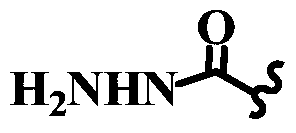 isothiocyanato; wherein X 1’ and X 3’ are independently F, Cl, Br, I or Lv 3; X 2’ is O, NH, N (R 1) , or CH 2; R 3 and R 5 are inde-pendently H, R 1, aromatic, heteroaromatic, or aromatic group wherein one or several H atoms are replaced independently by -R 1, -halogen, -OR 1, -SR 1, -NR 1R 2, -NO 2, -S (O) R 1, -S (O) 2R 1, or -COOR 1; Lv 3 is a leaving group selected from methanesulfonyl (mesyl) , toluenesulfonyl (tosyl) , trifluoromethyl-sulfonyl (triflate) , trifluoromethylsulfonate, nitrophenoxyl, phenylthio, pyridinyl-thio, N-succinimidyloxyl (NHS) , phenoxyl; dinitrophenoxyl; pentafluorophenoxyl, tetrafluoro-phenoxyl, trifluorophenoxyl, difluorophenoxyl, monofluoro-phenoxyl, pentachlorophenoxyl, 1H-imidazole-1-yl, chlorophenoxyl, dichlorophenoxyl, trichlorophenoxyl, tetrachlorophenoxyl, N- (benzotriazol-yl) oxyl, 2-ethyl-5-phenylisoxazolium-yl, phenyloxadiazol-yl (ODA) , oxadiazol-yl, or an intermediate molecule generated with a condensation reagent for Mitsunobu reactions, wherein R 1 and R 2 are defined above;
 Additionally, E 3 and E’ 3 are independently selected from -SH, -S-SCH 3, -S-SAc, -S-S-pyridine, -S-S-Ar (-NO 2) , -S-cell-binding agent, or any one of the following formulas:
 wherein D is H, -NO 2, SO 3H, or F; wherein R 1, R 2, R 3, R 4, r, m and n are defined above; w and w’ are independently 0, 1 or 2;wherein R 5 and R 5’ are independently selected from C 1~C 6 alkyl, aryl, cyclic, cyclohetero, H, or M, wherein M is Na, K, Ca, ammonium or the other pharmaceutically acceptable salt.
 - A PBD dimer derivative according to Claim 6 having Formulas (V-01) ~ (V-20) , (VI-01) ~(VI-12) , (VII-01) ~ (VII-06) , (VIII-01) ~ (VIII-06) below:


 wherein U, U’, V, V’, n, n’, X, X’ and L are defined the same as in Claim 1; R 6 and R 6’ are in-dependently selected from C 1~C 6 alkyl, aryl, cyclic, cyclohetero, halogen, haloalkyl, alkoxy, haloalkoxy alkylamino, -NO 2, -CN or H; r, r 1, r 2 and r’ are independently 0~200.
 - A conjugate of a cross-linked PBD dimer derivative to a cell-binding molecule according to Claim 1 having the Formula 31, 45, 57, 59, 61, 67, 90, 96, 148, 162, 176, 178, 184, 188, 209, 214, 224, 232, 255, 268, 271, CC-3, CC-4, CC-5, CC-6, CC-7, CC-8, CC-10, CC-11, CC-12, CC-14, CC-15, CC-17, CC-18, CC-20, CC-21, CC-27, CC-29, shown below:


 wherein r, r 1, r 2 and r’ are independently 0~200; n is 1~30.
 - A PBD dimer derivative according to Claim 6 having Formulas 30, 44, 56, 58, 60, 66, 89, 95, 147, 161, 175, 177, 183, 187, 208, 213, 223, 231, 254, 267, 270, 273, 275, 277, C-3, C-4, C-5, C-6, C-7, C-8, C-10, C-11, C-12, C-14, C-15, C-17, C-18, C-20, C-21, C-27, C-29 below:


 wherein r, r 1, r 2 and r’ are independently 0~200; n is 1~30.
 - L 1 and L 2, according to Claim 1, 2, 4, or 6 may independently be composed of:(A) : one or more components of 6-maleimidocaproyl ( "MC" ) , maleimidopropanoyl ( "MP" ) , valine-citrulline ( "val-cit" or "vc" ) , alanine-phenylalanine ( "ala-phe" or "af" ) , p-aminobenzyloxycarbonyl ( "PAB" ) , 4-thiopentanoate ( "SPP" ) , 4- (N-maleimidomethyl) -cyclohexane-1 carboxylate ( "MCC" ) , (4-acetyl) amino-benzoate ( "SIAB" ) , ethyleneoxy (--CH 2CH 2O--) as one or more repeating units ( "EO" or "PEO" ) , 4-thio-butyrate (SPDB) , 4-thio-2-hydroxysulfonyl-butyrate (2-Sulfo-SPDB) , or natural or unnatural peptides having 1~12 the same or different sequences of natural or unnatural amino acid unites;(B) : one or more of a self-immolative component, a peptidic unit, a hydrazone bond, a disulfide, an ester, an oxime, an amide, or a thioether bond. The self-immolative unit includes aromatic compounds that are electronically similar to the para-aminobenzyl-carbamoyl (PAB) groups, 2-aminoimidazol-5-methanol derivatives, heterocyclic PAB analogs, beta-glucuronides, ortho or para-aminobenzylacetals; or one of the following structures:
 wherein the (*) atom is the point of attachment of another component; X 1, Y 1, Z 2 and Z 3 are independently NH, O, or S; Z 1 is independently H, NHR 1, OR 1, SR 1, COX 1R 1, wherein X 1 and R 1 are defined above; v is 0 or 1; U 1 is inde-pendently H, OH, C 1~C 6 alkyl, (OCH 2CH 2) n, F, Cl, Br, I, OR 5, SR 5, NR 5R 5’, N=NR 5, N=R 5, NR 5R 5’, NO 2, SOR 5R 5’, SO 2R 5, SO 3R 5, OSO 3R 5, PR 5R 5’, POR 5R 5’, PO 2R 5R 5’, OPO (OR 5) (OR 5’) , or OCH 2PO (OR 5 (OR 5’) , wherein R 5 and R 5’ are independently selected from H, C 1~C 8 alkyl; C 2~C 8 alkenyl, alkynyl, heteroalkyl, or amino acid; C 3~C 8 aryl, hetero-cyclic, carbocyclic, cycloalkyl, heterocycloalkyl, heteroaralkyl, alkylcarbonyl, or glycoside; or pharmaceutical cation salts;
 (C) : one or more of a non-self-immolative linker component containing one of the fol-lowing structures:
 wherein the (*) atom is the site of attachment. X 1, Y 1, U 1, R 5, R 5’ are defined as above; r is 0~100; m and n are 0~20 independently;(D) : one or more of a releasable component that at least one bond can be broken under physiological conditions: a pH-labile, acid-labile, base-labile, oxidatively labile, metabolically labile, biochemically labile or enzyme-labile bond, which having one of the following struc-tures: - (CR 5R 6) m (Aa) r (CR 7R 8) n (OCH 2CH 2) t-, - (CR 5R 6) m (CR 7R 8) n (Aa) r (OCH 2CH 2) t-, - (Aa) r- (CR 5R 6) m (CR 7R 8) n (OCH 2CH 2) t-, - (CR 5R 6) m (CR 7R 8) n (OCH 2CH 2) r (Aa) t-, - (CR 5R 6) m- (CR 7=CR 8) (CR 9R 10) n (Aa) t (OCH 2CH 2) r-, - (CR 5R 6) m (NR 11CO) (Aa) t (CR 9R 10) n- (OCH 2CH 2) r-, - (CR 5R 6) m (Aa) t (NR 11CO) (CR 9R 10) n (OCH 2CH 2) r-, - (CR 5R 6) m (OCO) (Aa) t (CR 9R 10) n- (OCH 2CH 2) r-, - (CR 5R 6) m (OCNR 7) (Aa) t (CR 9R 10) n (OCH 2CH 2) r-, - (CR 5R 6) m (CO) (Aa) t- (CR 9R 10) n (OCH 2CH 2) r-, - (CR 5R 6) m (NR 11CO) (Aa) t (CR 9R 10) n (OCH 2CH 2) r-, - (CR 5R 6) m- (OCO) (Aa) t (CR 9R 10) n- (OCH 2CH 2) r-, - (CR 5R 6) m (OCNR 7) (Aa) t (CR 9R 10) n (OCH 2CH 2) r-, - (CR 5R 6) m (CO) (Aa) t (CR 9R 10) n- (OCH 2CH 2) r-, - (CR 5R 6) m-phenyl-CO (Aa) t (CR 7R 8) n-, - (CR 5R 6) m-furyl-CO (Aa) t (CR 7R 8) n-, - (CR 5R 6) m-oxazolyl-CO (Aa) t (CR 7R 8) n-, - (CR 5R 6) m-thiazolyl-CO (Aa) t (CCR 7R 8) n-, - (CR 5R 6) t-thienyl-CO (CR 7R 8) n-, - (CR 5R 6) t-imidazolyl-CO- (CR 7R 8) n-, - (CR 5R 6) t-morpholino-CO (Aa) t- (CR 7R 8) n-, - (CR 5R 6) tpiperazino-CO (Aa) t- (CR 7R 8) n-, - (CR 5R 6) t-N-methylpiperazin-CO (Aa) t- (CR 7R 8) n-, - (CR 5R) m- (Aa) tphenyl-, - (CR 5R 6) m- (Aa) tfuryl-, - (CR 5R 6) m-oxazolyl (Aa) t-, - (CR 5R 6) m-thiazolyl (Aa) t-, - (CR 5R 6) m-thienyl- (Aa) t-, - (CR 5R 6) m-imidazolyl (Aa) t-, - (C R 5R 6) m-morpholino- (Aa) t-, - (CR 5R 6) m-piperazino- (Aa) t-, - (CR 5R 6) m-N-methylpiperazino- (Aa) t-, -K (CR 5R 6) m (Aa) r (CR 7R 8) n (OCH 2CH 2) t-, -K (CR 5R 6) m- (CR 7R 8) n- (Aa) r (OCH 2CH 2) t-, -K (Aa) r- (CR 5R 6) m (CR 7R 8) n (OCH 2CH 2) t-, -K (CR 5R 6) m (CR 7R 8) n- (OCH 2-CH 2) r (Aa) t-, -K (CR 5R 6) m (CR 7=CR 8) (CR 9R 10) n (Aa) t (OCH 2CH 2) r-, -K (CR 5R 6) m- (NR 11CO) (Aa) t (CR 9R 10) n (OCH 2CH 2) r, -K (CR 5R 6) m (Aa) t (NR 11CO) - (CR 9R 10) n (OCH 2CH 2) r-, -K (CR 5R 6) m (OCO) (Aa) t (CR 9R 10) n- (OCH 2CH 2) r-, -K (CR 5R 6) m (OCNR 7) (Aa) t (CR 9R 10) n- (OCH 2CH 2) r-, -K (CR 5R 6) m (CO) (Aa) t- (CR 9R 10) n (OCH 2CH 2) r-, -K (CR 5R 6) m (NR 11CO) (Aa) t- (CR 9R 10) n (OCH 2CH 2) r-, -K (CR 5R 6) m- (OCO) (Aa) t (CR 9R 10) n (OCH 2CH 2) r-, -K (CR 5R 6) m- (OCNR 7) (Aa) t (CR 9R 10) n (OCH 2CH 2) r-, -K- (CR 5R 6) m (CO) (Aa) t (CR 9R 10) n (OCH 2CH 2) r-, -K (CR 5R 6) m-phenyl-CO (Aa) t (CR 7R 8) n-, -K- (CR 5R 6) m-furyl-CO (Aa) t- (CR 7R 8) n-, -K (CR 5R 6) m-oxazolyl-CO (Aa) t (CR 7R 8) n-, -K (CR 5R 6) m-thiazolyl-CO (Aa) t- (CR 7R 8) n-, -K (CR 5R 6) t-thienyl-CO (CR 7R 8) n-, -K (CR 5R 6) timidazolyl-CO- (CR 7R 8) n-, -K (CR 5R 6) tmorpholinoCO- (Aa) t (CR 7R 8) n-, -K (CR 5R 6) tpiperazino-CO (Aa) t- (CR 7R 8) n-, -K (CR 5R 6) t-N-methylpiperazin-CO (Aa) t (CR 7R 8) n-, -K (CR 5R) m (Aa) tphenyl, -K- (CR 5R 6) m- (Aa) tfuryl-, -K (CR 5R 6) m-oxazolyl (Aa) t-, -K (CR 5R 6) m-thiazolyl (Aa) t-, -K (CR 5R 6) m-thienyl- (Aa) t-, -K (CR 5R 6) m-imidazolyl (Aa) t-, -K (CR 5R 6) m-morpholino (Aa) t-, -K (CR 5R 6) m-piperazino- (Aa) tG, -K (CR 5R 6) m-N-methylpiperazino (Aa) t-; wherein m, Aa, m, and n are described above; t and r are 0 –100 independently; R 3, R 4, R 5, R 6, R 7, and R 8 are independently chosen from H; halide; C 1~C 8 alkyl; C 2~C 8 aryl, alkenyl, alkynyl, ether, ester, amine or amide, which optionally substituted by one or more halide, CN, NR 1R 2, CF 3, OR 1, Aryl, heterocycle, S (O) R 1, SO 2R 1, -CO 2H, -SO 3H, -OR 1, -CO 2R 1, -CONR 1, -PO 2R 1R 2, -PO 3H or P (O) R 1R 2R 3; K is NR 1, -SS-, -C (=O) -, -C (=O) NH-, -C (=O) O-, -C=NH-O-, -C=N-NH-, -C (=O) NH-NH-, O, S, Se, B, Het (heterocyclic or heteroaromatic ring having C 3-C 8) , or peptides containing 1-20 amino acids;(E) : one or more of a hydrophilic structure of following:
 wherein
 is the site of linkage; X 2, X 3, X 4, X 5, or X 6, are independently selected from NH; NHNH; N (R 3) ; N (R 3) N (R 3’) ; O; S; C 1-C 6 alkyl; C 2-C 6 heteroalkyl, alkylcycloalkyl, or heterocycloalkyl; C 3-C 8 aryl, Ar-alkyl, heterocyclic, carbocyclic, cycloalkyl, heteroalkylcycloalkyl, alkylcarbonyl, or heteroaryl; or 1~8 of the same or different amino acids; wherein R 3 and R 3’ are independently H; C 1-C 8 alkyl; C 2-C 8 hetero-alkyl, alkylcycloalkyl, or heterocycloalkyl; C 3-C 8 aryl, Ar-alkyl, heterocyclic, carbocyclic, cycloalkyl, heteroalkylcycloalkyl, alkylcarbonyl, or heteroaryl; or C 2-C 8 esters, ether, or amide; or polyethyleneoxy unit having formula (OCH 2CH 2) p or (OCH 2CH (CH 3) ) p, wherein p is an integer from 0 to about 5000, or combination above thereof;
 (F) . one or more following components linking to E 1 and/or E 2, of Formula (I) , (Ia) , (Ib) , (Ic) , (Ie) : (III) , (II) , (III) or (IV) ; or when Q directly linking to L 1 and/or L 2 of Formula (I) , (Ia) , (Ib) , (Ic) , (Ie) : (III) , (II) , (III) or (IV) , wherein V 1, and/or V 2, are independently absent:

 wherein R 7, R 8 and R 9 are independently selected from –C 1~C 8 alkylene-, --C 1~C 7 carbocyclo-, -O- (C 1~C 8 alkyl) -, -arylene-, --C 1~C 8 alkylene-arylene-, -arylene, -C 1~C 8 alkylene-, -C 1~C 8 alkylene- (C 1~C 8 carbocyclo) -, - (C 3~C 7 carbocyclo) -C 1~C 8 alkylene-, -C 3~C 8 heterocyclo-, -C 1~C 8 alkylene- (C 3~C 8 heterocyclo) -, - (C 3~C 8 heterocyclo) -C 1~C 9 alkylene-, - (CH 2CH 2O) k-, - (CH (CH 3) CH 2O) k-, and- (CH 2CH 2O) k-CH 2-; k is an integer ranging from 1-30; X”’, Y”’ and Z”’ are independently selected from NH, O or S; Q, R 1 and R 2 are described above.
- The cell binding agent/molecule according to claim 1, 2, 3, 4, 5, 6, or 8, is selected from:(A) : the group consisting of an antibody, a protein, probody, nanobody, a vitamin (including folate) , peptides, a polymeric micelle, a liposome, a lipoprotein-based drug carrier, a nano-particle drug carrier, a dendrimer, and a molecule or a particle said above coating or linking with a cell-binding ligand, or a combination of said above thereof;(B) : an antibody-like protein, a full-length antibody (polyclonal antibody, monoclonal antibody, antibody dimer, antibody multimer) , multispecific antibody (selected from, bispecific antibody, trispecific antibody, or tetraspecific antibody) ; a single chain antibody, an antibody fragment that binds to the target cell, a monoclonal antibody, a single chain monoclonal antibody, a monoclonal antibody fragment that binds the target cell, a chimeric antibody, a chimeric antibody fragment that binds to the target cell, a domain antibody, a domain antibody fragment that binds to the target cell, a resurfaced antibody, a resurfaced single chain antibody, or a resurfaced antibody fragment that binds to the target cell, a humanized antibody or a resurfaced antibody, a humanized single chain antibody, or a humanized antibody fragment that binds to the target cell, anti-idiotypic (anti-Id) antibodies, CDR's, diabody, triabody, tetrabody, miniantibody, a probody, a probody fragment, small immune proteins (SIP) , a lymphokine, a hormone, a vitamin, a growth factor, a colony stimulating factor, a nutrient-transport molecule, large molecular weight proteins, fusion proteins, kinase inhibitors, gene-targeting agents, nanoparticles or polymers modi-modified with antibodies or large molecular weight proteins;(C) : a cell-binding molecule or receptor agonist selected from: Folate derivatives; Glutamic acid urea derivatives; Somatostatin and its analogs (selected from the group consisting of octreotide (Sandostatin) and lanreotide (Somatuline) ) ; Aromatic sulfonamides; Pituitary adenylate cyclase activating peptides (PACAP) (PAC1) ; Vasoactive intestinal peptides (VIP/PACAP) (VPAC1, VPAC2) ; Melanocyte-stimulating hormones (α-MSH) ; Cholecystokinins (CCK) /gastrin receptor agonists; Bombesins (selected from the group consisting ofPyr-Gln-Arg-Leu-Gly-Asn-Gln-Trp-Ala-Val-Gly-His-Leu-Met-NH 2) /gastrin-releasing peptide (GRP) ; Neurotensin receptor ligands (NTR1, NTR2, NTR3) ; Substance P (NK1 receptor) ligands; Neuropeptide Y (Y1–Y6) ; Homing Peptides include RGD (Arg-Gly-Asp) , NGR (Asn-Gly-Arg) , the dimeric and multimeric cyclic RGD peptides (selected from cRGDfV) , TAASGVRSMH and LTLRWVGLMS (Chondroitin sulfate proteoglycan NG2 receptor ligands) and F3 peptides; Cell Penetrating Peptides (CPPs) ; Peptide Hormones, selected from the group consisting of luteinizing hormone-releasing hormone (LHRH) agonists and antagonists, and gonadotropin-releasing hormone (GnRH) agonist, acts by targeting follicle stimulating hormone (FSH) and luteinizing hormone (LH) , as well as testosterone production, selected from the group consisting of buserelin (Pyr-His-Trp-Ser-Tyr-D-Ser (OtBu) -Leu-Arg-Pro-NHEt) , Gonadorelin (Pyr-His-Trp-Ser-Tyr-Gly-Leu-Arg-Pro-Gly-NH 2) , Goserelin (Pyr-His-Trp-Ser-Tyr-D-Ser (OtBu) -Leu-Arg-Pro-AzGly-NH 2) , Histrelin (Pyr-His-Trp-Ser-Tyr-D-His (N-benzyl) -Leu-Arg-Pro-NHEt) , leuprolide (Pyr-His-Trp-Ser-Tyr-D-Leu-Leu-Arg-Pro-NHEt) , Nafarelin (Pyr-His-Trp-Ser-Tyr-2Nal-Leu-Arg-Pro-Gly-NH 2) , Triptorelin (Pyr-His-Trp-Ser-Tyr-D-Trp-Leu-Arg-Pro-Gly-NH 2) , Nafarelin, Deslorelin, Abarelix (Ac-D-2Nal-D-4-chloroPhe-D-3- (3-pyridyl) Ala-Ser- (N-Me) Tyr-D-Asn-Leu-isopropylLys-Pro-DAla-NH 2) , Cetrorelix (Ac-D-2Nal-D-4-chloroPhe-D-3- (3-pyridyl) Ala-Ser-Tyr-D-Cit-Leu-Arg-Pro-D-Ala-NH 2) , Degarelix (Ac-D-2Nal-D-4-chloroPhe-D-3- (3-pyridyl) Ala-Ser-4-aminoPhe (L-hydroorotyl) -D-4-aminoPhe (carba-moyl) -Leu-isopropylLys-Pro-D-Ala-NH 2) , and Ganirelix (Ac-D-2Nal-D-4-chloroPhe-D-3- (3-pyridyl) Ala-Ser-Tyr-D- (N9, N10-diethyl) -homoArg-Leu- (N9, N10-diethyl) -homoArg-Pro-D-Ala-NH 2) ; Pattern Recognition Receptor (PRRs) , selected from the group consisting of Toll-like receptors’ (TLRs) ligands, C-type lectins and Nodlike Receptors’ (NLRs) ligands; Calcitonin receptor agonists; integrin receptors’ and their receptor subtypes’ (selected from the group consisting ofα Vβ 1, α Vβ 3, α Vβ 5, α Vβ 6, α 6β 4, α 7β 1, α Lβ 2, α IIbβ 3) agonists (selected from the group consisting of GRGDSPK, cyclo (RGDfV) (L1) and its derives [cyclo (-N (Me) R-GDfV) , cyclo (R-Sar-DfV) , cyclo (RG-N (Me) D-fV) , cyclo (RGD-N (Me) f-V) , cyclo (RGDf-N (Me) V-) (Cilengitide) ] ; Nanobody (a derivative of VHH (camelid Ig) ) ; Domain antibodies (dAb, a derivative of VH or VL domain) ; Bispecific T cell Engager (BiTE, a bispecific diabody) ; Dual Affinity ReTargeting (DART, a bispecific diabody) ; Tetravalent tandem antibodies (TandAb, a dimerized bispecific diabody) ; Anticalin (a derivative of Lipocalins) ; Adnectins (10th FN3 (Fibronectin) ) ; Designed Ankyrin Repeat Proteins (DARPins) ; Avimers; EGF receptors, or VEGF receptors’ agonists;(D) : A small molecule of cell-binding molecule/ligand or a cell receptor agonist selected from the following: LB01 (Folate) , LB02 (PMSA ligand) , LB03 (PMSA ligand) , LB04 (PMSA ligand) , LB05 (Somatostatin) , LB06 (Somatostatin) , LB07 (Octreotide, a Somatostatin analog) , LB08 (Lanreotide, a Somatostatin analog) , LB09 (Vapreotide (Sanvar) , a Somatostatin analog) , LB10 (CAIX ligand) , LB11 (CAIX ligand) , LB12 (Gastrin releasing peptide receptor (GRPr) , MBA) , LB13 (luteinizing hormone-releasing hormone (LH-RH) ligand and GnRH) , LB14 (luteinizing hormone-releasing hormone (LH-RH) and GnRH ligand) , LB15 (GnRH antagonist, Abarelix) , LB16 (cobalamin, vitamin B12 analog) , LB17 (cobalamin, vitamin B12 analog) , LB18 (for α vβ 3 integrin receptor, cyclic RGD pentapeptide) , LB19 (hetero-bivalent peptide ligand for VEGF receptor) , LB20 (Neuromedin B) , LB21 (bombesin for a G-protein coupled receptor) , LB22 (TLR 2 for a Toll-like receptor, ) , LB23 (for an androgen receptor) , LB24 (Cilengitide/cyclo (-RGDfV-) for an α v integrin receptor, LB23 (Fludrocortisone) , LB25 (Rifabutin analog) , LB26 (Rifabutin analog) , LB27 (Rifabutin analog) , LB28 (Fludrocortisone) , LB29 (Dexamethasone) , LB30 (fluticasone propionate) , LB31 (Beclometasone dipropionate) , LB32 (Triamcinolone acetonide) , LB33 (Prednisone) , LB34 (Prednisolone) , LB35 (Methylprednisolone) , LB36 (Betamethasone) , LB37 (Irinotecan analog) , LB38 (Crizotinib analog) , LB39 (Bortezomib analog) , LB40 (Carfilzomib analog) , LB41 (Carfilzomib analog) , LB42 (Leuprolide analog) , LB43 (Triptorelin analog) , LB44 (Clindamycin) , LB45 (Liraglutide analog) , LB46 (Semaglutide analog) , LB47 (Retapamulin analog) , LB48 (Indibulin analog) , LB49 (Vinblastine analog) , LB50 (Lixisenatide analog) , LB51 (Osimertinib analog) , LB52 (a nucleoside analog) , LB53 (Erlotinib analog) or LB54 (Lapatinib analog) which are shown in the following structures:


 whereinis the site to link the PBD dimer derivative of the present patent through the linker L 1 or/and L 2; X 4, and Y 1 are independently O, NH, NHNH, NR 1, S, C (O) O, C (O) NH, OC (O) NH, OC (O) O, NHC (O) NH, NHC (O) S, OC (O) N (R 1) , N (R 1) C (O) N (R 1) , CH 2, C (O) NHNHC (O) and C (O) NR 1; X 1 is H, CH 2, OH, O, C (O) , C (O) NH, C (O) N (R 1) , R 1, NHR 1, NR 1, C (O) R 1 or C (O) O; X 5 is H, CH 3, F, or Cl; M 1 and M 2 are independently H, Na, K, Ca, Mg, NH 4, N (R 1R 2R 3 R 4) ; R 1, R 2, R 3 and R 4 are defined in Claim 1.
- The cell binding agent/molecule according to claim 1, 2, 3, 4, 5, 6, 8, or 10 is capable of targeting against a tumor cell, a virus infected cell, a microorganism infected cell, a parasite infected cell, an autoimmune disease cell, an activated tumor cells, a myeloid cell, an activated T-cell, an affecting B cell, or a melanocyte, or any cells expressing any one of the following antigens or receptors: CD1, CD1a, CD1b, CD1c, CD1d, CD1e, CD2, CD3, CD3d, CD3e, CD3g, CD4, CD5, CD6, CD7, CD8, CD8a, CD8b, CD9, CD10, CD11a, CD11b, CD11c, CD11d, CD12w, CD14, CD15, CD16, CD16a, CD16b, CDw17, CD18, CD19, CD20, CD21, CD22, CD23, CD24, CD25, CD26, CD27, CD28, CD29, CD30, CD31, CD32, CD32a, CD32b, CD33, CD34, CD35, CD36, CD37, CD38, CD39, CD40, CD41, CD42, CD42a, CD42b, CD42c, CD42d, CD43, CD44, CD45, CD46, CD47, CD48, CD49b, CD49c, CD49c, CD49d, CD49f, CD50, CD51, CD52, CD53, CD54, CD55, CD56, CD57, CD58, CD59, CD60, CD60a, CD60b, CD60c, CD61, CD62E, CD62L, CD62P, CD63, CD64, CD65, CD65s, CD66, CD66a, CD66b, CD66c, CD66d, CD66e, CD66f, CD67, CD68, CD69, CD70, CD71, CD72, CD73, CD74, CD75, CD75s, CD76, CD77, CD78, CD79, CD79a, CD79b, CD80, CD81, CD82, CD83, CD84, CD85, CD85a, CD85b, CD85c, CD85d, CD85e, CD85f, CD85g, CD85g, CD85i, CD85j, CD85k, CD85m, CD86, CD87, CD88, CD89, CD90, CD91, CD92, CD93, CD94, CD95, CD96, CD97, CD98, CD99, CD100, CD101, CD102, CD103, CD104, CD105, CD106, CD107, CD107a, CD107b, CD108, CD109, CD110, CD111, CD112, CD113, CD114, CD115, CD116, CD117, CD118, CD119, CD120, CD120a, CD120b, CD121, CD121a, CD121b, CD122, CD123, CD123a, CD124, CD125, CD126, CD127, CD128, CD129, CD130, CD131, CD132, CD133, CD134, CD135, CD136, CD137, CD138, CD139, CD140, CD140a, CD140b, CD141, CD142, CD143, CD144, CD145, CDw145, CD146, CD147, CD148, CD149, CD150, CD151, CD152, CD153, CD154, CD155, CD156, CD156a, CD156b, CD156c, CD156d, CD157, CD158, CD158a, CD158b1, CD158b2, CD158c, CD158d, CD158e1, CD158e2, CD158f2, CD158g, CD158h, CD158i, CD158j, CD158k, CD159, CD159a , CD159b, CD159c, CD160, CD161, CD162, CD163, CD164, CD165, CD166, CD167, CD167a, CD167b, CD168, CD169, CD170, CD171, CD172, CD172a, CD172b, CD172g, CD173, CD174, CD175, CD175s, CD176, CD177, CD178, CD179, CD179a, CD179b, CD180, CD181, CD182, CD183, CD184, CD185, CD186, CDw186, CD187, CD188, CD189, CD190, CD191, CD192, CD193, CD194, CD195, CD196, CD197, CD198, CD199, CDw198, CDw199, CD200, CD201, CD202, CD202 (a, b) , CD203, CD203c, CD204, CD205, CD206, CD207, CD208, CD209, CD210, CDw210a, CDw210b, CD211, CD212, CD213, CD213a1, CD213a2, CD214, CD215, CD216, CD217, CD218, CD218a, CD218, CD21b9, CD220, CD221, CD222, CD223, CD224, CD225, CD226, CD227, CD228, CD229, CD230, CD231, CD232, CD233, CD234, CD235, CD235a, CD235b, CD236, CD237, CD238, CD239, CD240, CD240ce, CD240d, CD241, CD242, CD243, CD244, CD245, CD246, CD247, CD248, CD249, CD250, CD251, CD252, CD253, CD254, CD255, CD256, CD257, CD258, CD259, CD260, CD261, CD262, CD263, CD264, CD265, CD266, CD267, CD268, CD269, CD270, CD271, CD272, CD273, CD274, CD275, CD276, CD277, CD278, CD279, CD281, CD282, CD283, CD284, CD285, CD286, CD287, CD288, CD289, CD290, CD291, CD292, CD293, CD294, CD295, CD296, CD297, CD298, CD299, CD300, CD300a, CD300b, CD300c, CD301, CD302, CD303, CD304, CD305, CD306, CD307, CD307a, CD307b, CD307c, CD307d, CD307e, CD307f, CD308, CD309, CD310, CD311, CD312, CD313, CD314, CD315, CD316, CD317, CD318, CD319, CD320, CD321, CD322, CD323, CD324, CD325, CD326, CD327, CD328, CD329, CD330, CD331, CD332, CD333, CD334, CD335, CD336, CD337, CD338, CD339, CD340, CD341, CD342, CD343, CD344, CD345, CD346, CD347, CD348, CD349, CD350, CD351, CD352, CD353, CD354, CD355, CD356, CD357, CD358, CD359, CD360, CD361, CD362, CD363, CD364, CD365, CD366, CD367, CD368, CD369, CD370, CD371, CD372, CD373, CD374, CD375, CD376, CD377, CD378, CD379, CD381, CD382, CD383, CD384, CD385, CD386, CD387, CD388, CD389, CRIPTO, CRIPTO, CR, CR1, CRGF, CRIPTO, CXCR5, LY64, TDGF1, 4-1BB, APO2, ASLG659, BMPR1B, 4-1BB, 5AC, 5T4 (Trophoblastic glycoprotein, TPBG, 5T4, Wnt-Activated Inhibitory Factor 1 or WAIF1) , Adenocarcinoma antigen, AGS-5, AGS-22M6, Activin receptor-like kinase 1, AFP, AKAP-4, ALK, Alpha integrin, Alpha v beta6, Amino-peptidase N, Amyloid beta, Androgen receptor, Angiopoietin 2, Angiopoietin 3, Annexin A1, Anthrax toxin protective antigen, Anti-transferrin receptor, AOC3 (VAP-1) , B7-H3, Bacillus anthracis anthrax, BAFF (B-cell activating factor) , BCMA, B-lymphoma cell, bcr-abl, Bombesin, BORIS, C5, C242 antigen, CA125 (carbohydrate antigen 125, MUC16) , CA-IX (or CAIX, carbonic anhydrase 9) , CALLA, CanAg, Canis lupus familiaris IL31, Carbonic anhydrase IX, Cardiac myosin, CCL11 (C-C motif chemokine 11) , CCR4 (C-C chemokine receptor type 4) , CCR5, CD3E (epsilon) , CEA (Carcinoembryonic antigen) , CEACAM3, CEACAM5 (carcino-embryonic antigen) , CFD (Factor D) , Ch4D5, Cholecystokinin 2 (CCK2R) , CLDN18 (Claudin-18) , Clumping factor A, cMet, CRIPTO, FCSF1R (Colony stimulating factor 1 receptor) , CSF2 (colony stimulating factor 2, Granulocyte-macrophage colony-stimulating factor (GM-CSF) ) , CSP4, CTLA4 (cytotoxic T-lymphocyte-associated protein 4) , CTAA16.88 tumor antigen, CXCR4, C-X-C chemokine receptor type 4, cyclic ADP ribose hydrolase, Cyclin B1, CYP1B1, Cytomegalovirus, Cytomegalovirus glycoprotein B, Dabigatran, DLL3 (delta-like-ligand 3) , DLL4 (delta-like-ligand 4) , DPP4 (Dipeptidyl-peptidase 4) , DR5 (Death receptor 5) , E. coli shiga toxin type-1, E. coli shiga toxin type-2, ED-B, EGFL7 (EGF-like domain-containing protein 7) , EGFR, EGFRII, EGFRvIII, Endoglin, Endothelin B receptor, Endotoxin, EpCAM (epithelial cell adhesion molecule) , EphA2, Episialin, ERBB2 (Epidermal Growth Factor Receptor 2) , ERBB3, ERG (TMPRSS2 ETS fusion gene) , Escherichia coli, ETV6-AML, FAP (Fibroblast activation protein alpha) , FCGR1, alpha-Fetoprotein, Fibrin II, beta chain, Fibronectin extra domain-B, FOLR (folate receptor) , Folate receptor alpha, Folate hydrolase, Fos-related antigen 1F protein of respiratory syncytial virus, Frizzled receptor, Fucosyl GM1, GD2 ganglioside, G-28 (a cell surface antigen glyvolipid) , GD3 idiotype, GloboH, Glypican 3, N-glycolylneuraminic acid, GM3, GMCSF receptor α-chain, Growth differentiation factor 8, GP100, GPNMB (Trans-membrane glycoprotein NMB) , GUCY2C (Guanylate cyclase 2C, guanylyl cyclase C (GC-C) , intestinal Guanylate cyclase, Guanylate cyclase-C receptor, Heat-stable enterotoxin receptor (hSTAR) ) , Heat shock proteins, Hemagglutinin, Hepatitis B surface antigen, Hepatitis B virus, HER1 (human epidermal growth factor receptor 1) , HER2, HER2/neu, HER3 (ERBB-3) , IgG4, HGF/SF (Hepatocyte growth factor/scatter factor) , HHGFR, HIV-1, Histone complex, HLA-DR (human leukocyte antigen) , HLA-DR10, HLA-DRB , HMWMAA, Human chorionic gonadotropin, HNGF, Human scatter factor receptor kinase, HPV E6/E7, Hsp90, hTERT, ICAM-1 (Intercellular Adhesion Molecule 1) , Idiotype, IGF1R (IGF-1, insulin-like growth factor 1 receptor) , IGHE, IFN-γ, Influenza hemagglutinin, IgE, IgE Fc region, IGHE, interleukins (comprising IL-1, IL-2, IL-3, IL-4, IL-5, IL-6, IL-6R, IL-7, IL-8, IL-9, IL-10, IL-11, IL-12, IL-13, IL-15, IL-17, IL-17A, IL-18, IL-19, IL-20, IL-21, IL-22, IL-23, IL-27, or IL-28) , IL31RA, ILGF2 (Insulin-like growth factor 2) , Integrins (α4, α IIbβ 3, αvβ3, α 4β 7, α5β1, α6β4, α7β7, αllβ3, α5β5, αvβ5) , Interferon gamma-induced protein, ITGA2, ITGB2, KIR2D, Kappa Ig, LCK, Le, Legumain, Lewis-Y antigen, LFA-1 (Lymphocyte function-associated antigen 1, CD11a) , LHRH, LINGO-1, Lipoteichoic acid, LIV1A, LMP2, LTA, MAD-CT-1, MAD-CT-2, MAGE-1, MAGE-2, MAGE-3, MAGE A1, MAGE A3, MAGE 4, MART1, MCP-1, MIF (Macrophage migration inhibitory factor, or glycosylation-inhibiting factor (GIF) ) , MS4A1 (membrane-spanning 4-domains subfamily A member 1) , MSLN (mesothelin) , MUC1 (Mucin 1, cell surface associated (MUC1) or polymorphic epithelial mucin (PEM) ) , MUC1-KLH, MUC16 (CA125) , MCP1 (monocyte chemotactic protein 1) , MelanA/MART1, ML-IAP, MPG, MS4A1 (membrane-spanning 4-domains subfamily A) , MYCN, Myelin-associated glycoprotein, Myostatin, NA17, NARP-1, NCA-90 (granulocyte antigen) , Nectin-4 (ASG-22ME) , NGF, Neural apoptosis-regulated proteinase 1, NOGO-A, Notch receptor, Nucleolin, Neu oncogene product, NY-BR-1, NY-ESO-1, OX-40, OxLDL (Oxidized low-density lipoprotein) , OY-TES1, P21, p53 nonmutant, P97, Page4, PAP, Paratope of anti- (N-glycolylneuraminic acid) , PAX3, PAX5, PCSK9, PDCD1 (PD-1, Programmed cell death protein 1) , PDGF-Rα (Alpha-type platelet-derived growth factor receptor) , PDGFR-β, PDL-1, PLAC1, PLAP-like testicular alkaline phosphatase, Platelet-derived growth factor receptor beta, Phosphate-sodium co-transporter, PMEL 17, Polysialic acid, Proteinase3 (PR1) , Prostatic carcinoma, PS (Phosphatidylserine) , Prostatic carcinoma cells, Pseudomonas aeruginosa, PSMA, PSA, PSCA, Rabies virus glycoprotein, RHD (Rh polypeptide 1 (RhPI) ) , Rhesus factor, RANKL, RhoC, Ras mutant, RGS5, ROBO4, Respiratory syncytial virus, RON, ROR1, Sarcoma translocation breakpoints, SART3, Sclerostin, SLAMF7 (SLAM family member 7) , Selectin P, SDC1 (Syndecan 1) , sLe (a) , Somatomedin C, SIP (Sphingosine-1-phosphate) , Somatostatin, Sperm protein 17, SSX2, STEAP1 (six-transmembrane epithelial antigen of the prostate 1) , STEAP2, STn, TAG-72 (tumor associated glycoprotein 72) , Survivin, T-cell receptor, T cell transmembrane protein, TEM1 (Tumor endothelial marker 1) , TENB2, Tenascin C (TN-C) , TGF-α, TGF-β (Transforming growth factor beta) , TGF-β1, TGF-β2 (Transforming growth factor-beta 2) , Tie (CD202b) , Tie2, TIM-1 (CDX-014) , Tn, TNF, TNF-α, TNFRSF8, TNFRSF10B (tumor necrosis factor receptor superfamily member 10B) , TNFRSF-13B (tumor necrosis factor receptor superfamily member 13B) , TPBG (trophoblast glycoprotein) , TRAIL-R1 (Tumor necrosis apoptosis Inducing ligand Receptor 1) , TRAILR2 (Death receptor 5 (DR5) ) , tumor-associated calcium signal transducer 2, tumor specific glycosylation of MUC1, TWEAK receptor, TYRP1 (glycoprotein 75) , TRP-2, Tyrosinase, VCAM-1, VEGF, VEGF-A, VEGF-2, VEGFR-1, VEGFR2, or vimentin, WT1, XAGE 1, or cells expressing any insulin growth factor receptors, or any epidermal growth factor receptors.
- The tumor cell according to claim 12 is selected from the group consisting of lymphoma cells, myeloma cells, renal cells, breast cancer cells, prostate cancer cells, ovarian cancer cells, colorectal cancer cells, gastric cancer cells, squamous cancer cells, small-cell lung cancer cells, none small-cell lung cancer cells, testicular cancer cells, malignant cells, or any cells that grow and divide at an unregulated, quickened pace to cause cancers.
- A pharmaceutical composition comprising a therapeutically effective amount of the conjugate compounds of any one of claim 1, 2, 3, 4, 5, or 8, and a pharmaceutically acceptable salt, carrier, diluent, or excipient therefore, or a combination of the conjugates thereof, for the treatment or prevention of a cancer, or an autoimmune disease, or an infectious disease.
- The pharmaceutical composition either in in the liquid formula or in the formulated lyophilized solid according to Claim 14, comprising by weight of: 0.01%-99%of one or more conjugates of any one of claim 1, 2, 3, 4, 5, or 8; 0.0%-20.0%of one or more polyols; 0.0%-2.0%of one or more surfactants; 0.0%-5.0%of one or more preservatives; 0.0%-30%of one or more amino acids; 0.0%-5.0%of one or more antioxidants; 0.0%-0.3%of one or more metal chelating agents; 0.0%-30.0%of one or more buffer salts for adjusting pH of the formulation to pH 4.5 to 8.5; and 0.0%-30.0%of one or more of isotonic agent for adjusting osmotic pressure bewteen about 250 to 350 mOsm when reconstituted for administration to a patient;wherein the polyol is selected from fructose, mannose, maltose, lactose, arabinose, xylose, ribose, rhamnose, galactose, glucose, sucrose, trehalose, sorbose, melezitose, raffinose, mannitol, xylitol, erythritol, maltitol, lactitol, erythritol, threitol, sorbitol, glycerol, or L-gluconate and its metallic salts) ;wherein the surfactant is selected from polysorbate 20, polysorbate 40, polysorbate 65, polysorbate 80, polysorbate 81, or polysorbate 85, poloxamer, poly (ethylene oxide) -poly (propylene oxide) , polyethylene-polypropylene, Triton; sodium dodecyl sulfate (SDS) , sodium laurel sulfate; sodium octyl glycoside; lauryl-, myristyl-, linoleyl-, or stearyl-sulfobetaine; lauryl-, myristyl-, linoleyl-or stearyl-sarcosine; linoleyl-, myristyl-, or cetyl-betaine; lauroamidopropyl-, cocamidopropyl-, linoleamidopropyl-, myristamidopropyl-, palmidopropyl-, or isostearamidopropyl-betaine (lauroamidopropyl) ; myristamidopropyl-, palmidopropyl-, or isostearamidopropyl-dimethylamine; sodium methyl cocoyl-, or disodium methyl oleyl-taurate; dodecyl betaine, dodecyl dimethylamine oxide, cocamidopropyl betaine and coco ampho glycinate; or isostearyl ethylimidonium ethosulfate; polyethyl glycol, polypropyl glycol, and copolymers of ethylene and propylene glycol;wherein the preservative is selected from benzyl alcohol, octadecyldimethylbenzyl ammonium chloride, hexamethonium chloride, benzalkonium chloride, benzethonium chloride, phenol, butyl and benzyl alcohol, alkyl parabens, methyl or propyl paraben, catechol, resorcinol, cyclohexanol, 3-pentanol, or m-cresol;wherein the amino acid is selected from arginine, cystine, glycine, lysine, histidine, ornithine, isoleucine, leucine, alanine, glycine glutamic acid or aspartic acid;wherein the antioxidant is selected from ascorbic acid, glutathione, cystine or and methionine;wherein the chelating agent is selected from EDTA or EGTA;wherein the buffer salt is selected from sodium, potassium, ammonium, or trihydroxyethylamino salts of citric acid, ascorbic acid, gluconic acid, carbonic acid, tartaric acid, succinic acid, acetic acid or phthalic acid; Tris or tromethamine hydrochloride, phosphate or sulfate; arginine, glycine, glycylglycine, or histidine with anionic acetate, chloride, phosphate, sulfate, or succinate salts;wherein the tonicity agent is selected from mannitol, sorbitol, sodium acetate, potassium chloride, sodium phosphate, potassium phosphate, trisodium citrate, or sodium chloride.
- The pharmaceutical composition according to Claim 14 or 15, is packed in a vial, bottle, pre-filled syringe, or pre-filled auto-injector syringe, in a form of a liquid or lyophilized powder/solid.
- The conjugate of Claim 1, 2, 3, 4, 5, or 8, or in the form of the pharmaceutical composition of Claim 14 or 15, having in vitro, in vivo or ex vivo cell killing activity.
- A pharmaceutical composition according to Claim 14 or 15, administered concurrently with a chemotherapeutic agent, a radiation therapy, an immunotherapy agent, an autoimmune disorder agent, an anti-infectious agents or the other conjugates for synergistically treatment or prevention of a cancer, or an autoimmune disease, or an infectious disease.
- The chemotherapeutic agent according to Claim 18, is selected from:(1) . a) . an alkylating agent: selected from nitrogen mustards: chlorambucil, chlornaphazine, cyclophosphamide, dacarbazine, estramustine, ifosfamide, mechlorethamine, mechlorethamine oxide hydrochloride, mannomustine, mitobronitol, melphalan, mitolactol, pipobroman, novembichin, phenesterine, prednimustine, thiotepa, trofosfamide, uracil mustard; CC-1065 and adozelesin, carzelesin, bizelesin or their synthetic analogues; duocarmycin and its synthetic analogues, KW-2189, CBI-TMI, or CBI dimers; benzodiazepine dimers or pyrrolobenzodiazepine (PBD) dimers, tomaymycin dimers, indolinobenzodiazepine dimers, imidazobenzothiadiazepine dimers, or oxazolidinobenzodiazepine dimers; Nitrosoureas: comprising carmustine, lomustine, chlorozotocin, fotemustine, nimustine, ranimustine; Alkylsulphonates: including busulfan, treosulfan, improsulfan and piposulfan) ; Triazenes or dacarbazine; Platinum containing compounds: comprising carboplatin, cisplatin, and oxaliplatin; aziridines, benzodopa, carboquone, meturedopa, or uredopa; ethylenimines and methylamelamines including altretamine, triethylenemelamine, trietylenephosphoramide, triethylenethiophosphoramide and trimethylolomelamine] ;b) . A plant alkaloid: selected from the group consisting of Vinca alkaloids: including vincristine, vinblastine, vindesine, vinorelbine, and navelbin; Taxoids: comprising paclitaxel, docetaxol and their analogs, Maytansinoids including DM1, DM2, DM3, DM4, DM5, DM6, DM7, maytansine, ansamitocins and their analogs, cryptophycins (including the group of cryptophycin 1 and cryptophycin 8) ; epothilones, eleutherobin, discodermolide, bryostatins, dolostatins, auristatins, tubulysins, cephalostatins; pancratistatin; a sarcodictyin; spongistatin;c) . A DNA Topoisomerase Inhibitor: selected from the groups of Epipodophyllins: comprising 9-aminocamptothecin, camptothecin, crisnatol, daunomycin, etoposide, etoposide phosphate, irinotecan, mitoxantrone, novantrone, retinoic acids (or retinols) , teniposide, topotecan, 9-nitrocamptothecin or RFS 2000; and mitomycins and their analogs;d) . An antimetabolite: selected from the group consisting of { [Anti-folate: (DHFR inhibitors: comprising methotrexate, trimetrexate, denopterin, pteropterin, aminopterin (4-aminopteroic acid) or folic acid analogues) ; IMP dehydrogenase Inhibitors: (including mycophenolic acid, tiazofurin, ribavirin, EICAR) ; Ribonucleotide reductase Inhibitors: (including hydroxyurea, deferoxamine) ] ; [Pyrimidine analogs: Uracil analogs: (including ancitabine, azacitidine, 6-azauridine, capecitabine, carmofur, cytarabine, dideoxyuridine, doxifluridine, enocitabine, 5-Fluorouracil, floxuridine, ratitrexed) ; Cytosine analogs: (including cytarabine, cytosine arabinoside, fludarabine) ; Purine analogs: (including azathioprine, fludarabine, mercaptopurine, thiamiprine, thioguanine) ] ; folic acid replenisher, frolinic acid} ;e) . A hormonal therapy: selected from Receptor antagonists: [Anti-estrogen: (including megestrol, raloxifene, tamoxifen) ; LHRH agonists: (including goscrclin, leuprolide acetate) ; Anti-androgens: (including bicalutamide, flutamide, calusterone, dromostanolone propionate, epitiostanol, goserelin, leuprolide, mepitiostane, nilutamide, testolactone, trilostane and other androgens inhibitors) ] ; Retinoids/Deltoids: [Vitamin D3 analogs: (including CB 1093, EB 1089 KH 1060, cholecalciferol, ergocalciferol) ; Photodynamic therapies: (including verteporfin, phthalocyanine, photosensitizer Pc4, demethoxyhypocrellin A) ; Cytokines: (comprising Interferon-alpha, Interferon-gamma, tumor necrosis factor (TNFs) , human proteins containing a TNF domain) ] } ;f) . A kinase inhibitor, selected from the group consisting of BIBW 2992 (anti-EGFR/Erb2) , imatinib, gefitinib, pegaptanib, sorafenib, dasatinib, sunitinib, erlotinib, nilotinib, lapatinib, axitinib, pazopanib. vandetanib, E7080 (anti-VEGFR2) , mubritinib, ponatinib, bafetinib, bosutinib, cabozantinib, vismodegib, iniparib, ruxolitinib, CYT387, axitinib, tivozanib, sorafenib, bevacizumab, cetuximab, Trastuzumab, Ranibizumab, Panitumumab, ispinesib;g) . A poly (ADP-ribose) polymerase (PARP) inhibitors selected from the group of olaparib, niraparib, iniparib, talazoparib, veliparib, CEP 9722 (Cephalon’s) , E7016 (Eisai's) , BGB-290 (BeiGene’s) , or 3-aminobenzamide.h) . An antibiotic, selected from the group consisting of an enediyne antibiotic (selected from the group of calicheamicin, calicheamicin γ1, δ1, α1 or β1; dynemicin, including dynemicin A and deoxydynemicin; esperamicin, kedarcidin, C-1027, maduropeptin, or neocarzinostatin chromophore and related chromoprotein enediyne antibiotic chromomophores) , aclacinomycins, actinomycin, authramycin, azaserine, bleomycins, cactinomycin, carabicin, carminomycin, carzinophilin; chromomycins, dactinomycin, daunorubicin, detorubicin, 6-diazo-5-oxo-L-norleucine, doxorubicin, morpholino-doxorubicin, cyanomorpholino-doxorubicin, 2-pyrrolino-doxorubicin and deoxydoxorubicin, epirubicin, eribulin, esorubicin, idarubicin, marcellomycin, nitomycins, mycophenolic acid, nogalamycin, olivomycins, peplomycin, potfiromycin, puromycin, quelamycin, rodorubicin, streptonigrin, streptozocin, tubercidin, ubenimex, zinostatin, zorubicin;i) . A polyketide (acetogenin) , bullatacin and bullatacinone; gemcitabine, epoxomicins andcarfilzomib, bortezomib, thalidomide, lenalidomide, pomalidomide, tosedostat, zybrestat, PLX4032, STA-9090, Stimuvax, allovectin-7, Xegeva, Provenge, Yervoy, Isoprenylation inhibitors and Lovastatin, Dopaminergic neurotoxins and1-methyl-4-phenylpyridinium ion, Cell cycle inhibitors (including staurosporine) , Actinomycins (including Actinomycin D, dactinomycin) , amanitins, Bleomycins (including bleomycin A2, bleomycin B2, peplomycin) , Anthracyclines (including daunorubicin, doxorubicin (adriamycin) , idarubicin, epirubicin, pirarubicin, zorubicin, mtoxantrone, MDR inhibitors or verapamil, Ca 2+ATPase inhibitors or thapsigargin, Histone deacetylase inhibitors ( (including Vorinostat, Romidepsin, Panobinostat, Valproic acid, Mocetinostat (MGCD0103) , Belinostat, PCI-24781, Entinostat, SB939, Resmino-Resminostat, Givinostat, AR-42, CUDC-101, sulforaphane, Trichostatin A) ; Thapsigargin, Celecoxib, glitazones, epigallocatechin gallate, Disulfiram, Salinosporamide A.; Anti-adrenals, selected from the group of aminoglutethimide, mitotane, trilostane; aceglatone; aldophosphamide glycoside; aminolevulinic acid; amsacrine; arabinoside, bestrabucil; bisantrene; edatraxate; defofamine; demecolcine; diaziquone; eflornithine (DFMO) , elfomithine; elliptinium acetate, etoglucid; gallium nitrate; gacytosine, hydroxyurea; ibandronate, lentinan; lonidamine; mitoguazone; mitoxantrone; mopidamol; nitracrine; pentostatin; phenamet; pirarubicin; podophyllinic acid; 2-ethylhydrazide; procarbazine;razoxane; rhizoxin; sizofiran; spirogermanium; tenuazonic acid; triaziquone; 2, 2', 2"-trichlorotriethylamine; trichothecenes (including the group of T-2 toxin, verrucarin A, roridin A and anguidine) ; urethane, siRNA, antisense drugs;
 (2) . An anti-autoimmune disease agent: cyclosporine, cyclosporine A, aminocaproic acid, azathioprine, bromocriptine, chlorambucil, chloroquine, cyclophosphamide, corticosteroids (including the group consisting of amcinonide, betamethasone, budesonide, hydrocortisone, flunisolide, fluticasone propionate, fluocortolone danazol, dexamethasone, Triamcinolone acetonide, beclometasone dipropionate) , DHEA, enanercept, hydroxychloroquine, infliximab, meloxicam, methotrexate, mofetil, mycophenylate, prednisone, sirolimus, tacrolimus.(3) . An anti-infectious disease agents comprising:a) . Aminoglycosides: amikacin, astromicin, gentamicin (netilmicin, sisomicin, isepamicin) , hygromycin B, kanamycin (amikacin, arbekacin, bekanamycin, dibekacin, tobramycin) , neomycin (framycetin, paromomycin, ribostamycin) , netilmicin, spectinomycin, streptomycin, tobramycin, verdamicin;b) . Amphenicols: azidamfenicol, chloramphenicol, florfenicol, thiamphenicol;c) . Ansamycins: geldanamycin, herbimycin;d) . Carbapenems: biapenem, doripenem, ertapenem, imipenem, cilastatin, meropenem, panipenem;e) . Cephems: carbacephem (loracarbef) , cefacetrile, cefaclor, cefradine, cefadroxil, cefalonium, cefaloridine, cefalotin or cefalothin, cefalexin, cefaloglycin, cefamandole, cefapirin, cefatrizine, cefazaflur, cefazedone, cefazolin, cefbuperazone, cefcapene, cefdaloxime, cefepime, cefminox, cefoxitin, cefprozil, cefroxadine, ceftezole, cefuroxime, cefixime, cefdinir, cefditoren, cefepime, cefetamet, cefmenoxime, cefodizime, cefonicid, cefoperazone, ceforanide, cefotaxime, cefotiam, cefozopran, cephalexin, cefpimizole, cefpiramide, cefpirome, cefpodoxime, cefprozil, cefquinome, cefsulodin, ceftazidime, cefteram, ceftibuten, ceftiolene, ceftizoxime, ceftobiprole, ceftriaxone, cefuroxime, cefuzonam, cephamycin (including cefoxitin, cefotetan, cefmetazole) , oxacephem (flomoxef, latamoxef) ;f) . Glycopeptides: bleomycin, vancomycin (including oritavancin, telavancin) , teicoplanin (dalbavancin) , ramoplanin;g) . Glycylcyclines: tigecycline;h) . β-Lactamase inhibitors: penam (sulbactam, tazobactam) , clavam (clavulanic acid) ;i) . Lincosamides: clindamycin, lincomycin;j) . Lipopeptides: daptomycin, A54145, calcium-dependent antibiotics (CDA) ;k) . Macrolides: azithromycin, cethromycin, clarithromycin, dirithromycin, erythromycin, flurithromycin, josamycin, ketolide (telithromycin, cethromycin) , midecamycin, miocamycin, oleandomycin, rifamycins (rifampicin, rifampin, rifabutin, rifapentine) , rokitamycin, roxithromycin, spectinomycin, spiramycin, tacrolimus (FK506) , troleandomycin, telithromycin;l) . Monobactams: aztreonam, tigemonam;m) . Oxazolidinones: linezolid;n) . Penicillins: amoxicillin, ampicillin, pivampicillin, hetacillin, bacampicillin, metampicillin, talampicillin, azidocillin, azlocillin, benzylpenicillin, benzathine benzylpenicillin, benzathine phenoxymethylpenicillin, clometocillin, procaine benzylpenicillin, carbenicillin (carindacillin) , cloxacillin, dicloxacillin, epicillin, flucloxacillin, mecillinam (pivmecillinam) , mezlocillin, meticillin, nafcillin, oxacillin, penamecillin, penicillin, pheneticillin, phenoxymethylpenicillin, piperacillin, propicillin, sulbenicillin, temocillin, ticarcillin;o) . Polypeptides: bacitracin, colistin, polymyxin B;p) . Quinolones: alatrofloxacin, balofloxacin, ciprofloxacin, clinafloxacin, danofloxacin, difloxacin, enoxacin, enrofloxacin, floxin, garenoxacin, gatifloxacin, gemifloxacin, grepafloxacin, kano trovafloxacin, levofloxacin, lomefloxacin, marbofloxacin, moxifloxacin, nadifloxacin, norfloxacin, orbifloxacin, ofloxacin, pefloxacin, trovafloxacin, grepafloxacin, sitafloxacin, sparfloxacin, temafloxacin, tosufloxacin, trovafloxacin;q) . Streptogramins: pristinamycin, quinupristin/dalfopristin;r) . Sulfonamides: mafenide, prontosil, sulfacetamide, sulfamethizole, sulfanilimide, sulfasalazine, sulfisoxazole, trimethoprim, trimethoprim-sulfamethoxazole (co-trimoxazole) ;s) . Steroid antibacterials: selected from fusidic acid;t) . Tetracyclines: doxycycline, chlortetracycline, clomocycline, demeclocycline, lymecycline, meclocycline, metacycline, minocycline, oxytetracycline, penimepicycline, rolitetracycline, tetracycline, glycylcyclines (including tigecycline) ;u) . Other antibiotics: selected from the group consisting of annonacin, arsphenamine, bactoprenol inhibitors (Bacitracin) , DADAL/AR inhibitors (cycloserine) , dictyostatin, discodermolide, eleutherobin, epothilone, ethambutol, etoposide, faropenem, fusidic acid, fura-furazolidone, isoniazid, laulimalide, metronidazole, mupirocin, mycolactone, NAM synthesis inhibitors (fosfomycin) , nitrofurantoin, paclitaxel, platensimycin, pyrazinamide, quinupristin/dalfopristin, rifampicin (rifampin) , tazobactam tinidazole, uvaricin;(4) . Anti-viral drugs comprising:a) . Entry/fusion inhibitors: aplaviroc, maraviroc, vicriviroc, gp41 (enfuvirtide) , PRO 140, CD4 (ibalizumab) ;b) . Integrase inhibitors: raltegravir, elvitegravir, globoidnan A;c) . Maturation inhibitors: bevirimat, vivecon;d) . Neuraminidase inhibitors: oseltamivir, zanamivir, peramivir;e) . Nucleosides &_nucleotides: abacavir, aciclovir, adefovir, amdoxovir, apricitabine, brivudine, cidofovir, clevudine, dexelvucitabine, didanosine (ddI) , elvucitabine, emtricitabine (FTC) , entecavir, famciclovir, fluorouracil (5-FU) , 3’-fluoro-substituted 2’, 3’-dideoxynucleoside analogues (including the group consisting of3’-fluoro-2’, 3’-dideoxythymidine (FLT) and 3’-fluoro-2’, 3’-dideoxyguanosine (FLG) , fomivirsen, ganciclovir, idoxuridine, lamivudine (3TC) , l-nucleosides (including the group consisting of β-l-thymidine and β-l-2’-deoxycytidine) , penciclovir, racivir, ribavirin, stampidine, stavudine (d4T) , taribavirin (viramidine) , telbivudine, tenofovir, trifluridine valaciclovir, valganciclovir, zalcitabine (ddC) , zidovudine (AZT) ;f) . Non-nucleosides: amantadine, ateviridine, capravirine, diarylpyrimidines (etravirine, rilpivirine) , delavirdine, docosanol, emivirine, efavirenz, foscarnet (phosphonoformic acid) , imiquimod, interferon alfa, loviride, lodenosine, methisazone, nevirapine, NOV-205, peginterferon alfa, podophyllotoxin, rifampicin, rimantadine, resiquimod (R-848) , tromantadine;g) . Protease inhibitors: amprenavir, atazanavir, boceprevir, darunavir, fosamprenavir, indinavir, lopinavir, nelfinavir, pleconaril, ritonavir, saquinavir, telaprevir (VX-950) , tipranavir;h) . Other types of anti-virus drugs: abzyme, arbidol, calanolide a, ceragenin, cyanovirin-n, diarylpyrimidines, epigallocatechin gallate (EGCG) , foscarnet, griffithsin, taribavirin (viramidine) , hydroxyurea, KP-1461, miltefosine, pleconaril, portmanteau inhibitors, ribavirin, seliciclib.(5) . The pharmaceutically acceptable salts, acids, derivatives, hydrate or hydrated salt; or a crystalline structure; or an optical isomer, racemate, diastereomer or enantiomer of any of the above drugs.
 - The synergistic agents according to claim 20 are selected from one or several of the following drugs: Abatacept, abemaciclib, Abiraterone acetate, Abraxane, Acetaminophen/hydrocodone, Acalabrutinib, aducanumab, Adalimumab, ADXS31-142, ADXS-HER2, afatinib dimaleate, aldesleukin, alectinib, alemtuzumab, Alitretinoin, ado-trastuzumab emtansine, Amphetamine/dextroamphetamine, anastrozole, Aripiprazole, anthracyclines, Ari-Aripiprazole, Atazanavir, Atezolizumab, Atorvastatin, Avelumab, Axicabtagene ciloleucel, axitinib, belinostat, BCG Live, Bevacizumab, bexarotene, blinatumomab, Bortezomib, bosutinib, brentuximab vedotin, brigatinib, Budesonide, Budesonide/formoterol, Buprenorphine, Cabazitaxel, Cabozantinib, capmatinib, Capecitabine, carfilzomib, chimeric antigen receptor-engineered T (CAR-T) cells, Celecoxib, ceritinib, Cetuximab, Chidamide, Ciclosporin, Cinacalcet, crizotinib, Cobimetinib, Cosentyx, crizotinib, CTL019, Dabigatran, dabrafenib, dacarbazine, daclizumab, dacomotinib, daptomycin, Daratumumab, Darbepoetin alfa, Darunavir, dasatinib, denileukin diftitox, Denosumab, Depakote, Dexlansoprazole, Dexmethylphenidate, Dexamethasone, DigniCap Cooling System, Dinutuximab, Doxycycline, Duloxetine, Duvelisib, durvalumab, elotuzumab, Emtricibine/Rilpivirine/Tenofovir, disoproxil fumarate, Emtricitbine/tenofovir/efavirenz, Enoxaparin, ensartinib, Enzalutamide, Epoetin alfa, erlotinib, Esomeprazole, Eszopiclone, Etanercept, Everolimus, exemestane, everolimus, exenatide ER, Ezetimibe, Ezetimibe/simvastatin, Fenofibrate, Filgrastim, fingolimod, Fluticasone propionate, Fluticasone/salmeterol, fulvestrant, gazyva, gefitinib, Glatiramer, Goserelin acetate, Icotinib, Imatinib, Ibritumomab tiuxetan, ibrutinib, idelalisib, ifosfamide, Infliximab, imiquimod, ImmuCyst, Immuno BCG, iniparib, Insulin aspart, Insulin detemir, Insulin glargine, Insulin lispro, Interferon alfa, Interferon alfa-1b, Interferon alfa-2a, Interferon alfa-2b, Interferon beta, Interferon beta 1a, Interferon beta 1b, Interferon gamma-1a, lapatinib, Ipilimumab, Ipratropium bromide/salbutamol, Ixazomib, Kanuma, Lanreotide acetate, lenalidomide, lenaliomide, lenvatinib mesylate, letrozole, Levothyroxine, Levothyroxine, Lidocaine, Linezolid, Liraglutide, Lisdexamfetamine, LN-144, lorlatinib, Memantine, Methylphenidate, Metoprolol, Mekinist, mericitabine/Rilpivirine/Tenofovir, Modafinil, Mometasone, Mycidac-C, Necitumumab, neratinib, Nilotinib, niraparib, Nivolumab, ofatumumab, obinutuzumab, olaparib, Olmesartan, Olmesartan/hydrochlorothiazide, Omalizumab, Omega-3 fatty acid ethyl esters, Oncorine, Oseltamivir, Osimertinib, Oxycodone, palbociclib, Palivizumab, panitumumab, panobinostat, pazopanib, pembrolizumab, PD-1 antibody, PD-L1 antibody, Pemetrexed, pertuzumab, Pneumococcal conjugate vaccine, pomalidomide, Pregabalin, ProscaVax, Propranolol, Quetiapine, Rabeprazole, radium 223 chloride, Raloxifene, Raltegravir, ramucirumab, Ranibizumab, regorafenib, ribociclib, Rituximab, Rivaroxaban, romidepsin, Rosuvastatin, ruxolitinib phosphate, Salbutamol, savolitinib, semaglutide, Sevelamer, Sildenafil, siltuximab, Sipuleucel-T, Sitagliptin, Sitagliptin/metformin, Solifenacin, solanezumab, Sonidegib, Sorafenib, Sunitinib, tacrolimus, tacrimus, Tadalafil, tamoxifen, Tafinlar, Talimogene laherparepvec, talazoparib, Telaprevir, talazoparib, Temozolomide, temsirolimus, Tenofovir/emtricitabine, tenofovir disoproxil fumarate, Testosterone gel, Thalidomide, TICE BCG, Tiotropium bromide, Tisagenlecleucel, toremifene, trametinib, Trastuzumab, Trabectedin (ecteinascidin 743) , trametinib, tremelimumab, Tri-fluridine/tipiracil, Tretinoin, Uro-BCG, Ustekinumab, Valsartan, veliparib, vandetanib, vemuraf-enib, venetoclax, vorinostat, ziv-aflibercept, Zostavax, and their analogs, derivatives, pharmaceu-tically acceptable salts, carriers, diluents, or excipients thereof, or a combination above thereof.
Priority Applications (21)
| Application Number | Priority Date | Filing Date | Title |
|---|---|---|---|
| CN201880094247.0A CN112272669A (en) | 2018-07-05 | 2018-07-05 | Cross-linked pyrrolobenzodiazepine dimer (PBD) derivatives and conjugates thereof |
| IL326197A IL326197A (en) | 2018-07-05 | 2018-07-05 | Cross-linked pyrrolobenzodiazepine dimer (pbd) derivative and its conjugates |
| PCT/CN2018/094586 WO2020006722A1 (en) | 2018-07-05 | 2018-07-05 | Cross-linked pyrrolobenzodiazepine dimer (pbd) derivative and its conjugates |
| AU2018430758A AU2018430758B2 (en) | 2018-07-05 | 2018-07-05 | Cross-linked pyrrolobenzodiazepine dimer (PBD) derivative and its conjugates |
| MX2020014083A MX2020014083A (en) | 2018-07-05 | 2018-07-05 | A CROSS-LINKED PYRROLOBENZODIAZEPINE (PBD) DIMER DERIVATIVE AND ITS CONJUGATES. |
| KR1020217003401A KR20210030394A (en) | 2018-07-05 | 2018-07-05 | Cross-linked pyrrolobenzodiazepine dimer (PBD) derivatives and conjugates thereof |
| CA3105541A CA3105541C (en) | 2018-07-05 | Cross-linked pyrrolobenzodiazepine dimer (pbd) derivative and its conjugates | |
| US17/256,034 US20210169896A1 (en) | 2018-07-05 | 2018-07-05 | A cross-linked pyrrolobenzodiazepine dimer (pbd) derivative and its conjugates |
| EP18925690.2A EP3818062A4 (en) | 2018-07-05 | 2018-07-05 | CROSS-LINKED PYRROLOBENZODIAZEPINE DIMERE DERIVATIVE (PBD) AND ITS CONJUGATES |
| KR1020237045157A KR102914483B1 (en) | 2018-07-05 | 2018-07-05 | Cross-linked pyrrolobenzodiazepine dimer (pbd) derivative and its conjugates |
| NZ772400A NZ772400B2 (en) | 2018-07-05 | Cross-linked pyrrolobenzodiazepine dimer (pbd) derivative and its conjugates | |
| MYPI2020006743A MY196189A (en) | 2018-07-05 | 2018-07-05 | Cross-Linked Pyrrolobenzodiazepine Dimer (Pbd) Derivative and Its Conjugates |
| SG11202012514PA SG11202012514PA (en) | 2018-07-05 | 2018-07-05 | Cross-linked pyrrolobenzodiazepine dimer (pbd) derivative and its conjugates |
| JP2021500061A JP7429987B2 (en) | 2018-07-05 | 2018-07-05 | Bridged pyrrolobenzodiazepine dimer (PBD) derivatives and conjugates thereof |
| BR112020025212-3A BR112020025212B1 (en) | 2018-07-05 | Cross-linked pyrrolobenzodiazepine dimer derivative, conjugate of a cross-linked pyrrolobenzodiazepine dimer derivative to a cell-binding molecule, L1 and L2, cell-binding agent/cell-binding molecule, tumor cell, pharmaceutical composition, and, chemotherapeutic and synergistic agents | |
| EA202190189A EA202190189A1 (en) | 2018-07-05 | 2018-07-05 | A CROSS-LINKED DERIVATIVE OF PYRROLOBENZODIAZEPINE DIMER (PBD) AND ITS CONJUGATES |
| PH12020500675A PH12020500675A1 (en) | 2018-07-05 | 2020-12-15 | Cross-linked pyrrolobenzodiazepine dimer (pbd) derivative and its conjugates |
| IL279645A IL279645B2 (en) | 2018-07-05 | 2020-12-21 | Cross-linked pyrrolobenzodiazepine dimer (pbd) derivative and its conjugates |
| CL2020003461A CL2020003461A1 (en) | 2018-07-05 | 2020-12-31 | A derivative of the cross-linked pyrrolobenzodiazepine dimer (pbd) and its conjugates |
| CL2023000510A CL2023000510A1 (en) | 2018-07-05 | 2023-02-20 | A cross-linked pyrrolobenzodiazepine dimer (pbd) derivative and its conjugates |
| JP2023183685A JP7811398B2 (en) | 2018-07-05 | 2023-10-26 | Bridged pyrrolobenzodiazepine dimer (PBD) derivatives and their conjugates |
Applications Claiming Priority (1)
| Application Number | Priority Date | Filing Date | Title |
|---|---|---|---|
| PCT/CN2018/094586 WO2020006722A1 (en) | 2018-07-05 | 2018-07-05 | Cross-linked pyrrolobenzodiazepine dimer (pbd) derivative and its conjugates |
Publications (1)
| Publication Number | Publication Date |
|---|---|
| WO2020006722A1 true WO2020006722A1 (en) | 2020-01-09 |
Family
ID=69060991
Family Applications (1)
| Application Number | Title | Priority Date | Filing Date |
|---|---|---|---|
| PCT/CN2018/094586 Ceased WO2020006722A1 (en) | 2018-07-05 | 2018-07-05 | Cross-linked pyrrolobenzodiazepine dimer (pbd) derivative and its conjugates |
Country Status (14)
| Country | Link |
|---|---|
| US (1) | US20210169896A1 (en) |
| EP (1) | EP3818062A4 (en) |
| JP (2) | JP7429987B2 (en) |
| KR (2) | KR102914483B1 (en) |
| CN (1) | CN112272669A (en) |
| AU (1) | AU2018430758B2 (en) |
| CL (2) | CL2020003461A1 (en) |
| EA (1) | EA202190189A1 (en) |
| IL (2) | IL326197A (en) |
| MX (1) | MX2020014083A (en) |
| MY (1) | MY196189A (en) |
| PH (1) | PH12020500675A1 (en) |
| SG (1) | SG11202012514PA (en) |
| WO (1) | WO2020006722A1 (en) |
Cited By (15)
| Publication number | Priority date | Publication date | Assignee | Title |
|---|---|---|---|---|
| CN111205251A (en) * | 2020-02-28 | 2020-05-29 | 苏州楚凯药业有限公司 | Preparation method of chiral ligand (3S,4S) -2, 5-dioxy tetrahydrofuran-3, 4-bis-carbamic acid benzyl ester |
| CN111635524A (en) * | 2020-06-10 | 2020-09-08 | 陕西安得科技实业有限公司 | Environment-friendly fluorescent tracing scale inhibitor and preparation method thereof |
| US11045546B1 (en) | 2020-03-30 | 2021-06-29 | Cytodyn Inc. | Methods of treating coronavirus infection |
| WO2021202429A1 (en) * | 2020-03-28 | 2021-10-07 | Esrail Medical Corp. | Methods and compositions for treatment of covid-19 |
| JP2022504745A (en) * | 2018-10-12 | 2022-01-13 | ハンジョウ ディーエーシー バイオテック シーオー.,エルティディ. | Conjugated conjugate containing 2,3-diaminosuccinyl group |
| US11352324B2 (en) | 2018-03-01 | 2022-06-07 | Medimmune Limited | Methods |
| US11524969B2 (en) | 2018-04-12 | 2022-12-13 | Medimmune Limited | Pyrrolobenzodiazepines and conjugates thereof as antitumour agents |
| WO2022218973A3 (en) * | 2021-04-12 | 2022-12-22 | Medimmune Limited | Pyrrolobenzodiazepine conjugates |
| WO2023006102A1 (en) * | 2021-07-30 | 2023-02-02 | 上海艾力斯医药科技股份有限公司 | Indole bipyrimidine compound, and intermediate thereof, preparation method therefor and use thereof |
| WO2023051814A1 (en) | 2021-09-30 | 2023-04-06 | 江苏恒瑞医药股份有限公司 | Pyrrolo benzodiazepine derivative, and conjugate, preparation method and use thereof |
| US11634485B2 (en) | 2019-02-18 | 2023-04-25 | Eli Lilly And Company | Therapeutic antibody formulation |
| US11649250B2 (en) | 2017-08-18 | 2023-05-16 | Medimmune Limited | Pyrrolobenzodiazepine conjugates |
| WO2024005123A1 (en) | 2022-06-30 | 2024-01-04 | 東レ株式会社 | Pharmaceutical composition for treating and/or preventing cancer |
| WO2024235273A1 (en) * | 2023-05-15 | 2024-11-21 | 成都社泰医疗科技有限公司 | Multi-targeting compound and use thereof |
| US12209099B2 (en) | 2019-03-15 | 2025-01-28 | Medimmune Limited | Azetidobenzodiazepine dimers and conjugates comprising them for use in the treatment of cancer |
Families Citing this family (13)
| Publication number | Priority date | Publication date | Assignee | Title |
|---|---|---|---|---|
| WO2017189805A1 (en) | 2016-04-27 | 2017-11-02 | Abbvie Inc. | Methods of treatment of diseases in which il-13 activity is detrimental using anti-il-13 antibodies |
| US10093731B2 (en) | 2017-02-24 | 2018-10-09 | Kindred Biosciences, Inc. | Anti-IL31 antibodies for veterinary use |
| PE20240329A1 (en) | 2019-06-05 | 2024-02-27 | Regeneron Pharma | DEVICES AND METHODS FOR PRECISION DOSE ADMINISTRATION |
| JP7671275B2 (en) | 2019-08-29 | 2025-05-01 | エランコ・ユーエス・インコーポレイテッド | Anti-IL31 antibodies for animals |
| EP4076526A4 (en) | 2019-12-17 | 2024-07-03 | The Board Of Regents Of The University Of Texas System | NOVEL DDR1 ANTIBODIES AND USES THEREOF |
| GB202011993D0 (en) | 2020-07-31 | 2020-09-16 | Adc Therapeutics Sa | ANTI-IL 13Ra2 antibodies |
| CN115737650B (en) * | 2021-09-03 | 2024-06-28 | 复旦大学 | Application of a pyrimidine derivative or a pharmaceutically acceptable salt thereof in preparing a drug for treating tuberculosis |
| US12649031B2 (en) | 2021-09-08 | 2026-06-09 | Regeneron Pharmaceuticals, Inc. | Methods for delivering agents with pre-filled syringes to minimize intraocular inflammation |
| CN115887793A (en) * | 2022-10-08 | 2023-04-04 | 东华大学 | Preparation and amination method of polyphenol oxidase-catalyzed polypolyphenol coating material |
| USD1120314S1 (en) | 2022-11-30 | 2026-03-24 | Regeneron Pharmaceuticals, Inc. | Dose delivery device |
| WO2024120458A1 (en) * | 2022-12-07 | 2024-06-13 | 荣昌生物制药(烟台)股份有限公司 | Taci-fc fusion protein liquid pharmaceutical preparation |
| CN119147756A (en) * | 2024-08-12 | 2024-12-17 | 上海交通大学医学院附属瑞金医院 | High-flux 24-color flow detection kit for acute lymphoblastic leukemia |
| CN121337995B (en) * | 2025-10-31 | 2026-08-11 | 上海市口腔医院(上海市口腔健康中心) | Application of reagent for enhancing interaction of HSP90 and CD93 in preparation of medicine for promoting diabetic wound healing |
Citations (32)
| Publication number | Priority date | Publication date | Assignee | Title |
|---|---|---|---|---|
| US4341761A (en) | 1980-07-25 | 1982-07-27 | E. I. Du Pont De Nemours And Company | Antibodies to immunogenic peptides and their use to purify human fibroblast interferon |
| US4399121A (en) | 1981-11-04 | 1983-08-16 | Miles Laboratories, Inc. | Iodothyronine immunogens and antibodies |
| US4427783A (en) | 1981-12-14 | 1984-01-24 | Hoffmann-La Roche Inc. | Immunoassay of thymosin α1 |
| US4444887A (en) | 1979-12-10 | 1984-04-24 | Sloan-Kettering Institute | Process for making human antibody producing B-lymphocytes |
| US4451570A (en) | 1981-03-26 | 1984-05-29 | The Regents Of The University Of California | Immunoglobulin-secreting human hybridomas from a cultured human lymphoblastoid cell line |
| US4466917A (en) | 1981-02-12 | 1984-08-21 | New York University | Malaria vaccine |
| US4472500A (en) | 1980-07-07 | 1984-09-18 | National Research Development Corporation | Rat myeloma cell lines |
| US4491632A (en) | 1979-10-22 | 1985-01-01 | The Massachusetts General Hospital | Process for producing antibodies to hepatitis virus and cell lines therefor |
| US4493795A (en) | 1983-10-17 | 1985-01-15 | Syntex (U.S.A.) Inc. | Synthetic peptide sequences useful in biological and pharmaceutical applications and methods of manufacture |
| US4493890A (en) | 1981-03-23 | 1985-01-15 | Miles Laboratories, Inc. | Activated apoglucose oxidase and its use in specific binding assays |
| US5208020A (en) | 1989-10-25 | 1993-05-04 | Immunogen Inc. | Cytotoxic agents comprising maytansinoids and their therapeutic use |
| US5362852A (en) | 1991-09-27 | 1994-11-08 | Pfizer Inc. | Modified peptide derivatives conjugated at 2-hydroxyethylamine moieties |
| US5436149A (en) | 1993-02-19 | 1995-07-25 | Barnes; Wayne M. | Thermostable DNA polymerase with enhanced thermostability and enhanced length and efficiency of primer extension |
| US5545806A (en) | 1990-08-29 | 1996-08-13 | Genpharm International, Inc. | Ransgenic non-human animals for producing heterologous antibodies |
| US5569825A (en) | 1990-08-29 | 1996-10-29 | Genpharm International | Transgenic non-human animals capable of producing heterologous antibodies of various isotypes |
| US5661016A (en) | 1990-08-29 | 1997-08-26 | Genpharm International Inc. | Transgenic non-human animals capable of producing heterologous antibodies of various isotypes |
| US5859205A (en) | 1989-12-21 | 1999-01-12 | Celltech Limited | Humanised antibodies |
| US5922545A (en) | 1993-10-29 | 1999-07-13 | Affymax Technologies N.V. | In vitro peptide and antibody display libraries |
| US6075181A (en) | 1990-01-12 | 2000-06-13 | Abgenix, Inc. | Human antibodies derived from immunized xenomice |
| US6111166A (en) | 1994-09-19 | 2000-08-29 | Medarex, Incorporated | Transgenic mice expressing human Fcα and β receptors |
| US6150584A (en) | 1990-01-12 | 2000-11-21 | Abgenix, Inc. | Human antibodies derived from immunized xenomice |
| US6207418B1 (en) | 1996-10-11 | 2001-03-27 | Abgenix, Inc. | Production of a multimeric protein by cell fusion method |
| US6596541B2 (en) | 2000-10-31 | 2003-07-22 | Regeneron Pharmaceuticals, Inc. | Methods of modifying eukaryotic cells |
| US6797492B2 (en) | 1991-05-17 | 2004-09-28 | Merck & Co., Inc. | Method for reducing the immunogenicity of antibody variable domains |
| WO2014009774A1 (en) | 2012-07-12 | 2014-01-16 | Hangzhou Dac Biotech Co., Ltd | Conjugates of cell binding molecules with cytotoxic agents |
| WO2014080251A1 (en) * | 2012-11-24 | 2014-05-30 | Hangzhou Dac Biotech Co., Ltd. | Hydrophilic linkers and their uses for conjugation of drugs to cell binding molecules |
| WO2015028850A1 (en) | 2013-09-02 | 2015-03-05 | Hangzhou Dac Biotech Co., Ltd | Novel cytotoxic agents for conjugation of drugs to cell binding molecule |
| WO2016052246A1 (en) | 2014-10-03 | 2016-04-07 | 株式会社村田製作所 | Electron beam deposition device and thin film formation method |
| WO2016059622A2 (en) | 2016-02-04 | 2016-04-21 | Suzhou M-Conj Biotech Co., Ltd. | Specific conjugation linkers, specific immunoconjugates thereof, methods of making and uses such conjugates thereof |
| US20160333112A1 (en) | 2014-01-31 | 2016-11-17 | Daiichi Sankyo Company, Limited | Anti-her2 antibody-drug conjugate |
| US20170252458A1 (en) | 2016-03-02 | 2017-09-07 | Eisai Co., Ltd. | Eribulin-based antibody-drug conjugates and methods of use |
| WO2018185526A1 (en) | 2017-04-06 | 2018-10-11 | Hangzhou Dac Biotech Co., Ltd | Conjugation of a cytotoxic drug with bis-linkage |
Family Cites Families (1)
| Publication number | Priority date | Publication date | Assignee | Title |
|---|---|---|---|---|
| EP3307749A4 (en) * | 2015-06-15 | 2019-06-19 | Hangzhou Dac Biotech Co., Ltd | HYDROPHILIC LINKS FOR CONJUGATION |
-
2018
- 2018-07-05 MX MX2020014083A patent/MX2020014083A/en unknown
- 2018-07-05 KR KR1020237045157A patent/KR102914483B1/en active Active
- 2018-07-05 EA EA202190189A patent/EA202190189A1/en unknown
- 2018-07-05 SG SG11202012514PA patent/SG11202012514PA/en unknown
- 2018-07-05 JP JP2021500061A patent/JP7429987B2/en active Active
- 2018-07-05 IL IL326197A patent/IL326197A/en unknown
- 2018-07-05 AU AU2018430758A patent/AU2018430758B2/en active Active
- 2018-07-05 WO PCT/CN2018/094586 patent/WO2020006722A1/en not_active Ceased
- 2018-07-05 US US17/256,034 patent/US20210169896A1/en active Pending
- 2018-07-05 MY MYPI2020006743A patent/MY196189A/en unknown
- 2018-07-05 CN CN201880094247.0A patent/CN112272669A/en active Pending
- 2018-07-05 KR KR1020217003401A patent/KR20210030394A/en not_active Ceased
- 2018-07-05 EP EP18925690.2A patent/EP3818062A4/en active Pending
-
2020
- 2020-12-15 PH PH12020500675A patent/PH12020500675A1/en unknown
- 2020-12-21 IL IL279645A patent/IL279645B2/en unknown
- 2020-12-31 CL CL2020003461A patent/CL2020003461A1/en unknown
-
2023
- 2023-02-20 CL CL2023000510A patent/CL2023000510A1/en unknown
- 2023-10-26 JP JP2023183685A patent/JP7811398B2/en active Active
Patent Citations (32)
| Publication number | Priority date | Publication date | Assignee | Title |
|---|---|---|---|---|
| US4491632A (en) | 1979-10-22 | 1985-01-01 | The Massachusetts General Hospital | Process for producing antibodies to hepatitis virus and cell lines therefor |
| US4444887A (en) | 1979-12-10 | 1984-04-24 | Sloan-Kettering Institute | Process for making human antibody producing B-lymphocytes |
| US4472500A (en) | 1980-07-07 | 1984-09-18 | National Research Development Corporation | Rat myeloma cell lines |
| US4341761A (en) | 1980-07-25 | 1982-07-27 | E. I. Du Pont De Nemours And Company | Antibodies to immunogenic peptides and their use to purify human fibroblast interferon |
| US4466917A (en) | 1981-02-12 | 1984-08-21 | New York University | Malaria vaccine |
| US4493890A (en) | 1981-03-23 | 1985-01-15 | Miles Laboratories, Inc. | Activated apoglucose oxidase and its use in specific binding assays |
| US4451570A (en) | 1981-03-26 | 1984-05-29 | The Regents Of The University Of California | Immunoglobulin-secreting human hybridomas from a cultured human lymphoblastoid cell line |
| US4399121A (en) | 1981-11-04 | 1983-08-16 | Miles Laboratories, Inc. | Iodothyronine immunogens and antibodies |
| US4427783A (en) | 1981-12-14 | 1984-01-24 | Hoffmann-La Roche Inc. | Immunoassay of thymosin α1 |
| US4493795A (en) | 1983-10-17 | 1985-01-15 | Syntex (U.S.A.) Inc. | Synthetic peptide sequences useful in biological and pharmaceutical applications and methods of manufacture |
| US5208020A (en) | 1989-10-25 | 1993-05-04 | Immunogen Inc. | Cytotoxic agents comprising maytansinoids and their therapeutic use |
| US5859205A (en) | 1989-12-21 | 1999-01-12 | Celltech Limited | Humanised antibodies |
| US6075181A (en) | 1990-01-12 | 2000-06-13 | Abgenix, Inc. | Human antibodies derived from immunized xenomice |
| US6150584A (en) | 1990-01-12 | 2000-11-21 | Abgenix, Inc. | Human antibodies derived from immunized xenomice |
| US5545806A (en) | 1990-08-29 | 1996-08-13 | Genpharm International, Inc. | Ransgenic non-human animals for producing heterologous antibodies |
| US5569825A (en) | 1990-08-29 | 1996-10-29 | Genpharm International | Transgenic non-human animals capable of producing heterologous antibodies of various isotypes |
| US5661016A (en) | 1990-08-29 | 1997-08-26 | Genpharm International Inc. | Transgenic non-human animals capable of producing heterologous antibodies of various isotypes |
| US6797492B2 (en) | 1991-05-17 | 2004-09-28 | Merck & Co., Inc. | Method for reducing the immunogenicity of antibody variable domains |
| US5362852A (en) | 1991-09-27 | 1994-11-08 | Pfizer Inc. | Modified peptide derivatives conjugated at 2-hydroxyethylamine moieties |
| US5436149A (en) | 1993-02-19 | 1995-07-25 | Barnes; Wayne M. | Thermostable DNA polymerase with enhanced thermostability and enhanced length and efficiency of primer extension |
| US5922545A (en) | 1993-10-29 | 1999-07-13 | Affymax Technologies N.V. | In vitro peptide and antibody display libraries |
| US6111166A (en) | 1994-09-19 | 2000-08-29 | Medarex, Incorporated | Transgenic mice expressing human Fcα and β receptors |
| US6207418B1 (en) | 1996-10-11 | 2001-03-27 | Abgenix, Inc. | Production of a multimeric protein by cell fusion method |
| US6596541B2 (en) | 2000-10-31 | 2003-07-22 | Regeneron Pharmaceuticals, Inc. | Methods of modifying eukaryotic cells |
| WO2014009774A1 (en) | 2012-07-12 | 2014-01-16 | Hangzhou Dac Biotech Co., Ltd | Conjugates of cell binding molecules with cytotoxic agents |
| WO2014080251A1 (en) * | 2012-11-24 | 2014-05-30 | Hangzhou Dac Biotech Co., Ltd. | Hydrophilic linkers and their uses for conjugation of drugs to cell binding molecules |
| WO2015028850A1 (en) | 2013-09-02 | 2015-03-05 | Hangzhou Dac Biotech Co., Ltd | Novel cytotoxic agents for conjugation of drugs to cell binding molecule |
| US20160333112A1 (en) | 2014-01-31 | 2016-11-17 | Daiichi Sankyo Company, Limited | Anti-her2 antibody-drug conjugate |
| WO2016052246A1 (en) | 2014-10-03 | 2016-04-07 | 株式会社村田製作所 | Electron beam deposition device and thin film formation method |
| WO2016059622A2 (en) | 2016-02-04 | 2016-04-21 | Suzhou M-Conj Biotech Co., Ltd. | Specific conjugation linkers, specific immunoconjugates thereof, methods of making and uses such conjugates thereof |
| US20170252458A1 (en) | 2016-03-02 | 2017-09-07 | Eisai Co., Ltd. | Eribulin-based antibody-drug conjugates and methods of use |
| WO2018185526A1 (en) | 2017-04-06 | 2018-10-11 | Hangzhou Dac Biotech Co., Ltd | Conjugation of a cytotoxic drug with bis-linkage |
Non-Patent Citations (100)
| Title |
|---|
| "Antibodies--A Laboratory Manual", 1988, COLD SPRING HARBOR LABORATORY PRESS |
| "Remington: The Science and Practice of Pharmacy", 2005, LIPPINCOTT WILLIAMS & WILKINS |
| "The Handbook of Chemistry and Physics", vol. 1998, 1997, CRC PRESS, INC., pages: 225 - 226 |
| "The Handbook of Pharmaceutical Excipients", 2003, AMERICAN PHARMACEUTICALS ASSOCIATION |
| ADAMS ET AL., J IMMUNOL METHODS., vol. 231, 1999, pages 249 - 60 |
| ALAIN BECK, NATURE REVIEWS DRUG DISCOVERY, 2017 |
| ALMAGRO ET AL., FRONT BIOSCI, vol. 13, no. 1, 2008, pages 1619 - 33 |
| ALMUTAIRI ET AL., PROC. NATL. ACAD. SCI., vol. 106, 2009, pages 685 - 90 |
| BAEUERLE, P. A ET AL., CURR. OPIN. MOL. THER., vol. 11, 2009, pages 22 - 30 |
| BATORI V, PROTEIN ENG., vol. 15, no. 12, 2002, pages 1015 - 20 |
| BESTE G ET AL., PROC. NAT. ACAD. USA, vol. 96, no. 5, 1999, pages 1898 - 903 |
| BOERSMA Y. L ET AL., J. BIOL. CHEM., vol. 286, no. 48, 2011, pages 41273 - 41285 |
| BOERSMA, Y.L ET AL., CURR OPIN BIOTECHNOL., vol. 22, no. 6, 2011, pages 849 - 57 |
| BOUVIER ET AL., METH. ENZYMOL., vol. 248, 1995, pages 614 |
| BRANNIGAN ET AL., NAT REV MOL CELL BIOL, vol. 3, 2002, pages 964 - 70 |
| BURGESS, IMMUNOLOGY TODAY, vol. 5, 1984, pages 155 - 158 |
| CARDILLO. T. M ET AL., BIOCONJUG CHEM., vol. 26, no. 5, 2015, pages 919 - 31 |
| CLACKSON ET AL., NATURE, vol. 352, 1991, pages 264 - 628 |
| COCHLOVIUS, B ET AL., CANCER RES., vol. 60, no. 16, 2000, pages 4336 - 4341 |
| D. ANTONOWD. THURSTON, CHEM. REV., vol. 111, 2011, pages 2815 - 2864 |
| DENTE ET AL., GENE, vol. 148, no. 1, 1994, pages 7 - 13 |
| DHAR ET AL., PROC. NATL. ACAD. SCI., vol. 105, 2008, pages 17356 - 61 |
| DOI T ET AL., LANCET ONCOL., vol. 18, no. 11, 2017, pages 1512 - 1522 |
| DONNELL, A. F. ET AL., BIOORG MED CHEM LETT, vol. 27, 2017, pages 5267 - 5271 |
| DORONINA, S. O. ET AL., NAT. BIOTECHNOL., vol. 21, no. 7, 2003, pages 778 - 784 |
| DUBOWCHIKWALKER, PHARMACOLOGY & THERAPEUTICS, vol. 83, 1999, pages 67 - 123 |
| DULBECCO ET AL., VIROL, vol. 8, 1959, pages 396 |
| ELGERSMA, R. C., MOL. PHARMACEUTICS, vol. 12, no. 6, 2015, pages 1813 - 1835 |
| FLENNIKEN ET AL., VIRUSES NANOTECHNOL., vol. 327, 2009, pages 71 - 93 |
| FLYNN, M. J. ET AL., MOL CANCER THER., vol. 15, no. 11, 2016, pages 2709 - 272 |
| FRANCO MANFRE ET AL., J. ORG. CHEM., vol. 57, 1992, pages 2060 - 2065 |
| FRANKE ET AL., CANCER BIOTHER RADIOPHARM., vol. 15, 2000, pages 459 - 76 |
| FURUUCHI, K. ET AL., WORLD ADC, 19 September 2017 (2017-09-19) |
| GARNETT, ADV. DRUG DELIVERY REV, vol. 178, 2001, pages 171 - 216 |
| GEOGHEGANSTROH, BIOCONJUGATE CHEM., vol. 3, 1992, pages 138 - 146 |
| GERBER ET AL., MABS, vol. 1, no. 3, 2009, pages 247 - 253 |
| GERETTI, E. ET AL., MOL CANCER THER, vol. 14, 2015, pages 2060 - 71 |
| GETZ ET AL., ANAL. BIOCHEM., vol. 273, 1999, pages 218 - 363 |
| GEYSEN ET AL., PROC. NATL. ACAD. SCI. USA, vol. 82, 1985, pages 178 - 182 |
| HACKEL, B. J, PROTEIN ENG. DES. SEL., vol. 23, no. 4, 2010, pages 211 - 19 |
| HERMANSON, G.T.: "Histological and Histochemical Methods: Theory and Practice", 2008, ACADEMIC PRESS |
| HOLT, L. J ET AL., TRENDS BIOTECHNOL., vol. 21, 2003, pages 484 - 90 |
| HOUDEBINE, CURR OPIN BIOTECHNOL., vol. 13, 2002, pages 625 - 9 |
| HUSE ET AL., SCIENCE, vol. 246, 1989, pages 1275 - 1281 |
| JAVIER ET AL., BIOCONJUGATE CHEM, vol. 19, 2008, pages 1309 - 12 |
| JEFFREY, S. C., BIOCONJUG CHEM., 2013, pages 1256 - 63 |
| KIPRIYANOV ET AL., MOL BIOTECHNOL., vol. 26, 2004, pages 39 - 60 |
| KOHLER, G.MILSTEIN, C., NATURE, vol. 256, 1975, pages 495 - 497 |
| KOIDE, A ET AL., J. MOL. BIOL., vol. 284, no. 4, 1998, pages 1141 - 51 |
| KUNG SUTHERLAND, M. S. ET AL., BLOOD, vol. 122, 2013, pages 1455 - 63 |
| LAGUZZA, B. C. ET AL., J. MED. CHEM., vol. 32, 1989, pages 548 - 555 |
| LAZAR ET AL., MOL IMMUNOL., vol. 44, no. 8, 2007, pages 1986 - 98 |
| LEE ET AL., J. MOL. BIOL., vol. 340, 2004, pages 1073 - 1093 |
| LEI ET AL., BIOCHEMISTRY, vol. 34, no. 20, 1995, pages 6675 - 6688 |
| LI ET AL., PROC. NATL. ACAD. SCI. U S A., vol. 103, no. 10, 2006, pages 3557 - 62 |
| LI, J. Y. ET AL., CANCER CELL, vol. 29, no. 1, 2016, pages 117 - 29 |
| LIONG ET AL., ACS NANO, vol. 19, 2008, pages 1309 - 12 |
| LITTLE ET AL., BIOTECHNOL ADV., vol. 12, no. 3, 1994, pages 539 - 55 |
| LIU ET AL., IMMUNOL REV, vol. 222, 2008, pages 9 - 27 |
| MADEMA, A., J. MED. CHEM., vol. 57, no. 24, 2014, pages 10527 - 10543 |
| MANTAJ, J. ET AL., ANGEW. CHEM. INT. ED, vol. 55, 2016, pages 2 - 29 |
| MATAYOSHI ET AL., SCIENCE, vol. 247, 1990, pages 954 |
| MEDAROVA ET AL., NAT. MED., vol. 13, 2007, pages 372 - 7 |
| MEDINAI ET AL., CURR. PHAR. DES., vol. 10, 2004, pages 2981 - 9 |
| MOLDENHAUER G ET AL., J. NATL. CANCER INST, vol. 104, no. 8, 2012, pages 622 - 34 |
| MOORE P. A. P ET AL., BLOOD, vol. 117, no. 17, 2011, pages 4542 - 51 |
| MUYLDERMANS S., ANNU REV BIOCHEM., vol. 82, 2013, pages 775 - 97 |
| NIMAN ET AL., PROC. NATL. ACAD. SCI. USA, vol. 131, 1983, pages 4949 - 4953 |
| NISONOFF ET AL., ARCH. BIOCHEM. BIOPHYS., vol. 89, 1960, pages 230 - 244 |
| NOVELLINO ET AL., CANCER IMMUNOL IMMUNOTHER., vol. 54, no. 3, 2005, pages 187 - 207 |
| O'KEEFE ET AL., J. BIOL. CHEM., vol. 260, 1985, pages 1418 - 937 |
| PARHAM, J. IMMUNOL., vol. 131, 1983, pages 2895 - 2902 |
| PATRICIA M-K. M. ET AL., CLIN CANCER RES., vol. 17, no. 10, 2011, pages 3157 - 10 |
| PLUCKTHUN, IMMUNOL. REVS, vol. 130, 1992, pages 151 |
| RICART A. D ET AL., NAT CLIN PRACT ONCOL., vol. 4, 2007, pages 245 - 255 |
| RICART, A. D., CLIN CANCER RES, vol. 17, 2011, pages 6417 - 6427 |
| RICHARD C. LAROCK: "A Guide to Functional Group Preparations", vol. Set, 2010, WILEY PUBLISHERS, article "Comprehensive Organic Transformations" |
| SAPRA, P. ET AL., CLIN CANCER RES, vol. 11, 2005, pages 5257 - 64 |
| SAUNDERS, L. R. ET AL., SCI TRANSL MED., vol. 7, no. 302, 2015, pages 302 - 136 |
| See also references of EP3818062A4 |
| SEIDAH ET AL., METH. ENZYMOL, vol. 244, 1994, pages 412 |
| SILVERMAN J ET AL., NAT. BIOTECHNOL., vol. 23, no. 12, 2005, pages 1556 - 61 |
| SKERRA A, FEBS J., vol. 275, no. 11, 2008, pages 2677 - 83 |
| SKERRA ET AL., CURR. OPINION IN IMMUNOL., vol. 5, 1993, pages 256 |
| SKERRA, A., BIOCHIM BIOPHYS ACTA, vol. 1482, no. 1-2, 2000, pages 337 - 50 |
| SKERRA, A., CURR OPIN BIOTECHNOL., vol. 18, no. 4, 2007, pages 295 - 304 |
| SKERRA, A., FEBS J, vol. 275, no. 11, 2008, pages 2677 - 83 |
| SPRING ET AL., J. IMMUNOL., vol. 113, 1974, pages 470 - 478 |
| STARLING, J. J. ET AL., BIOCONJ. CHEM., vol. 3, 1992, pages 315 - 322 |
| STEIN, E. M. ET AL., BLOOD, vol. 131, 2018, pages 387 - 96 |
| SZARDENINGS, J RECEPT SIGNAL TRANSDUCT RES., vol. 23, no. 4, 2003, pages 307 - 49 |
| TOLCHER, A. W, CLIN. CANCER RES., vol. 17, no. 2, 2011, pages 363 - 71 |
| TUMEY, L. N. ET AL., ACS MED CHEM LETT, vol. 7, no. 11, 2016, pages 977 - 982 |
| VERMA, V. A. ET AL., BIOORG. MED. CHEM. LETT., vol. 25, no. 4, 2015, pages 864 - 8 |
| WEBER ET AL., METH. ENZYMOL., vol. 244, 1994, pages 595 |
| WIDDISON, W. ET AL., J. MED. CHEM., vol. 49, 2006, pages 4392 - 4408 |
| WINKLER J ET AL., MOL CANCER THER., vol. 8, no. 9, 2009, pages 2674 - 83 |
| YANG, H. M.REISFELD, R. A., PROC. NATL. ACAD. SCI. USA, vol. 85, 1988, pages 1189 - 93 |
| ZHAO, ROBERT Y ET AL., J. MED. CHEM., vol. 54, 2011, pages 3606 |
| ZHAO, ROBERT Y. ET AL., J. MED. CHEM, vol. 55, 2012, pages 766 - 782 |
Cited By (20)
| Publication number | Priority date | Publication date | Assignee | Title |
|---|---|---|---|---|
| US11649250B2 (en) | 2017-08-18 | 2023-05-16 | Medimmune Limited | Pyrrolobenzodiazepine conjugates |
| US11352324B2 (en) | 2018-03-01 | 2022-06-07 | Medimmune Limited | Methods |
| US11524969B2 (en) | 2018-04-12 | 2022-12-13 | Medimmune Limited | Pyrrolobenzodiazepines and conjugates thereof as antitumour agents |
| JP2022504745A (en) * | 2018-10-12 | 2022-01-13 | ハンジョウ ディーエーシー バイオテック シーオー.,エルティディ. | Conjugated conjugate containing 2,3-diaminosuccinyl group |
| EP3867250A4 (en) * | 2018-10-12 | 2022-08-17 | Hangzhou Dac Biotech Co., Ltd. | CONJUGATING LINKERS CONTAINING A 2,3-DIAMINOSUCCINYL GROUP |
| IL282182B2 (en) * | 2018-10-12 | 2025-09-01 | Hangzhou Dac Biotech Co Ltd | Conjugation of a cytotoxic drug with bis-linkage |
| IL282182B1 (en) * | 2018-10-12 | 2025-05-01 | Hangzhou Dac Biotech Co Ltd | Conjugation of a cytotoxic drug with bis-linkage |
| US11634485B2 (en) | 2019-02-18 | 2023-04-25 | Eli Lilly And Company | Therapeutic antibody formulation |
| US12209099B2 (en) | 2019-03-15 | 2025-01-28 | Medimmune Limited | Azetidobenzodiazepine dimers and conjugates comprising them for use in the treatment of cancer |
| CN111205251B (en) * | 2020-02-28 | 2022-04-15 | 苏州楚凯药业有限公司 | Preparation method of chiral ligand (3S,4S) -2, 5-dioxy tetrahydrofuran-3, 4-bis-carbamic acid benzyl ester |
| CN111205251A (en) * | 2020-02-28 | 2020-05-29 | 苏州楚凯药业有限公司 | Preparation method of chiral ligand (3S,4S) -2, 5-dioxy tetrahydrofuran-3, 4-bis-carbamic acid benzyl ester |
| WO2021202429A1 (en) * | 2020-03-28 | 2021-10-07 | Esrail Medical Corp. | Methods and compositions for treatment of covid-19 |
| US11045546B1 (en) | 2020-03-30 | 2021-06-29 | Cytodyn Inc. | Methods of treating coronavirus infection |
| CN111635524A (en) * | 2020-06-10 | 2020-09-08 | 陕西安得科技实业有限公司 | Environment-friendly fluorescent tracing scale inhibitor and preparation method thereof |
| CN111635524B (en) * | 2020-06-10 | 2023-07-07 | 陕西安得科技实业有限公司 | Environment-friendly fluorescent tracing scale inhibitor and preparation method thereof |
| WO2022218973A3 (en) * | 2021-04-12 | 2022-12-22 | Medimmune Limited | Pyrrolobenzodiazepine conjugates |
| WO2023006102A1 (en) * | 2021-07-30 | 2023-02-02 | 上海艾力斯医药科技股份有限公司 | Indole bipyrimidine compound, and intermediate thereof, preparation method therefor and use thereof |
| WO2023051814A1 (en) | 2021-09-30 | 2023-04-06 | 江苏恒瑞医药股份有限公司 | Pyrrolo benzodiazepine derivative, and conjugate, preparation method and use thereof |
| WO2024005123A1 (en) | 2022-06-30 | 2024-01-04 | 東レ株式会社 | Pharmaceutical composition for treating and/or preventing cancer |
| WO2024235273A1 (en) * | 2023-05-15 | 2024-11-21 | 成都社泰医疗科技有限公司 | Multi-targeting compound and use thereof |
Also Published As
| Publication number | Publication date |
|---|---|
| IL279645A (en) | 2021-03-01 |
| PH12020500675A1 (en) | 2021-05-17 |
| JP2021529799A (en) | 2021-11-04 |
| KR20210030394A (en) | 2021-03-17 |
| MY196189A (en) | 2023-03-21 |
| JP7429987B2 (en) | 2024-02-09 |
| CL2023000510A1 (en) | 2023-09-29 |
| CN112272669A (en) | 2021-01-26 |
| KR102914483B1 (en) | 2026-01-16 |
| EP3818062A4 (en) | 2022-03-16 |
| NZ772400A (en) | 2024-02-23 |
| JP2024023191A (en) | 2024-02-21 |
| MX2020014083A (en) | 2021-04-12 |
| BR112020025212A2 (en) | 2021-03-09 |
| CL2020003461A1 (en) | 2021-07-30 |
| AU2018430758B2 (en) | 2022-01-27 |
| IL279645B1 (en) | 2026-03-01 |
| IL279645B2 (en) | 2026-07-01 |
| EA202190189A1 (en) | 2021-04-16 |
| JP7811398B2 (en) | 2026-02-05 |
| IL326197A (en) | 2026-03-01 |
| EP3818062A1 (en) | 2021-05-12 |
| CA3105541A1 (en) | 2020-01-09 |
| SG11202012514PA (en) | 2021-01-28 |
| AU2018430758A1 (en) | 2021-02-18 |
| US20210169896A1 (en) | 2021-06-10 |
| KR20240005234A (en) | 2024-01-11 |
Similar Documents
| Publication | Publication Date | Title |
|---|---|---|
| AU2022205269B2 (en) | A conjugate of a tubulysin analog with branched linkers | |
| JP7811398B2 (en) | Bridged pyrrolobenzodiazepine dimer (PBD) derivatives and their conjugates | |
| US20260091081A1 (en) | A formulation of a conjugate of a tubulysin analog to a cell-binding molecule | |
| WO2022078524A2 (en) | Specific conjugation of an antibody | |
| WO2021212638A1 (en) | Conjugates of a cell-binding molecule with camptothecin analogs | |
| US11873281B2 (en) | Conjugates of cell binding molecules with cytotoxic agents | |
| WO2020257998A1 (en) | A conjugate of a cytotoxic agent to a cell binding molecule with branched linkers | |
| US20230010108A1 (en) | A conjugation linker containing 2,3-diaminosuccinyl group | |
| WO2020155017A1 (en) | A conjugate of an amanita toxin with branched linkers | |
| EP3862023A1 (en) | Conjugates of cell-binding molecules with cytotoxic agents | |
| CA3105541C (en) | Cross-linked pyrrolobenzodiazepine dimer (pbd) derivative and its conjugates | |
| BR112020025212B1 (en) | Cross-linked pyrrolobenzodiazepine dimer derivative, conjugate of a cross-linked pyrrolobenzodiazepine dimer derivative to a cell-binding molecule, L1 and L2, cell-binding agent/cell-binding molecule, tumor cell, pharmaceutical composition, and, chemotherapeutic and synergistic agents | |
| EA048944B1 (en) | CROSS-LINKED PYRROLOBENZODIAZEPINE DIMER DERIVATIVE (PBD) AND ITS CONJUGATES |
Legal Events
| Date | Code | Title | Description |
|---|---|---|---|
| 121 | Ep: the epo has been informed by wipo that ep was designated in this application |
Ref document number: 18925690 Country of ref document: EP Kind code of ref document: A1 |
|
| REG | Reference to national code |
Ref country code: BR Ref legal event code: B01A Ref document number: 112020025212 Country of ref document: BR |
|
| ENP | Entry into the national phase |
Ref document number: 3105541 Country of ref document: CA Ref document number: 2021500061 Country of ref document: JP Kind code of ref document: A |
|
| NENP | Non-entry into the national phase |
Ref country code: DE |
|
| ENP | Entry into the national phase |
Ref document number: 20217003401 Country of ref document: KR Kind code of ref document: A |
|
| WWE | Wipo information: entry into national phase |
Ref document number: 2018925690 Country of ref document: EP |
|
| ENP | Entry into the national phase |
Ref document number: 2018430758 Country of ref document: AU Date of ref document: 20180705 Kind code of ref document: A |
|
| ENP | Entry into the national phase |
Ref document number: 112020025212 Country of ref document: BR Kind code of ref document: A2 Effective date: 20201210 |
|
| WWD | Wipo information: divisional of initial pct application |
Ref document number: 326197 Country of ref document: IL |
|
| WWP | Wipo information: published in national office |
Ref document number: 326197 Country of ref document: IL |
|
| WWG | Wipo information: grant in national office |
Ref document number: 279645 Country of ref document: IL |