WO2020004277A1 - 画像復号装置、および画像符号化装置 - Google Patents
画像復号装置、および画像符号化装置 Download PDFInfo
- Publication number
- WO2020004277A1 WO2020004277A1 PCT/JP2019/024781 JP2019024781W WO2020004277A1 WO 2020004277 A1 WO2020004277 A1 WO 2020004277A1 JP 2019024781 W JP2019024781 W JP 2019024781W WO 2020004277 A1 WO2020004277 A1 WO 2020004277A1
- Authority
- WO
- WIPO (PCT)
- Prior art keywords
- cabac
- picture
- image
- unit
- initialization table
- Prior art date
- Legal status (The legal status is an assumption and is not a legal conclusion. Google has not performed a legal analysis and makes no representation as to the accuracy of the status listed.)
- Ceased
Links
Images









Classifications
-
- H—ELECTRICITY
- H04—ELECTRIC COMMUNICATION TECHNIQUE
- H04N—PICTORIAL COMMUNICATION, e.g. TELEVISION
- H04N19/00—Methods or arrangements for coding, decoding, compressing or decompressing digital video signals
- H04N19/42—Methods or arrangements for coding, decoding, compressing or decompressing digital video signals characterised by implementation details or hardware specially adapted for video compression or decompression, e.g. dedicated software implementation
- H04N19/436—Methods or arrangements for coding, decoding, compressing or decompressing digital video signals characterised by implementation details or hardware specially adapted for video compression or decompression, e.g. dedicated software implementation using parallelised computational arrangements
-
- H—ELECTRICITY
- H04—ELECTRIC COMMUNICATION TECHNIQUE
- H04N—PICTORIAL COMMUNICATION, e.g. TELEVISION
- H04N19/00—Methods or arrangements for coding, decoding, compressing or decompressing digital video signals
- H04N19/70—Methods or arrangements for coding, decoding, compressing or decompressing digital video signals characterised by syntax aspects related to video coding, e.g. related to compression standards
-
- H—ELECTRICITY
- H04—ELECTRIC COMMUNICATION TECHNIQUE
- H04N—PICTORIAL COMMUNICATION, e.g. TELEVISION
- H04N19/00—Methods or arrangements for coding, decoding, compressing or decompressing digital video signals
- H04N19/90—Methods or arrangements for coding, decoding, compressing or decompressing digital video signals using coding techniques not provided for in groups H04N19/10-H04N19/85, e.g. fractals
- H04N19/91—Entropy coding, e.g. variable length coding [VLC] or arithmetic coding
Definitions
- Embodiments of the present invention relate to an image decoding device and an image encoding device.
- a moving image encoding device that generates encoded data by encoding a moving image, and a moving image that generates a decoded image by decoding the encoded data
- An image decoding device is used.
- Specific moving image coding methods include, for example, methods proposed in H.264 / AVC and HEVC (High-Efficiency Video Coding).
- an image (picture) constituting a moving picture is composed of a slice obtained by dividing the image, and a coding tree unit (CTU: Coding Tree Unit) obtained by dividing the slice. ), A coding unit obtained by dividing the coding tree unit (sometimes called a coding unit (CodingCoUnit: CU)), and a transform unit (TU: Transform Unit), and is encoded / decoded for each CU.
- CTU Coding Tree Unit
- a predicted image is generally generated based on a locally decoded image obtained by encoding / decoding an input image, and the predicted image is converted from the input image (original image).
- a prediction error (sometimes called a “difference image” or a “residual image”) obtained by subtraction is encoded.
- inter prediction inter-screen prediction
- intra prediction intra-screen prediction
- Non-Patent Document 1 can be cited as a technique for encoding and decoding moving images in recent years.
- CABAC Context-based Adaptive Binary Arithmetic Coding
- initialization is performed in CABAC encoding / decoding of syntax elements.
- the context is also initialized, but there is room for improving the encoding performance of the current context initialization method.
- the present invention has been made in view of the above problems, and an object of the present invention is to provide an image encoding device and an image decoding device that improve encoding performance in CABAC processing.
- an image decoding device is an image decoding device that decodes encoded data that has been subjected to variable-length encoding, and entropy decoding that performs entropy decoding of the encoded data. And a plurality of CABAC initialization tables used for the CABAC processing by the entropy decoding unit for each syntax for each slice type.
- an image encoding device is an image encoding device that encodes an input moving image, and includes an entropy encoding unit that performs entropy encoding of the input moving image.
- the present invention is characterized in that a plurality of CABAC initialization tables used for the CABAC processing by the entropy encoding unit exist for each syntax for each slice type.
- an image decoding device is an image decoding device that decodes coded data that has been subjected to variable length coding, and includes a CABAC state obtained every time a picture is decoded. Is stored as a CABAC initialization table, and the entropy decoding unit stores the CABAC initialization table up to a predetermined number.
- an image encoding device is an image encoding device that encodes an input moving image, and converts a CABAC state obtained every time a picture is encoded into a CABAC state.
- an entropy coding unit for holding as an initialization table, wherein the entropy coding unit holds the CABAC initialization table up to a predetermined number.
- encoding performance in CABAC processing can be improved.
- FIG. 2 is a block diagram illustrating a configuration of a moving image encoding device.
- FIG. 3 is a diagram illustrating details of a CABAC processing unit included in an entropy encoding unit in the image encoding device.
- FIG. 3 is a schematic diagram illustrating a configuration of a video decoding device.
- FIG. 3 is a diagram illustrating details of a CABAC processing unit included in an entropy decoding unit in the image decoding device. It is a flowchart for explaining the flow of CABAC processing.
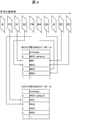
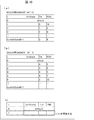
- FIGS. 3A to 3C are diagrams illustrating examples of a database used for initializing the CABAC process according to the present embodiment.
- FIG. 9 is a diagram for explaining a method of updating an initialization table in CABAC processing according to the embodiment.
- FIGS. 3A to 3C are diagrams illustrating examples of a database used for initializing the CABAC process according to the present embodiment.
- FIG. 3 is a diagram illustrating an example of a picture structure in the present embodiment.
- (A) to (c) are diagrams illustrating an example of a picture structure in the present embodiment.
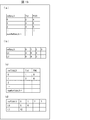
- (A)-(d) is a figure which shows the example of a reference picture list.
- FIG. 9 is a diagram for describing a case where parallel processing is performed for each temporal ID.
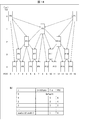
- FIG. 10 is a diagram for describing an example in which only pictures with a temporal ID equal to or less than a threshold are referenced in the initialization of the CABAC process.
- FIG. 4 is a diagram illustrating a position on a picture in a CABAC state stored in a CABAC initialization table.
- FIG. 1 is a diagram illustrating a configuration of a transmission device including a video encoding device according to the present embodiment and a reception device including a video decoding device.
- (A) shows a transmitting device equipped with a moving image encoding device, and
- (b) shows a receiving device equipped with a moving image decoding device.
- FIG. 1 is a diagram illustrating a configuration of a recording device equipped with a moving image encoding device according to the present embodiment and a playback device equipped with a moving image decoding device.
- A shows a recording device equipped with a video encoding device
- (b) shows a playback device equipped with a video decoding device.
- 1 is a schematic diagram illustrating a configuration of an image transmission system according to an embodiment.
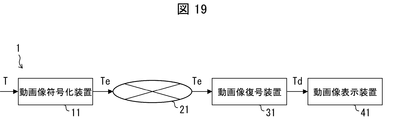
- FIG. 19 is a schematic diagram illustrating a configuration of the image transmission system 1 according to the present embodiment.
- the image transmission system 1 is a system that transmits an encoded stream obtained by encoding an encoding target image, decodes the transmitted encoded stream, and displays an image.
- the image transmission system 1 includes a moving image encoding device (image encoding device) 11, a network 21, a moving image decoding device (image decoding device) 31, and a moving image display device 41.
- the image T is input to the video encoding device 11.
- the network 21 transmits the encoded stream Te generated by the video encoding device 11 to the video decoding device 31.
- the network 21 is the Internet, a wide area network (WAN: Wide Area Network), a small network (LAN: Local Area Network), or a combination thereof.
- the network 21 is not limited to a two-way communication network, but may be a one-way communication network for transmitting broadcast waves such as terrestrial digital broadcasting and satellite broadcasting. Further, the network 21 may be replaced by a storage medium that records the encoded stream Te such as a DVD (Digital Versatile Disc) and a BD (Blue-ray Disc).
- the moving image decoding device 31 decodes each of the encoded streams Te transmitted by the network 21 and generates one or a plurality of decoded images Td respectively decoded.
- the moving image display device 41 displays all or a part of one or a plurality of decoded images Td generated by the moving image decoding device 31.
- the moving image display device 41 includes a display device such as a liquid crystal display and an organic EL (Electro-luminescence) display. Examples of the form of the display include stationary, mobile, and HMD.
- a display device such as a liquid crystal display and an organic EL (Electro-luminescence) display. Examples of the form of the display include stationary, mobile, and HMD.
- X? Y: z is a ternary operator that takes y when x is true (other than 0) and z when x is false (0).
- Abs (a) is a function that returns the absolute value of a.
- Int (a) is a function that returns the integer value of a.
- Floor (a) is a function that returns the largest integer less than or equal to a.
- Ceil (a) is a function that returns the largest integer greater than or equal to a.
- a / d represents the division of a by d (truncated below the decimal point).
- FIG. 1 is a diagram showing a hierarchical structure of data in the encoded stream Te.
- the coded stream Te illustratively includes a sequence and a plurality of pictures constituting the sequence.
- 1A to 1F show an encoded video sequence defining a sequence SEQ, an encoded picture defining a picture PICT, an encoded slice defining a slice S, and an encoded slice defining slice data, respectively.
- FIG. 3 is a diagram illustrating data, an encoding tree unit included in encoded slice data, and an encoding unit included in the encoding tree unit.
- the encoded video sequence In the encoded video sequence, a set of data referred to by the video decoding device 31 for decoding the sequence SEQ to be processed is defined. As shown in FIG. 1A, the sequence SEQ includes a video parameter set (Video Parameter Set), a sequence parameter set SPS (Sequence Parameter Set), a picture parameter set PPS (Picture Parameter Set), a picture PICT, and an addition. Contains extended information SEI (Supplemental Enhancement Information).
- SEI Supplemental Enhancement Information
- the video parameter set VPS includes, in a moving image composed of a plurality of layers, a set of encoding parameters common to a plurality of moving images and a plurality of layers included in the moving image and encoding parameters associated with each layer. Sets are defined.
- the sequence parameter set SPS defines a set of encoding parameters referred to by the video decoding device 31 to decode the target sequence. For example, the width and height of a picture are defined. Note that a plurality of SPSs may exist. In that case, one of the plurality of SPSs is selected from the PPS.
- the picture parameter set PPS defines a set of encoding parameters referred to by the video decoding device 31 to decode each picture in the target sequence. For example, a reference value (pic_init_qp_minus26) of a quantization width used for decoding a picture and a flag (weighted_pred_flag) indicating application of weighted prediction are included. Note that a plurality of PPSs may exist. In that case, any one of the plurality of PPSs is selected from each picture in the target sequence.
- the picture PICT includes slices 0 to NS-1 as shown in FIG. 1B (NS is the total number of slices included in the picture PICT).
- the slice S includes a slice header and slice data as shown in FIG.
- the slice header includes an encoding parameter group referred to by the video decoding device 31 to determine a decoding method for the target slice.
- the slice type designation information (slice_type) that designates a slice type is an example of an encoding parameter included in a slice header.
- the slice types that can be designated by the slice type designation information include (1) an I-slice that uses only intra prediction for encoding, (2) a P slice that uses unidirectional prediction or intra prediction for encoding, (3) B-slice using unidirectional prediction, bidirectional prediction, or intra prediction at the time of encoding.
- the inter prediction is not limited to uni-prediction and bi-prediction, and a prediction image may be generated using more reference pictures.
- P and B slices they indicate slices including blocks that can use inter prediction.
- the slice header may include a reference (pic_parameter_set_id) to the picture parameter set PPS.
- the slice data includes the CTU as shown in FIG.
- a CTU is a block of a fixed size (for example, 64 ⁇ 64) constituting a slice, and may be referred to as a maximum coding unit (LCU).
- LCU maximum coding unit
- FIG. 1E defines a set of data referred to by the video decoding device 31 in order to decode the CTU to be processed.
- the CTU is based on recursive quad-tree division (QT (Quad Tree) division), binary tree division (BT (Binary Tree) division) or ternary tree division (TT (Ternary Tree) division). Is divided into coding units CU, which are typical units.
- the BT division and the TT division are collectively called a multi-tree division (MT (Multi Tree) division).
- MT Multi Tree
- a tree-structured node obtained by recursive quadtree division is referred to as a coding node.
- Intermediate nodes of the quadtree, the binary tree, and the ternary tree are coding nodes, and the CTU itself is defined as the highest coding node.
- the CT includes, as CT information, a QT split flag (cu_split_flag) indicating whether or not to perform QT split, an MT split mode (split_mt_mode) indicating a split method of the MT split, and an MT split direction (split_mt_dir) indicating a split direction of the MT split.
- MT split type indicating the split type of the MT split. cu_split_flag, split_mt_flag, split_mt_dir, split_mt_type ⁇ are transmitted for each coding node.
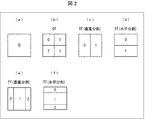
- the coding node is divided into four coding nodes (FIG. 2 (b)).
- the coding node is not divided and has one CU as a node (FIG. 2 (a)).
- CU is a terminal node of the coding node, and is not further divided.
- the CU is a basic unit of the encoding process.
- split_mt_flag the encoded node is divided into MTs as follows.
- split_mt_type is 0, when split_mt_dir is 1, the coding node is horizontally divided into two coding nodes (FIG. 2 (d)), and when split_mt_dir is 0, the coding node is vertical to the two coding nodes. It is divided (Fig. 2 (c)).
- split_mt_type is 1, if split_mt_dir is 1, the coding node is horizontally divided into three coding nodes (FIG. 2 (f)), and if split_mt_dir is 0, the coding node becomes three coding nodes. (Fig. 2 (e)).
- the size of the CU is 64x64 pixels, 64x32 pixels, 32x64 pixels, 32x32 pixels, 64x16 pixels, 16x64 pixels, 32x16 pixels, 16x32 pixels, 16x16 pixels, 64x8 pixels, 8x64 pixels 32x8 pixels, 8x32 pixels, 16x8 pixels, 8x16 pixels, 8x8 pixels, 64x4 pixels, 4x64 pixels, 32x4 pixels, 4x32 pixels, 16x4 pixels, 4x16 pixels, 8x4 pixels, 4x8 pixels, and any of 4x4 pixels .
- the CU includes a CU header CUH, a prediction parameter, a conversion parameter, a quantized transform coefficient, and the like.
- the CU header defines a prediction mode and the like.
- the prediction process is performed in units of CUs or in units of sub-CUs obtained by further dividing the CU.
- the sizes of the CU and the sub CU are equal, there is one sub CU in the CU.
- the CU is split into sub-CUs. For example, if the CU is 8x8 and the sub-CU is 4x4, the CU is divided into four sub-CUs, which are divided into two horizontal parts and two vertical parts.
- Intra prediction is prediction within the same picture
- inter prediction refers to prediction processing performed between mutually different pictures (for example, between display times and between layer images).
- the quantized transform coefficients may be entropy-coded in sub-block units such as 4 ⁇ 4.
- the prediction image is derived from prediction parameters associated with the block.
- the prediction parameters include intra prediction and inter prediction prediction parameters.
- the video decoding device 31 includes an entropy decoding unit 301, a parameter decoding unit (prediction image decoding device) 302, a loop filter 305, a reference picture memory 306, a prediction parameter memory 307, a prediction image generation unit (prediction image generation device) 308, and an inverse. It is configured to include a quantization / inverse transforming unit 311 and an adding unit 312. In addition, there is a configuration in which the loop filter 305 is not included in the video decoding device 31 in accordance with the video encoding device 11 described later.
- the parameter decoding unit 302 includes an inter prediction parameter decoding unit 303 and an intra prediction parameter decoding unit 304 (not shown).
- the prediction image generation unit 308 includes an inter prediction image generation unit 309 and an intra prediction image generation unit 310.
- CTUs and CUs are used as processing units.
- the present invention is not limited to this example, and processing may be performed in sub-CU units.
- CTU and CU may be read as blocks and sub-CUs as sub-blocks, and processing may be performed on a block or sub-block basis.
- the entropy decoding unit 301 performs entropy decoding on the coded stream Te input from the outside, and separates and decodes individual codes (syntax elements).
- the entropy coding includes a method of performing variable-length coding of syntax elements using a context (probability model) adaptively selected according to the type of the syntax elements and surrounding conditions, and a predetermined table or There is a method of performing variable length coding on syntax elements using a calculation formula.
- CABAC Context Adaptive Binary Arithmetic Coding
- a probability model of a picture using the same slice type and the same slice level quantization parameter is set from among the probability models stored in the memory.
- This initial state is used for encoding and decoding processing.
- the separated codes include prediction information for generating a predicted image, a prediction error for generating a difference image, and the like.
- the entropy decoding unit 301 outputs a part of the separated code to the parameter decoding unit 302.
- the part of the separated code includes, for example, a prediction mode predMode, a merge flag merge_flag, a merge index merge_idx, an inter prediction identifier inter_pred_idc, a reference picture index refIdxLX, a prediction vector index mvp_LX_idx, and a difference vector mvdLX.
- Control of which code is to be decoded is performed based on an instruction from the parameter decoding unit 302.
- the entropy decoding unit 301 outputs the quantized transform coefficient to the inverse quantization / inverse transform unit 311.
- the entropy decoding unit 301 includes a CABAC processing unit 3010 that performs a CABAC (Context-based Adaptive Binary Arithmetic Coding) process. Details of the CABAC processing unit 3010 will be described later.
- CABAC Context-based Adaptive Binary Arithmetic Coding
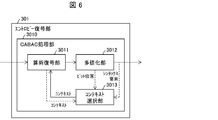
- FIG. 6 is a block diagram illustrating a main configuration of the CABAC processing unit 3010.
- the CABAC processing unit 3010 performs a CABAC process, and includes an arithmetic decoding unit 3011, a multi-value conversion unit 3012, and a context selection unit 3013.
- CABAC is arithmetic coding that adaptively selects a context (context variable) according to the type of syntax element and the surrounding situation.
- CABAC converts a syntax element into a binary signal represented by “0” and “1”, and derives a context number selected according to the type of the syntax element and surrounding circumstances. Then, arithmetic decoding (encoding) is performed using the context (probability of occurrence of a binary signal) corresponding to the context number.
- the context is stored as a value valMPS of a symbol (MPS: Most Probable Symbol) having a high occurrence probability between “0” and “1” and a number (pStateIdx: probability State Index) indicating the occurrence probability.
- the arithmetic decoding unit 3011 decodes the binary arithmetically encoded coded stream Te using the occurrence probability (context) of the binary signal, and outputs the decoded binary signal to the multi-level encoding unit 3012. I do.
- the arithmetic decoding unit 3011 sets an initial context (initializes a context) before decoding a syntax element at the beginning of a picture, slice, or tile.
- the context is initialized by referring to the CABAC initialization table. Note that information for deriving a context (valMPS and pStateIdx) may be stored in the CABAC initialization table, or the context itself may be stored.
- the multi-level converting unit 3012 converts the binary signal output from the arithmetic decoding unit 3011 into a multi-level signal (ordinary decimal number) and outputs the converted signal.
- the context selection unit 3013 obtains each context updated for each decoding operation from the arithmetic decoding unit 3011 and stores it in an internal memory. With reference to the type and bit position (binIdx) of the syntax element processed by the multi-level conversion unit 3012, an appropriate context is selected from the internal memory and notified to the arithmetic decoding unit 3011.
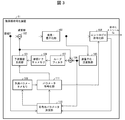
- FIG. 3 is a block diagram illustrating a configuration of the video encoding device 11 according to the present embodiment.
- the moving image encoding apparatus 11 includes a predicted image generation unit 101, a subtraction unit 102, a transformation / quantization unit 103, an inverse quantization / inverse transformation unit 105, an addition unit 106, a loop filter 107, a prediction parameter memory (a prediction parameter storage unit , Frame memory) 108, reference picture memory (reference image storage unit, frame memory) 109, coding parameter determination unit 110, parameter coding unit 111, and entropy coding unit 104.
- the predicted image generation unit 101 generates a predicted image for each CU which is an area obtained by dividing each picture of the image T.
- the operation of the predicted image generation unit 101 is the same as that of the predicted image generation unit 308 described above, and a description thereof will be omitted.
- the subtraction unit 102 generates a prediction error by subtracting the pixel value of the predicted image of the block input from the predicted image generation unit 101 from the pixel value of the image T.
- the subtraction unit 102 outputs the prediction error to the transform / quantization unit 103.
- the transform / quantization unit 103 calculates a transform coefficient by frequency conversion with respect to the prediction error input from the subtraction unit 102, and derives a quantized transform coefficient by quantization.
- Transform / quantization section 103 outputs the quantized transform coefficient to entropy encoding section 104 and inverse quantization / inverse transform section 105.
- the inverse quantization / inverse transformation unit 105 is the same as the inverse quantization / inverse transformation unit 311 (FIG. 5) in the video decoding device 31, and the description is omitted.
- the calculated prediction error is output to addition section 106.
- the quantized transform coefficient is input from the transform / quantization unit 103 to the entropy encoding unit 104, and the encoding parameter is input from the parameter encoding unit 111.
- the coding parameters include codes such as a reference picture index refIdxLX, a prediction vector index mvp_LX_idx, a difference vector mvdLX, a prediction mode predMode, and a merge index merge_idx.
- the entropy coding unit 104 generates and outputs a coded stream Te by performing entropy coding on the division information, the prediction parameters, the quantized transform coefficients, and the like.
- the entropy encoding unit 104 includes a CABAC processing unit 1040 that performs CABAC (Context-based Adaptive Binary Arithmetic Coding) processing.
- CABAC Context-based Adaptive Binary Arithmetic Coding
- the parameter encoding unit 111 includes an inter prediction parameter encoding unit 112 and an intra prediction parameter encoding unit 113.
- the entropy decoding unit 301 the parameter decoding unit 302, the loop filter 305, the predicted image generation unit 308, the inverse quantization / inverse Transformer 311, adder 312, predicted image generator 101, subtractor 102, transform / quantizer 103, entropy encoder 104, inverse quantizer / inverse transformer 105, loop filter 107, encoding parameter determiner 110 ,
- the parameter encoding unit 111 may be realized by a computer. In that case, a program for realizing this control function may be recorded on a computer-readable recording medium, and the program recorded on this recording medium may be read and executed by a computer system.
- the “computer system” is a computer system built in any of the video encoding device 11 and the video decoding device 31 and includes an OS and hardware such as peripheral devices.
- the “computer-readable recording medium” refers to a portable medium such as a flexible disk, a magneto-optical disk, a ROM, and a CD-ROM, and a storage device such as a hard disk built in a computer system.
- the "computer-readable recording medium” is a medium that holds the program dynamically for a short time, such as a communication line for transmitting the program through a communication line such as a network such as the Internet or a telephone line,
- a program holding a program for a certain period of time such as a volatile memory in a computer system serving as a server or a client, may be included.
- the above-mentioned program may be for realizing a part of the above-mentioned functions, or may be for realizing the above-mentioned functions in combination with a program already recorded in a computer system.
- a part or all of the video encoding device 11 and the video decoding device 31 in the above-described embodiment may be realized as an integrated circuit such as an LSI (Large Scale Integration).
- LSI Large Scale Integration
- Each functional block of the video encoding device 11 and the video decoding device 31 may be individually implemented as a processor, or a part or all of them may be integrated and implemented as a processor.
- the method of circuit integration is not limited to an LSI, and may be realized by a dedicated circuit or a general-purpose processor. Further, in the case where a technology for forming an integrated circuit that replaces the LSI appears due to the advance of the semiconductor technology, an integrated circuit based on the technology may be used.
- FIG. 4 is a block diagram illustrating a main configuration of the CABAC processing unit 1040.
- the CABAC processing unit 1040 performs CABAC processing, and includes a binarization unit 1041, an arithmetic coding unit 1042, and a context selection unit 1043.
- Binarization section 1041 converts the input multi-level signal into a binary signal, and outputs the result to arithmetic coding section 1042.
- the arithmetic coding unit 1042 performs binary arithmetic coding on the binary signal output from the binarization unit 1041 using the context updated together with the syntax element coding.
- the arithmetic coding unit 1042 sets an initial context (initializes a context) before coding a syntax element at the beginning of a picture, slice, tile, or the like. Details of the initialization of the context in the present embodiment will be described later.
- the context selection unit 1043 acquires the context updated for each encoding operation from the arithmetic encoding unit 1042, and stores the acquired context in an internal memory. With reference to the type and bit position of the syntax element processed by the binarization unit 1041, an appropriate context is selected from the internal memory, and the selected context is notified to the arithmetic encoding unit 1042.
- FIG. 7 is a flowchart illustrating a flow of processing of the CABAC processing unit 3010 and the CABAC processing unit 1040.
- the CABAC process is roughly divided into three processes: an initialization process, an encoding / decoding process, and a holding process. Then, by synchronizing the context in the encoding / decoding process with the CABAC processing unit 1040 in the video encoding device 11 and the CABAC processing unit 3010 in the video decoding device 31, arithmetic coding / decoding can be performed correctly.
- the CABAC processing unit 1040 performs an initialization process of an arithmetic encoding unit (S101) and an initial context setting process (S102) as initialization processes.
- the initialization processing of the arithmetic encoding unit is initialization of the CABAC engine (setting of an initial state).
- the CABAC processing unit 1040 performs binarization processing (S103) and arithmetic coding processing (S104) as coding and decoding processing. Finally, the CABAC processing unit 1040 performs a context saving process (S105) as a holding process.
- the context saving process is a process of saving the context of each syntax element at the present time as a context used for subsequent initialization.
- the CABAC processing unit 3010 performs the initialization processing of the arithmetic decoding unit (S301) and the initial context setting processing (S302) as the initialization processing.
- the initialization processing of the arithmetic decoding unit is the initialization of the CABAC engine (setting of the initial state).
- the CABAC processing unit 3010 performs arithmetic decoding processing (S303) and multi-level processing (S304) as encoding / decoding processing. Finally, the CABAC processing unit 3010 performs context saving processing (S305) similar to step S105 as the holding processing.
- the arithmetic coding unit 1042 of the CABAC processing unit 1040 and the context selection unit 3013 of the CABAC processing unit 3010 hold a plurality of CABAC initialization tables that are referred to when performing the CABAC processing initialization.
- the moving picture encoding apparatus 11 notifies the moving picture decoding apparatus 31 of an index for selecting an optimum table from the CABAC initialization tables.
- an appropriate CABAC initialization table can be efficiently selected in the CABAC processing, and thus the encoding performance can be improved.
- the context selection unit 3013 has a memory (not shown) and holds a CABAC database for each slice type.
- the CABAC database holds one or more CABAC initialization tables.
- FIG. 8 shows an example of a CABAC database for each slice type.
- FIG. 8A shows an example of a CABAC database for a B slice
- FIG. 8B shows an example of a CABAC database for a P slice
- FIG. 8C shows an example of a CABAC database for an I slice.
- an index posIdx (i) for specifying the CABAC initialization table is associated with “InitState” indicating the CABAC initialization table (this may be called tableStateSync). ).
- the database can hold the CABAC initialization tables up to a predetermined number (numInitStateB-1).
- numberInitStateB-1 the number of the P-slice CABAC database shown in FIG.
- BIS0 and PIS0 are used as initialization tables in B pictures and P pictures immediately after an I picture.
- the CABAC processing unit 3010 stores the CABAC state in the CABAC database. This will be specifically described with reference to FIG. As shown in FIG. 9, when decoding is performed in the order of I0 picture, P3 picture, B1 picture, B2 picture, P6 picture, B4 picture,..., CABAC after decoding of the third B picture (picture B1) in decoding order
- the state (pStateIdx and valMPS of all syntaxes using context) is stored in the CABAC database as a CABAC initialization table.
- the target picture is a B picture, it may be stored (BIS1) in the B slice CABAC database tableStateSync [B_Slice] [posIdx].
- the numbers in the rectangles indicating the pictures indicate the display order of the pictures.
- the stored CABAC initialization table may be overwritten so that the number of CABAC initialization tables stored in the CABAC database is equal to or less than a predetermined number (numInitStateB-1, numInitStateP-1).
- a predetermined number numberInitStateB-1, numInitStateP-1.
- one predetermined CABAC initialization table IIS0
- tableStateSync I_Slice
- the CABAC processing unit 3010 stores the CABAC state in tableStateSync [SliceType] [posIdx].
- PicWidthInCtbsY and PicHeightInCtbsY are the picture width and height in CTU units.
- the CABAC processing unit 3010 sets tableStateSync [SliceType] [posIdx] in the CABAC state.
- the CABAC processing unit 3010 refers to the CABAC database of the same slice type as the target picture when performing the CABAC processing initialization at the head of the picture, the head of the slice, the head of the tile, etc., in the target picture, and specifies the POSIdx.
- InInitStateX [] (X is I, P, B) indicates a CABAC database of slice type X.
- posIdx is a selection index notified from the video encoding device 11 to the video decoding device 31. posIdx may be notified by PPS or slice header.
- the CABAC initialization table is updated each time the picture decoding process is completed, but the present invention is not limited to this. If the picture is divided into slices or tiles, the CABAC initialization table is updated each time the slice or tile decoding processing is completed.
- a different CABAC database is provided for each of the slice types I, P, and B, but a common CABAC database may be provided for the slice types P and B.
- the CABAC processing unit 3010 stores the CABAC state in tableStateSync [SliceType] [posIdx].
- TileWidthInCtbsY and TileHeightInCtbsY are the width and height of the tile in CTU units.
- the CABAC processing unit 3010 sets tableStateSync [SliceType] [posIdx] in the CABAC state when the X coordinate xCtbInTile in the tile of the target CTU is M0 and the Y coordinate yCtbInTile is N0.
- a method for deriving posIdx of the CABAC state (initialization table) will be described later.
- the video decoding device 31 is a video decoding device 31 that decodes variable-length encoded data, and the entropy decoding unit that performs entropy decoding of the encoded data.
- the entropy decoding unit 301 selects a CABAC initialization table used for the initialization of the CABAC process from the plurality of CABAC initialization tables based on a selection index included in the encoded data.
- CABAC initialization table CABAC initialization table
- the entropy decoding unit 301 changes the CABAC state at the time of completion to the CABAC initial state every time decoding processing in a predetermined unit (picture, slice, tile, etc.) is completed until the number of CABAC initialization tables reaches the predetermined number. It may be added or updated as a conversion table.
- the moving picture coding apparatus 11 is a moving picture coding apparatus 11 that codes an input moving picture, and includes an entropy coding unit 104 that performs entropy coding on the input moving picture.
- the encoding unit 104 encodes a selection index for selecting a CABAC initialization table used for the initialization of the CABAC process, included in the encoded data.
- an appropriate CABAC state (CABAC initialization table) is selected by notifying the video decoding device 31 of the index i (posIdx) from the video encoding device 11.
- an appropriate CABAC initialization table can be selected without notifying the index i.
- CABAC processing unit 3010 when the CABAC processing unit 3010 performs the initialization of the CABAC process, the CABAC processing unit 3010 performs appropriate CABAC initialization from the CABAC initialization database of the same slice type held in the CABAC database using any of the following selection methods. Select an initialization table.
- CABAC initialization table By using a common CABAC initialization table selection method between the image encoding device 11 and the image decoding device 31, it is possible to appropriately perform decoding of the current picture without notifying the index as in the above-described second embodiment.
- CABAC initialization table can be selected.
- the first selection method is a picture whose temporal ID (Tid) is equal to or smaller than the temporal ID (TidCurr) of the target picture and whose POC (picture order count: picture display order) is the POC (PocCurr) of the target picture currPic.
- the CABAC state of the picture closest to is selected as the initialization table of the current picture and is referred to.
- the CABAC state of the picture whose temporal ID is closer to the temporal ID TidCurr of the target picture is selected as the CABAC state of the target picture.
- the POC difference value dPoc [i] is derived.
- DiffPicOrderCnt (currPic, refPic [i])
- DiffPicOrderCnt (Pic1, Pic2) is a function that returns a difference in time information (for example, POC) between picture Pic1 and picture Pic2.
- DiffPicOrderCnt (Pic1, Pic2) POC (Pic1) -POC (Pic2).
- the CABAC processing unit 3010 may select a CABAC initialization table by searching a CABAC database (InitStateX, $ tableStateSync).
- i 1..numInitStateX-1
- a difference value dPoc [i] between the POC of the target picture and Poc [i] is derived.
- “X” of numInitStateX is P or B.
- the CABAC processing unit 3010 initializes the CABAC state of the target picture using the CABAC state in the CABAC database corresponding to the selected posIdx.
- an index i for specifying the CABAC initialization table, “InitState” indicating the CABAC initialization table, Tid, and POC are associated with each other.
- 11 and 12 show examples of the picture structure.
- FIGS. 11 and 12 show the temporal ID, reference relationship, and decoding order of each picture.
- a rectangle indicates a picture
- an arrow indicates a picture reference relationship
- a horizontal axis indicates time (POC)
- a number in the rectangle indicates a decoding order.
- the CABAC state of a picture equal to or smaller than TidCurr becomes a candidate of the CABAC state (initialization table) of the target picture set at the time of CABAC initialization of the target picture.
- TidCurr is 4 and the temporal IDs of all pictures are 4 or less, candidates cannot be narrowed down by the temporal ID.
- a picture of the POC closest to the POC of the target picture is selected.
- the pictures with the temporal ID closest to POC5 are POC4 and POC6, and cannot be selected only by the above-described method. Therefore, in this case, for example, the smaller POC may be selected.
- the POC picture that is one smaller than the POC of the target picture is the picture whose POC is equal to or less than TidCurr. Therefore, the CABAC state of the picture of the POC which is one smaller than the POC of the current picture is selected as the CABAC initialization table of the current picture.
- the second selection method is to sequentially search the CABAC database of the same slice type as the target picture from index 1, and to find the CABAC database tableStateSync of the picture below the temporal ID (TidCurr) of the target picture found first (initialization table InitStateX) Is selected as the CABAC state of the target picture.
- a CABAC database tableStateSync (initialization table) corresponding to a picture having a POC that is equal to or less than TidCurr and whose difference dPoc from PocCurr is the smallest. InitStateX) may be selected as the CABAC initialization table for the current picture.
- a POC having a temporal ID closest to TidCurr and having a minimum dPoc from the POC (PocCurr) of the target picture is determined.
- the CABAC database tableStateSync (initialization table InitStateX) corresponding to the picture in question may be selected as the CABAC initialization table for the target picture.
- the CABAC database for the B slice is shown in FIG. 10B
- a third selection method is to use a reference picture list.
- the reference picture list is a list including reference pictures stored in the reference picture memory 306.
- the index (refIdxLX) of the reference picture list is searched in order from 0, and the CABAC database tableStateSync (initialization table InitStateX) of the picture having a temporal ID equal to or less than the temporal ID (TidCurr) of the target picture found first is initialized to the CABAC initial value of the target picture. Selected as a conversion table.
- FIG. 13A shows an example of the reference picture list.
- refIdxLX is sequentially searched from 0, and a CABAC state corresponding to a picture having a temporal ID equal to or smaller than TidCurr found first is selected as a CABAC initialization table. For example, if TidCurr is 4, the temporal ID of the picture with index (refIdxLX) 0 is 2, and the CABAC state of this picture is selected as the CABAC initialization table of the target picture.
- the search for the reference picture list starts from the L0 list.
- the L0 list if no picture having a temporal ID equal to or less than TidCurr is found, the L1 list is searched.
- the L0 list and the L1 list may be searched, and the CABAC state of the picture having the POC closest to the POC (PocCurr) may be selected as the CABAC initialization table of the target picture.
- i is an index of a reference picture list (for example, RefPicListL0, RefPicListL1).
- i 0 .. num_ref_idx_l1_active_minus1 (NumRefIdxLX-1)
- the CABAC processing unit 3010 sets the difference value dPoc between the POC of the target picture and RefPicListX [i]. [i] is derived.
- dPoc [i] DiffPicOrderCnt (currPic, RefPicListX [refIdxL0])
- DiffPicOrderCnt (Pic1, Pic2) is a function that returns a difference in time information (for example, POC) between picture Pic1 and picture Pic2.
- the CABAC processing unit 3010 may select posIdx using the following pseudo code.
- num_ref_idx_l0_active_minus1 and num_ref_idx_l1_active_minus1 are the numbers of reference picture lists of L0 and L1.
- TidCurr may be simply described as TemporalId.
- the CABAC state of the picture with the closest temporal ID may be selected as the CABAC initialization table.
- the CABAC initialization table of the current picture is selected as the CABAC initialization table of the current picture.
- the CABAC state of the picture having the smaller reference picture index may be selected as the CABAC initialization table of the current picture.
- the CABAC state of the picture in the L0 list may be preferentially selected.
- the CABAC state of a picture whose decoding order is close can be used as the initialization table of the current picture, but there is only one choice and there is no need to notify the index. .
- the same effect as in the case where a CABAC initialization table is selected from a plurality of CABAC initialization tables by a specific selection method can be obtained.
- the entropy decoding unit 301 selects a CABAC initialization table to be used for a target picture from a plurality of CABAC initialization tables (CABAC states) based on a predetermined selection method.
- CABAC states CABAC initialization tables
- the entropy decoding unit 301 uses the CABAC state of the picture of the POC whose temporal ID is equal to or less than the temporal ID of the target picture and is closest to the POC (picture @ of @ count) of the target picture as the CABAC initialization table as the above selection method. select.
- the entropy decoding unit 301 searches the CABAC database holding the CABAC initialization table from the index 1 and searches for a picture having a temporal ID equal to or less than the temporal ID of the first found target picture. Select the CABAC initialization table corresponding to.
- the entropy decoding unit 301 selects a CABAC initialization table using a reference picture list as the above selection method.
- the CABAC state of a picture having a temporal ID equal to or less than the temporal ID (TidCurr) of the current picture is selected as the CABAC initialization table of the current picture.
- FIG. 14 shows a reference relationship between pictures according to the present embodiment in the same picture structure as the picture structure shown in FIG. As in FIG. 11 described above, FIG. 14 shows the temporal ID, reference relationship, and decoding order of each picture.
- a rectangle is a picture
- an arrow is a picture reference relationship
- the horizontal axis is time (POC)
- the The numbers indicate the decoding order.
- the CABAC state of the picture having a temporal ID less than TidCurr is set as a candidate of the CABAC initialization table of the target picture, for example, when the target picture is POC5 (P8), the same temporal ID as TidCurr is used.
- a picture closest to the POC (PocCurr) of the target picture is to be selected, and if there are two such pictures, a picture close to TidCurr is to be selected.
- the entropy decoding unit 301 selects the CABAC state of a picture whose temporal ID is smaller than TidCurr as the initialization table of the current picture. It may be something.
- the pictures POC2 (P4), POC6 (P7), and POC10 (P11 ), POC14 (P14) can be processed simultaneously, pictures POC1 (P5), POC3 (P6), POC5 (P8), POC7 (P9), POC9 (P12), POC11 (P13), POC13 (P15), POC15 (P16) can be processed simultaneously. Therefore, this embodiment also has another effect that a plurality of pictures can be processed in parallel.
- CABAC database tableStateSync CABAC initialization table, CABAC state
- a memory for holding the CABAC state StateIdx, valMps
- the size of the CABAC database increases.
- the CABAC processing unit 3010 suppresses an increase in the internal memory by the following memory reduction method.
- the CABAC processing unit 3010 stores the CABAC state in tableStateSync [SliceType] [wIdx].
- wIdx is an index indicating the write destination. If wIdx is less than Kmax after the writing is completed, wIdx is incremented by one.
- the entropy decoding unit 301 sets tableStateSync [SliceType] [rId] of the target picture in the CABAC state in the subsequent picture.
- rIdx is an index indicating the reading destination.
- CABAC initialization tables When the number of CABAC initialization tables is limited, for example, when the number of CABAC initialization tables reaches the maximum, the number of CABAC initialization tables to be held is kept constant by FIFO (firs-in @ first-out). Instead of the FIFO, a CABAC initialization table that is frequently referred to may be stored at the beginning of the CABAC database, and may be discarded from the end of the CABAC database. In other words, a CABAC initialization table that is frequently referred to may be stored in a position that is least likely to be discarded.
- FIFO firing-in @ first-out
- the CABAC processing unit 3010 may be configured to hold one CABAC initialization table for each temporal ID (or quantization parameter QP). In this case, the latest CABAC initialization table may be held. For example, when the X coordinate xCtb of the target CTU is M and the Y coordinate yCtb is N, the CABAC processing unit 3010 stores the CABAC state in tableStateSync [Tid] according to the temporal ID. The CABAC processing unit 3010 sets tableStateSync [Tid] stored according to the temporal ID in the CABAC initialization table of the target picture in the subsequent picture. The CABAC initialization table may be set at the upper left corner of the screen. That is, when the X coordinate xCtb of the target CTU is 0 and the Y coordinate yCtb is 0, tableStateSync [Tid] of the stored value is set as an initialization table of the target picture.
- the CABAC state may be stored for each QP instead of the temporal ID.
- the I-slice may be configured to hold one fixed CABAC initialization table or one fixed initialization table for each QP value.
- the CABAC processing unit 3010 sets the stored value of tableStateSync [ReferenceTemporalId] in the CABAC state according to the temporal ID of the target picture. .
- the CABAC state of the picture whose temporal ID is greater than 2 is not stored in the CABAC database, and the CABAC initialization table of the target picture is the CABAC initialization table stored in the CABAC database whose temporal ID is 2 or less. See
- the memory to be stored is reduced, and the above-described problem (1) can be solved.
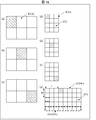
- FIGS. 16A to 16C are diagrams in which a picture is divided into tiles, and FIG. 16A stores the CABAC state of the first tile (hatched tile) of the picture in the memory.
- the CABAC initialization table may be held only in the central area in the picture (FIG. 16B), or the CABAC initialization table may be held only in the last area in the picture (FIG. 16C). )).
- FIGS. 16D to 16F are diagrams in which tiles are divided into CTUs.
- the above-mentioned "store the CABAC state of the tile” is specifically to store the CABAC state after the CABAC processing is completed in the first CTU (the hatched portion in FIG. 16D) in the tile. Is also good.
- the CABAC state after the CABAC processing is completed may be stored in the central CTU (the hatched portion in FIG. 16E) in the tile.
- the CABAC state after the CABAC processing is completed may be stored in the last CTU (the hatched portion in FIG. 16F) in the tile.
- the picture may be divided into a plurality of (for example, N) parts, and the CABAC initialization table may be held in units of parts.
- the CABAC processing unit 3010 decodes a flag indicating whether or not to perform area-based CABAC decoding area_cabac_storing with SPS or PPS.
- xCtb CtbAddrInRs% PicWidthInCtbsY
- yCtb CtbAddrInRs / PicWidthInCtbsY
- posIdx (yCtb% N).
- CtbAddrInRs is the position in CTU units of the raster scan order on the screen
- PicWidthInCtbsY is the width of the screen.
- M indicating the x position of the CTU at the time of storage may be a predetermined position from the left end of the screen, the center of the screen, or the right end.
- M 2 (2nd CTU), PicWidthInCtbsY / 2 (center of screen), PicWidthInCtbsY-1 (right end of screen), etc. can be used, respectively.
- the CABAC processing unit 3010 sets the stored tableStateSync [posIdx] in the CABAC initialization table of the subsequent picture.
- CABAC status may be stored in slice type units or temporal ID units.
- the CABAC processing unit 3010 stores the CABAC state in tableStateSync [Tid] [posIdx], and sets tableStateSync [Tid] [posIdx] in the initialization table of the target picture.
- the CABAC initialization table held for each picture can be limited to N (or M ⁇ N). Further, in each of the divided areas, the CABAC state of the first slice (or tile, CTU line in WPP) of the divided area may be stored in the memory, or the central slice (or , Tile, or CTU line in WPP) may be stored in memory, or the CABAC state of the last slice (or tile, CTU line in WPP) of the divided area may be stored in memory. .
- the CABAC state of the L-th CTU on the M ⁇ CTU line from the target CTU line may be stored in the memory as shown in FIG.
- a picture includes slices of different types, the type that holds the CABAC initialization table is limited. Specifically, in the case of the I slice, only one CABAC initialization table is held. In the case of a P slice and a B slice, a CABAC initialization table is held for each temporal ID. When the CABAC initialization table is held for each temporal ID, the CABAC state may be held only for pictures having a temporal ID of 0, or the CABAC state may be held only for pictures having a temporal ID ⁇ maxTID. In this case, only the CABAC state of a picture with a temporal ID equal to or less than the temporal ID (TidCurr) of the target picture is referred to.
- TidCurr temporal ID
- the video decoding device 31 is an image decoding device that decodes coded data that has been subjected to variable length coding, and stores a CABAC state obtained every time a picture is decoded in a CABAC initialization table.
- the entropy decoding unit 301 may hold the CABAC initialization table up to a predetermined number.
- the entropy decoding unit 301 may hold only the CABAC state of a picture whose temporal ID is equal to or less than a predetermined value as a CABAC initialization table.
- the entropy decoding unit 301 may hold only the CABAC state of the picture having a temporal ID less than TidCurr as the CABAC initialization table.
- the entropy decoding unit 301 may limit the CABAC initialization table held for each slice type.
- a predetermined CABAC initialization table for example, BIS0, PISO in FIG. 8
- BIS0, PISO in FIG. 8
- the CABAC state of the picture having the same temporal ID as TidCurr is set to CABAC. It may be referred to as an initialization table.
- the CABAC state of the picture having the largest POC may be referred to as the CABAC initialization table.
- a configuration may also be adopted in which a flag indicating whether to use the selection method is not notified, or only a flag indicating whether to use the selection method is notified ( As in the third embodiment, a common selection method is used for the image encoding device and the image decoding device, and the option is not notified.
- the above-described moving image encoding device 11 and moving image decoding device 31 can be used by being mounted on various devices that transmit, receive, record, and reproduce moving images.
- the moving image may be a natural moving image captured by a camera or the like, or may be an artificial moving image (including CG and GUI) generated by a computer or the like.
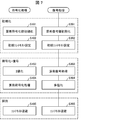
- FIG. 17 is a block diagram illustrating a configuration of a transmission device PROD_A on which the video encoding device 11 is mounted.
- the transmission device PROD_A modulates a carrier with an encoding unit PROD_A1 that obtains encoded data by encoding a moving image and encoded data obtained by the encoding unit PROD_A1.
- a transmitting section PROD_A3 for transmitting the modulated signal obtained by the modulating section PROD_A2.
- the above-described video encoding device 11 is used as the encoding unit PROD_A1.
- the transmission device PROD_A is a camera PROD_A4 that captures a moving image, a recording medium PROD_A5 that records the moving image, an input terminal PROD_A6 for externally inputting the moving image, and a supply source of the moving image to be input to the encoding unit PROD_A1.
- FIG. 17A illustrates a configuration in which all of them are included in the transmission device PROD_A, but a part of them may be omitted.
- the recording medium PROD_A5 may be a recording of a moving image that is not encoded, or may record a moving image encoded by a recording encoding method different from the transmission encoding method. It may be something. In the latter case, a decoding unit (not shown) that decodes the encoded data read from the recording medium PROD_A5 in accordance with the encoding method for recording may be interposed between the recording medium PROD_A5 and the encoding unit PROD_A1.
- FIG. 17 is a block diagram illustrating a configuration of the receiving device PROD_B including the video decoding device 31.
- the receiving device PROD_B includes a receiving unit PROD_B1 that receives a modulated signal, a demodulating unit PROD_B2 that obtains encoded data by demodulating the modulated signal received by the receiving unit PROD_B1, A decoding unit PROD_B3 that obtains a moving image by decoding the encoded data obtained by the unit PROD_B2.
- the above-described video decoding device 31 is used as the decoding unit PROD_B3.
- the receiving device PROD_B has a display PROD_B4 for displaying a moving image, a recording medium PROD_B5 for recording the moving image, and an output terminal for outputting the moving image to the outside, as a supply destination of the moving image output by the decoding unit PROD_B3.
- PROD_B6 may be further provided.
- FIG. 17B illustrates a configuration in which all of these components are included in the receiving device PROD_B, but some of them may be omitted.
- the recording medium PROD_B5 may be for recording a moving image that is not encoded, or may be encoded using a recording encoding method different from the transmission encoding method. May be. In the latter case, an encoding unit (not shown) that encodes the moving image obtained from the decoding unit PROD_B3 according to the encoding method for recording may be interposed between the decoding unit PROD_B3 and the recording medium PROD_B5.
- the transmission medium for transmitting the modulation signal may be wireless or wired.
- the transmission mode for transmitting the modulated signal may be broadcast (here, a transmission mode in which the transmission destination is not specified in advance), or communication (here, transmission in which the transmission destination is specified in advance). (Which refers to an embodiment). That is, the transmission of the modulated signal may be realized by any of wireless broadcasting, wired broadcasting, wireless communication, and wired communication.
- a terrestrial digital broadcasting station such as a broadcasting facility
- a receiving station such as a television receiver
- a transmitting device PROD_A / receiving device PROD_B that transmits and receives a modulated signal by wireless broadcasting.
- a broadcasting station (broadcasting facility or the like) / receiving station (television receiver or the like) of cable television broadcasting is an example of a transmitting device PROD_A / receiving device PROD_B that transmits and receives a modulated signal by cable broadcasting.
- Servers workstations, etc.
- Clients television receivers, personal computers, smartphones, etc.
- VOD Video On Demand
- video sharing services using the Internet are transmitters that transmit and receive modulated signals by communication.
- PROD_A / reception device PROD_B usually, either a wireless or wired transmission medium is used in a LAN, and a wired transmission medium is used in a WAN.
- the personal computer includes a desktop PC, a laptop PC, and a tablet PC.
- the smartphone includes a multifunctional mobile phone terminal.
- the client of the video sharing service has a function of decoding encoded data downloaded from the server and displaying the encoded data on a display, and a function of encoding a moving image captured by a camera and uploading the encoded moving image to the server. That is, the client of the video sharing service functions as both the transmitting device PROD_A and the receiving device PROD_B.
- FIG. 18 is a block diagram illustrating a configuration of a recording device PROD_C in which the above-described video encoding device 11 is mounted.
- the recording device PROD_C includes an encoding unit PROD_C1 that acquires encoded data by encoding a moving image, and encoded data obtained by the encoding unit PROD_C1 on a recording medium PROD_M. And a writing unit PROD_C2 for writing.
- the above-described video encoding device 11 is used as the encoding unit PROD_C1.
- the recording medium PROD_M may be (1) a type built in the recording device PROD_C such as an HDD (Hard Disk Drive) or an SSD (Solid State Drive), or (2) an SD memory. It may be of a type connected to the recording device PROD_C, such as a card or a USB (Universal Serial Bus) flash memory, or (3) DVD (Digital Versatile Disc) or BD (Blu-ray Disc: Registration) Such as a trademark, for example, may be loaded into a drive device (not shown) built in the recording device PROD_C.
- a type built in the recording device PROD_C such as an HDD (Hard Disk Drive) or an SSD (Solid State Drive)
- an SD memory such as a card or a USB (Universal Serial Bus) flash memory, or (3) DVD (Digital Versatile Disc) or BD (Blu-ray Disc: Registration)
- DVD Digital Versatile Disc
- BD Blu-ray Disc: Registration
- the recording device PROD_C includes a camera PROD_C3 that captures a moving image, an input terminal PROD_C4 for inputting the moving image from the outside, and a reception A unit PROD_C5 and an image processing unit PROD_C6 for generating or processing an image may be further provided.
- FIG. 18A illustrates a configuration in which all of them are included in the recording apparatus PROD_C, but a part of them may be omitted.
- the receiving unit PROD_C5 may receive a moving image that has not been encoded, or may receive encoded data encoded using a transmission encoding method different from the recording encoding method. May be used. In the latter case, a transmission decoding unit (not shown) for decoding encoded data encoded by the transmission encoding method may be interposed between the receiving unit PROD_C5 and the encoding unit PROD_C1.
- Examples of such a recording device PROD_C include a DVD recorder, a BD recorder, an HDD (Hard Disk Drive) recorder, and the like (in this case, the input terminal PROD_C4 or the receiving unit PROD_C5 is a main source of a moving image).
- a camcorder in this case, the camera PROD_C3 is a main source of moving images
- a personal computer in this case, the receiving unit PROD_C5 or the image processing unit C6 is a main source of moving images
- a smartphone In this case, the camera PROD_C3 or the receiving unit PROD_C5 is a main source of the moving image) is an example of such a recording device PROD_C.
- FIG. 18 is a block diagram illustrating a configuration of a playback device PROD_D equipped with the above-described video decoding device 31.
- the playback device PROD_D reads a moving image by decoding the encoded data read by the reading unit PROD_D1 and the read unit PROD_D1 that reads the encoded data written on the recording medium PROD_M.
- a decoding unit PROD_D2 for obtaining the same.
- the above-described video decoding device 31 is used as the decoding unit PROD_D2.
- the recording medium PROD_M may be (1) a type built in the playback device PROD_D, such as an HDD or SSD, or (2) a type such as an SD memory card or a USB flash memory. It may be of a type that is connected to the playback device PROD_D, or (3) may be a device such as a DVD or BD that is loaded into a drive device (not shown) built in the playback device PROD_D. Good.
- the playback device PROD_D includes a display PROD_D3 for displaying a moving image, an output terminal PROD_D4 for outputting the moving image to the outside, and a transmitting unit for transmitting the moving image, as a supply destination of the moving image output by the decoding unit PROD_D2.
- PROD_D5 may be further provided.
- FIG. 18B illustrates a configuration in which the playback device PROD_D has all of these components, but some of them may be omitted.
- the transmission unit PROD_D5 may transmit an uncoded moving image, or may transmit coded data coded by a transmission coding method different from the recording coding method. May be used. In the latter case, an encoding unit (not shown) for encoding a moving image using a transmission encoding method may be interposed between the decoding unit PROD_D2 and the transmission unit PROD_D5.
- Such a playback device PROD_D includes, for example, a DVD player, a BD player, an HDD player, and the like (in this case, an output terminal PROD_D4 to which a television receiver or the like is connected is a main moving image supply destination).
- a television receiver in this case, the display PROD_D3 is a main supply destination of a moving image
- a digital signage also referred to as an electronic signboard or an electronic bulletin board, etc.
- the display PROD_D3 or the transmission unit PROD_D5 is a main supply of the moving image.
- Desktop PC in this case, the output terminal PROD_D4 or the transmission unit PROD_D5 is the main destination of the moving image
- laptop or tablet PC in this case, the display PROD_D3 or the transmission unit PROD_D5 is the video A main supply destination of an image
- a smartphone in this case, the display PROD_D3 or the transmission unit PROD_D5 is a main supply destination of a moving image
- the like are also examples of such a playback device PROD_D.
- Each block of the video decoding device 31 and the video encoding device 11 described above may be realized in hardware by a logic circuit formed on an integrated circuit (IC chip), or may be a CPU (Central Processing). Unit).
- IC chip integrated circuit
- CPU Central Processing
- each of the above devices includes a CPU that executes instructions of a program for realizing each function, a ROM (Read Only Memory) storing the program, a RAM (Random Access Memory) that expands the program, the above program and various A storage device (recording medium) such as a memory for storing data is provided.
- An object of an embodiment of the present invention is to record a program code (executable program, intermediate code program, source program) of a control program of each of the above-described devices, which is software for realizing the above-described functions, in a computer-readable manner.
- the present invention can also be achieved by supplying a medium to each of the above-described devices and causing a computer (or a CPU or an MPU) to read and execute a program code recorded on a recording medium.
- Examples of the recording medium include tapes such as a magnetic tape and a cassette tape, magnetic disks such as a floppy (registered trademark) disk / hard disk, and CD-ROMs (Compact Disc-Read-Only Memory) / MO disks (Magneto-Optical discs). ) / MD (Mini Disc) / DVD (Digital Versatile Disc) / CD-R (CD Recordable) / Blu-ray Disc (Blu-ray Disc: registered trademark), etc.
- tapes such as a magnetic tape and a cassette tape
- magnetic disks such as a floppy (registered trademark) disk / hard disk
- CD-ROMs Compact Disc-Read-Only Memory
- MO disks Magnetic-Optical discs.
- MD Mini Disc
- DVD Digital Versatile Disc
- CD-R Compact Disc
- Blu-ray Disc Blu-ray Disc: registered trademark
- Discs including optical discs, IC cards (including memory cards) / Cards such as optical cards, mask ROM / EPROM (Erasable Programmable Read-Only Memory) / EEPROM (Electrically Erasable and Programmable Read-Only Memory: registered trademark) / semiconductor memory such as flash ROM, or PLD (Programmable logic device) ) Or a logic circuit such as an FPGA (Field Programmable Gate Array).
- IC cards including memory cards
- Cards such as optical cards
- a logic circuit such as an FPGA (Field Programmable Gate Array).
- each of the above devices may be configured to be connectable to a communication network, and the program code may be supplied via the communication network.
- This communication network is not particularly limited as long as it can transmit a program code.
- Internet intranet, extranet, LAN (Local Area Network), ISDN (Integrated Services Digital Network), VAN (Value-Added Network), CATV (Community Antenna Television / Cable Television) communication network, virtual private network (Virtual Private Network) Network), a telephone line network, a mobile communication network, a satellite communication network, and the like.
- the transmission medium constituting the communication network may be any medium that can transmit the program code, and is not limited to a specific configuration or type.
- the embodiment of the present invention can also be realized in the form of a computer data signal embedded in a carrier wave, in which the program code is embodied by electronic transmission.
- Video Encoding Device 31 Video Decoding Device 104 Entropy Encoding Unit 301 Entropy Decoding Unit
Landscapes
- Engineering & Computer Science (AREA)
- Multimedia (AREA)
- Signal Processing (AREA)
- Computing Systems (AREA)
- Theoretical Computer Science (AREA)
- Compression Or Coding Systems Of Tv Signals (AREA)
Abstract
CABAC処理における符号化性能を向上させる。動画像復号装置(31)は、符号化データのエントロピー復号を行うエントロピー復号部(301)を備え、エントロピー復号部(301)がCABAC処理に用いるCABAC初期化テーブルは、スライスタイプ毎にシンタックスの特定のセットに対して複数存在する。
Description
本発明の実施形態は、画像復号装置、および画像符号化装置に関する。
動画像を効率的に伝送または記録するために、動画像を符号化することによって符号化データを生成する動画像符号化装置、および、当該符号化データを復号することによって復号画像を生成する動画像復号装置が用いられている。
具体的な動画像符号化方式としては、例えば、H.264/AVCやHEVC(High-Efficiency Video Coding)にて提案されている方式などが挙げられる。
このような動画像符号化方式においては、動画像を構成する画像(ピクチャ)は、画像を分割することにより得られるスライス、スライスを分割することにより得られる符号化ツリーユニット(CTU:Coding Tree Unit)、符号化ツリーユニットを分割することで得られる符号化単位(符号化ユニット(Coding Unit:CU)と呼ばれることもある)、及び、符号化単位を分割することより得られる変換ユニット(TU:Transform Unit)からなる階層構造により管理され、CUごとに符号化/復号される。
また、このような動画像符号化方式においては、通常、入力画像を符号化/復号することによって得られる局所復号画像に基づいて予測画像が生成され、当該予測画像を入力画像(原画像)から減算して得られる予測誤差(「差分画像」または「残差画像」と呼ぶこともある)が符号化される。予測画像の生成方法としては、画面間予測(インター予測)、および、画面内予測(イントラ予測)が挙げられる。
また、近年の動画像符号化及び復号の技術として非特許文献1が挙げられる。
また、HEVCにおけるCABAC(Context-based Adaptive Binary Arithmetic Coding)処理では、符号化・復号の処理の際において、スライスまたはタイルの先頭で初期化を行う。
"Algorithm Description of Joint Exploration Test Model 7", JVET-G1001, Joint Video Exploration Team (JVET) of ITU-T SG 16 WP 3 and ISO/IEC JTC 1/SC 29/WG 11, 2017-08-19
H.265/HEVC教科書 インプレスジャパン 2013年10月21日初版第1刷
上述したように、HEVCにおけるCABAC処理ではシンタックス要素のCABAC符号化・復号において初期化が行われる。このとき、コンテキストも初期化されるが、現行のコンテキストの初期化の方法に対しては、符号化性能を向上させる余地がある。
本発明は、上記の問題に鑑みてなされたものであり、その目的は、CABAC処理における符号化性能を向上させる画像符号化装置、画像復号装置を提供することにある。
上記課題を解決するために、本発明の一態様に係る画像復号装置は、可変長符号化された符号化データを復号する画像復号装置であって、上記符号化データのエントロピー復号を行うエントロピー復号部を備え、上記エントロピー復号部がCABAC処理に用いるCABAC初期化テーブルは、スライスタイプ毎に各シンタックスに対して複数存在することを特徴としている。
上記課題を解決するために、本発明の一態様に係る画像符号化装置は、入力動画像を符号化する画像符号化装置であって、上記入力動画像をエントロピー符号化するエントロピー符号化部を備え、上記エントロピー符号化部がCABAC処理に用いるCABAC初期化テーブルは、スライスタイプ毎に各シンタックスに対して複数存在することを特徴としている。
上記課題を解決するために、本発明の一態様に係る画像復号装置は、可変長符号化された符号化データを復号する画像復号装置であって、ピクチャを復号する毎に得られたCABAC状態をCABAC初期化テーブルとして保持するエントロピー復号部を備え、上記エントロピー復号部は、上記CABAC初期化テーブルを所定数まで保持することを特徴としている。
上記課題を解決するために、本発明の一態様に係る画像符号化装置は、入力動画像を符号化する画像符号化装置であって、ピクチャを符号化する毎に得られたCABAC状態をCABAC初期化テーブルとして保持するエントロピー符号化部を備え、上記エントロピー符号化部は、上記CABAC初期化テーブルを所定数まで保持することを特徴としている。
本発明の一態様によれば、CABAC処理における符号化性能を向上させることができる。
(第1の実施形態)
以下、図面を参照しながら本発明の実施形態について説明する。
以下、図面を参照しながら本発明の実施形態について説明する。
図19は、本実施形態に係る画像伝送システム1の構成を示す概略図である。
画像伝送システム1は、符号化対象画像を符号化した符号化ストリームを伝送し、伝送された符号化ストリームを復号し画像を表示するシステムである。画像伝送システム1は、動画像符号化装置(画像符号化装置)11、ネットワーク21、動画像復号装置(画像復号装置)31及び動画像表示装置41を含んで構成される。
動画像符号化装置11には画像Tが入力される。
ネットワーク21は、動画像符号化装置11が生成した符号化ストリームTeを動画像復号装置31に伝送する。ネットワーク21は、インターネット(internet)、広域ネットワーク(WAN:Wide Area Network)、小規模ネットワーク(LAN:Local Area Network)またはこれらの組み合わせである。ネットワーク21は、必ずしも双方向の通信網に限らず、地上デジタル放送、衛星放送等の放送波を伝送する一方向の通信網であっても良い。また、ネットワーク21は、DVD(Digital Versatile Disc)、BD(Blue-ray Disc)等の符号化ストリームTeを記録した記憶媒体で代替されても良い。
動画像復号装置31は、ネットワーク21が伝送した符号化ストリームTeのそれぞれを復号し、それぞれ復号した1または複数の復号画像Tdを生成する。
動画像表示装置41は、動画像復号装置31が生成した1または複数の復号画像Tdの全部または一部を表示する。動画像表示装置41は、例えば、液晶ディスプレイ、有機EL(Electro-luminescence)ディスプレイ等の表示デバイスを備える。ディスプレイの形態としては、据え置き、モバイル、HMD等が挙げられる。また、動画像復号装置31が高い処理能力を有する場合には、画質の高い画像を表示し、より低い処理能力しか有しない場合には画質の低い画像を表示する。
<演算子>
本明細書で用いる演算子を以下に記載する。
本明細書で用いる演算子を以下に記載する。
>>は右ビットシフト、<<は左ビットシフト、&はビットワイズAND、|はビットワイズOR、|=はOR代入演算子であり、||は論理和を示す。
x?y:zは、xが真(0以外)の場合にy、xが偽(0)の場合にzをとる3項演算子である。
Clip3(a,b,c) は、cをa以上b以下の値にクリップする関数であり、c<aの場合にはaを返し、c>bの場合にはbを返し、その他の場合にはcを返す関数である(ただし、a<=b)。
abs(a)はaの絶対値を返す関数である。
Int(a)はaの整数値を返す関数である。
floor(a)はa以下の最大の整数を返す関数である。
ceil(a)はa以上の最大の整数を返す関数である。
a/dはdによるaの除算(小数点以下切り捨て)を表す。
<符号化ストリームTeの構造>
本実施形態に係る動画像符号化装置11および動画像復号装置31の詳細な説明に先立って、動画像符号化装置11によって生成され、動画像復号装置31によって復号される符号化ストリームTeのデータ構造について説明する。
本実施形態に係る動画像符号化装置11および動画像復号装置31の詳細な説明に先立って、動画像符号化装置11によって生成され、動画像復号装置31によって復号される符号化ストリームTeのデータ構造について説明する。
図1は、符号化ストリームTeにおけるデータの階層構造を示す図である。符号化ストリームTeは、例示的に、シーケンス、およびシーケンスを構成する複数のピクチャを含む。図1の(a)~(f)は、それぞれ、シーケンスSEQを既定する符号化ビデオシーケンス、ピクチャPICTを規定する符号化ピクチャ、スライスSを規定する符号化スライス、スライスデータを規定する符号化スライスデータ、符号化スライスデータに含まれる符号化ツリーユニット、符号化ツリーユニットに含まれる符号化ユニットを示す図である。
(符号化ビデオシーケンス)
符号化ビデオシーケンスでは、処理対象のシーケンスSEQを復号するために動画像復号装置31が参照するデータの集合が規定されている。シーケンスSEQは、図1の(a)に示すように、ビデオパラメータセット(Video Parameter Set)、シーケンスパラメータセットSPS(Sequence Parameter Set)、ピクチャパラメータセットPPS(Picture Parameter Set)、ピクチャPICT、及び、付加拡張情報SEI(Supplemental Enhancement Information)を含んでいる。
符号化ビデオシーケンスでは、処理対象のシーケンスSEQを復号するために動画像復号装置31が参照するデータの集合が規定されている。シーケンスSEQは、図1の(a)に示すように、ビデオパラメータセット(Video Parameter Set)、シーケンスパラメータセットSPS(Sequence Parameter Set)、ピクチャパラメータセットPPS(Picture Parameter Set)、ピクチャPICT、及び、付加拡張情報SEI(Supplemental Enhancement Information)を含んでいる。
ビデオパラメータセットVPSは、複数のレイヤから構成されている動画像において、複数の動画像に共通する符号化パラメータの集合および動画像に含まれる複数のレイヤおよび個々のレイヤに関連する符号化パラメータの集合が規定されている。
シーケンスパラメータセットSPSでは、対象シーケンスを復号するために動画像復号装置31が参照する符号化パラメータの集合が規定されている。例えば、ピクチャの幅や高さが規定される。なお、SPSは複数存在してもよい。その場合、PPSから複数のSPSの何れかを選択する。
ピクチャパラメータセットPPSでは、対象シーケンス内の各ピクチャを復号するために動画像復号装置31が参照する符号化パラメータの集合が規定されている。例えば、ピクチャの復号に用いられる量子化幅の基準値(pic_init_qp_minus26)や重み付き予測の適用を示すフラグ(weighted_pred_flag)が含まれる。なお、PPSは複数存在してもよい。その場合、対象シーケンス内の各ピクチャから複数のPPSの何れかを選択する。
(符号化ピクチャ)
符号化ピクチャでは、処理対象のピクチャPICTを復号するために動画像復号装置31が参照するデータの集合が規定されている。ピクチャPICTは、図1の(b)に示すように、スライス0~スライスNS-1を含む(NSはピクチャPICTに含まれるスライスの総数)。
符号化ピクチャでは、処理対象のピクチャPICTを復号するために動画像復号装置31が参照するデータの集合が規定されている。ピクチャPICTは、図1の(b)に示すように、スライス0~スライスNS-1を含む(NSはピクチャPICTに含まれるスライスの総数)。
なお、以下、スライス0~スライスNS-1のそれぞれを区別する必要が無い場合、符号の添え字を省略して記述することがある。また、以下に説明する符号化ストリームTeに含まれるデータであって、添え字を付している他のデータについても同様である。
(符号化スライス)
符号化スライスでは、処理対象のスライスSを復号するために動画像復号装置31が参照するデータの集合が規定されている。スライスSは、図1の(c)に示すように、スライスヘッダ、および、スライスデータを含んでいる。
符号化スライスでは、処理対象のスライスSを復号するために動画像復号装置31が参照するデータの集合が規定されている。スライスSは、図1の(c)に示すように、スライスヘッダ、および、スライスデータを含んでいる。
スライスヘッダには、対象スライスの復号方法を決定するために動画像復号装置31が参照する符号化パラメータ群が含まれる。スライスタイプを指定するスライスタイプ指定情報(slice_type)は、スライスヘッダに含まれる符号化パラメータの一例である。
スライスタイプ指定情報により指定可能なスライスタイプとしては、(1)符号化の際にイントラ予測のみを用いるIスライス、(2)符号化の際に単方向予測、または、イントラ予測を用いるPスライス、(3)符号化の際に単方向予測、双方向予測、または、イントラ予測を用いるBスライスなどが挙げられる。なお、インター予測は、単予測、双予測に限定されず、より多くの参照ピクチャを用いて予測画像を生成してもよい。以下、P、Bスライスと呼ぶ場合には、インター予測を用いることができるブロックを含むスライスを指す。
なお、スライスヘッダにはピクチャパラメータセットPPSへの参照(pic_parameter_set_id)を含んでいても良い。
(符号化スライスデータ)
符号化スライスデータでは、処理対象のスライスデータを復号するために動画像復号装置31が参照するデータの集合が規定されている。スライスデータは、図1の(d)に示すように、CTUを含んでいる。CTUは、スライスを構成する固定サイズ(例えば64x64)のブロックであり、最大符号化単位(LCU:Largest Coding Unit)と呼ぶこともある。
符号化スライスデータでは、処理対象のスライスデータを復号するために動画像復号装置31が参照するデータの集合が規定されている。スライスデータは、図1の(d)に示すように、CTUを含んでいる。CTUは、スライスを構成する固定サイズ(例えば64x64)のブロックであり、最大符号化単位(LCU:Largest Coding Unit)と呼ぶこともある。
(符号化ツリーユニット)
図1の(e)には、処理対象のCTUを復号するために動画像復号装置31が参照するデータの集合が規定されている。CTUは、再帰的な4分木分割(QT(Quad Tree)分割)、2分木分割(BT(Binary Tree)分割)あるいは3分木分割(TT(Ternary Tree)分割)により符号化処理の基本的な単位である符号化ユニットCUに分割される。BT分割とTT分割を合わせてマルチツリー分割(MT(Multi Tree)分割)と呼ぶ。再帰的な4分木分割により得られる木構造のノードのことを符号化ノード(Coding Node)と称する。4分木、2分木、及び3分木の中間ノードは、符号化ノードであり、CTU自身も最上位の符号化ノードとして規定される。
図1の(e)には、処理対象のCTUを復号するために動画像復号装置31が参照するデータの集合が規定されている。CTUは、再帰的な4分木分割(QT(Quad Tree)分割)、2分木分割(BT(Binary Tree)分割)あるいは3分木分割(TT(Ternary Tree)分割)により符号化処理の基本的な単位である符号化ユニットCUに分割される。BT分割とTT分割を合わせてマルチツリー分割(MT(Multi Tree)分割)と呼ぶ。再帰的な4分木分割により得られる木構造のノードのことを符号化ノード(Coding Node)と称する。4分木、2分木、及び3分木の中間ノードは、符号化ノードであり、CTU自身も最上位の符号化ノードとして規定される。
CTは、CT情報として、QT分割を行うか否かを示すQT分割フラグ(cu_split_flag)、MT分割の分割方法を示すMT分割モード(split_mt_mode)、MT分割の分割方向を示すMT分割方向(split_mt_dir)、MT分割の分割タイプを示すMT分割タイプ(split_mt_type)を含む。cu_split_flag、split_mt_flag、split_mt_dir、split_mt_type は符号化ノード毎に伝送される。
cu_split_flagが1の場合、符号化ノードは4つの符号化ノードに分割される(図2(b))。cu_split_flagが0の時、split_mt_flagが0の場合に符号化ノードは分割されず1つのCUをノードとして持つ(図2(a))。 CUは符号化ノードの末端ノードであり、これ以上分割されない。CUは、符号化処理の基本的な単位となる。
split_mt_flagが1の場合に符号化ノードは以下のようにMT分割される。split_mt_typeが0の時、split_mt_dirが1の場合に符号化ノードは2つの符号化ノードに水平分割され(図2(d))、split_mt_dirが0の場合に符号化ノードは2つの符号化ノードに垂直分割される(図2(c))。また、split_mt_typeが1の時、split_mt_dirが1の場合に符号化ノードは3つの符号化ノードに水平分割され(図2(f))、split_mt_dirが0の場合に符号化ノードは3つの符号化ノードに垂直分割される(図2(e))。
また、CTUのサイズが64x64画素の場合には、CUのサイズは、64x64画素、64x32画素、32x64画素、32x32画素、64x16画素、16x64画素、32x16画素、16x32画素、16x16画素、64x8画素、8x64画素、32x8画素、8x32画素、16x8画素、8x16画素、8x8画素、64x4画素、4x64画素、32x4画素、4x32画素、16x4画素、4x16画素、8x4画素、4x8画素、及び、4x4画素の何れかをとり得る。
(符号化ユニット)
図1の(f)に示すように、処理対象の符号化ユニットを復号するために動画像復号装置31が参照するデータの集合が規定されている。具体的には、CUは、CUヘッダCUH、予測パラメータ、変換パラメータ、量子化変換係数等から構成される。CUヘッダでは予測モード等が規定される。
図1の(f)に示すように、処理対象の符号化ユニットを復号するために動画像復号装置31が参照するデータの集合が規定されている。具体的には、CUは、CUヘッダCUH、予測パラメータ、変換パラメータ、量子化変換係数等から構成される。CUヘッダでは予測モード等が規定される。
予測処理は、CU単位で行われる場合と、CUをさらに分割したサブCU単位で行われる場合がある。CUとサブCUのサイズが等しい場合には、CU中のサブCUは1つである。CUがサブCUのサイズよりも大きい場合、CUは、サブCUに分割される。たとえばCUが8x8、サブCUが4x4の場合、CUは水平2分割、垂直2分割からなる、4つのサブCUに分割される。
予測の種類(予測モード)は、イントラ予測と、インター予測の2つがある。イントラ予測は、同一ピクチャ内の予測であり、インター予測は、互いに異なるピクチャ間(例えば、表示時刻間、レイヤ画像間)で行われる予測処理を指す。
変換・量子化処理はCU単位で行われるが、量子化変換係数は4x4等のサブブロック単位でエントロピー符号化してもよい。
(予測パラメータ)
予測画像は、ブロックに付随する予測パラメータによって導出される。予測パラメータには、イントラ予測とインター予測の予測パラメータがある。
予測画像は、ブロックに付随する予測パラメータによって導出される。予測パラメータには、イントラ予測とインター予測の予測パラメータがある。
(画像復号装置の構成)
本実施形態に係る動画像復号装置31(図5)の構成について説明する。
本実施形態に係る動画像復号装置31(図5)の構成について説明する。
動画像復号装置31は、エントロピー復号部301、パラメータ復号部(予測画像復号装置)302、ループフィルタ305、参照ピクチャメモリ306、予測パラメータメモリ307、予測画像生成部(予測画像生成装置)308、逆量子化・逆変換部311、及び加算部312を含んで構成される。なお、後述の動画像符号化装置11に合わせ、動画像復号装置31にループフィルタ305が含まれない構成もある。
また、パラメータ復号部302は、図示しないインター予測パラメータ復号部303及びイントラ予測パラメータ復号部304を含んで構成される。予測画像生成部308は、インター予測画像生成部309及びイントラ予測画像生成部310を含んで構成される。
また、以降では処理の単位としてCTU、CUを使用した例を記載するが、この例に限らず、サブCU単位で処理をしてもよい。あるいはCTU、CU、をブロック、サブCUをサブブロックと読み替え、ブロックあるいはサブブロック単位の処理としてもよい。
エントロピー復号部301は、外部から入力された符号化ストリームTeに対してエントロピー復号を行って、個々の符号(シンタックス要素)を分離し復号する。エントロピー符号化には、シンタックス要素の種類や周囲の状況に応じて適応的に選択したコンテキスト(確率モデル)を用いてシンタックス要素を可変長符号化する方式と、あらかじめ定められた表、あるいは計算式を用いてシンタックス要素を可変長符号化する方式がある。前者のCABAC(Context Adaptive Binary Arithmetic Coding)は、符号化あるいは復号したピクチャ(スライス)毎に更新した確率モデルをメモリに格納する。そして、Pピクチャ、あるいはBピクチャのコンテキストの初期状態として、メモリに格納された確率モデルの中から、同じスライスタイプ、同じスライスレベルの量子化パラメータを使用したピクチャの確率モデルを設定する。この初期状態を符号化、復号処理に使用する。分離された符号には、予測画像を生成するための予測情報および、差分画像を生成するための予測誤差などがある。
エントロピー復号部301は、分離した符号の一部をパラメータ復号部302に出力する。分離した符号の一部とは、例えば、予測モードpredMode、マージフラグmerge_flag、マージインデックスmerge_idx、インター予測識別子inter_pred_idc、参照ピクチャインデックスrefIdxLX、予測ベクトルインデックスmvp_LX_idx、差分ベクトルmvdLX等である。どの符号を復号するかの制御は、パラメータ復号部302の指示に基づいて行われる。エントロピー復号部301は、量子化変換係数を逆量子化・逆変換部311に出力する。
また、エントロピー復号部301は、CABAC(Context-based Adaptive Binary Arithmetic Coding)処理を行うCABAC処理部3010を含む。CABAC処理部3010の詳細については後述する。
(CABAC処理部3010)
次に、図6を参照して、CABAC処理部3010の詳細について説明する。図6は、CABAC処理部3010の要部構成を示すブロック図である。CABAC処理部3010は、CABAC処理を行うものであり、算術復号部3011、多値化部3012、およびコンテキスト選択部3013を含む。
次に、図6を参照して、CABAC処理部3010の詳細について説明する。図6は、CABAC処理部3010の要部構成を示すブロック図である。CABAC処理部3010は、CABAC処理を行うものであり、算術復号部3011、多値化部3012、およびコンテキスト選択部3013を含む。
CABACとは、シンタックス要素の種類と周囲の状況とに応じてコンテキスト(コンテキスト変数)を適応的に選択する算術符号化である。CABACでは、シンタックス要素を“0”と“1”とで表現される2値信号に変換し、シンタックス要素の種類および周囲の状況に応じて選択されるコンテキスト番号を導出する。そして、このコンテキスト番号に対応するコンテキスト(2値信号の発生確率)を用いて算術復号(符号化)を行う。なお、コンテキストは“0”と“1”のうちの発生確率が高いシンボル(MPS:Most Probable Symbol)の値valMPSとその発生確率を示す番号(pStateIdx:probability State Index)として保持されている。
算術復号部3011は、2値算術符号化された符号化ストリームTeに対し、2値信号の発生確率(コンテキスト)を用いて復号を行い、復号後の2値信号を多値化部3012に出力する。また、算術復号部3011は、ピクチャ、スライス、およびタイルの先頭において、シンタックス要素を復号する前に、初期コンテキストの設定(コンテキストの初期化)を行う。コンテキストの初期化はCABAC初期化テーブルを参照することによって行う。なお、CABAC初期化テーブルには、コンテキスト(valMPS、およびpStateIdx)を導出するための情報が格納されていてもよいし、コンテキストそのものが格納されていてもよい。
多値化部3012は、算術復号部3011から出力された2値信号を多値信号(通常の10進数の数値)に変換し、出力する。
コンテキスト選択部3013は、復号動作毎に更新された各コンテキストを算術復号部3011から取得し、内部のメモリに格納する。多値化部3012が処理したシンタックス要素の種類とビット位置(binIdx)を参照して、内部のメモリから適切なコンテキストを選択し、算術復号部3011に通知する。
(画像符号化装置の構成)
次に、本実施形態に係る動画像符号化装置11の構成について説明する。図3は、本実施形態に係る動画像符号化装置11の構成を示すブロック図である。動画像符号化装置11は、予測画像生成部101、減算部102、変換・量子化部103、逆量子化・逆変換部105、加算部106、ループフィルタ107、予測パラメータメモリ(予測パラメータ記憶部、フレームメモリ)108、参照ピクチャメモリ(参照画像記憶部、フレームメモリ)109、符号化パラメータ決定部110、パラメータ符号化部111、エントロピー符号化部104を含んで構成される。
次に、本実施形態に係る動画像符号化装置11の構成について説明する。図3は、本実施形態に係る動画像符号化装置11の構成を示すブロック図である。動画像符号化装置11は、予測画像生成部101、減算部102、変換・量子化部103、逆量子化・逆変換部105、加算部106、ループフィルタ107、予測パラメータメモリ(予測パラメータ記憶部、フレームメモリ)108、参照ピクチャメモリ(参照画像記憶部、フレームメモリ)109、符号化パラメータ決定部110、パラメータ符号化部111、エントロピー符号化部104を含んで構成される。
予測画像生成部101は画像Tの各ピクチャを分割した領域であるCU毎に予測画像を生成する。予測画像生成部101は既に説明した予測画像生成部308と同じ動作であり、説明を省略する。
減算部102は、予測画像生成部101から入力されたブロックの予測画像の画素値を、画像Tの画素値から減算して予測誤差を生成する。減算部102は予測誤差を変換・量子化部103に出力する。
変換・量子化部103は、減算部102から入力された予測誤差に対し、周波数変換によって変換係数を算出し、量子化によって量子化変換係数を導出する。変換・量子化部103は、量子化変換係数をエントロピー符号化部104及び逆量子化・逆変換部105に出力する。
逆量子化・逆変換部105は、動画像復号装置31における逆量子化・逆変換部311(図5)と同じであり、説明を省略する。算出した予測誤差は加算部106に出力される。
エントロピー符号化部104には、変換・量子化部103から量子化変換係数が入力され、パラメータ符号化部111から符号化パラメータが入力される。符号化パラメータには、例えば、参照ピクチャインデックスrefIdxLX、予測ベクトルインデックスmvp_LX_idx、差分ベクトルmvdLX、予測モードpredMode、及びマージインデックスmerge_idx等の符号がある。
エントロピー符号化部104は、分割情報、予測パラメータ、量子化変換係数等をエントロピー符号化して符号化ストリームTeを生成し、出力する。
また、エントロピー符号化部104は、CABAC(Context-based Adaptive Binary Arithmetic Coding)処理を行うCABAC処理部1040を含む。CABAC処理部1040の詳細については後述する。
パラメータ符号化部111は、インター予測パラメータ符号化部112とイントラ予測パラメータ符号化部113からなる。
なお、上述した実施形態における動画像符号化装置11、動画像復号装置31の一部、例えば、エントロピー復号部301、パラメータ復号部302、ループフィルタ305、予測画像生成部308、逆量子化・逆変換部311、加算部312、予測画像生成部101、減算部102、変換・量子化部103、エントロピー符号化部104、逆量子化・逆変換部105、ループフィルタ107、符号化パラメータ決定部110、パラメータ符号化部111をコンピュータで実現するようにしても良い。その場合、この制御機能を実現するためのプログラムをコンピュータ読み取り可能な記録媒体に記録して、この記録媒体に記録されたプログラムをコンピュータシステムに読み込ませ、実行することによって実現しても良い。なお、ここでいう「コンピュータシステム」とは、動画像符号化装置11、動画像復号装置31のいずれかに内蔵されたコンピュータシステムであって、OSや周辺機器等のハードウェアを含むものとする。また、「コンピュータ読み取り可能な記録媒体」とは、フレキシブルディスク、光磁気ディスク、ROM、CD-ROM等の可搬媒体、コンピュータシステムに内蔵されるハードディスク等の記憶装置のことをいう。さらに「コンピュータ読み取り可能な記録媒体」とは、インターネット等のネットワークや電話回線等の通信回線を介してプログラムを送信する場合の通信線のように、短時間、動的にプログラムを保持するもの、その場合のサーバやクライアントとなるコンピュータシステム内部の揮発性メモリのように、一定時間プログラムを保持しているものも含んでも良い。また上記プログラムは、前述した機能の一部を実現するためのものであっても良く、さらに前述した機能をコンピュータシステムにすでに記録されているプログラムとの組み合わせで実現できるものであっても良い。
また、上述した実施形態における動画像符号化装置11、動画像復号装置31の一部、または全部を、LSI(Large Scale Integration)等の集積回路として実現しても良い。動画像符号化装置11、動画像復号装置31の各機能ブロックは個別にプロセッサ化しても良いし、一部、または全部を集積してプロセッサ化しても良い。また、集積回路化の手法はLSIに限らず専用回路、または汎用プロセッサで実現しても良い。また、半導体技術の進歩によりLSIに代替する集積回路化の技術が出現した場合、当該技術による集積回路を用いても良い。
以上、図面を参照してこの発明の一実施形態について詳しく説明してきたが、具体的な構成は上述のものに限られることはなく、この発明の要旨を逸脱しない範囲内において様々な設計変更等をすることが可能である。
(CABAC処理部1040)
次に、図4を参照して、CABAC処理部1040の詳細について説明する。図4は、CABAC処理部1040の要部構成を示すブロック図である。CABAC処理部1040は、CABAC処理を行うものであり、2値化部1041、算術符号化部1042、およびコンテキスト選択部1043を含む。
次に、図4を参照して、CABAC処理部1040の詳細について説明する。図4は、CABAC処理部1040の要部構成を示すブロック図である。CABAC処理部1040は、CABAC処理を行うものであり、2値化部1041、算術符号化部1042、およびコンテキスト選択部1043を含む。
2値化部1041は、入力された多値信号を2値信号に変換し、算術符号化部1042に出力する。
算術符号化部1042は、2値化部1041から出力された2値信号を、シンタックス要素の符号化とともに更新されたコンテキストを用いて2値算術符号化する。また、算術符号化部1042は、ピクチャ、スライス、およびタイル等の先頭においてシンタックス要素を符号化する前に、初期コンテキストの設定(コンテキストの初期化)を行う。本実施形態における、コンテキストの初期化の詳細については後述する。
コンテキスト選択部1043は、符号化動作毎に更新されたコンテキストを算術符号化部1042から取得し、内部のメモリに格納する。2値化部1041が処理したシンタックス要素の種類およびビット位置を参照して、内部のメモリから適切なコンテキストを選択し、算術符号化部1042に通知する。
(CABAC処理部3010、CABAC処理部1040における処理の流れ)
次に、図7を参照して、CABAC処理部3010およびCABAC処理部1040における処理の流れを説明する。図7は、CABAC処理部3010およびCABAC処理部1040の処理の流れを示すフローチャートである。
次に、図7を参照して、CABAC処理部3010およびCABAC処理部1040における処理の流れを説明する。図7は、CABAC処理部3010およびCABAC処理部1040の処理の流れを示すフローチャートである。
図7に示すように、CABAC処理では、大きく分けると初期化処理、符号化・復号処理、および保持処理の3つに分けられる。そして、符号化・復号処理におけるコンテキストを動画像符号化装置11におけるCABAC処理部1040と動画像復号装置31におけるCABAC処理部3010とで同期させることにより正しく算術符号化・復号を行うことができる。
より詳細には、CABAC処理部1040は、初期化処理として算術符号化部の初期化処理(S101)、および初期コンテキストの設定処理(S102)を行う。算術符号化部の初期化処理とは、CABACエンジンの初期化(初期状態の設定)である。
次に、CABAC処理部1040は、符号化・復号処理として、2値化処理(S103)、および算術符号化処理(S104)を行う。最後に、CABAC処理部1040は、保持処理としてコンテキストの退避処理(S105)を行う。コンテキストの退避処理とは、現時点での各シンタックス要素のコンテキストを、後続の初期化に用いるコンテキストとして保存しておく処理である。
同様に、CABAC処理部3010は、初期化処理として算術復号部の初期化処理(S301)、および初期コンテキストの設定処理(S302)を行う。算術復号部の初期化処理とは、CABACエンジンの初期化(初期状態の設定)である。
次に、CABAC処理部3010は、符号化・復号処理として、算術復号処理(S303)、および多値化処理(S304)を行う。最後に、CABAC処理部3010は、保持処理として、ステップS105と同様のコンテキストの退避処理(S305)を行う。
(第2の実施形態)
本実施形態では、CABAC処理部1040の算術符号化部1042、およびCABAC処理部3010のコンテキスト選択部3013において、CABAC処理の初期化を行う場合に参照するCABAC初期化テーブルを複数保持し、これら複数のCABAC初期化テーブルの中から最適なテーブルを選択するためのインデックスを動画像符号化装置11から動画像復号装置31に通知する。
本実施形態では、CABAC処理部1040の算術符号化部1042、およびCABAC処理部3010のコンテキスト選択部3013において、CABAC処理の初期化を行う場合に参照するCABAC初期化テーブルを複数保持し、これら複数のCABAC初期化テーブルの中から最適なテーブルを選択するためのインデックスを動画像符号化装置11から動画像復号装置31に通知する。
これにより、CABAC処理において適切なCABAC初期化テーブルを効率よく選択することができるため、符号化性能を向上させることができる。
なお、以下では、動画像復号装置31のCABAC処理部3010における処理の場合を説明するが、動画像符号化装置11のCABAC処理部1040における処理も、復号と符号化との違いを除けば同様である。
コンテキスト選択部3013は図示しないメモリを備え、スライスタイプ毎にCABACデータベースを保持する。CABACデータベースは1つ以上のCABAC初期化テーブルを保持する。
スライスタイプ毎のCABACデータベースの例を図8に示す。図8の(a)は、Bスライス用のCABACデータベースの例であり、(b)はPスライス用のCABACデータベースの例であり、(c)は、Iスライス用のCABACデータベースの例である。
図8に示すように、CABACデータベースには、CABAC初期化テーブルを特定するためのインデックスposIdx(i)と、CABAC初期化テーブルを示す“InitState”とが対応付けられている(tableStateSyncと呼んでもよい)。例えば、(a)に示すBスライス用CABACデータベースでは、posIdx=0に対しては、予め設定されたCABAC初期化テーブルBIS0が対応付けられている。そして、データベースは予め定められた数(numInitStateB-1)までCABAC初期化テーブルを保持することができる。(b)に示すPスライス用CABACデータベースについても同様である。(c)に示すIスライス用CABACデータベースは、予め設定されたCABAC初期化テーブルIIS0のみを保持する。なお、posIdx=0のあらかじめ設定された初期化テーブル(BIS0、PIS0、IIS0)は更新されない。BIS0、PIS0は、Iピクチャ直後のBピクチャ、Pピクチャにおいて初期化テーブルとして用いる。
そして、CABAC処理部3010は、ピクチャの復号処理において、CABACデータベースにCABAC状態を格納する。具体的に、図9を参照して説明する。図9に示すように、I0ピクチャ、P3ピクチャ、B1ピクチャ、B2ピクチャ、P6ピクチャ、B4ピクチャ、…の順で復号した場合、復号順で3番目のBピクチャ(ピクチャB1)の復号後のCABAC状態(コンテキストを用いる全シンタックスのpStateIdxおよびvalMPS)を、CABAC初期化テーブルとしてCABACデータベースに格納する。対象ピクチャがBピクチャの場合には、Bスライス用CABACデータベースtableStateSync[B_Slice][posIdx]に格納(BIS1)してもよい。ここでposIdx(i)は格納位置を示すインデックスであり、ここではposIdx=1である。
復号順で4番目のBピクチャ(ピクチャB2)の復号後のCABAC状態を、CABAC初期化テーブルとしてBスライス用CABACデータベースのposIdx=2のtableStateSync[B_Slice][posIdx]に格納(BIS2)する。ここでピクチャを示す矩形内の番号はピクチャの表示順序を示す。同様に、復号順で2番目のPピクチャ(ピクチャP3)の復号後のCABAC状態を、CABAC初期化テーブルとしてPスライス用CABACデータベースのposIdx=1のtableStateSync[P_Slice][posIdx]に格納(PIS1)する。
CABACデータベースに格納されたCABAC初期化テーブルの数が、予め定められた数(numInitStateB-1、numInitStateP-1)以下となるように、格納済みのCABAC初期化テーブルを上書きしてもよい。例えば、復号順で9番目のBピクチャ(ピクチャB7)の復号後のCABAC状態を、CABAC初期化テーブルとしてBスライス用CABACデータベースのposIdx=1に上書き(BIS1)する。なお、Iスライスでは、予め定められた1つのCABAC初期化テーブル(IIS0)tableStateSync[I_Slice]を用いてもよい。
ここでCABAC処理部3010は、対象CTUのX座標xCtbがM、Y座標yCtbがNの場合に、CABAC状態をtableStateSync[SliceType][posIdx]に格納する。M、Nは、ピクチャ終端を示すM=PicWidthInCtbsY-1、N=PicHeightInCtbsY-1であってもよい。PicWidthInCtbsY、PicHeightInCtbsYはCTU単位のピクチャ幅と高さである。CABAC処理部3010は、対象CTUのタイル内X座標xCtbがM0、Y座標yCtbがN0の場合に、CABAC状態にtableStateSync[SliceType][posIdx]を設定する。M0、N0は、タイル先頭を示すM0=0、N0=0であってもよい。
上記の処理により、インター予測におけるスライスのCABACデータベースには複数のCABAC初期化テーブルが格納されることになる。
そして、CABAC処理部3010は、対象ピクチャにおけるピクチャの先頭、スライスの先頭、タイル等の先頭でCABAC処理の初期化を行う際、対象ピクチャと同じスライスタイプのCABACデータベースを参照して、posIdxで指定されたCABAC初期化テーブルを用いて初期化を行う。例えば、Bピクチャの場合、tableStateSync[B_Slice][posIdx](=InitStateB[posIdx])(posIdx=0..numInitStateB-1)においてposIdx=1と指定されたとき、上述した例では、CABAC初期化テーブルBIS1を参照して初期化(設定)を行う。
なお、InitStateX[](XはI、P、B)はスライスタイプXのCABACデータベースを示す。posIdxは動画像符号化装置11から動画像復号装置31に通知する選択インデックスである。posIdxはPPSあるいはスライスヘッダで通知してもよい。
なお、上述した実施形態では、ピクチャの復号処理が完了する毎にCABAC初期化テーブルを更新する例を挙げて説明したが、本発明はこれに限られるものではない。ピクチャがスライスまたはタイルに分割されていれば、スライスまたはタイルの復号処理が完了する毎にCABAC初期化テーブルを更新する。なお、上記の例ではスライスタイプI、P、B毎に異なるCABACデータベースを設けたが、スライスタイプP、Bは共通のCABACデータベースを設けてもよい。
例えば、CABAC処理部3010は、対象CTUのタイル内X座標xCtbInTileがM、Y座標yCtbInTileがNの場合に、CABAC状態をtableStateSync[SliceType][posIdx]に格納する。M、Nは、タイル終端を示すM=TileWidthInCtbsY-1、N=TileHeightInCtbsY-1であってもよい。TileWidthInCtbsY、TileHeightInCtbsYはCTU単位のタイルの幅と高さである。CABAC処理部3010は、対象CTUのタイル内X座標xCtbInTileがM0、Y座標yCtbInTileがN0の場合に、CABAC状態にtableStateSync[SliceType][posIdx]を設定する。M0、N0は、タイル先頭を示すM0=0、N=0であってもよい。CABAC状態(初期化テーブル)のposIdxの導出方法は後述する。
以上のように、本実施形態に係る動画像復号装置31は、可変長符号化された符号化データを復号する動画像復号装置31であって、上記符号化データのエントロピー復号を行うエントロピー復号部301を備え、上記エントロピー復号部301がCABAC処理の初期化に用いるCABAC初期化テーブルは、スライスタイプ毎に各シンタックスに対して複数存在するものである。
また、エントロピー復号部301は、上記複数のCABAC初期化テーブルから、CABAC処理の初期化に用いるCABAC初期化テーブルを、上記符号化データに含まれる選択インデックスに基づいて選択するものである。
これにより、CABAC処理の初期化に用いるCABAC状態(CABAC初期化テーブル)の選択を容易にすることができ、符号化性能を向上させることができる。
また、エントロピー復号部301は、CABAC初期化テーブルの数が所定数に到達するまで、所定の単位(ピクチャ、スライス、タイル等)における復号処理が完了する毎に、完了時点のCABAC状態をCABAC初期化テーブルとして追加・更新するものであってもよい。
また、本実施形態に係る動画像符号化装置11は、入力動画像を符号化する動画像符号化装置11であって、上記入力動画像をエントロピー符号化するエントロピー符号化部104を備え、エントロピー符号化部104は、CABAC処理の初期化に用いるCABAC初期化テーブルを選択するための選択インデックスを、上記符号化データに含めて符号化するものである。
(第3の実施形態)
上述した第2の実施形態では、動画像符号化装置11から動画像復号装置31にインデックスi(posIdx)を通知することにより、適切なCABAC状態(CABAC初期化テーブル)を選択していた。本実施形態では、インデックスiを通知することなく適切なCABAC初期化テーブルを選択可能とするものである。
上述した第2の実施形態では、動画像符号化装置11から動画像復号装置31にインデックスi(posIdx)を通知することにより、適切なCABAC状態(CABAC初期化テーブル)を選択していた。本実施形態では、インデックスiを通知することなく適切なCABAC初期化テーブルを選択可能とするものである。
より詳細には、CABAC処理部3010は、CABAC処理の初期化を行う場合、下記の選択方法の何れかを用いてCABACデータベースに保持されている、同じスライスタイプのCABAC初期化データベースから適切なCABAC初期化テーブルを選択する。画像符号化装置11と画像復号装置31とで、共通のCABAC初期化テーブル選択方法を用いることにより、上述した第2の実施形態のようにインデックスを通知することなく、対象ピクチャの復号時に適切なCABAC初期化テーブルを選択することができる。
(選択方法1)
1つ目の選択方法は、テンポラルID(Tid)が対象ピクチャのテンポラルID(TidCurr)以下のピクチャであって、かつ、POC(picture order count:ピクチャ表示順序)が対象ピクチャcurrPicのPOC(PocCurr)に最も近いピクチャのCABAC状態を、対象ピクチャの初期化テーブルとして選択して参照するというものである。なお、POCが最も近いピクチャが複数存在した場合は、それらのうちテンポラルIDが対象ピクチャのテンポラルID TidCurrにより近いピクチャのCABAC状態を対象ピクチャのCABAC状態として選択する。
1つ目の選択方法は、テンポラルID(Tid)が対象ピクチャのテンポラルID(TidCurr)以下のピクチャであって、かつ、POC(picture order count:ピクチャ表示順序)が対象ピクチャcurrPicのPOC(PocCurr)に最も近いピクチャのCABAC状態を、対象ピクチャの初期化テーブルとして選択して参照するというものである。なお、POCが最も近いピクチャが複数存在した場合は、それらのうちテンポラルIDが対象ピクチャのテンポラルID TidCurrにより近いピクチャのCABAC状態を対象ピクチャのCABAC状態として選択する。
以下の例では、iはCABACデータベースtableStateSync(初期化テーブルInitStateX、CABACデータベース)のインデックスであり、i=0.. numInitStateX-1において、対象ピクチャのPOCとiの参照ピクチャ(refPic[i])のPOCの差分値dPoc[i]を導出する。
dPoc[i]=DiffPicOrderCnt(currPic, refPic[i])
ここで、DiffPicOrderCnt(Pic1,Pic2)はピクチャPic1とピクチャPic2との時間情報(例えばPOC)の差を返す関数である。例えば、DiffPicOrderCnt(Pic1,Pic2)=POC(Pic1)-POC(Pic2)であってもよい。そして、i=1.. numInitStateXにおいて、参照ピクチャのテンポラルIDであるTid[i]が対象ピクチャのテンポラルIDであるTidCurr以下(Tid[i] <= TidCurr)であり、最小のdPoc[i]を示すiを初期化テーブルのインデックスposIdxとして選択する。さらに最小の dPoc[i]を満たすiがAとBの2つあった場合、min(TidCurr-Tid [A],TidCurr-Tid[B])を満たすAまたはBを選択する。つまり、TidCurrにより近いテンポラルIDに対応するiをposIdxとして選択する。
ここで、DiffPicOrderCnt(Pic1,Pic2)はピクチャPic1とピクチャPic2との時間情報(例えばPOC)の差を返す関数である。例えば、DiffPicOrderCnt(Pic1,Pic2)=POC(Pic1)-POC(Pic2)であってもよい。そして、i=1.. numInitStateXにおいて、参照ピクチャのテンポラルIDであるTid[i]が対象ピクチャのテンポラルIDであるTidCurr以下(Tid[i] <= TidCurr)であり、最小のdPoc[i]を示すiを初期化テーブルのインデックスposIdxとして選択する。さらに最小の dPoc[i]を満たすiがAとBの2つあった場合、min(TidCurr-Tid [A],TidCurr-Tid[B])を満たすAまたはBを選択する。つまり、TidCurrにより近いテンポラルIDに対応するiをposIdxとして選択する。
まとめると、CABAC処理部3010は、CABAC初期化テーブルの選択を、CABACデータベース(InitStateX, tableStateSync)を探索することによって行っても良い。i=1..numInitStateX-1において、対象ピクチャのPOCとPoc[i]の差分値dPoc[i]を導出する。ここで、numInitStateXの”X”はPあるいはBである。差分値dPoc[i]が最小かつTid[i]< TidCurrを満たすCABACデータベース上のposIdxを選択する。CABAC処理部3010は、選択したposIdxに対応するCABACデータベース上のCABAC状態を用いて、対象ピクチャのCABAC状態を初期化する。
MinVal = (2<<15) - 1
for (i = 1; i < NumInitStateX; i++) {
dPoc[i]=DiffPicOrderCnt(currPic, RefPic[i])
if (dPoc[i] < MinVal && Tid[i] <= TidCurr) {
MinVal = dPoc[i]
posIdx = i
}
}
図10の(a)に、Bスライス用CABACデータベース(CABAC状態tableStateSync、初期化テーブルInitStateX)の例、(b)にBスライス用CABACデータベースの別の例を示す。図10に示すように、CABACデータベースでは、CABAC初期化テーブルを特定するためのインデックスi、CABAC初期化テーブルを示す“InitState”、TidおよびPOCが対応付けられている。また、図11、図12にピクチャ構造の例を示す。図11および図12には、各ピクチャのテンポラルID、参照関係、復号順が示されている。矩形はピクチャ、矢印はピクチャの参照関係、横軸は時間(POC)、矩形中の数字は復号順を示す。
for (i = 1; i < NumInitStateX; i++) {
dPoc[i]=DiffPicOrderCnt(currPic, RefPic[i])
if (dPoc[i] < MinVal && Tid[i] <= TidCurr) {
MinVal = dPoc[i]
posIdx = i
}
}
図10の(a)に、Bスライス用CABACデータベース(CABAC状態tableStateSync、初期化テーブルInitStateX)の例、(b)にBスライス用CABACデータベースの別の例を示す。図10に示すように、CABACデータベースでは、CABAC初期化テーブルを特定するためのインデックスi、CABAC初期化テーブルを示す“InitState”、TidおよびPOCが対応付けられている。また、図11、図12にピクチャ構造の例を示す。図11および図12には、各ピクチャのテンポラルID、参照関係、復号順が示されている。矩形はピクチャ、矢印はピクチャの参照関係、横軸は時間(POC)、矩形中の数字は復号順を示す。
例えば、図11に示すようなピクチャ構造の場合で、対象ピクチャがBピクチャでPOCが5の場合(P8)を考える。この場合、本選択方法によれば、まず、TidCurr以下のピクチャのCABAC状態が、対象ピクチャのCABAC初期化時に設定する対象ピクチャのCABAC状態(初期化テーブル)の候補となる。ただ、TidCurrが4で、全てのピクチャのテンポラルIDが4以下なので、テンポラルIDでは候補は絞られない。次に、対象ピクチャのPOCと最も近いPOCのピクチャを選択する。ここでは、POC4(P3、Tid=2)のピクチャとPOC6(P7、Tid=3)のピクチャとが選択される。POCの最も近いピクチャが2つ選択されているので、これらのうち、テンポラルIDがTidCurrにより近いPOC6のピクチャのCABAC状態がCABAC初期化テーブルとして選択される。
なお、ピクチャ構造が図12の(a)に示されるような場合であれば、POC5(P6)に最も近いテンポラルIDのピクチャはPOC4なので、POC4のピクチャのCABAC状態が対象ピクチャのCABAC初期化テーブルとして選択される。
また、ピクチャ構造が図12の(b)に示されるような場合であれば、POC5に最も近いテンポラルIDのピクチャはPOC4およびPOC6となり、上述した方法のみでは選択できない。よって、この場合、例えば、POCの小さい方を選択する等すればよい。
また、ピクチャ構造が図12の(c)に示されるような場合であれば、対象ピクチャのPOCよりも1つ小さいPOCのピクチャが、TidCurr以下でPOCが最も近いピクチャとなる。よって、対象ピクチャのPOCよりも1つ小さいPOCのピクチャのCABAC状態が対象ピクチャのCABAC初期化テーブルとして選択される。
(選択方法2)
2つ目の選択方法は、対象ピクチャと同じスライスタイプのCABACデータベースをインデックス1から順にサーチし、最初に見つかった対象ピクチャのテンポラルID(TidCurr)以下のピクチャのCABACデータベースtableStateSync(初期化テーブルInitStateX)を、対象ピクチャのCABAC状態として選択するというものである。
2つ目の選択方法は、対象ピクチャと同じスライスタイプのCABACデータベースをインデックス1から順にサーチし、最初に見つかった対象ピクチャのテンポラルID(TidCurr)以下のピクチャのCABACデータベースtableStateSync(初期化テーブルInitStateX)を、対象ピクチャのCABAC状態として選択するというものである。
例えば、対象ピクチャが図11に示すPOC5(P8、Tid=4)のBピクチャである場合を説明する。Bスライス用のCABACデータベースが図10の(a)に示される場合、インデックス1から順にサーチする。ここでは、インデックス1のテンポラルIDが0なので、このピクチャのCABAC状態がCABAC初期化テーブルとして選択される。
あるいは、選択方法2の変形例として、対象ピクチャと同じスライスタイプのCABACデータベースの中で、TidCurr以下、かつ、PocCurrとの差dPocが最小のPOCをもつピクチャに対応するCABACデータベースtableStateSync(初期化テーブルInitStateX)を、対象ピクチャのCABAC初期化テーブルとして選択してもよい。
例えば、対象ピクチャが図11に示すPOC10(P11、Tid=3)のBピクチャである場合を説明する。Bスライス用のCABACデータベースが図10(b)に示される場合、TidCurr以下のピクチャはPOC6(Tid=3)とPOC12(Tid=2)である。POC6の方が対象ピクチャ(POC5)とのPOC差が小さいので、POC6のピクチャのCABAC状態が、対象ピクチャのCABAC初期化テーブルとして選択される。
あるいは、選択方法2の変形例として、対象ピクチャと同じスライスタイプのCABACデータベースの中で、TidCurrに最も近いテンポラルIDをもち、かつ、対象ピクチャのPOC(PocCurr)との差dPocが最小のPOCをもつピクチャに対応するCABACデータベースtableStateSync(初期化テーブルInitStateX)を、対象ピクチャのCABAC初期化テーブルとして選択してもよい。
例えば、対象ピクチャが図11に示すPOC10(P11、Tid=3)のBピクチャである場合を説明する。Bスライス用のCABACデータベースが図10(b)に示される場合、TidCurrに最も近いTidをもつピクチャはPOC6(Tid=3)である。従って、POC6のピクチャのCABAC状態が、対象ピクチャのCABAC初期化テーブルとして選択される。
(選択方法3)
3つ目の選択方法は、参照ピクチャリストを用いるというものである。参照ピクチャリストとは、参照ピクチャメモリ306に記憶された参照ピクチャからなるリストである。参照ピクチャリストのインデックス(refIdxLX)0から順にサーチし、最初に見つかった対象ピクチャのテンポラルID(TidCurr)以下のテンポラルIDをもつピクチャのCABACデータベースtableStateSync(初期化テーブルInitStateX)を、対象ピクチャのCABAC初期化テーブルとして選択する。
3つ目の選択方法は、参照ピクチャリストを用いるというものである。参照ピクチャリストとは、参照ピクチャメモリ306に記憶された参照ピクチャからなるリストである。参照ピクチャリストのインデックス(refIdxLX)0から順にサーチし、最初に見つかった対象ピクチャのテンポラルID(TidCurr)以下のテンポラルIDをもつピクチャのCABACデータベースtableStateSync(初期化テーブルInitStateX)を、対象ピクチャのCABAC初期化テーブルとして選択する。
図13の(a)に参照ピクチャリストの例を示す。本選択方法では、図13の(a)に示す例において、refIdxLXを0から順にサーチし、最初に見つかったTidCurr以下のテンポラルIDをもつピクチャに対応するCABAC状態をCABAC初期化テーブルとして選択する。例えば、TidCurrが4であれば、インデックス(refIdxLX)0のピクチャのテンポラルIDが2であるので、このピクチャのCABAC状態が対象ピクチャのCABAC初期化テーブルとして選択される。
なお、参照ピクチャリストのサーチは、L0リストから開始し、L0リストをサーチした結果、、TidCurr以下のテンポラルIDをもつピクチャが見つからなかった場合は、L1リストをサーチする。
また、L0リストおよびL1リストをサーチし、POC(PocCurr)に一番近いPOCをもつピクチャのCABAC状態を対象ピクチャのCABAC初期化テーブルとして選択する構成であってもよい。
すなわち、iは参照ピクチャリスト(例えばRefPicListL0、RefPicListL1)のインデックスであり、i=0.. num_ref_idx_l1_active_minus1(NumRefIdxLX-1)において、CABAC処理部3010は、対象ピクチャのPOCとRefPicListX[i]の差分値dPoc[i]を導出する。
dPoc[i]=DiffPicOrderCnt(currPic, RefPicListX[ refIdxL0 ])
ここで、DiffPicOrderCnt(Pic1,Pic2)はピクチャPic1とピクチャPic2との時間情報(例えばPOC)の差を返す関数である。そして、i=0.. num_ref_idx_l1_active_minus1において、参照ピクチャのテンポラルIDであるTid[i]がTidCur以下(Tid[i] <= TidCurr)であり、最小のdPoc[i]を示すrefIdxLXをposIdxとして選択する。さらに最小の dPoc[i]を満たすiがAとBの2つあった場合、min(TidCurr-Tid[A],TidCurr-Tid[B])を満たすAまたはBを選択する。つまり、TidCurrにより近いテンポラルIDに対応するiを選択する。
ここで、DiffPicOrderCnt(Pic1,Pic2)はピクチャPic1とピクチャPic2との時間情報(例えばPOC)の差を返す関数である。そして、i=0.. num_ref_idx_l1_active_minus1において、参照ピクチャのテンポラルIDであるTid[i]がTidCur以下(Tid[i] <= TidCurr)であり、最小のdPoc[i]を示すrefIdxLXをposIdxとして選択する。さらに最小の dPoc[i]を満たすiがAとBの2つあった場合、min(TidCurr-Tid[A],TidCurr-Tid[B])を満たすAまたはBを選択する。つまり、TidCurrにより近いテンポラルIDに対応するiを選択する。
すなわち、CABAC処理部3010は、以下の疑似コードによりposIdxを選択してもよい。ここでnum_ref_idx_l0_active_minus1、num_ref_idx_l1_active_minus1はL0, L1の参照ピクチャリストの数である。TidCurrを単にTemporalIdと記載してもよい。
MinVal = (2<<15) - 1
for (i = 0; i <= num_ref_idx_l0_active_minus1; i++) {
dPoc[i]=DiffPicOrderCnt(currPic, RefPicList0[ i ])
if (dPoc[i] < MinVal && Tid[i] <= TidCurr) {
MinVal = dPoc[i]
posIdx0 = i
}
}
for (i = 0; i <= num_ref_idx_l1_active_minus1; i++) {
dPoc[i]=DiffPicOrderCnt(PocCurr, RefPicList1[ i ])
if (dPoc[i] < MinVal && Tid[i] <= TidCurr) {
MinVal = dPoc[i]
posIdx1 = i
}
}
この場合、TidCurrに最も近いPOCのピクチャが2つあった場合、refIdxLXの小さいピクチャのCABAC状態をCABAC初期化テーブルとして選択してもよい。例えば、図13(a)において、対象ピクチャが図11のPOC5(P8、Tid=4)の場合、PocCurrに最も近いピクチャのPOCはPOC4(refIdxLX=0)とPOC6(refIdxLX=1)である。従って、refIdxLXの小さいPOC4のCABAC状態が、対象ピクチャのCABAC初期化テーブルとして選択される。
for (i = 0; i <= num_ref_idx_l0_active_minus1; i++) {
dPoc[i]=DiffPicOrderCnt(currPic, RefPicList0[ i ])
if (dPoc[i] < MinVal && Tid[i] <= TidCurr) {
MinVal = dPoc[i]
posIdx0 = i
}
}
for (i = 0; i <= num_ref_idx_l1_active_minus1; i++) {
dPoc[i]=DiffPicOrderCnt(PocCurr, RefPicList1[ i ])
if (dPoc[i] < MinVal && Tid[i] <= TidCurr) {
MinVal = dPoc[i]
posIdx1 = i
}
}
この場合、TidCurrに最も近いPOCのピクチャが2つあった場合、refIdxLXの小さいピクチャのCABAC状態をCABAC初期化テーブルとして選択してもよい。例えば、図13(a)において、対象ピクチャが図11のPOC5(P8、Tid=4)の場合、PocCurrに最も近いピクチャのPOCはPOC4(refIdxLX=0)とPOC6(refIdxLX=1)である。従って、refIdxLXの小さいPOC4のCABAC状態が、対象ピクチャのCABAC初期化テーブルとして選択される。
あるいは、PocCurrに最も近いPOCのピクチャが2つあった場合、テンポラルIDが近いピクチャのCABAC状態をCABAC初期化テーブルとして選択してもよい。例えば、図13(a)において、対象ピクチャが図11のPOC5(P8、Tid=4)の場合、PocCurrに最も近いピクチャのPOCはPOC4(Tid=2)とPOC6(Tid=3)である。従って、テンポラルIDがTidCurrに近いPOC6のCABAC状態が、対象ピクチャのCABAC初期化テーブルとして選択される。あるいは、例えば、図13(d)において、対象ピクチャが図11のPOC10(P11、Tid=3)の場合、PocCurrに最も近いピクチャのPOCはPOC8(Tid=1)とPOC12(Tid=2)である。従って、テンポラルIDが対象ピクチャに近いPOC12のCABAC状態が、対象ピクチャのCABAC初期化テーブルとして選択される。
あるいは、PocCurrに最も近いPOCのピクチャが2つあった場合、参照ピクチャインデックスがより小さいピクチャのCABAC状態を、対象ピクチャのCABAC初期化テーブルとして選択してもよい。
また、2つのピクチャがLOリストとL1リストとに分かれている場合、L0リストのピクチャのCABAC状態を優先して選択してもよい。
例えば、図13(d)において、対象ピクチャが図11のPOC10(P11、Tid=3)の場合、対象ピクチャのPOCに最も近いピクチャのPOCはPOC8(refIdxL0=0)とPOC12(refIdxL1=0)である。POC8とPOC12のrefIdxLXが同じなので、LOリストに属するPOC8のCABAC状態が、対象ピクチャのCABAC初期化テーブルとして選択される。
また、参照ピクチャリストを用いる場合、refIdxLX=0のPOCのピクチャに対応するCABAC状態を、CABAC初期化テーブルとして選択する構成であってもよい。
なお、複数のCABAC初期化テーブルから上述した選択方法によってCABAC初期化テーブルを選択するのではなく、図10(c)に示すように、更新用のインデックスをi=1に限定し、Bピクチャ、Pピクチャでは各々i=1に最新の復号ピクチャのCABAC状態を上書きする。この場合、対象ピクチャの初期化テーブルとして復号順序の近いピクチャのCABAC状態を使用することができる一方、選択肢は1つでありインデックスを通知する必要はない。。これにより、複数のCABAC初期化テーブルから特定の選択方法によってCABAC初期化テーブルを選択する場合と同じ効果を奏することができる。
以上のように、本実施形態に係るエントロピー復号部301は、複数のCABAC初期化テーブル(CABAC状態)から、対象ピクチャに用いるCABAC初期化テーブルを、予め定められた選択方法に基づいて選択する。
例えば、エントロピー復号部301は、上記選択方法として、テンポラルIDが対象ピクチャのテンポラルID以下で、かつ、対象ピクチャのPOC(picture of count)と最も近いPOCのピクチャのCABAC状態をCABAC初期化テーブルとして選択する。
また、例えば、エントロピー復号部301は、上記選択方法として、CABAC初期化テーブルが保持されているCABACデータベースをインデックス1からサーチして、最初に見つかった対象ピクチャのテンポラルID以下のテンポラルIDをもつピクチャに対応するCABAC初期化テーブルを選択する。
なお、Iピクチャの直後のPピクチャあるいはBピクチャの先頭のCABAC符号化、復号処理では、CABACデータベースにposIdx=0以外の初期化テーブルはないので、デフォルトのCABAC初期化テーブルを使用する。
また、例えば、エントロピー復号部301は、上記選択方法として、参照ピクチャリストを利用してCABAC初期化テーブルを選択する。
(第4の実施形態)
上述した第3の実施形態において、対象ピクチャのCABAC初期化テーブルとして、対象ピクチャのテンポラルID(TidCurr)以下のテンポラルIDをもつピクチャのCABAC状態を選択した。本実施形態では、CABAC処理部3010は、CABAC処理の初期化を行う場合、TidCurr以下のピクチャではなく、TidCurr未満のピクチャのCABAC状態を選択するものである。すなわち、上述した第3の実施形態における
Tid[i]<=TidCurr
を、
Tid[i]<TidCurr
とする。
上述した第3の実施形態において、対象ピクチャのCABAC初期化テーブルとして、対象ピクチャのテンポラルID(TidCurr)以下のテンポラルIDをもつピクチャのCABAC状態を選択した。本実施形態では、CABAC処理部3010は、CABAC処理の初期化を行う場合、TidCurr以下のピクチャではなく、TidCurr未満のピクチャのCABAC状態を選択するものである。すなわち、上述した第3の実施形態における
Tid[i]<=TidCurr
を、
Tid[i]<TidCurr
とする。
なお、参照ピクチャリストを用いる例については、Tid[i]<=TidCurrを変更せず、参照ピクチャリストに格納するピクチャを、テンポラルIDがTidCurr未満のピクチャのみとする構成としてもよい。
図14に、図11に示したピクチャ構造と同じピクチャ構造において、本実施形態に係るピクチャ間の参照関係を示す。上述した図11と同様に、図14は各ピクチャのテンポラルID、参照関係、復号順を示すものであり、矩形はピクチャ、矢印はピクチャの参照関係、横軸は時間(POC)、矩形中の数字は復号順を示す。
本実施形態では、TidCurr未満のテンポラルIDをもつピクチャのCABAC状態のみを、対象ピクチャのCABAC初期化テーブルの候補とするため、例えば、対象ピクチャがPOC5(P8)の場合、TidCurrと同じテンポラルIDのピクチャ(POC1(P5)、POC3(P6))は選択対象とはならず、TidCurr=4よりも小さいテンポラルID(Tid=3以下)のピクチャが選択対象となる。その後は、第3の実施形態と同様に、例えば、対象ピクチャのPOC(PocCurr)に最も近いピクチャが選択対象となり、当該ピクチャが2つあれば、TidCurrに近いピクチャが選択対象となる。例えば、対象ピクチャがPOC5(P8、Tid=4)の場合を説明する。図14(b)に示すCABACデータベースから、PocCurrに最も近いピクチャPOC6(P7、Tid=3)とPOC4(P3、Tid=2)が選択され、次にTidCurrに近いピクチャPOC6が最終的に選択される。
以上のように、本実施形態に係るエントロピー復号部301は、上記第3の実施形態に記載した選択方法として、テンポラルIDがTidCurrより小さいピクチャのCABAC状態を、対象ピクチャの初期化テーブルとして選択するものであってもよい。CABAC処理と同様に、後段のインター予測画像生成処理においてもTidCurrよりも小さいテンポラルIDをもつピクチャのみを参照する場合には、例えば図14のピクチャPOC2(P4)、POC6(P7)、POC10(P11)、POC14(P14)は同時に処理することができ、ピクチャPOC1(P5)、POC3(P6)、POC5(P8)、POC7(P9)、POC9(P12)、POC11(P13)、POC13(P15)、POC15(P16)は同時に処理することができる。従って、本実施形態では複数のピクチャを並列に処理できるという別の効果も合わせもつ。
(第5の実施形態)
上述した実施形態のように、ピクチャを復号する毎にCABAC状態を内部メモリに格納した場合、CABACデータベースtableStateSync(CABAC初期化テーブル、CABAC状態)のサイズが膨大になる。CABACコンテキストを用いる全シンタックスに対し、CABAC状態(StateIdx,valMps)を保持するメモリが必要となるためである。特に、以下の場合、CABACデータベースのサイズが大きくなる。
(1)GOP(Group of Picture)の階層構造が深い場合。該当ピクチャの処理が完了し、かつ参照されることがなくなって、CABACデータベースから破棄されるまで初期化テーブルを保持する必要があるため。
(2)スライス、タイルがある場合。スライスやタイル(並列処理の単位)毎に初期化テーブルを保持する必要があるため。
(3)1つのピクチャ内に異なるスライスタイプがある場合。スライスタイプ(I、P、B)毎に初期化テーブルを保持する必要があるため。
上述した実施形態のように、ピクチャを復号する毎にCABAC状態を内部メモリに格納した場合、CABACデータベースtableStateSync(CABAC初期化テーブル、CABAC状態)のサイズが膨大になる。CABACコンテキストを用いる全シンタックスに対し、CABAC状態(StateIdx,valMps)を保持するメモリが必要となるためである。特に、以下の場合、CABACデータベースのサイズが大きくなる。
(1)GOP(Group of Picture)の階層構造が深い場合。該当ピクチャの処理が完了し、かつ参照されることがなくなって、CABACデータベースから破棄されるまで初期化テーブルを保持する必要があるため。
(2)スライス、タイルがある場合。スライスやタイル(並列処理の単位)毎に初期化テーブルを保持する必要があるため。
(3)1つのピクチャ内に異なるスライスタイプがある場合。スライスタイプ(I、P、B)毎に初期化テーブルを保持する必要があるため。
そこで、本実施形態に係るCABAC処理部3010は、以下のメモリ削減方法により、内部メモリの増加を抑制する。
(メモリ削減方法1)
各ピクチャのCABAC初期化テーブルについて、保持可能な数を例えばK個(1<=K<=Kmax)に限定する。数を限定する場合、参照される頻度が高いものを先頭に格納し、頻度が低いものから破棄していく(新しいCABAC状態を上書きする)。これにより、CABAC初期化テーブルが増えてメモリを圧迫してしまうことを抑制することができるとともに、必要と考えられるCABAC初期化テーブルを破棄してしまうことを防止することができる。
各ピクチャのCABAC初期化テーブルについて、保持可能な数を例えばK個(1<=K<=Kmax)に限定する。数を限定する場合、参照される頻度が高いものを先頭に格納し、頻度が低いものから破棄していく(新しいCABAC状態を上書きする)。これにより、CABAC初期化テーブルが増えてメモリを圧迫してしまうことを抑制することができるとともに、必要と考えられるCABAC初期化テーブルを破棄してしまうことを防止することができる。
例えば、CABAC処理部3010(エントロピー復号部301)は、対象CTUのX座標xCtbがM、Y座標yCtbがNの場合に、CABAC状態をtableStateSync[SliceType][wIdx]に格納する。wIdxは書き込み先を示すインデックスである。書き込み終了後にwIdxがKmax未満であればwIdxを1だけインクリメントする。
エントロピー復号部301は、後続のピクチャにおいて、CABAC状態に対象のピクチャのtableStateSync[SliceType][rId]を設定する。rIdxは読み込み先を示すインデックスである。
(メモリ削減方法2)
GOPの階層構造が深い場合、CABAC初期化テーブルの格納数を制限する、または、CABAC初期化テーブルを保持する階層数を制限する。
GOPの階層構造が深い場合、CABAC初期化テーブルの格納数を制限する、または、CABAC初期化テーブルを保持する階層数を制限する。
格納数を制限する場合、例えば、CABAC初期化テーブルの数が最大数となったら、FIFO(firs-in first-out)により、保持するCABAC初期化テーブルの数を一定に保つ。なお、FIFOではなく、参照される頻度の高いCABAC初期化テーブルをCABACデータベースの先頭に格納し、CABACデータベースの末尾から破棄していく構成でもよい。すなわち、最も破棄されにくい位置に、参照される頻度の高いCABAC初期化テーブルを格納してもよい。
CABAC処理部3010は、テンポラルID(または量子化パラメータQP)毎にCABAC初期化テーブルを1つ保持する構成であってもよい。この場合も最新のCABAC初期化テーブルを保持すればよい。例えば、CABAC処理部3010は、対象CTUのX座標xCtbがM、Y座標yCtbがNの場合に、CABAC状態をテンポラルIDに応じてtableStateSync[Tid]に格納する。CABAC処理部3010は、後続のピクチャにおいて、対象のピクチャのCABAC初期化テーブルに、テンポラルIDに応じて格納したtableStateSync[Tid]を設定する。CABAC初期化テーブルを設定する時点は、画面の左上端でもよい。すなわち、対象CTUのX座標xCtbが0、Y座標yCtbが0の場合に、格納した値のtableStateSync[Tid]を、対象ピクチャの初期化テーブルとして設定する。
CABAC処理部3010は、テンポラルID(またはQP)とスライスタイプとの組み合わせに対し、CABAC初期化テーブルを1つ保持する構成であってもよい。この場合も最新のCABAC初期化テーブルを保持すればよい。例えば、CABAC処理部3010は、対象CTUのX座標xCtbがM、Y座標yCtbがNの場合に、CABAC状態を対象ピクチャのスライスタイプとテンポラルIDに応じてtableStateSync[SliceType][Tid]に格納する。CABAC処理部3010は、後続のピクチャにおいてCABAC状態に、対象のピクチャのスライスタイプとテンポラルIDに応じて格納した状態のtableStateSync[SliceType][Tid]を設定する。設定する時点は、画面の左上端でもよい。すなわち、対象CTUのX座標xCtbが0、Y座標がyCtb== 0の場合に、格納したtableStateSync[posIdx]を、対象ピクチャの初期化テーブルとして設定する。
テンポラルIDにあまり変化の無い図12(a)や(b)の場合、テンポラルIDではなくQP毎にCABAC状態を格納してもよい。
また、Iスライスでは固定のCABAC初期化テーブルを1つ、またはQP値毎に固定の初期化テーブルを1つ保持する構成であってもよい。
テンポラルIDが閾値よりも大きい場合はCABAC初期化テーブルを保持しない構成でもよい。例えば、CABAC処理部3010は、対象CTUのX座標xCtbがM、Y座標yCtbがNの場合で、Tid<=THTIDにおいて、CABAC状態をtableStateSync[Tid]に格納する。CABAC処理部3010は、対象CTUのX座標xCtbが0、Y座標がyCtb== 0の場合に、CABAC状態に、対象ピクチャのテンポラルIDに応じて、格納した値のtableStateSync[ReferenceTemporalId]を設定する。
ReferenceTemporalId = Min(Tid, THDID)
すなわち、Tid>THTID(閾値)を満たすピクチャのCABAC状態はCABACデータベースに格納しない。そして、対象ピクチャのテンポラルIDがTHTIDより大きい場合は、CABACデータベースに格納された、Tid<=THTIDを満たすピクチャのCABAC状態をCABAC初期化テーブルとして参照する。図15に閾値THTID=2とした例を示す。図15に示す例では、テンポラルIDが2より大きいピクチャのCABAC状態をCABACデータベースに格納せず、対象ピクチャのCABAC初期化テーブルは、テンポラルIDが2以下のCABACデータベースに格納されたCABAC初期化テーブルを参照する。
すなわち、Tid>THTID(閾値)を満たすピクチャのCABAC状態はCABACデータベースに格納しない。そして、対象ピクチャのテンポラルIDがTHTIDより大きい場合は、CABACデータベースに格納された、Tid<=THTIDを満たすピクチャのCABAC状態をCABAC初期化テーブルとして参照する。図15に閾値THTID=2とした例を示す。図15に示す例では、テンポラルIDが2より大きいピクチャのCABAC状態をCABACデータベースに格納せず、対象ピクチャのCABAC初期化テーブルは、テンポラルIDが2以下のCABACデータベースに格納されたCABAC初期化テーブルを参照する。
以上のCABAC状態の格納方法及び設定方法によれば、格納するメモリが削減され、上述した課題(1)を解決することができる。
(メモリ削減方法3)
ピクチャ内にスライス等の並列に処理する領域が複数ある場合、CABAC初期化テーブルを保持する領域の数を制限する。例えば、ピクチャ毎に保持するCABAC初期化テーブルを1個に制限する。この場合、ピクチャ内の先頭の領域(スライス、タイル、WPPにおけるCTUライン)のみCABAC状態をメモリ(CABACデータベース)に格納する、すなわち、CABAC初期化テーブルとして保持する。例えば、図16(a)~(c)はピクチャをタイルに分割した図であり、図16(a)はピクチャの先頭のタイル(斜線のタイル)のCABAC状態をメモリに格納する。なお、ピクチャ内の中央の領域のみCABAC初期化テーブルを保持してもよいし(図16(b))、ピクチャ内の最後の領域のみCABAC初期化テーブルを保持してもよい(図16(c))。
ピクチャ内にスライス等の並列に処理する領域が複数ある場合、CABAC初期化テーブルを保持する領域の数を制限する。例えば、ピクチャ毎に保持するCABAC初期化テーブルを1個に制限する。この場合、ピクチャ内の先頭の領域(スライス、タイル、WPPにおけるCTUライン)のみCABAC状態をメモリ(CABACデータベース)に格納する、すなわち、CABAC初期化テーブルとして保持する。例えば、図16(a)~(c)はピクチャをタイルに分割した図であり、図16(a)はピクチャの先頭のタイル(斜線のタイル)のCABAC状態をメモリに格納する。なお、ピクチャ内の中央の領域のみCABAC初期化テーブルを保持してもよいし(図16(b))、ピクチャ内の最後の領域のみCABAC初期化テーブルを保持してもよい(図16(c))。
図16(d)~(f)はタイルをCTUに分割した図である。上述の「タイルのCABAC状態を格納する」は、具体的には、タイル内の先頭CTU(図16(d)の斜線部)においてCABAC処理が終了した後のCABAC状態を格納することであってもよい。あるいは、タイル内の中央CTU(図16(e)の斜線部)においてCABAC処理が終了した後のCABAC状態を格納することであってもよい。あるいは、タイル内の最後のCTU(図16(f)の斜線部)においてCABAC処理が終了した後のCABAC状態を格納することであってもよい。
また、ピクチャを複数個(例えばN個)の部分に分割し、部分単位でCABAC初期化テーブルを保持してもよい。
CABAC処理部3010は、WPPがオン(entropy_coding_sync_enabled_flag=1)の場合、SPSあるいはPPSで、エリア単位CABAC復号area_cabac_storingを行うか否かを示すフラグを復号する。
CABAC処理部3010は、例えば、画面をCTUライン単位でN個に分割して、N個のCABAC状態を保持しても良い。すなわち、CABAC処理部3010は、WPPがオンでarea_cabac_storingが1の場合には、対象CTUのX座標xCtbがM、Y座標がyCtbの特定の剰余値、例えば(yCtb%N)=N-1の場合に、CABAC状態をtableStateSync[posIdx]に格納する。ここで、xCtb=CtbAddrInRs%PicWidthInCtbsY、yCtb=CtbAddrInRs/PicWidthInCtbsY、posIdx=(yCtb%N)である。CtbAddrInRsは画面上のラスタスキャン順序のCTU単位の位置、PicWidthInCtbsYは画面の幅である。格納する時点のCTUのx位置を示すMは、画面の左端から所定の位置でも、画面の中央でも、右端でもよい。各々、M=2(2CTU目)、PicWidthInCtbsY/2(画面中心)、PicWidthInCtbsY-1 (画面右端)などが利用できる。
CABAC処理部3010は、後続のピクチャのCABAC初期化テーブルに、格納した状態のtableStateSync[posIdx]を設定する。設定する時点は、画面の左端でもよい。すなわち、対象CTUのX座標xCtbが0、Y座標がyCtbの特定の剰余値、例えば(yCtb%N)=0の場合に、格納した値のtableStateSync[posIdx]を設定する。
また、CABAC処理部3010は、例えば、画面をMxN個に分割して、MxN個のCABAC状態を保持しても良い。すなわち、CABAC処理部3010は、WPPがオンでarea_cabac_storingが1の場合には、対象CTUのX座標xCtbが(xCtb%M)=M-1、Y座標がyCtbの特定の剰余値、例えば(yCtb%N)=N-1の場合に、CABAC状態をtableStateSync[posIdx]に格納する。さらに、CABAC処理部3010は、後続のピクチャのCABAC初期化テーブルに、格納した状態のtableStateSync[posIdx]を設定する。すなわち、対象CTUのX座標xCtbが(xCtb%M)==0、Y座標がyCtbの特定の剰余値、例えば(yCtb%N)==0の場合に、格納した値のtableStateSync[posIdx]を設定する。
なお、CABAC状態の格納はスライスタイプ単位や、テンポラルID単位でもよい。例えば、CABAC処理部3010は、tableStateSync[Tid][posIdx]にCABAC状態を格納し、tableStateSync[Tid][posIdx]を対象ピクチャの初期化テーブルに設定する。
上記により、ピクチャ毎に保持するCABAC初期化テーブルをN個(もしくはM×N個)に限定することができる。さらに、分割された領域それぞれにおいて、分割された領域の先頭のスライス(または、タイル、WPPにおけるCTUライン)のCABAC状態をメモリに格納してもよいし、分割された領域の中央のスライス(または、タイル、WPPにおけるCTUライン)のCABAC状態をメモリに格納してもよいし、分割された領域の最後のスライス(または、タイル、WPPにおけるCTUライン)のCABAC状態をメモリに格納してもよい。
また、WPPにおけるCTUラインについては、図16(g)に示すように、対象CTUラインからM CTUライン上のL個目のCTUのCABAC状態をメモリに格納してもよい。
以上のように、本メモリ削減方法によれば、上述した課題(2)を解決することができる。
(メモリ削減方法4)
ピクチャ内にタイプが異なるスライスが含まれる場合、CABAC初期化テーブルを保持するタイプを限定する。具体的には、Iスライスの場合、CABAC初期化テーブルを1つのみ保持する。また、Pスライス、およびBスライスの場合、テンポラルID毎にCABAC初期化テーブルを保持する。なお、テンポラルID毎にCABAC初期化テーブルを保持する場合、テンポラルIDが0のピクチャのみCABAC状態を保持してもよいし、テンポラルID<maxTIDのピクチャのみ、CABAC状態を保持してもよい。この場合、対象ピクチャのテンポラルID(TidCurr)以下のテンポラルIDのピクチャのCABAC状態のみ参照する。
ピクチャ内にタイプが異なるスライスが含まれる場合、CABAC初期化テーブルを保持するタイプを限定する。具体的には、Iスライスの場合、CABAC初期化テーブルを1つのみ保持する。また、Pスライス、およびBスライスの場合、テンポラルID毎にCABAC初期化テーブルを保持する。なお、テンポラルID毎にCABAC初期化テーブルを保持する場合、テンポラルIDが0のピクチャのみCABAC状態を保持してもよいし、テンポラルID<maxTIDのピクチャのみ、CABAC状態を保持してもよい。この場合、対象ピクチャのテンポラルID(TidCurr)以下のテンポラルIDのピクチャのCABAC状態のみ参照する。
以上のように、本メモリ削減方法によれば、上述した課題(3)を解決することができる。
このように、本実施形態に係る動画像復号装置31は可変長符号化された符号化データを復号する画像復号装置であって、ピクチャを復号する毎に得られたCABAC状態をCABAC初期化テーブルとして保持するエントロピー復号部301を備え、上記エントロピー復号部301は、上記CABAC初期化テーブルを所定数まで保持するものであってもよい。
また、エントロピー復号部301は、テンポラルIDが所定値以下のピクチャの上記CABAC状態のみをCABAC初期化テーブルとして保持するものであってもよい。
また、エントロピー復号部301は、TidCurr未満のテンポラルIDを持つピクチャのCABAC状態のみをCABAC初期化テーブルとして保持するものであってもよい。
また、エントロピー復号部301は、上記ピクチャ内にタイプの異なるスライスが含まれている場合、スライスタイプ毎に保持する上記CABAC初期化テーブルを制限するものであってもよい。
(付記事項)
上述した実施形態において、適切なCABAC初期化テーブルを選択できなかった場合、CABACデータベースに所定のCABAC初期化テーブル(例えば図8のBIS0、PISO)を保持しておき、当該CABAC初期化テーブルを選択する構成であってもよい。
上述した実施形態において、適切なCABAC初期化テーブルを選択できなかった場合、CABACデータベースに所定のCABAC初期化テーブル(例えば図8のBIS0、PISO)を保持しておき、当該CABAC初期化テーブルを選択する構成であってもよい。
また、対象ピクチャのテンポラルID(TidCurr)未満のテンポラルIDを持つピクチャのCABAC状態のみを参照する場合においても、テンポラルIDが0および1の場合は、TidCurrと同じテンポラルIDのピクチャのCABAC状態をCABAC初期化テーブルとして参照してもよい。
また、低遅延(Low-Delay)モードの場合、POCが最大のピクチャのCABAC状態をCABAC初期化テーブルとして参照してもよい。
また、上述した実施形態において、posIdxを通知しない場合、当該選択方法を用いるか否かを示すフラグも通知しない構成であってもよいし、選択方法を用いるか否かを示すフラグのみ通知する(実施形態3のように画像符号化装置と画像復号装置とで共通の選択方法を用い選択肢は通知しない)構成であってもよい。
〔応用例〕
上述した動画像符号化装置11及び動画像復号装置31は、動画像の送信、受信、記録、再生を行う各種装置に搭載して利用することができる。なお、動画像は、カメラ等により撮像された自然動画像であってもよいし、コンピュータ等により生成された人工動画像(CGおよびGUIを含む)であってもよい。
上述した動画像符号化装置11及び動画像復号装置31は、動画像の送信、受信、記録、再生を行う各種装置に搭載して利用することができる。なお、動画像は、カメラ等により撮像された自然動画像であってもよいし、コンピュータ等により生成された人工動画像(CGおよびGUIを含む)であってもよい。
まず、上述した動画像符号化装置11及び動画像復号装置31を、動画像の送信及び受信に利用できることを、図17を参照して説明する。
図17の(a)は、動画像符号化装置11を搭載した送信装置PROD_Aの構成を示したブロック図である。図17の(a)に示すように、送信装置PROD_Aは、動画像を符号化することによって符号化データを得る符号化部PROD_A1と、符号化部PROD_A1が得た符号化データで搬送波を変調することによって変調信号を得る変調部PROD_A2と、変調部PROD_A2が得た変調信号を送信する送信部PROD_A3と、を備えている。上述した動画像符号化装置11は、この符号化部PROD_A1として利用される。
送信装置PROD_Aは、符号化部PROD_A1に入力する動画像の供給源として、動画像を撮像するカメラPROD_A4、動画像を記録した記録媒体PROD_A5、動画像を外部から入力するための入力端子PROD_A6、及び、画像を生成または加工する画像処理部A7を更に備えていてもよい。図17の(a)においては、これら全てを送信装置PROD_Aが備えた構成を例示しているが、一部を省略しても構わない。
なお、記録媒体PROD_A5は、符号化されていない動画像を記録したものであってもよいし、伝送用の符号化方式とは異なる記録用の符号化方式で符号化された動画像を記録したものであってもよい。後者の場合、記録媒体PROD_A5と符号化部PROD_A1との間に、記録媒体PROD_A5から読み出した符号化データを記録用の符号化方式に従って復号する復号部(不図示)を介在させるとよい。
図17の(b)は、動画像復号装置31を搭載した受信装置PROD_Bの構成を示したブロック図である。図17の(b)に示すように、受信装置PROD_Bは、変調信号を受信する受信部PROD_B1と、受信部PROD_B1が受信した変調信号を復調することによって符号化データを得る復調部PROD_B2と、復調部PROD_B2が得た符号化データを復号することによって動画像を得る復号部PROD_B3と、を備えている。上述した動画像復号装置31は、この復号部PROD_B3として利用される。
受信装置PROD_Bは、復号部PROD_B3が出力する動画像の供給先として、動画像を表示するディスプレイPROD_B4、動画像を記録するための記録媒体PROD_B5、及び、動画像を外部に出力するための出力端子PROD_B6を更に備えていてもよい。図17の(b)においては、これら全てを受信装置PROD_Bが備えた構成を例示しているが、一部を省略しても構わない。
なお、記録媒体PROD_B5は、符号化されていない動画像を記録するためのものであってもよいし、伝送用の符号化方式とは異なる記録用の符号化方式で符号化されたものであってもよい。後者の場合、復号部PROD_B3と記録媒体PROD_B5との間に、復号部PROD_B3から取得した動画像を記録用の符号化方式に従って符号化する符号化部(不図示)を介在させるとよい。
なお、変調信号を伝送する伝送媒体は、無線であってもよいし、有線であってもよい。また、変調信号を伝送する伝送態様は、放送(ここでは、送信先が予め特定されていない送信態様を指す)であってもよいし、通信(ここでは、送信先が予め特定されている送信態様を指す)であってもよい。すなわち、変調信号の伝送は、無線放送、有線放送、無線通信、及び有線通信の何れによって実現してもよい。
例えば、地上デジタル放送の放送局(放送設備など)/受信局(テレビジョン受像機など)は、変調信号を無線放送で送受信する送信装置PROD_A/受信装置PROD_Bの一例である。また、ケーブルテレビ放送の放送局(放送設備など)/受信局(テレビジョン受像機など)は、変調信号を有線放送で送受信する送信装置PROD_A/受信装置PROD_Bの一例である。
また、インターネットを用いたVOD(Video On Demand)サービスや動画共有サービスなどのサーバ(ワークステーションなど)/クライアント(テレビジョン受像機、パーソナルコンピュータ、スマートフォンなど)は、変調信号を通信で送受信する送信装置PROD_A/受信装置PROD_Bの一例である(通常、LANにおいては伝送媒体として無線または有線の何れかが用いられ、WANにおいては伝送媒体として有線が用いられる)。ここで、パーソナルコンピュータには、デスクトップ型PC、ラップトップ型PC、及びタブレット型PCが含まれる。また、スマートフォンには、多機能携帯電話端末も含まれる。
なお、動画共有サービスのクライアントは、サーバからダウンロードした符号化データを復号してディスプレイに表示する機能に加え、カメラで撮像した動画像を符号化してサーバにアップロードする機能を有している。すなわち、動画共有サービスのクライアントは、送信装置PROD_A及び受信装置PROD_Bの双方として機能する。
次に、上述した動画像符号化装置11及び動画像復号装置31を、動画像の記録及び再生に利用できることを、図18を参照して説明する。
図18の(a)は、上述した動画像符号化装置11を搭載した記録装置PROD_Cの構成を示したブロック図である。図18の(a)に示すように、記録装置PROD_Cは、動画像を符号化することによって符号化データを得る符号化部PROD_C1と、符号化部PROD_C1が得た符号化データを記録媒体PROD_Mに書き込む書込部PROD_C2と、を備えている。上述した動画像符号化装置11は、この符号化部PROD_C1として利用される。
なお、記録媒体PROD_Mは、(1)HDD(Hard Disk Drive)やSSD(Solid State Drive)などのように、記録装置PROD_Cに内蔵されるタイプのものであってもよいし、(2)SDメモリカードやUSB(Universal Serial Bus)フラッシュメモリなどのように、記録装置PROD_Cに接続されるタイプのものであってもよいし、(3)DVD(Digital Versatile Disc)やBD(Blu-ray Disc:登録商標)などのように、記録装置PROD_Cに内蔵されたドライブ装置(不図示)に装填されるものであってもよい。
また、記録装置PROD_Cは、符号化部PROD_C1に入力する動画像の供給源として、動画像を撮像するカメラPROD_C3、動画像を外部から入力するための入力端子PROD_C4、動画像を受信するための受信部PROD_C5、及び、画像を生成または加工する画像処理部PROD_C6を更に備えていてもよい。図18の(a)においては、これら全てを記録装置PROD_Cが備えた構成を例示しているが、一部を省略しても構わない。
なお、受信部PROD_C5は、符号化されていない動画像を受信するものであってもよいし、記録用の符号化方式とは異なる伝送用の符号化方式で符号化された符号化データを受信するものであってもよい。後者の場合、受信部PROD_C5と符号化部PROD_C1との間に、伝送用の符号化方式で符号化された符号化データを復号する伝送用復号部(不図示)を介在させるとよい。
このような記録装置PROD_Cとしては、例えば、DVDレコーダ、BDレコーダ、HDD(Hard Disk Drive)レコーダなどが挙げられる(この場合、入力端子PROD_C4または受信部PROD_C5が動画像の主な供給源となる)。また、カムコーダ(この場合、カメラPROD_C3が動画像の主な供給源となる)、パーソナルコンピュータ(この場合、受信部PROD_C5または画像処理部C6が動画像の主な供給源となる)、スマートフォン(この場合、カメラPROD_C3または受信部PROD_C5が動画像の主な供給源となる)なども、このような記録装置PROD_Cの一例である。
図18の(b)は、上述した動画像復号装置31を搭載した再生装置PROD_Dの構成を示したブロックである。図18の(b)に示すように、再生装置PROD_Dは、記録媒体PROD_Mに書き込まれた符号化データを読み出す読出部PROD_D1と、読出部PROD_D1が読み出した符号化データを復号することによって動画像を得る復号部PROD_D2と、を備えている。上述した動画像復号装置31は、この復号部PROD_D2として利用される。
なお、記録媒体PROD_Mは、(1)HDDやSSDなどのように、再生装置PROD_Dに内蔵されるタイプのものであってもよいし、(2)SDメモリカードやUSBフラッシュメモリなどのように、再生装置PROD_Dに接続されるタイプのものであってもよいし、(3)DVDやBDなどのように、再生装置PROD_Dに内蔵されたドライブ装置(不図示)に装填されるものであってもよい。
また、再生装置PROD_Dは、復号部PROD_D2が出力する動画像の供給先として、動画像を表示するディスプレイPROD_D3、動画像を外部に出力するための出力端子PROD_D4、及び、動画像を送信する送信部PROD_D5を更に備えていてもよい。図18の(b)においては、これら全てを再生装置PROD_Dが備えた構成を例示しているが、一部を省略しても構わない。
なお、送信部PROD_D5は、符号化されていない動画像を送信するものであってもよいし、記録用の符号化方式とは異なる伝送用の符号化方式で符号化された符号化データを送信するものであってもよい。後者の場合、復号部PROD_D2と送信部PROD_D5との間に、動画像を伝送用の符号化方式で符号化する符号化部(不図示)を介在させるとよい。
このような再生装置PROD_Dとしては、例えば、DVDプレイヤ、BDプレイヤ、HDDプレイヤなどが挙げられる(この場合、テレビジョン受像機等が接続される出力端子PROD_D4が動画像の主な供給先となる)。また、テレビジョン受像機(この場合、ディスプレイPROD_D3が動画像の主な供給先となる)、デジタルサイネージ(電子看板や電子掲示板等とも称され、ディスプレイPROD_D3または送信部PROD_D5が動画像の主な供給先となる)、デスクトップ型PC(この場合、出力端子PROD_D4または送信部PROD_D5が動画像の主な供給先となる)、ラップトップ型またはタブレット型PC(この場合、ディスプレイPROD_D3または送信部PROD_D5が動画像の主な供給先となる)、スマートフォン(この場合、ディスプレイPROD_D3または送信部PROD_D5が動画像の主な供給先となる)なども、このような再生装置PROD_Dの一例である。
(ハードウェア的実現およびソフトウェア的実現)
また、上述した動画像復号装置31および動画像符号化装置11の各ブロックは、集積回路(ICチップ)上に形成された論理回路によってハードウェア的に実現してもよいし、CPU(Central Processing Unit)を用いてソフトウェア的に実現してもよい。
また、上述した動画像復号装置31および動画像符号化装置11の各ブロックは、集積回路(ICチップ)上に形成された論理回路によってハードウェア的に実現してもよいし、CPU(Central Processing Unit)を用いてソフトウェア的に実現してもよい。
後者の場合、上記各装置は、各機能を実現するプログラムの命令を実行するCPU、上記プログラムを格納したROM(Read Only Memory)、上記プログラムを展開するRAM(Random Access Memory)、上記プログラムおよび各種データを格納するメモリ等の記憶装置(記録媒体)などを備えている。そして、本発明の実施形態の目的は、上述した機能を実現するソフトウェアである上記各装置の制御プログラムのプログラムコード(実行形式プログラム、中間コードプログラム、ソースプログラム)をコンピュータで読み取り可能に記録した記録媒体を、上記各装置に供給し、そのコンピュータ(またはCPUやMPU)が記録媒体に記録されているプログラムコードを読み出し実行することによっても、達成可能である。
上記記録媒体としては、例えば、磁気テープやカセットテープ等のテープ類、フロッピー(登録商標)ディスク/ハードディスク等の磁気ディスクやCD-ROM(Compact Disc Read-Only Memory)/MOディスク(Magneto-Optical disc)/MD(Mini Disc)/DVD(Digital Versatile Disc)/CD-R(CD Recordable)/ブルーレイディスク(Blu-ray Disc:登録商標)等の光ディスクを含むディスク類、ICカード(メモリカードを含む)/光カード等のカード類、マスクROM/EPROM(Erasable Programmable Read-Only Memory)/EEPROM(Electrically Erasable and Programmable Read-Only Memory:登録商標)/フラッシュROM等の半導体メモリ類、あるいはPLD(Programmable logic device)やFPGA(Field Programmable Gate Array)等の論理回路類などを用いることができる。
また、上記各装置を通信ネットワークと接続可能に構成し、上記プログラムコードを通信ネットワークを介して供給してもよい。この通信ネットワークは、プログラムコードを伝送可能であればよく、特に限定されない。例えば、インターネット、イントラネット、エキストラネット、LAN(Local Area Network)、ISDN(Integrated Services Digital Network)、VAN(Value-Added Network)、CATV(Community Antenna television/Cable Television)通信網、仮想専用網(Virtual Private Network)、電話回線網、移動体通信網、衛星通信網等が利用可能である。また、この通信ネットワークを構成する伝送媒体も、プログラムコードを伝送可能な媒体であればよく、特定の構成または種類のものに限定されない。例えば、IEEE(Institute of Electrical and Electronic Engineers)1394、USB、電力線搬送、ケーブルTV回線、電話線、ADSL(Asymmetric Digital Subscriber Line)回線等の有線でも、IrDA(Infrared Data Association)やリモコンのような赤外線、BlueTooth(登録商標)、IEEE802.11無線、HDR(High Data Rate)、NFC(Near Field Communication)、DLNA(Digital Living Network Alliance:登録商標)、携帯電話網、衛星回線、地上デジタル放送網等の無線でも利用可能である。なお、本発明の実施形態は、上記プログラムコードが電子的な伝送で具現化された、搬送波に埋め込まれたコンピュータデータ信号の形態でも実現され得る。
本発明の実施形態は上述した実施形態に限定されるものではなく、請求項に示した範囲で種々の変更が可能である。すなわち、請求項に示した範囲で適宜変更した技術的手段を組み合わせて得られる実施形態についても本発明の技術的範囲に含まれる。
(関連出願の相互参照)
本出願は、2018年6月28日に出願された日本国特許出願:特願2018-123493に対して優先権の利益を主張するものであり、それを参照することにより、その内容の全てが本書に含まれる。
(関連出願の相互参照)
本出願は、2018年6月28日に出願された日本国特許出願:特願2018-123493に対して優先権の利益を主張するものであり、それを参照することにより、その内容の全てが本書に含まれる。
11 動画像符号化装置
31 動画像復号装置
104 エントロビー符号化部
301 エントロピー復号部
31 動画像復号装置
104 エントロビー符号化部
301 エントロピー復号部
Claims (16)
- 可変長符号化された符号化データを復号する画像復号装置であって、
上記符号化データのエントロピー復号を行うエントロピー復号部を備え、
上記エントロピー復号部がCABAC処理に用いるCABAC初期化テーブルは、スライスタイプ毎に各シンタックスに対して複数存在することを特徴とする画像復号装置。 - 上記エントロピー復号部は、上記複数のCABAC初期化テーブルから、対象ピクチャに用いるCABAC初期化テーブルを、上記符号化データに含まれる選択インデックスに基づいて選択することを特徴とする請求項1に記載の画像復号装置。
- 上記エントロピー復号部は、上記CABAC初期化テーブルの数が所定数に到達するまで、所定の単位における復号処理が完了する毎に、完了時点のCABAC状態を上記CABAC初期化テーブルとして追加することを特徴とする請求項1または2に記載の画像復号装置。
- 上記エントロピー復号部は、上記複数のCABAC初期化テーブルから、対象ピクチャに用いるCABAC初期化テーブルを、予め定められた選択方法に基づいて選択することを特徴とする請求項1に記載の画像復号装置。
- 上記エントロピー復号部は、上記選択方法として、テンポラルIDが対象ピクチャのテンポラルID以下で、かつ、対象ピクチャのPOC(picture of count)と最も近いPOCのピクチャのCABAC初期化テーブルを選択することを特徴とする請求項4に記載の画像復号装置。
- 上記エントロピー復号部は、上記選択方法として、CABAC初期化テーブルが保持されているCABACデータベースをインデックス1からサーチして最初に見つかったテンポラルIDが対象ピクチャのテンポラルID以下のピクチャのCABAC初期化テーブルを選択することを特徴とする請求項4に記載の画像復号装置。
- 上記エントロピー復号部は、上記選択方法として、参照ピクチャからなるリストである参照ピクチャリストを利用してCABAC初期化テーブルを選択することを特徴とする請求項4に記載の画像復号装置。
- 入力動画像を符号化する画像符号化装置であって、
上記入力動画像をエントロピー符号化するエントロピー符号化部を備え、
上記エントロピー符号化部がCABAC処理に用いるCABAC初期化テーブルは、スライスタイプ毎に各シンタックスに対して複数存在することを特徴とする画像符号化装置。 - 上記エントロピー符号化部は、上記複数のCABAC初期化テーブルから、CABAC処理に用いるCABAC初期化テーブルを、予め定められた選択方法に基づいて選択することを特徴とする請求項8に記載の画像符号化装置。
- 上記エントロピー復号部は、上記選択方法として、テンポラルIDが対象ピクチャのテンポラルIDより小さい対象ピクチャのCABAC初期化テーブルを選択することを特徴とする請求項4に記載の画像復号装置。
- 上記エントロピー符号化部は、上記選択方法として、テンポラルIDが対象ピクチャのテンポラルIDより小さい対象ピクチャのCABAC初期化テーブルを選択することを特徴とする請求項9に記載の画像符号化装置。
- 可変長符号化された符号化データを復号する画像復号装置であって、
ピクチャを復号する毎に得られたCABAC状態を示すCABAC初期化テーブルを保持するエントロピー復号部を備え、
上記エントロピー復号部は、上記CABAC初期化テーブルを所定数まで保持することを特徴とする画像復号装置。 - 可変長符号化された符号化データを復号する画像復号装置であって、
ピクチャを復号する毎に得られたCABAC状態を示すCABAC初期化テーブルを保持するエントロピー復号部を備え、
上記エントロピー復号部は、テンポラルIDが所定値以下のピクチャの上記CABAC初期化テーブルのみを保持することを特徴とする画像復号装置。 - 可変長符号化された符号化データを復号する画像復号装置であって、
ピクチャを復号する毎に得られたCABAC状態を示すCABAC初期化テーブルを保持するエントロピー復号部を備え、
上記エントロピー復号部は、上記ピクチャ内に先頭で初期化を行う領域が複数存在する場合、何れかの領域に対応する上記CABAC初期化テーブルのみ保持することを特徴とする画像復号装置。 - 可変長符号化された符号化データを復号する画像復号装置であって、
ピクチャを復号する毎に得られたCABAC状態を示すCABAC初期化テーブルを保持するエントロピー復号部を備え、
上記エントロピー復号部は、上記ピクチャ内にタイプの異なるスライスが含まれている場合、スライスタイプ毎に保持する上記CABAC初期化テーブルを制限することを特徴とする画像復号装置。 - 入力動画像を符号化する画像符号化装置であって、
ピクチャを符号化する毎に得られたCABAC状態を示すCABAC初期化テーブルを保持するエントロピー符号化部を備え、
上記エントロピー符号化部は、上記CABAC初期化テーブルを所定数まで保持することを特徴とする画像符号化装置。
Applications Claiming Priority (2)
| Application Number | Priority Date | Filing Date | Title |
|---|---|---|---|
| JP2018123493 | 2018-06-28 | ||
| JP2018-123493 | 2018-06-28 |
Publications (1)
| Publication Number | Publication Date |
|---|---|
| WO2020004277A1 true WO2020004277A1 (ja) | 2020-01-02 |
Family
ID=68986893
Family Applications (1)
| Application Number | Title | Priority Date | Filing Date |
|---|---|---|---|
| PCT/JP2019/024781 Ceased WO2020004277A1 (ja) | 2018-06-28 | 2019-06-21 | 画像復号装置、および画像符号化装置 |
Country Status (1)
| Country | Link |
|---|---|
| WO (1) | WO2020004277A1 (ja) |
Cited By (1)
| Publication number | Priority date | Publication date | Assignee | Title |
|---|---|---|---|---|
| WO2024041306A1 (en) * | 2022-08-25 | 2024-02-29 | Mediatek Inc. | Method and apparatus of context initialization for entropy coding in video coding systems |
Citations (1)
| Publication number | Priority date | Publication date | Assignee | Title |
|---|---|---|---|---|
| US20160353111A1 (en) * | 2015-05-29 | 2016-12-01 | Qualcomm Incorporated | Coding data using an enhanced context-adaptive binary arithmetic coding (cabac) design |
-
2019
- 2019-06-21 WO PCT/JP2019/024781 patent/WO2020004277A1/ja not_active Ceased
Patent Citations (1)
| Publication number | Priority date | Publication date | Assignee | Title |
|---|---|---|---|---|
| US20160353111A1 (en) * | 2015-05-29 | 2016-12-01 | Qualcomm Incorporated | Coding data using an enhanced context-adaptive binary arithmetic coding (cabac) design |
Non-Patent Citations (1)
| Title |
|---|
| CHEN, JIANLE ET AL.: "Algorithm Description of Joint Exploration Test Model 7 (JEM7", JVET-G1001- VL, 24 November 2011 (2011-11-24), pages 41 - 43, Retrieved from the Internet <URL:http://phenix.it-sudparis.eu/jct/doc-end-user/documents/7_Geneva/wg11/JCTVC-G1001-v1.zip> * |
Cited By (1)
| Publication number | Priority date | Publication date | Assignee | Title |
|---|---|---|---|---|
| WO2024041306A1 (en) * | 2022-08-25 | 2024-02-29 | Mediatek Inc. | Method and apparatus of context initialization for entropy coding in video coding systems |
Similar Documents
| Publication | Publication Date | Title |
|---|---|---|
| CN110574374B (zh) | 图像解码装置 | |
| US20210144395A1 (en) | Image decoding apparatus and image coding apparatus | |
| WO2018116802A1 (ja) | 画像復号装置、画像符号化装置、及び画像予測装置 | |
| US11818363B2 (en) | Video decoding apparatus and video coding apparatus | |
| WO2018110203A1 (ja) | 動画像復号装置、および動画像符号化装置 | |
| WO2018110462A1 (ja) | 画像復号装置及び画像符号化装置 | |
| WO2020059877A1 (ja) | 画像復号装置および画像符号化装置 | |
| JP7644849B2 (ja) | 動画像復号装置、動画像符号化装置、動画像復号方法および動画像符号化方法 | |
| JP2020053924A (ja) | 動画像符号化装置、動画像復号装置 | |
| JP7241153B2 (ja) | 画像復号装置 | |
| WO2020116376A1 (ja) | 動画像復号装置および動画像符号化装置 | |
| JP2020150516A (ja) | 画像復号装置及び画像符号化装置 | |
| WO2019230904A1 (ja) | 画像復号装置、および画像符号化装置 | |
| WO2020045248A1 (ja) | 動画像復号装置および動画像符号化装置 | |
| WO2020004349A1 (ja) | 動画像符号化装置および動画像復号装置 | |
| WO2020184366A1 (ja) | 画像復号装置 | |
| WO2020067440A1 (ja) | 動画像符号化装置および動画像復号装置 | |
| WO2018061550A1 (ja) | 画像復号装置及び画像符号化装置 | |
| JP2020036101A (ja) | 画像復号装置および画像符号化装置 | |
| WO2020004277A1 (ja) | 画像復号装置、および画像符号化装置 | |
| JP2020141285A (ja) | 画像復号装置 | |
| JP2020005141A (ja) | 画像復号装置、および画像符号化装置 | |
| WO2020045275A1 (ja) | 画像復号装置および画像符号化装置 | |
| JP7716209B2 (ja) | マージ候補導出装置、動画像復号装置及び動画像符号化装置 | |
| JP7444570B2 (ja) | 動画像復号装置、動画像符号化装置、動画像復号方法および動画像符号化方法 |
Legal Events
| Date | Code | Title | Description |
|---|---|---|---|
| 121 | Ep: the epo has been informed by wipo that ep was designated in this application |
Ref document number: 19825074 Country of ref document: EP Kind code of ref document: A1 |
|
| NENP | Non-entry into the national phase |
Ref country code: DE |
|
| 122 | Ep: pct application non-entry in european phase |
Ref document number: 19825074 Country of ref document: EP Kind code of ref document: A1 |
|
| NENP | Non-entry into the national phase |
Ref country code: JP |