WO2019224907A1 - 不正メール判定装置、不正メール判定方法及び不正メール判定プログラム - Google Patents
不正メール判定装置、不正メール判定方法及び不正メール判定プログラム Download PDFInfo
- Publication number
- WO2019224907A1 WO2019224907A1 PCT/JP2018/019656 JP2018019656W WO2019224907A1 WO 2019224907 A1 WO2019224907 A1 WO 2019224907A1 JP 2018019656 W JP2018019656 W JP 2018019656W WO 2019224907 A1 WO2019224907 A1 WO 2019224907A1
- Authority
- WO
- WIPO (PCT)
- Prior art keywords
- target
- intention
- received
- target mail
- Prior art date
- Legal status (The legal status is an assumption and is not a legal conclusion. Google has not performed a legal analysis and makes no representation as to the accuracy of the status listed.)
- Ceased
Links
Images







Classifications
-
- H—ELECTRICITY
- H04—ELECTRIC COMMUNICATION TECHNIQUE
- H04L—TRANSMISSION OF DIGITAL INFORMATION, e.g. TELEGRAPHIC COMMUNICATION
- H04L63/00—Network architectures or network communication protocols for network security
- H04L63/14—Network architectures or network communication protocols for network security for detecting or protecting against malicious traffic
- H04L63/1441—Countermeasures against malicious traffic
-
- G—PHYSICS
- G06—COMPUTING OR CALCULATING; COUNTING
- G06F—ELECTRIC DIGITAL DATA PROCESSING
- G06F13/00—Interconnection of, or transfer of information or other signals between, memories, input/output devices or central processing units
-
- G—PHYSICS
- G06—COMPUTING OR CALCULATING; COUNTING
- G06F—ELECTRIC DIGITAL DATA PROCESSING
- G06F18/00—Pattern recognition
- G06F18/20—Analysing
- G06F18/21—Design or setup of recognition systems or techniques; Extraction of features in feature space; Blind source separation
- G06F18/213—Feature extraction, e.g. by transforming the feature space; Summarisation; Mappings, e.g. subspace methods
- G06F18/2132—Feature extraction, e.g. by transforming the feature space; Summarisation; Mappings, e.g. subspace methods based on discrimination criteria, e.g. discriminant analysis
-
- G—PHYSICS
- G06—COMPUTING OR CALCULATING; COUNTING
- G06F—ELECTRIC DIGITAL DATA PROCESSING
- G06F18/00—Pattern recognition
- G06F18/20—Analysing
- G06F18/22—Matching criteria, e.g. proximity measures
-
- G—PHYSICS
- G06—COMPUTING OR CALCULATING; COUNTING
- G06F—ELECTRIC DIGITAL DATA PROCESSING
- G06F18/00—Pattern recognition
- G06F18/20—Analysing
- G06F18/23—Clustering techniques
-
- H—ELECTRICITY
- H04—ELECTRIC COMMUNICATION TECHNIQUE
- H04L—TRANSMISSION OF DIGITAL INFORMATION, e.g. TELEGRAPHIC COMMUNICATION
- H04L51/00—User-to-user messaging in packet-switching networks, transmitted according to store-and-forward or real-time protocols, e.g. e-mail
- H04L51/21—Monitoring or handling of messages
- H04L51/212—Monitoring or handling of messages using filtering or selective blocking
-
- H—ELECTRICITY
- H04—ELECTRIC COMMUNICATION TECHNIQUE
- H04L—TRANSMISSION OF DIGITAL INFORMATION, e.g. TELEGRAPHIC COMMUNICATION
- H04L63/00—Network architectures or network communication protocols for network security
- H04L63/14—Network architectures or network communication protocols for network security for detecting or protecting against malicious traffic
- H04L63/1441—Countermeasures against malicious traffic
- H04L63/1483—Countermeasures against malicious traffic service impersonation, e.g. phishing, pharming or web spoofing
-
- G—PHYSICS
- G06—COMPUTING OR CALCULATING; COUNTING
- G06N—COMPUTING ARRANGEMENTS BASED ON SPECIFIC COMPUTATIONAL MODELS
- G06N20/00—Machine learning
Definitions
- This invention relates to a technique for detecting a targeted attack email.
- Targeted attack email uses well-crafted text using information related to the attack target, such as organization and person.
- a malicious file attached to the mail is attempted to be opened, or a malicious web site indicated by a URL (Uniform Resource Locator) described in the text is attempted to be visited.
- URL Uniform Resource Locator
- an existing technique for statically or dynamically analyzing the malignancy degree of the content is known. For example, there is a technique for detecting malware by checking whether an attached file to be inspected matches a known malware pattern. There is also a technology for detecting malware using the characteristics of file execution behavior. There is also a technology for preparing a black list of URLs indicating malicious websites to prevent users from visiting dangerous websites. And there is malware detection software equipped with these technologies. However, the more advanced the attacker, the more the attacker performs the attack after confirming in advance whether the attached file and URL are detected by the malware detection software. Therefore, it is difficult to properly detect unknown malware and new malicious URLs.
- Non-Patent Document 1 describes a technique for detecting a spoofed mail.
- a mail sent by a mail sender is analyzed at a vocabulary level, a syntax level, and a structure level, and a profile representing personality is created.
- the vocabulary level is the number of words, the number of characters per word, the number of characters in the entire text, the number of characters per line, the number of lines, the number of sentences, the frequency of individual characters in the text, and the end of the sentence. The frequency of characters and so on.
- the syntax level includes the number of adjectives, the number of adverbs, the number of equivalence conjunctions, the number of past participles, and the like.
- the structure level includes information for identifying an author such as a signature, an address, and a telephone number, a format of a greeting, how to start a sentence, how to end a sentence, and the like.
- the beginning of a sentence is the number of uppercase letters and lowercase letters.
- How to end a sentence is the number of sentences using spaces to separate sentences, the number of sentences using dots to separate sentences, and the number and sentences of sentences using non-dot punctuation marks to separate sentences. It is the number of sentences that use the space after the end.
- a profile of a sender is created from mail received in the past from the sender, and if the newly received mail does not match the profile, it is determined as a spoofed mail.
- Non-Patent Document 1 it is an object of the present invention to appropriately detect a target-type attack mail.
- the fraudulent mail determination device includes: An intention identifying unit that identifies the intention of the target mail from the body of the target mail, with the newly received received mail as the target mail, Mail that determines whether the target mail is an illegal mail from the relationship between the other received mail received from the same sender as the target mail and the intention of the target mail specified by the intention specifying unit A determination unit.
- the target mail is an illegal mail from the relationship between the other received mail received from the same sender as the target mail and the intention of the target mail. Therefore, it becomes possible to appropriately detect the target-type attack mail.
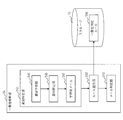
- FIG. 1 is a configuration diagram of an unauthorized mail determination device 10 according to Embodiment 1.
- FIG. FIG. 3 is a configuration diagram of an initial filter unit 21 according to the first embodiment.
- FIG. 3 is a configuration diagram of an unknown analysis unit 22 according to the first embodiment.
- FIG. 3 is a configuration diagram of a known analysis unit 23 according to the first embodiment.
- FIG. 3 is a configuration diagram of a consistency analysis unit 24 according to the first embodiment.
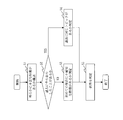
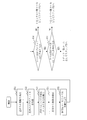
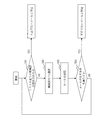
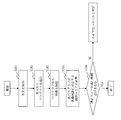
- 4 is a flowchart of overall processing of the unauthorized mail determination device 10 according to the first embodiment.
- 5 is a flowchart of processing of a known analysis unit 23 according to the first embodiment.
- 5 is a flowchart of processing of a profile generation unit 233 according to the first embodiment.
- 5 is a flowchart of processing of a coincidence determination unit 234 according to the first embodiment.
- 5 is a flowchart of processing of a consistency analysis unit 24 according to the first embodiment.
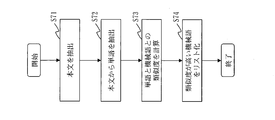
- 5 is a flowchart of processing of an intention specifying unit 241 according to Embodiment 1.
- 5 is a flowchart of processing of a rule application unit 242 and a mail determination unit 243 according to the first embodiment.
- FIG. The figure which shows the rule applied for every function word and mail type which concerns on Embodiment 1.
- FIG. 6 is a configuration diagram of a consistency analysis unit 24 according to the second embodiment.
- 10 is a flowchart of processing of an intention learning unit 245 according to Embodiment 2.
- 10 is a flowchart of processing of an intention estimation unit 246 according to Embodiment 2.
- Embodiment 1 FIG. *** Explanation of configuration *** With reference to FIG. 1, the structure of the unauthorized mail determination device 10 according to the first embodiment will be described.
- the unauthorized mail determination device 10 is a computer.
- the unauthorized mail determination device 10 includes hardware including a processor 11, a memory 12, a storage 13, and a communication interface 14.
- the processor 11 is connected to other hardware via a signal line, and controls these other hardware.
- the processor 11 is an IC (Integrated Circuit) that performs processing. Specific examples of the processor 11 are a CPU (Central Processing Unit), a DSP (Digital Signal Processor), and a GPU (Graphics Processing Unit).
- a CPU Central Processing Unit
- DSP Digital Signal Processor
- GPU Graphics Processing Unit
- the memory 12 is a storage device that temporarily stores data.
- the memory 12 is an SRAM (Static Random Access Memory) or a DRAM (Dynamic Random Access Memory).
- the storage 13 is a storage device that stores data.
- the storage 13 is, as a specific example, an HDD (Hard Disk Drive).
- the storage 13 includes an SD (registered trademark, Secure Digital) memory card, CF (CompactFlash, registered trademark), NAND flash, flexible disk, optical disk, compact disk, Blu-ray (registered trademark) disk, DVD (Digital Versatile Disk), and the like. It may be a portable recording medium.
- the communication interface 14 is an interface for communicating with an external device.
- the communication interface 14 is a port of Ethernet (registered trademark), USB (Universal Serial Bus), or HDMI (registered trademark, High-Definition Multimedia Interface).
- the unauthorized mail determination device 10 includes an initial filter unit 21, an unknown analysis unit 22, a known analysis unit 23, and a consistency analysis unit 24 as functional components.
- the function of each functional component of the unauthorized mail determination device 10 is realized by software.
- the storage 13 stores a program that realizes the function of each functional component of the unauthorized mail determination device 10. This program is read into the memory 12 by the processor 11 and executed by the processor 11. Thereby, the function of each function component of the unauthorized mail determination device 10 is realized.
- the initial filter unit 21 includes a transmission source extraction unit 211, a black list determination unit 212, a content determination unit 213, and a difference determination unit 214 as functional components.
- the initial filter unit 21 uses the black list 216 stored in the storage 13.
- the unknown analysis unit 22 includes an address determination unit 221, an identity determination unit 222, a business card determination unit 223, and a public information determination unit 224 as functional components.
- the unknown analysis unit 22 uses the personal name dictionary data 225, the fixed phrase data 226, and the recipient profile 227 stored in the storage 13.
- the unknown analysis unit 22 uses a business card management system 30 connected via the communication interface 14.
- the known analysis unit 23 includes a personality determination unit 231 and a topic determination unit 232 as functional components.
- the topic determination unit 232 includes a profile generation unit 233 and a match determination unit 234.
- the known analysis unit 23 uses the sender profile 235 stored in the storage 13.
- the consistency analysis unit 24 includes an intention specifying unit 241, a rule application unit 242, and a mail determination unit 243 as functional components.
- the consistency analysis unit 24 uses the consistency determination rule 244 stored in the storage 13.
- FIG. 1 only one processor 11 is shown. However, a plurality of processors 11 may be provided, and a plurality of processors 11 may execute programs that realize each function in cooperation with each other.
- the operation of the unauthorized mail determination device 10 according to the first embodiment corresponds to the unauthorized mail determination method according to the first embodiment.
- the operation of the unauthorized mail determination device 10 according to the first embodiment corresponds to the process of the unauthorized mail determination program according to the first embodiment.
- Step S1 Initial filter processing
- the initial filter unit 21 uses the newly received received mail as a target mail to be analyzed, and checks whether the target mail clearly includes an illegal feature. If the initial filter unit 21 clearly has an illegal feature, the initial filter unit 21 excludes the target mail from the processes after step S2 as an illegal mail.
- Step S2 known determination process
- the initial filter unit 21 determines whether the sender of the target mail is an unknown sender who has not exchanged in the past or a known sender who has exchanged in the past. If the sender of the target mail is an unknown sender, the initial filter unit 21 advances the process to step S3. On the other hand, if the sender of the target mail is a known sender, the initial filter unit 21 advances the process to step S4.
- Step S3 Unknown analysis processing
- the unknown analysis unit 22 determines whether or not the target mail is a mail having an inappropriate characteristic as mail from a partner with whom mail is exchanged for the first time. If the unknown analysis unit 22 has an inappropriate characteristic, the unknown analysis unit 22 excludes the target mail from the process of step S5 as an illegal mail.
- Step S4 known analysis process
- the known analysis unit 23 determines whether the topic of the target mail is a topic that has been exchanged with the sender of the target mail in the past.
- Step S5 Consistency analysis process
- the consistency analysis unit 24 analyzes the consistency of the exchange from the relationship between the target mail and the past received mail from the sender of the target mail. If there is a contradiction in the exchange, the consistency analysis unit 24 determines that the target mail is an illegal mail.
- the processing of the initial filter unit 21 corresponds to the processing of step S1 and step S2 in FIG.
- the processing from step S11 to step S14 corresponds to the processing of step S1 in FIG.
- the process of step S15 corresponds to the process of step S2 of FIG.
- Step S11 transmission source extraction process
- the transmission source extraction unit 211 extracts information about the sender of the target mail. Specifically, the transmission source extraction unit 211 extracts the From field information and the Received field information from the header information of the target mail as sender information and server information passed through.
- Step S12 Blacklist determination process
- the black list determination unit 212 determines whether or not at least one of the sender extracted in step S11 and the via server is included in the black list 216.
- the black list 216 is created in advance.
- the black list 216 may be added each time a sender who sends an unauthorized mail is discovered. If at least one of the sender and the server that has passed through is included in the blacklist 216, the blacklist determination unit 212 determines that the target mail is an unauthorized mail and ends the process. On the other hand, if the blacklist 216 does not include the sender and the server that has passed through, the blacklist determination unit 212 advances the process to step S13.
- Step S13 content determination processing
- the content determination unit 213 determines whether the target mail includes at least one of an attached file and a URL. If neither the attached file nor the URL is included, the content determination unit 213 determines that the target mail is not an unauthorized mail and ends the process. On the other hand, if either the attached file or the URL is included, the content determination unit 213 advances the process to step S14.
- Step S14 Difference determination processing
- the difference determination unit 214 determines whether or not the target content matches the content of the text for the attachment file and the URL determined to be included in step S13. Specifically, when the attached file is targeted, the difference determining unit 214 determines whether or not the content of the attached file matches the content of the text. On the other hand, when the URL is targeted, the difference determination unit 214 determines whether or not the content of the website indicated by the URL matches the content of the text.
- the difference determination unit 214 determines that the target mail is an illegal mail and ends the process. On the other hand, the difference determination part 214 advances a process to step S15, when it corresponds.
- Step S15 known determination process
- the known determination unit 215 determines whether the sender of the target mail is an unknown sender or a known sender by determining whether the sender of the target mail is included in the senders of past received mails. Specifically, the known determination unit 215 searches for the sender of the target email from the sender email address or sender name in the From field of all past received emails stored in the storage 13. Past received mails may be stored in the storage 13 or may be stored in an external storage device connected via the communication interface 14. If it is not searched, the known determination unit 215 determines that the sender of the target mail is an unknown sender, and advances the process to step S3 in FIG. On the other hand, when a search is made, the known determination unit 215 determines that the sender of the target mail is a known sender, and advances the processing to step S4 in FIG.
- the process of the unknown analysis unit 22 corresponds to the process of step S3 in FIG.
- Step S21 Address determination process
- the address determination unit 221 determines whether there is the name of the recipient of the target mail as the address of the text of the target mail. Specifically, in the case of English mail, the address determination unit 221 determines whether the name of the recipient is included in the address description such as “Dear Mr. Suzuki” at the top of the text. The address determination unit 221 specifies the description of the address with reference to the fixed sentence data 226 indicating a fixed description format such as the address. In addition, it is assumed that the name of the recipient is stored in advance in the memory 12 or the like. If the recipient's name is not included, the address determination unit 221 determines that the target mail is an unauthorized mail and ends the process.
- the address determination unit 221 advances the process to step S22. Since there are cases where there are multiple destinations such as mailing lists, a fixed phrase such as “dear all”, “dear folks”, “dear person who may concen” is also registered. In such a case, the name of the recipient is Even if it is not included, it is not judged as an invalid email.
- Step S22 Identity determination processing
- the identity determination unit 222 determines whether or not the sender of the target email bears a name in the text. Specifically, the identity determination unit 222 searches for a person name other than the recipient from the text. At this time, the identity determination unit 222 refers to the personal name dictionary data 225 and searches for personal names other than the recipient from the text. In addition, the identity determination unit 222 refers to the fixed phrase data 226 and, from the main text, describes a standard description format when naming the sender such as “My name is XX”, “I'm XX”, and a signature (Signature). A search may be performed to search for a person name that is not in the person name dictionary data 225. If the sender is not named in the text, the identity determination unit 222 determines that the target mail is an unauthorized mail and ends the process. On the other hand, if the sender is known in the text, the identity determination unit 222 proceeds to step S23.
- Step S23 business card determination process
- the business card determination unit 223 determines whether the recipient has exchanged a business card with the sender of the target mail. Specifically, if the name of the sender of the target mail is registered in the business card management system 30 connected via the communication interface 14, the business card determination unit 223 indicates that the recipient has exchanged the business card with the sender. judge.
- the business card management system 30 is an external system that manages business cards. Note that it may be determined whether someone in the organization to which the recipient belongs, not the recipient, is exchanging a business card with the sender. If the business card is exchanged, the business card determination unit 223 determines that the target mail is a business card presence mail, and advances the process to step S5 in FIG. On the other hand, if the business card determination unit 223 has not exchanged the business card, the process proceeds to step S24.
- the public information determination unit 224 determines whether or not the public information regarding the sender of the target mail is content related to the recipient. Specifically, the public information determination unit 224 uses the OSINT (Open Source Intelligence) tool to collect public information related to the sender of the target mail. The public information determination unit 224 determines whether or not the public information is content related to the receiver based on whether or not the information registered in the receiver profile 227 is included in the collected public information. In the recipient profile 227, words related to the recipient's work, projects, and hobbies are registered in advance as a list.
- OSINT Open Source Intelligence
- the public information determination unit 224 uses a keyword extraction technique such as TF-IDF (Term Frequency-Inverse Document Frequency) for Web pages collected by OSINT to extract the keywords of the page. Then, the public information determination unit 224 calculates the similarity between the word of the profile and the keyword using a technique for calculating the similarity of the word such as Word2Vec.
- the public information determination unit 224 includes the information registered in the recipient profile 227 in the collected public information when a pair whose calculated similarity is equal to or greater than the first threshold is included in the first reference number or more. It is determined that the public information is related to the recipient.
- the public information determination unit 224 when the pair whose calculated similarity is equal to or greater than the first threshold is not included in the first reference number or more, the information registered in the recipient profile 227 in the collected public information It is determined that the public information is not related to the recipient. If the public information has contents related to the recipient, the public information determination unit 224 determines that the target mail is a related field mail and advances the process to step S5 in FIG. On the other hand, when the public information is not related to the recipient, the public information determination unit 224 determines that the target mail is an unauthorized mail and ends the process.
- the process of the known analysis unit 23 corresponds to the process of step S4 in FIG.
- Step S31 identity determination processing
- the identity determination unit 231 determines whether or not the text is the sender's own text from the style of the text of the target mail. Specifically, the personality determination unit 231 determines whether or not the text is the sender's own text using the technique described in Non-Patent Document 1. If the body text is not the sender's text, the personality determination unit 231 determines that the target mail is an unauthorized mail and ends the process. On the other hand, if the body text is the sender's own text, the personality determination unit 231 advances the process to step S32.
- Step S32 topic determination process
- the topic determination unit 232 determines whether or not the topic of the target mail is included in another received mail received from the same sender as the target mail. That is, the topic determination unit 232 determines whether the topic of the target mail is a topic that has been exchanged in the past between the recipient and the sender. When the topic of the target mail is included in other received mails, the topic determination unit 232 determines that the target mail is a topic match mail, and advances the process to step S5 in FIG. On the other hand, if the topic of the target mail is not included in other received mails, the topic determination unit 232 determines that the target mail is a topic mismatch mail, and the process proceeds to step S5 in FIG.
- the topic determination process (step S32 in FIG. 9) according to the first embodiment will be described in detail with reference to FIG. 4, FIG. 10, and FIG.
- the topic determination processing includes processing of the profile generation unit 233 and processing of the match determination unit 234.
- Step S41 first text extraction process
- the profile generation unit 233 extracts the text from all past received mails.
- Step S42 first feature extraction process
- the profile generation unit 233 extracts features from the body text of each received mail extracted in step S41.
- features a selection probability of a topic using LDA (Lent Dirichlet Allocation), a keyword based on TF-IDF, and the like can be considered.
- LDA Lid Dirichlet Allocation
- Step S43 Clustering process
- the profile generation unit 233 clusters past received mails into a plurality of clusters based on the features extracted in step S42.
- the profile generation unit 233 may use existing techniques such as DBSCAN (Density-based spatial clustering of applications with noise) and KMEANS as clustering algorithms.
- Step S44 Labeling process
- the profile generation unit 233 assigns the received mail clustered into a plurality of clusters in step S43 as learning data, and assigns the identifier of the cluster to which the received mail belongs as the label of the received mail.
- Step S45 Learning process
- the profile generation unit 233 performs supervised learning based on the learning data labeled in step S44.
- the supervised learning algorithm existing methods such as SVM and random forest may be used. Thereby, an identifier for identifying which cluster the received mail is classified into is generated.
- step S46 to step S49 is executed for each sender of the received mail.
- Step S46 Second text extraction process
- the profile generation unit 233 extracts the text from the received mail transmitted from the target sender among all the past received mails.
- Step S47 second feature extraction process
- the profile generation unit 233 extracts features from the text of each received mail extracted in step S46 by the same method as in step S42.
- Step S48 first identification process
- the profile generation unit 233 targets each received mail extracted in step S46 as a target based on the identifier generated in step S45 and the feature extracted from the target received mail in step S47. Classify. Then, the profile generation unit 233 assigns the classified cluster identifier as a label to the target received mail.
- Step S49 Profile generation processing
- the profile generation unit 233 writes the list of labels assigned to each received mail extracted in step S46 in the sender profile 235 as a profile for the target sender.
- Step S51 transmission source extraction process
- the coincidence determination unit 234 extracts information about the sender of the target mail.
- the method for extracting the sender information is the same as step S11 in FIG.
- the target mail is M0.
- the sender indicated by the extracted sender information is P. That is, let P be the sender of the target mail M0.
- Step S52 transmission source specifying process
- the coincidence determination unit 234 reads a profile for the sender P from the sender profile 235.
- the coincidence determination unit 234 specifies the received mail for the sender P among all the past received mails.
- the coincidence determination unit 234 extracts X received mails in order from the newest received date of received mails regarding the identified sender P.
- X is an integer of 1 or more.
- the extracted X received mails are sorted into M1,. . . , MX.
- the coincidence determination unit 234 selects the target mail M0 and the extracted X received mails M1,. . . Extract text from MX.
- Step S54 third feature extraction process
- the coincidence determination unit 234 receives the received mails M0,. . . Extract features from the text of MX.
- Step S55 second identification process
- the coincidence determining unit 234 performs the target mail M0, the received mail M1,. . . , MX and assign an identifier as a label.
- the label assigned to the target mail M0 is C0
- the received mail M1,. . . , MX are assigned labels C1,. . . , CX.
- Step S56 first topic determination process
- the coincidence determination unit 234 determines whether or not the label C0 assigned to the target mail M0 in step S55 is included in the profile for the sender P read in step S52. If the label C0 is not included in the profile, the match determination unit 234 determines that the target mail is a topic mismatch mail, and the process proceeds to step S5 in FIG. On the other hand, when the label C0 is included in the profile, the match determination unit 234 advances the process to step S57.
- Step S57 Second Topic Determination Process
- the coincidence determination unit 234 determines that the label C0 assigned to the target mail M0 in step S55 is the received mail M1,. . . , MX assigned labels C1,. . . , CX.
- the coincidence determination unit 234 determines that the label C0 is labeled C1,. . . , CX, the target mail is determined to be a topic mismatch mail, and the process proceeds to step S5 in FIG.
- the coincidence determination unit 234 determines that the label C0 is the labels C1,. . . , CX, the target mail is determined to be a topic matching mail, and the process proceeds to step S5 in FIG.
- the process of the consistency analysis part 24 which concerns on Embodiment 1 is demonstrated.
- the target email is an illegal email, a non-invalid email, a business card presence email, a related field email, Classified as topic match email and topic mismatch email.
- the consistency analysis unit 24 determines whether or not the target mail is illegal when the target mail is classified into mail types of business card presence mail, related field mail, topic match mail, and topic mismatch mail.
- the intention specifying unit 241 specifies the intention of the target mail from the text of the target mail.
- the intent of the target mail is the reason for transmitting the target mail such as forwarding, resending, forgetting to attach, updating, and request handling.
- the intention specifying unit 241 extracts a word similar to a function word registered in advance from the body of the target mail, and indicates the intention indicated by the function word similar to the extracted word. As specified.
- Step S62 Rule application process
- the rule application unit 242 reads from the consistency determination rule 244 a rule corresponding to the intention specified in step S61 and the mail type of the target mail.
- a rule is registered in advance.
- a rule can be added to the consistency determination rule 244 as a plug-in or the like as appropriate.
- the rule indicates a condition for determining that the mail is invalid.
- the mail type is any of a business card existence mail, a related field mail, a topic match mail, and a topic mismatch mail.
- Step S63 Mail determination process
- the mail determination unit 243 determines whether the target mail is an illegal mail from the relationship between the other received mail received from the same sender as the target mail and the intention of the target mail specified in step S61. . Specifically, the mail determination unit 243 determines whether the target mail is an illegal mail based on the condition indicated by the rule read in step S62 and another received mail received from the same sender as the target mail. Determine whether.
- Step S71 Fourth text extraction process
- the intention specifying unit 241 extracts the text from the target mail.
- Step S72 word extraction process
- the intention specifying unit 241 extracts words from the text extracted in step S71.
- the intention specifying unit 241 performs morphological analysis on the text, and extracts some parts of speech such as nouns and verbs as words.
- Step S73 similarity calculation process
- the intention specifying unit 241 calculates, for each word extracted in step S72, a similarity between each target word and each function word.
- a technique for calculating the similarity of words such as Word2Vec is used.
- the function word is a word indicating the reason for transmitting the target mail, such as forwarding, resending, forgetting to attach, mistake, update, and answer, and is registered in advance.
- Function words and rule function words can be added as appropriate as plug-ins or the like.
- Step S74 similarity determination process
- the intention specifying unit 241 determines whether or not the word having the similarity calculated in step S73 of the second threshold or more is included in the second reference number or more. If the word greater than or equal to the second threshold is not included in the second reference number or more, the intention identifying unit 241 determines that the target email is not an unauthorized email and ends the process. On the other hand, when the word greater than or equal to the second threshold is included in the second reference number or more, the intention identifying unit 241 lists the determined function words whose similarity to the word is greater than or equal to the second threshold, The process proceeds to step S62 in FIG.
- Step S81 List determination processing
- the rule application unit 242 determines whether all function words in the list generated in step S74 have been selected. When all the function words are selected, the rule application unit 242 determines that the target mail is not an illegal mail and ends the process. On the other hand, if there is a function word that has not been selected, the rule applying unit 242 advances the process to step S82.
- Step S82 Function word selection process
- the rule application unit 242 selects one function word that has not been selected from the list.
- Step S83 Rule reading process
- the rule application unit 242 reads from the consistency determination rule 244 a rule corresponding to the function word selected in step S82 and the mail type of the target mail.
- Step S84 Rule determination process
- the mail determination unit 243 determines whether the target mail is an illegal mail based on the condition indicated by the rule read in step S83 and another received mail received from the same sender as the target mail.
- the mail determination unit 243 determines that the target mail is an illegal mail when the target mail or other received mail satisfies the condition indicated by the rule.
- the mail determination unit 243 determines that the target mail is not an illegal mail.
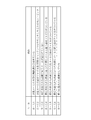
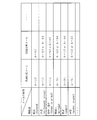
- FIG. 15 shows seven rules, rule 1 to rule 7.
- FIG. 16 shows rules applied for each function word and mail type. In FIG. 16, the rules are shown for the business card existence mail and the related field mail for the mail types. However, the same rules are set for the mail types of topic match mail and topic mismatch mail.
- rule 1 is applied when a word related to the function word “resend” is included in the business card presence mail.
- Rule 1 is a rule that is determined to be fraudulent mail when a function word is included in the text of the target mail.
- the process of step S84 in FIG. 14 is executed only when a function word is included in the text of the target mail. Therefore, when rule 1 is applied, it is always determined to be an unauthorized mail. This is because it is unnatural to suddenly "resend” mail from a person who does not normally exchange messages.
- rule 2 is applied when a word related to the function word “forward” is included in the business card presence mail.
- the mail determination unit 243 extracts topics and keywords from the body of the target mail, the contents of the attached file, and the contents of the URL, and determines whether or not the topic matches the topic of the mail that has been exchanged with the sender in the past. .
- the method for determining whether the topics match is the same as the processing of the match determination unit 234. If the topics do not match, it is determined that the email is invalid. This is because it is unnatural to send information on unrelated topics from a person who does not normally interact.
- rule 3 or rule 4 is applied.
- the mail determination unit 243 determines whether or not a mail having the same content is sent immediately before from the same sender. If it is not sent, it is determined as an illegal mail. This is because it is unnatural if a mail with the same content has not been sent in the past before the mail notifying that it has been resent. Whether the mails have the same contents can be determined by using existing technology such as Doc2Vec and determining that the sentences have the same contents if the similarity is equal to or higher than a threshold.
- the mail determination unit 243 determines whether or not the same attached file is attached to the same mail sent immediately before from the same sender. If a different attachment file is attached, it is determined as an invalid mail. This is because it is unnatural if different attachments are sent despite the resending.
- rule 3 or rule 5 is applied.
- the mail determination unit 243 determines whether or not an attached file is attached to the mail sent immediately before from the same sender. If it is attached, it is determined that the email is invalid. It is because it is unnatural that it has been forgotten to be attached.
- the fraudulent mail determination device 10 is a fraudulent mail because of the relation between the other received mail received from the same sender as the target mail and the intention of the target mail. It is determined whether or not. Thereby, it becomes possible to appropriately detect the target-type attack mail.
- fraudulent e-mails are detected based on conditions such as inconsistencies in the topic of received e-mails and inconsistencies in exchanges even when impersonation of the text of the person being impersonated is accurately imitated and past e-mails are diverted as they are. can do. Therefore, it is possible to prevent malware infection via e-mail by sophisticated attackers.
- the fraudulent mail determination device 10 determines whether the target mail is an illegal mail based on a function word indicating the intention of the target mail and a condition corresponding to the mail type. Thereby, it becomes possible to detect the targeted attack mail more appropriately.
- each functional component is realized by software.
- each functional component may be realized by hardware. The first modification will be described with respect to differences from the first embodiment.
- the unauthorized mail determination device 10 includes an electronic circuit 15 instead of the processor 11, the memory 12, and the storage 13.
- the electronic circuit 15 is a dedicated circuit that realizes the functions of the functional components, the memory 12, and the storage 13.
- the electronic circuit 15 includes a single circuit, a composite circuit, a programmed processor, a processor programmed in parallel, a logic IC, a GA (Gate Array), an ASIC (Application Specific Integrated Circuit), and an FPGA (Field-Programmable Gate Array). is assumed.
- Each functional component may be realized by one electronic circuit 15 or may be realized by distributing each functional component to a plurality of electronic circuits 15.
- ⁇ Modification 2> As a second modification, some of the functional components may be realized by hardware, and other functional components may be realized by software.
- the processor 11, the memory 12, the storage 13, and the electronic circuit 15 are called processing circuits. That is, the function of each functional component is realized by the processing circuit.
- Embodiment 2 is different from the first embodiment in that the intention is specified from the entire text of the target mail. In the second embodiment, this different point will be described, and the description of the same point will be omitted.
- the configuration of the consistency analysis unit 24 according to the second embodiment will be described with reference to FIG. 5 in that the intention specifying unit 241 includes an intention learning unit 245, an intention estimation unit 246, and a learning mail 247.
- the operation of the unauthorized mail determination device 10 according to the second embodiment corresponds to the unauthorized mail determination method according to the second embodiment.
- the operation of the unauthorized mail determination device 10 according to the second embodiment corresponds to the process of the unauthorized mail determination program according to the second embodiment.
- Step S91 First paragraph extraction process
- the intention learning unit 245 extracts all the paragraphs from the mail data included in the learning mail 247.
- text data of a plurality of mails each having a label indicating a function word is registered in each paragraph.
- Step S92 Fourth feature extraction process
- the intention learning unit 245 extracts features from each paragraph extracted in step S91 by the same method as step S42 in FIG.
- Step S93 Learning process
- the intention learning unit 245 performs supervised learning based on the feature extracted from each paragraph in step S92 and the label attached to each paragraph, as in step S45 of FIG. Thereby, a discriminator for identifying which label the feature corresponds to is generated. That is, a classifier that identifies which function word the feature corresponds to is generated.
- Step S101 Fifth Body Extraction Process
- the intention estimation unit 246 extracts the text from the target mail.
- Step S102 second paragraph extraction process
- the intention estimation unit 246 extracts paragraphs from the text extracted in step S101.
- Step S103 Fifth Feature Extraction Process
- the intention estimation unit 246 extracts features from each paragraph extracted in step S102 by the same method as step S42 in FIG.
- Step S104 Third identification process
- the intention estimation unit 246 sets, for each paragraph, an identification score corresponding to each function word by the target paragraph based on the classifier generated in step S93 and the feature extracted from the target paragraph in step S103. calculate.
- Step S105 identification score determination process
- the intention estimation unit 246 determines whether or not a function word whose identification score calculated in step S104 is equal to or greater than a third threshold is included.
- a function word whose identification score is equal to or greater than the third threshold is included, function words whose identification score is equal to or greater than the third threshold are generated as a list.
- the functional word whose identification score is equal to or greater than the third threshold is not included, it is determined that the target mail is not an unauthorized mail, and the process is terminated.
- the function words identified as corresponding to each paragraph are not listed, but function words having an identification score equal to or higher than the third threshold are listed. As a result, only function words that have a certain level or more of the possibility of corresponding paragraphs are listed.
- the intention specifying unit 241 specifies the intention of the target mail by extracting words similar to the function words registered in advance. In this case, if a word similar to a function word is used unintentionally in the text, the intention is erroneously detected.
- the fraudulent mail determination device 10 specifies the intention from the entire text of the mail. Therefore, even if a word similar to a function word is used unintentionally in the text, it is possible to appropriately specify the intention.
Landscapes
- Engineering & Computer Science (AREA)
- Theoretical Computer Science (AREA)
- Computer Security & Cryptography (AREA)
- General Engineering & Computer Science (AREA)
- Data Mining & Analysis (AREA)
- Computer Networks & Wireless Communication (AREA)
- Signal Processing (AREA)
- Physics & Mathematics (AREA)
- General Physics & Mathematics (AREA)
- Computer Vision & Pattern Recognition (AREA)
- Computing Systems (AREA)
- Evolutionary Computation (AREA)
- Artificial Intelligence (AREA)
- Computer Hardware Design (AREA)
- Evolutionary Biology (AREA)
- Bioinformatics & Computational Biology (AREA)
- Bioinformatics & Cheminformatics (AREA)
- Life Sciences & Earth Sciences (AREA)
- Software Systems (AREA)
- Medical Informatics (AREA)
- Mathematical Physics (AREA)
- Information Transfer Between Computers (AREA)
- Data Exchanges In Wide-Area Networks (AREA)
Abstract
不正メール判定装置(10)は、一貫性解析部(24)を備える。一貫性解析部(24)は、新たに受信した受信メールを対象メールとして、対象メールの本文から、対象メールを送信した理由を示す単語である機能語を抽出するといった方法により、対象メールの意図を特定する。一貫性解析部(24)は、対象メールと同一の差出人から過去に受信した他の受信メールと、特定された対象メールの意図との関係から、対象メールが不正なメールであるか否かを判定する。
Description
この発明は、標的型攻撃メールを検知する技術に関する。
Advanced Persistent Threatといった標的型攻撃の多くは、攻撃の侵入手口として不正なメールを利用した標的型攻撃メールである。
標的型攻撃メールでは、組織及び人物といった攻撃対象に関係のある情報を用い、巧みに作りこみをした文章が利用される。標的型攻撃メールでは、メールに添付された悪性なファイルを開かせようとしたり、本文に記載されたURL(Uniform Resource Locator)が示す悪性なWebサイトに訪れさせようとしたりする。
標的型攻撃メールでは、組織及び人物といった攻撃対象に関係のある情報を用い、巧みに作りこみをした文章が利用される。標的型攻撃メールでは、メールに添付された悪性なファイルを開かせようとしたり、本文に記載されたURL(Uniform Resource Locator)が示す悪性なWebサイトに訪れさせようとしたりする。
添付ファイル及びURLに関しては、コンテンツの悪性度合いを静的又は動的に解析する既存の技術が知られている。例えば、検査対象の添付ファイルが既知のマルウェアのパターンにマッチするかを確認することでマルウェアを検知する技術がある。また、ファイルの実行時のふるまいの特徴を利用してマルウェアを検知する技術もある。また、悪性なWebサイトを示すURLのブラックリストを用意し、ユーザが危険なWebサイトを訪れることを未然に防止する技術もある。そして、これらの技術を搭載したマルウェア検知ソフトウェアがある。
しかし、高度な攻撃者になればなるほど、添付ファイル及びURLがマルウェア検知ソフトウェアに検知されるかどうかを事前に確認した上で、攻撃を実行する。そのため、未知のマルウェア及び新しい悪性なURLについては、適切に検知することは難しい。
しかし、高度な攻撃者になればなるほど、添付ファイル及びURLがマルウェア検知ソフトウェアに検知されるかどうかを事前に確認した上で、攻撃を実行する。そのため、未知のマルウェア及び新しい悪性なURLについては、適切に検知することは難しい。
また、メールのヘッダ情報の不自然さから攻撃を検知する技術が存在する。この技術では、差出人の送信ドメイン認証結果と、送信経路と、使用メールソフトと、経由国といった情報に基づき、不正なメールであるか否かを判定する。しかし、この技術では、正規ユーザのアカウントを悪用したなりすましメールに関しては検知することはできない。
非特許文献1には、なりすましメールを検知する技術が記載されている。
非特許文献1に記載された技術では、メールの差出人本人が出すメールが、語彙レベルと、構文レベルと、構造レベルとで分析され、個人性を表すプロファイルが作成される。語彙レベルとは、単語数と、単語単位の文字数と、テキスト全体の文字数と、行単位の文字数と、行数と、文章数と、テキスト中の個々の文字の頻度と、文の終端用の文字の頻度と等である。構文レベルとは、形容詞の数と、副詞の数と、等位接続詞の数と、過去分詞の数と等である。構造レベルとは、署名と住所と電話番号といった著者を特定する情報と、挨拶文の形式と、文の始め方と、文の終わり方と等である。文の始め方は、大文字の数と小文字の数といったことである。文の終わり方は、文章を区切りにスペースを利用している文章の数と文章区切りにドットを利用している文章の数と文章区切りにドット以外の句読点を利用している文章の数と文章が終わった後にスペースを利用している文章の数といったことである。
非特許文献1に記載された技術では、差出人から過去に受信したメールから、差出人のプロファイルが作成され、新たに受信したメールがプロファイルにマッチしない場合にはなりすましメールと判定される。
非特許文献1に記載された技術では、メールの差出人本人が出すメールが、語彙レベルと、構文レベルと、構造レベルとで分析され、個人性を表すプロファイルが作成される。語彙レベルとは、単語数と、単語単位の文字数と、テキスト全体の文字数と、行単位の文字数と、行数と、文章数と、テキスト中の個々の文字の頻度と、文の終端用の文字の頻度と等である。構文レベルとは、形容詞の数と、副詞の数と、等位接続詞の数と、過去分詞の数と等である。構造レベルとは、署名と住所と電話番号といった著者を特定する情報と、挨拶文の形式と、文の始め方と、文の終わり方と等である。文の始め方は、大文字の数と小文字の数といったことである。文の終わり方は、文章を区切りにスペースを利用している文章の数と文章区切りにドットを利用している文章の数と文章区切りにドット以外の句読点を利用している文章の数と文章が終わった後にスペースを利用している文章の数といったことである。
非特許文献1に記載された技術では、差出人から過去に受信したメールから、差出人のプロファイルが作成され、新たに受信したメールがプロファイルにマッチしない場合にはなりすましメールと判定される。
Sevtap Duman, Kubra Kalkan Cakmakciy, Manuel Egelez, William Robertson and Engin Kirda: "EmailProfiler: Spearphishing Filtering with Header and Stylometric Features of Emails", Computer Software and Applications Conference (COMPSAC), 2016 IEEE 40th Annual
しかし、攻撃者がなりすまし対象の人物の文章の癖を正確に真似た場合と、過去のメールがそのまま流用された場合とには、非特許文献1に記載された技術を利用しても検知することができない。
この発明は、標的型攻撃メールを適切に検知可能にすることを目的とする。
この発明は、標的型攻撃メールを適切に検知可能にすることを目的とする。
この発明に係る不正メール判定装置は、
新たに受信した受信メールを対象メールとして、前記対象メールの本文から前記対象メールの意図を特定する意図特定部と、
前記対象メールと同一の差出人から受信した他の受信メールと、前記意図特定部によって特定された前記対象メールの意図との関係から、前記対象メールが不正なメールであるか否かを判定するメール判定部と
を備える。
新たに受信した受信メールを対象メールとして、前記対象メールの本文から前記対象メールの意図を特定する意図特定部と、
前記対象メールと同一の差出人から受信した他の受信メールと、前記意図特定部によって特定された前記対象メールの意図との関係から、前記対象メールが不正なメールであるか否かを判定するメール判定部と
を備える。
この発明では、対象メールと同一の差出人から受信した他の受信メールと、対象メールの意図との関係から、対象メールが不正なメールであるか否かを判定する。これにより、標的型攻撃メールを適切に検知可能になる。
実施の形態1.
***構成の説明***
図1を参照して、実施の形態1に係る不正メール判定装置10の構成を説明する。
不正メール判定装置10は、コンピュータである。
不正メール判定装置10は、プロセッサ11と、メモリ12と、ストレージ13と、通信インタフェース14とのハードウェアを備える。プロセッサ11は、信号線を介して他のハードウェアと接続され、これら他のハードウェアを制御する。
***構成の説明***
図1を参照して、実施の形態1に係る不正メール判定装置10の構成を説明する。
不正メール判定装置10は、コンピュータである。
不正メール判定装置10は、プロセッサ11と、メモリ12と、ストレージ13と、通信インタフェース14とのハードウェアを備える。プロセッサ11は、信号線を介して他のハードウェアと接続され、これら他のハードウェアを制御する。
プロセッサ11は、プロセッシングを行うIC(Integrated Circuit)である。プロセッサ11は、具体例としては、CPU(Central Processing Unit)、DSP(Digital Signal Processor)、GPU(Graphics Processing Unit)である。
メモリ12は、データを一時的に記憶する記憶装置である。メモリ12は、具体例としては、SRAM(Static Random Access Memory)、DRAM(Dynamic Random Access Memory)である。
ストレージ13は、データを保管する記憶装置である。ストレージ13は、具体例としては、HDD(Hard Disk Drive)である。また、ストレージ13は、SD(登録商標,Secure Digital)メモリカード、CF(CompactFlash,登録商標)、NANDフラッシュ、フレキシブルディスク、光ディスク、コンパクトディスク、ブルーレイ(登録商標)ディスク、DVD(Digital Versatile Disk)といった可搬記録媒体であってもよい。
通信インタフェース14は、外部の装置と通信するためのインタフェースである。通信インタフェース14は、具体例としては、Ethernet(登録商標)、USB(Universal Serial Bus)、HDMI(登録商標,High-Definition Multimedia Interface)のポートである。
不正メール判定装置10は、機能構成要素として、初期フィルタ部21と、未知解析部22と、既知解析部23と、一貫性解析部24とを備える。不正メール判定装置10の各機能構成要素の機能はソフトウェアにより実現される。
ストレージ13には、不正メール判定装置10の各機能構成要素の機能を実現するプログラムが格納されている。このプログラムは、プロセッサ11によりメモリ12に読み込まれ、プロセッサ11によって実行される。これにより、不正メール判定装置10の各機能構成要素の機能が実現される。
ストレージ13には、不正メール判定装置10の各機能構成要素の機能を実現するプログラムが格納されている。このプログラムは、プロセッサ11によりメモリ12に読み込まれ、プロセッサ11によって実行される。これにより、不正メール判定装置10の各機能構成要素の機能が実現される。
図2を参照して、実施の形態1に係る初期フィルタ部21の構成を説明する。
初期フィルタ部21は、機能構成要素として、送信元抽出部211と、ブラックリスト判定部212と、コンテンツ判定部213と、差異判定部214とを備える。初期フィルタ部21は、ストレージ13に記憶されたブラックリスト216を使用する。
初期フィルタ部21は、機能構成要素として、送信元抽出部211と、ブラックリスト判定部212と、コンテンツ判定部213と、差異判定部214とを備える。初期フィルタ部21は、ストレージ13に記憶されたブラックリスト216を使用する。
図3を参照して、実施の形態1に係る未知解析部22の構成を説明する。
未知解析部22は、機能構成要素として、宛名判定部221と、身元判定部222と、名刺判定部223と、公開情報判定部224とを備える。未知解析部22は、ストレージ13に記憶された人名辞書データ225と、定型文データ226と、受信者プロファイル227とを使用する。また、未知解析部22は、通信インタフェース14を介して接続された名刺管理システム30を使用する。
未知解析部22は、機能構成要素として、宛名判定部221と、身元判定部222と、名刺判定部223と、公開情報判定部224とを備える。未知解析部22は、ストレージ13に記憶された人名辞書データ225と、定型文データ226と、受信者プロファイル227とを使用する。また、未知解析部22は、通信インタフェース14を介して接続された名刺管理システム30を使用する。
図4を参照して、実施の形態1に係る既知解析部23の構成を説明する。
既知解析部23は、機能構成要素として、本人性判定部231と、トピック判定部232とを備える。トピック判定部232は、プロファイル生成部233と、一致判定部234とを備える。既知解析部23は、ストレージ13に記憶された差出人プロファイル235を使用する。
既知解析部23は、機能構成要素として、本人性判定部231と、トピック判定部232とを備える。トピック判定部232は、プロファイル生成部233と、一致判定部234とを備える。既知解析部23は、ストレージ13に記憶された差出人プロファイル235を使用する。
図5を参照して、実施の形態1に係る一貫性解析部24の構成を説明する。
一貫性解析部24は、機能構成要素として、意図特定部241と、ルール適用部242と、メール判定部243とを備える。一貫性解析部24は、ストレージ13に記憶された一貫性判定ルール244を使用する。
一貫性解析部24は、機能構成要素として、意図特定部241と、ルール適用部242と、メール判定部243とを備える。一貫性解析部24は、ストレージ13に記憶された一貫性判定ルール244を使用する。
図1では、プロセッサ11は、1つだけ示されていた。しかし、プロセッサ11は、複数であってもよく、複数のプロセッサ11が、各機能を実現するプログラムを連携して実行してもよい。
***動作の説明***
図6から図16を参照して、実施の形態1に係る不正メール判定装置10の動作を説明する。
実施の形態1に係る不正メール判定装置10の動作は、実施の形態1に係る不正メール判定方法に相当する。また、実施の形態1に係る不正メール判定装置10の動作は、実施の形態1に係る不正メール判定プログラムの処理に相当する。
図6から図16を参照して、実施の形態1に係る不正メール判定装置10の動作を説明する。
実施の形態1に係る不正メール判定装置10の動作は、実施の形態1に係る不正メール判定方法に相当する。また、実施の形態1に係る不正メール判定装置10の動作は、実施の形態1に係る不正メール判定プログラムの処理に相当する。
図1及び図6を参照して、実施の形態1に係る不正メール判定装置10の全体的な処理を説明する。
(ステップS1:初期フィルタ処理)
初期フィルタ部21は、新たに受信した受信メールを分析対象の対象メールとして、対象メールに明らかに不正な特徴が含まれているかを確認する。初期フィルタ部21は、明らかに不正な特徴を有している場合には、対象メールを不正なメールとしてステップS2以降の処理から除外する。
(ステップS1:初期フィルタ処理)
初期フィルタ部21は、新たに受信した受信メールを分析対象の対象メールとして、対象メールに明らかに不正な特徴が含まれているかを確認する。初期フィルタ部21は、明らかに不正な特徴を有している場合には、対象メールを不正なメールとしてステップS2以降の処理から除外する。
(ステップS2:既知判定処理)
初期フィルタ部21は、対象メールの差出人が過去にやりとりしたことのない未知差出人であるか、過去にやりとりしたことのある既知差出人であるかを判定する。
初期フィルタ部21は、対象メールの差出人が未知差出人である場合には、処理をステップS3に進める。一方、初期フィルタ部21は、対象メールの差出人が既知差出人である場合には、処理をステップS4に進める。
初期フィルタ部21は、対象メールの差出人が過去にやりとりしたことのない未知差出人であるか、過去にやりとりしたことのある既知差出人であるかを判定する。
初期フィルタ部21は、対象メールの差出人が未知差出人である場合には、処理をステップS3に進める。一方、初期フィルタ部21は、対象メールの差出人が既知差出人である場合には、処理をステップS4に進める。
(ステップS3:未知解析処理)
未知解析部22は、対象メールが初めてメールのやりとりをする相手からのメールとして不適切な特徴を持つメールであるか否かを判定する。未知解析部22は、不適切な特徴を持つメールである場合には、対象メールを不正なメールとしてステップS5の処理から除外する。
未知解析部22は、対象メールが初めてメールのやりとりをする相手からのメールとして不適切な特徴を持つメールであるか否かを判定する。未知解析部22は、不適切な特徴を持つメールである場合には、対象メールを不正なメールとしてステップS5の処理から除外する。
(ステップS4:既知解析処理)
既知解析部23は、対象メールのトピックが過去に対象メールの差出人とやりとりされたトピックか否かを判定する。
既知解析部23は、対象メールのトピックが過去に対象メールの差出人とやりとりされたトピックか否かを判定する。
(ステップS5:一貫性解析処理)
一貫性解析部24は、対象メールと、対象メールの差出人からの過去の受信メールとの関係から、やりとりの一貫性を解析する。一貫性解析部24は、やりとりに矛盾がある場合には、対象メールを不正なメールと判定する。
一貫性解析部24は、対象メールと、対象メールの差出人からの過去の受信メールとの関係から、やりとりの一貫性を解析する。一貫性解析部24は、やりとりに矛盾がある場合には、対象メールを不正なメールと判定する。
図2及び図7を参照して、実施の形態1に係る初期フィルタ部21の処理を説明する。
初期フィルタ部21の処理は、図6のステップS1及びステップS2の処理に対応する。具体的には、ステップS11からステップS14の処理が図6のステップS1の処理に対応する。また、ステップS15の処理が図6のステップS2の処理に対応する。
初期フィルタ部21の処理は、図6のステップS1及びステップS2の処理に対応する。具体的には、ステップS11からステップS14の処理が図6のステップS1の処理に対応する。また、ステップS15の処理が図6のステップS2の処理に対応する。
(ステップS11:送信元抽出処理)
送信元抽出部211は、対象メールの差出人の情報を抽出する。具体的には、送信元抽出部211は、対象メールのヘッダ情報からFromフィールドの情報及びReceivedフィールドの情報を、差出人の情報及び経由したサーバ情報として抽出する。
送信元抽出部211は、対象メールの差出人の情報を抽出する。具体的には、送信元抽出部211は、対象メールのヘッダ情報からFromフィールドの情報及びReceivedフィールドの情報を、差出人の情報及び経由したサーバ情報として抽出する。
(ステップS12:ブラックリスト判定処理)
ブラックリスト判定部212は、ステップS11で抽出された差出人と経由したサーバとの少なくともいずれかが、ブラックリスト216に含まれているか否かを判定する。ブラックリスト216は、事前に作成される。ブラックリスト216は、不正なメールを送信する差出人が発見される度に追加されてもよい。
ブラックリスト判定部212は、差出人と経由したサーバとの少なくともいずれかがブラックリスト216に含まれている場合には、対象メールを不正なメールであると判定し、処理を終了する。一方、ブラックリスト判定部212は、差出人及び経由したサーバがブラックリスト216に含まれてない場合には、処理をステップS13に進める。
ブラックリスト判定部212は、ステップS11で抽出された差出人と経由したサーバとの少なくともいずれかが、ブラックリスト216に含まれているか否かを判定する。ブラックリスト216は、事前に作成される。ブラックリスト216は、不正なメールを送信する差出人が発見される度に追加されてもよい。
ブラックリスト判定部212は、差出人と経由したサーバとの少なくともいずれかがブラックリスト216に含まれている場合には、対象メールを不正なメールであると判定し、処理を終了する。一方、ブラックリスト判定部212は、差出人及び経由したサーバがブラックリスト216に含まれてない場合には、処理をステップS13に進める。
(ステップS13:コンテンツ判定処理)
コンテンツ判定部213は、対象メールに添付ファイルとURLとの少なくともいずれかが含まれているか否かを判定する。
コンテンツ判定部213は、添付ファイルとURLとのどちらも含まれていない場合には、対象メールを不正なメールでないと判定し、処理を終了する。一方、コンテンツ判定部213は、添付ファイルとURLといずれか一方でも含まれている場合には、処理をステップS14に進める。
コンテンツ判定部213は、対象メールに添付ファイルとURLとの少なくともいずれかが含まれているか否かを判定する。
コンテンツ判定部213は、添付ファイルとURLとのどちらも含まれていない場合には、対象メールを不正なメールでないと判定し、処理を終了する。一方、コンテンツ判定部213は、添付ファイルとURLといずれか一方でも含まれている場合には、処理をステップS14に進める。
(ステップS14:差異判定処理)
差異判定部214は、添付ファイルとURLとのうちステップS13で含まれると判定されたものを対象として、対象のコンテンツが本文の内容と一致しているか否かを判定する。具体的には、差異判定部214は、添付ファイルを対象とする場合には、添付ファイルのコンテンツが本文の内容と一致しているか否かを判定する。一方、差異判定部214は、URLを対象とする場合には、URLが示すWebサイトのコンテンツが本文の内容と一致しているか否かを判定する。なお、コンテンツが本文の内容に一致しているか否かの判定には、例えば、文献(西川 弘毅、山本 匠、河内 清人、メールとそのコンテキスト情報を基にした不審メール検知手法の提案、コンピュータセキュリティシンポジウム2017、1B3-3)に記載された技術を利用することが可能である。
差異判定部214は、一致していない場合には、対象メールを不正なメールであると判定し、処理を終了する。一方、差異判定部214は、一致している場合には、処理をステップS15に進める。
差異判定部214は、添付ファイルとURLとのうちステップS13で含まれると判定されたものを対象として、対象のコンテンツが本文の内容と一致しているか否かを判定する。具体的には、差異判定部214は、添付ファイルを対象とする場合には、添付ファイルのコンテンツが本文の内容と一致しているか否かを判定する。一方、差異判定部214は、URLを対象とする場合には、URLが示すWebサイトのコンテンツが本文の内容と一致しているか否かを判定する。なお、コンテンツが本文の内容に一致しているか否かの判定には、例えば、文献(西川 弘毅、山本 匠、河内 清人、メールとそのコンテキスト情報を基にした不審メール検知手法の提案、コンピュータセキュリティシンポジウム2017、1B3-3)に記載された技術を利用することが可能である。
差異判定部214は、一致していない場合には、対象メールを不正なメールであると判定し、処理を終了する。一方、差異判定部214は、一致している場合には、処理をステップS15に進める。
(ステップS15:既知判定処理)
既知判定部215は、対象メールの差出人が過去の受信メールの差出人に含まれるか否かを判定することにより、対象メールの差出人が未知差出人であるか既知差出人であるかを判定する。
具体的には、既知判定部215は、ストレージ13に記憶された過去の全ての受信メールのFromフィールドの差出人メールアドレスまたは差出人名から、対象メールの差出人を検索する。過去の受信メールは、ストレージ13に記憶されていてもよいし、通信インタフェース14を介して接続された外部の記憶装置に記憶されていてもよい。既知判定部215は、検索されない場合には、対象メールの差出人は未知差出人と判定して、処理を図6のステップS3に進める。一方、既知判定部215は、検索された場合には、対象メールの差出人は既知差出人であると判定して、処理を図6のステップS4に進める。
既知判定部215は、対象メールの差出人が過去の受信メールの差出人に含まれるか否かを判定することにより、対象メールの差出人が未知差出人であるか既知差出人であるかを判定する。
具体的には、既知判定部215は、ストレージ13に記憶された過去の全ての受信メールのFromフィールドの差出人メールアドレスまたは差出人名から、対象メールの差出人を検索する。過去の受信メールは、ストレージ13に記憶されていてもよいし、通信インタフェース14を介して接続された外部の記憶装置に記憶されていてもよい。既知判定部215は、検索されない場合には、対象メールの差出人は未知差出人と判定して、処理を図6のステップS3に進める。一方、既知判定部215は、検索された場合には、対象メールの差出人は既知差出人であると判定して、処理を図6のステップS4に進める。
図3及び図8を参照して、実施の形態1に係る未知解析部22の処理を説明する。
未知解析部22の処理は、図6のステップS3の処理に対応する。
未知解析部22の処理は、図6のステップS3の処理に対応する。
(ステップS21:宛名判定処理)
宛名判定部221は、対象メールの本文の宛名として対象メールの受信者の名前があるか否かを判定する。具体的には、宛名判定部221は、英文メールの場合であれば、本文の先頭の“Dear Mr.Suzuki”といった宛名の記載に受信者の名前が含まれているか否かを判定する。宛名判定部221は、宛名等の定型的な記載形式を示す定型文データ226を参照して、宛名の記載を特定する。また、受信者の名前は、事前にメモリ12等に記憶されているものとする。
宛名判定部221は、受信者の名前が含まれていない場合には、対象メールを不正なメールであると判定し、処理を終了する。一方、宛名判定部221は、受信者の名前が含まれている場合には、処理をステップS22に進める。なおメーリングリスト宛などの宛先が複数あるケースもあるため、「dear all」「dear folks」「dear person who may concern」などの定型文も登録しておき、このような場合は、受信者の名前が含まれていなくても不正なメールと判断しない。
宛名判定部221は、対象メールの本文の宛名として対象メールの受信者の名前があるか否かを判定する。具体的には、宛名判定部221は、英文メールの場合であれば、本文の先頭の“Dear Mr.Suzuki”といった宛名の記載に受信者の名前が含まれているか否かを判定する。宛名判定部221は、宛名等の定型的な記載形式を示す定型文データ226を参照して、宛名の記載を特定する。また、受信者の名前は、事前にメモリ12等に記憶されているものとする。
宛名判定部221は、受信者の名前が含まれていない場合には、対象メールを不正なメールであると判定し、処理を終了する。一方、宛名判定部221は、受信者の名前が含まれている場合には、処理をステップS22に進める。なおメーリングリスト宛などの宛先が複数あるケースもあるため、「dear all」「dear folks」「dear person who may concern」などの定型文も登録しておき、このような場合は、受信者の名前が含まれていなくても不正なメールと判断しない。
(ステップS22:身元判定処理)
身元判定部222は、対象メールの差出人が、本文中で名乗っているか否かを判定する。具体的には、身元判定部222は、本文から受信者以外の人名を検索する。この際、身元判定部222は、人名辞書データ225を参照して、本文から受信者以外の人名を検索する。また、身元判定部222は、定型文データ226を参照して、「My name is XX」と「I’m XX」と署名(Signature)といった差出人を名乗る際の定型的な記載形式を本文中から検索して、人名辞書データ225にはない人名を検索してもよい。
身元判定部222は、差出人が本文中で名乗っていない場合には、対象メールを不正なメールであると判定し、処理を終了する。一方、身元判定部222は、差出人が本文中で名乗っている場合には、処理をステップS23に進める。
身元判定部222は、対象メールの差出人が、本文中で名乗っているか否かを判定する。具体的には、身元判定部222は、本文から受信者以外の人名を検索する。この際、身元判定部222は、人名辞書データ225を参照して、本文から受信者以外の人名を検索する。また、身元判定部222は、定型文データ226を参照して、「My name is XX」と「I’m XX」と署名(Signature)といった差出人を名乗る際の定型的な記載形式を本文中から検索して、人名辞書データ225にはない人名を検索してもよい。
身元判定部222は、差出人が本文中で名乗っていない場合には、対象メールを不正なメールであると判定し、処理を終了する。一方、身元判定部222は、差出人が本文中で名乗っている場合には、処理をステップS23に進める。
(ステップS23:名刺判定処理)
名刺判定部223は、受信者が対象メールの差出人と名刺交換しているか否かを判定する。具体的には、名刺判定部223は、通信インタフェース14を介して接続された名刺管理システム30に、対象メールの差出人の名前が登録されていれば、受信者が差出人と名刺交換していると判定する。名刺管理システム30は、名刺を管理する外部システムである。なお、受信者ではなく、受信者の所属する組織の誰かが差出人と名刺交換しているか否かを判定してもよい。
名刺判定部223は、名刺交換している場合には、対象メールを名刺存在メールであると判定して、処理を図6のステップS5に進める。一方、名刺判定部223は、名刺交換していない場合には、処理をステップS24に進める。
名刺判定部223は、受信者が対象メールの差出人と名刺交換しているか否かを判定する。具体的には、名刺判定部223は、通信インタフェース14を介して接続された名刺管理システム30に、対象メールの差出人の名前が登録されていれば、受信者が差出人と名刺交換していると判定する。名刺管理システム30は、名刺を管理する外部システムである。なお、受信者ではなく、受信者の所属する組織の誰かが差出人と名刺交換しているか否かを判定してもよい。
名刺判定部223は、名刺交換している場合には、対象メールを名刺存在メールであると判定して、処理を図6のステップS5に進める。一方、名刺判定部223は、名刺交換していない場合には、処理をステップS24に進める。
(ステップS24:公開情報判定処理)
公開情報判定部224は、対象メールの差出人に関する公開情報が、受信者に関連する内容であるか否かを判定する。
具体的には、公開情報判定部224は、OSINT(Open Source Intelligence)ツールを利用して、対象メールの差出人に関する公開情報を収集する。公開情報判定部224は、収集された公開情報に、受信者プロファイル227に登録された情報が含まれているか否かにより、公開情報が受信者に関連する内容であるか否かを判定する。受信者プロファイル227には、受信者の業務とプロジェクトと趣味といった事柄に関する単語がリストとして事前に登録されている。
具体例としては、公開情報判定部224は、OSINTで収集されたWebページについてはTF-IDF(Term Frequency-Inverse Document Frequency)といったキーワード抽出技術を用いてページのキーワードを抽出する。そして、公開情報判定部224は、Word2Vec等の単語の類似度を計算する技術を用いて、プロファイルの単語とキーワードとの類似度を計算する。公開情報判定部224は、計算された類似度が第1閾値以上のペアが第1基準数以上含まれている場合には、収集された公開情報に受信者プロファイル227に登録された情報が含まれていると判定し、公開情報が受信者に関連する内容である判定する。一方、公開情報判定部224は、計算された類似度が第1閾値以上のペアが第1基準数以上含まれていない場合には、収集された公開情報に受信者プロファイル227に登録された情報が含まれていないと判定し、公開情報が受信者に関連しない内容である判定する。
公開情報判定部224は、公開情報が受信者に関連する内容である場合には、対象メールを関連分野メールであると判定し、処理を図6のステップS5に進める。一方、公開情報判定部224は、公開情報が受信者に関連する内容でない場合には、対象メールを不正なメールであると判定し、処理を終了する。
公開情報判定部224は、対象メールの差出人に関する公開情報が、受信者に関連する内容であるか否かを判定する。
具体的には、公開情報判定部224は、OSINT(Open Source Intelligence)ツールを利用して、対象メールの差出人に関する公開情報を収集する。公開情報判定部224は、収集された公開情報に、受信者プロファイル227に登録された情報が含まれているか否かにより、公開情報が受信者に関連する内容であるか否かを判定する。受信者プロファイル227には、受信者の業務とプロジェクトと趣味といった事柄に関する単語がリストとして事前に登録されている。
具体例としては、公開情報判定部224は、OSINTで収集されたWebページについてはTF-IDF(Term Frequency-Inverse Document Frequency)といったキーワード抽出技術を用いてページのキーワードを抽出する。そして、公開情報判定部224は、Word2Vec等の単語の類似度を計算する技術を用いて、プロファイルの単語とキーワードとの類似度を計算する。公開情報判定部224は、計算された類似度が第1閾値以上のペアが第1基準数以上含まれている場合には、収集された公開情報に受信者プロファイル227に登録された情報が含まれていると判定し、公開情報が受信者に関連する内容である判定する。一方、公開情報判定部224は、計算された類似度が第1閾値以上のペアが第1基準数以上含まれていない場合には、収集された公開情報に受信者プロファイル227に登録された情報が含まれていないと判定し、公開情報が受信者に関連しない内容である判定する。
公開情報判定部224は、公開情報が受信者に関連する内容である場合には、対象メールを関連分野メールであると判定し、処理を図6のステップS5に進める。一方、公開情報判定部224は、公開情報が受信者に関連する内容でない場合には、対象メールを不正なメールであると判定し、処理を終了する。
図4及び図9を参照して、実施の形態1に係る既知解析部23の処理を説明する。
既知解析部23の処理は、図6のステップS4の処理に対応する。
既知解析部23の処理は、図6のステップS4の処理に対応する。
(ステップS31:本人性判定処理)
本人性判定部231は、対象メールの本文の文体から、本文が差出人本人の文章であるか否かを判定する。具体的には、本人性判定部231は、非特許文献1に記載された技術等を用いて、本文が差出人本人の文章であるか否かを判定する。
本人性判定部231は、本文が差出人本人の文章でない場合には、対象メールを不正なメールであると判定し、処理を終了する。一方、本人性判定部231は、本文が差出人本人の文章である場合には、処理をステップS32に進める。
本人性判定部231は、対象メールの本文の文体から、本文が差出人本人の文章であるか否かを判定する。具体的には、本人性判定部231は、非特許文献1に記載された技術等を用いて、本文が差出人本人の文章であるか否かを判定する。
本人性判定部231は、本文が差出人本人の文章でない場合には、対象メールを不正なメールであると判定し、処理を終了する。一方、本人性判定部231は、本文が差出人本人の文章である場合には、処理をステップS32に進める。
(ステップS32:トピック判定処理)
トピック判定部232は、対象メールのトピックが、対象メールと同一の差出人から受信した他の受信メールに含まれるか否か判定する。つまり、トピック判定部232は、対象メールのトピックが、受信者と差出人との間で過去にやりとりされたトピックであるか否かを判定する。
トピック判定部232は、対象メールのトピックが他の受信メールに含まれる場合には、対象メールをトピック一致メールであると判定し、処理を図6のステップS5に進める。一方、トピック判定部232は、対象メールのトピックが他の受信メールに含まれない場合には、対象メールをトピック不一致メールであると判定し、処理を図6のステップS5に進める。
トピック判定部232は、対象メールのトピックが、対象メールと同一の差出人から受信した他の受信メールに含まれるか否か判定する。つまり、トピック判定部232は、対象メールのトピックが、受信者と差出人との間で過去にやりとりされたトピックであるか否かを判定する。
トピック判定部232は、対象メールのトピックが他の受信メールに含まれる場合には、対象メールをトピック一致メールであると判定し、処理を図6のステップS5に進める。一方、トピック判定部232は、対象メールのトピックが他の受信メールに含まれない場合には、対象メールをトピック不一致メールであると判定し、処理を図6のステップS5に進める。
図4と図10と図11とを参照して、実施の形態1に係るトピック判定処理(図9のステップS32)を詳細に説明する。トピック判定処理は、プロファイル生成部233の処理と一致判定部234の処理とを含む。
まず、図4及び図10を参照して、実施の形態1に係るプロファイル生成部233の処理を説明する。
(ステップS41:第1本文抽出処理)
プロファイル生成部233は、過去の全ての受信メールから本文を抽出する。
(ステップS41:第1本文抽出処理)
プロファイル生成部233は、過去の全ての受信メールから本文を抽出する。
(ステップS42:第1特徴抽出処理)
プロファイル生成部233は、ステップS41で抽出された各受信メールの本文から特徴を抽出する。特徴としては、LDA(Latent Dirichlet Allocation)を用いたトピックの選択確率と、TF-IDFによるキーワードとなどが考えられる。
プロファイル生成部233は、ステップS41で抽出された各受信メールの本文から特徴を抽出する。特徴としては、LDA(Latent Dirichlet Allocation)を用いたトピックの選択確率と、TF-IDFによるキーワードとなどが考えられる。
(ステップS43:クラスタリング処理)
プロファイル生成部233は、ステップS42で抽出された特徴に基づき、過去の受信メールを複数のクラスタにクラスタリングする。プロファイル生成部233は、クラスタリングのアルゴリズムとして、DBSCAN(Density-based spatial clustering of applications with noise)と、KMEANSといった既存の技術を用いればよい。
プロファイル生成部233は、ステップS42で抽出された特徴に基づき、過去の受信メールを複数のクラスタにクラスタリングする。プロファイル生成部233は、クラスタリングのアルゴリズムとして、DBSCAN(Density-based spatial clustering of applications with noise)と、KMEANSといった既存の技術を用いればよい。
(ステップS44:ラベル付け処理)
プロファイル生成部233は、ステップS43で複数のクラスタにクラスタリングされた受信メールを学習用データとし、受信メールが所属するクラスタの識別子をその受信メールのラベルとして割り当てる。
プロファイル生成部233は、ステップS43で複数のクラスタにクラスタリングされた受信メールを学習用データとし、受信メールが所属するクラスタの識別子をその受信メールのラベルとして割り当てる。
(ステップS45:学習処理)
プロファイル生成部233は、ステップS44でラベル付けされた学習用データに基づき、教師有学習を行う。教師有学習のアルゴリズムとしては、SVM及びランダムフォレストといった既存の手法を用いればよい。これにより、受信メールがどのクラスタに分類されるかを識別する識別器が生成される。
プロファイル生成部233は、ステップS44でラベル付けされた学習用データに基づき、教師有学習を行う。教師有学習のアルゴリズムとしては、SVM及びランダムフォレストといった既存の手法を用いればよい。これにより、受信メールがどのクラスタに分類されるかを識別する識別器が生成される。
ステップS46からステップS49の処理は、受信メールの各差出人を対象として実行される。
(ステップS46:第2本文抽出処理)
プロファイル生成部233は、過去の全ての受信メールのうち、対象の差出人から送信された受信メールから、本文を抽出する。
プロファイル生成部233は、過去の全ての受信メールのうち、対象の差出人から送信された受信メールから、本文を抽出する。
(ステップS47:第2特徴抽出処理)
プロファイル生成部233は、ステップS42と同じ方法により、ステップS46で抽出された各受信メールの本文から特徴を抽出する。
プロファイル生成部233は、ステップS42と同じ方法により、ステップS46で抽出された各受信メールの本文から特徴を抽出する。
(ステップS48:第1識別処理)
プロファイル生成部233は、ステップS46で抽出された各受信メールを対象として、ステップS45で生成された識別器と、ステップS47で対象の受信メールから抽出された特徴とに基づき、対象の受信メールを分類する。そして、プロファイル生成部233は、対象の受信メールに、分類されたクラスタの識別子をラベルとして割り当てる。
プロファイル生成部233は、ステップS46で抽出された各受信メールを対象として、ステップS45で生成された識別器と、ステップS47で対象の受信メールから抽出された特徴とに基づき、対象の受信メールを分類する。そして、プロファイル生成部233は、対象の受信メールに、分類されたクラスタの識別子をラベルとして割り当てる。
(ステップS49:プロファイル生成処理)
プロファイル生成部233は、ステップS46で抽出された各受信メールに対して割り当てられたラベルのリストを、対象の差出人についてのプロファイルとして差出人プロファイル235に書き込む。
プロファイル生成部233は、ステップS46で抽出された各受信メールに対して割り当てられたラベルのリストを、対象の差出人についてのプロファイルとして差出人プロファイル235に書き込む。
次に、図4及び図11を参照して、実施の形態1に係る一致判定部234の処理を説明する。
(ステップS51:送信元抽出処理)
一致判定部234は、対象メールの差出人の情報を抽出する。差出人の情報の抽出方法は、図7のステップS11と同じである。ここでは、対象メールをM0とする。また、抽出された差出人の情報が示す差出人をPとする。つまり、対象メールM0の差出人をPとする。
(ステップS51:送信元抽出処理)
一致判定部234は、対象メールの差出人の情報を抽出する。差出人の情報の抽出方法は、図7のステップS11と同じである。ここでは、対象メールをM0とする。また、抽出された差出人の情報が示す差出人をPとする。つまり、対象メールM0の差出人をPとする。
(ステップS52:送信元特定処理)
一致判定部234は、差出人プロファイル235から、差出人Pについてのプロファイルを読み出す。
一致判定部234は、差出人プロファイル235から、差出人Pについてのプロファイルを読み出す。
(ステップS53:第3本文抽出処理)
一致判定部234は、過去の全ての受信メールのうち、差出人Pについての受信メールを特定する。一致判定部234は、特定された差出人Pについての受信メールのうち、受信日時が新しいものから順にX通の受信メールを抽出する。Xは、1以上の整数である。ここでは、抽出されたX通の受信メールを、受信日時が新しいものから順にM1,...,MXとする。
一致判定部234は、対象メールM0と、抽出されたX通の受信メールM1,...,MXから本文を抽出する。
一致判定部234は、過去の全ての受信メールのうち、差出人Pについての受信メールを特定する。一致判定部234は、特定された差出人Pについての受信メールのうち、受信日時が新しいものから順にX通の受信メールを抽出する。Xは、1以上の整数である。ここでは、抽出されたX通の受信メールを、受信日時が新しいものから順にM1,...,MXとする。
一致判定部234は、対象メールM0と、抽出されたX通の受信メールM1,...,MXから本文を抽出する。
(ステップS54:第3特徴抽出処理)
一致判定部234は、図10のステップS42と同じ方法により、受信メールM0,...,MXの本文から特徴を抽出する。
一致判定部234は、図10のステップS42と同じ方法により、受信メールM0,...,MXの本文から特徴を抽出する。
(ステップS55:第2識別処理)
一致判定部234は、図10のステップS48と同様に、対象メールM0と、受信メールM1,...,MXとを分類して、識別子をラベルとして割り当てる。ここでは、対象メールM0に割り当てられたラベルをC0とし、受信メールM1,...,MXに割り当てられたラベルをC1,...,CXとする。
一致判定部234は、図10のステップS48と同様に、対象メールM0と、受信メールM1,...,MXとを分類して、識別子をラベルとして割り当てる。ここでは、対象メールM0に割り当てられたラベルをC0とし、受信メールM1,...,MXに割り当てられたラベルをC1,...,CXとする。
(ステップS56:第1トピック判定処理)
一致判定部234は、ステップS55で対象メールM0に割り当てられたラベルC0が、ステップS52で読み出された差出人Pについてのプロファイルに含まれるか否かを判定する。
一致判定部234は、ラベルC0がプロファイルに含まれない場合には、対象メールをトピック不一致メールであると判定し、処理を図6のステップS5に進める。一方、一致判定部234は、ラベルC0がプロファイルに含まれる場合には、処理をステップS57に進める。
一致判定部234は、ステップS55で対象メールM0に割り当てられたラベルC0が、ステップS52で読み出された差出人Pについてのプロファイルに含まれるか否かを判定する。
一致判定部234は、ラベルC0がプロファイルに含まれない場合には、対象メールをトピック不一致メールであると判定し、処理を図6のステップS5に進める。一方、一致判定部234は、ラベルC0がプロファイルに含まれる場合には、処理をステップS57に進める。
(ステップS57:第2トピック判定処理)
一致判定部234は、ステップS55で対象メールM0に割り当てられたラベルC0が、ステップS55で受信メールM1,...,MXに割り当てられたラベルC1,...,CXに含まれるか否かを判定する。
一致判定部234は、ラベルC0がラベルC1,...,CXに含まれない場合には、対象メールをトピック不一致メールであると判定し、処理を図6のステップS5に進める。一方、一致判定部234は、ラベルC0がラベルC1,...,CXに含まれる場合には、対象メールをトピック一致メールであると判定し、処理を図6のステップS5に進める。
一致判定部234は、ステップS55で対象メールM0に割り当てられたラベルC0が、ステップS55で受信メールM1,...,MXに割り当てられたラベルC1,...,CXに含まれるか否かを判定する。
一致判定部234は、ラベルC0がラベルC1,...,CXに含まれない場合には、対象メールをトピック不一致メールであると判定し、処理を図6のステップS5に進める。一方、一致判定部234は、ラベルC0がラベルC1,...,CXに含まれる場合には、対象メールをトピック一致メールであると判定し、処理を図6のステップS5に進める。
図5及び図12を参照して、実施の形態1に係る一貫性解析部24の処理を説明する。
ここで、初期フィルタ部21と未知解析部22と既知解析部23との処理が実行された結果、対象メールは、不正なメールと、不正でないメールと、名刺存在メールと、関連分野メールと、トピック一致メールと、トピック不一致メールとに分類されている。一貫性解析部24は、名刺存在メールと関連分野メールとトピック一致メールとトピック不一致メールとのメール種類に対象メールが分類された場合に、対象メールが不正であるか否かを判定する。
ここで、初期フィルタ部21と未知解析部22と既知解析部23との処理が実行された結果、対象メールは、不正なメールと、不正でないメールと、名刺存在メールと、関連分野メールと、トピック一致メールと、トピック不一致メールとに分類されている。一貫性解析部24は、名刺存在メールと関連分野メールとトピック一致メールとトピック不一致メールとのメール種類に対象メールが分類された場合に、対象メールが不正であるか否かを判定する。
(ステップS61:意図特定処理)
意図特定部241は、対象メールの本文から対象メールの意図を特定する。ここで、対象メールの意図とは、転送と再送と添付忘れと更新と依頼対応といった対象メールを送信した理由である。実施の形態1では、意図特定部241は、対象メールの本文から、事前に登録された機能語に類似する単語を抽出し、抽出された単語に類似する機能語が示す意図を対象メールの意図として特定する。
意図特定部241は、対象メールの本文から対象メールの意図を特定する。ここで、対象メールの意図とは、転送と再送と添付忘れと更新と依頼対応といった対象メールを送信した理由である。実施の形態1では、意図特定部241は、対象メールの本文から、事前に登録された機能語に類似する単語を抽出し、抽出された単語に類似する機能語が示す意図を対象メールの意図として特定する。
(ステップS62:ルール適用処理)
ルール適用部242は、ステップS61で特定された意図と、対象メールのメール種類とに対応するルールを、一貫性判定ルール244から読み出す。一貫性判定ルール244には、事前にルールが登録されている。一貫性判定ルール244には、ルールがプラグイン等として適宜追加可能である。ルールは、不正なメールであると判定するための条件を示す。上述した通り、メール種類は、名刺存在メールと関連分野メールとトピック一致メールとトピック不一致メールとのどれかである。
ルール適用部242は、ステップS61で特定された意図と、対象メールのメール種類とに対応するルールを、一貫性判定ルール244から読み出す。一貫性判定ルール244には、事前にルールが登録されている。一貫性判定ルール244には、ルールがプラグイン等として適宜追加可能である。ルールは、不正なメールであると判定するための条件を示す。上述した通り、メール種類は、名刺存在メールと関連分野メールとトピック一致メールとトピック不一致メールとのどれかである。
(ステップS63:メール判定処理)
メール判定部243は、対象メールと同一の差出人から受信した他の受信メールと、ステップS61で特定された対象メールの意図との関係から、対象メールが不正なメールであるか否かを判定する。
具体的には、メール判定部243は、ステップS62で読み出されたルールが示す条件と、対象メールと同一の差出人から受信した他の受信メールとにより、対象メールが不正なメールであるか否かを判定する。
メール判定部243は、対象メールと同一の差出人から受信した他の受信メールと、ステップS61で特定された対象メールの意図との関係から、対象メールが不正なメールであるか否かを判定する。
具体的には、メール判定部243は、ステップS62で読み出されたルールが示す条件と、対象メールと同一の差出人から受信した他の受信メールとにより、対象メールが不正なメールであるか否かを判定する。
図5及び図13を参照して、実施の形態1に係る意図特定部241の処理を詳細に説明する。
意図特定部241の処理は、図12のステップS61に対応する。
意図特定部241の処理は、図12のステップS61に対応する。
(ステップS71:第4本文抽出処理)
意図特定部241は、対象メールから本文を抽出する。
意図特定部241は、対象メールから本文を抽出する。
(ステップS72:単語抽出処理)
意図特定部241は、ステップS71で抽出された本文から単語を抽出する。例えば、意図特定部241は、本文に対して形態素解析を行い、名詞及び動詞といった一部の品詞を単語として抽出する。
意図特定部241は、ステップS71で抽出された本文から単語を抽出する。例えば、意図特定部241は、本文に対して形態素解析を行い、名詞及び動詞といった一部の品詞を単語として抽出する。
(ステップS73:類似度計算処理)
意図特定部241は、ステップS72で抽出された各単語を対象として、対象の単語について各機能語との類似度を計算する。類似度の計算には、Word2Vec等の単語の類似度を計算する技術が用いられる。機能語は、転送と再送と添付忘れと間違いと更新と回答といった対象メールを送信した理由を示す単語であり、事前に登録されている。機能語とルール機能語は、プラグイン等として適宜追加可能である。
意図特定部241は、ステップS72で抽出された各単語を対象として、対象の単語について各機能語との類似度を計算する。類似度の計算には、Word2Vec等の単語の類似度を計算する技術が用いられる。機能語は、転送と再送と添付忘れと間違いと更新と回答といった対象メールを送信した理由を示す単語であり、事前に登録されている。機能語とルール機能語は、プラグイン等として適宜追加可能である。
(ステップS74:類似度判定処理)
意図特定部241は、ステップS73で計算された類似度が第2閾値以上の単語が第2基準数以上含まれているか否かを判定する。
意図特定部241は、第2閾値以上の単語が第2基準数以上含まれていない場合には、対象メールを不正なメールでないと判定し、処理を終了する。一方、意図特定部241は、第2閾値以上の単語が第2基準数以上含まれている場合には、単語との類似度が第2閾値以上である判定された機能語をリスト化して、処理を図12のステップS62に進める。
意図特定部241は、ステップS73で計算された類似度が第2閾値以上の単語が第2基準数以上含まれているか否かを判定する。
意図特定部241は、第2閾値以上の単語が第2基準数以上含まれていない場合には、対象メールを不正なメールでないと判定し、処理を終了する。一方、意図特定部241は、第2閾値以上の単語が第2基準数以上含まれている場合には、単語との類似度が第2閾値以上である判定された機能語をリスト化して、処理を図12のステップS62に進める。
図5及び図14を参照して、実施の形態1に係るルール適用部242及びメール判定部243の処理を詳細に説明する。
ルール適用部242及びメール判定部243の処理は、図12のステップS62及びステップS63の処理に対応する。
ルール適用部242及びメール判定部243の処理は、図12のステップS62及びステップS63の処理に対応する。
(ステップS81:リスト判定処理)
ルール適用部242は、ステップS74で生成されたリストの全ての機能語が選択されたか否かを判定する。
ルール適用部242は、全ての機能語が選択された場合には、対象メールを不正なメールでないと判定し、処理を終了する。一方、ルール適用部242は、選択されていない機能語がある場合には、処理をステップS82に進める。
ルール適用部242は、ステップS74で生成されたリストの全ての機能語が選択されたか否かを判定する。
ルール適用部242は、全ての機能語が選択された場合には、対象メールを不正なメールでないと判定し、処理を終了する。一方、ルール適用部242は、選択されていない機能語がある場合には、処理をステップS82に進める。
(ステップS82:機能語選択処理)
ルール適用部242は、リストから未だ選択されていない機能語を1つ選択する。
ルール適用部242は、リストから未だ選択されていない機能語を1つ選択する。
(ステップS83:ルール読出処理)
ルール適用部242は、ステップS82で選択された機能語と、対象メールのメール種類とに応じたルールを、一貫性判定ルール244から読み出す。
ルール適用部242は、ステップS82で選択された機能語と、対象メールのメール種類とに応じたルールを、一貫性判定ルール244から読み出す。
(ステップS84:ルール判定処理)
メール判定部243は、ステップS83で読み出されたルールが示す条件と、対象メールと同一の差出人から受信した他の受信メールとにより、対象メールが不正なメールであるか否かを判定する。ここでは、メール判定部243は、ルールが示す条件を対象メールもしくは他の受信メールが満たす場合には、対象メールを不正なメールであると判定する。一方、メール判定部243は、ルールが示す条件を対象メールもしくは他の受信メールが満たさない場合には、対象メールを不正なメールでないと判定する。
メール判定部243は、ステップS83で読み出されたルールが示す条件と、対象メールと同一の差出人から受信した他の受信メールとにより、対象メールが不正なメールであるか否かを判定する。ここでは、メール判定部243は、ルールが示す条件を対象メールもしくは他の受信メールが満たす場合には、対象メールを不正なメールであると判定する。一方、メール判定部243は、ルールが示す条件を対象メールもしくは他の受信メールが満たさない場合には、対象メールを不正なメールでないと判定する。
図15及び図16を参照して、一貫性判定ルール244に登録されるルールの例を説明する。
図15には、ルール1からルール7の7個のルールが示されている。図16には、機能語及びメール種類毎に適用されるルールが示されている。図16では、メール種類が名刺存在メールと関連分野メールとについてルールが示されているが、メール種類がトピック一致メールとトピック不一致メールとについても同様にルールが設定される。
図15には、ルール1からルール7の7個のルールが示されている。図16には、機能語及びメール種類毎に適用されるルールが示されている。図16では、メール種類が名刺存在メールと関連分野メールとについてルールが示されているが、メール種類がトピック一致メールとトピック不一致メールとについても同様にルールが設定される。
例えば、名刺存在メールに「再送」の機能語に関係する単語が含まれていた場合、ルール1が適用される。
ルール1は、対象メールの本文に機能語が含まれている場合には、不正なメールであると判定されるルールである。対象メールの本文に機能語が含まれている場合のみ図14のステップS84の処理が実行される。そのため、ルール1が適用されると、必ず不正なメールと判定される。普段やりとりの無い人物から突然メールを「再送」されることは不自然なためである。
ルール1は、対象メールの本文に機能語が含まれている場合には、不正なメールであると判定されるルールである。対象メールの本文に機能語が含まれている場合のみ図14のステップS84の処理が実行される。そのため、ルール1が適用されると、必ず不正なメールと判定される。普段やりとりの無い人物から突然メールを「再送」されることは不自然なためである。
例えば、名刺存在メールに「転送」の機能語に関係する単語が含まれていた場合、ルール2が適用される。
ルール2では、メール判定部243は、対象メールの本文と添付ファイルのコンテンツとURLのコンテンツとからトピック及びキーワードを抽出し、差出人と過去にやりとりしたメールのトピックと一致するか否かを判定する。トピックが一致するか否かの判定方法は、一致判定部234の処理と同じである。トピックが一致しなければ、不正なメールと判定される。普段やりとりの無い人物から関係の無いトピックの情報が送られることは不自然なためである。
ルール2では、メール判定部243は、対象メールの本文と添付ファイルのコンテンツとURLのコンテンツとからトピック及びキーワードを抽出し、差出人と過去にやりとりしたメールのトピックと一致するか否かを判定する。トピックが一致するか否かの判定方法は、一致判定部234の処理と同じである。トピックが一致しなければ、不正なメールと判定される。普段やりとりの無い人物から関係の無いトピックの情報が送られることは不自然なためである。
例えば、関連分野メールに「再送」の機能語に関係する単語が含まれていた場合、ルール3又はルール4が適用される。
ルール3では、メール判定部243は、同じ差出人から直前に同じ内容のメールが送られているか否かを判定する。送られていなければ不正なメールと判定される。再送したことを通知するメールの前に、同じ内容のメールが過去に送られていなければ不自然なためである。同じ内容のメールか否かは、Doc2Vecといった既存技術を利用し、閾値以上の類似度であれば同じ内容の文章であると判定することにより判定可能である。
ルール4では、メール判定部243は、同じ差出人から直前に送られた同じメールに同じ添付ファイルがついているか否かを判定する。違う添付ファイルが添付されていれば不正なメールと判定される。再送であるにも関わらず、異なる添付ファイルが送られていれば不自然なためである。
ルール3では、メール判定部243は、同じ差出人から直前に同じ内容のメールが送られているか否かを判定する。送られていなければ不正なメールと判定される。再送したことを通知するメールの前に、同じ内容のメールが過去に送られていなければ不自然なためである。同じ内容のメールか否かは、Doc2Vecといった既存技術を利用し、閾値以上の類似度であれば同じ内容の文章であると判定することにより判定可能である。
ルール4では、メール判定部243は、同じ差出人から直前に送られた同じメールに同じ添付ファイルがついているか否かを判定する。違う添付ファイルが添付されていれば不正なメールと判定される。再送であるにも関わらず、異なる添付ファイルが送られていれば不自然なためである。
例えば、関連分野メールに「添付し忘れ」の機能語に関係する単語が含まれていた場合、ルール3又はルール5が適用される。
ルール5では、メール判定部243は、同じ差出人から直前に送られたメールに添付ファイルが添付されているか否かを判定する。添付されていれば不正なメールと判定される。添付し忘れているはずなのに添付されているのは不自然なためである。
ルール5では、メール判定部243は、同じ差出人から直前に送られたメールに添付ファイルが添付されているか否かを判定する。添付されていれば不正なメールと判定される。添付し忘れているはずなのに添付されているのは不自然なためである。
***実施の形態1の効果***
以上のように、実施の形態1に係る不正メール判定装置10は、対象メールと同一の差出人から受信した他の受信メールと、対象メールの意図との関係から、対象メールが不正なメールであるか否かを判定する。これにより、標的型攻撃メールを適切に検知可能になる。
特に、なりすまし対象の人物の文章の癖を正確に真似た場合、及び、過去のメールをそのまま流用された場合においても、受信メールのトピックの不一致とやりとりの矛盾といった条件から、不正なメールを検知することができる。そのため、巧妙な攻撃者による、メール経由でのマルウェア感染を防ぐことが可能となる。
以上のように、実施の形態1に係る不正メール判定装置10は、対象メールと同一の差出人から受信した他の受信メールと、対象メールの意図との関係から、対象メールが不正なメールであるか否かを判定する。これにより、標的型攻撃メールを適切に検知可能になる。
特に、なりすまし対象の人物の文章の癖を正確に真似た場合、及び、過去のメールをそのまま流用された場合においても、受信メールのトピックの不一致とやりとりの矛盾といった条件から、不正なメールを検知することができる。そのため、巧妙な攻撃者による、メール経由でのマルウェア感染を防ぐことが可能となる。
特に、実施の形態1に係る不正メール判定装置10は、対象メールの意図を示す機能語及びメール種類に応じた条件に基づき、対象メールが不正なメールであるか否かを判定する。これにより、標的型攻撃メールをより適切に検知可能になる。
***他の構成***
<変形例1>
実施の形態1では、各機能構成要素がソフトウェアで実現された。しかし、変形例1として、各機能構成要素はハードウェアで実現されてもよい。この変形例1について、実施の形態1と異なる点を説明する。
<変形例1>
実施の形態1では、各機能構成要素がソフトウェアで実現された。しかし、変形例1として、各機能構成要素はハードウェアで実現されてもよい。この変形例1について、実施の形態1と異なる点を説明する。
図17を参照して、変形例1に係る不正メール判定装置10の構成を説明する。
各機能構成要素がハードウェアで実現される場合には、不正メール判定装置10は、プロセッサ11とメモリ12とストレージ13とに代えて、電子回路15を備える。電子回路15は、各機能構成要素と、メモリ12と、ストレージ13との機能とを実現する専用の回路である。
各機能構成要素がハードウェアで実現される場合には、不正メール判定装置10は、プロセッサ11とメモリ12とストレージ13とに代えて、電子回路15を備える。電子回路15は、各機能構成要素と、メモリ12と、ストレージ13との機能とを実現する専用の回路である。
電子回路15としては、単一回路、複合回路、プログラム化したプロセッサ、並列プログラム化したプロセッサ、ロジックIC、GA(Gate Array)、ASIC(Application Specific Integrated Circuit)、FPGA(Field-Programmable Gate Array)が想定される。
各機能構成要素を1つの電子回路15で実現してもよいし、各機能構成要素を複数の電子回路15に分散させて実現してもよい。
各機能構成要素を1つの電子回路15で実現してもよいし、各機能構成要素を複数の電子回路15に分散させて実現してもよい。
<変形例2>
変形例2として、一部の各機能構成要素がハードウェアで実現され、他の各機能構成要素がソフトウェアで実現されてもよい。
変形例2として、一部の各機能構成要素がハードウェアで実現され、他の各機能構成要素がソフトウェアで実現されてもよい。
プロセッサ11とメモリ12とストレージ13と電子回路15とを処理回路という。つまり、各機能構成要素の機能は、処理回路により実現される。
実施の形態2.
実施の形態2は、対象メールの本文全体から意図を特定する点が実施の形態1と異なる。実施の形態2では、この異なる点を説明し、同一の点については説明を省略する。
実施の形態2は、対象メールの本文全体から意図を特定する点が実施の形態1と異なる。実施の形態2では、この異なる点を説明し、同一の点については説明を省略する。
***構成の説明***
図18を参照して、実施の形態2に係る一貫性解析部24の構成を説明する。
一貫性解析部24は、意図特定部241が、意図学習部245と、意図推定部246と、学習用メール247とを備える点が図5に示す構成と異なる。
図18を参照して、実施の形態2に係る一貫性解析部24の構成を説明する。
一貫性解析部24は、意図特定部241が、意図学習部245と、意図推定部246と、学習用メール247とを備える点が図5に示す構成と異なる。
***動作の説明***
図19及び図20を参照して、実施の形態2に係る不正メール判定装置10の動作を説明する。
実施の形態2に係る不正メール判定装置10の動作は、実施の形態2に係る不正メール判定方法に相当する。また、実施の形態2に係る不正メール判定装置10の動作は、実施の形態2に係る不正メール判定プログラムの処理に相当する。
図19及び図20を参照して、実施の形態2に係る不正メール判定装置10の動作を説明する。
実施の形態2に係る不正メール判定装置10の動作は、実施の形態2に係る不正メール判定方法に相当する。また、実施の形態2に係る不正メール判定装置10の動作は、実施の形態2に係る不正メール判定プログラムの処理に相当する。
図19を参照して、実施の形態2に係る意図学習部245の処理を説明する。
(ステップS91:第1パラグラフ抽出処理)
意図学習部245は、学習用メール247に含まれるメールデータから全てのパラグラフを抽出する。学習用メール247は、各パラグラフに機能語を示すラベルが付された複数のメールの本文のデータが登録されている。
(ステップS91:第1パラグラフ抽出処理)
意図学習部245は、学習用メール247に含まれるメールデータから全てのパラグラフを抽出する。学習用メール247は、各パラグラフに機能語を示すラベルが付された複数のメールの本文のデータが登録されている。
(ステップS92:第4特徴抽出処理)
意図学習部245は、図10のステップS42と同じ方法により、ステップS91で抽出された各パラグラフから特徴を抽出する。
意図学習部245は、図10のステップS42と同じ方法により、ステップS91で抽出された各パラグラフから特徴を抽出する。
(ステップS93:学習処理)
意図学習部245は、図10のステップS45と同様に、ステップS92で各パラグラフから抽出された特徴と、各パラグラフに付されたラベルとに基づき、教師有学習を行う。これにより、特徴がどのラベルに対応するかを識別する識別器が生成される。つまり、特徴がどの機能語に対応するかを識別する識別器が生成される。
意図学習部245は、図10のステップS45と同様に、ステップS92で各パラグラフから抽出された特徴と、各パラグラフに付されたラベルとに基づき、教師有学習を行う。これにより、特徴がどのラベルに対応するかを識別する識別器が生成される。つまり、特徴がどの機能語に対応するかを識別する識別器が生成される。
図20を参照して、実施の形態2に係る意図推定部246の処理を説明する。
(ステップS101:第5本文抽出処理)
意図推定部246は、対象メールから本文を抽出する。
(ステップS101:第5本文抽出処理)
意図推定部246は、対象メールから本文を抽出する。
(ステップS102:第2パラグラフ抽出処理)
意図推定部246は、ステップS101で抽出された本文からパラグラフを抽出する。
意図推定部246は、ステップS101で抽出された本文からパラグラフを抽出する。
(ステップS103:第5特徴抽出処理)
意図推定部246は、図10のステップS42と同じ方法により、ステップS102で抽出された各パラグラフから特徴を抽出する。
意図推定部246は、図10のステップS42と同じ方法により、ステップS102で抽出された各パラグラフから特徴を抽出する。
(ステップS104:第3識別処理)
意図推定部246は、各パラグラフを対象として、ステップS93で生成された識別器と、ステップS103で対象のパラグラフから抽出された特徴とに基づき、対象のパラグラフが各機能語に対応する識別スコアを計算する。
意図推定部246は、各パラグラフを対象として、ステップS93で生成された識別器と、ステップS103で対象のパラグラフから抽出された特徴とに基づき、対象のパラグラフが各機能語に対応する識別スコアを計算する。
(ステップS105:識別スコア判定処理)
意図推定部246は、ステップS104で計算された識別スコアが第3閾値以上の機能語が含まれているか否かを判定する。
識別スコアが第3閾値以上の機能語が含まれている場合には、識別スコアが第3閾値以上の機能語をリストとして生成する。一方、識別スコアが第3閾値以上の機能語が含まれていない場合には、対象メールを不正なメールでないと判定し、処理を終了する。
ここで、単に各パラグラフが対応すると識別された機能語をリスト化するのではなく、識別スコアが第3閾値以上の機能語をリスト化する。これにより、パラグラフが対応する可能性が一定レベル以上ある機能語だけがリスト化される。
意図推定部246は、ステップS104で計算された識別スコアが第3閾値以上の機能語が含まれているか否かを判定する。
識別スコアが第3閾値以上の機能語が含まれている場合には、識別スコアが第3閾値以上の機能語をリストとして生成する。一方、識別スコアが第3閾値以上の機能語が含まれていない場合には、対象メールを不正なメールでないと判定し、処理を終了する。
ここで、単に各パラグラフが対応すると識別された機能語をリスト化するのではなく、識別スコアが第3閾値以上の機能語をリスト化する。これにより、パラグラフが対応する可能性が一定レベル以上ある機能語だけがリスト化される。
***実施の形態2の効果***
実施の形態1では、意図特定部241は、事前に登録された機能語に類似する単語を抽出することにより、対象メールの意図を特定した。この場合、機能語に類似する単語が本文で意図せずに使用されていると、意図が誤検出されてしまう。
これに対して、実施の形態2に係る不正メール判定装置10は、メールの本文全体から意図を特定する。そのため、機能語に類似する単語が本文で意図せずに使用されていても、適切に意図を特定することが可能である。
実施の形態1では、意図特定部241は、事前に登録された機能語に類似する単語を抽出することにより、対象メールの意図を特定した。この場合、機能語に類似する単語が本文で意図せずに使用されていると、意図が誤検出されてしまう。
これに対して、実施の形態2に係る不正メール判定装置10は、メールの本文全体から意図を特定する。そのため、機能語に類似する単語が本文で意図せずに使用されていても、適切に意図を特定することが可能である。
10 不正メール判定装置、11 プロセッサ、12 メモリ、13 ストレージ、14 通信インタフェース、15 電子回路、21 初期フィルタ部、211 送信元抽出部、212 ブラックリスト判定部、213 コンテンツ判定部、214 差異判定部、215 既知判定部、216 ブラックリスト、22 未知解析部、221 宛名判定部、222 身元判定部、223 名刺判定部、224 公開情報判定部、225 人名辞書データ、226 定型文データ、227 受信者プロファイル、23 既知解析部、231 本人性判定部、232 トピック判定部、233 プロファイル生成部、234 一致判定部、235 差出人プロファイル、24 一貫性解析部、241 意図特定部、242 ルール適用部、243 メール判定部、244 一貫性判定ルール、245 意図学習部、246 意図推定部、247 学習用メール、30 名刺管理システム。
Claims (11)
- 新たに受信した受信メールを対象メールとして、前記対象メールの本文から前記対象メールの意図を特定する意図特定部と、
前記対象メールと、前記対象メールと同一の差出人から受信した他の受信メールと、前記意図特定部によって特定された前記対象メールの意図との関係から、前記対象メールが不正なメールであるか否かを判定するメール判定部と
を備える不正メール判定装置。 - 前記意図特定部は、前記対象メールの本文から、事前に登録された意図を表す機能語に類似する単語を抽出し、抽出された単語に類似する機能語が示す意図を前記対象メールの意図として特定する
請求項1に記載の不正メール判定装置。 - 前記意図特定部は、過去の受信メールから機械学習により得られた識別器に基づき、前記対象メールの本文が各機能語に対応する評価値を計算し、計算された前記評価値が閾値以上の機能語を抽出し、抽出された前記機能語が示す意図を前記対象メールの意図として特定する
請求項1に記載の不正メール判定装置。 - 前記メール判定部は、前記意図特定部によって特定された意図に応じた条件と、前記対象メールと、前記他の受信メールとにより、前記対象メールが不正なメールであるか否かを判定する
請求項1から3までのいずれか1項に記載の不正メール判定装置。 - 前記不正メール判定装置は、さらに、
前記対象メールのトピックが前記他の受信メールに含まれるか否か判定するトピック判定部
を備え、
前記メール判定部は、前記対象メールのトピックが前記他の受信メールに含まれると前記トピック判定部によって判定されたトピック一致メールであるかと前記対象メールのトピックが前記他の受信メールに含まれないと前記トピック判定部によって判定されたトピック不一致メールとであるかとを示すメール種類と、前記意図特定部によって特定された意図とに応じた条件により、前記対象メールが不正なメールであるか否かを判定する
請求項4に記載の不正メール判定装置。 - 前記メール種類は、前記対象メールと同一の差出人から受信した他の受信メールがあるか否かを示し、前記対象メールと同一の差出人から受信した他の受信メールがある場合に、前記トピック一致メールであるかと前記トピック不一致メールであるかとを示す
請求項5に記載の不正メール判定装置。 - 前記メール種類は、前記対象メールと同一の差出人から受信した他の受信メールがない場合には、名刺を管理する名刺管理システムに前記対象メールの差出人が登録されている名刺存在メールであるかと、前記対象メールの差出人のメールアドレスから特定された情報が前記対象メールの受信者に関連する関連分野メールであるかとを示す
請求項6に記載の不正メール判定装置。 - 前記不正メール判定装置は、さらに、
前記対象メールの本文の宛名として前記対象メールの受信者の名前がない場合に、前記対象メールが不正なメールであると判定する宛名判定部
を備える請求項1から7までのいずれか1項に記載の不正メール判定装置。 - 前記不正メール判定装置は、さらに、
対象メールの差出人が、本文中で名乗っていない場合に、前記対象メールが不正なメールであると判定する宛名判定部
を備える請求項1から8までのいずれか1項に記載の不正メール判定装置。 - 意図特定部が、新たに受信した受信メールを対象メールとして、前記対象メールの本文から前記対象メールの意図を特定し、
メール判定部が、前記対象メールと、前記対象メールと同一の差出人から受信した他の受信メールと、前記意図特定部によって特定された前記対象メールの意図との関係から、前記対象メールが不正なメールであるか否かを判定する不正メール判定方法。 - 新たに受信した受信メールを対象メールとして、前記対象メールの本文から前記対象メールの意図を特定する意図特定処理と、
前記対象メールと、前記対象メールと同一の差出人から受信した他の受信メールと、前記意図特定処理によって特定された前記対象メールの意図との関係から、前記対象メールが不正なメールであるか否かを判定するメール判定処理と
をコンピュータに実行させる不正メール判定プログラム。
Priority Applications (4)
| Application Number | Priority Date | Filing Date | Title |
|---|---|---|---|
| JP2020520900A JP6758536B2 (ja) | 2018-05-22 | 2018-05-22 | 不正メール判定装置、不正メール判定方法及び不正メール判定プログラム |
| CN201880093429.6A CN112189190A (zh) | 2018-05-22 | 2018-05-22 | 不正当邮件判定装置、不正当邮件判定方法以及不正当邮件判定程序 |
| PCT/JP2018/019656 WO2019224907A1 (ja) | 2018-05-22 | 2018-05-22 | 不正メール判定装置、不正メール判定方法及び不正メール判定プログラム |
| US17/060,773 US11444901B2 (en) | 2018-05-22 | 2020-10-01 | Device, method, and computer readable medium for identifying fraudulent email using function terms |
Applications Claiming Priority (1)
| Application Number | Priority Date | Filing Date | Title |
|---|---|---|---|
| PCT/JP2018/019656 WO2019224907A1 (ja) | 2018-05-22 | 2018-05-22 | 不正メール判定装置、不正メール判定方法及び不正メール判定プログラム |
Related Child Applications (1)
| Application Number | Title | Priority Date | Filing Date |
|---|---|---|---|
| US17/060,773 Continuation US11444901B2 (en) | 2018-05-22 | 2020-10-01 | Device, method, and computer readable medium for identifying fraudulent email using function terms |
Publications (1)
| Publication Number | Publication Date |
|---|---|
| WO2019224907A1 true WO2019224907A1 (ja) | 2019-11-28 |
Family
ID=68616872
Family Applications (1)
| Application Number | Title | Priority Date | Filing Date |
|---|---|---|---|
| PCT/JP2018/019656 Ceased WO2019224907A1 (ja) | 2018-05-22 | 2018-05-22 | 不正メール判定装置、不正メール判定方法及び不正メール判定プログラム |
Country Status (4)
| Country | Link |
|---|---|
| US (1) | US11444901B2 (ja) |
| JP (1) | JP6758536B2 (ja) |
| CN (1) | CN112189190A (ja) |
| WO (1) | WO2019224907A1 (ja) |
Families Citing this family (2)
| Publication number | Priority date | Publication date | Assignee | Title |
|---|---|---|---|---|
| US12505300B1 (en) * | 2021-07-29 | 2025-12-23 | Amazon Technologies, Inc. | Fraud detection in text |
| US20230046412A1 (en) * | 2021-08-11 | 2023-02-16 | Paubox, Inc. | System and method for verifying authenticity of inbound emails within an organization |
Citations (3)
| Publication number | Priority date | Publication date | Assignee | Title |
|---|---|---|---|---|
| JP2013236308A (ja) * | 2012-05-10 | 2013-11-21 | Fujitsu Ltd | メールチェック方法、メールチェック装置、及び、メールチェックプログラム |
| US20130325991A1 (en) * | 2011-11-09 | 2013-12-05 | Proofpoint, Inc. | Filtering Unsolicited Emails |
| JP2017126283A (ja) * | 2016-01-15 | 2017-07-20 | 富士通株式会社 | 検知プログラム、検知方法および検知装置 |
Family Cites Families (27)
| Publication number | Priority date | Publication date | Assignee | Title |
|---|---|---|---|---|
| US8412778B2 (en) * | 1997-11-25 | 2013-04-02 | Robert G. Leeds | Junk electronic mail detector and eliminator |
| US20030172291A1 (en) * | 2002-03-08 | 2003-09-11 | Paul Judge | Systems and methods for automated whitelisting in monitored communications |
| US7543053B2 (en) * | 2003-03-03 | 2009-06-02 | Microsoft Corporation | Intelligent quarantining for spam prevention |
| JP3663199B2 (ja) | 2003-05-16 | 2005-06-22 | 三洋電機株式会社 | 迷惑メール自動判定機能を有する通信装置 |
| US9819624B2 (en) | 2004-03-31 | 2017-11-14 | Google Inc. | Displaying conversations in a conversation-based email system |
| US8583740B2 (en) * | 2005-04-25 | 2013-11-12 | Google Inc. | Actionable quarantine summary |
| GB0512744D0 (en) * | 2005-06-22 | 2005-07-27 | Blackspider Technologies | Method and system for filtering electronic messages |
| US10021062B2 (en) * | 2005-07-01 | 2018-07-10 | Cirius Messaging Inc. | Secure electronic mail system |
| CN1852268B (zh) * | 2005-10-19 | 2012-02-29 | 华为技术有限公司 | 防垃圾邮件方法及系统 |
| US20100287246A1 (en) * | 2007-02-14 | 2010-11-11 | Thomas Klos | System for processing electronic mail messages with specially encoded addresses |
| CA2587239A1 (en) * | 2007-05-02 | 2008-11-02 | Kryptiva Inc. | System and method for ad-hoc processing of cryptographically-encoded data |
| CN101106539A (zh) * | 2007-08-03 | 2008-01-16 | 浙江大学 | 基于支持向量机的垃圾邮件过滤方法 |
| US7996897B2 (en) * | 2008-01-23 | 2011-08-09 | Yahoo! Inc. | Learning framework for online applications |
| US7769815B2 (en) * | 2008-06-04 | 2010-08-03 | Yahoo! Inc. | System and method for determining that an email message is spam based on a comparison with other potential spam messages |
| US20100082749A1 (en) * | 2008-09-26 | 2010-04-01 | Yahoo! Inc | Retrospective spam filtering |
| JP2010134848A (ja) | 2008-12-08 | 2010-06-17 | Nomura Research Institute Ltd | メール監査システム及び方法 |
| US8935190B2 (en) * | 2008-12-12 | 2015-01-13 | At&T Intellectual Property I, L.P. | E-mail handling system and method |
| US9736149B2 (en) * | 2009-02-03 | 2017-08-15 | Inbay Technologies Inc. | Method and system for establishing trusted communication using a security device |
| CN102098632A (zh) * | 2011-01-28 | 2011-06-15 | 宇龙计算机通信科技(深圳)有限公司 | 邮件过滤方法和移动终端 |
| AU2013243223A1 (en) * | 2012-04-04 | 2014-09-25 | Not Now Pty Ltd | An electronic message management system |
| CN104123289A (zh) * | 2013-04-24 | 2014-10-29 | 北京无限立通通讯技术有限责任公司 | 一种垃圾邮件关键词的查找方法及系统 |
| US9703962B2 (en) | 2014-10-09 | 2017-07-11 | Qualcomm Incorporated | Methods and systems for behavioral analysis of mobile device behaviors based on user persona information |
| US20200067861A1 (en) * | 2014-12-09 | 2020-02-27 | ZapFraud, Inc. | Scam evaluation system |
| US10574692B2 (en) * | 2016-05-30 | 2020-02-25 | Christopher Nathan Tyrwhitt Drake | Mutual authentication security system with detection and mitigation of active man-in-the-middle browser attacks, phishing, and malware and other security improvements |
| CN107171948B (zh) * | 2017-07-04 | 2020-08-25 | 彩讯科技股份有限公司 | 一种过滤垃圾邮件的方法、装置及邮件服务器 |
| US10305833B1 (en) * | 2017-07-23 | 2019-05-28 | Turing Technology, Inc. | Blockchain based email procedures |
| JP6480541B2 (ja) | 2017-10-23 | 2019-03-13 | Nttテクノクロス株式会社 | 不正メール判定装置、及びプログラム |
-
2018
- 2018-05-22 CN CN201880093429.6A patent/CN112189190A/zh active Pending
- 2018-05-22 WO PCT/JP2018/019656 patent/WO2019224907A1/ja not_active Ceased
- 2018-05-22 JP JP2020520900A patent/JP6758536B2/ja active Active
-
2020
- 2020-10-01 US US17/060,773 patent/US11444901B2/en active Active
Patent Citations (3)
| Publication number | Priority date | Publication date | Assignee | Title |
|---|---|---|---|---|
| US20130325991A1 (en) * | 2011-11-09 | 2013-12-05 | Proofpoint, Inc. | Filtering Unsolicited Emails |
| JP2013236308A (ja) * | 2012-05-10 | 2013-11-21 | Fujitsu Ltd | メールチェック方法、メールチェック装置、及び、メールチェックプログラム |
| JP2017126283A (ja) * | 2016-01-15 | 2017-07-20 | 富士通株式会社 | 検知プログラム、検知方法および検知装置 |
Also Published As
| Publication number | Publication date |
|---|---|
| JPWO2019224907A1 (ja) | 2020-09-03 |
| US20210021555A1 (en) | 2021-01-21 |
| CN112189190A (zh) | 2021-01-05 |
| US11444901B2 (en) | 2022-09-13 |
| JP6758536B2 (ja) | 2020-09-23 |
Similar Documents
| Publication | Publication Date | Title |
|---|---|---|
| Mughaid et al. | An intelligent cyber security phishing detection system using deep learning techniques | |
| US11516223B2 (en) | Secure personalized trust-based messages classification system and method | |
| US11924245B2 (en) | Message phishing detection using machine learning characterization | |
| Bergholz et al. | New filtering approaches for phishing email | |
| Jain et al. | PHISH-SAFE: URL features-based phishing detection system using machine learning | |
| Fette et al. | Learning to detect phishing emails | |
| Gansterer et al. | E-mail classification for phishing defense | |
| US8719352B2 (en) | Reputation management for network content classification | |
| EP4187871B1 (en) | System and method for identifying a phishing email | |
| Kumar Birthriya et al. | A comprehensive survey of phishing email detection and protection techniques | |
| Sethi et al. | Spam email detection using machine learning and neural networks | |
| Hayati et al. | Evaluation of spam detection and prevention frameworks for email and image spam: a state of art | |
| Obaid | Unsupervised approach for email spam filtering using data mining | |
| US11444901B2 (en) | Device, method, and computer readable medium for identifying fraudulent email using function terms | |
| CN116318781A (zh) | 钓鱼邮件检测方法、装置、电子设备及可读存储介质 | |
| EP3837625B1 (en) | Fuzzy inclusion based impersonation detection | |
| Shmalko et al. | Profiler: Profile-Based Model to Detect Phishing Emails | |
| Arya et al. | Multi layer detection framework for spear-phishing attacks | |
| Ling et al. | Spear phishing email detection with multiple reputation features and sample enhancement | |
| AU2021106579A4 (en) | An automated system to detect phishing url by using machine learning algorithm | |
| RU2843577C1 (ru) | Система и способ обнаружения фишинговых электронных писем | |
| Sirisha et al. | Phishing URL detection using machine learning techniques | |
| Saadallah et al. | Cyber Security Method for Phishing and Malicious Link Detection in Social Meda Using Data Mining Techniques | |
| Anthoni et al. | Integration of feature sets with machine learning techniques for spam filtering | |
| Lalitha et al. | New Filtering Approaches for Phishing Email |
Legal Events
| Date | Code | Title | Description |
|---|---|---|---|
| 121 | Ep: the epo has been informed by wipo that ep was designated in this application |
Ref document number: 18919662 Country of ref document: EP Kind code of ref document: A1 |
|
| ENP | Entry into the national phase |
Ref document number: 2020520900 Country of ref document: JP Kind code of ref document: A |
|
| NENP | Non-entry into the national phase |
Ref country code: DE |
|
| 122 | Ep: pct application non-entry in european phase |
Ref document number: 18919662 Country of ref document: EP Kind code of ref document: A1 |