WO2019220883A1 - 検知装置、その方法、およびプログラム - Google Patents
検知装置、その方法、およびプログラム Download PDFInfo
- Publication number
- WO2019220883A1 WO2019220883A1 PCT/JP2019/017161 JP2019017161W WO2019220883A1 WO 2019220883 A1 WO2019220883 A1 WO 2019220883A1 JP 2019017161 W JP2019017161 W JP 2019017161W WO 2019220883 A1 WO2019220883 A1 WO 2019220883A1
- Authority
- WO
- WIPO (PCT)
- Prior art keywords
- acoustic signal
- frame
- time series
- peak
- correlation
- Prior art date
- Legal status (The legal status is an assumption and is not a legal conclusion. Google has not performed a legal analysis and makes no representation as to the accuracy of the status listed.)
- Ceased
Links
Images




Classifications
-
- G—PHYSICS
- G08—SIGNALLING
- G08B—SIGNALLING SYSTEMS, e.g. PERSONAL CALLING SYSTEMS; ORDER TELEGRAPHS; ALARM SYSTEMS
- G08B21/00—Alarms responsive to a single specified undesired or abnormal condition and not otherwise provided for
- G08B21/02—Alarms for ensuring the safety of persons
-
- G—PHYSICS
- G08—SIGNALLING
- G08B—SIGNALLING SYSTEMS, e.g. PERSONAL CALLING SYSTEMS; ORDER TELEGRAPHS; ALARM SYSTEMS
- G08B25/00—Alarm systems in which the location of the alarm condition is signalled to a central station, e.g. fire or police telegraphic systems
- G08B25/01—Alarm systems in which the location of the alarm condition is signalled to a central station, e.g. fire or police telegraphic systems characterised by the transmission medium
- G08B25/04—Alarm systems in which the location of the alarm condition is signalled to a central station, e.g. fire or police telegraphic systems characterised by the transmission medium using a single signalling line, e.g. in a closed loop
-
- G—PHYSICS
- G10—MUSICAL INSTRUMENTS; ACOUSTICS
- G10L—SPEECH ANALYSIS TECHNIQUES OR SPEECH SYNTHESIS; SPEECH RECOGNITION; SPEECH OR VOICE PROCESSING TECHNIQUES; SPEECH OR AUDIO CODING OR DECODING
- G10L25/00—Speech or voice analysis techniques not restricted to a single one of groups G10L15/00 - G10L21/00
- G10L25/03—Speech or voice analysis techniques not restricted to a single one of groups G10L15/00 - G10L21/00 characterised by the type of extracted parameters
- G10L25/06—Speech or voice analysis techniques not restricted to a single one of groups G10L15/00 - G10L21/00 characterised by the type of extracted parameters the extracted parameters being correlation coefficients
-
- G—PHYSICS
- G10—MUSICAL INSTRUMENTS; ACOUSTICS
- G10L—SPEECH ANALYSIS TECHNIQUES OR SPEECH SYNTHESIS; SPEECH RECOGNITION; SPEECH OR VOICE PROCESSING TECHNIQUES; SPEECH OR AUDIO CODING OR DECODING
- G10L25/00—Speech or voice analysis techniques not restricted to a single one of groups G10L15/00 - G10L21/00
- G10L25/48—Speech or voice analysis techniques not restricted to a single one of groups G10L15/00 - G10L21/00 specially adapted for particular use
- G10L25/51—Speech or voice analysis techniques not restricted to a single one of groups G10L15/00 - G10L21/00 specially adapted for particular use for comparison or discrimination
Definitions
- the present invention relates to a detection device that detects a desired acoustic signal, a method thereof, and a program.
- Crime buzzer is widely used as a countermeasure mainly when children, women and elderly people are at risk.
- Non-patent document 1 Non-patent document 1
- Non-patent document 2 Non-patent document 1
- Patent Document 1 describes a notification sound detection / identification device and the like. By using such a device, a buzzer sound is detected, the detected location is notified to an administrator such as a police officer, and dispatched, which can be used for crime prevention. By using such an apparatus, it is possible to detect a buzzer sound using a general omnidirectional microphone, and the introduction cost can be reduced compared to the installation of a surveillance camera.
- the volume of the buzzer sound is attenuated when the security buzzer moves away from the microphone, and the detection accuracy of the buzzer sound is lowered.
- the frequency characteristics of the buzzer sound change due to the change in the positional relationship between the microphone and the security buzzer, and the detection accuracy decreases.
- An object of the present invention is to provide a detection device, a method thereof, and a program that are robust against changes in the positional relationship between a microphone and an acoustic signal generation device (for example, the above-described crime prevention buzzer) that emits a desired acoustic signal. .
- an acoustic signal generation device for example, the above-described crime prevention buzzer
- the detection device uses a correlation function for a time series of frequencies at which the amplitude spectrum of the frame of the acoustic signal is maximum for the acoustic signal
- a periodicity calculation unit that calculates the time series of correlation coefficients, detects a peak from the time series of correlation coefficients, sets the first detected peak as a reference peak, and calculates the difference between a subsequent peak and a reference peak by a predetermined coefficient multiple Is equal to or greater than the threshold, a desired acoustic signal is detected when the period obtained from the reference peak and the peak at which the difference between the predetermined coefficient multiples of the reference peak is equal to or greater than the threshold is within a predetermined range.
- a periodicity determination unit that determines
- the functional block diagram of the detection apparatus which concerns on 1st embodiment The figure which shows the example of the processing flow of the detection apparatus which concerns on 1st embodiment.
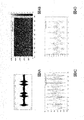
- the functional block diagram of a process acoustic signal extraction part 4A is a diagram showing a cut out input acoustic signal
- FIG. 4B is a diagram showing a frequency spectrum of the cut out input acoustic signal
- FIG. 4C is a diagram showing a time series of frequencies having a maximum amplitude spectrum
- FIG. 4D is a phase relationship.
- the figure which shows the time series of a number The figure which shows the example of the processing flow of a periodicity determination part.
- FIG. 9A is a diagram showing a time series of correlation coefficients obtained from a human voice (higher voice)
- FIG. 9B is a diagram showing a time series of correlation coefficients obtained from a barbarian cry.
- FIG. 10A is a diagram showing a time series of correlation coefficients corresponding to FIG. 6 when the buzzer volume is attenuated
- FIG. 10B is a correlation coefficient corresponding to FIG. 7 when the buzzer volume is attenuated.
- FIG. 10C is a diagram showing a time series
- FIG. 10C is a diagram showing a time series of correlation coefficients corresponding to FIG.
- FIG. 11A is a diagram showing a time series of correlation coefficients corresponding to FIG. 6 when a correlation coefficient is directly obtained from an input acoustic signal in the time domain when the volume of the buzzer is attenuated
- FIG. 11B is a volume of the buzzer
- FIG. 11C is a diagram showing a time series of correlation coefficients corresponding to FIG. 7 when a correlation coefficient is directly obtained from a time-domain input sound signal when the sound level is attenuated
- FIG. 11C is a case where the volume of the buzzer is attenuated
- FIG. 9 is a diagram illustrating a time series of correlation coefficients corresponding to FIG. 8 when a correlation coefficient is directly obtained from an input acoustic signal in the time domain.
- the detection device of the present embodiment can robustly detect a desired acoustic signal (also referred to as a detection target acoustic signal, for example, a general security buzzer sound) regardless of the type or volume.
- a desired acoustic signal is described as a buzzer sound, but the desired acoustic signal is not limited to a buzzer sound.
- the maximum amplitude spectral frequency for each frame of the input acoustic signal is obtained, a correlation coefficient is taken with respect to the temporal change of the maximum amplitude spectral frequency, and whether or not the input acoustic signal is a buzzer sound from the temporal change of the correlation coefficient. Determine whether.
- This embodiment has the following advantages. (1) By finding the time change of the maximum amplitude spectrum frequency, it is robust against the change of volume. Rather than an absolute evaluation like detection based on the magnitude of the sound pressure value, the relative similarity change of the time change of the frequency with the maximum amplitude spectrum is obtained, so that the volume changes and the security buzzer can be heard. Even if the direction changes, the presence or absence of periodicity itself can be detected robustly.
- the correlation coefficient is prevented from gradually decreasing over time, and the reference function is devised to ensure that the first peak is always a “strong peak”. I have to.
- the peak by determining whether it is a ⁇ strong peak '' or not by the relative value with the first strong peak, the periodicity calculation is robust regardless of the correlation coefficient of the entire waveform. It can be carried out. It also works robustly against buzzer sounds that are less likely to have periodic peaks.
- (4) Instead of detecting whether the sound is like a security buzzer, it is possible to detect whether the sound is based on the standard of the security buzzer, so it can be detected regardless of the type of the security buzzer.
- the security buzzer is standardized so that the frequency change frequency per second is 4.5 to 30 times (see Reference 1). (Reference 1) Excellent security buzzer standard, [online], [Search May 15, 2018], Internet ⁇ URL: http://www.bohan.or.jp/suishou/pdf/kikaku.pdf>
- FIG. 1 is a functional block diagram of the detection apparatus according to the first embodiment, and FIG. 2 shows a processing flow thereof.
- the detection apparatus 100 includes a processing acoustic signal extraction unit 101, a periodicity calculation unit 102, and a periodicity determination unit 103.
- the detection apparatus 100 receives an input acoustic signal, detects whether or not a buzzer sound is included in the input acoustic signal, and outputs a detection result.
- the input acoustic signal is a signal collected by a microphone (not shown).
- the output signal of the microphone may be input as it is, or information stored in some storage medium may be read out and input.
- the detection device of the present embodiment receives signals collected by a plurality of omnidirectional microphones arranged with a certain density via a communication line, etc., and the detection results for each microphone placement location are It is good also as a structure which alert
- the combination of the microphone and the detection result is displayed on the display, etc., and when a buzzer sound is detected, a warning is displayed on the display together with the detection result indicating the detection, or a warning sound is reproduced from the speakers. May be.
- the detection device is, for example, a special device configured by reading a special program into a known or dedicated computer having a central processing unit (CPU: Central Processing Unit), a main storage device (RAM: Random Access Memory), and the like. It is.
- the detection device executes each process under the control of the central processing unit.
- the data input to the detection device and the data obtained in each process are stored in, for example, the main storage device, and the data stored in the main storage device is read out to the central processing unit as necessary and other data is stored. Used for processing.
- At least a part of each processing unit of the detection device may be configured by hardware such as an integrated circuit.
- Each storage unit included in the detection device can be configured by a main storage device such as a RAM (Random Access Memory) or middleware such as a relational database or a key value store.
- a main storage device such as a RAM (Random Access Memory) or middleware such as a relational database or a key value store.
- middleware such as a relational database or a key value store.
- each storage unit does not necessarily have to be provided inside the detection device, and is configured by an auxiliary storage device configured by a semiconductor memory element such as a hard disk, an optical disk, or a flash memory (Flash Memory), and is external to the detection device. It is good also as a structure provided for.
- the processed sound signal extraction unit 101 receives an input sound signal, starts from a clock signal derived at a constant interval, cuts out an input sound signal in a certain section from the clock signal (S101), and uses the cut-out input sound signal as a periodicity calculation unit.
- the clock interval can be arbitrarily given, and the time period for cutting out the input acoustic signal from the clock time can also be arbitrarily decided. In short, it is only necessary to set a clock interval and a time zone to be cut out so that it can be determined whether or not the number of frequency changes within a predetermined time of the input acoustic signal is within a predetermined range.
- the time zone to be cut out is set to about 1 second at the maximum, and the security buzzer moves and the moving speed
- the clock interval may be set in consideration of the above.
- the processing acoustic signal extraction unit 101 includes a rectangular wave generation unit 101-1 and a multiplication unit 101-2 (see FIG. 3).
- the rectangular wave generator 101-1 receives a clock signal at a constant interval, generates a rectangular wave that is 1 for a fixed interval after receiving the clock signal and 0 during the other interval, and a multiplier 101-2. Output to.
- Multiplier 101-2 multiplies the rectangular wave by the input acoustic signal, and cuts out and outputs the input acoustic signal in the time zone in which the rectangular wave is 1.
- the periodicity calculation unit 102 receives the input acoustic signal extracted by the processing acoustic signal extraction unit 101 as an input, and correlates the time series of the frequency at which the amplitude spectrum of the frame of the input acoustic signal is maximum with respect to the input acoustic signal. Is used to calculate a correlation coefficient time series (S102) and output the result.
- the periodicity calculation unit 102 performs frequency analysis on a cut input sound signal (see FIG. 4A) in a very short frame unit (for example, 10 to 20 ms) (see FIG. 4B, FIG. 4B shows the result of frequency analysis). (Shows the frequency spectrum), and obtains its periodic characteristics and outputs them to the periodicity determination unit 103.
- the time series of the correlation coefficient described above corresponds to the periodic characteristics.
- the frequency analysis method is performed using a known technique such as a short-time Fourier transform. After performing the frequency analysis, the frequency that maximizes the amplitude spectrum is selected. By executing this for each frame, it is possible to represent the time change of the frequency having the maximum amplitude spectrum (the time series of the frequency having the maximum amplitude spectrum, see FIG. 4C). This is referred to as “maximum amplitude spectral frequency-time characteristic”.
- ⁇ The correlation coefficient in each frame is obtained by using a correlation function for this “maximum amplitude spectrum frequency-time characteristic”.
- a correlation function for this “maximum amplitude spectrum frequency-time characteristic”.
- the time variation characteristic of the correlation coefficient finally obtained (the time series of the correlation coefficient, see FIG. 4D) is output to the periodicity determination unit 103.
- the periodicity determination unit 103 receives a time series of correlation coefficients as input, detects a peak from the time series of correlation coefficients, sets the first detected peak as a reference peak, and multiplies a predetermined coefficient multiple of subsequent peaks and reference peaks. When the difference between the two is greater than or equal to the threshold and the period obtained from the two peaks (the difference between the reference peak and the predetermined coefficient multiple of the reference peak is equal to or greater than the threshold) is within a predetermined range It is determined that a buzzer sound has been detected (S103), and the detection result is output.
- the periodicity determination unit 103 determines the presence or absence of periodicity of the input acoustic signal from the time series of the correlation coefficient calculated by the periodicity calculation unit 102, and if the periodicity exists, the period length It is determined whether or not the buzzer sound is based on the length of the cycle.
- FIG. 5 shows an example of the processing flow of the periodicity determination unit 103.
- peak detection is performed on the time series of the correlation coefficient received from the periodicity calculation unit 102 (S103-1).
- S103-1 periodicity calculation unit 102
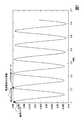
- FIG. 6 is a diagram showing a time series of correlation coefficients, in which black circles indicate strong peaks and white circles indicate weak peaks.
- the first peak is found (S103-2), and the correlation coefficient is used as a reference peak (S103-3), and the next strong peak can be searched efficiently.
- the intensity of the first peak is p 1
- the peak found after that is p k
- the peak adjustment coefficient is ⁇ , p k - ⁇ p 1 > 0... (2) (S103-4)
- the elapsed time (time interval) between the two peaks is calculated from the frame number of each peak (S103-5).
- the frequency change frequency n per second is the specified value of the sound of the security buzzer. 4.5 ⁇ n ⁇ 30... (3) Is satisfied (S103-6), it is determined that it is a buzzer sound (a buzzer sound is detected) (S103-7). Otherwise (S103-6), it is not a buzzer sound (a buzzer sound is detected). (S103-8).
- an acoustic signal whose frequency change frequency within a predetermined time is within a predetermined range can be detected.
- it can be applied to detection of sirens other than the security buzzer by changing the set values of the periodicity determination unit 103 using the peak (parameter ⁇ , frequency change frequency range, etc.).
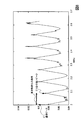
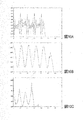
- FIGS. 7 and 8 show time series of correlation coefficients obtained from a buzzer sound different from the buzzer sound of FIG. It can be seen that the buzzer sound corresponding to FIGS. 7 and 8 can also be detected as a desired acoustic signal.
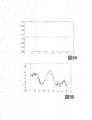
- FIG. 9A and FIG. 9B show time series of correlation coefficients obtained from human voice (high voice) and barbarian cry, respectively.
- the human voice does not have periodicity and the bear cry makes periodicity, but it is determined by the set value of the periodicity determination unit 103 that the sound is not a desired acoustic signal.
- the time series of the correlation coefficient by the cross correlation function is calculated for the time series of the frequency where the amplitude spectrum of the frame of the input acoustic signal is maximized. Therefore, when the security buzzer moves away, the volume of the buzzer sound is attenuated. Even in such a case, the buzzer sound can be detected robustly.
- FIGS. 10A, 10B, and 10C represent time series of correlation coefficients corresponding to FIGS. 6, 7, and 8 when the volume of the buzzer is attenuated, respectively. It can be seen from these figures that the buzzer sound can be detected robustly.
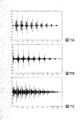
- 11A, 11B, and 11C show FIGS. 6, 7, and 8 when the correlation coefficient is directly obtained from the input acoustic signal in the time domain when the volume of the buzzer is attenuated, respectively. Represents a time series of correlation coefficients corresponding to. Since the value of the correlation coefficient decreases with the attenuation of the buzzer volume, the buzzer sound cannot be detected robustly.
- the input acoustic signal is calculated based on the coincidence rate between the feature quantity obtained from the acoustic signal of the security buzzer and the feature quantity obtained from the input acoustic signal in advance. It is determined whether or not is a buzzer sound.
- a security buzzer there are various types of sound signals such as a security buzzer, and it is not easy to cover them all. Further, when a new crime prevention buzzer sound appears, it is necessary to newly add the feature amount to the database.
- the detection target of the present embodiment is not limited to the security buzzer sound, and an acoustic signal in which the number of frequency changes within a predetermined time can be set as a detection target. .
- ⁇ Modification> it is determined whether or not it is a security buzzer based on the relative intensity of the frequency change over time, but other acoustic information can be used in combination to help detect the buzzer sound. is there.
- the program describing the processing contents can be recorded on a computer-readable recording medium.
- a computer-readable recording medium for example, any recording medium such as a magnetic recording device, an optical disk, a magneto-optical recording medium, and a semiconductor memory may be used.
- this program is distributed by selling, transferring, or lending a portable recording medium such as a DVD or CD-ROM in which the program is recorded. Further, the program may be distributed by storing the program in a storage device of the server computer and transferring the program from the server computer to another computer via a network.
- a computer that executes such a program first stores a program recorded on a portable recording medium or a program transferred from a server computer in its storage unit. When executing the process, this computer reads the program stored in its own storage unit and executes the process according to the read program.
- a computer may read a program directly from a portable recording medium and execute processing according to the program. Further, each time a program is transferred from the server computer to the computer, processing according to the received program may be executed sequentially.
- the program is not transferred from the server computer to the computer, and the above-described processing is executed by a so-called ASP (Application Service Provider) type service that realizes a processing function only by an execution instruction and result acquisition. It is good.
- the program includes information provided for processing by the electronic computer and equivalent to the program (data that is not a direct command to the computer but has a property that defines the processing of the computer).
- each device is configured by executing a predetermined program on a computer, at least a part of these processing contents may be realized by hardware.
Landscapes
- Engineering & Computer Science (AREA)
- Physics & Mathematics (AREA)
- Signal Processing (AREA)
- General Physics & Mathematics (AREA)
- Emergency Management (AREA)
- Computational Linguistics (AREA)
- Business, Economics & Management (AREA)
- Health & Medical Sciences (AREA)
- Audiology, Speech & Language Pathology (AREA)
- Human Computer Interaction (AREA)
- Acoustics & Sound (AREA)
- Multimedia (AREA)
- Alarm Systems (AREA)
- Emergency Alarm Devices (AREA)
Abstract
マイクと所望の音響信号を発する音響信号発生装置との位置関係の変化に対して頑健な検知装置を提供する。検知装置は、音響信号に対して、音響信号のフレームの振幅スペクトルが最大となる周波数の時系列について相関関数を用いて、相関係数の時系列を算出する周期性算出部と、相関係数の時系列からピーク検出し、最初に検出したピークを基準ピークとし、以降のピークと基準ピークの予め定めた係数倍の差分が閾値以上である場合に、基準ピークと、基準ピークの予め定めた係数倍の差分が閾値以上となるピークとから求めた周期が予め定めた範囲内である場合に所望の音響信号を検知したと判定する周期性判定部とを有する。
Description
本発明は、所望の音響信号を検知する検知装置、その方法、およびプログラムに関する。
主に子ども、女性、高齢者が危険にさらされた時の対処法として、防犯ブザーが広く用いられている。
現実の場面では、加害者は、人通りの少ない場所を選ぶことが多く、防犯ブザーが鳴っても周囲の人間が防犯ブザーの音(以下、単にブザー音ともいう)に気付けない場合がある。人通りの少ない場所に監視カメラを導入するという方法も考えられるが、子どもは主に下校時間帯、女性は主に夜間の犯罪遭遇率が高く、住宅地で犯罪に遭遇する割合が多いため(非特許文献1参照)、プライバシーを懸念する声もあり、未だ監視カメラが十分に導入されておらず、犯罪に気付けない場合がある(非特許文献2参照)。
また、監視カメラは、設置場所によって死角が発生するため、ある程度の密度を保って配置する必要があり、導入コストがかかる。
特許文献1には、報知音感知・識別装置等が記載されている。このような装置を用いて、ブザー音を検知し、検知した場所を警察官等の管理者に知らせ、派遣することで防犯に役立てることができる。このような装置を用いることで、一般的な無指向性マイクを用いたブザー音の検知が可能となり、監視カメラの設置に比べ、導入コストを安価に抑えられる。
「こんな時間、場所がねらわれる」、[online]、警視庁、[平成30年5月2日検索]、インターネット<URL:http://www.keishicho.metro.tokyo.jp/kurashi/higai/koramu2/koramu8.html>
「住宅街、防犯カメラなく 見守りに限界」、[online]、2015年2月6日、日本経済新聞社、[平成30年5月2日検索]、インターネット<URL:https://www.nikkei.com/article/DGKKZO82903450W5A200C1CC0000/>
被害者が防犯ブザーを持ったまま逃げるケースや加害者が防犯ブザーを持ち去るケースも考えられる。
しかしながら、従来技術では、マイクから防犯ブザーが遠ざかることで音量が減衰し、ブザー音の検知精度が低下する。また、マイクと防犯ブザーとの位置関係が変化することでブザー音の周波数特性が変化し、検知精度が低下する。
本発明は、マイクと所望の音響信号を発する音響信号発生装置(例えば上述の防犯ブザー)との位置関係の変化に対して頑健な検知装置、その方法、およびプログラムを提供することを目的とする。
上記の課題を解決するために、本発明の一態様によれば、検知装置は、音響信号に対して、音響信号のフレームの振幅スペクトルが最大となる周波数の時系列について相関関数を用いて、相関係数の時系列を算出する周期性算出部と、相関係数の時系列からピーク検出し、最初に検出したピークを基準ピークとし、以降のピークと基準ピークの予め定めた係数倍の差分が閾値以上である場合に、基準ピークと、基準ピークの予め定めた係数倍の差分が閾値以上となるピークとから求めた周期が予め定めた範囲内である場合に所望の音響信号を検知したと判定する周期性判定部とを有する。
本発明によれば、マイクと音響信号発生装置との位置関係の変化に対して頑健な検知を可能とするという効果を奏する。
以下、本発明の実施形態について、説明する。なお、以下の説明に用いる図面では、同じ機能を持つ構成部や同じ処理を行うステップには同一の符号を記し、重複説明を省略する。以下の説明において、ベクトルや行列の各要素単位で行われる処理は、特に断りが無い限り、そのベクトルやその行列の全ての要素に対して適用されるものとする。
<第一実施形態のポイント>
本実施形態の検知装置は、所望の音響信号(検知対象の音響信号とも言い、例えば、一般的な防犯ブザーの音)をその種類や音量に依らず頑健に検知することができる。以下の説明では、所望の音響信号をブザー音として説明するが、所望の音響信号はブザー音に限定されない。
本実施形態の検知装置は、所望の音響信号(検知対象の音響信号とも言い、例えば、一般的な防犯ブザーの音)をその種類や音量に依らず頑健に検知することができる。以下の説明では、所望の音響信号をブザー音として説明するが、所望の音響信号はブザー音に限定されない。
本実施形態は、入力音響信号の各フレームに対する最大振幅スペクトル周波数を求め、最大振幅スペクトル周波数の時間変化に対して相関係数をとり、相関係数の時間変化から入力音響信号がブザー音か否かを判定する。本実施形態は、以下の利点がある。
(1)最大振幅スペクトル周波数の時間変化を求めることで、音量の変化に対して頑健となる。音圧値の大小による検出のような絶対値的な評価ではなく、最大振幅スペクトルを持つ周波数の時間変化の相対的な類似度変化を求めることで、音量が変化する場合や、防犯ブザーの聞こえ方が変わる場合でも、周期性そのものの有無を頑健に検出できる。
(2)相関係数算出時に相互相関関数を使用することで、時間経過における相関係数の逓減を防ぐとともに、リファレンス関数の取り方を工夫し、最初のピークが必ず「強ピーク」となるようにしている。
(3)ピーク判定時に、最初の強ピークとの相対的な数値で「強ピーク」か否かを判定することにより、波形全体の相関係数の大小に左右されず、頑健に周期性算出を行うことができる。また、周期性のピークが出にくいブザー音に対しても、頑健に動作する。
(4)防犯ブザーらしい音色かどうか検知するのではなく、その音が防犯ブザーの規格に基づいているかどうかを検知するため、防犯ブザーの種類に依らず検出を行うことができ、また、音色が似ていながらも特性の違う音の誤検出を防ぐことができる。なお、防犯ブザーは、1秒間の周波数変化の回数が4.5~30回になるように規格化されている(参考文献1参照)。
(参考文献1)優良防犯ブザー規格、[online]、[平成30年5月15日検索]、インターネット<URL:http://www.bohan.or.jp/suishou/pdf/kikaku.pdf>
(1)最大振幅スペクトル周波数の時間変化を求めることで、音量の変化に対して頑健となる。音圧値の大小による検出のような絶対値的な評価ではなく、最大振幅スペクトルを持つ周波数の時間変化の相対的な類似度変化を求めることで、音量が変化する場合や、防犯ブザーの聞こえ方が変わる場合でも、周期性そのものの有無を頑健に検出できる。
(2)相関係数算出時に相互相関関数を使用することで、時間経過における相関係数の逓減を防ぐとともに、リファレンス関数の取り方を工夫し、最初のピークが必ず「強ピーク」となるようにしている。
(3)ピーク判定時に、最初の強ピークとの相対的な数値で「強ピーク」か否かを判定することにより、波形全体の相関係数の大小に左右されず、頑健に周期性算出を行うことができる。また、周期性のピークが出にくいブザー音に対しても、頑健に動作する。
(4)防犯ブザーらしい音色かどうか検知するのではなく、その音が防犯ブザーの規格に基づいているかどうかを検知するため、防犯ブザーの種類に依らず検出を行うことができ、また、音色が似ていながらも特性の違う音の誤検出を防ぐことができる。なお、防犯ブザーは、1秒間の周波数変化の回数が4.5~30回になるように規格化されている(参考文献1参照)。
(参考文献1)優良防犯ブザー規格、[online]、[平成30年5月15日検索]、インターネット<URL:http://www.bohan.or.jp/suishou/pdf/kikaku.pdf>
<第一実施形態>
図1は第一実施形態に係る検知装置の機能ブロック図を、図2はその処理フローを示す。
図1は第一実施形態に係る検知装置の機能ブロック図を、図2はその処理フローを示す。
検知装置100は、処理音響信号抽出部101と、周期性算出部102と、周期性判定部103とを含む。
検知装置100は、入力音響信号を入力とし、入力音響信号にブザー音が含まれるか否かを検知し、検知結果を出力する。なお、入力音響信号は、図示しないマイクにより収音された信号等である。この信号はマイクの出力信号をそのまま入力としてもよいし、何らかの記憶媒体に記憶された情報を読み出し、入力としてもよい。
例えば、ある程度の密度を保って配置された複数の無指向性マイクで収音した信号を通信回線等を介して本実施形態の検知装置が受信し、マイクの配置場所毎の検知結果を管理者に報知する構成としてもよいし、複数の無指向性マイクの配置場所毎に本実施形態の検知装置を設置し、検知結果を通信回線等を介して管理者に報知する構成としてもよい。管理者側では、ディスプレイ等にマイクと検知結果との組合せを表示し、ブザー音を検知したときには検知したことを示す検知結果とともにディスプレイ等に警告を表示したり、スピーカらから警告音を再生してもよい。
検知装置は、例えば、中央演算処理装置(CPU: Central Processing Unit)、主記憶装置(RAM: Random Access Memory)などを有する公知又は専用のコンピュータに特別なプログラムが読み込まれて構成された特別な装置である。検知装置は、例えば、中央演算処理装置の制御のもとで各処理を実行する。検知装置に入力されたデータや各処理で得られたデータは、例えば、主記憶装置に格納され、主記憶装置に格納されたデータは必要に応じて中央演算処理装置へ読み出されて他の処理に利用される。検知装置の各処理部は、少なくとも一部が集積回路等のハードウェアによって構成されていてもよい。検知装置が備える各記憶部は、例えば、RAM(Random Access Memory)などの主記憶装置、またはリレーショナルデータベースやキーバリューストアなどのミドルウェアにより構成することができる。ただし、各記憶部は、必ずしも検知装置がその内部に備える必要はなく、ハードディスクや光ディスクもしくはフラッシュメモリ(Flash Memory)のような半導体メモリ素子により構成される補助記憶装置により構成し、検知装置の外部に備える構成としてもよい。
以下、各部について説明する。
<処理音響信号抽出部101>
処理音響信号抽出部101は、入力音響信号を入力とし、一定間隔で派生するクロック信号を起点とし、そこから一定区間の入力音響信号を切り出し(S101)、切り出した入力音響信号を周期性算出部102に出力する。クロックの間隔は任意で与えることができ、クロック時刻から入力音響信号を切り出す時間帯も任意で決めることができる。要は、入力音響信号の所定の時間内の周波数の変化の回数が所定の範囲内か否かを判定することができるように、クロック間隔や切り出す時間帯を設定すればよい。防犯ブザーの場合、1秒間の周波数変化の回数が4.5~30回になるように規格化されているため、切り出す時間帯を長くとも1秒程度に設定し、防犯ブザーが移動することや移動速度を考慮してクロック間隔を設定すればよい。
<処理音響信号抽出部101>
処理音響信号抽出部101は、入力音響信号を入力とし、一定間隔で派生するクロック信号を起点とし、そこから一定区間の入力音響信号を切り出し(S101)、切り出した入力音響信号を周期性算出部102に出力する。クロックの間隔は任意で与えることができ、クロック時刻から入力音響信号を切り出す時間帯も任意で決めることができる。要は、入力音響信号の所定の時間内の周波数の変化の回数が所定の範囲内か否かを判定することができるように、クロック間隔や切り出す時間帯を設定すればよい。防犯ブザーの場合、1秒間の周波数変化の回数が4.5~30回になるように規格化されているため、切り出す時間帯を長くとも1秒程度に設定し、防犯ブザーが移動することや移動速度を考慮してクロック間隔を設定すればよい。
例えば、処理音響信号抽出部101は、矩形波生成部101-1と乗算部101-2とを含む(図3参照)。矩形波生成部101-1は、一定間隔でクロック信号を受け取り、クロック信号を受け取ってから一定区間の間1であり、他の区間の間0である矩形波を生成し、乗算部101-2に出力する。
乗算部101-2は矩形波と入力音響信号とを乗算し、矩形波が1である時間帯の入力音響信号を切り出し、出力する。
<周期性算出部102>
周期性算出部102は、処理音響信号抽出部101で切り出された入力音響信号を入力とし、入力音響信号に対して、入力音響信号のフレームの振幅スペクトルが最大となる周波数の時系列について相関関数を用いて、相関係数の時系列を算出し(S102)、出力する。
周期性算出部102は、処理音響信号抽出部101で切り出された入力音響信号を入力とし、入力音響信号に対して、入力音響信号のフレームの振幅スペクトルが最大となる周波数の時系列について相関関数を用いて、相関係数の時系列を算出し(S102)、出力する。
例えば、周期性算出部102は、切り出された入力音響信号(図4A参照)に対してごく短いフレーム単位(例えば10~20ms)で周波数分析を行い(図4B参照、図4Bは周波数分析の結果(周波数スペクトル)を示す)、その周期特性を求め、周期性判定部103に出力する。前述の相関係数の時系列が、周期特性に相当する。周波数分析法は、短時間フーリエ変換などの公知の技術を用いて行う。周波数分析を行った後、振幅スペクトルが最大となる周波数を選択する。これを各フレームに対して実行することで、最大振幅スペクトルを持つ周波数の時間変化(最大振幅スペクトルを持つ周波数の時系列、図4C参照)を表現することができる。これを「最大振幅スペクトル周波数-時間特性」と呼称する。
この「最大振幅スペクトル周波数-時間特性」に対し、相関関数を用いることで、各フレームにおける相関係数を求めていく。相関関数として、自己相関関数を用いる場合、時間の経過によって相関係数が逓減していくため、相互相関関数を用いることが望ましい。相互相関関数を用いる際のリファレンスとして、「最大振幅スペクトル周波数-時間特性」の観測開始時刻(クロック信号の立ち上がり時刻)からの一定区間を使用する。例えば、音響信号のフレームの振幅スペクトルが最大となる周波数の時系列の最初のフレーム(t=1)から所定のフレーム数(少なくともブザー音の周期性を確認するために必要なフレーム数)分と、音響信号のフレームの振幅スペクトルが最大となる周波数の時系列の各フレーム(t=1,2,…)から所定のフレーム数分との相互相関関数を用いて、各フレームの相関係数を求める。これにより、常に最初の1フレーム目の相関係数が最大となる。これは、周期性判定部103の処理において有益な特性となる。
最終的に得られた相関係数の時間変化特性(相関係数の時系列、図4D参照)を、周期性判定部103に出力する。
<周期性判定部103>
周期性判定部103は、相関係数の時系列を入力とし、相関係数の時系列からピーク検出し、最初に検出したピークを基準ピークとし、以降のピークと基準ピークの予め定めた係数倍の差分が閾値以上である場合に、2つのピーク(基準ピークと、基準ピークの予め定めた係数倍との差分が閾値以上となるピーク)から求めた周期が予め定めた範囲内である場合にブザー音を検知したと判定し(S103)、検知結果を出力する。
周期性判定部103は、相関係数の時系列を入力とし、相関係数の時系列からピーク検出し、最初に検出したピークを基準ピークとし、以降のピークと基準ピークの予め定めた係数倍の差分が閾値以上である場合に、2つのピーク(基準ピークと、基準ピークの予め定めた係数倍との差分が閾値以上となるピーク)から求めた周期が予め定めた範囲内である場合にブザー音を検知したと判定し(S103)、検知結果を出力する。
言い換えると、周期性判定部103は、周期性算出部102で算出された相関係数の時系列から、入力音響信号の周期性の有無を判定し、周期性が存在する場合、その周期の長さを求め、周期の長さに基づきブザー音であるか否かを判定する。
図5は、周期性判定部103の処理フローの例を示す。例えば、まず、周期性算出部102から受け取った相関係数の時系列に対し、ピーク検出を行う(S103-1)。ピークを検出する手法としては様々な手法が存在するが、例えば、相関係数の時系列c(x)(x=1,2,…,t-1,t,t+1,…)に対し、時刻t-1、t、t+1の3フレームについて、
(c(t)-c(t-1)>0)^(c(t)-c(t+1)>0) … (1)
が成り立つ場合、c(t)をピークとして検出する手法が最も簡単である。
(c(t)-c(t-1)>0)^(c(t)-c(t+1)>0) … (1)
が成り立つ場合、c(t)をピークとして検出する手法が最も簡単である。
しかし、ピーク検出のみでは、ピークの強弱に関わらず、様々なピークが検出されてしまう。そのため、本来求めたい強いピークのみを見つけ、それ以外の弱いピークは除く必要がある。これを効率的に行うため、基準ピークとの相対強度を利用し、次に出現する強いピークを求める。図6は、相関係数の時系列を示す図であり、図中の黒丸は強いピークを示し、白丸は弱いピークを示す。
周期性算出部102にて、相互相関関数を用いる際のリファレンスとして、観測開始時刻から一定区間を用いているため、相関係数の時系列において、「最初に現れるピーク =強いピーク」が成り立つ。そして、ほとんどの場合、それは1フレーム目の相関係数c(1)である(図6参照)。そこで、周期性算出部102は、音響信号のフレームの振幅スペクトルが最大となる周波数の時系列の最初のフレームから所定のフレーム数分と、音響信号のフレームの振幅スペクトルが最大となる周波数の時系列の最初のフレームから所定のフレーム数分との相互相関関数を用いて相関係数を求め、周期性判定部103ではこの相関係数を基準ピークとする。
最初のピークを見つけ(S103-2)、その相関係数を基準ピークとし(S103-3)、次の強いピークを効率的に探索することができる。
具体的には、最初のピーク(基準ピーク)の強さをp1、以降に見つかったピークをpk、ピーク調整係数をαとした時、
pk-αp1>0 … (2)
が成り立つ場合(S103-4)、k番目のピークpkを強いピークであると判定する。ピーク調整係数αは、パラメータとして設定するが、基本的には、1未満で、かつ1に非常に近い値を選択する。例えば、α=0.9とする。なぜならば、ほとんどの場合において、相互相関関数のリファレンスの求め方より、最初のフレームにおいて最も強い相関係数を持つため、次の強ピークはそれ未満の、ただしほぼ近い相関係数を持つからである。
pk-αp1>0 … (2)
が成り立つ場合(S103-4)、k番目のピークpkを強いピークであると判定する。ピーク調整係数αは、パラメータとして設定するが、基本的には、1未満で、かつ1に非常に近い値を選択する。例えば、α=0.9とする。なぜならば、ほとんどの場合において、相互相関関数のリファレンスの求め方より、最初のフレームにおいて最も強い相関係数を持つため、次の強ピークはそれ未満の、ただしほぼ近い相関係数を持つからである。
2つのピークを検出したら、それぞれのピークのフレーム番号から、2ピーク間の経過時刻(時間間隔)を算出する(S103-5)。相関係数が再び強くなる場所とは、すなわち周波数の変化のパターンが1周したことを示すため、2ピーク間の時間差 = 周期となる(図6参照)。ここから、1秒間の周波数変化の回数(1/(周期))を求めることができる。
最後に、1秒間の周波数変化の回数nが、防犯ブザーの音の規定値
4.5<n<30 … (3)
を満たしている場合(S103-6)、ブザー音である(ブザー音を検知した)と判定し(S103-7)、そうでない場合は(S103-6)、ブザー音ではない(ブザー音を検知しない)と判定する(S103-8)。
4.5<n<30 … (3)
を満たしている場合(S103-6)、ブザー音である(ブザー音を検知した)と判定し(S103-7)、そうでない場合は(S103-6)、ブザー音ではない(ブザー音を検知しない)と判定する(S103-8)。
なお、本実施形態では、所定の時間内の周波数の変化の回数が所定の範囲内の音響信号を検知対象とすることができる。例えば、ピークを用いた周期性判定部103の設定値(パラメータαや周波数変化の回数の範囲等)を変更することで、防犯ブザー以外のサイレンなどの検知にも適用することが可能となる。
図7、図8は、図6のブザー音とは異なるブザー音から得た相関係数の時系列を表す。図7、図8に対応するブザー音の場合にも、所望の音響信号として検知できることが分かる。
図9A、図9Bは、それぞれヒトの声(高めの声)、クマゼミの鳴き声から得た相関係数の時系列を表す。本実施形態では、ヒトの声には周期性が見られず、クマゼミの鳴き声には周期性が見られるが、周期性判定部103の設定値によって、所望の音響信号ではないと判定される。
<効果>
以上の構成により、一般的な無指向性マイクを用いた防犯ブザー検知が可能となり、導入コストを安価に抑えられる。
以上の構成により、一般的な無指向性マイクを用いた防犯ブザー検知が可能となり、導入コストを安価に抑えられる。
また、本実施形態では、入力音響信号のフレームの振幅スペクトルが最大となる周波数の時系列について相互相関関数による相関係数の時系列を算出している。そのため、防犯ブザーが遠ざかる場合はブザー音の音量が減衰していくが、このような場合でも頑健にブザー音を検出できる。図10A,図10B,図10Cは、それぞれブザーの音量が減衰していく場合の図6,図7,図8に対応する相関係数の時系列を表す。これらの図からも頑健にブザー音を検出できることが分かる。なお、時刻が2.3~2.5以降では、入力音響信号の値が小さくなりすぎ、周波数分析が適切に行えないため、ブザー音を検出ができなくなっている。なお、図11A,図11B,図11Cは、それぞれブザーの音量が減衰していく場合に、時間領域の入力音響信号から直接相関係数を求めた場合の、それぞれ図6,図7,図8に対応する相関係数の時系列を表す。ブザーの音量の減衰に応じて相関係数の値も小さくなるため、頑健にブザー音を検出することはできない。防犯ブザーが遠ざかる場合に限らず、防犯ブザーとマイクとの位置関係の変化すると、周波数特性も変化するため、従来技術では頑健にブザー音を検出することは難しいが、本実施形態では、最大振幅スペクトルを持つ周波数の時間変化の相対的な類似度変化を求めることで、防犯ブザーの聞こえ方が変わる(周波数特性も変化する)場合でも、周期性そのものの有無を頑健に検出できる。
また、特許文献1などの既存技術を防犯ブザーの検知に適用しようとすると、予め防犯ブザー等の音響信号から得た特徴量と入力音響信号から得た特徴量との一致率から、入力音響信号がブザー音か否かを判定することになる。しかしながら、防犯ブザーの等の音響信号には様々な種類があり、それらを全て網羅することは容易ではない。また、新たな防犯ブザー音が現れたときに、その特徴量を新たにデータベースに加える必要がある。一方、本実施形態の検知装置の場合、防犯ブザーの規格(1秒間の周波数変化の回数が4.5~30回)に基づき、防犯ブザー音を検知するため、様々な種類の防犯ブザー音を網羅する必要がなく、また、新たな防犯ブザー音が現れたときであっても、その防犯ブザーが規格に適合するものであれば検知することができる。なお、前述の通り、本実施形態の検知対象は、防犯ブザー音に限られるものではなく、所定の時間内の周波数の変化の回数が所定の範囲内の音響信号を検知対象とすることができる。また、一方で、特性が似ていつつも所定の時間内の周波数の変化の回数が所定の範囲内にない類似音の誤検出を防ぐことができる。
<変形例>
本実施形態は、周波数の時間変化の相対強度に基づき、防犯ブザーか否かを判定するものであるが、ブザー音の検知の助けのために、他の音響情報を組み合わせて用いることも可能である。
本実施形態は、周波数の時間変化の相対強度に基づき、防犯ブザーか否かを判定するものであるが、ブザー音の検知の助けのために、他の音響情報を組み合わせて用いることも可能である。
<その他の変形例>
本発明は上記の実施形態及び変形例に限定されるものではない。例えば、上述の各種の処理は、記載に従って時系列に実行されるのみならず、処理を実行する装置の処理能力あるいは必要に応じて並列的にあるいは個別に実行されてもよい。その他、本発明の趣旨を逸脱しない範囲で適宜変更が可能である。
本発明は上記の実施形態及び変形例に限定されるものではない。例えば、上述の各種の処理は、記載に従って時系列に実行されるのみならず、処理を実行する装置の処理能力あるいは必要に応じて並列的にあるいは個別に実行されてもよい。その他、本発明の趣旨を逸脱しない範囲で適宜変更が可能である。
<プログラム及び記録媒体>
また、上記の実施形態及び変形例で説明した各装置における各種の処理機能をコンピュータによって実現してもよい。その場合、各装置が有すべき機能の処理内容はプログラムによって記述される。そして、このプログラムをコンピュータで実行することにより、上記各装置における各種の処理機能がコンピュータ上で実現される。
また、上記の実施形態及び変形例で説明した各装置における各種の処理機能をコンピュータによって実現してもよい。その場合、各装置が有すべき機能の処理内容はプログラムによって記述される。そして、このプログラムをコンピュータで実行することにより、上記各装置における各種の処理機能がコンピュータ上で実現される。
この処理内容を記述したプログラムは、コンピュータで読み取り可能な記録媒体に記録しておくことができる。コンピュータで読み取り可能な記録媒体としては、例えば、磁気記録装置、光ディスク、光磁気記録媒体、半導体メモリ等どのようなものでもよい。
また、このプログラムの流通は、例えば、そのプログラムを記録したDVD、CD-ROM等の可搬型記録媒体を販売、譲渡、貸与等することによって行う。さらに、このプログラムをサーバコンピュータの記憶装置に格納しておき、ネットワークを介して、サーバコンピュータから他のコンピュータにそのプログラムを転送することにより、このプログラムを流通させてもよい。
このようなプログラムを実行するコンピュータは、例えば、まず、可搬型記録媒体に記録されたプログラムもしくはサーバコンピュータから転送されたプログラムを、一旦、自己の記憶部に格納する。そして、処理の実行時、このコンピュータは、自己の記憶部に格納されたプログラムを読み取り、読み取ったプログラムに従った処理を実行する。また、このプログラムの別の実施形態として、コンピュータが可搬型記録媒体から直接プログラムを読み取り、そのプログラムに従った処理を実行することとしてもよい。さらに、このコンピュータにサーバコンピュータからプログラムが転送されるたびに、逐次、受け取ったプログラムに従った処理を実行することとしてもよい。また、サーバコンピュータから、このコンピュータへのプログラムの転送は行わず、その実行指示と結果取得のみによって処理機能を実現する、いわゆるASP(Application Service Provider)型のサービスによって、上述の処理を実行する構成としてもよい。なお、プログラムには、電子計算機による処理の用に供する情報であってプログラムに準ずるもの(コンピュータに対する直接の指令ではないがコンピュータの処理を規定する性質を有するデータ等)を含むものとする。
また、コンピュータ上で所定のプログラムを実行させることにより、各装置を構成することとしたが、これらの処理内容の少なくとも一部をハードウェア的に実現することとしてもよい。
Claims (7)
- 音響信号に対して、前記音響信号のフレームの振幅スペクトルが最大となる周波数の時系列について相関関数を用いて、相関係数の時系列を算出する周期性算出部と、
前記相関係数の時系列からピーク検出し、最初に検出したピークを基準ピークとし、以降のピークと前記基準ピークの予め定めた係数倍の差分が閾値以上である場合に、前記基準ピークと、前記基準ピークの予め定めた係数倍の差分が閾値以上となるピークとから求めた周期が予め定めた範囲内である場合に所望の音響信号を検知したと判定する周期性判定部とを有する、
検知装置。 - 請求項1の検知装置であって、
前記相関関数は、前記音響信号のフレームの振幅スペクトルが最大となる周波数の時系列の最初のフレームから所定のフレーム数分と、前記音響信号のフレームの振幅スペクトルが最大となる周波数の時系列の各フレームから所定のフレーム数分との相互相関関数である、
検知装置。 - 請求項2の検知装置であって、
前記周期性判定部は、前記音響信号のフレームの振幅スペクトルが最大となる周波数の時系列の最初のフレームから所定のフレーム数分と、前記音響信号のフレームの振幅スペクトルが最大となる周波数の時系列の最初のフレームから所定のフレーム数分との相互相関関数を用いて求めた相関係数を基準ピークとする、
検知装置。 - 周期性算出部が、音響信号に対して、前記音響信号のフレームの振幅スペクトルが最大となる周波数の時系列について相関関数を用いて、相関係数の時系列を算出する周期性算出ステップと、
周期性判定部が、前記相関係数の時系列からピーク検出し、最初に検出したピークを基準ピークとし、以降のピークと前記基準ピークの予め定めた係数倍の差分が閾値以上である場合に、前記基準ピークと、前記基準ピークの予め定めた係数倍の差分が閾値以上となるピークとから求めた周期が予め定めた範囲内である場合に所望の音響信号を検知したと判定する周期性判定ステップとを有する、
検知方法。 - 請求項4の検知方法であって、
前記相関関数は、前記音響信号のフレームの振幅スペクトルが最大となる周波数の時系列の最初のフレームから所定のフレーム数分と、前記音響信号のフレームの振幅スペクトルが最大となる周波数の時系列の各フレームから所定のフレーム数分との相互相関関数である、
検知方法。 - 請求項5の検知方法であって、
前記周期性判定ステップは、前記音響信号のフレームの振幅スペクトルが最大となる周波数の時系列の最初のフレームから所定のフレーム数分と、前記音響信号のフレームの振幅スペクトルが最大となる周波数の時系列の最初のフレームから所定のフレーム数分との相互相関関数を用いて求めた相関係数を基準ピークとする、
検知方法。 - 請求項1から請求項3の何れかの検知装置としてコンピュータを機能させるためのプログラム。
Applications Claiming Priority (2)
| Application Number | Priority Date | Filing Date | Title |
|---|---|---|---|
| JP2018-096324 | 2018-05-18 | ||
| JP2018096324A JP2019200387A (ja) | 2018-05-18 | 2018-05-18 | 検知装置、その方法、およびプログラム |
Publications (1)
| Publication Number | Publication Date |
|---|---|
| WO2019220883A1 true WO2019220883A1 (ja) | 2019-11-21 |
Family
ID=68540218
Family Applications (1)
| Application Number | Title | Priority Date | Filing Date |
|---|---|---|---|
| PCT/JP2019/017161 Ceased WO2019220883A1 (ja) | 2018-05-18 | 2019-04-23 | 検知装置、その方法、およびプログラム |
Country Status (2)
| Country | Link |
|---|---|
| JP (1) | JP2019200387A (ja) |
| WO (1) | WO2019220883A1 (ja) |
Cited By (1)
| Publication number | Priority date | Publication date | Assignee | Title |
|---|---|---|---|---|
| CN113807268A (zh) * | 2021-09-22 | 2021-12-17 | 北京夸克创智科技有限公司 | 圆柱型物体振动检测方法、装置及计算机存储介质 |
Citations (2)
| Publication number | Priority date | Publication date | Assignee | Title |
|---|---|---|---|---|
| WO2007080764A1 (ja) * | 2006-01-12 | 2007-07-19 | Matsushita Electric Industrial Co., Ltd. | 対象音分析装置、対象音分析方法および対象音分析プログラム |
| WO2017027397A2 (en) * | 2015-08-07 | 2017-02-16 | Cirrus Logic International Semiconductor, Ltd. | Event detection for playback management in an audio device |
-
2018
- 2018-05-18 JP JP2018096324A patent/JP2019200387A/ja active Pending
-
2019
- 2019-04-23 WO PCT/JP2019/017161 patent/WO2019220883A1/ja not_active Ceased
Patent Citations (2)
| Publication number | Priority date | Publication date | Assignee | Title |
|---|---|---|---|---|
| WO2007080764A1 (ja) * | 2006-01-12 | 2007-07-19 | Matsushita Electric Industrial Co., Ltd. | 対象音分析装置、対象音分析方法および対象音分析プログラム |
| WO2017027397A2 (en) * | 2015-08-07 | 2017-02-16 | Cirrus Logic International Semiconductor, Ltd. | Event detection for playback management in an audio device |
Cited By (2)
| Publication number | Priority date | Publication date | Assignee | Title |
|---|---|---|---|---|
| CN113807268A (zh) * | 2021-09-22 | 2021-12-17 | 北京夸克创智科技有限公司 | 圆柱型物体振动检测方法、装置及计算机存储介质 |
| CN113807268B (zh) * | 2021-09-22 | 2023-09-29 | 李冰 | 圆柱型物体振动检测方法、装置及计算机存储介质 |
Also Published As
| Publication number | Publication date |
|---|---|
| JP2019200387A (ja) | 2019-11-21 |
Similar Documents
| Publication | Publication Date | Title |
|---|---|---|
| US11183198B2 (en) | Multi-mode audio recognition and auxiliary data encoding and decoding | |
| Lopatka et al. | Detection, classification and localization of acoustic events in the presence of background noise for acoustic surveillance of hazardous situations | |
| EP3203380B1 (en) | Multi-mode auxiliary data encoding in audio | |
| Carmel et al. | Detection of alarm sounds in noisy environments | |
| US20160171965A1 (en) | Vibration source estimation device, vibration source estimation method, and vibration source estimation program | |
| Lopez-Ballester et al. | Enabling real-time computation of psycho-acoustic parameters in acoustic sensors using convolutional neural networks | |
| Sundaram et al. | Audio scene segmentation using multiple features, models and time scales | |
| EP3262621B1 (en) | Alarm event determinations via microphone arrays | |
| Kim et al. | Robust audio fingerprinting using peak-pair-based hash of non-repeating foreground audio in a real environment | |
| CN119296548A (zh) | 一种面向国家重点保护鸟类监测的鸟声事件检测方法及系统 | |
| JP2016095434A (ja) | 報知音感知・識別装置、報知音感知・識別方法、報知音感知・識別プログラム | |
| KR101681188B1 (ko) | 바람 소음 제거를 통한 음원 위치 추적 장치 및 그 방법 | |
| WO2019220883A1 (ja) | 検知装置、その方法、およびプログラム | |
| Karantaidis et al. | Efficient Capon-based approach exploiting temporal windowing for electric network frequency estimation | |
| Ykhlef et al. | Real-Time Detection of Impulsive Sounds for Audio Surveillance Systems. | |
| KR20210043448A (ko) | 동작감지장치 및 동작감지방법 | |
| Łopatka et al. | Evaluation of sound event detection, classification and localization in the presence of background noise for acoustic surveillance of hazardous situations | |
| Tan et al. | Characterization of Internet of Things (IoT) powered-acoustics sensor for indoor surveillance sound classification | |
| Vozáriková et al. | Surveillance system based on the acoustic events detection | |
| JP2018109739A (ja) | 音声フレーム処理用の装置及び方法 | |
| Smaragdis et al. | Context extraction through audio signal analysis | |
| Cheong et al. | Active acoustic scene monitoring through spectro-temporal modulation filtering for intruder detection | |
| Wang et al. | Rainfall intensity estimation from urban surveillance audio with noise | |
| Guo et al. | Acoustic source localization of everyday sounds using wireless sensor networks | |
| TWI609193B (zh) | 基於調頻聲波的空間擾動偵測方法與裝置 |
Legal Events
| Date | Code | Title | Description |
|---|---|---|---|
| 121 | Ep: the epo has been informed by wipo that ep was designated in this application |
Ref document number: 19803527 Country of ref document: EP Kind code of ref document: A1 |
|
| NENP | Non-entry into the national phase |
Ref country code: DE |
|
| 122 | Ep: pct application non-entry in european phase |
Ref document number: 19803527 Country of ref document: EP Kind code of ref document: A1 |