WO2019220577A1 - トーションビーム用アズロール電縫鋼管 - Google Patents
トーションビーム用アズロール電縫鋼管 Download PDFInfo
- Publication number
- WO2019220577A1 WO2019220577A1 PCT/JP2018/018985 JP2018018985W WO2019220577A1 WO 2019220577 A1 WO2019220577 A1 WO 2019220577A1 JP 2018018985 W JP2018018985 W JP 2018018985W WO 2019220577 A1 WO2019220577 A1 WO 2019220577A1
- Authority
- WO
- WIPO (PCT)
- Prior art keywords
- less
- steel pipe
- content
- bainite
- electric resistance
- Prior art date
- Legal status (The legal status is an assumption and is not a legal conclusion. Google has not performed a legal analysis and makes no representation as to the accuracy of the status listed.)
- Ceased
Links
Images

Classifications
-
- C—CHEMISTRY; METALLURGY
- C22—METALLURGY; FERROUS OR NON-FERROUS ALLOYS; TREATMENT OF ALLOYS OR NON-FERROUS METALS
- C22C—ALLOYS
- C22C38/00—Ferrous alloys, e.g. steel alloys
-
- C—CHEMISTRY; METALLURGY
- C22—METALLURGY; FERROUS OR NON-FERROUS ALLOYS; TREATMENT OF ALLOYS OR NON-FERROUS METALS
- C22C—ALLOYS
- C22C38/00—Ferrous alloys, e.g. steel alloys
- C22C38/14—Ferrous alloys, e.g. steel alloys containing titanium or zirconium
-
- C—CHEMISTRY; METALLURGY
- C22—METALLURGY; FERROUS OR NON-FERROUS ALLOYS; TREATMENT OF ALLOYS OR NON-FERROUS METALS
- C22C—ALLOYS
- C22C38/00—Ferrous alloys, e.g. steel alloys
- C22C38/18—Ferrous alloys, e.g. steel alloys containing chromium
- C22C38/40—Ferrous alloys, e.g. steel alloys containing chromium with nickel
- C22C38/54—Ferrous alloys, e.g. steel alloys containing chromium with nickel with boron
-
- C—CHEMISTRY; METALLURGY
- C22—METALLURGY; FERROUS OR NON-FERROUS ALLOYS; TREATMENT OF ALLOYS OR NON-FERROUS METALS
- C22C—ALLOYS
- C22C38/00—Ferrous alloys, e.g. steel alloys
- C22C38/18—Ferrous alloys, e.g. steel alloys containing chromium
- C22C38/40—Ferrous alloys, e.g. steel alloys containing chromium with nickel
- C22C38/58—Ferrous alloys, e.g. steel alloys containing chromium with nickel with more than 1.5% by weight of manganese
-
- C—CHEMISTRY; METALLURGY
- C21—METALLURGY OF IRON
- C21D—MODIFYING THE PHYSICAL STRUCTURE OF FERROUS METALS; GENERAL DEVICES FOR HEAT TREATMENT OF FERROUS OR NON-FERROUS METALS OR ALLOYS; MAKING METAL MALLEABLE, e.g. BY DECARBURISATION OR TEMPERING
- C21D8/00—Modifying the physical properties of ferrous metals or ferrous alloys by deformation combined with, or followed by, heat treatment
- C21D8/02—Modifying the physical properties of ferrous metals or ferrous alloys by deformation combined with, or followed by, heat treatment during manufacturing of plates or strips
-
- C—CHEMISTRY; METALLURGY
- C21—METALLURGY OF IRON
- C21D—MODIFYING THE PHYSICAL STRUCTURE OF FERROUS METALS; GENERAL DEVICES FOR HEAT TREATMENT OF FERROUS OR NON-FERROUS METALS OR ALLOYS; MAKING METAL MALLEABLE, e.g. BY DECARBURISATION OR TEMPERING
- C21D9/00—Heat treatment, e.g. annealing, hardening, quenching or tempering, adapted for particular articles; Furnaces therefor
- C21D9/46—Heat treatment, e.g. annealing, hardening, quenching or tempering, adapted for particular articles; Furnaces therefor for sheet metals
Definitions
- This disclosure relates to an as-roll ERW steel pipe for torsion beams.
- Patent Document 1 discloses a hot-rolled steel sheet for a mechanical structure steel pipe that is excellent in fatigue characteristics and bend formability and is used for a mechanical structure steel pipe such as an automobile undercarriage part steel pipe.
- Patent Document 2 discloses a steel material for automobile undercarriage parts that has high fatigue properties despite excellent molding processability and excellent fatigue properties that do not require much cost for heat treatment.
- Patent Document 3 discloses a high strength suitable for automobile structural members such as torsion beams, axle beams, trailing arms, and suspension arms that are required to have high strength, excellent workability, and excellent torsional fatigue resistance. Tensile steel is disclosed.
- Patent Document 1 International Publication No. 2009/133965
- Patent Document 2 International Publication No. 2008/018624
- Patent Document 3 Japanese Patent Laid-Open No. 2011-38155
- a torsion beam which is one of automobile undercarriage parts is required to have high strength (particularly, tensile strength in the tube axis direction).
- the torsion beam may be manufactured by bending an as-roll electric-welded steel pipe (hereinafter also referred to as “azurole-electric-welded steel pipe for torsion beam”).
- azurole-electric-welded steel pipe for torsion beam cracks (hereinafter also referred to as “inner surface cracks”) may occur on the inner surface of the portion where the as-rolled electric resistance welded steel pipe is bent. From the viewpoint of the bend formability of the as-rolled electric resistance welded steel pipe, it may be required to improve the inner surface crack resistance of the as-rolled electric resistance welded steel pipe.
- the inner surface crack resistance means a property capable of suppressing inner surface cracking when bending forming is performed on an as-roll electric resistance welded steel pipe.
- Patent Documents 1 to 3 no examination has been made from the viewpoint of improving the internal crack resistance of the steel pipe, and there remains room for improvement.
- An object of the present disclosure is to provide an as-rolled electric-welded steel pipe for a torsion beam which is excellent in tensile strength in the pipe axis direction and excellent in internal crack resistance.
- Means for solving the above problems include the following aspects. ⁇ 1> Including the base metal part and the ERW welded part,
- the chemical composition of the base material part is mass%, C: 0.02 to 0.15%, Si: 0.03-1.20%, Mn: 0.30 to 2.50%, P: 0 to 0.030%, S: 0 to 0.010%, Ti: 0.010 to 0.200%, Al: 0.005 to 0.500%, Nb: 0.01 to 0.04%, N: 0.0005 to 0.006%, B: 0.0005 to 0.0050%, Cu: 0 to 1.00%, Ni: 0 to 1.00%, Cr: 0 to 1.00%, Mo: 0 to 0.50%, V: 0 to 0.20%, W: 0 to 0.10%, Ca: 0 to 0.0200%, Mg: 0 to 0.0200%, Zr: 0 to 0.0200%, REM: 0 to 0.0200%, and Balance: Fe and impurities, V c90 defined by the following
- the chemical composition of the base material part is mass%, Cu: more than 0% and 1.00% or less, Ni: more than 0% and 1.00% or less, Cr: more than 0% and 1.00% or less, Mo: more than 0% and 0.50% or less, V: more than 0% and 0.20% or less, W: more than 0% and 0.10% or less, Ca: more than 0% and 0.0200% or less, Mg: more than 0% and 0.0200% or less, Zr: more than 0% and 0.0200% or less, and REM: the as-rolled steel pipe for torsion beam according to ⁇ 1>, containing one or more selected from the group consisting of more than 0% and 0.0200% or less.
- an as-roll electric-welded steel pipe for a torsion beam having excellent tensile strength in the pipe axis direction and excellent resistance to internal cracks is provided.
- a numerical range represented by using “to” means a range including numerical values described before and after “to” as a lower limit value and an upper limit value.
- “%” indicating the content of a component (element) means “mass%”.
- the content of C (carbon) may be referred to as “C content”.
- the content of other elements may be expressed in the same manner.
- the term “process” is not limited to an independent process, and is included in this term if the intended purpose of the process is achieved even when it cannot be clearly distinguished from other processes. It is.
- the upper limit value or lower limit value of a stepwise numerical range may be replaced with the upper limit value or lower limit value of another stepwise numerical range. Also, the values shown in the examples may be substituted.
- azurole electric resistance steel pipe for torsion beam may be simply referred to as “asrole electric resistance steel pipe” or “electric resistance steel pipe”.
- As-rolled electric resistance welded steel pipe refers to an electric resistance steel pipe that has not been subjected to heat treatment other than seam heat treatment after pipe making. That is, “azu roll” in “azu roll electric resistance welded steel pipe” means “as roll-formed”.
- “Pipe making” means forming an open pipe by roll-forming a hot-rolled steel sheet unwound from a hot coil until the butt portion of the obtained open pipe is electro-welded to form an electro-welded section. Refers to the process.
- Hot coil means a hot-rolled steel sheet manufactured using a hot strip mill and wound into a coil.
- Roll forming refers to continuously bending a hot rolled steel sheet unwound from a hot coil into an open tubular shape.
- a hot-rolled steel sheet manufactured using a hot strip mill is a continuous steel sheet, and thus a plate mill is used. It differs from the steel plate that is manufactured. Since a steel plate is not a continuous steel sheet, it cannot be used for roll forming, which is a continuous bending process.
- the as-rolled electric resistance welded steel pipe is clearly distinguished from a welded steel pipe (for example, UOE steel pipe) manufactured using a thick steel plate in the above points.
- the yield elongation is not observed when a pipe axial direction tensile test is done that the target electric resistance welded steel pipe is an as-rolled electric resistance welded steel pipe. No yield elongation is observed in the as-rolled electric resistance welded steel pipe when a pipe axial direction tensile test is performed.
- the yield elongation of the ERW steel pipe that has been subjected to heat treatment other than seam heat treatment (for example, tempering) after pipe forming is observed when a pipe axial direction tensile test is performed.
- the electric resistance welded steel pipe of the present disclosure (that is, the torsion beam as-roll electric resistance welded steel pipe) includes a base material portion and an electric resistance welded portion, and the base material portion has a chemical composition in mass%, C: 0.02 to 0.15. %, Si: 0.03-1.20%, Mn: 0.30-2.50%, P: 0-0.030%, S: 0-0.010%, Ti: 0.010-0.
- Ri is a V c90 30 to 300 that is defined by the following formula (i), the wall thickness central part of the metal structure in the L cross section of the base metal, and the area ratio of bainite of 80% or more, bainite packet
- the average particle diameter of the grains is 10 ⁇ m or less, the average aspect ratio of the packet grains is 2.0 or less, and the tensile strength in the tube axis direction is 750 to 1000 MPa.
- the base metal portion refers to a portion of the electric resistance welded pipe other than the electric resistance welded portion and the heat affected zone.
- the heat affected zone (hereinafter also referred to as “HAZ”) is the influence of heat by electric resistance welding (however, when performing seam heat treatment after electric resistance welding, electric resistance welding and seam heat treatment). The part affected by the heat).
- the electric resistance welded steel pipe of the present disclosure is excellent in tensile strength in the pipe axis direction (specifically, tensile strength in the pipe axis direction is 750 MPa or more) and excellent in internal crack resistance.
- the reason why the above effect is obtained is estimated as follows.
- the electric resistance welded steel pipe of the present disclosure is not limited by the following estimation reason.
- the area ratio of bainite is 80% or more, and the average particle diameter of bainite packet grains (hereinafter also referred to as “average packet grain diameter”) is 10 ⁇ m or less.
- the average aspect ratio of the packet grains is 2.0 or less, the internal crack resistance is improved. The reason is presumed as follows. The inner surface crack is considered to occur when the inner surface of the bent part and the vicinity of the packet grain boundary in the vicinity of the bent part are torn due to the shear deformation by the bending process, and the crack progresses.
- the packet grains are made fine (that is, the average grain diameter of the packet grains is set to 10 ⁇ m or less), and the shape of the packet grains is made close to a spherical shape (that is, the average aspect ratio of the packet grains is set to 2. It is considered that the internal cracking that can occur as described above is suppressed (that is, the internal crack resistance is improved).
- C 0.02 to 0.15%
- C is an element that improves the strength of steel. If the C content is less than 0.02%, the strength required for a torsion beam may not be obtained. Therefore, the C content is 0.02% or more.
- the C content is preferably 0.05% or more.
- the C content exceeds 0.15%, the strength may increase excessively and the internal crack resistance may deteriorate. Accordingly, the C content is 0.15% or less.
- the C content is preferably 0.12% or less, more preferably 0.10% or less, and still more preferably 0.09% or less.
- Si 0.03-1.20% Si is an element used for deoxidation.
- the Si content is preferably 0.05% or more, more preferably 0.10% or more, and further preferably 0.20% or more.
- the Si content is 1.20% or less.
- the Si content is preferably 1.00% or less, and more preferably 0.80% or less.
- Mn 0.30 to 2.50%
- Mn is an element that improves the strength of steel. If the Mn content is less than 0.30%, the strength required for a torsion beam may not be obtained. Therefore, the Mn content is 0.30% or more.
- the Mn content is preferably 0.40% or more, and more preferably 0.50% or more.
- the Mn content exceeds 2.50%, the strength may increase excessively and the internal crack resistance may deteriorate. Therefore, the Mn content is 2.50% or less.
- Mn content becomes like this. Preferably it is 2.00% or less, More preferably, it is 1.80% or less, More preferably, it is 1.60% or less, More preferably, it is 1.50% or less.
- P 0 to 0.030%
- P is an element that can be contained as an impurity in steel. If the P content exceeds 0.030%, it tends to be concentrated at the grain boundaries, and the internal crack resistance may be deteriorated. Therefore, the P content is 0.030% or less.
- the P content is preferably 0.020% or less.
- the P content may be 0%. From the viewpoint of reducing the dephosphorization cost, the P content may be more than 0%, 0.001% or more, or 0.010% or more.
- S 0 to 0.010%
- S is an element that can be contained as an impurity in steel. If the S content exceeds 0.010%, coarse MnS may be generated, and the internal crack resistance may deteriorate. Accordingly, the S content is 0.010% or less.
- the S content is preferably 0.005% or less.
- the S content may be 0%. From the viewpoint of reducing the desulfurization cost, the S content may be more than 0%, 0.001% or more, or 0.003% or more.
- Ti 0.010 to 0.200%
- Ti is an element that improves the strength of steel by precipitating as TiC. Further, Ti precipitates as TiC, thereby contributing to the refinement of the austenite grains due to the pinning effect during hot rolling, and as a result, is an element contributing to the refinement of the packet grains that divide the austenite grains. If the Ti content is less than 0.010%, the strength required for a torsion beam and the pinning effect of austenite grains may not be obtained. Further, if the Ti content is less than 0.010%, N cannot be fixed as TiN, and N precipitates together with B, so the effect of improving the hardenability by B may not be obtained. Therefore, the Ti content is 0.010% or more.
- the Ti content is preferably 0.015% or more. On the other hand, if the Ti content exceeds 0.200%, coarse TiC and / or TiN may precipitate, and the internal crack resistance may deteriorate. Therefore, the Ti content is 0.200% or less. Ti content becomes like this. Preferably it is 0.160% or less, More preferably, it is 0.100% or less, More preferably, it is 0.080% or less, More preferably, it is 0.050% or less.
- Al 0.005 to 0.500%
- Al is an element that generates AlN and contributes to the refinement of austenite grains due to the pinning effect during hot rolling, and as a result, contributes to the refinement of packet grains that divide the austenite grains.
- the Al content is less than 0.005%, the pinning effect of the austenite grains cannot be obtained, the austenite grains become coarse, and as a result, the packet grains may become coarse. Therefore, the Al content is 0.005% or more. Al content becomes like this. Preferably it is 0.010% or more, More preferably, it is 0.020% or more.
- the Al content exceeds 0.500%, coarse AlN precipitates and the inner surface crack resistance may deteriorate. Therefore, the Al content is 0.500% or less.
- the Al content is preferably 0.100% or less, and more preferably 0.050% or less.
- Nb 0.01 to 0.04%
- Nb is an element that generates NbC and contributes to the refinement of the austenite grains by the pinning effect during hot rolling, and as a result, contributes to the refinement of the packet grains that divide the austenite grains.
- the Nb content is less than 0.01%, the pinning effect of the austenite grains cannot be obtained, the austenite grains become coarse, and as a result, the packet grains may become coarse. Therefore, the Nb content is 0.01% or more.
- the Nb content is preferably 0.02% or more.
- the Nb content exceeds 0.04%, coarse NbC precipitates and the inner surface crack resistance may be deteriorated. Therefore, the Nb content is 0.04% or less.
- the Nb content is preferably 0.03% or less.
- N 0.0005 to 0.006%
- N is an element that generates AlN and contributes to the refinement of austenite grains by the pinning effect during hot rolling, and as a result, contributes to the refinement of packet grains that divide the austenite grains.
- the N content is less than 0.0005%, the pinning effect of the austenite grains cannot be obtained, the austenite grains become coarse, and as a result, the packet grains may become coarse. Accordingly, the N content is 0.0005% or more.
- the N content is preferably 0.001% or more, more preferably 0.002% or more, and further preferably 0.004% or more.
- the N content is 0.006% or less.
- the N content is preferably 0.005% or less.
- B 0.0005 to 0.0050%
- B is an element essential for improving the hardenability of steel and for building bainite. If the B content is less than 0.0005%, the effect of improving the hardenability of the steel may not be obtained. Therefore, the B content is 0.0005% or more.
- the B content is preferably 0.0010% or more.
- the B content is preferably 0.0040% or less, and more preferably 0.0030% or less.
- Cu 0 to 1.00% Cu is an arbitrary element and may not be contained. That is, the Cu content may be 0%. Cu is an element that contributes to increasing the strength of steel. From the viewpoint of such effects, the Cu content may be greater than 0%, may be 0.005% or more, may be 0.01% or more, and may be 0.05% or more. Also good. On the other hand, if Cu is contained excessively, the effect may be saturated and the cost may increase. Therefore, the Cu content is 1.00% or less. The Cu content is preferably 0.50% or less, more preferably 0.30% or less.
- Ni 0 to 1.00%
- Ni is an arbitrary element and may not be contained. That is, the Ni content may be 0%.
- Ni is an element that contributes to increasing the strength of steel. From the viewpoint of such effects, the Ni content may be greater than 0%, may be 0.005% or more, may be 0.01% or more, and may be 0.05% or more. Also good. On the other hand, if Ni is contained excessively, the effect may be saturated and the cost may increase. Therefore, the Ni content is 1.00% or less.
- the Ni content is preferably 0.50% or less, and more preferably 0.30% or less.
- Cr 0 to 1.00% Cr is an arbitrary element and may not be contained. That is, the Cr content may be 0%. Cr is an element that contributes to increasing the strength of steel. From the viewpoint of such effects, the Cr content may be more than 0%, may be 0.005% or more, may be 0.01% or more, and may be 0.05% or more. Also good. On the other hand, if Cr is excessively contained, the effect is saturated and the cost may increase. Therefore, the Cr content is 1.00% or less. The Cr content is preferably 0.50% or less, and more preferably 0.30% or less.
- Mo 0 to 0.50% Mo is an arbitrary element and may not be contained. That is, the Mo content may be 0%. Mo is an element that contributes to increasing the strength of steel. From the viewpoint of such effects, the Mo content may be more than 0%, 0.01% or more, 0.05% or more, or 0.10% or more. Also good. On the other hand, if Mo is contained excessively, the effect may be saturated and the cost may increase. Therefore, the Mo content is 0.50% or less. The Mo content is preferably 0.40% or less.
- V 0 to 0.20%
- V is an arbitrary element and may not be contained. That is, the V content may be 0%. V is an element that contributes to increasing the strength of steel. From the viewpoint of this effect, the V content may be more than 0%, 0.005% or more, or 0.01% or more. On the other hand, if V is contained excessively, the effect is saturated and the cost may increase. Therefore, the V content is 0.20% or less. The V content is preferably 0.10% or less.
- W 0-0.10% W is an arbitrary element and may not be contained. That is, the W content may be 0%. W is an element that contributes to increasing the strength of steel. From the viewpoint of this effect, the W content may be more than 0% or 0.005% or more. On the other hand, if W is contained excessively, the effect may be saturated and the cost may increase. Accordingly, the W content is 0.10% or less. The W content is preferably 0.05% or less.
- Ca 0 to 0.0200% Ca is an arbitrary element and may not be contained. That is, the Ca content may be 0%. Ca has the effect of controlling inclusions and further suppressing the internal crack resistance. From the viewpoint of such effects, the Ca content may be more than 0%, may be 0.0001% or more, may be 0.0010% or more, and may be 0.0020% or more. Also good. On the other hand, if Ca is excessively contained, the effect may be saturated and the cost may increase. Therefore, the Ca content is 0.0200% or less. The Ca content is preferably 0.0100% or less, and more preferably 0.0070% or less.
- Mg 0 to 0.0200% Mg is an arbitrary element and may not be contained. That is, the Mg content may be 0%. Mg has an effect of controlling inclusions and further suppressing inner surface crack resistance. From the viewpoint of this effect, the Mg content may be more than 0% or 0.0001% or more. On the other hand, if Mg is contained excessively, the effect may be saturated and the cost may increase. Therefore, the Mg content is 0.0200% or less. Mg content becomes like this. Preferably it is 0.0100% or less, More preferably, it is 0.0050% or less, More preferably, it is 0.0020% or less.
- Zr 0 to 0.0200%
- Zr is an arbitrary element and may not be contained. That is, the Zr content may be 0%. Zr has the effect of controlling inclusions and further suppressing internal crack resistance. From the viewpoint of such effects, the Zr content may be more than 0% or 0.0001% or more. On the other hand, if Zr is contained excessively, the effect may be saturated and the cost may increase. Therefore, the Zr content is 0.0200% or less.
- the Zr content is preferably 0.0100% or less, more preferably 0.0050% or less, and still more preferably 0.0020% or less.
- REM 0 to 0.0200% REM is an arbitrary element and may not be contained. That is, the REM content may be 0%.
- “REM” is a rare earth element, that is, Sc, Y, La, Ce, Pr, Nd, Pm, Sm, Eu, Gd, Tb, Dy, Ho, Er, Tm, Yb, and Lu. It refers to at least one element selected.
- the REM has an effect of controlling inclusions and further suppressing inner surface crack resistance. From the viewpoint of such effects, the REM content may be more than 0%, 0.0001% or more, or 0.0005% or more. On the other hand, if REM is contained excessively, the effect may be saturated and the cost may increase. Therefore, the REM content is 0.0200% or less.
- the REM content is preferably 0.0100% or less, more preferably 0.0050% or less, and still more preferably 0.0020% or less.
- the remainder excluding the above-described elements is Fe and impurities.
- the impurity refers to a component contained in raw materials (for example, ore, scrap, etc.) or a component mixed in a manufacturing process and not intentionally contained in steel.
- impurities include all elements other than the elements described above.
- the element as the impurity may be only one type or two or more types. Examples of impurities include Sb, Sn, Co, As, Pb, Bi, and H.
- the chemical composition of the base metal part is Cu: more than 0% to 1.00% or less, Ni: more than 0% to 1.00% or less, Cr: more than 0% to 1.00% or less, from the viewpoint of obtaining the above-described effects by each element.
- Mo more than 0% to 0.50% or less
- V more than 0% to 0.20% or less
- W more than 0% to 0.10% or less
- Ca more than 0% to 0.0200% or less
- Mg more than 0%
- One or more selected from the group consisting of 0.0200% or less, Zr: more than 0% and 0.0200% or less, and REM: more than 0% and 0.0200% or less may be contained.
- the preferable ranges of the contents of these elements are as described above.
- V c90 30 to 300
- V c90 defined by the following formula (i) is a value serving as an index of the hardenability of steel.
- V c90 is a value known as a critical cooling rate (unit: ° C./s) at which a 90% martensite structure can be obtained [for example, Ueno et al., “New steel hardenability instead of GROSSMANN formula. Prediction formula "," Iron and steel "(Japan Steel Association), 74th (1988) No. 6, pp.1073-1080].
- Vc90 the higher the hardenability of the steel. Therefore, when Vc90 is 300 or less, the formation of ferrite is suppressed and the formation of bainite is promoted, so that it is easy to achieve that the area ratio of bainite is 80% or more. Moreover, since the production
- the upper limit of V c90 is preferably 260, more preferably 200, and even more preferably 150.
- the lower limit of V c90 is preferably 32, more preferably 35.
- the electric resistance welded steel pipe of the present disclosure has an area ratio of bainite of 80% or more and an average particle size of bainite packet grains of 10 ⁇ m or less in the metal structure at the center of the thickness in the L cross section of the base metal part.
- the average aspect ratio of the grains is 2.0 or less.
- the central thickness portion in the L cross section of the base metal portion is selected as a representative position in the L cross section of the base metal portion, and the metal structure of this thick central portion is specified.
- the metal structure in the wall thickness portion in the L cross section of the base material portion (specifically, the region from the surface at a depth of 100 ⁇ m to the wall thickness central portion; the same applies hereinafter) Often uniform. Therefore, also in the ERW steel pipe of the present disclosure, the metal structure inside the wall thickness may be uniform in the L cross section of the base material portion. For example, in an electric resistance steel pipe manufactured by the manufacturing method A described later, the metal structure is considered to be uniform within the wall thickness in the L cross section of the base material portion.
- the area ratio of bainite 80% or more
- the area ratio of bainite is 80% or more.
- the area ratio of bainite is preferably 85% or more, and more preferably 90% or more.
- the area ratio of bainite may be 100% or less than 100%.
- the area ratio of bainite represents the area ratio of bainite in the entire metal structure.
- the area ratio of bainite is less than 100%, the remainder of the metal structure is, for example, ferrite, martensite, pearlite, pseudo pearlite, or the like.
- the concept of “bainite” in this disclosure includes Upper bainite containing lath-shaped bainitic ferrite and having no cementite precipitated, Upper bainite containing lath-shaped bainitic ferrite and having cementite precipitated between lath-shaped bainitic ferrite, Lower bainite containing lath-shaped bainitic ferrite and having cementite precipitated in lath-shaped bainitic ferrite, Lower bainite containing plate-like bainitic ferrite and having cementite precipitated in plate-like bainitic ferrite, Auto-tempered martensite containing lath-shaped bainitic ferrite and cementite precipitated in lath-shaped bainitic ferrite, and All of the autotempered martensite containing plate-like bainitic ferrite and having cementite precipitated in the plate-like bainitic ferrite are included.
- the upper bainite and the lower bainite it is possible to refer to publicly-known literature (for example, see “Metallia” Vol. 46 (2007)
- the photographed metallographic photograph is subjected to image processing, and the area ratio of bainite is measured and the remainder is specified based on the result of the image processing.
- the image processing is performed using, for example, a small general-purpose image analyzer LUZEX AP manufactured by Nireco Corporation.
- the Vickers hardness (hereinafter also referred to as “Hv”) at the target position is determined.
- Hv Vickers hardness
- Average particle size of bainite packet grains 10 ⁇ m or less
- the average particle diameter of bainite packet grains 10 ⁇ m. It is as follows. Thereby, it becomes easy to distribute the molding distortion caused by the bending molding evenly to each packet grain, and as a result, the inner surface crack resistance can be improved. When the average packet particle size exceeds 10 ⁇ m, the inner surface cracks may be induced (that is, the inner surface crack resistance is deteriorated) due to concentration of the molding distortion caused by the bending molding on coarse packet particles.
- the average packet particle size is preferably 8 ⁇ m or less. There is no particular limitation on the lower limit of the average packet particle size. From the viewpoint of steel manufacturing suitability, the average packet particle size is preferably 3 ⁇ m or more, and more preferably 4 ⁇ m or more.
- the average packet particle size (that is, the average particle size of bainite packet particles) is measured as follows.
- the metal structure at the center of the thickness in the L cross-section of the base metal part (specifically, the position of the base metal at 180 ° in the ERW steel pipe of the present disclosure) was observed using a SEM-EBSD apparatus (magnification 1000 times), and the tilt angle was 10
- a region surrounded by a grain boundary of more than ° is regarded as a packet grain.
- a region in which a plurality of elongate bainitic ferrites are arranged substantially in parallel is regarded as a packet grain.
- the equivalent circle diameter of the packet grain is obtained and used as the particle diameter of the packet grain.
- the particle diameter is determined for each of the packet grains included in the visual field range of 200 ⁇ m (tube axis direction) ⁇ 500 ⁇ m (thickness direction).
- the obtained measured value (particle diameter) is arithmetically averaged, and the obtained arithmetic average value is taken as the average particle diameter of the packet grains.
- Average aspect ratio of bainite packet grains 2.0 or less
- the average aspect ratio of bainite packet grains is 2.0 or less.
- the average aspect ratio of the packet grains is preferably 1.8 or less, and more preferably 1.6 or less.
- the average aspect ratio of the packet grain is naturally 1.0 or more in view of its definition.
- the average aspect ratio of the packet grains is preferably more than 1.0, more preferably 1.1 or more.
- the average aspect value of the packet grain is measured as follows.
- the metal structure at the center of the thickness in the L cross-section of the base metal part (specifically, the position of the base metal at 180 ° in the ERW steel pipe of the present disclosure) was observed using a SEM-EBSD apparatus (magnification 1000 times), and the tilt angle was 10
- An area surrounded by a grain boundary of more than ° is regarded as a packet grain, and the shape of this packet grain is approximated by an ellipse.
- the ratio of the major axis length to the minor axis length in the obtained ellipse (that is, the major axis length / minor axis length ratio) is defined as the aspect ratio of the packet grain.
- the aspect ratio is determined for each of the packet grains included in the visual field range of 200 ⁇ m (tube axis direction) ⁇ 500 ⁇ m (thickness direction).
- the obtained measurement value (aspect ratio) is arithmetically averaged, and the obtained arithmetic average value is taken as the average aspect ratio of the packet grain.
- the major axis direction substantially coincides with the pipe axis direction of the electric resistance welded steel pipe (that is, the rolling direction at the time of manufacturing the hot-rolled steel sheet as the material of the electric resistance welded steel pipe), and the minor axis direction corresponds to the ERW steel pipe. It almost coincides with the thickness direction.
- the electric resistance welded steel pipe of the present disclosure has a tensile strength in the pipe axis direction of 750 to 1000 MPa.
- the tensile strength in the tube axis direction is 750 MPa or more, the strength as a steel tube for a torsion beam is ensured.
- the tensile strength in the tube axis direction is preferably 800 MPa or more.
- the inner surface crack resistance is improved.
- the tensile strength in the tube axis direction is preferably 990 MPa or less.
- the tensile strength in the axial direction of the electric resistance welded steel pipe of the present disclosure is measured as follows.
- a JIS No. 12 tensile test piece is taken from the position of the base material 180 ° in the electric resistance welded steel pipe of the present disclosure.
- the tensile test of a pipe axis direction is performed based on JISZ2241 (2011), and the tensile strength of a pipe axis direction is measured.
- the obtained result is defined as the tensile strength in the tube axis direction of the electric resistance welded steel pipe of the present disclosure.
- the outer diameter of the electric resistance welded steel pipe of this indication there is no restriction
- the electric resistance steel pipe of this indication is used for manufacture of a torsion beam.
- the manufacture of the torsion beam using the electric resistance steel pipe of the present disclosure is performed, for example, by bending a part of the electric resistance steel pipe of the present disclosure.
- the bending is performed, for example, by pushing a part of a linear region parallel to the pipe axis direction in the direction of the electric resistance steel pipe of the present disclosure in the direction from the outside to the inside of the electric resistance steel pipe (for example, described later) (See the bending test shown in FIG. 1).
- a torsion beam including a portion having a substantially V-shaped closed section (for example, see FIG. 2 described later) is manufactured.
- the effect of improving the resistance to inner surface cracking by the electric resistance welded steel pipe of the present disclosure is that the electric resistance welded steel pipe of the present disclosure has a bent portion having a small inner radius of curvature R (for example, the inner radius of curvature R is greater than the wall thickness).
- R the inner radius of curvature R is greater than the wall thickness.
- Process A is A slab preparation step of preparing a slab having a chemical composition in the present disclosure; The prepared slab is heated to a slab heating temperature of 1070 to 1300 ° C., and the hot slab is hot-rolled to a hot rolling finishing temperature of 920 ° C. or higher to obtain a hot-rolled steel sheet.
- the hot-rolled steel sheet obtained in the hot-rolling step is primarily cooled at a primary cooling rate of 40 to 100 ° C./s until a holding temperature of “Ms point + 10 ° C.” to “Ms point + 80 ° C.” is reached.
- the above hot rolling process, cooling process, and winding process are performed using a hot strip mill.
- the Ms point means a temperature represented by the following formula (iii).
- Ms point (° C.) 550-361 ⁇ C-39 ⁇ Mn-35 ⁇ V-20 ⁇ Cr-17 ⁇ Ni-10 ⁇ Cu-5 ⁇ (Mo + W) + 30 ⁇ Al (iii)
- each element symbol represents the mass% of each element.
- Ms point “Ms point + 10 ° C.”, and “Ms point + 80 ° C.” may be referred to as Ms (° C.), Ms + 10 (° C.), and Ms + 80 (° C.), respectively (for example, table) 2).
- the tensile strength in the tube axis direction is 750 to 1000 MPa
- the area ratio of bainite is 80% or more in the metal structure in the central portion of the thickness in the L cross section of the base material portion. It is easy to manufacture the electric resistance welded steel pipe of the present disclosure in which the average grain size of bainite packet grains is 10 ⁇ m or less and the average aspect ratio of packet grains is 2.0 or less.
- a slab preparation process is a process of preparing the slab which has the above-mentioned chemical composition.
- the slab preparation step may be a step of manufacturing a slab, or a step of simply preparing a slab that has been manufactured in advance.
- the molten steel which has the above-mentioned chemical composition is manufactured, for example, and a slab is manufactured using the manufactured molten steel.
- the slab may be manufactured by a continuous casting method, or the ingot may be manufactured using molten steel, and the ingot may be subjected to partial rolling to manufacture the slab.
- the hot rolling process is performed by heating the slab prepared as described above to a slab heating temperature of 1070 to 1300 ° C., and subjecting the heated slab to hot rolling to a hot rolling finishing temperature of 920 ° C. or higher. It is a process of obtaining a hot-rolled steel sheet by applying.
- a hot rolling finishing temperature of 920 ° C. or higher means that hot rolling is not performed in the non-recrystallized region, but hot rolling is performed in the recrystallized region. Thereby, in the obtained electric resistance welded steel pipe, it is easy to realize that the average aspect ratio of the packet grains is 2.0 or less.
- the upper limit of the hot rolling finishing temperature is appropriately set, but the upper limit is preferably 1000 ° C. from the viewpoint of further suppressing the coarsening of the packet grains.
- the cooling step is a holding temperature of “Ms point + 10 ° C.” to “Ms point + 80 ° C.” at the primary cooling rate of 40 to 100 ° C./s for the hot rolled steel sheet obtained in the hot rolling step Primary cooling until it reaches, then holding for 2 to 10 s at the above holding temperature, then secondary cooling at a secondary cooling rate of 60 ° C./s or higher until a coiling temperature of 200 ° C. or lower is reached. It is a process.
- a winding process is a process of obtaining the hot coil which consists of a hot-rolled steel plate by winding the hot-rolled steel plate after secondary cooling at the said winding temperature.
- the primary cooling rate is 40 ° C./s or more, the formation of ferrite is suppressed, and therefore, in the obtained ERW steel pipe, it is easy to realize that the area ratio of bainite is 80% or more.
- the primary cooling rate is 100 ° C./s or less, it is easy to control the cooling stop temperature. Further, if the primary cooling rate is 100 ° C./s or less, the difference in cooling rate between the surface of the hot-rolled steel sheet and the inside of the wall (for example, the center of the wall) becomes small. Excellent due to material stability.
- the holding temperature is “Ms point + 80 ° C.” or lower, the degree of supercooling is increased and the strength of austenite grains ( ⁇ grains) is increased. For this reason, in order to release the internal energy of ⁇ grains, variants are frequently formed in the same ⁇ grains. In this way, packet grains having a plurality of orientations are formed from the same ⁇ grains, and the packet grains become finer. Therefore, in the obtained electric resistance welded steel pipe, it is easy to realize that the average grain diameter of the packet grains is 10 ⁇ m or less. .
- the holding time is 2 s or more, the time required for bainite transformation is ensured, and therefore, in the obtained electric resistance welded steel pipe, it is easy to realize that the area ratio of bainite is 80% or more.
- the holding time is 10 s or less, the phenomenon that the hot-rolled steel sheet is substantially tempered is suppressed, so that it is easy to ensure the strength of the obtained ERW steel pipe. Therefore, in the obtained electric resistance welded steel pipe, it is easy to realize that the tensile strength in the pipe axis direction is 750 MPa or more.
- the secondary cooling rate is 60 ° C./s or more, the phenomenon that the hot-rolled steel sheet is substantially tempered is suppressed, so that it is easy to ensure the strength of the obtained ERW steel pipe. Therefore, in the obtained electric resistance welded steel pipe, it is easy to realize that the tensile strength in the pipe axis direction is 750 MPa or more.
- the coiling temperature is 200 ° C. or lower, the phenomenon that the hot-rolled steel sheet is substantially tempered is suppressed, so that it is easy to ensure the strength of the obtained ERW steel pipe. Therefore, in the obtained electric resistance welded steel pipe, it is easy to realize that the tensile strength in the pipe axis direction is 750 MPa or more.
- the hot-rolled steel sheet is unwound from a hot coil, and the unrolled hot-rolled steel sheet is roll-formed to form an open pipe.
- This is a step of obtaining an electric resistance steel pipe by forming.
- the tube forming step can be performed according to a known method.
- the manufacturing method A may include other steps as necessary.
- the other steps include a step of seam heat treatment of the ERW weld after the pipe making step; after the pipe making step (after the step of seam heat treatment if including the above-mentioned seam heat treatment step), A step of reducing the outer diameter with a sizer; and the like.
- each process of the above manufacturing method A does not affect the chemical composition of steel. Therefore, it can be considered that the chemical composition of the base material part of the ERW steel pipe manufactured by the manufacturing method A is the same as the chemical composition of the raw material (molten steel or slab).
- Examples 1 to 16, Comparative Examples 1 to 15 ⁇ Manufacture of ERW steel pipe> According to the above-mentioned production method A, ERW steel pipes of Examples 1 to 16 were obtained. Also, the manufacturing conditions (specifically, the manufacturing conditions of hot coils made of hot-rolled steel sheets) or the chemical composition of the ERW steel pipe of each example were changed (see Table 2), and the ERW steel pipes of Comparative Examples 1 to 15 were changed. I got each. Details are shown below.
- Molten steel (steel A to Y) having the chemical composition shown in Table 1 was melted in a furnace, and then a slab having a thickness of 250 mm was produced by casting (slab preparation step).
- V c90 in Table 1 is V c90 defined by the above-mentioned formulas (i) and (ii) (except for steel Q and steel R not containing B). However, for steel Q and steel R not containing B, V c90 in Table 1 is V c90 defined by the following formulas (ib) and (ii-b).
- the slab obtained above is heated to the slab heating temperature shown in Table 2, and hot rolling is performed on the heated slab by setting the hot rolling finishing temperature to the temperature shown in Table 2.
- a steel plate was obtained (hot rolling process).
- the hot-rolled steel sheet obtained in the hot-rolling step is subjected to primary cooling, holding, and secondary cooling under the conditions shown in Table 2, and then winding at the winding temperature shown in Table 2 to obtain the plate thickness
- a hot coil made of a 3.0 mm hot-rolled steel sheet was obtained (cooling step and winding step).
- the above hot rolling step, cooling step, and winding step were performed using a hot strip mill.
- the hot-rolled steel sheet is unwound from the hot coil, and the unrolled hot-rolled steel sheet is roll-formed to form an open pipe, and the butt portion of the obtained open pipe is electro-welded to form an electro-welded weld Then, by reducing the diameter using a sizer, an ERW steel pipe having an outer diameter of 90 mm and a wall thickness of 3.0 mm was obtained.
- tensile strength in the tube axis direction The tensile strength (simply referred to as “tensile strength” in Table 2) of the obtained ERW steel pipe in the axial direction was measured by the method described above. The results are shown in Table 2. In any of the examples and comparative examples, yield elongation was not observed in the tensile test in the tube axis direction for measuring the tensile strength.
- FIG. 1 is a schematic view schematically showing an outline of a bending test.
- an electric resistance steel pipe 100A which is an electric resistance steel pipe of each example and each comparative example
- a lower mold 10 having a V-shaped cutout and a punch 12 having a tip having a substantially triangular cross section were prepared.
- the angle ⁇ 1 of the valley portion of the notch portion of the mold 10 and the angle ⁇ 2 of the tip end of the punch 12 were both 60 °.
- the ERW steel pipe 100A is arranged in the notch of the lower mold 10, and the punch 12 is pushed into the ERW steel pipe 100A in the direction of the arrow P to bend the ERW steel pipe 100A. Molded. As a result, a part of the ERW steel pipe 100A is bent in a direction perpendicular to the pipe axis direction L of the ERW steel pipe 100A, and the structure 100B having a substantially V-shaped closed section shown in FIG. Formed.
- the pipe axis direction L of the electric resistance steel pipe 100A corresponds to the rolling direction at the time of manufacturing the hot-rolled steel sheet that is the material of the electric resistance steel pipe 100A.
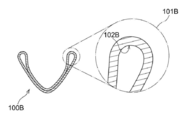
- FIG. 2 is a schematic cross-sectional view schematically showing a cross section of a structure obtained by bending the ERW steel pipe 100A in a bending test.
- the cross section of the structure shown in FIG. 2 is a cross section perpendicular to the longitudinal direction of the structure, and corresponds to a C cross section (that is, a cross section perpendicular to the tube axis direction L) in the ERW steel pipe before bending.
- a structure 100B having a substantially V-shaped closed cross section was formed by bending the ERW steel pipe 100A.
- the pushing amount of the punch 12 was adjusted so that the radius of curvature R of the inner surface 102B was 4 mm at one end 101B (bending portion) in the closed section of the structure 100B.
- the curvature radius R of the inner surface of the other end portion in the closed cross section of the structure portion 100B was also adjusted to be 4 mm.
- SEM scanning electron microscope
- An inner surface crack depth of 0 ⁇ m means that no inner surface cracks occur, that is, the inner surface crack resistance is remarkably excellent.
- the area ratio of bainite is 80% or more
- the average particle size (average packet particle size) of packet particles of bainite is 10 ⁇ m or less
- the ERW steel pipes of Examples 1 to 16 having an average aspect ratio of 2.0 or less exhibited excellent tensile strength in the range of 750 MPa to 1000 MPa, and excellent internal crack resistance.
- Comparative Examples 1 and 2 not containing B the ferrite increased, the bainite area ratio decreased, and the internal crack resistance deteriorated. Also, the tensile strength was insufficient. Further, in Comparative Example 3 in which the C content is excessive, Ti is not contained, and Vc90 is too small, the ferrite is increased and the bainite area ratio is lowered, the average packet particle size becomes too large, and the internal crack resistance is increased. Deteriorated. In Comparative Example 3, it is considered that although the C content was high and B was contained, Vc90 was small, but since Ti was not contained, the effect of improving the hardenability by B was not obtained. For this reason, it is considered that the ferrite area ratio increased and the internal crack resistance deteriorated.
- Comparative Example 6 in which the C content is excessive and Vc90 is too small, the area ratio of martensite is increased and the bainite area ratio is decreased, the tensile strength is excessively increased, and the internal crack resistance is deteriorated. . Moreover, in the comparative example 7 which does not contain Nb, the average packet particle size became too large and the inner surface crack resistance deteriorated.
- Comparative Example 8 having the chemical composition in the present disclosure, but the primary cooling rate was too low, the ferrite increased, the bainite area ratio decreased, the average packet particle size became too large, and the internal crack resistance was Deteriorated. Also, the tensile strength was insufficient. Further, in Comparative Example 9 having the chemical composition in the present disclosure but the holding temperature was too high, the ferrite increased and the bainite area ratio decreased, the average packet particle size became too large, and the internal crack resistance deteriorated. . Also, the tensile strength was insufficient. Moreover, in the comparative example 10 which has the chemical composition in this indication but the secondary cooling rate was too low, the tensile strength was insufficient.
- the reason why the tensile strength is insufficient is considered to be that a phenomenon that the hot-rolled steel sheet is substantially tempered is caused by the secondary cooling rate being too low. Further, in Comparative Example 11 having the chemical composition in the present disclosure but having a holding time of 0 s, the martensite area ratio increased, the bainite area ratio decreased, and the internal crack resistance deteriorated. The reason why the area ratio of martensite is increased and the area ratio of bainite is reduced is that the bainite transformation is less likely to occur by setting the holding time to 0 s, and instead the martensite transformation is more likely to occur.
- the ERW steel pipe of Comparative Example 12 having the chemical composition of the present disclosure but having a high coiling temperature of the hot-rolled steel sheet was insufficient in tensile strength.
- the reason for the insufficient tensile strength is considered to be that a phenomenon that the hot-rolled steel sheet is substantially tempered due to the high winding temperature.
- Comparative Example 13 where Vc90 was too small the area ratio of martensite was increased, the area ratio of bainite was decreased, and the internal crack resistance was deteriorated.
- Comparative Example 14 in which Vc90 was too large the area ratio of ferrite increased, the bainite area ratio decreased, and the internal crack resistance deteriorated.
- the tensile strength was insufficient.
Landscapes
- Chemical & Material Sciences (AREA)
- Engineering & Computer Science (AREA)
- Materials Engineering (AREA)
- Mechanical Engineering (AREA)
- Metallurgy (AREA)
- Organic Chemistry (AREA)
- Heat Treatment Of Sheet Steel (AREA)
- Heat Treatment Of Steel (AREA)
Abstract
母材部が、C:0.02~0.15%、Si:0.03~1.20%、Mn:0.30~2.50%、Ti:0.010~0.200%、Al:0.005~0.500%、Nb:0.01~0.04%、N:0.0005~0.006%、及びB:0.0005~0.0050%を含み、残部がFe及び不純物を含み、式(i)によって定義されるVc90が30~300であり、母材部のL断面における肉厚中央部において、ベイナイトの面積率が80%以上であり、パケット粒の平均粒径が10μm以下であり、パケット粒の平均アスペクト比が2.0以下であり、管軸方向の引張強さが750~1000MPaであるトーションビーム用アズロール電縫鋼管。 logVc90=2.94-0.75βa … 式(i) βa=2.7C+0.4Si+Mn+0.45Ni+0.8Cr+2Mo … 式(ii)
Description
本開示は、トーションビーム用アズロール電縫鋼管に関する。
従来より、自動車構造部材(例えば自動車足回り部品)に用いる鋼材についての検討がなされている。
例えば、特許文献1には、自動車足回り部品鋼管等の機械構造鋼管に用いられる、疲労特性及び曲げ成形性に優れた機械構造鋼管用熱延鋼板が開示されている。
また、特許文献2には、成形加工性が良好であるにもかかわらず疲労特性が高く、しかも熱処理に多くのコストを必要しない疲労特性に優れた自動車足回り部品用鋼材が開示されている。
また、特許文献3には、高強度で、優れた加工性と優れた耐ねじり疲労特性とが要求されるトーションビーム、アクスルビーム、トレーリングアーム、サスペンションアームなどの自動車構造部材用として好適な、高張力鋼が開示されている。
例えば、特許文献1には、自動車足回り部品鋼管等の機械構造鋼管に用いられる、疲労特性及び曲げ成形性に優れた機械構造鋼管用熱延鋼板が開示されている。
また、特許文献2には、成形加工性が良好であるにもかかわらず疲労特性が高く、しかも熱処理に多くのコストを必要しない疲労特性に優れた自動車足回り部品用鋼材が開示されている。
また、特許文献3には、高強度で、優れた加工性と優れた耐ねじり疲労特性とが要求されるトーションビーム、アクスルビーム、トレーリングアーム、サスペンションアームなどの自動車構造部材用として好適な、高張力鋼が開示されている。
特許文献1:国際公開第2009/133965号
特許文献2:国際公開第2008/018624号
特許文献3:特開2011-38155号公報
特許文献2:国際公開第2008/018624号
特許文献3:特開2011-38155号公報
自動車足回り部品の一つであるトーションビームには、高い強度(特に、管軸方向の引張強さ)が要求される。
一方、トーションビームは、アズロール電縫鋼管(以下、「トーションビーム用アズロール電縫鋼管」ともいう)に対して曲げ成形を施すことによって製造される場合がある。この場合、アズロール電縫鋼管の曲げ成形が施された部分の内面に、割れ(以下、「内面割れ」ともいう)が生じることがある。アズロール電縫鋼管の曲げ成形性の観点から、アズロール電縫鋼管に対し、耐内面割れ性を向上させることが求められる場合がある。
ここで、耐内面割れ性とは、アズロール電縫鋼管に対して曲げ成形を施した場合の内面割れを抑制できる性質を意味する。
上記特許文献1~3では、鋼管の耐内面割れ性を向上する観点からみた検討が一切なされておらず、改善の余地が残されている。
一方、トーションビームは、アズロール電縫鋼管(以下、「トーションビーム用アズロール電縫鋼管」ともいう)に対して曲げ成形を施すことによって製造される場合がある。この場合、アズロール電縫鋼管の曲げ成形が施された部分の内面に、割れ(以下、「内面割れ」ともいう)が生じることがある。アズロール電縫鋼管の曲げ成形性の観点から、アズロール電縫鋼管に対し、耐内面割れ性を向上させることが求められる場合がある。
ここで、耐内面割れ性とは、アズロール電縫鋼管に対して曲げ成形を施した場合の内面割れを抑制できる性質を意味する。
上記特許文献1~3では、鋼管の耐内面割れ性を向上する観点からみた検討が一切なされておらず、改善の余地が残されている。
本開示の課題は、管軸方向の引張強さに優れ、かつ、耐内面割れ性に優れたトーションビーム用アズロール電縫鋼管を提供することである。
上記課題を解決するための手段には、以下の態様が含まれる。
<1> 母材部及び電縫溶接部を含み、
前記母材部の化学組成が、質量%で、
C:0.02~0.15%、
Si:0.03~1.20%、
Mn:0.30~2.50%、
P:0~0.030%、
S:0~0.010%、
Ti:0.010~0.200%、
Al:0.005~0.500%、
Nb:0.01~0.04%、
N:0.0005~0.006%、
B:0.0005~0.0050%、
Cu:0~1.00%、
Ni:0~1.00%、
Cr:0~1.00%、
Mo:0~0.50%、
V:0~0.20%、
W:0~0.10%、
Ca:0~0.0200%、
Mg:0~0.0200%、
Zr:0~0.0200%、
REM:0~0.0200%、並びに、
残部:Fe及び不純物であり、
下記式(i)によって定義されるVc90が30~300であり、
前記母材部のL断面における肉厚中央部の金属組織において、ベイナイトの面積率が80%以上であり、前記ベイナイトのパケット粒の平均粒径が10μm以下であり、前記パケット粒の平均アスペクト比が2.0以下であり、
管軸方向の引張強さが750~1000MPaであるトーションビーム用アズロール電縫鋼管。
logVc90=2.94-0.75βa … 式(i)
βa=2.7C+0.4Si+Mn+0.45Ni+0.8Cr+2Mo … 式(ii)
〔式(i)中、βaは、式(ii)によって定義される値である。
式(ii)中、各元素記号は、各元素の質量%を表す。〕
<1> 母材部及び電縫溶接部を含み、
前記母材部の化学組成が、質量%で、
C:0.02~0.15%、
Si:0.03~1.20%、
Mn:0.30~2.50%、
P:0~0.030%、
S:0~0.010%、
Ti:0.010~0.200%、
Al:0.005~0.500%、
Nb:0.01~0.04%、
N:0.0005~0.006%、
B:0.0005~0.0050%、
Cu:0~1.00%、
Ni:0~1.00%、
Cr:0~1.00%、
Mo:0~0.50%、
V:0~0.20%、
W:0~0.10%、
Ca:0~0.0200%、
Mg:0~0.0200%、
Zr:0~0.0200%、
REM:0~0.0200%、並びに、
残部:Fe及び不純物であり、
下記式(i)によって定義されるVc90が30~300であり、
前記母材部のL断面における肉厚中央部の金属組織において、ベイナイトの面積率が80%以上であり、前記ベイナイトのパケット粒の平均粒径が10μm以下であり、前記パケット粒の平均アスペクト比が2.0以下であり、
管軸方向の引張強さが750~1000MPaであるトーションビーム用アズロール電縫鋼管。
logVc90=2.94-0.75βa … 式(i)
βa=2.7C+0.4Si+Mn+0.45Ni+0.8Cr+2Mo … 式(ii)
〔式(i)中、βaは、式(ii)によって定義される値である。
式(ii)中、各元素記号は、各元素の質量%を表す。〕
<2> 前記母材部の化学組成が、質量%で、
Cu:0%超1.00%以下、
Ni:0%超1.00%以下、
Cr:0%超1.00%以下、
Mo:0%超0.50%以下、
V:0%超0.20%以下、
W:0%超0.10%以下、
Ca:0%超0.0200%以下、
Mg:0%超0.0200%以下、
Zr:0%超0.0200%以下、及び、
REM:0%超0.0200%以下からなる群から選択される1種以上を含有する<1>に記載のトーションビーム用アズロール鋼管。
Cu:0%超1.00%以下、
Ni:0%超1.00%以下、
Cr:0%超1.00%以下、
Mo:0%超0.50%以下、
V:0%超0.20%以下、
W:0%超0.10%以下、
Ca:0%超0.0200%以下、
Mg:0%超0.0200%以下、
Zr:0%超0.0200%以下、及び、
REM:0%超0.0200%以下からなる群から選択される1種以上を含有する<1>に記載のトーションビーム用アズロール鋼管。
<3> 外径が50~150mmであり、肉厚が2.0~4.0mmである<1>又は<2>に記載のトーションビーム用アズロール電縫鋼管。
本開示によれば、管軸方向の引張強さに優れ、かつ、耐内面割れ性に優れたトーションビーム用アズロール電縫鋼管が提供される。
本明細書中、「~」を用いて表される数値範囲は、「~」の前後に記載される数値を下限値及び上限値として含む範囲を意味する。
本明細書中、成分(元素)の含有量を示す「%」は、「質量%」を意味する。
本明細書中、C(炭素)の含有量を、「C含有量」と表記することがある。他の元素の含有量についても同様に表記することがある。
本明細書中、「工程」との用語は、独立した工程だけではなく、他の工程と明確に区別できない場合であってもその工程の所期の目的が達成されれば、本用語に含まれる。
本明細書中に段階的に記載されている数値範囲において、ある段階的な数値範囲の上限値又は下限値は、他の段階的な記載の数値範囲の上限値又は下限値に置き換えてもよく、また、実施例に示されている値に置き換えてもよい。
本明細書中、成分(元素)の含有量を示す「%」は、「質量%」を意味する。
本明細書中、C(炭素)の含有量を、「C含有量」と表記することがある。他の元素の含有量についても同様に表記することがある。
本明細書中、「工程」との用語は、独立した工程だけではなく、他の工程と明確に区別できない場合であってもその工程の所期の目的が達成されれば、本用語に含まれる。
本明細書中に段階的に記載されている数値範囲において、ある段階的な数値範囲の上限値又は下限値は、他の段階的な記載の数値範囲の上限値又は下限値に置き換えてもよく、また、実施例に示されている値に置き換えてもよい。
本明細書において、「トーションビーム用アズロール電縫鋼管」を、単に「アズロール電縫鋼管」又は「電縫鋼管」と称することがある。
本明細書において、「アズロール電縫鋼管(As-rolled electric resistance welded steel pipe)」とは、造管後、シーム熱処理以外の熱処理が施されていない電縫鋼管を指す。即ち、「アズロール電縫鋼管」における「アズロール」とは、「ロール成形されたままの」という意味である。
「造管」とは、ホットコイルから巻き出された熱延鋼板をロール成形することによりオープン管とし、得られたオープン管の突合せ部を電縫溶接して電縫溶接部を形成するまでの過程を指す。
「ホットコイル」とは、ホットストリップミルを用いて製造され、コイル状に巻き取られた熱延鋼板を意味する。
「ロール成形」とは、ホットコイルから巻き出された熱延鋼板を、連続的に曲げ加工してオープン管状に成形することを指す。
「造管」とは、ホットコイルから巻き出された熱延鋼板をロール成形することによりオープン管とし、得られたオープン管の突合せ部を電縫溶接して電縫溶接部を形成するまでの過程を指す。
「ホットコイル」とは、ホットストリップミルを用いて製造され、コイル状に巻き取られた熱延鋼板を意味する。
「ロール成形」とは、ホットコイルから巻き出された熱延鋼板を、連続的に曲げ加工してオープン管状に成形することを指す。
ホットストリップミル(Hot strip mill)を用いて製造される熱延鋼板(Hot-rolled steel sheet)は、長尺の鋼板(continuous steel sheet)である点で、厚板ミル(plate mill)を用いて製造される厚鋼板(steel plate)とは異なる。
厚鋼板(steel plate)は、長尺の鋼板(continuous steel sheet)ではないため、連続的な曲げ加工である、ロール成形に使用することはできない。
アズロール電縫鋼管は、以上の点で、厚鋼板を用いて製造される溶接鋼管(例えば、UOE鋼管)とは明確に区別される。
厚鋼板(steel plate)は、長尺の鋼板(continuous steel sheet)ではないため、連続的な曲げ加工である、ロール成形に使用することはできない。
アズロール電縫鋼管は、以上の点で、厚鋼板を用いて製造される溶接鋼管(例えば、UOE鋼管)とは明確に区別される。
また、対象とする電縫鋼管がアズロール電縫鋼管であることは、管軸方向引張試験を行った場合に降伏伸びが観測されないことによって確認できる。
アズロール電縫鋼管は、管軸方向引張試験を行った場合に降伏伸びが観測されない。
これに対し、造管後、シーム熱処理以外の熱処理(例えば焼戻し)が施された電縫鋼管は、管軸方向引張試験を行った場合に降伏伸びが観測される。
アズロール電縫鋼管は、管軸方向引張試験を行った場合に降伏伸びが観測されない。
これに対し、造管後、シーム熱処理以外の熱処理(例えば焼戻し)が施された電縫鋼管は、管軸方向引張試験を行った場合に降伏伸びが観測される。
本開示の電縫鋼管(即ち、トーションビーム用アズロール電縫鋼管)は、母材部及び電縫溶接部を含み、母材部の化学組成が、質量%で、C:0.02~0.15%、Si:0.03~1.20%、Mn:0.30~2.50%、P:0~0.030%、S:0~0.010%、Ti:0.010~0.200%、Al:0.005~0.500%、Nb:0.01~0.04%、N:0.0005~0.006%、B:0.0005~0.0050%、Cu:0~1.00%、Ni:0~1.00%、Cr:0~1.00%、Mo:0~0.50%、V:0~0.20%、W:0~0.10%、Ca:0~0.0200%、Mg:0~0.0200%、Zr:0~0.0200%、REM:0~0.0200%、残部:Feおよび不純物であり、下記式(i)によって定義されるVc90が30~300であり、母材部のL断面における肉厚中央部の金属組織において、ベイナイトの面積率が80%以上であり、ベイナイトのパケット粒の平均粒径が10μm以下であり、パケット粒の平均アスペクト比が2.0以下であり、管軸方向の引張強さが750~1000MPaである。
logVc90=2.94-0.75βa … 式(i)
βa=2.7C+0.4Si+Mn+0.45Ni+0.8Cr+2Mo … 式(ii)
〔式(i)中、βaは、式(ii)によって定義される値である。
式(ii)中、各元素記号は、各元素の質量%を表す。〕
βa=2.7C+0.4Si+Mn+0.45Ni+0.8Cr+2Mo … 式(ii)
〔式(i)中、βaは、式(ii)によって定義される値である。
式(ii)中、各元素記号は、各元素の質量%を表す。〕
本開示の電縫鋼管において、母材部(base metal portion)とは、電縫鋼管における、電縫溶接部及び熱影響部以外の部分を指す。
ここで、熱影響部(heat affected zone;以下、「HAZ」とも称する)とは、電縫溶接による熱の影響(但し、電縫溶接後にシーム熱処理を行う場合には、電縫溶接及びシーム熱処理による熱の影響)を受けた部分を指す。
ここで、熱影響部(heat affected zone;以下、「HAZ」とも称する)とは、電縫溶接による熱の影響(但し、電縫溶接後にシーム熱処理を行う場合には、電縫溶接及びシーム熱処理による熱の影響)を受けた部分を指す。
本開示の電縫鋼管では、管軸方向の引張強さに優れ(具体的には、管軸方向の引張強さが750MPa以上であり)、かつ、耐内面割れ性にも優れる。
上記効果が得られる理由は、以下のように推測される。但し、本開示の電縫鋼管は、以下の推定理由によって限定されることはない。
上記効果が得られる理由は、以下のように推測される。但し、本開示の電縫鋼管は、以下の推定理由によって限定されることはない。
本開示の電縫鋼管では、上記金属組織において、ベイナイトの面積率が80%以上であること、ベイナイトのパケット粒の平均粒径(以下、「平均パケット粒径」ともいう)が10μm以下であること、及び、パケット粒の平均アスペクト比が2.0以下であることにより、耐内面割れ性が向上する。この理由は、以下のように推測される。
内面割れは、曲げ成形によるせん断変形により、曲げ成形による曲げ部の内面及びその近傍におけるパケット粒界が裂け、その裂けが進展することによって発生すると考えられる。そこで、パケット粒を細粒とすること(即ち、パケット粒の平均粒径を10μm以下とすること)、及び、パケット粒の形状を球状に近づけること(即ち、パケット粒の平均アスペクト比を2.0以下とすること)により、上記のようにして発生し得る内面割れが抑制される(即ち、耐内面割れ性が向上する)と考えられる。
内面割れは、曲げ成形によるせん断変形により、曲げ成形による曲げ部の内面及びその近傍におけるパケット粒界が裂け、その裂けが進展することによって発生すると考えられる。そこで、パケット粒を細粒とすること(即ち、パケット粒の平均粒径を10μm以下とすること)、及び、パケット粒の形状を球状に近づけること(即ち、パケット粒の平均アスペクト比を2.0以下とすること)により、上記のようにして発生し得る内面割れが抑制される(即ち、耐内面割れ性が向上する)と考えられる。
以下、本開示の電縫鋼管における、化学組成及び金属組織について説明する。
<母材部の化学組成>
以下、本開示の電縫鋼管における母材部の化学組成(以下、「本開示における化学組成」ともいう。)について説明する。
以下、本開示の電縫鋼管における母材部の化学組成(以下、「本開示における化学組成」ともいう。)について説明する。
C:0.02~0.15%
Cは、鋼の強度を向上させる元素である。C含有量が0.02%未満では、トーションビームとして必要な強度が得られない場合がある。従って、C含有量は0.02%以上である。C含有量は、好ましくは0.05%以上である。
一方、C含有量が0.15%を超えると強度が上がり過ぎて耐内面割れ性が劣化する場合がある。従って、C含有量は0.15%以下である。C含有量は、好ましくは0.12%以下であり、より好ましくは0.10%以下であり、更に好ましくは0.09%以下である。
Cは、鋼の強度を向上させる元素である。C含有量が0.02%未満では、トーションビームとして必要な強度が得られない場合がある。従って、C含有量は0.02%以上である。C含有量は、好ましくは0.05%以上である。
一方、C含有量が0.15%を超えると強度が上がり過ぎて耐内面割れ性が劣化する場合がある。従って、C含有量は0.15%以下である。C含有量は、好ましくは0.12%以下であり、より好ましくは0.10%以下であり、更に好ましくは0.09%以下である。
Si:0.03~1.20%
Siは、脱酸のために用いられる元素である。Si含有量が0.03%未満では、脱酸が不十分となり粗大な酸化物が生成する場合がある。従って、Si含有量は0.03%以上である。Si含有量は、好ましくは0.05%以上であり、より好ましくは0.10%以上であり、更に好ましくは0.20%以上である。
一方、Si含有量が1.20%を超えるとSiO2などの介在物の生成を招き、成形時に微小ボイドが発生しやすくなる場合がある。従って、Si含有量は1.20%以下である。Si含有量は、好ましくは1.00%以下であり、より好ましくは0.80%以下である。
Siは、脱酸のために用いられる元素である。Si含有量が0.03%未満では、脱酸が不十分となり粗大な酸化物が生成する場合がある。従って、Si含有量は0.03%以上である。Si含有量は、好ましくは0.05%以上であり、より好ましくは0.10%以上であり、更に好ましくは0.20%以上である。
一方、Si含有量が1.20%を超えるとSiO2などの介在物の生成を招き、成形時に微小ボイドが発生しやすくなる場合がある。従って、Si含有量は1.20%以下である。Si含有量は、好ましくは1.00%以下であり、より好ましくは0.80%以下である。
Mn:0.30~2.50%
Mnは、鋼の強度を向上させる元素である。Mn含有量が0.30%未満では、トーションビームとして必要な強度が得られない場合がある。従って、Mn含有量は0.30%以上である。Mn含有量は、好ましくは0.40%以上であり、より好ましくは0.50%以上である。
一方、Mn含有量が2.50%を超えると、強度が上がり過ぎて耐内面割れ性が劣化する場合がある。従って、Mn含有量は2.50%以下である。Mn含有量は、好ましくは2.00%以下であり、より好ましくは1.80%以下であり、更に好ましくは1.60%以下であり、更に好ましくは1.50%以下である。
Mnは、鋼の強度を向上させる元素である。Mn含有量が0.30%未満では、トーションビームとして必要な強度が得られない場合がある。従って、Mn含有量は0.30%以上である。Mn含有量は、好ましくは0.40%以上であり、より好ましくは0.50%以上である。
一方、Mn含有量が2.50%を超えると、強度が上がり過ぎて耐内面割れ性が劣化する場合がある。従って、Mn含有量は2.50%以下である。Mn含有量は、好ましくは2.00%以下であり、より好ましくは1.80%以下であり、更に好ましくは1.60%以下であり、更に好ましくは1.50%以下である。
P:0~0.030%
Pは、鋼中に不純物として含まれ得る元素である。P含有量が0.030%を超えると、結晶粒界に濃化しやすくなり、耐内面割れ性が劣化する場合がある。従って、P含有量は0.030%以下である。P含有量は、好ましくは0.020%以下である。
一方、P含有量は、0%であってもよい。脱燐コスト低減の観点から、P含有量は0%超であってもよく、0.001%以上であってもよく、0.010%以上であってもよい。
Pは、鋼中に不純物として含まれ得る元素である。P含有量が0.030%を超えると、結晶粒界に濃化しやすくなり、耐内面割れ性が劣化する場合がある。従って、P含有量は0.030%以下である。P含有量は、好ましくは0.020%以下である。
一方、P含有量は、0%であってもよい。脱燐コスト低減の観点から、P含有量は0%超であってもよく、0.001%以上であってもよく、0.010%以上であってもよい。
S:0~0.010%
Sは、鋼中に不純物として含まれ得る元素である。S含有量が0.010%を超えると、粗大なMnSが生成し、耐内面割れ性が劣化する場合がある。従って、S含有量は0.010%以下である。S含有量は、好ましくは0.005%以下である。
一方、S含有量は、0%であってもよい。脱硫コスト低減の観点から、S含有量は0%超であってもよく、0.001%以上であってもよく、0.003%以上であってもよい。
Sは、鋼中に不純物として含まれ得る元素である。S含有量が0.010%を超えると、粗大なMnSが生成し、耐内面割れ性が劣化する場合がある。従って、S含有量は0.010%以下である。S含有量は、好ましくは0.005%以下である。
一方、S含有量は、0%であってもよい。脱硫コスト低減の観点から、S含有量は0%超であってもよく、0.001%以上であってもよく、0.003%以上であってもよい。
Ti:0.010~0.200%
Tiは、TiCとして析出することで鋼の強度を向上させる元素である。また、Tiは、TiCとして析出することで、熱延時のピンニング効果によりオーステナイト粒の微細化に寄与し、その結果として、オーステナイト粒を分割するパケット粒の微細化に寄与する元素でもある。Ti含有量が0.010%未満では、トーションビームとして必要な強度およびオーステナイト粒のピンニング効果が得られない場合がある。また、Ti含有量が0.010%未満では、NをTiNとして固定できずにNがBと共に析出してしまうため、Bによる焼入れ性向上効果が得られなくなる場合がある。従って、Ti含有量は0.010%以上である。Ti含有量は、好ましくは0.015%以上である。
一方、Ti含有量が0.200%を超えると、粗大なTiC及び/又はTiNが析出し、耐内面割れ性が劣化する場合がある。従って、Ti含有量は0.200%以下である。Ti含有量は、好ましくは0.160%以下であり、より好ましくは0.100%以下であり、更に好ましくは0.080%以下であり、更に好ましくは0.050%以下である。
Tiは、TiCとして析出することで鋼の強度を向上させる元素である。また、Tiは、TiCとして析出することで、熱延時のピンニング効果によりオーステナイト粒の微細化に寄与し、その結果として、オーステナイト粒を分割するパケット粒の微細化に寄与する元素でもある。Ti含有量が0.010%未満では、トーションビームとして必要な強度およびオーステナイト粒のピンニング効果が得られない場合がある。また、Ti含有量が0.010%未満では、NをTiNとして固定できずにNがBと共に析出してしまうため、Bによる焼入れ性向上効果が得られなくなる場合がある。従って、Ti含有量は0.010%以上である。Ti含有量は、好ましくは0.015%以上である。
一方、Ti含有量が0.200%を超えると、粗大なTiC及び/又はTiNが析出し、耐内面割れ性が劣化する場合がある。従って、Ti含有量は0.200%以下である。Ti含有量は、好ましくは0.160%以下であり、より好ましくは0.100%以下であり、更に好ましくは0.080%以下であり、更に好ましくは0.050%以下である。
Al:0.005~0.500%
Alは、AlNを生成し、熱延時のピンニング効果によりオーステナイト粒の微細化に寄与し、その結果として、オーステナイト粒を分割するパケット粒の微細化に寄与する元素である。Al含有量が0.005%未満では、オーステナイト粒のピンニング効果が得られず、オーステナイト粒が粗大になり、その結果としてパケット粒が粗大になる場合がある。従って、Al含有量は0.005%以上である。Al含有量は、好ましくは0.010%以上であり、より好ましくは0.020%以上である。
一方、Al含有量が0.500%を超えると粗大なAlNが析出し、耐内面割れ性が劣化する場合がある。従って、Al含有量は0.500%以下である。Al含有量は、好ましくは0.100%以下であり、より好ましくは0.050%以下である。
Alは、AlNを生成し、熱延時のピンニング効果によりオーステナイト粒の微細化に寄与し、その結果として、オーステナイト粒を分割するパケット粒の微細化に寄与する元素である。Al含有量が0.005%未満では、オーステナイト粒のピンニング効果が得られず、オーステナイト粒が粗大になり、その結果としてパケット粒が粗大になる場合がある。従って、Al含有量は0.005%以上である。Al含有量は、好ましくは0.010%以上であり、より好ましくは0.020%以上である。
一方、Al含有量が0.500%を超えると粗大なAlNが析出し、耐内面割れ性が劣化する場合がある。従って、Al含有量は0.500%以下である。Al含有量は、好ましくは0.100%以下であり、より好ましくは0.050%以下である。
Nb:0.01~0.04%
Nbは、NbCを生成し、熱延時のピンニング効果によりオーステナイト粒の微細化に寄与し、その結果として、オーステナイト粒を分割するパケット粒の微細化に寄与する元素である。Nb含有量が0.01%未満では、オーステナイト粒のピンニング効果が得られず、オーステナイト粒が粗大になり、その結果としてパケット粒が粗大になる場合がある。従って、Nb含有量は0.01%以上である。Nb含有量は、好ましくは0.02%以上である。
一方、Nb含有量が0.04%を超えると粗大なNbCが析出し、耐内面割れ性が劣化する場合がある。従って、Nb含有量は0.04%以下である。Nb含有量は、好ましくは0.03%以下である。
Nbは、NbCを生成し、熱延時のピンニング効果によりオーステナイト粒の微細化に寄与し、その結果として、オーステナイト粒を分割するパケット粒の微細化に寄与する元素である。Nb含有量が0.01%未満では、オーステナイト粒のピンニング効果が得られず、オーステナイト粒が粗大になり、その結果としてパケット粒が粗大になる場合がある。従って、Nb含有量は0.01%以上である。Nb含有量は、好ましくは0.02%以上である。
一方、Nb含有量が0.04%を超えると粗大なNbCが析出し、耐内面割れ性が劣化する場合がある。従って、Nb含有量は0.04%以下である。Nb含有量は、好ましくは0.03%以下である。
N:0.0005~0.006%
Nは、AlNを生成し、熱延時のピンニング効果によりオーステナイト粒の微細化に寄与し、その結果として、オーステナイト粒を分割するパケット粒の微細化に寄与する元素である。N含有量が0.0005%未満では、オーステナイト粒のピンニング効果が得られず、オーステナイト粒が粗大になり、その結果としてパケット粒が粗大になる場合がある。従って、N含有量は0.0005%以上である。N含有量は、好ましくは0.001%以上であり、より好ましくは0.002%以上であり、更に好ましくは0.004%以上である。
一方、N含有量が0.006%を超えると粗大なAlNが析出し、耐内面割れ性が劣化する場合がある。従って、N含有量は0.006%以下である。N含有量は、好ましくは0.005%以下である。
Nは、AlNを生成し、熱延時のピンニング効果によりオーステナイト粒の微細化に寄与し、その結果として、オーステナイト粒を分割するパケット粒の微細化に寄与する元素である。N含有量が0.0005%未満では、オーステナイト粒のピンニング効果が得られず、オーステナイト粒が粗大になり、その結果としてパケット粒が粗大になる場合がある。従って、N含有量は0.0005%以上である。N含有量は、好ましくは0.001%以上であり、より好ましくは0.002%以上であり、更に好ましくは0.004%以上である。
一方、N含有量が0.006%を超えると粗大なAlNが析出し、耐内面割れ性が劣化する場合がある。従って、N含有量は0.006%以下である。N含有量は、好ましくは0.005%以下である。
B:0.0005~0.0050%
Bは、鋼の焼入れ性を向上させ、ベイナイトを造り込むために必須な元素である。B含有量が0.0005%未満では、鋼の焼入れ性を向上させる効果が得られない場合がある。従って、B含有量は、0.0005%以上である。B含有量は、好ましくは0.0010%以上である。
一方、B含有量が0.0050%を超えると、Bが凝集及び/又は析出し、オーステナイト粒界に偏析する固溶Bが減少するため、鋼の焼入れ性を向上させる効果が低下する場合がある。従って、B含有量は、0.0050%以下である。B含有量は、好ましくは0.0040%以下であり、更に好ましくは0.0030%以下である。
Bは、鋼の焼入れ性を向上させ、ベイナイトを造り込むために必須な元素である。B含有量が0.0005%未満では、鋼の焼入れ性を向上させる効果が得られない場合がある。従って、B含有量は、0.0005%以上である。B含有量は、好ましくは0.0010%以上である。
一方、B含有量が0.0050%を超えると、Bが凝集及び/又は析出し、オーステナイト粒界に偏析する固溶Bが減少するため、鋼の焼入れ性を向上させる効果が低下する場合がある。従って、B含有量は、0.0050%以下である。B含有量は、好ましくは0.0040%以下であり、更に好ましくは0.0030%以下である。
Cu:0~1.00%
Cuは、任意の元素であり、含有されなくてもよい。即ち、Cu含有量は0%であってもよい。
Cuは、鋼の高強度化に寄与する元素である。かかる効果の観点から、Cu含有量は、0%超であってもよく、0.005%以上であってもよく、0.01%以上であってもよく、0.05%以上であってもよい。
一方、Cuを過剰に含有させると、効果が飽和してコストの上昇を招く場合がある。従って、Cu含有量は、1.00%以下である。Cu含有量は、好ましくは0.50%以下であり、より好ましくは0.30%以下である。
Cuは、任意の元素であり、含有されなくてもよい。即ち、Cu含有量は0%であってもよい。
Cuは、鋼の高強度化に寄与する元素である。かかる効果の観点から、Cu含有量は、0%超であってもよく、0.005%以上であってもよく、0.01%以上であってもよく、0.05%以上であってもよい。
一方、Cuを過剰に含有させると、効果が飽和してコストの上昇を招く場合がある。従って、Cu含有量は、1.00%以下である。Cu含有量は、好ましくは0.50%以下であり、より好ましくは0.30%以下である。
Ni:0~1.00%
Niは、任意の元素であり、含有されなくてもよい。即ち、Ni含有量は0%であってもよい。
Niは、鋼の高強度化に寄与する元素である。かかる効果の観点から、Ni含有量は、0%超であってもよく、0.005%以上であってもよく、0.01%以上であってもよく、0.05%以上であってもよい。
一方、Niを過剰に含有させると、効果が飽和してコストの上昇を招く場合がある。従って、Ni含有量は、1.00%以下である。Ni含有量は、好ましくは0.50%以下であり、より好ましくは0.30%以下である。
Niは、任意の元素であり、含有されなくてもよい。即ち、Ni含有量は0%であってもよい。
Niは、鋼の高強度化に寄与する元素である。かかる効果の観点から、Ni含有量は、0%超であってもよく、0.005%以上であってもよく、0.01%以上であってもよく、0.05%以上であってもよい。
一方、Niを過剰に含有させると、効果が飽和してコストの上昇を招く場合がある。従って、Ni含有量は、1.00%以下である。Ni含有量は、好ましくは0.50%以下であり、より好ましくは0.30%以下である。
Cr:0~1.00%
Crは、任意の元素であり、含有されなくてもよい。即ち、Cr含有量は0%であってもよい。
Crは、鋼の高強度化に寄与する元素である。かかる効果の観点から、Cr含有量は、0%超であってもよく、0.005%以上であってもよく、0.01%以上であってもよく、0.05%以上であってもよい。
一方、Crを過剰に含有させると、効果が飽和してコストの上昇を招く場合がある。従って、Cr含有量は、1.00%以下である。Cr含有量は、好ましくは0.50%以下であり、より好ましくは0.30%以下である。
Crは、任意の元素であり、含有されなくてもよい。即ち、Cr含有量は0%であってもよい。
Crは、鋼の高強度化に寄与する元素である。かかる効果の観点から、Cr含有量は、0%超であってもよく、0.005%以上であってもよく、0.01%以上であってもよく、0.05%以上であってもよい。
一方、Crを過剰に含有させると、効果が飽和してコストの上昇を招く場合がある。従って、Cr含有量は、1.00%以下である。Cr含有量は、好ましくは0.50%以下であり、より好ましくは0.30%以下である。
Mo:0~0.50%
Moは、任意の元素であり、含有されなくてもよい。即ち、Mo含有量は0%であってもよい。
Moは、鋼の高強度化に寄与する元素である。かかる効果の観点から、Mo含有量は、0%超であってもよく、0.01%以上であってもよく、0.05%以上であってもよく、0.10%以上であってもよい。
一方、Moを過剰に含有させると、効果が飽和してコストの上昇を招く場合がある。従って、Mo含有量は、0.50%以下である。Mo含有量は、好ましくは0.40%以下である。
Moは、任意の元素であり、含有されなくてもよい。即ち、Mo含有量は0%であってもよい。
Moは、鋼の高強度化に寄与する元素である。かかる効果の観点から、Mo含有量は、0%超であってもよく、0.01%以上であってもよく、0.05%以上であってもよく、0.10%以上であってもよい。
一方、Moを過剰に含有させると、効果が飽和してコストの上昇を招く場合がある。従って、Mo含有量は、0.50%以下である。Mo含有量は、好ましくは0.40%以下である。
V:0~0.20%
Vは、任意の元素であり、含有されなくてもよい。即ち、V含有量は0%であってもよい。
Vは、鋼の高強度化に寄与する元素である。かかる効果の観点から、V含有量は、0%超であってもよく、0.005%以上であってもよく、0.01%以上であってもよい。
一方、Vを過剰に含有させると、効果が飽和してコストの上昇を招く場合がある。従って、V含有量は、0.20%以下である。V含有量は、好ましくは0.10%以下である。
Vは、任意の元素であり、含有されなくてもよい。即ち、V含有量は0%であってもよい。
Vは、鋼の高強度化に寄与する元素である。かかる効果の観点から、V含有量は、0%超であってもよく、0.005%以上であってもよく、0.01%以上であってもよい。
一方、Vを過剰に含有させると、効果が飽和してコストの上昇を招く場合がある。従って、V含有量は、0.20%以下である。V含有量は、好ましくは0.10%以下である。
W:0~0.10%
Wは、任意の元素であり、含有されなくてもよい。即ち、W含有量は0%であってもよい。
Wは、鋼の高強度化に寄与する元素である。かかる効果の観点から、W含有量は、0%超であってもよく、0.005%以上であってもよい。
一方、Wを過剰に含有させると、効果が飽和してコストの上昇を招く場合がある。従って、W含有量は、0.10%以下である。W含有量は、好ましくは0.05%以下である。
Wは、任意の元素であり、含有されなくてもよい。即ち、W含有量は0%であってもよい。
Wは、鋼の高強度化に寄与する元素である。かかる効果の観点から、W含有量は、0%超であってもよく、0.005%以上であってもよい。
一方、Wを過剰に含有させると、効果が飽和してコストの上昇を招く場合がある。従って、W含有量は、0.10%以下である。W含有量は、好ましくは0.05%以下である。
Ca:0~0.0200%
Caは、任意の元素であり、含有されなくてもよい。即ち、Ca含有量は0%であってもよい。
Caは、介在物を制御し、耐内面割れ性をさらに抑制する効果を有する。かかる効果の観点から、Ca含有量は、0%超であってもよく、0.0001%以上であってもよく、0.0010%以上であってもよく、0.0020%以上であってもよい。
一方、Caを過剰に含有させると、効果が飽和してコストの上昇を招く場合がある。従って、Ca含有量は、0.0200%以下である。Ca含有量は、好ましくは0.0100%以下であり、より好ましくは0.0070%以下である。
Caは、任意の元素であり、含有されなくてもよい。即ち、Ca含有量は0%であってもよい。
Caは、介在物を制御し、耐内面割れ性をさらに抑制する効果を有する。かかる効果の観点から、Ca含有量は、0%超であってもよく、0.0001%以上であってもよく、0.0010%以上であってもよく、0.0020%以上であってもよい。
一方、Caを過剰に含有させると、効果が飽和してコストの上昇を招く場合がある。従って、Ca含有量は、0.0200%以下である。Ca含有量は、好ましくは0.0100%以下であり、より好ましくは0.0070%以下である。
Mg:0~0.0200%
Mgは、任意の元素であり、含有されなくてもよい。即ち、Mg含有量は0%であってもよい。
Mgは、介在物を制御し、耐内面割れ性をさらに抑制する効果を有する。かかる効果の観点から、Mg含有量は、0%超であってもよく、0.0001%以上であってもよい。
一方、Mgを過剰に含有させると、効果が飽和してコストの上昇を招く場合がある。従って、Mg含有量は、0.0200%以下である。Mg含有量は、好ましくは0.0100%以下であり、より好ましくは0.0050%以下であり、更に好ましくは0.0020%以下である。
Mgは、任意の元素であり、含有されなくてもよい。即ち、Mg含有量は0%であってもよい。
Mgは、介在物を制御し、耐内面割れ性をさらに抑制する効果を有する。かかる効果の観点から、Mg含有量は、0%超であってもよく、0.0001%以上であってもよい。
一方、Mgを過剰に含有させると、効果が飽和してコストの上昇を招く場合がある。従って、Mg含有量は、0.0200%以下である。Mg含有量は、好ましくは0.0100%以下であり、より好ましくは0.0050%以下であり、更に好ましくは0.0020%以下である。
Zr:0~0.0200%
Zrは、任意の元素であり、含有されなくてもよい。即ち、Zr含有量は0%であってもよい。
Zrは、介在物を制御し、耐内面割れ性をさらに抑制する効果を有する。かかる効果の観点から、Zr含有量は、0%超であってもよく、0.0001%以上であってもよい。
一方、Zrを過剰に含有させると、効果が飽和してコストの上昇を招く場合がある。従って、Zr含有量は、0.0200%以下である。Zr含有量は、好ましくは0.0100%以下であり、より好ましくは0.0050%以下であり、更に好ましくは0.0020%以下である。
Zrは、任意の元素であり、含有されなくてもよい。即ち、Zr含有量は0%であってもよい。
Zrは、介在物を制御し、耐内面割れ性をさらに抑制する効果を有する。かかる効果の観点から、Zr含有量は、0%超であってもよく、0.0001%以上であってもよい。
一方、Zrを過剰に含有させると、効果が飽和してコストの上昇を招く場合がある。従って、Zr含有量は、0.0200%以下である。Zr含有量は、好ましくは0.0100%以下であり、より好ましくは0.0050%以下であり、更に好ましくは0.0020%以下である。
REM:0~0.0200%
REMは、任意の元素であり、含有されなくてもよい。即ち、REM含有量は0%であってもよい。
ここで、「REM」は希土類元素、即ち、Sc、Y、La、Ce、Pr、Nd、Pm、Sm、Eu、Gd、Tb、Dy、Ho、Er、Tm、Yb、及びLuからなる群から選択される少なくとも1種の元素を指す。
REMは、介在物を制御し、耐内面割れ性をさらに抑制する効果を有する。かかる効果の観点から、REM含有量は、0%超であってもよく、0.0001%以上であってもよく、0.0005%以上であってもよい。
一方、REMを過剰に含有させると、効果が飽和してコストの上昇を招く場合がある。従って、REM含有量は、0.0200%以下である。REM含有量は、好ましくは0.0100%以下であり、より好ましくは0.0050%以下であり、更に好ましくは0.0020%以下である。
REMは、任意の元素であり、含有されなくてもよい。即ち、REM含有量は0%であってもよい。
ここで、「REM」は希土類元素、即ち、Sc、Y、La、Ce、Pr、Nd、Pm、Sm、Eu、Gd、Tb、Dy、Ho、Er、Tm、Yb、及びLuからなる群から選択される少なくとも1種の元素を指す。
REMは、介在物を制御し、耐内面割れ性をさらに抑制する効果を有する。かかる効果の観点から、REM含有量は、0%超であってもよく、0.0001%以上であってもよく、0.0005%以上であってもよい。
一方、REMを過剰に含有させると、効果が飽和してコストの上昇を招く場合がある。従って、REM含有量は、0.0200%以下である。REM含有量は、好ましくは0.0100%以下であり、より好ましくは0.0050%以下であり、更に好ましくは0.0020%以下である。
残部:Fe及び不純物
母材部の化学組成において、上述した各元素を除いた残部は、Fe及び不純物である。
ここで、不純物とは、原材料(例えば、鉱石、スクラップ、等)に含まれる成分、または、製造の工程で混入する成分であって、意図的に鋼に含有させたものではない成分を指す。
不純物としては、上述した元素以外のあらゆる元素が挙げられる。不純物としての元素は、1種のみであっても2種以上であってもよい。
不純物として、例えば、Sb、Sn、Co、As、Pb、Bi、Hが挙げられる。
通常、Sb、Sn、Co、及びAsについては例えば含有量0.1%以下の混入が、Pb及びBiについては例えば含有量0.005%以下の混入が、Hについては例えば含有量0.0004%以下の混入が、それぞれあり得る。その他の元素の含有量については、通常の範囲であれば、特に制御する必要はない。
母材部の化学組成において、上述した各元素を除いた残部は、Fe及び不純物である。
ここで、不純物とは、原材料(例えば、鉱石、スクラップ、等)に含まれる成分、または、製造の工程で混入する成分であって、意図的に鋼に含有させたものではない成分を指す。
不純物としては、上述した元素以外のあらゆる元素が挙げられる。不純物としての元素は、1種のみであっても2種以上であってもよい。
不純物として、例えば、Sb、Sn、Co、As、Pb、Bi、Hが挙げられる。
通常、Sb、Sn、Co、及びAsについては例えば含有量0.1%以下の混入が、Pb及びBiについては例えば含有量0.005%以下の混入が、Hについては例えば含有量0.0004%以下の混入が、それぞれあり得る。その他の元素の含有量については、通常の範囲であれば、特に制御する必要はない。
母材部の化学組成は、各元素による上記効果を得る観点から、Cu:0%超1.00%以下、Ni:0%超1.00%以下、Cr:0%超1.00%以下、Mo:0%超0.50%以下、V:0%超0.20%以下、W:0%超0.10%以下、Ca:0%超0.0200%以下、Mg:0%超0.0200%以下、Zr:0%超0.0200%以下、及び、REM:0%超0.0200%以下からなる群から選択される1種以上を含有してもよい。
これらの元素の含有量の好ましい範囲は、それぞれ前述したとおりである。
これらの元素の含有量の好ましい範囲は、それぞれ前述したとおりである。
Vc90:30~300
母材部の化学組成において、下記式(i)によって定義されるVc90は、鋼の焼入れ性の指標となる値である。
Vc90は、90%マルテンサイト組織が得られる臨界冷却速度(単位:℃/s)として知られている値である〔例えば、上野らの論文「GROSSMANNの式に代わる鋼の焼入性の新しい予測式」、「鉄と鋼」(社団法人日本鉄鋼協会)、第74年(1988)第6号、pp.1073-1080参照〕。
母材部の化学組成において、下記式(i)によって定義されるVc90は、鋼の焼入れ性の指標となる値である。
Vc90は、90%マルテンサイト組織が得られる臨界冷却速度(単位:℃/s)として知られている値である〔例えば、上野らの論文「GROSSMANNの式に代わる鋼の焼入性の新しい予測式」、「鉄と鋼」(社団法人日本鉄鋼協会)、第74年(1988)第6号、pp.1073-1080参照〕。
logVc90=2.94-0.75βa … 式(i)
βa=2.7C+0.4Si+Mn+0.45Ni+0.8Cr+2Mo … 式(ii)
〔式(i)中、βaは、式(ii)によって定義される値である。
式(ii)中、各元素記号は、各元素の質量%を表す。〕
βa=2.7C+0.4Si+Mn+0.45Ni+0.8Cr+2Mo … 式(ii)
〔式(i)中、βaは、式(ii)によって定義される値である。
式(ii)中、各元素記号は、各元素の質量%を表す。〕
Vc90が低いほど、鋼の焼入れ性が高くなる。
従って、Vc90が300以下であると、フェライトの生成が抑制され、ベイナイトの生成が促進されるので、ベイナイトの面積率が80%以上であることが達成されやすい。
また、Vc90が30以上であると、マルテンサイトの生成が抑制され、ベイナイトの生成が促進されるので、ベイナイトの面積率が80%以上であることが達成されやすい。
従って、Vc90は30~300である。
Vc90の上限は、好ましくは260であり、より好ましくは200であり、更に好ましくは150である。
Vc90の下限は、好ましくは32であり、より好ましくは35である。
従って、Vc90が300以下であると、フェライトの生成が抑制され、ベイナイトの生成が促進されるので、ベイナイトの面積率が80%以上であることが達成されやすい。
また、Vc90が30以上であると、マルテンサイトの生成が抑制され、ベイナイトの生成が促進されるので、ベイナイトの面積率が80%以上であることが達成されやすい。
従って、Vc90は30~300である。
Vc90の上限は、好ましくは260であり、より好ましくは200であり、更に好ましくは150である。
Vc90の下限は、好ましくは32であり、より好ましくは35である。
<母材部の金属組織>
本開示の電縫鋼管は、母材部のL断面における肉厚中央部の金属組織において、ベイナイトの面積率が80%以上であり、ベイナイトのパケット粒の平均粒径が10μm以下であり、パケット粒の平均アスペクト比が2.0以下である。
母材部のL断面における肉厚中央部の金属組織がこれらの条件を満足することにより、電縫鋼管の耐内面割れ性が向上する。
ここで、L断面とは、管軸方向及び肉厚方向に対して平行な断面を指す。
本開示の電縫鋼管は、母材部のL断面における肉厚中央部の金属組織において、ベイナイトの面積率が80%以上であり、ベイナイトのパケット粒の平均粒径が10μm以下であり、パケット粒の平均アスペクト比が2.0以下である。
母材部のL断面における肉厚中央部の金属組織がこれらの条件を満足することにより、電縫鋼管の耐内面割れ性が向上する。
ここで、L断面とは、管軸方向及び肉厚方向に対して平行な断面を指す。
本開示の電縫鋼管では、母材部のL断面における代表的な位置として、母材部のL断面における肉厚中央部を選定し、この肉厚中央部の金属組織を特定する。
但し、一般的に、電縫鋼管では、母材部のL断面における肉厚内部(詳細には、表面から深さ100μmの位置から肉厚中央部までの領域。以下同じ。)における金属組織は一様であることが多い。従って、本開示の電縫鋼管においても、母材部のL断面において、肉厚内部における金属組織は、一様であっても構わない。例えば、後述の製法Aによって製造される電縫鋼管では、母材部のL断面における肉厚内部において、金属組織は一様であると考えられる。
但し、一般的に、電縫鋼管では、母材部のL断面における肉厚内部(詳細には、表面から深さ100μmの位置から肉厚中央部までの領域。以下同じ。)における金属組織は一様であることが多い。従って、本開示の電縫鋼管においても、母材部のL断面において、肉厚内部における金属組織は、一様であっても構わない。例えば、後述の製法Aによって製造される電縫鋼管では、母材部のL断面における肉厚内部において、金属組織は一様であると考えられる。
ベイナイトの面積率:80%以上
母材部のL断面における肉厚中央部の金属組織において、ベイナイトの面積率は、80%以上である。これにより、曲げ成形による成形歪を各パケット粒に均等に配分させることできるので、耐内面割れ性が向上する。
ベイナイトの面積率が80%未満であると、硬質相と軟質相との境界に歪が集中するため、曲げ成形時に内面割れが発生しやすくなる(即ち、耐内面割れ性が劣化する)。
ベイナイトの面積率は、好ましくは85%以上であり、より好ましくは90%以上である。
ベイナイトの面積率は、100%であってもよいし、100%未満であってもよい。
母材部のL断面における肉厚中央部の金属組織において、ベイナイトの面積率は、80%以上である。これにより、曲げ成形による成形歪を各パケット粒に均等に配分させることできるので、耐内面割れ性が向上する。
ベイナイトの面積率が80%未満であると、硬質相と軟質相との境界に歪が集中するため、曲げ成形時に内面割れが発生しやすくなる(即ち、耐内面割れ性が劣化する)。
ベイナイトの面積率は、好ましくは85%以上であり、より好ましくは90%以上である。
ベイナイトの面積率は、100%であってもよいし、100%未満であってもよい。
ここで、ベイナイトの面積率とは、金属組織全体に占めるベイナイトの面積率を表す。
ベイナイトの面積率が100%未満である場合、金属組織の残部は、例えば、フェライト、マルテンサイト、パーライト、疑似パーライト等である。
ベイナイトの面積率が100%未満である場合、金属組織の残部は、例えば、フェライト、マルテンサイト、パーライト、疑似パーライト等である。
本開示でいう「ベイナイト」の概念には、
ラス状のベイニティックフェライトを含み、かつ、セメンタイトが析出していない上部ベイナイト、
ラス状のベイニティックフェライトを含み、かつ、ラス状のベイニティックフェライト間にセメンタイトが析出している上部ベイナイト、
ラス状のベイニティックフェライトを含み、かつ、ラス状のベイニティックフェライト内にセメンタイトが析出している下部ベイナイト、
板状のベイニティックフェライトを含み、かつ、板状のベイニティックフェライト内にセメンタイトが析出している下部ベイナイト、
ラス状のベイニティックフェライトを含み、かつ、ラス状のベイニティックフェライト内にセメンタイトが析出しているオートテンパードマルテンサイト、及び、
板状のベイニティックフェライトを含み、かつ、板状のベイニティックフェライト内にセメンタイトが析出しているオートテンパードマルテンサイト
の全てが包含される。
上部ベイナイト及び下部ベイナイトについては、公知文献〔例えば、日本金属学会「まてりあ」 Vol.46(2007), No.5, pp.321-326参照〕を参照できる。
ラス状のベイニティックフェライトを含み、かつ、セメンタイトが析出していない上部ベイナイト、
ラス状のベイニティックフェライトを含み、かつ、ラス状のベイニティックフェライト間にセメンタイトが析出している上部ベイナイト、
ラス状のベイニティックフェライトを含み、かつ、ラス状のベイニティックフェライト内にセメンタイトが析出している下部ベイナイト、
板状のベイニティックフェライトを含み、かつ、板状のベイニティックフェライト内にセメンタイトが析出している下部ベイナイト、
ラス状のベイニティックフェライトを含み、かつ、ラス状のベイニティックフェライト内にセメンタイトが析出しているオートテンパードマルテンサイト、及び、
板状のベイニティックフェライトを含み、かつ、板状のベイニティックフェライト内にセメンタイトが析出しているオートテンパードマルテンサイト
の全てが包含される。
上部ベイナイト及び下部ベイナイトについては、公知文献〔例えば、日本金属学会「まてりあ」 Vol.46(2007), No.5, pp.321-326参照〕を参照できる。
ベイナイトの面積率の測定及び残部の特定は、以下のようにして行う。
JIS G 0551(2013年)に準拠し、本開示の電縫鋼管における母材180°位置(即ち、電縫溶接部から管周方向に180°ずれた位置。以下同じ。)のL断面(観察面)を研磨し、次いでナイタール腐食液によってエッチングする。エッチングされたL断面における肉厚中央部の金属組織の写真(以下、「金属組織写真」ともいう)を撮影する。ここで、金属組織写真は、光学電子顕微鏡を用い、倍率1000倍の視野について10視野分(断面の実面積として0.12mm2分)撮影する。
撮影した金属組織写真を画像処理し、画像処理した結果に基づき、ベイナイトの面積率の測定及び残部の特定を行う。画像処理は、例えば(株)ニレコ製の小型汎用画像解析装置LUZEX APを用いて行う。
JIS G 0551(2013年)に準拠し、本開示の電縫鋼管における母材180°位置(即ち、電縫溶接部から管周方向に180°ずれた位置。以下同じ。)のL断面(観察面)を研磨し、次いでナイタール腐食液によってエッチングする。エッチングされたL断面における肉厚中央部の金属組織の写真(以下、「金属組織写真」ともいう)を撮影する。ここで、金属組織写真は、光学電子顕微鏡を用い、倍率1000倍の視野について10視野分(断面の実面積として0.12mm2分)撮影する。
撮影した金属組織写真を画像処理し、画像処理した結果に基づき、ベイナイトの面積率の測定及び残部の特定を行う。画像処理は、例えば(株)ニレコ製の小型汎用画像解析装置LUZEX APを用いて行う。
なお、上記の手法において、ベイナイトであるかどうかの判別(例えば、ベイナイトとマルテンサイトとの判別)が困難な場合には、対象となる位置のビッカース硬さ(以下、「Hv」ともいう)を測定し、測定されたHvが下記不等式(a)を満足する場合に、その位置の組織がベイナイトであると判断する。
ビッカース硬さ(Hv)の測定は、JIS Z 2244(2009)に準拠し、かつ、荷重(試験力)100gfの条件にて行う。
ビッカース硬さ(Hv)の測定は、JIS Z 2244(2009)に準拠し、かつ、荷重(試験力)100gfの条件にて行う。
(2500×C+550)/3.16≦Hv≦(2500×C+750)/3.16 … 不等式(a)
〔不等式(a)中、Hvは、ビッカース硬さ(Hv)を表し、Cは、C含有量(質量%)を表す。〕
〔不等式(a)中、Hvは、ビッカース硬さ(Hv)を表し、Cは、C含有量(質量%)を表す。〕
不等式(a)の右辺〔Hv≦(2500×C+750)/3.16〕を満足しない場合、その位置の組織はマルテンサイトであると判断し、不等式(a)の左辺〔(2500×C+550)/3.16≦Hv〕を満足しない場合、その位置の組織はフェライト(例えば、アシキュラーフェライト、ポリゴナルフェライト、等)であると判断する。
ベイナイトのパケット粒の平均粒径:10μm以下
母材部のL断面における肉厚中央部の金属組織において、ベイナイトのパケット粒の平均粒径(以下、「平均パケット粒径」ともいう)は、10μm以下である。これにより、曲げ成形による成形歪を各パケット粒に均等に配分させ易くなり、その結果、耐内面割れ性を向上させることができる。
平均パケット粒径が10μmを超えると、曲げ成形による成形歪が粗大なパケット粒に集中することにより、内面割れが誘発される(即ち、耐内面割れ性が劣化する)場合がある。
平均パケット粒径は、好ましくは8μm以下である。
平均パケット粒径の下限には特に制限はない。鋼の製造適性の観点から、平均パケット粒径は、好ましくは3μm以上であり、より好ましは4μm以上である。
母材部のL断面における肉厚中央部の金属組織において、ベイナイトのパケット粒の平均粒径(以下、「平均パケット粒径」ともいう)は、10μm以下である。これにより、曲げ成形による成形歪を各パケット粒に均等に配分させ易くなり、その結果、耐内面割れ性を向上させることができる。
平均パケット粒径が10μmを超えると、曲げ成形による成形歪が粗大なパケット粒に集中することにより、内面割れが誘発される(即ち、耐内面割れ性が劣化する)場合がある。
平均パケット粒径は、好ましくは8μm以下である。
平均パケット粒径の下限には特に制限はない。鋼の製造適性の観点から、平均パケット粒径は、好ましくは3μm以上であり、より好ましは4μm以上である。
平均パケット粒径(即ち、ベイナイトのパケット粒の平均粒径)は、以下のようにして測定する。
母材部(詳細には、本開示の電縫鋼管における母材180°位置)のL断面における肉厚中央部の金属組織をSEM-EBSD装置を用いて観察し(倍率1000倍)、傾角10°以上の粒界で囲まれる領域をパケット粒とみなす。言い換えれば、細長い複数のベイニティックフェライトがほぼ平行に(詳細には、互い長手方向同士のなす角度が10°以下に)並んでいる領域を、パケット粒とみなす。
上記パケット粒の円相当径を求め、上記パケット粒の粒径とする。
以上の方法により、200μm(管軸方向)×500μm(肉厚方向)の視野範囲に含まれる全てのパケット粒について、それぞれ粒径を求める。得られた測定値(粒径)を算術平均し、得られた算術平均値を、パケット粒の平均粒径とする。
母材部(詳細には、本開示の電縫鋼管における母材180°位置)のL断面における肉厚中央部の金属組織をSEM-EBSD装置を用いて観察し(倍率1000倍)、傾角10°以上の粒界で囲まれる領域をパケット粒とみなす。言い換えれば、細長い複数のベイニティックフェライトがほぼ平行に(詳細には、互い長手方向同士のなす角度が10°以下に)並んでいる領域を、パケット粒とみなす。
上記パケット粒の円相当径を求め、上記パケット粒の粒径とする。
以上の方法により、200μm(管軸方向)×500μm(肉厚方向)の視野範囲に含まれる全てのパケット粒について、それぞれ粒径を求める。得られた測定値(粒径)を算術平均し、得られた算術平均値を、パケット粒の平均粒径とする。
ベイナイトのパケット粒の平均アスペクト比:2.0以下
母材部のL断面における肉厚中央部の金属組織において、ベイナイトのパケット粒の平均アスペクト比は、2.0以下である。これにより、管軸方向(即ち、電縫鋼管の素材である熱延鋼板の製造時における圧延方向)に連続する内面割れを抑制できる(即ち、耐内面割れ性が向上する)。
パケット粒の平均アスペクト比が2.0を超えると、管軸方向にパケット粒の粒界が連続し易くなる。その結果、電縫鋼管の曲げ成形を行った際に、電縫鋼管の内面に一旦亀裂が発生すると、亀裂が管軸方向に進展し、連続した割れ(即ち、内面割れ)へと発展する場合がある。
パケット粒の平均アスペクト比は、好ましくは1.8以下であり、より好ましくは1.6以下である。
母材部のL断面における肉厚中央部の金属組織において、ベイナイトのパケット粒の平均アスペクト比は、2.0以下である。これにより、管軸方向(即ち、電縫鋼管の素材である熱延鋼板の製造時における圧延方向)に連続する内面割れを抑制できる(即ち、耐内面割れ性が向上する)。
パケット粒の平均アスペクト比が2.0を超えると、管軸方向にパケット粒の粒界が連続し易くなる。その結果、電縫鋼管の曲げ成形を行った際に、電縫鋼管の内面に一旦亀裂が発生すると、亀裂が管軸方向に進展し、連続した割れ(即ち、内面割れ)へと発展する場合がある。
パケット粒の平均アスペクト比は、好ましくは1.8以下であり、より好ましくは1.6以下である。
パケット粒の平均アスペクト比は、その定義からみて当然に、1.0以上である。パケット粒の平均アスペクト比は、好ましくは1.0超であり、より好ましくは1.1以上である。
パケット粒の平均アスペクト値は、以下のようにして測定する。
母材部(詳細には、本開示の電縫鋼管における母材180°位置)のL断面における肉厚中央部の金属組織をSEM-EBSD装置を用いて観察し(倍率1000倍)、傾角10°以上の粒界で囲まれる領域をパケット粒とみなし、このパケット粒の形状を楕円近似する。得られた楕円における、短軸長さに対する長軸長さの比(即ち、長軸長さ/短軸長さ比)を、パケット粒のアスペクト比とする。
この方法により、200μm(管軸方向)×500μm(肉厚方向)の視野範囲に含まれる全てのパケット粒について、それぞれアスペクト比を求める。得られた測定値(アスペクト比)を算術平均し、得られた算術平均値を、パケット粒の平均アスペクト比とする。
母材部(詳細には、本開示の電縫鋼管における母材180°位置)のL断面における肉厚中央部の金属組織をSEM-EBSD装置を用いて観察し(倍率1000倍)、傾角10°以上の粒界で囲まれる領域をパケット粒とみなし、このパケット粒の形状を楕円近似する。得られた楕円における、短軸長さに対する長軸長さの比(即ち、長軸長さ/短軸長さ比)を、パケット粒のアスペクト比とする。
この方法により、200μm(管軸方向)×500μm(肉厚方向)の視野範囲に含まれる全てのパケット粒について、それぞれアスペクト比を求める。得られた測定値(アスペクト比)を算術平均し、得られた算術平均値を、パケット粒の平均アスペクト比とする。
なお、概して、上記長軸方向は電縫鋼管の管軸方向(即ち、電縫鋼管の素材である熱延鋼板の製造時における圧延方向)と略一致し、上記短軸方向は電縫鋼管の肉厚方向と略一致する。
本開示の電縫鋼管は、管軸方向の引張強さが750~1000MPaである。
管軸方向の引張強さが750MPa以上であることにより、トーションビーム用の鋼管としての強度が確保される。管軸方向の引張強さは、好ましくは800MPa以上である。
管軸方向の引張強さが1000MPa以下であることにより、耐内面割れ性が向上する。管軸方向の引張強さは、好ましくは990MPa以下である。
管軸方向の引張強さが750MPa以上であることにより、トーションビーム用の鋼管としての強度が確保される。管軸方向の引張強さは、好ましくは800MPa以上である。
管軸方向の引張強さが1000MPa以下であることにより、耐内面割れ性が向上する。管軸方向の引張強さは、好ましくは990MPa以下である。
本開示の電縫鋼管の管軸方向の引張強さは、以下のようにして測定する。
本開示の電縫鋼管における母材180°位置から、JIS 12号引張試験片を採取する。採取したJIS 12号引張試験片について、JIS Z 2241(2011年)に準拠して管軸方向の引張試験を行い、管軸方向の引張強さを測定する。得られた結果を、本開示の電縫鋼管の管軸方向の引張強さとする。
本開示の電縫鋼管における母材180°位置から、JIS 12号引張試験片を採取する。採取したJIS 12号引張試験片について、JIS Z 2241(2011年)に準拠して管軸方向の引張試験を行い、管軸方向の引張強さを測定する。得られた結果を、本開示の電縫鋼管の管軸方向の引張強さとする。
本開示の電縫鋼管の外径には特に制限はない。電縫鋼管の製造適性の観点から、外径は、好ましくは50~150mmである。
本開示の電縫鋼管の肉厚には特に制限はない。電縫鋼管の製造適性の観点から、本開示の電縫鋼管の肉厚は、好ましくは2.0~4.0mmである。
本開示の電縫鋼管の肉厚には特に制限はない。電縫鋼管の製造適性の観点から、本開示の電縫鋼管の肉厚は、好ましくは2.0~4.0mmである。
本開示の電縫鋼管は、トーションビームの製造に用いられる。
本開示の電縫鋼管を用いたトーションビームの製造は、例えば、本開示の電縫鋼管の一部に対し曲げ成形を施すことによって行う。曲げ成形は、例えば、本開示の電縫鋼管のうち、管軸方向に平行な直線状の領域の一部を、電縫鋼管の外部から内部に向かう方向に押し込むことにより行う(例えば、後述の図1に示す曲げ試験参照)。これにより、例えば、略V字型の閉断面(例えば、後述の図2参照)を有する部分を含むトーションビームが製造される。
本開示の電縫鋼管を用いたトーションビームの製造は、例えば、本開示の電縫鋼管の一部に対し曲げ成形を施すことによって行う。曲げ成形は、例えば、本開示の電縫鋼管のうち、管軸方向に平行な直線状の領域の一部を、電縫鋼管の外部から内部に向かう方向に押し込むことにより行う(例えば、後述の図1に示す曲げ試験参照)。これにより、例えば、略V字型の閉断面(例えば、後述の図2参照)を有する部分を含むトーションビームが製造される。
一般的には、曲げ成形による曲げ部の内面の曲率半径Rが小さい場合に、内面割れが発生し易くなる傾向となる。
しかし、耐内面割れ性に優れた本開示の電縫鋼管によれば、この場合においても、内面割れの発生が効果的に抑制される。
従って、本開示の電縫鋼管による耐内面割れ性向上の効果は、曲げ成形による曲げ部の内面の曲率半径Rが小さい場合に、特に効果的に発揮される。
言い換えれば、本開示の電縫鋼管による耐内面割れ性向上の効果は、本開示の電縫鋼管が、内面の曲率半径Rが小さい曲げ部(例えば、内面の曲率半径Rが肉厚に対して2倍以下(好ましくは0.7~2倍、より好ましくは1~2倍)である曲げ部)を含むトーションビームの作製に用いられた場合に、特に効果的に発揮される。
しかし、耐内面割れ性に優れた本開示の電縫鋼管によれば、この場合においても、内面割れの発生が効果的に抑制される。
従って、本開示の電縫鋼管による耐内面割れ性向上の効果は、曲げ成形による曲げ部の内面の曲率半径Rが小さい場合に、特に効果的に発揮される。
言い換えれば、本開示の電縫鋼管による耐内面割れ性向上の効果は、本開示の電縫鋼管が、内面の曲率半径Rが小さい曲げ部(例えば、内面の曲率半径Rが肉厚に対して2倍以下(好ましくは0.7~2倍、より好ましくは1~2倍)である曲げ部)を含むトーションビームの作製に用いられた場合に、特に効果的に発揮される。
<製法の一例>
本開示の電縫鋼管を製造する方法の一例として、以下の製法Aが挙げられる。
製法Aは、
本開示における化学組成を有するスラブを準備するスラブ準備工程と、
準備したスラブを1070~1300℃のスラブ加熱温度にまで加熱し、加熱されたスラブに対し、熱間圧延仕上温度を920℃以上とする熱間圧延を施すことにより、熱延鋼板を得る熱延工程と、
熱延工程で得られた熱延鋼板を、40~100℃/sの1次冷却速度にて、「Ms点+10℃」~「Ms点+80℃」の保持温度となるまで1次冷却し、次いで上記保持温度にて2~10s(保持時間)保持し、次いで60℃/s以上の2次冷却速度にて、200℃以下の巻取温度となるまで2次冷却する冷却工程と、
2次冷却後の熱延鋼板を上記巻取温度にて巻取ることにより、熱延鋼板からなるホットコイルを得る巻取工程と、
ホットコイルから熱延鋼板を巻き出し、巻き出された熱延鋼板をロール成形することによりオープン管とし、得られたオープン管の突合せ部を電縫溶接して電縫溶接部を形成することにより、電縫鋼管を得る造管工程と、
を含む。
以上の、熱延工程、冷却工程、及び巻取工程は、ホットストリップミルを用いて実施する。
本開示の電縫鋼管を製造する方法の一例として、以下の製法Aが挙げられる。
製法Aは、
本開示における化学組成を有するスラブを準備するスラブ準備工程と、
準備したスラブを1070~1300℃のスラブ加熱温度にまで加熱し、加熱されたスラブに対し、熱間圧延仕上温度を920℃以上とする熱間圧延を施すことにより、熱延鋼板を得る熱延工程と、
熱延工程で得られた熱延鋼板を、40~100℃/sの1次冷却速度にて、「Ms点+10℃」~「Ms点+80℃」の保持温度となるまで1次冷却し、次いで上記保持温度にて2~10s(保持時間)保持し、次いで60℃/s以上の2次冷却速度にて、200℃以下の巻取温度となるまで2次冷却する冷却工程と、
2次冷却後の熱延鋼板を上記巻取温度にて巻取ることにより、熱延鋼板からなるホットコイルを得る巻取工程と、
ホットコイルから熱延鋼板を巻き出し、巻き出された熱延鋼板をロール成形することによりオープン管とし、得られたオープン管の突合せ部を電縫溶接して電縫溶接部を形成することにより、電縫鋼管を得る造管工程と、
を含む。
以上の、熱延工程、冷却工程、及び巻取工程は、ホットストリップミルを用いて実施する。
製法Aにおいて、Ms点とは、下記(iii)式で表される温度を意味する。
Ms点(℃)=550-361×C-39×Mn-35×V-20×Cr-17×Ni-10×Cu-5×(Mo+W)+30×Al … (iii)
〔式(iii)中、各元素記号は、各元素の質量%を表す。〕
Ms点(℃)=550-361×C-39×Mn-35×V-20×Cr-17×Ni-10×Cu-5×(Mo+W)+30×Al … (iii)
〔式(iii)中、各元素記号は、各元素の質量%を表す。〕
後述の実施例では、Ms点、「Ms点+10℃」、及び「Ms点+80℃」を、それぞれ、Ms(℃)、Ms+10(℃)、及びMs+80(℃)と称することがある(例えば表2)。
この製法Aによれば、管軸方向の引張強さが750~1000MPaであり、かつ、母材部のL断面における肉厚中央部の金属組織において、ベイナイトの面積率が80%以上であり、ベイナイトのパケット粒の平均粒径が10μm以下であり、パケット粒の平均アスペクト比が2.0以下である、本開示の電縫鋼管を製造し易い。
(スラブ準備工程)
製法Aにおいて、スラブ準備工程は、上述の化学組成を有するスラブを準備する工程である。
スラブ準備工程は、スラブを製造する工程であってもよいし、予め製造されていたスラブを単に準備するだけの工程であってもよい。
スラブを製造する場合、例えば、上述の化学組成を有する溶鋼を製造し、製造した溶鋼を用いて、スラブを製造する。この際、連続鋳造法によりスラブを製造してもよいし、溶鋼を用いてインゴットを製造し、インゴットを分塊圧延してスラブを製造してもよい。
製法Aにおいて、スラブ準備工程は、上述の化学組成を有するスラブを準備する工程である。
スラブ準備工程は、スラブを製造する工程であってもよいし、予め製造されていたスラブを単に準備するだけの工程であってもよい。
スラブを製造する場合、例えば、上述の化学組成を有する溶鋼を製造し、製造した溶鋼を用いて、スラブを製造する。この際、連続鋳造法によりスラブを製造してもよいし、溶鋼を用いてインゴットを製造し、インゴットを分塊圧延してスラブを製造してもよい。
(熱延工程)
製法Aにおいて、熱延工程は、上記で準備したスラブを1070~1300℃のスラブ加熱温度にまで加熱し、加熱されたスラブに対し、熱間圧延仕上温度を920℃以上とする熱間圧延を施すことにより、熱延鋼板を得る工程である。
製法Aにおいて、熱延工程は、上記で準備したスラブを1070~1300℃のスラブ加熱温度にまで加熱し、加熱されたスラブに対し、熱間圧延仕上温度を920℃以上とする熱間圧延を施すことにより、熱延鋼板を得る工程である。
スラブを1070~1300℃のスラブ加熱温度にまで加熱することにより、溶鋼凝固過程で析出した、炭化物、窒化合物及び炭窒化合物を鋼中で固溶させることができる。その結果、耐内面割れ性を劣化させずに強度を向上させることができる。また、成形時に微小ボイドの発生を抑制することもできる。
スラブ加熱温度が1070℃以上であると、溶鋼凝固過程で析出した、炭化物、窒化合物及び炭窒化合物を、鋼中に十分に固溶させることができる。
スラブ加熱温度が1300℃以下であると、オーステナイト粒の粗大化が抑制され、粗大なAlNが、熱間圧延中または熱間圧延後の冷却中に析出することを抑制できる。
スラブ加熱温度が1070℃以上であると、溶鋼凝固過程で析出した、炭化物、窒化合物及び炭窒化合物を、鋼中に十分に固溶させることができる。
スラブ加熱温度が1300℃以下であると、オーステナイト粒の粗大化が抑制され、粗大なAlNが、熱間圧延中または熱間圧延後の冷却中に析出することを抑制できる。
熱間圧延仕上温度が920℃以上であることは、未再結晶域で熱間圧延を行うのではなく、再結晶域で熱間圧延を行うことを意味する。これにより、得られる電縫鋼管において、パケット粒の平均アスペクト比が2.0以下であることが実現され易い。
熱間圧延仕上温度の上限は適宜設定されるが、パケット粒の粗大化をより抑制する観点から、上限は、好ましくは1000℃である。
熱間圧延仕上温度の上限は適宜設定されるが、パケット粒の粗大化をより抑制する観点から、上限は、好ましくは1000℃である。
(冷却工程及び巻取工程)
製法Aにおいて、冷却工程は、熱延工程で得られた熱延鋼板を、40~100℃/sの1次冷却速度にて、「Ms点+10℃」~「Ms点+80℃」の保持温度となるまで1次冷却し、次いで上記保持温度にて2~10sの保持時間保持し、次いで60℃/s以上の2次冷却速度にて200℃以下の巻取温度となるまで2次冷却する工程である。
製法Aにおいて、巻取工程は、2次冷却後の熱延鋼板を上記巻取温度にて巻取ることにより、熱延鋼板からなるホットコイルを得る工程である。
製法Aにおいて、冷却工程は、熱延工程で得られた熱延鋼板を、40~100℃/sの1次冷却速度にて、「Ms点+10℃」~「Ms点+80℃」の保持温度となるまで1次冷却し、次いで上記保持温度にて2~10sの保持時間保持し、次いで60℃/s以上の2次冷却速度にて200℃以下の巻取温度となるまで2次冷却する工程である。
製法Aにおいて、巻取工程は、2次冷却後の熱延鋼板を上記巻取温度にて巻取ることにより、熱延鋼板からなるホットコイルを得る工程である。
1次冷却速度が40℃/s以上であると、フェライトの生成が抑制されるので、得られる電縫鋼管において、ベイナイトの面積率が80%以上であることが実現され易い。
1次冷却速度が100℃/s以下であると、冷却停止温度を制御し易い。また、1次冷却速度が100℃/s以下であると、熱延鋼板の表面と肉厚内部(例えば肉厚中央部)との間での冷却速度の差が小さくなるので、熱延鋼板の材質の安定性により優れる。
1次冷却速度が100℃/s以下であると、冷却停止温度を制御し易い。また、1次冷却速度が100℃/s以下であると、熱延鋼板の表面と肉厚内部(例えば肉厚中央部)との間での冷却速度の差が小さくなるので、熱延鋼板の材質の安定性により優れる。
保持温度が「Ms点+80℃」以下であると、過冷度が高くなり、オーステナイト粒(γ粒)の強度が高くなる。このため、γ粒の内部エネルギーを放出するために、同一のγ粒内においてバリアントの形成が頻繁に起こる。このようにして、同一のγ粒から複数の方位のパケット粒が形成され、パケット粒が細かくなるので、得られる電縫鋼管において、パケット粒の平均粒径が10μm以下であることが実現され易い。
また、保持温度が「Ms点+80℃」以下であると、フェライトの生成が抑制されるので、得られる電縫鋼管において、ベイナイトの面積率が80%以上であることが実現され易い。
また、保持温度が「Ms点+10℃」以上であると、マルテンサイトの生成が抑制されるので、得られる電縫鋼管において、ベイナイトの面積率が80%以上であることを実現し易い。
また、保持温度が「Ms点+80℃」以下であると、フェライトの生成が抑制されるので、得られる電縫鋼管において、ベイナイトの面積率が80%以上であることが実現され易い。
また、保持温度が「Ms点+10℃」以上であると、マルテンサイトの生成が抑制されるので、得られる電縫鋼管において、ベイナイトの面積率が80%以上であることを実現し易い。
保持時間が2s以上であると、ベイナイト変態に要する時間が確保されるので、得られる電縫鋼管において、ベイナイトの面積率が80%以上であることが実現され易い。
保持時間が10s以下であると、熱延鋼板が実質的に焼き戻される現象が抑制されるので、得られる電縫鋼管の強度を確保し易い。従って、得られる電縫鋼管において、管軸方向の引張強さが750MPa以上であることが実現され易い。
保持時間が10s以下であると、熱延鋼板が実質的に焼き戻される現象が抑制されるので、得られる電縫鋼管の強度を確保し易い。従って、得られる電縫鋼管において、管軸方向の引張強さが750MPa以上であることが実現され易い。
2次冷却速度が60℃/s以上であると、熱延鋼板が実質的に焼き戻される現象が抑制されるので、得られる電縫鋼管の強度を確保し易い。従って、得られる電縫鋼管において、管軸方向の引張強さが750MPa以上であることが実現され易い。
巻取温度が200℃以下であると、熱延鋼板が実質的に焼き戻される現象が抑制されるので、得られる電縫鋼管の強度を確保し易い。従って、得られる電縫鋼管において、管軸方向の引張強さが750MPa以上であることが実現され易い。
(造管工程)
造管工程は、ホットコイルから熱延鋼板を巻き出し、巻き出された熱延鋼板をロール成形することによりオープン管とし、得られたオープン管の突合せ部を電縫溶接して電縫溶接部を形成することにより、電縫鋼管を得る工程である。
造管工程は、公知の方法に従って行うことができる。
造管工程は、ホットコイルから熱延鋼板を巻き出し、巻き出された熱延鋼板をロール成形することによりオープン管とし、得られたオープン管の突合せ部を電縫溶接して電縫溶接部を形成することにより、電縫鋼管を得る工程である。
造管工程は、公知の方法に従って行うことができる。
製法Aは、必要に応じ、その他の工程を含んでいてもよい。
その他の工程としては、造管工程後に電縫溶接部をシーム熱処理する工程;造管工程後(前述のシーム熱処理する工程を含む場合には、シーム熱処理する工程の後)において、電縫鋼管の外径をサイザーによって縮径する工程;等が挙げられる。
その他の工程としては、造管工程後に電縫溶接部をシーム熱処理する工程;造管工程後(前述のシーム熱処理する工程を含む場合には、シーム熱処理する工程の後)において、電縫鋼管の外径をサイザーによって縮径する工程;等が挙げられる。
以上の製法Aの各工程は、鋼の化学組成に影響を及ぼさない。
従って、製法Aによって製造される電縫鋼管の母材部の化学組成は、原料(溶鋼又はスラブ)の化学組成と同様とみなせる。
従って、製法Aによって製造される電縫鋼管の母材部の化学組成は、原料(溶鋼又はスラブ)の化学組成と同様とみなせる。
以下、実施例によって本発明をより具体的に説明するが、本発明はこれらの実施例に限定されるものではない。
〔実施例1~16、比較例1~15〕
<電縫鋼管の製造>
前述の製法Aに従い、実施例1~16の電縫鋼管をそれぞれ得た。
また、各実施例の電縫鋼管の製造条件(詳細には、熱延鋼板からなるホットコイルの製造条件)又は化学組成を変更し(表2参照)、比較例1~15の電縫鋼管をそれぞれ得た。
以下、詳細を示す。
<電縫鋼管の製造>
前述の製法Aに従い、実施例1~16の電縫鋼管をそれぞれ得た。
また、各実施例の電縫鋼管の製造条件(詳細には、熱延鋼板からなるホットコイルの製造条件)又は化学組成を変更し(表2参照)、比較例1~15の電縫鋼管をそれぞれ得た。
以下、詳細を示す。
表1に示す化学組成を有する溶鋼(鋼A~Y)を炉で溶製した後、鋳造によって厚さ250mmのスラブを作製した(スラブ準備工程)。
表1に示した元素を除いた残部は、Fe及び不純物である。
表1中、鋼H中のREMはLaであり、鋼P中のREMはCeである。
表1及び表2中の下線は、本開示の範囲外であることを示す。
表1中のVc90は、前述の式(i)及び式(ii)によって定義されるVc90である(但し、Bが含有されていない鋼Q及び鋼Rを除く)。
但し、Bが含有されていない鋼Q及び鋼Rについては、表1中のVc90は、下記の式(i-b)及び式(ii-b)によって定義されるVc90である。
表1中、鋼H中のREMはLaであり、鋼P中のREMはCeである。
表1及び表2中の下線は、本開示の範囲外であることを示す。
表1中のVc90は、前述の式(i)及び式(ii)によって定義されるVc90である(但し、Bが含有されていない鋼Q及び鋼Rを除く)。
但し、Bが含有されていない鋼Q及び鋼Rについては、表1中のVc90は、下記の式(i-b)及び式(ii-b)によって定義されるVc90である。
logVc90=2.94-0.75βb … 式(i-b)
βb=2.7C+0.4Si+Mn+0.45Ni+0.8Cr+Mo … 式(ii-b)
βb=2.7C+0.4Si+Mn+0.45Ni+0.8Cr+Mo … 式(ii-b)
Bが含有されているか否かによってVc90の定義式が異なる理由は、公知文献〔例えば、上野らの論文「GROSSMANNの式に代わる鋼の焼入性の新しい予測式」、「鉄と鋼」(社団法人日本鉄鋼協会)、第74年(1988)第6号、pp.1073-1080〕を参照できる。
上記で得られたスラブを、表2に示すスラブ加熱温度にまで加熱し、加熱されたスラブに対し、熱間圧延仕上温度を表2に示す温度とする熱間圧延を施すことにより、熱延鋼板を得た(熱延工程)。
熱延工程で得られた熱延鋼板に対し、表2に示す条件の、1次冷却、保持、及び2次冷却を施し、次いで表2に示す巻取温度にて巻き取ることにより、板厚3.0mmの熱延鋼板からなるホットコイルを得た(冷却工程及び巻取工程)。
以上の、熱延工程、冷却工程、及び巻取工程は、ホットストリップミルを用いて実施した。
次に、ホットコイルから熱延鋼板を巻き出し、巻き出された熱延鋼板をロール成形することによりオープン管とし、得られたオープン管の突合せ部を電縫溶接して電縫溶接部を形成し、次いでサイザーを用いて縮径を行うことにより、外径が90mmであり肉厚が3.0mmである電縫鋼管を得た。
熱延工程で得られた熱延鋼板に対し、表2に示す条件の、1次冷却、保持、及び2次冷却を施し、次いで表2に示す巻取温度にて巻き取ることにより、板厚3.0mmの熱延鋼板からなるホットコイルを得た(冷却工程及び巻取工程)。
以上の、熱延工程、冷却工程、及び巻取工程は、ホットストリップミルを用いて実施した。
次に、ホットコイルから熱延鋼板を巻き出し、巻き出された熱延鋼板をロール成形することによりオープン管とし、得られたオープン管の突合せ部を電縫溶接して電縫溶接部を形成し、次いでサイザーを用いて縮径を行うことにより、外径が90mmであり肉厚が3.0mmである電縫鋼管を得た。
<ベイナイトの面積率の測定、及び、残部の種類の確認>
得られた電縫鋼管の母材部のL断面における肉厚中央部の金属組織について、前述した方法により、ベイナイトの面積率を測定し、かつ、残部の種類を確認した。
結果を表2に示す。
表2中の残部において、「F」はフェライトを意味し、「M」はマルテンサイトを意味する。
得られた電縫鋼管の母材部のL断面における肉厚中央部の金属組織について、前述した方法により、ベイナイトの面積率を測定し、かつ、残部の種類を確認した。
結果を表2に示す。
表2中の残部において、「F」はフェライトを意味し、「M」はマルテンサイトを意味する。
<ベイナイトのパケット粒の平均アスペクト比>
得られた電縫鋼管の母材部のL断面における肉厚中央部の金属組織について、前述した方法により、ベイナイトのパケット粒の平均アスペクト比(表2では、単に「平均アスペクト比」とする)を測定した。
結果を表2に示す。
得られた電縫鋼管の母材部のL断面における肉厚中央部の金属組織について、前述した方法により、ベイナイトのパケット粒の平均アスペクト比(表2では、単に「平均アスペクト比」とする)を測定した。
結果を表2に示す。
<ベイナイトのパケット粒の平均粒径>
得られた電縫鋼管の母材部のL断面における肉厚中央部の金属組織について、前述した方法により、ベイナイトのパケット粒の平均結晶粒径(表2では、単に「平均パケット粒径」とする)を測定した。
結果を表2に示す。
得られた電縫鋼管の母材部のL断面における肉厚中央部の金属組織について、前述した方法により、ベイナイトのパケット粒の平均結晶粒径(表2では、単に「平均パケット粒径」とする)を測定した。
結果を表2に示す。
<管軸方向の引張強さの測定>
得られた電縫鋼管の管軸方向の引張強さ(表2では、単に「引張強さ」とする)を、前述した方法によって測定した。
結果を表2に示す。
なお、いずれの実施例及び比較例においても、引張強さを測定するための管軸方向の引張試験において、降伏伸びが観測されなかった。
得られた電縫鋼管の管軸方向の引張強さ(表2では、単に「引張強さ」とする)を、前述した方法によって測定した。
結果を表2に示す。
なお、いずれの実施例及び比較例においても、引張強さを測定するための管軸方向の引張試験において、降伏伸びが観測されなかった。
<曲げ試験(内面割れ深さの評価)>
得られた電縫鋼管について、トーションビームの製造を模した曲げ試験を行い、内面割れ深さを評価した。以下、詳細を説明する。
得られた電縫鋼管について、トーションビームの製造を模した曲げ試験を行い、内面割れ深さを評価した。以下、詳細を説明する。
図1は、曲げ試験の概要を模式的に示す概略図である。
図1に示すように、各実施例及び各比較例の電縫鋼管である電縫鋼管100Aと、
V字型の切り欠き部を有する下金型10と、断面が略三角形状である先端を有するポンチ12と、を準備した。
ここで、金型10の切り欠き部の谷部の角度θ1、及び、ポンチ12の先端の角度θ2は、いずれも60°とした。
図1に示すように、各実施例及び各比較例の電縫鋼管である電縫鋼管100Aと、
V字型の切り欠き部を有する下金型10と、断面が略三角形状である先端を有するポンチ12と、を準備した。
ここで、金型10の切り欠き部の谷部の角度θ1、及び、ポンチ12の先端の角度θ2は、いずれも60°とした。
この曲げ試験では、下金型10の切り欠き部に電縫鋼管100Aを配置し、配置された電縫鋼管100Aに対し、ポンチ12を矢印Pの方向に押し込むことにより、電縫鋼管100Aに曲げ成形を施した。これにより、電縫鋼管100Aの一部に、電縫鋼管100Aの管軸方向Lに対して垂直な方向の曲げを加え、図2に示す、略V字型の閉断面を有する構造物100Bを形成した。
なお、電縫鋼管100Aの管軸方向Lは、電縫鋼管100Aの素材である熱延鋼板の製造時における圧延方向に相当する。
なお、電縫鋼管100Aの管軸方向Lは、電縫鋼管100Aの素材である熱延鋼板の製造時における圧延方向に相当する。
図2は、曲げ試験において、電縫鋼管100Aに曲げ成形を施すことによって得られた構造物の断面を模式的に示す概略断面図である。図2に示す構造物の断面は、構造物の長手方向に対して垂直な断面であり、曲げ成形前の電縫鋼管におけるC断面(即ち、管軸方向Lに対して垂直な断面)に対応する。
図2に示すように、電縫鋼管100Aに曲げ成形を施すことにより、略V字型の閉断面を有する構造物100Bが形成された。ここで、ポンチ12の押し込み量は、構造部100Bの閉断面における一端部101B(曲げ部)において、内面102Bの曲率半径Rが4mmとなるように調整した。構造部100Bの閉断面における他端部の内面の曲率半径Rも4mmとなるように調整した。
一端部101Bの断面(詳細には、図2に相当する断面)における内面102B及びその近傍を、走査型電子顕微鏡(SEM)で観察することにより、内面割れの深さ(以下、「内面割れ深さ」ともいう)を測定した。
ここで、内面割れ深さは、以下のようにして求めた。
一端部101Bの断面における内面102B及びその近傍をSEMで観察することにより、内面割れの有無を確認した。内面割れが存在した場合、個々の内面割れについて、それぞれ、割れの起点から終点までの直線距離を求め、個々の内面割れの深さを求めた。個々の内面割れの深さの最大値を、その実施例又は比較例における「内面割れ深さ」とした。内面割れが存在しなかった場合、その実施例又は比較例における「内面割れ深さ」は、「0μm」とした。
得られた内面割れ深さを表2に示す。
図2に示すように、電縫鋼管100Aに曲げ成形を施すことにより、略V字型の閉断面を有する構造物100Bが形成された。ここで、ポンチ12の押し込み量は、構造部100Bの閉断面における一端部101B(曲げ部)において、内面102Bの曲率半径Rが4mmとなるように調整した。構造部100Bの閉断面における他端部の内面の曲率半径Rも4mmとなるように調整した。
一端部101Bの断面(詳細には、図2に相当する断面)における内面102B及びその近傍を、走査型電子顕微鏡(SEM)で観察することにより、内面割れの深さ(以下、「内面割れ深さ」ともいう)を測定した。
ここで、内面割れ深さは、以下のようにして求めた。
一端部101Bの断面における内面102B及びその近傍をSEMで観察することにより、内面割れの有無を確認した。内面割れが存在した場合、個々の内面割れについて、それぞれ、割れの起点から終点までの直線距離を求め、個々の内面割れの深さを求めた。個々の内面割れの深さの最大値を、その実施例又は比較例における「内面割れ深さ」とした。内面割れが存在しなかった場合、その実施例又は比較例における「内面割れ深さ」は、「0μm」とした。
得られた内面割れ深さを表2に示す。
この内面割れ深さの評価では、内面割れ深さが小さい程、耐内面割れ性に優れる。内面割れ深さが0μmであることは、内面割れが全く生じていないこと、即ち、耐内面割れ性に顕著に優れることを意味する。
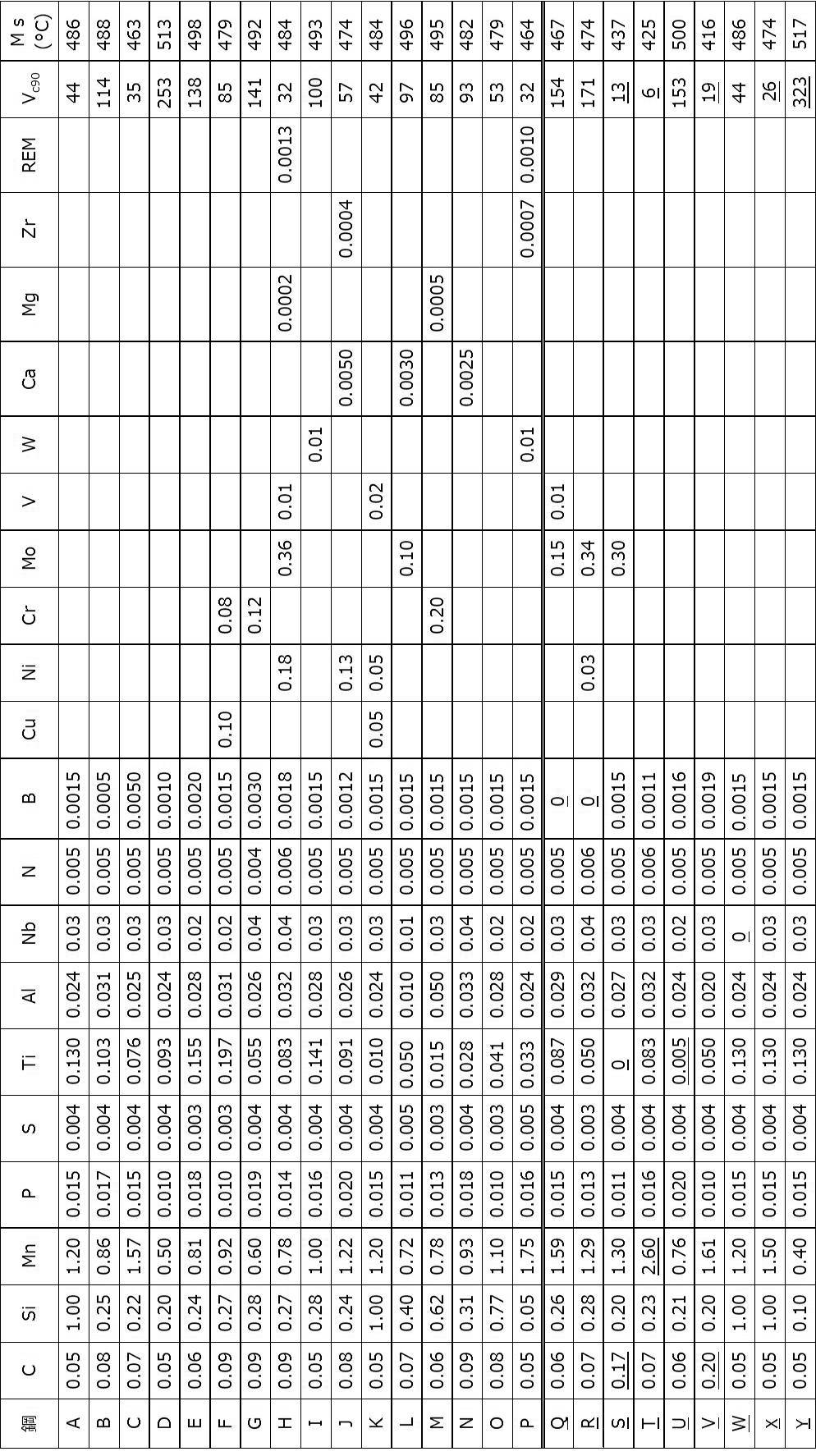

表2に示すように、本開示における化学組成を有し、ベイナイトの面積率が80%以上であり、ベイナイトのパケット粒の平均粒径(平均パケット粒径)が10μm以下であり、パケット粒の平均アスペクト比が2.0以下である実施例1~16の電縫鋼管では、750MPa~1000MPaの範囲の優れた引張強さを示し、かつ、耐内面割れ性に優れていた。
これに対し、Bを含有しない比較例1及び2では、フェライトが増加してベイナイト面積率が低下し、耐内面割れ性が劣化した。また、引張強さも不足した。
また、C含有量が過剰であり、Tiを含有せず、Vc90が小さすぎる比較例3では、フェライトが増加してベイナイト面積率が低下し、平均パケット粒径が大きくなりすぎ、耐内面割れ性が劣化した。この比較例3では、C含有量が多くかつBが含有されているためにVc90は小さいものの、Tiが含有されていないためにBによる焼入れ性向上効果が得られなかったと考えられる。このため、フェライト面積率が高くなり、耐内面割れ性が劣化したと考えられる。また、この比較例3では、Tiによるピンニング効果も得られないために、平均パケット粒径が大きくなりすぎ、その結果、耐内面割れ性が更に劣化したと考えられる。
また、Mn含有量が過剰であり、Vc90が小さすぎる比較例4では、マルテンサイトの面積率が高くなってベイナイト面積率が低下し、引張強さが高くなりすぎ、耐内面割れ性が劣化した。
また、Ti含有量が少なすぎる比較例5では、フェライトが増加してベイナイト面積率が低下し、かつ、平均パケット粒径が大きくなりすぎ、耐内面割れ性が劣化した。また、引張強さも不足した。
また、C含有量が過剰であり、Vc90が小さすぎる比較例6では、マルテンサイトの面積率が高くなってベイナイト面積率が低下し、引張強さが高くなりすぎ、耐内面割れ性が劣化した。
また、Nbを含有しない比較例7では、平均パケット粒径が大きくなりすぎ、耐内面割れ性が劣化した。
また、C含有量が過剰であり、Tiを含有せず、Vc90が小さすぎる比較例3では、フェライトが増加してベイナイト面積率が低下し、平均パケット粒径が大きくなりすぎ、耐内面割れ性が劣化した。この比較例3では、C含有量が多くかつBが含有されているためにVc90は小さいものの、Tiが含有されていないためにBによる焼入れ性向上効果が得られなかったと考えられる。このため、フェライト面積率が高くなり、耐内面割れ性が劣化したと考えられる。また、この比較例3では、Tiによるピンニング効果も得られないために、平均パケット粒径が大きくなりすぎ、その結果、耐内面割れ性が更に劣化したと考えられる。
また、Mn含有量が過剰であり、Vc90が小さすぎる比較例4では、マルテンサイトの面積率が高くなってベイナイト面積率が低下し、引張強さが高くなりすぎ、耐内面割れ性が劣化した。
また、Ti含有量が少なすぎる比較例5では、フェライトが増加してベイナイト面積率が低下し、かつ、平均パケット粒径が大きくなりすぎ、耐内面割れ性が劣化した。また、引張強さも不足した。
また、C含有量が過剰であり、Vc90が小さすぎる比較例6では、マルテンサイトの面積率が高くなってベイナイト面積率が低下し、引張強さが高くなりすぎ、耐内面割れ性が劣化した。
また、Nbを含有しない比較例7では、平均パケット粒径が大きくなりすぎ、耐内面割れ性が劣化した。
また、本開示における化学組成を有するが、1次冷却速度が低すぎた比較例8では、フェライトが増加してベイナイト面積率が低下し、平均パケット粒径が大きくなりすぎ、耐内面割れ性が劣化した。また、引張強さも不足した。
また、本開示における化学組成を有するが、保持温度が高すぎた比較例9では、フェライトが増加してベイナイト面積率が低下し、平均パケット粒径が大きくなりすぎ、耐内面割れ性が劣化した。また、引張強さも不足した。
また、本開示における化学組成を有するが、2次冷却速度が低すぎた比較例10では、引張強さが不足した。引張強さが不足した理由は、2次冷却速度が低すぎたことにより、熱延鋼板が実質的に焼き戻される現象が生じたためと考えられる。
また、本開示における化学組成を有するが、保持時間を0sとした比較例11では、マルテンサイトの面積率が高くなってベイナイト面積率が低下し、耐内面割れ性が劣化した。マルテンサイトの面積率が高くなってベイナイト面積率が低下した理由は、保持時間を0sとしたことにより、ベイナイト変態が起こりにくくなり、その代わりにマルテンサイト変態が起こり易くなったためと考えられる。
また、本開示の化学組成を有するが、熱延鋼板の巻取り温度が高かった比較例12の電縫鋼管では、引張強さが不足した。引張強さが不足した理由は、巻取り温度が高かったことにより、熱延鋼板が実質的に焼き戻される現象が生じたためと考えられる。
また、Vc90が小さすぎる比較例13では、マルテンサイトの面積率が高くなってベイナイト面積率が低下し、耐内面割れ性が劣化した。
また、Vc90が大きすぎる比較例14では、フェライトの面積率が高くなってベイナイト面積率が低下し、耐内面割れ性が劣化した。また、引張強さも不足した。
また、本開示の化学組成を有するが、熱間圧延仕上温度が低すぎた比較例15では、パケット粒の平均アスペクト比が大きくなりすぎ、耐内面割れ性が劣化した。
また、本開示における化学組成を有するが、保持温度が高すぎた比較例9では、フェライトが増加してベイナイト面積率が低下し、平均パケット粒径が大きくなりすぎ、耐内面割れ性が劣化した。また、引張強さも不足した。
また、本開示における化学組成を有するが、2次冷却速度が低すぎた比較例10では、引張強さが不足した。引張強さが不足した理由は、2次冷却速度が低すぎたことにより、熱延鋼板が実質的に焼き戻される現象が生じたためと考えられる。
また、本開示における化学組成を有するが、保持時間を0sとした比較例11では、マルテンサイトの面積率が高くなってベイナイト面積率が低下し、耐内面割れ性が劣化した。マルテンサイトの面積率が高くなってベイナイト面積率が低下した理由は、保持時間を0sとしたことにより、ベイナイト変態が起こりにくくなり、その代わりにマルテンサイト変態が起こり易くなったためと考えられる。
また、本開示の化学組成を有するが、熱延鋼板の巻取り温度が高かった比較例12の電縫鋼管では、引張強さが不足した。引張強さが不足した理由は、巻取り温度が高かったことにより、熱延鋼板が実質的に焼き戻される現象が生じたためと考えられる。
また、Vc90が小さすぎる比較例13では、マルテンサイトの面積率が高くなってベイナイト面積率が低下し、耐内面割れ性が劣化した。
また、Vc90が大きすぎる比較例14では、フェライトの面積率が高くなってベイナイト面積率が低下し、耐内面割れ性が劣化した。また、引張強さも不足した。
また、本開示の化学組成を有するが、熱間圧延仕上温度が低すぎた比較例15では、パケット粒の平均アスペクト比が大きくなりすぎ、耐内面割れ性が劣化した。
Claims (3)
- 母材部及び電縫溶接部を含み、
前記母材部の化学組成が、質量%で、
C:0.02~0.15%、
Si:0.03~1.20%、
Mn:0.30~2.50%、
P:0~0.030%、
S:0~0.010%、
Ti:0.010~0.200%、
Al:0.005~0.500%、
Nb:0.01~0.04%、
N:0.0005~0.006%、
B:0.0005~0.0050%、
Cu:0~1.00%、
Ni:0~1.00%、
Cr:0~1.00%、
Mo:0~0.50%、
V:0~0.20%、
W:0~0.10%、
Ca:0~0.0200%、
Mg:0~0.0200%、
Zr:0~0.0200%、
REM:0~0.0200%、並びに、
残部:Fe及び不純物であり、
下記式(i)によって定義されるVc90が30~300であり、
前記母材部のL断面における肉厚中央部の金属組織において、ベイナイトの面積率が80%以上であり、前記ベイナイトのパケット粒の平均粒径が10μm以下であり、前記パケット粒の平均アスペクト比が2.0以下であり、
管軸方向の引張強さが750~1000MPaであるトーションビーム用アズロール電縫鋼管。
logVc90=2.94-0.75βa … 式(i)
βa=2.7C+0.4Si+Mn+0.45Ni+0.8Cr+2Mo … 式(ii)
〔式(i)中、βaは、式(ii)によって定義される値である。
式(ii)中、各元素記号は、各元素の質量%を表す。〕 - 前記母材部の化学組成が、質量%で、
Cu:0%超1.00%以下、
Ni:0%超1.00%以下、
Cr:0%超1.00%以下、
Mo:0%超0.50%以下、
V:0%超0.20%以下、
W:0%超0.10%以下、
Ca:0%超0.0200%以下、
Mg:0%超0.0200%以下、
Zr:0%超0.0200%以下、及び、
REM:0%超0.0200%以下からなる群から選択される1種以上を含有する請求項1に記載のトーションビーム用アズロール電縫鋼管。 - 外径が50~150mmであり、肉厚が2.0~4.0mmである請求項1又は請求項2に記載のトーションビーム用アズロール電縫鋼管。
Priority Applications (2)
| Application Number | Priority Date | Filing Date | Title |
|---|---|---|---|
| PCT/JP2018/018985 WO2019220577A1 (ja) | 2018-05-16 | 2018-05-16 | トーションビーム用アズロール電縫鋼管 |
| JP2018552891A JP6455650B1 (ja) | 2018-05-16 | 2018-05-16 | トーションビーム用アズロール電縫鋼管 |
Applications Claiming Priority (1)
| Application Number | Priority Date | Filing Date | Title |
|---|---|---|---|
| PCT/JP2018/018985 WO2019220577A1 (ja) | 2018-05-16 | 2018-05-16 | トーションビーム用アズロール電縫鋼管 |
Publications (1)
| Publication Number | Publication Date |
|---|---|
| WO2019220577A1 true WO2019220577A1 (ja) | 2019-11-21 |
Family
ID=65037102
Family Applications (1)
| Application Number | Title | Priority Date | Filing Date |
|---|---|---|---|
| PCT/JP2018/018985 Ceased WO2019220577A1 (ja) | 2018-05-16 | 2018-05-16 | トーションビーム用アズロール電縫鋼管 |
Country Status (2)
| Country | Link |
|---|---|
| JP (1) | JP6455650B1 (ja) |
| WO (1) | WO2019220577A1 (ja) |
Cited By (4)
| Publication number | Priority date | Publication date | Assignee | Title |
|---|---|---|---|---|
| CN110453154A (zh) * | 2019-09-05 | 2019-11-15 | 首钢集团有限公司 | 一种700MPa级汽车扭力梁用钢材及其制备方法 |
| JP2021031702A (ja) * | 2019-08-20 | 2021-03-01 | 日本製鉄株式会社 | 厚鋼板の製造方法及び厚鋼板 |
| CN116018417A (zh) * | 2020-10-22 | 2023-04-25 | 日本制铁株式会社 | 机械结构部件用电焊钢管及其制造方法 |
| JPWO2023214472A1 (ja) * | 2022-05-06 | 2023-11-09 |
Families Citing this family (3)
| Publication number | Priority date | Publication date | Assignee | Title |
|---|---|---|---|---|
| DE102019123334A1 (de) * | 2019-08-30 | 2021-03-04 | Mannesmann Precision Tubes Gmbh | Stahlwerkstoff für eine Antriebswelle, Verfahren zur Herstellung einer Antriebswelle aus diesem Stahlwerkstoff und Antriebswelle hieraus |
| KR102520084B1 (ko) | 2021-02-09 | 2023-04-10 | 경북대학교 산학협력단 | 환형올레핀계 단량체 중합용 이민계 리간드 함유 팔라듐 착체 촉매 및 이를 이용한 환형올레핀계 중합체의 제조방법 |
| CN114959439B (zh) | 2021-02-25 | 2023-05-09 | 宝山钢铁股份有限公司 | 一种高强韧贝氏体地质钻探管及其制造方法 |
Citations (4)
| Publication number | Priority date | Publication date | Assignee | Title |
|---|---|---|---|---|
| JP2010111931A (ja) * | 2008-11-07 | 2010-05-20 | Jfe Steel Corp | 自動車部材用高張力溶接鋼管およびその製造方法 |
| JP2011038154A (ja) * | 2009-08-12 | 2011-02-24 | Jfe Steel Corp | 成形性と耐ねじり疲労特性に優れた自動車足回り部材用高張力鋼材及びその製造方法 |
| WO2011145234A1 (ja) * | 2010-05-18 | 2011-11-24 | 新日本製鐵株式会社 | 低サイクル疲労特性に優れた自動車足回り部品とその製造方法 |
| WO2018066249A1 (ja) * | 2016-10-03 | 2018-04-12 | 新日鐵住金株式会社 | トーションビーム用電縫鋼管 |
-
2018
- 2018-05-16 JP JP2018552891A patent/JP6455650B1/ja active Active
- 2018-05-16 WO PCT/JP2018/018985 patent/WO2019220577A1/ja not_active Ceased
Patent Citations (4)
| Publication number | Priority date | Publication date | Assignee | Title |
|---|---|---|---|---|
| JP2010111931A (ja) * | 2008-11-07 | 2010-05-20 | Jfe Steel Corp | 自動車部材用高張力溶接鋼管およびその製造方法 |
| JP2011038154A (ja) * | 2009-08-12 | 2011-02-24 | Jfe Steel Corp | 成形性と耐ねじり疲労特性に優れた自動車足回り部材用高張力鋼材及びその製造方法 |
| WO2011145234A1 (ja) * | 2010-05-18 | 2011-11-24 | 新日本製鐵株式会社 | 低サイクル疲労特性に優れた自動車足回り部品とその製造方法 |
| WO2018066249A1 (ja) * | 2016-10-03 | 2018-04-12 | 新日鐵住金株式会社 | トーションビーム用電縫鋼管 |
Cited By (11)
| Publication number | Priority date | Publication date | Assignee | Title |
|---|---|---|---|---|
| JP2021031702A (ja) * | 2019-08-20 | 2021-03-01 | 日本製鉄株式会社 | 厚鋼板の製造方法及び厚鋼板 |
| JP7381842B2 (ja) | 2019-08-20 | 2023-11-16 | 日本製鉄株式会社 | 厚鋼板 |
| CN110453154A (zh) * | 2019-09-05 | 2019-11-15 | 首钢集团有限公司 | 一种700MPa级汽车扭力梁用钢材及其制备方法 |
| CN116018417A (zh) * | 2020-10-22 | 2023-04-25 | 日本制铁株式会社 | 机械结构部件用电焊钢管及其制造方法 |
| CN116018417B (zh) * | 2020-10-22 | 2025-08-26 | 日本制铁株式会社 | 机械结构部件用电焊钢管及其制造方法 |
| JPWO2023214472A1 (ja) * | 2022-05-06 | 2023-11-09 | ||
| WO2023214472A1 (ja) * | 2022-05-06 | 2023-11-09 | Jfeスチール株式会社 | 熱延鋼板およびその製造方法ならびに電縫鋼管およびその製造方法 |
| JP2024123207A (ja) * | 2022-05-06 | 2024-09-10 | Jfeスチール株式会社 | 熱延鋼板およびその製造方法 |
| JP7563585B2 (ja) | 2022-05-06 | 2024-10-08 | Jfeスチール株式会社 | 電縫鋼管およびその製造方法 |
| KR20240151784A (ko) | 2022-05-06 | 2024-10-18 | 제이에프이 스틸 가부시키가이샤 | 열연 강판 및 그 제조 방법 그리고 전봉 강관 및 그 제조 방법 |
| JP7750338B2 (ja) | 2022-05-06 | 2025-10-07 | Jfeスチール株式会社 | 熱延鋼板およびその製造方法 |
Also Published As
| Publication number | Publication date |
|---|---|
| JPWO2019220577A1 (ja) | 2020-05-28 |
| JP6455650B1 (ja) | 2019-01-23 |
Similar Documents
| Publication | Publication Date | Title |
|---|---|---|
| JP6455650B1 (ja) | トーションビーム用アズロール電縫鋼管 | |
| EP2949772B1 (en) | Hot-rolled steel sheet and method for manufacturing same | |
| JP6288390B1 (ja) | ラインパイプ用アズロール電縫鋼管 | |
| JP6260757B1 (ja) | ラインパイプ用アズロール電縫鋼管及び熱延鋼板 | |
| US7520943B2 (en) | Steel plate and welded steel tube exhibiting low yield ratio, high strength and high toughness | |
| JP6315157B1 (ja) | トーションビーム用電縫鋼管 | |
| EP2392682A1 (en) | Thick high-tensile-strength hot-rolled steel sheet with excellent low-temperature toughness and process for production of same | |
| WO2017221690A1 (ja) | 厚肉高強度ラインパイプ用熱延鋼板、ならびに、厚肉高強度ラインパイプ用溶接鋼管およびその製造方法 | |
| US10738371B2 (en) | As-rolled type K55 electric resistance welded oil well pipe and hot-rolled steel sheet | |
| US12529435B2 (en) | Electric resistance welded steel pipe and method for manufacturing the same | |
| JP7750338B2 (ja) | 熱延鋼板およびその製造方法 | |
| CN107208215A (zh) | 高强度电焊钢管、高强度电焊钢管用钢板的制造方法和高强度电焊钢管的制造方法 | |
| WO2021200402A1 (ja) | 電縫鋼管およびその製造方法 | |
| CN112673121B (zh) | 扭力梁用电阻焊钢管 | |
| JP7188649B1 (ja) | 自動車部品用電縫鋼管、及び、自動車部品の製造方法 | |
| CA3174757C (en) | Electric resistance welded steel pipe and method for producing the same | |
| WO2024166485A1 (ja) | 熱延鋼板および電縫鋼管 |
Legal Events
| Date | Code | Title | Description |
|---|---|---|---|
| ENP | Entry into the national phase |
Ref document number: 2018552891 Country of ref document: JP Kind code of ref document: A |
|
| 121 | Ep: the epo has been informed by wipo that ep was designated in this application |
Ref document number: 18919211 Country of ref document: EP Kind code of ref document: A1 |
|
| NENP | Non-entry into the national phase |
Ref country code: DE |
|
| 122 | Ep: pct application non-entry in european phase |
Ref document number: 18919211 Country of ref document: EP Kind code of ref document: A1 |