WO2019214052A1 - 手骨x光片骨龄评估方法、装置、计算机设备和存储介质 - Google Patents
手骨x光片骨龄评估方法、装置、计算机设备和存储介质 Download PDFInfo
- Publication number
- WO2019214052A1 WO2019214052A1 PCT/CN2018/095385 CN2018095385W WO2019214052A1 WO 2019214052 A1 WO2019214052 A1 WO 2019214052A1 CN 2018095385 W CN2018095385 W CN 2018095385W WO 2019214052 A1 WO2019214052 A1 WO 2019214052A1
- Authority
- WO
- WIPO (PCT)
- Prior art keywords
- bone
- age
- hand
- hand bone
- picture feature
- Prior art date
- Legal status (The legal status is an assumption and is not a legal conclusion. Google has not performed a legal analysis and makes no representation as to the accuracy of the status listed.)
- Ceased
Links
Images


Classifications
-
- A—HUMAN NECESSITIES
- A61—MEDICAL OR VETERINARY SCIENCE; HYGIENE
- A61B—DIAGNOSIS; SURGERY; IDENTIFICATION
- A61B6/00—Apparatus or devices for radiation diagnosis; Apparatus or devices for radiation diagnosis combined with radiation therapy equipment
- A61B6/50—Apparatus or devices for radiation diagnosis; Apparatus or devices for radiation diagnosis combined with radiation therapy equipment specially adapted for specific body parts; specially adapted for specific clinical applications
- A61B6/505—Apparatus or devices for radiation diagnosis; Apparatus or devices for radiation diagnosis combined with radiation therapy equipment specially adapted for specific body parts; specially adapted for specific clinical applications for diagnosis of bone
-
- A—HUMAN NECESSITIES
- A61—MEDICAL OR VETERINARY SCIENCE; HYGIENE
- A61B—DIAGNOSIS; SURGERY; IDENTIFICATION
- A61B6/00—Apparatus or devices for radiation diagnosis; Apparatus or devices for radiation diagnosis combined with radiation therapy equipment
- A61B6/52—Devices using data or image processing specially adapted for radiation diagnosis
- A61B6/5211—Devices using data or image processing specially adapted for radiation diagnosis involving processing of medical diagnostic data
-
- G—PHYSICS
- G06—COMPUTING OR CALCULATING; COUNTING
- G06T—IMAGE DATA PROCESSING OR GENERATION, IN GENERAL
- G06T7/00—Image analysis
- G06T7/0002—Inspection of images, e.g. flaw detection
- G06T7/0012—Biomedical image inspection
-
- G—PHYSICS
- G06—COMPUTING OR CALCULATING; COUNTING
- G06T—IMAGE DATA PROCESSING OR GENERATION, IN GENERAL
- G06T2207/00—Indexing scheme for image analysis or image enhancement
- G06T2207/10—Image acquisition modality
- G06T2207/10072—Tomographic images
- G06T2207/10081—Computed x-ray tomography [CT]
-
- G—PHYSICS
- G06—COMPUTING OR CALCULATING; COUNTING
- G06T—IMAGE DATA PROCESSING OR GENERATION, IN GENERAL
- G06T2207/00—Indexing scheme for image analysis or image enhancement
- G06T2207/20—Special algorithmic details
- G06T2207/20081—Training; Learning
-
- G—PHYSICS
- G06—COMPUTING OR CALCULATING; COUNTING
- G06T—IMAGE DATA PROCESSING OR GENERATION, IN GENERAL
- G06T2207/00—Indexing scheme for image analysis or image enhancement
- G06T2207/20—Special algorithmic details
- G06T2207/20084—Artificial neural networks [ANN]
-
- G—PHYSICS
- G06—COMPUTING OR CALCULATING; COUNTING
- G06T—IMAGE DATA PROCESSING OR GENERATION, IN GENERAL
- G06T2207/00—Indexing scheme for image analysis or image enhancement
- G06T2207/30—Subject of image; Context of image processing
- G06T2207/30004—Biomedical image processing
- G06T2207/30008—Bone
Definitions
- the present invention relates to the field of computer technology, and in particular, to a bone age X-ray bone age assessment method, device, computer device and storage medium.
- Bone age assessment is widely used in the medical field to study and measure the growth and development of the human body and to diagnose diseases.
- the existing bone age assessment method generally involves X-ray filming of the subject's hand and wrist, and then the doctor interprets it according to the taken X-ray film. Because of the different characteristics of the left hand bone at different ages, doctors can estimate bone age through these characteristics. Doctors generally use G-P mapping and TW3 scoring when diagnosing X-ray films. However, when the G-P map method is evaluated, there are inaccurate problems; and the TW3 scoring method requires the doctor to subjectively judge with empirical knowledge, and the evaluation result is easily affected by other factors, resulting in inaccurate evaluation.
- the main object of the present invention is to provide a bone age X-ray slice bone age assessment method, apparatus, computer device and storage medium that automatically perform bone age assessment and has high evaluation accuracy.
- the invention provides a bone bone X-ray bone age assessment method, which comprises:
- Hand bone x-ray film of the bone age to be predicted is processed into a photo of the hand bone required by the specified pixel;
- the hand bone X-ray bone age estimating device proposed by the invention comprises:
- a first processing unit configured to process a hand bone X-ray film of a bone age to be predicted into a photo of a hand bone required by a specified pixel
- a calculating unit configured to input the photo of the hand bone into a preset bone age estimation model based on a convolutional neural network for calculation;
- an output unit configured to obtain a calculation result output by the bone age evaluation model, where the result is a bone age of the hand bone.
- the computer device of the present invention comprises a memory and a processor, the memory storing computer readable instructions, wherein the processor implements the steps of the method when the computer readable instructions are executed.
- the computer non-volatile readable storage medium of the present invention has stored thereon computer readable instructions, wherein the computer readable instructions are executed by a processor.
- the beneficial effects of the present invention are: processing a hand bone x-ray of a bone age to be predicted into a photo of a hand bone required by a specified pixel; and inputting the hand bone photo into a preset bone age estimation model based on a convolutional neural network for calculation Obtaining a calculation result outputted by the bone age evaluation model, the result is a bone age of the hand bone; and a bone age assessment model based on a convolutional neural network can automatically perform bone age assessment, and the evaluation accuracy is high.
- FIG. 1 is a schematic diagram showing the steps of a bone age X-ray film bone age evaluation method according to an embodiment of the present invention
- FIG. 2 is a schematic diagram showing the steps of a method for assessing the bone age of a hand bone X-ray film according to another embodiment of the present invention
- FIG. 3 is a structural block diagram of a bone bone X-ray bone age estimating device according to an embodiment of the present invention.
- FIG. 4 is a structural block diagram of a calculation unit of a bone bone X-ray bone age estimating device according to an embodiment of the present invention
- FIG. 5 is a structural block diagram of a bone bone X-ray bone age estimating apparatus according to another embodiment of the present invention.
- FIG. 6 is a schematic block diagram showing the structure of a computer device according to an embodiment of the present invention.
- the bone age X-ray slice bone age estimation method in the embodiment includes:
- Step S1 processing the hand bone X-ray film of the bone age to be predicted into a photo of the hand bone required by the specified pixel;
- Step S2 inputting the photo of the hand bone into a preset bone age estimation model based on a convolutional neural network for calculation;
- Step S3 Acquire a calculation result output by the bone age assessment model, and the result is a bone age of the hand bone.
- the bone bone X-ray evaluation method of the hand bone in the embodiment needs to obtain the hand bone X-ray film of the bone age to be predicted, and specifically, the left hand bone X-ray film needs to be acquired, because the age is different.
- the left hand bone has different characteristics, so the age can be accurately estimated according to the different characteristics of the left hand bone X-ray film.
- the insurance company needs to estimate the insurance coverage according to the age of the insured, that is, the preset bone age assessment model based on the convolutional neural network can be used according to the left hand bone X-ray film. Quickly calculate the bone age of the hand bone.
- the preset bone age assessment model based on convolutional neural network needs to be trained through a large amount of hand bone X-ray data.
- the trained bone age assessment model can output the calculation result of the input hand bone photo, and the result is the above hand bone.
- Bone age The bone age assessment model based on convolutional neural network requires a hand-size X-ray film of a specified size. Therefore, before the hand bone X-ray film is input into a preset bone age estimation model based on the convolutional neural network, it needs to be treated.
- the hand bone X-ray film for predicting bone age is processed into a photo of the hand bone required by the specified pixel; wherein the specific treatment method is to treat the hand bone X-ray film of the bone age to be predicted while maintaining the aspect ratio, firstly the hand bone X
- the maximum dimension of the light sheet is adjusted to 256 pixels. It should be pointed out that when the hand bone X-ray film is rectangular, the length of the long side is first adjusted to 256 pixels, and then the shorter side of the X-ray film of the bone is edge-added, so that the hand bone X-ray film becomes 256*.
- a photo of the hand bone of 256-size pixels the hand bone photograph will be taken as a hand bone photograph calculated into a preset bone age estimation model based on a convolutional neural network.
- the above-mentioned hand bone photograph can also be normalized and then input into a bone age estimation model based on a convolutional neural network.
- the normalization method can be processed by the normalize function in opencv, and the above-mentioned hand bone photographs are normalized to a mean value of 0, and the variance is 1.
- the purpose is to make the hand bone photographs have similar statistical distribution, which is convenient for volume-based
- the bone photo of the bone age assessment model of the neural network is processed, and the convergence of the bone age assessment model based on the convolutional neural network can be accelerated.
- step S2 the hand bone x-ray film of the bone age to be predicted is processed into a hand bone photo required by the specified pixel, and then input into a preset bone age estimation model based on a convolutional neural network for calculation, wherein the preset is based on convolution
- the bone age assessment model of the neural network needs to be trained through a large amount of hand bone X-ray data.
- the trained bone age assessment model based on the convolutional neural network can output the calculation result of the input hand bone photograph, and the result is the above hand bone.
- Bone age After the bone age assessment model based on the convolutional neural network is successfully trained, after inputting the photo of the hand bone required by the specified pixel, the bone age of the hand bone is calculated based on the bone age evaluation model of the convolutional neural network.
- step S3 the display device obtains the calculation result output by the bone age evaluation model, and the calculation result is the bone age of the hand bone, and the bone age of the hand bone is displayed by the display device or printed by the printing device.
- the insurance company needs to assess the amount of insurance coverage based on the age of the policyholder.
- the staff of the insurance company asks the insured to first fill in the personal information of the insured, including personal information such as the age, occupation, income and address of the insured, because the insured amount needs to be assessed according to the age of the insured, therefore, The accuracy of the insured's age is very important.
- the insurance company's staff will guide the insured to first collect the X-ray film of the insured's left hand bone through the X-ray machine equipment, and input the X-ray film of the insured's left hand bone into the left hand bone. X-ray films were evaluated for age in devices that were evaluated for age.
- the pre-stored program in the device processes the input left-hand bone X-ray film into a photo of the hand bone required by the specified pixel; and calculates the image of the opponent bone in the bone age estimation model based on the convolutional neural network; and obtains the output of the bone age evaluation model Calculating the result, the result is the bone age of the hand bone, and comparing the bone age of the hand bone with the age filled by the insured person, so as to obtain whether the age filled in by the insured is true and accurate, it is necessary to point out that when the insured The age and the age error detected by the device are less than 0.8 years, which means that the age filled by the policyholder is true and accurate.
- Step S21 performing convolution calculation on the photo of the hand bone to obtain a first picture feature
- Step S22 performing multiple convolution calculation on the first picture feature to obtain a second picture feature
- Step S23 performing spatial transformation and alignment processing on the second picture feature by using a spatial transformation network to obtain a third picture feature
- Step S24 performing convolution calculation on the third picture feature to obtain a fourth picture feature
- Step S25 the fourth picture features are combined by a fully connected layer to form a global picture feature, thereby outputting a calculation result.
- step S21 in the bone age estimation model based on the convolutional neural network in the embodiment, for the input hand bone photo, a convolution calculation of the bone photo is required to obtain a low-dimensional image feature as the first picture.
- the Overfeat network is used as a convolutional layer of the bone image for image feature extraction; when the features of the hand bone photo are extracted through the Overfeat network, a large dimension of the image feature is obtained, in order to facilitate multiple convolution
- the calculation is performed by performing a dimensionality reduction on the extracted image features by using a pooling layer to obtain a first picture feature, where the pooling layer can be processed by using a maximum pool or an average pool, in this embodiment.
- the processing is performed by taking the maximum pooling method.
- the bone age estimation model based on the convolutional neural network in the embodiment performs multiple iterative convolution calculations on the first picture feature to obtain a second picture feature. Specifically, it is necessary to perform three iterative convolution calculations on the first picture feature to obtain a high-dimensional picture feature, wherein each convolution calculation processes the first picture feature through a convolution layer, and then passes through a pooling
- the layer performs the dimension reduction processing on the extracted image features, where the pooling layer can be processed by using the maximum pooling or the average pooling method. In this embodiment, the processing is performed by taking the maximum pooling method.
- the picture features obtained by one convolution calculation are iteratively convoluted, thereby obtaining a high-dimensional second picture feature by performing three iterative convolution calculations on the first picture feature.
- step S23 since the hand bone X-ray film is affected by factors such as exposure time and shooting angle during the shooting process, the spatial difference of the hand bone X-ray film is large, and the bone age is based on the convolutional neural network.
- the evaluation model is calculated, when the space difference corresponding to the second picture feature outputted by the convolution calculation is large, the second picture feature needs to be spatially transformed and aligned, so the space of the second picture feature is spatially transformed by the spatial transformation network. Transformation and alignment can make the calculation results of the bone age assessment model based on convolutional neural network more accurate.
- the spatial transformation network in this embodiment needs to first estimate six transformation parameters in the spatial transformation network, and can adaptively transform and align the second image features according to the six parameters, and the specific operations include translation, scaling, and rotation. And other geometric transformations, etc.
- the above six parameters can be estimated by the Backpropagation algorithm (backpropagation algorithm).
- the second picture feature can be spatially transformed and aligned through the spatial transformation network to obtain the third picture feature.
- the spatial transformation network is added to the bone age assessment model based on convolutional neural network to reduce the influence of the spatial difference of the hand bone X-rays on the evaluation results of the bone age assessment model based on the convolutional neural network, so that the convolutional neural network is based on the convolutional neural network.
- the calculation results of the bone age assessment model output are more accurate.
- step S24 the bone age estimation model based on the convolutional neural network in the embodiment performs spatial transformation and alignment on the second picture feature through the spatial transformation network to obtain a third picture feature, before processing through the fully connected layer.
- Convolution calculation is needed. Specifically, a convolution calculation is performed on the third picture feature to extract picture features, and then the extracted picture features are subjected to dimensionality reduction through a pooling layer, wherein the pooling layer can The processing is performed by means of the maximum pooling or the average pooling. In this embodiment, the processing is performed by taking the maximum pooling.
- the fourth picture feature is obtained through a convolution calculation, thereby facilitating inputting the fourth picture feature into the fully connected layer for processing.
- step S25 since the fourth picture feature obtained by the convolution calculation is a partial picture feature, the fourth picture feature needs to be combined by the fully connected layer to form a global picture feature, and finally the hand bone is calculated according to the global picture feature. Bone age.
- sample data includes a photo of a hand bone of a known bone age, and bone age data corresponding to the hand bone photo of the known bone age;
- the sample data of the training set is input into a preset convolutional neural network for training, and a result training model is obtained;
- the result training model is recorded as the bone age estimation model based on the convolutional neural network.
- the bone age assessment model based on convolutional neural network it can only be used to calculate the bone age of the hand bone after the training is completed.
- the sample data is divided into a training set and a test set, wherein the sample data includes a photo of the hand bone of a known bone age, and The bone age data corresponding to the hand bone photograph of the above known bone age.
- the sample data of the above training set is input into a preset convolutional neural network for training, and a result training model for performing bone age assessment is obtained.
- the hand bone photograph of the known bone age in the sample data of the test set is input to the bone age prediction result of the hand bone photograph predicted by the result training model, and the hand bone in the sample data of the test set is passed
- the actual bone age result of the photograph is compared with the predicted bone age of the hand bone photograph predicted by the result training model to verify whether it is within the preset error range, specifically, the bone age of the hand bone photograph predicted by the result training model.
- the predicted value is the difference between the predicted bone age of the hand bone photo calculated by the Euclidean loss layer and the true value of the bone age of the hand bone photograph.
- the calculation formula is In the formula, pred is the predicted bone age of the hand bone photograph, and the true value of the bone age of the hand bone photograph is taken. The difference between the predicted bone age of the hand bone photograph and the true value of the bone age of the hand bone photograph is measured by the Euclidean loss layer. When the value calculated by the Euclidean loss layer is less than the preset value, the verification is passed, and the result training model can be used as the above-mentioned bone age estimation model based on the convolutional neural network.
- the determination is based on the convolutional nerve
- the training of the bone age assessment model of the network is completed.
- a method for assessing the skeletal age of the hand bone X-ray in another embodiment, before the step S21 of performing convolution calculation on the hand bone photograph to obtain the first picture feature, further includes:
- Step S201 performing data augmentation processing on the hand bone photograph.
- step S201 since the bone age estimation model based on the convolutional neural network is trained, data enrichment can be performed on the input hand bone photograph, that is, m equally spaced n is uniformly extracted in each input hand bone photograph.
- the block area of *n adds all the extracted block areas to the training data, thereby increasing the size of the training set, effectively avoiding the occurrence of over-fitting in the training process and improving the training effect.
- the bone age assessment model based on the convolutional neural network is completed, when the bone age assessment model is performed by the convolutional neural network, the data can be augmented by inputting the hand bone photograph, and the training set can be increased.
- the size is not only effective to avoid the occurrence of over-fitting in the calculation process, but also improve the accuracy of the calculation.
- the method for assessing the bone age of the hand bone X-ray film in the embodiment, before the step S1 of processing the hand bone x-ray film of the bone age to be predicted into the hand bone photo required by the specified pixel, includes:
- step S103 the bones of the epiphysis, the metaphysis, and the wrist in the candidate hand bone X-ray film are selected as the hand bone X-ray film of the bone age to be predicted.
- step S103 since the bones in the hand bone, the metaphysis, and the bone at the wrist are the most characteristically differentiated bone portions for age assessment, only the hand bone x-rays of the candidate bone age to be predicted may be selected.
- These characteristic bone parts serve as input pictures through a bone age assessment model based on convolutional neural networks.
- the feature area model based on the deep network can be used to select the bone age feature regions such as the skeleton, the dry segment and the wrist at the wrist by means of marking, and the calculation amount can be reduced and the efficiency can be improved without affecting the bone age prediction result.
- the specific steps are: firstly, the hand bone X-ray film of the bone age to be predicted is uniformly scaled to a fixed size, for example, to a size of 1024*1024 pixels; secondly, according to the bone age evaluation TW3 method, the hand bone X-ray film to be predicted is marked.
- the coordinates of the bone-age feature area such as the epiphysis, the dry segment and the bone at the wrist are saved and corresponding to the bounding box; and the labeled X-ray film to be predicted corresponding to the marked bounding box coordinates
- Data enhancement is performed, and the data enhancement manner includes graphic operations such as rotation, mirror flipping, scaling, and panning. Accordingly, the marked bounding box coordinates also need to undergo the same processing.
- the data-enhanced bounding box coordinates and the labeled hand bone X-rays to be predicted are input into the deep network as training data to train the deep network-based feature region model.
- the bounding box is Coordinates (4 values) are used as training tags to train the feature region model based on the deep network.
- the feature region model based on the depth network can automatically select the bone part of the hand bone X-ray feature to be predicted.
- the coordinates of the X-ray image of the characteristic bone portion of the hand bone X-ray film to be predicted can be selected according to the coordinates of the characteristic bone portion.
- the step S103 of selecting the bone of the epiphysis, the metaphyseal end and the wrist at the wrist of the candidate hand bone X-ray film as the hand bone X-ray film of the bone age to be predicted includes:
- Step S102 adjusting the contrast of the candidate hand bone X-ray film.
- the method Before the adjusting the contrast S102 of the candidate hand bone X-ray film, the method includes:
- step S101 the background portion of the candidate hand bone X-ray film is unified into black.
- step S101 before the bones of the epiphysis, the metaphysis, and the wrist in the candidate hand bone X-ray film are selected as the hand bone x-rays of the bone age to be predicted, the candidate hand bone X-ray film can also be adjusted.
- the contrast is such that the picture features in the hand bone X-ray film are more obvious, so that the training model based on the bone age estimation model based on the convolutional neural network is more efficient and the evaluation result is more accurate.
- the background portion of the alternative hand bone X-ray film may contain a little other color in addition to black, it is necessary to first unify the background of the hand bone X-ray film to be predicted. Into black.
- the specific method is to first select a pixel block of a certain size at four angular positions of the hand bone X-ray film to be predicted, for example, a pixel block of 10*10 pixels, calculate the mean value of the four pixel blocks, and then calculate The obtained mean value is compared with half of the maximum pixel value that can be achieved by the hand bone X-ray film of the bone age to be predicted, and the X-ray film is normalized to 0 to the maximum pixel value, thereby realizing the hand bone X to be predicted.
- the background of the light sheet is unified into black.
- step S102 after the background portion of the hand bone radiograph of the bone age to be predicted is processed to be black, the step of adjusting the contrast of the hand bone x-ray film of the candidate bone age to be predicted may be performed.
- the hand bone X-ray film of the bone age to be predicted is a three-channel picture
- the three-channel picture needs to be grayed out first, and the component method, the maximum value method, and the average can be used.
- the method of the value method and the weighted average method performs grayscale processing on the X-ray film.
- the contrast of the hand bone X-ray film of the candidate bone age to be predicted is adjusted; the specific method is to adopt the contrast contrast adaptive histogram equalization algorithm (CLAHE algorithm).
- CLAHE algorithm contrast adaptive histogram equalization algorithm
- the contrast adaptive histogram equalization algorithm adopts a histogram of the adaptive trim image, and then uses the trimmed histogram to predict the bone age.
- the balance adjustment of the hand bone radiograph has the advantage of making the contrast of the hand bone x-ray of the candidate bone age to be predicted more natural.
- the hand bone X-ray film of the bone age to be predicted is processed into a photo of the hand bone required by the specified pixel; the hand bone photo is input into a preset bone age estimation model based on the convolutional neural network for calculation;
- the calculation result output by the bone age evaluation model is the bone age of the hand bone; the bone age assessment model based on the convolutional neural network can automatically perform bone age assessment, and the evaluation accuracy is high; and the feature area based on the depth network is utilized
- the model selects the bone age feature areas such as the epiphysis, the dry segment and the bone at the wrist, and reduces the calculation amount and improves the efficiency without affecting the bone age prediction result.
- the bone bone X-ray aging apparatus of the present embodiment includes:
- a first processing unit 10 configured to process a hand bone x-ray film of a bone age to be predicted into a photo of a hand bone required by a specified pixel;
- the calculating unit 20 is configured to input the photo of the hand bone into a preset bone age estimation model based on a convolutional neural network for calculation;
- the output unit 30 is configured to obtain a calculation result output by the bone age evaluation model, and the result is a bone age of the hand bone.
- the bone bone X-ray aging apparatus of the hand bone needs to obtain the hand bone X-ray film of the bone age to be predicted, and specifically, the left hand bone X-ray film needs to be obtained, because the left hand bone is different at different age stages.
- the age can be accurately assessed based on the different characteristics of the left-handed X-ray film taken.
- the insurance company needs to estimate the insurance coverage according to the age of the insured, that is, the preset bone age assessment model based on the convolutional neural network can be used according to the left hand bone X-ray film. Quickly calculate the bone age of the hand bone.
- the preset bone age assessment model based on convolutional neural network needs to be trained through a large amount of hand bone X-ray data.
- the trained bone age assessment model can output the calculation result of the input hand bone photo, and the result is the above hand bone.
- Bone age The bone age assessment model based on convolutional neural network requires a hand-size X-ray film of a specified size. Therefore, before the hand bone X-ray film is input into a preset bone age estimation model based on the convolutional neural network for calculation, the first process is performed.
- the unit 10 processes the hand bone x-ray film of the bone age to be predicted into a photo of the hand bone required by the specified pixel; wherein the specific processing method is that the hand bone X-ray film of the bone age to be predicted is kept unchanged in the aspect ratio, Adjust the maximum dimension of the hand bone X-ray to 256 pixels. It should be pointed out that when the hand bone X-ray film is rectangular, the length of the long side is first adjusted to 256 pixels, and then the shorter side of the X-ray film of the bone is edge-added, so that the hand bone X-ray film becomes 256*.
- a photo of the hand bone of 256-size pixels the hand bone photograph will be taken as a hand bone photograph calculated into a preset bone age estimation model based on a convolutional neural network.
- the above-mentioned hand bone photograph can also be normalized and then input into a bone age estimation model based on a convolutional neural network.
- the normalization method can be processed by the normalize function in opencv, and the above-mentioned hand bone photographs are normalized to a mean value of 0, and the variance is 1.
- the purpose is to make the hand bone photographs have similar statistical distribution, which is convenient for volume-based
- the bone photo of the bone age assessment model of the neural network is processed, and the convergence of the bone age assessment model based on the convolutional neural network can be accelerated.
- the calculating unit 20 processes the hand bone x-ray film of the bone age to be predicted into a hand bone photo required by the specified pixel, and inputs it into a preset bone age estimation model based on a convolutional neural network for calculation, wherein the preset convolutional neural network is used.
- the bone age assessment model needs to be trained through a large amount of hand bone X-ray data.
- the trained bone age assessment model based on convolutional neural network can output the calculation result of the input hand bone photograph, which is the bone age of the above hand bone.
- the bone age of the hand bone is calculated based on the bone age evaluation model of the convolutional neural network.
- the output unit 30 obtains the calculation result output by the bone age evaluation model, and the calculation result is the bone age of the hand bone, and controls the bone age of the hand bone to be displayed through the display device or printed by the printing device.
- the insurance company needs to assess the amount of insurance coverage based on the age of the policyholder.
- the staff of the insurance company asks the insured to first fill in the personal information of the insured, including personal information such as the age, occupation, income and address of the insured, because the insured amount needs to be assessed according to the age of the insured, therefore, The accuracy of the insured's age is very important.
- the insurance company's staff will guide the insured to first collect the X-ray film of the insured's left hand bone through the X-ray machine equipment, and input the X-ray film of the insured's left hand bone into the left hand bone. X-ray films were evaluated for age in devices that were evaluated for age.
- the pre-stored program in the device processes the input left-hand bone X-ray film into a photo of the hand bone required by the specified pixel; and calculates the image of the opponent bone in the bone age estimation model based on the convolutional neural network; and obtains the output of the bone age evaluation model Calculating the result, the result is the bone age of the hand bone, and comparing the bone age of the hand bone with the age filled by the insured person, so as to obtain whether the age filled in by the insured is true and accurate, it is necessary to point out that when the insured The age and the age error detected by the device are less than 0.8 years, which means that the age filled by the policyholder is true and accurate.
- the hand bone X-ray bone age estimating device in the embodiment, the calculating unit 20 includes:
- the first processing module 210 is configured to perform convolution calculation on the hand bone photo to obtain a first picture feature
- the second processing module 220 is configured to perform multiple iterative convolution calculations on the first picture feature to obtain a second picture feature.
- the transform module 230 is configured to perform spatial transformation and alignment processing on the second picture feature by using a spatial transformation network to obtain a third picture feature;
- a third processing module 240 configured to perform convolution calculation on the third picture feature to obtain a fourth picture feature
- the executing module 250 is configured to combine the fourth picture features together by the fully connected layer to form a global picture feature, thereby outputting a calculation result.
- the first processing module 210 is configured to perform a convolution calculation on the first bone photo to obtain a low-dimensional image feature as the first Picture features, specifically, use the Overfeat network as a convolutional layer of the bone image for image feature extraction; when extracting the features of the hand bone photo through the Overfeat network, a large dimensional image feature will be obtained, in order to facilitate multiple volumes.
- the product is calculated by using a pooling layer to perform the dimension reduction processing on the extracted image features.
- the pooling layer can be processed by using the maximum pooling or the average pooling method. In this embodiment, Specifically, the method of taking the maximum pool is adopted.
- the second processing module 220 is configured to perform a plurality of iterative convolution calculations on the first picture feature to obtain a second picture feature. Specifically, it is necessary to perform three iterative convolution calculations on the first picture feature to obtain a high-dimensional picture feature, wherein each convolution calculation processes the first picture feature through a convolution layer, and then passes through a pooling The layer performs the dimension reduction processing on the extracted image features, where the pooling layer can be processed by using the maximum pooling or the average pooling method. In this embodiment, the processing is performed by taking the maximum pooling method.
- the picture features obtained by one convolution calculation are iteratively convoluted, thereby obtaining a high-dimensional second picture feature by performing three iterative convolution calculations on the first picture feature.
- the spatial difference of the hand bone X-ray film is large, and is calculated by the bone age estimation model based on the convolutional neural network. If the spatial difference corresponding to the second picture feature outputted by the convolution calculation is large, the second picture feature needs to be spatially transformed and aligned, and the transformation module 230 spatially transforms and aligns the second picture feature through the spatial transformation network. It can make the calculation result of the bone age assessment model based on convolutional neural network more accurate.
- the spatial transformation network in this embodiment needs to first estimate six transformation parameters in the spatial transformation network, and can adaptively transform and align the second image features according to the six parameters, and the specific operations include translation, scaling, and rotation.
- the above six parameters can be estimated by the Backpropagation algorithm (backpropagation algorithm).
- the second picture feature can be spatially transformed and aligned through the spatial transformation network to obtain the third picture feature.
- the spatial transformation network is added to the bone age assessment model based on convolutional neural network to reduce the influence of the spatial difference of the hand bone X-rays on the evaluation results of the bone age assessment model based on the convolutional neural network, so that the convolutional neural network is based on the convolutional neural network.
- the calculation results of the bone age assessment model output are more accurate.
- the bone age estimation model based on the convolutional neural network in this embodiment performs spatial transformation and alignment on the second picture feature through the spatial transformation network to obtain a third picture feature.
- the third processing module 240 Performing convolution calculation on the third picture feature, in particular, performing a convolution calculation on the third picture feature to extract the picture feature, and then performing dimension reduction processing on the extracted picture feature through a pooling layer, where The pooling layer can be processed in the manner of the maximum pooling or the average pooling. In this embodiment, the processing is performed by taking the maximum pooling method.
- the fourth picture feature is obtained through a convolution calculation, thereby facilitating inputting the fourth picture feature into the fully connected layer for processing.
- the fourth picture feature obtained by the convolution calculation is a partial picture feature
- the executing module 250 is configured to combine the fourth picture features to form a global picture feature through the fully connected layer, and finally calculate the hand bone according to the global picture feature. Bone age.
- sample data includes a photo of a hand bone of a known bone age, and bone age data corresponding to the hand bone photo of the known bone age;
- the sample data of the training set is input into a preset convolutional neural network for training, and a result training model is obtained;
- the result training model is recorded as the bone age estimation model based on the convolutional neural network.
- the bone age assessment model based on convolutional neural network it can only be used to calculate the bone age of the hand bone after the training is completed.
- the sample data is divided into a training set and a test set, wherein the sample data includes a photo of the hand bone of a known bone age, and The bone age data corresponding to the hand bone photograph of the above known bone age.
- the sample data of the above training set is input into a preset convolutional neural network for training, and a result training model for performing bone age assessment is obtained.
- the hand bone photograph of the known bone age in the sample data of the test set is input to the bone age prediction result of the hand bone photograph predicted by the result training model, and the hand bone in the sample data of the test set is passed
- the actual bone age result of the photograph is compared with the predicted bone age of the hand bone photograph predicted by the result training model to verify whether it is within the preset error range, specifically, the bone age of the hand bone photograph predicted by the result training model.
- the predicted value is the difference between the predicted bone age of the hand bone photo calculated by the Euclidean loss layer and the true value of the bone age of the hand bone photograph.
- the calculation formula is In the formula, pred is the predicted bone age of the hand bone photograph, and the true value of the bone age of the hand bone photograph is taken. The difference between the predicted bone age of the hand bone photograph and the true value of the bone age of the hand bone photograph is measured by the Euclidean loss layer. When the value calculated by the Euclidean loss layer is less than the preset value, the verification is passed, and the result training model can be used as the above-mentioned bone age estimation model based on the convolutional neural network.
- the determination is based on the convolutional nerve
- the training of the bone age assessment model of the network is completed.
- the hand bone X-ray bone age estimating device, the calculating unit 20, further includes:
- the augmentation module 260 is configured to perform data augmentation processing on the hand bone photo.
- the augmentation module 260 can be used for data augmentation of the input hand bone photograph, that is, uniformly extracting m equal intervals in each input hand bone photograph.
- the n*n block area adds all the extracted block areas to the training data, thereby increasing the size of the training set, effectively avoiding the occurrence of over-fitting in the training process and improving the training effect.
- the bone age assessment model based on the convolutional neural network is completed, when the bone age assessment model is performed by the convolutional neural network, the data can be augmented by inputting the hand bone photograph, and the training set can be increased.
- the size is not only effective to avoid the occurrence of over-fitting in the calculation process, but also improve the accuracy of the calculation.
- the bone bone X-ray aging apparatus of the present embodiment further includes:
- the selecting unit 103 is configured to select the bones of the epiphysis, the metaphysis, and the wrist in the candidate hand bone X-ray film as the hand bone X-ray of the bone age to be predicted.
- the selection unit 103 can select the bone age feature regions such as the skeleton, the dry segment and the skeleton at the wrist through the feature region model of the depth network by means of marking, and reduce the calculation amount without affecting the bone age prediction result. ,Improve efficiency.
- the specific steps are: firstly, the hand bone X-ray film of the bone age to be predicted is uniformly scaled to a fixed size, for example, to a size of 1024*1024 pixels; secondly, according to the bone age evaluation TW3 method, the hand bone X-ray film to be predicted is marked.
- the coordinates of the bone-age feature area such as the epiphysis, the dry segment and the bone at the wrist are saved and corresponding to the bounding box; and the labeled X-ray film to be predicted corresponding to the marked bounding box coordinates
- Data enhancement is performed, and the data enhancement manner includes graphic operations such as rotation, mirror flipping, scaling, and panning. Accordingly, the marked bounding box coordinates also need to undergo the same processing.
- the data-enhanced bounding box coordinates and the labeled hand bone X-rays to be predicted are input into the deep network as training data to train the deep network-based feature region model.
- the bounding box is Coordinates (4 values) are used as training tags to train the feature region model based on the deep network.
- the feature region model based on the depth network can automatically select the bone part of the hand bone X-ray feature to be predicted.
- the coordinates of the X-ray image of the characteristic bone portion of the hand bone X-ray film to be predicted can be selected according to the coordinates of the characteristic bone portion.
- the unifying unit 101 is configured to unify the background portion of the candidate hand bone X-ray film into black.
- the second processing unit 102 is configured to adjust a contrast of the candidate hand bone X-ray film.
- the second processing unit 102 is configured to adjust the candidate hand bone X-ray before selecting the bone of the epiphysis, the metaphysis, and the wrist in the candidate hand bone X-ray as the hand bone x-ray of the bone age to be predicted. Contrast, to make the picture features in the hand bone X-ray film more obvious, so that the training results by the convolutional neural network-based bone age assessment model are more efficient and the evaluation results are more accurate.
- the unified unit 101 is used to unify the hand bone X-ray to be predicted. The background of the piece is black.
- the specific method is to first select a pixel block of a certain size at four angular positions of the hand bone X-ray film to be predicted, for example, a pixel block of 10*10 pixels, calculate the mean value of the four pixel blocks, and then calculate The obtained mean value is compared with half of the maximum pixel value that can be achieved by the hand bone X-ray film of the bone age to be predicted, and the X-ray film is normalized to 0 to the maximum pixel value, thereby realizing the hand bone X to be predicted.
- the background of the light sheet is unified into black.
- the second processing unit 102 After processing the background portion of the hand bone radiograph of the bone age to be predicted as black, the second processing unit 102 adjusts the contrast of the hand bone x-ray film of the candidate bone age to be predicted. It should be pointed out that when the hand bone X-ray film of the bone age to be predicted is a three-channel picture, the three-channel picture needs to be grayed out first, and the component method, the maximum value method, and the average can be used. The method of the value method and the weighted average method performs grayscale processing on the X-ray film.
- the contrast of the hand bone X-ray film of the candidate bone age to be predicted is adjusted; the specific method is to adopt the contrast contrast adaptive histogram equalization algorithm (CLAHE algorithm).
- CLAHE algorithm contrast adaptive histogram equalization algorithm
- the contrast adaptive histogram equalization algorithm adopts a histogram of the adaptive trim image, and then uses the trimmed histogram to predict the bone age.
- the balance adjustment of the hand bone radiograph has the advantage of making the contrast of the hand bone x-ray of the candidate bone age to be predicted more natural.
- the computer device may be a server, and its internal structure may be as shown in FIG. 6.
- the computer device includes a processor, memory, network interface, and database connected by a system bus. Among them, the computer designed processor is used to provide calculation and control capabilities.
- the memory of the computer device includes a non-volatile storage medium, an internal memory.
- the non-volatile storage medium stores an operating system, computer readable instructions, and a database.
- the memory provides an environment for the operation of operating systems and computer readable instructions in a non-volatile storage medium.
- the database of the computer device is used for data such as a preset convolutional neural network based X-ray bone age assessment model.
- the network interface of the computer device is used to communicate with an external terminal via a network connection.
- the computer readable instructions are executed by the processor to implement a hand bone X-ray bone age assessment method.
- the processor performs the above steps of the skeletal age evaluation method of the hand bone X-ray: processing the hand bone x-ray film of the bone age to be predicted into a photo of the hand bone required by the specified pixel; and inputting the hand bone photo into the preset convolution-based convolution Calculating in the bone age assessment model of the neural network; obtaining a calculation result output by the bone age assessment model, the result being the bone age of the hand bone.
- the above computer equipment based on a convolutional neural network, establishes a bone age assessment model based on a convolutional neural network, and processes the hand bone photo of the hand bone to be predicted into a specified pixel requirement, and inputs the hand bone photo to the preset.
- Calculating in the bone age estimation model based on the convolutional neural network obtaining the calculation result outputted by the bone age evaluation model, the result is the bone age of the hand bone, and the bone age estimation model based on the convolutional neural network can automatically perform the bone age Evaluation and high accuracy of evaluation.
- the step of inputting the hand bone photo into a preset convolutional neural network-based bone age assessment model comprises: performing convolution calculation on the hand bone photo to obtain a first picture feature. Performing a plurality of iterative convolution calculations on the first picture feature to obtain a second picture feature; spatially transforming and aligning the second picture feature by a spatial transform network to obtain a third picture feature. Performing convolution calculation on the third picture feature to obtain a fourth picture feature; combining the fourth picture features by a fully connected layer to form a global picture feature, thereby outputting a calculation result.
- the processor before performing the convolution calculation on the hand bone photo to obtain the first picture feature, includes: performing data augmentation processing on the hand bone photo to increase the size of the training set. Effectively avoid the occurrence of over-fitting in the calculation process, and improve the accuracy of the calculation.
- the method before the step of processing the hand bone x-ray of the bone age to be predicted into the photo of the hand bone required by the specified pixel, the method comprises: selecting the bone of the hand bone, the metaphysis, and the bone at the wrist as the X-ray of the hand bone
- the hand bone X-ray film of the bone age to be predicted is used to select the bone age feature regions such as the epiphysis, the dry segment and the wrist at the wrist by using the feature area model based on the depth network, and reduce the bone age prediction result without affecting the bone age prediction result. Calculate the amount and increase the efficiency.
- the method comprises: adjusting the contrast of the hand bone X-ray film.
- the adjusting the contrast of the hand bone X-ray film comprises: unifying the background portion of the hand bone X-ray film into black.
- FIG. 6 is only a block diagram of a part of the structure related to the solution of the present application, and does not constitute a limitation of the computer device to which the solution of the present application is applied.
- An embodiment of the present invention further provides a computer non-volatile readable storage medium having stored thereon computer readable instructions, and when the computer readable instructions are executed by the processor, a bone bone X-ray bone age assessment method is implemented.
- the hand bone x-ray film of the bone age to be predicted is processed into a photo of the hand bone required by the specified pixel; the hand bone photo is input into a preset bone age estimation model based on a convolutional neural network for calculation; and the bone age is obtained.
- the calculation result of the model output is evaluated, and the result is the bone age of the hand bone.
- the above computer non-volatile readable storage medium is based on a convolutional neural network to establish a bone age estimation model based on a convolutional neural network, and the hand bone photo of the hand bone to be predicted to be processed into a specified pixel is required to be
- the hand bone photograph is input into a preset bone age estimation model based on a convolutional neural network, and the calculation result outputted by the bone age evaluation model is obtained, and the result is the bone age of the hand bone, and the bone age based on the convolutional neural network
- the evaluation model can automatically perform bone age assessment and has high evaluation accuracy.
- the step of inputting the hand bone photo into a preset convolutional neural network-based bone age assessment model comprises: performing convolution calculation on the hand bone photo to obtain a first picture feature. Performing a plurality of iterative convolution calculations on the first picture feature to obtain a second picture feature; spatially transforming and aligning the second picture feature by a spatial transform network to obtain a third picture feature. Performing convolution calculation on the third picture feature to obtain a fourth picture feature; combining the fourth picture features by a fully connected layer to form a global picture feature, thereby outputting a calculation result.
- the processor before performing the convolution calculation on the hand bone photo to obtain the first picture feature, includes: performing data augmentation processing on the hand bone photo to increase the size of the training set. Effectively avoid the occurrence of over-fitting in the calculation process, and improve the accuracy of the calculation.
- the method before the step of processing the hand bone x-ray of the bone age to be predicted into the photo of the hand bone required by the specified pixel, the method comprises: selecting the bone of the hand bone, the metaphysis, and the bone at the wrist as the X-ray of the hand bone
- the hand bone X-ray film of the bone age to be predicted is used to select the bone age feature regions such as the epiphysis, the dry segment and the wrist at the wrist by using the feature area model based on the depth network, and reduce the bone age prediction result without affecting the bone age prediction result. Calculate the amount and increase the efficiency.
- the method comprises: adjusting the contrast of the hand bone X-ray film.
- the adjusting the contrast of the hand bone X-ray film comprises: unifying the background portion of the hand bone X-ray film into black.
- Non-volatile memory can include read only memory (ROM), programmable ROM (PROM), electrically programmable ROM (EPROM), electrically erasable programmable ROM (EEPROM), or flash memory.
- Volatile memory can include random access memory (RAM) or external cache memory.
- RAM is available in a variety of forms, such as static RAM (SRAM), dynamic RAM (DRAM), synchronous DRAM (SDRAM), dual speed rate SDRAM (SSRSDRAM), enhanced SDRAM (ESDRAM), synchronization.
- SRAM static RAM
- DRAM dynamic RAM
- SDRAM synchronous DRAM
- SSRSDRAM dual speed rate SDRAM
- ESDRAM enhanced SDRAM
- SLDRAM Link (Synchlink) DRAM
- SLDRAM Memory Bus
- RDRAM Direct RAM
- DRAM Direct Memory Bus Dynamic RAM
- RDRAM Memory Bus Dynamic RAM
Landscapes
- Health & Medical Sciences (AREA)
- Engineering & Computer Science (AREA)
- Life Sciences & Earth Sciences (AREA)
- Medical Informatics (AREA)
- General Health & Medical Sciences (AREA)
- Radiology & Medical Imaging (AREA)
- Physics & Mathematics (AREA)
- Nuclear Medicine, Radiotherapy & Molecular Imaging (AREA)
- Biomedical Technology (AREA)
- Public Health (AREA)
- Biophysics (AREA)
- Optics & Photonics (AREA)
- Pathology (AREA)
- Computer Vision & Pattern Recognition (AREA)
- Veterinary Medicine (AREA)
- Heart & Thoracic Surgery (AREA)
- Molecular Biology (AREA)
- Surgery (AREA)
- Animal Behavior & Ethology (AREA)
- High Energy & Nuclear Physics (AREA)
- Orthopedic Medicine & Surgery (AREA)
- Dentistry (AREA)
- Oral & Maxillofacial Surgery (AREA)
- Quality & Reliability (AREA)
- General Physics & Mathematics (AREA)
- Theoretical Computer Science (AREA)
- Image Analysis (AREA)
- Image Processing (AREA)
- Apparatus For Radiation Diagnosis (AREA)
Abstract
本发明提出的手骨X光片骨龄评估方法、装置、计算机设备和存储介质,其中方法包括:将待预测骨龄的手骨X光片处理成指定像素要求的手骨照片;将所述手骨照片输入到预设的基于卷积神经网络的骨龄评估模型中进行计算;获取所述骨龄评估模型输出的计算结果,该结果为所述手骨的骨龄。
Description
本申请要求于2018年5月8日提交中国专利局、申请号为2018104331162,申请名称为“手骨X光片骨龄评估方法、装置、计算机设备和存储介质”的中国专利申请的优先权,其全部内容通过引用结合在本申请中。
本发明涉及到计算机技术领域,特别是涉及到一种手骨X光片骨龄评估方法、装置、计算机设备和存储介质。
骨龄评估广泛应用于医学领域,用来研究和衡量人体的生长发育情况和诊断疾病。
现有的骨龄评估方法一般是先对被测者的手部和腕部进行X光摄片,然后由医生根据拍得的X光片进行解读。由于在不同年龄阶段的左手骨具有不同特征,医生可以通过这些特征估计骨龄。医生在对于X光片进行诊断时一般采用G-P图谱法和TW3评分法。但是G-P图谱法进行评估时,存在着不够精确的问题;而TW3评分法需要医生凭借经验知识主观判断,评估结果容易受到其它因素影响导致评估不准确。
因此,提供一种新的骨龄评估方法成为亟待解决的问题。
本发明的主要目的为提供一种自动进行骨龄评估、且评估准确率高的手骨X光片骨龄评估方法、装置、计算机设备和存储介质。
本发明提出手骨X光片骨龄评估方法,包括:
将待预测骨龄的手骨X光片处理成指定像素要求的手骨照片;
将所述手骨照片输入到预设的基于卷积神经网络的骨龄评估模型中进行计算;
获取所述骨龄评估模型输出的计算结果,该结果为所述手骨的骨龄。
本发明提出的手骨X光片骨龄评估装置,包括:
第一处理单元,用于将待预测骨龄的手骨X光片处理成指定像素要求的手骨照片;
计算单元,用于将所述手骨照片输入到预设的基于卷积神经网络的骨龄评估模型中进行计算;
输出单元,用于获取所述骨龄评估模型输出的计算结果,该结果为所述手骨的骨龄。
本发明提出的计算机设备,包括存储器和处理器,所述存储器存储有计算机可读指令,其特征在于,所述处理器执行所述计算机可读指令时实现上述方法的步骤。
本发明提出的计算机非易失性可读存储介质,其上存储有计算机可读指令,其特征在于,所述计算机可读指令被处理器执行时上述方法的步骤。
本发明的有益效果为:将待预测骨龄的手骨X光片处理成指定像素要求的手骨照片;将所述手骨照片输入到预设的基于卷积神经网络的骨龄评估模型中进行计算;获取所述骨龄评估模型输出的计算结果,该结果为所述手骨的骨龄;通过基于卷积神经网络的骨龄评估模型,能自动进行骨龄评估、且评估准确率高。
图1为本发明一实施例中的手骨X光片骨龄评估方法的步骤示意图;
图2为本发明另一实施例中的手骨X光片骨龄评估方法的步骤示意图;
图3为本发明一实施例中的手骨X光片骨龄评估装置的结构框图;
图4为本发明一实施例中的手骨X光片骨龄评估装置的计算单元的结构框图;
图5为本发明另一实施例中的手骨X光片骨龄评估装置的结构框图;
图6为本发明一实施例的计算机设备的结构示意框图。
参照图1,本实施例中的手骨X光片骨龄评估方法,包括:
步骤S1,将待预测骨龄的手骨X光片处理成指定像素要求的手骨照片;
步骤S2,将所述手骨照片输入到预设的基于卷积神经网络的骨龄评估模型中进行计算;
步骤S3,获取所述骨龄评估模型输出的计算结果,该结果为所述手骨的骨龄。
在步骤S1中,本实施例中的手骨X光片骨龄评估方法,需要获取待预测骨龄的手骨X光片,具体的说,需要获取左手骨X光片,其原因在于不同年龄阶段下,左手骨具有不同特征,因此可以根据拍摄的左手骨X光片的不同特征来准确评估年龄。当需要通过手骨X光片来准确评估年龄时,例如保险公司需要根据投保人的年龄来评估投保额度时,即可以采用预设的基于卷积神经网络的骨龄评估模型根据左手骨X光片快速地计算出手骨的骨龄。其中预设的基于卷积神经网络的骨龄评估模型需要通过大量的手骨X光片数据来进行训练,训练好骨龄评估模型能对输入的手骨照片输出计算结果,该结果为上述手骨的骨龄。基于卷积神经网络的骨龄评估模型需要指定尺寸大小的手骨X光片,因此再将手骨X光片输入到预设的基于卷积神经网络的骨龄评估模型中进行计算之前,需要将待预测骨龄的手骨X光片处理成指定像素要求的手骨照片;其中具体的处理方式为将待预测骨龄的手骨X光片在保持长宽比不变的情况下,先将手骨X光片的最大维度调整为256像素。需要指出的是,当手骨X光片为长方形时,先将其长边长度调整至256像素,再对手骨X光片中较短的边进行边缘补充,使得手骨X光片成为256*256大小像素的手骨照片,上述手骨照片将作为输入到预设的基于卷积神经网络的骨龄评估模型中进行计算的手骨照片。优选地,还可以对上述手骨照片进行归一化处理后再输入到基于卷积神经网络的骨龄评估模型中。进行归一化处理的方式可以采用opencv里面的normalize函数处理,将上述手骨照片进行归一化到均值为0,方差为1,其目的是使得手骨照片具有相似的统计分布,方便基于卷积神经网络的骨龄评估模型中对手 骨照片进行处理,此外还能加快在训练基于卷积神经网络的骨龄评估模型时的收敛性。
在步骤S2中,将待预测骨龄的手骨X光片处理成指定像素要求的手骨照片后输入到预设的基于卷积神经网络的骨龄评估模型中进行计算,其中预设的基于卷积神经网络的骨龄评估模型需要通过大量的手骨X光片数据来进行训练,训练好的基于卷积神经网络的骨龄评估模型能对输入的手骨照片输出计算结果,该结果为上述手骨的骨龄。当基于卷积神经网络的骨龄评估模型训练成功之后,在输入指定像素要求的手骨照片后,基于卷积神经网络的骨龄评估模型对上述手骨照片进行计算得到手骨的骨龄。
在步骤S3中,显示设备来获取上述骨龄评估模型输出的计算结果,该计算结果为上述手骨的骨龄,将该手骨的骨龄通过显示设备进行显示,或者通过打印设备打印出来。
在一个具体实施例中,保险公司需要根据投保人的年龄来评估投保额度。首先,保险公司的工作人员让投保人先填写投保人的个人信息,其中个人信息包括有投保人的年龄、职业、收入和地址等信息,因为需要根据投保人的年龄来评估投保额度,因此,投保人的年龄的准确性非常重要。为了验证投保人填写的年龄的准确性,保险公司的工作人员会指导投保人先通过X光机设备采集投保人左手骨的X光片,将投保人左手骨的X光片输入到通过左手骨X光片进行评估年龄的设备中进行年龄评估。该设备中预存的程序将输入的左手骨X光片处理成指定像素要求的手骨照片;并通过基于卷积神经网络的骨龄评估模型中对手骨照片进行计算;获取所述骨龄评估模型输出的计算结果,该结果为所述手骨的骨龄,并将该手骨的骨龄与投保人填写的年龄进行比对,从而能获取投保人填写的年龄是否真实准确,需要指出的是,当投保人的年龄与通过设备检测的年龄误差小于0.8年,即判定投保人填写的年龄是真实准确的。
本实施例中的手骨X光片骨龄评估方法,所述将所述手骨照片输入到预设的基于卷积神经网络的骨龄评估模型中进行计算的步骤S2,包括:
步骤S21,对所述手骨照片进行卷积计算得到第一图片特征;
步骤S22,对所述第一图片特征进行多次卷积计算得到第二图片特征;
步骤S23,通过空间变换网络对所述第二图片特征进行空间变换和对齐处理得到第三图片特征;
步骤S24,对所述第三图片特征进行卷积计算得到第四图片特征;
步骤S25,通过全连接层将所述第四图片特征结合在一起形成全局图片特征,从而输出计算结果。
在步骤S21中,在本实施例中的基于卷积神经网络的骨龄评估模型中,对于输入的手骨照片,需要先对手骨照片进行一次卷积计算提取得到低维度的图片特征作为第一图片特征,具体的说,先采用Overfeat网络作为一个卷积层对手骨照片进行图片特征提取;通过Overfeat网络提取手骨照片的特征时,会得到维度很大的图片特征,为了便于进行多次卷积计算,会通过一个池化层对提取出的图片特征进行降维处理得到第一图片特征,其中该池化层可以采用最大值池化或平均值池化的方式进行处理,本实施例中具体采用取最大值池化的方式进行处理。
在步骤S22中,本实施例中的基于卷积神经网络的骨龄评估模型,对上述第一图片特征进行多次迭代卷积计算得到第二图片特征。具体的说,需要对上述第一图片特征进行三次迭代卷积计算提取得到高维度的图片特征,其中每次卷积计算通过一个卷积层对第一图片特征进行处理,然后会通过一个池化层对提取出的图片特征进行降维处理,其中该池化层可以采用最大值池化或平均值池化的方式进行处理,本实施例中具体采用取最大值池化的方式进行处理。经过一次卷积计算得到的图片特征迭代进行卷积,从而通过对上述第一图片特征进行三次迭代卷积计算提取得到高维度的第二图片特征。
在步骤S23中,由于手骨X光片在拍摄的过程中,会受到曝光时间、拍摄角度等因素的影响,使得手骨X光片的空间差异较大,在通过基于卷积神经网络的骨龄评估模型进行计算时,进行卷积计算后输出的第二图片特征所对应的空间差异较大时,需要对第二图片特征进行空间变换和对齐,因此通过空间变换网络对第二图片特征进行空间变换和对齐,能使得基于卷积神经网络的骨龄评估模型输出的计算结果更加准确。本实施例中的空间变换网络需要先估算出空间变换网络中的6个变换参数,根据这6个参数能自适应地将第二图片特征进行空间变换和对齐,具体操作包括平移、缩放、旋转以及其它几何变换等。其中可以通过Backpropagation算法(反向传播算法)对上述6个参数进行估算,根据估算的6个参数,通过空间变换网络即可对第二图片特征进行空间变换和对齐得到第三图片特征,通过将空间变换网络加入到基于卷积神经网络的骨龄评估模型中,减小由于拍摄的手骨X光片的空间差异对基于卷积神经网络的骨龄评估模型评估结果的影响,使得基于卷积神经网络的骨龄评估模型输出的计算结果更加准确。
在步骤S24中,本实施例中的基于卷积神经网络的骨龄评估模型,通过空间变换网络对第二图片特征进行空间变换和对齐后得到第三图片特征,在通过全连接层进行处理之前,需要再进行卷积计算,具体的说,需要对上述第三图片特征进行一次卷积计算提取图片特征,然后通过一个池化层对提取出的图片特征进行降维处理,其中该池化层可以采用最大值池化或平均值池化的方式进行处理,本实施例中具体采用取最大值池化的方式进行处理。经过一次卷积计算得到第四图片特征,从而便于将得到第四图片特征输入到全连接层中进行处理。
在步骤S25中,由于经过上述卷积计算得到的第四图片特征为局部图片特征,需要通过全连接层将上述第四图片特征结合在一起形成全局图片特征,最后根据全局图片特征计算得到手骨的骨龄。
本实施例中对基于卷积神经网络的骨龄评估模型进行训练的方法,包括:
获取指定量的样本数据,并将样本数据分成训练集和测试集,其中,所述样本数据包括已知骨龄的手骨照片,以及与所述已知骨龄的手骨照片对应的骨龄数据;
将训练集的样本数据输入到预设的卷积神经网络中进行训练,得到结果训练模型;
利用所述测试集的样本数据验证所述结果训练模型;
如果验证通过,则将所述结果训练模型记为所述基于卷积神经网络的骨龄评估模型。
对于基于卷积神经网络的骨龄评估模型,只有在训练完成之后,才能用于计算出手骨的骨龄。而在对基于卷积神经网络的骨龄评估模型进行训练时,需要获取大量的样本数据,并将上述样本数据分成训练集和测试集,其中上述样本数据包括已知骨龄的手骨照片,以及与上述已知骨龄的手骨照片对应的骨龄数据。将上述训练集的样本数据输入到预设的基于卷积神经网络中进行训练,得到用于进行骨龄评估的结果训练模型。
对于训练得到的结果训练模型,将测试集的样本数据中的已知骨龄的手骨照片输入到结果训练模型预测得到的手骨照片的骨龄预测结果,通过将测试集的样本数据中的手骨照片的骨龄真实结果与结果训练模型预测得到的手骨照片的骨龄预测值进行比对,验证其是否处于预设的误差范围内,具体的说,对于结果训练模型预测得到的手骨照片的骨龄预测值,通过Euclidean损失层来计算得到的手骨照片的骨龄预测值与手骨照片的骨龄真实值的差别大小,其计算公式为
 其中公式中,pred为手骨照片的骨龄预测值,truth为手骨照片的骨龄真实值,通过Euclidean损失层衡量手骨照片的骨龄预测值与手骨照片的骨龄真实值的差别大小,当通过Euclidean损失层计算的值小于预设值时,则说明验证通过,此时结果训练模型将可以作为上述基于卷积神经网络的骨龄评估模型进行使用。本实施例中的基于卷积神经网络的骨龄评估模型,当通过结果训练模型预测的手骨照片的骨龄预测值与手骨照片的的骨龄真实值误差小于0.8年时,则判定基于卷积神经网络的骨龄评估模型训练完成。
参照图2,另一实施例中的手骨X光片骨龄评估方法,所述对所述手骨照片进行卷积计算得到第一图片特征的步骤S21之前,还包括:
步骤S201,对所述手骨照片进行数据增广处理。
在步骤S201,由于在对基于卷积神经网络的骨龄评估模型进行训练时,对于输入的手骨照片可以进行数据增广,即在每个输入的手骨照片中均匀抽取m个等间距的n*n的方块区域,将上述所有抽取的方块区域都加入到训练数据中,从而实现了增加训练集大小,既有效地避免训练过程中过拟合的发生,又提高了训练效果。当基于卷积神经网络的骨龄评估模型训练完成后,在通过卷积神经网络的骨龄评估模型进行计算时,也可以通过对输入的手骨照片可以进行数据增广,也能实现了增加训练集大小,既有效地避免计算过程中过拟合的发生,又提高了计算的准确性。
本实施例中的手骨X光片骨龄评估方法,所述将待预测骨龄的手骨X光片处理成指定像素要求的手骨照片的步骤S1之前,包括:
步骤S103,选取备选手骨X光片中骨骺、干骺端和手腕处骨骼作为所述待预测骨龄的手骨X光片。
在步骤S103中,由于手骨中的骨骺、干骺端和手腕处骨骼对于进行年龄评估是最具有特征区分的骨骼部分,所以在备选的待预测骨龄的手骨X光片中可以只选取这些特征骨骼部分作为通过基于卷积神经网络的骨龄评估模型的输入图片。具体的,可以通过标记的方式,利用基于深度网络的特征区域模型来选取骨骺、干骺段和手腕处骨骼等骨龄特征区域,在不影响骨龄预测结果的情况下减小计算量,提高效 率。其具体步骤为,先将待预测骨龄的手骨X光片统一缩放到固定尺寸,例如缩放到1024*1024像素大小;其次,再根据骨龄评估TW3法从待预测的手骨X光片标记出骨骺、干骺段和手腕处骨骼等骨龄特征区域相应bounding box(边界框)的坐标并进行保存;同时对已标记出的bounding box的坐标所对应的标记后的待预测的手骨X光片进行数据增强,其中数据增强的方式具体包括旋转,镜像翻转、缩放、平移等图形操作,相应的,已标记出的的bounding box坐标也需要经过相同的处理。最后将经过数据增强的bounding box的坐标和标记后的待预测的手骨X光片作为训练数据输入到深度网络中来对基于深度网络的特征区域模型进行训练,具体的,是将bounding box的坐标(4个数值)作为训练标签,来对该基于深度网络的特征区域模型进行训练,训练完成后的基于深度网络的特征区域模型,可以自动出选取待预测的手骨X光片特征骨骼部分的坐标,从而根据特征骨骼部分的坐标可以来选取待预测的手骨X光片中特征骨骼部分的X光片图像。
本实施例中的手骨X光片骨龄评估方法,所述选取备选手骨X光片中骨骺、干骺端和手腕处骨骼作为待预测骨龄的手骨X光片的步骤S103之前,包括:
步骤S102,调整所述备选手骨X光片的对比度。
所述调整所述备选手骨X光片的对比度S102之前,包括:
步骤S101,将所述备选手骨X光片的背景部分统一为黑色。
在步骤S101中,在将选取备选的手骨X光片中骨骺、干骺端和手腕处骨骼作为待预测骨龄的手骨X光片之前,还可以通过调整备选的手骨X光片的对比度,来使得手骨X光片中的图片特征更加明显,使得通过基于卷积神经网络的骨龄评估模型的训练效率更高,评估结果更准确。在调整备选的手骨X光片的对比度之前,由于备选的手骨X光片的背景部分除了黑色中可能会包含少许其它颜色,需要先统一待预测骨龄的手骨X光片的背景成黑色。其具体方式为先选取待预测骨龄的手骨X光片的四个角位置上的一定大小的像素块,例如10*10像素大小的像素块,计算这四个像素块的均值,然后将计算得到的均值与待预测骨龄的手骨X光片能达到的最大像素值的一半相比较,实现将X光片进行归一化到0至最大像素值,从而实现将待预测骨龄的手骨X光片的背景统一成黑色。
在步骤S102中,在将待预测骨龄的手骨X光片的背景部分处理为黑色之后,就可以进行调整备选的待预测骨龄的手骨X光片的对比度的步骤。需要指出的是,对于当备选的待预测骨龄的手骨X光片为三通道图片时,需要先对三通道的图片进行灰度化处理,其中具体可以采用分量法、最大值法、平均值法和加权平均法中的任意一种方法对X光片进行灰度化处理。对待预测骨龄的手骨X光片进行灰度化处理后,再调整备选的待预测骨龄的手骨X光片的对比度;其具体方式为采用限制对比度自适应直方图均衡算法(CLAHE算法)来调整备选的待预测骨龄的手骨X光片的对比度,其中限制对比度自适应直方图均衡算法(CLAHE算法)采用自适应修剪图像的直方图,再使用修剪后的直方图对待预测骨龄的手骨X光片进行均衡调整,其优点在于使得备选的待预测骨龄的手骨X光片的对比度更加自然。
综上所述,将待预测骨龄的手骨X光片处理成指定像素要求的手骨照片;将所述手骨照片输入到预设的基于卷积神经网络的骨龄评估模型中进行计算;获取所述骨龄评估模型输出的计算结果,该结果为所述手骨的骨龄;通过基于卷积神经网络的骨龄评估模型,能自动进行骨龄评估、且评估准确率高;利用基于深度网络的特征区域模型来选取骨骺、干骺段和手腕处骨骼等骨龄特征区域,在不影响骨龄预测结果的情况下减小计算量,提高效率。
参照图3,本实施例中的手骨X光片骨龄评估装置,包括:
第一处理单元10,用于将待预测骨龄的手骨X光片处理成指定像素要求的手骨照片;
计算单元20,用于将所述手骨照片输入到预设的基于卷积神经网络的骨龄评估模型中进行计算;
输出单元30,用于获取所述骨龄评估模型输出的计算结果,该结果为所述手骨的骨龄。
本实施例中的手骨X光片骨龄评估装置,需要获取待预测骨龄的手骨X光片,具体的说,需要获取左手骨X光片,其原因在于不同年龄阶段下,左手骨具有不同特征,因此可以根据拍摄的左手骨X光片的不同特征来准确评估年龄。当需要通过手骨X光片来准确评估年龄时,例如保险公司需要根据投保人的年龄来评估投保额度时,即可以采用预设的基于卷积神经网络的骨龄评估模型根据左手骨X光片快速地计算出手骨的骨龄。其中预设的基于卷积神经网络的骨龄评估模型需要通过大量的手骨X光片数据来进行训练,训练好骨龄评估模型能对输入的手骨照片输出计算结果,该结果为上述手骨的骨龄。基于卷积神经网络的骨龄评估模型需要指定尺寸大小的手骨X光片,因此再将手骨X光片输入到预设的基于卷积神经网络的骨龄评估模型中进行计算之前,第一处理单元10将待预测骨龄的手骨X光片处理成指定像素要求的手骨照片;其中具体的处理方式为将待预测骨龄的手骨X光片在保持长宽比不变的情况下,先将手骨X光片的最大维度调整为256像素。需要指出的是,当手骨X光片为长方形时,先将其长边长度调整至256像素,再对手骨X光片中较短的边进行边缘补充,使得手骨X光片成为256*256大小像素的手骨照片,上述手骨照片将作为输入到预设的基于卷积神经网络的骨龄评估模型中进行计算的手骨照片。优选地,还可以对上述手骨照片进行归一化处理后再输入到基于卷积神经网络的骨龄评估模型中。进行归一化处理的方式可以采用opencv里面的normalize函数处理,将上述手骨照片进行归一化到均值为0,方差为1,其目的是使得手骨照片具有相似的统计分布,方便基于卷积神经网络的骨龄评估模型中对手骨照片进行处理,此外还能加快在训练基于卷积神经网络的骨龄评估模型时的收敛性。
计算单元20将待预测骨龄的手骨X光片处理成指定像素要求的手骨照片后输入到预设的基于卷积神经网络的骨龄评估模型中进行计算,其中预设的基于卷积神经网络的骨龄评估模型需要通过大量的手骨X光片数据来进行训练,训练好的基于卷积神经网络的骨龄评估模型能对输入的手骨照片输出计算结果,该结果为上述手骨的骨龄。当基于卷积神经网络的骨龄评估模型训练成功之后,在输入指定像素要求的手骨照片后,基于卷积神经网络的骨龄评估模型对上述手骨照片进行计算得到手骨的骨龄。
输出单元30获取上述骨龄评估模型输出的计算结果,该计算结果为上述手骨的骨龄,并控制将该 手骨的骨龄通过显示设备进行显示,或者通过打印设备打印出来。
在一个具体实施例中,保险公司需要根据投保人的年龄来评估投保额度。首先,保险公司的工作人员让投保人先填写投保人的个人信息,其中个人信息包括有投保人的年龄、职业、收入和地址等信息,因为需要根据投保人的年龄来评估投保额度,因此,投保人的年龄的准确性非常重要。为了验证投保人填写的年龄的准确性,保险公司的工作人员会指导投保人先通过X光机设备采集投保人左手骨的X光片,将投保人左手骨的X光片输入到通过左手骨X光片进行评估年龄的设备中进行年龄评估。该设备中预存的程序将输入的左手骨X光片处理成指定像素要求的手骨照片;并通过基于卷积神经网络的骨龄评估模型中对手骨照片进行计算;获取所述骨龄评估模型输出的计算结果,该结果为所述手骨的骨龄,并将该手骨的骨龄与投保人填写的年龄进行比对,从而能获取投保人填写的年龄是否真实准确,需要指出的是,当投保人的年龄与通过设备检测的年龄误差小于0.8年,即判定投保人填写的年龄是真实准确的。
参照图4,本实施例中的手骨X光片骨龄评估装置,所述计算单元20,包括:
第一处理模块210,用于对所述手骨照片进行卷积计算得到第一图片特征;
第二处理模块220,用于对所述第一图片特征进行多次迭代卷积计算得到第二图片特征;
变换模块230,用于通过空间变换网络对所述第二图片特征进行空间变换和对齐处理得到第三图片特征;
第三处理模块240,用于对所述第三图片特征进行卷积计算得到第四图片特征;
执行模块250,用于通过全连接层将所述第四图片特征结合在一起形成全局图片特征,从而输出计算结果。
在本实施例中的基于卷积神经网络的骨龄评估模型中,对于输入的手骨照片,第一处理模块210用于先对手骨照片进行一次卷积计算提取得到低维度的图片特征作为第一图片特征,具体的说,先采用Overfeat网络作为一个卷积层对手骨照片进行图片特征提取;通过Overfeat网络提取手骨照片的特征时,会得到维度很大的图片特征,为了便于进行多次卷积计算,会通过一个池化层对提取出的图片特征进行降维处理得到第一图片特征,其中该池化层可以采用最大值池化或平均值池化的方式进行处理,本实施例中具体采用取最大值池化的方式进行处理。
本实施例中的基于卷积神经网络的骨龄评估模型,第二处理模块220用于对上述第一图片特征进行多次迭代卷积计算得到第二图片特征。具体的说,需要对上述第一图片特征进行三次迭代卷积计算提取得到高维度的图片特征,其中每次卷积计算通过一个卷积层对第一图片特征进行处理,然后会通过一个池化层对提取出的图片特征进行降维处理,其中该池化层可以采用最大值池化或平均值池化的方式进行处理,本实施例中具体采用取最大值池化的方式进行处理。经过一次卷积计算得到的图片特征迭代进行卷积,从而通过对上述第一图片特征进行三次迭代卷积计算提取得到高维度的第二图片特征。
由于手骨X光片在拍摄的过程中,会受到曝光时间、拍摄角度等因素的影响,使得手骨X光片的空间差异较大,在通过基于卷积神经网络的骨龄评估模型进行计算时,进行卷积计算后输出的第二图片特征所对应的空间差异较大时,需要对第二图片特征进行空间变换和对齐,变换模块230通过空间变换网络对第二图片特征进行空间变换和对齐,能使得基于卷积神经网络的骨龄评估模型输出的计算结果更加准确。本实施例中的空间变换网络需要先估算出空间变换网络中的6个变换参数,根据这6个参数能自适应地将第二图片特征进行空间变换和对齐,具体操作包括平移、缩放、旋转以及其它几何变换等。其中可以通过Backpropagation算法(反向传播算法)对上述6个参数进行估算,根据估算的6个参数,通过空间变换网络即可对第二图片特征进行空间变换和对齐得到第三图片特征,通过将空间变换网络加入到基于卷积神经网络的骨龄评估模型中,减小由于拍摄的手骨X光片的空间差异对基于卷积神经网络的骨龄评估模型评估结果的影响,使得基于卷积神经网络的骨龄评估模型输出的计算结果更加准确。
本实施例中的基于卷积神经网络的骨龄评估模型,通过空间变换网络对第二图片特征进行空间变换和对齐后得到第三图片特征,在通过全连接层进行处理之前,第三处理模块240对第三图片特征再进行卷积计算,具体的说,需要对上述第三图片特征进行一次卷积计算提取图片特征,然后通过一个池化层对提取出的图片特征进行降维处理,其中该池化层可以采用最大值池化或平均值池化的方式进行处理,本实施例中具体采用取最大值池化的方式进行处理。经过一次卷积计算得到第四图片特征,从而便于将得到第四图片特征输入到全连接层中进行处理。
由于经过上述卷积计算得到的第四图片特征为局部图片特征,执行模块250用于通过全连接层将上述第四图片特征结合在一起形成全局图片特征,最后根据全局图片特征计算得到手骨的骨龄。
本实施例中对基于卷积神经网络的骨龄评估模型进行训练的方法,包括:
获取指定量的样本数据,并将样本数据分成训练集和测试集,其中,所述样本数据包括已知骨龄的手骨照片,以及与所述已知骨龄的手骨照片对应的骨龄数据;
将训练集的样本数据输入到预设的卷积神经网络中进行训练,得到结果训练模型;
利用所述测试集的样本数据验证所述结果训练模型;
如果验证通过,则将所述结果训练模型记为所述基于卷积神经网络的骨龄评估模型。
对于基于卷积神经网络的骨龄评估模型,只有在训练完成之后,才能用于计算出手骨的骨龄。而在对基于卷积神经网络的骨龄评估模型进行训练时,需要获取大量的样本数据,并将上述样本数据分成训练集和测试集,其中上述样本数据包括已知骨龄的手骨照片,以及与上述已知骨龄的手骨照片对应的骨龄数据。将上述训练集的样本数据输入到预设的基于卷积神经网络中进行训练,得到用于进行骨龄评估的结果训练模型。
对于训练得到的结果训练模型,将测试集的样本数据中的已知骨龄的手骨照片输入到结果训练模型预测得到的手骨照片的骨龄预测结果,通过将测试集的样本数据中的手骨照片的骨龄真实结果与结果训 练模型预测得到的手骨照片的骨龄预测值进行比对,验证其是否处于预设的误差范围内,具体的说,对于结果训练模型预测得到的手骨照片的骨龄预测值,通过Euclidean损失层来计算得到的手骨照片的骨龄预测值与手骨照片的骨龄真实值的差别大小,其计算公式为
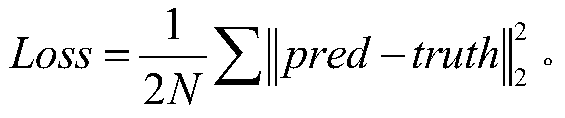 其中公式中,pred为手骨照片的骨龄预测值,truth为手骨照片的骨龄真实值,通过Euclidean损失层衡量手骨照片的骨龄预测值与手骨照片的骨龄真实值的差别大小,当通过Euclidean损失层计算的值小于预设值时,则说明验证通过,此时结果训练模型将可以作为上述基于卷积神经网络的骨龄评估模型进行使用。本实施例中的基于卷积神经网络的骨龄评估模型,当通过结果训练模型预测的手骨照片的骨龄预测值与手骨照片的的骨龄真实值误差小于0.8年时,则判定基于卷积神经网络的骨龄评估模型训练完成。
本实施例中的手骨X光片骨龄评估装置,所述计算单元20,还包括:
增广模块260,用于对所述手骨照片进行数据增广处理。
由于在对基于卷积神经网络的骨龄评估模型进行训练时,增广模块260用于对于输入的手骨照片可以进行数据增广,即在每个输入的手骨照片中均匀抽取m个等间距的n*n的方块区域,将上述所有抽取的方块区域都加入到训练数据中,从而实现了增加训练集大小,既有效地避免训练过程中过拟合的发生,又提高了训练效果。当基于卷积神经网络的骨龄评估模型训练完成后,在通过卷积神经网络的骨龄评估模型进行计算时,也可以通过对输入的手骨照片可以进行数据增广,也能实现了增加训练集大小,既有效地避免计算过程中过拟合的发生,又提高了计算的准确性。
参照图5,本实施例中的手骨X光片骨龄评估装置,还包括:
选取单元103,用于选取备选手骨X光片中骨骺、干骺端和手腕处骨骼作为所述待预测骨龄的手骨X光片。
由于手骨中的骨骺、干骺端和手腕处骨骼对于进行年龄评估是最具有特征区分的骨骼部分,所以在备选的待预测骨龄的手骨X光片中可以只选取这些特征骨骼部分作为通过基于卷积神经网络的骨龄评估模型的输入图片。具体的,可以通过标记的方式,由选取单元103通过基于深度网络的特征区域模型来选取骨骺、干骺段和手腕处骨骼等骨龄特征区域,在不影响骨龄预测结果的情况下减小计算量,提高效率。其具体步骤为,先将待预测骨龄的手骨X光片统一缩放到固定尺寸,例如缩放到1024*1024像素大小;其次,再根据骨龄评估TW3法从待预测的手骨X光片标记出骨骺、干骺段和手腕处骨骼等骨龄特征区域相应bounding box(边界框)的坐标并进行保存;同时对已标记出的bounding box的坐标所对应的标记后的待预测的手骨X光片进行数据增强,其中数据增强的方式具体包括旋转,镜像翻转、缩放、平移等图形操作,相应的,已标记出的的bounding box坐标也需要经过相同的处理。最后将经过数据增强的bounding box的坐标和标记后的待预测的手骨X光片作为训练数据输入到深度网络中来对基于深度网络的特征区域模型进行训练,具体的,是将bounding box的坐标(4个数值)作为训练标签,来对该基于深度网络的特征区域模型进行训练,训练完成后的基于深度网络的特征区域模型,可以自动出选取 待预测的手骨X光片特征骨骼部分的坐标,从而根据特征骨骼部分的坐标可以来选取待预测的手骨X光片中特征骨骼部分的X光片图像。
本实施例中的手骨X光片骨龄评估装置,包括:
统一单元101,用于将所述备选手骨X光片的背景部分统一为黑色。
第二处理单元102,用于调整所述备选手骨X光片的对比度。
在将选取备选的手骨X光片中骨骺、干骺端和手腕处骨骼作为待预测骨龄的手骨X光片之前,第二处理单元102用于调整备选的手骨X光片的对比度,来使得手骨X光片中的图片特征更加明显,使得通过基于卷积神经网络的骨龄评估模型的训练效率更高,评估结果更准确。在调整备选的手骨X光片的对比度之前,由于备选的手骨X光片的背景部分除了黑色中可能会包含少许其它颜色,统一单元101用于统一待预测骨龄的手骨X光片的背景成黑色。其具体方式为先选取待预测骨龄的手骨X光片的四个角位置上的一定大小的像素块,例如10*10像素大小的像素块,计算这四个像素块的均值,然后将计算得到的均值与待预测骨龄的手骨X光片能达到的最大像素值的一半相比较,实现将X光片进行归一化到0至最大像素值,从而实现将待预测骨龄的手骨X光片的背景统一成黑色。
在将待预测骨龄的手骨X光片的背景部分处理为黑色之后,第二处理单元102调整备选的待预测骨龄的手骨X光片的对比度。需要指出的是,对于当备选的待预测骨龄的手骨X光片为三通道图片时,需要先对三通道的图片进行灰度化处理,其中具体可以采用分量法、最大值法、平均值法和加权平均法中的任意一种方法对X光片进行灰度化处理。对待预测骨龄的手骨X光片进行灰度化处理后,再调整备选的待预测骨龄的手骨X光片的对比度;其具体方式为采用限制对比度自适应直方图均衡算法(CLAHE算法)来调整备选的待预测骨龄的手骨X光片的对比度,其中限制对比度自适应直方图均衡算法(CLAHE算法)采用自适应修剪图像的直方图,再使用修剪后的直方图对待预测骨龄的手骨X光片进行均衡调整,其优点在于使得备选的待预测骨龄的手骨X光片的对比度更加自然。
参照图6,本发明实施例中还提供一种计算机设备,该计算机设备可以是服务器,其内部结构可以如图6所示。该计算机设备包括通过系统总线连接的处理器、存储器、网络接口和数据库。其中,该计算机设计的处理器用于提供计算和控制能力。该计算机设备的存储器包括非易失性存储介质、内存储器。该非易失性存储介质存储有操作系统、计算机可读指令和数据库。该内存器为非易失性存储介质中的操作系统和计算机可读指令的运行提供环境。该计算机设备的数据库用于预设的基于卷积神经网络的X光片骨龄评估模型等数据。该计算机设备的网络接口用于与外部的终端通过网络连接通信。该计算机可读指令被处理器执行时以实现一种手骨X光片骨龄评估方法。
上述处理器执行上述手骨X光片骨龄评估方法的步骤:将待预测骨龄的手骨X光片处理成指定像素要求的手骨照片;将所述手骨照片输入到预设的基于卷积神经网络的骨龄评估模型中进行计算;获取所述骨龄评估模型输出的计算结果,该结果为所述手骨的骨龄。
上述计算机设备,基于卷积神经网络,建立基于卷积神经网络的骨龄评估模型,对于待预测骨龄的手骨X光片处理成指定像素要求的手骨照片,将上述手骨照片输入到预设的基于卷积神经网络的骨龄评估模型中进行计算,获取所述骨龄评估模型输出的计算结果,该结果为所述手骨的骨龄,该基于卷积神经网络的骨龄评估模型,能自动进行骨龄评估、且评估准确率高。
在一个实施例中,上述将所述手骨照片输入到预设的基于卷积神经网络的骨龄评估模型中进行计算的步骤,包括:对所述手骨照片进行卷积计算得到第一图片特征;对所述第一图片特征进行多次迭代卷积计算得到第二图片特征;通过空间变换网络对所述第二图片特征进行空间变换和对齐处理得到第三图片特征。对所述第三图片特征进行卷积计算得到第四图片特征;通过全连接层将所述第四图片特征结合在一起形成全局图片特征,从而输出计算结果。
在一个实施例中,上述处理器将上述对上述手骨照片进行卷积计算得到第一图片特征的步骤之前,包括:对上述手骨照片进行数据增广处理,实现了增加训练集大小,既有效地避免计算过程中过拟合的发生,又提高了计算的准确性。
在一个实施例中,所述将待预测骨龄的手骨X光片处理成指定像素要求的手骨照片的步骤之前,包括:选取手骨X光片中骨骺、干骺端和手腕处骨骼作为待预测骨龄的手骨X光片,通过标记的方式,利用基于深度网络的特征区域模型来选取骨骺、干骺段和手腕处骨骼等骨龄特征区域,在不影响骨龄预测结果的情况下减小计算量,提高效率增加。
在一个实施例中,选取手骨X光片中骨骺、干骺端和手腕处骨骼作为待预测骨龄的手骨X光片的步骤之前,包括:调整手骨X光片的对比度。
在一个实施例中,所述调整手骨X光片的对比度之前,包括:将手骨X光片的背景部分统一为黑色。
本领域技术人员可以理解,图6中示出的结构,仅仅是与本申请方案相关的部分结构的框图,并不构成对本申请方案所应用于其上的计算机设备的限定。
本发明一实施例还提供一种计算机非易失性可读存储介质,其上存储有计算机可读指令,计算机可读指令被处理器执行时实现一种手骨X光片骨龄评估方法,具体为:将待预测骨龄的手骨X光片处理成指定像素要求的手骨照片;将所述手骨照片输入到预设的基于卷积神经网络的骨龄评估模型中进行计算;获取所述骨龄评估模型输出的计算结果,该结果为所述手骨的骨龄。
上述计算机非易失性可读存储介质,基于卷积神经网络,建立基于卷积神经网络的骨龄评估模型,对于待预测骨龄的手骨X光片处理成指定像素要求的手骨照片,将上述手骨照片输入到预设的基于卷积神经网络的骨龄评估模型中进行计算,获取所述骨龄评估模型输出的计算结果,该结果为所述手骨的骨龄,该基于卷积神经网络的骨龄评估模型,能自动进行骨龄评估、且评估准确率高。
在一个实施例中,上述将所述手骨照片输入到预设的基于卷积神经网络的骨龄评估模型中进行计算 的步骤,包括:对所述手骨照片进行卷积计算得到第一图片特征;对所述第一图片特征进行多次迭代卷积计算得到第二图片特征;通过空间变换网络对所述第二图片特征进行空间变换和对齐处理得到第三图片特征。对所述第三图片特征进行卷积计算得到第四图片特征;通过全连接层将所述第四图片特征结合在一起形成全局图片特征,从而输出计算结果。
在一个实施例中,上述处理器将上述对上述手骨照片进行卷积计算得到第一图片特征的步骤之前,包括:对上述手骨照片进行数据增广处理,实现了增加训练集大小,既有效地避免计算过程中过拟合的发生,又提高了计算的准确性。
在一个实施例中,所述将待预测骨龄的手骨X光片处理成指定像素要求的手骨照片的步骤之前,包括:选取手骨X光片中骨骺、干骺端和手腕处骨骼作为待预测骨龄的手骨X光片,通过标记的方式,利用基于深度网络的特征区域模型来选取骨骺、干骺段和手腕处骨骼等骨龄特征区域,在不影响骨龄预测结果的情况下减小计算量,提高效率增加。
在一个实施例中,选取手骨X光片中骨骺、干骺端和手腕处骨骼作为待预测骨龄的手骨X光片的步骤之前,包括:调整手骨X光片的对比度。
在一个实施例中,所述调整手骨X光片的对比度之前,包括:将手骨X光片的背景部分统一为黑色。
本领域普通技术人员可以理解实现上述实施例方法中的全部或部分流程,是可以通过计算机可读指令来指令相关的硬件来完成,所述的计算机可读指令可存储与一非易失性计算机可读取存储介质中,该计算机可读指令在执行时,可包括如上述各方法的实施例的流程。其中,本申请所提供的和实施例中所使用的对存储器、存储、数据库或其它介质的任何引用,均可包括非易失性和/或易失性存储器。非易失性存储器可以包括只读存储器(ROM)、可编程ROM(PROM)、电可编程ROM(EPROM)、电可擦除可编程ROM(EEPROM)或闪存。易失性存储器可包括随机存取存储器(RAM)或者外部高速缓冲存储器。作为说明而非局限,RAM一多种形式可得,诸如静态RAM(SRAM)、动态RAM(DRAM)、同步DRAM(SDRAM)、双速据率SDRAM(SSRSDRAM)、增强型SDRAM(ESDRAM)、同步链路(Synchlink)DRAM(SLDRAM)、存储器总线(Rambus)直接RAM(RDRAM)、直接存储器总线动态RAM(DRDRAM)、以及存储器总线动态RAM(RDRAM)等。
需要说明的是,在本文中,术语“包括”、“包含”或者其任何其他变体意在涵盖非排他性的包含,从而使得包括一系列要素的过程、装置、物品或者方法不仅包括那些要素,而且还包括没有明确列出的其他要素,或者是还包括为这种过程、装置、物品或者方法所固有的要素。在没有更多限制的情况下,由语句“包括一个……”限定的要素,并不排除在包括该要素的过程、装置、物品或者方法中还存在另外的相同要素。以上所述仅为本发明的优选实施例,并非因此限制本发明的专利范围,凡是利用本发明说明书及附图内容所作的等效结构或等效流程变换,或直接或间接运用在其他相关的技术领域,均同理包括在本发明的专利保护范围内。
Claims (20)
- 一种手骨X光片骨龄评估方法,其特征在于,包括:将待预测骨龄的手骨X光片处理成指定像素要求的手骨照片;将所述手骨照片输入到预设的基于卷积神经网络的骨龄评估模型中进行计算;获取所述骨龄评估模型输出的计算结果,该结果为所述手骨的骨龄。
- 根据权利要求1所述的手骨X光片骨龄评估方法,其特征在于,所述将所述手骨照片输入到预设的基于卷积神经网络的骨龄评估模型中进行计算的步骤,包括:对所述手骨照片进行卷积计算得到第一图片特征;对所述第一图片特征进行多次迭代卷积计算得到第二图片特征;通过空间变换网络对所述第二图片特征进行空间变换和对齐处理得到第三图片特征;对所述第三图片特征进行卷积计算得到第四图片特征;通过全连接层将所述第四图片特征结合在一起形成全局图片特征,从而输出计算结果。
- 根据权利要求2所述的手骨X光片骨龄评估方法,其特征在于,所述对所述手骨照片进行卷积计算得到第一图片特征的步骤之前,包括:对所述手骨照片进行数据增广处理。
- 根据权利要求1所述的手骨X光片骨龄评估方法,其特征在于,所述将待预测骨龄的手骨X光片处理成指定像素要求的手骨照片的步骤之前,包括:选取备选手骨X光片中骨骺、干骺端和手腕处骨骼作为所述待预测骨龄的手骨X光片。
- 根据权利要求4所述的手骨X光片骨龄评估方法,其特征在于,所述选取备选手骨X光片中骨骺、干骺端和手腕处骨骼作为待预测骨龄的手骨X光片的步骤之前,包括:调整所述备选手骨X光片的对比度。
- 根据权利要求5所述的手骨X光片骨龄评估方法,其特征在于,所述调整所述备选手骨X光片的对比度的步骤之前,包括:将所述备选手骨X光片的背景部分统一为黑色。
- 根据权利要求1所述的手骨X光片骨龄评估方法,其特征在于,所述基于卷积神经网络的骨龄评估模型训练的方法,包括:获取指定量的样本数据,并将样本数据分成训练集和测试集,其中,所述样本数据包括已知骨龄的手骨照片,以及与所述已知骨龄的手骨照片对应的骨龄数据;将训练集的样本数据输入到预设的卷积神经网络中进行训练,得到结果训练模型;利用所述测试集的样本数据验证所述结果训练模型;如果验证通过,则将所述结果训练模型记为所述基于卷积神经网络的骨龄评估模型。
- 一种手骨X光片骨龄评估装置,其特征在于,包括:处理单元,用于将待预测骨龄的手骨X光片处理成指定像素要求的手骨照片;计算单元,用于将所述手骨照片输入到预设的基于卷积神经网络的骨龄评估模型中进行计算;输出单元,用于获取所述骨龄评估模型输出的计算结果,该结果为所述手骨的骨龄。
- 根据权利要求8所述的手骨X光片骨龄评估装置,其特征在于,所述计算单元,包括:第一处理模块,用于对所述手骨照片进行卷积计算得到第一图片特征;第二处理模块,用于对所述第一图片特征进行多次迭代卷积计算得到第二图片特征;变换模块,用于通过空间变换网络对所述第二图片特征进行空间变换和对齐处理得到第三图片特征;第三处理模块,用于对所述第三图片特征进行卷积计算得到第四图片特征;执行模块,用于通过全连接层将所述第四图片特征结合在一起形成全局图片特征,从而输出计算结果。
- 根据权利要求8所述的手骨X光片骨龄评估装置,其特征在于,所述计算单元,还包括:增广模块,用于对所述手骨照片进行数据增广处理。
- 根据权利要求8所述的手骨X光片骨龄评估装置,其特征在于,所述手骨X光片骨龄评估装置,还包括:选取单元,用于选取备选手骨X光片中骨骺、干骺端和手腕处骨骼作为所述待预测骨龄的手骨X光片。
- 根据权利要求11所述的手骨X光片骨龄评估装置,其特征在于,所述手骨X光片骨龄评估装置,包括:第二处理单元,用于调整所述备选手骨X光片的对比度。
- 根据权利要求12所述的手骨X光片骨龄评估装置,其特征在于,所述手骨X光片骨龄评估装置,包括:统一单元,用于将所述备选手骨X光片的背景部分统一为黑色。
- 根据权利要求8所述的手骨X光片骨龄评估装置,其特征在于,所述计算单元,还用于获取指定量的样本数据,并将样本数据分成训练集和测试集,其中,所述样本数据包括已知骨龄的手骨照片,以及与所述已知骨龄的手骨照片对应的骨龄数据;将训练集的样本数据输入到预设的卷积神经网络中进行训练,得到结果训练模型;利用所述测试集的样本数据验证所述结果训练模型;如果验证通过,则将所述结果训练模型记为所述基于卷积神经网络的骨龄评估模型。
- 一种计算机设备,包括存储器和处理器,所述存储器存储有计算机可读指令,其特征在于,所述处理器执行所述计算机可读指令时实现手骨X光片骨龄评估方法,该手骨X光片骨龄评估方法包括:将待预测骨龄的手骨X光片处理成指定像素要求的手骨照片;将所述手骨照片输入到预设的基于卷积神经网络的骨龄评估模型中进行计算;获取所述骨龄评估模型输出的计算结果,该结果为所述手骨的骨龄。
- 根据权利要求15所述的计算机设备,其特征在于,所述将所述手骨照片输入到预设的基于卷积神经网络的骨龄评估模型中进行计算的步骤,包括:对所述手骨照片进行卷积计算得到第一图片特征;对所述第一图片特征进行多次迭代卷积计算得到第二图片特征;通过空间变换网络对所述第二图片特征进行空间变换和对齐处理得到第三图片特征;对所述第三图片特征进行卷积计算得到第四图片特征;通过全连接层将所述第四图片特征结合在一起形成全局图片特征,从而输出计算结果。
- 根据权利要求16所述的计算机设备,其特征在于,所述对所述手骨照片进行卷积计算得到第一图片特征的步骤之前,包括:对所述手骨照片进行数据增广处理。
- 根据权利要求15所述的计算机设备,其特征在于,所述将待预测骨龄的手骨X光片处理成指定像素要求的手骨照片的步骤之前,包括:选取备选手骨X光片中骨骺、干骺端和手腕处骨骼作为所述待预测骨龄的手骨X光片。
- 一种计算机非易失性可读存储介质,其上存储有计算机可读指令,其特征在于,所述计算机可读指令被处理器执行时实现手骨X光片骨龄评估方法,该手骨X光片骨龄评估方法包括:将待预测骨龄的手骨X光片处理成指定像素要求的手骨照片;将所述手骨照片输入到预设的基于卷积神经网络的骨龄评估模型中进行计算;获取所述骨龄评估模型输出的计算结果,该结果为所述手骨的骨龄。
- 根据权利要求19所述的计算机非易失性可读存储介质,其特征在于,所述将所述手骨照片输入到预设的基于卷积神经网络的骨龄评估模型中进行计算的步骤,包括:对所述手骨照片进行卷积计算得到第一图片特征;对所述第一图片特征进行多次迭代卷积计算得到第二图片特征;通过空间变换网络对所述第二图片特征进行空间变换和对齐处理得到第三图片特征;对所述第三图片特征进行卷积计算得到第四图片特征;通过全连接层将所述第四图片特征结合在一起形成全局图片特征,从而输出计算结果。
Applications Claiming Priority (2)
| Application Number | Priority Date | Filing Date | Title |
|---|---|---|---|
| CN201810433116.2 | 2018-05-08 | ||
| CN201810433116.2A CN108968991B (zh) | 2018-05-08 | 2018-05-08 | 手骨x光片骨龄评估方法、装置、计算机设备和存储介质 |
Publications (1)
| Publication Number | Publication Date |
|---|---|
| WO2019214052A1 true WO2019214052A1 (zh) | 2019-11-14 |
Family
ID=64541936
Family Applications (1)
| Application Number | Title | Priority Date | Filing Date |
|---|---|---|---|
| PCT/CN2018/095385 Ceased WO2019214052A1 (zh) | 2018-05-08 | 2018-07-12 | 手骨x光片骨龄评估方法、装置、计算机设备和存储介质 |
Country Status (2)
| Country | Link |
|---|---|
| CN (1) | CN108968991B (zh) |
| WO (1) | WO2019214052A1 (zh) |
Cited By (3)
| Publication number | Priority date | Publication date | Assignee | Title |
|---|---|---|---|---|
| CN111920430A (zh) * | 2020-07-04 | 2020-11-13 | 浙江大学山东工业技术研究院 | 一种弱监督深度学习自动骨龄评估方法 |
| CN114359133A (zh) * | 2021-11-19 | 2022-04-15 | 北京邮电大学 | 基于特征提取的手骨影像分析方法及相关设备 |
| US11683681B2 (en) | 2017-05-24 | 2023-06-20 | Qualcomm Incorporated | Uplink small data transmission in inactive state |
Families Citing this family (22)
| Publication number | Priority date | Publication date | Assignee | Title |
|---|---|---|---|---|
| CN109741309B (zh) * | 2018-12-27 | 2021-04-02 | 北京深睿博联科技有限责任公司 | 一种基于深度回归网络的骨龄预测方法及装置 |
| CN110051376A (zh) * | 2019-03-05 | 2019-07-26 | 上海市儿童医院 | 一种骨龄智能检测方法 |
| CN109998577A (zh) * | 2019-03-05 | 2019-07-12 | 上海市儿童医院 | 一种人工智能骨龄检测终端设备 |
| CN109998576A (zh) * | 2019-03-05 | 2019-07-12 | 上海市儿童医院 | 一种人工智能骨龄检测方法 |
| CN109994172A (zh) * | 2019-03-06 | 2019-07-09 | 杭州津禾生物科技有限公司 | 骨龄在线数字化测算及身高数据库管理系统 |
| CN109948522B (zh) * | 2019-03-18 | 2020-12-01 | 浙江工业大学 | 一种基于深度神经网络的x光片手骨成熟度判读方法 |
| CN110211674B (zh) * | 2019-04-23 | 2023-06-27 | 平安科技(深圳)有限公司 | 基于机器学习模型的骨龄测试方法及相关设备 |
| CN110503624A (zh) * | 2019-07-02 | 2019-11-26 | 平安科技(深圳)有限公司 | 骨龄检测方法、系统、设备及可读存储介质 |
| CN110503635B (zh) * | 2019-07-30 | 2022-04-05 | 浙江工业大学 | 一种基于异构数据融合网络的手骨x光片骨龄评估方法 |
| CN110660484B (zh) * | 2019-08-01 | 2022-08-23 | 平安科技(深圳)有限公司 | 骨龄预测方法、装置、介质及电子设备 |
| TWI772663B (zh) * | 2019-08-05 | 2022-08-01 | 長佳智能股份有限公司 | 以個人裝置進行手骨骨齡即時判讀之系統及方法 |
| CN110648320A (zh) * | 2019-09-19 | 2020-01-03 | 京东方科技集团股份有限公司 | 骨龄获取方法及系统、服务器、计算机设备及介质 |
| CN110555846A (zh) * | 2019-10-13 | 2019-12-10 | 浙江德尚韵兴医疗科技有限公司 | 基于卷积神经网络的全自动骨龄评定方法 |
| CN110782450B (zh) * | 2019-10-31 | 2020-09-29 | 北京推想科技有限公司 | 手部腕骨发育等级确定方法及相关设备 |
| CN112801994B (zh) * | 2021-02-05 | 2023-12-26 | 广东顺德工业设计研究院(广东顺德创新设计研究院) | 骨龄评估方法和系统 |
| CN113066549B (zh) * | 2021-04-06 | 2022-07-26 | 青岛瑞斯凯尔生物科技有限公司 | 基于人工智能的医疗器械的临床有效性评估方法及系统 |
| CN113362292B (zh) * | 2021-05-27 | 2023-04-28 | 重庆邮电大学 | 一种基于可编程逻辑门阵列的骨龄评估方法及系统 |
| CN113298842B (zh) * | 2021-05-28 | 2023-07-14 | 平安科技(深圳)有限公司 | 骨龄预测方法、装置、设备及计算机可读存储介质 |
| CN113487599A (zh) * | 2021-07-26 | 2021-10-08 | 辽宁工程技术大学 | 一种结合空洞卷积和高效率网络的骨龄检测方法 |
| CN114049303A (zh) * | 2021-10-12 | 2022-02-15 | 杭州电子科技大学 | 一种基于多粒度特征融合的渐进式骨龄评估方法 |
| CN114601483B (zh) * | 2022-05-11 | 2022-08-16 | 山东第一医科大学第一附属医院(山东省千佛山医院) | 一种基于图像处理的骨龄分析方法及系统 |
| TWI838104B (zh) * | 2023-02-01 | 2024-04-01 | 宏碁智醫股份有限公司 | X光影像強化系統以及x光影像強化方法 |
Citations (3)
| Publication number | Priority date | Publication date | Assignee | Title |
|---|---|---|---|---|
| WO2018057714A1 (en) * | 2016-09-21 | 2018-03-29 | The General Hospital Corporation | Systems, methods and media for automatically generating a bone age assessment from a radiograph |
| CN107895367A (zh) * | 2017-11-14 | 2018-04-10 | 中国科学院深圳先进技术研究院 | 一种骨龄识别方法、系统及电子设备 |
| CN107944496A (zh) * | 2017-12-06 | 2018-04-20 | 电子科技大学 | 基于改进后的残差网络的骨龄自动化识别系统 |
Family Cites Families (15)
| Publication number | Priority date | Publication date | Assignee | Title |
|---|---|---|---|---|
| JP5153857B2 (ja) * | 2010-11-25 | 2013-02-27 | シャープ株式会社 | 画像処理装置、画像形成装置、画像処理方法、コンピュータプログラム及び記録媒体 |
| CN103116751B (zh) * | 2013-01-24 | 2016-07-06 | 河海大学 | 一种车牌字符自动识别方法 |
| CN103293168B (zh) * | 2013-05-28 | 2015-01-28 | 陕西科技大学 | 基于视觉显著性的水果表面缺陷检测方法 |
| CN104331864B (zh) * | 2014-10-21 | 2018-11-23 | 西安电子科技大学 | 基于非下采样轮廓波和视觉显著模型的乳腺影像处理 |
| CN105631455B (zh) * | 2014-10-27 | 2019-07-05 | 阿里巴巴集团控股有限公司 | 一种图像主体提取方法及系统 |
| CN106340000A (zh) * | 2015-07-06 | 2017-01-18 | 司法部司法鉴定科学技术研究所 | 骨龄评估方法 |
| CN106408562B (zh) * | 2016-09-22 | 2019-04-09 | 华南理工大学 | 基于深度学习的眼底图像视网膜血管分割方法及系统 |
| CN106778531A (zh) * | 2016-11-25 | 2017-05-31 | 北京小米移动软件有限公司 | 人脸定位方法及装置 |
| CN107480261B (zh) * | 2017-08-16 | 2020-06-16 | 上海荷福人工智能科技(集团)有限公司 | 一种基于深度学习细粒度人脸图像快速检索方法 |
| CN107591200B (zh) * | 2017-08-25 | 2020-08-14 | 卫宁健康科技集团股份有限公司 | 基于深度学习及影像组学的骨龄标记识别评估方法及系统 |
| CN107680678B (zh) * | 2017-10-18 | 2020-12-01 | 北京航空航天大学 | 基于多尺度卷积神经网络甲状腺超声图像结节诊断系统 |
| CN107871316B (zh) * | 2017-10-19 | 2020-10-27 | 浙江工业大学 | 基于深度神经网络的x光片手骨兴趣区域自动提取方法 |
| CN107767376B (zh) * | 2017-11-02 | 2021-03-26 | 西安邮电大学 | 基于深度学习的x线片骨龄预测方法及系统 |
| CN108334899A (zh) * | 2018-01-28 | 2018-07-27 | 浙江大学 | 基于手骨x光片骨骼和关节量化信息集成的骨龄评估方法 |
| CN110660484B (zh) * | 2019-08-01 | 2022-08-23 | 平安科技(深圳)有限公司 | 骨龄预测方法、装置、介质及电子设备 |
-
2018
- 2018-05-08 CN CN201810433116.2A patent/CN108968991B/zh active Active
- 2018-07-12 WO PCT/CN2018/095385 patent/WO2019214052A1/zh not_active Ceased
Patent Citations (3)
| Publication number | Priority date | Publication date | Assignee | Title |
|---|---|---|---|---|
| WO2018057714A1 (en) * | 2016-09-21 | 2018-03-29 | The General Hospital Corporation | Systems, methods and media for automatically generating a bone age assessment from a radiograph |
| CN107895367A (zh) * | 2017-11-14 | 2018-04-10 | 中国科学院深圳先进技术研究院 | 一种骨龄识别方法、系统及电子设备 |
| CN107944496A (zh) * | 2017-12-06 | 2018-04-20 | 电子科技大学 | 基于改进后的残差网络的骨龄自动化识别系统 |
Cited By (4)
| Publication number | Priority date | Publication date | Assignee | Title |
|---|---|---|---|---|
| US11683681B2 (en) | 2017-05-24 | 2023-06-20 | Qualcomm Incorporated | Uplink small data transmission in inactive state |
| US12052564B2 (en) | 2017-05-24 | 2024-07-30 | Qualcomm Incorporated | Uplink small data transmission in inactive state |
| CN111920430A (zh) * | 2020-07-04 | 2020-11-13 | 浙江大学山东工业技术研究院 | 一种弱监督深度学习自动骨龄评估方法 |
| CN114359133A (zh) * | 2021-11-19 | 2022-04-15 | 北京邮电大学 | 基于特征提取的手骨影像分析方法及相关设备 |
Also Published As
| Publication number | Publication date |
|---|---|
| CN108968991A (zh) | 2018-12-11 |
| CN108968991B (zh) | 2022-10-11 |
Similar Documents
| Publication | Publication Date | Title |
|---|---|---|
| WO2019214052A1 (zh) | 手骨x光片骨龄评估方法、装置、计算机设备和存储介质 | |
| CN109872333B (zh) | 医学影像分割方法、装置、计算机设备和存储介质 | |
| Allen et al. | Validity and reliability of active shape models for the estimation of Cobb angle in patients with adolescent idiopathic scoliosis | |
| CN111666890B (zh) | 脊柱变形人群识别方法、装置、计算机设备及存储介质 | |
| CN107665497B (zh) | 一种医学图像中计算心胸比的方法 | |
| CN111671454A (zh) | 脊柱弯曲角度测量方法、装置、计算机设备及存储介质 | |
| WO2020215557A1 (zh) | 医学影像解释方法、装置、计算机设备及存储介质 | |
| CN111210467A (zh) | 图像处理方法、装置、电子设备及计算机可读存储介质 | |
| CN113689359B (zh) | 一种图像伪影去除模型及其训练方法和系统 | |
| US20230230237A1 (en) | Image processing method and apparatus, computer device, and medium | |
| CN110084868B (zh) | 图像校正方法、装置、计算机设备和可读存储介质 | |
| US20220198696A1 (en) | System for determining body measurement from images | |
| CN115880358B (zh) | 定位模型的构建方法、影像标志点的定位方法及电子设备 | |
| CN111652300B (zh) | 脊柱曲度分类方法、计算机设备和存储介质 | |
| CN113240661A (zh) | 基于深度学习的腰椎骨分析方法、装置、设备及存储介质 | |
| CN112348892A (zh) | 点定位方法及相关装置、设备 | |
| CN115375787A (zh) | 伪影校正方法、计算机设备及可读存储介质 | |
| CN113962953A (zh) | 一种图像处理方法和系统 | |
| CN114093462A (zh) | 医学影像处理方法、图像处理方法、计算机设备、存储介质 | |
| CN112150451A (zh) | 对称信息检测方法、装置、计算机设备和存储介质 | |
| US20230343438A1 (en) | Systems and methods for automatic image annotation | |
| CN116434001A (zh) | 基于分布外数据的模型训练方法、装置、设备及介质 | |
| Babu et al. | CurvAssist: An AI assisted pipeline for penile shaft segmentation/curvature measurement in children with hypospadias | |
| CN117257455B (zh) | 一种腰椎手术固定棒预弯方法及装置 | |
| CN113782157A (zh) | 医疗影像处理方法、系统、计算机设备和存储介质 |
Legal Events
| Date | Code | Title | Description |
|---|---|---|---|
| 121 | Ep: the epo has been informed by wipo that ep was designated in this application |
Ref document number: 18917685 Country of ref document: EP Kind code of ref document: A1 |
|
| NENP | Non-entry into the national phase |
Ref country code: DE |
|
| 122 | Ep: pct application non-entry in european phase |
Ref document number: 18917685 Country of ref document: EP Kind code of ref document: A1 |