WO2019200744A1 - 自更新的反欺诈方法、装置、计算机设备和存储介质 - Google Patents
自更新的反欺诈方法、装置、计算机设备和存储介质 Download PDFInfo
- Publication number
- WO2019200744A1 WO2019200744A1 PCT/CN2018/095486 CN2018095486W WO2019200744A1 WO 2019200744 A1 WO2019200744 A1 WO 2019200744A1 CN 2018095486 W CN2018095486 W CN 2018095486W WO 2019200744 A1 WO2019200744 A1 WO 2019200744A1
- Authority
- WO
- WIPO (PCT)
- Prior art keywords
- voice data
- voiceprint
- vector
- training
- fraud
- Prior art date
- Legal status (The legal status is an assumption and is not a legal conclusion. Google has not performed a legal analysis and makes no representation as to the accuracy of the status listed.)
- Ceased
Links
Images


Classifications
-
- G—PHYSICS
- G10—MUSICAL INSTRUMENTS; ACOUSTICS
- G10L—SPEECH ANALYSIS TECHNIQUES OR SPEECH SYNTHESIS; SPEECH RECOGNITION; SPEECH OR VOICE PROCESSING TECHNIQUES; SPEECH OR AUDIO CODING OR DECODING
- G10L17/00—Speaker identification or verification techniques
- G10L17/04—Training, enrolment or model building
-
- G—PHYSICS
- G10—MUSICAL INSTRUMENTS; ACOUSTICS
- G10L—SPEECH ANALYSIS TECHNIQUES OR SPEECH SYNTHESIS; SPEECH RECOGNITION; SPEECH OR VOICE PROCESSING TECHNIQUES; SPEECH OR AUDIO CODING OR DECODING
- G10L17/00—Speaker identification or verification techniques
- G10L17/02—Preprocessing operations, e.g. segment selection; Pattern representation or modelling, e.g. based on linear discriminant analysis [LDA] or principal components; Feature selection or extraction
-
- G—PHYSICS
- G10—MUSICAL INSTRUMENTS; ACOUSTICS
- G10L—SPEECH ANALYSIS TECHNIQUES OR SPEECH SYNTHESIS; SPEECH RECOGNITION; SPEECH OR VOICE PROCESSING TECHNIQUES; SPEECH OR AUDIO CODING OR DECODING
- G10L25/00—Speech or voice analysis techniques not restricted to a single one of groups G10L15/00 - G10L21/00
- G10L25/03—Speech or voice analysis techniques not restricted to a single one of groups G10L15/00 - G10L21/00 characterised by the type of extracted parameters
- G10L25/18—Speech or voice analysis techniques not restricted to a single one of groups G10L15/00 - G10L21/00 characterised by the type of extracted parameters the extracted parameters being spectral information of each sub-band
-
- G—PHYSICS
- G10—MUSICAL INSTRUMENTS; ACOUSTICS
- G10L—SPEECH ANALYSIS TECHNIQUES OR SPEECH SYNTHESIS; SPEECH RECOGNITION; SPEECH OR VOICE PROCESSING TECHNIQUES; SPEECH OR AUDIO CODING OR DECODING
- G10L25/00—Speech or voice analysis techniques not restricted to a single one of groups G10L15/00 - G10L21/00
- G10L25/03—Speech or voice analysis techniques not restricted to a single one of groups G10L15/00 - G10L21/00 characterised by the type of extracted parameters
- G10L25/24—Speech or voice analysis techniques not restricted to a single one of groups G10L15/00 - G10L21/00 characterised by the type of extracted parameters the extracted parameters being the cepstrum
-
- G—PHYSICS
- G10—MUSICAL INSTRUMENTS; ACOUSTICS
- G10L—SPEECH ANALYSIS TECHNIQUES OR SPEECH SYNTHESIS; SPEECH RECOGNITION; SPEECH OR VOICE PROCESSING TECHNIQUES; SPEECH OR AUDIO CODING OR DECODING
- G10L25/00—Speech or voice analysis techniques not restricted to a single one of groups G10L15/00 - G10L21/00
- G10L25/45—Speech or voice analysis techniques not restricted to a single one of groups G10L15/00 - G10L21/00 characterised by the type of analysis window
-
- H—ELECTRICITY
- H04—ELECTRIC COMMUNICATION TECHNIQUE
- H04L—TRANSMISSION OF DIGITAL INFORMATION, e.g. TELEGRAPHIC COMMUNICATION
- H04L63/00—Network architectures or network communication protocols for network security
- H04L63/14—Network architectures or network communication protocols for network security for detecting or protecting against malicious traffic
- H04L63/1441—Countermeasures against malicious traffic
- H04L63/1466—Active attacks involving interception, injection, modification, spoofing of data unit addresses, e.g. hijacking, packet injection or TCP sequence number attacks
Definitions
- the present application relates to the field of call voice anti-fraud technology, and in particular, to a self-updating anti-fraud method, device, computer device and storage medium.
- the speaker's voice When a new call comes in, the speaker's voice will be automatically extracted from the voiceprint feature information, and compared with the voiceprint feature information in the blacklist voiceprint library, if the speaker's voice and the blacklist voiceprint library are determined If the information is successfully matched, the speaker will be prompted to be a fraudulent identity.
- the difficulty of this scheme is that it is a sound matching process of N.
- the number of people in the blacklist voiceprint library is very large (such as N is greater than 500), the accuracy is low and the detection efficiency is low. For example, for any speaker, as long as the voice of any one of the 500 blacklists is similar to that of the speaker, it is possible to determine that the speaker belongs to the fraudulent user and trigger an alarm, so there is a case of triggering a false alarm.
- the main purpose of the present application is to provide a self-renewing anti-fraud method, device, computer device and storage medium, which overcomes the defects of low accuracy in the prior art for anti-fraud of voice data.
- the present application provides a self-updating anti-fraud method, including the following steps:
- the training parameters of the voiceprint training model are re-trained based on the fraudulent voice data in the blacklist voiceprint database, and the updated voiceprint training model is obtained;
- the similarity score is higher than the set similarity threshold, it is determined that the first voice data is fraudulent voice data.
- the application also provides a self-updating anti-fraud device, including:
- An update unit configured to retrain the training parameters of the voiceprint training model based on all the fraudulent voice data in the blacklist voiceprint database when the new fraud voice data is added to the blacklist voiceprint database, to obtain the updated voiceprint training model;
- a scoring unit configured to calculate, by using the updated voiceprint training model, a similarity score of the first voice data and the fraud voice data in the blacklist voiceprint library
- the determining unit when the similarity score is higher than the set similarity threshold, determines that the first voice data is fraudulent voice data.
- the application further provides a computer device comprising a memory and a processor, the memory storing computer readable instructions, the processor executing the computer readable instructions to implement the steps of any of the methods described above.
- the present application also provides a computer non-transitory readable storage medium having stored thereon computer readable instructions that, when executed by a processor, implement the steps of any of the methods described above.
- the self-updating anti-fraud method, device, computer device and storage medium provided in the present application, when adding new fraudulent voice data to the blacklist voiceprint database, retraining the training parameters of the voiceprint training model for all the fraudulent voice data,
- the updated voiceprint training model The updated voiceprint training model; the voiceprint training model is continuously updated to better adapt to voice anti-fraud and improve the anti-fraud accuracy; meanwhile, when the new first voice data is accessed, the updated voiceprint training is performed.
- the model calculates a similarity score of the first voice data and the fraud voice data in the blacklist voiceprint database, which calculates a similarity score with all the fraud voice data, improves the accuracy, and overcomes the defect of false positives. At the same time, improve the detection efficiency.
- FIG. 1 is a schematic diagram of steps of a self-updating anti-fraud method in an embodiment of the present application
- step S1 is a schematic diagram of specific steps of step S1 in an embodiment of the present application.
- step S2 is a schematic diagram of specific steps of step S2 in an embodiment of the present application.
- FIG. 4 is a structural block diagram of a self-updating anti-fraud device in an embodiment of the present application.
- FIG. 5 is a structural block diagram of a self-updating anti-fraud device in another embodiment of the present application.
- FIG. 6 is a schematic block diagram showing the structure of a computer device according to an embodiment of the present application.
- an embodiment of the present application provides a self-updating anti-fraud method, including the following steps:
- Step S1 When new fraudulent voice data is added to the blacklist voiceprint database, the training parameters of the voiceprint training model are re-trained based on the fraudulent voice data in the blacklist voiceprint database, and the updated voiceprint training model is obtained;
- Step S2 Receive first voice data, and calculate a similarity score of the first voice data and the fraud voice data in the blacklist voiceprint database by using the updated voiceprint training model;
- Step S3 If the similarity score is higher than the set similarity threshold, determine that the first voice data is fraudulent voice data.
- the blacklist voiceprint database stores a plurality of fraudulent voice data
- the fraud voice data refers to voice data sent by the fraudulent user; the first voice data is the voice of the new user. data.
- the blacklist voiceprint library stores a certain number of voiceprint data of the fraudulent user, and when a newly determined user is a fraudulent user, in order to enrich the blacklist voiceprint library, the fraudulent voice data of the new fraudulent user is usually Adding to the blacklist voiceprint library; it should be understood that the fraudulent voice data of the newly determined fraudulent user may be fraudulent voice data detected by the model in the present application, or may be detected in advance by other means or channels. Any of the fraudulent voice data from any source can be added to the blacklist voiceprint library in this application.
- a voiceprint training model is needed to train the voiceprint features of the voice data.
- the voiceprint training model is used to train the fraudulent voice data in the fixed blacklist voiceprint library, and then the training parameters of the voiceprint training model are repeatedly used.
- the number of new users increases, it is obviously impossible to accurately predict Fraudulent users. For example, when new fraudulent voice data is added to the blacklist voiceprint library, if the fraudulent user is still identified according to the previous training parameters, it may cause inaccuracy or false positives.
- the training parameters of the voiceprint training model are re-trained by using all the fraudulent voice data in the blacklist voiceprint database, and the updated sound is obtained.
- Pattern training model this process is a loop iterative process, as long as new fraudulent voice data is added, then a self-updating; then, as described in step S2 above, when there is new first voice data access, then Calculating a similarity score of the first voice data and the fraudulent voice data in the blacklist voiceprint database by using the updated voiceprint training model; finally, if the similarity score is higher than the setting, as described in the above step S3
- the similarity threshold determines that the first voice data is fraudulent voice data.
- step S3, S4 may be further included: adding the first voice data as a new fraud voice data to the blacklist voiceprint library, thereby updating the voiceprint training model.
- the scheme can continuously update the blacklist voiceprint library when the fraudulent voice data is recognized based on the voiceprint training model, thereby optimizing the voiceprint training model, and making the voiceprint training model more accurate in identifying fraudulent voice data.
- step S1 if a bank's blacklist voiceprint library stores fraudulent voice data of 500 users (the voice data includes the voiceprint feature), The voiceprint training model was used to train the voiceprint features of 500 users in the blacklist voiceprint library to obtain the training parameters at this time. If another fraudulent voice data, which is marked as a fraudulent user, is added to the blacklist voiceprint database, the training is performed based on the voiceprint features of the 501 users, and the training parameters are retrieved. This process loops through it once whenever new fraudulent voice data is added. Then, when the bank terminal device accesses the new first voice data, the similarity score calculation is performed on the first voice data based on the updated voiceprint training model.
- the training parameter is an inter-class covariance matrix and an average of an authentication vector in a PLDA matrix
- the voiceprint training model is a Gaussian mixture model, and the foregoing is based on the blacklist voiceprint library.
- Step S11 extracting an authentication vector (calculating an authentication vector i-vector) based on all the fraudulent speech data in the blacklist voiceprint library; the above-mentioned discriminant vector is an acoustic characteristic of the speaker, which reflects the speaker acoustic difference.
- the step S11 is specifically: extracting a voiceprint feature of all the fraudulent voice data in the blacklist voiceprint library, and constructing a corresponding voiceprint feature vector based on the voiceprint feature, and the voiceprint feature is
- the vector input is trained in the Gaussian mixture model and the discriminant vector extractor, and the training is obtained by the discriminant vector extractor; specifically, the voiceprint feature vector is input into the Gaussian mixture model for training, and the iterative calculation is continued until the maximum of the voiceprint feature vector However, the logarithmic value is no longer changed, and the training of the Gaussian mixture model is completed.
- the likelihood vector of the voiceprint feature vector in the Gaussian mixture model is calculated by the discriminant vector extractor, and the iterative calculation is performed until the likelihood logarithm value no longer changes, and the trained discriminant vector extractor is obtained. Finally, the discriminant vector of the fraudulent speech data is separately extracted by the trained discriminant vector extractor.
- Step S12 training the PLDA matrix using the discriminant vector, updating the inter-class covariance matrix in the PLDA matrix and the mean value of the discriminant vector.
- the voiceprint training model used is a Gaussian mixture model, which mainly uses the discriminant vector to train the inter-class covariance matrix of the PLDA (Probabilistic Linear Discriminant Analysis) matrix and the mean of the discrimination vector. parameter.
- the PLDA matrix refers to the inter-class covariance matrix trained by all the speakers' i-Vectors, which can represent the covariance between a speaker's multi-pass speech and other speakers' multi-pass speech.
- the PLDA covariance matrix helps to better extract the information of the speaker's voice itself contained in the i-Vector, and to minimize the impact of channel differences.
- the training parameter updated in this embodiment is the inter-class covariance matrix and the mean value of the discriminant vector in the PLDA matrix, and the self-updating is completed, and the first speech can be calculated according to the updated inter-class covariance matrix and the mean value of the discriminant vector.
- the similarity score of the data and the fraudulent speech data in the blacklist voiceprint database, the similarity score is obtained by calculating the similarity result in the PLDA matrix by the discrimination vector of the first speech data and the mean value of the discriminant vector.
- the step S2 of calculating the similarity score of the first voice data and the fraudulent voice data in the blacklist voiceprint database by the updated voiceprint training model includes:
- Step S21 extracting an identification vector of the first voice data by using an authentication vector extractor
- Step S22 Input the discrimination vector of the first voice data into the updated voiceprint training model to calculate a similarity score of the first voice data and the fraud voice data in the blacklist voiceprint database.
- the step S21 is specifically: extracting a voiceprint feature of the first voice data to form a voiceprint feature vector, and calculating the voiceprint feature vector by the identifier vector extracter, and extracting the first voice data. Identification vector.
- the above-mentioned discriminant vector extractor may be pre-trained, or may be trained using the voiceprint feature vector of the fraudulent speech data in the blacklist voiceprint library.
- the training step of the discriminant vector extractor includes: extracting a voiceprint feature of the fraudulent voice data, and constructing a voiceprint feature vector corresponding to the fraud voice data based on the voiceprint feature, and inputting the voiceprint feature vector to the Gaussian
- the hybrid model and the discriminant vector extractor are trained to obtain the discriminant vector extractor; finally, the trained discriminant vector extractor can calculate the voiceprint feature vector of the first speech data, thereby extracting the first speech data. Identification vector.
- the similarity score of the first voice data and the fraudulent voice data in the blacklist voiceprint database can be calculated by using the updated inter-class covariance matrix and the mean value of the discrimination vector in the updated voiceprint training model.
- the similarity score is obtained by calculating a similarity result in the PLDA matrix by the discrimination vector of the first voice data and the average value of the updated discrimination vector; when the similarity score exceeds a set threshold, The first voice data corresponds to the fraudulent voice data in the blacklist voiceprint library, and then the speaker of the first voice data is determined to be a fraudulent user.
- step S1 of retraining the training parameters of the voiceprint training model based on all the fraudulent voice data in the blacklist voiceprint library include:
- Step S101 extracting a voiceprint feature in the user voice data, and constructing a voiceprint feature vector corresponding to the voice data based on the voiceprint feature;
- the user voice data is data used when training the model, which may actually be black. Any fraudulent voice data in the list of voiceprints.
- Step S102 input the voiceprint feature vector into a Gaussian mixture model and an identifier vector extractor for training;
- Step S103 extracting, by the trained identification vector extractor, a plurality of identification vectors in the training speech of the single-person multi-pass; the training speech may be multiple fraud voice data of the same person.
- Step S104 training the PLDA matrix through the plurality of the identification vectors, training the inter-class covariance matrix in the PLDA matrix and the mean of the discrimination vectors.
- the step S102 of inputting the voiceprint feature vector into the Gaussian mixture model and the authentication vector extractor to perform the training includes:
- the voiceprint feature vector is used as a data input of the Gaussian mixture model and the discrimination vector extractor, and the Gaussian mixture model and the discrimination vector extractor are trained using an EM algorithm (Expectation Maximization Algorithm).
- EM algorithm An iterative algorithm for maximum likelihood logarithm estimation of Gaussian mixture models.
- the pre-trained voiceprint training model may be used to update the training parameters of the voiceprint training model when the blacklist voiceprint library is updated.
- the training of the voiceprint training model is performed before the above step S1, that is, the above steps S101 to S104.
- the specific implementations of step S101, step S102, and step S103 in this embodiment may refer to step S11 and step S21 in the foregoing embodiment, and the implementation process is substantially the same, except that different voice data are respectively targeted. (Steps S11 and S21 are respectively directed to the fraudulent voice data and the first voice data), and the step S104 is the same as the specific implementation process of the above step S12, and details are not described herein.
- the voiceprint feature is a Mel frequency cepstrum coefficient
- the voiceprint feature in the user voice data is extracted
- the voiceprint feature vector corresponding to the voice data is constructed based on the voiceprint feature.
- the above steps a and b are preprocessing processes of voice data.
- the above cepstrum analysis includes taking logarithm and inverse transform.
- the inverse transform is generally realized by DCT discrete cosine transform.
- the second to thirteenth coefficients after DCT are taken, and the cepstrum analysis is performed by Meir spectrum to obtain plum.
- Mel Frequency Cepstrum Coefficient MFCC coefficient
- the Mel frequency cepstrum coefficient is the voiceprint feature of the frame speech
- the MFCC coefficient feature of each frame of speech constitutes the voiceprint feature vector.
- the pre-emphasis processing in the above step a actually uses a high-pass filter, and the function of the high-pass filter is to filter out low frequencies to make the high-frequency characteristics of the voice data more prominent.
- the high-pass filter The transfer function of the device is Where Z is the audio data and ⁇ is a constant coefficient. In one embodiment of the present application, the value of ⁇ is 0.97.
- the purpose of the framing processing in the above step a is: since the sound data exhibits smoothness only in a short time, the speech data is divided into N pieces of short-term signal data, and in order to avoid losing the continuity characteristics of the speech, the phase There will be a repeating area between adjacent frames, and the repeating area is generally 1/2 of the frame length.
- each frame signal is treated as a stationary signal. Later we need to use Fourier to expand each item to obtain the Mel spectrum features. At this time, the following effects will appear: there will be discontinuities.
- the finite term is selected for synthesis. When the number of selected items is larger, the peak appearing in the synthesized waveform is closer to the discontinuity of the original signal. When the number of items is large, the peak value tends to be a constant, which is approximately equal to 9% of the total jump value. This phenomenon is called the Gibbs effect, and the effect is not good, because the frame is definitely at the beginning and the end.
- this signal will deviate more and more from the original signal after framing. Therefore, after framing, we need to window the voice data, the purpose is to reduce the discontinuity of the signal at the beginning and end of the frame, because the voice data signal is generally stable in a short time, so the voice data is processed.
- the signal only processes data for a period of time at a time, so it is necessary to window the voice signal, and only process the data in the window at a time.
- the discrimination vector can be calculated by the discrimination vector extractor.
- a specific calculation process for an authentication vector is provided.
- the parameters in the discriminant vector extractor model to calculate the likelihood value of each frame data in different Gaussian models.
- the first N Gaussian models are selected and finally obtained.
- the formula for the likelihood logarithmic value matrix is as follows:
- Loglike is a likelihood logarithmic matrix, that is, the likelihood logarithm of each frame calculated under the mixed Gaussian model
- E(X) is the mean matrix trained by the general background model
- D(X) is a covariance matrix
- X is a data matrix
- X*XT calculation is performed on each frame of data X to obtain a symmetric matrix, which is reduced to a lower triangular matrix, and the elements are arranged in order of 1 row, and become a vector of N-frame multiplied by the number of the lower triangular matrix.
- the probability distribution vector of each frame is composed of a probability matrix:
- loglikes i is the ith row vector of the likelihood logarithmic matrix
- C i is a constant term of the i-th model
- E i is the mean matrix of the i-th model
- Cov i is the covariance matrix of the i-th model
- X i is the ith frame voice data.
- Softmax regression calculation (information entropy method) is performed on each row of loglikes, and the posterior probability of each frame in the mixed Gaussian model is obtained:
- X i is the i-th value of a row likelihood logarithmic value matrix
- Max(X) is the maximum value of the row vector
- the first-order coefficient calculation can be obtained by summing the above-mentioned probability matrix columns, and the second-order coefficients can be obtained by multiplying the probability matrix by the transposition multiplied by the data matrix:
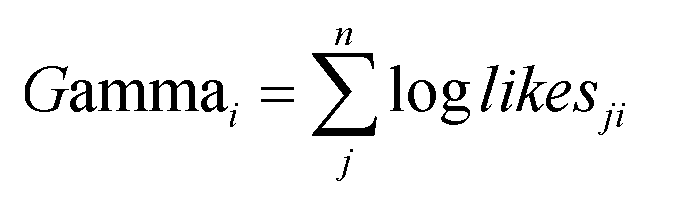
- the first-order coefficient is calculated as follows:
- Gamma i is the i-th element of the first-order coefficient vector
- Loglikes ji is the jth row of the previously calculated probability matrix, the ith element.
- the second-order coefficient is calculated as follows:
- X is a second-order coefficient matrix
- Feats is a voiceprint feature vector.
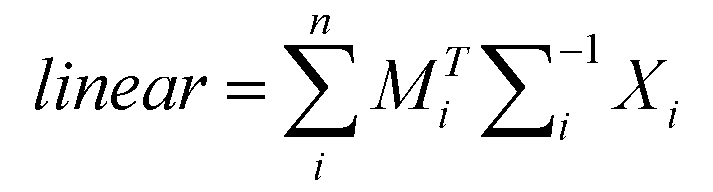
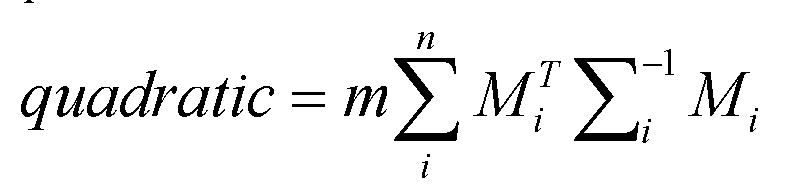
- the primary term and the quadratic term are calculated in parallel, and then the identification vector is calculated by the primary term and the quadratic term:
- Ivector is the authentication vector.
- Mi is the mean matrix of the i-th model in the general model
- ⁇ i is the covariance matrix of the i-th model
- X i is the ith row vector of the second-order coefficient matrix
- m is a first-order coefficient vector
- M i is the mean matrix of the i-th model in the general model
- ⁇ i is the covariance matrix of the i-th model.
- the likelihood ratio corresponding to the extracted voiceprint features may be represented by K Gaussian components:
- P(x) is the probability that the sample is generated by the Gaussian mixture model (mixed Gaussian model);
- w k is the weight of each Gaussian model
- k) is the probability that the sample is generated by the kth Gaussian model
- K is the number of Gaussian models
- the weight of the i-th Gaussian component is:
- the parameters of the entire Gaussian model can be expressed as:
- w i is the weight of the i-th Gaussian model
- ⁇ i is the mean of the i-th Gaussian model
- ⁇ i is the covariance of the i-th Gaussian model
- the objective function adopts the maximum likelihood estimation, that is, the log likelihood function is maximized by selecting parameters:
- log P(x) is the maximum log likelihood value of the sample in the Gaussian mixture model
- p(xi) is the probability that the sample is generated by the ith Gaussian model
- K is the number of Gaussian models.
- the training parameter model updated at each iteration is as follows:
- W i is the weight of the i-th mixed component
- n is the number of mixed components.
- the iterative calculation is continued until the maximum log likelihood value of the sample no longer changes.
- the Gaussian mixture model weight vector, constant vector, N covariance matrix, mean multiplied by the covariance matrix, etc. is a trained general background model.
- an embodiment of the present application further provides a self-updating anti-fraud device, including:
- the updating unit 10 is configured to retrain the training parameters of the voiceprint training model based on the fraudulent voice data in the blacklist voiceprint database when the new fraud voice data is added to the blacklist voiceprint database, and obtain the updated voiceprint training. model;
- the scoring unit 20 is configured to receive the first voice data, and calculate a similarity score of the first voice data and the fraud voice data in the blacklist voiceprint database by using the updated voiceprint training model;
- the determining unit 30 is configured to determine that the first voice data is fraudulent voice data when the similarity score is higher than a set similarity threshold.
- a plurality of fraudulent voice data are stored in the blacklist voiceprint database, and the fraud voice data refers to voice data sent by the fraudulent user; the first voice data is voice data of the new user.
- the blacklist voiceprint library stores a certain number of voiceprint data of the fraudulent user, and when a newly determined user is a fraudulent user, in order to enrich the blacklist voiceprint library, the fraudulent voice data of the new fraudulent user is usually Adding to the blacklist voiceprint library; it should be understood that the fraudulent voice data of the newly determined fraudulent user may be fraudulent voice data detected by the model in the present application, or may be detected in advance by other means or channels. Any of the fraudulent voice data from any source can be added to the blacklist voiceprint library in this application.
- a voiceprint training model is needed to train the voiceprint features of the voice data.
- the voiceprint training model is used to train the fraudulent voice data in the fixed blacklist voiceprint library, and then the training parameters of the voiceprint training model are repeatedly used.
- the number of new users increases, it is obviously impossible to accurately predict Fraudulent users. For example, when new fraudulent voice data is added to the blacklist voiceprint library, if the fraudulent user is still identified according to the previous training parameters, it may cause inaccuracy or false positives.
- the updating unit 10 when new fraudulent voice data is added to the blacklist voiceprint database, the updating unit 10 retrains the training parameters of the voiceprint training model by using all the fraudulent voice data in the blacklist voiceprint database to obtain an update.
- the subsequent voiceprint training model this process is a loop iterative process, as long as new fraudulent voice data is added, then a self-updating; then when there is new first voice data access, the scoring unit 20 reuses
- the updated voiceprint training model calculates a similarity score of the first voice data and the fraud voice data in the blacklist voiceprint library; finally, the determining unit 30 determines that the similarity score is higher than the set similarity
- the threshold determines that the first voice data is fraudulent voice data.
- the self-updating anti-fraud device may further include: a processing unit, configured to add the first voice data as a new fraud voice data to the blacklist voiceprint library, thereby updating the voiceprint training model.
- a processing unit configured to add the first voice data as a new fraud voice data to the blacklist voiceprint library, thereby updating the voiceprint training model.
- the scheme can continuously update the blacklist voiceprint library when the fraudulent voice data is recognized based on the voiceprint training model, thereby optimizing the voiceprint training model, and making the voiceprint training model more accurate in identifying fraudulent voice data.
- a bank's blacklist voiceprint library stores fraudulent voice data of 500 users (the voice data includes the voiceprint feature), and the voiceprint training model is used to blacklist the voice in advance.
- the voiceprint features of 500 users in the library are trained to obtain the training parameters at this time. If another fraudulent voice data, which is marked as a fraudulent user, is added to the blacklist voiceprint database, the training is performed based on the voiceprint features of the 501 users, and the training parameters are retrieved. This process loops through it once whenever new fraudulent voice data is added. Then, when the bank terminal device accesses the new first voice data, the similarity score calculation is performed on the first voice data based on the updated voiceprint training model.
- the training parameter is an inter-class covariance matrix in the PLDA matrix and an average of the discrimination vectors
- the voiceprint training model is a Gaussian mixture model
- the updating unit 10 includes:
- an extracting subunit configured to respectively extract an authentication vector based on all the fraudulent speech data in the blacklist voiceprint library;
- the discriminant vector is an acoustic characteristic of the speaker, which reflects the speaker acoustic difference.
- the extracting subunit specific extraction process is: extracting a voiceprint feature of all the fraudulent voice data in the blacklist voiceprint library, and constructing a corresponding voiceprint feature vector based on the voiceprint feature, and sounding
- the eigenvectors are input to the Gaussian mixture model and the discriminant vector extractor for training, and the training is obtained by the discriminant vector extractor; specifically, the vowel feature vector is input into the Gaussian mixture model for training, and the iterative calculation is continued until the voiceprint feature vector The maximum likelihood logarithm does not change any more, and the training of the Gaussian mixture model is completed.
- the likelihood vector of the voiceprint feature vector in the Gaussian mixture model is calculated by the discriminant vector extractor, and the iterative calculation is performed until the likelihood logarithm value no longer changes, and the trained discriminant vector extractor is obtained. Finally, the discriminant vector of the fraudulent speech data is separately extracted by the trained discriminant vector extractor.
- the voiceprint training model used is a Gaussian mixture model, which mainly uses the discriminant vector to train the inter-class covariance matrix of the PLDA matrix and the mean of the discrimination vector.
- the PLDA matrix refers to the inter-class covariance matrix trained by all the speakers' i-Vectors, which can represent the covariance between a speaker's multi-pass speech and other speakers' multi-pass speech.
- the PLDA covariance matrix helps to better extract the information of the speaker's voice itself contained in the i-Vector, and to minimize the impact of channel differences.
- the training parameter updated in this embodiment is the inter-class covariance matrix and the mean value of the discriminant vector in the PLDA matrix, and the self-updating is completed, and the first speech can be calculated according to the updated inter-class covariance matrix and the mean value of the discriminant vector.
- the similarity score of the data and the fraudulent speech data in the blacklist voiceprint database, the similarity score is obtained by calculating the similarity result in the PLDA matrix by the discrimination vector of the first speech data and the mean value of the discriminant vector.
- the scoring unit 20 includes:
- An extracting module configured to extract an authentication vector of the first voice data by using an authentication vector extractor
- a calculating module configured to input the discrimination vector of the first voice data into the updated voiceprint training model to calculate a similarity score of the first voice data and the fraud voice data in the blacklist voiceprint database.
- the extracting module is specifically configured to: extract a voiceprint feature of the first voice data to form a voiceprint feature vector, and calculate the voiceprint feature vector by using an identifier vector extractor to extract the first voice data. Identification vector.
- the above-mentioned discriminant vector extractor may be pre-trained, or may be trained using the voiceprint feature vector of the fraudulent speech data in the blacklist voiceprint library.
- the training process of the discriminant vector extractor includes: extracting a voiceprint feature of the fraudulent voice data, and constructing a voiceprint feature vector corresponding to the fraud voice data based on the voiceprint feature, and inputting the voiceprint feature vector to the Gaussian
- the hybrid model and the discriminant vector extractor are trained to obtain the discriminant vector extractor; finally, the sound discriminant feature vector of the first speech data can be calculated by the trained discriminant vector extractor, thereby extracting the discriminant of the first speech data. vector.
- the calculation module is specifically configured to calculate the similarity between the first voice data and the fraudulent voice data in the blacklist voiceprint database by using the updated inter-class covariance matrix and the average of the discrimination vectors in the updated voiceprint training model.
- a score the similarity score is obtained by calculating a similarity result in the PLDA matrix by the discrimination vector of the first voice data and the average of the updated discrimination vector; when the similarity score exceeds a set threshold, Then, the first voice data corresponds to the fraudulent voice data in the blacklist voiceprint database, and then the speaker of the first voice data is determined to be a fraudulent user.
- the self-updating anti-fraud method further includes:
- a first extracting unit 101 configured to extract a voiceprint feature in the user voice data, and construct a voiceprint feature vector corresponding to the voice data based on the voiceprint feature;
- the user voice data is data used when training the model, It can actually be any fraudulent voice data in the blacklist voiceprint library.
- a first training unit 102 configured to input the voiceprint feature vector into a Gaussian mixture model and an identifier vector extractor for training; specifically, the voiceprint feature vector is used as a Gaussian mixture model and data of an authentication vector extractor Input and use the EM algorithm to train the Gaussian mixture model and the identification vector extractor.
- the second extracting unit 103 is configured to extract, by the trained discriminant vector extractor, a plurality of discriminant vectors in the single-pass multi-pass training speech; the training speech may be multiple fraudulent voice data of the same person.
- the second training unit 104 is configured to train the PLDA matrix through the plurality of the identification vectors, train the inter-class covariance matrix in the PLDA matrix, and average the identification vectors.
- the pre-trained voiceprint training model may be used to update the training parameters of the voiceprint training model when the blacklist voiceprint library is updated.
- the specific implementations of the first extraction unit 101, the first training unit 102, and the second extraction unit 103 in this embodiment may refer to the extraction subunit and the extraction module in the foregoing embodiments, and the implementation process is substantially the same. The difference is that different voice data are respectively targeted (for example, the extraction subunit, the extraction module is respectively for fraudulent voice data and the first voice data), and the second training unit 104 is the same as the specific implementation process of the above update subunit. No more details are given.
- the voiceprint feature is a Mel frequency cepstrum coefficient
- the first extracting unit 101 specifically includes:
- a pre-processing module configured to perform pre-emphasis, framing, and windowing on the voice data in sequence
- a transform module for obtaining a window by using a Fourier transform for each windowing
- a filtering module configured to filter the spectrum by a Meyer filter to obtain a Mel spectrum
- An analysis module configured to perform cepstrum analysis on the Mel spectrum to obtain a Mel frequency cepstrum coefficient
- a building module configured to construct the voiceprint feature vector based on the Mel frequency cepstral coefficient.
- pre-processing module the transform module, the filtering module, the analysis module, and the building module in this embodiment can also be used in the foregoing extracting sub-unit and the extracting module.
- the foregoing pre-processing module and the transform module are pre-processed voice data.
- the above cepstrum analysis includes taking logarithm and inverse transform.
- the inverse transform is generally realized by DCT discrete cosine transform.
- the second to thirteenth coefficients after DCT are taken, and the cepstrum analysis is performed by Meir spectrum to obtain plum.
- Mel Frequency Cepstrum Coefficient MFCC coefficient
- the Mel frequency cepstrum coefficient is the voiceprint feature of the frame speech; finally, the MFCC coefficient feature of each frame of speech constitutes the voiceprint feature vector.
- the pre-emphasis processing in the pre-processing module actually uses a high-pass filter, and the function of the high-pass filter is to filter out low frequencies to make the high-frequency characteristics of the voice data more prominent.
- the transfer function of the filter is Where Z is the audio data and ⁇ is a constant coefficient. In one embodiment of the present application, the value of ⁇ is 0.97.
- the purpose of the framing processing in the above preprocessing module is to divide the speech data into N segments of short time signal data, and to avoid losing the continuity characteristics of the speech, since the sound data exhibits smoothness only in a short time.
- each frame signal is treated as a stationary signal. Later we need to use Fourier to expand each item to obtain the Mel spectrum features. At this time, the following effects will appear: there will be discontinuities.
- the finite term is selected for synthesis. When the number of selected items is larger, the peak appearing in the synthesized waveform is closer to the discontinuity of the original signal. When the number of items is large, the peak value tends to be a constant, which is approximately equal to 9% of the total jump value. This phenomenon is called the Gibbs effect, and the effect is not good, because the frame is definitely at the beginning and the end.
- this signal will deviate more and more from the original signal after framing. Therefore, after framing, we need to window the voice data, the purpose is to reduce the discontinuity of the signal at the beginning and end of the frame, because the voice data signal is generally stable in a short time, so the voice data is processed.
- the signal only processes data for a period of time at a time, so it is necessary to window the voice signal, and only process the data in the window at a time.
- the discrimination vector can be calculated by the discrimination vector extractor.
- the specific calculation process of the authentication vector refers to the foregoing method embodiment, and details are not described herein again.
- the computer device may be a server, and its internal structure may be as shown in FIG. 6.
- the computer device includes a processor, memory, network interface, and database connected by a system bus. Among them, the computer designed processor is used to provide calculation and control capabilities.
- the memory of the computer device includes a non-volatile storage medium, an internal memory.
- the non-volatile storage medium stores an operating system, computer readable instructions, and a database.
- the memory provides an environment for the operation of operating systems and computer readable instructions in a non-volatile storage medium.
- the database of the computer device is used to store data such as a voiceprint training model.
- the network interface of the computer device is used to communicate with an external terminal via a network connection.
- the computer readable instructions are executed by the processor to implement the self-updating anti-fraud method described above.
- FIG. 6 is only a block diagram of a part of the structure related to the solution of the present application, and does not constitute a limitation of the computer device to which the solution of the present application is applied.
- An embodiment of the present application further provides a computer non-volatile readable storage medium having stored thereon computer readable instructions, which are implemented by a processor to implement the self-updating anti-fraud method in the above embodiments.
Landscapes
- Engineering & Computer Science (AREA)
- Physics & Mathematics (AREA)
- Human Computer Interaction (AREA)
- Multimedia (AREA)
- Acoustics & Sound (AREA)
- Health & Medical Sciences (AREA)
- Audiology, Speech & Language Pathology (AREA)
- Signal Processing (AREA)
- Computational Linguistics (AREA)
- Computer Security & Cryptography (AREA)
- Spectroscopy & Molecular Physics (AREA)
- Computer Vision & Pattern Recognition (AREA)
- Computer Hardware Design (AREA)
- Computing Systems (AREA)
- General Engineering & Computer Science (AREA)
- Computer Networks & Wireless Communication (AREA)
- Information Retrieval, Db Structures And Fs Structures Therefor (AREA)
Abstract
本申请中提供了一种自更新的反欺诈方法、装置、计算机设备和存储介质,黑名单声纹库中加入新的欺诈语音数据时,基于所述黑名单声纹库中的欺诈语音数据重新训练声纹训练模型的训练参数,得到更新后的声纹训练模型;不断更新声纹训练模型,以更好的适应语音反欺诈,提升反欺诈准确性,克服误报的缺陷,同时提升检测效率。
Description
本申请要求于2018年4月17日提交中国专利局、申请号为2018103452564,发明名称为“自更新的反欺诈方法、装置、计算机设备和存储介质”的中国专利申请的优先权,其全部内容通过引用结合在本申请中。
本申请涉及通话语音反欺诈技术领域,特别涉及一种自更新的反欺诈方法、装置、计算机设备和存储介质。
目前,很多大型金融公司的业务范围涉及保险、银行、投资等多个业务范畴,而每个业务范畴通常都需要同客户进行沟通,且都需要进行反欺诈识别,因此,对客户的身份验证及反欺诈识别成为保证业务安全的重要组成部分。为了满足业务的实时性需求,有些金融公司开始采用语音识别的方式对客户的身份进行验证及反欺诈识别,在反欺诈识别中,公司会将历史的欺诈语音数据保存下来,建立起一个黑名单语音库,再利用声纹识别技术提取声纹特征信息,建立黑名单声纹库。
当新的通话进入时,说话人的声音将自动被提取声纹特征信息,与黑名单声纹库中的声纹特征信息进行比对,如果判定说话人的声音与黑名单声纹库中的信息匹配成功,将提示该说话人可能是欺诈身份。该方案的难点在于,这是一比N的声纹匹配过程,当黑名单声纹库中的人数非常多时(如N大于500),准确率较低,且检测效率低。比如,对于任一说话人,只要黑名单500人中任何一人的声音与说话人相似,都可能判定该说话人属于欺诈用户而触发警报,所以存在触发误报的情况。
发明概述
本申请的主要目的为提供一种自更新的反欺诈方法、装置、计算机设备和存储介质,克服现有技术中对语音数据进行反欺诈时准确率低的缺陷。
问题的解决方案
为实现上述目的,本申请提供了一种自更新的反欺诈方法,包括以下步骤:
黑名单声纹库中加入新的欺诈语音数据时,基于所述黑名单声纹库中的欺诈语音数据重新训练声纹训练模型的训练参数,得到更新后的声纹训练模型;
接收第一语音数据,并通过更新后的所述声纹训练模型计算所述第一语音数据与黑名单声纹库中的欺诈语音数据的相似度分值;
若所述相似度分值高于设定的相似度阈值,则判定所述第一语音数据为欺诈语音数据。
本申请还提供了一种自更新的反欺诈装置,包括:
更新单元,用于黑名单声纹库中加入新的欺诈语音数据时,基于所述黑名单声纹库中的所有欺诈语音数据重新训练声纹训练模型的训练参数,得到更新后的声纹训练模型;
打分单元,用于通过更新后的所述声纹训练模型计算第一语音数据与黑名单声纹库中的欺诈语音数据的相似度分值;
判定单元,用于所述相似度分值高于设定的相似度阈值时,则判定所述第一语音数据为欺诈语音数据。
本申请还提供一种计算机设备,包括存储器和处理器,所述存储器存储有计算机可读指令,所述处理器执行所述计算机可读指令时实现上述任一项所述方法的步骤。
本申请还提供一种计算机非易失性可读存储介质,其上存储有计算机可读指令,所述计算机可读指令被处理器执行时实现上述任一项所述的方法的步骤。
发明的有益效果
本申请中提供的自更新的反欺诈方法、装置、计算机设备和存储介质,黑名单声纹库中加入新的欺诈语音数据时,针对所有欺诈语音数据重新训练声纹训练模型的训练参数,得到更新后的声纹训练模型;不断更新声纹训练模型,以更好的适应语音反欺诈,提升反欺诈准确性;同时新的第一语音数据接入时,通 过更新后的所述声纹训练模型计算第一语音数据与黑名单声纹库中的欺诈语音数据的相似度分值,其计算的是与所有欺诈语音数据之间的一个相似度分值,提升准确率,克服误报的缺陷,同时提升检测效率。
对附图的简要说明
图1是本申请一实施例中的自更新的反欺诈方法步骤示意图;
图2是本申请一实施例中的步骤S1的具体步骤示意图;
图3是本申请一实施例中的步骤S2的具体步骤示意图;
图4是本申请一实施例中的自更新的反欺诈装置结构框图;
图5是本申请另一实施例中的自更新的反欺诈装置结构框图;
图6为本申请一实施例的计算机设备的结构示意框图。
实施该发明的最佳实施例
参照图1,本申请一实施例提供一种自更新的反欺诈方法,包括以下步骤:
步骤S1,黑名单声纹库中加入新的欺诈语音数据时,基于所述黑名单声纹库中的欺诈语音数据重新训练声纹训练模型的训练参数,得到更新后的声纹训练模型;
步骤S2,接收第一语音数据,并通过更新后的所述声纹训练模型计算第一语音数据与黑名单声纹库中的欺诈语音数据的相似度分值;
步骤S3,若所述相似度分值高于设定的相似度阈值,则判定所述第一语音数据为欺诈语音数据。
如上述步骤S1所述,在本实施例中,黑名单声纹库中存储有多个欺诈语音数据,欺诈语音数据指的是欺诈用户发出的语音数据;上述第一语音数据为新用户的语音数据。上述黑名单声纹库中存储有一定数量欺诈用户的声纹数据,而当新判定的某个用户为欺诈用户时,为了丰富黑名单声纹库,通常将该新的欺诈用户的欺诈语音数据加入至黑名单声纹库中;应当理解的是,该新判定的欺诈用户的欺诈语音数据可以是通过本申请中的模型检测出的欺诈语音数据,也可以是预先通过其它方式、途径检测出的,即任何来源的欺诈语音数据,均可以 添加至本申请中的黑名单声纹库中。
若需要对大量的语音数据进行声纹识别,需要使用到声纹训练模型,以对语音数据的声纹特征进行训练。目前通常是使用声纹训练模型训练固定的黑名单声纹库中的欺诈语音数据,然后一直重复使用该声纹训练模型的训练参数,随着新用户量的增加,显然无法做到准确预测出欺诈用户。例如,当新的欺诈语音数据被加入至黑名单声纹库中时,若依然按照之前的训练参数进行欺诈用户的识别,则可能造成不准确,也可能产生误报。因此,在本实施例中,黑名单声纹库中加入新的欺诈语音数据时,则利用黑名单声纹库中的所有欺诈语音数据重新训练声纹训练模型的训练参数,得到更新后的声纹训练模型,此过程为一循环迭代过程,只要有新的欺诈语音数据被加入时,则进行一次自更新;然后如上述步骤S2所述,当有新的第一语音数据接入时,再使用更新后的声纹训练模型计算该第一语音数据与黑名单声纹库中的欺诈语音数据的相似度分值;最后如上述步骤S3所述,若所述相似度分值高于设定的相似度阈值,则判定所述第一语音数据为欺诈语音数据。进一步地,步骤S3之后,还可以包括S4:将第一语音数据作为新的欺诈语音数据加入黑名单声纹库,从而更新声纹训练模型。这样,本方案可以在基于声纹训练模型识别欺诈语音数据时,也不断地循环更新黑名单声纹库,从而优化声纹训练模型,使得声纹训练模型对欺诈语音数据的识别更加的准确。
在一具体实施例中,如上述步骤S1中所述,若某银行的黑名单声纹库中存储有500个用户的欺诈语音数据(该欺诈语音数据中包括有其声纹特征),事先会使用声纹训练模型对黑名单声纹库中的500个用户的声纹特征进行训练,得到此时的训练参数。若又有一个标定为欺诈用户的欺诈语音数据加入至该黑名单声纹库中时,则重新基于该501个用户的声纹特征进行训练,重新得到训练参数。每当有新的欺诈语音数据加入时,此过程循环迭代一次。之后,银行终端设备接入新的第一语音数据时,则基于更新后的声纹训练模型对该第一语音数据进行相似度分值的计算。
参照图2,在一实施例中,上述训练参数为PLDA矩阵中的类间协方差矩阵以及鉴别向量的均值,上述声纹训练模型为高斯混合模型,上述基于所述黑名单声 纹库中的所有欺诈语音数据重新训练声纹训练模型的训练参数的步骤S1,包括:
步骤S11,基于所述黑名单声纹库中的所有欺诈语音数据,分别提取鉴别向量(计算鉴别向量i-vector);上述鉴别向量为说话人的声学特征,其反映的是说话人声学差异。
在该步骤中,针对于黑名单声纹库中的所有欺诈语音数据,均需要提取它的鉴别向量,而鉴别向量的提取可以使用训练好的鉴别向量提取器来进行提取。
在一实施例中,上述步骤S11具体过程为:提取所述黑名单声纹库中的所有欺诈语音数据的声纹特征,并基于该声纹特征构建对应的声纹特征向量,将声纹特征向量输入至高斯混合模型以及鉴别向量提取器中进行训练,训练得到鉴别向量提取器;具体地,将声纹特征向量输入至高斯混合模型中进行训练,不断迭代计算直到声纹特征向量的最大似然对数值不再发生变化,则完成高斯混合模型的训练。然后通过鉴别向量提取器计算声纹特征向量在高斯混合模型中的似然对数值,不断迭代计算直到似然对数值不再变化,则得到训练好的鉴别向量提取器。最后,通过训练好的鉴别向量提取器分别提取欺诈语音数据的鉴别向量。
步骤S12,使用所述鉴别向量训练PLDA矩阵,更新所述PLDA矩阵中的类间协方差矩阵以及鉴别向量的均值。
在本实施例中,使用的声纹训练模型为高斯混合模型,其主要利用鉴别向量训练PLDA(Probabilistic Linear Discriminant Analysis,概率线性判别分析)矩阵的类间协方差矩阵以及鉴别向量的均值这两个参数。PLDA矩阵指的是通过所有说话人的i-Vector(鉴别向量)训练的类间协方差矩阵,可以表示一个说话人多通语音与其它说话人的多通语音之间的协方差。PLDA协方差矩阵有助于更好地提取i-Vector中包含的说话人声音本身的信息,尽量消除信道差异所带来的影响。
本实施例中更新的训练参数即为上述PLDA矩阵中的类间协方差矩阵以及鉴别向量的均值,完成自更新,根据更新后的类间协方差矩阵以及鉴别向量的均值便可以计算第一语音数据与黑名单声纹库中的欺诈语音数据的相似度分值,该相似度分值即是通过第一语音数据的鉴别向量与上述鉴别向量的均值在PLDA矩 阵计算得到一个相似度结果。
参照图3,在一实施例中,所述通过更新后的所述声纹训练模型计算第一语音数据与黑名单声纹库中的欺诈语音数据的相似度分值的步骤S2,包括:
步骤S21,使用鉴别向量提取器提取第一语音数据的鉴别向量;
步骤S22,将所述第一语音数据的鉴别向量输入至更新后的声纹训练模型中计算第一语音数据与黑名单声纹库中的欺诈语音数据的相似度分值。
在本实施例中,上述步骤S21具体为:提取第一语音数据的声纹特征组成声纹特征向量,并通过鉴别向量提取器计算所述声纹特征向量,提取出所述第一语音数据的鉴别向量。
上述鉴别向量提取器可以是预先训练好的,也可以利用黑名单声纹库中欺诈语音数据的声纹特征向量进行训练。在一实施例中,上述鉴别向量提取器的训练步骤包括:提取欺诈语音数据的声纹特征,并基于该声纹特征构建欺诈语音数据对应的声纹特征向量,将声纹特征向量输入至高斯混合模型以及鉴别向量提取器中进行训练,训练得到鉴别向量提取器;最后便可以通过训练好的鉴别向量提取器计算上述第一语音数据的声纹特征向量,从而提取出上述第一语音数据的鉴别向量。
上述步骤S22中,利用上述更新后的声纹训练模型中更新的类间协方差矩阵以及鉴别向量的均值便可以计算第一语音数据与黑名单声纹库中的欺诈语音数据的相似度分值,该相似度分值即是通过第一语音数据的鉴别向量与上述更新后鉴别向量的均值在PLDA矩阵中计算得到一个相似度结果;当该相似度分值超过设定的阈值时,则说明该第一语音数据对应于黑名单声纹库中的欺诈语音数据,则判定第一语音数据的发音者为欺诈用户。
在一实施例中,所述黑名单声纹库中加入新的欺诈语音数据时,基于所述黑名单声纹库中的所有欺诈语音数据重新训练声纹训练模型的训练参数的步骤S1之前,包括:
步骤S101,提取用户语音数据中的声纹特征,并基于所述声纹特征构建所述语音数据对应的声纹特征向量;用户语音数据为训练模型时使用到的数据,其实际上可以是黑名单声纹库中的任意欺诈语音数据。
步骤S102,将所述声纹特征向量输入至高斯混合模型以及鉴别向量提取器中进行训练;
步骤S103,通过训练好的鉴别向量提取器提取单人多通的训练语音中的多个鉴别向量;该训练语音可以为同一个人的多个欺诈语音数据。
步骤S104,通过多个所述鉴别向量训练PLDA矩阵,训练所述PLDA矩阵中的类间协方差矩阵以及鉴别向量的均值。
具体地,上述将所述声纹特征向量输入至高斯混合模型以及鉴别向量提取器中进行训练的步骤S102,包括:
将所述声纹特征向量作为高斯混合模型以及鉴别向量提取器的数据输入,并使用EM算法(Expectation Maximization Algorithm,期望最大化算法)训练高斯混合模型以及鉴别向量提取器。EM算法一种迭代算法,用于高斯混合模型的最大似然对数估计。
本实施例可以是使用预先训练好的声纹训练模型,在黑名单声纹库更新时,对声纹训练模型进行训练参数的更新。当然也可以是先基于用户的语音数据对声纹训练模型进行训练,得到我们特有的训练模型。因此,在本实施例中,上述步骤S1之前进行声纹训练模型的训练,即上述步骤S101-步骤S104。值得注意的是,本实施例中的步骤S101、步骤S102、步骤S103的具体实现可以参照上述实施例中的步骤S11、步骤S21,其实现过程大致相同,区别在于分别针对的是不同的语音数据(例如步骤S11、步骤S21分别针对的是欺诈语音数据以及第一语音数据),步骤S104与上述步骤S12具体实现过程相同,在此不再进行赘述。
在一实施例中,所述声纹特征为梅尔频率倒谱系数,所述提取用户语音数据中的声纹特征,并基于所述声纹特征构建所述语音数据对应的声纹特征向量的步骤S101,具体包括:
a、对所述语音数据依次进行预加重、分帧以及加窗处理;
b、对每一个加窗,通过傅里叶变换得到频谱;
c、通过梅尔滤波器对所述频谱进行滤波,得到梅尔频谱;
d、对所述梅尔频谱进行倒谱分析,得到梅尔频率倒谱系数;
e、基于所述梅尔频率倒谱系数构建所述声纹特征向量。
可以理解的是,本实施例中的步骤a、b、c、d、e中对于提取语音数据的声纹特征向量的具体实现过程同样可以用于上述步骤S11、步骤S21中。
在本实施例中,上述步骤a、b为语音数据的预处理过程。上述倒谱分析包括取对数,做逆变换等方式,逆变换一般是通过DCT离散余弦变换来实现,取DCT后的第2个到第13个系数,通过梅尔频谱进行倒谱分析得到梅尔频率倒谱系数(Mel Frequency CepstrumCoefficient,MFCC系数),该梅尔频率倒谱系数就是这帧语音的声纹特征;最后,将每帧语音的MFCC系数特征组成声纹特征向量。
[根据细则26改正10.08.2018]
具体地,在本实施例中,上述步骤a中的预加重处理其实使用的是一个高通滤波器,该高通滤波器的作用是滤去低频,使语音数据的高频特性更加突现,该高通滤波器的传递函数为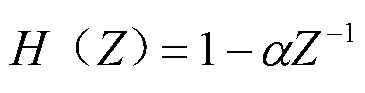 ,其中,Z为音频数据,α为常量系数,本申请的一个实施例中,α的取值为0.97。
具体地,在本实施例中,上述步骤a中的预加重处理其实使用的是一个高通滤波器,该高通滤波器的作用是滤去低频,使语音数据的高频特性更加突现,该高通滤波器的传递函数为
上述步骤a中的分帧处理的目的是:由于声音数据只在较短时间内呈现平稳性,因此将一段语音数据分成N段短时间的信号数据,并且为了避免丢失语音的连续性特征,相邻帧之间会有一段重复区域,重复区域一般为帧长的1/2。
在对语音数据进行分帧之后,每一帧信号都当成平稳信号来处理,后面我们需要用傅里叶展开每一项,以获取Mel频谱特征,这时如下效应会出现:将具有不连续点的周期函数(如矩形脉冲)进行傅立叶级数展开后,选取有限项进行合成,当选取的项数越多,在所合成的波形中出现的峰起越靠近原信号的不连续点,当选取的项数很大时,该峰起值趋于一个常数,大约等于总跳变值的9%,这种现象称为吉布斯效应,效果不好,因为帧在起始和结束肯定是会出现不连续情况的,那么这个信号在分帧之后,就会越来越背离原始信号。因此,在分帧之后,我们需要对语音数据进行加窗处理,目的就是为了减少帧起始和结束的地方信号的不连续性问题,因为语音数据信号一般在短时间内平稳,所以处理语音数据信号每次只处理一段时间的数据,所以需要对语音信号进行加窗操作,一次仅处理窗中的数据。
上述步骤e之后,得到语音数据的声纹特征向量之后,通过鉴别向量提取器便 可以计算出鉴别向量。具体地,在一个实施例中,提供一种鉴别向量的具体计算过程。
1、选择高斯模型:
首先,我们会利用鉴别向量提取器模型中的参数来计算每个帧数据在不同高斯模型的似然对数值,通过对似然对数值矩阵每列并行排序,选取前N个高斯模型,最终获得一个每帧数据在混合高斯模型中数值前N的矩阵。其中,似然对数值矩阵计算公式如下:
[根据细则26改正10.08.2018]

参数:Loglike为似然对数值矩阵,即每帧在混合高斯模型下计算出来的似然对数值;
E(X)为通用背景模型训练出来的均值矩阵;
D(X)为协方差矩阵;
X为数据矩阵;
X.
2为矩阵每个值取平方。
2、计算后验概率:
将每帧数据X进行X*XT计算,得到一个对称矩阵,简化为下三角矩阵,并将元素按顺序排列为1行,变成一个N帧乘以该下三角矩阵个数这样纬度的一个向量进行计算,将所有帧这样的向量组合成新的数据矩阵,同时将鉴别向量提取器模型中的计算概率的协方差矩阵,每个矩阵也简化为下三角矩阵,变成与新数据矩阵类似的矩阵,在通过鉴别向量提取器模型中的均值矩阵和协方差矩阵算出每帧数据的在该选择的高斯模型下的似然对数值,然后进行Softmax回归,最后进行归一化操作,得到每帧在混合高斯模型的后验概率分布,将每帧的概率分布向量组成概率矩阵:
似然对数值计算公式:
[根据细则26改正10.08.2018]

其中,loglikes
i为似然对数值矩阵的第i行向量;
C
i为第i个模型的常数项;
E
i为第i个模型的均值矩阵;
Cov
i为第i个模型的协方差矩阵;
X
i为第i帧语音数据。
对loglikes的每行向量进行Softmax回归计算(信息熵的方法),得到每帧在混合高斯模型中的后验概率:
[根据细则26改正10.08.2018]

X
i为一行似然对数值矩阵第i个值;
max(X)为该行向量的最大值;
3、计算一二阶系数:
一阶系数计算可以通过上述概率矩阵列求和得到,二阶系数可以通过概率矩阵的转置乘以数据矩阵获得:
一阶系数计算公式如下:
[根据细则26改正10.08.2018]
Gamma
i为一阶系数向量的第i个元素;
loglikes
ji为之前计算的概率矩阵的第j行,第i个元素。
二阶系数计算公式如下:
[根据细则26改正10.08.2018]

X为二阶系数矩阵;
loglikes
T为概率矩阵;
feats为声纹特征向量。
4、鉴别向量的计算:
计算完一阶,二阶系数以后,并行计算一次项和二次项,然后通过一次项和二次项计算鉴别向量:
[根据细则26改正10.08.2018]

ivector为鉴别向量。
其中linear的计算公式为:
[根据细则26改正10.08.2018]
Mi为通用模型中的第i个模型的均值矩阵;
∑
i为第i个模型的协方差矩阵;
X
i为二阶系数矩阵的第i行向量;
quadratic的计算公式:
[根据细则26改正10.08.2018]
m为一阶系数向量;
M
i为通用模型中的第i个模型的均值矩阵;
∑
i为第i个模型的协方差矩阵。
在具体的一个实施例中,使用EM算法训练的高斯混合模型中,提取的声纹特征对应的似然概率可用K个高斯分量表示:
P(x)=1Kw
kp(x|k)
参数:P(x)为样本由高斯混合模型生成的概率(混合高斯模型);
w
k为每个高斯模型的权重;
p(x|k)为样本由第k个高斯模型生成的概率;
K为高斯模型数量;
其中第i个高斯分量的权重为:
[根据细则26改正10.08.2018]

整个高斯模型的参数可以表示为:
[根据细则26改正10.08.2018]

w
i为第i个高斯模型的权重;
μ
i为第i个高斯模型的均值;
∑
i为第i个高斯模型的协方差;
训练此模型可以用非监督的EM算法,目标函数采用最大似然估计,即通过选择参数使对数似然函数最大:
logP(x)=i=1Klogp(xi)
其中log P(x)为样本在高斯混合模型的最大对数似然值;
p(xi)为样本由第i个高斯模型生成的概率;
K为高斯模型数量。
而在每一步迭代更新的训练参数模型如下:


[根据细则26改正10.08.2018]
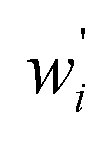
为第i个高斯模型的权重;
[根据细则26改正10.08.2018]
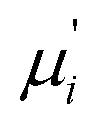
为第i个高斯模型的均值;
[根据细则26改正10.08.2018]
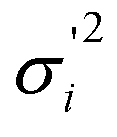
为第i个高斯模型的协方差。
其中,p(i|X
j,θ)是第i个混合分量的后验概率:
[根据细则26改正10.08.2018]
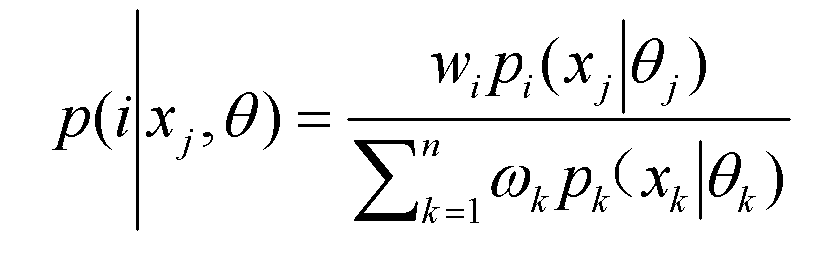
其中,W
i为第i个混合分量的权重;
p
i(x
jθ
j)
为第i个混合分量的概率;
n为混合分量的数量。
不断迭代计算直到样本的最大对数似然值不再发生变化。
训练完成后,得到高斯混合模型的权重向量,常数向量,N个协方差矩阵,均值乘以协方差的矩阵等,就是一个训练好的通用背景模型。
参照图4,本申请实施例中还提供了一种自更新的反欺诈装置,包括:
更新单元10,用于黑名单声纹库中加入新的欺诈语音数据时,基于所述黑名单声纹库中的欺诈语音数据重新训练声纹训练模型的训练参数,得到更新后的声纹训练模型;
打分单元20,用于接收第一语音数据,并通过更新后的所述声纹训练模型计算第一语音数据与黑名单声纹库中的欺诈语音数据的相似度分值;
判定单元30,用于所述相似度分值高于设定的相似度阈值时,则判定所述第一语音数据为欺诈语音数据。
在本实施例中,黑名单声纹库中存储有多个欺诈语音数据,欺诈语音数据指的 是欺诈用户发出的语音数据;上述第一语音数据为新用户的语音数据。上述黑名单声纹库中存储有一定数量欺诈用户的声纹数据,而当新判定的某个用户为欺诈用户时,为了丰富黑名单声纹库,通常将该新的欺诈用户的欺诈语音数据加入至黑名单声纹库中;应当理解的是,该新判定的欺诈用户的欺诈语音数据可以是通过本申请中的模型检测出的欺诈语音数据,也可以是预先通过其它方式、途径检测出的,即任何来源的欺诈语音数据,均可以添加至本申请中的黑名单声纹库中。
若需要对大量的语音数据进行声纹识别,需要使用到声纹训练模型,以对语音数据的声纹特征进行训练。目前通常是使用声纹训练模型训练固定的黑名单声纹库中的欺诈语音数据,然后一直重复使用该声纹训练模型的训练参数,随着新用户量的增加,显然无法做到准确预测出欺诈用户。例如,当新的欺诈语音数据被加入至黑名单声纹库中时,若依然按照之前的训练参数进行欺诈用户的识别,则可能造成不准确,也可能产生误报。因此,在本实施例中,黑名单声纹库中加入新的欺诈语音数据时,则更新单元10利用黑名单声纹库中的所有欺诈语音数据重新训练声纹训练模型的训练参数,得到更新后的声纹训练模型,此过程为一循环迭代过程,只要有新的欺诈语音数据被加入时,则进行一次自更新;然后当有新的第一语音数据接入时,打分单元20再使用更新后的声纹训练模型计算该第一语音数据与黑名单声纹库中的欺诈语音数据的相似度分值;最后,判定单元30若判定所述相似度分值高于设定的相似度阈值,则判定所述第一语音数据为欺诈语音数据。进一步地,上述自更新的反欺诈装置还可以包括:处理单元,用于将第一语音数据作为新的欺诈语音数据加入黑名单声纹库,从而更新声纹训练模型。这样,本方案可以在基于声纹训练模型识别欺诈语音数据时,也不断地循环更新黑名单声纹库,从而优化声纹训练模型,使得声纹训练模型对欺诈语音数据的识别更加的准确。
在一具体实施例中,某银行的黑名单声纹库中存储有500个用户的欺诈语音数据(该欺诈语音数据中包括有其声纹特征),事先会使用声纹训练模型对黑名单声纹库中的500个用户的声纹特征进行训练,得到此时的训练参数。若又有一个标定为欺诈用户的欺诈语音数据加入至该黑名单声纹库中时,则重新基于该5 01个用户的声纹特征进行训练,重新得到训练参数。每当有新的欺诈语音数据加入时,此过程循环迭代一次。之后,银行终端设备接入新的第一语音数据时,则基于更新后的声纹训练模型对该第一语音数据进行相似度分值的计算。
在一实施例中,上述训练参数为PLDA矩阵中的类间协方差矩阵以及鉴别向量的均值,上述声纹训练模型为高斯混合模型,上述更新单元10包括:
提取子单元,用于基于所述黑名单声纹库中的所有欺诈语音数据,分别提取鉴别向量;上述鉴别向量为说话人的声学特征,其反映的是说话人声学差异。针对于黑名单声纹库中的所有欺诈语音数据,均需要提取它的鉴别向量,而鉴别向量的提取可以使用训练好的鉴别向量提取器来进行提取。
在一实施例中,上述提取子单元具体提取过程为:提取所述黑名单声纹库中的所有欺诈语音数据的声纹特征,并基于该声纹特征构建对应的声纹特征向量,将声纹特征向量输入至高斯混合模型以及鉴别向量提取器中进行训练,训练得到鉴别向量提取器;具体地,将声纹特征向量输入至高斯混合模型中进行训练,不断迭代计算直到声纹特征向量的最大似然对数值不再发生变化,则完成高斯混合模型的训练。然后通过鉴别向量提取器计算声纹特征向量在高斯混合模型中的似然对数值,不断迭代计算直到似然对数值不再变化,则得到训练好的鉴别向量提取器。最后,通过训练好的鉴别向量提取器分别提取欺诈语音数据的鉴别向量。
更新子单元,用于使用所述鉴别向量训练PLDA矩阵,更新所述PLDA矩阵中的类间协方差矩阵以及鉴别向量的均值。
在本实施例中,使用的声纹训练模型为高斯混合模型,其主要利用鉴别向量训练PLDA矩阵的类间协方差矩阵以及鉴别向量的均值这两个参数。PLDA矩阵指的是通过所有说话人的i-Vector(鉴别向量)训练的类间协方差矩阵,可以表示一个说话人多通语音与其它说话人的多通语音之间的协方差。PLDA协方差矩阵有助于更好地提取i-Vector中包含的说话人声音本身的信息,尽量消除信道差异所带来的影响。
本实施例中更新的训练参数即为上述PLDA矩阵中的类间协方差矩阵以及鉴别向量的均值,完成自更新,根据更新后的类间协方差矩阵以及鉴别向量的均值 便可以计算第一语音数据与黑名单声纹库中的欺诈语音数据的相似度分值,该相似度分值即是通过第一语音数据的鉴别向量与上述鉴别向量的均值在PLDA矩阵计算得到一个相似度结果。
在一实施例中,所述打分单元20包括:
提取模块,用于使用鉴别向量提取器提取第一语音数据的鉴别向量;
计算模块,用于将所述第一语音数据的鉴别向量输入至更新后的声纹训练模型中计算第一语音数据与黑名单声纹库中的欺诈语音数据的相似度分值。
在本实施例中,上述提取模块具体用于:提取第一语音数据的声纹特征组成声纹特征向量,并通过鉴别向量提取器计算所述声纹特征向量,提取出所述第一语音数据的鉴别向量。
上述鉴别向量提取器可以是预先训练好的,也可以利用黑名单声纹库中欺诈语音数据的声纹特征向量进行训练。在一实施例中,上述鉴别向量提取器的训练过程包括:提取欺诈语音数据的声纹特征,并基于该声纹特征构建欺诈语音数据对应的声纹特征向量,将声纹特征向量输入至高斯混合模型以及鉴别向量提取器中进行训练,训练得到鉴别向量提取器;最后便可以通过训练好的鉴别向量提取器计算上述第一语音数据的声纹特征向量,从而提取上述第一语音数据的鉴别向量。
上述计算模块具体用于:利用上述更新后的声纹训练模型中更新的类间协方差矩阵以及鉴别向量的均值便可以计算第一语音数据与黑名单声纹库中的欺诈语音数据的相似度分值,该相似度分值即是通过第一语音数据的鉴别向量与上述更新后鉴别向量的均值在PLDA矩阵中计算得到一个相似度结果;当该相似度分值超过设定的阈值时,则说明该第一语音数据对应于黑名单声纹库中的欺诈语音数据,则判定第一语音数据的发音者为欺诈用户。
参照图5,在一实施例中,所述自更新的反欺诈方法还包括:
第一提取单元101,用于提取用户语音数据中的声纹特征,并基于所述声纹特征构建所述语音数据对应的声纹特征向量;用户语音数据为训练模型时使用到的数据,其实际上可以是黑名单声纹库中的任意欺诈语音数据。
第一训练单元102,用于将所述声纹特征向量输入至高斯混合模型以及鉴别向 量提取器中进行训练;具体地,将所述声纹特征向量作为高斯混合模型以及鉴别向量提取器的数据输入,并使用EM算法训练高斯混合模型以及鉴别向量提取器。
第二提取单元103,用于通过训练好的鉴别向量提取器提取单人多通的训练语音中的多个鉴别向量;该训练语音可以为同一个人的多个欺诈语音数据。
第二训练单元104,用于通过多个所述鉴别向量训练PLDA矩阵,训练所述PLDA矩阵中的类间协方差矩阵以及鉴别向量的均值。
本实施例可以是使用预先训练好的声纹训练模型,在黑名单声纹库更新时,对声纹训练模型进行训练参数的更新。当然也可以是先基于用户的语音数据对声纹训练模型进行训练,得到我们特有的训练模型。值得注意的是,本实施例中的第一提取单元101、第一训练单元102、第二提取单元103的具体实现可以参照上述实施例中的提取子单元、提取模块,其实现过程大致相同,区别在于分别针对的是不同的语音数据(例如提取子单元、提取模块分别针对的是欺诈语音数据以及第一语音数据),第二训练单元104与上述更新子单元的具体实现过程相同,在此不再进行赘述。
在一实施例中,所述声纹特征为梅尔频率倒谱系数,所述第一提取单元101具体包括:
预处理模块,用于对所述语音数据依次进行预加重、分帧以及加窗处理;
变换模块,用于对每一个加窗,通过傅里叶变换得到频谱;
滤波模块,用于通过梅尔滤波器对所述频谱进行滤波,得到梅尔频谱;
分析模块,用于对所述梅尔频谱进行倒谱分析,得到梅尔频率倒谱系数;
构建模块,用于基于所述梅尔频率倒谱系数构建所述声纹特征向量。
可以理解的是,本实施例中的预处理模块、变换模块、滤波模块、分析模块、构建模块的具体实现同样可以用于上述提取子单元、提取模块中。
在本实施例中,上述预处理模块、变换模块为对语音数据的预处理。上述倒谱分析包括取对数,做逆变换等方式,逆变换一般是通过DCT离散余弦变换来实现,取DCT后的第2个到第13个系数,通过梅尔频谱进行倒谱分析得到梅尔频率倒谱系数(Mel Frequency CepstrumCoefficient,MFCC系数),该梅尔频率倒谱系 数就是这帧语音的声纹特征;最后,将每帧语音的MFCC系数特征组成声纹特征向量。
[根据细则26改正10.08.2018]
具体地,在本实施例中,上述预处理模块中的预加重处理其实使用的是一个高通滤波器,该高通滤波器的作用是滤去低频,使语音数据的高频特性更加突现,该高通滤波器的传递函数为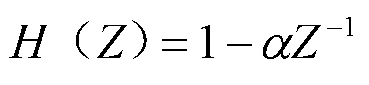 ,其中,Z为音频数据,α为常量系数,本申请的一个实施例中,α的取值为0.97。
具体地,在本实施例中,上述预处理模块中的预加重处理其实使用的是一个高通滤波器,该高通滤波器的作用是滤去低频,使语音数据的高频特性更加突现,该高通滤波器的传递函数为
上述预处理模块中的分帧处理的目的是:由于声音数据只在较短时间内呈现平稳性,因此将一段语音数据分成N段短时间的信号数据,并且为了避免丢失语音的连续性特征,相邻帧之间会有一段重复区域,重复区域一般为帧长的1/2。
在对语音数据进行分帧之后,每一帧信号都当成平稳信号来处理,后面我们需要用傅里叶展开每一项,以获取Mel频谱特征,这时如下效应会出现:将具有不连续点的周期函数(如矩形脉冲)进行傅立叶级数展开后,选取有限项进行合成,当选取的项数越多,在所合成的波形中出现的峰起越靠近原信号的不连续点,当选取的项数很大时,该峰起值趋于一个常数,大约等于总跳变值的9%,这种现象称为吉布斯效应,效果不好,因为帧在起始和结束肯定是会出现不连续情况的,那么这个信号在分帧之后,就会越来越背离原始信号。因此,在分帧之后,我们需要对语音数据进行加窗处理,目的就是为了减少帧起始和结束的地方信号的不连续性问题,因为语音数据信号一般在短时间内平稳,所以处理语音数据信号每次只处理一段时间的数据,所以需要对语音信号进行加窗操作,一次仅处理窗中的数据。
在上述构建模块得到语音数据的声纹特征向量之后,通过鉴别向量提取器便可以计算出鉴别向量。具体地,鉴别向量的具体计算过程参照上述方法实施例,在此不再进行赘述。
参照图6,本申请实施例中还提供一种计算机设备,该计算机设备可以是服务器,其内部结构可以如图6所示。该计算机设备包括通过系统总线连接的处理器、存储器、网络接口和数据库。其中,该计算机设计的处理器用于提供计算和 控制能力。该计算机设备的存储器包括非易失性存储介质、内存储器。该非易失性存储介质存储有操作系统、计算机可读指令和数据库。该内存器为非易失性存储介质中的操作系统和计算机可读指令的运行提供环境。该计算机设备的数据库用于存储声纹训练模型等数据。该计算机设备的网络接口用于与外部的终端通过网络连接通信。该计算机可读指令被处理器执行时以实现上述自更新的反欺诈方法。
本领域技术人员可以理解,图6中示出的结构,仅仅是与本申请方案相关的部分结构的框图,并不构成对本申请方案所应用于其上的计算机设备的限定。
本申请一实施例还提供一种计算机非易失性可读存储介质,其上存储有计算机可读指令,计算机可读指令被处理器执行时实现上述实施例中的自更新的反欺诈方法。
Claims (20)
- 一种自更新的反欺诈方法,其特征在于,包括以下步骤:黑名单声纹库中加入新的欺诈语音数据时,基于所述黑名单声纹库中的欺诈语音数据重新训练声纹训练模型的训练参数,得到更新后的声纹训练模型;接收第一语音数据,并通过更新后的所述声纹训练模型计算所述第一语音数据与黑名单声纹库中的欺诈语音数据的相似度分值;若所述相似度分值高于设定的相似度阈值,则判定所述第一语音数据为欺诈语音数据。
- 根据权利要求1所述的自更新的反欺诈方法,其特征在于,所述训练参数为PLDA矩阵中的类间协方差矩阵以及鉴别向量的均值,所述声纹训练模型为高斯混合模型,所述基于所述黑名单声纹库中的欺诈语音数据重新训练声纹训练模型的训练参数的步骤,包括:基于所述黑名单声纹库中的欺诈语音数据,分别提取鉴别向量;使用所述鉴别向量训练PLDA矩阵,更新所述PLDA矩阵中的类间协方差矩阵以及鉴别向量的均值。
- 根据权利要求1所述的自更新的反欺诈方法,其特征在于,所述通过更新后的所述声纹训练模型计算所述第一语音数据与黑名单声纹库中的欺诈语音数据的相似度分值的步骤,包括:使用鉴别向量提取器提取所述第一语音数据的鉴别向量;将所述第一语音数据的鉴别向量输入至更新后的声纹训练模型中计算第一语音数据与黑名单声纹库中的欺诈语音数据的相似度分值。
- 根据权利要求3所述的自更新的反欺诈方法,其特征在于,所述使用鉴别向量提取器提取所述第一语音数据的鉴别向量的步骤,具体包括:提取所述第一语音数据的声纹特征组成声纹特征向量,并通过鉴 别向量提取器计算所述声纹特征向量,提取出所述第一语音数据的鉴别向量。
- 根据权利要求1所述的自更新的反欺诈方法,其特征在于,所述训练参数为PLDA矩阵中的类间协方差矩阵以及鉴别向量的均值,所述声纹训练模型为高斯混合模型,所述黑名单声纹库中加入新的欺诈语音数据时,基于所述黑名单声纹库中的欺诈语音数据重新训练声纹训练模型的训练参数的步骤之前,包括:提取用户语音数据中的声纹特征,并基于所述声纹特征构建所述语音数据对应的声纹特征向量;将所述声纹特征向量输入至高斯混合模型以及鉴别向量提取器中进行训练;通过训练好的鉴别向量提取器提取单人多通的欺诈语音数据中的多个鉴别向量;通过多个所述鉴别向量训练PLDA矩阵,训练所述PLDA矩阵中的类间协方差矩阵以及鉴别向量的均值。
- 根据权利要求5所述的自更新的反欺诈方法,其特征在于,所述将所述声纹特征向量输入至高斯混合模型以及鉴别向量提取器中进行训练的步骤,包括:将所述声纹特征向量作为高斯混合模型以及鉴别向量提取器的数据输入,并使用EM算法训练高斯混合模型以及鉴别向量提取器。
- 根据权利要求5所述的自更新的反欺诈方法,其特征在于,所述声纹特征为梅尔频率倒谱系数,所述提取用户语音数据中的声纹特征,并基于所述声纹特征构建所述语音数据对应的声纹特征向量的步骤包括:对所述语音数据依次进行预加重、分帧以及加窗处理;对每一个加窗,通过傅里叶变换得到频谱;通过梅尔滤波器对所述频谱进行滤波,得到梅尔频谱;对所述梅尔频谱进行倒谱分析,得到梅尔频率倒谱系数;基于所述梅尔频率倒谱系数构建所述声纹特征向量。
- 一种自更新的反欺诈装置,其特征在于,包括:更新单元,用于黑名单声纹库中加入新的欺诈语音数据时,基于所述黑名单声纹库中的欺诈语音数据重新训练声纹训练模型的训练参数,得到更新后的声纹训练模型;打分单元,用于接收第一语音数据,并通过更新后的所述声纹训练模型计算所述第一语音数据与黑名单声纹库中的欺诈语音数据的相似度分值;判定单元,用于所述相似度分值高于设定的相似度阈值时,则判定所述第一语音数据为欺诈语音数据。
- 根据权利要求8所述的自更新的反欺诈装置,其特征在于,所述训练参数为PLDA矩阵中的类间协方差矩阵以及鉴别向量的均值,所述声纹训练模型为高斯混合模型,所述更新单元包括:提取子单元,用于基于所述黑名单声纹库中的欺诈语音数据,分别提取鉴别向量;更新子单元,用于使用所述鉴别向量训练PLDA矩阵,更新所述PLDA矩阵中的类间协方差矩阵以及鉴别向量的均值。
- 根据权利要求8所述的自更新的反欺诈装置,其特征在于,所述打分单元包括:提取模块,用于使用鉴别向量提取器提取所述第一语音数据的鉴别向量;计算模块,用于将所述第一语音数据的鉴别向量输入至更新后的声纹训练模型中计算第一语音数据与黑名单声纹库中的欺诈语音数据的相似度分值。
- 根据权利要求10所述的自更新的反欺诈装置,其特征在于,所述提取模块具体用于:提取所述第一语音数据的声纹特征组成声纹特征向量,并通过鉴别向量提取器计算所述声纹特征向量,提取出所述第一语音数据 的鉴别向量。
- 根据权利要求8所述的自更新的反欺诈装置,其特征在于,所述训练参数为PLDA矩阵中的类间协方差矩阵以及鉴别向量的均值,所述声纹训练模型为高斯混合模型,所述装置还包括:第一提取单元,用于提取用户语音数据中的声纹特征,并基于所述声纹特征构建所述语音数据对应的声纹特征向量;第一训练单元,用于将所述声纹特征向量输入至高斯混合模型以及鉴别向量提取器中进行训练;第二提取单元,用于通过训练好的鉴别向量提取器提取单人多通的欺诈语音数据中的多个鉴别向量;第二训练单元,用于通过多个所述鉴别向量训练PLDA矩阵,训练所述PLDA矩阵中的类间协方差矩阵以及鉴别向量的均值。
- 根据权利要求12所述的自更新的反欺诈装置,其特征在于,将所述声纹特征向量作为高斯混合模型以及鉴别向量提取器的数据输入,并使用EM算法训练高斯混合模型以及鉴别向量提取器。
- 根据权利要求12所述的自更新的反欺诈装置,其特征在于,所述声纹特征为梅尔频率倒谱系数,所述第一提取单元具体包括:预处理模块,用于对所述语音数据依次进行预加重、分帧以及加窗处理;变换模块,用于对每一个加窗,通过傅里叶变换得到频谱;滤波模块,用于通过梅尔滤波器对所述频谱进行滤波,得到梅尔频谱;分析模块,用于对所述梅尔频谱进行倒谱分析,得到梅尔频率倒谱系数;构建模块,用于基于所述梅尔频率倒谱系数构建所述声纹特征向量。
- 一种计算机设备,包括存储器和处理器,所述存储器存储有计算机可读指令,其特征在于,所述处理器执行所述计算机可读指令 时实现自更新的反欺诈方法,所述方法包括:黑名单声纹库中加入新的欺诈语音数据时,基于所述黑名单声纹库中的欺诈语音数据重新训练声纹训练模型的训练参数,得到更新后的声纹训练模型;接收第一语音数据,并通过更新后的所述声纹训练模型计算所述第一语音数据与黑名单声纹库中的欺诈语音数据的相似度分值;若所述相似度分值高于设定的相似度阈值,则判定所述第一语音数据为欺诈语音数据。
- 根据权利要求15所述的计算机设备,其特征在于,所述训练参数为PLDA矩阵中的类间协方差矩阵以及鉴别向量的均值,所述声纹训练模型为高斯混合模型,所述处理器基于所述黑名单声纹库中的欺诈语音数据重新训练声纹训练模型的训练参数的步骤,包括:基于所述黑名单声纹库中的欺诈语音数据,分别提取鉴别向量;使用所述鉴别向量训练PLDA矩阵,更新所述PLDA矩阵中的类间协方差矩阵以及鉴别向量的均值。
- 根据权利要求15所述的计算机设备,其特征在于,所述处理器通过更新后的所述声纹训练模型计算所述第一语音数据与黑名单声纹库中的欺诈语音数据的相似度分值的步骤,包括:使用鉴别向量提取器提取所述第一语音数据的鉴别向量;将所述第一语音数据的鉴别向量输入至更新后的声纹训练模型中计算第一语音数据与黑名单声纹库中的欺诈语音数据的相似度分值。
- 一种计算机非易失性可读存储介质,其上存储有计算机可读指令,其特征在于,所述计算机可读指令被处理器执行时实现自更新的反欺诈方法,所述方法包括:黑名单声纹库中加入新的欺诈语音数据时,基于所述黑名单声纹库中的欺诈语音数据重新训练声纹训练模型的训练参数,得到更 新后的声纹训练模型;接收第一语音数据,并通过更新后的所述声纹训练模型计算所述第一语音数据与黑名单声纹库中的欺诈语音数据的相似度分值;若所述相似度分值高于设定的相似度阈值,则判定所述第一语音数据为欺诈语音数据。
- 根据权利要求18所述的计算机非易失性可读存储介质,其特征在于,所述训练参数为PLDA矩阵中的类间协方差矩阵以及鉴别向量的均值,所述声纹训练模型为高斯混合模型,所述处理器基于所述黑名单声纹库中的欺诈语音数据重新训练声纹训练模型的训练参数的步骤,包括:基于所述黑名单声纹库中的欺诈语音数据,分别提取鉴别向量;使用所述鉴别向量训练PLDA矩阵,更新所述PLDA矩阵中的类间协方差矩阵以及鉴别向量的均值。
- 根据权利要求18所述的计算机非易失性可读存储介质,其特征在于,所述处理器通过更新后的所述声纹训练模型计算所述第一语音数据与黑名单声纹库中的欺诈语音数据的相似度分值的步骤,包括:使用鉴别向量提取器提取所述第一语音数据的鉴别向量;将所述第一语音数据的鉴别向量输入至更新后的声纹训练模型中计算第一语音数据与黑名单声纹库中的欺诈语音数据的相似度分值。
Applications Claiming Priority (2)
| Application Number | Priority Date | Filing Date | Title |
|---|---|---|---|
| CN201810345256.4 | 2018-04-17 | ||
| CN201810345256.4A CN108806695A (zh) | 2018-04-17 | 2018-04-17 | 自更新的反欺诈方法、装置、计算机设备和存储介质 |
Publications (1)
| Publication Number | Publication Date |
|---|---|
| WO2019200744A1 true WO2019200744A1 (zh) | 2019-10-24 |
Family
ID=64094806
Family Applications (1)
| Application Number | Title | Priority Date | Filing Date |
|---|---|---|---|
| PCT/CN2018/095486 Ceased WO2019200744A1 (zh) | 2018-04-17 | 2018-07-12 | 自更新的反欺诈方法、装置、计算机设备和存储介质 |
Country Status (2)
| Country | Link |
|---|---|
| CN (1) | CN108806695A (zh) |
| WO (1) | WO2019200744A1 (zh) |
Cited By (1)
| Publication number | Priority date | Publication date | Assignee | Title |
|---|---|---|---|---|
| CN116153319A (zh) * | 2023-01-13 | 2023-05-23 | 国网江苏省电力有限公司营销服务中心 | 一种基于声纹识别的高风险用户检测方法及系统 |
Families Citing this family (12)
| Publication number | Priority date | Publication date | Assignee | Title |
|---|---|---|---|---|
| CN109544324B (zh) * | 2018-11-27 | 2022-03-22 | 深圳前海微众银行股份有限公司 | 信贷反欺诈方法、系统、设备及计算机可读存储介质 |
| CN109994118B (zh) * | 2019-04-04 | 2022-10-11 | 平安科技(深圳)有限公司 | 语音密码验证方法、装置、存储介质及计算机设备 |
| CN112116913A (zh) * | 2019-06-19 | 2020-12-22 | 宝马股份公司 | 基于语音的置信度检测方法和系统 |
| CN110311909B (zh) * | 2019-06-28 | 2021-12-24 | 平安科技(深圳)有限公司 | 终端设备网络访问的异常判定方法和装置 |
| CN112863523B (zh) * | 2019-11-27 | 2023-05-16 | 华为技术有限公司 | 语音防伪方法、装置、终端设备及存储介质 |
| CN113112992B (zh) * | 2019-12-24 | 2022-09-16 | 中国移动通信集团有限公司 | 一种语音识别方法、装置、存储介质和服务器 |
| CN111611566B (zh) * | 2020-05-12 | 2023-09-05 | 珠海造极智能生物科技有限公司 | 一种说话人验证系统及其重放攻击检测方法 |
| CN111933147B (zh) * | 2020-06-22 | 2023-02-14 | 厦门快商通科技股份有限公司 | 声纹识别方法、系统、移动终端及存储介质 |
| CN112331230B (zh) * | 2020-11-17 | 2024-07-05 | 平安科技(深圳)有限公司 | 一种欺诈行为识别方法、装置、计算机设备及存储介质 |
| CN112735438B (zh) * | 2020-12-29 | 2024-05-31 | 科大讯飞股份有限公司 | 一种在线声纹特征更新方法及设备、存储设备和建模设备 |
| CN113590873A (zh) * | 2021-07-23 | 2021-11-02 | 中信银行股份有限公司 | 白名单声纹特征库的处理方法、装置及电子设备 |
| CN115019806B (zh) * | 2021-12-28 | 2025-02-25 | 北京荣耀终端有限公司 | 声纹识别方法和装置 |
Citations (4)
| Publication number | Priority date | Publication date | Assignee | Title |
|---|---|---|---|---|
| CN106251874A (zh) * | 2016-07-27 | 2016-12-21 | 深圳市鹰硕音频科技有限公司 | 一种语音门禁和安静环境监控方法及系统 |
| CN106991312A (zh) * | 2017-04-05 | 2017-07-28 | 百融(北京)金融信息服务股份有限公司 | 基于声纹识别的互联网反欺诈认证方法 |
| CN107068154A (zh) * | 2017-03-13 | 2017-08-18 | 平安科技(深圳)有限公司 | 基于声纹识别的身份验证的方法及系统 |
| CN107680600A (zh) * | 2017-09-11 | 2018-02-09 | 平安科技(深圳)有限公司 | 声纹模型训练方法、语音识别方法、装置、设备及介质 |
Family Cites Families (8)
| Publication number | Priority date | Publication date | Assignee | Title |
|---|---|---|---|---|
| US7240007B2 (en) * | 2001-12-13 | 2007-07-03 | Matsushita Electric Industrial Co., Ltd. | Speaker authentication by fusion of voiceprint match attempt results with additional information |
| CN102567788A (zh) * | 2010-12-28 | 2012-07-11 | 中国移动通信集团重庆有限公司 | 一种通信业务欺诈行为的实时识别系统和方法 |
| CN102760434A (zh) * | 2012-07-09 | 2012-10-31 | 华为终端有限公司 | 一种声纹特征模型更新方法及终端 |
| CN103971700A (zh) * | 2013-08-01 | 2014-08-06 | 哈尔滨理工大学 | 语音监控方法及装置 |
| EP2897076B8 (en) * | 2014-01-17 | 2018-02-07 | Cirrus Logic International Semiconductor Ltd. | Tamper-resistant element for use in speaker recognition |
| CN106157959B (zh) * | 2015-03-31 | 2019-10-18 | 讯飞智元信息科技有限公司 | 声纹模型更新方法及系统 |
| CN106981289A (zh) * | 2016-01-14 | 2017-07-25 | 芋头科技(杭州)有限公司 | 一种识别模型训练方法及系统以及智能终端 |
| CN106506454B (zh) * | 2016-10-10 | 2019-11-12 | 江苏通付盾科技有限公司 | 欺诈业务识别方法及装置 |
-
2018
- 2018-04-17 CN CN201810345256.4A patent/CN108806695A/zh active Pending
- 2018-07-12 WO PCT/CN2018/095486 patent/WO2019200744A1/zh not_active Ceased
Patent Citations (4)
| Publication number | Priority date | Publication date | Assignee | Title |
|---|---|---|---|---|
| CN106251874A (zh) * | 2016-07-27 | 2016-12-21 | 深圳市鹰硕音频科技有限公司 | 一种语音门禁和安静环境监控方法及系统 |
| CN107068154A (zh) * | 2017-03-13 | 2017-08-18 | 平安科技(深圳)有限公司 | 基于声纹识别的身份验证的方法及系统 |
| CN106991312A (zh) * | 2017-04-05 | 2017-07-28 | 百融(北京)金融信息服务股份有限公司 | 基于声纹识别的互联网反欺诈认证方法 |
| CN107680600A (zh) * | 2017-09-11 | 2018-02-09 | 平安科技(深圳)有限公司 | 声纹模型训练方法、语音识别方法、装置、设备及介质 |
Cited By (1)
| Publication number | Priority date | Publication date | Assignee | Title |
|---|---|---|---|---|
| CN116153319A (zh) * | 2023-01-13 | 2023-05-23 | 国网江苏省电力有限公司营销服务中心 | 一种基于声纹识别的高风险用户检测方法及系统 |
Also Published As
| Publication number | Publication date |
|---|---|
| CN108806695A (zh) | 2018-11-13 |
Similar Documents
| Publication | Publication Date | Title |
|---|---|---|
| WO2019200744A1 (zh) | 自更新的反欺诈方法、装置、计算机设备和存储介质 | |
| US20200321008A1 (en) | Voiceprint recognition method and device based on memory bottleneck feature | |
| US9406298B2 (en) | Method and apparatus for efficient i-vector extraction | |
| US8160877B1 (en) | Hierarchical real-time speaker recognition for biometric VoIP verification and targeting | |
| CN104900235B (zh) | 基于基音周期混合特征参数的声纹识别方法 | |
| Çetingül et al. | Multimodal speaker/speech recognition using lip motion, lip texture and audio | |
| EP3989217B1 (en) | Method for detecting an audio adversarial attack with respect to a voice input processed by an automatic speech recognition system, corresponding device, computer program product and computer-readable carrier medium | |
| CN108922544A (zh) | 通用向量训练方法、语音聚类方法、装置、设备及介质 | |
| CN108520752B (zh) | 一种声纹识别方法和装置 | |
| CN113299295B (zh) | 声纹编码网络的训练方法及装置 | |
| CN108154371A (zh) | 电子装置、身份验证的方法及存储介质 | |
| CN108922543A (zh) | 模型库建立方法、语音识别方法、装置、设备及介质 | |
| TW201419270A (zh) | 詞語驗證的方法及裝置 | |
| Lei et al. | Two-path GMM-ResNet and GMM-SENet for ASV spoofing detection | |
| US11081115B2 (en) | Speaker recognition | |
| US10950244B2 (en) | System and method for speaker authentication and identification | |
| Karthikeyan | Adaptive boosted random forest-support vector machine based classification scheme for speaker identification | |
| US6389392B1 (en) | Method and apparatus for speaker recognition via comparing an unknown input to reference data | |
| WO2019232826A1 (zh) | i-vector向量提取方法、说话人识别方法、装置、设备及介质 | |
| CN111243621A (zh) | 一种用于合成语音检测的gru-svm深度学习模型的构造方法 | |
| US6076058A (en) | Linear trajectory models incorporating preprocessing parameters for speech recognition | |
| CN111968650B (zh) | 语音匹配方法、装置、电子设备及存储介质 | |
| CN111199742A (zh) | 一种身份验证方法、装置及计算设备 | |
| CN119360860B (zh) | 说话人声纹特征提取方法、装置、设备及可读存储介质 | |
| CN115641853B (zh) | 声纹识别方法及装置、计算机可读存储介质、终端 |
Legal Events
| Date | Code | Title | Description |
|---|---|---|---|
| 121 | Ep: the epo has been informed by wipo that ep was designated in this application |
Ref document number: 18915488 Country of ref document: EP Kind code of ref document: A1 |
|
| NENP | Non-entry into the national phase |
Ref country code: DE |
|
| 32PN | Ep: public notification in the ep bulletin as address of the adressee cannot be established |
Free format text: NOTING OF LOSS OF RIGHTS PURSUANT TO RULE 112(1) EPC (EPO FORM 1205A DATED 08.12.2020) |
|
| 122 | Ep: pct application non-entry in european phase |
Ref document number: 18915488 Country of ref document: EP Kind code of ref document: A1 |