WO2019199459A1 - Preparation and use of biphenyl carboxylic acids, alcohols, and esters - Google Patents
Preparation and use of biphenyl carboxylic acids, alcohols, and esters Download PDFInfo
- Publication number
- WO2019199459A1 WO2019199459A1 PCT/US2019/024303 US2019024303W WO2019199459A1 WO 2019199459 A1 WO2019199459 A1 WO 2019199459A1 US 2019024303 W US2019024303 W US 2019024303W WO 2019199459 A1 WO2019199459 A1 WO 2019199459A1
- Authority
- WO
- WIPO (PCT)
- Prior art keywords
- compound
- formula
- catalyst
- produce
- biphenyl
- Prior art date
- Legal status (The legal status is an assumption and is not a legal conclusion. Google has not performed a legal analysis and makes no representation as to the accuracy of the status listed.)
- Ceased
Links
- 0 *c1ccc(-c2ccccc2)c([Rn])c1[Rn] Chemical compound *c1ccc(-c2ccccc2)c([Rn])c1[Rn] 0.000 description 5
- HOKZGMRCCQWWFP-UHFFFAOYSA-N C(C1)[O]1c1ccc(-c2ccccc2)[o]1 Chemical compound C(C1)[O]1c1ccc(-c2ccccc2)[o]1 HOKZGMRCCQWWFP-UHFFFAOYSA-N 0.000 description 1
Classifications
-
- C—CHEMISTRY; METALLURGY
- C07—ORGANIC CHEMISTRY
- C07C—ACYCLIC OR CARBOCYCLIC COMPOUNDS
- C07C29/00—Preparation of compounds having hydroxy or O-metal groups bound to a carbon atom not belonging to a six-membered aromatic ring
-
- C—CHEMISTRY; METALLURGY
- C07—ORGANIC CHEMISTRY
- C07C—ACYCLIC OR CARBOCYCLIC COMPOUNDS
- C07C51/00—Preparation of carboxylic acids or their salts, halides or anhydrides
- C07C51/347—Preparation of carboxylic acids or their salts, halides or anhydrides by reactions not involving formation of carboxyl groups
- C07C51/377—Preparation of carboxylic acids or their salts, halides or anhydrides by reactions not involving formation of carboxyl groups by splitting-off hydrogen or functional groups; by hydrogenolysis of functional groups
-
- C—CHEMISTRY; METALLURGY
- C07—ORGANIC CHEMISTRY
- C07C—ACYCLIC OR CARBOCYCLIC COMPOUNDS
- C07C67/00—Preparation of carboxylic acid esters
- C07C67/30—Preparation of carboxylic acid esters by modifying the acid moiety of the ester, such modification not being an introduction of an ester group
- C07C67/317—Preparation of carboxylic acid esters by modifying the acid moiety of the ester, such modification not being an introduction of an ester group by splitting-off hydrogen or functional groups; by hydrogenolysis of functional groups
- C07C67/327—Preparation of carboxylic acid esters by modifying the acid moiety of the ester, such modification not being an introduction of an ester group by splitting-off hydrogen or functional groups; by hydrogenolysis of functional groups by elimination of functional groups containing oxygen only in singly bound form
-
- C—CHEMISTRY; METALLURGY
- C07—ORGANIC CHEMISTRY
- C07D—HETEROCYCLIC COMPOUNDS
- C07D307/00—Heterocyclic compounds containing five-membered rings having one oxygen atom as the only ring hetero atom
- C07D307/02—Heterocyclic compounds containing five-membered rings having one oxygen atom as the only ring hetero atom not condensed with other rings
- C07D307/34—Heterocyclic compounds containing five-membered rings having one oxygen atom as the only ring hetero atom not condensed with other rings having two or three double bonds between ring members or between ring members and non-ring members
- C07D307/38—Heterocyclic compounds containing five-membered rings having one oxygen atom as the only ring hetero atom not condensed with other rings having two or three double bonds between ring members or between ring members and non-ring members with substituted hydrocarbon radicals attached to ring carbon atoms
- C07D307/40—Radicals substituted by oxygen atoms
- C07D307/42—Singly bound oxygen atoms
Definitions
- This disclosure relates to the preparation and use of biphenyl carboxylic acids, alcohols, and esters.
- Biphenyl carboxylic acids, alcohols, and esters are useful intermediates in the production of a variety of commercially valuable products, including polyesters and plasticizers for PVC and other polymer compositions.
- biphenyl mono- and dicarboxylic acids can be converted to plasticizers by esterification with long chain alcohols.
- diphenyl dicarboxylic acids are potential precursors, either alone or as a modifier for polyethylene terephthalate (PET), in the production of polyester fibers, engineering plastics, liquid crystal polymers for electronic and mechanical devices, and films with high heat resistance and strength.
- PET polyethylene terephthalate
- the 4-monocarboxylic acid and the 4,4’-dicarboxylic acid isomers are the most desired due to the properties of the resulting products and hence have the broadest application.
- biphenyl carboxylic acids can be prepared by oxidation of dimethylbiphenyl (DMBP) compounds, which in turn may be produced by hydroalkylation of toluene followed by dehydrogenation of the resulting (methylcyclohexyl)toluene (MCHT).
- DMBP dimethylbiphenyl
- MCHT methylcyclohexyl
- the DMBP product comprises a mixture of all six DMBP isomers, namely 2,2’, 2,3’ 2,4’, 3,3’, 3,4’, and 4,4’ DMBP, in which the 3,4’ isomer is usually the most abundant and the 4,4’ isomer normally comprises less than 20% of the overall isomer mixture.
- the 3,4’ isomer is usually the most abundant and the 4,4’ isomer normally comprises less than 20% of the overall isomer mixture.
- most of the product must be recycled to an isomerization reactor, which increases the cost and complexity of the process.
- biphenyl-4- carboxylic acid and biphenyl-4,4’ -dicarboxylic acid and their corresponding alcohols and esters can be formed by a process including (1) reaction of benzene and/or toluene with certain furanyl compounds, particularly 2-substituted furan compounds (2) followed by tandem Diels- Alder/dehydration reaction of the reaction product with a dienophile, particularly ethylene. Since furfural or 2-furaldehyde can be produced from renewable hemi-cellulose, this process provides an attractive route to these biphenyl compounds.
- the present disclosure resides in a process for producing a biphenyl carboxylic acid, alcohol, and/or ester, the process comprising:
- R 1 is -H, -CH 3 , -CHO, -CH 2 OH, -COOH or -COOR 2 and R 2 is an alkyl group having from 1 to 20 carbon atoms, in the presence of a first catalyst under conditions effective to produce a compound having the formula (II):
- each R n is independently selected from the group consisting of -R 3 , -H, -CH3, -CHO, - CH2OH, -COOH or -COOR 3 , R 3 is an alkyl group having from 1 to 20 carbon atoms, and where each R n can be the same or different, under cycloaddition reaction conditions and in the presence of a second catalyst to produce a bicyclic ether; and
- the present disclosure resides in a process for producing a biphenyl carboxylic acid, alcohol, and/or ester, the process comprising:
- R 1 is -H, -CH 3 , -CHO, CH 2 OH, -COOH or -COOR 2 and R 2 is an alkyl group having from 1 to 20 carbon atoms, in the presence of a first catalyst under conditions effective to produce a compound having the formula (V):
- each R n is independently selected from the group consisting of -R 3 , -H, -CH3, -CHO, - CH2OH, -COOH or -COOR 3 , R 3 is an alkyl group having from 1 to 20 carbon atoms, and where each R n can be the same or different, under cycloaddition reaction conditions and in the presence of a second catalyst to produce a bicyclic ether; and
- the present disclosure resides in a product composition comprising a mixture of the compound of formula (II) and the compound of formula (IV).
- the present disclosure resides in a product composition comprising a mixture of the compound of formula (V) and the compound of formula (VI).
- Described herein is a novel process for producing biphenyl-4-carboxylic acid, biphenyl-4,4’ -dicarboxylic acid, and their corresponding alcohols and esters.
- the process comprises initially reacting a feedstock comprising benzene and/or toluene with a furanyl compound, preferably a 2-substituted furan compound, having the formula (I):
- R 1 is -H, -CH 3 , -CHO, -CH 2 OH, -COOH or -COOR 2 and R 2 is an alkyl group having from 1 to 20 carbon atoms, in the presence of a first catalyst under conditions effective to produce a compound having the formula (II) when the feedstock comprises benzene:
- each R n is independently selected from the group consisting of -R 3 , -H, -CH3, -CHO, - CH2OH, -COOH or -COOR 3 , R 3 is an alkyl group having from 1 to 20 carbon atoms, and where each R n can be the same or different, under cycloaddition reaction conditions and in the presence of a second catalyst to produce a bicyclic ether in a combined Diels-Alder addition and dehydration sequence to produce biphenyl compounds having the formula (IV) and/or (VI):
- Compounds (IV) and (VI) can be recovered as the desired acid, alcohol, or ester, where R 1 is -COOH, -CH2OH or -COOR 2 .
- compound (IV) may be oxidized to produce the desired compound, e.g. acid, where R 1 is -CH3, -CHO, or -CH2OH, or alkylated and then oxidized to produce the desired compound, e.g. acid, where R 1 is -H.
- compound (VI) may be oxidized to produce the desired compound, e.g. acid, where R 1 is -H, -CH 3 , -CHO, or -CH 2 OH, or alkylated and then oxidized to produce the desired acid where R 1 is -H.
- the starting furanyl compound of formula (I) is, or is derived from, furfural and especially furfural produced from renewable sources, such as hemi-cellulose.
- the initial reaction between the benzene and/or toluene and the compound of formula (I) comprises oxidative coupling and the first catalyst comprises at least one metal or compound thereof from Groups 8 to 13 of the Periodic Table, such as at least one of palladium or a palladium compound, zinc or a zinc compound, or a mixture thereof.
- Suitable reaction conditions for such an oxidative coupling step are described in 2(8) ACS Catal. 1787-1791 (2012), the entire contents of which are incorporated herein by reference, and include a temperature from 30°C to 250°C, such as from 50°C to l50°C.
- the reaction may be conducted in the presence of an inorganic or organic oxidant.
- Preferred suitable oxidants include oxygen or an oxygen containing gas, preferably at an oxygen partial pressure up to 5500 kPa-a, as well as copper or silver based oxidants described in 2(8) ACS Catal, (above), e.g., AgOAc.
- the initial reaction between the benzene and/or toluene and the compound of formula (I) comprises alkylation and the first catalyst comprises a bifunctional catalyst comprising a molecular sieve and at least one dehydrogenation metal.
- Suitable molecular sieves for use in the bifunctional alkylation catalyst comprise
- BEA, FAU, and MWW structure type molecular sieves and mixtures thereof include zeolite beta, which is described in US 3,308,069 and Re. No. 28,341.
- FAU structure type molecular sieves include zeolite Y, ultrastable Y (USY which is described in US 3,293,192 and 3,449,070), dealuminized Y (Deal Y which is described in US 3,442,795 and zeolite UHP-Y which is described in US 4,401,556.
- MWW structure type molecular sieves include MCM-22 (described in US 4,954,325), PSH-3 (described in US 4,439,409), SSZ-25 (described in US 4,826,667), ERB-l (described in EP 0293032), ITQ-l (described in US 6,077,498), ITQ-2 (described in WO 97/17290), MCM-36 (described in US 5,250,277), MCM-49 (described in US 5,236,575), MCM-56 (described in US 5,362,697), and mixtures thereof.
- Suitable dehydrogenation metals for use in the bifunctional alkylation catalyst comprise include palladium, ruthenium, nickel, zinc, tin, and cobalt, with palladium being particularly advantageous.
- the amount of dehydrogenation metal present in the catalyst is between 0.05 and 10 wt %, such as between 0.1 and 5 wt%, of the catalyst.
- Suitable conditions for the alkylation reaction comprise a temperature from 200°C to 600°C and a pressure from 1,400 kPa-a to 14,000 kPa-a, preferably such that the reaction mixture is predominantly (>50 wt%) in the liquid phase.
- the high reactivity of the alpha-hydrogen next to the furanic oxygen means that the reaction product will contain a large concentration, typically at least 50%, such as at least 80%, even up to 100%, of the desired furanyl derivative, namely the compound of formula (II) or (V), by weight of the total converted materials.
- Concentrations of the 2,3- and 2,4-furanyl derivatives are typically less than 20%, such as less than 10%, by weight of the total converted materials.
- any unreacted species such as the benzene, toluene and/or furanyl starting materials (e.g., 2-fumayl starting materials)
- at least part of the compound of formula (II) or (V) is then reacted with the dienophile of formula (III), preferably ethylene, over a second catalyst via a Diels-Alder addition reaction to produce a phenyl- substituted bicyclic ether.
- the Diels-Alder product is a low-concentration intermediate with unfavorable equilibrium and readily dehydrates in-situ to the biphenyl compound of formula (IV) or (VI) respectively.
- the dienophile of formula (III) is symmetric, i.e., each R n in the dienophile of formula (III) and in the produced biphenyl compound of formula (IV) or (VI) are the same.
- a preferred symmetric dienophile is ethylene.
- the dienophile of formula (III) may be asymmetric, as shown in formula (Ilia): (Ilia) ,
- R p and R q are independently selected from the group consisting of -R 3 , -H, -CH 3 , -CHO, -CH 2 OH, -COOH or -COOR 3 , where R 3 is an alkyl group having from 1 to 20 carbon atoms, and where R p and R q are different.
- the compound of formula (IV) typically comprises one or more of the following compounds as shown in formulas (IVa)-(IVb):
- the compound of formula (VI) typically comprises one or more of the following compounds as shown in formulas (Vla)-(VIb):
- dienophiles include propylene and methyl acrylate. Often, two or more dienophiles may be used.
- the Diels-Alder reaction is conducted in the presence of an acidic second catalyst, preferably with Lewis acidity.
- the second catalyst comprises an acidic molecular sieve such as an aluminosilicate molecular sieve having a silica to alumina molar ratio less than 75, for example less than 50, such as less than 30.
- Suitable molecular sieves may comprise MFI, BEA, FAU, MOR, MTW, MFS, FER, CHA, and MWW structure type molecular sieves, and mixtures thereof.
- Brpnsted and/or Lewis acids can be used as the second catalyst.
- Suitable Brpnsted acid catalysts include acetic acid and its halogenated analogs, e.g., trifluoroacetic acid, trichloroacetic acid, hexachloroanbtimonate ( HSbCL), trifluoromethanesulfonic acid (HSO3CF3), and p-toluenesulfonic acid (HSO3T0S).
- Suitable Lewis acids include BX 3, AlX 3 , RAIX2, R 2 AlX, TiX 4 , SnX 2 , SnX 4 , ZnX 2 , SbX 3 , SbX 5 , ScX 3 , where X is selected from F, Cl, Br, and where R is an alkyl group having from 1 to 22 carbon atoms.
- Additional suitable Lewis acids include, but are not limited to, Sc(OTf)3, lanthanide (III) species, Lewis acidic transition metal complexes, and Ti(OR 4 ) 4 , where R 4 comprises an alkoxide or phenoxide group having from 1 to 22 carbon atoms.
- Suitable conditions for the cycloaddition/dehydration reaction include a temperature from l00°C to 400°C and a pressure of 25 to 5000 psig (270 to 34600 kPa-a).
- the rate of the Diels-Alder reaction may be enhanced by employing strategies described in Pindur et ah, Acceleration Selectivity Enhancement of Diels-Alder Reactions by “Special Catalytic Methods,” 93 Chem. Rev. 741-61 (1993), the entire contents of which are incorporated herein by reference.
- the product of the cycloaddition/dehydration reaction will generally contain a mixture of the compound of formula (IV) together with some unreacted compound of formula (II), optionally together with unreacted dienophile, such as ethylene, and water by-product.
- the desired compound of formula (IV) can then be recovered by known separation methods, including distillation and phase separation. Preferably, water may be removed as the cycloaddition/dehydration reaction proceeds.
- the product of the cycloaddition/dehydration reaction will generally contain a mixture of the compound of formula (VI) together with some unreacted compound of formula (V), together with unreacted dienophile, such as ethylene, and water by-product.
- the desired compound of formula (VI) can then be recovered by known separation methods, including distillation and phase separation. Preferably, water may be removed as the cycloaddition/dehydration reaction proceeds.
- R 1 in the starting furanyl compound (I) is -CHO, -CH2OH, -COOH or -COOR 2
- compound (II) or (V) may be desirable to reduce compound (II) or (V) to the corresponding 2-methyl derivative prior to Diels-Alder/dehydration reaction to increase the rate of the reaction with the dienophile, such as ethylene.
- dienophile such as ethylene
- Compound (IV) can be oxidized to produce the desired compound, e.g. biphenyl-4- carboxylic acid, in aspects where R 1 in the starting furanyl compound (I) is -CH 3 , -CHO, or - CH 2 OH, or alkylated followed by oxidation produce the desired compound, e.g. biphenyl-4- carboxylic acid and/or biphenyl-4,4’ -carboxylic acid, where R 1 in the starting furanyl compound (I) is -H.
- compound (VI) can be oxidized to the desired compound, e.g.
- biphenyl-4-carboxylic acid and/or biphenyl-4,4’-carboxylic acid in aspects where R 1 in the starting furanyl compound (I) is -H, -CH 3 , -CHO, or -CH 2 OH, or alkylated followed by oxidation to the desired compound, e.g. biphenyl-4-carboxylic acid and/or biphenyl-4,4’ - carboxylic acid, where R 1 in the starting furanyl compound (I) is -H.
- oxidation and, optionally, alkylation may be conducted by methods well known in the art.
- compound (IV) or compound (VI) may be oxidized by reaction with an oxidant, such as oxygen, ozone or air, or any other oxygen source, such as hydrogen peroxide, in the presence of a catalyst and with or without a promoter, such as Br, at temperatures from 30°C to 300°C, such as from 60°C to 200°C.
- oxidant such as oxygen, ozone or air, or any other oxygen source, such as hydrogen peroxide
- a catalyst and with or without a promoter, such as Br at temperatures from 30°C to 300°C, such as from 60°C to 200°C.
- Suitable catalysts comprise Co or Mn or a combination of both metals.
- the oxidation is normally conducted in solution, generally in acetic acid as solvent.
Landscapes
- Chemical & Material Sciences (AREA)
- Organic Chemistry (AREA)
- Chemical Kinetics & Catalysis (AREA)
- Engineering & Computer Science (AREA)
- Oil, Petroleum & Natural Gas (AREA)
- Organic Low-Molecular-Weight Compounds And Preparation Thereof (AREA)
Abstract
In a process for producing a biphenyl carboxylic acid, alcohol, and/or ester, benzene or toluene is reacted with a furanyl compound having the formula (I) where R1 is -H, -CH3, -CHO, -CH2OH, -COOH or -COOR2 and R2 is an alkyl group having from 1 to 20 carbon atoms in the presence of a first catalyst under conditions effective to produce a 2-R1, 5 -phenyl-substituted furan compound. The latter is then reacted with a dienophile under cycloaddition reaction conditions and in the presence of a second catalyst to produce a bicyclic ether and the bicyclic ether is dehydrated to a biphenyl compound.
Description
PREPARATION AND USE OF BIPHENYL CARBOXYLIC ACIDS.
ALCOHOLS. AND ESTERS
INVENTOR! S) : Kapil Kandel, Michael Salciccioli, and Alex E. Carpenter. CROSS-REFERENCE OF RELATED APPLICATIONS
[0001] This application claims the benefit of U.S. Provisional Application No. 62/656,388, filed April 12, 2018, the disclosure of which is incorporated herein by reference.
FIELD
[0002] This disclosure relates to the preparation and use of biphenyl carboxylic acids, alcohols, and esters.
BACKGROUND
[0003] Biphenyl carboxylic acids, alcohols, and esters are useful intermediates in the production of a variety of commercially valuable products, including polyesters and plasticizers for PVC and other polymer compositions. For example, biphenyl mono- and dicarboxylic acids can be converted to plasticizers by esterification with long chain alcohols. In addition, diphenyl dicarboxylic acids are potential precursors, either alone or as a modifier for polyethylene terephthalate (PET), in the production of polyester fibers, engineering plastics, liquid crystal polymers for electronic and mechanical devices, and films with high heat resistance and strength. The 4-monocarboxylic acid and the 4,4’-dicarboxylic acid isomers are the most desired due to the properties of the resulting products and hence have the broadest application.
[0004] As disclosed in US 9,580,572 and US 9,663,417, the entire disclosures of which are incorporated herein by reference in their entirety, biphenyl carboxylic acids can be prepared by oxidation of dimethylbiphenyl (DMBP) compounds, which in turn may be produced by hydroalkylation of toluene followed by dehydrogenation of the resulting (methylcyclohexyl)toluene (MCHT). However, the DMBP product comprises a mixture of all six DMBP isomers, namely 2,2’, 2,3’ 2,4’, 3,3’, 3,4’, and 4,4’ DMBP, in which the 3,4’ isomer is usually the most abundant and the 4,4’ isomer normally comprises less than 20% of the overall isomer mixture. Thus, to maximize the production of the preferred 4,4’ isomer, most of the product must be recycled to an isomerization reactor, which increases the cost and complexity of the process.
[0005] Alternative routes to DMBP compounds via benzene are described in US 9,085,669, in which the benzene is initially converted to biphenyl, either by oxidative coupling or by
hydroalkylation to cyclohexyl benzene (CHB) followed by dehydrogenation of the CHB, and then the biphenyl is alkylated with methanol. Again, the alkylated product comprises a mixture of DMBP isomers, in which the 4,4’ isomer is a minor component.
[0006] There is, therefore, interest in developing alternative processes for producing biphenyl carboxylic acids, alcohols and esters, in which the concentration of the 4- and 4,4’- isomers is increased.
[0007] Recently, in 8 Energy Environ. Sci. 317 (2015), Corma et al. reported the synthesis of high quality alkyl naphthenic kerosene from 5-hydroxymethylfurfural (HMF) and toluene in two steps. The first step involved alkylation of toluene with HMF followed by hydrodeoxygenation of alkylated product. ITQ-2 was shown to perform best for the first step alkylation reaction yielding 98% alkylated product with high para-selectivity (o:p:m = 22:76:2).
[0008] In addition, a palladium-catalyzed regioselective oxidative arylation of furan-2- carbonyl compounds with simple arenes to 5-arylfuran-2-carbonyls is described by Seayad et al. in 2(8) ACS Catal. 1787-1791 (2012).
[0009] It is also known from, for example, US 9,302,971 that substituted furan compounds can be converted to terephthalic acid using a Diels Alder cycloaddition reaction with ethylene. In particular, the ‘971 patent discloses that 5-hydroxymethylfurfural (HMF) or 2,5-bis hydroxymethylfuran (BHMF) can be converted to a bicyclic ether which can then dehydrated to a 2,5 substituted phenyl which in turn can be oxidized to terephthalic acid.
SUMMARY
[0010] According to the present disclosure, it has now been found that biphenyl-4- carboxylic acid and biphenyl-4,4’ -dicarboxylic acid and their corresponding alcohols and esters can be formed by a process including (1) reaction of benzene and/or toluene with certain furanyl compounds, particularly 2-substituted furan compounds (2) followed by tandem Diels- Alder/dehydration reaction of the reaction product with a dienophile, particularly ethylene. Since furfural or 2-furaldehyde can be produced from renewable hemi-cellulose, this process provides an attractive route to these biphenyl compounds.
[0011] Thus in one aspect, the present disclosure resides in a process for producing a biphenyl carboxylic acid, alcohol, and/or ester, the process comprising:
(al) reacting benzene with a furanyl compound having the formula (I):

where R1 is -H, -CH3, -CHO, -CH2OH, -COOH or -COOR2 and R2 is an alkyl group having from 1 to 20 carbon atoms, in the presence of a first catalyst under conditions effective to produce a compound having the formula (II):

(bl) reacting at least part of the compound of formula (II) with a dienophile of formula (III):
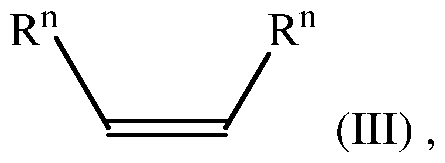
where each Rn is independently selected from the group consisting of -R3, -H, -CH3, -CHO, - CH2OH, -COOH or -COOR3, R3 is an alkyl group having from 1 to 20 carbon atoms, and where each Rn can be the same or different, under cycloaddition reaction conditions and in the presence of a second catalyst to produce a bicyclic ether; and
(cl) dehydrating the bicyclic ether from (bl) to produce a compound of formula
(IV):

[0012] In a further aspect, the present disclosure resides in a process for producing a biphenyl carboxylic acid, alcohol, and/or ester, the process comprising:
(a2) reacting toluene with a furanyl compound having the formula (I):

where R1 is -H, -CH3, -CHO, CH2OH, -COOH or -COOR2 and R2 is an alkyl group having
from 1 to 20 carbon atoms, in the presence of a first catalyst under conditions effective to produce a compound having the formula (V):

(b2) reacting at least part of the compound of formula (V) with a dienophile of formula (III):
 (III) ,
where each Rn is independently selected from the group consisting of -R3, -H, -CH3, -CHO, - CH2OH, -COOH or -COOR3, R3 is an alkyl group having from 1 to 20 carbon atoms, and where each Rn can be the same or different, under cycloaddition reaction conditions and in the presence of a second catalyst to produce a bicyclic ether; and
(c2) dehydrating the bicyclic ether from (b2) to produce a compound of formula
(VI):

[0013] In another aspect, the present disclosure resides in a product composition comprising a mixture of the compound of formula (II) and the compound of formula (IV).
[0014] In yet another aspect, the present disclosure resides in a product composition comprising a mixture of the compound of formula (V) and the compound of formula (VI).
DETAILED DESCRIPTION
[0015] Described herein is a novel process for producing biphenyl-4-carboxylic acid, biphenyl-4,4’ -dicarboxylic acid, and their corresponding alcohols and esters. The process comprises initially reacting a feedstock comprising benzene and/or toluene with a furanyl compound, preferably a 2-substituted furan compound, having the formula (I):


and/or a compound having the formula (V) when the feedstock comprises toluene:

[0016] The compounds (II) and/or (V) are then reacted with a dienophile of formula (III):
 (III) ,
where each Rn is independently selected from the group consisting of -R3, -H, -CH3, -CHO, - CH2OH, -COOH or -COOR3, R3 is an alkyl group having from 1 to 20 carbon atoms, and where each Rn can be the same or different, under cycloaddition reaction conditions and in the presence of a second catalyst to produce a bicyclic ether in a combined Diels-Alder addition and dehydration sequence to produce biphenyl compounds having the formula (IV) and/or (VI):

[0017] Compounds (IV) and (VI) can be recovered as the desired acid, alcohol, or ester, where R1 is -COOH, -CH2OH or -COOR2. Alternatively or additionally, compound (IV) may be oxidized to produce the desired compound, e.g. acid, where R1 is -CH3, -CHO, or -CH2OH,
or alkylated and then oxidized to produce the desired compound, e.g. acid, where R1 is -H. Similarly, compound (VI) may be oxidized to produce the desired compound, e.g. acid, where R1 is -H, -CH3, -CHO, or -CH2OH, or alkylated and then oxidized to produce the desired acid where R1 is -H.
[0018] Preferably, the starting furanyl compound of formula (I) is, or is derived from, furfural and especially furfural produced from renewable sources, such as hemi-cellulose.
[0019] Often, the initial reaction between the benzene and/or toluene and the compound of formula (I) comprises oxidative coupling and the first catalyst comprises at least one metal or compound thereof from Groups 8 to 13 of the Periodic Table, such as at least one of palladium or a palladium compound, zinc or a zinc compound, or a mixture thereof. Suitable reaction conditions for such an oxidative coupling step are described in 2(8) ACS Catal. 1787-1791 (2012), the entire contents of which are incorporated herein by reference, and include a temperature from 30°C to 250°C, such as from 50°C to l50°C. The reaction may be conducted in the presence of an inorganic or organic oxidant. Preferred suitable oxidants include oxygen or an oxygen containing gas, preferably at an oxygen partial pressure up to 5500 kPa-a, as well as copper or silver based oxidants described in 2(8) ACS Catal, (above), e.g., AgOAc.
[0020] Alternatively, the initial reaction between the benzene and/or toluene and the compound of formula (I) comprises alkylation and the first catalyst comprises a bifunctional catalyst comprising a molecular sieve and at least one dehydrogenation metal.
[0021] Suitable molecular sieves for use in the bifunctional alkylation catalyst comprise
BEA, FAU, and MWW structure type molecular sieves and mixtures thereof. BEA structure type molecular sieves include zeolite beta, which is described in US 3,308,069 and Re. No. 28,341. FAU structure type molecular sieves include zeolite Y, ultrastable Y (USY which is described in US 3,293,192 and 3,449,070), dealuminized Y (Deal Y which is described in US 3,442,795 and zeolite UHP-Y which is described in US 4,401,556. MWW structure type molecular sieves include MCM-22 (described in US 4,954,325), PSH-3 (described in US 4,439,409), SSZ-25 (described in US 4,826,667), ERB-l (described in EP 0293032), ITQ-l (described in US 6,077,498), ITQ-2 (described in WO 97/17290), MCM-36 (described in US 5,250,277), MCM-49 (described in US 5,236,575), MCM-56 (described in US 5,362,697), and mixtures thereof.
[0022] Suitable dehydrogenation metals for use in the bifunctional alkylation catalyst comprise include palladium, ruthenium, nickel, zinc, tin, and cobalt, with palladium being particularly advantageous. Preferably, the amount of dehydrogenation metal present in the
catalyst is between 0.05 and 10 wt %, such as between 0.1 and 5 wt%, of the catalyst.
[0023] Suitable conditions for the alkylation reaction comprise a temperature from 200°C to 600°C and a pressure from 1,400 kPa-a to 14,000 kPa-a, preferably such that the reaction mixture is predominantly (>50 wt%) in the liquid phase.
[0024] Irrespective of whether the process which is used to react the benzene and/or toluene with the compound of formula (I) is oxidative coupling or alkylation, the high reactivity of the alpha-hydrogen next to the furanic oxygen means that the reaction product will contain a large concentration, typically at least 50%, such as at least 80%, even up to 100%, of the desired furanyl derivative, namely the compound of formula (II) or (V), by weight of the total converted materials. Concentrations of the 2,3- and 2,4-furanyl derivatives are typically less than 20%, such as less than 10%, by weight of the total converted materials.
[0025] After optional removal of some or all of any unreacted species, such as the benzene, toluene and/or furanyl starting materials (e.g., 2-fumayl starting materials), at least part of the compound of formula (II) or (V) is then reacted with the dienophile of formula (III), preferably ethylene, over a second catalyst via a Diels-Alder addition reaction to produce a phenyl- substituted bicyclic ether. The Diels-Alder product is a low-concentration intermediate with unfavorable equilibrium and readily dehydrates in-situ to the biphenyl compound of formula (IV) or (VI) respectively. Often, the dienophile of formula (III) is symmetric, i.e., each Rn in the dienophile of formula (III) and in the produced biphenyl compound of formula (IV) or (VI) are the same. A preferred symmetric dienophile is ethylene. Alternatively, the dienophile of formula (III) may be asymmetric, as shown in formula (Ilia):
 (Ilia) ,
where Rp and Rq are independently selected from the group consisting of -R3, -H, -CH3, -CHO, -CH2OH, -COOH or -COOR3, where R3 is an alkyl group having from 1 to 20 carbon atoms, and where Rp and Rq are different. In such aspects, the compound of formula (IV) typically comprises one or more of the following compounds as shown in formulas (IVa)-(IVb):


[0026] Likewise, in such aspects, the compound of formula (VI) typically comprises one or more of the following compounds as shown in formulas (Vla)-(VIb):

[0027] In any embodiment, the overall addition/dehydration sequence starting from the compound of formula (II) can be summarized as follows:

For example, the overall addition/dehydration sequence starting from the compound of formula (II) and using ethylene as the dienophile can be summarized as follows:

[0028] Similarly, in any embodiment, the overall addition/dehydration sequence starting from the compound of formula (V) can be summarized as follows:

For example, the overall addition/dehydration sequence starting from the compound of formula (V) and using ethylene as the dienophile can be summarized as follows:

[0029] Apart from ethylene, other preferred dienophiles include propylene and methyl acrylate. Often, two or more dienophiles may be used.
[0030] The Diels-Alder reaction is conducted in the presence of an acidic second catalyst, preferably with Lewis acidity. Often, the second catalyst comprises an acidic molecular sieve such as an aluminosilicate molecular sieve having a silica to alumina molar ratio less than 75, for example less than 50, such as less than 30. Suitable molecular sieves may comprise MFI, BEA, FAU, MOR, MTW, MFS, FER, CHA, and MWW structure type molecular sieves, and mixtures thereof. Additionally or alternatively, Brpnsted and/or Lewis acids can be used as the second catalyst. Suitable Brpnsted acid catalysts include acetic acid and its halogenated analogs, e.g., trifluoroacetic acid, trichloroacetic acid, hexachloroanbtimonate ( HSbCL), trifluoromethanesulfonic acid (HSO3CF3), and p-toluenesulfonic acid (HSO3T0S). Suitable Lewis acids include BX3, AlX3, RAIX2, R2AlX, TiX4, SnX2, SnX4, ZnX2, SbX3, SbX5, ScX3, where X is selected from F, Cl, Br, and where R is an alkyl group having from 1 to 22 carbon atoms. Additional suitable Lewis acids include, but are not limited to, Sc(OTf)3, lanthanide (III) species, Lewis acidic transition metal complexes, and Ti(OR4)4, where R4 comprises an alkoxide or phenoxide group having from 1 to 22 carbon atoms.
[0031] Suitable conditions for the cycloaddition/dehydration reaction include a temperature from l00°C to 400°C and a pressure of 25 to 5000 psig (270 to 34600 kPa-a). In any embodiment, the rate of the Diels-Alder reaction may be enhanced by employing strategies described in Pindur et ah, Acceleration Selectivity Enhancement of Diels-Alder Reactions by “Special Catalytic Methods,” 93 Chem. Rev. 741-61 (1993), the entire contents of which are incorporated herein by reference.
[0032] Where the starting phenyl compound is benzene, the product of the cycloaddition/dehydration reaction will generally contain a mixture of the compound of formula (IV) together with some unreacted compound of formula (II), optionally together with unreacted dienophile, such as ethylene, and water by-product. The desired compound of formula (IV) can then be recovered by known separation methods, including distillation and phase separation. Preferably, water may be removed as the cycloaddition/dehydration reaction proceeds.
[0033] Similarly, where the starting phenyl compound is toluene, the product of the cycloaddition/dehydration reaction will generally contain a mixture of the compound of formula (VI) together with some unreacted compound of formula (V), together with unreacted dienophile, such as ethylene, and water by-product. The desired compound of formula (VI) can then be recovered by known separation methods, including distillation and phase separation. Preferably, water may be removed as the cycloaddition/dehydration reaction
proceeds.
[0034] In some aspects, where R1 in the starting furanyl compound (I) is -CHO, -CH2OH, -COOH or -COOR2, it may be desirable to reduce compound (II) or (V) to the corresponding 2-methyl derivative prior to Diels-Alder/dehydration reaction to increase the rate of the reaction with the dienophile, such as ethylene. Such reduction can readily be effected using a supported Ni/Fe catalyst.
[0035] Compound (IV) can be oxidized to produce the desired compound, e.g. biphenyl-4- carboxylic acid, in aspects where R1 in the starting furanyl compound (I) is -CH3, -CHO, or - CH2OH, or alkylated followed by oxidation produce the desired compound, e.g. biphenyl-4- carboxylic acid and/or biphenyl-4,4’ -carboxylic acid, where R1 in the starting furanyl compound (I) is -H. Similarly, compound (VI) can be oxidized to the desired compound, e.g. biphenyl-4-carboxylic acid and/or biphenyl-4,4’-carboxylic acid, in aspects where R1 in the starting furanyl compound (I) is -H, -CH3, -CHO, or -CH2OH, or alkylated followed by oxidation to the desired compound, e.g. biphenyl-4-carboxylic acid and/or biphenyl-4,4’ - carboxylic acid, where R1 in the starting furanyl compound (I) is -H. Such oxidation and, optionally, alkylation may be conducted by methods well known in the art. For example, compound (IV) or compound (VI) may be oxidized by reaction with an oxidant, such as oxygen, ozone or air, or any other oxygen source, such as hydrogen peroxide, in the presence of a catalyst and with or without a promoter, such as Br, at temperatures from 30°C to 300°C, such as from 60°C to 200°C. Suitable catalysts comprise Co or Mn or a combination of both metals. The oxidation is normally conducted in solution, generally in acetic acid as solvent.
[0036] It will be appreciated that the compounds of formula (IV) and (VI), where R1 is - COOH, can be converted to an ester by reaction with an alcohol. Similarly, the compounds of formula (IV) and (VI), where R1 is -CH2OH, can be esterified by reaction with a carboxylic acid.
[0037] While the present invention has been described and illustrated by reference to particular embodiments, those of ordinary skill in the art will appreciate that the invention lends itself to variations not necessarily illustrated herein. For this reason, then, reference should be made solely to the appended claims for purposes of determining the true scope of the present invention.
Claims
1. A process for producing a biphenyl carboxylic acid, alcohol, and/or ester, the process comprising:
(al) reacting benzene with a furanyl compound having the formula (I):

where R1 is -H, -CH3, -CHO, -CH2OH, -COOH, or -COOR2 and R2 is an alkyl group having from 1 to 20 carbon atoms, in the presence of a first catalyst under conditions effective to produce a compound having the formula (II):

(bl) reacting at least part of the compound of formula (II) with a dienophile of formula (III):

where each Rn is independently selected from the group consisting of -R3, -H, -CH3, - CHO, -CH2OH, -COOH or -COOR3, R3 is an alkyl group having from 1 to 20 carbon atoms, and where each Rn can be the same or different, under cycloaddition reaction conditions and in the presence of a second catalyst to produce a bicyclic ether; and (cl) dehydrating the bicyclic ether from (bl) to produce a compound of formula (IV):

2. The process of claim 1, wherein the reacting (al) comprises oxidative coupling and the first catalyst comprises at least one metal or compound thereof from Groups 8 to 13 of the Periodic Table.
3. The process of claim 2, wherein the first catalyst comprises at least one of palladium, zinc, or a compound thereof.
4. The process of claim 2 or 3, wherein the reacting (al) is conducted in the presence of an oxidant comprising oxygen or an oxygen-containing gas, and wherein the conditions in (al) include a temperature from 30°C to 250°C and an oxygen partial pressure of up to 5500 kPa-a.
5. The process of claim 1, wherein the reacting (al) comprises alkylation and the first catalyst comprises a bifunctional catalyst comprising a molecular sieve and at least one dehydrogenation metal.
6. The process of claim 5, wherein the molecular sieve comprises a molecular sieve of the MFI, BEA, MOR, FAU or MWW structure type or a mixture thereof.
7. The process of claim 5 or 6, wherein the conditions in (al) include a temperature from 200°C to 600°C.
8. The process of any one of claims 1 to 7, wherein the second catalyst comprises an acidic molecular sieve.
9. The process of any one of claims 1 to 8, wherein the second catalyst comprises a Brpnsted acid and/or a Lewis acid.
10. The process of any one of claims 1 to 9, wherein the cycloaddition reaction conditions include a temperature from l00°C to 400°C and/or a pressure of 25 to 5000 psig (270 to 34600 kPa-a).
11. The process of any one of claims 1 to 10, wherein the reacting (bl) and dehydrating
(cl) are conducted in the same reaction zone in the presence of the second catalyst.
12. The process of any one of claims 1 to 11, wherein the dienophile is selected from the group consisting of ethylene, propylene, methyl acrylate, and mixtures or combinations thereof.
13. The process of any one of claims 1 to 12, wherein the furanyl compound having the formula (I) comprises 2-methylfuran or furfural and the process comprises the further step of oxidizing the compound of formula (IV) to produce biphenyl-4-carboxylic acid.
14. The process of any one of claims 1 to 12, wherein the furanyl compound having the formula (I) comprises furan and the process comprises the further steps of alkylating the compound of formula (IV) to produce an alkylated compound and oxidizing the alkylated compound to produce biphenyl-4-carboxylic acid and/or biphenyl-4,4’ - carboxylic acid.
15. A process for producing a biphenyl carboxylic acid, alcohol, and/or ester, the process comprising:
(a2) reacting toluene with a furanyl compound having the formula (I):

where R1 is -H, -CH3, -CHO, CH2OH, -COOH or -COOR2 and R2 is an alkyl group having from 1 to 20 carbon atoms, in the presence of a first catalyst under conditions effective to produce a compound having the formula (V):

(b2) reacting at least part of the compound of formula (V) with a dienophile of formula (III):
 where each Rn is independently selected from the group consisting of -R3, -H, -CH3, - CHO, -CH2OH, -COOH or -COOR3, R3 is an alkyl group having from 1 to 20 carbon atoms, and where each Rn can be the same or different, under cycloaddition reaction conditions and in the presence of a second catalyst to produce a bicyclic ether; and (c2) dehydrating the bicyclic ether from (b2) to produce a compound of formula
(VI):

(VI).
16. The process of claim 15, wherein the reacting (a2) comprises oxidative coupling and the first catalyst comprises at least one metal or compound thereof from Groups 8 to 13 of the Periodic Table.
17. The process of claim 16, wherein the first catalyst comprises at least one of palladium, zinc or a compound thereof.
18. The process of 16 or 17, wherein the reacting (a2) is conducted in the presence of an oxidant comprising oxygen or an oxygen-containing gas, and wherein the conditions in (a2) include a temperature from 30°C to 250°C and an oxygen partial pressure of up to 5500 kPa-a.
19. The process of claim 15, wherein the reacting (a2) comprises alkylation and the first catalyst comprises a bifunctional catalyst comprising a molecular sieve and at least one dehydrogenation metal.
20. The process of claim 19, wherein the molecular sieve comprises a molecular sieve of the MFI, BEA, MOR, FAU or MWW structure type or a mixture thereof.
21. The process of claim 19 or 20, wherein the conditions in (a2) include a temperature
from 200°C to 600°C.
22. The process of any one of claims 15 to 21, wherein the second catalyst comprises an acidic molecular sieve.
23. The process of any one of claims 15 to 22, wherein the second catalyst comprises a Brpnsted acid and/or a Lewis acid.
24. The process of any one of claims 15 to 23, wherein the cycloaddition reaction conditions include a temperature from l00°C to 400°C and/or a pressure of 25 to 5000 psig (270 to 34600 kPa-a).
25. The process of any one of claims 15 to 24, wherein the reacting (b2) and dehydrating (c2) are conducted in the same reaction zone in the presence of the second catalyst.
26. The process of any one of claims 15 to 25, wherein the dienophile is selected from the group consisting of ethylene, propylene, methyl acrylate, and mixtures or combinations thereof.
27. The process of any one of claims 15 to 26, wherein R1 is -H, -CH3, -CHO, CH2OH, or -COOH and the process comprises the further step of oxidizing the compound of formula (VI) to produce biphenyl-4-carboxylic acid and/or biphenyl-4,4’-carboxylic acid.
28. The process of any one of claims 15 to 27, wherein R1 is -H and the process comprises the further steps of alkylating the compound of formula (VI) to produce an alkylated compound and oxidizing the alkylated compound to produce biphenyl-4-carboxylic acid and/or biphenyl-4,4’ -carboxylic acid.
29. A product composition comprising a mixture including:
(a) a compound having the formula (II):

where R1 is -H, -CH3, -CHO, CH2OH, -COOH or -COOR2 and R2 is an alkyl group having from 1 to 20 carbon atoms; and
(b) a compound of formula (IV):

where each Rn is independently selected from the group consisting of -R3, -H, -CH3, - CHO, -CH2OH, -COOH or -COOR3, R3 is an alkyl group having from 1 to 20 carbon atoms, and where each Rncan be the same or different.
30. A product composition comprising a mixture including:
(a) a compound having the formula (V):

where R1 is -H, -CH3, -CHO, CH2OH, -COOH or -COOR2 and R2 is an alkyl group having from 1 to 20 carbon atoms; and
(b) a compound of formula (VI):

(VI) ;
where each Rn is independently selected from the group consisting of -R3, -H, -CH3, - CHO, -CH2OH, -COOH or -COOR3, R3 is an alkyl group having from 1 to 20 carbon atoms, and where each Rn can be the same or different.
Applications Claiming Priority (2)
| Application Number | Priority Date | Filing Date | Title |
|---|---|---|---|
| US201862656388P | 2018-04-12 | 2018-04-12 | |
| US62/656,388 | 2018-04-12 |
Publications (1)
| Publication Number | Publication Date |
|---|---|
| WO2019199459A1 true WO2019199459A1 (en) | 2019-10-17 |
Family
ID=66102309
Family Applications (1)
| Application Number | Title | Priority Date | Filing Date |
|---|---|---|---|
| PCT/US2019/024303 Ceased WO2019199459A1 (en) | 2018-04-12 | 2019-03-27 | Preparation and use of biphenyl carboxylic acids, alcohols, and esters |
Country Status (1)
| Country | Link |
|---|---|
| WO (1) | WO2019199459A1 (en) |
Citations (22)
| Publication number | Priority date | Publication date | Assignee | Title |
|---|---|---|---|---|
| US3293192A (en) | 1965-08-23 | 1966-12-20 | Grace W R & Co | Zeolite z-14us and method of preparation thereof |
| US3308069A (en) | 1964-05-01 | 1967-03-07 | Mobil Oil Corp | Catalytic composition of a crystalline zeolite |
| US3442795A (en) | 1963-02-27 | 1969-05-06 | Mobil Oil Corp | Method for preparing highly siliceous zeolite-type materials and materials resulting therefrom |
| US3449070A (en) | 1963-02-21 | 1969-06-10 | Grace W R & Co | Stabilized zeolites |
| US3901883A (en) * | 1972-03-08 | 1975-08-26 | Ciba Geigy Ag | Azole compounds |
| US4401556A (en) | 1979-11-13 | 1983-08-30 | Union Carbide Corporation | Midbarrel hydrocracking |
| US4439409A (en) | 1981-04-30 | 1984-03-27 | Bayer Aktiengesellschaft | Crystalline aluminosilicate PSH-3 and its process of preparation |
| EP0293032A2 (en) | 1987-05-26 | 1988-11-30 | ENIRICERCHE S.p.A. | Synthetic, crystalline, porous material containing oxides of silicon and boron |
| US4826667A (en) | 1986-01-29 | 1989-05-02 | Chevron Research Company | Zeolite SSZ-25 |
| US4954325A (en) | 1986-07-29 | 1990-09-04 | Mobil Oil Corp. | Composition of synthetic porous crystalline material, its synthesis and use |
| US5236575A (en) | 1991-06-19 | 1993-08-17 | Mobil Oil Corp. | Synthetic porous crystalline mcm-49, its synthesis and use |
| US5250277A (en) | 1991-01-11 | 1993-10-05 | Mobil Oil Corp. | Crystalline oxide material |
| US5362697A (en) | 1993-04-26 | 1994-11-08 | Mobil Oil Corp. | Synthetic layered MCM-56, its synthesis and use |
| WO1997017290A1 (en) | 1995-11-08 | 1997-05-15 | Shell Internationale Research Maatschappij B.V. | Oxide materials and catalyst compositions containing them |
| US6077498A (en) | 1995-11-23 | 2000-06-20 | Consejo Superior Investigaciones Cientificas | Zeolite ITQ-1 |
| WO2011154953A1 (en) * | 2010-06-10 | 2011-12-15 | Technion R&D Foundation Ltd. | Process for the preparation of iodides |
| US9085669B2 (en) | 2013-01-28 | 2015-07-21 | Exxonmobil Chemical Patents Inc. | Alkyl aromatic hydroalkylation for the production of plasticizers |
| US9302971B2 (en) | 2013-11-01 | 2016-04-05 | Exxonmobil Chemical Patents Inc. | Process to produce terephthalic acid |
| WO2016099274A1 (en) * | 2014-12-19 | 2016-06-23 | Avantium Knowledge Centre B.V. | Improved process for the preparation of a benzene compound |
| WO2016153575A1 (en) * | 2015-03-25 | 2016-09-29 | Exxonmobil Chemical Patents Inc. | Production of biphenyl compounds |
| US9580572B2 (en) | 2013-03-14 | 2017-02-28 | Exxonmobil Chemical Patents Inc. | (Methylcyclohexyl)toluene isomer mixtures,their production and their use in the manufacture of plasticizers |
| US9663417B2 (en) | 2013-03-14 | 2017-05-30 | Exxonmobil Chemical Patents Inc. | Methyl-substituted biphenyl compounds, their production and their use in the manufacture of plasticizers |
-
2019
- 2019-03-27 WO PCT/US2019/024303 patent/WO2019199459A1/en not_active Ceased
Patent Citations (22)
| Publication number | Priority date | Publication date | Assignee | Title |
|---|---|---|---|---|
| US3449070A (en) | 1963-02-21 | 1969-06-10 | Grace W R & Co | Stabilized zeolites |
| US3442795A (en) | 1963-02-27 | 1969-05-06 | Mobil Oil Corp | Method for preparing highly siliceous zeolite-type materials and materials resulting therefrom |
| US3308069A (en) | 1964-05-01 | 1967-03-07 | Mobil Oil Corp | Catalytic composition of a crystalline zeolite |
| US3293192A (en) | 1965-08-23 | 1966-12-20 | Grace W R & Co | Zeolite z-14us and method of preparation thereof |
| US3901883A (en) * | 1972-03-08 | 1975-08-26 | Ciba Geigy Ag | Azole compounds |
| US4401556A (en) | 1979-11-13 | 1983-08-30 | Union Carbide Corporation | Midbarrel hydrocracking |
| US4439409A (en) | 1981-04-30 | 1984-03-27 | Bayer Aktiengesellschaft | Crystalline aluminosilicate PSH-3 and its process of preparation |
| US4826667A (en) | 1986-01-29 | 1989-05-02 | Chevron Research Company | Zeolite SSZ-25 |
| US4954325A (en) | 1986-07-29 | 1990-09-04 | Mobil Oil Corp. | Composition of synthetic porous crystalline material, its synthesis and use |
| EP0293032A2 (en) | 1987-05-26 | 1988-11-30 | ENIRICERCHE S.p.A. | Synthetic, crystalline, porous material containing oxides of silicon and boron |
| US5250277A (en) | 1991-01-11 | 1993-10-05 | Mobil Oil Corp. | Crystalline oxide material |
| US5236575A (en) | 1991-06-19 | 1993-08-17 | Mobil Oil Corp. | Synthetic porous crystalline mcm-49, its synthesis and use |
| US5362697A (en) | 1993-04-26 | 1994-11-08 | Mobil Oil Corp. | Synthetic layered MCM-56, its synthesis and use |
| WO1997017290A1 (en) | 1995-11-08 | 1997-05-15 | Shell Internationale Research Maatschappij B.V. | Oxide materials and catalyst compositions containing them |
| US6077498A (en) | 1995-11-23 | 2000-06-20 | Consejo Superior Investigaciones Cientificas | Zeolite ITQ-1 |
| WO2011154953A1 (en) * | 2010-06-10 | 2011-12-15 | Technion R&D Foundation Ltd. | Process for the preparation of iodides |
| US9085669B2 (en) | 2013-01-28 | 2015-07-21 | Exxonmobil Chemical Patents Inc. | Alkyl aromatic hydroalkylation for the production of plasticizers |
| US9580572B2 (en) | 2013-03-14 | 2017-02-28 | Exxonmobil Chemical Patents Inc. | (Methylcyclohexyl)toluene isomer mixtures,their production and their use in the manufacture of plasticizers |
| US9663417B2 (en) | 2013-03-14 | 2017-05-30 | Exxonmobil Chemical Patents Inc. | Methyl-substituted biphenyl compounds, their production and their use in the manufacture of plasticizers |
| US9302971B2 (en) | 2013-11-01 | 2016-04-05 | Exxonmobil Chemical Patents Inc. | Process to produce terephthalic acid |
| WO2016099274A1 (en) * | 2014-12-19 | 2016-06-23 | Avantium Knowledge Centre B.V. | Improved process for the preparation of a benzene compound |
| WO2016153575A1 (en) * | 2015-03-25 | 2016-09-29 | Exxonmobil Chemical Patents Inc. | Production of biphenyl compounds |
Non-Patent Citations (6)
| Title |
|---|
| ACS CATAL., vol. 2, no. 8, 2012, pages 1787 - 1791 |
| CORMA, ENERGY ENVIRON. SCI., vol. 8, no. 317, pages 2015 |
| CUI ET AL.: "Synthesis and Bioactivities of Novel Pyrazole and Triazole Derivatives Containing 5-Phenyl-2-Furan", CHEM BIOL DRUG DES, vol. 79, 1 January 2012 (2012-01-01), pages 121 - 127, XP002791977 * |
| JUWAINI ET AL.: "Catalytic Regioselective Oxidative Coupling of Furan-2-Carbonyls with Simple Arenes", ACS CATALYSIS, vol. 2, 18 July 2012 (2012-07-18), pages 1787 - 1791, XP002791976 * |
| PINDUR ET AL.: "Acceleration Selectivity Enhancement of Diels-Alder Reactions by ''Special Catalytic Methods", CHEM. REV., vol. 93, 1993, pages 741 - 61, XP002039178, DOI: doi:10.1021/cr00018a006 |
| SEAYAD ET AL., ACS CATAL., vol. 2, no. 8, 2012, pages 1787 - 1791 |
Similar Documents
| Publication | Publication Date | Title |
|---|---|---|
| US9302971B2 (en) | Process to produce terephthalic acid | |
| EP2448889B1 (en) | Process for the preparation of phenol and cyclohexanone | |
| JP5441914B2 (en) | Terephthalic acid composition and method for producing the same | |
| WO2012134397A1 (en) | Synthesis of diacids | |
| Kraus et al. | Aromatics from pyrones: esters of terephthalic acid and isophthalic acid from methyl coumalate | |
| EP3419957B1 (en) | Aromatic compounds from furanics | |
| CN105683172B (en) | The preparation method of terephthalic acid | |
| WO2019199461A1 (en) | Preparation and use of bifuran and biphenyl dicarboxylic acids, alcohols, and esters | |
| WO2019199459A1 (en) | Preparation and use of biphenyl carboxylic acids, alcohols, and esters | |
| WO2016069229A1 (en) | Aerobic oxidative esterification of sugar-derived 1,4-disubstituted benzene for direct synthesis of dimethylterephthalate | |
| US20200361845A1 (en) | Preparation and Use of Biphenyldicarboxylic Acids | |
| Gong | Biobased terephthalic acid | |
| US10858298B2 (en) | Preparation of diphenyl compounds | |
| US20160115113A1 (en) | Aerobic Oxidative Esterification of Sugar-Derived 1,4-Disubstituted Benzene for Direct Synthesis of Dimethylterephthalate | |
| EP4048652B1 (en) | Production of aromatic acids and phenolics | |
| JP5238265B2 (en) | Method | |
| CN114144404B (en) | Method and system for preparing substituted lactones | |
| JP2010059075A (en) | Method for producing ester or lactone | |
| HK1166492B (en) | Process for the preparation of phenol and cyclohexanone |
Legal Events
| Date | Code | Title | Description |
|---|---|---|---|
| 121 | Ep: the epo has been informed by wipo that ep was designated in this application |
Ref document number: 19716736 Country of ref document: EP Kind code of ref document: A1 |
|
| NENP | Non-entry into the national phase |
Ref country code: DE |
|
| 122 | Ep: pct application non-entry in european phase |
Ref document number: 19716736 Country of ref document: EP Kind code of ref document: A1 |