WO2019129755A1 - Ketal hydrogenation - Google Patents
Ketal hydrogenation Download PDFInfo
- Publication number
- WO2019129755A1 WO2019129755A1 PCT/EP2018/086817 EP2018086817W WO2019129755A1 WO 2019129755 A1 WO2019129755 A1 WO 2019129755A1 EP 2018086817 W EP2018086817 W EP 2018086817W WO 2019129755 A1 WO2019129755 A1 WO 2019129755A1
- Authority
- WO
- WIPO (PCT)
- Prior art keywords
- compound
- salt
- formula
- cod
- optionally substituted
- Prior art date
- Legal status (The legal status is an assumption and is not a legal conclusion. Google has not performed a legal analysis and makes no representation as to the accuracy of the status listed.)
- Ceased
Links
- 0 *C1=CCCCC1 Chemical compound *C1=CCCCC1 0.000 description 7
- JVTLEXZGVCDOJD-UHFFFAOYSA-N COC(CC1)CCC1(Cc(cc1)c2cc1Br)C2=C Chemical compound COC(CC1)CCC1(Cc(cc1)c2cc1Br)C2=C JVTLEXZGVCDOJD-UHFFFAOYSA-N 0.000 description 1
Classifications
-
- C—CHEMISTRY; METALLURGY
- C07—ORGANIC CHEMISTRY
- C07C—ACYCLIC OR CARBOCYCLIC COMPOUNDS
- C07C45/00—Preparation of compounds having >C = O groups bound only to carbon or hydrogen atoms; Preparation of chelates of such compounds
- C07C45/61—Preparation of compounds having >C = O groups bound only to carbon or hydrogen atoms; Preparation of chelates of such compounds by reactions not involving the formation of >C = O groups
- C07C45/65—Preparation of compounds having >C = O groups bound only to carbon or hydrogen atoms; Preparation of chelates of such compounds by reactions not involving the formation of >C = O groups by splitting-off hydrogen atoms or functional groups; by hydrogenolysis of functional groups
-
- C—CHEMISTRY; METALLURGY
- C07—ORGANIC CHEMISTRY
- C07C—ACYCLIC OR CARBOCYCLIC COMPOUNDS
- C07C45/00—Preparation of compounds having >C = O groups bound only to carbon or hydrogen atoms; Preparation of chelates of such compounds
- C07C45/61—Preparation of compounds having >C = O groups bound only to carbon or hydrogen atoms; Preparation of chelates of such compounds by reactions not involving the formation of >C = O groups
- C07C45/62—Preparation of compounds having >C = O groups bound only to carbon or hydrogen atoms; Preparation of chelates of such compounds by reactions not involving the formation of >C = O groups by hydrogenation of carbon-to-carbon double or triple bonds
-
- C—CHEMISTRY; METALLURGY
- C07—ORGANIC CHEMISTRY
- C07C—ACYCLIC OR CARBOCYCLIC COMPOUNDS
- C07C2602/00—Systems containing two condensed rings
- C07C2602/02—Systems containing two condensed rings the rings having only two atoms in common
- C07C2602/04—One of the condensed rings being a six-membered aromatic ring
- C07C2602/08—One of the condensed rings being a six-membered aromatic ring the other ring being five-membered, e.g. indane
-
- C—CHEMISTRY; METALLURGY
- C07—ORGANIC CHEMISTRY
- C07C—ACYCLIC OR CARBOCYCLIC COMPOUNDS
- C07C2603/00—Systems containing at least three condensed rings
- C07C2603/93—Spiro compounds
- C07C2603/94—Spiro compounds containing "free" spiro atoms
Definitions
- cyclohexyl ether ring systems that are useful in the preparation of compounds for treating at least one condition associated with inhibition of the deposition of amyloid b peptide (Ab) and portions thereof by inhibiting or the beta site APP Cleaving Enzyme (BACE).
- Abs amyloid b peptide
- BACE beta site APP Cleaving Enzyme
- AD Alzheimer's disease
- the disease progresses with increasing dementia and elevated deposition of Ab.
- a hyperphosphorylated form of the microtubule-associated protein tau accumulates within neurons, leading to a plethora of deleterious effects on neuronal function.
- the prevailing working hypothesis regarding the temporal relationship between Ab and tau pathologies states that Ab deposition precedes tau aggregation in humans and animal models of the disease.
- the Ab peptide is an integral fragment of the Type I protein APP (Ab amyloid precursor protein), a protein ubiquitously expressed in human tissues. Since soluble Ab can be found in both plasma and cerebrospinal fluid (CSF), and in the medium from cultured cells, APP has to undergo proteolysis. There are three main cleavages of APP that are relevant to the pathobiology of AD, the so-called a-, b-, and g-cleavages. The a-cleavage, which occurs roughly in the middle of the Ab domain in APP, is executed by the metalloproteases
- ADAM110 or ADAM117 (the latter also known as TACE).
- TACE transmembrane aspartyl protease Beta site
- BACE1 Cleaving Enzymel
- the g-cleavage, generating the Ab C termini and subsequent release of the peptide, is carried out by a multi-subunit aspartyl protease named g-secretase.
- ADAM10/17 cleavage followed by g-secretase cleavage results in the release of the soluble p3 peptide, an N-terminally truncated Ab fragment that fails to form amyloid deposits in humans.
- This proteolytic route is commonly referred to as the nonamyloidogenic pathway.
- Consecutive cleavages by BACE1 and g-secretase generate the intact Ab peptides; hence this processing scheme has been termed the amyloidogenic pathway.
- Amyloidogenic plaques and vascular amyloid angiopathy also characterize the brains of patients with Trisomy 21 (Down's Syndrome), Hereditary Cerebral Hemorrhage with Amyloidosis of the Dutch-type (HCHW A-D), and other neurodegenerative disorders.
- b-amyloid deposits are predominately an aggregate of Ab peptide, which in turn is a product of the proteolysis of amyloid precursor protein (APP).
- APP amyloid precursor protein
- Ab peptide results from the cleavage of APP at the C-terminus by one or more g-secretases, and at the N- terminus by b-secretase enzyme (BACE), also known as aspartyl protease or Asp2 or Beta site APP Cleaving Enzyme (BACE), as part of the b-amyloidogenic pathway.
- BACE b-secretase enzyme
- BACE Beta site APP Cleaving Enzyme
- BACE activity is correlated directly to the generation of Ab peptide from APP (Sinha, et al, Nature, 1999, 402, 537-540), and studies increasingly indicate that the inhibition of BACE inhibits the production of Ab peptide (Roberds, S. L., et al, Human Molecular Structure
- BACE amyloid ⁇ -peptide
- Drugs that reduce or block BACE activity should therefore reduce Ab levels and levels of fragments of Ab in the brain, or elsewhere where Ab or fragments thereof deposit, and thus slow the formation of amyloid plaques and the progression of AD or other maladies involving deposition of Ab or fragments thereof.
- BACE is therefore an important candidate for the development of drugs as a treatment and/or prophylaxis of Ab-related pathologies such as Down's syndrome; b-amyloid angiopathy, such as but not limited to cerebral amyloid angiopathy or hereditary cerebral hemorrhage; disorders associated with cognitive impairment such as but not limited to MCI ("mild cognitive impairment"); Alzheimer's Disease; memory loss; attention deficit symptoms associated with Alzheimer's disease; neurodegeneration associated with diseases, such as Alzheimer's disease or dementia, including dementia of mixed vascular and degenerative origin, pre-senile dementia, senile dementia, and dementia associated with Parkinson's disease; progressive supranuclear palsy or cortical basal degeneration. It would therefore be useful to inhibit the deposition of Ab and portions thereof by inhibiting BACE through inhibitors.
- Described herein are processes, such as stereo- and/or regioselective processes, for preparing cyclohexyl ether ring systems that are useful in the preparation of such compounds.
- the present application provides processes for preparing the compounds disclosed herein, wherein the compounds are BACE inhibitors, or salts thereof, and/or intermediates useful in the preparation of BACE inhibitors.
- the BACE inhibitors are useful in the treatment or prevention of Ab-related pathologies, such as a b- amyloid angiopathy, cerebral amyloid angiopathy, hereditary cerebral hemorrhage, a disorder associated with cognitive impairment, MCI ("mild cognitive impairment"), Alzheimer's Disease, memory loss, attention deficit symptoms associated with Alzheimer's disease, neurodegeneration associated with Alzheimer's disease, dementia of mixed vascular origin, dementia of degenerative origin, pre-senile dementia, senile dementia, dementia associated with Parkinson's disease, progressive supranuclear palsy or cortical basal degeneration.
- Ab-related pathologies such as a b- amyloid angiopathy, cerebral amyloid angiopathy, hereditary cerebral hemorrhage, a disorder associated with cognitive impairment, MCI (“mild
- the present application provides a process for preparing a compound of formula (I), X , or a salt thereof, comprising reacting a compound of formula (II), (II)
- R 7 is selected from halogen, CN, and optionally substituted alkyl, alkenyl, alkynyl, alkoxy, aryl, heteroaryl, or oxime
- R 8 is selected from hydrogen, halogen, CN, and optionally substituted alkyl, alkenyl, alkynyl, alkoxy, aryl, heteroaryl, or oxime
- R 7 and R 8 taken together with the carbon(s) to which they are attached, form an optionally substituted fused cycloalkyl, heterocycloalkyl, cycloalkenyl, heterocycloalkenyl, aryl, or heteroaryl ring
- R 9 is H, silyl, or optionally substituted alkyl (e.g., R 9 is optionally substituted alkyl (e.g., R 9 is optionally substituted alkyl (e.g., R 9 is optionally substituted alkyl (e.g., R 9 is optionally substituted alkyl (e
- the reaction provides both stereoselective and regioselective reduction (e.g., hydrogenation) of the compound of formula (II), or salt thereof, to produce the compound of formula (I), or salt thereof.
- stereoselective and regioselective reduction e.g., hydrogenation
- X is O
- the compound of formula (I), or salt thereof is
- the compound of formula (I), or salt thereof, and the compound of formula (III), or salt thereof are present in a ratio of at least 1: 1, 5: 1, 10: 1, 20: 1, 30:1, 40:1, 50: 1, 60: 1, 70: 1, 80: 1, 90: 1, 95: 1, 99: 1, or 100: 1.
- the compound of formula (I), or salt thereof, and the compound of formula (IV), or salt thereof are present in a ratio of at least 1: 1, 5: 1, 10: 1, 20: 1, 30: 1, 40: 1, 50: 1, 60: 1, 70: 1, 80:1, 90: 1, 95: 1, 99: 1, or 100: 1.
- the compound of formula (I), or salt thereof, and the compound of formula (V), or salt thereof are present in a ratio of at least 1 : 1, 5:1, 10:1, 20:1, 30: 1, 40: 1, 50: 1, 60: 1, 70: 1, 80: 1, 90: 1, 95: 1, 99: 1, or 100:1.
- the reaction produces an
- the present application also provides a process for preparing a compound of formula
- X is O, NH, or S (e.g., X is O);
- R 7 is selected from halogen, CN, and optionally substituted alkyl, alkenyl, alkynyl, alkoxy, aryl, heteroaryl, or oxime;
- R 8 is selected from hydrogen, halogen, CN, and optionally substituted alkyl, alkenyl, alkynyl, alkoxy, aryl, heteroaryl, or oxime; or R 7 and R 8 taken together with the carbon(s) to which they are attached, form an optionally substituted fused cycloalkyl, heterocycloalkyl, cycloalkenyl, heterocycloalkenyl, aryl, or heteroaryl ring;
- R 9 is H, silyl, or optionally substituted alkyl (e.g., R 9 is
- the reaction provides both stereoselective and regioselective reduction (e.g., hydrogenation) of the compound of formula (VI), or salt thereof, to produce the compound of formula (I), or salt thereof.
- stereoselective and regioselective reduction e.g., hydrogenation
- X is O
- the compound of formula (I), or salt thereof is
- the compound of formula (I), or salt thereof, and the compound of formula (IV), or salt thereof are present in a ratio of at least 1 :1, 5: 1, 10: 1, 20: 1, 30: 1, 40: 1, 50: 1, 60: 1, 70: 1, 80: 1, 90: 1, 95: 1, 99: 1, or 100: 1.
- the compound of formula (I), or salt thereof, and the compound of formula (VII), or salt thereof are present in a ratio of at least 1 : 1, 5: 1, 10: 1, 20: 1, 30: 1, 40: 1, 50: 1, 60: 1, 70: 1, 80: 1, 90: 1, 95: 1, 99: 1, or 100: 1.
- salt thereof is a compound of formula (la), R 8 , , or a salt thereof, or a
- the compound of formula (la), or salt thereof, and the compound of formula (lb), or salt thereof are present in a ratio of at least 1 : 1, 5: 1, 10: 1, 20: 1, 30: 1, 40: 1, 50: 1, 60: 1, 70: 1, 80: 1, 90: 1, 95: 1, 99: 1, or 100: 1, such as at least 99: 1.
- the percent yield of the compound of formula (la), or salt thereof is greater than 50%, 55%, 60%, 65%, 70%, 75%, 80%, 85%, 90%, 95%, 98% or 99%, such as at least 80%.
- the present application further provides a process for preparing a compound of
- R 2 independently for each occurrence, is selected from hydrogen, hydroxyl, OTf, OMs, halogen, CN, P(R n )2, P(0)(OH) 2 , P(0)(OR n ) 2 , OP(0)(OH) 2 , OP(0)(OR n ) 2 , B(OH) 2, B(OR n ) 2 , B(OH)(R n ), B(R n )OR n , Si(R n ) 3 , OSi(R n ) 3 , and optionally substituted alkyl, alkenyl, alkynyl, alkoxy, aryl, heteroaryl, or oxime (e.g., R 2 independently for each occurrence, is selected from hydrogen
- X is O
- the compound of formula (G), or salt thereof is
- the compound of formula (V’), or a salt thereof are present in a ratio of at least 1:1, 5:1, 10:1, 20:1, 30:1, 40:1, 50:1, 60:1, 70:1, 80:1, 90:1, 95:1, 99:1, or 100:1.
- the compound of formula (G), or salt thereof, and the compound of formula (IV’), or salt thereof are present in aratio of at least 1:1, 5:1, 10:1, 20:1, 30:1, 40:1, 50:1, 60:1, 70:1, 80:1, 90:1, 95:1, 99:1, or 100:1.
- the compound of formula (G), or salt thereof, and the compound of formula (V’), or salt thereof are present in a ratio of at least 1:1, 5:1, 10:1, 20:1, 30:1, 40:1, 50:1, 60:1, 70:1, 80:1, 90:1, 95:1, 99:1, or 100:1.
- the reaction produces an
- the present application also provides a process for preparing a compound of formula
- VT formula (VT), , or a salt thereof, with a hydrogen donor in the presence of a metal source, an optional ligand, and a solvent, wherein: X is O, NH, or S (e.g., X is O); R 2 independently for each occurrence, is selected from hydrogen, hydroxyl, OTf, OMs, halogen, CN, P(R n ) 2 , P(0)(0H) 2 , P(0)(0R n ) 2 , 0P(0)(0H) 2 , 0P(0)(0R n ) 2 , B(OH) 3 ⁇ 4 B(OR n ) 2 , B(OH)(R n ), B(R n )OR n , Si(R n ) 3 , OSi(R n ) 3 , and optionally substituted alkyl, alkenyl, alkynyl, alkoxy, aryl, heteroaryl, or oxime (e.g., R
- the reaction provides both stereoselective and regioselective reduction (e.g., hydrogenation) of the compound of formula (VI’), or salt thereof, to produce the compound of formula (G), or salt thereof.
- stereoselective and regioselective reduction e.g., hydrogenation
- X is O
- the compound of formula (G), or salt thereof is
- the compound of formula (G), or salt thereof, and the compound of formula (IV’), or salt thereof are present in a ratio of at least 1:1, 5:1, 10:1, 20:1, 30:1, 40:1, 50:1, 60:1, 70:1, 80:1, 90:1, 95:1, 99:1, or 100:1.
- the compound of formula (G), or salt thereof, and the compound of formula (VII’), or salt thereof are present in a ratio of at least 1:1, 5:1, 10:1, 20:1, 30:1, 40:1, 50:1, 60:1, 70:1, 80:1, 90:1,95:1,99:1, or 100:1.
- the compound of formula (G), or salt thereof is a compound
- the compound of formula (Fa), or salt thereof, and the compound of formula (I’b), or salt thereof are present in a ratio of at least 1:1, 5:1, 10:1, 20:1, 30:1, 40:1, 50:1, 60:1, 70:1, 80:1, 90:1, 95:1, 99:1, or 100:1, such as at least 99:1.
- the percent yield of the compound of formula (I’a), or salt thereof is greater than 50%, 55%, 60%, 65%, 70%, 75%, 80%, 85%, 90%, 95%, 98%, or 99%, such as at least 80%.
- the compound of formula (IF), or salt thereof is compound
- compound of formula (IG), or salt thereof is , or a salt thereof.
- the compound of formula (IG), or salt thereof is compound salt thereof.
- the compound of formula (VF), or salt thereof is compound
- the compound of formula (VF), or salt thereof is compound (VF-2),
- the compound is N-(2-aminoethyl)-2-aminoethyl-N-(2-aminoethyl)-2-aminoethyl-N-(2-aminoethyl)-2-aminoethyl-N-(2-aminoethyl)-2-aminoethyl-N-(2-aminoethyl)-2-aminoethyl-N-(2-aminoethyl)-2-aminoethyl-N-(2-aminoethyl)-2-aminoethyl-N-(2-aminoethyl)-2-aminoethyl-N-(2-aminoethyl)-2-aminoethyl-N-(2-aminoethyl)-2-aminoethyl-N-(2-aminoethyl)-2-aminoethyl-N
- P of formula (VF), or salt thereof is compound 2, , or a salt thereof.
- the compound of formula (G), or salt thereof is compound
- the compound of formula (G), or salt thereof is compound (G-2), , or a salt thereof.
- the compound of formula (G), or salt thereof is compound (G-2), , or a salt thereof.
- O formula (G), or salt thereof is compound 3, or a salt thereof
- the compound of formula (Fa), or salt thereof is compound
- formula (I’a), or salt thereof is compound (I’a-l), (I a-1 ) ⁇ or a sajt thereof, or the compound of formula (I’b), or salt thereof, is compound (I’b-l),
- the metal source is a rhodium compound, a cobalt compound or an iridium compound. In certain embodiments, the metal source is a rhodium or an iridium compound.
- the metal source is selected from the group consisting of: [Ir(cod)(PCy3)(py)]PF6 (Crabtree’s Catalyst), [IrCl (coe) 2 ] 2 , [Ir(OMe) (cod)] 2 , [Ir(cod) Cl] 2 , [Ir(Cp*) Cl 2 ] 2 , Ir(acac) (cod), and [Ir(cod) 2 ]BF 4 , such as [Ir(cod)(PCy3)(py)]PF6 (Crabtree’s Catalyst).
- the metal source is selected from the group consisting of: [ph3P]3RhCl (Wilkinson’s catalyst), [Rh(dppb)(cod)]BF 4 , [Rh(dppb)(nbd)]BF 4 ,
- the metal source is a cationic rhodium complex.
- the metal source is selected from the group consisting of: [Rh(dppb)(cod)]BF 4 , [Rh(dppb)(nbd)]BF 4 , [Rh(nbd) 2 ]BF 4 , [Rh(cod) 2 ]CF3S03, [Rh(cod) 2 ]BArF, [Rh cod
- the metal source is selected from the group consisting of: [Rh(dppb)(cod)]BF 4 , [Rh(dppb)(nbd)]BF 4 , [Rh(nbd) 2 ]BF 4 , [Rh(cod) 2 ]CF3S03, and [Rh(cod) 2 ]BArF. In certain embodiments, the metal source is [Rh(cod) 2 ]BArF.
- Certain embodiments of the forgoing processes may optionally comprise a ligand, such as a bidentate or monodentate ligand.
- the ligand is selected from the following group:
- the ligand is selected from the following group:
- the optional ligand is selected from the group consisting of: dppf, DiPPF, DtBPF, BINAP, dppp, dppb, phanephos, xantphos, xylphanephos, Ph 2 PCy, dppf, Biphephos, DPEphos, HiersoPHOS-3, PPI13, P(m-(MeO)-Ph)3, P(2-furyl)3, P(OPh)3, (R)-BINAP, (R) -T oly l-BINAP , R-Xyl-BINAP, R-C3-Tunephos, R-Segphos, R-Synphos, R- Difluorphos, (R,R)-DIOP, (R,R)-NORPHOS, R-PHANEPHOS, R-3,5-xyl-PHANEPHOS, R- An-PHANEPHOS, P(p-(p-(M
- the ligand is selected from the group consisting of: XPhos, tBuXPhos, SPhos, BrettPhos, tBuBrettPhos, RuPhos, JohnPhos, Me 4 -tBuXPhos, PPhos, Xyl-PPhos, Phanephos, xyl-phanephos, An-Phanephos, Me-Bophoz, dtbpf, dcypf, AmPhos, xantphos, QPhos, dppf, dppp, BINAP, Ph2PCy, and dippf.
- the ligand is selected from the group consisting of: dppf, dippf, dtbpf, BINAP, dppp, dppb, phanephos, xantphos, xylphanephos, and Ph2PCy. In certain embodiments, the ligand is phanephos, xylphanephos, or Ph2PCy.
- embodiments of the forgoing processes comprise a ligand as described herein.
- the metal source is present in the reaction at a loading that is less than 10 mol%, such as 5 mol% or less (e.g., 1 mol% or less).
- the hydrogen donor is hydrogen (H2), isopropanol, or cyclohexadiene. In certain embodiments, the hydrogen donor is hydrogen (H2). In certain embodiments, hydrogen is being fed to the reaction mixture at a pressure selected in range of 1 to 200 bar, such as in the range of 1-100 bar, 1-50 bar, or 5-50 bar. In certain embodiments, hydrogen is being fed to the reaction mixture at a pressure selected in range of 1 to 50 bar, such as 5 bar.
- the reaction is carried out at a temperature selected from 0 to 100 °C (e.g., 50 °C). In certain embodiments, the reaction is carried out at a temperature selected from 10 to 75 °C, such as a temperature selected from 20-50 °C (e.g., 20 °C).
- the solvent is an ethereal or a chlorinated solvent.
- the solvent is selected from the group consisting of: DCM, toluene, PhCl,
- the solvent is DCM, 2-Me THF, or MTBE.
- the present application provides a process for preparing a
- R 3 independently for each occurrence, is selected from hydrogen, halogen, CN, and optionally substituted alkyl, alkenyl, alkynyl, alkoxy, aryl, heteroaryl, or oxime
- R 7 is selected from halogen, CN, and optionally substituted alkyl, alkenyl, alkynyl, alkoxy, aryl, heteroaryl, or oxime
- R 8 is selected from hydrogen, halogen, CN, and optionally substituted alkyl, alkenyl, alkynyl, alkoxy, aryl, heteroaryl, or oxime; or R 7 and R 8 taken together with the carbon(s) to which they are attached, form an optionally substituted fused cycloalkyl, heterocycloalkyl, cycloalkenyl, heterocycloalkenyl, aryl, or heteroaryl ring;
- R 9 is H, silyl
- the present application provides a process for preparing a
- R 2 independently for each occurrence, is selected from hydrogen, hydroxyl, OTf, OMs, halogen, CN, P(R n )2, P(0)(0H) 2 , P(0)(0R n ) 2 , 0P(0)(0H) 2 , 0P(0)(0R n ) 2 , B(OH) 2 B(OR n ) 2 , B(OH)(R n ), B(R n )OR n , Si(R n ) 3 , OSi(R n )3, and optionally substituted alkyl, alkenyl, alkynyl, alkoxy, aryl, heteroaryl, or oxime (e.g., R 2 independently for each occurrence, is selected from hydrogen, halogen, CN, and optionally substituted alkyl, alkenyl, alkynyl, alkoxy, aryl, heteroaryl, or oxime (e.g., R 2 independently for each occurrence,
- the present application provides a process for preparing a compound of formula (I),
- X or a salt thereof comprising reacting a compound of formula (II), , or a salt thereof, with a hydrogen donor in the presence of a metal source, an optional ligand, and a solvent, wherein: X is O, NH, or S (e.g., X is O); R 7 is selected from halogen, CN, and optionally substituted alkyl, alkenyl, alkynyl, alkoxy, aryl, heteroaryl, or oxime; R 8 is selected from hydrogen, halogen, CN, and optionally substituted alkyl, alkenyl, alkynyl, alkoxy, aryl, heteroaryl, or oxime; or R 7 and R 8 taken together with the carbon(s) to which they are attached, form an optionally substituted fused cycloalkyl, heterocycloalkyl, cycloalkenyl, heterocycloalkenyl, aryl, or heteroaryl ring; R 9 is H, silyl
- R 7 and R 8 taken together with the carbon(s) to which they are attached form an optionally substituted fused cycloalkyl, heterocycloalkyl, cycloalkenyl, heterocycloalkenyl, aryl, or heteroaryl ring.
- R 7 and R 8 taken together with the carbon(s) to which they are attached form an optionally substituted aryl ring, such as an optionally substituted benzene ring.
- the optionally substituted aryl ring, such as an optionally substituted benzene ring is substituted with halogen, such as bromine.
- X is O.
- R 9 is optionally substituted alkyl. In certain embodiments,
- R 9 is Ci ioalkyl, such as methyl.
- R 10 is optionally substituted alkyl. In certain embodiments, R 10 is Ci ioalkyl, such as methyl.
- o is 1.
- the reaction provides both stereoselective and regioselective reduction (e.g., hydrogenation) of the compound of formula (II), or salt thereof, to produce the compound of formula (I), or salt thereof.
- X is O
- the compound of formula (I), or salt thereof is
- X is O, and the compound of formula (I), or salt thereof, is produced
- the compound of formula (I), or salt thereof, and the compound of formula (III), or salt thereof are present in a ratio of at least 1:1, 5:1, 10:1, 20:1, 30:1, 40:1, 50:1,
- the compound of formula (I), or salt thereof, and the compound of formula (IV), or salt thereof are present in a ratio of at least 1:1, 5:1, 10:1, 20:1, 30:1, 40:1, 50:1, 60:1, 70:1, 80:1, 90:1, 95:1, 99:1, or 100: 1.
- the compound of formula (I), or salt thereof, and the compound of formula (V), or salt thereof are present in a ratio of at least 1:1, 5:1, 10:1, 20:1, 30:1, 40:1, 50:1, 60:1, 70:1, 80:1, 90:1, 95:1, 99:1, or 100:1.
- the reaction produces an
- the present application provides a process for preparing a compound of formula (I), X or a salt thereof, comprising reacting a compound of formula (VI), VI)
- R 7 is selected from halogen, CN, and optionally substituted alkyl, alkenyl, alkynyl, alkoxy, aryl, heteroaryl, or oxime
- R 8 is selected from hydrogen, halogen, CN, and optionally substituted alkyl, alkenyl, alkynyl, alkoxy, aryl, heteroaryl, or oxime
- R 7 and R 8 taken together with the carbon(s) to which they are attached, form an optionally substituted fused cycloalkyl, heterocycloalkyl, cycloalkenyl, heterocycloalkenyl, aryl, or heteroaryl ring
- R 9 is H, silyl, or optionally substituted alkyl (e.g., R 9 is optionally substituted alkyl (e.g., R 9 is optionally substituted alkyl (e.g., R 9 is optionally substituted alkyl (e.g., R 9 is optionally substituted alkyl (e
- R 7 and R 8 taken together with the carbon(s) to which they are attached form an optionally substituted fused cycloalkyl, heterocycloalkyl, cycloalkenyl, heterocycloalkenyl, aryl, or heteroaryl ring.
- R 7 and R 8 taken together with the carbon(s) to which they are attached form an optionally substituted aryl ring, such as an optionally substituted benzene ring.
- the optionally substituted aryl ring, such as an optionally substituted benzene ring is substituted with halogen, such as bromine.
- X is O.
- R 9 is optionally substituted alkyl. In certain embodiments, R 9 is Ci ioalkyl, such as methyl.
- o is 1.
- the reaction provides both stereoselective and regioselective reduction (e.g., hydrogenation) of the compound of formula (VI), or salt thereof, to produce the compound of formula (I), or salt thereof.
- X is O
- the compound of formula (I), or salt thereof is
- X is O, and the compound of formula (I), or salt thereof, is produced
- X is O, and the compound of formula (I), or salt thereof, is produced in
- the compound of formula (I), or salt thereof, and the compound of formula (IV), or salt thereof are present in a ratio of at least 1: 1, 5: 1, 10: 1, 20: 1, 30: 1, 40:1, 50: 1, 60: 1, 70: 1, 80: 1, 90: 1, 95: 1, 99: 1, or 100: 1.
- the compound of formula (I), or salt thereof, and the compound of formula (VII), or salt thereof are present in a ratio of at least 1: 1, 5: 1, 10: 1, 20: 1, 30: 1, 40: 1, 50: 1, 60: 1, 70: 1, 80: 1, 90: 1, 95: 1, 99: 1, or 100: 1.
- the present application provides a process for preparing a compound of formula (I),
- X is O, NH, or S ( e.g ., X is 0);
- R 7 is selected from halogen, CN, and optionally substituted alkyl, alkenyl, alkynyl, alkoxy, aryl, heteroaryl, or oxime;
- R 8 is selected from hydrogen, halogen, CN, and optionally substituted alkyl, alkenyl, alkynyl, alkoxy, aryl, heteroaryl, or oxime; or R 7 and R 8 taken together with the carbon(s) to which they are attached, form an optionally substituted fused cycloalkyl, heterocycloalkyl, cycloalkenyl, heterocycloalkenyl, aryl, or heteroaryl ring;
- R 9 is H, silyl, or optionally substituted alkyl (e.g., R 9 is
- R 7 and R 8 taken together with the carbon(s) to which they are attached form an optionally substituted fused cycloalkyl, heterocycloalkyl, cycloalkenyl, heterocycloalkenyl, aryl, or heteroaryl ring.
- R 7 and R 8 taken together with the carbon(s) to which they are attached form an optionally substituted aryl ring, such as an optionally substituted benzene ring.
- the optionally substituted aryl ring, such as an optionally substituted benzene ring is substituted with halogen, such as bromine.
- X is O.
- R 9 is optionally substituted alkyl. In certain embodiments, R 9 is Ci ioalkyl, such as methyl.
- o is 1.
- the reaction provides both stereoselective and regioselective reduction (e.g., hydrogenation) of the compound of formula (III), or salt thereof, to produce the compound of formula (I), or salt thereof.
- stereoselective and regioselective reduction e.g., hydrogenation
- salt thereof is a compound of formula (la), or a salt thereof, or a
- the compound of formula (la), or salt thereof, and the compound of formula (lb), or salt thereof are present in a ratio of at least 1 : 1, 5: 1, 10: 1, 20: 1, 30: 1, 40: 1, 50: 1, 60: 1, 70: 1, 80: 1, 90: 1, 95:1, 99: 1, or 100: 1, such as at least 99: 1.
- the percent yield of the compound of formula (la), or salt thereof is greater than 50%, 55%, 60%, 65%, 70%, 75%, 80%, 85%, 90%, 95%, 98% or 99%, such as at least 80%.
- the present application further provide s a process for preparing a compound of X formula (G), , or a salt thereof, comprising reacting a
- R 2 independently for each occurrence, is selected from hydrogen, hydroxyl, OTf, OMs, halogen, CN, P(R" k, P(0)(0H) 2 , P(0)(0R n ) 2 , 0P(0)(0H) 2 , 0P(0)(0R n ) 3 ⁇ 4 B(OH) 2 B(OR n ) 3 ⁇ 4 B(OH)(R n ), B(R n )OR n , Si(R n ) 3 , OSi(R n ) 3 , and optionally substituted alkyl, alkenyl, alkynyl, alkoxy, aryl, heteroaryl, or oxime (e.g., R 2 independently for each occurrence
- X is O
- R 2 independently for each occurrence, is selected from hydrogen, halogen, CN, and optionally substituted alkyl, alkenyl, alkynyl, alkoxy, aryl, heteroaryl, or oxime. In certain embodiments, R 2 is halogen, such as bromine.
- R 9 is optionally substituted alkyl. In certain embodiments, R 9 is Ci ioalkyl, such as methyl.
- R 10 is optionally substituted alkyl. In certain embodiments, R 10 is Ci ioalkyl, such as methyl.
- o is 1.
- p is 1.
- the reaction provides both stereoselective and regioselective reduction (e.g., hydrogenation) of the compound of formula (IG), or salt thereof, to produce the compound of formula (G), or salt thereof.
- X is O
- the compound of formula (G), or salt thereof is
- the compound of formula (G), or salt thereof, and the compound of formula (IV’), or salt thereof are present in a ratio of at least 1 : 1, 5: 1, 10:1, 20:1, 30:1, 40:1, 50:1, 60:1, 70:1, 80:1, 90:1, 95:1, 99:1, or 100:1.
- the compound of formula (G), or salt thereof, and the compound of formula (IV’), or salt thereof are present in a ratio of at least 1 : 1, 5: 1, 10:1, 20:1, 30:1, 40:1, 50:1, 60:1, 70:1, 80:1, 90:1, 95:1, 99:1, or 100:1.
- the compound of formula (G), or salt thereof, and the compound of formula (V’), or salt thereof are present in a ratio of at least 1:1, 5:1, 10:1, 20:1, 30:1, 40:1, 50:1, 60:1, 70:1, 80:1, 90:1, 95:1, 99:1, or 100:1.
- the reaction produces an
- the present application provides a process for preparing a compound of formula (G), X
- X is O, NH, or S (e.g., X is O); R 2 independently for each occurrence, is selected from hydrogen, hydroxyl, OTf,
- OMs halogen, CN, P(R n ) 2 , P(0)(0H) 2 , P(0)(0R n ) 2 , 0P(0)(0H) 2 , 0P(0)(0R n ) 2 , B(OH) 2, B(OR n ) 2 , B(OH)(R n ), B(R n )OR n , Si(R n ) 3 , OSi(R n ) 3 , and optionally substituted alkyl, alkenyl, alkynyl, alkoxy, aryl, heteroaryl, or oxime (e.g., R 2 independently for each occurrence, is selected from hydrogen, halogen, CN, and optionally substituted alkyl, alkenyl, alkynyl, alkoxy, aryl, heteroaryl, or oxime); R 9 is H, silyl, or optionally substituted alkyl (e.g., R 9 is optionally substituted al
- X is O
- R 2 independently for each occurrence, is selected from hydrogen, halogen, CN, and optionally substituted alkyl, alkenyl, alkynyl, alkoxy, aryl, heteroaryl, or oxime. In certain embodiments, R 2 is halogen, such as bromine.
- R 9 is optionally substituted alkyl. In certain embodiments, R 9 is Ci ioalkyl, such as methyl.
- o is 1.
- p is 1.
- the reaction provides both stereoselective and regioselective reduction (e.g., hydrogenation) of the compound of formula (VT), or salt thereof, to produce the compound of formula (G), or salt thereof.
- VT stereoselective and regioselective reduction
- X is O
- the compound of formula (G), or salt thereof is
- the compound of formula (G), or salt thereof, and the compound of formula (IV’), or salt thereof are present in aratio of at least 1:1, 5:1, 10:1, 20:1, 30:1, 40:1, 50:1, 60:1, 70:1, 80:1, 90:1, 95:1, 99:1, or 100:1.
- the compound of formula (G), or salt thereof, and the compound of formula (VII’), or salt thereof are present in a ratio of at least 1:1, 5:1, 10:1, 20:1, 30:1, 40:1, 50:1, 60:1, 70:1, 80:1, 90:1, 95:1, 99:1, or 100:1.
- the present application further provides a process for preparing a compound of
- R 2 independently for each occurrence, is selected from hydrogen, hydroxyl, OTf, OMs, halogen, CN, P(R n )2, P(0)(OH) 2 , P(0)(OR n ) 2 , OP(0)(OH) 2 , OP(0)(OR n ) 2 , B(OH) 2, B(OR n ) 2 , B(OH)(R n ), B(R n )OR n , Si(R n ) 3 , OSi(R n ) 3 , and optionally substituted alkyl, alkenyl, alkynyl, alkoxy, aryl, heteroaryl, or oxime (e.g., R 2 independently for each occurrence, is selected from
- X is O
- R 2 independently for each occurrence, is selected from hydrogen, halogen, CN, and optionally substituted alkyl, alkenyl, alkynyl, alkoxy, aryl, heteroaryl, or oxime. In certain embodiments, R 2 is halogen, such as bromine.
- R 9 is optionally substituted alkyl. In certain embodiments, R 9 is Ci ioalkyl, such as methyl.
- o is 1.
- p is 1.
- the reaction provides both stereoselective and regioselective reduction (e.g., hydrogenation) of the compound of formula (IIF), or salt thereof, to produce the compound of formula (F), or salt thereof.
- stereoselective and regioselective reduction e.g., hydrogenation
- the compound of formula (G), or salt thereof is a compound
- the compound of formula (Fa), or salt thereof, and the compound of formula (I’b), or salt thereof are present in a ratio of at least 1: 1, 5: 1, 10: 1, 20: 1, 30: 1, 40: 1, 50: 1, 60: 1, 70: 1, 80: 1, 90:1, 95: 1, 99: 1, or 100: 1, such as at least 99: 1.
- the compound of formula (IF), or salt thereof is compound
- the compound of formula (IF), or salt thereof is compound (IF -2) (I -2)
- O formula (IG), or salt thereof is compound 1, ; or a salt thereof.
- the compound of formula (UG), or salt thereof is compound
- the compound in certain embodiments, is N-(2-aminoethyl)-2-aminoethyl-N-(2-aminoethyl)-2-aminoethyl-N-(2-aminoethyl)-2-aminoethyl-N-(2-aminoethyl)-2-aminoethyl-N-(2-aminoethyl)-2-aminoethyl-N-(2-aminoethyl)-2-aminoethyl-N-(2-aminoethyl)-2-aminoethyl-N-(2-aminoethyl)-2-aminoethyl-N-(2-aminoethyl)-2-aminoethyl-N-(2-aminoethyl)-2-aminoethyl-N-(2-aminoethyl)-2-aminoethyl-N
- O of formula (VF), or salt thereof is compound 2, , or a salt thereof.
- the compound of formula (G), or salt thereof is compound
- the compound of formula (G), or salt thereof is compound (G-2),
- O formula (G), or salt thereof is compound 3, or a salt thereof
- the compound of formula (I’a), or salt thereof is compound
- the compound of formula (I’b), or salt thereof is compound (I’b-l), , or a salt thereof. In certain embodiments, the compound of
- formula (I’a), or salt thereof is compound (I’a-l), a 1 or a salt thereof, or the compound of formula (I’b), or salt thereof, is compound (I’b-l),
- formula (Fa), or salt thereof is compound (I’a-2), , or a salt thereof, or the compound of formula (I’b), or salt thereof, is compound (I’b-2), , or a salt thereof
- the compound of formula (I’b), or salt thereof is compound (I’b-2), , or a salt thereof
- the compound of formula (I’b), or salt thereof is compound (I’b-2), , or a salt thereof
- the metal source is a rhodium compound, a cobalt compound or an iridium compound. In certain embodiments, the metal source is a rhodium or an iridium compound. In certain embodiments, the metal source is selected from the group consisting of: [Ir(cod)(PCy3)(py)]PF6 (Crabtree’s Catalyst), [IrCl (coe) 2 ] 2 , [Ir(OMe) (cod)] 2 , [Ir(cod) Cl] 2 , [Ir(Cp*) Cl 2 ] 2 , Ir(acac) (cod), and [Ir(cod) 2 ]BF 4 , such as [Ir(cod)(PCy3)(py)]PF6 (Crabtree’s Catalyst).
- the metal source is a cationic rhodium complex.
- the metal source is selected from the group consisting of: [ph3P]3RhCl (Wilkinson’s catalyst), [Rh(dppb)(cod)]BF 4 , [Rh(dppb)(nbd)]BF 4 ,
- the metal source is selected from the group consisting of: [Rh(dppb)(cod)]BF 4 , [Rh(dppb)(nbd)]BF 4 , [Rh(nbd) 2 ]BF 4 , [Rh(cod) 2 ]CF 3 S0 3 ,
- the metal source is selected from the group consisting of: [Rh(dppb)(cod)]BF 4 , [Rh(dppb)(nbd)]BF 4 , [Rh(nbd) 2 ]BF 4 , [Rh(cod) 2 ]CF 3 S0 3 , and
- the metal source is [Rh(cod) 2 ]BArF.
- ligand such as a bidentate or monodentate ligand.
- the ligand is selected from the following group:
- the ligand is selected from the following group:
- the optional ligand is selected from the group consisting of: dppf, DiPPF, DtBPF, BINAP, dppp, dppb, phanephos, xantphos, xylphanephos, Ph 2 PCy, dppf, Biphephos, DPEphos, HiersoPHOS-3, PPI13, P(m-(MeO)-Ph)3, P(2-furyl)3, P(OPh)3, (R)-BINAP, (R)-Tolyl-BINAP, R-Xyl-BINAP, R-C3-Tunephos, R-Segphos, R-Synphos, R- Difluorphos, (R,R)-DIOP, (R,R)-NORPHOS, R-PHANEPHOS, R-3,5-xyl-PHANEPHOS, R- An-PHANEPHOS, P(p-(MeO)-
- the ligand is selected from the group consisting of: XPhos, tBuXPhos, SPhos, BrettPhos, tBuBrettPhos, RuPhos, JohnPhos, Me 4 -tBuXPhos, PPhos, Xyl-PPhos, Phanephos, xyl-phanephos, An-Phanephos, Me-Bophoz, dtbpf, dcypf, AmPhos, xantphos, QPhos, dppf, dppp, BINAP, Ph 2 PCy, and dippf.
- the ligand is selected from the group consisting of: dppf, dippf, dtbpf, BINAP, dppp, dppb, phanephos, xantphos, xylphanephos, and Ph 2 PCy. In certain embodiments, the ligand is phanephos, xylphanephos, or Ph 2 PCy. Certain embodiments of the forgoing processes comprise a ligand as described herein.
- the metal source is selected from the group consisting of: [Rh(dppb)(cod)]BF 4 , [Rh(dppb)(nbd)]BF 4 , [Rh(nbd) 2 ]BF 4 , [Rh(cod)2]CF3S03, and
- the ligand is selected from the group consisting of: dppf, dippf, dtbpf, BINAP, dppp, dppb, phanephos, xantphos, xylphanephos, and Ph 2 PCy.
- the metal source is selected from the group consisting of: [Rh(dppb)(cod)]BF 4 , [Rh(dppb)(nbd)]BF 4 , [Rh(nbd) 2 ]BF 4 , [Rh(cod) 2 ]CF3S03, and [Rh(cod) 2 ]BArF, and the ligand is phanephos, xylphanephos, or Ph 2 PCy.
- the metal source is [Rh(cod) 2 ]BArF
- the ligand is phanephos, xylphanephos, or Ph 2 PCy.
- the metal source is [Rh(cod) 2 ]BArF, and the ligand is phanephos. In certain such embodiments, the metal source is [Rh(cod) 2 ]BArF, and the ligand is xylphanephos. In certain such embodiments, the metal source is [Rh(cod) 2 ]BArF, and the ligand is Ph 2 PCy.
- the metal source is present in the reaction at a loading that is less than 10 mol%, 9 mol%, 8 mol%, 7 mol%, 6 mol%, 5 mol%, 4 mol%, 3 mol%, 2 mol%, 1 mol%, 0.5 mol%, 0.1 mol%, 0.05 mol%, 0.01 mol%, or less. In certain embodiments, the metal source is present in the reaction at a loading that is 1 mol% or less.
- the hydrogen donor is hydrogen (H 2 ), isopropanol, or cyclohexadiene. In certain embodiments, the hydrogen donor is hydrogen (H 2 ). In certain embodiments, hydrogen is being fed to the reaction mixture at a pressure selected in range of 1 to 200 bar, such as in the range of 1-100 bar, 1-50 bar, or 5-50 bar. In certain embodiments, hydrogen is being fed to the reaction mixture at a pressure selected in range of 1 to 50 bar, such as 5 bar.
- the reaction is carried out at a temperature selected from 0 to 100 °C (e.g., 50 °C). In certain embodiments, the reaction is carried out at a temperature selected from 10 to 75 °C, such as a temperature selected from 20-50 °C (e.g., 20 °C).
- the solvent is selected from the group consisting of: DCM, toluene, PhCl, THF, 2-Me THF, and MTBE. In certain embodiments, the solvent is DCM, 2- Me THF, or MTBE.
- the solvent is an ethereal or a chlorinated solvent.
- the present application provides a process for preparing a compound of formula ( salt thereof, comprising any one of the foregoing processes, wherein: R 3 independently for each occurrence, is selected from hydrogen, halogen, CN, and optionally substituted alkyl, alkenyl, alkynyl, alkoxy, aryl, heteroaryl, or oxime; R 7 is selected from halogen, CN, and optionally substituted alkyl, alkenyl, alkynyl, alkoxy, aryl, heteroaryl, or oxime; R 8 is selected from hydrogen, halogen, CN, and optionally substituted alkyl, alkenyl, alkynyl, alkoxy, aryl, heteroaryl, or oxime; or R 7 and R 8 taken together with the carbon(s) to which they are attached, form an optionally substituted fused cycloalkyl, heterocycloal
- R 7 and R 8 taken together with the carbon(s) to which they are attached form an optionally substituted fused cycloalkyl, heterocycloalkyl, cycloalkenyl, heterocycloalkenyl, aryl, or heteroaryl ring.
- R 7 and R 8 taken together with the carbon(s) to which they are attached form an optionally substituted fused aryl ring, such as an optionaly substituted fused benzene ring.
- the fused aryl ring, such as a fused benzene ring is substituted with halogen, such as bromine.
- o is 1.
- R 9 is optionally substituted alkyl. In certain embodiments, R 9 is Ci ioalkyl, such as methyl.
- the present application provides a process for preparing a
- R 2 independently for each occurrence, is selected from hydrogen, hydroxyl, OTf, OMs, halogen, CN, P(R n )2, P(0)(0H) 2 , P(0)(0R n ) 2 , 0P(0)(0H) 2 , 0P(0)(0R n ) 2 , B(OH) 2 B(OR n ) 2 , B(OH)(R n ), B(R n )OR n , Si(R n ) 3 , OSi(R n )3, and optionally substituted alkyl, alkenyl, alkynyl, alkoxy, aryl, heteroaryl, or oxime (e.g., R 2 independently for each occurrence, is selected from hydrogen, halogen, CN, and optionally substituted alkyl, alkenyl, alkynyl, alkoxy, aryl, heteroaryl, or oxime (e.g., R 2 independently for each occurrence,
- R 2 independently for each occurrence, is selected from hydrogen, halogen, CN, and optionally substituted alkyl, alkenyl, alkynyl, alkoxy, aryl, heteroaryl, or oxime. In certain embodiments, R 2 is halogen, such as bromine.
- R 9 is optionally substituted alkyl. In certain embodiments, R 9 is Ci ioalkyl, such as methyl.
- p is 1.
- o is 1.
- alkyl, alkenyl, alkynyl, alkoxy, aryl, heteroaryl, cycloalkyl, heterocycloalkyl, or oxime are substituted, they are substituted, valency permitting, with one or more substituents selected from substituted or unsubstituted alkyl, such as perfluoroalkyl (e.g., trifluoromethyl), alkenyl, alkoxy, alkoxyalkyl, aryl, aralkyl, arylalkoxy, aryloxy, aryloxyalkyl, hydroxyl, halo, alkoxy, such as perfluoroalkoxy (e.g., trifluoromethoxy), alkoxyalkoxy, hydroxyalkyl, hydroxyalkylamino, hydroxyalkoxy, amino, aminoalkyl, alkylamino, aminoalkylalkoxy, aminoalkoxy, acylamino, acylaminoalkyl
- a transformation of a group or substituent into another group or substituent by chemical manipulation can be conducted on any intermediate or final product on the synthetic path toward the final product; the type of transformation is limited only by the inherent incompatibility of other functional groups contained in the molecule to the conditions or reagents employed in the transformation. Such inherent incompatibilities, and ways to circumvent them by carrying out appropriate transformations and synthetic steps in a suitable order, will be readily understood by one skilled in the art of organic synthesis.
- reaction conditions are given throughout this disclosure, and it is understood that the described reaction conditions are not limited only to the described reaction conditions. References and descriptions of other suitable reaction conditions are described in textbooks of organic chemistry, such as, for example,“Advanced Organic Chemistry”, March 6 th Edition, Wiley Interscience (2007), and“Organic Synthesis”, Smith, 2 nd Edition, McGraw Hill, (2001).
- the present application provides processes for the preparation of BACE inhibitors that are useful in the treatment or prevention of Ab-related pathologies.
- the Ab-related pathology is Down's syndrome, a b-amyloid angiopathy, cerebral amyloid angiopathy, hereditary cerebral hemorrhage, a disorder associated with cognitive impairment, MCI ("mild cognitive impairment"), Alzheimer's Disease, memory loss, attention deficit symptoms associated with Alzheimer's disease, neurodegeneration associated with Alzheimer's disease, dementia of mixed vascular origin, dementia of degenerative origin, pre-senile dementia, senile dementia, dementia associated with Parkinson's disease, progressive supranuclear palsy or cortical basal degeneration.
- MCI mimild cognitive impairment
- any formula depicted herein is intended to represent a compound of that structural formula as well as certain variations or forms.
- a formula given herein is intended to include a racemic form, or one or more enantiomeric, diastereomeric, or geometric isomers, or tautomeric forms, or a mixture thereof.
- any formula given herein is intended to refer also to a solvate, such as a hydrate, solvate, or polymorph of such a compound, or a mixture thereof.
- Any formula given herein is intended to refer to amorphous and/or crystalline physical forms of the compound.
- the compounds described herein may be analytically pure, or a mixture in which the compound comprises at least 50%, at least 70%, at least 80%, at least 90%, at least 95%, or at least 98% by weight of the mixture.
- “subject” refers to both mammals and non-mammals.
- Mammals include, e.g., humans; non-human primates, e.g. apes and monkeys; and non-primates, e.g. mice, rats, rabbits, dogs, cats, cattle, horses, sheep, and goats.
- Non-mammals include, e.g., worms, fish and birds.
- the subject is a human.
- substantially refers to being completely or almost completely; e.g., a composition that is "substantially free” of a component either has none of the component or contains such a trace amount that any relevant functional property of the composition is unaffected by the presence of the trace amount, or a compound is
- substantially pure is there are only negligible traces of impurities present.
- acyl is art-recognized and refers to a group represented by the general formula hydrocarbylC(O)-, preferably alkylC(O)-.
- acylamino is art-recognized and refers to an amino group substituted with an acyl group and may be represented, e.g., by the formula hydrocarbylC(0)NH-.
- acyloxy is art-recognized and refers to a group represented by the general formula hydrocarbylC(0)0-, preferably alkylC(0)0-.
- alkoxy refers to an alkyl group, preferably a lower alkyl group, having an oxygen attached thereto.
- Representative alkoxy groups include methoxy, ethoxy, propoxy, tert-butoxy and the like.
- alkoxyalkyl refers to an alkyl group substituted with an alkoxy group and may be represented by the general formula alkyl-O-alkyl.
- alkenyl refers to an aliphatic group containing at least one double bond and is intended to include both "unsubstituted alkenyls" and “substituted alkenyls", the latter of which refers to alkenyl moieties having substituents replacing a hydrogen on one or more carbons of the alkenyl group. Such substituents may occur on one or more carbons that are included or not included in one or more double bonds. Moreover, such substituents include all those contemplated for alkyl groups, as discussed below, except where stability is prohibitive. E.g., substitution of alkenyl groups by one or more alkyl, carbocyclyl, aryl, heterocyclyl, or heteroaryl groups is contemplated.
- alkynyl refers to an aliphatic group containing at least one triple bond and is intended to include both "unsubstituted alkynyls" and “substituted alkynyls", the latter of which refers to alkynyl moieties having substituents replacing one or more hydrogens on one or more carbons of the alkynyl group. Such substituents may occur on one or more carbons that are included or not included in one or more triple bonds.
- substituents include all those contemplated for alkyl groups, as discussed above, except where stability is prohibitive. E.g., substitution of alkynyl groups by one or more alkyl, carbocyclyl, aryl, heterocyclyl, or heteroaryl groups is contemplated.
- An“alkyl” group or“alkane” is a straight chained or branched non-aromatic hydrocarbon which is completely saturated.
- a straight chained or branched alkyl group has from 1 to about 20 carbon atoms, such as from 1 to 12 carbon atoms, preferably from 1 to about 10, more preferably from 1 to 4, unless otherwise defined.
- straight chained and branched alkyl groups include methyl, ethyl, n-propyl, isopropyl, n- butyl, isobutyl, sec -butyl, tert-butyl, pentyl, isopentyl, tert-pentyl, hexyl, isohexyl, pentyl and octyl.
- a Ci-Ce straight chained or branched alkyl group is also referred to as a "lower alkyl" group.
- alkyl (or “lower alkyl) as used throughout the specification, examples, and claims is intended to include both “unsubstituted alkyls” and “substituted alkyls”, the latter of which refers to alkyl moieties having substituents replacing a hydrogen or more hydrogens on one or more carbons of the hydrocarbon backbone.
- Such substituents can include, e.g., a halogen, a hydroxyl, a carbonyl (such as a carboxyl, an alkoxycarbonyl, a formyl, or an acyl), a thiocarbonyl (such as a thioester, a thioacetate, or a thioformate), an alkoxyl, a phosphoryl, a phosphate, a phosphonate, a phosphinate, an amino, an amido, an amidine, an imine, a cyano, a nitro, an azido, a sulfhydryl, an alkylthio, a sulfate, a sulfonate, a sulfamoyl, a sulfonamido, a sulfonyl, a heterocyclyl, an aralkyl, or an aromatic or heteroaromatic mo
- the moieties substituted on the hydrocarbon chain can themselves be substituted, if appropriate.
- the substituents of a substituted alkyl may include substituted and unsubstituted forms of amino, azido, imino, amido, phosphoryl (including phosphonate and phosphinate), sulfonyl (including sulfate, sulfonamido, sulfamoyl and sulfonate), and silyl groups, as well as ethers, alkylthios, carbonyls (including ketones, aldehydes, carboxylates, and esters), -CF 3 , -CN and the like.
- Cycloalkyls can be further substituted with alkyls, alkenyls, alkoxys, alkylthios, aminoalkyls, carbonyl-substituted alkyls, -CF 3 , -CN, and the like.
- (ATOM)i-j” with j > i when used in conjunction with a chemical moiety, such as, acyl, acyloxy, alkyl, alkenyl, alkynyl, or alkoxy is meant to include groups that contain from i to j (including i and j) atoms.
- a chemical moiety such as, acyl, acyloxy, alkyl, alkenyl, alkynyl, or alkoxy
- C x-y alkyl refers to substituted or unsubstituted saturated hydrocarbon groups, including straight-chain alkyl and branched- chain alkyl groups that contain from x to y carbons in the chain, including haloalkyl groups such as trifluoromethyl and 2,2,2-tirfluoroethyl, etc.
- Co alkyl refers to a hydrogen atom where the group is in a terminal position, a bond if internal.
- C 3-6 cycloalkyl refers to a cycloalkyl as defined herein that has 3 to 6 carbon ring atoms.
- the terms“C2- y alkenyl” and “C2- y alkynyl” refer to substituted or unsubstituted unsaturated aliphatic groups analogous in length and possible substitution to the alkyls described above, but that contain at least one double or triple bond respectively.
- alkylamino refers to an amino group substituted with at least one alkyl group.
- alkylthio refers to a thiol group substituted with an alkyl group and may be represented by the general formula alkylS-.
- Hydrocarbyl groups include, but are not limited to aryl, heteroaryl, carbocycle, heterocyclyl, alkyl, alkenyl, alkynyl, and combinations thereof.
- each R 30 independently represents a hydrogen or a hydrocarbyl group, or two R 30 are taken together with the N atom to which they are attached complete a heterocycle having from 4 to 8 atoms in the ring structure.
- aminoalkyl refers to an alkyl group substituted with an amino group.
- amide refers to a group: wherein each R 30 independently represent a hydrogen or hydrocarbyl group, or two R 30 are taken together with the N atom to which they are attached complete a heterocycle having from 4 to 8 atoms in the ring structure.
- R 29 and R 30 independently represent hydrogen or a hydrocarbyl group, such as an alkyl group, or R 29 and R 30 taken together with the intervening atom(s) complete a heterocycle having from 4 to 8 atoms in the ring structure.
- halogen or“halide” represents chlorine, fluorine, bromine, or iodine.
- halo represents fluoro, chloro, bromo, or iodo.
- haloalkyl refers to an alkyl group with one or more halo substituents, or one, two, or three halo substituents. Examples of haloalkyl groups include - CF 3 , -CH 2 F, -CHF 2 , -CH 2 Br, -CH 2 CF 3 , and -CH 2 CH 2 F.
- heteroatom refers to an atom of any element other than carbon or hydrogen.
- exemplary heteroatoms include but are not limited to nitrogen, oxygen, and sulfur.
- heteroalkyl refers to a saturated or unsaturated chain of carbon atoms and at least one heteroatom, wherein no two heteroatoms are adjacent.
- aryl includes substituted or unsubstituted monocyclic aromatic rings in which each atom of the ring is carbon.
- the ring is a 5- to 7- membered ring, more preferably a 6-membered ring.
- the term“aryl” also includes polycyclic ring systems having two or more cyclic rings in which two or more carbons are common to two adjoining rings wherein at least one of the rings is aromatic, e.g., the other cyclic rings can be cycloalkyls, cycloalkenyls, cycloalkynyls, aryls, heteroaryls, and/or heterocyclyls.
- Aryl groups include benzene, naphthalene, phenanthrene, phenol, aniline, and the like.
- aralkyl refers to an alkyl group substituted with an aryl group.
- An“aroyl” group refers to an aryl group bonded via an exocyclic carbonyl group, such as a benzoyl group.
- heteroaryl includes substituted or unsubstituted monocyclic aromatic ring system, preferably 5- to 7-membered aromatic rings, more preferably 5- to 6-membered rings, whose ring structures include at least one heteroatom, preferably one to four heteroatoms, more preferably one to two heteroatoms.
- a 5- membered heteroaryl is furan, thiophene, pyrrole, oxazole, isoxazole, thiazole, isothiazole, pyrazole, imidazole, oxadiazole, thiadiazole, triazole, or tetrazole.
- a 6- membered heteroaryl is pyridine, pyrazine, pyrimidine, pyridazine, or triazine.
- heteroaryl also include substituted or unsubstituted“polycyclic” ring systems having two or more cyclic rings in which two or more carbons are common to two adjoining rings wherein at least one of the rings is heteroaromatic, e.g., the other cyclic rings can be cycloalkyls, cycloalkenyls, cycloalkynyls, aryls, heteroaryls, and/or heterocyclyls.
- Illustrative examples of heteroaryl groups include but are not limited to the following entities, in the form of properly bonded moieties:
- heteroarylkyl refers to an alkyl group substituted with a heteroaryl group.
- A“heteroaroyl” group refers to a heteroaryl group bonded via an exocyclic carbonyl group, analogous to a benzoyl group but wherein the phenyl ring of the benzoyl group is replaced by a heteroaryl group.
- heterocyclyl refers to substituted or unsubstituted non-aromatic ring structures, preferably 3- to lO-membered rings, more preferably 3- to 7-membered rings, whose ring structures include at least one heteroatom, preferably one to four heteroatoms, more preferably one or two heteroatoms.
- heterocyclyl and“heterocyclic” also include substituted or unsubstituted polycyclic ring systems having two or more cyclic rings in which two or more carbons are common to two adjoining rings wherein at least one of the rings is heterocyclic, e.g., the other cyclic rings can be cycloalkyls, cycloalkenyls, cycloalkynyls, aryls, heteroaryls, and/or
- heterocyclyls include, e.g., piperidine, piperazine, pyrrolidine, morpholine, lactones, lactams, and the like.
- heterocyclylalkyl refers to an alkyl group substituted with a heterocycle group which is optionally substituted.
- carbocycle refers to a saturated or unsaturated ring in which each atom of the ring is carbon.
- carbocycle includes both aromatic carbocycles and non-aromatic carbocycles.
- Non-aromatic carbocycles include both cycloalkane rings, in which all carbon atoms are saturated, and cycloalkene rings, which contain at least one double bond.
- Carbocycle includes 5-7 membered monocyclic and 8-12 membered bicyclic rings. Each ring of a bicyclic carbocycle may be selected from saturated, unsaturated and aromatic rings.
- Carbocycle includes bicyclic molecules in which one, two or three or more atoms are shared between the two rings.
- the term“fused carbocycle” refers to a bicyclic carbocycle in which each of the rings shares two adjacent atoms with the other ring.
- Each ring of a fused carbocycle may be selected from saturated, unsaturated and aromatic rings.
- an aromatic ring e.g., phenyl
- an aromatic ring e.g., phenyl
- a saturated or unsaturated ring e.g., cyclohexane, cyclopentane, or cyclohexene.
- Any combination of saturated, unsaturated and aromatic bicyclic rings, as valence permits, is included in the definition of carbocyclic.
- Exemplary“carbocycles” include cyclopentane, cyclohexane, bicyclo[2.2. l]heptane, l,5-cyclooctadiene, l,2,3,4-tetrahydronaphthalene, bicyclo[4.2.0]oct-3-ene, naphthalene and adamantane.
- Exemplary fused carbocycles include decalin, naphthalene, l,2,3,4-tetrahydronaphthalene, bicyclo[4.2.0]octane, 4,5,6,7-tetrahydro- lH-indene and bicyclo[4. l.0]hept-3-ene.“Carbocycles” may be susbstituted at any one or more positions capable of bearing a hydrogen atom.
- A“cycloalkyl” group refers to a substituted or unsubstituted cyclic hydrocarbon which is completely saturated.“Cycloalkyl” includes substituted or
- a monocyclic cycloalkyl group has from 3 to about 10 carbon atoms, more typically 3 to 8 carbon atoms unless otherwise defined. Such a monocyclic cycloalkyl group may be substituted or unsubstituted.
- the second ring of a bicyclic cycloalkyl may be selected from saturated, unsaturated and aromatic rings that are substituted or unsubstituted.
- Cycloalkyl includes substituted or unsubstituted bicyclic molecules in which one, two or three or more atoms are shared between the two rings.
- fused cycloalkyl refers to a substituted or unsubstituted bicyclic cycloalkyl in which each of the rings shares two adjacent atoms with the other ring.
- the second ring of a fused bicyclic cycloalkyl may be selected from saturated, unsaturated and aromatic rings.
- carbocyclylalkyl refers to an alkyl group substituted with a carbocycle group.
- A“cycloalkenyl” group refers to a cyclic hydrocarbon containing one or more double bonds.
- A“cycloalkynyl” group is a cyclic hydrocarbon containing one or more triple bonds.
- the terms“polycyclyl”,“polycycle”, and“polycyclic”, as used herein, refer to two or more rings ( e.g ., cycloalkyls, cycloalkenyls, cycloalkynyls, aryls, heteroaryls, and/or heterocyclyls) in which two or more atoms are common to two adjoining rings, e.g., the rings are“fused rings”.
- Each of the rings of the polycycle can be substituted or unsubstituted.
- each ring of the polycycle contains from 3 to 10 atoms in the ring, preferably from 5 to 7.
- carbonate is art-recognized and refers to a group -OCO2-R 30 , wherein R 30 represents a hydrocarbyl group.
- ester refers to a group -C(0)0R 3 ° wherein R 30 represents a hydrocarbyl group.
- ether refers to a hydrocarbyl group linked through an oxygen to another hydrocarbyl group. Accordingly, an ether substituent of a hydrocarbyl group may be hydrocarbyl-O-. Ethers may be either symmetrical or unsymmetrical.
- ethers include, but are not limited to, heterocycle-O-heterocycle and aryl-O- heterocycle.
- Ethers include“alkoxyalkyl” groups, which may be represented by the general formula alkyl-O-alkyl.
- sulfate is art-recognized and refers to the group -OSO3H, or a
- R 29 and R 30 independently represents hydrogen or hydrocarbyl, such as alkyl, or R 29 and R 30 taken together with the intervening atom(s) complete a heterocycle having from 4 to 8 atoms in the ring structure.
- sulfoxide is art-recognized and refers to the group -S(0)-R 3 °, wherein R 30 represents a hydrocarbyl.
- sulfonate is art-recognized and refers to the group SO3H, or a
- sulfone is art-recognized and refers to the group -S(0)2-R 3 °, wherein R 30 represents a hydrocarbyl.
- thioalkyl refers to an alkyl group substituted with a thiol group.
- thioester refers to a group -C(0)SR 3 ° or -SC(0)R 3 ° wherein R 30 represents a hydrocarbyl.
- thioether is equivalent to an ether, wherein the oxygen is replaced with asulfur.
- R 29 and R 30 independently represent hydrogen or a hydrocarbyl, such as alkyl, or either occurrence of R 29 taken together with R 30 and the intervening atom(s) complete a heterocycle having from 4 to 8 atoms in the ring structure.
- substitution refers to moieties having substituents replacing one or more hydrogens on one or more carbons of the backbone. It will be understood that“substitution” or“substituted with” includes the implicit proviso that such substitution is in accordance with permitted valence of the substituted atom and the substituent, and that the substitution results in a stable compound, e.g., which does not spontaneously undergo transformation such as by rearrangement, cyclization, elimination, etc. As used herein, the term“substituted” is contemplated to include all permissible substituents of organic compounds.
- the permissible substituents include acyclic and cyclic, branched and unbranched, carbocyclic and heterocyclic, aromatic and non-aromatic substituents of organic compounds.
- the permissible substituents can be one or more and the same or different for appropriate organic compounds.
- the heteroatoms such as nitrogen may have hydrogen substituents and/or any permissible substituents of organic compounds described herein which satisfy the valences of the heteroatoms.
- “substituted” means that the specified group or moiety bears one, two, or three substituents. In other embodiments,“substituted” means that the specified group or moiety bears one or two substituents.
- substituted refers to the specified group or moiety bears one substituent.
- Substituents can include any substituents described herein, e.g., a lower alkyl (such as Ci-6 alkyl, e.g., -methyl, -ethyl, and -propyl), a halogen, a hydroxyl, a carbonyl (such as a carboxyl, an alkoxycarbonyl, a formyl, or an acyl), a thiocarbonyl (such as a thioester, a thioacetate, or a thioformate), an alkoxyl, a phosphoryl, a phosphate, a phosphonate, a phosphinate, an amino, an amido, an amidine, an imine, a cyano, a nitro, an azido, a sulfhydryl, an alkylthio, a
- references to chemical moieties herein are understood to include substituted variants.
- reference to an“aryl” group or moiety implicitly includes both substituted and unsubstituted variants.
- the term“unsubstituted” refers to that the specified group bears no substituents.
- any disubstituent referred to herein is meant to encompass the various attachment possibilities when more than one of such possibilities are allowed.
- Protecting group refers to a group of atoms that, when attached to a reactive functional group in a molecule, mask, reduce or prevent the reactivity of the functional group. Typically, a protecting group may be selectively removed as desired during the course of a synthesis. Examples of protecting groups can be found in Greene and Wuts, Protective Groups in Organic Chemistry, 3 rd Ed., 1999, John Wiley & Sons, NY and Harrison et al, Compendium of Synthetic Organic Methods , Vols. 1-8, 1971-1996, John Wiley & Sons, NY.
- nitrogen protecting groups include, but are not limited to, formyl, acetyl, trifluoroacetyl, benzyl, benzyloxycarbonyl (“CBZ”), tert-butoxycarbonyl (“Boc”), trimethylsilyl (“TMS”), 2-trimethylsilyl-ethanesulfonyl (“TES”), trityl and substituted trityl groups, allyloxycarbonyl, 9-fluorenylmethyloxycarbonyl (“FMOC”), nitro- veratryloxycarbonyl (“NVOC”) and the like.
- hydroxy lprotecting groups include, but are not limited to, those where the hydroxyl group is either acylated (esterified) or alkylated such as benzyl and trityl ethers, as well as alkyl ethers, tetrahydropyranyl ethers, trialkylsilyl ethers (e.g., TMS or TIPS groups), glycol ethers, such as ethylene glycol and propylene glycol derivatives and allyl ethers.
- pharmaceutically acceptable is employed herein to refer to those compounds, materials, compositions, and/or dosage forms which are, within the scope of sound medical judgment, suitable for use in contact with the tissues of human beings and animals without excessive toxicity, irritation, allergic response, or other problem or complication, commensurate with a reasonable benefit/risk ratio.
- A“pharmaceutically acceptable salt” is intended to mean a salt of a free acid or base of a compound represented herein that is non-toxic, biologically tolerable, or otherwise biologically suitable for administration to the subject. See, generally, S.M. Berge, et al, “Pharmaceutical Salts,” J. Pharm. Sci., 1977, 66, 1-19.
- Preferred pharmaceutically acceptable salts are those that are pharmacologically effective and suitable for contact with the tissues of subjects without undue toxicity, irritation, or allergic response.
- a compound described herein may possess a sufficiently acidic group, a sufficiently basic group, both types of functional groups, or more than one of each type, and accordingly react with a number of inorganic or organic bases, and inorganic and organic acids, to form a pharmaceutically acceptable salt.
- a pharmaceutically acceptable salt may be prepared by any suitable method available in the art, e.g., treatment of the free base with an inorganic acid, such as hydrochloric acid,
- hydrobromic acid sulfuric acid, sulfamic acid, nitric acid, boric acid, phosphoric acid, and the like, or with an organic acid, such as acetic acid, phenylacetic acid, propionic acid, stearic acid, lactic acid, ascorbic acid, maleic acid, hydroxymaleic acid, isethionic acid, succinic acid, valeric acid, fumaric acid, malonic acid, pyruvic acid, oxalic acid, glycolic acid, salicylic acid, oleic acid, palmitic acid, lauric acid, a pyranosidyl acid, such as glucuronic acid or galacturonic acid, an alpha-hydroxy acid, such as mandelic acid, citric acid, or tartaric acid, an amino acid, such as aspartic acid or glutamic acid, an aromatic acid, such as benzoic acid, 2-acetoxybenzoic acid, naphthoic acid, or cinnamic acid, a s
- base addition salts can be prepared by any suitable method available in the art, e.g., treatment of such compound with a sufficient amount of the desired the desired base, either neat or in a suitable inert solvent.
- suitable base addition salts include, but are not limited to, lithium, sodium, potassium, calcium, ammonium, zinc, or magnesium salt, or other metal salts; organic amino salts, such as, alkyl, dialkyl, trialkyl, or tetra-alkyl ammonium salts.
- salts include, but are not limited to, camsylate, sulfates, pyrosulfates, bisulfates, sulfites, bisulfites, phosphates, monohydrogen- phosphates, dihydrogenphosphates, metaphosphates, pyrophosphates, chlorides, bromides, iodides, acetates, propionates, decanoates, caprylates, acrylates, formates, isobutyrates, caproates, heptanoates, propiolates, oxalates, malonates, succinates, suberates, sebacates, fumarates, maleates, butyne-l,4-dioates, hexyne-l,6-dioates, benzoates, chlorobenzoates, methylbenzoates, dinitrobenzoates, hydroxybenzoates, methoxybenzoates, phthalates, sulfonates, methylsul
- the neutral forms of the compounds are preferably regenerated by contacting the salt with a base or acid and isolating the parent compound in the conventional manner.
- the parent form of the compound differs from the various salt forms in certain physical properties, such as solubility in polar solvents, but otherwise the salts are equivalent to the parent form of the compound for the purposes of the present application.
- A“hydrate” is a compound that exists in a composition with water molecules.
- the composition can include water in stoichiometic quantities, such as a monohydrate or a dihydrate, or can include water in random amounts.
- A“solvate” is a similar composition except that a solvent other that water, such as with methanol, ethanol, dimethylformamide, diethyl ether and the like replaces the water.
- methanol or ethanol can form an “alcoholate,”” which can again be stoichiometic or non-stoichiometric.
- Mixtures of such solvates or hydrates can also be prepared.
- the source of such solvate or hydrate can be from the solvent of crystallization, inherent in the solvent of preparation or crystallization, or adventitious to such solvent.
- the compounds of the application can exist as various polymorphs, pseudo-polymorphs, or in amorphous state.
- polymorph refers to different crystalline forms of the same compound and other solid state molecular forms including pseudo-polymorphs, such as hydrates, solvates, or salts of the same compound.
- pseudo-polymorphs such as hydrates, solvates, or salts of the same compound.
- Different crystalline polymorphs have different crystal structures due to a different packing of molecules in the lattice, as a result of changes in temperature, pressure, or variations in the crystallization process. Polymorphs differ from each other in their physical properties, such as x-ray diffraction characteristics, stability, melting points, solubility, or rates of dissolution in certain solvents.
- crystalline polymorphic forms are important aspects in the development of suitable dosage forms in pharmaceutical industry.
- the metal loading is relative (mol/mol) to the starting material of a process as described herein, such as a ketal or enol starting material, e.g., a compound of formula II, IT, IG-1, IT -2, 1, VI, VT, Vl’-l, VT-2, 2, or a salt thereof.
- a ketal or enol starting material e.g., a compound of formula II, IT, IG-1, IT -2, 1, VI, VT, Vl’-l, VT-2, 2, or a salt thereof.
- the present application further embraces isolated compounds according to formula I, such as formula la, formula G, such as formula I’a (e.g., compound 3a), or formula VIII, such as formula VIII’.
- isolated compound refers to a preparation of a compound of formula I, such as formula la, formula G, such as formula I’a (e.g., compound 3a), or formula VIII, such as formula VIII’, or a mixture of compounds according to formula I, such as formula la, formula G, such as formula I’a (e.g., compound 3a), or formula VIII, such as formula VIII’, wherein the isolated compound has been separated from the reagents used, and/or byproducts formed, in the synthesis of the compound or compounds.“Isolated” does not mean that the preparation is technically pure (homogeneous), but it is sufficiently pure to compound in a form in which it can be used therapeutically.
- an“isolated compound” refers to a preparation of a compound of formula I, such as formula la, formula G, such as formula I’a (e.g., compound 3a), or formula VIII, such as formula VIIF, or a mixture of compounds according to formula I, such as formula la, formula G, such as formula I’a (e.g., compound 3a), or formula VIII, such as formula VIIF, which contains the named compound or mixture of compounds according to formula I, such as formula la, formula F, such as formula Fa (e.g., compound 3a), or formula VIII, such as formula VIIF, in an amount of at least 10 percent by weight of the total weight.
- the preparation contains the named compound or mixture of compounds in an amount of at least 50% by weight of the total weight; more preferably at least 80% by weight of the total weight; and most preferably at least 90%, at least 95% or at least 98% by weight of the total weight of the preparation.
- the compounds of the application and intermediates may be isolated from their reaction mixtures and purified by standard techniques such as filtration, liquid-liquid extraction, solid phase extraction, distillation, recrystallization or chromatography, including flash column chromatography, or HPLC.
- a compound described herein or a salt thereof may exhibit the phenomenon of tautomerism whereby two chemical compounds that are capable of facile interconversion by exchanging a hydrogen atom between two atoms, to either of which it forms a covalent bond. Since the tautomeric compounds exist in mobile equilibrium with each other they may be regarded as different isomeric forms of the same compound. It is to be understood that the formulae drawings within this specification can represent only one of the possible tautomeric forms. However, it is also to be understood that the application encompasses any tautomeric form, and is not to be limited merely to any one tautomeric form utilized within the formulae drawings.
- Such tautomerism can also occur with substituted pyrazoles such as 3 -methyl, 5- methyl, or 3,5-dimethylpyrazoles, and the like.
- Another example of tautomerism is amido- imido (lactam-lactim when cyclic) tautomerism, such as is seen in heterocyclic compounds bearing a ring oxygen atom adjacent to a ring nitrogen atom. E.g., the equilibrium: 18 an example of tautomerism. Accordingly, a structure depicted herein as one tautomer is intended to also include the other tautomer.
- the isomers resulting from the presence of a chiral center comprise a pair of non-superimposable isomers that are called“enantiomers.”
- Single enantiomers of a pure compound are optically active, i.e., they are capable of rotating the plane of plane polarized light.
- Single enantiomers are designated according to the Cahn-Ingold-Prelog system.
- the priority of substituents is ranked based on atomic weights, a higher atomic weight, as determined by the systematic procedure, having a higher priority ranking. Once the priority ranking of the four groups is determined, the molecule is oriented so that the lowest ranking group is pointed away from the viewer.
- the molecule is designated ( R ) and if the descending rank of the other groups proceeds counterclockwise, the molecule is designated (S).
- the Cahn-Ingold-Prelog ranking is A > B > C > D. The lowest ranking atom, D is oriented away from the viewer.
- Isolated optical isomers may be purified from racemic mixtures by well-known chiral separation techniques, such as but not limited to, normal and reverse phase chromatography, and crystallization. According to one such method, a racemic mixture of a compound of the application, or a chiral intermediate thereof, is separated using a chiral salt or carried out on a Chiralcell OD column. The column is operated according to the manufacturer’s instructions. Isolated optical isomers (enantiomerically pure compounds) can also be prepared by the use of chiral intermediates or catalysts in synthesis. When a chiral synthetic intermediate is used, the optical center (chiral center) can be preserved without racemization throughout the remainder of the preparative procedure, as is well known in the art.
- Chiral catalyst can be used to impart at least some degree of enantiomeric purity to products of reactions catalyzed by the chiral catalyst. And, in some cases, compounds having at least some degree of enantiomeric enrichment can be obtained by physical processes such as selective
- compounds of the application may be racemic. In certain embodiments, compounds of the application may be enriched in one enantiomer. For example, a compound of the application may have greater than 30% ee, 40% ee, 50% ee,
- the compound prepared according to any one of the foregoing processes may be enriched to include predominantly one enantiomer.
- An enantiomerically enriched mixture may comprise, for example, at least 60 mol percent of one enantiomer, or more preferably at least 75, 90, 95, or even 99 mol percent.
- the compound enriched in one enantiomer is substantially free of the other enantiomer, wherein substantially free means that the substance in question makes up less than 10%, or less than 5%, or less than 4%, or less than 3%, or less than 2%, or less than 1% as compared to the amount of the other enantiomer, e.g., in the composition or compound mixture.
- composition or compound mixture contains 98 grams of a first enantiomer and 2 grams of a second enantiomer, it would be said to contain 98 mol percent of the first enantiomer and only 2% of the second enantiomer.
- compounds of the application may have more than one stereocenter. In certain such embodiments, compounds of the application may be enriched in one or more diastereomer. For example, a compound of the application may have greater than 30% de, 40% de, 50% de, 60% de, 70% de, 80% de, 90% de, or even 95% or greater de.
- the compound prepared according to any one of the foregoing processes may be enriched to provide predominantly one diastereomer of a compound.
- a diastereomerically enriched mixture may comprise, for example, at least 60 mol percent of one diastereomer, or more preferably at least 75, 90, 95, or even 99 mol percent.
- a variety of compounds in the present application may exist in particular geometric or stereoisomeric forms. The present application takes into account all such compounds, including tautomers, cis- and trans-isomers, R- and S-enantiomers, diastereomers, (D)- isomers, (L)-isomers, the racemic mixtures thereof, and other mixtures thereof, as being covered within the scope of this application.
- the preferred compounds of the present application have a particular spatial arrangement of substituents on the aromatic rings, which are related to the structure activity relationship demonstrated by the compound class. Often such substitution arrangement is denoted by a numbering system; however, numbering systems are often not consistent between different ring systems. In six-membered aromatic systems, the spatial arrangements are specified by the common nomenclature“para” for 1 ,4-substitution,“meta” for
- the present application further includes all pharmaceutically acceptable isotopically labeled compound.
- An “isotopically” or “radio-labeled” compound is a compound where one or more atoms are replaced or substituted by an atom having an atomic mass or mass number different from the atomic mass or mass number typically found in nature (i.e., naturally occurring).
- hydrogen atoms are replaced or substituted by one or more deuterium or tritium (e.g., hydrogen atoms on a Ci-6 alkyl or a Ci-6 alkoxy are replaced with deuterium, such as cT-mcthoxy or 1 , 1 ,2,2-c/4-3-mcthylbutyl).
- Radioactive isotopes tritium, i.e., 3 H, and carbon 14, i.e., 14 C, are particularly useful for this purpose in view of their ease of incorporation and ready means of detection.
- Such isotopically labeled compounds are useful in metabolic studies (preferably with 14 C), reaction kinetic studies (with, for example 2 H or 3 H), detection or imaging techniques [such as positron emission tomography (PET) or single-photon emission computed tomography (SPECT)] including drug or substrate tissue distribution assays, or in radioactive treatment of patients.
- detection or imaging techniques such as positron emission tomography (PET) or single-photon emission computed tomography (SPECT)
- PET positron emission tomography
- SPECT single-photon emission computed tomography
- substitution with heavier isotopes such as deuterium (i.e., 2 H) may afford certain therapeutic advantages resulting from greater metabolic stability, for example increased in vivo half-life or reduced dosage requirements.
- positron emitting isotopes such as n C, 18 F, 15 0, and 13 N
- PET Positron Emission Topography
- lsotopically labeled compounds or their corresponding prodrugs can generally be prepared by conventional techniques known to those skilled in the art or by processes analogous to those described in the accompanying examples using an appropriate isotopically labeled reagent in place of the non-labeled reagent previously employed.
- Suitable isotopes that may be incorporated in compounds of the present application include but are not limited to isotopes of hydrogen, carbon, nitrogen, oxygen, phosphorous, fluorine, chlorine, and iodine, such as 2 H (also written as D for deuterium), 3 H (also written as T for tritium), n C, 13 C, 14 C, 13 N, 15 N, 15 0, 17 0, 18 0, 18 F, 35 S, 36 Cl , 82 B r, 75 Br, 76 B r, 77 Br, 123 l, 124 l, 125 l, 131 l, 31 P, and 32 P.
- isotopes of hydrogen, carbon, nitrogen, oxygen, phosphorous, fluorine, chlorine, and iodine such as 2 H (also written as D for deuterium), 3 H (also written as T for tritium), n C, 13 C, 14 C, 13 N, 15 N, 15 0, 17 0, 18 0, 18 F, 35 S, 36 Cl , 82 B r
- Isotopically labeled compounds of this application and prodrugs thereof can generally be prepared by carrying out the procedures disclosed in the schemes or in the examples and preparations described below by substituting a readily available isotopically labeled reagent for a non-isotopically labeled reagent.
- Provisos may apply to any of the disclosed categories or embodiments such that specific embodiments or species may be excluded from such categories or embodiments.
- the compound or set of compounds, such as are used in the inventive methods can be any one of any of the combinations and/or sub-combinations of the above-listed embodiments.
- the solvents used in preparing the example compounds were commercial anhydrous grades and were used without further drying or purification.
- MgS0 4 anhydrous magnesium sulfate (drying agent); MPLC: medium pressure liquid chromatography; MTBE: methyl toy-butyl ether; NaHCCh: sodium bicarbonate; NH 4 Cl: ammonium chloride; q: quartet; quin: quintet; rt: room temperature; sat: saturated; t: triplet; TEA: triethylamine; tBuOH: toy-butanol; td: triplet of doublet; TFA: trifluoroacetic acid; and THF : tetrahydrofuran.
- the 3 ⁇ 4 NMR spectra were recorded on a Bruker Ultrashield AV3 500 MHz spectrometer fitted with a QCI cryoprobe and operating with Topspin3.5pl5 software or on a Bruker Ultrashield AV3 400 MHz spectrometer fitted with a BBFO probe and operating with Topspin3.5pl5 software.
- NMR data were processed using either ACD Spectrus Processor 2015 Pack 2 or Mestrenova version 1 l.0.2. The chemical shifts (d) are reported in parts-per- million from the deuterated solvent used.
- the b-secretase enzyme used in the TR-FRET is prepared as follows:
- Human BACE1 the cDNA for the soluble part of the human b-Secretasel (AA1-AA460) is cloned using the BACE 1(1 -460)-(AVT)-Fc-pGEN-IRES-neo mammalian expression vector. The gene is fused to the Fc domain of IgGl (affinity tag) and stably cloned into HEK 293 cells. Purified sBACE-Fc is stored in -80°C in Tris buffer, pH 9.2 and has a purity of -40%.
- Human BACE2 the cDNA for the soluble part of the human P ⁇ Secretase2 (AA1-AA473) is cloned using BACE2(l-473)-(AVT)-Fc-pDESTl2.2 mammalian expression vector. The gene is fused to the Fc domain of IgGl (affinity tag) and stably cloned into F1EK 293 cells. Purified sBACE-Fc is stored in -80°C in 50 mM Glycine, 10 mM Tris-HCl, pH 7-8, and has a purity of -70%.
- the enzyme (truncated form) is diluted to 6 pg/mL (stock hBacel: l.3mg/mL, hBace2: l.6mg/ml) and the TruPoint BACE1 Substrate to 200 nM (stock 120 uM) in reaction buffer (NaAcetate, chaps, triton c-100, EDTA pH4.5).
- reaction buffer NaAcetate, chaps, triton c-100, EDTA pH4.5
- a multidrop Combi is used for the liquid handling.
- Enzyme (7 pL) is added to the compound plate (containing 0.8 pL of compound in dimethy lsulphoxide) . The plate is incubated for 10 minutes.
- Substrate (8 pL) is then added, and the reaction proceeds for 17 minutes at r.t.
- the reaction is stopped with the addition of Stop solution (5.5 pL, NaOAc, pH 9). Fluorescence is measured on a Pherastar plate reader using HTRF module.
- the assay is performed in a 384 well polystyrene, black, round bottom, small volume plate (Greiner 784076).
- the final concentration of the enzyme is 2.7 pg/mL; the final concentration of substrate is 100 nM (Km hBACEl: 250 nM, hBACE2: 350 nM).
- the dimethylsulphoxide control instead of test compound, defines the 100% activity level and 0% activity is defined by a control inhibitor compound (2-amino-6-(3'-methoxybiphenyl- 3 -yl)-3 ,6-dimethyl-5 ,6-dihydropyrimidin-4(3 H)-one, at a final concentration of 50 pM). 5 reference inhibitors with different affinities are used at all screen occasions in dose response. Diluted TR-FRET Assay
- SH-SY5Y cells are cultured in DMEM/F-12 with Glutamax, 10% FCS and 1% non- essential amino acids and cryopreserved and stored at -140 °C at a concentration of 7.5- 9.5xl0 6 cells per vial.
- DMEM/F- 12 with Glutamax, 10% FCS and 1 % non-essential amino acids to a 384-well tissue culture treated plate, 30 pL cell susp/well. The cell plates are then incubated for 7-24 h at 37 °C, 5% C0 2 .
- the cell medium is removed, followed by addition of 50 pL compound diluted in DMEM/F- 12 with Glutamax, 10% FCS, 1 % non-essential amino acids to a final cone of 0.5% DMSO.
- the compounds are incubated with the cells for 16-17 h (overnight) at 37 °C, 5% CO2.
- MSD Meso Scale Discovery
- MSD sAPP microplates and the cell plates are further used in an ATP assay to measure cytotoxicity.
- the MSD plates are incubated with shaking at r.t. for 2 h and the media discarded.
- 10 pL detection antibody is added (1 11M) per well followed by incubation with shaking at r.t. for 2 h and then discarded.
- 35 pL Read Buffer is added per well and the plates are read in a Meso Scale Discovery SECTOR6000 Imager.
- the plates are used to analyse cytotoxicity using the
- ViaLightTM Plus cell proliferation/cytotoxicity kit from Cambrex Bioscience that measures total cellular ATP.
- the assay is performed according to the manufacture's protocol. Briefly, 10 uL cell lysis reagent is added per well. The plates are incubated at r.t. for 10 min. Two min after addition of 25 pL reconstituted ViaLightTM Plus ATP reagent, the luminescence is measured in an Envision reader. Tox threshold is a signal below 70% of the control.
Landscapes
- Chemical & Material Sciences (AREA)
- Organic Chemistry (AREA)
- Chemical Kinetics & Catalysis (AREA)
- Organic Low-Molecular-Weight Compounds And Preparation Thereof (AREA)
Abstract
The present application relates to processes (e.g., stereo- and/or regioselective processes) for the preparation of cyclohexyl ethers of formula (I). Compounds prepared according to the disclosed processes are useful in the preparation of compounds for treating at least one condition associated with inhibition of the deposition of amyloid β peptide (Αβ) and portions thereof by inhibiting the beta site APP Cleaving Enzyme (BACE).
Description
KETAL HYDROGENATION
Related Applications
This application claims the benefit of and priority to U.S. Provisional Patent
Application No. 62/611,740, filed December 29, 2017, and U.S. Provisional Patent
Application No. 62/731,509, filed September 14, 2018, which applications are hereby incorporated by reference in their entirety.
Background of the Invention
Presented herein are processes for preparing cyclohexyl ether ring systems that are useful in the preparation of compounds for treating at least one condition associated with inhibition of the deposition of amyloid b peptide (Ab) and portions thereof by inhibiting or the beta site APP Cleaving Enzyme (BACE).
The prime neuropathological event distinguishing Alzheimer's disease (AD) is deposition of the 40-42 residue Ab in brain parenchyma and cerebral vessels. A large body of genetic, biochemical and in vivo data supports a pivotal role for Ab in the pathological cascade that eventually leads to AD. Patients usually present early symptoms (commonly memory loss) in their sixth or seventh decades of life. The disease progresses with increasing dementia and elevated deposition of Ab. In parallel, a hyperphosphorylated form of the microtubule-associated protein tau accumulates within neurons, leading to a plethora of deleterious effects on neuronal function. The prevailing working hypothesis regarding the temporal relationship between Ab and tau pathologies states that Ab deposition precedes tau aggregation in humans and animal models of the disease. Within this context, it is worth noting that the exact molecular nature of Ab mediating this pathological function is presently an issue under intense study. Most likely, there is a continuum of toxic species ranging from lower order Ab oligomers to supramolecular assemblies such as Ab fibrils.
The Ab peptide is an integral fragment of the Type I protein APP (Ab amyloid precursor protein), a protein ubiquitously expressed in human tissues. Since soluble Ab can be found in both plasma and cerebrospinal fluid (CSF), and in the medium from cultured cells, APP has to undergo proteolysis. There are three main cleavages of APP that are relevant to the pathobiology of AD, the so-called a-, b-, and g-cleavages. The a-cleavage, which occurs roughly in the middle of the Ab domain in APP, is executed by the metalloproteases
ADAM110 or ADAM117 (the latter also known as TACE). The b-cleavage, occurring at the
N terminus of Ab, is generated by the transmembrane aspartyl protease Beta site APP
Cleaving Enzymel (BACE1). The g-cleavage, generating the Ab C termini and subsequent release of the peptide, is carried out by a multi-subunit aspartyl protease named g-secretase. ADAM10/17 cleavage followed by g-secretase cleavage results in the release of the soluble p3 peptide, an N-terminally truncated Ab fragment that fails to form amyloid deposits in humans. This proteolytic route is commonly referred to as the nonamyloidogenic pathway. Consecutive cleavages by BACE1 and g-secretase generate the intact Ab peptides; hence this processing scheme has been termed the amyloidogenic pathway. With this knowledge at hand, it is possible to envision two possible avenues of lowering Ab production: stimulating non-amyloidogenic processing, or inhibiting or modulating amyloidogenic processing. This application focuses on the latter strategy, inhibition or modulation of amyloidogenic processing.
Amyloidogenic plaques and vascular amyloid angiopathy also characterize the brains of patients with Trisomy 21 (Down's Syndrome), Hereditary Cerebral Hemorrhage with Amyloidosis of the Dutch-type (HCHW A-D), and other neurodegenerative disorders.
Neurofibrillary tangles also occur in other neurodegenerative disorders including dementia- inducing disorders (Varghese, J., et al, Journal of Medicinal Chemistry, 2003, 46, 4625-4630). b-amyloid deposits are predominately an aggregate of Ab peptide, which in turn is a product of the proteolysis of amyloid precursor protein (APP). More specifically, Ab peptide results from the cleavage of APP at the C-terminus by one or more g-secretases, and at the N- terminus by b-secretase enzyme (BACE), also known as aspartyl protease or Asp2 or Beta site APP Cleaving Enzyme (BACE), as part of the b-amyloidogenic pathway.
BACE activity is correlated directly to the generation of Ab peptide from APP (Sinha, et al, Nature, 1999, 402, 537-540), and studies increasingly indicate that the inhibition of BACE inhibits the production of Ab peptide (Roberds, S. L., et al, Human Molecular
Genetics, 2001, 10, 1317-1324). BACE is a membrane-bound type 1 protein that is synthesized as a partially active proenzyme and is abundantly expressed in brain tissue. It is thought to represent the major b-secretase activity, and is considered to be the rate-limiting step in the production of amyloid^-peptide (Ab).
Drugs that reduce or block BACE activity should therefore reduce Ab levels and levels of fragments of Ab in the brain, or elsewhere where Ab or fragments thereof deposit, and thus slow the formation of amyloid plaques and the progression of AD or other maladies
involving deposition of Ab or fragments thereof. BACE is therefore an important candidate for the development of drugs as a treatment and/or prophylaxis of Ab-related pathologies such as Down's syndrome; b-amyloid angiopathy, such as but not limited to cerebral amyloid angiopathy or hereditary cerebral hemorrhage; disorders associated with cognitive impairment such as but not limited to MCI ("mild cognitive impairment"); Alzheimer's Disease; memory loss; attention deficit symptoms associated with Alzheimer's disease; neurodegeneration associated with diseases, such as Alzheimer's disease or dementia, including dementia of mixed vascular and degenerative origin, pre-senile dementia, senile dementia, and dementia associated with Parkinson's disease; progressive supranuclear palsy or cortical basal degeneration. It would therefore be useful to inhibit the deposition of Ab and portions thereof by inhibiting BACE through inhibitors.
International PCT publications WO 2012/087237 and WO 2016/055858 describe the synthesis of a number of compounds with dihydroimidazole ring systems shown to be BACE inhibitors. Improved processes of making these compounds would be advantageous.
Described herein are processes, such as stereo- and/or regioselective processes, for preparing cyclohexyl ether ring systems that are useful in the preparation of such compounds.
Summary of the Application
The present application provides processes for preparing the compounds disclosed herein, wherein the compounds are BACE inhibitors, or salts thereof, and/or intermediates useful in the preparation of BACE inhibitors. In certain such embodiments, the BACE inhibitors are useful in the treatment or prevention of Ab-related pathologies, such as a b- amyloid angiopathy, cerebral amyloid angiopathy, hereditary cerebral hemorrhage, a disorder associated with cognitive impairment, MCI ("mild cognitive impairment"), Alzheimer's Disease, memory loss, attention deficit symptoms associated with Alzheimer's disease, neurodegeneration associated with Alzheimer's disease, dementia of mixed vascular origin, dementia of degenerative origin, pre-senile dementia, senile dementia, dementia associated with Parkinson's disease, progressive supranuclear palsy or cortical basal degeneration.
The present application provides a process for preparing a compound of formula (I), X
 , or a salt thereof, comprising reacting a compound of formula (II),
(II)

In certain embodiments, the reaction provides both stereoselective and regioselective reduction (e.g., hydrogenation) of the compound of formula (II), or salt thereof, to produce the compound of formula (I), or salt thereof.
In certain embodiments, X is O, and the compound of formula (I), or salt thereof, is
O produced in excess of a compound of formula (III),
 or a salt thereof:
a compound of formula
 salt thereof; or a compound of
OH ¾O
formula (V), R 0 , or a salt thereof. In certain such embodiments, the compound of formula (I), or salt thereof, and the compound of formula (III), or salt thereof, are present in a ratio of at least 1: 1, 5: 1, 10: 1, 20: 1, 30:1, 40:1, 50: 1, 60: 1, 70: 1, 80: 1, 90: 1, 95: 1, 99: 1, or 100: 1. In certain embodiments, the compound of formula (I), or salt thereof, and the compound of formula (IV), or salt thereof, are present in a ratio of at least 1: 1, 5: 1, 10: 1, 20: 1, 30: 1, 40: 1, 50: 1, 60: 1, 70: 1, 80:1, 90: 1, 95: 1, 99: 1, or 100: 1. In certain embodiments, the compound of formula (I), or salt thereof, and the compound of formula (V), or salt thereof, are present in a ratio of at least 1 : 1, 5:1, 10:1, 20:1, 30: 1, 40: 1, 50: 1, 60: 1, 70: 1, 80: 1, 90: 1, 95: 1, 99: 1, or 100:1.
In certain embodiments of the foregoing processes, the reaction produces an
X intermediate of formula (VI),
 , or a salt thereof, wherein X is O, NH, or S (e.g., X is O).
The present application also provides a process for preparing a compound of formula
X
(I)
 , or a salt thereof, comprising reacting a compound of formula
X
(VI)
(VI),
 , or a salt thereof, with a hydrogen donor in the presence of a metal source, an optional ligand, and a solvent, wherein: X is O, NH, or S (e.g., X is O); R7 is selected from halogen, CN, and optionally substituted alkyl, alkenyl, alkynyl, alkoxy, aryl, heteroaryl, or oxime; R8 is selected from hydrogen, halogen, CN, and optionally substituted alkyl, alkenyl, alkynyl, alkoxy, aryl, heteroaryl, or oxime; or R7 and R8 taken together with the carbon(s) to which they are attached, form an optionally substituted fused cycloalkyl, heterocycloalkyl, cycloalkenyl, heterocycloalkenyl, aryl, or heteroaryl ring; R9 is H, silyl, or optionally substituted alkyl (e.g., R9 is optionally substituted alkyl); and o is 1, 2, or 3.
In certain embodiments, the reaction provides both stereoselective and regioselective reduction (e.g., hydrogenation) of the compound of formula (VI), or salt thereof, to produce the compound of formula (I), or salt thereof.
In certain embodiments, X is O, and the compound of formula (I), or salt thereof, is
OH produced in excess of a compound of formula (IV),
 , or a salt thereof;
or a compound of formula (
 salt thereof. In certain such embodiments, the compound of formula (I), or salt thereof, and the compound of formula (IV), or salt thereof, are present in a ratio of at least 1 :1, 5: 1, 10: 1, 20: 1, 30: 1, 40: 1, 50: 1, 60: 1, 70: 1, 80: 1, 90: 1, 95: 1, 99: 1, or 100: 1. In certain embodiments, the compound of formula (I), or salt thereof, and the compound of formula (VII), or salt thereof, are present in
a ratio of at least 1 : 1, 5: 1, 10: 1, 20: 1, 30: 1, 40: 1, 50: 1, 60: 1, 70: 1, 80: 1, 90: 1, 95: 1, 99: 1, or 100: 1.
In certain embodiments of the foregoing processes, the compound of formula (I), or
¾ O"'0R“
salt thereof, is a compound of formula (la), R8 , , or a salt thereof, or a
O compound of formula (lb),
 , or a salt thereof, or a mixture of any of the foregoing. In certain embodiments, the compound of formula (la), or salt thereof, and the compound of formula (lb), or salt thereof, are present in a ratio of at least 1 : 1, 5: 1, 10: 1, 20: 1, 30: 1, 40: 1, 50: 1, 60: 1, 70: 1, 80: 1, 90: 1, 95: 1, 99: 1, or 100: 1, such as at least 99: 1.
In certain embodiments of the foregoing processes, the percent yield of the compound of formula (la), or salt thereof, is greater than 50%, 55%, 60%, 65%, 70%, 75%, 80%, 85%, 90%, 95%, 98% or 99%, such as at least 80%.
The present application further provides a process for preparing a compound of
X formula (G),
 , or a salt thereof, comprising reacting a
compound of formula (IG),
 , or a salt thereof, with a hydrogen donor in the presence of a metal source, an optional ligand, and a solvent, wherein: X is O, NH, or S (e.g., X is O); R2 independently for each occurrence, is selected from hydrogen, hydroxyl, OTf, OMs, halogen, CN, P(Rn)2, P(0)(OH)2, P(0)(ORn)2, OP(0)(OH)2, OP(0)(ORn)2, B(OH)2, B(ORn)2, B(OH)(Rn), B(Rn)ORn, Si(Rn)3, OSi(Rn)3, and optionally substituted alkyl, alkenyl, alkynyl, alkoxy, aryl, heteroaryl, or oxime (e.g., R2 independently for each occurrence, is selected from hydrogen, halogen, CN, and optionally substituted alkyl, alkenyl, alkynyl, alkoxy, aryl, heteroaryl, or oxime); R9 is H, silyl, or optionally substituted alkyl (e.g., R9 is optionally substituted alkyl); R10 is H, silyl, or optionally substituted alkyl (e.g., R9 is optionally substituted alkyl); R11 independently for each occurrence is alkyl; o is 1, 2, or 3; and p is 0, 1, 2, 3, or 4.
In certain embodiments, the reaction provides both stereoselective and regioselective reduction (e.g., hydrogenation) of the compound of formula (IG), or salt thereof, to produce the compound of formula (G), or salt thereof.
In certain embodiments, X is O, and the compound of formula (G), or salt thereof, is
O produced in excess of a compound of formula (IIG)
 , or a salt
thereof; a compound of formula (IV’),
 5 or a salt thereof; or a
OH
(V)
compound of formula (V’),
 or a salt thereof. In certain such embodiments, the compound of formula (G), or salt thereof, and the compound of formula (IIG), or salt thereof, are present in a ratio of at least 1:1, 5:1, 10:1, 20:1, 30:1, 40:1, 50:1, 60:1, 70:1, 80:1, 90:1, 95:1, 99:1, or 100:1. In certain embodiments, the compound of formula (G), or salt thereof, and the compound of formula (IV’), or salt thereof, are present in aratio of at least 1:1, 5:1, 10:1, 20:1, 30:1, 40:1, 50:1, 60:1, 70:1, 80:1, 90:1, 95:1, 99:1, or 100:1. In certain embodiments, the compound of formula (G), or salt thereof, and the compound of formula (V’), or salt thereof, are present in a ratio of at least 1:1, 5:1, 10:1, 20:1, 30:1, 40:1, 50:1, 60:1, 70:1, 80:1, 90:1, 95:1, 99:1, or 100:1.
In certain embodiments of the foregoing processes, the reaction produces an
intermediate of formula (VI’),
 or a salt thereof, wherein X is O, NH, or S ( e.g ., X is O).
The present application also provides a process for preparing a compound of formula
X (G),
 , or a salt thereof, comprising reacting a compound of
formula (VT),
 , or a salt thereof, with a hydrogen donor in the presence of a metal source, an optional ligand, and a solvent, wherein: X is O, NH, or S
(e.g., X is O); R2 independently for each occurrence, is selected from hydrogen, hydroxyl, OTf, OMs, halogen, CN, P(Rn)2, P(0)(0H)2, P(0)(0Rn)2, 0P(0)(0H)2, 0P(0)(0Rn)2, B(OH)¾ B(ORn)2, B(OH)(Rn), B(Rn)ORn, Si(Rn)3, OSi(Rn)3, and optionally substituted alkyl, alkenyl, alkynyl, alkoxy, aryl, heteroaryl, or oxime (e.g., R2 independently for each occurrence, is selected from hydrogen, halogen, CN, and optionally substituted alkyl, alkenyl, alkynyl, alkoxy, aryl, heteroaryl, or oxime); R9 is H, silyl, or optionally substituted alkyl (e.g., R9 is optionally substituted alkyl); R11 independently for each occurrence is alkyl; o is 1, 2, or 3; and p is 0, 1, 2, 3, or 4.
In certain embodiments, the reaction provides both stereoselective and regioselective reduction (e.g., hydrogenation) of the compound of formula (VI’), or salt thereof, to produce the compound of formula (G), or salt thereof.
In certain embodiments, X is O, and the compound of formula (G), or salt thereof, is
produced in excess of a compound of formula (IV’),
 , or a salt
thereof; or a compound of formula (VII’),
 , or a salt thereof. In certain such embodiments, the compound of formula (G), or salt thereof, and the compound of formula (IV’), or salt thereof, are present in a ratio of at least 1:1, 5:1, 10:1, 20:1, 30:1, 40:1, 50:1, 60:1, 70:1, 80:1, 90:1, 95:1, 99:1, or 100:1. In certain embodiments, the compound of formula (G), or salt thereof, and the compound of formula (VII’), or salt thereof, are present in a ratio of at least 1:1, 5:1, 10:1, 20:1, 30:1, 40:1, 50:1, 60:1, 70:1, 80:1, 90:1,95:1,99:1, or 100:1.
In certain embodiments, the compound of formula (G), or salt thereof, is a compound
O of formula (I’a)
 (Fa) , or a salt thereof, or a compound of formula
(I’b),
 , or a salt thereof, or a mixture of any of the foregoing.
In certain such embodiments, the compound of formula (Fa), or salt thereof, and the compound of formula (I’b), or salt thereof, are present in a ratio of at least 1:1, 5:1, 10:1, 20:1, 30:1, 40:1, 50:1, 60:1, 70:1, 80:1, 90:1, 95:1, 99:1, or 100:1, such as at least 99:1.
In certain embodiments of the foregoing processes, the percent yield of the compound of formula (I’a), or salt thereof, is greater than 50%, 55%, 60%, 65%, 70%, 75%, 80%, 85%, 90%, 95%, 98%, or 99%, such as at least 80%.
In certain embodiments, the compound of formula (IF), or salt thereof, is compound
R %F %or (IG-1 )
(IG-1), or a salt thereof. In certain embodiments, the
P
(I -2)
compound of formula (IG), or salt thereof, is
 , or a salt thereof. In certain embodiments, the compound of formula (IG), or salt thereof, is compound
 salt thereof.
In certain embodiments, the compound of formula (VF), or salt thereof, is compound
P (VF-l),
 , or a salt thereof. In certain embodiments, the compound of formula (VF), or salt thereof, is compound (VF-2),
P
 or a salt thereof. In certain embodiments, the compound
P of formula (VF), or salt thereof, is compound 2,
 , or a salt thereof.
In certain embodiments, the compound of formula (G), or salt thereof, is compound
0
(G-l),
 , or a salt thereof. In certain embodiments, the compound of formula (G), or salt thereof, is compound (G-2),
 , or a salt thereof. In certain embodiments, the compound of
O formula (G), or salt thereof, is compound 3,
 or a salt thereof
In certain embodiments, the compound of formula (Fa), or salt thereof, is compound
O
'OR9
(I’a-l),
 (l'a-1) or a salt thereof In certain embodiments, the compound of formula (I’b), or salt thereof, is compound (I’b-l),
O
 , or a salt thereof In certain embodiments, the compound of
formula (I’a), or salt thereof, is compound (I’a-l),
 (I a-1 ) ^ or a sajt thereof, or the compound of formula (I’b), or salt thereof, is compound (I’b-l),
(l'b-1

O formula (Fa), or salt thereof, is compound (I’a-2),
 , or a salt thereof, or the compound of formula (I’b), or salt thereof, is compound (I’b-2),
O
 , or a salt thereof In certain embodiments, the compound
O of formula (Fa), or salt thereof, is compound (3a),
 or a salt thereof, and the compound of formula (I’b), or salt thereof, is compound (3b),
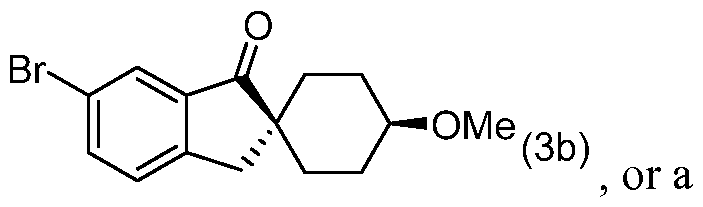 salt thereof
In certain embodiments, the metal source is a rhodium compound, a cobalt compound or an iridium compound. In certain embodiments, the metal source is a rhodium or an iridium compound. In certain embodiments, the metal source is selected from the group consisting of: [Ir(cod)(PCy3)(py)]PF6 (Crabtree’s Catalyst), [IrCl (coe)2]2, [Ir(OMe) (cod)]2, [Ir(cod) Cl]2, [Ir(Cp*) Cl2]2, Ir(acac) (cod), and [Ir(cod)2]BF4, such as [Ir(cod)(PCy3)(py)]PF6 (Crabtree’s Catalyst).
In certain embodiments, the metal source is selected from the group consisting of: [ph3P]3RhCl (Wilkinson’s catalyst), [Rh(dppb)(cod)]BF4, [Rh(dppb)(nbd)]BF4,
[Rh(nbd)2]BF4, [Rh(cod)2]CF3S03, [Rh(cod)2]BArF, [Rh cod DiPFc]BF4, [Rh cod(rac)- BINAP]BF , RhCl (CO) (PPh3)2, RhH (CO) (PPh3)3, Rh(acac) (CO)2, Rh (acac)3, [RhCl (nbd)]2, [RhCl (cod)]2, Rh(acac) (cod), [Rh(cod)2]BF4, [Rh(cod)2]OTf, RhBr (PPh3)3, RhH (PPh3)4, [Rh(OAc)2]2, [Rh(C8Hi502)2]2, [RhCb (Cp*)]2, Rh(acac) (C2H4)2, Rh(acac) (nbd), [Rh(cod)2]SbF6, [Rh(dippf) (cod)]BF4, [Rh(MeCN)2 (cod)]BF4, and [Rh(OH) (cod)]2, such as [Rh(cod)2]BArF.
In certain embodiments, the metal source is a cationic rhodium complex. In certain embodiments, the metal source is selected from the group consisting of: [Rh(dppb)(cod)]BF4, [Rh(dppb)(nbd)]BF4, [Rh(nbd)2]BF4, [Rh(cod)2]CF3S03, [Rh(cod)2]BArF, [Rh cod
DiPFc]BF , [Rh cod(rac)-BINAP]BF , [RhCl (nbd)]2, [RhCl (cod)]2, [Rh(cod)2]BF ,
[Rh(cod)2]OTf, [Rh(OAc)2]2, [Rh(C8Hi502)2]2, [RhCb (Cp*)]2, [Rh(cod)2]SbF6, [Rh(dippf) (cod)]BF4, [Rh(MeCN)2 (cod)]BF4, and [Rh(OH) (cod)]2. In certain embodiments, the metal source is selected from the group consisting of: [Rh(dppb)(cod)]BF4, [Rh(dppb)(nbd)]BF4, [Rh(nbd)2]BF4, [Rh(cod)2]CF3S03, and [Rh(cod)2]BArF. In certain embodiments, the metal source is [Rh(cod)2]BArF.
Certain embodiments of the forgoing processes may optionally comprise a ligand, such as a bidentate or monodentate ligand.
In certain embodiments, the ligand is selected from the following group:

or an optical isomer of any of the above ligands, or a mixture of any of the foregoing.
In certain embodiments, the ligand is selected from the following group:

or an optical isomer of any of the above ligands, or a mixture of any of the foregoing.
In certain embodiments, the optional ligand is selected from the group consisting of: dppf, DiPPF, DtBPF, BINAP, dppp, dppb, phanephos, xantphos, xylphanephos, Ph2PCy,
dppf, Biphephos, DPEphos, HiersoPHOS-3, PPI13, P(m-(MeO)-Ph)3, P(2-furyl)3, P(OPh)3, (R)-BINAP, (R) -T oly l-BINAP , R-Xyl-BINAP, R-C3-Tunephos, R-Segphos, R-Synphos, R- Difluorphos, (R,R)-DIOP, (R,R)-NORPHOS, R-PHANEPHOS, R-3,5-xyl-PHANEPHOS, R- An-PHANEPHOS, P(p-(MeO)-Ph)3, P(4-FPh)3, Tris(4-methoxy-3,5- dimethylphenyl)phosphine, Tris(3,5-dimethylphenyl)phosphine, Tri(p-tolyl)phosphine, TRIS(3 -CHLOROPHENYL)PHOSPHINE, Tris(3 -fluorophenyl)phosphine, Tri(m- tolyl)phosphine, 4-(Dimethylamino)phenyldiphenylphosphine, 4- (Diphenylphosphino)benzoic acid, P(Ph)2(c-Hexyl), P(Ph)2(tBu),
Bis(dicyclohexylphosphinophenyl) ether, an optical isomer of any one of the foregoing ligands, and a mixture of any of the foregoing. In certain embodiments, the ligand is selected from the group consisting of: XPhos, tBuXPhos, SPhos, BrettPhos, tBuBrettPhos, RuPhos, JohnPhos, Me4-tBuXPhos, PPhos, Xyl-PPhos, Phanephos, xyl-phanephos, An-Phanephos, Me-Bophoz, dtbpf, dcypf, AmPhos, xantphos, QPhos, dppf, dppp, BINAP, Ph2PCy, and dippf. In certain embodiments, the ligand is selected from the group consisting of: dppf, dippf, dtbpf, BINAP, dppp, dppb, phanephos, xantphos, xylphanephos, and Ph2PCy. In certain embodiments, the ligand is phanephos, xylphanephos, or Ph2PCy. Certain
embodiments of the forgoing processes comprise a ligand as described herein.
In certain embodiments, the metal source is present in the reaction at a loading that is less than 10 mol%, such as 5 mol% or less (e.g., 1 mol% or less).
In certain embodiments, the hydrogen donor is hydrogen (H2), isopropanol, or cyclohexadiene. In certain embodiments, the hydrogen donor is hydrogen (H2). In certain embodiments, hydrogen is being fed to the reaction mixture at a pressure selected in range of 1 to 200 bar, such as in the range of 1-100 bar, 1-50 bar, or 5-50 bar. In certain embodiments, hydrogen is being fed to the reaction mixture at a pressure selected in range of 1 to 50 bar, such as 5 bar.
In certain embodiments, the reaction is carried out at a temperature selected from 0 to 100 °C (e.g., 50 °C). In certain embodiments, the reaction is carried out at a temperature selected from 10 to 75 °C, such as a temperature selected from 20-50 °C (e.g., 20 °C).
In certain embodiments, the solvent is an ethereal or a chlorinated solvent. In certain embodiments, the solvent is selected from the group consisting of: DCM, toluene, PhCl,
THF, 2-Me THF, and MTBE. In certain embodiments, the solvent is DCM, 2-Me THF, or MTBE.
In certain embodiments, the present application provides a process for preparing a
compound of formula (
 salt thereof, comprising any one of the foregoing processes, wherein: R3 independently for each occurrence, is selected from hydrogen, halogen, CN, and optionally substituted alkyl, alkenyl, alkynyl, alkoxy, aryl, heteroaryl, or oxime; R7 is selected from halogen, CN, and optionally substituted alkyl, alkenyl, alkynyl, alkoxy, aryl, heteroaryl, or oxime; R8 is selected from hydrogen, halogen, CN, and optionally substituted alkyl, alkenyl, alkynyl, alkoxy, aryl, heteroaryl, or oxime; or R7 and R8 taken together with the carbon(s) to which they are attached, form an optionally substituted fused cycloalkyl, heterocycloalkyl, cycloalkenyl, heterocycloalkenyl, aryl, or heteroaryl ring; R9 is H, silyl, or optionally substituted alkyl (e.g., R9 is optionally substituted alkyl); and o is 1, 2, or 3.
In certain embodiments, the present application provides a process for preparing a
compound of formula (
 salt thereof, comprising any one of the foregoing processes, wherein: R2 independently for each occurrence, is selected from hydrogen, hydroxyl, OTf, OMs, halogen, CN, P(Rn)2, P(0)(0H)2, P(0)(0Rn)2, 0P(0)(0H)2, 0P(0)(0Rn)2, B(OH)2 B(ORn)2, B(OH)(Rn), B(Rn)ORn, Si(Rn)3, OSi(Rn)3, and optionally substituted alkyl, alkenyl, alkynyl, alkoxy, aryl, heteroaryl, or oxime (e.g., R2 independently for each occurrence, is selected from hydrogen, halogen, CN, and optionally substituted alkyl, alkenyl, alkynyl, alkoxy, aryl, heteroaryl, or oxime); R3 independently for each occurrence, is selected from hydrogen, halogen, CN, and optionally substituted alkyl, alkenyl, alkynyl, alkoxy, aryl, heteroaryl, or oxime; R9 is H, silyl, or optionally substituted alkyl (e.g., R9 is optionally substituted alkyl); R11 independently for each occurrence is alkyl; p is 0, 1, 2, 3, or 4; and o is 1, 2, or 3.
Additional embodiments, features, and advantages of the application will be apparent from the following detailed description and through practice of the embodiments described in this application.
Detailed Description
The present application provides a process for preparing a compound of formula (I),
X or a salt thereof, comprising reacting a compound of formula (II),
 , or a salt thereof, with a hydrogen donor in the presence of a metal source, an optional ligand, and a solvent, wherein: X is O, NH, or S (e.g., X is O); R7 is selected from halogen, CN, and optionally substituted alkyl, alkenyl, alkynyl, alkoxy, aryl, heteroaryl, or oxime; R8 is selected from hydrogen, halogen, CN, and optionally substituted alkyl, alkenyl, alkynyl, alkoxy, aryl, heteroaryl, or oxime; or R7 and R8 taken together with the carbon(s) to which they are attached, form an optionally substituted fused cycloalkyl, heterocycloalkyl, cycloalkenyl, heterocycloalkenyl, aryl, or heteroaryl ring; R9 is H, silyl, or optionally substituted alkyl (e.g., R9 is optionally substituted alkyl); R10 is H, silyl, or optionally substituted alkyl (e.g., R10 is optionally substituted alkyl); and o is 1, 2, or 3.
In certain embodiments, R7 and R8 taken together with the carbon(s) to which they are attached, form an optionally substituted fused cycloalkyl, heterocycloalkyl, cycloalkenyl, heterocycloalkenyl, aryl, or heteroaryl ring. In certain such embodiments, R7 and R8 taken together with the carbon(s) to which they are attached, form an optionally substituted aryl ring, such as an optionally substituted benzene ring. In certain embodiments of the foregoing, the optionally substituted aryl ring, such as an optionally substituted benzene ring, is substituted with halogen, such as bromine.
In certain embodiments, X is O.
In certain embodiments, R9 is optionally substituted alkyl. In certain embodiments,
R9 is Ci ioalkyl, such as methyl.
In certain embodiments, R10 is optionally substituted alkyl. In certain embodiments, R10 is Ci ioalkyl, such as methyl.
In certain embodiments, o is 1.
In certain embodiments, the reaction provides both stereoselective and regioselective reduction (e.g., hydrogenation) of the compound of formula (II), or salt thereof, to produce the compound of formula (I), or salt thereof.
In certain embodiments, X is O, and the compound of formula (I), or salt thereof, is
O produced in excess of a compound of formula (III),
 ’"', or a salt thereof.
In certain embodiments, X is O, and the compound of formula (I), or salt thereof, is produced
OH in excess of a compound of formula (IV),
 , or a salt thereof. In certain embodiments, X is O, and the compound of formula (I), or salt thereof, is produced in
OH
(V)
excess of a compound of formula (V),
 , or a salt thereof. In certain embodiments, X is O, and the compound of formula (I), or salt thereof, is produced in excess
(III)
of a compound of formula
 , or a salt thereof; in excess of a
compound of formula
 salt thereof; and in excess of a
compound of formula (V),
 or a salt thereof. In certain such embodiments, the compound of formula (I), or salt thereof, and the compound of formula (III), or salt thereof, are present in a ratio of at least 1:1, 5:1, 10:1, 20:1, 30:1, 40:1, 50:1,
60:1, 70:1, 80:1, 90:1, 95:1, 99:1, or 100:1. In certain embodiments, the compound of formula (I), or salt thereof, and the compound of formula (IV), or salt thereof, are present in a ratio of at least 1:1, 5:1, 10:1, 20:1, 30:1, 40:1, 50:1, 60:1, 70:1, 80:1, 90:1, 95:1, 99:1, or 100: 1. In certain embodiments, the compound of formula (I), or salt thereof, and the compound of formula (V), or salt thereof, are present in a ratio of at least 1:1, 5:1, 10:1, 20:1, 30:1, 40:1, 50:1, 60:1, 70:1, 80:1, 90:1, 95:1, 99:1, or 100:1.
In certain embodiments of the foregoing processes, the reaction produces an
X
(VI)
intermediate of formula (VI),
 or a salt thereof, wherein X is O, NH, or S (e.g., X is O).
The present application provides a process for preparing a compound of formula (I), X or a salt thereof, comprising reacting a compound of formula (VI), VI)

In certain embodiments, R7 and R8 taken together with the carbon(s) to which they are attached, form an optionally substituted fused cycloalkyl, heterocycloalkyl, cycloalkenyl, heterocycloalkenyl, aryl, or heteroaryl ring. In certain such embodiments, R7 and R8 taken together with the carbon(s) to which they are attached, form an optionally substituted aryl ring, such as an optionally substituted benzene ring. In certain embodiments of the foregoing, the optionally substituted aryl ring, such as an optionally substituted benzene ring, is substituted with halogen, such as bromine.
In some embodiments, X is O.
In some embodiments, R9 is optionally substituted alkyl. In certain embodiments, R9 is Ci ioalkyl, such as methyl.
In certain embodiments, o is 1.
In certain embodiments, the reaction provides both stereoselective and regioselective reduction (e.g., hydrogenation) of the compound of formula (VI), or salt thereof, to produce the compound of formula (I), or salt thereof.
In certain embodiments, X is O, and the compound of formula (I), or salt thereof, is
produced in excess of a compound of formula
 salt thereof.
In certain embodiments, X is O, and the compound of formula (I), or salt thereof, is produced
in excess of a compound of formula (
 salt thereof. In certain embodiments, X is O, and the compound of formula (I), or salt thereof, is produced in
excess of a compound of formula
 salt thereof; and in
excess of a compound of formula (
 salt thereof. In certain such embodiments, the compound of formula (I), or salt thereof, and the compound of formula (IV), or salt thereof, are present in a ratio of at least 1: 1, 5: 1, 10: 1, 20: 1, 30: 1, 40:1, 50: 1, 60: 1, 70: 1, 80: 1, 90: 1, 95: 1, 99: 1, or 100: 1. In certain embodiments, the compound of formula (I), or salt thereof, and the compound of formula (VII), or salt thereof, are present in a ratio of at least 1: 1, 5: 1, 10: 1, 20: 1, 30: 1, 40: 1, 50: 1, 60: 1, 70: 1, 80: 1, 90: 1, 95: 1, 99: 1, or 100: 1.
The present application provides a process for preparing a compound of formula (I),
a salt thereof, comprising reacting a compound of formula (III),

, or a salt thereof, with a hydrogen donor in the presence of a metal source, an optional ligand, and a solvent, wherein: X is O, NH, or S ( e.g ., X is 0);R7 is selected from halogen, CN, and optionally substituted alkyl, alkenyl, alkynyl, alkoxy, aryl,
heteroaryl, or oxime; R8 is selected from hydrogen, halogen, CN, and optionally substituted alkyl, alkenyl, alkynyl, alkoxy, aryl, heteroaryl, or oxime; or R7 and R8 taken together with the carbon(s) to which they are attached, form an optionally substituted fused cycloalkyl, heterocycloalkyl, cycloalkenyl, heterocycloalkenyl, aryl, or heteroaryl ring; R9 is H, silyl, or optionally substituted alkyl (e.g., R9 is optionally substituted alkyl); and o is 1, 2, or 3.
In certain embodiments, R7 and R8 taken together with the carbon(s) to which they are attached, form an optionally substituted fused cycloalkyl, heterocycloalkyl, cycloalkenyl, heterocycloalkenyl, aryl, or heteroaryl ring. In certain such embodiments, R7 and R8 taken together with the carbon(s) to which they are attached, form an optionally substituted aryl ring, such as an optionally substituted benzene ring. In certain embodiments of the foregoing, the optionally substituted aryl ring, such as an optionally substituted benzene ring, is substituted with halogen, such as bromine.
In some embodiments, X is O.
In some embodiments, R9 is optionally substituted alkyl. In certain embodiments, R9 is Ci ioalkyl, such as methyl.
In certain embodiments, o is 1.
In certain embodiments, the reaction provides both stereoselective and regioselective reduction (e.g., hydrogenation) of the compound of formula (III), or salt thereof, to produce the compound of formula (I), or salt thereof.
In certain embodiments of the foregoing processes, the compound of formula (I), or
salt thereof, is a compound of formula (la),
 or a salt thereof, or a
O compound of formula (lb),
 , or a salt thereof, or a mixture of any of the foregoing. In certain embodiments, the compound of formula (la), or salt thereof, and the compound of formula (lb), or salt thereof, are present in a ratio of at least 1 : 1, 5: 1, 10: 1, 20: 1, 30: 1, 40: 1, 50: 1, 60: 1, 70: 1, 80: 1, 90: 1, 95:1, 99: 1, or 100: 1, such as at least 99: 1.
In certain embodiments of the foregoing processes, the percent yield of the compound of formula (la), or salt thereof, is greater than 50%, 55%, 60%, 65%, 70%, 75%, 80%, 85%, 90%, 95%, 98% or 99%, such as at least 80%.
The present application further provide s a process for preparing a compound of X formula (G),
 , or a salt thereof, comprising reacting a
compound of formula (IG),
 , or a salt thereof, with a hydrogen donor in the presence of a metal source, an optional ligand, and a solvent, wherein: X is O, NH, or S (e.g., X is O); R2 independently for each occurrence, is selected from hydrogen, hydroxyl, OTf, OMs, halogen, CN, P(R" k, P(0)(0H)2, P(0)(0Rn)2, 0P(0)(0H)2, 0P(0)(0Rn)¾ B(OH)2 B(ORn)¾ B(OH)(Rn), B(Rn)ORn, Si(Rn)3, OSi(Rn)3, and optionally substituted alkyl, alkenyl, alkynyl, alkoxy, aryl, heteroaryl, or oxime (e.g., R2 independently for each occurrence, is selected from hydrogen, halogen, CN, and optionally substituted alkyl, alkenyl, alkynyl, alkoxy, aryl, heteroaryl, or oxime); R9 is H, silyl, or optionally substituted alkyl (e.g., R9 is optionally substituted alkyl); R10 is H, silyl, or optionally substituted alkyl (e.g., R10 is optionally substituted alkyl); R11 independently for each occurrence is alkyl; o is 1, 2, or 3; and p is 0, 1, 2, 3, or 4.
In some embodiments, X is O;
In some embodiments, R2 independently for each occurrence, is selected from hydrogen, halogen, CN, and optionally substituted alkyl, alkenyl, alkynyl, alkoxy, aryl, heteroaryl, or oxime. In certain embodiments, R2 is halogen, such as bromine.
In some embodiments, R9 is optionally substituted alkyl. In certain embodiments, R9 is Ci ioalkyl, such as methyl.
In some embodiments, R10 is optionally substituted alkyl. In certain embodiments, R10 is Ci ioalkyl, such as methyl.
In certain embodiments, o is 1.
In certain embodiments, p is 1.
In certain embodiments, the reaction provides both stereoselective and regioselective reduction (e.g., hydrogenation) of the compound of formula (IG), or salt thereof, to produce the compound of formula (G), or salt thereof.
In certain embodiments, X is O, and the compound of formula (G), or salt thereof, is
O produced in excess of a compound of formula (IIG),
 (III ) ? or a sait thereof. In certain embodiments, X is O, and the compound of formula (G), or salt thereof, is
OH produced in excess of a compound of formula (IV’),
 , or a salt thereof. In certain embodiments, X is O, and the compound of formula (G), or salt thereof, is
OH produced in excess of a compound of formula (V’),
 , or a salt thereof. In certain embodiments, X is O, and the compound of formula (G), or salt thereof, is produced in excess of a compound of formula (IIG),
O

X intermediate of formula (VI’),
 or a salt thereof, wherein X is O, NH, or S (e.g., X is O).
The present application provides a process for preparing a compound of formula (G), X

OMs, halogen, CN, P(Rn)2, P(0)(0H)2, P(0)(0Rn)2, 0P(0)(0H)2, 0P(0)(0Rn)2, B(OH)2, B(ORn)2, B(OH)(Rn), B(Rn)ORn, Si(Rn)3, OSi(Rn)3, and optionally substituted alkyl, alkenyl, alkynyl, alkoxy, aryl, heteroaryl, or oxime (e.g., R2 independently for each occurrence, is selected from hydrogen, halogen, CN, and optionally substituted alkyl, alkenyl, alkynyl, alkoxy, aryl, heteroaryl, or oxime); R9 is H, silyl, or optionally substituted alkyl (e.g., R9 is optionally substituted alkyl); R11 independently for each occurrence is alkyl; o is 1, 2, or 3; and p is 0, 1, 2, 3, or 4.
In some embodiments, X is O;
In some embodiments, R2 independently for each occurrence, is selected from hydrogen, halogen, CN, and optionally substituted alkyl, alkenyl, alkynyl, alkoxy, aryl, heteroaryl, or oxime. In certain embodiments, R2 is halogen, such as bromine.
In some embodiments, R9 is optionally substituted alkyl. In certain embodiments, R9 is Ci ioalkyl, such as methyl.
In certain embodiments, o is 1.
In certain embodiments, p is 1.
In certain embodiments, the reaction provides both stereoselective and regioselective reduction (e.g., hydrogenation) of the compound of formula (VT), or salt thereof, to produce the compound of formula (G), or salt thereof.
In certain embodiments, X is O, and the compound of formula (G), or salt thereof, is
OH produced in excess of a compound of formula (IV’),
 , or a salt thereof. In certain embodiments, X is O, and the compound of formula (G), or salt thereof, is
OH produced in excess of a compound of formula (VII’),
 , or a salt thereof. In certain embodiments, X is O, and the compound of formula (G), or salt thereof, is produced in excess of a compound of formula (IV’),
OH

The present application further provides a process for preparing a compound of
X formula (G),
 , or a salt thereof, comprising reacting a

compound of formula (IIG), , or a salt thereof, with a hydrogen donor in the presence of a metal source, an optional ligand, and a solvent, wherein: X is O, NH, or S (e.g., X is O); R2 independently for each occurrence, is selected from hydrogen, hydroxyl, OTf, OMs, halogen, CN, P(Rn)2, P(0)(OH)2, P(0)(ORn)2, OP(0)(OH)2, OP(0)(ORn)2, B(OH)2, B(ORn)2, B(OH)(Rn), B(Rn)ORn, Si(Rn)3, OSi(Rn)3, and optionally substituted alkyl, alkenyl, alkynyl, alkoxy, aryl, heteroaryl, or oxime (e.g., R2 independently
for each occurrence, is selected from hydrogen, halogen, CN, and optionally substituted alkyl, alkenyl, alkynyl, alkoxy, aryl, heteroaryl, or oxime); R9 is H, silyl, or optionally substituted alkyl (R9 is optionally substituted alkyl); R11 independently for each occurrence is alkyl; o is 1, 2, or 3; and p is 0, 1, 2, 3, or 4.
In some embodiments, X is O;
In some embodiments, R2 independently for each occurrence, is selected from hydrogen, halogen, CN, and optionally substituted alkyl, alkenyl, alkynyl, alkoxy, aryl, heteroaryl, or oxime. In certain embodiments, R2 is halogen, such as bromine.
In some embodiments, R9 is optionally substituted alkyl. In certain embodiments, R9 is Ci ioalkyl, such as methyl.
In certain embodiments, o is 1.
In certain embodiments, p is 1.
In certain embodiments, the reaction provides both stereoselective and regioselective reduction (e.g., hydrogenation) of the compound of formula (IIF), or salt thereof, to produce the compound of formula (F), or salt thereof.
In certain embodiments, the compound of formula (G), or salt thereof, is a compound
O of formula (I’a)
 (Fa) , or a salt thereof, or a compound of formula
(I’b),
 , or a salt thereof, or a mixture of any of the foregoing.
In certain such embodiments, the compound of formula (Fa), or salt thereof, and the compound of formula (I’b), or salt thereof, are present in a ratio of at least 1: 1, 5: 1, 10: 1, 20: 1, 30: 1, 40: 1, 50: 1, 60: 1, 70: 1, 80: 1, 90:1, 95: 1, 99: 1, or 100: 1, such as at least 99: 1.
In certain embodiments, the compound of formula (IF), or salt thereof, is compound
(IF-l),
 , or a salt thereof. In certain embodiments, the compound of formula (IF), or salt thereof, is compound (IF -2)
(I -2)

O formula (IG), or salt thereof, is compound 1,
 ; or a salt thereof.
In certain embodiments, the compound of formula (UG), or salt thereof, is compound
O
(VI’-l),
 , or a salt thereof. In certain embodiments, the compound of formula (UG), or salt thereof, is compound (UG-2),
O
 or a salt thereof. In certain embodiments, the compound
O of formula (VF), or salt thereof, is compound 2,
 , or a salt thereof.
In certain embodiments, the compound of formula (G), or salt thereof, is compound
0 (G-l),
 , or a salt thereof. In certain embodiments, the compound of formula (G), or salt thereof, is compound (G-2),
O
 , or a salt thereof. In certain embodiments, the compound of
O formula (G), or salt thereof, is compound 3,
 or a salt thereof
In certain embodiments, the compound of formula (I’a), or salt thereof, is compound
O
OR9
(I’a-l),
 a 1 or a salt thereof. In certain embodiments, the compound of formula (I’b), or salt thereof, is compound (I’b-l),
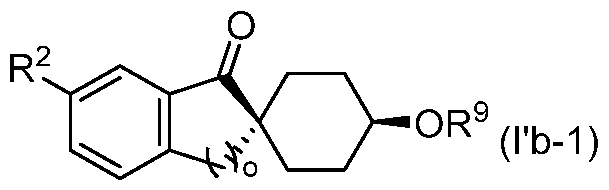 , or a salt thereof. In certain embodiments, the compound of
0 formula (I’a), or salt thereof, is compound (I’a-l),
 a 1 or a salt thereof, or the compound of formula (I’b), or salt thereof, is compound (I’b-l),
O
 , or a salt thereof In certain embodiments, the compound of
formula (Fa), or salt thereof, is compound (I’a-2),
 , or a salt thereof, or the compound of formula (I’b), or salt thereof, is compound (I’b-2),
 , or a salt thereof In certain embodiments, the compound
O of formula (Fa), or salt thereof, is compound (3a),
 , or a salt thereof, and the compound of formula (I’b), or salt thereof, is compound (3b),
 salt thereof
In certain embodiments, the metal source is a rhodium compound, a cobalt compound or an iridium compound. In certain embodiments, the metal source is a rhodium or an iridium compound. In certain embodiments, the metal source is selected from the group consisting of: [Ir(cod)(PCy3)(py)]PF6 (Crabtree’s Catalyst), [IrCl (coe)2]2, [Ir(OMe) (cod)]2, [Ir(cod) Cl]2, [Ir(Cp*) Cl2]2, Ir(acac) (cod), and [Ir(cod)2]BF4, such as [Ir(cod)(PCy3)(py)]PF6 (Crabtree’s Catalyst).
In certain embodiments, the metal source is a cationic rhodium complex.
In certain embodiments, the metal source is selected from the group consisting of: [ph3P]3RhCl (Wilkinson’s catalyst), [Rh(dppb)(cod)]BF4, [Rh(dppb)(nbd)]BF4,
[Rh(nbd)2]BF4, [Rh(cod)2]CF3S03, [Rh(cod)2]BArF, [Rh cod DiPFc]BF4, [Rh cod(rac)-
BINAP]BF , RhCl (CO) (PPh3)2, RhH (CO) (PPh3)3, Rh(acac) (CO)2, Rh (acac)3, [RhCl (nbd)]2, [RhCl (cod)]2, Rh(acac) (cod), [Rh(cod)2]BF4, [Rh(cod)2]OTf, RhBr (PPh3)3, RhH (PPh3)4, [Rh(OAc)2]2, [Rh(C8Hi502)2]2, [RhCh (Cp*)]2, Rh(acac) (C2H4)2, Rh(acac) (nbd), [Rh(cod)2]SbF6, [Rh(dippf) (cod)]BF4, [Rh(MeCN)2 (cod)]BF4, and [Rh(OH) (cod)]2, such as [Rh(cod)2]BArF.
In certain embodiments, the metal source is selected from the group consisting of: [Rh(dppb)(cod)]BF4, [Rh(dppb)(nbd)]BF4, [Rh(nbd)2]BF4, [Rh(cod)2]CF3S03,
[Rh(cod)2]BArF, [Rh cod DiPFc]BF , [Rh cod(rac)-BINAP]BF , [RhCl (nbd)]2, [RhCl (cod)]2, [Rh(cod)2]BF , [Rh(cod)2]OTf, [Rh(OAc)2]2, [Rh(C8Hi502)2]2, [RhCh (Cp*)]2, [Rh(cod)2]SbF6, [Rh(dippf) (cod)]BF4, [Rh(MeCN)2 (cod)]BF4, and [Rh(OH) (cod)]2.
In certain embodiments, the metal source is selected from the group consisting of: [Rh(dppb)(cod)]BF4, [Rh(dppb)(nbd)]BF4, [Rh(nbd)2]BF4, [Rh(cod)2]CF3S03, and
[Rh(cod)2]BArF. In certain embodiments, the metal source is [Rh(cod)2]BArF.
Certain embodiments of the forgoing processes may optionally comprise a ligand, such as a bidentate or monodentate ligand. In certain embodiments, the ligand is selected from the following group:

or an optical isomer of any of the above ligands, or a mixture of any of the foregoing.
In certain embodiments, the ligand is selected from the following group:

or an optical isomer of any of the above ligands, or a mixture of any of the foregoing.
In certain embodiments, the optional ligand is selected from the group consisting of: dppf, DiPPF, DtBPF, BINAP, dppp, dppb, phanephos, xantphos, xylphanephos, Ph2PCy, dppf, Biphephos, DPEphos, HiersoPHOS-3, PPI13, P(m-(MeO)-Ph)3, P(2-furyl)3, P(OPh)3, (R)-BINAP, (R)-Tolyl-BINAP, R-Xyl-BINAP, R-C3-Tunephos, R-Segphos, R-Synphos, R- Difluorphos, (R,R)-DIOP, (R,R)-NORPHOS, R-PHANEPHOS, R-3,5-xyl-PHANEPHOS, R- An-PHANEPHOS, P(p-(MeO)-Ph)3, P(4-FPh)3, Tris(4-methoxy-3,5- dimethylphenyl)phosphine, T ris(3 ,5 -dimethylphenyl)phosphine, T ri(p-tolyl)phosphine, TRIS(3-CHLOROPHENYL)PHOSPHINE, Tris(3-fluorophenyl)phosphine, Tri(m- tolyl)phosphine, 4-(Dimethylamino)phenyldiphenylphosphine, 4- (Diphenylphosphino)benzoic acid, P(Ph)2(c -Hexyl), P(Ph)2(tBu),
Bis(dicyclohexylphosphinophenyl) ether, an optical isomer of any one of the foregoing ligands, and a mixture of any of the foregoing. In certain embodiments, the ligand is selected from the group consisting of: XPhos, tBuXPhos, SPhos, BrettPhos, tBuBrettPhos, RuPhos, JohnPhos, Me4-tBuXPhos, PPhos, Xyl-PPhos, Phanephos, xyl-phanephos, An-Phanephos, Me-Bophoz, dtbpf, dcypf, AmPhos, xantphos, QPhos, dppf, dppp, BINAP, Ph2PCy, and dippf. In certain embodiments, the ligand is selected from the group consisting of: dppf, dippf, dtbpf, BINAP, dppp, dppb, phanephos, xantphos, xylphanephos, and Ph2PCy. In certain embodiments, the ligand is phanephos, xylphanephos, or Ph2PCy.
Certain embodiments of the forgoing processes comprise a ligand as described herein. In certain such embodiments, the metal source is selected from the group consisting of: [Rh(dppb)(cod)]BF4, [Rh(dppb)(nbd)]BF4, [Rh(nbd)2]BF4, [Rh(cod)2]CF3S03, and
[Rh(cod)2]BArF, and the ligand is selected from the group consisting of: dppf, dippf, dtbpf, BINAP, dppp, dppb, phanephos, xantphos, xylphanephos, and Ph2PCy. In certain such embodiments, the metal source is selected from the group consisting of: [Rh(dppb)(cod)]BF4, [Rh(dppb)(nbd)]BF4, [Rh(nbd)2]BF4, [Rh(cod)2]CF3S03, and [Rh(cod)2]BArF, and the ligand is phanephos, xylphanephos, or Ph2PCy. In certain such embodiments, the metal source is [Rh(cod)2]BArF, and the ligand is phanephos, xylphanephos, or Ph2PCy. In certain such embodiments, the metal source is [Rh(cod)2]BArF, and the ligand is phanephos. In certain such embodiments, the metal source is [Rh(cod)2]BArF, and the ligand is xylphanephos. In certain such embodiments, the metal source is [Rh(cod)2]BArF, and the ligand is Ph2PCy.
In certain embodiments, the metal source is present in the reaction at a loading that is less than 10 mol%, 9 mol%, 8 mol%, 7 mol%, 6 mol%, 5 mol%, 4 mol%, 3 mol%, 2 mol%, 1 mol%, 0.5 mol%, 0.1 mol%, 0.05 mol%, 0.01 mol%, or less. In certain embodiments, the metal source is present in the reaction at a loading that is 1 mol% or less.
In certain embodiments, the hydrogen donor is hydrogen (H2), isopropanol, or cyclohexadiene. In certain embodiments, the hydrogen donor is hydrogen (H2). In certain embodiments, hydrogen is being fed to the reaction mixture at a pressure selected in range of 1 to 200 bar, such as in the range of 1-100 bar, 1-50 bar, or 5-50 bar. In certain embodiments, hydrogen is being fed to the reaction mixture at a pressure selected in range of 1 to 50 bar, such as 5 bar.
In certain embodiments, the reaction is carried out at a temperature selected from 0 to 100 °C (e.g., 50 °C). In certain embodiments, the reaction is carried out at a temperature selected from 10 to 75 °C, such as a temperature selected from 20-50 °C (e.g., 20 °C).
In certain embodiments, the solvent is selected from the group consisting of: DCM, toluene, PhCl, THF, 2-Me THF, and MTBE. In certain embodiments, the solvent is DCM, 2- Me THF, or MTBE.
In certain embodiments, the solvent is an ethereal or a chlorinated solvent. In certain embodiments, the present application provides a process for preparing a compound of
formula (
 salt thereof, comprising any one of the foregoing processes, wherein: R3 independently for each occurrence, is selected from hydrogen, halogen, CN, and optionally substituted alkyl, alkenyl, alkynyl, alkoxy, aryl, heteroaryl, or oxime; R7 is selected from halogen, CN, and optionally substituted alkyl, alkenyl, alkynyl, alkoxy, aryl, heteroaryl, or oxime; R8 is selected from hydrogen, halogen, CN, and optionally substituted alkyl, alkenyl, alkynyl, alkoxy, aryl, heteroaryl, or oxime; or R7 and R8 taken together with the carbon(s) to which they are attached, form an optionally substituted fused cycloalkyl, heterocycloalkyl, cycloalkenyl, heterocycloalkenyl, aryl, or heteroaryl ring; R9 is H, silyl, or optionally substituted alkyl (e.g., R9 is optionally substituted alkyl); and o is 1, 2, or 3.
In certain embodiments, R7 and R8 taken together with the carbon(s) to which they are attached, form an optionally substituted fused cycloalkyl, heterocycloalkyl, cycloalkenyl, heterocycloalkenyl, aryl, or heteroaryl ring. In certain such embodiments, R7 and R8 taken together with the carbon(s) to which they are attached, form an optionally substituted fused aryl ring, such as an optionaly substituted fused benzene ring. In certain such embodiments, the fused aryl ring, such as a fused benzene ring, is substituted with halogen, such as bromine.
In certain embodiments, o is 1.
In some embodiments, R9 is optionally substituted alkyl. In certain embodiments, R9 is Ci ioalkyl, such as methyl.
In certain embodiments, the present application provides a process for preparing a
compound of formula (
 salt thereof, comprising any one of the foregoing processes, wherein: R2 independently for each occurrence, is selected from hydrogen, hydroxyl, OTf, OMs, halogen, CN, P(Rn)2, P(0)(0H)2, P(0)(0Rn)2, 0P(0)(0H)2, 0P(0)(0Rn)2, B(OH)2 B(ORn)2, B(OH)(Rn), B(Rn)ORn, Si(Rn)3, OSi(Rn)3, and optionally substituted alkyl, alkenyl, alkynyl, alkoxy, aryl, heteroaryl, or oxime
(e.g., R2 independently for each occurrence, is selected from hydrogen, halogen, CN, and optionally substituted alkyl, alkenyl, alkynyl, alkoxy, aryl, heteroaryl, or oxime); R3 independently for each occurrence, is selected from hydrogen, halogen, CN, and optionally substituted alkyl, alkenyl, alkynyl, alkoxy, aryl, heteroaryl, or oxime; R9 is H, silyl, or optionally substituted alkyl (e.g., R9 is optionally substituted alkyl); R11 independently for each occurrence is alkyl; p is 0, 1, 2, 3, or 4; and o is 1, 2, or 3.
In some embodiments, R2 independently for each occurrence, is selected from hydrogen, halogen, CN, and optionally substituted alkyl, alkenyl, alkynyl, alkoxy, aryl, heteroaryl, or oxime. In certain embodiments, R2 is halogen, such as bromine.
In some embodiments, R9 is optionally substituted alkyl. In certain embodiments, R9 is Ci ioalkyl, such as methyl.
In certain embodiments, p is 1.
In certain embodiments, o is 1.
In certain embodiments wherein alkyl, alkenyl, alkynyl, alkoxy, aryl, heteroaryl, cycloalkyl, heterocycloalkyl, or oxime are substituted, they are substituted, valency permitting, with one or more substituents selected from substituted or unsubstituted alkyl, such as perfluoroalkyl (e.g., trifluoromethyl), alkenyl, alkoxy, alkoxyalkyl, aryl, aralkyl, arylalkoxy, aryloxy, aryloxyalkyl, hydroxyl, halo, alkoxy, such as perfluoroalkoxy (e.g., trifluoromethoxy), alkoxyalkoxy, hydroxyalkyl, hydroxyalkylamino, hydroxyalkoxy, amino, aminoalkyl, alkylamino, aminoalkylalkoxy, aminoalkoxy, acylamino, acylaminoalkyl, such as perfluoro acylaminoalkyl (e.g., trifluoromethylacylaminoalkyl), acyloxy, cycloalkyl, cycloalkylalkyl, cycloalkylalkoxy, heterocyclyl, heterocyclylalkyl, heterocyclyloxy, heterocyclylalkoxy, heteroaryl, heteroarylalkyl, heteroarylalkoxy, heteroaryloxy,
heteroaryloxyalkyl, heterocyclylaminoalkyl, heterocyclylaminoalkoxy, amido, amidoalkyl, amidine, imine, oxo, carbonyl (such as carboxyl, alkoxycarbonyl, formyl, or acyl, including perfluoroacyl (e.g., C(0)CF3)), carbonylalkyl (such as carboxyalkyl, alkoxycarbonylalkyl, formylalkyl, or acylalkyl, including perfluoroacylalkyl (e.g., -alkylC(0)CF3)), carbamate, carbamatealkyl, urea, ureaalkyl, sulfate, sulfonate, sulfamoyl, sulfone, sulfonamide, sulfonamidealkyl, cyano, nitro, azido, sulfhydryl, alkylthio, thiocarbonyl (such as thioester, thioacetate, or thioformate), phosphoryl, phosphate, phosphonate or phosphinate.
When a bond to a substituent is shown to cross a bond connecting two atoms in a ring, then such substituent may be bonded to any atom on the ring. When a substituent is listed without indicating the atom via which such substituent is bonded to the rest of the compound
of a given formula, then such substituent may be bonded via any atom in such substituent. Combinations of substituents, positions of substituents and/or variables are permissible only if such combinations result in stable compounds.
Those skilled in the art will recognize that the species listed or illustrated herein are not exhaustive, and that additional species within the scope of these defined terms may also be selected.
Throughout this disclosure it is to be understood that, where appropriate, suitable protecting groups may be added to, and subsequently removed from, the various reactants and intermediates in a manner that will be readily understood by one skilled in the art of organic synthesis. Conventional procedures for using such protecting groups as well as examples of suitable protecting groups are described, for example, in“Protective Groups in Organic Synthesis,” T. W. Green, P. G. M. Wuts, Wiley-Interscience, New York, (1999).
A transformation of a group or substituent into another group or substituent by chemical manipulation can be conducted on any intermediate or final product on the synthetic path toward the final product; the type of transformation is limited only by the inherent incompatibility of other functional groups contained in the molecule to the conditions or reagents employed in the transformation. Such inherent incompatibilities, and ways to circumvent them by carrying out appropriate transformations and synthetic steps in a suitable order, will be readily understood by one skilled in the art of organic synthesis.
Examples of transformations are given throughout this disclosure, and it is understood that the described transformations are not limited only to the generic groups or substituents for which the transformations are exemplified. References and descriptions of other suitable transformations are given in“Comprehensive Organic Transformations— A Guide to Functional Group Preparations” R. C. Larock, Wiley VCH, 2nd Edition (1999).
Exemplary reaction conditions are given throughout this disclosure, and it is understood that the described reaction conditions are not limited only to the described reaction conditions. References and descriptions of other suitable reaction conditions are described in textbooks of organic chemistry, such as, for example,“Advanced Organic Chemistry”, March 6th Edition, Wiley Interscience (2007), and“Organic Synthesis”, Smith, 2nd Edition, McGraw Hill, (2001).
In certain embodiments, the present application provides processes for the preparation of BACE inhibitors that are useful in the treatment or prevention of Ab-related pathologies.
In certain such embodiments, the Ab-related pathology is Down's syndrome, a b-amyloid
angiopathy, cerebral amyloid angiopathy, hereditary cerebral hemorrhage, a disorder associated with cognitive impairment, MCI ("mild cognitive impairment"), Alzheimer's Disease, memory loss, attention deficit symptoms associated with Alzheimer's disease, neurodegeneration associated with Alzheimer's disease, dementia of mixed vascular origin, dementia of degenerative origin, pre-senile dementia, senile dementia, dementia associated with Parkinson's disease, progressive supranuclear palsy or cortical basal degeneration.
Definitions
The definitions set forth in this application are intended to clarify terms used throughout this application.
Unless defined otherwise, all technical and scientific terms used herein have the same meaning as is commonly understood by one of ordinary skill in the art to which this application belongs. All patents, applications, published applications and other publications referred to herein are incorporated by reference in their entireties to disclose and describe the methods and/or materials in connection with which the publications are cited. If a definition set forth in this section is contrary to or otherwise inconsistent with a definition set forth in a patent, application, or other publication that is herein incorporated by reference, the definition set forth in this section prevails over the definition incorporated herein by reference.
Although any methods and materials similar or equivalent to those described herein can also be used in the practice or testing of the embodiments in present application, the preferred methods and materials are now described.
To provide a more concise description, some of the quantitative expressions given herein are not qualified with the term“about.” It is understood that, whether the term“about” is used explicitly or not, every quantity given herein is meant to refer to the actual given value, and it is also meant to refer to the approximation to such given value that would reasonably be inferred based on the ordinary skill in the art, including equivalents and approximations due to the experimental and/or measurement conditions for such given value. Whenever a yield is given as a percentage, such yield refers to a mass of the entity for which the yield is given with respect to the maximum amount of the same entity that could be obtained under the particular stoichiometric conditions. Concentrations that are given as percentages refer to mass ratios, unless indicated differently.
Except as otherwise noted, the methods and techniques of the present embodiments are generally performed according to conventional methods well known in the art and as
described in various general and more specific references that are cited and discussed throughout the present specification. See, e.g., Loudon, Organic Chemistry, Fourth Edition, New York: Oxford University Press, 2002, pp. 360-361, 1084-1085; Smith and March, March’s Advanced Organic Chemistry: Reactions, Mechanisms, and Structure, Fifth Edition, Wiley-Interscience, 2001.
The nomenclature used herein to name the subject compounds is illustrated in the Examples herein. This nomenclature has generally been derived using the commercially - available ChemBioDraw Ultra software (Cambridgesoft/Perkin Elmer), Version 12.0.
It is to be understood that the present description is not limited to particular embodiments described, as such may, of course, vary. It is also to be understood that the terminology used herein is for the purpose of describing particular embodiments only, and is not intended to be limiting, since the scope of the present application will be limited only by the appended claims.
It is appreciated that certain features of the application, which are, for clarity, described in the context of separate embodiments, may also be provided in combination in a single embodiment. Conversely, various features of the application, which are, for brevity, described in the context of a single embodiment, may also be provided separately or in any suitable subcombination. All combinations of the embodiments pertaining to the chemical groups represented by the variables are specifically embraced by the present application and are disclosed herein just as if each and every combination was individually and explicitly disclosed, to the extent that such combinations embrace compounds that are stable compounds (i.e., compounds that can be isolated, characterized, and tested for biological activity). In addition, all subcombinations of the chemical groups listed in the embodiments describing such variables are also specifically embraced by the present application and are disclosed herein just as if each and every such sub-combination of chemical groups was individually and explicitly disclosed herein.
Any formula depicted herein is intended to represent a compound of that structural formula as well as certain variations or forms. E.g., a formula given herein is intended to include a racemic form, or one or more enantiomeric, diastereomeric, or geometric isomers, or tautomeric forms, or a mixture thereof. Additionally, any formula given herein is intended to refer also to a solvate, such as a hydrate, solvate, or polymorph of such a compound, or a mixture thereof. Any formula given herein is intended to refer to amorphous and/or
crystalline physical forms of the compound. The compounds described herein may be analytically pure, or a mixture in which the compound comprises at least 50%, at least 70%, at least 80%, at least 90%, at least 95%, or at least 98% by weight of the mixture.
In addition, where features or aspects of the embodiments of this application are described in terms of Markush groups, those skilled in the art will recognize that
embodiments described herein is also thereby described in terms of any individual member or subgroup of members of the Markush group. E.g., if X is described as selected from the group consisting of bromine, chlorine, and iodine, claims for X being bromine and claims for X being bromine and chlorine are fully described.
The term "herein" refers to the entire application.
As used herein, the singular forms“a,”“an,” and“the” include plural referents unless the context clearly dictates otherwise. It is further noted that the claims may be drafted to exclude any optional element. As such, this statement is intended to serve as antecedent basis for use of such exclusive terminology as“solely,”“only” and the like in connection with the recitation of claim elements, or use of a“negative” limitation.
As used herein, the terms“including,”“containing,” and“comprising” are used in their open, non-limiting sense.
As used herein,“subject” (as in the subject of the treatment) refers to both mammals and non-mammals. Mammals include, e.g., humans; non-human primates, e.g. apes and monkeys; and non-primates, e.g. mice, rats, rabbits, dogs, cats, cattle, horses, sheep, and goats. Non-mammals include, e.g., worms, fish and birds. In some embodiments, the subject is a human.
"Substantially" as the term is used herein refers to being completely or almost completely; e.g., a composition that is "substantially free" of a component either has none of the component or contains such a trace amount that any relevant functional property of the composition is unaffected by the presence of the trace amount, or a compound is
"substantially pure" is there are only negligible traces of impurities present.
The term“acyl” is art-recognized and refers to a group represented by the general formula hydrocarbylC(O)-, preferably alkylC(O)-.
The term“acylamino” is art-recognized and refers to an amino group substituted with an acyl group and may be represented, e.g., by the formula hydrocarbylC(0)NH-.
The term“acyloxy” is art-recognized and refers to a group represented by the general formula hydrocarbylC(0)0-, preferably alkylC(0)0-.
The term“alkoxy” refers to an alkyl group, preferably a lower alkyl group, having an oxygen attached thereto. Representative alkoxy groups include methoxy, ethoxy, propoxy, tert-butoxy and the like.
The term“alkoxyalkyl” refers to an alkyl group substituted with an alkoxy group and may be represented by the general formula alkyl-O-alkyl.
The term“alkenyl”, as used herein, refers to an aliphatic group containing at least one double bond and is intended to include both "unsubstituted alkenyls" and "substituted alkenyls", the latter of which refers to alkenyl moieties having substituents replacing a hydrogen on one or more carbons of the alkenyl group. Such substituents may occur on one or more carbons that are included or not included in one or more double bonds. Moreover, such substituents include all those contemplated for alkyl groups, as discussed below, except where stability is prohibitive. E.g., substitution of alkenyl groups by one or more alkyl, carbocyclyl, aryl, heterocyclyl, or heteroaryl groups is contemplated.
The term“alkynyl”, as used herein, refers to an aliphatic group containing at least one triple bond and is intended to include both "unsubstituted alkynyls" and "substituted alkynyls", the latter of which refers to alkynyl moieties having substituents replacing one or more hydrogens on one or more carbons of the alkynyl group. Such substituents may occur on one or more carbons that are included or not included in one or more triple bonds.
Moreover, such substituents include all those contemplated for alkyl groups, as discussed above, except where stability is prohibitive. E.g., substitution of alkynyl groups by one or more alkyl, carbocyclyl, aryl, heterocyclyl, or heteroaryl groups is contemplated.
An“alkyl” group or“alkane” is a straight chained or branched non-aromatic hydrocarbon which is completely saturated. Typically, a straight chained or branched alkyl group has from 1 to about 20 carbon atoms, such as from 1 to 12 carbon atoms, preferably from 1 to about 10, more preferably from 1 to 4, unless otherwise defined. Examples of straight chained and branched alkyl groups include methyl, ethyl, n-propyl, isopropyl, n- butyl, isobutyl, sec -butyl, tert-butyl, pentyl, isopentyl, tert-pentyl, hexyl, isohexyl, pentyl and octyl. A Ci-Ce straight chained or branched alkyl group is also referred to as a "lower alkyl" group.
Moreover, the term "alkyl" (or "lower alkyl") as used throughout the specification, examples, and claims is intended to include both "unsubstituted alkyls" and "substituted alkyls", the latter of which refers to alkyl moieties having substituents replacing a hydrogen or more hydrogens on one or more carbons of the hydrocarbon backbone. Such substituents, if not otherwise specified, can include, e.g., a halogen, a hydroxyl, a carbonyl (such as a carboxyl, an alkoxycarbonyl, a formyl, or an acyl), a thiocarbonyl (such as a thioester, a thioacetate, or a thioformate), an alkoxyl, a phosphoryl, a phosphate, a phosphonate, a phosphinate, an amino, an amido, an amidine, an imine, a cyano, a nitro, an azido, a sulfhydryl, an alkylthio, a sulfate, a sulfonate, a sulfamoyl, a sulfonamido, a sulfonyl, a heterocyclyl, an aralkyl, or an aromatic or heteroaromatic moiety. It will be understood by those skilled in the art that the moieties substituted on the hydrocarbon chain can themselves be substituted, if appropriate. For instance, the substituents of a substituted alkyl may include substituted and unsubstituted forms of amino, azido, imino, amido, phosphoryl (including phosphonate and phosphinate), sulfonyl (including sulfate, sulfonamido, sulfamoyl and sulfonate), and silyl groups, as well as ethers, alkylthios, carbonyls (including ketones, aldehydes, carboxylates, and esters), -CF3, -CN and the like. Exemplary substituted alkyls are described below. Cycloalkyls can be further substituted with alkyls, alkenyls, alkoxys, alkylthios, aminoalkyls, carbonyl-substituted alkyls, -CF3, -CN, and the like.
The term“(ATOM)i-j” with j > i, when used in conjunction with a chemical moiety, such as, acyl, acyloxy, alkyl, alkenyl, alkynyl, or alkoxy is meant to include groups that contain from i to j (including i and j) atoms. E.g., the term“Cx-yalkyl” refers to substituted or unsubstituted saturated hydrocarbon groups, including straight-chain alkyl and branched- chain alkyl groups that contain from x to y carbons in the chain, including haloalkyl groups such as trifluoromethyl and 2,2,2-tirfluoroethyl, etc. Co alkyl refers to a hydrogen atom where the group is in a terminal position, a bond if internal. Similarly, e.g., C3-6cycloalkyl refers to a cycloalkyl as defined herein that has 3 to 6 carbon ring atoms. The terms“C2-yalkenyl” and “C2-yalkynyl” refer to substituted or unsubstituted unsaturated aliphatic groups analogous in length and possible substitution to the alkyls described above, but that contain at least one double or triple bond respectively.
The term“alkylamino”, as used herein, refers to an amino group substituted with at least one alkyl group.
The term“alkylthio”, as used herein, refers to a thiol group substituted with an alkyl group and may be represented by the general formula alkylS-.
The term“hydrocarbyl”, as used herein, refers to a group that is bonded through a carbon atom that does not have a =0 or =S substituent, and typically has at least one carbon- hydrogen bond and a primarily carbon backbone, but may optionally include heteroatoms. Thus, groups like methyl, ethoxyethyl, 2-pyridyl, and trifluoromethyl are considered to be hydrocarbyl for the purposes of this application, but substituents such as acetyl (which has a =0 substituent on the linking carbon) and ethoxy (which is linked through oxygen, not carbon) are not. Hydrocarbyl groups include, but are not limited to aryl, heteroaryl, carbocycle, heterocyclyl, alkyl, alkenyl, alkynyl, and combinations thereof.
The terms“amine” and“amino” are art-recognized and refer to both unsubstituted and substituted amines and salts thereof, e.g., a moiety that can be represented by
 wherein each R30 independently represents a hydrogen or a hydrocarbyl group, or two R30 are taken together with the N atom to which they are attached complete a heterocycle having from 4 to 8 atoms in the ring structure.
The term“aminoalkyl”, as used herein, refers to an alkyl group substituted with an amino group.
o
The term“amide”, as used herein, refers to a group:
 wherein each R30 independently represent a hydrogen or hydrocarbyl group, or two R30 are taken together with the N atom to which they are attached complete a heterocycle having from 4 to 8 atoms in the ring structure.
The term“carbamate” is art-recognized and refers to a group

wherein R29 and R30 independently represent hydrogen or a hydrocarbyl group, such as an alkyl group, or R29 and R30 taken together with the intervening atom(s) complete a heterocycle having from 4 to 8 atoms in the ring structure.
The term“halogen” or“halide” represents chlorine, fluorine, bromine, or iodine. The term“halo” represents fluoro, chloro, bromo, or iodo.
The term“haloalkyl”, as used herein, refers to an alkyl group with one or more halo substituents, or one, two, or three halo substituents. Examples of haloalkyl groups include - CF3, -CH2F, -CHF2, -CH2Br, -CH2CF3, and -CH2CH2F.
The term“heteroatom”, as used herein, refers to an atom of any element other than carbon or hydrogen. Exemplary heteroatoms include but are not limited to nitrogen, oxygen, and sulfur.
The term“heteroalkyl”, as used herein, refers to a saturated or unsaturated chain of carbon atoms and at least one heteroatom, wherein no two heteroatoms are adjacent.
The term“aryl”, as used herein, includes substituted or unsubstituted monocyclic aromatic rings in which each atom of the ring is carbon. Preferably the ring is a 5- to 7- membered ring, more preferably a 6-membered ring. The term“aryl” also includes polycyclic ring systems having two or more cyclic rings in which two or more carbons are common to two adjoining rings wherein at least one of the rings is aromatic, e.g., the other cyclic rings can be cycloalkyls, cycloalkenyls, cycloalkynyls, aryls, heteroaryls, and/or heterocyclyls.
Aryl groups include benzene, naphthalene, phenanthrene, phenol, aniline, and the like.
The term“aralkyl”, as used herein, refers to an alkyl group substituted with an aryl group.
An“aroyl” group, as the term is used herein, refers to an aryl group bonded via an exocyclic carbonyl group, such as a benzoyl group.
The term“heteroaryl” , as used herein, includes substituted or unsubstituted monocyclic aromatic ring system, preferably 5- to 7-membered aromatic rings, more preferably 5- to 6-membered rings, whose ring structures include at least one heteroatom, preferably one to four heteroatoms, more preferably one to two heteroatoms. E.g., a 5- membered heteroaryl is furan, thiophene, pyrrole, oxazole, isoxazole, thiazole, isothiazole, pyrazole, imidazole, oxadiazole, thiadiazole, triazole, or tetrazole. In another example, a 6- membered heteroaryl is pyridine, pyrazine, pyrimidine, pyridazine, or triazine. The term “heteroaryl” also include substituted or unsubstituted“polycyclic” ring systems having two or more cyclic rings in which two or more carbons are common to two adjoining rings wherein at least one of the rings is heteroaromatic, e.g., the other cyclic rings can be cycloalkyls, cycloalkenyls, cycloalkynyls, aryls, heteroaryls, and/or heterocyclyls.
Illustrative examples of heteroaryl groups include but are not limited to the following entities, in the form of properly bonded moieties:

The term“heteroaralkyl” or“hetaralkyl”, as used herein, refers to an alkyl group substituted with a heteroaryl group.
A“heteroaroyl” group, as the term is used herein, refers to a heteroaryl group bonded via an exocyclic carbonyl group, analogous to a benzoyl group but wherein the phenyl ring of the benzoyl group is replaced by a heteroaryl group.
The terms“heterocyclyl”,“heterocycle”, and“heterocyclic”, as used herein, refer to substituted or unsubstituted non-aromatic ring structures, preferably 3- to lO-membered rings, more preferably 3- to 7-membered rings, whose ring structures include at least one heteroatom, preferably one to four heteroatoms, more preferably one or two heteroatoms. The terms“heterocyclyl” and“heterocyclic” also include substituted or unsubstituted polycyclic ring systems having two or more cyclic rings in which two or more carbons are common to two adjoining rings wherein at least one of the rings is heterocyclic, e.g., the other cyclic rings can be cycloalkyls, cycloalkenyls, cycloalkynyls, aryls, heteroaryls, and/or
heterocyclyls. Heterocyclyl groups include, e.g., piperidine, piperazine, pyrrolidine, morpholine, lactones, lactams, and the like.
The term“heterocyclylalkyl”, as used herein, refers to an alkyl group substituted with a heterocycle group which is optionally substituted.
The terms“carbocycle”, and“carbocyclic”, as used herein, refers to a saturated or unsaturated ring in which each atom of the ring is carbon. The term carbocycle includes both aromatic carbocycles and non-aromatic carbocycles. Non-aromatic carbocycles include both
cycloalkane rings, in which all carbon atoms are saturated, and cycloalkene rings, which contain at least one double bond.“Carbocycle” includes 5-7 membered monocyclic and 8-12 membered bicyclic rings. Each ring of a bicyclic carbocycle may be selected from saturated, unsaturated and aromatic rings. Carbocycle includes bicyclic molecules in which one, two or three or more atoms are shared between the two rings. The term“fused carbocycle” refers to a bicyclic carbocycle in which each of the rings shares two adjacent atoms with the other ring. Each ring of a fused carbocycle may be selected from saturated, unsaturated and aromatic rings. In an exemplary embodiment, an aromatic ring, e.g., phenyl, may be fused to a saturated or unsaturated ring, e.g., cyclohexane, cyclopentane, or cyclohexene. Any combination of saturated, unsaturated and aromatic bicyclic rings, as valence permits, is included in the definition of carbocyclic. Exemplary“carbocycles” include cyclopentane, cyclohexane, bicyclo[2.2. l]heptane, l,5-cyclooctadiene, l,2,3,4-tetrahydronaphthalene, bicyclo[4.2.0]oct-3-ene, naphthalene and adamantane. Exemplary fused carbocycles include decalin, naphthalene, l,2,3,4-tetrahydronaphthalene, bicyclo[4.2.0]octane, 4,5,6,7-tetrahydro- lH-indene and bicyclo[4. l.0]hept-3-ene.“Carbocycles” may be susbstituted at any one or more positions capable of bearing a hydrogen atom.
A“cycloalkyl” group, as used herein, refers to a substituted or unsubstituted cyclic hydrocarbon which is completely saturated.“Cycloalkyl” includes substituted or
unsubstituted monocyclic and bicyclic rings. Typically, a monocyclic cycloalkyl group has from 3 to about 10 carbon atoms, more typically 3 to 8 carbon atoms unless otherwise defined. Such a monocyclic cycloalkyl group may be substituted or unsubstituted. The second ring of a bicyclic cycloalkyl may be selected from saturated, unsaturated and aromatic rings that are substituted or unsubstituted. Cycloalkyl includes substituted or unsubstituted bicyclic molecules in which one, two or three or more atoms are shared between the two rings. The term“fused cycloalkyl” refers to a substituted or unsubstituted bicyclic cycloalkyl in which each of the rings shares two adjacent atoms with the other ring. The second ring of a fused bicyclic cycloalkyl may be selected from saturated, unsaturated and aromatic rings.
The term“carbocyclylalkyl”, as used herein, refers to an alkyl group substituted with a carbocycle group.
A“cycloalkenyl” group, as used herein, refers to a cyclic hydrocarbon containing one or more double bonds. A“cycloalkynyl” group is a cyclic hydrocarbon containing one or more triple bonds.
The terms“polycyclyl”,“polycycle”, and“polycyclic”, as used herein, refer to two or more rings ( e.g ., cycloalkyls, cycloalkenyls, cycloalkynyls, aryls, heteroaryls, and/or heterocyclyls) in which two or more atoms are common to two adjoining rings, e.g., the rings are“fused rings”. Each of the rings of the polycycle can be substituted or unsubstituted. In certain embodiments, each ring of the polycycle contains from 3 to 10 atoms in the ring, preferably from 5 to 7.
The term“carbonate” is art-recognized and refers to a group -OCO2-R30, wherein R30 represents a hydrocarbyl group.
The term“carboxy”, as used herein, refers to a group represented by the
formula -CO2H.
The term“ester”, as used herein, refers to a group -C(0)0R3° wherein R30 represents a hydrocarbyl group.
The term“ether,” as used herein, refers to a hydrocarbyl group linked through an oxygen to another hydrocarbyl group. Accordingly, an ether substituent of a hydrocarbyl group may be hydrocarbyl-O-. Ethers may be either symmetrical or unsymmetrical.
Examples of ethers include, but are not limited to, heterocycle-O-heterocycle and aryl-O- heterocycle. Ethers include“alkoxyalkyl” groups, which may be represented by the general formula alkyl-O-alkyl.
The term“sulfate” is art-recognized and refers to the group -OSO3H, or a
pharmaceutically acceptable salt thereof.
The term“sulfonamide” is art-recognized and refers to the group represented by the
general formulae
 wherein R29 and R30 independently represents hydrogen or hydrocarbyl, such as alkyl, or R29 and R30 taken together with the intervening atom(s) complete a heterocycle having from 4 to 8 atoms in the ring structure.
The term“sulfoxide” is art-recognized and refers to the group -S(0)-R3°, wherein R30 represents a hydrocarbyl.
The term“sulfonate” is art-recognized and refers to the group SO3H, or a
pharmaceutically acceptable salt thereof.
The term“sulfone” is art-recognized and refers to the group -S(0)2-R3°, wherein R30 represents a hydrocarbyl.
The term“thioalkyl”, as used herein, refers to an alkyl group substituted with a thiol group.
The term“thioester”, as used herein, refers to a group -C(0)SR3° or -SC(0)R3° wherein R30 represents a hydrocarbyl.
The term“thioether”, as used herein, is equivalent to an ether, wherein the oxygen is replaced with asulfur.
The term“urea” is art-recognized and may be represented by the general formula
AA r“
R29 R29
wherein R29 and R30 independently represent hydrogen or a hydrocarbyl, such as alkyl, or either occurrence of R29 taken together with R30 and the intervening atom(s) complete a heterocycle having from 4 to 8 atoms in the ring structure.
The term“substituted”, as used herein, refers to moieties having substituents replacing one or more hydrogens on one or more carbons of the backbone. It will be understood that“substitution” or“substituted with” includes the implicit proviso that such substitution is in accordance with permitted valence of the substituted atom and the substituent, and that the substitution results in a stable compound, e.g., which does not spontaneously undergo transformation such as by rearrangement, cyclization, elimination, etc. As used herein, the term“substituted” is contemplated to include all permissible substituents of organic compounds. In a broad aspect, the permissible substituents include acyclic and cyclic, branched and unbranched, carbocyclic and heterocyclic, aromatic and non-aromatic substituents of organic compounds. The permissible substituents can be one or more and the same or different for appropriate organic compounds. For purposes of this application, the heteroatoms such as nitrogen may have hydrogen substituents and/or any permissible substituents of organic compounds described herein which satisfy the valences of the heteroatoms. In some embodiments,“substituted” means that the specified group or moiety bears one, two, or three substituents. In other embodiments,“substituted” means that the specified group or moiety bears one or two substituents. In still other embodiments, “substituted” refers to the specified group or moiety bears one substituent.
Substituents can include any substituents described herein, e.g., a lower alkyl (such as Ci-6 alkyl, e.g., -methyl, -ethyl, and -propyl), a halogen, a hydroxyl, a carbonyl (such as a carboxyl, an alkoxycarbonyl, a formyl, or an acyl), a thiocarbonyl (such as a thioester, a thioacetate, or a thioformate), an alkoxyl, a phosphoryl, a phosphate, a phosphonate, a phosphinate, an amino, an amido, an amidine, an imine, a cyano, a nitro, an azido, a sulfhydryl, an alkylthio, a sulfate, a sulfonate, a sulfamoyl, a sulfonamido, a sulfonyl, a heterocyclyl, an aralkyl, or an aromatic or heteroaromatic moiety. It will be understood by those skilled in the art that substituents can themselves be substituted, if appropriate.
Unless specifically stated as“unsubstituted,” references to chemical moieties herein are understood to include substituted variants. E.g., reference to an“aryl” group or moiety implicitly includes both substituted and unsubstituted variants. The term“unsubstituted” refers to that the specified group bears no substituents.
The term“optionally substituted”, as used herein, means that substitution is optional and therefore it is possible for the designated atom or moiety to be unsubstituted.
Any disubstituent referred to herein is meant to encompass the various attachment possibilities when more than one of such possibilities are allowed. E.g., reference to disubstituent -A-B-, where A ¹ B, refers herein to such disubstituent with A attached to a first substituted member and B attached to a second substituted member, and it also refers to such disubstituent with A attached to the second substituted member and B attached to the first substituted member.
“Protecting group”, as used herein, refers to a group of atoms that, when attached to a reactive functional group in a molecule, mask, reduce or prevent the reactivity of the functional group. Typically, a protecting group may be selectively removed as desired during the course of a synthesis. Examples of protecting groups can be found in Greene and Wuts, Protective Groups in Organic Chemistry, 3rd Ed., 1999, John Wiley & Sons, NY and Harrison et al, Compendium of Synthetic Organic Methods , Vols. 1-8, 1971-1996, John Wiley & Sons, NY. Representative nitrogen protecting groups include, but are not limited to, formyl, acetyl, trifluoroacetyl, benzyl, benzyloxycarbonyl (“CBZ”), tert-butoxycarbonyl (“Boc”), trimethylsilyl (“TMS”), 2-trimethylsilyl-ethanesulfonyl (“TES”), trityl and substituted trityl groups, allyloxycarbonyl, 9-fluorenylmethyloxycarbonyl (“FMOC”), nitro- veratryloxycarbonyl (“NVOC”) and the like. Representative hydroxy lprotecting groups include, but are not limited to, those where the hydroxyl group is either acylated (esterified)
or alkylated such as benzyl and trityl ethers, as well as alkyl ethers, tetrahydropyranyl ethers, trialkylsilyl ethers (e.g., TMS or TIPS groups), glycol ethers, such as ethylene glycol and propylene glycol derivatives and allyl ethers.
The term "pharmaceutically acceptable" is employed herein to refer to those compounds, materials, compositions, and/or dosage forms which are, within the scope of sound medical judgment, suitable for use in contact with the tissues of human beings and animals without excessive toxicity, irritation, allergic response, or other problem or complication, commensurate with a reasonable benefit/risk ratio.
A“pharmaceutically acceptable salt” is intended to mean a salt of a free acid or base of a compound represented herein that is non-toxic, biologically tolerable, or otherwise biologically suitable for administration to the subject. See, generally, S.M. Berge, et al, “Pharmaceutical Salts,” J. Pharm. Sci., 1977, 66, 1-19. Preferred pharmaceutically acceptable salts are those that are pharmacologically effective and suitable for contact with the tissues of subjects without undue toxicity, irritation, or allergic response. A compound described herein may possess a sufficiently acidic group, a sufficiently basic group, both types of functional groups, or more than one of each type, and accordingly react with a number of inorganic or organic bases, and inorganic and organic acids, to form a pharmaceutically acceptable salt.
For a compound described herein that contains a basic group, such as an amine, a pharmaceutically acceptable salt may be prepared by any suitable method available in the art, e.g., treatment of the free base with an inorganic acid, such as hydrochloric acid,
hydrobromic acid, sulfuric acid, sulfamic acid, nitric acid, boric acid, phosphoric acid, and the like, or with an organic acid, such as acetic acid, phenylacetic acid, propionic acid, stearic acid, lactic acid, ascorbic acid, maleic acid, hydroxymaleic acid, isethionic acid, succinic acid, valeric acid, fumaric acid, malonic acid, pyruvic acid, oxalic acid, glycolic acid, salicylic acid, oleic acid, palmitic acid, lauric acid, a pyranosidyl acid, such as glucuronic acid or galacturonic acid, an alpha-hydroxy acid, such as mandelic acid, citric acid, or tartaric acid, an amino acid, such as aspartic acid or glutamic acid, an aromatic acid, such as benzoic acid, 2-acetoxybenzoic acid, naphthoic acid, or cinnamic acid, a sulfonic acid, such as laurylsulfonic acid, p-toluenesulfonic acid, methanesulfonic acid, or ethanesulfonic acid, or any compatible mixture of acids such as those given as examples herein, and any other acid and mixture thereof that are regarded as equivalents or acceptable substitutes in light of the ordinary level of skill in this technology.
For a compound described herein that contains an acidic group, such as a carboxylic acid group, base addition salts can be prepared by any suitable method available in the art, e.g., treatment of such compound with a sufficient amount of the desired the desired base, either neat or in a suitable inert solvent. Examples of pharmaceutically acceptable base addition salts include, but are not limited to, lithium, sodium, potassium, calcium, ammonium, zinc, or magnesium salt, or other metal salts; organic amino salts, such as, alkyl, dialkyl, trialkyl, or tetra-alkyl ammonium salts.
Other examples of pharmaceutically acceptable salts include, but are not limited to, camsylate, sulfates, pyrosulfates, bisulfates, sulfites, bisulfites, phosphates, monohydrogen- phosphates, dihydrogenphosphates, metaphosphates, pyrophosphates, chlorides, bromides, iodides, acetates, propionates, decanoates, caprylates, acrylates, formates, isobutyrates, caproates, heptanoates, propiolates, oxalates, malonates, succinates, suberates, sebacates, fumarates, maleates, butyne-l,4-dioates, hexyne-l,6-dioates, benzoates, chlorobenzoates, methylbenzoates, dinitrobenzoates, hydroxybenzoates, methoxybenzoates, phthalates, sulfonates, methylsulfonates, propylsulfonates, besylates, xylenesulfonates, naphthalene- 1 - sulfonates, naphthalene-2-sulfonates, phenylacetates, phenylpropionates, phenylbutyrates, citrates, lactates, g-hydroxybutyrates, glycolates, tartrates, and mandelates. Lists of other suitable pharmaceutically acceptable salts are found in Remington's Pharmaceutical Sciences, 17* Edition, Mack Publishing Company, Easton, Pa., 1985.
The neutral forms of the compounds are preferably regenerated by contacting the salt with a base or acid and isolating the parent compound in the conventional manner. The parent form of the compound differs from the various salt forms in certain physical properties, such as solubility in polar solvents, but otherwise the salts are equivalent to the parent form of the compound for the purposes of the present application.
Compounds of the present application can also exist as various“solvates” or “hydrates.” A“hydrate” is a compound that exists in a composition with water molecules.
The composition can include water in stoichiometic quantities, such as a monohydrate or a dihydrate, or can include water in random amounts. A“solvate” is a similar composition except that a solvent other that water, such as with methanol, ethanol, dimethylformamide, diethyl ether and the like replaces the water. E.g., methanol or ethanol can form an “alcoholate,"” which can again be stoichiometic or non-stoichiometric. Mixtures of such solvates or hydrates can also be prepared. The source of such solvate or hydrate can be from
the solvent of crystallization, inherent in the solvent of preparation or crystallization, or adventitious to such solvent.
The compounds of the application, including their pharmaceutically acceptable salts and prodrugs, can exist as various polymorphs, pseudo-polymorphs, or in amorphous state. The term“polymorph”, as used herein, refers to different crystalline forms of the same compound and other solid state molecular forms including pseudo-polymorphs, such as hydrates, solvates, or salts of the same compound. Different crystalline polymorphs have different crystal structures due to a different packing of molecules in the lattice, as a result of changes in temperature, pressure, or variations in the crystallization process. Polymorphs differ from each other in their physical properties, such as x-ray diffraction characteristics, stability, melting points, solubility, or rates of dissolution in certain solvents. Thus crystalline polymorphic forms are important aspects in the development of suitable dosage forms in pharmaceutical industry.
As used herein, the metal loading is relative (mol/mol) to the starting material of a process as described herein, such as a ketal or enol starting material, e.g., a compound of formula II, IT, IG-1, IT -2, 1, VI, VT, Vl’-l, VT-2, 2, or a salt thereof.
The present application further embraces isolated compounds according to formula I, such as formula la, formula G, such as formula I’a (e.g., compound 3a), or formula VIII, such as formula VIII’. The term“isolated compound” refers to a preparation of a compound of formula I, such as formula la, formula G, such as formula I’a (e.g., compound 3a), or formula VIII, such as formula VIII’, or a mixture of compounds according to formula I, such as formula la, formula G, such as formula I’a (e.g., compound 3a), or formula VIII, such as formula VIII’, wherein the isolated compound has been separated from the reagents used, and/or byproducts formed, in the synthesis of the compound or compounds.“Isolated” does not mean that the preparation is technically pure (homogeneous), but it is sufficiently pure to compound in a form in which it can be used therapeutically. Preferably an“isolated compound” refers to a preparation of a compound of formula I, such as formula la, formula G, such as formula I’a (e.g., compound 3a), or formula VIII, such as formula VIIF, or a mixture of compounds according to formula I, such as formula la, formula G, such as formula I’a (e.g., compound 3a), or formula VIII, such as formula VIIF, which contains the named compound or mixture of compounds according to formula I, such as formula la, formula F, such as formula Fa (e.g., compound 3a), or formula VIII, such as formula VIIF, in an amount of at least 10 percent by weight of the total weight. Preferably, the preparation contains the named
compound or mixture of compounds in an amount of at least 50% by weight of the total weight; more preferably at least 80% by weight of the total weight; and most preferably at least 90%, at least 95% or at least 98% by weight of the total weight of the preparation.
The compounds of the application and intermediates may be isolated from their reaction mixtures and purified by standard techniques such as filtration, liquid-liquid extraction, solid phase extraction, distillation, recrystallization or chromatography, including flash column chromatography, or HPLC.
Isomerism and Tautomerism in Described Compounds
Tautomerism
Within the present application it is to be understood that a compound described herein or a salt thereof may exhibit the phenomenon of tautomerism whereby two chemical compounds that are capable of facile interconversion by exchanging a hydrogen atom between two atoms, to either of which it forms a covalent bond. Since the tautomeric compounds exist in mobile equilibrium with each other they may be regarded as different isomeric forms of the same compound. It is to be understood that the formulae drawings within this specification can represent only one of the possible tautomeric forms. However, it is also to be understood that the application encompasses any tautomeric form, and is not to be limited merely to any one tautomeric form utilized within the formulae drawings. The formulae drawings within this specification can represent only one of the possible tautomeric forms and it is to be understood that the specification encompasses all possible tautomeric forms of the compounds drawn not just those forms which it has been convenient to show graphically herein. E.g., tautomerism may be exhibited by a pyrazolyl group bonded as indicated by the wavy line. While both substituents would be termed a 4-pyrazolyl group, it is evident that a different nitrogen atom bears the hydrogen atom in each structure.

Such tautomerism can also occur with substituted pyrazoles such as 3 -methyl, 5- methyl, or 3,5-dimethylpyrazoles, and the like. Another example of tautomerism is amido- imido (lactam-lactim when cyclic) tautomerism, such as is seen in heterocyclic compounds bearing a ring oxygen atom adjacent to a ring nitrogen atom. E.g., the equilibrium:
 18 an example of tautomerism. Accordingly, a structure depicted herein as one tautomer is intended to also include the other tautomer.
Optical Isomerism
It will be understood that when compounds of the present application contain one or more chiral centers, the compounds may exist in, and may be isolated as pure enantiomeric or diastereomeric forms or as racemic mixtures. The present application therefore includes any possible enantiomers, diastereomers, racemates in their pure forms or mixtures thereof, and salts thereof, of the compounds of the application.
The isomers resulting from the presence of a chiral center comprise a pair of non-superimposable isomers that are called“enantiomers.” Single enantiomers of a pure compound are optically active, i.e., they are capable of rotating the plane of plane polarized light. Single enantiomers are designated according to the Cahn-Ingold-Prelog system. The priority of substituents is ranked based on atomic weights, a higher atomic weight, as determined by the systematic procedure, having a higher priority ranking. Once the priority ranking of the four groups is determined, the molecule is oriented so that the lowest ranking group is pointed away from the viewer. Then, if the descending rank order of the other groups proceeds clockwise, the molecule is designated ( R ) and if the descending rank of the other groups proceeds counterclockwise, the molecule is designated (S). In the example in Scheme 14, the Cahn-Ingold-Prelog ranking is A > B > C > D. The lowest ranking atom, D is oriented away from the viewer.

(R) configuration (S) configuration
Isolated optical isomers may be purified from racemic mixtures by well-known chiral separation techniques, such as but not limited to, normal and reverse phase chromatography, and crystallization. According to one such method, a racemic mixture of a compound of the application, or a chiral intermediate thereof, is separated using a chiral salt or carried out on a Chiralcell OD column. The column is operated according to the manufacturer’s instructions.
Isolated optical isomers (enantiomerically pure compounds) can also be prepared by the use of chiral intermediates or catalysts in synthesis. When a chiral synthetic intermediate is used, the optical center (chiral center) can be preserved without racemization throughout the remainder of the preparative procedure, as is well known in the art. Chiral catalyst can be used to impart at least some degree of enantiomeric purity to products of reactions catalyzed by the chiral catalyst. And, in some cases, compounds having at least some degree of enantiomeric enrichment can be obtained by physical processes such as selective
crystallization of salts or complexes formed with chiral adjuvants.
In certain embodiments, compounds of the application may be racemic. In certain embodiments, compounds of the application may be enriched in one enantiomer. For example, a compound of the application may have greater than 30% ee, 40% ee, 50% ee,
60% ee, 70% ee, 80% ee, 90% ee, or even 95% or greater ee.
In certain embodiments, the compound prepared according to any one of the foregoing processes may be enriched to include predominantly one enantiomer. An enantiomerically enriched mixture may comprise, for example, at least 60 mol percent of one enantiomer, or more preferably at least 75, 90, 95, or even 99 mol percent. In certain embodiments, the compound enriched in one enantiomer is substantially free of the other enantiomer, wherein substantially free means that the substance in question makes up less than 10%, or less than 5%, or less than 4%, or less than 3%, or less than 2%, or less than 1% as compared to the amount of the other enantiomer, e.g., in the composition or compound mixture. For example, if a composition or compound mixture contains 98 grams of a first enantiomer and 2 grams of a second enantiomer, it would be said to contain 98 mol percent of the first enantiomer and only 2% of the second enantiomer.
In certain embodiments, compounds of the application may have more than one stereocenter. In certain such embodiments, compounds of the application may be enriched in one or more diastereomer. For example, a compound of the application may have greater than 30% de, 40% de, 50% de, 60% de, 70% de, 80% de, 90% de, or even 95% or greater de.
In certain embodiments, the compound prepared according to any one of the foregoing processes may be enriched to provide predominantly one diastereomer of a compound. A diastereomerically enriched mixture may comprise, for example, at least 60 mol percent of one diastereomer, or more preferably at least 75, 90, 95, or even 99 mol percent.
A variety of compounds in the present application may exist in particular geometric or stereoisomeric forms. The present application takes into account all such compounds, including tautomers, cis- and trans-isomers, R- and S-enantiomers, diastereomers, (D)- isomers, (L)-isomers, the racemic mixtures thereof, and other mixtures thereof, as being covered within the scope of this application. All tautomeric forms are encompassed in the present application. Additional asymmetric carbon atoms may be present in a substituent such as an alkyl group. All such isomers, as well as mixtures thereof, are intended to be included in this application, unless the stereochemistry or isomeric form is specifically indicated.
Rotational Isomerism
It is understood that due to chemical properties (i.e., resonance lending some double bond character to the C-N bond) of restricted rotation about the amide bond linkage (as illustrated below) it is possible to observe separate rotamer species and even, under some circumstances, to isolate such species (see below). It is further understood that certain structural elements, including steric bulk or substituents on the amide nitrogen, may enhance the stability of a rotamer to the extent that a compound may be isolated as, and exist indefinitely, as a single stable rotamer. The present application therefore includes any possible stable rotamers of formula (I) which are biologically active in the treatment of cancer or other proliferative disease states.

Regioisomerism
The preferred compounds of the present application have a particular spatial arrangement of substituents on the aromatic rings, which are related to the structure activity relationship demonstrated by the compound class. Often such substitution arrangement is denoted by a numbering system; however, numbering systems are often not consistent between different ring systems. In six-membered aromatic systems, the spatial arrangements are specified by the common nomenclature“para” for 1 ,4-substitution,“meta” for
1, 3-substitution and“ortho” for 1, 2-substitution as shown below.

The present application further includes all pharmaceutically acceptable isotopically labeled compound. An "isotopically" or "radio-labeled" compound is a compound where one or more atoms are replaced or substituted by an atom having an atomic mass or mass number different from the atomic mass or mass number typically found in nature (i.e., naturally occurring). E.g., in certain embodiments, in compounds, hydrogen atoms are replaced or substituted by one or more deuterium or tritium (e.g., hydrogen atoms on a Ci-6 alkyl or a Ci-6 alkoxy are replaced with deuterium, such as cT-mcthoxy or 1 , 1 ,2,2-c/4-3-mcthylbutyl).
Certain isotopically labeled compounds, e.g., those incorporating a radioactive isotope, are useful in drug and/or substrate tissue distribution studies. The radioactive isotopes tritium, i.e., 3H, and carbon 14, i.e., 14C, are particularly useful for this purpose in view of their ease of incorporation and ready means of detection.
Such isotopically labeled compounds are useful in metabolic studies (preferably with 14C), reaction kinetic studies (with, for example 2H or 3H), detection or imaging techniques [such as positron emission tomography (PET) or single-photon emission computed tomography (SPECT)] including drug or substrate tissue distribution assays, or in radioactive treatment of patients. Further, substitution with heavier isotopes such as deuterium (i.e., 2H) may afford certain therapeutic advantages resulting from greater metabolic stability, for example increased in vivo half-life or reduced dosage requirements.
Substitution with positron emitting isotopes, such as nC, 18F, 150, and 13N, can be useful in Positron Emission Topography (PET) studies for examining substrate receptor occupancy.
lsotopically labeled compounds or their corresponding prodrugs can generally be prepared by conventional techniques known to those skilled in the art or by processes analogous to those described in the accompanying examples using an appropriate isotopically labeled reagent in place of the non-labeled reagent previously employed. Suitable isotopes that may be incorporated in compounds of the present application include but are not limited to isotopes of hydrogen, carbon, nitrogen, oxygen, phosphorous, fluorine, chlorine, and iodine, such as 2H (also written as D for deuterium), 3H (also written as T for tritium), nC, 13C,14C, 13N, 15N, 150, 170, 180, 18F, 35S, 36Cl , 82B r, 75Br, 76B r, 77Br, 123l, 124l, 125l, 131l, 31P, and 32P.
Isotopically labeled compounds of this application and prodrugs thereof can generally be prepared by carrying out the procedures disclosed in the schemes or in the examples and preparations described below by substituting a readily available isotopically labeled reagent for a non-isotopically labeled reagent.
Provisos may apply to any of the disclosed categories or embodiments such that specific embodiments or species may be excluded from such categories or embodiments.
In various embodiments, the compound or set of compounds, such as are used in the inventive methods, can be any one of any of the combinations and/or sub-combinations of the above-listed embodiments.
Exemplification
The invention is further defined in the following Examples. It should be understood that the Examples are given by way of illustration only. From the above discussion and the Examples, one skilled in the art can ascertain the essential characteristics of the disclosure, and without departing from the spirit and scope thereof, can make various changes and modifications to adapt the disclosure to various uses and conditions. As a result, the disclosure is not limited by the illustrative examples set forth hereinbelow.
All temperatures are in degrees Celsius (°C) and are uncorrected.
Unless otherwise noted, commercial reagents used in preparing the example compounds were used as received without additional purification.
Unless otherwise noted, the solvents used in preparing the example compounds were commercial anhydrous grades and were used without further drying or purification.
All starting materials are commercially available, unless stated otherwise.
The following abbreviations may be employed herein: 13C NMR: carbon nuclear magnetic resonance; d: doublet; DMF: A,A-dimcthyl formamide; DMSO: dimethyl sulfoxide; EDCI x HC1: 1 -ethyl-3 -(3 -dimethylaminopropyl) carbodiimide hydrochloride; ES:
electrospray; g: gram; h: hour(s); XH NMR: proton nuclear magnetic resonance; HPLC: high pressure liquid chromatography; kg: kilogram; L: liter; m: multiplet; M: molar; mL: milliliter; MHz: megahertz; min: minute(s); mmol: millimole; mol: mole; MS: mass spectrometry; NMM: N-methyl-morpholine; ppm: parts per million; s: singlet; 2-MeTHF: 2-methyl- tetrahydrofiiran; br.: broad; Bu: butyl; calcd: calculated; Celite® : brand of diatomaceous earth filtering agent, registered trader of Celite Corporation; d: doublet; dd: doublet of doublet; ddd: doublet of doublet of doublet; dddd: doublet of doublet of doublet of doublet;
DABCO: l,4-diazabicyclo[2.2.2]octane; DCE: dichloroethane; DCM: dichloromethane; DIPEA: N-ethyl-N-isopropylpropan-2-amine; DME: dimethyl ether; DMEA: dimethyl ethylamine; dq: doublet of quartet; dt: doublet of triplet; EDC: l-ethyl-3-(3- dimethylaminopropyl) carbodiimide hydrochloride; ESI: electrospray ion source; EtOAc: ethyl acetate; EtOH: ethanol; g: gram; h: hour(s); HBTU: 0-Benzotriazole-N,N,N’,N’- tetramethyl-uronium-hexafluoro-phosphate; HOBT: N-Hydroxybenzotriazole; HRMS: high resolution mass spectrometry; iPrOH: iso-propanol; MeOH: methanol; mg: milligram;
MgS04: anhydrous magnesium sulfate (drying agent); MPLC: medium pressure liquid chromatography; MTBE: methyl toy-butyl ether; NaHCCh: sodium bicarbonate; NH4Cl: ammonium chloride; q: quartet; quin: quintet; rt: room temperature; sat: saturated; t: triplet; TEA: triethylamine; tBuOH: toy-butanol; td: triplet of doublet; TFA: trifluoroacetic acid; and THF : tetrahydrofuran.
The ¾ NMR spectra were recorded on a Bruker Ultrashield AV3 500 MHz spectrometer fitted with a QCI cryoprobe and operating with Topspin3.5pl5 software or on a Bruker Ultrashield AV3 400 MHz spectrometer fitted with a BBFO probe and operating with Topspin3.5pl5 software. NMR data were processed using either ACD Spectrus Processor 2015 Pack 2 or Mestrenova version 1 l.0.2.The chemical shifts (d) are reported in parts-per- million from the deuterated solvent used.
The 13C NMR spectra were recorded on Bruker Ultrashield AV3 500 MHz spectrometer fitted with a QCI cryoprobe and operating with Topspin3.5pl5 software or on a Bruker Ultrashield AV3 400 MHz spectrometer fitted with a BBFO probe and operating with Topspin3.5pl5 software. NMR data were processed using either ACD Spectrus Processor 2015 Pack 2 or Mestrenova version 11.0.2.. The chemical shifts (d) are reported in parts-per- million from the deuterated solvent used.
Example 1 : Compound Synthesis

Compound 2 Desired ether
General procedure: Compound 2 was reacted with H2 in the presence of a metal source, and optionally a ligand, in 30 vol. of DCM. The reaction was performed at 50 bar H2 and room temperature for 16 hours, using different metal sources (at 5 mol% loading), optionally with
ligands. The %yield and the %selectivity of the desired ether product under various reaction conditions are summarized in Table 1. metal

:

Example 2:

Compound 1 Desired ether
(“ether2”)
(1) General procedure: Compound 1 was reacted with Th in the presence of a metal source, and optionally a ligand, in a solvent.
(2) The reaction was repeated at 50 bar Th and room temperature for 16 hours, using different metal sources (at 5 mol% loading) and ligands (optional). The %yield and the %selectivity of the desired ether product (“ether2”) under various reaction conditions are summarized in Table 2.


(3) The reaction was repeated at 50 bar Fh and room temperature for 16 hours, using [Rh(nbd)2]BF4 or [Rh(cod)2]BArF as the metal source (at 5 mol% loading), with different ligands in different solvents. The %yield and the %selectivity of the desired ether product under various reaction conditions are summarized in Table 3.

(4) The reaction was repeated at 5 bar H2 and room temperature for 16 hours, using [Rh(nbd)2]BF4 (“M304”) or [Rh(cod)2]BArF (“M309”) as the metal source (at 5 mol% loading), with different ligands in different solvents. The %yield and the
%selectivity of the desired ether product under various reaction conditions are summarized in Table 4.

(5) The reaction was repeated at 5 bar Eh and 30°C for 16 hours, using [Rh(nbd)2]BF4 (“M304”) or [Rh(cod)2]BArF (“M309”) as the metal source (at different mol% loadings) with different ligands in different solvents. The %yield and the %selectivity of the desired ether product under various reaction conditions are summarized in Table 5.


(6) The reaction was repeated at 5 bar Eh and 50°C for 16 hours, using [Rh(nbd)2]BF4 (“M304”) or [Rh(cod)2]BArF (“M309”) as the metal source (at 1 mol% loading) with different ligands in different solvents. The %yield and the %selectivity of the desired ether product under various reaction conditions are summarized in Table 6.

(7) The reaction was repeated at 5 bar Eh and 30°C for 16 hours, using [Rh(cod)2]BArF (“M309”) as the metal source (at different mol% loading) with different ligands in different solvents. The %yield and the %selectivity of the desired ether product under various reaction conditions are summarized in Table 7.

(8) The reaction was repeated at 5 bar Eh and 30°C for 16 hours, using [Rh(cod)2]BArF as the metal source (at 2 mol% loading) with different ligands in DCM (0.03M). The %yield and the %selectivity of the desired ether product under various reaction conditions are summarized in Table 8.


(9) The reaction was repeated at 5 bar H2 and 30°C for 16 hours, using [Rh(cod)2]BArF as the metal source (at 2 mol% loading) with different ligands in DCM (0.03 M). The
%yield and the %selectivity of the desired ether product under various reaction conditions are summarized in Table 9.


(10) The reaction was repeated at 5 bar fb and 30°C for 16 hours, using
[Rh(cod)2]BArF as the metal source (at 2 mol% loading) with different ligands in a solvent (0.03M), and optionally in the presence of an acid additive. The %yield and the %selectivity of the desired ether product under various reaction conditions are summarized in Table 10.

(11) The reaction was repeated at 5 bar Eh and 50°C for 16 hours, using
[Rh(cod)2]BArF as the metal source (at different mol% loading) with different ligands in various solvents. The %yield and the %selectivity of the desired ether product under various reaction conditions are summarized in Table 11.

(12) The reaction was repeated at 5 bar H2 and 50°C for 16 hours, using
[Rh(cod)2]BArF as the metal source (at different mol% loading) with three different
ligands in MTBE. The %yield and the %selectivity of the desired ether product under various reaction conditions are summarized in Table 12.


Example 3 : Biological Activity
Assays
The level of activity of compounds prepared according to the processes disclosed here can be tested using the following methods:
TR-FRET Assay
The b-secretase enzyme used in the TR-FRET is prepared as follows:
Human BACE1: the cDNA for the soluble part of the human b-Secretasel (AA1-AA460) is cloned using the BACE 1(1 -460)-(AVT)-Fc-pGEN-IRES-neo mammalian expression vector. The gene is fused to the Fc domain of IgGl (affinity tag) and stably cloned into HEK 293 cells. Purified sBACE-Fc is stored in -80°C in Tris buffer, pH 9.2 and has a purity of -40%.
Human BACE2: the cDNA for the soluble part of the human P~Secretase2 (AA1-AA473) is cloned using BACE2(l-473)-(AVT)-Fc-pDESTl2.2 mammalian expression vector. The gene is fused to the Fc domain of IgGl (affinity tag) and stably cloned into F1EK 293 cells. Purified sBACE-Fc is stored in -80°C in 50 mM Glycine, 10 mM Tris-HCl, pH 7-8, and has a purity of -70%.
The enzyme (truncated form) is diluted to 6 pg/mL (stock hBacel: l.3mg/mL, hBace2: l.6mg/ml) and the TruPoint BACE1 Substrate to 200 nM (stock 120 uM) in reaction buffer (NaAcetate, chaps, triton c-100, EDTA pH4.5). A multidrop Combi is used for the liquid handling. Enzyme (7 pL) is added to the compound plate (containing 0.8 pL of compound in dimethy lsulphoxide) . The plate is incubated for 10 minutes. Substrate (8 pL) is then added, and the reaction proceeds for 17 minutes at r.t. The reaction is stopped with the addition of Stop solution (5.5 pL, NaOAc, pH 9). Fluorescence is measured on a Pherastar plate reader using HTRF module. The assay is performed in a 384 well polystyrene, black, round bottom, small volume plate (Greiner 784076). The final concentration of the enzyme is 2.7 pg/mL; the final concentration of substrate is 100 nM (Km hBACEl: 250 nM, hBACE2: 350 nM).
The dimethylsulphoxide control, instead of test compound, defines the 100% activity level and 0% activity is defined by a control inhibitor compound (2-amino-6-(3'-methoxybiphenyl- 3 -yl)-3 ,6-dimethyl-5 ,6-dihydropyrimidin-4(3 H)-one, at a final concentration of 50 pM). 5 reference inhibitors with different affinities are used at all screen occasions in dose response. Diluted TR-FRET Assay
Compounds with a high affinity are further tested in a diluted TR-FRET assay, conditions as described above for the TR-FRET assay, but with 50 times less enzyme and a 6.5 h reaction time at r.t. in the dark.
sAPPB Release Assay
SH-SY5Y cells are cultured in DMEM/F-12 with Glutamax, 10% FCS and 1% non- essential amino acids and cryopreserved and stored at -140 °C at a concentration of 7.5- 9.5xl06 cells per vial.
Cells are thawed and seeded at a concentration of around 10000 cells/well in
DMEM/F- 12 with Glutamax, 10% FCS and 1 % non-essential amino acids to a 384-well tissue culture treated plate, 30 pL cell susp/well. The cell plates are then incubated for 7-24 h at 37 °C, 5% C02.
The cell medium is removed, followed by addition of 50 pL compound diluted in DMEM/F- 12 with Glutamax, 10% FCS, 1 % non-essential amino acids to a final cone of 0.5%
DMSO. The compounds are incubated with the cells for 16-17 h (overnight) at 37 °C, 5% CO2.
Meso Scale Discovery (MSD) plates are used for the detection of sAPP release. MSD bARRb plates are blocked in 1% BSA in Tris wash buffer for 1 h on shake at r.t. and washed 1 time in Tris wash buffer. 20 pL of medium is transferred to the pre-blocked and washed
MSD sAPP microplates, and the cell plates are further used in an ATP assay to measure cytotoxicity. The MSD plates are incubated with shaking at r.t. for 2 h and the media discarded. 10 pL detection antibody is added (1 11M) per well followed by incubation with shaking at r.t. for 2 h and then discarded. 35 pL Read Buffer is added per well and the plates are read in a Meso Scale Discovery SECTOR6000 Imager.
ATP assay
As indicated in the sAPPP release assay, after transferring 20 pL medium from the cell plates for bARRb detection, the plates are used to analyse cytotoxicity using the
ViaLightTM Plus cell proliferation/cytotoxicity kit from Cambrex Bioscience that measures total cellular ATP. The assay is performed according to the manufacture's protocol. Briefly, 10 uL cell lysis reagent is added per well. The plates are incubated at r.t. for 10 min. Two min after addition of 25 pL reconstituted ViaLightTM Plus ATP reagent, the luminescence is measured in an Envision reader. Tox threshold is a signal below 70% of the control.
Equivalents
Those skilled in the art will recognize, or be able to ascertain using no more than routine experimentation, numerous equivalents to the compounds and methods of use thereof described herein. Such equivalents are considered to be within the scope of this invention and are covered by the following claims.
The contents of all references, patents and published patent applications cited throughout this Application, as well as their associated figures are hereby incorporated by reference in entirety.
Claims
X
A process for preparing a compound of formula (I),
 or a salt
X thereof, comprising reacting a compound of formula (II),
 , or a salt thereof, with a hydrogen donor in the presence of a metal source, an optional ligand, and a solvent,
wherein:
X is O, NH, or S;
R7 is selected from halogen, CN, and optionally substituted alkyl, alkenyl, alkynyl, alkoxy, aryl, heteroaryl, or oxime;
R8 is selected from hydrogen, halogen, CN, and optionally substituted alkyl, alkenyl, alkynyl, alkoxy, aryl, heteroaryl, or oxime;
or R7 and R8 taken together with the carbon(s) to which they are attached, form an optionally substituted fused cycloalkyl, heterocycloalkyl, cycloalkenyl, heterocycloalkenyl, aryl, or heteroaryl ring;
R9 is H, silyl, or optionally substituted alkyl;
R10 is H, silyl, or optionally substituted alkyl; and
o is 1, 2, or 3.
2. The process according to claim 1, wherein R9 is optionally substituted alkyl; or R10 is optionally substituted alkyl.
3. The process according to claim 1 or 2, wherein X is O.
4. The process of any one of claims 1-3, wherein the reaction provides both
stereoselective and regios elective reduction.
5. The process of claim 3 or 4, wherein the compound of formula (I), or salt thereof, is
O produced in excess of a compound of formula (III),
 ^111 , or a salt
OH thereof; a compound of formula (IV),
 , or a salt thereof; or a
OH compound of formula (V),
 , or a salt thereof.
6. The process of claim 5, wherein the compound of formula (I), or salt thereof, and the compound of formula (III), or salt thereof, are present in a ratio of at least 1 : 1, 5: 1, 10:1, 20: 1, 30: 1, 40: 1, 50: 1, 60: 1, 70: 1, 80: 1, 90: 1, 95: 1, or 100: 1.
7. The process of claim 5, wherein the compound of formula (I), or salt thereof, and the compound of formula (IV), or salt thereof, are present in a ratio of at least 1: 1, 5: 1, 10:1, 20: 1, 30: 1, 40: 1, 50: 1, 60: 1, 70: 1, 80: 1, 90: 1, 95: 1, or 100: 1.
8. The process of claim 5, wherein the compound of formula (I), or salt thereof, and the compound of formula (V), or salt thereof, are present in a ratio of at least 1 : 1, 5: 1, 10:1, 20: 1, 30: 1, 40: 1, 50: 1, 60: 1, 70: 1, 80: 1, 90: 1, 95: 1, or 100: 1.
X
9. A process for preparing a compound of formula (I),
 , or a salt
thereof, comprising reacting a compound of formula (VI),
 , or a salt thereof, with a hydrogen donor in the presence of a metal source, an optional ligand, and a solvent,
wherein:
X is O, NH, or S;
R7 is selected from halogen, CN, and optionally substituted alkyl, alkenyl, alkynyl, alkoxy, aryl, heteroaryl, or oxime;
R8 is selected from hydrogen, halogen, CN, and optionally substituted alkyl, alkenyl, alkynyl, alkoxy, aryl, heteroaryl, or oxime;
or R7 and R8 taken together with the carbon(s) to which they are attached, form an optionally substituted fused cycloalkyl, heterocycloalkyl, cycloalkenyl, heterocycloalkenyl, aryl, or heteroaryl ring;
R9 is H, silyl, or optionally substituted alkyl; and
o is 1, 2, or 3.
10. The process of claim 9, wherein R9 is H, silyl, or optionally substituted alkyl.
11. The process of claim 9 or 10, wherein X is O.
12. The process of any one of claims 9-11, wherein the reaction provides both
stereoselective and regioselective reduction.
13. The process of claim 11 or 12, wherein the compound of formula (I), or salt thereof, is
produced in excess of a compound of formula
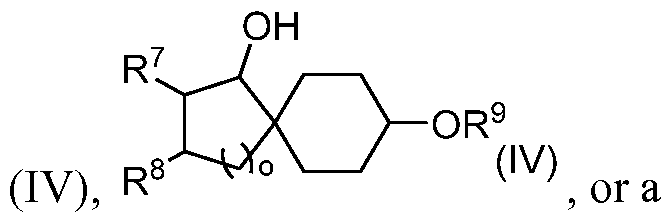 salt
thereof; or a compound of formula (
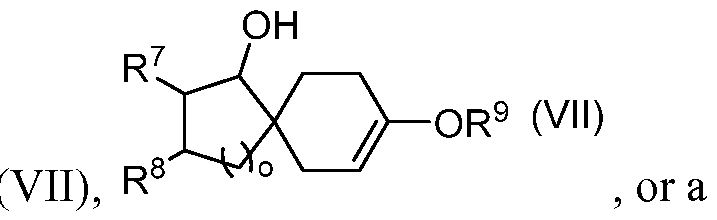 salt thereof.
14. The process of claim 13, wherein the compound of formula (I), or salt thereof, and the compound of formula (IV), or salt thereof, are present in a ratio of at least 1:1, 5:1, 10:1, 20:1, 30:1, 40:1, 50:1, 60:1, 70:1, 80:1, 90:1, 95:1, 99:1, or 100:1.
15. The process of claim 13, wherein the compound of formula (I), or salt thereof, and the compound of formula (VII), or salt thereof, are present in a ratio of at least 1:1, 5:1, 10:1, 20:1, 30:1, 40:1, 50:1, 60:1, 70:1, 80:1, 90:1, 95:1, 99:1, or 100:1.
16. The process of any one of claims 1-15, wherein the compound of formula (I), or salt

any of the foregoing.
17. The process of claim 16, wherein the compound of formula (la), or salt thereof, and the compound of formula (lb), or salt thereof, are present in a ratio of at least 1:1, 5:1, 10:1, 20:1, 30:1, 40:1, 50:1, 60:1, 70:1, 80:1, 90:1, 95:1, 99:1, or 100:1.
18. The process of claim 17, wherein the compound of formula (la), or salt thereof, and the compound of formula (lb), or salt thereof, are present in a ratio of at least 99:1.
19. The process of any one of claims 16-18, wherein the percent yield of the compound of formula (la), or salt thereof, is greater than 50%, 55%, 60%, 65%, 70%, 75%, 80%, 85%, 90%, 95%, 98% or 99%.
20. The process of claim 19, wherein the percent yield of compound of formula (la), or salt thereof, is greater than 80%.
X
21. A process for preparing a compound of formula (G)

or a salt thereof, comprising reacting a compound of formula (IG),
X
 , or a salt thereof, with a hydrogen donor in the presence of a metal source, an optional ligand, and a solvent,
wherein:
X is O, NH, or S;
R2 independently for each occurrence, is selected from hydrogen, hydroxyl, OTf,
OMs, halogen, CN, P(Rn)2, P(0)(0H)2, P(0)(0Rn)2, 0P(0)(0H)2, 0P(0)(0Rn)2, B(OH)2 B(ORn)¾ B(OH)(Rn), B(Rn)ORn, Si(Rn)3, OSi(Rn)3, and optionally substituted alkyl, alkenyl, alkynyl, alkoxy, aryl, heteroaryl, or oxime;
R9 is H, silyl, or optionally substituted alkyl;
R10 is H, silyl, or optionally substituted alkyl;
R11 independently for each occurrence is alkyl;
o is 1, 2, or 3; and
p is 0, 1, 2, 3, or 4.
22. The process of claim 21, wherein R2 independently for each occurrence, is selected from hydrogen, halogen, CN, and optionally substituted alkyl, alkenyl, alkynyl, alkoxy, aryl, heteroaryl, or oxime.
23. The process of claim 21 or 22, wherein R9 is optionally substituted alkyl; or R10 is
optionally substituted alkyl.
24. The process of claim any one of claims 21-23, wherein X is O.
25. The process of any one of claims 21-24, wherein the reaction provides both
stereoselective and regios elective reduction.
26. The process of claim 24 or 25, wherein the compound of formula (G), or salt thereof, is produced in excess of a compound of formula (IIG),
O
 , or a salt thereof; a compound of formula (IV’),
OH

27. The process of claim 26, wherein the compound of formula (G), or salt thereof, and the compound of formula (IIG), or salt thereof, are present in a ratio of at least 1:1,
5:1, 10:1, 20:1, 30:1, 40:1, 50:1, 60:1, 70:1, 80:1, 90:1, 95:1, 99:1, or 100:1.
28. The process of claim 26, wherein the compound of formula (G), or salt thereof, and the compound of formula (IV’), or salt thereof, are present in a ratio of at least 1:1,
5:1, 10:1, 20:1, 30:1, 40:1, 50:1, 60:1, 70:1, 80:1, 90:1, 95:1, 99:1, or 100:1.
29. The process of claim 26, wherein the compound of formula (G), or salt thereof, and the compound of formula (V’), or salt thereof, are present in a ratio of at least 1:1, 5:1, 10:1, 20:1, 30:1, 40:1, 50:1, 60:1, 70:1, 80:1, 90:1, 95:1, 99:1, or 100:1.
X
30. A process for preparing a compound of formula (G),
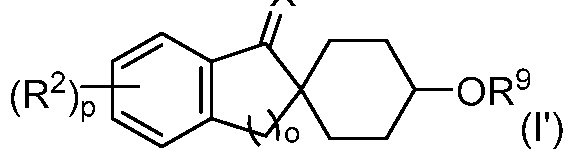 , or a salt thereof, comprising reacting a compound of formula (VI’),
X
 ^ , or a salt thereof, with a hydrogen donor in the presence of a metal source, an optional ligand, and a solvent,
wherein:
X is O, NH, or S;
R2 independently for each occurrence, is selected from hydrogen, hydroxyl, OTf,
OMs, halogen, CN, P(Rn)2, P(0)(0H)2, P(0)(ORn)2, OP(0)(OH)2, 0P(0)(0Rn)2, B(OH)2 B(ORn)¾ B(OH)(Rn), B(Rn)ORn, Si(Rn)3, OSi(Rn)3, and optionally substituted alkyl, alkenyl, alkynyl, alkoxy, aryl, heteroaryl, or oxime;
R9 is H, silyl, or optionally substituted alkyl;
R11 independently for each occurrence is alkyl;
o is 1, 2, or 3; and
p is 0, 1, 2, 3, or 4.
31. The process of claim 30, wherein R2 independently for each occurrence, is selected from hydrogen, halogen, CN, and optionally substituted alkyl, alkenyl, alkynyl, alkoxy, aryl, heteroaryl, or oxime.
32. The process of claim 30 or 31, wherein R9 is optionally substituted alkyl.
33. The process of any one of claims 30-32, wherein X is O.
34. The process of any one of claims 30-33, wherein the reaction provides both
stereoselective and regios elective reduction.
35. The process of claim 33 or 34, wherein the compound of formula (G), or salt thereof, is produced in excess of a compound of formula (IV’),
OH

36. The process of claim 35, wherein the compound of formula (G), or salt thereof, and the compound of formula (IV’), or salt thereof, are present in a ratio of at least 1:1,
5:1, 10:1, 20:1, 30:1, 40:1, 50:1, 60:1, 70:1, 80:1, 90:1, 95:1, 99:1, or 100:1.
37. The process of claim 35, wherein the compound of formula (G), or salt thereof, and the compound of formula (VII’), or salt thereof, are present in a ratio of at least 1:1, 5:1, 10:1, 20:1, 30:1, 40:1, 50:1, 60:1, 70:1, 80:1, 90:1, 95:1, 99:1, or 100:1.
38. The process of any one of claims 21-37, wherein the compound of formula (G), or salt
thereof, is a compound of formula (I’a),
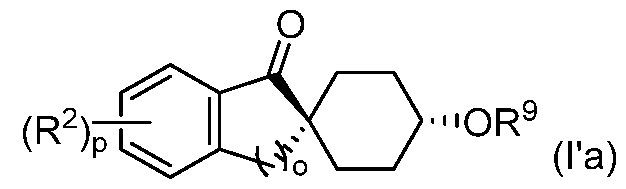 or a salt
thereof, or a compound of formula (I’b),
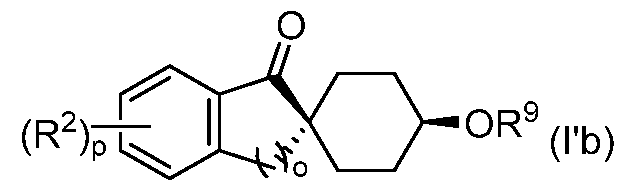 , or a salt thereof, or a mixture of any of the foregoing.
39. The process of claim 38, wherein the compound of formula (I’a), or salt thereof, and the compound of formula (I’b), or salt thereof, are present in a ratio of at least 1:1, 5:1, 10:1, 20:1, 30:1, 40:1, 50:1, 60:1, 70:1, 80:1, 90:1, 95:1, 99:1, or 100:1.
40. The process of claim 39, wherein the compound of formula (I’a), or salt thereof, and the compound of formula (I’b), or salt thereof, are present in a ratio of at least 99:1.
41. The process of any one of claims 38-40, wherein the percent yield of the compound of formula (I’a), or salt thereof, is greater than 50%, 55%, 60%, 65%, 70%, 75%, 80%, 85%, 90%, 95%, 98%, or 99%.
42. The process of claim 41, wherein the percent yield of compound of formula (I’a), or salt thereof, is greater than 80%.
43. The process of any one of claims 21-29, wherein the compound of formula (IF), or
O
(ll'-1 )
salt thereof, is compound (IG-1),
 or a salt thereof.
44. The process of any one of claims 21-29 and 43, wherein the compound of formula
O
(I -2)
(IF), or salt thereof, is compound (IF -2),
 or a salt thereof.
45. The process of any one of claims 21-29 and 43-44, wherein the compound of formula
O
(IG), or salt thereof, is compound 1,
 , or a salt thereof.
46. The process of any one of claims 30-37, wherein the compound of formula (VT), or
salt thereof, is compound (VF-l),
 or a salt thereof.
47. The process of any one of claims 30-37 and 46, wherein the compound of formula
O
(VT), or salt thereof, is compound (VT-2),
 , or a salt thereof.
48. The process of any one of claims 30-37 and 46-47, wherein the compound of formula
O
(VI’), or salt thereof, is compound 2,
 ( ) , or a salt thereof.
49. The process of any one of claims 21-37, wherein the compound of formula (F), or salt
thereof, is compound (F-l),
 or a salt thereof.
50. The process of any one of claims 21-37 and 49, wherein the compound of formula
O
(G), or salt thereof, is compound (G-2),
 or a salt thereof
51. The process of any one of claims 21-37 and 49-50, wherein the compound of formula
O
(F), or salt thereof, is compound 3,
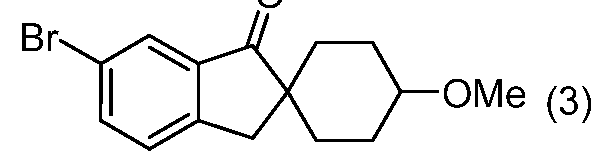 or a salt thereof
52. The process of any one of claims 38-42, wherein the compound of formula (Fa), or
O
OR9
salt thereof, is compound (I’a-l),
 (l'a-1 ) or a salt thereof, or the compound of formula (I’b), or salt thereof, is compound (I’b-l),
 salt thereof.
53. The process of any one of claims 38-42 and 52, wherein the compound of formula
(I’a), or salt thereof, is compound (I’a-2),
 , or a salt thereof, or the compound of formula (I’b), or salt thereof, is compound (I’b-2),
 salt thereof.
54. The process of any one of claims 38-42 and 52-53, wherein the compound of formula
O
(Fa), or salt thereof, is compound (3a),
 or a salt
thereof, or the compound of formula (I’b), or salt thereof, is compound (3b),
 salt thereof.
55. The process of any one of the foregoing claims, wherein the metal source is a rhodium compound, a cobalt compound, or an iridium compound.
56. The process of claim 55, wherein the metal source is a rhodium compound or an
iridium compound.
57. The process of claim 55 or 56, wherein the metal source is selected from the group consisting of: [Ir(cod)(PCy3)(py)]PF6 (Crabtree’s Catalyst), [IrCl (coebb, [Ir(OMe) (cod)]2, [Ir(cod) Cl] 2, [Ir(Cp*) Cb]2, Ir(acac) (cod), and [Ir(cod)2]BF4.
58. The process of claim 57, wherein the metal source is [Ir(cod)(PCy3)(py)]PF6
(Crabtree’s Catalyst).
59. The process of claim 9 or 30, wherein the metal source is [Ir(cod)(PCy3)(py)]PF6 (Crabtree’s Catalyst).
60. The process of claim 55 or 56, wherein the metal source is selected from the group consisting of: [ph3P]3RhCl (Wilkinson’s catalyst), [Rh(dppb)(cod)]BF4,
[Rh(dppb)(nbd)]BF4, [Rh(nbd)2]BF4, [Rh(cod)2]CF3S03, [Rh(cod)2]BArF, [Rh cod DiPFc]BF4, [Rh cod(rac)-BINAP]BF4, RhCl (CO) (PPh3)2, RhH (CO) (PPh3)3, Rh(acac) (CO)2, Rh (acac)3, [RhCl (nbd)]2, [RhCl (cod)b, Rh(acac) (cod),
[Rh(cod)2]BF , [Rh(cod)2]OTf, RhBr (PPh3)3, RhH (PPh3)4, [Rh(OAc)2]2,
[Rh(C8Hi502)2]2, [RhCk (Cp*)b, Rh(acac) (C2H4)2, Rh(acac) (nbd), [Rh(cod)2]SbF6,
[Rh(dippf) (cod)]BF4, [Rh(MeCN)2 (cod)]BF4, and [Rh(OH) (cod)]2.
61. The process of claim 55 or 56, wherein the metal source is a cationic rhodium
complex.
62. The process of claim 55 or 56, wherein the metal source is selected from the group consisting of: [Rh(dppb)(cod)]BF4, [Rh(dppb)(nbd)]BF4, [Rh(nbd)2]BF4,
[Rh(cod)2]CF3S03, [Rh(cod)2]BArF, [Rh cod DiPFc]BF , [Rh cod(rac)-BINAP]BF , [RhCl (nbd)]2, [RhCl (cod)]2, [Rh(cod)2]BF , [Rh(cod)2]OTf, [Rh(OAc)2]2,
[Rh(C8Hi502)2]2, [RhCk (Cp*)b, [Rh(cod)2]SbF6, [Rh(dippf) (cod)]BF , [Rh(MeCN)2 (cod)]BF4, and [Rh(OH) (cod)]2.
63. The process of claim 62, wherein the metal source is selected from the group consisting of: [Rh(dppb)(cod)]BF4, [Rh(dppb)(nbd)]BF4, [Rh(nbd)2]BF4,
[Rh(cod)2]CF3S03, and [Rh(cod)2]BArF.
64. The process of claim 63, wherein the metal source is [Rh(cod)2]BArF.
65. The process of any one of the foregoing claims, wherein the reaction optionally
comprises a ligand that is a bidentate or monodentate ligand.
66. The process of any one of the foregoing claims, wherein the optional ligand is
selected from the group consisting of: dppf, DiPPF, DtBPF, BINAP, dppp, dppb, phanephos, xantphos, xylphanephos, Ph2PCy, dppf, Biphephos, DPEphos,
HiersoPHOS-3, PPh3, P(m-(MeO)-Ph)3, P(2-furyl)3, P(OPh)3, (R)-BINAP, (R)-Tolyl- BINAP, R-Xyl-BINAP, R-C3-Tunephos, R-Segphos, R-Synphos, R-Difluorphos, (R,R)-DIOP, (R,R)-NORPHOS, R-PHANEPHOS, R-3,5-xyl-PHANEPHOS, R-An- PHANEPHOS, P(p-(MeO)-Ph)3, P(4-FPh)3, Tris(4-methoxy-3,5- dimethylphenyl)phosphine, T ris(3 ,5 -dimethylphenyl)phosphine, T ri(p- tolyl)phosphine, TRIS(3-CHLOROPHENYL)PHOSPHINE, Tris(3- fluorophenyl)phosphine, Tri(m-tolyl)phosphine, 4-
(Dimethylamino)phenyldiphenylphosphine, 4-(Diphenylphosphino)benzoic acid, P(Ph)2(c-Hexyl), P(Ph)2(tBu), Bis(dicyclohexylphosphinophenyl) ether, an optical isomer of any one of the foregoing ligands, and a mixture of any of the foregoing.
67. The process of claim 66, wherein the optional ligand is selected from the group
consisting of: dppf, DiPPF, DtBPF, BINAP, dppp, dppb, phanephos, xantphos, xylphanephos, and Ph2PCy.
68. The process of claim 67, wherein the optional ligand is phanephos, xylphanephos, or Ph2PCy.
69. The process of any one of the foregoing claims, wherein the reaction comprises the ligand.
70. The process of any one of the foregoing claims, wherein the metal source is present in the reaction at a loading that is less than 5 mol%.
71. The process of claim 70, wherein the loading is 1 mol% or less.
72. The process of any one of the foregoing claims, wherein the hydrogen donor is
hydrogen (Fh).
73. The process of claim 72, wherein hydrogen is being fed to the reaction mixture at a pressure selected in range of 1 to 200 bar.
74. The process of claim 73, wherein hydrogen is being fed to the reaction mixture at a pressure selected in range of 1 to 100 bar.
75. The process of claim 74, wherein hydrogen is being fed to the reaction mixture at a pressure selected in range of 1 to 50 bar.
76. The process of claim 75, wherein hydrogen is being fed to the reaction mixture at a pressure selected in range of 5 to 50 bar.
77. The process of claim 76, wherein the pressure is 5 bar.
78. The process of any one of the foregoing claims, wherein the reaction is carried out at a temperature selected from 0 to 100 °C.
79. The process claim 78, wherein the reaction is carried out at a temperature selected from 20 to 50 °C.
80. The process of claim 79, wherein the reaction is carried out at 50 °C.
81. The process of claim 79, wherein the temperature is 20 °C.
82. The process of any one of the foregoing claims, wherein the solvent is an ethereal or a chlorinated solvent.
83. The process of claim 82, wherein the solvent is selected from the group consisting of:
DCM, toluene, PhCl, THF, 2-Me THF, and MTBE.
84. The process of claim 83, wherein the solvent is DCM, 2-Me THF, or MTBE.
85. A process for preparing a compound of formula (

a salt thereof, comprising the process of any one of claims 1-84,
wherein:
R3 independently for each occurrence, is selected from hydrogen, halogen, CN, and optionally substituted alkyl, alkenyl, alkynyl, alkoxy, aryl, heteroaryl, or oxime;
R7 is selected from halogen, CN, and optionally substituted alkyl, alkenyl, alkynyl, alkoxy, aryl, heteroaryl, or oxime;
R8 is selected from hydrogen, halogen, CN, and optionally substituted alkyl, alkenyl, alkynyl, alkoxy, aryl, heteroaryl, or oxime;
or R7 and R8 taken together with the carbon(s) to which they are attached, form an optionally substituted fused cycloalkyl, heterocycloalkyl, cycloalkenyl,
heterocycloalkenyl, aryl, or heteroaryl ring;
R9 is H, silyl, or optionally substituted alkyl; and
o is 1, 2, or 3.
86. The process of claim 85, wherein R9 is optionally substituted alkyl.
87. A process for preparing a compound of formula (UIIG),

wherein:
R2 independently for each occurrence, is selected from hydrogen, hydroxyl, OTf, OMs, halogen, CN, P(Rn)2, P(0)(0H)2, P(0)(0Rn)2, 0P(0)(0H)2, 0P(0)(0Rn)2, B(OH)2, B(ORn)2, B(OH)(Rn), B(Rn)ORn, Si(Rn)3, OSi(Rn)3, and optionally substituted alkyl, alkenyl, alkynyl, alkoxy, aryl, heteroaryl, or oxime;
R3 independently for each occurrence, is selected from hydrogen, halogen, CN, and optionally substituted alkyl, alkenyl, alkynyl, alkoxy, aryl, heteroaryl, or oxime;
R9 is H, silyl, or optionally substituted alkyl;
R11 independently for each occurrence is alkyl;
p is 0, 1, 2, 3, or 4; and
o is 1, 2, or 3.
88. The process according to claim 87, wherein R2 independently for each occurrence, is selected from hydrogen, halogen, CN, and optionally substituted alkyl, alkenyl, alkynyl, alkoxy, aryl, heteroaryl, or oxime.
89. The process according to claim 87 or 88, wherein R9 is optionally substituted alkyl.
Applications Claiming Priority (4)
| Application Number | Priority Date | Filing Date | Title |
|---|---|---|---|
| US201762611740P | 2017-12-29 | 2017-12-29 | |
| US62611740 | 2017-12-29 | ||
| US201862731509P | 2018-09-14 | 2018-09-14 | |
| US62731509 | 2018-09-14 |
Publications (1)
| Publication Number | Publication Date |
|---|---|
| WO2019129755A1 true WO2019129755A1 (en) | 2019-07-04 |
Family
ID=64900987
Family Applications (1)
| Application Number | Title | Priority Date | Filing Date |
|---|---|---|---|
| PCT/EP2018/086817 Ceased WO2019129755A1 (en) | 2017-12-29 | 2018-12-21 | Ketal hydrogenation |
Country Status (1)
| Country | Link |
|---|---|
| WO (1) | WO2019129755A1 (en) |
Cited By (2)
| Publication number | Priority date | Publication date | Assignee | Title |
|---|---|---|---|---|
| CN118239990A (en) * | 2024-05-28 | 2024-06-25 | 北京元延医药科技股份有限公司 | Complex of rare noble metal and chiral phosphine for asymmetric hydrogenation catalytic synthesis of medicine |
| CN118307428A (en) * | 2024-06-11 | 2024-07-09 | 北京元延医药科技股份有限公司 | Chiral alpha unnatural amino acid and preparation method thereof by rare noble metal complex |
Citations (5)
| Publication number | Priority date | Publication date | Assignee | Title |
|---|---|---|---|---|
| WO2012087237A1 (en) | 2010-12-22 | 2012-06-28 | Astrazeneca Ab | Compounds and their use as bace inhibitors |
| US20130053377A1 (en) * | 2010-02-24 | 2013-02-28 | Vitae Pharmaceuticals, Inc. | Inhibitors of beta-secretase |
| US9000185B2 (en) * | 2012-06-20 | 2015-04-07 | Astrazeneca Ab | Cycloalkyl ether compounds and their use as BACE inhibitors |
| US9000184B2 (en) * | 2012-06-20 | 2015-04-07 | Astrazeneca Ab | Cyclohexane-1,2′-naphthalene-1′,2″-imidazol compounds and their use as BACE inhibitors |
| WO2016055858A1 (en) | 2014-10-07 | 2016-04-14 | Astrazeneca Ab | Compounds and their use as bace inhibitors |
-
2018
- 2018-12-21 WO PCT/EP2018/086817 patent/WO2019129755A1/en not_active Ceased
Patent Citations (5)
| Publication number | Priority date | Publication date | Assignee | Title |
|---|---|---|---|---|
| US20130053377A1 (en) * | 2010-02-24 | 2013-02-28 | Vitae Pharmaceuticals, Inc. | Inhibitors of beta-secretase |
| WO2012087237A1 (en) | 2010-12-22 | 2012-06-28 | Astrazeneca Ab | Compounds and their use as bace inhibitors |
| US9000185B2 (en) * | 2012-06-20 | 2015-04-07 | Astrazeneca Ab | Cycloalkyl ether compounds and their use as BACE inhibitors |
| US9000184B2 (en) * | 2012-06-20 | 2015-04-07 | Astrazeneca Ab | Cyclohexane-1,2′-naphthalene-1′,2″-imidazol compounds and their use as BACE inhibitors |
| WO2016055858A1 (en) | 2014-10-07 | 2016-04-14 | Astrazeneca Ab | Compounds and their use as bace inhibitors |
Non-Patent Citations (13)
| Title |
|---|
| "Advanced Organic Chemistry", 6 March 2007, WILEY INTERSCIENCE |
| "Remington's Pharmaceutical Sciences", 1985, MACK PUBLISHING COMPANY |
| GENERALLY, S.M. BERGE ET AL.: "Pharmaceutical Salts", J. PHARM. SCI., vol. 66, 1977, pages 1 - 19 |
| GREENE; WUTS: "Protective Groups in Organic Chemistry", 1999, JOHN WILEY & SONS |
| LOUDON: "Organic Chemistry", 2002, OXFORD UNIVERSITY PRESS, pages: 360 - 361,1084-1085 |
| NY; HARRISON ET AL.: "Compendium of Synthetic Organic Methods", vol. 1-8, 1971, JOHN WILEY & SONS |
| R. C. LAROCK: "Comprehensive Organic Transformations—A Guide to Functional Group Preparations", 1999, WILEY VCH |
| ROBERDS, S. L. ET AL., HUMAN MOLECULAR GENETICS, vol. 10, 2001, pages 1317 - 1324 |
| SINHA ET AL., NATURE, vol. 402, 1999, pages 537 - 540 |
| SMITH: "Organic Synthesis", 2001, MCGRAW HILL |
| SMITH; MARCH: "March's Advanced Organic Chemistry: Reactions, Mechanisms, and Structure", 2001, WILEY-INTERSCIENCE |
| T. W. GREEN; P. G. M. WUTS: "Protective Groups in Organic Synthesis", 1999, WILEY-INTERSCIENCE |
| VARGHESE, J. ET AL., JOURNAL OF MEDICINAL CHEMISTRY, vol. 46, 2003, pages 4625 - 4630 |
Cited By (3)
| Publication number | Priority date | Publication date | Assignee | Title |
|---|---|---|---|---|
| CN118239990A (en) * | 2024-05-28 | 2024-06-25 | 北京元延医药科技股份有限公司 | Complex of rare noble metal and chiral phosphine for asymmetric hydrogenation catalytic synthesis of medicine |
| CN118239990B (en) * | 2024-05-28 | 2025-03-14 | 北京元延医药科技股份有限公司 | Complex of rare noble metal and chiral phosphine for asymmetric hydrogenation catalytic synthesis of medicine |
| CN118307428A (en) * | 2024-06-11 | 2024-07-09 | 北京元延医药科技股份有限公司 | Chiral alpha unnatural amino acid and preparation method thereof by rare noble metal complex |
Similar Documents
| Publication | Publication Date | Title |
|---|---|---|
| RU2346945C2 (en) | Derivatives of n-heterocyclylmethylmenzamides, obtainment and application in therapy | |
| JP6018644B2 (en) | Process for producing 1- [2- (2,4-dimethyl-phenylsulfanyl) -phenyl] -piperazine | |
| AU2019264253B2 (en) | Factor XIIa inhibitors | |
| CN1264817C (en) | Certain cyclic thio substitued acylaminoacid amide derivatives | |
| KR101462891B1 (en) | Process for preparing piperazinyl and diazepanyl benzamide derivatives | |
| JP2019500357A (en) | Crystalline form of BTK kinase inhibitor and process for producing the same | |
| KR20130118220A (en) | Process for preparation of optically active diamine derivative salt | |
| KR101780140B1 (en) | Bace inhibitors | |
| EP2513114A1 (en) | Pyrrolo[2,3-d]pyrimidine compounds | |
| EP2999701A1 (en) | 2-phenylimidazo[1,2-a]pyrimidines as imaging agents | |
| JP2021535103A (en) | Succinic acid-added salt and fumaric acid-added salt of piperazine derivatives useful as glycosidase inhibitors | |
| JP2016510033A (en) | Phenylpyrazole derivatives as potent ROCK1 and ROCK2 inhibitors | |
| CA3158079A1 (en) | Heterocyclic trpml1 agonists | |
| US9000185B2 (en) | Cycloalkyl ether compounds and their use as BACE inhibitors | |
| ES2982742T3 (en) | N-methyl,N-(6-(methoxy)pyridazin-3-yl)amine derivatives as autotaxin (ATX) modulators for the treatment of inflammatory or fibrotic airway diseases | |
| RU2533819C2 (en) | Synthesis and new saline forms of (r)-5-((e)-2-(pyrrolidin-3-ylvinyl)pyrimidine | |
| AU2017331930B2 (en) | Crystalline forms | |
| DE69621877T2 (en) | 4-Indolylpiperazinyl derivatives | |
| ES2729490T3 (en) | Isoindoline derivatives | |
| WO2019122268A1 (en) | Processes for the stereoselective preparation of bace inhibitors | |
| Elkamhawy et al. | Pyrazinyl ureas revisited: 1-(3-(Benzyloxy) pyrazin-2-yl)-3-(3, 4-dichlorophenyl) urea, a new blocker of Aβ-induced mPTP opening for Alzheimer's disease | |
| US20230331679A1 (en) | Naphthalene monoimide compounds and methods thereof | |
| ES2792989T3 (en) | Pyridinone compound and its use | |
| WO2019129750A1 (en) | Processes for the racemization of dihydroimidazole ring systems | |
| WO2019122421A1 (en) | Stereoselective ketone reduction using a ketoreductase enzyme |
Legal Events
| Date | Code | Title | Description |
|---|---|---|---|
| 121 | Ep: the epo has been informed by wipo that ep was designated in this application |
Ref document number: 18826742 Country of ref document: EP Kind code of ref document: A1 |
|
| NENP | Non-entry into the national phase |
Ref country code: DE |
|
| 122 | Ep: pct application non-entry in european phase |
Ref document number: 18826742 Country of ref document: EP Kind code of ref document: A1 |