WO2019119602A1 - 显示装置的驱动方法、驱动装置及显示装置 - Google Patents
显示装置的驱动方法、驱动装置及显示装置 Download PDFInfo
- Publication number
- WO2019119602A1 WO2019119602A1 PCT/CN2018/073761 CN2018073761W WO2019119602A1 WO 2019119602 A1 WO2019119602 A1 WO 2019119602A1 CN 2018073761 W CN2018073761 W CN 2018073761W WO 2019119602 A1 WO2019119602 A1 WO 2019119602A1
- Authority
- WO
- WIPO (PCT)
- Prior art keywords
- gray scale
- partition
- value
- gray
- average signal
- Prior art date
- Legal status (The legal status is an assumption and is not a legal conclusion. Google has not performed a legal analysis and makes no representation as to the accuracy of the status listed.)
- Ceased
Links
Images



Classifications
-
- G—PHYSICS
- G09—EDUCATION; CRYPTOGRAPHY; DISPLAY; ADVERTISING; SEALS
- G09G—ARRANGEMENTS OR CIRCUITS FOR CONTROL OF INDICATING DEVICES USING STATIC MEANS TO PRESENT VARIABLE INFORMATION
- G09G3/00—Control arrangements or circuits, of interest only in connection with visual indicators other than cathode-ray tubes
- G09G3/20—Control arrangements or circuits, of interest only in connection with visual indicators other than cathode-ray tubes for presentation of an assembly of a number of characters, e.g. a page, by composing the assembly by combination of individual elements arranged in a matrix no fixed position being assigned to or needed to be assigned to the individual characters or partial characters
- G09G3/34—Control arrangements or circuits, of interest only in connection with visual indicators other than cathode-ray tubes for presentation of an assembly of a number of characters, e.g. a page, by composing the assembly by combination of individual elements arranged in a matrix no fixed position being assigned to or needed to be assigned to the individual characters or partial characters by control of light from an independent source
- G09G3/36—Control arrangements or circuits, of interest only in connection with visual indicators other than cathode-ray tubes for presentation of an assembly of a number of characters, e.g. a page, by composing the assembly by combination of individual elements arranged in a matrix no fixed position being assigned to or needed to be assigned to the individual characters or partial characters by control of light from an independent source using liquid crystals
- G09G3/3607—Control arrangements or circuits, of interest only in connection with visual indicators other than cathode-ray tubes for presentation of an assembly of a number of characters, e.g. a page, by composing the assembly by combination of individual elements arranged in a matrix no fixed position being assigned to or needed to be assigned to the individual characters or partial characters by control of light from an independent source using liquid crystals for displaying colours or for displaying grey scales with a specific pixel layout, e.g. using sub-pixels
-
- G—PHYSICS
- G09—EDUCATION; CRYPTOGRAPHY; DISPLAY; ADVERTISING; SEALS
- G09G—ARRANGEMENTS OR CIRCUITS FOR CONTROL OF INDICATING DEVICES USING STATIC MEANS TO PRESENT VARIABLE INFORMATION
- G09G3/00—Control arrangements or circuits, of interest only in connection with visual indicators other than cathode-ray tubes
- G09G3/20—Control arrangements or circuits, of interest only in connection with visual indicators other than cathode-ray tubes for presentation of an assembly of a number of characters, e.g. a page, by composing the assembly by combination of individual elements arranged in a matrix no fixed position being assigned to or needed to be assigned to the individual characters or partial characters
- G09G3/34—Control arrangements or circuits, of interest only in connection with visual indicators other than cathode-ray tubes for presentation of an assembly of a number of characters, e.g. a page, by composing the assembly by combination of individual elements arranged in a matrix no fixed position being assigned to or needed to be assigned to the individual characters or partial characters by control of light from an independent source
- G09G3/3406—Control of illumination source
-
- G—PHYSICS
- G09—EDUCATION; CRYPTOGRAPHY; DISPLAY; ADVERTISING; SEALS
- G09G—ARRANGEMENTS OR CIRCUITS FOR CONTROL OF INDICATING DEVICES USING STATIC MEANS TO PRESENT VARIABLE INFORMATION
- G09G3/00—Control arrangements or circuits, of interest only in connection with visual indicators other than cathode-ray tubes
- G09G3/20—Control arrangements or circuits, of interest only in connection with visual indicators other than cathode-ray tubes for presentation of an assembly of a number of characters, e.g. a page, by composing the assembly by combination of individual elements arranged in a matrix no fixed position being assigned to or needed to be assigned to the individual characters or partial characters
- G09G3/34—Control arrangements or circuits, of interest only in connection with visual indicators other than cathode-ray tubes for presentation of an assembly of a number of characters, e.g. a page, by composing the assembly by combination of individual elements arranged in a matrix no fixed position being assigned to or needed to be assigned to the individual characters or partial characters by control of light from an independent source
- G09G3/3406—Control of illumination source
- G09G3/3413—Details of control of colour illumination sources
-
- G—PHYSICS
- G09—EDUCATION; CRYPTOGRAPHY; DISPLAY; ADVERTISING; SEALS
- G09G—ARRANGEMENTS OR CIRCUITS FOR CONTROL OF INDICATING DEVICES USING STATIC MEANS TO PRESENT VARIABLE INFORMATION
- G09G2320/00—Control of display operating conditions
- G09G2320/02—Improving the quality of display appearance
- G09G2320/0271—Adjustment of the gradation levels within the range of the gradation scale, e.g. by redistribution or clipping
- G09G2320/0276—Adjustment of the gradation levels within the range of the gradation scale, e.g. by redistribution or clipping for the purpose of adaptation to the characteristics of a display device, i.e. gamma correction
-
- G—PHYSICS
- G09—EDUCATION; CRYPTOGRAPHY; DISPLAY; ADVERTISING; SEALS
- G09G—ARRANGEMENTS OR CIRCUITS FOR CONTROL OF INDICATING DEVICES USING STATIC MEANS TO PRESENT VARIABLE INFORMATION
- G09G2320/00—Control of display operating conditions
- G09G2320/02—Improving the quality of display appearance
- G09G2320/028—Improving the quality of display appearance by changing the viewing angle properties, e.g. widening the viewing angle, adapting the viewing angle to the view direction
-
- G—PHYSICS
- G09—EDUCATION; CRYPTOGRAPHY; DISPLAY; ADVERTISING; SEALS
- G09G—ARRANGEMENTS OR CIRCUITS FOR CONTROL OF INDICATING DEVICES USING STATIC MEANS TO PRESENT VARIABLE INFORMATION
- G09G2320/00—Control of display operating conditions
- G09G2320/06—Adjustment of display parameters
- G09G2320/0626—Adjustment of display parameters for control of overall brightness
-
- G—PHYSICS
- G09—EDUCATION; CRYPTOGRAPHY; DISPLAY; ADVERTISING; SEALS
- G09G—ARRANGEMENTS OR CIRCUITS FOR CONTROL OF INDICATING DEVICES USING STATIC MEANS TO PRESENT VARIABLE INFORMATION
- G09G2320/00—Control of display operating conditions
- G09G2320/06—Adjustment of display parameters
- G09G2320/0666—Adjustment of display parameters for control of colour parameters, e.g. colour temperature
-
- G—PHYSICS
- G09—EDUCATION; CRYPTOGRAPHY; DISPLAY; ADVERTISING; SEALS
- G09G—ARRANGEMENTS OR CIRCUITS FOR CONTROL OF INDICATING DEVICES USING STATIC MEANS TO PRESENT VARIABLE INFORMATION
- G09G2320/00—Control of display operating conditions
- G09G2320/06—Adjustment of display parameters
- G09G2320/0673—Adjustment of display parameters for control of gamma adjustment, e.g. selecting another gamma curve
-
- G—PHYSICS
- G09—EDUCATION; CRYPTOGRAPHY; DISPLAY; ADVERTISING; SEALS
- G09G—ARRANGEMENTS OR CIRCUITS FOR CONTROL OF INDICATING DEVICES USING STATIC MEANS TO PRESENT VARIABLE INFORMATION
- G09G2320/00—Control of display operating conditions
- G09G2320/06—Adjustment of display parameters
- G09G2320/068—Adjustment of display parameters for control of viewing angle adjustment
-
- G—PHYSICS
- G09—EDUCATION; CRYPTOGRAPHY; DISPLAY; ADVERTISING; SEALS
- G09G—ARRANGEMENTS OR CIRCUITS FOR CONTROL OF INDICATING DEVICES USING STATIC MEANS TO PRESENT VARIABLE INFORMATION
- G09G2360/00—Aspects of the architecture of display systems
- G09G2360/16—Calculation or use of calculated indices related to luminance levels in display data
Definitions
- the present application relates to a method for designing a display panel, and more particularly to a driving method, a driving device and a display device for a display device.
- a liquid crystal display is a flat thin display device composed of a certain number of color or black and white pixels placed in front of a light source or a reflecting surface.
- Each pixel consists of a layer of liquid crystal molecules suspended between two transparent electrodes, and two polarizing filters with polarization directions perpendicular to each other on the outside. If there is no liquid crystal between the electrodes, the light passes through one of the polarizing filters and its polarization direction will be completely perpendicular to the second polarizing plate, and thus is completely blocked. However, if the direction of polarization of the light passing through a polarizing filter is rotated by the liquid crystal, it can pass through another polarizing filter. The rotation of the liquid crystal to the polarization direction of the light can be controlled by an electrostatic field, thereby achieving control of the light.
- the arrangement of the liquid crystal molecules is determined by the arrangement of the surface of the electrode, and the surface of the chemical substance of the electrode can serve as a seed crystal of the crystal.
- the upper and lower electrodes of the liquid crystal are vertically aligned.
- the liquid crystal molecules are spirally arranged, and the light passing through one polarizing filter rotates in the polarization direction after passing through the liquid crystal cell, thereby being able to pass through the other polarizing plate. During this process a small portion of the light is blocked by the polarizer and appears gray from the outside.
- the liquid crystal molecules After the charge is applied to the transparent electrode, the liquid crystal molecules will be arranged almost in parallel along the direction of the electric field, so that the polarization direction of the light transmitted through one of the polarizing filters is not rotated, so that the light is completely blocked. At this point the pixel looks black.
- the voltage By controlling the voltage, it is possible to control the degree of distortion of the alignment of the liquid crystal molecules to achieve different gradations.
- the color filter is used to generate various colors, which is a key component of the liquid crystal display device from gray scale to color, and the backlight is provided by the backlight module of the LCD, and then combined with the driver IC and the liquid crystal control.
- the gray scale display forms a color display screen by passing the light source through the photoresist color layer of the color filter.
- an object of the present invention is to provide a display panel design method, and more particularly to a display device driving method, including: calculating an average signal of all sub-pixel units in a partition, and obtaining a a first average signal of the partition, a second average signal of the partition, and a third average signal of the partition; the gray level corresponding to the first, second, and third average signals corresponds to a predefined range, and the second gamma adjustment is performed first; The large viewing angle brightness ratio is low relative to the first and third large viewing angles, the color exhibits a neutral color, and the brightness corresponding to the second light source is adjusted.
- Another object of the present application is a driving device for a display device, comprising at least one partition, each partition being composed of a plurality of pixel units, each pixel unit being composed of a first sub-pixel unit, a second sub-pixel unit, and a first
- the three sub-pixel units are configured to: calculate an average signal of all sub-pixel units in a partition, and obtain a first average signal of a partition, a second average signal of a partition, and a third average signal of a partition; according to the first and second And the gray level of the third average signal corresponds to a predefined range, the second gamma adjustment is performed first; and the brightness of the corresponding second light source is adjusted.
- Still another object of the present application is a display device including a display panel and a driving device of the above display device.
- the driving device is connected to the display panel and transmits image signals to the display panel.
- the method the gray level of the average signal, when the gray level of the partitioned second average signal is between a first value gray scale of a predefined range, and the first average signal of the partition is partitioned
- the gray level and the third average signal of the partition are between a second value gray scale of a predefined range, and then the second gamma ( ⁇ ) is adjusted from the original ⁇ G to ⁇ G1 , where ⁇ G1 > ⁇ G .
- the method, the first value grayscale and the second value grayscale of the predefined range are selected from the following group: a first group is when the first value grayscale Between 255 gray scale and 200 gray scale, the second value gray scale is less than 200 gray scale; a second group is when the first value gray scale is between 200 gray scale and 150 gray scale, then the second value The gray level is between 150 gray scale and 200 gray scale; a third group is when the first value gray scale is between 150 gray scale and 100 gray scale, then the second value gray scale is between 100 gray scales to Between 150 gray scales; a fourth group is when the first value gray scale is between 100 gray scales to 50 gray scales, then the second value gray scale is between 50 gray scales to 100 gray scales; The fifth group is when the first value gray scale is between 50 gray scale and 0 gray scale, then the second value gray scale is between 0 gray scale and 50 gray scale.
- the method, the adjusting corresponding to the second light source brightness calculation formula is:
- A'n, m_G is the adjusted second source luminance signal
- An is the initial second source luminance signal
- Ave_Gn, m is the average of all second sub-pixel units in the calculation partition Signal
- n, m are the columns and rows in which the partition is located.
- the gray level and the third average signal of the partition are between a second value gray scale of a predefined range, and then the second gamma ( ⁇ ) is adjusted from the original ⁇ G to ⁇ G1 , where ⁇ G1 > ⁇ G .
- the structure, the first value gray scale and the second value gray scale of the predefined range are selected from the following group: a first group is when the first value gray scale Between 255 gray scale and 200 gray scale, the second value gray scale is less than 200 gray scale; a second group is when the first value gray scale is between 200 gray scale and 150 gray scale, then the second value The gray level is between 150 gray scale and 200 gray scale; a third group is when the first value gray scale is between 150 gray scale and 100 gray scale, then the second value gray scale is between 100 gray scales to Between 150 gray scales; a fourth group is when the first value gray scale is between 100 gray scales to 50 gray scales, then the second value gray scale is between 50 gray scales to 100 gray scales; The fifth group is when the first value gray scale is between 50 gray scale and 0 gray scale, then the second value gray scale is between 0 gray scale and 50 gray scale.
- A'n, m_G is the adjusted second source luminance signal
- An m_G is the initial second source luminance signal
- Ave_Gn, m is the average signal of all second sub-pixel units in the calculation partition
- n and m are partitions. The column and row in which it is located.
- the second phase gamma signal is adjusted to adjust the second input gamma signal by adjusting the second input gamma signal to make the second large viewing angle brightness ratio lower than the first and third largest
- the brightness of the viewing angle and the color are neutral. Neutral colors improve the difference between the positive and the large visual characters.
- the second light source luminance signal compensation can make the front view color maintain the same color, and the original color performance is not affected by the adjustment of the second gamma signal. At the same time, it is possible to maintain the original color signal performance and to improve the second color vividness of the large viewing angle.
- 1 is a diagram showing the relationship between color system and color shift of an exemplary liquid crystal display device before color shift adjustment.
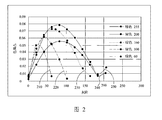
- FIG. 2 is a second color shift and gray scale relationship of a liquid crystal display device according to an embodiment of the present invention before color shift adjustment.
- FIG 3 is a first, second, and third red X, green Y, blue Z, and gray scale relationship of a positive viewing angle of a liquid crystal display device according to an embodiment of the present application.
- FIG. 4 is a diagram showing relationship between first, second, and third red X, green Y, blue Z, and gray scales of a large viewing angle of a liquid crystal display device according to an embodiment of the present application.
- FIG. 5 is a schematic diagram of a driving device of a display device according to an embodiment of the present application.
- FIG. 6 is a flow chart illustrating a driving method of a display device according to an embodiment of the present application.
- FIG. 7 is a block diagram of a display panel according to an embodiment of the present application.
- the word “comprising” is to be understood to include the component, but does not exclude any other component.
- “on” means located above or below the target component, and does not mean that it must be on the top based on the direction of gravity.
- the display device of the present application comprises a display panel and a backlight module, which are oppositely disposed.
- the display panel mainly includes a color filter substrate, an active array substrate, and a liquid crystal layer interposed between the two substrates.
- the color filter substrate, the active array substrate and the liquid crystal layer can form a plurality of array configurations.
- the backlight module can emit light through the display panel and display an image through each pixel unit of the display panel to form an image.
- the display panel of the present application may be a curved display panel, and the display device of the present application may also be a curved display device.
- the light alignment technique forms a multi-domain alignment in each pixel unit of the panel such that liquid crystal molecules in one pixel unit are dumped in, for example, four different directions.
- the optical alignment technique is to irradiate a polymer film (alignment layer) on the color filter substrate or the thin film transistor substrate by using an ultraviolet light source (for example, polarized light) to cause unevenness of the polymer structure on the surface of the film.
- the photopolymerization, isomerization or cleavage reaction induces a special directionality of the chemical bond structure on the surface of the film to further induce the liquid crystal molecules to be aligned in the direction to achieve optical alignment.
- VA Vertical Alignment
- TN Twisted Nematic
- Super Twisted Nematic Super Twisted Nematic
- STN STN
- IPS In-Plane Switching
- FFS Fringe Field Switching
- PVA Pattern Vertical Alignment
- MVA Multi-domain Vertical Alignment
- the MVA type divides a single pixel into a plurality of regions, and uses a protrusion or a specific pattern structure to tilt liquid crystal molecules located in different regions toward different directions to achieve a wide viewing angle and enhance the transmittance.
- liquid crystal molecules are driven in a direction parallel to the plane of the substrate by applying an electric field containing a component substantially parallel to the substrate.
- the IPS type display panel and the FFS type display panel have the advantages of a wide viewing angle.
- the first hue is a red hue
- the second hue is a green hue
- the third hue is a blue hue
- the first, second, and third grayscale signals are red, green, and blue gray.
- the order signal; the first average signal, the second average signal, and the third average signal are red average signals and green average signals. Blue average signal.
- Other expressions relating to "first, second, third" in the embodiments are also the same.
- the liquid crystal display device has a refractive index and a wavelength dependence, and different wavelength transmittances are related to the phase delay, and the transmittance and the wavelength have different degrees of performance, and the phase delays of different wavelengths are also driven with the voltage driving. Different degrees of variation affect the penetration performance of different wavelengths.
- the large viewing angles of the various representative color systems of the liquid crystal display device and the positive viewing characters are biased, and it can be clearly found that the coloring of the first, second, and third hue is greater than the 100 characters. Other color systems are serious, so solving the color shift defects of the first, second, and third hue can greatly improve the overall color shift of the large viewing angle.
- FIG. 2 is a second color shift and gray scale relationship of a liquid crystal display device before color shift adjustment according to an embodiment of the present invention
- FIG. 3 is a front view of the liquid crystal display device according to an embodiment of the present invention before color shift adjustment.
- FIG. 4 is a large viewing angle of the liquid crystal display device according to an embodiment of the present application before the color shift adjustment, the first, second, third red X, Green Y, blue Z and gray scale relationship diagram.
- the positive viewing angle and the 60-degree horizontal viewing angle change under the different color mixing conditions of the second system.
- the second (Green; G) gray scale (Gray) is 255 gray scale curve 240
- the first (Red; R), third (Blue; B) gray scale is between 20 and 180 gray scales with the first, The lower the third gray scale signal, the more severe the color shift for the second hue.
- the second gray scale is 200 gray scale curve 250
- the first and third gray scales are between 10 and 180 gray scales, and the lower the first and third gray scale signals, the more severe the color shift of the second hue.
- the second gray scale is 160 gray scale curve 230
- the first and third gray scales are between 10 and 140 gray scales, and the lower the first and third gray scale signals, the more severe the color shift of the second hue.
- the first and third gray scales are between 10 and 80 gray scales, and the lower the first and third gray scale signals, the more serious the color shift of the second hue.
- the second gray scale is the curve 60 of the 60 gray scale, the color shift is relatively serious.
- the positive viewing angle mixed color gray scale is the first 50 gray scale, the second 160 gray scale, and the third 50 gray scale, corresponding to the positive viewing angle red X, green Y, blue Z, and full gray scale first 255, second 255
- the third 255 gray scale ratio is 3%, 36%, 3% color mixing (310, 320, 330).
- the first 255, the second 255, and the third 255 gray scale ratios are 22%, 54%, and 28% mixed colors (410, 420, 430).
- the ratios of red X, green Y, and blue Z of the mixed color of the viewing angle and the large viewing angle are different, so that the ratio of the original positive viewing angles of red X and blue Z is relatively small compared to the green Y, and the large viewing angles of red X and blue Z are compared with the green Y brightness.
- the ratio cannot be ignored, resulting in a large viewing angle that is not the second hue of the positive viewing angle and a significant color shift.
- FIG. 5 is a schematic diagram of a driving device of a display device according to an embodiment of the present invention
- FIG. 6 is a flowchart illustrating a driving method of the display device according to an embodiment of the present application.
- the display device includes a driving device 500 of the display device, and transmits image signals to the display panel 710 .
- the driving device 500 is composed of a plurality of first, second and third sub-pixels, that is, it is composed of red, green and blue sub-pixels. Each group of red, green and blue sub-pixels is called a pixel unit, and each pixel unit represents an image signal.
- the present application divides the liquid crystal display device into a plurality of partitions, each partition is composed of a plurality of pixel units, and the partition size can be defined by itself, and can be divided into column multiplication lines (N*M) and a plurality of pixel units on the liquid crystal display device. Partition.
- the driving device of the display device of the present application uses the average signal of all sub-pixel units in the calculation partition to obtain the first average signal of the partition, the second average signal of the partition, and the third average signal of the partition, and then according to the first, second, and
- the gray level of the three average signals corresponds to a predefined range, and the second gamma adjustment is performed first; and the brightness of the corresponding second light source is adjusted, so that the correctness of the color is maintained and the defect of the visual character is resolved.
- the second gamma is a green gamma.
- a driving device 500 for a display device includes at least one partition, each partition is composed of a plurality of pixel units, and each pixel unit is composed of a first sub-pixel unit and a second
- the sub-pixel unit and the third sub-pixel unit are configured to: calculate an average signal of all sub-pixel units in a partition, and obtain a first average signal of a partition, a second average signal of a partition, and a third average signal of a partition;
- the second gamma adjustment is performed according to the gray level of the first, second, and third average signals corresponding to the predefined range; and the brightness of the corresponding second light source is adjusted.
- the gray level of the average signal when the gray level of the second average signal of the partition is between a first value gray scale of the predefined range, and the gray level of the partitioned first average signal, the third average of the partition The gray level of the signal is between a second value gray scale of a predefined range, and then the second gamma ( ⁇ ) is adjusted from the original ⁇ G to ⁇ G1 , where ⁇ G1 > ⁇ G .
- the first value gray scale and the second value gray scale of the predefined range are selected from the following group: a first group is when the first value gray scale is between 255 gray scales to 200 gray Between the steps, the second value gray scale is less than 200 gray scale; a second group is when the first value gray scale is between 200 gray scale and 150 gray scale, then the second value gray scale is between 150 gray scale Between the gray levels of 200; a third group is when the first value gray level is between 150 gray scale and 100 gray scale, then the second value gray scale is between 100 gray scale and 150 gray scale; The fourth group is when the first value gray scale is between 100 gray scale and 50 gray scale, then the second value gray scale is between 50 gray scale and 100 gray scale; and a fifth group is when A value gray scale is between 50 gray scales to 0 gray scales, and the second value gray scales are between 0 gray scales to 50 gray scales.
- A'n,m_G is the adjusted second source luminance signal
- An,m_G is the initial second source
- the luminance signal, Ave_Gn,m is the average signal of all the second sub-pixel units in the calculation partition
- n and m are the columns and rows in which the partition is located.
- the flow S101 calculating an average signal of all sub-pixel units (Rn, m_i, j, Gn, m_i, j, Bn, m_i, j) in a partition (n, m) to obtain a partition first.
- step S102 the second gamma adjustment is performed first according to the gray level of the first, second, and third average signals corresponding to the predefined range.
- step S103 the second large viewing angle brightness ratio is made low relative to the first and third large viewing angles, and the color presents a neutral color.
- Step S104 Adjust the brightness of the corresponding second light source.
- the gray scales of the first, second, and third average signals in the process S102 correspond to a predefined range, and when the gray level of the second average signal of the partition is between 255 and 200 gray scales in a predefined range, And the gray level of the first average signal of the partition and the gray level of the third average signal of the partition are less than 200 gray scales in a predefined range, then the second gamma (gamma; ⁇ ) is adjusted from the original ⁇ G to ⁇ G1, where ⁇ G1> ⁇ G.
- the gray scales of the first, second, and third average signals in the process S102 correspond to a predefined range, when the gray level of the second average signal of the partition is between 200 and 150 gray scales in a predefined range. And the gray level of the first average signal of the partition and the gray level of the third average signal of the partition are between 150 and 200 gray scales of a predefined range, then the second gamma (gamma; ⁇ ) is adjusted from the original ⁇ G to ⁇ G1, where ⁇ G1 > ⁇ G.
- the gray scales of the first, second, and third average signals in the process S102 correspond to a predefined range, when the gray level of the second average signal of the partition is between 150 and 100 gray scales in a predefined range. And the gray level of the first average signal of the partition and the gray level of the third average signal of the partition are between 100-150 gray scales of a predefined range, then the second gamma (gamma; ⁇ ) is adjusted from the original ⁇ G to ⁇ G1, where ⁇ G1 > ⁇ G.
- the gray scales of the first, second, and third average signals in the process S102 correspond to a predefined range, when the gray level of the second average signal of the partition is between 100 and 50 gray scales in a predefined range. And the gray level of the first average signal of the partition and the gray level of the third average signal of the partition are between 50 and 100 gray scales of a predefined range, then the second gamma (gamma; ⁇ ) is adjusted from the original ⁇ G to ⁇ G1, wherein ⁇ G1 > ⁇ G.
- the gray scales of the first, second, and third average signals in the process S102 correspond to a predefined range, when the gray level of the second average signal of the partition is between 50 and 0 gray scales of the predefined range. And the gray level of the first average signal of the partition and the gray level of the third average signal of the partition are between 0 and 50 gray scales of a predefined range, then the second gamma (gamma; ⁇ ) is adjusted from the original ⁇ G to ⁇ G1, where ⁇ G1 > ⁇ G.
- An embodiment of the present application describes a driving method of a display device.
- the backlight and the display device are divided into columns (N)*rows (M), and each partition (n, m) is independent.
- First, second, and third LED light sources are independent.
- the second LED luminance signal rises to A'n, m_G.
- the second LED luminance signal compensation can make the front view color maintain the same color, and the original color performance is not affected by the adjustment of the second gamma signal.
- a driving device 500 for a display device includes at least one partition, each partition is composed of a plurality of pixel units, each pixel unit is composed of a first sub-pixel unit and a second
- the sub-pixel unit and the third sub-pixel unit are configured to: calculate an average signal of all the sub-pixel units in a partition, and obtain a first average signal of the partition, a second average signal of the partition, and a third average signal of the partition.
- the gray level of the average signal is the second average of the partition
- the gray level of the signal is between a first value gray scale of the predefined range, and the gray level of the first average signal of the partition and the gray level of the third average signal of the partition are between a second gray scale of the predefined range, and then the adjustment is performed.
- the second gamma ( ⁇ ) is adjusted from the original ⁇ G to ⁇ G1 , where ⁇ G1 > ⁇ G ; wherein the first value gray scale and the second value gray scale of the predefined range are selected from the following group:
- the first group is the first
- the first value gray scale is between 200 gray scale and 150 gray scale when the first value gray scale is between 200 gray scale and 150 gray scale.
- the second value gray scale is between 150 gray scale and 200 gray scale
- a third group is when the first value gray scale is between 150 gray scale and 100 gray scale, then the second value gray scale Between 100 gray scales and 150 gray scales
- a fourth group is when the first value gray scale is between 100 gray scales to 50 gray scales, then the second value gray scales are between 50 gray scales to 100 gray scales
- a fifth group is when the first value gray scale is between 50 gray scales to 0 gray scales, then the second value gray scale is between 0 gray scales to 50 gray scales
- a sub-pixel unit, the second sub-pixel unit, and the third sub-pixel unit are arranged in an array.
- the lower the mixed color second signal when the same second color corresponds to the same first and third gray-scale signals, the lower the mixed color second signal, the smaller the color difference can be found, as shown in FIG. 2 when the second is 200 gray.
- the order signal curve 250, the first and third mixed color gray scale signals have a color difference of 100 gray scale of 0.07, and when the second is 160 gray scale signal curve 230, the first and third mixed color gray scale signals have a color difference of 100 gray scales.
- 0.055 when the second is the 100 gray scale signal curve 220, the color difference of the first and third mixed color gray scale signals is 100 gray scale is 0.003.
- the present application reduces the second gray-scale signal by the second gray-scale signal, and the second gray-scale signal is close to the first and third mixed-color gray-scale signals, and the overall color is biased toward the neutral black-and-white gray-scale color, thereby reducing the large-view character bias, due to the overall color mixing bias.
- Neutral black and white grayscale color in order to maintain the correct color mixing image quality, the brightness signal of the second LED is extended, so that the second hue signal obtained by the overall front view can be maintained, maintaining the original second hue image quality.
- FIG. 7 is a block diagram of a display panel according to an embodiment of the present application.
- a display device 700 includes: a display device driving device 500 and a display panel 710; wherein the display device driving device 500 is connected to the display panel 710 and transmits image signals to the display panel 710.
- the second aspect of the present invention utilizes the second phase of the large-view character to improve the gray scale driving mode by adjusting the second input gamma signal for the second input gamma signal adjustment such that the second large viewing angle brightness ratio is lower than the first and third Large viewing angle brightness, color showing neutral color. Neutral colors improve the difference between the positive and the large visual characters.
- the second light source luminance signal compensation can make the front view color maintain the same color, and the original color performance is not affected by the adjustment of the second gamma signal. At the same time, it is possible to maintain the original color signal performance and to improve the second color vividness of the large viewing angle.
Landscapes
- Engineering & Computer Science (AREA)
- Physics & Mathematics (AREA)
- Computer Hardware Design (AREA)
- General Physics & Mathematics (AREA)
- Theoretical Computer Science (AREA)
- Chemical & Material Sciences (AREA)
- Crystallography & Structural Chemistry (AREA)
- Liquid Crystal Display Device Control (AREA)
- Control Of Indicators Other Than Cathode Ray Tubes (AREA)
Abstract
公开了一种显示装置的驱动方法、驱动装置及显示装置。该显示装置的驱动方法包括:为计算一分区内的所有子像素单元的平均信号,得出一分区第一平均信号、一分区第二平均信号、一分区第三平均信号;依据第一、第二及第三平均信号的灰阶对应预先定义范围,先执行第二伽马调整;使得第二大视角亮度比例相对于第一、第三大视角亮度低,颜色呈现中性色彩;以及调整对应第二光源亮度。
Description
本申请涉及一种显示面板的设计方法,特别是涉及一种显示装置的驱动方法、驱动装置及显示装置。
液晶显示装置(liquid-crystal display;LCD)为平面薄型的显示装置,由一定数量的彩色或黑白画素组成,放置于光源或者反射面前方。每个画素由以下几个部分构成:悬浮于两个透明电极间的一列液晶分子层,两边外侧有两个偏振方向互相垂直的偏振过滤片。如果没有电极间的液晶,光通过其中一个偏振过滤片其偏振方向将和第二个偏振片完全垂直,因此被完全阻挡了。但是如果通过一个偏振过滤片的光线偏振方向被液晶旋转,那么它就可以通过另一个偏振过滤片。液晶对光线偏振方向的旋转可以通过静电场控制,从而实现对光的控制。
在将电荷加到透明电极之前,液晶分子的排列被电极表面的排列决定,电极的化学物质表面可作为晶体的晶种。在最常见的扭转向列型(TN)液晶中,液晶上下两个电极垂直排列。液晶分子螺旋排列,通过一个偏振过滤片的光线在通过液晶片后偏振方向发生旋转,从而能够通过另一个偏振片。在此过程中一小部分光线被偏振片阻挡,从外面看上去是灰色。将电荷加到透明电极上后,液晶分子将几乎完全顺着电场方向平行排列,因此透过一个偏振过滤片的光线偏振方向没有旋转,因此光线被完全阻挡了。此时画素看上去是黑色。通过控制电压,可以控制液晶分子排列的扭曲程度,从而达到不同的灰度。
由于液晶本身没有颜色,所以用彩色滤光片产生各种颜色,是液晶显示装置由灰阶变为彩色的关键零组件,藉由LCD内部的背光模块提供光源,再搭配驱动IC与液晶控制形成灰阶显示,将光源穿过彩色滤光片的光阻彩色层形成彩色显示画面。
发明内容
为了解决上述技术问题,本申请的目的在于,提供一种显示面板的设计方法,特别是涉及一种显示装置的驱动方法,包括:计算一分区内的所有子像素单元的平均信号,得出一分区第一平均信号、一分区第二平均信号、一分区第三平均信号;依据第一、第二及第三平均信号的灰阶对应预先定义范围,先执行第二伽马调整;使得第二大视角亮度比例相对于第一、第三大视角亮度低,颜色呈现中性色彩;以及调整对应第二光源亮度。
本申请的目的及解决其技术问题还可采用以下技术措施进一步实现。
本申请的另一目的一种显示装置的驱动装置,包含至少一个分区,每一分区由多个像素单元组成,每一像素单元由一第一子像素单元、一第二子像素单元及一第三子像素单元构成,包括:计算一分区内的所有子像素单元的平均信号,得出一分区第一平均信号、一分区第二平均信号、一分区第三平均信号;依据第一、第二及第三平均信号的灰阶对应预先定义范围,先执行第二伽马调整;以及调整对应第二光源亮度。
本申请的又一目的一种显示装置,包括显示面板,及上述的显示装置的驱动装置。其中,所述驱动装置连接至所述显示面板,并传送影像信号至所述显示面板。
在本申请的一实施例中,所述方法,所述平均信号的灰阶,当分区第二平均信号的灰阶介于预先定义范围的一第一值灰阶,且分区第一平均信号的灰阶、分区第三平均信号的灰阶介于预先定义范围的一第二值灰阶,则调整第二伽马(γ)由原先γ
G调整为γ
G1,其中γ
G1>γ
G。
在本申请的一实施例中,所述方法,所述预先定义范围的第一值灰阶与第二值灰阶,选自以下群组:一第一群组为当第一值灰阶介于255灰阶至200灰阶之间,则第二值灰阶小于200灰阶;一第二群组为当第一值灰阶介于200灰阶至150灰阶之间,则第二值灰阶介于150灰阶至200灰阶之间;一第三群组为当第一值灰阶介于150灰阶至100灰阶之间,则第二值灰阶介于100灰阶至150灰阶之间;一第四群组为当第一值灰阶介于100灰阶至50灰阶之间,则第二值灰阶介于50灰阶至100灰阶之间;以及一第五群组为当第一值灰阶介于50灰阶至0灰阶之间,则第二值灰阶介于0灰阶至50灰阶之间。
在本申请的一实施例中,所述方法,所述调整第二伽马,第二灰阶对应亮度下降,亮度下降计算式为L'G(g)=LG(255)*(g/255)
γG1;其中,g灰阶代表任意灰阶。
在本申请的一实施例中,所述方法,所述调整对应第二光源亮度计算式为:
A'n,m_G/An,m_G=LG(Ave_G
n,m)/L'G(Ave_G
n,m)=LG(255)*(Ave_G
n,m/255)
γG/LG(255)*(Ave_G
n,m/255)
γG1其中,A'n,m_G为调整后的第二光源亮度信号,An,m_G为初始第二光源亮度信号,Ave_Gn,m为计算分区内所有第二子像素单元的平均信号,n、m为分区所在的列与行。
在本申请的一实施例中,所述结构,所述平均信号的灰阶,当分区第二平均信号的灰阶介于预先定义范围的一第一值灰阶,且分区第一平均信号的灰阶、分区第三平均信号的灰阶介于预先定义范围的一第二值灰阶,则调整第二伽马(γ)由原先γ
G调整为γ
G1,其中γ
G1>γ
G。
在本申请的一实施例中,所述结构,所述预先定义范围的第一值灰阶与第二值灰阶,选自以下群组:一第一群组为当第一值灰阶介于255灰阶至200灰阶之间,则第二值灰阶小于200灰阶;一第二群组为当第一值灰阶介于200灰阶至150灰阶之间,则第二值灰阶介于150灰阶至200灰阶之间;一第三群组为当第一值灰阶介于150灰阶至100灰阶之间,则第二值灰阶介于100灰阶 至150灰阶之间;一第四群组为当第一值灰阶介于100灰阶至50灰阶之间,则第二值灰阶介于50灰阶至100灰阶之间;以及一第五群组为当第一值灰阶介于50灰阶至0灰阶之间,则第二值灰阶介于0灰阶至50灰阶之间。
在本申请的一实施例中,所述结构,所述调整对应第二光源亮度计算式为:A'n,m_G/An,m_G=LG(Ave_G
n,m)/L'G(Ave_G
n,m)=LG(255)*(Ave_G
n,m/255)
γG/LG(255)*(Ave_G
n,m/255)
γG1。其中,A'n,m_G为调整后的第二光源亮度信号,An,m_G为初始第二光源亮度信号,Ave_Gn,m为计算分区内所有第二子像素单元的平均信号,n、m为分区所在的列与行。
本申请利用第二相大视角色偏改善灰阶驱动方式透过对于第二输入伽马信号调整将第二输入伽马信号调大使得第二大视角亮度比例低于于第一、第三大视角亮度,颜色呈现中性色彩。中性色彩使得正视角与大视角色差获得改善。再透过第二光源亮度信号补偿可以使得正视色彩维持原来相同的颜色,不会因为第二伽马信号的调整而使得原色彩表现受到影响。同时可以达到维持原色彩信号表现并且可以提高大视角第二色彩鲜艳度。
图1是范例性液晶显示装置在色偏调整之前的色系与色偏关系图。
图2是本申请一实施例液晶显示装置在色偏调整之前的第二色偏与灰阶关系图。
图3是本申请一实施例液晶显示装置在色偏调整之前的正视角第一、第二、第三之红X、绿Y、蓝Z与灰阶关系图。
图4是本申请一实施例液晶显示装置在色偏调整之前的大视角第一、第二、第三之红X、绿Y、蓝Z与灰阶关系图。
图5是本申请一实施例提供的显示装置的驱动装置示意图。
图6是本申请一实施例说明一种显示装置的驱动方法的流程图。
图7是本申请一实施例显示面板模块图。
以下各实施例的说明是参考附加的图式,用以例示本申请可用以实施的特定实施例。本申请所提到的方向用语,例如「上」、「下」、「前」、「后」、「左」、「右」、「内」、「外」、「侧面」等,仅是参考附加图式的方向。因此,使用的方向用语是用以说明及理解本申请,而非用以限制本申请。
附图和说明被认为在本质上是示出性的,而不是限制性的。在图中,结构相似的单元是以相同标号表示。另外,为了理解和便于描述,附图中示出的每个组件的尺寸和厚度是任意示出的,但是本申请不限于此。
在附图中,为了清晰起见,夸大了层、膜、面板、区域等的厚度。在附图中,为了理解和 便于描述,夸大了一些层和区域的厚度。将理解的是,例如当层、膜、区域或基底的组件被称作“在”另一组件“上”时,所述组件可以直接在所述另一组件上,或者也可以存在中间组件。
另外,在说明书中,除非明确地描述为相反的,否则词语“包括”将被理解为意指包括所述组件,但是不排除任何其它组件。此外,在说明书中,“在......上”意指位于目标组件上方或者下方,而不意指必须位于基于重力方向的顶部上。
为更进一步阐述本申请为达成预定发明目的所采取的技术手段及功效,以下结合附图及较佳实施例,对依据本申请提出的一种显示装置的驱动方法、驱动装置及显示装置,其具体实施方式、结构、特征及其功效,详细说明如后。
本申请的显示装置包含一显示面板以及一背光模块,两者相对设置。显示面板主要包含一彩色滤光基板、一主动阵列基板以及一夹设于两基板之间的液晶层,所述彩色滤光基板、所述主动阵列基板与所述液晶层可形成多个阵列配置的画素单元。所述背光模块可发出光线穿过所述显示面板,并经由所述显示面板各画素单元显示色彩而形成一影像。
在一实施例中,本申请的显示面板可为曲面型显示面板,且本申请的显示装置亦可为曲面型显示装置。
目前显示装置的制造业者在提升垂直配向(Vertical Alignment,VA)型显示面板的广视角技术上,已跨入利用光配向(Photo-alignment)技术来控制液晶分子的配向方向,藉此提高显示面板的光学性能与良率。光配向技术会在面板的各画素单元内形成多领域(Multi-domain)的配向,使得一个画素单元内的液晶分子会倾倒于例如四个不同方向。其中,光配向技术为使用一紫外光源(例如偏极化光)照射在彩色滤光基板或薄膜晶体管基板的一高分子薄膜(配向层)上,使薄膜表面上的高分子结构发生不均匀性的光聚合、异构化或裂解反应,诱使薄膜表面上的化学键结构产生特殊的方向性,以进一步诱导液晶分子顺向排列而达到光配向的目的。
按照液晶的取向方式不同,目前主流市场上的显示面板可以分为以下几种类型:垂直配向(Vertical Alignment,VA)型、扭曲向列(Twisted Nematic,TN)或超扭曲向列(Super Twisted Nematic,STN)型、平面转换(In-Plane Switching,IPS)型及边缘场开关(Fringe Field Switching,FFS)型。所述垂直配向型(Vertical Alignment,VA)模式的显示,例如图形垂直配向型(Patterned Vertical Alignment,PVA)显示装置或多区域垂直配向型(Multi-domain Vertical Alignment,MVA)显示装置,其中PVA型利用边缘场效应与补偿板达到广视角的效果。MVA型将一个画素分成多个区域,并使用突起物(Protrusion)或特定图案结构,使位于不同区域的液晶分子朝向不同方向倾倒,以达到广视角且提升穿透率的作用。在IPS模式或FFS模式中,通过施加含有基本平行于基板的分量的电场,使液晶分子在平行于基板平面的方向相应而驱动液晶分子。IPS型显示面板和FFS型显示面板,二者具有 广视角的优点。
在一些实施例中,第一色相为红色色相,第二色相为绿色色相,第三色相为蓝色色相,对应的,第一、第二、第三灰阶信号为红色、绿色、蓝色灰阶信号;第一平均信号、第二平均信号、第三平均信号为红色平均信号、绿色平均信号。蓝色平均信号。于实施例中的其他相关于“第一、第二、第三”的表述,亦依此类同。
图1为范例性液晶显示装置在色偏调整之前的色系与色偏关系图。请参照图1,液晶显示装置由于折射率与波长相关性,不同波长穿透率与相位延迟相关,呈现穿透率与波长有不同程度的表现,并且随着电压驱动,不同波长相位延迟亦会产生不同程度的变化影响不同波长的穿透率表现。如图1所示,液晶显示装置各种代表性色系的大视角与正视视角色偏变化,可以明显发现,偏第一、第二、第三色相的色系大视角色偏100情况均较其他色系来得严重,因此解决第一、第二、第三色相的色偏缺陷可以大大提升大视角的整体色偏改善。
图2为本申请一实施例液晶显示装置在色偏调整之前的第二色偏与灰阶关系图、图3是本申请一实施例液晶显示装置在色偏调整之前的正视角第一、第二、第三之红X、绿Y、蓝Z与灰阶关系图及图4是本申请一实施例液晶显示装置在色偏调整之前的大视角第一、第二、第三之红X、绿Y、蓝Z与灰阶关系图。请参照图2,如图2所示,正视角与60度水平视角在第二系不同混色条件下的视角色差变化情形。当第二(Green;G)灰阶(Gray)为255灰阶时曲线240,第一(Red;R)、第三(Blue;B)灰阶介于20~180灰阶随着第一、第三灰阶信号越低,对于该第二色相的色偏越严重。当第二灰阶为200灰阶时曲线250,第一、第三灰阶介于10~180灰阶,第一、第三灰阶信号越低,该第二色相的色偏越严重。当第二灰阶为160灰阶时曲线230,第一、第三灰阶介于10~140灰阶,第一、第三灰阶信号越低,该第二色相的色偏越严重。当第二灰阶为100灰阶时曲线220,第一、第三灰阶介于10~80灰阶,第一、第三灰阶信号越低,该第二色相的色偏越严重。当第二灰阶为60灰阶时曲线210时,色偏相对严重。
色偏的原因请参考图3、图4及以下说明。举例说明,当正视角混色灰阶为第一50灰阶、第二160灰阶、第三50灰阶,对应正视角红X、绿Y、蓝Z与全灰阶第一255、第二255、第三255灰阶比例为3%、36%、3%混色(310、320、330)。对应大视角红X、绿Y、蓝Z与大视角全灰阶第一255、第二255、第三255灰阶比例为22%,54%,28%混色(410、420、430),正视角混色与大视角混色的红X、绿Y、蓝Z比例不同,使得原先正视角红X、蓝Z相较于绿Y亮度比例相当小,大视角红X、蓝Z相较于绿Y亮度比例无法忽视,造成大视角不若正视角第二色相,明显色偏。
图5是本申请一实施例提供的显示装置的驱动装置示意图及图6是本申请一实施例说明一 种显示装置的驱动方法的流程图。请参照图5,本申请一实施例,显示装置包括一显示装置的驱动装置500,传送影像信号至显示面板710。驱动装置500含有多个第一、第二、第三子像素构成,即其为红绿蓝子像素构成,每一组红绿蓝子像素我们叫做一像素单元,每一像素单元代表一个影像信号,本申请将液晶显示装置分成多个分区,每个分区由多个像素单元构成,分区大小可以自行定义,在液晶显示装置上可分成列乘行(N*M)、多个由像素单元构成的分区。
本申请显示装置的驱动装置是运用计算分区内的所有子像素单元的平均信号,得出分区第一平均信号、分区第二平均信号、分区第三平均信号,再依据第一、第二及第三平均信号的灰阶对应预先定义范围,先执行第二伽马调整;以及调整对应第二光源亮度,可以维持正看色彩的正确性并且解决视角色偏的缺陷。其中,第二伽马为绿色伽马。
请参照图5,在一实施例中,一种显示装置的驱动装置500,包含至少一个分区,每一分区由多个像素单元组成,每一像素单元由一第一子像素单元、一第二子像素单元及一第三子像素单元构成,包含:计算一分区内的所有子像素单元的平均信号,得出一分区第一平均信号、一分区第二平均信号、一分区第三平均信号;依据第一、第二及第三平均信号的灰阶对应预先定义范围,先执行第二伽马调整;以及调整对应第二光源亮度。
在一实施例中,所述平均信号的灰阶,当分区第二平均信号的灰阶介于预先定义范围的一第一值灰阶,且分区第一平均信号的灰阶、分区第三平均信号的灰阶介于预先定义范围的一第二值灰阶,则调整第二伽马(γ)由原先γ
G调整为γ
G1,其中γ
G1>γ
G。
在一实施例中,所述预先定义范围的第一值灰阶与第二值灰阶,选自以下群组:一第一群组为当第一值灰阶介于255灰阶至200灰阶之间,则第二值灰阶小于200灰阶;一第二群组为当第一值灰阶介于200灰阶至150灰阶之间,则第二值灰阶介于150灰阶至200灰阶之间;一第三群组为当第一值灰阶介于150灰阶至100灰阶之间,则第二值灰阶介于100灰阶至150灰阶之间;一第四群组为当第一值灰阶介于100灰阶至50灰阶之间,则第二值灰阶介于50灰阶至100灰阶之间;以及一第五群组为当第一值灰阶介于50灰阶至0灰阶之间,则第二值灰阶介于0灰阶至50灰阶之间。
在一实施例中,所述调整对应第二光源亮度计算式为:A'n,m_G/An,m_G=LG(Ave_G
n,m)/L'G(Ave_G
n,m)=LG(255)*(Ave_G
n,m/255)
γG/LG(255)*(Ave_G
n,m/255)
γG1其中,A'n,m_G为调整后的第二光源亮度信号,An,m_G为初始第二光源亮度信号,Ave_Gn,m为计算分区内所有第二子像素单元的平均信号,n、m为分区所在的列与行。
计算一分区内的所有子像素单元的平均信号,得出一分区第一平均信号、一分区第二平均信号、一分区第三平均信号;
依据第一、第二及第三平均信号的灰阶对应预先定义范围,先执行第二伽马调整;
使得第二大视角亮度比例相对于第一、第三大视角亮度低,颜色呈现中性色彩;以及
调整对应第二光源亮度。
请参照图6,流程S101:计算一分区(n,m)内的所有子像素单元(Rn,m_i,j,Gn,m_i,j,Bn,m_i,j)的平均信号,得出分区第一平均信号(Ave_Rn,m)、分区第二平均信号(Ave_Gn,m)、分区第三平均信号(Ave_Bn,m),其中i,j为该n,m分区内的像素单元。
流程S102:依据第一、第二及第三平均信号的灰阶对应预先定义范围,先执行第二伽马调整。
流程S103:使得第二大视角亮度比例相对于第一、第三大视角亮度低,颜色呈现中性色彩。
流程S104:调整对应第二光源亮度。
在一实施例中,流程S102中的第一、第二及第三平均信号的灰阶对应预先定义范围为,当分区第二平均信号的灰阶介于预先定义范围的255~200灰阶,且分区第一平均信号的灰阶、分区第三平均信号的灰阶介于预先定义范围的小于200灰阶,则调整第二伽马(gamma;γ)由原先γG调整为γG1,其中γG1>γG。
在一实施例中,流程S102中的第一、第二及第三平均信号的灰阶对应预先定义范围为,当分区第二平均信号的灰阶介于预先定义范围的200~150灰阶,且分区第一平均信号的灰阶、分区第三平均信号的灰阶介于预先定义范围的150~200灰阶,则调整第二伽马(gamma;γ)由原先γG调整为γG1,其中γG1>γG。
在一实施例中,流程S102中的第一、第二及第三平均信号的灰阶对应预先定义范围为,当分区第二平均信号的灰阶介于预先定义范围的150~100灰阶,且分区第一平均信号的灰阶、分区第三平均信号的灰阶介于预先定义范围的100~150灰阶,则调整第二伽马(gamma;γ)由原先γG调整为γG1,其中γG1>γG。
在一实施例中,流程S102中的第一、第二及第三平均信号的灰阶对应预先定义范围为,当分区第二平均信号的灰阶介于预先定义范围的100~50灰阶,且分区第一平均信号的灰阶、分区第三平均信号的灰阶介于预先定义范围的50~100灰阶,则调整第二伽马(gamma;γ)由原先γG调整为γG1,其中γG1>γG。
在一实施例中,流程S102中的第一、第二及第三平均信号的灰阶对应预先定义范围为,当分区第二平均信号的灰阶介于预先定义范围的50~0灰阶,且分区第一平均信号的灰阶、分区第三平均信号的灰阶介于预先定义范围的0~50灰阶,则调整第二伽马(gamma;γ)由原先γG调整为γG1,其中γG1>γG。
前述各实施例中,调整后,第二伽马提高,会使得第二灰阶对应亮度下降,亮度下降计算式如下:L'G(g)=LG(255)*(g/255)γG1,其小于LG(g)=LG(255)*(g/255)γG,其中g灰阶代表任意灰阶。
请参考图5及图6。本申请一实施例说明显示装置的驱动方法,当本申请采用直下式LED背光,该背光同显示装置分成列(N)*行(M)多个分区,每一分区(n,m)有独立的第一、第二、第三LED光源。分区(n,m)内的第一、第二、第三LED初始亮度信号为An,m_R、An,m_G、An,m_B,为了补偿因为调高第二伽马由原先γG调整为γG1,其中γG1>γR,造成的亮度下降为L'G(g)=LG(255)*(g/255)γG1<LG(g)=LG(255)*(g/255)γG,以及调整该区的第二LED亮度信号上升为A'n,m_G。其中绿(G)的亮度调伸比例计算式为:A'n,m_G/An,m_G=LG(Ave_Gn,m)/L'G(Ave_Gn,m)=LG(255)*(Ave_Gn,m/255)γG/LG(255)*(Ave_Gn,m/255)γG1。在本实施例中,透过第二LED亮度信号补偿可以使得正视色彩维持原来相同的颜色,不会因为第二伽马信号的调整而使得原色彩表现受到影响。
请参考图5,在一实施例中,一种显示装置的驱动装置500,包含至少一个分区,每一分区由多个像素单元组成,每一像素单元由一第一子像素单元、一第二子像素单元及一第三子像素单元构成,更包含:计算一分区内的所有子像素单元的平均信号,得出一分区第一平均信号、一分区第二平均信号、一分区第三平均信号;依据第一、第二及第三平均信号的灰阶对应预先定义范围,先执行第二伽马调整;以及调整对应第二光源亮度;其中所述平均信号的灰阶,当分区第二平均信号的灰阶介于预先定义范围的一第一值灰阶,且分区第一平均信号的灰阶、分区第三平均信号的灰阶介于预先定义范围的一第二值灰阶,则调整第二伽马(γ)由原先γ
G调整为γ
G1,其中γ
G1>γ
G;其中,所述预先定义范围的第一值灰阶与第二值灰阶,选自以下群组:一第一群组为当第一值灰阶介于255灰阶至200灰阶之间,则第二值灰阶小于200灰阶;一第二群组为当第一值灰阶介于200灰阶至150灰阶之间,则第二值灰阶介于150灰阶至200灰阶之间;一第三群组为当第一值灰阶介于150灰阶至100灰阶之间,则第二值灰阶介于100灰阶至150灰阶之间;一第四群组为当第一值灰阶介于100灰阶至50灰阶之间,则第二值灰阶介于50灰阶至100灰阶之间;以及一第五群组为当第一值灰阶介于50灰阶至0灰阶之间,则第二值灰阶介于0灰阶至50灰阶之间;其中所述第一子像素单元、所述第二子像素单元及所述第三子像素单元为阵列式排列。
请参考图2,在一实施例中,当相同第二色相对应相同的第一、第三灰阶信号,混色第二信号越低时可以发现色差越小,如图2当第二为200灰阶信号曲线250,第一、第三混色灰阶信号为100灰阶的色差为0.07,当第二为160灰阶信号曲线230,第一、第三混色灰阶信号为100灰阶的色差为0.055,当第二为100灰阶信号曲线220,第一、第三混色灰阶信号为100灰阶的色差为 0.003。因此本申请透过将第二灰阶信号降低,使得第二灰阶信号接近第一、第三混色灰阶信号,整体颜色偏向中性黑白灰阶颜色,降低大视角色偏,由于整体混色偏向中性黑白灰阶颜色,为维持正确混色影像画质,第二LED的亮度信号提伸,使得整体正视所获得的第二色相信号可以维持,维持原第二色相画质。
图7是本申请一实施例显示面板模块图。一种显示装置700,包括:一显示装置的驱动装置500及一显示面板710;其中所述显示装置的驱动装置500连接所述显示面板710,并传送影像信号至所述显示面板710。
本申请的利用第二相大视角色偏改善灰阶驱动方式透过对于第二输入伽马信号调整将第二输入伽马信号调大使得第二大视角亮度比例低于于第一、第三大视角亮度,颜色呈现中性色彩。中性色彩使得正视角与大视角色差获得改善。再透过第二光源亮度信号补偿可以使得正视色彩维持原来相同的颜色,不会因为第二伽马信号的调整而使得原色彩表现受到影响。同时可以达到维持原色彩信号表现并且可以提高大视角第二色彩鲜艳度。
“在一些实施例中”及“在各种实施例中”等用语被重复地使用。所述用语通常不是指相同的实施例;但它亦可以是指相同的实施例。“包含”、“具有”及“包括”等用词是同义词,除非其前后文意显示出其它意思。
以上所述,仅是本申请的实施例而已,并非对本申请作任何形式上的限制,虽然本申请已以实施例揭露如上,然而并非用以限定本申请,任何熟悉本专业的技术人员,在不脱离本申请技术方案范围内,当可利用上述揭示的技术内容作出些许更动或修饰为等同变化的等效实施例,但凡是未脱离本申请技术方案的内容,依据本申请的技术实质对以上实施例所作的任何简单修改、等同变化与修饰,均仍属于本申请技术方案的范围内。
Claims (20)
- 一种显示装置的驱动方法,包括:计算一分区内的所有子像素单元的平均信号,得出一分区第一平均信号、一分区第二平均信号、一分区第三平均信号;依据第一、第二及第三平均信号的灰阶对应预先定义范围,先执行第二伽马调整;使得第二大视角亮度比例相对于第一、第三大视角亮度低,颜色呈现中性色彩;以及调整对应第二光源亮度。
- 如权利要求1所述的显示装置的驱动方法,其中,所述平均信号的灰阶,当分区第二平均信号的灰阶介于预先定义范围的一第一值灰阶,且分区第一平均信号的灰阶、分区蓝色平均信号的灰阶介于预先定义范围的一第二值灰阶,则调整第二伽马(γ)由原先γ G调整为γ G1,其中γ G1>γ G。
- 如权利要求2所述的显示装置的驱动方法,其中,所述预先定义范围的第一值灰阶与第二值灰阶,选自以下群组:一第一群组为当第一值灰阶介于255灰阶至200灰阶之间,则第二值灰阶小于200灰阶;一第二群组为当第一值灰阶介于200灰阶至150灰阶之间,则第二值灰阶介于150灰阶至200灰阶之间;一第三群组为当第一值灰阶介于150灰阶至100灰阶之间,则第二值灰阶介于100灰阶至150灰阶之间;一第四群组为当第一值灰阶介于100灰阶至50灰阶之间,则第二值灰阶介于50灰阶至100灰阶之间;以及一第五群组为当第一值灰阶介于50灰阶至0灰阶之间,则第二值灰阶介于0灰阶至50灰阶之间。
- 如权利要求2所述的显示装置的驱动方法,其中,所述调整第二伽马,第二灰阶对应亮度下降,亮度下降计算式为L'G(g)=LG(255)*(g/255) γG1。
- 如权利要求4所述的显示装置的驱动方法,其中,g灰阶代表任意灰阶。
- 如权利要求4所述的显示装置的驱动方法,其中,所述调整对应第二光源亮度计算式为:A'n,m_G/An,m_G=LG(Ave_G n,m)/L'G(Ave_G n,m)=LG(255)*(Ave_G n,m/255) γG/LG(255)*(Ave_G n,m/255) γG1其中,A'n,m_G为调整后的第二光源亮度信号,An,m_G为初始第二光源亮度信号,Ave_Gn,m为计算分区内所有第二子像素单元的平均信号,n、m为分区所在的列与行。
- 一种显示装置的驱动装置,包含至少一个分区,每一分区由多个像素单元组成,每一像素单元由一第一子像素单元、一第二子像素单元及一第三子像素单元构成,包括:计算一分区内的所有子像素单元的平均信号,得出一分区第一平均信号、一分区第二平均信号、一分区第三平均信号;依据第一、第二及第三平均信号的灰阶对应预先定义范围,先执行第二伽马调整;以及调整对应第二光源亮度。
- 如权利要求7所述的显示装置的驱动装置,其中,所述平均信号的灰阶,当分区第二平均信号的灰阶介于预先定义范围的一第一值灰阶,且分区第一平均信号的灰阶、分区第三平均信号的灰阶介于预先定义范围的一第二值灰阶,则调整第二伽马(γ)由原先γ G调整为γ G1,其中γ G1>γ G。
- 如权利要求8所述的显示装置的驱动装置,其中,所述预先定义范围的第一值灰阶与第二值灰阶,选自以下群组:一第一群组为当第一值灰阶介于255灰阶至200灰阶之间,则第二值灰阶小于200灰阶;一第二群组为当第一值灰阶介于200灰阶至150灰阶之间,则第二值灰阶介于150灰阶至200灰阶之间;一第三群组为当第一值灰阶介于150灰阶至100灰阶之间,则第二值灰阶介于100灰阶至150灰阶之间;一第四群组为当第一值灰阶介于100灰阶至50灰阶之间,则第二值灰阶介于50灰阶至100灰阶之间;以及一第五群组为当第一值灰阶介于50灰阶至0灰阶之间,则第二值灰阶介于0灰阶至50灰阶之间。
- 如权利要求9所述的显示装置的驱动装置,其中,所述调整第二伽马,第二灰阶对应亮度下降,亮度下降计算式为L'G(g)=LG(255)*(g/255) γG1。
- 如权利要求9所述显示装置的驱动装置,其中,g灰阶代表任意灰阶。
- 如权利要求9所述显示装置的驱动装置,其中,所述调整对应第二光源亮度计算式为:A'n,m_G/An,m_G=LG(Ave_G n,m)/L'G(Ave_G n,m)=LG(255)*(Ave_G n,m/255) γG/LG(255)*(Ave_G n,m/255) γG1其中,A'n,m_G为调整后的第二光源亮度信号,An,m_G为初始第二光源亮度信号,Ave_Gn,m为计算分区内所有第二子像素单元的平均信号,n、m为分区所在的列与行。
- 一种显示装置,包括:显示面板;驱动装置,包括:包含至少一个分区,每一分区由多个像素单元组成,每一像素单元由一第一 子像素单元、一第二子像素单元及一第三子像素单元构成,包括:计算一分区内的所有子像素单元的平均信号,得出一分区第一平均信号、一分区第二平均信号、一分区第三平均信号;依据第一、第二及第三平均信号的灰阶对应预先定义范围,先执行第二伽马调整;以及调整对应第二光源亮度。
- 如权利要求13所述的显示装置,其中,所述平均信号的灰阶,当分区第二平均信号的灰阶介于预先定义范围的一第一值灰阶,且分区第一平均信号的灰阶、分区第三平均信号的灰阶介于预先定义范围的一第二值灰阶,则调整第二伽马(γ)由原先γ G调整为γ G1,其中γ G1>γ G。
- 如权利要求14所述的显示装置,其中,所述预先定义范围的第一值灰阶与第二值灰阶,选自以下群组:一第一群组为当第一值灰阶介于255灰阶至200灰阶之间,则第二值灰阶小于200灰阶;一第二群组为当第一值灰阶介于200灰阶至150灰阶之间,则第二值灰阶介于150灰阶至200灰阶之间;一第三群组为当第一值灰阶介于150灰阶至100灰阶之间,则第二值灰阶介于100灰阶至150灰阶之间;一第四群组为当第一值灰阶介于100灰阶至50灰阶之间,则第二值灰阶介于50灰阶至100灰阶之间;以及一第五群组为当第一值灰阶介于50灰阶至0灰阶之间,则第二值灰阶介于0灰阶至50灰阶之间。
- 如权利要求14所述的显示装置,其中,所述调整第二伽马,第二灰阶对应亮度下降,亮度下降计算式为L'G(g)=LG(255)*(g/255) γG1。
- 如权利要求14所述的显示装置,其中,g灰阶代表任意灰阶。
- 如权利要求14所述的显示装置,其中,所述调整对应第二光源亮度计算式为:A'n,m_G/An,m_G=LG(Ave_G n,m)/L'G(Ave_G n,m)=LG(255)*(Ave_G n,m/255) γG/LG(255)*(Ave_G n,m/255) γG1其中,A'n,m_G为调整后的第二光源亮度信号,An,m_G为初始第二光源亮度信号,Ave_Gn,m为计算分区内所有第二子像素单元的平均信号,n、m为分区所在的列与行。
- 如权利要求14所述的显示装置,其中,所述驱动装置连接至所述显示面板。
- 如权利要求19所述的显示装置,其中,所述驱动装置传送影像信号至所述显示面板。
Priority Applications (1)
| Application Number | Priority Date | Filing Date | Title |
|---|---|---|---|
| US16/064,677 US10629144B2 (en) | 2017-12-21 | 2018-01-23 | Method for driving a display apparatus, apparatus for driving a display apparatus, and display apparatus by adjusting a second color luminance ratio less than first and third ratios at large viewing angles |
Applications Claiming Priority (2)
| Application Number | Priority Date | Filing Date | Title |
|---|---|---|---|
| CN201711396609.5 | 2017-12-21 | ||
| CN201711396609.5A CN107967902B (zh) | 2017-12-21 | 2017-12-21 | 显示装置的驱动方法、驱动装置及显示装置 |
Publications (1)
| Publication Number | Publication Date |
|---|---|
| WO2019119602A1 true WO2019119602A1 (zh) | 2019-06-27 |
Family
ID=61994645
Family Applications (1)
| Application Number | Title | Priority Date | Filing Date |
|---|---|---|---|
| PCT/CN2018/073761 Ceased WO2019119602A1 (zh) | 2017-12-21 | 2018-01-23 | 显示装置的驱动方法、驱动装置及显示装置 |
Country Status (3)
| Country | Link |
|---|---|
| US (1) | US10629144B2 (zh) |
| CN (1) | CN107967902B (zh) |
| WO (1) | WO2019119602A1 (zh) |
Families Citing this family (5)
| Publication number | Priority date | Publication date | Assignee | Title |
|---|---|---|---|---|
| CN107863082B (zh) * | 2017-12-18 | 2019-07-12 | 惠科股份有限公司 | 显示面板的驱动方法及显示装置 |
| CN107886924B (zh) * | 2017-12-19 | 2020-07-14 | 惠科股份有限公司 | 一种显示面板、显示装置及驱动方法 |
| CN108335678B (zh) * | 2018-01-10 | 2019-09-17 | 惠科股份有限公司 | 显示面板的驱动方法及装置 |
| CN109147689B (zh) * | 2018-08-21 | 2020-12-25 | 惠州市华星光电技术有限公司 | 液晶显示器及其伽马曲线的调整方法 |
| CN117475856A (zh) * | 2023-12-08 | 2024-01-30 | Tcl华星光电技术有限公司 | 补偿值的生成方法及其设备、显示面板 |
Citations (3)
| Publication number | Priority date | Publication date | Assignee | Title |
|---|---|---|---|---|
| JP2008275855A (ja) * | 2007-04-27 | 2008-11-13 | Optrex Corp | 液晶表示装置の表示制御方法 |
| CN104517576A (zh) * | 2014-12-30 | 2015-04-15 | 深圳市华星光电技术有限公司 | 一种液晶显示面板的驱动方法 |
| CN106157869A (zh) * | 2016-06-30 | 2016-11-23 | 京东方科技集团股份有限公司 | 一种显示图像的色偏修正方法、修正装置及显示装置 |
Family Cites Families (19)
| Publication number | Priority date | Publication date | Assignee | Title |
|---|---|---|---|---|
| US7259769B2 (en) * | 2003-09-29 | 2007-08-21 | Intel Corporation | Dynamic backlight and image adjustment using gamma correction |
| US8159432B2 (en) * | 2005-09-22 | 2012-04-17 | Sharp Kabushiki Kaisha | Liquid crystal display device |
| CN101297348B (zh) * | 2005-10-31 | 2012-06-27 | 夏普株式会社 | 彩色液晶显示装置及其伽马校正方法 |
| KR101286542B1 (ko) * | 2008-05-21 | 2013-07-17 | 엘지디스플레이 주식회사 | 액정 표시 장치 및 이의 구동 방법 |
| US8576262B2 (en) * | 2008-12-26 | 2013-11-05 | Sharp Kabushiki Kaisha | Liquid crystal display apparatus |
| US8957926B2 (en) * | 2009-06-11 | 2015-02-17 | Sharp Kabushiki Kaisha | Liquid crystal display apparatus |
| US20140118423A1 (en) * | 2011-06-27 | 2014-05-01 | Sharp Kabushiki Kaisha | Liquid crystal display apparatus |
| WO2013031770A1 (ja) * | 2011-08-31 | 2013-03-07 | シャープ株式会社 | 液晶表示装置 |
| MY175398A (en) * | 2012-09-13 | 2020-06-24 | Sharp Kk | Liquid crystal display device |
| TWI505256B (zh) * | 2013-08-06 | 2015-10-21 | Au Optronics Corp | 畫素驅動方法 |
| CN104299592B (zh) * | 2014-11-07 | 2016-11-23 | 深圳市华星光电技术有限公司 | 液晶面板及其驱动方法 |
| CN104900203B (zh) * | 2015-06-11 | 2017-05-17 | 深圳市华星光电技术有限公司 | 液晶面板及其驱动方法 |
| CN105161064B (zh) * | 2015-09-17 | 2018-06-26 | 青岛海信电器股份有限公司 | 液晶显示亮度控制方法和装置以及液晶显示设备 |
| CN105185353B (zh) * | 2015-10-16 | 2018-05-18 | 青岛海信电器股份有限公司 | 液晶显示亮度控制方法和装置以及液晶显示设备 |
| KR102536685B1 (ko) * | 2016-02-26 | 2023-05-26 | 삼성디스플레이 주식회사 | 휘도 보정 시스템 및 표시 패널의 휘도 보정 방법 |
| TWI578303B (zh) * | 2016-05-12 | 2017-04-11 | 友達光電股份有限公司 | 顯示面板及顯示面板的驅動方法 |
| CN106205555A (zh) * | 2016-08-30 | 2016-12-07 | 武汉华星光电技术有限公司 | 显示装置及其亮度调整方法 |
| CN106683627B (zh) * | 2016-12-20 | 2018-01-23 | 惠科股份有限公司 | 液晶显示器件及其驱动方法 |
| CN106782375B (zh) * | 2016-12-27 | 2018-02-13 | 惠科股份有限公司 | 液晶显示器件及其驱动方法 |
-
2017
- 2017-12-21 CN CN201711396609.5A patent/CN107967902B/zh active Active
-
2018
- 2018-01-23 US US16/064,677 patent/US10629144B2/en active Active
- 2018-01-23 WO PCT/CN2018/073761 patent/WO2019119602A1/zh not_active Ceased
Patent Citations (3)
| Publication number | Priority date | Publication date | Assignee | Title |
|---|---|---|---|---|
| JP2008275855A (ja) * | 2007-04-27 | 2008-11-13 | Optrex Corp | 液晶表示装置の表示制御方法 |
| CN104517576A (zh) * | 2014-12-30 | 2015-04-15 | 深圳市华星光电技术有限公司 | 一种液晶显示面板的驱动方法 |
| CN106157869A (zh) * | 2016-06-30 | 2016-11-23 | 京东方科技集团股份有限公司 | 一种显示图像的色偏修正方法、修正装置及显示装置 |
Also Published As
| Publication number | Publication date |
|---|---|
| CN107967902B (zh) | 2020-03-31 |
| US10629144B2 (en) | 2020-04-21 |
| CN107967902A (zh) | 2018-04-27 |
| US20190206343A1 (en) | 2019-07-04 |
Similar Documents
| Publication | Publication Date | Title |
|---|---|---|
| US9804433B2 (en) | Liquid crystal display panel of improving color washout | |
| WO2019119600A1 (zh) | 显示装置的驱动方法及其驱动装置 | |
| WO2019119606A1 (zh) | 显示装置的驱动方法、驱动装置及显示装置 | |
| CN109283756B (zh) | 多畴液晶显示器 | |
| US10679575B2 (en) | Drive method and apparatus of display apparatus, and display apparatus | |
| WO2019119602A1 (zh) | 显示装置的驱动方法、驱动装置及显示装置 | |
| US10621931B2 (en) | Method, display apparatus and apparatus for driving display apparatus by adjusting red, green and blue gamma and adjusting green and blue light sources | |
| USRE45115E1 (en) | Multi-domain vertical alignment liquid crystal display panel | |
| WO2019119607A1 (zh) | 显示装置的驱动方法、驱动装置及显示装置 | |
| US20190221179A1 (en) | Display panel and display apparatus using same | |
| WO2019127669A1 (zh) | 显示驱动方法及装置 | |
| WO2019119605A1 (zh) | 显示装置的驱动方法及其驱动装置 | |
| US10203564B2 (en) | Array substrate, liquid crystal module and display device including pixel sub-units having different electric field intensities | |
| WO2019119604A1 (zh) | 显示装置的驱动方法 | |
| CN108231018B (zh) | 显示装置的驱动方法及其驱动装置 | |
| CN110967853A (zh) | 显示面板、显示装置及显示面板的驱动方法 | |
| KR20090073706A (ko) | 시야각 제어 액정표시장치 | |
| WO2020047899A1 (zh) | 像素结构及其应用的显示面板与制造方法 | |
| CN110579918A (zh) | 一种液晶显示装置及其控制方法、应用 | |
| US20200081293A1 (en) | Pixel arrangement and method for manufacturing display panel | |
| KR100769197B1 (ko) | 액정 디스플레이 장치 | |
| KR101365811B1 (ko) | 횡전계 방식의 액정 표시장치 및 그 제조 방법 |
Legal Events
| Date | Code | Title | Description |
|---|---|---|---|
| 121 | Ep: the epo has been informed by wipo that ep was designated in this application |
Ref document number: 18891482 Country of ref document: EP Kind code of ref document: A1 |
|
| NENP | Non-entry into the national phase |
Ref country code: DE |
|
| 32PN | Ep: public notification in the ep bulletin as address of the adressee cannot be established |
Free format text: NOTING OF LOSS OF RIGHTS PURSUANT TO RULE 112(1) EPC (EPO FORM 1205A DATED 02.10.2020) |
|
| 122 | Ep: pct application non-entry in european phase |
Ref document number: 18891482 Country of ref document: EP Kind code of ref document: A1 |