WO2019075394A1 - Compounds for treatment of emotional/psychological symptoms in fragile x syndrome - Google Patents
Compounds for treatment of emotional/psychological symptoms in fragile x syndrome Download PDFInfo
- Publication number
- WO2019075394A1 WO2019075394A1 PCT/US2018/055703 US2018055703W WO2019075394A1 WO 2019075394 A1 WO2019075394 A1 WO 2019075394A1 US 2018055703 W US2018055703 W US 2018055703W WO 2019075394 A1 WO2019075394 A1 WO 2019075394A1
- Authority
- WO
- WIPO (PCT)
- Prior art keywords
- thiazol
- ethyl
- amino
- chloro
- methyl
- Prior art date
- Legal status (The legal status is an assumption and is not a legal conclusion. Google has not performed a legal analysis and makes no representation as to the accuracy of the status listed.)
- Ceased
Links
Classifications
-
- A—HUMAN NECESSITIES
- A61—MEDICAL OR VETERINARY SCIENCE; HYGIENE
- A61K—PREPARATIONS FOR MEDICAL, DENTAL OR TOILETRY PURPOSES
- A61K31/00—Medicinal preparations containing organic active ingredients
- A61K31/33—Heterocyclic compounds
- A61K31/395—Heterocyclic compounds having nitrogen as a ring hetero atom, e.g. guanethidine or rifamycins
- A61K31/41—Heterocyclic compounds having nitrogen as a ring hetero atom, e.g. guanethidine or rifamycins having five-membered rings with two or more ring hetero atoms, at least one of which being nitrogen, e.g. tetrazole
- A61K31/425—Thiazoles
- A61K31/426—1,3-Thiazoles
-
- A—HUMAN NECESSITIES
- A61—MEDICAL OR VETERINARY SCIENCE; HYGIENE
- A61K—PREPARATIONS FOR MEDICAL, DENTAL OR TOILETRY PURPOSES
- A61K31/00—Medicinal preparations containing organic active ingredients
- A61K31/33—Heterocyclic compounds
- A61K31/395—Heterocyclic compounds having nitrogen as a ring hetero atom, e.g. guanethidine or rifamycins
- A61K31/41—Heterocyclic compounds having nitrogen as a ring hetero atom, e.g. guanethidine or rifamycins having five-membered rings with two or more ring hetero atoms, at least one of which being nitrogen, e.g. tetrazole
- A61K31/415—1,2-Diazoles
- A61K31/4155—1,2-Diazoles non condensed and containing further heterocyclic rings
-
- A—HUMAN NECESSITIES
- A61—MEDICAL OR VETERINARY SCIENCE; HYGIENE
- A61K—PREPARATIONS FOR MEDICAL, DENTAL OR TOILETRY PURPOSES
- A61K31/00—Medicinal preparations containing organic active ingredients
- A61K31/33—Heterocyclic compounds
- A61K31/395—Heterocyclic compounds having nitrogen as a ring hetero atom, e.g. guanethidine or rifamycins
- A61K31/41—Heterocyclic compounds having nitrogen as a ring hetero atom, e.g. guanethidine or rifamycins having five-membered rings with two or more ring hetero atoms, at least one of which being nitrogen, e.g. tetrazole
- A61K31/4196—1,2,4-Triazoles
-
- A—HUMAN NECESSITIES
- A61—MEDICAL OR VETERINARY SCIENCE; HYGIENE
- A61K—PREPARATIONS FOR MEDICAL, DENTAL OR TOILETRY PURPOSES
- A61K31/00—Medicinal preparations containing organic active ingredients
- A61K31/33—Heterocyclic compounds
- A61K31/395—Heterocyclic compounds having nitrogen as a ring hetero atom, e.g. guanethidine or rifamycins
- A61K31/435—Heterocyclic compounds having nitrogen as a ring hetero atom, e.g. guanethidine or rifamycins having six-membered rings with one nitrogen as the only ring hetero atom
- A61K31/4353—Heterocyclic compounds having nitrogen as a ring hetero atom, e.g. guanethidine or rifamycins having six-membered rings with one nitrogen as the only ring hetero atom ortho- or peri-condensed with heterocyclic ring systems
- A61K31/437—Heterocyclic compounds having nitrogen as a ring hetero atom, e.g. guanethidine or rifamycins having six-membered rings with one nitrogen as the only ring hetero atom ortho- or peri-condensed with heterocyclic ring systems the heterocyclic ring system containing a five-membered ring having nitrogen as a ring hetero atom, e.g. indolizine, beta-carboline
-
- A—HUMAN NECESSITIES
- A61—MEDICAL OR VETERINARY SCIENCE; HYGIENE
- A61K—PREPARATIONS FOR MEDICAL, DENTAL OR TOILETRY PURPOSES
- A61K31/00—Medicinal preparations containing organic active ingredients
- A61K31/33—Heterocyclic compounds
- A61K31/395—Heterocyclic compounds having nitrogen as a ring hetero atom, e.g. guanethidine or rifamycins
- A61K31/435—Heterocyclic compounds having nitrogen as a ring hetero atom, e.g. guanethidine or rifamycins having six-membered rings with one nitrogen as the only ring hetero atom
- A61K31/44—Non condensed pyridines; Hydrogenated derivatives thereof
-
- A—HUMAN NECESSITIES
- A61—MEDICAL OR VETERINARY SCIENCE; HYGIENE
- A61K—PREPARATIONS FOR MEDICAL, DENTAL OR TOILETRY PURPOSES
- A61K31/00—Medicinal preparations containing organic active ingredients
- A61K31/33—Heterocyclic compounds
- A61K31/395—Heterocyclic compounds having nitrogen as a ring hetero atom, e.g. guanethidine or rifamycins
- A61K31/435—Heterocyclic compounds having nitrogen as a ring hetero atom, e.g. guanethidine or rifamycins having six-membered rings with one nitrogen as the only ring hetero atom
- A61K31/44—Non condensed pyridines; Hydrogenated derivatives thereof
- A61K31/4427—Non condensed pyridines; Hydrogenated derivatives thereof containing further heterocyclic ring systems
-
- A—HUMAN NECESSITIES
- A61—MEDICAL OR VETERINARY SCIENCE; HYGIENE
- A61K—PREPARATIONS FOR MEDICAL, DENTAL OR TOILETRY PURPOSES
- A61K31/00—Medicinal preparations containing organic active ingredients
- A61K31/33—Heterocyclic compounds
- A61K31/395—Heterocyclic compounds having nitrogen as a ring hetero atom, e.g. guanethidine or rifamycins
- A61K31/495—Heterocyclic compounds having nitrogen as a ring hetero atom, e.g. guanethidine or rifamycins having six-membered rings with two or more nitrogen atoms as the only ring heteroatoms, e.g. piperazine or tetrazines
- A61K31/4985—Pyrazines or piperazines ortho- or peri-condensed with heterocyclic ring systems
-
- A—HUMAN NECESSITIES
- A61—MEDICAL OR VETERINARY SCIENCE; HYGIENE
- A61K—PREPARATIONS FOR MEDICAL, DENTAL OR TOILETRY PURPOSES
- A61K31/00—Medicinal preparations containing organic active ingredients
- A61K31/33—Heterocyclic compounds
- A61K31/395—Heterocyclic compounds having nitrogen as a ring hetero atom, e.g. guanethidine or rifamycins
- A61K31/495—Heterocyclic compounds having nitrogen as a ring hetero atom, e.g. guanethidine or rifamycins having six-membered rings with two or more nitrogen atoms as the only ring heteroatoms, e.g. piperazine or tetrazines
- A61K31/505—Pyrimidines; Hydrogenated pyrimidines, e.g. trimethoprim
-
- A—HUMAN NECESSITIES
- A61—MEDICAL OR VETERINARY SCIENCE; HYGIENE
- A61P—SPECIFIC THERAPEUTIC ACTIVITY OF CHEMICAL COMPOUNDS OR MEDICINAL PREPARATIONS
- A61P25/00—Drugs for disorders of the nervous system
- A61P25/22—Anxiolytics
-
- A—HUMAN NECESSITIES
- A61—MEDICAL OR VETERINARY SCIENCE; HYGIENE
- A61P—SPECIFIC THERAPEUTIC ACTIVITY OF CHEMICAL COMPOUNDS OR MEDICINAL PREPARATIONS
- A61P43/00—Drugs for specific purposes, not provided for in groups A61P1/00-A61P41/00
Definitions
- the present disclosure relates to use of inhibitors of 11 ⁇ -hydroxysteroid dehydrogenase type 1, or antagonists of corticotropin releasing hormone receptor type 1 in the treatment of the symptoms of Fragile X Syndrome (FXS).
- FXS Fragile X Syndrome
- FXS is a prevalent inherited form of mental retardation l ' 2 that presents with numerous co-morbid symptoms that compound overall impairment.
- FXS patients frequently exhibit severe anxiety in many forms (particularly social), social aversion, aggression, obsessive/compulsive disorders, and hyperactivity and attention deficit ⁇ 5 ⁇ 6> '.
- This highly debilitating combination of symptom requires lifetime care and support, for most afflicted males, and poses enormous
- anxiety disorders 7 exhibited one or more anxiety disorders 7 ; it is notable that this cohort included many subjects that were already on medications that exhibit anxiolytic activity in the normal population, but nevertheless manifested anxiety disorders at a high rate. Indeed, FXS subjects present with an unusually pervasive combination of anxiety subtypes and do not respond well to traditional therapeutics such as benzodiazapines and SSRIs . Such pervasive and deeply rooted anxiety disorders in FXS are thought to be a core driver of other emotional symptoms (e.g. aggression, irritability), and even of autism spectrum phenotypes 4 > 5 > 6 > 7 .
- a prime example of this is social avoidance - often characterized and quantified by- gaze aversion 6 > 11 > 12 > 13 _ which correlates with social anxiety in FXS 6 and abnormal activity in brain regions that set expectant fear of social stimuli M .
- anxiety in FXS may be accompanied by elevated physiological responses to stress.
- HP A hypothalamic-pituitary-adrenal axis
- FXS results from the absence of an mRNA-binding protein, FMRP, that regulates the translation, transport and stability of many dendritic and axonal mR As 21 ' 22 > 23 , 24 , 25 Efforts to find a pharmacological therapy for FXS have focused mainly on identifying specific mRNA targets of FMRP (but see 26 ) and on defining the neurobiologicai contexts in which FMRP -regul ted translation is critical 23,27
- FMRP may directly bind -800 mRNAs 24 , acting largely as a translational suppressor 24 > 25 > 2S»29 ; and that its absence in FXS has comparably scaled effects on the synaptic proteome that are in part due to increases in global translation rates 3S,3i , FMRP's neurobiologicai roles are accordingly broad, having pleiotropic functions in regulating neurogenesis 23,32 , the formation plasticity 37 > 38 > 39 ; and morphology ⁇ 2 ⁇ « of syn
- FMRP targets are also being pursued 71 ⁇ 72 > 73 > 74 .
- MMP9 which is overactive in the Fmrl KO and FXS, and can be inhibited with the drug minocycline 7S ' 76 .
- Newer programs focus on specific K ⁇ channels 72»77 > 78 ; GABA receptors 79,8 °, and ion transporters 81,82 that are dysregulated in the Fmrl KO and can be targeted with specific drugs to normalize several network level and behavioral features of FXS.
- FXS Fragile X Syndrome
- a human patient in need thereof which method comprises administering to the patient an effective amount of a compound that is an inhibitor of 11 ⁇ - hydroxysteroid dehydrogenase type 1 (HSDl lp i, also known as i I ⁇ hydroxysteroid dehydrogenase type 1 (1 ⁇ -HSDl)), or an effective amount of an antagonist of corticotropi n releasing hormone receptor type 1 (CRHR1).
- HSDl lp i also known as i I ⁇ hydroxysteroid dehydrogenase type 1 (1 ⁇ -HSDl)
- CRHR1 corticotropi n releasing hormone receptor type 1
- the emotional and psychological symptom of FXS comprises chronic anxiety, social aversion, self-injurious behavior, aggression or perseverative behavior, hyperactivity or any combination thereof.
- the ⁇ -hydroxysteroid dehydrogenase type 1 (HSD1 ⁇ ⁇ ) inhibitor is AMG-22 L PF915275, BVT-2733, UE-2343, BI-135585 or UE-23 16.
- the corticotropin releasing hormone receptor (CRHR1 ) antagonist is SN003, LWH-234, CP-154,526, BI-27914, BI-35965, R- 121,919, pexacerfont, or GS 561679.
- Figure 1 is a simplified view of aBNST anatomy and Type III, ⁇ and II neuron physiology.
- A Photomicrograph of a brain slice including the BNST showing the general l ocalization of different nuclei relative to neuroanatomical landmarks - the anterior commissure (AC), the internal capsule (IC) - and the broader anterolateral (BNST-AL) and anteromedial (BNST-AM) divisions of BNST: juxtacapslar (jcBNST, yellow), oval of the BNST (ovBNST, blue).
- Type III GABAergic projection neurons are concentrated in the jcBNST, whereas locally projecting GABAergic and Type I/II neurons are in the oval and broader anterodorsai aspect of the BNST.
- B Voltage traces of typical BNST neuron responses to hyperpol arizing and depolarizing current pulses. Type III neurons are characterized by a strong inward rectification current ) in the
- Type l.'I l neurons are characterized by voltage sag in the hyperpolarizing region due to the activation of Hi current. The voltage sag is more pronounced in Type II than in Type I. Type II are also characterized by a strong depolarization bump at the end of hyperpolarizing pulses. This depolarization is induced by the activation of type T ( ' ' channels.
- mEPSCs AMP A receptor-mediated spontaneous mini excitatory postsynaptic currents
- Figure 2 shows decreased excitability and presynaptic excitatory drive of P17 Fmrl KO jcBNST Type III neurons.
- A Table of Type III neuron intrinsic properties ( in, Input resi stance; 170, slope I/O curve; Rheo, rheobase (nA); RMP, resting membrane potential (mV); Vth, spike threshold (mV); SpW, spike width (msec)).
- B & C Rheobase currents and I/O slopes in 7 WT and 9 KO Type III neurons.
- D & E Mean ( ⁇ SEM) sEPSC frequencies and amplitudes in 9 WT and 10 KO Type III neurons.
- * p ⁇ 0.05, 2-tailed t test Reduced sEPSC frequency without changes in amplitude is indicative of reduced release probability.
- Figure 3 shows upregulation of an HSD1 ⁇ ⁇ -to-CRH signaling cascade in the Fmrl KO mouse model of FXS.
- a & B Schematics showing relative levels of HSD1 lb 1 , Cortisol, and CRH in normal and Fmrl KO synapses.
- Figure 4 shows normalization of glutamate release probabi lity in Fmrl KO jcBNST by the CRHR1 antagonist NB 1-35965.
- a follow up study of glutamate release probability onto jcBNST Type III neurons replicated the finding that release probability is reduced in the Fmr KO jcBNST.
- injection of the CRHR1 antagonist NB 1-35965 i.p. for 3 days prior to recording rescued this synaptic phenotype, returning mEPSC rates to values seen in WT mice.
- Figure 5 shows rescue of a trait anxiety phenotype in Fmrl KO mice by pharmacological inhibition of HSD1 1 p 1 and antagonism of CRHR1 .
- Fmrl KO mice exhibit exaggerated hyponeophagia, a form of trait anxiety in which rodents are hesitant to eat new food. This form of anxiety involves the BNST and mPFC.
- the level of apprehension to eat new food is quantified in terms of the latency (in seconds) to try a new food when it is presented.
- Performance of wild type (WT) and Fmrl KO (KO) mice in the hyponeophagia paradigm under control (vehicle treated) conditions and during treatment with three structurally distinct inhibitors of HSDl i pi (A) AMG-221 (30mg/kg) dosed p.o. for 10 days; (B) PF 915275 (10mg kg) dosed p.o. for 3 days, (C) BVT2733 (30mg kg) dosed i.p. for 3 days. / ⁇ ///; ⁇ / KO mice exhibit much greater apprehension to eat new food, manifest as a longer latency to sample the food.
- CRHR1 antagonists greatly reduce this form of anxiety, reducing the latency to eat new food to a level not different from vehicle-treated controls.
- D-E Performance of wild type and Fmrl KO mice in the hyponeophagia paradigm under control conditions and during treatment with three structurally distinct antagonists of CRHR1 : (D) NBI 35965 (lOmg/kg) dosed p.o. for 3 days; (E) Antalarmin (30mg/kg) dosed i.p. for 3 days; (F) SSR125543A (30mg/kg) dosed i.p. for 3 days. As with the HSD1 lb 1 inhibitors, CRHR1 antagonists greatly reduced anxiety.
- FIG. 6 is a diagram of jcBNST function and how its dysregulation in FXS leads to a chronically anxiogenic changes analogous to those occurring in normal individuals during chronic stress.
- jcBNST function in normal individuals under low stress states.
- jcBNST integrates excitatory inputs from corticolirabic structures including the insula, mPFC, and BLA that synapse onto Type III GABAergic projection neurons of the jcBNST.
- Type III neurons project to the LH and PVN regions of the hypothalamus and other areas to directly inhibit autonomic, behavioral, and endocrine (i.e. Cortisol) responses to stress.
- jcBNST Type III neurons also project to the BLA and the CeA to limit amygdalar activation during stress, thus also indirectly inhibiting LH, PVN, and other amygdalar targets that mediate psychological, autonomic, and endocrine responses to stress.
- LH amygdalar activation
- PVN amygdalar targets
- CRH a factor that suppresses Type III neuron output and plasticity and produces anxiogenic shifts in BNST function, i s relatively low in jcBNST, as are levels of Cortisol, the downstream effector of CRH in the hypothalamic-pituitary-adreneal (HP A) axis that paradoxical ly increases CRH expression in jcBNST.
- FXS Fragile X Syndrome
- a compound that is an inhibitor of 1 ⁇ -hydroxysteroid dehydrogenase type I HSD1 1 ⁇ 1 , also known as 1 ⁇ -hydroxysteroid dehydrogenase type 1 (1 ⁇ -HSDl)
- CRHR1 corticotropin releasing hormone receptor type 1
- the methods of using an inhibitor of 1 ⁇ -hydroxy steroid dehydrogenase type 1 or an antagonist of corticotropin releasing hormone receptor type 1 in the treatment of an emotional or psychological symptom of FXS are based on a new view of the neurobiological origins of the unusually persistent chronic anxiety and related emotional symptoms in FXS presented herein.
- the emotional and psychological symptom of FXS is selected from chronic anxiety in any form (e.g. generalized, social, novelty, specific phobias and others), social aversion, self-injurious behavior, aggression or perseverative behavior, hyperactivity, and any combination thereof.
- chronic anxiety in any form (e.g. generalized, social, novelty, specific phobias and others), social aversion, self-injurious behavior, aggression or perseverative behavior, hyperactivity, and any combination thereof.
- compositions and methods when used to define compositions and methods, shall mean excluding other elements of any essential significance to the compositions and methods for the intended use, but not excluding elements that do not materially affect the character! stic(s) of the compositions or methods, "Consisting of or its grammatic variants shall mean excluding elements not specifically recited. Embodiments defined by each of these transition terms are within the scope of this disclosure. For example, when a composition is described as comprising ingredients A, B and C, a composition consisting essentially of A, B and C, and a composition consisting of A, B and C are independently within the scope of this di sclosure.
- a pharmaceutically acceptable carrier includes reference to one and more than one pharmaceutically acceptable carriers.
- the term "about” means within ⁇ 20%, ⁇ 15%, ⁇ 10%, 9%, 8%, 7%, 6%, 5%, 4%, 3%, 2%, 1 %, 0.5%, 0.1%, or 0.05% of a given value or range. In some embodiments, about means ⁇ 10%, 9%, 8%, 7%, 6%, 5%, 4%, 3%, 2%, 1%, 0.5%, 0.1%, or 0.05% of a given value or range. In some embodiments, about means ⁇ 5% of a given value or range. In some embodiments, about means ⁇ 4% of a given value or range. In some embodiments, about means ⁇ 3% of a given value or range.
- about means ⁇ 2% of a given value or range. In some embodiments, about means ⁇ 1% of a given value or range. In some embodiments, about means ⁇ 0.5% of a given value or range. In some embodiments, about means ⁇ 0.05% of a given value or range.
- the term “about x" includes the value "x.”
- treating refers to preventing, curing, reversing, attenuating, alleviating, minimizing, suppressing, halting or reducing the severity of a disease, condition or a symptom of a disease or condition.
- administer refers to introducing an agent into a patient.
- a therapeutic amount can be administered.
- administering and related terms “administer” and “administering,” when used in connection with a compound or composition (and grammatical equivalents) refer both to direct administration, which may be administration to a patient by a medical professional or by self- administration by the patient, and/or to indirect administration, which may be the act of prescribing a drug.
- “Pharmaceutically acceptable” refers to a materi al that is not biologically or otherwise undesirable, e.g. , the material may be incorporated into a pharmaceutical composition administered to a patient without causing any significant undesirable biological effects or interacting in a deleterious manner with any of the other components of the composition in which it is contained.
- Pharmaceutically acceptable vehicles e.g., carriers, adjuvants, and/or other excipie ts
- “Pharmaceutically acceptable salts” include, for example, salts with inorganic acids and salts with an organic acid.
- Examples of salts may include hydrochl orate, phosphate, diphosphate, hydrobromate, sulfate, sulfmate, nitrate, malate, maleate, fumarate, tartrate, succinate, citrate, acetate, lactate, mesylate, p-toluenesulfonate, 2-hydroxyethylsulfonate, benzoate, salicylate, stearate, and al kanoate (such as acetate, HO(X>(CH?.)i,-COOH where n is 0-4).
- the free base can be obtained by basifying a solution of the acid salt.
- an addition salt particularly a pharmaceutically acceptable addition salt, may be produced by dissolving the free base in a suitable organic solvent and treating the solution with an acid, in accordance with conventional procedures for preparing acid addition salts from base compounds.
- Those skilled in the art will recognize various synthetic methodologies that may be used to prepare nontoxic pharmaceutically acceptable addition salts.
- solvate refers to a crystal form with either a stoichiometric or non- stoichiometric amount of solvent incorporated into the crystal structure.
- hydrate refers specifically to a crystal form with either a stoichiometric or non-stoichiometric amount of water incorporated into the crystal structure.
- Prodrugs means any compound which releases an active parent drug in vivo when such prodrug is administered to a patient.
- Prodrugs ma be prepared by modifying functional groups present in the compounds in such a way that the modifications are cleaved, either in routine manipulation or in vivo, to the parent compounds.
- Examples of prodrugs include, but are not limited to esters (e.g., acetate, formate, and benzoate derivatives), amides, guani dines, carbamates (e.g., ⁇ , ⁇ -dimethylaminocarbonyl) of a hydroxy functional group in a compound, and the like.
- Tautomer means compounds produced by the phenomenon wherein a proton of one atom of a molecule shifts to another atom.
- the tautomers also refer to one of two or more structural isomers that exist in equilibrium and are readily converted from one isomeric form to another.
- keto- enol tautomers such as acetone/propen-2-ol
- imine-enamine tautomers and the like ring-chain tautomers, such as glucose/2,3,4,5,6-pentahydroxy-hexanal and the like
- Certain compounds may have one or more tautomers and therefore include various isomers. All such isomeric forms of these compounds are expressly included in the present disclosure.
- “Isomers” mean compounds having identical molecular formulae but differ in the nature or sequence of bonding of their atoms or in the arrangement of their atoms in space. “Stereoisomer” and “stereoisomers” refer to compounds that exist in different stereoisomeric forms if they possess one or more asymmetric centers or a double bond with asymmetric substitution and, therefore, can be produced as individual stereoisomers or as mixtures.
- Stereoisomers include enantiomers and diastereomers. Stereoisomers that are not mirror images of one another are termed “diastereomers” and those that are non- superimposable mirror images of each other are termed “enantiomers.” When a compound has an asymmetric center, for example, it is bonded to four different groups, a pair of enantiomers is possible.
- An enantiorner can be characterized by the absolute configuration of its asymmetric center and is described by the R- and S-sequencing rules of Calm and Prelog, or by the manner in which the molecule rotates the plane of polarized light and designated as dextrorotatory or levorotatory (i.e., as (+) or (-)-isomers respectively).
- a chiral compound can exist as either individual enantiorner or as a mixture thereof.
- a mixture containing equal proportions of the enantiomers is called a "racemic mixture.” Unless otherwise indicated, the description is intended to include individual stereoisomers as well as mixtures.
- the terms "effective amount”, “pharmaceutically effective amount”, and “therapeutically effective amount” refer to an amount that may be effective to elicit the desired biological or medical response, including the amount of a compound that, when administered to a subject for treating a disease, is sufficient to effect such treatment for the disease.
- the effective amount may vary depending on the compound, the disease or condition being treated and its severity, the subj ect including the age, weight, etc., of the subject to be treated, and the manner of administering, which can readily be determined by one of ordinary ski !l in the art.
- the effective amount can include a range of amounts.
- a pharmaceutically effective amount includes amounts of an agent which are effective when combined with other agents.
- patient refers to a mammal that is treated with a method as described herein, including but not limited to, a human, other primates, sports animals, animals of commercial interest such as cattle, farm animals such as horses, or pets such as dogs and cats.
- the patient is a human.
- USDs Hydroxy steroid dehydrogenases
- the 11-beta- hydroxy steroid dehydrogenases (1 ipHSDs) catalyze the interconversion of active glucocorticoids (such as Cortisol and corticosterone), and their inert forms (such as cortisone and 1 1 -dehydrocorticosterone).
- active glucocorticoids such as Cortisol and corticosterone
- inert forms such as cortisone and 1 1 -dehydrocorticosterone
- HSDl 1 ⁇ 1 converts inactive cortisone to active Cortisol at a greater rate than it converts Cortisol to cortisone.
- HSDl Ib l levels lead to more active Cortisol.
- HSDl Ib l is expressed in liver, adipose tissue, brain and lung.
- the 1 1 ⁇ -hydroxy steroid dehydrogenase type I inhibitor is a compound described in U.S. Patent No. 7,807,700.
- the compound is selected from 2-(bicyclo[2.2.1 ]hept-2-ylamino)- 5-isopropyl-l,3-thiazoI-4(5H)-one, 2-(bicyclo[2.2.1]hept-2-ylamino)-5-ethyl- 1 ,3 -thi azol-4(5H)-one, 2-(bi cyclo[2.2.1 ] hept-2-y I amino)-5-phenyl - 1 ,3 -thiazol - 4(5H)-one, 2-(cyclohexylamino)-5-ethyl-l,3-thiazol-4(5H)-one, 2- (bicycio[2,2.
- the ⁇ -hydroxy steroid dehydrogenase type 1 inhibitor is AMG-221 (or BVT-83370), which is of the formula:
- the 1 ⁇ -hydroxysteroid dehydrogenase type 1 inhibitor is PF915275, of the formula:
- the ⁇ ⁇ ⁇ -hydroxysteroid dehydrogenase type 1 inhibitor is BI-135585, of the fonnula:
- the 1 1 ⁇ -hydroxy steroid dehydrogenase type 1 inhibitor is a compound described in U.S. Patent Application Publication No. 2010/01 3435.
- the 1 1 ⁇ -hydroxysteroid dehydrogenase type 1 inhibitor is selected from the group consisting of Ethyl 2-(2-(((4- methylphenyl)sulfonyl)araino)-l ,3-thiazol-4-yl)acetate, Ethyl 2-(2- ⁇ [(2,5- dichloro-3-thienyl)sulfonyl]amino ⁇ -l,3-thiazol-4-yl)acetate, Ethyl (2- ⁇ [(2- chlorophenyl)sulfonyl]amino ⁇ -l,3-thiazol-4-yl)acetate, Ethyl 2-(2- ⁇ [(3-chloro-2- methylphenyl)
- the 1 1 ⁇ -hydroxy steroid dehydrogenase type 1 inhibitor is a compound described in U.S. Patent Application Publication No. 2005/0250776.
- the 1 ⁇ -hydroxysteroid dehydrogenase type 1 inhibitor is selected from the group consisting of ethyl (2- ⁇ [(2,4-dichloro- 5-methylphenyl)sulfonyl]amino ⁇ -1 ,3-thiazoi-5-yi)aeetate, ethyl (2- ⁇ [(4- chlorophenyl)sulfonyl]amino ⁇ -l,3-thiazol-5-yl)acetate, ethyl (2- ⁇ [(2,4- difluorophenyl)sulfonyl]amino ⁇ -l ,3-thiazol-5-yl)acetate, ethyl (2- ⁇ [(2,5- dichlorothien-3-yl)sul
- the ⁇ ⁇ -hydroxysteroid dehydrogenase type 1 inhibitor is a compound described in U.S. Patent Application Publication No. 2010/0113435.
- the 1 ⁇ -hydroxysteroid dehydrogenase type 1 inhibitor is selected from the group consisting of ethyl (4- ⁇ [(3-chloro-2- methylphenyl)sulfonyl]amino ⁇ thien-3-yl)acetate, (4- ⁇ [(3-chloro-2- methylphenyl)sulfonyl]amino ⁇ thien-3-yl)acetic acid, 2-(4- ⁇ [(3-chloro-2- methylphenyl)sulfonyl]amino ⁇ thien-3-yl)-N-methylacetamide, 2-(4- ⁇ [(3-chloro- 2-methylphenyl)sulfonyl]amino ⁇ thien-3-yl)-N-ethylacet
- ⁇ -4-phenoxybenzenesulfonami de, 3 -fluoro- N- ⁇ 4-[2-(3 ⁇ oxomorpholin-4 ⁇ yl)ethyl]thien-3-yl ⁇ benzenesulfonamide, N- ⁇ 4-[2- (3-oxomo holin-4-yl)ethyl]thien-3-yl ⁇ -5-pyridin-2-yllhiophene-2-sulfonamide, ⁇ 2-chloro-4-[( ⁇ 4 ⁇ [2-(3-oxomorpholin-4-yl)ethyl]thien-3- yl ⁇ amino)sul onyl]phenyl ⁇ acetamide, ethyl (3 - ⁇ [(3 -chl oro-2- methylphenyl)sulfonyl]amino ⁇ thien-2-yl)acetate, (3- ⁇ [(3-chloro-2- methylphenyl)sulfonyl]
- yljbenzenesulfonami de 3 '-acetyl -N-[2-(2-n pholin-4-yl-2-oxoethyl)thien-3 - yl]-l, -biphenyl-4-sulfonamide, N-[2-(2-mo ⁇ holin-4-yl-2-oxoethyl)thien-3-yl]- 4'-(trifluororaethoxy)-l , -biphenyl-4-sulfonamide, 3',4'-dichloro-N-[2-(2- mo ⁇ holin- -yl-2-oxoethyl)thien-3-yl]-l, ⁇ -biphenyl- -sulfonamide, 4-(l,3- benzodioxol-5-yl)-N-[2-(2-nK ⁇ pho3 in-4-yl -2-oxoethyl)thi e -3
- the ⁇ ⁇ -hydroxysteroid dehydrogenase type 1 inhibitor is a compound described in U.S. Patent Application Publication No. 2005/0070720.
- the 1 1 ⁇ -hydroxysteroid dehydrogenase type 1 inhibitor is seiected from the group consisting of
- the ⁇ ⁇ -hydroxysteroid dehydrogenase type 1 inhibitor is UE-2343 or UE-23 i 6, of the formula:
- the ⁇ ⁇ -hydroxysteroid dehydrogenase type 1 inhibitor is HSD-016, of the formula
- the ⁇ ⁇ -hydroxysteroid dehydrogenase type 1 inhibitor is a compound described in 1 ⁇ -HSDl Inhibitors for the Treatment of Type 2 Diabetes and Cardiovascular Disease, Anderson and Walker, Drags, 2013, 73(13): 1385 -1393.
- the 1 1 ⁇ -hydroxy steroid dehydrogenase type 1 inhibitor is INCB-13739 or MK-0916.
- the ⁇ -hydroxysteroid dehydrogenase type 1 inhibitor is selected from those described in Scott, Medicinal Chemistry of Inhibitors of 11 ⁇ -Hydroxy steroid Dehydrogenase Type 1 ( ⁇ -HSDl), J. Med. Chem . 2014, 57:4466-4486.
- the 1 1 ⁇ -hydroxy steroid dehydrogenase type I inhibitor is selected from:
- the ⁇ ⁇ -hydroxysteroid dehydrogenase type 1 inhibitor is selected from:
- the 1 1 ⁇ -hydroxysteroid dehydrogenase type 1 inhibitor is a compound described in U.S. Patent Application Publication Nos.
- 20040048912 20060079506, 20080096869, 20080108598, 20080108598, 20070066614, 20050009821, 20050227987, 20080153893, 20040138258, 20050227987, 20040106664, 2004013301 1 , 20050239853, 20070244108, 20050245745, 20050245532, 20150183735, 20070287743, 201 10082107, 20070281938, 20080318930, 20140179732, 20080064693, 20080214597, 20080064693, 20070259854, 2009010528, 20050245533, 20080275043, 20050154038, 20080214621, 20080207691, 20060149070, 20060258695, 20060281773, 20090042929, 20080255216, 20050228038, 20060223829, 20090264650, 20060235028, 20050261302, 20050277647, 20100197662, 20060281750, 20070072914, 20070207985, 200602
- the ⁇ -hydroxysteroid dehydrogenase type 1 inhibitor is a compound described in U.S. Patent Nos. US6849636, 7700583, 7179802, 7659408, 8138342, 7880001, 7915252, 7713979, 7834194, 7511 175, 7759339, 7579360, 7572807, 7622492, 8541 592, 7645773, 7932280, 7834178, 7528282, 7727978, 7932421, 7790711, RE0 1 135, 8592410, 8329897, 7737137, 8598160, 8486964, 8575157, or 8907096.
- the 1 ⁇ -hydroxy steroid dehydrogenase type 1 inhibitor is a compound described in WO2010001946.
- the CRHRl antagonist is a compound described in U. S. Patent Nos. 6191 131, 7157578, and 7879862.
- the CRHRl antagonist is selected from the group consisting of 4-((2-butyl)amino)-2,7-dimethyl-8-(2 -methyl -4-methoxyphenyl)- [l ,5-a]-pyrazolo-l,3,5-triazine; 4-((2-butyl)amino)-2,7-dimethyl-8-(2,5- dimethyl-4-methoxyphenyl)-[ l ,5-a]-pyrazolo-l,3,5-triazine; 4 ⁇ ((3- pentyl)amino)-2,7-dimethyl-8-(2,5-dimethyl-4-rnethoxyphenyi)-[l ,5-a]-p yrazol o-l,3, 5-triazine; 4-((3-pentyl)amino)-2,7-dimethyl-8-(2-methyl-4- rn ethoxypheny !)-
- the CRHR1 antagonist is 4-(2-butylamino)-2,7- dimethyl-8-(2-methyl-6-niethoxypyrid-3-yl)pyrazolo-[l ,5-a]- 1 ,3,5-triazine or a pharmaceutically acceptable salt, solvate, hydrate, stereoisomer, tautomer, N- oxide or prodrug thereof.
- the CRH 1 antagonist is pexacerfont, which i s of the formula:
- the CRHR1 antagonist is selected from [l-(3- Cyclopropyl-[l,2,4]oxadiazol-5-yl)-propyl]-[3-(4-methoxy-2 -methyl -phenyl)- 2,5-dimethyl-pyrazolo[l ,5-a]pyrimidin-7-yl]-amine; [l-(3-Isopropyl- [l ,2,4]oxadiazol-5-yl)-propyl]-[3-(4-methoxy-2-methyl-phenyl)-2,5-dimethyl- pyrazolo[l,5-a]pyrimidin-7-yl]-amine; [3-(4-Methoxy-2 -methyl -phenyl)-2,5- dimethyl-pyrazolo[l,5-a]pyrimidin-7-yl]-[l-(3-methyl-[l,2,4]oxadiazol-5-yl)-2-
- the CRHRl antagonist is a compound described in Progress in corticotropin-releasing factor-l antagonist development, Zorril!a and Koob, Drug Discov. Today, 2010, 15(9 ⁇ 10):371-83.
- the CRHRl antagonist is SN 003 of the formula:
- the CRHRl antagonist s verucerfont the CRHRl antagonist s verucerfont
- the CRHRl antagonist is selected from the group consisting of antalarmin, emiceifont, LY2371712, NBI-35965, NBI-30775, NBI- 34101, NBI-30545, BI-27914, NBI-34101 , CP-316,31 1, CRA 5626, CP- 154,526, CP-376,396, ONO-2333Ms, pexacerfont, SSR125543, DMP-696, DMP-904, DMP-695, SC-241, BMS-561388, R121919, PF-572778,
- An exemplary CRHRl antagonist is NBI-35965, or a pharmaceutically acceptable salt, solvate, hydrate, stereoisomer, tautomer, N-oxide or prodrug thereof, and which has the following structure:
- Another exemplary CRHRl antagonist is SSR125543, or a
- Still another exemplary CRHRl antagonist is emicerfont, or a pharmaceutically acceptable salt, solvate, hydrate, stereoisomer, tautomer, N- oxide or prodrug thereof, and which has the following structure:
- Another exemplary CRHRl antagonist is ONO-2333Ms, or a pharmaceutically acceptable salt, solvate, hydrate, stereoisomer, tautomer, N- oxide or prodrug thereof, and which has the following structure
- the CRHRl antagonist is selected from the group consisting of LWH-234, CP-154,526, NBI-27914 and R121919.
- the CRHRl antagonist is R121919, which is of the formula:
- the CRHRl antagonist is antalarmin, which is of the formula:
- the CRHRl antagonist is N-(2-aminoethyl)-2-aminoethyl-N-(2-aminoethyl)-2-aminoethyl-N-(2-aminoethyl)-2-aminoethyl-N-(2-aminoethyl)-2-aminoethyl-N-(2-aminoethyl)-2-aminoethyl-N-(2-aminoethyl)-2-aminoethyl-N-(2-aminoethyl)-2-aminoethyl-N-(2-aminoethyl)-2-aminoethyl-N-(2-aminoethyl)-2-aminoethyl-N-(2-aminoethyl)-2-aminoethyl-N-(2-aminoethyl)-2-aminoethyl-N
- the CRHRl antagonist is a compound described in U. S. Patent Application Publication Nos. 201 10301087, 20030220333, 20030149059, 20030064993, 20020022632, 20020049227, 20020022632, 20020058668, 20020111490, 20020042422, 20040254382, 20030229091, 20030055059, 200301 19831, 20040225130, 20030055059, 20100029684, 20040014760, 20110124662, 20020161019, 20020065290, 20020016328, 20040235924, 20040209917, 20040235871, 20040176400, 2010/0029684, 20110124662, 201 10190360, 20110201629, 20010036945, 20020183375, 20020019525, 20020019525, 20020016333, 20040014760, 20010025042, 20030008885, 200301 14468, 20030220333, 200301 14502, 20030125330, 20030171380, 20030105
- the CRH 1 antagonist is a compound described in U. S. Patent Nos. 5861398, 5861398, 6200979, 7094782, 7297708, 7112585, 6103737, 6399609, 6136809, 6218391 , 6358950, 6174912, 6521636, 6518271 , 6448261, 6107300, 6083948, 6124289, 6159980, 6143743, 6245769, 6107294, 6509338, 6271380, 7297708, 6365589, 6350750, 6630476, 7612067, 5795905, 6133276, 6133282, 6194574, 6995161, 5955613, 5644057, 6281220, 5973152, 6114530, 5723608, 6127399, 6353 103, 6147085, 6436932, 6355651 , 6300360, 6469041 , 6291473,
- the CRHRl antagonist is a compound described in international Patent Application Publication Nos, WO02072101 ,
- the HSDl ip i inhibitors or the CRHRl antagonists are administered using any suitable methods known in the art.
- the HSDl I ⁇ I inhibitors or the CRHRl antagonists are administered orally, bucaliy, ophthaimically, osmotically, parenteraily (intramuscularly, intraperitonealiy intrasternal ly, intravenously, subcutaneously), rectally, topically, transdernially, or vaginally.
- the HSDl 1 ⁇ 1 inhibitors or the CRHR l antagonists are administered in the form of pharmaceutical
- compositions that contain one or more of the compounds of any of the fomiulae disclosed herein or a pharmaceutically acceptable salt, isomers, prodmg, or solvate thereof, and one or more pharmaceutically acceptable vehicles selected from carriers, adjuvants and excipients.
- suitable pharmaceutically acceptable vehicles may include, for example, inert solid diluents and fillers, diluents, including sterile aqueous solution and various organic solvents, permeation enhancers, solubilizers and adjuvants.
- Such compositions are prepared in a manner well known in the pharmaceutical art. See, e.g., Remington's Pharmaceutical Sciences, Mace Publishing Co., Philadelphia, Pa. 17th Ed. (1985); and Modern Pharmaceutics, Marcel Dekker, Inc. 3rd Ed. (G.S. Banker & C.T. Rhodes, Eds.).
- the pharmaceutical composition is administered in either single or multiple doses.
- the pharmaceuticai composition is admini stered by various methods including, for example, oral, intravenous, intraperitoneal, parenteral, intramuscular, subcutaneous, topical, rectal, buccal, intranasal and transdermal routes, or as an inhalant.
- the pharmaceutical composition is administered orally.
- the pharmaceuticai composition administered is parenterally, for example, by injection.
- the pharmaceuticai compositions used for administration by injection include, for example, aqueous or oil solutions, suspensions, or emulsions, with sesame oil, corn oil, cottonseed oil, or peanut oil, as well as elixirs, mannitoi, dextrose, or a sterile aqueous solution, and similar pharmaceutical vehicles.
- Oral administration may be another route of administration.
- the pharmaceutical compositions may in the form of tablets, pills, powders, lozenges, sachets, cachets, elixirs, suspensions, emulsions, solutions, syrups, aerosol s (as a solid or in a liquid medium), ointments containing, for example, up to 10% by weight of the active compound, soft and hard gelatin capsules, sterile injectable solutions, and sterile packaged powders.
- ointments containing, for example, up to 10% by weight of the active compound, soft and hard gelatin capsules, sterile injectable solutions, and sterile packaged powders.
- the pharmaceutical composition is in the form of tablets.
- suitable excipients include lactose, dextrose, sucrose, sorbitol, mannitoi, starches, gum acacia, calcium phosphate, alginates, tragacanth, gelatin, calcium silicate, microcrystalline cellulose, polyvinylpyrrolidone, cellulose, sterile water, syrup, and methyl cellulose.
- the formulations can additionally include lubricating agents such as talc, magnesium stearate, and mineral oil; wetting agents; emul sifying and suspending agents; preserving agents such as methyl and propylhydroxy-benzoates; sweetening agents; and flavoring agents.
- the tablets or pills may be coated or otherwise compounded to provide a dosage form affording the advantage of prolonged action, or to protect from the acid conditions of the stomach .
- compositions for inhalation or insufflation include solutions and suspensions in pharmaceutically acceptable, aqueous or organic solvents, or mixtures thereof, and powders.
- the liquid or solid compositions can contain suitable pharmaceutically acceptable excipients as described supra.
- the compositions are administered by the oral or nasal respiratory route for local or systemic effect.
- compositions in pharmaceutically acceptable solvents may be nebulized by use of inert gases. Nebulized solutions may be inhaled directly from the nebulizing device or the nebulizing device may be attached to a facemask tent, or intermittent positive pressure breathing machine. Solution, suspension, or powder compositions may be administered, preferably orally or nasally, from devices that deliver the formulation in an appropriate manner.
- the specific dose level of a HSD11 ⁇ 1 inhibitor or a CRHRl antagonist for any particular subject depends upon a variety of factors including, for example, the activity of the specific compound employed, the age, body weight, general health, sex, diet, time of administration, route of administration, and rate of excretion, drug combination and the severity of the particul ar disease in the subject undergoing therapy.
- a dosage is expressed as a number of milligrams of a compound per kilogram of the subject' s body weight (mg/kg).
- Illustrative dosages include those between about 0.01 and 200 mg/kg. In some embodiments, about 0.01 and 150 mg/kg may be administered. In other embodiments a dosage of between 0,05 and 100 mg/kg may be administered.
- Normalizing according to the subject's body weight can be useful, for example, when adjusting dosages between subjects of widely disparate size, such as occurs when using the drag in both children and adult humans or when converting an effective dosage in a non-human subject such as dog to a dosage suitable for a human subj ect.
- the daily dosage may also be described as a total amount of a HSDl lp l inhibitor or a CRHRl antagonist administered per dose or per day.
- Daily dosage of a compound may be between about 0.1 mg and 2,000 nig/day, between about 1 to 2,000 mg/day, between about 1 to 1,000 mg day, between about 1 to 500 mg day, between about 10 to 1 50 mg/day, between about 1 to 100 mg/day, between about between about 1 to 50 mg/day, between about 5 to 100 mg/day, between about 10 to 125 mg/day, between about 10 to 100 mg/day, or between about 5 to 200 mg/day.
- the daily dosage of a HSD1 1 ⁇ 1 inhibitor or a CRHR1 antagonist may be administered ail in one time (once a day) or in several times, such as two times, three times, four times, five times or more throughout the day.
- the basolateral amygdala (BLA) is a locus for association of stimuli predicting and eliciting fear
- the central nucleus (CeA) orchestrates behavioral, autonomic and hormonal responses to these cues 97 .
- the BNST has been implicated in chronic anxiety states, social avoidance, obsessive compuisive disorders, PTSD and other persistent negative emotional traits that align well with emotional symptoms of FXS 1J Mi2,ii3ai ⁇ U i5_
- This key functional distinction of the BNST i ' 11 * 114 * 115 appears much better suited (than the amygdala proper 11S ) to explain the remarkably persistent anxiety and other emotional phenotypes of FXS.
- the BNST is an anatomically complex, multinucleated, and highly interconnected region of the extended amygdala 98, 9 that acts as a hub for corticolimbic modulation of stress responses M o i , i e2, i ta, i o 8 ⁇ simplified diagram of anterior BNST (aBNST) anatomy as appears in a typical slice recording experiment i s shown in Fig. 1.
- the aBNST integrates cortical and limbic inputs that set expectant fear and modulate anxiety responses, including glutamatergic inputs from the insular cortex (" 3 ⁇ 4sw/a"), medial prefrontal cortex (rnPFC), BLA, and ventral hippocampus (vHip) i,!lM i!! - ! !, '- s ,u - !i, Ji!? - S i ' !J 2iM :! ! . Under normal conditions, these inputs are thought to provide anxiolytic tone and, in the case of BL A afferents, to limit the duration and magnitude of anxiety- responses mediated by the amygdala.
- Projections of the aBNST include a GABAergic output to the paraventricular nucleus of the hypothalamus (PVN) - which blunts activity of the HP A axis - as well as the BLA, CeA, insula and mPFC, and other regions mediating emotional, autonomic and visceromotor responses to stress > " A ,
- Type III neurons which are medium-sized spiny GABAergic projection neurons, are highly concentrated in a vertically oriented strip bordering the internal capsule called the ""ju-uacapsular "" region or jcBNST (Fig. I). Using viral vectors, it was observed that Type III j cBNST neurons project strongly to the lateral hypothalamus (LH).
- j cBNST sends GABAergic projections to many areas, including the anterior BLA, medial CeA, and PVN to suppress physiological and behavioral responses to stress i» 03,ii9,i22,i27_ importantly, the jcBNST is a major target of the corticolimbic inputs noted above (BLA, insula, mPFC) that negatively modulate stress and long-term anxiety by stimulating jcBNST GABAergic neurons.
- Type I and II GABAergic neurons in the ovBNST send intra-BNST afferents to other nuclei and the parabrachial nucleus (a hedonic center), inhibiting their output.
- An example of this is the GABA-GABA pathway from ovBNST to ventral BNST, to the VPN, which disinhibits the HP A axis.
- BNST-AL including ovBNST and the fusiform BNST
- the jcBNST is devoid of these connections i32 , suggesting that inhibitory (anxiolytic) tone from the jcBNST to CeA is not subject to direct reciprocal modulation by CeA.
- LTP-IE intrin si c excitabi lity
- insul a to activate this structure and trigger anxiolytic GABAergic output 127
- Afferents from the BLA are a maj or source of CRH in thejcBNST, and it is thought that recurrent stress-induced activation of the amygdala leads to CRH release in BNST 181427 42 43 44 45 7 8 xhus> chroni c amygdaiar activation can blunt anxi oiytic tone from areas such as insul a involved in interoception and threat monitoring of social stimuli .
- Type III jcBNST neurons receive excitatory input from many cortical arid limbic areas, including: the dysgranular insular cortex, the prelimbic and infralimbic divisions of the mPFC, the posterior BLA, the amygdalo-hippocampal transition area (AHTA), the transitional postpyriform cortex (TRPC), and the amygdalo-piriform transition area (APir) 100,122,128,1 3 1,152 ⁇ jjjjg p resen ts a functionally interesting, but complex picture .
- the dysgranular insular cortex the prelimbic and infralimbic divisions of the mPFC
- the posterior BLA the amygdalo-hippocampal transition area (AHTA), the transitional postpyriform cortex (TRPC), and the amygdalo-piriform transition area (APir) 100,122,128,1 3 1,152 ⁇ jjjjg p re
- Microinjections (0.5-1 ul) of AAVs-CaM lla-ChR2(H 134 )-eYFP (2-5x 10 12 viral particles / mL) were stereotax! call y placed unilaterally into one of the target fields in WT and Fmrl KO mice; stereotaxic coordinates were based on the mouse brain atlas by Paxinos and Franklin, with additional reference to recent work by Crowley et al 129 , and verified prior to AAV injection. Following a 4-5 week post-operative period, to ai !ow sufficient AAV expression and transport of ChR2 to di stal terminals 1SS , mice were used for physiological studies of jcBNST Type III neurons. All inj ection sites were verified at the time of sacrifice.
- a blue light ( 73nm) are flashed at projections visualized under eYFP fluorescence.
- Presynaptic fibers were identified initially using 5x and 20x objectives, after which we shifted to 60x obj ective for opt oge eti c s ti mul ati on .
- jcBNST Type III neurons in slices that were prepared from WT and I ' -mrl KO mice were electrophysioiogically identified according to their voltage responses to hyperpol arizing and depolarizing current injections (Fig. 1).
- Whole-cell patch recordings were performed in BNST slices that were perfused at 2ral/mm with oxygenated artificial cerebrospinal fluid consisting of (in mM): 130 NaCl, 2 KC1, 2 CaCb, 1.25 KH 2 P0 4 , 2 MgS0 4 , 73 ⁇ 4Q, 26 NaHCC , 10 d-glucose, pH 7.4 at 32°C.
- Patch recording electrodes were filled with a solution consisting of (in mM): 120 K-Gluconate, 10 KC1, 10 HEPES, 10 EGTA, 2 Mg-ATP, 0.3 Na-GTP, and osmolality of 300 ⁇ 10 mOsm. In some variations, electrodes also contained 0.1% biocytin to label neurons post hoc for morphological analyses. After achieving whole-cell configuration with an access resistance ⁇ 30 ⁇ , cells were allowed to equilibrate for a minimum of 5 min before assessing baseline physiological properties.
- Type ill neurons were also characteri zed both by the presence of depolarizing voltage ramp and by delayed spiking when depolarizing threshold current pulses were applied (Fig, I B). As shown in Fig. 1A, neurons with these electrophysiological characteristics were recorded in the anterodorsal aspect of BNST adjacent to the interna! capsule, corresponding to the jcBNST (see also i3i j.
- oEPSCs Optically evoked excitatory postsynaptic currents
- a 473 -nm blue laser 50 ⁇ diameter spot (Crystalaser, Reno, NV) of 30 mW power and 1-2 ms duration will bewas flashed every 10-20 s.
- Each stimulation will consisted of three repeated laser flashes with an inter-trial interval of 1.2 s.
- Light intensity measured in mW/mm2, will bewas increased to generate a calibration curve.
- PPF paired-pulse facilitation
- Type i l l neurons responded to supra-threshold depolarization with a delayed spike superimposed on a depolarizing ramp ( Fig.! )
- the delay in spike generation reflected the activation of the a-dendrotoxin (a-DTX)-sensitive, slowly inactivating D-type K ⁇ current (ID) first identified in hippocampus Ui .
- the ID current controls spike threshold in various neuronal types 163»J 64 . 1 6s,i66 ⁇ with the common effect of reducing intrinsic excitability.
- the ID current blocks LTP-IE of Type III neurons in jcBNST during protracted withdrawal from drugs of abuse (a model of chronic anxiety/stress) 121 . Reduction of intrinsic excitability by stress-related increases in the fo current diminishes the anxiolytic drive of the jcBNST circuit.
- the ID current is mediated primarily by Kvl .2 (Kcna2) K + channels 167 that regLslate excitability in many neuron types 16S , and the mRNA for Kcna2 is a putative FMRP target 24 .
- Kcna2 Kvl .2
- Kcna2 K + channels 167 that regLslate excitability in many neuron types 16S
- the mRNA for Kcna2 is a putative FMRP target 24 .
- the ID current is inactivated by mGluRs 101 > 169 3 potentially by a mechanism involving phosphorylati on-dependent endocytosis 170 .
- eCB signaling is enhanced at some synapses in the Fmrl KO 8s , and can trigger a reduction in the frequency of mEPSCs and mlPSCs 17 72 > ⁇ 7 ⁇ 7 ⁇ j t j ias
- Another mechanism of interest i s dynorphin signaling.
- Crowley et al 129 demonstrated that dynorphin released from BLA afferents into a region corresponding to jcBNST triggers a Kappa Opioid Receptor (KOR)-dependent reduction in the frequency of mEPSCs, but not the amplitude.
- KOR Kappa Opioid Receptor
- the BLA-jcBNST pathway contributes anxiolytic tone, and dynorhpin-KOR-induced reduction of glutamate release reduces this tone (i.e. is anxiogenic). It is notable that the anxiogenic effects of CRH are blocked by KOR antagonists.
- dynorphin did not affect glutamate release from mPFC afferents.
- Kcna2 Kvl .2, ID current
- Kcnb2 Kcnb2
- CRH is highly anxiogenic in the BNST, and we demonstrated that CRH plays a specific role in regulating jcBNST Type III neuron excitability, blocking LTP-IE by enhancing the ID current 127 . These effects are mediated by the CRH receptor 1 (CRHR 1) ⁇ 01 > 127 > 14 9 ⁇ .
- CRHR 1 CRH receptor 1
- Our recent proteomic work 2 identified the Cortisol synthetic enzyme HSDl 1 ⁇ 1 as being greatly upregulated in cortical synapses of the Fmrl KO, and our data showed that this occurs in BNST as well, along with elevated Cortisol signaling (Fig. 3). This raises the prospect of exceedingly high synaptic Corti sol levels in FXS brain.
- Tissue sections were incubated overnight at 4°C in a cocktail of anti-CRF purified goat polyclonal antibody (1 :200; sc-1761 , Santa Cruz Biotech.) and anti-GAD65/67 rabbit polyclonal antibody ( 1 : 1 000: ab l 1070, Abeam) in PBS, 0,5% Tween-20 and 5% normal donkey serum. Control sections were incubated in antibody diluent. Anti-goat AlexaFluor-488 and Anti-rabbit AlexaFluor-594 (1 : 1000) were used as secondary antibodies to visualize co-labeling.
- Tranfaglia MR (201 1) The psychiatric presentation of fragile x: evolution of the diagnosis and treatment of the psychiatric comorbidities of fragile X syndrome. Developmental Neurosci ence 33 : 337-348.
- Vekeman F Gauthier-Loiselle M, Faust E, Lefebvre P, Lahoz R, et al .
- hypothalamic c-fos expression are altered in fragile X mutant mice.
- Brain lies Mol Brain Res 131 : 101 - 109.
- Vanderklish PW Edelman GM (2002) Dendritic spines elongate after stimulation of group 1 metabotropic glutamate receptors in cultured hippocampal neurons. Proc Natl Acad Sci USA 99: 1639- 1644.
- Neurosci 125 797-824.
- Neuropharmacol 11 141-159.
Landscapes
- Health & Medical Sciences (AREA)
- Veterinary Medicine (AREA)
- Public Health (AREA)
- General Health & Medical Sciences (AREA)
- Animal Behavior & Ethology (AREA)
- Chemical & Material Sciences (AREA)
- Life Sciences & Earth Sciences (AREA)
- Pharmacology & Pharmacy (AREA)
- Medicinal Chemistry (AREA)
- Epidemiology (AREA)
- Nuclear Medicine, Radiotherapy & Molecular Imaging (AREA)
- Organic Chemistry (AREA)
- General Chemical & Material Sciences (AREA)
- Chemical Kinetics & Catalysis (AREA)
- Bioinformatics & Cheminformatics (AREA)
- Engineering & Computer Science (AREA)
- Neurosurgery (AREA)
- Neurology (AREA)
- Biomedical Technology (AREA)
- Pharmaceuticals Containing Other Organic And Inorganic Compounds (AREA)
Abstract
The invention is directed, in various embodiments, to methods of treatment of the emotional or psychological symptoms of Fragile X Syndrome (FXS) in human patients by administration of an effective dose of a compound that is an inhibitor of the cortisol synthetic enzyme 11β-hydroxysteroid dehydrogenase type 1 (HSD11β1) or an effective dose of an antagonist of the corticotropin releasing hormone (CRH) receptor. For instance, an effective dose of one of these two classes of drugs is administered to a patient for treatment when the emotional and psychological symptom of FXS comprises chronic anxiety in any form, social aversion, obsessive compulsive behaviors, aggression, agitation, self injurious behavior, or any combination thereof.
Description
COMPOUNDS FOR TREATMENT OF EMOTIONAL/PSYCHOLOGICAL SYMPTOMS IN FRAGILE X SYNDROME
CLAIM OF PRIORITY
[0001] This application claims the benefit of priority to U.S. Provisional
Application Serial No. 62/571,874, filed on October 13, 2017, which is
incorporated herein by reference in its entirety.
FIELD
[0002] The present disclosure relates to use of inhibitors of 11 β-hydroxysteroid dehydrogenase type 1, or antagonists of corticotropin releasing hormone receptor type 1 in the treatment of the symptoms of Fragile X Syndrome (FXS).
BACKGROUND
[0003] FXS is a prevalent inherited form of mental retardation l'2 that presents with numerous co-morbid symptoms that compound overall impairment. In addition to low IQ (-40 in males 1,3) and a high rate of autism 3 FXS patients frequently exhibit severe anxiety in many forms (particularly social), social aversion, aggression, obsessive/compulsive disorders, and hyperactivity and attention deficit ·5·6>'. This highly debilitating combination of symptom requires lifetime care and support, for most afflicted males, and poses enormous
emotional, parenting, and financial challenges for families 8,9,1°. Considering the prevalence of FXS (-1 :4-5000 males, 1 :6-8000 females 2), and mechanistic overlaps that it shares with autism (of which FXS is the leading known cause), drug therapies targeting the most challenging symptoms of FXS at a mechanistic level will have a major impact on the quality of life of children with these disorders and their families.
[0004] Anxiety in many forms (including social), social withdrawal/avoidance, and other emotional problems are extremely common features of FXS
symptom ology 4>5>6>7. In a recent analysis, over 80% of males with FXS
exhibited one or more anxiety disorders 7; it is notable that this cohort included many subjects that were already on medications that exhibit anxiolytic activity in the normal population, but nevertheless manifested anxiety disorders at a high rate. Indeed, FXS subjects present with an unusually pervasive combination of
anxiety subtypes and do not respond well to traditional therapeutics such as benzodiazapines and SSRIs . Such pervasive and deeply rooted anxiety disorders in FXS are thought to be a core driver of other emotional symptoms (e.g. aggression, irritability), and even of autism spectrum phenotypes 4>5>6>7. A prime example of this is social avoidance - often characterized and quantified by- gaze aversion 6>11>12>13 _ which correlates with social anxiety in FXS 6 and abnormal activity in brain regions that set expectant fear of social stimuli M. In addition, anxiety in FXS may be accompanied by elevated physiological responses to stress. Several studies have documented excessive activation of the hypothalamic-pituitary-adrenal axis (HP A) and increased levels of basal and stressor-induced Cortisol in FXS i5<16'17.
[0005] Longitudinal studies of symptom severity in FXS reveal that, while many symptoms improve with age (e.g. hyperactivity), anxiety, social avoidance and other emotional problems are remarkably persistent 'Ά18»19. Parent surveys highlight that these stable aspects of FXS symptomology are particularly disruptive and difficult to manage 20, and they are a major contributor to the greatly increased health care expenditures and overall economic hardship faced by parents of FXS children 5>8>10. The extremely persistent, disruptive, costly and thus far intractable nature of anxiety and related emotional problems in FXS constitutes an area of great unmet need in FXS research: that being the need to identify the neurobiologies! basis of such symptoms and to find molecular pathways that offer opportunities for mechanism-based pharmacological intervention.
[0006] FXS results from the absence of an mRNA-binding protein, FMRP, that regulates the translation, transport and stability of many dendritic and axonal mR As 21'22>23,24,25 Efforts to find a pharmacological therapy for FXS have focused mainly on identifying specific mRNA targets of FMRP (but see 26) and on defining the neurobiologicai contexts in which FMRP -regul ted translation is critical 23,27 These studies reveal that FMRP may directly bind -800 mRNAs 24 , acting largely as a translational suppressor 24>25>2S»29 ; and that its absence in FXS has comparably scaled effects on the synaptic proteome that are in part due to increases in global translation rates 3S,3i, FMRP's neurobiologicai roles are accordingly broad, having pleiotropic functions in regulating neurogenesis 23,32,
the formation plasticity 37>38>39 ; and morphology < 2<« of synapses, intrinsic neural excitability/plasticity ^*44· 5, and the synchronized activity of neural networks 46» 7'4S.
[0007] A theory of FXS that emerged from much of this work and guided drug development is the "mGluR theory", which holds that exaggerated translation downstream of group I metabotropic glutamate receptors (mGluRs) l eads to changes in synaptic form, function, and plasticity that are the proximal causes of symptoms 27. Prompted initially by three findings 49>50>51 j this theory accommodates many observations that collectively supported the use of mGluR antagonists in FXS 27>46*s¾53>54. However, subsequent work revealed that FMRP gates translation downstream of many receptors 37'39>S5>56>57 ; suggesting that targeting a single receptor type may not be therapeutically optimal 38.
Accordingly, recent Phase III clinical trials of mGluR5 antagonists did not meet their endpoints. Nevertheless, a strong rationale remains for considering mGluRS antagonists (or targeting the pathway by other means) as part of combo therapies and it is likely that dosing, tolerance, and outcome measure limitations contributed to trial failure S9,6,i,
[0008] A key question to arise from this work is whether optimal therapies will involve drugs acting on (i) receptors that induce FMRP-gated translation, (if) signaling pathways that link these receptors to FMRP-gated and/or global translation, or («'/') one or more critical FMRP targets. Most emerging therapeutic approaches focus on the latter two strategies. Studies on iranslational controi pathways in FXS have impiicated the mechanistic target of rapamycin (mTOR) s6'57>61, its upstream kinase phosphatidylinositol 3-kinase (PBK) 2 >S6>S7, and the extracellular signal regulated kinase (ERK1/2) pathway 31,62,0,64,65 as }jejng overactive. Inhibitors of mTOR, PBK, or ERK1/2 signaling rescue excessi ve global translation and some phenotypes of the Fmr J KO mouse 1,57, 2,63,6 ,67,68,6 ^ an(j earjy trials of the ERK inhibitor iovastatin are promising
70'71. Several specific, phenotypically relevant FMRP targets are also being pursued 71<72>73>74. The most advanced of these is MMP9, which is overactive in the Fmrl KO and FXS, and can be inhibited with the drug minocycline 7S'76. Newer programs focus on specific K÷ channels 72»77>78 ; GABA receptors 79,8°, and ion transporters 81,82 that are dysregulated in the Fmrl KO and can be targeted
with specific drugs to normalize several network level and behavioral features of FXS. Emerging from this recent work is an appreciation that neural excitability changes in FXS, as determined by altered levels or activity of K channels, GABAergic tone, and ionic gradients, and endocannabinoid (eCB) signaling may underlie several phenotypes and provide a valuable new focus for development of mechanism-based therapeutics 72>83.84>83^6
[0009] However, despite these and other promising lines of research
25>,s2,72,87,s8,s5*_ |¾ere are n0 approved mechani sra-based treatments for FXS and none in the pipeline that are being explicitly developed to target what is perhaps the most disruptive constellation of symptoms in FXS: extremely persistent anxiety, social aversion, and other emotional problems,
SUMMARY
[0010] Disclosed herein, in various embodiments, are methods for the treatment of the emotional or psychological symptoms of Fragile X Syndrome (FXS) in a human patient in need thereof which method comprises administering to the patient an effective amount of a compound that is an inhibitor of 11β- hydroxysteroid dehydrogenase type 1 (HSDl lp i, also known as i I β~ hydroxysteroid dehydrogenase type 1 (1 Ιβ-HSDl)), or an effective amount of an antagonist of corticotropi n releasing hormone receptor type 1 (CRHR1).
[0011] In some embodiments, the emotional and psychological symptom of FXS comprises chronic anxiety, social aversion, self-injurious behavior, aggression or perseverative behavior, hyperactivity or any combination thereof. In some embodiments, the Πβ-hydroxysteroid dehydrogenase type 1 (HSD1 Ι βΐ ) inhibitor is AMG-22 L PF915275, BVT-2733, UE-2343, BI-135585 or UE-23 16. In some embodiments, the corticotropin releasing hormone receptor (CRHR1 ) antagonist is SN003, LWH-234, CP-154,526, BI-27914, BI-35965, R- 121,919, pexacerfont, or GS 561679.
BRIEF DESCRIPTION OF THE FIGURES
[0012] Figure 1 is a simplified view of aBNST anatomy and Type III, ΐ and II neuron physiology. (A) Photomicrograph of a brain slice including the BNST showing the general l ocalization of different nuclei relative to neuroanatomical
landmarks - the anterior commissure (AC), the internal capsule (IC) - and the broader anterolateral (BNST-AL) and anteromedial (BNST-AM) divisions of BNST: juxtacapslar (jcBNST, yellow), oval of the BNST (ovBNST, blue). Type III GABAergic projection neurons are concentrated in the jcBNST, whereas locally projecting GABAergic and Type I/II neurons are in the oval and broader anterodorsai aspect of the BNST. (B) Voltage traces of typical BNST neuron responses to hyperpol arizing and depolarizing current pulses. Type III neurons are characterized by a strong inward rectification current ) in the
hyperpolarized region, and respond to threshold depolarization pulses with a delayed action potential near the end of depolarizing ramp. This delayed spike is due to the activation of ID current. Type l.'I l neurons are characterized by voltage sag in the hyperpolarizing region due to the activation of Hi current. The voltage sag is more pronounced in Type II than in Type I. Type II are also characterized by a strong depolarization bump at the end of hyperpolarizing pulses. This depolarization is induced by the activation of type T ( ' ' channels. (C) Typical event traces of AMP A receptor-mediated spontaneous mini excitatory postsynaptic currents (mEPSCs) recorded from jcBNST Type III neurons in WT and Fmrl KO slices. Neurons were clamped at a RMP of -70 mV. The frequency values represent mean frequencies of the AMP A mEPSCs.
[0013] Figure 2 shows decreased excitability and presynaptic excitatory drive of P17 Fmrl KO jcBNST Type III neurons. (A) Table of Type III neuron intrinsic properties ( in, Input resi stance; 170, slope I/O curve; Rheo, rheobase (nA); RMP, resting membrane potential (mV); Vth, spike threshold (mV); SpW, spike width (msec)). (B & C) Rheobase currents and I/O slopes in 7 WT and 9 KO Type III neurons. (D & E) Mean (±SEM) sEPSC frequencies and amplitudes in 9 WT and 10 KO Type III neurons. (* p < 0.05, 2-tailed t test). Reduced sEPSC frequency without changes in amplitude is indicative of reduced release probability.
[0014] Figure 3 shows upregulation of an HSD1 Ιβ ϊ -to-CRH signaling cascade in the Fmrl KO mouse model of FXS. (A & B) Schematics showing relative levels of HSD1 lb 1 , Cortisol, and CRH in normal and Fmrl KO synapses.
Upregulation of HSD1 I b l in the Fmrl KO BNST leads to excessive local conversion of inactive cortisone to active Cortisol at synapses. This leads to
increased levels of CRH, which by binding to CRHR1 triggers changes in synaptic glutamate release and intrinsic neural excitability in jcBNST that are anxiogenic. (C) Fluorescence deconvolution imaging of HSDl ip i and PSD95 in Fmrl KO, and corresponding frequency distribution of HSD1 Ιβ ΐ
immunoreactive puncta intensities in WT and KO jcBNST. (D) Representative Western blots of HSDl ip i and phosphorylated glucocorticoid receptor (p-GR) in WT and Fmrl KO jcBNST, normalized to p-actin and total GR, respectively. (E) Group Western blot data (mean±SEM) for HSD1 Ιβ ΐ, the ratio of p-GR total GR, and CRH in jcBNST from 3 WT and 5 Fmrl KO mice (* p < 0.05, ** p < 0.001).
[0015] Figure 4 shows normalization of glutamate release probabi lity in Fmrl KO jcBNST by the CRHR1 antagonist NB 1-35965. A follow up study of glutamate release probability onto jcBNST Type III neurons replicated the finding that release probability is reduced in the Fmr KO jcBNST. In addition, injection of the CRHR1 antagonist NB 1-35965 i.p. for 3 days prior to recording rescued this synaptic phenotype, returning mEPSC rates to values seen in WT mice. * p < 0.05; n.s. not significant.
[0016] Figure 5 shows rescue of a trait anxiety phenotype in Fmrl KO mice by pharmacological inhibition of HSD1 1 p 1 and antagonism of CRHR1 . Fmrl KO mice exhibit exaggerated hyponeophagia, a form of trait anxiety in which rodents are hesitant to eat new food. This form of anxiety involves the BNST and mPFC. The level of apprehension to eat new food is quantified in terms of the latency (in seconds) to try a new food when it is presented. (A-C)
Performance of wild type (WT) and Fmrl KO (KO) mice in the hyponeophagia paradigm under control (vehicle treated) conditions and during treatment with three structurally distinct inhibitors of HSDl i pi : (A) AMG-221 (30mg/kg) dosed p.o. for 10 days; (B) PF 915275 (10mg kg) dosed p.o. for 3 days, (C) BVT2733 (30mg kg) dosed i.p. for 3 days. /·///;· / KO mice exhibit much greater apprehension to eat new food, manifest as a longer latency to sample the food. Administration of CRHR1 antagonists greatly reduce this form of anxiety, reducing the latency to eat new food to a level not different from vehicle-treated controls. (D-E) Performance of wild type and Fmrl KO mice in the hyponeophagia paradigm under control conditions and during treatment with
three structurally distinct antagonists of CRHR1 : (D) NBI 35965 (lOmg/kg) dosed p.o. for 3 days; (E) Antalarmin (30mg/kg) dosed i.p. for 3 days; (F) SSR125543A (30mg/kg) dosed i.p. for 3 days. As with the HSD1 lb 1 inhibitors, CRHR1 antagonists greatly reduced anxiety. (n.s.= not significant; *** p<0,0001, **p<0.01, *p<0.05 by unpaired, 2 -tailed t-tests; when analyzed by A OVA with multiple comparisons to vehicle-treated WT controls, only vehicle-treated KO mice were significantly different from vehicle treated WT mice by ANOVA with multiple comparisons.)
[0017] Figure 6 is a diagram of jcBNST function and how its dysregulation in FXS leads to a chronically anxiogenic changes analogous to those occurring in normal individuals during chronic stress. (A) jcBNST function in normal individuals under low stress states. jcBNST integrates excitatory inputs from corticolirabic structures including the insula, mPFC, and BLA that synapse onto Type III GABAergic projection neurons of the jcBNST. Type III neurons project to the LH and PVN regions of the hypothalamus and other areas to directly inhibit autonomic, behavioral, and endocrine (i.e. Cortisol) responses to stress. jcBNST Type III neurons also project to the BLA and the CeA to limit amygdalar activation during stress, thus also indirectly inhibiting LH, PVN, and other amygdalar targets that mediate psychological, autonomic, and endocrine responses to stress. During low stress, expression of CRH, a factor that suppresses Type III neuron output and plasticity and produces anxiogenic shifts in BNST function, i s relatively low in jcBNST, as are levels of Cortisol, the downstream effector of CRH in the hypothalamic-pituitary-adreneal (HP A) axis that paradoxical ly increases CRH expression in jcBNST. (B) jcBNST function in normal individuals under chronic high stress conditions. CRH is released into the jcBNST during chronic stress by BLA terminal s and other inputs; CRH expression is further increased by Cortisol that comes largely from HP A axis activation. CRH reduces the output and LTP-IE of Type III neurons, leading to anxiogenic disinhibition of jcBNST targets and greater amygdalar activation. (C) jcBNST function in FXS. Upregulation of HSD1 1 β I— an enzyme that converts cortisone to active Cortisol - in the jcBNST leads to greatly elevated local synthesis of Cortisol. This promotes excessive CRH signaling, thereby reducing
jcBNST activity and predisposing it and the amygdala to anxiogenic output at baseline.
DETAILED DESCRIPTION
[0018] Disclosed herein are methods for the treatment of an emotional or psychological symptom of Fragile X Syndrome (FXS) in a patient which method comprises administering to the patient an effective amount of a compound that is an inhibitor of 1 Ιβ-hydroxysteroid dehydrogenase type I (HSD1 1 β 1 , also known as 1 Ιβ-hydroxysteroid dehydrogenase type 1 (1 Ιβ-HSDl)), or an effective amount of an antagonist of corticotropin releasing hormone receptor type 1 (CRHR1). The methods of using an inhibitor of 1 Ιβ-hydroxy steroid dehydrogenase type 1 or an antagonist of corticotropin releasing hormone receptor type 1 in the treatment of an emotional or psychological symptom of FXS are based on a new view of the neurobiological origins of the unusually persistent chronic anxiety and related emotional symptoms in FXS presented herein.
[0019] In some embodiments, the emotional and psychological symptom of FXS is selected from chronic anxiety in any form (e.g. generalized, social, novelty, specific phobias and others), social aversion, self-injurious behavior, aggression or perseverative behavior, hyperactivity, and any combination thereof.
Definitions
[0020] The term "comprise" and variations thereof, such as, "comprises" and "comprising" are to be construed in an open, inclusive sense, that is, as
"including, but not limited to." "Consisting essentially of 7 or its grammatic variants when used to define compositions and methods, shall mean excluding other elements of any essential significance to the compositions and methods for the intended use, but not excluding elements that do not materially affect the character! stic(s) of the compositions or methods, "Consisting of or its grammatic variants shall mean excluding elements not specifically recited. Embodiments defined by each of these transition terms are within the scope of this disclosure. For example, when a composition is described as comprising
ingredients A, B and C, a composition consisting essentially of A, B and C, and a composition consisting of A, B and C are independently within the scope of this di sclosure.
[0021] As used in this specification and the appended claims, the singular forms "a" "an" and "the" and the like include plural referents unless the context clearly dictates otherwise. For example, the term "a pharmaceutically acceptable carrier" includes reference to one and more than one pharmaceutically acceptable carriers.
[0022] The term "about" means within ± 20%, ± 15%, ± 10%, 9%, 8%, 7%, 6%, 5%, 4%, 3%, 2%, 1 %, 0.5%, 0.1%, or 0.05% of a given value or range. In some embodiments, about means ± 10%, 9%, 8%, 7%, 6%, 5%, 4%, 3%, 2%, 1%, 0.5%, 0.1%, or 0.05% of a given value or range. In some embodiments, about means ± 5% of a given value or range. In some embodiments, about means ± 4% of a given value or range. In some embodiments, about means ± 3% of a given value or range. In some embodiments, about means ± 2% of a given value or range. In some embodiments, about means ± 1% of a given value or range. In some embodiments, about means ± 0.5% of a given value or range. In some embodiments, about means ± 0.05% of a given value or range. The term "about x" includes the value "x."
[0023] The term "treating" refers to preventing, curing, reversing, attenuating, alleviating, minimizing, suppressing, halting or reducing the severity of a disease, condition or a symptom of a disease or condition.
[0024] The term "administration" refers to introducing an agent into a patient. A therapeutic amount can be administered. "Administration" and related terms "administer" and "administering," when used in connection with a compound or composition (and grammatical equivalents) refer both to direct administration, which may be administration to a patient by a medical professional or by self- administration by the patient, and/or to indirect administration, which may be the act of prescribing a drug.
[0025] "Pharmaceutically acceptable" refers to a materi al that is not biologically or otherwise undesirable, e.g. , the material may be incorporated into a
pharmaceutical composition administered to a patient without causing any significant undesirable biological effects or interacting in a deleterious manner with any of the other components of the composition in which it is contained. Pharmaceutically acceptable vehicles (e.g., carriers, adjuvants, and/or other excipie ts) have preferably met the required standards of toxicological and manufacturing testing and/or are included on the inactive Ingredient Guide prepared by the U.S. Food and Drug administration.
[0026] "Pharmaceutically acceptable salts" include, for example, salts with inorganic acids and salts with an organic acid. Examples of salts may include hydrochl orate, phosphate, diphosphate, hydrobromate, sulfate, sulfmate, nitrate, malate, maleate, fumarate, tartrate, succinate, citrate, acetate, lactate, mesylate, p-toluenesulfonate, 2-hydroxyethylsulfonate, benzoate, salicylate, stearate, and al kanoate (such as acetate, HO(X>(CH?.)i,-COOH where n is 0-4). in addition, if the compounds described herein are obtained as an acid addition salt, the free base can be obtained by basifying a solution of the acid salt. Conversely, if the product is a free base, an addition salt, particularly a pharmaceutically acceptable addition salt, may be produced by dissolving the free base in a suitable organic solvent and treating the solution with an acid, in accordance with conventional procedures for preparing acid addition salts from base compounds. Those skilled in the art will recognize various synthetic methodologies that may be used to prepare nontoxic pharmaceutically acceptable addition salts.
[0027] Certain compounds can exist in unsolvated forms, including anhydrous forms, as well as solvated forms, including hydrated forms. As used herein, the term "solvate" refers to a crystal form with either a stoichiometric or non- stoichiometric amount of solvent incorporated into the crystal structure.
Similarly, the term "hydrate" refers specifically to a crystal form with either a stoichiometric or non-stoichiometric amount of water incorporated into the crystal structure.
[0028] "Prodrugs" means any compound which releases an active parent drug in vivo when such prodrug is administered to a patient. Prodrugs ma be prepared by modifying functional groups present in the compounds in such a way that the
modifications are cleaved, either in routine manipulation or in vivo, to the parent compounds. Examples of prodrugs include, but are not limited to esters (e.g., acetate, formate, and benzoate derivatives), amides, guani dines, carbamates (e.g., Ν,Ν-dimethylaminocarbonyl) of a hydroxy functional group in a compound, and the like.
[0029] "Tautomer" means compounds produced by the phenomenon wherein a proton of one atom of a molecule shifts to another atom. The tautomers also refer to one of two or more structural isomers that exist in equilibrium and are readily converted from one isomeric form to another. Examples of include keto- enol tautomers, such as acetone/propen-2-ol, imine-enamine tautomers and the like, ring-chain tautomers, such as glucose/2,3,4,5,6-pentahydroxy-hexanal and the like, the tautomeric forms of heteroaryl groups containing a -N=C(H)- H- ring atom arrangement, such as pyrazoles, imidazoles, benzimidazoles, triazoles, and tetrazoles. Certain compounds may have one or more tautomers and therefore include various isomers. All such isomeric forms of these compounds are expressly included in the present disclosure.
[00301 "Isomers" mean compounds having identical molecular formulae but differ in the nature or sequence of bonding of their atoms or in the arrangement of their atoms in space. "Stereoisomer" and "stereoisomers" refer to compounds that exist in different stereoisomeric forms if they possess one or more asymmetric centers or a double bond with asymmetric substitution and, therefore, can be produced as individual stereoisomers or as mixtures.
Stereoisomers include enantiomers and diastereomers. Stereoisomers that are not mirror images of one another are termed "diastereomers" and those that are non- superimposable mirror images of each other are termed "enantiomers." When a compound has an asymmetric center, for example, it is bonded to four different groups, a pair of enantiomers is possible. An enantiorner can be characterized by the absolute configuration of its asymmetric center and is described by the R- and S-sequencing rules of Calm and Prelog, or by the manner in which the molecule rotates the plane of polarized light and designated as dextrorotatory or levorotatory (i.e., as (+) or (-)-isomers respectively). A chiral compound can exist as either individual enantiorner or as a mixture thereof. A mixture containing equal proportions of the enantiomers is called a "racemic mixture."
Unless otherwise indicated, the description is intended to include individual stereoisomers as well as mixtures.
[0031] The terms "effective amount", "pharmaceutically effective amount", and "therapeutically effective amount" refer to an amount that may be effective to elicit the desired biological or medical response, including the amount of a compound that, when administered to a subject for treating a disease, is sufficient to effect such treatment for the disease. The effective amount may vary depending on the compound, the disease or condition being treated and its severity, the subj ect including the age, weight, etc., of the subject to be treated, and the manner of administering, which can readily be determined by one of ordinary ski !l in the art. The effective amount can include a range of amounts. A pharmaceutically effective amount includes amounts of an agent which are effective when combined with other agents.
[0032] The term "patient" or "subject" refers to a mammal that is treated with a method as described herein, including but not limited to, a human, other primates, sports animals, animals of commercial interest such as cattle, farm animals such as horses, or pets such as dogs and cats. In some embodiments, the patient is a human.
Ιΐβ-hydroxysteroid dehydrogenase type 1 inhibitors
[0033] Hydroxy steroid dehydrogenases (USDs) regulate the occupancy and activation of steroid hormone receptors by converting steroid hormones into their inactive metabolites. There are many classes of USDs. The 11-beta- hydroxy steroid dehydrogenases (1 ipHSDs) catalyze the interconversion of active glucocorticoids (such as Cortisol and corticosterone), and their inert forms (such as cortisone and 1 1 -dehydrocorticosterone). 1 1 β-Hydroxysteroid dehydrogenase type 1 (1 ί f>! ISi) or HSDl 1 β 1) converts inactive cortisone to active Cortisol at a greater rate than it converts Cortisol to cortisone. Thus, increased HSDl Ib l levels lead to more active Cortisol. HSDl Ib l is expressed in liver, adipose tissue, brain and lung.
[0034] In some embodiments, the 1 1β -hydroxy steroid dehydrogenase type I inhibitor is a compound described in U.S. Patent No. 7,807,700. In some
embodiments, the compound is selected from 2-(bicyclo[2.2.1 ]hept-2-ylamino)- 5-isopropyl-l,3-thiazoI-4(5H)-one, 2-(bicyclo[2.2.1]hept-2-ylamino)-5-ethyl- 1 ,3 -thi azol-4(5H)-one, 2-(bi cyclo[2.2.1 ] hept-2-y I amino)-5-phenyl - 1 ,3 -thiazol - 4(5H)-one, 2-(cyclohexylamino)-5-ethyl-l,3-thiazol-4(5H)-one, 2- (bicycio[2,2. l]hept-2-ylamino)-5,5-dimethyl-l,3-thiazol-4(5H)-one, 5-isopropyl- 2-(tricyclo[3.3.1.0~3,7~]non-3-ylamino)-l,3-thiazol-4(5H)-one, 6- (tricyclo[33 .0~3,7~]non-3-ylamino)-5-thia-7-azaspiro[3 ]oct-6~en-8-one, 2- (tricyclo[3.3.1.0~3,7~]non-3-ylamino)-l,3-thiazol-4(5H)-one, 6- (cyclooctylamino)-5-thia-7-azaspiro[3.4]oct-6-en-8-one, 6-(cycloheptylamino)- 5-thia-7-azaspiro[3.4]oct-6-en-8-one, 6-(bicyclo[2.2. l ]hept-2-ylamino)-5-thia-7- azaspiro[3.4]oct-6-en-8-one, 6-[(2,2,3,3-tetramethylcyclopropyl)amino]-5-thia- 7-azaspiro[3.4]oct-6-en-8-one, 6-[(2-methy[phenyl)amino]-5-thia-7- azaspiro[3.4]oct-6-en-8-one, 2-[(cyclohexylmethyl)amino]-5,5-dimethyl-l,3- thiazol-4(5H)-one, 2-[(2-fluorophenyl)amino]-5-isopropyl-l, 3 -thiazol -4(5 H)- one, 2-[(cyclohexylmethyl)amino]-5-(2-hydroxyphenyl)-l,3-thiazol-4(5H)-one, (5 S)-2-(cycloheptylamino)-5-methyl- 1 ,3-thiazol-4(5H)-one, (5R)-2- (cycloheptylamino)-5-methyl-l,3-thiazol-4(5H)-one, 2-(cycloheptylamino)-5- ethyl- 1,3 -thiazol -4(5H)-one, 2-(cycloheptylamino)-5-isopropyl-l,3-thiazol- 4(5H)-one, 5-tert-butyl-2-(cycloheptylamino)-l,3-thiazol-4(5H)-one, 2- (cyclooctylamino)-5-ethyl-l,3-thiazol-4(5H)-one, 5-isopropyl-2-[(2- isopropyl henyl )amino] - 1 ,3 -thiazol -4(5H)-one, 5-ethy 1 -2-[(2- isopropylphenyl)amino]-l,3-thiazol-4(5H)-one, 2-[(2-chlorophenyl)amino]-5- ethyl-l,3-thiazol-4(5H)-one, 5-ethyl-2-[(2-methylphenyl)amino]-l ,3-thiazol- 4(5H)-one, 5-isopropyl-2-[(2,2,3,3-tetramethylcyclopropyl)amino]-l,3-thiazol- 4(5H)-one, 2-^icyclo[2.2 ]hept-2-ylamino)-5-(4-hydroxybenzyl)-l,3-thiazol- 4(5H)-one, 5-[(cyclohexylmethyl)amino]-4-thia-6-azaspiro[2.4]hept-5-en-7-one, 2-(cycloheptylarnino)-5-(3,4-dihydroxybenzyl)-l,3-thiazol-4(5H)~one, 2- (cycloheptylamino)-5-(lH-imidazol-4-ylmethyl)-l,3-thiazol-4(5H)-one, 2- (cycloheptylamino)-5-isobutyl-l,3-thiazol-4(5H)-one, 2-(cycloheptylamino)-5- (lH-indol-3-ylmethyl)-l,3-thiazol-4(5H)-one, 2-(cycloheptylamino)-5-(4- hydroxybenzyl)- 1,3 -thiazol -4(5H)-one, (5R)-2-(cycloheptylamino)-5- (cyclohexylmethyl)-l ,3-thiazol-4(5H)-one, 2-(cyclooctylamino)-5-(4- hydroxybenzyl)- 1,3 -thiazol -4(5H)-one, (5S)-2-(cycloheptylamino)-5- (cyclohexylmethyl)-l.,3-thiazol-4(5H)-one, [2-(cycloheptylamino)-4-oxo-4,5-
dihydro-l ,3-thiazol-5-yl]acetonitrile, 2-(cycloheptylamino)-5-(pyridin-3- ylmethyl)-l,3-thiazol-4(5H)-one, 5-Isopropyl-2-[(2-methylphenyl)amino]-l,3- thiazol-4(5H)-one, 2-(cyclooctylamino)-5,5-dimethyl-l ,3-thiazol-4(5H)-one, 2- (cyclooctylamino)-5-isopropyl-l,3-thiazol-4(5H)-one, 2-(bicyclo[2.2.1]hept-2- ylamino)-l -thia-3-azaspiro[4.5]dec-2-en-4-one, 2~(trieycio[3.3 , 1.0~3,7~]non-3- ylamino)-l -thia-3-azaspiro[4.5]dec-2-en-4-one, 2-(cycloheptylamino)-l-thia-3- azaspiro[4.5]dec-2-en-4-one, 2-(cyclooctylamino)-l-thia-3-azaspiro[4.5]dec-2- en-4-one, 2-{[l -(4-chlorophenyl)cyclobutyl]amino} -5-isopropyl-l,3-thiazol- 4(5H)-one, 6-{ [ 1 -(4-chlorophenyl)cyclobutyl]amino}-5-thia-7-azaspiro[3.4]oct- 6-en-8-one, 2-(cycloheptylamino)-5,5-diethyl-l ,3-thiazol-4(5H)-one, (5S)-5- isopropyl-2-{[(2S)-2-phenylpropyl]amino}-l,3-thiazol-4(5H)-one, (5R)-5-ethyl- 2-{ [(2S)-2-phenylpropyl]amino} -l ,3-thiazol-4(5H)-one, (5S)-5-ethyl-2-{[(2S)- 2-phenylpropyl]amino}-l,3-thiazol-4(5H)-one, (5R)-5-isopropyl-2-{ [(2R)-2- phenylpropyl]araino}- 1 ,3-thiazol -4(5H)-one, (5 S)-5-i sopropyl-2-{ [(2R)-2- phenylpropyl]amino}-l,3-thiazol-4(5H)-one, (5R)-5-ethyl-2-{ [(2R)-2- phenylpropyl ] amino} ~ 1,3 -thiazol-4(5H)-one, (5 S)-5 -ethyl -2- { [(2R)-2- phenylpropyl]amino}-l,3-thiazol-4(5H)-one, 2-anilino-5-isopropyl-l ,3-thiazol- 4(5H)-one, 5-isopropyl-2-[(2-morpholin-4-yl ethyl )amino]-l , 3-thiazol-4(5H)- one, 2-(bicydo[2.2.1 ]hept-2-ylamino)-l -thia-3-azaspiro[4.4]non-2-en-4-one, 2- (cycloheptylamino)-l-thia-3-azaspiro[4.4]non-2-en-4-one, 2-(cyclooctylamino)-
1- thia-3-azaspiro[4.4]non-2-en-4-one, 2-[(2,2,3,3- tetramethylcyclopropyl)amino]-l-thia-3-azaspiro[4.4]non-2-en-4-one, 2-[(2- chlorobenzyl)amino]-5-isopropyl-l ,3-oxazol-4(5H)-one, 2-[(4- chlorobenzyl)amino]-5-isopropyl- l,3-oxazol-4(5H)-one, 5~isopropyl-2-[(2,2,6,6- tetramethylpiperidin~4~yl)amino]~l,3~oxazol-4(5H)-one, 5~isopropyl-2-[(2- morpholin-4-ylethyl)amino]-l ,3-oxazol-4(5H)-one, 5-benzyl-2- [(cyclohexylmethyl)amino]-l,3-oxazol-4(5H)-one, 2~(cycloheptylamino)~5- isopropyl-l,3-oxazol-4(5H)-one, 2-(bicyclo[2.2.1]hept-2-ylamino)-5-isopropyl- l,3-oxazol-4(5H)-one, 2-(bicyclo[2.2.1]hept-2-ylamino)-5-isobutyl-l,3-oxazol- 4(5H)-one, 2-(cycloheptylamino)-5-isobutyl-l ,3-oxazol-4(5H)-one, 5-isobutyl-
2- [(2-methylphenyl)amino]-l,3-oxazol-4(5H)-one, 2-(bicyclo[2.2.1]hept-2- ylamino)-5-isopropyl-5-methyl-l ,3-thiazol-4(5H)-one, 5-ethyl-2-[(3- methylphenyl)amino]-l,3-thiazol-4(5H)-one, 5-isopropyl-2-morpholin-4-yl-l,3- oxazol-4(5H)-one, 2-(4-benzylpiperidin-l -yl)-5-isopropyl-l ,3-oxazol-4(5H)-one,
2-azocan-l-yl-5-isopropyl-l,3-oxazol-4(5H)-one, 2-[(cyclohexylmethyl)amino]- 5-phenyl- 1 ,3 -oxazol-4(5H)-one, and 2-(cycloheptylamino)-5-phenyl- 1 ,3 -oxazol- 4(5H)-one, or a pharmaceutically acceptable salt solvate, hydrate, stereoisomer, tautomer, X · oxide or prodrug thereof.
[0035] In some embodiments, the Πβ -hydroxy steroid dehydrogenase type 1 inhibitor is AMG-221 (or BVT-83370), which is of the formula:

or a pharmaceutically acceptable salt, solvate, hydrate, stereoisomer, tautomer, N-oxide or prodrug thereof
[0036] In some embodiments, the 1 Ιβ-hydroxysteroid dehydrogenase type 1 inhibitor is PF915275, of the formula:

[0037] In some embodiments, the Ι ΐ β-hydroxysteroid dehydrogenase type 1 inhibitor is BI-135585, of the fonnula:

or a phannaceutically accepiable salt, solvate, hydrate, stereoisomer, tautomer, N-oxide or prodrug thereof.
[00381 In some embodiments, the 1 1 β -hydroxy steroid dehydrogenase type 1 inhibitor is a compound described in U.S. Patent Application Publication No.
2010/01 3435. In som e ernbodi m ents, the 1 1 β-hydroxysteroid dehydrogenase type 1 inhibitor is selected from the group consisting of Ethyl 2-(2-(((4- methylphenyl)sulfonyl)araino)-l ,3-thiazol-4-yl)acetate, Ethyl 2-(2-{[(2,5- dichloro-3-thienyl)sulfonyl]amino}-l,3-thiazol-4-yl)acetate, Ethyl (2-{ [(2- chlorophenyl)sulfonyl]amino}-l,3-thiazol-4-yl)acetate, Ethyl 2-(2-{ [(3-chloro-2- methylphenyl)sulfonyl]amino} -l,3-thiazol-4-yl)acetate, Ethyl 2-{2-[([Γ- biphenyl]-4-ylsulfonyl)amino]-l,3-thiazol-4-yl } acetate, Ethyl 2-(2-{[(3- bromophenyl)sulfonyl]araino}-l ,3-thiazol-4-yl)acetate, Ethyl (2- { [(4- nitrophenyl)sulfonyl] amino } - 1 ,3 -thiazol-4-yl)acetate, Ethyl (2- { [(4- m ethoxypheny l)sulfonyl] ami no } - 1 ,3 -thi azol-4-yl)acetate, Ethyl (2- { [(3 - methylphenyl)sulfonyl]amino} - 1 , 3 -thiazol-4-yl)acetate, Ethyl (2-{ [(3- chlorophenyl)sulfonyl]amino}-l,3-thiazol-4-yl)acetate, Ethyl (2-{ [(4- fluorophenyl)suifonyl] amino } - 1 , 3 -thiazol-4-yl)acetate, Ethyl (2- { [(3 - fluorophenyl)sulfonyl]amino} -l,3-thiazol-4-yl)acetate, Ethyl (2-{ [(4- isopropylphenyl)sulfonyl]amino}-l,3-thiazol-4-yl)acetate, Ethyl [2-( { [3-({ [4-(2- ethoxy-2-oxoethyl)-l,3-thiazol-2-yl]amino}carbonyl)phenyl- ] sulfony!) amino)- l,3-thiazol-4-yl]acetate, Ethyl [2-({[4-({[4-(2-ethoxy-2-oxoethyl)-l,3-thiazol-2- yl]amino}carbonyl)phenyi]suifonyl}amino)-l,3-thiazoi-4-yl]acetate, Ethyl (2~ { [(2 -methyl phenyl)sul fonyljamino) } - 1 ,3 -thiazol -4- l )acetate, Ethyl [2-( { [2- (trifluoromethyl)phenyl]sulfonyl}amino)-l,3-thiazol-4-yl]acetate, Ethyl [2-({[3- (trifluoromethy 1 )pheny 1 ] sulf onyl } am in o)- 1 , 3 -thiazol -4-yl] acetate, Ethyl [2-( { [4- (trifluoromethyl)phenyl]sulfonyl }amino)-l,3-thiazol-4-yl]acetate, Ethyl 2-(2- { [(4-bromophenyl)sulfonyl]amino}-l ,3-thiazol-4-yl)acetate, Ethyl (2-{ [(2- nitrophenyl)sulfonyl]amino}-l,3-thiazol-4-yl)acetate, Ethyl (2-{[(2,4-dichloro- 6-methylphenyl)sulfonyl]amino}-l,3-thiazol-4-yl)acetat- e, Ethyl (2-{ [(2,4,6- trichlorophenyl)sulfonyl]amino}-l,3-thiazol-4-yl)acetate, Ethyl (2-{[(2,4- dichlorophenyl)sulfonyl]amino}-l ,3-thiazol-4-yl)acetate, Ethyl (2-{ [(5-fluoro-2- methylphenyl)sulfonyl]amino} -l,3-thiazol-4-yl)acetate, Ethyl (2-{[(4- propylphenyl)sulfonyl]amino}-l,3-thiazol-4-yl)acetate, Ethyl (2-{ [(2-methoxy- 4-m ethyl phenyl )sulfonyl]ami no} - 1 ,3 -thiazol -4-yl)acetate, Ethyl (2-{ [(3, 5- dichlorophenyl)sulfonyl]amino}-l,3-thiazol-4-yl)acetate, Ethyl [2-({ [4-(3- chl oro-2-cy anophenoxy)phenyl] sulfonyl } am in o)- 1 ,3 -thi azol -4-yl ] acetate, Ethyl (2-{ [(3,4-dichlorophenyl)sulfonyl]amino}-l,3-thiazol-4-yl)acetate, Ethyl (2- { [(4-butoxyphenyl)sulfonyl]amino}-l,3-thiazol-4-yl)acetate, Ethyl (2-{[(4-
chloro-2-raethylphenyl)sulfonyl]amino} -l ,3-thiazol-4-yl)acetate, Ethyl [2-({ [4- (acetylamino)phenyl]sulfonyl }amino)-l,3-thiazol-4-yl]acetate, Ethyl {2-[(8- quinolinyl sulfonyl)ami no] - 1 ,3 -thi azol-4-yl } acetate. Ethyl (2- { [(3 ,4- dimethoxyphenyl)sulfonyl]amino}-l,3-thiazol-4-yl)acetate, Ethyl (2-{ [(4- iodophenyl)sulfonyl]amino}-l, 3-thiazol -4-yl)acetate, Ethyl (2-{ [(3-chloro-4- methylphenyl)sulfonyl]amino} -l,3-thiazol-4-yl)acetate, Ethyl [2-({ [5- (dimethylamino)-l-naphthyl]sulfonyl}amino)-l,3-thiazol-4-yl]acetate, Ethyl (2- { [(1 -methyl- lH-imidazol-4-yl)sulfonyl]amino}-l,3-thiazol-4-yl)acetate, Ethyl (2-{ [(5-bromo-2-methoxyphenyl)sulfonyl]amino}-l,3-thiazol-4-yl)acetate, Ethyl (2-{ [(2,5-diraethoxyphenyl)sulfonyl]amino}-l.,3-thiazol-4-yl)acetate, Ethyl (2- [(2-naphthylsulfonyl)amino]-l,3-thiazol-4-yl}acetate, Ethyl {2- [(mesityl sulfonyl)araino]-l ,3-thiazol-4-yl}acetate, Ethyl (2-{[(3-bromo-5- chloro-2-thienyl)sulfonyl]amino}-l,3-thiazol-4-yl)acetate, Ethyl (2-[({ 5- [(benzoylamino)methyl]-2-thienyl} sulfonyl)amino]-l ,3-thiazol-4-yl } acetate, Ethyl {2-[({ 5-[l-methyl-5-(trifluoromethyl)-lH-pyrazol-3-yl]-2- thienyl } sulfonyl)araino]- 1 , 3-thiazol -4-yl '} acetate, Ethyl (2-{ [(4- cyanophenyl)sulfonyl]amino} -l,3-thiazol-4-yl)acetate, Ethyl i 2-\ ( \ 5~\ 2 -

yl } acetate, Ethyl (2-{[(3-cyanophenyl)sulfonyl]amino}-l.,3-thiazol-4-yl)acetate, Ethyl (2-{[(2,4,5-trichlorophenyl)sulfonyI]amino}-l,3-thiazol-4-yl)acetate, Ethyl [2-({ [(E)-2-phenylethenyl] sul fonyl } amino)- 1 ,3 -thiazol -4-y 1 Jacetate, Ethyl (2- { [(2,3,4-trichlorophenyi)sulfonyl]amino}-l,3-thiazol-4-yi)acetate, Ethyl (2- { [(4- brorao-2,5-difluorophenyl)sulfonyl]amino}-l,3-thiazol-4-yl)acetate, Ethyl [2- ( { [4-(trifluoromethoxy)phenyl] sulfonyl } amino)- 1 ,3 -thiazol -4-yl] acetate, Ethyl (2-{ [(2,3-dichlorophenyl)sulfonyl]amino}-l,3-thiazol-4-yl)acetate, Ethyl (2- { [(2-broraophenyl)sulfonyl]amino}-l,3-thiazol-4-yl)acetate, Ethyl (2-{ [(4,5- dichloro-2-thienyl)sulfonyl]amino}-l, 3-thiazol -4-yl )acetate, Ethyl [2-({ [4- (phenylsulfonyl)-2-thienyl]sulfonyl}amino)-l,3-thiazol-4-yl- jacetate. Ethyl [2- ({ [5-(phenylsulfonyl)-2-thienyl]sulfonyl }amino)-l,3-thiazol-4-yl]acetate, Ethyl (2-{ [(2,6-dichlorophenyl)sulfonyl]amino}-l ,3-thiazol-4-yl)acetate, Ethyl (2- { [(2-cyanophenyl)sulfonyl]amino) -1,3 -thiazol -4-yl)acetate, Ethyl [2-( { [4- (acety 1 amino)-3 -chloropheny 1 ] sulfonyl } amino)- 1 , 3 -t hi azol-4-yl]acetate, Ethyl (2-{ [(5-chloro-l,3-dimethyl-lH-pyrazol-4-yl)sulfonyl]amino}-l,3-thiazol-4- yl)acetate, Ethyl (2-{ [(3-methoxyphenyl)sulfonyl]amino} -l , 3-thiazol -4-
yi )acetate, Ethyl (2-i [(4-bromo-5-chloro-2-thienyl)sulfonyl]amino} -l,3-thiazol- 4-yl)acetate, Ethyl 2~{2~[(l-naphthyisulfonyI)amino]-l,3-thiazol-4"yl}acetate, Ethyl (2-{ [(2,5-dichlorophenyl)sulfonyl]amino}- l ,3-thiazol-4-yl)acetate, Ethyl [2-({ [4-(methylsulfonyl)phenyl]sulfonyl}amino)- l,3-thiazol-4-yl]acetate, Ethyl [2~({ [2-(methylsulfonyl)phenyl]sul onyl}amino)- 1 ,3-thiazol-4-yl]acetate, Ethyl (2-{ [(4 iromo-2-fluoropheiiyl)suifonyl]amiiio}-l,3-thiazoI-4-yi)acetate, Ethyl (2-{ [(2,3,4-trifluorophenyl)sulfonyl]amino}-l,3-thiazol-4-yl)acetate, Ethyl (2- { [(7-chloro-2, l,3-benzoxadiazol-4-yl)sulfonyl]amino}-l,3-thiazol-4-yl)acetate, Ethyl (2-{[(2,4,6-trifluorophenyl)sulfonyl]amino}-l,3-thiazol-4-yl)acetate, 2- Chloro-5-({ [4-(2-ethoxy-2-oxoethyl)-l,3-thiazol-2-yl]amino}sulfonyl)-4- fluorobenzoic acid, Ethyl (2-{ [(5-chloro-2-thienyl)sulfonyl]amino}-l,3-thiazol- 4-yl)acetate, Ethyl (2-{ [(2-chloro-4-fluorophenyl)sulfonyl]amino}-l,3-thiazol-4- yi)acetate, Ethyl [2-({ [5-(3-isoxazolyl)-2-thienyl]sulfonyl}amino)-l,3-thiazol-4- yijacetate, Ethyl (2-{ [(4-bromo-2-methylphenyl)sulfony[]amino}-l,3-thiazol-4- yl iacetate, Ethyl (2-{ [(4-phenoxyphenyl)sulfonyl]amino}-l,3-thiazol-4- yl)acetate, Ethyl (2-{[(4-chloro-2,6-dimethylphenyl)sulfonyl]amino}-I,3- thiazol-4-yl)- acetate, Ethyl [2-({ [2-methyl-4-
(trifluoromethoxy)phenyl]sulfonyl}amino)- 1 ,3-thiazol-4-yl]acetate, Ethyl [2- ({ [2,4-bis(trifluoromethyl)phenyl]sulfonyl}amino)-l ,3-thiazol-4-yl]acetate, Ethyl 2-{2-[[(3-chloro-2-methylphenyl)sulfonyl](methyl)amino]-l,3-thiazol-4- yl} acetate, Ethyl oxo(2-{ [(4-propylphenyl)sulfonyl]amino}-l,3-thiazol-4- yi)acetate, Ethyl (2-{ [(3-chloro-2-methylphenyl)sulfonyl]amino}- l,3-thiazol-4- yl)(oxo)acetate, Ethyl oxo(2-{ [(2,4,6-trichlorophenyl)sulfonyl]araino}-l ,3- thiazol-4-yl)acetate, Ethyl {2-[([l, -biphenyl]-4-ylsulfonyl)amino]-l,3-thiazol- 4-yl } (oxo)acetate, Ethyl (2-{ [(2,4-dichloro-6-methylphenyl)suifonyl]amirto) - l,3-thiazol-4-yl)(oxo)acetate, 2-(2- { [(4-Methylphenyl)sulfonyl]amino} -l,3- thiazol-4-yl)acetic acid, 2-(2-{[(2,5-Dichloro-3-thienyl)suifonyl]amino}-l,3- thiazol-4-yl)acetic acid, (2-{[(2-Chlorophenyl)sulfonyl]amino}-l,3-thiazol-4- yi)acetic acid, 2-(2-{ [(3-Chloro-2-methylphenyl)sulfonyl]amino}-l,3-thiazol-4- yi)acetic acid, Isopropyl 2-(2- { [(3-chloro-2-methylphenyl)sulfoiiyi]amino}-l ,3- thiazol-4-yl)acetate, Phenyl 2-(2-{ [(3-chloro-2-methylphenyl)sulfonyl]amino}- l ,3-thiazol-4-yl)acetate, Methyl (2-{[(3-chloro-2- methylphenyl)sulfonyl]amino} - 1 , 3 -thiazol-4-yl)acetate, Methyl {2-[([ 1, Γ- biphenyl]-4-ylsulfonyl)amino]-5-methyl-l,3-thiazol-4-yl} acetate, Methyl (2-
{ [(4-chlorophenyl)sulfonyl]amino}-5-methyl-l ,3-thiazol-4-yl)acetate, Methyl (2-{ [(3-chloro-2-methylphenyl)sulfonyl]amino}-5-methyl-l,3-thiazol-4- yi)acetate. Methyl [2-({ [4-(3 -chl oro-2-cyanoph en oxy)phenyl] sulfony ί } ami no)- 5-methyl-l,3-thiazol-4-yl]acetate; Methyl (5-methyl-2-{[(4- propylphenyl)sulfonyl]amino}-l,3~thiazol-4-yl)acetate, Methyl (5-methyl-2- { [(2,4,6-trichlorophenyl)sulfonyl]amino}-l,3-thiazol-4-yl)acetate, Methyl (2- { [(2,4-dichloro-6-methylphenyl)sulfonyl]amino}-5-methyl-l,3-thiazol-4- yi)acetate, N-(2-Methoxyethyl)-2-(2-{[(4-methylphenyl)sulfonyl]amino}-l,3- thiazol-4-y- l)acetamide, 2-(2-{[(2,5-Dichloro-3-thienyl)sulfonyl]amino}-l,3- thiazol-4-yl)-N-methyl- acetamide, N-(l ,3-Benzodioxol-5-ylmethyl)-2-{2-[(l - naphthyl sulfonyi)amino] - 1,3 -thiazol-4-yl } acetami de, N-(2-Furylmethyl)-2 - { 2- [(l-naphthylsulfonyl)amino]-l ,3-thiazol-4-yl }acetamide, 2-(2-{ [(2,4- Difluorophenyl)sulfonyl]amino}-l,3-thiazol-4-yl)-N-ethyl- acetamide, N- Isopropyl-2-{2-[(l-naphthylsulfonyl)amino]-l ,3-thiazol-4-yl }acetaniide, N-[2- (l H-Indol-3-yl)ethyl]-2-{2-[(l-naphthylsulfonyl)amino]-l,3-thiazol-4- yl } acetamide, N-(Cyclohexylmethyl)-2-{2-[(phenylsulfonyl)amino]-l,3-thiazol- 4-yl} acetamide, 2-(2-{ [(3-Chloro-2-methylphenyl)sulfonyl]amino}-l ,3-thiazol- 4-yl)-N-methylacetamide, 2-(2-{ [(3-Chloro-2-methylphenyl)sulfonyl]amino}- l ,3-thiazol-4-yl)-N-ethylacetamide, 2-(2-{[(3-Chloro-2- methylphenyl)sulfonyl]amino} - 1 , 3 -thiazol-4-yl)-N-phenylacetamide, 2-(2- { [(4-
Chlorophenyl)sulfonyl]amino}-l ,3-thiazol-4-yl)-N-(2-furylmethyl)acetamide,
N-Benzhydryl-2-(2-{ [(4-chlorophenyl)sulfonyl]amino}-l,3-thiazol-4- yi jacetamide, 2-(2-{[(4-Chlorophenyl)sulfonyl]amino}-l ,3-thiazol-4-yl)-N-
(tetrahydro-2-furanylmethyl)acetamide, Ethyl 4-{ [2-(2-{ [(4- chlorophenyl)sulfonyl ] amino} - 1 ,3-thiazol-4-yl)acetyl]amino) } - 1 - piperidinecarboxylate, N-Benzhydryl-2-(2-{[(3-chloro-2- methylphenyl)sulfonyl]amino} -l,3-thiazol-4-yl)acetamide, 2-(2-{ [(4-
Chlorophenyl)sulfonyl]amino} -l,3-thiazol-4-yl)-N-phenylacetamide, 2-(2-{ [(3-
Chloro-2-methylphenyl)sulfonyl]amino}-l,3-thiazol-4-yl)acetamide, 2-(2-{ [(3-
Chloro-2-methylphenyl)sulfonyl]amino)} -l ,3-thiazol-4-yl)-N,N- di ethyl acetamide, 2-{2-[([l,r-Biphenyl]-4-ylsulfonyl)amino]-l,3-thiazol-4-yl }- ,N-di ethyl acetamide, N,N-di ethyl -2-(2-{ [(4-propylphenyl)sulfonyl]amino}- l,3-thiazol-4-yl)acetamide, 2-(2-{ [(2,4-Dichloro-6- methylphenyl)sulfonyl]amino}-l ,3-thiazol-4-yl)-N,N-diethylacetamide, N,N-
diethyl-2-(2-{ [(2,4,6 richlorophenyl)sulfonyl]amino}-l,3-thiazol-4- yl)acetamide, 2-{2-[([ 1 , 1 -Biphenyl]-4-ylsulfonyi)amino]-l,3-thiazol-4-yl } -N,N- diisopropylacetamide, N,N-diisopropyl-2-(2- { [(4- propylphenyl)sulfonyl]amino)}-l,3-thiazol-4-yl)acetamide, 2-(2-{[(2,4- Dichloro-6-methylphenyl)sulfonyl]amino}- l ,3-thiazol-4-yl)-N,N- diisopropylacetamide, N,N-diisopropyl-2-(2-{ [(2,4,6- trichlorophenyl)sulfonyl]amino}-l,3-thiazol-4-yl)acetamide, 2-(2-{[(3-Chloro-2- methylphenyl)sulfonyl]amino}-l ,3-thiazol-4-yl)-N,N-diisopropylacetamide, 2- (2- { [(3 -Chloro-2-methylphenyl)sulfonyl]amino} - 1 ,3 -thiazol-4-yl)-N,N- dipropylacetamide, N-benzyl-2-(2-{ [(3-chloro-2-methylphenyl)sulfonyl]amino} - l,3-thiazol-4-yl)-N-methylacetamide, N-benzyl-2-(2-{[(3-chloro-2- methylphenyl)sulfonyl]amino}-l ,3-thiazol-4-yl)-N-ethylacetamide, 2-(2-{ [(3- Chloro-2-methylphenyl)sulfonyl]amino}-l,3-thiazol-4-yl)-N,N- dimethylacetamide, 2-(2-{[(3-Chloro-2-methylphenyl)sulfonyl]amino} -l,3- thiazol-4-yl)-N-cyclohexyl-N-methylacetamide, 3-Chloro-N-{4-[2-(3,4-dihydro- 2(lH)-isoquinolinyl)-2-oxoethyl]-l,3-thiazol-2-yl }-2- methyibenzenesulfonamide, 2-(2-{ [(3-Chloro-2-methylphenyl)sulfonyl]amino}- l ,3-thiazol-4-yl)-N-methyl-N-phenylacetamide, 2-(2-{[(3-Chloro-2- methylphenyl)sulfonyl]aniino} -l,3-thiazol-4-yl)-N-isopropyl-N- methyiacetamide, 2-{2-[([l,r-Biphenyl]-4-ylsulfonyl)amino]-l,3-thiazol-4-yl}- N-i sopropyS-N-raethylacetamide, N-ethyl-N-methyl-2-(2-{ [(2,4,6- trichlorophenyl)sulfonyl]amino}-l,3-thiazol-4-yl)acetamide, 2-(2-{[(2,4- Dichloro-6-methylphenyl)sulfonyl]amino}-l ,3-thiazol-4-yl)-N-ethyl-N- methyiacetamide, N-ethyl-N-methyl-2-(2-{[(4-propylphenyl)sulfonyl]amino}- l,3-thiazol-4-yl)acetamide, 2-{2-[([l, l'-Biphenyl]-4-ylsulfonyl)amino}-l,3- thiazol-4-yl]-N-ethyl-N-methylacetamide, 2-(2-{ [(3-Chloro-2- methylphenyl)sulfonyl]amino} -l,3-thiazol-4-yl)-N-ethyl-N-methylacetamide, 2- (2- { [(3 -Chloro-2-methylphenyl)sul fonyl] amino } - 1 ,3 -thiazol -4-yl )-N-methyl-N- [(l S)-l-phenylethyl]acetamide, 3-Chloro-2-methyl-N-{4-[2-oxo-2-(l- pyrrolidinyl)ethyl]-l ,3-thiazol-2-yl }benzenesulfonamide, 3-Chloro-2-methyl-N- {4-[2-oxo-2-(l-piperidinyl)ethyl]-l,3-thiazol-2-yl }benzenesulfonamide, N-{4- [2-oxo-2-(l -piped dinyl)ethyl]-l ,3-thiazol-2-yl}[l ,r-biphenyl]-4-sulfonamide, N-{4-[2-oxo-2-(l-piperidinyl)ethyl]-l,3-thiazol-2-yl}-4- propylbenzenesulfonamide, 2,4-Dichloro-6-methyl-N-{4-[2-oxo-2-(l-
piperidinyl)ethyl]-l ,3-thiazol-2-yl}benzenesulfonamide, 2,4,6-Trichloro-N-{4- [2-oxo-2-(l -piperidinyl)ethyl] - 1 ,3 -thiazol-2-yl jbenzenesulfonamide, 3 -Chloro- 2-methyl-N-{4-[2-(4-morpholinyl)-2-oxoethyl]-l,3-thiazol-2- yl jbenzenesulfonamide, 2,4,6-Trichloro-N-{4-[2-(4-morpholinyl)-2-oxoethyl]-
1.3- thiazol-2-yl}benzenesulfonamide, 2,4-Dichloro-6-methyl-N-{4-[2-(4- moφholinyl)-2-oxoethyl]-l,3-thiazol-2-yl}benzenesulfonamide, N-{4-[2-(4- moipholinyl)~2-oxoeihyI]~l,3~thiazol-2-yi} [l , l'-biphenyl]-4-sulfonamide, N~{4- [2-(4-morpholinyl)-2-oxoethyl]- l ,3 hiazoI-2-yi}-4-propylbenzeiiesulfonamide,
2.4- Dichloro-N-{4-[2-(4-morpholinyl)-2-oxoethyl]-l,3-thiazol-2- yi benzenesulfonamide, 4-Chloro-2,6-dimethyl-N-i4-[2-(4-morpholinyl)-2- oxoethyl]-'l,3-thiazol-2-yl}benzenesulfonamide, N~{4-[2-i4-morpholinyl)"2- oxoethyl]-l,3-thiazol-2-yl}-4-phenoxybenzenesulfonamide, 2-Methyl-N-{4-[2- (4-moq3holinyl)~2~oxoethyl]~l,3~thiazo3~2-yl}-4-
(trifluoromethoxy)benzenesulfonamide, -{4-[2-(4-morphoiinyl)-2-oxoethyi]- ί ,3-thiazol-2-yl }-2,4-bis(trifluoromethyl)benzenesulfonamide, 4-Bromo-2- methyl-N-{4-[2-(4-morpholinyl)-2-oxoethyl]-l,3-thiazol-2- yljbenzenesulfonamide, 4-(2-Furyl)-N-{4-[2-(4-morpholinyl)-2-oxoethy3]-l,3- thiazol-2-yl}benzenesulfonamide, 3'-Fluoro-6'-methoxy-N-{4-[2-(4- mo holin l)-2-oxoethyl]-l ,3-thiazol-2-yl} [l , -biphenyl]-4-sulfonanlide, 4-(5- ΜεΐΗγ1-2-ΐηϊβηγ1)-Ν-{4-[2-(4^οφήοΗηγ1)-2-οχο^1]- 1,3-ΐ1ιΪ ζο1-2- yi jbenzenesul fonami de, 3 '-Acetyl -Ν-{4-[2-(4^οφηο1ίηγ1)-2-οχοεΰιν1]- 1 ,3 - thiazol-2-yl } [ 1 , 1 '-biphenyl]-4-sulfonamide, Ν-{4-[2-(4-Μοφ1ιο1ϊηγ1)-2- oxoethyl]-l,3-thiazol-2-yl }-4'-(trifluoromethoxy)[l, r-biphenyl]-4-sulfonamide, 3 ',4!-Βϊο1ι1θΓθ-Ν-{4~[2-(4-ΐΉθφ1ιο1ϊηγ1)-2~οχο6ί1ιγ4]- 1 ,3 -thiazol-2-yl } [ 1 , Γ- biphenyl]-4-sulfonamide, 4-(l,3-Benzodioxo1-5-yl)-N~{4-[2-(4~mc¾pholinyl)~2- oxoethyl]-l,3-thiazol-2-yl}benzenesulfonamide, 4-(5-chloro-2-thienyl)-N-{4-[2- (4-moφhinyl)-2-oxoethyl]-l,3-thiazol-2-yl}benzenesulfonamide, N-{4-[2-(4- Mo ho]inyl)-2-oxoethyl]-l,3-thiazol-2-yl}-4-(4-pyridinyl)benzenesulfonamide, -{4'-[({4-[2-(4-moq3holinyl)-2-oxoethyl]-l,3-thiazol-2- yl}amino)sulfonyl][l, ] '-bipbenyl]-3-yi } acetamide, Ν-{4-[2-(4-Μοφ1ιοϋηγ1)-2- oxoethyl]-l,3-thiazol-2-yl}-4-(3-thienyl)benzenesulfonamide, N-{4-[2-(4- o holinyl)-2-o oethy[]-l ,3-thiazol-2-yl}-4-(2-thienyl)benzenesulfonamide, 4'-[({4-[2-(4-ΜοφΗο1ϊηγ1)-2-οχο^1ιγ1]-1 ,3-thiazol-2-yl } amino)sulfonyl] [ 1, 1 - biphenyl]-4-carboxylic acid, 4'-(Μ6ώνΐ8υ1ί½ν1)-Ν-{4-[2-(4^οφ1'ίο1ίην1)-2-
oxoethyl]-l ,3-thiazol-2-yl }-[l , l )iphenyl]-4-sulfonamide, N- {4-[2-(4-
Morpholinyl)-2~oxoethyl ] - 1 ,3 -thiazol-2-yl } -3 ', 5 '-bi s(trifluoromethyl)[ 1 , Γ- biphenyl]-4-sulfonamide, 4'-Chloro-N- {4-[2-(4-morpholinyl)-2-oxoethyl]-l ,3- thiazol-2-yl } [ 1 , 1 '-biphenyl]-4-sulfonamide, N-{4-[2-(4-Morpholinyl)~2- oxoethyl]- 1 ,3-thiazol-2-yl }-3'-nitro[ 1 , 1 '-biphenyl]-4-sulfonamide, 4-(l -
Benzofuran-2-yl)-N- {4-[2-(4-morpholinyl)-2-oxoethyl]-l,3-thiazol-2- yl jbenzenesidfonamide, N-{4-[2-(4-Morpholinyl)-2-oxoethyl]-l ,3-thiazol-2-yl}-
4-(l-pyrrolidinyl)benzenesulfonamide, 4-(4-Methyl-l-piperidinyl)-N-{4-[2-(4- morpholinyl)-2-oxoethyl]-l,3-thiazol-2-yl}benzenesulfonamide, 4-Anilino-N-
{4-[2-(4-niorpholinyl)-2-oxoethyi]- l ,3 .hiazol-2-yl}benzenesulfonaniide, 4-
(Benzylamino)- -{4-[2-(4-moφholinyl)-2-o oethyl]-l,3-thiazol-2- yl jbenzenesulfonarni de, N-{4-[2-(4-Morpholinyl)-2-oxoethyl]-l ,3-thiazol-2-yl}-
4-[(2-thienylmethyl)amino]benzenesulfonamide, 4~(4-Morpholinyl)-N-{4-[2~(4- mo holin l)-2-oxoethyl]-l ,3-thiazol-2-yl}benzenesulfonamide, 4-(4-Methyl-l - piperazinyl)-N-{4-[2-(4-moi'phoiiiiyl)-2-oxoethyi]-l,3-thiazoi-2- yl jbenzenesulfonamide, Ν-{4~[2-(4-ΜοφΗο1ίη}''1)-2-οχο6ί1ιγ1]-1 ,3-ίΜΕζο1-2~ν1}-
4-[(3-pyridinylmeth-yl)amino]benzenesulfonamide, 2,4-Dichloro-6-niethyl-N-
{5-methyl-4-[2-(4-mo holinyl)-2-o oethyl]-l,3-thiazol-2- yi jbeiizenesulfonamide, Ν-{5-η 6ί1ΐ}Ί-4-[2-(4-ιηοφ1κ")1ίην1)-2-οχο6ί1ι Ί]-1,3- thiazol-2-yl } [ 1, 1 '-biphenyl]-4-sulfonamide, 2,4,6-Dichloro-N-{5-methyl-4-[2-
(4-nlOφholinyl)-2-oxoethyl]-l ,3-thiazol-2-yl }benzenesulfonamide, 3-chloro-2- methyl- -{5-methyl- -[2-(4-mo holinyl)-2-o oethyl]-l,3-thiazol-2- yi jbeiizenesulfonamide, 3-C¾loro-N-(4-i2-[(2R,6S)-2,6-dimethyin wpholinyl]-
2-oxoethyl } - 1 ,3 -thiazol-2-yl)-2-methylbenzenesulfonamide, 3 -Chi oro-2-m ethyl -
N-(4-{2-[(l S,4S)-2-oxa-5-azabicyclo[2.2.1 ]hept-5-yl]-2-oxoethyl } - 1 ,3 -thiazol-
2-yl)benzenesulfonamide, 3-Chloro-2-methyl-N- {4-[2-oxo-2-(4- thionwphol inyl)ethyl ] - 1 , 3 -thi azol-2-yl jbenzenesulfonarni de, N- { 4- [2-oxo-2-(4- thiomo holinyl)ethyl]-l,3-thiazol-2-yl}[l, -biphenyl]-4-sulfonamide, N-{4-[2- oxo-2-(4 hiomoφholinyl)ethyl]-l,3-thiazol-2-yl}-4-propylbenzenesulfonamide,
2,4-Dichloro-6-nlethyl-N-{4-[2-oxo-2-(4-thiomo holinyl)ethyl]-l,3-thiazol-2- yl jbenzenesulfonamide, 2,4,6-Trichloro-N-{4-[2-oxo-2-(4- thion Wpholinyl)ethy] ]- 1 ,3 -thi azol-2-yl jbenzenesulfonarni de, N- {4-[2-( 1 , 1 - dioxido-4-thiomo holinyl)-2-oxoethyl] - 1 ,3 -thiazol-2-yl j -4- propylbenzenesulfonamide, Tert-butyl 4-[(2-l {[(3-chloro-2-
m ethylphenyl)sulf ony ! ] amino } -1,3 -thiazol-4-y l)acetyl ] - 1 -pi perazinecarboxy 1 ate,
N-{4-[2-(4-Acetyl-l-piperazinyl)-2-oxoethyl]-l,3-thiazol-2-yl}-3-chloro-2- methylbenzenesulfonamide, 3-Chloro-2-methyl-N-{4-[2-(4-methyl-l - piperazinyl)-2-oxoethyl]-l,3-thiazol-2-yl}benzenesulfonamide trifluoroacetate,
3-Chloro-2-methyl-N-{4-[2-oxo-2-(l -piperazinyl)ethyl]-l ,3-thiazol-2- yi }benzenesulfonamide trifluoroacetate, 2-Methyl-N- {4-[2-(4-methyl-l - piperazinyl)-2-oxoethyl]-l,3-thiazol-2-yl }-4-
(trifluoromethoxy)benzenesulfonaraide, 2,4-Dichloro-6-methyl-N- {4-[2-(4- methyi-l-piperazinyl)-2-oxoethyl]-l,3-thiazol-2-yl}benzenesulfonamide, 2,4- Dichloro-N-i4-[2-(4-methyl-l -piperazinyl)-2-oxoethyl]-l,3-thiazol-2- yijbenzenesulfonamide, 3-chloro-N-(4-{2-[(2R)-2,4-dimethylpiperazinyl]-2- oxoethyl } - 1 ,3 -thi azol-2-yl)-2-m ethyl b enzen esul fonami de, 2-(2- { [(3 -Chloro-2- methylphenyl)sulfonyl]amino}-l,3-thiazol-4-yl)-N-methoxy-N- m ethylacetamide, 3-Chl oro-2-m ethyl -N~[4-(2-oxoper)tyl)~ 1 ,3 -thi azol-2- yljbenzeliesulfonamide, 4-Chloro-N-[4-(2-hydroxyethyl)-l ,3-thiazol-2- yljbenzenesulfonamide, 3-Chloro~ -[4~(2~hydroxyethyl)- l ,3-thiazol-2-yl]-2~ methylbenzenesulfonamide, 3-Chloro-N-[4-(3-hydroxypropyl)-l ,3-thiazol-2-yl]- 2-methylbenzenesulfonamide, 3-Chloro-N-[4-(2-ethoxyethyl)-l,3-thiazol-2-yl]-
2- methylbenzenesulfonami de, 3 -Chloro-N-[4-(2-isopropoxyethyl)- 1 ,3 -thi azol-2- yl]-2 -methylbenzenesulfonamide, N-{4-[2-(benzyloxy)ethyl]-l,3-thiazol-2-yl}-
3 - chloro-2-methylbenzenesul fonamide, 3 -Chi oro-N-[4-(2-methoxyethyl)- 1 ,3- thiazol-2-yl]-2-methylbenzenesulfonamide, 3-Chloro-N- {4-[2-(2- fluoroethoxy)ethyl]-l ,3-thiazol-2-yl }-2-methylbenzenesulfonamide, 3-Chloro-2- methyl-N- {4-[2-(2,2,2-trifluoroethoxy)ethyl] - 1 , 3 -thiazol-2- yl}benzenesulfonamide, 3-Chloro-2-methyl-N-{4-[2-(2-pyridinylsulfanyl)ethyl]- l,3-thiazol-2-yl}benzenesulfonamide, 3-Chloro-2-methyl-N-{4-[2-(3- pyridinyloxy)ethyl]-l,3-thiazol-2-yl}benzene- sulfonamide, Methyl 2-[2-(2-{[(3- chloro-2-methylphenyl)sulfonyl]amino}-l,3-thiazol-4-yl)ethoxy]benzoate, 3- Chloro-N-[5-[(dimethylamino)methyl]-4-(2-ethoxyethyl)-l,3-thiazol-2-yl]-2- methylbenzenesulfonamide, 2-(2-{ [(3-Chloro-2-methylphenyl)sulfonyl]amino}- 1 ,3 -thiazol-4-yl)ethylmethanesulfonate, 3 -(2-{ [(3-chioro-2- methylphenyl)sulfonyl]amino} -l,3-thiazol-4-yl)propylmethanesulfonate, 2-(2- { [(3-Chloro-2-methylphenyl)sulfonyl]amino}-l,3-thiazol-4-yl)ethyl acetate, 2- (2- ί [(3 -Chloro-2 -methyl phenyl )sulfonyl] amino } - 1 ,3 -thi azol-4-yl)ethyl
propionate, 2-(2-{ [(3-Chloro-2-methylphenyl)sulfonyl]amir)o}-l ,3-thiazol-4- yi)ethyl 2-methylpropanoate, 2-(2-{ [(3-Chloro-2- methylphenyl)sulfonyl]araino}-l ,3-thiazol-4-yl)ethyl 2-furoate, 2-(2-{[(3- chloro-2-methylphenyl)sulfonyl]amino}-l,3-thiazol-4-yl)ethyl benzoate, 2-(2- { [(3-Chloro-2-methylphenyl)sulfonyl]amino}-l,3-thiazol-4-yl)ethyl 4- morpholinecarboxylate, 2-(2-{[(3-Chloro-2-methylphenyl)sulfonyl]amino}-l ,3- thiazol-4-yl)ethyl diethyl carbamate, 2-(2-{ [(3-Chloro-2- methylphenyl)sulfonyl]amino}-l ,3-thiazol-4-yl)ethyl ethyicarbamate, N-[4-(2- azidoemyl)-l,3-thiazol-2-yl]-3-chloro-2-methylbenzenesulfonamide, N-[4-(2- aminoethyl)-l ,3-thiazol-2-yl]-3-chloro-2-niethylbenzenesulfonamide, 3-Ch!oro- 2-methyl-N-{4-[2-(methylamino)ethyl]-l,3-thiazol-2-yl}benzenesulfonamide, 4- Chloro-N-{4-[2-(diethylamino)ethyl]-l,3-thiazol-2-yl )benzenesulfonamide hydrochloride, 3-Chloro-N-{4-[2-(diethylamino)ethyl]-l,3-thiazol-2-yl}-2- methylbenzenesulfonamide hydrochloride, 3-Chloro-N-{4-[2-(l H-imidazol-l- yl)ethyl]-l,3-thiazol-2-yl } -2-methylbenzenesulfonamide dihydraie, 3-Chioro-2- methyl-N-{4-[2-(4-methyl-l-piperazinyl)ethyl]-l,3-thiazol-2- yljbenzenesulfonamide di hydrochloride, 3 -Chi oro-2 -methyl -N-{4-[2-(4- moφholin l)ethyl]-l,3-ί3liazol-2-yl}benzenesulfonamide hydrochloride, 3- Chl oro-2-methy 1 -N-[4-(4-morpholiny] m ethyl)- 1,3 -thiazol-2- yl]benzenesulfonamide hydrochloride, 2,4,6-Trichloro-N-{4-[2-(4- moi"pholinyi)ethyl]-l ,3-thiazol-2-yl }benzenesulfonamide hydrochloride, 2,4- Dich!o!(v^- ! ^ - | 2-(4--niorphoHn} l icihvl ]-· i .3- lbia l --2 -y : i ben/enesui i naniide hydrochloride, 2,4-Dichloro-6-methyl-N-{4-[2-(4-morpholinyl)ethyl]-l ,3- thiazol-2-yl }benzenesulfonamide hydrochloride, N-{4-[2-(4-Morpholinyl)ethyl]- 1 ,3 -thiazol-2-yl } -4-propylbenzenesulfonamide hydrochloride, 3 -Chloro-N- { 4- [2-(ethylamino)ethyl]-l,3-thiazol-2-yl} -2-methylbenzenesulfonamide, 3-Chloro- N-(4-i2-[(2-hydroxyethyl)amino]ethyl }-l ,3-thiazol-2-yl)-2~
methylbenzenesulfonamide, 3-Chloro-N-(4-{(3-[(2- hydroxyethyl)amino]propyl } - 1 ,3 -thiazol-2-yl)-2-methylbenzenesu3fonamide hydrochloride hydrate, N-[2-(2-{ [(3-chl oro-2 -methyiphenyl )sulfonyl]amino)}- l,3-thiazol-4-yl)ethyl]-N-ethylacetamide, 3-Chloro-2-methyl-N-{4-[2-(3-oxo-4- mo holin l)ethyl]-l,3-thiazol-2-yl}benzenesulfo amide, 3-Chloro-N-{4-[2-(2- hydroxy-3-oxo-4-morpholinyl)ethyl]- l,3-thiazoi-2-yl}-2- methylbenzenesulfonamide, 2,4-Dichloro-N- {4-[2-(3-oxo-4-morpholinyl)ethyl]-
l ,3-thiazol-2-yl jbenzenesulfonamide, 2,4-Dichloro-6-methyl-N-{4-[2-(3-oxo-4- ηιοφ1ιο1ϊηγ1)6Λγ1]-1,3-ί αζο1-2-ν1 jbenzenesulfonamide, 2,4,6-Trichloro-N-{4- [2-(3-oxo-4-morpholinyl)ethyl]-l ,3-thiazol-2-yl jbenzenesulfonamide, 4,5- Dichloro-N-{4 2~(3~oxo-4-moq3ho3inyl)ethyl]» l,3 hiazo!-2-y r2- thiophenesulfonamide, N-{4-[2-(3-Oxo-4-morpholinyl)ethyl]-l,3-thiazol-2-yl j - 4-phenoxybenzenesulfonamide, 3-Fluoro-N-{4-[2-(3-oxo-4-morpholinyl)ethyl]- l,3-thiazol-2-yl jbenzenesulfonamide, N-{4-[2-(3-Oxo-4-morpholinyl)ethyl]- l,3-thiazol-2-ylj-5-(2-pyridinyl)-2-thiophenesulfonamide, N-{2-Chloro-4-[({4- [2-(3-oxo-4-morpholinyl)ethyl]-l,3-thiazol-2- yl j amino)sulfonyl]phenyljacetamide, 3-Chloro-2-methyl-N-{4-[(3-oxo-4- ηιοφ!ιο1ϊηγ1^6ί1ινί]-1,3-Λϊ ζο3-2-γ3 jbenzenesulfonamide, 3 -Chi oro-2-m ethyl - N-{4-[3-(3-oxo-4-morpholinyl)propyl]-l ,3-thiazol-2-yl jbenzenesulfonamide, 3- ChloΓo- ,2-dimethyl-N- {4-[2-(3-oxo-4-mo holinyl)ethyl]-l,3-thiazol-2- yl jbenzenesulfonamide, 3-Chloro-2-methyl-N-{4-[2-(2-methyl-3-oxo-4- mo holinyl)ethyl]-l,3-thiazol-2-yl jbenzenesulfonamide, N-[2-(2- { [(3-Chloro- 2-methylphenyl)sulfonyl]aminoj-l,3-thiazol-4-yl)ethyl]acetamide, 3-Chloro-2- methyl-N-{4-[2-(3-oxo-l,4-oxazepan-4-yl)ethyl]-l ,3-thiazol-2- yl jbenzenesulfonamide, 3-Chloro-2-methyl-N-{4-[2-(2-oxo-l- pyrrolidinyl)ethyl]-l,3-thiazol-2-yl jbenzenesulfonamide, 3-Chloro-2-methyl-N- {4-[2-(2-oxo-l-imidazolidinyl)ethyl]-l,3-thiazol-2-yl benzenesulfonamide, 3- Chloro-2-methyl-N-{4-[2-(2-oxo-l,3-oxazolidin-3-yl)ethyl]-l,3-thiazol-2- yl jbenzenesulfonamide, N-[2-(2-{[(3-Chloro-2-methylphenyl)sulfonyl]aminoj- l ,3-thiazol-4-yl)ethyl]-N-(2-hydroxyethyl)-2-furamide, 'N-[2-(2-{[(3-chloro-2- methylphenyl)sulfonyl]aminoj - 1 , 3 -thiazol-4-yl)ethyl]-N- methylcyciopropanecarboxamide, 3-Chloro-2-meihyl-N-{4-[2-(4-methyl-2-oxo-
1- piperazinyl)ethyl]-l,3-thiazol-2-yl jbenzenesulfonamide hydrochloride, 3- Chloro-2-methyl-N-(4-{2-[(methylsulfonyl)amino]ethyl j-l,3-thiazol-2- yi jbenzenesulfonamide, 3-Chloro-2-methyl-N-(4-{2-
[methyl(methylsulfonyl)amino]ethyl j - 1 ,3 -thiazol-2-yl jbenzenesulfonamide, 3 - Chloro-2-methyl-N-[4-(2-{ [(trifluoromethyl)sulfonyl]aminojethyl)-l ,3-thiazol-
2- yl]benzenesuifonamide, 3-Chi oro-2 -methyl -N-[4-(2- {methyl[(trifluoromethyl)sulfonyl]aminojethyl)-l,3-thiazol-2- yljbenzenesulfonamide, N-[2-(2-{ [(3-Chloro-2-methylphenyl)sulfonyl]aminoj- 1 ,3 -thi azol-4-yl)ethy] ]- 1 -methyl - lH-imi dazole-4-sulfonamide, 3-Chloro-N-(4-
{2-[[(3-chloro-2-niethylphenyl)sulfonyl](niethyl)amino]ethyl}-l,3-thiazol-2-yl)- 2-methylbenzenesulfonamide, N-[4-(2-bromoethyl)-l,3-thiazol-2-yl]-3-chloro-2- methylbenzenesulfonamide, 3-Chloro-N-[4-(2-chloroethyl)-l,3-thiazol-2-yl]-2- methylbenzenesulfonamide, 3-Chloro-2-methyl-N-{4-[(5-methyl-l,3,4- oxadiazol-2-yl)metb.yl]-l,3-thiazol-2-yl}benzenesulfonamide, and Ethyl 3 -(2- { [(3-chloro-2-methylphenyl)sulfonyl]amino}-l,3-thiazol-4-yl)propanoate.
[00391 In some embodiments, the 1 1 β -hydroxy steroid dehydrogenase type 1 inhibitor is a compound described in U.S. Patent Application Publication No. 2005/0250776. In some embodiments, the 1 Ιβ-hydroxysteroid dehydrogenase type 1 inhibitor is selected from the group consisting of ethyl (2-{ [(2,4-dichloro- 5-methylphenyl)sulfonyl]amino} -1 ,3-thiazoi-5-yi)aeetate, ethyl (2-{[(4- chlorophenyl)sulfonyl]amino}-l,3-thiazol-5-yl)acetate, ethyl (2-{[(2,4- difluorophenyl)sulfonyl]amino}-l ,3-thiazol-5-yl)acetate, ethyl (2-{[(2,5- dichlorothien-3-yl)sulfonyl]amino}-l,3-thiazol-5-yl)acetate, ethyl (2-{[(2- chlorophenyl)sulfonyl]amino}-l,3-thiazol-5-yl)acetate, ethyl {2-[(l - naphthylsulfonyl)amino]-l ,3-thiazol-5-yl}acetate, ethyl (2-{[(3-chloro-2- methylphenyl)sulfonyl]amino}-l ,3-thiazol-5-yl)acetate, ethyl { 2-[(l , l'-bi phenyl - 4-ylsulfonyl)amino]-l,3-thiazol-5-yl }acetate, ethy! (2-{[(4- nitrophenyl)sulfonyl]amino}-l,3-thiazol-5-yl)acetate, ethyl (2-{ [(4- methoxypheny Osulfonyl] ami no } -1 ,3 -thiazol-5-yl)acetate, ethyl (2- { [(2, 5 - dichlorophenyl)sulfonyl]amino}-l,3-thiazol-5-yl)acetate, 3-chloro-N-[5-(2- hydroxyethyl)-l ,3-thiazol-2-yl]-2-raethylbenzenesulfor!amide, 3-chloro-N-[5-(2- ethoxyethyl)-l,3-thiazol-2-yl]-2-methylbenzenesulfonamide, ethyl (2-{[(3- chlorophenyl)sulfonyl]amino}-l ,3-thiazol-5-yl)acetate, ethyl (2-{[(4- fluorophenyl)sulfonyl]amino}-l,3-thiazol-5-yl)acetate, ethyl (2-{[(4- isopropylphenyl)sulfonyl]amino}-l,3-thiazol-5-yl)acetate, ethyl [2-({[4-({[4-(2- ethoxy-2-oxoethyl)-l,3-thiazol-2-yl]amino}carbonyl)phenyl]sulfonyl }amino)- l ,3-thiazol-5-yl]acetate, ethyl [2-({ [2-(trifluororaethyl)phenyl]sulfonyr}amino)- 1 ,3-thiazol-5-yl]acetate, ethyl [2-({ [3-(trifluoromethyl)phenyl]sulfonyl)amino)- l,3~thiazoi~5-yi]acetate, ethyl [2-({ [4-(trifluoromethyl)phenyl]sulfonyl)amino)- l,3-thiazol-5-yl]acetate, methyl (2-{ [(3-chloro-2-methylphenyl)sulfony[]amino}- l,3-thiazol-5-yl)acetate, 3-chloro-N-[5-(2-isopropoxyethyl)-l,3-thiazol-2-yl]-2- m ethylbenzenesul fonami de, 3 -chloro-N-[5-(2-methoxyethyl)- 1 ,3 -thiazol-2-yl]-
2-methylbenzenesulfonamide, 2-(2-{ [(3-chloro-2- methylphenyl)sulfonyl]amino}-l,3-thiazol-5-yl)ethylmethanesulfonate, 3- chloro-N-{5-[2-(2-fluoroethoxy)ethyl]-l,3-thiazol-2-yl }-2- methylbenzenesulfonamide, 3-chloro-2 -methyl -N-{5-[2-(2,2,2- trifluoroethoxy)ethyl]-l,3-thiazol-2-yl}benzenesulfonamide, 2-(2-{ [(3-chloro-2- methyiphenyl)sulfonyl]aminOj -l,3-thiazol-5-yl)ethyl acetate, vchlu: ;¾-2-
 N- [5-(2-bromoethyl)-l,3-thiazol-2-yl]-3-chloro-2-methylbenzenesulfonamide, 2- (2-{ [(3-chloro-2-methylphenyl)sulfonyl]amino}-l,3-thiazol-5-yl)ethyl morpholine-4-carboxylate, 2-(2-{[(3-chloro-2-methylphenyl)sulfonyl]amino}- 1 ,3-thiazol-5-yl)ethyl diethylcarbamate, 2-(2-{ [(3-chloro-2- methylphenyl)sulfonyl]amino}-l ,3-thiazol-5-yl)ethyl propionate, 2-(2~{ [(3- chloro-2-methylphenyl)sulfonyl]amino}-l,3-thiazol-5-yl)ethyl2- methylpropanoate, 2-(2-{[(3-chloro-2-methylphenyl)sulfonyl]amino}-l ,3- thiazol-5-yl)ethyl 2-furoate, 2-(2-{ [(3-chloro-2-methylphenyl)sulfonyl]amino}- l,3~thiazol~5-yi)ethyl benzoate, 2-(2{[(3-chloro-2- methylphenyl)sulfonyl]amino}-l ,3-thiazol5-yl)ethyl ethyl carbamate, 3-chloro-2- methyl-N-[5-(2-oxopentyl)-l,3-thiazol-2-yl]benzenesulfonamide, N-{5-[2-(l, l - di oxi dothi omorphol in-4-y l)-2-oxoethyl] - 1 ,3 -thiazol-2-yl } ~4~
propylbenzenesulfonamide, 2,4-dichloro-6-methyl-N-{5-[2-(4-methylpiperazin- l-yl)-2-oxoethyl]-l ,3-thiazol-2-yl }benzenesulfonamide, 3-chloro-2 -methyl -N- {5-[2-(3-oxomorpholin-4-yI)ethyi]- l,3-thiazol-2-yl}benzenesuifonamide, 2,4- dichloro-6-methyl-N-(5-(2-morphoiin-4-yl-2-oxoethyl)-l ,3-ihiazol-2- yljbenezenesulfonamide, N-[5-(2-mo holin-4-yl-2-oxoethyl)-l,3-thiazol-2-yl]- 1, 1 '-biphenyl-4-sulfonamide, N-[5-(2-morpholin-4-yl-2-oxoethyl)-] ,3-thiazol-2- yl]-4-propylbenzenesulfonamide, N-[5-(2-oxo-2 -th omorpholin-4-yl ethyl)- 1,3- thiazol-2-yl]-l, l'-biphenyl-4-sulfonamide, Ν-[5-(2~οχο-2~Λίοτηοφ1ϊοϋη-4- ylethyl)-l,3-thiazol-2-yl]-4-propylbenzenesulfonamide, 2,4-dichloro-6-methyl- N-[5-(2-o o-2-thiomo holin-4-ylethyl)-l,3-thiazol-2-yl]benzenesulfonamide, N-[5-(2-oxo-2-piperidin-l -ylethyl)-l,3-thiazol-2-yl]-l, -bipheny[-4- sulfonamide, N-[5-(2-oxo-2-piperidin-l-ylethyl)-l,3-thiazol-2-yl]-4- propylbenzenesulfonamide, 2,4-dichloro-6-methyl-N-[5-(2-oxo-2-piperidin-l- yl ethyl)- 1 ,3-thiazol-2-yl]benzenesulfonamide, ethyl oxo(2-{ [(4- propylphenyl)sulfonyl]amino}-l ,3-thiazol-5-yl)acetate, ethyl (2-{ [(3-chloro-2-
methylphenyl)sulfonyl]amino} -l,3-thiazol-5-yl)(oxo)acetate. ethyl oxo(2- { [(2,4,6-trichlorophenyl)sulfonyl]amino}-l,3-thiazol-5-yl)acetate, ethyl (2- [(l, l '-biphenyl-4-ylsulfonyl)amino]-l,3-thiazol-5-yl }(oxo)acetate, 3-chloro-2- methyl-N-[4-methyl-5-(- 2-morpholin-4-yl-2-oxoethyl)-l,3-thiazol-2- yljbenzenesulfonamide, 2,4,6-trichloro-N-[4-methyl-5-(2-molpholin-4-yl-2- oxoethyl)-l,3-thiazol-2-yl]benzenesulfonamide, N-[4-methyl-5-(2-morpholin-4- yl-2-oxoethyl)-l,3-thiazol-2-yl]-l, r-biphenyl-4-sulfonamide, ethyl (2-{ [(4- bromo-5-chlorothien-2-yl)sulfonyl]amino}-l,3-thiazol-5-yl)acetate, ethyl (2- { [(3 -bromo-5-chlorothien-2-yl)sulfonyl]amino } - 1 ,3 -thiazol-5-yl)acetate, ethyl {2-[({5-[l-methyl-5-(trifluoromethy[)-lH-pyrazol-3-yl]thien-2- yl)sulfonyl)amino]-l,3-thiazol-5-yl)acetate, ethyl {2-[({5-[2- (methylthio)pyrimidin-4-yl]thien-2-yl } sulfonyl)amino]- 1 ,3-thiazol-5-yl } acetate, methyl (4-methyl-2-{[(2,4,6-trichlorophenyl)sulfonyl]amino}-l,3-thiazol-5- yl)acetate; 3-chloro-2-methyl-N-[5-(2-oxo-2-piperazin-l-ylethyl)-l ,3-thiazol-2- yljbenzenesulfonamide, 4-bromo-2-methyl- -[5-(2-morpholin-4-yl-2-oxoethyl)- l,3-thiazol-2-yl]benzenesulfonamide, N~[5-(2-moipholin~4-yl~2~oxoethyl)~l,3~ thiazol-2-yl]-2,4-bis(trifluoromethyl)benzenesulfonamide, 2-methyl-N-[5-(2- τηο ΐιοϋ n-4-yl -2 -oxoethyl )- 1 , 3 -thi azol -2-yl ] -4-
(trifluoromethoxy)benzenesulfonamide, N-[5-(2-morpholin-4-yl-2-oxoethyl)- l,3-thiazol-2-yl]-4-phenoxybenzenesulfonamide, ethyl (2-{ [(2,3,4- tri chl oropheny] )sulfonyl] ami no} - 1 ,3 -thi azol-5 -yl)acetate, ethyl (2- { [(4-broni o- 2,5-difluorophenyl)sulfonyl]amino}-l,3-thiazol-5-yl)acetate, ethyl [2-({[4- (trifluoromethoxy)phenyl]sulfonyl}amino)-l ,3-thiazol-5-yl]acetate, ethyl [2- ({[4-(phenylsulfcmyl)thien-2-yl]sulfonyl}amino)-l,3-thiazol-5-yl]acetate, ethyl [2-({ [5-(phenylsulfony!)thien-2~yl]sulforiyl)amino)-l,3-thiazol-5-yl]aeetate, ethyl (2-{[(2,6-dichlorophenyl)sulfonyl]amino}-l,3-thiazol-5-yl)acetate, ethyl (2-{[(2,4-dichlorophenyl)sulfonyl]amino}-l,3-thiazol-5-yl)acetate, tert-butyl 4- [(2-{[(3-chloro-2-methylphenyl)sulfonyl]amino}-l,3-thiazol-5- yl)acetyl]piperazine-l-carboxylate, 3-c'hloro-2-methyl-N-{5-[2-(pyridine-3- yloxy)ethyl] - 1 ,3 -thi azol -2-yl jbenzenesulfonami de, 3 -chl oro-2-methyS-N-[5-(2- oxo-2-thiomorpholin-4-ylethyl)-l,3-thiazol-2-yl]benzenesulfonamide, ethyl (2- {[(4-bromo-2-fluorophenyl)sulfonyl]amino}-l,3-thiazol-5-yl)acetate, 3-chloro- 2-methyl-N-[5-(2-morpholin-4-yl-2-oxoethyl)-l,3-thiazol-2- yljbenzenesulfonamide, methyl (2-{[(4-chlorophenyl)sulfonyl]amino}-4-methyl-
1 ,3-thiazol-5-yl)acetate, methyl (2-{ [(3-chloro-2-methylpheny[)sulfonyl]amino}- 4-methyl-l,3-thiazol-5-yl)acetate, 3-chloro-2-methyl-N-[5-(2-oxo-2-pyrrolidin- l-ylethyl)-l ,3-thiazol-2-yl]benzenesulfonamide, ethyl (2-{[(3- methoxyphenyl)sulfonyl] amino } - 1 , 3 -thiazol-5-yl)acetate, ethyl (2- { [(5 -fluoro-2- methylphenyl)sulfonyl]amino)j -l,3-thiazol-5-yl)acetate, ethyl (2-{ [(4- propylphenyl)sulfonyl]amino}-l,3-thiazol-5-yl)acetate, 3-chloro-2-methyl-N-[5- (2-0X0-2 -piperi din- 1 -yl-ethyl)- 1 ,3 -thiazol-2-yl]benzenesulfonamide, ethyl (2- { [(3,5-dichlorophenyl)sulfonyl]amino} -l,3-thiazol-5-yl)acetate, ethyl (2- 1 1 (3.4·· dichlorophenyl)- sulfonyl]amino}-l,3-thiazol-5-yl)acetate. ethyl (2- { [(2,4- dichloro-6-methylphenyl)sulfonyl]amino} -l,3-thiazol-5-yl)acetate, 3-chloro-2- methyl- -[5-(mo holin-4-ylmethyl)-l,3-thiazol-2-yl]benzenesulfonamide, 3- chloro-N- { 5 -[2-( 1 H-i m i dazoi- 1 -yi)ethy I ] - 1 , 3 -thiazol -2-yl } -2- methylbenzenesuifonamide, ethyl [2-({ [2-methyl-4-
(trifluoromethoxy)phenyl]sulfonyl}am-ino)-l ,3-thiazol-5-yl]acetate, ethyl (2- { [(2,3,4-trifluorophenyl)sulfonyl]-amino}-l,3-thiazol-5-yl)acetate, ethyl (2- { [(2,4,6-trifluorophenyl)sulfonyl]amino}-l,3-thiazol-5-yl)acetate, ethyl (2-{[(5- chlorothien-2-yl)sulfonyl]amino}-l,3-thiazol-5-yl)acetate, ethyl (2-{ [(2-chioro- 4-fluorophenyl)sulfonyl]amino} -l,3-thiazol-5-yl)acetate, ethyl (2~{[(5-isoxazol- 3 -y I thi en -2 -y 1 ) sul f ony 1 ] am i n o } - 1 , 3 - th i azol - 5 -y ] )acetate, ethyl (2 - { [ (4 - phenoxyphenyl)sulfonyl]amino}-l,3-thiazol-5-yl)acetate, ethyl [2-({[2,4- bis(trifluoromethyl)pheny]]sulfonyl)amino)-l,3-thiazol-5-yl]aeetate, 3-chloro-2- methyl-N-{5-[2-(3-oxo-l,4-oxazepan-4-yl)ethyl]-l,3-thiazol-2- yi jbenzenesulfonamide, 3-chl oro-2-m ethyl -N-{ 5-[2-(2-oxopyrrolidin-l - yi)ethyl]-l,3-thiazol-2-yl }benzenesulfonamide, 3 -chloro-2-ineth> 1··\· i ··| 2··(4 · methyl-2-oxopiperazin-l-yl)ethyl]-l,3-thiazol -2-yl Jbenzenesulfonamide, 2,4- dichloro-N- {5-[2-(3-oxomorphoiin-4-yl)ethyl]-l,3-thiazol-2- yl jbenzenesulfonamide, 2,4-dichloro-6-methyl-N-{5-[2-(3-oxomorpholin-4- yl)ethyl]-l,3-thiazol -2-yl jbenzenesulfonamide, 4-(2-fui l)- -[5-(2-morpholin- 4-yi-2-oxoethyl)-L3-thiazol-2-yl]benzenesulfonmide, 5'-fluoro-2'-methoxy-N- [5-(2-morpholin-4-yl-2-oxoethyl)~l,3-thiazol-2-yl]-l ,l '-biphenyl-4-sulfonamide, 4-(5-methylthien-2-yl)-N-[5-(2-mo holin-4-yl-2-oxoethyl)-l,3-thiazol-2- yl jbenzenesulfonamide, 3 '-acetyl -N-[5-(2-m ο Ηο! in-4-yl -2-oxoethyl)- 1 ,3- thiazol-2-yl]-l, T-biphenyl-4-sulfonamide, Ν-[5-(2-ιηοφ1ιοϋη-4-γ1-2-οχο6^Ί)- l,3 hiazol-2-yl]-4!-(trifiuoromethoxy)-l, -biphenyl-4-sulfonamide, 3',4'-
dichloro-N-[5-(2-nlO holin-4-yl-2-oxoethyl)-l,3-thiazol-2-yl]-l,Γ-biphenyl-4- suifonamide, 4-(1,3^βηζοάϊοχο1-5^1)-Ν-[5-(2-ηιοφ1ιο1ίη-4^1-2-οχο6^1)-1,3- thiazol-2-yl]benzenesulfonamide, Ν-[5-(2-τηοφ1ιο1ϊη-4-γ1-2-οχο6ώγ1)-1,3- thiazol-2-yl]-4-pyridin-4-ylbenzenesulfonamide, Ν-[4'-({[5-(2-ηιοφ1ιο1ίη-4^1- 2-oxoethyl)-l ,3-thiazol-2-yl]amino}sulfonyl)-l, l'-biphenyl-3-yl]acetamide, N- [5-(2-ιηοφΗοΙίη-4-ν1-2-οχο6Λγ!)-1,3-ΐ1ιί ζο1-2-γ1]-4-ί1ιί6η-3- ylbenzenesulfonamide, Ν-[5~(2^οφΗο1ϊη-4-γ1-2-οχο6Λν1)~1,3-ΐ1ιΪ3ζο1-2~γ1]-4- thien-2-ylbenzenesulfonamide, 4'-({ [5-(2-morpholin-4-yl-2-oxoethyl)-l,3- thiazol-2-yl]amino} sulfonyl)- 1 , 1 !-bipheiiY'i"4-carboxylic acid, 4'-(methylthio)-N- [5-(2-morpholin-4-yl-2-oxoethyl)- 1 ,3-thiazol-2-yl ]- 1 , 1 '-biphenyl -4-sulfonaniide, N-[5-(2-mo holin-4-yl-2-oxoethyl)-l,3-thiazol-2-yl]-3,,5'-bis(trifluoromethyl)- 1 , 1 '-biphenyl -4-sulfonamide, 4ί-ώ1οΐΌ- -[5-(2-ηιοφ1ιο1ίη-4~γ1-2-οχο-6ίΐΊγ1)- l,3-thiazol-2-yl]-l, l'-biphenyl-4-sulfonamides, Ν-[5-(2-ηιοφ1ιο1ΐη-4^1-2- oxoethyl)-l ,3-thiazol-2-yl]-3'-nitro-l, l '-biphenyl -4-sulfonamide, and isopropyi (2-{ [(3-chloro-2-methylphenyl)sulfonyl]amino}-l,3-thiazol-5-yl)acetate, or a pharmaceutically acceptable salt, solvate, hydrate, stereoisomer, tautomer, N- oxide or prodrug thereof.
[0040 J In some embodiments, the Ι ΐβ-hydroxysteroid dehydrogenase type 1 inhibitor is a compound described in U.S. Patent Application Publication No. 2010/0113435. In some embodiments, the 1 Ιβ-hydroxysteroid dehydrogenase type 1 inhibitor is selected from the group consisting of ethyl (4-{ [(3-chloro-2- methylphenyl)sulfonyl]amino}thien-3-yl)acetate, (4-{ [(3-chloro-2- methylphenyl)sulfonyl]amino}thien-3-yl)acetic acid, 2-(4-{ [(3-chloro-2- methylphenyl)sulfonyl]amino} thien-3-yl)-N-methylacetamide, 2-(4-{[(3-chloro- 2-methylphenyl)sulfonyl]amino}thien-3-yl)-N-ethylacetamide, 2,5-dichloro-N- (3-chloro-2,3'-bithien-4'-yl)benzenesulfonamide, isopropyi (4-{ [(3-chloro-2- methylphenyl)sulfonyl]amino}thien-3-yl)acetate, 3-chloro-N-[4-(2- hydroxyethyl)thien-3-yl]-2-methylbenzenesulfonamide, 3-chloro-N-[4-(2- ethoxyethY'l)thien-3-yl]-2-methylbenzenesulfonamide, 2-(4-{ [(3-chloro-2- methylphenyl)sulfonyl]amino}thien-3-yl)-N,N-diethylacetamide, methyl (4- { [(3-chloro-2-methylphenyl)sulfonyl]amino} thien-3-yl)acetate, 3-chloro-N-[4- (2-isopropoxyethyl)thien-3-yl]-2-methylbenzenesulfonamide, 3-chloro-N-[4-(2- methoxyethyl)thien-3-yl]-2-methy[ber!zenesulfonamide, 2-(4-{ [(3-chloro-2-
methylphenyl)sulfonyl]amino} thien-3-yl)ethyl raethanesulfonate, 2-(4-{[(3- chloro-2-methylphenyl)sulfonyl]amino}thien-3-yl)acetamide, 3-chloro-N-{4-[2- (2-fluoroethoxy)ethyl]thien-3-yl}-2-methylbenzenesulfonamide, 3-chloro-2- methyl-N-{4-[2-(2,2,2-trifluoroethoxy)ethyl]thien-3-yl}benzenesulfonamide, 2- (4-{ [(3-chloro-2-methylphenyl)sulfonyl]amino}thien-3-yl)ethyl acetate, 3- chloro-2-raethyl- -[4-(2-mo holin-4-y]ethyl)thien-3-yl]benzenesulfonamide, N-[4-(2-bromoethyl)thien-3-yl]-3-chloro-2-methylbenzenesulfonamide, 2-(4- { [(3-chloro-2-methylphenyl)sulfonyl]amino}thien-3-yl)ethyl morpholine-4- carboxylate, 2-(4-{ [(3-chloro-2-methylphenyl)sulfonyl]amino}thien-3-yl)ethyl diethylcarbamate, 2-(4-{[(3-chloro-2-raethylphenyl)sulfonyl]amino}thien-3- yi)ethyl propionate, 2-(4-{ [(3-chloro-2-methylphenyl)sulfonyl]amino}thien-3- yi)ethy3 2-methylpropanoate, 2-(4-{ [(3-chloro-2- methylphenyl)sulfonyl]amino)thien-3-yl)ethyl 2-furoate, 2-(4-{ [(3-chloro-2- methylphenyl)sulfonyl]aniino} thien-3-yl)ethyl benzoate, 2-(4-{[(3-chloro-2- methylphenyl)sulfonyl]amino}thien-3-yl)-N-methoxy-N-methylacetamide, 3- chloro-N-{4-[2-(di ethyl amino)ethyl]thien-3-yl }-2-methylbenzenesulfonamide, 2-(4- { [(3-chloro-2-methylphenyl)sulfonyl]amino}thien-3-yl)ethyl
ethylcarbam te, N-[2-(4- { [(3 -chloro-2-methylphenyl)sulfonyl ] amino) thien-3 ~ yl)ethyl]-N-ethylacetamide, 3-chloro-2-methyl-N-[4-(2-oxopentyl)thien-3- yl]benzenesulfonamide, N-{4-[2-(l, l-dioxidothiomoφholin-4-yl)-2-oxoethyl- ]thien-3-yl)-4-propylbenzenesulfonamide, 2,4,6-ίηοη1 θΓθ-Ν-[4-(2-πιοφηο1ϊη-4- ylethyl)thien-3-yl]benzenesulfonamide, 2,4^ϊοΜοΐΌ-Ν-[4-(2-ηιοφηο1ΐη-4- ylethyl)thien-3-yl]benzenesulfonatnide, 3-chloro-2-methyl-N-{4-[2-(3- oxomoφholin-4-yl)ethyl]thien-3 -yl }benzenesulfonamide, 2,4-dichloro-6- methyl-N~[4-(2-rnoφholin-4-ylethy{)thien~3~yl]benzenesulfonamide, N-[4-(2- morpholin-4-yiethyl)thieii-3-yi]-4-propylbenzenesuifonamide, 2,4-dichloro-6- methyl-N-[4-(2-moφholin-4-yl-2-oxoethyl)thien-3-yl]benzenesulfo amide, 2,4,6 ποΜθΓθ-Ν-[4-(2-ηιοφ1ιο1ίη-4-ν1-2-οχο6ΐ3ιν1)ώΪ6η-3- yl]benzenesulfonamide, Ν-[4-(2-ηιοφ1ιοϋη-4-ν1-2-οχο6Λ>Γί)ΐ1ιΪ6η-3-ν1]-1, Γ- biphenyl-4-sulfonatnide, N-[4-(2-nKwpholin-4-yl-2-oxOethy])thien-3-yl]-4- propylbenzenesulfonamide, Ν-[4-(2-οχο-2-ώϊοηιοφ1ιο1ϊη-4->Γΐ6^1)Λί6η-3^1]- l , l'-biphenyl-4-sulfonamide, Ν-[4-(2-οχο-2-ώϊοιηοφ¾ο1ίη-4- ·ί6ί1νν1)Λίβη-3- yl]-4-propylbenzenesulfonamide, 2,4-dichloro-6-methyl-N-[4-(2-oxo-2- thiomo holin-4- lethyl)t^lie -3-yl]benzenesulfo amide, N-[4-(2-oxo-2-
piperidin-l-ylethyl)thien-3-yl]-l , l '-biphenyl-4-sulfonamide, N-[4-(2-oxo-2- piperidin-l-ylethyl)thien-3-yl]-4-propylbenzenesulfonamide, 2,4-dichloro-6- methyl-N-[4-(2-oxo-2-piperidin-l -ylethyl)thien-3-yl]benzenesulfonamide, 2,4,6- trichloro-N-[4-(2-oxo-2-piperidin-l-ylethyl)thien-3-yl]benzenesulfonamide, N- (4-phenylthi en-3 -yl)-4-propylbenzenesulfonamide, ethyl (4- { [(3 -chloro-2- methylphenyl)sulfonyl]amino}thien-3-yl)(oxo)acetate, 3-chloro-2-methyl-N-(4- phenylthien-3-yl)benzenesulfonamide, 3-chloro-N-[4-(4-fluoro-3- methylphenyl)thien-3-yl]-2-niethylbenzenesulfonamide, 2,4,6-trichloro-N-(4- phenylthien-3-yl)benzenesulfonamide, N-(4-phenylthien-3-yl)-l, 1 '-biphenyl-4- sulfonamide, 2,4-dichloro-6-methyl-N-(4-phenylthien-3-yl)benzenesulfonamide, 2- (4-[( 1 , 1 '-biphenyl-4-ylsulfonyl)amino]thien-3 -yl } -N-ethyl-N- methylacetamide, N-ethyl-N-methyl-2-(4-{[(4- propylphenyl)sulfonyl]amino}thien-3-yl)acetamide, 2-(4-{[(2,4-dichloro-6- methylphenyl)sulfonyl]amino} thien-3-yl)-N-ethyl-N-raethylacetamide, N-ethyi- N-methyl-2-(4-{[(2,4,6-trichlorophenyl)sulfonyl]amino}thien-3-yl)acetamide, 2,4,6 ΓΐοΗ1θΓθ~ -[4~(2-οχο-2~ΐ3:ιίθΜθφΗο1ίη-4-^'ΐ6ΐ1ιγ1)Λΐ6η~3~
yljbenzenesulfonamide, 2-{4-[(l, -biphenyl-4-ylsulfonyl)amino]thien-3-yl}-N- isopropyl-N-methylacetamide, 2-{4-[(l, l'-biphenyl-4-yl-sulfonyl)amino]thien-3- yi } -N,N-diethylacetamide, N,N-diethyl-2-(4-{[(4- propylphenyl)suifonyl]amino}thien-3-yl)acetamide, 2-(4- { [(2,4-dichioro-6- methyi- phenyl)sulfonyl]amino}thien-3-yl)-N,N-diethylacetamide, N,'N-diethyl-
2- (4-{[(2,4,6-trichlorophenyl)sulfonyl]amino}thien-3-yl)acetamide, 2-{4-[(1, Γ- biphenyl-4-ylsulfonyl)amino]thien-3-yl } -N,'N-diisopropylacetamide, N,N- diisopropyl-2-(4-{[(4-propylphenyl)sulfonyl]amino}thien-3-yl)acetamide, 2-(4- {[(2,4-dichloro-6-methylphenyl)sulfonyl]amino}thien-3-yl)-N,N- diisopropylacetamide, N,N-diisopropyl-2-(4- { [(2,4,6- trichlorophenyl)sulfonyl]amino}thien-3-yl)acetamide, N~[4-(4-{[(4~
propylphenyl)sulfonyl]amino}thien-3-yl)phenyl]acetamide, 4-propyl-N-(4- pyridin-3-ylthien-3-yl)benzenesulfonamide, N-[4-(2-chloro-5-nitrophenyl)thien-
3- yl]-4-propylbenzenesulfonamid- e -[4-(2-chlorophenyl)thien-3-yl]-4- propylbenzenesulfonamide, 3-chloro-N-[4-(2-chloro-5-nitrophenyl)thien-3-yl]- 2-methylbenzenesulfonamide, 3-chloro-N-(5-chloro-2,3'-bithien-4'-yl)-2- methylbenzenesulfonamide, 3-chloro-N-[4-(2-chlorophenyl)thien-3-yl]-2- methylbenzenesulfonamide, N-[4-(4-{ [(2,4,6-
trichlorophenyl)sulfonyl]amino}thien-3-yl)phenyl]acetamide, 2,4,6-trichloro-N- (4-pyridin-3-ylthien-3-yl)benzenesulfonamide, 2,4,6-trichloro-N-[4-(2-chloro-5- nitrophenyl)thien-3-yl]benzenesulfonamide, 2,4,6-trichloro-N-(5-chloro-2,3'- bithien-4'-yl)benzenesulfonamide, 2,4,6-trichloro-N-[4-(2-chlorophenyl)thien-3- yljbenzenesulfonamide, N-(4-{4-[(l, l'-biphenyl-4-ylsulfonyl)amino]thien-3- yi }phenyi )acetamide N-(4-pyridin-3-ylthien-3-yl)-l,l '-biphenyl-4-sulfonamide, N-[4-(2-chloro-5-nitrophenyl)thien-3-yl]-l,r-biphenyl-4-sulfonamide, N-[4-(2- chlorophenyl)thien-3-yl]-l, l'-biphenyl-4-sulfonamide, N-[4-(4-{[(2,4-dichloro- 6-methylphenyl)sulfonyl]amino}thien-3-yl)phenyl]acetamide 2,4-dichloro-6- methyl-N-(4-pyridin-3-ylthien-3-yl)benzenesulfonamide, 2,4-dichloro-N-[4-(2- chloro-5-nitrophenyl)thien-3-yl]-6-methylbenzenesulfonamide, 2,4-dichloro-N- (5-chloro-2,3'-bithien-4'-yl)-6-methylbenzenesulfonamide 2-(4-{ [(3-chloro-2- methylphenyl)sulfonyl]amino}thien-3-yl)-N,N-dipropylacetamide, 3-chloro-2- methyl-N-[4-(2-oxo-2-piperazin-l-yl ethyl )thien-3-yl]benzenesulfonamide, 2,4- dichloro-N-[4-(2,5-dimethyl-3-furyl)thien-3-yl]-6-methylbenzenesulfonamide, N-(3-chloro-2,3'-bithien-4'-yl)-4-propylbenzenesulfonamide 3-chloro-N-(3- chloro-2,3'-bitbien-4'-yl)-2-methylbenzenesulfonamide, 2,4,6-trichloro-N-(3- chloro-2,3'-bithien-4'-yl)benzenesulfonamide, 2,4-dichloro-N-(3-chloro-2,3'- bithien-4'-yl)-6-methylbenzenesulfonamide, 2,4-dichloro-N-[4-(2- chlorophenyl)thien-3-yl]-6-methylbenzenesulfonamide, 4-bromo-2-methyl-N-[4- (2-niorpholin-4-yl-2-oxoethy3)thien-3-yl]benzenesulfonaniide, N-[4-(2- morpholin-4~yl-2-oxoethyl)thien-3-yl]-2,4- bi s(trifluororaethyl)benzenesulfonami de, 2-methyl- -[4-(2-morpholi! -4-yl -2- oxoethyl)thien-3-yl]-4-(trifluoromethoxy)benzenesulfonamide, N-[4-(2- moiphoiin~4-yi-2-oxoethyl)thien-3-yl]~4-phenoxybenzenesulfonarnide, 4-chloro- 2,6-dimethyl-N-[4-(2-m- orpholin-4-yl-2-oxoethyl)thien-3- yljbenzenesulfonamide, 2,4-dichioro-N~[4-(2H:norpholin~4~yi~2~oxothyl)thien~3- yljbenzenesufonamide, tert-butyl 4-[(4- { [(3-chloro-2- methylphenyl)sulfonyl]amino}thien-3-yl)acetyl]piperazine- l-carboxylate, 2-(4- { [(3-chloro-2-methylphenyl)sulfonyl]amino} thien-3-yl)-N,N- dimethylacetamide, 3-chloro-2-methyl-N-{4-[2-(pyridin-3-yloxy)ethyl]thien-3- yl jbenzenesulfonamide, 2-(4-{ [(3-chloro-2-methylphenyl)sulfonyl]amino}thien- 3-yl)-N-isopropyl-N-methylacetamide, 2-(4-{[(3-chloro-2- methylphenyl)sulfonyl]amino}thien-3-yl)-N-ethyl-N-methylacetamide, 3-
ώίθΓθ-2^βών1-Ν-[4-(2-οχο-2 ΗίθΜθ Ηο1ίη-4-γΐ6Λγ!)ί¾Ϊ6η-3- yljbenzenesulfonamide, 3-chloro-2-methyl-N-[4-(2-morpholin-4-yl-2~ oxoethyl)thien-3-yi]benzenesulforianiide, 2-(4-{ [(3-chloro-2- methylphenyl)sulfonyl]amino}thien-3~yl)~N,N-diisopropy!acetaiTiide, 3-chloro- 2-inethyi~N-[4~(2~oxo-2~pyrroiidi 3- chloro-2-raethyl-N-[4-(2-oxo-2-piperidin-l -ylethyl)thien-3- yljbenzenesulfonamide, 3-chloro-2-methyl-N-[4~(morpholin-4-y niethyl)thien-3- yljbenzenesulfonamide, 3-chloro-N-{4-[2-(lH-imidazol-l -yl)ethyl]thien-3-yl}-
2- methylbenzenesulfonamide, 2,4,5-trichloro-N-(3-chloro-2,3'-bithien-4'- yl)benzenesulfonamide 2,3,4-trichloro-N-(3-chloro-2,3'-bithien-4'- yi)benzenesulfonamide, 2,3,4-trichloro-N-[4-(2-chlorophenyl)thien-3- yljbenzenesulfonamide, "N-[4-(4- { [(4-bromo-2,5- difluorophenyl)sulfonyl]amino}thien-3-yl)phenyl]acetamide, 4-bromo-N-(3- ch[oro-2,3'-bithien-4'-yl)-2,5-difluorobenzenesulfonamide, 4,5-dichloro-N-[4-(2- chlorophenyl)thien-3-yl]thiophene-2-sulfonamide, N-[4-(4-{ [(2,4,5- trichlorophenyl)sulfonyl]amino}thien-3-yl)phenyl]acetamide, 4~bromo-5-chloro~ N-(3-chloro-2,3'-bithien-4'-yl)thiophene-2-sulfonamide, 3-bromo-5-chloro-N-[4- (2-chlorophenyl)thien-3-yl]thiophene-2-sulfonamide, N-[4-(4-{[(2,6- dichlorophenyl)sulfonyl]amino}thien-3-yl)phenyl]acetamide, 2,6-dichloro-N-(3- chloro-2,3'-bithien-4'-yl)benzenesulfonamide, N-[2-(4-{ [(3-chloro-2- methylphenyl)sulfonyl]amino}thien-3-yl)ethyl]acetaraide, 3-chloro-2-methyl-N- (4-{2-[(methylsulfonyl)amino]ethyl}thien-3-yl)benzenesulfonamide, 3-chloro-2- methyl-N-{4-[2-(3-oxo-l ,4-oxazepan-4-yl)ethyl]thien-3-yl}benzenesulfonamide, 3 -chloro-2-methyl-N- {4-[2-(2-oxopyrrolidin- 1 -yl)ethyl]thien-3 - yl'jbenzenesulfonamide, 2,3,4-trichloro-N-{4-[2,6-dichloro-4- (trifluoromethyl)phenyl]thien-3-yl}benzenesulfonamide, N-[4-(2-chloro-6- fluorophenyl)thien-3-yl]-4-propylbenzenesulfonamide, 4-bromo-N-{4-[2,6- di chloro-4-(trifluorom ethyl )phenyl]thien-3 -yl } -2,5 -difluorobenzenesulfonamide, 4,5-dichloro-N-[4-(2-chloro-6-fluorophenyl)thien^
4-bromo-5-chloro-N-{4-[2,6-dichloro-4-(trifluoromethyl)phenyl]thien-3- yl }thiophene-2-sulfonamide, 2,4-dichloro-N-[4-(2-chloro-6-fluorophenyl)thien-
3- yl]-6-methylbenzenesulfonamide, 4-bromo-N-[4-(2-chloro-6- fluorophenyi)thien-3 -yl]-2-methylbenzenesulfonamide, 3 · ch I ore - 2 -m el h vl -\ -i -i~ {2-[niethyl (methylsulfonyl)aniino]ethyl)thien-3-yl)benzenesulfonaniide, N-[2-
(4-{ [(3-chloro-2-methylphenyl)sulfonyl]amino}thi en-3-yl)ethyl]-N- methylcyclopropanecar oxamide, 3-chloro-2-methyl-N-{4-[2-(4-methyl-2- oxopiperazin-1 -yl)ethyl]thien-3-yl}benzenesulfonamide, 3-chloro-2-methyl-N- [4-(2-{ [(trifluoromethyl)sulfonyl]amino}ethyl)thien-3-yl]benzenesulfonamide, ]SI-[4-(4-{[(4-bromo-5-chlorothien-2-yl)sulfonyl]amino}thien-3- yl)phenyl]acetamide, 2,4-dichloro-N-{4-[2-(3-oxomorpholin-4-yl)ethyl]thien-3- yl}benzenesulfonamide, 2,4-dichloro-6-methyl-N-{4-[2-(3-oxomorpholin-4- yl)ethy]]thien-3-yl}benzenesulfonamide, 2,4,6-trichloro-N-{4-[2-(3- oxomorpholin-4-yl)ethyl]thien-3-yl}benzenesulfonamide, 4-(2-furyl)-N-[4-(2- mo holin-4-yl-2-o oethyl)thien-3-yl]benzenesulfonanlide, 5'-fluoro-2'- ηιεΐ1ιοχν-Ν-[4~(2~ηιοφΚοίίη~4->'1-2-οχο6^1)ί1ιί6η~3 ~yl]~l , 1 '-biphenyl-4- sulfonamide,

yijbenzenesulfonamide, 3 '-acetyl -Ν-[4-(2-ηιοφ1ιο1ΐη-4^1-2 -oxoethyl)thien-3- yl]-l , l'-biphenyl-4-sulfonamide, Ν-[4-(2-ιηοφ}ιο1ίη-4- '!-2-οχο6ΐ.1ιν1)ί1ΐίβιι-3~ν1]- 4'-(trifluoromethoxy)-l , l'-biphenyl-4-sulfonamide, 3',4'-dichloro-N-[4-(2- ιοφηο1ϊη-4^1-2-οχο6ΐ1^1)ίΜ6η-3 -yl]~ 1 , 1 '-biphenyl-4-sulfonamide, 4-( 1 ,3 - benzodioxol-5-yl)-N-[4-(2-mo holin-4-yl-2-oxoethyl)thien-3- yljbenzenesulfonamide, 4-(5-ε1ι1οΐΌΛΪ€η-2~^Ί)~Ν-[4-(2-ηιοφΗοΗη-4-ν1-2- oxoethyl)thien-3-yl]benzenesulfonamide, 'Ν-[4-(2-η οφ1ιο1ϊη-4-^Ί-2- oxoethyl)thien-3-yl]-4-pyridin-4-ylbenzenesulfonamide, N-[4'-({ [4-(2- mo holin-4-yl-2-o oethyl)thien-3-yl]araino}sulfony[)-l, l,-biphenyl-3- yl]acetamide, -[4-(2-mo holin- -yl-2-oxoethyl)thien- -yl]-4-thien-3- ylbenzenesulfonamide, N-[4-(2-morpholin-4-yl-2-oxoethyl)thien-3-yl]-4-thien- 2-ylbenzenesulfonamide, 4'-(ηιεΐ1ιν1ί1ιϊο)-Ν-[4-(2-ηιοφ1ιοΗη-4^1-2- oxoethyl)thien-3-yl]- 1 , 1 '-biphenyl-4-sulfonamide, Ν-[4-(2-ηιοφηο1ϊη-4-γ1-2- oxoethyl)thien-3-yl]-3',5'-bis(trifluoromethyl)— 1, l'-biphenyl-4-sulfonamide, 4'- οΚίθΓθ-Ν~[4-(2-ίηοφ1:ιοϋη-4~ 'ί-2~οχο6ί¾^Ί)ί3:ιί6ΐι-3-}Ί]~ 1 , 1 '-biphenyl-4- sulfonamide, -[4-(2-ηιοφΗο1ίη-4-ν1-2-οχοβί1ιν1)Λί6η-3-}'1]-3'-ηΐΐΓθ-1,Γ- biphenyl-4-sulfonamide, 3-chloro-2-methyl-N-[4-(2-
{methyl [(trifluoromethyl)sulfony[]amino}ethyl)thien-3-yl]benzenesulfonamide, N-[2-(4-{[(3-chloro-2-methylphenyl)sulfonyl]amino}thien-3-yl)ethyl]-l-methyl- l H-imidazole-4-sulfonamide, 3-οΐΊΐθί"θ-Ν-{4-[2-(2-ίπ^ΐ"ί^'-3-οχοπιοφ1ιοΗι -4- yl)ethyl]thien-3-yl}-2-methylbenzenesulfonamide, 4,5-dichloro-N-{4-[2-(3- ο οηΊθ Ηο1ίη-4^1)6ίΐΊν1]ώί6η-3- 1}ΛϊορΗ6ΐΐ6-2-8υ1Γοη3.ιτύάθ, N-{4-[2-(3-
oxomorpholin-4-yl)ethyl ]thi en-3 -y ! } -4-phenoxybenzenesulfonami de, 3 -fluoro- N-{4-[2-(3~oxomorpholin-4~yl)ethyl]thien-3-yl}benzenesulfonamide, N-{4-[2- (3-oxomo holin-4-yl)ethyl]thien-3-yl}-5-pyridin-2-yllhiophene-2-sulfonamide, ~{2-chloro-4-[({4~[2-(3-oxomorpholin-4-yl)ethyl]thien-3- yl } amino)sul onyl]phenyl } acetamide, ethyl (3 - { [(3 -chl oro-2- methylphenyl)sulfonyl]amino}thien-2-yl)acetate, (3-{ [(3-chloro-2- methylphenyl)sulfonyl]amino}thien-2-yl)acetic acid, 2-(3-{ [(3-chloro-2- methylphenyl)sulfonyl]amino}thien-2-yl)-N-methylacetamide, 2-(3-{ [(3-chloro- 2-methylphenyl)sulfonyl]amino}thien-2-yl)-N-ethylacetamide, 2,5-dichloro~N~ (3'-chloro-2,2'-bithien-3-yl)benzenesulfonamide, isopropyl (3-{[(3-chloro-2- methylphenyl)sulfonyl]amino}thien-2-yl)acetate, 3-chloro-N-[2-(2- hydroxyethyl)thien-3-yl]-2-methylbenzenesulfonamide, 3-chloro-N-[2-(2- ethoxyethyl)thien-3-yl]-2-methylbenzenesulfonamide, 2-(3-{ [(3-chloro-2- methylphenyl)sulfonyl]amino} thien-2-yl)-N,N-diethylacetaraide, methyl (3- { [(3-chloro-2-methylphenyl)sulfonyl]amino}thien-2-yl)acetate, 3-chloro-N-[2- (2-isopropoxyethyl)thien-3-yl]-2-methylbenzenesulfonamide, 3~chloro~N-[2~(2- methoxyethyl)thien-3-yl]-2-methylbenzenesulfonamide, 2-(3-{ [(3-chloro-2- methylphenyl)sulfonyl]amino} thien-2-yl)ethyl methanesulfonate, 2-(3-{[(3- ch.loro-2-raethylphenyl)sulfonyl ]amino} thien-2-yl)acetami de, 3-chloro-N-{2-[2- (2-fluoroethoxy)ethyl]thien-3-yl}-2-methylbenzenesulfonamide 3-chloro-2~ methyl-N-{2-[2-(2,2,2-trifluoroethoxy)ethyl]thien-3-yl }benzenesulfonamide, 2- (3-{ [(3-chloro-2-methylphenyl)sulfonyl]amino}thien-2-yl)ethyl acetate, 3- chloro-2-raethyl-N-[2-(2-morpholin-4-ylethyl)thien-3-yl]benzenesulfonamide, N-[2-(2-bromoethyl)thien-3-yl]-3-chloro-2-methylbenzenesulfonamide, 2~(3- { [(3-chloro-2-methylphenyl)sulfonyl]amino} thien-2-yl)ethyl moipho!ine-4~ carboxylate, 2-(3-{ [(3-chloro-2-methylphenyl)sulfonyl]amino}thien-2-yl)ethyl diethylcarbamate, 2-(3-{[(3-chloro-2-methylphenyl)sulfonyl]amino}thien-2- yi jethyl propionate 2-(3-{ [(3-chloro-2-methylphenyl)sulfonyl]amino}thien-2- yi)ethyl 2-niethylpropanoate, 2-(3-{ [(3-chloro-2- methylphenyl)sulfonyl]amino}thien-2-yl)ethyl 2-furoate, 2-(3-{ [(3-chloro-2- methylphenyl)sulfonyl]amino}thien-2-yl)ethyl benzoate, 2-(3-{ [(3-chloro-2- methylphenyl)sulfonyl]aniino} thien-2-yl)-N-niethoxy-N-methylacetamide, 3- chloro-N-{2-[2-(diethylamino)ethyl]thien-3-yl}-2-methylbenzenesulfonamide, 2-(3-{ [(3-chloro-2-methylphenyl)sulfonyl]amino}thien-2-yl)ethyl
ethylcarbam ate, N-[2-(3 - { [(3 -chloro-2-m ethylphenyl)sulfony ! ] amino} thien-2- yl)ethyl]-N-ethylacetamide, 3-chloro-2-methyl-N-[2-(2-oxopentyl)thien-3- yljbenzenesulfonaraide, "N-{2-[2-(l , l-dioxidothiomorpholin-4-yl )-2- oxoethyl]thien-3-yl}-4-propylbenzenesulfonamide, 2,4,6-trichloro-N-[2-(2- mo holin-4-ylethyl)thien-3-yl]benzenesulfonamide, 2,4-dichloro-N-[2-(2- mo holin-4-ylethyl)thien-3-yl]benzenesulfonamide 3-chloro-2-methyl-N-{2-[2- (3-oxornorpholin~4~yl)ethyl]thien~3~yi}benzenesulforsamide, 2,4-dichloro-6- methyl- -[2-C2-moφholin-4-ylethyl)thien-3-yl]benzenesulfonamide, N-[2-(2- moφholin-4-ylethyl)thien-3-yl]-4-propylbenzenesulfonamide, 2,4-dichloro-6- methyl-N-[2-(2-mo ^^olin-4-yl-2-o oethyl)t^lien-3-yl]benzenesulfo amide, 2,4,6 ποΜθΓθ-Ν-[2-(2-ηαοφ1ιο1ϊη-4^1-2-οχο6ΐ1ιν1)Λί6η~3- yljbenzenesulfonami de, "N-[2-(2-m οφηο1ίη-4-ν1-2~οχ06ί1ι>'1)ΐ1ΐϊ en-3 -yl ]-l , Γ- biphenyl-4-sulfonamide, Ν-[2-(2^οφηο1ϊη-4^1-2-οχο6^1)ί ϊεη-3^1]-4- propylbenzenesulfonamide, Ν-[2-(2-οχο-2-ί1ύοίηοφ1ιο1ίη-4-}Ί6ίΗ3ί1)ίΜ6η-3-ν1]- l , l'-biphenyl-4-sulfonamide, N-[2-(2-oxo-2-thiomoi"pholin-4-yiethyi)thien-3- yl]-4-propylbenzenesulfonamide, 2,4-dichloro-6-methyl-N-[2-(2-oxo-2- ΛίθΜθφΗο1ίη-4-νΐ6ΛγΓ)ΐ1ιΪ6η-3-ν1]1·)θηζθη68υ1Γοι½ιηίά6, N-[2-(2-oxo-2- piperidin-l-ylethyl)thien-3-yl]-l,r-biphenyl-4-sulfonamide, N-[2-(2-oxo-2- piperidin-l-yiethyl)thien-3-yl]-4-propylbenzenesulfonamide, 2,4-dichloro-6- methyl-N-[2-(2-oxo-2-piperidin-l-ylethyl)thien-3-yl]benzenesulfonamide, 2,4,6- tri chloro-N-[2-(2-oxo-2-piperidin- 1 -yl ethyl )thi en-3 -yl jbenzenesulfonamide, N- (2-phenylthien-3-yl)-4-propylbenzenesulfonamide, ethyl (3-{[(3-chloro-2- methylphenyl)sulfonyl]amino} thien-2-yl)(oxo)acetate, 3-chloro-2-methyl-N-(2- phenylthien-3-yl)benzenesulfonamide, 3-chioro-N-[2-(4-fluoro-3- methylphenyl)thien~3~yl]-2-methylbenzenesulfonmide, 2,4,6-trichloro-N-(2- phenylthien-3-yl)benzenesulfonamide, N-(2-phenylthien-3-yl)-l, l '-biphenyl-4- sulfonamide 2,4-dichloro-6-methyl-N-(2-phenyIthien-3~yl)benzenesulfonamide, 2- {3-[(l , 1 '-biphenyl-4-ylsulfonyl)amino]thien-2-yl } -N-ethyl-N- niethylacetaniide, N-ethyl-N-methyl-2-(3 -{ [(4- propylphenyl)sulfonyl]araino}thien-2-yl)acetamide, 2-(3-{[(2,4-dichloro-6- methylphenyl)sulfonyl]amino}thien-2-yl)-N-ethyl-N-methylacetamide, N-ethyl- N-methyl-2-(3-{[(2,4,6-trichlorophenyl)sulfonyl]amino}thien-2-yl)acetamide, 2,4,6-1τίο1ι1θΓθ-Ν-[2-(2-οχο-2-ώϊοηιοφ1ιοΗη-4->Ίε^1)ί1ιί6η-3- yljbenzenesulfonarai de 2- { 3-[( 1 , 1 '-bi phenyl -4-y 1 sulfonyl)araino]thi en-2-y i } -N-
isopropyl-N-methylacetamide, 2-{3-[(l, l '-biphenyl-4-ylsulfonyl)amino]thien-2- yi}-N,N-diethylacetamide, N,N-diethyl-2-(3-{[(4- propylphenyl)sulfonyl]araino}thien-2-yl)acetamide, 2-(3-{ [(2,4-dichloro-6- methylphenyl)sulfonyl]amino}thien-2-yl)-N,N-diethylacetamide, N,N-diethyl-2- (3-{ [(2,4,6-trichlorophenyl)sulfonyl]amino}thien-2-yl)acetamide, 2-{3-[(l, 1 '- biphenyl-4-ylsulfonyl)amino]thien-2-yl}-N,N-diisopropylacetamide, N,N- dii sopropy 1 -2-(3 - { [(4-propylphenyl)sulfonyl] amino }thien-2-yl )acetamide, 2-(3 - { [(2,4-dichloro-6-methylpheny])sulfonyl]amino}thien-2-yl)-N,N- diisopropylacetamide, N,N-diisopropyl-2-(3- { [(2,4,6- trichlorophenyl)sulfonyl]amino}thien-2-yl)acetamide, "N-[4-(3-{[(4- propyiphenyi)suifonyl]amino}thien-2-yl)phenyi]acetamide, 4-propyl-N-(2- pyridin-3-ylthien-3-yl)benzenesulfonamide, N-[2-(2-chloro-5-nitrophenyl)thien- 3-yi]-4"propylbenzenesulfonaniide, N-[2-(2-chlorophenyl)thien-3-yl]-4~ propylbenzenesulfonamide, 3-chloro-N-[2-(2-chloro-5-nitrophenyl)thien-3-yl]- 2-methylbenzenesulfonamide, 3-chloro-N-(5'-chloro-2,2'-bithien-3-yl)-2- methylbenzenesulfonamide, 3~chioro~ -[2-(2~chloropheny!)thieri-3-yl]~2- methyibenzenesulfonamide, N-[4-(3 -{[(2,4,6- trichlorophenyl)sulfonyl]amino}thien-2-yl)phenyl]acetamide, 2,4,6~tiichioro-N~ (2-pyridin-3-ylthien-3-yl)benzenesulfonamide, 2,4,6-trichloro-N-[2-(2-chloro-5- nitrophenyl)thien-3-yl]benzenesulfonamide, 2,4,6-trichIoro-N-(5!-chloro-2,2'- bithien-3-yl)benzenesulfonamide, 2,4,6-trichloro-N-[2-(2-chlorophenyl)thien-3- yljbenzenesulfonamide, N-(4-{3-[(l, l'-biphenyl-4-ylsulfonyl)amino]thien-2- yi } phenyl jacetamide, N-(2-pyridin-3-ylthien-3-yl)-l, -biphenyl-4-sulfonamide, N-[2-(2-chloro-5-nitrophenyl)thien-3-yl]-l, -biphenyl-4-sulfonamide, N-[2-(2- chlorophenyl)thien-3-yl]-l, l'-biphenyl-4-sulfonamide, N-[4-(3-{ [(2,4-dichloro- 6-methylphenyl)sulfonyl]amino}thien-2-yl)phenyl]acetamide 2,4-dichloro-6- methyl-N-(2-pyridin-3-ylthien-3-yl)benzenesulfonamide, 2,4~dichloro~N-[2-(2~ chloro-5-nitrophenyl)thien-3-yl]-6-methylbenzenesulfonamide, 2,4-dichloro-N- (5'-chloro-2,2'-bithien-3-yl)-6-methylbenzenesulfonamide, 2-(3-{[(3-chloro-2- methylphenyl)sulfonyl]amino}thien-2-yl)-N,"N-dipropylacetamide, 3-chloro-2- methyl-N-[2-(2-oxo-2-piperazin- 1 -yl ethyl )thien-3 -yljbenzenesulfonamide, 2,4- dichloro-N-[2-(2,5-dimethyl-3-furyl)thien-3-yl]-6-methylbenzenesulfonamide, N-(3'-chloro-2,2'-bithien-3-yl)-4-propylbenzenesulfonamide, 3-chloro-N-(3'- chloro-2,2'-bithien-3-yl)-2-methylbenzenesulfonamide, 2,4,6-trichloro-N-(3'-
ch.loro-2,2'-bithien-3-yl)benzenesulfonamide, 2,4-dicbioro- ~(3'-chloi -2,2!- bithien-3-yl)-6-methylbenzenesulfonamide, 2,4-dichloro-N-[2-(2- chlorophenyl)thien-3-yl]-6-methylbenzenesulfonamide, 4-bromo-2-methyl-N-[2-
(2-moq3holin~4-yl~2-oxoeihyI)thien-3~yl]benzenesulfonamide, N-[2-(2- ίηο Ηο1ϊη-4-ν1-2~οχοεΰίν1)ΛΪ6η-3-}'1]-2,4- bi s(trifluoromethyl)benzenesulfonamide, 2-methyl-N-[2-(2-morpholin-4-yl -2- oxoethyl)thien-3 -yl] -4-(trifl uoromethox )b enzenesul fonarni de, N-[2~(2- morpholin-4-yl-2-oxoethyl)thien-3-yl]-4-phenoxybenzenesulfonamide, 4-chloro-
2,6~dimethyI- ~[2-(2-morpholin~4-yl-2~oxoethyl)thien"3~
yljbenzenesulfonamide, 2,4-dichloro-N-[2-(2-raorpholin-4-yl-2-oxoethy!)ihien- 3-yl]benzenesulfonamide, tert-butyi 4-[(3-{[(3-chloro-2- methylphenyl)sulfonyl]amino}thien-2-yl)- acetyl] piperazine-l-carboxylate, 2-(3- { [(3-chloro-2-methylphenyl)sulfonyl]amino}thien-2-yl)-N,N- dimethylacetamide, 3-chloro-2-methyl-N-{2-[2-(pyridin-3-yloxy)ethyl]thien-3- yl }benzenesulfonamide, 2-(3-{ [(3-chloro-2-methylphenyl)sulfonyl]amino}thien- 2-yl)-N-i sopropyl -N-methyl acetamide, 2-(3 - { [(3 -chl oro-2- methylphenyl)sulfonyl]amino}thien-2-yl)-N-ethyl-N-methylacetamide, 3- chioro-2-rnethyl-N-[2~(2~oxo~2~thiomoipholin-4~ykithyi)thien~3- yijbenzenesulfonaniide, 3-chloro-2-methyl-N-[2-(2-morpho1in-4-yl-2- oxoethyl)thien-3-yl]benzenesulfonamide, 2-(3-{ [(3-chloro-2- methylphenyl)sulfonyl]amino}thien-2-yl)-N,"N-diisopropyl acetamide, 3-chloro- 2-m ethyl -N-[2-(2-oxo-2-pyrrolidin-l-yl ethyl )thien-3-yl]benzenesulfonamide, 3~ chloro-2-raethyl-N-[2-(2-oxo-2-piperidin-l -ylethy[)thien-3- yijbenzenesulfonamide, 3 -chl oro-2 -methyl -Ν-[2-(ηιο 1ιο1ίη-4-ν1ηΐ6^1)ί1ιί6η-3- yljbenzenesulfonamide, 3-chloro-N-{2-[2-(lH-imidazol- l -yl)ethyl]thien-3-yl}- 2-methylbenzenesulfonamide, 2,4,5-trichloro-N-(3'-chloro-2,2'-bithien-3- yl)benzenesulfonamide 2,3,4-trichloro-N-(3'-chloro-2,2'-bithien-3- yi jbenzenesulfonamide 2,3,4-trichloro-N-[2-(2-chlorophenyl)thien-3- yl]benzenesulfonamide, N-[4-(3-{ [(4-bromo-2,5- difluorophenyl)sulfonyl]amino}thien-2-yl)phenyl]acetamide, 4-bromo-N-(3'- chloro-2,2'-bithien-3-yl)-2,5-difluorobenzenesulfonamide, 4,5-dichloro-N-[2-(2- chlorophenyl)thien-3-yl]thiophene-2-sulfonamide N-[4-(3-{ [(2,4,5- trichlorophenyl)sulfonyl]amino}thien-2-yl)phenyl]acetamide, 4-bromo-5-chloro- N-(3'-chloro-2,2'-bithien-3-yl)thiophene-2-sulfonamide, 3-bromo-5-chloro-N-[2-
(2-chlorophenyl)thien-3-yl]thiophene-2-sulfonamide, "N-[4-(3-{[(2,6- dichlorophenyl)sulfonyl]amino}thien-2-yl)phenyl]acetamide, 2,6-dichloro-N- (3'-chloro-2,2'-bithien-3-yl)benzenesulfonamide, N-[2-(3-{[(3-chloro-2- methylphenyl)sulfonyl]amino}thien-2-yl)ethyl]acetamide, 3-chloro-2-methyl-N- (2-{2-[(methylsulfonyl)amino]ethyl} thien-3-yl)benzenesulfonamide, 3-chloro-2- methyl-N-{2-[2-(3-oxo-l ,4-oxazepan-4-yl)ethyl]thien-3-yl}benzenesulfonamide,
3- chloro-2-methyl-N-{2-[2-(2-oxopyrrolidin-l -yl)ethyl]thien-3- yljbenzenesulfonamide, 2,3,4-trichloro-N-{2-[2,6-dichloro-4- (trifluoromethyl)phenyl]thien-3-yl}benzenesulfonamide, N-[2-(2-chloro-6- fluorophenyl)thien-3-yl]-4-propylbenzenesulfonamide 4-bromo-N-{2-[2,6- dichloro-4-(trifluorom ethyl )phenyl]thien-3 -yl } -2,5 -difluorobenzenesulfonamide, 4,5-dichloro-N-[2-(2-chloro-6-fluorophenyl)thien-3-yl]thiophene-2-sulfonamide,
4- bromo-5-chloro-N-{2-[2,6-dichloro-4-(trifluoromethyl)phenyl]thien-3- yl } thiophene-2-sulfonamide, 2,4-dichloro-N-[2-(2-chloro-6-fluorophenyl)thien- 3-yl]-6-methylbenzenesulfonamide, 4-bromo-N-[2-(2-chloro-6- fluorophenyl)thien-3-yl]-2-meihylbenzenesulfonamide, 3 -chloro-2-methyl~N-(2- {2-[methyl(methylsulfonyl)amino]ethyl}thien-3-yl)benzenesulfonamide, N-[2- (3-[(3-chloro-2-methylphenyl)sulfonyl]amino}thien-2-yl)ethyl]-N- methylcyclopropanecarboxamide, 3-chloro-2-methyl-N-{2-[2-(4-methyl-2- oxopiperazin-l-yl)ethyl]thien-3-yl}benzenesulfonamide, 3-chloro-2-methyl-N- [2-(2-{ [(trifluoromethyl)sulfonyl]aniino) ethyl )thien-3-yl]benzenesulfonamide, N-[4-(3-{[(4-bromo-5-chlorothien-2-yl)sulfonyl]amino}thien-2- yl)phenyl]acetamide, 2,4-dichloro- -{2-[2-(3-o omo holin-4-yl)ethyl]thien-3- yl}benzenesulfonamide, 2,4-dichloro-6-methyl-N-{2-[2-(3-oxomorpholin-4- yl)ethyl]thien-3-yl}benzenesulfonamide, 2,4,6-trichloro-N-{2-[2-(3- oxomorpholin-4-yl)ethyl]thien-3-yl}benzenesulfonamide, 4-(2-furyl)-N-[2-(2- mo holin-4-yl-2-o oethyl)thien-3-yl]benzenesulfonamide, 5'-fluoro-2'- methoxy- -[2-(2-moφholin-4-yl-2-oxoethyl)thien-3 -yl]- 1 , l'-biphenyl-4- sulfonamide,

yljbenzenesulfonami de, 3 '-acetyl -N-[2-(2-n pholin-4-yl-2-oxoethyl)thien-3 - yl]-l, -biphenyl-4-sulfonamide, N-[2-(2-moφholin-4-yl-2-oxoethyl)thien-3-yl]- 4'-(trifluororaethoxy)-l , -biphenyl-4-sulfonamide, 3',4'-dichloro-N-[2-(2- moφholin- -yl-2-oxoethyl)thien-3-yl]-l,Γ-biphenyl- -sulfonamide, 4-(l,3- benzodioxol-5-yl)-N-[2-(2-nK^pho3 in-4-yl -2-oxoethyl)thi e -3 -
yljbenzenesulfonamide, 4-(5-chloroihien-2-yl)-N-[2-(2-morpholin-4-yl-2- oxoethyl)thien-3-yl]benzenesulfonamide, N-[2~(2~morpholin-4-yl-2- oxoethyl)thien-3-yi]-4-pyridin-4-ylbeiizenesulfonainide, N-[4'-({ [2-(2- morpholin-4~yl-2-oxoethyl)thien-3 -yl]amino } sulfonyl)- 1 , 1 '-biphenyl-3 - yl]acetamide, Ν-[2-(2-η ο 1ιοΗη-4-γ1-2-οχο6^1)ΐΓΐί6η-3-γ1]-4-ί1ιί6η-3- ylbenzenesulfonamide, N-[2-(2-morpholin-4-yl-2-oxoethyl)thien-3-yl]-4-thien- 2-ylbenzenesulfonamide, 4'-(methylthio)-N-[2-(2-morpholin-4-yl-2- oxoethyl)thien-3-yl]-l , l'-biphenyl-4-sulfonamide, N-[2-(2-morpholin-4-yl-2- oxoethyl)thien-3-yl]-3',5'-bis(trifluoromethyl)- 1 , 1 '-biphenyl-4-sulfonarnide, 4'- ch[oro- -[2-(2-rao holin-4-yl-2-o oethyl)thien-3-yl]-l, -biphenyl-4- suifonamide, Ν-[2~(2-ηιοφΗοίίη~4-νί-2-οχο6^1)ΐ1ιί€η-3- -1]-3'-ηϊΐΓθ- 1, Γ- biphenyl-4-sulfonamide, 3-chloro-2-methyl-N-[2-(2-
{methyl[(1rifluoromethyl)sulfonyl]amino}ethyl)thien-3-yl]benzenesulfonami N-[2-(3-{[(3-chloro-2-methylphenyl)sulfonyl]amino}thien-2-yl)ethyl]-l-methyl- l H-imidazole-4-sulfonamide, 3-chloro-N-{2-[2-(2-hydroxy-3-oxomorpholin-4- yl)ethy1 ]thien-3-yl } -2-methylbenzenesulfonamide, 4,5-dichloro-N- { 2-[2~(3 - oxomoφholin-4-yl)ethyl]thien-3-yl}thiophene-2-sulfonamide, N-{2-[2-(3- οκοηΗ)φΙΐί¾ϋ η-4-ν! )ei hvi jiliien-3-νί i>henoxybenxenebuilb aniice, 3-fluoro- 'N-{2-[2-(3-o omo holin-4- l)ethyl]-thien-3-yl}benzenesulfonamide, N-{2-[2- (3-oxomo holin-4-yl)ethyl]thien-3-yl}-5-pyridin-2-ylthiophene-2-sulfonamide, N- { 2-chl oro-4- [( { 2-[2-(3 -oxom orphol i n-4-yl )ethyl ] thien-3 - yi } amino)sulfonyl]phenyl } acetamide, methyl (3 - { [(5-fluoro-2- methylphenyl)sulfonyl]amino} thien-2-yl)acetate, methyl (3-{[(3- cyanophenyl)sulfonyl]amino}thien-2-yl)acetate, methyl (3-{ [(4~
butoxyphenyl)sulfonyl]amino}thien-2-yl)acetate, methyl (3-{[(2- methylsulfanylpyrimidin-4-ylthiophene)sulfonyl]amino}thien-2-3rl)acetate, methyl (3-{[(l-methylimidazol-4-yl)sulfonyl]amino}thien-2-yl)acetate, methyl (3-{ [(4-methy]phenyl)sulfonyl]amino}thien-2-yl)acetate, or a pharmaceutically acceptable salt, solvate, hydrate, stereoisomer, tautomer, N-oxide or prodrug thereof.
[0041] In some embodiments, the Ι ΐβ-hydroxysteroid dehydrogenase type 1 inhibitor is a compound described in U.S. Patent Application Publication No.
2005/0070720. n some embodiments, the 1 1 β-hydroxysteroid dehydrogenase type 1 inhibitor is seiected from the group consisting of
3-(l-admantyl)-5-(cyanomethyl)-6,6-8-methyl-5, 6,7,8- tetrahydro[ 1 ,2,4]triazo3 o[4,3 -ajpyri dine;
3-(l -adamantyl)-5,6-diahydro[l,2,4]triazolo[3,4-a]isoquinoline;
3 -( 1 -adamantyl )-8-benzy 1-5,6,7, 8-tetahydro[ 1 ,2,4]tri azolo[4,3 -ajpyridine;
3-(] -adamantyl)-9-methoxy-5, 6, 1 1, 12-tetrahydro-5,l 2-ethano[l ,2,4]triazolo
[4, 3 -c] [3 jbenzazocine;
(+/-)(6aRS, 12aSR)-3-(l-adamantyl)-5,6,6a,12a- tetrahydro[l ,4]benzodioxino[2,3-c][l,2,4]triazolo[4,3-a]pyridine;
1-(1 -adamantyl )-5,5a,6,7,9,9a-hexahydro[l,2,4]triazolo[4,3-a]quinolin- 8(4H)-one ethyl en e ketal;
3-(l -adamantyl )-8-methyl-5,6,7,8-tetrahydro[l , 2, 4]triazolo[4,3-a]pyri dine;
3-(l-admnantyl)-6-methyl-6-phenyl-5,6,7,8-tetrahydro[l,2,4]triazolo[4,3- ajpyidine;
3-(l -adamantyl )-6-(4-chlorophenyl)-5,6,7,8-tetrahydro[l,2,4]triazolo[4,3- ajpyridine;
3-(l -adamantyl )-6-(2-methylphenyl)-5,6,7,8-tetrahydro[l,2,4]triazolo[4,3- ajpyridine;
3-(l-adamantyl)-8-methyl-6-phenyl-5,6,7,8-tetrahydro[l,2,4]triazolo[4,3- ajpyridine;
3-(l-adamantyl)-6-(4-fluorophenyl)-5,6,7,8-tetrahydro[l ,2,4]triazolo[4,3- ajpyridine;
3-(l-adamantyl)-6-(2-chlorophenyl)-5,6,7,8-tetrahydro[l,2,4]triazolo[4,3- ajpyridine;
3-(l -adamantyl)-6-(l,l '-biphenyl-4-yl )-6-(3-methoxy-3-oxopropyl)-5, 6,7,8- tetrahydro[l,2,4]triazolo[4,3-a]pyridine;
3-(l-adamantyl)-6-(l,r-biphenyl-4-yl)-5,6,7,8-tetrahydro[l,2,4]triazolo[4,3- ajpyridine;
3 -( 1 -adamantyl )-6-(2,6-dichlorophenyl )-5 ,6, 7, 8- tetrahydro[ 1 ,2,4]triazoio[4,3 -ajpyri dine;
3-(! -adamantyl )-6,7-diphenyl-5,6,7,8-tetrahydro[ l,2,4]triazolo[4,3- ajpyridine;
3-(l-adamantyl)-6-cyclohexyl-5,6,7,8-tetrahydro[l,2,4]triazolo[4,3- ajjpyzidine;
3-(l-adamantyl)-7-phenyl-5,6,7,8-tedahydro[l,2,4]triazolo[4,3-a]pyridine;
3-(l-adamantyl)-5,6-diphenyl-5,6,7,8-tetrahydro[l,2,4]triazolo[4,3- a]pyridine;
3-(l-adamantyl)-6-(ethoxycarbonyl)-5,6,7,9 etrabydro[ l ,2,4]triazolo[4,3- ajjpyridine;
3-(l -adamantyl)-5-phenyl-5,6,7,8-tetrahydro[l,2,4]triazolo[4,3-a]pyridine;
3-(l-adamantyl)-6,6-diphenyl-5,6,7,8-tetrahydro[l,2,4]triazolo[4,3- ajjpyridine;
3 -( 1 -adamantyl)-5-meihyl-5,6,7,8-tetrahydro[ 1 ,2,4]triazolo[4,3 -a]pyridine;
3-(l-adamantyl)-7-tert- butyl-5,6,7,8-tetxahydro [l,2,4]triazolo[4,3- a]pyridine;
3-(l-adamantyl)-8-(3,4methoxybenzyl)-5,6,7,8-tetrahydro[l,2,4]triazolo[4,3- a] pyridine;
3-(l-adamantyl)-9-chloro-5,6-diliydro[l,2,4]triazolo[3,4-a]isoquinoline;
3-(l-adamantyl)-7-benzyl-6,7,8,9-tetrahydro-5H-[l,2,4]triazolo[4,3- d][l,4]diazepine;
(5aR,9aS)-3-(l-adamantyl)-5,5a,6,7,9a,10-hexahydro[ l ,2,4]triazolo[4,3- b] isoquinolin-8(9H)-one ethylene ketal;
3-(l -adamantyl)-8-[2-(2-methyl-l,3-dioxolan-2-yl)ethyl]-5,6,7,8- tetrahydro[l,2,4]triazolo[4,3-a]pyridine;
3-(] -adamantyi)-8-phenyl-5,6,7,84etrahydro[l,2,41triazolo[4,3-a]pyridine;
3-[(3,5,7-trimethyl-l -adamantyl)methyl]-5,6,7,8- tetrahydro[ 1 ,2,4]triazo3 o[4,3 -ajpyri dine;
3-(l -admlantyl)-5,6,7,8,9, 10-hexahydro[l,2,4]triazolo[4,3-a]azocine;
3 -(3 ,5-dimethyI- 1 -adamantyl)-6,7-dihy dro-5H-pyrrolo[2, 1 -c] [ 1 ,2,4]triazole;
3-(l -adamantylmethy[)-5,6,7,8-tetrahydro[l ,2,4]triazolo[4,3-a]pyridine;
3-(3,5-dimethyl-l-adamantyl)-5,6,7,8-tetrahydro[l ,2,4]triazolo[4,3- ajjpyridine;
3-[(3,5,7-trimethyl-l-adamantyl)methyl]-6,7,8,9-tetrahydro-5H- [l ,2,4]triazolo[4,3-a]azepine;
-(3,5-dimethyl-l-adamantyl)-6,7,8,9-tetrahydro-5H-[ l ,2,4]triazolo[4,3- ajjazepine;
-(l-adamantylmetyl)-5, 6,7,8,9, 10-hexahydro[l,2,4]triazolo[4,3-a]azocine;-(3,5,7-trimethyl-l -adamantyl-l-methyl]-5,6,7 8,9, 10- hexahydro[l,2,4]triazolo[4,3-a]azocine;
-(3,5-dimemyl-l-adamantyl)-5,6,7,8,9, 10-hexahydro[l,2,4]triazolo[4,3- ajjazocine;
-(l -adarnantyi)~6, 7,8,9, 10, 1 l -hexahydro-5H-[l,2,4]triazolo[4,3-a]azonine; -( 1 -adamantylmethyl)-6,7,8,9, 10, 1 1 -hexahydro-5H-[ 1 ,2,4]triazolo[4, 3 - ajjazonine;
-[(3,5,7-trimefhyl-l-adamantyl)methyl]-6,7,8,9, 10, l l-hexahydro-5H- [l,2,4]triazolo[4,3-a]azonine;
-(3 ,5-dini ethyl- 1 -adaraantyl)-6,7, 8,9, 10, 1 1 -hexahydro-5 H- [ 1 ,2,4]triazolo[4,3 -ajazonine;
-('l-adamantyl)-5,6,7,8-tetrahydro[ l,2,4]triazolo[3,4-b][ l,3]thiazepine;-(l-adamantyl)-5,6,7,8-tetrahydro[l,2,4]triazolo[3,4b][l,3,4]thiadiazepine;-(l-adamantyl)-6,7,8,9-tetrahydra-5H-[l,2,4] triazolo[3,4-b][ l,3]thiazocine;-[(3,5-dimethyl-l-adamantyl)methyl]-6, 7,8,9, 10, 1 1 -hexahydro-5H- [l ,2,4]triazolo[4,3-a]azonine;
-(l -adamantylmethyl)-6,7,8,9-tetrahydro-5H-[l,2,4]triazolo[4,3-a]azepine;-(l-adamantyl)-9-fluoro-6,7,8,9-tetrahydro-5H-[l,2,4]triazolo[4,3- ajazepine;
-(3,5,7 riraethyl-l-adamantyl)-6,7,8,9 etrahydro-511-[l,2,4]tri
a]azepine;
-(6,7,8,9-tetrahydro-5H-[l,2,4]triazolo[4,3-a ]azepin-3-yl)adamantan-l-ol;-(3-fluoro-l-adamantyl)-6,7,8,9-tetrahydro-5H-[l,2,4]triazolo[4,3- a]azepine;
-[2-(l -adamantyl)ethyl]-6,7,8,9-tetrahydro-5H-[ 1 ,2,4]triazolo[4,3- ajazepine;
-(3-bromo-l-adamantyl)-6,7,8,9-tetrahydro-5H-[l,2,4]triazolo[4,3- ajazepine;
3-(3-phenyl-l-adamantyl)-6,7,8,9-tetrahydro-5H-[l ,2,4]triazolo[4,3- ajjazepine;
3-(l-adamantyl)-6,7,8,9, 10, l l, 12, 13-octahydro-5H-[ l,2,4]triazolo[4,3- a]azacycloundeci ne;
3-(l -adamantyl)-5,6,7,8,9, 10, l l ,12, 13, 14-decahydro[l,2,4]triazolo[4,3- ajjazacyeiododecine;
3 -( I -admnantyl)-5, 6,7,8,9, 10, 11 , 12-octahydro[ 1 ,2,4]triazolo[4,3 -ajazecine,
3 -( 1 -adamantyl)-7-tert-butyl -6,7,8,9-tetrahydro-5H-[ 1 ,2,4]tri azolo[4,3 - ajazepine;
3-(l -adamantyl)-6,8,8-trimethy]-8,9-dihydro-7H-[l,2,4]triazolo[4,3- ajazepine;
l-(l-adamantyl)-5,6-dihydro-4H-[ l ,2,4]triazolo[4,3-a][l]benzazepine;
3-(l -adamantyi)-! 0, 1 l.-dihydro-5H-[l ,2,4]triazolo[4,3-b][2]benzazepine;
3-(l-adamantyl)-6,6,8-trimethyl-6,7,8,9-tetrahydro-5H-5,7- methano[l,2,4]triazolo[4,3-a]azepine;
3 -( 1 -adamantyi )-5 , 7a, 8 , 8 a-tetrahy d ro- 5 , 8 - ethenocyclopropa[c][l ,2,4]tnazolo[4,3-a]azepine;
3-(l -adamantyi )-6,9-dihydro-5H-[l,2,4]triazolo[4,3-a]azepine;
3-(l-adamantyl)-6,7,8,9, 10,l l-hexahydro-5H-5,9:7, l 1- dimethano[l,2,4]triazolo[4,3-a]azonine;
3 -( 1 -adamantyi )-7-pheny 1 -6,7, 8, 9-tetrahydro-5H- [ 1 ,2,4]tri azolo[4, 3 - ajazepine; and
3-adamantanyl-4H,5H,8H,9H-l,2,4-triazolo[4,3-a]azocine;
or a pharmaceutically acceptable salt, soivate, hydrate, stereoisomer, tautomer, N-oxide or prodrug thereof
[0042] In some embodiments, the Ι ΐβ-hydroxysteroid dehydrogenase type 1 inhibitor is UE-2343 or UE-23 i 6, of the formula:


or a pharmaceutically acceptable salt, solvate, hydrate, stereoisomer, tautomer, 'N -oxide or prodrug thereof,
[0043] In some embodiments, the Ι ΐβ-hydroxysteroid dehydrogenase type 1 inhibitor is HSD-016, of the formula

[0Θ44] In some embodiments, the Ι ΐβ-hydroxysteroid dehydrogenase type 1 inhibitor is a compound described in 1 Ιβ-HSDl Inhibitors for the Treatment of Type 2 Diabetes and Cardiovascular Disease, Anderson and Walker, Drags, 2013, 73(13): 1385 -1393.
[0045] In some embodiments, the 1 1 β -hydroxy steroid dehydrogenase type 1 inhibitor is INCB-13739 or MK-0916.
[0046] In some embodiments, the Γΐβ-hydroxysteroid dehydrogenase type 1 inhibitor is selected from those described in Scott, Medicinal Chemistry of Inhibitors of 11 β -Hydroxy steroid Dehydrogenase Type 1 (Πβ-HSDl), J. Med. Chem . 2014, 57:4466-4486.
[0047] In some embodiments, the 1 1β -hydroxy steroid dehydrogenase type I inhibitor is selected from:


O
"NH,
H
(SARI 84841), and

[0048] In some embodiments, the Ι ΐβ-hydroxysteroid dehydrogenase type 1 inhibitor is selected from:


51
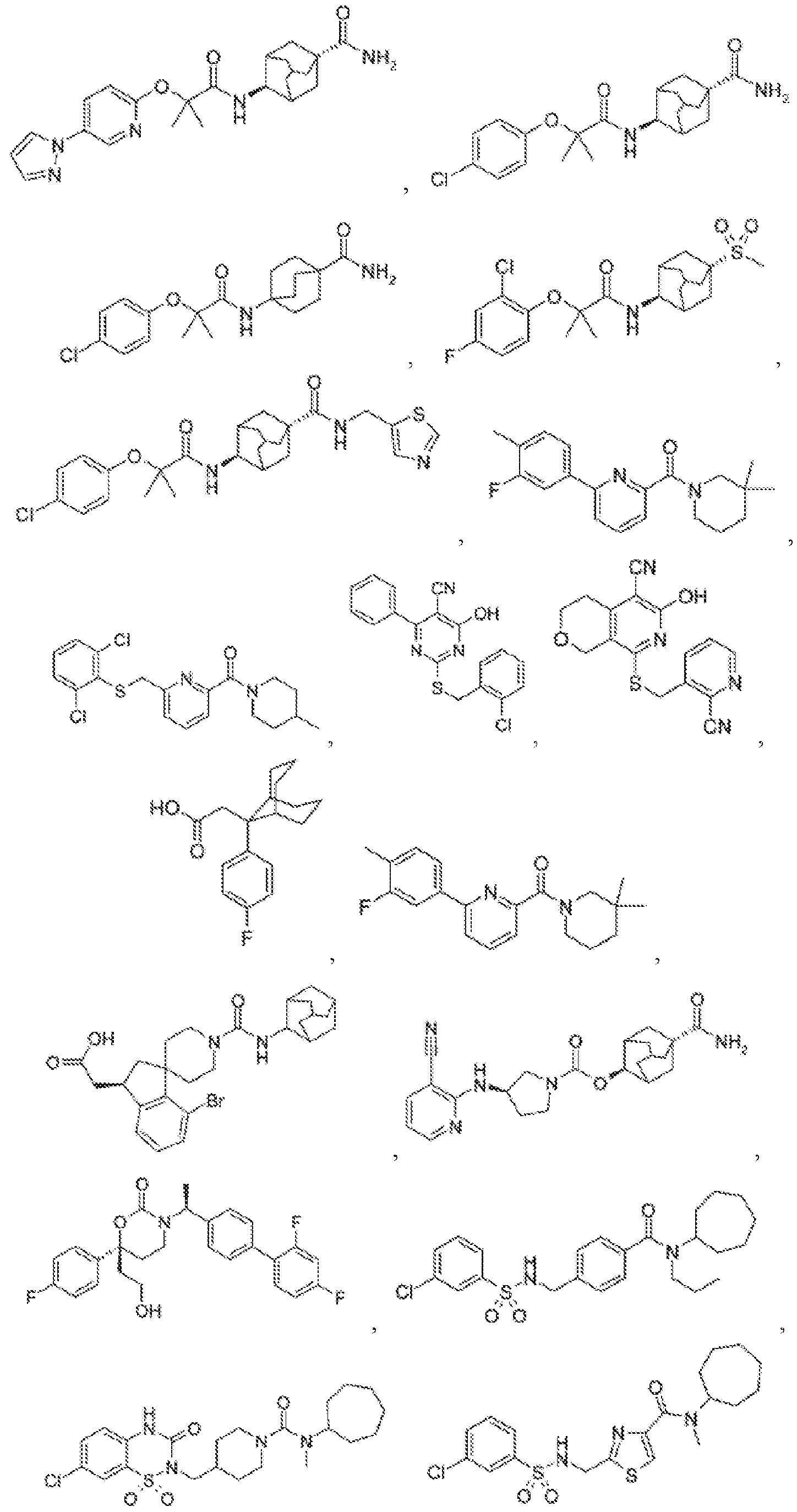

 or a pharmaceutically acceptable salt, solvate, hydrate, stereoisomer, tautomer, N-oxide or prodrug thereof
[0049] In some embodimenis, the 1 1 β-hydroxysteroid dehydrogenase type 1 inhibitor is a compound described in U.S. Patent Application Publication Nos. 20040048912, 20060079506, 20080096869, 20080108598, 20080108598, 20070066614, 20050009821, 20050227987, 20080153893, 20040138258, 20050227987, 20040106664, 2004013301 1 , 20050239853, 20070244108, 20050245745, 20050245532, 20150183735, 20070287743, 201 10082107, 20070281938, 20080318930, 20140179732, 20080064693, 20080214597, 20080064693, 20070259854, 2009010528, 20050245533, 20080275043, 20050154038, 20080214621, 20080207691, 20060149070, 20060258695, 20060281773, 20090042929, 20080255216, 20050228038, 20060223829, 20090264650, 20060235028, 20050261302, 20050277647, 20100197662, 20060281750, 20070072914, 20070207985, 20060205772, 20060159622, 20100184764, 20110312949, 20090124598, 20090170832, 20070197598, 20090227631 , 20070179186, 20090036503, 20070167622, 20090082367, 20100168083, 20070225280, 20090131491 , 20080076819, 20120004209, 20100292215, 20090306048, 20090170894, 20070049632, 20100009968, 20090325932, 20090186928, 20080234249, 20090258913, 20100069365, 20100022597, 20100004221, 201 10003856, 20110003852, 201 10039853, 20100331366, 20100076041, 20100113448, 201001 13448, 20090111800, 20100137377, 20090088428, 20090156571, 200901 11809, 20090069326, 20090239911, 20090099182, 20090099180, 20090275613, 20090088430, 20100240659, 20100009960, 20100022589, 20110034455, 20100234363, 20100267761 , 20110190262, 20100267696, 20080221 175, 20100022590, 201 10028445, 20110071 139, 20100197675, 20110015178, 20130012545, 20100056600, 20100144744, 20110060007, 2014/0179669, 20100280073, 20110105460, 201 10124635, 20110269736, 201 10015157, 20110009402, 201 10059929, 20110237559, 201 10129542, 20090054426, 20120115853, 20080312214, 20110172265, 20090093516, 20110275595, 20100324045, 201 10263582, 20110098320, 20090131434, 20110112082, 20090181994, 20100324104, 20100041637, 20090192198, 20090192141 , 20090176783, 20110136821, 20110105504, 20090203668, 20110112062, 2010033 1320, 20120071466, 20110160463, 201 10269957, 20120108578, 20090306084, 20120165337, 20120135958, 20100144694, 20110136800, 20110224244, 20110237634, 201 10312950, 20100222316, 20100204199, 20100256387,
20100267738, 20120172357, 201 10053943, 20120208804, 20120095046, 20120190675, 20120232050, 20110218214, 20120157488, 20110159005, 20110077395, 20130123268, 20140024636, 20130244993, 20110288051, 20120004206, 20130310431, 2014/0249151, 20150141650, 20150158860, 20120289512, 20150210635, 20130045978, 20130059829, 20130244994, 20130338169, 20130245051, 20140128365, 20150065508, 20150080363, 20160257680, 20150265613, or 20160251346.
or a pharmaceutically acceptable salt, solvate, hydrate, stereoisomer, tautomer, N-oxide or prodrug thereof
[0049] In some embodimenis, the 1 1 β-hydroxysteroid dehydrogenase type 1 inhibitor is a compound described in U.S. Patent Application Publication Nos. 20040048912, 20060079506, 20080096869, 20080108598, 20080108598, 20070066614, 20050009821, 20050227987, 20080153893, 20040138258, 20050227987, 20040106664, 2004013301 1 , 20050239853, 20070244108, 20050245745, 20050245532, 20150183735, 20070287743, 201 10082107, 20070281938, 20080318930, 20140179732, 20080064693, 20080214597, 20080064693, 20070259854, 2009010528, 20050245533, 20080275043, 20050154038, 20080214621, 20080207691, 20060149070, 20060258695, 20060281773, 20090042929, 20080255216, 20050228038, 20060223829, 20090264650, 20060235028, 20050261302, 20050277647, 20100197662, 20060281750, 20070072914, 20070207985, 20060205772, 20060159622, 20100184764, 20110312949, 20090124598, 20090170832, 20070197598, 20090227631 , 20070179186, 20090036503, 20070167622, 20090082367, 20100168083, 20070225280, 20090131491 , 20080076819, 20120004209, 20100292215, 20090306048, 20090170894, 20070049632, 20100009968, 20090325932, 20090186928, 20080234249, 20090258913, 20100069365, 20100022597, 20100004221, 201 10003856, 20110003852, 201 10039853, 20100331366, 20100076041, 20100113448, 201001 13448, 20090111800, 20100137377, 20090088428, 20090156571, 200901 11809, 20090069326, 20090239911, 20090099182, 20090099180, 20090275613, 20090088430, 20100240659, 20100009960, 20100022589, 20110034455, 20100234363, 20100267761 , 20110190262, 20100267696, 20080221 175, 20100022590, 201 10028445, 20110071 139, 20100197675, 20110015178, 20130012545, 20100056600, 20100144744, 20110060007, 2014/0179669, 20100280073, 20110105460, 201 10124635, 20110269736, 201 10015157, 20110009402, 201 10059929, 20110237559, 201 10129542, 20090054426, 20120115853, 20080312214, 20110172265, 20090093516, 20110275595, 20100324045, 201 10263582, 20110098320, 20090131434, 20110112082, 20090181994, 20100324104, 20100041637, 20090192198, 20090192141 , 20090176783, 20110136821, 20110105504, 20090203668, 20110112062, 2010033 1320, 20120071466, 20110160463, 201 10269957, 20120108578, 20090306084, 20120165337, 20120135958, 20100144694, 20110136800, 20110224244, 20110237634, 201 10312950, 20100222316, 20100204199, 20100256387,
20100267738, 20120172357, 201 10053943, 20120208804, 20120095046, 20120190675, 20120232050, 20110218214, 20120157488, 20110159005, 20110077395, 20130123268, 20140024636, 20130244993, 20110288051, 20120004206, 20130310431, 2014/0249151, 20150141650, 20150158860, 20120289512, 20150210635, 20130045978, 20130059829, 20130244994, 20130338169, 20130245051, 20140128365, 20150065508, 20150080363, 20160257680, 20150265613, or 20160251346.
[0050] In some embodiments, the Γΐβ-hydroxysteroid dehydrogenase type 1 inhibitor is a compound described in U.S. Patent Nos. US6849636, 7700583, 7179802, 7659408, 8138342, 7880001, 7915252, 7713979, 7834194, 7511 175, 7759339, 7579360, 7572807, 7622492, 8541 592, 7645773, 7932280, 7834178, 7528282, 7727978, 7932421, 7790711, RE0 1 135, 8592410, 8329897, 7737137, 8598160, 8486964, 8575157, or 8907096. In some embodiments, the 1 Ιβ-hydroxy steroid dehydrogenase type 1 inhibitor is a compound described in WO2010001946.
Antagonists of corticotropin releasing hormone receptor type 1 (CRHRl)
[0051] In some embodiments, the CRHRl antagonist is a compound described in U. S. Patent Nos. 6191 131, 7157578, and 7879862.
[0052J In some embodiments, the CRHRl antagonist is selected from the group consisting of 4-((2-butyl)amino)-2,7-dimethyl-8-(2 -methyl -4-methoxyphenyl)- [l ,5-a]-pyrazolo-l,3,5-triazine; 4-((2-butyl)amino)-2,7-dimethyl-8-(2,5- dimethyl-4-methoxyphenyl)-[ l ,5-a]-pyrazolo-l,3,5-triazine; 4~((3- pentyl)amino)-2,7-dimethyl-8-(2,5-dimethyl-4-rnethoxyphenyi)-[l ,5-a]-p yrazol o-l,3, 5-triazine; 4-((3-pentyl)amino)-2,7-dimethyl-8-(2-methyl-4- rn ethoxypheny !)- [ 1 , 5 -a] -pyrazoi 0-1,3,5 -tri azine; 4-(N-c cl opropyl m ethyl-N- propylamino)-2,7-dimethyl-8-(2 -methyl -4-m ethoxyphenyl)-[ l,5-a]-pyrazolo- 1,3, 5-triazine; 4-(N-cyclopropylmethyi-N-propyiamino)-2,7-dimethyl-8-(2,5- dimethyl-4-methoxyphenyl)-[l ,5-a]-pyrazol o-l,3, 5-triazine; 4-(N-allyl-N-(2- methoxyethyl)araino)-2,7-dimethyl-8-(2-methyl-4-methoxyrphenyl)-[l,5-a]- pyrazolo-1, 3, 5-triazine; 4-(N-allyl-N-(2-methoxyethyl)amino)-2,7-dimethyl-8- (2,5-dimethyl-4-methoxyphenyl)-[ l ,5-a]-pyrazol o-l,3, 5-triazine; 4- (diallylamino)-2,7-dimethyl-8-(2-methyl-4-methoxyphenyl)-[l,5-a]-pyrazolo-
1 ,3,5-triazine; 4-(dially!amino)-2;7-diraeihyl-8-(2,5-diniethyl-4- methoxyphenyl)- [ 1 , 5 -a] -pyrazolo- 1,3,5 -triazine; 4-(N-ethyl-N-(2- methoxyethyl )amino)-2,7-dimethyl-8-(2-methy[-4-methoxyphenyl)-[ 1 ,5-a]- pyrazolo- 1 ,3,5-triazine; and 4-(N-ethyl-N-(2-methoxyethyl)amino)-2,7- dimethyl-8-(2,5-dimethyl-4-methoxyphenyl)-[l,5-a]-pyrazolo-l,3,5-triazine, or a pharmaceutically acceptable salt, solvate, hydrate, stereoisomer, tautomer, N- oxide or prodrug thereof,
[0053] In some embodiments, the CRHR1 antagonist is 4-(2-butylamino)-2,7- dimethyl-8-(2-methyl-6-niethoxypyrid-3-yl)pyrazolo-[l ,5-a]- 1 ,3,5-triazine or a pharmaceutically acceptable salt, solvate, hydrate, stereoisomer, tautomer, N- oxide or prodrug thereof.
[0054] In some embodiments, the CRH 1 antagonist is pexacerfont, which i s of the formula:

[0055] In some embodiments, the CRHR1 antagonist is selected from [l-(3- Cyclopropyl-[l,2,4]oxadiazol-5-yl)-propyl]-[3-(4-methoxy-2 -methyl -phenyl)- 2,5-dimethyl-pyrazolo[l ,5-a]pyrimidin-7-yl]-amine; [l-(3-Isopropyl- [l ,2,4]oxadiazol-5-yl)-propyl]-[3-(4-methoxy-2-methyl-phenyl)-2,5-dimethyl- pyrazolo[l,5-a]pyrimidin-7-yl]-amine; [3-(4-Methoxy-2 -methyl -phenyl)-2,5- dimethyl-pyrazolo[l,5-a]pyrimidin-7-yl]-[l-(3-methyl-[l,2,4]oxadiazol-5-yl)-2- phenyl-ethyl]-amine; [l-(3-Isopropyl-[ l,2,4]oxadiazol-5-yl)-propyl]-[3-(4- methoxy-2-methyl-phenyl)-2,5-dimethyl-pyrazolo[l,5-a]pyrimidin-7-yl]-amine;
[3 -(4-Methoxy-2 -methyl -phenyi)-2, 5-dimethyl-pyrazolo[ 1 , 5-a]pyrimidin-7-yl]- [ 1 -(3 -m ethyl-[ 1 ,2,4]oxadi azol-5-yl)-butyl]-ami ne; [3 -(4-Methoxy-2-methyl -
phenyl)-2,5-dimethyl-pyrazolo[l ,5-a]pyrimidin-7-yl]-(3-methyl- [l,2,4]oxadiazol-5-ylmethyl)-amine; (3-Cyclopropyl-[l,2,4]oxadiazol-5- ylmethyl)-[3-(4-methoxy-2-methyl-phenyl)-2,5-dimethyl-pyrazolo[l ,5- a]pyrimidin-7-yl]-amine; (3-Isopropyl-[l,2,4]oxadiazoi-5-yimethyl)-[3-(4- methoxy-2-methyl-phenyl)-2,5-dimethyl-pyrazolo[l,5-a]pyrimidin-7-yl]-amine;
[2-(3-Cyclopropyl-[l,2,4]oxadiazol-5-yl)-(R)-l-methyl-ethyl]-[3-(4-methox- y- 2-methyl-phenyl)-2,5-di methyl -pyrazolo[l,5-a]pyrimidin-7-yl]-amine; [3-(4- Methoxy-2 -methyl -phenyl)-2,5-dimethyl-pyrazolo[l,5-a]pyrimidin-7-yl]-[(R)-l - methyi"2-(3-methyl~[l,2,4]oxadiazoi"5-yl)~ethyl]-amine; [3-(4-Methoxy-2- methyl-phenyl)-2,5-dimethy[-pyrazolo[l,5-a]pyrimidin-7-yl]-[l-(3- trifluoromethyl-[l,2,4]oxadiazol-5-yl)-propyl]-amine; [l-(3-Cyclopropyi- [l,2,4]oxadiazol-5-yl)-cyclopropyl]-[3-(4-methoxy-2-methyl-phenyl)-2,5- dimethyl-pyrazolof 1 , 5-a]pyrimidin-7-yl]-amine; [3 -(4-Methoxy-2 -methyl - phenyl)-2,5-dimethyl-pyrazolo[l ,5-a]pyrimidin-7-yl]-[ l -(3-methyl- [l ,2,4]oxadiazol-5-yl)-cyclopropyl]-amine; [l-(3-Ethyl-[l ,2,4]oxadiazol-5-yl)- cyclopropyl]-[3-(4-methoxy-2-methyl-phenyl)-2,5-dimethyl-pyrazolo[l,5- a]pyrimidin-7-yl]-amine; [3-(4-Methoxy-2-methyl-phenyl)-2,5-dimethyl- pyrazolo[ l ,5-a]pyrimidin-7-yl- ]-(3-propyl-[l,2,4]oxadiazol-5-ylmethyl)-amine;
[3-(4-Methoxy-2-methyl-phenyl)-2,5-dimethyl-pyrazolo[l ,5-a]pyrimidin-7-yl]- [l-(3-trifluoromethyl-[l,2,4]oxadiazol-5-yl)-cyclopropyl]-amine; [2-(3-Ethyl- [l,2,4]oxadiazol-5-yl)-(R)-l -methy[-ethyl]-[3-(4-methoxy-2-methyl-phenyl)- 2,5-dimethyl-pyrazolo[l,5-a]pyrimidin-7-yl]-amine; [3-(6-Dimethylamino-4- methyl-pyridin-3-yl)-2,5-dimethyl-pyrazolo[l ,5-a]pyrimidin-7-yl]-[3-methyl- (R)-l-(3-methyl-[ l,2,4]oxadiazol-5-yl)-butyl]-amine; 3-(2,4-Dimethoxy- phenyl)-2,5~dimethyl-7-[(S)-2-(3-methyl-[l,2,4]oxadiazol-5-yl)-pyn-olidin-l-yl]- pyrazolo[l,5-a]pyrimidine; [3-(2,4-Dimethoxy-phenyl)-2,5-dimethyl- pyrazolo[ l ,5-a]pyrimidin-7-yl]-[l-(3-methyl-[l,2,4]oxadiazol-5-yl)-propyl]- amine; [3-(2,4-Dimethoxy-phenyl)-2,5-dimethyl-pyrazolo[l,5-a]pyrimidin-7-yl]- [l-(3-methyl-[l,2,4]oxadiazol-5-yl)-ethyl]-amine; [3-(2,4-Dimethoxy-phenyl)- 2,5-dimethyl-pyrazolo[l,5-a]pyrimidin-7-yl]-[l-(3-methyl-[l ,2,4]oxadiazol-5- yl)-butyl]-amine; [3 -(2,4-Dimethoxy-phenyl)-2, 5-dimethyl-pyrazolo[ 1,5- a]pyrimidin-7-yl]-[3-methyl-l-(3-methyl-[l,2,4]oxadiazol-5-yl)-butyl]-amine;
[3-(2,4-Dimethoxy-phenyl)-2,5-dimethyl-pyrazolo[l,5-a]pyrimidin-7-yl]- methyl-(3-methyl-[l,2,4]oxadiazol-5-ylmethyl)-amine; Benzyl-[3-(6-
dimethylamino-4-methyl-pyridin-3-yl)-2,5-dimeth^
7-yl]-(3-methyl-['l,2,4]oxadiazol-5-ylmethyl)-amine; [3-(4-Methoxy-2-methyl- phenyl)-2,5-dimethyl-pyrazolo[l,5-a]pyrimidin-7-yl]-[l-(3-methyl- [l,2,4]oxadiazol-5-yl)-propyl]-amine; [3-(4-Methoxy-2-methyl-phenyl)-2,5- dimethyl-pyrazolo[l,5-a]pyrimidin-7-yl]-[l-methyl-2-(3-methyl- [l ,2,4]oxadiazol-5-yl)-ethyl]-amine; Benzyl-[3-(4-methoxy-2-methyl-phenyl)- 2,5-dimethyl-pyrazolo[l,5-a]pyrimidin-7-yl]-(3-methyl-[ l ,2,4]oxadiazol-5- yimethylj-amine; [3 -(4-Methoxy-2 -methyl -phenyl )-2,5 -dimethyl -pyrazolo[ 1,5- a]pyrimidin-7-yl]-[2,2,2-trifluoro-l-(3-methyl-[l,2,4]oxadiazol-5-ylmethyl)- ethyl]-amine; [2-(3-Cyclopropyl-[l ,2,4]oxadiazol-5-yl)-l -methyl -ethyl]-[3-(4- methoxy-2-methyl-phenyl)-2,5-dimethyl-pyrazolo[l,5-a]pyrimidin-7-yl]-amine;
[2-(3-Isopropyl-[l ,2,4]oxadiazol-5-yl)-l -methyl -ethyl]-[3-(4-methoxy-2-methyl- phenyl)-2,5-dimethyl-pyrazolo[l,5-a]pyrimidin-7-yl]-amine; [2-(3-Cyciopropyl- [l ,2,4]oxadiazol-5-yl)-(S)-l -methyl-ethyl]-[3-(4-methoxy-2-methyl-phenyl)-2,5- dimethyl-pyrazolo[l,5-a]pyrimidin-7-yl]-amine; [2-(3-Isopropyl- [ 1 ,2,4]oxadiazol-5-yl)-(S)- 1 -methyl-ethyl]-[3-(4-methoxy-2-methyl -phenyl )-2,5- dimethyl-pyrazolo[l,5-a]pyrimidin-7-yl]-amine; [3-(4-Methoxy-2-methyl- phenyl)-2,5-dimethyl-pyrazolo[ 1 ,5-a]pyrimidin-7-yl]-[(S)- 1 -methyl -2-(3- methyl-[l,2,4]oxadiazol-5-yl)-ethyl]-amine; [3-(4-Methoxy-2-methyl-phenyl)- 2,5-dimethyl-pyrazolo[l,5-a]pyrimidin-7-yl]-[l-(3-methyl-[l,2,4]oxadiazol-5- ylmethyl)-propyl]-amine; [ l -(3-Cyclopropyl-[l ,2,4]oxadiazol-5-ylniethyl)- propyl]-[3-(2,4-dimethoxy-phenyl)-2,5-dimethyl-pyrazolo[l,5-a]pyrimidin-7- yl]-amine; [3-(2,4-Dimethoxy-phenyl)-2,5-dimethyl-pyrazolo[l ,5-a]pyrimidin-7- yl]-['l-(3-methyl-[l,2,4]oxadiazol-5-ylmethyl)-propyl]-amine; [3-(4-Methoxy-2- methyl-phenyl)-2,5-dimethyl-pyrazolo[l,5-a]pyrimidin-7-yl]-[(S)-l-(3-methyl- [l,2,4]oxadiazol-5-yl)-butyl]-amine; [3-(4-Methoxy-2 -methyl -phenyl)-2,5- dimethyl-pyrazolo[l,5-a]pyrimidin-7-yl]-[2,2,2-trifluoro-(S)-l -(3-methyl- [l ,2,4]oxadiazol-5-ylmethyl)-ethyl]-amine; [3-(4-Methoxy-2 -methyl -phenyl)- 2,5-dimethyl-pyrazolo[l,5-a]pyrimidin-7-yl]-[l-methyl-2-(3-trifluoromethyl- [l,2,4]oxadiazol-5-yl)-ethyl]-amine; [3-(2-Chloro-4-methoxy-phenyl)-2,5- dimethyl-pyrazolo[l,5-a]pyrimidin-7-yl]-[2,2,2-trifluoro-(S)-l-(3-methyl- [l ,2,4]oxadiazol-5-ylmethyl)-ethyl]-amine; [3-(4-Methoxy-2 -methyl -phenyl)- 2,5-dimethyl-pyrazolo[l,5-a]pyrimidin-7-yl]-[(R)-l-methyl-2-(3- trifluoromethyl-[l,2,4]oxadiazol-5-yl)-ethyl]-amine; [3-(2-Chloro-4-methoxy-
phenyl)-2,5-dimethyl-pyrazolo[l,5-a]pyrimidin-7-yl]-[( )-l-methyl-2-(3- trifluoromethyl-[l,2,4]oxadiazol-5-yl)-ethyl]-amine; :3-i2.4»D!nieihoxy- phenyl)-2,5-dimethyl-pyrazolo[l,5-a]pyrimidin-7-yl]-[(R)-l -methyl -2-(3- trifluoromethyl-[l,2,4]oxadiazol-5-yl)-ethyl]-amine; 1 ·i2.4·Dinletho ·· phc!i^·i)-2. -di!ncίini- :·azί)]ί)i 1.5-H jpyri!nidin-7-y! ]-[ 2.2 i ΙΊικ>· c>~< S i- ] -( ~ methyl-[l,2,4]oxadiazol-5-ylmethyl)-ethyl]-amine; [3-(2,4-Dimethoxy-phenyl)- 2,5-dimethyl-pyrazolo[l,5-a]pyrimidin-7-yl]-[2,2,2-trifluoro-(S)-l-(3- trifluoromethyl-[l,2,4]oxadiazol-5-ylmethyl)-ethyl]amine; [3-(4-Methoxy-2- methyl-phenyl)-2,5-dimethyl-pyrazolo[l,5-a]pyrimidin-7-yl]-[(S)-l-(3-methyl- [l,2,4]oxadiazol-5-yl)-propyl]-amine; [3-(4-Methoxy-2 -methyl -phenyl )-2,5- dimethyl-pyrazolo[l,5-a]pyrimidin-7-yl]-[(R)-l-(3-methyl-[l,2,4]oxadiazol-5- yl)-propyl]-amine; 3-(4-Methoxy-2 -methyl -phenyl)-2,5-dimethyl-7-[(S)-2 -(3- methyl-[ 1 ,2,4]oxadiazol-5-ylmethyl)-pyrrolidin-l-yl]-pyrazolo[ 1,5- a]pyrimidine; [3-(2-Chloro-4-methoxy-phenyl)-2,5-dimethyl-pyrazolo[l,5- a]pyrimidin-7-yl]-[(S)-l-(3-methyl-[l,2,4]oxadiazol-5-yl)-propyl]-amine; [3- (2,4-Dimethoxy-phenyl)-2,5-dimethyl-pyrazolo[l,5-a]pyrimidin-7-yl]-(2- methoxy-ethyl)-(3-methyl-[l,2,4]oxadiazol-5-ylmethyl)-amine; (5-{2,5- Dimethyl-7-[(S)-2-(3-methyl-[l,2,4]oxadiazol-5-yl)-pyrrolidin-l-yl]- pyrazolo[l,5-a]pyrimidin-3-yl}-4-methyl-pyridin-2-yl)-dimethy1-amine; [3-(6- Dimethylamino-4-methyl-pyridin-3-yl)-2,5-dimethyl-pyrazolo[l,5-a]pyrimidin- 7-yl]-(2-methoxy-ethyl)-(3-methyl-[l,2,4]oxadiazol-5-ylmethyl)-amine; [3-(4- Ethoxy-phenyl)-2,5-dimethyl-pyrazolo[l,5-a]pyrimidin-7-yl]-(2-methoxy-ethyl)- (3-methyl-[l,2,4]oxadiazol-5-ylmethyl)-amine; [3-(2,4-Dimethoxy-phenyl)-2,5- dimethyl-pyrazolo[l,5-a]pyrimidin-7-yl]-(2-methoxy-ethyl)-[3-(3-methyl- [ 1 ,2,4]oxadiazol-5-yl)-propyl]-amine; [3-(4-Methoxy-2 -methyl -phenyl)-2,5- dimethyl-pyrazolo[l,5-a]pyrimidin-7-yl]-[( )-l-methyl-2-(5-methyl- [ 1 ,2,4] oxadiazol-3 -yl)-ethyl] -amine; [3 -(4-Methoxy-2-m ethyl -phenyl )-2, 5 - dimethyl -pyrazolo[l,5-a]pyrimidin-7-yl]-[(S)-l-(5-methyl-[l,2,4]oxadiazol-3- ylmethyl)-propyl]-amine; [3-(4-Methoxy-2 -methyl -phenyl)-2,5-dimethyl - pyrazolo[l,5-a]pyrimidin-7-yl]-[(R)-l-(5-methyl-[l,2,4]oxadiazol-3-ylmethyl)- propyi] -amine: [3-(4-Methoxy-2-methyl-phenyl)-2,5-dimethyl-pyrazolo[l,5- a]pyrimidin-7-yl]-[(S)-l -methyl -2-(5-methyl-[l, 2,4]oxadiazol-3-yl)-ethyl]- amine; [(R)-2-(5-Cyclopropyl-[l,2,4]oxadiazol-3-yl)-l-methyl-ethyl]-[3-(4- methoxy-2-methyl -phenyl )-2,5-dimethyl-pyrazolo[l,5-a]pyrimidin-7-yl]-amine;
[3-(4-Methoxy-2-methyl-phenyl)-2,5-dimethyl-pyrazolo[l ,5-a]pyrirnidin-7-yl]- [(R)- l-methyl-2-(5-trifluoromethyl-[l,2,4]oxadiazol-3-yl)-ethyl]-amine; [3-(4- Methoxy-2-methyl-phenyl)-2,5-dimethyl-pyrazolo[l ,5-a]pyrimidin-7-yl]-[(S)- 2,2,2-trifluoro-l-(5-methyl-[l,2,4]oxadiazol-3-ylmethyl)-ethyl]-amine; Ethyl- [3 - (4-methoxy-2-methyl-phenyl)-2,5-dimethyl-pyrazolo[ l ,5-a]pyrimidin-7-yl]-(3- methyl-[l,2,4]oxadiazol-5-ylmethyl)-amine; 3-(4-Methoxy-2 -methyl -phenyl)- 2,5-dimethyl-7-[2-(3-methyl-[l,2,4]oxadiazol-5-ylmethyl)-piperidin-l -yl]- pyrazolo[l,5-a]pyrimidine; [3-(4-Methoxy-2 -methyl -phenyl )-2,5-dimethyl- pyrazoio[ 1 ,5-a]pyrimidin-7-yl-(l -[ 1 ,3 ,4]oxadiazol-2-yl -propylamine; [3-(4- ethoxy-2-methyl -phenyl)-2,5-dimethyl-pyrazolo[l,5-a]pyrimidin-7-yl]-[l -(5- methyi-[ l,3,4]oxadiazo3-2-yl)-propyl]-amine; [3-(4-Methoxy-2-methyl-phenyl)- 2,5-dimethyl-pyrazolo[l,5-a]pyrimidin-7-yl]-[l-methyl-2-(5-methyl- [l,3,4]oxadiazol-2-yl)-ethyl]-amine; [3-(4-Methoxy-2-methyl-phenyl)-2,5- dimethyl-pyrazolo[l ,5-a]pyrimidin-7-yl]-[l -methyl-2-(5-trifluoromethyl- [l ,3,4]oxadiazol-2-yl)-ethyl]-amine; [3-(2-Chloro-4-methoxy-phenyl)-2,5- dimethyl-pyrazolo[l,5-a]pyrimidin-7-yl]-[l-(3-methyl-[l,2,4]oxadiazol-5-yl)- propylj-amine; [3-(4-Chloro-2-methoxy-phenyl)-2,5-dimethyl-pyrazolo[l ,5- a]pyrimidin-7-yl]-[l-(3-methyl-[l,2,4]oxadiazol-5-yl)-propyl]-amine; [3-(3- Chloro-4-fluoro-phenyl)-2,5-dimethyl-pyrazolo[l ,5-a]pyrimidin-7-y[]-[ l -(3- methyl-[ l,2,4]oxadiazol-5-yl)-propyl]-amine; [3-(4-Chloro-2-methyl-phenyl)- 2,5-dimethyl-pyrazolo[l,5-a]pyrimidin-7-yl]-[l-(3-methyl-[l ,2,4]oxadiazol-5- yl)-propyl]-amine; [3-(2-Chloro-4-trifluoromethyl-phenyl)-2,5-dimethyl- pyrazolo[ l ,5-a]pyrimidin-7-yl]-[l-(3-methyl-[l,2,4]oxadiazol-5-yl)-propyl]- amine; and [3 -(2-Chloro-4-methyl-phenyl)-2,5-dimethyl-pyrazolo[ 1,5- a]pyrimidin-7-yl]-[l-(3-methyl-[l,2,4]oxadiazol-5-yl)-propyl]-amine, or a pharmaceutically acceptable salt, solvate, hydrate, stereoisomer, tautomer, N- oxide or prodrug thereof.
[0056] In some embodiments, the CRHRl antagonist is a compound described in Progress in corticotropin-releasing factor-l antagonist development, Zorril!a and Koob, Drug Discov. Today, 2010, 15(9~10):371-83.
[0057] In some embodiments, the CRHRl antagonist is SN 003 of the formula:

or a phannaceutically acceptable salt, solvate, hydrate, stereoisomer, tautomer, N-oxide or prodrug thereof.
[0058] In some embodiments, the CRHRl antagonist s verucerfont
(GSK561679), which is of the formula:

[0059] In some embodiments, the CRHRl antagonist is selected from the group consisting of antalarmin, emiceifont, LY2371712, NBI-35965, NBI-30775, NBI- 34101, NBI-30545, BI-27914, NBI-34101 , CP-316,31 1, CRA 5626, CP- 154,526, CP-376,396, ONO-2333Ms, pexacerfont, SSR125543, DMP-696, DMP-904, DMP-695, SC-241, BMS-561388, R121919, PF-572778,
GSK561579, and GSK586529. An exemplary CRHRl antagonist is NBI-35965, or a pharmaceutically acceptable salt, solvate, hydrate, stereoisomer, tautomer, N-oxide or prodrug thereof, and which has the following structure:

pharmaceutically acceptable salt, solvate, hydrate, stereoisomer, tautomer, N- oxide or prodrug thereof, and which has the following structure:

[0061 } Still another exemplary CRHRl antagonist is emicerfont, or a pharmaceutically acceptable salt, solvate, hydrate, stereoisomer, tautomer, N- oxide or prodrug thereof, and which has the following structure:

[0062] Another exemplary CRHRl antagonist is ONO-2333Ms, or a pharmaceutically acceptable salt, solvate, hydrate, stereoisomer, tautomer, N- oxide or prodrug thereof, and which has the following structure

[00631 In some embodiments, the CRHRl antagonist is selected from the group consisting of LWH-234, CP-154,526, NBI-27914 and R121919.
[0064] In some embodiments, the CRHRl antagonist is R121919, which is of the formula:

[0065] In some embodiments, the CRHRl antagonist is antalarmin, which is of the formula:

[0066] In some embodiments, the CRHRl antagonist is
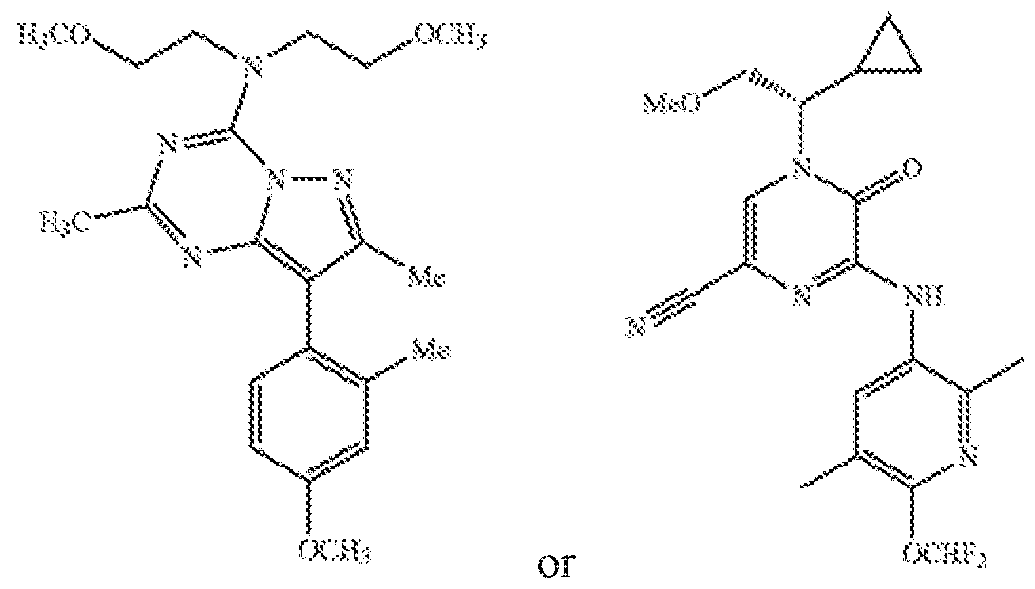
or a pharmaceutically acceptable salt, solvate, hydrate, stereoisomer, tautomer, N-oxide or prodrug thereof.
[0067] In some embodiments, the CRHRl antagonist is a compound described in U. S. Patent Application Publication Nos. 201 10301087, 20030220333, 20030149059, 20030064993, 20020022632, 20020049227, 20020022632, 20020058668, 20020111490, 20020042422, 20040254382, 20030229091, 20030055059, 200301 19831, 20040225130, 20030055059, 20100029684, 20040014760, 20110124662, 20020161019, 20020065290, 20020016328, 20040235924, 20040209917, 20040235871, 20040176400, 2010/0029684, 20110124662, 201 10190360, 20110201629, 20010036945, 20020183375, 20020019525, 20020019525, 20020016333, 20040014760, 20010025042, 20030008885, 200301 14468, 20030220333, 200301 14502, 20030125330, 20030171380, 200301051 17, 20030195222, 20060252756, 20040082781, 20040229891, 20040204414, 20040242623, 20050038040, 20030208068, 20070155740, 20070219232, 20070054913, 20070021429, 20070066640, 20040171829, 20040082784, 20040209917, 20040224974, 20050113375, 20050020601, 20080139567, 2008/0076943, 20080153828, 200801 13978, 20080306092, 20080194589, 20080015196, 20080312444, 20080194589, 20010036945, 20020049208, 20020049227, 20030114468, 20030045514, 20030152520, 200301 14468, 20080139567, 20070004708, 20070155740, 20030149059, 20030 19844, 20020022632, 20100222339, 20100022560, 20100035874, 20100249138, 20100298287, 20030078277, 20140179919, 20090023757, 20090023757, 20090137604, 20060199823, 20020019406, 20020058668, 20050038055, 20050054661 , 20050020601, 20050038040, 201 1/0190360, 20120295942, 20120316185, 20080194589, 20140088105, 20070281919, 20070021429, 20150094310, or 20150094310.
[0068] In some embodiments, the CRH 1 antagonist is a compound described in U. S. Patent Nos. 5861398, 5861398, 6200979, 7094782, 7297708, 7112585, 6103737, 6399609, 6136809, 6218391 , 6358950, 6174912, 6521636, 6518271 , 6448261, 6107300, 6083948, 6124289, 6159980, 6143743, 6245769, 6107294, 6509338, 6271380, 7297708, 6365589, 6350750, 6630476, 7612067, 5795905, 6133276, 6133282, 6194574, 6995161, 5955613, 5644057, 6281220, 5973152, 6114530, 5723608, 6127399, 6353 103, 6147085, 6436932, 6355651 , 6300360, 6469041 , 6291473, 6310063, 6362186, 6194574, 6284766, 5063245, 7807688, 7947697, 5712303, 6103900, 6765008, 5646152, 5668145, 6492520, 6844351, 5968944, 5962479, 6833378, 6956047, 5958948, 6992188, 6005109, 5705646, 5109111, 4605642 or 5880135.
[0069] In some embodiments, the CRHRl antagonist is a compound described in international Patent Application Publication Nos, WO02072101 ,
W09533727, W09735539, WO9803510, W09413676, W09413644,
WQ9413677, W09413661, WO9533750, W09534563, WO9808846,
W09938868, WO990 I 439, WO2004062665, WO2008083070,
WO2007133756, WO2010053546, WO2011095450, WO2011092293,
WO2017035528, or WO2018048953.
Pharmaceutical Compositions and Administration
[0070] The HSDl ip i inhibitors or the CRHRl antagonists are administered using any suitable methods known in the art. For example, the HSDl I β I inhibitors or the CRHRl antagonists are administered orally, bucaliy, ophthaimically, osmotically, parenteraily (intramuscularly, intraperitonealiy intrasternal ly, intravenously, subcutaneously), rectally, topically, transdernially, or vaginally.
[0071] In accordance with various embodiments, the HSDl 1 β 1 inhibitors or the CRHR l antagonists are administered in the form of pharmaceutical
compositions. Thus, provided herein are also pharmaceutical compositions that contain one or more of the compounds of any of the fomiulae disclosed herein or a pharmaceutically acceptable salt, isomers, prodmg, or solvate thereof, and one or more pharmaceutically acceptable vehicles selected from carriers, adjuvants and excipients. Suitable pharmaceutically acceptable vehicles may include, for
example, inert solid diluents and fillers, diluents, including sterile aqueous solution and various organic solvents, permeation enhancers, solubilizers and adjuvants. Such compositions are prepared in a manner well known in the pharmaceutical art. See, e.g., Remington's Pharmaceutical Sciences, Mace Publishing Co., Philadelphia, Pa. 17th Ed. (1985); and Modern Pharmaceutics, Marcel Dekker, Inc. 3rd Ed. (G.S. Banker & C.T. Rhodes, Eds.).
[007 1 The pharmaceutical composition is administered in either single or multiple doses. The pharmaceuticai composition is admini stered by various methods including, for example, oral, intravenous, intraperitoneal, parenteral, intramuscular, subcutaneous, topical, rectal, buccal, intranasal and transdermal routes, or as an inhalant. In some embodiments, the pharmaceutical composition is administered orally.
[0073] In some embodiments, the pharmaceuticai composition administered is parenterally, for example, by injection. The pharmaceuticai compositions used for administration by injection include, for example, aqueous or oil solutions, suspensions, or emulsions, with sesame oil, corn oil, cottonseed oil, or peanut oil, as well as elixirs, mannitoi, dextrose, or a sterile aqueous solution, and similar pharmaceutical vehicles.
[0074] Oral administration may be another route of administration. The pharmaceutical compositions may in the form of tablets, pills, powders, lozenges, sachets, cachets, elixirs, suspensions, emulsions, solutions, syrups, aerosol s (as a solid or in a liquid medium), ointments containing, for example, up to 10% by weight of the active compound, soft and hard gelatin capsules, sterile injectable solutions, and sterile packaged powders. In certain
embodiments, the pharmaceutical composition is in the form of tablets. Some examples of suitable excipients include lactose, dextrose, sucrose, sorbitol, mannitoi, starches, gum acacia, calcium phosphate, alginates, tragacanth, gelatin, calcium silicate, microcrystalline cellulose, polyvinylpyrrolidone, cellulose, sterile water, syrup, and methyl cellulose. The formulations can additionally include lubricating agents such as talc, magnesium stearate, and mineral oil; wetting agents; emul sifying and suspending agents; preserving agents such as methyl and propylhydroxy-benzoates; sweetening agents; and flavoring agents.
The tablets or pills may be coated or otherwise compounded to provide a dosage form affording the advantage of prolonged action, or to protect from the acid conditions of the stomach .
[0075] Compositions for inhalation or insufflation include solutions and suspensions in pharmaceutically acceptable, aqueous or organic solvents, or mixtures thereof, and powders. The liquid or solid compositions can contain suitable pharmaceutically acceptable excipients as described supra. In some embodiments, the compositions are administered by the oral or nasal respiratory route for local or systemic effect. In other embodiments, compositions in pharmaceutically acceptable solvents may be nebulized by use of inert gases. Nebulized solutions may be inhaled directly from the nebulizing device or the nebulizing device may be attached to a facemask tent, or intermittent positive pressure breathing machine. Solution, suspension, or powder compositions may be administered, preferably orally or nasally, from devices that deliver the formulation in an appropriate manner.
[0076] The specific dose level of a HSD11 β 1 inhibitor or a CRHRl antagonist for any particular subject depends upon a variety of factors including, for example, the activity of the specific compound employed, the age, body weight, general health, sex, diet, time of administration, route of administration, and rate of excretion, drug combination and the severity of the particul ar disease in the subject undergoing therapy. For example, a dosage is expressed as a number of milligrams of a compound per kilogram of the subject' s body weight (mg/kg). Illustrative dosages include those between about 0.01 and 200 mg/kg. In some embodiments, about 0.01 and 150 mg/kg may be administered. In other embodiments a dosage of between 0,05 and 100 mg/kg may be administered. Normalizing according to the subject's body weight can be useful, for example, when adjusting dosages between subjects of widely disparate size, such as occurs when using the drag in both children and adult humans or when converting an effective dosage in a non-human subject such as dog to a dosage suitable for a human subj ect.
[0077] The daily dosage may also be described as a total amount of a HSDl lp l inhibitor or a CRHRl antagonist administered per dose or per day. Daily dosage
of a compound may be between about 0.1 mg and 2,000 nig/day, between about 1 to 2,000 mg/day, between about 1 to 1,000 mg day, between about 1 to 500 mg day, between about 10 to 1 50 mg/day, between about 1 to 100 mg/day, between about between about 1 to 50 mg/day, between about 5 to 100 mg/day, between about 10 to 125 mg/day, between about 10 to 100 mg/day, or between about 5 to 200 mg/day.
[0078] The daily dosage of a HSD1 1 β 1 inhibitor or a CRHR1 antagonist may be administered ail in one time (once a day) or in several times, such as two times, three times, four times, five times or more throughout the day.
Examp!e
[0079] As illustrated below, we offer a new view of the neurobioiogical origins of chronic anxiety and related emotional symptoms in FXS, one that highlights novel and clinically proximal ways for mechanism-based pharmaceutical intervention, and disclose and claim use of therapeutic agents that can be suitable for treatment of these conditions.
[0080] Efforts to understand the neurobioiogical basi s of emotional symptoms in FXS have been focused (for good reasons) on the amygdala 80>90>91 ) a limbic structure implicated in the expression of cued anxiety and fear 2'93'94, the encoding of explicit fear memories 9S, and memory consolidation 96. In simplified terms, the basolateral amygdala (BLA) is a locus for association of stimuli predicting and eliciting fear, and the central nucleus (CeA) orchestrates behavioral, autonomic and hormonal responses to these cues 97. However, the unusually persistent nature of anxiety and social avoidance in FXS, which can be thought of as a form of "trait anxiety", suggest that its neurobioiogical underpinnings relate more directly to a different structure. Long-term anxiety and fear states are mediated by the bed nucleus of the stria terminaUs (BNST), a region of the extended amygdala 8,99 that serves as a hub for corticolimibic modulation of anxiety and stress responses 10°.1OI.IO2,IO3,IO4,IO5,IO6_ ^ c niray; to the amygdala "proper", which mediates acute fear responses to transient or phasic cues, the BNST acts to set the long-term gain of emotional and physiological responses to stressful or fear-evoking stimuli

Indeed, the BNST has been implicated in chronic anxiety states, social
avoidance, obsessive compuisive disorders, PTSD and other persistent negative emotional traits that align well with emotional symptoms of FXS 1J Mi2,ii3ai<U i5_ This key functional distinction of the BNST i'11*114*115 appears much better suited (than the amygdala proper 11S) to explain the remarkably persistent anxiety and other emotional phenotypes of FXS. While there is considerable evidence in FXS for alterations in amygdala structure, activation (reviewed in 90>91)3 and synaptic excitatory / inhibitory (E/I) balance 8U'83 that may lead to increased expression of acute conditioned fear, some studies indicate that amygdalar activity is actually deficient in FXS in some of the contexts that elicit debilitating forms of anxiety / fear in FXS subj ects (e.g. social anxi ety) 116»117>118. In contrast, several features of BNST anatomy and function provide a compel Sing basis on which to consider this region as a key locus of
pathophysiology underlying chronic anxiety, social avoidance, and other emotional symptoms in FXS,
[0081] It was observed that neurons in the BNST have altered intrinsic and synaptic properties, and elevated Cortisol signaling, in the /·>?//'/" (KO) mouse model of FXS. As developed below and supported by data, these alterations underlie chronic anxiety states and attendant social symptoms in FXS. Further, the data demonstrate that these changes result from pathologically high local production of Cortisol that ensues from synaptic upregulation of a Cortisol biosynthesis enzyme, HSD 1 Ιβ ΐ .
[0082] The BNST is an anatomically complex, multinucleated, and highly interconnected region of the extended amygdala 98, 9 that acts as a hub for corticolimbic modulation of stress responses M oi,ie2,ita,io8 ^ simplified diagram of anterior BNST (aBNST) anatomy as appears in a typical slice recording experiment i s shown in Fig. 1. The aBNST integrates cortical and limbic inputs that set expectant fear and modulate anxiety responses, including glutamatergic inputs from the insular cortex (" ¾sw/a"), medial prefrontal cortex (rnPFC), BLA, and ventral hippocampus (vHip) i,!lM i!! -! !,'-s ,u-!i, Ji!?-S i'!J 2iM :! ! . Under normal conditions, these inputs are thought to provide anxiolytic tone and, in the case of BL A afferents, to limit the duration and magnitude of anxiety- responses mediated by the amygdala. Projections of the aBNST include a GABAergic output to the paraventricular nucleus of the hypothalamus (PVN) -
which blunts activity of the HP A axis - as well as the BLA, CeA, insula and mPFC, and other regions mediating emotional, autonomic and visceromotor responses to stress >" A ,
[0083] Importantly, while acute activation of the aBNST by cortico-limbic inputs normally attenuates anxiety & physiological stress responses, chronic stress-induced activation of these networks results in long-term anxiogenic output of the BNST, and to changes in the volume and activity of structures innervating it 94,io7,io8,ii9,i23_ Some of these changes, including reduced volume and enhanced activation of insula by social stimuli, are robust neural correlates of FXS severity and are suggested to mediate social anxiety symptoms n>124>l2s. It i s notable in this regard that activity within the insula and BNST tracks the degree of anticipatory fear to social stimuli 1 , a function of particular relevance to social anxiety symptoms of FXS. Further, structural and functional changes in BNST inputs such as the insula correlate with IQ in FXS subjects i24>125, which suggests that normalizing the function of these networks may improve cognitive function as it helps resolve the most disruptive comorbid features of FXS.
[0084] Several distinct types of neurons can be identified in the aBNST - namely type I, II and III - which differ in their relative expression of specific voltage-gated channels regulating spike threshold and rate nyj'%: each type is readily identifiable by its distinct electrophysiological characteristics during patch clamp recording. Type III neurons, which are medium-sized spiny GABAergic projection neurons, are highly concentrated in a vertically oriented strip bordering the internal capsule called the ""ju-uacapsular"" region or jcBNST (Fig. I). Using viral vectors, it was observed that Type III j cBNST neurons project strongly to the lateral hypothalamus (LH). This complements existing data showing that j cBNST sends GABAergic projections to many areas, including the anterior BLA, medial CeA, and PVN to suppress physiological and behavioral responses to stress i» 03,ii9,i22,i27_ importantly, the jcBNST is a major target of the corticolimbic inputs noted above (BLA, insula, mPFC) that negatively modulate stress and long-term anxiety by stimulating jcBNST GABAergic neurons. The special role of jcBNST in anxiolytic drive i s underscored by the fact that a massive BLA glutamatergic projection to aBNST
terminates almost exclusively in the jcB'NST, forming an anxiolytic circuit limiting amygdalar activation through jcBNST GABAergic proj ections to CeA
128,129
[0085] In contrast, neighboring nuclei within the anterolateral group of the aBNST (BNST-AL; Fig. 1) 1()3'i30 harbor distinct ceil types with different connectivity and functions. Adj cent to the jcBNST is the so-called "oval" nucleus (ovBNST, Fig. 1), in which preliminary studies and prior work by others 131 find mostly Type I and II neurons that are sparsely distributed in the broader anterodorsal B'NST. Unlike Type III GABAergic projection neurons of the jcBNST, Type I and II GABAergic neurons in the ovBNST send intra-BNST afferents to other nuclei and the parabrachial nucleus (a hedonic center), inhibiting their output. An example of this is the GABA-GABA pathway from ovBNST to ventral BNST, to the VPN, which disinhibits the HP A axis.
Additionally, while most of the BNST-AL (including ovBNST and the fusiform BNST) receives dense inputs from the lateral portion of the CeA, the jcBNST is devoid of these connections i32, suggesting that inhibitory (anxiolytic) tone from the jcBNST to CeA is not subject to direct reciprocal modulation by CeA.
Recent optogenetic studies indicate that activation of the ovBNST is anxiogenic, whereas the rest of the BNST-AL has an anxiolytic influence 133. Long-term anxiety states appear to be mediated by a weakening of anxiolytic pathways to BNST, particularly the jcBNST ^«1^ ,^8,119,123,326,127,129 Anxiolytic functions of jcBNST are supported most recently by elegant optogenetic studies of BLA- jcBNST 129 circuits and human deep brain stimulation studies 111. jcBNST and ovBNST are thus morphologically 134>135>136 and functionally distinct, differentially regulating chronic anxiety and related behaviors 1U. Ό0861 In studies of BNST function in the /·)///·/ O mouse, we focused on the jcBNST due to its heavy innervation by the insula (implicated in social anxiety in FXS) and the fact that it is composed primarily of GABAergic Type III projection neurons that monosynaptically inhibit the BLA, CeA, PVN, LH and other structures mediating psychological, autonomic, endocrine, and
visceromotor responses to stress w n9 xi,m,m _ ^e discovered that jcBNST Type III neurons are intrinsically less excitable and receive less spontaneous excitatory synaptic input in the i-i ri KO model of FXS (Fig. 2). Such changes
are reminiscent of reduced excitability and plasticity of jcB ST that we observed in previous work in models of chronic stress 119>127. These changes result in chronically reduced anxiolytic drive of BNST by insula, and other corticolimbic inputs, and to Cortisol axis dysregulation.
[0087] Anxiogenic shifts in BNST function are promoted by corticotropin releasing hormone (CRH) rel eased within the BNST during chronic stress
127438,13 ,1 0 1 _ infusion into the BNST is strongly anxiogeni c and it preferentially causes social anxiety 142'i 3>1 . Accordingly, infusion of CRH antagoni sts into the BNST blocks the ability of chronic stress to induce long- term anxiety M>1 5>146. In prior work, we demonstrated that long-term
potentiation of intrin si c excitabi lity (LTP-IE) of Type III neurons in the jcBNST is blocked by CRH. LTP-IE is an enhancement of spiking responses to excitatory inputs that requires NMD A and mGluR.5 receptors, as well as dopamine signaling, for its induction 101. The ability of CRH to block LTP-IE indicates that excessive CRH signaling during chroni c stress can reduce the ability of jcBNST inputs (e.g. insul a) to activate this structure and trigger anxiolytic GABAergic output 127 , Afferents from the BLA are a maj or source of CRH in thejcBNST, and it is thought that recurrent stress-induced activation of the amygdala leads to CRH release in BNST 181427 42 43 44 45 7 8 xhus> chroni c amygdaiar activation can blunt anxi oiytic tone from areas such as insul a involved in interoception and threat monitoring of social stimuli .
[0088] Glucocorticoid signaling increases CRH expression in the jcBNST 101427,138449^ τη recent studi es of synaptic protein expression in rtiirl KO brain 19 , we observed large increases in the Cortisol synthetic enzyme HSD1 Ιβ ΐ, suggesting that synaptic Cortisol levels in FXS are exceedingly high. As illustrated in Fig. 3, we validated upregulation of HSD1 1 β 1 in the jcBNST of Fmrl KO mice by immunofluorescence deconvolution mi croscopy (in coll aboration with Dr. Lauterborn, UC Irvine) and by Western blot analyses of isolated jcBNST sampl es. Additionally, we obtained evidence of exaggerated Cortisol signaling in Fmrl KO brain as detected by phosphorylated
glucocorticoid receptor (p-GR; Fig. 3). These observations and data indicate that the set point of BNST function in FXS is biased towards anxi ety by tonic increases in Cortisol -driven CRH production. Further, these data show that
inhibiting HSDl ip i activity or antagonizing CRH receptors reduces the anxiety, social avoidance and other emotional symptoms of FXS. These data additionally show that clinically tested inhibitors of HSD1 Ι βΐ and CRHR1 (the CRH receptor variant implicated in CRH-induced anxiogenesis 127) can be repurposed for use in FXS, providing therapeutic agents for treatment of these conditions in human patients.
[0089] The rationale and data disclosed herein demonstrate that increased HSDl ip i -mediated Cortisol synthesis in FXS resulted in CRH-dependent changes in jcBNST that are chronically aaxiogenic, creating a state at baseline that is analogous to the effects of Song-term stress on BNST function in normal individuals (Fig. 6). The changes entail insuia-BNST pathways that mediate social anxiety and social aversion.
[0090] Chronic intense anxiety in many forms is a highly debilitating, disruptive, and costly aspect of FXS symptomology, one that plays a major role in other emotional symptoms of FXS and perhaps even some aspects of cognitive dysfunction. The present disclosure offers a significant new inroad into the etiology of anxiety in FXS.
[0091] Our data demonstrated reduced spontaneous excitatory input to Type III jcBNST neurons in the Fmrl KO and a reduction in the intrinsic excitability of these neurons (Fig, 2). A strong prediction of reduced mEPSC frequency without changes in mEPSC amplitude in Fmrl KO Type III neurons is that the probability of glutamate release is reduced 1S0, thus reducing evoked release onto Type III neurons. This would result in weaker drive of Fmrl KO Type ill neurons by inputs that normally exert anxiolytic effects through jcBNST.
Reductions in intrinsic excitability of Fmrl KO Type ill neurons may compound this effect, resulting in dramatically reduced anxiolytic drive of jcBNST. Such changes may be expressed by subsets of inputs to Type III jcBNST neurons, or they may be manifest across ail giutamatergic inputs as postulated for stress/CRF-induced impairments in LTP-IE ϊ05>ί19^27 Indeed, it i s possible thai- reduced intrinsic excitability reflects from mechanisms similar to those that impair LTP-IE during chronic stress.
[0092] We used optogenetic approaches to define the origin of synaptic connections to jcBNST Type III neurons that exhibit altered release properties in the Fmrl KO, and whether these inputs are affected by alterations in baseline intrinsic excitability and, potentially, LTP-IE. Type III jcBNST neurons receive excitatory input from many cortical arid limbic areas, including: the dysgranular insular cortex, the prelimbic and infralimbic divisions of the mPFC, the posterior BLA, the amygdalo-hippocampal transition area (AHTA), the transitional postpyriform cortex (TRPC), and the amygdalo-piriform transition area (APir) 100,122,128,131,152^ jjjjg presents a functionally intriguing, but complex picture. However, observations in FXS and recent work on jcBNST circuitry place a strong emphasis on three regions, which are prioritized here as follows: (1) the insula, because an insula-to-BNST circuit sets the level of expectant fear to social cues, and robust changes in insula activity and volume are observed in FXS brain that correlate with gaze aversion; (2) the BLA because it sends a massive CRH-expressing projection to jcBNST, and recent data show that reductions in glutamate release at BLA-to-BNST synapses triggered by dynorphin are anxiogenic 129; and (3) the mPFC because it provides a tonic inhibitory tone on stress by activating j cBNST, and hypoactivation of mPFC in FXS contributes to social anxiety 153. Taken with our data, these and other observations suggest that inputs from insula, BLA, and mPFC to the jcBNST can be disrupted in FXS to create a chronically anxiogenic state.
[0093] To identify the specific inputs to Type III neurons that exhibit reduced release probability in the Fmrl KO jcBNST, and which inputs are affected by reduced Type III neuron excitability, we used optogenetic tools to identify and stimulate specific inputs to this region. We used viral vectors that encode for the blue light-sensitive cation-pump Chlamydomonas reinhardlii channelrhodopsin- 2 (ChR2) fused with eYFP 157 58 to activate either insula, BLA, and mPFC inputs to Type III neurons in jcBNST 129>154. Microinjections (0.5-1 ul) of AAVs-CaM lla-ChR2(H 134 )-eYFP (2-5x 10¹² viral particles / mL) were stereotax! call y placed unilaterally into one of the target fields in WT and Fmrl KO mice; stereotaxic coordinates were based on the mouse brain atlas by Paxinos and Franklin, with additional reference to recent work by Crowley et al 129 , and verified prior to AAV injection. Following a 4-5 week post-operative
period, to ai !ow sufficient AAV expression and transport of ChR2 to di stal terminals 1SS, mice were used for physiological studies of jcBNST Type III neurons. All inj ection sites were verified at the time of sacrifice. For optogenetic stimulation, a blue light ( 73nm) are flashed at projections visualized under eYFP fluorescence. Presynaptic fibers were identified initially using 5x and 20x objectives, after which we shifted to 60x obj ective for opt oge eti c s ti mul ati on .
[0094] Following conventions established in the field and utilized extensively in our prior work 101,119>126,127'130, jcBNST Type III neurons in slices that were prepared from WT and I'-mrl KO mice were electrophysioiogically identified according to their voltage responses to hyperpol arizing and depolarizing current injections (Fig. 1). Whole-cell patch recordings were performed in BNST slices that were perfused at 2ral/mm with oxygenated artificial cerebrospinal fluid consisting of (in mM): 130 NaCl, 2 KC1, 2 CaCb, 1.25 KH2P04, 2 MgS04, 7¾Q, 26 NaHCC , 10 d-glucose, pH 7.4 at 32°C. Patch recording electrodes were filled with a solution consisting of (in mM): 120 K-Gluconate, 10 KC1, 10 HEPES, 10 EGTA, 2 Mg-ATP, 0.3 Na-GTP, and osmolality of 300 ± 10 mOsm. In some variations, electrodes also contained 0.1% biocytin to label neurons post hoc for morphological analyses. After achieving whole-cell configuration with an access resistance <30 <ΜΩ, cells were allowed to equilibrate for a minimum of 5 min before assessing baseline physiological properties. For each recorded neuron, intrinsic membrane properties - resting membrane potential, input resistance, rheobase, input-output curve (I/O), and voltage threshold - were determined in current c!amp mode by analyzing the voltage of responses evoked with intracellular injections of a series of hyperpolarizing and depolarizing current steps of 350 ms, starting from -200 pA and increasing in steps of 5 pA until firing. Identification of Type III neurons exploited their characteristic high rheobase and prominent inward rectification (Fig, IB), which was indicative of an inwardly rectifying + current (\κπ) m. Type ill neurons were also characteri zed both by the presence of depolarizing voltage ramp and by delayed spiking when depolarizing threshold current pulses were applied (Fig, I B). As shown in Fig. 1A, neurons with these electrophysiological characteristics were
recorded in the anterodorsal aspect of BNST adjacent to the interna! capsule, corresponding to the jcBNST (see also i3ij.
[0095] Optically evoked excitatory postsynaptic currents (oEPSCs) are were recorded in whole-cell patch voltage clamp mode from jcBNST type III neurons in response to specific inputs (BLAp, Insula and mPFC). Recording is was performed at a holding potential of -70 mV and in the presence of picrotoxin (25 μΜ) to isolate mainly AMPA-R-mediated responses. For optogenetic stimulation of specific afferent fibers, we followed the same technical approach used in our recent pape ls4. Briefly, a 473 -nm blue laser 50 μηι diameter spot (Crystalaser, Reno, NV) of 30 mW power and 1-2 ms duration will bewas flashed every 10-20 s. Each stimulation will consisted of three repeated laser flashes with an inter-trial interval of 1.2 s. Light intensity, measured in mW/mm2, will bewas increased to generate a calibration curve. We wil l maintain cConstant pulse duration (1-2 ms) was maintained while gently- increasing laser intensity until an oEPSC of 70-100 pA is was obtained. For every cell receded, and for every specific input (BLAp, Insula and mPFC), in slices from WT and Fmrl KO mice, we generated I/O curves plotting the amplitude of the oEPSCs as a function of light power 159. This timing is was obtained using neutral density filters and microscope apertures. As Because levels of viral expression may can vary across experiments, we adjusted the amplitude at the beginning of each experiment of the first oEPSCs between 70 to 100 pA. Postsynaptic parameters are were monitored continuously throughout the duration of the experiments.
[0096] To assess changes in release probability at specific inputs to jcBNST, we use two methods. In the first, we compared the degree of paired-pulse facilitation (PPF) resulting from optogenetic stimulation of specific inputs (BLAp, insula, mPFC) to jcBNST Type III neurons in WT and Fmrl KO slices. PPF is a widely used protocol to evaluate release probability wherein a greater degree of facilitation of EPSCs elicited by the second of two closely paired (~50ms) pulses indicates a lower baseline probability of transmitter release ls0. To elicit PPF, pairs of blue light flashes are were applied at a 50 msec inter-pulse interval using blue light intensities that evoke a subsaturative oEPSC (30% of max). A PPF ratio (PPR) is was calculated as the peak amplitude of the second oAMPA-EPSC
divided by the first (PPR=oAMPA-EPSC2/oAMPA-EPSC l). In a parallel approach, we compared the CV of oAMPA-EPSCs in WT and Fmrl KO Type III neurons measured as the ratio of the standard deviation (δ) to the mean (μ) of the peak oAMPA-EPSC amplitude. A change of CV is was associated with either a change of release probability (Pr) or the number of release sites (n) 160.
[0097] The data described herein revealed a decrease in the intrinsic excitability of Type ΙΠ jcBNST neurons in the Fmrl KO, and a reduction in spontaneous, action potential-independent release onto these neurons (Fig, 2). The former is highly suggestive of altered K+ channel activity in the Fmrl KO. The latter is indicative of changes in presynaptic release probability, and it is notable that reduced excitatory drive of several GABAergic cell types has been reported in t e Fmrl KO mouse 156. Accordingly, we investigated the mechanistic basis of both aspects of altered jcBNST physiology.
[0098] Type i l l neurons responded to supra-threshold depolarization with a delayed spike superimposed on a depolarizing ramp ( Fig.! ) The delay in spike generation reflected the activation of the a-dendrotoxin (a-DTX)-sensitive, slowly inactivating D-type K~ current (ID) first identified in hippocampus Ui. The ID current controls spike threshold in various neuronal types 163»J 64.16s,i66^ with the common effect of reducing intrinsic excitability. Previously, we demonstrated that the ID current blocks LTP-IE of Type III neurons in jcBNST during protracted withdrawal from drugs of abuse (a model of chronic anxiety/stress) 121. Reduction of intrinsic excitability by stress-related increases in the fo current diminishes the anxiolytic drive of the jcBNST circuit.
[0099] Three features of the ID current are of particular interest in the context of FXS and our data. First, the ID current is mediated primarily by Kvl .2 (Kcna2) K+ channels 167 that regLslate excitability in many neuron types 16S, and the mRNA for Kcna2 is a putative FMRP target 24. Second, we demonstrated that impairments in LTP-IE during chronic stress - equivalent to reduced excitability - are induced by CRH 127 Third, the ID current is inactivated by mGluRs 101>169 3 potentially by a mechanism involving phosphorylati on-dependent endocytosis 170. These factors raise the possibility that decreased intrinsic excitabi lity of Fmrl KO Type III neurons is due to upregulation of Kvl .2 K; channels,
potentially by elevated CRH signaling or deficient mGluR-induced Kvl .2 inactivation.
[00100] Several presynaptic mechanisms may be responsible for our observation that sEPSCs onto / '/;//·/ KO jcBNST Type III neurons exhibit reduced frequency without a change in amplitude. Two specific pathways are of particular interest: endocannabinoid (eCB) signaling and the opioid dynorphin. eCB signaling is enhanced at some synapses in the Fmrl KO 8s, and can trigger a reduction in the frequency of mEPSCs and mlPSCs 17 72>Ί 7· 7ΊΊ jt jias |-,een shown that the eCB receptor CB1R is present at high levels on excitatory presynaptic boutons contacting anterolateral BNST (alBNST and that application of a CB1R agonist results in decreases in the frequency, but not amplitude, of mEPSCs. In addition, it was shown that synthesis of the eCB 2- arachidonoyl glycerol (2-AG) in alBNST is triggered by dendritic L-type Ca++ channels, leading to CB lR-mediated presynaptic depression 176. In our recent studies of the Fmrl KO cortical synaptic proteome 177 , we observed that a β regulatory subunit of L-type Ca++ channels that increases their unitary conductance 17S, CACNB4, is upregulated > 2 fold in the KO. Together, these observations suggest that elevated 2-AG synthesis and signaling through CB1R in Fmrl KO jcBNST can result in the changes in release we observed.
[00101] Another mechanism of interest i s dynorphin signaling. In elegant optogenetic studies, Crowley et al 129 demonstrated that dynorphin released from BLA afferents into a region corresponding to jcBNST triggers a Kappa Opioid Receptor (KOR)-dependent reduction in the frequency of mEPSCs, but not the amplitude. The BLA-jcBNST pathway contributes anxiolytic tone, and dynorhpin-KOR-induced reduction of glutamate release reduces this tone (i.e. is anxiogenic). It is notable that the anxiogenic effects of CRH are blocked by KOR antagonists. Interestingly, dynorphin did not affect glutamate release from mPFC afferents.
[00102] We compared the amplitude and kinetics of ID currents in WT and
Fmrl KO Type III neurons using protocols that we employed in our previous work i01>127. Specifically, Type III neurons were voltage-clamped at Vh = -70 mV, and a 2000 ms pulse to -100 mV was applied to increase the amount of ID
available for activation during subsequent voltage steps. Voltage steps from - 50 to -40 mV was then applied for 500 ms, and these responses were used for the analysis of ID current. Since these voltage steps also co-activate the A-current, we inactivated the A-current applying a 100 ms pulse to - 40 mV just before application of the 500 ms vol tage steps. The ID current was isolated by subtracting recordings made in the presence of a-DTX (1 μΜ) from control recordings (see also U4), and then compared in WT and Fmrl KO Type III neurons.
[00103] Using Western blot and qRT-PCR approaches, we quantified the relative levels of Kcna2 (Kvl .2, ID current) in samples of jcBNST subdissected from WT and Fmrl KO, as well as K+ channels we observed to have altered expression in recent proteomic studies of P 17 cortical synapse 29 - these include Kcnmala, Kcnj 1 0, Kcnb2 (Kv2.2) and HCN 1. Some of these channels were implicated in FXS and / or autism 26,72,77,179,180^ ant| cou\^ unc}er some conditions contribute to altered intrinsic excitability in the KO jcBNST.
[00104] As noted earlier, CRH is highly anxiogenic in the BNST, and we demonstrated that CRH plays a specific role in regulating jcBNST Type III neuron excitability, blocking LTP-IE by enhancing the ID current 127. These effects are mediated by the CRH receptor 1 (CRHR 1) ί01>127>14 9β. Our recent proteomic work 2 identified the Cortisol synthetic enzyme HSDl 1 β 1 as being greatly upregulated in cortical synapses of the Fmrl KO, and our data showed that this occurs in BNST as well, along with elevated Cortisol signaling (Fig. 3). This raises the prospect of exceedingly high synaptic Corti sol levels in FXS brain. Importantly, Cortisol actuaily increases CRH production in the BNST 138,149 j-)UIS: a pathway emerges in which reductions in the intrinsic excitability of Type III neurons in l-' rl KO jcBNST are due to excessive HSDl Ι βΐ Cortisol - CRH signaling. In accordance with methods disclosed herein, this pathway is therapeutically targeted with HSDl 1 β 1 inhibitors and CRHRl antagonists.
[00105] We quantifi ed levels of CRH protein in jcBNST by
immunofluorescence microscopy. Anesthetized WT and /½>/·/ KO mice (PND 17 and 45) were perfused with 4% paraformaldehyde in 0.1 M phosphate
buffer, pH=7. Brains were sectioned in the coronal plane through the forebrain. Tissue was processed for dual immunofluorescence localization of CRH and the inhibitory marker GAD65/67 in the jcBNST using standard procedures 191>192. Tissue sections were incubated overnight at 4°C in a cocktail of anti-CRF purified goat polyclonal antibody (1 :200; sc-1761 , Santa Cruz Biotech.) and anti-GAD65/67 rabbit polyclonal antibody ( 1 : 1 000: ab l 1070, Abeam) in PBS, 0,5% Tween-20 and 5% normal donkey serum. Control sections were incubated in antibody diluent. Anti-goat AlexaFluor-488 and Anti-rabbit AlexaFluor-594 (1 : 1000) were used as secondary antibodies to visualize co-labeling. Slide- mounted sections were coverslipped with Vectashield containing D PI to stain nuclei, /-slack images were acquired on a Zeiss 780 laser scanning con focal microscope at the TSRI Microscopy Core, then reconstructed and analyzed using IMARIS, and differences between WT and Fmrl KO in jcBNST CRH expression were quantified in somata and neuropil.
[00106] Pharmacological inhibition of HSD1 Ιβΐ normalized CRH signaling in the Fmrl KO BNST downstream of elevated HSD1 Ιβΐ expression (2'* and Fig. 3). Another option, albeit potentially less specific, is the naturally occurring compound curcumin, which is a potent blood-brain barrier penetrant HSD11 β 1 inhibitor 191. Either compound can be repurposed for use in treating symptoms of FXS.
[00107] Pharmacological Treatme t of Trait Anxiety. Fmrl KO mice exhibit exaggerated hvponeophagia, a form of trait anxiety in which rodents are hesitant to eat new food. This form of anxiety involves the BNST and mPFC. The level of apprehension to eat new food is quantified in terms of the latency (in seconds) to try a new food when it i s presented.
[00108] Performances of wild type (WT) and /·'////·/ KO (KO) mice in the hvponeophagia paradigm under control (vehicle treated) conditions and during treatment were tested with three structurally distinct inhibitors of HSD1 Ι β ΐ : AMG-221 (30mg kg) dosed p.o. for 10 days: PF 915275 (lOmg/kg) dosed .o, for 3 days; and BVT2733 (30mg/kg) dosed i.p. for 3 days (Fig. 5, panels A - C, respectively). Fmrl KO mice exhibit much greater apprehension to eat new
food, manifested as a longer latency to sample the food, whereas mice treated with HSDl lb l inhibitors exhibited greatly reduced anxiety.
[00109] In addition, we demonstrated that administration of CRHRl antagonists also greatly reduces this form of anxiety, reducing the latency to eat new food to a !evei not different from vehicle-treated controls. Performance of wild type and Fmrl KO mice in the hyponeophagia paradigm under control conditions and during treatment were evaluated with three structurally distinct antagonists of CRHRl : NBI 35965 (lOmg kg) dosed p.o, for 3 days; Antalarmin (30mg/kg) dosed i.p. for 3 days, and SSR125543A (30mg/kg) dosed i.p. for 3 days (Fig. 5, panels D - F, respectively). As with the HSD1 lb l inhibitors, the CRHRl antagonists greatly reduced anxiety.
[00110] Data was analyzed using statistical functions present in GraphPad
Prism software (La Jolla, CA) and under direct consultation with our biostatistician, Dr. Chuniei Wu at TSRI All studies were designed such that the experimenter and data analyst were blinded to the genotypes and treatments examined. In general, "outliers" were not discarded unless there was an independent observation {e.g. health of the slice preparation or animal) that indicates inadequate control of conditions.
[00111] Documents Cited
1. O'Donnell WT, Warren ST (2002) A decade of molecular studies of fragile X syndrome. Annu Rev Neurosci 25: 315-338.
2. Coffee B, Keith K, Albizua I, Malone T, Mowrey J, et al . (2009)
Incidence of fragile X syndrome by newborn screening for methylated FMR1 DNA. Am J Hum Genet 85 : 503-514.
3. Harris SW, Hessl D, Goodlin- Jones B, Ferranti J, Bacalman S, et al. (2008) Autism profiles of males with fragile X syndrome. American Journal of Mental Retardation 1 13 : 427-438.
4. Tranfaglia MR (201 1) The psychiatric presentation of fragile x: evolution of the diagnosis and treatment of the psychiatric comorbidities of fragile X syndrome. Developmental Neurosci ence 33 : 337-348.
5. Wheeler A, Raspa M, Bann C, Bishop E, Hessl D, et al. (2014) Anxiety, attention problems, hyperactivity, and the Aberrant Behavior Checklist in fragile X syndrome. Am J Med Genet A 164a: 141-155.
6. Thurman AJ, McDuffie A, Hagerraan R, Abbeduto L (2014) Psychiatric symptoms in boys with fragile X syndrome: a comparison with
nonsyndromic autism spectrum disorder. Res Dev Disabil 35: 1072-1086.
7. Cordeiro L, Ballinger E, Hagerraan R, Hess! D (2011) Clinical assessment of DSM-IV anxiety disorders in fragile X syndrome: prevalence and characterization . J "Neurodev Disord 3 : 57-67.
8. Bailey DB, Jr., Raspa M, Bishop E, Mitra D, Martin S, et al . (2012) Health and economic consequences of fragile X syndrome for caregivers. J Dev Behav Pediatr 33 : 705-712.
9. Vekeman F, Gauthier-Loiselle M, Faust E, Lefebvre P, Lahoz R, et al .
(2015) Patient and Caregiver Burden Associated With Fragile X Syndrome in the United States. Am J intellect Dev Disabil 120: 444-459.
10. Ouyang L, Grosse SD, Riley C, Bolen J, Bishop E, et al. (2014) A comparison of family financial and employment impacts of fragile X syndrome, autism spectrum disorders, and intel lectual disability. Res Dev Disabil 35 : 1518-1527.
11. Watson C, Hoeft F, Garrett AS, Hall SS, Reiss AL, (2008) Abeixant brain activation during gaze processing in boys with fragile X syndrome. Arch Gen Psychiatry 65 : 1315-1323.
12. Crawford H, Moss J, Anderson GM, Oliver C, McCleery JP (2015) Implicit Discrimination of Basic Facial Expressions of Positive/Negative Emotion in Fragile X Syndrome and Autism Spectrum Disorder. Am J Intellect Dev Disabil 120: 328-345.
13. Hail SS, Frank MC, Pusioi GT, Farzin F, Lightbody AA, et al. (2015) Quantifying naturalistic social gaze in fragile X syndrome using a novel eye tracking paradigm. Am J Med Genet B Neuropsychiatr Genet 168: 564-572.
14. Somervii!e LH, Whalen PJ, Ke!ley WM (2010) Human bed nucleus of the stria terminalis indexes hypervigilant threat monitoring. Biol Psychiatry 68: 416-424.
15. Hessl D, Glaser B, Dyer-Friedman J, B!asey C, Hastie T, et al. (2002) Cortisol and behavior in fragile X syndrome. Psychoneuroendocrinoiogy 27: 855-872.
16. Hessl D, Glaser B, Dyer-Friedman J, Reiss AL (2006) Social behavior and Cortisol reactivity in children with fragile X syndrome. J Child Psychol Psychiatry 47: 602-610.
17. Lauterborn JC (2004) Stress induced changes in cortical and
hypothalamic c-fos expression are altered in fragile X mutant mice. Brain lies Mol Brain Res 131 : 101 - 109.
1 8. Hustyi KM, Hal! SS, Jo B, Lightbody AA, Reiss AL (2014) Longitudinal trajectories of aberrant behavior in fragile X syndrome. Res Dev Disabii 35 : 2691 -2701.
19. Frolli A, Pi scopo S, Conson M (2014) Developmental changes in cognitive and behavioural functioning of adolescents with fragile-X syndrome. J Intel lect Disabii Res,
20. Talisa VB, Boyle L, Crafa D, Kaufraann WE (2014) Autism and anxiety in males with fragile X syndrome: an exploratory analysis of
neurobehavioral profiles from a parent survey. Am J Med Genet A 164a: 1 198-1203.
21. Bassell GJ, Warren ST (2008) Fragile X syndrome: loss of local mRNA regulation alters synaptic development and function. Neuron 60: 201-214.
22. Zalfa F, Eleuteri B, Dickson KS, Mercaido V, De Rubeis S, et al. (2007) A new function for the fragile X mental retardation protein in regulation of PSD-95 mRNA stability. Nat Neurosci 10: 578-587.
23. Wang T, Bray SM, Warren ST (2012) New perspectives on the biology of fragile X syndrome. Current Opinion in Genetics and Development.
24. Darnell JC, Van Driesehe SJ, Zhang C, Hung KY, Mele A, et al. (2011) FMRP stalls nbosomal translocation on mRNAs linked to synaptic function and autism. Cell. 146: 247-261.
25. Liao L, Park SK, Xu T, Vanderklish P, Yates JR, 3rd (2008) Quantitative proteomic analysis of primary neurons reveals diverse changes in synaptic protein content in fmrl knockout mice. Proc Natl Acad Sci U S A 105 : 15281-15286.
26. Myrick LK, Deng PY, Hashimoto H, Oh YM, ( ho Y, et al. (2015) Independent role for presynaptic FMRP revealed by an FMR l missense mutation associated with intellectual disability and seizures. Proc Natl Acad Sci U S A 112: 949-956.
27. Bear MF, Huber KM, Warren ST (2004) The mGluR theory of fragile X mental retardation. Trends Neurosci 27: 370-377.
28. Aschrafi A, Cunningham BA, Edelman GM, Vanderklish PW (2005) The fragile X mental retardation protein and group I metabotropic glutamate receptors regulate levels of mRNA granules in brain. Proc Natl Acad Sci USA 102: 2180-2185,
29. Tang B, Wang T, Wan H, Han L, Qin X, et al . (2015) Fmrl deficiency promotes age-dependent alterations in the cortical synaptic proteome, Proc Natl Acad Sci U S A 112: E4697-4706.
30. Qin M, Kang J, Burl in TV, Jiang C, Smith CB (2005) Postadolescent changes in regional cerebral protein synthesis: an in vivo study in the FMR1 null mouse. Journal of Neuroscience 25: 5087-5095,
31. Osterweil EK, Krueger DD, Reinhold K, Bear MF (201(3)
Hypersensitivity to mGluR5 and ERK1/2 leads to excessive protein synthesis in the hippocampus of a mouse model of fragi le X syndrome. Journal of Neuroscience 30: 15616-15627.
32. Lazarov O, Demars MP, Da Tommy Zhao K, Ali HM, Grauzas V, et al. (201 1 ) impaired survival of neural progenitor cells in dentate gyrus of adult mice lacking FMRP. Hippocampus.
33. Pan L, Zhang YQ, Woodruff E, Broadie K (2004) The Drosophila fragile x gene negatively regulates neuronal elaboration and synaptic differentiation. Curr Biol 14: 1863-1870.
34. Lu R, Wang H, Liang Z, Ku L, O'Donneil W T, et al. (2004) The fragile X protein controls microtubule-associated protein IB translation and microtubule stability in brain neuron development. Proc Natl Acad Sci U S A 101 : 15201-15206.
35. Antar LN, Li C, Zhang H, Carroll RC, Bassel l GJ (2006) Local functions for FMRP in axon growth cone motility and activity-dependent regulation of filopodia and spine synapses. Mol Cell Neurosci 32: 37-48.
36. Grossman AW, Aldridge GM, Lee KJ, Zeman MR, Jun CS, et al. (2010) Developmental characteristics of dendritic spines in the dentate gyrus of Fmrl knockout mice. Brain Research 1355 : 221-227.
37. Volk LJ, Pfeiffer BE, Gibson JR, Huber KM (2007) Multiple Gq-coupled receptors converge on a common protein synthesis-dependent long-term depression that is affected in fragile X syndrome mental retardation. J Neurosci 27: 1 1624-11634.
38. Desai NS, Casimiro TM, Gruber SM, Vanderklish PW (2006) Early postnatal plasticity in neocortex of Fmrl knockout mice. J Neurophysiol 96: 1734-1745.
39. Lauterborn JC, Rex CS, Kramar E, Chen LY, Pandyarajan V, et al.
(2007) Brain-derived neurotrophic factor rescues synaptic plasticity in a mouse model of fragile X syndrom e, J Neurosci 27: 10685-10694.
40. He CX, Portera-Cailliau C (2012) The trouble with spines in fragile X syndrome: density, maturity and plasticity. Neuroscience.
41. Comery TA, Harris IB, Willems PL Oostra BA, Irwin SA, et al. (1997) Abnormal dendritic spines in fragile X knockout mice: maturation and pruning deficits. Proc atl Acad Sci USA 94 : 5401-5404.
42. Hinton VJ, Brown WT, Wisniewski K, Rudeili RD (1991) Analysis of neocortex in three males with the fragile X syndrome. Am J Med Genet 41 : 289-294.
43. Lauterborn JC, Jafari M, Babayan AH, Gall CM (2015) Environmental enrichment reveals effects of genotype on hippocampal spine morphologies in the mouse model of Fragile X Syndrome. Cereb Cortex 25 : 516-527.
44. Bianchi R, Chuang SC, Zhao W, Young SR, Wong RK (2009) Cellular plasticity for group I mGluR-mediated epileptogenesis. J Neurosci 29: 3497- 3507.
45. Neuhofer D, Henstridge CM, Dudok B, Sepers M, Lassa!le O, et al. (2015) Functional and structural deficits at accumbens synapses in a mouse model of Fragile X. Front Cell Neurosci 9: 100.
46. Flays SA, Huber KM, Gibson JR (2011) Altered neocortieal rhythmic activity states in Fmrl KO mice are due to enhanced mGluR5 signaling and involve changes in excitatory circuitry. J Neurosci 3 1 : 14223-14234.
47. Paluszkiewicz SM, Olmos-Serrano JL, Corbin JG, Huntsman MM (201 1 ) Impaired inhibitory control of cortical synchronization in fragile X syndrome. J Neurophysiol 106: 2264-2272.
48. Goncalves JT, Anstey JE, Golshani P, Portera-Cailliau C (2013) Circuit level defects in the developing neocortex of Fragile X mice. Nat Neurosci 16: 903-909.
49. Weiler II, Irwin SA, Klintsova AY, Spencer CM, Brazelton AD, et al. (1997) Fragile X menial retardation protein is translated near synapses in response to neurotransmitter activation. Proc Natl Acad Sci USA 94: 5395- 5400.
50. Vanderklish PW, Edelman GM (2002) Dendritic spines elongate after stimulation of group 1 metabotropic glutamate receptors in cultured hippocampal neurons. Proc Natl Acad Sci USA 99: 1639- 1644.
51. Huber KM:, Gallagher SM, Warren ST, Bear MF (2002) Altered synaptic plasticity in a mouse model of fragile X mental retardation. Proc Natl Acad Sci USA 99: 7746-7750.
52. Krueger DD, Bear MF (201 1 ) Toward fulfilling the promise of molecular medicine in fragile X syndrome. Annual Review of Medicine 62: 41 1-429.
53. Bear MF (2005) Therapeutic implications of the mGluR theory of fragile X mental retardation. Genes Brain Behav 4: 393-398.
54. Dolen G, Osterweil E, Rao BS, Smith GB, Auerbach BD, et al. (2007) Correction of fragile X syndrome in mice. Neuron 56: 955-962.
55. Wang H, Kim SS, Zhuo M (2010) Roles of fragile X mental retardation protein in dopaminergic stimulation-induced synapse-associated protein synthesis and subsequent alpha-amino-3-hydroxyl-5-methyl-4-isoxazole-4- propionate (AMP A) receptor internalization. Journal of Biological Chemistry 285: 21888-21901.
56. Sharma A, Hoeffer CA, Takayasu Y, Miyawaki T, McBride SM, et al.
(2010) Dysregulation of mTOR signaling in fragile X syndrome. J Neurosci 30: 694-702,
57. Gross C, Nakamoto M, Yao X, Chan CB, Yim SY, et al. (2010) Excess phosphoinositide 3-kinase subunit synthesis and activity as a novel therapeutic target in fragile X syndrome. J Neurosci 30: 10624-10638.
58. Thomas AM, Bui N, Graham D, Perkins JR, Yuva-Paylor LA, et al.
(2011) Genetic reduction of group 1 metabotropic glutamate receptors alters select behaviors in a mouse model for fragile X syndrome. Behavioural Brain Research 223 : 310-321 .
59. Mullard A (2015) Fragile X disappointments upset autism ambitions. Nat Rev Drug Discov 14: 151-153.
60. Jacquemont S, Berry-Kravis E, Hagerman R, von Raison F, Gasparini F, et al . (2014) The challenges of clinical trials in fragile X syndrome.
Psychopharmacology (Berl) 231 : 1237-1250.
61. Floeffer CA, Sanchez E, Hagerman RJ, Mu Y, Nguyen DV, et al. (2012) Altered mTOR signaling and enhanced CYFEP2 expression levels in subjects with fragile X syndrome. Genes Brain Behav 1 1 : 332-341.
62. Ronesi J A, Collins KA, Hays SA, Tsai NP, Guo W, et al . (2012) Disrupted Homer scaffolds mediate abnormal mGluR5 function in a mouse model of fragile X syndrome. Nature Neuroscience 15 : 43 1 -440, S431.
63. Wang X, Snape M, Klann E, Stone JG, Singh A, et al . (2012) Activation of the extracellular signal -regulated kinase pathway contributes to the behavi oral defi cit of fragile x-syndrome. Journal of Neurochemistry.
64. Hou L, Antion MD, Hu D, Spencer CM, Pay! or R, et al. (2006) Dynamic transiational and proteasomal regulation of fragile X mental retardation
protein controls mGluR-dependent long-term depression. Neuron 51 : 441 - 454.
65. Price TJ, Rashid MH, Millecamps M, Sanoja R, Entrena JM, et al. (2007) Decreased nociceptive sensitization in mice lacking the fragile X mental retardation protein: role of mGluRl/5 and mTOR. Journal of Neuroscience 27: 13958-13967,
66. Gross C, Bassell GJ (2012) Excess protein synthesi s in FXS patient lymphobiastoid cells can be rescued with a pi lObeta-selective inhibitor. Molecular Medicine 18: 336-345,
67. Sidorov MS, Krueger DD, Taylor M, Gisin E, Osterweil EK, et al. (2014) Extinction of an instrumental response: a cognitive behavioral assay in Fmrl knockout mice. Genes Brain Behav.
68. Gross C, Chang CW, Kelly SM, Bhattaeharya A, McBride SM, et al. (2015) Increased Expression of the PI3K Enhancer PIKE Mediates Defi cits in Synaptic Plasticity and Behavior in Fragile X Syndrome. Cell Rep 11 : 727-736.
69. Gross C, Raj N, Molinaro G, Allen AG, Whyte AJ, et al. (2015)
Selective role of the catalytic PI3K sub unit p i 1 Obeta in impaired higher order cognition in fragile X syndrome. Cell Rep 11 : 681-688.
70. Caku A, Pellerin D, Bouvier P, Riou E, Corbin F (2014) Effect of lovastatin on behavior in chi ldren and adults with fragile X syndrome an open-label study. Am J Med Genet A 164a: 2834-2842.
71. Hagerman RJ, Polussa J (2015) Treatment of the psychiatric problems associated with fragile X syndrome. Curr Opin Psychiatry 28: 107-1 12.
72. Brager DH, Johnston D (2014) Channeiopathies and dendritic dysfunction in fragile X syndrome. Brain Res Bull 103 : 1 1-17.
73. Cea-Del Rio CA, Huntsman MM (2014) The contribution of inhibitory interneurons to circuit dysfunction in Fragile X Syndrome. Front Cell Neuroses 8: 245.
74. Reinhard SM, Razak K, Ethel! ΓΜ (2015) A delicate balance; role of MMP-9 in brain development and pathophysiology of neurodevelopmental disorders. Front Cell Neuroses 9: 280.
75. Bilousova TV, Dansie L, Ngo M, Aye J, Charles JR, et al . (2009) Minocycline promotes dendritic spine maturation and improves behavioural performance in the fragile X mouse model. Journal of Medical Genetics, pp. 94-102.
76. Dziembowska M, Pretto Dl, Janusz A, Kaczmarek L, Leigh MJ, ei al. (2013) High MMP-9 activity levels in fragile X syndrome are lowered by minocycline. Am J Med Genet, A 161a: 1897-1903.
77. Hebert B, Pietropaolo S, Meme S, Laudier B, Laugeray A, et al. (2014) Rescue of fragile X syndrome phenotypes in Fmrl KO mice by a BKCa channel opener molecule. Orphanet J Rare Dis 9: 124,
78. Kim GE, Kaczmarek LK (2014) Emerging role of the KCNT1 Slack channel in intellectual disability. Front Cell Neurosci 8: 209.
79. Olnios- Serrano JL, Paluszkiewicz SM, Martin BS, Kaufmann WE, Corbin JG, et al. (2010) Defective GABAergic neurotransmission and pharmacological rescue of neuronal hyperexcitability in the amygdala in a mouse model of fragile X syndrome, j Neurosci 30: 9929-9938.
80. Martin BS, Martinez-Botella G, Loya CM, Salituro FG, Robichaud AJ, et al. (2015) Rescue of deficient amygdala tonic gamma-aminobutyric acidergic currents in the Fmr mouse model of fragile X syndrome by a novel gamma-aminobutyric acid type A receptor-positive allosteric modulator. J Neurosci Res,
81 . Lemonnier E, Robin G, Degrez C, Tyzio R, Grandgeorge M, et al. (2013) Treating Fragile X syndrome with the diuretic bumetanide: a case report. Acta Paediatr 102: e288-290.
82. Fie Q, Nomura T, Xu J, Contractor A (2014) The developmental switch in GABA polarity is delayed in fragile X mice. J Neurosci 34: 446-450.
83. Paluszkiewicz SM, Martin BS, Huntsman MM (201 1) Fragile X syndrome: the GABAergic system and circuit dysfunction. Dev Neurosci 33 : 349-364,
84. Contractor A, Kiyachko VA, Portera-Cailliau C (2015) Altered Neuronal and Circuit Excitability in Fragile X Syndrome. Neuron 87: 699-715.
85. Straiker A, Min KT, Mackie K (2013) Fmrl deletion enhances and ultimately desensitizes CB(l) signaling in autaptic hippocampal neurons, Neurobiol Dis 56: 1-5.
86. Busquets-Garcia A, Gomis-Gonzalez M, Guegan T, Agustin-Pavon C, Pastor A, et al. (2013) Targeting the endocannabinoid system in the treatment of fragile X syndrome. Nat Med 9: 603-607.
87. Santoro MR, Bray SM, Warren ST (2012) Molecular mechanisms of fragile X syndrome: a twenty-year perspective, Armu Rev Pathol 7: 219-245,
88. Hagerman RJ . Des-Portes V, Gasparini F, Jacquerrsont S, Gomez- Mancilla B (2014) Translating molecular advances in fragile X syndrome into therapy: a review. J Clin Psychiatry 75 : e294-307.
89. Richter JD, Bassei ! GJ, Klann E (2015) Dysregulation and restoration of transiationai homeostasis in fragile X syndrome. Nat Rev Neurosci 16: 595- 605.
90. Olm os- Serrano JL, Corbin JG (2011) Amygdala regulation of fear and emotionality in fragile X syndrome. Dev Neurosci 33 : 365-378.
91. Suvrathan A, Chattarji S (2011) Fragile X syndrome and the amygdala. Curr Opin Neurobiol 21 : 509-515,
92. app BS, Frysinger RC, Gal lagher M, Haselton JR (1979) Amygdala central nucleus lesions: effect on heart rate conditioning in the rabbit. Physiol Behav 23 : 1 109-11 17.
93. LeDoux JE, Cicchetti P, Xagoraris A, Romanski LM (1990) The lateral amygdaloid nucleus: sensor}' interface of the amygdala in fear conditioning. J Neurosci 10: 1062-1069.
94. Walker DL, Davis M (2008) Role of the extended amygdala in short- duration versus sustained fear: a tribute to Dr. Lennart Heimer. Brain Struct Funct 213 : 29-42.
95. Johansen JP, Cain CK, Ostroff LE, LeDoux JE (2011) Molecular mechani sms of fear learning and memory. Cell 147: 509-524.
96. Roozendaai B, McGaugh JL (201 1) Memory modulation. Behav
Neurosci 125 : 797-824.
97. Phelps EA, LeDoux JE (2005) Contributions of the amygdala to emotion processing: from animal models to human behavior. Neuron 48: 175-187.
98. Alheid GF, Heimer L (1988) New perspectives in basal forebrain organization of special relevance for neuropsychiatric disorders: the striatopallidal, amygdaloid, and corticopetal components of substantia innominata. Neuroscience 27: 1 -39.
99. Alheid GF (2003) Extended amygdala and basal forebrain. Ann N Y Acad Sci 985: 185-205.
100. McDonald AJ, Shammah-Lagnado SJ, Shi C, Davis M (1999) Cortical afferents to the extended amygdala. Ann N Y Acad Sci 877: 309-338.
101. Francesconi W, Berton F, Koob GF, Sanna PP (2009) Intrinsic neuronal plasticity in the juxtacapsular nucleus of the bed nuclei of the stria terminalis (jcBNST). Prog Neuropsychopharmacol Biol Psychiatry 33 : 1347-1355.
102. Radley J.J (2012) Toward a limbic cortical inhibitory network:
implications for hypothalamic-pituitary-adrenai responses following chronic stress. Front Behav Neurosci 6: 7.
03. Crestani CC, Alves FH, Gomes FV, Resstel LB, Correa F , et al. (2013) Mechanisms in the bed nucleus of the stria terminalis involved in control of autonomic and neuroendocrine functions: a review. Curr
Neuropharmacol 11 : 141-159.
104. Adhikari A (2014) Distributed circuits underlying anxiety. Front Behav Neurosci 8: 112,
105. Myers B, Mark Doigas C, Kasckow J, Cullinan WE, Herman JP (2014) Central stress-integrative circuits: forebrain glutamatergic and GABAergic projections to the dorsomediai hvpothaiamus, medial preoptic area, and bed nucleus of the stria terminalis. Brain Struct Funct 219: 1287-1303.
106. Avery SN, Clauss J A, Blackford JU (2015) The Human BNST:
Functional Role in Anxiety and Addiction. Neuropsychopharmacology.
107. Walker DL, Toufexis DJ, Davis M (2003) Role of the bed nucleus of the stria terminalis versus the amygdala in fear, stress, and anxiety. Eur J Pharmacol 463 : 199-216.
108. Ventura-Silva Al3, Pego JM, Sousa JC, Marques All, Rodrigues AJ, et al. (2012) Stress shifts the response of the bed nucleus of the stria terminalis to an anxiogenic mode. Eur J Neurosci 36: 3396-3406.
109. Daniel SE, Rainnie DG (2015) Stress Modulation of Opposing Circuits in the Bed Nucleus of the Stria Terminalis. Neuropsychopharmacology.
1 10. Davis M, Walker DL, Miles L, Grillon C (2010) Phasic vs sustained fear in rats and humans: role of the extended amygdala in fear vs anxiety. Neuropsychopharmacology 35: 105-135.
1 1 1. Luyten L, Hendrickx S, Raymaekers S, Gabriels L, Nuttin B (2015) Electrical stimulation in the bed nucleus of the stria terminalis alleviates severe obsessive-compulsive disorder. Mol Psychiatry.
1 12. Hammack SE, Cooper MA, Lezak KR (2012) Overlapping
neurobiology of learned helplessness and conditioned defeat: implications for PTSD and mood disorders. Neuropharmacology 62: 565-575.
1 13. Sparta DR, Jennings JH, Ung RL, Stuber GD (2013) Optogenetic strategies to investigate neural circuitry engaged by stress. Behav Brain Res 255: 19-25,
1 14, Daniel SE, Rainnie DG (2016) Stress Modulation of Opposing Circuits in the Bed Nucleus of the Stria Terminalis. Neuropsychopharmacology 41 :
103-125.
1 15. Lebow MA, Chen A (2016) Overshadowed by the amygdala: the bed nucleus of the stria terminalis emerges as key to psychiatric disorders. Mol Psychiatry 21 : 450-463.
1 16. Ballinger EC, Cordeiro L, Chavez AD, Hagerman RJ, Hessl D (2014) Emotion potentiated startle in fragile X syndrome. J Autism Dev Disord 44: 2536-2546.
1 17. Paradee W, Melikian HE, Rasmussen DL, Kenneson A, Conn PJ, et al . (1999) Fragile X mouse: strain effects of knockout phenotype and evidence suggesting deficient amygdala function. Neurosci ence 94: 185-192.
1 18. Kim SY, Bums J, Bassal F, Koldewyn K, Chattarji S, et al. (2014) Fear-specific amygdala function in children and adolescents on the fragile x spectrum : a dosage response of the FMR1 gene. Cereb Cortex 24: 600-613.
1 19. Szucs A, Berton F, Sanna PP, Francesconi W (2012) Excitability of jcBNST neurons is reduced in alcohol-dependent animals during protracted alcohol withdrawal , PLoS One 7: e42313.
120. Avery SN, Clauss JA, Winder DG, Woodward N, Heckers S, et al . (2014) BNST neurocircuitry in humans. Neuroimage 91 : 311-323.
121. Reynolds SM, Zahm DS (2005) Specificity in the projections of prefrontal and insular cortex to ventral striatopaliidum and the extended amygdala, J Neurosci 25: 1 1757-1 1767,
122. Dong H, Petrovich GD, Swanson LW (2000) Organization of projections from the juxtacapsular nucleus of the BST: a PHAL study in the rat. Brain Res 859: 1-14.
123. Herrmann MJ, Boehme S, Becker MP, Tupak SV, Guhn A, et al . (2016) Phasic and sustained brain responses in the amygdala and the bed nucleus of the stria terminalis during threat anticipation. Hum Brain Mapp 37: 1091- 1 102.
124. Cohen JD, Nichols T, Brignone L, Hall SS, Reiss AL (201 1 ) nsular volume reduction in fragile X syndrome, mt J Dev Neurosci 29: 489-494.
125. Hall SS, Jiang H, Reiss AL, Greicius MD (2013) identifying large-scale brain networks in fragile X syndrome. JAMA Psychiatry 70: 1215-1223.
126. Szucs A, Berton F, Nowotny T, Sanna P, Francesconi W (2010) Consistency and diversity of spike dynamics in the neurons of bed nucleus of stria terminalis of the rat: a dynamic clamp study. PLoS One 5: el 1920.
127. Francesconi W, Berton F, Repunte-Canonigo V, Hagihara K, Thurbon D, et al. (2009) Protracted withdrawal from alcohol and drugs of abuse impairs long-term potentiation of intrinsic excitability in the juxtacapsular bed nucleus of the stria terminalis. J Neurosci 29: 5389-5401.
128. Dong HW, Petrovich GD, Swanson LW (2001) Topography of projections from amygdala to bed nuclei of the stria terminalis. Brain Res Brain Res Rev 38: 192-246.
129. Crowley NA, Bloodgood DW, Hardaway JA, Kendra AM, McCail JG, et al. (2016) Dynorphin Controls the Gain of an Amygdalar Anxiety Circuit. Cell Rep 14 : 2774-2783.
130. Hammack SE, Mania I, Rainnie DG (2007) Differential expression of intrinsic membrane currents in defined ceil types of the anterolateral bed nucleus of the stria terminalis. J Neurophysiol 98: 638-656.
131. Rodriguez-Sierra OE, Turesson HK, Pare D (2013) Contrasting distribution of physiological cell types in different regions of the bed nucleus of the stria terminalis. J Neurophysiol 1 10: 2037-2049.
132. Petrovich GD, Swanson LW (1997) Projections from the lateral part of the central amygdalar nucleus to the postulated fear conditioning circuit. Brain Res 763 : 247-254.
133. Kim SY, Adhikari A, Lee SY, Marshei JH, Kim CK, et al. (2013) Diverging neural pathways assemble a behavioural state from separable features in anxiety. Nature 496: 219-223.
134. McDonald AJ (1983) Neurons of the bed nucleus of the stria terminalis: a golgi study in the rat. Brain Res Bull 10: 1 11-120.
135. Ju G, Swanson LW (1989) Studies on the cellular architecture of the bed nuclei of the stria terminalis in the rat: I. Cytoarchitecture. J Comp Neurol 280: 587-602.
136. Ju G, Swanson LW, Simerly RB (1989) Studies on the cellular architecture of the bed nuclei of the stria termmalis in the rat: II
Chemoarchitecture. J Comp Neurol 280: 603-621.
137. Sun N, Casseli MD (1993) Intrinsic GABAergic neurons in the rat central extended amygdala. J Comp Neurol 330: 381 -404.
138. Shepard JD, Schulkin J, Myers DA (2006) Chronically elevated corticosterone in the amygdala increases corticotropin releasing factor mRNA in the dorsolateral bed nucleus of stria terminalis following duress. Behav Brain Res 174: 193-196.
139. Sahuque LL, Kui !berg EF, McGeehan AJ, Kinder JR, Hicks MP, ei al. (2006) Anxiogenic and aversive effects of corticotropin-releasing factor (CRF) in the bed nucleus of the stria terminaii s in the rat: role of CRF receptor subtypes. Psychopharmacology (Berl) 186: 122-132.
140. Walker DL, Miles LA, Davis M (2009) Selective participation of the bed nucleus of the stria terminaiis and CRF in sustained anxiety-like versus phasic fear-like responses. Prog Neuropsychopharmacol Biol Psychiatry 33 : 1291-1308.
141 . Chappell PB, Smith MA, Kilts CD, Bissette G, Ritchie J, et al. (1986) Alterations in corticotropin-releasing factor-like immunoreactivity in discrete rat brain regions after acute and chronic stress. J Neurosci 6: 2908-2914.
142. Lee Y, Fitz S, Johnson PL, Shekhar A (2008) Repeated stimulation of CRF receptors in the BNST of rats selectively induces social but not paniclike anxiety. Neuropsychopharraacology 33 : 2586-2594.
143. Lee Y, Davi s M (1997) Role of the hippocampus, the bed nucleus of the stria terminaiis, and the amygdala in the excitatory effect of corticotropin- releasing hormone on the acoustic startle reflex. J Neurosci 17: 6434-6446.
144. Sink KS, Walker DL, Freeman SM, Flandreau EL Ressler KJ, et al. (2013) Effects of continuously enhanced corticotropin releasing factor expression within the bed nucleus of the stria terminaiis on conditioned and unconditioned anxiety. Mol Psychiatry 18: 308-319.
145. Erb S, Salmaso N, Rodaros D, Stewart J (2001) A role for the CRF- containing pathway from central nucleus of the amygdala to bed nucleus of the stria terminaiis in the stress-induced reinstatement of cocaine seeking in rats. Psychopharmacology (Berl) 158: 36(3-365.
146. Wang J, Fang Q, Liu Z, Lu L (2006) Region-specific effects of brain corticotropin-releasing factor receptor type 1 blockade on footshock-stress- or drug-priming-induced reinstatement of morphine conditioned place preference in rats. Psychopharmacology (Berl) 185 : 19-28.
147. Sakanaka M, Shibasaki T, Lederis K (1986) Distribution and efferent projections of corticotropin-releasing factor-like immunoreactivity in the rat amygdaloid complex. Brain Res 382: 213-238.
148. Gray TS, Magnuson DJ (1992) Peptide immunoreactive neurons in the amygdala and the bed nucleus of the stria terminaiis project to the midbrain central gray in the rat. Peptides 13 : 451-460.
149. Makino S, Shibasaki T, Yamauchi N, Nishioka T, Mimoto T, et al. (1999) Psychological stress increased corticotropin-releasing hormone
mRNA and content in the central nucleus of the amygdala but not in the hypothalamic paraventricular nucleus in the rat. Brain Res 850: 136-143.
150. Manabe T, Wyllie DJ, Perkel DJ, Nicoll RA (1993) Modulation of synaptic transmission and long-term potentiation: effects on paired pulse facilitation and EPSC variance in the CA1 region of the hippocampus. J "Neurophys 70: 1451-1459.
151. Shammah-Lagnado SJ, Santiago AC (1999) Projections of the amygdalopiriform transition area (APir). A PHA-L study in the rat. Ann N Y Acad Sci 877: 655-660.
152. Larriva-Sahd J (2004) Juxtacapsular nucleus of the stria terminalis of the adult rat: extrinsic inputs, ceil types, and neuronal modules: a combined Golgi and electron microscopic study. J Comp Neurol 475 : 220-237.
153. Hoisen LM, Dalton KM, Johnstone T, Davidson RJ (2008) Prefrontal social cognition network dysfunction underlying face encoding and social anxiety in fragi le X syndrome. Neuroimage 43 : 592-604.
154. Xu X, Ikrar T, Sun Y, Santos R, Holmes TC, et al. (2016) High- resolution and cell-type-specific photostimuiation mapping shows weak excitatory versus strong inhibitory inputs in the bed nucleus of the stria terminalis. J europhysiol: jn.Ol 148.02015.
155. Suvrathan A, Hoeffer CA, Wong H, Klann E, Chattarji S (2010) Characterization and reversal of synaptic defects in the amygdala in a mouse model of fragile X syndrome. Proc Natl Acad Sci U S A 107: 1 1591-1 1596.
156. Patel AB, Hays SA, Bureau L Huber KM, Gibson JR. (2013) A target cell-specific role for presynaptic Fmrl in regulating glutamate release onto neocortical fast-spiking inhibitory neurons. J Neurosci 33 : 2593-2604.
157. Boyden ES, Zhang F, Bamberg E, Nagel G, Deisseroth K (2005) Millisecond-timescale, genetically targeted optical control of neural activity. Nat Neurosci 8: 1263-1268.
158. Cho J! I, Deisseroth K. Boishakov VY (2013) Synaptic encoding of fear extinction in mPFC-amygdala circuits. Neuron 80: 1491-1507.
159. Bosch D, Asede D, Ehrlich I (2016) Ex Vivo Optogenetic Dissection of Fear Circuits in Brain Slices. J Vis Exp.
160. Choi S, Lovinger DM ( 1997) Decreased probability of neurotransmitter release underlies striatal long-term depression and postnatal development of corticostriatal synapses. Proc Natl Acad Sci U S A 94: 2665-2670.
161. Artnano S, Rossi P, Taglietti V, D'Angelo E (2000) Long-term potentiation of intrinsic excitability at the mossy fiber-granule cell synapse of rat cerebellum. J Neurosci 20: 5208-5216.
162. Grueter BA, Gosnel 1 HB, Olsen CM, Schramm-Sapyta NL, Nekrasova T, et al. (2006) Extracellular-signal regulated kinase 1 -dependent metabotropic glutamate receptor 5 -i duced long-term depression in the bed nucleus of the stria terminalis is disrupted by cocaine administration. J Neurosci 26; 3210-3219.
163. Storm JF (1988) Temporal integration by a slowly inactivating K+ current in hippocampal neurons. Nature 336: 379-381.
164. Bekkers JM, Delaney AJ (2001) Modulation of excitability by alpha- dendrotoxin-sensitive potassium channels in neocortical pyramidal neurons. J Neurosci 21 : 6553-6560.
165. Kroner S, Rosenkranz JA, Grace AA, Banionuevo G (2005) Dopamine modulates excitability of basolateral amygdala neurons in vitro. J
Neurophysiol 93 : 1598- 1610.
166. Guan D, Tkatch T, Surmeier DJ, Armstrong WE, Foehring RC (2007) Kv2 subunits underlie slowly inactivating potassium current in rat neocortical pyramidal neurons. J Physiol 581 : 941-960.
167. Shen W, Hernandez -Lopez S, Tkatch T, Held JE, Surmeier DJ (2004) Kvl .2-containing K+ channels regulate subthreshold excitability of striatal medium spiny neurons. J Neurophysiol 91 : 1337-1349.
168. Tsaur ML, Sheng M, Lowenstein DH, Jan YN, Jan LY (1992)
Differential expression of K+ channel mRNAs in the rat brain and down- regulation in the hippocampus following seizures. Neuron 8: 1055-1067.
169. Wu RL, Barish ME (1999) Modulation of a slowly inactivating potassium current, 1(D), by metabotropic glutamate receptor activation in cultured hippocampal pyramidal neurons. J eurosci 19: 6825-6837.
170. Nesti E, Everili B, Morielli AD (2004) Endocytosis as a mechanism for tyrosine kinase-dependent suppression of a voltage-gated potassium channel. Mol Biol Cell 15 : 4073-4088,
171. Twiteheli W, Brown S, Mackie K (1997) Cannabinoids inhibit N- and P/Q-type calcium channels in cultured rat hippocampal neurons. J
Neurophysiol 78: 43-50.
172. Brown SP, Safo PK, Regehr WG (2004) Endocannabinoids inhibit transmission at granule cell to Purkinje cell synapses by modulating three types of presynaptic calcium channels. J Neurosci 24: 5623-5631.
173. Szabo GG, Lenkey N, Holderith N, Andrasi T, Nusser Z, ei al. (2014) Presynaptic calcium channel inhibition underlies CB(1) cannabinoid receptor-med ated suppression of GABA release. .1 Neurosci 34: 7958-7963.
174. Anderson GR, Aoto J, Tabuchi , Foldy C, Covy J, et al. (2015) beta- Neurexins Control Neural Circuits by Regulating Synaptic Endocannabinoid Signaling, Cell 162: 593-606.
175. Puente N, Elezgarai i, Lafourcade M, Reguero L, Marsicano G, et al .
(2010) Localization and function of the cannabinoid CB 1 receptor in the anterolateral bed nucleus of the stria terminalis. PLoS One 5 : e8869.
176. Puente N, Cui Y, Lassalle O, Lafourcade M, Georges F, et al. (2011) Poiymodal activation of the endocannabinoid system in the extended amygdala. Nat Neurosci 14: 1542-1547,
177. Tang B (2015) Fmrl deficiency promotes age-dependent alterations in the cortical synaptic proteome. 1 12: E4697-4706.
178. Schjott JM, Hsu SC, Plummer MR (2003) The neuronal beta 4 subunit increases the unitary conductance of L-type voltage-gated calcium channels in PC 12 cells, J Biol Chem 278: 33936-33942,
179. Gugiielmi L, Servettini I, Caramia M, Catacuzzeno L, Franciolini F, et al. (2015) Update on the implication of potassium channels in autism: K(+) channeiautism spectrum disorder. Front Ceil Neurosci 9: 34.
180. Brager DH, Akhavan AR, Johnston D (2012) Impaired dendritic expression and plasticity of h-channels in the fmrl(-/y) mouse model of fragile X syndrome. Cell Rep 1 : 225-233.
181. Eberwine J (2001) Single-cell molecular biology. Nat Neurosci 4 Suppl: 1 155-1 156.
182. Klein L Sanchez -Alavez M, Tabarean I, Schaefer J, Holmberg KH, et al. (201 1) AdipoRl and 2 are expressed on warm sensitive neurons of the hypothalamic preoptic area and contribute to central hyperthermic effects of adiponectin. Brain Res 1423 : 1-9.
183. Coetzee WA, Amariilo Y, Chiu J, Chow A, Lau D, et al . (1999) Molecular diversity of K+ channels. Ann N Y Acad Sci 868: 233-285.
184. Nardi A, Olesen SP (2008) BK channel modulators: a comprehensive overview. Curr Med Chem 15 : 1 126-1 146.
185. Trimmer JS (201 5) Subcellular localization of K+ channels in mammalian brain neurons: remarkable precision in the midst of
extraordinary complexity. Neuron 85 : 238-256.
186. Meneses D, Mateos V, I si as G, Barra! J (2015) G-protein-coupled inward rectifier potassium channels involved in corticostriatal presynaptic modulation. Synapse 69: 446-452.
187. Kavalali I T (201 ) The mechanisms and functions of spontaneous neurotransmitter release. Nat Rev Neurosci 16: 5-16.
188. Harris KM, Jensen FE, Tsao B (1992) Three-dimensional structure of dendritic spines and synapses in rat hippocampus (CA1) at postnatal day 1 5 and adult ages: implications for the maturation of synaptic physiology and long-term potentiation. J Neurosci 12: 2685-2705.
189. Gan WB, Grutzendler J, Wong RO, Lichtman JW (2009) Ballistic delivery of dyes for structural and functional studies of the nervous system. Cold Spring Harb Protoc 2009: pdb.prot5202.
190. Bale TL, Vale WW (2004) CRF and CRT receptors: role in stress responsivity and other behaviors, Annu Rev Pharmacol Toxicol 44: 525-557.
191. Rex CS, Chen LY, Sharma A, Liu J, Babayan AH, et al. (2009) Different Rho GTPase-dependent signaiing pathways initiate sequential steps in the consolidation of long-term potentiation. J Cell Biol 186: 85-97.
192. Chen LY, Rex CS, Babayan AH, Kramar EA, Lynch G, et al. (2010) Physiological activation of synaptic Rac>PAK (p-21 activated kinase) signaling is defective in a mouse model of fragile X syndrome. J Neurosci 30: 10977-10984,
193. Pilotte J, Cunningham BA, Edelman GM, Vanderklish PW (2009) Developmentally regulated expression of the cold-inducible RNA-binding motif protein 3 in euthermic rat brain. Brain Res 1258: 12-24.
194. Seashoitz AF, Bourbonais FJ, Harnden CE, Camper SA (1991) Nucleotide sequence and expression of the mouse corticotropin-reieasing hormone gene. Mol Cell Neurosci 2: 266-273.
195. Chen C, Dagnino R, Jr., De Souza EB, Grigoriadis DE, Huang CQ, et al. (1996) Design and synthesis of a series of non-peptide high-affinity human corticotropin-reieasing factorl receptor antagonists. J Med Chem 39: 4358-4360.
196. Gibbs JP, Emery MG, McCaffery I, Smith B, Gibbs MA, et al . (2011) Population pharmacokinetic/pharmacodynamic model of subcutaneous adipose l lbeta-hydroxy steroid dehydrogenase type 1 (l lbeta-HSD l) activity after oral administration of AMG 221, a selective 1 lbeta-HSDl inhibitor. J Clin Pharmacol 51 : 830-841 .
197, Hu GX, Lin H, Lian QQ, Zhou SH, Guo J, et al. (2013) Curcumin as a potent and selective inhibitor of 1 Ibeta-hydroxysteroid dehydrogenase 1 : improving lipid profiles in high-fat-diet-treated rats. PLoS One 8: e49976.
198, Litvin Y, Phan A, Hill MN, Pfaf DW, cEwen BS (2013) CB 1 receptor signaling regulates social anxiety and memory. Genes Brain Behav 12: 479-489.
199, Veeraragavan S, Graham D, Bui N, Yuva-Paylor LA, Wess J, et al. (2012) Genetic reduction of muscarinic M4 receptor modulates analgesic response and acoustic startle response in a mouse model of fragile X syndrome (FXS). Behav Brain Res 228: 1-8.
200. Carvalho-Netto EF, Nunes-de-Souza RL (2004) Use of the elevated T- maze to study anxiety in mice. Behav Brain Res 148: 1 19-132.
201. Veeraragavan S, Bui N, Perkins JR, Yuva-Paylor LA, Carpenter RL, et al. (2011) Modulation of behavioral phenotypes by a muscarinic Ml antagonist in a mouse model of fragile X syndrome. Psychopharmacology (Berl) 217: 143-151.
202. Deacon RM (2013) The successive alleys test of anxiety in mice and rats. J Vis Exp.
[00112] All patents and publications referred to herein are incorporated by reference herein to the same extent as if each individual publication was specifically and individually indicated to be incorporated by reference in its entirety.
Claims
1. A method of treatment of an emotional or psychological symptom of Fragile X Syndrome (FXS), comprising administering to a patient afflicted therewith an effective amount of an inhibitor of Πβ-hydroxysteroid
dehydrogenase type 1 (HSD1 Ιβΐ) or an effective amount of an antagonist of corticotropin releasing hormone type 1 receptor (CRHR1).
2. The method of claim 1 wherein the emotional or psychological symptom of FXS is selected from chronic anxiety, social aversion, self-injurious behavior, aggression, obsessive compulsive behaviors, perseverative behavior, and any combination thereof.
3. The method of claim 2, wherein the emotional or psychological symptom is a chronic anxiety selected from generalized anxiety, social anxiety, specific phobias, novelty anxiety, and combinations thereof.
4. The method of any one of claims 1 to 3, wherein the 1 Ιβ-hydroxysteroid dehydrogenase type 1 (HSDl Ιβ ΐ) inhibitor is AMG-221 :
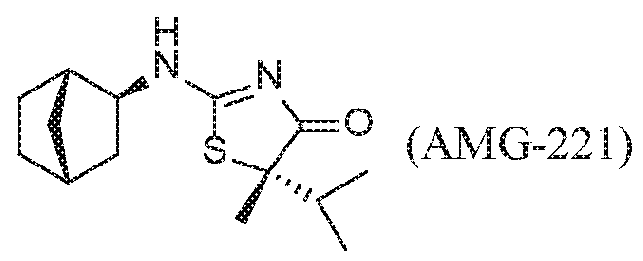
5. The method of any one of claims 1 to 3, wherein the 11β -hydroxy steroid dehydrogenase type 1 (HSDl Ιβ ΐ ) inhibitor is selected from:


pharmaceutically acceptable salts thereof.
6, The method of any one of claims I to 3, wherein the corticotropin releasing hormone receptor type 1 (CRHRl) antagonist is NB 1-35965:

7. The method of any one of claims 1 to 3, wherein the corticotropin releasing hormone receptor type 1 (CRHRl) antagonist is selected from:


8. A compound that is an inhibitor of I Ιβ-hydroxysteroid dehydrogenase type 1 (HSDl Ιβΐ) or an antagonist of corticotropin releasing hormone type 1
receptor (CRHR.1) for use in treating an emotional or psychological symptom of Fragile X Syndrome (FXS).
9 Use of an inhibitor of 1 Ιβ-hydroxysteroid dehydrogenase type 1
(HSD l 1 |3l) or an antagonist of corticotropin releasing hormone type 1 receptor (CRHR1) for the manufacture of a medicament for treating an emotional or psychological symptom of Fragile X Syndrome (FXS).
10. The compound or use according to claim 8 or 9, wherein the emotional or psychological symptom of FXS is selected from chronic anxiety, social aversion, obsessive compulsive behavior, self-injurious behavior, aggression,
perseverative behavior, and any combination thereof.
11. The compound or use according to claim i 0, wherein the emotional or psychological symptom is a chronic anxiety selected from generalized anxiety, social anxiety, specific phobias, novelty anxiety, and combinations thereof.
12. The compound or use according to any one of claims 8 - 11, wherein the Γΐβ-hydroxysteroid dehydrogenase type 1 (HSDl Ι βΐ) inhibitor is AMG-221 :

13. The compound or use according to any one of claims 8 - 1 1, wherein the Ι ΐβ-hydroxysteroid dehydrogenase type 1 (HSDl Ι βΐ) inhibitor is selected from :


pharmaceutically acceptable salts thereof.
14, The compound or use according to any one of claims 8 - 1 1 , wherein the corticotropin releasing hormone receptor type 1 (CRHRl) antagonist is NBI- 35965 ;

15. The compound or use according to any one of claims 8 - 1 1 , wherein the corticotropin releasing hormone receptor type 1 (CRHRl) antagonist is


Applications Claiming Priority (2)
| Application Number | Priority Date | Filing Date | Title |
|---|---|---|---|
| US201762571874P | 2017-10-13 | 2017-10-13 | |
| US62/571,874 | 2017-10-13 |
Publications (1)
| Publication Number | Publication Date |
|---|---|
| WO2019075394A1 true WO2019075394A1 (en) | 2019-04-18 |
Family
ID=64051810
Family Applications (1)
| Application Number | Title | Priority Date | Filing Date |
|---|---|---|---|
| PCT/US2018/055703 Ceased WO2019075394A1 (en) | 2017-10-13 | 2018-10-12 | Compounds for treatment of emotional/psychological symptoms in fragile x syndrome |
Country Status (1)
| Country | Link |
|---|---|
| WO (1) | WO2019075394A1 (en) |
Cited By (1)
| Publication number | Priority date | Publication date | Assignee | Title |
|---|---|---|---|---|
| EP4516309A1 (en) * | 2023-09-01 | 2025-03-05 | Consejo Superior de Investigaciones Cientificas | Crhr1 agonists for use in the treatment of social anxiety disorders |
-
2018
- 2018-10-12 WO PCT/US2018/055703 patent/WO2019075394A1/en not_active Ceased
Non-Patent Citations (3)
| Title |
|---|
| CARLO PARIBELLO ET AL: "Open-label add-on treatment trial of minocycline in fragile X syndrome", BMC NEUROLOGY, 11 October 2010 (2010-10-11), England, pages 91 - 91, XP055541472, Retrieved from the Internet <URL:https://bmcneurol.biomedcentral.com/track/pdf/10.1186/1471-2377-10-91> DOI: 10.1186/1471-2377-10-91 * |
| JESSICA EZZELL HUNTER ET AL: "Depression and anxiety symptoms among women who carry the FMR1 premutation: Impact of raising a child with fragile X syndrome is moderated by CRHR1 polymorphisms", AMERICAN JOURNAL OF MEDICAL GENETICS PART B: NEUROPSYCHIATRIC GENETICS, vol. 159B, no. 5, 9 May 2012 (2012-05-09), pages 549 - 559, XP055540727, ISSN: 1552-4841, DOI: 10.1002/ajmg.b.32061 * |
| NOLAN S O ET AL: "The effects of dietary supplementation with n-3 fatty acids on the behavioral and neuroinflammatory phenotype of the Fmr1 knockout mouse (24th Annual PsychoNeuroImmunology Scientific Meeting)", BRAIN, BEHAVIOR AND IMMUNITY, vol. 66, 7 June 2017 (2017-06-07) - 10 June 2017 (2017-06-10), XP085238977, ISSN: 0889-1591, DOI: 10.1016/J.BBI.2017.07.114 * |
Cited By (2)
| Publication number | Priority date | Publication date | Assignee | Title |
|---|---|---|---|---|
| EP4516309A1 (en) * | 2023-09-01 | 2025-03-05 | Consejo Superior de Investigaciones Cientificas | Crhr1 agonists for use in the treatment of social anxiety disorders |
| WO2025046136A1 (en) * | 2023-09-01 | 2025-03-06 | Consejo Superior De Investigaciones Científicas | Crhr1 agonists for use in the treatment of social anxiety disorders |
Similar Documents
| Publication | Publication Date | Title |
|---|---|---|
| JP2009535321A (en) | N- (2-thiazolyl) amide derivatives as GSK-3 inhibitors | |
| JP6073377B2 (en) | Novel thiadiazolidinediones as GSK-3 inhibitors | |
| EP3386506B1 (en) | Modulators of kv3 channels to treat pain | |
| AU2014204831B2 (en) | Benzylideneguanidine derivatives and therapeutic use for the treatment of protein misfolding diseases | |
| PT2663561E (en) | Novel heterocyclic derivatives and their use in the treatment of neurological disorders | |
| MX2008012492A (en) | Diarylthiohydantoin compounds. | |
| BR112014003378B1 (en) | Piperidine-dihydrothienopyrimidine sulfoxides, their anhydrous crystalline forms of form a, b and their dihydrate crystalline form of form c, their use and pharmaceutical composition comprising them | |
| US20230374143A1 (en) | A sortilin antagonist for use in the prevention or treatment of hearing loss | |
| TW200840573A (en) | Heterocyclic compounds and their methods of use | |
| EP2219649A2 (en) | Use of mnk inhibitors for the treatment of alzheimer's disease | |
| US12466834B2 (en) | Imidazodiazepinediones and methods of use thereof | |
| JP6427192B2 (en) | V1a Antagonist for Treating Phase Shift Sleep Disorders | |
| Kesavapany et al. | Peptides derived from Cdk5 activator p35, specifically inhibit deregulated activity of Cdk5 | |
| Baldwin et al. | Discovery of MDI-114215: A potent and selective LIMK inhibitor to treat Fragile X syndrome | |
| KR101565430B1 (en) | Composition for prevention or treatment of cancer comprising N-methylenenaphtho[2,1-b]furan-2-carbohydrazide derivatives as an active ingredient | |
| Güzeldemirci et al. | Synthesis and aldose reductase inhibitory effect of some new hydrazinecarbothioamides and 4-thiazolidinones bearing an imidazo [2, 1-b] thiazole moiety | |
| CA2856424A1 (en) | A method to enhance cognition | |
| KR20200108839A (en) | C5AR inhibitors for use in the treatment of chemotherapy-induced iatrogenic pain | |
| US20230144901A1 (en) | Sortilin antagonists for use in the treatment of diabetic retinopathy | |
| US9359336B2 (en) | Heterocycle-substituted pyridyl benzothiophenes as kinase inhibitors | |
| US20190256491A1 (en) | Methods For Treatment Of 16P11.2 Microdeletion Syndrome | |
| WO2022192252A1 (en) | Use of nadolol to treat chronic obstructive pulmonary disease by blockage of the arrestin-2 pathway | |
| Tamma et al. | Effect of roscovitine on intracellular calcium dynamics: differential enantioselective responses | |
| KR101705226B1 (en) | Pharmaceutical composition comprising CX-4945 for prevention or treatment of Degenerative Brain Diseases | |
| WO2026055682A1 (en) | Inhibitors of pde11a4 and methods of using same |
Legal Events
| Date | Code | Title | Description |
|---|---|---|---|
| 121 | Ep: the epo has been informed by wipo that ep was designated in this application |
Ref document number: 18796309 Country of ref document: EP Kind code of ref document: A1 |
|
| NENP | Non-entry into the national phase |
Ref country code: DE |
|
| 122 | Ep: pct application non-entry in european phase |
Ref document number: 18796309 Country of ref document: EP Kind code of ref document: A1 |