WO2019061600A1 - 获得色域映射拟合函数的方法及装置 - Google Patents
获得色域映射拟合函数的方法及装置 Download PDFInfo
- Publication number
- WO2019061600A1 WO2019061600A1 PCT/CN2017/107128 CN2017107128W WO2019061600A1 WO 2019061600 A1 WO2019061600 A1 WO 2019061600A1 CN 2017107128 W CN2017107128 W CN 2017107128W WO 2019061600 A1 WO2019061600 A1 WO 2019061600A1
- Authority
- WO
- WIPO (PCT)
- Prior art keywords
- data
- gamut
- color
- color gamut
- source
- Prior art date
- Legal status (The legal status is an assumption and is not a legal conclusion. Google has not performed a legal analysis and makes no representation as to the accuracy of the status listed.)
- Ceased
Links
Images


Classifications
-
- G—PHYSICS
- G09—EDUCATION; CRYPTOGRAPHY; DISPLAY; ADVERTISING; SEALS
- G09G—ARRANGEMENTS OR CIRCUITS FOR CONTROL OF INDICATING DEVICES USING STATIC MEANS TO PRESENT VARIABLE INFORMATION
- G09G5/00—Control arrangements or circuits for visual indicators common to cathode-ray tube indicators and other visual indicators
- G09G5/02—Control arrangements or circuits for visual indicators common to cathode-ray tube indicators and other visual indicators characterised by the way in which colour is displayed
- G09G5/022—Control arrangements or circuits for visual indicators common to cathode-ray tube indicators and other visual indicators characterised by the way in which colour is displayed using memory planes
Definitions
- the present application relates to the field of panel display technologies, and in particular, to a method and apparatus for obtaining a gamut mapping fitting function.
- gamut mapping is inevitable in most cases.
- the conversion of a color image from one color medium (display device) to another color medium (another display device) inevitably results in a certain color distortion. It is generally required to map a specific color gamut through a gamut mapping function so that the picture presented by the display panel satisfies the display effect of the color gamut.
- a common simple method is to perform a fitting of a gamut mapping function using a 24-color card.
- the fitting function is usually fitted with a function with a higher power.
- the form of the fitting function of the gamut mapping is:
- the inventor of the present application found in the long-term research and development process that: first, after obtaining a more accurate fitting function, it is prone to large errors in individual color points; secondly, it is assumed that there is no large individual color point. Under the premise of error, high-power functions also have high difficulty and cost requirements in the implementation of software and hardware.
- the technical problem mainly solved by the present application is to provide a method and a device for obtaining a gamut mapping fitting function, which can effectively reduce the power of the fitting function and increase the accuracy, and when the fitting function is implemented in software and hardware When it comes up, it can reduce the difficulty and cost.
- a technical solution adopted by the present application is to provide a method for obtaining a gamut mapping fitting function, the method comprising: acquiring a standard color space corresponding to a plurality of known colors of a target color gamut a plurality of first data; respectively mapping the plurality of first data corresponding to the plurality of known color points to the plurality of second data of the standard color space of the source gamut; and the target color gamut Dividing the source color gamut into a plurality of mutually corresponding blocks, and dividing the plurality of first data And classifying the plurality of second data according to the block to obtain a plurality of first data and a plurality of second data in each block; and passing through the plurality of first data and multiple in each block The second data respectively obtain the fitting function of the respective blocks.
- an apparatus for obtaining a gamut mapping fitting function comprising: a processor, a memory, and a communication circuit, respectively, the processor and the a memory and the communication circuit coupled, wherein the processor is configured to control the communication circuit to acquire a plurality of first data of a standard color space corresponding to a plurality of known colors of a target color gamut, and control the memory to Performing storage; the processor is configured to respectively map the plurality of first data corresponding to the plurality of known color points to the plurality of second data of the standard color space of the source color gamut; and the target color gamut And dividing the source color gamut into a plurality of mutually corresponding blocks, and classifying the plurality of first data and the plurality of second data according to the block to obtain each block a plurality of first data and a plurality of second data; obtaining a fitting function of the respective block by the plurality of first data and the plurality of second data in each block
- the standard color space is an RGB color space, and the first data and the second data are both RGB data; the plurality of known colors are colors of 24 color cards.
- another technical solution adopted by the present application is to provide a device having a storage function on which program data is stored, and when the program data is executed by the processor, the steps in the method as described above are implemented.
- the application of the present application is: different from the prior art, the present application acquires a plurality of first data of a standard color space corresponding to a plurality of known colors of the target color gamut; respectively Corresponding plurality of first data are respectively mapped into a plurality of second data of the standard color space of the source gamut; dividing the target gamut and the source gamut into a plurality of blocks, and The plurality of first data and the plurality of second data are classified according to the block to obtain a plurality of first data and a plurality of second data in each block; The plurality of first data and the plurality of second data respectively obtain a fitting function of the respective blocks.
- the target color gamut and the source color gamut are divided into a plurality of mutually corresponding blocks, and the plurality of first data and the plurality of second data are classified according to the blocks, thereby obtaining a plurality of blocks in each block.
- a first data and a plurality of second data respectively obtaining a fitting function of the respective blocks by the plurality of first data and the plurality of second data in each block, each block being smaller than the original color gamut,
- the number of first data and second data in each block is also less than the original first data and second data, the first data and the second in each block
- the data is more targeted, in this way, it is possible to effectively reduce the power of the fitting function and increase the accuracy, and when the fitting Functions can reduce the difficulty and cost requirements when implementing software and hardware.
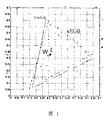
- 1 is a schematic diagram of mapping a specific target display panel by using standard RGB as a color space and a color gamut;
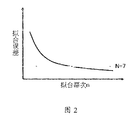
- FIG. 2 is a schematic diagram showing the relationship between the fitting error and the fitting power of the fitting function of the gamut mapping in FIG. 1;
- FIG. 3 is a flow chart of an embodiment of a method for obtaining a gamut mapping fitting function according to the present application
- FIG. 4 is a schematic diagram of a chart of the source gamut digit value and the target gamut digit value that have been obtained and has been segmented;
- FIG. 5 is a schematic diagram showing the relationship between the fitting power of the fitting function of the three blocks in FIG. 4 and the fitting error time;
- FIG. 6 is a schematic structural diagram of an apparatus for obtaining a gamut mapping fitting function according to the present application.
- FIG. 7 is a schematic structural diagram of an embodiment of an apparatus having a storage function according to the present application.
- Each type of color reproduction device or medium or medium exhibits different color expression ranges due to its different color structure and mechanism.
- the color range is its color gamut, which is the color spectrum range that the device can reproduce.
- the source gamut and the destination gamut are generally different. They have the following two relationships: First, the target device gamut completely contains the source device gamut, in which case only one-to-one color mapping is required; second, the target device gamut is smaller than the source device gamut or the gamut is partially overlapped , then you need to use a reasonable gamut mapping algorithm, The color in the source device that is outside the target device gamut is mapped to the target device gamut.
- Color spaces also known as color models (also known as color spaces, color spaces, color models, color systems, etc.), are used to illustrate color in some generally acceptable ways under certain standards.
- the color model is an illustration of the coordinate system and subspace. Each color in the system has a single point representation. Most of the color models used are hardware or application oriented. There are many kinds of color space, commonly used RGB, CMY, HSV, HIS, Lab and so on.
- RGB Red Green Blue
- RGB Red Green Blue
- CMY is the color space used in industrial printing. It corresponds to RGB.
- the simple analog RGB is derived from the object's illumination, while the CMY is based on the reflected light.
- HSV and HSI color spaces are proposed for better digital processing of colors.
- HSX color spaces where X may be V or I, depending on the specific use, X has different meanings.
- H is the hue
- S is the saturation
- I is the intensity.
- the Lab color space is used for computer tone adjustment and color correction. It is implemented independently of the device's color model. This method is used to map the device to the model and the model's color distribution quality changes.
- gamut mapping Since different devices adopt different color spaces, in order to implement gamut mapping, it is first necessary to select a uniform, device-independent standard color space, and convert the device color space into the standard color space for description of the device gamut.
- the color spaces frequently used in gamut mapping are CIERGB, CIELAB, CIEXYZ, and CIELUV.
- FIG. 1 is a schematic diagram of mapping a specific target display panel (target color gamut, labeled Target) in a color gamut (sRGB in the figure).
- target color gamut labeled Target
- sRGB color gamut
- a common simple method is to perform a fitting of a gamut mapping function using a 24-color card.
- the fitting function is usually fitted with a function with a higher power.
- the form of the fitting function of the gamut mapping is:
- the present application divides a target color gamut and a source color gamut into a plurality of mutually corresponding blocks, and classifies the plurality of first data and the plurality of second data according to the blocks, thereby obtaining each block.
- a plurality of first data and a plurality of second data respectively obtaining a fitting function of the respective blocks by the plurality of first data and the plurality of second data in each block, each block being changed from the original color gamut Small, more targeted and targeted, the number of first data and second data in each block is also smaller than the original first data and second data, and the first data and each block are The second data is more targeted.
- the power of the fitting function can be effectively reduced and the accuracy can be increased, and when the fitting function is implemented in software and hardware, the difficulty and cost can be reduced. .
- FIG. 3 is a flowchart of an implementation manner of a method for obtaining a gamut mapping fitting function according to the present application, where the method includes:
- Step S101 Acquire a plurality of first data of a standard color space corresponding to a plurality of known colors of the target color gamut.
- the target color gamut is the color gamut of the target panel. Multiple known colors are used to calibrate the primary or key colors. The requirements can represent the gamut range.
- the number of colors that is, the number of color points
- the number of known colors is mutually constrained in terms of accuracy and calculation amount after color gamut conversion.
- the accuracy after conversion is lower, the corresponding calculation amount is smaller, and the requirements for hardware and equipment are lower.
- the plurality of known colors are colors of a 24-color card.
- the plurality of known colors can also be standard RGB three colors, or other representative known colors.
- Color space also known as color model (also known as color space, color space, color model, color system, etc.), is used to illustrate color in some generally acceptable ways under certain standards.
- the color model is an illustration of the coordinate system and subspace. Each color in the system has a single point representation. Most of the color models used are hardware or application oriented. There are many kinds of color space, commonly used RGB, CMY, HSV, HIS, Lab and so on.
- gamut mapping Since different devices adopt different color spaces, in order to implement gamut mapping, it is first necessary to select a uniform, device-independent standard color space, and convert the device color space into the standard color space for description of the device gamut.
- the color spaces frequently used in gamut mapping are CIERGB, CIELAB, CIEXYZ, and CIELUV.
- the standard color space is an RGB color space
- the first data is RGB data.
- RGB is the color of the three channels of red, green and blue. This standard includes almost all the colors that human vision can perceive. It is one of the most widely used color systems.
- Step S102 respectively map the plurality of first data corresponding to the plurality of known color points to the plurality of second data of the standard color space of the source color gamut.
- the source gamut refers to the color gamut of the source panel.
- the gamut mapping needs to map the color of the source gamut to the color of the target gamut.
- the plurality of first data are data corresponding to a plurality of known colors in the target color gamut, and the plurality of first data corresponding to the plurality of known color points are respectively mapped to the standard color space of the source gamut.
- a plurality of second data that is, mapping a plurality of known colors in the target gamut to corresponding colors in the source gamut.
- the second data is also RGB data.
- step S102 may specifically be: mapping, by using a transformation matrix, a plurality of first data corresponding to a plurality of known color points to a plurality of second data of a source color gamut.
- the Transformer Matrix (TM) is a concept in mathematical linear algebra.
- linear transformations can be represented by matrices. If T is a linear transformation that maps Rn to Rm, and x is a column vector with n elements, the matrix A of m ⁇ n is called the transformation matrix of T.
- the mapping is performed by the conversion matrix, and the calculation is relatively simple. In practical applications, the mapping of step S102 can also be calculated by a polynomial equation or the like.
- Step S103 dividing the target color gamut and the source color gamut into a plurality of mutually corresponding blocks, and classifying the plurality of first data and the plurality of second data according to the blocks to obtain each block. a plurality of first data and a plurality of second data.
- a gamut refers to a range of color spectra that a device or medium or medium can reproduce.
- a block refers to a smaller range of color spectra that can be reproduced than a target gamut and a source gamut.
- step S103 the target color gamut and the source color gamut are divided into a plurality of blocks, which may include: dividing the target color gamut and the source color gamut into three blocks. .
- the above-described triangular division method is exemplified, and other shapes may be divided in actual operation.
- the number of partitions into three blocks is only an example, and the actual operation may be other ways of dividing.
- the division is performed by a vertex, and the actual division may be performed by an arbitrary point.
- FIG. 4 is a source gamut digital value (ie, a plurality of second data, and is RGB data) and a target color gamut digital value (ie, a plurality of first data, and is RGB data) that have been obtained, And has been split.
- the target color gamut and the source color gamut are divided into corresponding three blocks, and the source gamut digit value and the target gamut digit value of the sequence number 1-8 are located in the first block, and the source color of the serial number is 9-16.
- the domain digit value and the target gamut digit value are located in the second block, and the source gamut digit value and the target gamut digit value of sequence number 17-24 are located in the third block.
- Step S104 obtaining a fitting function of the respective block by using the plurality of first data and the plurality of second data in each block respectively.
- a plurality of first data and a plurality of second data in each block respectively obtain a fitting function of the respective blocks, each block becomes smaller than the original color gamut, and is more targeted and targeted, each The number of the first data and the second data in the blocks is also smaller than the original first data and the second data, and the first data and the second data in each block are more targeted. It can effectively reduce the power of the fitting function and increase the accuracy, and when the fitting function is implemented in software and hardware, it can reduce the difficulty and cost.
- the color gamut A and the color gamut B are the target color gamut and the source color gamut respectively, and are divided into three vertices, and the color gamut A and the color gamut B are divided into corresponding three blocks, as shown in FIG. 4 .
- the fitting powers of the fitting functions of the three blocks are n1, n2, and n3, respectively. As can be seen from the figure, n1, n2, and n3 can effectively obtain smaller values, which reduces the computational requirements and reduces the fitting error. And provide higher fitting accuracy.
- FIG. 6 is a schematic structural diagram of an apparatus for obtaining a gamut mapping fitting function according to the present application.
- the device in this embodiment may be a display panel or an intermediate device connected to the display panel;
- the steps in the above methods please refer to the above method section, which will not be described here.
- the apparatus comprises: a processor 1, a memory 2, and a communication circuit 3, the processor 1 being coupled to the memory 2 and the communication circuit 3, respectively, wherein:
- the processor 1 is configured to control the communication circuit 3 to acquire a plurality of first data of a standard color space corresponding to a plurality of known colors of the target color gamut, and control the memory 2 to store the same; the processor 1 is configured to use the plurality of The plurality of first data corresponding to the color point respectively are mapped to the plurality of second data of the standard color space of the source color gamut; the target color gamut and the source color gamut are divided into a plurality of mutually corresponding blocks, and Dividing the plurality of first data and the plurality of second data into blocks to obtain a plurality of first data and a plurality of second data in each block; passing the plurality of first data in each block And a plurality of second data respectively obtain a fitting function of the respective blocks.
- the standard color space is an RGB color space
- the first data and the second data are both RGB data.
- a plurality of known colors are colors of 24 color cards.
- the processor 1 is further configured to map the plurality of first data corresponding to the plurality of known color points to the plurality of second data of the source color gamut respectively by using the conversion matrix.
- the processor 1 is further configured to divide the target color gamut and the source color gamut into three blocks.
- FIG. 7 is a schematic structural diagram of an embodiment of a device having a storage function, where the device 50 stores program data 501, and when the program data 501 is executed by the processor, the steps in the method according to any one of the above methods are implemented. . Please refer to the above method section for related content, which will not be described here.
- the embodiment of the present application acquires a plurality of first data of a standard color space corresponding to a plurality of known colors of the target color gamut; and maps the plurality of first data corresponding to the plurality of known color points to a source gamut a plurality of second data of the standard color space; performing the target color gamut and the source color gamut Dividing into a plurality of blocks, and classifying the plurality of first data and the plurality of second data according to the block to obtain a plurality of first data and a plurality of blocks in each block Second data; obtaining a fitting function of the respective block by the plurality of first data and the plurality of second data in each block respectively.
- the target color gamut and the source color gamut are divided into a plurality of mutually corresponding blocks, and the plurality of first data and the plurality of second data are classified according to the blocks, thereby obtaining a plurality of blocks in each block.
- a first data and a plurality of second data respectively obtaining a fitting function of the respective blocks by the plurality of first data and the plurality of second data in each block, each block being smaller than the original color gamut, And more targeted and targeted, the number of first data and second data in each block is also less than the original first data and second data, the first data and the second in each block The data is more targeted. In this way, the power of the fitting function can be effectively reduced and the accuracy can be increased.
- the fitting function is implemented in software and hardware, the difficulty and cost can be reduced.
Landscapes
- Engineering & Computer Science (AREA)
- Physics & Mathematics (AREA)
- Computer Hardware Design (AREA)
- General Physics & Mathematics (AREA)
- Theoretical Computer Science (AREA)
- Color Image Communication Systems (AREA)
- Image Processing (AREA)
- Facsimile Image Signal Circuits (AREA)
Abstract
一种获得色域映射拟合函数的方法及装置,该方法包括:获取目标色域的多个已知颜色分别对应的标准色空间的多个第一数据(S101);将多个已知颜色点分别对应的多个第一数据分别映射成来源色域的标准色空间的多个第二数据(S102);将目标色域和来源色域进行分割而划分成多个相互对应的区块,并将多个第一数据和多个第二数据按照区块进行分类,以获得每个区块内的多个第一数据和多个第二数据(S103);通过每个区块内的多个第一数据和多个第二数据分别获得各自区块的拟合函数(S104)。通过该方式,能够有效降低拟合函数的幂次及增加准确度,且当该拟合函数在软件及硬件的实际操作时,能够降低困难度及成本需求。
Description
本申请涉及面板显示技术领域,特别是涉及一种获得色域映射拟合函数的方法及装置。
在彩色图像的跨媒质复制中,由于不同媒质有不同的色域,多数情况下进行色域映射是不可避免的。彩色图像从一种颜色媒质(显示设备)转换到另一种颜色媒质(另一显示设备)的色域映射,必然导致一定的颜色失真。一般需要透过色域映射函数对特定色域进行映射,以使显示面板呈现出的画面满足该其色域的显示效果。
现有技术中,一般常见简易方式可以为使用24色卡进行色域映射函数的拟合,为求得较为精密的拟合结果,该拟合函数通常使用幂数较高的函数进行拟合,色域映射的拟合函数形式为:

本申请的发明人在长期的研发过程中发现:第一、在求得较为精准的拟合函数后,也容易出现个别色点存在较大误差;第二、假设在个别色点不存在较大误差的前提下,高幂次函数在软件及硬件的实作上也存在较高的困难度及成本需求。
【发明内容】
本申请主要解决的技术问题是提供一种获得色域映射拟合函数的方法及装置,能够有效降低拟合函数的幂次及增加准确度,且当该拟合函数在软件及硬件的实作上时,能够降低困难度及成本需求。
为解决上述技术问题,本申请采用的一个技术方案是:提供一种获得色域映射拟合函数的方法,所述方法包括:获取目标色域的多个已知颜色分别对应的标准色空间的多个第一数据;将所述多个已知颜色点分别对应的多个第一数据分别映射成来源色域的所述标准色空间的多个第二数据;将所述目标色域和所述来源色域进行分割而划分成多个相互对应的区块,并将所述多个第一数据
和所述多个第二数据按照所述区块进行分类,以获得每个区块内的多个第一数据和多个第二数据;通过每个区块内的多个第一数据和多个第二数据分别获得各自区块的拟合函数。
为解决上述技术问题,本申请采用的另一个技术方案是:提供一种获得色域映射拟合函数的装置,所述装置包括:处理器、存储器以及通信电路,所述处理器分别与所述存储器以及所述通信电路耦合,其中,所述处理器用于控制所述通信电路获取目标色域的多个已知颜色分别对应的标准色空间的多个第一数据,并控制所述存储器对其进行存储;所述处理器用于将所述多个已知颜色点分别对应的多个第一数据分别映射成来源色域的所述标准色空间的多个第二数据;将所述目标色域和所述来源色域进行分割而划分成多个相互对应的区块,并将所述多个第一数据和所述多个第二数据按照所述区块进行分类,以获得每个区块内的多个第一数据和多个第二数据;通过每个区块内的多个第一数据和多个第二数据分别获得各自区块的拟合函数;
其中,所述标准色空间为RGB色空间,所述第一数据和所述第二数据均是RGB数据;所述多个已知颜色为24色卡的颜色。
为解决上述技术问题,本申请采用的又一个技术方案是:提供一种具有存储功能的装置,其上存储有程序数据,所述程序数据被处理器执行时实现如上所述方法中的步骤。
本申请的有益效果是:区别于现有技术的情况,本申请获取目标色域的多个已知颜色分别对应的标准色空间的多个第一数据;将所述多个已知颜色点分别对应的多个第一数据分别映射成来源色域的所述标准色空间的多个第二数据;将所述目标色域和所述来源色域进行分割而划分成多个区块,并将所述多个第一数据和所述多个第二数据按照所述区块进行分类,以获得每个区块内的多个第一数据和多个第二数据;通过每个区块内的多个第一数据和多个第二数据分别获得各自区块的拟合函数。由于将目标色域和来源色域进行分割而划分成多个相互对应的区块,并将多个第一数据和多个第二数据按照区块进行分类,获得每个区块内的多个第一数据和多个第二数据;通过每个区块内的多个第一数据和多个第二数据分别获得各自区块的拟合函数,每个区块相对原来的色域变小,且更有目标性和针对性,每个区块内的第一数据和第二数据的数量相对原来的第一数据和第二数据也变少,每个区块内的第一数据和第二数据更有针对性,通过这种方式,能够有效降低拟合函数的幂次及增加准确度,且当该拟合
函数在软件及硬件的实作上时,能够降低困难度及成本需求。
为了更清楚地说明本申请实施例中的技术方案,下面将对实施例描述中所需要使用的附图作简单地介绍,显而易见地,下面描述中的附图仅仅是本申请的一些实施例,对于本领域普通技术人员来讲,在不付出创造性劳动的前提下,还可以根据这些附图获得其他的附图。其中:
图1是以标准RGB为色空间一色域对一特定目标显示面板进行映射的示意图;
图2是图1中色域映射的拟合函数的拟合误差与拟合幂次的关系示意图;
图3是本申请获得色域映射拟合函数的方法一实施方式的流程图;
图4是已经取得的来源色域数位值和目标色域数位值并已经进行分割的图表示意图;
图5是图4中三个区块的拟合函数的拟合幂次与拟合误差时间的关系示意图;
图6是本申请获得色域映射拟合函数的装置一实施方式的结构示意图;
图7是本申请具有存储功能的装置一实施方式的结构示意图。
下面将结合本申请实施例中的附图,对本申请实施例中的技术方案进行清楚、完整地描述,显然,所描述的实施例仅仅是本申请一部分实施例,而不是全部实施例。基于本申请中的实施例,本领域普通技术人员在没有做出创造性的劳动前提下所获得的所有其他实施例,都属于本发明保护的范围。
在详细介绍本申请之前,先说明一下与本申请相关的概念及现有技术的情况。
每一种彩色复制设备或媒介或媒质由于其表现颜色的结构、机理不同,因而呈现出不同的颜色表现范围,该颜色范围就是其色域(color gamut),即设备能够再现的颜色光谱范围。
在彩色图像复制过程中,源设备色域(original gamut)和目标设备色域(destination gamut)一般是不同的。它们有以下两种关系:一是目标设备色域完全包含源设备色域,此时只需要进行一对一的颜色映射;二是目标设备色域小于源设备色域或两者色域部分重叠,这时需要使用合理的色域映射算法,将
源设备中位于目标设备色域外的颜色映射到目标设备色域内。
颜色空间也称彩色模型(又称彩色空间、色空间、颜色模型、彩色系统,等等),它的用途是在某些标准下用通常可接受的方式对彩色加以说明。
本质上,彩色模型是坐标系统和子空间的阐述。位于系统的每种颜色都有单个点表示。采用的大多数颜色模型都是面向硬件或面向应用的。颜色空间有许多种,常用有RGB、CMY、HSV、HIS、Lab等。
RGB(红绿蓝)是依据人眼识别的颜色定义出的空间,可表示大部分颜色。它将色调、亮度、饱和度三个量放在一起表示,很难分开。它是最通用的面向硬件的彩色模型。该模型用于彩色监视器和一大类彩色视频摄像。
CMY是工业印刷采用的颜色空间。它与RGB对应。简单的类比RGB来源于是物体发光,而CMY是依据反射光得到的。具体应用如打印机:一般采用四色墨盒,即CMY加黑色墨盒。
HSV、HSI两个颜色空间都是为了更好的数字化处理颜色而提出来的。有许多种HSX颜色空间,其中的X可能是V,也可能是I,依据具体使用而X含义不同。H是色调,S是饱和度,I是强度。
Lab颜色空间用于计算机色调调整和彩色校正。它独立于设备的彩色模型实现。这一方法用来把设备映射到模型及模型本社的彩色分布质量变化。
由于不同设备采用的色空间不同,为实现色域映射首先需要选择一个均匀的、与设备无关的标准色空间,将设备色空间转换到该标准色空间中进行设备色域的描述。在色域映射中经常使用的色空间是CIERGB、CIELAB、CIEXYZ和CIELUV等。
参见图1,图1是以标准RGB为色空间,一色域(图中标示sRGB)对一特定目标显示面板(目标色域,图中标示Target)进行映射的示意图。从图1中可知,标示sRGB的色域与标示Target的色域部分重叠,这时需要使用合理的色域映射算法,将标示sRGB的色域中位于标示Target的色域外的颜色映射到标示Target的色域内。
现有技术中,一般常见简易方式可以为使用24色卡进行色域映射函数的拟合,为求得较为精密的拟合结果,该拟合函数通常使用幂数较高的函数进行拟合,色域映射的拟合函数形式为:

上述色域映射的拟合函数的拟合误差与拟合幂次的关系图可以参见图2,从图中可知,拟合次数达到7次时,拟合误差才在可以接受的范围内。
上述方式存在几个缺点:第一、在求得较为精准的拟合函数后,也容易出现个别色点存在较大误差;第二、假设在个别色点不存在较大误差的前提下,高幂次函数在软件及硬件的实作上也存在较高的困难度及成本需求。
本申请由于将目标色域和来源色域进行分割而划分成多个相互对应的区块,并将多个第一数据和多个第二数据按照区块进行分类,获得每个区块内的多个第一数据和多个第二数据;通过每个区块内的多个第一数据和多个第二数据分别获得各自区块的拟合函数,每个区块相对原来的色域变小,且更有目标性和针对性,每个区块内的第一数据和第二数据的数量相对原来的第一数据和第二数据也变少,每个区块内的第一数据和第二数据更有针对性,通过这种方式,能够有效降低拟合函数的幂次及增加准确度,且当该拟合函数在软件及硬件的实作上时,能够降低困难度及成本需求。
下面将结合本申请实施例中的附图,对本申请实施例中的技术方案进行清楚、完整地描述。
参阅图3,图3是本申请获得色域映射拟合函数的方法一实施方式的流程图,该方法包括:
步骤S101:获取目标色域的多个已知颜色分别对应的标准色空间的多个第一数据。
目标色域即是目标面板的色域,多个已知颜色是用来标定主要或者关键颜色使用的,要求可以代表色域范围。
已知颜色的数量,即色点的多少在色域转换后的准确度和计算量上是相互制约的。选择的已知颜色的数量越多,色域转换后的准确度越高,相应的计算量也就越大,对硬件和设备的要求也越高;选择的已知颜色的数量少,色域转换后的准确度低些,相应的计算量也就小些,对硬件和设备的要求也低些。在实际应用中,需要权衡准确度和计算量之间的实际需求而确定已知颜色的数量。
在一实施方式中,多个已知颜色为24色卡的颜色。当然,多个已知颜色也可以为标准RGB三色,或者其他有代表性的已知颜色。
色空间也称彩色模型(又称彩色空间、颜色空间、颜色模型、彩色系统,等等),它的用途是在某些标准下用通常可接受的方式对彩色加以说明。本质上,彩色模型是坐标系统和子空间的阐述。位于系统的每种颜色都有单个点表示。
采用的大多数颜色模型都是面向硬件或面向应用的。颜色空间有许多种,常用有RGB、CMY、HSV、HIS、Lab等。
由于不同设备采用的色空间不同,为实现色域映射首先需要选择一个均匀的、与设备无关的标准色空间,将设备色空间转换到该标准色空间中进行设备色域的描述。在色域映射中经常使用的色空间是CIERGB、CIELAB、CIEXYZ和CIELUV等。
在一实施方式中,标准色空间为RGB色空间,第一数据是RGB数据。RGB即是代表红、绿、蓝三个通道的颜色,这个标准几乎包括了人类视力所能感知的所有颜色,是目前运用最广的颜色系统之一。
步骤S102:将多个已知颜色点分别对应的多个第一数据分别映射成来源色域的标准色空间的多个第二数据。
来源色域是指来源面板的色域。在本申请实施方式中,色域映射需要将来源色域的颜色映射至目标色域的颜色。在本步骤中,多个第一数据是目标色域中多个已知颜色对应的数据,将多个已知颜色点分别对应的多个第一数据分别映射成来源色域的标准色空间的多个第二数据,也就是说:将目标色域中的多个已知颜色映射至来源色域中的对应的颜色。
在本实施方式中,如果第一数据是RGB数据,那么第二数据也是RGB数据。
其中,在一实施方式中,步骤S102具体可以是:通过转换矩阵,将多个已知颜色点分别对应的多个第一数据分别映射成来源色域的多个第二数据。
转换矩阵(Transformer Matrix,简称TM)是数学线性代数中的一个概念。在线性代数中,线性变换能够用矩阵表示。如果T是一个把Rn映射到Rm的线性变换,且x是一个具有n个元素的列向量,那么把m×n的矩阵A,称为T的转换矩阵。本实施方式通过转换矩阵进行映射,计算会比较简单。在实际应用中,还可以采用多项式方程等方法对步骤S102的映射进行计算。
步骤S103:将目标色域和来源色域进行分割而划分成多个相互对应的区块,并将多个第一数据和多个第二数据按照区块进行分类,以获得每个区块内的多个第一数据和多个第二数据。
色域是指设备或媒介或媒质能够再现的颜色光谱范围,区块是指相比目标色域和来源色域,能够再现的颜色光谱范围更小。将目标色域和来源色域进行分割而划分成多个相互对应的区块,也即是说,将目标色域和来源色域进行分
割而划分成多个相互对应的更小范围的颜色光谱范围。当区块分类后,多个第一数据中各个第一数据属于哪个区块即可一目了然,多个第二数据中各个第二数据属于哪个区块也是一目了然。
在一实施方式中,步骤S103中,将目标色域和来源色域进行分割而划分成多个区块,具体可以包括:将目标色域和来源色域进行三角分割而划分成三个区块。
上述三角分割方式为举例说明,实际操作时可以为其他形状分割方式。当然,分割成区块的数量为3个也仅仅是举例说明,实际操作时可以为其他个数的分割方式。在一实施方式中,上述分割时是由顶点进行分割的方式,实际操作时也可以由任意点进行分割。
例如:参见图4,图4为已经取得的来源色域数位值(即多个第二数据,且是RGB数据)和目标色域数位值(即多个第一数据,且是RGB数据),并已经进行分割。其中,目标色域和来源色域分割为对应的三个区块,序号为1-8的来源色域数位值和目标色域数位值位于第1个区块,序号为9-16的来源色域数位值和目标色域数位值位于第2个区块,序号为17-24的来源色域数位值和目标色域数位值位于第3个区块。
步骤S104:通过每个区块内的多个第一数据和多个第二数据分别获得各自区块的拟合函数。
通过每个区块内的多个第一数据和多个第二数据分别获得各自区块的拟合函数,每个区块相对原来的色域变小,且更有目标性和针对性,每个区块内的第一数据和第二数据的数量相对原来的第一数据和第二数据也变少,每个区块内的第一数据和第二数据更有针对性,通过这种方式,能够有效降低拟合函数的幂次及增加准确度,且当该拟合函数在软件及硬件的实作上时,能够降低困难度及成本需求。
继续参见图4,三个区块中相应拟合函数取得方式分别为:


结合参见图5,色域A和色域B分别为目标色域和来源色域,以三个顶点进行分割,将色域A和色域B分割为对应的三个区块,结合参见图4,三个区块的拟合函数的拟合幂次分别为n1、n2、n3,从图中可知,n1、n2、n3可以有效取得较小的数值,使运算需求降低,拟合误差减小,且提供更高的拟合准确度。
参见图6,图6是本申请获得色域映射拟合函数的装置一实施方式的结构示意图,本实施方式的装置可以是显示面板,也可以是与显示面板连接的中间设备;该装置可以执行上述方法中的步骤,相关内容的详细说明请参见上述方法部分,在此不再赘叙。
该装置包括:处理器1、存储器2以及通信电路3,处理器1分别与存储器2以及通信电路3耦合,其中:
处理器1用于控制通信电路3获取目标色域的多个已知颜色分别对应的标准色空间的多个第一数据,并控制存储器2对其进行存储;处理器1用于将多个已知颜色点分别对应的多个第一数据分别映射成来源色域的标准色空间的多个第二数据;将目标色域和来源色域进行分割而划分成多个相互对应的区块,并将多个第一数据和多个第二数据按照区块进行分类,以获得每个区块内的多个第一数据和多个第二数据;通过每个区块内的多个第一数据和多个第二数据分别获得各自区块的拟合函数。
其中,标准色空间为RGB色空间,第一数据和第二数据均是RGB数据。
其中,多个已知颜色为24色卡的颜色。
其中,处理器1还用于通过转换矩阵,将多个已知颜色点分别对应的多个第一数据分别映射成来源色域的多个第二数据。
其中,处理器1还用于将目标色域和来源色域进行三角分割而划分成三个区块。
参见图7,图7是本申请具有存储功能的装置一实施方式的结构示意图,该装置50上存储有程序数据501,程序数据501被处理器执行时实现如上任一项所述方法中的步骤。相关内容请参见上述方法部分,在此不再赘叙。
本申请实施方式获取目标色域的多个已知颜色分别对应的标准色空间的多个第一数据;将所述多个已知颜色点分别对应的多个第一数据分别映射成来源色域的所述标准色空间的多个第二数据;将所述目标色域和所述来源色域进行
分割而划分成多个区块,并将所述多个第一数据和所述多个第二数据按照所述区块进行分类,以获得每个区块内的多个第一数据和多个第二数据;通过每个区块内的多个第一数据和多个第二数据分别获得各自区块的拟合函数。由于将目标色域和来源色域进行分割而划分成多个相互对应的区块,并将多个第一数据和多个第二数据按照区块进行分类,获得每个区块内的多个第一数据和多个第二数据;通过每个区块内的多个第一数据和多个第二数据分别获得各自区块的拟合函数,每个区块相对原来的色域变小,且更有目标性和针对性,每个区块内的第一数据和第二数据的数量相对原来的第一数据和第二数据也变少,每个区块内的第一数据和第二数据更有针对性,通过这种方式,能够有效降低拟合函数的幂次及增加准确度,且当该拟合函数在软件及硬件的实作上时,能够降低困难度及成本需求。
以上所述仅为本申请的实施方式,并非因此限制本申请的专利范围,凡是利用本申请说明书及附图内容所作的等效结构或等效流程变换,或直接或间接运用在其他相关的技术领域,均同理包括在本申请的专利保护范围内。
Claims (13)
- 一种获得色域映射拟合函数的装置,其中,所述装置包括:处理器、存储器以及通信电路,所述处理器分别与所述存储器以及所述通信电路耦合,其中,所述处理器用于控制所述通信电路获取目标色域的多个已知颜色分别对应的标准色空间的多个第一数据,并控制所述存储器对其进行存储;所述处理器用于将所述多个已知颜色点分别对应的多个第一数据分别映射成来源色域的所述标准色空间的多个第二数据;将所述目标色域和所述来源色域进行分割而划分成多个相互对应的区块,并将所述多个第一数据和所述多个第二数据按照所述区块进行分类,以获得每个区块内的多个第一数据和多个第二数据;通过每个区块内的多个第一数据和多个第二数据分别获得各自区块的拟合函数;其中,所述标准色空间为RGB色空间,所述第一数据和所述第二数据均是RGB数据;所述多个已知颜色为24色卡的颜色。
- 根据权利要求1所述的装置,其中,所述处理器还用于通过转换矩阵,将所述多个已知颜色点分别对应的多个第一数据分别映射成来源色域的多个第二数据。
- 根据权利要求1所述的装置,其中,所述处理器还用于将所述目标色域和所述来源色域进行三角分割而划分成三个区块。
- 一种获得色域映射拟合函数的方法,其中,所述方法包括:获取目标色域的多个已知颜色分别对应的标准色空间的多个第一数据;将所述多个已知颜色点分别对应的多个第一数据分别映射成来源色域的所述标准色空间的多个第二数据;将所述目标色域和所述来源色域进行分割而划分成多个相互对应的区块,并将所述多个第一数据和所述多个第二数据按照所述区块进行分类,以获得每个区块内的多个第一数据和多个第二数据;通过每个区块内的多个第一数据和多个第二数据分别获得各自区块的拟合函数。
- 根据权利要求4所述的方法,其中,所述标准色空间为RGB色空间,所述第一数据和所述第二数据均是RGB数据。
- 根据权利要求4所述的方法,其中,所述多个已知颜色为24色卡的颜色。
- 根据权利要求4所述的方法,其中,所述将所述多个已知颜色点分别对应的多个第一数据分别映射成来源色域的多个第二数据,包括:通过转换矩阵,将所述多个已知颜色点分别对应的多个第一数据分别映射成来源色域的多个第二数据。
- 根据权利要求4所述的方法,其中,所述将所述目标色域和所述来源色域进行分割而划分成多个区块,包括:将所述目标色域和所述来源色域进行三角分割而划分成三个区块。
- 一种具有存储功能的装置,其上存储有程序数据,其中,所述程序数据被处理器执行时实现如下步骤:获取目标色域的多个已知颜色分别对应的标准色空间的多个第一数据;将所述多个已知颜色点分别对应的多个第一数据分别映射成来源色域的所述标准色空间的多个第二数据;将所述目标色域和所述来源色域进行分割而划分成多个相互对应的区块,并将所述多个第一数据和所述多个第二数据按照所述区块进行分类,以获得每个区块内的多个第一数据和多个第二数据;通过每个区块内的多个第一数据和多个第二数据分别获得各自区块的拟合函数。
- 根据权利要求9所述的装置,其中,所述标准色空间为RGB色空间,所述第一数据和所述第二数据均是RGB数据。
- 根据权利要求9所述的装置,其中,所述多个已知颜色为24色卡的颜色。
- 根据权利要求9所述的装置,其中,所述将所述多个已知颜色点分别对应的多个第一数据分别映射成来源色域的多个第二数据,包括:通过转换矩阵,将所述多个已知颜色点分别对应的多个第一数据分别映射成来源色域的多个第二数据。
- 根据权利要求9所述的装置,其中,所述将所述目标色域和所述来源色域进行分割而划分成多个区块,包括:将所述目标色域和所述来源色域进行三角分割而划分成三个区块。
Applications Claiming Priority (2)
| Application Number | Priority Date | Filing Date | Title |
|---|---|---|---|
| CN201710893594.7A CN107492365B (zh) | 2017-09-27 | 2017-09-27 | 获得色域映射拟合函数的方法及装置 |
| CN201710893594.7 | 2017-09-27 |
Publications (1)
| Publication Number | Publication Date |
|---|---|
| WO2019061600A1 true WO2019061600A1 (zh) | 2019-04-04 |
Family
ID=60653362
Family Applications (1)
| Application Number | Title | Priority Date | Filing Date |
|---|---|---|---|
| PCT/CN2017/107128 Ceased WO2019061600A1 (zh) | 2017-09-27 | 2017-10-20 | 获得色域映射拟合函数的方法及装置 |
Country Status (2)
| Country | Link |
|---|---|
| CN (1) | CN107492365B (zh) |
| WO (1) | WO2019061600A1 (zh) |
Citations (6)
| Publication number | Priority date | Publication date | Assignee | Title |
|---|---|---|---|---|
| CN102682724A (zh) * | 2011-06-10 | 2012-09-19 | 京东方科技集团股份有限公司 | Rgbw显示方法和rgbw显示装置 |
| CN104103043A (zh) * | 2014-07-04 | 2014-10-15 | 上海理工大学 | 空间域色域映射算法 |
| CN104811676A (zh) * | 2014-01-28 | 2015-07-29 | 群创光电股份有限公司 | 色域映射方法及其装置 |
| US20150281523A1 (en) * | 2014-03-26 | 2015-10-01 | Samsung Display Co., Ltd. | Conversion between color spaces |
| CN106486074A (zh) * | 2016-11-01 | 2017-03-08 | 深圳市华星光电技术有限公司 | 多基色石墨烯显示器的显示方法 |
| CN106934835A (zh) * | 2017-01-12 | 2017-07-07 | 浙江大学 | 基于空间网络用于纺织品喷墨印染的颜色色域映射方法 |
Family Cites Families (6)
| Publication number | Priority date | Publication date | Assignee | Title |
|---|---|---|---|---|
| CN100576067C (zh) * | 2008-05-20 | 2009-12-30 | 中国人民解放军信息工程大学 | 彩色图六色分色印刷方法 |
| CN102044230A (zh) * | 2010-12-31 | 2011-05-04 | 昆山龙腾光电有限公司 | 液晶显示装置及其色域转换方法及色域转换电路 |
| CN102932579B (zh) * | 2012-10-17 | 2015-05-20 | 山东轻工业学院 | 一种数字图像输出时超色域的判断方法 |
| CN103020639A (zh) * | 2012-11-27 | 2013-04-03 | 河海大学 | 一种白细胞自动识别计数方法 |
| CN106454300B (zh) * | 2016-09-19 | 2018-11-02 | 深圳Tcl数字技术有限公司 | 色域扩展系统和方法 |
| CN106530361A (zh) * | 2016-11-16 | 2017-03-22 | 上海市东方医院 | 彩色人脸图像的颜色校正方法 |
-
2017
- 2017-09-27 CN CN201710893594.7A patent/CN107492365B/zh active Active
- 2017-10-20 WO PCT/CN2017/107128 patent/WO2019061600A1/zh not_active Ceased
Patent Citations (6)
| Publication number | Priority date | Publication date | Assignee | Title |
|---|---|---|---|---|
| CN102682724A (zh) * | 2011-06-10 | 2012-09-19 | 京东方科技集团股份有限公司 | Rgbw显示方法和rgbw显示装置 |
| CN104811676A (zh) * | 2014-01-28 | 2015-07-29 | 群创光电股份有限公司 | 色域映射方法及其装置 |
| US20150281523A1 (en) * | 2014-03-26 | 2015-10-01 | Samsung Display Co., Ltd. | Conversion between color spaces |
| CN104103043A (zh) * | 2014-07-04 | 2014-10-15 | 上海理工大学 | 空间域色域映射算法 |
| CN106486074A (zh) * | 2016-11-01 | 2017-03-08 | 深圳市华星光电技术有限公司 | 多基色石墨烯显示器的显示方法 |
| CN106934835A (zh) * | 2017-01-12 | 2017-07-07 | 浙江大学 | 基于空间网络用于纺织品喷墨印染的颜色色域映射方法 |
Also Published As
| Publication number | Publication date |
|---|---|
| CN107492365A (zh) | 2017-12-19 |
| CN107492365B (zh) | 2020-07-03 |
Similar Documents
| Publication | Publication Date | Title |
|---|---|---|
| CN110691277B (zh) | 视频信号的处理方法及装置 | |
| CN105164995B (zh) | 颜色图像处理 | |
| US7929760B2 (en) | Color processing method and apparatus based on viewing condition | |
| US8861053B2 (en) | Method and apparatus for automated generation of a white ink separation out of CMYK data or RGB print data | |
| EP3087725B1 (en) | Method of mapping source colors of images of a video content into the target color gamut of a target color device | |
| KR20030031673A (ko) | 색온도 변환장치 및 방법 | |
| US7969628B2 (en) | Apparatus and method for segmenting an output device color gamut and mapping an input device color gamut to the segmented output device color gamut | |
| Al-saleem et al. | Mathematical representation of color spaces and its role in communication systems | |
| JP2005012793A (ja) | カラー装置のための2次元キャリブレーション・アーキテクチャ | |
| EP3624433A1 (en) | Color gamut mapping based on the mapping of cusp colors defined in a linear device-based color space | |
| US20250022397A1 (en) | Method of generating color mapping table, method of correcting color, apparatus for generating color correction model, apparatus for correcting color, computer readable medium, and display device | |
| US10832621B2 (en) | Backlight adjustment method of display panel, backlight adjustment device, and display device reducing red pixel color shift | |
| US20090122372A1 (en) | Image processing device and image processing method | |
| JP2012513722A (ja) | リッジベースのカラーギャマットのマッピング | |
| CN112003993A (zh) | 印刷色彩复现方法、装置和电子设备 | |
| US8280155B2 (en) | Modeling spectral characteristics of an input imaging device | |
| CN202656610U (zh) | 印刷色彩管理一体化系统 | |
| CN114693567B (zh) | 图像颜色调整方法、装置、计算机设备和存储介质 | |
| US10979601B2 (en) | High precision gamut mapping | |
| WO2019061600A1 (zh) | 获得色域映射拟合函数的方法及装置 | |
| JP2002027263A (ja) | 画像処理方法 | |
| WO2024000473A1 (zh) | 色彩校正模型的生成方法、校正方法及装置、介质、设备 | |
| EP2830314A1 (en) | Method for managing color data of color image | |
| Chen et al. | Skin‐color correction method based on hue template mapping for wide color gamut liquid crystal display devices | |
| US12620134B2 (en) | Generating color correction model including color space conversion, through an interpolation algorithm according to color data of reference sampling points |
Legal Events
| Date | Code | Title | Description |
|---|---|---|---|
| 121 | Ep: the epo has been informed by wipo that ep was designated in this application |
Ref document number: 17926682 Country of ref document: EP Kind code of ref document: A1 |
|
| NENP | Non-entry into the national phase |
Ref country code: DE |
|
| 122 | Ep: pct application non-entry in european phase |
Ref document number: 17926682 Country of ref document: EP Kind code of ref document: A1 |