WO2019041771A1 - 名单切分的方法、装置、存储介质及终端 - Google Patents
名单切分的方法、装置、存储介质及终端 Download PDFInfo
- Publication number
- WO2019041771A1 WO2019041771A1 PCT/CN2018/077357 CN2018077357W WO2019041771A1 WO 2019041771 A1 WO2019041771 A1 WO 2019041771A1 CN 2018077357 W CN2018077357 W CN 2018077357W WO 2019041771 A1 WO2019041771 A1 WO 2019041771A1
- Authority
- WO
- WIPO (PCT)
- Prior art keywords
- segmentation
- dimension
- list
- user
- component
- Prior art date
- Legal status (The legal status is an assumption and is not a legal conclusion. Google has not performed a legal analysis and makes no representation as to the accuracy of the status listed.)
- Ceased
Links
Images


Classifications
-
- G—PHYSICS
- G06—COMPUTING OR CALCULATING; COUNTING
- G06F—ELECTRIC DIGITAL DATA PROCESSING
- G06F16/00—Information retrieval; Database structures therefor; File system structures therefor
- G06F16/20—Information retrieval; Database structures therefor; File system structures therefor of structured data, e.g. relational data
- G06F16/23—Updating
- G06F16/2379—Updates performed during online database operations; commit processing
-
- G—PHYSICS
- G06—COMPUTING OR CALCULATING; COUNTING
- G06Q—INFORMATION AND COMMUNICATION TECHNOLOGY [ICT] SPECIALLY ADAPTED FOR ADMINISTRATIVE, COMMERCIAL, FINANCIAL, MANAGERIAL OR SUPERVISORY PURPOSES; SYSTEMS OR METHODS SPECIALLY ADAPTED FOR ADMINISTRATIVE, COMMERCIAL, FINANCIAL, MANAGERIAL OR SUPERVISORY PURPOSES, NOT OTHERWISE PROVIDED FOR
- G06Q40/00—Finance; Insurance; Tax strategies; Processing of corporate or income taxes
- G06Q40/08—Insurance
-
- G—PHYSICS
- G06—COMPUTING OR CALCULATING; COUNTING
- G06F—ELECTRIC DIGITAL DATA PROCESSING
- G06F16/00—Information retrieval; Database structures therefor; File system structures therefor
- G06F16/20—Information retrieval; Database structures therefor; File system structures therefor of structured data, e.g. relational data
- G06F16/22—Indexing; Data structures therefor; Storage structures
- G06F16/2282—Tablespace storage structures; Management thereof
Definitions
- the present application belongs to the field of communications technologies, and in particular, to a method, an apparatus, a storage medium, and a terminal for splitting a list.
- the list segmentation refers to the segmentation of one or more list information tables collected by the business, and these lists are cut into different sub-categories according to the specified attributes, so as to facilitate the list of different sub-categories.
- Targeted underground is sent to the corresponding agent for follow-up and processing.
- a list of breakpoints and a list of silences in different types of subdivisions where the list of breakpoints is a list of service flow interruptions, and the list of silences is a list of messages that no longer have messages after the service flow is started, and these need to be issued to have operational rights or Agents with the appropriate skills to follow up.
- the prior art configures a fixed segmentation model for each type of list.
- the list segmentation is performed by the background database according to the segmentation dimension specified by its corresponding segmentation model.
- the processing time required is long; when a certain type of list is added or deleted, the developer needs to modify the code to modify the segmentation dimension. It can be seen that the existing list segmentation method has a long response time, low scalability, and inflexible operation.
- the embodiment of the present invention provides a method, a device, a storage medium, and a terminal for splitting a list, so as to solve the problem that the existing splitting mode has a long response time and low scalability.
- a method of partitioning a list comprising:
- the list splitting component is used to obtain the user information and the list type of the to-be-segmented list;
- Reading the configuration information from the in-memory database obtaining an optional dimension from the configuration information according to the list type and the user information, and loading the selection interface to display the optional dimension, so as to prompt the user corresponding to the user information from the Selecting a segmentation dimension of the to-be-sliced list in the selected dimension;
- the list segmentation component is used to obtain the table result returned by the big data platform, and the follow-up task is generated according to the table result and delivered to the agent.
- the method further includes:
- the configuration information of the segmentation dimension is updated by the list segmentation component according to a preset time interval, and the updated configuration information is saved to a preset in-memory database.
- the method further includes:
- the common dimension is a segmentation dimension in which the number of adoptions in the first specified time range is greater than or equal to the first threshold.
- the method further includes:
- the very useful dimension is displayed to prompt the user to confirm the selected segmentation dimension.
- the method further includes:
- the trajectory parameter of the list type where the trajectory parameter includes a segmentation dimension adopted by the list type and a number of times each of the segmentation dimensions is within a first specified time range;
- a common dimension of the list type is updated based on the trajectory parameters.
- the embodiment of the present application further provides a device for splitting a list, where the device includes:
- the first obtaining module is configured to obtain, by using the list segmentation component, the user information and the list type of the to-be-segmented list when performing the splitting of the list;
- Reading the display module configured to read configuration information from the in-memory database, obtain an optional dimension from the configuration information according to the list type and user information, and load the selection interface to display the optional dimension to prompt the user information Corresponding users select a segmentation dimension of the to-be-sliced list from the selectable dimensions;
- a second obtaining module configured to obtain, by using the list segmentation component, a segmentation dimension selected by a user and a segmentation range corresponding to the segmentation dimension
- a severing module configured to send the categorization type and the corresponding categorization range selected by the user to the big data platform, so that the big data platform obtains the to-be-sliced list according to the list type, and Performing a segmentation process on the to-be-segmented list according to the segmentation dimension and its corresponding segmentation range to obtain a table result;
- the generating module is configured to obtain a table result returned by the big data platform by using the list segmentation component, generate a follow-up task according to the table result, and send the task to the agent.
- the device further includes:
- the configuration module is configured to update the configuration information of the segmentation dimension by the list segmentation component according to the preset time interval, and save the updated configuration information to the preset in-memory database.
- the device further includes:
- a setting module configured to obtain a corresponding common dimension according to the list type after the display of the optional dimension is displayed on the loading selection interface; and set a common dimension corresponding to the list type on the selection interface to a selected state.
- the common dimension is a segmentation dimension in which the number of adoptions in the first specified time range is greater than or equal to the first threshold.
- the device further includes:
- a screening module configured to compare the segmentation dimension selected by the user with the common dimension after obtaining the segmentation dimension selected by the user and the segmentation range corresponding to the segmentation dimension by using the list segmentation component, and filtering the With dimensions, the dimension of the very useful dimension package in the first specified time range is less than the first threshold; the very useful dimension is displayed to prompt the user to confirm the selected segmentation dimension.
- the device further includes:
- An update module configured to: after obtaining the segmentation dimension selected by the user and the segmentation range corresponding to the segmentation dimension by using the list segmentation component, updating the trajectory parameter of the list type according to the segmentation dimension selected by the user,
- the trajectory parameter includes a severing dimension adopted by the list type and a number of times each of the dicing dimensions are within a first specified time range; and a common dimension of the list type is updated based on the trajectory parameter.
- the embodiment of the present application further provides a computer readable storage medium, where the computer readable instructions are stored, and when the computer readable instructions are executed by the processor, the following steps are implemented:
- the list splitting component is used to obtain the user information and the list type of the to-be-segmented list;
- Reading the configuration information from the in-memory database obtaining an optional dimension from the configuration information according to the list type and the user information, and loading the selection interface to display the optional dimension, so as to prompt the user corresponding to the user information from the Selecting a segmentation dimension of the to-be-sliced list in the selected dimension;
- the list segmentation component is used to obtain the table result returned by the big data platform, and the follow-up task is generated according to the table result and delivered to the agent.
- the embodiment of the present application further provides a terminal, including a memory, a processor, and computer readable instructions stored on the memory and executable on the processor, when the processor executes the computer readable instruction Implement the following steps:
- the list splitting component is used to obtain the user information and the list type of the to-be-segmented list;
- Reading the configuration information from the in-memory database obtaining an optional dimension from the configuration information according to the list type and the user information, and loading the selection interface to display the optional dimension, so as to prompt the user corresponding to the user information from the Selecting a segmentation dimension of the to-be-sliced list in the selected dimension;
- the list segmentation component is used to obtain the table result returned by the big data platform, and the follow-up task is generated according to the table result and delivered to the agent.
- the embodiment of the present application constructs a list segmentation component, and when the list is split, the list segmentation component obtains the user information and the list type of the to-be-segmented list; and reads the configuration information from the in-memory database. Obtaining an optional dimension from the configuration information according to the list type and the user information, and loading the selection interface to display the optional dimension, so as to prompt the user corresponding to the user information to select the candidate from the optional dimension.
- the range is sent to the big data platform, so that the big data platform obtains the to-be-sliced list according to the list type, and divides the to-be-sliced list according to the segmentation dimension and its corresponding segmentation range.
- the table result is obtained.
- the table segmentation component is used to obtain the table result returned by the big data platform, and the follow-up task is generated according to the table result and sent to the seat. Personnel.
- the application completes the interaction with the user through the list segmentation component by adding the list segmentation component, realizes the flexible configuration of the segmentation dimension, and optimizes the segmentation engine by jointly using the in-memory database and the big data platform. Effectively improve the cutting efficiency and shorten the cutting time.
- FIG. 1 is a first implementation flowchart of a method for splitting a list provided by an embodiment of the present application
- FIG. 2 is a second implementation flowchart of a method for splitting a list provided by an embodiment of the present application
- FIG. 3 is a third implementation flowchart of a method for splitting a list provided by an embodiment of the present application.
- FIG. 4 is a fourth implementation flowchart of a method for splitting a list provided by an embodiment of the present application.
- FIG. 5 is a fifth implementation flowchart of a method for splitting a list provided by an embodiment of the present application.
- FIG. 6 is a structural diagram of a device for performing a list splitting according to an embodiment of the present application.
- FIG. 7 is a schematic diagram of a terminal provided by an embodiment of the present application.
- FIG. 1 shows a first implementation flow of a method for list segmentation provided by an embodiment of the present application.
- the embodiment of the present application constructs a list segmentation component, and the interaction between the user and the user is completed through the list segmentation component, so that the user can select Divide the dimensions.
- the list segmentation component adopts a pluggable design mode.
- the list segmentation component is added by installing the package, and the display interface of the front end is configured, and the configuration is selectable. Divide the dimension and the table result corresponding to the issued list.
- the method for splitting the list according to the embodiment of the present application may be applied to a terminal, and the terminal includes but is not limited to a computer, a server, and a notebook computer.
- the list segmentation component is installed on the terminal and can interact with a user.
- the method for dividing the list includes:
- step S101 when the list is split, the list information of the user information and the to-be-segmented list is obtained by the list segmentation component.
- the list type is a service category to which the to-be-segmented list belongs.
- the to-be-listed list includes, but is not limited to, a new insurance sales list of auto insurance, a list of auto insurance mobile drop-offs, a list of auto insurance services, a list of business supplementary medical sales, a list of commercial supplementary medical sales, and correspondingly, the list type Including but not limited to auto insurance new channel sales, auto insurance mobile end off, auto insurance services, corporate supplementary medical sales, commercial supplementary medical sales.
- the user information is identity information of the user that is split into the startup list, and is preferably a user account. In practical applications, the user who initiates the split operation is usually the service administrator.
- the service administrator needs to log in to the web system by using the user account, and then input the list type of the to-be-segmented list on the front-end interface of the list splitting component configuration.
- the terminal can obtain the user information and the list type corresponding to the to-be-segmented list by using the list segmentation component.
- step S102 the configuration information is read from the in-memory database, the optional dimension is obtained from the configuration information according to the list type and the user information, and the selection interface is displayed to display the optional dimension to prompt the corresponding information of the user information.
- the user selects a segmentation dimension of the to-be-sliced list from the selectable dimensions.
- the configuration information is configuration information of a list segmentation dimension, and is used to specify all the segmentation dimensions included in the list segmentation component.
- the configuration information of the list segmentation dimension is saved in an in-memory database.
- An in-memory database is a database that manipulates data directly in memory. Compared with the disk, the embodiment of the present application saves the configuration information of the list segmentation dimension in the in-memory database, which can greatly improve the efficiency of the readlist type and the optional dimension corresponding to the user information, thereby shortening the response time of the interface.
- the in-memory database may adopt a TTServer, an in-memory database in a Key-Value mode.
- the list segmentation component reads the configuration information from the in-memory database, and obtains the corresponding optional dimension according to the list type and the user information.
- the optional dimension should be understood as dimension information that the user of the current segmentation operation can select under the list type definition.
- different list types correspond to different dimension information, for example, the dimension information corresponding to the new channel sales of the automobile insurance includes the customer dimension, the channel side dimension and the vehicle dimension, and the dimension information corresponding to the automobile insurance service includes the customer dimension and the recommended product. Dimensions, etc.
- Each business administrator is responsible for different business, and the dimension information that can be viewed is related to the business it is responsible for.
- the new channel sales of the car insurance can view the customer dimension and the vehicle dimension, but cannot view the recommended product dimension. Further, not all Users can view and select the segmentation dimension and need permission monitoring.
- the embodiment of the present application adopts the user account to determine whether the current user has the right to perform the split operation and the service it is responsible for.
- the terminal After obtaining the optional dimension, the terminal loads the selection interface by using the list segmentation component, so that the user selects the segmentation dimension used by the current segmentation operation from the optional dimension.
- step S103 the segmentation component selected by the user and the segmentation range corresponding to the segmentation dimension are obtained by the list segmentation component.
- each of the segmentation dimensions includes a plurality of segmentation levels, and each layer has a corresponding range of values. Each layer under the segmentation dimension determines the value to obtain the segmentation range.
- the optional dimensions include customer dimensions and vehicle dimensions.
- the customer dimension includes a gender, an age, an insurance institution, and the like;
- the vehicle dimension includes a purchase date, a model, a license plate, a number of times of insurance, a claim amount, and a number of renewals.
- the user can select a customer dimension and/or a vehicle dimension.
- the service administrator can select one or more of the above vehicle dimensions according to the actual to-be-segmented list, such as selecting the purchase date, model, license plate, etc., and setting the value corresponding to each level, the purchase date.
- the purchase date such as selecting the purchase date, model, license plate, etc.
- the value corresponding to each level such as selecting the purchase date, model, license plate, etc.
- the service administrator can select one or more of the above vehicle dimensions according to the actual to-be-segmented list, such as selecting the purchase date, model, license plate, etc., and setting the value corresponding to each level, the purchase date.
- choose 2016 ⁇ 01 ⁇ 01-2016 ⁇ 12 ⁇ 31, model family car, license plate choose Guangdong A, then 2016 ⁇ 01 ⁇ 01-2016 ⁇ 12 ⁇ 31 purchase date, family car model, Guangdong A start license plate
- the segmentation range of the vehicle dimension such as selecting the purchase date, model, license plate, etc.
- the list segmentation component provided by the embodiment of the present application enables the user to configure the segmentation dimension autonomously, thereby achieving the effect of flexible configuration of the segmentation dimension.
- the list type, the segmentation dimension selected by the user, and the corresponding segmentation range are sent to the big data platform, so that the big data platform obtains the to-be-sliced list according to the list type, and according to the The segmentation dimension and its corresponding segmentation range are subjected to segmentation processing on the to-be-sliced list to obtain a table result.
- the terminal and the big data platform can establish communication by wired or wireless means.
- the embodiment of the present application saves all the list information sources that can be used for segmentation on the big data platform. These list information sources can be loaded into the big data platform by means of data source reflow.
- the big data platform After obtaining the type of the list sent by the terminal, the segmentation dimension selected by the user, and the corresponding segmentation range, the big data platform obtains the to-be-segmented list from the list information source according to the list type, and And correspondingly selecting the list information from the to-be-sliced list according to the segmentation dimension and the corresponding segmentation range, and then filling the list information into a pre-configured table to generate a table result.
- a table result is a list of subdivisions, and each of the list results corresponds to the same category, dimension, and segmentation range.
- the embodiment of the present application can perform the splitting of the list by using the big data platform, and can further shorten the running time in the segmentation process by using the high-speed processing capability of the big data platform.
- step S105 the list segmentation component is used to obtain the table result returned by the big data platform, and the follow-up task is generated according to the table result and delivered to the agent.
- each list in the table results corresponds to the same category, dimension, and segmentation range, that is, each list in the table result has the same attribute, such as a normal list, a breakpoint list, or Silent list, etc.
- the terminal generates a follow-up task of the agent according to the result of the table, where a list information in the table result corresponds to a follow-up task, and the task is delivered to the agent with the operation authority or the corresponding skill according to the task. .
- the configuration information of the list segmentation dimension is set by the developer in the background, and the list segmentation component is cached into the in-memory database after installation, so that the terminal can access the in-memory database in the subsequent segmentation process.
- the corresponding optional dimension is read in the display to the user for selection.
- the form of insurance business, contract content, etc. will be more real-time based on customer needs, laws and regulations, etc., and the configuration information of the list-division dimension stored in the in-memory database will not meet the requirements of the segmentation time.
- the second implementation flow of the method for list segmentation provided by the embodiment of the present application is provided, as shown in FIG. 2, on the basis of the first implementation flow of the method for the method of the list segmentation provided in FIG.
- the method may further include:
- step S100 the configuration information of the segmentation dimension is updated by the list segmentation component according to a preset time interval, and the updated configuration information is saved to a preset in-memory database.
- the developer can update the configuration information in the background, including adding new configuration content or deleting old configuration content.
- the terminal triggers the update instruction according to the preset time interval, so that the list segmentation component acquires the latest configuration information according to the update instruction, and saves the updated configuration information to a preset in-memory database, thereby The automatic updating of the configuration information in the in-memory database is completed.
- the preset time interval is set according to actual requirements, and is not limited herein.
- each of the list types includes several Dimensions, each dimension includes several levels below, and each level has a corresponding value range to be set.
- the business administrator must select the same segmentation dimension and select the segmentation range corresponding to the segmentation dimension. The manual workload is huge and cumbersome, and greatly increases labor costs.
- the third implementation flow of the method for list segmentation provided by the embodiment of the present application is provided on the basis of the first implementation flow of the method for the splitting of the list provided in FIG. 1 , as shown in FIG. 3 .
- the method further includes:
- step S301 a corresponding common dimension is obtained according to the list type.
- the list segmentation component maintains a common dimension table that records one or more common dimensions corresponding to all the list types.
- the common dimension is a segmentation dimension in which the number of adoptions in the first specified time range is greater than or equal to the first threshold.
- the first specified time range is a historical time from the current time to the previous time, and the span of the historical time is set according to actual needs, and no limitation is made here.
- the common dimension corresponding to the list type is obtained by using a matching list type.
- step S302 the common dimension corresponding to the list type on the selection interface is set to the selected state.
- different list types correspond to different common dimensions.
- the common dimension By setting the common dimension to the selected state, when there is only one common dimension, the common dimension is set to the selected state; when there are multiple, the plurality of common dimensions are all set to the selected state, optionally, or The first N common dimensions after sorting from large to small are set to the selected state, thereby effectively avoiding the user repeatedly selecting the segmentation dimension and its corresponding segmentation range, and avoiding the missed selection, effectively improving the situation. Divide the efficiency of dimension selection.
- the fourth implementation flow of the method for list segmentation provided by the embodiment of the present application is provided, as shown in FIG. 4, on the basis of the first implementation process of the method for the method of the list segmentation provided in FIG.
- the method further includes:
- step S401 the user-selected segmentation dimension is compared with the common dimension, and the very useful dimension is selected.
- the common dimension is a segmentation dimension in which the number of adoptions in the first specified time range is greater than or equal to the first threshold.
- the very useful dimension is opposite to the common dimension, and therefore, the very useful dimension is a segmentation dimension in which the number of adoptions in the first specified time range is less than the first threshold.
- the step S401 compares the segmentation dimension selected by the user with the common dimension, and may: traverse the segmentation dimension selected by the user, and determine whether the segmentation dimension is a common dimension. If not, it indicates that the segmentation dimension is not a common dimension and is marked as a very useful dimension; if it is, no processing is done.
- step S402 the very useful dimension is displayed to prompt the user to confirm the selected segmentation dimension.
- the selection interface includes an acknowledgement identifier, and the triggering the confirmation identifier indicates that the selection of the splitting dimension has been completed, and the confirmation command is triggered, and the terminal will send the segmentation dimension and the segmentation range thereof to the big data platform according to the confirmation instruction.
- the displaying the usage dimension in the embodiment of the present application may be: when detecting that the user triggers the confirmation identifier, popping up a prompt box, where the prompt box includes a dimension used in the selection. Prompt text to prompt the user to confirm the choices made.
- the prompt box also includes a "confirmation" identifier and a "return” identifier. If it is detected that the user triggers the "confirmation” flag, the segmentation dimension and its segmentation range are sent to the big data platform. If it is detected that the user triggers the "return” flag, the selection interface adjustment selection is returned.
- the user selects a very useful dimension.
- the embodiment of the present application effectively reduces the probability of occurrence of a wrong selection by detecting a very useful dimension.
- the common dimension is a segmentation dimension in which the number of adoptions in the first specified time range is greater than or equal to the first threshold.
- the common dimension can assist the user in selecting the segmentation dimension, and effectively improves the efficiency of the user selecting the segmentation dimension.
- the fifth implementation flow of the method for performing the splitting of the list provided by the embodiment of the present application is provided on the basis of the first implementation flow of the method for the splitting of the list provided in FIG. 1 , as shown in FIG. 5 .
- the method further includes:
- step S501 the trajectory parameter of the list type is updated according to the segmentation dimension selected by the user, the trajectory parameter includes a segmentation dimension adopted by the list type, and each of the segmentation dimensions is in a first specified time range. The number of adoptions within.
- the terminal in order to ensure the timeliness of common dimensions, for each type of list, the terminal establishes and maintains a set of trajectory parameters corresponding to the list type through the segmentation component. After the sharding operation is performed on the singularity of the singularity, the trajectory parameter corresponding to the genre type is updated, and the trajectory parameter is updated in the trajectory parameter.
- the first selected segmentation dimension is filed, and the number of adoptions is 1; for the segmentation dimension of the created file, if the user selects in this segmentation operation, the number of adoptions in the first specified time range is increased. 1. Simultaneously screening out the segmentation dimensions that have not been used in the first specified time range for deletion.
- step S502 the common dimension of the list type is updated based on the trajectory parameter.
- the size of the serial number of each step does not mean the order of execution order, and the order of execution of each step should be determined by its function and internal logic, and should not constitute any implementation process of the embodiment of the present application. limited.
- the storage medium may be a read only memory, a magnetic disk or an optical disk, or the like.
- FIG. 6 is a structural diagram showing the structure of the device for splitting the list provided by the embodiment of the present application. For the convenience of description, only parts related to the embodiment of the present application are shown.
- the device for splitting the list is used to implement the method for splitting the list described in the foregoing embodiments of FIG. 1 to FIG. 5, and may be a software unit, a hardware unit, or a combination of hardware and software built in the terminal.
- the terminal includes, but is not limited to, a computer, a server, a notebook computer.
- the device for splitting the list includes:
- the first obtaining module 61 is configured to obtain, by using the list segmentation component, the user information and the list type of the to-be-sliced list when performing the list segmentation;
- the reading display module 62 is configured to read configuration information from the in-memory database, obtain an optional dimension from the configuration information according to the list type and user information, and load the selection interface to display the optional dimension to prompt the user.
- the user corresponding to the information selects a segmentation dimension of the to-be-sliced list from the selectable dimensions;
- the second obtaining module 63 is configured to obtain, by using the list segmentation component, a segmentation dimension selected by the user and a segmentation range corresponding to the segmentation dimension;
- the sharding module 64 is configured to send the categorization type and the corresponding categorization range selected by the user to the big data platform, so that the big data platform obtains the to-be-sliced list according to the list type. And dividing the to-be-sliced list according to the segmentation dimension and the corresponding segmentation range thereof to obtain a table result;
- the generating module 65 is configured to obtain a table result returned by the big data platform by using the list segmentation component, generate a follow-up task according to the table result, and send the task to the agent.
- the device further includes:
- the configuration module 66 is configured to update the configuration information of the segmentation dimension by the list segmentation component according to the preset time interval before saving the list, and save the updated configuration information to the preset in-memory database.
- the device further includes:
- the setting module 67 is configured to obtain a corresponding common dimension according to the list class after the display selection interface displays the optional dimension, and set a common dimension corresponding to the list type on the selection interface to a selected state.
- the common dimension is a segmentation dimension in which the number of adoptions in the first specified time range is greater than or equal to the first threshold.
- the device further includes:
- the screening module 68 is configured to compare the segmentation dimension selected by the user with the common dimension after obtaining the segmentation dimension selected by the user and the segmentation range corresponding to the segmentation dimension by the list segmentation component, and filtering out
- the dimension is used very much, and the dimension of the very useful dimension package in the first specified time range is less than the first threshold; the very useful dimension is displayed to prompt the user to confirm the selected segmentation dimension.
- the device also includes:
- the update module 69 is configured to: after obtaining the segmentation dimension selected by the user and the segmentation range corresponding to the segmentation dimension by using the list segmentation component, updating the trajectory parameter of the list type according to the segmentation dimension selected by the user,
- the trajectory parameter includes a severing dimension adopted by the list type and a number of times each of the dicing dimensions are within a first specified time range; and a common dimension of the list type is updated based on the trajectory parameter.
- the terminal in the embodiment of the present application may be used to implement all the technical solutions in the foregoing method embodiments. It will be clearly understood by those skilled in the art that, for convenience and brevity of description, only the division of each functional unit and module described above is exemplified. In practical applications, the above functions may be assigned to different functional units according to needs.
- the module is completed by dividing the internal structure of the device into different functional units or modules to perform all or part of the functions described above.
- Each functional unit and module in the embodiment may be integrated into one processing unit, or each unit may exist physically separately, or two or more units may be integrated into one unit, and the integrated unit may be implemented by hardware. Formal implementation can also be implemented in the form of software functional units.
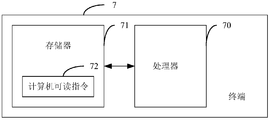
- FIG. 7 is a schematic diagram of a terminal provided by an embodiment of the present application.
- the terminal 7 of this embodiment includes a processor 70, a memory 71, and computer readable instructions 72 stored in the memory 71 and executable on the processor 70.
- the steps in the method embodiment for implementing the foregoing list segmentation when the processor 70 executes the computer readable instructions 72 such as steps S101 to S105 shown in FIG. 1, step S100 shown in FIG. 2, and FIG. Steps S301 to S302, steps S401 to S402 shown in FIG. 4, and steps S501 to S502 shown in FIG.
- the functions of the modules/units in the apparatus embodiment for implementing the above-described list segmentation when the processor 70 executes the computer readable instructions 72 such as the functions of the modules 61 to 69 shown in FIG.
- the computer readable instructions 72 may be partitioned into one or more modules/units that are stored in the memory 71 and executed by the processor 70, To complete this application.
- the one or more modules/units may be an instruction segment of a series of computer readable instructions capable of performing a particular function, the instruction segments being used to describe the execution of the computer readable instructions 72 in the terminal 7.
- the computer readable instructions 72 may be divided into a first acquisition module, a read display module, a second acquisition module, a segmentation module, and a generation module, and the specific functions of each module are as follows:
- the first obtaining module is configured to obtain, by using the list segmentation component, the user information and the list type of the to-be-segmented list when performing the splitting of the list;
- Reading the display module configured to read configuration information from the in-memory database, obtain an optional dimension from the configuration information according to the list type and user information, and load the selection interface to display the optional dimension to prompt the user information Corresponding users select a segmentation dimension of the to-be-sliced list from the selectable dimensions;
- a second obtaining module configured to obtain, by using the list segmentation component, a segmentation dimension selected by a user and a segmentation range corresponding to the segmentation dimension
- a severing module configured to send the categorization type and the corresponding categorization range selected by the user to the big data platform, so that the big data platform obtains the to-be-sliced list according to the list type, and Performing a segmentation process on the to-be-segmented list according to the segmentation dimension and its corresponding segmentation range to obtain a table result;
- the generating module is configured to obtain a table result returned by the big data platform by using the list segmentation component, generate a follow-up task according to the table result, and send the task to the agent.
- computer readable instructions 72 can also be segmented:
- the configuration module is configured to update the configuration information of the segmentation dimension by the list segmentation component according to the preset time interval, and save the updated configuration information to the preset in-memory database.
- computer readable instructions 72 can also be segmented:
- a setting module configured to: obtain a corresponding common dimension according to the list type after displaying the optional dimension in the loading selection interface; and set a common dimension corresponding to the list type on the selection interface to a selected state;
- the common dimension is a segmentation dimension in which the number of adoptions in the first specified time range is greater than or equal to the first threshold.
- computer readable instructions 72 can also be segmented:
- a screening module configured to compare the segmentation dimension selected by the user with the common dimension after obtaining the segmentation dimension selected by the user and the segmentation range corresponding to the segmentation dimension by using the list segmentation component, and filtering the With dimensions, the dimension of the very useful dimension package in the first specified time range is less than the first threshold; the very useful dimension is displayed to prompt the user to confirm the selected segmentation dimension.
- computer readable instructions 72 can also be segmented:
- An update module configured to: after obtaining the segmentation dimension selected by the user and the segmentation range corresponding to the segmentation dimension by using the list segmentation component, updating the trajectory parameter of the list type according to the segmentation dimension selected by the user,
- the trajectory parameter includes a severing dimension adopted by the list type and a number of times each of the dicing dimensions are within a first specified time range; and a common dimension of the list type is updated based on the trajectory parameter.
- the terminal 7 can be a computing device such as a desktop computer, a notebook, a palmtop computer, and a cloud server.
- the terminal may include, but is not limited to, a processor 70, a memory 71. It will be understood by those skilled in the art that FIG. 7 is merely an example of the terminal 7, and does not constitute a limitation of the terminal 7, and may include more or less components than those illustrated, or combine some components, or different components, such as
- the terminal may also include an input/output device, a network access device, a bus, and the like.
- the processor 70 may be a central processing unit (CPU), or may be other general-purpose processors, a digital signal processor (DSP), an application specific integrated circuit (ASIC), Field-Programmable Gate Array (FPGA) or other programmable logic device, discrete gate or transistor logic device, discrete hardware components, etc.
- the general purpose processor may be a microprocessor or the processor or any conventional processor or the like, which is a control center of the terminal, and connects various parts of the entire terminal using various interfaces and lines.
- the memory 71 can be used to store the computer readable instructions and/or modules, by executing or executing computer readable instructions and/or modules stored in the memory, and invoking data stored in the memory Implementing various functions of the terminal.
- the memory may mainly include a storage program area and a storage data area, wherein the storage program area may store an operating system, an application required for at least one function (such as a sound playing function, an image playing function, etc.), and the like; the storage data area may be stored. Data created based on the use of the terminal, etc.
- the memory may include a high-speed random access memory, and may also include non-volatile memory such as a hard disk, a memory, a plug-in hard disk, a smart memory card (SMC), and a secure digital card (Secure Digital, SD). , Flash Card, at least one disk storage device, flash memory device, or other volatile solid-state storage device.
- non-volatile memory such as a hard disk, a memory, a plug-in hard disk, a smart memory card (SMC), and a secure digital card (Secure Digital, SD).
- SD Secure Digital
- Flash Card at least one disk storage device, flash memory device, or other volatile solid-state storage device.
- the disclosed apparatus/terminal and method may be implemented in other manners.
- the device/terminal device embodiments described above are merely illustrative.
- the division of the modules or units is only a logical function division.
- there may be another division manner for example, multiple units.
- components may be combined or integrated into another system, or some features may be omitted or not performed.
- the mutual coupling or direct coupling or communication connection shown or discussed may be an indirect coupling or communication connection through some interface, device or unit, and may be in electrical, mechanical or other form.
- the units described as separate components may or may not be physically separated, and the components displayed as units may or may not be physical units, that is, may be located in one place, or may be distributed to multiple network units. Some or all of the units may be selected according to actual needs to achieve the purpose of the solution of the embodiment.
- each functional unit in each embodiment of the present application may be integrated into one processing unit, or each unit may exist physically separately, or two or more units may be integrated into one unit.
- the above integrated unit can be implemented in the form of hardware or in the form of a software functional unit.
- the integrated modules/units if implemented in the form of software functional units and sold or used as separate products, may be stored in a computer readable storage medium.
- the present application implements all or part of the processes in the foregoing embodiments, and may also be implemented by computer readable instructions, which may be stored in a computer readable storage medium.
- the computer readable instructions when executed by a processor, may implement the steps of the various method embodiments described above.
- the computer readable instructions comprise computer readable instruction code, which may be in the form of source code, an object code form, an executable file or some intermediate form or the like.
- the computer readable storage medium may include any entity or device capable of carrying the computer readable instruction code, a recording medium, a USB flash drive, a removable hard disk, a magnetic disk, an optical disk, a computer memory, a read only memory (ROM, Read- Only Memory), Random Access Memory (RAM), electrical carrier signals, telecommunications signals, and software distribution media. It should be noted that the content contained in the computer readable storage medium may be appropriately increased or decreased according to the requirements of legislation and patent practice in a jurisdiction, for example, in some jurisdictions, according to legislation and patent practice, computer readable The storage medium does not include an electrical carrier signal and a telecommunication signal.
Landscapes
- Engineering & Computer Science (AREA)
- Theoretical Computer Science (AREA)
- Business, Economics & Management (AREA)
- General Physics & Mathematics (AREA)
- Physics & Mathematics (AREA)
- Accounting & Taxation (AREA)
- Finance (AREA)
- Databases & Information Systems (AREA)
- General Engineering & Computer Science (AREA)
- Data Mining & Analysis (AREA)
- Economics (AREA)
- General Business, Economics & Management (AREA)
- Technology Law (AREA)
- Strategic Management (AREA)
- Marketing (AREA)
- Development Economics (AREA)
- Software Systems (AREA)
- User Interface Of Digital Computer (AREA)
- Management, Administration, Business Operations System, And Electronic Commerce (AREA)
- Information Retrieval, Db Structures And Fs Structures Therefor (AREA)
Abstract
本申请适用于通信技术领域,提供了一种名单切分的方法、装置、存储介质及终端,所述方法包括:通过名单切分组件获取用户信息和待切分名单的名单类型;从内存数据库读取配置信息,根据该名单类型和用户信息从该配置信息中获取可选维度,并显示该可选维度;通过名单切分组件获取用户选取的切分维度以及该切分维度对应的切分范围;将该名单类型、用户选取的切分维度及其对应的切分范围发送至大数据平台,以通过所述大数据平台根据该切分维度及其切分范围对所述待切分名单进行切分,得到表结果;通过名单切分组件获取所述表结果,根据所述表结果生成跟进任务并下发至坐席人员。本申请解决了现有切分方式存在的响应时间长、可扩展性低的问题。
Description
本专利申请以2017年08月28日提交的申请号为201710747857.3,名称为“名单切分的方法、装置、存储介质及终端”的中国发明专利申请为基础,并要求其优先权。
本申请属于通信技术领域,尤其涉及一种名单切分的方法、装置、存储介质及终端。
在保险行业中,名单切分是指对业务收集的一张或者多张名单信息表进行切分,根据指定的属性将这些名单切成不同细分种类,以便于将不同细分种类的名单有针对性地下发给对应的坐席进行跟进和处理。比如不同细分种类中的断点名单和沉默名单,其中,断点名单为业务流中断的名单,沉默名单为业务流启动后不再有消息的名单,这些都需要下发至有操作权限或者有相应技能的坐席进行跟进。然而现有技术是针对每种类型的名单配置固定的切分模型,名单切分是通过后台数据库按照其对应的切分模型指定的切分维度进行切分处理。当名单数据量大时,所需的处理时间长;当某一类型的名单增加或者删减内容时,需要通过开发人员修改代码来修改切分维度。可见,现有的名单切分方式的响应时间长,可扩展性低,操作过程不灵活。
发明内容
本申请实施例提供了一种名单切分的方法、装置、存储介质及终端,以解决现有切分方式存在的响应时间长、可扩展性低的问题。
第一方面,一种名单切分的方法,所述方法包括:
在进行名单切分时,通过名单切分组件获取用户信息和待切分名单的名单类型;
从内存数据库读取配置信息,根据所述名单类型和用户信息从所述配置信息中获取可选维度,并加载选择界面显示所述可选维度,以提示该用户信息对应的用户从所述可选维度中选取所述待切分名单的切分维度;
通过所述名单切分组件获取用户选取的切分维度以及所述切分维度对应的切分范围;
将所述名单类型、用户选取的切分维度及其对应的切分范围发送至大数据平台,以通过所述大数据平台根据所述名单类型获取待切分名单,并根据所述切分维度及其对应的切分 范围对所述待切分名单进行切分处理,得到表结果;
通过所述名单切分组件获取大数据平台返回的表结果,根据所述表结果生成跟进任务并下发至坐席人员。
进一步地,在进行名单切分之前,所述方法还包括:
通过名单切分组件按照预设的时间间隔更新切分维度的配置信息,并将更新后的配置信息保存至预设的内存数据库中。
进一步地,在加载选择界面显示所述可选维度后,所述方法还包括:
根据所述名单类型获取对应的常用维度;
将所述选择界面上所述名单类型对应的常用维度置为选中状态;
其中,所述常用维度为在第一指定时间范围内的采用次数大于或等于第一阈值的切分维度。
进一步地,在通过所述名单切分组件获取用户选取的切分维度以及所述切分维度对应的切分范围后,所述方法还包括:
将用户选择的切分维度与常用维度进行比对,筛选出非常用维度,所述非常用维度为在第一指定时间范围内的采用次数小于第一阈值的切分维度;
显示所述非常用维度,以提示用户确认所选择的切分维度。
进一步地,在通过所述名单切分组件获取用户选取的切分维度以及所述切分维度对应的切分范围后,所述方法还包括:
根据用户选取的切分维度更新所述名单类型的轨迹参数,所述轨迹参数包括所述名单类型采用过的切分维度以及每一个所述切分维度在第一指定时间范围内的采用次数;
基于所述轨迹参数更新所述名单类型的常用维度。
第二方面,本申请实施例还提供了一种名单切分的装置,所述装置包括:
第一获取模块,用于在进行名单切分时,通过名单切分组件获取用户信息和待切分名单的名单类型;
读取显示模块,用于从内存数据库读取配置信息,根据所述名单类型和用户信息从所述配置信息中获取可选维度,并加载选择界面显示所述可选维度,以提示该用户信息对应的用户从所述可选维度中选取所述待切分名单的切分维度;
第二获取模块,用于通过所述名单切分组件获取用户选取的切分维度以及所述切分维度对应的切分范围;
切分模块,用于将所述名单类型、用户选取的切分维度及其对应的切分范围发送至大数据平台,以通过所述大数据平台根据所述名单类型获取待切分名单,并根据所述切分维度 及其对应的切分范围对所述待切分名单进行切分处理,得到表结果;
生成模块,用于通过所述名单切分组件获取大数据平台返回的表结果,根据所述表结果生成跟进任务并下发至坐席人员。
进一步地,所述装置还包括:
配置模块,用于在进行名单切分之前,通过名单切分组件按照预设的时间间隔更新切分维度的配置信息,并将更新后的配置信息保存至预设的内存数据库中。
进一步地,所述装置还包括:
置位模块,用于在加载选择界面显示所述可选维度后,根据所述名单类获取对应的常用维度;将所述选择界面上所述名单类型对应的常用维度置为选中状态。
其中,所述常用维度为在第一指定时间范围内的采用次数大于或等于第一阈值的切分维度。
进一步地,所述装置还包括:
筛选模块,用于在通过所述名单切分组件获取用户选取的切分维度以及所述切分维度对应的切分范围后,将用户选择的切分维度与常用维度进行比对,筛选出非常用维度,所述非常用维度包在第一指定时间范围内的采用次数小于第一阈值的切分维度;显示所述非常用维度,以提示用户确认所选择的切分维度。
进一步地,所述装置还包括:
更新模块,用于在通过所述名单切分组件获取用户选取的切分维度以及所述切分维度对应的切分范围后,根据用户选取的切分维度更新所述名单类型的轨迹参数,所述轨迹参数包括所述名单类型采用过的切分维度以及每一个所述切分维度在第一指定时间范围内的采用次数;基于所述轨迹参数更新所述名单类型的常用维度。
第三方面,本申请实施例还提供了一种计算机可读存储介质,其上存储有计算机可读指令,该计算机可读指令由处理器执行时实现如下步骤:
在进行名单切分时,通过名单切分组件获取用户信息和待切分名单的名单类型;
从内存数据库读取配置信息,根据所述名单类型和用户信息从所述配置信息中获取可选维度,并加载选择界面显示所述可选维度,以提示该用户信息对应的用户从所述可选维度中选取所述待切分名单的切分维度;
通过所述名单切分组件获取用户选取的切分维度以及所述切分维度对应的切分范围;
将所述名单类型、用户选取的切分维度及其对应的切分范围发送至大数据平台,以通过所述大数据平台根据所述名单类型获取待切分名单,并根据所述切分维度及其对应的切分范围对所述待切分名单进行切分处理,得到表结果;
通过所述名单切分组件获取大数据平台返回的表结果,根据所述表结果生成跟进任务并下发至坐席人员。
第四方面,本申请实施例还提供了一种终端,包括存储器、处理器及存储在存储器上并可在处理器上运行的计算机可读指令,所述处理器执行所述计算机可读指令时实现以下步骤:
在进行名单切分时,通过名单切分组件获取用户信息和待切分名单的名单类型;
从内存数据库读取配置信息,根据所述名单类型和用户信息从所述配置信息中获取可选维度,并加载选择界面显示所述可选维度,以提示该用户信息对应的用户从所述可选维度中选取所述待切分名单的切分维度;
通过所述名单切分组件获取用户选取的切分维度以及所述切分维度对应的切分范围;
将所述名单类型、用户选取的切分维度及其对应的切分范围发送至大数据平台,以通过所述大数据平台根据所述名单类型获取待切分名单,并根据所述切分维度及其对应的切分范围对所述待切分名单进行切分处理,得到表结果;
通过所述名单切分组件获取大数据平台返回的表结果,根据所述表结果生成跟进任务并下发至坐席人员。
与现有技术相比,本申请实施例通过构建名单切分组件,在进行名单切分时,由该名单切分组件获取用户信息和待切分名单的名单类型;从内存数据库读取配置信息,根据所述名单类型和用户信息从所述配置信息中获取可选维度,并加载选择界面显示所述可选维度,以提示该用户信息对应的用户从所述可选维度中选取所述待切分名单的切分维度;然后通过所述名单切分组件获取用户选取的切分维度及切分维度对应的切分范围;将所述名单类型、用户选取的切分维度及其对应的切分范围发送至大数据平台,以通过所述大数据平台根据所述名单类型获取待切分名单并根据所述切分维度及其对应的切分范围对所述待切分名单进行切分处理,得到表结果;最后,通过所述名单切分组件获取大数据平台返回的表结果,根据所述表结果生成跟进任务并下发至坐席人员。本申请通过增加名单切分组件,通过所述名单切分组件完成了与用户之间的交互,实现了切分维度的灵活配置,且通过联合使用内存数据库和大数据平台来优化切分引擎,有效地提高了切分效率,缩短了切分时间。
为了更清楚地说明本申请实施例或现有技术中的技术方案,下面将对实施例或现有技术描述中所需要使用的附图作简单地介绍,显而易见地,下面描述中的附图仅仅是本申请的一些实施例,对于本领域普通技术人员来讲,在不付出创造性劳动的前提下,还可以根据这些 附图获得其他附图。
图1是本申请实施例提供的名单切分的方法的第一实现流程图;
图2是本申请实施例提供的名单切分的方法的第二实现流程图;
图3是本申请实施例提供的名单切分的方法的第三实现流程图;
图4是本申请实施例提供的名单切分的方法的第四实现流程图;
图5是本申请实施例提供的名单切分的方法的第五实现流程图;
图6是本申请实施例提供的名单切分的装置的组成结构图;
图7是本申请实施例提供的终端的示意图。
为了使本申请的目的、技术方案及优点更加清楚明白,以下结合附图及实施例,对本申请进行进一步详细说明。应当理解,此处所描述的具体实施例仅仅用以解释本申请,并不用于限定本申请。
图1示出了本申请实施例提供的名单切分的方法的第一实现流程。
在现有的名单切分维度固定、可扩展性低的基础上,本申请实施例构建了名单切分组件,通过所述名单切分组件来完成与用户之间的交互,从而使得用户可以选择切分维度。在这里,所述名单切分组件采用可插拔的设计模式,在需要使用名单切分组件时,通过安装包的方式加入所述名单切分组件,并配置前端的显示界面,配置可选择的切分维度以及下发名单对应的表结果。
本申请实施例所述的名单切分的方法可应用于终端,所述终端包括但不限于计算机、服务器、笔记本电脑。所述名单切分组件安装在所述终端上,可以与用户进行交互。
参阅图1,所述名单切分的方法包括:
在步骤S101中,在进行名单切分时,通过名单切分组件获取用户信息和待切分名单的名单类型。
在这里,所述名单类型为所述待切分名单所属的业务种类。示例性地,所述待切分名单包括但不限于车险新渠道销售名单、车险移动端脱落名单、车险服务名单、企业补充医疗销售名单、商业补充医疗销售名单,相对应地,所述名单类型包括但不限于车险新渠道销售、车险移动端脱落、车险服务、企业补充医疗销售、商业补充医疗销售。所述用户信息为启动名单切分的用户的身份信息,优选为用户账号。在实际应用中,启动名单切分操作的用户通常为业务管理员。因此,在进行名单切分时,所述业务管理员需要使用用户账号登录web 系统,然后在所述名单切分组件配置的前端界面上输入待切分名单的名单类型。终端通过所述名单切分组件则可以获取到用户信息以及待切分名单对应的名单类型。
在步骤S102中,从内存数据库读取配置信息,根据所述名单类型和用户信息从所述配置信息中获取可选维度,并加载选择界面显示所述可选维度,以提示该用户信息对应的用户从所述可选维度中选取所述待切分名单的切分维度。
其中,所述配置信息为名单切分维度的配置信息,用于指定名单切分组件所包含的所有切分维度。在本申请实施例中,所述名单切分维度的配置信息保存在内存数据库中。内存数据库,顾名思义就是将数据放在内存中直接操作的数据库。相对于磁盘,本申请实施例将名单切分维度的配置信息保存在所述内存数据库中,能够大大提高读取名单类型和用户信息对应的可选维度的效率,从而缩短界面的响应时间。可选地,所述内存数据库可以采用TTServer,一种Key-Value模式的内存数据库。
在获取到名单类型和用户信息后,所述名单切分组件从内存数据库读取配置信息,并根据所述名单类型和用户信息获取对应的可选维度。在这里,所述可选维度应当理解为在所述名单类型限定下当前切分操作的用户可以选择的维度信息。在本申请实施例中,不同的名单类型对应不同的维度信息,比如车险新渠道销售对应的维度信息包括客户维度、渠道方维度和车辆维度等,车险服务对应的维度信息包括客户维度和推荐产品维度等。每一个业务管理员所负责的业务不同,其能够查看的维度信息与其负责的业务相关,比如负责车险新渠道销售可以查看客户维度和车辆维度,但不能查看推荐产品维度,进一步地,并非所有的用户都能查看和选择切分维度,需要进行权限监控。对此,本申请实施例采用了所述用户账号来确定当前用户是否具备切分操作的权限,及其负责的业务。
在获取到可选维度之后,终端通过所述名单切分组件加载选择界面,以供用户从所述可选维度中选取本次切分操作所需要使用到的切分维度。
在步骤S103中,通过所述名单切分组件获取用户选取的切分维度及切分维度对应的切分范围。
在本申请实施例中,每一个切分维度下包括多个切分层次,每一个层次都有对应的取值范围,切分维度下的每一个层次确定取值后得到所述切分范围。示例性地,假设可选维度包括客户维度和车辆维度。所述客户维度包括的层次有性别、年龄、出险机构等;车辆维度包括的层次有购买日期、车型、车牌、出险次数、理赔金额、续保次数等。在选择切分维度时,用户可以选择客户维度和/或车辆维度。对于车辆维度,业务管理员根据实际的待切分名单,可以选择上述车辆维度中的一个或者多个层次,比如选择购买日期、车型、车牌等,并设置每一个层次对应的取值,购买日期选择2016\01\01-2016\12\31、车型家用轿车、车牌 选择粤A开头的,那么2016\01\01-2016\12\31购买日期、家用轿车车型、粤A开头的车牌共同构成该车辆维度的切分范围。
从上述步骤S101至步骤S103可知,本申请实施例提供的所述名单切分组件,使得用户可以自主配置切分维度,从而达到了切分维度的灵活配置的效果。
在步骤S104中,将所述名单类型、用户选取的切分维度及其对应的切分范围发送至大数据平台,以通过所述大数据平台根据所述名单类型获取待切分名单,并根据所述切分维度及其对应的切分范围对所述待切分名单进行切分处理,得到表结果。
在这里,终端与大数据平台可通过有线或者无线的方式建立通信。本申请实施例在大数据平台上保存了所有可用于切分的名单信息源。这些名单信息源可以通过数据源回流的方式载入到该大数据平台中。在获取到终端发送的所述名单类型、用户选取的切分维度及其对应的切分范围后,所述大数据平台根据所述名单类型从所述名单信息源中获取待切分名单,以及根据所述切分维度及其对应的切分范围从所述待切分名单中筛选出对应的名单信息,然后将所述名单信息填充到预先配置好的表格中,生成表结果。其中,一个表结果为一个细分种类的名单,所述表结果中的每一条名单都对应相同的类别、维度及切分范围。本申请实施例通过采用大数据平台来进行名单切分,能够借助大数据平台对数据的高速处理能力来进一步缩短切分过程中的运行时间。
在步骤S105中,通过所述名单切分组件获取大数据平台返回的表结果,根据所述表结果生成跟进任务并下发至坐席人员。
在这里,经过切分,表结果中的每一条名单都对应相同的类别、维度及切分范围,也即表结果中的每一条名单具有相同的属性,比如都为正常名单、断点名单或者沉默名单等。终端根据所述表结果生成坐席人员的跟进任务,其中,表结果中的一条名单信息对应一个跟进任务,并将所述根据任务下发至具有操作权限或者有相应技能的坐席进行跟进。
在上述实施例中,名单切分维度的配置信息是由开发人员在后台完成设置,名单切分组件在安装后缓存至内存数据库中,从而使得后续的切分过程中终端可以从所述内存数据库中读取对应的可选维度展示给用户进行选择。而在实际应用中,保险业务的形式、合同内容等方面都会根据顾客需求、法律法规等实时更进,内存数据库中保存的名单切分维度的配置信息将无法满足切分时的需求。为了解决上述问题,在图1提供的名单切分的方法的第一实现流程的基础上,提出本申请实施例提供的名单切分的方法的第二实现流程,如图2所示。
在图2中,在通过名单切分组件获取待切分名单的名单类型和切分操作的用户信息之前,所述方法还可以包括:
在步骤S100中,通过名单切分组件按照预设的时间间隔更新切分维度的配置信息,并将更新后的配置信息保存至预设的内存数据库中。
在这里,对于所述名单切分组件,开发人员可以在后台中更新所述配置信息,包括加入新的配置内容或者删除旧的配置内容。终端则按照预设的时间间隔触发更新指令,以使得所述名单切分组件根据所述更新指令获取最新的配置信息进行更新,并将更新后的配置信息保存至预设的内存数据库中,从而完成了对内存数据库中的配置信息自动更新。可选地,所述预设的时间间隔根据实际需求设置,此处不做限制。
可选地,如前所述,步骤S102中,在加载选择界面供所述用户从所述可选维度中选取所述待切分名单的切分维度时,由于每一种名单类型包括若干个维度,每一个维度下面又包括若干个层次,每一个层次都有对应的取值范围需要设置。在面对大批量名单派发给不同技能的坐席人员跟进时,同一名单类型的待切分名单,业务管理员每次都要选择相同的切分维度以及选择切分维度对应的切分范围,手动工作量巨大且繁琐,并且大大增加了人力成本。为了解决上述问题,在图1提供的名单切分的方法的第一实现流程的基础上,提出本申请实施例提供的名单切分的方法的第三实现流程,如图3所示。
在图3中,在加载选择界面显示所述可选维度后,所述方法还包括:
在步骤S301中,根据所述名单类型获取对应的常用维度。
在这里,所述名单切分组件维护着一张常用维度表,该常用维度表记录了所有名单类型对应的一个或多个常用维度。所述常用维度为在第一指定时间范围的采用次数大于或等于第一阈值的切分维度。在这里,所述第一指定时间范围为当前时刻起往前的一段历史时间,该段历史时间的跨度根据实际需求设置,此处不做限制。本申请实施例基于所述常用维度表,采用匹配名单类型的方式来获取所述名单类型对应的常用维度。
在步骤S302中,将所述选择界面上所述名单类型对应的常用维度置为选中状态。
在本申请实施例中,不同的名单类型对应不同的常用维度。通过将常用维度置为选中状态,当只有一个常用维度时,将该常用维度置为选中状态;当有多个时,将所述多个常用维度均置为选中状态,可选地,或者将采用次数由大到小排序后的前N个常用维度置为选中状态,从而有效地避免了用户重复选择切分维度及其对应的切分范围,也避免了漏选的情况,有效地提高了切分维度选择的效率。
可选地,如前所述,切分维度的层次多,错选的情况时有发生。为了解决上述问题,在图1提供的名单切分的方法的第一实现流程的基础上,提出本申请实施例提供的名单切分 的方法的第四实现流程,如图4所示。
在图4中,在通过所述名单切分组件获取用户选取的切分维度以及所述切分维度对应的切分范围后,所述方法还包括:
在步骤S401中,将用户选择的切分维度与常用维度进行比对,筛选出非常用维度。
如前所述,所述常用维度为在第一指定时间范围内的采用次数大于或等于第一阈值的切分维度。所述非常用维度与常用维度相对,因此,所述非常用维度为在第一指定时间范围内的采用次数小于第一阈值的切分维度。所述步骤S401将用户选择的切分维度与常用维度进行比对可以为:遍历用户所选择的切分维度,判断所述切分维度是否为常用维度。若否时,说明所述切分维度不为常用维度,标记为非常用维度;若是时,则不做任何处理。
在步骤S402中,显示所述非常用维度,以提示用户确认所选择的切分维度。
在这里,所述选择界面上包括确认标识,触发所述确认标识表示已完成选择切分维度、触发确认指令,终端将根据所述确认指令将切分维度及其切分范围发送至大数据平台。可选地,本申请实施例中所述的显示所述非常用维度可以为:在检测到用户触发所述确认标识时,弹出提示框,所述提示框中包括本次选择中存在非常用维度的提示文本,以提示用户对所做的选择进行确认。所述提示框中还包括“确认”标识、“返回”标识。若检测到用户触发所述“确认”标识,则将切分维度及其切分范围发送至大数据平台。若检测到用户触发所述“返回”标识,则返回所述选择界面调整选择。
错选的情况通常为用户选择了非常用维度,本申请实施例通过检测非常用维度,有效降低了错选出现的概率。
可选地,如前所述,所述常用维度为在第一指定时间范围内的采用次数大于或等于第一阈值的切分维度。所述常用维度能够协助用户选择切分维度,有效地提高用户选取切分维度的效率。然而,当大数据平台中的名单信息源发生变更时,所述常用维度将无法再起到协助用户选择切分维度的效果。为了解决上述问题,在图1提供的名单切分的方法的第一实现流程的基础上,提出本申请实施例提供的名单切分的方法的第五实现流程,如图5所示。
在图5中,在通过所述名单切分组件获取用户选取的切分维度及切分维度对应的切分范围后,所述方法还包括:
在步骤S501中,根据用户选取的切分维度更新所述名单类型的轨迹参数,所述轨迹参数包括所述名单类型采用过的切分维度以及每一个所述切分维度在第一指定时间范围内的采用次数。
在这里,为了保证常用维度的时效性,针对每一种名单类型,终端通过所述切分组件 建立并维护着该名单类型对应的一组轨迹参数。在对某一种名单类型进行切分操作时,通过所述名单切分组件获取到用户所选择的切分维度之后,对所述名单类型对应的轨迹参数进行更新,包括:在轨迹参数中为初次选择的切分维度建档,并初始化其采用次数为1;对于已建档的切分维度,若本次切分操作中被用户选择,将其在第一指定时间范围内的采用次数加1,同时筛选出在所述第一指定时间范围内未被采用过的切分维度进行删除。
在步骤S502中,基于所述轨迹参数更新所述名单类型的常用维度。
在完成对所述轨迹参数的更新之后,遍历轨迹参数中所建档的每一个切分维度及其对应的采用次数,判断所述采用次数是否大于或等于第一指定阈值。若是时,表明用户使用该切分维度较频繁,将该切分维度标记为常用维度;否则,表明用户使用该切分维的频繁程度不足,该切分维度不是常用维度。在下次对所述名单类型进行切分时,采用更新后的常用维度来完成自动选中操作。
应理解,在上述实施例中,各步骤的序号的大小并不意味着执行顺序的先后,各步骤的执行顺序应以其功能和内在逻辑确定,而不应对本申请实施例的实施过程构成任何限定。
需要说明的是,本领域普通技术人员可以理解实现上述实施例的全部或部分步骤可以通过硬件来完成,也可以通过计算机可读指令来指令相关的硬件完成,所述的计算机可读指令可以存储于一种计算机可读存储介质中,所述存储介质可以是只读存储器,磁盘或光盘等。
图6示出了本申请实施例提供的名单切分的装置的组成结构图,为了便于说明,仅示出了与本申请实施例相关的部分。
在本申请实施例中,所述名单切分的装置用于实现上述图1至图5实施例中所述的名单切分的方法,可以是内置于终端的软件单元、硬件单元或者软硬件结合的单元。所述终端包括但不限于计算机、服务器、笔记本电脑。
参阅图6,所述名单切分的装置包括:
第一获取模块61,用于在进行名单切分时,通过名单切分组件获取用户信息和待切分名单的名单类型;
读取显示模块62,用于从内存数据库读取配置信息,根据所述名单类型和用户信息从所述配置信息中获取可选维度,并加载选择界面显示所述可选维度,以提示该用户信息对应的用户从所述可选维度中选取所述待切分名单的切分维度;
第二获取模块63,用于通过所述名单切分组件获取用户选取的切分维度以及所述切分 维度对应的切分范围;
切分模块64,用于将所述名单类型、用户选取的切分维度及其对应的切分范围发送至大数据平台,以通过所述大数据平台根据所述名单类型获取待切分名单,并根据所述切分维度及其对应的切分范围对所述待切分名单进行切分处理,得到表结果;
生成模块65,用于通过所述名单切分组件获取大数据平台返回的表结果,根据所述表结果生成跟进任务并下发至坐席人员。
可选地,所述装置还包括:
配置模块66,用于在进行名单切分之前,通过名单切分组件按照预设的时间间隔更新切分维度的配置信息,并将更新后的配置信息保存至预设的内存数据库中。
可选地,所述装置还包括:
置位模块67,用于在加载选择界面显示所述可选维度后,根据所述名单类获取对应的常用维度;将所述选择界面上所述名单类型对应的常用维度置为选中状态。
其中,所述常用维度为在第一指定时间范围内的采用次数大于或等于第一阈值的切分维度。
可选地,所述装置还包括:
筛选模块68,用于在通过所述名单切分组件获取用户选取的切分维度以及所述切分维度对应的切分范围后,将用户选择的切分维度与常用维度进行比对,筛选出非常用维度,所述非常用维度包在第一指定时间范围内的采用次数小于第一阈值的切分维度;显示所述非常用维度,以提示用户确认所选择的切分维度。
所述装置还包括:
更新模块69,用于在通过所述名单切分组件获取用户选取的切分维度以及所述切分维度对应的切分范围后,根据用户选取的切分维度更新所述名单类型的轨迹参数,所述轨迹参数包括所述名单类型采用过的切分维度以及每一个所述切分维度在第一指定时间范围内的采用次数;基于所述轨迹参数更新所述名单类型的常用维度。
需要说明的是,本申请实施例中的终端可以用于实现上述方法实施例中的全部技术方案。所属领域的技术人员可以清楚地了解到,为了描述的方便和简洁,仅以上述各功能单元、模块的划分进行举例说明,实际应用中,可以根据需要而将上述功能分配由不同的功能单元、模块完成,即将所述装置的内部结构划分成不同的功能单元或模块,以完成以上描述的全部或者部分功能。实施例中的各功能单元、模块可以集成在一个处理单元中,也可以是各个单元单独物理存在,也可以两个或两个以上单元集成在一个单元中,上述集成的单元既可以采用硬件的形式实现,也可以采用软件功能单元的形式实现。另外,各功能 单元、模块的具体名称也只是为了便于相互区分,并不用于限制本申请的保护范围。上述单元、模块的具体工作过程,可以参考前述方法实施例中的对应过程,在此不再赘述。
在上述实施例中,对各个实施例的描述都各有侧重,某个实施例中没有详述或记载的部分,可以参见其它实施例的相关描述。
图7是本申请实施例提供的一种终端的示意图。如图7所示,该实施例的终端7包括:处理器70、存储器71以及存储在所述存储器71中并可在所述处理器70上运行的计算机可读指令72。所述处理器70执行所述计算机可读指令72时实现上述名单切分的方法实施例中的步骤,例如图1所示的步骤S101至S105、图二所示的步骤S100、图3所示的步骤S301至S302、图4所示的步骤S401至S402、图5所示的步骤S501至S502。或者,所述处理器70执行所述计算机可读指令72时实现上述名单切分的装置实施例中各模块/单元的功能,例如图6所示模块61至69的功能。
示例性的,所述计算机可读指令72可以被分割成一个或多个模块/单元,所述一个或者多个模块/单元被存储在所述存储器71中,并由所述处理器70执行,以完成本申请。所述一个或多个模块/单元可以是能够完成特定功能的一系列计算机可读指令的指令段,该指令段用于描述所述计算机可读指令72在所述终端7中的执行过程。例如,所述计算机可读指令72可以被分割成第一获取模块、读取显示模块、第二获取模块、切分模块、生成模块,各模块具体功能如下:
第一获取模块,用于在进行名单切分时,通过名单切分组件获取用户信息和待切分名单的名单类型;
读取显示模块,用于从内存数据库读取配置信息,根据所述名单类型和用户信息从所述配置信息中获取可选维度,并加载选择界面显示所述可选维度,以提示该用户信息对应的用户从所述可选维度中选取所述待切分名单的切分维度;
第二获取模块,用于通过所述名单切分组件获取用户选取的切分维度以及所述切分维度对应的切分范围;
切分模块,用于将所述名单类型、用户选取的切分维度及其对应的切分范围发送至大数据平台,以通过所述大数据平台根据所述名单类型获取待切分名单,并根据所述切分维度及其对应的切分范围对所述待切分名单进行切分处理,得到表结果;
生成模块,用于通过所述名单切分组件获取大数据平台返回的表结果,根据所述表结果生成跟进任务并下发至坐席人员。
进一步地,所述计算机可读指令72还可以分割出:
配置模块,用于在进行名单切分之前,通过名单切分组件按照预设的时间间隔更新切分维度的配置信息,并将更新后的配置信息保存至预设的内存数据库中。
进一步地,所述计算机可读指令72还可以分割出:
置位模块,用于在加载选择界面显示所述可选维度后,根据所述名单类获取对应的常用维度;将所述选择界面上所述名单类型对应的常用维度置为选中状态;
其中,所述常用维度为在第一指定时间范围内的采用次数大于或等于第一阈值的切分维度。
进一步地,所述计算机可读指令72还可以分割出:
筛选模块,用于在通过所述名单切分组件获取用户选取的切分维度以及所述切分维度对应的切分范围后,将用户选择的切分维度与常用维度进行比对,筛选出非常用维度,所述非常用维度包在第一指定时间范围内的采用次数小于第一阈值的切分维度;显示所述非常用维度,以提示用户确认所选择的切分维度。
进一步地,所述计算机可读指令72还可以分割出:
更新模块,用于在通过所述名单切分组件获取用户选取的切分维度以及所述切分维度对应的切分范围后,根据用户选取的切分维度更新所述名单类型的轨迹参数,所述轨迹参数包括所述名单类型采用过的切分维度以及每一个所述切分维度在第一指定时间范围内的采用次数;基于所述轨迹参数更新所述名单类型的常用维度。
所述终端7可以是桌上型计算机、笔记本、掌上电脑及云端服务器等计算设备。所述终端可包括,但不仅限于,处理器70、存储器71。本领域技术人员可以理解,图7仅仅是终端7的示例,并不构成对终端7的限定,可以包括比图示更多或更少的部件,或者组合某些部件,或者不同的部件,例如所述终端还可以包括输入输出设备、网络接入设备、总线等。
所称处理器70可以是中央处理单元(Central Processing Unit,CPU),还可以是其他通用处理器、数字信号处理器(Digital Signal Processor,DSP)、专用集成电路(Application Specific Integrated Circuit,ASIC)、现成可编程门阵列(Field-Programmable Gate Array,FPGA)或者其他可编程逻辑器件、分立门或者晶体管逻辑器件、分立硬件组件等。通用处理器可以是微处理器或者该处理器也可以是任何常规的处理器等,所述处理器是所述终端的控制中心,利用各种接口和线路连接整个终端的各个部分。
所述存储器71可用于存储所述计算机可读指令和/或模块,所述处理器通过运行或执行存储在所述存储器内的计算机可读指令和/或模块,以及调用存储在存储器内的数据,实现所述终端的各种功能。所述存储器可主要包括存储程序区和存储数据区,其中,存储程序区可存储操作系统、至少一个功能所需的应用程序(比如声音播放功能、图像播放功能等)等; 存储数据区可存储根据终端的使用所创建的数据等。此外,存储器可以包括高速随机存取存储器,还可以包括非易失性存储器,例如硬盘、内存、插接式硬盘、智能存储卡(Smart Media Card,SMC)、安全数字卡(Secure Digital,SD)、闪存卡(Flash Card),至少一个磁盘存储器件、闪存器件或其他易失性固态存储器件。
本领域普通技术人员可以意识到,结合本文中所公开的实施例描述的各示例的单元及算法步骤,能够以电子硬件、或者计算机软件和电子硬件的结合来实现。这些功能究竟以硬件还是软件方式来执行,取决于技术方案的特定应用和设计约束条件。专业技术人员可以对每个特定的应用来使用不同方法来实现所描述的功能,但是这种实现不应认为超出本申请的范围。
在本申请所提供的实施例中,应该理解到,所揭露的装置/终端和方法,可以通过其它的方式实现。例如,以上所描述的装置/终端设备实施例仅仅是示意性的,例如,所述模块或单元的划分,仅仅为一种逻辑功能划分,实际实现时可以有另外的划分方式,例如多个单元或组件可以结合或者可以集成到另一个系统,或一些特征可以忽略,或不执行。另一点,所显示或讨论的相互之间的耦合或直接耦合或通讯连接可以是通过一些接口,装置或单元的间接耦合或通讯连接,可以是电性,机械或其它的形式。
所述作为分离部件说明的单元可以是或者也可以不是物理上分开的,作为单元显示的部件可以是或者也可以不是物理单元,即可以位于一个地方,或者也可以分布到多个网络单元上。可以根据实际的需要选择其中的部分或者全部单元来实现本实施例方案的目的。
另外,在本申请各个实施例中的各功能单元可以集成在一个处理单元中,也可以是各个单元单独物理存在,也可以两个或两个以上单元集成在一个单元中。上述集成的单元既可以采用硬件的形式实现,也可以采用软件功能单元的形式实现。
所述集成的模块/单元如果以软件功能单元的形式实现并作为独立的产品销售或使用时,可以存储在一个计算机可读存储介质中。基于这样的理解,本申请实现上述实施例方法中的全部或部分流程,也可以通过计算机可读指令来指令相关的硬件来完成,所述的计算机可读指令可存储于一计算机可读存储介质中,该计算机可读指令在被处理器执行时,可实现上述各个方法实施例的步骤。其中,所述计算机可读指令包括计算机可读指令代码,所述计算机可读指令代码可以为源代码形式、对象代码形式、可执行文件或某些中间形式等。所述计算机可读存储介质可以包括:能够携带所述计算机可读指令代码的任何实体或装置、记录介质、U盘、移动硬盘、磁碟、光盘、计算机存储器、只读存储器(ROM,Read-Only Memory)、随机存取存储器(RAM,Random Access Memory)、电载波信号、电信信号以及软件分发介 质等。需要说明的是,所述计算机可读存储介质包含的内容可以根据司法管辖区内立法和专利实践的要求进行适当的增减,例如在某些司法管辖区,根据立法和专利实践,计算机可读存储介质不包括是电载波信号和电信信号。
以上所述实施例仅用以说明本申请的技术方案,而非对其限制;尽管参照前述实施例对本申请进行了详细的说明,本领域的普通技术人员应当理解:其依然可以对前述各实施例所记载的技术方案进行修改,或者对其中部分技术特征进行等同替换;而这些修改或者替换,并不使相应技术方案的本质脱离本申请各实施例技术方案的精神和范围,均应包含在本申请的保护范围之内。
Claims (20)
- 一种名单切分的方法,其特征在于,所述方法包括:在进行名单切分时,通过名单切分组件获取用户信息和待切分名单的名单类型;从内存数据库读取配置信息,根据所述名单类型和用户信息从所述配置信息中获取可选维度,并加载选择界面显示所述可选维度,以提示该用户信息对应的用户从所述可选维度中选取所述待切分名单的切分维度;通过所述名单切分组件获取用户选取的切分维度以及所述切分维度对应的切分范围;将所述名单类型、用户选取的切分维度及其对应的切分范围发送至大数据平台,以通过所述大数据平台根据所述名单类型获取待切分名单,并根据所述切分维度及其对应的切分范围对所述待切分名单进行切分处理,得到表结果;通过所述名单切分组件获取大数据平台返回的表结果,根据所述表结果生成跟进任务并下发至坐席人员。
- 如权利要求1所述的名单切分的方法,其特征在于,在进行名单切分之前,所述方法还包括:通过名单切分组件按照预设的时间间隔更新切分维度的配置信息,并将更新后的配置信息保存至预设的内存数据库中。
- 如权利要求1或2所述的名单切分的方法,其特征在于,在加载选择界面显示所述可选维度后,所述方法还包括:根据所述名单类型获取对应的常用维度;将所述选择界面上所述名单类型对应的常用维度置为选中状态;其中,所述常用维度为在第一指定时间范围内的采用次数大于或等于第一阈值的切分维度。
- 如权利要求3所述的所述的名单切分的方法,其特征在于,在通过所述名单切分组件获取用户选取的切分维度以及所述切分维度对应的切分范围后,所述方法还包括:将用户选择的切分维度与常用维度进行比对,筛选出非常用维度,所述非常用维度为在第一指定时间范围内的采用次数小于第一阈值的切分维度;显示所述非常用维度,以提示用户确认所选择的切分维度。
- 如权利要求4所述的名单切分的方法,其特征在于,在通过所述名单切分组件获取用户选取的切分维度以及所述切分维度对应的切分范围后,所述方法还包括:根据用户选取的切分维度更新所述名单类型的轨迹参数,所述轨迹参数包括所述名单 类型采用过的切分维度以及每一个所述切分维度在第一指定时间范围内的采用次数;基于所述轨迹参数更新所述名单类型的常用维度。
- 一种名单切分的装置,其特征在于,所述装置包括:第一获取模块,用于在进行名单切分时,通过名单切分组件获取用户信息和待切分名单的名单类型;读取显示模块,用于从内存数据库读取配置信息,根据所述名单类型和用户信息从所述配置信息中获取可选维度,并加载选择界面显示所述可选维度,以提示该用户信息对应的用户从所述可选维度中选取所述待切分名单的切分维度;第二获取模块,用于通过所述名单切分组件获取用户选取的切分维度以及所述切分维度对应的切分范围;切分模块,用于将所述名单类型、用户选取的切分维度及其对应的切分范围发送至大数据平台,以通过所述大数据平台根据所述名单类型获取待切分名单,并根据所述切分维度及其对应的切分范围对所述待切分名单进行切分处理,得到表结果;生成模块,用于通过所述名单切分组件获取大数据平台返回的表结果,根据所述表结果生成跟进任务并下发至坐席人员。
- 如权利要求6所述的名单切分的装置,其特征在于,所述装置还包括:配置模块,用于在进行名单切分之前,通过名单切分组件按照预设的时间间隔更新切分维度的配置信息,并将更新后的配置信息保存至预设的内存数据库中。
- 如权利要求6或7所述的名单切分的装置,其特征在于,所述装置还包括:置位模块,用于在加载选择界面显示所述可选维度后,根据所述名单类型获取对应的常用维度;将所述选择界面上所述名单类型对应的常用维度置为选中状态;其中,所述常用维度为在第一指定时间范围内的采用次数大于或等于第一阈值的切分维度。
- 如权利要求8所述的名单切分的装置,其特征在于,所述装置还包括:筛选模块,用于在通过所述名单切分组件获取用户选取的切分维度以及所述切分维度对应的切分范围后,将用户选择的切分维度与常用维度进行比对,筛选出非常用维度,所述非常用维度包在第一指定时间范围内的采用次数小于第一阈值的切分维度;显示所述非常用维度,以提示用户确认所选择的切分维度。
- 如权利要求9所述的名单切分的装置,其特征在于,所述装置还包括:更新模块,用于在通过所述名单切分组件获取用户选取的切分维度以及所述切分维度对应的切分范围后,根据用户选取的切分维度更新所述名单类型的轨迹参数,所述轨迹参数 包括所述名单类型采用过的切分维度以及每一个所述切分维度在第一指定时间范围内的采用次数;基于所述轨迹参数更新所述名单类型的常用维度。
- 一种计算机可读存储介质,其上存储有计算机可读指令,其特征在于,该计算机可读指令被处理器执行时实现如下步骤:在进行名单切分时,通过名单切分组件获取用户信息和待切分名单的名单类型;从内存数据库读取配置信息,根据所述名单类型和用户信息从所述配置信息中获取可选维度,并加载选择界面显示所述可选维度,以提示该用户信息对应的用户从所述可选维度中选取所述待切分名单的切分维度;通过所述名单切分组件获取用户选取的切分维度以及所述切分维度对应的切分范围;将所述名单类型、用户选取的切分维度及其对应的切分范围发送至大数据平台,以通过所述大数据平台根据所述名单类型获取待切分名单,并根据所述切分维度及其对应的切分范围对所述待切分名单进行切分处理,得到表结果;通过所述名单切分组件获取大数据平台返回的表结果,根据所述表结果生成跟进任务并下发至坐席人员。
- 如权利要求11所述的计算机可读存储介质,其特征在于,在进行名单切分之前,该计算机可读指令被处理器执行时实现如下步骤:通过名单切分组件按照预设的时间间隔更新切分维度的配置信息,并将更新后的配置信息保存至预设的内存数据库中。
- 如权利要求11或12所述的计算机可读存储介质,其特征在于,在加载选择界面显示所述可选维度后,该计算机可读指令被处理器执行时实现如下步骤:根据所述名单类型获取对应的常用维度;将所述选择界面上所述名单类型对应的常用维度置为选中状态;其中,所述常用维度为在第一指定时间范围内的采用次数大于或等于第一阈值的切分维度。
- 如权利要求13所述的计算机可读存储介质,其特征在于,在通过所述名单切分组件获取用户选取的切分维度以及所述切分维度对应的切分范围后,该计算机可读指令被处理器执行时实现如下步骤:将用户选择的切分维度与常用维度进行比对,筛选出非常用维度,所述非常用维度为在第一指定时间范围内的采用次数小于第一阈值的切分维度;显示所述非常用维度,以提示用户确认所选择的切分维度。
- 如权利要求14所述的计算机可读存储介质,其特征在于,在通过所述名单切分组 件获取用户选取的切分维度以及所述切分维度对应的切分范围后,该计算机可读指令被处理器执行时实现如下步骤:根据用户选取的切分维度更新所述名单类型的轨迹参数,所述轨迹参数包括所述名单类型采用过的切分维度以及每一个所述切分维度在第一指定时间范围内的采用次数;基于所述轨迹参数更新所述名单类型的常用维度。
- 一种终端,包括存储器、处理器及存储在存储器上并可在处理器上运行的计算机可读指令,其特征在于,所述处理器执行所述计算机可读指令时实现以下步骤:在进行名单切分时,通过名单切分组件获取用户信息和待切分名单的名单类型;从内存数据库读取配置信息,根据所述名单类型和用户信息从所述配置信息中获取可选维度,并加载选择界面显示所述可选维度,以提示该用户信息对应的用户从所述可选维度中选取所述待切分名单的切分维度;通过所述名单切分组件获取用户选取的切分维度以及所述切分维度对应的切分范围;将所述名单类型、用户选取的切分维度及其对应的切分范围发送至大数据平台,以通过所述大数据平台根据所述名单类型获取待切分名单,并根据所述切分维度及其对应的切分范围对所述待切分名单进行切分处理,得到表结果;通过所述名单切分组件获取大数据平台返回的表结果,根据所述表结果生成跟进任务并下发至坐席人员。
- 如权利要求16所述的终端,其特征在于,在进行名单切分之前,所述处理器执行所述计算机可读指令时还实现以下步骤:通过名单切分组件按照预设的时间间隔更新切分维度的配置信息,并将更新后的配置信息保存至预设的内存数据库中。
- 如权利要求16或17所述的终端,其特征在于,在加载选择界面显示所述可选维度后,所述处理器执行所述计算机可读指令时还实现以下步骤:根据所述名单类型获取对应的常用维度;将所述选择界面上所述名单类型对应的常用维度置为选中状态;其中,所述常用维度为在第一指定时间范围内的采用次数大于或等于第一阈值的切分维度。
- 如权利要求18所述的终端,其特征在于,在通过所述名单切分组件获取用户选取的切分维度以及所述切分维度对应的切分范围后,所述处理器执行所述计算机可读指令时还实现以下步骤:将用户选择的切分维度与常用维度进行比对,筛选出非常用维度,所述非常用维度为 在第一指定时间范围内的采用次数小于第一阈值的切分维度;显示所述非常用维度,以提示用户确认所选择的切分维度。
- 如权利要求19所述的终端,其特征在于,在通过所述名单切分组件获取用户选取的切分维度以及所述切分维度对应的切分范围后,所述处理器执行所述计算机可读指令时还实现以下步骤:根据用户选取的切分维度更新所述名单类型的轨迹参数,所述轨迹参数包括所述名单类型采用过的切分维度以及每一个所述切分维度在第一指定时间范围内的采用次数;基于所述轨迹参数更新所述名单类型的常用维度。
Priority Applications (2)
| Application Number | Priority Date | Filing Date | Title |
|---|---|---|---|
| US16/093,631 US20210224252A1 (en) | 2017-08-28 | 2018-02-27 | Method and device for segmenting list, storage medium and terminal |
| SG11201809214PA SG11201809214PA (en) | 2017-08-28 | 2018-02-27 | Method and device for segmenting list, storage medium and terminal |
Applications Claiming Priority (2)
| Application Number | Priority Date | Filing Date | Title |
|---|---|---|---|
| CN201710747857.3A CN108280767A (zh) | 2017-08-28 | 2017-08-28 | 名单切分的方法、装置、存储介质及终端 |
| CN201710747857.3 | 2017-08-28 |
Publications (1)
| Publication Number | Publication Date |
|---|---|
| WO2019041771A1 true WO2019041771A1 (zh) | 2019-03-07 |
Family
ID=62801206
Family Applications (1)
| Application Number | Title | Priority Date | Filing Date |
|---|---|---|---|
| PCT/CN2018/077357 Ceased WO2019041771A1 (zh) | 2017-08-28 | 2018-02-27 | 名单切分的方法、装置、存储介质及终端 |
Country Status (4)
| Country | Link |
|---|---|
| US (1) | US20210224252A1 (zh) |
| CN (1) | CN108280767A (zh) |
| SG (1) | SG11201809214PA (zh) |
| WO (1) | WO2019041771A1 (zh) |
Cited By (2)
| Publication number | Priority date | Publication date | Assignee | Title |
|---|---|---|---|---|
| CN111428324A (zh) * | 2020-04-23 | 2020-07-17 | 上海普适导航科技股份有限公司 | 一种不规则河道切分方法及系统 |
| CN112270594A (zh) * | 2020-11-25 | 2021-01-26 | 平安数字信息科技(深圳)有限公司 | 薪酬数据显示方法、装置、计算机设备和存储介质 |
Families Citing this family (8)
| Publication number | Priority date | Publication date | Assignee | Title |
|---|---|---|---|---|
| CN110287406A (zh) * | 2019-05-21 | 2019-09-27 | 深圳壹账通智能科技有限公司 | 渠道用户推荐方法、服务器及计算机可读存储介质 |
| CN110414186B (zh) * | 2019-06-20 | 2023-06-30 | 创新先进技术有限公司 | 数据资产切分校验方法以及装置 |
| CN111402067B (zh) * | 2020-02-22 | 2023-08-29 | 中国平安财产保险股份有限公司 | 应续名单跟踪方法、服务器及计算机可读存储介质 |
| CN111966734A (zh) * | 2020-03-30 | 2020-11-20 | 北京来也网络科技有限公司 | 结合rpa和ai的电子表格的数据处理方法与电子设备 |
| CN111930331B (zh) * | 2020-09-24 | 2021-02-02 | 北京每日优鲜电子商务有限公司 | 信息显示方法、装置、电子设备和计算机可读介质 |
| CN114398130B (zh) * | 2022-01-10 | 2024-06-11 | 北京百度网讯科技有限公司 | 页面展示方法、装置、设备和存储介质 |
| CN115599381B (zh) * | 2022-10-10 | 2025-08-12 | 厦门立林科技有限公司 | 一种基于安卓平台的灵活宫格控件设计方法、设备及介质 |
| CN116385073A (zh) * | 2023-02-24 | 2023-07-04 | 中电金信软件有限公司 | 信息发送方法及装置 |
Citations (3)
| Publication number | Priority date | Publication date | Assignee | Title |
|---|---|---|---|---|
| US20020099581A1 (en) * | 2001-01-22 | 2002-07-25 | Chu Chengwen Robert | Computer-implemented dimension engine |
| CN105869048A (zh) * | 2016-03-28 | 2016-08-17 | 中国建设银行股份有限公司 | 一种数据处理方法及系统 |
| CN105912609A (zh) * | 2016-04-06 | 2016-08-31 | 中国农业银行股份有限公司 | 一种数据文件处理方法和装置 |
Family Cites Families (3)
| Publication number | Priority date | Publication date | Assignee | Title |
|---|---|---|---|---|
| CN102567518A (zh) * | 2011-12-17 | 2012-07-11 | 无敌科技(西安)有限公司 | 数据库客户信息追踪系统及方法 |
| CN106933875B (zh) * | 2015-12-31 | 2021-01-26 | 北京城市网邻信息技术有限公司 | 数据查询方法及装置 |
| CN106682177A (zh) * | 2016-12-29 | 2017-05-17 | 江西博瑞彤芸科技有限公司 | 服务记录信息的动态展示方法 |
-
2017
- 2017-08-28 CN CN201710747857.3A patent/CN108280767A/zh active Pending
-
2018
- 2018-02-27 WO PCT/CN2018/077357 patent/WO2019041771A1/zh not_active Ceased
- 2018-02-27 SG SG11201809214PA patent/SG11201809214PA/en unknown
- 2018-02-27 US US16/093,631 patent/US20210224252A1/en not_active Abandoned
Patent Citations (3)
| Publication number | Priority date | Publication date | Assignee | Title |
|---|---|---|---|---|
| US20020099581A1 (en) * | 2001-01-22 | 2002-07-25 | Chu Chengwen Robert | Computer-implemented dimension engine |
| CN105869048A (zh) * | 2016-03-28 | 2016-08-17 | 中国建设银行股份有限公司 | 一种数据处理方法及系统 |
| CN105912609A (zh) * | 2016-04-06 | 2016-08-31 | 中国农业银行股份有限公司 | 一种数据文件处理方法和装置 |
Cited By (4)
| Publication number | Priority date | Publication date | Assignee | Title |
|---|---|---|---|---|
| CN111428324A (zh) * | 2020-04-23 | 2020-07-17 | 上海普适导航科技股份有限公司 | 一种不规则河道切分方法及系统 |
| CN111428324B (zh) * | 2020-04-23 | 2023-09-26 | 上海普适导航科技股份有限公司 | 一种不规则河道切分方法及系统 |
| CN112270594A (zh) * | 2020-11-25 | 2021-01-26 | 平安数字信息科技(深圳)有限公司 | 薪酬数据显示方法、装置、计算机设备和存储介质 |
| CN112270594B (zh) * | 2020-11-25 | 2023-09-12 | 深圳平安智汇企业信息管理有限公司 | 薪酬数据显示方法、装置、计算机设备和存储介质 |
Also Published As
| Publication number | Publication date |
|---|---|
| CN108280767A (zh) | 2018-07-13 |
| US20210224252A1 (en) | 2021-07-22 |
| SG11201809214PA (en) | 2019-04-29 |
Similar Documents
| Publication | Publication Date | Title |
|---|---|---|
| WO2019041771A1 (zh) | 名单切分的方法、装置、存储介质及终端 | |
| US10037430B2 (en) | System and method for controlling the on and off state of features of business logic at runtime | |
| US9690785B1 (en) | Change notification routing based on original authorship of modified region | |
| WO2021012568A1 (zh) | 一种数据处理方法及相关设备 | |
| US10776505B2 (en) | Data loss prevention for an online content management platform | |
| US9703834B2 (en) | Topological query in multi-tenancy environment | |
| US10110635B1 (en) | Device policy composition and management system | |
| WO2020057131A1 (zh) | 内容分享方法、终端设备及存储介质 | |
| CN108399073A (zh) | 信息展示方法、装置、服务器及计算机可读介质 | |
| US10162837B2 (en) | Holding specific versions of a document | |
| WO2021183219A1 (en) | System for custom validations and scripts for mobile applications | |
| EP4310673A2 (en) | Customized application architecture utilizing sparse and base metadata layers | |
| CN113220762A (zh) | 大数据应用中实现关键业务字段变更的通用记录处理的方法、装置、处理器及其存储介质 | |
| CN110147350A (zh) | 文件查找方法、装置、电子设备及存储介质 | |
| EP2778962B1 (en) | Silo-aware databases | |
| US10983718B2 (en) | Method, device and computer program product for data backup | |
| CN116233254B (zh) | 业务切流方法、装置、计算机设备和存储介质 | |
| WO2019174190A1 (zh) | 数据回导方法、装置、计算机设备及存储介质 | |
| CN111552521A (zh) | 应用数据上报方法、装置、服务器及存储介质 | |
| CN106603701A (zh) | 基于长连接平台下发消息的方法及装置 | |
| US12587538B2 (en) | Techniques for access certification reviewer selection | |
| US10628416B2 (en) | Enhanced database query processing | |
| US11609954B2 (en) | Segment creation in a database system | |
| HK1253772A1 (zh) | 名单切分的方法、装置、存储介质及终端 | |
| CN116319288A (zh) | 一种ad账号管理方法、装置、ad账号管理平台及系统 |
Legal Events
| Date | Code | Title | Description |
|---|---|---|---|
| 121 | Ep: the epo has been informed by wipo that ep was designated in this application |
Ref document number: 18852240 Country of ref document: EP Kind code of ref document: A1 |
|
| NENP | Non-entry into the national phase |
Ref country code: DE |
|
| 32PN | Ep: public notification in the ep bulletin as address of the adressee cannot be established |
Free format text: NOTING OF LOSS OF RIGHTS PURSUANT TO RULE 112(1) EPC (EPO FORM 1205A DATED 28/09/2020) |
|
| 122 | Ep: pct application non-entry in european phase |
Ref document number: 18852240 Country of ref document: EP Kind code of ref document: A1 |