WO2018183139A1 - ANTI-CD3/gp120 AND ANTI-CD3/gp41 BISPECIFIC ANTIBODIES - Google Patents
ANTI-CD3/gp120 AND ANTI-CD3/gp41 BISPECIFIC ANTIBODIES Download PDFInfo
- Publication number
- WO2018183139A1 WO2018183139A1 PCT/US2018/024239 US2018024239W WO2018183139A1 WO 2018183139 A1 WO2018183139 A1 WO 2018183139A1 US 2018024239 W US2018024239 W US 2018024239W WO 2018183139 A1 WO2018183139 A1 WO 2018183139A1
- Authority
- WO
- WIPO (PCT)
- Prior art keywords
- seq
- amino acid
- acid sequence
- binding fragment
- antigen binding
- Prior art date
- Legal status (The legal status is an assumption and is not a legal conclusion. Google has not performed a legal analysis and makes no representation as to the accuracy of the status listed.)
- Ceased
Links
Classifications
-
- A—HUMAN NECESSITIES
- A61—MEDICAL OR VETERINARY SCIENCE; HYGIENE
- A61P—SPECIFIC THERAPEUTIC ACTIVITY OF CHEMICAL COMPOUNDS OR MEDICINAL PREPARATIONS
- A61P31/00—Antiinfectives, i.e. antibiotics, antiseptics, chemotherapeutics
- A61P31/12—Antivirals
- A61P31/14—Antivirals for RNA viruses
- A61P31/18—Antivirals for RNA viruses for HIV
-
- C—CHEMISTRY; METALLURGY
- C07—ORGANIC CHEMISTRY
- C07K—PEPTIDES
- C07K16/00—Immunoglobulins [IG], e.g. monoclonal or polyclonal antibodies
- C07K16/08—Immunoglobulins [IG], e.g. monoclonal or polyclonal antibodies against material from viruses
- C07K16/10—RNA viruses
- C07K16/112—Retroviridae (F), e.g. leukemia viruses
- C07K16/114—Lentivirus (G), e.g. human immunodeficiency virus [HIV], feline immunodeficiency virus [FIV] or simian immunodeficiency virus [SIV]
- C07K16/1145—Env proteins, e.g. gp41, gp110/120, gp160, V3, principal neutralising domain [PND] or CD4-binding site
-
- C—CHEMISTRY; METALLURGY
- C07—ORGANIC CHEMISTRY
- C07K—PEPTIDES
- C07K16/00—Immunoglobulins [IG], e.g. monoclonal or polyclonal antibodies
- C07K16/18—Immunoglobulins [IG], e.g. monoclonal or polyclonal antibodies against material from animals or humans
- C07K16/28—Immunoglobulins [IG], e.g. monoclonal or polyclonal antibodies against material from animals or humans against receptors, cell surface antigens or cell surface determinants
- C07K16/2803—Immunoglobulins [IG], e.g. monoclonal or polyclonal antibodies against material from animals or humans against receptors, cell surface antigens or cell surface determinants against the immunoglobulin superfamily
- C07K16/2809—Immunoglobulins [IG], e.g. monoclonal or polyclonal antibodies against material from animals or humans against receptors, cell surface antigens or cell surface determinants against the immunoglobulin superfamily against the T-cell receptor (TcR)-CD3 complex
-
- C—CHEMISTRY; METALLURGY
- C07—ORGANIC CHEMISTRY
- C07K—PEPTIDES
- C07K2317/00—Immunoglobulins specific features
- C07K2317/20—Immunoglobulins specific features characterized by taxonomic origin
- C07K2317/21—Immunoglobulins specific features characterized by taxonomic origin from primates, e.g. man
-
- C—CHEMISTRY; METALLURGY
- C07—ORGANIC CHEMISTRY
- C07K—PEPTIDES
- C07K2317/00—Immunoglobulins specific features
- C07K2317/20—Immunoglobulins specific features characterized by taxonomic origin
- C07K2317/24—Immunoglobulins specific features characterized by taxonomic origin containing regions, domains or residues from different species, e.g. chimeric, humanized or veneered
-
- C—CHEMISTRY; METALLURGY
- C07—ORGANIC CHEMISTRY
- C07K—PEPTIDES
- C07K2317/00—Immunoglobulins specific features
- C07K2317/30—Immunoglobulins specific features characterized by aspects of specificity or valency
- C07K2317/31—Immunoglobulins specific features characterized by aspects of specificity or valency multispecific
-
- C—CHEMISTRY; METALLURGY
- C07—ORGANIC CHEMISTRY
- C07K—PEPTIDES
- C07K2317/00—Immunoglobulins specific features
- C07K2317/60—Immunoglobulins specific features characterized by non-natural combinations of immunoglobulin fragments
- C07K2317/62—Immunoglobulins specific features characterized by non-natural combinations of immunoglobulin fragments comprising only variable region components
- C07K2317/622—Single chain antibody (scFv)
-
- C—CHEMISTRY; METALLURGY
- C07—ORGANIC CHEMISTRY
- C07K—PEPTIDES
- C07K2317/00—Immunoglobulins specific features
- C07K2317/70—Immunoglobulins specific features characterized by effect upon binding to a cell or to an antigen
- C07K2317/73—Inducing cell death, e.g. apoptosis, necrosis or inhibition of cell proliferation
-
- C—CHEMISTRY; METALLURGY
- C07—ORGANIC CHEMISTRY
- C07K—PEPTIDES
- C07K2317/00—Immunoglobulins specific features
- C07K2317/90—Immunoglobulins specific features characterized by (pharmaco)kinetic aspects or by stability of the immunoglobulin
- C07K2317/92—Affinity (KD), association rate (Ka), dissociation rate (Kd) or EC50 value
Definitions
- cART combination anti-retroviral therapy
- LRAs latency- reversing agents
- HDACis histone deacetylase inhibitors
- the bispecific antibodies of the invention utilizes anti-CD3 to engage effector T-cells and anti -envelope (gpl20 or gp41) to engage HIV infected cells.
- the bi-specific antibody acts in trans to bridge the target and effector cell leading to redirected killing of the HIV infected cell.
- HIV+ cell lines and primary HIV infected cells we demonstrated specific and potent redirected killing with these bispecific antibodies.
- the invention provides anti-CD3/gpl20 bispecific antibodies comprising an anti-CD3 antigen binding fragment selected from the group consisting of: a. the amino acid sequence of SEQ ID NO: 1; and
- anti-gpl20 antigen binding fragment selected from the group consisting of
- a heavy chain comprising the amino acid sequence of SEQ ID NO: 12 and a light chain comprising the amino acid sequence of SEQ ID NO: 13.
- the invention provides an anti-CD3/gpl20 bispecific antibody, wherein a. the anti-CD3 antigen binding fragment comprises the amino acid sequence of SEQ ID NO: 1; and the anti-gpl20 antigen binding fragment comprises a heavy chain comprising the amino acid sequence of SEQ ID NO:2 and a light chain comprising the amino acid sequence of SEQ ID NO:3;
- the anti-CD3 antigen binding fragment comprises the amino acid sequence of SEQ ID NO: 4; and the anti-gpl20 antigen binding fragment comprises a heavy chain comprising the amino acid sequence of SEQ ID NO:2 and a light chain comprising the amino acid sequence of SEQ ID NO:3;
- the anti-CD3 antigen binding fragment comprises the amino acid sequence of SEQ ID NO: 4; and the anti-gpl20 antigen binding fragment comprises a heavy chain comprising the amino acid sequence of SEQ ID NO:2 and a light chain comprising the amino acid sequence of SEQ ID NO:7;
- the anti-CD3 antigen binding fragment comprises the amino acid sequence of SEQ ID NO: 4; and the anti-gpl20 antigen binding fragment comprises a heavy chain comprising the amino acid sequence of SEQ ID NO:8 and a light chain comprising the amino acid sequence of SEQ ID NO:9;
- the anti-CD3 antigen binding fragment comprises the amino acid sequence of SEQ ID NO: 4; and the anti-gpl20 antigen binding fragment comprises a heavy chain comprising the amino acid sequence of SEQ ID NO: 10 and a light chain comprising the amino acid sequence of SEQ ID NO: 11; or
- the anti-CD3 antigen binding fragment comprises the amino acid sequence of SEQ ID NO: 4; and the anti-gpl20 antigen binding fragment comprises a heavy chain comprising the amino acid sequence of SEQ ID NO: 12 and a light chain comprising the amino acid sequence of SEQ ID NO: 13.
- the invention provides an anti-CD3/gp41 bispecific antibody comprising an anti-CD3 antigen binding fragment selected from the group consisting of:
- an anti-gp41 antigen binding fragment selected from the group consisting of
- a heavy chain comprising the amino acid sequence of SEQ ID NO: 14 and a light chain comprising the amino acid sequence of SEQ ID NO: 15; and d. a heavy chain comprising the amino acid sequence of SEQ ID NO: 16 and a light chain comprising the amino acid sequence of SEQ ID NO: 17.
- the invention provides an anti-CD3/gp41 bispecific antibody, wherein:
- the anti-CD3 antigen binding fragment comprises the amino acid sequence of SEQ ID NO: 4; and the anti-gp41 antigen binding fragment comprises a heavy chain comprising the amino acid sequence of SEQ ID NO: 14 and a light chain comprising the amino acid sequence of SEQ ID NO: 15; or
- the anti-CD3 antigen binding fragment comprises the amino acid sequence of SEQ ID NO: 4; and the anti-gp41 antigen binding fragment comprises a heavy chain comprising the amino acid sequence of SEQ ID NO: 16 and a light chain comprising the amino acid sequence of SEQ ID NO: 17.
- the framework region of the anti-CD3 antigen binding fragment, anti-gp41 antigen binding fragment, or anti-gpl20 antigen binding fragment comprises 1, 2, 3, 4, 5, 6, 7, 8, 9 or 10 mutations.
- the constant region of the anti-CD3 antigen binding fragment, anti-gp41 antigen binding fragment, or anti-gpl20 antigen binding fragment comprises 1, 2, 3, 4, 5, 6, 7, 8, 9 or 10 mutations.
- the mutations are conservative.
- an anti-CD3 antigen binding fragment that comprises a single chain Fv region comprising: amino acid sequence of SEQ ID NO: 18 or 19.
- the antigen binding fragment further comprises the hinge, CH2 and CH3 domain of a heavy chain constant region of the IgGl, IgG2 or IgG4 subtype.
- the anti-CD3 antigen binding fragment comprises the amino acid sequence of SEQ ID NO: 1 or 4.
- the invention also provides isolated nucleic acids encoding anyone of the anti-
- the invention also provides expression vectors comprising a nucleic acid encoding anyone of the polypeptides of SEQ ID NOs: 1-4, 7-19 (wherein said polypeptides can optionally comprise a leader sequence). These isolated nucleic acids and the expression vectors comprising them may be used to express the bispecific antibodies of the invention or antigen binding fragments thereof in recombinant host cells.
- the invention also provides host cells comprising isolated nucleic acids encoding anyone of the polypeptides of SEQ ID NOs: 1-4, 7- 19 (wherein said polypeptides can optionally comprise a leader sequence).
- the host cell is Chinese hamster ovary cell.
- the host cell is a yeast cell, for example a Pichia cell or a Pichia pastoris host cell.
- the invention also provides pharmaceutical compositions comprising a bispecific antibody or antigen binding fragment of the invention and a pharmaceutically acceptable carrier or diluent.
- the composition comprises a further therapeutic agent such as an HDAC inhibitor.
- the invention also provides a method of treating HIV in a human subject, comprising administering to the subject an effective amount of the bispecific antibody in association with a histone deacetylase inhibitor.
- the invention further provides the bispecific antibody and optionally a histone deacetylase inhibitor, for use in the treatment of HIV.
- the invention provides use of the bispecific antibody for the manufacture of a medicament for the treatment of HIV in combination with a histone deacetylase inhibitor.
- FIG. 1 Schematic of different antigen-binding fragment formats used in the examples.
- Figure 2 90AHA anti-CD3/gpl20 bispecific antibody sequence (scFv anti-CD3 MAmAb2 VHVL-heavy chain constant region hinge-CH2-CH3 with mutations; anti-gpl20 VRC07B light chain and VRC07B heavy chain with mutations).
- Figure 3 91AHA anti-CD3/gpl20 bispecific antibody sequence (scFv anti-CD3 MImAb2
- VHVL-heavy chain constant region hinge-CH2-CH3 with mutations anti-gpl20 VRC07B light chain and VRC07B heavy chain with mutations.
- Figure 4 92AHA anti-CD3/RSV control antibody sequence (scFv anti-CD3 MAmAb2 VHVL- heavy chain constant region hinge-CH2-CH3 with mutations; anti-RSV light chain and heavy chain with mutations).
- Figure 5 AHA anti-CD3/RSV control antibody sequence (scFv anti-CD3 MImAb2 VHVL- heavy chain constant region hinge-CH2-CH3 with mutations; anti-RSV light chain and heavy chain with mutations).
- Figure 6 47ARD anti-CD3/gpl20 bispecific antibody sequence (scFv anti-CD3 MImAb2 VHVL-heavy chain constant region hinge-CH2-CH3 with mutations; anti-gpl20 VRC07B-N70T light chain and VRC07B heavy chain with mutations).
- Figure 7 48ARD anti-CD3/gpl20 bispecific antibody sequence (scFv anti-CD3 MImAb2 VHVL-heavy chain constant region hinge-CH2-CH3 with mutations; anti-gpl20 VRC07B-N70T light chain and VRC07B-G45W heavy chain with mutations).
- Figure 8 38ARD anti-CD3/gpl20 bispecific antibody sequence (scFv anti-CD3 MImAb2
- VHVL-heavy chain constant region hinge-CH2-CH3 with mutations anti-gpl20 3B3 light chain and 3B3 heavy chain with mutations.
- Figure 9 44ARD anti-CD3/gpl20 bispecific antibody sequence (scFv anti-CD3 MImAb2 VHVL-heavy chain constant region hinge-CH2-CH3 with mutations; anti-gpl20 PGT121 light chain and PGT121 heavy chain with mutations).
- Figure 10 45ARD anti-CD3/gp41 bispecific antibody sequence (scFv anti-CD3 MImAb2 VHVL-heavy chain constant region hinge-CH2-CH3 with mutations; anti-gp41 7B2 light chain and 7B2 heavy chain with mutations).
- Figure 11 46ARD anti-CD3/gp41 bispecific antibody sequence (scFv anti-CD3 MImAb2 VHVL-heavy chain constant region hinge-CH2-CH3 with mutations; anti-gp41 F240 light chain and F240 heavy chain with mutations).
- Figure 12 44AKN anti-CD3/gpl20 bispecific antibody sequence (scFv anti-CD3 MAmAb2 VHVL-heavy chain constant region hinge-CH2-CH3 with mutations; anti-gpl20 VRC07B-N70T light chain and VRC07B heavy chain with mutations).
- Figure 13 Redirected killing by bispecific antibodies in primary CD8 T cells.
- 93 AHA is the control antibody.
- Figure 14 Redirected killing by bispecific antibodies in CD4 T cells.
- 93 AHA is the control antibody.
- FIG. 15A-C Immune-mediated clearance of HIV + CD4 + T cells following HIV reactivation and redirected CD8 + T cell killing.
- A Schematic of immune-mediated targeting of HIV + CD4 T cells by autologous CD8 + T cells using anti-gpl20/CD3 bispecific antibodies.
- B-C Quantitation of p24 in cell lysates following 72 hr ex vivo HIV reactivation of ART-suppressed CD4 + T cells with either PMA/Ionomycin (b) or Vorinostat (c). p24 concentrations are reduced significantly in the presence of anti-gpl20/CD3 (ENV) but not anti-RSV/CD3 (RSV) bispecific antibodies. Significance was determined using ANOVA.*P ⁇ 0.05, **P ⁇ 0.01. Error bars indicate mean + s.e.m.
- FR Antibody framework region the immunoglobulin variable regions excluding the
- Tetanus toxoid V region The segment of Ig chains which is variable in sequence between different antibodies. It extends to Kabat residue 109 in the light chain and 113 in the heavy chain.
- administering refers to contact of an exogenous pharmaceutical, therapeutic, diagnostic agent, or composition to the animal, human, subject, cell, tissue, organ, or biological fluid.
- Treatment of a cell encompasses contact of a reagent to the cell, as well as contact of a reagent to a fluid, where the fluid is in contact with the cell.
- administering and “treatment” also means in vitro and ex vivo treatments, e.g., of a cell, by a reagent, diagnostic, binding compound, or by another cell.
- Treating means to administer a therapeutic agent, such as a composition containing any of the bispecific antibodies or antigen-binding fragments of the present invention, internally or externally to a subject or patient having one or more disease symptoms, or being suspected of having a disease, for which the agent has therapeutic activity.
- the agent is administered in an amount effective to alleviate one or more disease symptoms in the treated subject or population, whether by inducing the regression of or inhibiting the progression of such symptom(s) by any clinically measurable degree.
- the amount of a therapeutic agent that is effective to alleviate any particular disease symptom may vary according to factors such as the disease state, age, and weight of the patient, and the ability of the drug to elicit a desired response in the subject. Whether a disease symptom has been alleviated can be assessed by any clinical measurement typically used by physicians or other skilled healthcare providers to assess the severity or progression status of that symptom.
- the present invention includes anti-CD3/gpl20, anti-CD3/gp41 bispecific antibodies, anti-CD3 antigen-binding fragments and methods of use thereof.
- the "bispecific antibody" of the invention has one antigen-binding arm comprising a heavy and light chain variable region, and a heavy chain constant region and a second antigen-binding arm comprising a heavy chain and light chain.
- the two antigen-binding arms form a heterodimer via the two heavy chain constant regions that have mutations in the CH3 region.
- one arm of the bispecific antibody is a single chain Fv region specific to CD3 connected to a heavy chain constant region, and the other arm of the bispecific antibody is a heavy and light chain pair specific to gp 120.
- Heavy chain constant region refers to the heavy chain CH3 region, and one or more of the hinge, CHI and CH2 regions.
- the heavy chain constant region comprises the heavy chain CH3 region, the hinge, and CH2 region.
- the heavy chain constant region is derived from human IgGl and comprises a hinge, CH2 and CH3 region, and the hinge region lacks residues EPKSC.
- the basic antibody structural unit comprises a tetramer.
- Each tetramer includes two identical pairs of polypeptide chains, each pair having one "light” (about 25 kDa) and one "heavy” chain (about 50-70 kDa).
- the amino-terminal portion of each chain includes a variable region of about 100 to 110 or more amino acids primarily responsible for antigen recognition.
- the carboxy-terminal portion of the heavy chain may define a constant region primarily responsible for effector function.
- human light chains are classified as kappa and lambda light chains.
- human heavy chains are typically classified as mu, delta, gamma, alpha, or epsilon, and define the antibody's isotype as IgM, IgD, IgG, IgA, and IgE, respectively.
- the variable and constant regions are joined by a "J" region of about 12 or more amino acids, with the heavy chain also including a "D” region of about 10 more amino acids. See generally, Fundamental Immunology Ch. 7 (Paul, W., ed., 2nd ed. Raven Press, N.Y. (1989).
- variable regions of each light/heavy chain pair form the antibody binding site.
- an intact antibody has two binding sites.
- the two binding sites are, in general, the same.
- variable domains of both the heavy and light chains comprise three hypervariable regions, also called complementarity determining regions (CDRs), located within relatively conserved framework regions (FR).
- CDRs complementarity determining regions
- FR framework regions
- the CDRs are usually aligned by the framework regions, enabling binding to a specific epitope.
- both light and heavy chains variable domains comprise FR1, CDR1, FR2 , CDR2, FR3, CDR3 and FR4.
- the assignment of amino acids to each domain is, generally, in accordance with the definitions of Sequences of Proteins of Immunological Interest Kabat, et a/.; National Institutes of Health, Bethesda, Md. ; 5 th ed.; NIH Publ. No. 91-3242 (1991); Kabat (1978) Adv. Prot.
- hypervariable region refers to the amino acid residues of an antibody or antigen-binding fragment thereof that are responsible for antigen-binding.
- the hypervariable region comprises amino acid residues from a "complementarity determining region" or "CDR" ⁇ i.e. CDRL1, CDRL2 and CDRL3 in the light chain variable domain and CDRH1, CDRH2 and CDRH3 in the heavy chain variable domain).
- CDR complementarity determining region
- anti-CD3 antigen-binding fragments also includes anti-CD3 antigen-binding fragments and methods of use thereof.
- antibody fragment or “antigen-binding fragment” refers to antigen-binding fragments of antibodies or bispecific antibodies, i.e. antibody fragments that retain the ability to bind specifically to the antigen bound by the full-length antibody, e.g. fragments that retain one or more CDR regions.
- antigen-binding fragments include, but are not limited to, an antigen-binding arm of a bispecific antibody comprising a heavy and light chain, single-chain antibody molecules, e.g., sc-Fv, one heavy and light chain pair dimerized to another heavy chain constant region (OAA), two VH-VL scFv- heavy chain constant region pairs dimerized (Bivalent scFv), VH-VL scFv-heavy chain constant region dimerized to another heavy chain constant region (OAA-scFv), or diabodies.
- sc-Fv single-chain antibody molecules
- An "Fc” region contains two heavy chain fragments comprising the C H 3 and C H 2 domains of an antibody.
- the two heavy chain fragments are held together by two or more disulfide bonds and by hydrophobic interactions of the C H 3 domains.
- the present invention includes anti-CD3 scFv fragments and methods of use thereof.
- single-chain Fv or "scFv” antibody refers to antibody fragments comprising the V H and V L domains of an antibody, wherein these domains are present in a single polypeptide chain.
- the Fv polypeptide further comprises a polypeptide linker between the V H and V L domains which enables the scFv to form the desired structure for antigen-binding.
- scFv see Pluckthun (1994) THE PHARMACOLOGY OF MONOCLONAL ANTIBODIES, vol. 113, Rosenburg and Moore eds. Springer- Verlag, New York, pp. 269-315. See also, International Patent Application Publication No.
- the scFv comprises from N to C terminal the V H region, the peptide linker and the V L region. In another embodiment, the scFv comprises from N to C terminal the V L region, the peptide linker and the V H region.
- the present invention includes anti-CD3 diabodies and methods of use thereof.
- diabodies refers to small antibody fragments with two antigen-binding sites, which fragments comprise a heavy chain variable domain (V H ) connected to a light chain variable domain (V L ) in the same polypeptide chain (V H -V L or V L -V H ).
- V H heavy chain variable domain
- V L light chain variable domain
- the domains are forced to pair with the complementary domains of another chain and create two antigen-binding sites.
- Diabodies are described more fully in, e.g., EP 404,097; WO 93/11161; and Holliger et al.
- a bispecific antibody or antigen-binding fragment of the invention which is modified in some way retains at least 10% of its binding activity (when compared to the parental antibody) when that activity is expressed on a molar basis.
- a bispecific antibody or antigen-binding fragment of the invention retains at least 20%, 50%, 70%, 80%, 90%, 95% or 100%) or more of the CD3 or gpl20 binding affinity as the parental antibody.
- a bispecific antibody or antigen-binding fragment of the invention can include conservative or non-conservative amino acid substitutions (referred to as "conservative variants" or “function conserved variants" of the antibody) that do not substantially alter its biologic activity.
- the present invention includes isolated anti-CD3/gpl20, anti-CD3/gp41 bispecific antibodies and antigen-binding fragments thereof and methods of use thereof.
- isolated bispecific antibodies or antigen-binding fragments thereof are at least partially free of other biological molecules from the cells or cell cultures in which they are produced. Such biological molecules include nucleic acids, proteins, lipids, carbohydrates, or other material such as cellular debris and growth medium.
- An isolated antibody or antigen-binding fragment may further be at least partially free of expression system components such as biological molecules from a host cell or of the growth medium thereof.
- the term “isolated” is not intended to refer to a complete absence of such biological molecules or to an absence of water, buffers, or salts or to components of a pharmaceutical formulation that includes the bispecific antibodies or fragments.
- a nucleic acid molecule comprising a particular nucleotide sequence does not encompass intact chromosomes.
- Isolated nucleic acid molecules "comprising" specified nucleic acid sequences may include, in addition to the specified sequences, coding sequences for up to ten or even up to twenty or more other proteins or portions or fragments thereof, or may include operably linked regulatory sequences that control expression of the coding region of the recited nucleic acid sequences, and/or may include vector sequences.
- control sequences refers to DNA sequences necessary for the expression of an operably linked coding sequence in a particular host organism.
- the control sequences that are suitable for prokaryotes include a promoter, optionally an operator sequence, and a ribosome binding site.
- Eukaryotic cells are known to use promoters, polyadenylation signals, and enhancers.
- a nucleic acid or polynucleotide is "operably linked" when it is placed into a functional relationship with another nucleic acid sequence.
- DNA for a presequence or secretory leader is operably linked to DNA for a polypeptide if it is expressed as a preprotein that participates in the secretion of the polypeptide;
- a promoter or enhancer is operably linked to a coding sequence if it affects the transcription of the sequence; or a ribosome binding site is operably linked to a coding sequence if it is positioned so as to facilitate translation.
- operably linked means that the DNA sequences being linked are contiguous, and, in the case of a secretory leader, contiguous and in reading phase. However, enhancers do not have to be contiguous. Linking is accomplished by ligation at convenient restriction sites. If such sites do not exist, the synthetic oligonucleotide adaptors or linkers are used in accordance with conventional practice.
- the expressions "cell,” “cell line,” and “cell culture” are used interchangeably and all such designations include progeny.
- the words “transformants” and “transformed cells” include the primary subject cell and cultures derived therefrom without regard for the number of transfers.
- progeny will have precisely identical DNA content, due to deliberate or inadvertent mutations. Mutant progeny that have the same function or biological activity as screened for in the originally transformed cell are included. Where distinct designations are intended, it will be clear from the context.
- germline sequence refers to a sequence of unrearranged
- immunoglobulin DNA sequences Any suitable source of unrearranged immunoglobulin sequences may be used.
- Human germline sequences may be obtained, for example, from JOINSOLVER germline databases on the website for the National Institute of Arthritis and Musculoskeletal and Skin Diseases of the United States National Institutes of Health.
- Mouse germline sequences may be obtained, for example, as described in Giudicelli et al. (2005) Nucleic Acids Res. 33 :D256-D261. Physical and Functional Properties of the Exemplary Bispecific antibodies
- Constantly modified variants or “conservative substitution” refers to substitutions of amino acids in a protein with other amino acids having similar characteristics (e.g. charge, side-chain size, hydrophobicity/hydrophilicity, backbone conformation and rigidity, etc.), such that the changes can frequently be made without altering the biological activity of the protein.
- Those of skill in this art recognize that, in general, single amino acid substitutions in nonessential regions of a polypeptide do not substantially alter biological activity (see, e.g., Watson et al. (1987) Molecular Biology of the Gene, The Benjamin/Cummings Pub. Co., p. 224 (4th Ed.)).
- substitutions of structurally or functionally similar amino acids are less likely to disrupt biological activity. Exemplary conservative substitutions are set forth in Table 1.
- Function-conservative variants of the bispecific antibodies of the invention are also contemplated by the present invention.
- “Function-conservative variants,” as used herein, refers to bispecific antibodies or fragments in which one or more amino acid residues have been changed without altering a desired property, such as an antigen affinity and/or specificity. Such variants include, but are not limited to, replacement of an amino acid with one having similar properties, such as the conservative amino acid substitutions of Table 1.
- isolated anti-CD3/gpl20, anti-CD3/gp41 bispecific antibodies or antigen binding fragments of the invention having up to 0, 1, 2, 3, 4, 5, 6, 7, 8, 9, 10 or more amino acid substitutions, preferably in the framework region.
- the present invention further comprises the polynucleotides encoding any of the polypeptides or immunoglobulin chains of anti-CD3/gpl20, anti-CD3/gp41 bispecific antibodies and antigen-binding fragments thereof of the invention.
- the present invention includes the polynucleotides encoding the amino acids described in any one of SEQ ID NOs: 1- 4, 7-19.
- an isolated polynucleotide for example DNA, encoding the polypeptide chains of the isolated bispecific antibodies or antigen-binding fragments set forth herein is provided.
- the isolated polynucleotide encodes an anti-gpl20 antigen-binding fragment thereof comprising one mature immunoglobulin light chain according to the invention and one mature immunoglobulin heavy chain according to the invention, and at least one anti-CD3 VH-VLscFv-heavy chain constant region according to the invention.
- the isolated polynucleotide encodes both a light chain and a heavy chain on a single polynucleotide molecule, and in other embodiments the light and heavy chains are encoded on separate polynucleotide molecules.
- the polynucleotides further encodes a signal sequence.
- the isolated polynucleotide encodes an anti-CD3 antigen-binding fragment thereof comprising at least one mature single chain Fv with or without a heavy chain constant region.
- This present invention also provides vectors, e.g., expression vectors, such as plasmids, comprising the isolated polynucleotides of the invention, wherein the polynucleotide is operably linked to control sequences that are recognized by a host cell when the host cell is transfected with the vector.
- vectors e.g., expression vectors, such as plasmids
- host cells comprising a vector of the present invention and methods for producing the bispecific antibody or antigen-binding fragment thereof or polypeptide disclosed herein comprising culturing a host cell harboring an expression vector or a nucleic acid encoding the immunoglobulin chains of the bispecific antibody or antigen-binding fragment thereof in culture medium, and isolating the bispecific antibody or antigen-binding fragment thereof from the host cell or culture medium.
- the anti-CD3/gpl20 or anti-CD3/gp41 bispecific antibodies disclosed herein may also be produced recombinantly (e.g., in a E. colilTl expression system, a mammalian cell expression system or a lower eukaryote expression system).
- nucleic acids encoding the bispecific antibody molecules of the invention ⁇ e.g., scFv, V H or V L
- the present invention includes methods for expressing a bispecific antibody or antigen-binding fragment thereof or immunoglobulin chain thereof in a host cell ⁇ e.g., bacterial host cell such as E.coli such as BL21 or BL21DE3) comprising expressing T7 RNA polymerase in the cell which also includes a polynucleotide encoding an immunoglobulin chain that is operably linked to a T7 promoter.
- a host cell such as a E.
- coli includes a polynucleotide encoding the T7 RNA polymerase gene operably linked to a lac promoter and expression of the polymerase and the chain is induced by incubation of the host cell with IPTG (i sopropy 1 -b eta-D-thiogal actopy ranosi de) .
- IPTG i sopropy 1 -b eta-D-thiogal actopy ranosi de
- Transformation can be by any known method for introducing polynucleotides into a host cell.
- Methods for introduction of heterologous polynucleotides into mammalian cells are well known in the art and include dextran-mediated transfection, calcium phosphate precipitation, polybrene-mediated transfection, protoplast fusion, electroporation, encapsulation of the polynucleotide(s) in liposomes, biolistic injection and direct microinjection of the DNA into nuclei.
- nucleic acid molecules may be introduced into mammalian cells by viral vectors.
- Methods of transforming cells are well known in the art. See, for example, U.S. Patent Nos. 4,399,216; 4,912,040; 4,740,461 and 4,959,455.
- the present invention includes recombinant methods for making an anti-CD3/gpl20 or anti-CD3/gp41 bispecific antibody or antigen-binding fragment thereof of the present invention, or an immunoglobulin chain thereof, comprising introducing a polynucleotide encoding one or more immunoglobulin chains of the bispecific antibody or fragment (e.g., heavy and/or light immunoglobulin chain, scFv); culturing the host cell (e.g., CHO or Pichia or Pichia pastoris) under condition favorable to such expression and, optionally, isolating the bispecific antibody or fragment or chain from the host cell and/or medium in which the host cell is grown.
- a polynucleotide encoding one or more immunoglobulin chains of the bispecific antibody or fragment (e.g., heavy and/or light immunoglobulin chain, scFv)
- the host cell e.g., CHO or Pichia or Pichia pastoris
- Eukaryotic and prokaryotic host cells including mammalian cells as hosts for expression of the antibodies or fragments or immunoglobulin chains disclosed herein are well known in the art and include many immortalized cell lines available from the American Type Culture
- ATCC Chinese hamster ovary
- NSO Chinese hamster ovary
- SP2 cells
- HeLa cells
- BHK baby hamster kidney
- COS monkey kidney cells
- human hepatocellular carcinoma cells e.g., Hep G2
- A549 cells 3T3 cells
- HEK-293 cells a number of other cell lines.
- Mammalian host cells include human, mouse, rat, dog, monkey, pig, goat, bovine, horse and hamster cells. Cell lines of particular preference are selected through determining which cell lines have high expression levels.
- Other cell lines that may be used are insect cell lines, such as Sf9 cells, amphibian cells, bacterial cells, plant cells and fungal cells.
- Fungal cells include yeast and filamentous fungus cells including, for example, Pichia pastoris, Pichia finlandica, Pichia trehalophila, Pichia koclamae, Pichia membranaefaciens, Pichia minuta (Ogataea minuta, Pichia lindneri), Pichia opuntiae, Pichia thermotolerans, Pichia salictaria, Pichia guercuum, Pichia pijperi, Pichia stiptis, Pichia methanolica, Pichia sp., Saccharomyces cerevisiae, Saccharomyces sp., Hansenula polymorpha, Kluyveromyces sp., Kluyveromyces lactis, Candida albicans, Aspergillus nidulans, Aspergillus niger, Aspergillus oryzae, Trichoderma reesei, Chrysosporium
- Pichia sp. any Saccharomyces sp., Hansenula polymorpha, any Kluyveromyces sp., Candida albicans, any Aspergillus sp., Trichoderma reesei, Chrysosporium lucknowense, any Fusarium sp., Yarrowia lipolytica, and Neurospora crassa.
- the antibodies are produced by culturing the host cells for a period of time sufficient to allow for expression of the bispecific antibody or fragment or chain in the host cells or secretion into the culture medium in which the host cells are grown.
- Bispecific antibodies and antigen-binding fragments thereof and immunoglobulin chains can be recovered from the culture medium using standard protein purification methods. Further, expression of bispecific antibodies and antigen-binding fragments thereof and immunoglobulin chains of the invention (or other moieties therefrom) from production cell lines can be enhanced using a number of known techniques.
- the glutamine synthetase gene expression system (the GS system) is a common approach for enhancing expression under certain conditions. The GS system is discussed in whole or part in connection with European Patent Nos. 0 216 846, 0 256 055, and 0 323 997 and European Patent Application No. 89303964.4.
- the mammalian host cells ⁇ e.g., CHO
- the polynucleotide encoding the immunoglobulin chain comprises a glutamine synthetase gene which complements the lack of the gene in the host cell.
- glycoproteins produced in a particular cell line or transgenic animal will have a glycosylation pattern that is characteristic for glycoproteins produced in the cell line or transgenic animal. Therefore, the particular glycosylation pattern of an antibody will depend on the particular cell line or transgenic animal used to produce the antibody.
- all bispecific antibodies comprising the amino acid sequences provided herein comprise the instant invention, independent of the glycosylation pattern the bispecific antibodies may have.
- bispecific antibodies with a glycosylation pattern comprising only non-fucosylated N-glycans may be advantageous, because these antibodies have been shown to typically exhibit more potent efficacy than their fucosylated counterparts both in vitro and in vivo (See for example, Shinkawa et al, J. Biol. Chem. 278: 3466-3473 (2003); U.S. Patent Nos.
- Immunoglobulins may be assigned to different classes depending on the amino acid sequences of the constant domain of their heavy chains. In some embodiments, different constant domains may be appended to V L , V H or V H -V L regions. There are at least five major classes of immunoglobulins: IgA, IgD, IgE, IgG and IgM, and several of these may be further divided into subclasses (isotypes), e.g. IgGl, IgG2, IgG3 and IgG4; IgAl and IgA2.
- the bispecific antibody or antigen-binding fragment comprises a heavy chain constant region, e.g. a human constant region, such as ⁇ , ⁇ 2, ⁇ 3, or ⁇ 4 human heavy chain constant region or a variant thereof.
- the bispecific antibody or antigen-binding fragment comprises a light chain constant region, e.g. a human light chain constant region, such as lambda or kappa human light chain region or variant thereof.
- the bispecific antibody or antigen-binding fragment comprises a heavy chain constant region of the IgGl subtype.
- the anti-CD3 single chain V H -V L is connected to an IgGl heavy chain constant region.
- the IgGl heavy chain constant region comprises the hinge, CH2 and CH3 region.
- this IgGl heavy chain constant region comprises the mutations T366L, K392M and T394W.
- the anti-gpl20 heavy chain variable region is connected to a full length IgGl heavy chain constant region.
- this full length IgGl heavy chain constant region comprises the mutations L351Y, F405A and Y407V. These mutations in the heavy chain constant region of the anti-CD3 arm and anti-gpl20 arm promote the heterodimer formation of the bispecific antibody. See WO2012058768.
- the IgGl heavy chain constant region of the anti-CD3 arm and the anti-gpl20 arm both comprise the mutation N297A.
- anti-CD3/gpl20, anti-CD3/gp41 bispecific antibodies and antigen-binding fragments thereof are engineered bispecific antibodies to include modifications to framework residues within the variable domains of the sequences provided herein, e.g. to improve the properties of the antibody or fragment.
- framework modifications are made to decrease the immunogenicity of the antibody or fragment. This is usually accomplished by replacing non-CDR residues in the variable domains (i.e.
- framework residues in a parental (e.g. rodent) antibody or fragment with analogous residues from the immune repertoire of the species in which the antibody is to be used, e.g. human residues in the case of human therapeutics.
- a parental antibody or fragment e.g. rodent
- Such an antibody or fragment is referred to as a "humanized" antibody or fragment.
- One approach is to mutate one or more framework residues to the corresponding germline sequence. More specifically, an antibody or fragment that has undergone somatic mutation can contain framework residues that differ from the germline sequence from which the antibody is derived. Such residues can be identified by comparing the antibody or fragment framework sequences to the germline sequences from which the antibody or fragment is derived.
- Another approach is to revert to the original parental (e.g., rodent) residue at one or more positions of the engineered (e.g. humanized) antibody, e.g. to restore binding affinity that may have been lost in the process of replacing the framework residues.
- the anti-CD3/gpl20 and anti-CD3/gp41 bispecific antibodies and antigen binding fragments thereof are engineered (e.g. humanized) to include modifications in the framework and/or CDRs to improve their properties.
- engineered changes can be based on molecular modelling.
- a molecular model for the variable region for the parental (non- human) antibody sequence can be constructed to understand the structural features of the antibody and used to identify potential regions on the antibody that can interact with the antigen.
- Conventional CDRs are based on alignment of immunoglobulin sequences and identifying variable regions. Kabat et al., (1991) Sequences of Proteins of Immunological Interest, Kabat, et al; National Institutes of Health, Bethesda, Md. ; 5 th ed.; NIH Publ. No. 91-3242; Kabat (1978) Adv. Prot. Chem. 32: 1-75; Kabat, et al., (1977) J. Biol. Chem. 252:6609-6616.
- the molecular model for the variable region of the non-human antibody can be used to guide the selection of regions that can potentially bind to the antigen.
- the potential antigen binding regions based on model differ from the conventional "CDR"s or "hyper variable” loops.
- Commercial scientific software such as MOE (Chemical Computing Group) can be used for molecular modeling.
- Human frameworks can be selected based on best matches with the non-human sequence both in the frameworks and in the CDRs.
- FR4 framework 4
- VJ regions for the human germlines are compared with the corresponding non-human region.
- FR4 framework 4
- j-kappa and J-Lambda regions of human germline sequences are compared with the corresponding non-human region.
- the CDRs are grafted into the selected human frameworks.
- certain residues in the VL-VH interface can be retained as in the non-human
- Another type of framework modification involves mutating one or more residues within the framework region, or even within one or more CDR regions, to remove T cell epitopes to thereby reduce the potential immunogenicity of the antibody. This approach is also referred to as “deimmunization” and is described in further detail in U.S. Patent No. 7,125,689.
- the bispecific antibodies of the present disclosure do not contain deamidation or asparagine isomerism sites.
- an asparagine (Asn) residue may be changed to Gin or Ala to reduce the potential for formation of isoaspartate at any Asn-Gly sequences, particularly within a CDR.
- a similar problem may occur at a Asp-Gly sequence. Reissner and Aswad (2003) Cell. Mol. Life Sci. 60: 1281. Isoaspartate formation may debilitate or completely abrogate binding of an antibody to its target antigen. See, Presta (2005) J. Allergy Clin. Immunol. 116:731 at 734.
- the asparagine is changed to glutamine (Gin).
- any methionine residues may be changed to Lys, Leu, Ala, or Phe or other amino acids in order to reduce the possibility that the methionine sulfur would oxidize, which could reduce antigen-binding affinity and also contribute to molecular heterogeneity in the final antibody preparation. Id.
- Bispecific antibodies with such substitutions are subsequently screened to ensure that the substitutions do not decrease the affinity or specificity of the bispecific antibody for CD3 or gpl20, or other desired biological activity to unacceptable levels.
- the bispecific antibodies and antigen-binding fragments thereof disclosed herein can also be engineered to include modifications within the Fc region, typically to alter one or more properties of the antibody, such as serum half-life, complement fixation, Fc receptor binding, and/or effector function ⁇ e.g., antigen-dependent cellular cytotoxicity).
- the bispecific antibodies and antigen-binding fragments thereof disclosed herein can be chemically modified ⁇ e.g., one or more chemical moieties can be attached to the antibody) or be modified to alter its glycosylation, again to alter one or more properties of the antibody or fragment.
- the numbering of residues in the Fc region is that of the EU index of Kabat.
- bispecific antibodies and antigen-binding fragments thereof disclosed herein also include bispecific antibodies and fragments with modified (or blocked) Fc regions to provide altered effector functions. See, e.g., U.S. Pat. No. 5,624,821; WO2003/086310;
- Such modifications can be used to enhance or suppress various reactions of the immune system, with possible beneficial effects in diagnosis and therapy.
- Alterations of the Fc region include amino acid changes (substitutions, deletions and insertions), glycosylation or deglycosylation, and adding multiple Fc regions. Changes to the Fc can also alter the half-life of antibodies in therapeutic antibodies, enabling less frequent dosing and thus increased convenience and decreased use of material. See Presta (2005) J. Allergy Clin. Immunol. 116:731 at 734-35.
- the bispecific antibody or antigen-binding fragment of the invention is an IgG4 isotype antibody or fragment comprising a Serine to Proline mutation at a position corresponding to position 228 (S228P; EU index) in the hinge region of the heavy chain constant region.
- S228P Serine to Proline mutation at a position corresponding to position 228
- This mutation has been reported to abolish the heterogeneity of inter-heavy chain disulfide bridges in the hinge region (Angal et al. supra; position 241 is based on the Kabat numbering system).
- the hinge region of CHI is modified such that the number of cysteine residues in the hinge region is increased or decreased. This approach is described further in U.S. Patent No. 5,677,425.
- the number of cysteine residues in the hinge region of CHI is altered, for example, to facilitate assembly of the light and heavy chains or to increase or decrease the stability of the antibody.
- the Fc hinge region of a bispecific antibody or antigen-binding fragment of the invention is mutated to decrease the biological half-life of the antibody or fragment. More specifically, one or more amino acid mutations are introduced into the CH2- CH3 domain interface region of the Fc-hinge fragment such that the antibody or fragment has impaired Staphylococcyl protein A (SpA) binding relative to native Fc-hinge domain SpA binding.
- SpA Staphylococcyl protein A
- the bispecific antibody or antigen-binding fragment of the invention is modified to increase its biological half-life.
- Various approaches are possible. For example, one or more of the following mutations can be introduced: T252L, T254S, T256F, as described in U.S. Patent No. 6,277,375.
- the antibody can be altered within the CHI or CL region to contain a salvage receptor binding epitope taken from two loops of a CH2 domain of an Fc region of an IgG, as described in U.S. Patent Nos. 5,869,046 and 6, 121,022.
- the Fc region is altered by replacing at least one amino acid residue with a different amino acid residue to alter the effector function(s) of the antibody or antigen-binding fragment.
- one or more amino acids selected from amino acid residues 234, 235, 236, 237, 297, 318, 320 and 322 can be replaced with a different amino acid residue such that the antibody has an altered affinity for an effector ligand and retains the antigen-binding ability of the parent antibody.
- the effector ligand to which affinity is altered can be, for example, an Fc receptor or the CI component of complement. This approach is described in further detail in U.S. Patent Nos. 5,624,821 and 5,648,260.
- one or more amino acids selected from amino acid residues 329, 331 and 322 can be replaced with a different amino acid residue such that the antibody has altered Clq binding and/or reduced or abolished complement dependent cytotoxicity (CDC).
- CDC complement dependent cytotoxicity
- one or more amino acid residues within amino acid positions 231 and 239 are altered to thereby alter the ability of the antibody to fix complement. This approach is described further in PCT Publication WO 94/29351.
- the Fc region is modified to decrease the ability of the bispecific antibody or antigen-binding fragment of the invention to mediate antibody dependent cellular cytotoxicity (ADCC) and/or to decrease the affinity of the antibody or fragment for an Fey receptor by modifying one or more amino acids at the following positions: 238, 239, 243, 248, 249, 252, 254, 255, 256, 258, 264, 265, 267, 268, 269, 270, 272, 276, 278, 280, 283, 285, 286, 289, 290, 292, 293, 294, 295, 296, 298, 301, 303, 305, 307, 309, 312, 315, 320, 322, 324, 326, 327, 329, 330, 331, 333, 334, 335, 337, 338, 340, 360, 373, 376, 378, 382, 388, 389, 398, 414, 416, 419, 430, 434, 435, 437, 438
- the Fc region is modified to decrease the ability of the antibody of the invention to mediate effector function and/or to increase anti-inflammatory properties by modifying residues 243 and 264.
- the Fc region of the antibody or fragment is modified by changing the residues at positions 243 and 264 to alanine.
- the Fc region is modified to decrease the ability of the antibody or fragment to mediate effector function and/or to increase anti-inflammatory properties by modifying residues 243, 264, 267 and 328.
- ADCC Antibody Dependant Cell mediated Cytotoxic activity
- CDC Complement-dependant cytotoxic activity
- ADCP antibody dependant cellular phagocytosis
- FcRn receptor The interaction between the constant region of an antigen binding protein and various Fc receptors (FcR) including FcgammaRI (CD64), FcgammaRII (CD32) and FcgammaRIII (CD 16) is believed to mediate the effector functions, such as ADCC and CDC, of the antigen binding protein.
- Fc receptor is also important for antibody cross-linking, which can be important for anti -tumor immunity.
- monocytes/macrophages to measure for ADCC effector function.
- an antigen binding protein of the present invention can be assessed for ADCC effector function in a Natural Killer cell assay. Examples of such assays can be found in Shields et al, 2001 J. Biol. Chem., Vol. 276, p 6591-6604; Chappel et al, 1993 J. Biol. Chem., Vol 268, p 25124-25131; Lazar et al, 2006 PNAS, 103; 4005-4010.
- the ADCC or CDC properties of bispecific antibodies of the present invention, or their cross-linking properties, may be enhanced in a number of ways.
- Human IgGl constant regions containing specific mutations or altered glycosylation on residue Asn297 have been shown to enhance binding to Fc receptors. In some cases these mutations have also been shown to enhance ADCC and CDC (Lazar et al. PNAS 2006, 103; 4005-4010; Shields et al. J Biol Chem 2001, 276; 6591-6604; Nechansky et al. Mol Immunol, 2007, 44; 1815-1817).
- such mutations are in one or more of positions selected from 239, 332 and 330 (IgGl), or the equivalent positions in other IgG isotypes.
- suitable mutations are S239D and I332E and A330L.
- the antigen binding protein of the invention herein described is mutated at positions 239 and 332, for example S239D and I332E or in a further embodiment it is mutated at three or more positions selected from 239 and 332 and 330, for example S239D and I332E and A330L. (EU index numbering).
- an antibody comprising a heavy chain constant region with an altered glycosylation profile such that the antigen binding protein has enhanced effector function.
- the antibody has enhanced ADCC or enhanced CDC or wherein it has both enhanced ADCC and CDC effector function.
- suitable methodologies to produce antigen binding proteins with an altered glycosylation profile are described in WO2003011878, WO2006014679 and EP 1229125.
- the present invention provides "non-fucosylated” or "afucosylated” bispecific antibodies.
- Non-fucosylated antibodies harbour a tri-mannosyl core structure of complex-type N-glycans of Fc without fucose residue.
- These glycoengineered antibodies that lack core fucose residue from the Fc N-glycans may exhibit stronger ADCC than fucosylated equivalents due to enhancement of FcgammaRIIIa binding capacity.
- the present invention also provides a method for the production of an antibody according to the invention comprising the steps of: a) culturing a recombinant host cell comprising an expression vector comprising the isolated nucleic acid as described herein, wherein the recombinant host cell does not comprise an alpha- 1,6-fucosyl transferase; and b) recovering the antigen binding protein.
- the recombinant host cell may not normally contain a gene encoding an alpha- 1,6-fucosyltransferase (for example yeast host cells such as Pichia sp.) or may have been genetically modified to inactive an alpha- 1,6-fucosyl transferase.
- Recombinant host cells which have been genetically modified to inactivate the FUT8 gene encoding an alpha-1,6- fucosyltransferase are available. See, e.g., the POTELLIGENTTM technology system available from BioWa, Inc. (Princeton, N.J.) in which CHOKI SV cells lacking a functional copy of the FUT8 gene produce monoclonal antibodies having enhanced antibody dependent cell mediated cytotoxicity (ADCC) activity that is increased relative to an identical monoclonal antibody produced in a cell with a functional FUT8 gene. Aspects of the POTELLIGENTTM technology system are described in US7214775, US6946292, WO0061739 and WO0231240. Those of ordinary skill in the art will also recognize other appropriate systems.
- ADCC antibody dependent cell mediated cytotoxicity
- the bispecific antibodies or antigen-binding fragments of the invention comprise a particular glycosylation pattern.
- an afucosylated or an aglycosylated antibody or fragment can be made (i.e., the antibody lacks fucose or glycosylation, respectively).
- the glycosylation pattern of an antibody or fragment may be altered to, for example, to increase the affinity or avidity of the antibody or fragment for a CD3 or gpl20 antigen. Such modifications can be accomplished by, for example, altering one or more of the glycosylation sites within the antibody or fragment sequence.
- one or more amino acid substitutions can be made that result in removal of one or more of the variable region framework glycosylation sites to thereby eliminate glycosylation at that site.
- Such aglycosylation may increase the affinity or avidity of the antibody or fragment for antigen. See, e.g., U.S. Patent Nos. 5,714,350 and 6,350,861.
- Bispecific antibodies and antigen-binding fragments disclosed herein may further include those produced in lower eukaryote host cells, in particular fungal host cells such as yeast and filamentous fungi have been genetically engineered to produce glycoproteins that have mammalian- or human-like glycosylation patterns (See for example, Choi et al, (2003) Proc. Natl. Acad. Sci. 100: 5022-5027; Hamilton et al, (2003) Science 301 : 1244-1246; Hamilton et al., (2006) Science 313 : 1441-1443; Nett et al., Yeast 28(3):237-52 (2011); Hamilton et al., Curr Opin Biotechnol . Oct; 18(5):387-92 (2007)).
- fungal host cells such as yeast and filamentous fungi have been genetically engineered to produce glycoproteins that have mammalian- or human-like glycosylation patterns
- a particular advantage of these genetically modified host cells over currently used mammalian cell lines is the ability to control the glycosylation profile of glycoproteins that are produced in the cells such that compositions of glycoproteins can be produced wherein a particular N-gly can structure predominates (see, e.g., U.S. Patent No. 7,029,872 and U.S. Patent No. 7,449,308).
- These genetically modified host cells have been used to produce antibodies that have predominantly particular N-gly can structures (See for example, Li et al, (2006) Nat. Biotechnol. 24: 210-215).
- the bispecific antibodies and antigen-binding fragments thereof disclosed herein further include those produced in lower eukaryotic host cells and which comprise fucosylated and non-fucosylated hybrid and complex N-glycans, including bisected and multiantennary species, including but not limited to N-glycans such as GlcNAc ⁇ .
- the bispecific antibodies and antigen-binding fragments thereof provided herein may comprise bispecific antibodies or fragments having at least one hybrid N-glycan selected from the group consisting of GlcNAcMan 5 GlcNAc 2 ;
- the hybrid N-glycan is the predominant N-glycan species in the composition.
- the bispecific antibodies and antigen-binding fragments thereof provided herein comprise bispecific antibodies and fragments having at least one complex N-glycan selected from the group consisting of GlcNAcMan 3 GlcNAc 2 ;
- the complex N-glycan are the predominant N-glycan species in the composition.
- the complex N-glycan is a particular N-glycan species that comprises about 30%, 40%, 50%, 60%, 70%, 80%, 90%, 95%, 97%, 98%, 99%, or 100% of the complex N-glycans in the composition.
- the bispecific antibody and antigen binding fragments thereof provided herein comprise complex N- glycans, wherein at least 50%, 60%, 70%, 80%, 90%, 95%, 97%, 98%, 99%, or 100% of the complex N-glycans comprise the structure NANA 2 Gal2GlcNAc2Man 3 GlcNAc2, wherein such structure is afucosylated.
- complex N-glycans comprise the structure NANA 2 Gal2GlcNAc2Man 3 GlcNAc2, wherein such structure is afucosylated.
- Such structures can be produced, e.g., in engineered Pichia pastoris host cells.
- the N-glycan is fucosylated.
- the fucose is in an al,3-linkage with the GlcNAc at the reducing end of the N-glycan, an al,6-linkage with the GlcNAc at the reducing end of the N-glycan, an al,2-linkage with the Gal at the non-reducing end of the N-glycan, an al,3-linkage with the GlcNac at the non-reducing end of the N-glycan, or an al,4-linkage with a GlcNAc at the non-reducing end of the N-glycan.
- the glycoform is in an al,3-linkage or al,6-linkage fucose to produce a glycoform selected from the group consisting of Man 5 GlcNAc 2 (Fuc), GlcNAcMan 5 GlcNAc 2 (Fuc), Man 3 GlcNAc 2 (Fuc), GlcNAcMan 3 GlcNAc 2 (Fuc), GlcNAc 2 Man 3 GlcNAc 2 (Fuc), GalGlcNAc 2 Man 3 GlcNAc 2 (Fuc), Gal 2 GlcNAc 2 Man 3 GlcNAc 2 (Fuc), NANAGal 2 GlcNAc 2 Man 3 GlcNAc 2 (Fuc), and
- the bispecific antibodies or antigen-binding fragments thereof comprise high mannose N-glycans, including but not limited to, Man 8 GlcNAc 2 , Man 7 GlcNAc 2 , Man 6 GlcNAc 2 , Man 5 GlcNAc 2 , Man 4 GlcNAc 2 , or N-glycans that consist of the Man3GlcNAc2 N-glycan structure.
- the complex N-glycans further include fucosylated and non-fucosylated bisected and multiantennary species.
- N-glycan and “glycoform” are used interchangeably and refer to an N-linked oligosaccharide, for example, one that is attached by an asparagine-N- acetylglucosamine linkage to an asparagine residue of a polypeptide.
- N-linked glycoproteins contain an N-acetylglucosamine residue linked to the amide nitrogen of an asparagine residue in the protein.
- glycoproteins The predominant sugars found on glycoproteins are glucose, galactose, mannose, fucose, N-acetylgalactosamine (GalNAc), N-acetylglucosamine (GlcNAc) and sialic acid (e.g., N-acetyl -neuraminic acid (NANA)).
- GalNAc N-acetylgalactosamine
- GlcNAc N-acetylglucosamine
- sialic acid e.g., N-acetyl -neuraminic acid (NANA)
- N-glycans have a common pentasaccharide core of Man 3 GlcNAc 2 ("Man” refers to mannose; “Glc” refers to glucose; and “NAc” refers to N-acetyl; GlcNAc refers to N- acetylglucosamine).
- Man refers to mannose
- Glc refers to glucose
- NAc refers to N-acetyl
- GlcNAc refers to N- acetylglucosamine
- N-glycan structures are presented with the non-reducing end to the left and the reducing end to the right.
- the reducing end of the N-glycan is the end that is attached to the Asn residue comprising the glycosylation site on the protein.
- N-glycans differ with respect to the number of branches (antennae) comprising peripheral sugars (e.g., GlcNAc, galactose, fucose and sialic acid) that are added to the Man 3 GlcNAc 2 ("Man3") core structure which is also referred to as the "trimannose core", the "pentasaccharide core" or the
- N-glycans are classified according to their branched constituents (e.g., high mannose, complex or hybrid).
- a "high mannose” type N-glycan has five or more mannose residues.
- a "complex” type N-glycan typically has at least one GlcNAc attached to the 1,3 mannose arm and at least one GlcNAc attached to the 1,6 mannose arm of a "trimannose" core.
- Complex N-glycans may also have galactose (“Gal”) or N-acetylgalactosamine (“GalNAc”) residues that are optionally modified with sialic acid or derivatives (e.g., "NANA” or “NeuAc”, where “Neu” refers to neuraminic acid and “Ac” refers to acetyl).
- Gal galactose
- GalNAc N-acetylgalactosamine residues
- sialic acid or derivatives e.g., "NANA” or “NeuAc”, where “Neu” refers to neuraminic acid and “Ac” refers to acetyl
- Complex N-glycans may also have intrachain substitutions comprising "bisecting" GlcNAc and core fucose ("Fuc").
- Complex N-glycans may also have multiple antennae on the "trimannose core,” often referred to as “multiple antennary glycans.”
- a “hybrid” N-glycan has at least one GlcNAc on the terminal of the 1,3 mannose arm of the trimannose core and zero or more mannoses on the 1,6 mannose arm of the trimannose core.
- the various N-glycans are also referred to as "glycoforms.”
- G-2 refers to an N-glycan structure that can be characterized as Man3GlcNAc2
- G-l refers to an N-glycan structure that can be characterized as
- GlcNAcMan3GlcNAc2 refers to an N-glycan structure that can be characterized as GlcNAc2Man3GlcNAc2;
- Gl refers to an N-glycan structure that can be characterized as GalGlcNAc2Man3GlcNAc2;
- G2 refers to an N-glycan structure that can be characterized as Gal2GlcNAc2Man3GlcNAc2;
- the term “Al” refers to an N-glycan structure that can be characterized as NANAGal2GlcNAc2Man3GlcNAc2; and, the term “A2” refers to an N-glycan structure that can be characterized as
- Gl ", "G2", “Al”, and “A2” refer to N-glycan species that lack fucose attached to the GlcNAc residue at the reducing end of the N-glycan.
- the term includes an "F”
- the "F” indicates that the N-glycan species contains a fucose residue on the GlcNAc residue at the reducing end of the N-glycan.
- GOF, GIF, G2F, A1F, and A2F all indicate that the N-glycan further includes a fucose residue attached to the GlcNAc residue at the reducing end of the N- glycan.
- Lower eukaryotes such as yeast and filamentous fungi do not normally produce N- glycans that produce fucose.
- multiantennary N-glycan refers to multiantennary N-glycans
- N-glycans that further comprise a GlcNAc residue on the mannose residue comprising the non- reducing end of the 1,6 arm or the 1,3 arm of the N-glycan or a GlcNAc residue on each of the mannose residues comprising the non-reducing end of the 1,6 arm and the 1,3 arm of the N- glycan.
- multiantennary N-glycans can be characterized by the formulas GlcNAc(2- 4)Man3GlcNAc2, Gal(i _4)GlcNAc(2-4)Man3GlcNAc2, or NANA( 1 _4)Gal(1 _4)GlcNAc(2- 4)Man3GlcNAc2.
- the term " 1-4" refers to 1, 2, 3, or 4 residues.
- bisected N-glycan refers to N-glycans in which a GlcNAc residue is linked to the mannose residue at the reducing end of the N-glycan.
- a bisected N-glycan can be characterized by the formula GlcNAc3Man3GlcNAc2 wherein each mannose residue is linked at its non-reducing end to a GlcNAc residue.
- a multiantennary N-glycan is characterized as GlcNAc3Man3GlcNAc2
- the formula indicates that two GlcNAc residues are linked to the mannose residue at the non-reducing end of one of the two arms of the N-glycans and one GlcNAc residue is linked to the mannose residue at the non- reducing end of the other arm of the N-glycan.
- the bispecific antibodies and antigen-binding fragments thereof disclosed herein may further contain one or more glycosylation sites in either the light or heavy chain immunoglobulin variable region. Such glycosylation sites may result in increased immunogenicity of the antibody or fragment or an alteration of the pK of the antibody due to altered antigen-binding (Marshall et al. (1972) Annu Rev Biochem 41 :673-702; Gala and Morrison (2004) J Immunol
- Each antibody or antigen-binding fragment will have a unique isoelectric point (pi), which generally falls in the pH range between 6 and 9.5.
- the pi for an IgGl antibody typically falls within the pH range of 7-9.5 and the pi for an IgG4 antibody typically falls within the pH range of 6-8.
- the T M i (the temperature of initial unfolding) may be greater than 60°C, greater than 65°C, or greater than 70°C.
- the melting point of an antibody or fragment can be measured using differential scanning calorimetry (Chen et al (2003) Pharm Res 20: 1952-60; Ghirlando et al (1999) Immunol Lett 68:47-52) or circular dichroism (Murray et al. (2002) J. Chromatogr Sci 40:343-9).
- bispecific antibodies and antigen-binding fragments thereof are selected that do not degrade rapidly.
- Degradation of an antibody or fragment can be measured using capillary electrophoresis (CE) and MALDI-MS (Alexander AJ and Hughes DE (1995) Anal Chem 67:3626-32).
- bispecific antibodies and antigen-binding fragments thereof are selected that have minimal aggregation effects, which can lead to the triggering of an unwanted immune response and/or altered or unfavorable pharmacokinetic properties.
- antibodies and fragments are acceptable with aggregation of 25% or less, 20% or less, 15% or less, 10%) or less, or 5% or less.
- Aggregation can be measured by several techniques, including size-exclusion column (SEC), high performance liquid chromatography (HPLC), and light scattering.
- the anti-CD3/gpl20 and anti-CD3/gp41 bispecific antibodies and antigen binding fragments thereof disclosed herein may also be conjugated to a chemical moiety.
- the chemical moiety may be, inter alia, a polymer, a radionuclide or a small molecule that binds to HIV proteins.
- the chemical moiety is a polymer which increases the half- life of the antibody or fragment in the body of a subject.
- Suitable polymers include, but are not limited to, hydrophilic polymers which include but are not limited to polyethylene glycol (PEG) ⁇ e.g., PEG with a molecular weight of 2kDa, 5 kDa, 10 kDa, 12kDa, 20 kDa, 30kDa or 40kDa), dextran and monomethoxypolyethylene glycol (mPEG).
- PEG polyethylene glycol
- mPEG monomethoxypolyethylene glycol
- bispecific antibodies and antigen-binding fragments thereof disclosed herein may also be conjugated with labels such as 99 Tc, 90 Y, m In, 32 P, 14 C, 125 1, 3 H, 131 I, U C, 15 0, 13 N, 18 F, 35 S, 51 Cr, 57 To, 226 Ra, 60 Co, 59 Fe, 57 Se, 152 Eu, 67 CU, 217 Ci, 211 At, 212 Pb, 47 Sc, 109 Pd, 234 Th, and 40 K, 157 Gd, 55 Mn, 52 Tr, and 56 Fe.
- labels such as 99 Tc, 90 Y, m In, 32 P, 14 C, 125 1, 3 H, 131 I, U C, 15 0, 13 N, 18 F, 35 S, 51 Cr, 57 To, 226 Ra, 60 Co, 59 Fe, 57 Se, 152 Eu, 67 CU, 217 Ci, 211 At, 212 Pb, 47 Sc, 109 Pd, 234 Th, and 40 K, 157 Gd,
- the bispecific antibodies and antigen-binding fragments disclosed herein may also be PEGylated, for example to increase its biological ⁇ e.g., serum) half-life.
- PEG polyethylene glycol
- the antibody or fragment typically is reacted with a reactive form of polyethylene glycol (PEG), such as a reactive ester or aldehyde derivative of PEG, under conditions in which one or more PEG groups become attached to the antibody or antibody fragment.
- PEG polyethylene glycol
- the PEGylation is carried out via an acylation reaction or an alkylation reaction with a reactive PEG molecule (or an analogous reactive water-soluble polymer).
- polyethylene glycol is intended to encompass any of the forms of PEG that have been used to derivatize other proteins, such as mono (CI -CIO) alkoxy- or aryloxy -polyethylene glycol or polyethylene glycol-maleimide.
- the antibody or fragment to be PEGylated is an aglycosylated antibody or fragment. Methods for PEGylating proteins are known in the art and can be applied to the bispecific antibodies of the invention. See, e.g., EP 0 154 316 and EP 0 401 384.
- the bispecific antibodies and antigen-binding fragments disclosed herein may also be conjugated with fluorescent or chemilluminescent labels, including fluorophores such as rare earth chelates, fluorescein and its derivatives, rhodamine and its derivatives, isothiocyanate, phycoerythrin, phycocyanin, allophycocyanin, o-phthaladehyde, fluorescamine, 152 Eu, dansyl, umbelliferone, luciferin, luminal label, isoluminal label, an aromatic acridinium ester label, an imidazole label, an acridimium salt label, an oxalate ester label, an aequorin label, 2,3- dihydrophthalazinediones, biotin/avidin, spin labels and stable free radicals.
- fluorophores such as rare earth chelates, fluorescein and its derivatives, rhodamine and its derivatives, isothiocyanate,
- a “subject” may be a mammal such as a human, dog, cat, horse, cow, mouse, rat, monkey (e.g., cynomolgous monkey, e.g., Macaca fascicularis) or rabbit.
- the subject is a human subject.
- bispecific antibodies or antigen-binding fragments thereof disclosed herein may be used alone, or in association with other, further therapeutic agents and/or therapeutic procedures, for treating or preventing HIV, e.g., as discussed herein, in a subject in need of such treatment or prevention.
- compositions comprising a pharmaceutically acceptable carrier, comprising such bispecific antibodies and fragments in association with further therapeutic agents are also part of the present invention.
- compositions comprising an anti-CD3/gpl20 or anti- CD3/gp41 bispecific antibody thereof of the present invention in association with an HDAC inhibitor; as well as methods for treating or preventing HIV in a subject comprising
- the subject is also administered a further therapeutic agent.
- the HDAC inhibitors include but are not limited to 1) hydroxamic acid derivatives; 2)
- Short-Chain Fatty Acids (SCFAs); 3) cyclic tetrapeptides; 4) benzamides; 5) electrophilic ketones; and/or any other class of compounds capable of inhibiting histone deacetylases, for use in inhibiting histone deacetylase, inducing terminal differentiation, cell growth arrest and/or apoptosis in neoplastic cells, and/or inducing differentiation, cell growth arrest and/or apoptosis of tumor cells in a tumor.
- SCFAs Short-Chain Fatty Acids
- 3) cyclic tetrapeptides 4) benzamides; 5) electrophilic ketones; and/or any other class of compounds capable of inhibiting histone deacetylases, for use in inhibiting histone deacetylase, inducing terminal differentiation, cell growth arrest and/or apoptosis in neoplastic cells, and/or inducing differentiation, cell growth arrest and/or apoptosis of
- HDAC inhibitors include any salts, crystal structures, amorphous structures, hydrates, derivatives, metabolites, stereoisomers, structural isomers, and prodrugs of the HDAC inhibitors described herein.
- SAHA Suberoylanilide hydroxamic acid
- Vorinostat (Richon et a/., Proc. Natl. Acad. Sci. USA 95,3003-3007 (1998)); m- Carboxycinnamic acid bishydroxamide (CBHA) (Richon et a/., supra); Pyroxamide; Trichostatin analogues such as Trichostatin A (TSA) and Trichostatin C (Koghe et al. 1998. Biochem.
- TSA Trichostatin A
- TSA Trichostatin C
- Cyclic Tetrapeptides such as Trapoxin A (TPX)-cyclic tetrapeptide (cyclo-(L- phenylalanyl- L-phenylalanyl-D-pipecolinyl-L-2-amino-8-oxo-9, 10-epoxy decanoyl)) (Kijima et al., J. Biol. Chem. 268, 22429-22435 (1993)); FR901228 (FK 228, depsipeptide) (Nakajima et al, Ex. Cell Res. 241,126-133 (1998)); FR225497 cyclic tetrapeptide (H.
- TPX Trapoxin A
- TPX Trapoxin A
- Electrophilic ketone derivatives such as Trifluoromethyl ketones (Frey et al, Bioorganic & Med. Chem. Lett. (2002), 12, 3443-3447; U.S. 6,511,990) and a-keto amides such as N-methyl- a-ketoamides.
- HP AC Inhibitors such as natural products, psammaplins, and Depudecin (Kwon et al. 1998. PNAS 95: 3356-3361).
- FID AC inhibitors are provided in the Table below. It should be noted that the present invention encompasses any compounds which are structurally similar to the compounds represented below, and which are capable of inhibiting histone deacetylases. Table 3
- the term "in association with” indicates that the components administered in a method of the present invention ⁇ e.g., an anti-CD3/gpl20 or anti-CD3/gp41 bispecific antibody along with HDAC inhibitor) can be formulated into a single composition for simultaneous delivery or formulated separately into two or more compositions ⁇ e.g., a kit).
- Each component can be administered to a subject at a different time than when the other component is administered; for example, each administration may be given non-simultaneously ⁇ e.g., separately or sequentially) at several intervals over a given period of time.
- the separate components may be administered to a subject by the same or by a different route.
- compositions of the anti-CD3/gpl20 and anti- CD3/gp41 bispecific antibodies and antigen binding fragments of the invention are admixed with a pharmaceutically acceptable carrier or excipient. See, e.g., Remington's Pharmaceutical Sciences and U.S. Pharmacopeia: National Formulary, Mack Publishing Company, Easton, PA (1984).
- Formulations of therapeutic and diagnostic agents may be prepared by mixing with acceptable carriers, excipients, or stabilizers in the form of, e.g., lyophilized powders, slurries, aqueous solutions or suspensions (see, e.g., Hardman, et al. (2001) Goodman and Oilman 's The Pharmacological Basis of Therapeutics, McGraw-Hill, New York, NY; Gennaro (2000)
- Toxicity and therapeutic efficacy of the bispecific antibodies of the invention, administered alone or in combination with another therapeutic agent can be determined by standard pharmaceutical procedures in cell cultures or experimental animals, e.g., for
- LD 50 the dose lethal to 50% of the population
- ED 50 the dose therapeutically effective in 50% of the population.
- the dose ratio between toxic and therapeutic effects is the therapeutic index (LD 50 / ED 50 ).
- the data obtained from these cell culture assays and animal studies can be used in formulating a range of dosage for use in human.
- the dosage of such compounds lies preferably within a range of circulating concentrations that include the ED 50 with little or no toxicity.
- the dosage may vary within this range depending upon the dosage form employed and the route of administration.
- a further therapeutic agent that is administered to a subject in association with an anti-CD3/gpl20 or anti-CD3/gp41 bispecific antibody or antigen-binding fragment thereof of the invention in accordance with the Physicians' Desk Reference 2003 (Thomson Healthcare; 57th edition (November 1, 2002)).
- the mode of administration can vary. Routes of administration include oral, rectal, transmucosal, intestinal, parenteral; intramuscular, subcutaneous, intradermal, intramedullary, intrathecal, direct intraventricular, intravenous, intraperitoneal, intranasal, intraocular, inhalation, insufflation, topical, cutaneous, transdermal, or intra-arterial.
- the anti-CD3/gpl20 or anti-CD3/gp41 bispecific antibodies or antigen-binding fragments thereof of the invention can be administered by an invasive route such as by injection.
- an anti-CD3/gpl20 or anti- CD3/gp41 bispecific antibody or antigen-binding fragment thereof, or pharmaceutical composition thereof is administered intravenously, subcutaneously, intramuscularly,
- the present invention provides a vessel ⁇ e.g., a plastic or glass vial, e.g., with a cap or a chromatography column, hollow bore needle or a syringe cylinder) comprising any of the bispecific antibodies or antigen-binding fragments of the invention or a pharmaceutical composition thereof.
- the present invention also provides an inj ection device comprising any of the bispecific antibodies or antigen-binding fragments of the invention or a pharmaceutical composition thereof.
- An injection device is a device that introduces a substance into the body of a patient via a parenteral route, e.g., intramuscular, subcutaneous or intravenous.
- an injection device may be a syringe (e.g., pre-filled with the pharmaceutical composition, such as an auto-injector) which, for example, includes a cylinder or barrel for holding fluid to be injected (e.g., antibody or fragment or a pharmaceutical composition thereof), a needle for piercing skin and/or blood vessels for injection of the fluid; and a plunger for pushing the fluid out of the cylinder and through the needle bore.
- an injection device that comprises a bispecific antibody or antigen-binding fragment thereof of the present invention or a pharmaceutical composition thereof is an intravenous (IV) injection device.
- Such a device includes the antibody or fragment or a pharmaceutical composition thereof in a cannula or trocar/needle which may be attached to a tube which may be attached to a bag or reservoir for holding fluid (e.g., saline; or lactated ringer solution comprising NaCl, sodium lactate, KC1, CaCl 2 and optionally including glucose) introduced into the body of the patient through the cannula or trocar/needle.
- fluid e.g., saline; or lactated ringer solution comprising NaCl, sodium lactate, KC1, CaCl 2 and optionally including glucose
- the antibody or fragment or a pharmaceutical composition thereof may, in an embodiment of the invention, be introduced into the device once the trocar and cannula are inserted into the vein of a subject and the trocar is removed from the inserted cannula.
- the IV device may, for example, be inserted into a peripheral vein (e.g., in the hand or arm); the superior vena cava or inferior vena cava, or within the right atrium of the heart (e.g., a central IV); or into a subclavian, internal jugular, or a femoral vein and, for example, advanced toward the heart until it reaches the superior vena cava or right atrium (e.g., a central venous line).
- an inj ection device is an autoinjector; a jet injector or an external infusion pump.
- a jet injector uses a high-pressure narrow jet of liquid which penetrate the epidermis to introduce the antibody or fragment or a pharmaceutical composition thereof to a patient's body.
- External infusion pumps are medical devices that deliver the antibody or fragment or a pharmaceutical composition thereof into a patient' s body in controlled amounts. External infusion pumps may be powered electrically or mechanically.
- Different pumps operate in different ways, for example, a syringe pump holds fluid in the reservoir of a syringe, and a moveable piston controls fluid delivery, an elastomeric pump holds fluid in a stretchable balloon reservoir, and pressure from the elastic walls of the balloon drives fluid delivery.
- a set of rollers pinches down on a length of flexible tubing, pushing fluid forward.
- fluids can be delivered from multiple reservoirs at multiple rates.
- compositions disclosed herein may also be administered with a needleless hypodermic injection device; such as the devices disclosed in U.S. Patent Nos.
- Such needleless devices comprising the pharmaceutical composition are also part of the present invention.
- the pharmaceutical compositions disclosed herein may also be administered by infusion.
- Examples of well-known implants and modules for administering the pharmaceutical compositions include those disclosed in: U.S. Patent No. 4,487,603, which discloses an implantable micro-infusion pump for dispensing medication at a controlled rate; U.S. Patent No. 4,447,233, which discloses a medication infusion pump for delivering medication at a precise infusion rate; U.S. Patent No.
- the administration regimen depends on several factors, including the serum or tissue turnover rate of the therapeutic antibody or antigen-binding fragment, the level of symptoms, the immunogenicity of the therapeutic antibody, and the accessibility of the target cells in the biological matrix.
- the administration regimen delivers sufficient therapeutic antibody or fragment to effect improvement in the target disease state, while simultaneously minimizing undesired side effects.
- the amount of biologic delivered depends in part on the particular therapeutic antibody and the severity of the condition being treated. Guidance in selecting appropriate doses of therapeutic antibodies or fragments is available (see, e.g.,
- Determination of the appropriate dose is made by the clinician, e.g., using parameters or factors known or suspected in the art to affect treatment. Generally, the dose begins with an amount somewhat less than the optimum dose and it is increased by small increments thereafter until the desired or optimum effect is achieved relative to any negative side effects.
- Important diagnostic measures include those of symptoms of, e.g., the inflammation or level of inflammatory cytokines produced. In general, it is desirable that a biologic that will be used is derived from the same species as the animal targeted for treatment, thereby minimizing any immune response to the reagent. In the case of human subjects, for example, humanized and fully human antibodies may be desirable.
- an effective amount refers to an amount of a bispecific antibody or antigen-binding fragment thereof of the invention that, when administered alone or in combination with an additional therapeutic agent to a cell, tissue, or subject, is effective to cause a measurable improvement in one or more symptoms of disease.
- an effective dose refers to that ingredient alone.
- an effective dose refers to combined amounts of the active ingredients that result in the therapeutic effect, whether administered in combination, serially or
- An effective amount of a therapeutic will result in an improvement of a diagnostic measure or parameter by at least 10%; usually by at least 20%; preferably at least about 30%; more preferably at least 40%, and most preferably by at least 50%.
- An effective amount can also result in an improvement in a subjective measure in cases where subjective measures are used to assess disease severity.
- kits comprising one or more components that include, but are not limited to, an anti-CD3/gpl20 or anti-CD3/gp41 bispecific antibody or antigen-binding fragment, in association with one or more additional components including, but not limited to a pharmaceutically acceptable carrier and/or a therapeutic agent, as discussed herein.
- the antibody or fragment and/or the therapeutic agent can be formulated as a pure composition or in combination with a pharmaceutically acceptable carrier, in a pharmaceutical composition.
- the kit includes an anti-CD3/gpl20 or anti-CD3/gp41 bispecific antibody or antigen-binding fragment thereof of the invention or a pharmaceutical composition thereof in one container (e.g., in a sterile glass or plastic vial) and a pharmaceutical composition thereof and/or a therapeutic agent in another container (e.g., in a sterile glass or plastic vial).
- the kit comprises a combination of the invention, including an anti-CD3/gpl20 or anti-CD3/gp41 bispecific antibody or antigen-binding fragment thereof of the invention along with a pharmaceutically acceptable carrier, optionally in combination with one or more therapeutic agents formulated together, optionally, in a pharmaceutical composition, in a single, common container.
- the kit can include a device for performing such administration.
- the kit can include one or more hypodermic needles or other injection devices as discussed above.
- the kit can include a package insert including information concerning the pharmaceutical compositions and dosage forms in the kit.
- information concerning the pharmaceutical compositions and dosage forms in the kit aids patients and physicians in using the enclosed pharmaceutical compositions and dosage forms effectively and safely.
- the following information regarding a combination of the invention may be supplied in the insert: pharmacokinetics, pharmacodynamics, clinical studies, efficacy parameters, indications and usage, contraindications, warnings, precautions, adverse reactions, overdosage, proper dosage and administration, how supplied, proper storage conditions, references, manufacturer/distributor information and patent information.
- an anti-CD3/gpl20 or anti-CD3/gp41 bispecific antibody or antigen-binding fragment thereof of the invention can be provided in a kit, i.e., a packaged combination of reagents in predetermined amounts with instructions for performing the diagnostic or detection assay.
- the kit will include substrates and cofactors required by the enzyme (e.g., a substrate precursor which provides the detectable chromophore or fluorophore).
- substrates and cofactors required by the enzyme e.g., a substrate precursor which provides the detectable chromophore or fluorophore.
- other additives may be included such as stabilizers, buffers (e.g., a block buffer or lysis buffer) and the like.
- the relative amounts of the various reagents may be varied widely to provide for concentrations in solution of the reagents which substantially optimize the sensitivity of the assay.
- the reagents may be provided as dry powders, usually lyophilized, including excipients which on dissolution will provide a reagent solution having the appropriate concentration.
- kits comprising one or more such reagents for use in a variety of detection assays, including for example, immunoassays such as ELISA (sandwich-type or competitive format).
- the kit's components may be pre-attached to a solid support, or may be applied to the surface of a solid support when the kit is used.
- the signal generating means may come pre-associated with an antibody or fragment of the invention or may require combination with one or more components, e.g., buffers, antibody-enzyme conjugates, enzyme substrates, or the like, prior to use.
- Kits may also include additional reagents, e.g., blocking reagents for reducing nonspecific binding to the solid phase surface, washing reagents, enzyme substrates, and the like.
- the solid phase surface may be in the form of a tube, a bead, a microtiter plate, a microsphere, or other materials suitable for immobilizing proteins, peptides, or polypeptides.
- an enzyme that catalyzes the formation of a chemilluminescent or chromogenic product or the reduction of a chemilluminescent or chromogenic substrate is a component of the signal generating means. Such enzymes are well known in the art.
- Kits may comprise any of the capture agents and detection reagents described herein.
- the kit may also comprise instructions for carrying out the methods of the invention.
- kits comprising an anti-CD3/gpl20 or anti-CD3/gp41 bispecific antibody or antigen-binding fragment thereof packaged in a container, such as a vial or bottle, and further comprising a label attached to or packaged with the container, the label describing the contents of the container and providing indications and/or instructions regarding use of the contents of the container to treat one or more disease states as described herein.
- concurrent administration of two therapeutic agents does not require that the agents be administered at the same time or by the same route, as long as there is an overlap in the time period during which the agents are exerting their therapeutic effect.
- Simultaneous or sequential administration is contemplated, as is administration on different days or weeks.
- the therapeutic and detection kits disclosed herein may also be prepared that comprise at least one of the antibody, peptide, antigen-binding fragment, or polynucleotide disclosed herein and instructions for using the composition as a detection reagent or therapeutic agent.
- Containers for use in such kits may typically comprise at least one vial, test tube, flask, bottle, syringe or other suitable container, into which one or more of the detection and/or therapeutic
- kits may also contain a means for containing the vial(s) in close confinement for commercial sale, such as, e.g., injection or blow-molded plastic containers into which the desired vial(s) are retained.
- the labeling agent may be provided either in the same container as the detection or therapeutic composition itself, or may alternatively be placed in a second distinct container means into which this second composition may be placed and suitably aliquoted.
- the detection reagent and the label may be prepared in a single container means, and in most cases, the kit will also typically include a means for containing the vial(s) in close confinement for commercial sale and/or convenient packaging and delivery.
- a device or apparatus for carrying out the detection or monitoring methods described herein may include a chamber or tube into which sample can be input, a fluid handling system optionally including valves or pumps to direct flow of the sample through the device, optionally filters to separate plasma or serum from blood, mixing chambers for the addition of capture agents or detection reagents, and optionally a detection device for detecting the amount of detectable label bound to the capture agent immunocomplex.
- a fluid handling system optionally including valves or pumps to direct flow of the sample through the device, optionally filters to separate plasma or serum from blood, mixing chambers for the addition of capture agents or detection reagents, and optionally a detection device for detecting the amount of detectable label bound to the capture agent immunocomplex.
- the flow of sample may be passive (e.g., by capillary, hydrostatic, or other forces that do not require further manipulation of the device once sample is applied) or active (e.g., by application of force generated via mechanical pumps, electroosmotic pumps, centrifugal force, or increased air pressure), or by a combination of active and passive forces.
- a processor also provided is a processor, a computer readable memory, and a routine stored on the computer readable memory and adapted to be executed on the processor to perform any of the methods described herein.
- suitable computing systems, environments, and/or configurations include personal computers, server computers, hand-held or laptop devices, multiprocessor systems, microprocessor-based systems, set top boxes, programmable consumer electronics, network PCs, minicomputers, mainframe computers, distributed computing environments that include any of the above systems or devices, or any other systems known in the art.
- Monoclonal, polyclonal, and humanized antibodies can be prepared (see, e.g., Sheperd and Dean (eds.) (2000) Monoclonal Antibodies, Oxford Univ. Press, New York, NY;
- Bispecific antibodies are also provided (see, e.g., Azzoni et al. (1998) J. Immunol.
- Animals can be immunized with cells bearing the antigen of interest. Splenocytes can then be isolated from the immunized animals, and the splenocytes can fused with a myeloma cell line to produce a hybridoma (see, e.g., Meyaard et al. (1997) Immunity 7:283-290; Wright et al. (2000) Immunity 13 :233-242; Preston et al, supra; Kaithamana et al. (1999) J. Immunol. 163 :5157-5164).
- Antibodies can be conjugated, e.g., to small drug molecules, enzymes, liposomes, polyethylene glycol (PEG). Antibodies are useful for therapeutic, diagnostic, kit or other purposes, and include antibodies coupled, e.g., to dyes, radioisotopes, enzymes, or metals, e.g., colloidal gold (see, e.g., Le Doussal et al. (1991) J. Immunol. 146: 169-175; Gibellini et al.
- Fluorescent reagents suitable for modifying nucleic acids including nucleic acid primers and probes, polypeptides, and antibodies, for use, e.g., as diagnostic reagents, are available (Molecular Probes (2003) Catalogue, Molecular Probes, Inc., Eugene, OR; Sigma-Aldrich (2003) Catalogue, St. Louis, MO).
- the genes encoding the heavy and light antibody chains, anti-CD3 scFv's-Fc fusions and Fc were constructed via gene synthesis using codons optimized for mammalian expression and cloned into the pTT5 mammalian expression vector.
- Expi293TM cells were transfected with ExpiFectamineTM 293 reagent (Life Technologies, A14524) with the recombinant plasmids following manufacture's protocol. The supernatants were harvested 3-4 days after transfection, cells were pelleted and the antibody-containing supernatants were collected.
- MabSelectTM SuReTM (Sigma Alrich) at 4°C overnight. 20mL of pre-equilibrated MabSelectTM SuReTM resin was incubated with 1 liter of supernatant on a rotatory shaker at 3-4 revolution per minute at 4°C overnight. The next day, the resin was separated from the supernatant using a vacuum driven filtration system prior to equilibration with PBS pH 7.4. Antibodies or fragments were eluted with 3 column volumes of 0.1 M Glycine pH 3.0. The pH of purified fractions was adjusted to pH 7.4 using 1 M Tris HC1 pH 8.0. The protein content of each fraction was measured by the Bradford assay. Pooled positive fractions were dialyzed against 20 mM Sodium Acetate, 9% Sucrose pH
- the dialyzed material was filtered through 0.2 micron filter unit.
- the antibodies or fragments were verified by SEC-HPLC, RPHPLC and LC/MS.
- VRC07B VRC07B-HC-hIgGl SEQ ID NO: 34
- N297A (SEQ ID NO: 1) (SEQ ID NOs:2 and 3)
- N297A (SEQ ID NO:4) (SEQ ID NOs:2 and 3)
- N297A (SEQ ID NO:4) (SEQ ID NOs: 12 and 13)
- N297A (SEQ ID NO:4) (SEQ ID NOs: 10 and 11)
- N297A (SEQ ID NO: 1) VRC07B-N70T-LC
- EXAMPLE 2 Re-directed Killing by anti-gpl20/anti-CD3 bispecific Antibodies with Primary CD8 + T cells and CD4 + T cells
- CytoTox 96® Non-Radioactive Cytotoxicity Assay Promega, G1780
- RosetteSepTM Human CD8+ T Cell Enrichment Cocktail StemCell Technologies, 15063
- Yssel's medium IL-2 (Roche, 11011456001); Sigma Hi stopaque 1077 (Sigma, H8889)
- ACK lysis buffer Life technologies, A10492-01
- Human buffy coat
- the enriched cells were removed from the density medium: plasma interface.
- the cells were washed with PBS + 2% FBS.
- the cells were centrifuged at 1500 rpm for 10 minutes to pellet down the cells.
- the supernatant was removed and 8-10mL ACK lysis buffer was added, and the pellet was re-suspended.
- the enriched cells were washed with PBS + 2% FBS and centrifuged at 1500 rpm for 10 minutes.
- the cells were resuspended in Yssel's medium (with lOng/mL IL-2) at 1 million/mL and cultured at 37 °C for overnight.
- the cells were characterized of the CD8 + % by FACS.
- a CD3 KO Jurkat cell line 1E3 with inducible expression of HIV Env was derived from 2D10 (JOURNAL OF VIROLOGY, 2008, p. 12291-12303) by Cripr/Cas9 technology.
- 1E3 cells and CD4 clone 4-49 or CD8 cells were resuspended with Yssel's medium for a concentration of 2.4X10 6 /mL (4X final cone).
- the bispecific antibodies were diluted in wells. 25uL each of target cells and CD8 cells were added. The cells were spun down at 1200rpm for 5 minutes and incubated in the plate at 37°C for 8-10 hours.
- Cells (2D 10, 1E3 or Jurkat) were counted by Vi-cell and resuspended in staining buffer (PBS with 2% FBS, 2mM EDTA) in a final concentration of 2xl0 6 /mL.
- staining buffer PBS with 2% FBS, 2mM EDTA
- the antibodies were diluted in staining buffer at 2X desired concentraions in a total volume of lOOuL. 100 uL of cells were added and mixed. After 30-min in the incubation at 4°C, cells were washed with staining buffer for 3 times. A secondary antibody was added to the cell pellets at lug/mL.
- Phorbol 12-myristate 13-acetate (PMA), Ionomycin, ingenol-3-angelate, and bromosporine were purchased from Sigma (St. Louis, Missouri).
- Recombinant HIV p24 protein was obtained from US Biological (Salem, Massachusetts).
- HIV Virus Cultures HIV isolates representing HIV-1 group M (subtype A, B, C, E, F), N and O, and HIV-2 were obtained from the NTH AIDS Reference and Reagent Repository or isolated from CD8-depleted PBMCs by co-culture with PHA-activated T cells from healthy donors. Virus isolates evaluated included 93RW034, JrFl, Bal, QZ4589, ASM57, 92TH594, 93BR029, BRH84155, BRH95436, ZA/97/003, 93MW959, 92UG024, THA/92/006, RU570, JV1083, 301342, 301340 and BCF03.
- Working stocks were amplified by infecting PHA-activated PBMCs or MT-4 cells stably expressing the CCR5 co-receptor and GFP virus. Viral isolates were harvested from the culture supernatant without additional purification. Diluted virus was inactivated with addition of final 1% Triton x-100 in PBS and incubated at room temperature for 30min and then frozen at -80°C until analysis. The viral lysate was diluted at 1 : 100, 1 : 1000, 1 : 10,000 and 1 : 100,000 with 3% BSA/PBS before assay. Isolation of CD4 T cells.
- PBMCs were isolated either from leukopaks or from whole blood via Ficoll-gradient. Resting CD4 + T cells, total CD4 + T cells, and total CD3 + T cells were isolated from PBMCs using STEMCELL Technologies kits (Vancouver, Canada), as previously described.
- streptomycin complete media, cRPMI.
- Cells were treated ex vivo for indicated times with either 0.1% DMSO, 100 ng/ml PMA/1 ⁇ g/ml Ionomycin, 10 ng/ml PMA/O. ⁇ g/ml Ionomycin, 10 nM ingenol-3-angelate, 5 ⁇ bromosporine, 750 nM Vorinostat, or 380 nM Vorinostat.
- cells were collected and put through a 35 ⁇ cell strainer (BD Falcon; Thermo Fisher, Waltham, Massachusetts) to remove cell clumps. Cell density and viability were determined with a Vi-cell XR instrument (Beckman Coulter, Pasadena, California). Cells and culture medium were then recovered by centrifugation at 1500 x g for 5 min at 37C. Samples were processed for p24 digital ELISA and TILDA as described below.
- HIV p24 digital immunoassay The fully automated Quanterix HD-1 analyzer for single molecule detection has been reported previously (Chang, L. et al. J. Virol. Methods 188, 153- 60 (2013); Cabrera, C, Change, L., Stone, M., Busch, M., Wilson, D.H. Clin. Chem. 61, 1-8 (2015)).
- the p24 assay was optimized to enable increased sensitivity and detection of viral protein in the matrix of cell lysate and cultured medium. Briefly, cell lysates were prepared by adding final concentration of 1% Triton X-100/PBS to 2xl0 6 cells.
- Triton X-100 was added to a final concentration of 1% (10% volume of 10% Triton x-100 prepared in PBS). Samples were stored frozen at -80°C for > lhr or until analysis. Upon thaw, cell lysates were diluted 2- to 5- fold with dilution buffer (0.5% casein, Thermo-fisher, cat# 37528, 1.5% BSA, Thermo Fisher, Cat# BP1600-1, and 0.1% Tween 20 in PBS). For culture medium supematants, samples were diluted with an equal volume of dilution buffer.
- TILDA TILDA analysis was performed as previously described with slight modifications (Cabrera, C. et al., Clin. Chem. 61, 1-8 (2015). Briefly, two-fold serial dilutions were performed to generate 4 different seeding densities. 1 ⁇ each of the cell suspension from the 4 different seeding densities was added to 24 wells of a 384 well plate (Therm oFisher, Waltham,
- CD4 + T cells were isolated as described above. 2xl0 6 /ml CD4 + T cells per sample were cultured in the presence of 1 ⁇ Raltegravir for 48 hr in cRPMI media and then harvested and prepared for p24 quantification, as described above. Bi-specific antibodies and ex vivo shock and kill. CD3 enriched cells from HIV infected ART-suppressed donors were prepared as described above and cultured in cRPMI.
- Cells were seeded at a density of 2 xlO 6 cells/ml and were incubated with either 0.1% DMSO, 10 ng/ml PMA and 0.1 ⁇ g/ml Ionomycin, or 380 nM Vorinostat in the presence or absence of 100 ng/ml anti-CD3/gpl20 bispecific antibodies (90AHA and anti-CD3/RSV control antibody). Raltegravir was added at a final concentration of 1 ⁇ to prevent secondary rounds of replication. Following a 72 hr incubation period, cell lysates were prepared and p24 was quantified, as described above.
- VRC07B 2 QVRLSQSGGQVKKPGDSMRISCRASGYDFINCPINWIRLAPGRRPEW -HC with MGWVKPRGGAVNYARQFQGRVTMTRDVYSDTAFLELRALTSDDTA ZW VYFCTRGKYCTARDYYNWDFEHWGRGTLVTVSSASTKGPSVFPLAP
- VRC07B 3 EIVLTQSPATLSLSPGERAILSCRTSQYGSLAWYQQRPGQAPRLVIYA -LC GSTRATGIPDRF S GSRWGAE YNLTI SNLESEDF GV Y YC QQ YEFF GQ G
- VRC07B 7 EIVLTQSPATLSLSPGERAILSCRTSQYGSLAWYQQRPGQAPRLVIYA
- VLQ S SGL YSLS SWT VP S S SLGTQT YICNVNHKP SNTKVDKKVEPKSC DKTHTCPPCPAPELLGGPSVFLFPPKPKDTLMISRTPEVTCVVVDVSH EDPEVKFNWYVDGVEVHNAKTKPREEQYASTYRVVSVLTVLHQDW LNGKEYKCKVSNKALPAPIEKTISKAKGQPREPQVYTYPPSRDELTK NQ VSLTCLVKGFYP SDIAVEWESNGQPENNYKTTPPVLD SDGSFALV SKLTVDKSRWQQGNVFSCSVMHEALHNHYTQKSLSLSPG
- APKLLVIW ASMRVSGVADRF SGSGSGTDF ALTIS SLQPED AAVYYCQ H Y YTTHRTF GQGTK VEIKRT V A AP S VFIFPP SDEQLK S GT A S V VCLLN NF YPREAK VQWK VDN ALQ SGNS QE S VTEQD SKD S T Y SLSSTLTLSK AD YEKHKVYACEVTHQGLS SPVTKSFNRGEC
- MImAb2 20 EVQLVESGGGLVQPGGSLKLSCAASGFTFNKYAMNWVRQAPGKGL VH-VL EW V ARIRSK YNN Y AT Y Y AD S VKDRF TI SRDD SKNT A YLQMNNLKTE scFv DTAVYYCVRHGNFGNSYISYWAYWGQGTLVTVSSGGGGSGGGGSG
- MImAb2 21 EVQLVESGGGLVQPGGSLKLSCAASGFTFNKYAMNWVRQAPGKGL VH-VL EW V ARIRSK YNN Y AT Y Y AD S VKDRF TI SRDD SKNT A YLQMNNLKTE scFv DTAVYYCVRHGNFGNSYISYWAYWGQGTLVTVSSGGGGSGGGGSG IgGl H GGGSQTVVTQEPSLTVSPGGTVTLTCGSSTGAVTSGNYPNWVQQKP ZM613B GQAPRGLIGGTKFLAPGTPARFSGSLLGGKAALTLSGVQPEDEAEYYY
- MImAb2 23 EVQLVESGGGLVQPGGSLKLSCAASGFTFNKYAMNWVRQAPGKGL
- VH-VL EW V ARIRSK YNN Y AT Y Y AD S VKDRF TI SRDD SKNT A YLQMNNLKTE scFv DTAVYYCVRHGNFGNSYISYWAYWGQGTLVTVSSGGGGSGGGGSG
- MAmAb 25 EVQLVESGGGLVQPGGSLRLSCAASGFTFNTYAMNWVRQAPGKGLE 2 VH-VL WVARIRSKYNNYATYYADSVKDRFTISRDDSKNSLYLQMNSLKTED scFv TAVYYCVRHGNFGNSYVSWFAYWGQGTLVTVSSGGGGSGGGGSG IgGl H GGGSQ AVVTQEP SLT VSPGGT VTLTCRS STGAVTT SN YANW VQQKP
- MImAb2 27 EVQLVESGGGLVQPGGSLKLSCAASGFTFNKYAMNWVRQAPGKGL VH-VL EW V ARIRSK YNN Y AT Y Y AD S VKDRF TI SRDD SKNT A YLQMNNLKTE scFv DTAVYYCVRHGNFGNSYISYWAYWGQGTLVTVSSGGGGSGGGGSG IgGl H GGGSQTVVTQEPSLTVSPGGTVTLTCGSSTGAVTSGNYPNWVQQKP N297A GQAPRGLIGGTKFLAPGTPARFSGSLLGGKAALTLSGVQPEDEAEYYY
- VRC07 35 QVRLSQSGGQMKKPGDSMRISCRASGYEFINCPINWIRLAPGKRPEW G54W)- MGWMKPRWGA V SY ARQLQ GRVTMTRDM YSET AFLELRSLT SDD T HC- AVYFCTRGKYCTARDYYNWDFEHWGQGTPVTVSSASTKGPSVFPLA hlgGl P S SK ST S GGT A ALGCL VKD YFPEP VTVS WNS GALT S GVHTFP A VLQ S
Landscapes
- Health & Medical Sciences (AREA)
- Chemical & Material Sciences (AREA)
- Life Sciences & Earth Sciences (AREA)
- Immunology (AREA)
- Organic Chemistry (AREA)
- Virology (AREA)
- Medicinal Chemistry (AREA)
- General Health & Medical Sciences (AREA)
- Molecular Biology (AREA)
- Biophysics (AREA)
- Genetics & Genomics (AREA)
- Proteomics, Peptides & Aminoacids (AREA)
- Biochemistry (AREA)
- Oncology (AREA)
- Tropical Medicine & Parasitology (AREA)
- Communicable Diseases (AREA)
- AIDS & HIV (AREA)
- Chemical Kinetics & Catalysis (AREA)
- General Chemical & Material Sciences (AREA)
- Nuclear Medicine, Radiotherapy & Molecular Imaging (AREA)
- Pharmacology & Pharmacy (AREA)
- Animal Behavior & Ethology (AREA)
- Public Health (AREA)
- Veterinary Medicine (AREA)
- Peptides Or Proteins (AREA)
Abstract
The present invention relates to anti-CD3/gp120 and anti-CD3/gp41 bispecific antibodies and antigen-binding fragments, as well as use of these antibodies in the treatment of HIV.
Description
ANTI-CD3/gpl20 AND ANTI-CD3/gp41 BISPECIFIC ANTIBODIES
BACKGROUND OF THE INVENTION
Currently more than 35 million people worldwide are infected with HIV. The
development of combination anti-retroviral therapy (cART) is a major medical accomplishment, allowing patients to control viral replication and preserve substantial immune function. However, the long term use of cART can have serious side effects including liver, kidney, bone and cardiovascular toxicities. HIV persistence in latently infected, resting CD4+ T cells is broadly recognized as a barrier to eradicating HIV (Finzi, D. et al. Science 278, 1295-300 (1997);
Silicano, J.M. & Siliciano, R.F. J. Infect. Dis. 212, 1345-1347 (2015). To eliminate the latent reservoir, infected cells must be recognized as harboring virus and then effectively destroyed and cleared. Latency disruption is under intense investigation and several strategies are being evaluated (Martin, R.F. & Siliciano R.F. Annu. Rev. Med. 67,215-28 (2016); Spivak, A.M. & Planelles, V. Trends Mol. Med. 22,10-27 (2016); Cillo, A.R & Mellors, J.W. Curr. Opin. Virol. 18, 14-19 (2016)). Recent therapeutic approaches have focused on the use of latency- reversing agents (LRAs) to induce viral transcription, initiate viral translation and subsequently elicit death through viral cytopathic effects or immune-mediated cell killing ("shock and kill"). A class of small molecules known as histone deacetylase inhibitors (HDACis) has been broadly examined as LRAs and clinical studies have shown that single and multiple administration results in induced viral RNA transcription in CD4+ T cells from ART-suppressed HIV+ patients (Archin, N.M. et al. Nature 487,:482-85 (2012); Elliot, J.M. et al. PLoS Pathog. 10, el004473 (2014); Archin, N.M. et al. J. Infect. Dis. 210,728-735 (2014); Rasmussen, T.A. et al. Lancet HIV I, el3-21 (2014); S0gaard, O.S. et al. PLoS Pathog. 11, el005142 (2015). New strategies are required to eliminate persistent viral replication and viral reservoirs to diminish the need for cART maintenance and restore a robust immune system. SUMMARY OF THE INVENTION
The bispecific antibodies of the invention utilizes anti-CD3 to engage effector T-cells and anti -envelope (gpl20 or gp41) to engage HIV infected cells. The bi-specific antibody acts in trans to bridge the target and effector cell leading to redirected killing of the HIV infected cell. Using HIV+ cell lines and primary HIV infected cells, we demonstrated specific and potent redirected killing with these bispecific antibodies.
The invention provides anti-CD3/gpl20 bispecific antibodies comprising an anti-CD3 antigen binding fragment selected from the group consisting of:
a. the amino acid sequence of SEQ ID NO: 1; and
b. the amino acid sequence of SEQ ID NO: 4; and
anti-gpl20 antigen binding fragment selected from the group consisting of
c. a heavy chain comprising the amino acid sequence of SEQ ID NO:2 and a light chain comprising the amino acid sequence of SEQ ID NO:3;
d. a heavy chain comprising the amino acid sequence of SEQ ID NO: 2 and a light chain comprising the amino acid sequence of SEQ ID NO: 7;
e. a heavy chain comprising the amino acid sequence of SEQ ID NO: 8 and a light chain comprising the amino acid sequence of SEQ ID NO: 9;
f. a heavy chain comprising the amino acid sequence of SEQ ID NO: 10 and a light chain comprising the amino acid sequence of SEQ ID NO: 11; and
g. a heavy chain comprising the amino acid sequence of SEQ ID NO: 12 and a light chain comprising the amino acid sequence of SEQ ID NO: 13.
In another aspect, the invention provides an anti-CD3/gpl20 bispecific antibody, wherein a. the anti-CD3 antigen binding fragment comprises the amino acid sequence of SEQ ID NO: 1; and the anti-gpl20 antigen binding fragment comprises a heavy chain comprising the amino acid sequence of SEQ ID NO:2 and a light chain comprising the amino acid sequence of SEQ ID NO:3;
b. the anti-CD3 antigen binding fragment comprises the amino acid sequence of SEQ ID NO: 4; and the anti-gpl20 antigen binding fragment comprises a heavy chain comprising the amino acid sequence of SEQ ID NO:2 and a light chain comprising the amino acid sequence of SEQ ID NO:3;
c. the anti-CD3 antigen binding fragment comprises the amino acid sequence of SEQ ID NO: 4; and the anti-gpl20 antigen binding fragment comprises a heavy chain comprising the amino acid sequence of SEQ ID NO:2 and a light chain comprising the amino acid sequence of SEQ ID NO:7;
d. the anti-CD3 antigen binding fragment comprises the amino acid sequence of SEQ ID NO: 4; and the anti-gpl20 antigen binding fragment comprises a heavy chain comprising the amino acid sequence of SEQ ID NO:8 and a light chain comprising the amino acid sequence of SEQ ID NO:9;
e. the anti-CD3 antigen binding fragment comprises the amino acid sequence of SEQ ID NO: 4; and the anti-gpl20 antigen binding fragment comprises a heavy
chain comprising the amino acid sequence of SEQ ID NO: 10 and a light chain comprising the amino acid sequence of SEQ ID NO: 11; or
f. the anti-CD3 antigen binding fragment comprises the amino acid sequence of SEQ ID NO: 4; and the anti-gpl20 antigen binding fragment comprises a heavy chain comprising the amino acid sequence of SEQ ID NO: 12 and a light chain comprising the amino acid sequence of SEQ ID NO: 13.
In a further aspect, the invention provides an anti-CD3/gp41 bispecific antibody comprising an anti-CD3 antigen binding fragment selected from the group consisting of:
a. the amino acid sequence of SEQ ID NO: 1; and
b. the amino acid sequence of SEQ ID NO: 4; and
an anti-gp41 antigen binding fragment selected from the group consisting of
c. a heavy chain comprising the amino acid sequence of SEQ ID NO: 14 and a light chain comprising the amino acid sequence of SEQ ID NO: 15; and d. a heavy chain comprising the amino acid sequence of SEQ ID NO: 16 and a light chain comprising the amino acid sequence of SEQ ID NO: 17.
In one embodiment, the invention provides an anti-CD3/gp41 bispecific antibody, wherein:
a. the anti-CD3 antigen binding fragment comprises the amino acid sequence of SEQ ID NO: 4; and the anti-gp41 antigen binding fragment comprises a heavy chain comprising the amino acid sequence of SEQ ID NO: 14 and a light chain comprising the amino acid sequence of SEQ ID NO: 15; or
b. the anti-CD3 antigen binding fragment comprises the amino acid sequence of SEQ ID NO: 4; and the anti-gp41 antigen binding fragment comprises a heavy chain comprising the amino acid sequence of SEQ ID NO: 16 and a light chain comprising the amino acid sequence of SEQ ID NO: 17.
In one embodiment, the framework region of the anti-CD3 antigen binding fragment, anti-gp41 antigen binding fragment, or anti-gpl20 antigen binding fragment comprises 1, 2, 3, 4, 5, 6, 7, 8, 9 or 10 mutations. In one embodiment, the constant region of the anti-CD3 antigen binding fragment, anti-gp41 antigen binding fragment, or anti-gpl20 antigen binding fragment comprises 1, 2, 3, 4, 5, 6, 7, 8, 9 or 10 mutations. In one embodiment, the mutations are conservative.
In another aspect of the invention is an anti-CD3 antigen binding fragment that comprises a single chain Fv region comprising: amino acid sequence of SEQ ID NO: 18 or 19. In another embodiment, the antigen binding fragment further comprises the hinge, CH2 and CH3 domain of a heavy chain constant region of the IgGl, IgG2 or IgG4 subtype. In another embodiment, the anti-CD3 antigen binding fragment comprises the amino acid sequence of SEQ ID NO: 1 or 4.
The invention also provides isolated nucleic acids encoding anyone of the anti-
CD3/gpl20 or anti-CD3/gp41 bispecific antibodies or antigen binding fragments of the invention. The invention also provides expression vectors comprising a nucleic acid encoding anyone of the polypeptides of SEQ ID NOs: 1-4, 7-19 (wherein said polypeptides can optionally comprise a leader sequence). These isolated nucleic acids and the expression vectors comprising them may be used to express the bispecific antibodies of the invention or antigen binding fragments thereof in recombinant host cells. Thus, the invention also provides host cells comprising isolated nucleic acids encoding anyone of the polypeptides of SEQ ID NOs: 1-4, 7- 19 (wherein said polypeptides can optionally comprise a leader sequence). In one embodiment, the host cell is Chinese hamster ovary cell. In one embodiment, the host cell is a yeast cell, for example a Pichia cell or a Pichia pastoris host cell.
The invention also provides pharmaceutical compositions comprising a bispecific antibody or antigen binding fragment of the invention and a pharmaceutically acceptable carrier or diluent. In one embodiment, the composition comprises a further therapeutic agent such as an HDAC inhibitor. The invention also provides a method of treating HIV in a human subject, comprising administering to the subject an effective amount of the bispecific antibody in association with a histone deacetylase inhibitor. The invention further provides the bispecific antibody and optionally a histone deacetylase inhibitor, for use in the treatment of HIV. In another embodiment, the invention provides use of the bispecific antibody for the manufacture of a medicament for the treatment of HIV in combination with a histone deacetylase inhibitor.
BRIEF DESCRIPTION OF THE FIGURES
Figure 1 Schematic of different antigen-binding fragment formats used in the examples.
Figure 2 90AHA anti-CD3/gpl20 bispecific antibody sequence (scFv anti-CD3 MAmAb2 VHVL-heavy chain constant region hinge-CH2-CH3 with mutations; anti-gpl20 VRC07B light chain and VRC07B heavy chain with mutations).
Figure 3 91AHA anti-CD3/gpl20 bispecific antibody sequence (scFv anti-CD3 MImAb2
VHVL-heavy chain constant region hinge-CH2-CH3 with mutations; anti-gpl20 VRC07B light chain and VRC07B heavy chain with mutations).
Figure 4 92AHA anti-CD3/RSV control antibody sequence (scFv anti-CD3 MAmAb2 VHVL- heavy chain constant region hinge-CH2-CH3 with mutations; anti-RSV light chain and heavy chain with mutations).
Figure 5 93 AHA anti-CD3/RSV control antibody sequence (scFv anti-CD3 MImAb2 VHVL- heavy chain constant region hinge-CH2-CH3 with mutations; anti-RSV light chain and heavy chain with mutations).
Figure 6 47ARD anti-CD3/gpl20 bispecific antibody sequence (scFv anti-CD3 MImAb2 VHVL-heavy chain constant region hinge-CH2-CH3 with mutations; anti-gpl20 VRC07B-N70T light chain and VRC07B heavy chain with mutations).
Figure 7 48ARD anti-CD3/gpl20 bispecific antibody sequence (scFv anti-CD3 MImAb2 VHVL-heavy chain constant region hinge-CH2-CH3 with mutations; anti-gpl20 VRC07B-N70T light chain and VRC07B-G45W heavy chain with mutations).
Figure 8 38ARD anti-CD3/gpl20 bispecific antibody sequence (scFv anti-CD3 MImAb2
VHVL-heavy chain constant region hinge-CH2-CH3 with mutations; anti-gpl20 3B3 light chain and 3B3 heavy chain with mutations).
Figure 9 44ARD anti-CD3/gpl20 bispecific antibody sequence (scFv anti-CD3 MImAb2 VHVL-heavy chain constant region hinge-CH2-CH3 with mutations; anti-gpl20 PGT121 light chain and PGT121 heavy chain with mutations).
Figure 10 45ARD anti-CD3/gp41 bispecific antibody sequence (scFv anti-CD3 MImAb2 VHVL-heavy chain constant region hinge-CH2-CH3 with mutations; anti-gp41 7B2 light chain and 7B2 heavy chain with mutations).
Figure 11 46ARD anti-CD3/gp41 bispecific antibody sequence (scFv anti-CD3 MImAb2 VHVL-heavy chain constant region hinge-CH2-CH3 with mutations; anti-gp41 F240 light chain and F240 heavy chain with mutations).
Figure 12 44AKN anti-CD3/gpl20 bispecific antibody sequence (scFv anti-CD3 MAmAb2 VHVL-heavy chain constant region hinge-CH2-CH3 with mutations; anti-gpl20 VRC07B-N70T light chain and VRC07B heavy chain with mutations).
Figure 13 Redirected killing by bispecific antibodies in primary CD8 T cells. 93 AHA is the control antibody.
Figure 14 Redirected killing by bispecific antibodies in CD4 T cells. 93 AHA is the control antibody.
Figure 15A-C Immune-mediated clearance of HIV+ CD4+ T cells following HIV reactivation and redirected CD8+ T cell killing. A, Schematic of immune-mediated targeting of HIV+ CD4 T cells by autologous CD8+ T cells using anti-gpl20/CD3 bispecific antibodies. B-C, Quantitation of p24 in cell lysates following 72 hr ex vivo HIV reactivation of ART-suppressed CD4+ T cells with either PMA/Ionomycin (b) or Vorinostat (c). p24 concentrations are reduced significantly in the presence of anti-gpl20/CD3 (ENV) but not anti-RSV/CD3 (RSV) bispecific antibodies. Significance was determined using ANOVA.*P < 0.05, **P < 0.01. Error bars indicate mean + s.e.m.
DETAILED DESCRIPTION
Abbreviations
Throughout the detailed description and examples of the invention the following abbreviations will be used:
ADCC Antibody-dependent cellular cytotoxicity
CDC Complement-dependent cytotoxicity
CDR Complementarity determining region in the immunoglobulin variable regions, defined using the Kabat numbering system
CHO Chinese hamster ovary
ELISA Enzyme-linked immunosorbant assay
FR Antibody framework region: the immunoglobulin variable regions excluding the
CDR regions.
HRP Horseradish peroxidase
IFN interferon
IC50 concentration resulting in 50% inhibition
IgG Immunoglobulin G
Kabat An immunoglobulin alignment and numbering system pioneered by Elvin A.
Kabat ((1991) Sequences of Proteins of Immunological Interest, 5th Ed. Public Health Service, National Institutes of Health, Bethesda, Md.)
mAb or Mab or MAb Monoclonal antibody
SEB Staphylococcus Enterotoxin B
TT Tetanus toxoid
V region The segment of Ig chains which is variable in sequence between different antibodies. It extends to Kabat residue 109 in the light chain and 113 in the heavy chain.
VH Immunoglobulin heavy chain variable region
VK Immunoglobulin kappa light chain variable region
Definitions
So that the invention may be more readily understood, certain technical and scientific terms are specifically defined below. Unless specifically defined elsewhere in this document, all other technical and scientific terms used herein have the meaning commonly understood by one of ordinary skill in the art to which this invention belongs.
As used herein, including the appended claims, the singular forms of words such as "a," "an," and "the," include their corresponding plural references unless the context clearly dictates otherwise.
"Administration" and "treatment," as it applies to an animal, human, experimental subject, cell, tissue, organ, or biological fluid, refers to contact of an exogenous pharmaceutical, therapeutic, diagnostic agent, or composition to the animal, human, subject, cell, tissue, organ, or biological fluid. Treatment of a cell encompasses contact of a reagent to the cell, as well as contact of a reagent to a fluid, where the fluid is in contact with the cell. "Administration" and "treatment" also means in vitro and ex vivo treatments, e.g., of a cell, by a reagent, diagnostic, binding compound, or by another cell.
"Treat" or "treating" means to administer a therapeutic agent, such as a composition containing any of the bispecific antibodies or antigen-binding fragments of the present invention, internally or externally to a subject or patient having one or more disease symptoms, or being suspected of having a disease, for which the agent has therapeutic activity. Typically, the agent is administered in an amount effective to alleviate one or more disease symptoms in the treated subject or population, whether by inducing the regression of or inhibiting the progression of such symptom(s) by any clinically measurable degree. The amount of a therapeutic agent that is effective to alleviate any particular disease symptom may vary according to factors such as the disease state, age, and weight of the patient, and the ability of the drug to elicit a desired response in the subject. Whether a disease symptom has been alleviated can be assessed by any clinical measurement typically used by physicians or other skilled healthcare providers to assess the severity or progression status of that symptom.
Bispecific Antibodies and Antigen-Binding Fragments
The present invention includes anti-CD3/gpl20, anti-CD3/gp41 bispecific antibodies, anti-CD3 antigen-binding fragments and methods of use thereof. The "bispecific antibody" of the invention has one antigen-binding arm comprising a heavy and light chain variable region, and a heavy chain constant region and a second antigen-binding arm comprising a heavy chain and light chain. The two antigen-binding arms form a heterodimer via the two heavy chain constant regions that have mutations in the CH3 region. In one embodiment, one arm of the bispecific antibody is a single chain Fv region specific to CD3 connected to a heavy chain constant region, and the other arm of the bispecific antibody is a heavy and light chain pair specific to gp 120.
"Heavy chain constant region" as used herein refers to the heavy chain CH3 region, and one or more of the hinge, CHI and CH2 regions. In one embodiment, the heavy chain constant region comprises the heavy chain CH3 region, the hinge, and CH2 region. In another embodiment, the heavy chain constant region is derived from human IgGl and comprises a hinge, CH2 and CH3 region, and the hinge region lacks residues EPKSC.
In general, the basic antibody structural unit comprises a tetramer. Each tetramer includes two identical pairs of polypeptide chains, each pair having one "light" (about 25 kDa) and one "heavy" chain (about 50-70 kDa). The amino-terminal portion of each chain includes a variable region of about 100 to 110 or more amino acids primarily responsible for antigen recognition. The carboxy-terminal portion of the heavy chain may define a constant region primarily responsible for effector function. Typically, human light chains are classified as kappa and lambda light chains. Furthermore, human heavy chains are typically classified as mu, delta, gamma, alpha, or epsilon, and define the antibody's isotype as IgM, IgD, IgG, IgA, and IgE, respectively. Within light and heavy chains, the variable and constant regions are joined by a "J" region of about 12 or more amino acids, with the heavy chain also including a "D" region of about 10 more amino acids. See generally, Fundamental Immunology Ch. 7 (Paul, W., ed., 2nd ed. Raven Press, N.Y. (1989).
The variable regions of each light/heavy chain pair form the antibody binding site. Thus, in general, an intact antibody has two binding sites. Except in bifunctional or bispecific antibodies, the two binding sites are, in general, the same.
Typically, the variable domains of both the heavy and light chains comprise three hypervariable regions, also called complementarity determining regions (CDRs), located within
relatively conserved framework regions (FR). The CDRs are usually aligned by the framework regions, enabling binding to a specific epitope. In general, from N-terminal to C-terminal, both light and heavy chains variable domains comprise FR1, CDR1, FR2 , CDR2, FR3, CDR3 and FR4. The assignment of amino acids to each domain is, generally, in accordance with the definitions of Sequences of Proteins of Immunological Interest Kabat, et a/.; National Institutes of Health, Bethesda, Md. ; 5th ed.; NIH Publ. No. 91-3242 (1991); Kabat (1978) Adv. Prot.
Chem. 32: 1-75; Kabat, et al, (1977) J. Biol. Chem. 252:6609-6616; Chothia, et al, (1987) JMol. Biol. 196:901-917 or Chothia, et a/., (1989) Nature 342:878-883.
As used herein, the term "hypervariable region" refers to the amino acid residues of an antibody or antigen-binding fragment thereof that are responsible for antigen-binding. The hypervariable region comprises amino acid residues from a "complementarity determining region" or "CDR" {i.e. CDRL1, CDRL2 and CDRL3 in the light chain variable domain and CDRH1, CDRH2 and CDRH3 in the heavy chain variable domain). See Kabat et al. (1991) Sequences of Proteins of Immunological Interest, 5th Ed. Public Health Service, National Institutes of Health, Bethesda, Md. (defining the CDR regions of an antibody by sequence); see also Chothia and Lesk (1987) J. Mol. Biol. 196: 901-917 (defining the CDR regions of an antibody by structure). As used herein, the term "framework" or "FR" residues refers to those variable domain residues other than the hypervariable region residues defined herein as CDR residues.
The present invention also includes anti-CD3 antigen-binding fragments and methods of use thereof. As used herein, unless otherwise indicated, "antibody fragment" or "antigen-binding fragment" refers to antigen-binding fragments of antibodies or bispecific antibodies, i.e. antibody fragments that retain the ability to bind specifically to the antigen bound by the full-length antibody, e.g. fragments that retain one or more CDR regions. Examples of antigen-binding fragments include, but are not limited to, an antigen-binding arm of a bispecific antibody comprising a heavy and light chain, single-chain antibody molecules, e.g., sc-Fv, one heavy and light chain pair dimerized to another heavy chain constant region (OAA), two VH-VL scFv- heavy chain constant region pairs dimerized (Bivalent scFv), VH-VL scFv-heavy chain constant region dimerized to another heavy chain constant region (OAA-scFv), or diabodies.
An "Fc" region contains two heavy chain fragments comprising the CH3 and CH2 domains of an antibody. The two heavy chain fragments are held together by two or more disulfide bonds and by hydrophobic interactions of the CH3 domains.
The present invention includes anti-CD3 scFv fragments and methods of use thereof.
The term "single-chain Fv" or "scFv" antibody refers to antibody fragments comprising the VH and VL domains of an antibody, wherein these domains are present in a single polypeptide chain. Generally, the Fv polypeptide further comprises a polypeptide linker between the VH and VL domains which enables the scFv to form the desired structure for antigen-binding. For a review of scFv, see Pluckthun (1994) THE PHARMACOLOGY OF MONOCLONAL ANTIBODIES, vol. 113, Rosenburg and Moore eds. Springer- Verlag, New York, pp. 269-315. See also, International Patent Application Publication No. WO 88/01649 and U.S. Pat. Nos. 4,946, 778 and 5,260,203. In one embodiment, the scFv comprises from N to C terminal the VH region, the peptide linker and the VL region. In another embodiment, the scFv comprises from N to C terminal the VL region, the peptide linker and the VH region.
The present invention includes anti-CD3 diabodies and methods of use thereof. As used herein, the term "diabodies" refers to small antibody fragments with two antigen-binding sites, which fragments comprise a heavy chain variable domain (VH) connected to a light chain variable domain (VL) in the same polypeptide chain (VH-VL or VL-VH). By using a linker that is too short to allow pairing between the two domains on the same chain, the domains are forced to pair with the complementary domains of another chain and create two antigen-binding sites. Diabodies are described more fully in, e.g., EP 404,097; WO 93/11161; and Holliger et al.
(1993) Proc. Natl. Acad. Sci. USA 90: 6444-6448. For a review of engineered antibody variants generally see Holliger and Hudson (2005) Nat. Biotechnol. 23 : 1126-1136.
Typically, a bispecific antibody or antigen-binding fragment of the invention which is modified in some way retains at least 10% of its binding activity (when compared to the parental antibody) when that activity is expressed on a molar basis. Preferably, a bispecific antibody or antigen-binding fragment of the invention retains at least 20%, 50%, 70%, 80%, 90%, 95% or 100%) or more of the CD3 or gpl20 binding affinity as the parental antibody. It is also intended that a bispecific antibody or antigen-binding fragment of the invention can include conservative or non-conservative amino acid substitutions (referred to as "conservative variants" or "function conserved variants" of the antibody) that do not substantially alter its biologic activity.
The present invention includes isolated anti-CD3/gpl20, anti-CD3/gp41 bispecific antibodies and antigen-binding fragments thereof and methods of use thereof. "Isolated" bispecific antibodies or antigen-binding fragments thereof are at least partially free of other biological molecules from the cells or cell cultures in which they are produced. Such biological molecules include nucleic acids, proteins, lipids, carbohydrates, or other material such as cellular
debris and growth medium. An isolated antibody or antigen-binding fragment may further be at least partially free of expression system components such as biological molecules from a host cell or of the growth medium thereof. Generally, the term "isolated" is not intended to refer to a complete absence of such biological molecules or to an absence of water, buffers, or salts or to components of a pharmaceutical formulation that includes the bispecific antibodies or fragments.
"Isolated nucleic acid molecule" or "isolated polynucleotide" means a DNA or RNA of genomic, mRNA, cDNA, or synthetic origin or some combination thereof which is not associated with all or a portion of a polynucleotide in which the isolated polynucleotide is found in nature, or is linked to a polynucleotide to which it is not linked in nature. For purposes of this disclosure, it should be understood that "a nucleic acid molecule comprising" a particular nucleotide sequence does not encompass intact chromosomes. Isolated nucleic acid molecules "comprising" specified nucleic acid sequences may include, in addition to the specified sequences, coding sequences for up to ten or even up to twenty or more other proteins or portions or fragments thereof, or may include operably linked regulatory sequences that control expression of the coding region of the recited nucleic acid sequences, and/or may include vector sequences.
The phrase "control sequences" refers to DNA sequences necessary for the expression of an operably linked coding sequence in a particular host organism. The control sequences that are suitable for prokaryotes, for example, include a promoter, optionally an operator sequence, and a ribosome binding site. Eukaryotic cells are known to use promoters, polyadenylation signals, and enhancers.
A nucleic acid or polynucleotide is "operably linked" when it is placed into a functional relationship with another nucleic acid sequence. For example, DNA for a presequence or secretory leader is operably linked to DNA for a polypeptide if it is expressed as a preprotein that participates in the secretion of the polypeptide; a promoter or enhancer is operably linked to a coding sequence if it affects the transcription of the sequence; or a ribosome binding site is operably linked to a coding sequence if it is positioned so as to facilitate translation. Generally, but not always, "operably linked" means that the DNA sequences being linked are contiguous, and, in the case of a secretory leader, contiguous and in reading phase. However, enhancers do not have to be contiguous. Linking is accomplished by ligation at convenient restriction sites. If such sites do not exist, the synthetic oligonucleotide adaptors or linkers are used in accordance with conventional practice.
As used herein, the expressions "cell," "cell line," and "cell culture" are used interchangeably and all such designations include progeny. Thus, the words "transformants" and "transformed cells" include the primary subject cell and cultures derived therefrom without regard for the number of transfers. It is also understood that not all progeny will have precisely identical DNA content, due to deliberate or inadvertent mutations. Mutant progeny that have the same function or biological activity as screened for in the originally transformed cell are included. Where distinct designations are intended, it will be clear from the context.
As used herein, "germline sequence" refers to a sequence of unrearranged
immunoglobulin DNA sequences. Any suitable source of unrearranged immunoglobulin sequences may be used. Human germline sequences may be obtained, for example, from JOINSOLVER germline databases on the website for the National Institute of Arthritis and Musculoskeletal and Skin Diseases of the United States National Institutes of Health. Mouse germline sequences may be obtained, for example, as described in Giudicelli et al. (2005) Nucleic Acids Res. 33 :D256-D261. Physical and Functional Properties of the Exemplary Bispecific antibodies
"Conservatively modified variants" or "conservative substitution" refers to substitutions of amino acids in a protein with other amino acids having similar characteristics (e.g. charge, side-chain size, hydrophobicity/hydrophilicity, backbone conformation and rigidity, etc.), such that the changes can frequently be made without altering the biological activity of the protein. Those of skill in this art recognize that, in general, single amino acid substitutions in nonessential regions of a polypeptide do not substantially alter biological activity (see, e.g., Watson et al. (1987) Molecular Biology of the Gene, The Benjamin/Cummings Pub. Co., p. 224 (4th Ed.)). In addition, substitutions of structurally or functionally similar amino acids are less likely to disrupt biological activity. Exemplary conservative substitutions are set forth in Table 1.
TABLE 1. Exemplary Conservative Amino Acid Substitutions


Function-conservative variants of the bispecific antibodies of the invention are also contemplated by the present invention. "Function-conservative variants," as used herein, refers to bispecific antibodies or fragments in which one or more amino acid residues have been changed without altering a desired property, such as an antigen affinity and/or specificity. Such variants include, but are not limited to, replacement of an amino acid with one having similar properties, such as the conservative amino acid substitutions of Table 1. Also provided are isolated anti-CD3/gpl20, anti-CD3/gp41 bispecific antibodies or antigen binding fragments of the invention having up to 0, 1, 2, 3, 4, 5, 6, 7, 8, 9, 10 or more amino acid substitutions, preferably in the framework region.
Polynucleotides and Polypeptides
The present invention further comprises the polynucleotides encoding any of the polypeptides or immunoglobulin chains of anti-CD3/gpl20, anti-CD3/gp41 bispecific antibodies and antigen-binding fragments thereof of the invention. For example, the present invention includes the polynucleotides encoding the amino acids described in any one of SEQ ID NOs: 1- 4, 7-19.
In one embodiment, an isolated polynucleotide, for example DNA, encoding the polypeptide chains of the isolated bispecific antibodies or antigen-binding fragments set forth herein is provided. In one embodiment, the isolated polynucleotide encodes an anti-gpl20 antigen-binding fragment thereof comprising one mature immunoglobulin light chain according to the invention and one mature immunoglobulin heavy chain according to the invention, and at least one anti-CD3 VH-VLscFv-heavy chain constant region according to the invention. In some embodiments the isolated polynucleotide encodes both a light chain and a heavy chain on a
single polynucleotide molecule, and in other embodiments the light and heavy chains are encoded on separate polynucleotide molecules. In another embodiment the polynucleotides further encodes a signal sequence. In another embodiment, the isolated polynucleotide encodes an anti-CD3 antigen-binding fragment thereof comprising at least one mature single chain Fv with or without a heavy chain constant region.
This present invention also provides vectors, e.g., expression vectors, such as plasmids, comprising the isolated polynucleotides of the invention, wherein the polynucleotide is operably linked to control sequences that are recognized by a host cell when the host cell is transfected with the vector. Also provided are host cells comprising a vector of the present invention and methods for producing the bispecific antibody or antigen-binding fragment thereof or polypeptide disclosed herein comprising culturing a host cell harboring an expression vector or a nucleic acid encoding the immunoglobulin chains of the bispecific antibody or antigen-binding fragment thereof in culture medium, and isolating the bispecific antibody or antigen-binding fragment thereof from the host cell or culture medium. Methods of Making Bispecific antibodies and Antigen-binding Fragments Thereof
The anti-CD3/gpl20 or anti-CD3/gp41 bispecific antibodies disclosed herein may also be produced recombinantly (e.g., in a E. colilTl expression system, a mammalian cell expression system or a lower eukaryote expression system). In one embodiment, nucleic acids encoding the bispecific antibody molecules of the invention {e.g., scFv, VH or VL) may be inserted into a pET- based plasmid and expressed in the E. colilTl system. For example, the present invention includes methods for expressing a bispecific antibody or antigen-binding fragment thereof or immunoglobulin chain thereof in a host cell {e.g., bacterial host cell such as E.coli such as BL21 or BL21DE3) comprising expressing T7 RNA polymerase in the cell which also includes a polynucleotide encoding an immunoglobulin chain that is operably linked to a T7 promoter. For example, in an embodiment of the invention, a bacterial host cell, such as a E. coli, includes a polynucleotide encoding the T7 RNA polymerase gene operably linked to a lac promoter and expression of the polymerase and the chain is induced by incubation of the host cell with IPTG (i sopropy 1 -b eta-D-thiogal actopy ranosi de) .
There are several methods by which to produce recombinant antibodies which are known in the art. One example of a method for recombinant production of antibodies is disclosed in U.S. Patent No. 4,816,567.
Transformation can be by any known method for introducing polynucleotides into a host cell. Methods for introduction of heterologous polynucleotides into mammalian cells are well known in the art and include dextran-mediated transfection, calcium phosphate precipitation, polybrene-mediated transfection, protoplast fusion, electroporation, encapsulation of the polynucleotide(s) in liposomes, biolistic injection and direct microinjection of the DNA into nuclei. In addition, nucleic acid molecules may be introduced into mammalian cells by viral vectors. Methods of transforming cells are well known in the art. See, for example, U.S. Patent Nos. 4,399,216; 4,912,040; 4,740,461 and 4,959,455.
Thus, the present invention includes recombinant methods for making an anti-CD3/gpl20 or anti-CD3/gp41 bispecific antibody or antigen-binding fragment thereof of the present invention, or an immunoglobulin chain thereof, comprising introducing a polynucleotide encoding one or more immunoglobulin chains of the bispecific antibody or fragment (e.g., heavy and/or light immunoglobulin chain, scFv); culturing the host cell (e.g., CHO or Pichia or Pichia pastoris) under condition favorable to such expression and, optionally, isolating the bispecific antibody or fragment or chain from the host cell and/or medium in which the host cell is grown.
Eukaryotic and prokaryotic host cells, including mammalian cells as hosts for expression of the antibodies or fragments or immunoglobulin chains disclosed herein are well known in the art and include many immortalized cell lines available from the American Type Culture
Collection (ATCC). These include, inter alia, Chinese hamster ovary (CHO) cells, NSO, SP2 cells, HeLa cells, baby hamster kidney (BHK) cells, monkey kidney cells (COS), human hepatocellular carcinoma cells (e.g., Hep G2), A549 cells, 3T3 cells, HEK-293 cells and a number of other cell lines. Mammalian host cells include human, mouse, rat, dog, monkey, pig, goat, bovine, horse and hamster cells. Cell lines of particular preference are selected through determining which cell lines have high expression levels. Other cell lines that may be used are insect cell lines, such as Sf9 cells, amphibian cells, bacterial cells, plant cells and fungal cells. Fungal cells include yeast and filamentous fungus cells including, for example, Pichia pastoris, Pichia finlandica, Pichia trehalophila, Pichia koclamae, Pichia membranaefaciens, Pichia minuta (Ogataea minuta, Pichia lindneri), Pichia opuntiae, Pichia thermotolerans, Pichia salictaria, Pichia guercuum, Pichia pijperi, Pichia stiptis, Pichia methanolica, Pichia sp., Saccharomyces cerevisiae, Saccharomyces sp., Hansenula polymorpha, Kluyveromyces sp., Kluyveromyces lactis, Candida albicans, Aspergillus nidulans, Aspergillus niger, Aspergillus oryzae, Trichoderma reesei, Chrysosporium lucknowense, Fusarium sp., Fusarium gramineum, Fusarium venenatum, Physcomitrella patens and Neurospora crassa. Pichia sp., any
Saccharomyces sp., Hansenula polymorpha, any Kluyveromyces sp., Candida albicans, any Aspergillus sp., Trichoderma reesei, Chrysosporium lucknowense, any Fusarium sp., Yarrowia lipolytica, and Neurospora crassa. When recombinant expression vectors encoding the heavy chain or antigen-binding portion or fragment thereof, the light chain and/or antigen-binding fragment thereof, or scFv are introduced into mammalian host cells, the antibodies are produced by culturing the host cells for a period of time sufficient to allow for expression of the bispecific antibody or fragment or chain in the host cells or secretion into the culture medium in which the host cells are grown.
Bispecific antibodies and antigen-binding fragments thereof and immunoglobulin chains can be recovered from the culture medium using standard protein purification methods. Further, expression of bispecific antibodies and antigen-binding fragments thereof and immunoglobulin chains of the invention (or other moieties therefrom) from production cell lines can be enhanced using a number of known techniques. For example, the glutamine synthetase gene expression system (the GS system) is a common approach for enhancing expression under certain conditions. The GS system is discussed in whole or part in connection with European Patent Nos. 0 216 846, 0 256 055, and 0 323 997 and European Patent Application No. 89303964.4.
Thus, in an embodiment of the invention, the mammalian host cells {e.g., CHO) lack a glutamine synthetase gene and are grown in the absence of glutamine in the medium wherein, however, the polynucleotide encoding the immunoglobulin chain comprises a glutamine synthetase gene which complements the lack of the gene in the host cell.
In general, glycoproteins produced in a particular cell line or transgenic animal will have a glycosylation pattern that is characteristic for glycoproteins produced in the cell line or transgenic animal. Therefore, the particular glycosylation pattern of an antibody will depend on the particular cell line or transgenic animal used to produce the antibody. However, all bispecific antibodies comprising the amino acid sequences provided herein, comprise the instant invention, independent of the glycosylation pattern the bispecific antibodies may have. Similarly, in particular embodiments, bispecific antibodies with a glycosylation pattern comprising only non-fucosylated N-glycans may be advantageous, because these antibodies have been shown to typically exhibit more potent efficacy than their fucosylated counterparts both in vitro and in vivo (See for example, Shinkawa et al, J. Biol. Chem. 278: 3466-3473 (2003); U.S. Patent Nos.
6,946,292 and 7,214,775). These antibodies with non-fucosylated N-glycans are not likely to be immunogenic because their carbohydrate structures are a normal component of the population that exists in human serum IgG.
Immunoglobulins may be assigned to different classes depending on the amino acid sequences of the constant domain of their heavy chains. In some embodiments, different constant domains may be appended to VL, VH or VH -VL regions. There are at least five major classes of immunoglobulins: IgA, IgD, IgE, IgG and IgM, and several of these may be further divided into subclasses (isotypes), e.g. IgGl, IgG2, IgG3 and IgG4; IgAl and IgA2.
In one embodiment, the bispecific antibody or antigen-binding fragment comprises a heavy chain constant region, e.g. a human constant region, such as γΐ, γ2, γ3, or γ4 human heavy chain constant region or a variant thereof. In another embodiment, the bispecific antibody or antigen-binding fragment comprises a light chain constant region, e.g. a human light chain constant region, such as lambda or kappa human light chain region or variant thereof.
In one embodiment, the bispecific antibody or antigen-binding fragment comprises a heavy chain constant region of the IgGl subtype. In one aspect of the invention, the anti-CD3 single chain VH -VL is connected to an IgGl heavy chain constant region. In a preferred embodiment, the IgGl heavy chain constant region comprises the hinge, CH2 and CH3 region. In a further preferred embodiment, this IgGl heavy chain constant region comprises the mutations T366L, K392M and T394W. In another aspect of the invention, the anti-gpl20 heavy chain variable region is connected to a full length IgGl heavy chain constant region. In a further preferred embodiment, this full length IgGl heavy chain constant region comprises the mutations L351Y, F405A and Y407V. These mutations in the heavy chain constant region of the anti-CD3 arm and anti-gpl20 arm promote the heterodimer formation of the bispecific antibody. See WO2012058768. In a further preferred embodiment, the IgGl heavy chain constant region of the anti-CD3 arm and the anti-gpl20 arm both comprise the mutation N297A.
Antibody Engineering
Further included are embodiments in which the anti-CD3/gpl20, anti-CD3/gp41 bispecific antibodies and antigen-binding fragments thereof are engineered bispecific antibodies to include modifications to framework residues within the variable domains of the sequences provided herein, e.g. to improve the properties of the antibody or fragment. Typically, such framework modifications are made to decrease the immunogenicity of the antibody or fragment. This is usually accomplished by replacing non-CDR residues in the variable domains (i.e.
framework residues) in a parental (e.g. rodent) antibody or fragment with analogous residues from the immune repertoire of the species in which the antibody is to be used, e.g. human residues in the case of human therapeutics. Such an antibody or fragment is referred to as a
"humanized" antibody or fragment. One approach is to mutate one or more framework residues to the corresponding germline sequence. More specifically, an antibody or fragment that has undergone somatic mutation can contain framework residues that differ from the germline sequence from which the antibody is derived. Such residues can be identified by comparing the antibody or fragment framework sequences to the germline sequences from which the antibody or fragment is derived. Another approach is to revert to the original parental (e.g., rodent) residue at one or more positions of the engineered (e.g. humanized) antibody, e.g. to restore binding affinity that may have been lost in the process of replacing the framework residues. (See, e.g., U.S. Patent No. 5,693,762, U.S. Patent No. 5,585,089 and U.S. Patent No. 5,530, 101.) In certain embodiments, the anti-CD3/gpl20 and anti-CD3/gp41 bispecific antibodies and antigen binding fragments thereof are engineered (e.g. humanized) to include modifications in the framework and/or CDRs to improve their properties. Such engineered changes can be based on molecular modelling. A molecular model for the variable region for the parental (non- human) antibody sequence can be constructed to understand the structural features of the antibody and used to identify potential regions on the antibody that can interact with the antigen. Conventional CDRs are based on alignment of immunoglobulin sequences and identifying variable regions. Kabat et al., (1991) Sequences of Proteins of Immunological Interest, Kabat, et al; National Institutes of Health, Bethesda, Md. ; 5th ed.; NIH Publ. No. 91-3242; Kabat (1978) Adv. Prot. Chem. 32: 1-75; Kabat, et al., (1977) J. Biol. Chem. 252:6609-6616. Chothia and coworkers carefully examined conformations of the loops in crystal structures of antibodies and proposed hypervariable loops. Chothia, et al., (1987) JMol. Biol. 196:901-917 or Chothia, et al., (1989) Nature 342:878-883. There are variations between regions classified as "CDRs" and "hypervariable loops". Later studies (Raghunathan et al, (2012) J. Mol Recog. 25, 3, 103-113) analyzed several antibody -antigen crystal complexes and observed that the antigen binding regions in antibodies do not necessarily conform strictly to the "CDR" residues or "hypervarible" loops. The molecular model for the variable region of the non-human antibody can be used to guide the selection of regions that can potentially bind to the antigen. In practice the potential antigen binding regions based on model differ from the conventional "CDR"s or "hyper variable" loops. Commercial scientific software such as MOE (Chemical Computing Group) can be used for molecular modeling. Human frameworks can be selected based on best matches with the non-human sequence both in the frameworks and in the CDRs. For FR4 (framework 4) in VH, VJ regions for the human germlines are compared with the corresponding non-human region. In the case of FR4 (framework 4) in VL, j-kappa and J-Lambda regions of human
germline sequences are compared with the corresponding non-human region. Once suitable human frameworks are identified, the CDRs are grafted into the selected human frameworks. In some cases certain residues in the VL-VH interface can be retained as in the non-human
(parental) sequence. Molecular models can also be used for identifying residues that can potentially alter the CDR conformations and hence binding to antigen. In some cases, these residues are retained as in the non-human (parental) sequence. Molecular models can also be used to identify solvent exposed amino acids that can result in unwanted effects such as glycosylation, deamidation and oxidation. Developability filters can be introduced early on in the design stage to eliminate/minimize these potential problems.
Another type of framework modification involves mutating one or more residues within the framework region, or even within one or more CDR regions, to remove T cell epitopes to thereby reduce the potential immunogenicity of the antibody. This approach is also referred to as "deimmunization" and is described in further detail in U.S. Patent No. 7,125,689.
In particular embodiments, it will be desirable to change certain amino acids containing exposed side-chains to another amino acid residue in order to provide for greater chemical stability of the final antibody, so as to avoid deamidation or isomerization. The deamidation of asparagine may occur on NG, DG, NG, NS, NA, NT, QG or QS sequences and result in the creation of an isoaspartic acid residue that introduces a kink into the polypeptide chain and decreases its stability (isoaspartic acid effect). Isomerization can occur at DG, DS, DA or DT sequences. In certain embodiments, the bispecific antibodies of the present disclosure do not contain deamidation or asparagine isomerism sites.
For example, an asparagine (Asn) residue may be changed to Gin or Ala to reduce the potential for formation of isoaspartate at any Asn-Gly sequences, particularly within a CDR. A similar problem may occur at a Asp-Gly sequence. Reissner and Aswad (2003) Cell. Mol. Life Sci. 60: 1281. Isoaspartate formation may debilitate or completely abrogate binding of an antibody to its target antigen. See, Presta (2005) J. Allergy Clin. Immunol. 116:731 at 734. In one embodiment, the asparagine is changed to glutamine (Gin). It may also be desirable to alter an amino acid adjacent to an asparagine (Asn) or glutamine (Gin) residue to reduce the likelihood of deamidation, which occurs at greater rates when small amino acids occur adjacent to asparagine or glutamine. See, Bischoff & Kolbe (1994) J. Chromatog. 662:261. In addition, any methionine residues (typically solvent exposed Met) in CDRs may be changed to Lys, Leu, Ala, or Phe or other amino acids in order to reduce the possibility that the methionine sulfur would oxidize, which could reduce antigen-binding affinity and also contribute to molecular
heterogeneity in the final antibody preparation. Id. Additionally, in order to prevent or minimize potential scissile Asn-Pro peptide bonds, it may be desirable to alter any Asn-Pro combinations found in a CDR to Gin-Pro, Ala-Pro, or Asn-Ala. Bispecific antibodies with such substitutions are subsequently screened to ensure that the substitutions do not decrease the affinity or specificity of the bispecific antibody for CD3 or gpl20, or other desired biological activity to unacceptable levels.
TABLE 2. Exemplary stabilizing CDR variants

Antibody Engineering of the Fc region
The bispecific antibodies and antigen-binding fragments thereof disclosed herein can also be engineered to include modifications within the Fc region, typically to alter one or more properties of the antibody, such as serum half-life, complement fixation, Fc receptor binding, and/or effector function {e.g., antigen-dependent cellular cytotoxicity). Furthermore, the bispecific antibodies and antigen-binding fragments thereof disclosed herein can be chemically modified {e.g., one or more chemical moieties can be attached to the antibody) or be modified to alter its glycosylation, again to alter one or more properties of the antibody or fragment. Each of these embodiments is described in further detail below. The numbering of residues in the Fc region is that of the EU index of Kabat.
The bispecific antibodies and antigen-binding fragments thereof disclosed herein also include bispecific antibodies and fragments with modified (or blocked) Fc regions to provide altered effector functions. See, e.g., U.S. Pat. No. 5,624,821; WO2003/086310;
WO2005/120571; WO2006/0057702. Such modifications can be used to enhance or suppress various reactions of the immune system, with possible beneficial effects in diagnosis and therapy. Alterations of the Fc region include amino acid changes (substitutions, deletions and insertions), glycosylation or deglycosylation, and adding multiple Fc regions. Changes to the Fc can also alter the half-life of antibodies in therapeutic antibodies, enabling less frequent dosing
and thus increased convenience and decreased use of material. See Presta (2005) J. Allergy Clin. Immunol. 116:731 at 734-35.
In one embodiment, the bispecific antibody or antigen-binding fragment of the invention is an IgG4 isotype antibody or fragment comprising a Serine to Proline mutation at a position corresponding to position 228 (S228P; EU index) in the hinge region of the heavy chain constant region. This mutation has been reported to abolish the heterogeneity of inter-heavy chain disulfide bridges in the hinge region (Angal et al. supra; position 241 is based on the Kabat numbering system).
In one embodiment of the invention, the hinge region of CHI is modified such that the number of cysteine residues in the hinge region is increased or decreased. This approach is described further in U.S. Patent No. 5,677,425. The number of cysteine residues in the hinge region of CHI is altered, for example, to facilitate assembly of the light and heavy chains or to increase or decrease the stability of the antibody.
In another embodiment, the Fc hinge region of a bispecific antibody or antigen-binding fragment of the invention is mutated to decrease the biological half-life of the antibody or fragment. More specifically, one or more amino acid mutations are introduced into the CH2- CH3 domain interface region of the Fc-hinge fragment such that the antibody or fragment has impaired Staphylococcyl protein A (SpA) binding relative to native Fc-hinge domain SpA binding. This approach is described in further detail in U.S. Patent No. 6,165,745.
In another embodiment, the bispecific antibody or antigen-binding fragment of the invention is modified to increase its biological half-life. Various approaches are possible. For example, one or more of the following mutations can be introduced: T252L, T254S, T256F, as described in U.S. Patent No. 6,277,375. Alternatively, to increase the biological half-life, the antibody can be altered within the CHI or CL region to contain a salvage receptor binding epitope taken from two loops of a CH2 domain of an Fc region of an IgG, as described in U.S. Patent Nos. 5,869,046 and 6, 121,022.
In yet other embodiments, the Fc region is altered by replacing at least one amino acid residue with a different amino acid residue to alter the effector function(s) of the antibody or antigen-binding fragment. For example, one or more amino acids selected from amino acid residues 234, 235, 236, 237, 297, 318, 320 and 322 can be replaced with a different amino acid residue such that the antibody has an altered affinity for an effector ligand and retains the antigen-binding ability of the parent antibody. The effector ligand to which affinity is altered
can be, for example, an Fc receptor or the CI component of complement. This approach is described in further detail in U.S. Patent Nos. 5,624,821 and 5,648,260.
In another example, one or more amino acids selected from amino acid residues 329, 331 and 322 can be replaced with a different amino acid residue such that the antibody has altered Clq binding and/or reduced or abolished complement dependent cytotoxicity (CDC). This approach is described in further detail in U.S. Patent No. 6, 194,551.
In another example, one or more amino acid residues within amino acid positions 231 and 239 are altered to thereby alter the ability of the antibody to fix complement. This approach is described further in PCT Publication WO 94/29351.
In yet another example, the Fc region is modified to decrease the ability of the bispecific antibody or antigen-binding fragment of the invention to mediate antibody dependent cellular cytotoxicity (ADCC) and/or to decrease the affinity of the antibody or fragment for an Fey receptor by modifying one or more amino acids at the following positions: 238, 239, 243, 248, 249, 252, 254, 255, 256, 258, 264, 265, 267, 268, 269, 270, 272, 276, 278, 280, 283, 285, 286, 289, 290, 292, 293, 294, 295, 296, 298, 301, 303, 305, 307, 309, 312, 315, 320, 322, 324, 326, 327, 329, 330, 331, 333, 334, 335, 337, 338, 340, 360, 373, 376, 378, 382, 388, 389, 398, 414, 416, 419, 430, 434, 435, 437, 438 or 439. This approach is described further in PCT Publication WO 00/42072. Moreover, the binding sites on human IgGl for FcyRl, FcyRII, FcyRIII and FcRn have been mapped and variants with improved binding have been described (see Shields et al. (2001) J. Biol. Chem. 276:6591-6604).
In one embodiment of the invention, the Fc region is modified to decrease the ability of the antibody of the invention to mediate effector function and/or to increase anti-inflammatory properties by modifying residues 243 and 264. In one embodiment, the Fc region of the antibody or fragment is modified by changing the residues at positions 243 and 264 to alanine. In one embodiment, the Fc region is modified to decrease the ability of the antibody or fragment to mediate effector function and/or to increase anti-inflammatory properties by modifying residues 243, 264, 267 and 328.
Effector Function Enhancement
The term "Effector Function" as used herein is meant to refer to one or more of Antibody Dependant Cell mediated Cytotoxic activity (ADCC), Complement-dependant cytotoxic activity (CDC) mediated responses, Fc-mediated phagocytosis or antibody dependant cellular phagocytosis (ADCP) and antibody recycling via the FcRn receptor.
The interaction between the constant region of an antigen binding protein and various Fc receptors (FcR) including FcgammaRI (CD64), FcgammaRII (CD32) and FcgammaRIII (CD 16) is believed to mediate the effector functions, such as ADCC and CDC, of the antigen binding protein. The Fc receptor is also important for antibody cross-linking, which can be important for anti -tumor immunity.
Effector function can be measured in a number of ways including for example via binding of the FcgammaRIII to Natural Killer cells or via FcgammaRI to
monocytes/macrophages to measure for ADCC effector function. For example an antigen binding protein of the present invention can be assessed for ADCC effector function in a Natural Killer cell assay. Examples of such assays can be found in Shields et al, 2001 J. Biol. Chem., Vol. 276, p 6591-6604; Chappel et al, 1993 J. Biol. Chem., Vol 268, p 25124-25131; Lazar et al, 2006 PNAS, 103; 4005-4010.
The ADCC or CDC properties of bispecific antibodies of the present invention, or their cross-linking properties, may be enhanced in a number of ways. Human IgGl constant regions containing specific mutations or altered glycosylation on residue Asn297 have been shown to enhance binding to Fc receptors. In some cases these mutations have also been shown to enhance ADCC and CDC (Lazar et al. PNAS 2006, 103; 4005-4010; Shields et al. J Biol Chem 2001, 276; 6591-6604; Nechansky et al. Mol Immunol, 2007, 44; 1815-1817).
In one embodiment of the present invention, such mutations are in one or more of positions selected from 239, 332 and 330 (IgGl), or the equivalent positions in other IgG isotypes. Examples of suitable mutations are S239D and I332E and A330L. In one embodiment, the antigen binding protein of the invention herein described is mutated at positions 239 and 332, for example S239D and I332E or in a further embodiment it is mutated at three or more positions selected from 239 and 332 and 330, for example S239D and I332E and A330L. (EU index numbering).
In an alternative embodiment of the present invention, there is provided an antibody comprising a heavy chain constant region with an altered glycosylation profile such that the antigen binding protein has enhanced effector function. For example, wherein the antibody has enhanced ADCC or enhanced CDC or wherein it has both enhanced ADCC and CDC effector function. Examples of suitable methodologies to produce antigen binding proteins with an altered glycosylation profile are described in WO2003011878, WO2006014679 and EP 1229125.
In a further aspect, the present invention provides "non-fucosylated" or "afucosylated" bispecific antibodies. Non-fucosylated antibodies harbour a tri-mannosyl core structure of
complex-type N-glycans of Fc without fucose residue. These glycoengineered antibodies that lack core fucose residue from the Fc N-glycans may exhibit stronger ADCC than fucosylated equivalents due to enhancement of FcgammaRIIIa binding capacity.
The present invention also provides a method for the production of an antibody according to the invention comprising the steps of: a) culturing a recombinant host cell comprising an expression vector comprising the isolated nucleic acid as described herein, wherein the recombinant host cell does not comprise an alpha- 1,6-fucosyl transferase; and b) recovering the antigen binding protein. The recombinant host cell may not normally contain a gene encoding an alpha- 1,6-fucosyltransferase (for example yeast host cells such as Pichia sp.) or may have been genetically modified to inactive an alpha- 1,6-fucosyl transferase. Recombinant host cells which have been genetically modified to inactivate the FUT8 gene encoding an alpha-1,6- fucosyltransferase are available. See, e.g., the POTELLIGENT™ technology system available from BioWa, Inc. (Princeton, N.J.) in which CHOKI SV cells lacking a functional copy of the FUT8 gene produce monoclonal antibodies having enhanced antibody dependent cell mediated cytotoxicity (ADCC) activity that is increased relative to an identical monoclonal antibody produced in a cell with a functional FUT8 gene. Aspects of the POTELLIGENT™ technology system are described in US7214775, US6946292, WO0061739 and WO0231240. Those of ordinary skill in the art will also recognize other appropriate systems.
It will be apparent to those skilled in the art that such modifications may not only be used alone but may be used in combination with each other in order to further enhance effector function.
Production of Bispecific antibodies with Modified Glycosylation
In still another embodiment, the bispecific antibodies or antigen-binding fragments of the invention comprise a particular glycosylation pattern. For example, an afucosylated or an aglycosylated antibody or fragment can be made (i.e., the antibody lacks fucose or glycosylation, respectively). The glycosylation pattern of an antibody or fragment may be altered to, for example, to increase the affinity or avidity of the antibody or fragment for a CD3 or gpl20 antigen. Such modifications can be accomplished by, for example, altering one or more of the glycosylation sites within the antibody or fragment sequence. For example, one or more amino acid substitutions can be made that result in removal of one or more of the variable region framework glycosylation sites to thereby eliminate glycosylation at that site. Such
aglycosylation may increase the affinity or avidity of the antibody or fragment for antigen. See, e.g., U.S. Patent Nos. 5,714,350 and 6,350,861.
Bispecific antibodies and antigen-binding fragments disclosed herein may further include those produced in lower eukaryote host cells, in particular fungal host cells such as yeast and filamentous fungi have been genetically engineered to produce glycoproteins that have mammalian- or human-like glycosylation patterns (See for example, Choi et al, (2003) Proc. Natl. Acad. Sci. 100: 5022-5027; Hamilton et al, (2003) Science 301 : 1244-1246; Hamilton et al., (2006) Science 313 : 1441-1443; Nett et al., Yeast 28(3):237-52 (2011); Hamilton et al., Curr Opin Biotechnol . Oct; 18(5):387-92 (2007)). A particular advantage of these genetically modified host cells over currently used mammalian cell lines is the ability to control the glycosylation profile of glycoproteins that are produced in the cells such that compositions of glycoproteins can be produced wherein a particular N-gly can structure predominates (see, e.g., U.S. Patent No. 7,029,872 and U.S. Patent No. 7,449,308). These genetically modified host cells have been used to produce antibodies that have predominantly particular N-gly can structures (See for example, Li et al, (2006) Nat. Biotechnol. 24: 210-215).
In particular embodiments, the bispecific antibodies and antigen-binding fragments thereof disclosed herein further include those produced in lower eukaryotic host cells and which comprise fucosylated and non-fucosylated hybrid and complex N-glycans, including bisected and multiantennary species, including but not limited to N-glycans such as GlcNAc^.
4)Man3GlcNAc2; Gal(i-4)GlcNAc(i-4)Man3GlcNAc2; NANA(i-4)Gal(i-4)GlcNAc(i-4)Man3GlcNAc2.
In particular embodiments, the bispecific antibodies and antigen-binding fragments thereof provided herein may comprise bispecific antibodies or fragments having at least one hybrid N-glycan selected from the group consisting of GlcNAcMan5GlcNAc2;
GalGlcNAcMan5GlcNAc2; and NANAGalGlcNAcMan5GlcNAc2. In particular aspects, the hybrid N-glycan is the predominant N-glycan species in the composition.
In particular embodiments, the bispecific antibodies and antigen-binding fragments thereof provided herein comprise bispecific antibodies and fragments having at least one complex N-glycan selected from the group consisting of GlcNAcMan3GlcNAc2;
Gal Gl cN AcMan3 Gl cN Ac2 ; N AN AGal Gl cN AcMan3 Gl cN Ac2 ; GlcNAc2Man3GlcNAc2;
Gal Gl cN Ac2Man3 GlcN Ac2 ; Gal2GlcNAc2Man3GlcNAc2; NANAGal2GlcNAc2Man3GlcNAc2; and NANA2Gal2GlcNAc2Man3GlcNAc2. In particular aspects, the complex N-glycan are the predominant N-glycan species in the composition. In further aspects, the complex N-glycan is a particular N-glycan species that comprises about 30%, 40%, 50%, 60%, 70%, 80%, 90%, 95%,
97%, 98%, 99%, or 100% of the complex N-glycans in the composition. In one embodiment, the bispecific antibody and antigen binding fragments thereof provided herein comprise complex N- glycans, wherein at least 50%, 60%, 70%, 80%, 90%, 95%, 97%, 98%, 99%, or 100% of the complex N-glycans comprise the structure NANA2Gal2GlcNAc2Man3GlcNAc2, wherein such structure is afucosylated. Such structures can be produced, e.g., in engineered Pichia pastoris host cells.
In particular embodiments, the N-glycan is fucosylated. In general, the fucose is in an al,3-linkage with the GlcNAc at the reducing end of the N-glycan, an al,6-linkage with the GlcNAc at the reducing end of the N-glycan, an al,2-linkage with the Gal at the non-reducing end of the N-glycan, an al,3-linkage with the GlcNac at the non-reducing end of the N-glycan, or an al,4-linkage with a GlcNAc at the non-reducing end of the N-glycan.
Therefore, in particular aspects of the above the glycoprotein compositions, the glycoform is in an al,3-linkage or al,6-linkage fucose to produce a glycoform selected from the group consisting of Man5GlcNAc2(Fuc), GlcNAcMan5GlcNAc2(Fuc), Man3GlcNAc2(Fuc), GlcNAcMan3GlcNAc2(Fuc), GlcNAc2Man3GlcNAc2(Fuc), GalGlcNAc2Man3GlcNAc2(Fuc), Gal2GlcNAc2Man3GlcNAc2(Fuc), NANAGal2GlcNAc2Man3GlcNAc2(Fuc), and
NANA2Gal2GlcNAc2Man3GlcNAc2(Fuc); in an al,3-linkage or al,4-linkage fucose to produce a glycoform selected from the group consisting of GlcNAc(Fuc)Man5GlcNAc2,
GlcNAc(Fuc)Man3GlcNAc2, GlcNAc2(Fuci-2)Man3GlcNAc2, GalGlcNAc2(Fuci.
2)Man3GlcNAc2, Gal2GlcNAc2(Fucl-2)Man3GlcNAc2, NANAGal2GlcNAc2(Fuci.
2)Man3GlcNAc2, and NANA2Gal2GlcNAc2(Fuci-2)Man3GlcNAc2; or in an al,2-linkage fucose to produce a glycoform selected from the group consisting of Gal(Fuc)GlcNAc2Man3GlcNAc2, Gal2(Fuci-2)GlcNAc2Man3GlcNAc2, NANAGal2(Fuci-2)GlcNAc2Man3GlcNAc2, and
NANA2Gal2(Fuci-2)GlcNAc2Man3GlcNAc2.
In further aspects, the bispecific antibodies or antigen-binding fragments thereof comprise high mannose N-glycans, including but not limited to, Man8GlcNAc2, Man7GlcNAc2, Man6GlcNAc2, Man5GlcNAc2, Man4GlcNAc2, or N-glycans that consist of the Man3GlcNAc2 N-glycan structure.
In further aspects of the above, the complex N-glycans further include fucosylated and non-fucosylated bisected and multiantennary species.
As used herein, the terms "N-glycan" and "glycoform" are used interchangeably and refer to an N-linked oligosaccharide, for example, one that is attached by an asparagine-N- acetylglucosamine linkage to an asparagine residue of a polypeptide. N-linked glycoproteins
contain an N-acetylglucosamine residue linked to the amide nitrogen of an asparagine residue in the protein. The predominant sugars found on glycoproteins are glucose, galactose, mannose, fucose, N-acetylgalactosamine (GalNAc), N-acetylglucosamine (GlcNAc) and sialic acid (e.g., N-acetyl -neuraminic acid (NANA)). The processing of the sugar groups occurs co- translationally in the lumen of the ER and continues post-translationally in the Golgi apparatus for N-linked glycoproteins.
N-glycans have a common pentasaccharide core of Man3GlcNAc2 ("Man" refers to mannose; "Glc" refers to glucose; and "NAc" refers to N-acetyl; GlcNAc refers to N- acetylglucosamine). Usually, N-glycan structures are presented with the non-reducing end to the left and the reducing end to the right. The reducing end of the N-glycan is the end that is attached to the Asn residue comprising the glycosylation site on the protein. N-glycans differ with respect to the number of branches (antennae) comprising peripheral sugars (e.g., GlcNAc, galactose, fucose and sialic acid) that are added to the Man3GlcNAc2 ("Man3") core structure which is also referred to as the "trimannose core", the "pentasaccharide core" or the
"paucimannose core". N-glycans are classified according to their branched constituents (e.g., high mannose, complex or hybrid). A "high mannose" type N-glycan has five or more mannose residues. A "complex" type N-glycan typically has at least one GlcNAc attached to the 1,3 mannose arm and at least one GlcNAc attached to the 1,6 mannose arm of a "trimannose" core. Complex N-glycans may also have galactose ("Gal") or N-acetylgalactosamine ("GalNAc") residues that are optionally modified with sialic acid or derivatives (e.g., "NANA" or "NeuAc", where "Neu" refers to neuraminic acid and "Ac" refers to acetyl). Complex N-glycans may also have intrachain substitutions comprising "bisecting" GlcNAc and core fucose ("Fuc"). Complex N-glycans may also have multiple antennae on the "trimannose core," often referred to as "multiple antennary glycans." A "hybrid" N-glycan has at least one GlcNAc on the terminal of the 1,3 mannose arm of the trimannose core and zero or more mannoses on the 1,6 mannose arm of the trimannose core. The various N-glycans are also referred to as "glycoforms."
With respect to complex N-glycans, the terms "G-2", "G-l", "GO", "Gl ", "G2", "Al ", and " A2" mean the following. "G-2" refers to an N-glycan structure that can be characterized as Man3GlcNAc2; the term "G-l " refers to an N-glycan structure that can be characterized as
GlcNAcMan3GlcNAc2; the term "GO" refers to an N-glycan structure that can be characterized as GlcNAc2Man3GlcNAc2; the term "Gl " refers to an N-glycan structure that can be characterized as GalGlcNAc2Man3GlcNAc2; the term "G2" refers to an N-glycan structure that can be characterized as Gal2GlcNAc2Man3GlcNAc2; the term "Al" refers to an N-glycan
structure that can be characterized as NANAGal2GlcNAc2Man3GlcNAc2; and, the term "A2" refers to an N-glycan structure that can be characterized as
NANA2Gal2GlcNAc2Man3GlcNAc2. Unless otherwise indicated, the terms G-2", "G-l", "GO",
"Gl ", "G2", "Al", and "A2" refer to N-glycan species that lack fucose attached to the GlcNAc residue at the reducing end of the N-glycan. When the term includes an "F", the "F" indicates that the N-glycan species contains a fucose residue on the GlcNAc residue at the reducing end of the N-glycan. For example, GOF, GIF, G2F, A1F, and A2F all indicate that the N-glycan further includes a fucose residue attached to the GlcNAc residue at the reducing end of the N- glycan. Lower eukaryotes such as yeast and filamentous fungi do not normally produce N- glycans that produce fucose.
With respect to multiantennary N-glycans, the term "multiantennary N-glycan" refers to
N-glycans that further comprise a GlcNAc residue on the mannose residue comprising the non- reducing end of the 1,6 arm or the 1,3 arm of the N-glycan or a GlcNAc residue on each of the mannose residues comprising the non-reducing end of the 1,6 arm and the 1,3 arm of the N- glycan. Thus, multiantennary N-glycans can be characterized by the formulas GlcNAc(2- 4)Man3GlcNAc2, Gal(i _4)GlcNAc(2-4)Man3GlcNAc2, or NANA(1 _4)Gal(1 _4)GlcNAc(2- 4)Man3GlcNAc2. The term " 1-4" refers to 1, 2, 3, or 4 residues.
With respect to bisected N-glycans, the term "bisected N-glycan" refers to N-glycans in which a GlcNAc residue is linked to the mannose residue at the reducing end of the N-glycan. A bisected N-glycan can be characterized by the formula GlcNAc3Man3GlcNAc2 wherein each mannose residue is linked at its non-reducing end to a GlcNAc residue. In contrast, when a multiantennary N-glycan is characterized as GlcNAc3Man3GlcNAc2, the formula indicates that two GlcNAc residues are linked to the mannose residue at the non-reducing end of one of the two arms of the N-glycans and one GlcNAc residue is linked to the mannose residue at the non- reducing end of the other arm of the N-glycan.
Antibody Physical Properties
The bispecific antibodies and antigen-binding fragments thereof disclosed herein may further contain one or more glycosylation sites in either the light or heavy chain immunoglobulin variable region. Such glycosylation sites may result in increased immunogenicity of the antibody or fragment or an alteration of the pK of the antibody due to altered antigen-binding (Marshall et al. (1972) Annu Rev Biochem 41 :673-702; Gala and Morrison (2004) J Immunol
172:5489-94; Wallick et al (1988) J Exp Med 168: 1099-109; Spiro (2002) Glycobiology 12:43R- 56R; Parekh et al (1985) Nature 316:452-7; Mimura et al. (2000) Mol Immunol 37:697-706). Glycosylation has been known to occur at motifs containing an N-X-S/T sequence.
Each antibody or antigen-binding fragment will have a unique isoelectric point (pi), which generally falls in the pH range between 6 and 9.5. The pi for an IgGl antibody typically falls within the pH range of 7-9.5 and the pi for an IgG4 antibody typically falls within the pH range of 6-8.
Each antibody or antigen-binding fragment will have a characteristic melting
temperature, with a higher melting temperature indicating greater overall stability in vivo (Krishnamurthy R and Manning MC (2002) Curr Pharm Biotechnol 3 :361-71). In general, the TMi (the temperature of initial unfolding) may be greater than 60°C, greater than 65°C, or greater than 70°C. The melting point of an antibody or fragment can be measured using differential scanning calorimetry (Chen et al (2003) Pharm Res 20: 1952-60; Ghirlando et al (1999) Immunol Lett 68:47-52) or circular dichroism (Murray et al. (2002) J. Chromatogr Sci 40:343-9).
In a further embodiment, bispecific antibodies and antigen-binding fragments thereof are selected that do not degrade rapidly. Degradation of an antibody or fragment can be measured using capillary electrophoresis (CE) and MALDI-MS (Alexander AJ and Hughes DE (1995) Anal Chem 67:3626-32).
In a further embodiment, bispecific antibodies and antigen-binding fragments thereof are selected that have minimal aggregation effects, which can lead to the triggering of an unwanted immune response and/or altered or unfavorable pharmacokinetic properties. Generally, antibodies and fragments are acceptable with aggregation of 25% or less, 20% or less, 15% or less, 10%) or less, or 5% or less. Aggregation can be measured by several techniques, including size-exclusion column (SEC), high performance liquid chromatography (HPLC), and light scattering.
Antibody Conjugates
The anti-CD3/gpl20 and anti-CD3/gp41 bispecific antibodies and antigen binding fragments thereof disclosed herein may also be conjugated to a chemical moiety. The chemical moiety may be, inter alia, a polymer, a radionuclide or a small molecule that binds to HIV proteins. In particular embodiments, the chemical moiety is a polymer which increases the half- life of the antibody or fragment in the body of a subject. Suitable polymers include, but are not limited to, hydrophilic polymers which include but are not limited to polyethylene glycol (PEG) {e.g., PEG with a molecular weight of 2kDa, 5 kDa, 10 kDa, 12kDa, 20 kDa, 30kDa or 40kDa), dextran and monomethoxypolyethylene glycol (mPEG). Lee, et al, (1999) {Bioconj. Chem. 10:973-981) discloses PEG conjugated single-chain antibodies. Wen, et al., (2001) {Bioconj. Chem. 12:545-553) disclose conjugating antibodies with PEG which is attached to a radiometal chelator (diethylenetriaminpentaacetic acid (DTP A)).
The bispecific antibodies and antigen-binding fragments thereof disclosed herein may also be conjugated with labels such as 99Tc,90Y, mIn, 32P, 14C, 1251, 3H, 131I, UC, 150, 13N, 18F, 35S, 51Cr, 57To, 226Ra, 60Co, 59Fe, 57Se, 152Eu, 67CU, 217Ci, 211At, 212Pb, 47Sc, 109Pd, 234Th, and 40K, 157Gd, 55Mn, 52Tr, and 56Fe.
The bispecific antibodies and antigen-binding fragments disclosed herein may also be PEGylated, for example to increase its biological {e.g., serum) half-life. To PEGylate an antibody or fragment, the antibody or fragment, typically is reacted with a reactive form of polyethylene glycol (PEG), such as a reactive ester or aldehyde derivative of PEG, under conditions in which one or more PEG groups become attached to the antibody or antibody fragment. In particular embodiments, the PEGylation is carried out via an acylation reaction or an alkylation reaction with a reactive PEG molecule (or an analogous reactive water-soluble polymer). As used herein, the term "polyethylene glycol" is intended to encompass any of the forms of PEG that have been used to derivatize other proteins, such as mono (CI -CIO) alkoxy- or aryloxy -polyethylene glycol or polyethylene glycol-maleimide. In certain embodiments, the antibody or fragment to be PEGylated is an aglycosylated antibody or fragment. Methods for PEGylating proteins are known in the art and can be applied to the bispecific antibodies of the invention. See, e.g., EP 0 154 316 and EP 0 401 384.
The bispecific antibodies and antigen-binding fragments disclosed herein may also be conjugated with fluorescent or chemilluminescent labels, including fluorophores such as rare earth chelates, fluorescein and its derivatives, rhodamine and its derivatives, isothiocyanate, phycoerythrin, phycocyanin, allophycocyanin, o-phthaladehyde, fluorescamine, 152Eu, dansyl,
umbelliferone, luciferin, luminal label, isoluminal label, an aromatic acridinium ester label, an imidazole label, an acridimium salt label, an oxalate ester label, an aequorin label, 2,3- dihydrophthalazinediones, biotin/avidin, spin labels and stable free radicals.
Any method known in the art for conjugating the bispecific antibodies and antigen- binding fragments thereof of the invention to the various moieties may be employed, including those methods described by Hunter, et al, (1962) Nature 144:945; David, et al, (1974)
Biochemistry 13: 1014; Pain, et al., (1981) J. Immunol. Meth. 40:219; and Nygren, J., (1982) Histochem. and Cytochem. 30:407. Methods for conjugating antibodies and fragments are conventional and very well known in the art. Therapeutic Uses of Bispecific Antibodies
Further provided are methods for treating subjects, including human subjects, in need of treatment with the bispecific antibodies or antigen-binding fragments thereof disclosed herein. In one embodiment of the invention, such subject suffers from HIV.
A "subject" may be a mammal such as a human, dog, cat, horse, cow, mouse, rat, monkey (e.g., cynomolgous monkey, e.g., Macaca fascicularis) or rabbit. In preferred embodiments of the invention, the subject is a human subject.
In particular embodiments, the bispecific antibodies or antigen-binding fragments thereof disclosed herein may be used alone, or in association with other, further therapeutic agents and/or therapeutic procedures, for treating or preventing HIV, e.g., as discussed herein, in a subject in need of such treatment or prevention. Compositions, e.g., pharmaceutical
compositions comprising a pharmaceutically acceptable carrier, comprising such bispecific antibodies and fragments in association with further therapeutic agents are also part of the present invention.
Thus, the present invention includes compositions comprising an anti-CD3/gpl20 or anti- CD3/gp41 bispecific antibody thereof of the present invention in association with an HDAC inhibitor; as well as methods for treating or preventing HIV in a subject comprising
administering an effective amount of the anti-CD3/gpl20 or anti-CD3/gp41 bispecific antibody and HDAC inhibitor (Vorinostat) to the subject. Optionally, the subject is also administered a further therapeutic agent.
The HDAC inhibitors include but are not limited to 1) hydroxamic acid derivatives; 2)
Short-Chain Fatty Acids (SCFAs); 3) cyclic tetrapeptides; 4) benzamides; 5) electrophilic ketones; and/or any other class of compounds capable of inhibiting histone deacetylases, for use
in inhibiting histone deacetylase, inducing terminal differentiation, cell growth arrest and/or apoptosis in neoplastic cells, and/or inducing differentiation, cell growth arrest and/or apoptosis of tumor cells in a tumor.
Non-limiting examples of such HDAC inhibitors are set forth below. It is understood that the present invention includes any salts, crystal structures, amorphous structures, hydrates, derivatives, metabolites, stereoisomers, structural isomers, and prodrugs of the HDAC inhibitors described herein.
A. Hydroxamic Acid Derivatives such as Suberoylanilide hydroxamic acid (SAHA,
Vorinostat) (Richon et a/., Proc. Natl. Acad. Sci. USA 95,3003-3007 (1998)); m- Carboxycinnamic acid bishydroxamide (CBHA) (Richon et a/., supra); Pyroxamide; Trichostatin analogues such as Trichostatin A (TSA) and Trichostatin C (Koghe et al. 1998. Biochem.
Pharmacol. 56: 1359-1364); Salicylbishydroxamic acid (Andrews et al., International J.
Parasitology 30,761-768 (2000)); Suberoyl bishydroxamic acid (SBHA) (U.S. Patent No.
5,608,108); Azelaic bishydroxamic acid (ABHA) (Andrews et a/., supra); Azelaic-1- hydroxamate-9-anilide (AAHA) (Qiu et al., Mol. Biol. Cell 11, 2069-2083 (2000)); 6-(3- Chlorophenylureido) carpoic hydroxamic acid (3C1-UCHA); Oxamflatin [(2E)-5-[3-
[(phenylsufonyl) aminol phenyl]-pent-2-en-4-ynohydroxamic acid] (Kim et a/. Oncogene, 18: 2461 2470 (1999)); A-161906, Scriptaid (Su et al. 2000 Cancer Research, 60: 3137-3142); PXD-101 (Prolifix); LAQ-824; CHAP; MW2796 (Andrews et al, supra); MW2996 (Andrews et al., supra); or any of the hydroxamic acids disclosed in U.S. Patent Numbers 5,369, 108, 5,932,616, 5,700,811, 6,087,367, and 6,511,990.
B. Cyclic Tetrapeptides such as Trapoxin A (TPX)-cyclic tetrapeptide (cyclo-(L- phenylalanyl- L-phenylalanyl-D-pipecolinyl-L-2-amino-8-oxo-9, 10-epoxy decanoyl)) (Kijima et al., J. Biol. Chem. 268, 22429-22435 (1993)); FR901228 (FK 228, depsipeptide) (Nakajima et al, Ex. Cell Res. 241,126-133 (1998)); FR225497 cyclic tetrapeptide (H. Mori et al, PCT Application WO 00/08048 (17 February 2000)); Apicidin cyclic tetrapeptide [cyclo(N-0-methyl-L-tiyptophanyl- L-isoleucinyl-D-pipecolinyl-L-2-amino-8-oxodecanoyl)] (Darkin-Rattray et al, Proc. Natl. Acad. Sci. USA 93,13143-13147 (1996)); Apicidin la, Apicidin lb, Apicidin Ic, Apicidin Ila, and Apicidin lib (P. Dulski et al, PCT Application WO 97/11366); CHAP, HC -toxin cyclic tetrapeptide (Bosch et al, Plant Cell 7, 1941-1950 (1995)); WF27082 cyclic tetrapeptide (PCT Application WO 98/48825); and Chlamydocin (Bosch et al, supra).
C. Short chain fatty acid (SCFA) derivatives such as: Sodium Butyrate (Cousens et al., J.
Biol. Chem. 254,1716-1723 (1979)); Isovalerate (McBain et al, Biochem. Pharm. 53 : 1357-1368 (1997)); Valerate (McBain et al, supra); 4-Phenylbutyrate (4-PBA) (Lea and Tulsyan,
Anticancer Research, 15,879-873 (1995)); Phenylbutyrate (PB) (Wang et al., Cancer Research, 59, 2766-2799 (1999)); Propionate (McBain et al., supra); Butyramide (Lea and Tulsyan, supra); Isobutyramide (Lea and Tulsyan, supra); Phenylacetate (Lea and Tulsyan, supra); 3-
Bromopropionate (Lea and Tulsyan, supra); Tributyrin (Guan et al., Cancer Research, 60,749- 755 (2000)); Valproic acid, Valproate, and Pivanex™.
D. Benzamide derivatives such as CI-994; MS-275 [N- (2-aminophenyl)-4-[N- (pyridin-3-yl methoxycarbonyl) aminomethyl] benzamide] (Saito et al., Proc. Natl. Acad. Sci. USA 96, 4592- 4597 (1999)); and 3'-amino derivative of MS-275 (Saito et al., supra).
E. Electrophilic ketone derivatives such as Trifluoromethyl ketones (Frey et al, Bioorganic & Med. Chem. Lett. (2002), 12, 3443-3447; U.S. 6,511,990) and a-keto amides such as N-methyl- a-ketoamides.
F. Other HP AC Inhibitors such as natural products, psammaplins, and Depudecin (Kwon et al. 1998. PNAS 95: 3356-3361).
Specific non-limiting examples of FID AC inhibitors are provided in the Table below. It should be noted that the present invention encompasses any compounds which are structurally similar to the compounds represented below, and which are capable of inhibiting histone deacetylases. Table 3


The term "in association with" indicates that the components administered in a method of the present invention {e.g., an anti-CD3/gpl20 or anti-CD3/gp41 bispecific antibody along with HDAC inhibitor) can be formulated into a single composition for simultaneous delivery or formulated separately into two or more compositions {e.g., a kit). Each component can be administered to a subject at a different time than when the other component is administered; for example, each administration may be given non-simultaneously {e.g., separately or sequentially) at several intervals over a given period of time. Moreover, the separate components may be administered to a subject by the same or by a different route.
Pharmaceutical Compositions and Administration
To prepare pharmaceutical or sterile compositions of the anti-CD3/gpl20 and anti- CD3/gp41 bispecific antibodies and antigen binding fragments of the invention , the antibody or antigen-binding fragment thereof is admixed with a pharmaceutically acceptable carrier or excipient. See, e.g., Remington's Pharmaceutical Sciences and U.S. Pharmacopeia: National Formulary, Mack Publishing Company, Easton, PA (1984).
Formulations of therapeutic and diagnostic agents may be prepared by mixing with acceptable carriers, excipients, or stabilizers in the form of, e.g., lyophilized powders, slurries, aqueous solutions or suspensions (see, e.g., Hardman, et al. (2001) Goodman and Oilman 's The Pharmacological Basis of Therapeutics, McGraw-Hill, New York, NY; Gennaro (2000)
Remington: The Science and Practice of Pharmacy, Lippincott, Williams, and Wilkins, New
York, NY; Avis, et al. (eds.) (1993) Pharmaceutical Dosage Forms: Parenteral Medications, Marcel Dekker, NY; Lieberman, et al. (eds.) (1990) Pharmaceutical Dosage Forms: Tablets, Marcel Dekker, NY; Lieberman, et al. (eds.) (1990) Pharmaceutical Dosage Forms: Disperse Systems, Marcel Dekker, NY; Weiner and Kotkoskie (2000) Excipient Toxicity and Safety, Marcel Dekker, Inc., New York, NY).
Toxicity and therapeutic efficacy of the bispecific antibodies of the invention, administered alone or in combination with another therapeutic agent, can be determined by standard pharmaceutical procedures in cell cultures or experimental animals, e.g., for
determining the LD50 (the dose lethal to 50% of the population) and the ED50 (the dose therapeutically effective in 50% of the population). The dose ratio between toxic and therapeutic effects is the therapeutic index (LD50/ ED50). The data obtained from these cell culture assays and animal studies can be used in formulating a range of dosage for use in human. The dosage of such compounds lies preferably within a range of circulating concentrations that include the ED50 with little or no toxicity. The dosage may vary within this range depending upon the dosage form employed and the route of administration.
In a further embodiment, a further therapeutic agent that is administered to a subject in association with an anti-CD3/gpl20 or anti-CD3/gp41 bispecific antibody or antigen-binding fragment thereof of the invention in accordance with the Physicians' Desk Reference 2003 (Thomson Healthcare; 57th edition (November 1, 2002)).
The mode of administration can vary. Routes of administration include oral, rectal, transmucosal, intestinal, parenteral; intramuscular, subcutaneous, intradermal, intramedullary, intrathecal, direct intraventricular, intravenous, intraperitoneal, intranasal, intraocular, inhalation, insufflation, topical, cutaneous, transdermal, or intra-arterial.
In particular embodiments, the anti-CD3/gpl20 or anti-CD3/gp41 bispecific antibodies or antigen-binding fragments thereof of the invention can be administered by an invasive route such as by injection. In further embodiments of the invention, an anti-CD3/gpl20 or anti- CD3/gp41 bispecific antibody or antigen-binding fragment thereof, or pharmaceutical composition thereof, is administered intravenously, subcutaneously, intramuscularly,
intraarterially, intratumorally, or by inhalation, aerosol delivery. Administration by non-invasive routes {e.g., orally; for example, in a pill, capsule or tablet) is also within the scope of the present invention.
The present invention provides a vessel {e.g., a plastic or glass vial, e.g., with a cap or a chromatography column, hollow bore needle or a syringe cylinder) comprising any of the
bispecific antibodies or antigen-binding fragments of the invention or a pharmaceutical composition thereof. The present invention also provides an inj ection device comprising any of the bispecific antibodies or antigen-binding fragments of the invention or a pharmaceutical composition thereof. An injection device is a device that introduces a substance into the body of a patient via a parenteral route, e.g., intramuscular, subcutaneous or intravenous. For example, an injection device may be a syringe (e.g., pre-filled with the pharmaceutical composition, such as an auto-injector) which, for example, includes a cylinder or barrel for holding fluid to be injected (e.g., antibody or fragment or a pharmaceutical composition thereof), a needle for piercing skin and/or blood vessels for injection of the fluid; and a plunger for pushing the fluid out of the cylinder and through the needle bore. In an embodiment of the invention, an injection device that comprises a bispecific antibody or antigen-binding fragment thereof of the present invention or a pharmaceutical composition thereof is an intravenous (IV) injection device. Such a device includes the antibody or fragment or a pharmaceutical composition thereof in a cannula or trocar/needle which may be attached to a tube which may be attached to a bag or reservoir for holding fluid (e.g., saline; or lactated ringer solution comprising NaCl, sodium lactate, KC1, CaCl2 and optionally including glucose) introduced into the body of the patient through the cannula or trocar/needle. The antibody or fragment or a pharmaceutical composition thereof may, in an embodiment of the invention, be introduced into the device once the trocar and cannula are inserted into the vein of a subject and the trocar is removed from the inserted cannula. The IV device may, for example, be inserted into a peripheral vein (e.g., in the hand or arm); the superior vena cava or inferior vena cava, or within the right atrium of the heart (e.g., a central IV); or into a subclavian, internal jugular, or a femoral vein and, for example, advanced toward the heart until it reaches the superior vena cava or right atrium (e.g., a central venous line). In an embodiment of the invention, an inj ection device is an autoinjector; a jet injector or an external infusion pump. A jet injector uses a high-pressure narrow jet of liquid which penetrate the epidermis to introduce the antibody or fragment or a pharmaceutical composition thereof to a patient's body. External infusion pumps are medical devices that deliver the antibody or fragment or a pharmaceutical composition thereof into a patient' s body in controlled amounts. External infusion pumps may be powered electrically or mechanically. Different pumps operate in different ways, for example, a syringe pump holds fluid in the reservoir of a syringe, and a moveable piston controls fluid delivery, an elastomeric pump holds fluid in a stretchable balloon reservoir, and pressure from the elastic walls of the balloon drives fluid delivery. In a peristaltic pump, a set of rollers pinches down on a length of flexible tubing,
pushing fluid forward. In a multi-channel pump, fluids can be delivered from multiple reservoirs at multiple rates.
The pharmaceutical compositions disclosed herein may also be administered with a needleless hypodermic injection device; such as the devices disclosed in U.S. Patent Nos.
6,620,135; 6,096,002; 5,399, 163; 5,383,851; 5,312,335; 5,064,413; 4,941,880; 4,790,824 or 4,596,556. Such needleless devices comprising the pharmaceutical composition are also part of the present invention. The pharmaceutical compositions disclosed herein may also be administered by infusion. Examples of well-known implants and modules for administering the pharmaceutical compositions include those disclosed in: U.S. Patent No. 4,487,603, which discloses an implantable micro-infusion pump for dispensing medication at a controlled rate; U.S. Patent No. 4,447,233, which discloses a medication infusion pump for delivering medication at a precise infusion rate; U.S. Patent No. 4,447,224, which discloses a variable flow implantable infusion apparatus for continuous drug delivery; U.S. Patent. No. 4,439,196, which discloses an osmotic drug delivery system having multi-chamber compartments. Many other such implants, delivery systems, and modules are well known to those skilled in the art and those comprising the pharmaceutical compositions of the present invention are within the scope of the present invention.
The administration regimen depends on several factors, including the serum or tissue turnover rate of the therapeutic antibody or antigen-binding fragment, the level of symptoms, the immunogenicity of the therapeutic antibody, and the accessibility of the target cells in the biological matrix. Preferably, the administration regimen delivers sufficient therapeutic antibody or fragment to effect improvement in the target disease state, while simultaneously minimizing undesired side effects. Accordingly, the amount of biologic delivered depends in part on the particular therapeutic antibody and the severity of the condition being treated. Guidance in selecting appropriate doses of therapeutic antibodies or fragments is available (see, e.g.,
Wawrzynczak (1996) Antibody Therapy, Bios Scientific Pub. Ltd, Oxfordshire, UK; Kresina (ed.) (1991) Monoclonal Antibodies, Cytokines and Arthritis, Marcel Dekker, New York, NY; Bach (ed.) (1993) Monoclonal Antibodies and Peptide Therapy in Autoimmune Diseases, Marcel Dekker, New York, NY; Baert, et al. (2003) New Engl. J. Med. 348:601-608; Milgrom et al. (1999) New Engl. J. Med. 341 : 1966-1973; Slamon et al. (2001) New Engl. J. Med. 344:783-792; Beniaminovitz et al. (2000) New Engl. J. Med. 342:613-619; Ghosh et al. (2003) New Engl. J. Med. 348:24-32; Lipsky et al. (2000) New Engl. J. Med. 343 : 1594-1602).
Determination of the appropriate dose is made by the clinician, e.g., using parameters or factors known or suspected in the art to affect treatment. Generally, the dose begins with an amount somewhat less than the optimum dose and it is increased by small increments thereafter until the desired or optimum effect is achieved relative to any negative side effects. Important diagnostic measures include those of symptoms of, e.g., the inflammation or level of inflammatory cytokines produced. In general, it is desirable that a biologic that will be used is derived from the same species as the animal targeted for treatment, thereby minimizing any immune response to the reagent. In the case of human subjects, for example, humanized and fully human antibodies may be desirable.
As used herein, the term "effective amount" refers to an amount of a bispecific antibody or antigen-binding fragment thereof of the invention that, when administered alone or in combination with an additional therapeutic agent to a cell, tissue, or subject, is effective to cause a measurable improvement in one or more symptoms of disease. When applied to an individual active ingredient administered alone, an effective dose refers to that ingredient alone. When applied to a combination, an effective dose refers to combined amounts of the active ingredients that result in the therapeutic effect, whether administered in combination, serially or
simultaneously. An effective amount of a therapeutic will result in an improvement of a diagnostic measure or parameter by at least 10%; usually by at least 20%; preferably at least about 30%; more preferably at least 40%, and most preferably by at least 50%. An effective amount can also result in an improvement in a subjective measure in cases where subjective measures are used to assess disease severity.
Kits
Further provided are kits comprising one or more components that include, but are not limited to, an anti-CD3/gpl20 or anti-CD3/gp41 bispecific antibody or antigen-binding fragment, in association with one or more additional components including, but not limited to a pharmaceutically acceptable carrier and/or a therapeutic agent, as discussed herein. The antibody or fragment and/or the therapeutic agent can be formulated as a pure composition or in combination with a pharmaceutically acceptable carrier, in a pharmaceutical composition.
In one embodiment, the kit includes an anti-CD3/gpl20 or anti-CD3/gp41 bispecific antibody or antigen-binding fragment thereof of the invention or a pharmaceutical composition thereof in one container (e.g., in a sterile glass or plastic vial) and a pharmaceutical composition thereof and/or a therapeutic agent in another container (e.g., in a sterile glass or plastic vial).
In another embodiment, the kit comprises a combination of the invention, including an anti-CD3/gpl20 or anti-CD3/gp41 bispecific antibody or antigen-binding fragment thereof of the invention along with a pharmaceutically acceptable carrier, optionally in combination with one or more therapeutic agents formulated together, optionally, in a pharmaceutical composition, in a single, common container.
If the kit includes a pharmaceutical composition for parenteral administration to a subject, the kit can include a device for performing such administration. For example, the kit can include one or more hypodermic needles or other injection devices as discussed above.
The kit can include a package insert including information concerning the pharmaceutical compositions and dosage forms in the kit. Generally, such information aids patients and physicians in using the enclosed pharmaceutical compositions and dosage forms effectively and safely. For example, the following information regarding a combination of the invention may be supplied in the insert: pharmacokinetics, pharmacodynamics, clinical studies, efficacy parameters, indications and usage, contraindications, warnings, precautions, adverse reactions, overdosage, proper dosage and administration, how supplied, proper storage conditions, references, manufacturer/distributor information and patent information.
Detection Kits and Therapeutic Kits
As a matter of convenience, an anti-CD3/gpl20 or anti-CD3/gp41 bispecific antibody or antigen-binding fragment thereof of the invention can be provided in a kit, i.e., a packaged combination of reagents in predetermined amounts with instructions for performing the diagnostic or detection assay. Where the antibody or fragment is labeled with an enzyme, the kit will include substrates and cofactors required by the enzyme (e.g., a substrate precursor which provides the detectable chromophore or fluorophore). In addition, other additives may be included such as stabilizers, buffers (e.g., a block buffer or lysis buffer) and the like. The relative amounts of the various reagents may be varied widely to provide for concentrations in solution of the reagents which substantially optimize the sensitivity of the assay. Particularly, the reagents may be provided as dry powders, usually lyophilized, including excipients which on dissolution will provide a reagent solution having the appropriate concentration.
Also provided are diagnostic or detection reagents and kits comprising one or more such reagents for use in a variety of detection assays, including for example, immunoassays such as ELISA (sandwich-type or competitive format). The kit's components may be pre-attached to a solid support, or may be applied to the surface of a solid support when the kit is used. In some
embodiments of the invention, the signal generating means may come pre-associated with an antibody or fragment of the invention or may require combination with one or more components, e.g., buffers, antibody-enzyme conjugates, enzyme substrates, or the like, prior to use. Kits may also include additional reagents, e.g., blocking reagents for reducing nonspecific binding to the solid phase surface, washing reagents, enzyme substrates, and the like. The solid phase surface may be in the form of a tube, a bead, a microtiter plate, a microsphere, or other materials suitable for immobilizing proteins, peptides, or polypeptides. In particular aspects, an enzyme that catalyzes the formation of a chemilluminescent or chromogenic product or the reduction of a chemilluminescent or chromogenic substrate is a component of the signal generating means. Such enzymes are well known in the art. Kits may comprise any of the capture agents and detection reagents described herein. Optionally the kit may also comprise instructions for carrying out the methods of the invention.
Also provided is a kit comprising an anti-CD3/gpl20 or anti-CD3/gp41 bispecific antibody or antigen-binding fragment thereof packaged in a container, such as a vial or bottle, and further comprising a label attached to or packaged with the container, the label describing the contents of the container and providing indications and/or instructions regarding use of the contents of the container to treat one or more disease states as described herein.
As discussed above in the combination therapy section, concurrent administration of two therapeutic agents does not require that the agents be administered at the same time or by the same route, as long as there is an overlap in the time period during which the agents are exerting their therapeutic effect. Simultaneous or sequential administration is contemplated, as is administration on different days or weeks.
The therapeutic and detection kits disclosed herein may also be prepared that comprise at least one of the antibody, peptide, antigen-binding fragment, or polynucleotide disclosed herein and instructions for using the composition as a detection reagent or therapeutic agent. Containers for use in such kits may typically comprise at least one vial, test tube, flask, bottle, syringe or other suitable container, into which one or more of the detection and/or therapeutic
composition(s) may be placed, and preferably suitably aliquoted. Where a second therapeutic agent is also provided, the kit may also contain a second distinct container into which this second detection and/or therapeutic composition may be placed. Alternatively, a plurality of compounds may be prepared in a single pharmaceutical composition, and may be packaged in a single container means, such as a vial, flask, syringe, bottle, or other suitable single container. The kits disclosed herein will also typically include a means for containing the vial(s) in close
confinement for commercial sale, such as, e.g., injection or blow-molded plastic containers into which the desired vial(s) are retained. Where a radiolabel, chromogenic, fluorigenic, or other type of detectable label or detecting means is included within the kit, the labeling agent may be provided either in the same container as the detection or therapeutic composition itself, or may alternatively be placed in a second distinct container means into which this second composition may be placed and suitably aliquoted. Alternatively, the detection reagent and the label may be prepared in a single container means, and in most cases, the kit will also typically include a means for containing the vial(s) in close confinement for commercial sale and/or convenient packaging and delivery.
A device or apparatus for carrying out the detection or monitoring methods described herein is also provided. Such an apparatus may include a chamber or tube into which sample can be input, a fluid handling system optionally including valves or pumps to direct flow of the sample through the device, optionally filters to separate plasma or serum from blood, mixing chambers for the addition of capture agents or detection reagents, and optionally a detection device for detecting the amount of detectable label bound to the capture agent immunocomplex. The flow of sample may be passive (e.g., by capillary, hydrostatic, or other forces that do not require further manipulation of the device once sample is applied) or active (e.g., by application of force generated via mechanical pumps, electroosmotic pumps, centrifugal force, or increased air pressure), or by a combination of active and passive forces.
In further embodiments, also provided is a processor, a computer readable memory, and a routine stored on the computer readable memory and adapted to be executed on the processor to perform any of the methods described herein. Examples of suitable computing systems, environments, and/or configurations include personal computers, server computers, hand-held or laptop devices, multiprocessor systems, microprocessor-based systems, set top boxes, programmable consumer electronics, network PCs, minicomputers, mainframe computers, distributed computing environments that include any of the above systems or devices, or any other systems known in the art.
GENERAL METHODS
Standard methods in molecular biology are described Sambrook, Fritsch and Maniatis ( 1982 & 1989 2nd Edition, 2001 31 1 Edition) Molecular Cloning, A Laboratory Manual, Cold Spring Harbor Laboratory Press, Cold Spring Harbor, NY; Sambrook and Russell (2001) Molecular Cloning, 3rd ed., Cold Spring Harbor Laboratory Press, Cold Spring Harbor, NY; Wu
(1993) Recombinant DNA, Vol. 217, Academic Press, San Diego, CA). Standard methods also appear in Ausbel, et al. (2001) Current Protocols in Molecular Biology, Vols.1-4, John Wiley and Sons, Inc. New York, NY, which describes cloning in bacterial cells and DNA mutagenesis (Vol. 1), cloning in mammalian cells and yeast (Vol. 2), glycoconjugates and protein expression (Vol. 3), and bioinformatics (Vol. 4).
Methods for protein purification including immunoprecipitation, chromatography, electrophoresis, centrifugation, and crystallization are described (Coligan, et al. (2000) Current Protocols in Protein Science, Vol. 1, John Wiley and Sons, Inc., New York). Chemical analysis, chemical modification, post-translational modification, production of fusion proteins, glycosylation of proteins are described (see, e.g., Coligan, et al. (2000) Current Protocols in Protein Science, Vol. 2, John Wiley and Sons, Inc., New York; Ausubel, et al. (2001) Current Protocols in Molecular Biology, Vol. 3, John Wiley and Sons, Inc., NY, NY, pp. 16.0.5- 16.22.17; Sigma-Aldrich, Co. (2001) Products for Life Science Research, St. Louis, MO; pp. 45- 89; Amersham Pharmacia Biotech (2001) BioDirectory, Piscataway, N.J., pp. 384-391).
Production, purification, and fragmentation of polyclonal and monoclonal antibodies are described (Coligan, et al. (2001) Current Protcols in Immunology, Vol. 1, John Wiley and Sons, Inc., New York; Harlow and Lane (1999) Using Antibodies, Cold Spring Harbor Laboratory Press, Cold Spring Harbor, NY; Harlow and Lane, supra). Standard techniques for
characterizing ligand/receptor interactions are available (see, e.g., Coligan, et al. (2001) Current Protocols in Immunology, Vol. 4, John Wiley, Inc., New York).
Monoclonal, polyclonal, and humanized antibodies can be prepared (see, e.g., Sheperd and Dean (eds.) (2000) Monoclonal Antibodies, Oxford Univ. Press, New York, NY;
Kontermann and Dubel (eds.) (2001) Antibody Engineering, Springer- Verlag, New York;
Harlow and Lane (1988) Antibodies A Laboratory Manual, Cold Spring Harbor Laboratory Press, Cold Spring Harbor, NY, pp. 139-243; Carpenter, et al. (2000) J. Immunol. 165:6205; He, et al. (1998) J. Immunol. 160: 1029; Tang et al. (1999) J. Biol. Chem. 274:27371-27378; Baca et al. (1997) J. Biol. Chem. 272: 10678-10684; Chothia et a/. (A9 9) Nature 342:877-883; Foote and Winter (1992) J. Mol. Biol. 224:487-499; U.S. Pat. No. 6,329,511).
An alternative to humanization is to use human antibody libraries displayed on phage or human antibody libraries in transgenic mice (Vaughan et al. (1996) Nature Biotechnol. 14:309- 314; Barbas (1995) Nature Medicine 1 : 837-839; Mendez et al. (1997) Nature Genetics 15: 146- 156; Hoogenboom and Chames (2000) Immunol. Today 21 :371-377; Barbas et al. (2001) Phage Display: A Laboratory Manual, Cold Spring Harbor Laboratory Press, Cold Spring Harbor, New
York; Kay et al. (1996) Phage Display of Peptides and Proteins: A Laboratory Manual,
Academic Press, San Diego, CA; de Bruin et al. (1999) Nature Biotechnol. 17:397-399).
Single chain antibodies and diabodies are described (see, e.g., Malecki et al. (2002) Proc. Natl. Acad. Sci. USA 99:213-218; Conrath et al. (2001) J. Biol. Chem. 276:7346-7350; Desmyter et al. (2001) J. Biol. Chem. 276:26285-26290; Hudson and Kortt (1999) J. Immunol. Methods 231 : 177-189; and U.S. Pat. No. 4,946,778). Bifunctional antibodies are provided (see, e.g., Mack, et al. (1995) Proc. Natl. Acad. Sci. USA 92:7021-7025; Carter (2001) J. Immunol.
Methods 248:7-15; Volkel, et al. (2001) Protein Engineering 14:815-823; Segal, et al. (2001) J. Immunol. Methods 248: 1-6; Brennan, et al. (1985) Science 229:81-83; Raso, et al. (1997) J. Biol. Chem. 272:27623; Morrison (1985) Science 229: 1202-1207; Traunecker, et al. (1991) EMBO J. 10:3655-3659; and U.S. Pat. Nos. 5,932,448, 5,532,210, and 6, 129,914).
Bispecific antibodies are also provided (see, e.g., Azzoni et al. (1998) J. Immunol.
161 :3493; Kita et al. (1999) J. Immunol. 162:6901; Merchant et al. (2000) J. Biol. Chem.
74:9115; Pandey et al. (2000) J. Biol. Chem. 275:38633; Zheng et al. (2001) J. Biol Chem.
276: 12999; Propst et al. (2000) J. Immunol. 165:2214; Long (1999) Ann. Rev. Immunol. 17:875).
Purification of antigen is not necessary for the generation of antibodies. Animals can be immunized with cells bearing the antigen of interest. Splenocytes can then be isolated from the immunized animals, and the splenocytes can fused with a myeloma cell line to produce a hybridoma (see, e.g., Meyaard et al. (1997) Immunity 7:283-290; Wright et al. (2000) Immunity 13 :233-242; Preston et al, supra; Kaithamana et al. (1999) J. Immunol. 163 :5157-5164).
Antibodies can be conjugated, e.g., to small drug molecules, enzymes, liposomes, polyethylene glycol (PEG). Antibodies are useful for therapeutic, diagnostic, kit or other purposes, and include antibodies coupled, e.g., to dyes, radioisotopes, enzymes, or metals, e.g., colloidal gold (see, e.g., Le Doussal et al. (1991) J. Immunol. 146: 169-175; Gibellini et al.
(1998) J. Immunol. 160:3891-3898; Hsing and Bishop (1999) J. Immunol. 162:2804-2811;
Everts et al. (2002) J. Immunol. 168:883-889).
Methods for flow cytometry, including fluorescence activated cell sorting (FACS), are available (see, e.g., Owens, et al. (1994) Flow Cytometry Principles for Clinical Laboratory Practice, John Wiley and Sons, Hoboken, NJ; Givan (2001) Flow Cytometry, 2nd ed.; Wiley - Liss, Hoboken, NJ; Shapiro (2003) Practical Flow Cytometry, John Wiley and Sons, Hoboken, NJ). Fluorescent reagents suitable for modifying nucleic acids, including nucleic acid primers and probes, polypeptides, and antibodies, for use, e.g., as diagnostic reagents, are available
(Molecular Probes (2003) Catalogue, Molecular Probes, Inc., Eugene, OR; Sigma-Aldrich (2003) Catalogue, St. Louis, MO).
Standard methods of histology of the immune system are described (see, e.g., Muller- Harmelink (ed.) (1986) Human Thymus: Histopathology and Pathology, Springer Verlag, New York, NY; Hiatt, et al. (2000) Color Atlas of Histology, Lippincott, Williams, and Wilkins, Phila, PA; Louis, et al. (2002) Basic Histology: Text and Atlas, McGraw-Hill, New York, NY).
Software packages and databases for determining, e.g., antigenic fragments, leader sequences, protein folding, functional domains, glycosylation sites, and sequence alignments, are available (see, e.g., GenBank, Vector NTI® Suite (Informax, Inc, Bethesda, MD); GCG
Wisconsin Package (Accelrys, Inc., San Diego, CA); DeCypher® (TimeLogic Corp., Crystal Bay, Nevada); Menne, et al. (2000) Bioinformatics 16: 741-742; Menne, et al. (2000)
Bioinformatics Applications Note 16:741-742; Wren, et al. (2002) Comput. Methods Programs Biomed. 68: 177-181; von Heijne (1983) £¾#/■. J. Biochem. 133 : 17-21; von Heijne (1986) Nucleic Acids Res. 14:4683-4690). EXAMPLE 1 Generating Bispecific Antibodies and Antigen-Binding Fragments
The genes encoding the heavy and light antibody chains, anti-CD3 scFv's-Fc fusions and Fc were constructed via gene synthesis using codons optimized for mammalian expression and cloned into the pTT5 mammalian expression vector. Expi293™ cells were transfected with ExpiFectamine™ 293 reagent (Life Technologies, A14524) with the recombinant plasmids following manufacture's protocol. The supernatants were harvested 3-4 days after transfection, cells were pelleted and the antibody-containing supernatants were collected.
Purification of the antibodies or fragments was performed by batch binding to
MabSelect™ SuRe™ (Sigma Alrich) at 4°C overnight. 20mL of pre-equilibrated MabSelect™ SuRe™ resin was incubated with 1 liter of supernatant on a rotatory shaker at 3-4 revolution per minute at 4°C overnight. The next day, the resin was separated from the supernatant using a vacuum driven filtration system prior to equilibration with PBS pH 7.4. Antibodies or fragments were eluted with 3 column volumes of 0.1 M Glycine pH 3.0. The pH of purified fractions was adjusted to pH 7.4 using 1 M Tris HC1 pH 8.0. The protein content of each fraction was measured by the Bradford assay.
Pooled positive fractions were dialyzed against 20 mM Sodium Acetate, 9% Sucrose pH
5.5. The dialyzed material was filtered through 0.2 micron filter unit. The antibodies or fragments were verified by SEC-HPLC, RPHPLC and LC/MS.
Table 4: anti-CD3 antigen binding fragments (refer to Figure 1 for format):


50AGL PGT121-LC-hkappa, SEQ ID NO: 30
7B2 7B2-HC-hIgGl, SEQ ID NO: 31
07AGC 7B2-LC-hkappa, SEQ ID NO: 15
F240 F240-HC-hIgGl, SEQ ID NO: 32
39AGG F240-LC-hkappa, SEQ ID NO: 17
VRC07B VRC07B-HC-hIgGl SEQ ID NO: 34
08AGC VRC07B-LC-hkappa SEQ ID NO: 3
VRC07 VRC07-HC-hIgGl SEQ ID NO: 33
57AGA VRC07B-LC-hkappa SEQ ID NO: 3
VRC07 G54W VRC07-G54W-HC-hIgGl, SEQ ID NO: 35
56AHC VRCOl-LC-hkappa, SEQ ID NO: 36
Table 6: Bispecific anti-CD3/anti-gpl20 antibodies (Also in Figures 2-3, 6-9 and 12)
ID Anti-CD3 scFv, Fc effector Anti-gpl20 heavy and light chain, Fc effector
90AHA Fig. 2 MAmAb2-VHVL, VRC07B, N297A
N297A (SEQ ID NO: 1) (SEQ ID NOs:2 and 3)
91AHA Fig. 3 MImAb2-VHVL, VRC07B, N297A
N297A (SEQ ID NO:4) (SEQ ID NOs:2 and 3)
44ARD Fig. 9 MImAb2-VHVL, PGT121, N297A
N297A (SEQ ID NO:4) (SEQ ID NOs: 12 and 13)
38ARD Fig. 8 MImAb2-VHVL, 3B3, N297A
N297A (SEQ ID NO:4) (SEQ ID NOs: 10 and 11)
48ARD Fig. 7 MImAb2-VHVL, VRC07-G54W-HC, N297A
N297A (SEQ ID NO:4) VRC07-N70T-LC
(SEQ ID NOs: 8 and 9)
47ARD Fig. 6 MImAb2-VHVL, VRC07B-HC, N297A
N297A (SEQ ID NO:4) VRC07B-N70T-LC
(SEQ ID NOs:2 and 7)
44AKN Fig. 12 MAmAb2-VHVL, VRC07B-HC, N297A
N297A (SEQ ID NO: 1) VRC07B-N70T-LC

Table 7: Bispecific anti-CD3/anti-gp41 antibodies (Also in Figures 10-11)

The following materials were used: CytoTox 96® Non-Radioactive Cytotoxicity Assay (Promega, G1780); RosetteSep™ Human CD8+ T Cell Enrichment Cocktail (StemCell Technologies, 15063); Yssel's medium, IL-2 (Roche, 11011456001); Sigma Hi stopaque 1077 (Sigma, H8889); ACK lysis buffer (Life technologies, A10492-01); Human buffy coat;
PBS+2%FBS.
Table 9
Yssel's medium

Isolate CD8+ cells from buffy coat RosetteSep™ Human CD8+ T Cell Enrichment Cocktail was added to 50 L/mL of buffy coat and mixed. The mixture was incubated for 20 minutes at room temperature (15 - 25°C). The sample was diluted with an equal volume of PBS + 2% FBS and mixed gently. 15mL histopaque was layered at the bottom of a 50mL tube. The diluted blood sample was layered on top of the histopaque. The sample was centrifuged for 20 minutes at 1200 x g, at room
temperature (15 - 25°C) with the brake off. The enriched cells were removed from the density medium: plasma interface. The cells were washed with PBS + 2% FBS. The cells were centrifuged at 1500 rpm for 10 minutes to pellet down the cells. The supernatant was removed and 8-10mL ACK lysis buffer was added, and the pellet was re-suspended. The enriched cells were washed with PBS + 2% FBS and centrifuged at 1500 rpm for 10 minutes. The cells were resuspended in Yssel's medium (with lOng/mL IL-2) at 1 million/mL and cultured at 37 °C for overnight. The cells were characterized of the CD8+% by FACS.
Re-directed Killing by Bispecific Antibodies
A CD3 KO Jurkat cell line 1E3 with inducible expression of HIV Env was derived from 2D10 (JOURNAL OF VIROLOGY, 2008, p. 12291-12303) by Cripr/Cas9 technology. 1E3 cells
and CD4 clone 4-49 or CD8 cells were resuspended with Yssel's medium for a concentration of 2.4X10⁶/mL (4X final cone). In a V-bottom 96 well plate, the bispecific antibodies were diluted in wells. 25uL each of target cells and CD8 cells were added. The cells were spun down at 1200rpm for 5 minutes and incubated in the plate at 37°C for 8-10 hours. 30 minutes before the incubation finished, lOuL lysis solution from the LDH kit (Promega G1780) was added to the "medium+lysis" and "target cells+lysis" wells. At the end of the incubation, the plate was spun down at 250xg, for 4 minutes and 50uL of supernatant was transferred into a new plate for the LDH assay. 50uL LDH assay substrate was added to each well, incubated at RT in the dark for 30 minutes. 50uL stop solution was added to each well. The absorbance was read at 490nm. In experiments where CD4 clone 4-49 was used as the effector cell, an Effector cell:T cell ratio of 3 : 1 was used . The results of the assay are shown in Figures 13 and 14.
EXAMPLE 3 : CD3 and gpl20 Binding Assay
Cells (2D 10, 1E3 or Jurkat) were counted by Vi-cell and resuspended in staining buffer (PBS with 2% FBS, 2mM EDTA) in a final concentration of 2xl06/mL. In a V-bottom 96 well plate, the antibodies were diluted in staining buffer at 2X desired concentraions in a total volume of lOOuL. 100 uL of cells were added and mixed. After 30-min in the incubation at 4°C, cells were washed with staining buffer for 3 times. A secondary antibody was added to the cell pellets at lug/mL. After another 30-min incubation at 4°C, cells were washed again with staining buffer for three times and the final cell pellets were resuspended in staining buffer and analyzed by FACS. Table 10: CD3 binding affinity with anti-CD3 antigen binding fragments

Table 11 : gpl20 binding affinity with anti-gpl20 antibodies

*anti-gpl20 antibody from Polymun Scientific (#AB002)
Table 12: gp41 binding affinity with anti-gp41 antibodies

Table 13 : gpl20 binding affinity with bispecific anti-CD3/anti-gpl20 antibodies
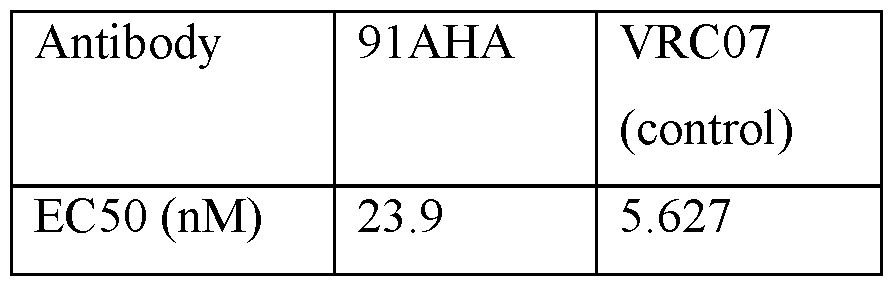
Table 14: CD3 binding affinity with bispecific anti-CD3/anti-gpl20 antibodies

EXAMPLE 4: Bispecific Antibody ex vivo Kill
Reagents. Phorbol 12-myristate 13-acetate (PMA), Ionomycin, ingenol-3-angelate, and bromosporine were purchased from Sigma (St. Louis, Missouri). Recombinant HIV p24 protein was obtained from US Biological (Salem, Massachusetts).
HIV Virus Cultures. HIV isolates representing HIV-1 group M (subtype A, B, C, E, F), N and O, and HIV-2 were obtained from the NTH AIDS Reference and Reagent Repository or isolated from CD8-depleted PBMCs by co-culture with PHA-activated T cells from healthy donors. Virus isolates evaluated included 93RW034, JrFl, Bal, QZ4589, ASM57, 92TH594, 93BR029, BRH84155, BRH95436, ZA/97/003, 93MW959, 92UG024, THA/92/006, RU570, JV1083, 301342, 301340 and BCF03. Working stocks were amplified by infecting PHA-activated PBMCs or MT-4 cells stably expressing the CCR5 co-receptor and GFP virus. Viral isolates were harvested from the culture supernatant without additional purification. Diluted virus was inactivated with addition of final 1% Triton x-100 in PBS and incubated at room temperature for 30min and then frozen at -80°C until analysis. The viral lysate was diluted at 1 : 100, 1 : 1000, 1 : 10,000 and 1 : 100,000 with 3% BSA/PBS before assay.
Isolation of CD4 T cells. Leukapheresis was performed on Vorinostat patients over a period spanning 3-6 hr post-dose, and venipuncture was performed on Panobinostat patients at 8 hr post-dose. PBMCs were isolated either from leukopaks or from whole blood via Ficoll-gradient. Resting CD4+ T cells, total CD4+ T cells, and total CD3+ T cells were isolated from PBMCs using STEMCELL Technologies kits (Vancouver, Canada), as previously described. (Archin, N.M. et al. Nature 487,:482-85 (2012); Archin, N.M. et al. J. Infect. Dis. 210,728-735 (2014); Rasmussen, T.A. et al. Lancet HIV I, el3-21 (2014); Procopio, F A. et al. EbioMed. 2, 872-881 (2015).
Ex vivo HIV reactivation. 1 to 5 x 10⁶ cells/ml enriched CD4+ T cells were cultured in RPMI 1640 media containing 10% FBS, 2 mM glutamine, and the antibiotics penicillin and
streptomycin (complete media, cRPMI). Cells were treated ex vivo for indicated times with either 0.1% DMSO, 100 ng/ml PMA/1 μg/ml Ionomycin, 10 ng/ml PMA/O. ^g/ml Ionomycin, 10 nM ingenol-3-angelate, 5 μΜ bromosporine, 750 nM Vorinostat, or 380 nM Vorinostat. After the treatment period, cells were collected and put through a 35 μιη cell strainer (BD Falcon; Thermo Fisher, Waltham, Massachusetts) to remove cell clumps. Cell density and viability were determined with a Vi-cell XR instrument (Beckman Coulter, Pasadena, California). Cells and culture medium were then recovered by centrifugation at 1500 x g for 5 min at 37C. Samples were processed for p24 digital ELISA and TILDA as described below.
HIV p24 digital immunoassay. The fully automated Quanterix HD-1 analyzer for single molecule detection has been reported previously (Chang, L. et al. J. Virol. Methods 188, 153- 60 (2013); Cabrera, C, Change, L., Stone, M., Busch, M., Wilson, D.H. Clin. Chem. 61, 1-8 (2015)). The p24 assay was optimized to enable increased sensitivity and detection of viral protein in the matrix of cell lysate and cultured medium. Briefly, cell lysates were prepared by adding final concentration of 1% Triton X-100/PBS to 2xl06 cells. For culture medium supematants, Triton X-100 was added to a final concentration of 1% (10% volume of 10% Triton x-100 prepared in PBS). Samples were stored frozen at -80°C for > lhr or until analysis. Upon thaw, cell lysates were diluted 2- to 5- fold with dilution buffer (0.5% casein, Thermo-fisher, cat# 37528, 1.5% BSA, Thermo Fisher, Cat# BP1600-1, and 0.1% Tween 20 in PBS). For culture medium supematants, samples were diluted with an equal volume of dilution buffer. Samples were centrifuged for 5 min at 10,000 x g at room temperature to remove insoluble material prior to p24 measurement on the Quanterix analyzer. All other assay reagents and assay reaction
conditions followed the manufacturers p24 kit protocol (Lexington, Massachusetts). p24 concentration was calculated based on a p24 calibration curve with 4-parameter curve fitting.
TILDA. TILDA analysis was performed as previously described with slight modifications (Cabrera, C. et al., Clin. Chem. 61, 1-8 (2015). Briefly, two-fold serial dilutions were performed to generate 4 different seeding densities. 1 μΐ each of the cell suspension from the 4 different seeding densities was added to 24 wells of a 384 well plate (Therm oFisher, Waltham,
Massachusetts) containing 9 0.2 μΐ of Superscript III/ Plantinum Taq, 0.1 μΐ RNase Inhibitor (New England Biolabs, Ipswich, Massachusetts), 2.2 μΐ TE buffer, 0.125 μΐ of 20 μM tatl .4 primer, 0.125 μΐ of 20 μΜ Rev primer, 2.25 μΐ nuclease-free water, and 5 μΐ 2x reaction mix provided with the kit (Therm oFisher, Waltham, Massachusetts). PCR conditions were conducted as previously described in Cabrera et al. The first, non-qPCR reaction was diluted 1 :3 with TE buffer pH 8.0. 1 μΐ of diluted PCR product from each well was transferred to a 384 well plate (Therm oFisher, Waltham, Massachusetts) containing 9 μΐ of TaqMan Fast Advanced Master Mix supplemented with PCR primers and Taqman probe obtained from Integrated DNA
Technologies. qPCR was performed on a Quantstudio 12k flex instrument (Therm oFisher, Waltham, Massachusetts) as previously described.
Measurement of p24 from clinical samples. Cryopreserved cells were thawed and CD4+ T cells were isolated as described above. 2xl06/ml CD4+ T cells per sample were cultured in the presence of 1 μΜ Raltegravir for 48 hr in cRPMI media and then harvested and prepared for p24 quantification, as described above. Bi-specific antibodies and ex vivo shock and kill. CD3 enriched cells from HIV infected ART-suppressed donors were prepared as described above and cultured in cRPMI. Cells were seeded at a density of 2 xlO6 cells/ml and were incubated with either 0.1% DMSO, 10 ng/ml PMA and 0.1 μg/ml Ionomycin, or 380 nM Vorinostat in the presence or absence of 100 ng/ml anti-CD3/gpl20 bispecific antibodies (90AHA and anti-CD3/RSV control antibody). Raltegravir was added at a final concentration of 1 μΜ to prevent secondary rounds of replication. Following a 72 hr incubation period, cell lysates were prepared and p24 was quantified, as described above.
All references cited herein are incorporated by reference to the same extent as if each individual publication, database entry {e.g. Genbank sequences or GenelD entries), patent application, or patent, was specifically and individually indicated to be incorporated by
reference. This statement of incorporation by reference is intended by Applicants, pursuant to 37 C.F.R. § 1.57(b)(1), to relate to each and every individual publication, database entry (e.g. Genbank sequences or GenelD entries), patent application, or patent, each of which is clearly identified in compliance with 37 C.F.R. § 1.57(b)(2), even if such citation is not immediately adjacent to a dedicated statement of incorporation by reference. The inclusion of dedicated statements of incorporation by reference, if any, within the specification does not in any way weaken this general statement of incorporation by reference. Citation of the references herein is not intended as an admission that the reference is pertinent prior art, nor does it constitute any admission as to the contents or date of these publications or documents.
The present invention is not to be limited in scope by the specific embodiments described herein. Indeed, various modifications of the invention in addition to those described herein will become apparent to those skilled in the art from the foregoing description and the accompanying figures. Such modifications are intended to fall within the scope of the appended claims.
The foregoing written specification is considered to be sufficient to enable one skilled in the art to practice the invention. Various modifications of the invention in addition to those shown and described herein will become apparent to those skilled in the art from the foregoing description and fall within the scope of the appended claims.
Table 15: Sequence Information
Descripti SEQ Sequence
on ID
NO
scFv_ 1 EVQLVESGGGLVQPGGSLRLSCAASGFTFNTYAMNWVRQAPGKGLE
MAmAb WVARIRSKYNNYATYYADSVKDRFTISRDDSKNSLYLQMNSLKTED
2 VH- TAVYYCVRHGNFGNSYVSWFAYWGQGTLVTVSSGGGGSGGGGSG
VL- GGGSQ AVVTQEP SLT VSPGGT VTLTCRS STGAVTT SN YANW VQQKP heavy GQAPRGLIGGTNKRAPWTPARFSGSLLGGKAALTITGAQAEDEADY chain YCALWYSNLWVFGGGTKLTVLAAEPKSSDKTHTCPPCPAPELLGGP hinge- SVFLFPPKPKDTLMISRTPEVTCVVVDVSHEDPEVKFNWYVDGVEVH
CH2- NAKTKPREEQYASTYRVVSVLTVLHQDWLNGKEYKCKVSNKALPA
CH3 with PIEKTISKAKGQPREPQVYTLPPSRDELTKNQVSLLCLVKGFYPSDIAV
ZW EWESNGQPENNYMTWPPVLDSDGSFFLYSKLTVDKSRWQQGNVFS
mutations CSVMHEALHNHYTQKSLSLSPG
VRC07B 2 QVRLSQSGGQVKKPGDSMRISCRASGYDFINCPINWIRLAPGRRPEW -HC with MGWVKPRGGAVNYARQFQGRVTMTRDVYSDTAFLELRALTSDDTA ZW VYFCTRGKYCTARDYYNWDFEHWGRGTLVTVSSASTKGPSVFPLAP
mutations S SK S T SGGT A ALGCL VKD YFPEP VT V S WNS GALT SGVHTFP A VLQ S S
GLYSLS S VVTVPS S SLGTQT YICNVNHKPSNTKVDKKVEPKSCDKTH
TCPPCPAPELLGGPSVFLFPPKPKDTLMISRTPEVTCVVVDVSHEDPE
VKFNWYVDGVEVHNAKTKPREEQYASTYRVVSVLTVLHQDWLNG
KEYKCKVSNKALPAPIEKTISKAKGQPREPQVYTYPPSRDELTKNQV
SLTCLVKGFYPSDIAVEWESNGQPENNYKTTPPVLDSDGSFALVSKL
TVDKSRWQQGNVF SC SVMHEALHNHYTQKSLSLSPG
VRC07B 3 EIVLTQSPATLSLSPGERAILSCRTSQYGSLAWYQQRPGQAPRLVIYA -LC GSTRATGIPDRF S GSRWGAE YNLTI SNLESEDF GV Y YC QQ YEFF GQ G
TKVQVDIKRTVAAPSVFIFPPSDEQLKSGTASVVCLLNNFYPREA KVQWKVDNALQSGNSQES VTEQD SKD ST YSLS STLTLSKAD YEKHK VYACEVTHQGLS SP VTKSFNRGEC
scFv MI 4 EVQLVESGGGLVQPGGSLKLSCAASGFTFNKYAMNWVRQAPGKGL mAb2 V EW V ARIRSK YNN Y AT Y Y AD S VKDRF TI SRDD SKNT A YLQMNNLKTE
H-VL DTAVYYCVRHGNFGNSYISYWAYWGQGTLVTVSSGGGGSGGGGSG heavy GGGSQTVVTQEPSLTVSPGGTVTLTCGSSTGAVTSGNYPNWVQQKP chain GQAPRGLIGGTKFLAPGTPARFSGSLLGGKAALTLSGVQPEDEAEYY hinge- CVLWYSNRWVFGGGTKLTVLAAEPKSSDKTHTCPPCPAPELLGGPS
CH2- VFLFPPKPKDTLMISRTPEVTCVVVDVSHEDPEVKFNWYVDGVEVH
CH3 with NAKTKPREEQYASTYRVVSVLTVLHQDWLNGKEYKCKVSNKALPA
ZW PIEKTISKAKGQPREPQVYTLPPSRDELTKNQVSLLCLVKGFYPSDIAV
mutations EWESNGQPENNYMTWPPVLDSDGSFFLYSKLTVDKSRWQQGNVFS
CSVMHEALHNHYTQKSLSLSPG
RSV-HC 5 QVTLRESGPALVKPTQTLTLTCTFSGFSLSTSGMSVGWIRQPPGKALE with ZW WLADIWWDDKKDYNPSLKSRLTISKDTSKNQVVLKVTNMDPADTA mutations T Y YC ARSMITNW YFD VWGAGTT VT V S S AS TKGP S VFPL AP S SK S T S G
GT A ALGCL VKD YFPEP VTV SWNSGALT SGVHTFP A VLQ S S GL Y SL S S V VT VP S S SLGTQT YICNVNHKP SNTK VDKK VEPK S CDKTHTCPPCP A PELLGGPSVFLFPPKPKDTLMISRTPEVTCVVVDVSHEDPEVKFNWY VDGVEVHNAKTKPREEQYASTYRVVSVLTVLHQDWLNGKEYKCKV SNKALPAPIEKTISKAKGQPREPQVYTYPPSRDELTKNQVSLTCLVKG
FYPSDIAVEWESNGQPENNYKTTPPVLDSDGSFALVSKLTVDKSRW QQGNVF SC SVMHEALHNHYTQKSLSLSPG
RSV-LC 6 DIQMTQSPSTLSASVGDRVTITCKCQLSVGYMHWYQQKPGKAPKLLI
YDT SKL AS GVP SRF S GS GS GTEF TLTI S SLQPDDF AT Y YCF QGS GYPF T FGGGTKLEIKRTVAAPSVFIFPPSDEQLKSGTASVVCLLN FYPREAK VQ WK VDN ALQ S GNS QE S VTEQD SKD STYSLSSTLTL SK AD YEKHK V YACEVTHQGLS SP VTK SF RGEC
VRC07B 7 EIVLTQSPATLSLSPGERAILSCRTSQYGSLAWYQQRPGQAPRLVIYA
-N70T- GSTRATGIPDRF S GSRWGAE YTLTISNLE SEDF GV Y YC QQ YEFF GQ GT
LC KVQVDIKRTVAAPSVFIFPPSDEQLKSGTASVVCLLNNFYPREAKVQ WK VDN ALQ S GNS QE S VTEQD SKD S T Y SL S S TLTL SK AD YEKHK V Y A CEVTHQGLS SP VTK SFNRGEC
VRC07- 8 QVRLSQSGGQMKKPGDSMRISCRASGYEFINCPINWIRLAPGKRPEW G54W- MGWMKPRWGAVSYARQLQGRVTMTRDMYSETAFLELRSLTSDDT HC with AVYFCTRGKYCTARDYYNWDFEHWGQGTPVTVSSASTKGPSVFPLA ZW P S SK S T S GGT A ALGCL VKD YFPEP VT VS WNS GALT S GVHTFP A VLQ S
mutations SGLYSLS S VVTVPS S SLGTQTYICNVNHKPSNTKVDKKVEPKSCDKT
HTCPPCPAPELLGGPSVFLFPPKPKDTLMISRTPEVTCVVVDVSHEDP
EVKFNWYVDGVEVHNAKTKPREEQYASTYRVVSVLTVLHQDWLN
GKEYKCKVSNKALPAPIEKTISKAKGQPREPQVYTYPPSRDELTKNQ
VSLTCLVKGFYPSDIAVEWESNGQPENNYKTTPPVLDSDGSFALVSK
LTVDKSRWQQGNVF SC SVMHEALHNHYTQKSLSLSPG
VRC07- 9 EIVLTQSPGTLSLSPGETAIISCRTSQYGSLAWYQQRPGQAPRLVIYSG N70T-LC STRAAGIPDRFSGSRWGPDYTLTISNLESGDFGVYYCQQYEFFGQGT
KVQVDIKRTVAAPSVFIFPPSDEQLKSGTASVVCLLNNFYPREAKVQ WK VDN ALQ S GNS QE S VTEQD SKD S T Y SL S S TLTL SK AD YEKHK V Y A CEVTHQGLS SP VTK SFNRGEC
3B3-HC 10 QVQLEQSGAEVKKPGASVKVSCQASGYRFSHFTVHWVRQAPGQRFE with ZW WMGWINPYNGNKEFSAKFQDRVTFTADTSANTAYMELRSLRSADT mutations AVYYCARVGEWGWDDSPYDNYYMDVWGKGTTVIVSSASTKGPSV
FPL AP S SKST SGGT AALGCL VKD YFPEP VT VSWNSGALT SGVHTFP A
VLQS SGLYSLS S VVTVPS S SLGTQT YICNVNHKP SNTKVDKKVEPKSC
DKTHTCPPCPAPELLGGPSVFLFPPKPKDTLMISRTPEVTCVVVDVSH
EDPEVKFNWYVDGVEVHNAKTKPREEQYASTYRVVSVLTVLHQDW
LNGKEYKCKVSNKALPAPIEKTISKAKGQPREPQVYTYPPSRDELTK
NQVSLTCLVKGFYPSDIAVEWESNGQPENNYKTTPPVLDSDGSFALV
SKLTVDKSRWQQGNVFSCSVMHEALHNHYTQKSLSLSPGK
3B3-LC 11 EIVLTQSPGTLSLSPGERATFSCRSSHSIRSRRVAWYQHKPGQAPRLVI
HGVSNRASGISDRFSGSGSGTDFTLTITRVEPEDFALYYCQVYGASSY TFGQGTKLEIKRT V AAP S VFIFPP SDEQLKS GT AS VVCLLNNF YPREA KVQWKVDNALQSGNSQES VTEQD SKD ST YSLS STLTLSKAD YEKHK VYACEVTHQGLS SP VTKSFNRGEC
PGT121- 12 QMQLQESGPGLVKPSETLSLTCSVSGASISDSYWSWIRRSPGKGLEWI HC with GYVHKSGDTNYSPSLKSRVNLSLDTSKNQVSLSLVAATAADSGKYY ZW CARTLHGRRIYGIVAFNEWFTYFYMDVWGNGTQVTVSSASTKGPSV
mutations FPLAPSSKSTSGGT AALGCL VKD YFPEP VTVSWNSGALTSGVHTFPA
VLQ S SGL YSLS SWT VP S S SLGTQT YICNVNHKP SNTKVDKKVEPKSC DKTHTCPPCPAPELLGGPSVFLFPPKPKDTLMISRTPEVTCVVVDVSH EDPEVKFNWYVDGVEVHNAKTKPREEQYASTYRVVSVLTVLHQDW LNGKEYKCKVSNKALPAPIEKTISKAKGQPREPQVYTYPPSRDELTK
NQ VSLTCLVKGFYP SDIAVEWESNGQPENNYKTTPPVLD SDGSFALV SKLTVDKSRWQQGNVFSCSVMHEALHNHYTQKSLSLSPG
PGT121- 13 SDI S V APGET ARI SC GEK SLGSRA VQ W YQHR AGQ AP SLII YNNQDRP S LC GIPERFSGSPDSPFGTTATLTITSVEAGDEADYYCHIWDSRVPTKWVF GGGTTLTVLGQPKAAPSVTLFPPSSEELQANKATLVCLISDFYPGAVT VAWKADS SPVKAGVETTTPSKQ SNNKYAAS S YLSLTPEQWKSHKS Y SCQ VTHEGSTVEKTVAPTEC S
7B2-HC 14 QVQLVQSGGGVFKPGGSLRLSCEASGFTFTEYYMTWVRQAPGKGLE with ZW WLAYISKNGEYSKYSPSSNGRFTISRDNAKNSVFLQLDRLSADDTAV mutations YYCARADGLTYFSELLQYIFDLWGQGARVTVSSASTKGPSVFPLAPS
SKSTSGGTAALGCLVKDYFPEPVTVSWNSGALTSGVHTFPAVLQSSG
LYSLS S VVTVPS S SLGTQT YICNVNHKPSNTKVDKKVEPKSCDKTHT
CPPCPAPELLGGPSVFLFPPKPKDTLMISRTPEVTCVVVDVSHEDPEV
KFNWYVDGVEVHNAKTKPREEQYASTYRVVSVLTVLHQDWLNGK
EYKCKVSNKALPAPIEKTISKAKGQPREPQVYTYPPSRDELTKNQVSL
TCLVKGFYPSDIAVEWESNGQPENNYKTTPPVLDSDGSFALVSKLTV
DKSRWQQGNVF SC S VMHEALHNHYTQKSLSLSPGK
7B2-LC 15 DIVMTQSPDSLAVSPGERATfflCKSSQTLLYSSN RHSIAWYQQRPG
QPPKLLLYWASMRLSGVPDRFSGSGSGTDFTLTIN LQAEDVAIYYC HQYSSHPPTFGHGTRVEIKRTVAAPSVFIFPPSDEQLKSGTASVVCLL N F YPREAK VQ WK VDN ALQ SGN SQE S VTEQD SKD S T Y SLSSTLTLS KAD YEKHKVYACEVTHQGLS SPVTKSF RGEC
F240-HC 16 QVQLVQSGGGVVKPGASLRLACSASGFTFTDYYMSWIRQTPGKGLQ with ZW WLAYITKDGSEKKYADSLQGRFAVSRDNANNLVFLQLNTVEDDDTG mutations VYYCARDDGYYDRSGYYGVFDLWGQGIRVTVSSASTKGPSVFPLAP
S SK S T SGGT A ALGCL VKD YFPEP VT V S WNS GALT SGVHTFP A VLQ S S
GLYSLS S VVTVPS S SLGTQT YICNVNHKPSNTKVDKKVEPKSCDKTH
TCPPCPAPELLGGPSVFLFPPKPKDTLMISRTPEVTCVVVDVSHEDPE
VKFNWYVDGVEVHNAKTKPREEQYASTYRVVSVLTVLHQDWLNG
KEYKCKVS KALPAPIEKTISKAKGQPREPQVYTYPPSRDELTKNQV
SLTCLVKGFYPSDIAVEWESNGQPENNYKTTPPVLDSDGSFALVSKL
TVDKSRWQQGNVF SC S VMHEALHNHYTQKSLSLSPGK
F240-LC 17 EFLLTQSPDSLAVTLGETATITCRSSRNILHSLNNKNYLAWYQQRPGQ
APKLLVIW ASMRVSGVADRF SGSGSGTDF ALTIS SLQPED AAVYYCQ H Y YTTHRTF GQGTK VEIKRT V A AP S VFIFPP SDEQLK S GT A S V VCLLN NF YPREAK VQWK VDN ALQ SGNS QE S VTEQD SKD S T Y SLSSTLTLSK AD YEKHKVYACEVTHQGLS SPVTKSFNRGEC
scFv- 18 EVQLVESGGGLVQPGGSLRLSCAASGFTFNTYAMNWVRQAPGKGLE
MAmAb WVARIRSKYNNYATYYADSVKDRFTISRDDSKNSLYLQMNSLKTED
2-VH-VL TAVYYCVRHGNFGNSYVSWFAYWGQGTLVTVSSGGGGSGGGGSG
GGGSQ AVVTQEP SLT VSPGGT VTLTCRS STGAVTT SN YANW VQQKP
GQAPRGLIGGTNKRAPWTPARFSGSLLGGKAALTITGAQAEDEADY
YCALWYSNLWVFGGGTKLTVLA
scFv- 19 EVQLVESGGGLVQPGGSLKLSCAASGFTFNKYAMNWVRQAPGKGL
MImAb2 EW V ARIRSK YNN Y AT Y Y AD S VKDRF TI SRDD SKNT A YLQMNNLKTE
-VH-VL DTAVYYCVRHGNFGNSYISYWAYWGQGTLVTVSSGGGGSGGGGSG
GGGSQTVVTQEPSLTVSPGGTVTLTCGSSTGAVTSGNYPNWVQQKP
GQAPRGLIGGTKFLAPGTPARFSGSLLGGKAALTLSGVQPEDEAEYY
CVLWYSNRWVFGGGTKLTVLA
MImAb2 20 EVQLVESGGGLVQPGGSLKLSCAASGFTFNKYAMNWVRQAPGKGL
VH-VL EW V ARIRSK YNN Y AT Y Y AD S VKDRF TI SRDD SKNT A YLQMNNLKTE scFv DTAVYYCVRHGNFGNSYISYWAYWGQGTLVTVSSGGGGSGGGGSG
IgGl H GGGSQTVVTQEPSLTVSPGGTVTLTCGSSTGAVTSGNYPNWVQQKP
GQAPRGLIGGTKFLAPGTPARFSGSLLGGKAALTLSGVQPEDEAEYY
CVLWYS RWVFGGGTKLTVLAAEPKSSDKTHTCPPCPAPELLGGPS
VFLFPPKPKDTLMISRTPEVTCVVVDVSHEDPEVKFNWYVDGVEVH
NAKTKPREEQYNSTYRVVSVLTVLHQDWLNGKEYKCKVS KALPA
PIEKTISKAKGQPREPQVYTLPPSRDELTKNQVSLTCLVKGFYPSDIAV
EWESNGQPENNYKTTPPVLDSDGSFFLYSKLTVDKSRWQQGNVFSC
SVMHEALHNHYTQKSLSLSPG
MImAb2 21 EVQLVESGGGLVQPGGSLKLSCAASGFTFNKYAMNWVRQAPGKGL VH-VL EW V ARIRSK YNN Y AT Y Y AD S VKDRF TI SRDD SKNT A YLQMNNLKTE scFv DTAVYYCVRHGNFGNSYISYWAYWGQGTLVTVSSGGGGSGGGGSG IgGl H GGGSQTVVTQEPSLTVSPGGTVTLTCGSSTGAVTSGNYPNWVQQKP ZM613B GQAPRGLIGGTKFLAPGTPARFSGSLLGGKAALTLSGVQPEDEAEYY
CVLWYSNRWVFGGGTKLTVLAAEPKSSDKTHTCPPCPAPELLGGPS
VFLFPPKPKDTLMISRTPEVTCVVVDVSHEDPEVKFNWYVDGVEVH
NAKTKPREEQYNSTYRVVSVLTVLHQDWLNGKEYKCKVSNKALPA
PIEKTISKAKGQPREPQVYTLPPSRDELTKNQVSLLCLVKGFYPSDIAV
EWESNGQPENNYMTWPPVLD SDGSFFLYSKLTVDKSRWQQGNVF S
CSVMHEALHNHYTQKSLSLSPG
IgGl H 22 DKTHTCPPCPAPELLGGPSVFLFPPKPKDTLMISRTPEVTCVVVDVSH ZM248A EDPEVKFNWYVDGVEVHNAKTKPREEQYNSTYRVVSVLTVLHQDW
LNGKEYKCKVSNKALPAPIEKTISKAKGQPREPQVYTYPPSRDELTK
NQVSLTCLVKGFYPSDIAVEWESNGQPENNYKTTPPVLDSDGSFALV
SKLTVDKSRWQQGNVFSCSVMHEALHNHYTQKSLSLSPG
MImAb2 23 EVQLVESGGGLVQPGGSLKLSCAASGFTFNKYAMNWVRQAPGKGL
VH-VL EW V ARIRSK YNN Y AT Y Y AD S VKDRF TI SRDD SKNT A YLQMNNLKTE scFv DTAVYYCVRHGNFGNSYISYWAYWGQGTLVTVSSGGGGSGGGGSG
IgGl H GGGSQTVVTQEPSLTVSPGGTVTLTCGSSTGAVTSGNYPNWVQQKP
ZM613B GQAPRGLIGGTKFLAPGTPARFSGSLLGGKAALTLSGVQPEDEAEYY
N297A CVLWYSNRWVFGGGTKLTVLAAEPKSSDKTHTCPPCPAPELLGGPS
VFLFPPKPKDTLMISRTPEVTCVVVDVSHEDPEVKFNWYVDGVEVH
NAKTKPREEQYASTYRVVSVLTVLHQDWLNGKEYKCKVSNKALPA
PIEKTISKAKGQPREPQVYTLPPSRDELTKNQVSLLCLVKGFYPSDIAV
EWESNGQPENNYMTWPPVLD SDGSFFLYSKLTVDKSRWQQGNVFS
CSVMHEALHNHYTQKSLSLSPG
human 24 DKTHTCPPCPAPELLGGPSVFLFPPKPKDTLMISRTPEVTCVVVDVSH
IgGl EDPEVKFNWYVDGVEVHNAKTKPREEQYASTYRVVSVLTVLHQDW
ZM- LNGKEYKCKVSNKALPAPIEKTISKAKGQPREPQVYTYPPSRDELTK
248A NQVSLTCLVKGFYPSDIAVEWESNGQPENNYKTTPPVLDSDGSFALV
N297A SKLTVDKSRWQQGNVFSCSVMHEALHNHYTQKSLSLSPG
MAmAb 25 EVQLVESGGGLVQPGGSLRLSCAASGFTFNTYAMNWVRQAPGKGLE 2 VH-VL WVARIRSKYNNYATYYADSVKDRFTISRDDSKNSLYLQMNSLKTED scFv TAVYYCVRHGNFGNSYVSWFAYWGQGTLVTVSSGGGGSGGGGSG IgGl H GGGSQ AVVTQEP SLT VSPGGT VTLTCRS STGAVTT SN YANW VQQKP
GQAPRGLIGGTNKRAPWTPARFSGSLLGGKAALTITGAQAEDEADY
YCALWYSNLWVFGGGTKLTVLAAEPKSSDKTHTCPPCPAPELLGGP
SVFLFPPKPKDTLMISRTPEVTCVVVDVSHEDPEVKFNWYVDGVEVH
NAKTKPREEQYNSTYRVVSVLTVLHQDWLNGKEYKCKVSNKALPA
PIEKTISKAKGQPREPQVYTLPPSRDELTKNQVSLTCLVKGFYPSDIAV
EWESNGQPENNYKTTPPVLDSDGSFFLYSKLTVDKSRWQQGNVFSC
SVMHEALHNHYTQKSLSLSPG
human 26 DKTHTCPPCPAPELLGGPSVFLFPPKPKDTLMISRTPEVTCVVVDVSH
IgGl EDPEVKFNWYVDGVEVHNAKTKPREEQYASTYRVVSVLTVLHQDW
ZM- LNGKEYKCKVS KALPAPIEKTISKAKGQPREPQVYTYPPSRDELTK
248A NQVSLTCLVKGFYPSDIAVEWESNGQPENNYKTTPPVLDSDGSFALV
N297A SKLTVDKSRWQQGNVFSCSVMHEALHNHYTQKSLSLSPG
MImAb2 27 EVQLVESGGGLVQPGGSLKLSCAASGFTFNKYAMNWVRQAPGKGL VH-VL EW V ARIRSK YNN Y AT Y Y AD S VKDRF TI SRDD SKNT A YLQMNNLKTE scFv DTAVYYCVRHGNFGNSYISYWAYWGQGTLVTVSSGGGGSGGGGSG IgGl H GGGSQTVVTQEPSLTVSPGGTVTLTCGSSTGAVTSGNYPNWVQQKP N297A GQAPRGLIGGTKFLAPGTPARFSGSLLGGKAALTLSGVQPEDEAEYY
CVLWYS RWVFGGGTKLTVLAAEPKSSDKTHTCPPCPAPELLGGPS
VFLFPPKPKDTLMISRTPEVTCVVVDVSHEDPEVKFNWYVDGVEVH
NAKTKPREEQYASTYRVVSVLTVLHQDWLNGKEYKCKVS KALPA
PIEKTISKAKGQPREPQVYTLPPSRDELTKNQVSLTCLVKGFYPSDIAV
EWESNGQPENNYKTTPPVLDSDGSFFLYSKLTVDKSRWQQGNVFSC
SVMHEALHNHYTQKSLSLSPG
3B3-HC- 28 QVQLEQSGAEVKKPGASVKVSCQASGYRFSHFTVHWVRQAPGQRFE hlgGl WMGWINPYNGNKEFSAKFQDRVTFTADTSANTAYMELRSLRSADT
AVYYCARVGEWGWDDSPYDNYYMDVWGKGTTVIVSSASTKGPSV
FPLAPSSKSTSGGTAALGCLVKDYFPEPVTVSWNSGALTSGVHTFPA
VLQ S SGL YSLS S VVT VP S S SLGTQT YICNVNHKP SNTK VDKKVEPK S C
DKTHTCPPCPAPELLGGPSVFLFPPKPKDTLMISRTPEVTCVVVDVSH
EDPEVKFNWYVDGVEVHNAKTKPREEQYNSTYRVVSVLTVLHQDW
LNGKEYKCKVSNKALPAPIEKTISKAKGQPREPQVYTLPPSRDELTKN
QVSLTCLVKGFYPSDIAVEWESNGQPENNYKTTPPVLDSDGSFFLYS
KLTVDKSRWQQGNVF SC S VMHEALHNHYTQKSLSLSPGK
PGT121- 29 QMQLQESGPGLVKPSETLSLTCSVSGASISDSYWSWIRRSPGKGLEWI
HC- GYVHKSGDTNYSPSLKSRVNLSLDTSKNQVSLSLVAATAADSGKYY hlgGl CARTLHGRRIYGIVAFNEWFTYFYMDVWGNGTQVTVSSASTKGPSV
FPLAPSSKSTSGGTAALGCLVKDYFPEPVTVSWNSGALTSGVHTFPA
VLQ S SGL YSLS SWT VP S S SLGTQT YICNVNHKP SNTK VDKKVEPK S C
DKTHTCPPCPAPELLGGPSVFLFPPKPKDTLMISRTPEVTCVVVDVSH
EDPEVKFNWYVDGVEVHNAKTKPREEQYNSTYRVVSVLTVLHQDW
LNGKEYKCKVSNKALPAPIEKTISKAKGQPREPQVYTLPPSRDELTKN
QVSLTCLVKGFYPSDIAVEWESNGQPENNYKTTPPVLDSDGSFFLYS
KLTVDKSRWQQGNVF SC SVMHEALHNHYTQKSLSLSPG
PGT121- 30 SDI S V APGET ARI SC GEK SLGSRA VQ W YQHR AGQ AP SLII YNNQDRP S
LC- GIPERF SGSPD SPFGTT ATLTIT S VE AGDE AD YYCHIWD SRVPTKW VF hKappa GGGTTLTVLRTVAAPSVFIFPPSDEQLKSGTASVVCLLNNFYPREAKV
Q WK VDN ALQ S GNS QE S VTEQD SKD STYSLSSTLTL SK AD YEKHK V Y ACEVTHQGLS SP VTK SFNRGEC
7B2-HC- 31 QVQLVQSGGGVFKPGGSLRLSCEASGFTFTEYYMTWVRQAPGKGLE hlgGl WLAYISKNGEYSKYSPSSNGRFTISRDNAKNSVFLQLDRLSADDTAV
YYCARADGLTYFSELLQYIFDLWGQGARVTVSSASTKGPSVFPLAPS
SKSTSGGTAALGCLVKDYFPEPVTVSWNSGALTSGVHTFPAVLQSSG
LYSLS S VVTVPS S SLGTQT YICNVNHKPSNTKVDKKVEPKSCDKTHT
CPPCPAPELLGGPSVFLFPPKPKDTLMISRTPEVTCVVVDVSHEDPEV
KFNWYVDGVEVHNAKTKPREEQYNSTYRVVSVLTVLHQDWLNGK EYKCKVS KALPAPIEKTISKAKGQPREPQVYTLPPSRDELTKNQVSL TCLVKGFYPSDIAVEWESNGQPENNYKTTPPVLDSDGSFFLYSKLTV DKSRWQQGNVF SC S VMHEALHNHYTQKSLSLSPGK
F240- 32 QVQLVQSGGGVVKPGASLRLACSASGFTFTDYYMSWIRQTPGKGLQ
HC- WLAYITKDGSEKKYADSLQGRFAVSRDNANNLVFLQLNTVEDDDTG hlgGl VYYCARDDGYYDRSGYYGVFDLWGQGIRVTVSSASTKGPSVFPLAP
S SK ST S GGT A ALGCL VKD YFPEP VT V S WNS GALT SGVHTFP A VLQ S S
GLYSLS S VVTVPS S SLGTQT YICNVNHKPSNTKVDKKVEPKSCDKTH
TCPPCPAPELLGGPSVFLFPPKPKDTLMISRTPEVTCVVVDVSHEDPE
VKFNWYVDGVEVHNAKTKPREEQYNSTYRVVSVLTVLHQDWLNG
KEYKCKVS KALPAPIEKTISKAKGQPREPQVYTLPPSRDELTKNQVS
LTCLVKGFYPSDIAVEWESNGQPENNYKTTPPVLDSDGSFFLYSKLT
VDKSRWQQGNVF SC SVMHEALHNHYTQKSLSLSPGK
VRC07- 33 QVRLSQSGGQMKKPGDSMRISCRASGYEFINCPINWIRLAPGKRPEW
HC- MGWMKPRGGA V S Y ARQLQ GRVTMTRDM YSET AFLELRSLT SDD T A hlgGl VYFCTRGKYCTARDYYNWDFEHWGQGTPVTVSSASTKGPSVFPLAP
S SK ST S GGT AALGCL VKD YFPEP VTV S WNS GALT SGVHTFP A VLQ S S GLYSLS S VVTVPS S SLGTQT YICNVNHKPSNTKVDKKVEPKSCDKTH TCPPCPAPELLGGPSVFLFPPKPKDTLMISRTPEVTCVVVDVSHEDPE VKFNWYVDGVEVHNAKTKPREEQYNSTYRVVSVLTVLHQDWLNG KEYKCKVSNKALPAPIEKTISKAKGQPREPQVYTLPPSRDELTKNQVS LTCLVKGFYPSDIAVEWESNGQPENNYKTTPPVLDSDGSFFLYSKLT VDKSRWQQGNVF SC SVMHEALHNHYTQKSLSLSPGK
VRC07B 34 QVRLSQSGGQVKKPGDSMRISCRASGYDFINCPINWIRLAPGRRPEW
-HC- MGWVKPRGGAVNYARQFQGRVTMTRDVYSDTAFLELRALTSDDTA hlgGl VYFCTRGKYCTARDYYNWDFEHWGRGTLVTVSSASTKGPSVFPLAP
S SK ST S GGT AALGCL VKD YFPEP VTV S WNS GALT SGVHTFP A VLQ S S
GLYSLS S VVTVPS S SLGTQT YICNVNHKPSNTKVDKKVEPKSCDKTH
TCPPCPAPELLGGPSVFLFPPKPKDTLMISRTPEVTCVVVDVSHEDPE
VKFNWYVDGVEVHNAKTKPREEQYNSTYRVVSVLTVLHQDWLNG
KEYKCKVSNKALPAPIEKTISKAKGQPREPQVYTLPPSRDELTKNQVS
LTCLVKGFYPSDIAVEWESNGQPENNYKTTPPVLDSDGSFFLYSKLT
VDKSRWQQGNVF SC SVMHEALHNHYTQKSLSLSPGK
VRC07( 35 QVRLSQSGGQMKKPGDSMRISCRASGYEFINCPINWIRLAPGKRPEW G54W)- MGWMKPRWGA V SY ARQLQ GRVTMTRDM YSET AFLELRSLT SDD T HC- AVYFCTRGKYCTARDYYNWDFEHWGQGTPVTVSSASTKGPSVFPLA hlgGl P S SK ST S GGT A ALGCL VKD YFPEP VTVS WNS GALT S GVHTFP A VLQ S
SGLYSLS S VVTVPS S SLGTQTYICNVNHKPSNTKVDKKVEPKSCDKT
HTCPPCPAPELLGGPSVFLFPPKPKDTLMISRTPEVTCVVVDVSHEDP
EVKFNWYVDGVEVHNAKTKPREEQYNSTYRVVSVLTVLHQDWLN
GKEYKCKVSNKALPAPIEKTISKAKGQPREPQVYTLPPSRDELTKNQ
VSLTCLVKGFYPSDIAVEWESNGQPENNYKTTPPVLDSDGSFFLYSK
LTVDKSRWQQGNVFSCSVMHEALHNHYTQKSLSLSPG
VRC01- 36 EIVLTQSPGTLSLSPGETAIISCRTSQYGSLAWYQQRPGQAPRLVIYSG
LC- STRAAGIPDRFSGSRWGPDYNLTISNLESGDFGVYYCQQYEFFGQGT hKappa KVQVDIKRTVAAPSVFIFPPSDEQLKSGTASVVCLLNNFYPREAKVQ
WK VDN ALQ S GNS QE S VTEQD SKD S T Y SL S S TLTL SK AD YEKHK V Y A CEVTHQGLS SP VTK SFNRGEC
Claims
1. An anti-CD3/gpl20 bispecific antibody comprising an anti-CD3 antigen binding
fragment selected from the group consisting of:
a. the amino acid sequence of SEQ ID NO: 1; and
b. the amino acid sequence of SEQ ID NO: 4; and
an anti-gpl20 antigen binding fragment selected from the group consisting of
c. a heavy chain comprising the amino acid sequence of SEQ ID NO:2 and a light chain comprising the amino acid sequence of SEQ ID NO:3;
d. a heavy chain comprising the amino acid sequence of SEQ ID NO: 2 and a light chain comprising the amino acid sequence of SEQ ID NO: 7;
e. a heavy chain comprising the amino acid sequence of SEQ ID NO: 8 and a light chain comprising the amino acid sequence of SEQ ID NO: 9;
f. a heavy chain comprising the amino acid sequence of SEQ ID NO: 10 and a light chain comprising the amino acid sequence of SEQ ID NO: 11; and
g. a heavy chain comprising the amino acid sequence of SEQ ID NO: 12 and a light chain comprising the amino acid sequence of SEQ ID NO: 13.
2. The bispecific antibody of claim 1 wherein:
a. the anti-CD3 antigen binding fragment comprises the amino acid sequence of SEQ ID NO: 1; and the anti-gpl20 antigen binding fragment comprises a heavy chain comprising the amino acid sequence of SEQ ID NO:2 and a light chain comprising the amino acid sequence of SEQ ID NO:3;
b. the anti-CD3 antigen binding fragment comprises the amino acid sequence of SEQ ID NO: 4; and the anti-gpl20 antigen binding fragment comprises a heavy chain comprising the amino acid sequence of SEQ ID NO:2 and a light chain comprising the amino acid sequence of SEQ ID NO:3;
c. the anti-CD3 antigen binding fragment comprises the amino acid sequence of SEQ ID
NO: 4; and the anti-gpl20 antigen binding fragment comprises a heavy chain comprising the amino acid sequence of SEQ ID NO:2 and a light chain comprising the amino acid sequence of SEQ ID NO: 7;
d. the anti-CD3 antigen binding fragment comprises the amino acid sequence of SEQ ID NO: 4; and the anti-gpl20 antigen binding fragment comprises a heavy chain comprising the amino acid sequence of SEQ ID NO:8 and a light chain comprising the amino acid sequence of SEQ ID NO: 9;
e. the anti-CD3 antigen binding fragment comprises the amino acid sequence of SEQ ID NO: 4; and the anti-gpl20 antigen binding fragment comprises a heavy chain comprising the amino acid sequence of SEQ ID NO: 10 and a light chain comprising the amino acid sequence of SEQ ID NO: 11; or
f. the anti-CD3 antigen binding fragment comprises the amino acid sequence of SEQ ID NO: 4; and the anti-gpl20 antigen binding fragment comprises a heavy chain comprising the amino acid sequence of SEQ ID NO: 12 and a light chain comprising the amino acid sequence of SEQ ID NO: 13.
3. An anti-CD3/gp41 bispecific antibody comprising an anti-CD3 antigen binding fragment selected from the group consisting of:
a. the amino acid sequence of SEQ ID NO: 1; and
b. the amino acid sequence of SEQ ID NO: 4; and
an anti-gp41 antigen binding fragment selected from the group consisting of
c. a heavy chain comprising the amino acid sequence of SEQ ID NO: 14 and a light chain comprising the amino acid sequence of SEQ ID NO: 15; and
d. a heavy chain comprising the amino acid sequence of SEQ ID NO: 16 and a light chain comprising the amino acid sequence of SEQ ID NO: 17.
4. The bispecific antibody of claim 3 wherein:
a. the anti-CD3 antigen binding fragment comprises the amino acid sequence of SEQ ID NO: 4; and the anti-gp41 antigen binding fragment comprises a heavy chain comprising the amino acid sequence of SEQ ID NO: 14 and a light chain comprising the amino acid sequence of SEQ ID NO: 15; or
b. the anti-CD3 antigen binding fragment comprises the amino acid sequence of SEQ ID NO: 4; and the anti-gp41 antigen binding fragment comprises a heavy chain comprising the amino acid sequence of SEQ ID NO: 16 and a light chain comprising the amino acid sequence of SEQ ID NO: 17.
5. The bispecific antibody of any one of claims 1-4, wherein the framework region of the anti- CD3 antigen binding fragment, anti-gpl20 antigen binding fragment, or anti-gp41 antigen binding fragment comprises 1, 2, 3, 4, 5, 6, 7, 8, 9 or 10 mutations.
6. The bispecific antibody of claim 5, wherein the mutations are conservative.
7. An antigen binding fragment thereof that binds to CD3 that comprises a single chain Fv region comprising:
a. amino acid sequence of SEQ ID NO: 18; or
b. amino acid sequence of SEQ ID NO: 19.
8. The antigen binding fragment of claim 7 that further comprises the hinge, CH2 and CH3 domain of a heavy chain constant domain of the IgGl, IgG2 or IgG4 subtype.
9. The antigen binding fragment of claim 7 that comprises:
a. the amino acid sequence of SEQ ID NO: 1; or
b. the amino acid sequence of SEQ ID NO: 4.
10. A pharmaceutical composition comprising the bispecific antibody of any one of claims 1-6 and a histone deacetylase inhibitor.
11. A method of treating HIV in a human subject, comprising administering to the subject an effective amount of the bispecific antibody of any one of claims 1-6, optionally in association with a histone deacetylase inhibitor.
12. A bispecific antibody according to any one of claims 1-6 and optionally a histone deacetylase inhibitor, for use in the treatment of HIV.
13. Use of the bispecific antibody of any one of claims 1-6 for the manufacture of a medicament for the treatment of HIV in combination with a histone deacetylase inhibitor.
14. A polynucleotide encoding the bispecific antibody or antigen binding fragment of any one of claims 1-9.
15. A polynucleotide encoding the anti-CD3 antigen binding fragment of claim 7 or 9.
16. A polynucleotide encoding an anti-gpl20 antigen binding fragment selected from the group consisting of:
a. a heavy chain comprising the amino acid sequence of SEQ ID NO:2 and a light chain comprising the amino acid sequence of SEQ ID NO:3;
b. a heavy chain comprising the amino acid sequence of SEQ ID NO: 2 and a light chain comprising the amino acid sequence of SEQ ID NO: 7;
c. a heavy chain comprising the amino acid sequence of SEQ ID NO: 8 and a light chain comprising the amino acid sequence of SEQ ID NO: 9;
d. a heavy chain comprising the amino acid sequence of SEQ ID NO: 10 and a light chain comprising the amino acid sequence of SEQ ID NO: 11; and
e. a heavy chain comprising the amino acid sequence of SEQ ID NO: 12 and a light chain comprising the amino acid sequence of SEQ ID NO: 13.
17. A polynucleotide encoding an anti-gp41 antigen binding fragment selected from the group consisting of:
a. a heavy chain comprising the amino acid sequence of SEQ ID NO: 14 and a light chain comprising the amino acid sequence of SEQ ID NO: 15; and
b. a heavy chain comprising the amino acid sequence of SEQ ID NO: 16 and a light chain comprising the amino acid sequence of SEQ ID NO: 17.
18. An expression vector comprising the polynucleotide of any one of claims 14 to 17 operably linked to control sequences recognized by a host cell transfected with the vector.
19. A host cell comprising the vector of claim 18.
20. A method of producing a bispecific antibody or an antigen binding fragment thereof comprising:
a. culturing a host cell comprising a polynucleotide encoding the bispecific antibody or antigen binding fragment of any one of claims 1-9 under conditions favorable to expression of the polynucleotide; and
b. optionally, recovering the bispecific antibody or antigen binding fragment from the host cell and/or culture medium.
Applications Claiming Priority (2)
| Application Number | Priority Date | Filing Date | Title |
|---|---|---|---|
| US201762478920P | 2017-03-30 | 2017-03-30 | |
| US62/478,920 | 2017-03-30 |
Publications (1)
| Publication Number | Publication Date |
|---|---|
| WO2018183139A1 true WO2018183139A1 (en) | 2018-10-04 |
Family
ID=63676857
Family Applications (1)
| Application Number | Title | Priority Date | Filing Date |
|---|---|---|---|
| PCT/US2018/024239 Ceased WO2018183139A1 (en) | 2017-03-30 | 2018-03-26 | ANTI-CD3/gp120 AND ANTI-CD3/gp41 BISPECIFIC ANTIBODIES |
Country Status (1)
| Country | Link |
|---|---|
| WO (1) | WO2018183139A1 (en) |
Cited By (2)
| Publication number | Priority date | Publication date | Assignee | Title |
|---|---|---|---|---|
| CN114316062A (en) * | 2022-03-02 | 2022-04-12 | 珠海臻谱基因科技有限公司北京分公司 | Multispecific antibody targeting HIV gp120 protein and human CD3 molecule and application thereof |
| US12195524B2 (en) | 2020-08-25 | 2025-01-14 | Gilead Sciences, Inc. | Multi-specific antigen binding molecules targeting HIV and methods of use |
Citations (4)
| Publication number | Priority date | Publication date | Assignee | Title |
|---|---|---|---|---|
| US20130150563A1 (en) * | 2010-07-09 | 2013-06-13 | Jv Bio Srl | Lipid-conjugated antibodies |
| WO2013163427A1 (en) * | 2012-04-25 | 2013-10-31 | The United States Of America, As Represented By The Secretary, Department Of Health & Human Services | Antibodies to treat hiv-1 infection |
| US20140294823A1 (en) * | 2013-03-15 | 2014-10-02 | Xencor, Inc. | Heterodimeric proteins |
| US20140322163A1 (en) * | 2011-12-08 | 2014-10-30 | The United States Of America, As Represented By The Secretary, Department Of Health And Human Serv | Neutralizing antibodies to hiv-1 and their use |
-
2018
- 2018-03-26 WO PCT/US2018/024239 patent/WO2018183139A1/en not_active Ceased
Patent Citations (4)
| Publication number | Priority date | Publication date | Assignee | Title |
|---|---|---|---|---|
| US20130150563A1 (en) * | 2010-07-09 | 2013-06-13 | Jv Bio Srl | Lipid-conjugated antibodies |
| US20140322163A1 (en) * | 2011-12-08 | 2014-10-30 | The United States Of America, As Represented By The Secretary, Department Of Health And Human Serv | Neutralizing antibodies to hiv-1 and their use |
| WO2013163427A1 (en) * | 2012-04-25 | 2013-10-31 | The United States Of America, As Represented By The Secretary, Department Of Health & Human Services | Antibodies to treat hiv-1 infection |
| US20140294823A1 (en) * | 2013-03-15 | 2014-10-02 | Xencor, Inc. | Heterodimeric proteins |
Cited By (2)
| Publication number | Priority date | Publication date | Assignee | Title |
|---|---|---|---|---|
| US12195524B2 (en) | 2020-08-25 | 2025-01-14 | Gilead Sciences, Inc. | Multi-specific antigen binding molecules targeting HIV and methods of use |
| CN114316062A (en) * | 2022-03-02 | 2022-04-12 | 珠海臻谱基因科技有限公司北京分公司 | Multispecific antibody targeting HIV gp120 protein and human CD3 molecule and application thereof |
Similar Documents
| Publication | Publication Date | Title |
|---|---|---|
| US12102681B2 (en) | Anti-LAG3 antibodies and antigen-binding fragments | |
| EP3993876B1 (en) | Anti-cd154 antibodies and uses thereof | |
| EP3399989B1 (en) | Anti-lag3 antibodies and antigen-binding fragments | |
| NL2017267B1 (en) | Anti-pd-1 antibodies | |
| WO2017030823A2 (en) | Anti-tigit antibodies | |
| WO2016028656A1 (en) | Anti-tigit antibodies | |
| WO2018183139A1 (en) | ANTI-CD3/gp120 AND ANTI-CD3/gp41 BISPECIFIC ANTIBODIES | |
| CA2994555C (en) | Anti-tigit antibodies | |
| HK40074747B (en) | Anti-cd154 antibodies and uses thereof | |
| HK40074747A (en) | Anti-cd154 antibodies and uses thereof | |
| BR122024022801A2 (en) | ANTI-CD154 ANTIBODIES, USES OF THE SAME, PHARMACEUTICAL COMPOSITION, NUCLEIC ACID MOLECULE, VECTOR, TRANSFORMED CELL | |
| HK40045378A (en) | Anti-lag3 antibodies and antigen-binding fragments | |
| HK1233194B (en) | Anti-lag3 antibodies and antigen-binding fragments | |
| HK1233194A1 (en) | Anti-lag3 antibodies and antigen-binding fragments |
Legal Events
| Date | Code | Title | Description |
|---|---|---|---|
| 121 | Ep: the epo has been informed by wipo that ep was designated in this application |
Ref document number: 18774906 Country of ref document: EP Kind code of ref document: A1 |
|
| NENP | Non-entry into the national phase |
Ref country code: DE |
|
| 122 | Ep: pct application non-entry in european phase |
Ref document number: 18774906 Country of ref document: EP Kind code of ref document: A1 |