WO2018137558A1 - Materials with chiroptical properties - Google Patents
Materials with chiroptical properties Download PDFInfo
- Publication number
- WO2018137558A1 WO2018137558A1 PCT/CN2018/073359 CN2018073359W WO2018137558A1 WO 2018137558 A1 WO2018137558 A1 WO 2018137558A1 CN 2018073359 W CN2018073359 W CN 2018073359W WO 2018137558 A1 WO2018137558 A1 WO 2018137558A1
- Authority
- WO
- WIPO (PCT)
- Prior art keywords
- alkyl
- group
- independently selected
- hydrogen
- alkoxy
- Prior art date
- Legal status (The legal status is an assumption and is not a legal conclusion. Google has not performed a legal analysis and makes no representation as to the accuracy of the status listed.)
- Ceased
Links
Images


Classifications
-
- C—CHEMISTRY; METALLURGY
- C07—ORGANIC CHEMISTRY
- C07C—ACYCLIC OR CARBOCYCLIC COMPOUNDS
- C07C15/00—Cyclic hydrocarbons containing only six-membered aromatic rings as cyclic parts
- C07C15/40—Cyclic hydrocarbons containing only six-membered aromatic rings as cyclic parts substituted by unsaturated carbon radicals
- C07C15/50—Cyclic hydrocarbons containing only six-membered aromatic rings as cyclic parts substituted by unsaturated carbon radicals polycyclic non-condensed
- C07C15/52—Cyclic hydrocarbons containing only six-membered aromatic rings as cyclic parts substituted by unsaturated carbon radicals polycyclic non-condensed containing a group with formula
-
- C—CHEMISTRY; METALLURGY
- C07—ORGANIC CHEMISTRY
- C07C—ACYCLIC OR CARBOCYCLIC COMPOUNDS
- C07C15/00—Cyclic hydrocarbons containing only six-membered aromatic rings as cyclic parts
- C07C15/12—Polycyclic non-condensed hydrocarbons
- C07C15/14—Polycyclic non-condensed hydrocarbons all phenyl groups being directly linked
-
- C—CHEMISTRY; METALLURGY
- C09—DYES; PAINTS; POLISHES; NATURAL RESINS; ADHESIVES; COMPOSITIONS NOT OTHERWISE PROVIDED FOR; APPLICATIONS OF MATERIALS NOT OTHERWISE PROVIDED FOR
- C09K—MATERIALS FOR MISCELLANEOUS APPLICATIONS, NOT PROVIDED FOR ELSEWHERE
- C09K11/00—Luminescent materials, e.g. electroluminescent or chemiluminescent
- C09K11/06—Luminescent materials, e.g. electroluminescent or chemiluminescent containing organic luminescent materials
-
- H—ELECTRICITY
- H10—SEMICONDUCTOR DEVICES; ELECTRIC SOLID-STATE DEVICES NOT OTHERWISE PROVIDED FOR
- H10K—ORGANIC ELECTRIC SOLID-STATE DEVICES
- H10K50/00—Organic light-emitting devices
- H10K50/80—Constructional details
- H10K50/868—Arrangements for polarized light emission
-
- H—ELECTRICITY
- H10—SEMICONDUCTOR DEVICES; ELECTRIC SOLID-STATE DEVICES NOT OTHERWISE PROVIDED FOR
- H10K—ORGANIC ELECTRIC SOLID-STATE DEVICES
- H10K85/00—Organic materials used in the body or electrodes of devices covered by this subclass
- H10K85/60—Organic compounds having low molecular weight
Definitions
- the present disclosure relates to materials with strong circular dichroism (CD) , circularly polarized luminescence (CPL) , and high fluorescence quantum yield in the aggregate state and methods of preparation and use thereof.
- CD circular dichroism
- CPL circularly polarized luminescence
- Aggregation-caused quenching is a common phenomenon observed when luminescent compounds, which are highly emissive in dilute solutions, become weakly emissive when formed into thin films and/or in the solid state. This phenomena has proven to be a hindrance in the development of applications that require the luminescent compound to be in the solid state, e.g., organic light-emitting diodes.
- luminogenic materials with aggregation-induced emission were first described and have attracted considerable interest due to their unique properties.
- materials that exhibit AIE are either non-emissive or weakly emissive in the solution state and have increased emissions in the aggregate state. This phenomena has been used to develop a new class of fluorescent compounds, which can be used in applications, such as fluorescent sensors, biological probes, and organic light-emitting diodes.
- Enantiopure chiral compounds that exhibit AIE emit circularly polarized light, which can be very useful for a number of applications, such as circularly polarized organic light-emitting diodes and biological probes in which chiral interactions between the probe and the target are of interest.
- the most easily prepared chiral AIE materials typically include a chiral group, such as an enantiopure binapthol or sugar, attached to a moiety that exhibits AIE (for example tetraphenylethylene (TPE) ) .
- a chiral group such as an enantiopure binapthol or sugar
- AIE for example tetraphenylethylene (TPE)
- TPE tetraphenylethylene
- the chiral group can affect the physical, chemical, and optical properties of the chiral AIE material.
- the chiral AIE material can be made from a chiral AIE moiety, such as helicene.
- the molar ellipticity of helicene can be as high as 2 ⁇ 10 6 mdeg ⁇ L ⁇ mol -1 ⁇ cm -1 .
- most chiral amino acids only exhibit a molar ellipticity of 10 4 mdeg ⁇ L ⁇ mol -1 ⁇ cm -1 .
- helicene is able to retain its chemical and optical properties at high temperature and/or harsh environments.
- the synthesis, functionalization, and enantioselective separation of helicene is very challenging.
- TPE This approach can be illustrated using TPE.
- TPE In the solution state, TPE’s four phenyl rings are able to freely rotate. However, if the rotation of the four phenyl rings could be restricted chiral, conformers of TPE could be realized. In the aggregate state, the free rotation of the phenyl rings of TPE can be restricted, but without any means for controlling the packing direction of the four phenyl rings, the final TPE solid materials are still a racemic mixture of different conformers.
- chiral AIE materials and methods of preparation and use thereof.
- the provided chiral AIE materials are very stable and exhibit strong chiroptical properties.
- the chiral AIE materials can be efficiently prepared using conventional methods from commercially available reagents.
- a particle comprising a compound selected from the group consisting of:
- Y is CH or N
- R 1 and R 1’ are independently selected from the group consisting of alkyl, heterocycloalkyl, cycloalkyl, aryl, heteroaryl, araalkyl, hydroxyl, halide, thiol, amino, alkoxy, thioether, cyano, nitro, and - (CR 4 2 ) m R 5 ;
- R 2 and R 2’ are independently selected from the group consisting of hydrogen, alkyl, heterocycloalkyl, cycloalkyl, aryl, heteroaryl, araalkyl, hydroxyl, halide, thiol, amino, alkoxy, thioether, cyano, nitro, and - (CR 4 2 ) m R 5 ;
- Ar 1 is an optionally substituted phenyl
- each occurrence of Ar 2 is independently an optionally substituted phenyl
- each instance of m is independently selected from a whole number selected from 1-20;
- each instance of R 4 is independently selected from the group consisting of hydrogen and alkyl
- each instance of R 5 is independently selected from the group consisting of hydrogen, cycloalkyl, aryl, heteroaryl, araalkyl, hydroxyl, thiol, amino, alkoxy, and thioether,
- the compound is achiral, exhibits a molar ellipticity ( [ ⁇ ] ) that is less than or greater than zero and aggregation-induced emission.
- provided herein is the particle of the first aspect, wherein R 2 and R 2’ or R 3 and R 3’ are not hydrogen.
- R 1 , R 1’ , R 2 , and R 2’ are independently selected from the group consisting of alkyl, halide, dialkylamino, alkoxy, thioether, cyano, nitro, and - (CR 4 2 ) m R 5 , wherein R 4 is hydrogen and R 5 is amino, hydroxyl, or thiol.
- Ar 1 is R 4 is hydrogen, and R 5 is amino, hydroxyl, or thiol.
- R 1 , R 1’ , R 2 , R 2’ , R 3 and R 3’ are independently C 1 -C 6 alkyl or C 1 -C 6 alkoxy.
- the particle of the first aspect, wherein the compound is:
- a method of rotating plane polarized light comprising the step of exposing a compound selected from the group consisting of:
- Y is CH or N
- R 1 and R 1’ are independently selected from the group consisting of alkyl, heterocycloalkyl, cycloalkyl, aryl, heteroaryl, araalkyl, hydroxyl, halide, thiol, amino, alkoxy, thioether, cyano, nitro, and - (CR 4 2 ) m R 5 ;
- R 2 and R 2’ are independently selected from the group consisting of hydrogen, alkyl, heterocycloalkyl, cycloalkyl, aryl, heteroaryl, araalkyl, hydroxyl, halide, thiol, amino, alkoxy, thioether, cyano, nitro, and - (CR 4 2 ) m R 5 ;
- Ar 1 is an optionally substituted phenyl
- each occurrence of Ar 2 is independently an optionally substituted phenyl
- each instance of m is independently selected from a whole number selected from 1-20;
- each instance of R 4 is independently selected from the group consisting of hydrogen and alkyl
- each instance of R 5 is independently selected from the group consisting of hydrogen, cycloalkyl, aryl, heteroaryl, araalkyl, hydroxyl, thiol, amino, alkoxy, and thioether, wherein the compound exhibits a molar ellipticity ( [ ⁇ ] ) that is less than or greater than zero and aggregation-induced emission;
- plane polarized light having a first wavelength thereby rotating the plane of the plane polarized light and forming plane polarized light having a second wavelength, wherein the second wavelength is greater than the first wavelength.
- provided herein is the method of rotating plane polarized light of the second aspect, wherein the compound is achiral.
- provided herein is the method of rotating plane polarized light of the second aspect, wherein R 2 and R 2’ or R 3 and R 3’ are not hydrogen.
- R 2 and R 2’ or R 3 and R 3’ are not hydrogen and R 1 , R 1’ , R 2 , and R 2’ are independently selected from the group consisting of alkyl, halide, dialkylamino, alkoxy, thioether, cyano, nitro, and - (CR 4 2 ) m R 5 , wherein R 4 is hydrogen and R 5 is amino, hydroxyl, or thiol.
- Ar 1 is R 4 is hydrogen, and R 5 is amino, hydroxyl, or thiol.
- provided herein is the method of rotating plane polarized light of the second aspect, wherein the compound has Formula I or II; and R 1 , R 1’ , R 2 , R 2’ , R 3 and R 3’ are independently C 1 -C 6 alkyl or C 1 -C 6 alkoxy.
- provided herein is the method of rotating plane polarized light of the second aspect, wherein the compound is:
- provided herein is the method of rotating plane polarized light of the second aspect, wherein the first wavelength is between about 250 nm to about 350 nm.
- provided herein is the method of rotating plane polarized light of the second aspect, wherein the fluorescence of the compound is greater in the solid state than in solutions comprising the compound.
- CP-OLED circularly polarized-organic light-emitting diode
- Y is CH or N
- R 1 and R 1’ are independently selected from the group consisting of alkyl, heterocycloalkyl, cycloalkyl, aryl, heteroaryl, araalkyl, hydroxyl, halide, thiol, amino, alkoxy, thioether, cyano, nitro, and - (CR 4 2 ) m R 5 ;
- R 2 and R 2’ are independently selected from the group consisting of hydrogen, alkyl, heterocycloalkyl, cycloalkyl, aryl, heteroaryl, araalkyl, hydroxyl, halide, thiol, amino, alkoxy, thioether, cyano, nitro, and - (CR 4 2 ) m R 5 ;
- Ar 1 is an optionally substituted phenyl
- each occurrence of Ar 2 is independently an optionally substituted phenyl
- each instance of m is independently selected from a whole number selected from 1-20;
- each instance of R 4 is independently selected from the group consisting of hydrogen and alkyl
- each instance of R 5 is independently selected from the group consisting of hydrogen, cycloalkyl, aryl, heteroaryl, araalkyl, hydroxyl, thiol, amino, alkoxy, and thioether, wherein the compound exhibits a molar ellipticity ( [ ⁇ ] ) that is less than or greater than zero and aggregation-induced emission.
- CP-OLED of the third aspect wherein the compound is achiral.
- CP-OLED of the third aspect wherein R 2 and R 2’ or R 3 and R 3’ are not hydrogen.
- R 1 , R 1’ , R 2 , and R 2’ are independently selected from the group consisting of alkyl, halide, dialkylamino, alkoxy, thioether, cyano, nitro, and - (CR 4 2 ) m R 5 , wherein R 4 is hydrogen and R 5 is amino, hydroxyl, or thiol.
- Ar 1 is R 4 is hydrogen, and R 5 is amino, hydroxyl, or thiol.
- CP-OLED of the third aspect wherein the compound has Formula I or II; and R 1 , R 1’ , R 2 , R 2’ , R 3 and R 3’ are independently C 1 -C 6 alkyl or C 1 -C 6 alkoxy.
- a fluorescent probe comprising a targeting agent and a compound selected from the group consisting of:
- Y is CH or N
- R 1 and R 1’ are independently selected from the group consisting of alkyl, heterocycloalkyl, cycloalkyl, aryl, heteroaryl, araalkyl, hydroxyl, halide, thiol, amino, alkoxy, thioether, cyano, nitro, and - (CR 4 2 ) m R 5 ;
- R 2 and R 2’ are independently selected from the group consisting of hydrogen, alkyl, heterocycloalkyl, cycloalkyl, aryl, heteroaryl, araalkyl, hydroxyl, halide, thiol, amino, alkoxy, thioether, cyano, nitro, and - (CR 4 2 ) m R 5 ;
- Ar 1 is an optionally substituted phenyl
- each occurrence of Ar 2 is independently an optionally substituted phenyl
- each instance of m is independently selected from a whole number selected from 1-20;
- each instance of R 4 is independently selected from the group consisting of hydrogen and alkyl
- each instance of R 5 is independently selected from the group consisting of hydrogen, cycloalkyl, aryl, heteroaryl, araalkyl, hydroxyl, thiol, amino, alkoxy, and thioether, wherein the compound exhibits a molar ellipticity ( [ ⁇ ] ) that is less than or greater than zero and aggregation-induced emission.
- the fluorescent probe of the fourth aspect wherein the compound is achiral.
- fluorescent probe of the fourth aspect wherein R 2 and R 2’ or R 3 and R 3’ are not hydrogen.
- R 2 and R 2’ or R 3 and R 3’ are not hydrogen and R 1 , R 1’ , R 2 , and R 2’ are independently selected from the group consisting of alkyl, halide, dialkylamino, alkoxy, thioether, cyano, nitro, and - (CR 4 2 ) m R 5 , wherein R 4 is hydrogen and R 5 is amino, hydroxyl, or thiol.
- Ar 1 is R 4 is hydrogen, and R 5 is amino, hydroxyl, or thiol.
- the fluorescent probe of the fourth aspect wherein the compound has Formula I or II; and R 1 , R 1’ , R 2 , R 2’ , R 3 and R 3’ are independently C 1 -C 6 alkyl or C 1 -C 6 alkoxy.
- the fluorescent probe of the fourth aspect wherein the targeting agent is an antibody, an antibody fragment, or a small molecule.
- Figure 1 depicts an exemplary synthetic route to (E) -1, 2-bis (2, 4, 5-trimethylphenyl) ethane (DPE-TM) .
- Figure 2 depicts an exemplary synthetic route to 2, 2”, 4, 4”, 5, 5”-hexamethyl-1, 1': 4', 1”-terphenyl (TPh-TM) .
- Figure 3 depicts the 1 H NMR spectrum of DPE-TM in CDCl 3 .
- the solvent peaks are marked with asterisk.
- Figure 4 depicts the 13 C NMR spectrum of DPE-TM in CDCl 3 .
- the solvent peaks are marked with asterisk.
- Figure 5 depicts the high resolution mass spectrum (HRMS) spectra of DPE-TM.
- Figure 6 depicts the 1 H NMR spectrum of TPh-TM in CDCl 3 .
- the solvent peaks are marked with asterisk.
- Figure 7 depicts the 13 C NMR spectrum of TPh-TM in CDCl 3 .
- the solvent peaks are marked with asterisk.
- Figure 8 depicts the HRMS spectra of TPh-TM.
- Figure 9 depicts the crystal structures of compounds 1, 2-diphenylethylene (DPE) (Cambridge Crystallographic Data Centre (CCDC) No. 1522065) and DPE-TM (CCDC No. 1481602) .
- DPE 2-diphenylethylene
- Figure 10 depicts the crystal structures of compounds p-terphenyl (TPh) (CCDC No. 1522066) and TPh-TM (CCDC No. 1522067) .
- Figure 11 depicts the A) photoluminescence (PL) spectra of compound DPE in tetrahydrofuran (THF) /water mixture with different water fractions between 0-90%; and B) the plot of I/I 0 versus different water fraction between 0-90%.
- PL photoluminescence
- THF tetrahydrofuran
- Figure 13 depicts the A) PL spectra of compound DPE-TM in THF/water mixture with different water fraction between 0-90%; and B) The plot of I/I 0 versus different water fraction between 0-90%.
- Figure 14 depicts the A) PL spectra of compound TPh-TM in THF/water mixture with different water fraction between 0-90%; and B) the plot of I/I 0 versus different water fraction between 0-90%.
- Figure 17 depicts the CD spectra of compound DPE-TM in THF/water mixture with different water fractions between 0-90%.
- Figure 18 depicts the CD spectra of compound TPh-TM in THF/water mixture with different water fraction between 0-90%.
- the present disclosure provides chiral AIE materials and methods of preparing and uses thereof.
- the chiral AIE materials provided herein can comprise achiral compounds, which ordinarily would not be expected to exhibit chiroptic properties, such as circular dichroism.
- heteroatom is art-recognized and refers to an atom of any element other than carbon or hydrogen.
- Illustrative heteroatoms include boron, nitrogen, oxygen, phosphorus, sulfur and selenium.
- alkyl is art-recognized, and includes saturated aliphatic groups, including straight-chain alkyl groups, branched-chain alkyl groups, cycloalkyl (alicyclic) groups, alkyl substituted cycloalkyl groups, and cycloalkyl substituted alkyl groups.
- a straight chain or branched chain alkyl has about 30 or fewer carbon atoms in its backbone (e.g., C 1 -C 30 for straight chain, C 3 -C 30 for branched chain) , and alternatively, about 20 or fewer.
- cycloalkyls have from about 3 to about 10 carbon atoms in their ring structure, and alternatively about 5, 6 or 7 carbons in the ring structure.
- lower alkyl refers to an alkyl group, as defined above, but having from one to about ten carbons, alternatively from one to about six carbon atoms in its backbone structure.
- lower alkenyl and “lower alkynyl” have similar chain lengths.
- aralkyl is art-recognized and refers to an alkyl group substituted with an aryl group (e.g., an aromatic or heteroaromatic group) .
- alkenyl and alkynyl are art-recognized and refer to unsaturated aliphatic groups analogous in length and possible substitution to the alkyls described above, but that contain at least one double or triple bond respectively.
- aryl is art-recognized and refers to 5-, 6-and 7-membered single-ring aromatic groups that may include from zero to four heteroatoms, for example, benzene, naphthalene, anthracene, pyrene, pyrrole, furan, thiophene, imidazole, oxazole, thiazole, triazole, pyrazole, pyridine, pyrazine, pyridazine and pyrimidine, and the like.
- aryl heterocycles or "heteroaromatics.
- the aromatic ring may be substituted at one or more ring positions with such substituents as described above, for example, halogen, azide, alkyl, aralkyl, alkenyl, alkynyl, cycloalkyl, hydroxyl, alkoxyl, amino, nitro, sulfhydryl, imino, amido, phosphonate, phosphinate, carbonyl, carboxyl, silyl, ether, alkylthio, sulfonyl, sulfonamido, ketone, aldehyde, ester, heterocyclyl, aromatic or heteroaromatic moieties, -CF 3 , -CN, or the like.
- substituents as described above, for example, halogen, azide, alkyl, aralkyl, alkenyl, alkynyl, cycloalkyl, hydroxyl, alkoxyl, amino, nitro, sulfhydryl, imino
- aryl also includes polycyclic ring systems having two or more cyclic rings in which two or more carbons are common to two adjoining rings (the rings are "fused rings” ) wherein at least one of the rings is aromatic, e.g., the other cyclic rings may be cycloalkyls, cycloalkenyls, cycloalkynyls, aryls and/or heterocyclyls.
- ortho, meta and para are art-recognized and refer to 1, 2-, 1, 3-and 1, 4-disubstituted benzenes, respectively.
- the names 1, 2-dimethylbenzene and ortho-dimethylbenzene are synonymous.
- heterocyclyl refers to 3-to about 10-membered ring structures, alternatively 3-to about 7-membered rings, whose ring structures include one to four heteroatoms.
- Heterocycles may also be polycycles.
- Heterocyclyl groups include, for example, thiophene, thianthrene, furan, pyran, isobenzofuran, chromene, xanthene, phenoxanthene, pyrrole, imidazole, pyrazole, isothiazole, isoxazole, pyridine, pyrazine, pyrimidine, pyridazine, indolizine, isoindole, indole, indazole, purine, quinolizine, isoquinoline, quinoline, phthalazine, naphthyridine, quinoxaline, quinazoline, cinnoline, pteridine, carbazole, carboline, phenanthridine, acridine, pyrimidine, phenanthroline, phenazine, phenarsazine, phenothiazine, furazan, phenoxazine, pyrrolidine, o
- the heterocyclic ring may be substituted at one or more positions with such substituents as described above, as for example, halogen, alkyl, aralkyl, alkenyl, alkynyl, cycloalkyl, hydroxyl, amino, nitro, sulfhydryl, imino, amido, phosphonate, phosphinate, carbonyl, carboxyl, silyl, ether, alkylthio, sulfonyl, ketone, aldehyde, ester, a heterocyclyl, an aromatic or heteroaromatic moiety, -CF 3 , -CN, or the like.
- substituents as described above, as for example, halogen, alkyl, aralkyl, alkenyl, alkynyl, cycloalkyl, hydroxyl, amino, nitro, sulfhydryl, imino, amido, phosphonate, phosphinate, carbonyl, carboxy
- optionally substituted refers to a chemical group, such as alkyl, cycloalkyl aryl, and the like, wherein one or more hydrogen may be replaced with a with a substituent as described herein, for example, halogen, azide, alkyl, aralkyl, alkenyl, alkynyl, cycloalkyl, hydroxyl, alkoxyl, amino, nitro, sulfhydryl, imino, amido, phosphonate, phosphinate, carbonyl, carboxyl, silyl, ether, alkylthio, sulfonyl, sulfonamido, ketone, aldehyde, ester, heterocyclyl, aromatic or heteroaromatic moieties, -CF 3 , -CN, or the like
- polycyclyl or “polycyclic group” are art-recognized and refer to two or more rings (e.g., cycloalkyls, cycloalkenyls, cycloalkynyls, aryls and/or heterocyclyls) in which two or more carbons are common to two adjoining rings, e.g., the rings are "fused rings” . Rings that are joined through non-adjacent atoms are termed "bridged" rings.
- Each of the rings of the polycycle may be substituted with such substituents as described above, as for example, halogen, alkyl, aralkyl, alkenyl, alkynyl, cycloalkyl, hydroxyl, amino, nitro, sulfhydryl, imino, amido, phosphonate, phosphinate, carbonyl, carboxyl, silyl, ether, alkylthio, sulfonyl, ketone, aldehyde, ester, a heterocyclyl, an aromatic or heteroaromatic moiety, -CF 3 , -CN, or the like.
- substituents as described above, as for example, halogen, alkyl, aralkyl, alkenyl, alkynyl, cycloalkyl, hydroxyl, amino, nitro, sulfhydryl, imino, amido, phosphonate, phosphinate, carbonyl, carboxyl, si
- carrier is art-recognized and refers to an aromatic or non-aromatic ring in which each atom of the ring is carbon.
- nitro is art-recognized and refers to -NO 2 ;
- halogen is art-recognized and refers to -F, -Cl, -Br or -I;
- sulfhydryl is art-recognized and refers to -SH;the term “hydroxyl” means -OH; and the term “sulfonyl” and “sulfone” is art-recognized and refers to -SO 2 -.
- Halide designates the corresponding anion of the halogens.
- amine and “amino” are art-recognized and refer to both unsubstituted and substituted amines, e.g., a moiety that may be represented by the general formulas:
- R50, R51 and R52 each independently represent a hydrogen, an alkyl, an alkenyl, -(CH 2 ) m R61, or R50 and R51, taken together with the N atom to which they are attached complete a heterocycle having from 4 to 8 atoms in the ring structure;
- R61 represents an aryl, a cycloalkyl, a cycloalkenyl, a heterocycle or a polycycle; and
- m is zero or an integer in the range of 1 to 8.
- R50 and R51 (and optionally R52) each independently represent a hydrogen, an alkyl, an alkenyl, or - (CH 2 ) m R61.
- alkylamine includes an amine group, as defined above, having a substituted or unsubstituted alkyl attached thereto, i.e., at least one of R50 and R51 is an alkyl group.
- amino is art-recognized as an amino-substituted carbonyl and includes a moiety that may be represented by the general formula:
- R50 and R51 are as defined above.
- X 1 is a bond or represents an oxygen or a sulfur
- R55 and R56 represents a hydrogen, an alkyl, an alkenyl, - (CH 2 ) m R61 or a salt
- R56 represents a hydrogen, an alkyl, an alkenyl or -(CH 2 ) m R61, where m and R61 are defined above.
- X 1 is an oxygen and R55 or R56 is not hydrogen
- the formula represents an "ester” .
- X 1 is an oxygen
- R55 is as defined above, the moiety is referred to herein as a carboxyl group, and particularly when R55 is a hydrogen, the formula represents a "carboxylic acid" .
- alkoxyl or "alkoxy” are art-recognized and refer to an alkyl group, as defined above, having an oxygen radical attached thereto.
- Representative alkoxyl groups include methoxy, ethoxy, propyloxy, tert-butoxy and the like.
- An "ether” is two hydrocarbons covalently linked by an oxygen. Accordingly, the substituent of an alkyl that renders that alkyl an ether is or resembles an alkoxyl, such as may be represented by one of -O-alkyl, -O-alkenyl, -O-alkynyl, -(CH 2 ) m R61, where m and R61 are described above.
- sulfonyl is art-recognized and refers to a moiety that may be represented by the general formula:
- R58 is one of the following: hydrogen, alkyl, alkenyl, alkynyl, cycloalkyl, heterocyclyl, aryl or heteroaryl.
- Compounds of the present disclosure can include a “divalent group” defined herein as a linking group capable of forming a covalent bond with two other moieties.
- C 1- 6 alkyl is specifically intended to individually disclose C 1 , C 2 , C 3 , C 4 , C 5 , C 6 , C 1 -C 6 , C 1 -C 5 , C 1 -C 4 , C 1 -C 3 , C 1 -C 2 , C 2 -C 6 , C 2 -C 5 , C 2 -C 4 , C 2 -C 3 , C 3 -C 6 , C 3 -C 5 , C 3 -C 4 , C 4 -C 6 , C 4 -C 5 , and C 5 -C 6 alkyl.
- an integer in the range of 0 to 40 is specifically intended to individually disclose 0, 1, 2, 3, 4, 5, 6, 7, 8, 9, 10, 11, 12, 13, 14, 15, 16, 17, 18, 19, 20, 21, 22, 23, 24, 25, 26, 27, 28, 29, 30, 31, 32, 33, 34, 35, 36, 37, 38, 39, and 40
- an integer in the range of 1 to 20 is specifically intended to individually disclose 1, 2, 3, 4, 5, 6, 7, 8, 9, 10, 11, 12, 13, 14, 15, 16, 17, 18, 19, and 20.
- Additional examples include that the phrase “optionally substituted with 1-4 substituents” is specifically intended to individually disclose a chemical group that can include 0, 1, 2, 3, 4, 0-4, 0-3, 0-2, 0-1, 1-4, 1-3, 1-2, 2-4, 2-3, and 3-4 substituents.
- ⁇ ex refers to the excitation wavelength
- ⁇ em refers to the emission wavelength
- aggregation-caused quenching or “ACQ” as used herein refers to the phenomenon wherein the aggregation of a fluorescent compound decreases the fluorescence intensity of the compound.
- the aggregate formation is said to “quench” light emission of the fluorescent compound.
- AIE aggregation-induced emission
- good solvent refers to a solvent in which a given amount of a compound of Formula I, II, III, or IV is soluble or substantially soluble (e.g., greater than 98%, 99%, 99.5%, or 99.9%of the compound is soluble) .
- a compound of Formula I, II, III, or IV has solubility of greater than 1 g/L, greater than 2 g/L , greater than 3 g/L, greater than 4 g/L, greater than 5 g/L, greater than 6 g/L, greater than 7 g/L, greater than 8 g/L, greater than 9 g/L, greater than 10 g/L, greater than 15 g/L, greater than 20 g/L, greater than 30 g/L, greater than 40 g/L, greater than 50 g/L, greater than 60 g/L, greater than 70 g/L, greater than 80 g/L, or greater than 100 g/L in the good solvent.
- good solvent examples include, but are not limited to, tetrahydrofuran, tetrahydropyran, 1, 4-dioxane, dichloromethane, dichloroethane, acetone, 2-butanone, chloroform, acetonitrile, toluene, benzene, N, N-dimethylformamide, dimethyl sulfoxide, and the like.
- the good solvent is miscible or substantially miscible with water.
- the chiral AIE material can comprise one or more compounds selected from the group consisting of compounds of Formula I, II, III, and IV:
- Y is CH or N
- R 1 and R 1’ are independently selected from the group consisting of alkyl, heterocycloalkyl, cycloalkyl, aryl, heteroaryl, araalkyl, hydroxyl, halide, thiol, amino, alkoxy, thioether, cyano, nitro, and - (CR 4 2 ) m R 5 ;
- R 2 and R 2’ are independently selected from the group consisting of hydrogen, alkyl, heterocycloalkyl, cycloalkyl, aryl, heteroaryl, araalkyl, hydroxyl, halide, thiol, amino, alkoxy, thioether, cyano, nitro, and - (CR 4 2 ) m R 5 ;
- Ar 1 is an optionally substituted phenyl
- each occurrence of Ar 2 is independently an optionally substituted aryl
- each instance of m is independently selected from a whole number selected from 1-20;
- each instance of R 4 is independently selected from the group consisting of hydrogen and alkyl
- each instance of R 5 is independently selected from the group consisting of hydrogen, cycloalkyl, aryl, heteroaryl, araalkyl, hydroxyl, thiol, amino, alkoxy, and thioether, exhibits a molar ellipticity ( [ ⁇ ] ) that is less than or greater than zero and aggregation-induced emission.
- the chiral AIE material comprises the compound of Formula I:
- R 1 and R 1’ are independently selected from the group consisting of alkyl, aryl, heteroaryl, alkoxy, thioether, and - (CR 4 2 ) m R 5 ;
- R 2 and R 2’ are independently selected from the group consisting of hydrogen, alkyl, aryl, heteroaryl, alkoxy, thioether, and - (CR 4 2 ) m R 5 ;
- Ar 1 is an optionally substituted phenyl
- each occurrence of Ar 2 is independently an optionally substituted aryl
- each instance of m is independently selected from a whole number selected from 1-12;
- each instance of R 4 is independently selected from the group consisting of hydrogen and alkyl
- each instance of R 5 is independently selected from the group consisting of hydrogen, alkoxy, and thioether.
- the central double bond of the compound of Formula I can either be a cis or a trans double bond.
- the compound of Formula I can exist as a mixture of cis and trans compounds.
- R 1 and R 1’ are independently C 1 -C 6 alkyl.
- R 2 and R 2’ are independently, C 1 -C 6 alkyl, aryl, heteroaryl, alkoxy, or thioether.
- R 2 and R 2’ are independently C 1 -C 6 alkyl.
- R 3 and R 3’ are independently covalently bonded at either the ortho, meta, or para position relative to the double bond as shown below:
- Ar 1 can represented by the moiety shown below:
- the phenyl ring is covalently bonded to the compound of Formula I at the ortho, meta, or para position.
- the phenyl ring is covalently bonded to the compound of Formula I at the para position.
- each instance of Ar 2 is independently selected from optionally substituted phenyl, optionally substituted napthyl, optionally substituted anthracenyl.
- the napthyl can be attached at any position of the napthyl ring position (valence permitting) , e.g., at the 1, 2, 3, 4, 5, 6, 7 or 8 position of the napthyl ring system.
- the anthracenyl can be attached at any position of the anthracenyl ring position (valence permitting) , e.g., at the 1, 2, 3, 4, 5, 6, 7, 8, 9, or 10 position of the anthracenyl ring system.
- R 1 , R 1’ , R 2 , R 2’ , R 3 , and R 3’ are independently C 1 -C 6 alkyl, C 1 -C 5 alkyl, C 1 -C 4 alkyl, C 1 -C 3 alkyl, or C 1 -C 2 alkyl.
- R 1 , R 1’ , R 2 , R 2’ , R 3 , and R 3’ are independently C 1 -C 6 alkyl, C 1 -C 5 alkyl, C 1 -C 4 alkyl, C 1 -C 3 alkyl, or C 1 -C 2 alkyl; and the compound of Formula I has the following structure:
- the chiral AIE material comprises the compound of Formula II:
- R 1 and R 1’ are independently selected from the group consisting of alkyl, aryl, heteroaryl, alkoxy, thioether, and - (CR 4 2 ) m R 5 ;
- R 2 and R 2’ are independently selected from the group consisting of hydrogen, alkyl, aryl, heteroaryl, alkoxy, thioether, and - (CR 4 2 ) m R 5 ;
- Ar 1 is an optionally substituted phenyl
- each occurrence of Ar 2 is independently an optionally substituted aryl
- each instance of m is independently selected from a whole number selected from 1-12;
- each instance of R 4 is independently selected from the group consisting of hydrogen and alkyl
- each instance of R 5 is independently selected from the group consisting of hydrogen, alkoxy, and thioether.
- R 1 and R 1’ are independently C 1 -C 6 alkyl.
- R 2 and R 2’ are independently, C 1 -C 6 alkyl, aryl, heteroaryl, alkoxy, or thioether.
- R 2 and R 2’ are independently C 1 -C 6 alkyl.
- R 3 and R 3’ are independently covalently bonded at either the ortho, meta, or para position relative to the bond to the central phenyl as shown below:
- Ar 1 can be represented by the moiety shown below:
- the phenyl ring is covalently bonded to the compound of Formula II at the ortho, meta, or para position.
- the phenyl ring is covalently bonded to the compound of Formula II at the para position.
- each instance of Ar 2 is independently selected from optionally substituted phenyl, optionally substituted napthyl, optionally substituted anthracenyl.
- the napthyl can be attached at any position of the napthyl ring position (valence permitting) , e.g., at the 1, 2, 3, 4, 5, 6, 7 or 8 position of the napthyl ring system.
- the anthracenyl can be attached at any position of the anthracenyl ring position (valence permitting) , e.g., at the 1, 2, 3, 4, 5, 6, 7, 8, 9, or 10 position of the anthracenyl ring system.
- R 1 , R 1’ , R 2 , R 2’ , R 3 , and R 3’ are C 1 -C 6 alkyl, C 1 -C 5 alkyl, C 1 -C 4 alkyl, C 1 -C 3 alkyl, or C 1 -C 2 alkyl.
- R 1 , R 1’ , R 2 , R 2’ , R 3 , and R 3’ are independently C 1 -C 6 alkyl, C 1 -C 5 alkyl, C 1 -C 4 alkyl, C 1 -C 3 alkyl, or C 1 -C 2 alkyl; and the compound of Formula II has the following structure:
- the chiral AIE material comprises the compound of Formula III:
- R 1 and R 1’ are independently selected from the group consisting of alkyl, aryl, heteroaryl, alkoxy, thioether, and - (CR 4 2 ) m R 5 ;
- R 2 and R 2’ are independently selected from the group consisting of hydrogen, alkyl, aryl, heteroaryl, alkoxy, thioether, and - (CR 4 2 ) m R 5 ;
- Ar 1 is an optionally substituted phenyl
- each occurrence of Ar 2 is independently an optionally substituted aryl
- each instance of m is independently selected from a whole number selected from 1-12;
- each instance of R 4 is independently selected from the group consisting of hydrogen and alkyl
- each instance of R 5 is independently selected from the group consisting of hydrogen, alkoxy, and thioether.
- R 1 and R 1’ are independently C 1 -C 6 alkyl.
- R 2 and R 2’ are independently, C 1 -C 6 alkyl, aryl, heteroaryl, alkoxy, or thioether.
- R 2 and R 2’ are independently C 1 -C 6 alkyl.
- R 3 and R 3’ are independently covalently bonded at either the ortho, meta, or para position relative to the bond to the central alkyne as shown below:
- Ar 1 can be represented by the moiety shown below:
- the phenyl ring is covalently bonded to the compound of Formula III at the ortho, meta, or para position.
- the phenyl ring is covalently bonded to the compound of Formula III at the para position.
- each instance of Ar 2 is independently selected from optionally substituted phenyl, optionally substituted napthyl, optionally substituted anthracenyl.
- the napthyl can be attached at any position of the napthyl ring position (valence permitting) , e.g., at the 1, 2, 3, 4, 5, 6, 7 or 8 position of the napthyl ring system.
- the anthracenyl can be attached at any position of the anthracenyl ring position (valence permitting) , e.g., at the 1, 2, 3, 4, 5, 6, 7, 8, 9, or 10 position of the anthracenyl ring system.
- R 1 , R 1’ , R 2 , R 2’ , R 3 , and R 3’ are independently C 1 -C 6 alkyl, C 1 -C 5 alkyl, C 1 -C 4 alkyl, C 1 -C 3 alkyl, or C 1 -C 2 alkyl.
- R 1 , R 1’ , R 2 , R 2’ , R 3 , and R 3’ are independently C 1 -C 6 alkyl, C 1 -C 5 alkyl, C 1 -C 4 alkyl, C 1 -C 3 alkyl, or C 1 -C 2 alkyl; and the compound of Formula III has the following structure:
- the chiral AIE material comprises the compound of Formula IV:
- Y is CH or N
- R 1 and R 1’ are independently selected from the group consisting of alkyl, aryl, heteroaryl, alkoxy, thioether, and - (CR 4 2 ) m R 5 ;
- R 2 and R 2’ are independently selected from the group consisting of hydrogen, alkyl, aryl, heteroaryl, alkoxy, thioether, and - (CR 4 2 ) m R 5 ;
- Ar 1 is an optionally substituted phenyl
- each occurrence of Ar 2 is independently an optionally substituted aryl
- each instance of m is independently selected from a whole number selected from 1-12;
- each instance of R 4 is independently selected from the group consisting of hydrogen and alkyl
- each instance of R 5 is independently selected from the group consisting of hydrogen, alkoxy, and thioether.
- R 1 and R 1’ are independently C 1 -C 6 alkyl.
- R 2 and R 2’ are independently, C 1 -C 6 alkyl, aryl, heteroaryl, alkoxy, or thioether.
- R 2 and R 2’ are independently C 1 -C 6 alkyl.
- R 3 and R 3’ are independently covalently bonded at either the ortho, meta, or para position relative to the bond to the central heteraromatic ring as shown below:
- Ar 1 can represented by the moiety shown below:
- the phenyl ring is covalently bonded to the compound of Formula IV at the ortho, meta, or para position.
- the phenyl ring is covalently bonded to the compound of Formula IV at the para position.
- each instance of Ar 2 is independently selected from optionally substituted phenyl, optionally substituted napthyl, optionally substituted anthracenyl.
- the napthyl can be attached at any position of the napthyl ring position (valence permitting) , e.g., at the 1, 2, 3, 4, 5, 6, 7, or 8 position of the napthyl ring system.
- the anthracenyl can be attached at any position of the anthracenyl ring position (valence permitting) , e.g., at the 1, 2, 3, 4, 5, 6, 7, 8, 9, or 10 position of the anthracenyl ring system.
- R 1 , R 1’ , R 2 , R 2’ , R 3 , and R 3’ are independently C 1 -C 6 alkyl, C 1 -C 5 alkyl, C 1 -C 4 alkyl, C 1 -C 3 alkyl, or C 1 -C 2 alkyl.
- R 1 , R 1’ , R 2 , R 2’ , R 3 , and R 3’ are independently C 1 -C 6 alkyl, C 1 -C 5 alkyl, C 1 -C 4 alkyl, C 1 -C 3 alkyl, or C 1 -C 2 alkyl; and the compound of Formula IV has the following structure:
- Conjugate acids of the compounds of Formula I, II, III, and IV can comprise the Formula I, II, III, and IV having a charge of +1, +2, +3, or +4.
- Conjugate acids of the compounds of Formula I, II, III, and IV can comprise any anion.
- Exemplary anions include, but are not limited to Cl - , Br - , I - , NO 3 - , PO 3 2- , PO 4 3- , SO 4 2- , BF 4 - , BPh 4 - , CH 3 CO 2 - , HCO 2 - , MeSO 2 O - , CF 3 SO 2 O - , PhSO 2 O - or combinations thereof.
- Conjugate bases of the compounds of Formula I, II, III, and IV can comprise the Formula I, II, III, and IV having a charge of -1, -2, -3, or -4.
- Conjugate bases of the compounds of Formula I, II, III, and IV can comprise any cation. Exemplary cations include, but are not limited to Li + , Na + , K + , Rb + , Cs + , Mg 2+ , Ca 2+ , Sr 2+ , Ba 2+ , NH 4 + , NEt 4 + , or combinations thereof.
- the compound of Formula I, II, II, or IV is achiral. In certain embodiments, the compound of Formula I, II, II, or IV is achiral in its good solvent. In certain embodiments, the good solvent is THF.
- the achiral compound of Formula I, II, III, or IV is modified to further comprise a chiral moiety.
- the achiral compound of Formula I, II, III, or IV innately exhibits a molar ellipticity ( [ ⁇ ] ) that is less than or greater than zero and a chiral moiety can be added to modify the optical, chemical, and/or physical properties of the compound.
- the chiral AIE material comprising one or more compounds selected from the compound of Formula I, II, III, and IV can be a particle or a thin film.
- the particle can be in amorphous or crystalline form.
- the particle can be any microscopic particle or particle population having a mean diameter of about 50 to about 1,000 nanometers (nm) .
- the particle has a mean diameter of less than about 900 nm; less than about 800 nm; less than about 700 nm; less than about 600 nm; less than about 500 nm; less than about 400 nm; less than about 300 nm; less than about 200 nm; less than about 100 nm; less than about 90 nm; less than about 80 nm; less than about 70 nm; less than about 60 nm; less than about 50 nm in diameter; or having a mean diameter of from 1 nm to less than 100 nm; from 10 nm to less than 100 nm; from 20 nm to less than 100 nm; from 30 nm to less than 100 nm; from 40 nm to less than 100 nm; from 50 nm to less than 100 nm; from 10 nm to 90 nm.
- the chiral AIE material comprising the compound of Formula I, II, III, or IV can exhibit little or substantially no luminescence when in the solution state (e.g., substantially dissolved in a solvent) , but can exhibit an increase in luminescence in the aggregate state (e.g., in the solid state) .
- Chiral AIE material comprising the compounds of Formula I, II, III, or IV can surprisingly exhibit circular dichroism even in the absence of chiral moieties in the compounds. Consequently, the compounds of Formula I, II, III, and IV can exhibit aggregate induced circularly polarized luminescence (CPL) .
- CPL aggregate induced circularly polarized luminescence
- the particles comprising the compounds of Formula I, II, III, and IV exhibited excellent chiroptical properties.
- their molar ellipticity can achieve up to 10 6 mdeg ⁇ L ⁇ mol -1 ⁇ cm -1 , which is comparable to the helicene derivatives.
- the CPL performance of the particles comprising the compound of Formula I, II, III, or IV was also extraordinarily high, the emission dissymmetry factor (g em ) was almost the highest among their similar pure organic chiral compounds, which was around 0.015.
- the Cotton effect for some compounds could easily be tuned by the solvent fraction, without switching the enantiomer or the solvent system. This effect is depicted in the Figure 18
- Comparative compounds DPE and TPh exhibited typical aggregation-caused quenching (ACQ) effect ( Figure 11 and 12) in THF/water mixtures.
- the maximum emission ( ⁇ em ) in the free-state located at about 356 and 341 nm, respectively.
- ⁇ em showed bathochromic shift to 366 and 361 nm.
- PL photoluminescence
- I intensity
- f w 90%decreased to 0.04 I 0 and 0.29 I 0 , respectively.
- DPE-TM exhibits typical AIEgen ( Figure 13) , and the aggregation state ⁇ em exhibited bathochromic shift to 396 nm, which could be ascribed to the hyperconjugation effect of the methyl substituted phenyl rings.
- TPh-TM could effectively inhibit the fluorescence quenching in the aggregation state.
- the larger twist angle between the side phenyl rings and the middle benzene in its crystal resulted in hypochromatic shift of ⁇ em compared to TPh (Table 1) .
- the crystal structure of DPE-TM ( Figure 9) indicates that the twist angle between the phenyl ring and the plane of the double bond is 27.16° indicating that the molecule exists in a chiral conformation in the solid state.
- TPh-TM had different chiroptic properties as compared to DPE-TM.
- the CPL intensity decreased from 80 to 30 mdeg with the increasing of water fraction from 70 to 90%.
- DPE-TM was an order of magnitude higher than the TPh-TM.
- the maximum g em of DPE-TM reached 0.015, which is comparable with some inorganic materials.
- a Maximum absorption wavelength in THF.
- f Twist angle between the side phenyl ring and middle double bond or benzene ring
- GP simulated result in the gas phase
- cry in the crystal
- g quantum yield in the crystal state.
- the compounds can be used in methods of rotating plane polarized light comprising the step of: exposing a compound selected from the group consisting of:
- Y is CH or N
- R 1 and R 1’ are independently selected from the group consisting of alkyl, heterocycloalkyl, cycloalkyl, aryl, heteroaryl, araalkyl, hydroxyl, halide, thiol, amino, alkoxy, thioether, cyano, nitro, and - (CR 4 2 ) m R 5 ;
- R 2 and R 2’ are independently selected from the group consisting of hydrogen, alkyl, heterocycloalkyl, cycloalkyl, aryl, heteroaryl, araalkyl, hydroxyl, halide, thiol, amino, alkoxy, thioether, cyano, nitro, and - (CR 4 2 ) m R 5 ;
- Ar 1 is an optionally substituted phenyl
- each occurrence of Ar 2 is independently an optionally substituted phenyl
- each instance of m is independently selected from a whole number selected from 1-20;
- each instance of R 4 is independently selected from the group consisting of hydrogen and alkyl
- each instance of R 5 is independently selected from the group consisting of hydrogen, cycloalkyl, aryl, heteroaryl, araalkyl, hydroxyl, thiol, amino, alkoxy, and thioether, wherein the compound exhibits a molar ellipticity ( [ ⁇ ] ) that is less than or greater than zero and aggregation-induced emission; to plane polarized light having a first wavelength thereby rotating the plane of the plane polarized light and forming plane polarized light having a second wavelength, wherein the second wavelength is greater than the first wavelength.
- the ellipticity ( [ ⁇ ] ) of the compound of Formula I, II, III, and IV is positive or negative. In certain embodiments, the ellipticity ( [ ⁇ ] ) of the compound of Formula I, II, III, and IV is 1.6 ⁇ 10 5 mdeg ⁇ L -1 ⁇ mol -1 ⁇ cm -1 or less.
- the compound of Formula I, II, III, and IV is achiral. In certain embodiments, the compound of Formula I, II, II, or IV is achiral in its good solvent. In certain embodiments, the good solvent is THF.
- the achiral compound of Formula I, II, III, or IV is modified to further comprise a chiral moiety.
- the achiral compound of Formula I, II, III, or IV innately exhibits a molar ellipticity ( [ ⁇ ] ) that is less than or greater than zero and a chiral moiety can be added to modify the optical, chemical, and/or physical properties of the compound.
- the first wavelength is between about 250 nm to about 400 nm. In certain embodiments, the first wavelength is between about 260 nm to about 300 nm, about 270 nm to about 300 nm, or about 270 nm to about 290 nm. In certain embodiments, the first wavelength is between about 300 nm to about 400 nm, about 320 nm to about 400 nm, about 320 nm to about 380 nm, about 300 nm to about 350 nm, or about 350 nm to about 400 nm. In certain embodiments, the first wavelength is about 250 nm to about 300 nm, about 280 nm to about 330 nm, or about 330 nm to about 350 nm.
- the second wavelength is the visible range, i.e., between about 390 nm to about 700 nm.
- the second wavelength is between about 300 nm to about 800 nm. In certain embodiments, the wavelength is between about 260 nm to about 300 nm, about 270 nm to about 300 nm, or about 270 nm to about 290 nm. In certain embodiments, the second wavelength is about 350 nm to about 380 nm, about 380 nm to about 420 nm, or about 420 nm to about 450 nm.
- the excitation wavelength can be between about 250 to about 350 nm and their emission wavelength can be about 250 to about 450 nm.
- the excitation wavelength is about 250 nm to about 300 nm, about 280 nm to about 330 nm, or about 330 nm to about 350 nm.
- the emission wavelength is about 350 nm to about 380 nm, about 380 nm to about 420 nm, or about 420 nm to about 450 nm.
- the compound of Formula I, II, III, or IV can be used as fluorescent dyes capable of rotating plane polarized light in circularly polarized-organic light-emitting diodes (CP-OLEDs) .
- the compound of Formula I, II, III, or IV can also be used as the light-emitting layer and/or electron transporting layer in CP-OLEDs.
- the CP-OLED can comprise a compound selected from the group consisting of:
- Y is CH or N
- R 1 and R 1’ are independently selected from the group consisting of alkyl, heterocycloalkyl, cycloalkyl, aryl, heteroaryl, araalkyl, hydroxyl, halide, thiol, amino, alkoxy, thioether, cyano, nitro, and - (CR 4 2 ) m R 5 ;
- R 2 and R 2’ are independently selected from the group consisting of hydrogen, alkyl, heterocycloalkyl, cycloalkyl, aryl, heteroaryl, araalkyl, hydroxyl, halide, thiol, amino, alkoxy, thioether, cyano, nitro, and - (CR 4 2 ) m R 5 ;
- Ar 1 is an optionally substituted phenyl
- each occurrence of Ar 2 is independently an optionally substituted phenyl
- each instance of m is independently selected from a whole number selected from 1-20;
- each instance of R 4 is independently selected from the group consisting of hydrogen and alkyl
- each instance of R 5 is independently selected from the group consisting of hydrogen, cycloalkyl, aryl, heteroaryl, araalkyl, hydroxyl, thiol, amino, alkoxy, and thioether, wherein the compound exhibits a molar ellipticity ( [ ⁇ ] ) that is less than or greater than zero and aggregation-induced emission.
- the CP-OLED comprises an achiral compound of Formula I, II, III, or IV.
- the compound of Formula I, II, II, or IV is achiral in its good solvent.
- the good solvent is THF.
- the achiral compound of Formula I, II, III, or IV is modified to further comprise a chiral moiety.
- the achiral compound of Formula I, II, III, or IV innately exhibits a molar ellipticity ( [ ⁇ ] ) that is less than or greater than zero and a chiral moiety can be added to modify the optical, chemical, and/or physical properties of the compound.
- the wavelength of emission of the compound of Formula I, II, III, or IV can be adjusted by the appropriate chemical modification of the structure of the compound (e.g., addition of electron withdrawing or donating groups and/or extension of the conjugated pi system) .
- the appropriate modification of the structure of the compound of Formula I, II, III, or IV is well within the skill of a person skilled in the art.
- Excitation and emission wavelengths can be modified within the range of 300 nm to 2, 500 nm.
- the emission wavelength of the compound of Formula I, II, III, or IV is between about 300 to about 2, 500 nm.
- the excitation and emission wavelengths are between 300 to about 700 nm.
- the excitation and emission wavelengths are in the near infrared (NIR) region, i.e., between about 700 nm and about 2, 500 nm.
- NIR fluorescent probes are useful for in vivo imaging.
- the compound of Formula I, II, III, or IV can also be used as fluorescent probes comprising a targeting agent and the compound of Formula I, II, III, or IV.
- the targeting agent can be an antibody, an antibody fragment, or a small molecule.
- the compound of Formula I, II, III, or IV can be directly attached to a targeting agent or by a chemical linker.
- any linker in the art can be used to attach the compound of Formula I, II, III, or IV and the targeting agent. The selection of the linker is well within the skill of a person skilled in the art.
- linkers include, but are not limited to polyethylene glycol linkers, alkyl amides, alkyl esters, alkyl sulfonamides, alkyl sulfones, alkanes, aryl amides, aryl esters, aryl sulfonamides, aryl sulfones, aryl, and combinations thereof.
- the linker can be covalently attached to the targeting agent by an amide bond, ester bond, sulfone bond, urea bond, ether bond or the like.
- the chiral AIE materials can be prepared by dissolving the compound of Formula I, II, III, or IV in their good solvent thereby forming a solution of the compound of Formula I, II, III, or IV in their good solvent.
- the solution of the compound of Formula I, II, III, or IV in their good solvent is then contacted with water thereby forming the chiral AIE material.
- the step of contacting the solution of the compound of Formula I, II, III, or IV in their good solvent with water can comprise adding water to the solution the compound of Formula I, II, III, or IV or adding the solution the compound of Formula I, II, III, or IV to water.
- Bromo-2, 4, 5-trimethyl-benzene (1) (10.00 g, 50.23 mmol) was added into a two-necked flask.
- the reaction vessel was degassed and refilled with nitrogen three times and then 120 mL of distilled THF was added.
- the flask was cooled to -78 °C and n-butyllithium (25.00 mL, 2.40 M in hexane) was added dropwise. After stirring at -78 °C for 2 h, 7.80 mL of dimethyl formamide was added dropwise. The mixture was allowed to react for another 6 h at -78 °C and was then warmed to room temperature.
- Bromo-2, 4, 5-trimethyl-benzene (1) (2.64 g, 13.26 mmol) , benezene-1, 4-diboronic acid (3) (1.00 g, 6.03 mmol) and a catalytic amount of tetrakis (triphenylphosphine) palladium (0) (0.10 g, 0.08 mmol) were added into a two-necked flask fitted with an Allihn condenser. The system was degassed and refilled with nitrogen three times. Then, 60 mL of distilled THF was injected, followed with an aqueous solution of potassium carbonate (0.15 g, 20 mL) .
- DPE-TM 2.6 mg DPE-TM was dissolved in 10 mL of THF. Then, 5 mL of the prepared DPE-TM THF solution was added into another 5 mL THF thereby preparing a 100 ⁇ M mother liquor solution of DPE-TM.
Landscapes
- Chemical & Material Sciences (AREA)
- Organic Chemistry (AREA)
- Physics & Mathematics (AREA)
- Optics & Photonics (AREA)
- Engineering & Computer Science (AREA)
- Materials Engineering (AREA)
- Spectroscopy & Molecular Physics (AREA)
- Organic Low-Molecular-Weight Compounds And Preparation Thereof (AREA)
Abstract
The present disclosure relates to materials with strong circular dichroism (CD), circularly polarized luminescence (CPL), and high fluorescence quantum yield in the aggregate state and methods of preparation and use thereof.
Description
CROSS-REFERENCE TO RELATED APPLICATIONS
This application claims priority from U.S. Provisional Patent Application Number 62/499,422, filed on January 26, 2017, which is incorporated herein by reference in its entirety.
The present disclosure relates to materials with strong circular dichroism (CD) , circularly polarized luminescence (CPL) , and high fluorescence quantum yield in the aggregate state and methods of preparation and use thereof.
Aggregation-caused quenching is a common phenomenon observed when luminescent compounds, which are highly emissive in dilute solutions, become weakly emissive when formed into thin films and/or in the solid state. This phenomena has proven to be a hindrance in the development of applications that require the luminescent compound to be in the solid state, e.g., organic light-emitting diodes.
In 2001, luminogenic materials with aggregation-induced emission (AIE) were first described and have attracted considerable interest due to their unique properties. Typically, materials that exhibit AIE are either non-emissive or weakly emissive in the solution state and have increased emissions in the aggregate state. This phenomena has been used to develop a new class of fluorescent compounds, which can be used in applications, such as fluorescent sensors, biological probes, and organic light-emitting diodes.
Enantiopure chiral compounds that exhibit AIE emit circularly polarized light, which can be very useful for a number of applications, such as circularly polarized organic light-emitting diodes and biological probes in which chiral interactions between the probe and the target are of interest.
The most easily prepared chiral AIE materials typically include a chiral group, such as an enantiopure binapthol or sugar, attached to a moiety that exhibits AIE (for example tetraphenylethylene (TPE) ) . However, the chiral group can affect the physical, chemical, and optical properties of the chiral AIE material.
Alternatively, the chiral AIE material can be made from a chiral AIE moiety, such as helicene. The molar ellipticity of helicene can be as high as 2×10
6 mdeg·L·mol
-1·cm
-1. Whereas, most chiral amino acids only exhibit a molar ellipticity of 10
4 mdeg·L·mol
-1·cm
-1. Advantageously, helicene is able to retain its chemical and optical properties at high temperature and/or harsh environments. However, the synthesis, functionalization, and enantioselective separation of helicene is very challenging.
Recently, a new approach for constructing chiral AIE materials has been investigated based on intramolecular steric restriction, which is similar to the mechanism that gives rise to AIE phenomena –restriction of intramolecular motion (RIM) .
This approach can be illustrated using TPE. In the solution state, TPE’s four phenyl rings are able to freely rotate. However, if the rotation of the four phenyl rings could be restricted chiral, conformers of TPE could be realized. In the aggregate state, the free rotation of the phenyl rings of TPE can be restricted, but without any means for controlling the packing direction of the four phenyl rings, the final TPE solid materials are still a racemic mixture of different conformers.
However, crystals of TPE formed in the presence of certain solvents tend to pack the phenyl rings of TPE in the same direction and enantiomerically pure crystals can be prepared. Unfortunately these enantiopure TPE crystals tend to be unstable and rapidly racemize once dissolved in their good solvent. Moreover, the crystallization process is still poorly understood and has very low efficiency, which has limited research and development interest.
In view of the foregoing, there still exists a need to develop improved methods for accessing chiral AIE materials.
SUMMARY OF THE INVENTION
Provided herein are chiral AIE materials and methods of preparation and use thereof. The provided chiral AIE materials are very stable and exhibit strong chiroptical properties. The chiral AIE materials can be efficiently prepared using conventional methods from commercially available reagents.
In a first aspect, provided herein is a particle comprising a compound selected from the group consisting of:

wherein Y is CH or N;
R
1 and R
1’are independently selected from the group consisting of alkyl, heterocycloalkyl, cycloalkyl, aryl, heteroaryl, araalkyl, hydroxyl, halide, thiol, amino, alkoxy, thioether, cyano, nitro, and - (CR
4
2)
mR
5;
R
2 and R
2’are independently selected from the group consisting of hydrogen, alkyl, heterocycloalkyl, cycloalkyl, aryl, heteroaryl, araalkyl, hydroxyl, halide, thiol, amino, alkoxy, thioether, cyano, nitro, and - (CR
4
2)
mR
5;
R
3 and R
3’are independently selected from the group consisting of hydrogen, alkyl, heterocycloalkyl, cycloalkyl, aryl, heteroaryl, araalkyl, hydroxyl, halide, thiol, amino, alkoxy, thioether, cyano, nitro, - (CR
4
2)
mR
5, -CH=C (CN)
2, -N (Ar
2)
2, and -Ar
1-N (Ar
2)
2;
Ar
1 is an optionally substituted phenyl;
each occurrence of Ar
2 is independently an optionally substituted phenyl;
each instance of m is independently selected from a whole number selected from 1-20;
each instance of R
4 is independently selected from the group consisting of hydrogen and alkyl; and
each instance of R
5 is independently selected from the group consisting of hydrogen, cycloalkyl, aryl, heteroaryl, araalkyl, hydroxyl, thiol, amino, alkoxy, and thioether,
wherein the compound is achiral, exhibits a molar ellipticity ( [Θ] ) that is less than or greater than zero and aggregation-induced emission.
In certain embodiments, provided herein is the particle of the first aspect, wherein R
2 and R
2’or R
3 and R
3’are not hydrogen.
In certain embodiments, provided herein is the particle of the first aspect, wherein R
1, R
1’, R
2, and R
2’are independently selected from the group consisting of alkyl, halide, dialkylamino, alkoxy, thioether, cyano, nitro, and - (CR
4
2)
mR
5, wherein R
4 is hydrogen and R
5 is amino, hydroxyl, or thiol.
In certain embodiments, provided herein is the particle of the first aspect, wherein R
3 and R
3’are independently selected from the group consisting of alkyl, halide, dialkylamino, alkoxy, thioether, cyano, nitro, - (CR
4
2)
mR
5, -CH=C (CN)
2, -N (Ar
2)
2, and -Ar
1-N (Ar
2)
2, wherein
Ar
1 is
 R
4 is hydrogen, and R
5 is amino, hydroxyl, or thiol.
R
4 is hydrogen, and R
5 is amino, hydroxyl, or thiol.
In certain embodiments, provided herein is the particle of the first aspect, wherein the compound has Formula I or II; and R
1, R
1’, R
2, R
2’, R
3 and R
3’are independently C
1-C
6 alkyl or C
1-C
6 alkoxy.
In certain embodiments, provided herein is the particle of the first aspect, wherein the compound is:

In a second aspect, provided herein is a method of rotating plane polarized light comprising the step of exposing a compound selected from the group consisting of:

wherein Y is CH or N;
R
1 and R
1’are independently selected from the group consisting of alkyl, heterocycloalkyl, cycloalkyl, aryl, heteroaryl, araalkyl, hydroxyl, halide, thiol, amino, alkoxy, thioether, cyano, nitro, and - (CR
4
2)
mR
5;
R
2 and R
2’are independently selected from the group consisting of hydrogen, alkyl, heterocycloalkyl, cycloalkyl, aryl, heteroaryl, araalkyl, hydroxyl, halide, thiol, amino, alkoxy, thioether, cyano, nitro, and - (CR
4
2)
mR
5;
R
3 and R
3’are independently selected from the group consisting of hydrogen, alkyl, heterocycloalkyl, cycloalkyl, aryl, heteroaryl, araalkyl, hydroxyl, halide, thiol, amino, alkoxy, thioether, cyano, nitro, - (CR
4
2)
mR
5, -CH=C (CN)
2, -N (Ar
2)
2, and -Ar
1-N (Ar
2)
2;
Ar
1 is an optionally substituted phenyl;
each occurrence of Ar
2 is independently an optionally substituted phenyl;
each instance of m is independently selected from a whole number selected from 1-20;
each instance of R
4 is independently selected from the group consisting of hydrogen and alkyl; and
each instance of R
5 is independently selected from the group consisting of hydrogen, cycloalkyl, aryl, heteroaryl, araalkyl, hydroxyl, thiol, amino, alkoxy, and thioether, wherein the compound exhibits a molar ellipticity ( [Θ] ) that is less than or greater than zero and aggregation-induced emission;
to plane polarized light having a first wavelength thereby rotating the plane of the plane polarized light and forming plane polarized light having a second wavelength, wherein the second wavelength is greater than the first wavelength.
In certain embodiments, provided herein is the method of rotating plane polarized light of the second aspect, wherein the compound is achiral.
In certain embodiments, provided herein is the method of rotating plane polarized light of the second aspect, wherein R
2 and R
2’or R
3 and R
3’are not hydrogen.
In certain embodiments, provided herein is the method of rotating plane polarized light of the second aspect, wherein R
2 and R
2’or R
3 and R
3’are not hydrogen and R
1, R
1’, R
2, and R
2’are independently selected from the group consisting of alkyl, halide, dialkylamino, alkoxy, thioether, cyano, nitro, and - (CR
4
2)
mR
5, wherein R
4 is hydrogen and R
5 is amino, hydroxyl, or thiol.
In certain embodiments, provided herein is the method of rotating plane polarized light of the second aspect, wherein R
2 and R
2’or R
3 and R
3’are not hydrogen and wherein R
3 and R
3’are independently selected from the group consisting of alkyl, halide, dialkylamino, alkoxy, thioether, cyano, nitro, - (CR
4
2)
mR
5, -CH=C (CN)
2, -N (Ar
2)
2, and -Ar
1-N (Ar
2)
2, wherein
Ar
1 is
 R
4 is hydrogen, and R
5 is amino, hydroxyl, or thiol.
R
4 is hydrogen, and R
5 is amino, hydroxyl, or thiol.
In certain embodiments, provided herein is the method of rotating plane polarized light of the second aspect, wherein the compound has Formula I or II; and R
1, R
1’, R
2, R
2’, R
3 and R
3’are independently C
1-C
6 alkyl or C
1-C
6 alkoxy.
In certain embodiments, provided herein is the method of rotating plane polarized light of the second aspect, wherein the compound is:

In certain embodiments, provided herein is the method of rotating plane polarized light of the second aspect, wherein the first wavelength is between about 250 nm to about 350 nm.
In certain embodiments, provided herein is the method of rotating plane polarized light of the second aspect, wherein the fluorescence of the compound is greater in the solid state than in solutions comprising the compound.
In a third aspect, provided herein is a circularly polarized-organic light-emitting diode (CP-OLED) comprising a compound selected from the group consisting of:

wherein Y is CH or N;
R
1 and R
1’are independently selected from the group consisting of alkyl, heterocycloalkyl, cycloalkyl, aryl, heteroaryl, araalkyl, hydroxyl, halide, thiol, amino, alkoxy, thioether, cyano, nitro, and - (CR
4
2)
mR
5;
R
2 and R
2’are independently selected from the group consisting of hydrogen, alkyl, heterocycloalkyl, cycloalkyl, aryl, heteroaryl, araalkyl, hydroxyl, halide, thiol, amino, alkoxy, thioether, cyano, nitro, and - (CR
4
2)
mR
5;
R
3 and R
3’are independently selected from the group consisting of hydrogen, alkyl, heterocycloalkyl, cycloalkyl, aryl, heteroaryl, araalkyl, hydroxyl, halide, thiol, amino, alkoxy, thioether, cyano, nitro, - (CR
4
2)
mR
5, -CH=C (CN)
2, -N (Ar
2)
2, and -Ar
1-N (Ar
2)
2;
Ar
1 is an optionally substituted phenyl;
each occurrence of Ar
2 is independently an optionally substituted phenyl;
each instance of m is independently selected from a whole number selected from 1-20;
each instance of R
4 is independently selected from the group consisting of hydrogen and alkyl; and
each instance of R
5 is independently selected from the group consisting of hydrogen, cycloalkyl, aryl, heteroaryl, araalkyl, hydroxyl, thiol, amino, alkoxy, and thioether, wherein the compound exhibits a molar ellipticity ( [Θ] ) that is less than or greater than zero and aggregation-induced emission.
In certain embodiments, provided herein is the CP-OLED of the third aspect, wherein the compound is achiral.
In certain embodiments, provided herein is the CP-OLED of the third aspect, wherein R
2 and R
2’or R
3 and R
3’are not hydrogen.
In certain embodiments, provided herein is the CP-OLED of the third aspect, wherein the compound is achiral and R
1, R
1’, R
2, and R
2’are independently selected from the group consisting of alkyl, halide, dialkylamino, alkoxy, thioether, cyano, nitro, and - (CR
4
2)
mR
5, wherein R
4 is hydrogen and R
5 is amino, hydroxyl, or thiol.
In certain embodiments, provided herein is the CP-OLED of the third aspect, wherein the compound is achiral and R
3 and R
3’are independently selected from the group consisting of alkyl, halide, dialkylamino, alkoxy, thioether, cyano, nitro, - (CR
4
2)
mR
5, -CH=C (CN)
2, -N (Ar
2)
2, and -Ar
1-N (Ar
2)
2, wherein
Ar
1 is
 R
4 is hydrogen, and R
5 is amino, hydroxyl, or thiol.
R
4 is hydrogen, and R
5 is amino, hydroxyl, or thiol.
In certain embodiments, provided herein is the CP-OLED of the third aspect, wherein the compound has Formula I or II; and R
1, R
1’, R
2, R
2’, R
3 and R
3’are independently C
1-C
6 alkyl or C
1-C
6 alkoxy.
In a fourth aspect, provided herein is a fluorescent probe comprising a targeting agent and a compound selected from the group consisting of:

wherein Y is CH or N;
R
1 and R
1’are independently selected from the group consisting of alkyl, heterocycloalkyl, cycloalkyl, aryl, heteroaryl, araalkyl, hydroxyl, halide, thiol, amino, alkoxy, thioether, cyano, nitro, and - (CR
4
2)
mR
5;
R
2 and R
2’are independently selected from the group consisting of hydrogen, alkyl, heterocycloalkyl, cycloalkyl, aryl, heteroaryl, araalkyl, hydroxyl, halide, thiol, amino, alkoxy, thioether, cyano, nitro, and - (CR
4
2)
mR
5;
R
3 and R
3’are independently selected from the group consisting of hydrogen, alkyl, heterocycloalkyl, cycloalkyl, aryl, heteroaryl, araalkyl, hydroxyl, halide, thiol, amino, alkoxy, thioether, cyano, nitro, - (CR
4
2)
mR
5, -CH=C (CN)
2, -N (Ar
2)
2, and -Ar
1-N (Ar
2)
2;
Ar
1 is an optionally substituted phenyl;
each occurrence of Ar
2 is independently an optionally substituted phenyl;
each instance of m is independently selected from a whole number selected from 1-20;
each instance of R
4 is independently selected from the group consisting of hydrogen and alkyl; and
each instance of R
5 is independently selected from the group consisting of hydrogen, cycloalkyl, aryl, heteroaryl, araalkyl, hydroxyl, thiol, amino, alkoxy, and thioether, wherein the compound exhibits a molar ellipticity ( [Θ] ) that is less than or greater than zero and aggregation-induced emission.
In certain embodiments, provided herein is the fluorescent probe of the fourth aspect, wherein the compound is achiral.
In certain embodiments, provided herein is the fluorescent probe of the fourth aspect, wherein R
2 and R
2’or R
3 and R
3’are not hydrogen.
In certain embodiments, provided herein is the fluorescent probe of the fourth aspect, wherein R
2 and R
2’or R
3 and R
3’are not hydrogen and R
1, R
1’, R
2, and R
2’are independently selected from the group consisting of alkyl, halide, dialkylamino, alkoxy, thioether, cyano, nitro, and - (CR
4
2)
mR
5, wherein R
4 is hydrogen and R
5 is amino, hydroxyl, or thiol.
In certain embodiments, provided herein is the fluorescent probe of the fourth aspect, wherein R
2 and R
2’or R
3 and R
3’are not hydrogen and R
3 and R
3’are independently selected from the group consisting of alkyl, halide, dialkylamino, alkoxy, thioether, cyano, nitro, - (CR
4
2)
mR
5, -CH=C (CN)
2, -N (Ar
2)
2, and -Ar
1-N (Ar
2)
2, wherein
Ar
1 is
 R
4 is hydrogen, and R
5 is amino, hydroxyl, or thiol.
R
4 is hydrogen, and R
5 is amino, hydroxyl, or thiol.
In certain embodiments, provided herein is the fluorescent probe of the fourth aspect, wherein the compound has Formula I or II; and R
1, R
1’, R
2, R
2’, R
3 and R
3’are independently C
1-C
6 alkyl or C
1-C
6 alkoxy.
In certain embodiments, provided herein is the fluorescent probe of the fourth aspect, wherein the targeting agent is an antibody, an antibody fragment, or a small molecule.
BRIEF DESCRIPTION OF FIGURES AND TABLES
The above and other objects and features of the present disclosure will become apparent from the following description of the invention, when taken in conjunction with the accompanying drawings, in which:
Figure 1 depicts an exemplary synthetic route to (E) -1, 2-bis (2, 4, 5-trimethylphenyl) ethane (DPE-TM) .
Figure 2 depicts an exemplary synthetic route to 2, 2”, 4, 4”, 5, 5”-hexamethyl-1, 1': 4', 1”-terphenyl (TPh-TM) .
Figure 3 depicts the
1H NMR spectrum of DPE-TM in CDCl
3. The solvent peaks are marked with asterisk.
Figure 4 depicts the
13C NMR spectrum of DPE-TM in CDCl
3. The solvent peaks are marked with asterisk.
Figure 5 depicts the high resolution mass spectrum (HRMS) spectra of DPE-TM.
Figure 6 depicts the
1H NMR spectrum of TPh-TM in CDCl
3. The solvent peaks are marked with asterisk.
Figure 7 depicts the
13C NMR spectrum of TPh-TM in CDCl
3. The solvent peaks are marked with asterisk.
Figure 8 depicts the HRMS spectra of TPh-TM.
Figure 9 depicts the crystal structures of compounds 1, 2-diphenylethylene (DPE) (Cambridge Crystallographic Data Centre (CCDC) No. 1522065) and DPE-TM (CCDC No. 1481602) .
Figure 10 depicts the crystal structures of compounds p-terphenyl (TPh) (CCDC No. 1522066) and TPh-TM (CCDC No. 1522067) .
Figure 11 depicts the A) photoluminescence (PL) spectra of compound DPE in tetrahydrofuran (THF) /water mixture with different water fractions between 0-90%; and B) the plot of I/I
0 versus different water fraction between 0-90%. c = 10
-5 M, λ
ex = 290 nm.
Figure 12 depicts the A) PL spectra of compound TPh in THF/water mixture with different water fraction. B) The plot of I/I
0 versus different water fraction between 0-90%. c = 10
-
5 M, λ
ex = 270 nm.
Figure 13 depicts the A) PL spectra of compound DPE-TM in THF/water mixture with different water fraction between 0-90%; and B) The plot of I/I
0 versus different water fraction between 0-90%. c= 10
-5 M, λ
ex = 290 nm.
Figure 14 depicts the A) PL spectra of compound TPh-TM in THF/water mixture with different water fraction between 0-90%; and B) the plot of I/I
0 versus different water fraction between 0-90%. c= 10
-5 M, λ
ex = 270 nm.
Figure 15 depicts the circular dichroism (CD) spectra of compound DPE in THF/water mixture with f
w = 0 and 90%.
Figure 16 depicts the CD spectra of compound TPh in THF/water mixture with f
w = 0 and 90%.
Figure 17 depicts the CD spectra of compound DPE-TM in THF/water mixture with different water fractions between 0-90%.
Figure 18 depicts the CD spectra of compound TPh-TM in THF/water mixture with different water fraction between 0-90%.
Figure 19 depicts the A) CPL, B) PL and C) emission dissymmetry factor (g
em) spectra of compound DPE-TM in THF/water with f
w = 0, 70, 80 and 90%. c= 10
-4 M, λ
ex = 300 nm, CD = I
L-I
R, DC = I
L+I
R, g
em = 2 (I
L-I
R) / (I
L+I
R) .
Figure 20 depicts the A) CPL, B) PL and C) g
em spectra of compound TPh-TM in THF/water with f
w = 0, 70, 80 and 90%. c= 10
-4 M, λ
ex = 270 nm, CD = I
L-I
R, DC = I
L+I
R, g
em = 2 (I
L-I
R) / (I
L+I
R) .
The present disclosure provides chiral AIE materials and methods of preparing and uses thereof. The chiral AIE materials provided herein can comprise achiral compounds, which ordinarily would not be expected to exhibit chiroptic properties, such as circular dichroism.
Definitions
The definitions of terms used herein are meant to incorporate the present state-of-the-art definitions recognized for each term in the chemical and semiconductor fields. Where appropriate, exemplification is provided. The definitions apply to the terms as they are used throughout this specification, unless otherwise limited in specific instances, either individually or as part of a larger group.
The term "heteroatom" is art-recognized and refers to an atom of any element other than carbon or hydrogen. Illustrative heteroatoms include boron, nitrogen, oxygen, phosphorus, sulfur and selenium.
The term "alkyl" is art-recognized, and includes saturated aliphatic groups, including straight-chain alkyl groups, branched-chain alkyl groups, cycloalkyl (alicyclic) groups, alkyl substituted cycloalkyl groups, and cycloalkyl substituted alkyl groups. In certain embodiments, a straight chain or branched chain alkyl has about 30 or fewer carbon atoms in its backbone (e.g., C
1-C
30 for straight chain, C
3-C
30 for branched chain) , and alternatively, about 20 or fewer. Likewise, cycloalkyls have from about 3 to about 10 carbon atoms in their ring structure, and alternatively about 5, 6 or 7 carbons in the ring structure.
Unless the number of carbons is otherwise specified, "lower alkyl" refers to an alkyl group, as defined above, but having from one to about ten carbons, alternatively from one to about six carbon atoms in its backbone structure. Likewise, "lower alkenyl" and "lower alkynyl" have similar chain lengths.
The term "aralkyl" is art-recognized and refers to an alkyl group substituted with an aryl group (e.g., an aromatic or heteroaromatic group) .
The terms "alkenyl" and "alkynyl" are art-recognized and refer to unsaturated aliphatic groups analogous in length and possible substitution to the alkyls described above, but that contain at least one double or triple bond respectively.
The term "aryl" is art-recognized and refers to 5-, 6-and 7-membered single-ring aromatic groups that may include from zero to four heteroatoms, for example, benzene, naphthalene, anthracene, pyrene, pyrrole, furan, thiophene, imidazole, oxazole, thiazole, triazole, pyrazole, pyridine, pyrazine, pyridazine and pyrimidine, and the like. Those aryl groups having heteroatoms in the ring structure may also be referred to as "aryl heterocycles" or "heteroaromatics. " The aromatic ring may be substituted at one or more ring positions with such substituents as described above, for example, halogen, azide, alkyl, aralkyl, alkenyl, alkynyl, cycloalkyl, hydroxyl, alkoxyl, amino, nitro, sulfhydryl, imino, amido, phosphonate, phosphinate, carbonyl, carboxyl, silyl, ether, alkylthio, sulfonyl, sulfonamido, ketone, aldehyde, ester, heterocyclyl, aromatic or heteroaromatic moieties, -CF
3, -CN, or the like. The term "aryl" also includes polycyclic ring systems having two or more cyclic rings in which two or more carbons are common to two adjoining rings (the rings are "fused rings" ) wherein at least one of the rings is aromatic, e.g., the other cyclic rings may be cycloalkyls, cycloalkenyls, cycloalkynyls, aryls and/or heterocyclyls.
The terms ortho, meta and para are art-recognized and refer to 1, 2-, 1, 3-and 1, 4-disubstituted benzenes, respectively. For example, the names 1, 2-dimethylbenzene and ortho-dimethylbenzene are synonymous.
The terms "heterocyclyl" , "heteroaryl" , or "heterocyclic group" are art-recognized and refer to 3-to about 10-membered ring structures, alternatively 3-to about 7-membered rings, whose ring structures include one to four heteroatoms. Heterocycles may also be polycycles. Heterocyclyl groups include, for example, thiophene, thianthrene, furan, pyran, isobenzofuran, chromene, xanthene, phenoxanthene, pyrrole, imidazole, pyrazole, isothiazole, isoxazole, pyridine, pyrazine, pyrimidine, pyridazine, indolizine, isoindole, indole, indazole, purine, quinolizine, isoquinoline, quinoline, phthalazine, naphthyridine, quinoxaline, quinazoline, cinnoline, pteridine, carbazole, carboline, phenanthridine, acridine, pyrimidine, phenanthroline, phenazine, phenarsazine, phenothiazine, furazan, phenoxazine, pyrrolidine, oxolane, thiolane, oxazole, piperidine, piperazine, morpholine, lactones, lactams such as azetidinones and pyrrolidinones, sultams, sultones, and the like. The heterocyclic ring may be substituted at one or more positions with such substituents as described above, as for example, halogen, alkyl, aralkyl, alkenyl, alkynyl, cycloalkyl, hydroxyl, amino, nitro, sulfhydryl, imino, amido, phosphonate, phosphinate, carbonyl, carboxyl, silyl, ether, alkylthio, sulfonyl, ketone, aldehyde, ester, a heterocyclyl, an aromatic or heteroaromatic moiety, -CF
3, -CN, or the like.
The term "optionally substituted" refers to a chemical group, such as alkyl, cycloalkyl aryl, and the like, wherein one or more hydrogen may be replaced with a with a substituent as described herein, for example, halogen, azide, alkyl, aralkyl, alkenyl, alkynyl, cycloalkyl, hydroxyl, alkoxyl, amino, nitro, sulfhydryl, imino, amido, phosphonate, phosphinate, carbonyl, carboxyl, silyl, ether, alkylthio, sulfonyl, sulfonamido, ketone, aldehyde, ester, heterocyclyl, aromatic or heteroaromatic moieties, -CF
3, -CN, or the like
The terms "polycyclyl" or "polycyclic group" are art-recognized and refer to two or more rings (e.g., cycloalkyls, cycloalkenyls, cycloalkynyls, aryls and/or heterocyclyls) in which two or more carbons are common to two adjoining rings, e.g., the rings are "fused rings" . Rings that are joined through non-adjacent atoms are termed "bridged" rings. Each of the rings of the polycycle may be substituted with such substituents as described above, as for example, halogen, alkyl, aralkyl, alkenyl, alkynyl, cycloalkyl, hydroxyl, amino, nitro, sulfhydryl, imino, amido, phosphonate, phosphinate, carbonyl, carboxyl, silyl, ether, alkylthio, sulfonyl, ketone, aldehyde, ester, a heterocyclyl, an aromatic or heteroaromatic moiety, -CF
3, -CN, or the like.
The term "carbocycle" is art-recognized and refers to an aromatic or non-aromatic ring in which each atom of the ring is carbon.
The term "nitro" is art-recognized and refers to -NO
2; the term "halogen" is art-recognized and refers to -F, -Cl, -Br or -I; the term "sulfhydryl" is art-recognized and refers to -SH;the term "hydroxyl" means -OH; and the term "sulfonyl" and “sulfone” is art-recognized and refers to -SO
2-. "Halide" designates the corresponding anion of the halogens.
The terms "amine" and "amino" are art-recognized and refer to both unsubstituted and substituted amines, e.g., a moiety that may be represented by the general formulas:

wherein R50, R51 and R52 each independently represent a hydrogen, an alkyl, an alkenyl, -(CH
2)
mR61, or R50 and R51, taken together with the N atom to which they are attached complete a heterocycle having from 4 to 8 atoms in the ring structure; R61 represents an aryl, a cycloalkyl, a cycloalkenyl, a heterocycle or a polycycle; and m is zero or an integer in the range of 1 to 8. In other embodiments, R50 and R51 (and optionally R52) each independently represent a hydrogen, an alkyl, an alkenyl, or - (CH
2)
mR61. Thus, the term "alkylamine" includes an amine group, as defined above, having a substituted or unsubstituted alkyl attached thereto, i.e., at least one of R50 and R51 is an alkyl group.
The term "amido" is art-recognized as an amino-substituted carbonyl and includes a moiety that may be represented by the general formula:

wherein R50 and R51 are as defined above.
The term "carboxyl" is art-recognized and includes such moieties as may be represented by the general formulas:

wherein X
1 is a bond or represents an oxygen or a sulfur, and R55 and R56 represents a hydrogen, an alkyl, an alkenyl, - (CH
2)
mR61 or a salt, R56 represents a hydrogen, an alkyl, an alkenyl or -(CH
2)
mR61, where m and R61 are defined above. Where X
1 is an oxygen and R55 or R56 is not hydrogen, the formula represents an "ester" . Where X
1 is an oxygen, and R55 is as defined above, the moiety is referred to herein as a carboxyl group, and particularly when R55 is a hydrogen, the formula represents a "carboxylic acid" . Where X
1 is an oxygen, and R56 is hydrogen, the formula represents a "formate" . In general, where the oxygen atom of the above formula is replaced by sulfur, the formula represents a "thiolcarbonyl" group. Where X
1 is a sulfur and R55 or R56 is not hydrogen, the formula represents a "thiolester. " Where X
1 is a sulfur and R55 is hydrogen, the formula represents a "thiolcarboxylic acid. " Where X
1 is a sulfur and R56 is hydrogen, the formula represents a "thiolformate. " On the other hand, where X
1 is a bond, and R55 is not hydrogen, the above formula represents a "ketone" group. Where X
1 is a bond, and R55 is hydrogen, the above formula represents an "aldehyde" group.
The terms "alkoxyl" or "alkoxy" are art-recognized and refer to an alkyl group, as defined above, having an oxygen radical attached thereto. Representative alkoxyl groups include methoxy, ethoxy, propyloxy, tert-butoxy and the like. An "ether" is two hydrocarbons covalently linked by an oxygen. Accordingly, the substituent of an alkyl that renders that alkyl an ether is or resembles an alkoxyl, such as may be represented by one of -O-alkyl, -O-alkenyl, -O-alkynyl, -(CH
2)
mR61, where m and R61 are described above.
The term "sulfonyl" is art-recognized and refers to a moiety that may be represented by the general formula:

in which R58 is one of the following: hydrogen, alkyl, alkenyl, alkynyl, cycloalkyl, heterocyclyl, aryl or heteroaryl.
Compounds of the present disclosure can include a “divalent group” defined herein as a linking group capable of forming a covalent bond with two other moieties.
The representation
 as used herein in connection to chemical a group or moiety is intended to represent the covalent bond that the aforementioned chemical group or moiety is covalently bonded to another chemical group or moiety.
At various places in the present specification, substituents of compounds are disclosed in groups or in ranges. It is specifically intended that the description include each and every individual sub-combination of the members of such groups and ranges. For example, the term “C
1-
6 alkyl” is specifically intended to individually disclose C
1, C
2, C
3, C
4, C
5, C
6, C
1-C
6, C
1-C
5, C
1-C
4, C
1-C
3, C
1-C
2, C
2-C
6, C
2-C
5, C
2-C
4, C
2-C
3, C
3-C
6, C
3-C
5, C
3-C
4, C
4-C
6, C
4-C
5, and C
5-C
6 alkyl. By way of other examples, an integer in the range of 0 to 40 is specifically intended to individually disclose 0, 1, 2, 3, 4, 5, 6, 7, 8, 9, 10, 11, 12, 13, 14, 15, 16, 17, 18, 19, 20, 21, 22, 23, 24, 25, 26, 27, 28, 29, 30, 31, 32, 33, 34, 35, 36, 37, 38, 39, and 40, and an integer in the range of 1 to 20 is specifically intended to individually disclose 1, 2, 3, 4, 5, 6, 7, 8, 9, 10, 11, 12, 13, 14, 15, 16, 17, 18, 19, and 20. Additional examples include that the phrase “optionally substituted with 1-4 substituents” is specifically intended to individually disclose a chemical group that can include 0, 1, 2, 3, 4, 0-4, 0-3, 0-2, 0-1, 1-4, 1-3, 1-2, 2-4, 2-3, and 3-4 substituents.
The term “λ
ex” as used herein refers to the excitation wavelength.
The term “λ
em” as used herein refers to the emission wavelength.
The phrase “aggregation-caused quenching” or “ACQ” as used herein refers to the phenomenon wherein the aggregation of a fluorescent compound decreases the fluorescence intensity of the compound. The aggregate formation is said to “quench” light emission of the fluorescent compound.
The phrase “aggregation-induced emission” or “AIE” as used herein refers to the enhancement of light-emission by a fluorescent compound upon aggregation in the amorphous or crystalline (solid) states of the fluorescent compound, whereas the fluorescent compound exhibits weak or substantially no emission in dilute solutions.
The phrase “good solvent” as used herein refers to a solvent in which a given amount of a compound of Formula I, II, III, or IV is soluble or substantially soluble (e.g., greater than 98%, 99%, 99.5%, or 99.9%of the compound is soluble) . In certain embodiments, a compound of Formula I, II, III, or IV has solubility of greater than 1 g/L, greater than 2 g/L , greater than 3 g/L, greater than 4 g/L, greater than 5 g/L, greater than 6 g/L, greater than 7 g/L, greater than 8 g/L, greater than 9 g/L, greater than 10 g/L, greater than 15 g/L, greater than 20 g/L, greater than 30 g/L, greater than 40 g/L, greater than 50 g/L, greater than 60 g/L, greater than 70 g/L, greater than 80 g/L, or greater than 100 g/L in the good solvent. Examples, of good solvent include, but are not limited to, tetrahydrofuran, tetrahydropyran, 1, 4-dioxane, dichloromethane, dichloroethane, acetone, 2-butanone, chloroform, acetonitrile, toluene, benzene, N, N-dimethylformamide, dimethyl sulfoxide, and the like. In certain embodiments, the good solvent is miscible or substantially miscible with water.
The chiral AIE material can comprise one or more compounds selected from the group consisting of compounds of Formula I, II, III, and IV:

or a conjugate acid or base thereof;
wherein Y is CH or N;
R
1 and R
1’are independently selected from the group consisting of alkyl, heterocycloalkyl, cycloalkyl, aryl, heteroaryl, araalkyl, hydroxyl, halide, thiol, amino, alkoxy, thioether, cyano, nitro, and - (CR
4
2)
mR
5;
R
2 and R
2’are independently selected from the group consisting of hydrogen, alkyl, heterocycloalkyl, cycloalkyl, aryl, heteroaryl, araalkyl, hydroxyl, halide, thiol, amino, alkoxy, thioether, cyano, nitro, and - (CR
4
2)
mR
5;
R
3 and R
3’are independently selected from the group consisting of hydrogen, alkyl, heterocycloalkyl, cycloalkyl, aryl, heteroaryl, araalkyl, hydroxyl, halide, thiol, amino, alkoxy, thioether, cyano, nitro, - (CR
4
2)
mR
5, -CH=C (CN)
2, -N (Ar
2)
2, and -Ar
1-N (Ar
2)
2;
Ar
1 is an optionally substituted phenyl;
each occurrence of Ar
2 is independently an optionally substituted aryl;
each instance of m is independently selected from a whole number selected from 1-20;
each instance of R
4 is independently selected from the group consisting of hydrogen and alkyl; and
each instance of R
5 is independently selected from the group consisting of hydrogen, cycloalkyl, aryl, heteroaryl, araalkyl, hydroxyl, thiol, amino, alkoxy, and thioether, exhibits a molar ellipticity ( [Θ] ) that is less than or greater than zero and aggregation-induced emission.
In certain embodiments, the chiral AIE material comprises the compound of Formula I:

wherein R
1 and R
1’are independently selected from the group consisting of alkyl, aryl, heteroaryl, alkoxy, thioether, and - (CR
4
2)
mR
5;
R
2 and R
2’are independently selected from the group consisting of hydrogen, alkyl, aryl, heteroaryl, alkoxy, thioether, and - (CR
4
2)
mR
5;
R
3 and R
3’are independently selected from the group consisting of hydrogen, alkyl, heterocycloalkyl, cycloalkyl, aryl, heteroaryl, alkoxy, thioether, - (CR
4
2)
mR
5, -CH=C (CN)
2, -N (Ar
2)
2, and -Ar
1-N (Ar
2)
2;
Ar
1 is an optionally substituted phenyl;
each occurrence of Ar
2 is independently an optionally substituted aryl;
each instance of m is independently selected from a whole number selected from 1-12;
each instance of R
4 is independently selected from the group consisting of hydrogen and alkyl; and
each instance of R
5 is independently selected from the group consisting of hydrogen, alkoxy, and thioether.
The central double bond of the compound of Formula I can either be a cis or a trans double bond. In certain embodiments, the compound of Formula I can exist as a mixture of cis and trans compounds.
In certain embodiments, R
1 and R
1’are independently C
1-C
6 alkyl.
In certain embodiments, R
2 and R
2’are independently, C
1-C
6 alkyl, aryl, heteroaryl, alkoxy, or thioether.
In certain embodiments, R
2 and R
2’are independently C
1-C
6 alkyl.
In certain embodiments, R
3 and R
3’are independently covalently bonded at either the ortho, meta, or para position relative to the double bond as shown below:

In certain embodiments, R
3 and R
3’are independently hydrogen, alkyl, aryl, heteroaryl, alkoxy, thioether, - (CR
4
2)
mR
5, -CH=C (CN)
2, -N (Ar
2)
2, and -Ar
1-N (Ar
2)
2.
In certain embodiments, Ar
1 can represented by the moiety shown below:

wherein the phenyl ring is covalently bonded to the compound of Formula I at the ortho, meta, or para position. In certain embodiments, the phenyl ring is covalently bonded to the compound of Formula I at the para position.
In certain embodiments, each instance of Ar
2 is independently selected from optionally substituted phenyl, optionally substituted napthyl, optionally substituted anthracenyl. In instances where Ar
2 is an optionally substituted napthyl, the napthyl can be attached at any position of the napthyl ring position (valence permitting) , e.g., at the 1, 2, 3, 4, 5, 6, 7 or 8 position of the napthyl ring system. In instances where Ar
2 is an optionally substituted anthracenyl, the anthracenyl can be attached at any position of the anthracenyl ring position (valence permitting) , e.g., at the 1, 2, 3, 4, 5, 6, 7, 8, 9, or 10 position of the anthracenyl ring system.
In certain embodiments, R
1, R
1’, R
2, R
2’, R
3, and R
3’are independently C
1-C
6 alkyl, C
1-C
5 alkyl, C
1-C
4 alkyl, C
1-C
3 alkyl, or C
1-C
2 alkyl.
In certain embodiments, R
1, R
1’, R
2, R
2’, R
3, and R
3’are independently C
1-C
6 alkyl, C
1-C
5 alkyl, C
1-C
4 alkyl, C
1-C
3 alkyl, or C
1-C
2 alkyl; and the compound of Formula I has the following structure:

In certain embodiments, the chiral AIE material comprises the compound of Formula II:

R
1 and R
1’are independently selected from the group consisting of alkyl, aryl, heteroaryl, alkoxy, thioether, and - (CR
4
2)
mR
5;
R
2 and R
2’are independently selected from the group consisting of hydrogen, alkyl, aryl, heteroaryl, alkoxy, thioether, and - (CR
4
2)
mR
5;
R
3 and R
3’are independently selected from the group consisting of hydrogen, alkyl, heterocycloalkyl, cycloalkyl, aryl, heteroaryl, alkoxy, thioether, - (CR
4
2)
mR
5, -CH=C (CN)
2, -N (Ar
2)
2, and -Ar
1-N (Ar
2)
2;
Ar
1 is an optionally substituted phenyl;
each occurrence of Ar
2 is independently an optionally substituted aryl;
each instance of m is independently selected from a whole number selected from 1-12;
each instance of R
4 is independently selected from the group consisting of hydrogen and alkyl; and
each instance of R
5 is independently selected from the group consisting of hydrogen, alkoxy, and thioether.
In certain embodiments, R
1 and R
1’are independently C
1-C
6 alkyl.
In certain embodiments, R
2 and R
2’are independently, C
1-C
6 alkyl, aryl, heteroaryl, alkoxy, or thioether.
In certain embodiments, R
2 and R
2’are independently C
1-C
6 alkyl.
In certain embodiments, R
3 and R
3’are independently covalently bonded at either the ortho, meta, or para position relative to the bond to the central phenyl as shown below:

In certain embodiments, R
3 and R
3’are independently hydrogen, alkyl, aryl, heteroaryl, alkoxy, thioether, - (CR
4
2)
mR
5, -CH=C (CN)
2, -N (Ar
2)
2, and -Ar
1-N (Ar
2)
2.
In certain embodiments, Ar
1 can be represented by the moiety shown below:

wherein the phenyl ring is covalently bonded to the compound of Formula II at the ortho, meta, or para position. In certain embodiments, the phenyl ring is covalently bonded to the compound of Formula II at the para position.
In certain embodiments, each instance of Ar
2 is independently selected from optionally substituted phenyl, optionally substituted napthyl, optionally substituted anthracenyl. In instances where Ar
2 is optionally substituted napthyl, the napthyl can be attached at any position of the napthyl ring position (valence permitting) , e.g., at the 1, 2, 3, 4, 5, 6, 7 or 8 position of the napthyl ring system. In instances where Ar
2 is optionally substituted anthracenyl, the anthracenyl can be attached at any position of the anthracenyl ring position (valence permitting) , e.g., at the 1, 2, 3, 4, 5, 6, 7, 8, 9, or 10 position of the anthracenyl ring system.
In certain embodiments, R
1, R
1’, R
2, R
2’, R
3, and R
3’are C
1-C
6 alkyl, C
1-C
5 alkyl, C
1-C
4 alkyl, C
1-C
3 alkyl, or C
1-C
2 alkyl.
In certain embodiments, R
1, R
1’, R
2, R
2’, R
3, and R
3’are independently C
1-C
6 alkyl, C
1-C
5 alkyl, C
1-C
4 alkyl, C
1-C
3 alkyl, or C
1-C
2 alkyl; and the compound of Formula II has the following structure:

In certain embodiments, the chiral AIE material comprises the compound of Formula III:

wherein R
1 and R
1’are independently selected from the group consisting of alkyl, aryl, heteroaryl, alkoxy, thioether, and - (CR
4
2)
mR
5;
R
2 and R
2’are independently selected from the group consisting of hydrogen, alkyl, aryl, heteroaryl, alkoxy, thioether, and - (CR
4
2)
mR
5;
R
3 and R
3’are independently selected from the group consisting of hydrogen, alkyl, heterocycloalkyl, cycloalkyl, aryl, heteroaryl, alkoxy, thioether, - (CR
4
2)
mR
5, -CH=C (CN)
2, -N (Ar
2)
2, and -Ar
1-N (Ar
2)
2;
Ar
1 is an optionally substituted phenyl;
each occurrence of Ar
2 is independently an optionally substituted aryl;
each instance of m is independently selected from a whole number selected from 1-12;
each instance of R
4 is independently selected from the group consisting of hydrogen and alkyl; and
each instance of R
5 is independently selected from the group consisting of hydrogen, alkoxy, and thioether.
In certain embodiments, R
1 and R
1’are independently C
1-C
6 alkyl.
In certain embodiments, R
2 and R
2’are independently, C
1-C
6 alkyl, aryl, heteroaryl, alkoxy, or thioether.
In certain embodiments, R
2 and R
2’are independently C
1-C
6 alkyl.
In certain embodiments, R
3 and R
3’are independently covalently bonded at either the ortho, meta, or para position relative to the bond to the central alkyne as shown below:

In certain embodiments, R
3 and R
3’are independently hydrogen, alkyl, aryl, heteroaryl, alkoxy, thioether, - (CR
4
2)
mR
5, -CH=C (CN)
2, -N (Ar
2)
2, and -Ar
1-N (Ar
2)
2.
In certain embodiments, Ar
1 can be represented by the moiety shown below:

wherein the phenyl ring is covalently bonded to the compound of Formula III at the ortho, meta, or para position. In certain embodiments, the phenyl ring is covalently bonded to the compound of Formula III at the para position.
In certain embodiments, each instance of Ar
2 is independently selected from optionally substituted phenyl, optionally substituted napthyl, optionally substituted anthracenyl. In instances where Ar
2 is optionally substituted napthyl, the napthyl can be attached at any position of the napthyl ring position (valence permitting) , e.g., at the 1, 2, 3, 4, 5, 6, 7 or 8 position of the napthyl ring system. In instances where Ar
2 is optionally substituted anthracenyl, the anthracenyl can be attached at any position of the anthracenyl ring position (valence permitting) , e.g., at the 1, 2, 3, 4, 5, 6, 7, 8, 9, or 10 position of the anthracenyl ring system.
In certain embodiments, R
1, R
1’, R
2, R
2’, R
3, and R
3’are independently C
1-C
6 alkyl, C
1-C
5 alkyl, C
1-C
4 alkyl, C
1-C
3 alkyl, or C
1-C
2 alkyl.
In certain embodiments, R
1, R
1’, R
2, R
2’, R
3, and R
3’are independently C
1-C
6 alkyl, C
1-C
5 alkyl, C
1-C
4 alkyl, C
1-C
3 alkyl, or C
1-C
2 alkyl; and the compound of Formula III has the following structure:

In certain embodiments, the chiral AIE material comprises the compound of Formula IV:

wherein Y is CH or N;
R
1 and R
1’are independently selected from the group consisting of alkyl, aryl, heteroaryl, alkoxy, thioether, and - (CR
4
2)
mR
5;
R
2 and R
2’are independently selected from the group consisting of hydrogen, alkyl, aryl, heteroaryl, alkoxy, thioether, and - (CR
4
2)
mR
5;
R
3 and R
3’are independently selected from the group consisting of hydrogen, alkyl, heterocycloalkyl, cycloalkyl, aryl, heteroaryl, alkoxy, thioether, - (CR
4
2)
mR
5, -CH=C (CN)
2, -N (Ar
2)
2, and -Ar
1-N (Ar
2)
2;
Ar
1 is an optionally substituted phenyl;
each occurrence of Ar
2 is independently an optionally substituted aryl;
each instance of m is independently selected from a whole number selected from 1-12;
each instance of R
4 is independently selected from the group consisting of hydrogen and alkyl; and
each instance of R
5 is independently selected from the group consisting of hydrogen, alkoxy, and thioether.
In certain embodiments, R
1 and R
1’are independently C
1-C
6 alkyl.
In certain embodiments, R
2 and R
2’are independently, C
1-C
6 alkyl, aryl, heteroaryl, alkoxy, or thioether.
In certain embodiments, R
2 and R
2’are independently C
1-C
6 alkyl.
In certain embodiments, R
3 and R
3’are independently covalently bonded at either the ortho, meta, or para position relative to the bond to the central heteraromatic ring as shown below:

In certain embodiments, R
3 and R
3’are independently hydrogen, alkyl, aryl, heteroaryl, alkoxy, thioether, - (CR
4
2)
mR
5, -CH=C (CN)
2, -N (Ar
2)
2, and -Ar
1-N (Ar
2)
2.
In certain embodiments, Ar
1 can represented by the moiety shown below:

wherein the phenyl ring is covalently bonded to the compound of Formula IV at the ortho, meta, or para position. In certain embodiments, the phenyl ring is covalently bonded to the compound of Formula IV at the para position.
In certain embodiments, each instance of Ar
2 is independently selected from optionally substituted phenyl, optionally substituted napthyl, optionally substituted anthracenyl. In instances where Ar
2 is optionally substituted napthyl, the napthyl can be attached at any position of the napthyl ring position (valence permitting) , e.g., at the 1, 2, 3, 4, 5, 6, 7, or 8 position of the napthyl ring system. In instances where Ar
2 is optionally substituted anthracenyl, the anthracenyl can be attached at any position of the anthracenyl ring position (valence permitting) , e.g., at the 1, 2, 3, 4, 5, 6, 7, 8, 9, or 10 position of the anthracenyl ring system.
In certain embodiments, R
1, R
1’, R
2, R
2’, R
3, and R
3’are independently C
1-C
6 alkyl, C
1-C
5 alkyl, C
1-C
4 alkyl, C
1-C
3 alkyl, or C
1-C
2 alkyl.
In certain embodiments, R
1, R
1’, R
2, R
2’, R
3, and R
3’are independently C
1-C
6 alkyl, C
1-C
5 alkyl, C
1-C
4 alkyl, C
1-C
3 alkyl, or C
1-C
2 alkyl; and the compound of Formula IV has the following structure:

Conjugate acids of the compounds of Formula I, II, III, and IV can comprise the Formula I, II, III, and IV having a charge of +1, +2, +3, or +4. Conjugate acids of the compounds of Formula I, II, III, and IV can comprise any anion. Exemplary anions include, but are not limited to Cl
-, Br
-, I
-, NO
3
-, PO
3
2-, PO
4
3-, SO
4
2-, BF
4
-, BPh
4
-, CH
3CO
2
-, HCO
2
-, MeSO
2O
-, CF
3SO
2O
-, PhSO
2O
-or combinations thereof.
Conjugate bases of the compounds of Formula I, II, III, and IV can comprise the Formula I, II, III, and IV having a charge of -1, -2, -3, or -4. Conjugate bases of the compounds of Formula I, II, III, and IV can comprise any cation. Exemplary cations include, but are not limited to Li
+, Na
+, K
+, Rb
+, Cs
+, Mg
2+, Ca
2+, Sr
2+, Ba
2+, NH
4
+, NEt
4
+, or combinations thereof.
In certain embodiments, the compound of Formula I, II, II, or IV is achiral. In certain embodiments, the compound of Formula I, II, II, or IV is achiral in its good solvent. In certain embodiments, the good solvent is THF.
In other embodiments, the achiral compound of Formula I, II, III, or IV is modified to further comprise a chiral moiety. In these embodiments, the achiral compound of Formula I, II, III, or IV innately exhibits a molar ellipticity ( [Θ] ) that is less than or greater than zero and a chiral moiety can be added to modify the optical, chemical, and/or physical properties of the compound.
The chiral AIE material comprising one or more compounds selected from the compound of Formula I, II, III, and IV can be a particle or a thin film. The particle can be in amorphous or crystalline form.
The particle can be any microscopic particle or particle population having a mean diameter of about 50 to about 1,000 nanometers (nm) . In certain embodiments, the particle has a mean diameter of less than about 900 nm; less than about 800 nm; less than about 700 nm; less than about 600 nm; less than about 500 nm; less than about 400 nm; less than about 300 nm; less than about 200 nm; less than about 100 nm; less than about 90 nm; less than about 80 nm; less than about 70 nm; less than about 60 nm; less than about 50 nm in diameter; or having a mean diameter of from 1 nm to less than 100 nm; from 10 nm to less than 100 nm; from 20 nm to less than 100 nm; from 30 nm to less than 100 nm; from 40 nm to less than 100 nm; from 50 nm to less than 100 nm; from 10 nm to 90 nm; from 20 to 80 nm; or having a mean diameter of from 30 to 70 nm.
The chiral AIE material comprising the compound of Formula I, II, III, or IV can exhibit little or substantially no luminescence when in the solution state (e.g., substantially dissolved in a solvent) , but can exhibit an increase in luminescence in the aggregate state (e.g., in the solid state) .
Chiral AIE material comprising the compounds of Formula I, II, III, or IV can surprisingly exhibit circular dichroism even in the absence of chiral moieties in the compounds. Consequently, the compounds of Formula I, II, III, and IV can exhibit aggregate induced circularly polarized luminescence (CPL) .
Without wishing to be bound by theory, it is believed that when the compounds of Formula I, II, III, and IV form particles (i.e., aggregates) in solution, that they adopt a chiral conformation in their lowest energy conformation, in which intramolecular rotation is restricted, and this conformation seeds a crystallization and/or aggregation process in which subsequent compounds that join the aggregate adopt the same chiral conformation.
The particles comprising the compounds of Formula I, II, III, and IV exhibited excellent chiroptical properties. For example, their molar ellipticity can achieve up to 10
6 mdeg·L·mol
-1·cm
-1, which is comparable to the helicene derivatives.
The CPL performance of the particles comprising the compound of Formula I, II, III, or IV was also extraordinarily high, the emission dissymmetry factor (g
em) was almost the highest among their similar pure organic chiral compounds, which was around 0.015.
Advantageously, the Cotton effect for some compounds could easily be tuned by the solvent fraction, without switching the enantiomer or the solvent system. This effect is depicted in the Figure 18
The CD spectra of comparative compounds DPE and TPh in their solution and aggregation state in THF/water were measured (Figure 15 and 16) , but no signal was detected as expected, which can be ascribed to their symmetric structures. The CD spectra of DPE-TM and TPh-TM in THF/water mixture with different water fractions was also measured (Figure 17 and 18) . Figure 17 indicates that DPE-TM is CD-silent when f
w = 0-60%, whereas unexpected and strong CD signal with three strong peaks were achieved at 70, 80 and 90%water fraction. With the increase of water fraction in the range of f
w = 70-90%, molar ellipticity ( [Θ] ) of peaks located at 211 and 270 nm decreased, but the peak at 245 nm increased. At the same time, the maximum [Θ] could achieve to almost 1×10
6 mdeg·L
-1·mol
-1·cm
-1, which is comparable to helicene, and reached the highest level of [Θ] among all of the similar pure organic chiral materials.
Comparative compounds DPE and TPh exhibited typical aggregation-caused quenching (ACQ) effect (Figure 11 and 12) in THF/water mixtures. The maximum emission (λ
em) in the free-state located at about 356 and 341 nm, respectively. Once DPE and TPh formed aggregates formed, λ
em showed bathochromic shift to 366 and 361 nm. At the same time, compared with their photoluminescence (PL) intensity (I) at 0%water fraction (f
w) , the intensity at f
w = 90%decreased to 0.04 I
0 and 0.29 I
0, respectively.
In contrast, DPE-TM exhibits typical AIEgen (Figure 13) , and the aggregation state λ
em exhibited bathochromic shift to 396 nm, which could be ascribed to the hyperconjugation effect of the methyl substituted phenyl rings.
TPh-TM could effectively inhibit the fluorescence quenching in the aggregation state. However, it was an atypical AIE system (Figure 14) . The larger twist angle between the side phenyl rings and the middle benzene in its crystal resulted in hypochromatic shift of λ
em compared to TPh (Table 1) .
The configuration of DPE-TM in the gas phase was simulated using the Gaussian B3LYP/6-31+g method, the results indicated that the double bond and two phenyl rings are in a coplanar conformation, which could explain the reason why this compound is CD-silent in the free state of f
w = 0-60%.
The crystal structure of DPE-TM (Figure 9) indicates that the twist angle between the phenyl ring and the plane of the double bond is 27.16° indicating that the molecule exists in a chiral conformation in the solid state.
TPh-TM had different chiroptic properties as compared to DPE-TM. Figure 18 indicates that TPh-TM was chiral even in the free-state during f
w = 0-60%, there was one positive peak around 250 nm when f
w = 0%, and the peak generated bathochromic shift from 0%to 60% (265 nm) . Meanwhile, the [Θ] also increased more than two fold. Two negative peaks at 245 and 298 nm were obtained at f
w = 70%, and the maximum [Θ] continued to increase. Unexpected results occurred when the water fraction increased to 80 and 90%, the whole CD spectra almost inversed and the maximum [Θ] increased around two fold to 1.6×10
5 mdeg·L
-1·mol
-1·cm
-1.
The configuration of TPh-TM in the gas phase was simulated using the Gaussian B3LYP/6-31+g method. The results indicated that the twist angle between the terminal side phenyl rings and the middle phenyl was 54.02° in the gas phase. The different configuration can be used to explain why DPE-TM and TPh-TM showed totally different CD spectra in the range of f
w = 0-60%. The same twist angle for TPh-TM in its crystal state was 59.24°. However, the maximum [Θ] in the aggregation state (f
w = 70-90%) was much stronger than that in the free state (f
w = 70-90%) , which should be ascribed to the free rotation of the phenyl rings in the free state, then partial racemization will be induced (See, e.g., Figure 18) . These results indicated that the molecular molar ellipticity could be easily tuned only through changing the water fraction. The tuning aimed at not only the intensity of the [Θ] but also the Cotton effect. It was the first time to report that one optical pure molecule exhibited two Cotton effects simultaneously, which was in the same solvent system. This effect was termed as solvent fraction controlled cotton effect (FCCE) .
The CPL spectra of DPE-TM and TPh-TM in solution and aggregation states were measured (Figure 19 and 20) .
Figure 19 demonstrates that no CPL signal could be detected at f
w = 0%for DPE-TM. In the aggregation state, DPE-TM exhibited extremely strong positive CPL signal in the range of f
w = 70-90%. In accordance with its [Θ] at 270 nm, the CPL intensity decreased from 80 to 30 mdeg with the increasing of water fraction from 70 to 90%.
Similarly, no CPL signal was observed for TPh-TM at f
w = 0%. However, a positive signal was obtained both at f
w = 80 and 90%, but the intensity was lower than the DPE-TM at the same water fraction, which was consistent with their CD performance.
In terms of the CPL dissymmetry factors {g
em = 2 (I
L-I
R) / (I
L+I
R) } , DPE-TM was an order of magnitude higher than the TPh-TM. The maximum g
em of DPE-TM reached 0.015, which is comparable with some inorganic materials.
Photophysical properties and simulation results of DPE, DPE-TM, TPh, and TPh-TM are summarized in Tables 1-3 below.
Table 1.

a: Maximum absorption wavelength in THF.
b: Maximum emission wavelength, solu: in THF solution, agg: in the aggregation state, THF/water mixture, f
w = 90%, cry: in crystal state.
Table 2.

c: Energy of the highest occupied molecular orbital.
d: Energy of the lowest unoccupied molecular orbital.
e: E
gap = E
LUMO -E
HOMO
Table 3.

f: Twist angle between the side phenyl ring and middle double bond or benzene ring, GP: simulated result in the gas phase, cry: in the crystal.
g: quantum yield in the crystal state.
In view of the observed chiroptic properties of the compounds of Formula I, II, III, and IV, the compounds can be used in methods of rotating plane polarized light comprising the step of: exposing a compound selected from the group consisting of:

wherein Y is CH or N;
R
1 and R
1’are independently selected from the group consisting of alkyl, heterocycloalkyl, cycloalkyl, aryl, heteroaryl, araalkyl, hydroxyl, halide, thiol, amino, alkoxy, thioether, cyano, nitro, and - (CR
4
2)
mR
5;
R
2 and R
2’are independently selected from the group consisting of hydrogen, alkyl, heterocycloalkyl, cycloalkyl, aryl, heteroaryl, araalkyl, hydroxyl, halide, thiol, amino, alkoxy, thioether, cyano, nitro, and - (CR
4
2)
mR
5;
R
3 and R
3’are independently selected from the group consisting of hydrogen, alkyl, heterocycloalkyl, cycloalkyl, aryl, heteroaryl, araalkyl, hydroxyl, halide, thiol, amino, alkoxy, thioether, cyano, nitro, - (CR
4
2)
mR
5, -CH=C (CN)
2, -N (Ar
2)
2, and -Ar
1-N (Ar
2)
2;
Ar
1 is an optionally substituted phenyl;
each occurrence of Ar
2 is independently an optionally substituted phenyl;
each instance of m is independently selected from a whole number selected from 1-20;
each instance of R
4 is independently selected from the group consisting of hydrogen and alkyl; and
each instance of R
5 is independently selected from the group consisting of hydrogen, cycloalkyl, aryl, heteroaryl, araalkyl, hydroxyl, thiol, amino, alkoxy, and thioether, wherein the compound exhibits a molar ellipticity ( [Θ] ) that is less than or greater than zero and aggregation-induced emission; to plane polarized light having a first wavelength thereby rotating the plane of the plane polarized light and forming plane polarized light having a second wavelength, wherein the second wavelength is greater than the first wavelength.
In certain embodiments, the ellipticity ( [Θ] ) of the compound of Formula I, II, III, and IV is positive or negative. In certain embodiments, the ellipticity ( [Θ] ) of the compound of Formula I, II, III, and IV is 1.6×10
5 mdeg·L
-1·mol
-1·cm
-1 or less.
In certain embodiments of the method for rotating plane polarized light, the compound of Formula I, II, III, and IV is achiral. In certain embodiments, the compound of Formula I, II, II, or IV is achiral in its good solvent. In certain embodiments, the good solvent is THF.
In other embodiments of the method for rotating plane polarized light, the achiral compound of Formula I, II, III, or IV is modified to further comprise a chiral moiety. In these embodiments, the achiral compound of Formula I, II, III, or IV innately exhibits a molar ellipticity ( [Θ] ) that is less than or greater than zero and a chiral moiety can be added to modify the optical, chemical, and/or physical properties of the compound.
In certain embodiments of the method for rotating plane polarized light, the first wavelength is between about 250 nm to about 400 nm. In certain embodiments, the first wavelength is between about 260 nm to about 300 nm, about 270 nm to about 300 nm, or about 270 nm to about 290 nm. In certain embodiments, the first wavelength is between about 300 nm to about 400 nm, about 320 nm to about 400 nm, about 320 nm to about 380 nm, about 300 nm to about 350 nm, or about 350 nm to about 400 nm. In certain embodiments, the first wavelength is about 250 nm to about 300 nm, about 280 nm to about 330 nm, or about 330 nm to about 350 nm.
In certain embodiments of the method for rotating plane polarized light, the second wavelength is the visible range, i.e., between about 390 nm to about 700 nm.
In certain embodiments of the method for rotating plane polarized light, the second wavelength is between about 300 nm to about 800 nm. In certain embodiments, the wavelength is between about 260 nm to about 300 nm, about 270 nm to about 300 nm, or about 270 nm to about 290 nm. In certain embodiments, the second wavelength is about 350 nm to about 380 nm, about 380 nm to about 420 nm, or about 420 nm to about 450 nm.
When the compounds of Formula I, II, III, or IV are used for AIE applications, their excitation wavelength can be between about 250 to about 350 nm and their emission wavelength can be about 250 to about 450 nm. In certain embodiments, the excitation wavelength is about 250 nm to about 300 nm, about 280 nm to about 330 nm, or about 330 nm to about 350 nm. In certain embodiments, the emission wavelength is about 350 nm to about 380 nm, about 380 nm to about 420 nm, or about 420 nm to about 450 nm.
The compound of Formula I, II, III, or IV can be used as fluorescent dyes capable of rotating plane polarized light in circularly polarized-organic light-emitting diodes (CP-OLEDs) . The compound of Formula I, II, III, or IV can also be used as the light-emitting layer and/or electron transporting layer in CP-OLEDs.
The CP-OLED can comprise a compound selected from the group consisting of:

wherein Y is CH or N;
R
1 and R
1’are independently selected from the group consisting of alkyl, heterocycloalkyl, cycloalkyl, aryl, heteroaryl, araalkyl, hydroxyl, halide, thiol, amino, alkoxy, thioether, cyano, nitro, and - (CR
4
2)
mR
5;
R
2 and R
2’are independently selected from the group consisting of hydrogen, alkyl, heterocycloalkyl, cycloalkyl, aryl, heteroaryl, araalkyl, hydroxyl, halide, thiol, amino, alkoxy, thioether, cyano, nitro, and - (CR
4
2)
mR
5;
R
3 and R
3’are independently selected from the group consisting of hydrogen, alkyl, heterocycloalkyl, cycloalkyl, aryl, heteroaryl, araalkyl, hydroxyl, halide, thiol, amino, alkoxy, thioether, cyano, nitro, - (CR
4
2)
mR
5, -CH=C (CN)
2, -N (Ar
2)
2, and -Ar
1-N (Ar
2)
2;
Ar
1 is an optionally substituted phenyl;
each occurrence of Ar
2 is independently an optionally substituted phenyl;
each instance of m is independently selected from a whole number selected from 1-20;
each instance of R
4 is independently selected from the group consisting of hydrogen and alkyl; and
each instance of R
5 is independently selected from the group consisting of hydrogen, cycloalkyl, aryl, heteroaryl, araalkyl, hydroxyl, thiol, amino, alkoxy, and thioether, wherein the compound exhibits a molar ellipticity ( [Θ] ) that is less than or greater than zero and aggregation-induced emission.
In certain embodiments, the CP-OLED comprises an achiral compound of Formula I, II, III, or IV. In certain embodiments, the compound of Formula I, II, II, or IV is achiral in its good solvent. In certain embodiments, the good solvent is THF.
In other embodiments of the CP-OLED, the achiral compound of Formula I, II, III, or IV is modified to further comprise a chiral moiety. In these embodiments, the achiral compound of Formula I, II, III, or IV innately exhibits a molar ellipticity ( [Θ] ) that is less than or greater than zero and a chiral moiety can be added to modify the optical, chemical, and/or physical properties of the compound.
The wavelength of emission of the compound of Formula I, II, III, or IV can be adjusted by the appropriate chemical modification of the structure of the compound (e.g., addition of electron withdrawing or donating groups and/or extension of the conjugated pi system) . The appropriate modification of the structure of the compound of Formula I, II, III, or IV is well within the skill of a person skilled in the art.
Depending on the imaging application, the wavelengths for excitation and emission of the fluorescent probe can be modified accordingly, Excitation and emission wavelengths can be modified within the range of 300 nm to 2, 500 nm. In certain embodiments, the emission wavelength of the compound of Formula I, II, III, or IV is between about 300 to about 2, 500 nm.
In certain embodiments, the excitation and emission wavelengths are between 300 to about 700 nm.
In certain embodiments, the excitation and emission wavelengths are in the near infrared (NIR) region, i.e., between about 700 nm and about 2, 500 nm. NIR fluorescent probes are useful for in vivo imaging.
The compound of Formula I, II, III, or IV can also be used as fluorescent probes comprising a targeting agent and the compound of Formula I, II, III, or IV.
The targeting agent can be an antibody, an antibody fragment, or a small molecule.
The compound of Formula I, II, III, or IV can be directly attached to a targeting agent or by a chemical linker. In instances where the compound of Formula I, II, III, or IV is attached to the targeting agent via a linker, any linker in the art can be used to attach the compound of Formula I, II, III, or IV and the targeting agent. The selection of the linker is well within the skill of a person skilled in the art. Exemplary linkers include, but are not limited to polyethylene glycol linkers, alkyl amides, alkyl esters, alkyl sulfonamides, alkyl sulfones, alkanes, aryl amides, aryl esters, aryl sulfonamides, aryl sulfones, aryl, and combinations thereof.
The linker can be covalently attached to the targeting agent by an amide bond, ester bond, sulfone bond, urea bond, ether bond or the like.
Also provided herein are methods of preparing the chiral AIE materials comprising the compound of Formula I, II, III, or IV. The chiral AIE materials can be prepared by dissolving the compound of Formula I, II, III, or IV in their good solvent thereby forming a solution of the compound of Formula I, II, III, or IV in their good solvent. The solution of the compound of Formula I, II, III, or IV in their good solvent is then contacted with water thereby forming the chiral AIE material.
The step of contacting the solution of the compound of Formula I, II, III, or IV in their good solvent with water can comprise adding water to the solution the compound of Formula I, II, III, or IV or adding the solution the compound of Formula I, II, III, or IV to water.
Synthesis and Characterization of Exemplary Embodiments
Preparation of (E) -1, 2-bis (2, 4, 5-trimethylphenyl) ethane (DPE-TM) (Figure 1)
Bromo-2, 4, 5-trimethyl-benzene (1) (10.00 g, 50.23 mmol) was added into a two-necked flask. The reaction vessel was degassed and refilled with nitrogen three times and then 120 mL of distilled THF was added. The flask was cooled to -78 ℃ and n-butyllithium (25.00 mL, 2.40 M in hexane) was added dropwise. After stirring at -78 ℃ for 2 h, 7.80 mL of dimethyl formamide was added dropwise. The mixture was allowed to react for another 6 h at -78 ℃ and was then warmed to room temperature.
Saturated NH
4Cl aqueous solution was added to quench the reaction. The mixture was extracted with dichloromethane (DCM) . The organic layer was separated, washed with deionized water and brine, and dried over anhydrous sodium sulfate. After filtration, the filtrate was evaporated under reduced pressure and the crude product was purified by silica gel column chromatography using hexane/DCM (5/1, v/v) as eluent. 6.30 g of 2, 4, 5-trimethyl-benzenaldehyde (2) was obtained as white powder in 85.0%yield. 2 (2.00 g, 13.50 mmol) and zinc dust (2.65 g, 40.50 mmol) were added into a two-necked flask with a reflux condenser. The reaction vessel was degassed and refilled with nitrogen three times and then 100 mL of THF was added into the flask. The mixture was cooled to -78 ℃ and TiCl
4 (2.23 mL, 20.25 mmol) was added dropwise by syringe. The mixture was slowly warmed to room temperature. After stirring for 1 h, the mixture was refluxed for another 24 h.
The reaction was quenched with 4%aqueous HCl solution and filtered. The mixture was extracted with DCM. The organic layer was collected, washed with deionized water and brine, and dried over anhydrous sodium sulfate. After filtration, the filtrate was evaporated under reduced pressure and the crude product was purified by silica gel column chromatography using hexane/DCM (5/1, v/v) as eluent. 1.43 g of DPE-TM was obtained as white powder in 80.3%yield.
Preparation of 2, 2”, 4, 4”, 5, 5”-hexamethyl-1, 1': 4', 1”-terphenyl (TPh-TM) (Figure 2)
Bromo-2, 4, 5-trimethyl-benzene (1) (2.64 g, 13.26 mmol) , benezene-1, 4-diboronic acid (3) (1.00 g, 6.03 mmol) and a catalytic amount of tetrakis (triphenylphosphine) palladium (0) (0.10 g, 0.08 mmol) were added into a two-necked flask fitted with an Allihn condenser. The system was degassed and refilled with nitrogen three times. Then, 60 mL of distilled THF was injected, followed with an aqueous solution of potassium carbonate (0.15 g, 20 mL) . After stirring at 85 ℃ for 24 h, the mixture was extracted with DCM. The organic layer was collected and washed with deionized water and brine, and dried over anhydrous sodium sulfate. After filtration, the filtrate was evaporated under reduced pressure, and the crude product was purified by silica gel column chromatography using hexane/DCM (5/1, v/v) as eluent. A white powder of TPh-TM was obtained in 75.3%yield (1.42 g, 4.52 mmol) .
Preparation of Aggregates
2.6 mg DPE-TM was dissolved in 10 mL of THF. Then, 5 mL of the prepared DPE-TM THF solution was added into another 5 mL THF thereby preparing a 100 μM mother liquor solution of DPE-TM.
Ten vials were labelled with 0, 10, 20, 30, 40, 50, 60, 70, 80, 90 and 1 mL of DPE-TM mother liquor was added to each of the vials. Then, 9, 8, 7, 6, 5, 4, 3, 2, 1, 0 mL THF and 0, 1, 2, 3, 4, 5, 6, 7, 8, 9 mL deionized water were dropped into the vials labelled with 0, 10, 20, 30, 40, 50, 60 , 70, 80, 90, respectively. The solution with different water fraction was prepared. All the solution PL, CD and CPL measurement was operated with the cuvette.
Claims (28)
- A particle comprising a compound selected from the group consisting of:
 whereinY is CH or N;R 1 and R 1’ are independently selected from the group consisting of alkyl, heterocycloalkyl, cycloalkyl, aryl, heteroaryl, araalkyl, hydroxyl, halide, thiol, amino, alkoxy, thioether, cyano, nitro, and - (CR 4 2) mR 5;R 2 and R 2’ are independently selected from the group consisting of hydrogen, alkyl, heterocycloalkyl, cycloalkyl, aryl, heteroaryl, araalkyl, hydroxyl, halide, thiol, amino, alkoxy, thioether, cyano, nitro, and - (CR 4 2) mR 5;R 3 and R 3’ are independently selected from the group consisting of hydrogen, alkyl, heterocycloalkyl, cycloalkyl, aryl, heteroaryl, araalkyl, hydroxyl, halide, thiol, amino, alkoxy, thioether, cyano, nitro, - (CR 4 2) mR 5, -CH=C (CN) 2, -N (Ar 2) 2, and -Ar 1-N (Ar 2) 2;Ar 1 is an optionally substituted phenyl;each occurrence of Ar 2 is independently an optionally substituted phenyl;each instance of m is independently selected from a whole number selected from 1-20;each instance of R 4 is independently selected from the group consisting of hydrogen and alkyl; andeach instance of R 5 is independently selected from the group consisting of hydrogen, cycloalkyl, aryl, heteroaryl, araalkyl, hydroxyl, thiol, amino, alkoxy, and thioether,wherein the compound is achiral, exhibits a molar ellipticity ( [Θ] ) that is less than or greater than zero and aggregation-induced emission.
 - The particle of claim 1, wherein R 2 and R 2’ or R 3 and R 3’ are not hydrogen.
- The particle of claim 1, wherein R 1, R 1’, R 2, and R 2’ are independently selected from the group consisting of alkyl, halide, dialkylamino, alkoxy, thioether, cyano, nitro, and - (CR 4 2) mR 5, wherein R 4 is hydrogen and R 5 is amino, hydroxyl, or thiol.
- The particle of claim 2, wherein R 3 and R 3’ are independently selected from the group consisting of alkyl, halide, dialkylamino, alkoxy, thioether, cyano, nitro, - (CR 4 2) mR 5, -CH=C (CN) 2, -N (Ar 2) 2, and -Ar 1-N (Ar 2) 2, whereinAr 1 isR 4 is hydrogen, and R 5 is amino, hydroxyl, or thiol.

- The particle of claim 2, wherein the compound has Formula I or II; and R 1, R 1’, R 2, R 2’, R 3 and R 3’ are independently C 1-C 6 alkyl or C 1-C 6 alkoxy.
- The particle of claim 1, wherein the compound is:

- A method of rotating plane polarized light comprising the step of exposing a compound selected from the group consisting of:
 whereinY is CH or N;R 1 and R 1’ are independently selected from the group consisting of alkyl, heterocycloalkyl, cycloalkyl, aryl, heteroaryl, araalkyl, hydroxyl, halide, thiol, amino, alkoxy, thioether, cyano, nitro, and - (CR 4 2) mR 5;R 2 and R 2’ are independently selected from the group consisting of hydrogen, alkyl, heterocycloalkyl, cycloalkyl, aryl, heteroaryl, araalkyl, hydroxyl, halide, thiol, amino, alkoxy, thioether, cyano, nitro, and - (CR 4 2) mR 5;R 3 and R 3’ are independently selected from the group consisting of hydrogen, alkyl, heterocycloalkyl, cycloalkyl, aryl, heteroaryl, araalkyl, hydroxyl, halide, thiol, amino, alkoxy, thioether, cyano, nitro, - (CR 4 2) mR 5, -CH=C (CN) 2, -N (Ar 2) 2, and -Ar 1-N (Ar 2) 2;Ar 1 is an optionally substituted phenyl;each occurrence of Ar 2 is independently an optionally substituted phenyl;each instance of m is independently selected from a whole number selected from 1-20;each instance of R 4 is independently selected from the group consisting of hydrogen and alkyl; andeach instance of R 5 is independently selected from the group consisting of hydrogen, cycloalkyl, aryl, heteroaryl, araalkyl, hydroxyl, thiol, amino, alkoxy, and thioether, wherein the compound exhibits a molar ellipticity ( [Θ] ) that is less than or greater than zero and aggregation-induced emission;to plane polarized light having a first wavelength thereby rotating the plane of the plane polarized light and forming plane polarized light having a second wavelength, wherein the second wavelength is greater than the first wavelength.
 - The method of claim 7, wherein the compound is achiral.
- The method of claim 7, wherein R 2 and R 2’ or R 3 and R 3’ are not hydrogen.
- The method of claim 9, wherein R 1, R 1’, R 2, and R 2’ are independently selected from the group consisting of alkyl, halide, dialkylamino, alkoxy, thioether, cyano, nitro, and - (CR 4 2) mR 5, wherein R 4 is hydrogen and R 5 is amino, hydroxyl, or thiol.
- The method of claim 9, wherein R 3 and R 3’ are independently selected from the group consisting of alkyl, halide, dialkylamino, alkoxy, thioether, cyano, nitro, - (CR 4 2) mR 5, -CH=C (CN) 2, -N (Ar 2) 2, and -Ar 1-N (Ar 2) 2, whereinAr 1 isR 4 is hydrogen, and R 5 is amino, hydroxyl, or thiol.

- The method of claim 7, wherein the compound has Formula I or II; and R 1, R 1’, R 2, R 2’, R 3 and R 3’ are independently C 1-C 6 alkyl or C 1-C 6 alkoxy.
- The method of claim 7, wherein the compound is:

- The method of claim 7, wherein the first wavelength is between about 250 nm to about 350 nm.
- The method of claim 7, wherein the fluorescence of the compound is greater in the solid state than in solutions comprising the compound.
- A circularly polarized-organic light-emitting diode (CP-OLED) comprising a compound selected from the group consisting of:
 whereinY is CH or N;R 1 and R 1’ are independently selected from the group consisting of alkyl, heterocycloalkyl, cycloalkyl, aryl, heteroaryl, araalkyl, hydroxyl, halide, thiol, amino, alkoxy, thioether, cyano, nitro, and - (CR 4 2) mR 5;R 2 and R 2’ are independently selected from the group consisting of hydrogen, alkyl, heterocycloalkyl, cycloalkyl, aryl, heteroaryl, araalkyl, hydroxyl, halide, thiol, amino, alkoxy, thioether, cyano, nitro, and - (CR 4 2) mR 5;R 3 and R 3’ are independently selected from the group consisting of hydrogen, alkyl, heterocycloalkyl, cycloalkyl, aryl, heteroaryl, araalkyl, hydroxyl, halide, thiol, amino, alkoxy, thioether, cyano, nitro, - (CR 4 2) mR 5, -CH=C (CN) 2, -N (Ar 2) 2, and -Ar 1-N (Ar 2) 2;Ar 1 is an optionally substituted phenyl;each occurrence of Ar 2 is independently an optionally substituted phenyl;each instance of m is independently selected from a whole number selected from 1-20;each instance of R 4 is independently selected from the group consisting of hydrogen and alkyl; andeach instance of R 5 is independently selected from the group consisting of hydrogen, cycloalkyl, aryl, heteroaryl, araalkyl, hydroxyl, thiol, amino, alkoxy, and thioether, wherein the compound exhibits a molar ellipticity ( [Θ] ) that is less than or greater than zero and aggregation-induced emission.
 - The CP-OLED of claim 16, wherein the compound is achiral.
- The CP-OLED of claim 16, wherein R 2 and R 2’ or R 3 and R 3’ are not hydrogen.
- The CP-OLED of claim 17, wherein R 1, R 1’, R 2, and R 2’ are independently selected from the group consisting of alkyl, halide, dialkylamino, alkoxy, thioether, cyano, nitro, and - (CR 4 2) mR 5, wherein R 4 is hydrogen and R 5 is amino, hydroxyl, or thiol.
- The CP-OLED of claim 17, wherein R 3 and R 3’ are independently selected from the group consisting of alkyl, halide, dialkylamino, alkoxy, thioether, cyano, nitro, - (CR 4 2) mR 5, -CH=C (CN) 2, -N (Ar 2) 2, and -Ar 1-N (Ar 2) 2, whereinAr 1 isR 4 is hydrogen, and R 5 is amino, hydroxyl, or thiol.

- The CP-OLED of claim 16, wherein the compound has Formula I or II; and R 1, R 1’, R 2, R 2’, R 3 and R 3’ are independently C 1-C 6 alkyl or C 1-C 6 alkoxy.
- A fluorescent probe comprising a targeting agent and a compound selected from the group consisting of:
 whereinY is CH or N;R 1 and R 1’ are independently selected from the group consisting of alkyl, heterocycloalkyl, cycloalkyl, aryl, heteroaryl, araalkyl, hydroxyl, halide, thiol, amino, alkoxy, thioether, cyano, nitro, and - (CR 4 2) mR 5;R 2 and R 2’ are independently selected from the group consisting of hydrogen, alkyl, heterocycloalkyl, cycloalkyl, aryl, heteroaryl, araalkyl, hydroxyl, halide, thiol, amino, alkoxy, thioether, cyano, nitro, and - (CR 4 2) mR 5;R 3 and R 3’ are independently selected from the group consisting of hydrogen, alkyl, heterocycloalkyl, cycloalkyl, aryl, heteroaryl, araalkyl, hydroxyl, halide, thiol, amino, alkoxy, thioether, cyano, nitro, - (CR 4 2) mR 5, -CH=C (CN) 2, -N (Ar 2) 2, and -Ar 1-N (Ar 2) 2;Ar 1 is an optionally substituted phenyl;each occurrence of Ar 2 is independently an optionally substituted phenyl;each instance of m is independently selected from a whole number selected from 1-20;each instance of R 4 is independently selected from the group consisting of hydrogen and alkyl; andeach instance of R 5 is independently selected from the group consisting of hydrogen, cycloalkyl, aryl, heteroaryl, araalkyl, hydroxyl, thiol, amino, alkoxy, and thioether, wherein the compound exhibits a molar ellipticity ( [Θ] ) that is less than or greater than zero and aggregation-induced emission.
 - The fluorescent probe of claim 22, wherein the compound is achiral.
- The fluorescent probe of claim 22, wherein R 2 and R 2’ or R 3 and R 3’ are not hydrogen.
- The fluorescent probe of claim 24, wherein R 1, R 1’, R 2, and R 2’ are independently selected from the group consisting of alkyl, halide, dialkylamino, alkoxy, thioether, cyano, nitro, and - (CR 4 2) mR 5, wherein R 4 is hydrogen and R 5 is amino, hydroxyl, or thiol.
- The fluorescent probe of claim 24, wherein R 3 and R 3’ are independently selected from the group consisting of alkyl, halide, dialkylamino, alkoxy, thioether, cyano, nitro, - (CR 4 2) mR 5, -CH=C (CN) 2, -N (Ar 2) 2, and -Ar 1-N (Ar 2) 2, whereinAr 1 isR 4 is hydrogen, and R 5 is amino, hydroxyl, or thiol.
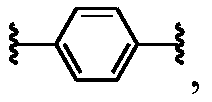
- The fluorescent probe of claim 22, wherein the compound has Formula I or II; and R 1, R 1’, R 2, R 2’, R 3 and R 3’ are independently C 1-C 6 alkyl or C 1-C 6 alkoxy.
- The fluorescent probe of claim 22, wherein the targeting agent is an antibody, an antibody fragment, or a small molecule.
Priority Applications (1)
| Application Number | Priority Date | Filing Date | Title |
|---|---|---|---|
| CN201880008534.5A CN110225957B (en) | 2017-01-26 | 2018-01-19 | Novel material with chiral optical activity |
Applications Claiming Priority (2)
| Application Number | Priority Date | Filing Date | Title |
|---|---|---|---|
| US201762499422P | 2017-01-26 | 2017-01-26 | |
| US62/499,422 | 2017-01-26 |
Publications (1)
| Publication Number | Publication Date |
|---|---|
| WO2018137558A1 true WO2018137558A1 (en) | 2018-08-02 |
Family
ID=62978017
Family Applications (1)
| Application Number | Title | Priority Date | Filing Date |
|---|---|---|---|
| PCT/CN2018/073359 Ceased WO2018137558A1 (en) | 2017-01-26 | 2018-01-19 | Materials with chiroptical properties |
Country Status (2)
| Country | Link |
|---|---|
| CN (1) | CN110225957B (en) |
| WO (1) | WO2018137558A1 (en) |
Cited By (2)
| Publication number | Priority date | Publication date | Assignee | Title |
|---|---|---|---|---|
| CN111196834A (en) * | 2018-11-16 | 2020-05-26 | 香港科技大学 | Compounds with circularly polarized luminescence |
| US11367859B2 (en) | 2020-01-10 | 2022-06-21 | Sharp Kabushiki Kaisha | Chiral perovskite quantum dots for circularly polarized QLEDs and method of making the same |
Families Citing this family (1)
| Publication number | Priority date | Publication date | Assignee | Title |
|---|---|---|---|---|
| CN115010763B (en) * | 2022-06-24 | 2024-07-12 | 深圳大学 | A circularly polarized phosphorescent platinum (II) complex and its preparation method and application |
Citations (2)
| Publication number | Priority date | Publication date | Assignee | Title |
|---|---|---|---|---|
| CN102706839A (en) * | 2011-01-31 | 2012-10-03 | 香港科技大学 | Water-soluble AIE luminescent agent and its use in detecting and delaying amyloid fibrillation of amyloid protein |
| US20130266953A1 (en) * | 2011-10-11 | 2013-10-10 | The Hong Kong University Of Science And Technology | Aggregation induced emission of fluorescent bioprobes and methods of using the same |
-
2018
- 2018-01-19 WO PCT/CN2018/073359 patent/WO2018137558A1/en not_active Ceased
- 2018-01-19 CN CN201880008534.5A patent/CN110225957B/en active Active
Patent Citations (2)
| Publication number | Priority date | Publication date | Assignee | Title |
|---|---|---|---|---|
| CN102706839A (en) * | 2011-01-31 | 2012-10-03 | 香港科技大学 | Water-soluble AIE luminescent agent and its use in detecting and delaying amyloid fibrillation of amyloid protein |
| US20130266953A1 (en) * | 2011-10-11 | 2013-10-10 | The Hong Kong University Of Science And Technology | Aggregation induced emission of fluorescent bioprobes and methods of using the same |
Cited By (3)
| Publication number | Priority date | Publication date | Assignee | Title |
|---|---|---|---|---|
| CN111196834A (en) * | 2018-11-16 | 2020-05-26 | 香港科技大学 | Compounds with circularly polarized luminescence |
| CN111196834B (en) * | 2018-11-16 | 2021-12-28 | 香港科技大学 | Compounds with circularly polarized luminescence |
| US11367859B2 (en) | 2020-01-10 | 2022-06-21 | Sharp Kabushiki Kaisha | Chiral perovskite quantum dots for circularly polarized QLEDs and method of making the same |
Also Published As
| Publication number | Publication date |
|---|---|
| CN110225957A (en) | 2019-09-10 |
| CN110225957B (en) | 2022-07-01 |
Similar Documents
| Publication | Publication Date | Title |
|---|---|---|
| CN110218220B (en) | Functionalized metal-organic framework compound, complex formed by functionalized metal-organic framework compound, and preparation method and application of functionalized metal-organic framework compound | |
| Liu et al. | Cocrystals of naphthalene diimide with naphthalene derivatives: A facile approach to tune the luminescent properties | |
| Sun et al. | 9, 10-Bis ((Z)-2-phenyl-2-(pyridin-2-yl) vinyl) anthracene: Aggregation-induced emission, mechanochromic luminescence, and reversible volatile acids-amines switching | |
| Shen et al. | Synthesis, optical, and mesomorphic properties of self-assembled organogels featuring phenylethynyl framework with elaborated long-chain pyridine-2, 6-dicarboxamides | |
| WO2018137558A1 (en) | Materials with chiroptical properties | |
| Ahipa et al. | New columnar liquid crystal materials based on luminescent 2-methoxy-3-cyanopyridines | |
| Jejurkar et al. | Design and development of axially chiral bis (naphthofuran) luminogens as fluorescent probes for cell imaging | |
| Hu et al. | Aggregation-induced-emission-active vinamidinium salts with tunable emissions, reversible mechanochromic response and the application in data-security protection | |
| Luo et al. | Novel organogel harnessing Excited-State Intramolecular Proton Transfer process with aggregation induced emission and photochromism | |
| WO2024027411A1 (en) | Circularly polarized light-emitting material and use, light-emitting display device, and display apparatus | |
| CN110903294A (en) | Compound with benzo [1,2-b:5, 4-b' ] dibenzofuran as core and application thereof | |
| Jin et al. | Hydrogen bonded supramolecular architectures of organic salts based on 5, 7-dimethyl-1, 8-naphthyridine-2-amine and acidic compounds | |
| Wu et al. | Three luminescent d10 metal coordination polymers assembled from a semirigid V-shaped ligand with high selective detecting of Cu2+ ion and nitrobenzene | |
| Yu et al. | Dual-state emission and solvatofluorochromism properties of facile squaraine dyes with cis-3, 5-dimethylpiperidine | |
| CN110105373B (en) | Nanoparticle based on pyridine quinoxaline double column [ n ] arene and preparation method and application thereof | |
| Yu et al. | Molecular conformational transition of chiral conjugated enantiomers dominated by Wallach's rule | |
| Tang et al. | Handbook of aggregation-induced emission, volume 2: typical AIEgens design | |
| CN118146231A (en) | A chiral fluorescent molecule based on benzoxazole ring and preparation method thereof | |
| CN113292585B (en) | BODIPY-benzothiadiazole-porphyrin-carbazole quaternary system linear compound and preparation method thereof | |
| CN104710481B (en) | The molysite class two-photon absorbing material of butylcyclopentadiene containing tolans and preparation method | |
| CN115504938A (en) | A compound with photoinduced solid fluorescence change and its preparation method | |
| CN113956273A (en) | Carbazole dimer and synthesis method and application thereof | |
| CN102503856A (en) | A green fluorescence luminescent organic compound and a synthetic method thereof | |
| JP7254297B2 (en) | Enamine compound and use thereof | |
| Gan et al. | Circularly Polarized Luminescence of Aggregation‐induced Emission Materials |
Legal Events
| Date | Code | Title | Description |
|---|---|---|---|
| 121 | Ep: the epo has been informed by wipo that ep was designated in this application |
Ref document number: 18744522 Country of ref document: EP Kind code of ref document: A1 |
|
| NENP | Non-entry into the national phase |
Ref country code: DE |
|
| 122 | Ep: pct application non-entry in european phase |
Ref document number: 18744522 Country of ref document: EP Kind code of ref document: A1 |