WO2018103402A1 - 无线保真Wi-Fi扫描方法及相关产品 - Google Patents
无线保真Wi-Fi扫描方法及相关产品 Download PDFInfo
- Publication number
- WO2018103402A1 WO2018103402A1 PCT/CN2017/101464 CN2017101464W WO2018103402A1 WO 2018103402 A1 WO2018103402 A1 WO 2018103402A1 CN 2017101464 W CN2017101464 W CN 2017101464W WO 2018103402 A1 WO2018103402 A1 WO 2018103402A1
- Authority
- WO
- WIPO (PCT)
- Prior art keywords
- scan
- access points
- target application
- preset
- stability evaluation
- Prior art date
- Legal status (The legal status is an assumption and is not a legal conclusion. Google has not performed a legal analysis and makes no representation as to the accuracy of the status listed.)
- Ceased
Links
Images



Classifications
-
- H—ELECTRICITY
- H04—ELECTRIC COMMUNICATION TECHNIQUE
- H04W—WIRELESS COMMUNICATION NETWORKS
- H04W48/00—Access restriction; Network selection; Access point selection
- H04W48/16—Discovering, processing access restriction or access information
-
- H—ELECTRICITY
- H04—ELECTRIC COMMUNICATION TECHNIQUE
- H04W—WIRELESS COMMUNICATION NETWORKS
- H04W52/00—Power management, e.g. Transmission Power Control [TPC] or power classes
- H04W52/02—Power saving arrangements
- H04W52/0209—Power saving arrangements in terminal devices
-
- H—ELECTRICITY
- H04—ELECTRIC COMMUNICATION TECHNIQUE
- H04W—WIRELESS COMMUNICATION NETWORKS
- H04W84/00—Network topologies
- H04W84/02—Hierarchically pre-organised networks, e.g. paging networks, cellular networks, WLAN [Wireless Local Area Network] or WLL [Wireless Local Loop]
- H04W84/10—Small scale networks; Flat hierarchical networks
- H04W84/12—WLAN [Wireless Local Area Networks]
-
- Y—GENERAL TAGGING OF NEW TECHNOLOGICAL DEVELOPMENTS; GENERAL TAGGING OF CROSS-SECTIONAL TECHNOLOGIES SPANNING OVER SEVERAL SECTIONS OF THE IPC; TECHNICAL SUBJECTS COVERED BY FORMER USPC CROSS-REFERENCE ART COLLECTIONS [XRACs] AND DIGESTS
- Y02—TECHNOLOGIES OR APPLICATIONS FOR MITIGATION OR ADAPTATION AGAINST CLIMATE CHANGE
- Y02D—CLIMATE CHANGE MITIGATION TECHNOLOGIES IN INFORMATION AND COMMUNICATION TECHNOLOGIES [ICT], I.E. INFORMATION AND COMMUNICATION TECHNOLOGIES AIMING AT THE REDUCTION OF THEIR OWN ENERGY USE
- Y02D30/00—Reducing energy consumption in communication networks
- Y02D30/70—Reducing energy consumption in communication networks in wireless communication networks
Definitions
- the present invention relates to the field of Internet technologies, and in particular, to a wireless fidelity Wi-Fi scanning method and related products.
- mobile terminals such as mobile phones, tablet computers, etc.
- mobile terminals are becoming more and more popular, and users are increasingly demanding mobile terminals, which not only requires high processing speed, but also for mobile terminals. Endurance capabilities are also required.
- Wi-Fi wireless Fidelity
- Embodiments of the present invention provide a wireless fidelity Wi-Fi scanning method and a mobile terminal, so as to reduce power consumption of the mobile terminal.
- a first aspect of the embodiments of the present invention provides a wireless fidelity Wi-Fi scanning method, including:
- Wi-Fi scan request initiated by the target application, where the Wi-Fi scan request carries a target application identifier of the target application;
- the time difference between the current time and the last Wi-Fi scan time is greater than the preset threshold Value, for Wi-Fi scanning.
- a second aspect of the embodiments of the present invention provides a wireless fidelity Wi-Fi scanning apparatus, including:
- a receiving unit configured to receive a Wi-Fi scan request initiated by the target application, where the Wi-Fi scan request carries a target application identifier of the target application;
- a detecting unit configured to detect whether the target application identifier exists in a preset identifier set
- a first determining unit configured to determine, when the detection result of the detecting unit is that the target application identifier does not exist in the preset identifier set, determine whether a time difference between a current time and a last Wi-Fi scan time is greater than a pre-predetermined Set a threshold;
- a reading unit configured to read, in the first determining unit, a time difference between the current time and the last Wi-Fi scan time is less than or equal to the preset threshold, and read the last time Scan results of Wi-Fi scans;
- the scanning unit is configured to perform a Wi-Fi scan when the determination result of the first determining unit is that the time difference between the current time and the last Wi-Fi scan time is greater than the preset threshold.
- an embodiment of the present invention provides a mobile terminal, including: a processor and a memory; and one or more programs, where the one or more programs are stored in the memory, and configured to be The processor executes, the program including instructions for some or all of the steps as described in the first aspect.
- an embodiment of the present invention provides a computer readable storage medium, wherein the computer readable storage medium is configured to store a computer program, wherein the computer program causes a computer to perform the first aspect of the embodiment of the present invention. Instructions for some or all of the steps described in the section.
- an embodiment of the present invention provides a computer program product, wherein the computer program product comprises a non-transitory computer readable storage medium storing a computer program, the computer program being operative to cause a computer to execute Some or all of the steps described in the first aspect of the invention.
- the computer program product can be a software installation package.
- FIG. 1 is a schematic flow chart of a first embodiment of a wireless fidelity Wi-Fi scanning method according to an embodiment of the present invention
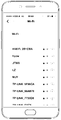
- 1a is a schematic diagram of a Wi-Fi list presentation according to an embodiment of the present invention.
- FIG. 2 is a schematic flowchart diagram of a second embodiment of a wireless fidelity Wi-Fi scanning method according to an embodiment of the present disclosure
- FIG. 3 is a schematic structural diagram of an embodiment of a wireless fidelity Wi-Fi scanning apparatus according to an embodiment of the present invention
- FIG. 3b is a schematic structural diagram of a scanning unit of the wireless fidelity Wi-Fi scanning apparatus described in FIG. 3a according to an embodiment of the present invention
- 3c is a schematic structural diagram of a selection module of the scanning unit described in FIG. 3a according to an embodiment of the present disclosure
- FIG. 3 is a schematic diagram of still another structure of the wireless fidelity Wi-Fi scanning apparatus described in FIG. 3a according to an embodiment of the present disclosure
- FIG. 4 is a schematic structural diagram of an embodiment of a mobile terminal according to an embodiment of the present invention.
- the embodiment of the invention provides a wireless fidelity Wi-Fi scanning method and a mobile terminal, which can reduce power consumption of the mobile terminal.
- references to "an embodiment” herein mean that a particular feature, structure, or characteristic described in connection with the embodiments can be included in at least one embodiment of the invention.
- the appearances of the phrases in various places in the specification are not necessarily referring to the same embodiments, and are not exclusive or alternative embodiments that are mutually exclusive. Those skilled in the art will understand and implicitly understand that the embodiments described herein can be combined with other embodiments.
- the mobile terminal described in the embodiments of the present invention may include a smart phone (such as an Android mobile phone, an iOS mobile phone, a Windows Phone mobile phone, etc.), a tablet computer, a palmtop computer, a notebook computer, a mobile Internet device (MID, Mobile Internet Devices), or a wearable device.
- a smart phone such as an Android mobile phone, an iOS mobile phone, a Windows Phone mobile phone, etc.
- a tablet computer such as an Android mobile phone, an iOS mobile phone, a Windows Phone mobile phone, etc.
- a palmtop computer such as a notebook computer
- MID Mobile Internet Devices
- Wi-Fi scanning is also required before the mobile terminal is in the wireless fidelity Wi-Fi connection state, and after Wi-Fi scanning, a Wi-Fi list can be obtained, and the Wi-Fi can be saved.
- a list where the Wi-Fi list includes at least one access point and access point information of the access point, and the access point information may include, but is not limited to, an access point name and an access point.
- the mobile terminal can select an access point from the Wi-Fi list and access the access point, thereby implementing access to the Internet. Then, when the mobile terminal is in the wireless fidelity Wi-Fi connection state, the Wi-Fi list that was last scanned can be directly obtained.
- SSID Service Set Identifier
- FIG. 1 is a schematic flowchart diagram of a first embodiment of a wireless fidelity Wi-Fi scanning method according to an embodiment of the present invention.
- the wireless fidelity Wi-Fi scanning method described in this embodiment includes the following steps:
- the target application may be an Internet-accessible application, which may include, but is not limited to, a map application (eg, Baidu map, Google map), an instant messaging application (WeChat, QQ, etc.), a social application (such as Weibo, Renren, Facebook, etc.), group purchase applications (public comment, beauty group, etc.), browser applications, payment applications, and more.
- a map application eg, Baidu map, Google map
- an instant messaging application WeChat, QQ, etc.
- a social application such as Weibo, Renren, Facebook, etc.
- group purchase applications public comment, beauty group, etc.
- browser applications payment applications, and more.
- the preset identifier set may be pre-set before step 101.
- the preset identifier set may include multiple application identifiers, which may include, but are not limited to, an application name, an application version number, an application developer, and an application product. Date, category of the app, and more.
- the preset identifier set may include multiple application names, for example, the preset identifier set may be WeChat, QQ, and mobile phone housekeeper.
- a part of the avatar application can be set to the preset identifier set.
- WeChat the avatar application is: WeChat 1 and WeChat 2
- the preset identifier set can only include WeChat 1 or WeChat 2.
- detecting whether the target application identifier exists in the preset identifier set may be implemented as follows:
- the target application identifier is compared with the multiple application identifiers in the preset identifier set. If the target application identifier is consistent with an application identifier in the preset identifier set, the target application identifier exists in the preset identifier set. If the target application identifier is consistent with any application identifier in the preset identifier set, the target application identifier does not exist in the preset identifier set.
- the preset threshold can be set by the system default or by the user.
- the last Wi-Fi scan time can be the scan time of the last Wi-Fi scan.
- the above "last time” can be understood as the one closest to the current time.
- the time difference between the current time and the last Wi-Fi scan time may be calculated. If the time difference is greater than the preset threshold, step 105 is performed, and if the time difference is less than or equal to the preset threshold, step 104 is performed.
- Wi-Fi scanning is performed when the target application identifier exists in the preset identifier set.
- performing the Wi-Fi scan described above may include the following steps:
- determining the current location may be implemented as follows:
- the current location is determined by GPS or Wi-Fi positioning techniques.
- the mobile terminal can determine the location of the mobile terminal through a Global Positioning System (GPS) or a Wi-Fi positioning technology.
- GPS Global Positioning System
- Wi-Fi Wi-Fi
- selecting Y target access points from the X access points including:
- the Y access points that meet the preset requirements of the X access points are filtered out, and the preset requirement is that the signal strength of the access point is greater than the preset signal strength and the password is a static password.
- selecting Y target access points from the X access points may include the following steps:
- the stability evaluation value of each access point can be determined in the above C1, and X stability evaluation values are obtained, which can be used to evaluate the stability of each access point and the stability of an access point. The greater the value of the evaluation, the better the stability of the access point.
- the first threshold may be set by the user or the system defaults.
- Y access point information corresponding to Y stability evaluation values greater than the first threshold may be selected from the X stability evaluation values, and Y is a positive integer smaller than X.
- performing stability evaluation on the X access points according to the access point information of the X access points may be implemented as follows:
- the stability evaluation indicator is at least one of the following: the number of accessible users of the access point, the signal strength value of the access point, the network rate of the access point, and the network bandwidth of the access point.
- At least one stability evaluation index may be used to evaluate the stability of the access point, and
- the weight value, wherein the stability evaluation indicator may include, but is not limited to, the number of accessible users of the access point, the signal strength value of the access point, the network rate of the access point, the network bandwidth of the access point, and the like.
- stability evaluation indicators can be used to evaluate the stability of the access point.
- the stability evaluation index is not as good as possible, because the more stability evaluation indicators, the higher the computational complexity of the stability evaluation process, the better the stability evaluation effect is. Therefore, in the case of high stability evaluation requirements, 2 to 10 stability evaluation indicators can be used to evaluate the stability of the access point. Specifically, the number of stability evaluation indicators and which indicator are selected may be determined according to specific implementation conditions.
- multiple stability evaluation indicators may be used to evaluate the stability of the access point, and the stability evaluation index is stable to the access point.
- the weights of the stability evaluation indexes in the plurality of stability evaluation indexes may be set, and a plurality of stability evaluation values may be obtained, and the final stability may be obtained according to the plurality of stability evaluation values and corresponding weights.
- the stability evaluation value for example, the three stability evaluation indicators are: A index, B index and C index, A has a weight of a1, B has a weight of a2, and C has a weight of a3, and uses A, B, and C pairs.
- the stability evaluation value corresponding to A is b1
- the stability evaluation value corresponding to B is b2
- the stability evaluation value corresponding to C is b3.
- the final stability evaluation value a1b1+a2b2+a3b3.
- the greater the stability evaluation value the better the stability of the access point.
- the time difference between the current time and the last Wi-Fi scan time is less than or equal to the preset threshold, and the scan result of the last Wi-Fi scan is read.
- the time difference between the current time and the last Wi-Fi scan time is less than or equal to a preset threshold, and the scan result of the last Wi-Fi scan is read.
- the mobile terminal can directly read the scan result of the last Wi-Fi scan, that is, the Wi-Fi list (as shown in FIG. 1a, FIG. 1a is a schematic diagram of a Wi-Fi list).
- the mobile terminal can record the scan time after the last Wi-Fi scan is completed.
- the Wi-Fi scan is performed when the time difference between the current time and the last Wi-Fi scan time is greater than a preset threshold.
- the system of the mobile terminal receives the Wi-Fi scan request initiated by the application (such as WeChat, QQ, etc.), and can determine whether the application identifier of the application exists in the preset identifier set. If the application that initiates the scan is in the preset identifier set, the Wi-Fi scan is directly performed, and at the same time, the scan time for performing the Wi-Fi scan is recorded, which is assumed to be: Time_Req. If the application that initiated the scan is not in the preset ID set, then the current time and the last Wi-Fi scan time can be compared:
- the current_Time is the current time
- the Req_Time is the scan time of the last Wi-Fi scan
- the Threshold is the preset threshold.
- the Wi-Fi scan request initiated by the target application is received, and the Wi-Fi scan request carries the target application identifier of the target application, and detects whether the target application identifier exists in the preset identifier set, and is in the target. If the application identifier does not exist in the preset identifier set, determine whether the time difference between the current time and the last Wi-Fi scan time is greater than a preset threshold, and the time difference between the current time and the last Wi-Fi scan time is less than or equal to The preset threshold is used to read the scan result of the last Wi-Fi scan, and the time difference between the current time and the last Wi-Fi scan time is greater than a preset threshold for Wi-Fi scanning. Thereby, the number of times of Wi-Fi scanning can be reduced by preset the identification set, thereby reducing the power consumption of the mobile terminal.
- FIG. 2 it is a schematic flowchart of a second embodiment of a wireless fidelity Wi-Fi scanning method according to an embodiment of the present invention.
- the wireless fidelity Wi-Fi scanning method described in this embodiment includes the following steps:
- 201 Receive a Wi-Fi scan request initiated by a target application, where the Wi-Fi scan request carries a target application identifier of the target application.
- the mobile terminal can determine the location of the mobile terminal through a Global Positioning System (GPS) or a Wi-Fi positioning technology. After each positioning, the mobile terminal can record the location of its positioning and save it in the historical positioning record, so that at least in the historical positioning record Contains a location.
- GPS Global Positioning System
- Wi-Fi Wireless Fidelity
- the location of the mobile terminal is in the historical location record, and detecting whether the target application identifier exists in a preset identifier set.
- the location of the mobile terminal when the location of the mobile terminal is in the historical location record, it is detected whether the target application identifier exists in the preset identifier set.
- the location of the mobile terminal When the location of the mobile terminal is in the historical location record, it indicates that the mobile terminal has come to a previously visited location, and the location of the location may include the access point that has been connected, so that the location of the mobile terminal can be judged. If the location of the mobile terminal does not exist in the historical location record, it indicates that the mobile terminal may come to an unfamiliar location, and the subsequent steps may not be performed. Of course, if the location of the mobile terminal does not exist in the historical location record, the Wi-Fi scan may not be performed, and unless a scan command input by the user is received, the Wi-Fi scan is performed. On the one hand, for the network security consideration of the mobile terminal, On the other hand, it is also intended to reduce the power consumption of the mobile terminal.
- the target application identifier determines whether a time difference between the current time and the last Wi-Fi scan time is greater than a preset threshold.
- step 201 For the specific description of the foregoing step 201 and the step 204 to the step 206, the corresponding steps of the wireless fidelity Wi-Fi scanning method described in FIG. 1 may be referred to, and details are not described herein again.
- a Wi-Fi scan request initiated by the target application is received, where the Wi-Fi scan request carries the target application identifier of the target application, and when the location of the mobile terminal exists in the historical location record, And detecting whether the target application identifier exists in the preset identifier set, and determining whether the time difference between the current time and the last Wi-Fi scan time is greater than a preset threshold when the target application identifier does not exist in the preset identifier set, at the current time.
- the time difference from the last Wi-Fi scan time is less than or equal to the preset threshold, and the scan result of the last Wi-Fi scan is read, and the time difference between the current time and the last Wi-Fi scan time is greater than a preset threshold.
- the number of times of Wi-Fi scanning can be reduced by preset the identification set, thereby reducing the power consumption of the mobile terminal.
- the Wi-Fi scan may not be performed, and the network security of the mobile terminal may be improved to some extent, and the power consumption of the mobile terminal may also be reduced.
- FIG. 3 is a schematic structural diagram of an embodiment of a wireless fidelity Wi-Fi scanning apparatus according to an embodiment of the present invention.
- the wireless fidelity Wi-Fi scanning device described in this embodiment includes: a receiving unit 301, a detecting unit 302, a first determining unit 303, a reading unit 304, and a scanning unit 305, as follows:
- the receiving unit 301 is configured to receive a Wi-Fi scan request initiated by the target application, where the Wi-Fi scan request carries a target application identifier of the target application;
- the detecting unit 302 is configured to detect whether the target application identifier exists in the preset identifier set.
- the first determining unit 303 is configured to determine, when the detection result of the detecting unit 302 is that the target application identifier does not exist in the preset identifier set, whether the time difference between the current time and the last Wi-Fi scan time is Greater than a preset threshold;
- the reading unit 304 is configured to read, when the determination result of the first determining unit 303 is that the time difference between the current time and the last Wi-Fi scan time is less than or equal to the preset threshold, The scan result of the last Wi-Fi scan;
- the scanning unit 305 is configured to perform a Wi-Fi scan when the determination result of the first determining unit 303 is that the time difference between the current time and the last Wi-Fi scan time is greater than the preset threshold.
- the scanning unit 305 is further specifically configured to:
- the Wi-Fi scan is performed when the detection result of the detecting unit is that the target application identifier exists in the preset identifier set.
- FIG. 3b is a specific refinement structure of the scanning unit 305 of the wireless fidelity Wi-Fi scanning device described in FIG. 3a, and the scanning unit 305 may include: a determining module 3051, an obtaining module 3052, and selecting The module 3053 and the scanning module 3054 are as follows:
- a determining module 3051 configured to determine a current location
- the obtaining module 3052 is configured to obtain a scan result of the last Wi-Fi scan corresponding to the current location, where the scan result includes X access points, where X is an integer greater than 1.
- the selecting module 3053 is configured to select Y target access points from the X access points, where the Y is a positive integer smaller than the X;
- the scanning module 3054 is configured to perform scanning according to the stability of the Y target access points from strong to weak.
- the determining module 3051 is specifically configured to:
- the current location is determined by GPS or Wi-Fi positioning techniques.
- the selecting module 3053 is specifically configured to:
- the Y access points that meet the preset requirements of the X access points are filtered out, and the preset requirement is that the signal strength of the access point is greater than the preset signal strength and the password is a static password.
- FIG. 3c is a specific refinement structure of the selection module 3053 of the scanning unit 305 described in FIG. 3b.
- the selection module 3053 may include: an evaluation module 401 and an access point selection module 402, as follows:
- the evaluation module 401 performs stability evaluation on the X access points according to the access point information of the X access points, and obtains the X stability evaluation values;
- the access point selection module 402 is configured to select, from the X stability evaluation values, the Y access points corresponding to the Y stability evaluation values that are greater than the first threshold.
- the evaluation module 401 is specifically configured to:
- the stability evaluation indicator is at least one of the following: the number of accessible users of the access point, the signal strength value of the access point, the network rate of the access point, and the network bandwidth of the access point.
- FIG. 3d is a modified structure of the wireless fidelity Wi-Fi scanning device described in FIG. 3a, which is also comparable to the wireless fidelity Wi-Fi scanning device described in FIG. 3a.
- the second judging unit 306 includes the following:
- the second determining unit 306 is configured to determine, after the receiving unit 301 receives the wireless fidelity Wi-Fi scan request sent by the target application, whether the location of the mobile terminal exists in the historical positioning record, in the second The determining result of the determining unit 306 is that the location of the mobile terminal is in the historical location record, and the detecting unit 302 performs the detecting whether the target application identifier exists in the preset identifier set.
- the wireless fidelity Wi-Fi scanning device described in the embodiment of the present invention can receive a Wi-Fi scan request initiated by the target application, where the Wi-Fi scan request carries the target application identifier of the target application, and detects whether the target application identifier exists in the preset identifier set, and when the target application identifier does not exist in the preset identifier set, Determine whether the time difference between the current time and the last Wi-Fi scan time is greater than a preset threshold, and the time difference between the current time and the last Wi-Fi scan time is less than or equal to a preset threshold, and read the last Wi-Fi The scan result of the scan, the time difference between the current time and the last Wi-Fi scan time is greater than a preset threshold, and a Wi-Fi scan is performed.
- the number of times of Wi-Fi scanning can be reduced by preset the identification set, thereby reducing the power consumption of the mobile terminal.
- the wireless fidelity Wi-Fi scanning device described in the device embodiment of the present invention is presented in the form of a functional unit.
- the term "unit” as used herein shall be understood to mean the broadest possible meaning, and the object for implementing the functions described for each "unit” may be, for example, an integrated circuit ASIC, a single circuit for executing one or more software or firmware.
- a processor shared, dedicated or chipset
- memory of the program combinatorial logic, and/or other suitable components that perform the functions described above.
- the receiving unit 301 is configured to receive a Wi-Fi scan request initiated by the target application, where the function of the Wi-Fi scan request carrying the target application identifier of the target application may be performed by the mobile terminal shown in FIG.
- the implementation may specifically receive, by the processor 3000, a Wi-Fi scan request initiated by the target application by calling executable program code in the memory 4000, where the Wi-Fi scan request carries the target application identifier of the target application.
- FIG. 4 it is a schematic structural diagram of an embodiment of a mobile terminal according to an embodiment of the present invention.
- the mobile terminal described in this embodiment includes: at least one input device 1000; at least one output device 2000; at least one processor 3000, such as a CPU; and a memory 4000, the input device 1000, the output device 2000, the processor 3000, and The memory 4000 is connected by a bus 5000.
- the input device 1000 may be a touch panel, a physical button, or a mouse.
- the output device 2000 described above may specifically be a display screen.
- the above memory 4000 may be a high speed RAM memory or a non-volatile memory such as a magnetic disk memory.
- the above memory 4000 is used to store a set of program codes, and the input device 1000, the output device 2000, and the processor 3000 are used to call the program code stored in the memory 4000, and perform the following operations:
- the processor 3000 is configured to:
- Wi-Fi scan request initiated by the target application, where the Wi-Fi scan request carries a target application identifier of the target application;
- the Wi-Fi scan is performed when a time difference between the current time and the last Wi-Fi scan time is greater than the preset threshold.
- processor 3000 is further specifically configured to:
- Wi-Fi scanning is performed when the target application identifier exists in the preset identifier set.
- the foregoing processor 3000 performs a Wi-Fi scan, including:
- the processor 3000 determines the current location, including:
- the current location is determined by GPS or Wi-Fi positioning techniques.
- Scanning is performed in order of stability of the Y target access points from strong to weak.
- the processor 3000 selects Y target access points from the X access points, including:
- the Y access points that meet the preset requirements of the X access points are filtered out, and the preset requirement is that the signal strength of the access point is greater than the preset signal strength and the password is a static password.
- the processor 3000 selects Y target access points from the X access points, including:
- the processor 3000 performs stability evaluation on the X access points according to the access point information of the X access points, including:
- the stability evaluation indicator is at least one of the following: the number of accessible users of the access point, the signal strength value of the access point, the network rate of the access point, and the network bandwidth of the access point.
- the processor is further configured to:
- the detecting, in the historical location record, that the target application identifier is present in the preset identifier set is performed.
- the embodiment of the present invention further provides a computer storage medium, wherein the computer storage medium may store a program, where the program includes some or all of the wireless fidelity Wi-Fi scanning methods described in the foregoing method embodiments. step.
- Embodiments of the present invention also provide a computer program product comprising a non-transitory computer readable storage medium storing a computer program, the computer program being operative to cause a computer to perform the operations as recited in the above method embodiments Some or all of the steps of any wireless fidelity Wi-Fi scanning method.
- embodiments of the present invention can be provided as a method, apparatus (device), or computer program product. Accordingly, the present invention may take the form of an entirely hardware embodiment, an entirely software embodiment, or a combination of software and hardware. Moreover, the invention can take the form of a computer program product embodied on one or more computer-usable storage media (including but not limited to disk storage, CD-ROM, optical storage, etc.) including computer usable program code.
- the computer program is stored/distributed in a suitable medium, provided with other hardware or as part of the hardware, or in other distributed forms, such as over the Internet or other wired or wireless telecommunication systems.
- the computer program instructions can also be stored in a computer readable memory that can direct a computer or other programmable data processing device to operate in a particular manner, such that the instructions stored in the computer readable memory produce an article of manufacture comprising the instruction device.
- the apparatus implements the functions specified in one or more blocks of a flow or a flow and/or block diagram of the flowchart.
- These computer program instructions can also be loaded onto a computer or other programmable data processing device such that a series of operational steps are performed on a computer or other programmable device to produce computer-implemented processing for execution on a computer or other programmable device.
- the instructions provide steps for implementing the functions specified in one or more of the flow or in a block or blocks of a flow diagram.
Landscapes
- Engineering & Computer Science (AREA)
- Computer Networks & Wireless Communication (AREA)
- Signal Processing (AREA)
- Computer Security & Cryptography (AREA)
- Mobile Radio Communication Systems (AREA)
- Telephone Function (AREA)
Abstract
本发明实施例提供了一种无线保真Wi-Fi扫描方法及相关产品,所述方法包括:接收由目标应用发起的Wi-Fi扫描请求,所述Wi-Fi扫描请求携带所述目标应用的目标应用标识;检测所述目标应用标识是否存在于预设标识集合;在所述目标应用标识不存在于所述预设标识集合时,判断当前时间与上次Wi-Fi扫描时间之间的时间差是否大于预设阈值;在所述当前时间与所述上次Wi-Fi扫描时间之间的时间差小于或等于所述预设阈值,读取所述上次Wi-Fi扫描的扫描结果;在所述当前时间与所述上次Wi-Fi扫描时间之间的时间差大于所述预设阈值,进行Wi-Fi扫描。通过本发明实施例可通过预设标识集合降低Wi-Fi扫描的次数,从而,降低移动终端的功耗。
Description
本发明要求2016年12月7日递交的发明名称为“一种无线保真Wi-Fi扫描方法及移动终端”的申请号201611118639.5的在先申请优先权,上述在先申请的内容以引入的方式并入本文本中。
本发明涉及互联网技术领域,具体涉及一种无线保真Wi-Fi扫描方法及相关产品。
随着信息技术的快速发展,移动终端(如手机、平板电脑等等)使用越来越普及,用户对移动终端的要求也越来越高,不仅需要较高的处理速度,而且对移动终端的续航能力也提出了要求。
现有技术中,通过无线保真(Wireless Fidelity,Wi-Fi)扫描连接接入点(Access Point,AP),实现网络连接。
发明内容
本发明实施例提供了一种无线保真Wi-Fi扫描方法及移动终端,以期降低移动终端的功耗。
本发明实施例第一方面提供了一种无线保真Wi-Fi扫描方法,包括:
接收由目标应用发起的Wi-Fi扫描请求,所述Wi-Fi扫描请求携带所述目标应用的目标应用标识;
检测所述目标应用标识是否存在于预设标识集合;
在所述目标应用标识不存在于所述预设标识集合时,判断当前时间与上次Wi-Fi扫描时间之间的时间差是否大于预设阈值;
在所述当前时间与所述上次Wi-Fi扫描时间之间的时间差小于或等于所述预设阈值,读取所述上次Wi-Fi扫描的扫描结果;
在所述当前时间与所述上次Wi-Fi扫描时间之间的时间差大于所述预设阈
值,进行Wi-Fi扫描。
本发明实施例第二方面提供了一种无线保真Wi-Fi扫描装置,包括:
接收单元,用于接收由目标应用发起的Wi-Fi扫描请求,所述Wi-Fi扫描请求携带所述目标应用的目标应用标识;
检测单元,用于检测所述目标应用标识是否存在于预设标识集合;
第一判断单元,用于在所述检测单元的检测结果为所述目标应用标识不存在于所述预设标识集合时,判断当前时间与上次Wi-Fi扫描时间之间的时间差是否大于预设阈值;
读取单元,用于在所述第一判断单元的判断结果为所述当前时间与所述上次Wi-Fi扫描时间之间的时间差小于或等于所述预设阈值,读取所述上次Wi-Fi扫描的扫描结果;
扫描单元,用于在所述第一判断单元的判断结果为所述当前时间与所述上次Wi-Fi扫描时间之间的时间差大于所述预设阈值,进行Wi-Fi扫描。
第三方面,本发明实施例提供了一种移动终端,包括:处理器和存储器;以及一个或多个程序,所述一个或多个程序被存储在所述存储器中,并且被配置成由所述处理器执行,所述程序包括用于如第一方面中所描述的部分或全部步骤的指令。
第四方面,本发明实施例提供了一种计算机可读存储介质,其中,所述计算机可读存储介质用于存储计算机程序,其中,所述计算机程序使得计算机执行如本发明实施例第一方面中所描述的部分或全部步骤的指令。
第五方面,本发明实施例提供了一种计算机程序产品,其中,所述计算机程序产品包括存储了计算机程序的非瞬时性计算机可读存储介质,所述计算机程序可操作来使计算机执行如本发明实施例第一方面中所描述的部分或全部步骤。该计算机程序产品可以为一个软件安装包。
为了更清楚地说明本发明实施例中的技术方案,下面将对实施例描述中所需要使用的附图作简单地介绍,显而易见地,下面描述中的附图是本发明的一些实施例,对于本领域普通技术人员来讲,在不付出创造性劳动的前提下,还
可以根据这些附图获得其他的附图。
图1是本发明实施例提供的一种无线保真Wi-Fi扫描方法的第一实施例流程示意图;
图1a是本发明实施例提供的一种Wi-Fi列表演示示意图;
图2是本发明实施例提供的一种无线保真Wi-Fi扫描方法的第二实施例流程示意图;
图3a是本发明实施例提供的一种无线保真Wi-Fi扫描装置的实施例结构示意图;
图3b是本发明实施例提供的图3a所描述的无线保真Wi-Fi扫描装置的扫描单元的结构示意图;
图3c是本发明实施例提供的图3a所描述的扫描单元的选取模块的结构示意图;
图3d是本发明实施例提供的图3a所描述的无线保真Wi-Fi扫描装置的又一结构示意图;
图4是本发明实施例提供的一种移动终端的实施例结构示意图。
通常情况下,现在很多应用发起Wi-Fi扫描,只是为了收集用户周围AP信息,这种频繁的扫描操作,会消耗移动终端的大量功耗。本发明实施例提供了一种无线保真Wi-Fi扫描方法及移动终端,可以降低移动终端的功耗。
下面将结合本发明实施例中的附图,对本发明实施例中的技术方案进行清楚、完整地描述,显然,所描述的实施例是本发明一部分实施例,而不是全部的实施例。基于本发明中的实施例,本领域普通技术人员在没有作出创造性劳动前提下所获得的所有其他实施例,都属于本发明保护的范围。
本发明的说明书和权利要求书及所述附图中的术语“第一”、“第二”、“第三”和“第四”等是用于区别不同对象,而不是用于描述特定顺序。此外,术语“包括”和“具有”以及它们任何变形,意图在于覆盖不排他的包含。例如包含了一系列步骤或单元的过程、方法、系统、产品或设备没有限定于已列出的步骤或单元,而是可选地还包括没有列出的步骤或单元,或可选地还包括对
于这些过程、方法、产品或设备固有的其它步骤或单元。
在本文中提及“实施例”意味着,结合实施例描述的特定特征、结构或特性可以包含在本发明的至少一个实施例中。在说明书中的各个位置展示该短语并不一定均是指相同的实施例,也不是与其它实施例互斥的独立的或备选的实施例。本领域技术人员显式地和隐式地理解的是,本文所描述的实施例可以与其它实施例相结合。
本发明实施例所描述移动终端可以包括智能手机(如Android手机、iOS手机、Windows Phone手机等)、平板电脑、掌上电脑、笔记本电脑、移动互联网设备(MID,Mobile Internet Devices)或穿戴式设备等,上述仅是举例,而非穷举,包含但不限于上述移动终端。
需要说明的是,在移动终端处于无线保真Wi-Fi连接状态之前,也需要进行Wi-Fi扫描,在其进行Wi-Fi扫描之后,可得到一个Wi-Fi列表,可保存该Wi-Fi列表,通常情况下,该Wi-Fi列表中至少包含1个接入点,及该接入点的接入点信息,接入点信息可包括但不仅限于:接入点名称、接入点的MAC地址、接入点的服务集标识(Service Set Identifier,SSID)、接入点的接入用户数目、接入点的信号强度值等等。移动终端可从该Wi-Fi列表中选择一个接入点,并接入该接入点,从而,实现接入互联网。那么,在移动终端处于无线保真Wi-Fi连接状态时,则可直接获取上次扫描的Wi-Fi列表。
请参阅图1,为本发明实施例提供的一种无线保真Wi-Fi扫描方法的第一实施例流程示意图。本实施例中所描述的无线保真Wi-Fi扫描方法,包括以下步骤:
101、接收由目标应用发起的Wi-Fi扫描请求,所述Wi-Fi扫描请求携带所述目标应用的目标应用标识。
其中,上述目标应用可为可接入互联网的应用,其可包括但不仅限于:地图应用(如:百度地图、Google地图)、即时通讯应用(微信、QQ等)、社交应用(如微博、人人网、Facebook等等)、团购应用(大众点评、美团等)、浏览器应用、支付应用等等。在目标应用发起Wi-Fi扫描时,移动终端的系统接收到该Wi-Fi扫描请求之后,可向Wi-Fi芯片发送扫描指令,该扫描指令指
示Wi-Fi芯片进行扫描,Wi-Fi芯片在接收到扫描指令后,开始进行Wi-Fi扫描。
102、检测所述目标应用标识是否存在于预设标识集合。
其中,预设标识集合可在步骤101之前进行预先设置,预设标识集合中可包含多个应用标识,该应用标识可包括但不仅限于:应用名称、应用版本号、应用开发商、应用的产品日期、应用的类别等等。例如,预设标识集合中可包含多个应用名称,如:预设标识集合可为微信、QQ、手机管家。当然,对于分身应用而言,可将分身应用的一部分设置到预设标识集合,例如,就微信而言,其分身应用为:微信1和微信2,则预设标识集合可只包含微信1或者微信2。
具体地,上述步骤102中,检测所述目标应用标识是否存在于预设标识集合,可按照如下方式实施:
将目标应用标识与预设标识集合中的多个应用标识进行比对,如果目标应用标识与预设标识集合中的某个应用标识一致,则说明目标应用标识存在于预设标识集合。如果目标应用标识与预设标识集合中的任何应用标识一致,则说明目标应用标识不存在于预设标识集合。
103、在所述目标应用标识不存在于所述预设标识集合时,判断当前时间与上次Wi-Fi扫描时间之间的时间差是否大于预设阈值。
其中,预设阈值可由系统默认或者用户自行设置。上次Wi-Fi扫描时间可为上次进行Wi-Fi扫描的扫描时间。上述“上次”可理解为与当前时刻最近的一次。可计算当前时间与上次Wi-Fi扫描时间之间的时间差,如果该时间差大于预设阈值,则执行步骤105,如果该时间差小于或等于预设阈值,则执行步骤104。
可选地,上述步骤102之后,还可以包含如下步骤:
在所述目标应用标识存在于所述预设标识集合时,进行Wi-Fi扫描。
进一步可选地,上述进行Wi-Fi扫描,可包括如下步骤:
A)、确定当前位置;
B)、获取与所述当前位置对应的上次Wi-Fi扫描的扫描结果,所述扫描结果中包含X个接入点,所述X为大于1的整数;
C)、从所述X个接入点中选取Y个目标接入点,所述Y为小于所述X的
正整数;
D)、按照所述Y个目标接入点的稳定性由强到弱的顺序进行扫描。
可选地,上述步骤A中,确定当前位置,可按照如下方式实施:
通过GPS或者Wi-Fi定位技术确定所述当前位置。
其中,移动终端可通过全球定位系统(Global Positioning System,GPS)或者Wi-Fi定位技术确定移动终端的位置
可选地,上述步骤C,从所述X个接入点中选取Y个目标接入点,包括:
筛选出所述X个接入点中符合预设要求的Y个接入点,所述预设要求为接入点的信号强度大于预设信号强度且其密码为静态密码。
可选地,上述步骤C,从所述X个接入点中选取Y个目标接入点,可包括如下步骤:
C1)、根据所述X个接入点的接入点信息对所述X个接入点进行稳定性评价,得到所述X个稳定性评价值;
C2)、从所述X个稳定性评价值中选取大于第一阈值的Y个稳定性评价值对应的所述Y个接入点,所述Y为小于所述X的正整数。
其中,上述C1中可确定每一接入点的稳定性评价值,得到X个稳定性评价值,该稳定性评价值可用于评价每一接入点的稳定性,某一接入点的稳定性评价值越大,则可说明该接入点的稳定性越好。上述第一阈值可由用户自行设置或者系统默认。步骤C2中,可从X个稳定性评价值中选取大于第一阈值的Y个稳定性评价值对应的Y个接入点信息,Y为小于X的正整数。
可选地,上述步骤C1中,根据所述X个接入点的接入点信息对所述X个接入点进行稳定性评价,可按照如下方式实施:
从所述X个接入点的接入点信息中提取稳定性评价指标,得到X个稳定性评价指标集;
根据所述X个稳定性评价指标集对所述X个接入点中的每一接入点进行稳定性评价。
进一步地,所述稳定性评价指标为以下至少一种:接入点的可接入用户数目、接入点的信号强度值、接入点的网络速率和接入点的网络带宽。
其中,可采用至少一个稳定性评价指标对接入点的稳定性进行评价,得到
权重值,其中,稳定性评价指标可包括但不仅限于:接入点的可接入用户数目、接入点的信号强度值、接入点的网络速率、接入点的网络带宽等等。
需要说明的是,由于采用单一稳定性评价指标对接入点的稳定性进行评价时,具有一定的局限性,因此,可采用多个稳定性评价指标对接入点的稳定性进行评价,当然,对接入点的稳定性进行评价时,并非稳定性评价指标越多越好,因为稳定性评价指标越多,稳定性评价过程的计算复杂度越高,也不见得稳定性评价效果越好,因此,在对稳定性评价要求较高的情况下,可采用2~10个稳定性评价指标对接入点的稳定性进行评价。具体地,选取稳定性评价指标的个数及哪个指标,可依据具体实现情况而定。
可选地,在对接入点的稳定性评价精度要求较高的情况下,可以采用多个稳定性评价指标对接入点的稳定性进行评价,在稳定性评价指标对接入点的稳定性进行稳定性评价时,可设置该多个稳定性评价指标中稳定性评价指标的权重,可得到多个稳定性评价值,根据该多个稳定性评价值及其对应的权重可得到最终的稳定性评价值,例如,三个稳定性评价指标分别为:A指标、B指标和C指标,A的权重为a1,B的权重为a2,C的权重为a3,采用A、B和C对某一接入点的稳定性进行评价时,A对应的稳定性评价值为b1,B对应的稳定性评价值为b2,C对应的稳定性评价值为b3,那么,最后的稳定性评价值=a1b1+a2b2+a3b3。通常情况下,稳定性评价值越大,说明接入点的稳定性越好。
104、在所述当前时间与所述上次Wi-Fi扫描时间之间的时间差小于或等于所述预设阈值,读取所述上次Wi-Fi扫描的扫描结果。
其中,在当前时间与上次Wi-Fi扫描时间之间的时间差小于或等于预设阈值,读取上次Wi-Fi扫描的扫描结果。移动终端可直接读取上次Wi-Fi扫描的扫描结果,即Wi-Fi列表(如图1a,图1a为Wi-Fi列表的一种演示示意图)。移动终端在上次Wi-Fi扫描结束后,可记录扫描时间。
105、在所述当前时间与所述上次Wi-Fi扫描时间之间的时间差大于所述预设阈值,进行Wi-Fi扫描。
其中,在当前时间与上次Wi-Fi扫描时间之间的时间差大于预设阈值,进行Wi-Fi扫描。
例如,移动终端的系统收到应用(如微信、QQ等)发起的Wi-Fi扫描请求,可判断该应用的应用标识是否存在于预设标识集合。如果发起扫描的应用在预设标识集合中,则直接进行Wi-Fi扫描,同时,记录该进行Wi-Fi扫描的扫描时间,假设为:Time_Req。如果发起扫描的应用不在预设标识集合中,则可对比当前时间与上次Wi-Fi扫描时间:
如果current_Time–Req_Time<Threshold,直接返回上一次Wi-Fi扫描的扫描结果。
如果current_Time–Req_Time>Threshold,触发Wi-Fi芯片进行Wi-Fi扫描,同时,可设置Req_Time=current_time。
其中,上述current_Time为当前时间,Req_Time为上次Wi-Fi扫描的扫描时间,Threshold为预设阈值。
可以看出,通过本发明实施例,接收由目标应用发起的Wi-Fi扫描请求,该Wi-Fi扫描请求携带目标应用的目标应用标识,检测目标应用标识是否存在于预设标识集合,在目标应用标识不存在于预设标识集合时,判断当前时间与上次Wi-Fi扫描时间之间的时间差是否大于预设阈值,在当前时间与上次Wi-Fi扫描时间之间的时间差小于或等于预设阈值,读取上次Wi-Fi扫描的扫描结果,在当前时间与上次Wi-Fi扫描时间之间的时间差大于预设阈值,进行Wi-Fi扫描。从而,可通过预设标识集合降低Wi-Fi扫描的次数,从而,降低移动终端的功耗。
与上述一致地,请参阅图2,为本发明实施例提供的一种无线保真Wi-Fi扫描方法的第二实施例流程示意图。本实施例中所描述的无线保真Wi-Fi扫描方法,包括以下步骤:
201、接收由目标应用发起的Wi-Fi扫描请求,所述Wi-Fi扫描请求携带所述目标应用的目标应用标识。
202、判断移动终端的位置是否存在于历史定位记录中。
其中,移动终端可通过全球定位系统(Global Positioning System,GPS)或者Wi-Fi定位技术确定移动终端的位置。移动终端在每次定位之后,可记录其定位的位置,并将其保存在历史定位记录中,因而,历史定位记录中可至少
包含一个位置。
203、在所述移动终端的位置处于所述历史定位记录中,检测所述目标应用标识是否存在于预设标识集合。
其中,在移动终端的位置处于历史定位记录中,则检测目标应用标识是否存在于预设标识集合。在移动终端的位置处于历史定位记录中,则说明移动终端又来到了以前来过的位置,该位置的范围内可能包含曾经连接过的接入点,因而,可对移动终端的位置进行判断,如果移动终端的位置不存在于历史定位记录,则说明移动终端可能来到一个陌生位置,则可不执行后续步骤。当然,如果移动终端的位置不存在于历史定位记录,也可以不进行Wi-Fi扫描,除非接收到用户输入的扫描指令,则进行Wi-Fi扫描,一方面,为了移动终端的网络安全考虑,另外一方面,也为了降低移动终端的功耗。
204、在所述目标应用标识不存在于所述预设标识集合时,判断当前时间与上次Wi-Fi扫描时间之间的时间差是否大于预设阈值。
205、在所述当前时间与所述上次Wi-Fi扫描时间之间的时间差小于或等于所述预设阈值,读取所述上次Wi-Fi扫描的扫描结果。
206、在所述当前时间与所述上次Wi-Fi扫描时间之间的时间差大于所述预设阈值,进行Wi-Fi扫描。
其中,上述步骤201以及步骤204-步骤206的具体描述可参照图1所描述的无线保真Wi-Fi扫描方法的相应步骤,在此不再赘述。
可以看出,通过本发明实施例,接收由目标应用发起的Wi-Fi扫描请求,该Wi-Fi扫描请求携带目标应用的目标应用标识,在该移动终端的位置存在于历史定位记录中时,则检测目标应用标识是否存在于预设标识集合,在目标应用标识不存在于预设标识集合时,判断当前时间与上次Wi-Fi扫描时间之间的时间差是否大于预设阈值,在当前时间与上次Wi-Fi扫描时间之间的时间差小于或等于预设阈值,读取上次Wi-Fi扫描的扫描结果,在当前时间与上次Wi-Fi扫描时间之间的时间差大于预设阈值,进行Wi-Fi扫描。从而,可通过预设标识集合降低Wi-Fi扫描的次数,从而,降低移动终端的功耗。另外,如果移动终端的位置不存在于历史定位记录则可不执行Wi-Fi扫描,一定程度上可提高移动终端的网络安全性,另外,还可降低移动终端的功耗。
与上述一致地,以下为实施上述无线保真Wi-Fi扫描方法的装置,具体如下:
请参阅图3a,为本发明实施例提供的一种无线保真Wi-Fi扫描装置的实施例结构示意图。本实施例中所描述的无线保真Wi-Fi扫描装置,包括:接收单元301、检测单元302、第一判断单元303、读取单元304和扫描单元305,具体如下:
接收单元301,用于接收由目标应用发起的Wi-Fi扫描请求,所述Wi-Fi扫描请求携带所述目标应用的目标应用标识;
检测单元302,用于检测所述目标应用标识是否存在于预设标识集合;
第一判断单元303,用于在所述检测单元302的检测结果为所述目标应用标识不存在于所述预设标识集合时,判断当前时间与上次Wi-Fi扫描时间之间的时间差是否大于预设阈值;
读取单元304,用于在所述第一判断单元303的判断结果为所述当前时间与所述上次Wi-Fi扫描时间之间的时间差小于或等于所述预设阈值,读取所述上次Wi-Fi扫描的扫描结果;
扫描单元305,用于在所述第一判断单元303的判断结果为所述当前时间与所述上次Wi-Fi扫描时间之间的时间差大于所述预设阈值,进行Wi-Fi扫描。
可选地,所述扫描单元305还具体用于:
在所述检测单元的检测结果为所述目标应用标识存在于所述预设标识集合时,进行Wi-Fi扫描。
可选地,如图3b,图3b为图3a所描述的无线保真Wi-Fi扫描装置的扫描单元305的具体细化结构,该扫描单元305可包括:确定模块3051、获取模块3052、选取模块3053和扫描模块3054,具体如下:
确定模块3051,用于确定当前位置;
获取模块3052,用于获取与所述当前位置对应的上次Wi-Fi扫描的扫描结果,所述扫描结果中包含X个接入点,所述X为大于1的整数;
选取模块3053,用于从所述X个接入点中选取Y个目标接入点,所述Y为小于所述X的正整数;
扫描模块3054,用于按照所述Y个目标接入点的稳定性由强到弱的顺序进行扫描。
可选地,所述确定模块3051具体用于:
通过GPS或者Wi-Fi定位技术确定所述当前位置。
可选地,所述选取模块3053具体用于:
筛选出所述X个接入点中符合预设要求的Y个接入点,所述预设要求为接入点的信号强度大于预设信号强度且其密码为静态密码。
可选地,如图3c,图3c为图3b所描述的扫描单元305的选取模块3053的具体细化结构,该选取模块3053可包括:评价模块401和接入点选取模块402,具体如下:
评价模块401,根据所述X个接入点的接入点信息对所述X个接入点进行稳定性评价,得到所述X个稳定性评价值;
接入点选取模块402,用于从所述X个稳定性评价值中选取大于第一阈值的Y个稳定性评价值对应的所述Y个接入点。
可选地,评价模块401具体用于:
从所述X个接入点的接入点信息中提取稳定性评价指标,得到X个稳定性评价指标集,并根据所述X个稳定性评价指标集对所述X个接入点中的每一接入点进行稳定性评价。
进一步地,所述稳定性评价指标为以下至少一种:接入点的可接入用户数目、接入点的信号强度值、接入点的网络速率和接入点的网络带宽。
可选地,如图3d,图3d为图3a所描述的无线保真Wi-Fi扫描装置的一种变型结构,其与图3a所描述的无线保真Wi-Fi扫描装置相比较,还可包括:第二判断单元306,具体如下:
第二判断单元306,用于在所述接收单元301接收由目标应用发送的无线保真Wi-Fi扫描请求之后,判断所述移动终端的位置是否存在于历史定位记录中,在所述第二判断单元306的判断结果为所述移动终端的位置处于所述历史定位记录中,由所述检测单元302执行所述检测所述目标应用标识是否存在于预设标识集合。
可以看出,通过本发明实施例所描述的无线保真Wi-Fi扫描装置,可接收
由目标应用发起的Wi-Fi扫描请求,该Wi-Fi扫描请求携带目标应用的目标应用标识,检测目标应用标识是否存在于预设标识集合,在目标应用标识不存在于预设标识集合时,判断当前时间与上次Wi-Fi扫描时间之间的时间差是否大于预设阈值,在当前时间与上次Wi-Fi扫描时间之间的时间差小于或等于预设阈值,读取上次Wi-Fi扫描的扫描结果,在当前时间与上次Wi-Fi扫描时间之间的时间差大于预设阈值,进行Wi-Fi扫描。从而,可通过预设标识集合降低Wi-Fi扫描的次数,从而,降低移动终端的功耗。
需要注意的是,本发明装置实施例所描述的无线保真Wi-Fi扫描装置是以功能单元的形式呈现。这里所使用的术语“单元”应当理解为尽可能最宽的含义,用于实现各个“单元”所描述功能的对象例如可以是集成电路ASIC,单个电路,用于执行一个或多个软件或固件程序的处理器(共享的、专用的或芯片组)和存储器,组合逻辑电路,和/或提供实现上述功能的其他合适的组件。
举例来说,接收单元301,用于接收由目标应用发起的Wi-Fi扫描请求,所述Wi-Fi扫描请求携带所述目标应用的目标应用标识的功能可以由图4所示的移动终端来实现,具体可以通过处理器3000通过调用存储器4000中的可执行程序代码,接收由目标应用发起的Wi-Fi扫描请求,所述Wi-Fi扫描请求携带所述目标应用的目标应用标识。
与上述一致地,请参阅图4,为本发明实施例提供的一种移动终端的实施例结构示意图。本实施例中所描述的移动终端,包括:至少一个输入设备1000;至少一个输出设备2000;至少一个处理器3000,例如CPU;和存储器4000,上述输入设备1000、输出设备2000、处理器3000和存储器4000通过总线5000连接。
其中,上述输入设备1000具体可为触控面板、物理按键或者鼠标。
上述输出设备2000具体可为显示屏。
上述存储器4000可以是高速RAM存储器,也可为非易失存储器(non-volatile memory),例如磁盘存储器。上述存储器4000用于存储一组程序代码,上述输入设备1000、输出设备2000和处理器3000用于调用存储器4000中存储的程序代码,执行如下操作:
上述处理器3000,用于:
接收由目标应用发起的Wi-Fi扫描请求,所述Wi-Fi扫描请求携带所述目标应用的目标应用标识;
检测所述目标应用标识是否存在于预设标识集合;
在所述目标应用标识不存在于所述预设标识集合时,判断当前时间与上次Wi-Fi扫描时间之间的时间差是否大于预设阈值;
在所述当前时间与所述上次Wi-Fi扫描时间之间的时间差小于或等于所述预设阈值,读取所述上次Wi-Fi扫描的扫描结果;
在所述当前时间与所述上次Wi-Fi扫描时间之间的时间差大于所述预设阈值,进行Wi-Fi扫描。
可选地,上述处理器3000,还具体用于;
在所述目标应用标识存在于所述预设标识集合时,进行Wi-Fi扫描。
可选地,上述处理器3000进行Wi-Fi扫描,包括:
确定当前位置;
获取与所述当前位置对应的上次Wi-Fi扫描的扫描结果,所述扫描结果中包含X个接入点,所述X为大于1的整数;
从所述X个接入点中选取Y个目标接入点,所述Y为小于所述X的正整数;
可选地,上述处理器3000确定当前位置,包括:
通过GPS或者Wi-Fi定位技术确定所述当前位置。
按照所述Y个目标接入点的稳定性由强到弱的顺序进行扫描。
可选地,上述处理器3000从所述X个接入点中选取Y个目标接入点,包括:
筛选出所述X个接入点中符合预设要求的Y个接入点,所述预设要求为接入点的信号强度大于预设信号强度且其密码为静态密码。
可选地,上述处理器3000从所述X个接入点中选取Y个目标接入点,包括:
根据所述X个接入点的接入点信息对所述X个接入点进行稳定性评价,得到所述X个稳定性评价值;
从所述X个稳定性评价值中选取大于第一阈值的Y个稳定性评价值对应的所述Y个接入点。
可选地,上述处理器3000根据所述X个接入点的接入点信息对所述X个接入点进行稳定性评价,包括:
从所述X个接入点的接入点信息中提取稳定性评价指标,得到X个稳定性评价指标集;
根据所述X个稳定性评价指标集对所述X个接入点中的每一接入点进行稳定性评价。
可选地,所述稳定性评价指标为以下至少一种:接入点的可接入用户数目、接入点的信号强度值、接入点的网络速率和接入点的网络带宽。
可选地,上述处理器3000,在所述接收由目标应用发送的无线保真Wi-Fi扫描请求之后,以及所述检测所述目标应用标识是否存在于预设标识集合,还具体用于:
判断所述移动终端的位置是否存在于历史定位记录中;
在所述移动终端的位置处于所述历史定位记录中,执行所述检测所述目标应用标识是否存在于预设标识集合。
本发明实施例还提供一种计算机存储介质,其中,该计算机存储介质可存储有程序,该程序执行时包括上述方法实施例中记载的任何一种无线保真Wi-Fi扫描方法的部分或全部步骤。
本发明实施例还提供一种计算机程序产品,所述计算机程序产品包括存储了计算机程序的非瞬时性计算机可读存储介质,所述计算机程序可操作来使计算机执行如上述方法实施例中记载的任何一种无线保真Wi-Fi扫描方法的部分或全部步骤。
尽管在此结合各实施例对本发明进行了描述,然而,在实施所要求保护的本发明过程中,本领域技术人员通过查看所述附图、公开内容、以及所附权利要求书,可理解并实现所述公开实施例的其他变化。在权利要求中,“包括”(comprising)一词不排除其他组成部分或步骤,“一”或“一个”不排除多个的情况。单个处理器或其他单元可以实现权利要求中列举的若干项功能。相互不
同的从属权利要求中记载了某些措施,但这并不表示这些措施不能组合起来产生良好的效果。
本领域技术人员应明白,本发明的实施例可提供为方法、装置(设备)、或计算机程序产品。因此,本发明可采用完全硬件实施例、完全软件实施例、或结合软件和硬件方面的实施例的形式。而且,本发明可采用在一个或多个其中包含有计算机可用程序代码的计算机可用存储介质(包括但不限于磁盘存储器、CD-ROM、光学存储器等)上实施的计算机程序产品的形式。计算机程序存储/分布在合适的介质中,与其它硬件一起提供或作为硬件的一部分,也可以采用其他分布形式,如通过Internet或其它有线或无线电信系统。
本发明是参照本发明实施例的方法、装置(设备)和计算机程序产品的流程图和/或方框图来描述的。应理解可由计算机程序指令实现流程图和/或方框图中的每一流程和/或方框、以及流程图和/或方框图中的流程和/或方框的结合。可提供这些计算机程序指令到通用计算机、专用计算机、嵌入式处理机或其他可编程数据处理设备的处理器以产生一个机器,使得通过计算机或其他可编程数据处理设备的处理器执行的指令产生用于实现在流程图一个流程或多个流程和/或方框图一个方框或多个方框中指定的功能的装置。
这些计算机程序指令也可存储在能引导计算机或其他可编程数据处理设备以特定方式工作的计算机可读存储器中,使得存储在该计算机可读存储器中的指令产生包括指令装置的制造品,该指令装置实现在流程图一个流程或多个流程和/或方框图一个方框或多个方框中指定的功能。
这些计算机程序指令也可装载到计算机或其他可编程数据处理设备上,使得在计算机或其他可编程设备上执行一系列操作步骤以产生计算机实现的处理,从而在计算机或其他可编程设备上执行的指令提供用于实现在流程图一个流程或多个流程和/或方框图一个方框或多个方框中指定的功能的步骤。
尽管结合具体特征及其实施例对本发明进行了描述,显而易见的,在不脱离本发明的精神和范围的情况下,可对其进行各种修改和组合。相应地,本说明书和附图仅仅是所附权利要求所界定的本发明的示例性说明,且视为已覆盖本发明范围内的任意和所有修改、变化、组合或等同物。显然,本领域的技术人员可以对本发明进行各种改动和变型而不脱离本发明的精神和范围。这
样,倘若本发明的这些修改和变型属于本发明权利要求及其等同技术的范围之内,则本发明也意图包含这些改动和变型在内。
Claims (20)
- 一种无线保真Wi-Fi扫描方法,其特征在于,包括:接收由目标应用发起的Wi-Fi扫描请求,所述Wi-Fi扫描请求携带所述目标应用的目标应用标识;检测所述目标应用标识是否存在于预设标识集合;在所述目标应用标识不存在于所述预设标识集合时,判断当前时间与上次Wi-Fi扫描时间之间的时间差是否大于预设阈值;在所述当前时间与所述上次Wi-Fi扫描时间之间的时间差小于或等于所述预设阈值,读取所述上次Wi-Fi扫描的扫描结果;在所述当前时间与所述上次Wi-Fi扫描时间之间的时间差大于所述预设阈值,进行Wi-Fi扫描。
- 根据权利要求1所述的方法,其特征在于,所述方法还包括:在所述目标应用标识存在于所述预设标识集合时,进行Wi-Fi扫描。
- 根据权利要求2所述的方法,其特征在于,所述进行Wi-Fi扫描,包括:确定当前位置;获取与所述当前位置对应的上次Wi-Fi扫描的扫描结果,所述扫描结果中包含X个接入点,所述X为大于1的整数;从所述X个接入点中选取Y个目标接入点,所述Y为小于所述X的正整数;按照所述Y个目标接入点的稳定性由强到弱的顺序进行扫描。
- 根据权利要求3所述的方法,其特征在于,所述确定当前位置,包括:通过GPS或者Wi-Fi定位技术确定所述当前位置。
- 根据权利要求3或4所述的方法,其特征在于,所述从所述X个接入 点中选取Y个目标接入点,包括:筛选出所述X个接入点中符合预设要求的Y个接入点,所述预设要求为接入点的信号强度大于预设信号强度且其密码为静态密码。
- 根据权利要求3或4所述的方法,其特征在于,所述从所述X个接入点中选取Y个目标接入点,包括:根据所述X个接入点的接入点信息对所述X个接入点进行稳定性评价,得到所述X个稳定性评价值;从所述X个稳定性评价值中选取大于第一阈值的Y个稳定性评价值对应的所述Y个接入点。
- 根据权利要求6所述的方法,其特征在于,所述根据所述X个接入点的接入点信息对所述X个接入点进行稳定性评价,包括:从所述X个接入点的接入点信息中提取稳定性评价指标,得到X个稳定性评价指标集;根据所述X个稳定性评价指标集对所述X个接入点中的每一接入点进行稳定性评价。
- 根据权利要求7所述的方法,其特征在于,所述稳定性评价指标为以下至少一种:接入点的可接入用户数目、接入点的信号强度值、接入点的网络速率和接入点的网络带宽。
- 根据权利要求1至8任一项所述的方法,其特征在于,在所述接收由目标应用发送的无线保真Wi-Fi扫描请求之后,以及所述检测所述目标应用标识是否存在于预设标识集合,所述方法还包括:判断所述移动终端的位置是否存在于历史定位记录中;在所述移动终端的位置处于所述历史定位记录中,执行所述检测所述目标应用标识是否存在于预设标识集合。
- 一种无线保真Wi-Fi扫描装置,其特征在于,包括:接收单元,用于接收由目标应用发起的Wi-Fi扫描请求,所述Wi-Fi扫描请求携带所述目标应用的目标应用标识;检测单元,用于检测所述目标应用标识是否存在于预设标识集合;第一判断单元,用于在所述检测单元的检测结果为所述目标应用标识不存在于所述预设标识集合时,判断当前时间与上次Wi-Fi扫描时间之间的时间差是否大于预设阈值;读取单元,用于在所述第一判断单元的判断结果为所述当前时间与所述上次Wi-Fi扫描时间之间的时间差小于或等于所述预设阈值,读取所述上次Wi-Fi扫描的扫描结果;扫描单元,用于在所述第一判断单元的判断结果为所述当前时间与所述上次Wi-Fi扫描时间之间的时间差大于所述预设阈值,进行Wi-Fi扫描。
- 根据权利要求10所述的装置,其特征在于,所述扫描单元还具体用于:在所述检测单元的检测结果为所述目标应用标识存在于所述预设标识集合时,进行Wi-Fi扫描。
- 根据权利要求11所述的装置,其特征在于,所述扫描单元包括:确定模块,用于确定当前位置;获取模块,用于获取与所述当前位置对应的上次Wi-Fi扫描的扫描结果,所述扫描结果中包含X个接入点,所述X为大于1的整数;选取模块,用于从所述X个接入点中选取Y个目标接入点,所述Y为小于所述X的正整数;扫描模块,用于按照所述Y个目标接入点的稳定性由强到弱的顺序进行扫描。
- 根据权利要求12所述的装置,其特征在于,所述选取模块具体用于:筛选出所述X个接入点中符合预设要求的Y个接入点,所述预设要求为 接入点的信号强度大于预设信号强度且其密码为静态密码。
- 根据权利要求12所述的装置,其特征在于,所述选取模块包括:评价模块,根据所述X个接入点的接入点信息对所述X个接入点进行稳定性评价,得到所述X个稳定性评价值;接入点选取模块,用于从所述X个稳定性评价值中选取大于第一阈值的Y个稳定性评价值对应的所述Y个接入点。
- 根据权利要求14所述的装置,其特征在于,所述评价模块具体用于:从所述X个接入点的接入点信息中提取稳定性评价指标,得到X个稳定性评价指标集,并根据所述X个稳定性评价指标集对所述X个接入点中的每一接入点进行稳定性评价。
- 根据权利要求15所述的装置,其特征在于,所述稳定性评价指标为以下至少一种:接入点的可接入用户数目、接入点的信号强度值、接入点的网络速率和接入点的网络带宽。
- 根据权利要求10至16任一项所述的装置,其特征在于,所述装置还包括:第二判断单元,用于在所述接收单元接收由目标应用发送的无线保真Wi-Fi扫描请求之后,判断所述移动终端的位置是否存在于历史定位记录中,在所述第二判断单元的判断结果为所述移动终端的位置处于所述历史定位记录中,由所述检测单元执行所述检测所述目标应用标识是否存在于预设标识集合。
- 一种移动终端,其特征在于,包括:处理器和存储器;其中,所述处理器通过调用所述存储器中的代码或指令以执行如权利要求1至9任意一项所述的方法。
- 一种计算机存储介质,其特征在于,其用于存储计算机程序,其中,所述计算机程序使得计算机执行如权利要求1-9任一项所述的方法。
- 一种计算机程序产品,其特征在于,所述计算机程序产品包括存储了计算机程序的非瞬时性计算机可读存储介质,所述计算机程序可操作来使计算机执行如权利要求1-9任一项所述的方法。
Applications Claiming Priority (2)
| Application Number | Priority Date | Filing Date | Title |
|---|---|---|---|
| CN201611118639.5 | 2016-12-07 | ||
| CN201611118639.5A CN106604362B (zh) | 2016-12-07 | 2016-12-07 | 一种无线保真Wi-Fi扫描方法及移动终端 |
Publications (1)
| Publication Number | Publication Date |
|---|---|
| WO2018103402A1 true WO2018103402A1 (zh) | 2018-06-14 |
Family
ID=58596263
Family Applications (1)
| Application Number | Title | Priority Date | Filing Date |
|---|---|---|---|
| PCT/CN2017/101464 Ceased WO2018103402A1 (zh) | 2016-12-07 | 2017-09-12 | 无线保真Wi-Fi扫描方法及相关产品 |
Country Status (2)
| Country | Link |
|---|---|
| CN (1) | CN106604362B (zh) |
| WO (1) | WO2018103402A1 (zh) |
Cited By (5)
| Publication number | Priority date | Publication date | Assignee | Title |
|---|---|---|---|---|
| CN111988101A (zh) * | 2019-05-23 | 2020-11-24 | 杭州海康威视数字技术股份有限公司 | 一种无线信道切换方法、系统、接入点及工作站 |
| CN112422627A (zh) * | 2020-10-16 | 2021-02-26 | 鹏城实验室 | 一种物联网节点控制方法、装置、智能终端及存储介质 |
| CN114051274A (zh) * | 2021-11-09 | 2022-02-15 | 青岛海信宽带多媒体技术有限公司 | 一种路由器及路由器中继连接方法 |
| CN114786242A (zh) * | 2019-08-21 | 2022-07-22 | Oppo广东移动通信有限公司 | 无线高保真Wi-Fi接入点选择方法及相关装置 |
| CN115314976A (zh) * | 2021-05-06 | 2022-11-08 | Oppo广东移动通信有限公司 | 一种网络连接方法及设备、存储介质 |
Families Citing this family (4)
| Publication number | Priority date | Publication date | Assignee | Title |
|---|---|---|---|---|
| CN106604362B (zh) * | 2016-12-07 | 2019-09-10 | Oppo广东移动通信有限公司 | 一种无线保真Wi-Fi扫描方法及移动终端 |
| CN107949040B (zh) * | 2017-12-04 | 2020-06-12 | Oppo广东移动通信有限公司 | 无线局域网扫描方法、装置、计算机设备及存储介质 |
| CN108924908B (zh) * | 2018-06-12 | 2021-02-02 | Oppo广东移动通信有限公司 | WiFi扫描方法、装置及电子装置 |
| CN110876182A (zh) * | 2018-09-03 | 2020-03-10 | 成都鼎桥通信技术有限公司 | 位置测量方法及装置 |
Citations (6)
| Publication number | Priority date | Publication date | Assignee | Title |
|---|---|---|---|---|
| US20100103844A1 (en) * | 2008-10-27 | 2010-04-29 | Samsung Electronics Co., Ltd. | Method for connecting to wireless LAN access point and apparatus using the same |
| US20110205946A1 (en) * | 2010-02-23 | 2011-08-25 | Avital Shlomo | Method apparatus and system for reducing power consumption of a wireless device |
| CN102711226A (zh) * | 2012-05-23 | 2012-10-03 | 中兴通讯股份有限公司 | Wifi接入点扫描方法及装置 |
| CN103813414A (zh) * | 2012-11-15 | 2014-05-21 | 中兴通讯股份有限公司 | 移动终端Wi-Fi应用控制方法及移动终端 |
| CN105338606A (zh) * | 2014-08-12 | 2016-02-17 | 中兴通讯股份有限公司 | 无线网络接入的功耗处理方法及装置 |
| CN106604362A (zh) * | 2016-12-07 | 2017-04-26 | 广东欧珀移动通信有限公司 | 一种无线保真Wi‑Fi扫描方法及移动终端 |
Family Cites Families (4)
| Publication number | Priority date | Publication date | Assignee | Title |
|---|---|---|---|---|
| KR101607377B1 (ko) * | 2011-04-29 | 2016-03-29 | 엘지전자 주식회사 | 무선랜 시스템에서의 채널 접근 방법 및 장치 |
| US9084122B2 (en) * | 2012-07-31 | 2015-07-14 | Qualcomm Incorporated | Processing of access point crowdsourcing data |
| CN105407473B (zh) * | 2015-10-22 | 2019-07-05 | 小米科技有限责任公司 | 无线局域网发现方法及装置 |
| CN105430715B (zh) * | 2015-10-22 | 2018-12-11 | 小米科技有限责任公司 | 控制wifi扫描的方法及装置 |
-
2016
- 2016-12-07 CN CN201611118639.5A patent/CN106604362B/zh active Active
-
2017
- 2017-09-12 WO PCT/CN2017/101464 patent/WO2018103402A1/zh not_active Ceased
Patent Citations (6)
| Publication number | Priority date | Publication date | Assignee | Title |
|---|---|---|---|---|
| US20100103844A1 (en) * | 2008-10-27 | 2010-04-29 | Samsung Electronics Co., Ltd. | Method for connecting to wireless LAN access point and apparatus using the same |
| US20110205946A1 (en) * | 2010-02-23 | 2011-08-25 | Avital Shlomo | Method apparatus and system for reducing power consumption of a wireless device |
| CN102711226A (zh) * | 2012-05-23 | 2012-10-03 | 中兴通讯股份有限公司 | Wifi接入点扫描方法及装置 |
| CN103813414A (zh) * | 2012-11-15 | 2014-05-21 | 中兴通讯股份有限公司 | 移动终端Wi-Fi应用控制方法及移动终端 |
| CN105338606A (zh) * | 2014-08-12 | 2016-02-17 | 中兴通讯股份有限公司 | 无线网络接入的功耗处理方法及装置 |
| CN106604362A (zh) * | 2016-12-07 | 2017-04-26 | 广东欧珀移动通信有限公司 | 一种无线保真Wi‑Fi扫描方法及移动终端 |
Cited By (8)
| Publication number | Priority date | Publication date | Assignee | Title |
|---|---|---|---|---|
| CN111988101A (zh) * | 2019-05-23 | 2020-11-24 | 杭州海康威视数字技术股份有限公司 | 一种无线信道切换方法、系统、接入点及工作站 |
| CN111988101B (zh) * | 2019-05-23 | 2022-08-05 | 杭州海康威视数字技术股份有限公司 | 一种无线信道切换方法、系统、接入点及工作站 |
| CN114786242A (zh) * | 2019-08-21 | 2022-07-22 | Oppo广东移动通信有限公司 | 无线高保真Wi-Fi接入点选择方法及相关装置 |
| CN114786242B (zh) * | 2019-08-21 | 2023-07-04 | Oppo广东移动通信有限公司 | 无线高保真Wi-Fi接入点选择方法及相关装置 |
| CN112422627A (zh) * | 2020-10-16 | 2021-02-26 | 鹏城实验室 | 一种物联网节点控制方法、装置、智能终端及存储介质 |
| CN112422627B (zh) * | 2020-10-16 | 2023-07-28 | 鹏城实验室 | 一种物联网节点控制方法、装置、智能终端及存储介质 |
| CN115314976A (zh) * | 2021-05-06 | 2022-11-08 | Oppo广东移动通信有限公司 | 一种网络连接方法及设备、存储介质 |
| CN114051274A (zh) * | 2021-11-09 | 2022-02-15 | 青岛海信宽带多媒体技术有限公司 | 一种路由器及路由器中继连接方法 |
Also Published As
| Publication number | Publication date |
|---|---|
| CN106604362A (zh) | 2017-04-26 |
| CN106604362B (zh) | 2019-09-10 |
Similar Documents
| Publication | Publication Date | Title |
|---|---|---|
| CN106604362B (zh) | 一种无线保真Wi-Fi扫描方法及移动终端 | |
| US10299197B2 (en) | Wireless fidelity connection method, mobile terminal and storage medium | |
| WO2018149137A1 (zh) | 无线保真Wi-Fi连接方法及相关产品 | |
| WO2018103405A1 (zh) | 识别接入点和热点的方法及相关产品 | |
| CN113468515A (zh) | 用户身份验证方法、装置、电子设备以及存储介质 | |
| US10999501B2 (en) | Electronic device and method for controlling display of panorama image | |
| TWI706332B (zh) | 圖形編碼展示方法和裝置以及電腦設備 | |
| WO2018149138A1 (zh) | 无线保真Wi-Fi连接方法及相关产品 | |
| CN108632796A (zh) | 蓝牙连接方法、装置、终端及计算机可读存储介质 | |
| US10728223B2 (en) | WI-FI connection method, mobile terminal and storage medium | |
| CN107729897B (zh) | 一种文本操作方法、装置及终端 | |
| CN106604363B (zh) | 一种无线保真Wi-Fi扫描方法、移动终端及存储介质 | |
| CN110188782B (zh) | 图像相似性确定方法、装置、电子设备及可读存储介质 | |
| WO2018103403A1 (zh) | 无线保真Wi-Fi扫描方法及相关产品 | |
| US20140282057A1 (en) | System for applying applications of different operating systems in one electronic device and method thereof | |
| CN104572123A (zh) | 一种脚本生成方法及装置 | |
| CN106535102B (zh) | 一种移动终端定位方法及移动终端 | |
| CN106686588B (zh) | 一种无线保真Wi-Fi连接方法及移动终端 | |
| CN106793015A (zh) | 一种无线保真Wi‑Fi连接方法及移动终端 | |
| CN106550423A (zh) | 一种接入点管理方法及终端 | |
| CN106793016B (zh) | 一种无线保真Wi-Fi连接方法及移动终端 | |
| CN104572450B (zh) | 一种检测资源配置的方法及装置 | |
| WO2018149136A1 (zh) | 无线保真Wi-Fi连接方法及相关产品 | |
| CN103365544B (zh) | 移动电子设备使用状态的检测方法、装置及电子设备 | |
| WO2019041203A1 (zh) | 非刷量终端检测方法及装置 |
Legal Events
| Date | Code | Title | Description |
|---|---|---|---|
| 121 | Ep: the epo has been informed by wipo that ep was designated in this application |
Ref document number: 17878542 Country of ref document: EP Kind code of ref document: A1 |
|
| NENP | Non-entry into the national phase |
Ref country code: DE |
|
| 122 | Ep: pct application non-entry in european phase |
Ref document number: 17878542 Country of ref document: EP Kind code of ref document: A1 |